
Sunday Reflections – Gaudete Sunday – The Third Sunday of Advent – 16 December 2018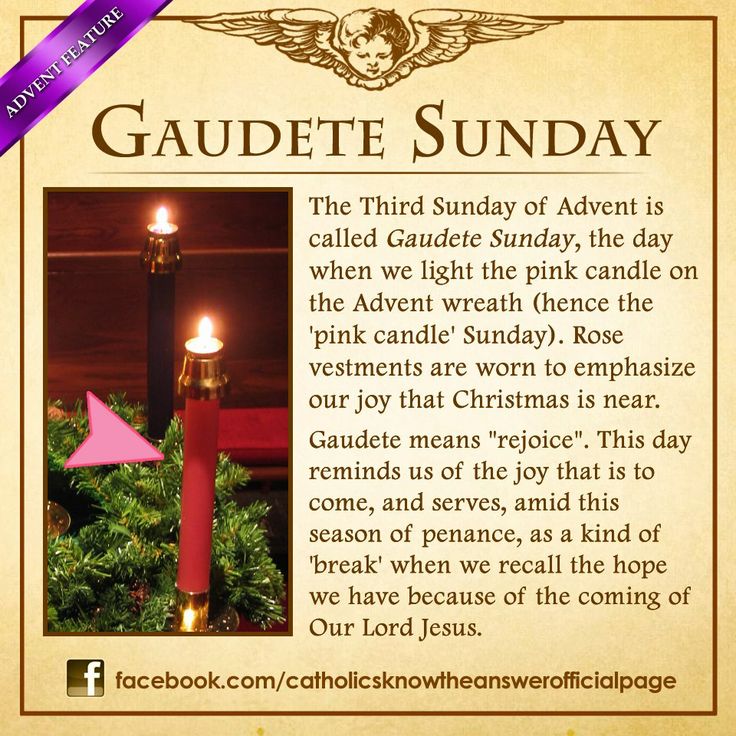
What is special about the Third Sunday of Advent? For much of the Church’s history, this Sunday had a special name: “Gaudete” Sunday. The traditions surrounding this Sunday go back as far as the fourth or fifth century, as does the season of Advent itself. Advent, our preparation for Christmas, was originally a forty-day penitential season like Lent. In fact, since it used to begin on 12 November (just after the Memorial of St. Martin of Tours), it was called “St Martin’s Lent.” “Gaudete Sunday” was the Advent counterpart to “Laetare Sunday,” which marks the mid-point in Lent.
On Gaudete Sunday, the season of Advent shifts its focus. For the first two weeks of Advent, the focus can be summed up in the phrase, “The Lord is coming.” But beginning with Gaudete Sunday, the summary might be, “The Lord is near.” This shift is marked by a lighter mood and a heightened sense of joyous anticipation.
Liturgically, the colours lighten as well. The priest usually wears rose-coloured vestments, a hue seen only on Gaudete Sunday and Laetare Sunday. On this day, we light the third candle of the Advent wreath, which is also rose-coloured, or if you prefer, pink.
The word “Gaudete” is Latin for “Rejoice.” This celebration is a reminder that God who loves us is still in charge and that we await His coming not with fear but with tremendous joy. Today’s Second Reading, from the Letter of St Paul to the Ephesians, reflects this joy: “Rejoice in the Lord always; again I will say, Rejoice. Let all men know your forbearance. The Lord is at hand. Have no anxiety about anything but in everything by prayer and supplication with thanksgiving let your requests be made known to God. And the peace of God, which passes all understanding, will keep your hearts and your minds in Christ Jesus.”
THE “O ANTIPHONS” OF ADVENT
The one exception to the audio barrage of so-called ‘Christmas Hymns’ we hear during Advent, is the simple chant “O Come, O Come Emmanuel.” This song, with its longing for the coming of the Saviour, genuinely belongs to Advent and not to Christmas.
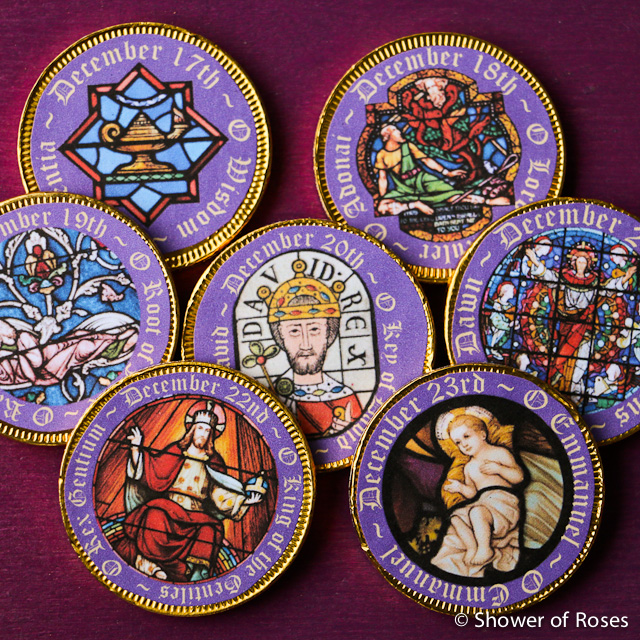
Its melody is based on Gregorian chant and its verses are all taken from the Church’s “O antiphons.” These antiphons introduce the Magnificat, or Canticle of Mary, in the Evening Prayer of the Liturgy of the Hours from 17 December through 23 December.
Each antiphon begins with a traditional title for Christ.
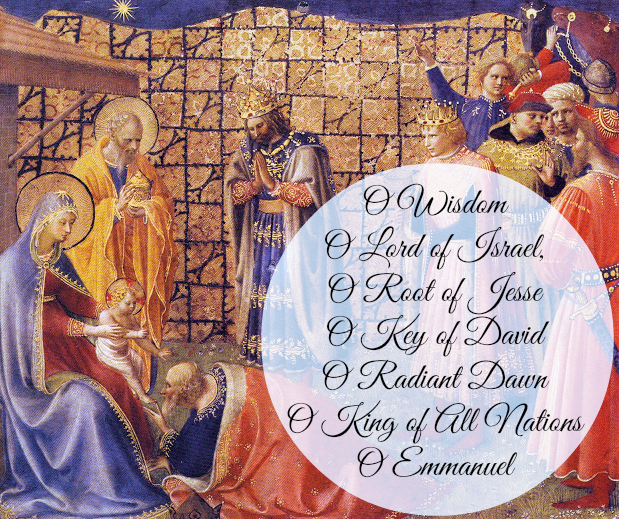
They are: “O Wisdom,” “O Leader of the House of Israel
[Adonai],” “O Root of Jesse’s Stem,” “O Key of David,” “O Radiant Dawn,” “O King of all the nations,” and finally, “O Emmanuel” which means “God with us.” Each of these traditional titles for the Messiah connects the coming of Christ with the prophetic writings of the Old Testament.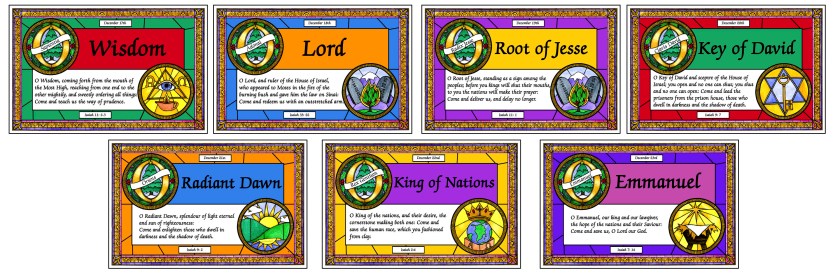
On the last days of Advent, you may wish to add these “O Antiphons” to your
evening prayer, your prayer at table, or your bedtime prayer.
17 DECEMBER
O Wisdom of our God Most High,
guiding creation with power and love:
come to teach us the path of knowledge!
18 DECEMBER
O Leader of the House of Israel,
giver of the Law to Moses on Sinai:
come to rescue us with your mighty power!
19 DECEMBER
O Root of Jesse’s stem,
sign of God’s love for all his people:
come to save us without delay!
20 DECEMBER
O Key of David,
opening the gates of God’s eternal Kingdom:
come and free the prisoners of darkness!
21 DECEMBER
O Radiant Dawn,
splendour of eternal light, sun of justice:
come and shine on those who dwell in darkness and in the shadow of death.
22 DECEMBER
O King of all nations and keystone of the Church:
come and save man, whom you formed from the dust!
23 DECEMBER
O Emmanuel, our King and Giver of Law:
come to save us, Lord our God!
 AnaStpaul
You must be logged in to post a comment.