
Maundy Thursday in Holy Week
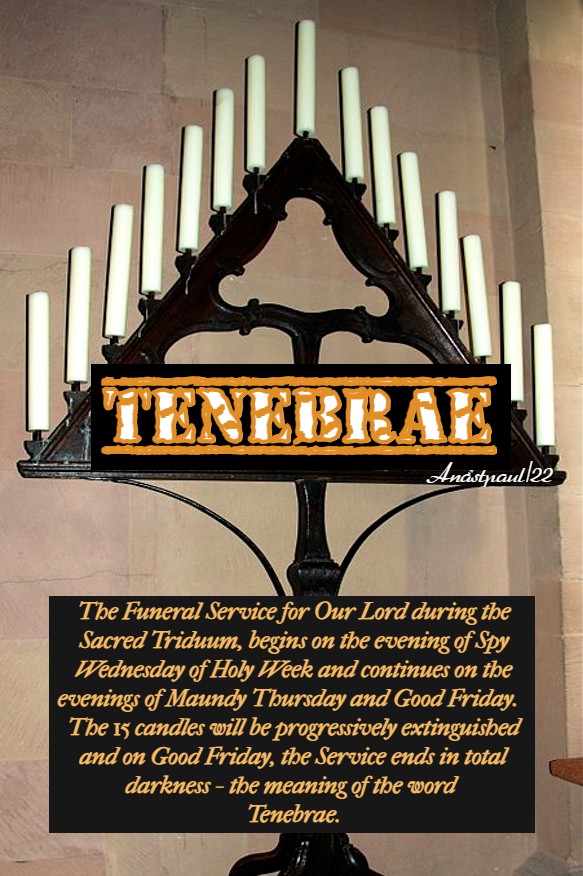
The Office of Tenebrae (Darkness from the Latin)
The Funeral Service of the Lord
on Spy Wednesday, Maundy Thursday and Good Friday
HERE:
https://anastpaul.com/2023/04/05/the-office-of-tenebrae-darkness/
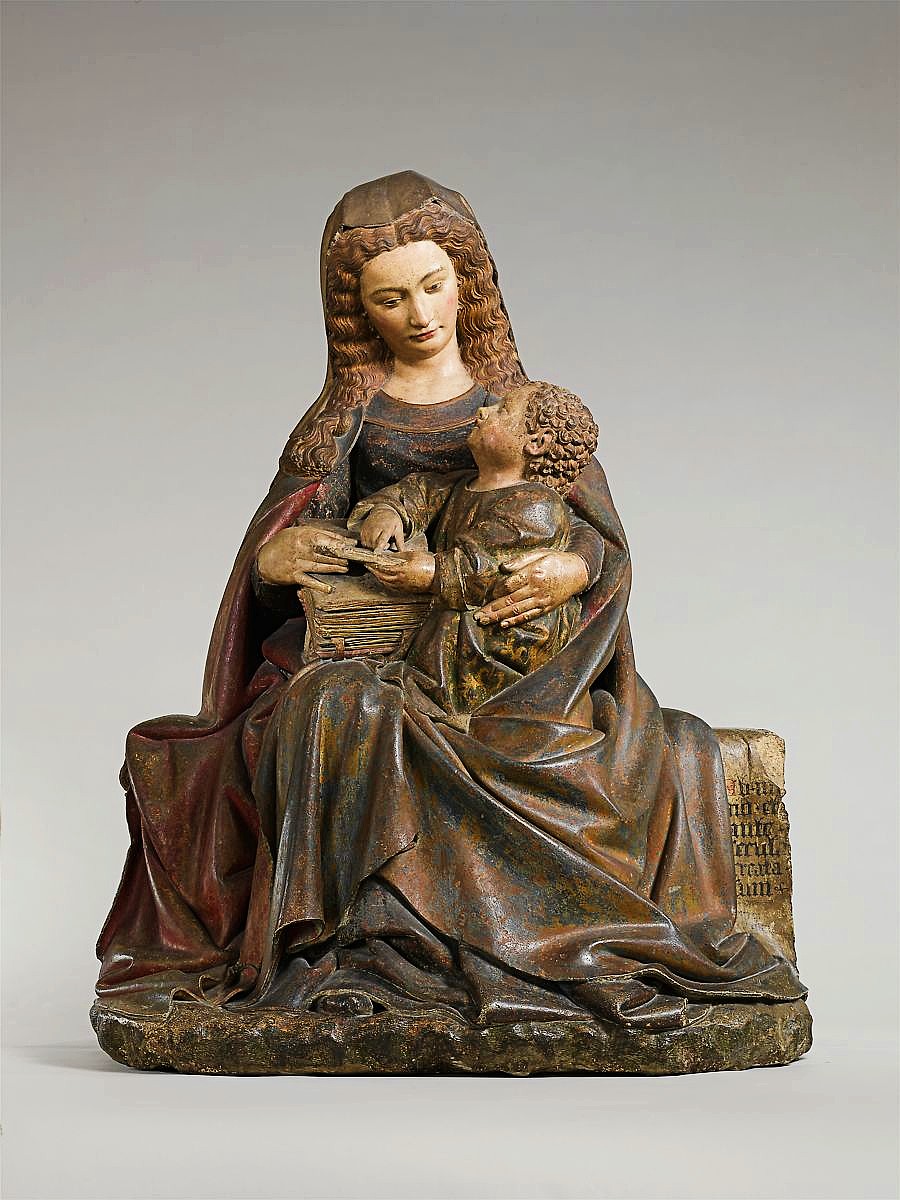
Nuestra Senora de Castelbruedo / Our Lady of Castelbruedo, Catalonia, Spain – 28 March:
HERE:
https://anastpaul.com/2021/03/28/palm-sunday-2021-our-lady-of-castelbruedo-catalonia-spain-and-memorials-of-the-saints-28-march/
St John of Capistrano OFM (1386-1456) Priest and Friar of the Friars Minor, Confessor and Preacher. Famous as a Preacher, Theologian and Inquisitor, trained Lawyer, he earned himself the nickname ‘the Soldier Saint’ when in 1456 at age 70 he led a Crusade against the invading Ottoman Empire at the Siege of Belgrade. He was Beatified on 19 December 1650 by Pope Innocent X and Canonised on 16 October 1690 by Pope Alexander VIII.
Feast Day moved from 28 March in 1969.
Biography:
https://anastpaul.com/2017/10/23/saint-of-the-day-23-october-st-john-capistrano-ofm-1386-1456-the-soldier-saint/
St Alkelda of Middleham
Blessed Antonio Patrizi OSA (c 1280-1311) Priest, Friar of the Order of St Augustine, Prior, Hermit. He was Beatified in 1804 by Pope Pius VII (cultus confirmation).
His Life:
https://anastpaul.com/2021/03/28/saint-of-the-day-28-march-blessed-antonio-patrizi-osa-c-1280-1311-priest/
St Castor of Tarsus
Blessed Conon of Naso (1139-1236) Monk, Hermit and Abbot of the order of St Basil of Caesarea, Miracle-worker.
His Life:
https://anastpaul.com/2020/03/28/saint-of-the-day-28-march-blessed-conon-of-naso-1139-1236/
St Cyril the Deacon
St Dorotheus of Tarsus
St Gundelindis of Niedermünster
St Guntramnus (c532-592) King of the Kingdom of Orléans and Burgundy from 561 until his death in 592, Confessor, Apostle of the needs of the Church and of the poor and sick, Penitent.
The Roman Martyrology reads: “At Chalons in France, the demise of St Gontran King, who devoted himself to exercises of piety, renounced the pomps of the world and bestowed his treasures on the Church and the poor,”
https://anastpaul.com/2022/03/28/saint-of-the-day-28-march-saint-guntramnus-died-597/
St Hesychius of Jerusalem (Died c450) Priest, Exegete. He is not to be confused with Bishop St Hesychius of Jerusalem, a contemporary of St Gregory the Great.
St Hilarion of Pelecete
Blessed Jeanne Marie de MailleTOSF (1331-1414) Widow, Recluse, Third Order of St Francis. Beatified on 27 April 1871 by Pope Pius IX .
About Blessed Jeanne Marie
https://anastpaul.com/2023/03/28/saint-of-the-day-28-march-blessed-jeanne-marie-de-maille-tosf-1331-1414-virgin-widow/
St Proterius of Alexandria
St Rogatus the Martyr
St Successus the Martyr
St Tutilo of Saint-Gall
Blessed Venturino of Bergamo OP (1304-1346) Priest, Friar of the Order of Preachers of St Dominic, Preacher, Missionary Preacher of the Crusades, Writer.
Biography:
https://anastpaul.com/2019/03/28/saint-of-the-day-28-march-blessed-venturino-of-bergamo-op-1304-1346/



 AnaStpaul
You must be logged in to post a comment.