
Thought for the Day – 29 January – Meditations with Antonio Cardinal Bacci (1881-1971)
Blessed are the Clean of Heart
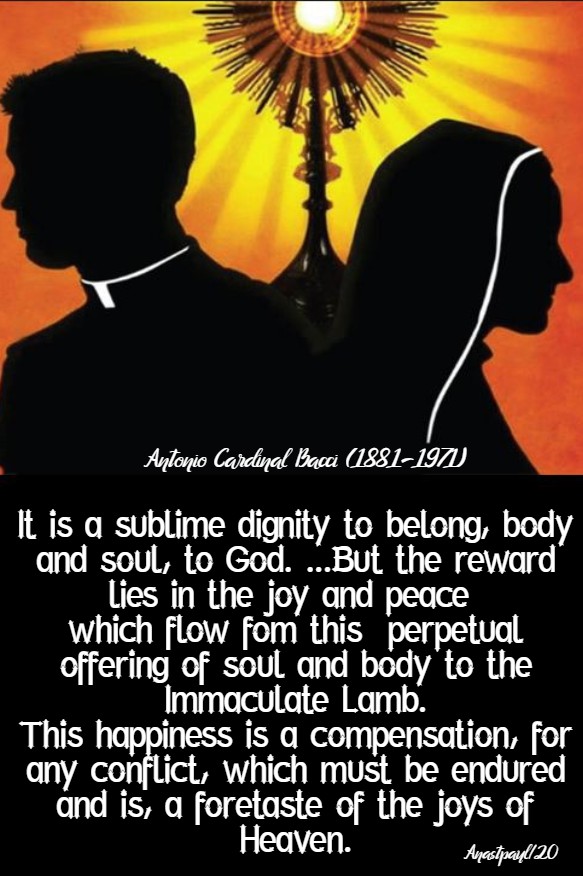
“Understood in it’s entirety, as embracing it’s higher grade, that is, perpetual virginity consecrated to God, purity of heart is a gift which only Christianity can give (Encyclical, Sacra Virginitas, Pope Pius XII, 1954).
If we have been called to receive this wonderful gift, let us humbly thank God.
It is a sublime dignity to belong, body and soul, to God.
Sacred Scripture says of men: “What is man that you should be mindful of him, or the son of man, that you should care for him? You have made him a little less than the angels and crowned him with glory and honour. You have given him rule over the works of your hands, putting all things under his feet” (Ps 8:5, Heb 2:7).
But, under a certain aspect, those who are living in virginity, can be said to be superior to the angels.
Since an angel has no body, he offers God only the homage of his spirit.
A virgin, on the other hand, must bear the burden of an earthly body.
He must offer continually, on the altar of his heart (and often, after a heroic battle), not only his soul with it’s appetites and will but also, all the impulses and lower faculties “which wage war against the soul” (1 Pter 2:11).
This is a double sacrifice, which St Ambrose calls, a continual martyrdom of body and soul.
But the reward lies in the joy and peace which flow from this perpetual offering of soul and body to the Immaculate Lamb.
This happiness is a compensation, for any conflict, which must be endured and is, a foretaste of the joys of Heaven.


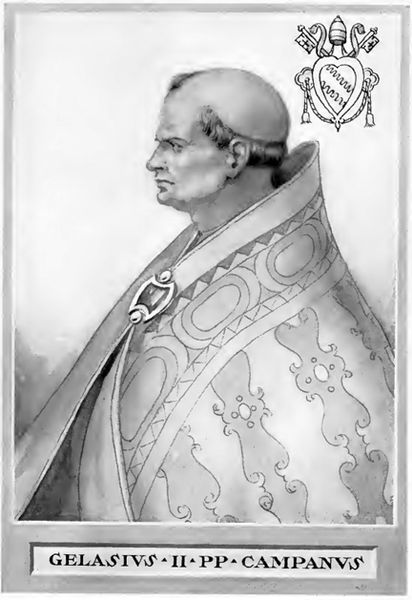
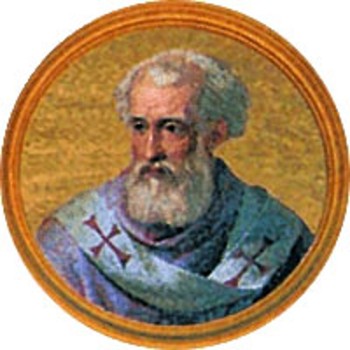 He at once excommunicated Henry V and the antipope and, under Norman protection, was able to return to Rome in July. But the disturbances of the imperialist party, especially those of the Frangipani, who attacked the Pope while celebrating Mass in the church of St Prassede, compelled Gelasius II to go once more into exile. He set out for France, consecrating the Cathedral of Pisa on the way and arrived at Marseille in October. He was received with great enthusiasm at Avignon, Montpellier and other cities, held a Synod at Vienne in January 1119 and was planning to hold a General Council to settle the investiture contest when he died at the Abbey of Cluny.
 AnaStpaul
You must be logged in to post a comment.