Thought for the Day – 11 November – Meditations with Antonio Cardinal Bacci (1881-1971)
Sensitiveness
“A single severe glance from our employer or superior, is enough to make us anxious. If it is accompanied by a word of rebuke, we are thoroughly upset. Why should this be so? It is because we are lacking in the fundamental virtue of humility. We want to keep up appearances and to be held in high regard. If we are frustrated in this ambition, we suffer inwardly.
All this is quite natural but, on this natural foundation, we must build the virtue of humility and the desire to serve God alone. If we possess this virtue, we shall continue to be sensitive to insults and humiliations but our suffering will be sanctified and will be meritorious in the sight of God.
We are all pleased when we are praised by others and are hurt when we are criticised because our natural inclinations are never destroyed. Our sensitivity, however, can be moderated and brought under the control of right reason, whose guide should be the rule of virtue. It is worth reflecting on what The Imitation of Christ has to say in this regard.
“Whenever a man desires anything inordinately, straight away, he is disquieted within himself. The proud and the covetous are never at rest; the poor and the humble in spirit, pass their life in abundance of peace. The man who is not yet perfectly dead to self, is soon tempted and overcome in little and paltry things. He that is weak in spirit and in a certain manner, as yet carnal and inclined to things of sense, cannot, without difficulty, sever himself wholly from earthly desires. And, therefore, he is often sad when he does withdraw himself and besides, he is easily moved to anger if anyone thwart him And, if he has pursued his inclination, forthwith he is burdened with remorse of conscience, for having gone after his passion, which helped him not at all, to the peace he looked for. It is by resisting the passions, therefore and not by serving them, that true peace of heart is to be found. Peace, therefore, is not in the heart of the carnal man, nor in the man who is devoted to outward things but, in the fervent and spiritual man” (Bk 1 Ch 6).
“Continual peace dwells with the humble but in the heart of the proud, is frequent envy and indignation” (Ibid Ch 7, V3).
Quote/s of the Day – 15 November – Readings: Wisdom 7: 22b – 8: 1; Psalm 119: 89-91, 130, 135, 175; Luke 17: 20-25
“For behold, the kingdom of God is among you.”
Luke 17:21
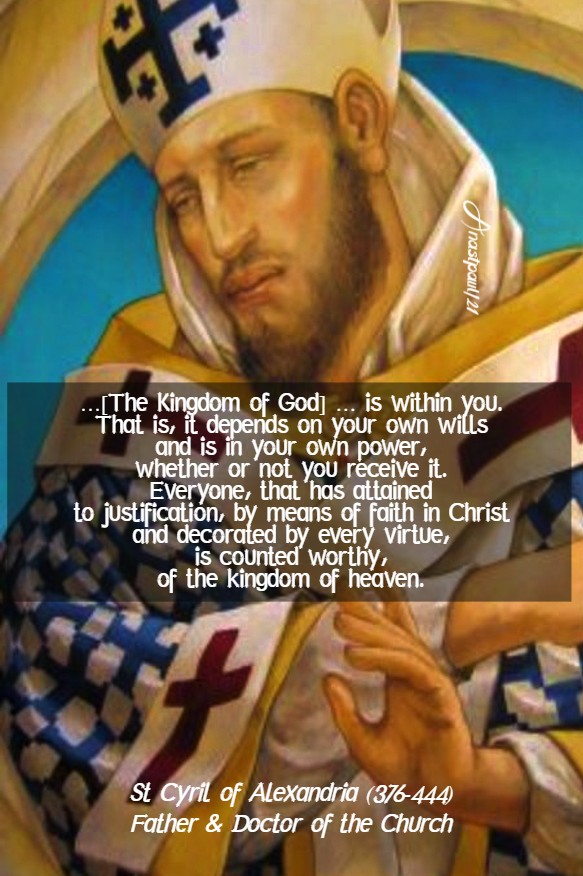
“…[The Kingdom of God] … is within you. That is, it depends on your own wills and is in your own power, whether or not you receive it. Everyone, that has attained to justification, by means of faith in Christ and decorated by every virtue, is counted worthy, of the kingdom of heaven.”
St Cyril of Alexandria (376-444) Father and Doctor of the Church
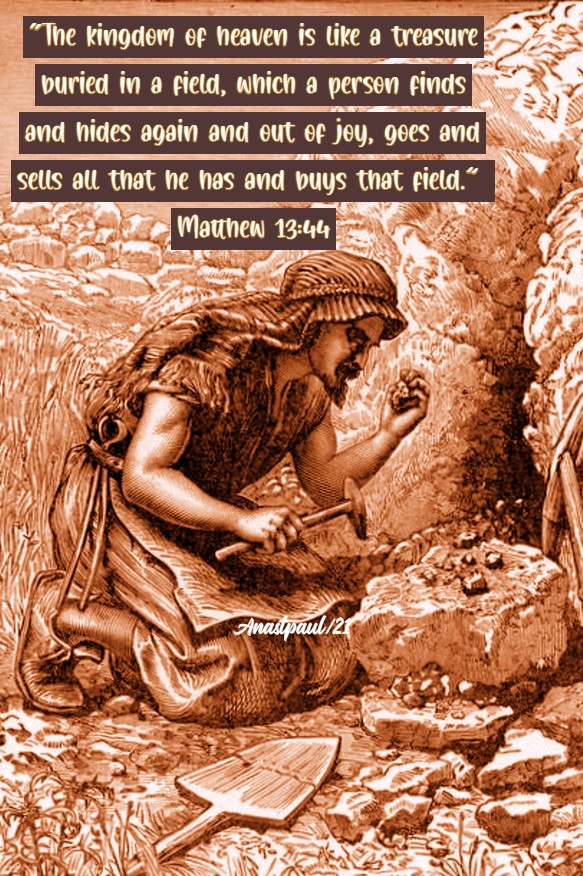
“The kingdom of heaven is like a treasure buried in a field, which a person finds and hides again and out of joy, goes and sells all that he has and buys that field.”
Matthew 13:44
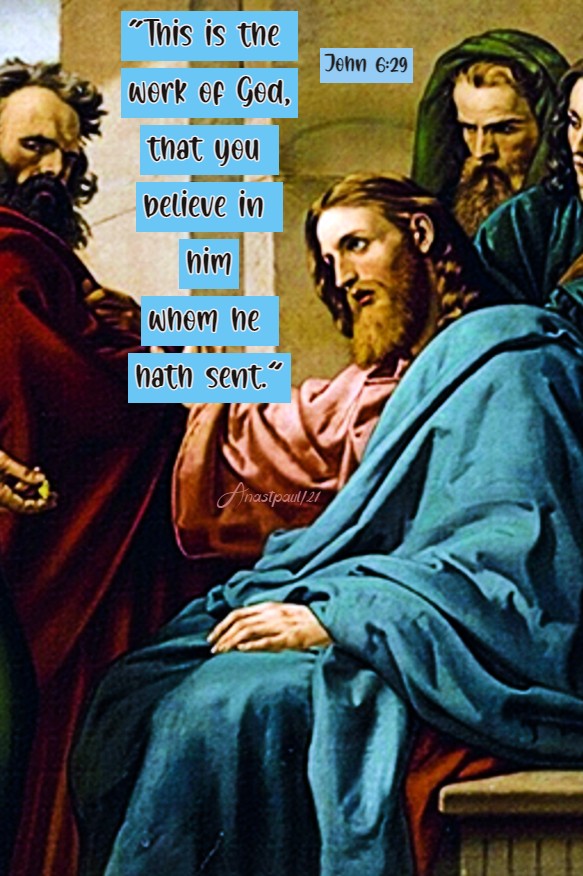
“This is the work of God, that you believe in him whom he hath sent.”
John 6:29
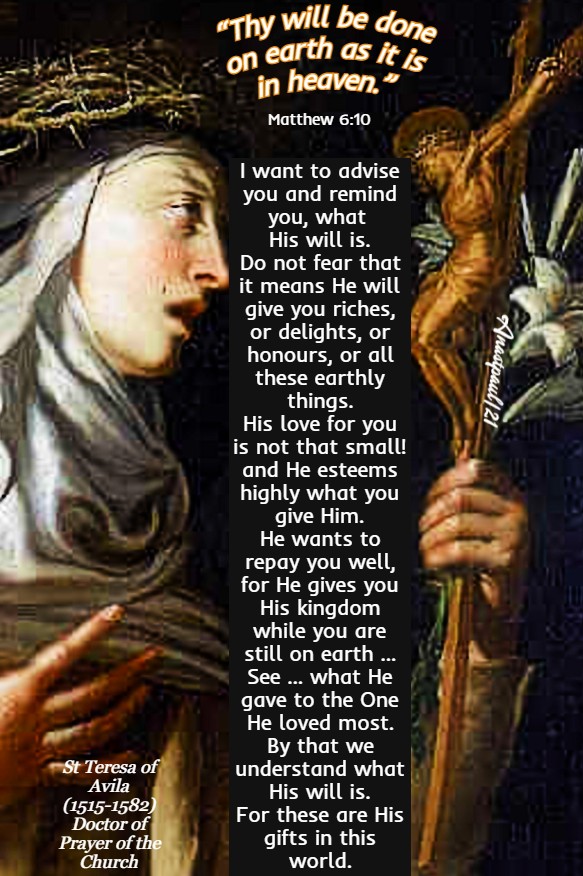
“I want to advise you and remind you, what His will is. Do not fear that it means He will give you riches, or delights, or honours, or all these earthly things. His love for you is not that small! and He esteems highly what you give Him. He wants to repay you well, for He gives you His kingdom while you are still on earth … See … what He gave to the One He loved most. By that we understand what His will is. For these are His gifts in this world.”
St Teresa of Avila (1515-1582) Doctor of Prayer of the Church
One Minute Reflection – 15 November – Readings: Wisdom 7: 22b – 8: 1; Psalm 119: 89-91, 130, 135, 175; Luke 17: 20-25 – The Memorial of St Martin of Tours (c 316-397) and St Bartholomew of Rossano (c 970-c 1065)
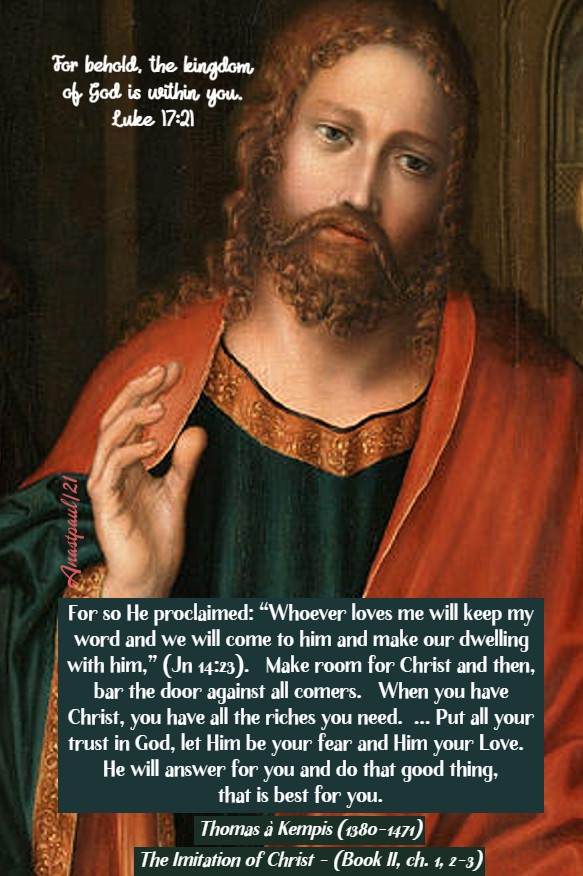
“For behold, the kingdom of God is within you.” – Luke 17:21
REFLECTION – “The Kingdom of God is within you,” says the Lord …. Get up, faithful soul, prepare your heart for this Bridegroom, that He may deign to come and dwell within you. For so He proclaimed: “Whoever loves me will keep my word and we will come to him and make our dwelling with him,” (Jn 14:23). Make room for Christ and then, bar the door against all comers. When you have Christ, you have all the riches you need. He will be your Purveyor and your faithful Manager in all things; you will have no need to hope in men. For men are quick to change and speedily die but Christ “remains forever” (Jn 12:34), standing firm to the very end.
Not much reliance should be placed upon man, be he never so beloved or so useful; for he goes to pieces and he dies. And not much sadness should be felt if he sometimes turns against you – with you to-day, against you to-morrow and fickle as the breeze, to return to you again. Put all your trust in God, let Him be your fear and Him your Love. He will answer for you and do that good thing that is best for you.
“Here we have no lasting city” (Heb 13:14), wherever you are, you are “a stranger and an alien” (Heb 11:13); you will never, at anytime have peace until you are intimately one with Christ.” – Thomas à Kempis CRSA (1380-1471) – The Imitation of Christ – (Book II, ch. 1, 2-3)– Trans Robert Dudley
PRAYER – Our Father, hallowed be Your name, Your kingdom come, Your will be done! Grant us Lord, a true knowledge of our salvation, so that freed from fear and from the power of our foes, we may serve You faithfully, all the days of our lives and thus attain eternal joy with You. May the prayers of St Martin of Tours and St Bartholomew of Rossano, on our behalf, be a succour to us all. Through our Lord Jesus Christ with the Holy Spirit, one God for all eternity, amen.
Our Morning Offering – 11 November – Monday of the Thirty Second Week in Ordinary Time, Year C
In the Name of the Father, Son and Holy Spirit By St Hilary of Poitiers (315-368) Father & Doctor of the Church
Father, keep us from vain strife of words. Grant to us constant profession of the Truth! Preserve us in a true and undefiled faith so that we may hold fast to that which we professed when we were Baptised in the Name of the Father, Son and Holy Spirit, that we may have You for our Father, that we may abide in Your Son and in the fellowship of the Holy Spirit. Through Jesus Christ, Our Lord. Amen
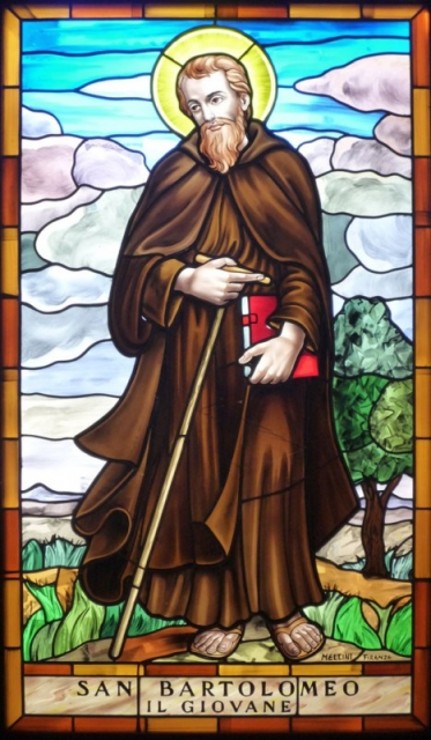
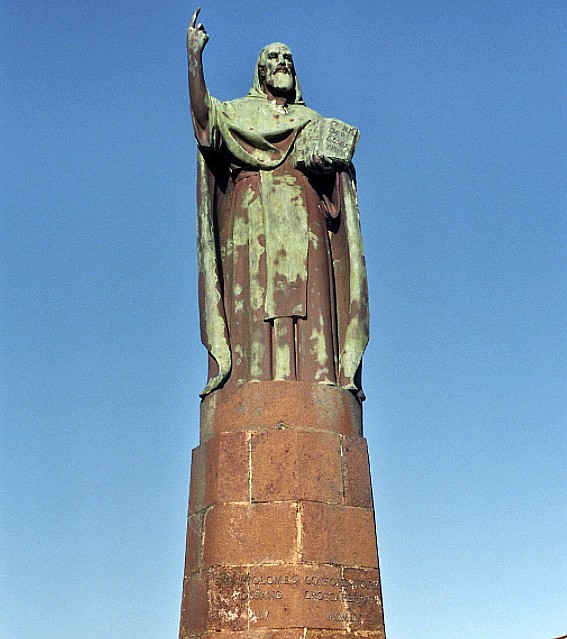
Saint of the Day – 11 November – Saint Bartholomew of Rossano (c 970-c 1065) Basilian Monk, Abbot, Confessor, Spiritual disciple and friend of St Nilus (910-1005), Hymnist an highly skilled Calligrapher of sacred manuscripts – the art of calligraphy he had learned from his blessed guide and teacher, He is known as the “Second Founder,” of the Monastery of Grottaferrata founded by St Nilus. A copyist of many codices, Bartholomew is also considered the greatest hymnographer of the 11th century. Born in c 970 in Rossano, Calabria, Italy and died on 11 November c1065 at Grottaferrata Abbey, Frascati, Italy of natural causes. Also known as – Bartholomew of Grottaferrata, Bartholomew the Younger, Bartolomeo il Giovane.
The Roman Martyrology states: “In the Monastery of Crypta-Ferrata, near Frascati, the holy Abbot Bartholomew, companion of the blessed Saint Nilus, whose life he wrote.”
Bartholomew was the son of a noble Greek immigrant family originally from Constantinople. He was Baptised with the name of Basilio and showed much interest in religious life from an early age. At the age of seven he was entrusted to the Monks of the Monastery of San Giovanni Calibita, where he received such a profound education, that he surpassed his contemporaries
After five years he went to Vallelucio, near Monte Cassion, where he became the disciple of St Nilus of Rossano and a Monk at the Monastery at Grottaferrata in Fracati, which St Nilus had founded. The Monks celebrated the Greek Catholic Rite and kept the Basilian Rule. St Nilu’s life here: https://anastpaul.com/2020/09/26/saint-of-the-day-26-september-saint-nilus-the-younger-910-1005/
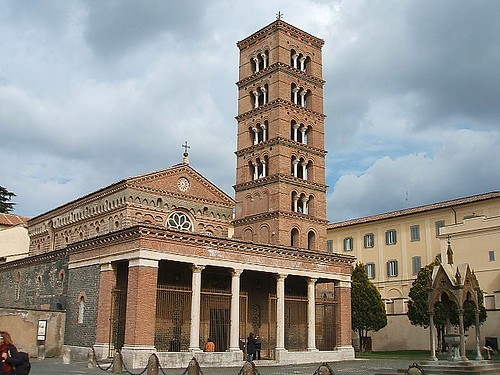
The Monastery of Grottaferrata
When St Nilus died in 1005, Bartholomew continued his works and became his fourth successor as Abbot – a position he held for forty years. During those 40 years, Bartholomew completed the construction of the Monastery and other ancillary works, which St Nilus had begun. This work turned the Monastery into a centre of education and manuscript copying and was so extensive, that he is often listed as the ” Second Founder.” Under his guidance and administration, the Monastery established a firm basis, surviving many troubles and political interference and thus, this foundation has allowed it to continue to this day.
He also took part in the Roman Synods of 1036 and 1044. He showed excellent diplomatic skills, managing to appease the differences between Duke Adenolfo and the Prince of Salerno. He was a close friend of the Pontiffs Benedict VIII and Benedict IX, managing to persuade the latter to abdicate, who then retired to the Monastery of Grottaferrata.
Bartholomew was described as having a very sympathetic and kind nature. He was unable to see anyone suffer in any manner, without striving to assist and extend comfort.
In the biography of the Saint, a miracle is narrated that underlines his love for the poor, which happened a few years after his death. The protagonist of this event is a Monk named Franco, who at the end of his life and unable to speak, was miraculously healed. He told his brothers that he was now ready for burial and that in his sleep, he had seen two doves, one white and one black, approach him and guiding him into a field full of light, where Bartholomew was standing surrounded by a multitude of poor people. Bartholomew gave them all bread, then entered a beautiful building in which there was a woman of indescribable beauty, that is, the Virgin Mary. Here Bartholomew, addressing the Monk Franco advising him to remind the remaining Monks of Grottaferrata, to be merciful towards the poor.
Bartholomew died around 1065, he was buried next to St Nilus in the Chapel named after the two of them in the Monastery. heir remains remained in Grottaferrata until 1300, after this date all traces of their relics disappeared.
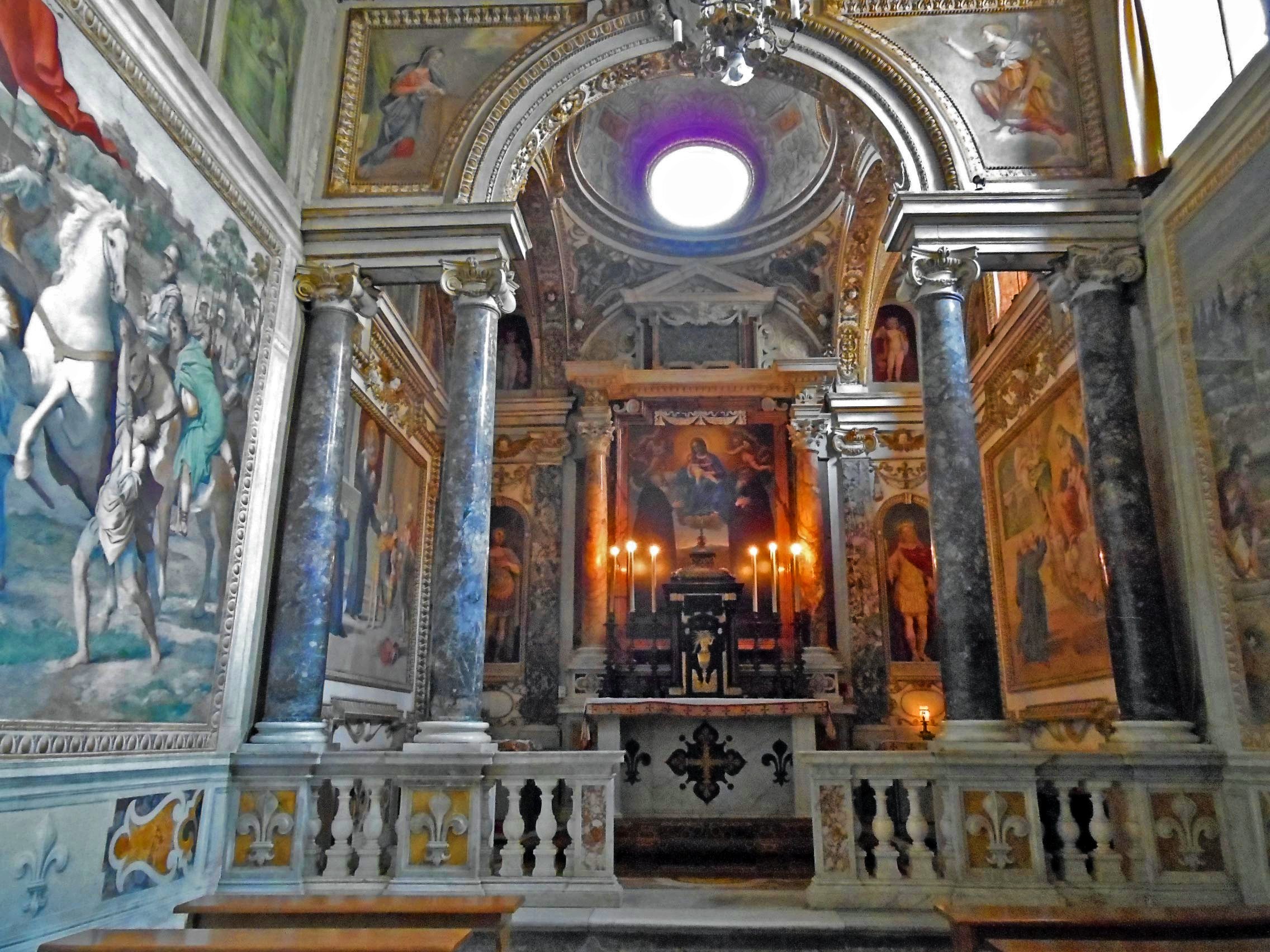
The interior of the Grottaferrata Abbey
Pope Pius XII on the Ninth Centenary of the Saint’s death, in a message to the Abbot of Grottaferrata, defined St Bartholomew “luminary of the Church and ornament of the Apostolic See.”
Nossa Senhora do Português / Our Lady of the Portuguese, Diu, India (1546) – 11 November:
The Abbot Orsini wrote: “On this day, about the year 1546, the Portuguese gained a great victory over the infidels, who had been before the castle of Die, in the East Indies, for the space of seven months and who would have carried it by storm, if Our Lady had not appeared upon the walls – which caused so great terror in the enemy’s camp, that the siege was at once raised.”
The Portuguese began building the stronghold of Diu, their symbol of Portuguese influence and authority in the region, protecting their lucrative trade with India, on 20 November 1535 and finished the work a short time later, on 29 February of the following year. The fort was circular in shape, having walls 6 metres high and 3.50 metres thick, made of solid stone and lime. There was a deep ditch immediately before these stout walls and the fort had three triangular shaped bastions. Manned with a garrison of three hundred and fifty men, it was further supported by a fleet of eleven ships. Manuel De Souza was named the fort’s first Captain. It was not long before the Portuguese came under siege, as a powerful Ottoman fleet made up of 72 ships laid siege to the stronghold in September of 1538. The Turks arrived with an army of at least 20,000 men, far more than the 400 or so Portuguese who made up the entire garrison. There were many pitched battles after an intense bombardment and as time wore on the Portuguese suffered from an acute shortage of men and ammunition and a lack of adequate nutrition, bringing scurvy and great suffering to the remaining defenders. The defenders were at their last extreme and the fort had less than 40 men left alive when the siege suddenly ended. Modern history records that, “for unknown reasons” the savage Turks gave up the siege and sailed away for no reason. It was obvious to the battle hardened Turkish troops, that the defence was about to collapse and that victory was at hand, so there must have been a reason that they fled. The Portuguese defenders could have said that the victory was the result of their gallantry defending the fort and to the grim determination with which they held the bastions against every manner of assault. Instead, however, the Portuguese recalled that Our Lady appeared on the battlements herself, as had recently happened at the Siege of Rhodes and that it was their fear of her ,that the Turks ran for their lives. In 1546 there was a second assault on Diu that began on the eve of Easter and this time the Portuguese thwarted the efforts of the Turks to capture the fort in a pitched battle recorded as one of the greatest ever fought by the Portuguese troops in India. The siege had continued uninterrupted from 20 April 1546 until 7 November, when a Portuguese fleet finally arrived on the scene under Viceroy Juan de Castro. The Portuguese success in Diu confirmed Portuguese dominion and their hold over the region. Contemporary accounts, of course, do not mention the miraculous intervention of the Blessed Virgin Mary during the siege, even though it was recorded that she appeared on the ramparts holding a lance in her hand to defend the fort from the enemy, for the ‘City of Men’ cannot accept the glories of God!
Bl Alicia Maria jadwiga Kotowska St Bartholomew of Rossano (c 970-c 1065) Abbot Confessor St Bertuin of Malonne St Cynfran of Wales St Isidre Costa Hons Bl Josaphat Chichkov Bl Kamen Vitchev
St Marina of Omura St Menas Kallikelados St Mennas of Santomenna St Mercurius the Soldier Bl Pavel Dzjidzjov St Rhediw St Theodore the Studite St Turibius of Palencia St Veranus of Lyon St Veranus of Vence Blessed Vincent Eugene Bossilkoff — Martyrs of Torredembarra: Members of the Brothers of the Christian Schools, Discalced Carmelites, and Carmelite Tertiaries of Education who were martyred together in the Spanish Civil War. • Blessed Bonaventura Toldrà Rodon • Blessed Damián Rodríguez Pablo • Blessed Felipe Arce Fernández • Blessed Frederíc Vila Bartolì • Blessed Isidre Tarsá Giribets • Blessed Joan Roca Vilardell • Blessed José Alberich Lluch • Blessed Josep Boschdemont Mitjavila • Blessed Josep Maria Bru Ralduá • Blessed Julio Alameda Camarero • Blessed Lluís Domingo Oliva • Blessed Mariano Navarro Blasco • Blessed Miquel Saludes Ciuret • Blessed Pedro de Eriz Eguiluz They were martured on 11 November 1936 in Torredembarra, Tarragona, Spain, Beatification celebrated in Tarragona, Spain.
Thought for the Day – 10 November – Meditations with Antonio Cardinal Bacci (1881-1971)
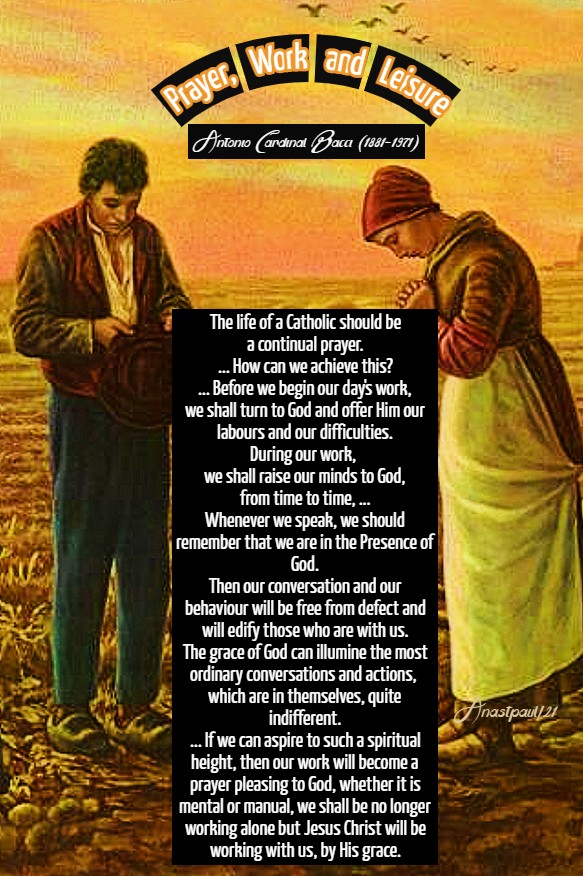
Prayer, Work and Leisure
“The pattern of our lives should be a combination of prayer, work and leisure. There should be no room, however, fpr idleness.
Prayer: Prayer is most essential. The life of a Catholic should be a continual prayer. As Jesus commanded, we “must always pray and not lose heart” (Lk 18:1).
How can we achieve this? St Paul has told us, “Whatever you do in word or in work,” he says, “do all in the name of the Lord Jesus, giving thanks to God the Father, through him” (Col 3:17). If we follow his instructions, our lives will really be a prayer. Before we begin our day’s work, we shall turn to God and offer Him our labours and our difficulties. During our work, we shall raise our minds to God, from time to time, as Jesus, Mary and Joseph must have done, in the home and in the workshop at Nazareth. Whenever we speak, we should remember that we are in the Presence of God. Then our conversation and our behaviour will be free from defect and will edify those who are with us. The grace of God can illumine the most ordinary conversations and actions, which are in themselves, quite indifferent. It is enough to live in a spiritual atmosphere of our own and on this earth.
If we can aspire to such a spiritual height, then our work will become a prayer pleasing to God, whether it is mental or manual, we shall be no longer working alone but Jesus Christ will be working with us, by His grace. This is the way the Saints worked and this is how their lives were a prayer.”
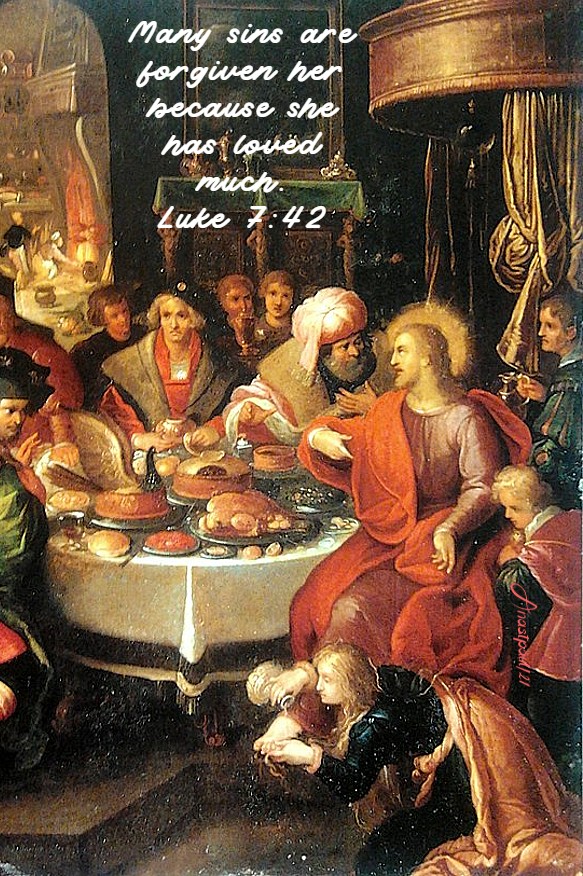
“Many sins are forgiven her because she has loved much.”
Luke 7:42
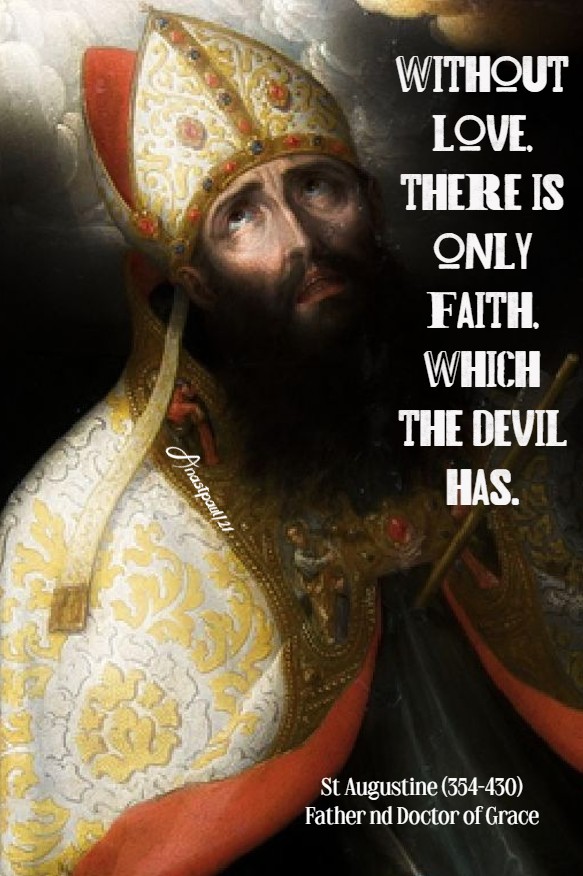
“Without love, there is only faith, which the devil has.”
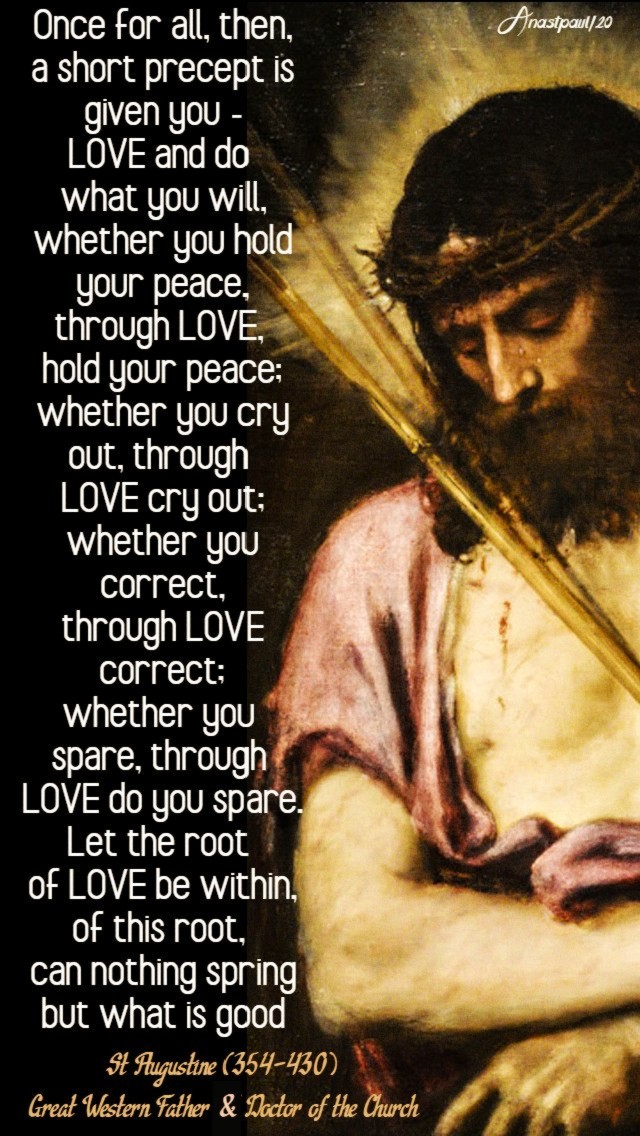
“Once for all, then, a short precept is given you – Love and do what you will, whether you hold your peace, through love, hold your peace; whether you cry out, through love cry out; whether you correct, through love correct; whether you spare, through love do you spare. Let the root of love be within, of this root, can nothing spring but what is good.”
St Augustine (354-430) Father nd Doctor of Grace
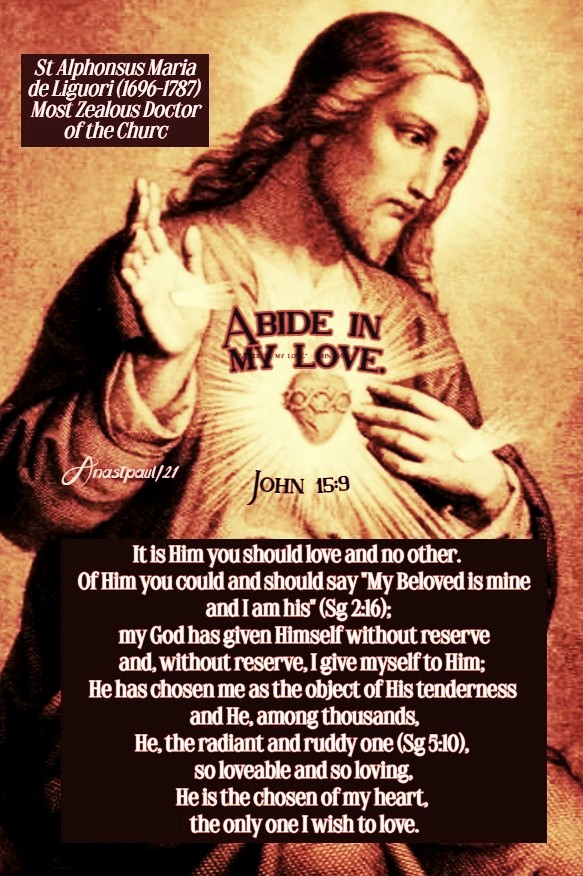
“… It is Him you should love and no other. Of Him you could and should say “My Beloved is mine and I am his” (Sg 2:16); my God has given Himself without reserve and, without reserve, I give myself to Him; He has chosen me as the object of His tenderness and He, among thousands, He, the radiant and ruddy one (Sg 5:10), so loveable and so loving, He is the chosen of my heart, the only one I wish to love.”
St Alphonsus Maria de Liguori (1696-1787) Most Zealous Doctor
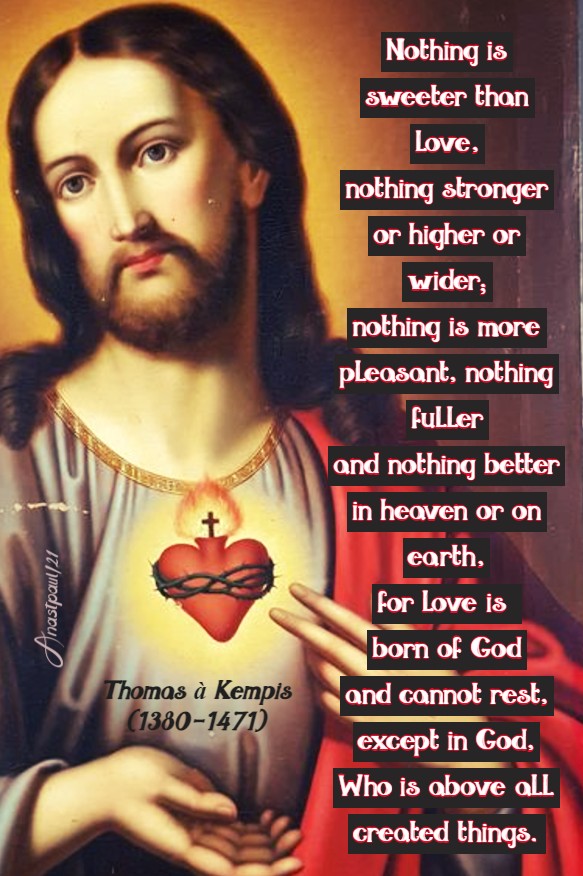
“Nothing is sweeter than love, nothing stronger or higher or wider; nothing is more pleasant, nothing fuller and nothing better in heaven or on earth, for love is born of God and cannot rest except in God, Who is above all created things.”
Thomas à Kempis (1380-1471)
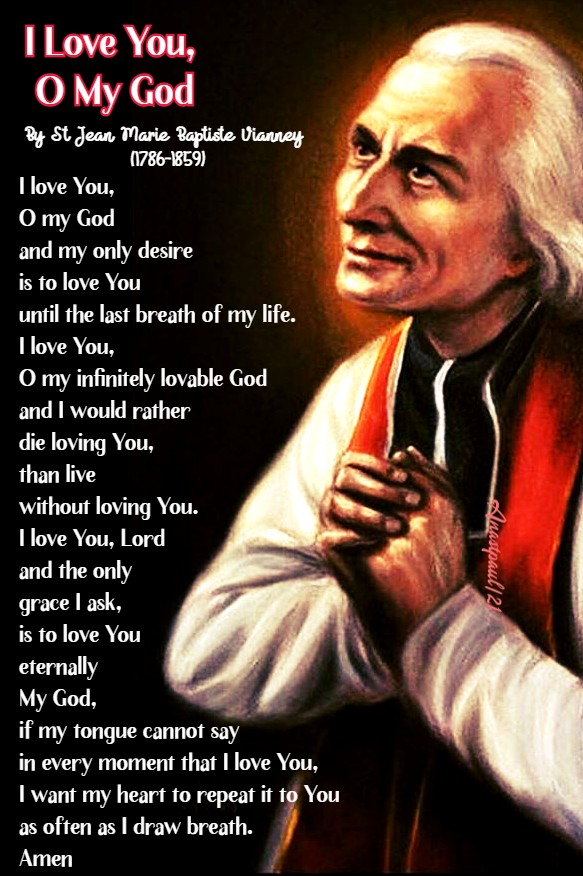
I Love You, O My God By St Jean Marie Baptiste Vianney (1786-1859)
I love You, O my God and my only desire is to love You until the last breath of my life. I love You, O my infinitely lovable God and I would rather die loving You, than live without loving You. I love You, Lord and the only grace I ask, is to love You eternally My God, if my tongue cannot say in every moment that I love You, I want my heart to repeat it to You as often as I draw breath. Amen
One Minute Reflection – 10 November – Readings: Wisdom 6: 1-11; Psalm 82: 3-4, 6-7; Luke 17: 11-19
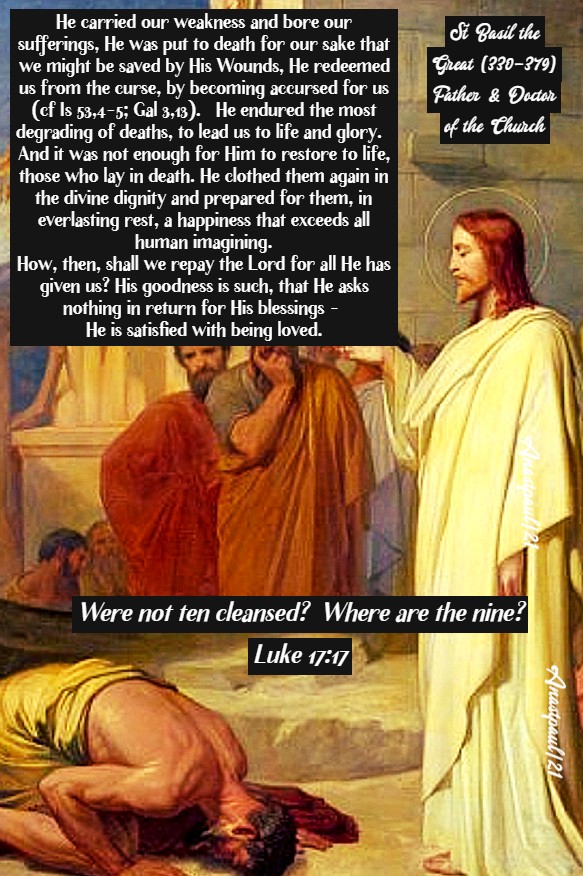
“Were not ten cleansed? Where are the nine?” – Luke 17:17
REFLECTION – “After having offended our Benefactor by our indifference to His signs of goodwill, we have, nevertheless, not been forsaken by the Lord’s goodness nor cut off from His love but we have been rescued from death and restored to life by our Lord Jesus Christ. And the way in which we have been saved, is even more worthy of wonder. “Though he was in the form of God, he did not regard equality with God something to be grasped but emptied himself, taking the form of a slave” (Phil 2,6-7).
He carried our weakness and bore our sufferings, He was put to death for our sake that we might be saved by His Wounds, He redeemed us from the curse, by becoming accursed for us (cf Is 53,4-5; Gal 3,13). He endured the most degrading of deaths, to lead us to life and glory. And it was not enough for Him to restore to life, those who lay in death. He clothed them again in the divine dignity and prepared for them, in everlasting rest, a happiness that exceeds all human imagining.
How, then, shall we repay the Lord for all He has given us? His goodness is such, that He asks nothing in return for His blessings – He is satisfied with being loved.” – St Basil (330-379) Monk, Bishop of Caesarea in Cappadocia, Father and Doctor of the Church (Great monastic Rules, # 2)
PRAYER – You Lord, Holy Father, never forget Your solemn covenant and grant us new life each day. We though in our hearts of stone do forget and cease to thank and bless You. Make our hearts turn in gratitude, for all we are and have is by Your grace and we are as nothing without You. May our minds, hearts and souls sing with love and thanks to You, Lord our God. Grant us new hearts by the prayers of Your Saint Leo the Great and all the saints in heaven, who always lived with grateful hearts, praising You always. We ask this this through Jesus Christ with the Holy Spirit, one God forever, amen.
May I Love You More Dearly St Richard of Chichester (1197-1253)
Thanks be to You, my Lord Jesus Christ For all the benefits You have given me, For all the pains and insults You have borne for me. O most merciful Redeemer, Friend and Brother, May I know You more clearly, Love You more dearly, Follow You more nearly. Amen
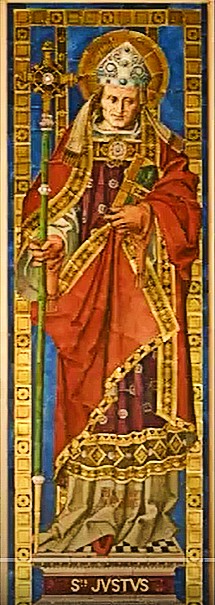
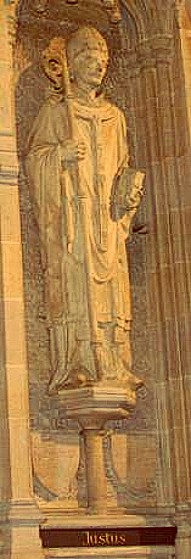
Saint of the Day – 10 November – Saint Justus of Canterbury (Died 627) the Fourth Archbishop of Canterbury, also Bishop of Rochester, Missionary sent by St Gregory the Great to join St Augustine of Canterbury in the conversion of England.
The Roman Martyrology states: “In England, St Justus, Bishop, who was sent by Pope Gregory with St Augustine, St Mellitus and others, to preach the Gospel in that country. There he went to his repose in the Lord, celebrated for sanctity,“
For the particulars of his life we are almost entirely dependent on Venerable Bede’s “Historia Ecclesiastica.“
Justus was one of the second band of Missionaries sent by St Gregory the Great, the company which arrived in 601 to reinforce St Augustine and which conveyed the relics, books, sacred vessels and other gifts sent by the Pope.
It is not certain whether he was a secular Priest or a Monk. St Bede is silent on the point and only later monastic writers from Canterbury ,claim him as one of their own Order.
In 604 he was Consecrated by St Augustine as first Bishop of Rochester, on which occasion, King Ethelbert bestowed on the new See, by charter, a territory called Priestfield and other lands. Ethelbert also built Justus a Cathedral Church in Rochester; the foundations of a nave and chancel partly underneath the present-day Rochester Cathedral may date from that time.
After the death of Augustine, Justus joined with the new Archbishop, St Laurence and with St Mellitus of London, in addressing letters to the recalcitrant Irish Bishops urging the native Church to adopt the Roman method of calculating the date of Easter but without effect. In 614, Justus attended the Council of Paris, held by the Frankish King, Chlothar II, together with Peter, the Abbot of Sts Peter and Paul Monastery in Canterbury,
During the heathen reaction which followed the death of Ethelbert, Justus was expelled from his See and took refuge in Gaul for a year, after which he was recalled by Eadbald who had been converted by St Laurence.
On the death of St Mellitus (24 April, 624) who had succeeded St Laurence as the Archbishop, Justus was elected to the vacant primacy. The letter which Pope Boniface addressed to him when sending him the Pallium is preserved by Venerable St Bede. He was already an old man and little is recorded of his Archiepiscopate except that he Consecrated Romanus as Bishop of Rochester and St Paulinus as Bishop for the North.
His anniversary was kept at Canterbury on 10 November but there is uncertainty as to the year of his death, although 627, the commonly received date, would appear to be correct, especially as it fits in with the period of three years usually assigned by the chroniclers to his Archiepiscopate.
He was buried with his predecessors at St Augustine’s Abbey, Canterbury and is commemorated in the English supplement to the Missal and Breviary on 10 November. In the 1090s, his remains were translated, to a Shrine beside the high Altar of St Augustine’s Abbey in Canterbury. At about the same time, a Life was written by the Monk Goscelin of Saint-Bertin, as well as a poem by another Monk and writer, Reginald of Canterbury.
Muttergottes von der Augenwende / Our Lady of the Turning Eyes, Rottweil, Germany (1643) – 10 November:
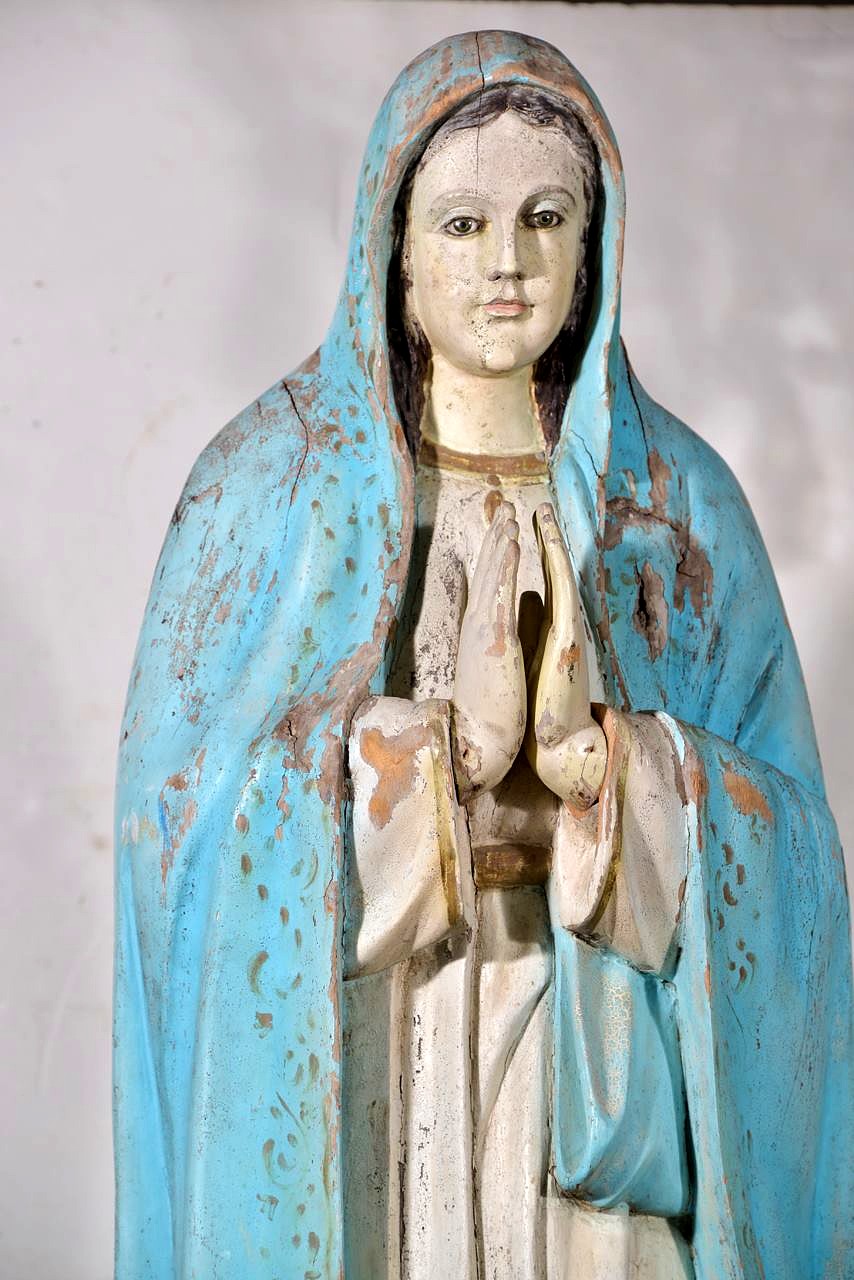
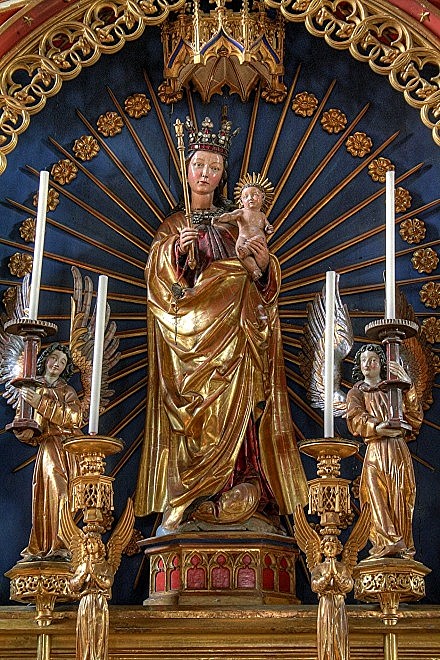
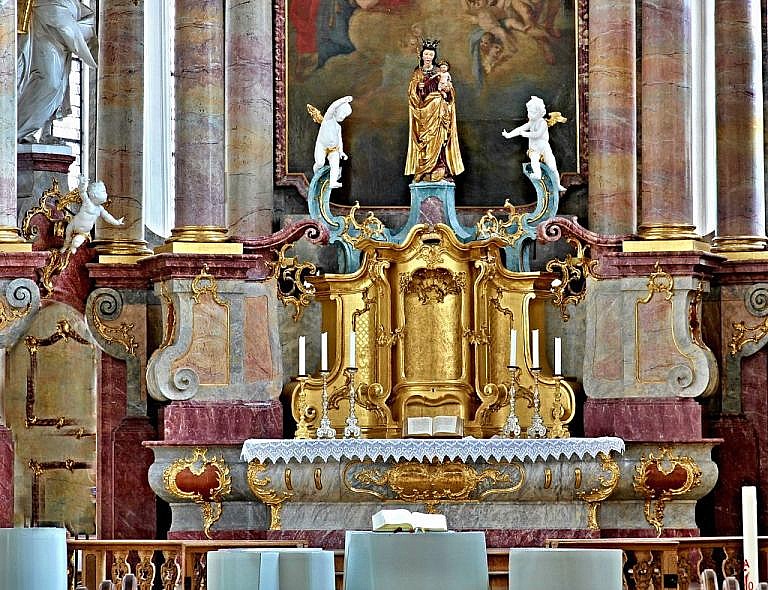
In 1643 the City of Rottweil was under siege by French troops during the Thirty Years’ War. As cited in the original Dominican document, 300 citizens of the Town ceaselessly prayed the Rosary at a Statue of the Madonna and Child at the Dominican church. On 10 November 1643 witnesses saw the Statue turn pale and raise its eyes toward heaven then back to the City. Some claimed to have heard it speak. Both Catholics and non-Catholics witnessed the event. Fifteen days later, the Statue’s face turned reddish and the eyes moved again while shedding tears. At the same time, the French and Saxe-Weimar troops were defeated by Bavarian troops in the Battle of Tuttlingen. The victory was attributed to the intercession of Mary. The Statue remained in the Church until 1802 following the secularisation of Germany, when the Monastery was dissolved and the Church was seized by the Kingdom of Württemberg. At this time the Statue was transferred to the City’s main Church, the Holy Cross Münster. A solemn procession was held to relocate the Statue on 29 December of that year. The Dominican Church later became the Town’s Protestant church, the Predigerkirche.
St Anianus the Deacon St Baudolino St Demetrius of Antioch St Elaeth the King St Eustosius of Antioch St Grellen St Guerembaldus St Hadelin of Sees Bl Joaquín Piña Piazuelo St John of Ratzenburg St Joseph the Martyr St Justus of Canterbury (Died 627) Archbishop
St Leo of Melun St Monitor of Orleans St Narses of Subagord St Nonnus of Heliopolis St Orestes of Cappadocia St Probus of Ravenna St Theoctiste of Lesbos St Tryphaena of Iconium St Tryphosa of Iconium — Martyred Sisters Adorers – 23 beati: 23 nuns, all members of the Sisters Adorers, Handmaids of Charity and of the Blessed Sacrament who were martyred together in the Spanish Civil War. • Blessed Aurea González • Blessed Belarmina Pérez Martínez • Blessed Cecilia Iglesias del Campo • Blessed Concepción Vázquez Areas • Blessed Dionisia Rodríguez De Anta • Blessed Emilia Echevarría Fernández • Blessed Felipa Gutierrez Garay • Blessed Francisca Pérez de Labeaga García • Blessed Josepa Boix Rieras • Blessed Lucía González García • Blessed Luisa Pérez Adriá • Blessed Magdalena Pérez • Blessed Manuela Arriola Uranda • Blessed María Dolores Hernández San Torcuato • Blessed María Dolores Monzón Rosales • Blessed María García Ferreiro • Blessed Maria Mercè Tuñi Ustech • Blessed María Zenona Aranzábal de Barrutia • Blessed Prima de Ipiña Malzárraga • Blessed Purificación Martínez Vera • Blessed Rosa López Brochier • Blessed Sinforosa Díaz Fernández • Blessed Teresa Vives Missé They were martyred on 10 November 1936 in Madrid, Spain.
Martyrs of Agde – 3 saints: A group of Christians who were tortured and martyred together in the persecutions of Diocletian. The only about them to survive are the names – Florentia, Modestus and Tiberius. Martyred c 303 in Agde, France.
Thought for the Day – 9 November – Meditations with Antonio Cardinal Bacci (1881-1971)
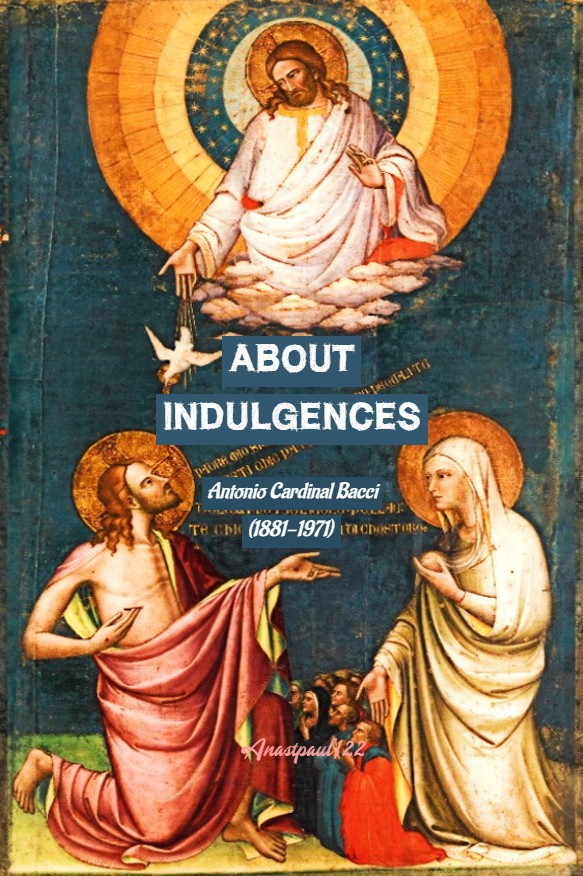
INDULGENCES
“Indulgences are among the means by which we can help to satisfy the Divine Justice for our own offences and for those of the faithful depared.
Unfortunately, very few Christians understand the true nature of indulgences. As a result, they neglect to fulfil the conditions necessary to gain them.
Canon Law defines an indulgence as “the remission in the sight of God of the temporal punishment due to sins already forgiven, which, the proper ecclesiastical authority concedes from the treasury of the Church, for the living, by way of absolution and for the dead, by way of suffrage” (Canon 911). The main requirement is to be in the state of grace, which sinners can attain by means of the Sacrament of Penance, or by an Act of PERFECT CONTRITION. If properly made, Confession takes away sin and eternal punishment but, not temporal punishment. This may be cancelled by means of penance, prayer and good works. In the early days of the Church, the penitential system was most severe (I wish it were so again!) According to the degree of gravity, different sins drew penances of days, weeks or months of fasting on bread and water. As times changed, the Church reduced these penalties and granted indulgences instead.
What we may ask, is the theological basis for these indulgences? It is the spiritual treasury which is at the disposal of the Church, made up of the infinite merits of our Redeemer and added to, by the merits of the Blessed Virgin and the Saints. These merits are communicated to us by the Church by reason of the consoling Dogma of the Communion of Saints, according to which, the Church Militant, Suffering and Triumphant, constitutes one Mystical Body of which Jesus Christ is the Head.
The Church has power to dispose of this immense treasure by reason of the injunction given to her by her Founder, when He said to St Peter: “Whatever thou shalt bind on earth shall be bound in heaven and whatever thou shalt loose on earth shall be loosed in heaven” (Mt 16:19). There are no reservations – the injunction applies, not only to sin but, also to its punishment. It is clear that indulgences are not merely a dispensation from the penitential discipline in the eyes of the Church, as certain heretics held and still hold but also, in the sight of God. Indulgences reflect, both the mercy and the justice of God. They reflect His justice because complete satisfaction is rendered by the merits of Jesus Christ. They reflect His mercy because these merits are applied to us poor sinners and also, by way of suffrage, to the souls of our departed friends.”
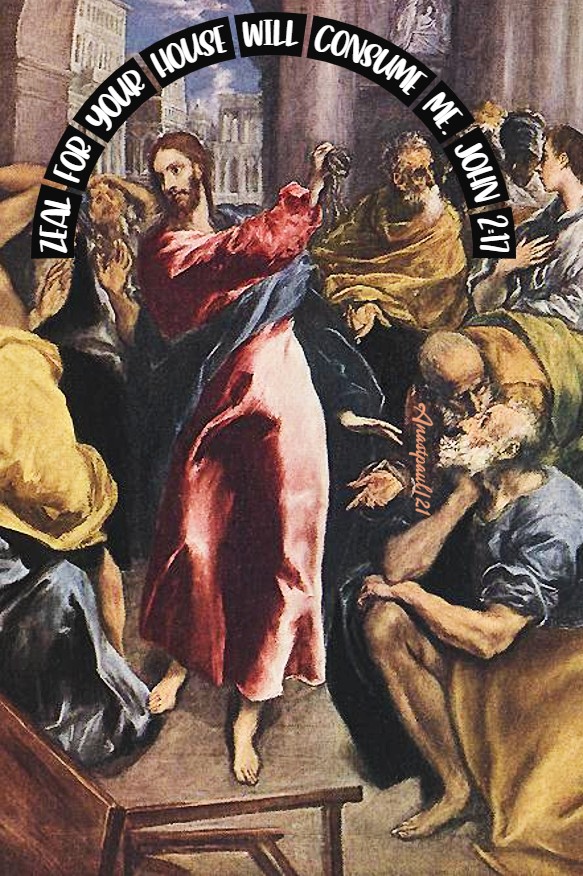
Quote/s of the Day – 9 November – Feast Dedication of The Archbasilica of the Most Holy Saviour in the Lateran – Gospel: John 2:13-22
“Zeal for your house will consume me.”
John 2:17
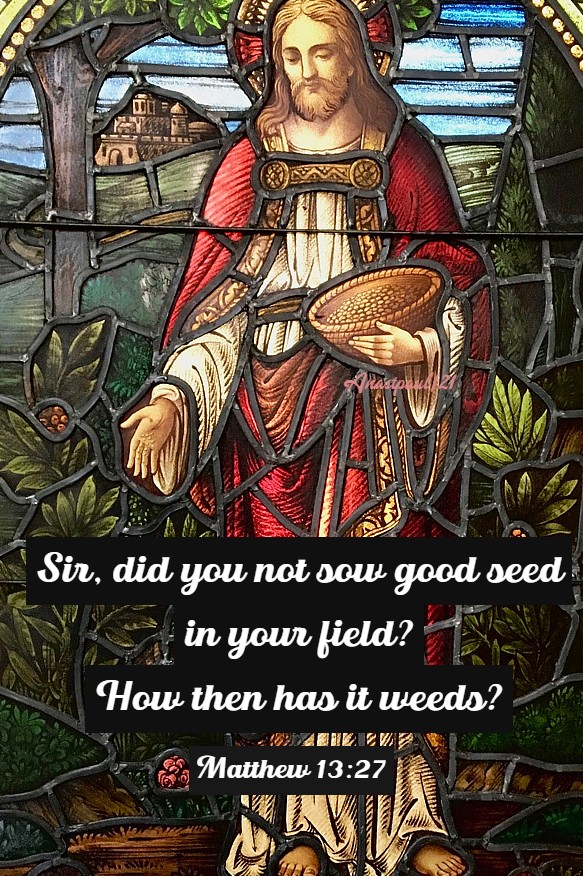
“Sir, did you not sow good seed in your field? How then has it weeds?”
Matthew 13:27
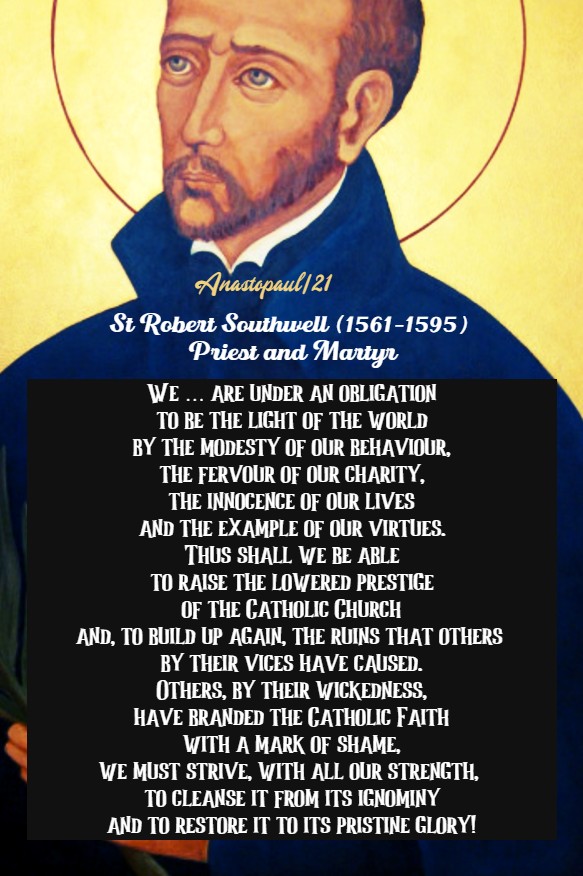
“We … are under an obligation to be the light of the world by the modesty of our behaviour, the fervour of our charity, the innocence of our lives and the example of our virtues. Thus shall we be able to raise the lowered prestige of the Catholic Church and, to build up again, the ruins that others by their vices have caused. Others, by their wickedness, have branded the Catholic Faith with a mark of shame, we must strive, with all our strength, to cleanse it from its ignominy and to restore it to its pristine glory!”
St Robert Southwell SJ (1561-1595) Priest and Martyr
“…The great movement of apostasy being organised in every country for the establishment of a One-World Church which shall have neither dogmas, nor hierarchy, neither discipline for the mind, nor curb for the passions and which, under the pretext of freedom and human dignity, would bring back to the world (if such a Church could overcome) the reign of legalised cunning and force and the oppression of the weak and of all those who toil and suffer. […] Indeed, the true friends of the people are neither revolutionaries, nor innovators – they are traditionalists.”
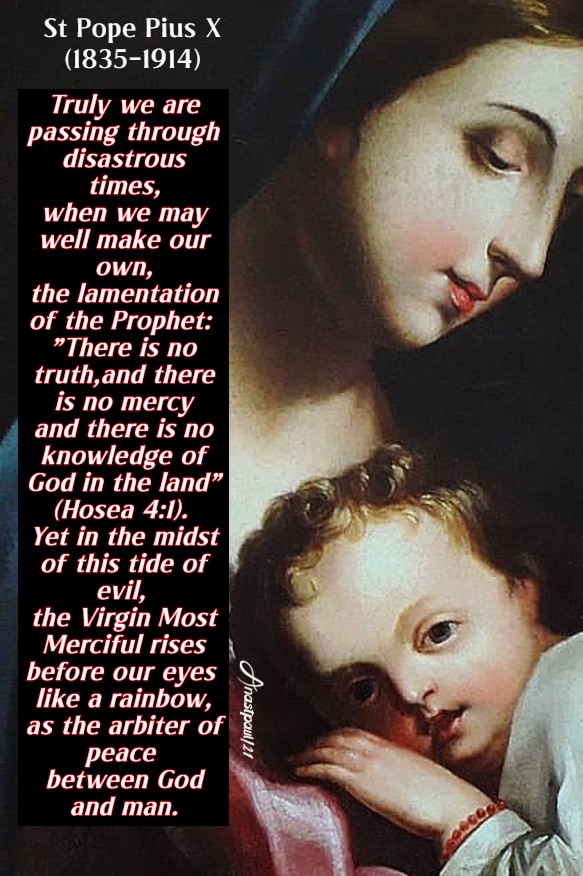
“Truly we are passing through disastrous times, when we may well make our own, the lamentation of the Prophet: “There is no truth,and there is no mercy and there is no knowledge of God in the land” (Hosea 4:1). Yet in the midst of this tide of evil, the Virgin Most Merciful rises before our eyes like a rainbow, as the arbiter of peace between God and man.”
One Minute Reflection – 9 November – “Month of the Holy Souls in Purgatory” –Feast Dedication of The Archbasilica of the Most Holy Saviour in the Lateran and the Memorial of Blessed Gabriel Ferretti OFM (1385-1456) – Gospel: John 2:13-22
“He made a whip out of cords and drove them all out of the temple area… ” – John 2:15
REFLECTION – “The Apostle Paul says: “The Temple of God, which you are, is holy” (1 Cor 3:17), that is to say – all you who believe in Christ, believing even to loving. … All who thus believe are the living stones of which God’s temple is built (1 Pt 2:5), they are like the imperishable wood of which the Ark was built that the flood could not overwhelm (Gn 6:14). This temple – the people of God, human persons themselves – is the place where God answers those who pray. People who pray to God outside this temple cannot have their prayers, for the peace of the Jerusalem above answered, even though they are answered regarding particular material things that God grants, even to pagans. … But it is an altogether different thing to have one’s prayers answered in the matter of eternal life. This is only granted to those who pray inside God’s temple.
For someone who prays within God’s Temple prays within the peace of the Church, in the unity of Christ’s Body, since the Body of Christ is built up of the multitude of believers spread over all the world. … And someone who prays in the peace of the Church, prays “in spirit and in truth” (Jn 4:23) of which the former Temple was only a symbol.
In fact, it was for our instruction that our Lord cast out of the temple those men who were only seeking their own interest and who only went there to buy and sell. If that first temple had to undergo this purification, then it is clear, that the Body of Christ too, the true Temple, also contains buyers and sellers among those who pray there, that is to say, people only seeking “their own interests and not those of Jesus Christ” (Phil 2,21). … But the time will come when the Lord will cast out all those sinners.” – St Augustine (354-430) Bishop of Hippo, North Africa, Father and Doctor of Grace of the Church (Sermon on Psalm 130, # 1-2)
PRAYER – Almighty God, as we recall with joy, the Dedication of this house of Yours on each recurring anniversary, listen to Your people’s prayer and grant that our worship here may be a sincere and holy service, honouring Your Name and bringing us the fullness of redemption. Through Jesus Christ, our Lord, in union with the Holy Spirit, one God for all eternity, amen.
Our Morning Offering – 9 November – Feast Dedication of The Archbasilica of the Most Holy Saviour in the Lateran
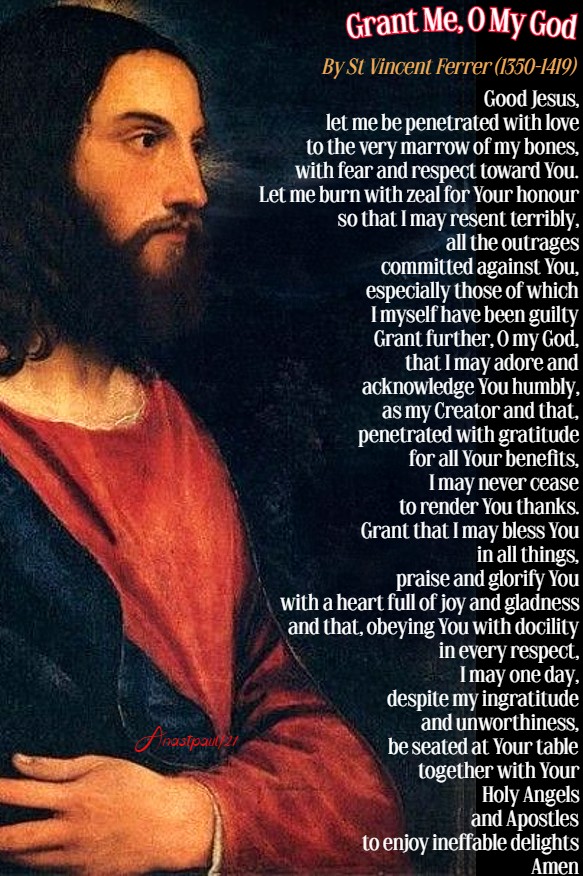
Grant me, O my God By St Vincent Ferrer OP (1350-1419)
Good Jesus, let me be penetrated with love to the very marrow of my bones, with fear and respect toward You. Let me burn with zeal for Your honour, so that I may resent terribly, all the outrages committed against You, especially those of which I myself have been guilty. Grant further, O my God, that I may adore and acknowledge You humbly, as my Creator and that, penetrated with gratitude for all Your benefits, I may never cease to render You thanks. Grant that I may bless You in all things, praise and glorify You with a heart full of joy and gladness and that, obeying You with docility in every respect, I may one day, despite my ingratitude and unworthiness, be seated at Your table together with Your Holy Angels and Apostles to enjoy ineffable delights. Amen
Saint of the Day – 9 November – Blessed Gabriel Ferretti OFM (1385-1456) Priest, Friar of the Order of Friars Minor,, Provincial Superior, Mystic. renowned missionary Preacher. He was zealous in the restoration and establishment of new Convents. Born in 1385 at Ancona, Italy and died on 12 November 1456 in Ancona, Piceno, Italy of natural causes. He was an ancestor to both Cardinal Gabriele Ferretti and Blessed Pope Pius IX, having been descended from a long noble lineage. Patronage – Ancona. His body is incorrupt.
Gabriel was born in 1385 and belonged to the ancient ducal family of the Ferretti. His devout parents raised him in the fear of God and in his eighteenth year he entered the Franciscan Order. His efforts at acquiring virtue won for him so great a degree of the respect and confidence of his brethren that, shortly after his Ordination to the Priesthood, when he was only twenty-five years old, he was appointed to preach missions in the March of Ancona. For fifteen years he devoted himself to this important task with blessed success.
He was then assigned to the office of Guardian of the Convent of Ancona and later he was elected Provincial of the Province of the March. In both offices he was careful to guide his subjects well. He shirked no labour and he could be very severe if it was necessary to correct an evil. He achieved the greatest results, however, by his own bright example of virtue, which induced weak and lax characters to exert themselves manfully in observing the rule.
His reputation for preaching to the masses was noted to the point, where Giacomo della Marca – who was preaching in Bosnia – asked for his help in that task. But the Ancona council in their deliberations on 22 February 1438 passed a resolution asking Pope Eugene IV to ensure the Friar remained in Ancona, due to all his good works. The Pope accepted this request, which meant that Gabriel could not go to Bosnia to aid his friend.
The following incident is proof of his great humility and piety. Once while he was journeying to Assisi, he went into the Franciscan Church at Foligno to pray. The Sacristan, who took him for a Brother, bade him serve the Mass of a Priest who had just gone to the Altar. The humble Provincial obeyed but when the guardian of the Convent recognised the venerable Superior of the Province of the March, in the server, he severely reproached the Sacristan. Father Gabriel defended the Sacristan, saying:
“To serve Mass is a great privilege. The Angels would consider themselves honoured. So do not blame the Brother for conferring that honour on me!”
Gabriel’s zeal to promote the interests of the Order was as great as his humility. At San Severino he restored a Convent that had fallen into ruin. At Osimo he built a new Convent. The Convent at Ancona he enlarged, in order to accommodate the great number of novices attracted to it by the fame of his sanctity.
Blessed Gabriel Ferretti possessed an ardent love of God and the Blessed Virgin Mary and he unwittingly gave expression to it, in all his sermons. Frequently he was favoured with visions of Our Lord and of the Blessed Virgin.
Rich in virtue and merits, Blessed Gabriel Ferretti died on 12 November 1456, in the Convent at Ancona, assisted in his last hour by the servant of God Gregory of Alba, and St James of the March. The latter delivered his funeral oration. To this day his body is incorrupt and the many miracles wrought through his intercession have increased the devotion of the faithful to him. On 19 September 1753 Pope Benedict XIV solemnly confirmed his veneration.
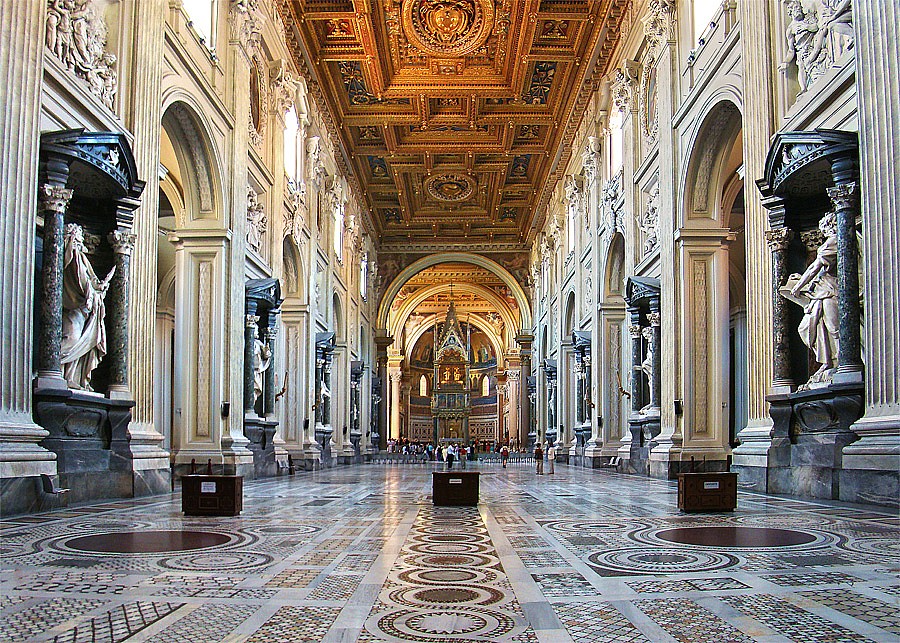
Dedication of The Archbasilica of the Most Holy Saviour and of Saints John the Baptist and John the Evangelist in the Lateran (Feast):
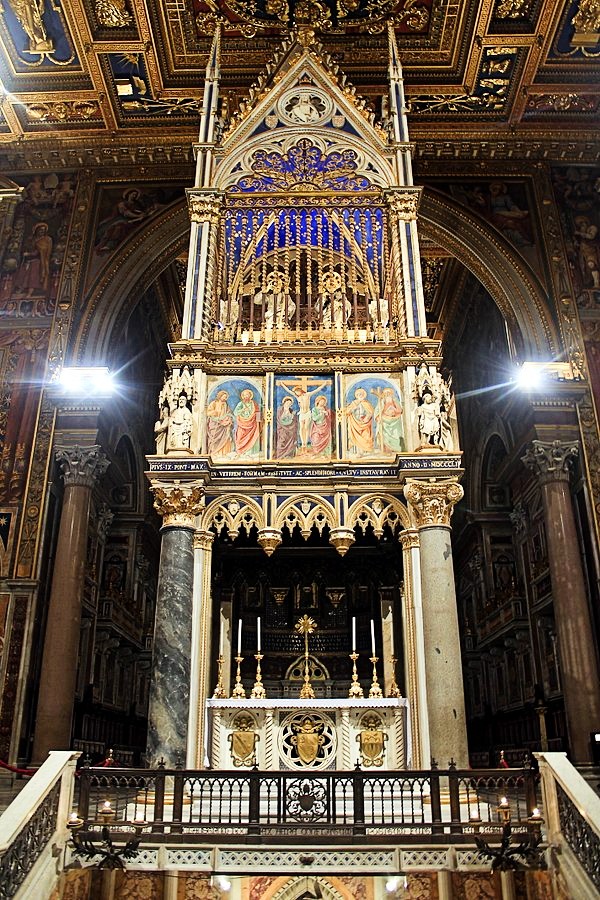
The oldest and first in rank of the four Basilicas of Rome. The name is derived from the Laterani family, on the site of whose Palace the Basilica stands. King Constantine presented this Palace to the Church. Its annual celebration throughout the Latin Church is a sign of love and unity with the Papacy and Pope. The original Church building, probably adapted from the hall of the palace, was dedicated to the Saviour and from its splendour was known as the Basilica Aurea. Though several times destroyed and rebuilt, the Basilica retained its ancient form, being divided by rows of columns into aisles and having an atrium with colonnades. The restoration of the 17th century changed its appearance. A Monastery was formerly between the Basilica and the City wall of which the cloister still remains. The original apse survived until 1878, when it was destroyed and a deeper apse built. The ancient mosaics have been preserved The high Altar, which is of wood and is believed to have been used by Saint Peter, is now encased in marble. In the upper part of the baldachinum are the heads of the Apostles, Peter and Paul. The Baptistery is an octagonal edifice with porphyry columns. The font is of green basalt. This Basilica has been the Cathedral of Rome since the 4th century.
Santa Maria la Real de la Almudena / Our Lady of Almudena, Madrid, Spain (712) – 9 Novemnber:
The Virgin of Almudena is a medieval icon of the Virgin Mary, Mother of God. The image is the advocation of the Virgin that serves as a Patroness of Madrid, Spain. Intriguingly, however, its name derives from the Arabic term of Al Mudayna, or the citadel. There are various legends regarding the Statue. One of the historical legends is that in 712, prior to the capture of the Town by the advancing Muslim forces, the inhabitants of the Town secreted the image of the Virgin, for its own protection, inside the walls surrounding the town. In the 11th century, when Madrid was reconquered by the King Alfonso VI of Castile, the Christian soldiers endeavoured to find the Statue. After days of prayer, the spot on the wall hiding the icon crumbled, revealing the Statue. Another legend is that as Christian soldiers approached the Town, they had a vision of Mary imploring them to allow her to lead them into the City. Again the miraculous crumbling of the wall occurred, with the Statue showing an entry route through the walls. The Cathedral of Madrid is dedicated to this advocation of the Virgin and her feast day, 9 November, is a major holiday in Madrid. Below is this beautiful Cathedral.
St Agrippinus of Naples St Alexander of Salonica St Aurelius of Riditio St Benignus of Armagh St Eustolia St Francisco José Marín López de Arroyave Blessed Gabriel Ferretti OFM (1385-1456) Priest Bl George Napper Bl Gratia of Cattaro Bl Helen of Hungary Bl Henryk Hlebowicz St Jane of Segna
St Justo Juanes Santos St Luigi Beltrame Quattrocchi St Luis Morbioli St María de la Salud Baldoví Trull Bl María del Carmen of the Child Jesus St Pabo St Sopatra St Theodore Stratelates St Ursinus of Bourges St Valentín Gil Arribas St Vitonus of Verdun — Martyrs of Constantinople – 3 saints: A group of ten Catholic Christians who tried to defend an image of Jesus over the Brazen Gate of Constantinople from an attack by Iconoclasts during the persecutions of emperor Leo the Isaurian. The group of was seized by soldiers, condemned by judges for opposing the emperor, and martyred. The only details that have survived are three of their names – Julian, Marcian and Maria. They were martyred in 730 at Constantinople (modern Istanbul, Turkey).
Martyred in the Spanish Civil War: • Blessed Anastasio Garzón González • Blessed Francisco José Marín López de Arroyave • Blessed Justo Juanes Santos • Blessed María de la Salud Baldoví Trull • Blessed Valentín Gil Arribas
Thought for the Day – 8 November – Meditations with Antonio Cardinal Bacci (1881-1971)
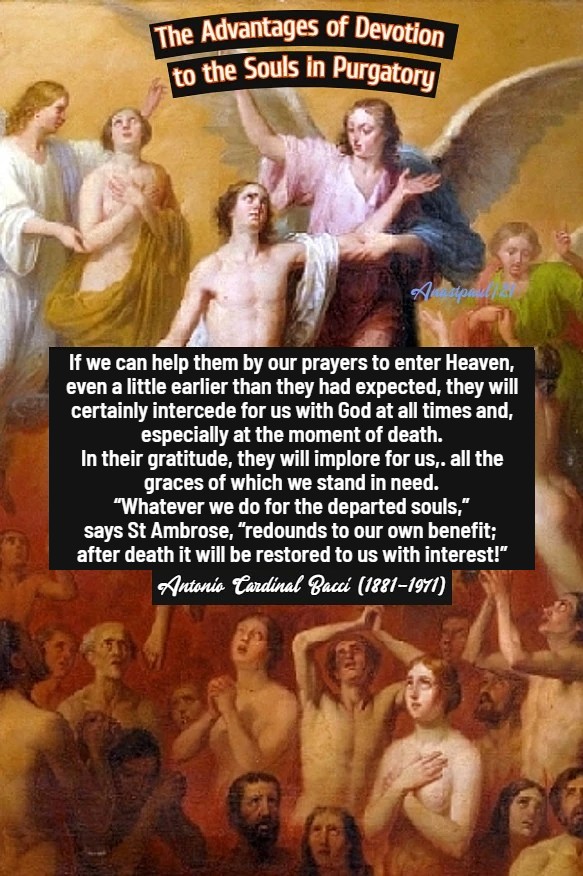
The Advantages of Devotion to the Souls in Purgatory
“As Sacred Scripture says, it is a holy and wholesome thought, to pray for the dead (2 Mac 12:46). Besides being profitable to them, however, it is profitable to ourselves too. There are two reasons for this: (a) Devotion to the Faithful Departed reminds us, that even venial sin, carelessness and tepidity, will one day be punished with terrible severity. As a result, we are encouraged in our efforts to lead better lives; (b) In the second place, we all know, that the souls in Purgatory are holy and are already in the antechamber of Paradise, which they yearn to reach but from which they are kept far apart, by the imperfections which they have still to purify. If we can help them by our prayers to enter Heaven, even a little earlier than they had expected, they will certainly intercede for us with God at all times and, especially at the moment of death. In their gratitude, they will implore for us,. all the graces of which we stand in need. “Whatever we do for the departed souls,” says St Ambrose, “redounds to our own benefit; after death it will be restored to us with interest!”
While we are assisting our dear ones to ascend ,as soon as possible, into the everlasting happiness of Heaven, it is comforting to know, that one day, their patronage will enable us to join them there.”
Quote/s of the Day – 8 November – Readings: Wisdom 1: 1-7; Psalm 139: 1b-10; Luke 17: 1-6
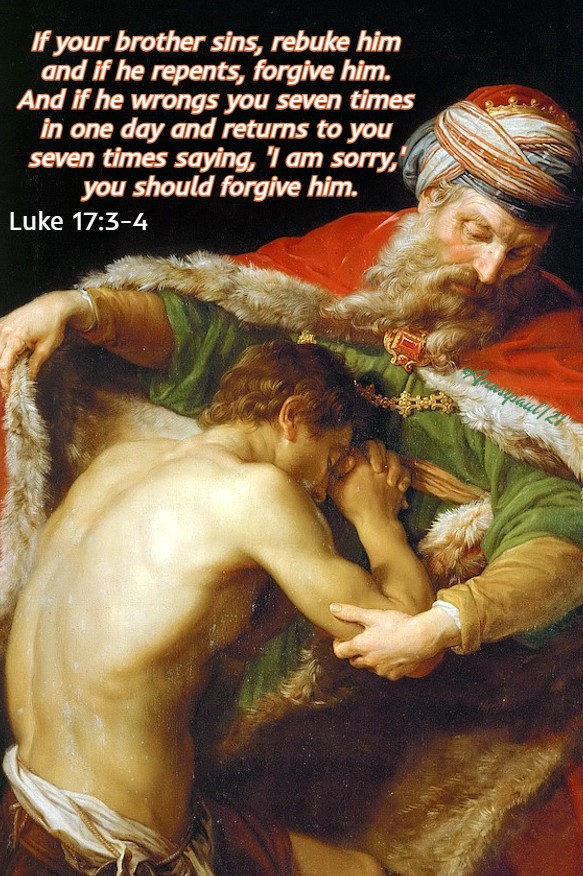
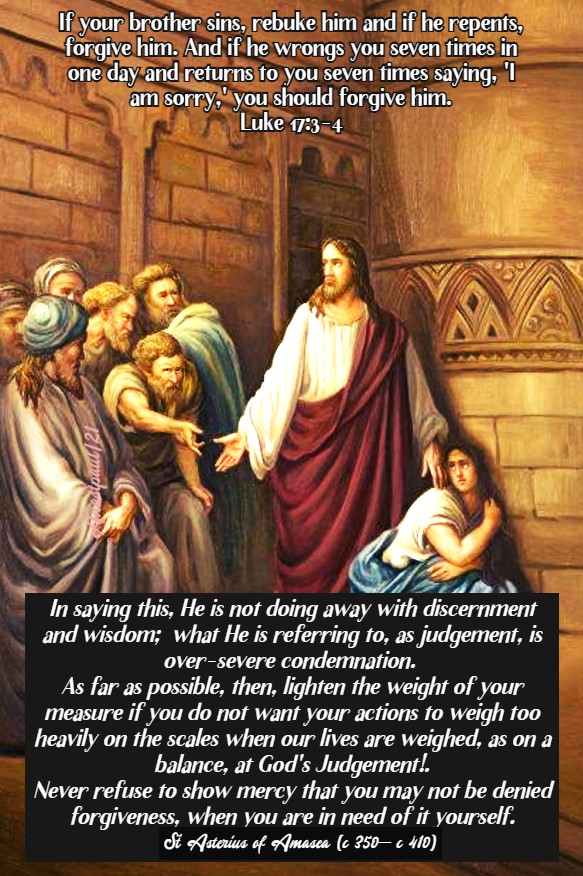
“If your brother sins, rebuke him and if he repents, forgive him. And if he wrongs you seven times in one day and returns to you seven times saying, ‘I am sorry,’ you should forgive him.”
Luke 17:3-4
“Judge not and you will not be judged; condemn not and you will not be condemned; forgive and you will be forgiven; give and it will be given to you, good measure, pressed down, shaken together, running over, will be put into your lap. For the measure you give, will be the measure you get back.“
Luke 6:37-38
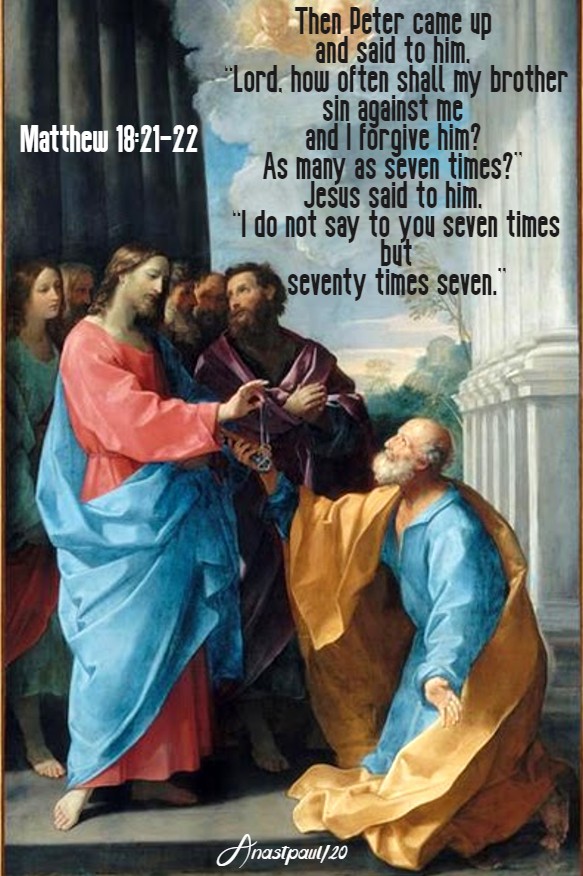
“Then Peter came up and said to him, “Lord, how often shall my brother sin against me and I forgive him? As many as seven times?” Jesus said to him, “I do not say to you seven times but seventy times seven.”
Matthew 18:21-22
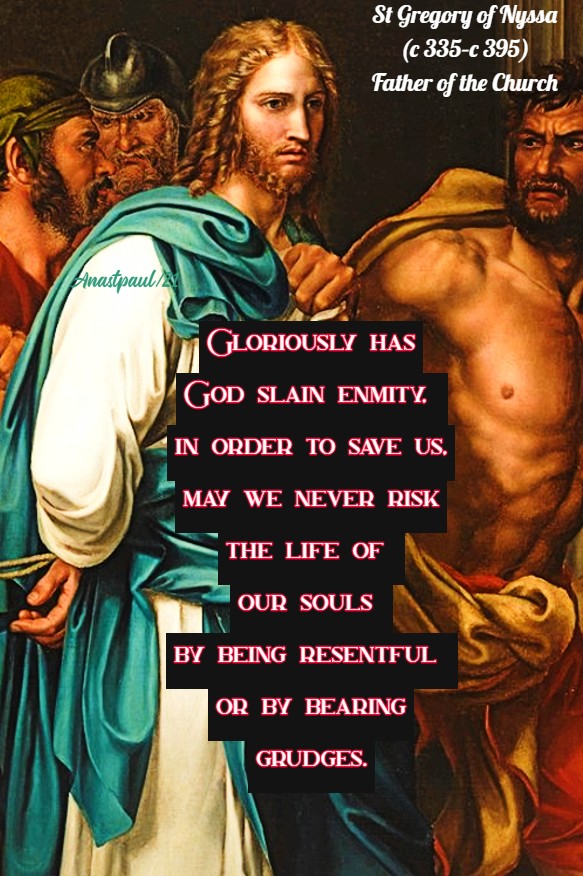
“Gloriously has God slain enmity, in order to save us, may we never risk the life of our souls by being resentful or by bearing grudges.”
St Gregory of Nyssa (c 335–c 395) Father of the Church
(Excerpt from his treatise, On Christian Perfection)
“In conformity with the philosophy of Christ, let us make of our life, a training for death.”
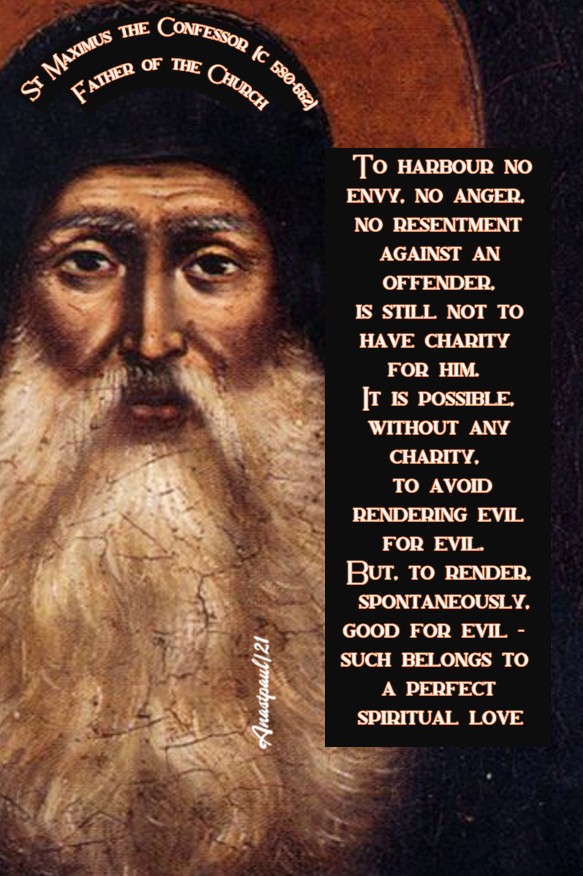
“To harbour no envy, no anger, no resentment against an offender, is still not to have charity for him. It is possible, without any charity, to avoid rendering evil for evil. But, to render, spontaneously, good for evil – such belongs to a perfect spiritual love.”
St Maximus the Confessor (c 580-662) Father of the Church
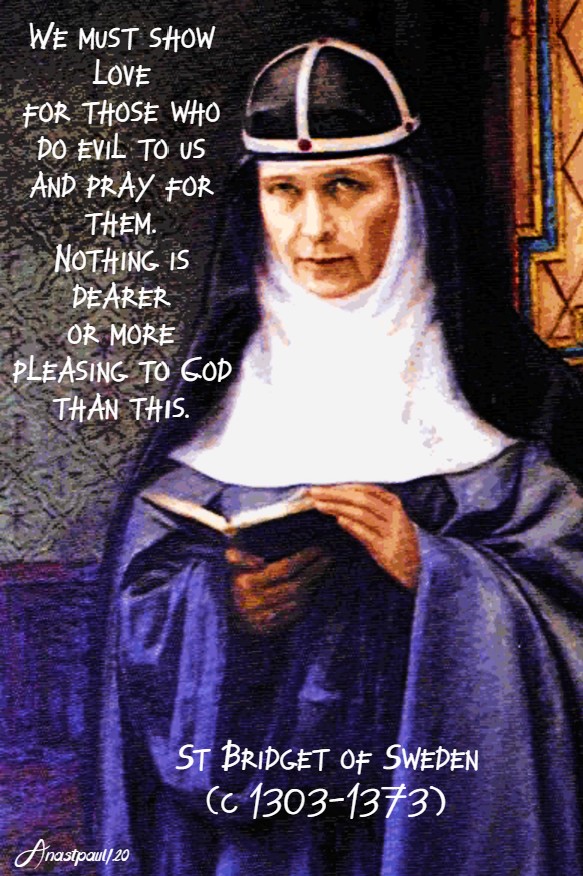
“We must show love for those who do evil to us and pray for them. Nothing is dearer or more pleasing to God than this.”
One Minute Reflection – 8 November – “Pray for the Holy Souls in Purgatory” – Readings: Wisdom 1: 1-7; Psalm 139: 1b-10; Luke 17: 1-6
“If your brother sins, rebuke him and if he repents, forgive him. And if he wrongs you seven times in one day and returns to you seven times saying, ‘I am sorry,’ you should forgive him.” – Luke 17:3-4
REFLECTION – “O you who are hard-hearted, incapable of gentleness, learn of your Creator’s goodness and do not be bitter judges and arbitrators of your fellow servants, as you wait for the coming of Him, Who will disclose the hidden places of the heart and will Himself, the all-powerful Lord, determine each one’s place in the world to come. Do not assign severe judgements, that you may not be judged in the same way and rent by the words of your own mouth, as if by sharp teeth. For it is against this kind of crime that these words of the Gospel seem to warn us: “Do not judge and you will not be judged” (Lk 6:37). In saying this, He is not doing away with discernment and wisdom; what He is referring to, as judgement, is over-severe condemnation. As far as possible, then, lighten the weight of your measure if you do not want your actions to weigh too heavily on the scales, when our lives are weighed, as on a balance, at God’s Judgement! … Never refuse to show mercy that you may not be denied forgiveness when you are in need of it yourself.” – St Asterius of Amasea (c 350– c 410) Bishop (Sermon 13)
PRAYER – O Lord our God, grant that we may not so much seek to be consoled as to console, to be understood as to understand, to be loved as to love and to be only good influences to our neighbour. May the prayers of the Blessed Virgin, all the Saints and Angels, ever intercede for the Church Militant and the Church Suffering, Amen.
Our Morning Offering – 8 November – Octave Day of All Saints
May I Be United With You, Good Jesus St Peter Canisius (1521-1597) Doctor of the Church
Let my eyes take their sleep but may my heart always keep watch for You. May Your right hand bless Your servants who love You. May I be united with the praise that flows from You, Lord Jesus, to all Your saints; united with the gratitude drawn from Your heart, good Jesus, that causes Your saints to thank You; united with Your passion, good Jesus, by which You took away our guilt; united with the divine longing which You had on earth, for our salvation; united with every prayer that welled from Your divine heart, good Jesus and flowed into the hearts of Your saints. Amen
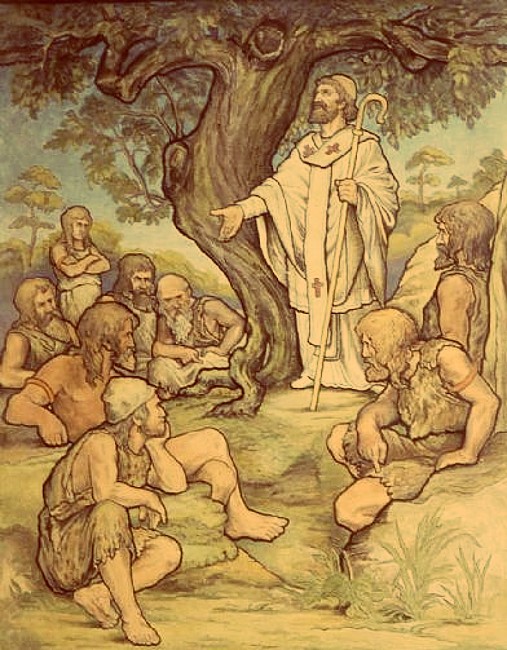
Saint of the Day – 8 November – Saint Willehad of Bremen (Died 789) First Bishop of Bremen, Germany, Confessor, Benedictine Monk and Priest, a friend of Blessed Alcuin of York, disciple of St Boniface, Missionary. Born in the 8th Century in Northumbria, England and died in 789 in Bremen, Germany of natural causes. Patronage – Saxony. Also known as – Willihad.
The Roman Martyrology states: “At Bremen, St Willehad, first Bishop of that City, who, in conjunction with St Boniface, whose disciple he was, spread the Gospel in Friesland and Saxony.“
Willehad was born in Northumbria and probably received his education at York under Bishop Ecgbert. He was Ordained after his education, and about the year 766, he went to Frisia, to continue the missionary work of St Boniface who had been Martyred by the Frisians in 754. At an assembly in Paderborn in 777, Saxony was divided into missionary zones. The zone between the Weser and the Elbe, called Wigmodia, was given to Willehad.
From 780 Willehad preached in the region of the lower Weser River on commission from Charlemagne. He barely escaped with his life when the Frisians wanted to kill him and he returned to the area around Utrecht. Once again, he and his fellow missionaries barely escaped with their lives, when the local pagans wanted to kill them for destroying some temples. Finally, in 780, Charlemagne sent him to evangelise the Saxons. He preached to them for two years but, in 782, the Saxons under Widukind, rebelled against Charlemagne and Willehad was forced to flee to Frisia. He took the opportunity to travel to Rome, where he reported to Pope Adrian I on his work.
Upon his return from Rome, Willehad retired for a time to the Monastery of Echternach, in present-day Luxembourg. He spent two years there reassembling his missionary team.
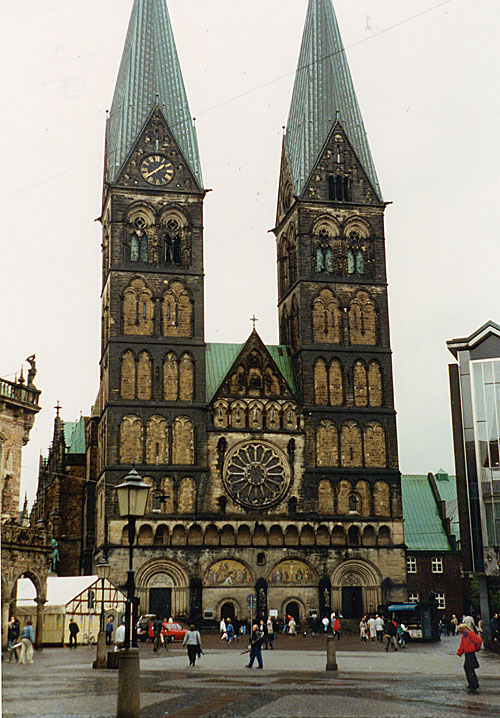
After Charlemagne’s conquest of the Saxons, Willehad preached in the region around the lower Elbe and the lower Weser. In 787 Willehad was Consecrated Bishop and that part of Saxony and Friesland, near the mouth of the Weser, was assigned to him for his Diocese. He chose as his seat, the City of Bremen, which is mentioned for the first time in documents of 782 and built a Cathedral there. Praised for its beauty by Ansgar, it was dedicated in 789.
Willehad died in Blexen-upon-Weser, today a part of Nordenham. He is buried in the City’s Cathedral, which he Consecrated shortly before his death on 8 November 789. Bishop St Ansgar compiled a life of Willehad and the preface which he wrote was considered a masterpiece for that age. In 860, a sick girl from Wege travelled to his grave. There, she was cured by a miracle. This was the first time the small village was mentioned in any historical documents.
Notre-Dame de Bellefontaine / Our Lady of the Blessed Fountain, Bellefontaine, France (12th Century) – 8 November:
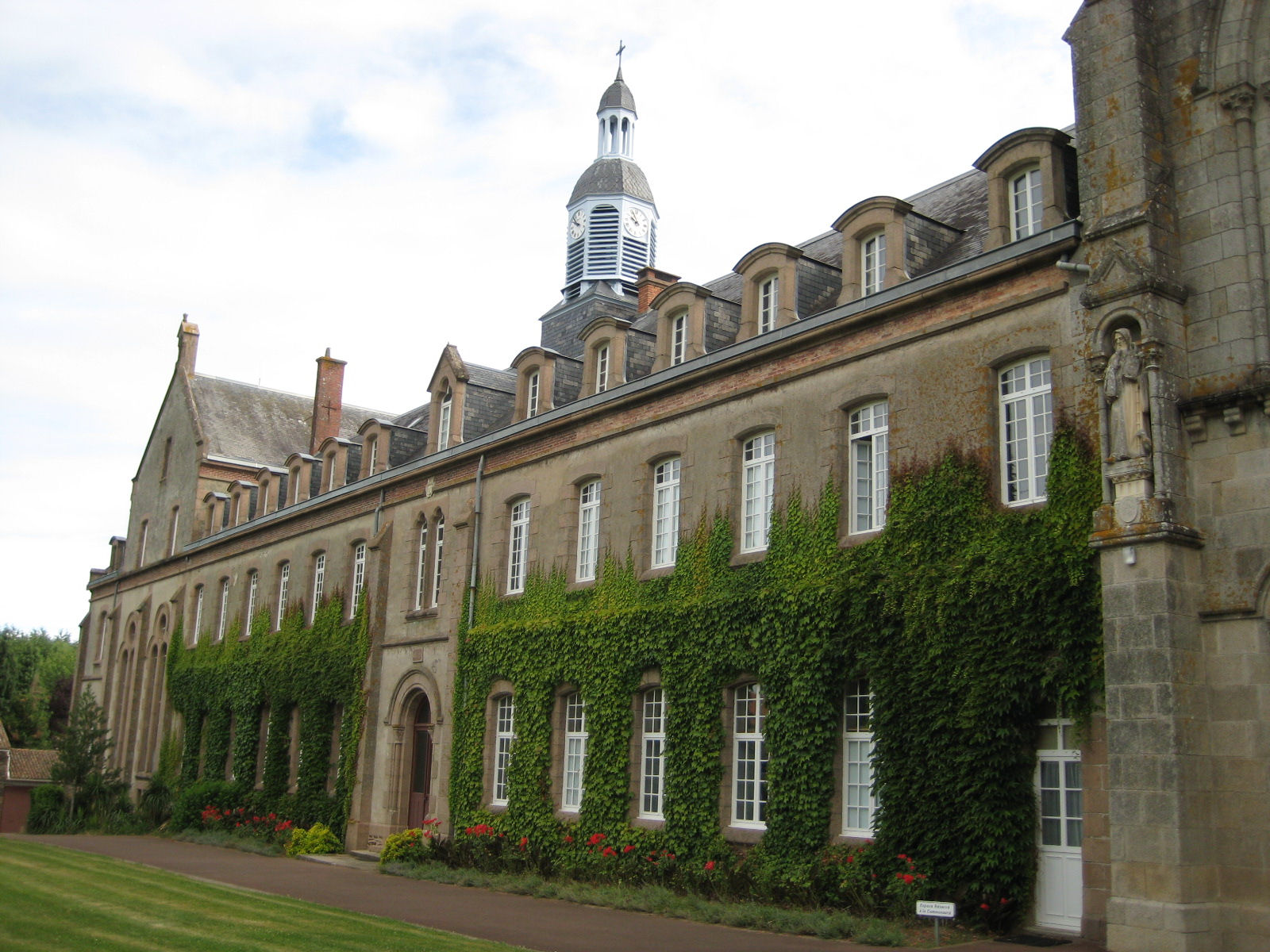
According to tradition it was sometime in the 13th century when a man, who was hunting near the Benedictine Abbey, severely injured his hand. The injury was so severe, that the man feared that he might lose his life from the loss of blood which would not cease. Having with him a bowl, he filled it with fresh water he found nearby and placed his hand in it as he prayed devotedly to the Blessed Virgin Mary for her intervention The man’s faith was rewarded, as the hunter looked at his hand to witness the wound miraculously close as if he had never been injured at all. In recognition of the miracle, he later returned to site, bringing with him, a Statue of the Blessed Virgin. When the news of the miracle became widely known. it attracted many pilgrims from all over Europe. Thus, starting in the 13th century, the Statue of the Virgin was venerated under the title of Notre-Dame-de-Bellefontaine. A small Chapel was also built around the Statue of the Virgin Mary. Shortly before the coming of the French Revolution, a Church was built, whose care was entrusted to a local hermit. The Statue of the Blessed Virgin miraculously escaped the revolutionary turmoil and the place remained a place of celebration for the faithful of the two neighbouring counties. The nearby Benedictine Abbey, which had been founded at the end of the eleventh century, was plundered and confiscated by the state during the Revolution and then sold in the year 1791. In 1794 some of the buildings were set ablaze and the rest of the Abbey left in ruins. Some of the property was purchased on 17 january 1817, by a Trappist Monk, Urban Guillet and it once again became a flourishing Monastery.
The pool from which the hunter obtained the water still exists and is now protected behind a metal grate. There is also a modern Statue of the Blessed Virgin Mary located in a grotto nearby, as the original Statue disappeared during the fighting and chaos of World War I. Its current whereabouts is unknown.
The Abbey Church with the new Statue above the Altar.
St Adeodatus I, Pope St Clair of Tours St Cybi of Caenarvon St Drouet
St Gregory of Einsiedeln St John Baptist Con Bl Maria Crucified Satellico St Martinô Tho St Martinô Ta Ðuc Thinh St Maurus of Verdun St Moroc of Scotland St Phaolô Nguyen Ngân St Tysilio of Wales St Willehad of Bremen (Died 789) Bishop Confessor St Wiomad of Trèves — All Deceased Dominicans
All Saints of the Diocese of Evry: A regional memorial of all the saints and beati of the calendar who have a connection to the Diocese of Evry-Corbeil-Essonnes, France. • Blessed Isabella of France, founded the Longchamp monastery • Blessed Nicolas Gaudreau, pastor of Vert-le-Petit • Blessed Pierre Bonse, pastor of Massy • Our Lady of Good Guard, patron saint of the diocese, venerated in Longpont-sur-Orge, France • Saint Corbinian, born in Saint-Germain-lès-Arpajon • Saint Denis of Paris, evangelizer of part of Essonne and revered ni Longpont-sur-Orge • Saint Eloi, who lived in Chilly-Mazarin • Saint Germain of Paris • Saint William of Bourges, son of Count Baldwin IV of Corbeil • Saint William of Aebelholt, pastor of Brunoy • Saint Wulfran of Sens, born in Milly-la-Forêt • Blessed Nativelle, vicar of Longjumeau • Blessed René Le Bris, pastor of Bris-sous-Forges • Saint Spire of Bayeux, whose relics are in Corbeil in the cathedral that bears his name All Saints of Wales
Augustinian Martyrs of Spain
Four Crowned Martyrs: Saint Castorus, Saint Claudius, Saint Nicostratus and Saint Simpronian. Skilled stone carvers in the 3rd century quarries. Martyred when they refused to carve an idol of Aesculapius for Diocletian. They were drowned in the River Sava in 305. Patronages – against fever, cattle, sculptors, stone masons, stonecutters.
Martyred in the Spanish Civil War • BlessedAntolín Pablos Villanueva • BlessedLaureano Pérez Carrascal • BlessedManuel Sanz Domínguez • BlessedMaximino Serrano Sáiz
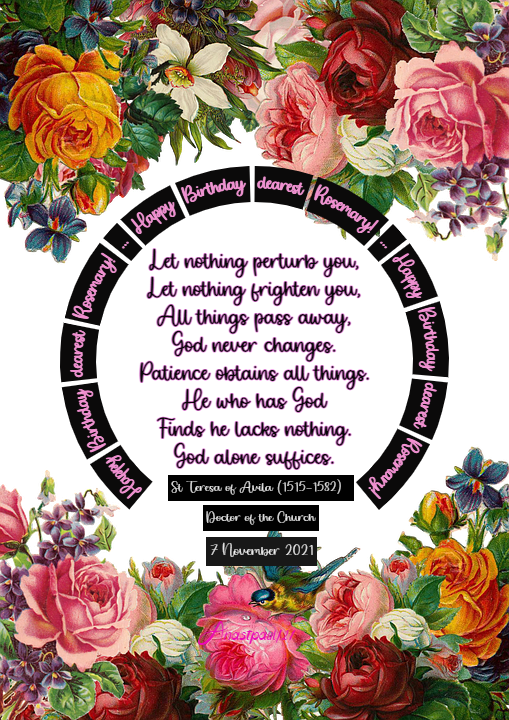
We have a very special child of God and a fellow-pilgrim here with us, on Breathing Catholic. She has been a generous and loving supporter and benefactor of this project and of me personally, for many years now. She has been a friend in need and a support in trial. She has been a wise head and a shoulder to cry on. As the times have been so difficult for all of us and as she is not very well, I wished to manifest the great regard I hold her and her husband in, that they might know how much they are appreciated. Across the thousands of miles, Rosemary has always, remained close in Christ.
God love you,keep you in the Palm of His Hand and bless you. Remember all the evils of the world will pass away. God alone is our Refuge and our Fortress.
“Let nothing perturb you, Let nothing frighten you, All things pass away, God never changes. Patience obtains all things. He who has God Finds he lacks nothing. God alone suffices.”
St Teresa of Avila (1515-1582) Doctor of the Church
May Our Beloved Lord, grant you the strength, courage and wisdom, to rest in Him alone!
Thought for the Day – 7 November – Meditations with Antonio Cardinal Bacci (1881-1971)
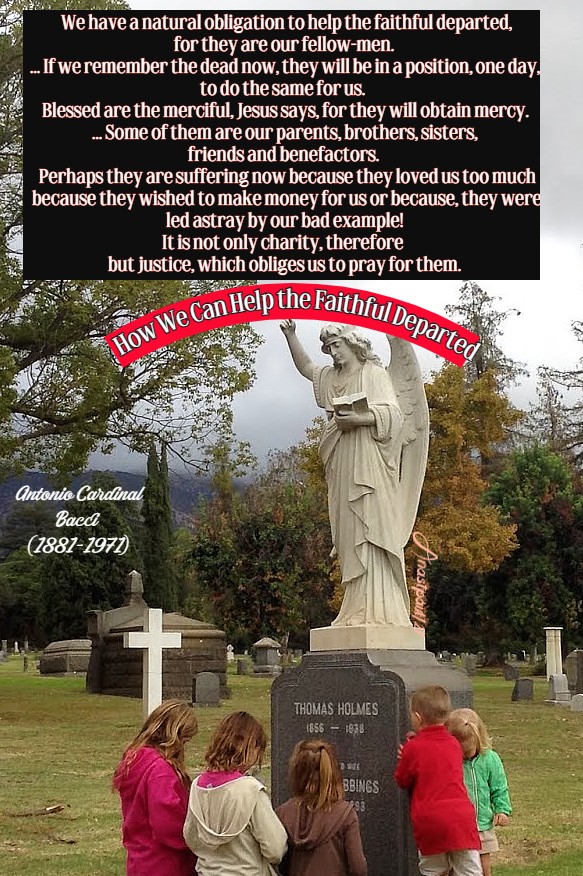
How We Can Help the Faithful Departed
“We have a natural obligation to help the faithful departed, for they are our fellow-men. Are we capable of watching another human being in agony, without feeling pity for him? If there is some way in which we can help him, moreover, ought we not to do so? The Holy Souls are in agony, however, they are on fire with the love of God, yet cannot be united to Him. We have a means of helping them through our prayers and good works.
There is a further obligation on us, arising from our religion. They have been redeemed, like ourselves, by the Blood of Christ and God has told us that the same degree of mercy, will one day be shown to us, which we have shown to others. The time will come when we also shall find ourselves in Purgatory and shall be in need of prayer. If we remember the dead now, they will be in a position, one day, to do the same for us. Blessed are the merciful, Jesus says, for they will obtain mercy.
When we appear before the judgement seat of God in order to account for the way in which we have spent our lives, He will count as done to Himself, whatever we have done to the poor, hungry and ill-clad. Only if we have been merciful towards them, will He receive us into the Kingdom of Heaven. Otherwise, He will send us away, accursed, for all eternity. Now the Souls in Purgatory are more unfortunate than those who are poor, hungry and homeless in this world. They hunger for God, they are full of regret for the sins which they have committed and they languish far from the eternal home, to which they belong.
Finally, we have a duty in justice, to help their souls. Some of them are our parents, brothers, sisters, friends and benefactors. Perhaps they are suffering now because they loved us too much because they wished to make money for us or because, they were led astray by our bad example! It is not only charity, therefore but justice, which obliges us to pray for them.”
Quote/s of the Day – 7 November – The Memorial of All Saints of the Order of Preachers
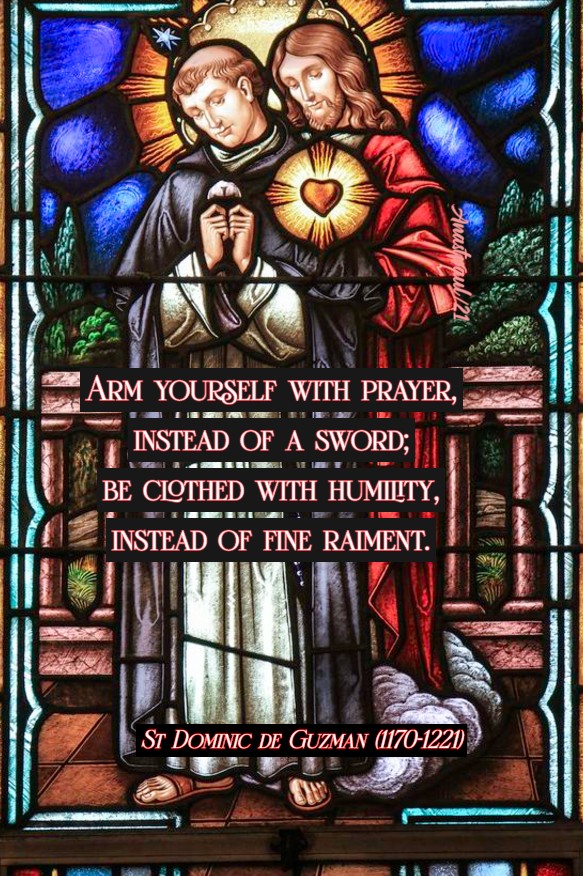
“Arm yourself with prayer, instead of a sword; be clothed with humility, instead of fine raiment.”
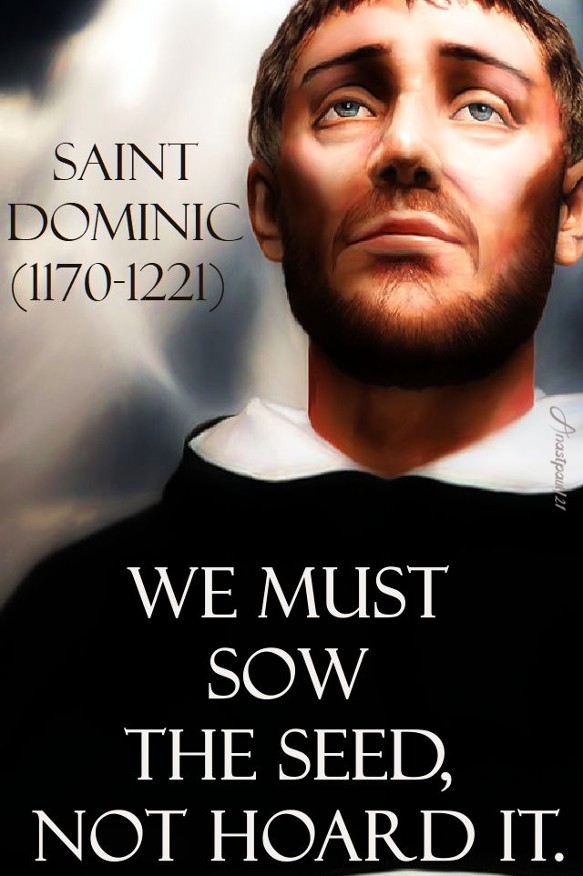
“We must sow the seed, Not hoard it.”
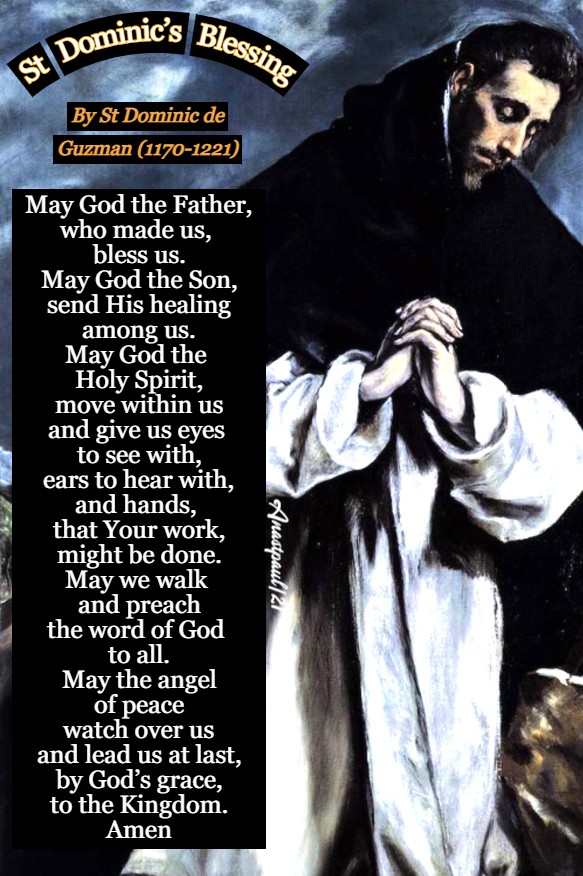
St Dominic’s Blessing By St Dominic de Guzman (1170-1221)
May God the Father, who made us, bless us. May God the Son, send His healing among us. May God the Holy Spirit, move within us and give us eyes to see with, ears to hear with, and hands, that Your work, might be done. May we walk and preach the word of God to all. May the angel of peace watch over us and lead us at last, by God’s grace, to the Kingdom. Amen
St Dominic de Guzman OP (1170-1221)
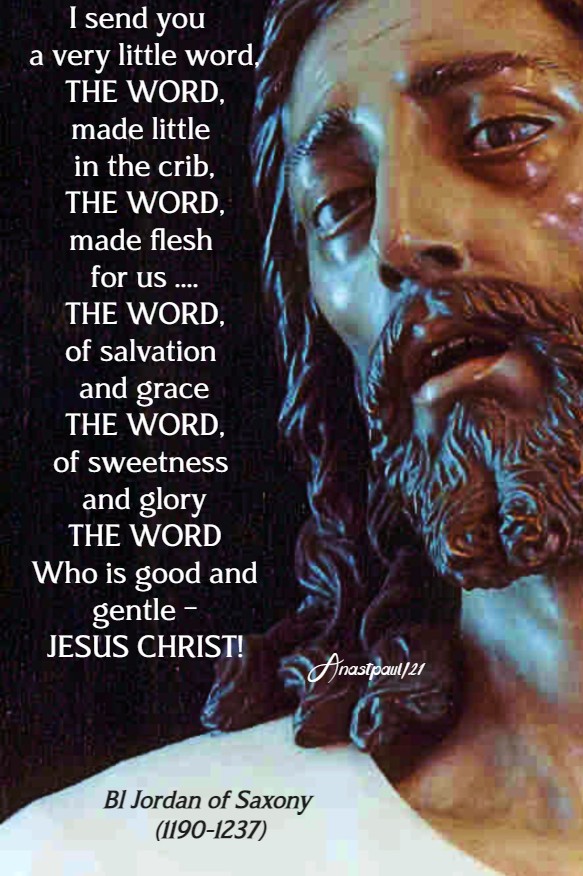
“I send you a very little word, THE WORD, made little in the crib, THE WORD, made flesh for us …. THE WORD, of salvation and grace THE WORD, of sweetness and glory THE WORD Who is good and gentle – JESUS CHRIST!”
Blessed Jordan of Saxony OP (1190-1237)
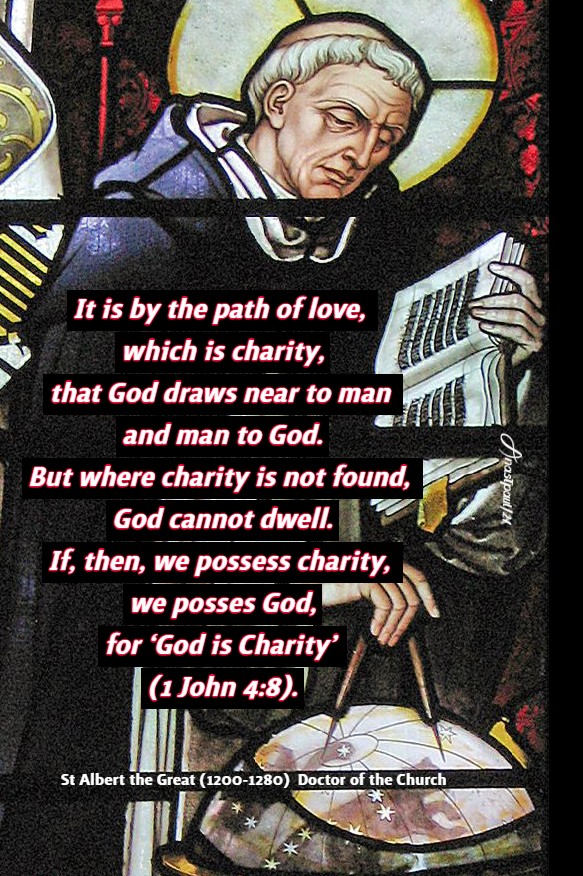
“It is by the path of love, which is charity, that God draws near to man and man to God. But where charity is not found, God cannot dwell. If, then, we possess charity, we posses God, for ‘God is Charity’ (1 John 4:8).”
St Albert the Great OP (1200-1280) Doctor of the Church
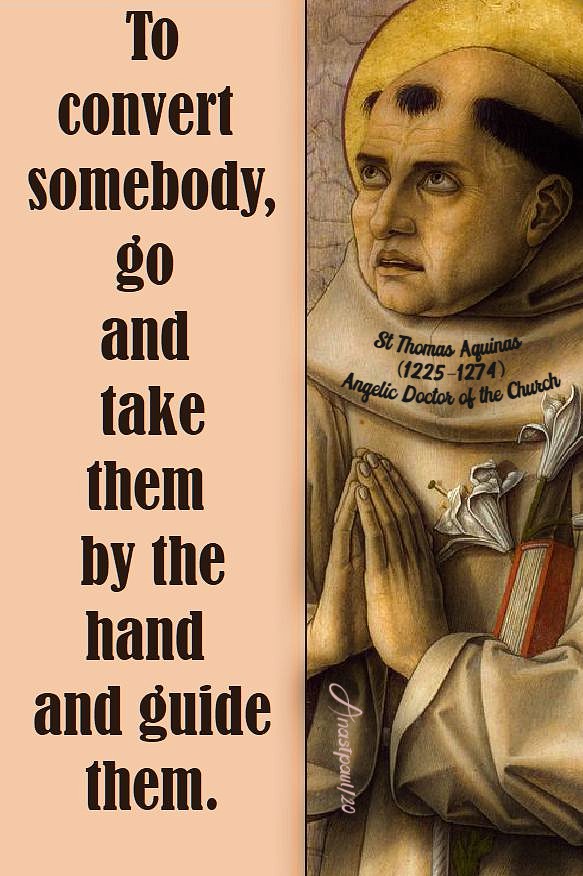
“To convert somebody, go and take them by the hand and guide them.”
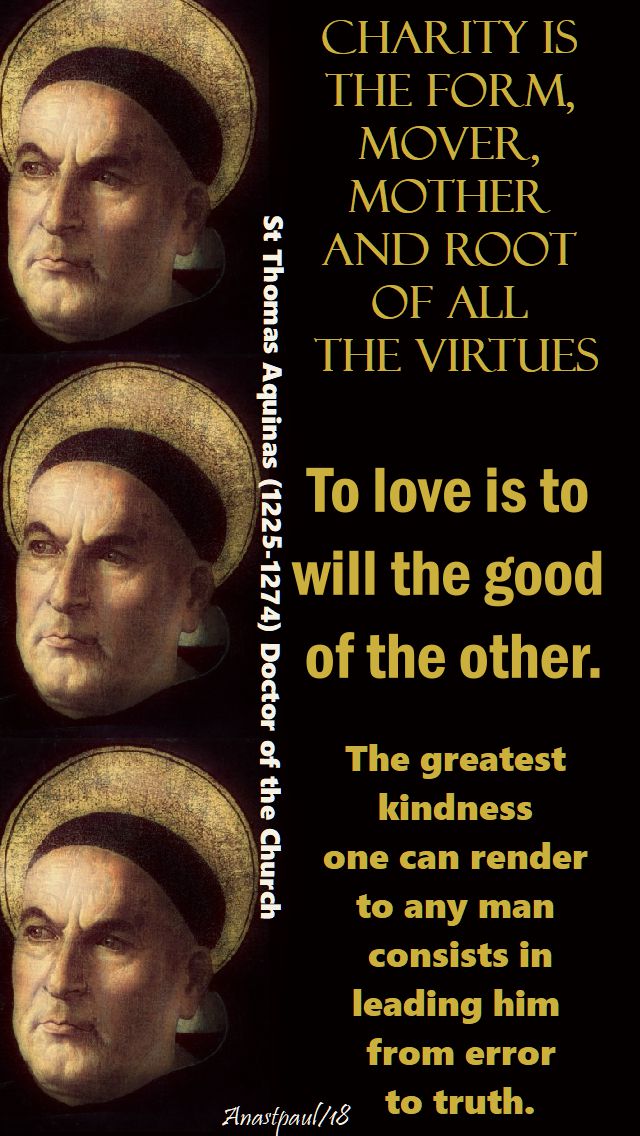
“Charity is the form, mover, mother and root of all the virtues.”
“To love is to will the good of the other.”
“The greatest kindness one can render to any man consists in leading him from error to truth.”
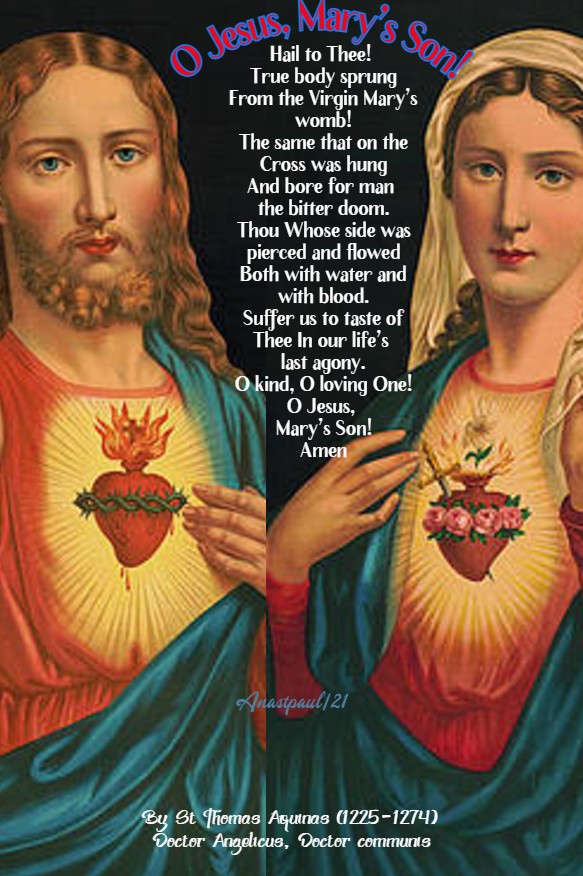
O Jesus, Mary’s Son! By St Thomas Aquinas OP (1225-1274) Doctor Angelicus, Doctor communis
Hail to Thee! True body sprung From the Virgin Mary’s womb! The same that on the cross was hung And bore for man the bitter doom. Thou Whose side was pierced and flowed Both with water and with blood. Suffer us to taste of Thee In our life’s last agony. O kind, O loving One! O Jesus, Mary’s Son! Amen
St Thomas Aquinas OP (1225-1274)
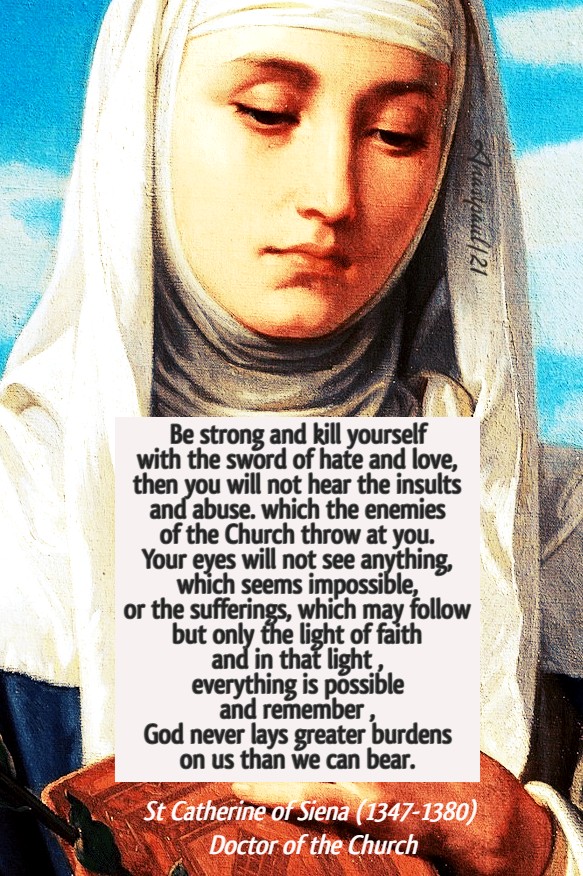
“Be strong and kill yourself with the sword of hate and love, then you will not hear the insults and abuse. which the enemies of the Church throw at you. Your eyes will not see anything, which seems impossible, or the sufferings, which may follow but only the light of faith and in that light , everything is possible and remember , God never lays greater burdens on us than we can bear.”
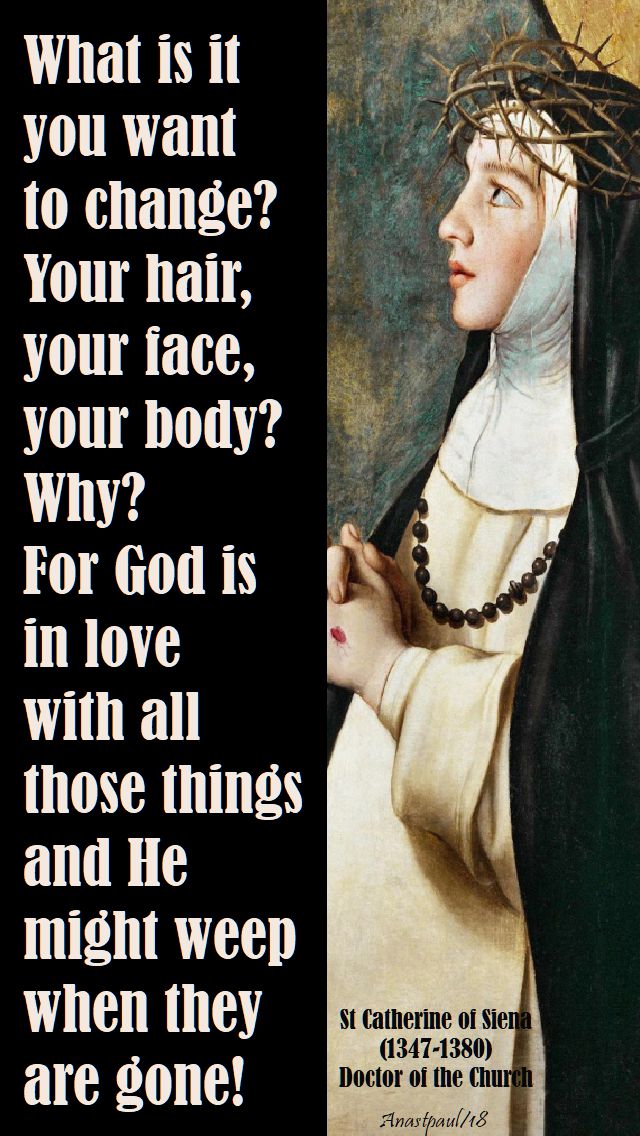
“What is it you want to change? Your hair, your face, your body? Why? For God is in love with all those things and He might weep when they are gone!”
St Catherine of Siena OP (1347-1380) Doctor of the Church
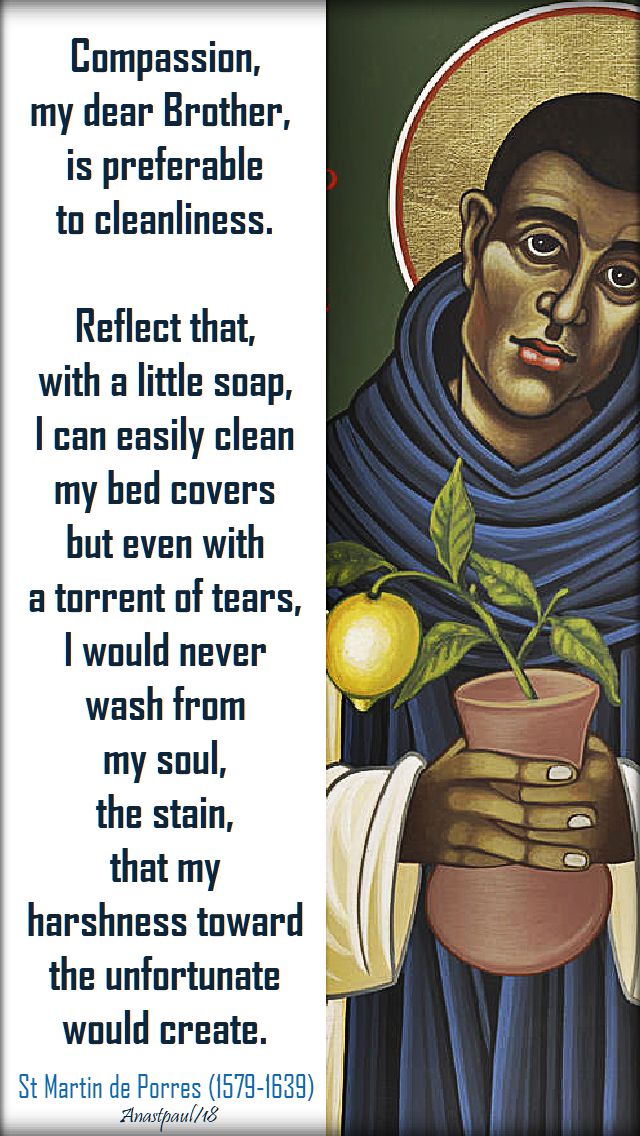
“Compassion, my dear Brother, is preferable to cleanliness. Reflect that with a little soap, I can easily clean my bed covers but even with a torrent of tears, I would never wash from my soul, the stain, that my harshness toward the unfortunate would create.”
St Martin de Porres OP (1579-1639)
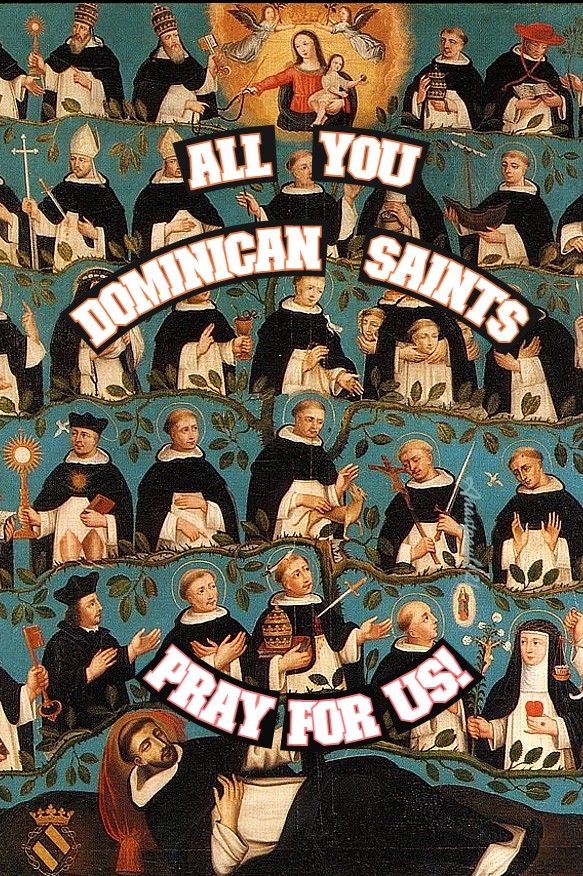
Just a few of the great Dominicans – Ana OP – with Love
One Minute Reflection – 7 November – Readings: Kings 17: 10-16; Psalm 146: 7-10; Hebrews 9: 24-28; Mark 12: 38-44
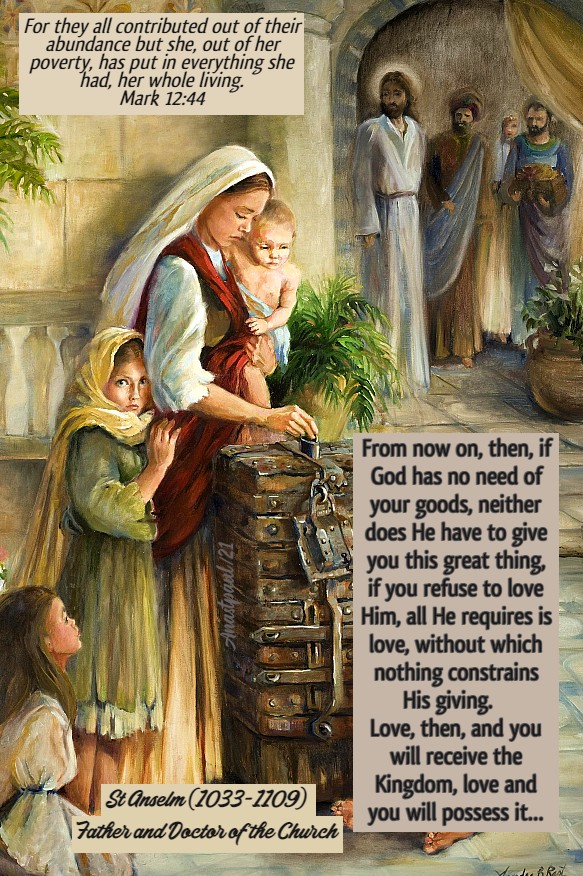
“For they all contributed out of their abundance but she, out of her poverty, has put in everything she had, her whole living.” – Mark 12:44
REFLECTION – “Now, if someone is wondering what the cost is, here is their answer – He does not give it to someone who does not value it. For indeed, nobody gives away something they hold dear without placing some kind of value on it. From now on, then, if God has no need of your goods, neither does He have to give you this great thing, if you refuse to love Him, all He requires is love, without which nothing constrains His giving. Love, then, and you will receive the Kingdom, love and you will possess it… Love God more than yourself and already, you begin to have what it is you desire to possess fully, in heaven.”… St Anselm (1033-1109) Father and Doctor of the Church
PRAYER – Lord God, Your Son has shown us the way. As we follow in His steps, may we never wander from the path that leads to life. Renew the wonders of Your grace in our hearts so that neither death nor life may separate us from Your love. Holy Father, as You were glorified by the life and death of all the Dominican Saints and Blesseds, grant that by their prayers, we may receive Your grace to give first to You and then to our neighbour in complete love and service. Through our Lord, Jesus Christ, with You in union with the Holy Spirit, one God for all eternity, amen.
Our Morning Offering –7 November – Twenty Fourth Sunday after Pentecost
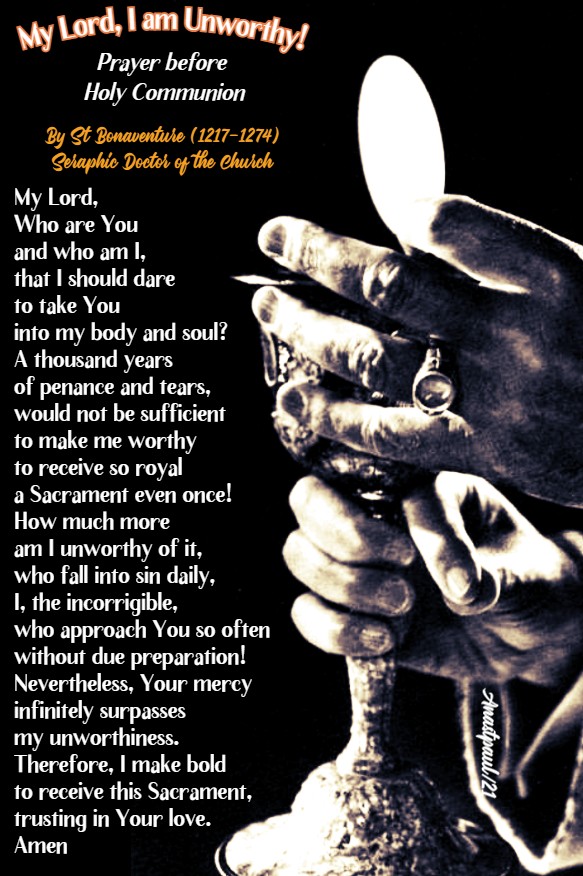
My Lord, I am Unworthy! Prayer before Holy Communion By St Bonaventure (1217-1274) Seraphic Doctor of the Church
My Lord, Who are You and who am I, that I should dare to take You into my body and soul? A thousand years of penance and tears, would not be sufficient to make me worthy to receive so royal a Sacrament even once! How much more am I unworthy of it, who fall into sin daily, I, the incorrigible, who approach You so often without due preparation! Nevertheless, Your mercy infinitely surpasses my unworthiness. Therefore, I make bold to receive this Sacrament, trusting in Your love. Amen
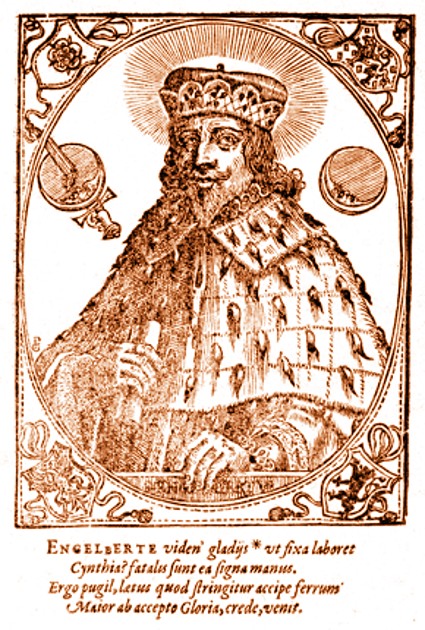
Saint of the Day – 7 November – Saint Engelbert of Cologne (c 1185-1225) Archbishop Martyr, Count, Guardian and Chancellor of the Empire on behalf of the young King, protector of the Monasteries and religious Orders, Apostle of the poor. Born in .1185 at Berg in modern Germany and died by being stabbed to death on the evening of 7 November 1225 near Schwelm, Germany, by a member of his own family.. Also known as – Engelbert of Berg.
Engelbert, was born in Berg around the year 1185 to Engelbert, Count of Berg and Margaret, daughter of the Count of Gelderland. He studied at the Cathedral school of Cologne and, while still a boy, was made administrator of the Churches of St George and St Severin at Cologne and of St Mary’s at Aachen, as it was a common in the Church at the time, to appoint the children of nobles to such positions.
In 1199, he was elected administrator of the Cathedral at Cologne. He led a worldly life and in the conflict between two Archbishops, Adolf and Bruno, he sided with his cousin Adolf and waged war for him. Consequently, he was excommunicated by the Pope along with his cousin. After his submission, he was reinstated in 1208 and, to atone for his sin, joined the Crusade against the Albigenses in 1212. On 29 February 1216, the chapter of the Cathedral elected him Archbishop by a unanimous vote.
The mendicant orders of the Franciscans and the Dominicans, settled in his realm while he was Archbishop. He was well disposed towards the Monasteries and insisted on strict religious observance in them. Ecclesiastical affairs were regulated in provincial synods. He was considered a friend of the clergy and a helper of the poor.
Engelbert exerted a strong influence in the affairs of the Empire. Emperor Frederick II, who had taken up his residence permanently in Sicily, gave Germany to his son, Henry VII, then still a minor and in 1221 appointed Engelbert Guardian of the King and administrator of the Empire. When the young King reached the age of twelve, he was crowned at Aachen by Engelbert, who loved him as his own son and honoured him as his sovereign. Engelbert watched over the young King’s education and governed the Empire in his name, careful to secure peace, both within and without of the realm.
Engelbert’s devotion to duty, and his obedience to the Pope and to the Emperor, were eventually the cause of his ruin. Many of the nobility feared, rather than loved him and he was obliged to surround himself with bodyguards. The greatest danger came from his relatives who were jealous of his position.
His cousin, Count Frederick of Isenberg, the secular administrator for the Nuns of Essen, had grievously oppressed that Abbey. Pope Honorius III and the Emperor, urged Engelbert to protect the Nuns and their rights. Frederick wished to forestall the Archbishop and his wife incited him to murder. On 7 November 1225, as he was journeying from Soest to Schwelm to Consecrate a Church, Engelbert was attacked on a dark evening by Frederick and his associates, was wounded in the thigh, torn from his horse and killed. His body was covered with forty-seven wounds. It was placed on a dung-cart and brought to Cologne four days later. King Henry wept bitterly over the remains, put Frederick under the ban of the Empire and saw him broken on the wheel a year later at Cologne. Frederick died contrite, having acknowledged and confessed his guilt.
Engelbert’s body was placed in the old Cathedral of Cologne on 24 February 1226, by Cardinal Conrad von Urach, the Papal Legate. The latter also declared him a Martyr, although a formal canonisation did not take place. In the Martyrology, Engelbert is commemorated on 7 November as a Martyr. and Saint. A Convent for Nuns was erected at the place of his death.
“True Guardian of the King, thy exalted traits do honour to our Emperor; Chancellor whose like has never been.” – Walther von der Vogelweide, Poet, writing about Engelbert
































 AnaStpaul
You must be logged in to post a comment.