
Saint of the Day – 4 June – Saint Petroc of Cornwall (Died c 594) Confessor, Abbot, Missionary, Miracle-worker, Founder of Monasteries and Churches, Prince. Petroc also had a great affinity with all animals and had a permanet wolf companion. Born in Wales mid to late Wales and died at Treravel, Padstow, Cornwall (in modern England) of natural causes whilst travelling. Patronages – • Bodmin, Cornwall • Caernarfonshire, Wales • Cornwall, England • Devon, England • Exeter, Devonshire, England • Hollacombe, Devonshire, England • Little Petherick, Cornwall • Nansfenten, Cornwall • Llanbedrog, Wales • Lydford, Devonshire, England • Newton Saint Petrock, Devonshire, England • Padstow, Cornwall • Saint-Méen, France • South Brent, Devonshire, England
• Trevalga, Cornwall • West Anstey, Devonshire, England. Also known as – Petrock, Pedrog, Perreuse, Perreux, Petrocus, Petrox.
The most venerated Saint in Cornwall, who is considered to be one of the main Apostles of the region, is St Petroc, who together with the Archangel St Michael and St.Piran, has, for many centuries been the Patron Saint of Cornwall.
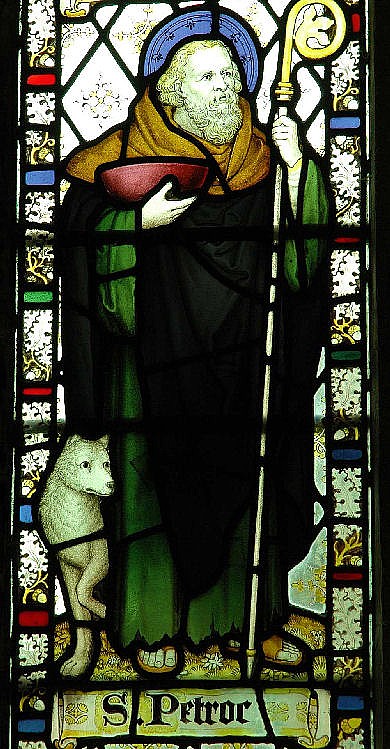
An early manuscript describes Petroc as “handsome, courteous in speech, prudent, modest, burning with unceasing love, always ready for all good works for the Church.”
A great deal is known about St Petroc, there having been two ‘Lives of Petroc‘ written in the middle ages and discovered in comparatively recent times in a library in Paris. A translation of the text of ‘The Vita Petroci,‘ written in the 12th century, was published in 1930, called ‘St Petroc, Abbot and Confessor.‘
He was the younger son of King Glywys in Wales. On his father’s death, he was offered the Crown of part of the Kingdom but Petroc wanted to study for a religious life and went to Ireland with a small band of followers.
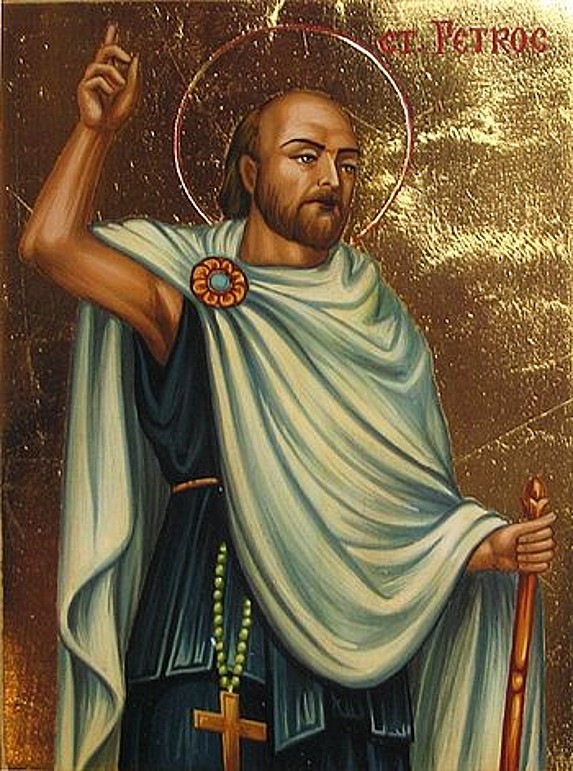
Having been educated in an Irish Monastery, the major seats of learning in those days ‘Vita Petroci’ describes their stay in Ireland. They then set pit to spread the good news of the Gospel. The winds and tides brought them to the Padstow estuary. Almost immediately, Petroc began to build at the top of the creek, first a Church, and then other buildings, in imitation of the Irish Monasteries, to make a complete Monastery with a school, infirmary, library, farm and cells for the Monks. Having established the Monastery and Church here, Petroc travelled widely, founding many Churches, first in Little Petherick and Bodmin and then in many parts of England, Wales and Brittany.

The Celtic King Constantine, ruled this area at that time and was converted to Christianity by Petroc, when the Saint rescued the deer that the King was hunting. There are many legends and tales about him of miracles, healings, wonderful miracles involving animals and the banishing of demons.
After about 30 years evangelising the region, Petroc travelled to Rome and Brittany. He returned to Britain and as he reached Newton Saint Petroc (in Devon), it began to rain. Petroc predicted it would soon stop but it rained unceasingly, for three days. As a self-imposed penance for presuming to predict God’s weather, Petroc made a penitent pilgrimage on bare feet, returning initially to Rome, then to Jerusalem, then to India where he lived seven years on an island in the Indian Ocean.
When he finally returned to Cornwall, Petroc moved still deeper into the Cornish countryside, where he discovered St Guron living in a humble cell. Guron gave up his hermitage and moved south, allowing Petroc, with the backing of King Constantine, to establish a second large Monastery called Bothmena (Bodmin – the Abode of Monks).
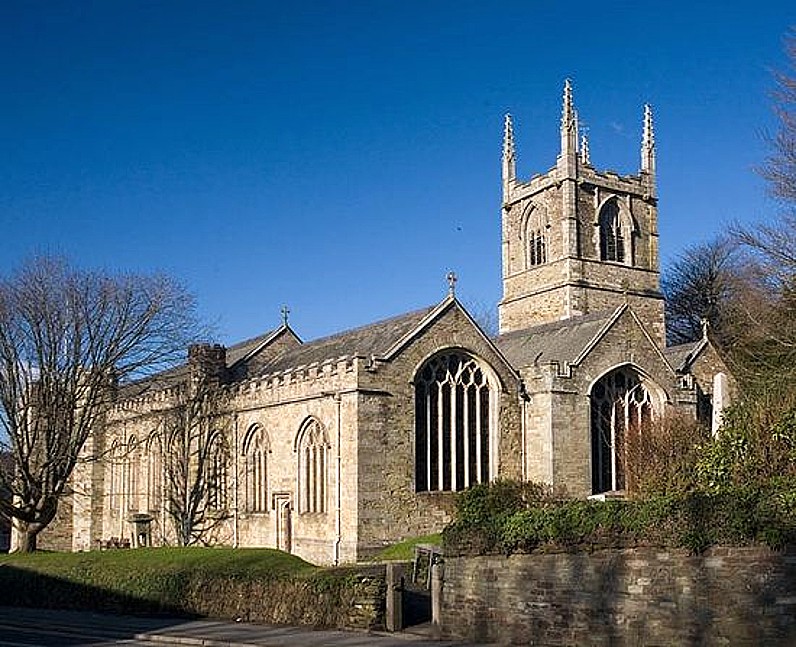
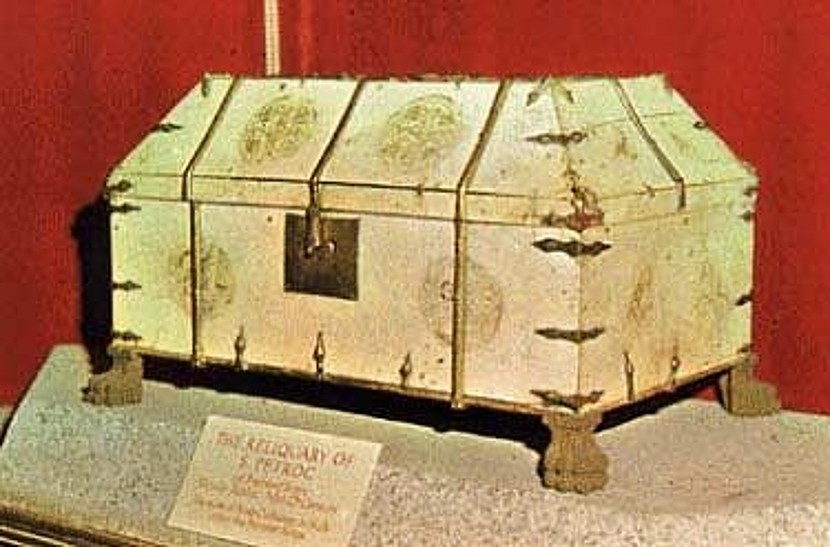
Petroc eventually died at Treravel, while travelling between Little Petherick and Padstow and was buried at Padstow. The Monks there later removed themselves, along with Petroc’s relics, to Bodmin, where his beautiful Norman casket Reliquary can still be seen today.
St Petroc gave his name to Padstow (Petroc’s – stow) and to Little Petherick [between Padstow and Wadebridge]. He was the Founder of Bodmin, which, for some time was an Abbey-Bishopric and remained the religious capital of Cornwall up to the end of the Middle Ages.

 AnaStpaul
2 thoughts on “Saint of the Day – 4 June – Saint Petroc of Cornwall (Died c 594) Confessor”