
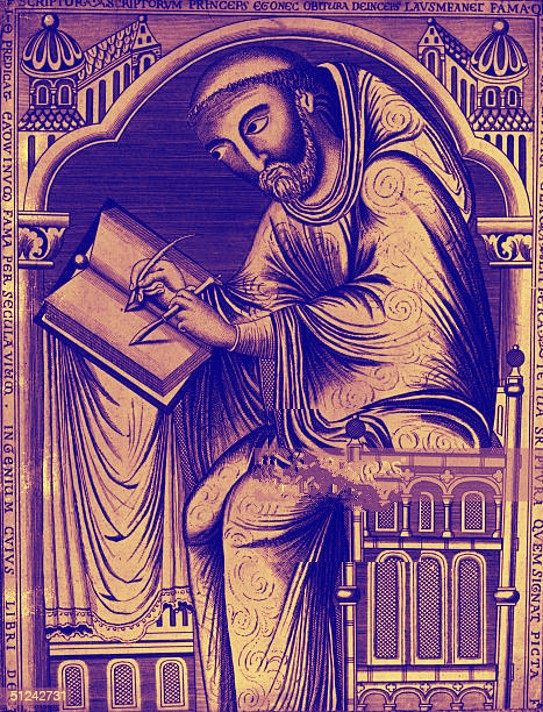
Saint of the Day – 9 June – St Baithen of Iona (c 536-c 599) Abbot, the disciple and first successor of St Columba, an Irish Monk, especially selected by St Columba, as one of the band of Missionaries who set sail for Scotland in 563. St Baithen of Iona is generally known as Baithen Mor, to distinguish him from eight other Saints of the same name — the affix mor meaning “the Great.” This holy man was closely related to the great St Columba. They were the sons of two brothers and consequently, first cousins. Born in c 536 in Ireland and died in c 599 of natural causes . Patronage – of Tibohin, in Elphin, Ireland. Also known as – Baithéne mac Brénaind, Baithen Mor, Baithen the Great, Baithin, Boethen, Baoithin, Baithenus, Comin, Cominus. We have no images of our Saint, those below, in the main, are images of Monks of Iona.
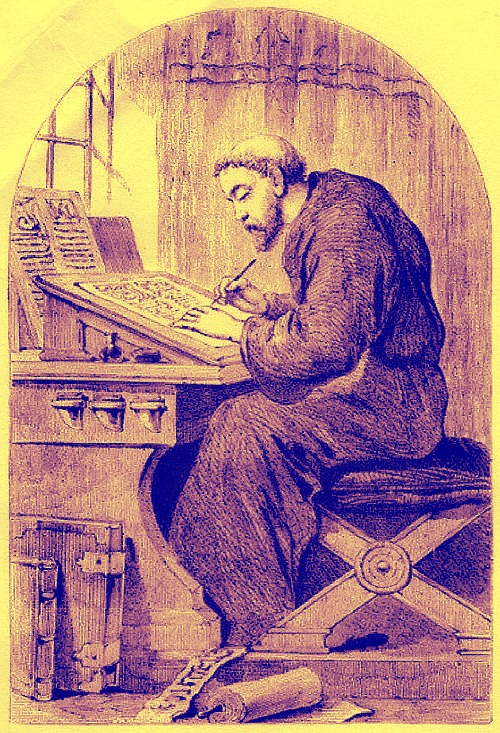
Baithen was born in around 536, the son of Brenaron. He was an ardent disciple of St Columba and was appointed Abbot of Tiree Island, a Monastery founded by St Comgall of Bangor. St Adamnan, in recording the death of St Columba, tells us that the dying words of the Apostle of Iona, as he was transcribing the fifty-third Psalm, were: “I must stop here, let Baithen write what follows.”
Baithen had been looked on as the most likely successor of St Columba and so it happened, that on the death of that great Apostle, the Monks unanimously confirmed the choice of their Founder. St Baithen was in high esteem as a wise counsellor and his advice was sought by many Irish Saints.
According to his Acts, from the time he was a child, Baithen had been educated by St Columba. Under his holy discipline, he learned how to wage a perpetual war with idleness. As his years advanced, he grew stronger and more perfect, in the exercise of all good works. However, being a junior, by several years, he used to be always along with Columba because they were close in consanguinity and friendship, as they were thoroughly allied in the practice of holy works.
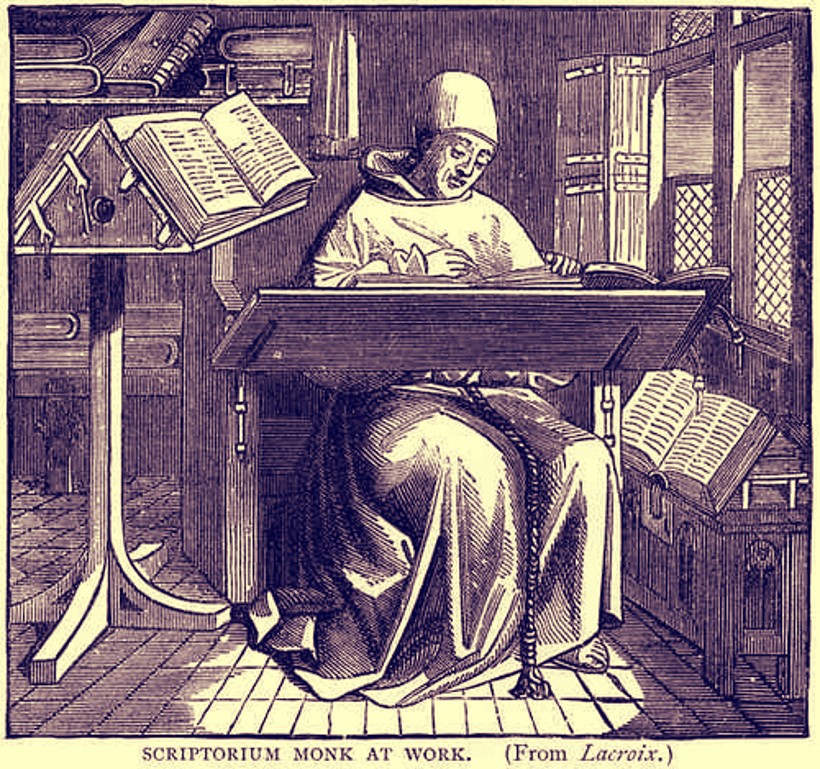
Baithen was always either reading, or praying, or serving his neighbour. Sometimes, for the latter purpose, his devotions were occasionally interrupted. When he used to eat, he was wont to say, “Deus in adjutorium meum intende,” “O God, come to my aid” between every two morsels. His devotions were so continually practised, that even when he was travelling, or working, or eating, or conversing with anyone, this holy man would still be communing with God and, under his tunic, his hands were often clasped in prayer, without anyone present knowing it. When he gathered corn along with the Monks, he held one hand up beseeching God, while the other hand was gathering the corn, as is contained in his Latin Acts, where we are informed, he would not brush away the troublesome midges from his face but rather suffer the bites and discomfort as a penance.
St Adamnan, the Biographer of St Columba, tells many interesting incidents in the life of Baithen but the mere fact of being the immediate successor of St Columba, by the express wish of that holy Apostle, is almost sufficient to attest to his great worth. The “Martyrology of Donegal” records the two following anecdotes.
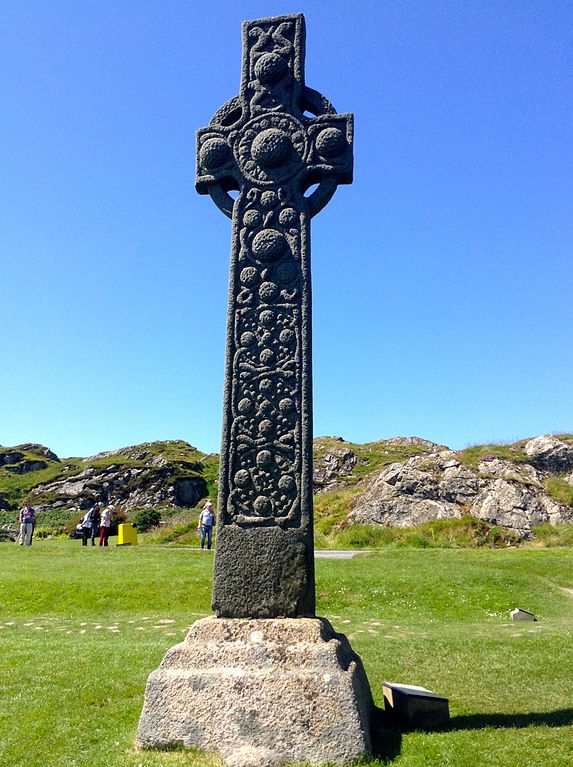
Baithen also served as Prior over a Monastery connected to Iona on the Island of Tiree. The name of the place where his Monastery was located on Tiree, was Mag Luinge or Campus Luinge. The Monastery was a house for penitents from Iona. Some historians have thought that it may have supplied food to Iona.
St Adamnan also recorded a story about a voyage he took to the island, when Columba first told a Monk who was heading to Tiree, that he should not sail directly from Iona to Tiree because a great whale would frighten him but this monk did not listen to his advice and took the direct route. A huge whale came out of the water and almost destroyed the boat, which was, terrofying! When Baithen departed the following day to Tiree, Columba told him about the whale, and Baithen responded that both he and the whale were in God’s power, to which Columba responded “Go in peace, your faith in Christ will shield you from danger.” And so Baithen then took the direct route and the whale came out of the water which terrified all in the boat, except Baithen, who instead blessed the sea and the whale. The whale immediately departed, descending into the depths.
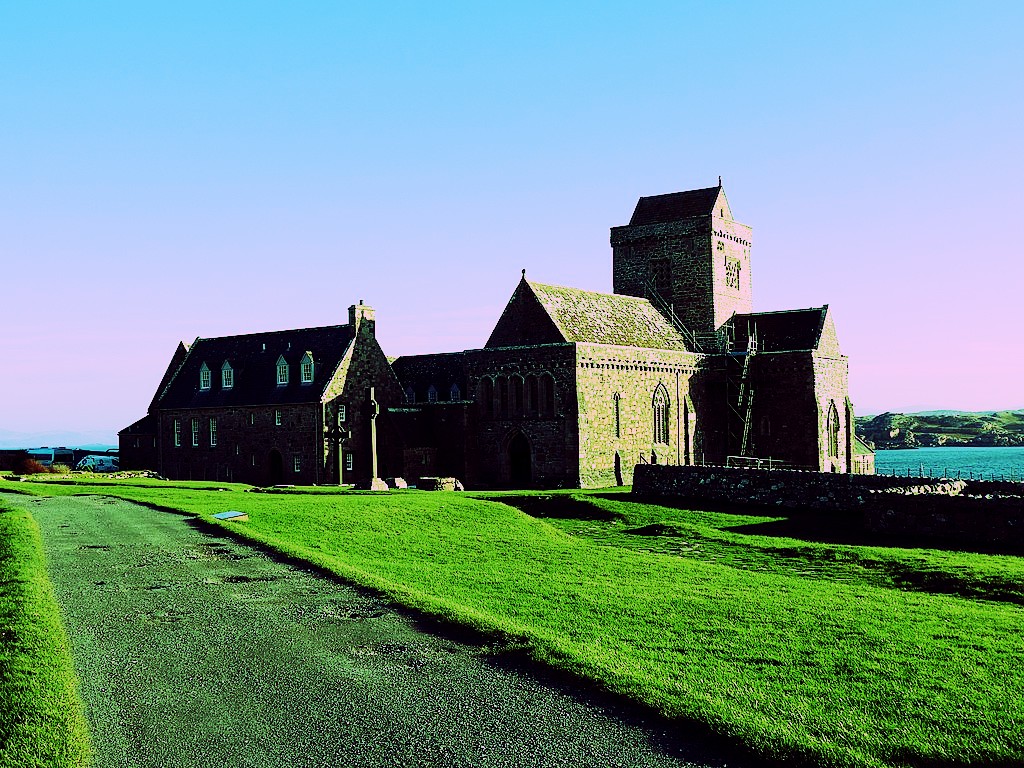
Baithen wrote a life of his master and some Irish poems, which are now lost but which were seen by St Adamnan. He only ruled Iona for three years, as his death took place in the year 600, though the “Annals of Ulster” give the date as 598. Perhaps the true year may be 599. Some writers assert that St. Baithen of Iona is the Patron of Ennisboyne, County Wicklow but this is owing to a confusion with St Baoithin, or Baithin mac Findech, whose feast is commemorated on 22 May. St Bathen is, however, the official Patron of Tibohin, in Elphin, Ireland.


 AnaStpaul
One thought on “Saint of the Day – 9 June – St Baithen of Iona (c 536-c 599)”