
Saint of the Day – 18 June – St Ephrem of Syria (306-373) – “The Harp of the Holy Spirit!” Father & Doctor of the Church, Confessor, Deacon and Confessor, Apostle of the Poor and Needy, Exegesist, Writer, Poet, Hymnographer, Theologian, Teacher, Orator, Defender of the Faith – declared Doctor of the Church in 1920 by Pope Benedict XV. Born in c306 at Nisibis, Mesopotamia (in modern Syria) and died on 9 June 373 at Edessa (in modern Iraq) of natural causes. Patronages – spiritual directors, spiritual leaders, Armenea. Also known as – Ephrem of Edessa, Ephrem the Syrian, Ephraem…, Ephraim…, Ephraem Syrus, Deacon of Edessa, Jefrem Sirin, “Sun of the Syrians.”
St Ephrem, Confessor
By Fr Francis Xavier Weninger SJ (1805-1888)
His sanctity is demonstrated in the many virtues with which he was endowed, amongst which chastity, deep humility and untiring benevolence towards the poor, shine most brilliantly.
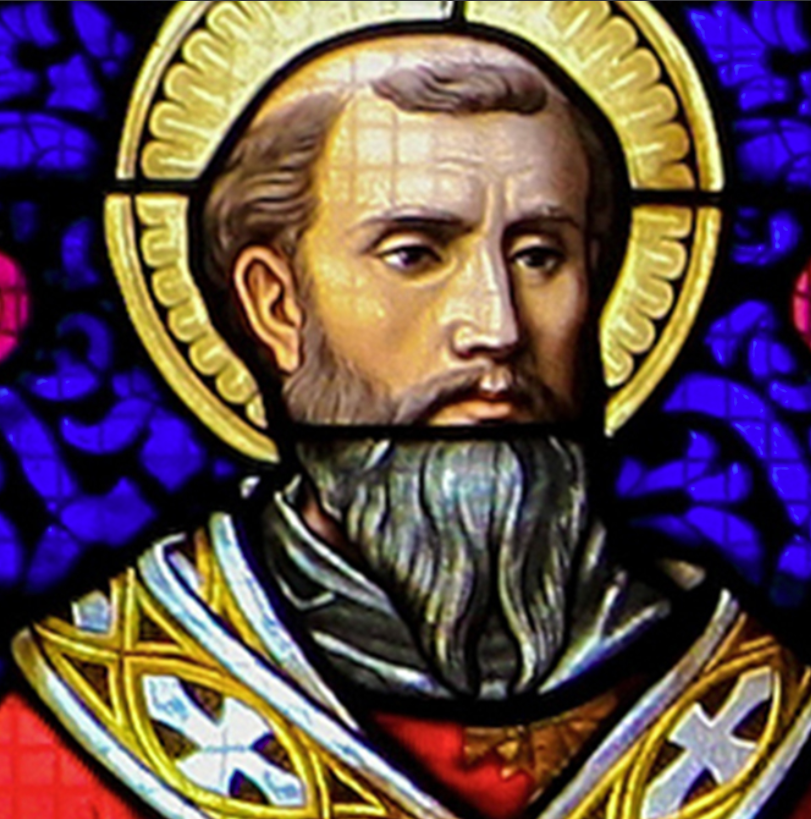
Under this day’s date is also mentioned, in the Roman Book of Martyrs, St Ephrem, a Deacon of the Church of Edessa, in Syria and great praise is bestowed on his wisdom and virtue, as well as his labour on behalf of the Christian Faith. His work consisted partly, in verbally teaching the Christians and partly, in refuting the doctrines of the heretics, whose leader and teacher he boldly opposed and publicly confuted.
Apollinarius, an arch-heretic, had written his heresy in two books and had given them into the charge of a notable woman of his party. Ephrem, having become acquainted with this woman, requested the loan of these books, as he wished to study thoroughly the doctrine of Apollinarius. The woman, who thought that Ephrem desired to adopt these doctrines, permitted him to have the books. As soon, however, as the Saint became convinced of the impiety of the work, he pasted the leaves together in such a manner, that they could not be separated. He then returned the books to the woman, who did not perceive what he had done, as the outside was unimpaired. Just at this time it happened, that Apollinarius was called to a public disputation. As he, on account of his defective memory, was unable to speak much, he had his books brought, in order that one of his followers might read his doctrines out of them. The books were brought, the heretic proceeds to open them but finds the leaves are pasted together and that, in consequence, they are of no service to him. Unable to dispute verbally, he stood for a long time immovable, deeply ashamed. At last, he ran away and, not long after this event, expired most miserably.
As far as the teachings of St Ephrem are concerned, they exist to this hour in the splendid works he has left. In former times, they were so highly esteemed that they were read aloud in the Churches, after the Gospel, for the edification of the people. In these works much is to be found that the holy man said in praise of the Blessed Virgin, as also many prayers in which he invoked her: a proof that already, in the first centuries, the Mother of our Saviour was honoured and invoked.
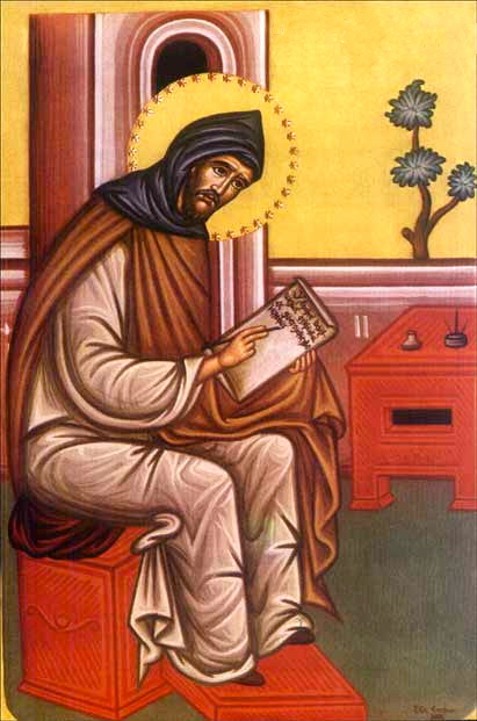
One day an immoral woman tried to seduce him. Ephrem seemed to lend her a willing ear and said: “ If I consent to fulfil your desire, you must consent that I select the place for our meeting.” “Where shall it be? Where shall we meet?” asked the shameless woman. “In the public market,” replied he. “Oh! not there,” said she; “we should be ashamed of the people who are there.” This was the answer that the pure servant of God wished to obtain and he said to her, full of deep earnestness: “Unhappy woman! when the eyes of men are upon you, you are ashamed and will not commit evil; why then, are you not ashamed of the Lord your God, Who is everywhere and Who not only sees and knows everything but Who also punishes with the everlasting fire of hell all vices? How much more should His Presence deter you from the commission of sin?“
It needed no more to bring the unchaste woman to the knowledge and repentance of her corruption. Ephrem placed her in a Convent, where she did most severe penance until her death, never weary of thanking him, again and again, for the benevolence he had shown to her. Just as the holy man, on this occasion, evinced his love of purity, so he manifested, on many others, his deep humility.
When it was intended to elect him Bishop, he to evade this dignity, pretended insanity and, hiding in a corner, remained until another was elected. So far from valuing the praises of men, he even regarded those who lauded him as his enemies, while he loved, as his best friends, those who despised him.
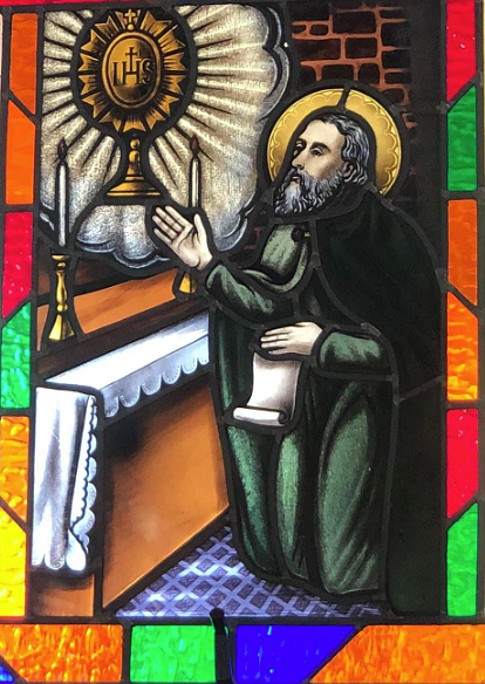
In his last will he ordered that he should not be honoured with music, or a costly shroud, or a panegyric; neither did he desire to be buried in a Church but requested to be laid among the poor, to whom he had been more attached than a father to his children. During a great famine, he himself collected from the wealthy, corn and other provisions, divided them among the starving people and assisted them wherever he could, day and night, with untiring kindness. Many other instances of his great charity, which are recorded by the holy Father Saints, Gregory of Nyssa, Basil, Chrysostom, and Jerome, I have to pass over. Only one more will I mention, which the Saint related of himself.
When a boy, his parents one day sent him somewhere out of the City. Passing through a wood, he saw a cow, belonging to a poor man. Out of mischief, he pelted her so long with stones that she fell to the ground, dead. Four weeks later, his parents sent him again out of the City. Night overtook him on the road and the shepherds, whose flock was in the wood, having compassion on him, invited him into their hut, with the understanding that he should continue his journey on the following day. Ephrem accepted the offered hospitality and remained with them through the night. But just before morning, the sheep of those men were attacked by wolves and widely dispersed. The shepherds, believing that this was the work of thieves and that Ephrem was one of them, made him prisoner and brought him before the Judge, who immediately ordered him to be thrown into prison.
At the same time, two other men were also incarcerated, of whom one was charged with homicide, the other with adultery. Ephrem wept bitter tears at suffering thus innocently. After forty days his Guardian Angel appeared to him and asked what he was doing there. Ephrem related to him the circumstances and declared his innocence. The Angel said: “ I know that you are innocent, but the cruelty with which, some time ago, you treated the cow of a poor man is also known to me. Therefore, you must atone for that wrong now, just as those two men, who are also innocent of the crimes for which they are imprisoned, suffer this present punishment for sins formerly committed. Learn from this, that God is just and that He leaves no evil deed unpunished!” Ephrem, coming thus to the knowledge of his fault, repented and received a promise, that he should be set free and, in fact, soon after, regained his liberty. This event induced him to devote himself entirely to the service of the Almighty.

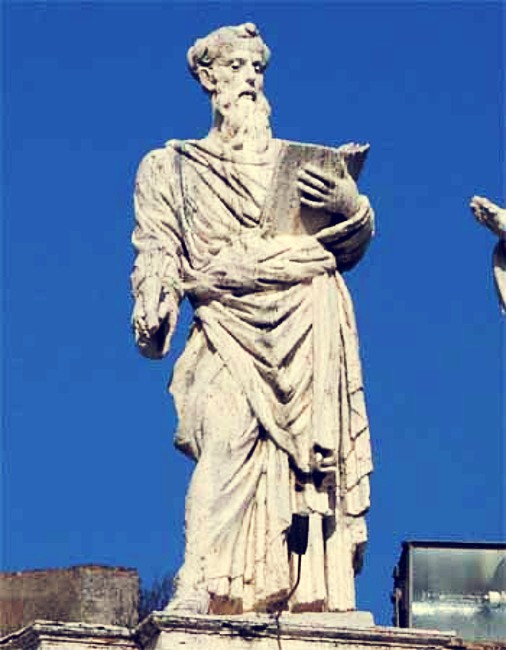
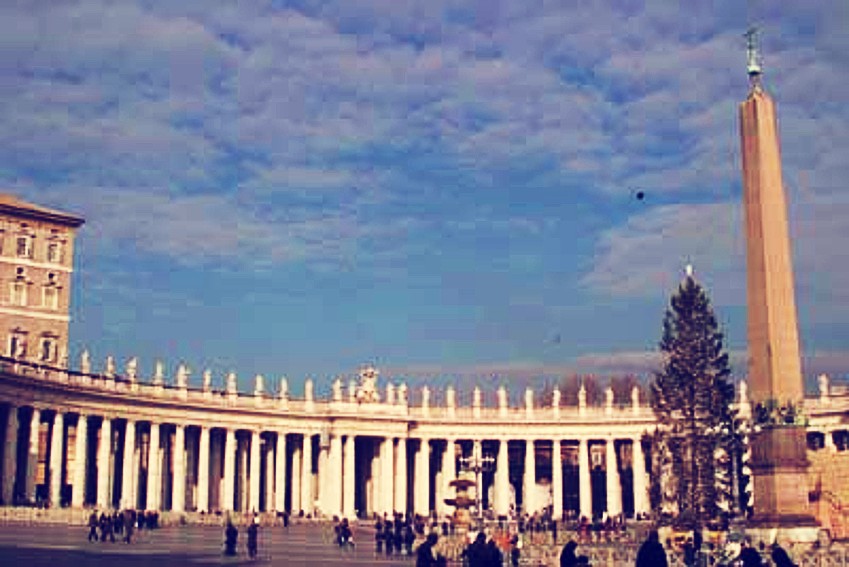
Ripe in years, he ended his holy life c 373. Below is the Statue of St Ephrem on the North Colonnade at St Peter’s. It was installed in c 1662-1667. The Sculptor is unknown but it is known that he created 3 Statues at that time. The Saint looks into a book that he holds with his left hand. The right hand holds a palm.


 AnaStpaul
One thought on “Saint of the Day – 18 June – St Ephrem of Syria (306-373) Confessor, Father and Doctor of the Church”