Thought for the Day – 10 August – Meditations with Antonio Cardinal Bacci (1881-1971)
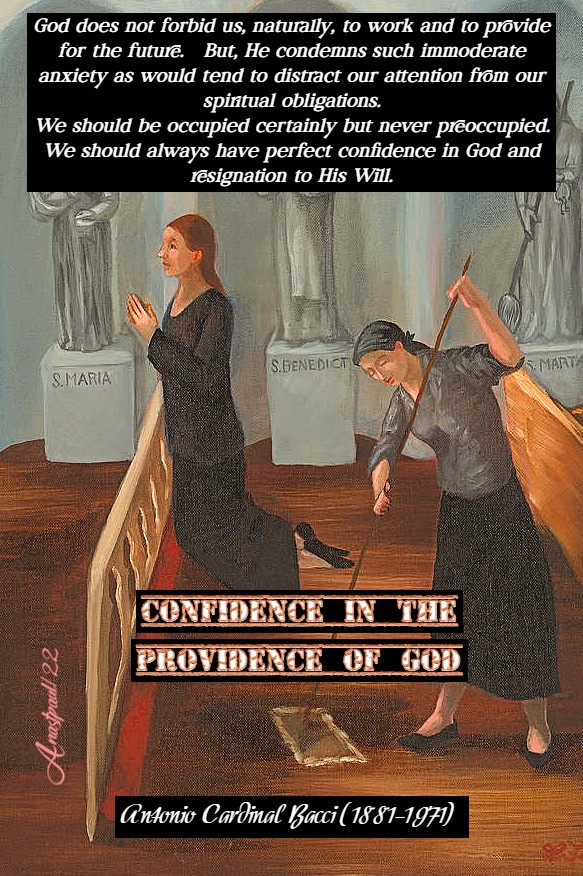
Confidence in the Providence of God
“God does not forbid us, naturally, to work and to provide for the future. But, He condemns such immoderate anxiety as would tend to distract our attention from our spiritual obligations. We should be occupied certainly but never preoccupied. We should always have perfect confidence in God and resignation to His Will.”
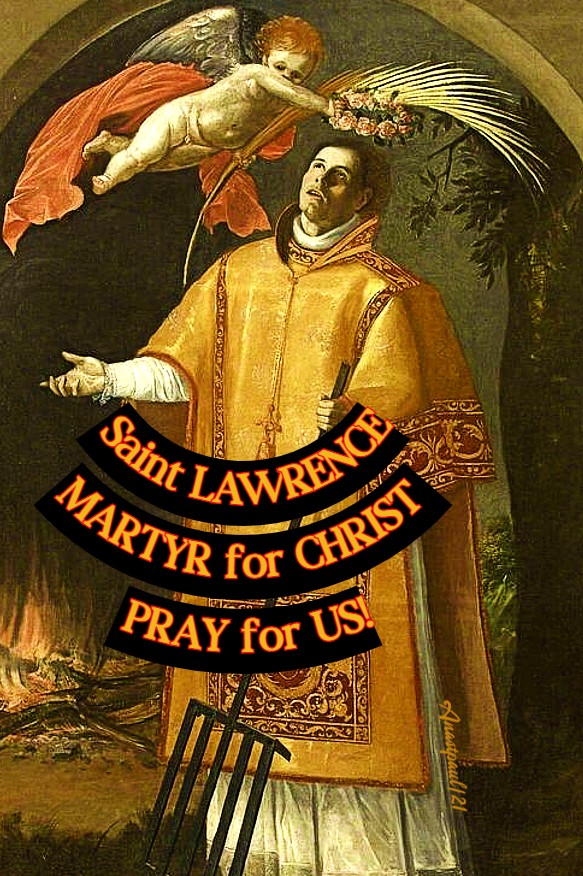
Quote/s of the Day – 10 August – St Lawrence (Died 258) Martyr “Keeper of the Treasures of he Church” – 2 Corinthians 9:6-10, John 12:24-26
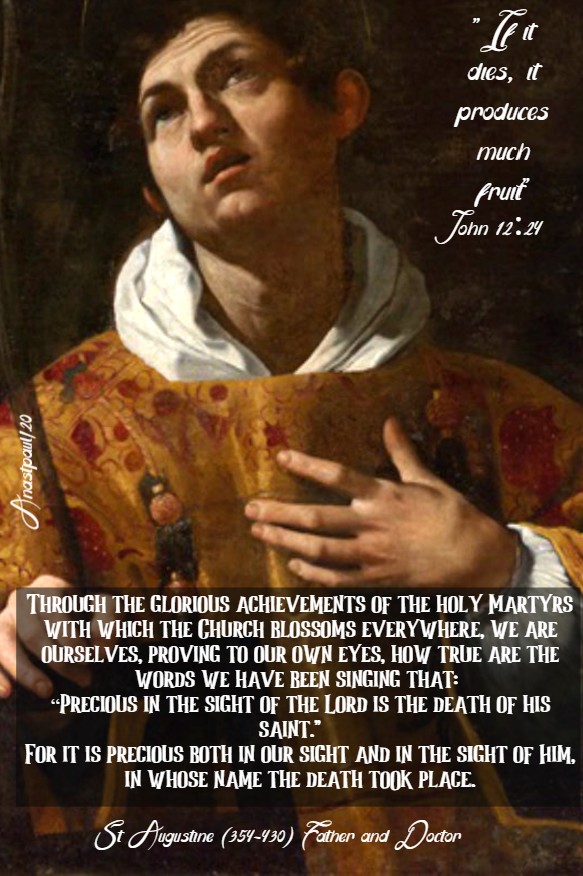
“If it dies, it produces much fruit”
John 12:24
“Through the glorious achievements of the holy Martyrs with which the Church blossoms everywhere, we are ourselves, proving to our own eyes, how true are the words we have been singing that: “Precious in the sight of the Lord is the death of his saints” (Ps 116[115]:15). For it is precious both in our sight and in the sight of Him, in Whose Name. the death took place.”
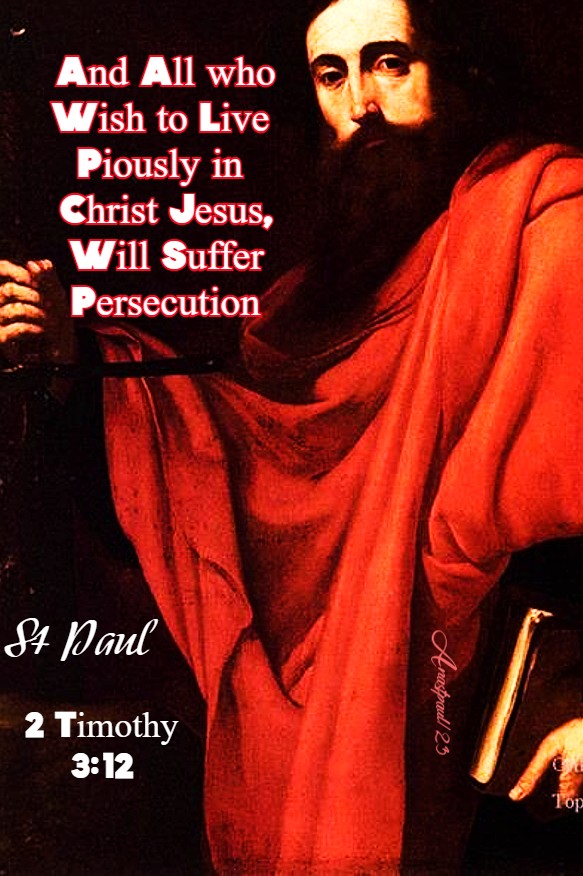
“And all who wish to live piously in Christ Jesus, will suffer persecution.”
2 Timothy 3:12
“Do not love your life in this world! If you truly love yourselves, do not thus love your life and then, you will save your life!”…
St Augustine (354-430) Father and Doctor of the Church
“In conformity with the philosophy of Christ, let us make of our life, a training for death.”
St Maximus the Confessor (c 580-662) Father of the Church
One Minute Reflection – 10 August – St Lawrence (Died 258) Martyr “Keeper of the Treasures of he Church” – 2 Corinthians 9:6-10, John 12:24-26
“He who loves his life, loses it and he who hates his life in this world, keeps it unto life everlasting. If anyone serves Me, let him follow Me and where I Am ,there also shall My servant be.” – John 12:25-26
REFLECTION – “… We are being towed along by a world that passes away, forgetting the world to come. We are greedy for present things but do not take into account the coming judgement. We will not run to meet the Lord as He comes…
Let us turn back, brethren, let us turn back… By the very fact of His delay, of His still waiting, our Lord proves His desire to see us come back to Him, His desire that we should not perish. In His great goodness, He continues addressing these words to us: “I take no pleasure in the death of the wicked but would rather he would change his ways and live ”(Ez 33,11). So let us turn back to Him, brethren, not fearing that time is running short. The time that belongs to time’s Author cannot be shortened. The proof of it lies in the criminal in the Gospel, who, at the moment of dying on the cross, got away with his pardon, grabbed hold of life and, breaking into paradise like a burglar, managed to make his way into the Kingdom (cf. Lk 23,43)!” – St Peter Chrysologus (c 400-450) Bishop of Ravenna, Father and “Doctor of Sermons” of the Church (Excerpt from Sermon 167).
PRAYER – Grant us, we beseech Thee, Almighty God, to extinguish the flames of our sins, as Thou granted St Lawrence to overcome the fires of his tortures. Through Jesus Christ, Thy Son our Lord, Who lives and reigns with Thee, in the unity of the Holy Ghost, God, world without end. Amen (Collect).
Our Morning Offering – 10 August – St Lawrence (Died 258) Martyr “Keeper of the Treasures of he Church,”
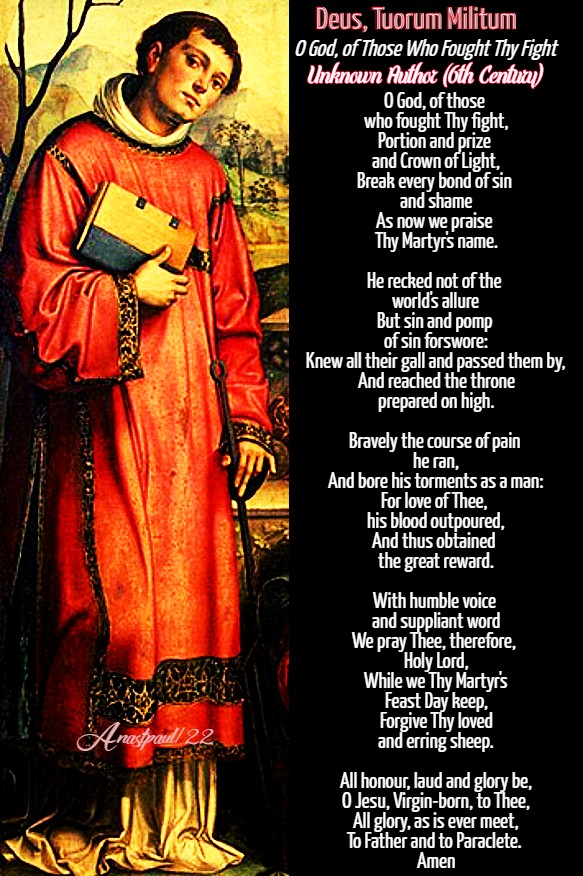
Deus, Tuorum Militum O God, of Those Who Fought Thy Fight Unknown Author (6th Century)
O God, of those who fought Thy fight, Portion and prize and Crown of Light, Break every bond of sin and shame As now we praise Thy Martyr’s name.
He recked not of the world’s allure But sin and pomp of sin forswore: Knew all their gall and passed them by, And reached the throne prepared on high.
Bravely the course of pain he ran, And bore his torments as a man: For love of Thee, his blood outpoured, And thus obtained the great reward.
With humble voice and suppliant word We pray Thee, therefore, Holy Lord, While we Thy Martyr’s Feast Day keep, Forgive Thy loved and erring sheep.
All honour, laud and glory be, O Jesu, Virgin-born, to Thee, All glory, as is ever meet, To Father and to Paraclete. Amen
An Ambrosian Hymn traditionally assigned for Matins and Vespers for the common feast of a Martyr in the Roman Breviary. It dates probably from the sSxth Century and is attributed to the unknown author of Rex Gloriose Martyrum and jesu, Redemptor Omnium. The Hymn exists in a longer versJon of eight strophes and a shorter one of four or five, which is probably earlier. The Vatican Antiphonary provided two different melodies for use in the Paschal Season and during the Octave of the Nativity, during which the Feast of Saint Stephen the Protomartyr occurs. The Hymn is a prayer asking God to forgive the sins of His servants on the day of the Martyr’s triumph over the pleasures of the world and the torture of persecution.
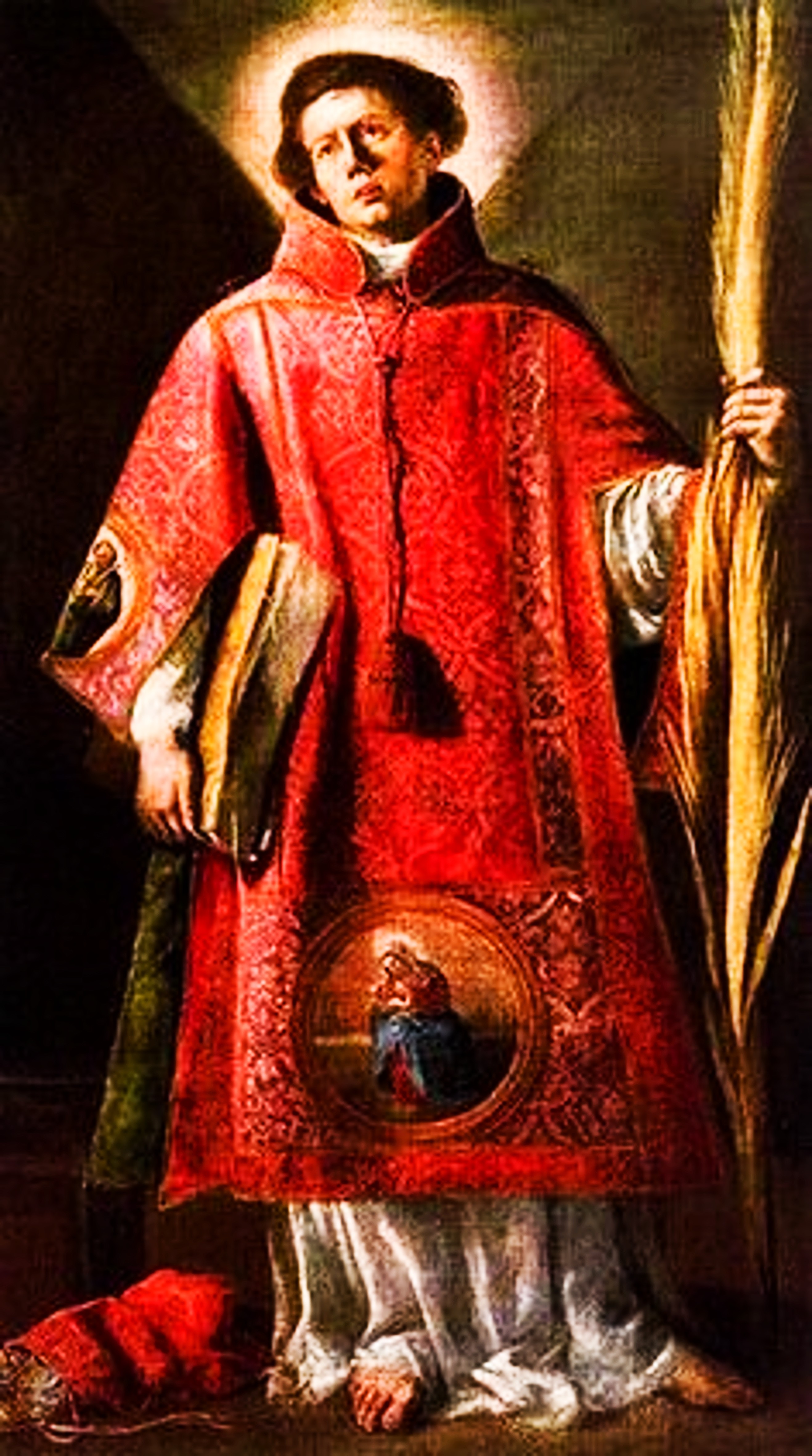
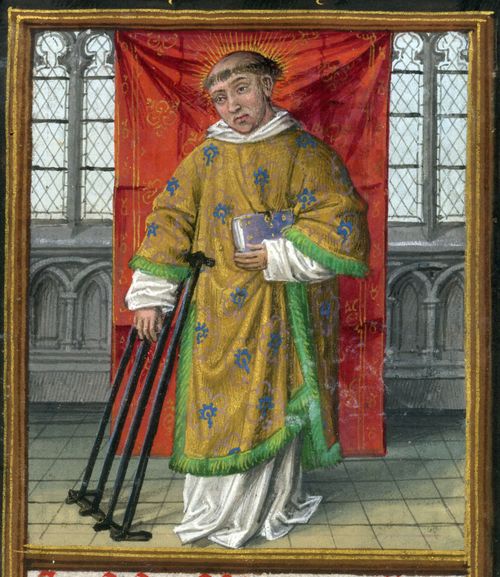
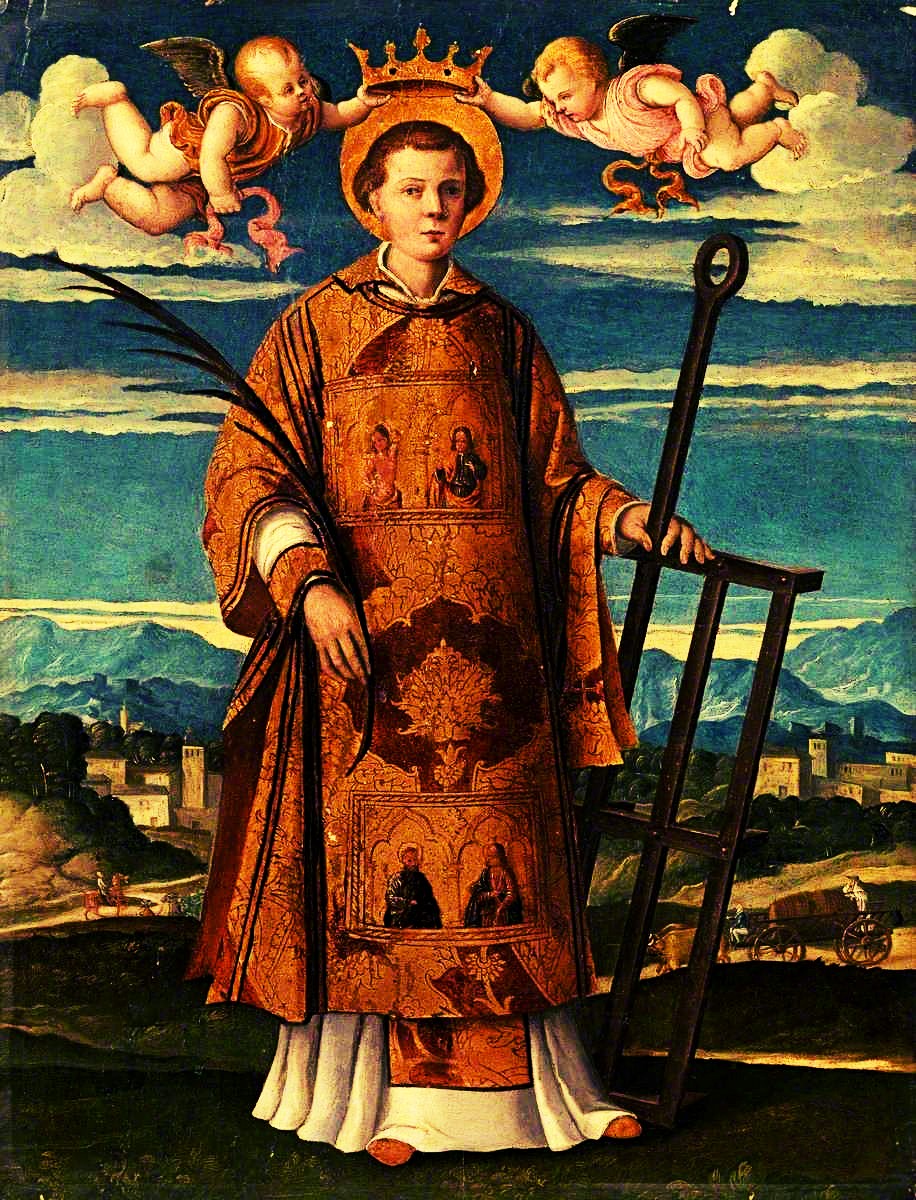
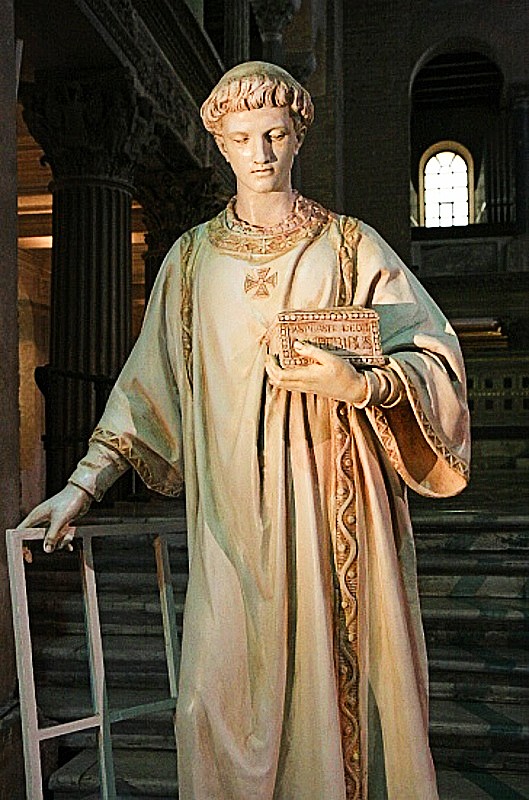
Saint of the Day – 10 August – St Lawrence (Died 258) Martyr “Keeper of the Treasures of he Church.”
St Lawrence, Martyr By Fr Francis Xavier Weninger SJ (1805-1888)
The many and high encomiums [praises] which were paid to St Lawrence by the most ancient and illustrious of the holy Fathers of the Church, St Augustine, St Ambrose, St Leo I, St Maximus and St Peter Chrysologus, are the surest sign that this Saint has always been considered one of the most famous Martyrs, who gave their blood for Christ.
He was born of Christian parents, in the middle of the Third Century, at Osca, a City in Aragon. His father’s name was Orentius, his mother’s, Patientia, both are honoured as Saints. Such parents gave a holy education to their son. He early evinced, on all occasions, an especial love for God, a fearless constancy in the true faith and a watchful care over the preservation of his purity. While yet young in years, he went to Rome and won, by his blameless life, the highest regard of all who came in contact with him. Pope Xystus or Sixtus Ordained him Deacon. His functions were to serve the Pope at the Altar, to take charge of the treasures of the church and to distribute the revenues which were destined for the maintenance of the sextons and the poor.
A terrible persecution of the Christians took place at the period of which we speak. Pope Sixtus was seized and thrown into the Mamertine prison. Lawrence seeing him, from a distance, dragged along, ran towards him and bitterly weeping, said: “Father, where are you going without your son? Holy Pontiff, where are you hastening without your deacon? You have never been wont to offer the Holy Sacrifice without me, your servant. In what have I displeased you, O my Father? Have you found me unworthy of you and of your sacred service? Prove me now and see if you have chosen a fit servant in trusting me with the dispensing of the Blood of Christ!” This and more said the Saint, desiring to suffer with St Sixtus for the Lord’s sake. The holy Pope replied: “I do not leave you, my son but you will have to suffer a great trial. We being old, have not much to endure but you, strong in your youth, must gain a more glorious victory over the tyrant. Do not weep. In three days, you will follow me. Go now and take care of the Treasures of the Church that are in your keeping.”
Lawrence, comforted by the prophecy of the holy Pope, went immediately and secured the sacred vessels of the Altar and the vestments of the Priests, distributed among the poor the money which had been collected for them, visited the Christians assembled in different houses and subterranean vaults, exhorted all to constancy and employed the whole night in deeds of charity and humility. The following day, when the Pope was being led away to execution, the holy Levite approached him again, saying: “Holy Father, do not leave me; for, the treasures which you committed to my care, are all distributed.” The Pope comforted the Saint as he had done the day before and was led away and ended his life by the sword.
Meanwhile, some of the soldiers, having heard Lawrence speak of treasures, informed the Emperor Valerian of the fact, and that tyrant, as avaricious as he was cruel, had Lawrenc apprehended and gave him, in charge of Hippolytus, an officer, who placed him in a prison where several malefactors were kept. One of these, Lucilius, had wept so much during his imprisonment, that he had become blind. St Lawrence, pitying him, advised him to embrace the Christian faith and be baptised, as by that, his sight would be restored. Lucilius followed his advice and soon after Baptism, his sight returned. Hippolytus, touched by the grace of God at this miracle, was converted with his whole household. The next day, the Emperor commanded that Lawrence should be brought to him.
The valiant Confessor of Christ rejoiced at this message and said to Hippolytus: “Let us go, for two glorious crowns are prepared for you and me.” The Emperor asked him who he was, whence he came and where he had concealed the Treasures of the Church. The first and second questions Lawrence fearlessly answered, saying: “I am a Christian, born in Spain.” To the third, he made answer, that if the Emperor would allow him a little time, he would gather the Treasures and show them to him. Delighted at this, the Emperor willingly granted him the desired time but ordered Hippolytus, not to leave his side for a moment, lest he should escape.
The Saint assembled all the poor he could find and leading them to the tyrant, said: “Behold, these are the Treasures of our Church.” The Emperor, regarding this as an insult, was greatly enraged and swore by the gods to be revenged. He gave Lawrence over to the prefect with the command to torture him in the most painful manner, if he refused to worship the idols. The prefect, who was as cruel as the Emperor himself, ordered his brutes to tear off the Saint’s clothes and to lash him, like a vile slave, till his whole body was a mass of blood and wounds. After this, he displayed a great many instruments of torture, with the menace that they would be used upon him, if he longer refused to worship the gods. Lawrence looked unconcernedly upon them and said: “They cannot frighten me. I have long desired to suffer for the sake of Christ. Your idols are not worthy to be worshipped, they are no gods and I will never sacrifice to them.”
Hardly had these words passed his lips, when the holy man was stretched upon the rack, then raised high in the air and his whole body whipped with scourges on the ends of which were fastened iron stars or spurs. After this, they applied lighted torches to his mangled body. The Martyr’s constancy could not be shaken. Turning his eyes heavenward, he only asked for strength to endure.
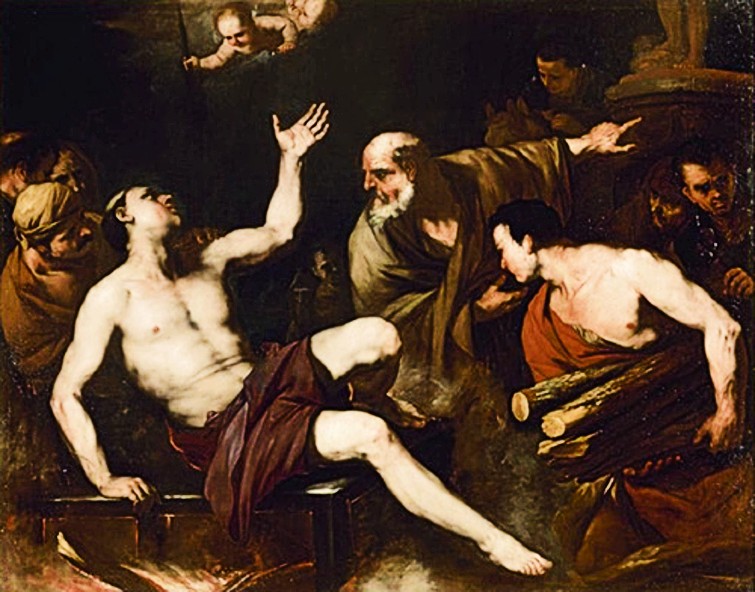
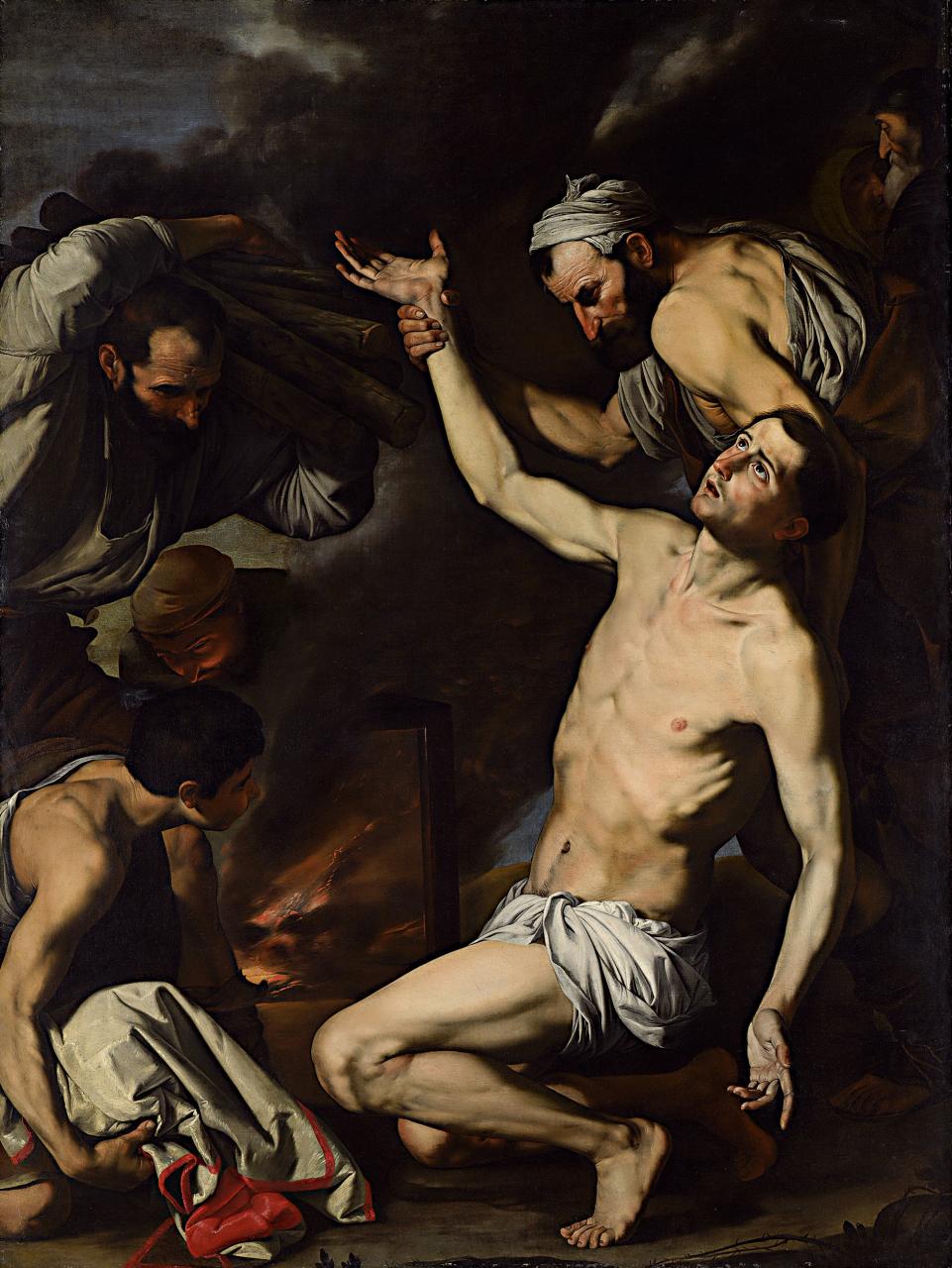
… Early on the next day, the prefect ordered the executioners to make an iron bed in the form of a gridiron, put live coals under it, stretch and bind the Saint upon it and slowly roast him. The command was fulfilled to the great horror of all present. The Saint, however, lay as quietly on the red hot gridiron as if it had been a bed of roses, only saying at intervals: “Receive, O Lord, this burnt-offering as an agreeable fragrance.” His countenance beamed with heavenly joy and the Christians, who were present, said that a divine light had surrounded him and his body exuded a sweet fragrance.
After having been burned thus a long time, he turned his eyes towards the prefect and said: “I am sufficiently roasted on one side, turn me over and eat my flesh.” How the tyrant received these words can easily be imagined. The Saint, however, continued to be cheerful and filled with divine consolation. He praised God and thanked Him for the grace vouchsafed him to die for his faith.
At last, with his eyes raised to Heaven, he gave his heroic soul into the hands of his Redeemer, on the 10th of August, 258. Many of the heathens, who were present, were converted by this glorious Martyrdom to the Faith of Christ.
St Lawrence (Died 258) Martyr “Keeper of the Treasures of he Church,” Martyr, Archdeacon. St Lawrence was one of the seven Deacons of the City of Rome under Pope St Sixtus II, who were martyred in the persecution of the Christians by decree of the Roman Emperor Valerian. St Lawrence here: https://anastpaul.wordpress.com/2017/08/10/saint-of-the-day-feast-of-st-lawrence-of-rome-martyr/
St Deusdedit the Cobbler St Gerontius Bl Hugh of Montaigu St Paula of Carthage St Thiento of Wessobrunn
Martyrs of Alexandria – 260+ Saints: A large number of Christians who were Martyred in Alexandria, Egypt between 260 and 267 in the persecutions of Decius and Valerian, whose names have not come down to us and who are commemorated together.
Martyrs of Rome – 165 Saints: Group of 165 Christians Martyred in the persecutions of Aurelian. 274 in Rome, Italy.
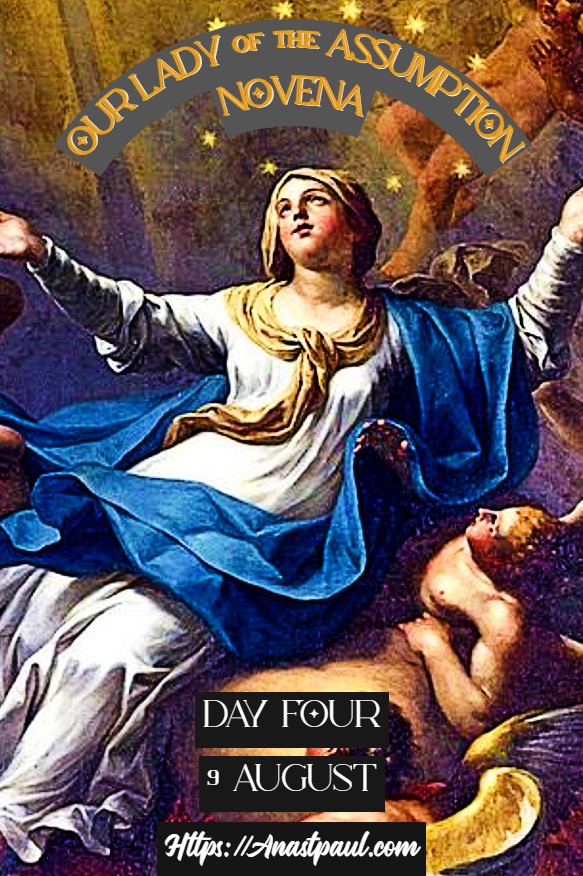
The Fourth Day: Reasons for the Bodily Assumption of Mary into Heaven
Preparatory Prayer by St Alphonsus Maria de Liguori (1696-1787) Most Zealous Doctor of the Church
O Mary, Virgin most Blessed and Mother of Our Lord and Redeemer Jesus Christ, through thy mercy I beseech thee, to come to my aid and to inspire me with such confidence in thy power that I may have recourse to thee, pray to thee and implore thy aid, in all needs of soul and body. Amen
Meditation: The wages of sin is death. Now, as the Blessed Virgin, from the first moment of her existence was preserved from all sin and even from original sin, it necessarily follows that death could have no permanent dominion over her and that, her body would not be permitted to see corruption.
This sinless body had been the medium by which the Body of Our Lord Jesus Christ, Who was the conqueror of death, had been formed. How, then, could such a highly privileged body, a pure and virginal body, be permitted to pass through corruption and decay?
As Mary had yielded up her sacred person to be a dwelling-place for the Lord of Heaven, it seems fitting that this same Lord, in His turn, should give the Kingdom of Heaven to her as her resting-place. St Bernard expresses this sentiment as follows: “When Our Lord came into this world, Mary furnished Him with the noblest dwelling on earth, the temple of her virginal womb. In return, the Lord,on this day, raises her up to the highest throne in Heaven.”
Practice: If You desire to look forward to death, without fear and to expect your dissolution with confidence, follow the Apostle’s injunction, “Therefore, whilst we have time, let us do good works, to all men” (Gal. 6:10). Avoid sin, perform good works, be patient in affliction and strive to expiate the punishment due to your sins by voluntary acts of penance, thus reducing your inclination to sin. Therefore, offer up to God, every morning, in a spirit of penitence, all your labours, trials and sufferings.
Prayer of the Church: We beseech Thee, O Lord, pardon the shortcomings of Thy servants that we who, by our own works, are not able to please Thee, may be saved by the intercession of the Mother of Thy Son, Our Lord Jesus Christ. Amen.
Novena Prayer: Day Four
Glorious Virgin and Mother of God, Mary! I beseech thee through the ineffable glory, thou didst make for thy departure from this world by a life of retirement, full of merits and virtue, dedicated to God alone; obtain for me the grace, of, following thy example, that I may detach my heart from this world and patiently bear affliction and adversity, carefully avoid sin and always strive to advance in the love of God. Obtain for me too, I beg thee Holy Mother, this my special petition ……………………
Hail Mary …….
Ejaculation:Sweet heart of Mary be my salvation!
Indulgence: (1) 100 days, every time. (2) A Plenary Indulgence, once a month, on any day, to all who shall have said it everyday for a month, under the usual conditions.
Thought for the Day – 9 August – Meditations with Antonio Cardinal Bacci (1881-1971)
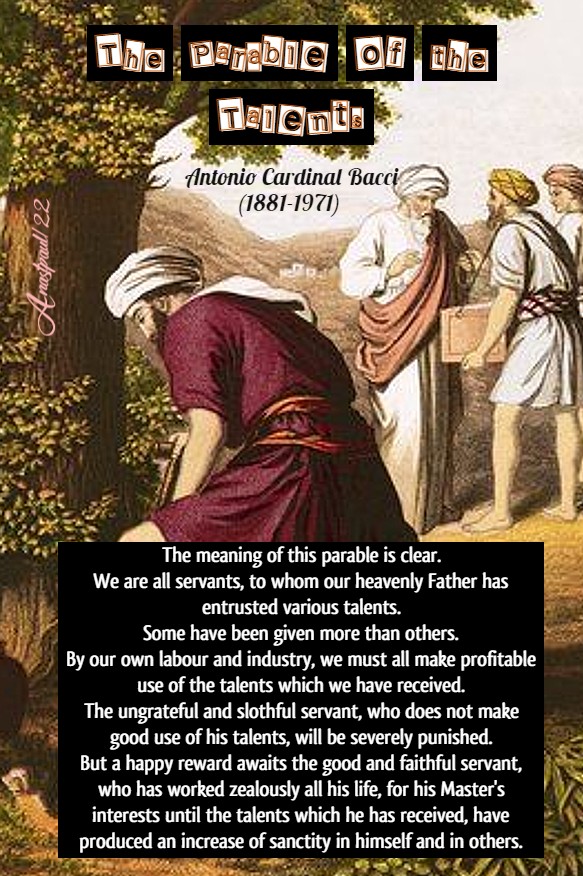
The Parable of the Talents
“Let us meditate on the parable concerning the talents. A lord was preparing to go abroad and before he departed he called together his servants. He distributed his assets among them in proportion to their abilities, giving five talents to the first, two to the second and one to the third.
After a long time, the master returned and asked his servants to render an account of the money entrusted to them Those who had received respectively, the five and the two talents, returned the capital to their lord along with the profits which they had made, so that, in fact, each was able to hand back double the sum originally entrusted to him. Their master praised their fidelity and zeal and rewarded them more handsomely than they could ever have expected.
Finally, the man who had received only one talent approached and said, “Master, I know that thou art a stern man; thou reapest where thou hast not sowed and gatherest where thou hast not winnowed and, as I was afraid, I went away and hid the talent in the earth. Behold thou hast what is thine. The master’s reply was stern. Wicked and slothful servant. Thou didst know that I reap where I do not sow and gather where I have not winnowed! Thou shouldst, therefore, have entrusted my money to the bankers and on my return, I should have received back my own with interest. Take away, therefore, the talent from him and …. cast him forth into the darkness outside, where there will be the weeping and the gnashing of teeth” (Cf Mt 25:14-30).
The meaning of this parable is clear. We are all servants, to whom our heavenly Father has entrusted various talents. Some have been given more than others. By our own labour and industry, we must all make profitable use of the talents which we have received. The ungrateful and slothful servant, who does not make good use of his talents, will be severely punished. But a happy reward awaits the good and faithful servant, who has worked zealously all his life, for his Master’s interests until the talents which he has received, have produced an increase of sanctity in himself and in others.”
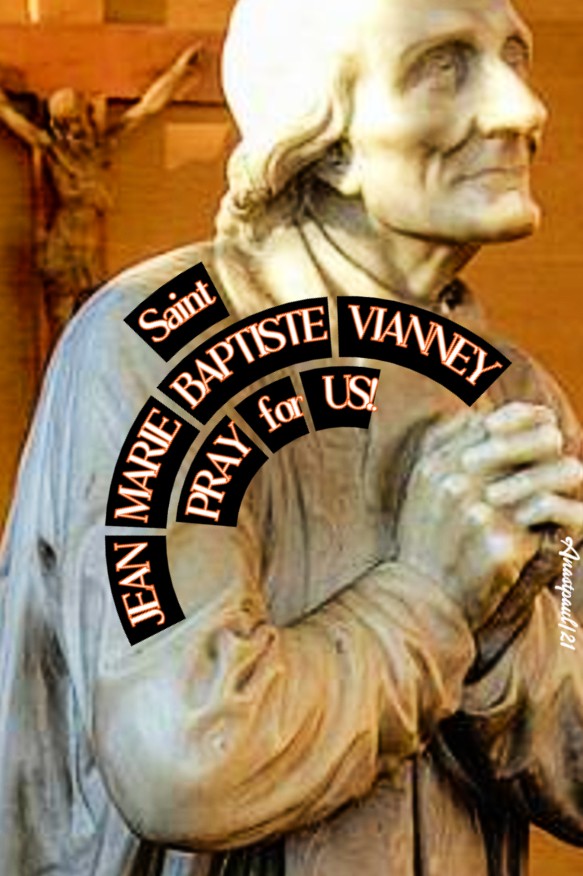
Quote/s of the Day – 9 August – The Memorial of St John Marie Vianney (1786-1859) Confessor
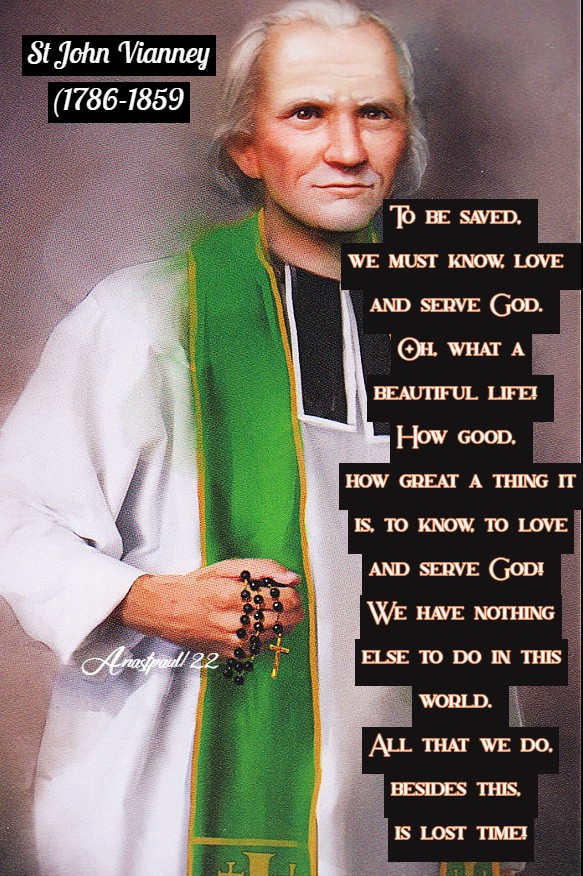
“To be saved, we must know, love,and serve God. Oh, what a beautiful life! How good, how great a thing it is, to know, to love and serve God! We have nothing else to do in this world. All that we do, besides this, is lost time! ”
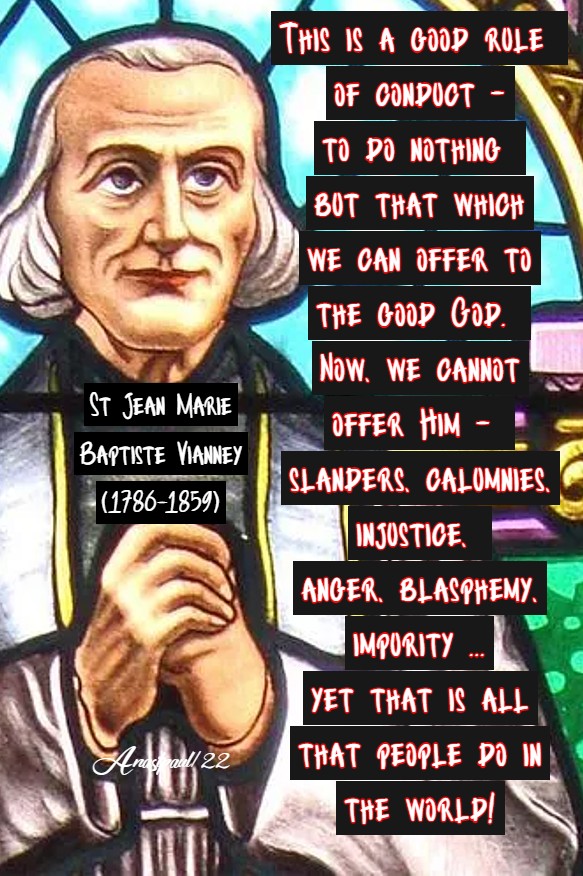
“This is a good rule of conduct – to do nothing but that which we can offer to the good God. Now, we cannot offer to Him – slanders, calumnies, injustice, anger, blasphemy, impurity … yet that is all that people do in the world!”
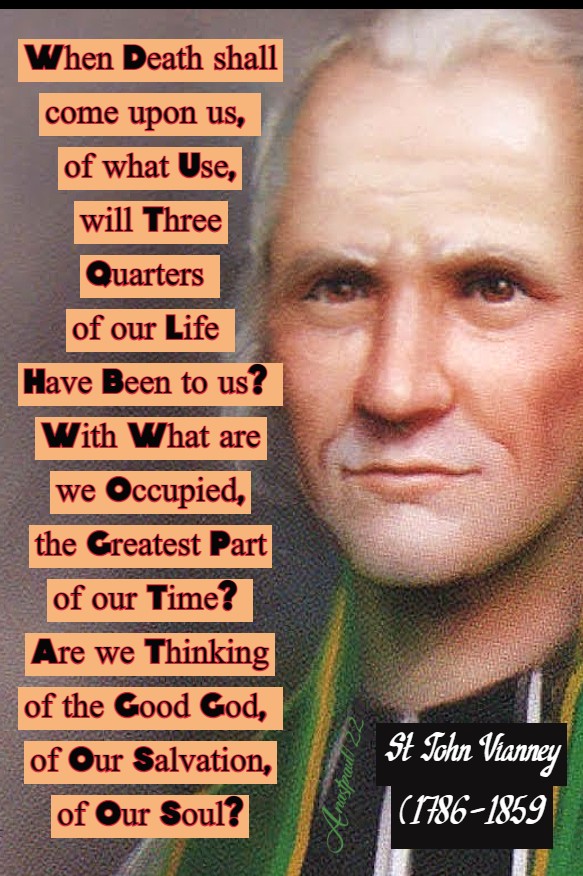
“When death shall come upon us, of what use, will three-quarters of our life have been to us? With what are we occupied, the greatest part of our time? Are we thinking of the good God, of our salvation, of our soul?”
One Minute Reflection – 9 August – “The Month of the Immaculate Heart of Mary” and The Memorial of St John Marie Vianney (1786-1859) Confessor – Sirach 31:8-11, Luke 12:35-40
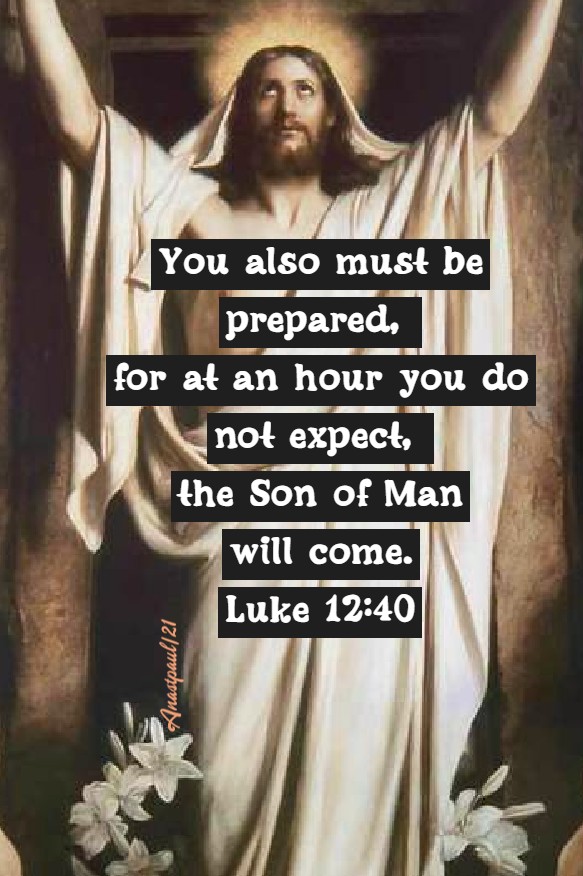
“You also must be prepared, for at an hour you do not expect, the Son of Man will come.” – Luke 12:40
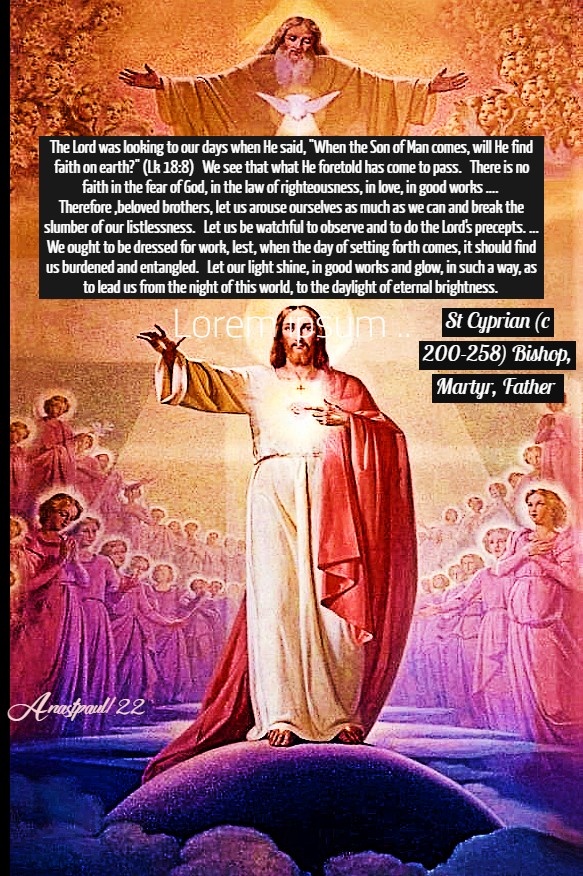
REFLECTION – “The Lord was looking to our days when He said, “When the Son of Man comes, will He find faith on earth?” (Lk 18:8) We see that what He foretold has come to pass. There is no faith in the fear of God, in the law of righteousness, in love, in good works …. That which our conscience would fear if it believed, it does not fear because it does not believe at all. If it believed, it would also take heed and if it took heed, it would be saved.
Therefore ,beloved brothers, let us arouse ourselves as much as we can and break the slumber of our listlessness. Let us be watchful to observe and to do the Lord’s precepts. Let us be like He Himself, has bidden us to be, saying, “Gird your loins and light your lamps and be like servants who await their master’s return from a wedding, ready to open immediately, when He comes and knocks. Blessed are those servants, whom the Master finds vigilant on His arrival“.
We ought to be dressed for work, lest, when the day of setting forth comes, it should find us burdened and entangled. Let our light shine, in good works and glow, in such a way, as to lead us from the night of this world, to the daylight of eternal brightness. Let us always wait with solicitude and caution for the sudden coming of the Lord, so that when he knocks, our faith may be on the watch and receive from the Lord, the reward of our vigilance. If these commands be observed, if these warnings and precepts be kept, we will not be overtaken in slumber, by the deceit of the devil. But we shall reign with Christ in His Kingdom, as servants on the watch.” – St Cyprian (c 200-258) Bishop of Carthage and Martyr, Father of the Church (Treatise on the unity of the Church, 26-27).
PRAYER – Almighty and merciful God, Who made St John Marie glorious by priestly zeal and untiring fervoru in prayer and penance, grantP we beseech Thee that by his example and intercession, we may have strength to win for Christ, the souls of our brethren and, with them, attain everlasting glory. Through Jesus Christ, Thy Son our Lord, Who lives and reigns with Thee, in the unity of the Holy Ghost, God, world without end. Amen (Collect).
Our Morning Offering – 9 August – “The Month of the Immaculate Heart of Mary” and the Memorial of St John Vianney (1786-1859) Confessor
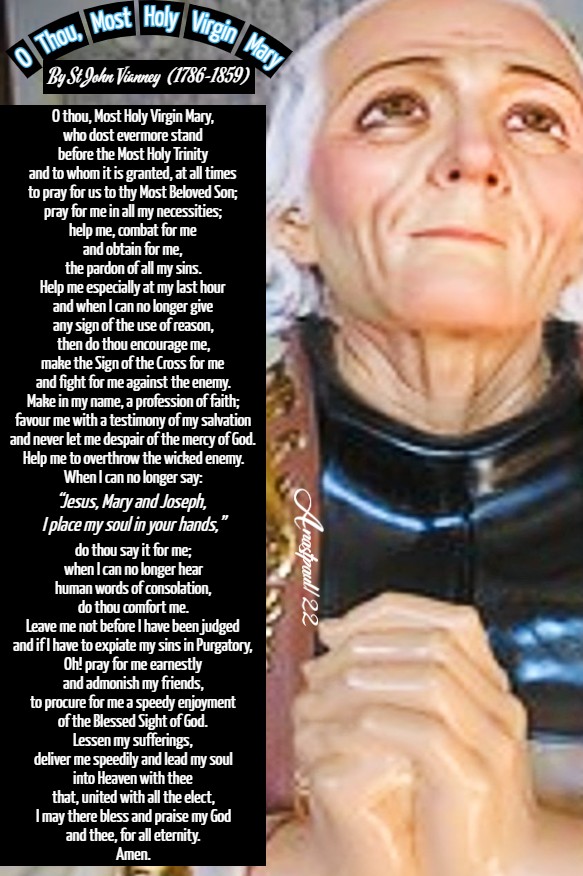
O Thou, Most Holy Virgin Mary By St John Vianney (1786-1859)
O thou, Most Holy Virgin Mary, who dost evermore stand before the Most Holy Trinity and to whom it is granted, at all times to pray for us to thy Most Beloved Son; pray for me in all my necessities; help me, combat for me and obtain for me, the pardon of all my sins. Help me especially at my last hour and when I can no longer give any sign of the use of reason, then do thou encourage me, make the Sign of the Cross for me and fight for me against the enemy. Make in my name, a profession of faith; favour me with a testimony of my salvation and never let me despair of the mercy of God. Help me to overthrow the wicked enemy. When I can no longer say: “Jesus, Mary and Joseph, I place my soul in your hands,” do thou say it for me; when I can no longer hear human words of consolation, do thou comfort me. Leave me not before I have been judged and if I have to expiate my sins in Purgatory, Oh! pray for me earnestly and admonish my friends, to procure for me a speedy enjoyment of the Blessed Sight of God. Lessen my sufferings, deliver me speedily and lead my soul into Heaven with thee that, united with all the elect, I may there bless and praise my God and thee, for all eternity. Amen.
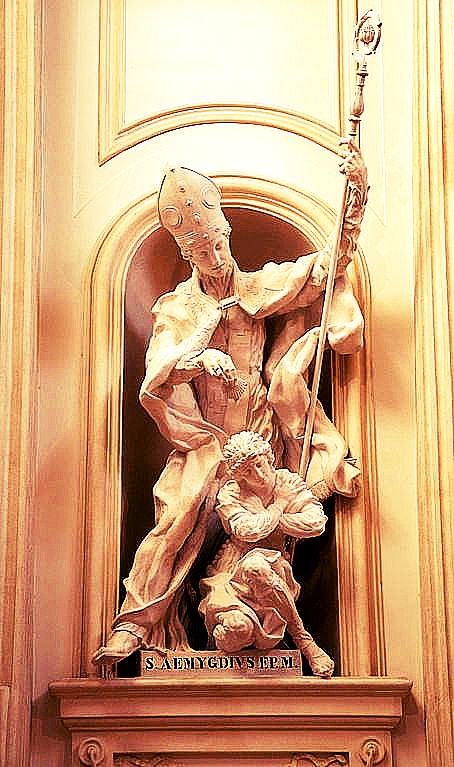
Saint of the Day – 9 August – Saint Emigdius (c 272 – c 303) Bishop Martyr, Confessor, Miracle-worker. Born probably in Trier in south-western Germany in c 272 and died by being beheaded in c 303. Patronages – against earthquakes – against natural disaster, of the City and Diocese of Ascoli Piceno, of the Cities of L’Aquila, Cingoli, San Ginesio, Nocera Umbra, Italy. Also known as – Emygdius, Emigdius, Emigdio.
The Roman Martyrology states of him today: “St EmIgdius, Bishop and Martyr, who was Consecrated Bishop by Pope Marcellus and sent thither to preach the Gospel. He received the crown of Martyrdom for the confession of Christ, under the Emperor Diocletian.”
Emigdius was a pagan converted and was baptised by St Nazarius and St Celsus in Trier. . With others who had been converted to Christianity, he first went to Milan , where he was Ordained a Priest, then to Rome.
In Rome he cured the paralytic daughter of his host Gratianus, who had given him access to his home on Tiber Island. Gratianus and his family then converted to Christianity. Emigdius also cured a blind man. The people of Rome believed him to be the son of Apollo and carried him off by force to the Temple of Aesculapius on the island in the Tiber, where he cured many of the sick. Emygdius declared himself a Christian, however and tore down the pagan altars and smashed into pieces a statue of Aesculapius. H e also converted many to Christianity which enraged the Prefect of the City.
He was Consecrated a Bishop by Pope Marcellus and sent to Ascoli Piceno. On his way to Ascoli, Emigdius converted many more people, and performed a miracle where he made water gush out of a rockface after striking a portion of a cliff. Polymius, the local Governor, attempted to convince Emygdius to worship Jupiter and the goddess Angaria, the patroness of Ascoli. Polymius also offered him the hand of his daughter Polisia. Instead, Emygdius baptised her as a Christian in the waters of the Tronto, along with many others.
St Emigdius baptising Polisia
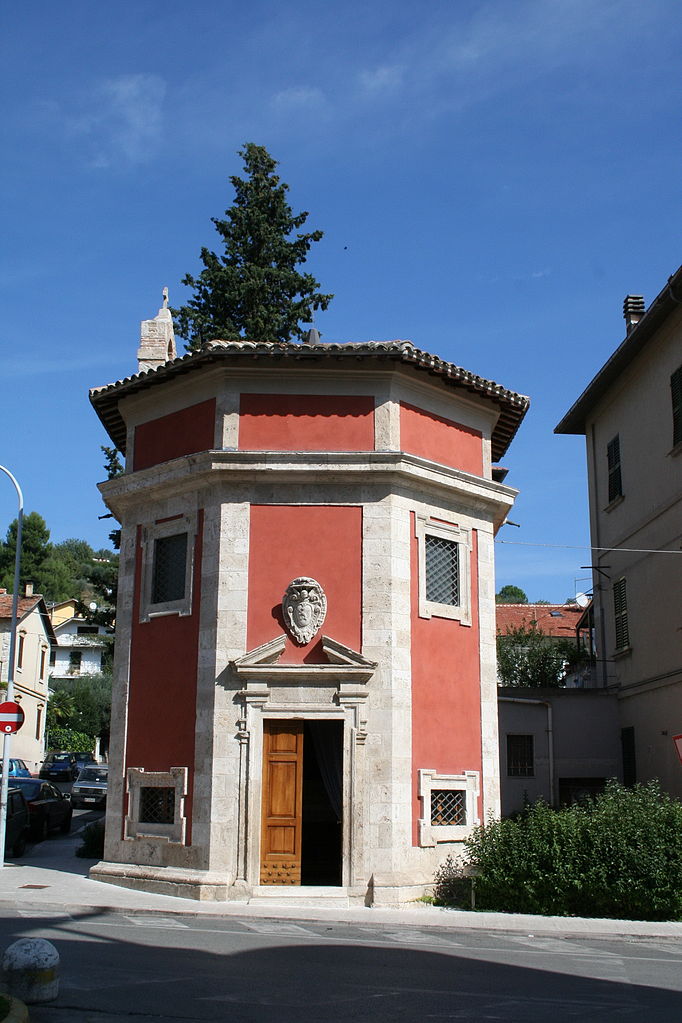
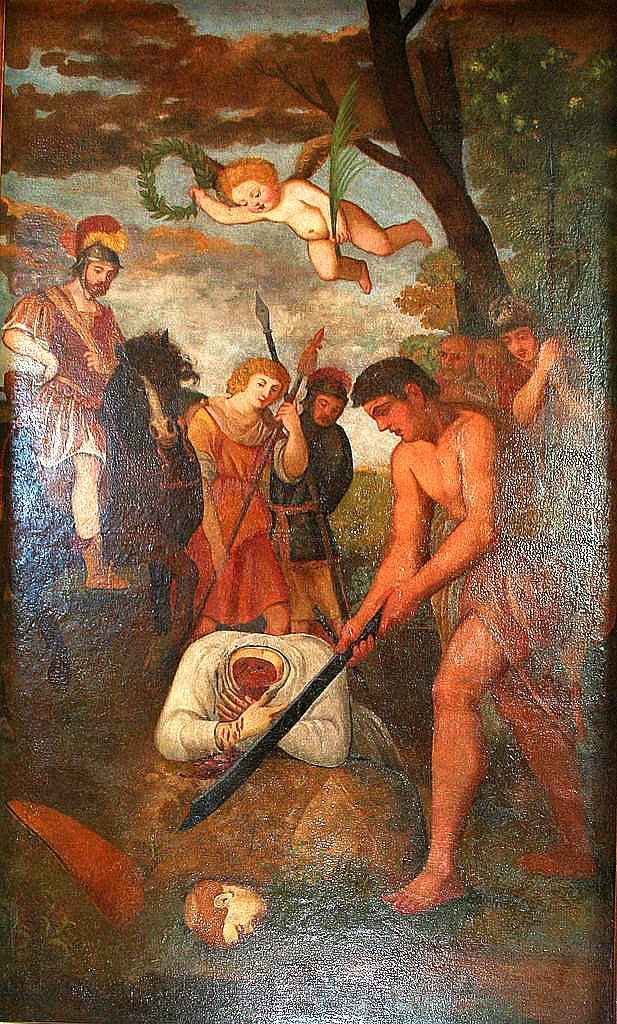
Enraged, Polymius decapitated him on the spot now occupied by the Sant’Emidio Red Temple, as well as his followers Eupolus (Euplus), Germanus and Valentius (Valentinus). Emygdius stood up, carried his own head to a spot on the mountainside, where he had constructed an Oratory (the site of the present-day Sant’Emidio alla Grotte). After Emygdius’ Martyrdom, his followers attacked Polymius’ palace and pulled it down.
Sant’Emidio Red Temple
The Martyrdom of St Emigdius
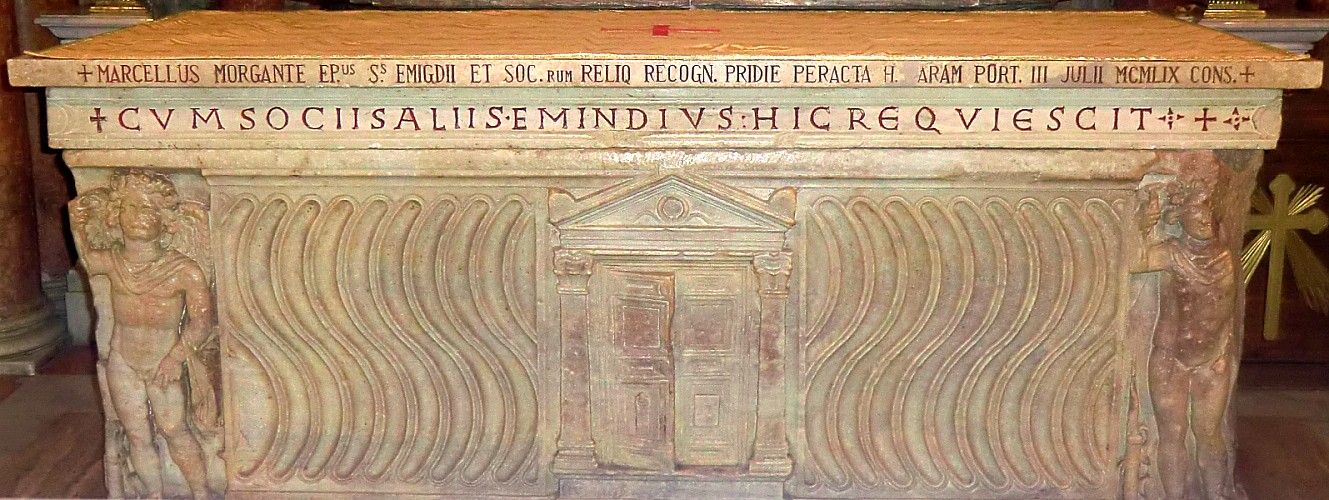
His hagiography was written probably by a Monk of French origin in the eleventh century, after the rediscovery of the Saint’s relics, which had been conserved in a Roman sarcophagus. However, his hagiography was attributed to his disciple Valentius, who was Martyred with him. The cult of Saint Emygdius is ancient, documented by Churches dedicated to him since the eighth century. The translation of his relics from the catacomb of Sant’Emidio alla Grotte to the Crypt of the Cathedral of Ascoli, happened probably around the year 1000 under Bernardo II, Bishop of Ascoli Piceno.
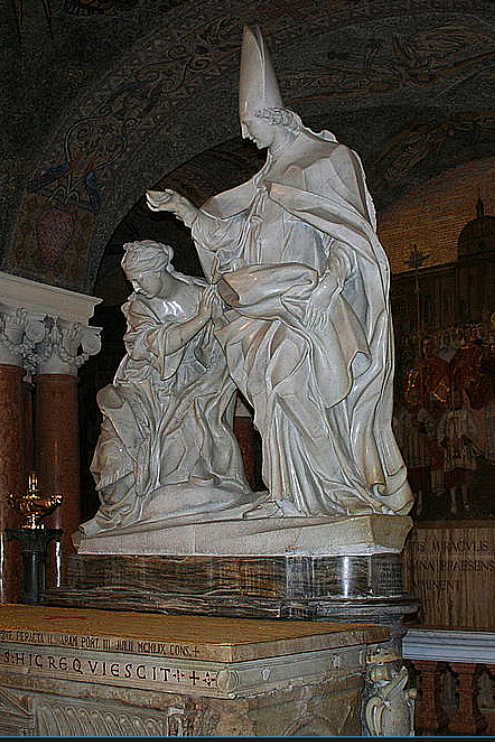
St Emigdius’ Tomb in Ascoli Cathedral
In 1703, a violent earthquake occurred in the Marche but did not affect the City of Ascoli Piceno. The City’s salvation was attributed to Emigdius and he was thenceforth, invoked against earthquakes. As a result of this event, a Church was deciated to the Saint in 1717. Additionally, many Towns appointed him as Patron, erecting Statues in his honour in the Parish Churches (L’Aquila, 1732; Cingoli, 1747; San Ginesio, 1751; and Nocera Umbra, 1751)
Emigdius is considered to have protected Ascoli from other dangers. A dazzling vision of Emigdius deterred Alaric I, King of the Visigoths, from destroying Ascoli in 409. The troops of Conrad II, Holy Roman Emperor passed through the region in 1038 carrying the dreaded disease – the Plague; Bernardo I, Bishop of Ascoli, invoked Emydgius’ aid and the spread of the Plague was immediately arrested. During World War II, on 3 October 1943, Emigdius protected the City against the Germans and against the hunting and arrest of the Italian partisans.
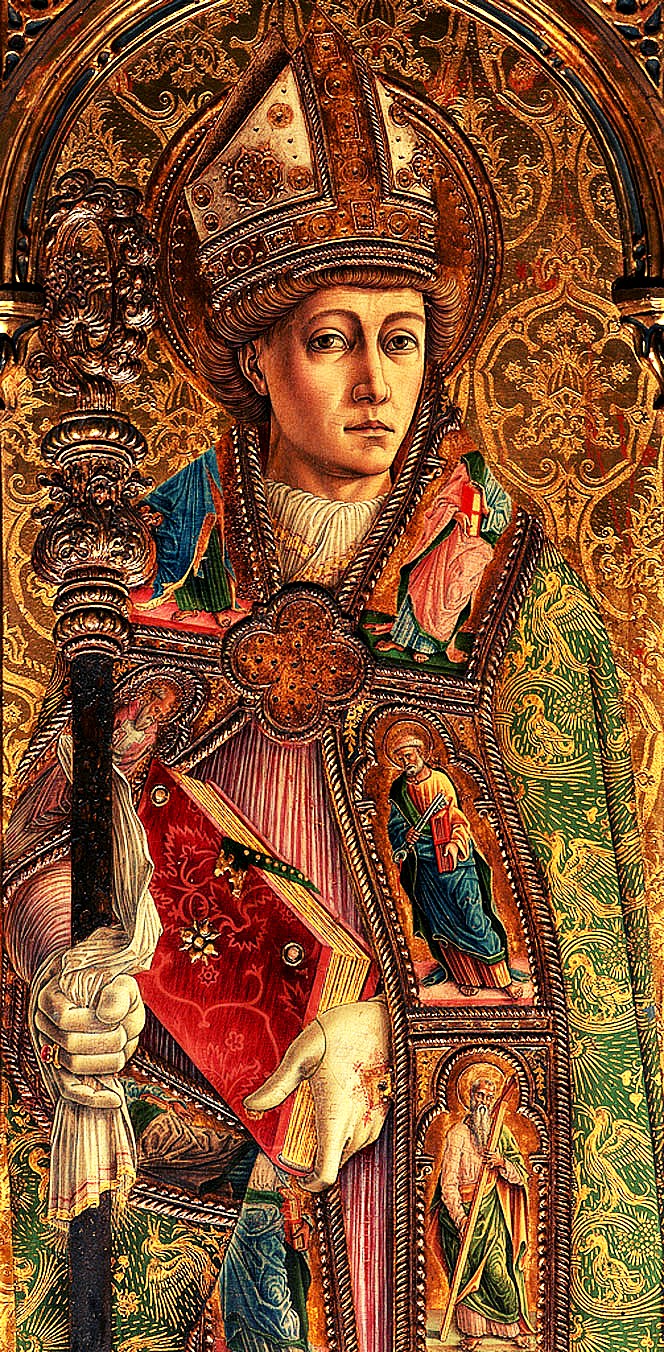
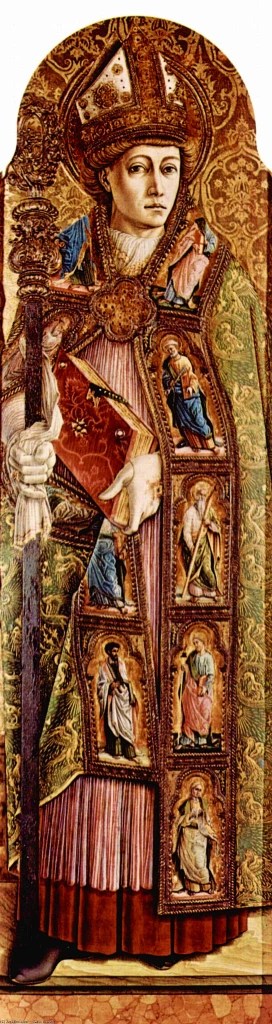
The Annunciation, with Saint Emigdius is an Altarpiece by Italian artist Carlo Crivelli showing an artistic adaptation of the Annunciation. The Altarpiece was painted for the Church of the Annunziata in Ascoli Piceno, in the region of Marche, to celebrate the self-government granted to the town in 1482 by Pope Sixtus IV. St Emygdius is shown in the passageway on the left.
Bl Michal Tomaszek St Nathy St Numidicus of Carthage St Phelim Bl Richard Bere St Rusticus of Sirmium St Rusticus of Verona St Secundian of Civitavecchia St Stephen of Burgos Bl Thomas Palaser St Verian of Civitavecchia Bl Zbigniew Adam Strzalkowski
Martyrs of Civitavecchia: Three Christians Martyred together in the persecutions of Decius. We know little more than the names – Marcellian, Secundian and Verian. 250 near Civitavecchia, Italy.
Martyrs of Constantinople: 10 Saints: A group of ten Christians who were arrested, tortured and executed for defending an icon of Christ in defiance of orders from Emperor Leo the Isaurian. We know the names of three, but nothing else about them – Julian, Marcian and Mary. They were beheaded in Constantinople.
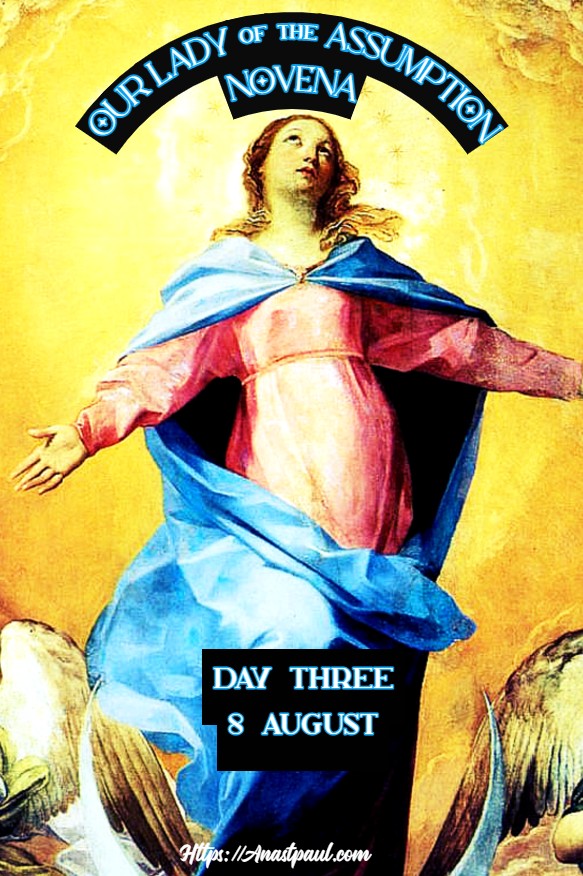
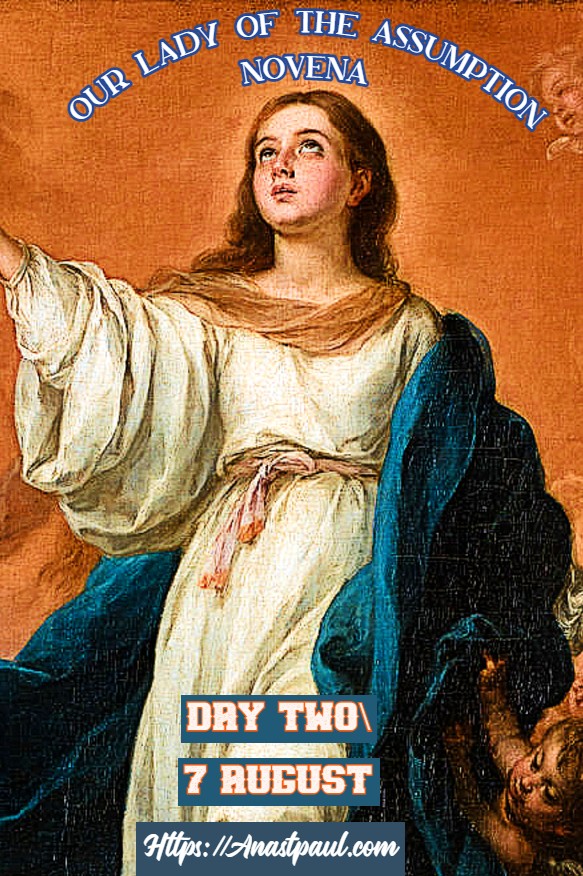
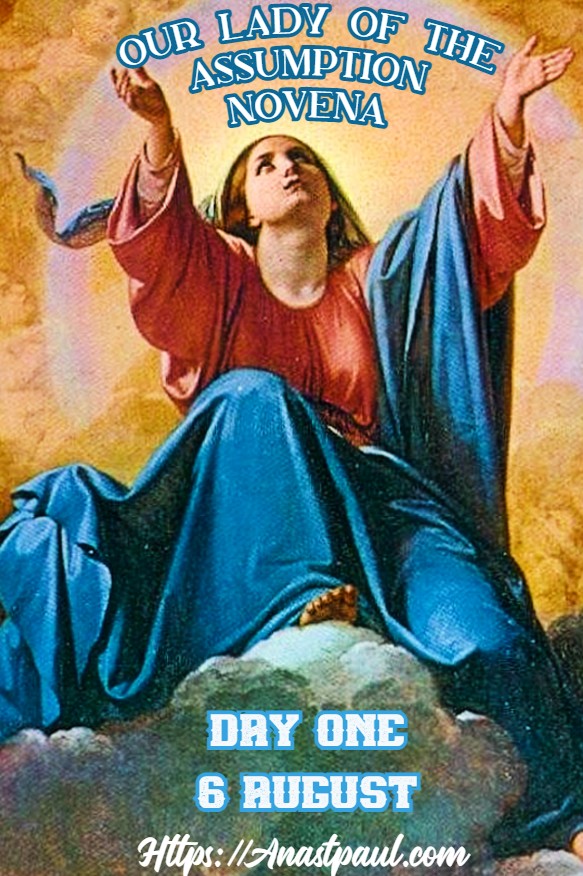
Novena to Our Lady of the Assumption, the Third Day
The Third Day: The Empty Tomb
Preparatory Prayer by St Alphonsus Maria de Liguori (1696-1787) Most Zealous Doctor of the Church
O Mary, Virgin most Blessed and Mother of Our Lord and Redeemer Jesus Christ, through thy mercy I beseech thee, to come to my aid and to inspire me with such confidence in thy power that I may have recourse to thee, pray to thee and implore thy aid, in all needs of soul and body. Amen
Meditation: St John Damascene (675-749) Father and Doctor of the Church, writes: “St Thomas was not with the other Apostles when the Blessed Virgin died but arrived in Jerusalem on the third day after that event. Ardently desiring to see once more and to venerate the sacred body which had given flesh and blood to his Beloved Master, the grave was opened for this purpose. The body could nowhere be seen and a delicious perfume filled the empty tomb. The Apostles then became convinced, that as God had preserved the body of Mary free from sin before, in and after the Birth of His Son, He was pleased, likewise, after her death, to preserve that same body from corruption and, to glorify it in Heaven.”
A Council held in Jerusalem, in the year 1672, declared: “It is beyond all doubt, that the Blessed Virgin is not only a great and miraculous sign on earth because she bore God in the flesh and yet remained a virgin but, she is also, a great and miraculous sign in Heaven because she was taken up to Heaven, with soul and body. For although her sinless body was enclosed in the tomb, yet, like the body of Our Lord, it arose on the third day and was carried up to Heaven.”
Although the Doctrine of the bodily Assumption of Mary into Heaven, was not defined by the Church as an Article of Faith in the strict sense, yet, the learned Pope Benedict XIV rdeclares, “It would be presumptuous and blameworthy in anyone, to call into doubt or to question, this beautiful and consoling belief of ages.”
Practice: Let us rejoice at the thought of the glorious resurrection of our dear Mother. Let us unite ourselves in spirit with the Apostles in Heaven and with Holy Church, to congratulate her on this extraordinary privilege. But let us also rejoice at the thought of our own resurrection. True, it shall not take place immediately after death but. it is, therefore, not the less certain and it depends on us, to make it glorious and blessed.
Prayer of the Church: We beseech Thee, O Lord, pardon the shortcomings of Thy servants that we who, by our own works, are not able to please Thee, may be saved by the intercession of the Mother of Thy Son, Our Lord Jesus Christ. Amen.
Novena Prayer: Day Three
Glorious Virgin and Mother of God, Mary! As thy sacred body, after death, was preserved from corruption and, united with thy sinless soul, was borne to Heaven by the Angels; obtain for me the grace that my life and death be holy, so that on the Day of Judgement, I may arise to glory everlasting. Obtain for me too, I beg thee, the granting of this my special petition: …………………………… Amen
Hail Mary …….
Ejaculation: Sweet heart of Mary be my salvation!
Indulgence. (1) 100 days, every time. (2) A Plenary Indulgence, once a month, on any day, to all who shall have said it everyday for a month, under the usual conditions.
Thought for the Day – 8 August – Meditations with Antonio Cardinal Bacci (1881-1971)
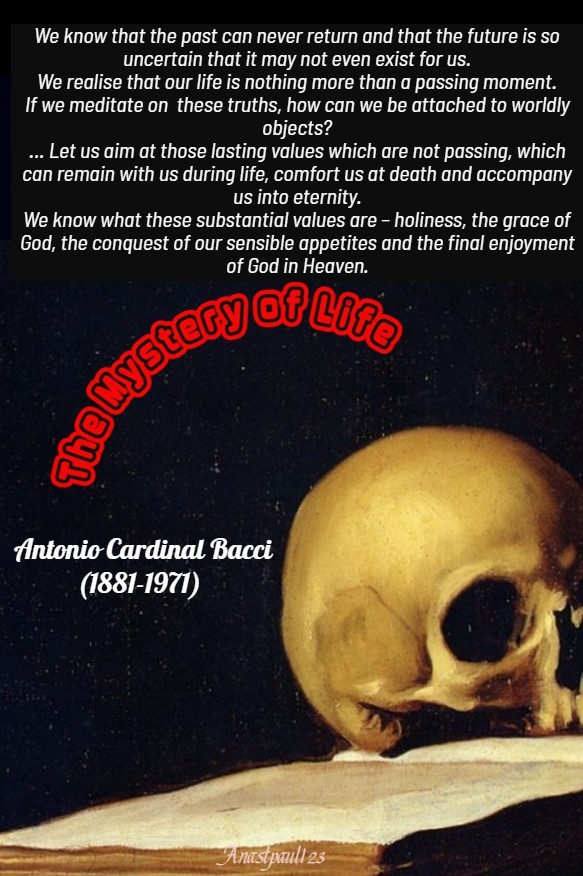
The Mystery of Life
“We know that the past can never return and that the future is so uncertain that it may not even exist for us. We realise that our life is nothing more than a passing moment. If we meditate on these truths, how can we be attached to worldly objects? Even if we could attain the objects of our desire, they would soon be snatched away from us!
Let us aim at those lasting values which are not passing, which can remain with us during life, comfort us at death and accompany us into eternity. We know what these substantial values are – holiness, the grace of God, the conquest of our sensible appetites and the final enjoyment of God in Heaven. These things do not pass away but will remain with us forever.”
Quote/s of the Day – 8 August – The Memorial of the Fourteen Holy Helpers – On the Saints
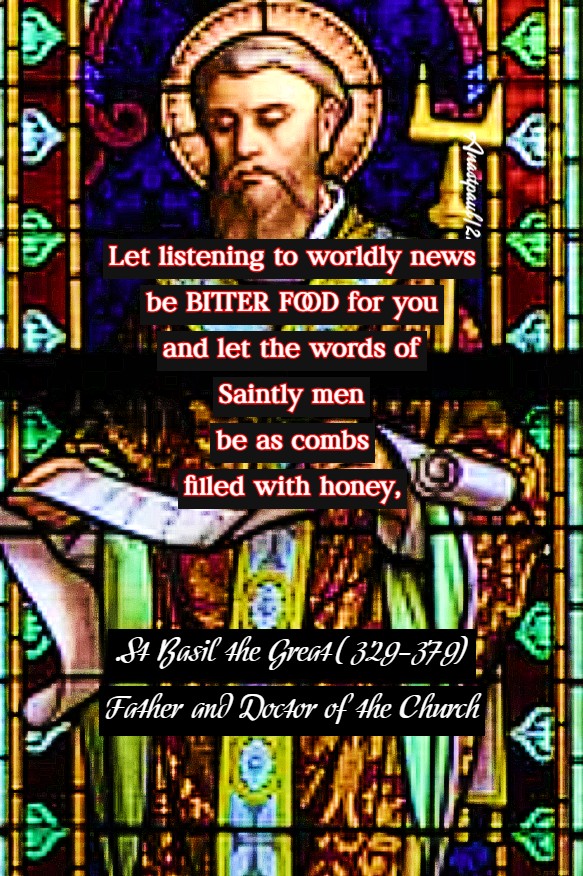
“Let listening to worldly news be BITTER FOOD for you and let the words of Saintly men be as combs filled with honey.”
St Basil the Great (329-379) Father and Doctor of the Church
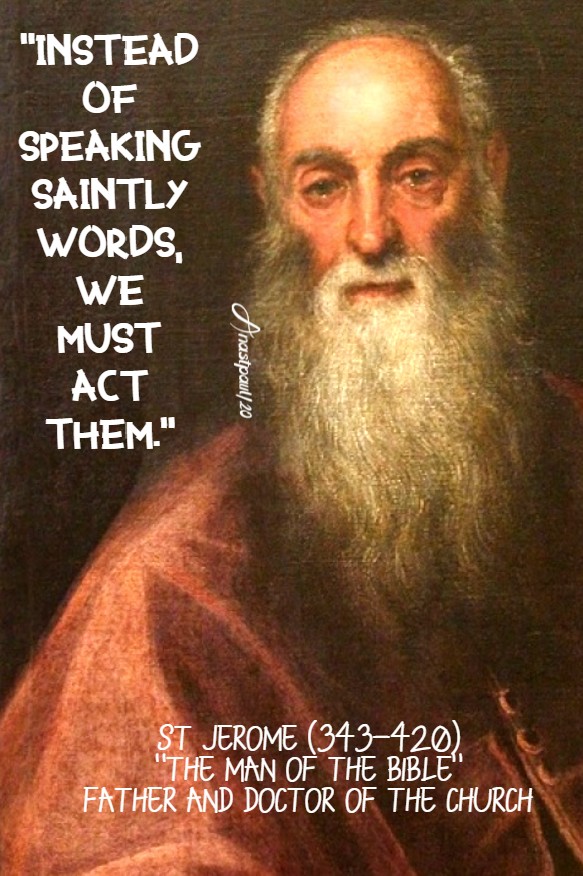
“Instead of speaking saintly words, we must act them.”
St Jerome (343-420) “The Man of the Sacred Scripture” Father and Doctor of the Church
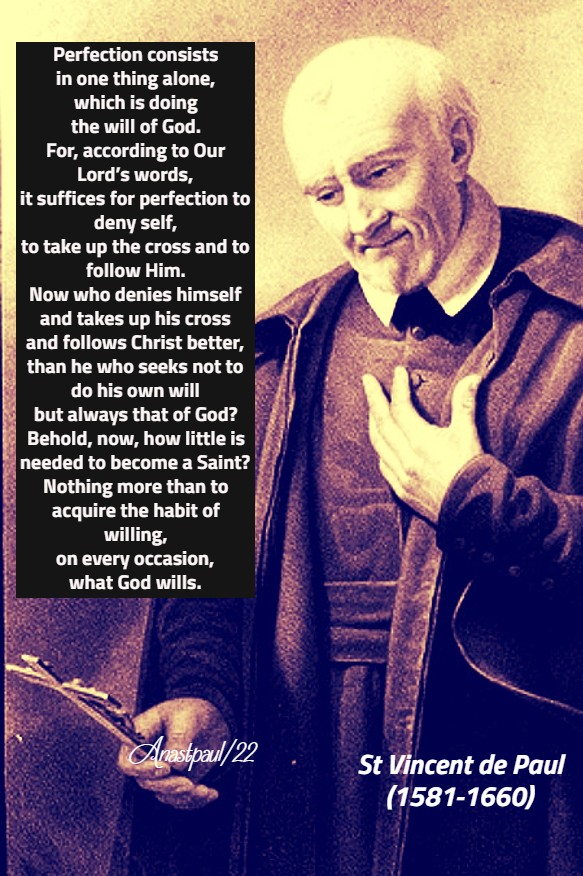
“Perfection consists in one thing alone, which is doing the will of God. For, according to Our Lord’s words, it suffices for perfection to deny self, to take up the cross and to follow Him. Now who denies himself and takes up his cross and follows Christ better, than he who seeks not to do his own will but always that of God? Behold, now, how little is needed to become as Saint? Nothing more than to acquire the habit of willing, on every occasion, what God wills.”
St Vincent de Paul (1581-1660)
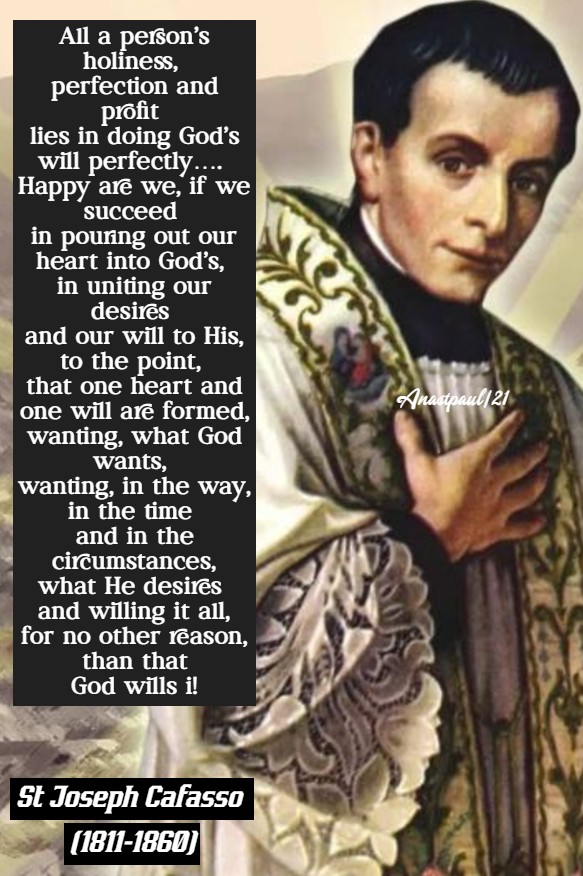
“All a person’s holiness, perfection and profit lies in doing God’s will perfectly…. Happy are we, if we succeed in pouring out our heart into God’s, in uniting our desires and our will to His, to the point, that one heart and one will are formed, wanting, what God wants, wanting, in the way, in the time and in the circumstances, what He desires and willing it all, for no other reason, than that God wills it.”
One Minute Reflection – 8 August – “The Month of the Immaculate Heart of Mary” – The Memorial of the Holy Martyrs Saints Cyriacus, Largus and Smaragdus – 1 Thessalonians 2:13-16, Mark 16:15-18
“He who believes and is baptised, shall be saved ...” – Mark 16:16
REFLECTION – “When He says, “All that the Father gives Me shall come to Me,” He touches on their unbelief, showing, that whoever does not believe in Him transgresses the Will of the Father. He covertly shows, that unbelievers are not only at variance with Him but also, with the Father. For if this is [the Son’s] Will and if this is the reason He came, that is, that He might save the entire world, then those who do not believe transgress His Will.
When, therefore, He says, the Father guides someone, there is nothing that hinders that person from coming to [Jesus]. And Paul says, that [the Son] delivers them up to the Father. Now, just as the Father, when He gives, does not take from Himself, so neither does the Son take from Himself when He gives up. The Son is said to give up to the Father because we are brought to the Father by Him. And at the same time, we read that it was the Father “by whom you were called to the fellowship of His Son,” that is, by the Will of the Father.
Faith in Me, He intimates here, is no ordinary thing or one that comes from human reason but [it] needs a revelation from above. And this He establishes throughout His discourses, showing, that this faith requires a noble sort of soul and one drawn on by God. The expression “that the Father gives Me” shows, that it is no accident whether a person believes or not. It shows, that belief is not the work of human reasoning but requires a revelation from on high and a mind devout enough to receive the revelation. “Whoever then,” our Lord says, “comes to Me, shall be saved,” meaning they shall be greatly cared for. For to save such as these, I took up flesh and the form of a servant.” – St John Chrysostom (347-407) Archbishop of Constantinople, Father and Doctor of the Church (Homilies on the Gospel of John 45)
PRAYER – O God, Who gladden us with the annual festival of Thy holy Martyrs, Cyriacus, Largus and Smaragdus, mercifully grant, that we, who celebrate the anniversary of their death, may also strive to equal the courage of their Martyrdom. Through Jesus Christ, Thy Son our Lord, Who lives and reigns with Thee, in the unity of the Holy Ghost, God, world without end. Amen (Collect).
Our Morning Offering – 8 August – “The Month of the Immaculate Heart of Mary”
O Mother Blest By St Alphonsus Maira Liguori (1696-1787) Most Zealous Doctor of the Church Trans. Fr Edmund Vaughn C.SS,R, (1827 – 1908 )
O Mother blest, whom God bestows On sinners and on just, What joy, what hope thou givest those Who in thy mercy trust. Thou are clement, thou are chaste, Mary thou art fair, Of all mothers, sweetest best, none with thee compare.
O heavenly Mother, mistress sweet! it never yet was told that suppliant sinner left thy feet, unpitied, unconsoloed. Thou are clement, thou are chaste, …
O Mother, pitiful and mild, Cease not to pray for me; For I do love thee as a child, And sigh for love of thee. Thou art clement, thou art chaste, …
Most powerful Mother, all men know Thy Son denies thee nought; Thou askest, wishest it, and lo! His power thy will hath wrought. Thou art clement, thou art chaste, …
O Mother blest, for me obtain, Ungrateful though I be, To love that God who first could deign To show such love for me. Thou art clement, thou art chaste, Mary, thou art fair. Of all mothers, sweetest, best, None with thee compare.
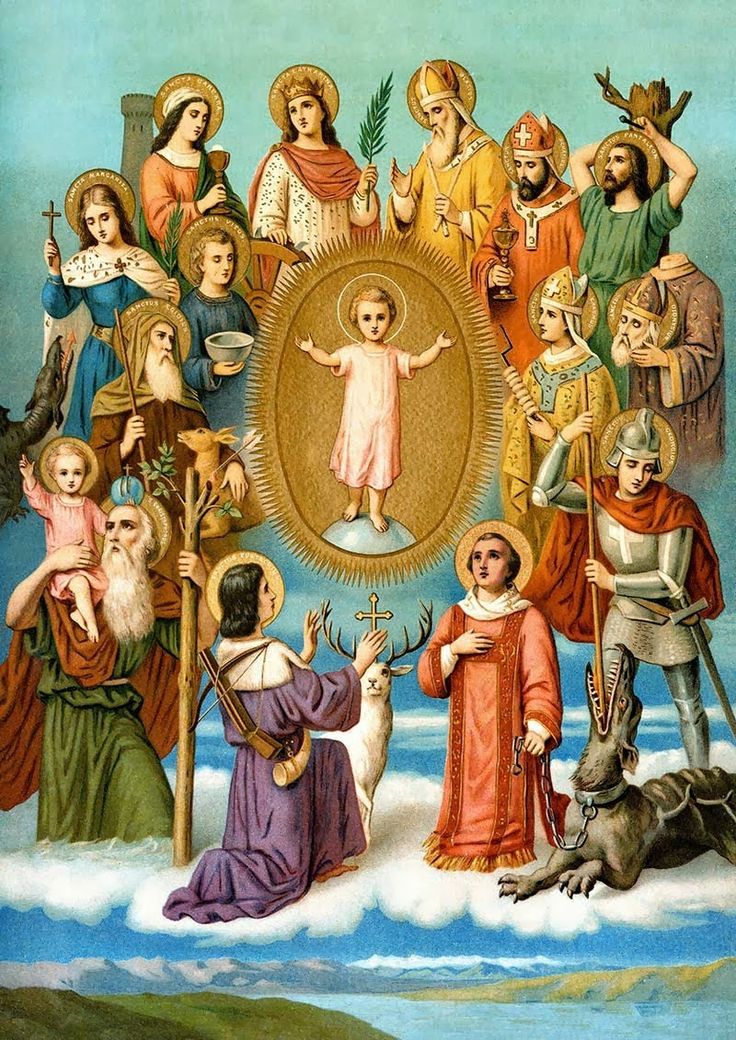
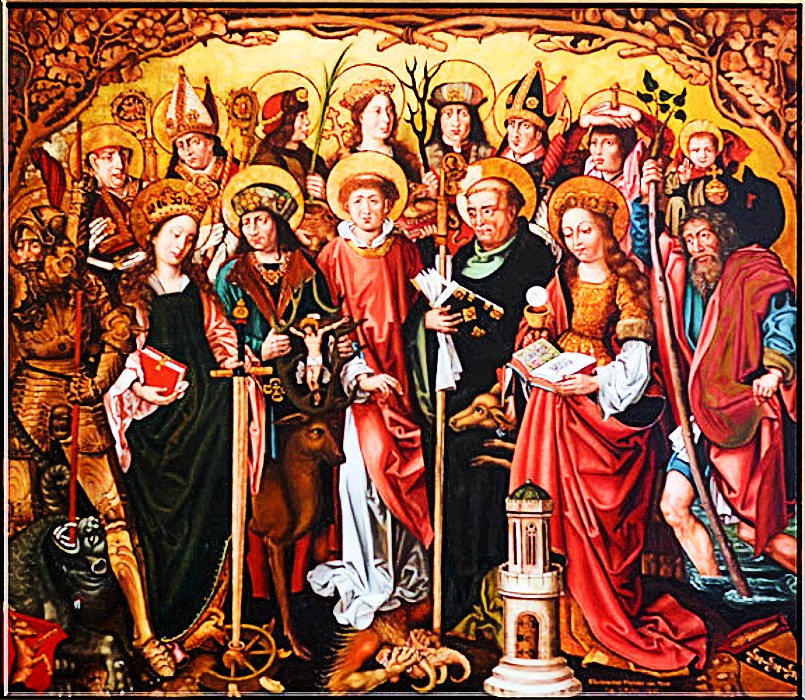
Saint/s of the Day – 8 August – The Fourteen Holy Helpers. A group of Saints invoked with special confidence because they have proven themselves efficacious helpers in adversity and difficulties, are known and venerated under the name Fourteen Holy Helpers.
The Notable Martyrs Saints within the Group are: Acacius, Barbara, Blaise, Christopher, Cyriacus, Catherine of Alexandria, Denis, Erasmus of Formia, Eustace, George, Giles, Margaret of Antioch, Pantaleon and Vitus.
Devotion to these fourteen ,as a group, spread in response to the Black Plague which devastated Europe from 1346 to 1349. Among its symptoms were the tongue turning black, a parched throat, violent headache, fever, and boils on the abdomen. It attacked without warning, robbed its victims of reason and killed within a few hour. Many died without the last Sacraments.
Brigands roamed the streets, people suspected of contagion were attacked, animals died, people starved, whole villages vanished into the grave, social order and family ties broke down and the disease appeared incurable. The pious turned to Heaven, begging the intervention of the Saints, praying to be spared or cured. This group devotion began in Germany–the Diocese of Wurzburg having been renowned for its observance.
Pope Nicholas V attached Indulgences to devotion of the Fourteen Holy Helpers in the 16th century.
Saint Christopher and Saint Giles are nvoked against the plague itself. Saint Denis is prayed to for relief from headache, Saint Blaise for ills of the throat, Saint Elmo for abdominal maladies, Saint Barbara for fever and Saint Vitus against epilepsy. Saint Pantaleon is the Patron of physicians, Saint Cyriacus invoked against temptation on the deathbed and Saints Christopher, Barbara and Catherine, for protection against a sudden and unprovided death. Saint Giles is prayed to for a good Confession and Saint Eustace as healer of family troubles. Domestic animals were also attacked by the plague and so, Saints George, Elmo, Pantaleon and Vitus are invoked for the protection of these animals. Saint Margaret of Antioch is the Patron of safe childbirth.
The legends of the Fourteen Holy Helpers are replete with the most glorious examples of heroic firmness and invincible courage in the profession of the Faith, which ought to incite us to imitate their fidelity in the performance of the Christian and social duties. If they, with the aid of God’s grace, achieved such victories, why should not we, by the same aid, be able to accomplish the very little which is desired of us? God rewarded His victorious champions with eternal bliss – the same crown is prepared for us, if we but render ourselves worthy of it. God placed the seal of miracles on the intrepid confession of His Servants and a mind imbued with the spirit of faith, sees nothing extraordinary therein because our Divine Saviour, Himself said, “Amen, amen I say to you, he that believes in Me, the works that I do, he also shall do and greater than these shall he do” (John 14:12). In all the miraculous events wrought in and by the Saints, there appears only the victorious omnipotent Power of Jesus Christ and the living faith, in which His Servants operated in virtue of this power.
The histories of the Saints are called Legends. This word is derived from the Latin,and signifies something that is to be read, a passage the reading of which is prescribed. Therefore, the Legends of the Saints are the lives of the holy Martyrs and Confessors of the Faith. Some of them occur in the Roman Breviary which the Catholic Clergy is obliged to read everyday. (The corruption of this word has occurred in modern times, giving it a meaning of either “unprovable story or celebrity.”)
St Eleutherius of Constantinople St Ellidius St Famianus of Compostela St Gedeon of Besancon St Hormisdas of Persia Bl John Felton Bl John Fingley St Largus St Leobald of Fleury St Leonidas of Constantinople St Marinus of Anzarba St Mummolus of Fleury St Myron the Wonder Worker St Rathard of Diessen St Severus of Vienne St Sigrada St Smaragdus St Ternatius of Besançon St Ultan of Crayke Bl William of Castellammare di Stabia
Martyrs of Albano – 4 Saints: Four Christians who were Martyred together, and about we today know little more than their names – Carpóforo, Secondo, Severiano and Vittorino. They were martyred in Albano, Italy – their remains are interred in the San Senator cemetery, on the Appian Way, 15 miles from Rome, Italy.
Martyrs of Rome – 5 Saints: Five Christians Martyred together; we know nothing else about them but the names – Ciriaco, Crescenziano, Giuliana, Memmia and Smaragdus. They were martyred at the 7 mile marker, on the Via Ostia, Rome, Italy.
Novena to Our Lady of the Assumption, the Second Day
The Second Day: At Mary’s Deathbed and Tomb
Preparatory Prayer by St Alphonsus Maria de Liguori (1696-1787) Most Zealous Doctor of the Church
O Mary, Virgin most Blessed and Mother of Our Lord and Redeemer Jesus Christ, through thy mercy I beseech thee, to come to my aid and to inspire me with such confidence in thy power that I may have recourse to thee, pray to thee and implore thy aid, in all needs of soul and body. Amen
Meditation:
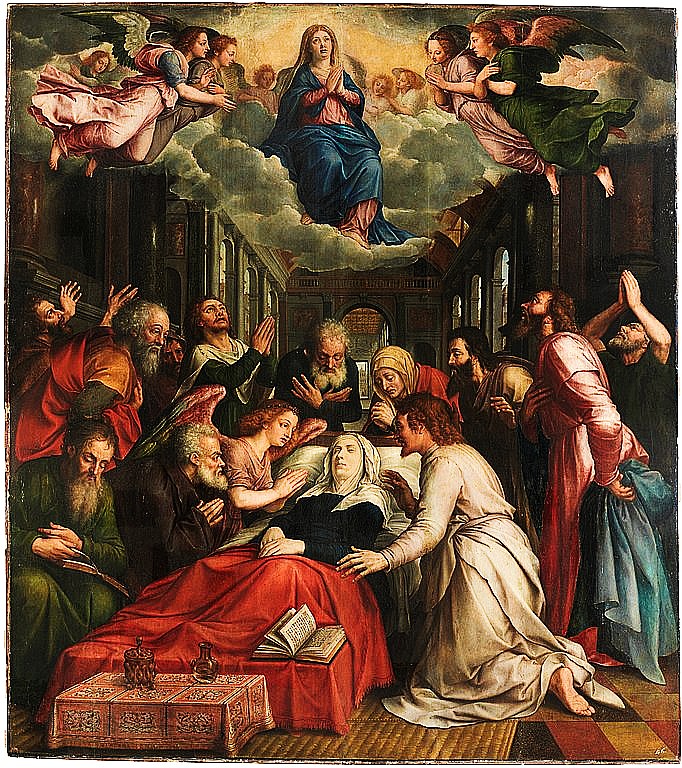
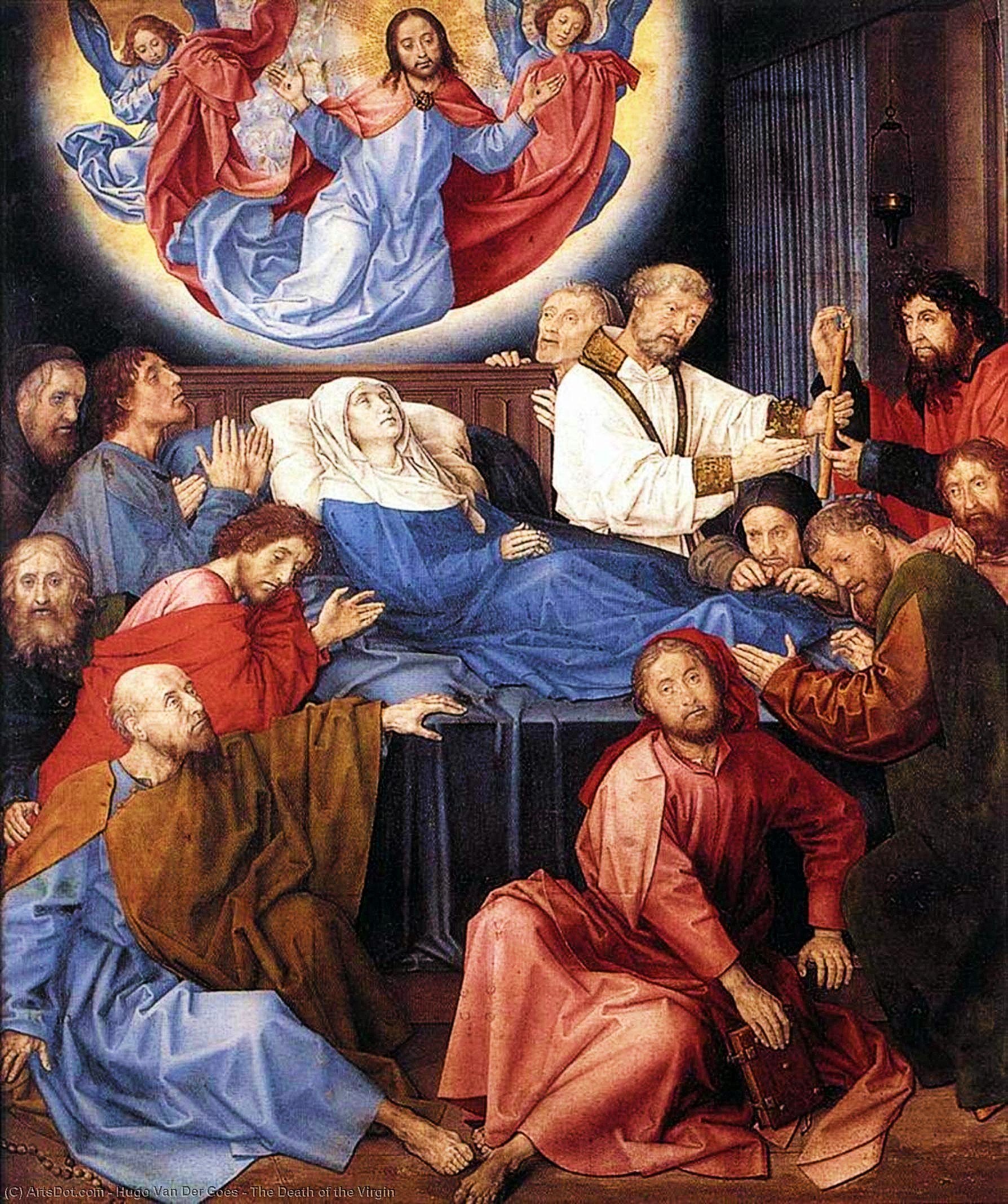
Ancient legend relates that, led by Heaven, all the Apostles, except St Thomas, Wwho joined them a little later, assembled at the Blessed Virgin’s deathbed. After she had breathed forth her pure spirit, her sacred remains were prepared for the grave by wrapping the body in new white linen and decking it with flowers . Meanwhile ,the Apostles, assembled in another room, sang Psalms and Hymns, in praise of their departed Mother. The Apostles, all the disciples and the faithful dwelling in Jerusalem, followed the blessed remains to the grave chanting Psalms and Hymns. Arriving in the valley of Josaphat, the body was gently placed in a sepulcher of stone, not far from the Garden of Olives. After the entombment ,the Apostles and crowds of the faithful, lingered near the sacred spot in prayer, meditation and chanting of Psalms in which Angels’ voices were heard to mingle.
Practice:
Join in spirit with the Apostles and faithful in their prayer and meditation at the grave of our Blessed Mother. Contemplate and review her whole life. Could a course like hers have terminated more appropriately than with so beautiful, painless and tranquil a passing away? Prepare yourself, even now, for your departure from this life. Do not postpone the settlement of your affairs, spiritual and temporal, until the last uncertain hours. Above all, remove now, or as soon as possible, all doubts, anxieties and irregularities of conscience because, delay is dangerous and leads to impenitence and because, in the last hours, the powers of hell usually assail the departing soul with all their might.
Prayer of the Church: We beseech Thee, O Lord, pardon the shortcomings of Thy servants that we who, by our own works, are not able to please Thee, may be saved by the intercession of the Mother of Thy Son, Our Lord Jesus Christ. Amen.
Novena Prayer: Day Two
Glorious Virgin, who for thy consolation didst deserve to die comforted by the sight of thy dear Son Jesus and in the company of the Apostles and Angels, pray for us, that at that awful moment we, too, may be comforted by receiving Jesus in the most holy Sacrament and may feel see nigh, when we breathe forth our soul. Obtain for me too, I beseech thee, this my special petition ……………….. Amen
Hail Mary …….
Ejaculation: Sweet heart of Mary be my salvation!
Indulgence . (1) 100 days, every time. (2) A Plenary Indulgence, once a month, on any day, to all who shall have said it everyday for a month, under the usual conditions.
Thought for the Day – 7 August – Meditations with Antonio Cardinal Bacci (1881-1971)
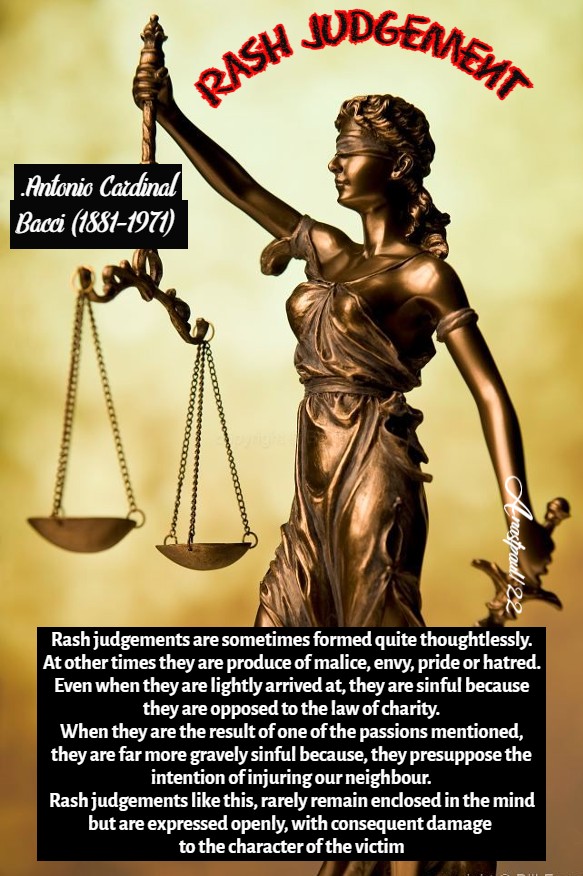
Rash Judgement
“Rash judgements are sometimes formed quite thoughtlessly. At other times they are produce of malice, envy, pride or hatred. Even when they are lightly arrived at, they are sinful because they are opposed to the law of charity. When they are the result of one of the passions mentioned, they are far more gravely sinful because, they presuppose the intention of injuring our neighbour. Rash judgements like this, rarely remain enclosed in the mind but are expressed openly, with consequent damage to the character of the victim!
It is easy to progress from lighter faults to grave sin in this matter. A rash judgement soon becomes slander and, a sin against charity, soon becomes a sin against justice involving an obligation to make reparation.”
Quote/s of the Day – 7 August – The Memorial of St Cajetan (1480-1547) Confessor
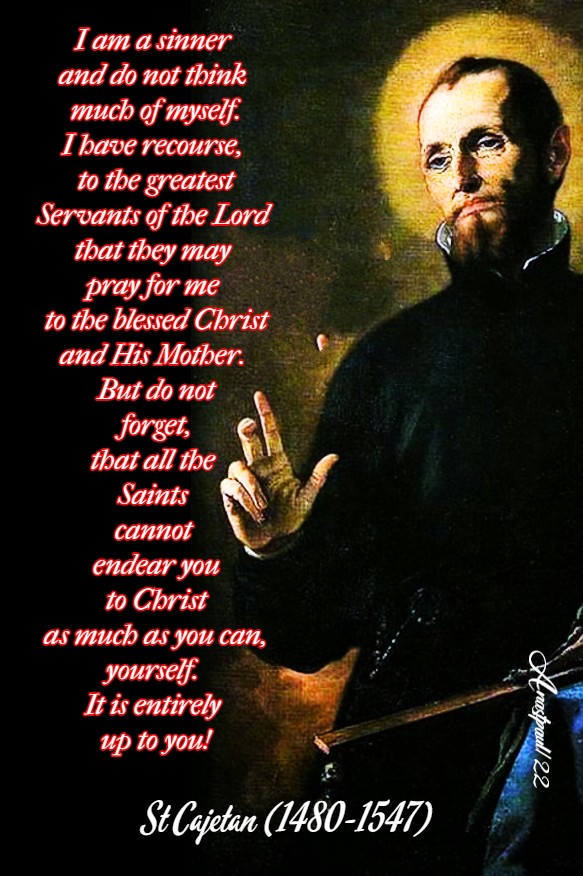
“I am a sinner and do not think much of myself. I have recourse, to the greatest Servants of the Lord that they may pray for me to the blessed Christ and His Mother. But do not forget, that all the Saints cannot endear you to Christ as much as you can yourself. It is entirely up to you!”
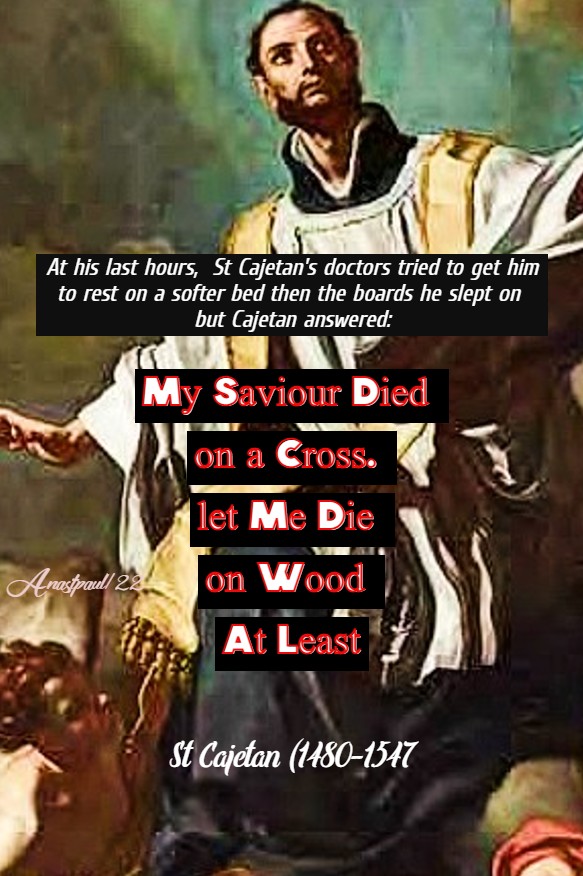
At his last hours, St Cajetan’s doctors tried to get him to rest on a softer bed then the boards he slept on but Cajetan answered:
“My Saviour died on a Cross. let me die on wood at least.”
One Minute Reflection – 7 August – The Memorial of St Cajetan (1480-1547) Confessor – 1 Corinthians 10:6-13, Luke 19:41-47
“And He entered the temple and began to cast out those who were selling and buying in it, saying to them, it is written, ‘My house is a house of prayer’ but you have made it a den of thieves.” – Luke 19:45-46
REFLECTION – “God does not want His temple to be a trader’s lodge but the home of sanctity. He does not preserve the practice of the Priestly service by the dishonest duty of religion but by voluntary obedience. Consider what the Lord’s actions impose on you, as an example of living. He taught in general that worldly transactions must be absent from the temple but He drove out the moneychangers in particular. Who are the moneychangers, if not those, who seek profit from the Lord’s money and cannot distinguish between good and evil? Sacred Scripture is the Lord’s money!” – St Ambrose (340-397) Father and Doctor of the Church (Exposition on the Gospel of Luke, 9).
PRAYER – O God, Who bestowed upon St Cajetan, Thy Confessor, the grace to follow the apostolic way of life; grant us by his intercession and example, ever to trust in Thee and to long only for the things of Heaven.Through Jesus Christ, Thy Son our Lord, Who lives and reigns with Thee, in the unity of the Holy Ghost, God, world without end. Amen (Collect).
Our Morning Offering – 7 August – The Ninth Sunday after Pentecost and the Memorial of St Cajetan (1480-1547) Confessor
Look Down, O Lord By St Cajetan (1480-1547)
Look down, O Lord, from Thy sanctuary and from the high habitation of Heaven and behold this Sacred Oblation which our great High Priest, Thy Holy Servant, the Lord Jesus, immolates unto Thee, for the sins of His brethren and be propitious to the multitude of our iniquities. Behold, the Voice of the Blood of Jesus, our Brother, cries to Thee from the Cross. Graciously hear, O Lord, be appeased, O Lord, hearken and do. Delay not for Thy own sake, my God because Thy Name is invoked upon this city and upon Thy people and do with us, according to Thy mercy. Amen
Plenary Indulgence on the First Thursday of each month for Communicants visiting the Blessed Sacrament and reciting this prayer. Partial indulgence of seven years and seven Quarantines, on all other Thursdays. –Pope Pius VII. “Quarantines” signifies a strict Ecclesiastical penance of forty days, performed according to the practice of the early Church. Hence an Indulgence of “Seven Quarantines,” for instance, implies. the remission of as much temporal punishment, as would be blotted out by the corresponding amount of Ecclesiastical Penance i.e. 7 x 40 = 280 days.
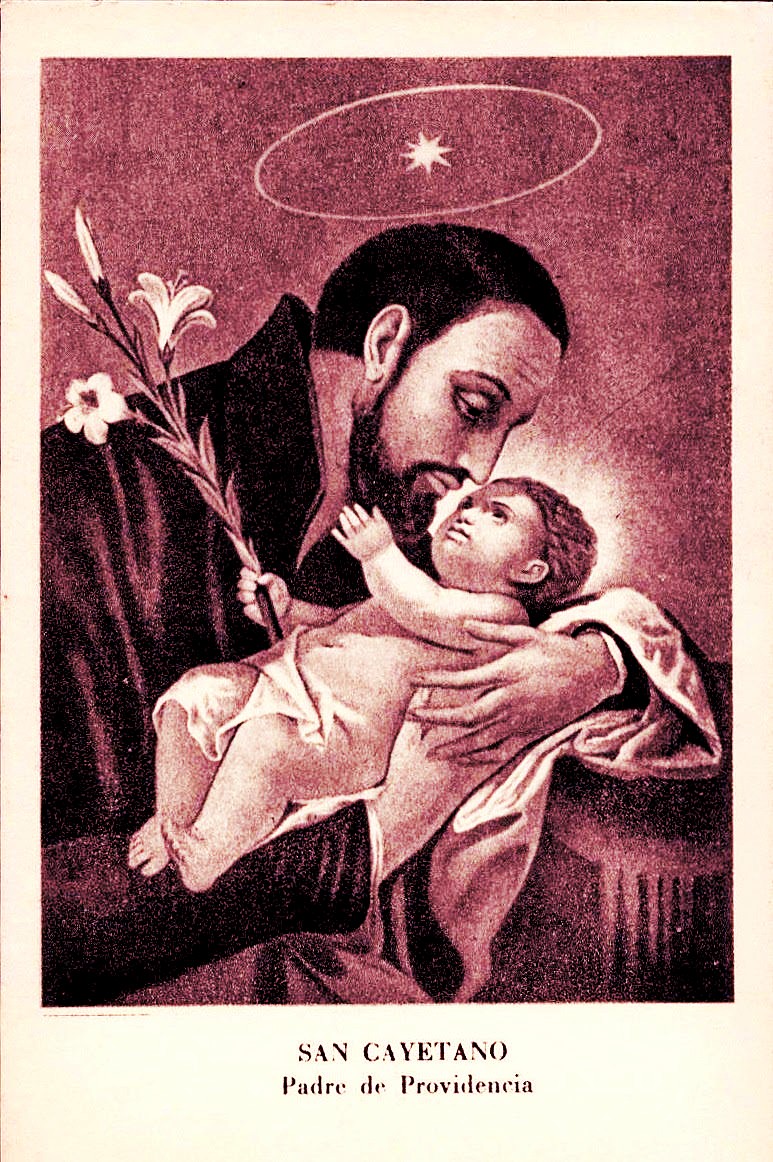
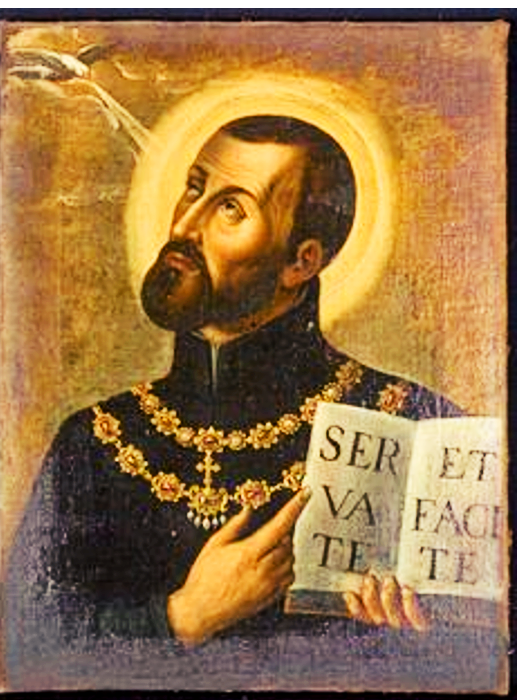
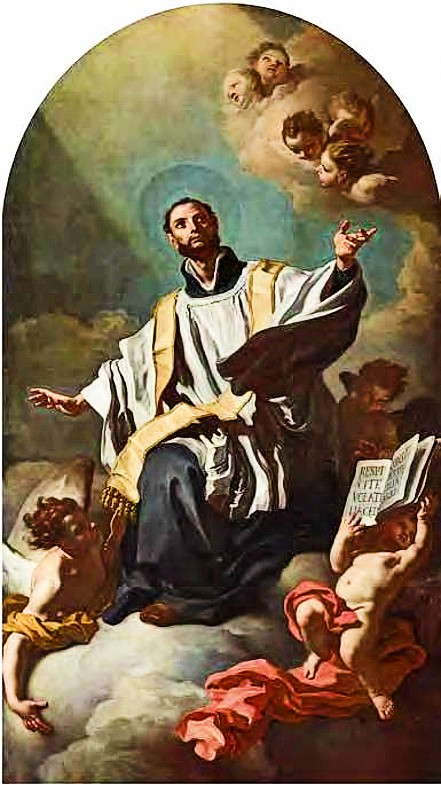
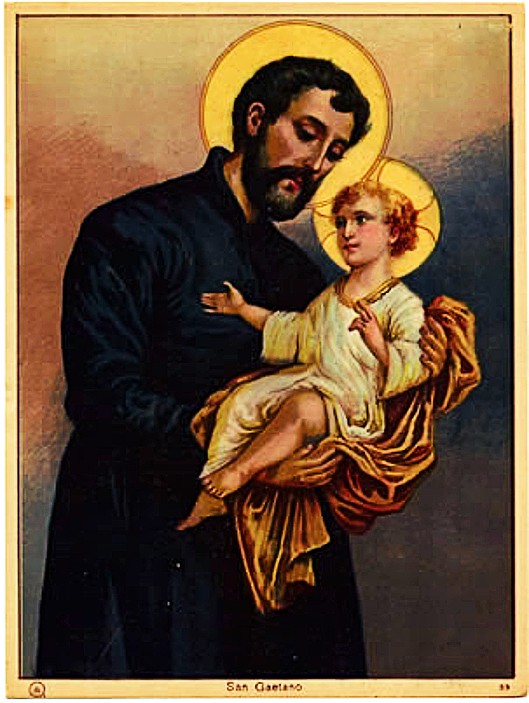
Saint of the Day – 7 August – St Cajetan (1480-1547) Confessor, Priest, Known as the “Father of Providence” and the “Huntsman of Souls” – Founder of the Theatine Order.
Saint Cajetan of Thienna, Confessor From the Liturgical Year, 1901
Cajetan was born at Vicenza of the noble house of Thienna and was at once dedicated, by his mother, to the Virgin Mother of God.
His innocence appeared so wonderful from his very childhood that everyone called him “the Saint.” He took the degree of Doctor in Canon and Civil law at Padua and then went to Rome where Julius II. made him a Prelate. When he received the Priesthood, such a fire of Divine love was enkindled in his soul that he left the Court to devote himself entirely to God. He founded hospitals with his, own money and himself served the sick, even those attacked with pestilential maladies. He displayed such unflagging zeal, for the salvation of his neighbour that he earned the name of the “Huntesman of Souls.”
His great desire was to restore Ecclesiastical discipline, then much relaxed, to the form of the Apostolic life and to this end, he founded the Order of Regular Clerks. They lay aside all care of earthly things, possess no revenues, do not beg, even the necessaries of life from the faithful but live only on alms, spontaneously offered. Clement VII. having approved this institution, Cajetan made his solemn vows at the High Altar of the Vatican Basilica, together with John Peter Caraffa, Bishop of Chieti, who was afterwards Pope Paul IV and two other men of distinguished piety.
During the sack of Rome, Cajetan was most cruelly treated by the soldiers, to make him deliver up his money which the hands of the poor, had long ago carried into the heavenly treasures. He endured with the utmost patience stripes, torture and imprisonment. He persevered unfalteringly in the kind of life he had embraced, relying entirely upon Divine Providence and God never failed him, as was sometimes proved by miracles.
He was a great promoter of constant and deeply pious attention at the Divine worship, of the beauty of the House of God, of exactness in holy ceremonies and of the frequence of the most Holy Eucharist. More than once he detected and foiled, the wicked subterfuges of heresy. He would prolong his prayers for eight hours, without ceasing, to shed tears being often rapt in ecstasy and was renowned for the gift of prophecy. At Rome, one Christmas night, while he was praying at our Lord’s crib, the Mother of God was pleased to lay the Infant Jesus in his arms.
He would spend whole nights in chastising his body with disciplines, and could never be induced to relax anyof the austerity of his life, for he would say, he wished to die in sackcloth and ashes.
At length he fell into an illness caused by the intense sorrow he felt, at seeing the people offend God by heresy and sedition and, at Naples, after being refreshed by a heavenly vision, he passed to Heaven. His body is honoured with great devotion in the Church of St. Paul in that Town. As many miracles worked by him both while living and in death. made his name illustrious, Pope Clement X. enrolled him amongst the Saints.
St Albert of Trapani O.Carm. (c 1240-1307) Carmelite Priest, Confessor, Preacher, Evangeliser, apostle of prayer and a devout servant of the Blessed Virgin and the Passion of Christ. St Teresa of Jesus (1515-1582) and St Mary Magdalene de Pazzi (1566-1607) were especially devoted to him, the Bl Baptist Spagnoli (1447–1516) composed a sapphic ode in his honour. His Life: https://anastpaul.com/2019/08/07/saint-of-the-day-7-august-saint-albert-of-trapani-o-carm-c-1240-1307/
Bl Cassian Vaz Lopez-Neto St Claudia of Rome St Donat St Donatian of Chalons-sur-Marne St Donatus of Besancon St Faustus of Milan St Hilarinus of Ostia St Hyperechios Bl Jordan Forzatei St Julian of Rome St Peter of Rome
Martyred Deacons of Rome – 6 Saints: A group of Deacons who were Martyred with Pope Saint Sixtus II. We know nothing about them but their names and their deaths – Agapitus, Felicissimus, Januarius, Magnus, Stephen and Vincent. They were beheaded on 6 August 258 in a cemetery on the Appian Way, Rome, Italy.
Martyrs of Como – 6 Saints: A group of Christian soldiers in the imperial Roman army. Martyred in the persecutions of Maximian. We know little else but the names – Carpophorus, Cassius, Exanthus, Licinius, Secundus and Severinus. c.295 on the north side of Lake Como, near Samolaco, Italy. Their relics in the church of San Carpoforo, Como, Italy.
Preparatory Prayer by St Alphonsus Maria de Liguori (1696-1787) Most Zealous Doctor of the Church
O Mary, Virgin most Blessed and Mother of Our Lord and Redeemer Jesus Christ, through thy mercy I beseech thee, to come to my aid and to inspire me with such confidence in thy power that I may have recourse to thee, pray to thee and implore thy aid, in all needs of soul and body. Amen
Meditation: Mary, the Virgin Mother of God, was conceived without original sin. She never dimmed by actual sin, the lustre of sanctifying grace which beautified her soul. Nevertheless, she had to pass through the dark prtal of death, before she was assumed, body and soul, into Heaven. She had not been endowed with the privilege of immortality, with which God had invested our first parents in paradise. It was meet that she should be like unto her Divine Son in everything, even in death. But as she had drained, the bitter cup of suffering during her whole life and especially, when standing beneath the Cross, her death was to be free from pain and suffering. She quietly passed away, yielding up her spirit, in a yearning desire to be united forever, with her Divine Son in Heaven.
Practice: If you have dispossessed your heart of all unruly attachment to the goods and enjoyments of this earth, you, too, may hope for a happy and tranquil transition, from this land of exile, to your home in Heaven. Therefore, if you are still attached to the transitory things of this life, disengage your heart from them now. The voluntary renouncement of earthly goods, alone is meritorious before God. The separation from them, enforced by the strong hand of death, is of no supernatural value.
Prayer of the Church:We beseech Thee, O Lord, pardon the shortcomings of Thy servants that we who, by our own works, are not able to please Thee, may be saved by the intercession of the Mother of Thy Son, Our Lord Jesus Christ. Amen.
Novena Prayer: Day One
O Most benign Mother Mary! I rejoice that by thy happy and tranquil death, the yearning of thy heart was appeased and thy life, so rich in merit and sacrifice, received its crown. I rejoice that after passing from this life, thou, O most loving Mother, was made the glorious and powerful Queen of Heaven and dost exercise thy influence as such, for the benefit of thy frail, exiled children on earth. Obtain for me, I beseech thee, this my special petition ……………….. and a happy death that I may praise and glorify thy might and kindness, forever in Heaven. Amen
Hail Mary …….
Ejaculation:Sweet heart of Mary be my salvation!
Indulgence. – (1) 100 days, every time. (2) A Plenary Indulgence, once a month, on any day, to all who shall have said it everyday for a month, under the usual conditions.
Thought for the Day – 6 August – Meditations with Antonio Cardinal Bacci (1881-1971)
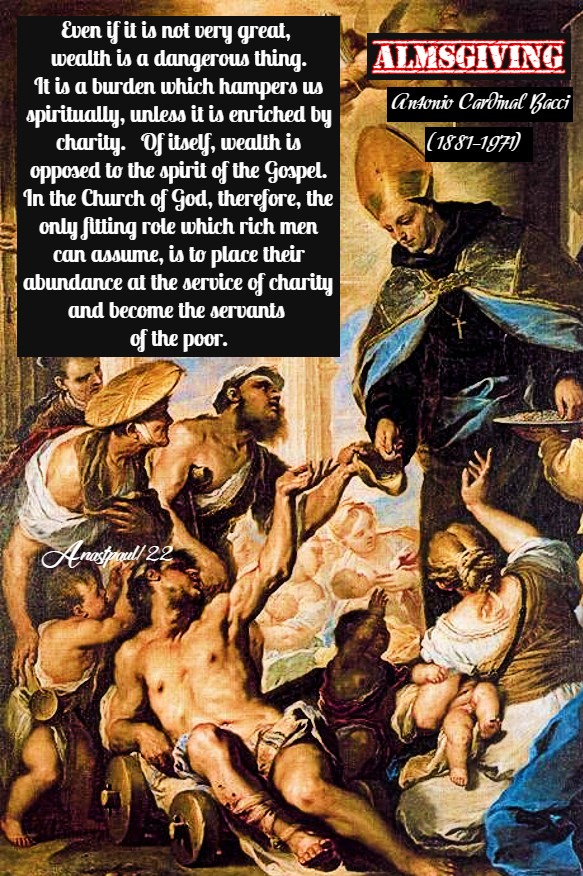
Almsgiving
“Even if it is not very great, wealth is a dangerous thing. It is a burden which hampers us spiritually, unless it is enriched by charity. Of itself, wealth is opposed to the spirit of the Gospel. In the Church of God, therefore, the only fitting role which rich men can assume, is to place their abundance at the service of charity and become the servants of the poor.
St Thomas Aquinas says that wealth can be an instrument of virtue and that, it is only in this sense that it can be called good. If it impedes the practice of virtue, then it is evil (Summa Contra Gentiles, 111:134). Let us make good use of our assets, therefore and give generously to those who are in need, without allowing our motives to become tainted with self-interest.
“Sell what you have and give alms,” said Christ, “Make for ourselves purses that do not grow old, a treasure unfailing in Heaven, where neither thief draws near nor moth destroys” (Lk 12:33). It is the possession of this kind of treasure, which will comfort us at the hour of death.”
Quote/s of the Day – 6 August – The Transfiguration of Our Lord
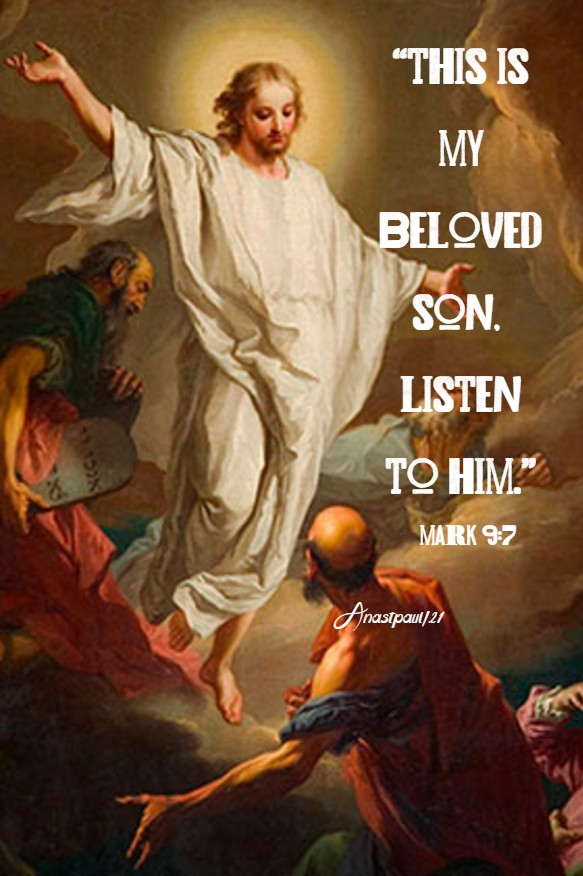
“And a cloud overshadowed them and a voice came out of the cloud, “This is my beloved Son; listen to him.”
Mark 9:7
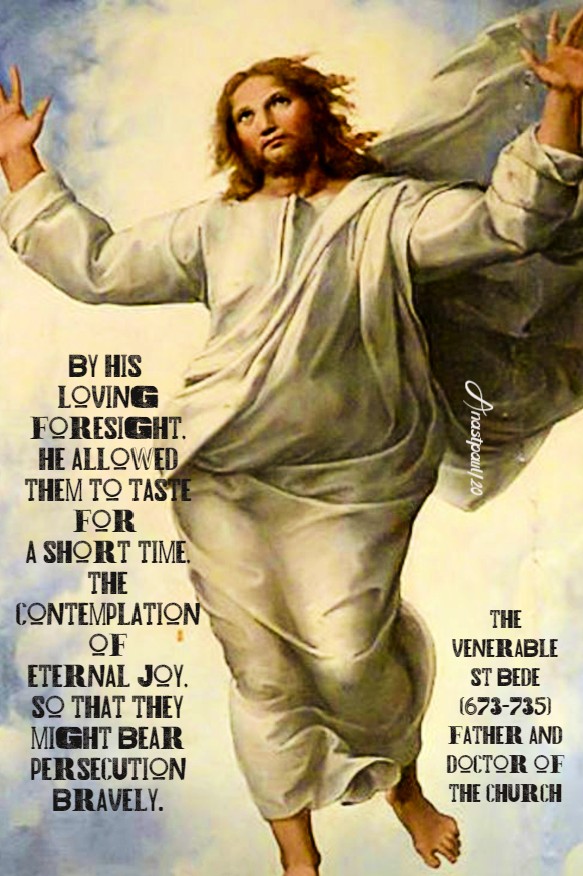
“By His loving foresight, He allowed them to taste for a short time, the contemplation of eternal joy, so that they might bear persecution bravely.”
The Venerable St Bede (673-735) Father and Doctor of the Church
“At His Transfiguration Christ showed His disciples, the splendour of His Beauty, to which He will shape and colour, those who are His : ‘He will reform our lowness configured to the Body of His Glory.’”
St Thomas Aquinas (1225 – 1274) Angelic Doctor of the Church























 AnaStpaul
You must be logged in to post a comment.