Thought for the Day – 5 February – Meditations with Antonio Cardinal Bacci (1881-1971)
IDLENESS
“There is another weighty reason which should prevent us from living in idleness. The Holy Spirit warns us that: “Idleness is an apt teacher of mischief” (Ecclus 33:29) and “he who follows idle pursuits, is a fool” (Prov 12:11). In other words, sloth is a great studity and is the father of the vices. If anyone is inactive, he learns nothing. Since our bodily and spiritual faculties were made for action, it necessarily follows that when they are not working for a good or useful purpose, they find an outlet in other directions, which lead to disorder and sin. Without work and prayer, there is only inactivity which leads to sin. It is fatal to remain idle. God warns us that we must render an account of every idle work (Mt 12:36).
St Thomas Aquinas notes that an idle word is usually a venial sin but can also be a mortal sin (Summa Theologiae II-II, q 72, a 5). What should be said then of those who live in idleness, while there is so much work to be done for the glory of God, for our own good and for the good of others? Anyone who loves God is never idle, says St Jerome. The love of God works wonderful things – if it does not, it cannot be called love!”
Quote/s of the Day – 5 February – Septuagesima Sunday – Preparing to Prepare
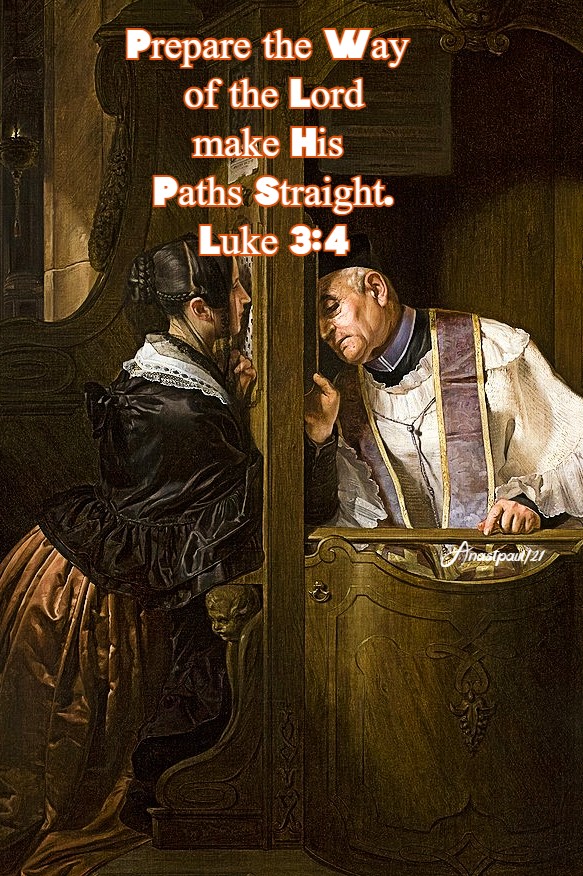
“Prepare the way of the Lord make His paths straight” …
Luke 3:4
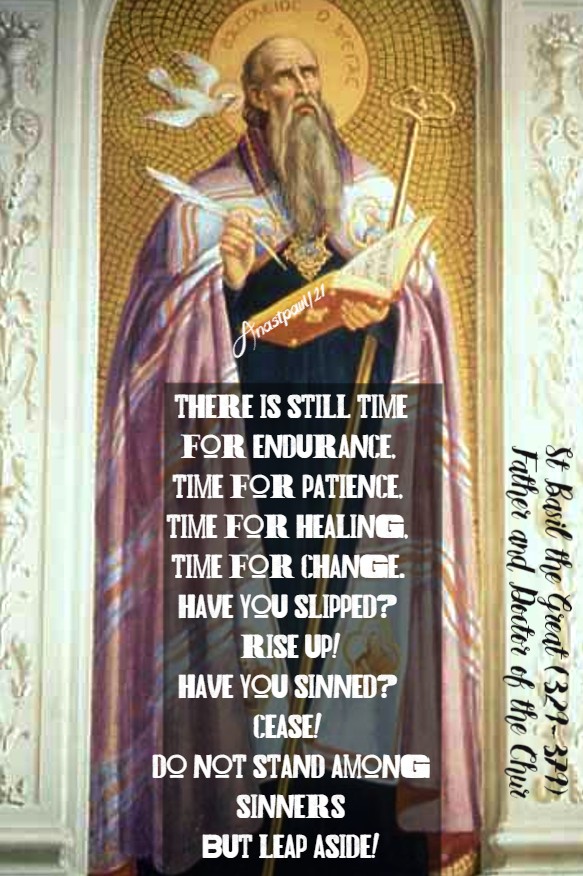
“There is still time for endurance, time for patience, time for healing, time for change. Have you slipped? Rise up! Have you sinned? Cease! Do not stand among sinners but leap aside!”
St Basil the Great (329-379) Father and Doctor of the Church
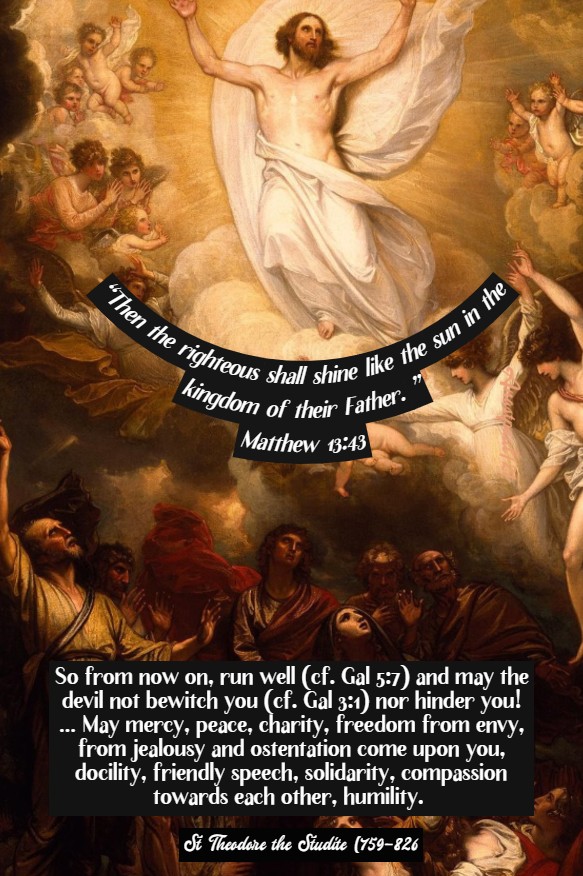
“Then the righteous shall shine like the sun in the Kingdom of their Father.”
Matthew 13:43
“So from now on, run well (cf. Gal 5:7) and may the devil not bewitch you (cf. Gal 3:1) nor hinder you! … May mercy, peace, charity, freedom from envy, from jealousy and ostentation come upon you, docility, friendly speech, solidarity, compassion towards each other, humility.”
St Theodore the Studite (759-826)
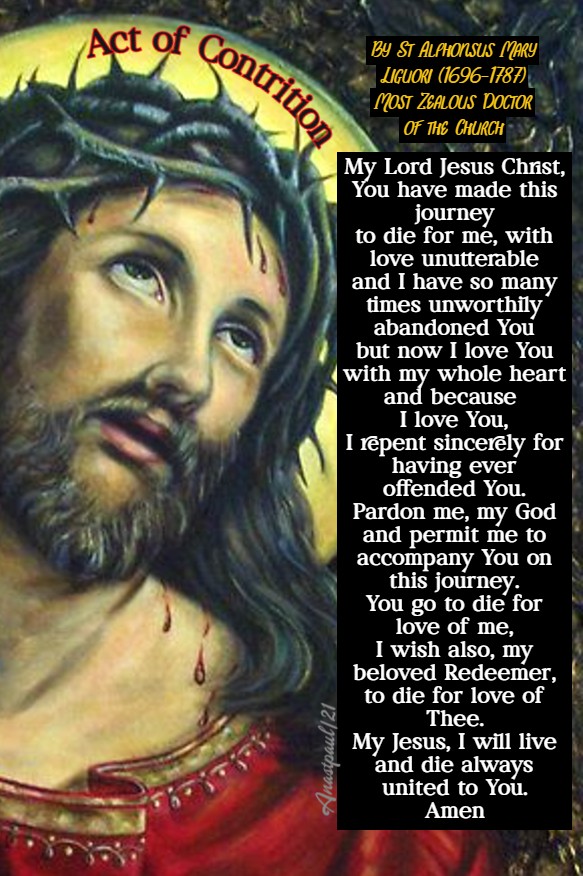
My Lord Jesus Christ, You have made this journey to die for me, with love unutterable and I have so many times unworthily abandoned You but now I love You with my whole heart and because I love You, I repent sincerely for having ever offended You. Pardon me, my God and permit me to accompany You on this journey. You go to die for love of me, I wish also, my beloved Redeemer, to die for love of Thee. My Jesus, I will live and die always united to You.” Amen
By St Alphonsus de Liguori (1696-1787) Most Zealous Doctor of the Church
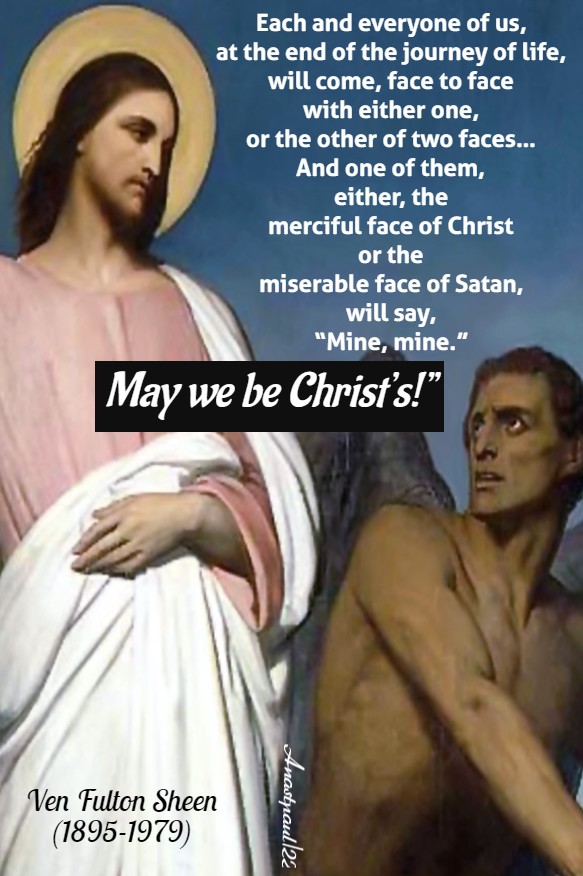
“Each and everyone of us, at the end of the journey of life, will come, face to face with either one, or the other of two faces… And one of them, either, the merciful face of Christ or the miserable face of Satan, will say, “Mine, mine.”
One Minute Reflection – 5 February –Septuagesima Sunday – St Agatha (c231- c251) Virgin Martyr – 1 Corinthians 9:24-27, 10:1-5; Matthew 20:1-16 – Scripture search here: https://www.drbo.org/
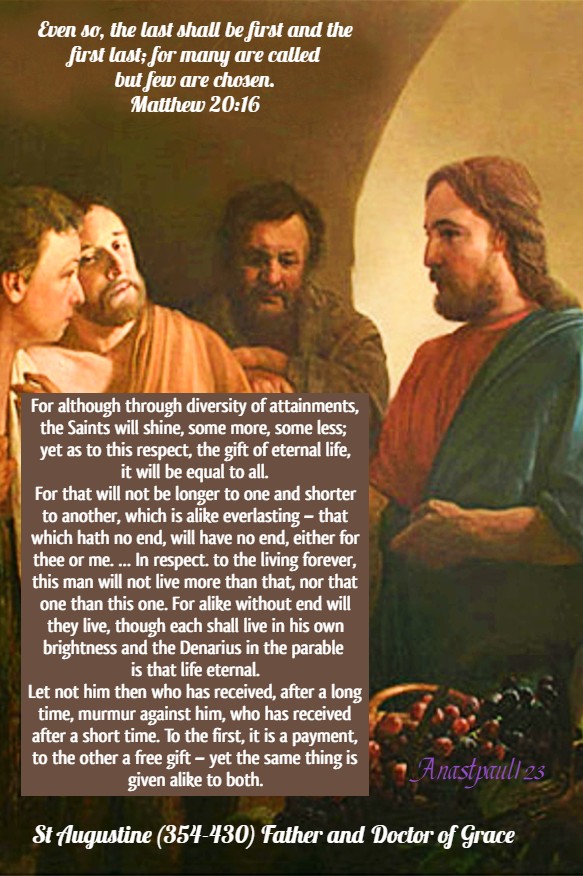
“Even so, the last shall be first and the first last; for many are called but few are chosen.” – Matthew 20:16
REFLECTION – “In that hiring then,we shall all be equal and the first as the last and the last as the first because that Denarius is life eternal and in the life eternal all will be equal. For although through diversity of attainments, the Saints will shine, some more, some less; yet as to this respect, the gift of eternal life, it will be equal to all. For that will not be longer to one and shorter to another, which is alike everlasting – that which hath no end, will have no end, either for thee or me. … In respect. to the living forever, this man will not live more than that, nor that one than this one. For alike without end will they live, though each shall live in his own brightness and the Denarius in the parable is that life eternal.
Let not him then who has received, after a long time, murmur against him, who has received after a short time. To the first, it is a payment, to the other a free gift – yet the same thing is given alike to both.” – St Augustine (354-430) Father and Doctor of Grace (Sermon on Matthew 20).
PRAYER – O God, Who among other wonders of Thy power hast given the victory of mMrtyrdom even to the gentler sex, graciously grant that we, who commemorate the anniversary of the death of blessed Agatha, Thy Virgin and Martyr, may come to Thee, by following her example.Through esus Christ, Thy Son our Lord, Who lives and reigns with Thee, in the unity of the Holy Ghost, God, world without end. Amen (Collect).
Our Morning Offering – 5 February – Septuagesima Sunday – “The Month of the Blessed Trinitys”
Holy God, We Praise Thy Name By Fr Ignaz Franz Poland (1719-1790) (Attri) Archbishop of Schlawa, Germany
Holy God, we praise Thy Name. Lord of all, we bow before Thee. All on earth Thy sceptre claim; all in heav’n above adore Thee. Infinite Thy vast domain, everlasting is Thy reign.
Hark, the loud celestial hymn, angel choirs above are raising. Cherubim and seraphim, in unceasing chorus praising, fill the heav’ns with sweet accord: Holy, holy, holy Lord.
Holy Father, Holy Son, Holy Ghost, three we name Thee While in essence only One, Undivided God, we claim Thee and adoring, bend the knee, while we own the Mystery.
Spare Thy people Lord, we pray, By a thousand snares surrounded. Keep us without sin today, Never let us be confounded. Lo, I put my trust in Thee, Never Lord, abandon me.
Fr Ignaz Franz Poland (1719-1790) Archbishop of Schlawa, Germany, Hymnist, Musician He also functioned as the Assessor for Theological Affairs at the Apostolic Vicariate. He wrote hymn lyrics and compiled religious music. Trans. by Fr Clarence A Walworth (1820-1900) Convert, writer. He was one of the Founders of the Order of the Paulists in the U.S.A.
Saint of the Day – 5 February – Saint Bertulph c640-c705) Priest, Abbot, Miracle-worker, Founder of a Monastery in Renty, France. Born in c640 in eastern Europe and died in c705 of natural causes in Renty near Calais, France. Patronage – against storms. Also known as – Berton, Bertou, Bertoul, Bertulf, Bertulphe, Bertulphus. Name means: the shining wolf (old high German). Additional Memorial – 20 May (transfer of Relics).
Bertulph came to Flanders with his pagan parents . Under the influence of St Audomar of Thérouanne, he converted to Christianity, was Baptised and was Ordained a Priest by St Audomar.
He then became steward of the estates of the pious Earl Wambert in Renty, showing generosity to the poor. Envious people accused him of extravagance; his innocence was miraculously confirmed as cheese and bread turned into roast meat and water into wine. Bertulph persuaded his master to found four Churches in the area. Together they made a pilgrimage to the seven pilgrimage Churches in Rome.
During the journey, while Bertulph was tending the horses at night and reading a book, he and his book remained dry despite the heavy rain. An eagle soaring overhead covered him with its wings and a heavenly torchlight shone for him to read. Overwhelmed by such miracles, Wambert made Bertulph his adoptive son.
After Wambert and his wife died, leaving their inheritance to Bertulph, he established a Monastery dedicated to Dionysius on the inherited estates at Renty, which he presided over as Abbot.
To protect Bertulph’s Relics from being desecrated by the invading Normans, they were transferred to Boulogne-sur-Mer in 898. Then they came to the Saint-Sauveur Collegiate Church in Harelbeke in Flanders, finally in 955 to the Saint-Pierre-au-Mont-Blandin Monastery in Ghent, where they were destroyed in the Reformation in 1578. The Monastery at Renty later became a Cistercian Monastery, demoted to priory in 1168 and dissolved in 1668.
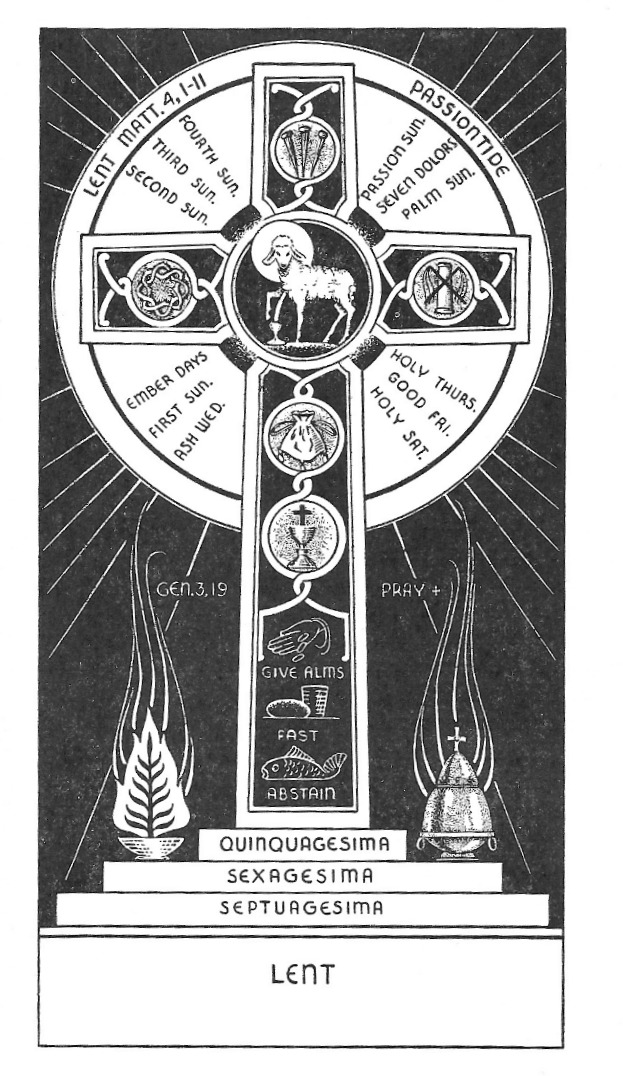
Septuagesima Sunday: The word “Septuagesima” is Latin for “Seventieth.” It is both the name of the Liturgical Season and the name of the Sunday. Septuagesima Sunday marks the beginning of the shortest Liturgical Season. This Season is seventeen (17) days long and includes the three Sundays before Ash Wednesday. The length of the Season never changes but the start date is dependent on the movable date of Easter, which can fall between 22 March-25 April. Septuagesima Sunday can be as early as 18 January.
EPSON MFP image
Dom Prosper Guéranger OSB (1805-1875) Abbot of Solesmes from 1837-1875, devoted a whole volume of his great work – The Liturgical Year, to Septuagesima. In his Preface, Dom Guéranger referred to Septuagesima as a Season of “transition, inasmuch as it includes the period between two important Seasons – Christmas and Lent.… The Church, therefore, has instituted a preparation for the holy time of Lent. She gives us the three weeks of Septuagesima, during which she withdraws us, as much as may be, from the noisy distractions of the world, in order that our hearts may be the more readily impressed by the solemn warning she is to give us, at the commencement of Lent, by marking our foreheads with ashes.” The Septuagesima Season helps the faithful ease into Lent. It is a gradual preparation for the serious time of penance and sorrow; to remind the sinner of the grievousness of his errors and to exhort him to penance. Liturgically it looks very much like Lent. The Gloria and Alleluia are omitted, the tone becomes penitential with the Priest wearing Purple Vestments. The main difference is that there are no fasting requirements.
St Bertulph c640-c705) Abbot St Buo of Ireland St Calamanda of Calaf St Dominica of Shapwick St Fingen of Metz Bl Françoise Mézière St Gabriel de Duisco St Genuinus of Sabion St Indract St Isidore of Alexandria St Jesús Méndez-Montoya Bl John Morosini St Kichi Franciscus St Modestus of Carinthia
Bl Primo Andrés Lanas St Saba the Younger St Vodoaldus of Soissons
Martyrs of Pontus: An unknown number of Christians who were tortured and martyred in assorted painful ways in the region of Pontus (in modern Turkey) during the persecutions of Maximian.
The Twenty-Six Martyrs of Japan:26 Saints – the First Martyrs of Japan. Martyred on 5 February 1597 by Crucifixion, also known as Pedro Bautista Blasquez y Blasquez and 22 companions, along with Paulus Miki and 2 companions, were Beatified on 14 September 1627 by Pope Urban VIII, and Canonised on 8 June 1862 by Pope Pius IX.











 AnaStpaul
You must be logged in to post a comment.