Thought for the Day – 26 August – Meditations with Antonio Cardinal Bacci (1881-1971)
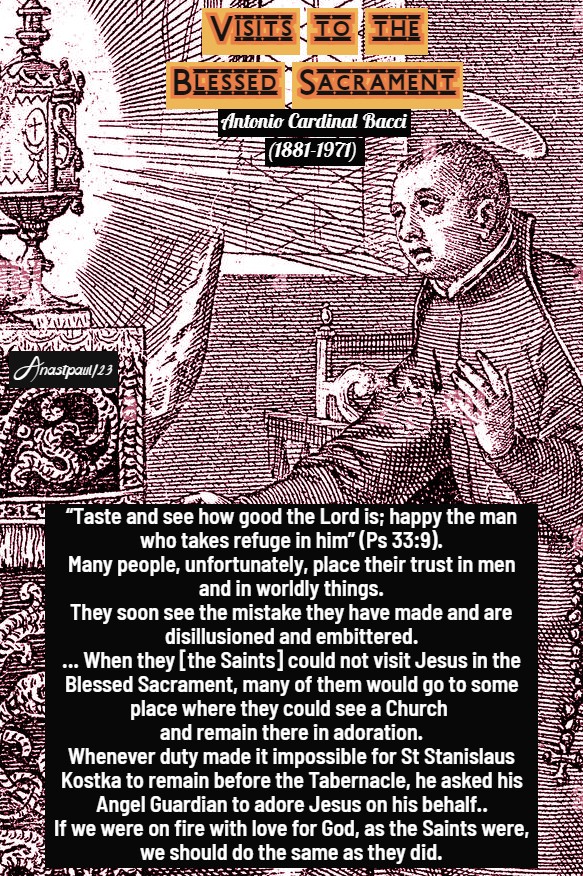
Visits to the Blessed Sacrament
“Taste and see how good the Lord is; happy the man who takes refuge in him” (Ps 33:9). Many people, unfortunately, place their trust in men and in worldly things. They soon see the mistake they have made and are disillusioned and embittered.
It was not so with the Saints. They spent long hours by day and by night, praying to Jesus in the Blessed Sacrament and, carried away with them, reserves of spiritual strength and tranquility. When they could not visit Jesus in the Blessed Sacrament, many of them would go to some place where they could see a Church and remain there in adoration. Whenever duty made it impossible for St Stanislaus Kostka to remain before the Tabernacle, he asked his Angel Guardian to adore Jesus on his behalf..
If we were on fire with love for God, as the Saints were, we should do the same as they did.”
Quote/s of the Day – 26 August – “The Month of the Immaculate Heart of Mary” Feast of Our Lady of Czestochow and Salus Infirmorum / Our Lady, Health of the Sick – Ecclesiasticus 24:14-16, Luke 11:27-28 – Scripture search here: https://www.drbo.org/
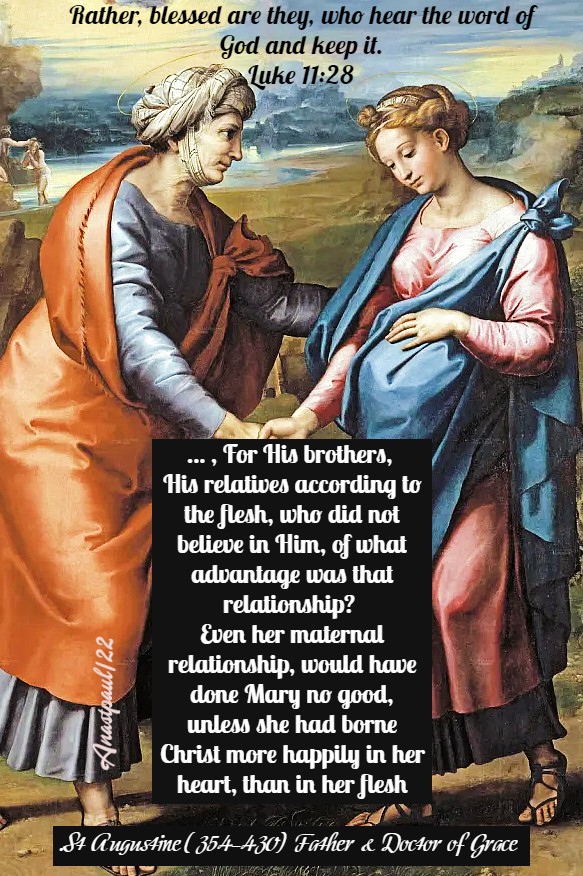
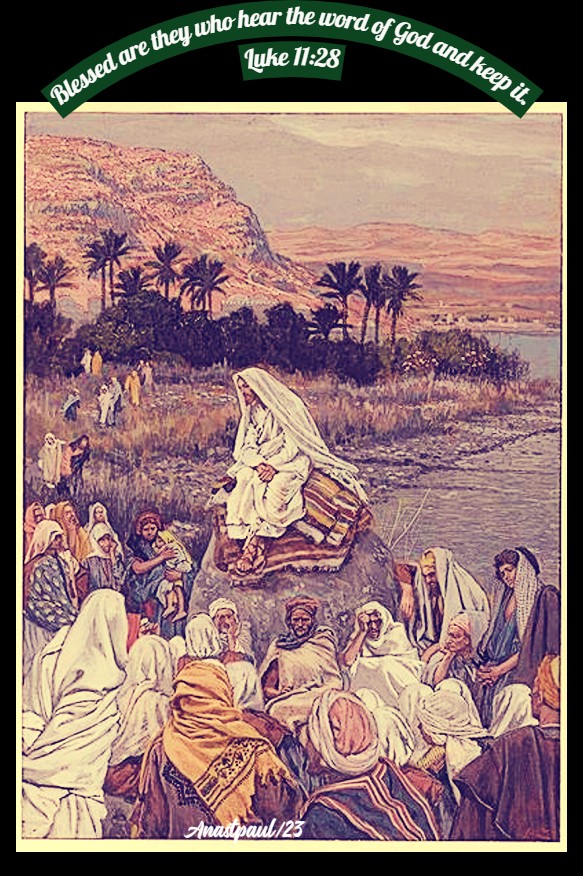
“Rather blessed are those who hear the word of God and keep it.’” Luke 11:28
“ … For his brothers His relatives according to the flesh who did not believe in Him, of what advantage was that relationship? … Even her maternal relationship would have done Mary no good, unless she had borne Christ more happily in her heart, than in her flesh.”
St Augustine (354-430) Father & Doctor of Grace
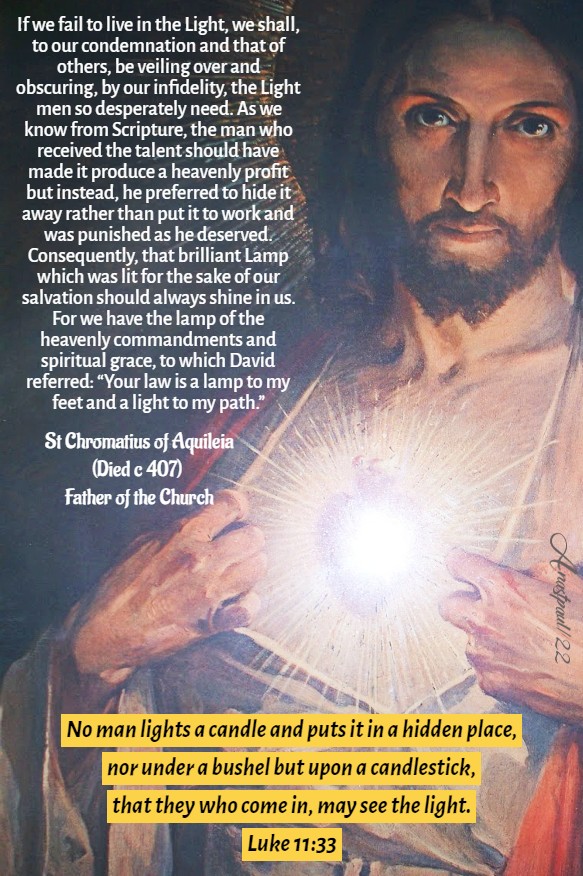
“No man lights a candle and puts it in a hidden place, nor under a bushel but upon a candlestick, that they who come in, may see the light.”
Luke 11:33 “If we fail to live in the Light, we shall, to our condemnation and that of others, be veiling over and obscuring, by our infidelity, the Light men so desperately need. As we know from Scripture, the man who received the talent should have made it produce a heavenly profit but instead, he preferred to hide it away rather than put it to work and was punished as he deserved. Consequently, that brilliant Lamp which was lit for the sake of our salvation should always shine in us. For we have the lamp of the heavenly commandments and spiritual grace, to which David referred: Your law is a lamp to my feet and a light to my path.”
St Chromatius of Aquileia (Died c 407) Father of the Church
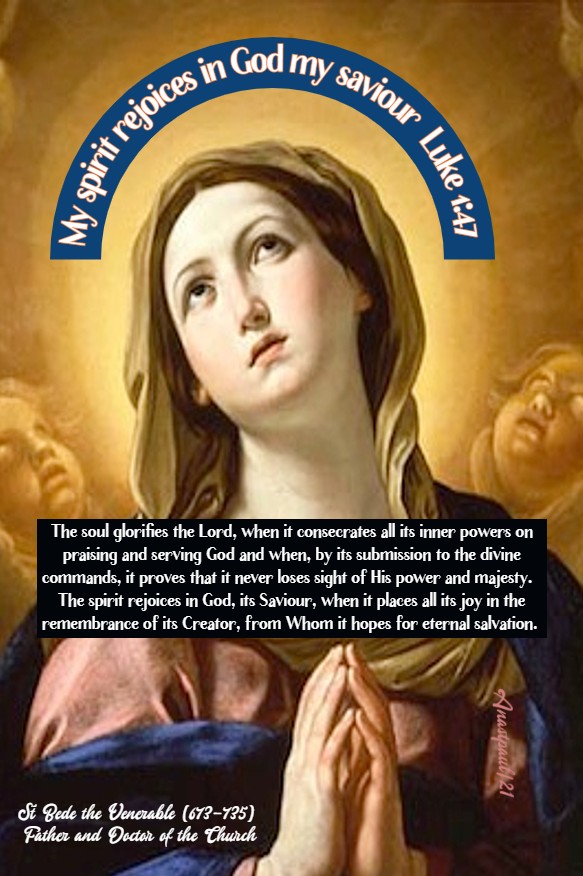
“The soul glorifies the Lord, when it consecrates all its inner powers on praising and serving God and when, by its submission to the Divine commands, it proves that it never loses sight of His Power and Majesty. The spirit rejoices in God, its Saviour, when it places all its joy in the remembrance of its Creator, from Whom it hopes for eternal salvation.”
St Bede the Venerable (673-735) Father and Doctor of the Church
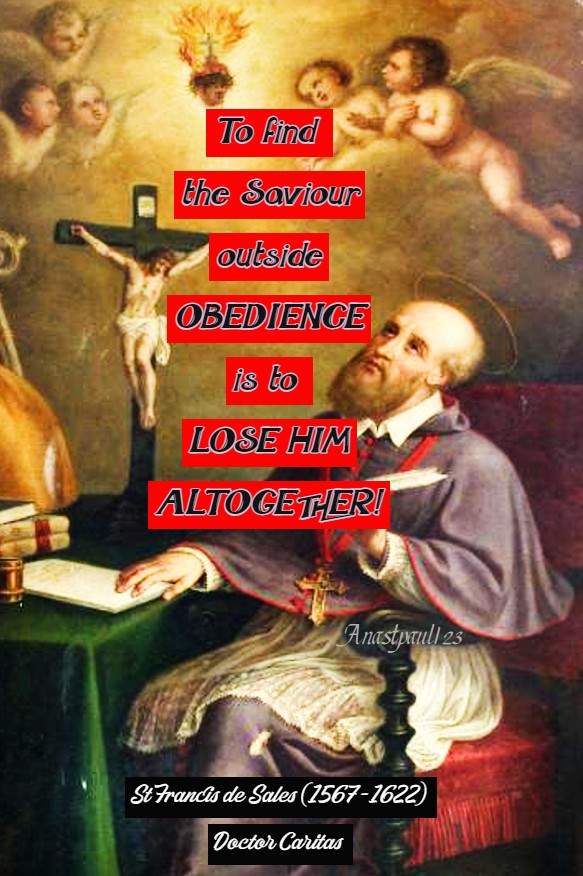
“To find the Saviour outside obedience, is to lose Him altogether.”
St Francis de Sales (1567-1622) Doctor of the Church
One Minute Reflection – 26 August – “The Month of the Immaculate Heart of Mary” – Feast of Our Lady of Czestochowa and Salus Infirmorum / Our Lady, Health of the Sick – Ecclesiasticus 24:14-16, Luke 11:27-28 – Scripture search here: https://www.drbo.org/
“Blessed are they who hear the word of God and keep it.” – Luke 11:28
REFLECTION – “Do not delude yourselves, my brothers, if you hasten to hear the Word without meaning to put into practice that which you hear … consider carefully -if it is good to hear the Word, it is even better to put it into practice. If you do not listen to it, if you do not do what you have heard, then you are not building anything. If you listen to it and do not put it into practice, then you are building a ruin! “Everyone, who listens to these words of Mine and acts on them, is like a wise man who built his house on rock”…: listening and putting into practice is to build on rock…
“Everyone who listens to these words of Mine,” the Lord continues, “but does not act on them, is like a fool, who built his houseon sand…” He, too, builds but what is it that he builds? He builds his house but, because he does not act on what he hears, he might just as well not have heard – he builds on sand! So, then, to listen, without putting into practice, is to build on sand; to listen and put into practice is to build on rock; not to listen at all, is to build neither on rock nor on sand…
But perhaps someone will say: “What is the good of listening?… Since I will be building a ruin, if I listen without acting -is it not safer, not to listen at all?”… Rain, wind, torrents never come to an end in this world. Are you not building lest they come and knock you over? … If you insist on not listening to anything, you will be without any shelter at all – the rain will come, the torrents pour down and will you be safe from them?… Think it over, … it is wrong not to listen, it is wrong to listen without acting, it follows that we should listen and act. Be a people who act on the Word – do not be satisfied with listening to it – that would be to deceive yourselves.” – St Augustine (354-430) Father and Docxtor of Grace (Sermon 179:8-9).
PRAYER – Grant us, Thy servants, O Lord God, we beseech Thee, to enjoy lasting health of mind and body and, by the intercession of the glorious and blessed Mary, ever Virgin, may we be delivered from present sorrow and partake to the full of eternal happiness.ThroughJesus Christ, Thy Son our Lord, Who lives and reigns with Thee, in the unity of the Holy Ghost, God, world without end. Amen (Collect).
Our Morning Offering – 26 August – “The Month of the Immaculate Heart of Mary” and Feast of Our Lady Health of the Sick
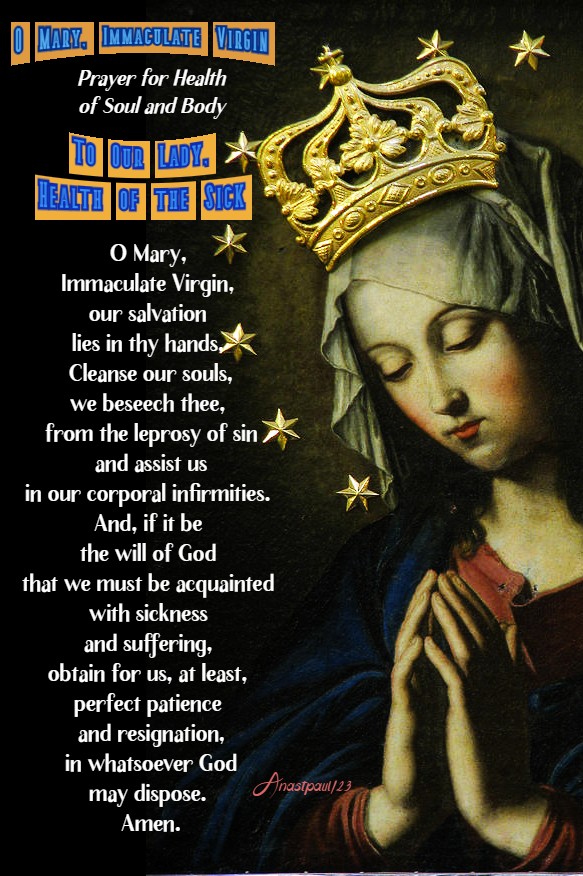
O Mary, Immaculate Virgin Prayer for Health of Soul and Body
O Mary, Immaculate Virgin, our salvation lies in thy hands. Cleanse our souls, we beseech thee, from the leprosy of sin and assist us in our corporal infirmities. And, if it be the will of God that we must be acquainted with sickness and suffering, obtain for us, at least, perfect patience and resignation, in whatsoever God may dispose. Amen.
26 August – Feast of Salus Infirmorum / Our Lady, Health of the Sick – Saturday before the last Sunday in August:
Salus Infirmorum / Our Lady, Health of the Sick By Cardinal Alexis Henri Marie Lepicier OSM (1863-1936) Prefect of the Sacred Congregation for Religious
“And I perfumed my dwelling as storax and galbanum and onyx and aloes and as the frankincense not cut and my odour is, as the purest balsam.“” (Ecclus 24:21)
Salus Infirmorum
The sin of our first parents not only deprived man of original justice and of all the gifts consequent thereon; it reduced him, furthermore, to a state of great weakness, so that it is impossible for us to accomplish works of supernatural value, without a special grace. Fallen man is like one sick, who has no relish for any nourishment, whatever. He is deficient in vital energy and his actions are wanting, in that vigour which naturally belongs to a healthy person. He is strongly inclined to vice and finds the practice of virtue tedious and difficult!
This natural incapacity regarding the performance of good works, is further increased, by actual sin, whether mortal or venial. The former, by depriving the soul of divine grace which is the principle of spiritual life, hinders man from doing anything pleasing to God, so as to merit eternal happiness. The latter, venial sin, by diminishing the fervour of charity, makes the practice of virtue labourious, since charity has for its effect, precisely to facilitate the performanc, of what is good. Sin is, therefore, a great evil because, if mortal, it saps altogetherthe spiritual energy of the soul and if venial, it notably weakens it. If, from individuals we pass onto nations, we perceive that sin, like a subtle poison, eats into the heart of them, weakening and preparing their ruin.
Divine bounty, which for bodily ailments, has procured us efficacious remedies, is not less industrious in providing the means to heal our spiritual maladies. With the Sacraments instituted by Jesus Christ, to restore our souls to grace or to augment it within us, God has also been pleased to grant us, in Mary’s aid, a potent remedy for our spiritual infirmities. In fact, Our Lady has not only given us Jesus Christ, the Shepherd and Physician of our souls but, furthermore, she watches over us as a tender mother does, by the cradle of an ailing child.
Besides this, Our Lady’s example encourages us in our conflict with the devil. For she is the Immaculate Virgin, who never was defiled by sin. Her sweet soul was always filled with the perfume of the noblest virtues.
Mary never ceases also to hearken to the voice of our supplications and to present them before the throne of God, often anticipating our requests and obtaining for us, through her own merits and those of Jesus Christ, all the helps necessary to us in our spiritual needs.
And what Our Lady does for individuals, she also does for whole nations. As a pity-full Queen, she succours them in their distress; she raises them from their bed of sickness and is, for them, a bulwark of defence (Cant. 8:10).
Our Lady’s power and motherly care not only embrace spiritual miseries: they also extend to the ills of the body. How often do we see Our Lady restoring health to the sick, who have recourse to her with filial confidence!
In Our Lady’s readiness to alleviate bodily ailments, shines forth, most splendidly, God’s love for her. It seems as if the Most High had placed no limit to the efficacy of His Mother’s intercession. While other saints are invoked only in particular cases of corporal infirmity, Our Lady’s power, on the other hand, is exercised over every kind of malady. Hence, we may say that, at her word, as once at the word of Jesus, the blind see, the lame walk, the lepers are cleansed and the deaf hear (Mt 11:5). The sole difference is that Jesus Christ, being God, wrought these miracles of His own personal authority, while Our Lady, obtains for us, of the Divine Clemency, the graces she asks, by virtue of the efficacy of her intercession with God.
However, although Our Lady is so powerful in curing all bodily ailments, yet, she does not always deliver her clients from every such trial because, God sees best to exercise them in patience that they may, thereby, win the reward prepared for them in Heaven. But when Our Lady does not restore bodily health, yet, for all that, she never ceases to act the part of a tender Mother toward us, watching over us and obtaining for us, in place of bodily strength, resignation to the divine will and interior peace – two sovereign means of sanctification and salvation!
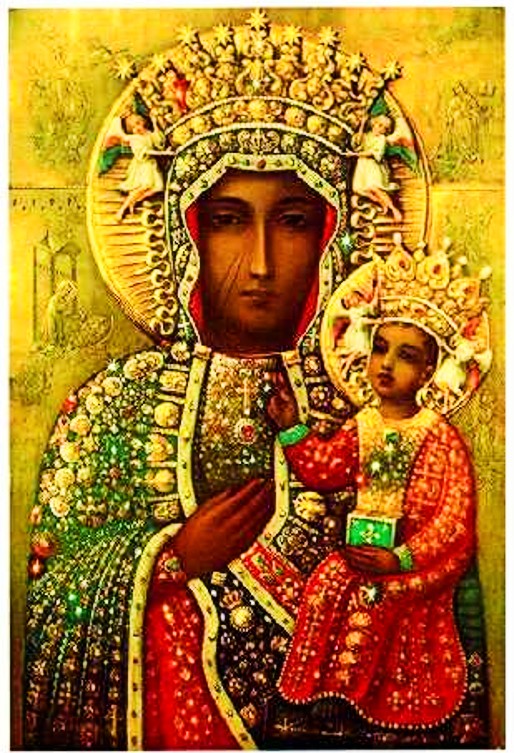
Our Lady of Czestochowa, Queen of Poland – Our Lady of Czestochowa is a revered icon of the Virgin Mary housed at the Jasna Góra Monastery in Częstochowa, Poland. Several Pontiffs have recognised the venerated icon, beginning with Pope Clement XI who issued a Canonical Coronation to the image on 8 September 1717 via the Vatican Chapter. Patron of Poland. According to tradition, the Icon of Jasna Góra (Bright Mountain) was painted by St Luke the Evangelist on a tabletop built by Jesus Himself and the Icon was discovered by St Helen, mother of Emperor Constantine and collector of Christian Relics, in the Holy Land. Visit our Mother here: https://anastpaul.wordpress.com/2017/08/26/blessed-feast-of-our-lady-of-czestochowa-queen-of-poland-26-august/
Salus Infirmorum / Our Lady, Health of the Sick – Saturday before the last Sunday in August
St Anastasius the Fuller St Bregwin of Canterbury St Elias of Syracuse St Eleutherius of Auxerre St Felix of Pistoia Bl Herluin Bl Ioachim Watanabe Jirozaemon St Irenaeus of Rome
St Jeanne Elisabeth des Bichier des Anges FC (1773-1838) (commonly referred to as St Elisabeth Bichier) and known as “the Good Sister” – Religious and co-Founder with Saint André Hubert Fournet – [After the approval of 2 miracles, he was Beatified on 16 May 1926 by Pope Pius XI and Canonised on June 1933 by the same Pope, after a further 2 miracles.](whom we celebrate on 13 May –https://anastpaul.com/2020/05/13/saint-of-the-day-13-may-saint-andre-hubert-fournet-1752-1834-the-good-father/) of the Sisters of the Cross, Sisters of St Andrew, a religious congregation which was established for the care of the poor and the instruction of rural children in the Diocese of Poitiers in 1807. She also helped to inspire the founding of a community of Priests dedicated to Missionary service, the St Elisabeth died in 1838, at which time there were about 600 Daughters of the Cross serving in some 100 communities. She was Beatified by Pope Pius XI in 1934 and Canonised by Pope Pius XII in 1947. Biography: https://anastpaul.com/2020/08/26/saint-of-the-day-26-august-saint-jeanne-elisabeth-des-bichier-des-anges-fc-1773-1838/
St Jean Bassano St Jean of Caramola Bl Juan Urgel Bl Margaret of Faenza St Maximilian of Rome St Melchizedek the Patriarch St Orontius of Lecce St Pandwyna St Rufinus of Capua St Secundus the Theban St Victor of Caesarea St Victor the Martyr St Vyevain of York
Martyrs of Celano – 3 Saints: Three Christians, Constantius, Simplicius and Victorinus, Martyred in the same area at roughly the same time. They were Martyred in c 159 in the Marsica region of Italy. At some point their relics were interred under the main Altar of the San Giovanni Vecchio Church in the Collegiata di Celano and were authenticated in 1057 by Pope Stephen IX. The city was depopulated in 1222; when it was re-built, the relics were re-enshrined in the Church.
Thought for the Day – 25 August – Meditations with Antonio Cardinal Bacci (1881-1971)
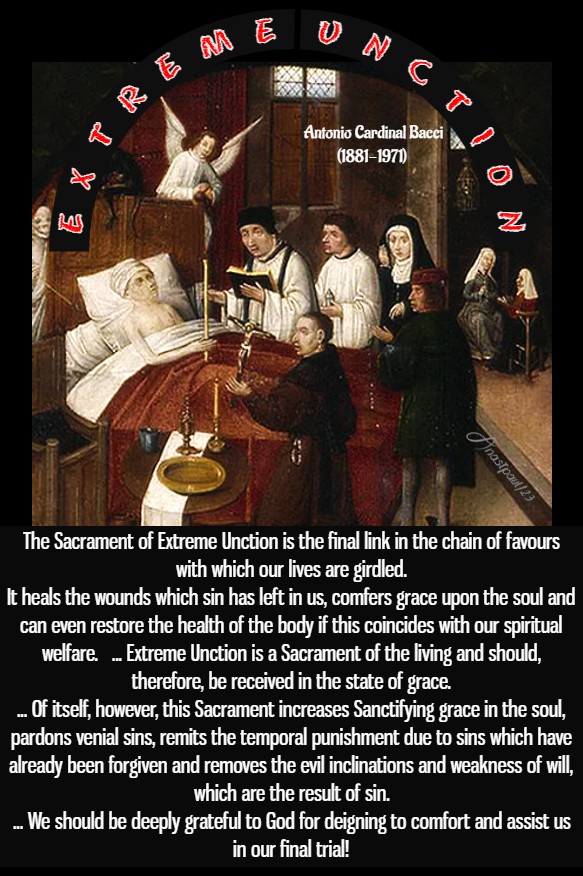
EXTREME UNCTION
“The Sacrament of Extreme Unction is the final link in the chain of favours with which our lives are girdled. It heals the wounds which sin has left in us, comfers grace upon the soul and can even restore the health of the body if this coincides with our spiritual welfare. “Is anyone among you sick?” asks St James. “Let him bring in the presbyters of the Church and let them pray over him, anointing him with oil in the Name of the Lord. And the prayer of faith will save the sick man and the Lord will raise him up and if he be in sins, they shall be forgiven him.” (Js 5:14-15).
Extreme Unction is a Sacrament of the living and should, therefore, be received in the state of grace. If, for some grave reason, however, it is impossible for the sick man to make his confession, he can make, as far as is possible, an act of perfect contrition and receive this Sacrament, thereafter. In this case, Extreme Unction can remit even the mortal sins which he is unable to confess.
Of itself, however, this Sacrament increases Sanctifying grace in the soul, pardons venial sins, remits the temporal punishment due to sins which have already been forgiven and removes the evil inclinations and weakness of will, which are the result of sin. It enables the soul, moreover, to endure suffering and temptation and to await death with calmness and resignation. We should be deeply grateful to God for deigning to comfort and assist us in our final trial!”
Quote/s of the Day – 25 August – St Louis IX (1214-1270) Confessor, King of France – Wisdom 10:10-14, Luke 19:12-26 – Scripture search here: https://www.drbo.org/
“To proclaim Thy mercy in the morning and Thy faithfulness throughout the night.”
Psalm 91:3
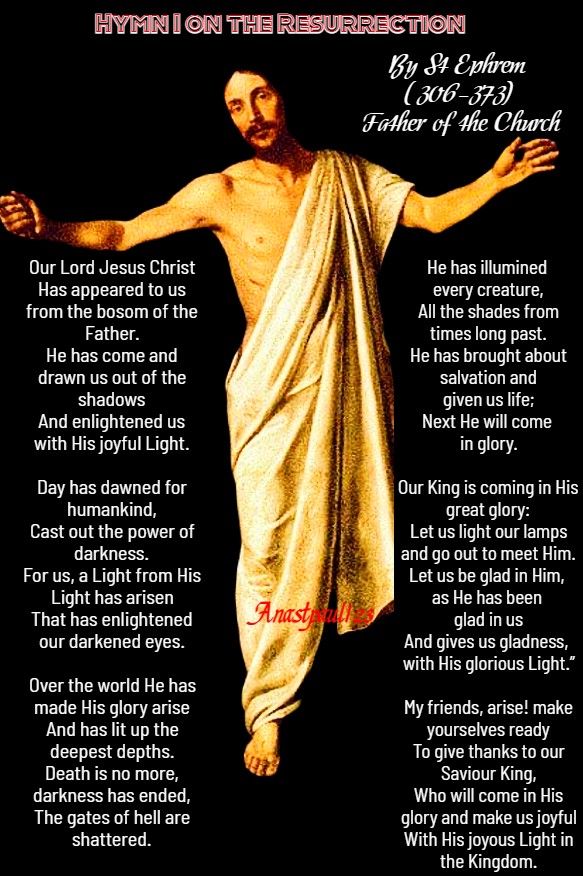
“Our Lord Jesus Christ Has appeared to us from the bosom of the Father. He has come and drawn us out of the shadows And enlightened us with His joyful Light.
Day has dawned for humankind, Cast out the power of darkness. For us, a Light from His Light has arisen That has enlightened our darkened eyes.
Over the world He has made His glory arise And has lit up the deepest depths. Death is no more, darkness has ended, The gates of hell are shattered.
He has illumined every creature, All the shades from times long past. He has brought about salvation and given us life; Next He will come in glory.
Our King is coming in His great glory: Let us light our lamps and go out to meet Him (Mt 25,6); Let us be glad in Him, as He has been glad in us And gives us gladness, with His glorious Light.
My friends, arise! make yourselves ready To give thanks to our Saviour King, Who will come in His glory and make us joyful With His joyous Light in the Kingdom.”
One Minute Reflection – 25 August – St Louis IX (1214-1270) Confessor, King of France – Wisdom 10:10-14, Luke 19:12-26
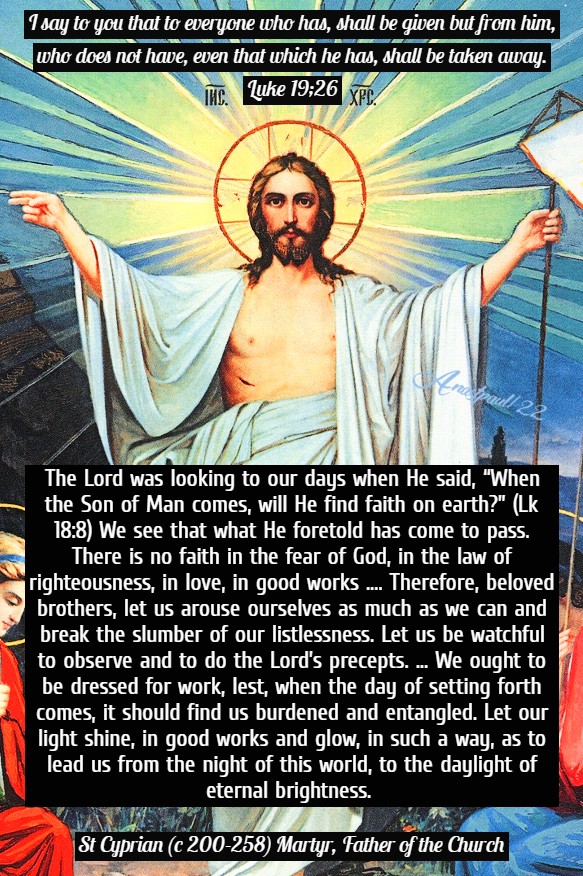
“I say to you that to everyone who has, shall be given but from him, who does not have, even that which he has, shall be taken away.” – Luke 19;26
REFLECTION – “The Lord was looking to our days when He said, “When the Son of Man comes, will He find faith on earth?” (Lk 18:8) We see that what He foretold has come to pass. There is no faith in the fear of God, in the law of righteousness, in love, in good works …. That which our conscience would fear if it believed, it does not fear because it does not believe at all. If it believed, it would also take heed and if it took heed, it would be saved.
Therefore, beloved brothers, let us arouse ourselves as much as we can and break the slumber of our listlessness. Let us be watchful to observe and to do the Lord’s precepts. Let us be like He Himself, has bidden us to be, saying, “Gird your loins and light your lamps and be like servants who await their master’s return from a wedding, ready to open immediately, when He comes and knocks. Blessed are those servants, whom the Master finds vigilant on His arrival“.
We ought to be dressed for work, lest, when the day of setting forth comes, it should find us burdened and entangle. Let our light shine, in good works and glow, in such a way, as to lead us from the night of this world, to the daylight of eternal brightness. Let us always wait with solicitude and caution for the sudden coming of the Lord, so that when He knocks, our faith may be on the watch and receive from the Lord, the reward of our vigilance. If these commands be observed, if these warnings and precepts be kept, we will not be overtaken in slumber, by the deceit of the devil. But we shall reign with Christ in His Kingdom, as servants on the watch.” – St Cyprian (c 200-258) Bishop of Carthage and Martyr, Father of the Church (Treatise on the unity of the Church, 26-27).
PRAYER – O God, Who transported Thy blessed Confessor Louis from an earthly throne to the glory of the heavenly Kingdom, by his merits and intercession we beseech Thee, to make us of the company of the King of kings, Jesus Christ Thy Son. Who lives and reigns with Thee, in the unity of the Holy Ghost, God, world without end. Amen (Collect).
Our Morning Offering – 25 August – St Louis IX (1214-1270) Confessor, King of France
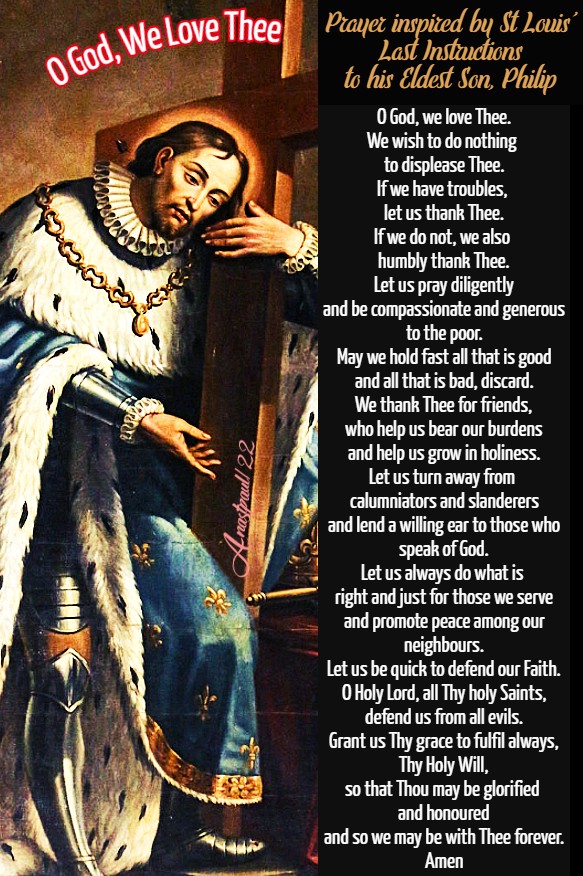
O God, We Love Thee Prayer inspired by St Louis’ Last Instructions to his Eldest Son, Philip (Perhaps Philip prayed thus)
O God, we love Thee. We wish to do nothing to displease Thee. If we have troubles, let us thank Thee. If we do not, we also humbly thank Thee. Let us pray diligently and be compassionate and generous to the poor. May we hold fast all that is good and all that is bad, discard. We thank Thee for friends, who help us bear our burdens and help us grow in holiness. Let us turn away from calumniators and slanderers and lend a willing ear to those who speak of God. Let us always do what is right and just for those we serve and promote peace among our neighbours. Let us be quick to defend our Faith. O Holy Lord, all Thy holy Saints, defend us from all evils. Grant us Thy grace to fulfil always, Thy Holy Will, so that Thou may be glorified and honoured and so we may be with Thee forever. Amen
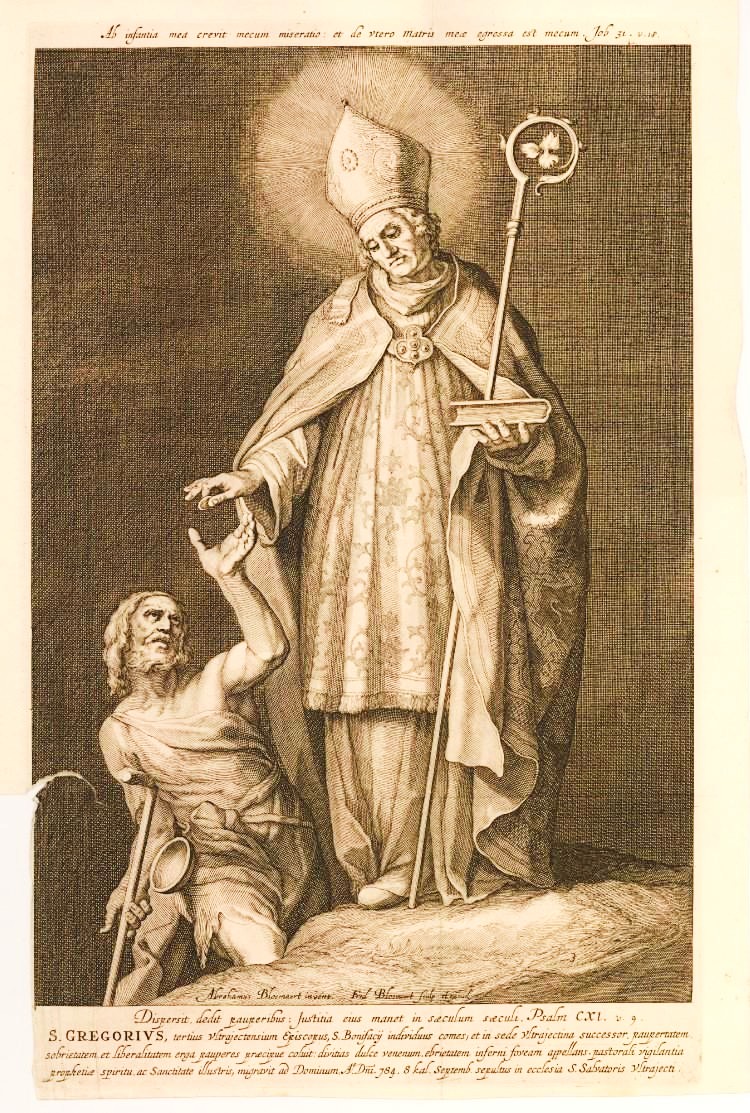
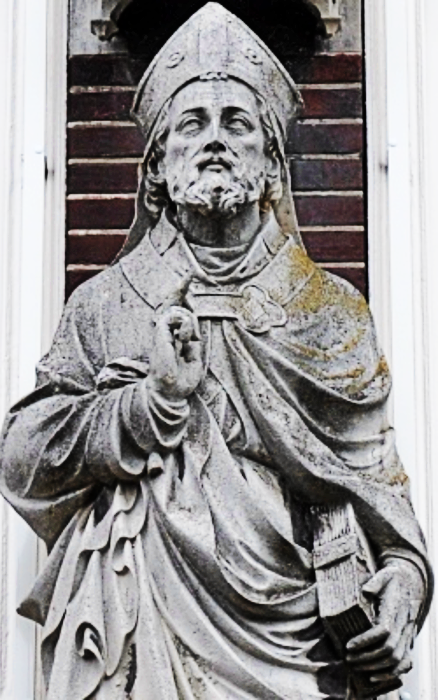
Saint of the Day – 25 August – Saint Gregory of Utrecht (c700-776) Bishop, Confessor, Prince, disciple of St Boniface, Abbot. Born in c700 at Trier, Germany and died on 25 August 776 at of natural causes. Also known as – Gregory of Pfalzel.
Gregory was born in the territory of Triers and was a Prince of Royal blood, for his grandmother Adela, his father Albric’s mother, was the daughter of Dagobert II, King of Austrasia. This lady, after the death of her husband, built the Monastery of Palens, near Triers and, putting on the religious habit, was chosen the first Abbess. Her sister Irwina, who had also renounced the world, died as the Abbess of Horre.
Gregory, returning one day from his studies, when he was fifteen years of age, was desired, by his Grandmother, to read to the Nuns at Palens. St Boniface, who was travelling from Friesland passed that way and was present on this occasion. Gregory was desired by the Abbess, after he finished his reading, to explain the instructions which he had read, in favour of those who did not understand Latin but this, he said, he was not able to do, probably because he was not sufficiently confident with the Teutonic language.
Wherefore, Saint Boniface rising up, did that office for him and added many pathetic (in the original meaning of this word being ‘capable of touching or feeling’) exhortations to virtue, probably both in the Latin and Teutonic languages. Gregory was so moved by his discourses that he resolved, upon the spot, to forsake the world and attend that holy man wherever he went. His family do not seem to have opposed his inclination; for Saint Boniface took him with himself and would be himself Gregory’s master and instructor.
He seems to have placed him, for some time, in the Monastery of Ordorf for the convenience of finishing his studies but, the great Apostle of Germany, took Gregory, at a very young age, to share in the hardships and labours of his mission. Gregory accompanied him on all his missionary journeys and greedily learned from the Saint all the secrets of sanctit. St Boniface always loved him as his son. The disciple was a faithful imitator of his master’s spirit and great virtues. Gregory also accompanied him in his journeys to Rome to see the Pope..
Saint Boniface a little before his Martyrdom, sent him to Utrecht to govern a Monastery lately founded there. He had previously e appointed Eoban as the Bishop of that See. Saints Boniface and Eoban received together the Crown of Martyrdom in 754 – after which Pope Stephen III and King Pepin obliged Saint Gregory to take upon himself the care of the See of Utrecht but by various historical and discending documents, it appears that he never received the Palium nor was he ever Consecrated as the Bishop. He administered the Diocess for twenty-two years, until his death – he never was more than Priest, as appears from his Vita, written by his disciple, Saint Ludger (742-809) Bishop of Munster. About St Ludger – https://anastpaul.com/2019/03/26/saint-of-the-day-26-march-st-ludger-c-742-809/
When the murderers of his two brothers were sent to him by the civil magistrates to be put to what death he should think fit, (according to the barbarous custom of the country in that age, which left the punishment of the assassins to the direction of the relations of the deceased person) – the Saint gave everyone of them a suit of clothes with alms and dismissed them with good advic
By his zealous preaching and prudent care, he rendered the Church of Utrecht the most flourishing in all that Country. His eminent spirit of mortification and prayer, his invincible meekness and silence under all injuries, his great charity for the poor and endless assistance to them, his humility and his patience during three years severe illness, crowned him with the glory of the Saints, to which he passed on the 25th of August, in 776. His relics were religiously kept at Utrecht and examined in the Episcopal visitations in 1421 and 1597.
St Alessandro Dordi St Andreas Gim Gwang-Ok St Aredius of Limoges St Ebbe the Elder St Eusebius St Genesius of Arles St Genesius of Brescello St Genesius St Gennadius of Constantinople St Geruntius of Italica St Ginés de la Jara St Gregory of Utrecht (c700-776) Abbot St Gurloes of Sainte Croix St Hermes of Eretum St Hunegund of Homblieres St Julian of Syria St Julius of Eretum Bl Ludovicus Baba Bl Ludovicus Sasada Bl Luis Cabrera Sotelo St Maginus (Died C304) Martyr, Hermit
St Maria Micaela of the Blessed Sacrament (1809-1865) “Mother Sacramento” was a Spanish professed Religious and the Founder of the Handmaids of the Blessed Sacrament, Apostle and martyr of charity. In 1922, Pope Pius XI, proclaimed Mother Sacramento’s heroic virtues. On 25 July 1925, he Beatified her and on 4 March 1934, he Canonised her. Her Life: https://anastpaul.com/2019/08/25/saint-of-the-day-25-august-saint-maria-micaela-of-the-blessed-sacrament-1809-1865/
St Menas of Constantinople Bl Miguel Carvalho St Nemesius of Rome St Patricia of Naples Bl Pedro de Calidis Bl Pedro Vázquez St Peregrinus of Rome St Petrus Gim Jeong-Duk St Pontian
Thought for the Day – 24 August – Meditations with Antonio Cardinal Bacci (1881-1971)
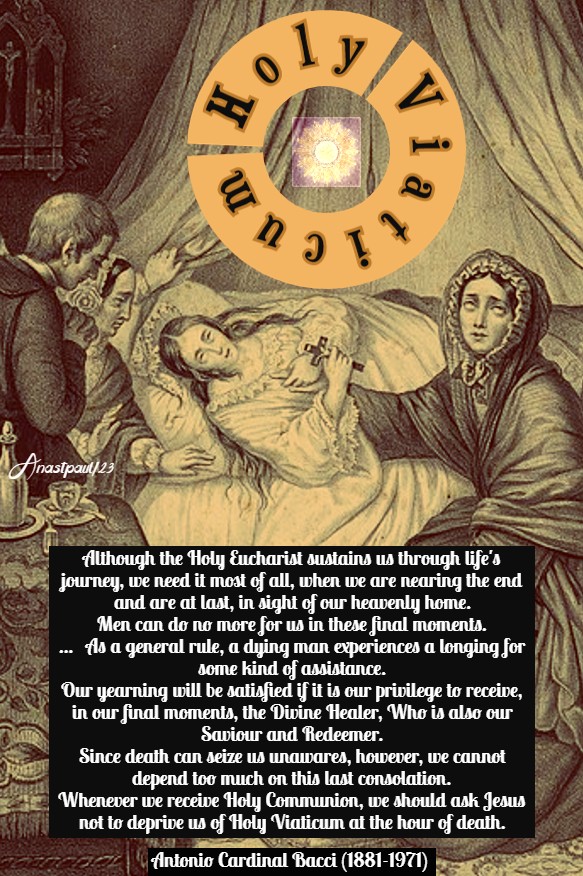
Holy Viaticum
“Although the Holy Eucharist sustains us through life’s journey, we need it most of all, when we are nearing the end and are at last, in sight of our heavenly home.
Men can do no more for us in these final moments. Our friends, if we have any left, will have nothing to give us except their affection. The doctors will have abandoned us once we have passed the stage where medical aid is of any use to us. Life will have become an elusive memory, a sad memory if it recalls a long succession of sins but, a consoling one, if it reminds us of good deeds and acts of mortification.
As a general rule, a dying man experiences a longing for some kind of assistance. Our yearning will be satisfied if it is our privilege to receive, in our final moments, the Divine Healer, Who is also our Saviour and Redeemer. Since death can seize us unawares, however, we cannot depend too much on this last consolation. Whenever we receive Holy Communion, we should ask Jesus not to deprive us of Holy Viaticum at the hour of death.”
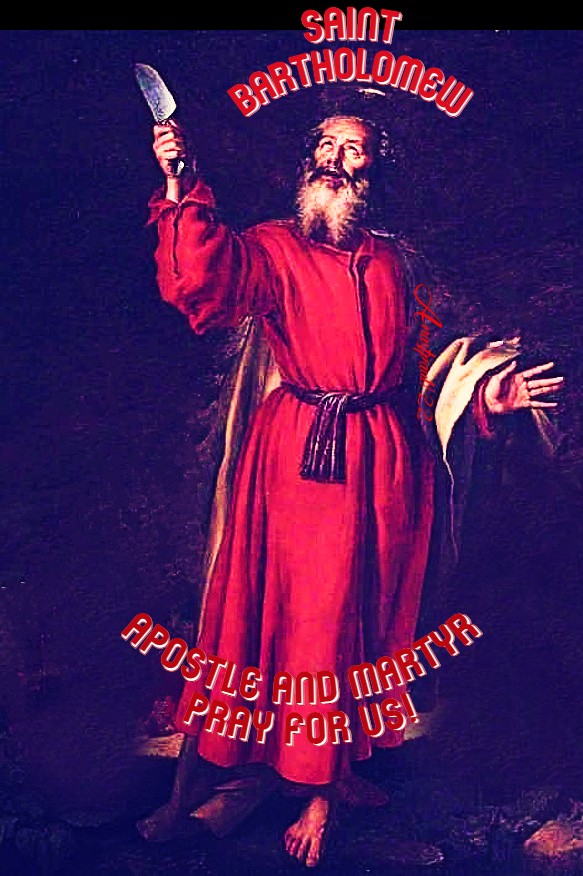
Quote/s of the Day – 24 August – St Bartholomew the Apostle and Martyr – 1 Corinthians 12:27-31, Luke 6:12-19
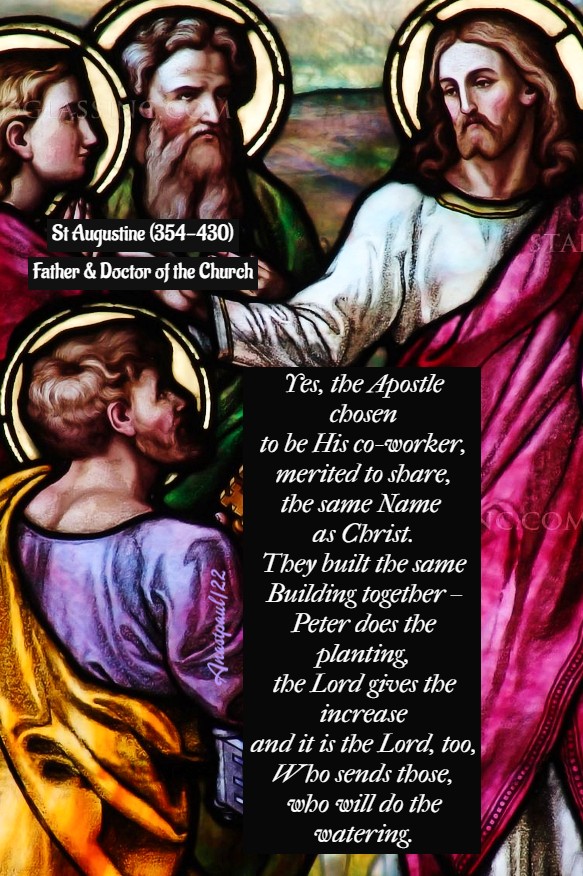
“Yes, the Apostle chosen to be His co-worker, merited to share, the same Name as Christ. They built the same Building together – Peter does the planting, the Lord gives the increase and it is the Lord, too, Who sends those, who will do the watering (cf 1 Cor 3:6f).”
St Augustine (354-430) Father & Doctor of the Church
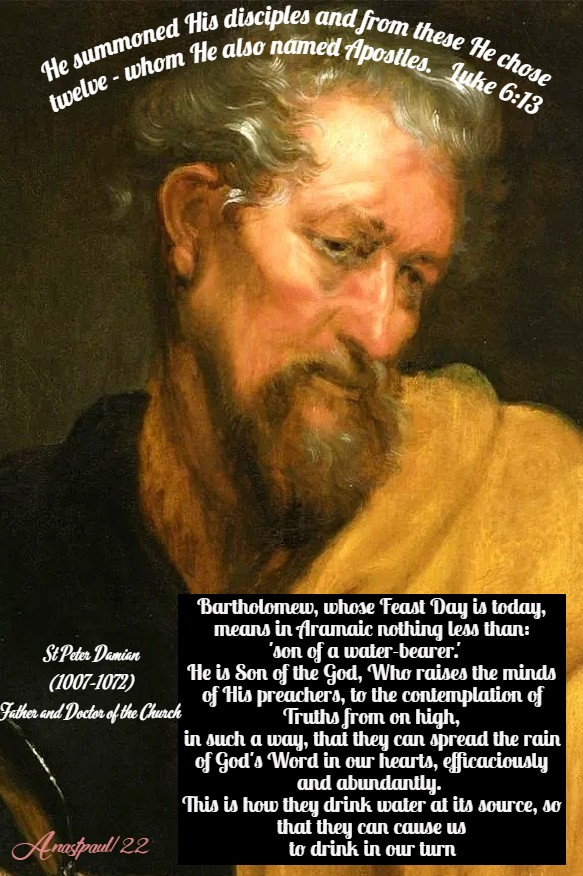
“And when day broke, He summoned His disciples and from these He chose twelve – whom He also named Apostles.” Luke 6:13
“Bartholomew, whose Feast Day is today, means in Aramaic, nothing less than: ‘son of a water-bearer.‘ He is Son of the God, Who raises the minds of His preachers, to the contemplation of Truths from on high, in such a way, that they can spread the rain of God’s Word in our hearts, efficaciously and abundantly . This is how they drink water at its source, so that they can cause us to drink in our turn.”
St Peter Damian (1007-1072) Bishop, Father and Doctor of the Church
One Minute Reflection – 24 August – St Bartholomew the Apostle and Martyr – 1 Corinthians 12:27-31, Luke 6:12-19 – Scripture search here: https://www.drbo.org/
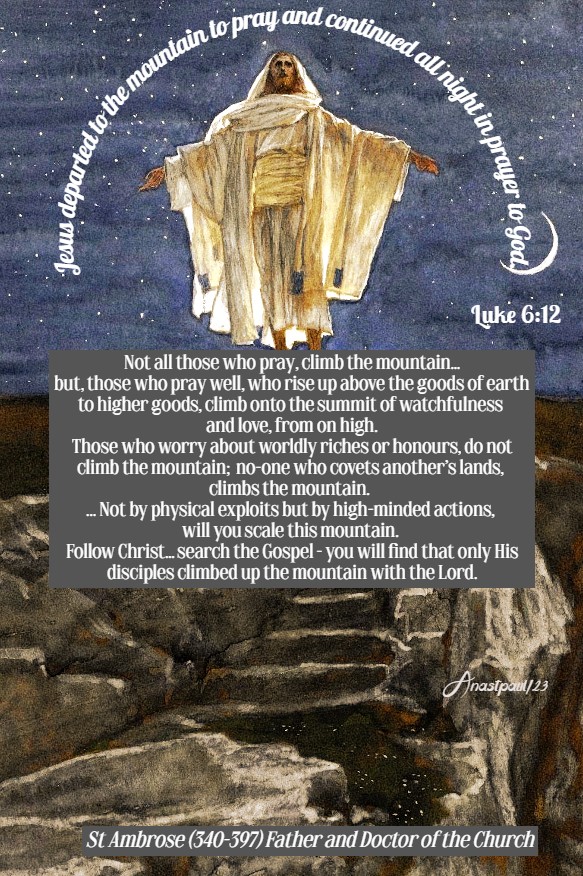
“At that time, Jesus departed to the mountain to pray and continued all night in prayer to God.” -Luke 6:12
REFLECTION – “At that time, Jesus departed to the mountain to pray and He spent the night in prayer to God.” Not all those who pray, climb the mountain… but, those who pray well, who rise up above the goods of earth to higher goods, climb onto the summit of watchfulness and love, from on high. Those who worry about worldly riches or honours, do not climb the mountain; no-one who covets another’s lands, climbs the mountain. Those who seek God, go up it and those who go up, beg the Lord’s aid for their journey. All great and noble souls climb the mountain, for it is not to the first comer alone that the prophet says: “Go up onto a high mountain, thou who announce glad tidings to Sion. Cry out at the top of thy voice, thou who bring good news to Jerusalem,” (Is 40:9). Not by physical exploits but by high-minded actions, will you scale this mountain. Follow Christ… search the Gospel – you will find that only His disciples climbed up the mountain with the Lord.” – St Ambrose (340-397) Archbishop of Milan, Father and Doctor of the Church (On the Gospel of Saint Luke 5,41).
PRAYER – Almighty, eternal God, Who bestowed on us the devout and holy joy of this day to celebrate the Feast of Thy blessed Apostle Bartholomew, grant unto Thy Church, we beseech Thee, both to love what he believed and to preach what he taught. Through the same Jesus Christ, Thy Son our Lord, Who lives and reigns with Thee, in the unity of the Holy Ghost, God, world without end. Amen (Collect).
Our Morning Offering – 24 August – St Bartholomew the Apostle and Martyr
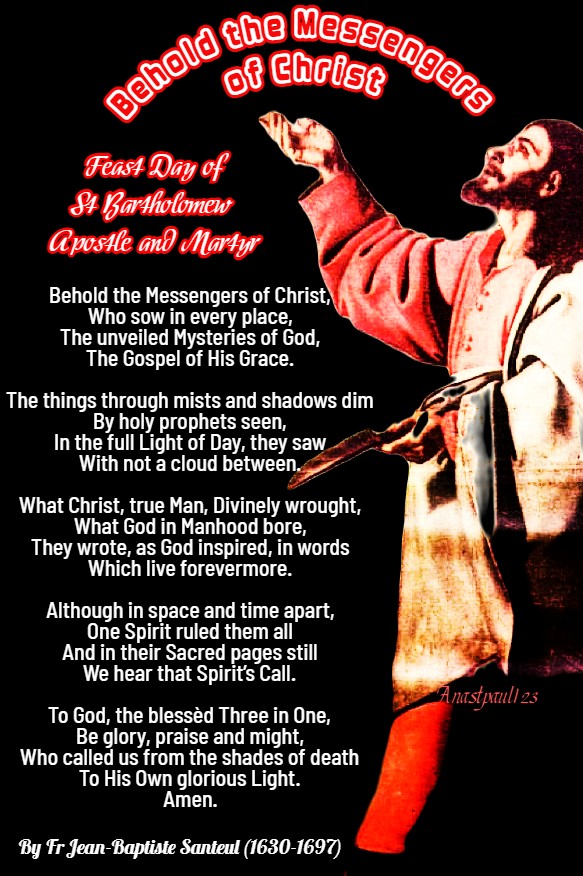
Behold the Messengers of Christ By Fr Jean-Baptiste Santeul (1630-1697) Priest, Monk, Hymnist, Poet, Writer
Behold the Messengers of Christ, Who sow in every place, The unveiled Mysteries of God, The Gospel of His Grace.
The things through mists and shadows dim By holy prophets seen, In the full Light of Day, they saw With not a cloud between.
What Christ, true Man, Divinely wrought, What God in Manhood bore, They wrote, as God inspired, in words Which live forevermore.
Although in space and time apart, One Spirit ruled them all And in their Sacred pages still We hear that Spirit’s Call.
To God, the blessèd Three in One, Be glory, praise and might, Who called us from the shades of death To His Own glorious Light. Amen.
Trans. Compilers of Hymns Ancient and Modern, 1861. This Hymn was used for Vespers I & II and Nocturns on the Feasts of St Mark and St Luke in the Paris Breviary (1736). Cardinal Newman’s Hymni Ecclesiae has it listed for the same hours, as the Common of Evangelists in the Paris Breviary (presumably a later edition). Tune: “Tiverton“ J Grigg, c1791.
Saint of the Day – 24 August – Saint Eptadius of Autun (c490-525) Priest, Hermit, Abbot and Founder of the Abbey of Saint-Eptade de Cervon. Born in c490 near Autun, France and died on 25 August 525 in Montelon, France of natural causes. Patronage – of Blacksmiths, against storms and lightening. Also known as – Eptadius of Cervon, Aptas, Eptade, Eptare, Heptade.
He was a serious boy at 12, a learned scholar at 15, receiving a holy and pious education and a handsome young man who was about to be a bridegroom at 20. Shortly before his marriage, he was seized by a stubborn and severe fever. After a visit by three holy women, his faith and religion were ignited and he prayed to God for recovery and dedicating the rest of his life to Him alone.
Eptadius immediately recovered and then led a life of austerity and penance. Impressed by his virtue, King Clovis tried to persuade him to accept the charge of the Episcopate of Auxerre, as did Saint Flavien (Died 614), the Bishop of Autun but Eptadius not wanting honours and went into exile in the forest at a place called Cervon. However before leaving Eptadius accepted the desire of Bishop Flavian and was Ordained to the Priesthood.
It was in this solitude that Eptadius lived his desire to unite himself to God in prayer, fasting and penance and to redeem the captives of warring Lords in the neighbouring towns. The reputation of his virtues and austerities spread throughout the region and attracted a growing number of disciples, which led him to build a Monastery. The King made him responsible for his good works and entrusted his Monastery with great wealth to be used by our Saint, as the first Abbot, for the glory of God.
Eptadius returned to his hometown of Autun every year for the Feast of Saint-Symphorien a local Martyr who died in c179 and whose Feast day is 22 August.
St Eutychius of Troas St George Limniotes St Irchard
St Jeanne-Antide Thouret (1765-1826) French Religious and the Founder of the Thouret Sisters – renamed the Sisters of Divine Charity., Apostle of Charity and the Poor and helpless, Teacher. Thouret’s life was one of service to children and the ill across France in schools and hospitals – some of which her order established. This active apostolate did not cease when the French Revolution forced her into exile. She continued her work in both Switzerland and the Kingdom of Prussia. St Jeanne-Antide was Canonised on 14 January 1934 by Pope Pius XI. Her Life: https://anastpaul.com/2019/08/24/saint-of-the-day-24-august-saint-jeanne-antide-thouret-1765-1826/
St Patrick the Elder St Ptolemy of Nepi St Romanus of Nepi St Sandratus St Taziano of Claudiopolis
Thought for the Day – 23 August – Meditations with Antonio Cardinal Bacci (1881-1971)
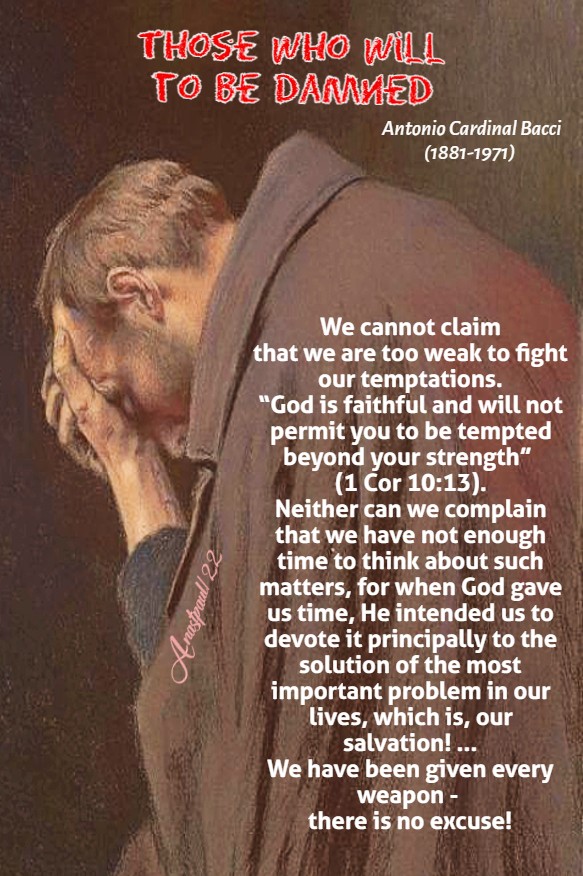
Those Who Will to be Damned
“We cannot claim that we are too weak to fight our temptations. “God is faithful and will not permit you to be tempted beyond your strength” (1 Cor 10:13). Neither can we complain that we have not enough time to think about such matters, for when God gave us time, He intended us to devote it principally to the solution of the most important problem in our lives, which is, our salvation! It is futile to insist that the devil is too strong for us, for, to quote St Augustine, he is like a chained mastiff which can bark at us with all his might but, cannot bite us, unless we approach too close to him.
We have been given every weapon – there is no excuse!”
Quote/s of the Day – 23 August – 1 Corinthians. 4:9-14, Luke 12:32-34 – Scripture search here: https://www.drbo.org/
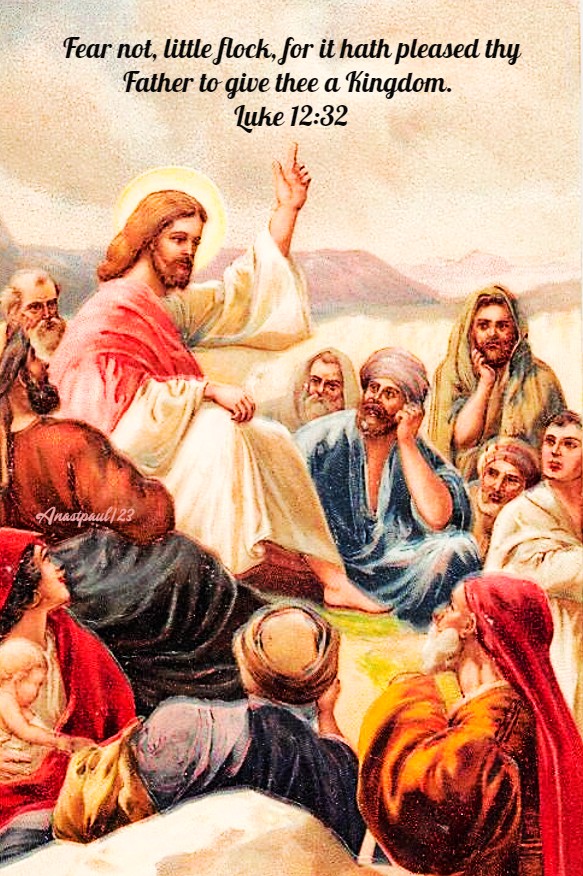
“Fear not, little flock, for it hath pleased thy Father to give thee a Kingdom. ”
Luke 12:32
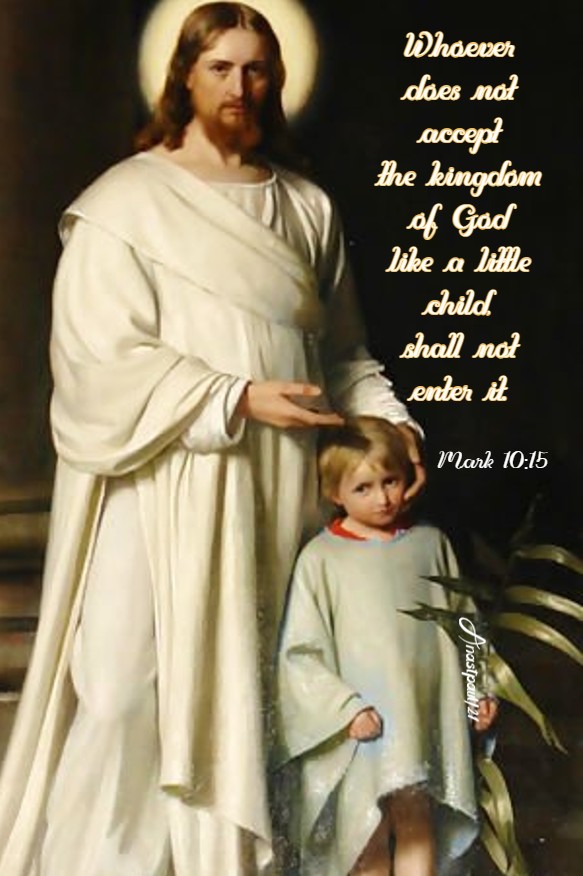
“Whoever does not accept the Kingdom of God, like a little child, shall not enter it.”
Mark 10:15
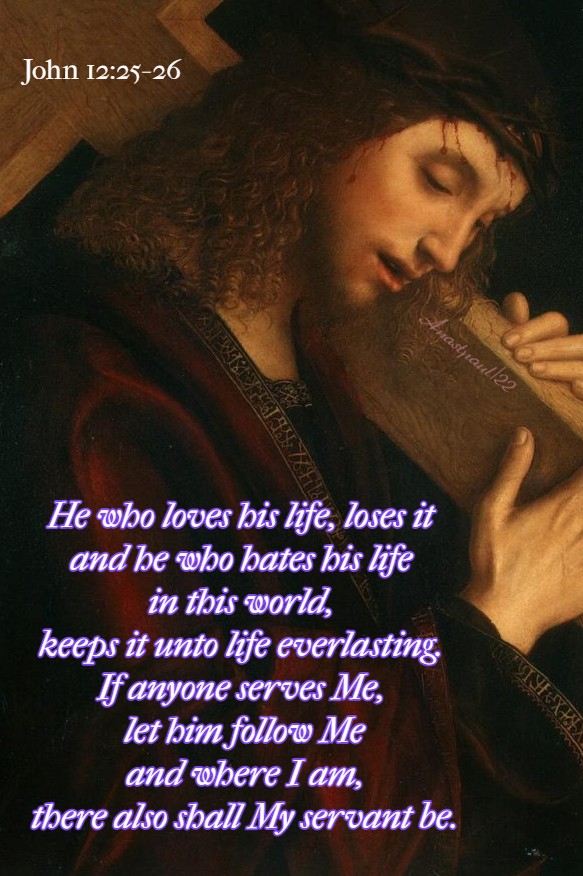
“He who loves his life, loses it and he who hates his life in this world, keeps it unto life everlasting. If anyone serves Me, let him follow Me and where I am, there also shall My servant be.”
John 12:25-26
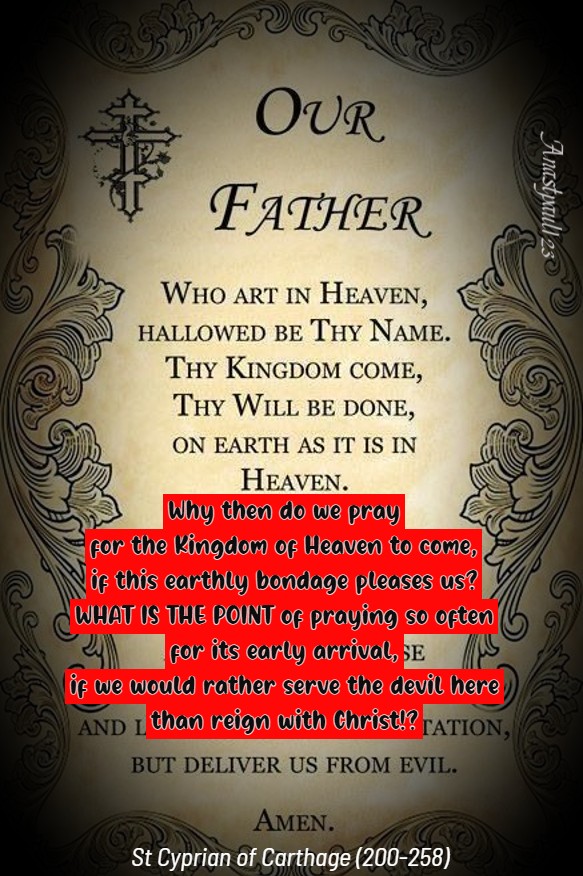
“Why then do we pray for the Kingdom of Heaven to come, if this earthly bondage pleases us? WHAT IS THE POINT of praying so often for its early arrival, if we would rather serve the devil here than reign with Christ!?”
St Cyprian of Carthage (200-258) Bishop of Carthage, Martyr, Father of the Church
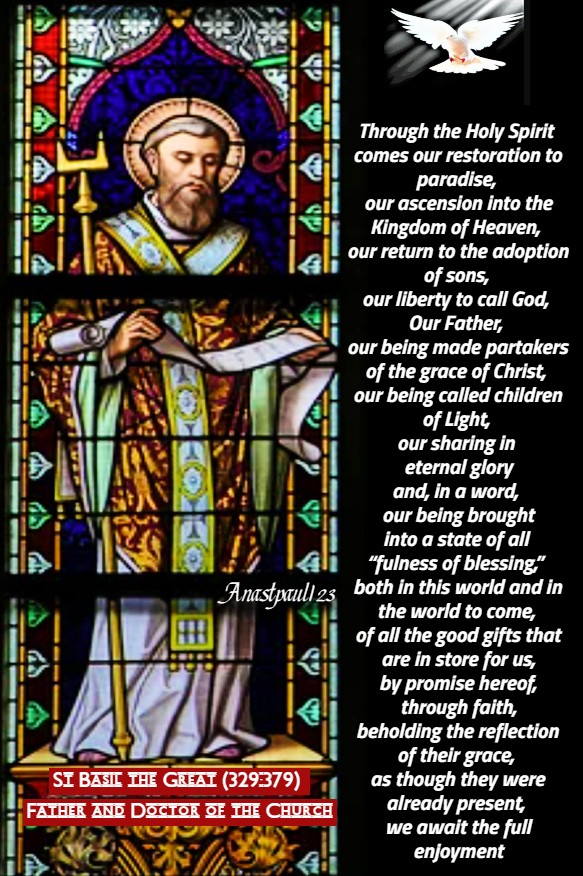
“Through the Holy Spirit comes our restoration to paradise, our ascension into the Kingdom of Heaven, our return to the adoption of sons, our liberty to call God, Our Father, our being made partakers of the grace of Christ, our being called children of Light, our sharing in eternal glory and, in a word, our being brought into a state of all “fulness of blessing,” both in this world and in the world to come, of all the good gifts that are in store for us, by promise hereof, through faith, beholding the reflection of their grace, as though they were already present, we await the full enjoyment.”
St Basil the Great (329-379) Father and Doctor of the Church
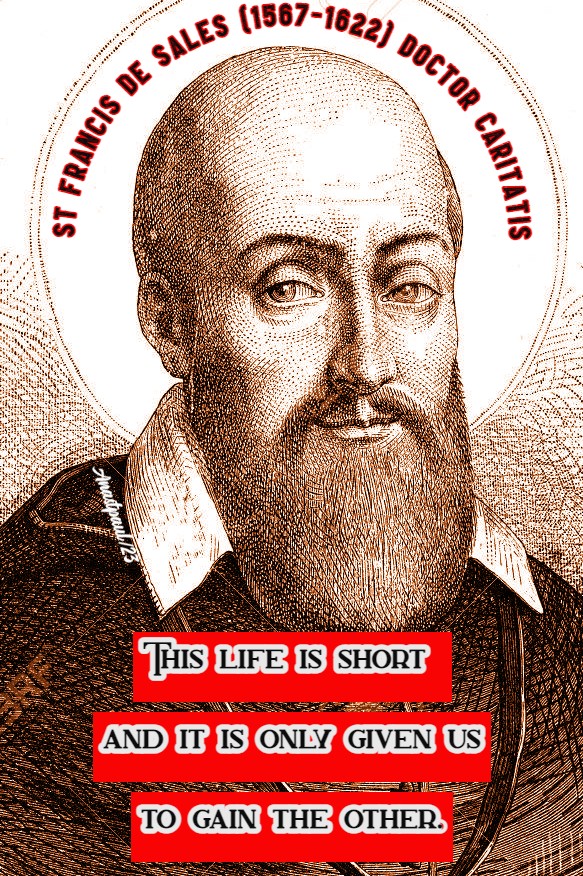
“This life is short and it is only given us to gain the other.”
One Minute Reflection – 23 August – “The Month of the Immaculate Heart of Mary” – St Philip Benizi OSM (1233-1285) Confessor – 1 Corinthians. 4:9-14, Luke 12:32-34 – Scripture search here: https://www.drbo.org/
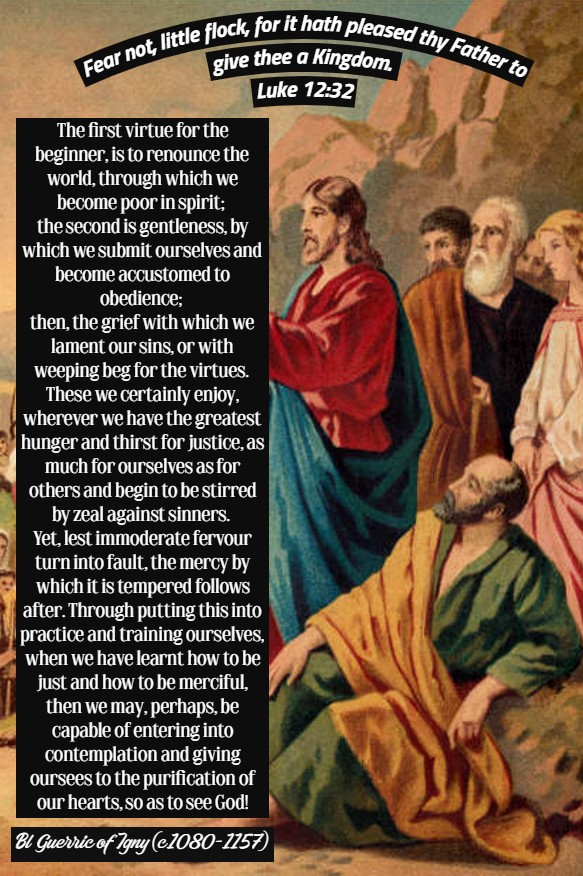
“Fear not, little flock, for it hath pleased thy Father to give thee a Kingdom. ” – Luke 12:32
REFLECTION – “Blessed are the poor in spirit, for theirs is the Kingdom of Heaven”. The beginning of the New Testament is altogether joyful and full of fresh grace. It even nudges the unbeliever and sluggish to pay heed and, more to the point, to act, by promising happiness to the unfortunate and the Kingdom of Heaven to those in exile, those in any kind of distress. The beginning of the new Law is pleasant to hear and starts off under happy auspices, since the Legislator follows on from this beginning ,by giving so many assurances of beatitude. In this way those who have been attracted by them will go from one virtue to the next, climbing the eight steps that this Gospel has set up and placed within our hearts… For, it is clear that what it is all about, is the ascent of the heart and of the progress of merit, through eight steps of virtue, leading men gradually from the lowest to the highest levels of evangelical perfection. In this way they will at last enter and see the God of gods in Zion (Ps 83: 8), in His Temple, of which the Prophet has said: “It had a stairway of eight steps,” (Ez 40:37).
The first virtue for the beginner, is to renounce the world, through which we become poor in spirit; the second is gentleness, by which we submit ourselves and become accustomed to obedience; then, the grief with which we lament our sins or with weeping beg for the virtues. These we certainly enjoy, wherever we have the greatest hunger and thirst for justice, as much for ourselves as for others and begin to be stirred by zeal against sinners. Yet, lest immoderate fervour turn into fault, the mercy by which it is tempered follows after. Through putting this into practice and training ourselves, when we have learnt how to be just and how to be merciful, then we may, perhaps, be capable of entering into contemplation and giving oursees to the purification of our hearts, so as to see God!” – Blessed Guerric of Igny (c1080-1157) Cistercian Abbot (Sermon for All Saints).
PRAYER – O God, Who through St. Philip, Thy Confessor, gave us an outstanding example of humility, grant that Thy household may follow his example by scorning worldly prosperity and, ever seek the things of Heaven. Through Jesus Christ, Thy Son our Lord, Who lives and reigns with Thee, in the unity of the Holy Ghost, God, world without end. Amen (Collect).
Our Morning Offering – 23 August – “The Month of the Immaculate Heart of Mary”
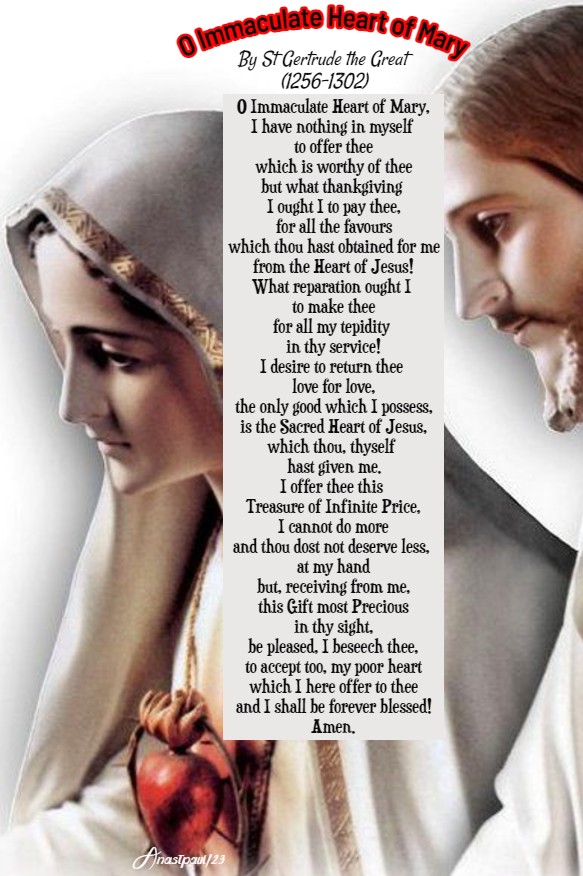
O Immaculate Heart of Mary By St Gertrude the Great (1256-1302)
O Immaculate Heart of Mary, I have nothing in myself to offer thee which is worthy of thee but what thankgiving I ought I to pay thee, for all the favours which thou hast obtained for me from the Heart of Jesus! What reparation ought I to make thee for all my tepidity in thy service! I desire to return thee love for love, the only good which I possess, is the Sacred Heart of Jesus, which thou, thyself hast given me. I offer thee this Treasure of Infinite Price, I cannot do more and thou dost not deserve less, at my hand but, receiving from me, this Gift most Precious in thy sight, be pleased, I beseech thee, to accept too, my poor heart which I here offer to thee and I shall be forever blessed! Amen.
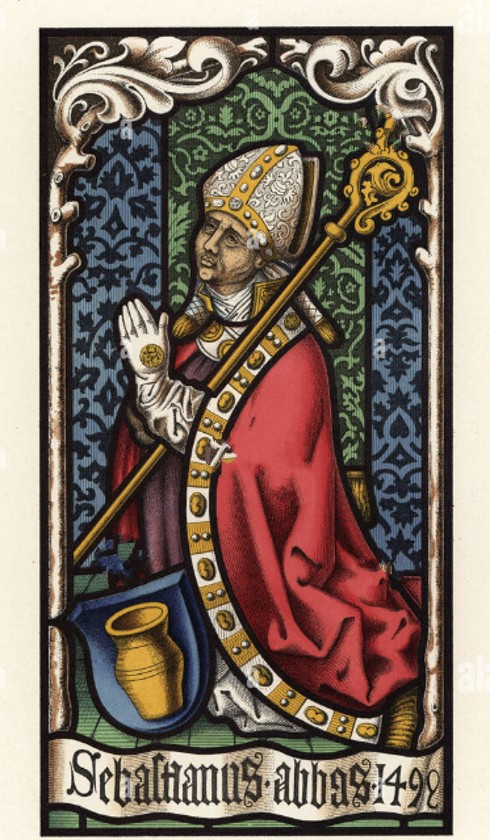
Saint of the Day – 23 August – St Marcian of Saignon, France Priest, Founder and the first Abbot of the Benedictine Abbaye Saint Eusebe, the Abbey of St Eusebius. Unfortunately we do not even know the year of his birth or of his death but we do know the day of death was 23 August. Also known as – Marcian of Apt, Marciano, Marcianus, Martian, Martianus, Martien. Additional Memorial – 25 August on some calenders.
He is remembered as a Priest and the first Abbot of the Monastery of St Eusebius in Saignon which was founded by him.
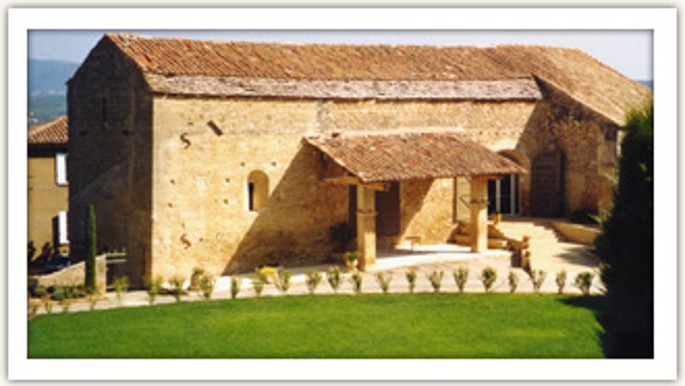
Although we know little about the timescale of the Abbey, an ancient tradition traces its foundation to the early Middle Ages, making our Saint of the same Century. The Abbey founded, perhaps in the 8th Century, was attested from 1004 through the first surviving document (the deed of foundation or the restoration of the Abbey). We know too that the Monastery becamerenowned, very powerful and prosperous.
The Abbey in an old picture
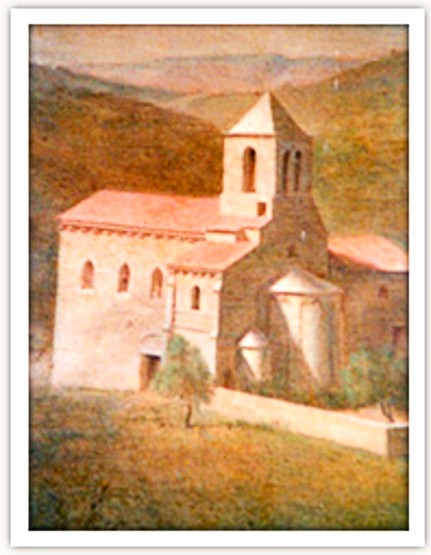
An ancient image of the Abbey of St Eusebius
The only certainty of our Saint is the day of his death which took place on 23 August in an unknown year.
It is said that Marcian died lying on a rock due to a sudden illness. After his death, the rock on which he died became a place of miracles, veneration and pilgrimage to obtain cures or graces.
Although several Chapels were built on this site, the current Church dedicated to St Marcian dates to 1650.
The cult for St Marcian is maintained locally, in the Cathedral of St Anna, of the Diocese of Apt, where his body is preserved, a place that is still today a destination for pilgrimages.
The Saint is also remembered in Avignon as it is assumed he was born in Saignon in that Diocese. The celebration of his Feast and veneration of his Relics is remembered on 23 August.
St Philip Benizi OSM (1233-1285) Confessor, Co-Founder (one of the Seven Holy Founders of the Order of Servants of Mary) OSM, Servite Priest Genera\Superior, Reformer, Preacher, Medical Doctor. St Philip was Beatified on 8 October 1645 by Pope Innocent X and Canonised on 12 April 1671 by Pope Clement X – he was the first Servite to be Canonised. Born on15 August (Feast of the Assumption and the day that the Blessed Virgin appeared to the first of the Founders of the Servite Order) 1233 at district of Oltrarno, Florence, Italy -and died on 22 August (Octave of the Assumption i.e. the Feast of the Immaculate Heart of Mary) 1285 at Todi, Italy). This Amazing Life: https://anastpaul.wordpress.com/2017/08/23/saint-of-the-day-23-august-st-philip-benezi/ AND: https://anastpaul.com/2022/08/23/saint-of-the-day-23-august-st-philip-benizi-osm-1233-1285-confessor/
St Abbondius of Rome St Altigianus St Apollinaris of Rheims St Archelaus of Ostia St Asterius of Aegea St Claudius of Aegea St Domnina of Aegea St Eleazar of Lyons St Eonagh St Flavian of Autun Bl Giacomo Bianconi of Mevania St Hilarinus St Ireneus of Rome St Lupo of Novi St Luppus St Marcian of Saignon, France – Priest, Abbot St Maximus of Ostia St Minervius of Lyons St Neon of Aegea St Quiriacus of Ostia St Theonilla of Aegea St Timothy of Rheims
Martyrs of Agea – 4 Saints: A group of Christian brothers, Asterius, Claudius and Neon, denounced by their step-mother who were then tortured and Martyred in the persecutions of Pro-consul Lysias. They were crucified in 285 outside the walls of Aegea, Cilicia (in Asia Minor) and their bodies left for scavengers.
Thought for the Day – 22 August – Meditations with Antonio Cardinal Bacci (1881-1971)
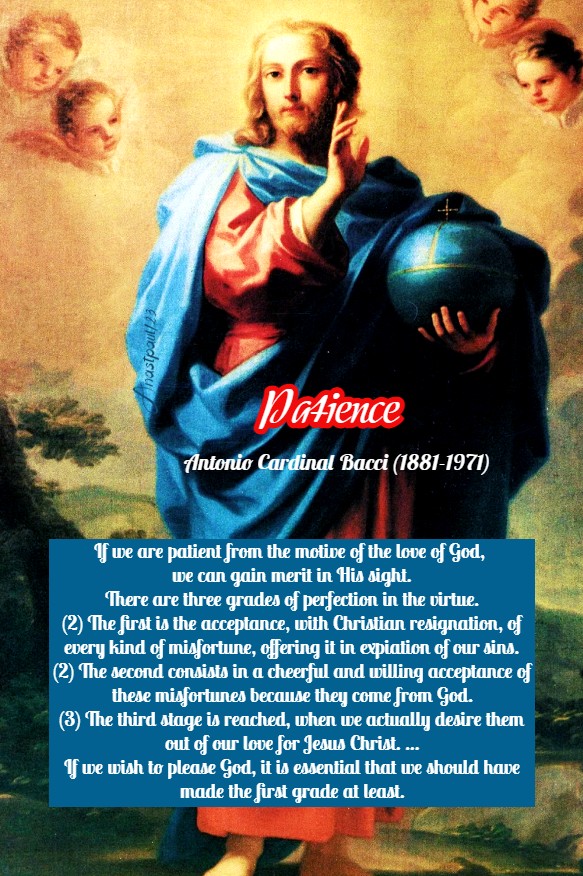
Patience
“If we are patient from the motive of the love of God, we can gain merit in His sight.
There are three grades of perfection in the virtue. (2) The first is the acceptance, with Christian resignation, of every kind of misfortune, offering it in expiation of our sins. (2) The second consists in a cheerful and willing acceptance of these misfortunes because they come from God. (3) The third stage is reached, when we actually desire them out of our love for Jesus Christ.
Which grade have we attained? If we wish to please God, it is essential that we should have made the first grade at least. “A patient man is better than a warrior and he, who rules his temper, than he who takes a city (Prov 26:22).”
Quote/s of the Day – 22 August – “The Month of the Immaculate Heart of Mary” and the Feast of the Immaculate Heart of Mary and the Octave Day of the Assumption – Ecclesiasticus 24:23-31, John 19:25-27 – Scripture search here: https://www.drbo.org/
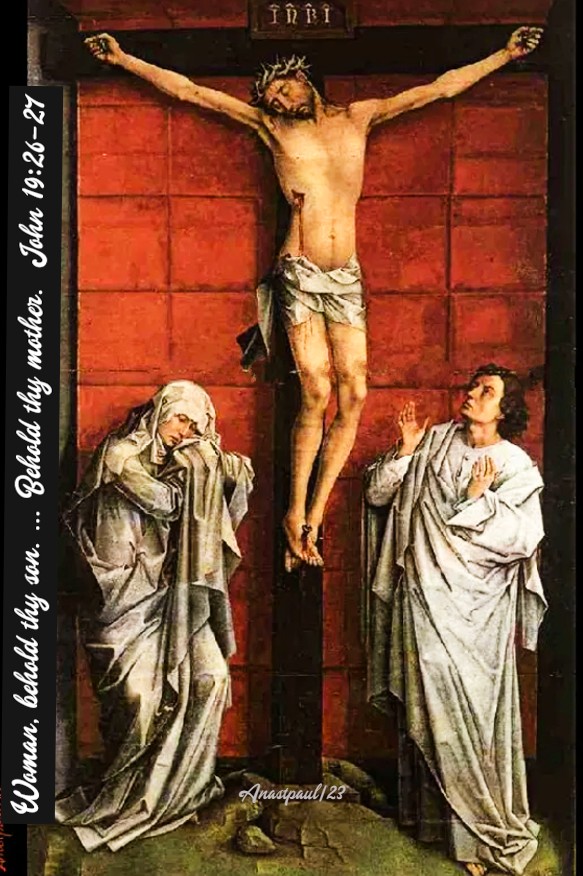
“Woman, behold thy son. … Behold thy mother.”
John 19:26-27
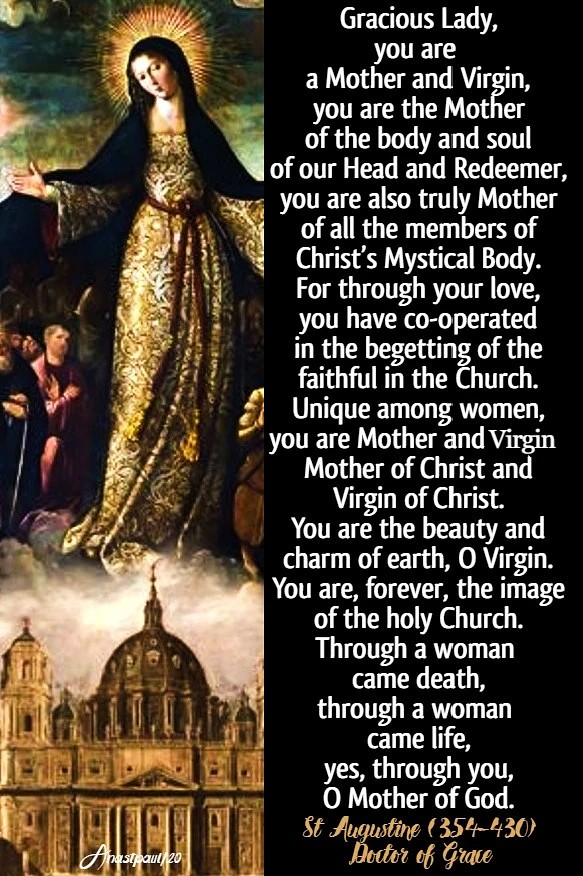
“Gracious Lady, you are a Mother and Virgin, you are the Mother of the body and soul of our Head and Redeemer, you are also truly Mother of all the members of Christ’s Mystical Body. For through your love, you have co-operated in the begetting of the faithful in the Church. Unique among women, you are Mother and Virgin, Mother of Christ and Virgin of Christ. You are the beauty and charm of earth, O Virgin. You are, forever, the image of the holy Church. Through a woman came death, through a woman came life, yes, through you, O Mother of God.“
St Augustine (354-430) Father and Doctor of Grace
“Let not your heart be disturbed. Do not fear that sickness, nor any other sickness or anguish. Am I not here, who is your Mother? Are you not under my protection? Am I not your health? Are you not happily within my fold? What else do you wish? Do not grieve nor be disturbed by anything!”
Our Lady of Guadalupe to Juan Diego 9 December 1531
“My child, behold my Heart all pierced with thorns, which the blasphemies and ingratitude of men drive deeper at every moment . . . make known to men that:
I promise to assist. at the hour of death. with the graces necessary for salvation, all those who, on the first Saturdays of five consecutive months, go to Confession, receive Holy Communion, say the Rosary and spend a quarter of an hour with me, in meditation on the fifteen Mysteries of the Rosary, with the object of making reparation to me.”
Our Lady of Fatima 1917
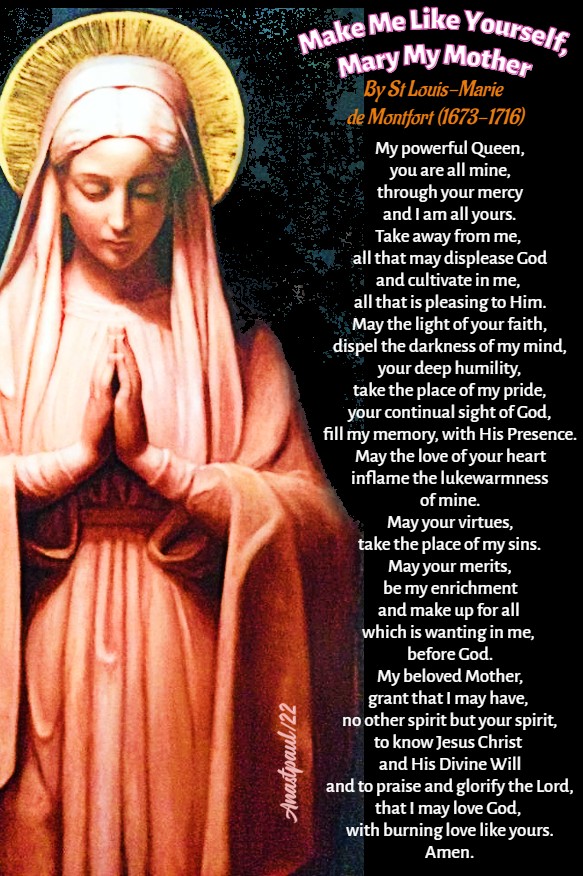
Make Me Like Yourself, Mary My Mother By St Louis-Marie de Montfort (1673-1716)
My powerful Queen, you are all mine, through your mercy and I am all yours. Take away from me, all that may displease God and cultivate in me, all that is pleasing to Him. May the light of your faith, dispel the darkness of my mind, your deep humility, take the place of my pride, your continual sight of God, fill my memory, with His Presence. May the love of your heart inflame the lukewarmness, of mine. May your virtues, take the place of my sins. May your merits, be my enrichment and make up for all which is wanting in me, before God. My beloved Mother, grant that I may have, no other spirit but your spirit, to know Jesus Christ and His Divine Will and to praise and glorify the Lord, that I may love God, with burning love like yours. Amen
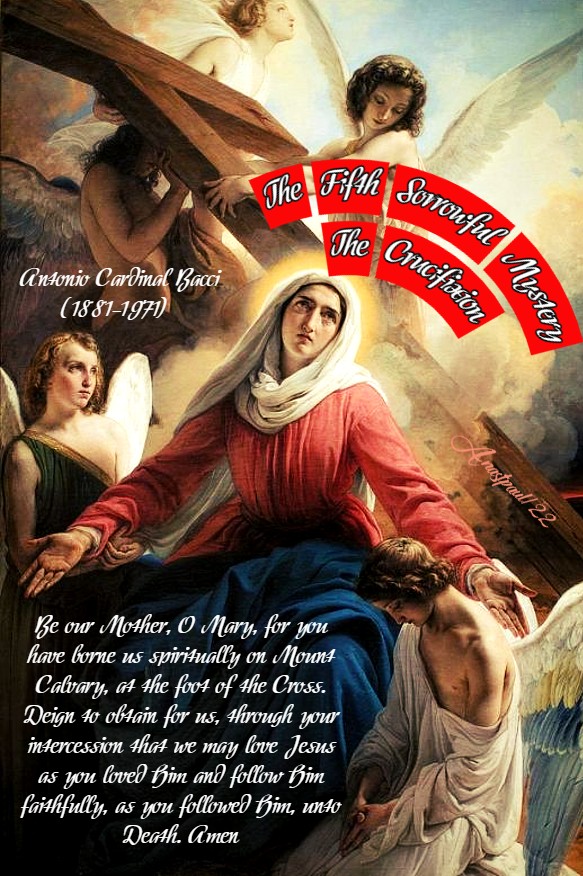
“Be our Mother, O Mary, for you have borne us spiritually on Mount Calvary, at the foot of the Cross. Deign to obtain for us, through your intercession that we may love Jesus as you loved Him and follow Him faithfully, as you followed Him, unto Death. Amen.”
One Minute Reflection – 22 August – “The Month of the Immaculate Heart of Mary” and the Feast of the Immaculate Heart of Mary and the Octave Day of the Assumption – Ecclesiasticus 24:23-31, John 19:25-27 – Scripture search here: https://www.drbo.org/
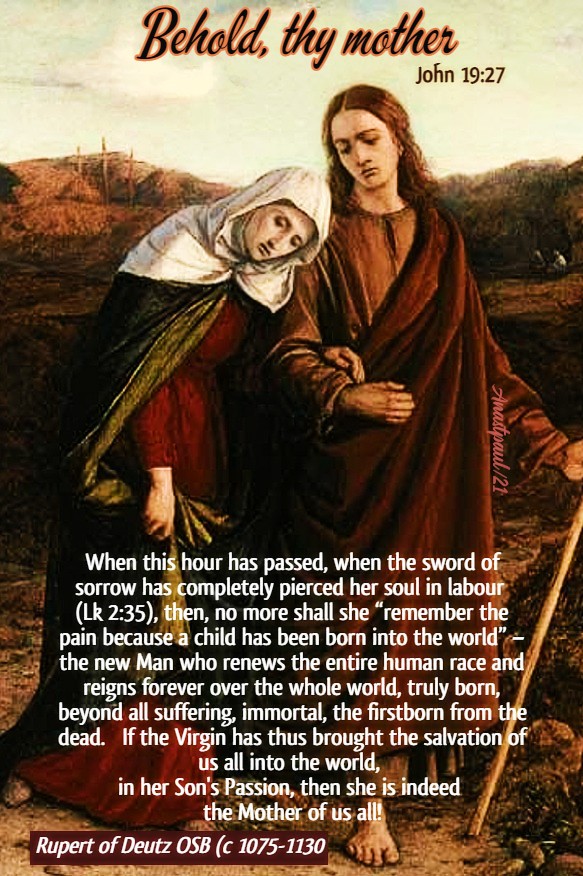
“Behold, thy mother” – John 19:27
REFLECTION – “Woman, this is your son. This is your mother.” By what right is the disciple whom Jesus loved, the son of the Lord’s Mother? By what right is she his mother? By the fact that, without pain, she brought into the world the salvation of us all, when she gave birth, in the flesh, to the God-man. But now she is in labour with great pain as she stands at the foot of the Cross.
At the hour of His Passion, the Lord Himself rightly compared the Apostles to a woman in childbirth, when He said: “When a woman is in labour she is in anguish because a child is born into the world” (cf Jn 16:21). How much more, then, might such a Son compare such a Mother, the Mother standing at the foot of His Cross, to a woman in labour? What am I saying? “Compare?” She is indeed truly a woman and truly a mother and, at this hour, she is truly experiencing the pains of childbirth. When her Son was born, she did not experience the anguish of giving birth in pain as other women do; it is now that she is suffering, that she is crucified, that she experiences sorrow like a woman in labour because her hour has come ( Jn 16:21; cf 13:1; 17:1). …
When this hour has passed, when the sword of sorrow has completely pierced her soul in labour (Lk 2:35), then, no more shall she “remember the pain because a child has been born into the world” – the new Man who renews the entire human race and reigns forever over the whole world, truly born, beyond all suffering, immortal, the firstborn from the dead. If the Virgin has thus brought the salvation of us all into the world, in her Son’s Passion, then she is indeed the Mother of us all!” – Rupert of Deutz (c 1075-1130) Benedictine Monk, Theologian, Exegete and Writer – Commentary on Saint Johns Gospel, 13 ; PL 169, 789.
PRAYER – Almighty, everlasting God, Who in the Heart of the Blessed Virgin Mary, prepared a dwelling place worthy of the Holy Spirit, graciously grant, that we, who are devoutly keeping the Feast of her Immaculate Heart, may be able to live according to Thy Heart. Through Jesus Christ, Thy Son our Lord, Who lives and reigns with Thee, in the unity of the Holy Ghost, God, world without end. Amen (Collect).
Our Morning Offering – 22 August – “The Month of the Immaculate Heart of Mary” and the Feast of the Immaculate Heart of our Most Blessed and Loved Mother Mary
Daily, Daily, Sing to Mary By Bernard of Cluny (12th Century) Monk Trans. Fr Henry Bittleshon C.Orat. (1818-1886)
Daily, daily sing to Mary, Sing, my soul, her praises due. All her glorious actions cherish, With the heart’s devotion true. Lost in wond’ring contemplation, Be her majesty confessed! Call her Mother, call her Virgin, Happy Mother, Virgin blest!
She is mighty to deliver, Call her, trust her lovingly. When the tempest rages round thee, She will calm the troubled sea. Gifts of Heaven she has given, Noble Lady, to our race; She, the Queen, who clothes her subjects, With the Light of God’s own grace.
Sing, my tongue, the Virgin’s honours, Who for us, her Maker bore, For the curse of old inflicted, Peace and blessings to restore. Sing in songs of praise unending, Sing the world’s majestic Queen; Weary not nor faint in telling, All the gifts that earth has seen.
All my senses, heart, affections, Strive to sound her glory forth. Spread abroad the sweet memorials Of the Virgin’s priceless worth. Where the voice of music thrilling, Where the tongues of eloquence, That can utter hymns befitting All her matchless excellence?
All our joys do flow from Mary, All then join her praise to sing. Trembling, sing the Virgin Mother, Mother of our Lord and King. While we sing her awesome glory, Far above our fancy’s reach, Let our hearts be quick to offer Love the heart alone can reach.
St Casimir (1458-1484) Confessor – his Feast Day is 4 March, called the Blessed Virgin his dear mother and he loved her as a child. In her honour he sang frequently a touching Hymn which is in use even at the present day. It begins thus: “Daily, Daily Sing to Mary.” He repeated this many times everyday and asked to have it placed in the grave with him. When his grave was opened after 120 years, both his body and this written Hymn, were untainted by any sign of corruption.
Bernard of Morlaix, or of Cluny, for he is equally well known by both titles, was an Englishman by extraction, both his parents being natives of that country. He was, however, born in France very early in the 12th Century, at Morlaix, Bretagne. Little or nothing is known of his life, beyond the fact that he entered the Abbey of Cluny, of which at that time, Peter the Venerable, was the Abbot, who filled the post from 1122 to 1156. There, as far as we know, he spent his whole life and there he probably died, although the exact dates of his death,and of his birth, are unrecorded.
Andrew is commended for his austerity of life and boundless charity to the poor. He is also known as –Andrew of Ireland, Andrew of Tuscany, Andrew the Scot, Andrea… (He was known as “the Scot”, common at that time when speaking of someone from Ireland, as the country was sometimes called ‘Scotia’). His body is incorrupt.
Andrew was born in Ireland near the beginning of the 9th Century to a noble family. He was the brother of St Brigid the younger. Both Andrew and his sister studied under St Donatus. In 816 Andrew accompanied Donatus on his pilgrimage to Italy to visit the Tombs of Saints Peter and Paul and to visit the Holy Father.
When Donatus and Andrew arrived at Fiesol in Tuscany, the people were assembled to elect a new Bishop. Donatus was chosen and, after being Consecrated to that office, made Andrew his Archdeacon.
There is a miracle reported of Andrew curing the daughter of a nobleman. The girl had been paralysed and the doctors were unable to help her. Her father asked Andrew to come and pray for her. Kneeling by her side, he fervently prayed and then told her to stand up for Jesus had healed her. Many other miracles were performed by him over the course of his life in Fiesole- he cast out demons, cured the blind and the ill.
During the forty-seven years of Donatus’ Episcopate, Andrew served him and his flock faithfully. The Bishop encouraged Andrew to restore the Church of St Martino di Mensola and to found a Monastery there.
St Andrew’s Body lies under the Altar
He died a few years after St Donatus around 880. His sister, it is believed, miraculously arrived from Ireland in time to assist at his deathbed. His body is buried at St Martin’s, the Church he had restored.
When at a later date his remains were exhumed, his body was found still completely perfect and preserved in an incorrupt state. His relics continue to be venerated in that Church today.
St Andrew of Fiesole (Died c880) Archdeacon, his body is incorrupt. St Anthusa of Seleucia St Antoninus of Rome St Arnulf of Eynesbury St Athanasius of Tarsus Bl Bernard Perani St Dalmau Llebaría Torné St Epictetus of Ostia St Ethelgitha of Northumbria St Fabrician of Toledo St Felix of Ostia
St John Kemble (1599 – 1679) Martyr, Priest. Ordained in 1625, he returned to Monmouthshire and served more than 50 years as an itinerant Priest, winning admirers even among Protestants. After being dragged on a hurdle to Widemarsh Common, Kemble declared on the scaffold that he died for the religion that had made this country Christian and that he forgave all his enemies. He was then obliged to encourage the executioner, who had no stomach for his task. Life and Death: https://anastpaul.com/2018/08/22/saint-of-the-day-22-august-st-john-kemble-1599-1679-martyr/
St John Wall St Josep Roselló Sans St Julio Melgar Salgado St Maprilis of Ostia St Martial of Ostia St Maurus of Rheims St Philibert of Toledo Bl Richard Kirkman St Saturninus of Ostia Bl Simeon Lukach St Sigfrid of Wearmouth St Symphorian of Autun
























 AnaStpaul
You must be logged in to post a comment.