Saint of the Day – 6 September – St Bega (Died c660) Virgin, Irish Princess, Abbess Founder, Miracle-worker. Born in the 7th Century in Ireland as a Princess and died in 681 of natural causes. Also known as – Bee, Bees, Begga, Begh, Begha. Additional Memorial – 31 October in Scotland.
The Roman Martyrology reads: “On the Cumberland coast in England, in a Town which later took its name from her, Saint Bega, consecrated virgin.”
Bega was the daughter of an Irish King. She is described as beautiful, virtuous and learned. Her father had promised her in marriage, to the son of the King of Norway but Bega had no intention of marrying. She wished to consecrated her virginity to Christ.
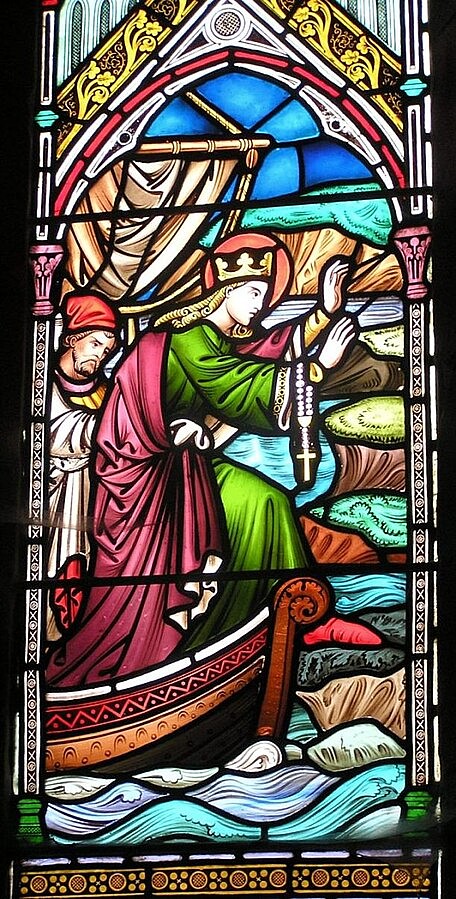
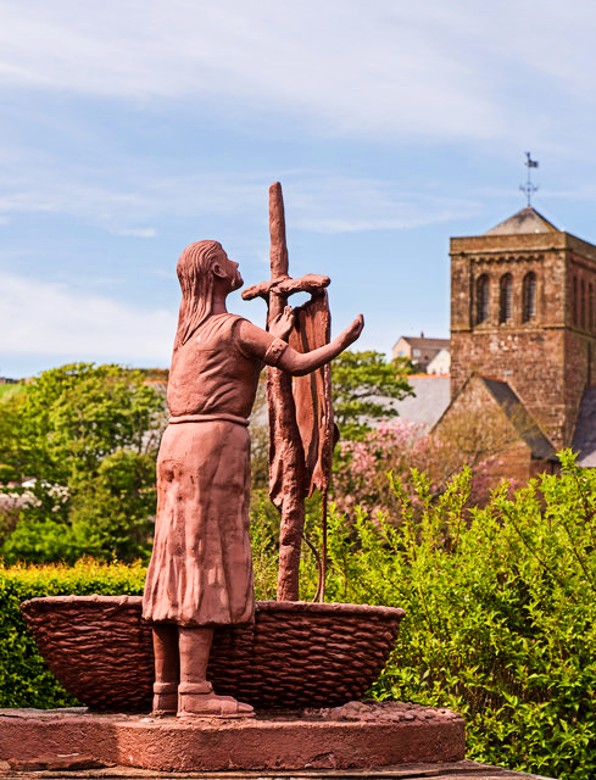
According to her Vita, an Angel presented Bega with an arm ring (bracelet) inscribed with the Cross as a token of her sacred promise. Bega escaped by the grace of God and with miraculous assistance. In onr account, Bega was transported across the Irish Sea by a clod of soil. She arrived safely on the English coast at Cumbria. Settling there, Bega lived in strict seclusion in a hut she built, in amongst a grove of trees near the seashore. She survived on food brought to her by seagulls and gannets.
After some years passed, Viking pirates began to raid the coast. The good Saint ,however, dreaded not death, nor mutilation, nor the loss of temporal goods, of which she was destitute except her bracelet (armilla) but she feared the loss of her virginity, the most precious treasure with which heaven can endow her sex.
By Divine command, Bega hastened her departure from the place but she was induced to leave her bracelet behind her that miracles, in ages to come, might be performed in that neighbourhood, in testimony of her holy life. She travelled inland and on the advice of King Oswald (later St Oswald of Northumbria (c604-642) Martyr and King – https://anastpaul.com/2019/08/05/saint-of-the-day-5-august-saint-oswald-of-northumbria-c-604-642-martyr/), she professed her religious vows and established a Monastery at St Bees in Cumbria under her administration as Abbess.
Bega is often wrongly identified with Saint Eiu (Heiu), who the Venerable St Bede says was the first woman to embrace monastic life in Northumbria, receiving the veil from the hands of Saint Aidan. Following this confusion, she was credited with founding other Monasteries in Yorkshire and there was considerable interference in her veneration as well.
It seems that our Saint died around 660, perhaps in her Monastery in Cumberland which, after her death, took her name and remained the main centre of her cult. It was later seriously damaged by the Danes but at the beginning of the 12th Century was restored as a Priory dependent on the Benedictine Abbey of St Mary of York and endowed by the Earl of Cumberland, William de Meschines.
Bega was considered a Patron Saint by the inhabitants of Cumberland and of the regions near the promontory, who resorted to her to defend them from the bullying of the local Lords and from the incursions of pirates. She was considered, in particular, as the Patroness of the poor and defenceless, with reference to a popular tradition, according to which, she would personally take care of the material needs of the workers, who worked on the construction of her Monastery.
The abovementioned Earl also claimed to possess the miraculous golden arm-ring or bracelet which, Bega received from an Angel before leaving Ireland, as a sign of loyalty to her Celestial Groom. Until the 12th Century, the bracelet was used for the performance of oaths, in the same way as the Sacred Scriptures are used today. It was certain, in fact, that the perjurer would not escape Celestial punishment.
In Scotland, the Church of Kilbees (Bega’s Church), dedicated to her, is also remembered. According to the legends which identify her with Saint Eiu, she, Bega, founded a Monastery in Hartlepool, in the northern region of Yorkshire and here she died as a simple Nun, having renounced the position of Abbess, in favour of Saint Hilda. From the Aberdeen Breviary of 1509, in which the same confusion of characters is found, we learn that, following a Divine intervention, 460 years after her death, Bega’s Relics were found in Hartlepool and solemnly transferred to the restored Monastery of Whitby, where, at the beginning of the 16th Century, were still the object of a lively veneration.
Bega’s festival was commonly celebrated on 6 September. As well as in the northern regions of Great Britain, she is also venerated in Norway, perhaps from this was born the legend, reported by some, according to which the Saint travelled to that Country, successfully working towards the conversion of that people.
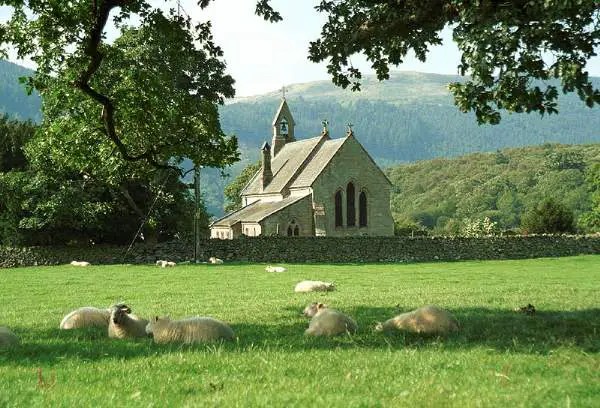
Her Feast day is still celebrated in the Diocese of Lancaster, in Scotland, in Yorkshire and Cumbria. Below is her Church in Bassenthwaite in the Lake District, Cumbria.








 AnaStpaul
You must be logged in to post a comment.