Thought for the Day – 21 October – Meditations with Antonio Cardinal Bacci (1881-1971)
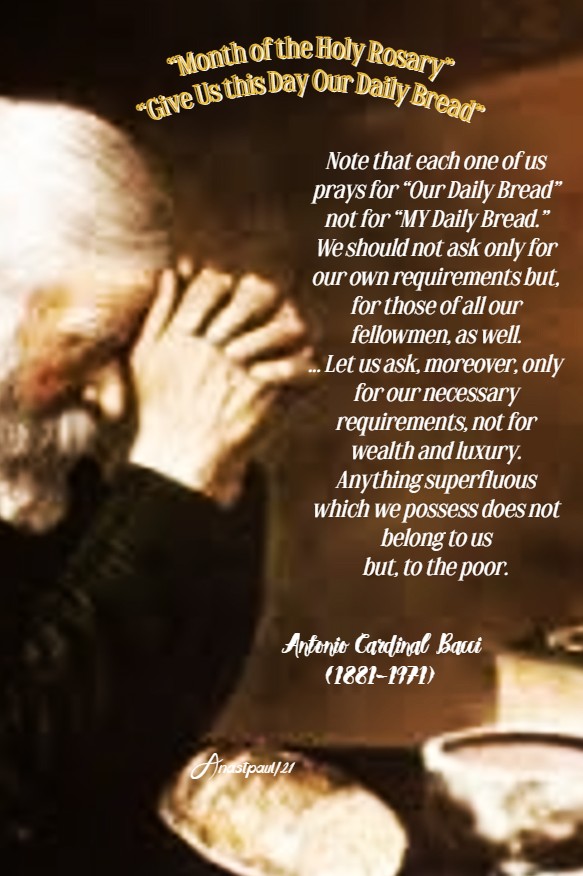
“Month of the Holy Rosary” “Give Us this Day Our Daily Bread”
“Note that each one of us prays for “Our Daily Bread” not for “MY Daily Bread.” We should not ask only for our own requirements but, for those of all our fellowmen, as well.
There are many poverty-stricken people for whom bread is very scarce. We should pray especially for them and should be prepared to share our bread with those who have none. Both charity and justice demand this of us. Let us ask, moreover, only for our necessary requirements, not for wealth and luxury. Anything superfluous which we possess does not belong to us but, to the poor. “Give that which remains,” the Gospel commands, “as alms” (Lk 11:41). Let us remember that, whether we are rich or poor, we are all one great family. Our love for one another should not be merely theoretical but practical, otherwise we are not sincere Christians!”
Quote/s of the Day – 21 October – “The Month of the Most Holy Rosary and of the Angels”
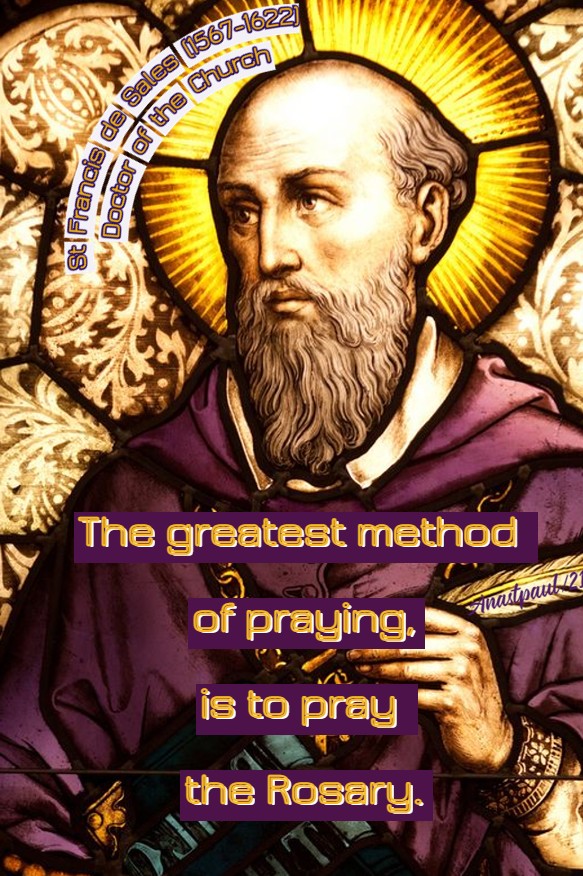
“The greatest method of praying is to pray the Rosary.”
St Francis de Sales (1567-1622)
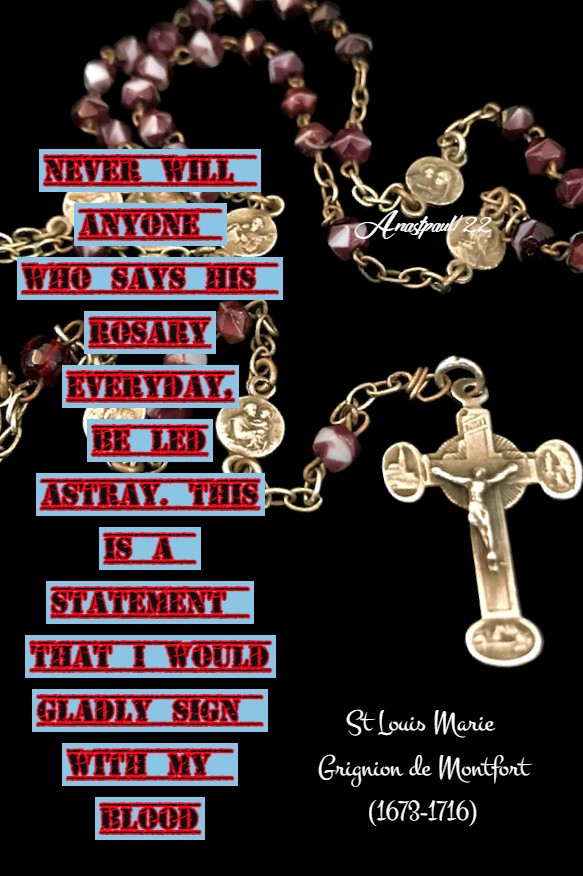
“Never will anyone who says his Rosary everyday, be led astray. This is a statement that I would gladly sign with my blood.”
St Louis Marie Grignion de Montfort (1673-1716)
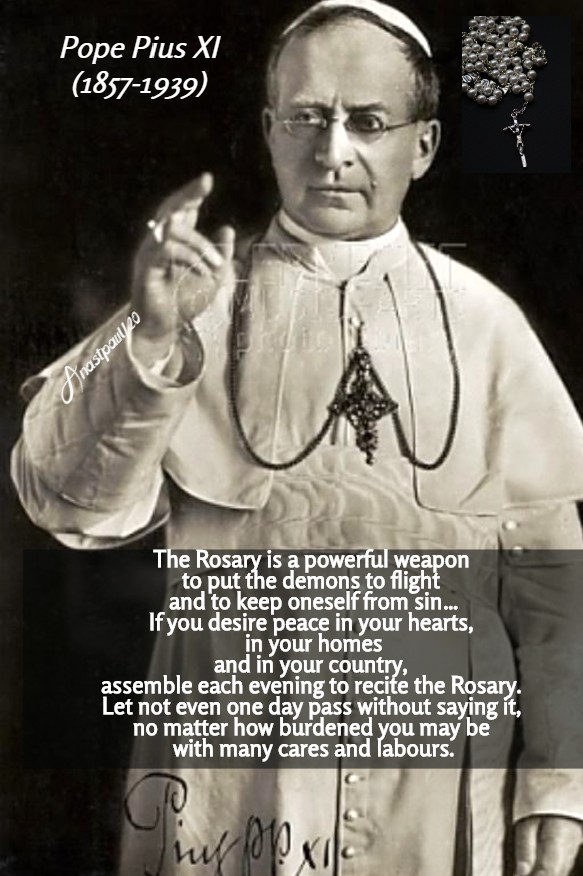
“The Rosary is a powerful weapon to put the demons to flight and to keep oneself from sin… If you desire peace in your hearts, in your homes and in your country, assemble each evening to recite the Rosary. Let not even one day pass without saying it, no matter how burdened you may be with many cares and labours.”
Pope Pius XI (1857-1939)
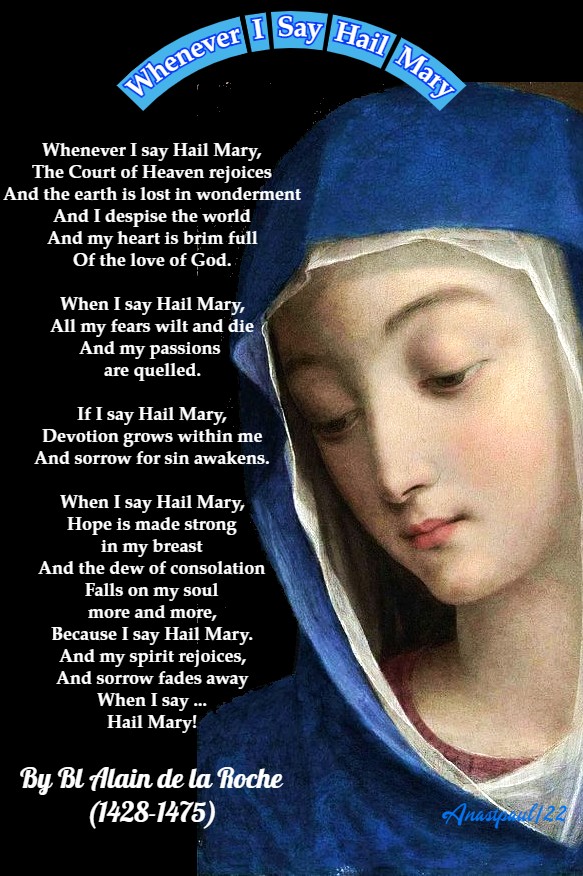
Whenever I Say Hail Mary Blessed Alain de la Roche (1428-1475)
Whenever I say Hail Mary, The Court of Heaven rejoices And the earth is lost in wonderment And I despise the world And my heart is brim full Of the love of God.
When I say Hail Mary, All my fears wilt and die And my passions are quelled.
If I say Hail Mary, Devotion grows within me And sorrow for sin awakens.
When I say Hail Mary, Hope is made strong in my breast And the dew of consolation Falls on my soul more and more, Because I say Hail Mary. And my spirit rejoices, And sorrow fades away When I say … Hail Mary!
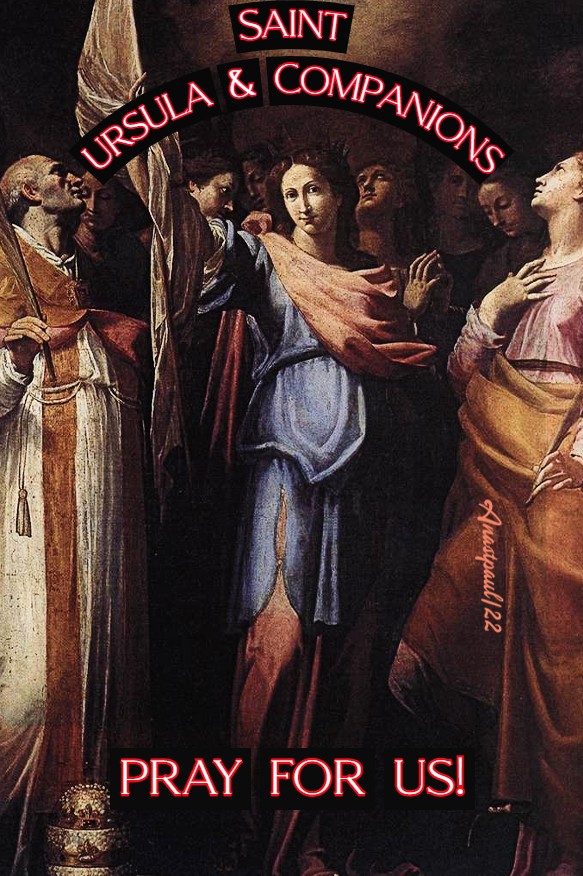
One Minute Reflection – 21 October – “The Month of the Most Holy Rosary and of the Angels” – Saint Ursula and Companions (Died c 238) Virgin Martyrs – Ecclesiasticus 45:1-6, Luke 11:27-28 – Scripture search here: https://www.drbo.org/
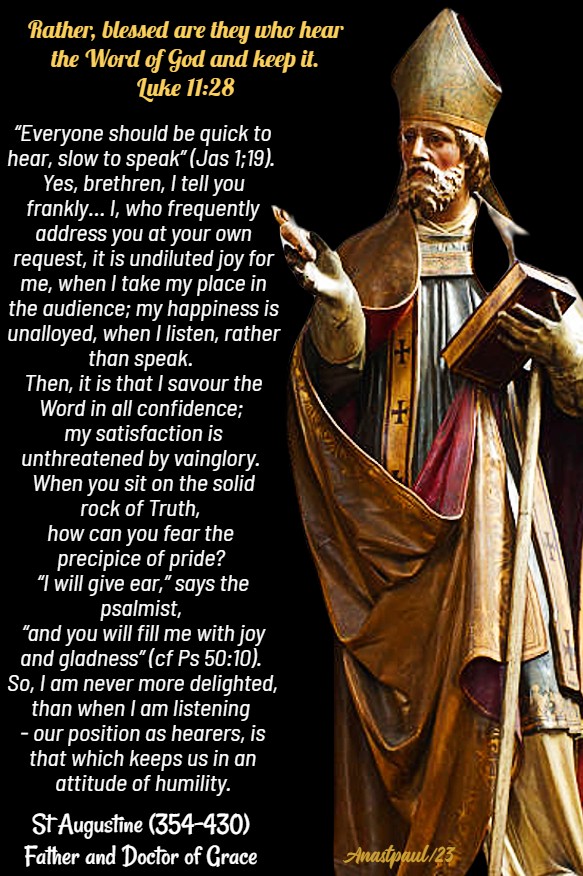
“Rather, blessed are they who hear the word of God and keep it.” – Luke 11:28
REFLECTION – “Everyone should be quick to hear, slow to speak” (Jas 1;19). Yes, brethren, I tell you frankly… I, who frequently address you at your own request, it is undiluted joy for me, when I take my place in the audience; my happiness is unalloyed, when I listen, rather than speak. Then, it is that I savour the Word in all confidence; my satisfaction is unthreatened by vainglory. When you sit on the solid rock of Truth, how can you fear the precipice of pride? “I will give ear,” says the psalmist, “and you will fill me with joy and gladness” (cf Ps 50:10). So, I am never more delighted, than when I am listening – our position as hearers, is that which keeps us in an attitude of humility.
To the contrary, if we speak … we need to have a certain restraint. Even if I do not give in to pride, I am always afraid I might still do so! If I listen, on the other hand, no-one can take my joy away from me, (Jn 16:22) since no-one witnesses it. This is truly the joy of the Bridegroom, of Whom Saint John says: “He stands and listens” (Jn 3:29). He stands because he listens. The first man, too, was standing because he was listening to God, as soon as he listened to the serpent, he fell. The friend of the bridegroom, then, is “overcome with joy at the Bridegroom’s Voice.” What makes him joyful is not his own voice, as preacher and prophet but the Voice of the Bridegroom Himself.” – St Augustine (354-430) Father and Doctor of Grace [Attri] (Cf Discourse on Ps 139:15 – Treatises on St John’s Gospel No 57)
PRAYER – Grant, we beseech Thee, O Lord our God that we may never cease devoutly, to venerate the triumphs of Thy holy Virgins and Martyrs, Ursula and her companions that, as we cannot worthily shew forth their praises, yet we may continually honour them, with lowly service. Through Jesus Christ, Thy Son our Lord, Who lives and reigns with Thee, in the unity of the Holy Ghost, God, world without end. Amen (Collect).
Our Morning Offering – 21 October – “The Month of the Most Holy Rosary and of the Angels” – Saturday of the Blessed Virgin, Sanctæ Mariæ Sabbato
Through Thee, to Us, Our Saviour Came Sweet Lady of the Rosary By St Amadeus of Lausanne O.Cist (1108-1159)
Through thee, to us, our Saviour came, Through thee, to Him, we fain would go. Our lives are marred by wrong and shame, Yet, confidence in thee we know. The friendship thou dost give to all Who love thy name, shall ever be Assurance thou wilt hear our call, Sweet Lady of the Rosary!
Thou art our Strength upon the way, Our Morning Star, to cheer and guide; Our Beacon Light to show the day, And lead us to the Saviour’s Side; A Comforter in ev’ry pain We find, O Mother blest, in thee, And seek we, never, thee in vain, Fair Lady of the Rosary!
Thy praises, Mary, we would sing, And all our faculties employ, That unto thee our hearts might bring A glory-crown of love and joy. Bless thou each humble effort made In thy regard and grant that we, May by thy influence be swayed, Our Lady of the Rosary!
Saint of the Day – 21 October – Saint Berthold of Parma OSB (c1072-c1106) Lay Brother or “Regular Oblate” Sacristan, Sexton, Guardian of the Relics. Berthold died in c1106 in his early thirties, of natural causes. Also known as – Bertold, Bertoldo. Our Saint’s name from an ancient Germanic source means “famous, illustrious, shining” – is not the only one with this name in the Calendars – lived in Parma.Italy and died in c1106.
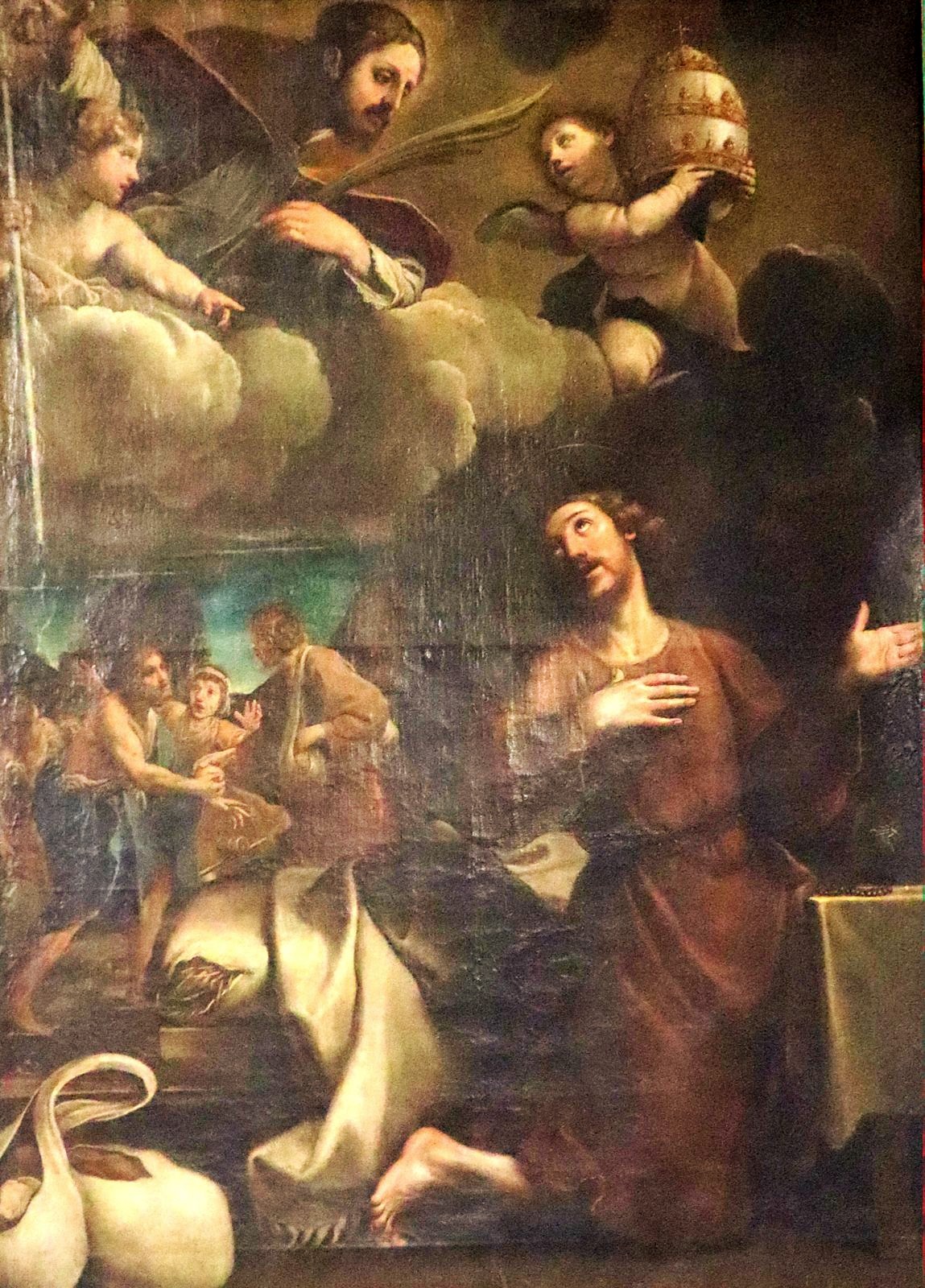
Altarpiece of St Berthold, by Alessandro Tiarini in 1628, in the Church of Sant’Alessandro in Parma
Berthold, was descended from a foreign family – his father, Abbondius, was English, his mother, Berta, was a Briton. They had arrived in Italy, very poor artisans, fleeing the Norman invasion of England in 1066 and initially settled in Milan, where Abbondius practiced the shoemaker’s trade but with little or no success.
They then crossed the Po River, settling in Parma, where their only son, Berthold, was born around 1072. At seven years old, the boy was already working in his father’s shop, helping in the difficult trade. But, at twelve, Berthold abandoned his awl and his blade, to serve the Lord with equal zeal and unchanged humility.
He had to overcome the resistance of his parents, especially his father, who perhaps wished for that only son, the ambition of everything that had been denied to himself in his life. But Berthold’s vocation, despite its simplicity, was stronger than his father’s ambitions and the boy was thus able to change the shoemaker’s shop for the Parma Church of St Alexander, near which there was a Monastery of Benedictine Nuns. Bishop Bernard of Parma commissioned him to serve as a Sexton and Guard the Relics of St Alexander in the Church of the Benedictine Nuns.
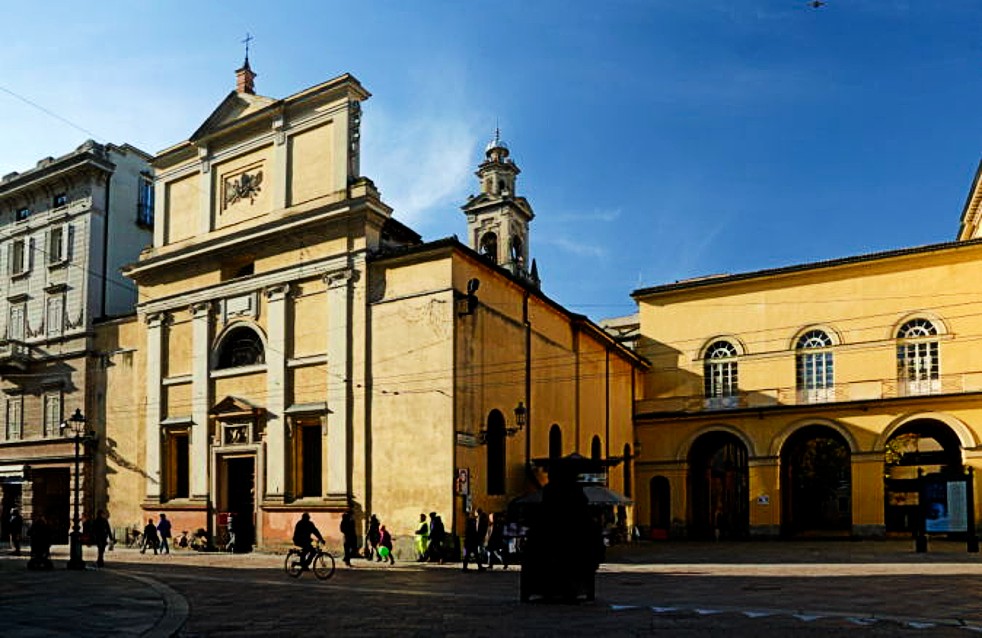
A more comprehensive image of the Church of St Alexander in Parma, showing the Bell Tower and the Convent at the back and side
In the history of religious Orders, Berthold is thus considered a precursor of those Lay Brothers, called Regular Oblates, who later became a normal occurrence – and still are – in Benedictine Abbeys and Monasteries. His duties, in the Church of St Alexander, were those of a Sacristan – a Sacristan who was part of the community and lived its Rule with great zeal.
He lived at the base of the Bell Tower and was awake before dawn, to pray in front of the Altar, after having prepared everything for the first Masses. He wore sackcloth and every Friday he flagellated himself. Always obedient, humble and serene, the Nuns even pointed him out as a model, to the young Novices.
St Alexander’s Church in Parma
With the permission of the Superior, he undertook a pilgrimage to Rome and then to France, where he visited the tomb of St Anthony Abbot, where miracles were attributed to our Saint. And humble, touching miracles were also attributed to him after his return to Parma, where he died still young, while praying, greeted by an insistent flock of bells.
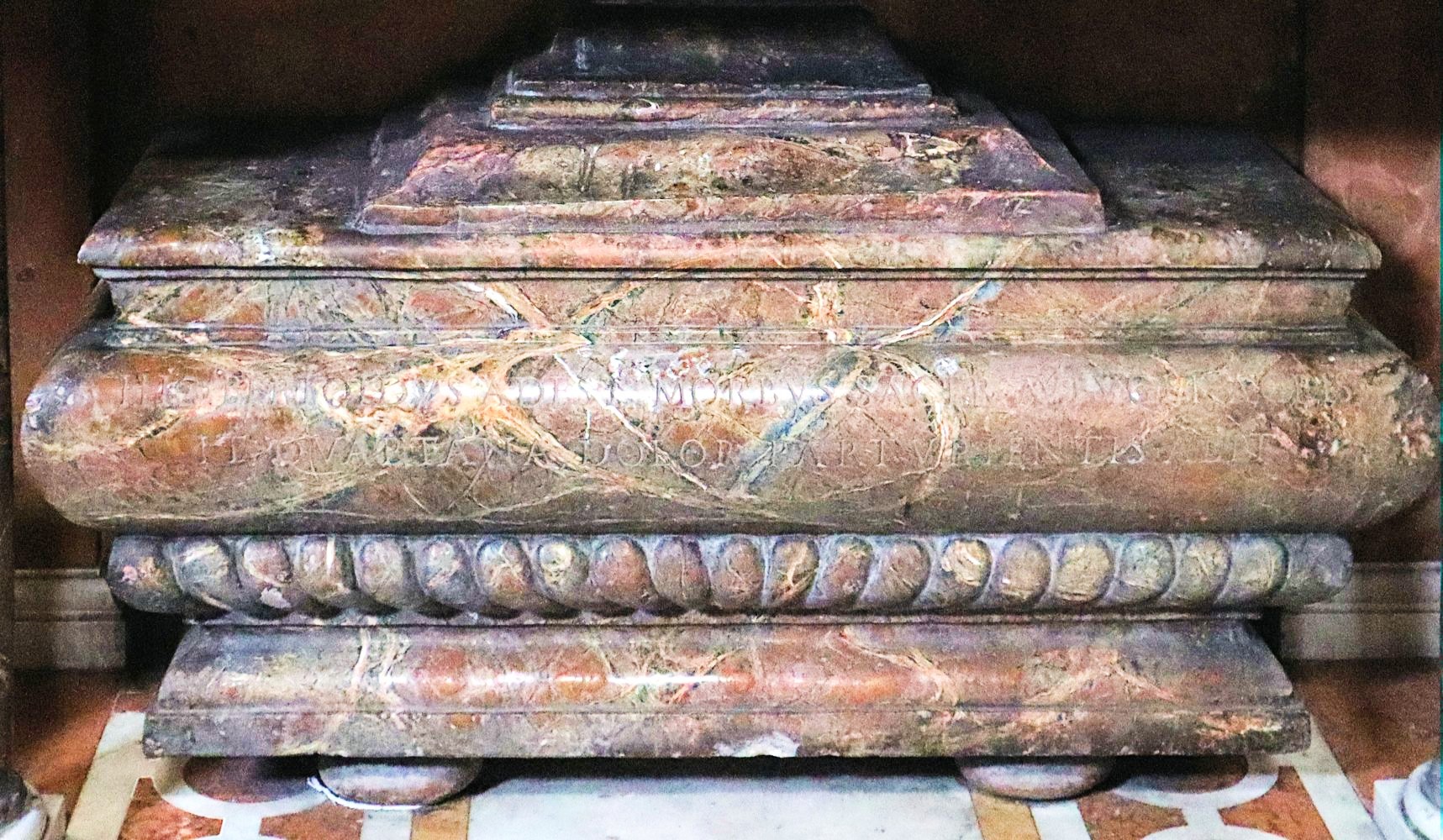
Dear beloved Berthold was buried at his Convent Church of St Alexander, where his Relics still now reside.
Saint Ursula and Companions: (Died c238) Virgin Martyrs This Amazing Story: https://anastpaul.com/2022/10/21/saint-of-the-day-21-october-saint-ursula-and-companions-died-c-238-virgin-martyr/ There are other Saints closely associated with Ursula and her story – travelling companions who were Martyred with her. They are: Antonia of Cologne Cesarius of Cologne Cyriacus of Cologne Daria Fiolanus of Lucca Ignatius of Cologne James of Antioch Mauritius of Cologne Pontius of Cologne Sulpitius of Ravenna Vincent of Cologne Travelling companion, but escaped the massacre: Cunera Led by a dove to the lost tomb of St Ursula: Cunibert of Cologne.
St Agatho the Hermit St Asterius of Périgord St Asterius of Rome St Berthold of Parma OSB (c1072-c1106) Lay Brother or “Regular Oblate” St Celina of Meaux St Cilinia St Condedus St Domnolus of Pouilly St Finian Munnu St Gebizo St Hilarion of Moglena St Hugh of Ambronay St Letizia St Maurontus of Marseilles St Malchus of Syria








 AnaStpaul
You must be logged in to post a comment.