Thought for the Day – 26 October – Meditations with Antonio Cardinal Bacci (1881-1971)
“Month of the Holy Rosary” “Deliver Us From Evil”
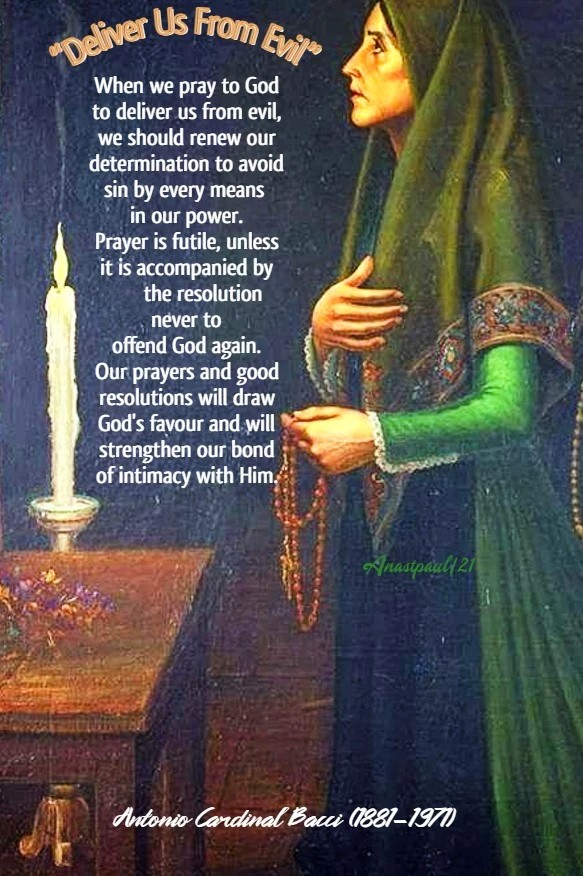
“When we ask God to deliver us from evil, we should think chiefly of the real evil, which is spiritual. All other evils are insignificant in comparison with sin, which is an offence committed against God, our only good. Sin robs us of His grace, which is the supernatural life of the soul, deprives us of His friendship and is an act of ingratitude towards our supreme Benefactor.
When we pray to God to deliver us from evil, we should renew our determination to avoid sin by every means in our power. Prayer is futile, unless it is accompanied by the resolution never to offend God again. Our prayers and good resolutions will draw God’s favour and will strengthen our bond of intimacy with Him.”
Quote/s of the Day – 26 October – “The Month of the Most Holy Rosary and of the Angels” – 1 Peter 5:1-4; 5:10-11, Matthew 16:13-19 – Scripture search here: https://www.drbo.org/
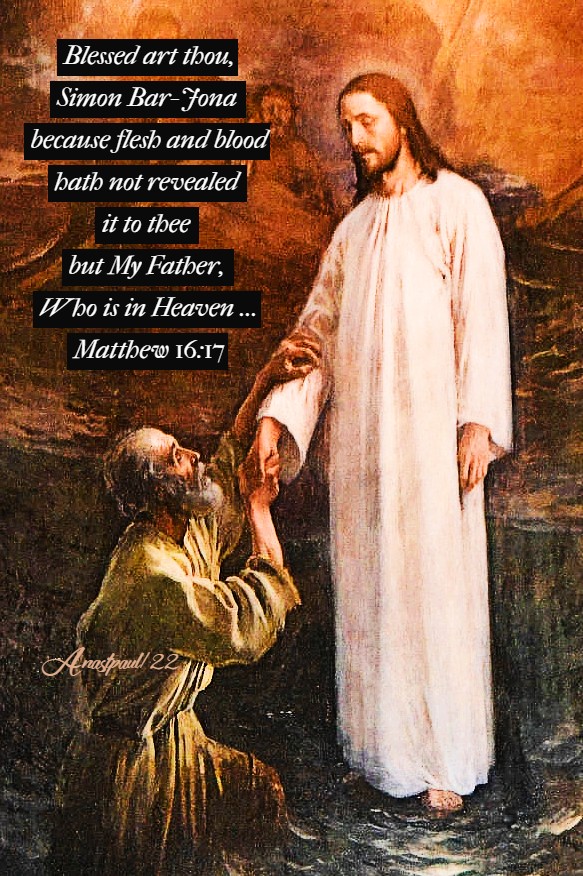
“Blessed art thou, Simon Bar-Jona because flesh and blood hath not revealed it to thee but My Father Who is in Heaven.”
Matthew 16:17
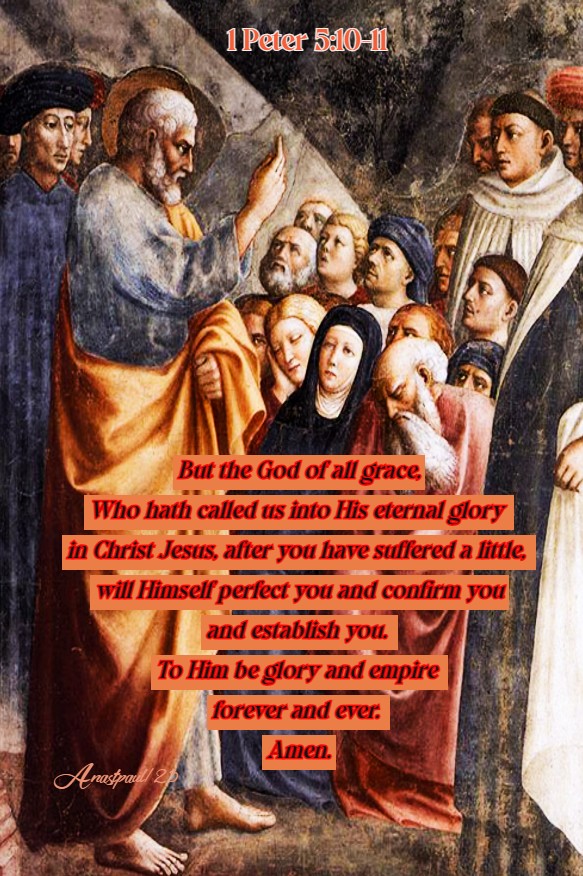
“But the God of all grace, Who hath called us into His eternal glory in Christ Jesus, after you have suffered a little, will Himself perfect you and confirm you and establish you. To Him be glory and empire forever and ever. Amen.”
1 Peter 5:10-11
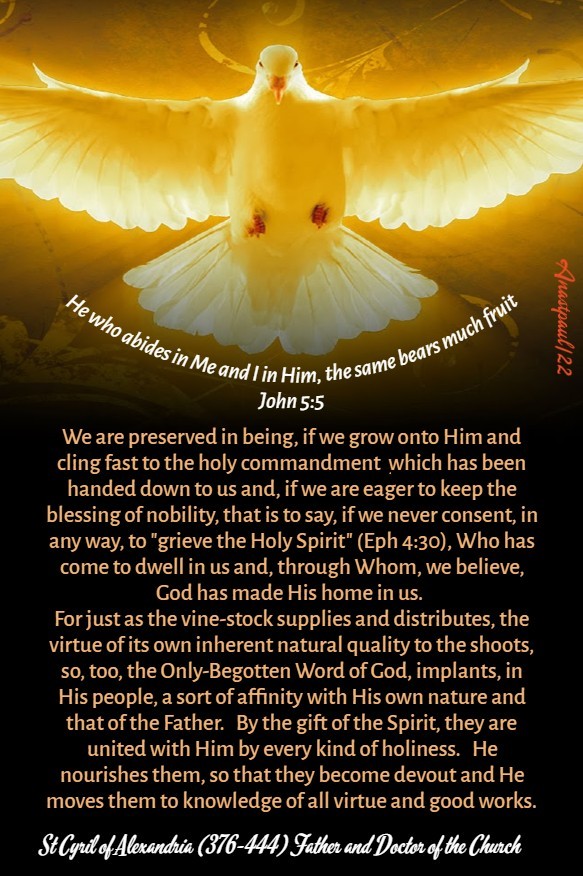
“He who abides in Me and I in Him, the same bears much fruit” John 5:5
“We are preserved in being, if we grow onto Him and cling fast to the holy commandment, which has been handed down to us and, if we are eager to keep the blessing of nobility, that is to say, if we never consent, in any way, to “grieve the Holy Spirit” (Eph 4:30), Who has come to dwell in us and, through Whom, we believe, God has made His home in us. … For just as the vine-stock supplies and distributes, the virtue of its own inherent natural quality to the shoots, so, too, the Only-Begotten Word of God, implants, in His people, a sort of affinity with His own nature and that of the Father. By the gift of the Spirit, they are united with Him by every kind of holiness. He nourishes them, so that they become devout and He moves them to knowledge of all virtue and good works.”
St Cyril of Alexandria (376-444) Father & Doctor of the Church
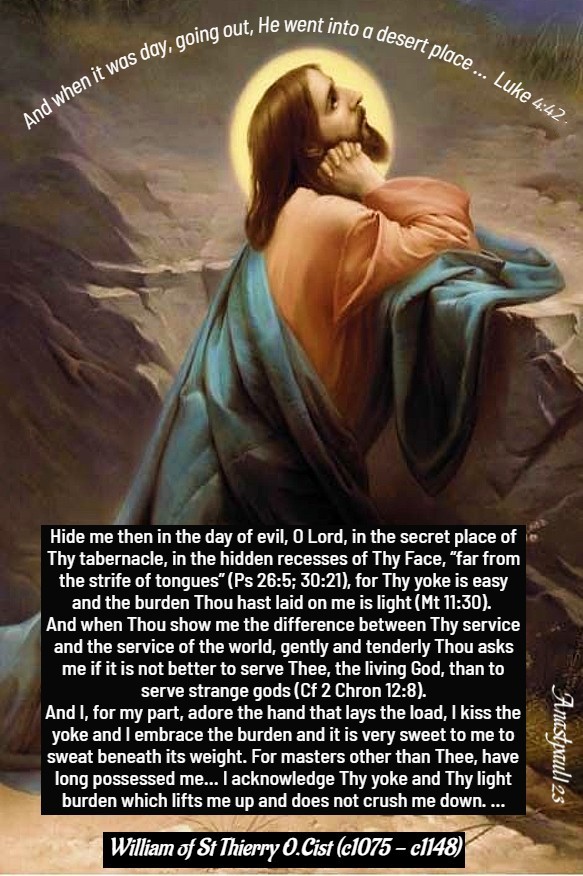
“Hide me then in the day of evil, O Lord, in the secret place of Thy tabernacle, in the hidden recesses of Thy Face, “far from the strife of tongues” (Ps 26:5; 30:21), for Thy yoke is easy and the burden Thou hast laid on me is light (Mt 11:30). And when Thou show me the difference between Thy service and the service of the world, gently and tenderly Thou asks me if it is not better to serve Thee, the living God, than to serve strange gods (Cf 2 Chron 12:8). And I, for my part, adore the hand that lays the load, I kiss the yoke and I embrace the burden and it is very sweet to me to sweat beneath its weight. For masters other than Thee, have long possessed me… I acknowledge Thy yoke and Thy light burden which lifts me up and does not crush me down. …”
William of St Thierry O.Cist (c1075 – c1148)
“Let us always belong to God, unreservedly and without interruption. May He ever live and reign in our hearts.”
(Letter to Madame de Chantal)
“He who most loves, will be most loved.”
St Francis de Sales (1567-1622) Doctor of the Church
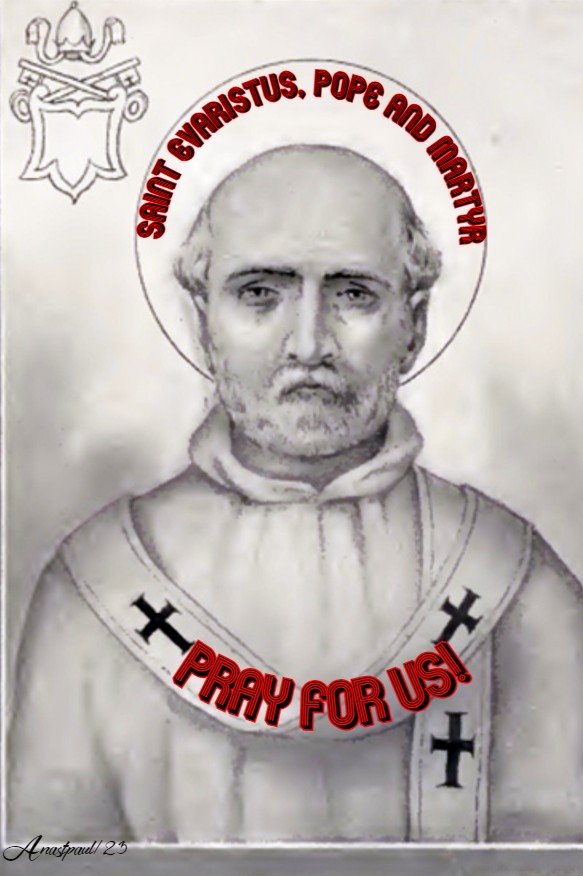
One Minute Reflection – 26 October – “The Month of the Most Holy Rosary and of the Angels” – St Evaristus – (c44–c107) Martyr, Pope Evaristus is the fifth Bishop of Rome, holding office from c99 until his death in c108. – 1 Peter 5:1-4; 5:10-11, Matthew 16:13-19 – Scripture search here: https://www.drbo.org/
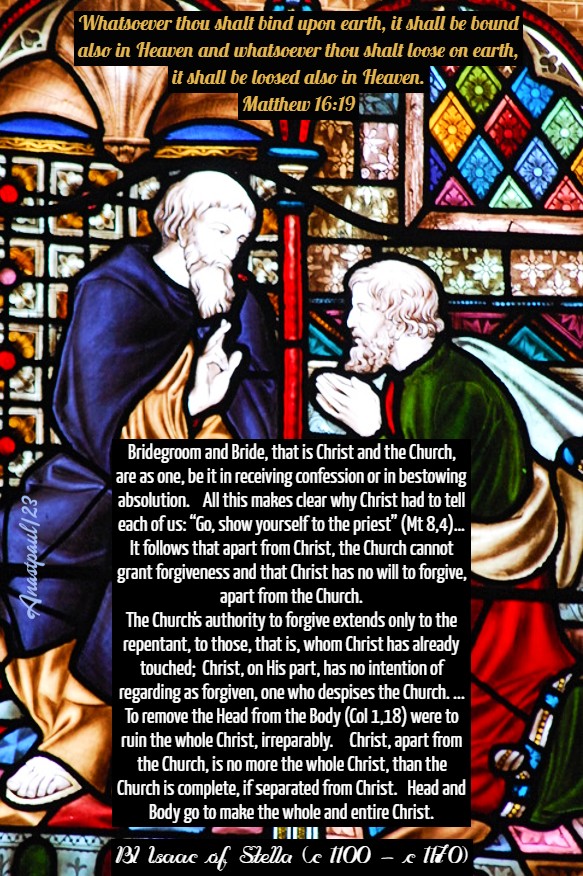
“Whatsoever thou shalt bind upon earth, it shall be bound also in Heaven and whatsoever thou shalt loose on earth, it shall be loosed also in Heaven.” – Matthew 16:19
REFLECTION – “Bridegroom and Bride, that is Christ and the Church, are as one, be it in receiving confession or in bestowing absolution. All this makes clear why Christ had to tell each of us: “Go, show yourself to the priest” (Mt 8,4)… It follows that apart from Christ, the Church cannot grant forgiveness and that Christ has no will to forgive, apart from the Church. The Church’s authority to forgive extends only to the repentant, to those, that is, whom Christ has already touched; Christ, on His part, has no intention of regarding as forgiven, one who despises the Church.
Doubtless, Christ need accept no restraints to His power of Baptising, Consecrating the Eucharist, Ordaining Priests, forgiving sins and the like but, the humble and faithful Bridegroom, prefers to confer such blessings, with the co-operation of His Bride. “What God,” then, “has joined, let no man put asunder” (Mt 19,6). “I say this is a great mystery and refers to Christ and the Church” (Eph 5,32)… To remove the Head from the Body (Col 1,18) were to ruin the whole Christ, irreparably. Christ, apart from the Church, is no more the whole Christ, than the Church is complete, if separated from Christ. Head and Body go to make the whole and entire Christ.” – Bl Isaac of Stella (c 1100 – c 1170) Cistercian Monk, Abbot, Theologian, Philosopher (Sermon 11, §11-814).
PRAYER – Look forgivingly on Thy flock, Eternal Shepherd and keep it in Thy constant protection, by the intercession of blessed Evaristus Thy Martyr and Sovereign Pontiff, whom Thou didst constitute Shepherd of the whole Church. Through Jesus Christ, Thy Son our Lord, Who lives and reigns with Thee, in the unity of the Holy Ghost, God, world without end. Amen (Collect).
Our Morning Offering – 26 October – Catholic Time : On Thursdays we particularly venerate the Most Blessed Sacrament of the Altar. Our Lord instituted the Holy Sacrifice of the Mass on a Thursday, therefore, it is fitting that we remember this greatest of Sacraments on this day. The Eucharist is the greatest gift of God to mankind, as it is nothing less than Jesus Himself. What gift could be greater?
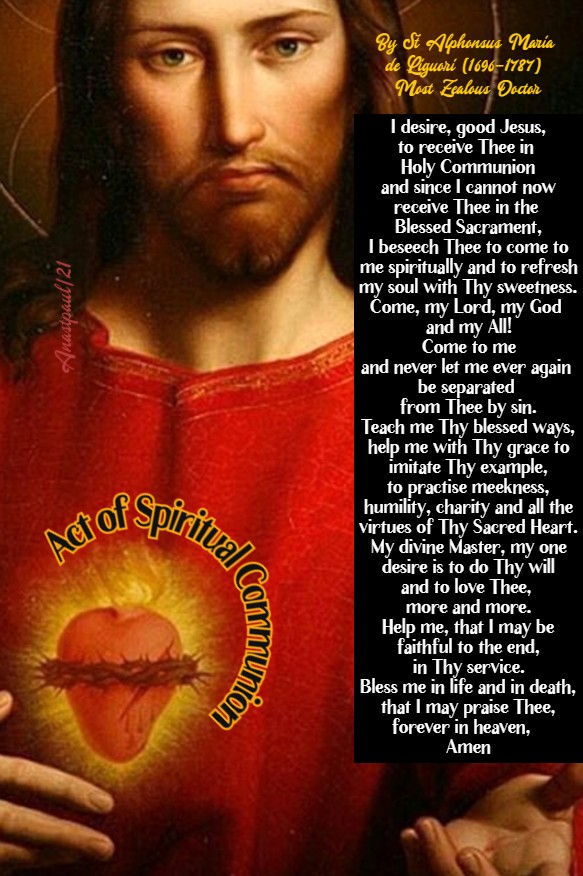
Act of Spiritual Communion By St Alphonsus Maria de Liguori (1696-1787) Most Zealous Doctor
I desire, good Jesus, to receive Thee in Holy Communion and since I cannot now receive Thee in the Blessed Sacrament, I beseech Thee to come to me spiritually and to refresh my soul with Thy sweetness. Come, my Lord, my God and my All! Come to me and never let me ever again be separated from Thee by sin. Teach me Thy blessed ways, help me with Thy grace to imitate Thy example, to practise meekness, humility, charity and all the virtues of Thy Sacred Heart. My divine Master, my one desire is to do Thy will and to love Thee, more and more. Help me, that I may be faithful to the end, in Thy service. Bless me in life and in death, that I may praise Thee, forever in heaven, Amen
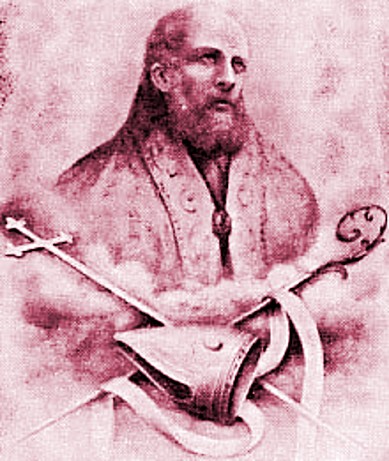
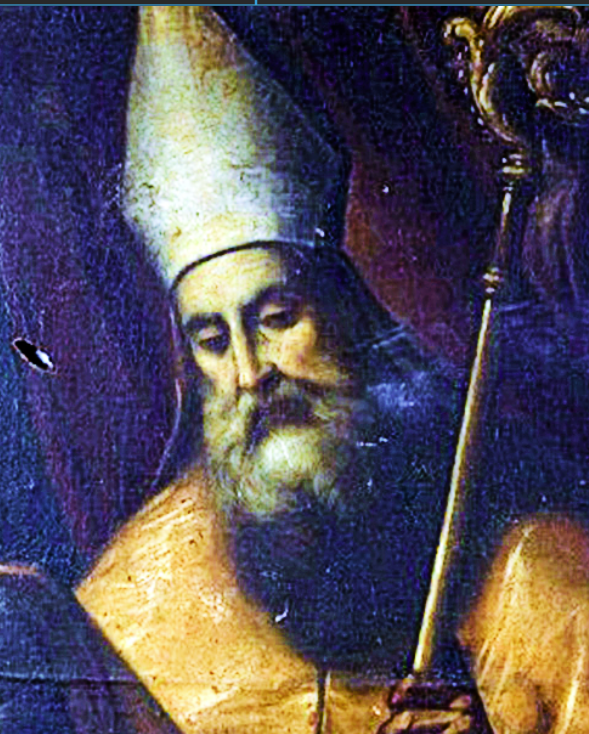
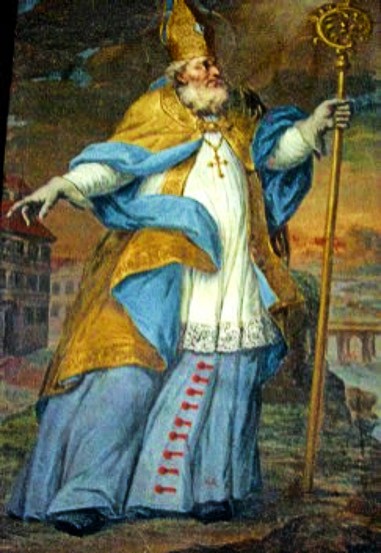
Saint of the Day – 26 October – Saint Fulk of Pavia (1164-1229) Bishop, Confessor, Peacemaker, Protector of the poor and educator of their children, Religious Reformer and Social Reformer, Defender of the Church and its rights. Born 1164 in Piacenza, Italy and died on 16 December 1229 of natural causes in Pavia, Italy aged 65. Co-Patron of Pavia. Fulk’s forefathers originally came from Ireland, hence the family name Scotti or Scotus but by the time of his arrival into the world, his family name had become one of the richest and most influential in the region. Scotia was originally the Latin name for Ireland (also called Hibernia by the Romans). Our Saint is known too as – Fulk of Piacenza, Folco Scotti, Foulques… Additional Memorial 21 May in Pavia and 16 December on some calendars.
The Roman Martyrology reads: “In Pavia, Saint Fulk, Bishop, man of peace, full of zeal and charity”
Nothing is known of Fulk’s birth or childhood, except that his parents were members of a greatly influential and immensely wealthy family, originally the descendants of Irish emigrants. In 1186, aged 22, he entered the Regular Canons of the Parish of St Eufemia, and later (1491) Fulk joined the Renana Congregation of the Most Holy Saviour..
Fulk was so talented that he was sent to Paris to complete his studies in theology. In 1194, at the age of 30, he had to return to Piacenza as he had been appointed Prior of St Eufemia. Bishop Grimerius (1199-1210) depended to a large extent on Fulk’s assistance and, in 1207, he gave him the responsibility of delivering the opening speech at the Synod. The following year, Fulk was appointed Canon at the Cathedral and Archpriest. He was also appointed Lecturer in theology at the Seminary in Piacenza.
When, in 1210, Bishop Grimerius died, Fulk was elected his successor as Bishop of Piacenza. This election was not confirmed by Pope Innocent III (1198-1216) but, nevertheless, he administered the Diocese for six years before being officially Consecrated in 1216, by Pope Honorius III (1216-1227).
In the same year,1216, the electors of Pavia Diocese elected Fulk as the City’s 49th Bishop and he held the office of Bishop of Pavia for thirteen years.
At that time, there was strong enmity between the Cities of Pavia and Piacenza, which was not unusual for neighbouring Cities. Even today, the rivalry between the two Cities lives on in colourful traditions and competitions. But, in the Middle Ages, the rivalry was not colourful folklore but violent and bloody and entailed great sorrow and ruin. Bishop Fulk, who was from Piacenza and was the Bishop of Pavia, became the foremost peacemaker between the two Cities. He first worked for internal peace in the Cities which were also characterised by violent factional battles. He then worked for peace between them.
Bishop Fulk founded a number of social institutions which, among other things, provided food for the poor and free education for their children. He also reformed religious houses, including the Monastery of San Pietro in Ciel d’Oro, and he defended the freedom of the Church against the Civil authorities.
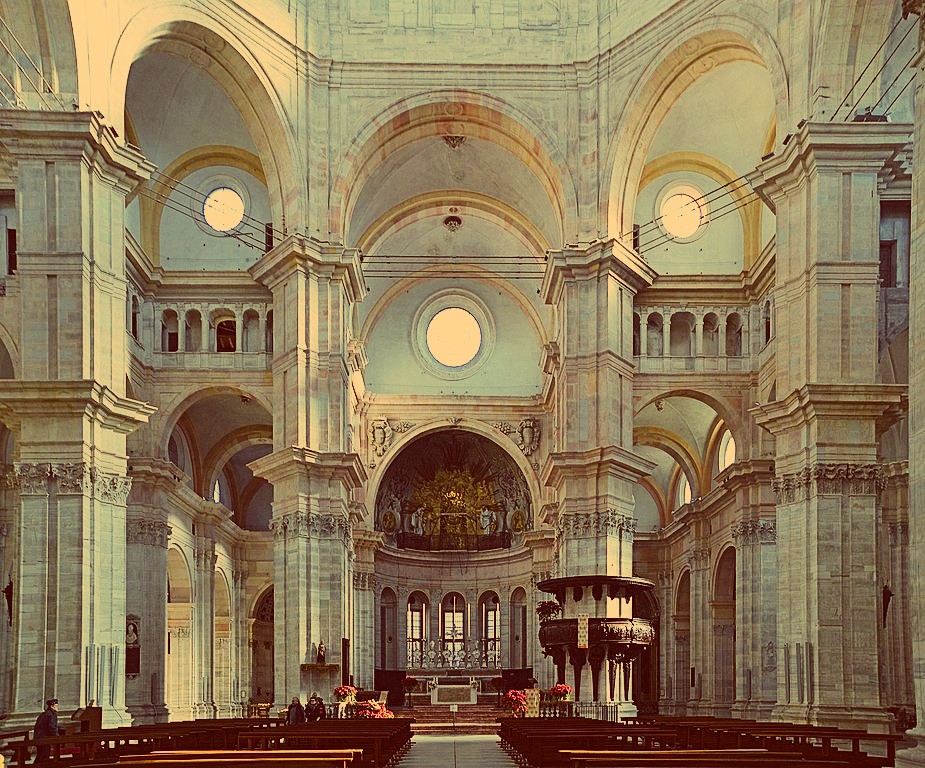
Fulk died on 16 December 1229 and was buried in the Cathedral. He was succeeded by Saint Rodobald II de’ Cipolla. His memorial day is 26 October. In the Cathedral of Pavia he is celebrated on 21 May. He was Canonised by Pope Gregory IX.
Our Saint Fulk goes down in history as an extraordinary peacemaker. Supported by his unshakable faith and the teachings of Jesus, the Bishop often managed to restore peace, so much so that he is loved by both the people of his own birthplace, Piacenza and the people of his beloved See, Pavia.
St Adalgott of Einsiedeln St Alanus of Quimper St Albinus of Buraburg
St Alfred the Great (849-899) King of Wessex, Confessor, Scholar, Writer and Translator, negotiator. He administered justice with insight and fairness, protected the poor, and encouraged art and the crafts. He tried in all that he did, to rule as a model Christian King. For all this, he alone among the rulers of England is called “the Great.” This Great Saint’s Life: https://anastpaul.com/2021/10/26/saint-of-the-day-26-october-saint-alfred-the-great-849-899/
St Alorus of Quimper St Amandus of Strasburg St Amandus of Worms St Aneurin St Aptonius of Angouleme St Arnold of Queralt St Bean of Mortlach St Bernard de Figuerols
St Felicissimus of Carthage St Florius Martyr of Nicomedia and Companions St Fulk of Pavia (1164-1229) Bishop St Gaudiosus of Salerno St Gibitrudis St Gwinoc St Humbert St Lucian Martyr of Nicomedia and Companions St Marcian St Quadragesimus of Policastro St Quodvultdeus St Rogatian of Carthage St Rusticus of Narbonne St Sigibald of Metz





 AnaStpaul
You must be logged in to post a comment.