Thought for the Day – 16 October – Meditations with Antonio Cardinal Bacci (1881-1971)
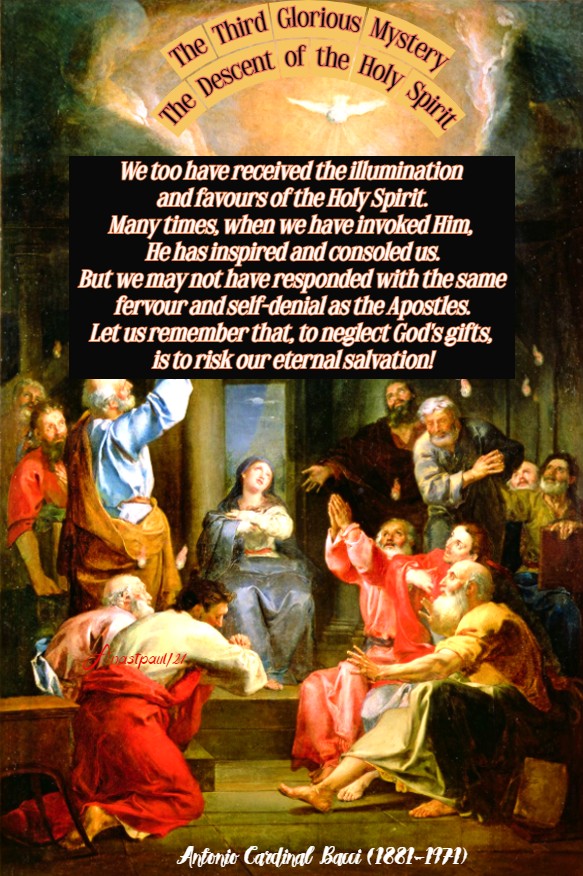
“Month of the Holy Rosary” The Third Glorious Mystery The Descent of the Holy Spirit
“The Apostles were completely transformed after the feast of Pentecost. They had ben ignorant rustics, timid and vacillating. They had hardly understood at all, the lofty teachings of Christ, for they were hoping still for an earthly kingdom in which they would occupy the highest posts.
When they received the Holy Spirit, however, their minds were flooded with supernatural light and they became heroic in their resolution. Ignorant, though they had been, they became masters of Truth, far superior to the sages of Athens or the philosophers of Rome. They were no longer timid and hesitating but, fearlessly encountered the power of the Sanhedrin, the whips of the soldiery, the dangers of long voyages and, Martyrdom itself.
We too have received the illumination and favours of the Holy Spirit. Many times, when we have invoked Him, He has inspired and consoled us. But we may not have responded with the same fervour and self-denial as the Apostles. Let us remember that, to neglect God’s gifts, is to risk our eternal salvation!”
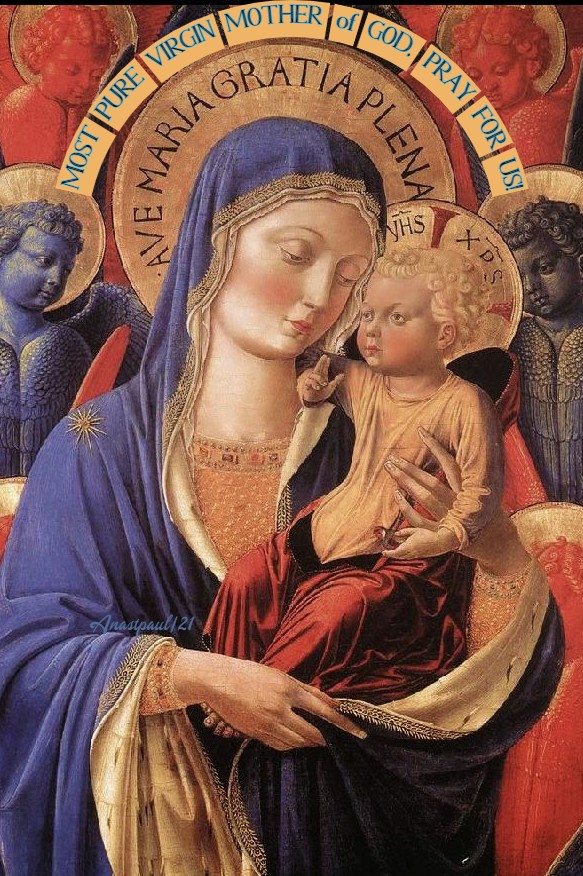
Quote/s of the Day – 16 October – Feast of the Purity of the Blessed Virgin Mary
“Today humanity, in all the radiance of her Immaculate nobility, receives its ancient beauty. The shame of sin had darkened the splendour and attraction of human nature but when the Mother of the Fair One par excellence, is born, this nature again, regains in her person, its ancient privileges and is fashioned according to a perfect model, truly worthy of God…. The reform of our nature begins today and the aged world, subjected to a wholly divine transformation, receives the first fruits of the second creation.”
St Andrew of Crete (c 650-c 740) Bishop, Theologian, Hymnist
Tota Pulchra Es, Maria You Are All Beautiful, Mary Unknown Author – 4th Century
You are all beautiful, Mary, and the original stain is not in you. You are the glory of Jerusalem, you are the joy of Israel, you give honour to our people. You are an advocate of sinners. O Mary, O Mary, Virgin most intelligent, Mother most merciful. Pray for us, Plead for us, To the Lord Jesus Christ.
Tota pulchra es, Maria. Et macula originalis non est in Te. Tu gloria Ierusalem. Tu laetitia Israel. Tu honorificentia populi nostri. Tu advocata peccatorum. O Maria, O Maria, Virgo prudentissima. Mater clementissima. Ora pro nobis. Intercede pro nobis. Ad Dominum Iesum Christum.
This prayer used by the Church since the 4th Century for the Feast of the Immaculate Conception and the Purity of the Blessed Virgin. It takes some text from the book of Judith and other text from Song of Songs, specifically 4:7. Many composers have set this prayer to music over the centuries.
Prayer for Chastity and Purity of Body and Soul By St Thomas Aquinas (1225-1274)
Dear Jesus, I know that every perfect gift and especially that of chastity, depends on the power of Thy Providence. Without Thee, a mere creature can do nothing. Therefore, I beg Thee, to defend, by Thy grace the chastity and purity of my body and soul. And if I have ever sensed or imagined anything that could stain my chastity and purity, blot it out, Supreme Lord of my powers that I may advance with a pure heart in Thy love and service, offering myself on the most pure altar of Thy Divinity, all the days of my life. Amen
One Minute Reflection – 16 October – “The Month of the Most Holy Rosary and of the Angels” – Feast of the Purity of the Blessed Virgin Mary – Proverbs 31:10-31, Matthew 13:44-52 – Scripture search here: https://www.drbo.org/
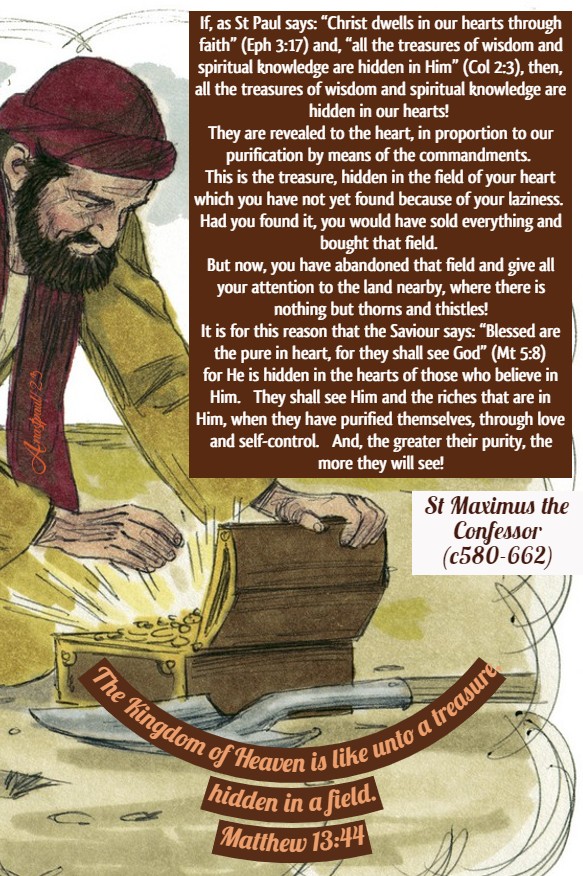
“The Kingdom of Heaven is like unto a treasure, hidden in a field.” – Matthew 13:44
REFLECTION – “Some of the brethren think that they are excluded from the Holy Ghost’s gifts of grace. Because they neglect to practise the commandments, they do not know that he who has an unadulterated faith in Christ, has within himself, the sum total of all the Divine gifts. Since, through our laziness, we are far from having an active love for Him — a love which shows us the Divine Treasures within us — we naturally think that we are excluded from these gifts.
If, as St Paul says: “Christ dwells in our hearts through faith” (Eph 3:17) and, “all the treasures of wisdom and spiritual knowledge are hidden in Him” (Col 2:3), then, all the treasures of wisdom and spiritual knowledge are hidden in our hearts! They are revealed to the heart, in proportion to our purification by means of the commandments. This is the treasure, hidden in the field of your heart which you have not yet found because of your laziness. Had you found it, you would have sold everything and bought that field. But now, you have abandoned that field and give all your attention to the land nearby, where there is nothing but thorns and thistles! It is for this reason that the Saviour says: “Blessed are the pure in heart, for they shall see God” (Mt 5:8) for He is hidden in the hearts of those who believe in Him.They shall see Him and the riches that are in Him, when they have purified themselves, through love and self-control. And, the greater their purity, the more they will see!” – St Maximus the Confessor (c580-662) Abbot and Theologian (Centuries of love 4:69).
PRAYER – Grant, we beseech Thee, O Lord God, unto all Thy servants, that they may remain continually in the enjoyment of soundness, both of mind and body and by the glorious intercession of the Blessed Mary, always a Virgin, may be delivered from present sadness and enter into the joy of Thine eternal gladness. Through Jesus Christ, Thy Son our Lord, Who lives and reigns with Thee, in the unity of the Holy Ghost, God, world without end. Amen (Collect).
Our Morning Offering – 16 October – “The Month of the Most Holy Rosary and of the Angels” – Feast of the Purity of the Blessed Virgin Mary
Praeclara Custos Virginum! Blest Guardian of All Virgin Souls! By Anonymous Latin, 18th Century Trans. Fr Edward Caswall C.Orat. (1814–1878)
Blest Guardian of all virgin souls! Portal of bliss to man forgiven! Pure Mother of Almighty God! Thou hope of earth and joy of Heaven!
Fair Lily, found amid the thorns! Most beauteous Dove with wings of gold! Rod from whose tender root there sprang That healing Flow’r long since foretold!
Thou Tow’r, against the dragon proof! Thou Star, to storm-toss’d voyagers dear! Our course lies o’er a treacherous deep; Thine be the light by which we steer.
Scatter the mists that round us hang; Keep far the fatal shoals away And while through darkling waves we sweep, Open a path to life and day.
O Jesu, born of Virgin bright! Immortal glory be to Thee! Praise to the Father infinite And Holy Ghost eternally. Amen
This Hymn originated as the Hymn for Vespers in the Office of the Purity of the Blessed Virgin Mary. It is used for Matins on the Solemnity of the Immaculate Conception. Tune: “From High Heaven” Leipzig melody, 1539.
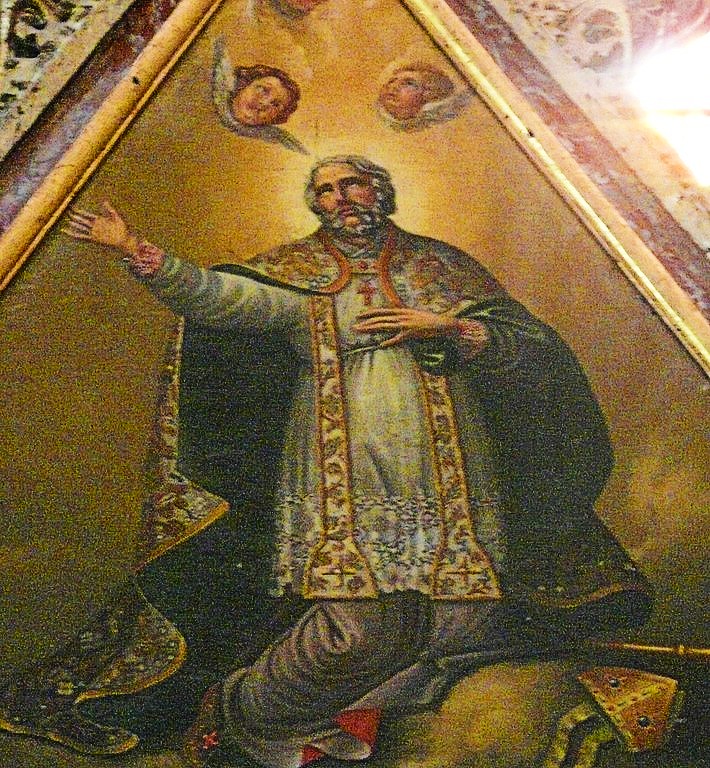
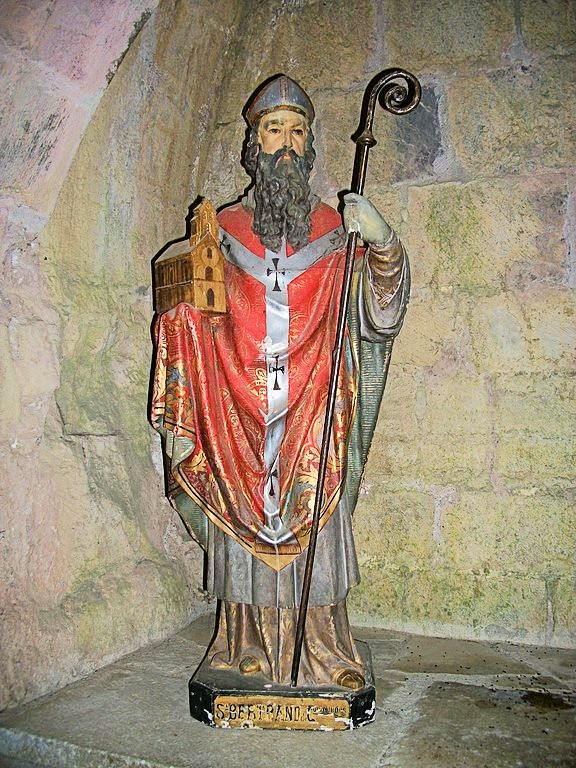
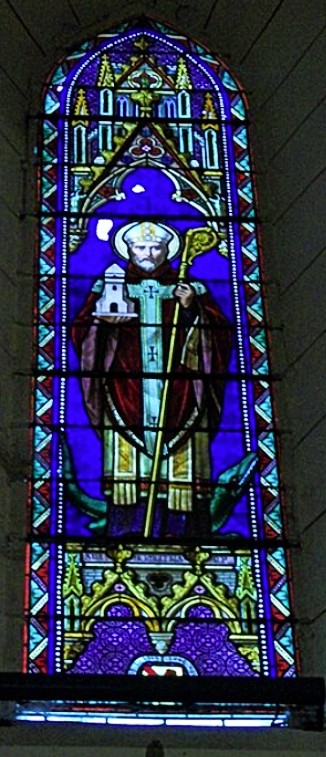
Saint of the Day – 16 October – Saint Bertrand of Comminges (c1050-1123) Bishop of Comminges, in the Archdiocese of Toulouse, France, Reformer – both religious and civil, Peace-maker, Miracle-worker. Born as Bertrand de l’Isle in c1050 in France and died on 16 October 1123 of natural causes. Patronage – of the Town named after him, Saint-Bertrand-de-Comminges, France. He was Canonised in 1222 by Pope Alexander III.
St Bertrand of Comminges, as depicted on panel above his tomb, in Saint-Bertrand-de-Comminges Cathedral, Haute-Garonne
Bertrand was born around 1050 at the Castle of L’Isle-Jourdain. Belonging to the high nobility, the young man initially devoted himself to the ideal of chivalry but, as an adult, he was Ordained a Priest and requested admission into the “Chapter of Canons” of Saint Stephen Cathedral.
In 1083, the Clergy and people of Comminges were looking for a new Bishop for thir City. They chose this young Canon who brought together the rare qualities of a respected southern Lord, capable of bringing back prosperity, since he was involved in the Reform of his time. To his gifts were added a gentle and kindly temperament and a quality of deep faith, whose richness the future would prove.
His effort focused on the reform of the Clergy by imposing community life upon the Canons – a life of poverty, prayer and study. He thus made the Chapter a radiant and exemplary home of evangelical life. He brought civil order to his Diocese, he administered justice but above all, he restored the Church.
He becomes a builder – to restore and rebuild this City which lived in poverty and great violence. With resolution, he enforced the peace of Christ throughout Comminges, as well as in the Hautes-Pyrénées, to ensure peace and security reigned there.
Many miracles are attributed to Bertrand who put himself at the service of liberating people, removing the handcuffs worn by everyone, liberating hearts as much as bodies. As well as the miraculous deliverance by Saint Bertrand, who was already in Heaven, of Sancho Parra, a minor Lord and a bandit, imprisoned in Barcelona.
Bertrand was very close to his faithful especially to the smallest and poor, constantly visiting them with attention and charity, both on a temporal and spiritual level. He set up land called “sauvétés” (which, having become villages and towns, took the name of “suveterre” or “salvetat”) to shelter the populations of the poor, the marginalised, the outlaws, fugitives so that they caouldfind refuge and security there.
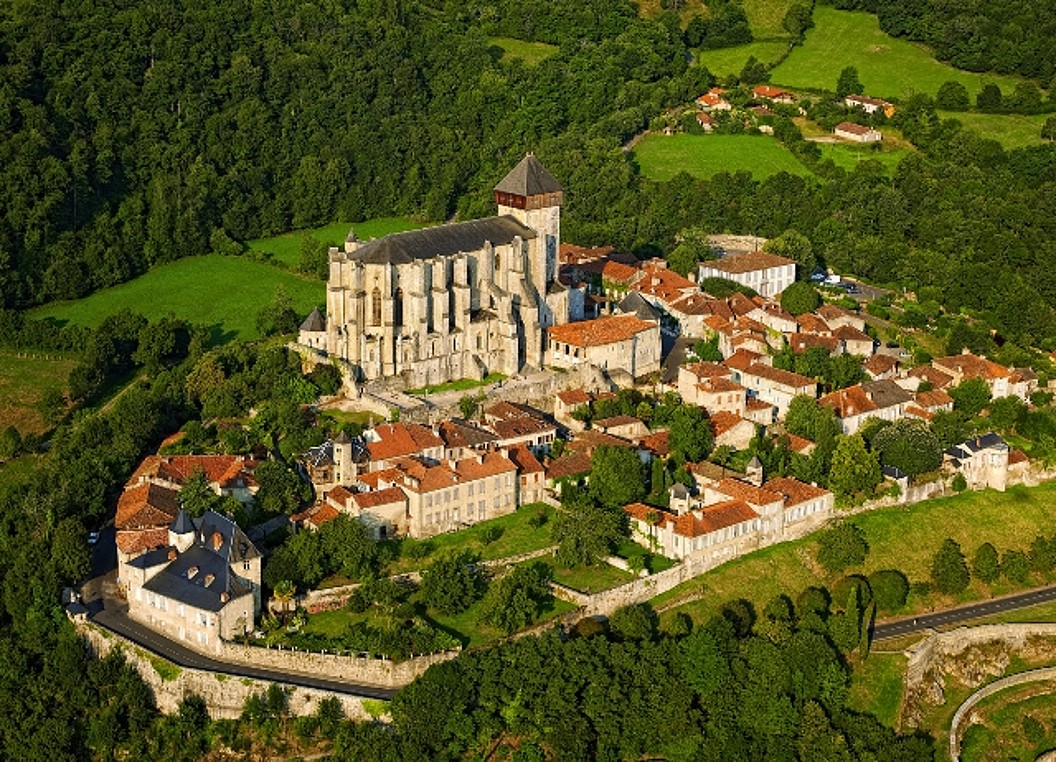
The Cathedral and Village of Saint-Bertrand de Comminges
From his death on 16 October 1123, Bertrand was considered a saint throughout the Pyrenees region and since his Canonisation in 1222, the village took the name and Partronage – “Saint-Bertrand de Comminges.”
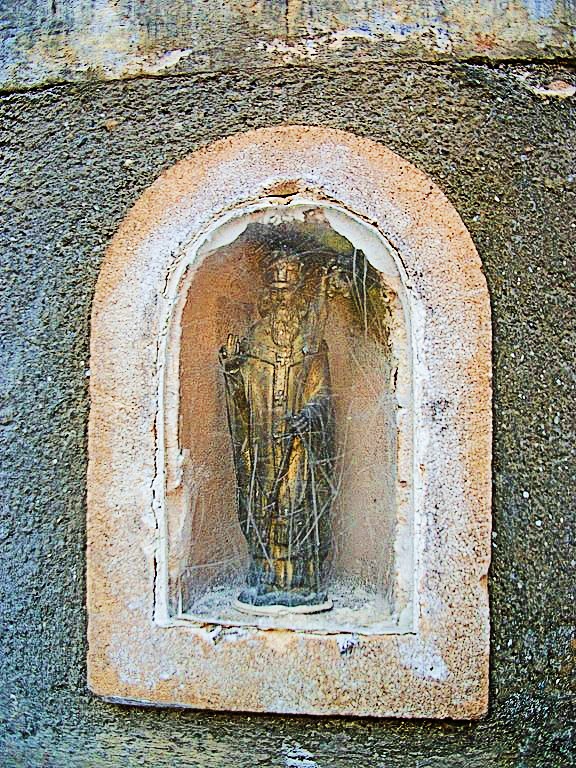
Shrine to the Blessed Virgin and St Bertrand, in the Village of “Saint-Bertrand de Comminges.”
St Amandus of Limoges St Ambrose of Cahors St Balderic St Baldwin St Bertrand of Comminges (c1050-1123) Bishop St Bolonia St Conogon of Quimper St Dulcidius of Agen St Eliphius of Toul St Eremberta of Wierre St Florentinus of Trèves (Died 4th Century) (Bishop
St Gerald of Clairvaux O.Cist (Died 1177) Abbot regarded as the first Cistercian Martyr St Junian St Lull St Magnobodus of Angers St Martinian of Mauretania St Mummolinus St Saturian of Mauretania St Silvanus of Ahun St Victor of Cologne St Vitalis of Noirmoutier
Martyrs in Africa – 220 Saints: A group of 220 Christians Martyrs about whom we know nothing but that they died for their faith.
Martyrs of North Africa – 365 Saints: A group of 365 Christians who were Martyred together in the persecutions of the Vandal king Genseric. The only details that have survived are the names of two of the Martyrs – Nereus and Saturninus. 450 in North Africa.
Thought for the Day – 15 October – Meditations with Antonio Cardinal Bacci (1881-1971)
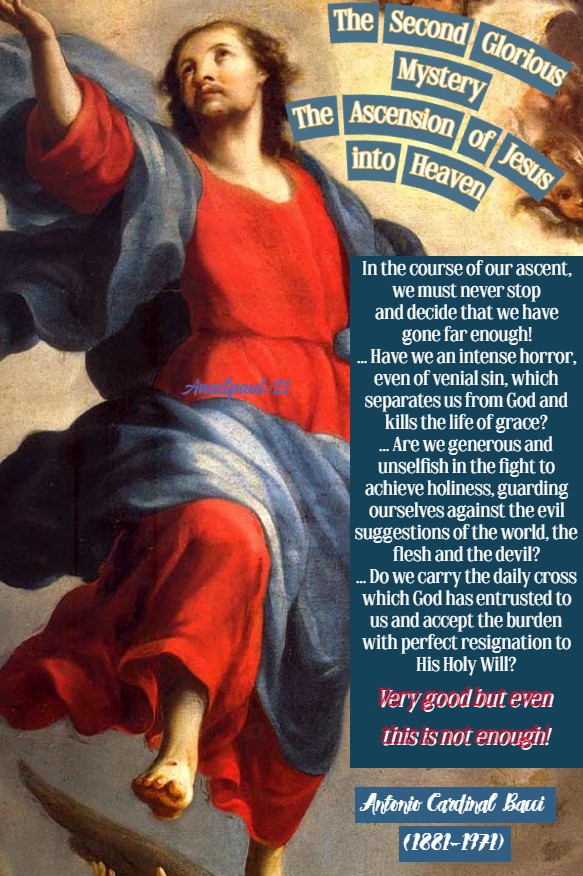
“Month of the Holy Rosary” The Second Glorious Mystery The Ascension of Jesus into Heaven
“In the course of our ascent, we must never stop and decide that we have gone far enough! To stop would inevitably mean going backward. Jesus and Mary are inviting and encouraging us to go higher and higher.
Have we been purified of sin, the defiler of the soul and the destroyer of human dignity? Have we an intense horror, even of venial sin, which separates us from God and kills the life of grace? It is still not enough – we must go higher.
Are we generous and unselfish in the fight to achieve holiness, guarding ourselves against the evil suggestions of the world, the flesh and the devil? It is still not enough – we must continue to advance.
Do we carry the daily cross which God has entrusted to us and accept the burden with perfect resignation to His Holy Will? Very good but even this is not enough!”
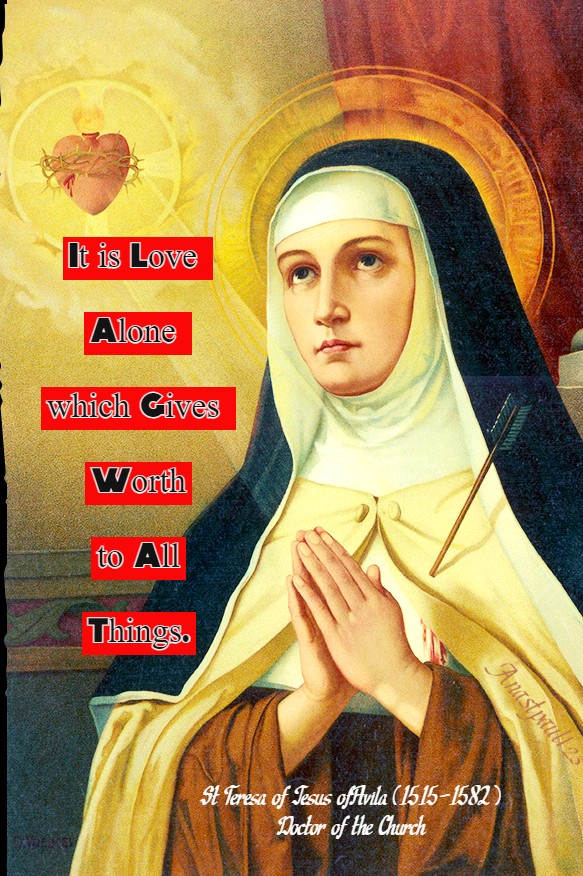
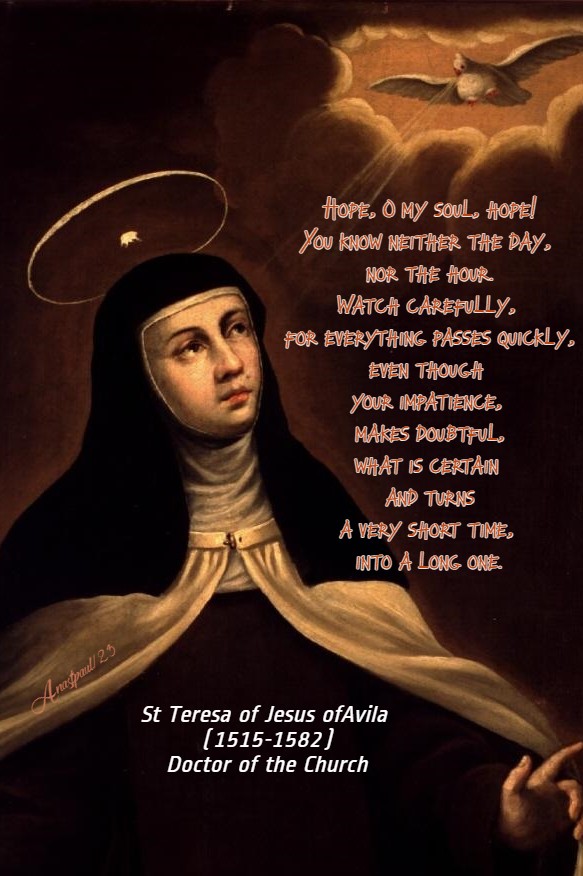
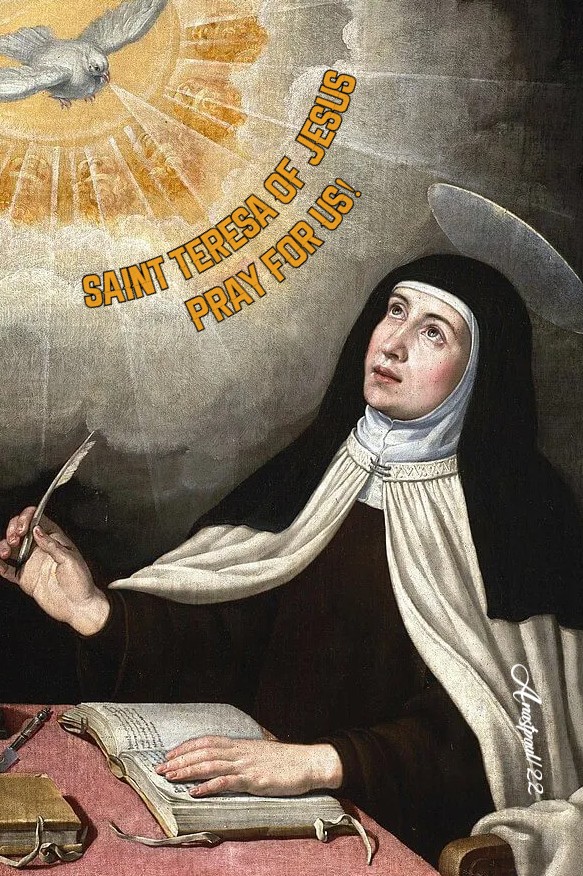
Quote/s of the Day – 15 October – “The Month of the Most Holy Rosary and of the Angels” – St Teresa of Jesus of Avila OCD (1515-1582) Virgin and Doctor of the Church
“It is love alone which gives worth to all things.”
“Hope, O my soul, hope! You know neither the day, nor the hour. Watch carefully, for everything passes quickly, even though your impatience, makes doubtful, what is certain and turns a very short time, into a long one.”
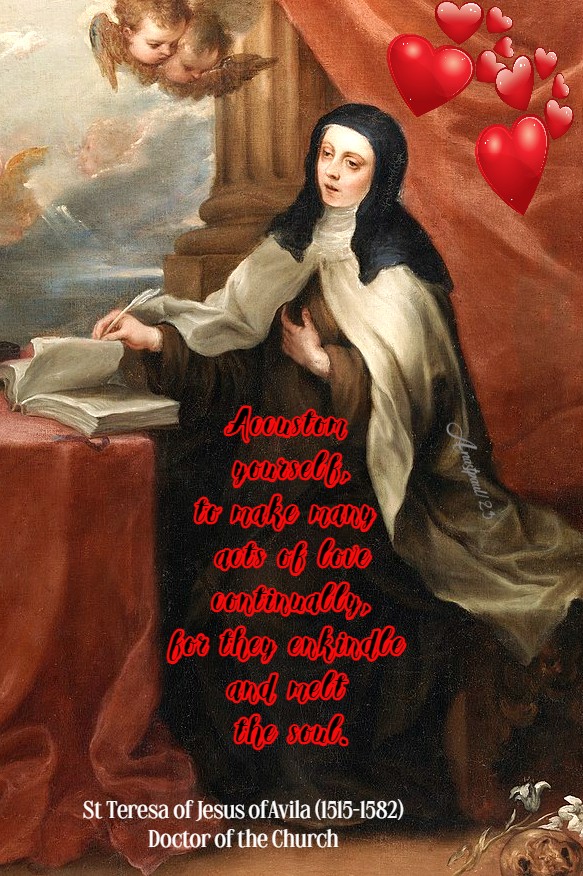
“Accustom yourself, to make many acts of love, continually, for they enkindle and melt the soul.”
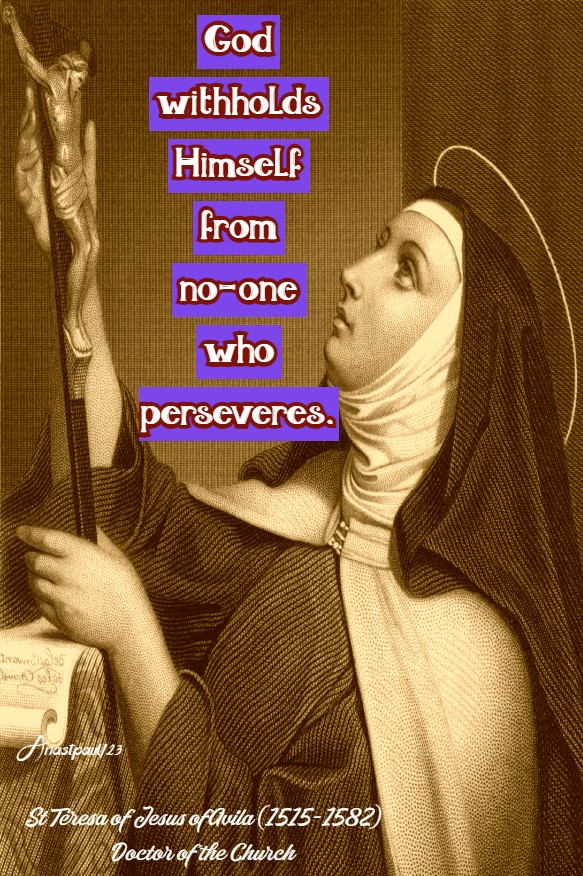
“God withholds Himself from no-one who perseveres.”
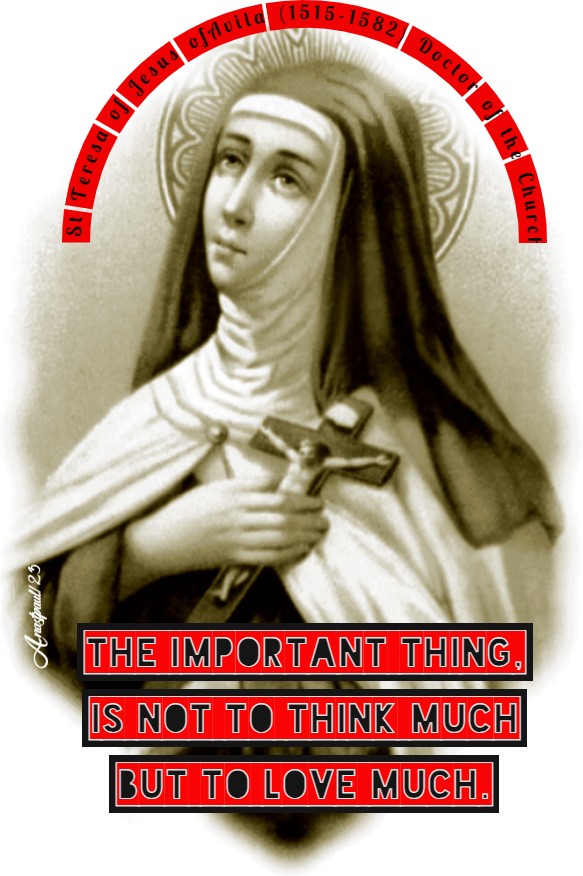
“The important thing, is not to think much but to love much.”
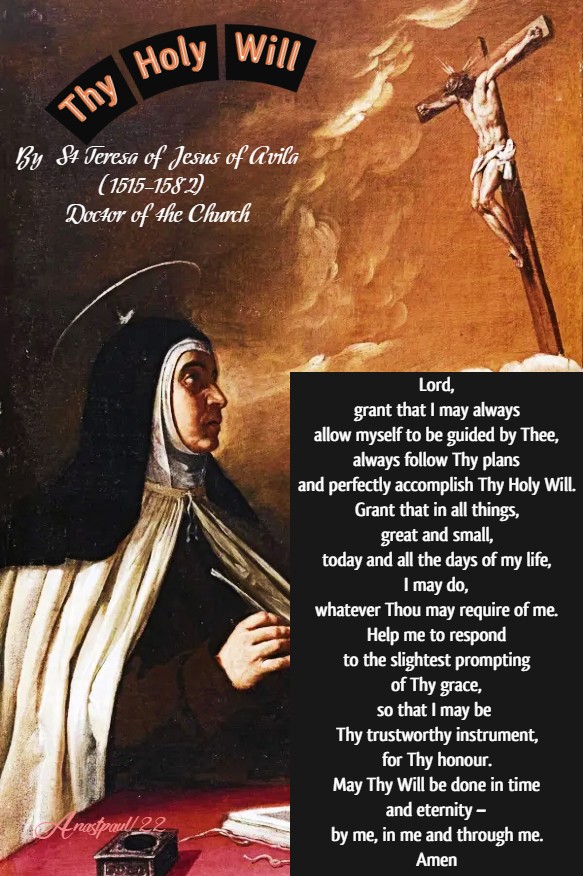
Thy Holy Will By St Teresa of Jesus of Avila (1515-1582) Doctor of the Church
Lord, grant that I may always allow myself to be guided by Thee, always follow Thy plans and perfectly accomplish Thy Holy Will. Grant that in all things, great and small, today and all the days of my life, I may do, whatever Thou may require of me. Help me to respond to the slightest prompting of Thy grace, so that I may be Thy trustworthy instrument, for Thy honour. May Thy Will be done in time and eternity – by me, in me and through me. Amen
One Minute Reflection – 15 October – “The Month of the Most Holy Rosary and of the Angels” – St Teresa of Jesus of Avila OCD (1515-1582) Virgin and Doctor of the Church – Ephesians 5:15-21, John 4:46-53 – Scripture search here: https://www.drbo.org/
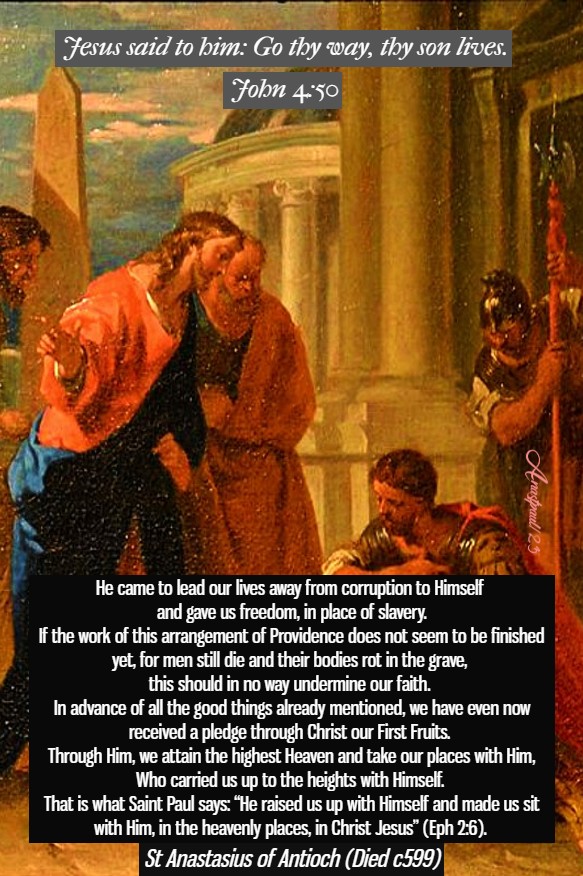
“Jesus said to him: Go thy way, thy son lives.” – John 4:50
REFLECTION – “To this end Christ died and lived again that He might be Lord both of the dead and of the living” (Rm 14:9). But “God is not God of the dead but of the living” (Lk 20:38). Consequently, the dead over whom He Who lives has power, are no longer dead but alive. Life has power over them, so that they may live without any further fear of death, just as “Christ, being raised from the dead, will never die again” (Rm 6:9). Raised up and freed from corruption, they shall see death no more. They will share in the resurrection of Christ just as He shared in their death. For no other reason did He descend to earth, whose bars are barriers to eternity, except to “shatter the doors of bronze and cut in two, the bars of iron” (Ps 106:16). He came to lead our lives away from corruption to Himself and gave us freedom, in place of slavery.
If the work of this arrangement of Providence does not seem to be finished yet, for men still die and their bodies rot in the grave, this should in no way undermine our faith. In advance of all the good things already mentioned, we have even now received a pledge through Christ our First Fruits. Through Him, we attain the highest Heaven and take our places with Him, Who carried us up to the heights with Himself. That is what Saint Paul says: “He raised us up with Himself and made us sit with Him, in the heavenly places, in Christ Jesus” (Eph 2:6). –St Anastasius of Antioch (Died c599) Bishop of Antioch(Sermon 5, on the Resurrection of Christ, 6-9).
PRAYER – Graciously hear us, O God, our Saviour that as we rejoice on the feast-day of blessed Teresa, Thy Virgin, we may be so nourished by the food of her heavenly teaching, as to learn how to serve Thee. Through the same Jesus Christ, Thy Son our Lord, Who lives and reigns with Thee, in the unity of the Holy Ghost, God, world without end. Amen (Collect).
Our Morning Offering – 15 October – “The Month of the Most Holy Rosary and of the Angels” – St Teresa of Jesus of Avila OCD (1515-1582) Virgin, Doctor of the Church
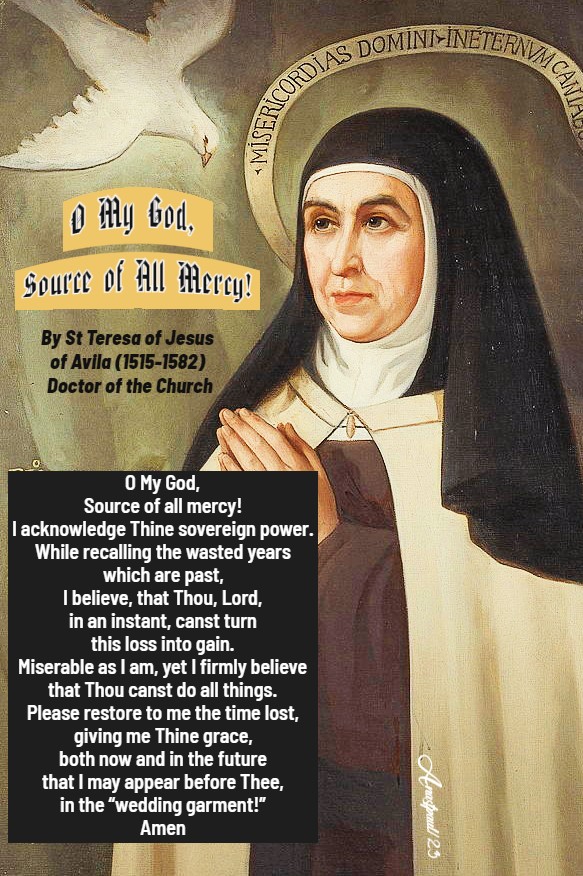
O My God, Source of All Mercy! Prayer To Redeem Lost Time By St Teresa of Jesus of Avila (1515-1582) Doctor of the Church
O My God, Source of all mercy! I acknowledge Thine sovereign power. While recalling the wasted years which are past, I believe, that Thou, Lord, in an instant, canst turn this loss into gain. Miserable as I am, yet I firmly believe that Thou canst do all things. Please restore to me the time lost, giving me Thine grace, both now and in the future that I may appear before Thee, in the “wedding garment!” Amen
Saint of the Day – 15 October – Saint Antiochus of Lyons (Died c410) Archbishop of Lyons. Also known as – Antioch or Andéol,
The Roman Martyrology states: “At Lyons, St Antiochus, Bishop, who entered the heavenly kingdom after having courageously fulfilled, the duites of high station, to which he had been called.”
Antiochus was a Priest in Lyons, when his Bishop, St Justus of Lyons (Died c390), resigned his See after an incident which led him to believe that he was unworthy of the position of Shepherd of the faithful of Lyons and he resolved to devote the remainder of his life to penance. He travelled to the Desert in Egypt to pursue a life of solitude, penance and prayer. See the full story here:https://anastpaul.com/2023/09/02/saint-of-the-day-2-september-st-justus-of-lyons-died-c390-bishop-confessor/
The City faithful being eager to regain their Bishop, sent a delegation led by Antiochus, to find him and bring him back to his Diocese. Antiochus found but could not convince the saintly Hermit Bishop to return. Antiochus returned to Gaul and was later himself, appointed Bishop of Lyons.
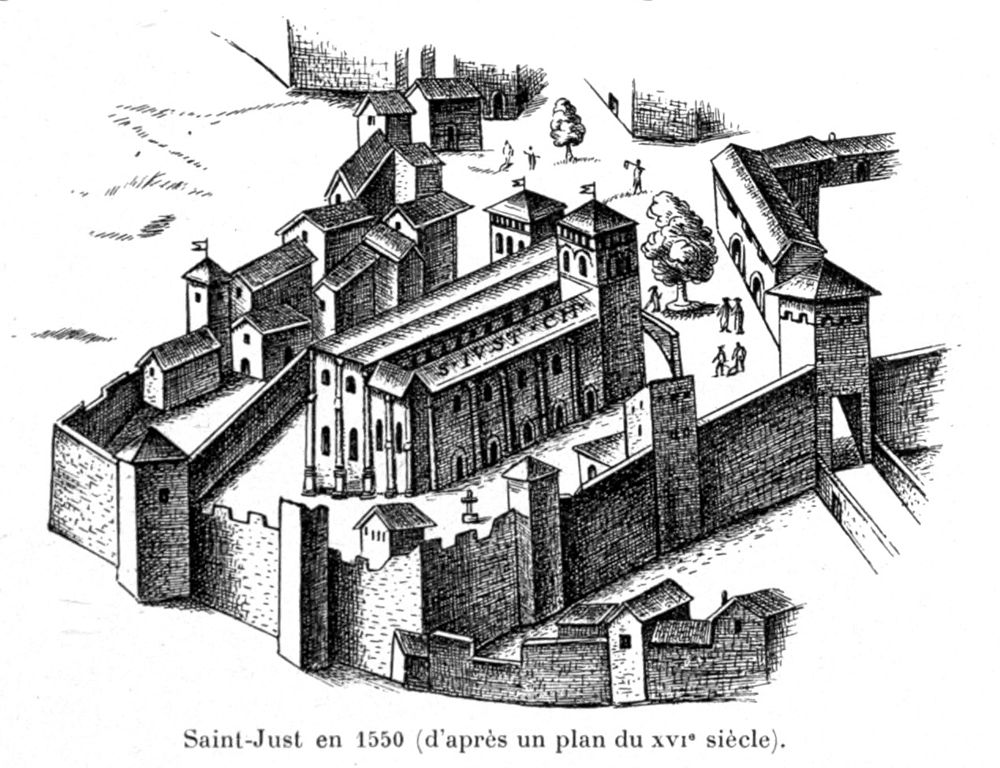
As Bishop, Antiochus arranged to bring the Relics of Bishop Justus back to Lyons and solemnly buried them in the Basilica of the Maccabees, renmaed in honour of St Justus , where he himself would later too be interred.
Martyrs of Cologne: A group of 360 Christian soldiers Martyred together in the persecutions of Diocletian and Maximian. They were Martyred in 303 outside the City walls of Cologne, Germany.-
Thought for the Day – 14 October – Meditations with Antonio Cardinal Bacci (1881-1971)
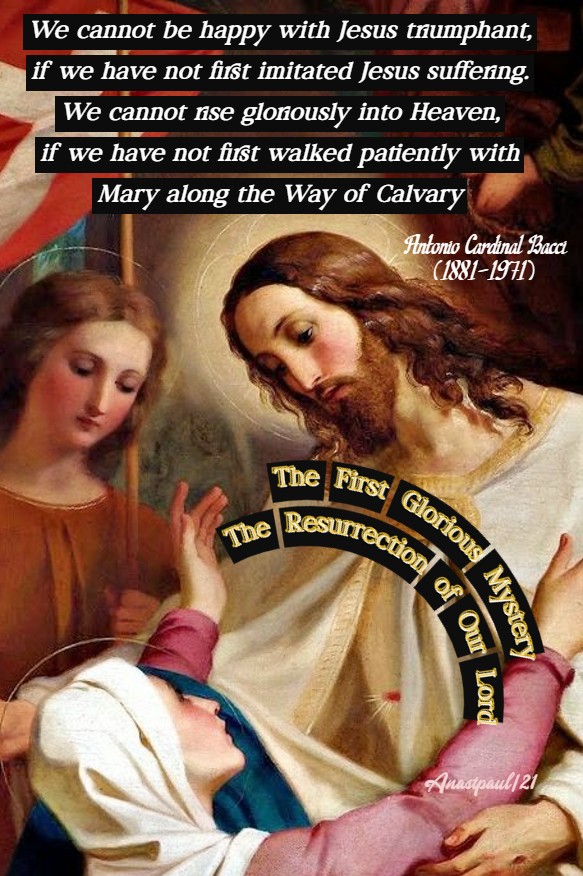
“Month of the Holy Rosary” The First Glorious Mystery The Resurrection of Our Lord
“Do we wish to share also in the joy of the Resurrection of Jesus Christ? Let us imitate Mary. First of all, we must participate as she did in the sufferings of Christ. By meditating frequently on the Passion and Death of Christ, we can nourish in our hearts, an intense love for Him Who suffered so much for our salvation. Let us learn to carry our cross, as He carried His, with resignation and with conformity to God’s Will. Spiritual joy is always the fruit of renunciation and love.
We cannot be happy with Jesus triumphant ,if we have not first imitated Jesus suffering. We cannot rise gloriously into Heaven, if we have not first walked patiently with Mary along the Way of Calvary!”
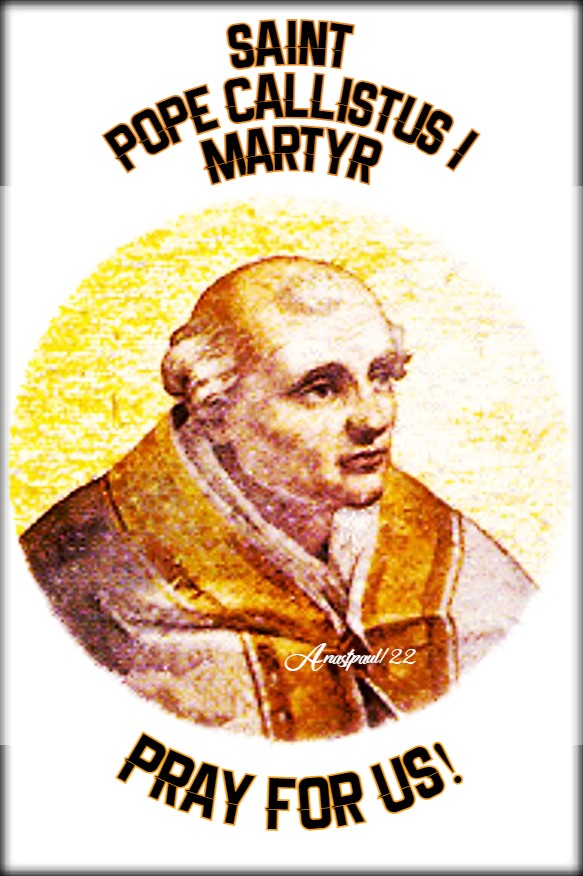
Quote/s of the Day – 14 October – “The Month of the Most Holy Rosary and of the Angels” – St Callistus I (c218- c223) Confessor, Pope, Martyr (and remembering St Bernard our Pilgrim today) – 1 Peter 5:1-4; 5:10-11, Matthew 16:13-19 – Scripture search here: https://www.drbo.org/
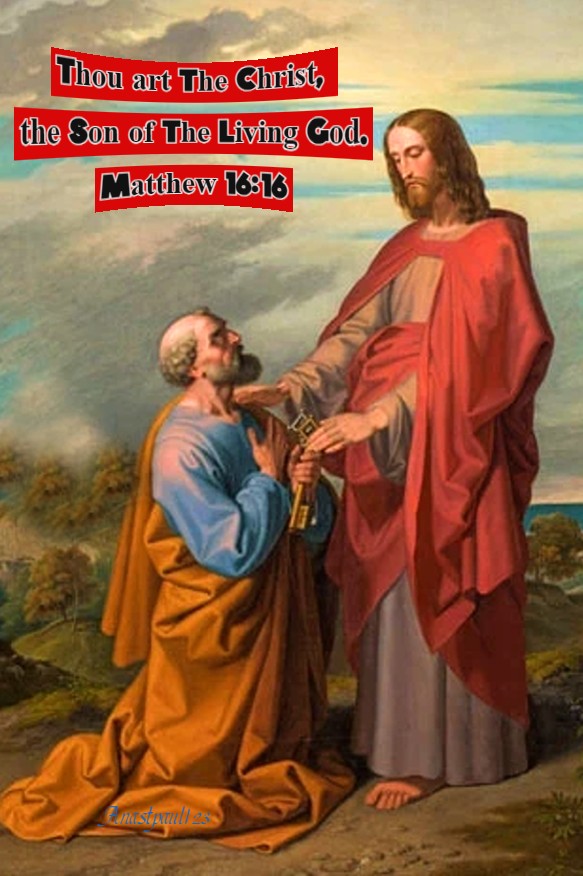
“Simon Peter answered and said: Thou art Christ, the Son of the living God. ”
Matthew 16:16
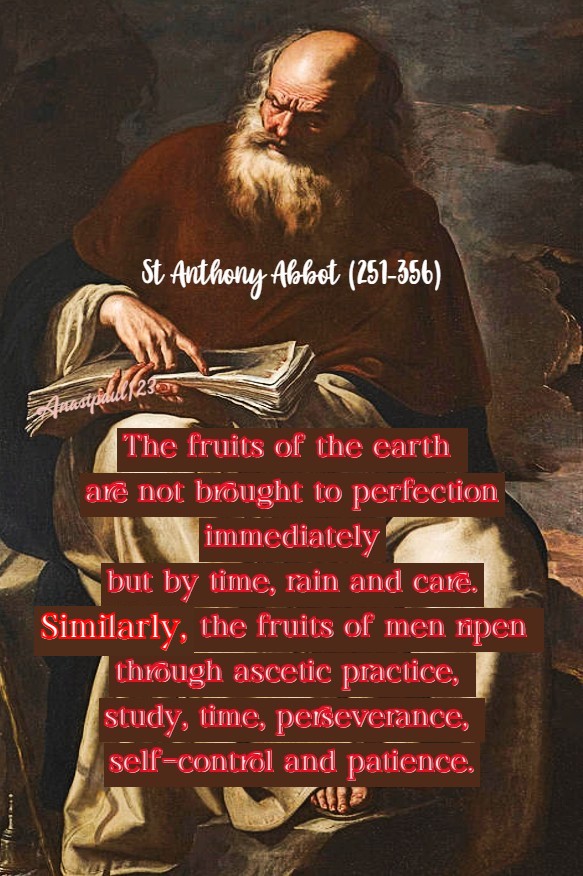
“The fruits of the earth are not brought to perfection immediately but by time, rain and care. Similarly, the fruits of men ripen through ascetic practice, study, time, perseverance, self-control and patience.”
St Anthony Abbot (251-356)
“No-one should fear to suffer for the sake of justice, no-one should lose confidence in the reward that has been promised. The way to rest is through toil, the way to life is through death. Christ has taken on Himself the whole weakness of our lowly human nature. If then, we are steadfast in our faith in Him and in our love for Him, we win the victory that He has won, we receive what He has promised.”
St Pope Leo the Great (400-461) Father and Doctor of the Church
“Now, you must always persevere in firmly placing all your trust in our Lord, in the troublesome business you have in hand. It will give you a fine opportunity of laying a good foundation of submission to God’s will and peace of soul.”
St Francis de Sales (1567-1622) Doctor Caritatis
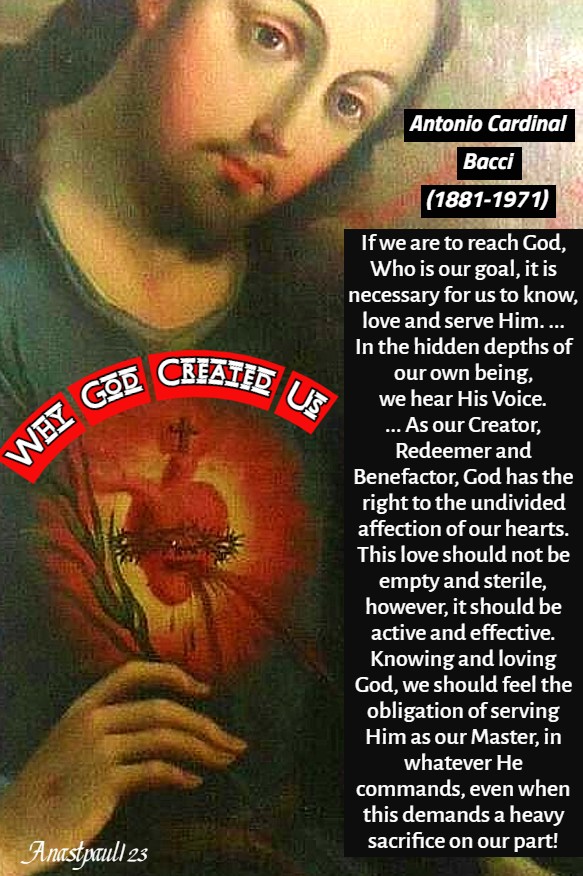
“If we are to reach God, Who is our goal, it is necessary for us to know, love and serve Him. In the hidden depths of our own being, we hear His Voice. As our Creator, Redeemer and Benefactor, God has the right to the undivided affection of our hearts. This love should not be empty and sterile, however, it should be active and effective. Knowing and loving God, we should feel the obligation of serving Him as our Master, in whatever He commands, even when this demands a heavy sacrifice on our part!”
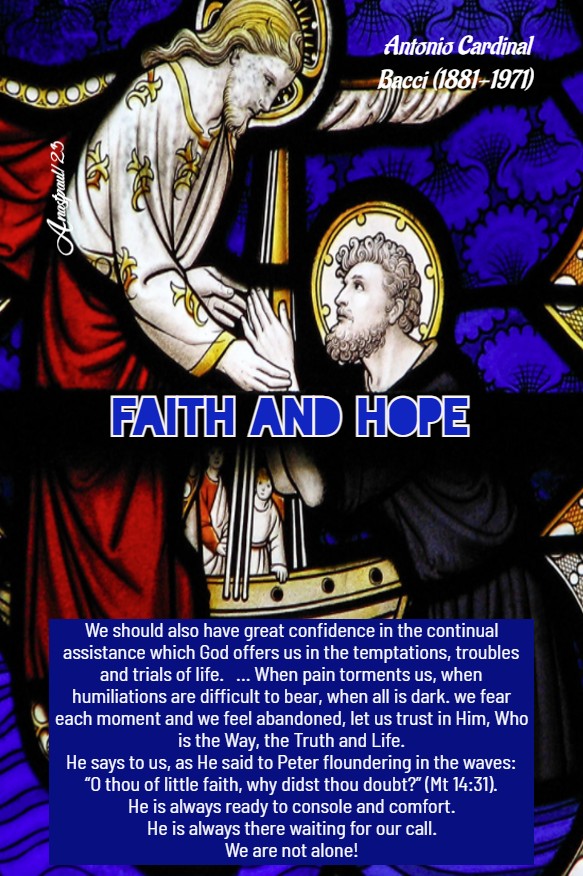
“We should also have great confidence in the continual assistance which God offers us in the temptations, troubles and trials of life. When pain torments us, when humiliations are difficult to bear, when all is dark. we fear each moment and we feel abandoned, let us trust in Him, Who is the Way, the Truth and Life. He says to us, as He said to Peter floundering in the waves: “O thou of little faith, why didst thou doubt?” (Mt 14:31). He is always ready to console and comfort. He is always there waiting for our call. We are not alone!”
One Minute Reflection – 14 October – “The Month of the Most Holy Rosary and of the Angels” – – St Callistus I (c218- c223) Confessor, Pope, Martyr – 1 Peter 5:1-4; 5:10-11, Matthew 16:13-19 – Scripture search here: https://www.drbo.org/
“Upon this rock I will build My Church” – Matthew 16:18
REFLECTION – “Brothers, when it comes to fulfilling my duties as Bishop, I discover that I am weak and slack, weighed down by the weakness of my own condition, while at the same time, I want to act generously and courageously. However, I draw my strength from the untiring intercession of the almighty and eternal Priest, Who, like us but equal to the Father, lowered His divinity to the level of man and raised humankind to the level of God. The decisions He made, give me a just and holy joy. For, when He delegated many shepherds to care for His flock, He did not abandon watching over His beloved sheep. Thanks to that fundamental and eternal assistance, I in turn, have received the protection and support of the Apostle Peter, who also does not abandon his function. This solid foundation, on which the whole of the Church is built, never grows tired of carrying the whole weight, of the building which rests on it.
The firmness of faith, for which the first of the Apostles was praised, never fails. Just as everything which Peter professed in Christ remains, so that which Christ established in Peter, remains… The order willed by God’s Truth remains. Saint Peter perseveres in the solidity which he received; he has not abandoned the governance of the Church which was placed in his hands. That, my brothers, is what that profession of faith, inspired by God the Father, obtained in the heart of the Apostle. He received the solidity of a rock which no assault can shake. In the entire Church, Peter says everyday: “Thou art the Messiah, the Son of the living God.” – St Leo the Great (400-461) Pope, Father and Doctor of the Church (Sermon on the anniversary of his Consecration as Bishop).
PRAYER – O God, Who behold how we fail in our weakness, mercifully restore us to Thy love, through the examples of Thy Saints. Through Jesus Christ, Thy Son our Lord, Who lives and reigns with Thee, in the unity of the Holy Ghost, God, world without end. Amen (Collect).
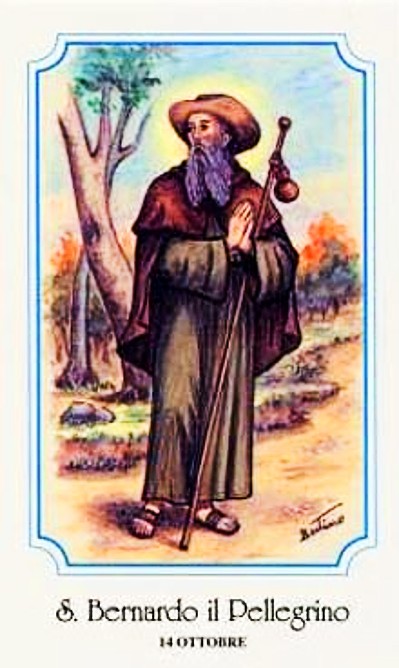
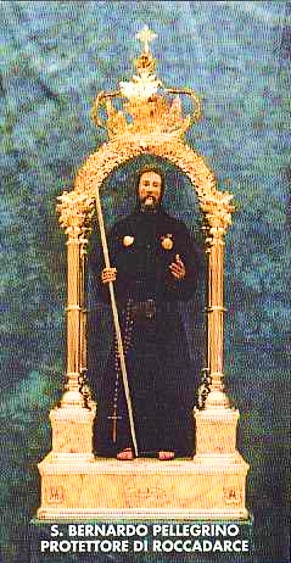
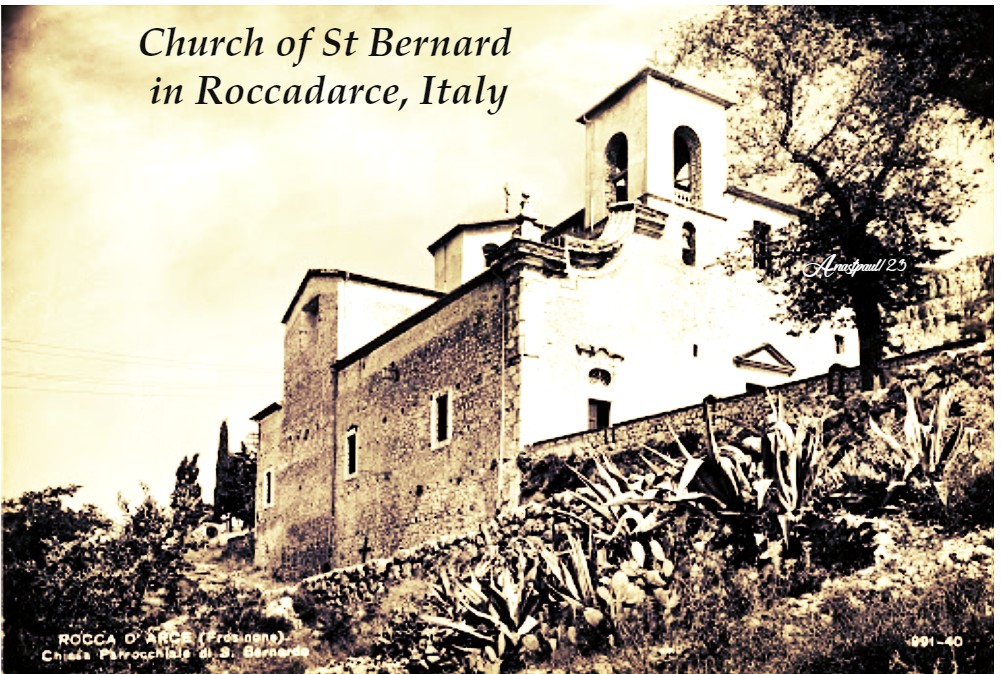
Saint of the Day – 14 October – Saint Bernard of Roccadarce (Died 8th Century) Pilgrim. Born in England (or France) in the 8th Century and died of natural causes in Roccadarce in Campagna in Italy. Also known as – Berhard of Arce, Bernardo. Additional Memorial – 26 June (recovery of the Relics), 13 September (translation of his Relics). Patronage – Roccadarce, Italy.
The details of the “Life of Saint Bernard” are deduced from the “Inventarium Originalis Ecclesiae Parochialis Sanctae Mariae Roccae Arcis” of 1698, by the hands of the Archpriest of the same Parish, Don Antonio Nardone of Arce (Roccadarce today).
Bernard, from the City of Silloth (sometimes known as Silloth-on-Solway, in Cumberland, Cumbria) in England, decided to walk the world, together with Saint Gerard, Saint Fulk and Saint Arduin, brothers in Christ and to visit the holy places of Jerusalem and the Holy Land, the Grotto of Saint Mary Magdalene in Marseilles, of St James in Galicia, of St Nicholas in Bari, of St Michael the Archangel in Puglia on Mount Gargano and the holy places of Rome, as in fact, they did.
These saintly pilgrims were moved too, by a very great need to escape from their land, from the Kingdom of England, unable to tolerate the tyranny and heresies spread there. Since those Saints were similar to four candlesticks of Holy Church, they could not shine in the darkness and the light of their good works did not shine in that place darkened by the thick darkness of sins.
The four Saints, therefore, walked through all the aforementioned places, until, coming from the Sanctuary of the Archangel in Puglia, they arrived in the City of Atina. Here, Saint Gerard, one of these four, fell ill and died on 11 August . Then, when St Bernard in Arpino, St Fulk in Santopadre and St Arduin in Ceprano, fell ill, they all died in a short space of time, one after the other, in the aforementioned places. To this day, their bodies rest in each of those Towns and where they are exposed to devotion, with great veneration, by all of the faithful.
Only Bernhard would not lie still. According to tradition, he appeared in a dream to a man and asked that he be moved from his tomb in Arpino to Rocca d’Arce (now Roccadarce). Then his remains were exhumed from the tomb in the Chapel of San Giovanni in Arpino and transferred to the Parish Church of Santa Maria Assunta in Roccadarce, where he still rests, surrounded by miracles.
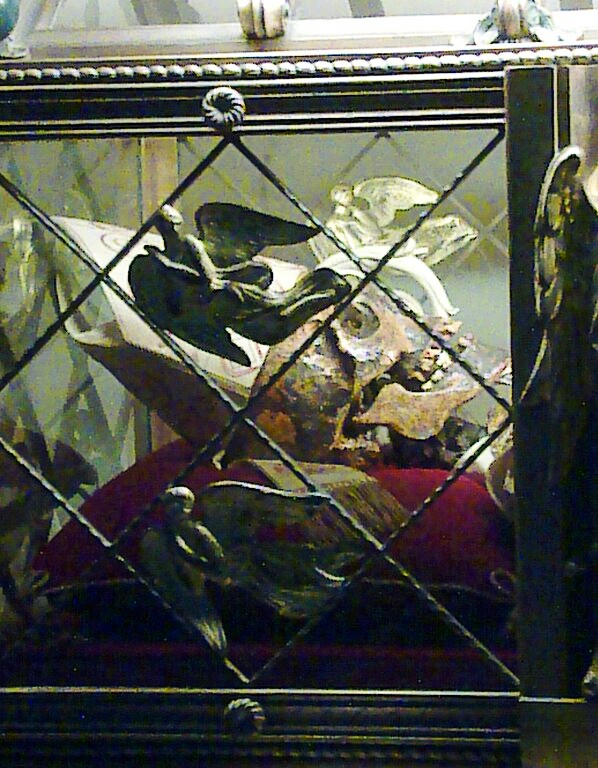
These events are commemorated on14 October. In the current year 1698, on 26 June, the works for the construction of a new Chapel having begun, by order of Monsignor Giovanni Ferrari, Bishop of Aquino, the Holy Body was found there, which the aforementioned Bishop showed to the people, Consecrating and dedicating the Chapel and celebrating the Saint’s Mass there. Then he placed the body of the Saint again in a lead coffin, donated by the Duke, Antonio Boncompagni. ,The Archpriest of the aforementioned Church, Don Antonio Nardone of Arce, filled the lead coffin with a lining of cottonwool, on which the body would rest and placed the whole inside another wooden coffin . Meanwhile, the new Altar was completed and the coffin was placed in its centre, which was surrounded by iron on all sides and the construction of the entire Chapel was completed in the aforementioned year 1698, in the month of August, with an expense of 886 ducats.
In Roccadarce, they have several celebrations of their Patron Saint. On 13 September, the translation of Bernhard’s Relics is celebrated and this is the Town’s main festival. His Relics have been identified several times – in 1585 (assumed) and in 1698 and in 1901 (documented). The last time the Relics were identified was in 2001, when they were placed in a new casket with reinforced glass and laid to rest under the Altar in the Chapel of St Bernard.
On 14 October, Bernhard’s death is celebrated in Arpino on the border of Roccadarce and there is a religious festival combined with a market for goods and cattle. On 26 June, the recovery of the Relics in 1698, is celebrated with a new religious festival.
Saint Fortunatus of Todi (Died 537) Bishop, Confessor, miracle-worker. An entry in the Roman Martyrology under 14 October records: “At Todi in Umbria, St Fortunatus, Bishop, who, as is mentioned by blessed Gregory, was endowed with an extraordinary gift for casting out unclean spirits.” About St Fortunatus: https://anastpaul.com/2020/10/14/saint-of-the-day-14-october-saint-fortunatus-of-todi-died-537/
St Gaudentius of Rimini St Gundisalvus of Lagos St Lupulo of Capua St Lupus of Caesarea St Manacca St Manehildis St Modesto of Capua St Rusticus of Trier St Saturninus of Caesarea St Venanzio of Luni
Martyrs of Caesarea – 4 Saints: Three brothers and a sister Martyred together in the persecutions of Diocletian – Carponius, Evaristus, Fortunata and Priscian. In 303 in Caesarea, Cappadocia (in modern Turkey) – their relics enshrined in Naples, Italy.
Thought for the Day – 13 October – Meditations with Antonio Cardinal Bacci (1881-1971)
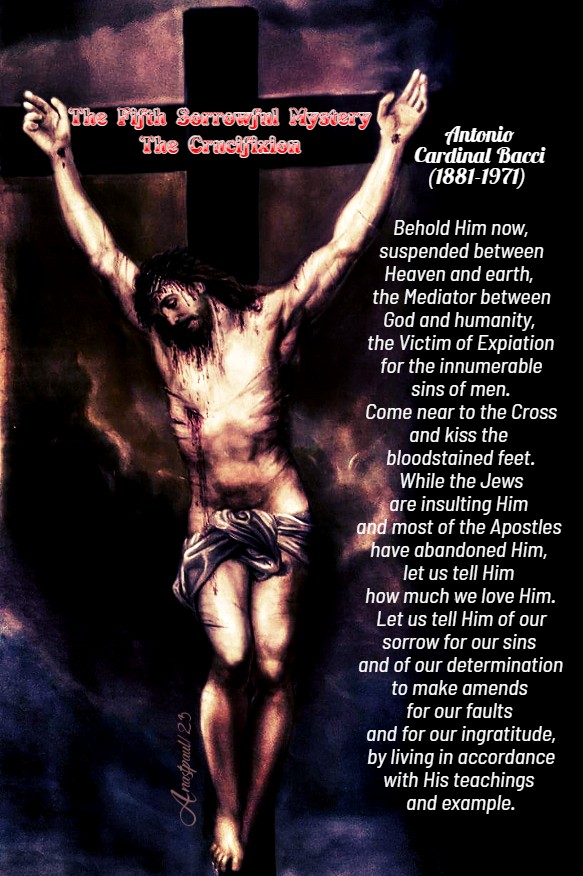
“Month of the Holy Rosary” The Fifth Sorrowful Mystery The Crucifixion
“At last, Jesus reaches Calvary, breathless and reduced to utter exhaustion. The instrument of torture is taken from Him and laid upon the ground. Our divine Redeemer suffers acute pain as Her is again stripped of His garments, which have stuck to His wounds. Now, He is stretched, an innocent victim, on the altar of sacrifice, the Cross. One of the executioners grasps His hand, pierces it with a large nail and attaches it to the wood. Then, he does the same with the other hand and with the two feet. His Mother is close at hand. She feels in her heart the blows of the hammer which lacerate the living flesh of Jesus. Jesus remains silent “as a meek lamb that is carried to be a victim” (Jer 11:19).
Now, the executioners raise up the Cross and fix it in the hold already prepared for it. The shock of this impact sends a shudder of terrible pain through the Victim’s members and entire frame. Behold Him now, suspended between Heaven and earth, the Mediator between God and humanity, the Victim of Expiation for the innumerable sins of men.
Come near to the Cross and kiss the bloodstained feet. While the Jews are insulting Him and most of the Apostles have abandoned Him, let us tell Him how much we love Him. Let us tell Him of our sorrow for our sins and of our determination to make amends for our faults and for our ingratitude, by living in accordance with His teachings and example.”
Quote/s of the Day – 13 October – “The Month of the Most Holy Rosary and of the Angels” – Our Lady of Fatima: The Sixth & Final Apparition – Our Lady of the Holy Rosary (the name she gave herself when Lucia asked her name).
“The Rosary is the most excellent form of prayer and the most efficacious means of attaining eternal life. It is the remedy for all our evils, the root of all our blessings. There is no more excellent way of praying.”
Pope Leo XIII (1810-1903)
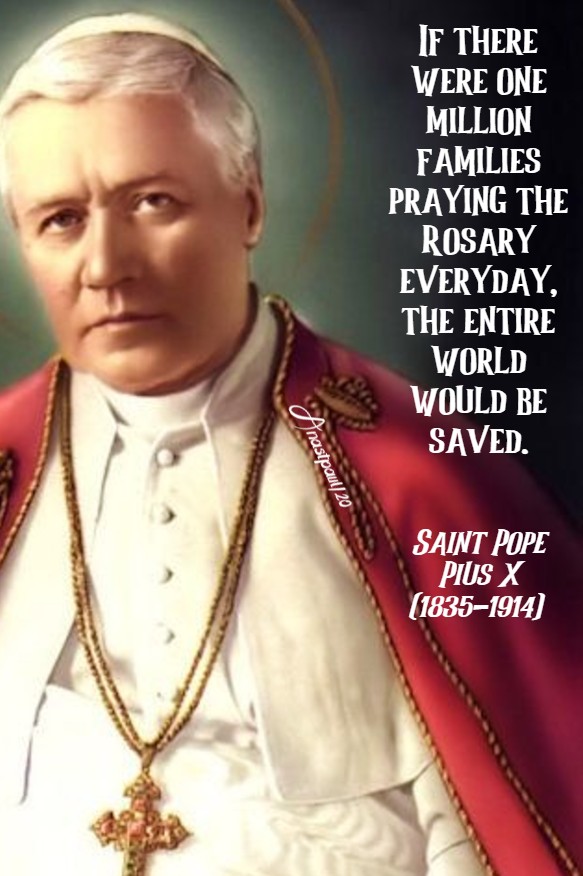
“If there were one million families praying the Rosary everyday, the entire world would be saved.”
St Pope Pius X (1835-1914)
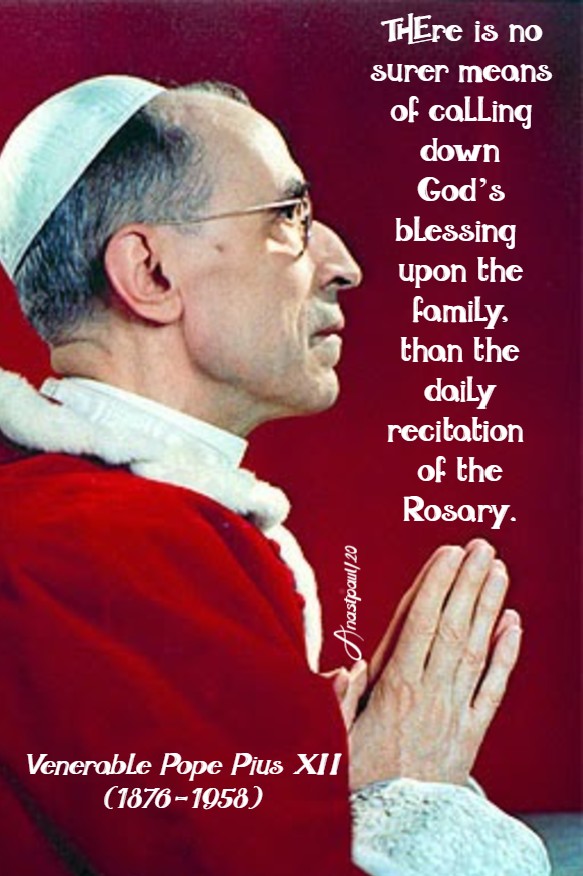
“There is no surer means of calling down God’s blessing upon the family, than the daily recitation of the Rosary.”
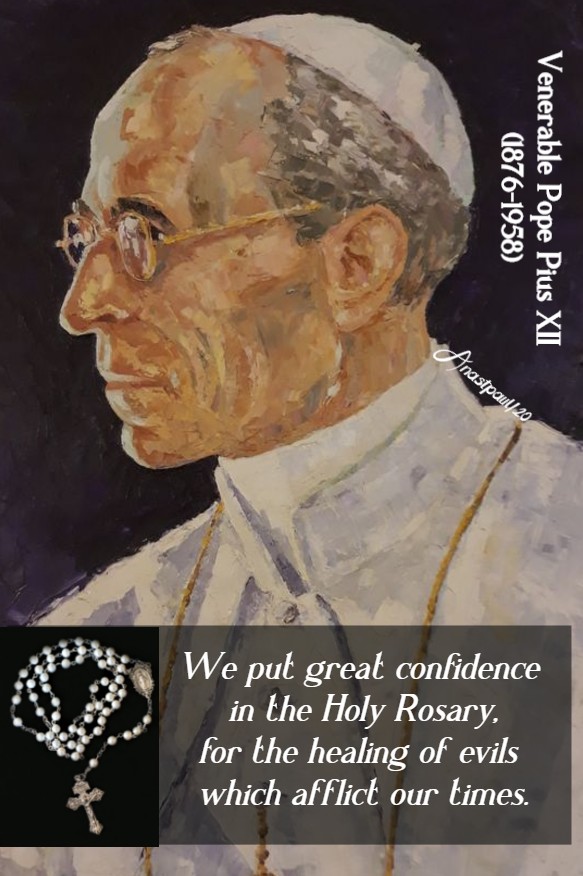
“We put great confidence in the Holy Rosary, for the healing of evils which afflict our times.”
Pope Pius XII (1876-1958)
Act of Consecration and Reparation to the Immaculate Heart of Mary
O Immaculate Heart of Mary, Queen of Heaven and Earth and tender Mother of men, in accordance with thy ardent wish made known at Fatima, I consecrate to thee, myself, my brethren, my country and the whole human race. Reign over us and teach us how to make the Heart of Jesus reign and triumph in us and around us, as It has reigned and triumphed in thee. We wish to atone for the many crimes committed against Jesus and thee. We wish to call down upon our country and the whole world, the peace of God in justice and charity. We promise to imitate thy virtues, by the practice of a Christian life without regard to human respect. We resolve to receive Holy Communion on the first Saturday of every month and to offer thee five decades of the Rosary on this day, together with our sacrifices in the spirit of reparation and penance. Amen.
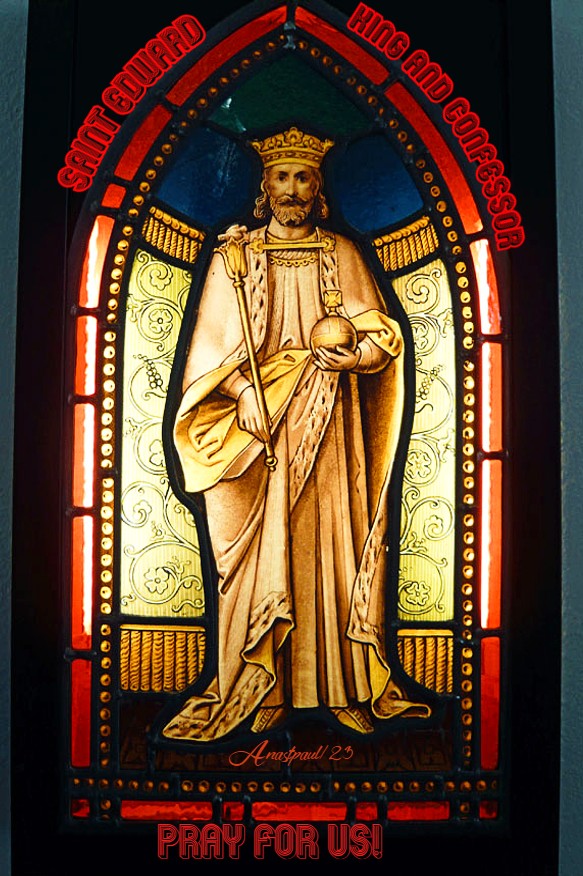
One Minute Reflection – 13 October – “The Month of the Most Holy Rosary and of the Angels” – Our Lady of Fatima: The Sixth & Final Apparition – St Edward King and Confessor (c1003-1066) – Sirach 31:8-11, Luke 12:35-40 – Scripture search here: https://www.drbo.org/
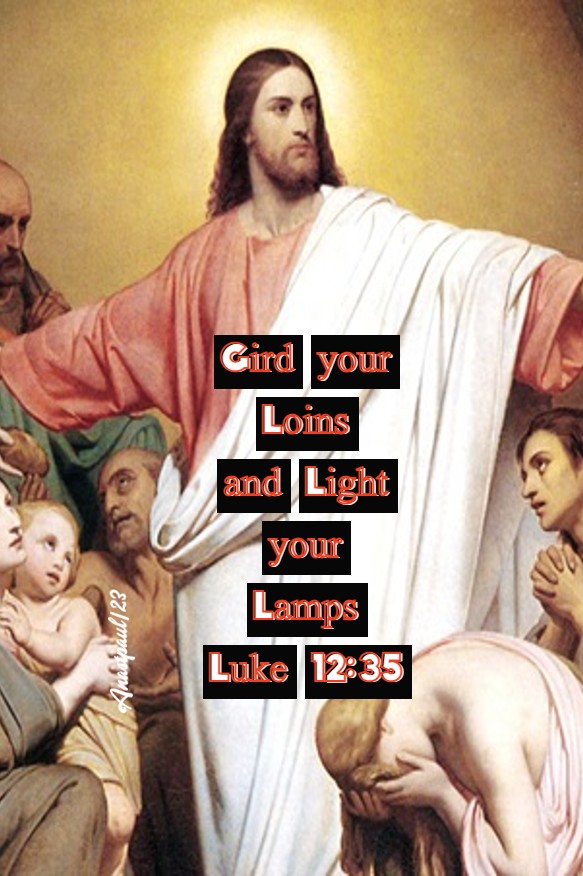
“Let your loins be girt about and your lamps burning …” – Luke 12:35
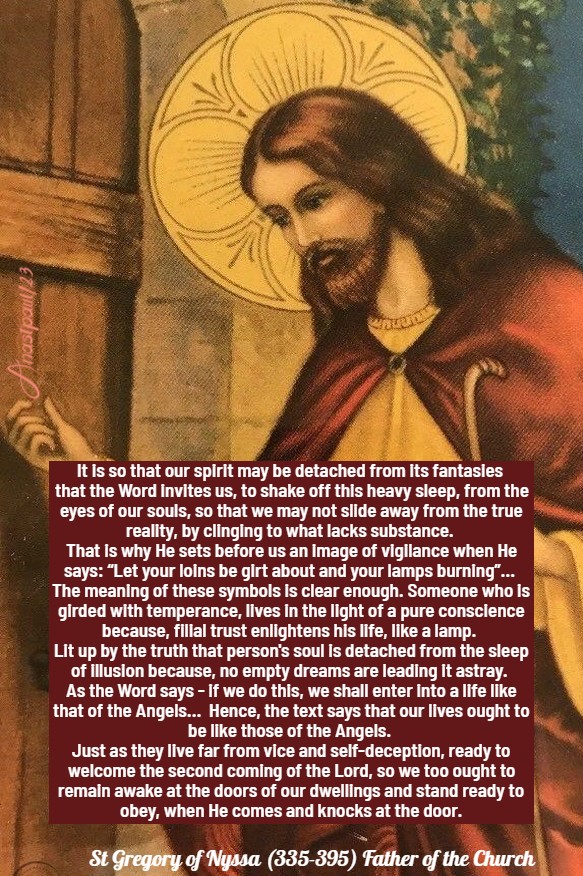
REFLECTION – “It is so that our spirit may be detached from its fantasies that the Word invites us, to shake off this heavy sleep, from the eyes of our souls, so that we may not slide away from the true reality, by clinging to what lacks substance. That is why He sets before us an image of vigilance when He says: “Let your loins be girt about and your lamps burning”… The meaning of these symbols is clear enough. Someone who is girded with temperance, lives in the light of a pure conscience because, filial trust enlightens his life, like a lamp. Lit up by the truth that person’s soul is detached from the sleep of illusion because, no empty dreams are leading it astray. As the Word says – if we do this, we shall enter into a life like that of the Angels…
Indeed, these are they who wait for the Lord at His return from the wedding and who are seated by the heavenly gates, with watchful eyes, so that the King of Glory (Ps 23:7) might once more pass through, when he returns from the marriage feast and enters again into the beatitude above the heavens. “Coming forth like the groom from his bridal chamber” (Ps 18:6)…, He united to Himself like a virgin, the nature we had prostituted to idols, once He had restored its virginal integrity, through sacramental regeneration. The nuptials, having now been accomplished, since the Church has been espoused by the Word… and brought into the chamber of His Mysteries, the Angels awaited the return of the King of Glory to the blessedness which matches His nature.
Hence, the text says that our lives ought to be like those of the Angels. Just as they live far from vice and self-deception, ready to welcome the second coming of the Lord, so we too ought to remain awake at the doors of our dwellings and stand ready to obey, when He comes and knocks at the door.” – St Gregory of Nyssa(335-395) Bishop, Father of the Church, Brother of St Basil the Great (Sermons on the Song of Songs No 11).
PRAYER – O God, Who crowned blessed King Edward with the glory of eternity, grant us, we beseech Thee, so to venerate him on earth that we may be worthy to reign with him in heaven. Through Jesus Christ, Thy Son our Lord, Who lives and reigns with Thee, in the unity of the Holy Ghost, God, world without end. Amen (Collect).
Our Morning Offering – 13 October – “The Month of the Most Holy Rosary and of the Angels” – Our Lady of Fatima: The Sixth & Final Apparition
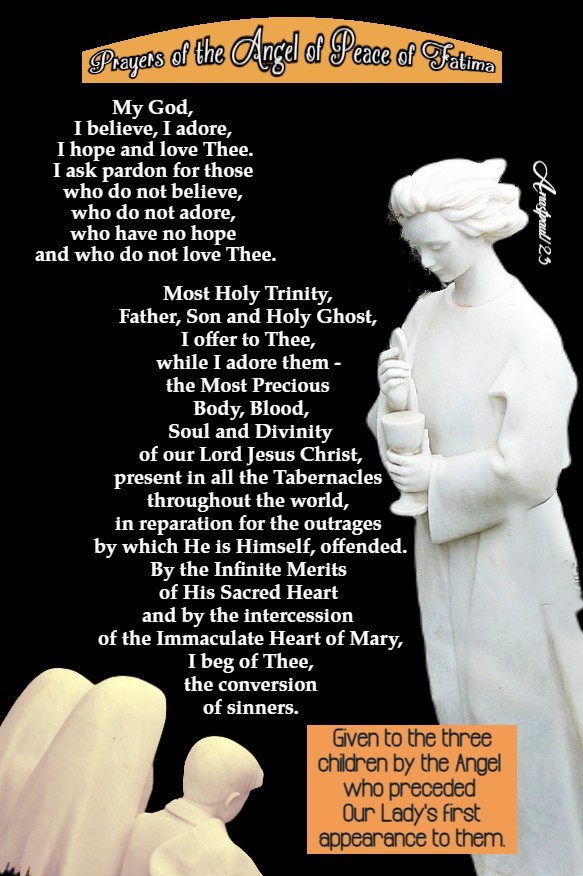
Prayers of the Angel of Peace of Fatima (Given to the three children by the Angel who preceded Our Lady’s first appearance to them.)
I. My God, I believe, I adore, I hope and love Thee. I ask pardon for those who do not believe, who do not adore, who have no hope and who do not love Thee.
II. Most Holy Trinity, Father, Son and Holy Ghost, I offer to Thee, while I adore them – the Most Precious Body, Blood, Soul and Divinity of our Lord Jesus Christ, present in all the Tabernacles throughout the world, in reparation for the outrages by which He is Himself, offended. By the Infinite Merits of His Sacred Heart and by the intercession of the Immaculate Heart of Mary, I beg of Thee, the conversion of sinners.
The Angel of Peace
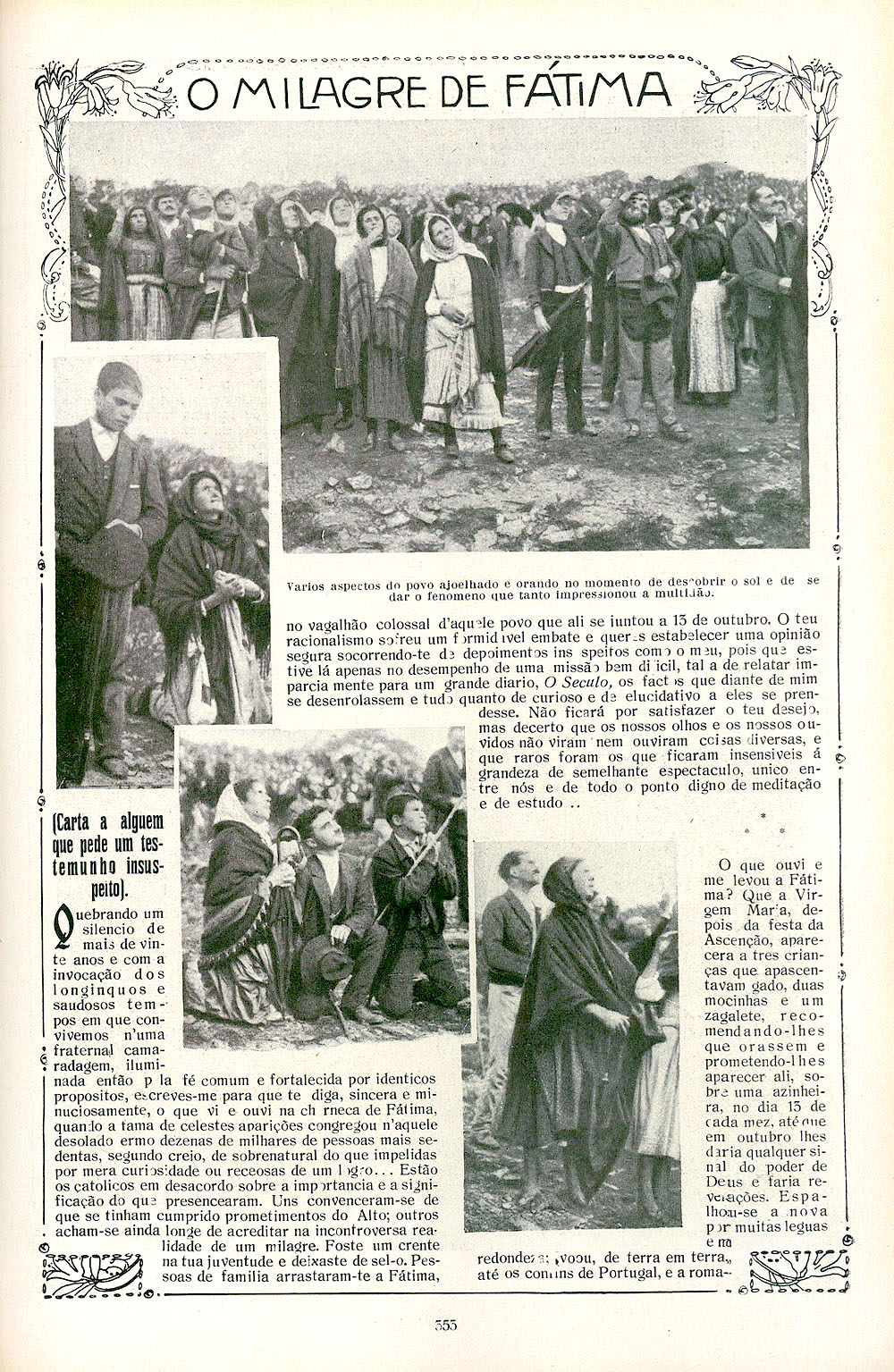
One day in the spring of 1916, when three little children, Lucia dos Santos, aged ten and her little cousins, Francisco Marto, aged nine,and his little sister Jacinta, only seven years old, were tending sheep near the village of Fatima, Portugal, the appearance of an oval of light, of unusual brilliance, startled them. The dazzling light seemed to advance, from the end of the field toward the cave, in which the young shepherds had sought shelter. In the midst of this light they beheld a young man who announced himself as the Angel of Peace. He taught the little seers a new prayer and then vanished.
A few months later, the Angel of Peace made his second appearance and urged the children to offer up sacrifices and prayers at all times. Upon asking what was meant by “sacrifice,” they were told to offer everything in reparation to God, for the sins by which He is offended and, as a petition for the conversion of sinners. “Thus you will bring peace to our country,” was the Angel’s promise. At this last saying, the children were baffled. Reading their thoughts, the Angel revealed that he was the Guardian Angel of Portugal.
In the Autumn of the same year, the Angel appeared a third time. He carried a host in his right hand extended over a Ciborium which he held with the left hand. Again the Angel taught the children a beautiful prayer and before parting distributed Holy Communion to the three little ones.
Saint of the Day – 13 October – Saint Theophilus of Antioch (Died c184) Confessor, Bishop of Antioch from 169 until 182, Scolar and Writer, Theologian, Apologist, Defender of the Faith against heresy. His writings (the only remaining extant being his apology to Autolycus) indicate that he was born a pagan, not far from the Tigris and Euphrates Rivers in Mesopotamia (modern Middle East) and was led to embrace Christianity by studying the Sacred Scriptures. Also known as – Teofilo.
The Roman Martyrology reads today: “At Antioch, the holy Bishop, Theophilus, who held the pontificate in that Church and City, the sixth after the blessed Apostle, Peter.”
Theophilus, Bishop of Antioch, was the Author of many works, one of which has survived, while we only know the titles of others. From the pages of this work, we can once again hear the words of the Saint, in defence of Christian doctrine and faith, even then the subject of accusations by unbelievers and the vicious.
“But, if you tell me” – wrote the ancient Bishop – “Show me your God,” I will say to you: “Show me your man and I will show you my God. Show me, therefore, that they see clearly, the eyes of your soul and that the ears of your heart hear well… God shows Himself to those who can see Him, when they have opened the eyes of the soul. Everyone has their good eyes but someone has veiled them, incapable of seeing the light of the sun. However, the fact that the blind do not see, does not show at all, how the light of the sun does not appear. The blind blame themselves and their eyes. In the same way, my son, if you have the eyes of your soul veiled by your faults and your bad habits, you will not be able to see the light. Like a clear mirror – this is how man must keep his soul pure. If the mirror is rusty, the face of man does not appear on its surface. In the same way, if man is a sinner, this man cannot contemplate God.”
The Author of these phrases, which St Augustine himself would later take up, was born in a region of the East, near the Tigris and the Euphrates. He was a pagan and received a Greek education. He converted by observing the customs of Christians, clearly superior to those of pagans and, by reading the Sacred Scriptures. He would then skilfully use his experiences as a convert and his knowledge of profane culture, in his polemics against unbelievers and philosophers.
He was elected Bishop of Antioch in 169 and still held the pastoral care of the great City, where Saint Peter himself had had his first Chair at the death of Marcus Aurelius, in 180. His apostolic care, in the midst of one of the most populous and most agitated communities of the early Christian world, did not distract him from his studies and intellectual activity.
Eusebius of Caesarea, the Historia (Died 339), speaks of the zeal which he and the other chief Shepherds displayed in driving away the heretics who were attacking Christ’s flock, with special mention of his work against Marcion.
He made contributions to Christian literature, writing polemical works against the heretics of the time, works of catechesis, commenting on the Scriptures, works of history, to clear away pagan myths. In short, he was a Bishop who left a strong imprint of his intelligence and culture in the history of his time, just as he left traces of his charity and mercy in the souls entrusted to him.
St Jerome and Eusebius mention numerous works of St Theophilus existing in their time. They are:
the existing Apologia addressed to Autolycus;
a work against the heresy of Hermogenes;
against that of Marcion;
some catechetical writings;
St Jerome also mentions having read some commentaries on the Gospels and on Proverbs, which bore Theophilus’ name but which he regarded as inconsistent with the elegance and style of his other works.
The one undoubted extant work of St Theophilus, the 7th Bishop of Antioch, is his Apology to Autolycus (Apologia ad Autolycum), a series of books defending Christianity written to a pagan acquaintance.
St Benedict of Cupra St Berthoald of Cambrai St Carpus of Troas St Chelidonia St Comgan the Monk St Florence of Thessalonica St Fyncana St Fyndoca Bl Gebrand of Klaarkamp
St Theophilus of Antioch (Died c184) Bishop St Venantius
Three Crowns of Cordoba – (3 Saints): Three Christian men Martyred in the persecutions of Diocletian – Faustus, Januarius and Martial. They were burned to death in 304 in Cordoba, Spain.
Thought for the Day – 12 October – Meditations with Antonio Cardinal Bacci (1881-1971)
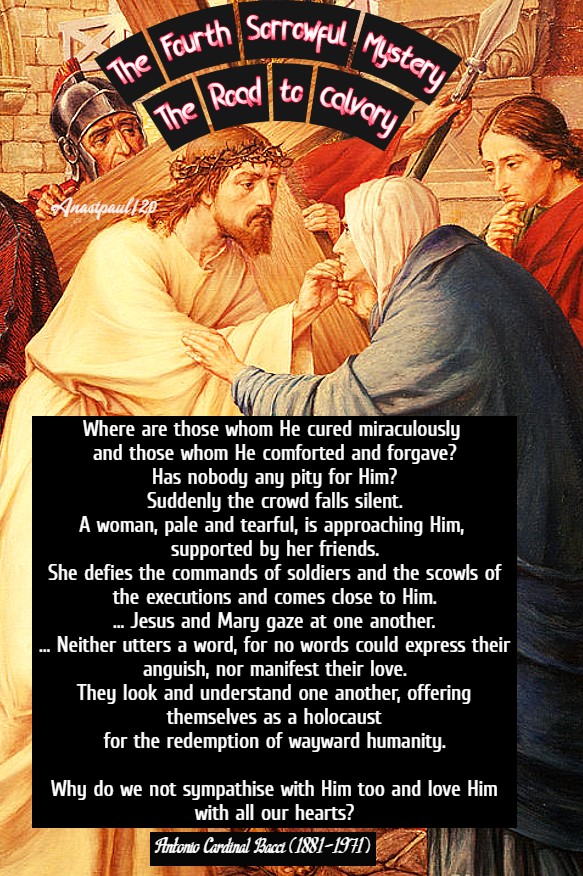
“Month of the Holy Rosary” The Fourth Sorrowful Mystery The Road to Calvary
“Scourged, crowned with thorns and derided, Jesus is finally condemned to death. Burdened with the Cross, He sets out for the place of execution in the midst of a crowd of enemies, blasphemers and idle speculators. Among them , there is only a tiny group which sympathises with Jesus, namely, Mary His Mother, the devout women and the beloved Apostle, St John.
The divine Redeemer goes forward laboriously beneath the heavy weight of the Cross. He has already lost a large quantity of blood in Gethsemane and during the scourging and crowning with thorns. His strength seems to be failing but love sustains Him. Looking feebly around Him, He sees the mocking Jews, the indifferent and disrespectful Roman soldiers and a throng of curious spectators looking for something to amuse them. Is there nobody else? Where are those whom He cured miraculously and those whom He comforted and forgave? Has nobody any pity for Him? Suddenly the crowd falls silent. A woman, pale and tearful, is approaching Him, supported by her friends. She defies the commands of soldiers and the scowls of the executions and comes close to Him.
Here and there, a murmur is heard – It must be His Mother, poor woman! Jesus and Mary gaze at one another. It would be impossible for us to guess at the immense depths of love contained in that loving exchange of glances. Neither utters a word, for no words could express their anguish, nor manifest their love. They look and understand one another, offering themselves as a holocaust for the redemption of wayward humanity.
Nevertheless, in this silent meeting, there was great consolation for the Heart of Jesus, for He had found someone who loved and understood Him, amongst those malicious throngs. Why do we not sympathise with Him too and love Him with all our hearts?”
Quote/s of the Day – 12 October – Romans 15:4-13. Matthew 11:2-10 – Scripture search here: https://www.drbo.org/
“Now, the God of hope, fill you with all joy and peace in believing – that you may abound in hope and in the power of the Holy Ghost.”
Romans 15:13
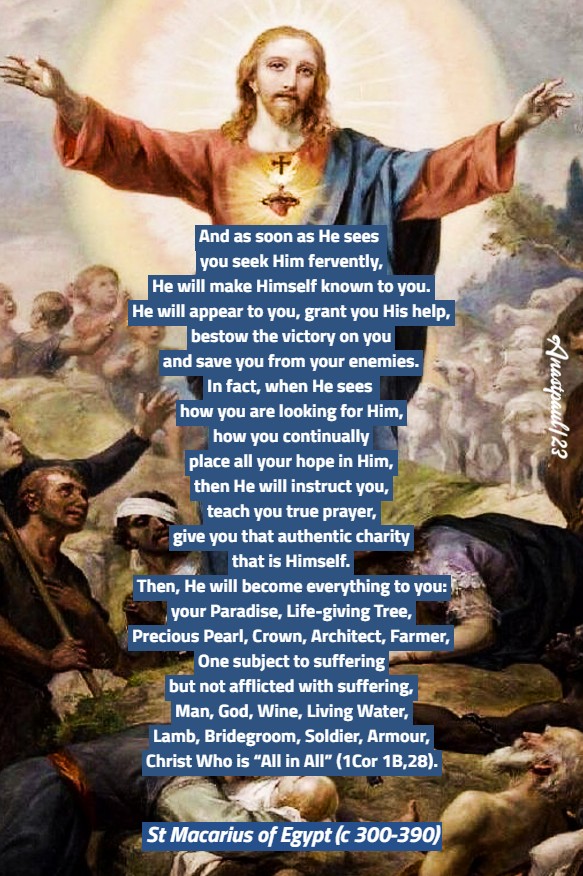
“And as soon as He sees you seek Him fervently, He will make Himself known to you. He will appear to you, grant you His help, bestow the victory on you and save you from your enemies. In fact, when He sees how you are looking for Him, how you continually place all your hope in Him, then He will instruct you, teach you true prayer, give you that authentic charity that is Himself. Then, He will become everything to you: your Paradise, Life-giving Tree, Precious Pearl, Crown, Architect, Farmer, One subject to suffering but not afflicted with suffering, Man, God, Wine, Living Water, Lamb, Bridegroom, Soldier, Armour, Christ Who is “All in All” (1Cor 1B,28).
St Macarius of Egypt (c300-390)
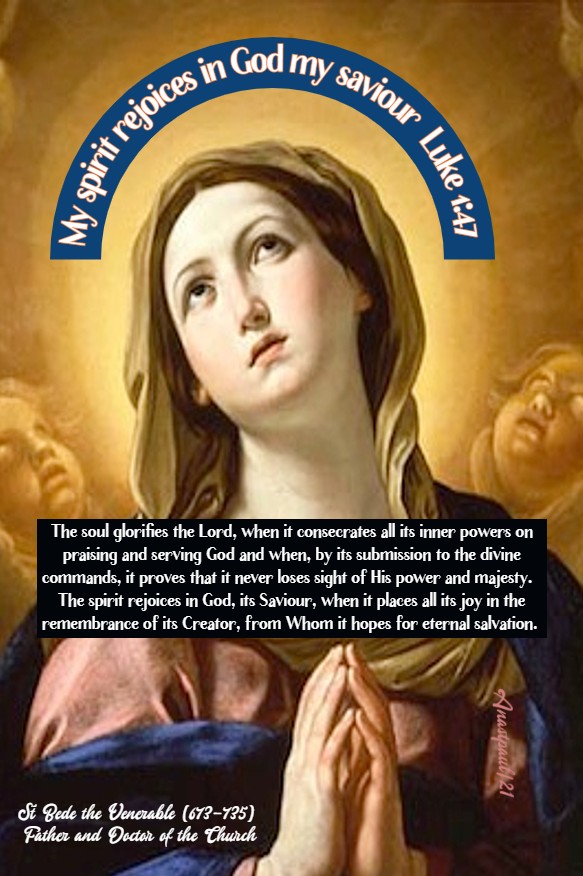
“The soul glorifies the Lord, when it consecrates all its inner powers on praising and serving God and when, by its submission to the Divine commands, it proves that it never loses sight of His Power and Majesty. The spirit rejoices in God, its Saviour, when it places all its joy in the remembrance of its Creator, from Whom it hopes for eternal salvation.”
St Bede the Venerable (673-735) Father and Doctor of the Church
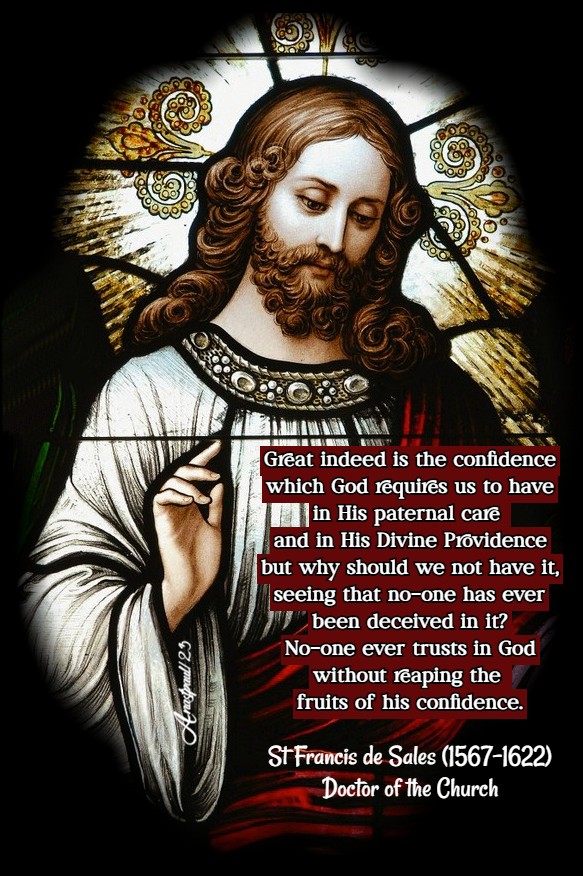
“Great indeed is the confidence which God requires us to have in His paternal care and in His Divine Providence but why should we not have it, seeing that no-one has ever been deceived in it? No-one ever trusts in God without reaping the fruits of his confidence.”
St Francis de Sales (1567-1622) Doctor of the Church
One Minute Reflection – 12 October – “The Month of the Most Holy Rosary and of the Angels” – Ferial Day – Romans 15:4-13. Matthew 11:2-10 – Scripture search here: https://www.drbo.org/
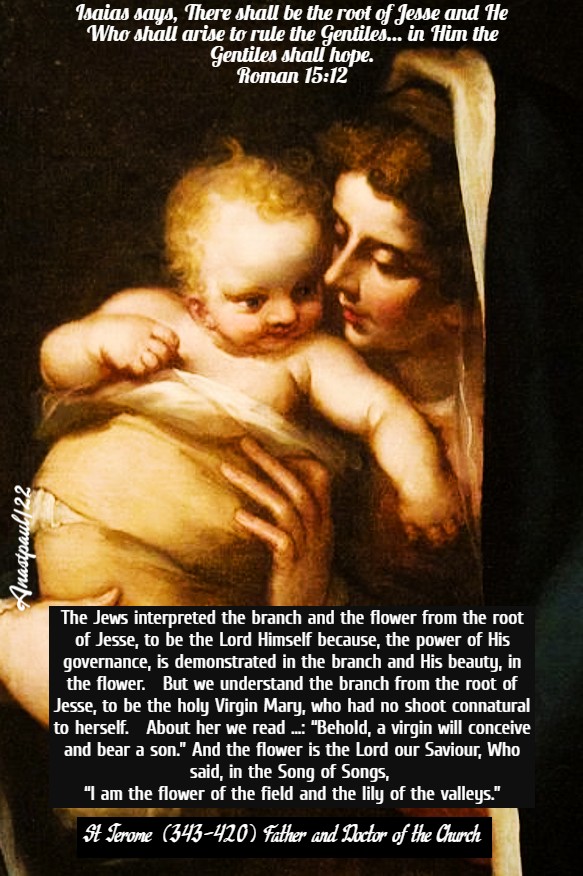
“And again Isaias says, There shall be the root of Jesse and He Who shall arise to rule the Gentiles… in Him the Gentiles shall hope.” – Roman 15:12
REFLECTION – “Until the beginning of the vision, or the burden of Babylon, which Isaias the son of Amos saw, his entire prophecy was about Christ, a prophecy which we want to explain piecemeal, lest the ideas and discussions thereof together, confuse the reader’s memory.
The Jews interpreted the branch and the flower from the root of Jesse, to be the Lord Himself because, the power of His governance, is demonstrated in the branch and His beauty, in the flower. But ,we understand the branch, from the root of Jesse, to be the holy Virgin Mary, who had no shoot connatural to herself. About her we read …: “Behold, a virgin will conceive and bear a son.” And the flower is the Lord our Saviour, Who said, in the Song of Songs, “I am the flower of the field and the lily of the valleys.” In place of “root,” which only the Septuagint translated, the Hebrew text has geza, which Aquila and Symmachus and Theodotus, interpret as kormon, that is, “stem.” And they translated “flower,” which the Hebrew text calls nēṣer, as “bud,” to show that after a long time in Babylonian captivity, no longer possessing any glory from the sprout of the old kingdom of David, Christ would rise from Mary, as though from her stem. The educated of the Hebrews believe that what all the ecclesiastics sought in the Gospel of Matthew but could not find, where it was written “Because He will be called a Nazarene,” was taken from this place. But it should be noted that nēṣer was written here with the [Hebrew] letter ṣade [צ], the peculiar sound of which—somewhere between z and s—the Latin language does not express.” – St Jerome (343-420) Father and Doctor of the Church (Commentary on Isaias 4.)
PRAYER – O God, Who, by the message of an Angel, willed to take flesh in the womb of the Blessed Virgin Mary, grant that we, Thy suppliants, who believe her to be truly the Mother of God, may, by her intercession, be assisted in attaining eternal life. Through the same Jesus Christ, Thy Son our Lord, Who lives and reigns with Thee, in the unity of the Holy Ghost, God, world without end. Amen (Collect).
Our Morning Offering – 12 October – “The Month of the Most Holy Rosary and of the Angels”
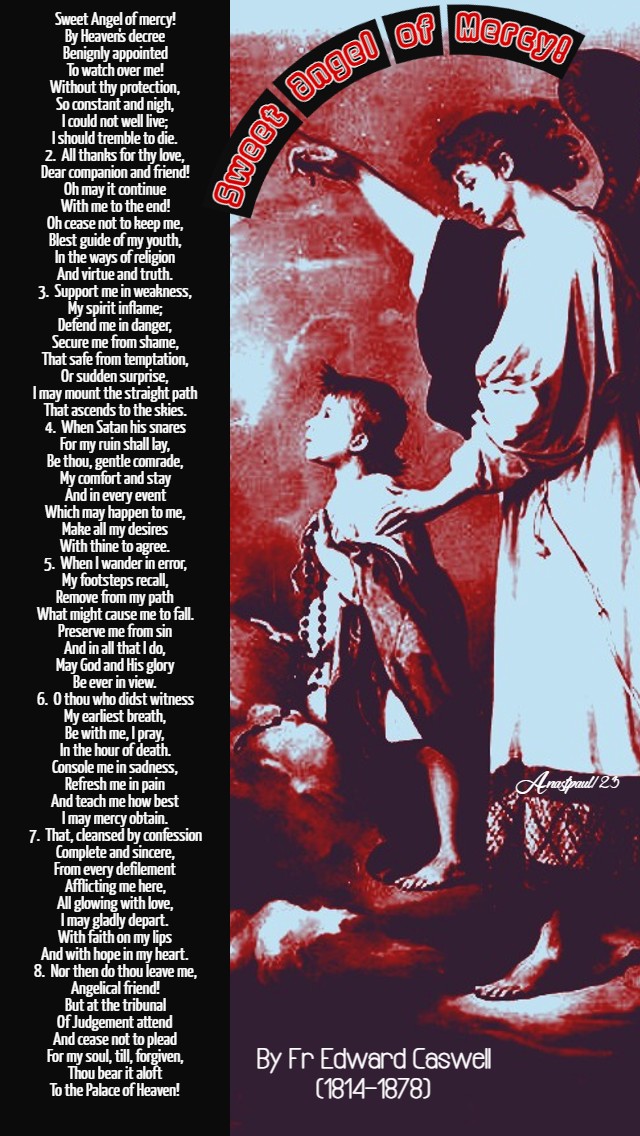
Sweet Angel of Mercy! By Fr Edward Caswell C.Orat. (1814-1878)
Sweet Angel of mercy! By Heaven’s decree Benignly appointed To watch over me! Without thy protection, So constant and nigh, I could not well live; I should tremble to die.
All thanks for thy love, Dear companion and friend! Oh may it continue With me to the end! Oh cease not to keep me, Blest guide of my youth, In the ways of religion And virtue and truth.
Support me in weakness, My spirit inflame; Defend me in danger, Secure me from shame, That safe from temptation, Or sudden surprise, I may mount the straight path That ascends to the skies.
When Satan his snares For my ruin shall lay, Be thou, gentle comrade, My comfort and stay And in every event Which may happen to me, Make all my desires With thine to agree.
When I wander in error, My footsteps recall, Remove from my path What might cause me to fall. Preserve me from sin And in all that I do, May God and His glory Be ever in view.
O thou who didst witness My earliest breath, Be with me, I pray, In the hour of death. Console me in sadness, Refresh me in pain And teach me how best I may mercy obtain.
That, cleansed by confession Complete and sincere, From every defilement Afflicting me here, All glowing with love, I may gladly depart. With faith on my lips And with hope in my heart.
Nor then do thou leave me, Angelical friend! But at the tribunal Of Judgement attend And cease not to plead For my soul, till, forgiven, Thou bear it aloft To the Palace of Heaven!
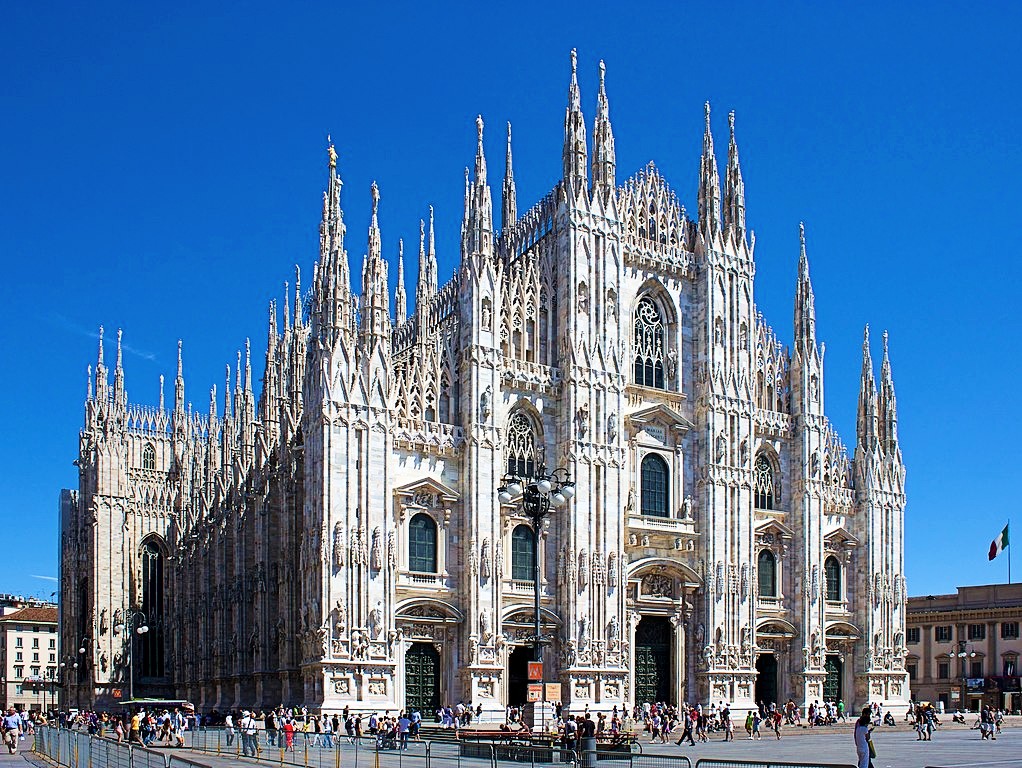
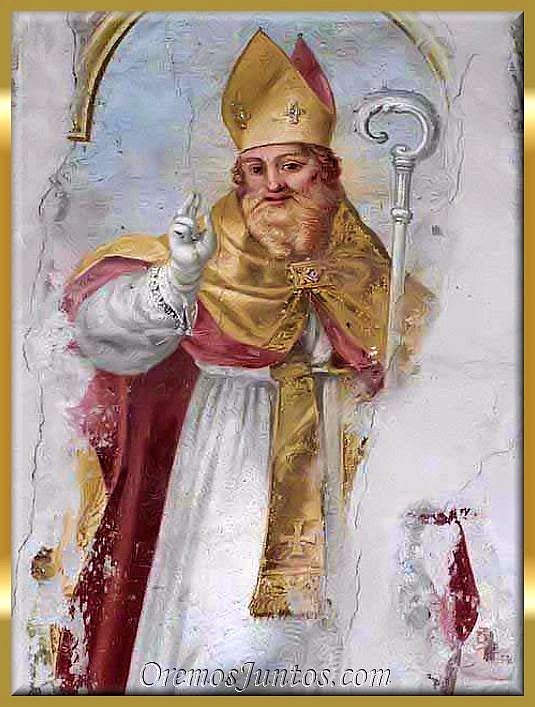
Saint of the Day – 12 October – Saint Monas of Milan (Died c249) the 15th Bishop of Milan, who occupied the Seat for 59 years. Died on25 March in c249 of natural causes. Additional Memorial – 25 March on some calendars.
The Roman Martyrology reads: “At Milan, St Monas, Bishop. He was chosen as head of that Church because a miraculous light from Heaven surrounded him whilst they were deliberating on the choice of a Bishop.”
As we know, a large group of Shepherds who have alternated on the Episcopal Seat of Milan, have deserved the halo of sanctity. Among these we find St Monas, Fifteenth Bishop of the Lombard Capital.
His Episcopate is placed between those of St Calimerius and St Mirocles. The latter appears to have participated in the Synods of Rome in 313 and of Arles, in 314. The narrative of the History of the Church of Milan which places the date of his death around 249, after fifty nine years of Episcopacy.
Bishop Monas, therefore, would have founded what are now considered the oldest Parishes scattered throughout the Milanese countryside.
As for the day of death, the ancient records of the Milanese Bishops indicate 25 March, an anniversary still reported today, while the Ambrosian liturgical calendar, to avoid the concomitance with the Lenten season, moved the Saint’s Feast day to 12 October, the Anniversary of recognition of the Relics, which apparently took place in the 11th Century by Archbishop Arnolfo. St Monas was initially buried in the Basilica Fausta, then known as the Church of St Vitales but, St Borromeo transferred his Relics to the Cathedral on 6 February 1576, where they remain today.
St Eustachius The Syrian Priest and Confessor St Evagrius the Martyr St Felix St Herlindis St Juan Osiense St Maximilian of Celeia St Meinards St Monas of Milan (Died c249) Bishop
St Serafino of Montegranaro OFM Cap (1540-1604) Confessor, Franciscan Capuchin Lay Friar, gifted with the Charism of prophecy, Mystic, Apostle of the poor, Spiritual Advisor, devoted to the Blessed Sacrament, the Holy Rosary and to the Blessed Virgin Mary, Miracle-worker. The Roman Martyrology states: “At Ascoli, St Seraphinus, Confessor, of the Order of Minorite Capuchins, distinguished by holiness of life and humility. Hre was enrolled among the Saints by the Sovereign Pontiff Clement XIII.” Holy St Serafino: https://anastpaul.com/2021/10/12/saint-of-the-day-12-october-st-serafino-of-montegranaro-ofm-cap-1540-1604/
Martyrs of Arian North Africa: Commemoration of the 4,996 Martyrs who died in the persecutions of the Vandals in Africa mandated by the Arian King Huneric. The persecuted Christians include Bishops, Priests, Deacons and thousands of the lay faithful. They died in 483 at various locations in North Africa. (Would we follow Christ and stand true to the Faith today?)


























 AnaStpaul
You must be logged in to post a comment.