Thought for the Day – 14 July – Meditations with Fr Richard Frederick Clarke SJ (1839-1900)
CHARITY Meditations for a Month
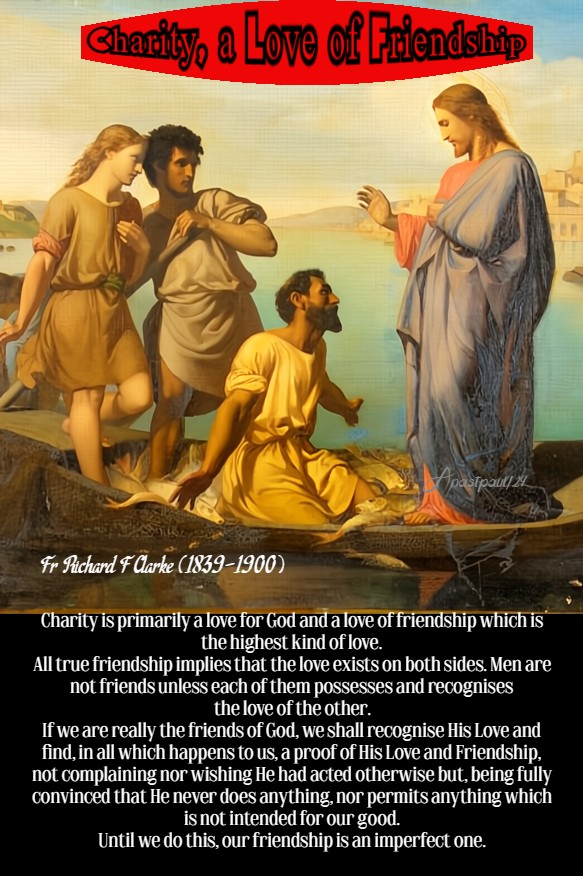
Charity, a Love of Friendship
Charity is primarily a love for God and a love of friendship which is the highest kind of love. All true friendship implies that the love exists on both sides. Men are not friends unless each of them possesses and recognises the love of the other. If we are really the friends of God, we shall recognise His Love and find, in all which happens to us, a proof of His Love and Friendship, not complaining nor wishing He had acted otherwise but, being fully convinced that He never does anything, nor permits anything which is not intended for our good. Until we do this, our friendship is an imperfect one.
Friendship also requires that we declare our love to God. He knows if we have declared our love for Him and the exact degree in which it is present in our hearts. However, He likes to listen to our assurance of the love we bear Him. Our love is prone to wax cold unless it finds expression in words and, it is a pleasure to those who are close friends, to share their mutual sentiments of friendship. God does not spare, in His written Word, to give us the strongest assurances of His undying love to man. Do we in return, assure Him of our grateful love for Him, the best and dearest Friend we have in Heaven or on earth?!
Whatever words we use, they cannot surpass God’s Messages of Love to us. He says, ‘if a woman can forget the son of her womb, He will not forget us‘ (Isaias 49:1). He says ‘He loves us so dearly that He spared not even His own Son but delivered Him up for us‘ (Romans 8:32) and, therefore, can ‘refuse us nothing for which we ask.’ (John 16:23,24) What have we to say to Him, as a counterpart of loving words like these?
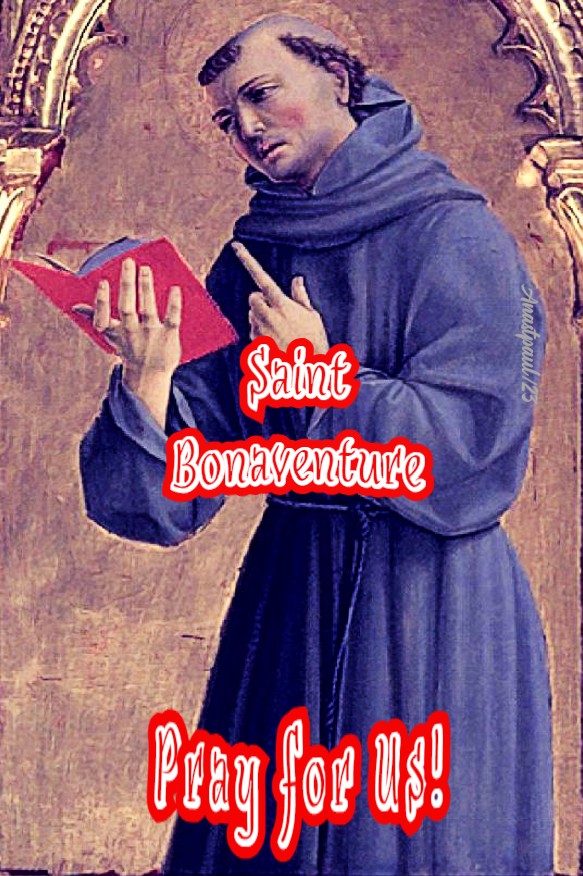
Quote/s of the Day – 14 July – “The Month of the Most Precious Blood” – St Bonaventure OFM (1221-1274) Seraphic Doctor of the Church
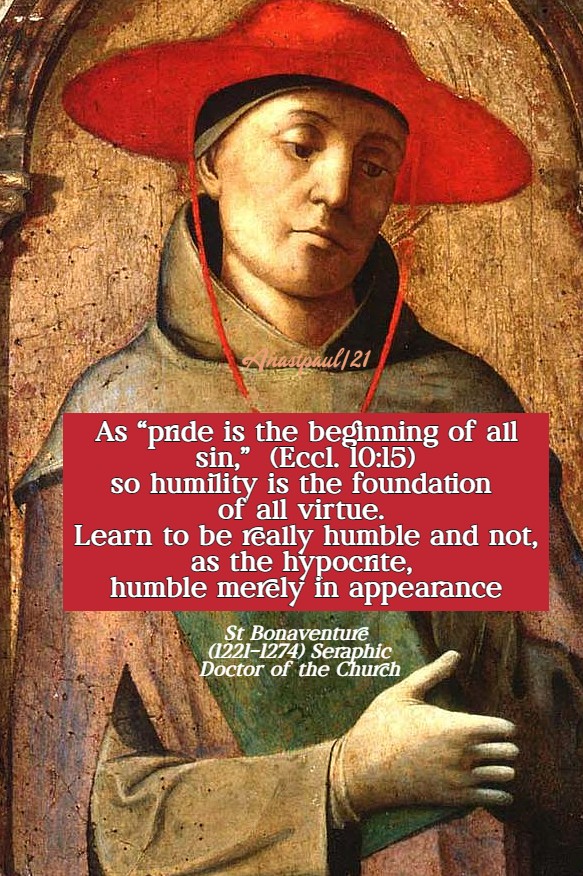
“As “pride is the beginning of all sin,” (Eccl. 10:15) so humility is the foundation of all virtue. Learn to be really humble and not, as the hypocrite, humble merely in appearance.”
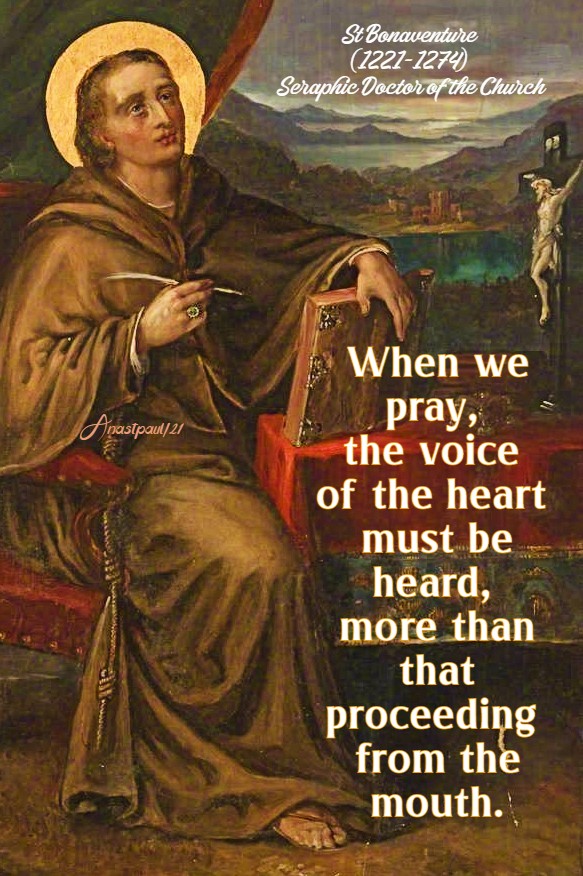
“When we pray, the voice of the heart must be heard , more than that proceeding from the mouth.”
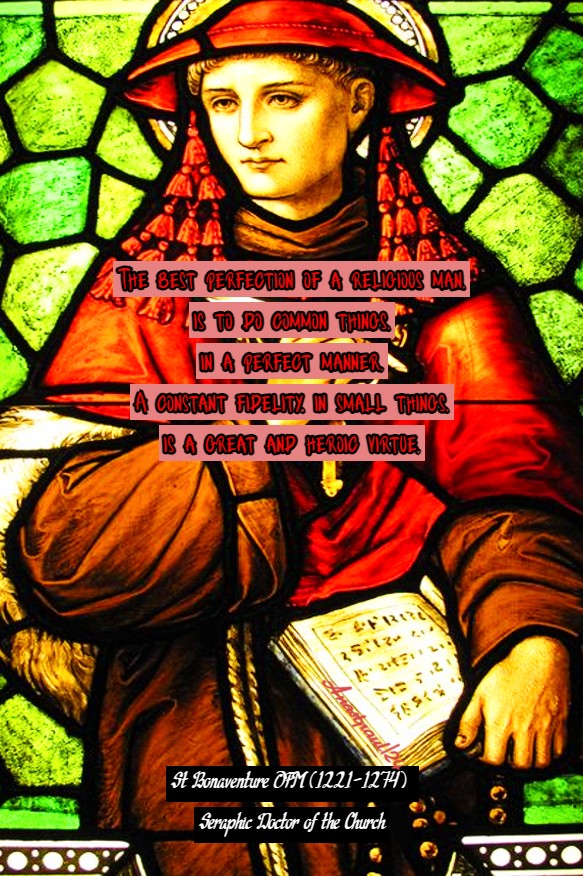
“The best perfection of a religious man, is to do common things, in a perfect manner. A constant fidelity, in small things, is a great and heroic virtue.”
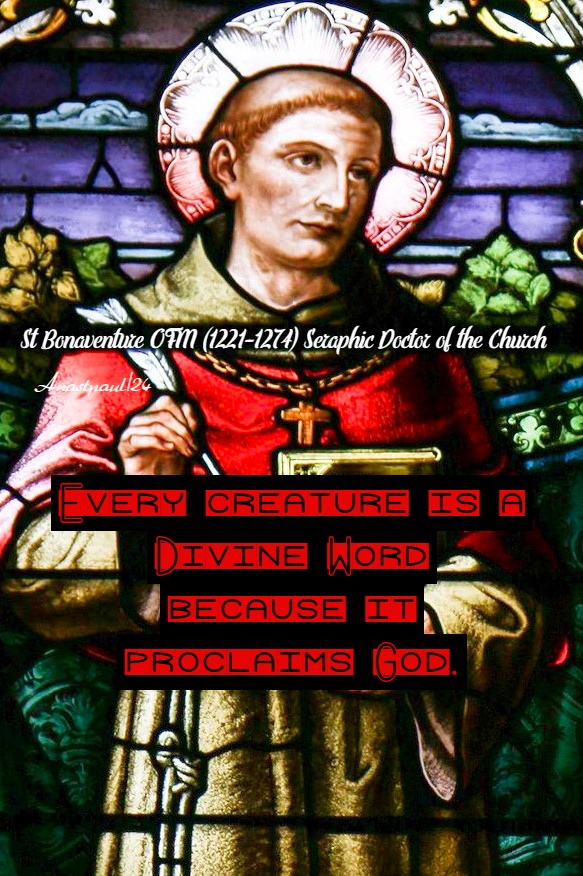
“Every creature is a Divine Word because it proclaims God.”
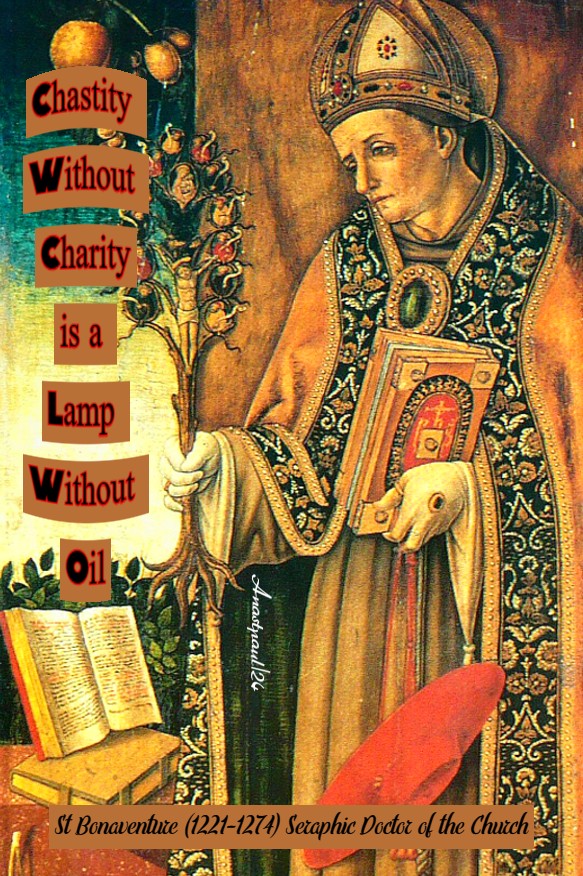
“Chastity without charity is a lamp without oil.”
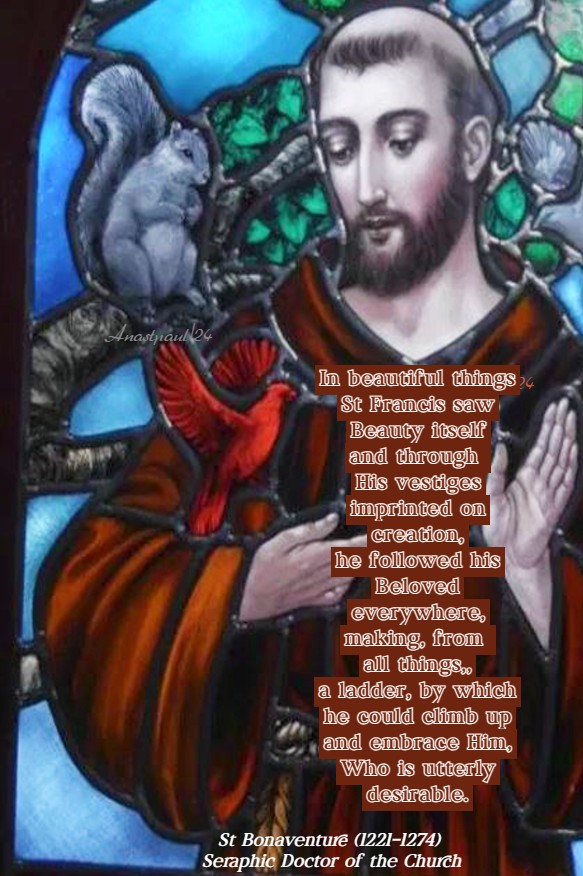
“In beautiful things St Francis saw Beauty itself and through His vestiges imprinted on creation, he followed his Beloved everywhere, making, from all things, a ladder, by which he could climb up and embrace Him, Who is utterly desirable.”
One Minute Reflection – 14 July – “The Month of the Most Precious Blood” – St Bonaventure OFM (1221-1274) Seraphic Doctor of the Church – Pentecost VIII – – Romans 8:12-17; Luke 16:1-9 – Scripture search here: https://www.drbo.org/
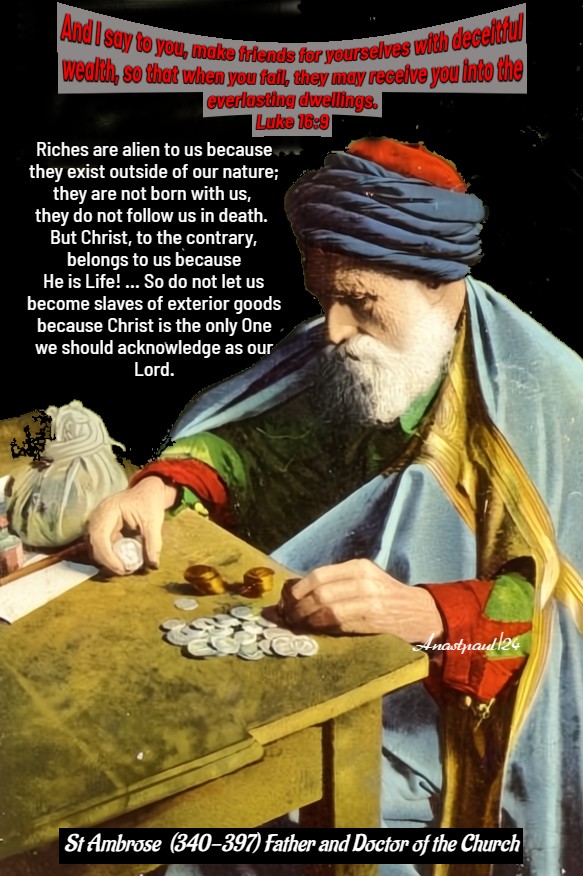
“And I say to you, make friends for yourselves with deceitful wealth, so that when you fail, they may receive you into the everlasting dwellings.” – Lukr 16:9
REFLECTION – “A servant cannot serve two masters.” Not that there are two; there is only one Master. For, even if there are some, who serve money, it has no inherent right to be a master; they themselves, are the ones who assume the yoke of this slavery. In fact, money has no rightful authority but constitutes an unjust bondage. That is why Jesus says: “Make friends for yourselves with deceitful money,” so that, by generosity to the poor, we will win the favour of Angels and Saints.
The steward is not blamed. By this we learn that we are not masters but rather stewards of other’s wealth. He was praised, even though he was in the wrong because, in paying out to others in his master’s name ,he won support for himself. And how rightly Jesus spoke of “deceitful wealth” because love of money so tempts our desires with its various seductions that we consent to become its slaves. That is why He said: “If you are not trustworthy with what belongs to another, who will give you what is yours?” Riches are alien to us because they exist outside of our nature; they are not born with us, they do not follow us in death. But Christ, to the contrary, belongs to us because He is Life! … So do not let us become slaves of exterior goods because Christ is the only One we should acknowledge as our Lord.” – St Ambrose (340-397) Bishop of Milan, Father and Doctor of the Church (Commentary on Saint Luke’s Gospel No 7).
PRAYER – O God, Who gave to Thy people, blessed Bonaventure, as a minister of salvation, grant, we beseech Thee, that we who cherished him on earth as a teacher of life, may be found worthy to have him as an intercessor in heaven. Through the same Jesus Christ, Thy Son our Lord, Who lives and reigns with Thee, in the unity of the Holy Ghost, God, world without end. Amen (Collect).
Our Morning Offering – 14 July – “The Month of the Most Precious Blood” – Pentecost VIII – St Bonaventure OFM (1221-1274) Seraphic Doctor of the Church
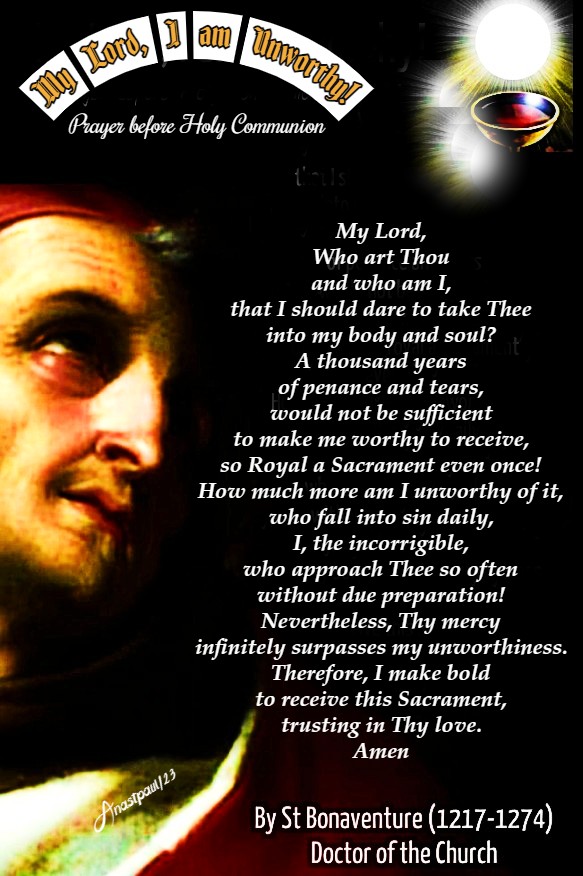
My Lord, I am Unworthy! Prayer before Holy Communion By St Bonaventure (1217-1274) Seraphic Doctor of the Church
My Lord, Who art Thou and who am I, that I should dare to take Thee into my body and soul? A thousand years of penance and tears, would not be sufficient to make me worthy to receive, so Royal a Sacrament even once! How much more am I unworthy of it, who fall into sin daily, I, the incorrigible, who approach Thee so often without due preparation! Nevertheless, Thy mercy infinitely surpasses my unworthiness. Therefore, I make bold to receive this Sacrament, trusting in Thy love. Amen
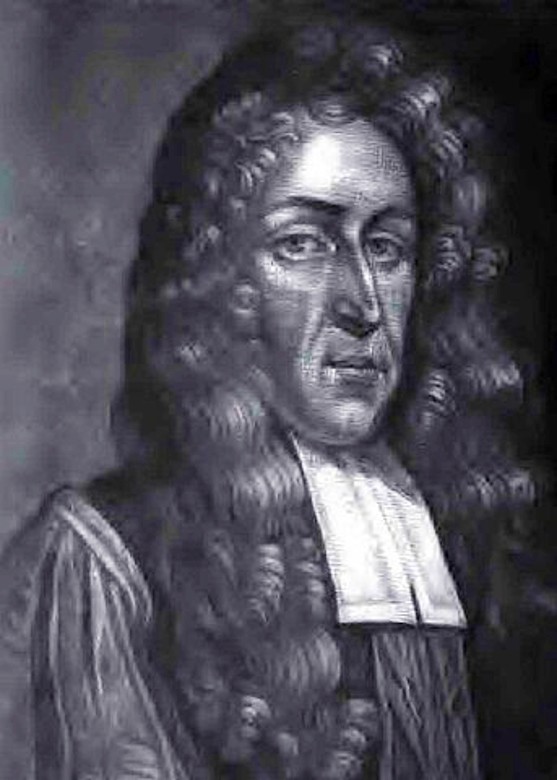
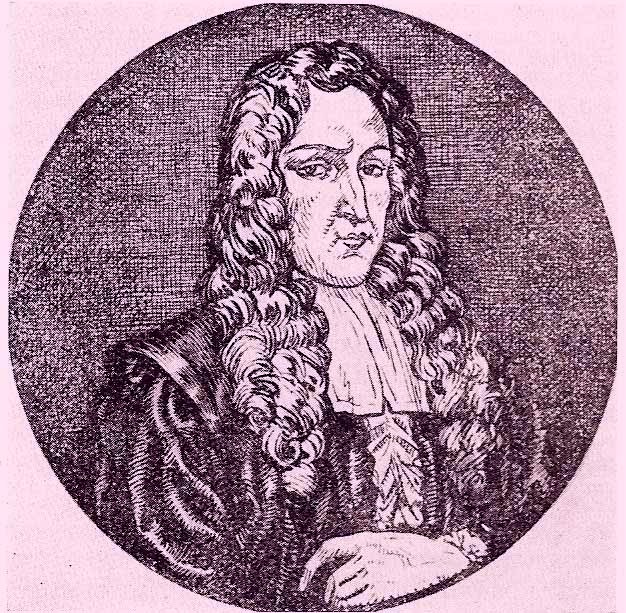
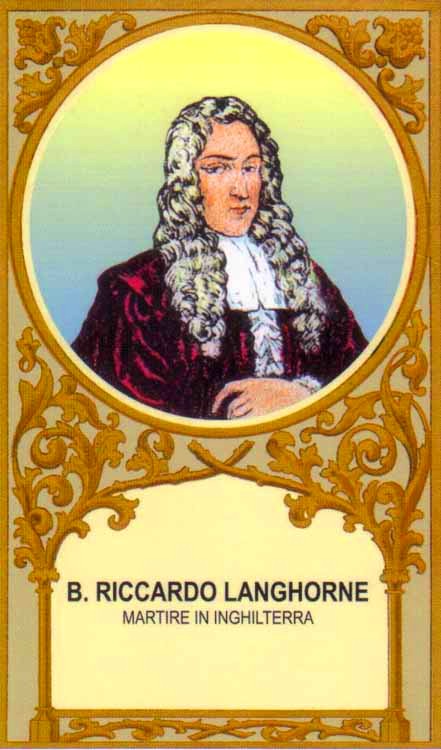
Saint of the Day – 14 July – Blessed Richard Langhorne (c1624-1679) Martyr Layman, Barrister. Born in c1624 in Little Wymondley, Hertfordshire, England and died on 14 July 1679 (aged 54–55) at Tyburn Tree, London, England by being hanged on a false charge of treason as part of the fabricated Popish Plot. He fell under suspicion because he was a Roman Catholic and because, he had acted as legal adviser to the Jesuits at a time of acute anti-Catholic hysteria.
Richard was the third son of William Langhorne, a Barrister and his wife, Lettice Needham, of Little Wymondley in Hertfordshire. He was admitted to the Inner Temple in May 1647 and called to the Bar in November 1654. He was a Catholic and provided legal and financial advice to the Society of Jesus in London. During the wave of anti-Catholic hysteria which followed the Great Fire of London of 1666, he was briefly arrested but quickly released.
His wife, Dorothy Legatt, was a Protestant from Havering in Essex. His sons, Charles and Francis were both Priests. When, in October 1677, Titus Oates was expelled from the English College at St Omer “for serious moral lapses” Charles Langhorne nevertheless, entrusted Oates with a letter to his father. Oates returned to St Omer with a letter from Richard thanking the Jesuits for all they had done for his sons.
When Oates and Israel Tonge, one of his accomplice, in September 1678, unleashed their entirely fictitious Popish Plot, a non-existent Catholic conspiracy to kill King Charles II, three Jesuits and a Benedictine were arrested. Following a detailed search of their papers (which failed to uncover any evidence of treason), Langhorne’s role as legal adviser to the Jesuits was discovered almost at once – he was arrested a week after the four Priests, although there was no evidence in the Priests’ papers that he had committed any crime. He was imprisoned at Newgate and charged with treason. Oates claimed and was corroborated by the notorious informer and confidence trickster, William Bedloe, that Langhorne’s earlier correspondence dealt with the conspiracy to kill the King.
He was tried on 14 June 1679. He was forced to defend himself, as a person charged with treason had no right then to Defence Counsel (this rule was not changed until the passage of the Treason Act in 1695). His main defence consisted of an attack on the character of the Crown’s principal Witnesses, Oates and Bedloe but since the Judges were well aware of the deplorable past lives of both men, this seems to have made little impression.He also called a number of students from St Omer to prove that Oates had been at the College on the crucial dates when he claimed to be in London but the public mood was so hostile to Catholics that the Witnesses were barely able to make themselves heard above the roar of the crowd and some of them were assaulted as they left the Court. Ironically, some of the same Witnesses appeared for the prosecution at Oates’ own trial for perjury in 1685, where the crowd treated them courteously and the Jury was told to weigh their evidence with the greatest seriousness. (Such evil contradicitions and treachery within the Courst of Justic [!] within the space of 6 years!)
William Scroggs, the Lord Chief Justice, although violently prejudiced against Catholic Priests, was relatively tolerant of Catholic laymen. His summary was reasonably fair, by the standards of the time and he did warn the Jury that on no account should an innocent man’s life be taken away. Nonetheles, Langhorne was found guilty of High Treason.
As the result of a petition by his wife, a ‘true Protestant’ he received a month’s reprieve to tidy the affairs of his clients. Some suggest that the Crown was still hoping that he would confess and it seems he was offered a Royal Pardon if he did so. Langhorne was prepared, presumably with the consent of the Jesuit Fathers, to give the Crown a list of all the Jesuit properties in England, (which turned out to be much less extensive than the Crown, misled by Oates’s wild exaggeration of the Jesuits’ wealth, had expected) but, he steadily maintained his innocence.
Richard wrote a lengthy Devotion of Prayers and Meditations in verse, which was later published. He was executed at Tyburn Tree, London, on 14 July 1679.
His last words to his Executioner were:
“I am desirous to be with my Jesus. I am ready and you need stay no longer for me.”
Public opinion was slowly turning against the Plot and Langhorne’s courageous death made a favourable impression on the watching crowd.
The Martyr’s wife, Dorothy, although a militant Protestant, who even sometimes provided information against the Catholics, remained faithful to her husband until the end and perhaps later converted to Catholicism, as suggested by Burnet in his emorandum of the Popish Conspiracy.
Langhorne’s Memorial remains, containing the story of his arrest and imprisonment, written in Newgate and published, by his son, Father Richard, three months after his death, together with the Prayers and Meditations he composed while awaiting the supreme hour, (London 1679). Father Richard later also published , written by his father in defence of Charles II’s declaration of 15 March 1672. We also have some letters of the Martyr preserved by two of his friends, the Protestant Lord Christopher Hatton and the Catholic William Blundell.
Begun in Rome on 9 December 1886 by order of Pope Leo XIII, the cause for Langhorne’s Beatification was concluded under the Pontificate of Pope Pius XI, with his inscription in the catalogue of the Blesseds on 15 December. 1929
Blessed Gaspar de Bono OM (1530– 1604) Spanish Priest, Friar of the Order of Minims, Vicar Provincial of the Order. He was noted for his particular devotion to the Passion of Christ, carrying his Crucifix everywhere as a means of evangelisation and to be able to constantly immerse himself in his Saviour’s sufferings. His Loving Life: https://anastpaul.com/2021/07/14/saint-of-the-day-14-july-blessed-gaspar-de-bono-om-1530-1604/
Bl Giorgio of Lauria Bl Hroznata of Bohemia Bl Humberto of Romans St Idus of Ath Fadha St Just St Justus of Rome St Liebert St Marciano of Frigento St Marchelm Bl Michael Ghebre St Optatian of Brescia St Papias of Africa Blessed Richard Langhorne (c1624-1679) Martyr Layman Bl Toscana of Verona St Ulric of Zell St Vincent Madelgaire






 AnaStpaul
You must be logged in to post a comment.