Thought for the Day – 15 July – Meditations with Fr Richard Frederick Clarke SJ (1839-1900)
CHARITY Meditations for a Month
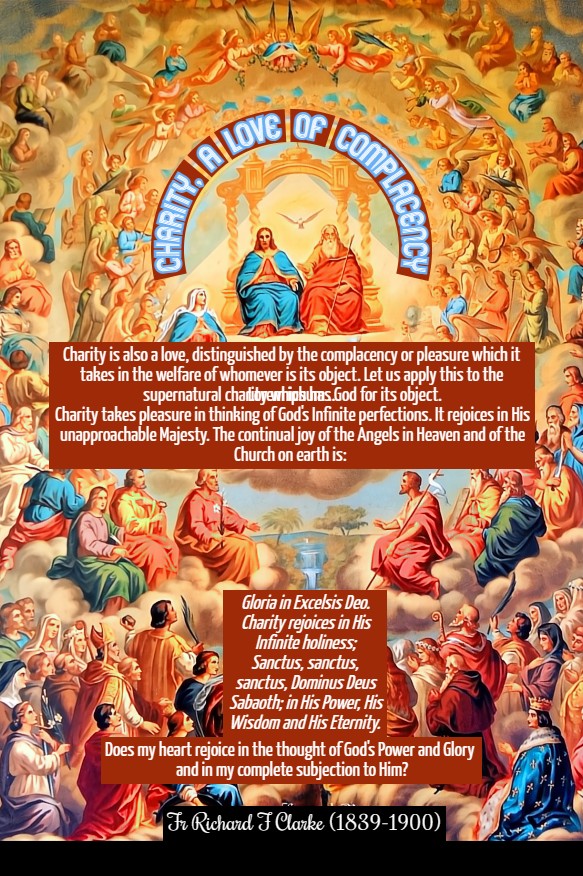
Charity, a Love of Complacency
Charity is also a love, distinguished by the complacency or pleasure which it takes in the welfare of whomever is its object. Let us apply this to the supernatural charity which has God for its object.
Charity takes pleasure in thinking of God’s Infinite perfections. It rejoices in His unapproachable Majesty. The continual joy of the Angels in Heaven and of the Church on earth is:
Gloria in Excelsis Deo. Charity rejoices in His Infinite holiness; Sanctus, sanctus, sanctus, Dominus Deus Sabaoth; in His Power, His Wisdom and His Eternity. Does my heart rejoice in the thought of God’s Power and Glory and in my complete subjection to Him?
Charity also thinks with complacency of the homage paid to God by Angels and by men. It thinks of the honour He derives from the holiness of the Saints, from the Immaculate purity of His Holy Mother, from the obedience of the Son of God to His Eternal Father and, from the Sacrifice on Calvary, whereby the world was made once more, the Kingdom of God and filled with tens of thousands of saints. For all this, do I render thanks to God and rejoice in the glory He derives therefrom. I thank Thee, O my God, that Thou hast on earth, so many faithful servants who give glory to Thy Name.
Charity, moreover, rejoices exceedingly in the honour done to God, whenever a sinner is reconciled to Him. The Angels rejoice over the sinner doing penance, not so much for his own sake, as because God’s Kingdom is thereby enlarged and His glory increased. So, too, we ought to rejoice in the conversion of every sinner and all the more because we are sinners. As sinners, we can appreciate better, the injury done to God by sin and the honour He receives when sin is blotted out and the sinner is reconciled to Him. Do I rejoice in the conversion of sinners and recognise that conversion has increased God’s Kingdom and His glory?
Quote/s of the Day – 15 July – “The Month of the Most Precious Blood” – Ecclesiasticus 31:8-11, Luke 12:35-40 – Scripture search here: https://www.drbo.org/
“Watch” over your life. … Sheep will turn into wolves and love into hatred. With the increase of iniquity, people will hate, persecute and betray each other. Then the world deceiver will appear in the disguise of God’s Son. He will work “signs and wonders” and the earth will fall into his hands. He will commit outrages such as have never occurred before. Then humankind will come to the “fiery trial“ and many will fall away” and perish.”
Unknown 1st Century Author [ACW- Ancient Christian Writer] (Didache 16)
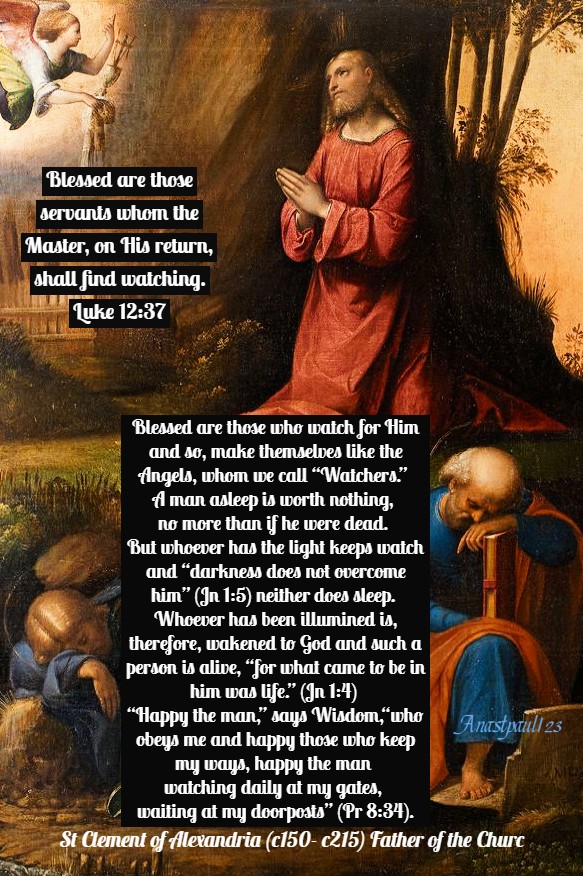
“Blessed are those servants whom the Master, on His return, shall find watching.” Luke 12:37
“Blessed are those who watch for Him and so, make themselves like the Angels, whom we call “Watchers.” A man asleep is worth nothing, no more than if he were dead. But, whoever has the light, keeps watch and “darkness does not overcome him” (Jn 1:5) neither does sleep. Whoever has been illumined is, therefore, wakened to God and such a person is alive, “for what came to be in him was life.” (Jn 1:4) “Happy the man,” says Wisdom, “who obeys me and happy those who keep my ways, happy the man watching daily at my gates, waiting at my doorposts” (Pr 8:34).”
St Clement of Alexandria (c150- c215) Father of the Church,
“She did not leave the temple, serving with fastings and prayers, night and day.” Luke 2:37
“If, in holy Scripture, Christ is the true Sun and the true Day, there is no hour when Christians should not adore God frequently and constantly, so that we, who are in Christ, that is, in the true Sun and true Day, should be persevering, throughout the whole day, in our petitions and prayer. And when, in the course of time, the revolving night returns, there can be no harm from the nocturnal shades, for those who pray because, to the sons of Light (1 Thes 5:5), even in the night there is day! For when is he without light who has Light in his heart? Or when does he not have sun and day to whom Christ is Sun and Day?”
St Cyprian of Carthage (200-258) Martyr, Father of the Church
One Minute Reflection – 15 July – “The Month of the Most Precious Blood” – St Henry II (972-1024) Confessor, Holy Roman Emperor. – Ecclesiasticus 31:8-11, Luke 12:35-40 – Scripture search here: https://www.drbo.org/
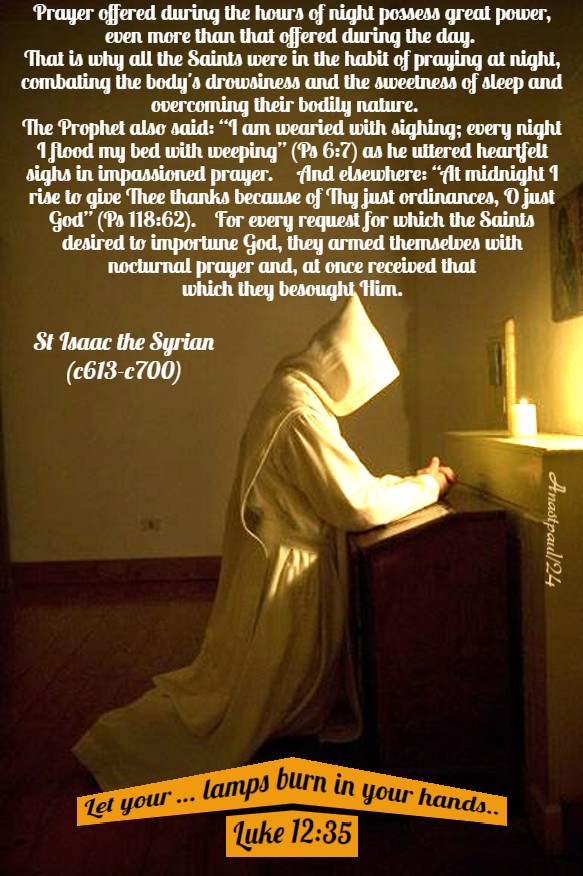
“Jesus said to His disciples: Let your … lamps burn in your hands.” – Luke 12:35
REFLECTION – “Prayer offered during the hours of night possess great power, even more than that offered during the day. That is why all the Saints were in the habit of praying at night, combating the body’s drowsiness and the sweetness of sleep and overcoming their bodily nature. The Prophet also said: “I am wearied with sighing; every night I flood my bed with weeping” (Ps 6:7) as he uttered heartfelt sighs in impassioned prayer. And elsewhere: “At midnight I rise to give Thee thanks because of Thy just ordinances, O just God” (Ps 118:62). For every request for which the Saints desired to importune God, they armed themselves with nocturnal prayer and, at once received that which they besought Him.
Satan himself fears nothing as much as prayer offered during the night watches. Even if they are accompanied by distractions, it does not return fruitless, as long as something inappropriate is not being asked for. That is why Satan engages in severe combat against those who keep watch at night, so as to deter them from this practice if he can, especially if they show themselves to be persevering. But those who are in any way defended against his pernicious wiles and have tasted the gifts God grants, at these times of vigil and, have had personal experience, of the greatness of the help God gives them, wholly despise him, he and all his craftiness.” – St Isaac the Syrian of Nineveh (c613-c700) Bishop of Nineveh, Monk at Mosul, Father of the Church (Ascetical Discourses)
PRAYER – O God, Who on this day took Henry, Thy Confessor, to the everlasting Kingdom from the throne of an earthly empire; we humbly beseech Thee, that as Thou enabled him, protected by the abundance of Thy grace, to overcome the temptations of the world, so grant that we, in emulation of him, may shun the allurements of this world and come to Thee with pure hearts.Through Jesus Christ, Thy Son our Lord, Who lives and reigns with Thee, in the unity of the Holy Ghost, God, world without end. Amen (Collect).
Our Morning Offering – 15 July – “The Month of the Most Precious Blood” – The Feast of the the “Divisio Apostolorum – the Division of the Apostles” also known as (‘Dispersion’)
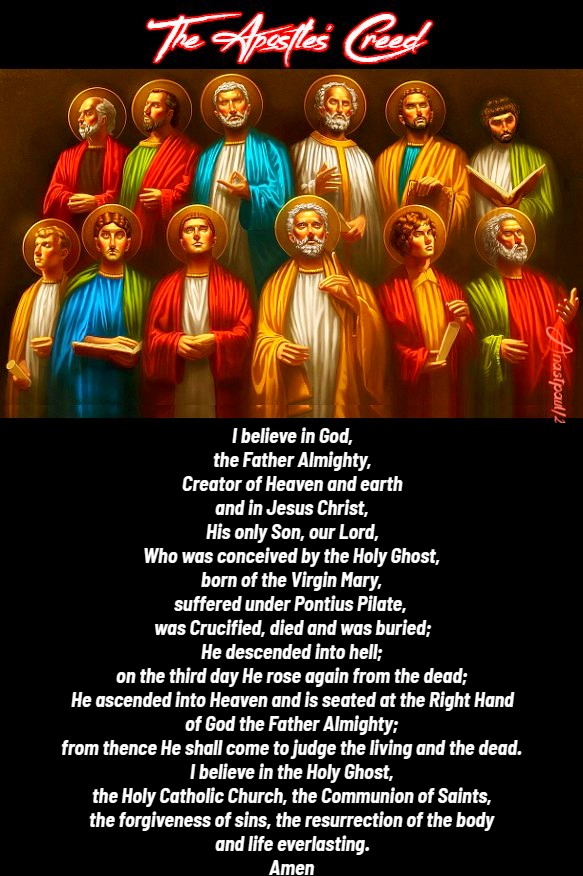
The Apostles’ Creed
I believe in God, the Father Almighty, Creator of Heaven and earth and in Jesus Christ, His only Son, our Lord, Who was conceived by the Holy Ghost, born of the Virgin Mary, suffered under Pontius Pilate, was crucified, died and was buried; He descended into hell; on the third day He rose again from the dead; He ascended into Heaven and is seated at the Right Hand of God the Father Almighty; from thence He shall come to judge the living and the dead. I believe in the Holy Ghost, the Holy Catholic Church, the Communion of Saints, the forgiveness of sins, the resurrection of the body and life everlasting. Amen
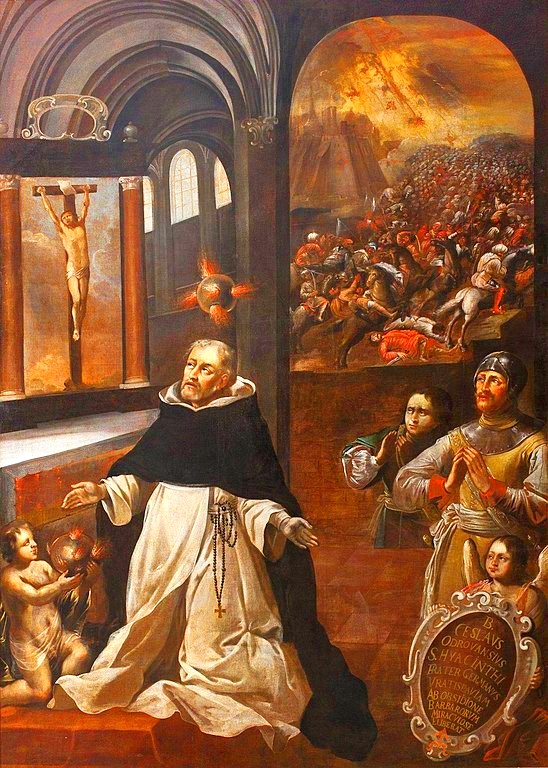
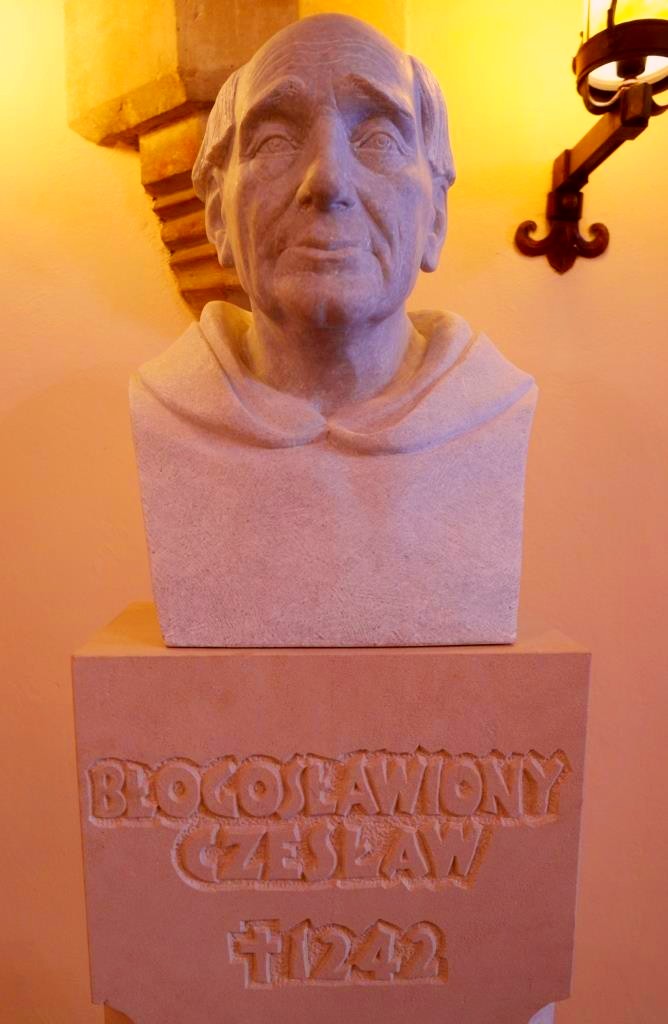
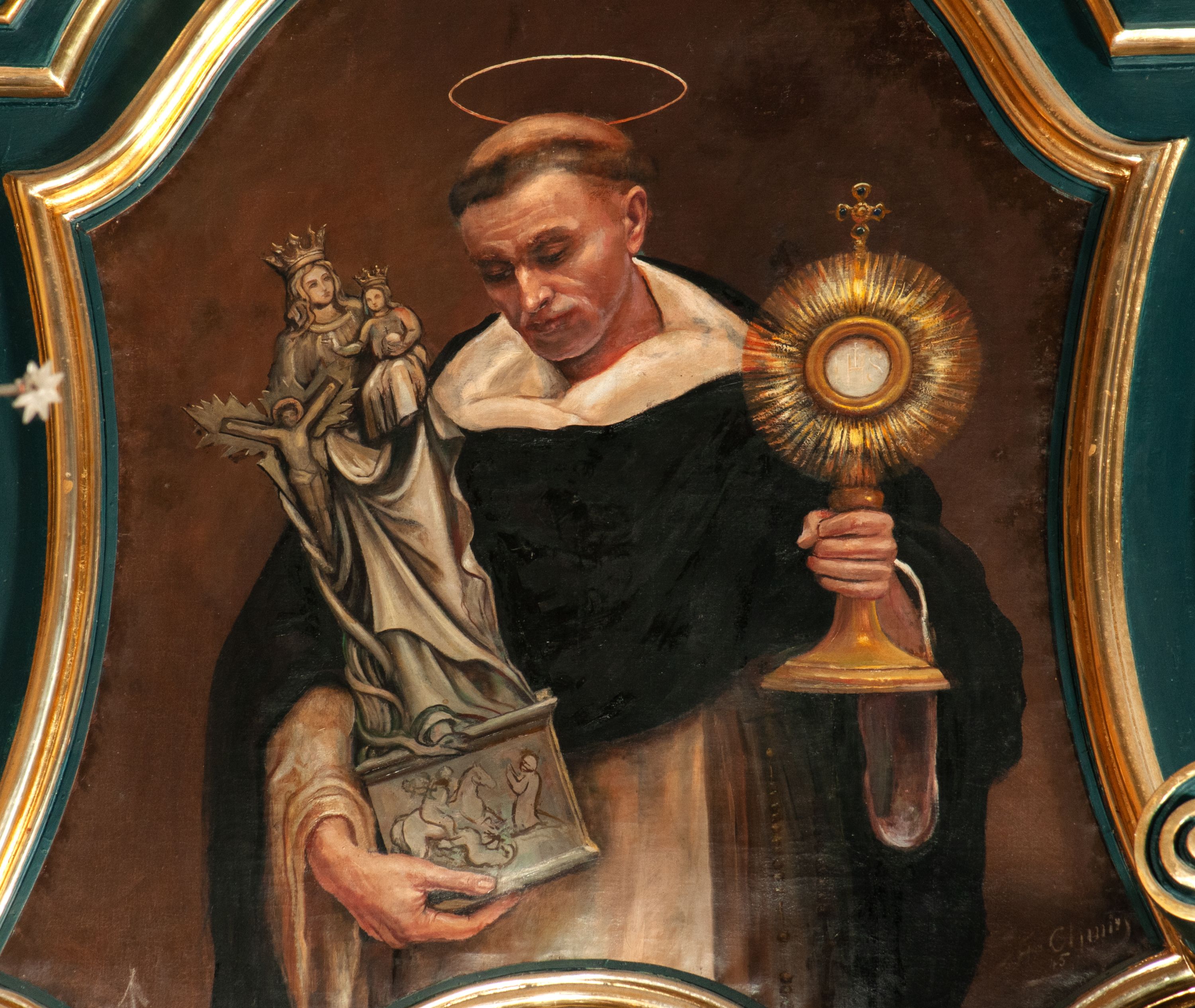
Saint of the Day – 15 July – Blessed Ceslas Odrowaz OP (c1180-1242) Priest and Friar of the Order of Preachers, receiving the Habit from St Dominic himself. Ceslas was almost certainly Saint Hyacinth’s (1185-1257) older brother. Doctor of Divinity and Law, Missionary, in time, Ceslas became the Provincial Father of the Order for all of Poland. Born in c1180 at Krakow, Upper Silesia (modern Poland) and died on 15 or 17 July 1242 at Wroclaw, Poland of natural causes. Patronage – of Wroclaw, Poland. Also known as – Ceslas of Cracow, Ceslaus of Krakow, Ceslas of Poland, Ceslas of Wroclaw, Ceslaus…Czeslaw…Ceslao… Additional Memorials – 17 July (Dominicans), 20 July (Wroclaw, Poland), 4 July on some calendars, 16 July on some calendars.
Painting by Tomasz Jan Muszyński (1665)
Ceslas was born in Silesia probably in 1180. He spent his youth in Krakow in a Poland which had recovered from the Mongol invasions, growing again in that Christianity introduced two centuries earlier by King Mieszko I and which would then have had its great flourish under King Casimir the Great.
His studies began in Krakow and continued at the Universities of Paris and Bologna, the major and renowned places of study at that time. Ceslas was Ordained to the Holy Priesthood by Bishop Vincent Kadlubek of Krakow, iwhere he had matured in his intellectual and spiritual vocation. Ceslas was then entrusted with the Collegiate Church of Sandomierz.
In 1220, the great opportunity of his life arose. Divine Providence desired that he should accompany, together with St Hyacinth, the Bishop of Krakow, Ivo Odrowaz to Rome. There, he met St Dominicand witnessed the miraculous resurrection of the young Napoleon, nephew of Cardinal Stephen, by the intercession of St Dominic himself.
Both Ceslas and Hyacinth decided to enter St Dominic’s Order of Preachers. , They were sent to Bologna where they remained for a certain time in the Dominican Convent there.
In 1221 his Superiors in Bologna sent Ceslas, together with other Friars, to Poland to erect new foundations. On the return journey, he stopped in Prague where he founded the Dominican House at the Church of St Clement. Returning to Krakow, he worked for many years at the Church of the Holy Trinity, in the Monastery recently founded there.
From there he went to Wroclaw, where he remained for 7 years and thereafter Ceslas was appointed as the Superior. In 1232 he was honoured with the Office of Provincial Father of Poland.
He travelled for another four years throughout Silesia and Poland founding Houses, until in 1236 he resigned, forced by exhaustion, from all his responsibilities. In 1241, upon returned to Wroclaw, Ceslas took part in the liberation of the City from the siege of the Tartars. He died on 15 or 17 July 1242 and was buried in the Church of St Adalbert. Pope Clement XI confirmed the cult on 27 August 1712 and, in 1748, Pope Benedict XIV set the day of his celebration on 20 July. The Dominican Order remembers him on 17 July while the Martyrologium Romanum indicates it on 15 July.
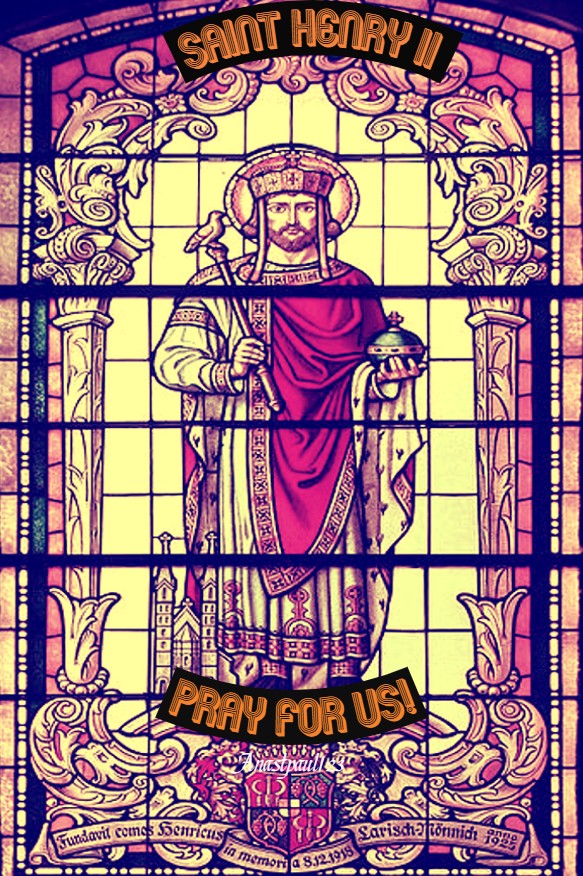
St Henry II (972-1024) Holy Roman Emperor. Henry was well known for his Missionary spirit and for his protection of the Pope in times of trouble. Henry ruled with a spirit of great humility and always sought to give the glory to God. He used his position to promote the work of the Church and the peace and happiness of the people. Another Saints whose Feast was moved in 1969 from today, 15 July to 13 July. Biography: https://anastpaul.wordpress.com/2017/07/13/saint-of-the-day-13-july-st-henry-ii-holy-roman-emperor/
St Abundantia of Spoleto St Abudemius of Bozcaada St Adalard the Younger
Blessed Anne-Mary Javouhey (1779-1851) “The Mother of the Slaves,” Religious Sister, Missionary and Founder of the Sisters of Saint Joseph of Cluny. Imagine a Mother Teresa in the France of Napoleon’s day and you will have a picture of Anne-Marie Javouhey. Nanette, as she was called, was a “velvet brick,” a thin layer of gentleness covering her determined core. A competent leader, Nanette dominated every scene in her adventurous life. Blessed Anne-Marie was Beatified on 15 October 1950 by Pope Pius XII. Biography: https://anastpaul.com/2019/07/15/saint-of-the-day-15-july-blessed-anne-mary-javouhey-1779-1851/
St Apronia
St Athanasius of Naples (c830-c 872) Confessor, Bishop of Naples from 849 until his death, Papal Legate, Reformer and restoring of Monasteries, he built a Hospice for pilgrims and a new Monastery, a man of austerity and prayer. This Athanasius should not be confused with his nephew, Athanasius II, also the Bishop of Naples. About this St Athanasius, a Patron of Naples among +70 Patrons: https://anastpaul.com/2022/07/15/saint-of-the-day-15-july-st-athanasius-of-naples-c-830-c-872/
St Antiochus of Sebaste St Benedict of Angers
Blessed Bernard of Baden TOSF (1428-1458) Margrave of Baden, Germany (Margrave was originally the medieval title for the military commander assigned to maintain the defence of one of the border provinces of the Holy Roman Empire.) Tertiary of the Order of St Francis, Apostle of the poor and the needy. Bernard was Beatified on 16 September 1769 by Pope Clement XIV. His Canonisation process continues, at present, the second miracle required is being investigated. Blessed Bernard’s Life: https://anastpaul.com/2021/07/15/saint-of-the-day-15-july-blessed-bernard-of-baden-tosf-1428-1458/
St David of Sweden St Donivald St Eberhard of Luzy St Edith of Tamworth St Eternus St Felix of Pavia St Gumbert of Ansbach St Haruch of Werden St Jacob of Nisibis St Joseph Studita of Thessalonica Bl Peter Aymillo St Plechelm of Guelderland Bl Roland of Chézery St Valentina of Nevers St Vladimir I of Kiev
Martyred Jesuit Missionaries of Brazil – 40 Beati: A band of forty Spanish, Portugese and French Jesuit Missionaries Martyred by the Huguenot pirate Jacques Sourie while en route to Brazil. They are – Aleixo Delgado • Alonso de Baena • álvaro Borralho Mendes • Amaro Vaz • André Gonçalves • António Correia • Antônio Fernandes • António Soares • Bento de Castro • Brás Ribeiro • Diogo de Andrade • Diogo Pires Mimoso • Domingos Fernandes • Esteban Zuraire • Fernando Sánchez • Francisco Alvares • Francisco de Magalhães • Francisco Pérez Godoy • Gaspar Alvares • Gonçalo Henriques • Gregorio Escribano • Ignatius de Azevedo • Iõao • João Fernandes • João Fernandes • Juan de Mayorga • Juan de San Martín • Juan de Zafra • Luís Correia • Luís Rodrigues • Manuel Alvares • Manuel Fernandes • Manuel Pacheco • Manuel Rodrigues • Marcos Caldeira • Nicolau Dinis • Pedro de Fontoura • Pedro Nunes • Simão da Costa • Simão Lopes • They were Martyed on 15 and 16 July 1570 on the ship Santiago near Palma, Canary Islands. They were Beatified on 11 May 1854 by Pope Pius IX.
Martyrs of Alexandria – 13 Saints: Thirteen Christians who were Martyred together. We know the names of three, no details about them and the other ten were all children. – Narseus, Philip and Zeno. Martyred in the early 4th-century in Alexandria, Egypt.
Martyrs of Carthage – 9 Saints: A group of nine Christians who were Martyred together. We know nothing else but their names – Adautto, Catulinus, Felice, Florentius, Fortunanziano, Januarius, Julia, Justa and Settimino. They were Martyred in Carthaginian and their relics at the Basilica of Fausta at Carthage.
Martyrs of Pannonia – 5 Saints: Five 4th-century Martyrs killed together. No information about them has survived except the names – Agrippinus, Fortunatus, Martialis, Maximus and Secundinus.








 AnaStpaul
You must be logged in to post a comment.