Thought for the Day – 15 June – Meditations with Antonio Cardinal Bacci (1881-1971)
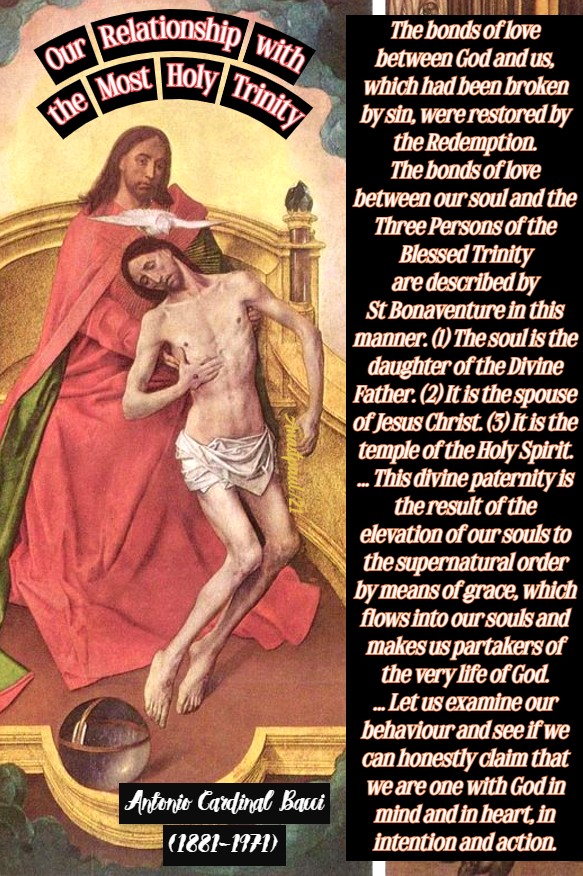
Our Relationship with the Most Holy Trinity
“The bonds of love between God and man which had been broken by sin, were restored by the Redemption. The bonds of love between our soul and the Three Persons of the Blessed Trinity are described by St Bonaventure in this manner. (1) The soul is the daughter of the Divine Father. (2) It is the spouse of Jesus Christ. (3) It is the temple of the Holy Spirit.
The concept of our divine sonship can be found even in the Old Testament. “As one whom the mother caresseth,” God promises, “so will I comfort you” (Is 66:13). But Jesus insisted in a special way on this concept of our divine sonship, so that we might love our heavenly Father more. He told us to address God as Father in our prayers. He described Him as a loving Father, waiting with love and forgiveness for His prodigal sons. When leaving this earth, He told us: “I go to my Father and to your Father.”
“Behold what manner of love the Father has bestowed upon us.” writes St John, “that we should be called children of God and so we are” (1 Jn 3:1). “You have not received a spirit of bondage,” explains St Paul, “so as to be again in fear but, you have received a spirit of adoption as sons, by virtue of which, we cry: “Abba! Father!” (Rom 8:15). This divine paternity is the result of the elevation of our souls to the supernatural order by means of grace, which flows into our souls and makes us partakers of the very life of God. It is necessary, therefore, to nourish this grace in ourselves by praying to our heavenly Father with humility and with perseverance. It is equally essential for us to keep this grace alive by being obedient always to the commandments of God and to His holy Will.
Let us examine our behaviour and see if we can honestly claim that we are one with God in mind and in heart, in intention and action.”
“This is the order of our Faith, the foundation of the edifice and the support of our conduct – God, the Father, uncreated, uncontainable, invisible, One God, the Creator of all – this is the first article of our Faith. And the second article – the Word of God, the Son of God, Christ Jesus our Lord, Who was revealed by the Prophets according to the character of their prophecy and according to the nature of the economies of the Father, by Whom all things were made and Who, in the last times, to recapitulate all things, became a Man amongst men, visible and palpable, in order to abolish death, to demonstrate life and to effect communion between God and man. And the third article – the Holy Ghost, through Whom the Prophets prophesied and the Patriarchs learnt the things of God and the righteous, were led in the path of righteousness and Who, in the last times, was poured out in a new fashion upon the human race, renewing man, throughout the world, to God.”
St Irenaeus (130-202) Martyr, Father of the Church
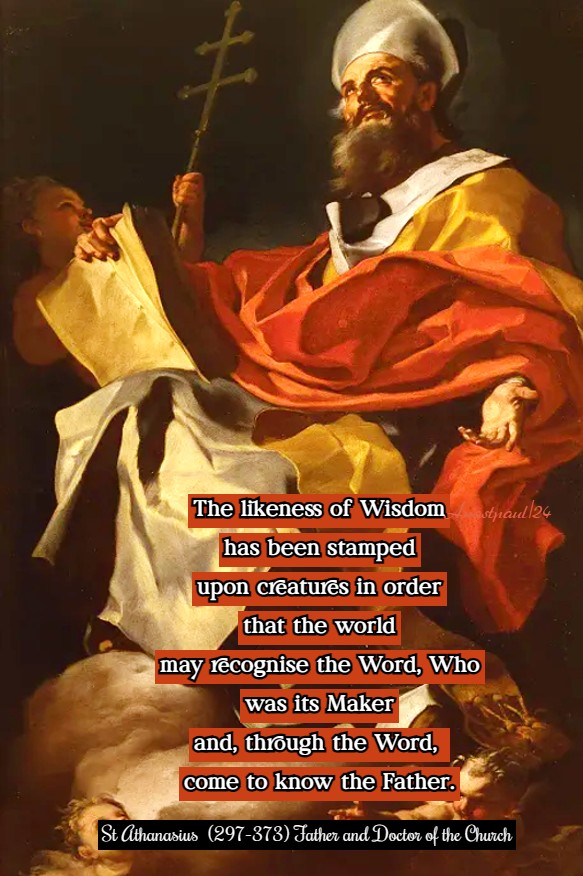
“The likeness of Wisdom has been stamped upon creatures, in order that the world may recognise the Word, Who was its Maker and, through the Word, come to know the Father. ”
St Athanasius (297-373) Father and Doctor of the Church
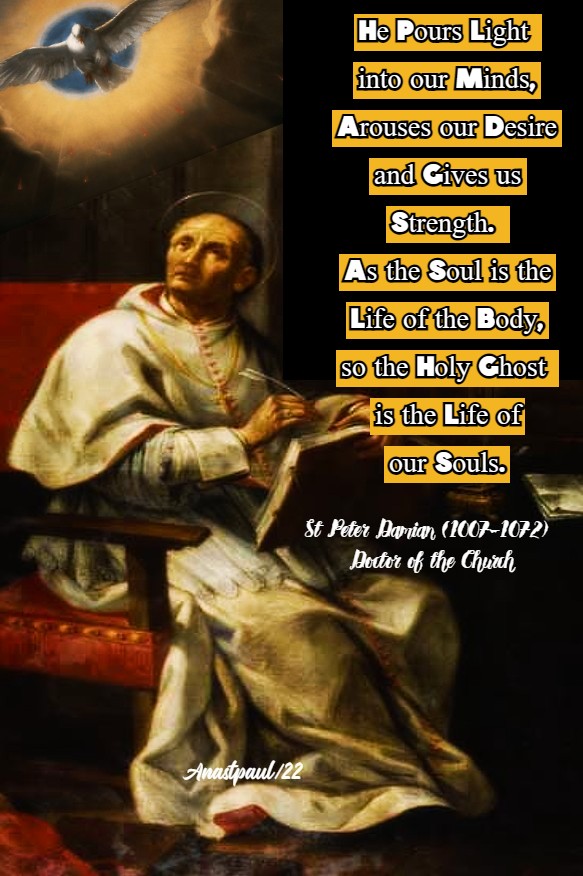
“He pours light into our minds, arouses our desire and gives us strength… As the soul is the life of the body, so the Holy Ghost is the life of our souls.”
St Peter Damian (1007-1072) Bishop, Father and Doctor of the Church
O SANCTISSIMA~ O MOST HOLY! Indulgenced Prayer to the Most Holy Trinity
O Most Holy Trinity, I adore Thee, Who art dwelling, by Thy grace, within my soul.
O Most Holy Trinity, Who art dwelling, by Thy grace, within my soul, make me love Thee, more and more.
O Most Holy Trinity, Who art dwelling, by Thy grace, within my soul, sanctify me more and more.
Abide with me, O Lord, be Thou my true joy. Amen
An Indulgence of 300 days for each of the above prayers, even when recited separately. (SP Ap. 26 April 1921 and 23 October 1928).
One Minute Reflection – 15 June – “The Month of the Most Sacred Heart of Jesus” – Pentecost I – Trinity Sunday – St Vitus (c290-c 303) – Martyr, One of the Fourteen Holy Helpers. Died aged 12-13 years of age – Rom 11:33-36 – Matthew 28:18-20.– Scripture search here: https://www.drbo.org/
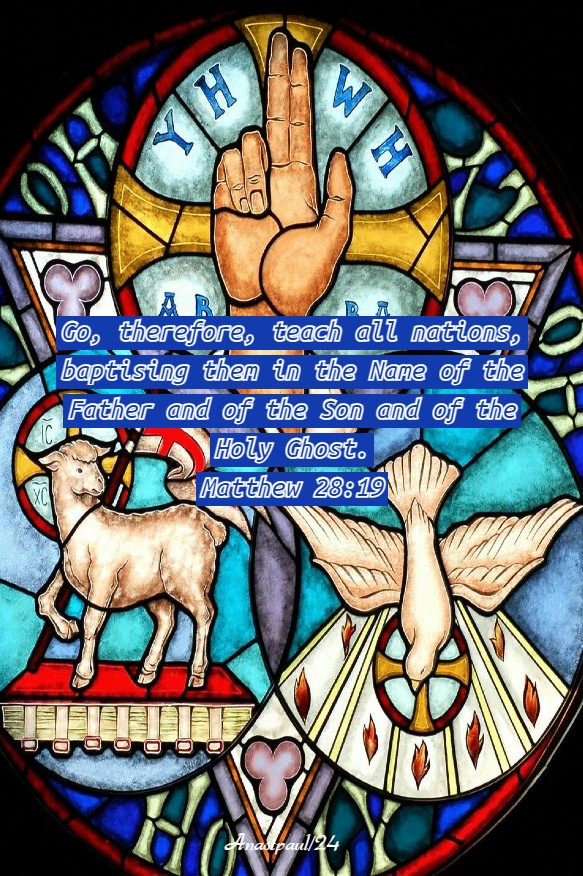
“ … Baptising them, in the Name of the Father and of the Son and of the Holy Ghost.” – Matthew 28:19
REFLECTION – “This is the order of our faith, the foundation of the edifice and the support of our conduct – God, the Father, uncreated, uncontainable, invisible, One God, the Creator of all – this is the first article of our faith. And the second article – the Word of God, the Son of God, Christ Jesus our Lord, Who was revealed by the Prophets according to the character of their prophecy and according to the nature of the economies of the Father, by Whom all things were made and Who, in the last times, to recapitulate all things,’ became a Man amongst men, visible and palpable, in order to abolish death, to demonstrate life and to effect communion between God and man. And the third article – the Holy Ghost, through Whom the Prophets prophesied and the Patriarchs learnt the things of God and the righteous, were led in the path of righteousness and Who, in the last times, was poured out in a new fashion upon the human race, renewing man, throughout the world, to God.
For this reason the Baptism of our regeneration takes place through these three articles, granting us regeneration unto God the Father through His Son by the Holy Spirit – for those who bear the Spirit of God are led to the Word, that is to the Son, while the Son presents them to the Father and the Father furnishes incorruptibility. Thus, without the Spirit it is not possible to see the Word of God and without the Son, one is not able to approach the Father; for the knowledge of the Father is the Son and knowledge of the Son of God, is through the Holy Ghost, while the Spirit, according to the good-pleasure of the Father, the Son administers, to whom the Father wills and as He wills.” – St Irenaeus (130-202) Bishop of Lyons, Theologian and Martyr, Father of the Church (Demonstration of the apostolic preaching 6-7).
PRAYER – Almighty, Eternal God, Thou Who have given Thy servants, in the confession of the true Faith, to acknowledge the glory of the eternal Trinity and in the power of that majesty, to adore its unity, grant, we beseech Thee, in the firmness of this Faith we may ever be protected from all harm. Through Jesus Christ, Thy Son our Lord, Who lives and reigns with Thee, in the unity of the Holy Ghost, God, world without end. Amen (Collect).
Our Morning Offering – 15 June – Trinity Sunday Patris et Filii Concordi – Pentecost I
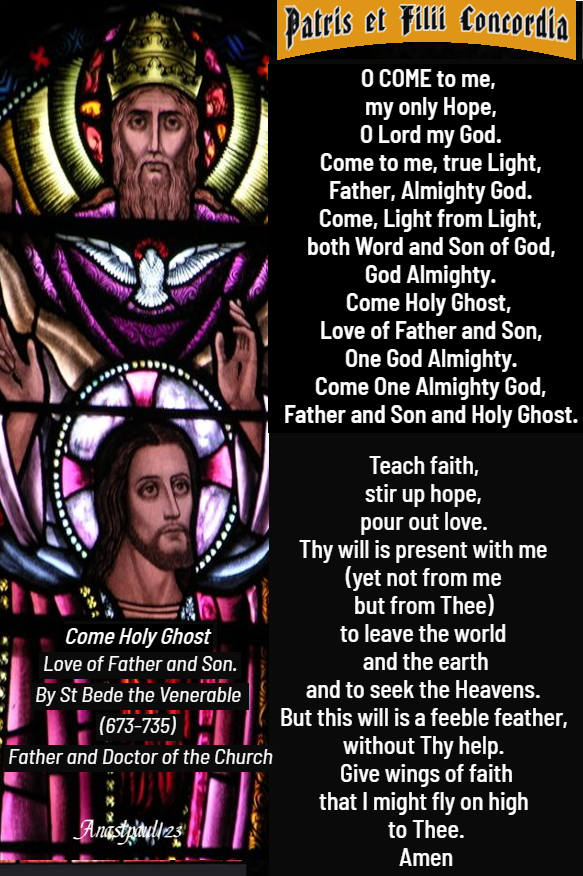
Patris et Filii Concordia Come Holy Ghost, Love of Father and Son. By St Bede the Venerable (673-735) Father and Doctor of the Church
O COME to me, my only Hope, O Lord my God. Come to me, true Light, Father, Almighty God. Come, Light from Light, both Word and Son of God, God Almighty. Come Holy Ghost, Love of Father and Son, One God Almighty. Come One Almighty God, Father and Son and Holy Ghost.
Teach faith, stir up hope, pour out love. Thy will is present with me (yet not from me but from Thee) to leave the world and the earth and to seek the Heavens. But this will is a feeble feather, without Thy help. Give wings of faith that I might fly on high to Thee. Amen
Saint of the Day – 15 June – St Trillo (6th Century) Abbot of Wales, Monk Missionary Founder of the Churches at Llandrillo, Denbighshire and Llandrillo yn Rhos, Rhos-on-Sea in Conwy County Borough, all in Wales., Born in the 6th Century in Brittany, France and died in the same Century in Wales. Patronage –of Llandrillo, Denbighshire, and Llandrillo yn Rhos – in Wales. Also known as – Terillo, Drillo, Drel.
Trillo the brother of Saints Tegau, Twrog and Llechid. According to some late information from St George’s Church, there were also two other brothers, Saints Bagian and Tanwg.
They were of nobly birth in Brittany and Trillo went to Wales with his brothers Saint Tegai and Saint Twrog as a disciple and student of Saint Cadfan, who later admitted Trillo to the religious life.
Trillo became the Abbot and Church-founder and was widely renowned for his holiness and counsel.
He died and was buried on the island of Bardsey, in the Irish Sea in north-west Wales. The island was once called ‘the island of 20,000 Saints’ to remember the twenty thousand pilgrims who died on various journeys, who wanted to visit the local Monastery. The remains of an Abbey are evident on Bardsey which ruins are said to be those of St Trillo’s Abbey, see below.
His Church at Llandrillo contains representations in stained glass of some of the tales of Trillo’s life.
Father’s Day + 2025 Wishing all Dads a Blessed and Happy Father’s Day!
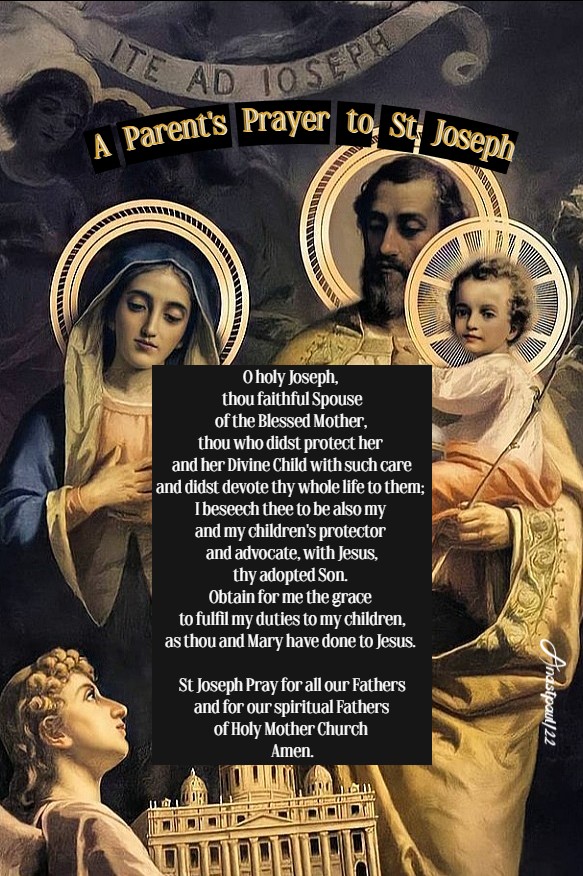
A Parent’s Prayer to St Joseph
O holy Joseph, thou faithful Spouse of the Blessed Mother, thou who didst protect her and her Divine Child with such care and didst devote thy whole life to them; I beseech thee to be also my and my children’s protector and advocate, with Jesus, thy adopted Son. Obtain for me the grace to fulfil my duties to my children, as thou and Mary have done to Jesus.
St Joseph Pray for all our Fathers and for our spiritual Fathers of Holy Mother Church Amen.
St Vitus (c 290-c 303) – Martyr, One of the Fourteen Holy Helpers. Died aged 12-13 years of age. Patronages – against animal attacks, against dog bites, against epilepsy; epileptics, against lightning, against over-sleeping, against rheumatic chorea or Saint Vitus Dance, against snake bites, against storms, against wild beasts, of actors, comedians, dancers, dogs, Bohemia, Czech Republic, Serbia, 17 cities. His very short life: https://anastpaul.com/2017/06/15/saint-of-the-day-15-june-st-vitus/
St Achaicus of Corinth St Barbara Cui Lianshi St Benildis of Córdoba
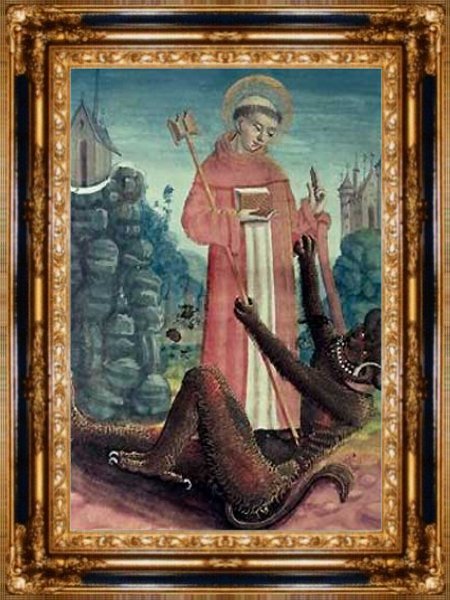
St Bernard of Montjoux/Menthon CRSA (c 1020-1081) “Apostle of the Alps” Priest, Founder of a patrol that cleared robbers from the mountains and he established hospices for travellers and pilgrims. The large dogs, trained to search for lost victims in the mountains, are named for him. Patronages – Alpinists, Alps (proclaimed by Pope Pius XI on 20 August 1923), Campiglia Cervo, Italy, mountain climbers (proclaimed by Pope Pius XI on 20 August 1923), mountaineers, skiers, travellers in the mountains (proclaimed by Pope Pius XI on 20 August 1923). Wonderful Bernard: https://anastpaul.com/2018/06/15/saint-of-the-day-15-june-st-bernard-of-menthon-c-r-s-a-c-1020-1081-apostle-of-the-alps/
St Hadelinus of Lobbes St Hesychius of Durostorum St Hilarion of Espalion
St Isfrid O.Praem (c 1115-1204) Bishop of Ratzeburg, Confessor, Spiritual advisor, Missionary, Mediator and Peacemaker, a renowned Administrator and gentle corrector of his flock, whom he protected against political abuses, Defender of the Pope and the Holy See. Istfrid also built and restored Churches and Monasteries and established many new Parishes. A Holy and Untiring Shepherd: https://anastpaul.com/2022/06/15/saint-of-the-day-15-june-saint-isfrid-of-ratzeburg-o-praem-c-1115-1204/
St Julius of Durostorum St Landelin of Crespin St Leonides of Palmyra St Libya of Palmyra St Lotharius of Séez St Melan of Viviers St Orsisius Bl Pedro da Teruel St Pierre de Cervis
St Tatian of Cilicia Bl Thomas Scryven St Trillo (6th Century) Abbot of Wales St Vaughen of Ireland
St Vouga of Lesneven
Martyr of Lucania – 11 Saints: Eleven Christians Martyred together. We known nothing else about them but the names – Anteon, Candidus, Cantianilla, Cantianus, Chrysogonus, Jocundus, Nivitus, Protus, Quintianus, Silvius, Theodolus in Lucania (modern Basilicata), Italy, date unknown.
DISCLAIMER: Please note: I cannot control the content of the Advertisements on this Site, or of pop-ups which may appear, The revenue from the Advertisements, however, does provide a little assistance in the support of the Site. I do apologise for any inappropriate content.
Thought for the Day – 14 June – Meditations with Antonio Cardinal Bacci (1881-1971)
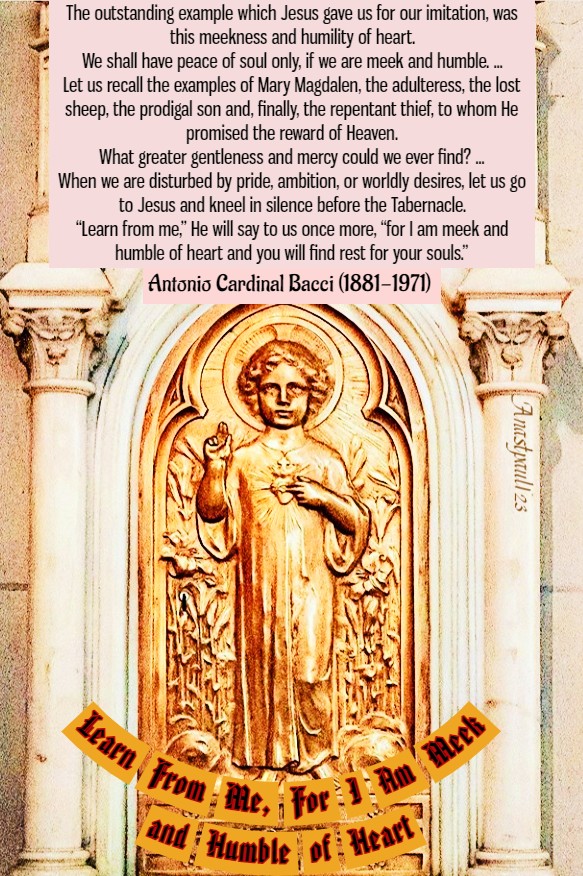
“Learn From Me, For I Am Meek and Humble of Heart”
“Jesus is perfection itself. In Him, therefore, every virtue is to be found. He could truly claim that He fulfilled in Himself the precept: “You are to be perfect, even as your heavenly Father is perfect” (Mt 5:48). Throughout His life, He performed in a perfect manner, the will of His heavenly Father: “I do always the things that are pleasing to Him” (Jn 8:29).
Jesus Christ provided us with an example of every virtue. As the foundation of all the virtues, He insisted on the great precept of loving God above all things and our neighbour as ourselves. In proposing Himself as a model, however, this is what He said: “Learn from me, for I am meek and humble of heart and ou will find rest for your souls” (Mt 11:29). The outstanding example which Jesus gave us for our imitation, was this meekness and humility of heart. We shall have peace of soul only, if we are meek and humble.
In what did the humility of Jesus consist? He was God and He became man. He, Who possessed everything was born poor in a wretched stable and lived as a lowly workman for thirty years. He allowed Himself to be betrayed by one of His Apostles, to be sentenced to death as an evildoer and, finally, to be executed on the Cross.
He combined humility with gentleness. He was happy when He could receive back penitent sinners and grant them forgiveness and peace. Let us recall the examples of Mary Magdalen, the adulteress, the lost sheep, the prodigal son and, finally, the repentant thief, to whom He promised the reward of Heaven. What greater gentleness and mercy could we ever find?
To the present day, moreover, Jesus Christ is hidden in the Blessed Eucharist under the consecrated species and appeals to us to imitate and love Him.
When we are disturbed by pride, ambition, or worldly desires, let us go to Jesus and kneel in silence before the Tabernacle. “Learn from me,” He will say to us once more, “for I am meek and humble of heart and you will find rest for your souls.”
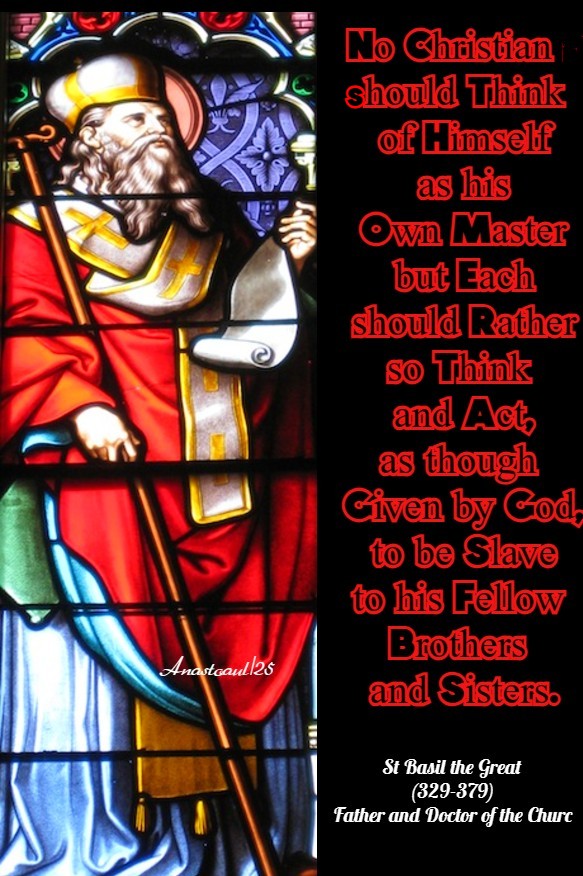
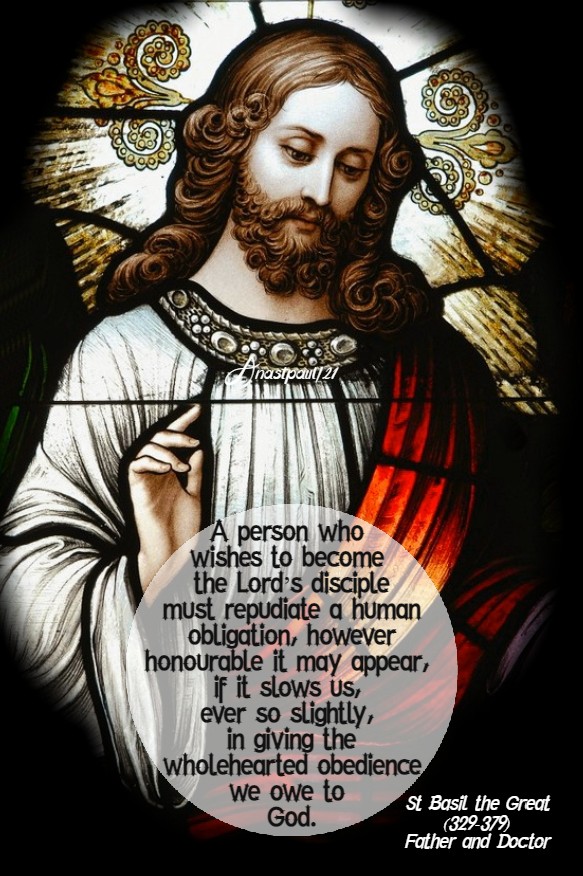
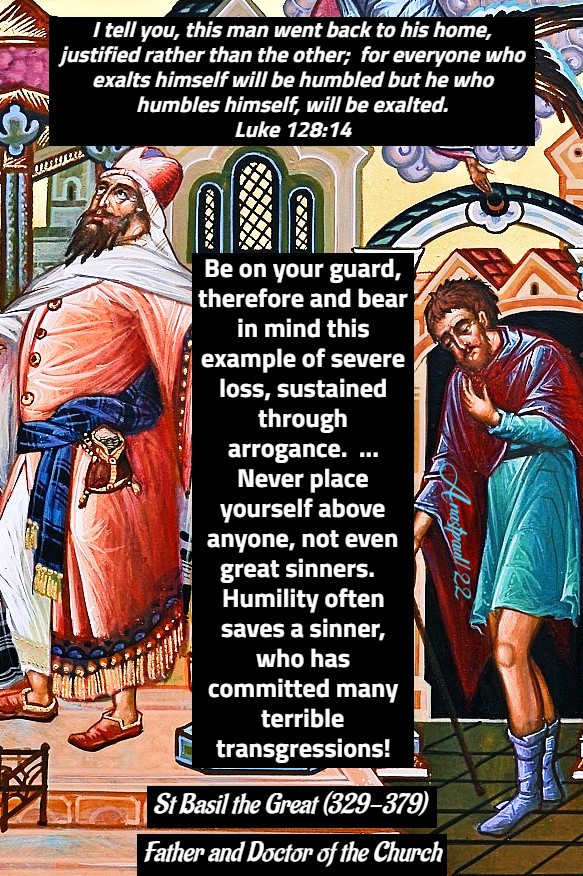
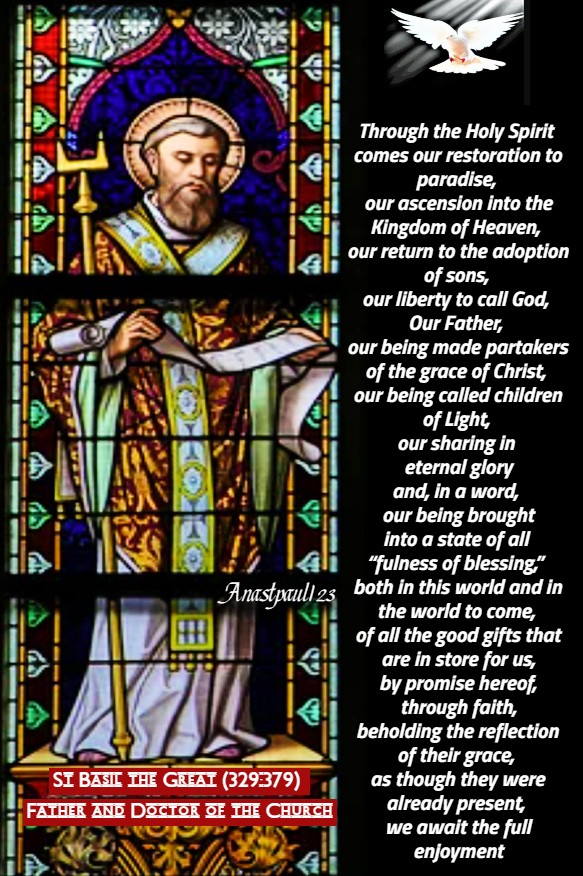
Quote/s of the Day – 14 June – St Basil the Great (329-379) Bishop of Caesarea, Confessor, Father and Doctor of the Church.
“No Christian should think of himself as his own master but each should rather so think and act, as though given by God, to be slave to his fellow brothers and sisters.”
“A person who wishes to become the Lord’s disciple must repudiate a human obligation, however honourable it may appear, if it slows us, ever so slightly, in giving the wholehearted obedience we owe to God.”
“I tell you, this man went back to his home justified, rather than the other; for everyone who exalts himself will be humbled but he who humbles himself, will be exalted” Luke 18:14
“Be on your guard, therefore and bear in mind, this example of severe loss, sustained through arrogance. … Never place yourself above anyone, not even great sinners. Humility often saves a sinner, who has committed many terrible transgressions!”
“Through the Holy Spirit comes our restoration to paradise, our ascension into the Kingdom of Heaven, our return to the adoption of sons, our liberty to call God, Our Father, our being made partakers of the grace of Christ, our being called children of Light, our sharing in eternal glory and, in a word, our being brought into a state of all “fulness of blessing,” both in this world and in the world to come, of all the good gifts that are in store for us, by promise hereof, through faith, beholding the reflection of their grace, as though they were already present, we await the full enjoyment.”
One Minute Reflection – 14 June – “The Month of the Most Sacred Heart of Jesus” – Ember Saturday – Pentecost Satuirday – Romans 5:1-5. – Luke 4:38-44 – St Basil the Great (329-379) Bishop, Confessor, Father and Doctor of the Church – Scripture search here: https://www.drbo.org/
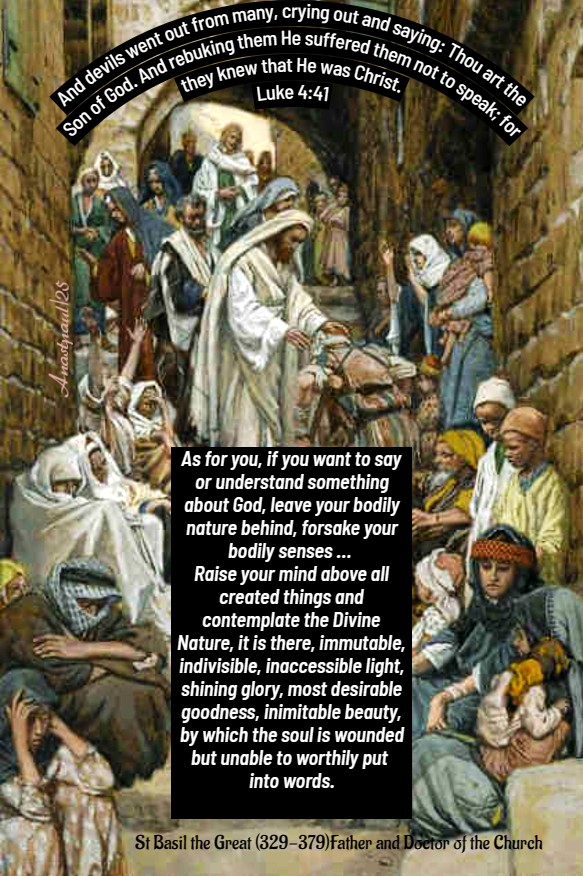
“And devils went out from many, crying out and saying: Thou art the Son of God. And rebuking them He suffered them not to speak; for they knew that He was Christ.” – Luke 4:41
REFLECTION – “The soul who loves God is never satisfied, yet, to speak of God is bold indeed, our minds are very far from so great a matter … The further one goes in the knowledge of God, the more one feels one’s powerlessness. This is what it was like for Abraham, this, too, was what it was like for Moses, even though they were able to see God – insofar as that is humanly possible – both made themselves least of all. Abraham referred to himself as “dust and ashes” Moses said of himself that he was stumbling and slow in speech (Gn 1827; Ex 4:10). In fact, he was giving testimony; the feebleness of his tongue gave voice to the greatness of Him, Whom his mind grasped. We speak about God, not as He Is but, insofar as we can grasp Him.
As for you, if you want to say or understand something about God, leave your bodily nature behind, forsake your bodily senses … Raise your mind above all created things and contemplate the Divine Nature, it is there, immutable, indivisible, inaccessible light, shining glory, most desirable goodness, inimitable beauty, by which the soul is wounded but unable to worthily put into words.
There is the Father, the Son and Holy Ghost … The Father is the principle of all things, the Cause of being of all that is, Origin of living creatures. He is the one from Whom flows the Source of Life, Wisdom, Power, the Image Who perfectly resembles the invisible God; the Son, begotten of the Father, living Word, Who is God and turned towards the Father (1 Cor 1:24; Heb 1:3; Jn 1:1). From this Name ‘Son’ we learn that He shares the same nature; He is not created through an order but unceasingly shines out from within His Own substance, one with the Father from all eternity, equal to Him in goodness, partaking in His glory … And when our intellect has been purified of all earthly passions and, has set aside every sensible creature, like a fish which rises from the depths to the surface, given back to the purity of its creation, it will then see the Holy Ghost where the Son and the Father are to be found. This Spirit, being of the same essence ,according to its nature, likewise possesses every good: goodness, uprightness, holiness, life … Just as burning belongs to fire and shining to light, so one can no more take away from the Holy Ghost the task of making holy or giving life, than of goodness and uprightness.” – St Basil the Great (329-379) Bishop, Confessor, Father and Doctor of the Church (Sermons on Faith).
PRAYER – We beseech Thee, O Lord, hear our prayers which we offer on the festival of blessed Basil, Thy Confessor and Bishop and through his intercessory merits, who had the grace to serve Thee worthily, absolve us from all our sins. Through Jesus Christ, Thy Son our Lord, Who lives and reigns with Thee, in the unity of the Holy Ghost, God, world without end. Amen (Collect).
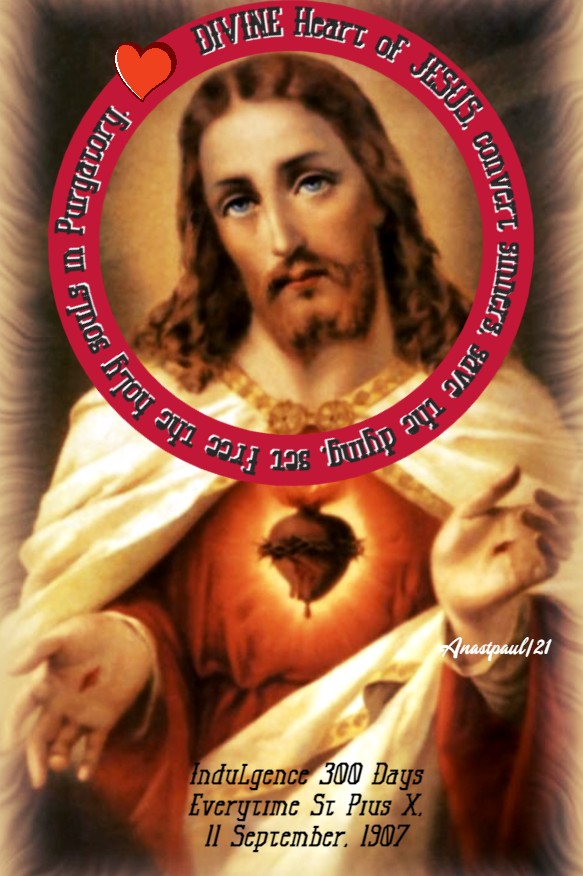
DIVINE Heart of JESUS, convert sinners, save the dying, set free the holy souls in Purgatory.Indulgence 300 Days Everytime – St Pius X, 11 September, 1907.
Our Morning Offering – 14 June – “The Month of the Sacred Heart of Jesus”
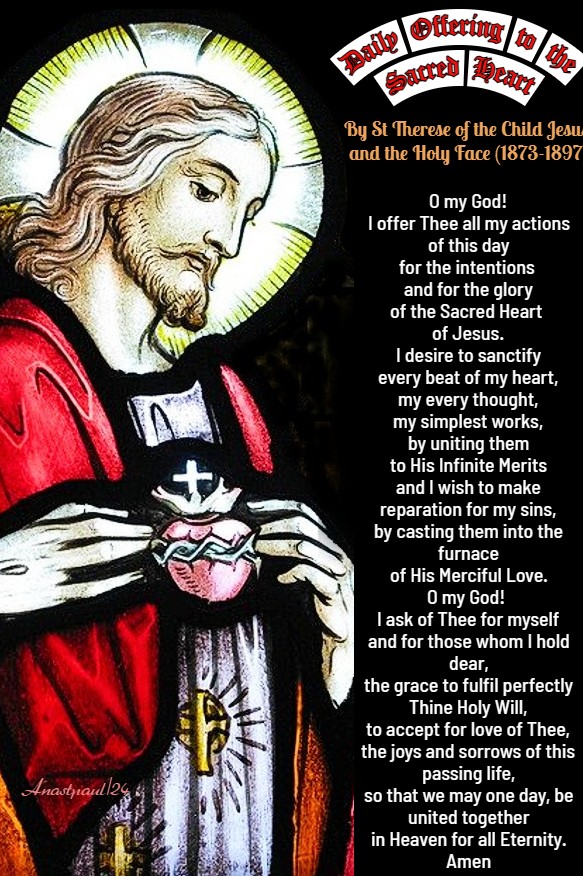
Daily Offering to the Sacred Heart By St Thérèse of the Child Jesus and the Holy Face (of Lisieux) OCD (1873-1897)
O my God! I offer Thee all my actions of this day for the intentions and for the glory of the Sacred Heart of Jesus. I desire to sanctify every beat of my heart, my every thought, my simplest works, by uniting them to His Infinite Merits and I wish to make reparation for my sins, by casting them into the furnace of His Merciful Love. O my God! I ask of Thee for myself and for those whom I hold dear, the grace to fulfil perfectly Thine Holy Will, to accept for love of Thee, the joys and sorrows of this passing life, so that we may one day, be united together in Heaven for all Eternity. Amen
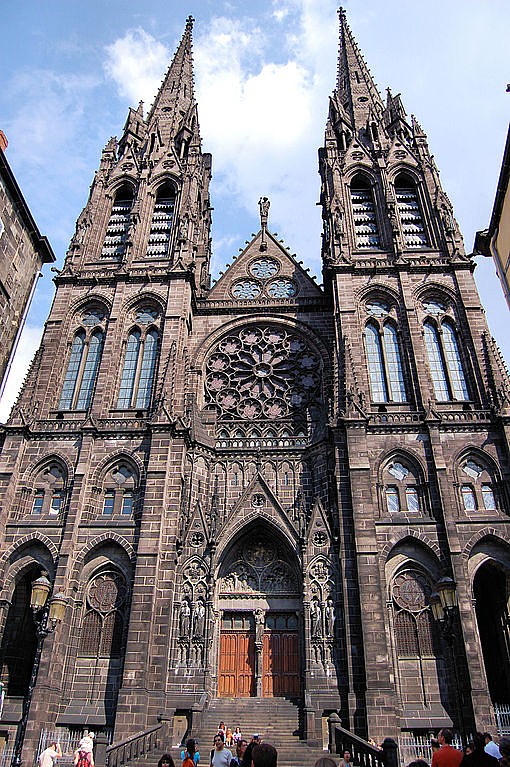
Saint of the Day – 14 June – Saint Quintian (Died c525) Bishop of Rodez and of Clermont, France in the 6th Century. Our St Quintian acutally died in his See at Clermont and not at Rodez as stated in the Martyrology. Also known as – Quintianus, Quinctianus, Quintien, … of Rodez … of Clermont.
The Roman Martyrology reads today: “At Rodez, St Quinctian, Bishop.”
Tradition has made Quintian a native of Africa and a Priest of Carthage who fled to France due to the persecutions of the Vandals.
At the death of Saint Amantius (Amans) in 487, Quintian succeeded him as the Bishop of Rodez. During the war between the Franks and the Goths, he was a zealous supporter of Clovis I.
To avoid the persecutions of the Arian Visigoths, he took refuge in Auvergne, where he was hospitably received by Bishop Euphrasius of Clermont.
On the death of the latter, Quintian succeeded to the See of Clermont which he occupied until his death on 13 November 525 or 526 but his Feastday has always been commemorated on 14 June, thought to be the day of his Consecration as the Bishop of Clermont.
St Anastasius of Córdoba St Burchard of Meissen St Caomhán of Inisheer St Castora Gabrielli St Cearan the Devout Bl Constance de Castro St Cyprien St Cyriacus of Zeganea St Davnet St Digna of Córdoba St Dogmael of Wales St Elgar of Bardsey
St Nennus of Arran Bl Peter de Bustamante St Protus of Aquileia St Quintian (Died c525) Bishop of Rodez St Richard of Saint Vannes
St Rufinus of Soissons * (Died 4th Century) Layman, Martyr. AND St Valerius of Soissons * (Died 4th Century) Layman, Martyr The Roman Martyrology reads: “At Soissons in Belgic Gaul, today in France, the Holy Martyrs – Saints Valerius and Rufinus, who after enduring many torments, were condemned to be beheaded by the Governor, Rictiovarus, in the persecution of Diocletian.” Their Lives and Deaths: https://anastpaul.com/2023/06/14/saints-of-the-day-14-june-st-valerius-and-st-rufinus-of-soissons-died-4th-century-laymen-martyrs/
Thought for the Day –13 June – Meditations with Antonio Cardinal Bacci (1881-1971)
The Sacred Heart of Jesus Surmounted by a Flaming Cross
“St Margaret Mary saw the Sacred Heart of Jesus, surmounted by flames in the midst of which, a Cross was raised on high. These flames and this Cross, were the symbol of the Infinite Love of Jesus. Let us reflect a little. God, immeasurably happy in Himself, wished to communicate a share in His happiness to men, whom He created in a state of earthly happiness. He was offended by men and, when He saw that they were heading for destruction, He sent His Eternal Word to them. The Word took a human nature and became our Brother; He preached the way to Heaven and gave us the means to achieve it. More than this, He offered Himself as a Divine victim of expiation for our sins. Having been condemned by those whom He had come to show the way, He died on the Cross and shed all His Blood, for our salvation.
Pagans of all times have called this “the folly of the Cross.” In fact, it is the miracle of the Infinite Love of God for humanity. Let us remember, however, that, although His Love and Goodness are Infinite, so also is His Justice! It is an overwhelming miracle of love on the part of God, that He became man and died for us. It will be our own downfall if we fail to co-operate with this miracle of love!
The same Jesus, Who died on the Cross for us and revealed His Heart, pierced and flaming with love, will one day appear with the same glorious Sign of the Cross, as our Supreme Judge. Then, He will say to the wicked: “Depart from me, accursed ones, into everlasting fire!”
God’s Justice is, as Infinite as His charity! We must choose either the way of the Cross, the way of love and goodness to which the Sacred Heart of Jesus invites us, or the way of sin, which leads to the gulf of ruin and the final condemnation of the Supreme Judge. This is the tremendous choice we have to make!”
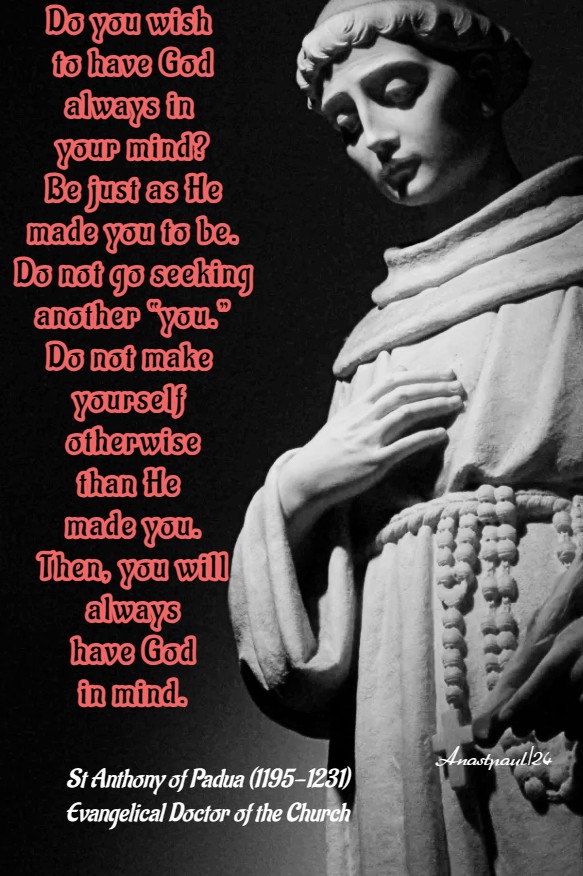
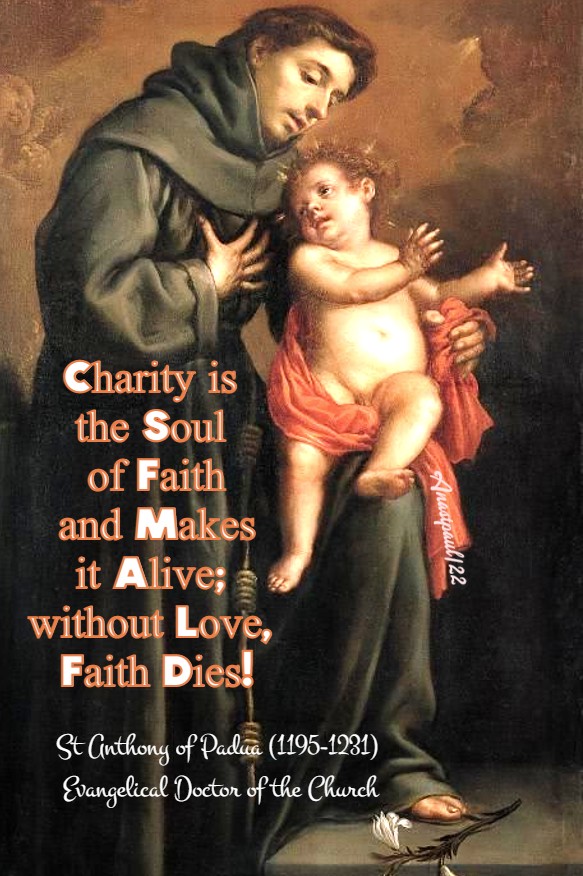
Quote/s of the Day – 13 June – St Anthony of Padua (1195-1231) Cpmfessor, Evangelical Doctor of the Church
“ Do you wish to have God always in your mind? Be just as He made you to be. Do not go seeking another “you.” Do not make yourself otherwise than He made you. Then you will always have God in mind.”
“Charity is the soul of faith and makes it alive; without love, faith dies!”
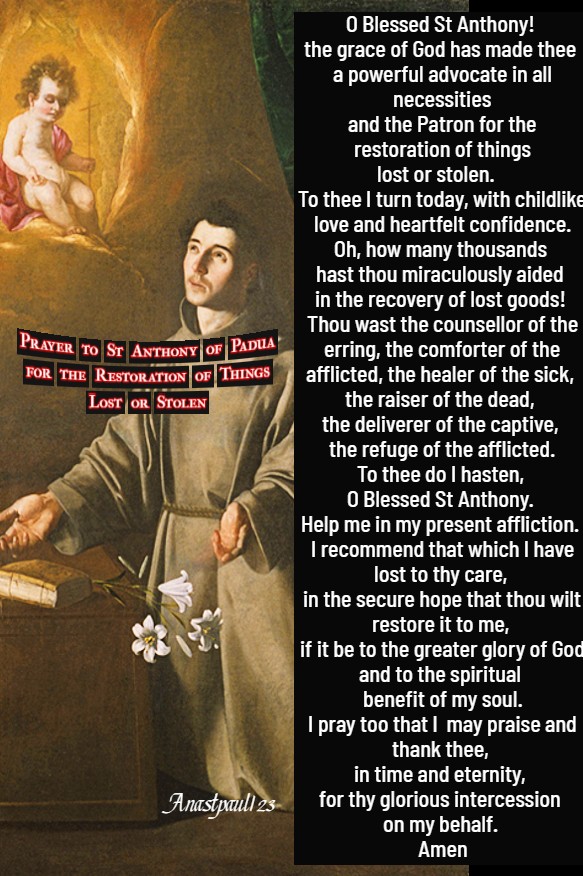
Prayer to St Anthony of Padua for the Restoration of Things Lost or Stolen
O Blessed St Anthony! the grace of God has made thee a powerful advocate in all necessities and the Patron for the restoration of things lost or stolen. To thee I turn today, with childlike love and heartfelt confidence. Oh, how many thousands hast thou miraculously aided in the recovery of lost goods! Thou wast the counsellor of the erring, the comforter of the afflicted, the healer of the sick, the raiser of the dead, the deliverer of the captive, the refuge of the afflicted. To thee do I hasten, O Blessed St Anthony. Help me in my present affliction. I recommend that which I have lost to thy care, in the secure hope that thou wilt restore it to me, if it be to the greater glory of God and to the spiritual benefit of my soul. I pray too that I may praise and thank thee, in time and eternity, for thy glorious intercession on my behalf. Amen
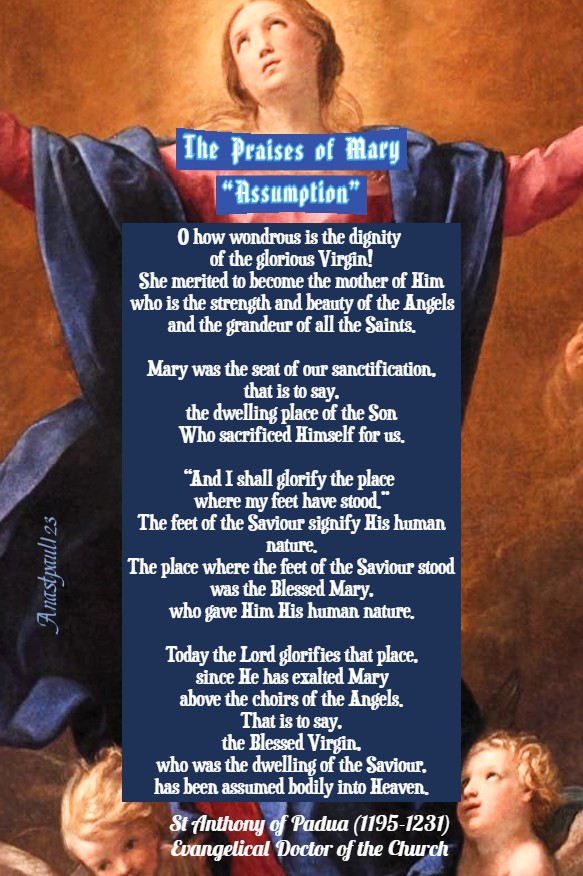
“Assumption” Poem by Saint Anthony (1195-1231) Evangelical Doctor of the Church
O how wondrous is the dignity of the glorious Virgin! She merited to become the mother of Him who is the strength and beauty of the Angels and the grandeur of all the Saints.
Mary was the seat of our sanctification, that is to say, the dwelling place of the Son Who sacrificed Himself for us.
“And I shall glorify the place where my feet have stood.” The feet of the Saviour signify His human nature. The place where the feet of the Saviour stood was the Blessed Mary, who gave Him His human nature.
Today the Lord glorifies that place, since He has exalted Mary above the choirs of the Angels. That is to say, the Blessed Virgin, who was the dwelling of the Saviour, has been assumed bodily into Heaven.
One Minute Reflection – 13 June – “The Month of the Most Sacred Heart of Jesus” – Ember Friday – Pentecost Friday – St Anthony of Padua (1195-1231) Cpmfessor, Evangelical Doctor of the Church – Joel 2:23-24; 26-27 – Luke 5:17-26 – Scripture search here: https://www.drbo.org/
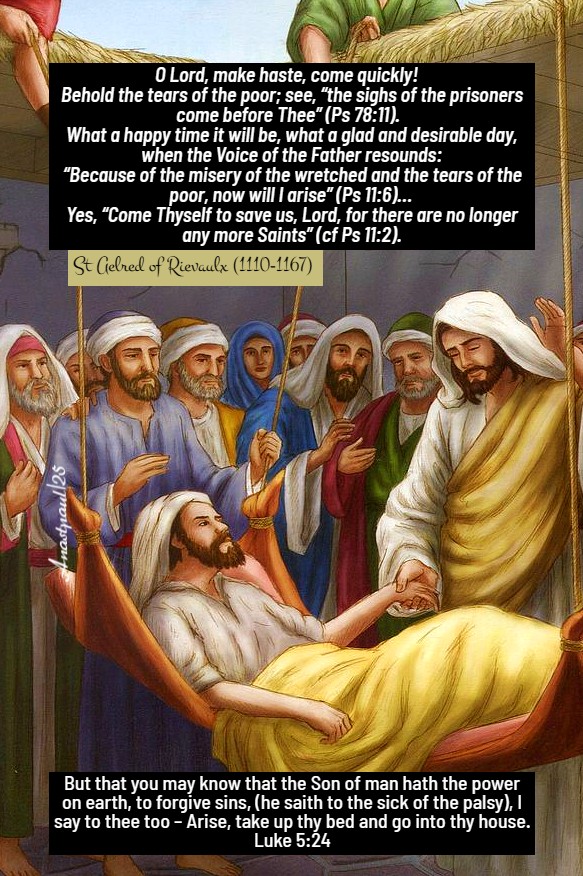
“But that you may know that the Son of man hath the power on earth, to forgive sins, (he saith to the sick of the palsy), I say to thee too – Arise, take up thy bed and go into thy house. ” – Luke 5:24
REFLECTION – “Unhappy Adam! What more could you possibly seek than the Divine Presence? Yet, see how thanklessly you ponder your misdeed: “No! I will be like God!” (cf. Gen 3:5). What insufferable pride! You have only just been created out of clay and mud and, in your insolence, you wish to be like God!?… This is how pride brought forth disobedience, the reason for our misfortune…
What humility is there which could make amends for such a pride? What human obedience is there which could redeem such a fault? Captives who we were, how could we set captives free? Tainted, how could we liberate those stained by sin? Is Thy creature to die, then, my God? “Have Thou forgotten pity? Do Thou in anger withhold Thy compassion?” (Ps 76:10). Ah no! “My thoughts are thoughts of peace, not of woe”says the Lord (Jer 29:11).
O Lord, make haste, come quickly! Behold the tears of the poor; see, “the sighs of the prisoners come before Thee” (Ps 78:11). What a happy time it will be, what a glad and desirable day, when the Voice of the Father resounds: “Because of the misery of the wretched and the tears of the poor, now will I arise” (Ps 11:6)… Yes, “Come Thyself to save us, Lord, for there are no longer any more Saints” (cf Ps 11:2).” – St Aelred of Rievaulx (1110-1167) Cistercian Abbot (Sermon for the Nativity).
PRAYER – May the solemn feast of blessed Anthony, Thy Confessor and Doctor, make Thy Church rejoice, O God, so that, ever sustained by spiritual help, she may deserve to reap everlasting joy. Through Jesus Christ, Thy Son our Lord, Who lives and reigns with Thee, in the unity of the Holy Ghost, God, world without end. Amen (Collect).
Sweet Heart of my JESUS, make me love Thee ever more and more! 300 Days Once a Day. ii. Plenary, Once a month.Raccolta – 162. Blessed Pope Pius IX, 26 November 1876.
Our Morning Offering – 13 June – “The Month of the Most Sacred Heart of Jesus” – The Feast of St Anthony of Padua (1195-1231) Cpmfessor, Evangelical Doctor of the Church
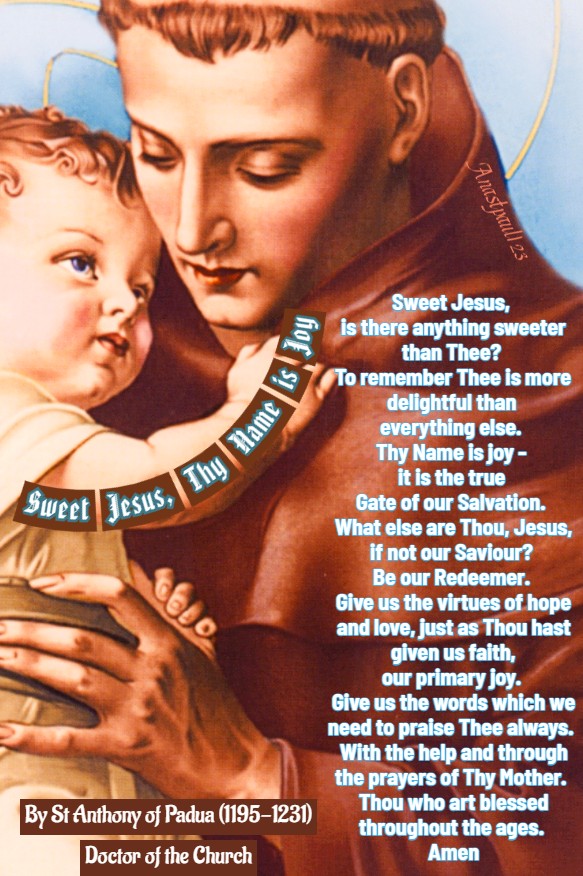
Sweet Jesus, Thy Name is Joy By St Anthony of Padua OFM (1195-1231) Doctor of the Church
Sweet Jesus, is there anything sweeter than Thee? To remember Thee is more delightful than everything else. Thy Name is joy – it is the true Gate of our Salvation. What else are Thou, Jesus, if not our Saviour? Be our Redeemer. Give us the virtues of hope and love, just as Thou hast given us faith, our primary joy. Give us the words which we need to praise Thee always. With the help and through the prayers of Thy Mother. Thou Who art blessed throughout the ages. Amen
Saint of the Day –13 June – St Peregrinus/Cetteus (Died c597) Bishop Martyr, Defender of the Faith. Unknown date and location of his birth but he died in c597 by being drowned in the Pescara River in Abruzzo region of Italy. Patronage of – the Diocese and City of Pescara in Italy. Also known as – Cetteus, Ceteo, Cetteus, Cetheus, Cetteo. Pellegrino, Pelligrinus. Additional Memorial – 10 October (Pescara, Italy).
The Roman Martyrology reads today: “In Abruzzo, Italy, St Peregrinus, Bishop and Martyr. For the Catholic Faith, he was thrown into the river Pescara, by the Arian Lombards.”
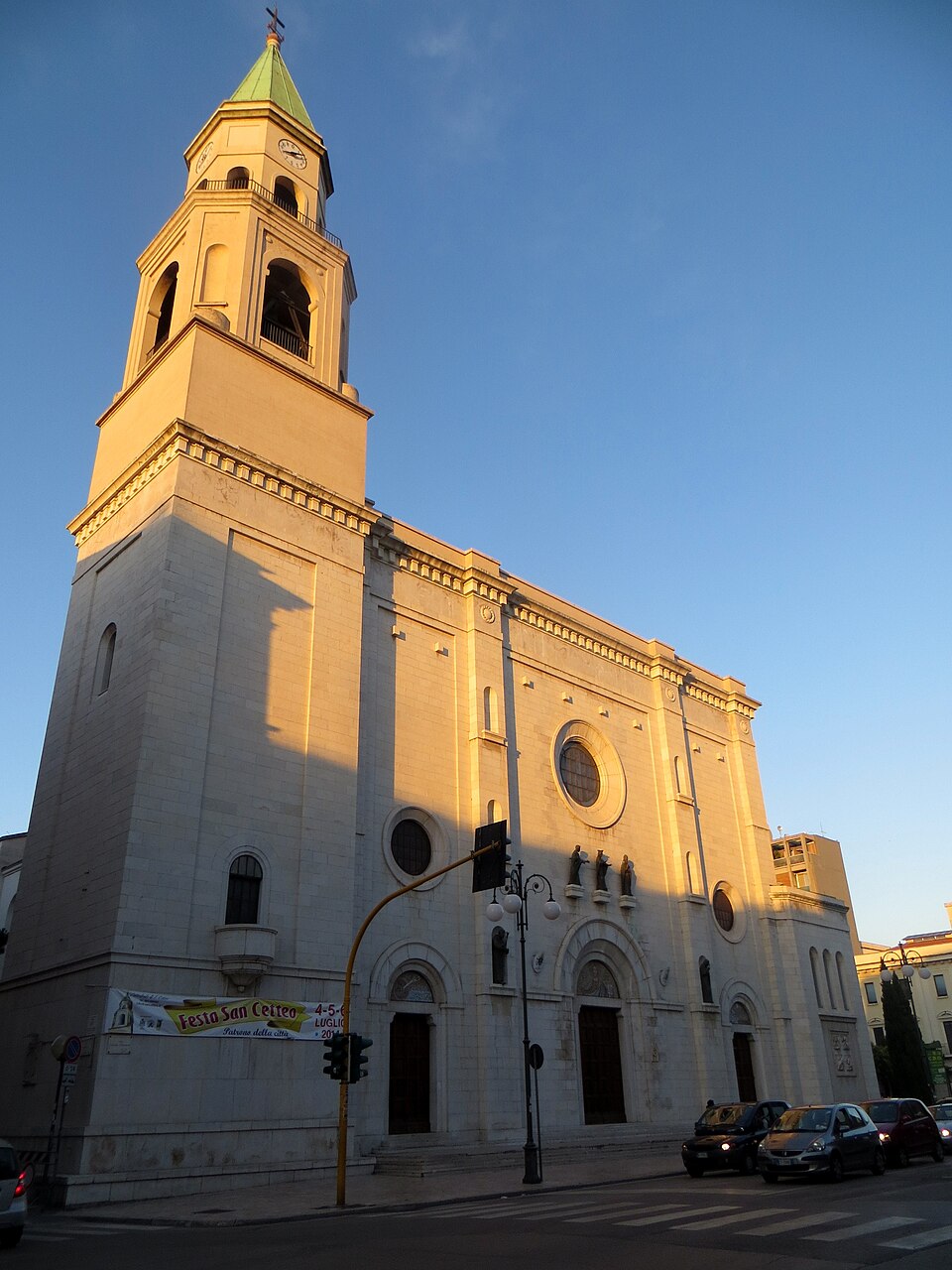
The Pescara Cathedral dedicated to our Saint today
Peregrinus, although he is more commonly referred to as Cetteus (his real name). According to our source, he was the Bishop of Amiterno (now St Vittorino, in Abruzzo) at the time of St Gregory the Great. During his Episcopate two Lombard leaders, Alai and Umbolo, occupied the City and he, in order not to witness their depredations, took refuge in Rome. To quell the citizens’ discontent, a Lombard mission went to St Gregory the Great and, after having solemnly promised that the subjugated citizens Peregrinus returned to Amiterno.
But, when a disagreement arose between the two Iongobard leaders who held the City, Alai allied himself, with Count Veriliano of Orte, occupied Amiterno at night. When the betrayal was discovered, the furious people wanted to kill Alai but their Bishop Peregrinus intervened, trying to have him condemned only to prison. But Umbolo suspected that the Bishop was also conniving with the traitor and ordered that our Saint and his accomplice be killed. Alai’s sentence was immediately carried out, while Peregrinus’ execution was suspended due to the executioner’s firm refusal.
Umbolo then ordered that he be thrown into the river (now Pescara) with a large millstone around his neck. His body was carried by the current to the sea and thrown onto the shore. According to one manuscript, it would have reached Zara, on the eastern shore of the Adriatic Sea but, with much greater likelihood, it arrived in Pescara, at the mouth of the river of the same name.
When Peregrinus was found by a fisherman, the local Bishop was notified and, not knowing who he was, called him “Peregrinus” and buried him on the spot. Later, following a miracle which occurred at his tomb, the Bishop had him transferred and buried, with greater honour, nine miles from the City.
Peregrinus/Cetteus is commemorated in the Roman Martyrology on 13 June and the Diocese and City of Pescara remember him on 10 October.
Bl Achilleo of Alexandria Bl Alfonso Gomez de Encinas Bl Anthony of Ilbenstadt
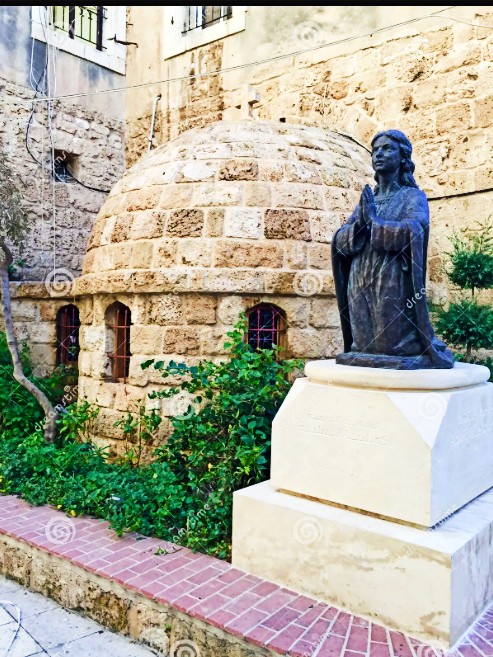
St Aquilina (281–293) Virgin Martyrof Suria. The Roman Martyrology reads today: “At Byblos, in Palestine, St Aquilina, Virgin and Martyr, at the age of 12 years, under the Emperor Diocletian and the Judge Volusian. For the confession of the Faith, she was buffeted, scourged, pierced with red-hot bodkins and, being struck with the sword, consecrated her virginity by Martyrdom.” Her Short Life and Early Death: https://anastpaul.com/2024/06/13/saint-of-the-day-13-june-saint-aquilina-of-syria-281-293-virgin-child-martyr/
St Fandilas of Penamelaria St Felicula of Rome St Fortunatus of North Africa
Blessed Gerard of Clairvaux (Died 1138) – was the elder brother of Saint Bernard of Clairvaux. He was a Soldier. When he was wounded in combat at the siege of Grancy, Gerard resolved to become a Monk. He became a Cistercian Monk at Citeaux. He worked with Saint Bernard at Clairvaux and became his closest confidant. He died in 1138 of natural causes.
St Lucian of North Africa St Mac Nissi of Clonmacno St Maximus of Cravagliana St Nicolas Bùi Ðuc The St Peregrinus (Died c597) Bishop Martyr St Rambert St Salmodio Bl Servatius Scharff St Thecla
Thought for the Day – 12 June – Meditations with Antonio Cardinal Bacci (1881-1971)
The Promises Made to Those Who Practise Devotion to the Sacred Heart
“The promises made by Jesus to those who are truly devoted to His Sacred Heart, are a new proof of His Infinite Love and Mercy. However, if anyone were to cultivate devotion to the Sacred Heart, merely to gain His benefits and to think more of his own spiritual and temporal advantage than of Jesus, he would display a niggardly spirit, quite unworthy of the Lord’s favour.
The worship of the Sacred Heart could degenerate into a kind of utilitarian egoism, undeserving of the name of devotion at all! Pious practices, could become cold and formal and degenerate into sentimentality tinged with superstition. There is nothing to prevent us asking the Sacred Heart for graces and favours which we need. In fact, we should do so, for it is He Who has made these promises to us and is eager to fulfil them because He loves us. But, we should be generous with Jesus in return for His Infinite Generosity towards us. We should love Him because He is so worthy of our love. Our love should be expressed, not only in prayers and outward forms but, in a deep personal transformation, which will make us more like Jesus.
True love transforms and unites two hearts. Let us love Jesus and we shall live with Jesus, through Jesus and in Jesus. His love will effect in us, the miracle which it produces in St Paul. “To me to live is Christ!” (1 Phil 1:21).”
Quote/s of the Day – 12 June – Ecclesiasticus i 31:8-11; Luke 12:35-40– Scripture search here: https://www.drbo.org
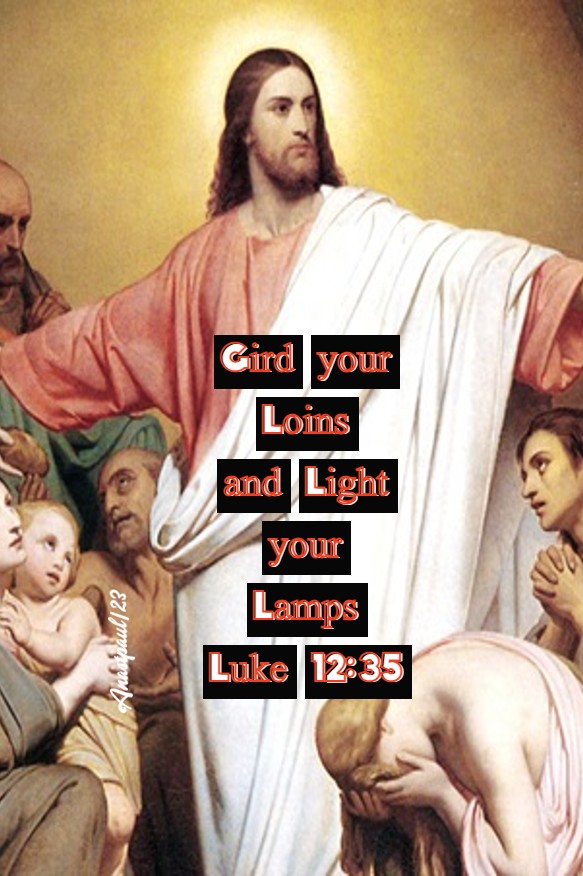
“Let your loins be girt about and your lamps burning …”
Luke 12:35
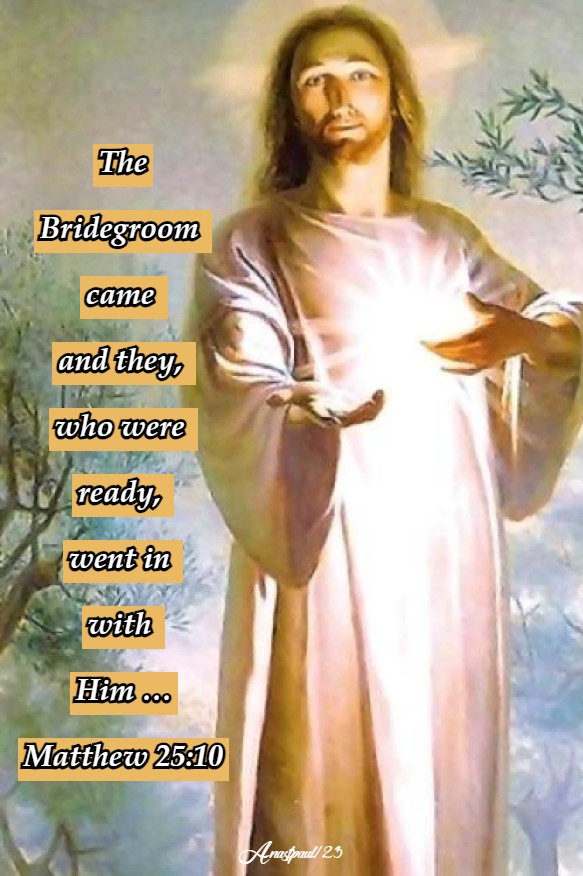
“ … The Bridegroom came and they, who were ready, went in with Him … ”
Matthew 25:10
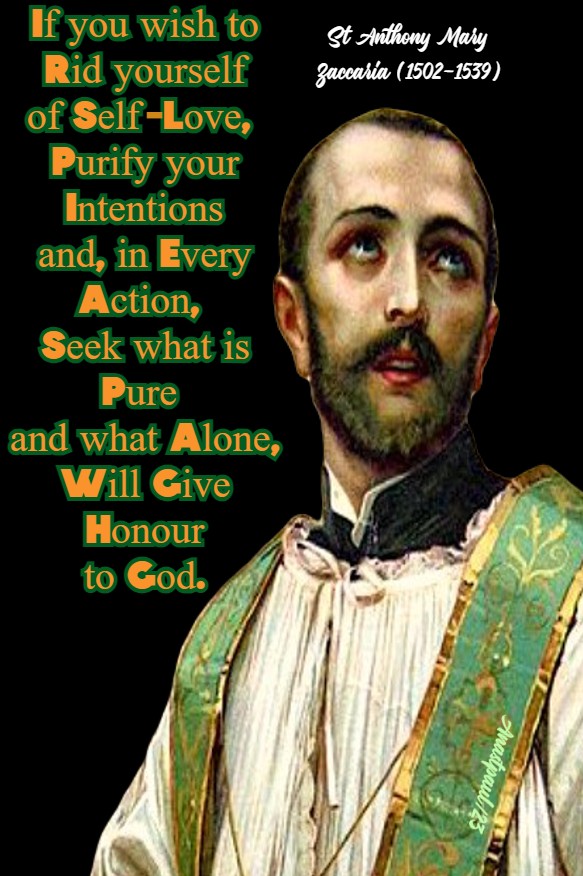
“If you wish to rid yourself of self-love, purify your intentions and, in every action, seek what is pure and what alone, will give honour to God.”
St Anthony Mary Zaccaria (1502-1539)
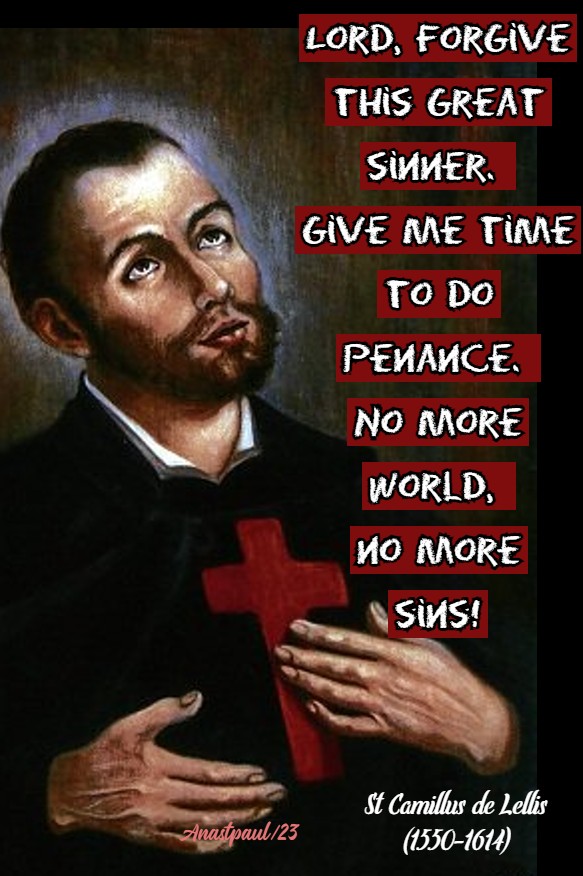
“Lord, forgive this great sinner. Give me time to do penance. No more world, no more sins!”
St Camillus de Lellis MI (1550-1614)
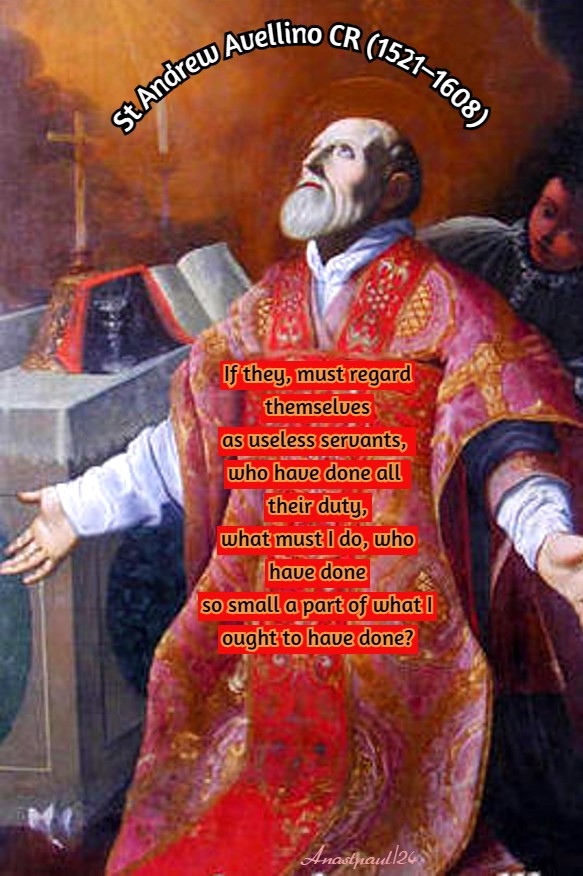
“If they, must regard themselves as useless servants, who have done all their duty, what must I do, who have done so small a part of what I ought to have done?”
One Minute Reflection – 12 June – “The Month of the Most Sacred Heart of Jesus” – Pentecost Thursday – St Juan de Sahagun (1419-1479) Confessor, Priest and Friar of the Order of the Augustinians – Ecclesiasticus i 31:8-11 – Luke 12:35-40 – Scripture search here: https://www.drbo.org/
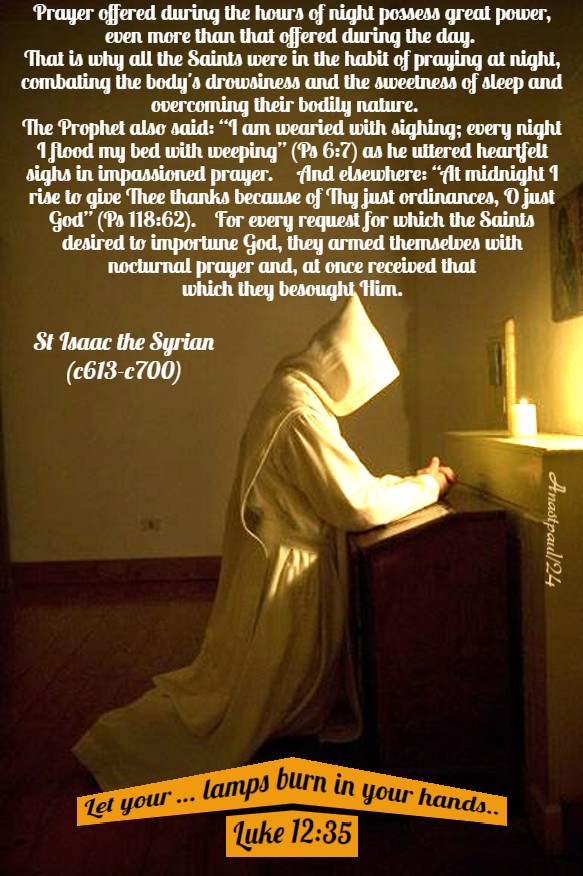
“Jesus said to His disciples: Let your … lamps burn in your hands.” – Luke 12:35
REFLECTION – “Prayer offered during the hours of night possess great power, even more than that offered during the day. That is why all the Saints were in the habit of praying at night, combating the body’s drowsiness and the sweetness of sleep and overcoming their bodily nature. The Prophet also said: “I am wearied with sighing; every night I flood my bed with weeping” (Ps 6:7) as he uttered heartfelt sighs in impassioned prayer. And elsewhere: “At midnight I rise to give Thee thanks because of Thy just ordinances, O just God” (Ps 118:62). For every request for which the Saints desired to importune God, they armed themselves with nocturnal prayer and, at once received that which they besought Him.
Satan himself fears nothing as much as prayer offered during the night watches. Even if they are accompanied by distractions, it does not return fruitless, as long as something inappropriate is not being asked for. That is why Satan engages in severe combat against those who keep watch at night, so as to deter them from this practice if he can, especially if they show themselves to be persevering. But those who are in any way defended against his pernicious wiles and have tasted the gifts God grants, at these times of vigil and, have had personal experience, of the greatness of the help God gives them, wholly despise him, he and all his craftiness.” – St Isaac the Syrian of Nineveh (c613-c700) Bishop of Nineveh, Monk at Mosul, Father of the Church (Ascetical Discourses)
PRAYER – O God, Author of peace and lover of charity, Who endowed blessed John, Your Confessor, with a wondrous grace for reconciling enemies; grant by his merits and intercession that, being ourselves firmly rooted in Thy charity, we may not be separated from Thee by any temptations.Through Jesus Christ, Thy Son our Lord, Who lives and reigns with Thee, in the unity of the Holy Ghost, God, world without end. Amen (Collect).
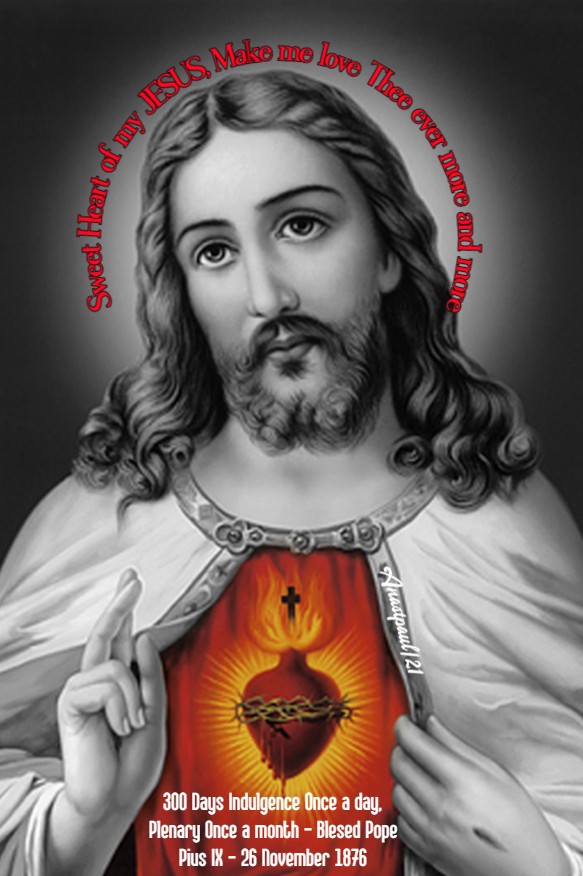
weet Heart of my JESUS, Make me love Thee ever more and more! –300 Days Indulgence Once a day, Plenary Once a month – Pope Pius IX – 26 November 1876
Our Morning Offering – 12 June – “The Month of the Sacred Heart of Jesus”
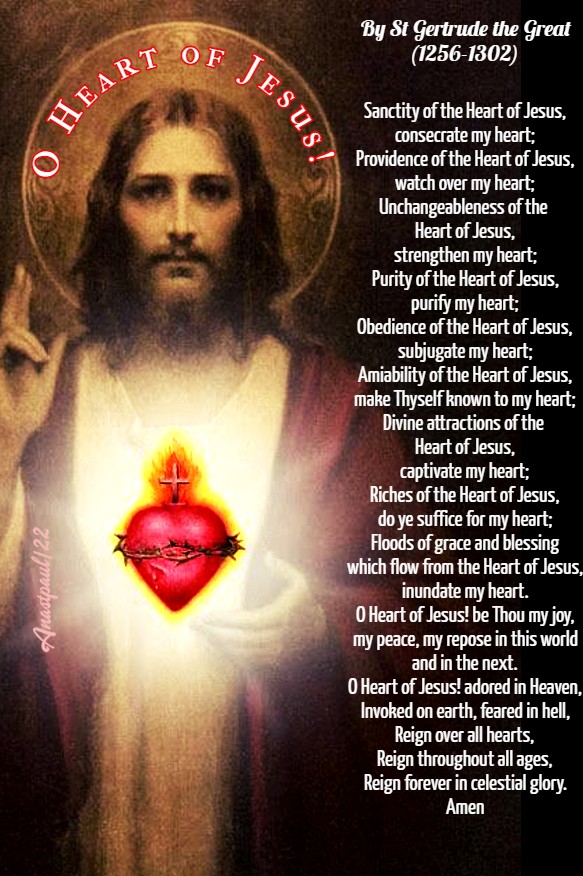
O Heart of Jesus! By St Gertrude the Great (1256-1302)
Sanctity of the Heart of Jesus, consecrate my heart; Providence of the Heart of Jesus, watch over my heart; Unchangeableness of the Heart of Jesus, strengthen my heart; Purity of the Heart of Jesus, purify my heart; Obedience of the Heart of Jesus, subjugate my heart; Amiability of the Heart of Jesus, make Thyself known to my heart; Divine attractions of the Heart of Jesus, captivate my heart; Riches of the Heart of Jesus, do ye suffice for my heart; Floods of grace and blessing which flow from the Heart of Jesus, inundate my heart. O Heart of Jesus! be Thou my joy, my peace, my repose in this world and in the next. O Heart of Jesus! adored in Heaven, Invoked on earth, feared in hell, Reign over all hearts, Reign throughout all ages, Reign forever in celestial glory. Amen
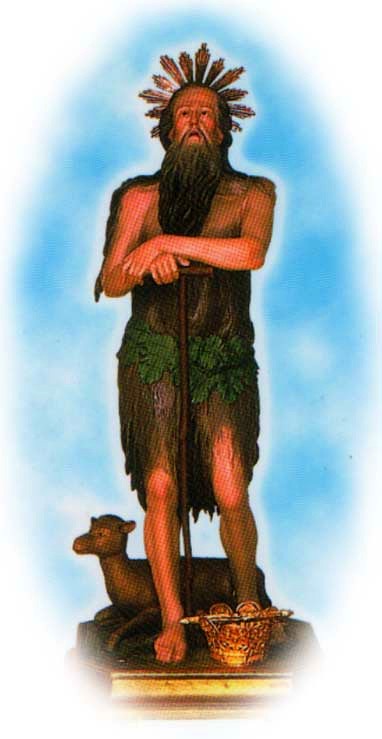
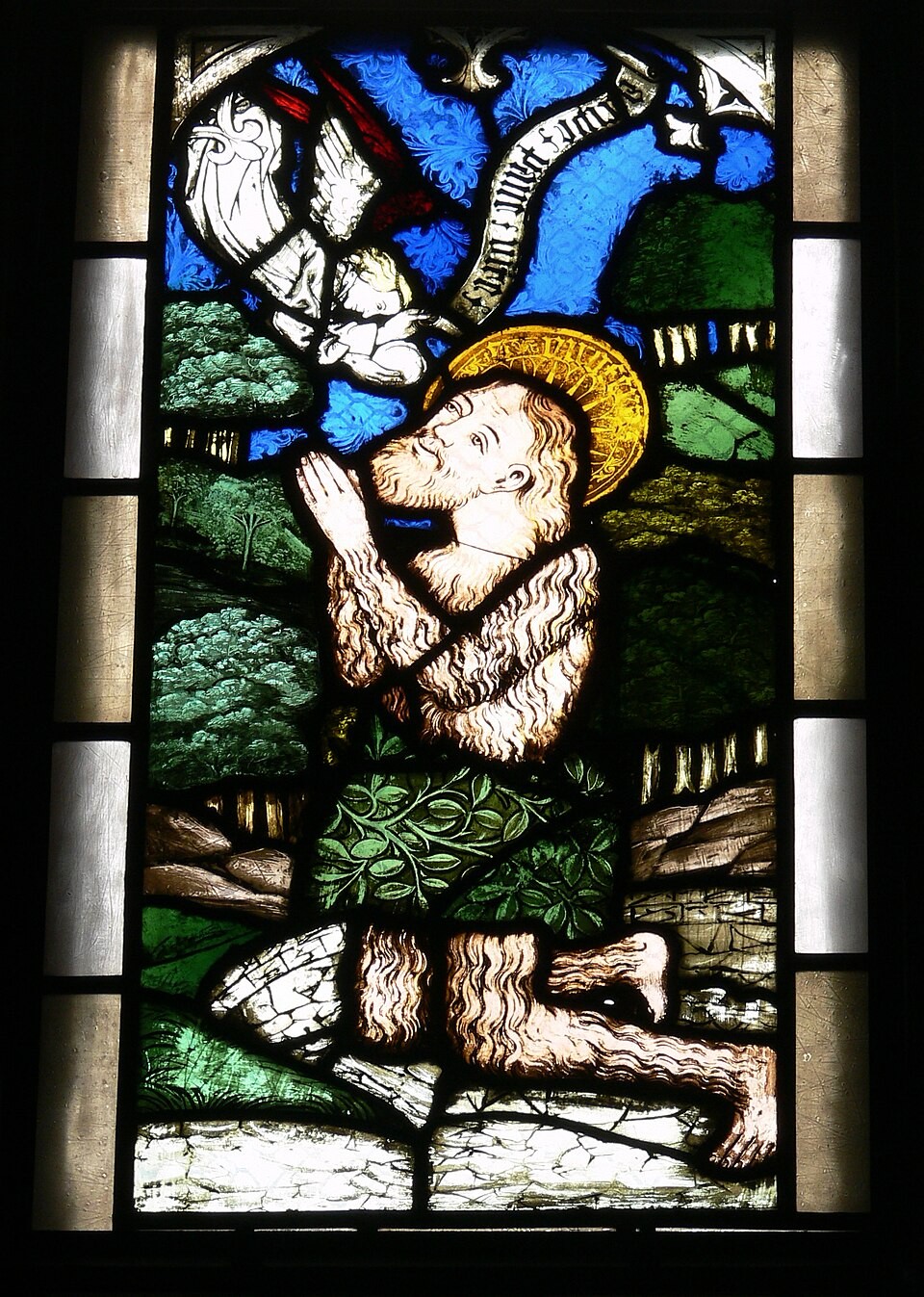
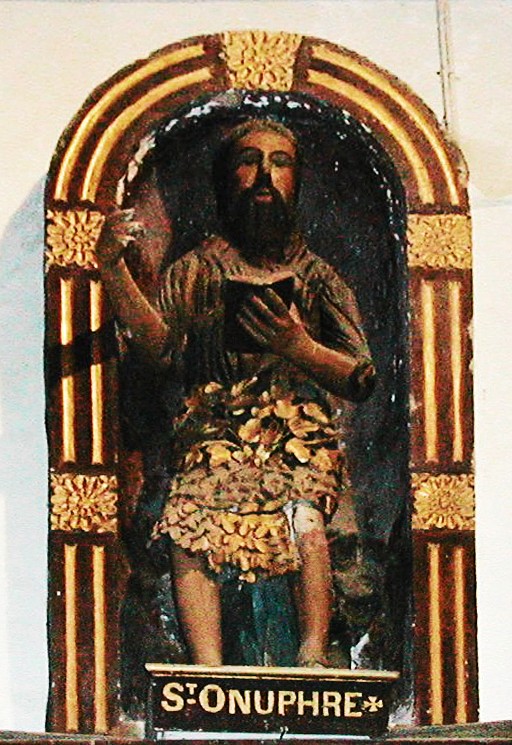
Saint of the Day – 12 June – St Onuphrius (Died c400) Hermi, living a miraculous life assisted by his Angel alone in the Egyptian desert for 60 years. Speaking to God and His Angel only, who weekly brought him Holy Communion and daily brought him bodily sustenance. The dates and details of his birth and death are unknown except that he died in June c400. Patronages – of weavers (apparently due to his leaf-woven garment and his long hair which also acted as clothing, Towns in Italy – Centrache, Catanzaro Paterno, Avezzano, Siena and Sutera. Also known as – Onuphrius of Egypt, Humphrey… Onofre… Onofrio… Onophry… Onouphrius… The name Onophrius is of Egyptian origin and means ‘who is always happy.’
The Roman Martyrology reads today: “In Egypt, St Onuphrius, an Anchorite, who led a religioys life in the desert for 60 years and renowned for great virtues and merits, departed for Heaven. His admirable deeds were recorded by the Abbot, Paphmutius.”
The Vita of our Saint today, Onuphrius, was written by another Saint, Paphmutius, an Egyptian Monk. His writing bears an unmistakable resemblance to two other great classics of the genre, St Jerome’s life of St Paul the First Hermit and the tale of St Mary of Egypt.
Paphmutius, eager to meet the desert Hermit, to learn about their lives and their eremeiic experience which was so much discussed at that time, went into the desert in search of them. After two stops in 21 days, exhausted, he collapsed onto the ground. Looking up, he saw a human figure of terrible appearance appear, covered from head to toe only by long hair and a few leaves.
This was usual for Hermits, who were accustomed to being always alone and seen only by Angels, in the end did without a garment difficult to obtain or replace in the desert.
Initially frightened, Paphmutius tried to escape but the human figure called him telling him to stay, then he understood that he had found who he was looking for, it was an Hermit. Once mutual trust had been established, the confidences began, the Hermit said his name was Onuphrius and he had been in the desert for around 60 years and had never seen another living soul! He ate herbs and rested in caves but initially it was not like this, he had lived in a Monastery in the Thebaid area, together with a hundred Monks.
But desirous of a more solitary life following the example of St. John the Baptist and the Prophet Elijah, he left the Monastery to dedicate himself to the eremitical life; having advanced into the desert area with little food, after a few days he met another Hermit in a cave, whom he asked to assit him and initiate him into that very particular life.
The Hermit obliged and then accompanied him to a place which was an oasis with palm trees, stayed with him for thirty days and then left, returning to his cave. Once a year the Hermit would come to visit him and comfort him but on one of these visits, as soon as he arrived he bowed to greet him and collapsed and died. Filled with sadness Onuphrius buried him in a place near his Hermitage. Onuphrius then told Paphmutius how he adapted to the changing seasons; how he resisted the elements and how he supported his physical needs, an Angel provided for his daily nourishment, the same Angel brought him Holy Communion on Sundays. The miracle of the Angel was also seen by Paphmutius whom Onuphrius led to his Hermitage of ‘Calidiomea,’ the place of palm trees.
They continued their spiritual conversations until the holy Hermit said: “God has sent you here so that you may give my body a suitable burial, since I have reached the end of my earthly life.” Paphnutius proposed that Onuphrius take his place, but the Hermit replied that this was not God’s Will, he had to return to Egypt and tell what he had witnessed.
After blessing him, he knelt in prayer and Died. Paphnutius covered him with part of his own tunic and buried him in a crevice in the rock. Before he left, a landslide reduced Onuphrius’ cave to ruins, also knocking down the palm trees, a sign of God’s Will that no one else would live as a Hermit in that place.
Regardless of the historical existence of St Onuphrius, the Greek ‘Life’ of Paphnutius concludes by saying that the holy Hermit died on 11 June 11, however St Onuphrius is celebrated on 12 June. Anthony, Archbishop of Novgorod, reports that in his time (1200) the head of St Onuphrius was preserved in the Church of St Acindino.
St Onuphrius’ cult and his memory spread to all the countries of Asia Minor and to Egypt, all the calendars of these regions report him on the 10th, 11th, 12th of June; in Arabic he is Abü Nufar, (the herbivore).
The image of St Onuphrius, a naked Hermit, covered only with his hair, was the object of figurative representation in art, in all the centuries, enriched by the many narrated details, the loincloth made of leaves, the camel, the skull, the Cross, the host with the chalice, the Angel.
St Amphion of Nicomedia Bl Antonio de Pietra St Arsenius of Konev St Christian O’Morgair of Clogher St Chrodobald of Marchiennes St Cominus Bl Conrad of Maleville St Cunera St Cuniald St Cyrinus of Antwerp St Eskil St Galen of Armenia St Gerebald of Châlons-sur-Seine St Geslar
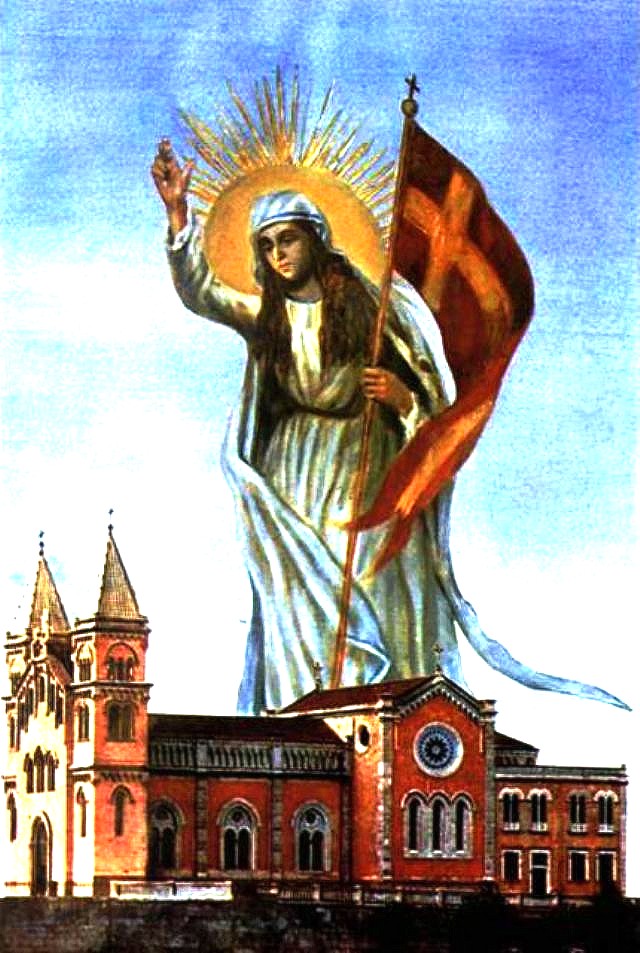
St Pope Leo III (c 750-816) Bishop of Rome and Ruler of the Papal States from 26 December 795 to his death. Defender of the City ad peoples of Rome and of the Church. Peacemaker and restorer of Churches and Monasteries, Patron of the Arts and Apostle of the poor. Know as “Charlemagne’s Pope” His Holy Life: https://anastpaul.com/2021/06/12/saint-of-the-day-12-june-st-pope-leo-iii-c-750-816/
St Odulf (Died c865) Priest, Monk, Prior, zealous Missionary to the Frisians. Odulf was gifted with the charism of prophecy. Born in Brabant (in modern Belgium) and died in c865 of natural causes at his Monastery, Saint Martin of Utrecht. Patronages – Borgloon, Belgium, Evesham, England, Stavoren, Holland, Utrecht, Holland. Zealous St Odulf: https://anastpaul.com/2024/06/12/saint-of-the-day-12-june-saint-odulf-of-utrecht-died-c865-priest/
St Olympius of Aenos St Onuphrius (Died c400) Hermit Bl Pelagia Leonti of Milazzo St Peter of Mount Athos St Placid of Val d’Ocre St Ternan of Culross St Valerius of Armenia
Martyrs of Bologna: Three Christians who were Martyred at different times and places, but whose relics have been collected and enshrined together – Celsus, Dionysius, and Marcellinus. Their relics were enshrined in churches in Bologna and Rome in Italy.
St Basilides and Companions / Martyrs of Rome: Four members of the Imperial Roman nobility. They were all soldiers, one or more may have been officers and all were Martyred in the persecutions of Diocletian – Basilides, Cyrinus, Nabor and Nazarius. They were martyred in 304 outside Rome, Italy and buried along the Aurelian Way.
Three Holy Exiles: Three Christian men who became Benedictine Monks at the Saint James Abbey in Regensburg, Germany, then Hermits at Griestatten and whose lives and piety are celebrated together. – Marinus, Vimius and Zimius.
Thought for the Day – 11 June – Meditations with Antonio Cardinal Bacci (1881-1971)
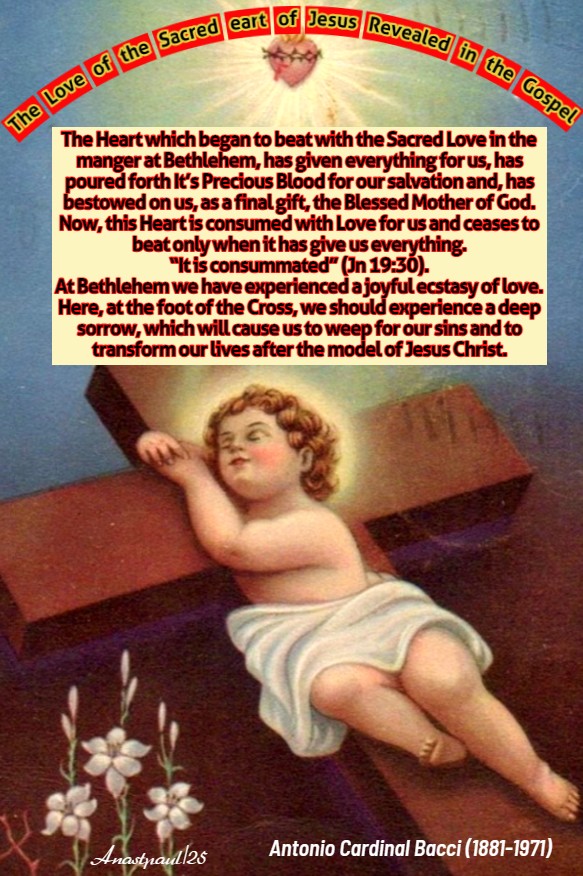
The Love of the Sacred Heart of Jesus Revealed in the Gospel
“If we meditate upon the pages of the Gospel, we shall find they are vibrant with the Infinite Love of the Sacred Heart of Jesus. Let us, in imagination, enter the cave of Bethlehem and kneel before the crib where the Divine Infant is lying. Darkness is all around, darkness over the earth, darkness in the minds and hearts of the majority of men. But, now, the heavens open and from the brightness the voices of Angels ring out, “Glory to God in the highest and on earth, peace among men of goodwill.” Who is this Infant? He is the Eternal Word, the substantial Image of God, Who, for love of us, has been made man. He is the Infinite One Who has willed to unite Himself with the finite, in order to lift us towards Himself. This little Heart is throbbing like that of any baby but, in this throb, is expressed the love of the God-Man. It is a profound Mystery, that God should have loved man so much, that He became a tiny Infant. Yet, He did this so that we might love Him more easily and in order to show us His own immeasurable Love. There is about this Infant, a fascination, at once human and divine which compels us to love Him, even as Mary, Joseph and the simple shepherds loved Him. He is asking us for love, adoration and complete surrender. Can we refuse Him?
Now let us take ourselves in imagination to Calvary and kneel at the foot of the Cross. The Heart which began to beat with the Sacred Love in the manger at Bethlehem, has given everything for us, has poured forth It’s Precious Blood for our salvation and, has bestowed on us, as a final gift, the Blessed Mother of God. Now, this Heart is consumed with Love for us and ceases to beat only when it has give us everything. “It is consummated” (Jn 19:30). At Bethlehem we have experienced a joyful ecstasy of love. Here, at the foot of the Cross, we should experience a deep sorrow, which will cause us to weep for our sins and to transform our lives after the model of Jesus Christ.”
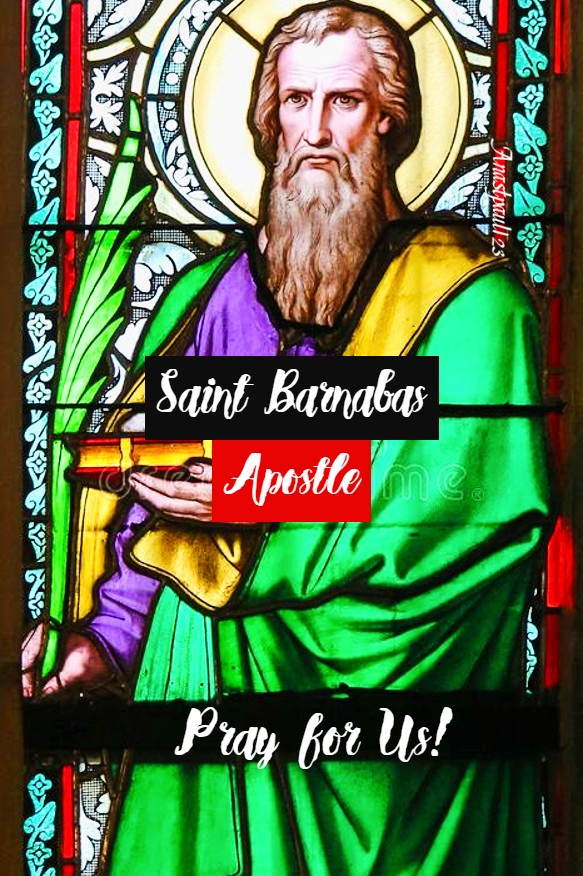
Quote/s of the Day – 11 June – “The Month of the Sacred Heart of Jesus” – Feast of St Barnabas the Apostle, Martyr, The “Son of Encouragement” – Acts 11:21-26; 13:1-3; Matthew 10:16-22.– Scripture search here: https://www.drbo.org/
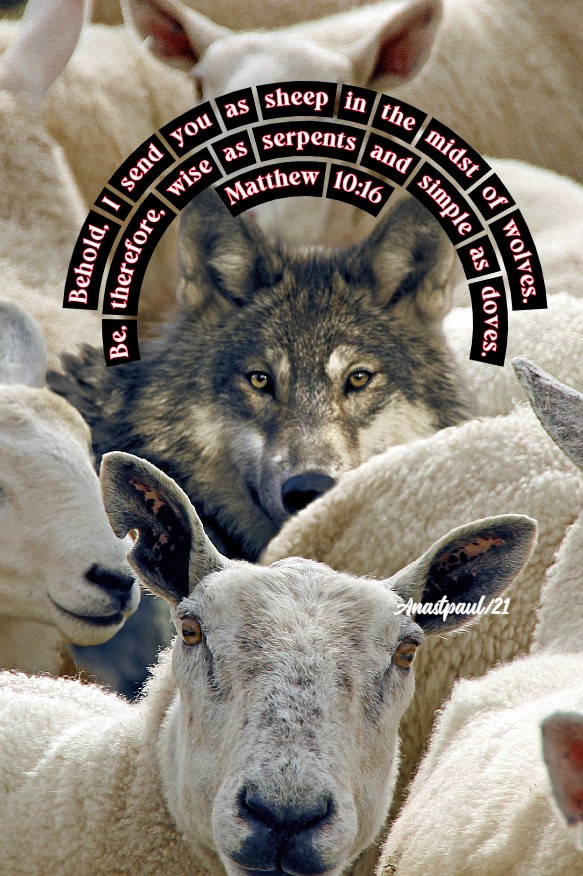
“Behold I send you as sheep in the midst of wolves. Be, therefore, wise as serpents and simple as doves. ”
Matthew – 10:16
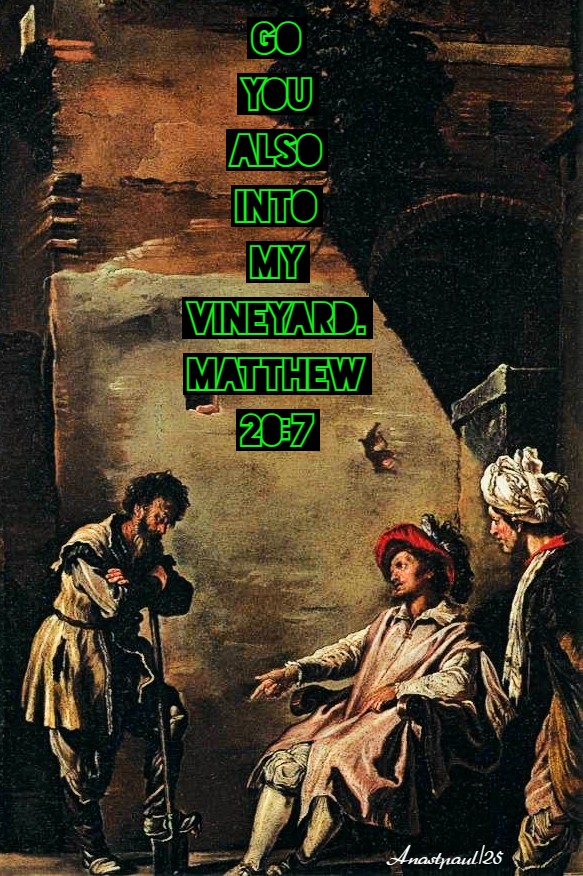
“Go you also into My Vineyard.”
Matthew 20:7
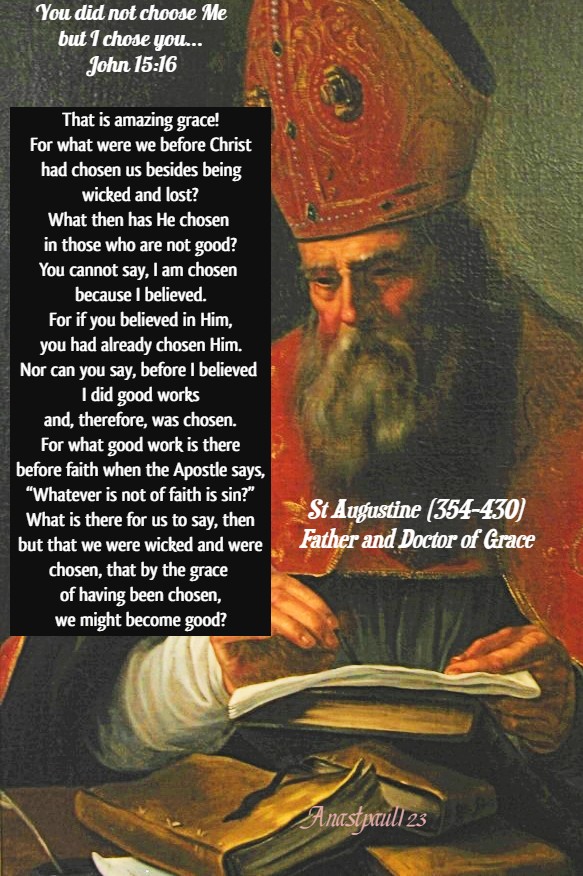
“You did not choose Me but I chose you…”
John 15:16
“That is amazing grace! For what were we before Christ had chosen us besides being wicked and lost? What then has He chosen in those who are not good? You cannot say, I am chosen because I believed. For if you believed in Him, you had already chosen Him. Nor can you say, before I believed I did good works and, therefore, was chosen. For what good work is there before faith when the Apostle says, “Whatever is not of faith is sin?” What is there for us to say, then but that we were wicked and were chosen, that by the grace of having been chosen, we might become good?”
St Augustine (354-430) Father and Doctor of Grace
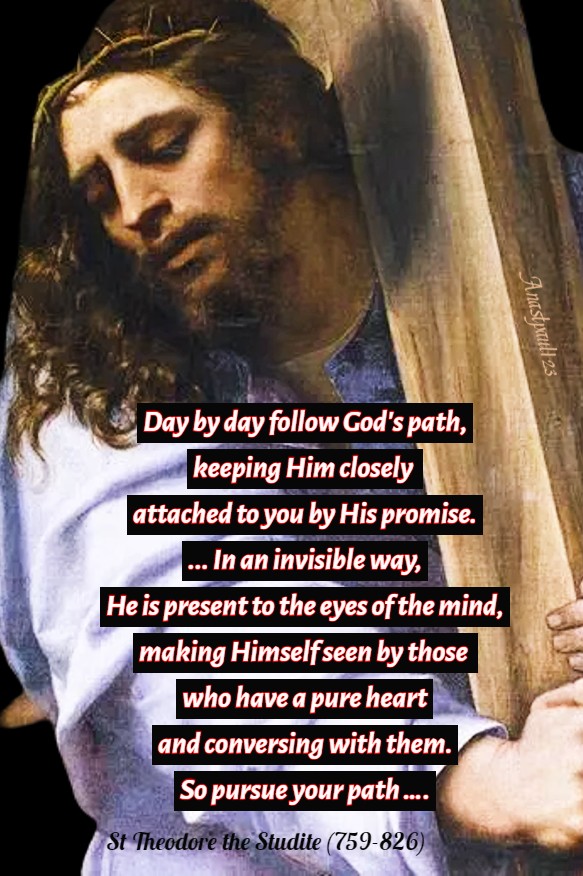
“Day by day follow God’s path, keeping Him closely attached to you by His promise. In fact, He Himself said, through the mediation of His Apostles, to all those who seek His will and His testimonies that He would be with them until the end of the world (Mt 28:20) where paths and footsteps will be unknown (cf Ps 76:20), as the divine David said in his songs. Yet, in an invisible way, He is present to the eyes of the mind, making Himself seen by those who have a pure heart and conversing with them. So pursue your path …. ”
St Theodore the Studite (759-826) Abbot, Confessor, Father of the Church
One Minute Reflection – 11 June – “The Month of the Most Sacred Heart of Jesus” – Pentecost Wednesday – Ember Wednesday, Fast & Abstinence – The Feast of St Barnabas the Apostle, Martyr, The “Son of Encouragement” – Acts 11:21-26; 13:1-3 – Matthew 10:16-22 – Scripture search here: https://www.drbo.org/
“Behold I send you as sheep in the midst of wolves. Be, therefore, wise as serpents and simple as doves. ” – Matthew – 10:16
REFLECTION – “Christ also suffered for you, leaving you an example that you should follow in His Footsteps,” (1Pt 2:21). Which of the Lord’s examples will we have to follow? Is it His raising of the dead? Is it to walk on the sea? Not in the least. But it is that of being meek and humble of heart (Mt 11:29) and of loving not only our friends but even our enemies (Mt 5:44).
“So that you might follow in His Footsteps,” writes St Peter. The blessed Evangelist John also says the same thing: “Whoever claims to abide in Christ ought to walk as He has walked,” (1 Jn 2:6). And how has Christ walked? He prayed for His enemies on the Cross, saying: “Father, forgive them, for they know not what they do,” (Lk 23:34). They have actually lost their senses and are possessed by an evil spirit and while they are persecuting us, they themselves are undergoing a far greater persecution from the devil. Hence, we should be praying more for their deliverance than for their condemnation.
That is indeed what Blessed Stephen did, he who was the first so gloriously to follow in the Footsteps of Christ. For, when he was struck by a hail of stones, he prayed standing for himself but, falling to his knees, he cried out with all his strength for his enemies: “Lord Jesus Christ, do not hold this sin against them,” (Ac 7:60). So even if we think we cannot imitate our Lord, let us at least imitate him who was just as much His servant as we are.” – St Caesarius of Arles (470-543) Father of the Church, Bishop (Sermons to the people, No 37).
PRAYER – O God, Who gladden us by the merits and intercession of blessed Barnabas, Thy Apostle, mercifully grant that we, who ask of Thee favours through him, may obtain them by the gift of Thy grace.ThroughJesus Christ, Thy Son our Lord, Who lives and reigns with Thee, in the unity of the Holy Ghost, God, world without end. Amen (Collect).
SACRED Heart of JESUS, I trust in Thee. 300 Days Indulgence Once a Day – Plenary, Once a month. Raccolta 175 – St Pius X, 19 August 1905 and 27 June 1906.
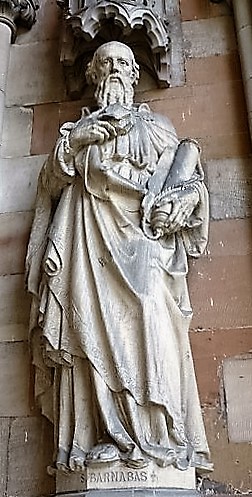
Our Morning Offering – 11 June – Feast of St Barnabas the Apostle, Martyr, The “Son of Encouragement.”
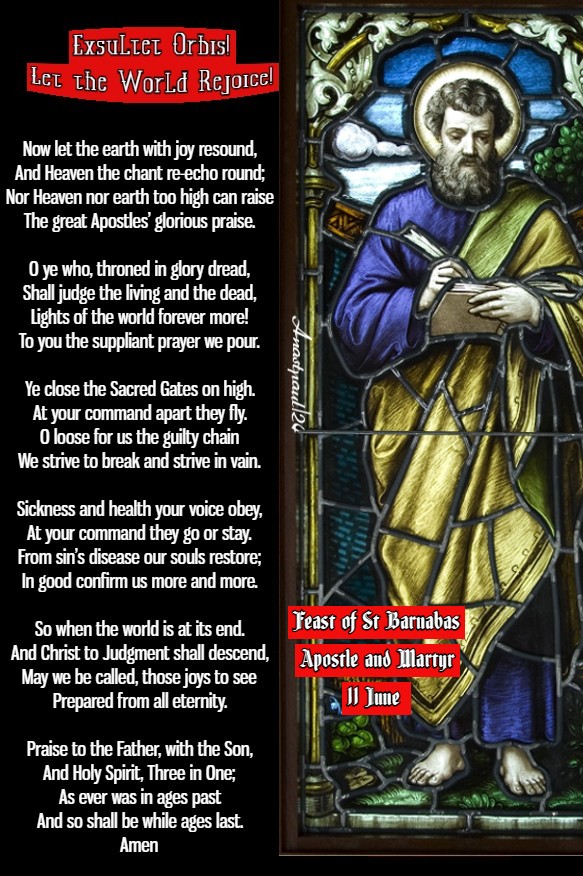
Exsultet Orbis! Let the World Rejoice! Unknown Author
Now let the earth with joy resound, And Heaven the chant re-echo round; Nor Heaven nor earth too high can raise The great Apostles’ glorious praise.
O ye who, throned in glory dread, Shall judge the living and the dead, Lights of the world forever more! To you the suppliant prayer we pour.
Ye close the Sacred Gates on high. At your command apart they fly. O loose for us the guilty chain We strive to break and strive in vain.
Sickness and health your voice obey, At your command they go or stay. From sin’s disease our souls restore; In good confirm us more and more.
So when the world is at its end. And Christ to Judgment shall descend, May we be called, those joys to see Prepared from all eternity.
Praise to the Father, with the Son, And Holy Spirit, Three in One; As ever was in ages past And so shall be while ages last. Amen
(Roman Breviary for the Common of Apostles) An Office Hymn that was traditionally prescribed for Vespers and Lauds on the Feasts of Apostles and Evangelists outside Easter time. The Hymn is found as early as the 10th Century in a Hymnal of Moissac Abbey.
Saint of the Day – 11 June – Saint Blitharius (7th Century) Priest, Hermit , Missionary in Ireland and France, as a disciple of St Fursey (Died c648) He became a renowned and fervent Preacher and Evangeliser. Born in Scotland and died in the late 7th century in Sézanne, France, Also known as – Blitarius, Blitario, Blier. Additional Memorial – 17 June in the Diocese of Troyes.
St Fursey and his Companions journey of evangelisation in England and France
Born in Scotland, Blitharius embarked on a spiritual journey following in the footsteps of St Fursey, an Irish Monk revered for his sanctity and wisdom. Under his guidance, Blitharius was Ordained a Priest and began a journey through Ireland and France, spreading the message of the Gospel and inspiring the faithful with his preaching.
Between 640 and 644, Blitharius’ life took a decisive turn. Attracted by quiet and solitude, he settled in Verzeracus, France, where he built a small shelter which became his hermitage. In this ascetic refuge, Blitharius dedicated his whole life to prayer, fasting and mortification of the body, offering himself to God as a “victim” as a sign of absolute devotion.
Blitharius’ ermitic life was characterised by rigid discipline and profound austerity. He deprived himself of all material comforts, eating only herbs and roots and spending his days in prayer and meditation.
His fame for sanctity spread rapidly, attracting pilgrims from all over the region who sought his spiritual counsel and blessing.
After a life devoted to prayer and mortification, Blitharius left this world to jo enter his eternal home. His body was buried in Sézanne, where his tomb became a place of pilgrimage for the faithful who venerated his memory.
In 1568, Saint Blitharius’ Relics were translated to the Collegiate Church of Broyes in the Marne. However, during the Wars of Religion in France in 1568, Calvinists burned the Relics, destroying this precious tangible link to the Saint.
The Feast of Saint Blitharius was always celebrated on J11une 11. However, in the Proper of Troyes, his Feast was moved to 17 June, a date which is still commemorated there today.
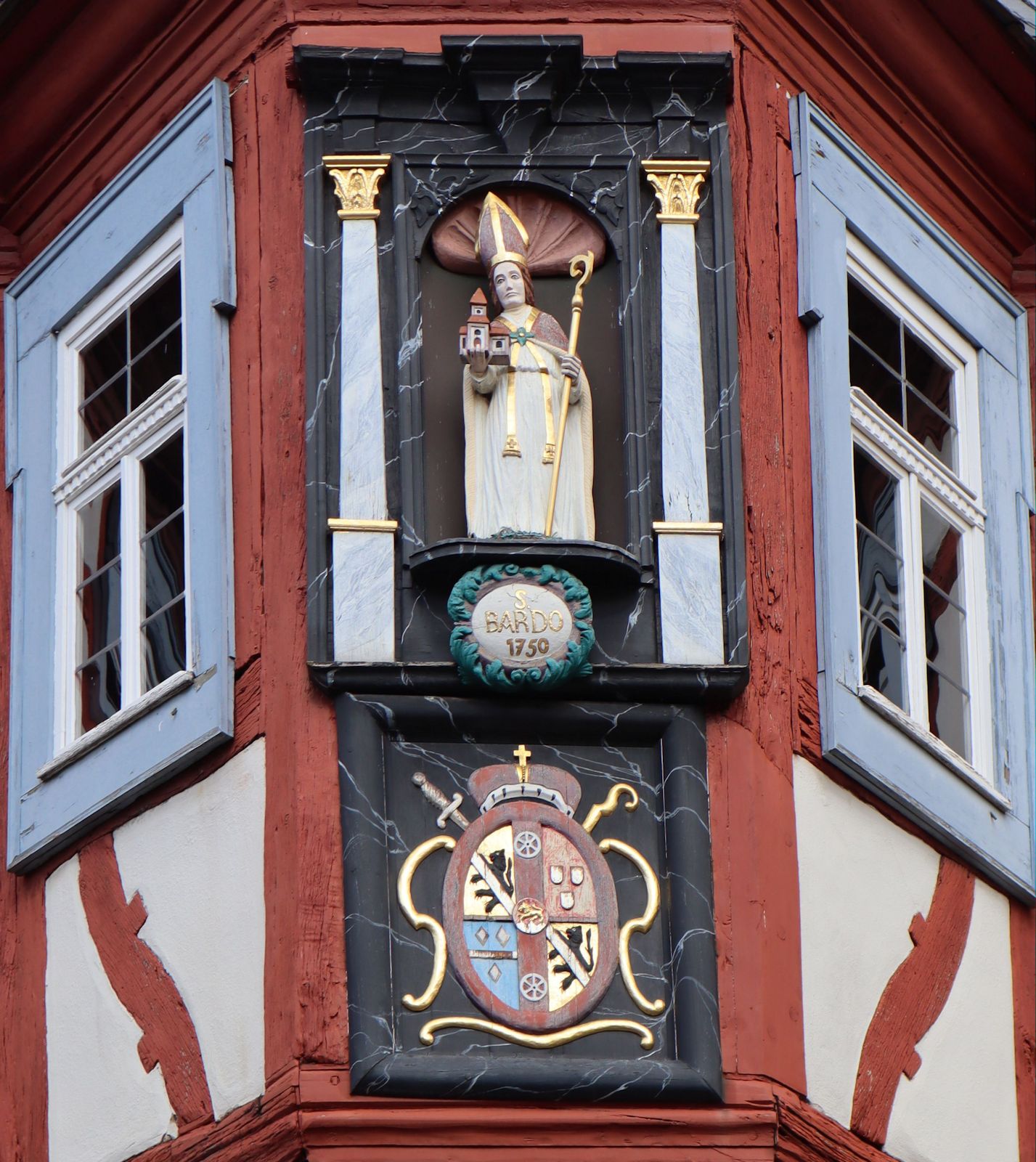
St Bardo (c981-c1053) Archbishop of Mainz from 1031 until 1051, the Abbot of Werden from 1030 until 1031 and the Abbot of Hersfeld in 1031. Ascetic, renowned for his piety and devotion, for his care and love of the poor, renowned Preacher, called “The Chrysostom” of his time. Born in c981 in Oppershofen, Germany and died on 10 or 11 June in 1051 or 1053 (records vary) in Oberdorla near Mühlhausen in Thuringia, of natural causes. Patronage – of Oppershofen “The Chrysostom” of his time: https://anastpaul.com/2024/06/11/saint-of-the-day-11june-saint-bardo-of-mainz-c981-c1053-archbishop-the-chrysostom-of-his-time/
St Herebald of Bretagne Bl Hugh of Marchiennes Bl Jean de Bracq
Bl Kasper of Grimbergen
St Parisius ECMC (c1160-1267) Priest and Monk of the Camaldolese Hermits of Mount Corona, Spiritual Director, Reformer, Miracle-worker during his life and after his death. A very long life of humble and loving service, for the glory of God!: The Roman Martyrology reads: “In Treviso, Saint Parisio, Priest of the Camaldolese Order, who for seventy-seven years took care of the spiritual direction of the Nuns with healthy advice, dying at the age of one hundred and eight.” https://anastpaul.com/2022/06/11/saint-of-the-day-11-june-st-parisius-ecmc-c-1160-1267-a-very-long-life-of-humble-and-loving-service-for-the-glory-of-god/
St Rembert (c830-888) Archbishop of Hamburg-Bremen, Missionary, Miracle-worker, Founder of Churches and Monasteries, Disciple of St Ansgar (801-865) “The Apostle of the North.” The Roman Martyrology reads : “In Bremen in Saxony, in today’s Germany, Saint Rembert, Bishop of Hamburg and Bremen, who, a faithful disciple of Saint Ansgar and his successor, extended his ministry to the regions of Denmark and Sweden and, at the time of the invasions of the Normans, he took care of the ransom of the Christian prisoners.” A True Shepherd: https://anastpaul.com/2023/06/11/saint-of-the-day-11-june-st-rembert-of-hamburg-c830-888-archbishop/
St Riagail (Died c881) Abbot of Bangor Monastery Bl Stephen Bandelli OP St Tochumra of Kilmore St Tochumra of Tuam
Martyrs of Tavira – 7 Beati: Members of the Knights of Santiago de Castilla. During the re-conquest of the Iberian peninsula from the Muslims by Christian forces, in a period of truce between the armies, the group was allowed to leave the Portuguese camp to hunt. Near Tavira, Portugal, he and his companions were ambushed and killed by a Muslim force. Making a reprisal attack, the Portuguese army took the city of Tavira. The murdered knights were considered to be martyrs as they died in an action defending the faith. They were – Blessed Alvarus Garcia, Blessed Beltrão de Caia, Blessed Damião Vaz, Blessed Estêvão Vasques, Blessed Garcia Roiz, Blessed Mendus Valle, Blessed Pedro Rodrigues’ They were Martyred in 1242 outside Tavira, Faro, Portugal. Their relics are enshrined under the altar of Saint Barnabas in the Church of Our Lady, Queen of the Angels (modern Santa Maria do Castelo) in Tavria, Portugal.
Mercedarian Martyrs of Damietta: Three Mercedarian Lay Knights who worked to ransom Christians enslaved by Muslims. During the 7th Crusade, a plague swept through the Christian army and these knights volunteered to work with the sick. During this work they were captured by Muslims and ordered to convert to Islam; they refused. They were tortured, taken to Damietta, Egypt where they were murdered for their faith. They were thrown from a tower in the mid-13th century in Damietta, Egypt.



































 AnaStpaul
You must be logged in to post a comment.