Thought for the Day – 16 July – Meditations with Antonio Cardinal Bacci (1881-1971)
The Intercession of Our Lady
“Our Lady’s intercession is very powerful with God. St Bernard tells us that it is the Will of God, that everything comes to us through her holy hands (Sermo in Nativ BMV no 7). He assures us, that Mary is the Mediatrix through whom we receive all favours from God (In Assump. BMV sermo 2, no 2). Her power of intercession is the result of her divine and human Motherhood. Because she is the Mother of God, Jesus refuses her nothing; because she is our mother, she loves us dearly and is eager to obtain from God, the spiritual favours, for which we ask. For this reason, we should approach her with complete confidence. St Bernard also writes: “If anyone feels that he is overwhelmed by the tempests of this world and cannot keep an even course, let him raise his eyes towards Mary, let him remember Mary and call upon her…. In danger and in doubt, let him remember and call upon her. Let the thought of Mary never leave his mind; let her name never be far from his lips and from his heart …” (Super Miss. Homil 2, no 17). In all our necessities, we should have confident recourse to our heavenly Mother. Let us remember, however, that if we wish to be true sons of Mary and to be sure of being heard by her, we should ask especially, for spiritual graces. Afterwards, we may ask, with equal confidence but, with resignation to God’s Will, for temporal favours, provided they will not stand in the way of our eternal salvation.”
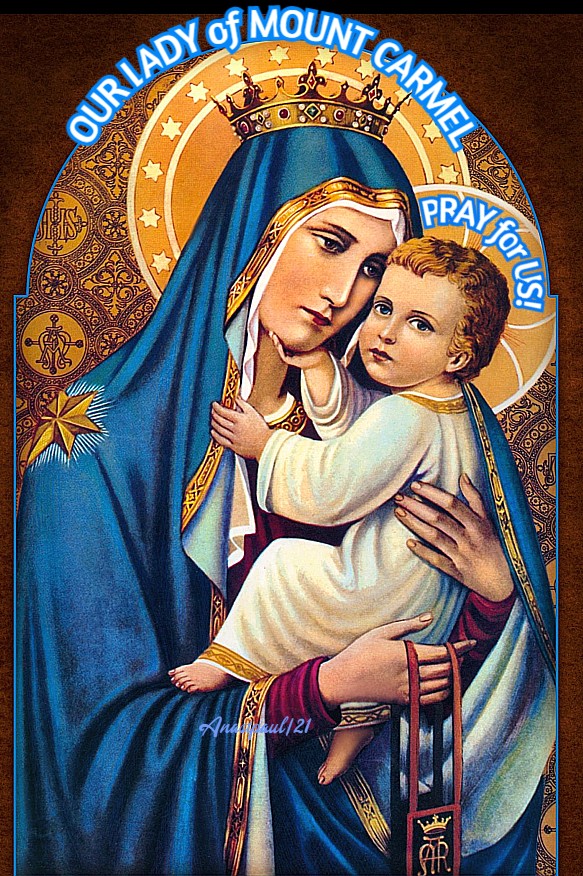
Quote/s of the Day – 16 July – The Feast of Our Lady of Mount Carmel – Ecclesiasticus Sirach 24:23 – Luke 11:27-28 – Scripture search here: https://www.drbo.org/ –
… Rather blessed are those, who hear the Word of God and keep it.”
Luke 11:28
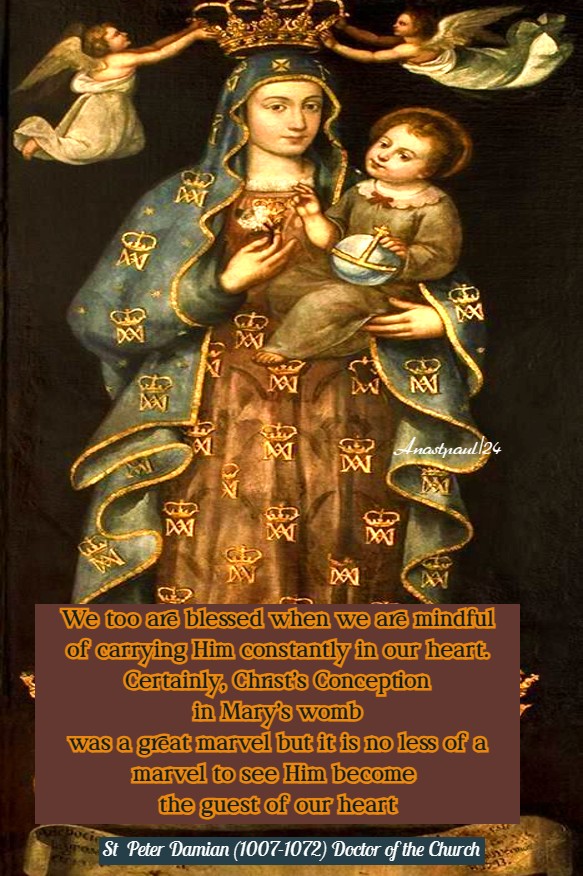
“We too are blessed when we are mindful of carrying Him constantly in our heart. Certainly, Christ’s Conception in Mary’s womb was a great marvel but it is no less of a marvel to see Him become the guest of our heart.”
St Peter Damian (1007-1072) Doctor of the Church
Mother of Salvation, Blessed Lady By St Anselm (1033-1109) Magnificent Doctor Marian Doctor
Mother of Salvation, Blessed Lady, you are the Mother of Justification and those who are justified; the Mother of Reconciliation and those who are reconciled; the Mother of Salvation and those who are saved. What a blessed trust and what a secure refuge! The Mother of God is our Mother. The Mother of the One in Whom alone, we hope and Whom alone, we fear, is our Mother! … The One Who partook of our nature and by restoring us to life, made us children of His Mother, invites us by this grace, to proclaim that we are His brothers and sisters. Therefore, our Judge, is also our Brother. The Saviour of the world, is our Brother. Our God has become – through Mary – our Brother! Anen
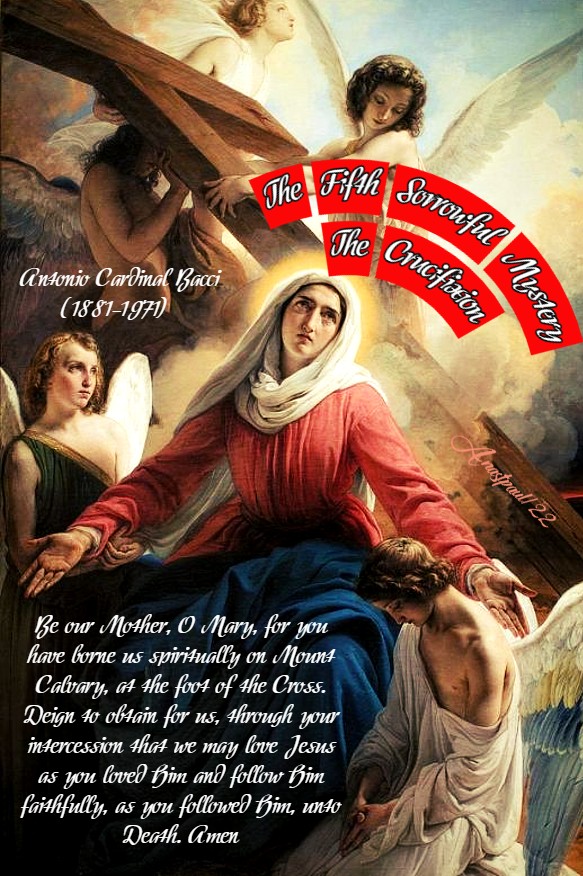
“Be our Mother, O Mary, for you have borne us spiritually on Mount Calvary, at the foot of the Cross. Deign to obtain for us, through your intercession that we may love Jesus as you loved Him and follow Him faithfully, as you followed Him, unto Death. Amen.”
One Minute Reflection – 16 July – “The Month of the Most Precious Blood” – The Feast of Our Lady of Mount Carmel – Ecclesiasticus Sirach 24:23-31 – Luke 11:27-28 – Scripture search here: https://www.drbo.org/
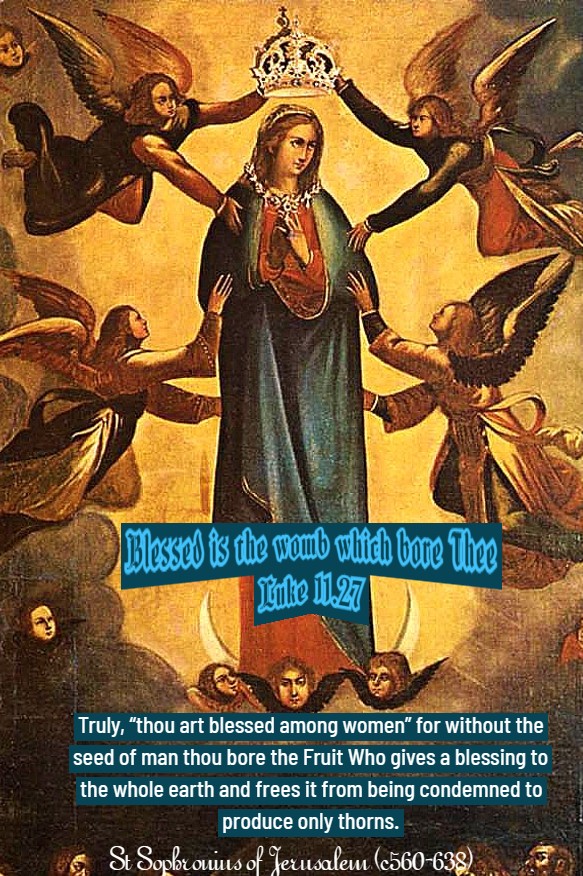
Blessed is the womb which bore Thee ” – Luke 11:27”
REFLECTION – “Hail, O favoured one, the Lord is with thee” (Lk 1:28). Could anything transcend the joy which is thine, O Virgin Mary? Could anything surpass this grace?… Truly, thou art “blessed among women” (Lk 1:42), for thou hast changed the condemnation of Eve into a blessing. Because of thee and through thee, Adam, who was hitherto cast down and condemned, received a blessing.
Truly, “thou art blessed among women” for through thee, the blessing of the Father came to mankind and reprieved them from the age-old sentence. Truly, “thou art blessed among women” because through thee, thy ancestors found salvation. Thou were to give birth to the Saviour, Who would win for them, God’s salvation.
Truly, “thou art blessed among women” for without the seed of man thou bore the Fruit Who gives a blessing to the whole earth and frees it from being condemned to produce only thorns.
Truly, “thou art blessed among women” for although thou art a woman like any other woman, thou will, in actual fact, become the Mother of God. If the One to be born of thee is, in truth God Incarnate, thou rightly deserve to be called ‘she who gave birth to God’ inasmuch as thou truly do give birth to God.” – St Sophronius of Jerusalem (c560-638) Bishop, Father of the Church (Sermon for the Annunciation 2).
PRAYER – O God, Who honoured the Order of Carmel with the special title of the most blessed Mary, ever Virgin, Thy Mother, graciously grant, that we, who this day honour her commemoration with solemn rites, defended by her care, may be found worthy to attain everlasting happiness.Through the same Jesus Christ, Who lives and reigns with God the Father, in the unity of the Holy Spirit, God, world without end. Amen (Collect).
Our Morning Offering – 16 July – “The Month of the Most Precious Blood” – Feast of Our Lady of Mount Carmel
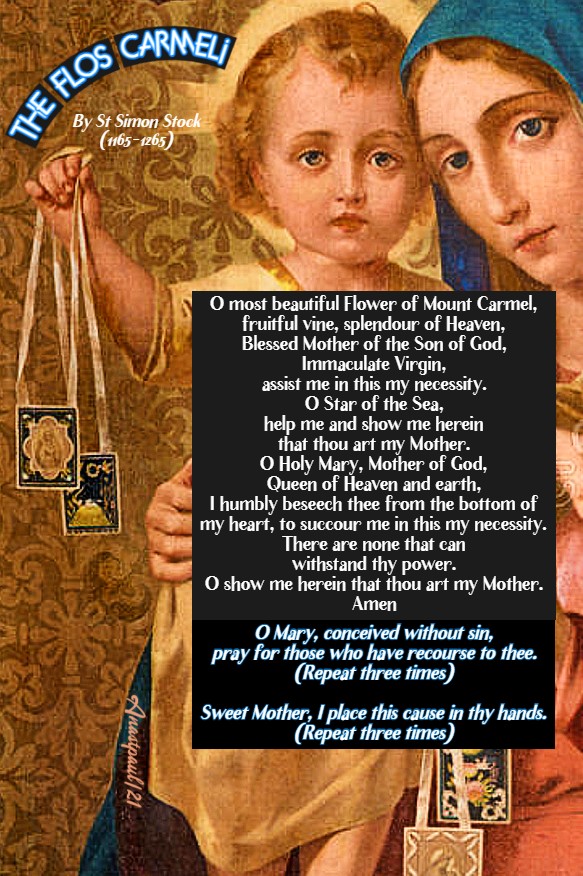
“The Flos Carmeli The Flower of Carmel” By St Simon Stock (1165-1265)
O most beautiful Flower of Mount Carmel, fruitful vine, splendour of Heaven, Blessed Mother of the Son of God, Immaculate Virgin, assist me in this my necessity. O Star of the Sea, help me and show me herein that thou art my Mother. O Holy Mary, Mother of God, Queen of Heaven and earth, I humbly beseech thee from the bottom of my heart, to succour me in this my necessity. There are none that can withstand thy power. O show me herein, that thou art my Mother. Amen.
O Mary, conceived without sin, pray for those who have recourse to thee. (Repeat three times)
Sweet Mother, I place this cause in thy hands. (Repeat three times)
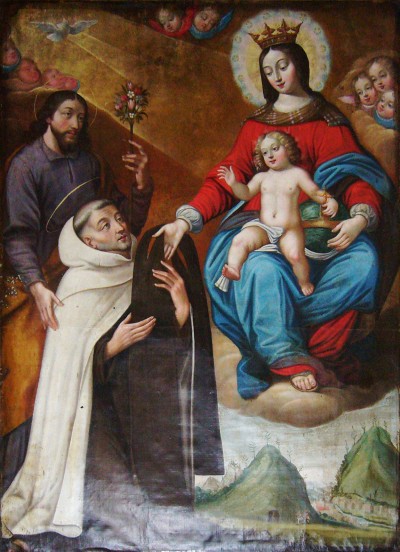
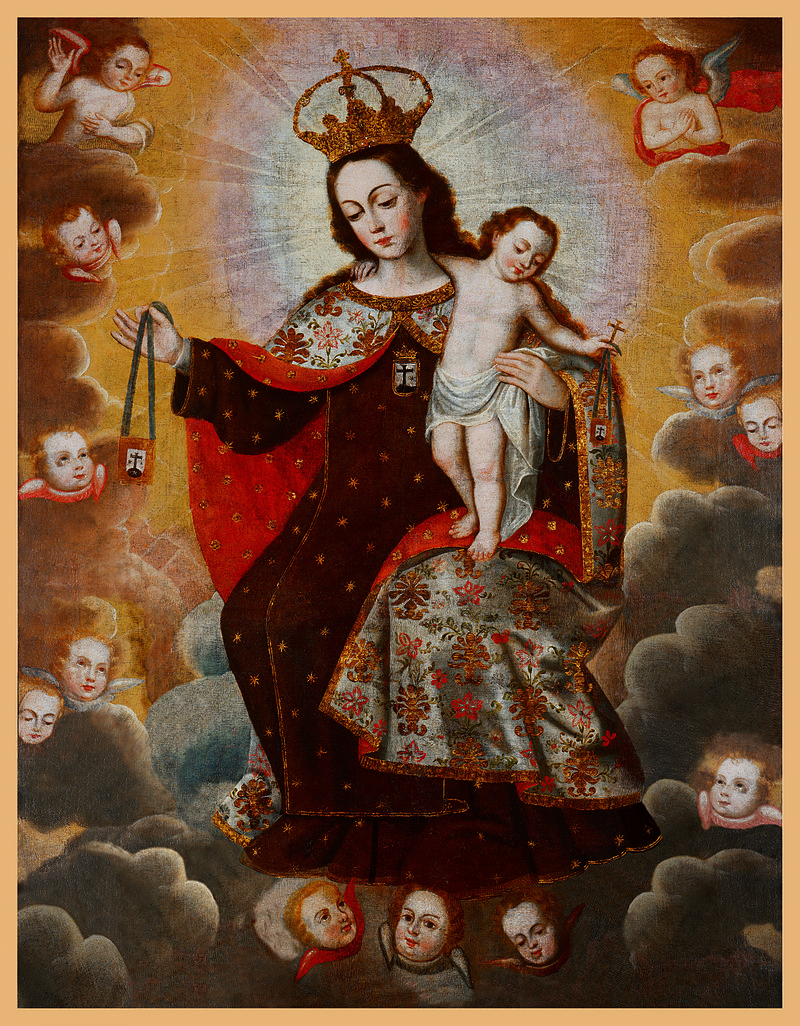
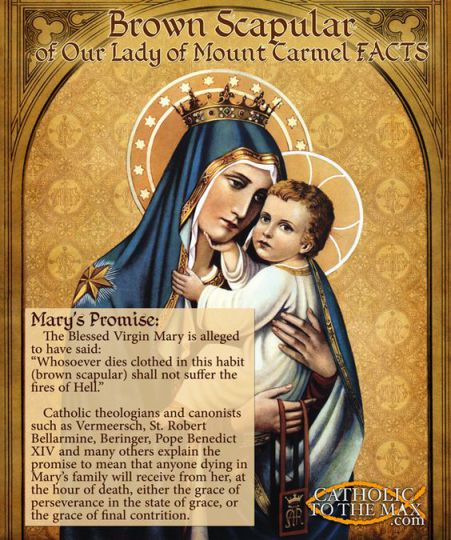
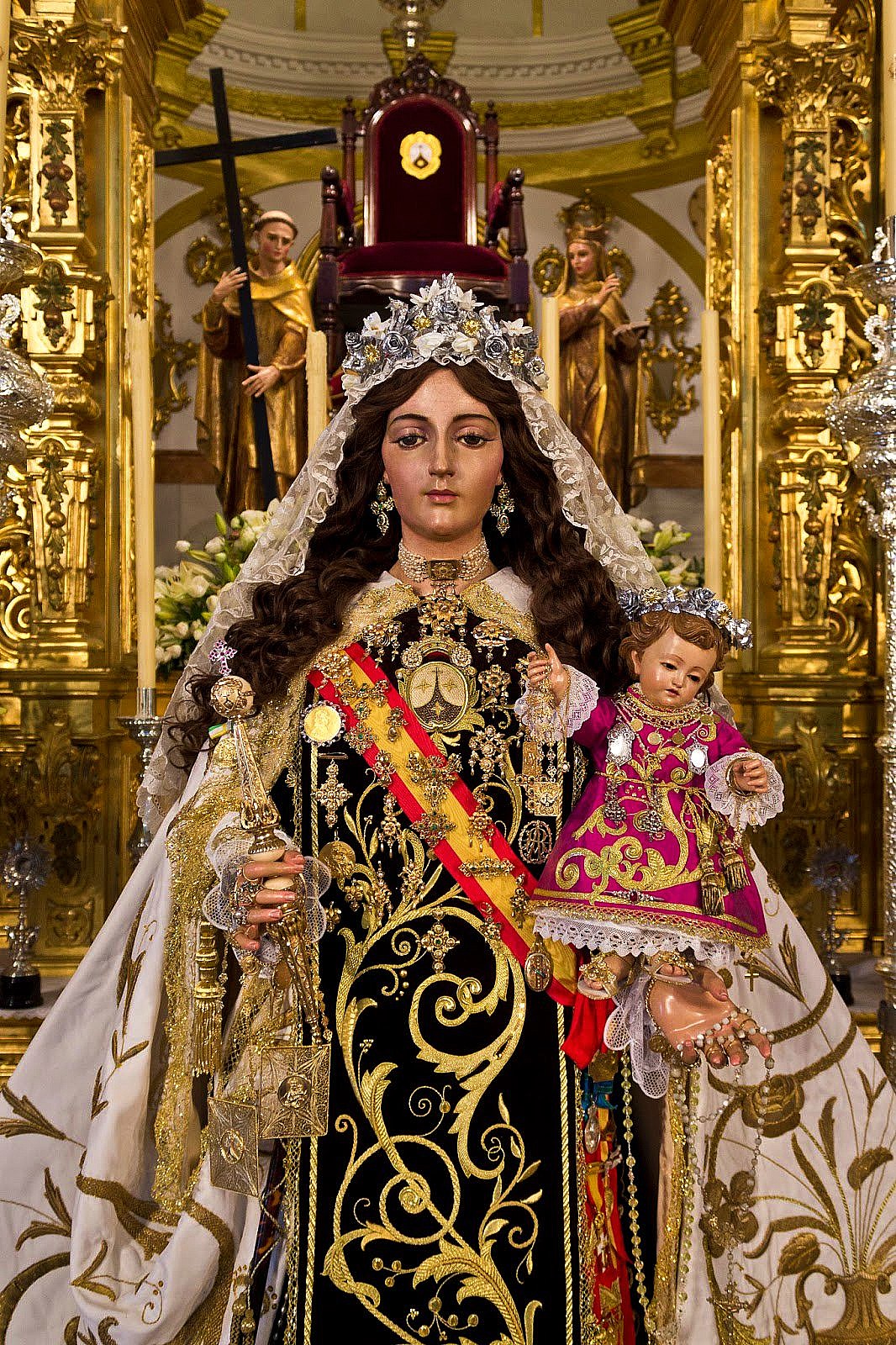
This prayer, the “Flos Carmeli” (“The Flower of Carmel”), was composed by St Simon Stock (1165-1265), a Carmelite, so-called because he and other members of his Order lived atop Mount Carmel in the Holy Land. St Simon Stock was visited by the Blessed Virgin Mary on 16 July 1251, at which time, she bestowed upon him a scapular, or habit, (commonly called “the Brown Scapular”) which became part of the Liturgical clothing of the Carmelite Order. Oral tradition tells of St Simon Stock praying, with a passionate intensity to Our Lady of Mount Carmel, during a time of great distress and hardship for the Order. With fervour and faith, he prayed his prayer, the Flos Carmeli, for the first time. And Our Lady answered his prayer. Thus, for seven centuries the Flos Carmeli continues to be prayed to the Blessed Mother with the firm faith that she she will answer its petition, with her powerful assistance.
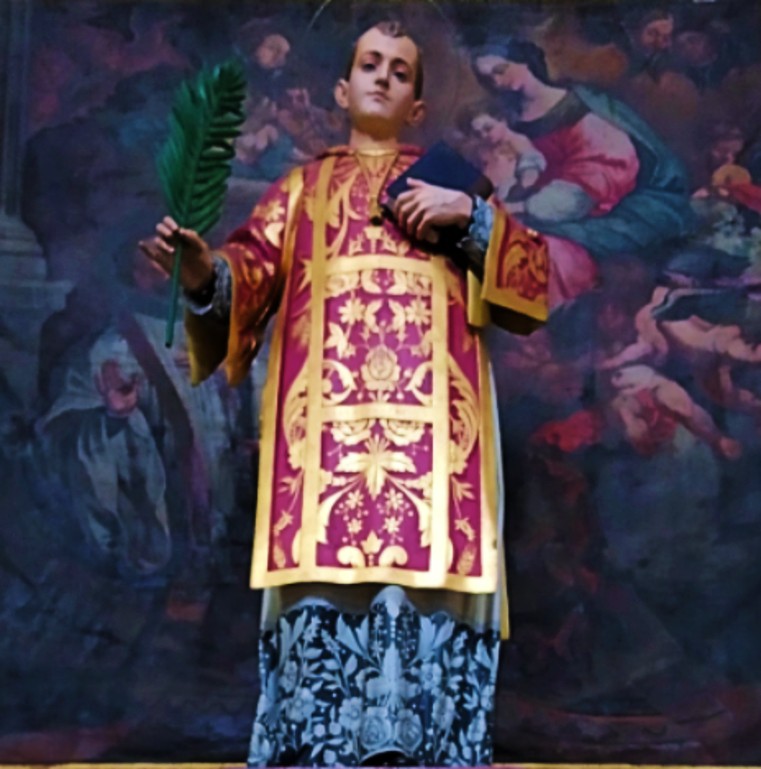
Saint of the Day – 16 July – St Sisenandus (Died 851) Deacon, Martyr of Córdoba in Spain. Born in Beja, in Portugal and died in 851 in Córdoba, Spain. Patronage of his birth C ity of Beja, Portugal. Also known as – S isenandus of Beja, Sisenando; … of Cordoba
The Roman Martyrology reads today: “At Cordoba in SBejapain, St Sisemandus, Deacon and Martyr, who was strangled by the Saracens for the Faith of Christ.”
Portrait and Relic of Saint Sisenandus in the Cathedral of St James the Great, in Beja
Most of that which is known about Sisenandus comes from Eulogius of Córdoba’s Martryology “Memoriale Sanctorum.” This Manuscript remained lost for centuries until its rediscovery by Pedro Ponce de León, Bishop of Plasencia, who had it transcribed and first published in 1574; interest in Sisenandus and the Martyrs of Córdoba at large only resurfaced after this date.
Sisenandus was born in an Iberian Peninsula under Islamic rule. Islamic authorities accorded Christians ‘dhimmi – protected’ status which allowed them to practice their religion with certain restricions, such as a prohibition on public displays of their Faith. These Christians, called Mozarabs, came to adopt elemnts of Arabic culture while retaining their own.
Sisenandus was born in modern-day Spain, from Beja and thence went to Córdoba as a young clerical student to conduct his studies at the Basilica of Saint Acisclus, a Martyr with his sister St Victoria during the reign of Diocletian c305. There, he received Holy Orders as a Deacon and as a fervent preacher, soon after, was arrested, tried and on 16 July 851 was Martyred by order of Abd al-Rahman II. His remains were thrown into the Guadalquivir, and later salvaged and brought to the Church of San Pedro in river in Córdoba.
In the late 16th Century, when Francisco de Reynoso y Baeza was the Bishop of Córdoba, the City of Beja sent a delegation to request the Relics of Saint Sisenandus — or, at least, part of them — be brouht to his birthplace both the Bishop and Philip II of Spain judged it a suitably devout demonstration of piety and allowed a radial bone to be brought to Beja in the year 1600.
The Relic was at first kept under the Tabernacle in the Church of Salvador but then transferred to its own temple. As this latter Chapel fell into disrepair and, eventually, abandonment, the Relics were translated to an Altar in the Cathedral of St James the Great, where they are kept to this day.
On 24 October 1651, Saint Sisenandus was decreed the Patron Saint of the City of Beja.
St Bartholomew OP – ArchBishop of Braga also known as Bl Bartholomew of the Martyrs (Bartolomeu Fernandez dei Martiri Fernandes) (1514-1590) Portuguese Dominican Friar and Priest, Writer, Theologian, Advisor, Teacher and Catechetical writer, Apostle of Charity founding a series of hospitals and hospices in Braga and surrounds. St Bartholomew: https://anastpaul.com/2018/07/16/saint-of-the-day-16-july-blessed-bartholomew-of-the-martyrs-1514-1590/
St Generosus of Poitou St Gobbán Beg St Gondulf of Tongeren-Maastricht St Gondolf of Saintes St Grimoald of Saintes
St Helier (Died c555) Martyr, Hermit, Missionary to Jersey from Belgium, Hermit, Ascetic, Miracle-worker. PATRONAGES – St Helier is the Patron Saint of Jersey and in particular of the Diocese and Capital City of Jersey, named for him – Saint Helier, he is invoked against and for the cure of EYE diseases and skin disorders, His Life and Death: https://anastpaul.com/2023/07/16/saint-of-the-day-16-july-st-helier-of-jersey-died-c555-martyr-missionary-hermit/
Bl Irmengard St Landericus of Séez Bl Madeleine-Françoise de Justamond Bl Marguerite-Rose de Gordon Bl Marguerite-Thérèse Charensol Bl Marie-Anne Béguin-Royal Bl Marie-Anne Doux
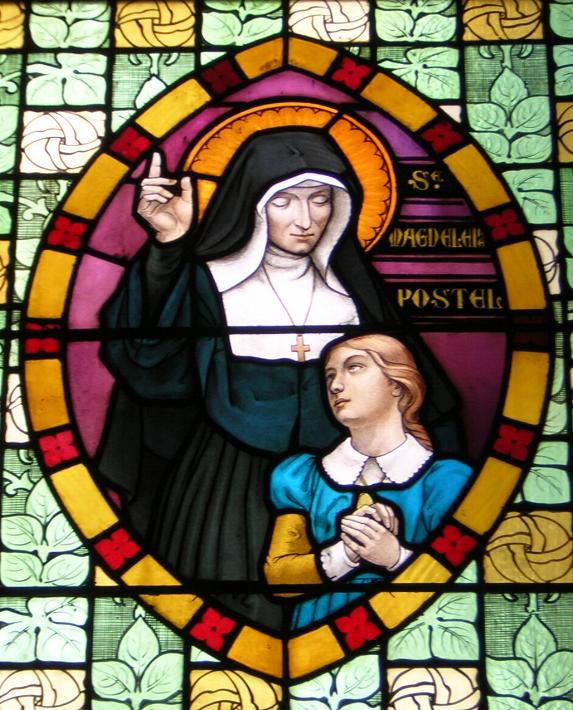
St Marie-Madeline (1756-1846Virgin, Religious Sister and Founder of the Sisters of Christian Schools of which she is the Patron, Teacher, Franciscan Tertiary. Pope Pius X later signified on 22 January 1908 his approval to two investigated miracles attributed to her intercession and so Beatified her on 17 May 1908. Pope Pius XI confirmed two additional miracles and Canonised Blessed Marie-Madeline on 24 May 1925. Her Devoted Life: https://anastpaul.com/2019/07/16/saint-of-the-day-16-july-st-marie-madeline-postel-
Bl Marie-Rose Laye Bl Milon of Thérouanne St Monulphus of Tongeren-Maastricht Bl Ornandus of Vicogne
Martyrs of Antioch – 5 Saints: Five Christians who were Martyred together. No details about them have survived by the names – Dionysius, Eustasius, Maximus, Theodosius and Theodulus. They were Martyred in Antioch, Syria, date unknown.
DISCLAIMER: Please note: I cannot control the content of the Advertisements on this Site, or of pop-ups which may appear, The revenue from the Advertisements, however, does provide a little assistance in the support of the Site. I do apologise for any inappropriate content.











 AnaStpaul
You must be logged in to post a comment.