
Saint of the Day – 16 July – St Sisenandus (Died 851) Deacon, Martyr of Córdoba in Spain. Born in Beja, in Portugal and died in 851 in Córdoba, Spain. Patronage of his birth C ity of Beja, Portugal. Also known as – S isenandus of Beja, Sisenando; … of Cordoba
The Roman Martyrology reads today: “At Cordoba in SBejapain, St Sisemandus, Deacon and Martyr, who was strangled by the Saracens for the Faith of Christ.”

Most of that which is known about Sisenandus comes from Eulogius of Córdoba’s Martryology “Memoriale Sanctorum.”
This Manuscript remained lost for centuries until its rediscovery by Pedro Ponce de León, Bishop of Plasencia, who had it transcribed and first published in 1574; interest in Sisenandus and the Martyrs of Córdoba at large only resurfaced after this date.
Sisenandus was born in an Iberian Peninsula under Islamic rule. Islamic authorities accorded Christians ‘dhimmi – protected’ status which allowed them to practice their religion with certain restricions, such as a prohibition on public displays of their Faith. These Christians, called Mozarabs, came to adopt elemnts of Arabic culture while retaining their own.
Sisenandus was born in modern-day Spain, from Beja and thence went to Córdoba as a young clerical student to conduct his studies at the Basilica of Saint Acisclus, a Martyr with his sister St Victoria during the reign of Diocletian c305. There, he received Holy Orders as a Deacon and as a fervent preacher, soon after, was arrested, tried and on 16 July 851 was Martyred by order of Abd al-Rahman II. His remains were thrown into the Guadalquivir, and later salvaged and brought to the Church of San Pedro in river in Córdoba.
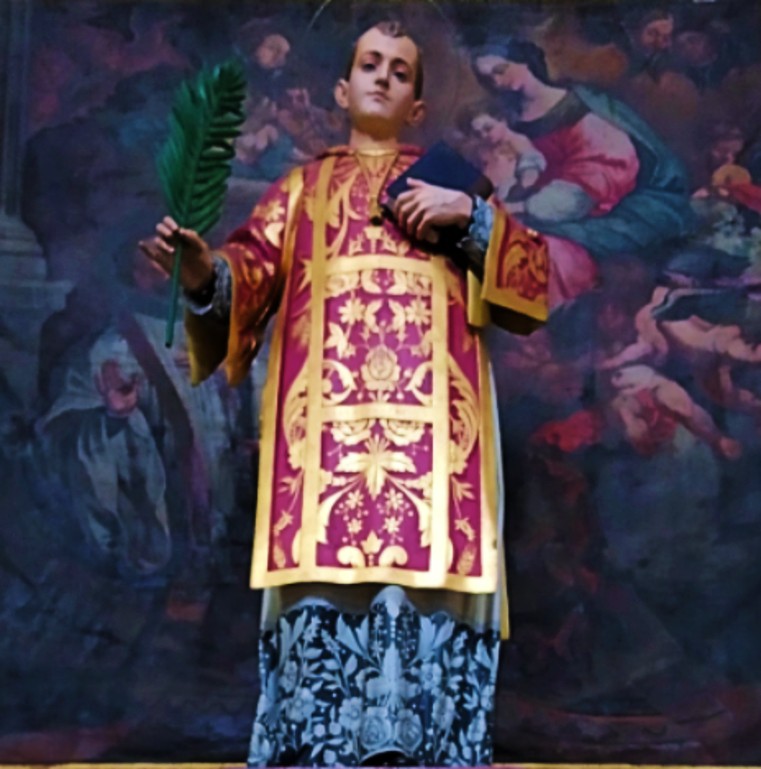
In the late 16th Century, when Francisco de Reynoso y Baeza was the Bishop of Córdoba, the City of Beja sent a delegation to request the Relics of Saint Sisenandus — or, at least, part of them — be brouht to his birthplace both the Bishop and Philip II of Spain judged it a suitably devout demonstration of piety and allowed a radial bone to be brought to Beja in the year 1600.
The Relic was at first kept under the Tabernacle in the Church of Salvador but then transferred to its own temple. As this latter Chapel fell into disrepair and, eventually, abandonment, the Relics were translated to an Altar in the Cathedral of St James the Great, where they are kept to this day.
On 24 October 1651, Saint Sisenandus was decreed the Patron Saint of the City of Beja.


 AnaStpaul