Thought for the Day – 21 October – Meditations with Antonio Cardinal Bacci (1881-1971)
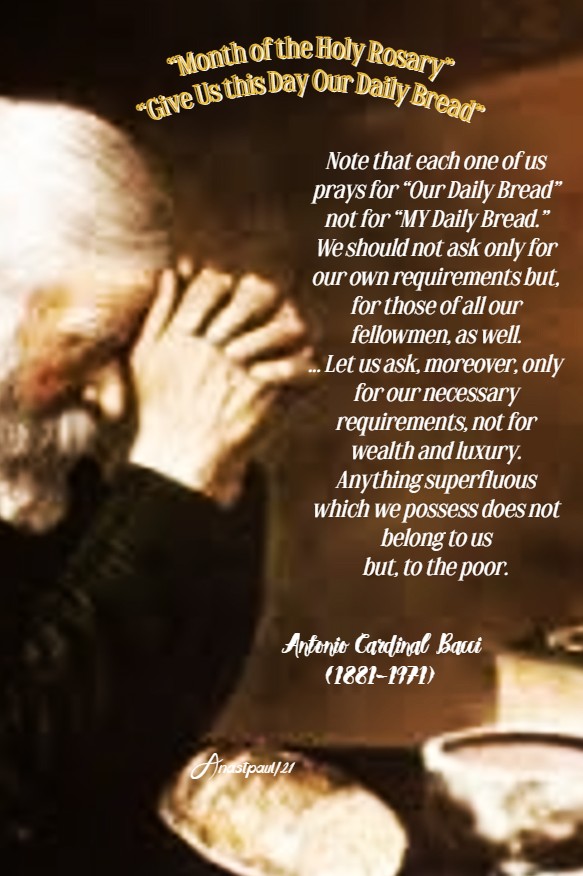
“Month of the Holy Rosary” “Give Us this Day Our Daily Bread”
“Note that each one of us prays for “Our Daily Bread” not for “MY Daily Bread.” We should not ask only for our own requirements but, for those of all our fellowmen, as well.
There are many poverty-stricken people for whom bread is very scarce. We should pray especially for them and should be prepared to share our bread with those who have none. Both charity and justice demand this of us. Let us ask, moreover, only for our necessary requirements, not for wealth and luxury. Anything superfluous which we possess does not belong to us but, to the poor. “Give that which remains,” the Gospel commands, “as alms” (Lk 11:41). Let us remember that, whether we are rich or poor, we are all one great family. Our love for one another should not be merely theoretical but practical, otherwise we are not sincere Christians!”
Quote/s of the Day – 21 October – “The Month of the Most Holy Rosary and of the Angels”
Remember the Angels especially during October
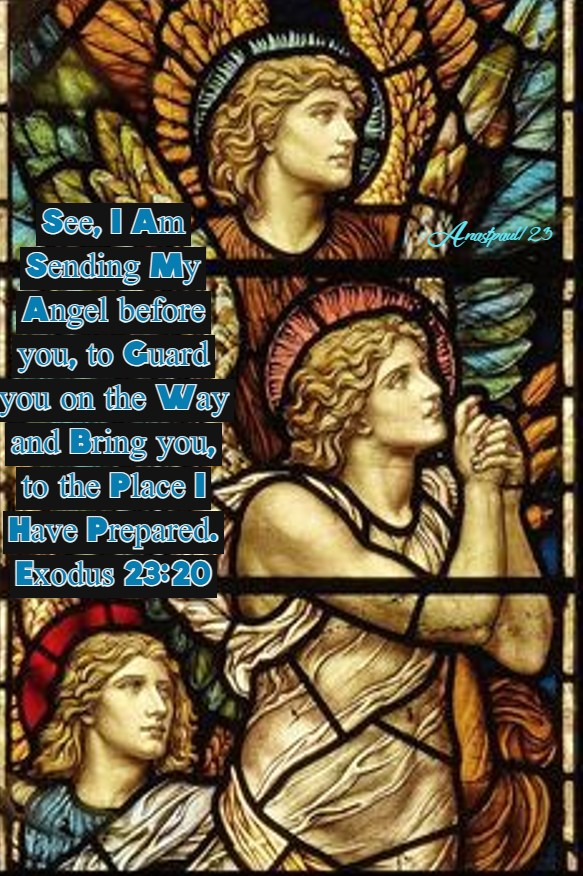
“See, I am sending My Angel before you, to guard you on the way and bring you to the place I have prepared.”
Exodus 23:20
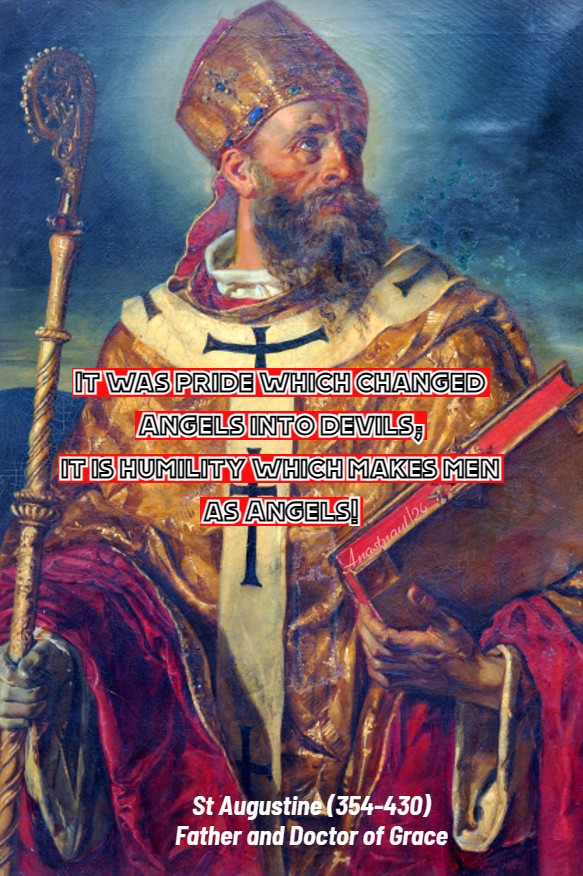
“It was pride which changed Angels into devils; it is humility which makes men as Angels!”
St Augustine (354-430) Father and Doctor of Grace
“We are like children, who stand in need of masters, to enlighten us and direct us and God has provided for this, by appointing His Angels, to be our teachers and guides.”
St Thomas Aquinas (1225-1274) Doctor Angelicus / Doctor Communis
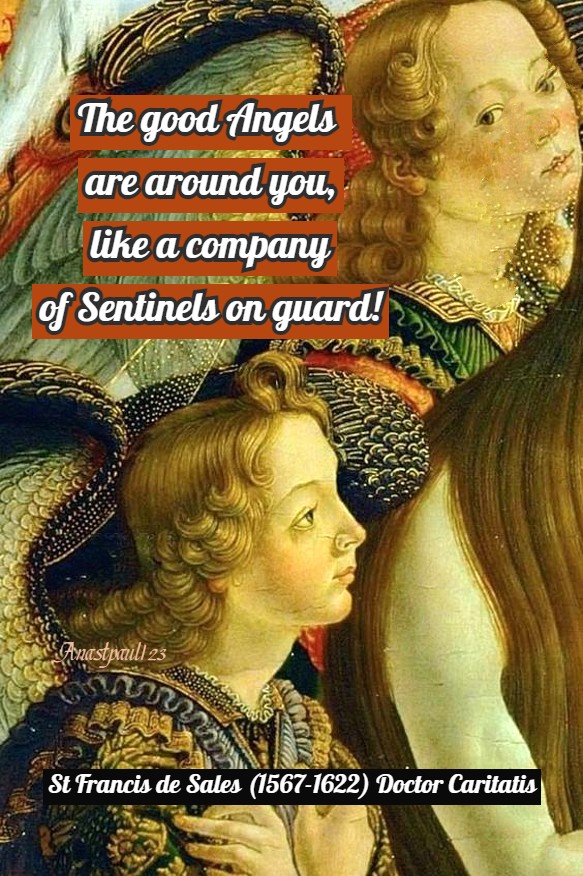
“The good Angels are around you, like a company of Sentinels on guard!”
St Francis de Sales (1567-1622) Doctor Caritatis
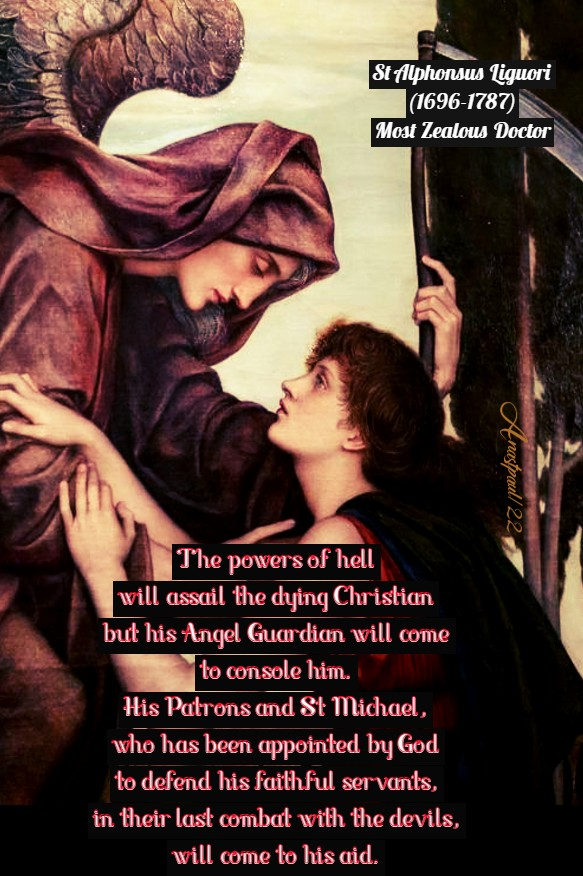
“The powers of hell will assail the dying Christian but his Angel Guardian will come to console him. His Patrons and St Michael, who has been appointed by God to defend his faithful servants, in their last combat with the devils, will come to his aid.”
St Alphonsus Liguori (1696-1787) Most Zealous Doctor
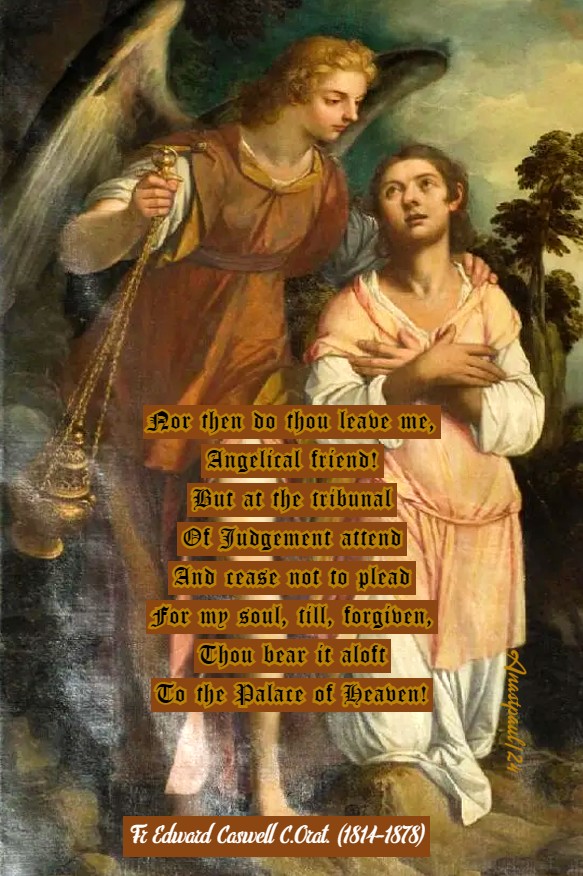
“Nor then do thou leave me, Angelical friend! But at the tribunal Of Judgement attend And cease not to plead For my soul, till, forgiven, Thou bear it aloft To the Palace of Heaven!”
From “Sweet Angel of Mercy!” By Fr Edward Caswell C.Orat. (1814-1878)
One Minute Reflection – 21 October – “The Month of The Most Holy Rosary and The Holy Angels” – Saint Ursula and Companions (Died c 238) Virgin Martyrs – Ecclesiasticus 45:1-6 – Matthew 19:27-29 – Scripture search here: https://www.drbo.org/
“… Shall receive a hundredfold and shall possess life everlasting.” – Matthew 19:29
REFLECTION – “The possessions which we have, are not our own: God has given them to us to cultivate and He wishes us to render them fruitful and profitable … Always deprive yourself, therefore, of some part of your means, giving them to the poor with a willing heart … It is true that God will return it to you, not only in the next world but also in this, for there is nothing which makes a person prosper, in temporal matters, so much, as almsgiving. But until such time as God shall repay it, you will always be impoverished to that extent. Oh! how holy and rich is the impoverishment which is caused by almsgiving.
Love the poor and poverty, for by this love you will become truly poor, since, as Scripture says: “We become like the things that we love” (cf Hos 9:10). Love makes those who love, equal to one another: “Who is weak and I am not weak?” says St Paul (2 Cor 11:29). He might have said: “Who is poor, with whom I am not poor?” For love made him become, such as those whom he loved. If, then, you love the poor, you will be truly participating in their poverty and poor like them. Now, if you love the poor, be often among them; be pleased to see them in your house and to visit them in theirs; associate willingly with them; be glad that they are near you in the Churches, in the streets and elsewhere. Be poor in speech with them, speaking to them as their equal but be rich in deed, giving them of your goods, as one who possesses more abundantly.
Will you do even more? … Become a servant of the poor; go to serve them … with your own hands … and at your own expense. This service has more glory in it than a throne!” – St Francis de Sales (1567-1622) Bishop of Geneva and Doctor of the Church (Introduction to the devout life, Part three Ch 15).
PRAYER – Grant, we beseech Thee, O Lord our God that we may never cease devoutly, to venerate the triumphs of Thy holy Virgins and Martyrs, Ursula and her companions that, as we cannot worthily shew forth their praises, yet we may continually honour them, with lowly service. Through Jesus Christ, Thy Son our Lord, Who lives and reigns with Thee, in the unity of the Holy Ghost, God, world without end. Amen (Collect).
Saint of the Day – 21 October – Saint Malchus (Died c390) Monk and Hermit of Syria. Born around the 4th Century near Antioch, Syria and died there in c390. Malchus is the subject of Saint Jerome’s “Life of Malchus the Captive Monk” (Vita Malchi Monachi Captivi), written in Latin around 391. Also known as – Malchus of Chalcis, Malchus of Maronia.
The Roman Martyrology reads today: “At Marconia near Antioch, in Syria, St Malchus, Monk.”
In 375, Saint Jerome retired to Maronia (a small village around 50 kms south of Antioch), on the estates of his friend St Evagrius Ponticus (c345-399), to lead a Hermit’s life. There he met the Monk Malchus, who recounted the romantic details of his life.
A few years later (390-391), St Jerome recounted these events in the “Vita Malchus Monachi Captivi.” The work, as St Jerome himself states, has the feel of a literary exercise (“I wish to try my hand at a small work and thus, put aside a certain rustiness of the tongue”) and has a parenetic-ascetic purpose (“I expose to chaste people, a tale about chastity… You tell this to posterity, so that they may know that, among swords and deserts and wild beasts, modesty is never enslaved and, the man consecrated to God, can die and never be defeated”).
From a literary perspective, it is highly valuable. Perhaps based on a historical figure he knew, St Jerome composed the Vita with a purposes in favor of monasticism and chastity.
According to the Vita Malchus, descended from a noble family, had retreated to the desert of Chalcis to devote himself to monastic life, despite his father’s staunch opposition. In the Monastery, however, he clashed with the Abbot because, following his father’s death, he intended to take possession of the family property to distribute it to the poor and build a Monastery.
For this attachment to worldly things, Ma;chus was punished; in fact, having left the Monastery, he fell in with a group of Bedouins in the desert, who sold him to a landowner from a distant region. He was entrusted with the care of the flock, a task he did not dislike, as in the midst of the pastures he was able to pray and enrich his spiritual life by contemplation.
In recognition of his faithfulness and excellent service, his master intended to marry him to a slave who had been violently separated from her husband. The idea of an adulterous marriage aroused a sense of despair in Malchus but the woman proposed a sham marriage, living in absolute chastity. They spent some time together, then attempted an escape. St Jerome’s narrative at this point takes on romantic overtones. The two, joined in the desert by their master and a servant, took refuge in the den of a lioness, who first mauled the servant and then the master. Malchus and the woman, using the camels of the slain, reached the Monastery where Malchus had begun his monastic life. Having been rejected, Malchus moved, followed by the woman, to Maronia, where he met St Jerome . There, the woman retired to a Convent.
The episode of the spouses, who lived in perfect chastity, is a very common motif in ancient hagiography. St Jerome’s work was translated into verse by Jean de la Fontaine, a 17th Century French Poet. Three ancient versions of the Vita exist (Latin, Greek, Syriac) which differ only marginally.
St Malchus’ cult spread widely in the East, where the he is remembered on 26 March and in the West on 21 October.
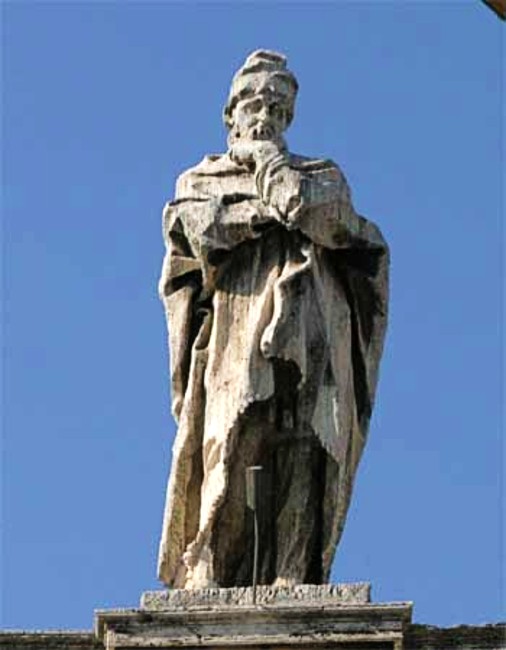
St Malchus on the North Colonnade at St Peter’s Basilica
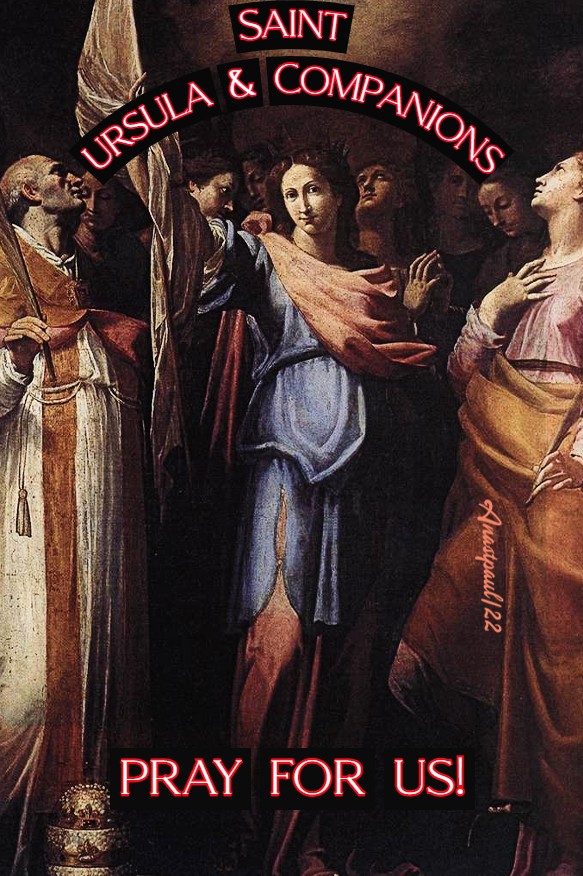
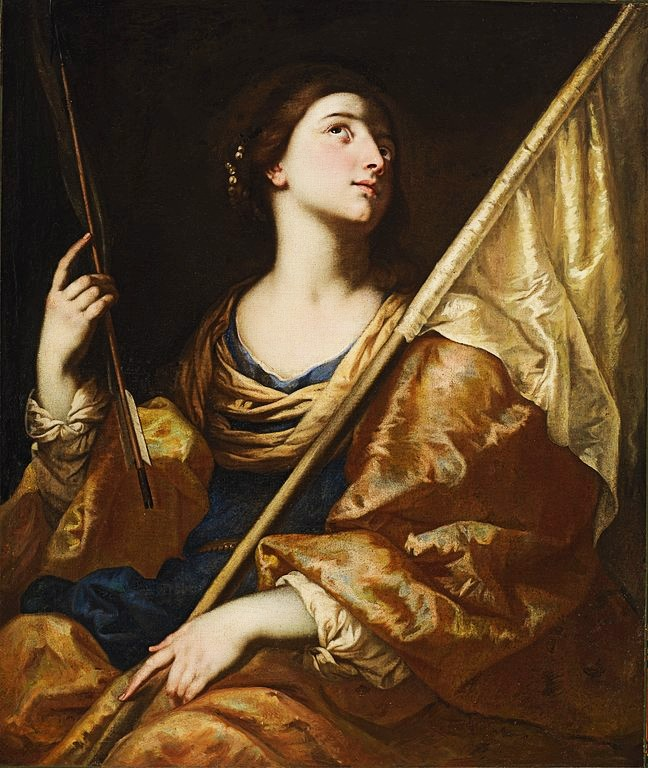
Saint Ursula and Companions: (Died c238) Virgin Martyrs This Amazing Story: https://anastpaul.com/2022/10/21/saint-of-the-day-21-october-saint-ursula-and-companions-died-c-238-virgin-martyr/ There are other Saints closely associated with Ursula and her story – travelling companions who were Martyred with her. They are: Antonia of Cologne Cesarius of Cologne Cyriacus of Cologne Daria Fiolanus of Lucca Ignatius of Cologne James of Antioch Mauritius of Cologne Pontius of Cologne Sulpitius of Ravenna Vincent of Cologne Travelling companion, but escaped the massacre: Cunera Led by a dove to the lost tomb of St Ursula: Cunibert of Cologne.
St Agatho the Hermit St Asterius of Périgord St Asterius of Rome







 AnaStpaul
You must be logged in to post a comment.