Quote/s of the Day – 14 December – Advent III, Gaudete Sunday – “Rejoice!”
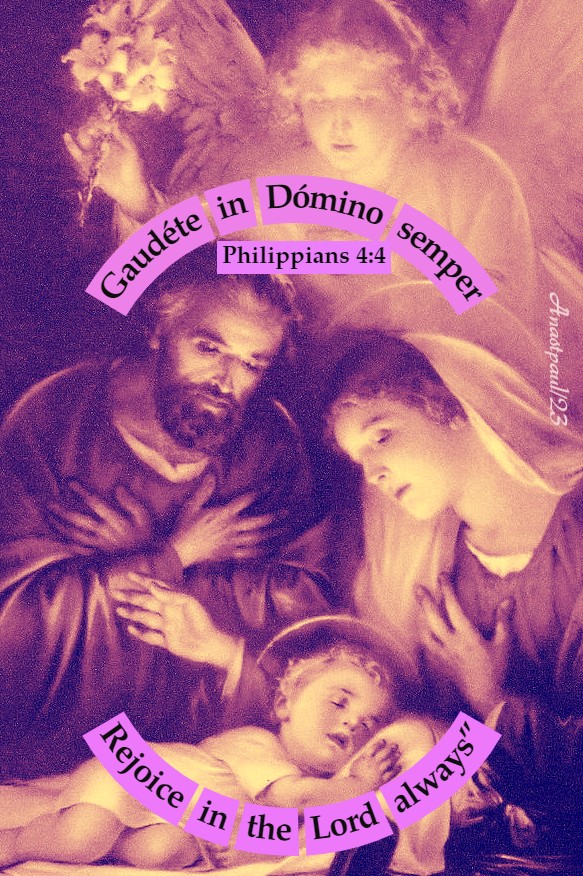
“Gaudéte in Dómino semper”
“Rejoice in the Lord always”
Philippians 4:4
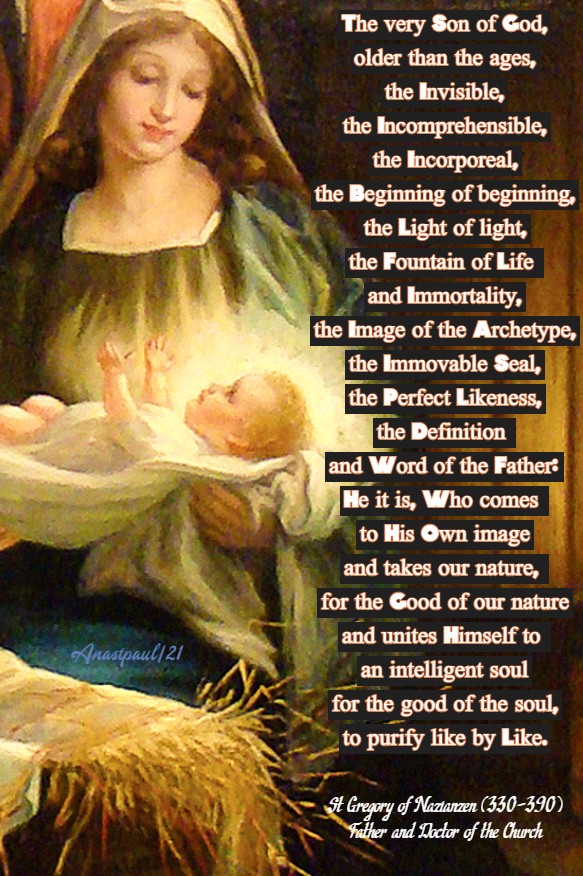
“The very Son of God, Older than the ages, the Invisible, the Incomprehensible, the Incorporeal, the Beginning of beginning, the Light of light, the Fountain of Life and Immortality, the Image of the Archetype, the Immovable Seal, the Perfect Likeness, the Definition and Word of the Father: He it is, Who comes to His Own Image and takes our nature, for the Good of our nature and unites Himself to an intelligent soul for the good of the soul, to purify like by Like.”
St Gregory of Nazianzen (330-390) Father and Doctor of the Church
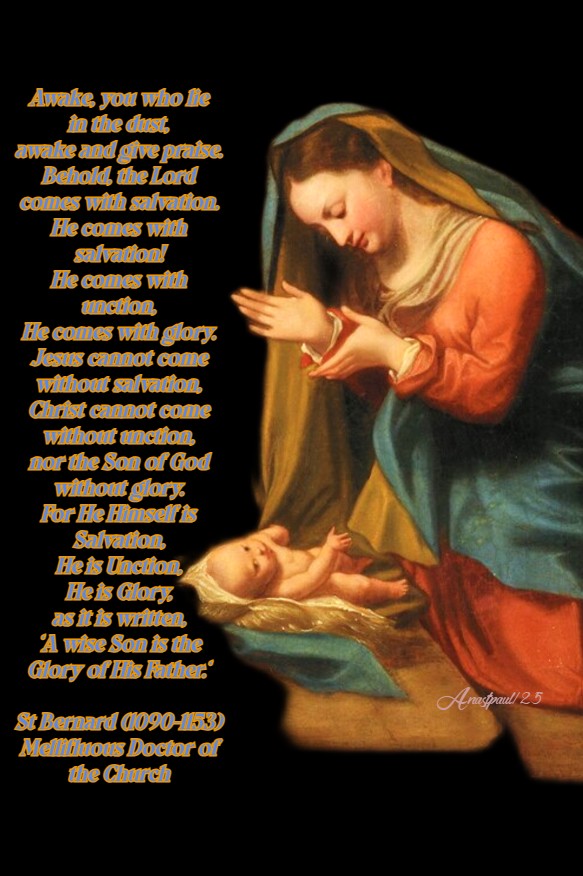
“Awake, you who lie in the dust, awake and give praise. Behold, the Lord comes with salvation. He comes with salvation! He comes with unction, He comes with glory. Jesus cannot come without salvation, Christ cannot come without unction, nor the Son of God without glory. For He Himself is Salvation, He is Unction, He is Glory, as it is written, ‘A wise Son is the Glory of His Father.‘”
St Bernard (1090-1153) Father & MellifluousDoctor of the Church
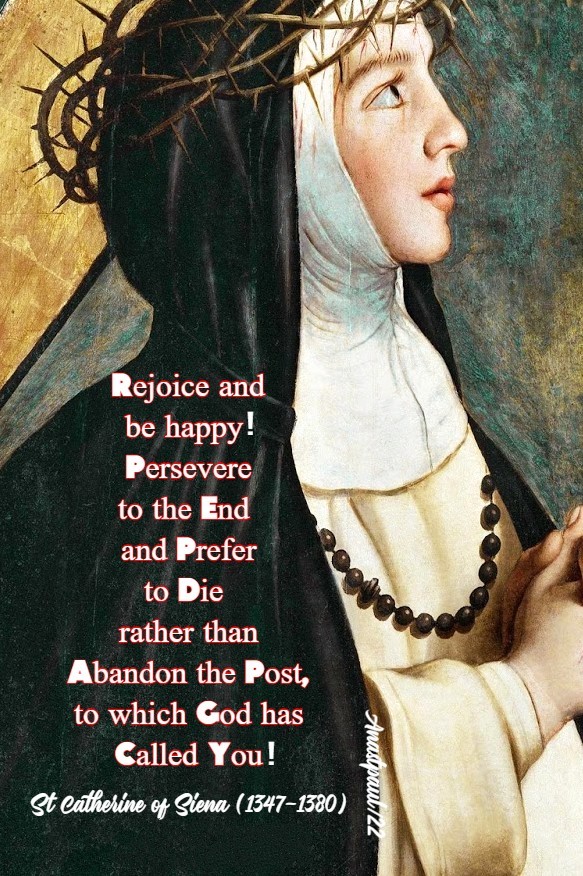
“Rejoice and be happy! Persevere to the end and prefer to die rather than abandon the post, to which God has called you!”
One Minute Reflection – 14 December – “The Month of the Divine Infancy and the Immaculate Conception of the Blessed Virgin Mary” – Advent III, Gaudete – Within the Octave – Philippians l 4:4-7 – John 1:19-28 – Scripture search here: https://www.drbo.org/
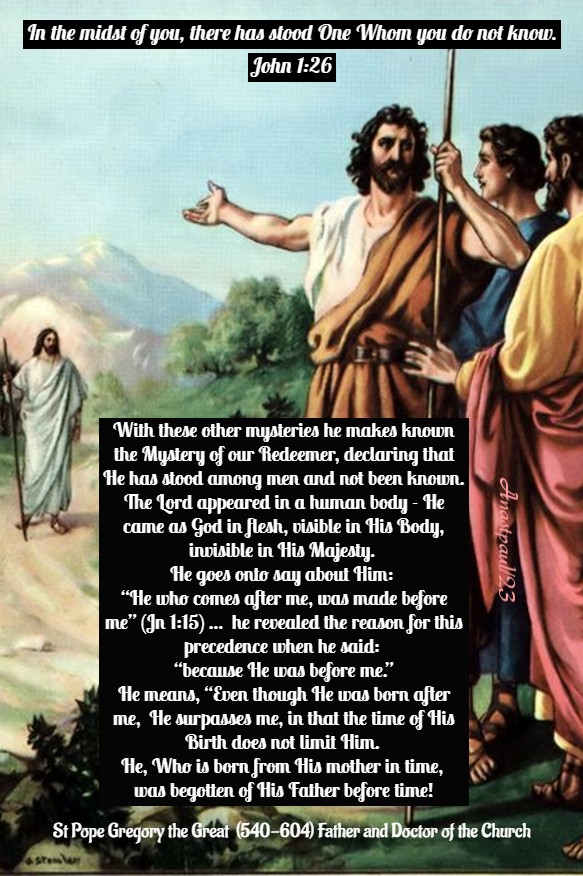
“ I baptise with water but, in the midst of you, there has stood One Whom you do not know.” – John 1:26
REFLECTION – “I baptise with water but, in the midst of you, there has stood One Whom you do not know.” John did not baptise with the Spirit but, with water, since he was unable to take away the sins of those being baptised. He washed their bodies with water but not their hearts with pardon. Why did one whose baptism did not forgive sins baptise, except that he was observing his vocation as forerunner? He, whose birth foreshadowed a greater birth, by his baptising, foreshadowed the Lord, Who would truly baptise; he ,whose preaching made him the forerunner of Christ, by baptising, also became his forerunner, using a symbol of the future Sacrament.
With these other mysteries he makes known the Mystery of our Redeemer, declaring that He has stood among men and not been known. The Lord appeared in a human body – He came as God in flesh, visible in His Body, invisible in His Majesty. He goes onto say about Him: “He who comes after me, was made before me” (Jn 1:15) … he revealed the reason for this precedence when he said: “because He was before me. ” He means, “Even though He was born after me, He surpasses me, in that the time of His Birth does not limit Him. He, Who is born from His Mother in time, was begotten of His Father before time!”
John reveals the great humility and reverence he owes Christ by saying: “I am not worthy to undo the strap of His sandal.” It was the custom among the ancients, that if someone was unwilling to take the wife, he should be taking, he, who should have come to her as bridegroom, by right of relationship, would undo his sandal. How did Christ appear among men, if not as the Bridegroom of holy Church?… But since people considered John the Christ, a fact which he denied, he was right to declare his unworthiness to undo the strap of Christ’s sandal. It is as if he was saying … “I am not unjustly usurping, for myself, the name of Bridegroom” (Cf Jn 3:29).” – St Gregory the Great (540-604) Pope, Father and Doctor of the Church (Sermons on the Gospels 4).
PRAYER – Lend Thy ear to our prayers, O Lord, we beseech Thee and brighten the darkness of our minds by the grace of Thy coming. Through the same Jesus Christ, Thy Son our Lord, Who lives and reigns with Thee, in the unity of the Holy Ghost, God, world without end. Amen (Collect).
Our Morning Offering – 14 December – “The Month of the Divine Infancy and the Immaculate Conception of the Blessed Virgin Mary” – Advent III Gaudete Sunday and Within the Octave of the Immaculate Conception – Today is also the Feast day of dear St Venantius Fortunatus (c530 – c609) Bishop, Poet, Hymnist, Writer. Another “Golden Words”
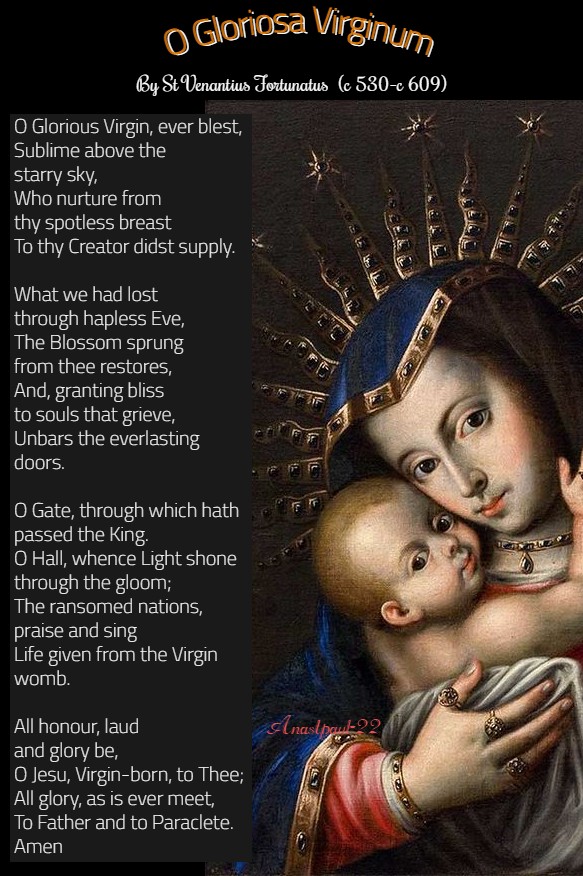
O Gloriosa Virginum By St Venantius Fortunatus (c530 – c609)
O Glorious Virgin, ever blest, Sublime above the starry sky, Who nurture from thy spotless breast To thy Creator didst supply.
What we had lost through hapless Eve, The Blossom sprung from these restores, And, granting bliss to souls that grieve, Unbars the everlasting doors.
O Gate, through which hath passed the King. O Hall, whence Light shone through the gloom; The ransomed nations, praise and sing Life given from the Virgin womb.
All honour, laud and glory be, O Jesu, Virgin-born, to Thee; All glory, as is ever meet, To Father and to Paraclete. Amen
O Gloriosa Domina is the second half of the Hymn: Quem Terra, Pontus, Aethera. It was composed by St Venantius Fortunatus (c530 – c609) the Bishop of Poitiers. In 1632, in accordance with revisions made to the Hymns of the Divine Office by Pope Urban VIII (1568-1644), it was altered and changed to O Gloriósa Vírginum. It is sung in the Common of the Blessed Virgin Mary of the Roman Breviary. It is said that St Anthony of Padua (1195-1231) was always singing this Hymn. His mother sang it to him as a baby,and even on his death bed after receiving Extreme Unction, he intoned the Hymn.
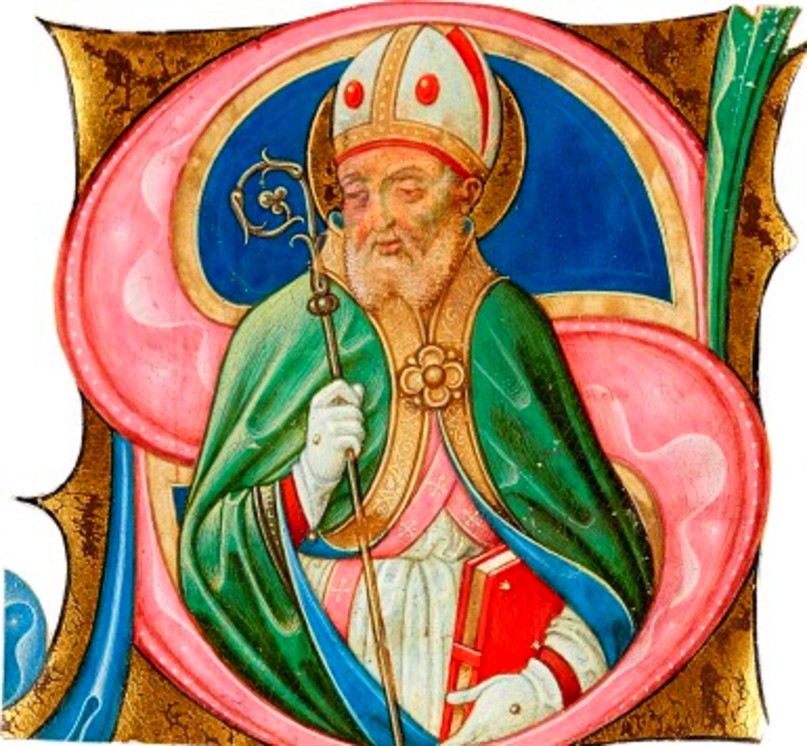
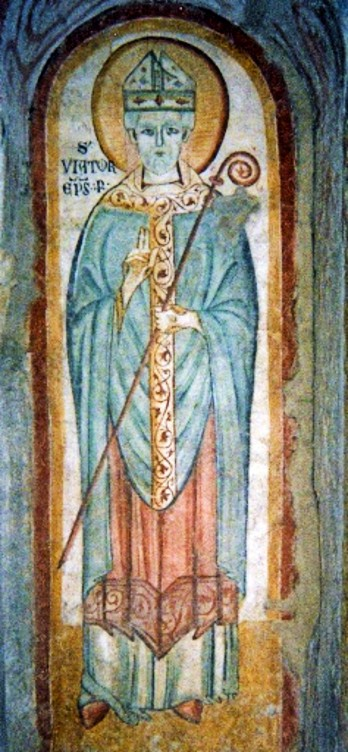
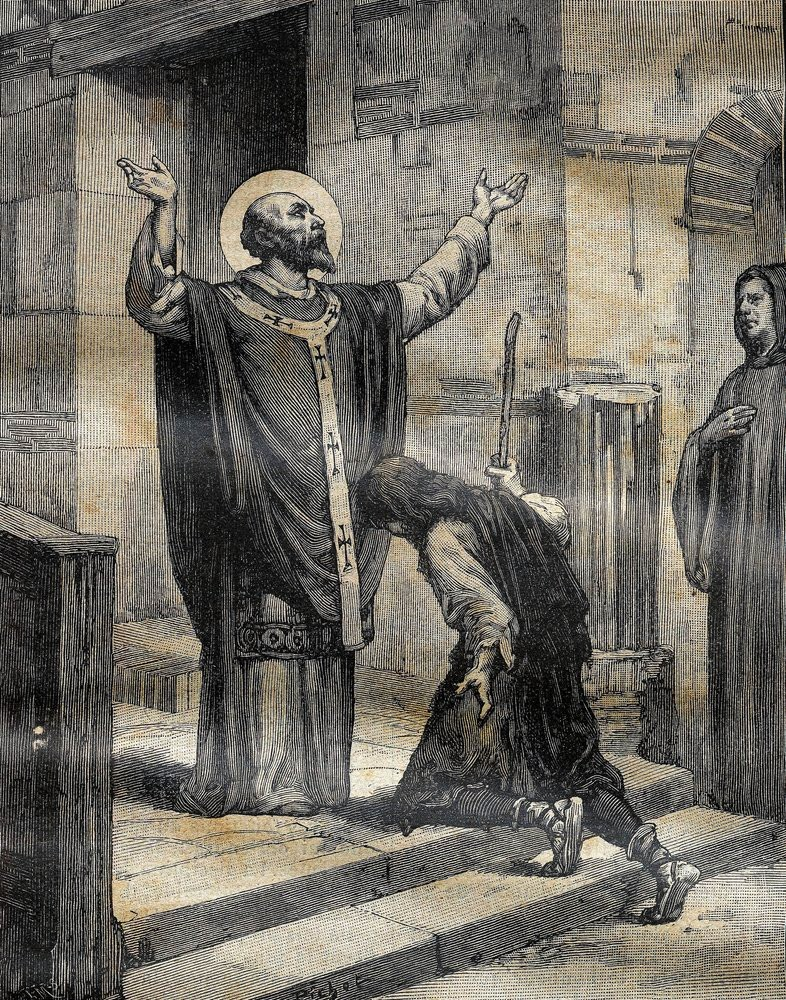
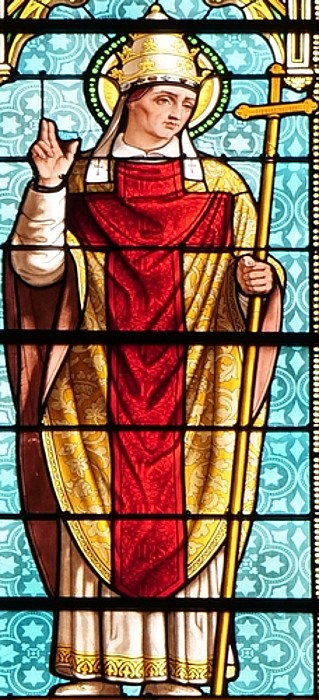
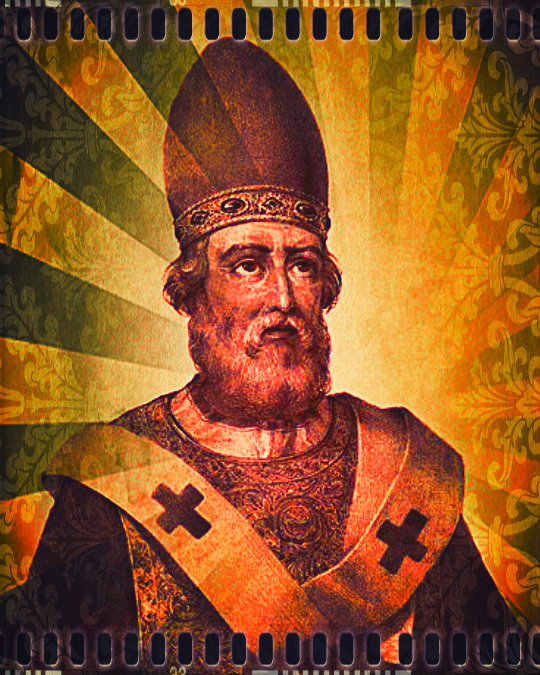
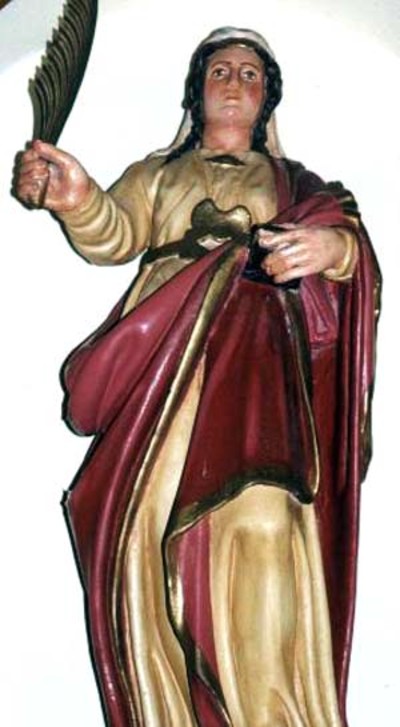
Saint of the Day – 14 December – Saint Pompey (4th Century?) Bishop of Pavia, Italy. Also known as Pompeius.
The Roman Martyrology reads today: “Ar Pavia, Pompey, Bishop.”
A Bishop Saint – Master of the Graduals of San Salvatore in Pavia | Italy, Lombardy c1500
Five days ago, on 9 December, we celebrated Saint Syrus, the first Bishop of Pavia and the legendary evangeliser of much of the Po Valley. In the imposing task of casting the net of the fisher of men over that flat and fertile land, stretching as far as the eye could see, around the towers and bell towers of Pavia, he had, as his collaborator Saint Pompey.
Pompey succeeded Saint Syrus when the latter—it is not clear in what year, or even in what Century—rested in deserved glory. There is, therefore, little more to add about this Saint, the second Bishop in the list of shepherd which tradition assigns to Pavia. Also because, about Saint Pompey, very little is known, if anything, at all. One must turn to the life of Saint Strus himself to learn that Pompey’s Episcopate was brief and peaceful. Nothing else.
He was succeeded by Bishop Saint Giovenzo; while Saint Pompey was buried, with Saint Syrus, in that Church of Saints Gervasius and Protasius.
Given this scant and precarious information, it would not have been necessary to dedicate the day to Saint Pompey—and this would not have diminished the true and great glories of the City of Pavia. If we have done so, it is because, for better or worse, he is the most celebrated of the Saints named Pompey.
Of the Saints, however, even when we know almost nothing about them, as in the case of Saint Pompey, we can be sure of one thing; we remember them for having performed, certainly and only, good works for the glory of Christ and His Church. (Source: Parish Archive).
St Abundius of Spain – Martyr. No other information has survived
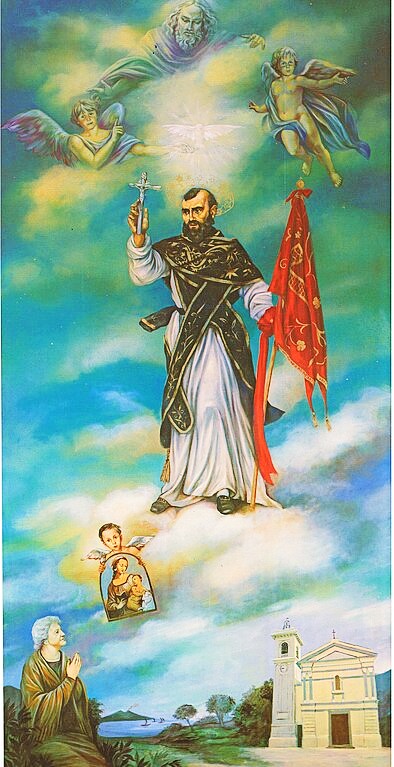
St Agnellus (535-596) Abbot, Priest, Hermit, Defender and Protector of the City of Naples, Miracle-worker. St Agnellus is one of the 50+ Co-Patrons of the City of Naples The Roman Martyrology reads today: “In Naples, in Campaniaa, St Agnellus, Abbot. Illustrious by the gift of miracles, he was often seen with the standard of the Cross, delivering the City besieged by enemies.” A Mighty and Powerful Saint: https://anastpaul.com/2023/12/14/saint-of-the-day-14-december-saint-agnellus-of-naples-osa-535-596/
Martyrs of Alexandria – 4 Saints: A group of Egyptian Christians Martyred together in the persecutions of Decius – Arsenius, Dioscurus, Heron and Isidore. They were burned to death in 250 at Alexandria, Egypt.
Martyrs of Apollonia – 7 Saints: Martyred in the persecutions of Decius. The only surviving details are three names – Callinicus, Leucio and Tirso. The Martyrdom took place at Apollonia, Bithynia (in modern Turkey).
Martyrs of Ashkelon – 3 Saints: Several pilgrims from Egypt to Cilicia (in modern Turkey) who planned to minister to fellow Christians suffering in the persecutions of Emperor Maximinus. They were arrested, torture, mutilated and then imprisoned in Ashkelon. Some were ordered to forced labour in the mines but we have the names of three who were Martyred by order of Governor Firmilian – Ares, Elijah and Promo. They were burned at the stake or beheaded at the gates of Ashkelon c 308.
Martyrs of Hayle – 2+ Saints: Several Christians, including a brother and sister, who were Martyred together by pagans. The only other information to survive are the names of the two siblings – Fingar and Phiala. 5th Century at Hayle, Cornwall, England.
Martyrs of Syria – 3 Saints: Three Christians who were Martyred together. Known to Saint John Chrysostom who preached on their Feast Day and left us the only details we have – their names – Drusus, Theodore and Zosimus. The date and precise location of their Martyrdom is unknown but it was in Syria, possibly in Antioch.
Thought for the Day –13 December – Meditations with Antonio Cardinal Bacci (1881-1971)
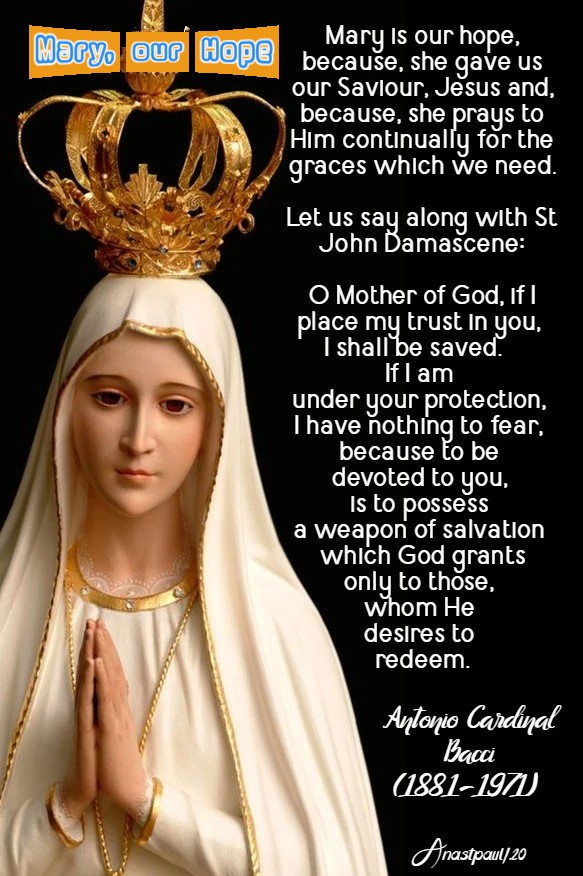
“Mary, Our Hope”
“In the beautiful prayer, known as the Salve Regina or Hail, Holy Queen, the Church salutes Mary as “our life, our sweetness and our hope.” Mary is our hope, because, she gave us our Saviour, Jesus and, because, she prays to Him continually for the graces which we need.
Following the example of Luther, modern protestants raise the objection that Mary cannot be regarded as a source of hope, because, all our trust should be placed in God. Anyone who places his trust in creatures, draws down God’s curse upon himself, they say and, they go on to quote from Jeremias: “Cursed be the man who trusteth in man” (Jer 17:5). But this is true only, when we trust in creatures independently of God, as if we can derive any good from them, without recourse to God. We invoke Mary, however, as the Mother of God and our mediatrix with Him. She is our hope, insofar as she obtains for us from God, the graces and favours which we require. St Bernard assures us, that God has placed in Mary’s hands, all the riches which He wishes to bestow on us (Serm de aquaed). “He will never experience eternal ruin,” says St Anselm, “for whom Mary has once prayed.”
St Bernard calls upon Mary as the foundation of all his hope (Ibid). Let us remember, that Mary is our loving Mother who wishes us to pray to her because, she knows that if she intercedes on our behalf, she will certainly be heard. It should be most consoling to us to have such a good and powerful Mother in whom, we can safely trust in every peril and in every necessity. Let us pray to her with love and faith, in the certainty that, we shall be answered in the way that is best for us. Let us say along with St John Damascene: “O Mother of God, if I place my trust in you, I shall be saved. If I am under your protection, I have nothing to fear because to be devoted to you, is to possess a weapon of salvation which God grants only to those, whom He desires to redeem!” (Serm de Nat, cap 4).”
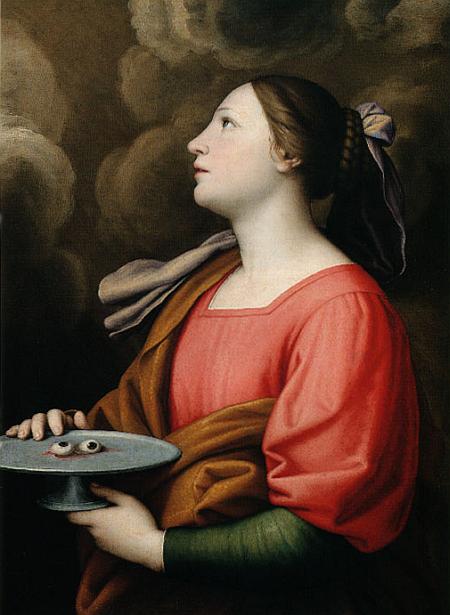
Quote/s of the Day – 13 December – St Lucy, Virgin Martyr – 2 Corinthians 10:17-18; 11:1-2 – Matthew 13:44-52 – Scripture search here: https://www.drbo.org/
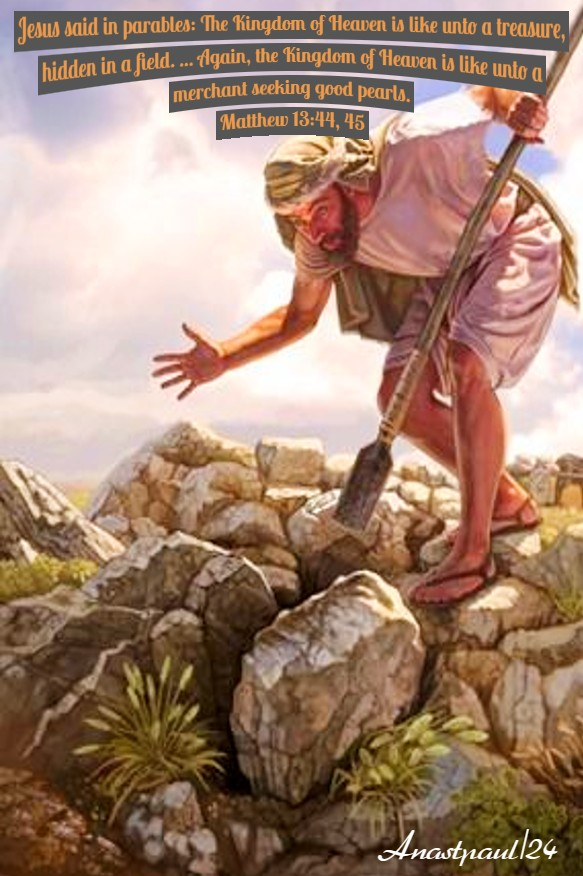
“Jesus said in parables: The Kingdom of Heaven is like unto a treasure, hidden in a field. … Again, the Kingdom of Heaven is like unto a merchant seeking good pearls. ”
Matthew 13:44, 45
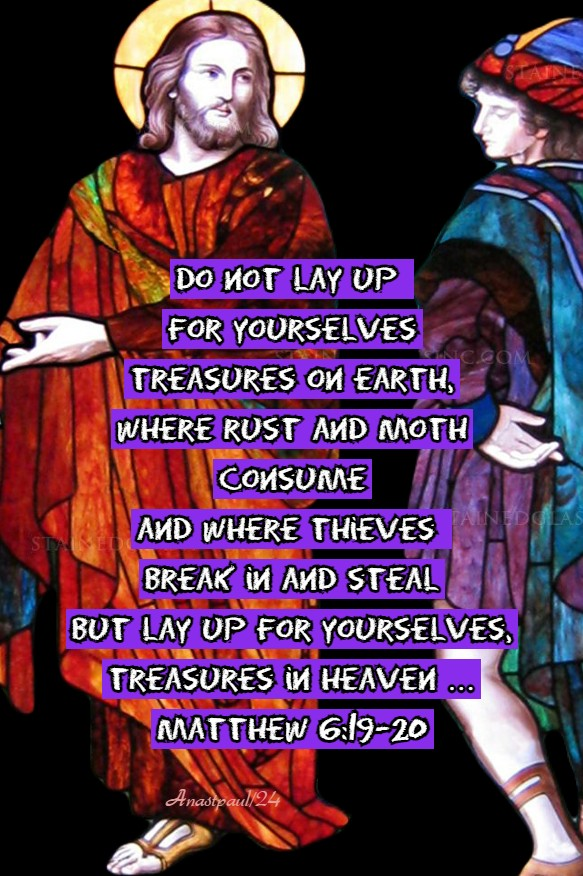
“Do not lay up for yourselves treasures on earth, where rust and moth consume and where thieves break in and steal but lay up for yourselves, treasures in Heaven …”
Matthew 6:19-20
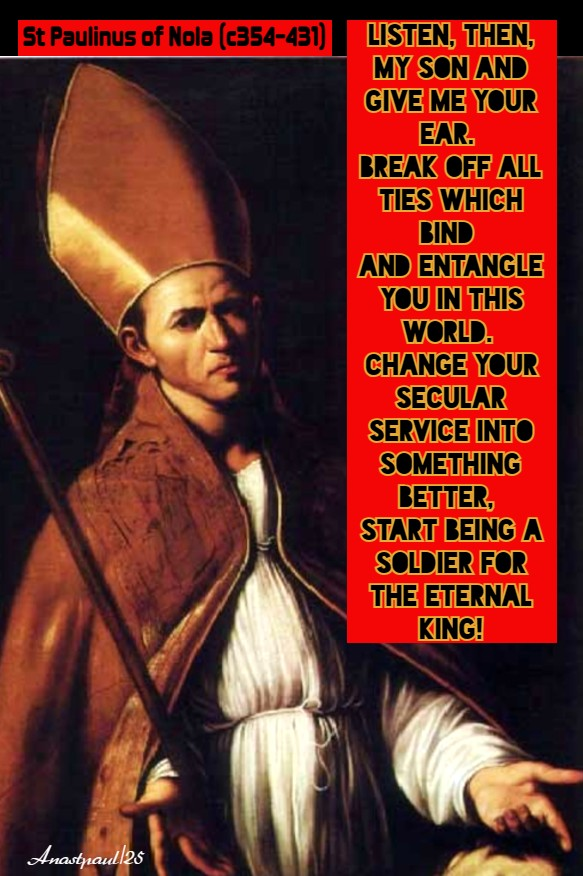
“Listen, then, my son and give me your ear. Break off all ties which bind and entangle you in this world. Change your secular service into something better, start being a soldier for the eternal King!”
St Paulinus of Nola (c354-431)
“Watch, therefore and pray and labour diligently and do not delay to weave the web of your wedding-garment that you may be found ready and adorned to meet the Bridegroom! And remember daily that He, Who gives you the morning, does not promise you the evening and although He gives the evening, yet promises not the morrow. Spend, therefore, every moment of every hour according to God’s will, as if it were your last and so much the more carefully, as, for every moment, you will have to give the strictest account!
Finally, I warn you to account that day lost, in which you will neither have gained some victory over your evil inclinations and your self-will, although it may have been full of busy action, nor returned thanksgiving to your Lord for His mercies and especially for His bitter Passion endured for you and for His sweet and fatherly correction, when He has made you worthy to receive, at His Hand, the inestimable treasure of suffering.”
One Minute Reflection – 13 December – “The Month of the Divine Infancy and the Immaculate Conception of the Blessed Virgin Mary” – Within the Octave – St Lucy, Virgin Martyr – 2 Corinthians 10:17-18; 11:1-2 – Matthew 13:44-52 – Scripture search here: https://www.drbo.org/
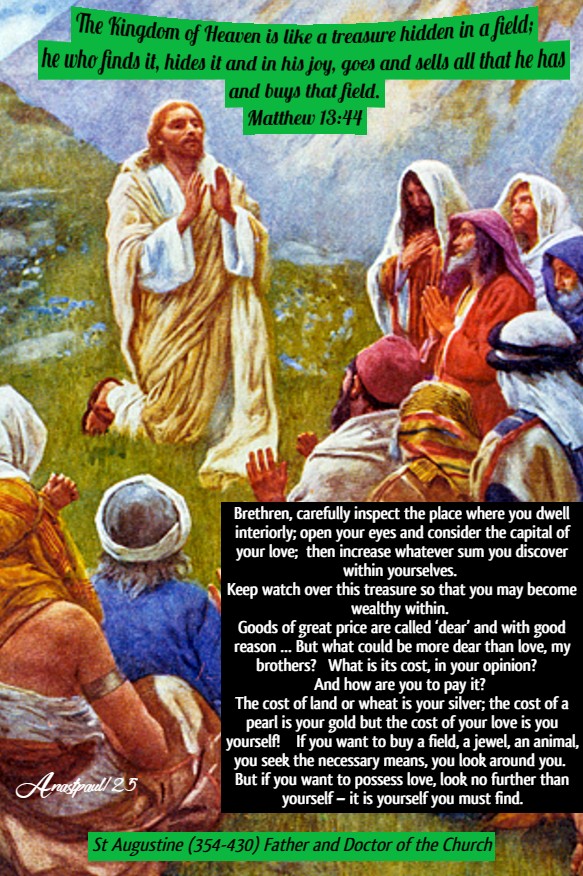
“The Kingdom of Heaven is like a treasure hidden in a field; he who finds it, hides it and in his joy, goes and sells all that he has and buys that field.” – Matthew 13:44
REFLECTION – “Brethren, carefully inspect the place where you dwell interiorly; open your eyes and consider the capital of your love; then increase whatever sum you discover within yourselves. Keep watch over this treasure so that you may become wealthy within. Goods of great price are called ‘dear’ and with good reason … But what could be more dear than love, my brothers? What is its cost, in your opinion? And how are you to pay it? The cost of land or wheat is your silver; the cost of a pearl is your gold but the cost of your love is you, yourself! If you want to buy a field, a jewel, an animal, you seek the necessary means, you look around you. But if you want to possess love, look no further than yourself – it is yourself you must find.
What are you afraid of in giving yourself? Of losing yourself? To the contrary, it is by refusing to give yourself that you lose yourself! Love itself speaks through the mouth of Wisdom and with one word, calms the confusion into which this saying threw you: “Give of your own self!” If someone had wanted to sell you a piece of land, he would say to you: “Give me your silver” or, for some other thing: “Give me your cash.” Now listen to what Love says to you through the Mouth of Wisdom: “My child, give me your heart” (Pr 3:26). Your heart was in a bad way when it was your own, when it was in your own hands. You were a prey to emptiness, not to speak of evil passions. Remove it from all such things! Where will you take it? Where offer it? “My son, give Me your heart!” says Wisdom. Let it only come to Me and you will not lose it…
“You shall love the Lord your God with all your heart, with all your soul and with all your mind,” (Mt 22:37) … He Who created you, desires the whole of you!” – St Augustine (354-430) Father and Doctor of the Church (Sermon 34 on Ps 149).
PRAYER – Hear us, O God our Saviour, that, as we rejoice on the feast of blessed Lucy, YThy Virgin and Martyr, so we may grow in love and devotion. Through the same Jesus Christ, Thy Son our Lord, Who lives and reigns with Thee, in the unity of the Holy Ghost, God, world without end. Amen (Collect).
Our Morning Offering – 13 December – “The Month of the Divine Infancy and the Immaculate Conception of the Blessed Virgin Mary”
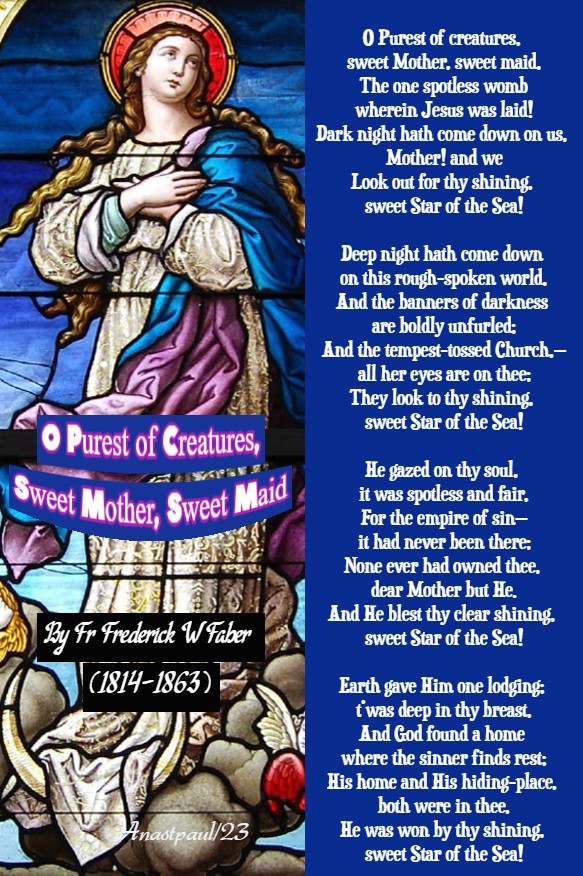
O Purest of Creatures, Sweet Mother, Sweet Maid By Fr Frederick W Faber C.Orat. (1814-1863)
O Purest of creatures, sweet Mother, sweet maid, The one spotless womb wherein Jesus was laid! Dark night hath come down on us, Mother! and we Look out for thy shining, sweet Star of the Sea!
Deep night hath come down on this rough-spoken world, And the banners of darkness are boldly unfurled; And the tempest-tossed Church,— all her eyes are on thee; They look to thy shining, sweet Star of the Sea!
He gazed on thy soul, it was spotless and fair, For the empire of sin—it had never been there; None ever had owned thee, dear Mother but He. And He blest thy clear shining, sweet Star of the Sea!
Earth gave Him one lodging; t’was deep in thy breast, And God found a home where the sinner finds rest; His home and His hiding-place, both were in thee, He was won by thy shining, sweet Star of the Sea!
Saint of the Day – 13 December – St Antiochus (2nd Century) Martyr of Sulci, Sardinia, Italy. Died by being beaten to death in the first quarter of the 2nd Century on Sulci, Sardinia. Patronages – of miners, of the following places in Italy: Atzara, the Diocese of Iglesias, the City of Ozieri, the Diocese of Ozieri, Palmas Arborea, the City of Sant’Antioco, the Island of Sant’Antioco, in Sardinia. Also known as – Antiochus of Plumbaria, Antioco…
The Roman Martyrology reads today: “Near Sardinia, on the Island of Solta, the Martyrdom of St Antiochus, under the Emperor Adrian.”
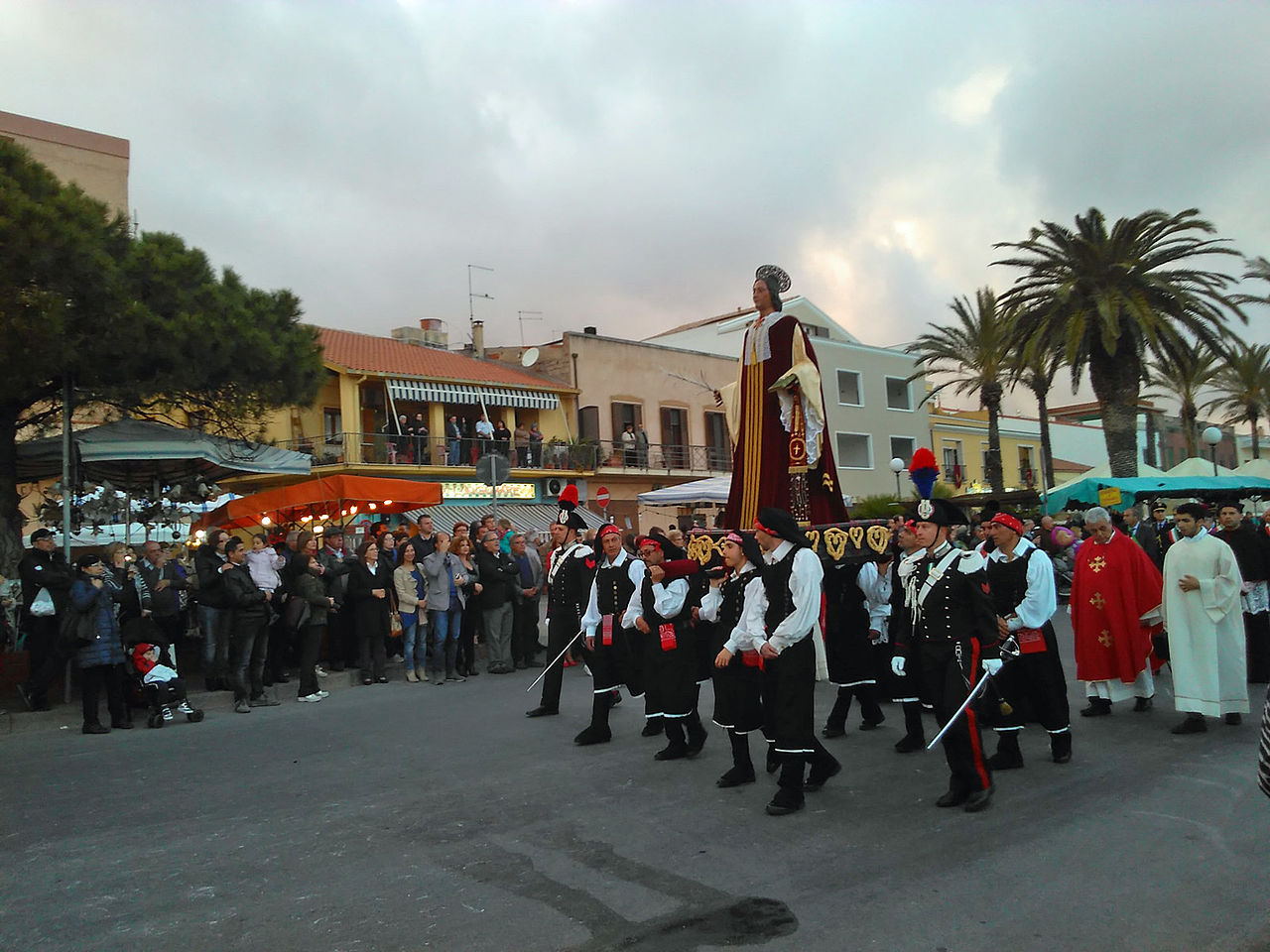
On the Feast Day of Saint Lucy, Sardinia also commemorates another Martyr, Saint Antiochus. He is linked to the region’s mines, where the Romans also forced many Christians to work during the persecutions.
Among them is Antiochus, who was exiled to the splendid Island which bears his name (now connected to the mainland by a bridge).
Antiochus was an Physician who, in the first half of the 2nd Century, during the reign of Emperor Hadrian, travelled through Galatia and Cappadocia, caring, not only for the bodies but also for the souls, of those he encountered. The conversions he inspired led to his arrest and exile in Sardinia.
Even as a prisoner, his Christian witness was so strong that it opened the heart of the Soldier Cyriacus, his jailer, to faith in Christ.
This infuriated the imperial authorities, who sentenced him to death. Before dying, however, Antiochus invoked God’s protection over Sardinia and its people, who still venerate him today.
The Church in the Island’s capital Sant’Antioco, named after Antiochus, was dedicated to him in the 5th Century. His Tomb is in the Crypt beneath ithis Church.
Additional Feast Days in Italy: 13 November (Dioceses of Iglesias and Ozieri, Italy) 16 July (Island of Sant’Antioco) 1 August (Island of Sant’Antioco) 15th day after Easter (Island of Sant’Antioco) 2nd Sunday after Easter (Palmas Arborea, Italy)
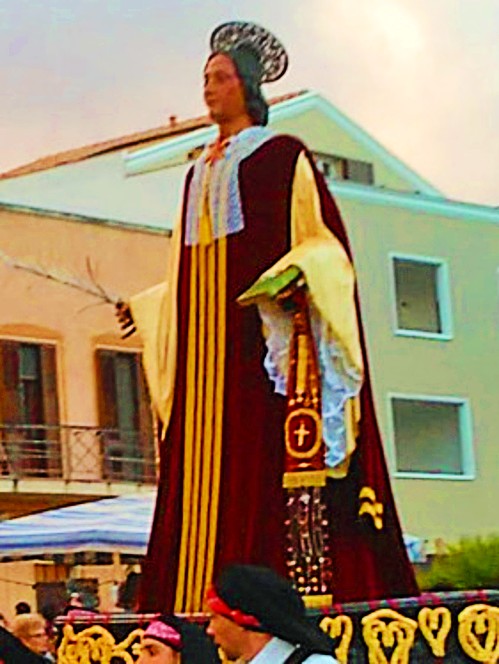
St Antiochus (2nd Century) Martyrof Sulci, Sardinia, Italy
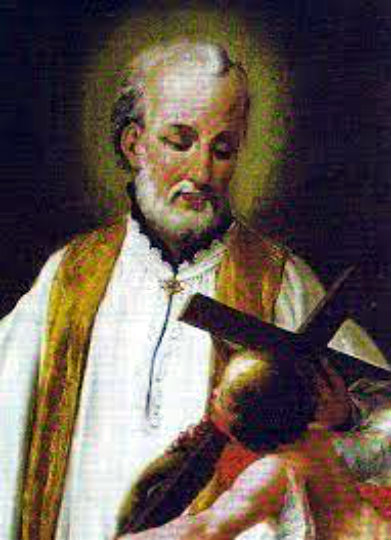
Blessed Antonio Grassi Cong. Orat. (1592 – 1671) Priest of the Oratorians of St Philip Neri, Confessor, Tertiary of the Order of St Francis, Spiritual advisor, Counsellor, Mediator, Miracle Worker, Apostle of the poor and the sick. He was Beatified on 30 September 1900 by Pope Leo XIII. Blessed Antonio’s Holy Life: https://anastpaul.com/2018/12/13/saint-of-the-day-13-december-blessed-antonio-grassi-cong-orat-1592-1671/
Bl Bartholomew of Tuscany St Edburgh of Lyminge St Einhildis of Hohenburg Bl Elizabeth Rose St Jodocus
Blessed Giovanni Marinoni CR (1490-1562) Priest of the Theatines of St Cajetan (1480-1547) (The Congregation of the Clerics Regular of the Divine Providence), renowned Preacher and spiritual director. Patron of Preachers. He was Beatified on 5 December 1764, by a Bull of Pope Clement XIII, who also granted an Office in his honour, to his Order, to be celebrated on 13 December. Holy and Blessed Priest: https://anastpaul.com/2019/12/13/saint-of-the-day-blessed-giovanni-marinoni-cr-1490-1562/
St Martino de Pomar St Roswinda St Tassio of Bavaria
Blessed Mercedarian Knights – 7 Beati: A group of Mercedarian Knights who fought the enemies of the Catholic faith in the first Century of the Order. Blessed Bernardo de Podio Blessed Giacomo de Copons Blessed Giovanni de Bruquera Blessed Guglielmo de Sa Blessed Pietro Boguer Blessed Pietro Ricart Blessed Raimondo de Frexa
Martyrs of Sebaste – 5 Saints: A group of Christians Martyred together in the persecutions of Diocletian. We know little more than their names – Auxentius, Eustratius, Eugene, Mardarius and Orestes. They were martyred in c 302 at Sebaste, Armenia (in modern Turkey) and their relics are enshrined at the church of Saint Apollinaris in Rome, Italy.
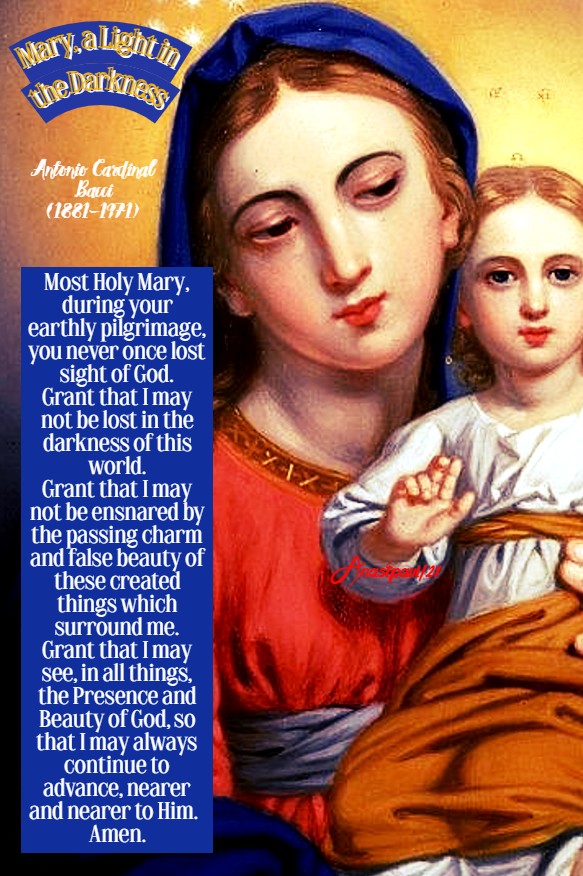
Thought for the Day – 12 December – Meditations with Antonio Cardinal Bacci (1881-1971)
Mary, a Light in the Darkness
“Let us imagine for a moment, that we have grown blind and are forever plunged in darkness. It is an unhappy thought. Never again to see those who are dear to us, never to see the light of the sun nor any of the splendours of the universe. We should feel as if were alone, for we should have to depend only on sounds and on the voices of others for communication with the external world. As St Augustine points out, however, in his commentary on the miracle of the man who had been blind from birth, we are all more or less blind in the supernatural order. The world is the image of God but, do we see His Presence in everything which surrounds us? Is it not more often the case that created things distract us and lead us to forget their Creator, because, we regard them as a means of satisfying our own comfort and our own ego? We should look on creatures as go-betweens which help us to ascend to God, the beginning and end of all creation.
Unfortunately, instead of climbing this mystical ladder which leads us to God, we often descend it. We forget God and become excessively wrapped up in worldly affairs. Sometimes matters may be even worse, not only do we forget God through our love of creatures but, we use them, to offend Him. God has given us eyes to admire His works and, as a result, to lead us to praise, thank and love Him. Instead, we often use this wonderful gift in order to commit sin. He has given us the gift of speech, the gift of hearing and other senses. But how do we employ them? The tongue is a marvellous invention but, as St James writes, “if anyone does not offend in the word, he is a perfect man, able also to lead round by the bridle, the whole body … With it we bless God the Father and, with it, we curse men, who have been made after the likeness of God. Out of the same mouth, proceed blessing and cursing. These things, my brethren ought not to be so” (Js 3:2-10). What can be said of vision and of speech can be said of all the senses and faculties of body and soul. They are all God’s gifts and should, therefore, be used as means of bringing ourselves closer to Him. If creatures lead us away from God and cause us to forget Him, or if, worse still, they cause us to offend Him, then we are spiritually blind and far more unfortunate than those who have lost their natural vision.
Most Holy Mary, during your earthly pilgrimage, you never once lost sight of God. Grant that I may not be lost in the darkness of this world. Grant that I may not be ensnared by the passing charm and false beauty of these created things which surround me. Grant that I may see, in all things, the Presence and Beauty of God, so that I may always continue to advance, nearer and nearer to Him. Amen.”
Quote/s of the Day – 12 December – “The Month of the Divine Infancy and the Immaculate Conception of the Blessed Virgin Mary” ––Within the Octave – Our Lady of Guadalupe
“Hail, full of grace, the Lord is with thee …”
Luke 1:28
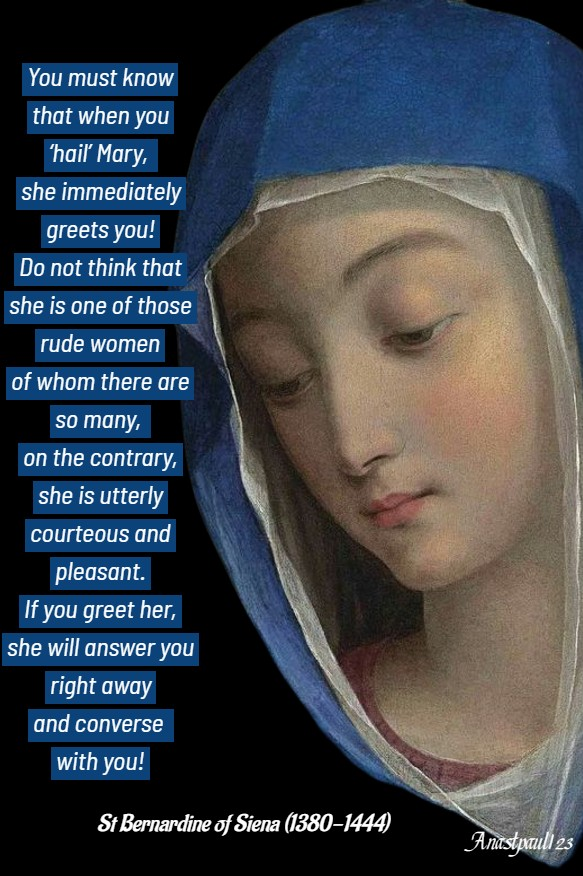
“You must know that when you ‘hail’ Mary, she immediately greets you! Do not think that she is one of those rude women of whom there are so many, on the contrary, she is utterly courteous and pleasant. If you greet her, she will answer you right away and converse with you!”
St Bernardine of Siena (1380-1444)
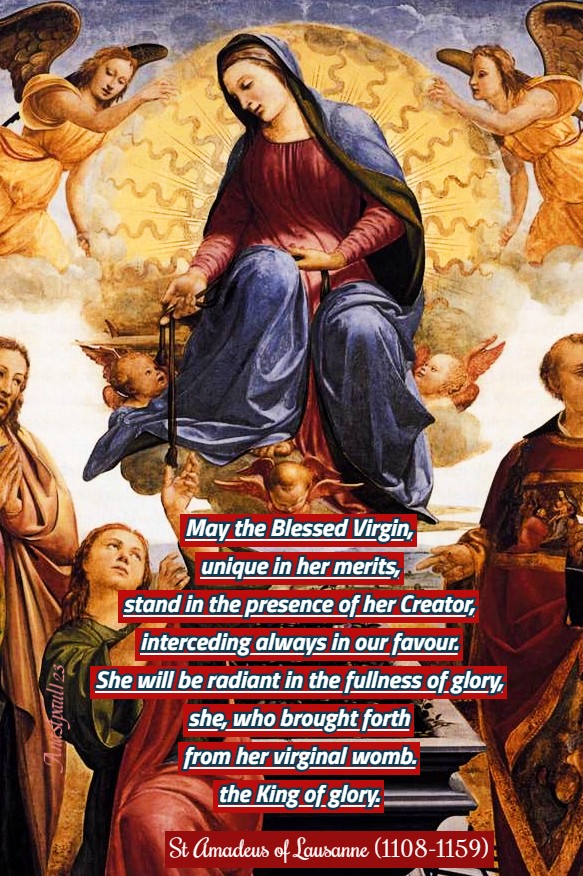
“May the Blessed Virgin, unique in her merits, stand in the presence of her Creator interceding always in our favour. She will be radiant in the fullness of glory, she who brought forth, from her virginal womb, the King of glory.”
St Amadeus of Lausanne (1108-1159)
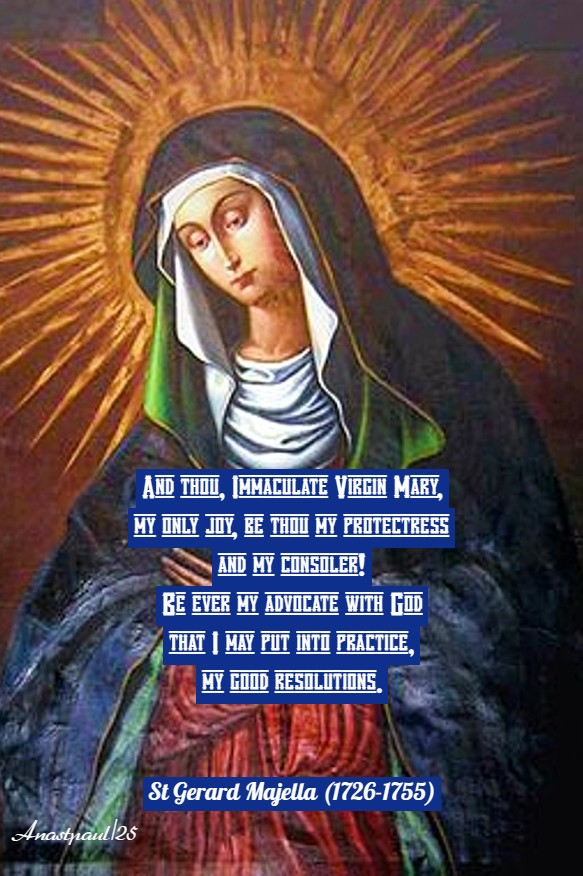
“And thou, Immaculate Virgin Mary, my only joy, be thou my protectress and my consoler! Be ever my advocate with God that I may put into practice, my good resolutions.”
St Gerard Majella (1726-1755)
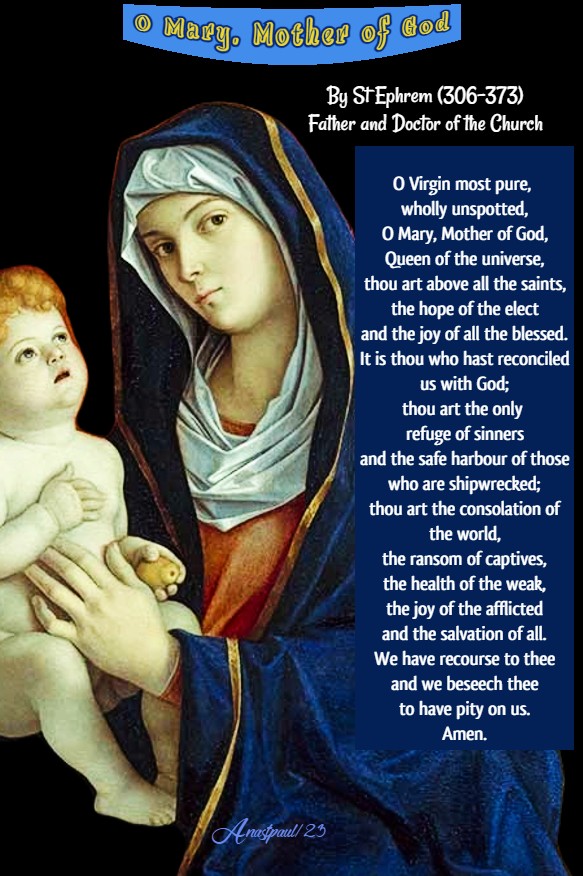
O Mary, Mother of God By St Ephrem (306-373) Father and Doctor of the Church
O Virgin most pure, wholly unspotted, O Mary, Mother of God, Queen of the universe, thou art above all the saints, the hope of the elect and the joy of all the blessed. It is thou who hast reconciled us with God; thou art the only refuge of sinners and the safe harbour of those who are shipwrecked; thou art the consolation of the world, the ransom of captives, the health of the weak, the joy of the afflicted and the salvation of all. We have recourse to thee and we beseech thee to have pity on us. Amen.
One Minute Reflection – 12 December – “The Month of the Divine Infancy and the Immaculate Conception of the Blessed Virgin Mary” –Within the Octave – Our Lady of Gaudulupe – Proverbs 8:22-35 – Luke 1:26-28 – Scripture search here: https://www.drbo.org/
“Hail, full of grace …” – Luke 1:28
REFLECTION – “The Holy Spirit will come upon thee.” He will arise within thee, Mary. In some Saints He has come; in others He will come but in thou, He will arise… He will arise by means of the fertility, the abundance, the fullness of His outpouring in thy being. Even when He has filled thee, He will yet be upon thee; He will sweep over thy waters, to create in thee, a work greater and more admirable, than when, hovering over the waters at the beginning, He brought created substance into being in all its various forms (Gn 1:2). “And the power of the Most High will overshadow thee.” Christ, the Power and Wisdom of God, will overshadow thee. Then, He will take human nature from thee while keeping the fullness of God which thou art unable to bear, even as He assumes our flesh. He will take thee beneath His shadow because, the humanity to be taken by the Word, is to be a screen for the inaccessible Light of God. This Light, filtered by Its screen, will penetrate thine most chaste womb…
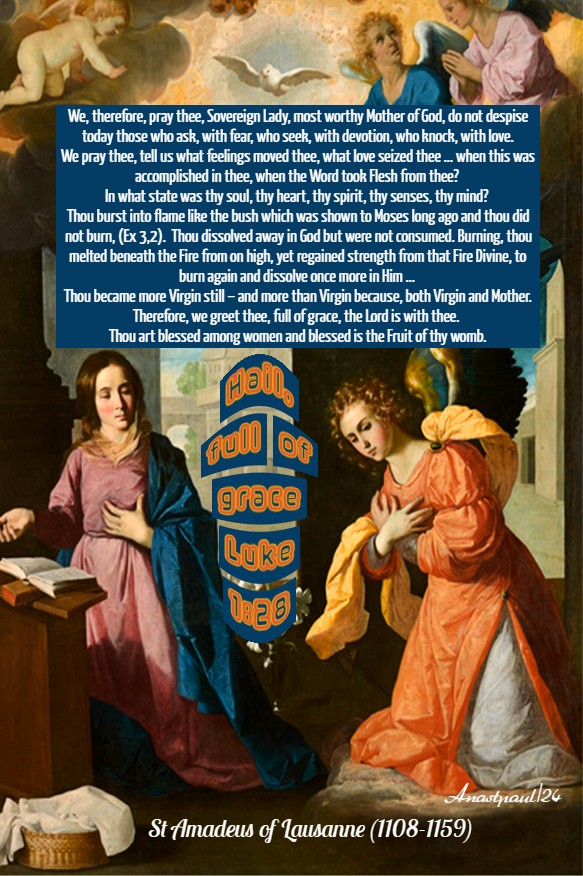
We, therefore, pray thee, Sovereign Lady, most worthy Mother of God, do not despise today those who ask, with fear, who seek, with devotion, who knock, with love. We pray thee, tell us what feelings moved thee, what love seized thee … when this was accomplished in thee, when the Word took Flesh from thee? In what state was thy soul, thy heart, thy spirit, thy senses, thy mind? Thou burst into flame like the bush which was shown to Moses long ago and thou did not burn, (Ex 3:2). Thou dissolved away in God but were not consumed. Burning, thou melted beneath the Fire from on high, yet regained strength from that Fire Divine, to burn again and dissolve once more in Him … Thou became more Virgin still – and more than Virgin because, both Virgin and Mother. Therefore, we greet thee, full of grace, the Lord is with thee. Thou art blessed among women and blessed is the Fruit of thy womb.” – St Amadeus of Lausanne (1108-1159) Cistercian Bishop of Lausanne (Marian Sermons).
PRAYER – O God, Who by the Immaculate Conception of the Virgin, prepared a worthy dwelling for Thy Son and Who, by Thy Son’s death, foreseen by Thee, preserved her from all taint, grant, we beseech Thee, through her intercession that we too may come to Thee unstained by sin.Through Jesus Christ, Thy Son our Lord, Who lives and reigns with Thee, in the unity of the Holy Ghost, God, world without end. Amen (Collect).
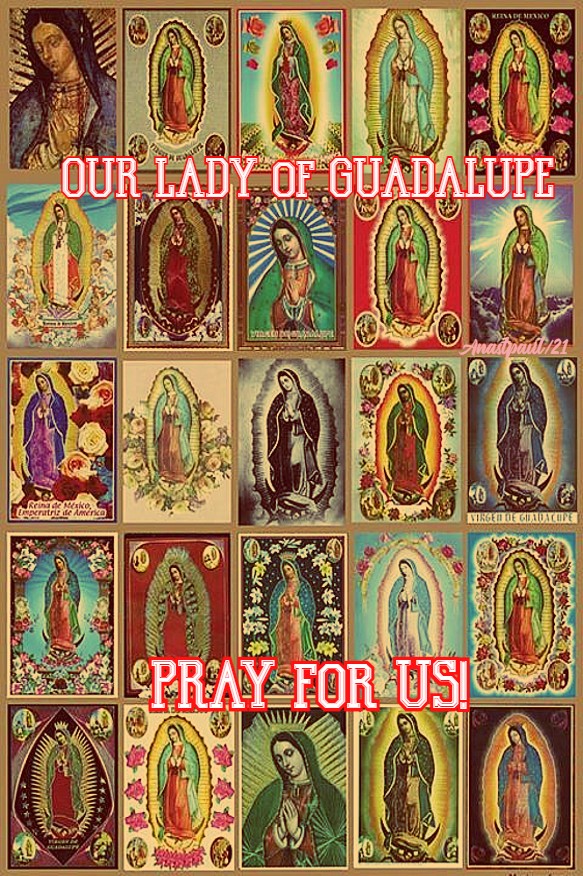
Our Morning Offering – 12 December – The Month of the Divine Infancy and the Immaculate Conception of the Blessed Virgin Mary” – The Feast of Our Lady of Guadalupe
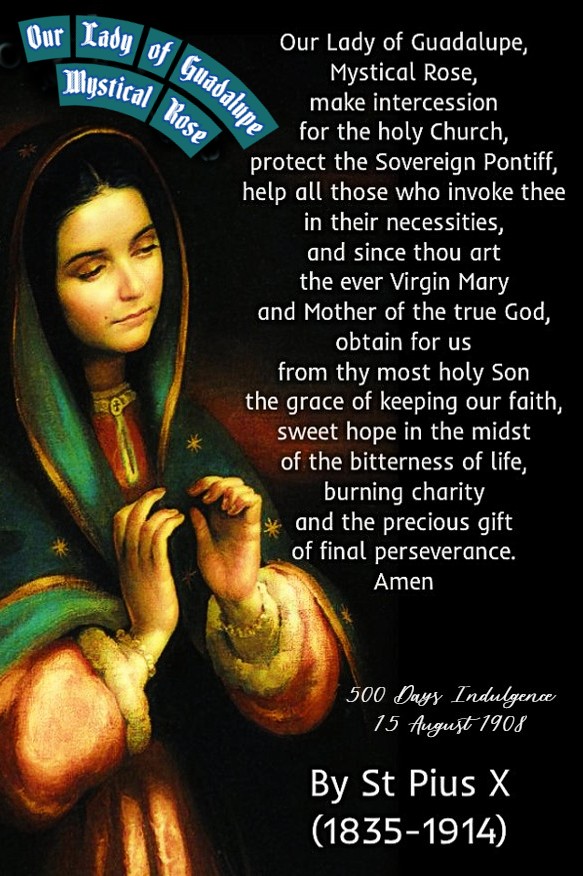
Our Lady of Guadalupe, Mystical Rose Prayer to Our Lady of Guadalupe By St Pius X (1835-1914)
Our Lady of Guadalupe, Mystical Rose, make intercession for the holy Church, protect the Sovereign Pontiff, help all those who invoke thee in their necessities, and since thou art the ever Virgin Mary and Mother of the true God, obtain for us from thy most holy Son the grace of keeping our faith, sweet hope in the midst of the bitterness of life, burning charity and the precious gift of final perseverance. Amen
This prayer was approved and enriched with an Indulgence of Five Hundred Days by St Pius X at an Audience held on 15 August, 1908 and was included in the official edition of Approved Indulgenced prayers (1950). Raccolta number 389, 500 days Indulgence, St Pope Pius X Audience, 15 August 1908.
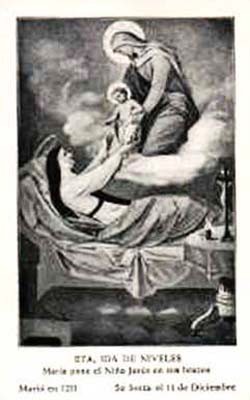
Saint of the Day – 12 December – Saint Ida O.Cist (c1190-c1231) Virgin, Sister of the Cistercian Order, Mystic, Miracle-worker, Apostle of the poor, of the Holy Souls and a most dedicated child of the Blessed Virgin Mother. Born in c1190 in Nivelles, Belgium and died on 12 December in either 1231 or 1232 at her Convent in Rameige, Belgium. Patronages – against toothache, of the Holy Souls in Purgatory. Also known as – Ida of Nivelles, … of Metz, Ita.
Ida was born into a prosperous mercantile family in Nivelles, an important market town and pilgrimage destination in Brabant, a short distance to the south of Brussels. After her father died, the family arranged for her to be married.
She was aged only nine or sixteen (sources differ) and not wishing to marry she fled to a Beguinage, a Community of chaste Godly women who lived in a shared community but without taking vows or becoming cloistered. The Beguinage Community accepted her. They comprised seven women who lived near the Church of the Holy Sepulchre in her home town. There, Ida became a Beguine Sister.
She moved in around 1213 being accepted into the Cistercian Convent at Kerkom near Tienen. (The Convent relocated shortly afterwards to La Ramée.) There she worked as a writer and illustrator. She reported numerous visions and developing a particularly close relationship with the Virgin Mary. She is also celebrated for her exceptional dedication to assisting the suffering poor.
Goswin of Bossut, a Cistercian Monk, wrote a biography of Ida shortly after her death.
Martyrs of Alexandria – 6 Saints: A group of six Christians Martyred for their faith during the persecutions of Decius. We know little more than five of their names – Alexander, Ammonaria, Dionysia, Epimachus and Mercuria. They were burned to death c 250 in Alexandria, Egypt.
Martyrs of Trier – 4 Saints and Companions: “At Treves (Trier), the holy Martyrs, Maxentius, Constantius, Crescentius, Justinus and their companions, who suffered in the persecutions of Diocletian, under the Governor Rictiovarus.”
Thought for the Day – 11 December – Meditations with Antonio Cardinal Bacci (1881-1971)
Mary, the Source of Holiness
“Since we are Mary’s children, we should try and reproduce her holiness in ourselves. Although, it is higher than that of the Angels, her sanctity is easy to imitate. There is no record that she ever had ecstasies or worked miracles. Her’s was a perfect internal sanctity, consisting of total conformity with the Will of God and an intense love for Him. We must aspire to this kind of holiness and model our lives upon it. There is no point in arguing that it is sufficient to be good Catholics and, that it is not necessary to be holy. A Catholic, to be truly such, MUST be holy!
St Paul referred to the early faithful as saints (Eph 1:1). “You are a chosen race,” said St Peter, “a royal priesthood, a holy nation, a purchased people,” (1 Peter 1:16, Lev 11:44) “You are to be perfect,” Jesus Himself had commanded, “even as your heavenly Father is perfect,” (Mt 5:48), This was the reason, He indicated why He had come into the world – “that they may have life and have it more abundantly” (Jn 10:10). This is the purpose of the Gospel and this must be the purpose of our lives. Some day, we shall either be holy in Heaven, or we shall be damned. We shall either be saints in Heaven or condemned forever in Hell. This truth merits careful though – everything else is passing but this is something which will never pass away. This command to sanctify ourselves is a reality which is present at every moment of our lives. Let us do our best to obey it, at any cost!”
Quote/s of the Day – 11 December – “The Month of the Divine Infancy and the Immaculate Conception of the Blessed Virgin Mary” – Sirach 44:16-27; 45:3-20; Matthew 25:14-23 – Scripture search here: https://www.drbo.org/
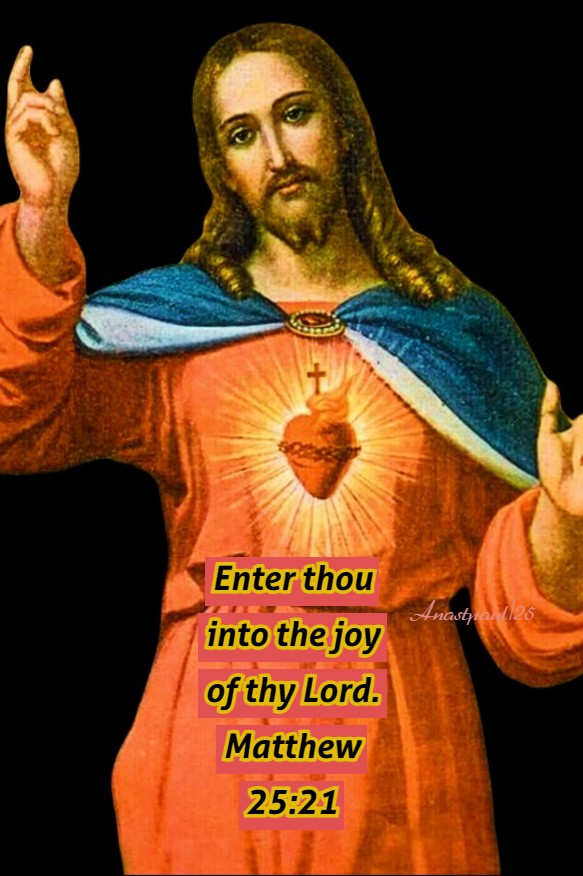
“ Enter thou into the joy of thy Lord.”
Matthew 25:21
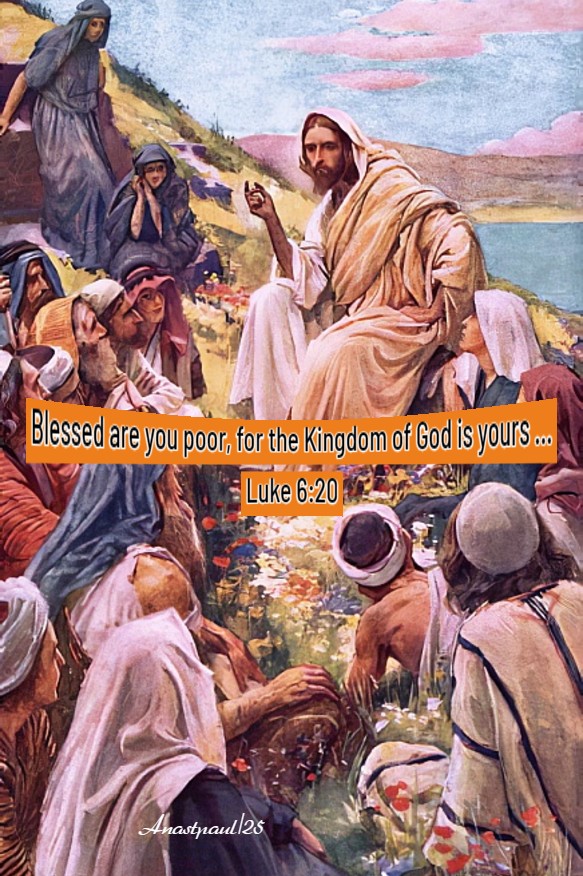
“Blessed are you poor, for the Kingdom of God is yours …”
Luke 6:20
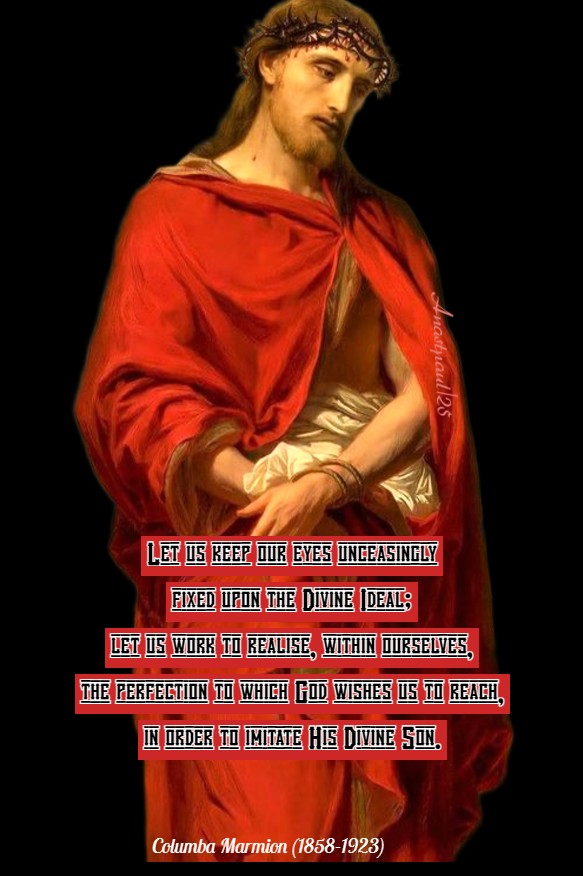
“Let us keep our eyes unceasingly fixed upon the Divine Ideal; let us work to realise, within ourselves, the perfection to which God wishes us to reach, in order to imitate His Divine Son.”
Columba Marmion (1858-1923) Abbot
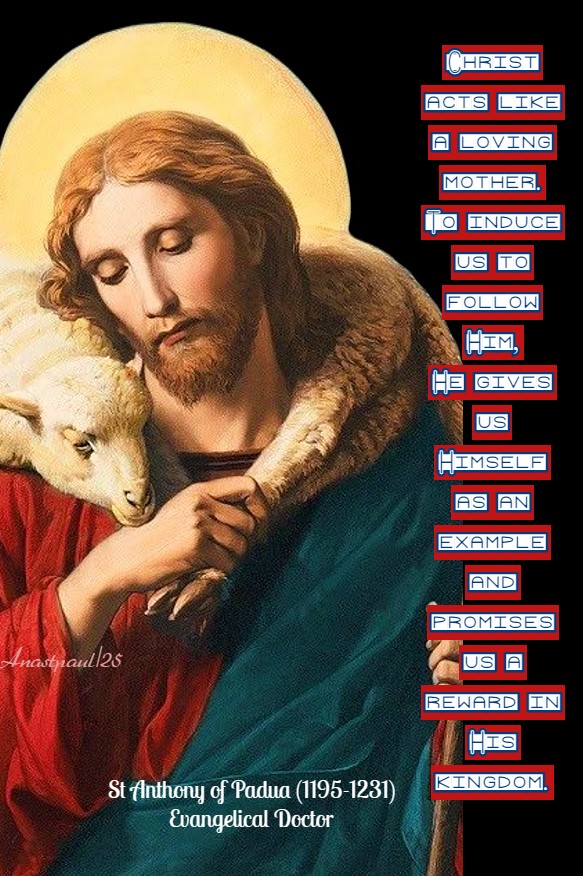
“Christ acts like a loving mother. To induce us to follow Him, He gives us Himself as an example and promises us a reward in His kingdom.”
St Anthony of Padua (1195-1231) Evangelical Doctor
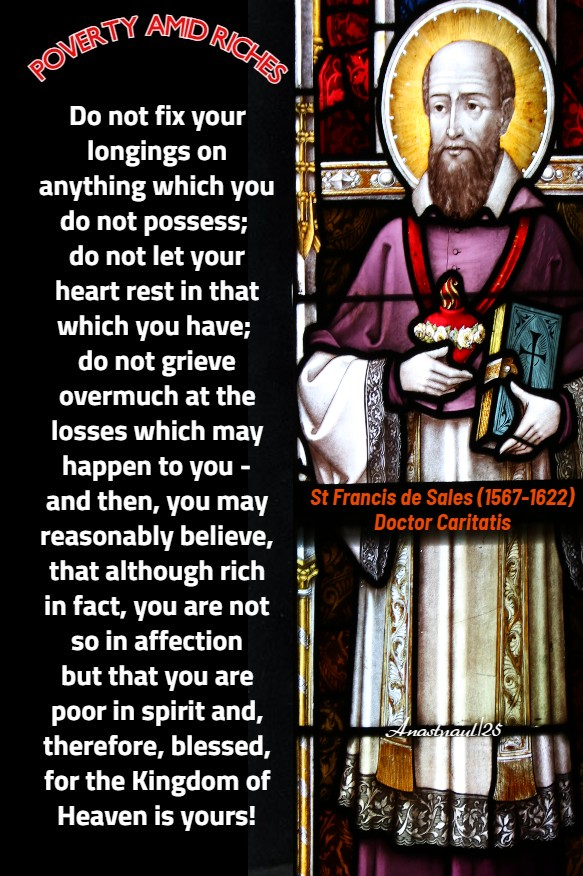
“Do not fix your longings on anything which you do not possess; do not let your heart rest in that which you have; do not grieve overmuch, at the losses which may happen to you – and then, you may reasonably believe that although rich in fact, you are not so in affection but that you are poor in spirit and, therefore, blessed, for the Kingdom of Heaven is yours.”
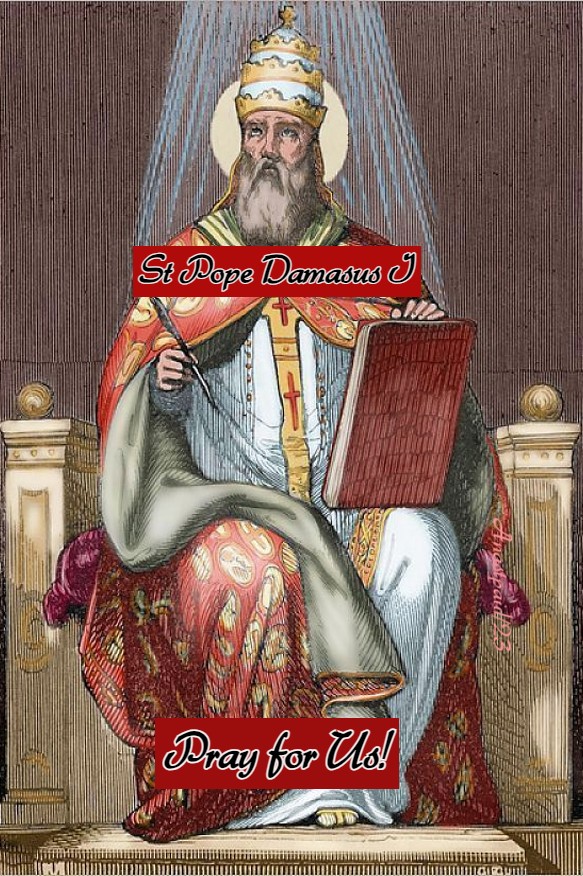
One Minute Reflection – 11 December – “The Month of the Divine Infancy and the Immaculate Conception of the Blessed Virgin Mary” – Within the Octave – St Pope Damasus I (c305-384) Confessor – Ecclesiasticus Sirach 4 – Matthew 25:14-23 – Scripture search here: https://www.drbo.org/
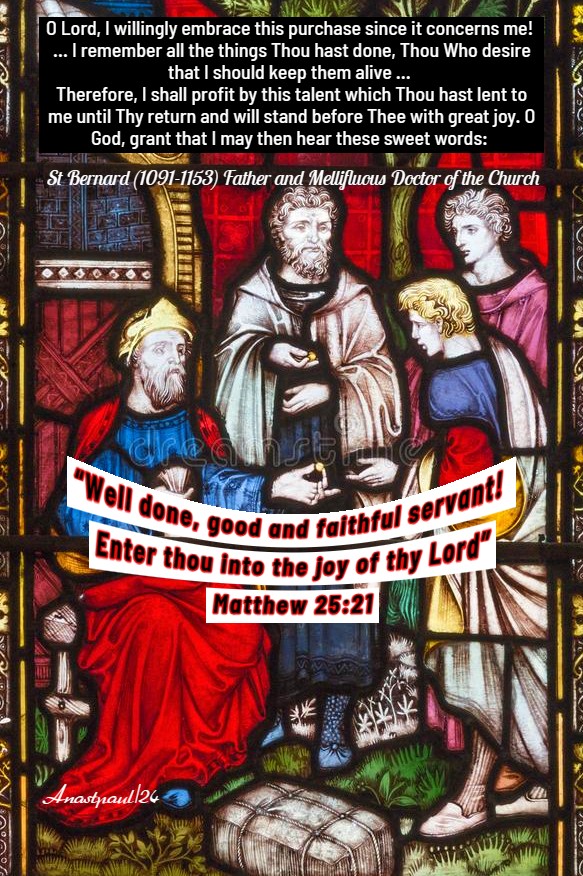
“Well done, good and faithful servant … Enter thou into the joy of thy Lord.”- Matthew 25:21
REFLECTION – “The Word of the Father, Only-begotten Son of God, Sun of Justice (Mal 3:20), is the great Merchant Who has brought us the price of our redemption. It is a truly precious exchange which we can never value sufficiently, when a King, Son of the King Most High, has become the Coin, the Gold has paid our dues, the Just Man is given for the sinner. Truly unmerited mercy, perfectly disinterested love, astonishing goodness … it is a completely disproportionate purchase, in which the Son of God is delivered up for the servant, the Creator is put to death for the one He has created, the Lord is condemned for His slave.
O Christ, these are Thine Works, Thou Who descended from Heaven’s brightness into our hellish darkness, to bring Light to our gloomy prison. Thou came down from the Right Hand of the Divine Majesty, into our human misery, to redeem the human race, Thou Who descended from the Father’s glory, to death on the Cross, to triumph over death and its author. Thou art the only One and there is no other but Thee Who could have been drawn to redeem us through Thine Own Goodness…
Let all the merchants of Teman (Bar 3:23) withdraw from this place … it is not they but Israel [Thy] beloved whom [Thou hast] chosen, Thou Who hide these mysteries from the wise and prudent and have revealed them to those babes and humble servants of Thine (Lk 10:21) … O Lord, I willingly embrace this purchase since it concerns me! … I remember all the things Thou hast done, Thou Who desire that I should keep them alive … Therefore, I shall profit by this talent which Thou hast lent to me until Thy return and will stand before Thee with great joy. O God, grant that I may then hear these sweet words: “Well done, good and faithful servant! Enter thou into the joy of thy Lord” (Mt 25:21).” – St Bernard O.Cist. (1091-1153) Cistercian Monk, known as the Last Father and the Mellifluous Doctor of the Church (Selected sermons, no 42: The Five Purchases).
PRAYER – Look forgivingly on Thy flock, Eternal Shepherd and keep it in Thy constant protection, by the intercession of blessed Damasus Thy Sovereign Pontiff, whom Thou didst constitute Shepherd of the whole Church. Through Jesus Christ, Thy Son our Lord, Who lives and reigns with Thee, in the unity of the Holy Ghost, God, world without end. Amen (Collect).
Our Morning Offering – 11 December – “The Month of the Divine Infancy and the Immaculate Conception of the Blessed Virgin Mary” – Within the Octave
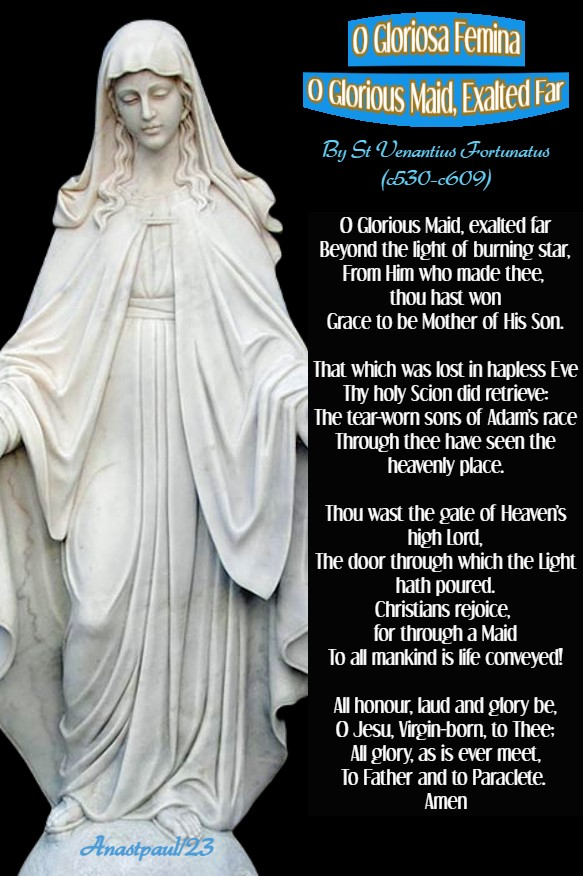
O Gloriosa Femina O Glorious Maid, Exalted Far By St Venantius Fortunatus (c530 – c609) Bishop, Father o the Church
O Glorious Maid, exalted far Beyond the light of burning star, From Him who made thee, thou hast won Grace to be Mother of His Son.
That which was lost in hapless Eve Thy holy Scion did retrieve: The tear-worn sons of Adam’s race Through thee have seen the heavenly place.
Thou wast the gate of Heaven’s high Lord, The door through which the Light hath poured. Christians rejoice, for through a Maid To all mankind is life conveyed!
All honour, laud and glory be, O Jesu, Virgin-born, to Thee; All glory, as is ever meet, To Father and to Paraclete. Amen.
This Hymn was used for Lauds in the Sarum Breviary for the Feasts of the Immaculate Conception, the Purification of the Blessed Virgin Mary, the Annunciation, the Assumption and the Nativity of the Blessed Virgin Mary. The above is the original text of this Hymn as it appears in The English Hymnal (1906), where it is listed as a Morning Office Hymn for Feasts of the Blessed Virgin Mary: Chant Tone: “O Gloriosa Domina” Gregorian Chant, Mode II, traditional.
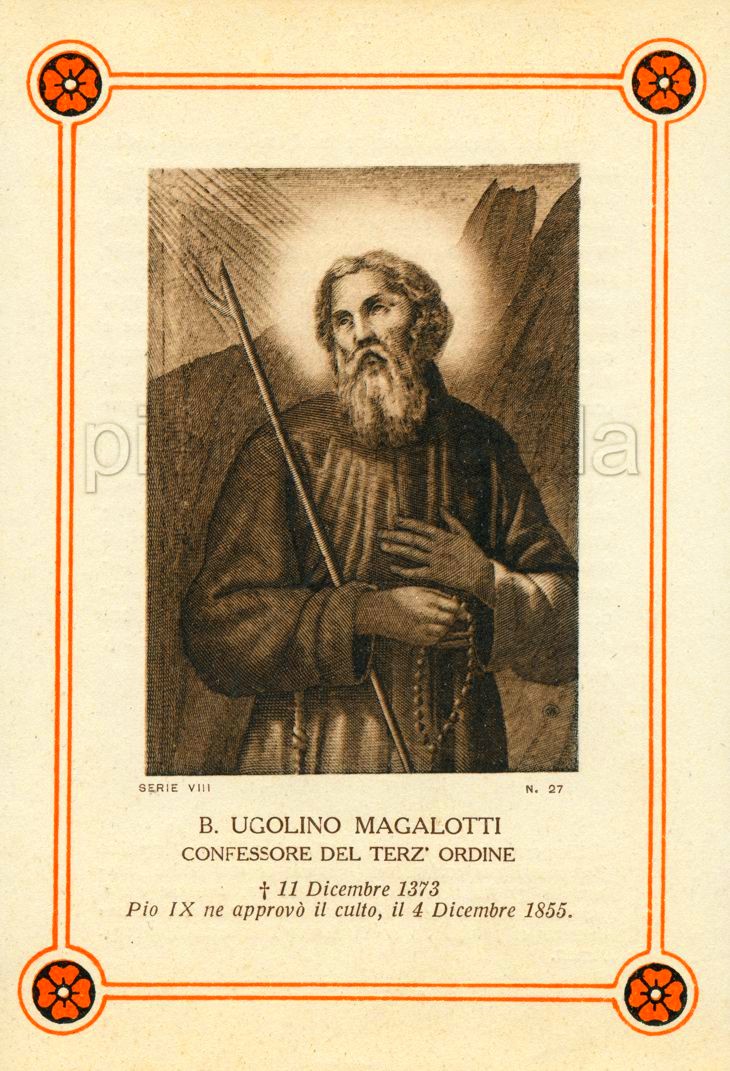
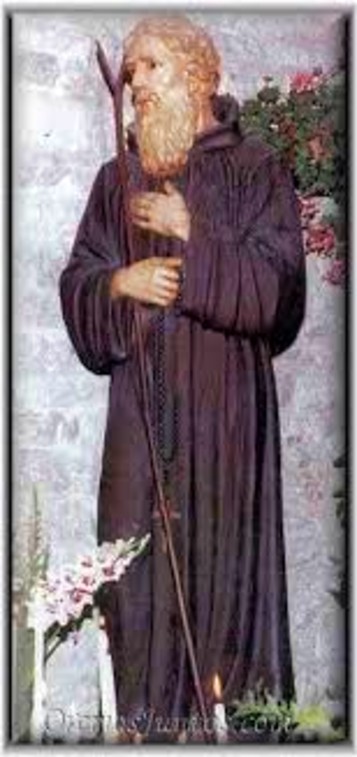
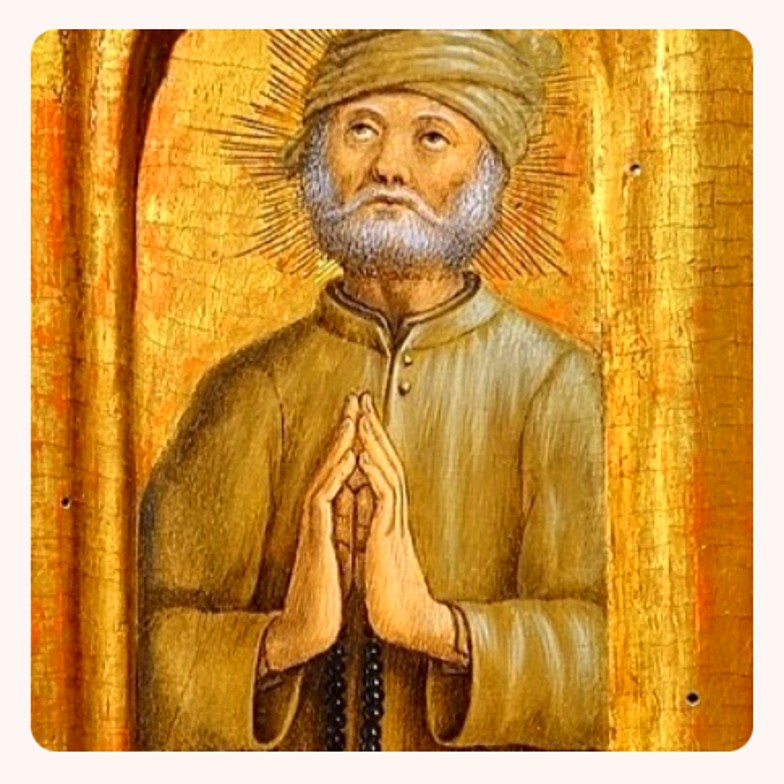
Saint of the Day – 11 December – Blessed Hugolinus Magalotti (Died 1373) Hermit, spiritual guide, Miracle-worker. A holy solitary so steeped in prayer, virtue and mortification that he became the target of the devil’s attacks, who sought constantly to lead him astray by ferocious temptations. Born in Camerino, Italy and died there om 11 December1373. Also known as – Hugoline, Hugolino, Ugolino. Beatified on 4 December 1856 by Pope Pius IX.
Hugolinus was a scion of the famous and noble family of the Magalotti. He was born toward the close of the fourteenth Century on an estate near the City of Camerino, Italy. His mother died while he was still quite young but his excellent father was deeply concerned about the education of the boy, so that nothing was left wanting. By his obedience, affection and other virtues, Hugolinus gave much joy to this father. His lively temperament caused him many a struggle but the the grace of God and the guidance of his father helped him overcome his evil inclinations.
As he grew older, Hugolinus applied himself to the study of the sciences. Spiritual books, however, held the greatest attraction for him. He read them constantly, impressed their lessons on his mind and heart and regulated his life accordingly. He did not speak much but his example edified everyone.
After his father died, the youth thought he heard addressed to him the words of our Lord to the rich young man: “If you wish to be perfect, go, sell what you have and give to the poor” (Mt 19:21). Hugolinus did not hesitate a moment. He sold all his possessions and divided the proceeds among the poor, particularly the widows and orphans. Stripped of all material things, Hugolinus Magalotti withdrew to a hermitage, where he led a truly celestial life. Prayer and meditation were the nourishment of his soul and upon his body he imposed the severest fasts and mortifications.
The enemy of virtue did not neglect to attack him severely. He would tempt him by stirring up sensual desires and reminding him of the pleasures he could enjoy in the world. At other times, he would frighten him by appearing to him in horrible forms. But Hugolinus proved to be a good soldier of Jesus Christ; prayer, penance and especially trustful appeal to the Immaculate Mother of God, made him victorious in every struggle.
God rewarded the fidelity of His servant with extraordinary favours. Enlightened by God, he gave advice and consolation to the faithful, who approached him in great numbers. He miraculously restored health to many of them who were ill.
When Hugolinus perceived his end was drawing near, he became even more intimately united to God. Having received the last Sacraments several times, he died peacefully in the Lord in 1373. His body was laid to rest in the Church of St John the Baptist at Figni, Camerino and immediately the people began to venerate him. This veneration was approved by Pope Pius IX and Pope Leo XIII granted affirmation of his Feast.
Blessed Jerome Ranuzzi OSM (c 1410-c 1468) “The Angel of Good Counsel,” “The Blessed Bachelor,” Priest and Friar of the Order of the Servants of Mary, the Servites, Theologian, Adviser both spiritual and secular, renowned for his learning and scholarship, Penitent and Hermit with a great love of solitude and silence. His body is incorrupt and is still available for veneration in St Mary of the Servites, Urbano, Italy. His cult was confirmed on 1 April 1775 by Pope Pius VI with the title of Blessed. The Roman Martyrology states: “In Sant’Angelo in Vado always in the Marches, Blessed Girolamo, Priest of the Order of the Servants of Mary, who in solitude and silence reached the wisdom of holiness.” The Angel of Good Counsel: https://anastpaul.com/2021/12/11/saint-of-the-day-11-december-blessed-jerome-ranuzzi-osm-c-1410-c-1468-the-angel-of-good-counsel/
Blessed Severin Ott O.Praem. (1627-1708) Priest and Friar of the Norbertines or Premonstratensians.
Martyrs of Saint Aux-Bois – 3 Saints: Two Christian missionaries and one of their local defenders who faith in the persecutions of governor Rictiovarus – Fuscian, Gentian and Victoricus. They were beheaded in 287 in Saint Aux-Bois, Gaul (in modern France).
Martyrs of Rome – 3 Saints: Three Christians murdered in the persecutions of Diocletian for giving aid to Christian prisoners – Pontian, Practextatus and Trason. They were imperial Roman citizens. They were martyred in c 303 in Rome, Italy.
Thought for the Day – 10 December – Meditations with Antonio Cardinal Bacci (1881-1971) – Within the Octave of the Immaculate Conception
Holy Purity
“Since Mary excelled so much in this virtue and had so great a love for it, she will obtain for us from God, the grace necessary for us to preserve it, as long as we pray humbly to her, especially in times of temptation.
Let us remember, that at Baptism, we became members of the Mystical Body of Christ and temples of the Holy Spirit (Cf 1 Cor 6:15-20). We are obliged to avoid defiling this temple and making the Mystical Body of Christ a dwelling-place for the devil! It is not true to say, that this is an impossible fight. We know, from our own experience, that we can win. We have often battled with, or fled from occasions of sin. We have prayed and made sacrifices, in order to avoid sin and, with the help of God and the protection of the Blessed Virgin, we have won! After our victory, we have felt elated and have experienced that peace, which only God’s grace can bestow. If we have succeeded so many times, why cannot we do the same always? There is no need to be afraid. If we do all that we can, God’s grace will do the rest. “I can do all things in Him, Who strengthens me,” Phil 4:12) says St Paul. “God is faithful,” he writes elsewhere “and will not permit you to be tempted beyond your strength but, with the temptation, will also give you a way out, that you may be able to bear it” (1 Cor 10:13).
If we remain pure, we shall see God. We shall see Him in the work of His creation in this world and we shall see and enjoy Him forever in Heaven. “Blessed are the pure of heart, for they shall see God” (Mt 5:8).”
Quote/s of the Day – 10 December – “The Month of the Divine Infancy and the Immaculate Conception of the Blessed Virgin Mary” – – Within the Octave – Proverbs 8:22-35 – Luke 1:26-28 – Scripture search here: https://www.drbo.org/
“The very fact that God has elected her, proves that none was ever holier than Mary; if any stain had disfigured her soul, if any other virgin had been purer and holier, God would have selected her and rejected Mary.”
St Jacob of Sarug (c 451-521) Bishop, Theologian, Poet, Writer
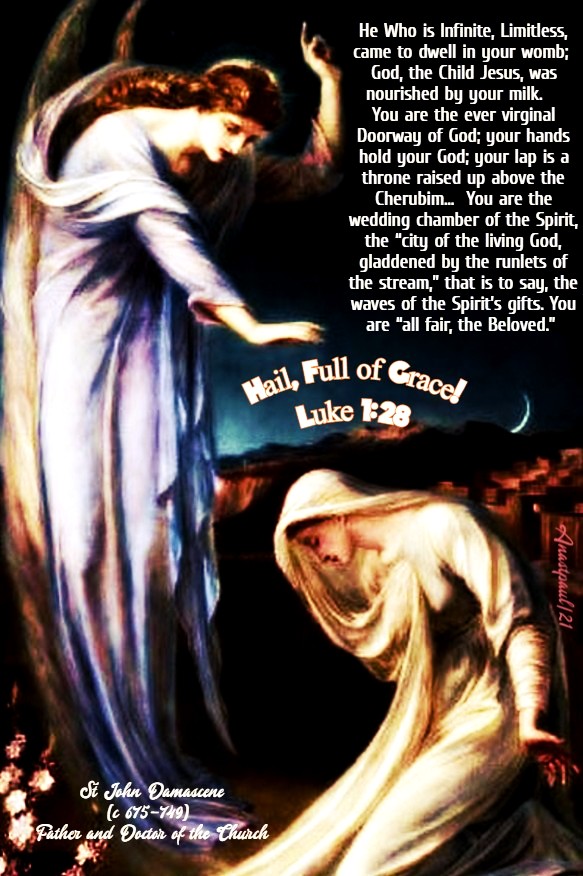
“He Who is Infinite, Limitless, came to dwell in your womb; God, the Child Jesus, was nourished by your milk. You are the ever virginal Doorway of God; your hands hold your God; your lap is a throne raised up above the Cherubim… You are the wedding chamber of the Spirit, the “city of the living God, gladdened by the runlets of the stream” that is to say, the waves of the Spirit’s gifts. You are “all fair, the Beloved” of God.”
St John Damascene (675-749) Father and Doctor of the Church
One Minute Reflection – December – “The Month of the Divine Infancy and the Immaculate Conception of the Blessed Virgin Mary” – Within the Octave – Proverbs 8:22-35 – Luke 1:26-28 – Scripture search here: https://www.drbo.org/
“Hail, full of grace, the Lord is with thee: blessed art thou among women” – Luke 1:28
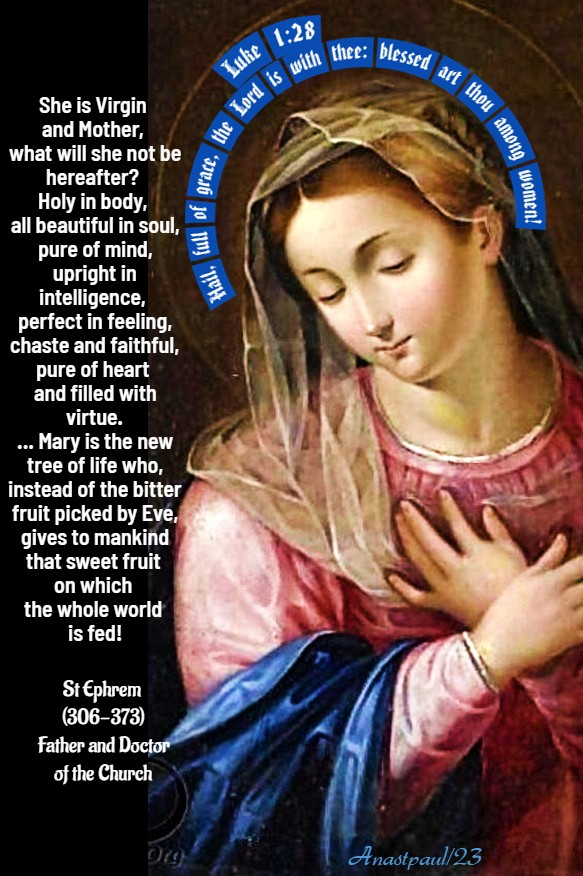
REFLECTION – “Son of God, grant me your own admirable Gift that I may celebrate the wondrous beauty of Thy beloved Mother! The Virgin gave birth to a Son while preserving her virginity; she suckled Him Who gives nourishment to the peoples; in her immaculate breast, she bore Him Who carries the whole world in His Hands. She is Virgin and Mother, what will she not be hereafter? Holy in body, all beautiful in soul, pure of mind, upright in intelligence, perfect in feeling, chaste and faithful, pure of heart and filled with virtue.
May the hearts of virgins rejoice in Mary, since of her was born the One Who set humankind free from dreadful slavery. May the old Adam, wounded by the serpent, rejoice in Mary; it is Mary who gives Adam a posterity which allows Him to crush the accursed serpent and Who cures him of his mortal wound (Gen 3:15). Let Priests rejoice in the blessed Virgin; she has brought the High Priest into the world, Who gave Himself as a Victim, putting an end to the sacrifices of the Old Covenant. … Let the Prophets rejoice in Mary, since in her were fulfilled their visions, in her were realised their prophecies, in her were confirmed their oracles. Let all the Patriarchs rejoice in Mary, since she received the blessing promised to them, she, who, in her Son, has brought them to completion. …
Mary is the new tree of life who, instead of the bitter fruit picked by Eve, gives to mankind that sweet fruit on which the whole world is fed!” – St Ephrem (306-373) Deacon in Syria, Father and Doctor of the Church (Marian Hymn).
PRAYER – Stir up our hearts, O Lord, to prepare the ways of Thy only-begotten Son, so that through His coming we may be able to serve Thee with purified minds. Who lives and reigns with Thee, in the unity of the Holy Ghost, God, world without end. Amen (Collect).
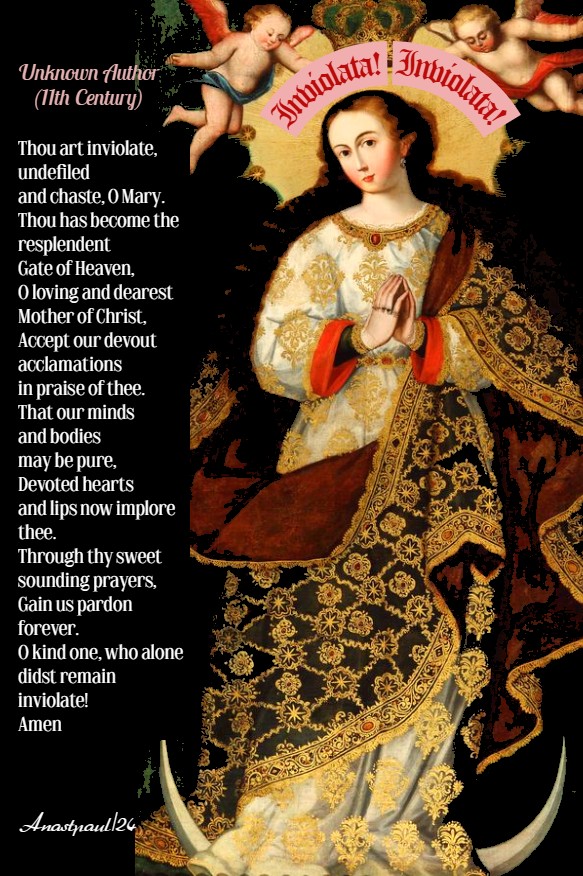
Thou art inviolate, undefiled and chaste, O Mary. Thou has become the resplendent Gate of Heaven, O loving and dearest Mother of Christ, Accept our devout acclamations in praise of thee. That our minds and bodies may be pure, Devoted hearts and lips now implore thee. Through thy sweet sounding prayers, Gain us pardon forever. O kind one, who alone didst remain inviolate. Amen
The Hymn Inviolata has been claimed by the Carmelite Order, as a Traditional Hymn originating within their ranks. The Hymn is also used by Dominican Friars in the chanting of Compline. Its origins trace to the 11th Century. It appears in Hymnals from 1860 to 1920.
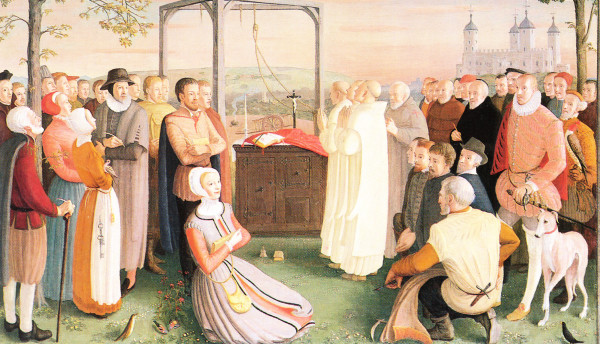
Saint of the Day – 10 December – Blessed Brian Lacey (Died 1591) Lay Martyr. Born in Brockdish, Norfolk, England and died by being hanged on 10 December 1591 at Tyburn Tree London, England. Beatified on 15 December 1929 by Pope Pius XI.
Brian Lacey was one of the London Martyrs of 1591. On 18 October 1591, a royal proclamation led to the stricter enforcement of the laws against Catholics in England, the first fruits of which were seven Martyrdoms in London on the following 10 December, one of whom was Brian Lacey.
Brian, a Yorkshire gentleman, was a cousin and assistant of the Venerable Montford Scott and after torture, was condemned for aiding and helping this Priest. Brian’s own brother had informed against them!
Lacey was committed to Bridewell Palace where he was cruelly tortured by Topcliffe in the vain endeavour to elicit at whose houses he had visited with Scott. He was arraigned before the Lord Mayor at the Old Bailey and condemned to be hanged for aiding and abetting a Piests.
Five years previously Lacey had suffered imprisonment in Newgate for religion and he was then three times examined by Justice Young. Information against him as a distributor and dispenser of letters to Catholics and against Montford Scott had been given by his own brother, Richard Lacey, gentleman, of Brockdish, Norfolk.
St Abundius Blessed Brian Lacey (Died 1591) Lay Martyr BL Bruno of Rommersdorf St Caesarius of Epidamnus St Carpophorus St Deusdedit of Brescia (Died c700) Bishop
St Edmund Gennings St Emérico Martín Rubio St Florentius of Carracedo St Fulgentius of Afflighem St Gemellus of Ancyra St Gonzalo Viñes Masip Bl Guglielmo de Carraria St Guitmarus St Hildemar of Beauvais Bl Jerome Ranuzzi Bl John Mason
St Julia of Merida St Lucerius St Maurus of Rome St Mercury of Lentini St Polydore Plasden Bl Sebastian Montanol Bl Sidney Hodgson St Sindulf of Vienne St Swithun Wells
Martyrs of Alexandria – 3 Saints: A group of Christians murdered for their faith in the persecutions of Galerius Maximian – c 312. The only details that have survived are three of the names – Eugraphus, Hermogenes and Mennas.
Thought for the Day – 9 December – Meditations with Antonio Cardinal Bacci (1881-1971) – Within the Octave of the Immaculate Conception
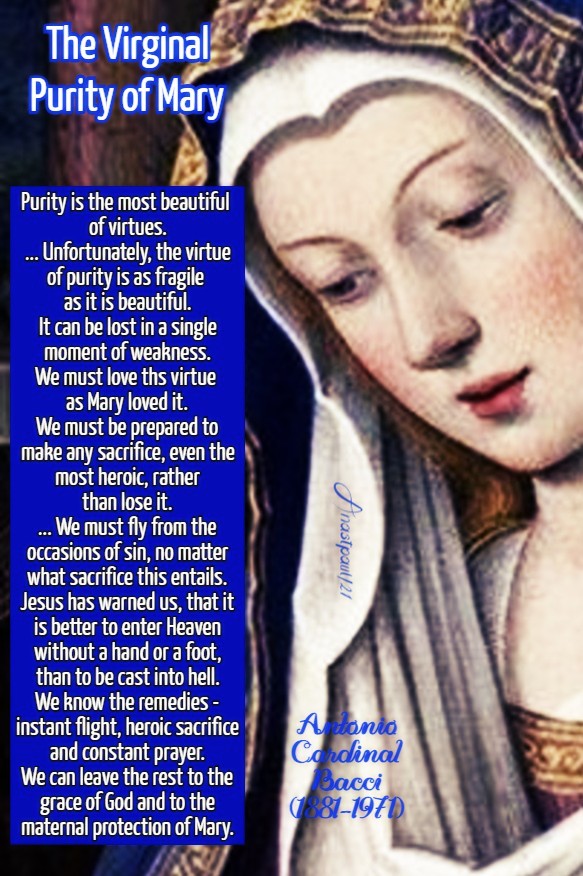
The Virginal Purity of Mary
“Purity is the most beautiful of virtues.
It is a virtue which is admired by God and by men, even by the most corrupt. It is often said, that it makes us like the Angels but in fact, looking at it in a particular way, it makes us superior to the Angels. Since they have no bodies, the angels cannot sin against purity, while we have to fight many battles and overcome many temptations, in order to preserve our chastity. Jesus had a very special love for this virtue. He chose to be born of a Virgin and, He showed a particular affection for St John, who was a dedicated celibate. On one occasion, He placed His Hands on the head of a little child and said: “Unless you turn and become like little children, you will not enter into the kingdom of Heaven “(Mt:18.3)
Unfortunately, the virtue of purity is as fragile as it is beautiful. It can be lost in a single moment of weakness. We must love this virtue as Mary loved it. We must be prepared to make any sacrifice, even the most heroic, rather than lose it. Worldly charm and beauty attract us and the devil works ferociously to control our imagination and our affections. On account of the disturbance of original sin, the flesh is like a terrible weight retarding our spiritual advancement. Sometimes it seems as if it is irresistibly drawing us towards the abyss of impurity. But we need not be dragged down, if we are prepared to fly from the occasions of sin and to pray to God and to our heavenly Mother for her intercession. We must always act at once, for there is no time to dally. It is fatal to remain inactive and to allow temptation to make its way into our soul. This kind of battle, said St Francis de Sales, is won only by soldiers who flee. We must fly from the occasions of sin, no matter what sacrifice this entails. Jesus has warned us, that it is better to enter Heaven without a hand or a foot, than to be cast into hell.
We know the remedies – instant flight, heroic sacrifice and constant prayer. We can leave the rest to the grace of God and to the maternal protection of Mary.”


















 AnaStpaul
You must be logged in to post a comment.