The Month of April is dedicated both to devotion to the Resurrection of Our Lord Jesus Christ and to the Holy Eucharist – the proof of the promise of the love of God and of ETERNAL LIFE.
“My brethren, when was it that the Lord made Himself recognised? — When He broke the bread. — So, we ourselves are convinced, too, that when we break the bread, we recognise the Lord. — If He had not wanted to be recognised until that moment, it was for our sakes, we, who were not to see Him in the flesh but who were yet to eat Him in the flesh. ” – St Augustine (354-430) Father, Doctor of Grace
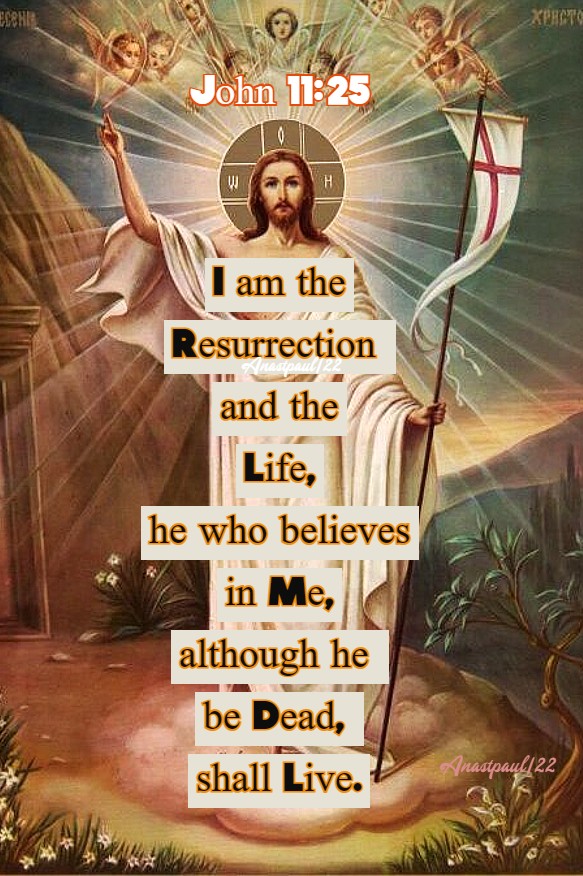
“I am the Resurrection and the Life, he who believes in Me, although he be dead, shall live.”
John 11:25
“I am the Living Bread Who came down from Heaven. If any man eat of this Bread, he shall live forever and the Bread that I will give, is My Flesh, for the Life of the world.”
John 6:51-52
“For His Body, has been given to you under the appearance of bread and His Blood, under the appearance of wine, so that, when you have partaken of the Body and Blood of Christ, you might be One Body and One Blood with Him. So shall we become Christ-bearers [“Christophers”]. His Body and Blood are diffused through all our members – see, then, how we become participants in the Divine Nature!”
St Cyril of Jerusalem (c 313-386) Father and Doctor of theChurch
Wednesday in Holy Week – 1 April – Our Lenten Journey With St Thomas Aquinas (1225-1274) Doctor of the Church
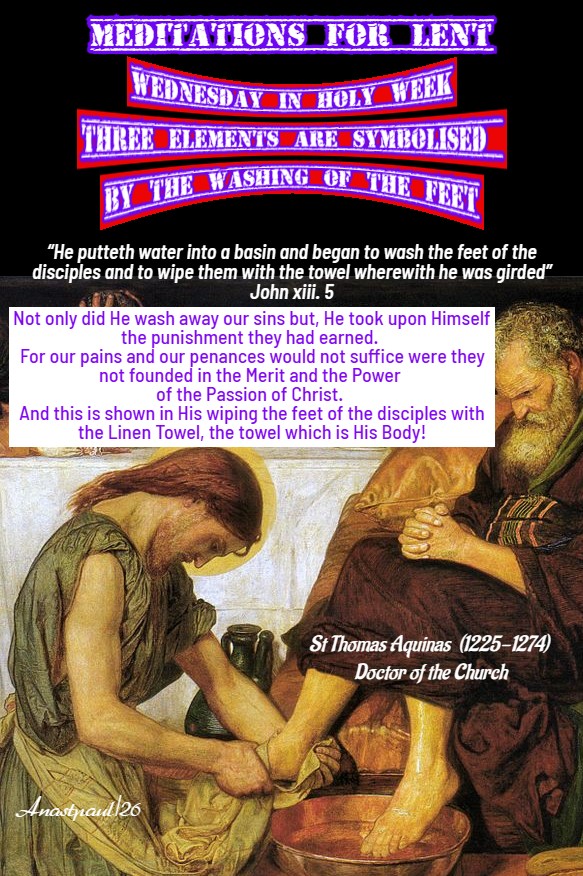
Wednesday in Holy Week Three Elements are Symbolised by the Washing of the Feet
“He putteth water into a basin and began to wash the feet of the disciples and to wipe them with the towel wherewith he was girded” John xiii. 5
There are three elements which this action may symbolise.
The pouring of the water into the basin, is a Symbol of the pouring out of His Blood upon the earth. Since the Blood of Jesus has a Power of cleansing, it may in a sense, be called water. The reason why Water, as well as Blood, flowed from His Side, was to show that this Blood could wash away sin.
Again we might take the water as a figure of Christ’s Passion. He putteth water into a basin, that is, by faith and devotion He stamped into the minds of faithful followers, the memory of His Passion. “Remember My poverty and transgression, the wormwood and the gall” (Lam iii. 19).
By the words, “and began to wash” it is human imperfection which is symbolised. For the Apostles, after their living with Christ, were certainly more perfect and yet, they needed to be washed, their souls were still stained. We are here made to understand that, no matter the degree of any man’s perfection, he still needs to be made more perfect; he is still contracting uncleanness of some kind, to some extent. So in the Book of Proverbs we read,“ Who can say My heart is clean I am pure from sin”(Prov. xx. 9).
Nevertheless, the Apostles and the just have this kind of uncleanness only in their feet.
There are, however, others who are infected, not only in their feet but wholly and entirely. Those who make their bed upon the soiling attractions of the world, are made wholly unclean thereby. Those who wholly, that is to say, with their senses and with their wills, cleave to their desire of earthly things, these are wholly unclean.
But they who do not thus lie down, they who stand, i.e. they who, in mind and in desire, are tending towards heavenly things, contract this uncleanness in their feet. Whoever stands must, necessarily, touch the earth at least with his feet. And we too, in this life, where we must, to maintain life, make use of earthly things, cannot but contract a certain uncleanness, at least as far as those desires and inclinations are concerned which begin in our senses.
Therefore, Our Lord commanded His disciples to shake the dust from their feet. The text says, “He began to wash” because this washing the affection for earthly things is only a beginning. It is only in the life to come that it will be really complete.
Thus, by putting water into the basin, the pouring of His Blood, is signified and by His beginning to wash the feet of His disciples, the washing away of our sins.
Finally, there is Symbolised Our Lord’s taking upon Himself the punishment due to our sins. Not only did He wash away our sins but, He took upon Himself the punishment they had earned. For our pains and our penances would not suffice were they not founded in the Merit and the Power of the Passion of Christ. And this is shown in His wiping the feet of the disciples with the linen towel, the towel which is His Body!
ST THOMAS AQUINAS (1225-1274) Priest, Theologian, Dominican Doctor Angelicus (Angelic Doctor) Doctor Communis (Common Doctor) Added by Pope Saint Pius V in 1568
Quote/s of the Day – 1 April – Spy Wednesday in Holy Week – Isaias 53:1-12, Luke 22:39-71; 23:1-53
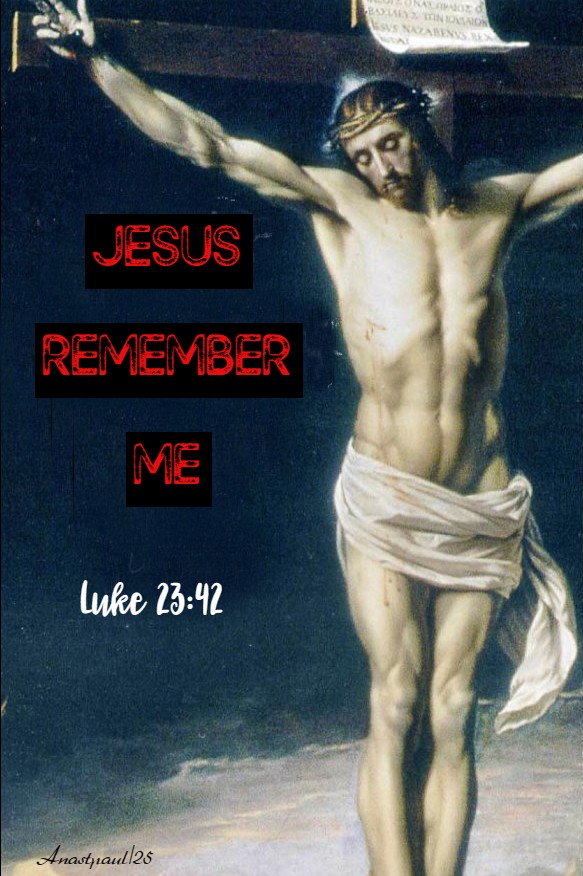
“Jesus remember me”
Luke 23:42
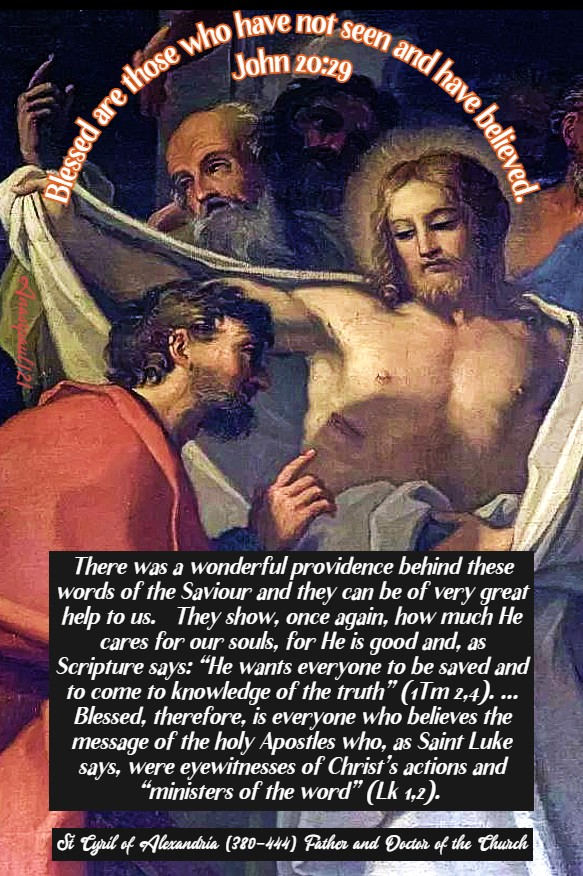
“Blessed are those who have not seen and have believed.” John 20:29
“Blessed, therefore, is everyone who believes the message of the holy Apostles who, as Saint Luke says, were eyewitnesses of Christ’s actions and “ministers of the word” (Lk 1,2).”
St Cyril of Alexandria (380-444) Father and Doctor of the Church
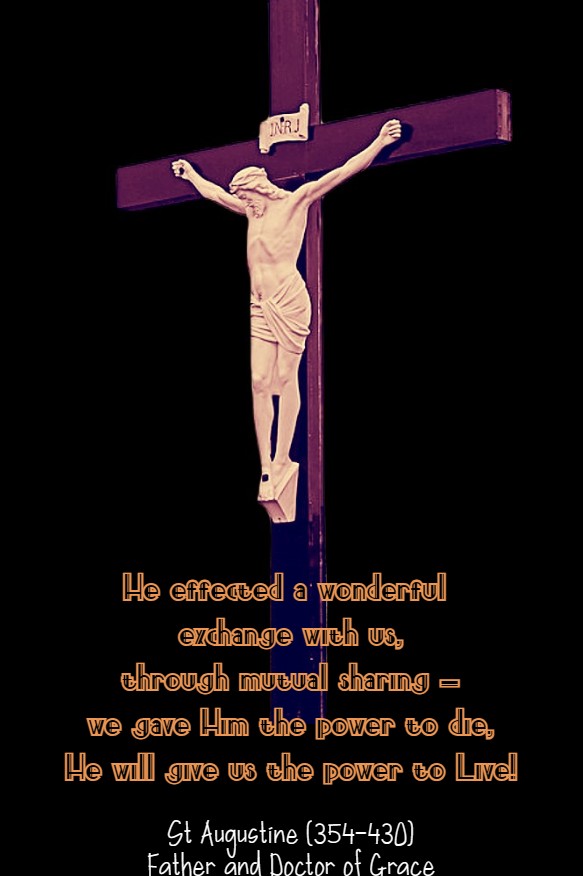
“… He effected a wonderful exchange with us, through mutual sharing – we gave Him the power to die, He will give us the power to Live!”
St Augustine (354-430) Father and Doctor of Grace
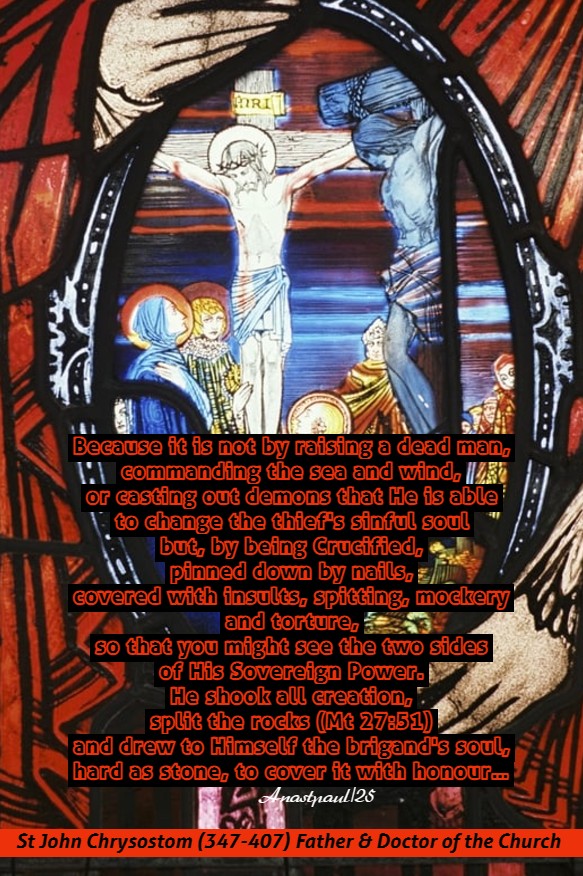
“Because it is not by raising a dead man, commanding the sea and wind, or casting out demons that He is able to change the thief’s sinful soul but, by being Crucified, pinned down by nails, covered with insults, spitting, mockery and torture, so that you might see the two sides of His Sovereign Power. He shook all creation, split the rocks (Mt 27:51) and drew to Himself the brigand’s soul, hard as stone, to cover it with honour…”
St John Chrysostom (347-407) Father & Doctor of the Church
Our Morning Offering – 1 April – “The Month of the Resurrection and the Blessed Sacrament” – Spy Wednesday in Holy Week – Isaias 53:1-12 – Luke 22:39-71; 23:1-53 – Scripture search here: https://www.drbo.org/
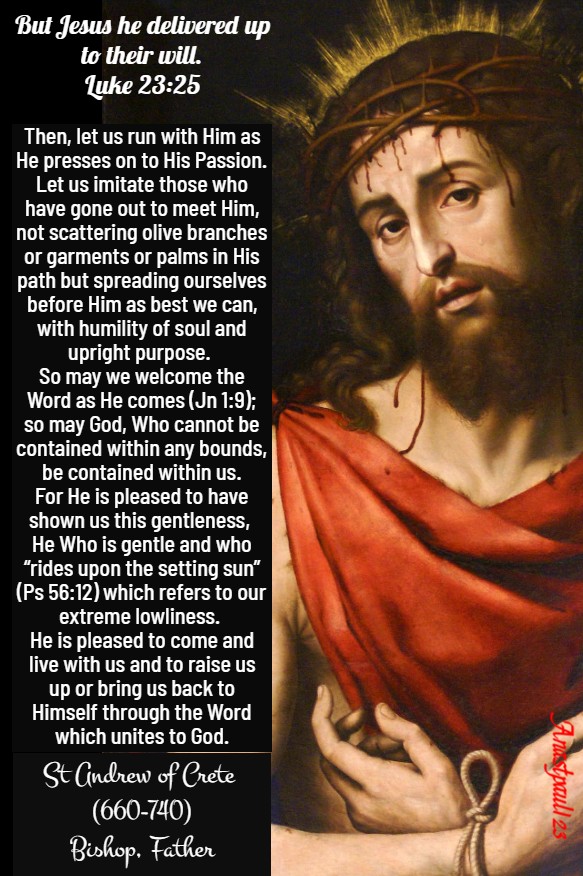
“But Jesus he delivered up to their will.” – Luke 23:25
REFLECTION – “Come, come, let us go up together to the Mount of Olives. Together let us meet Christ, Who is returning today from Bethany and going, of His own accord, to that Holy and Blessed Passion, to complete the Mystery of our Salvation. And so He comes, willingly taking the road to Jerusalem, He Who came down from the heights for us, to raise us who lie in the depths, to exaltation with Him, as the revealing Word says: “above all authority and rule and power and above every Name that is named” (Eph 1:21). He comes without display, without boast. For, as the Prophet says, “He will not contend or shout out and no-one will hear His Voice” (Is 42:2). He is gentle and lowly and His entrance is humble…
Then, let us run with Him as He presses on, to His Passion. Let us imitate those who have gone out to meet Him, not scattering olive branches or garments or palms in His path but spreading ourselves before Him as best we can, with humility of soul and upright purpose. So may we welcome the Word as He comes (Jn 1:9); so may God, Who cannot be contained within any bounds, be contained within us.
For He is pleased to have shown us this gentleness, He Who is gentle and Who “rides upon the setting sun” (Ps 56:12) which refers to our extreme lowliness. He is pleased to come and live with us and to raise us up, or bring us back to Himself through the Word which unites to God.” – St Andrew of Crete (660-740) Bishop and Father (Homily for Palm Sunday).
PRAYER – O God, Who to drive far from us, the power of the enemy, didst will that Thy Son should suffer for us on the gibbet of the Cross, grant us Thy servants, that we may obtain the grace of the resurrection. Through the same Jesus Christ, Thy Son, Our Lord, Who lives and reigns with Thee in the unity of the Holy Ghost, God, world without end. Amen (Collect).
Our Morning Offering – 1 April – “Spy” Wednesday in Holy Week
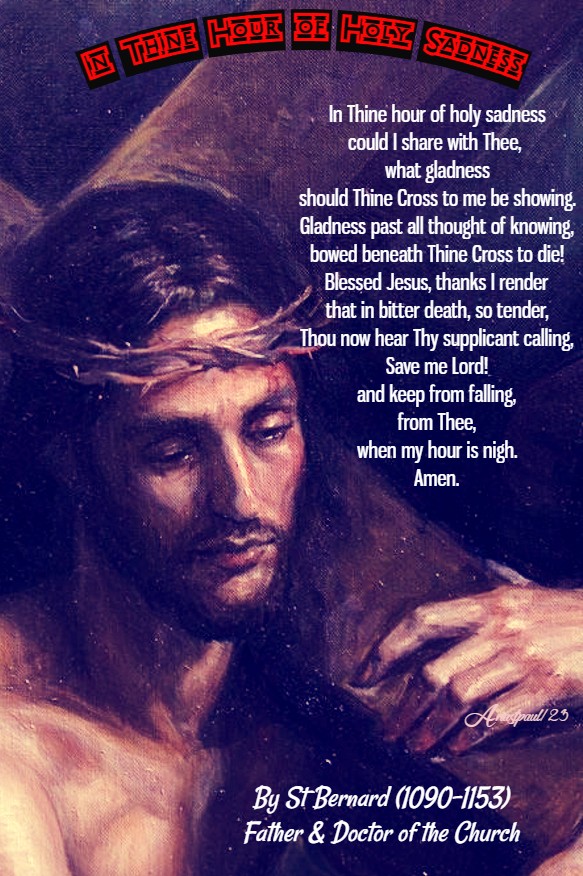
In Thine Hour of Holy Sadness By St Bernard (1090-1153) Father & Doctor of the Church
In Thine hour of holy sadness could I share with Thee, what gladness should Thine Cross to me be showing. Gladness past all thought of knowing, bowed beneath Thine Cross to die! Blessed Jesus, thanks I render that in bitter death, so tender, Thou now hear Thy supplicant calling, Save me Lord! and keep from falling, from Thee, when my hour is nigh. Amen.
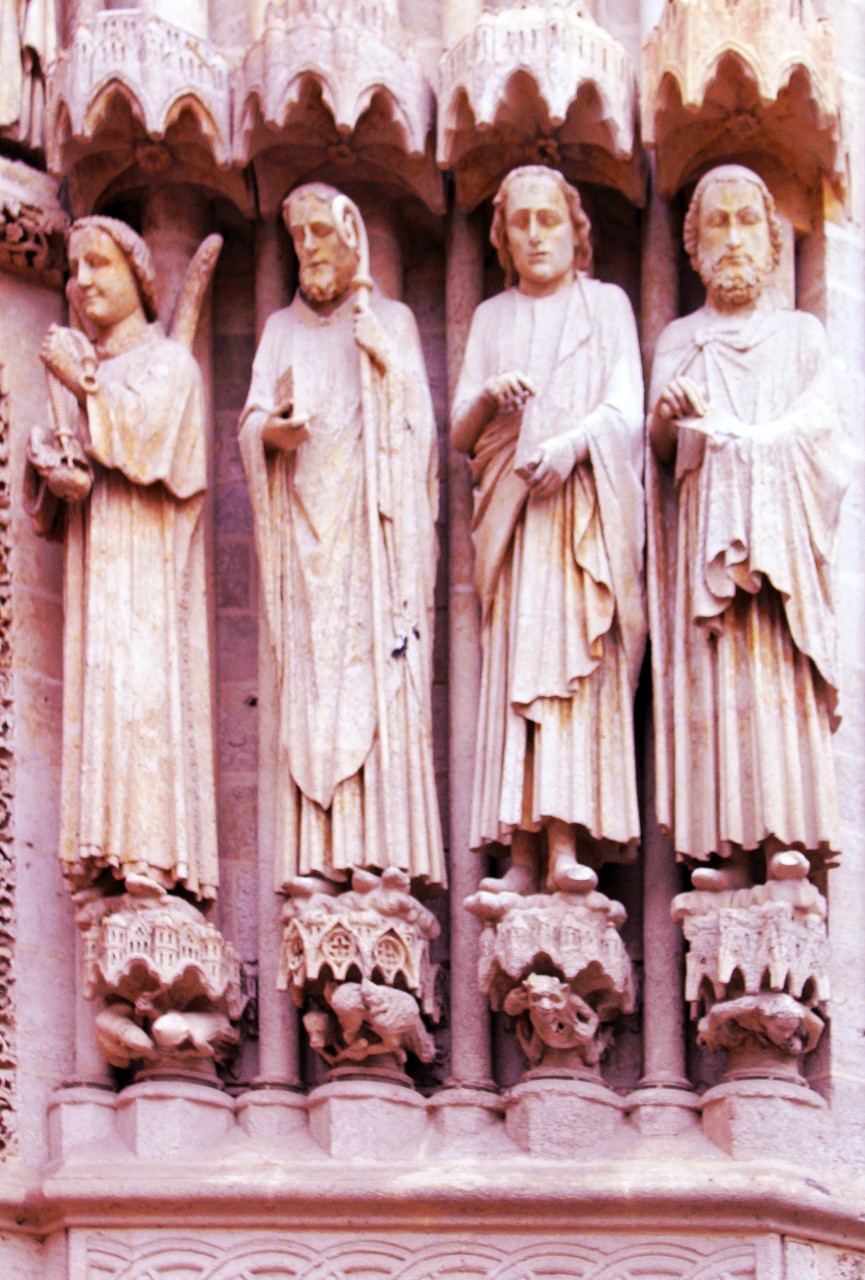
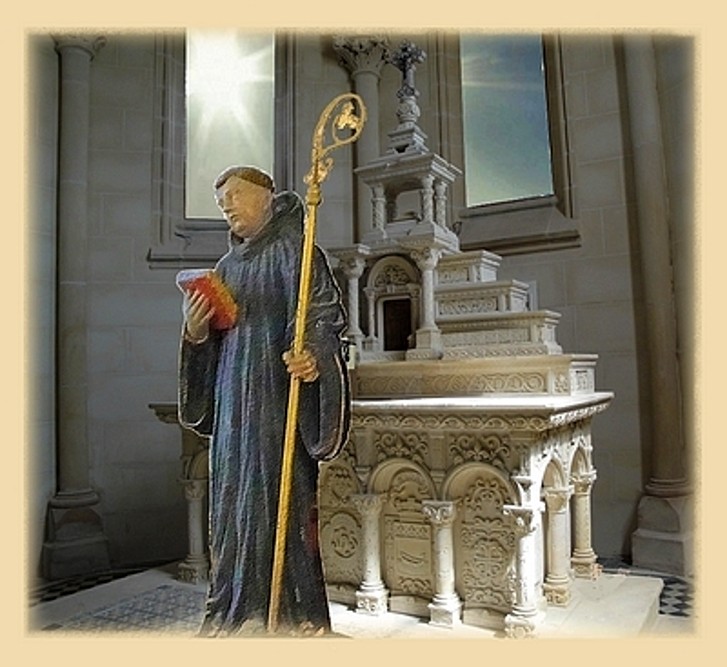
Saint of the Day – 1 April – Saint Beherond (7th Century) Bishop and Confessor of Amiens. He was a friend and colleague of St Valéry of Leucone (c565-c619) also celebrated today. Also known as – Berchond.
Saints on Amiens Cathedral Facade
The story of this saintly Bishop of Amiens is limited to his relationship with Saint Valery regarding the donation of Leuconay Abbey to the latter by the King of the time.
A Statue on the Saint-Firmin portal of the Cathedral perpetuates his memory.
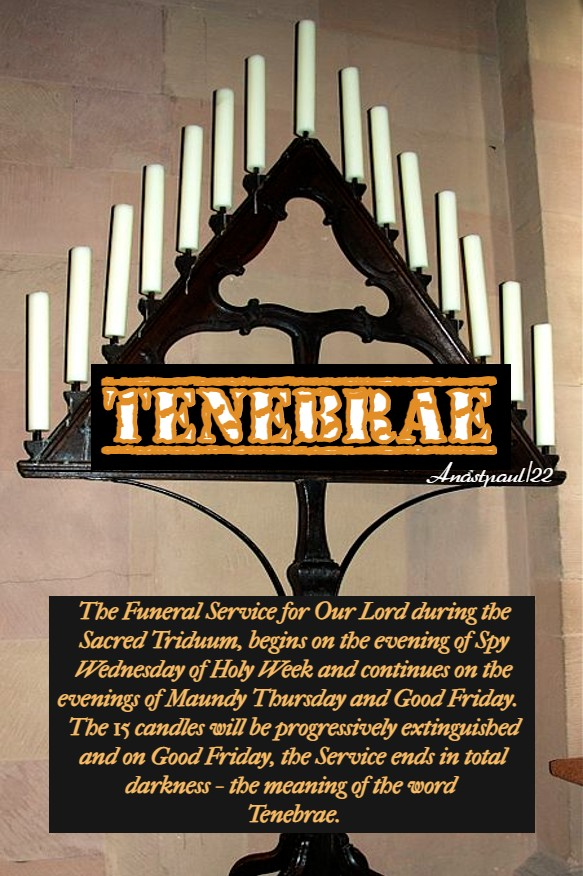
The Office of Tenebrae The public singing of part of the Divine Office, on Wednesday, Thursday and Friday evenings in Holy Week, anticipating Matins and Lauds of Holy Thursday, Good Friday and Holy Saturday. This custom goes back centuries and acquired the name because of the mourning ritual surrounding the ceremony which includes a triangular candlabra bearing fifteen candles. These are extinguishedt one by one until, after the last candle is extinguished, a prayer is said in darkness, one candle is lit and the assembly dispersed in silence.
Devotions for the Month of April The Resurrection and The Blessed Sacrament ‘I am the Resurrection and the Life’
Blessed Abraham of Bulgaria Blessed Alexander of Sicily Saint Anastasio Blessed Antonius of Noto Saint Beherond (7th Century) Bishop and Confessor of Amiens
Saint Celsus (c1080-1129) Archbishop of Armagh, Reformer. He was responsible for the change from lay control of the Church in Ireland, to a Clerical-Episcopal model. Himself a hereditary lay administrator, he decided to seek Priestly Ordination and be embraced celibacy in order that the reform introduced by Pope St Gregory VIII on the Continent, could take effect also in Ireland. Holy and Brave St Celsus: https://anastpaul.com/2023/04/01/saint-of-the-day-1-april-saint-celsus-of-armagh-c1080-1129-archbishop/
Saint Dodolinus of Vienne Blessed Enrico Alfrieri OFM (1315-1405) Vicar General of the Friar’s Minor Blessed Gerard of Sassoferrato Saint Gilbert de Moray Blessed Giuseppe Girott Blessed Hugh of Bonnevaux
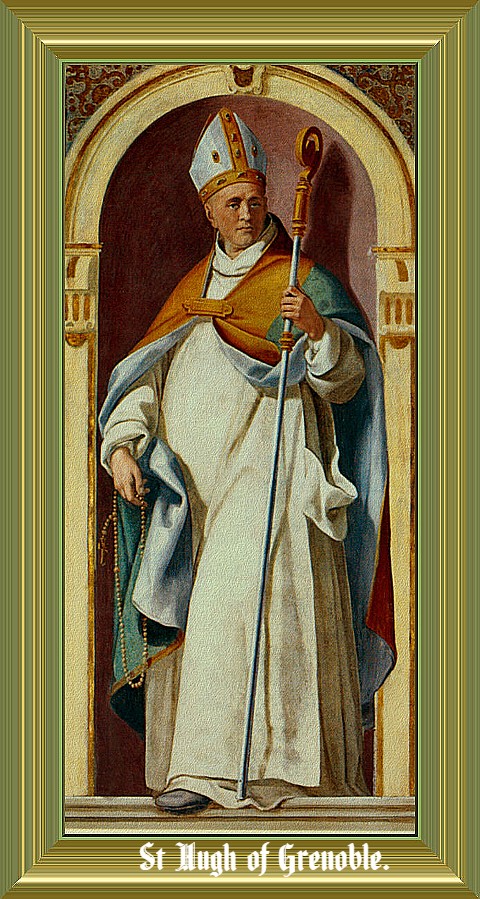
Saint Hugh (1053-1232) Bishop of Grenoble , Reformer, in the foundation of the Carthusian Order, founded a Monastery at Chalais. The Roman Martyrology reads: “In Grenoble in Burgundia, in today’s France, St Hugh, Bishop, who worked for the reform of the customs of the clergy and the people and, during his Episcopate, ardently loving solitude, gave St Bruno at the time, his teacher and to his companions, the hermitage of Chartroux, of which he was also the first Abbot. He ruled his Church for about fifty years with the thoughtful example of his charity.” This Wonderful Zealous St Hugh: https://anastpaul.com/2022/04/01/saint-of-the-day-1-april-saint-hugh-of-grenoble-1053-1232/
Saint Jacoba of Rome Blessed John Bretton Saint Leucone of Troyes
Saint Melito (Died c 180) Early Church Father, Bishop of Sardis (Died c 180), ecclesiastical Writer, Confessor, Apologist, Defender of Christ’s dual nature. Saint Melito is believed to have been martyred around the time he wrote his apology to Marcus Aurelius circa 180. Brilliant St Melito: https://anastpaul.com/2019/04/01/saint-of-the-day-1-april-st-melito-died-c-180/
Saint Valéry(c565-c619) Priest, Abbot, Founder of the Abbey of Saint-Valery-sur-Somme, a man of Miracles and Visions. Born around 565 in the Auvergne in France and died on 1 April c619 (?) in Leuconay, today St-Valéry-sur-Somme. Patronages – of horticulturists and gardeners, of Death Row Prisoners,fishermen and of of Saint-Valéry-sur-Somme. The Roman Martyrology reads: “At Amiens, the Abbot, St Valéry, whose Tomb is made illustrious by frequent miracles.” Miraculous St Valéry: https://anastpaul.com/2024/04/01/saint-of-the-day-1-april-saint-valery-of-leucone-c565-c619-priest-abbot/
Saint Venantius of Spalato Blessed Vinebault
Apostles of Picardy – Martyrs: Saint Caidoc Saint Fricor
Martyrs of Thessalonica – 6 Saints: A group of Christians Martyred. We know nothing about them but the names Alexander, Dionysius, Ingenianus, Panterus, Parthenius and Saturninus. Martyred in Thessalonica, Greece, date unknown.









 AnaStpaul
You must be logged in to post a comment.