Passionate Catholic.
Being a Catholic is a way of life - a love affair "Religion must be like the air we breathe..."- St John Bosco
Prayer is what the world needs combined with the example of our lives which testify to the Light of Christ.
This site, which is now using the Traditional Calendar, will mainly concentrate on Daily Prayers, Novenas and the Memorials and Feast Days of our friends in Heaven, the Saints who went before us and the great blessings the Church provides in our Catholic Monthly Devotions.
This Site is placed under the Patronage of my many favourite Saints and especially, St Paul.
"For the Saints are sent to us by God
as so many sermons.
We do not use them, it is they who move us
and lead us, to where we had not expected to go.”
Charles Cardinal Journet (1891-1975)
This site adheres to the pre-Vatican II Catholic Church and all her teachings. .
PLEASE ADVISE ME OF ANY GLARING TYPOS etc - In June 2021 I lost 100% sight in my left eye and sometimes miss errors. Thank you and I pray all those who visit here will be abundantly blessed. Pax et bonum! 🙏
Our Morning Offering – 8 August – “The Month of the Immaculate Heart of Mary” – The Feast of the 14 Holy Helpers
Prayer to the Fourteen Holy Helpers By St Alphonsus Liguori (1696-1787) Doctor of the Church
Great princes of Heaven, Holy Helpers, who sacrificed to God all your earthly possessions, wealth, preferment and even life and who now are crowned in Heaven in the secure enjoyment of eternal bliss and glory; have compassion on me, a poor sinner in this vale of tears and obtain for me from God, for Whom you gave up all things and Who loves you as His servants, the strength to bear patiently all the trials of this life, to overcome all temptations and to persevere in God’s service to the end, that one day I too may be received into your company, to praise and glorify Him, the supreme Lord, Whose Beatific Vision you enjoy and Whom you praise and glorify forever. Amen
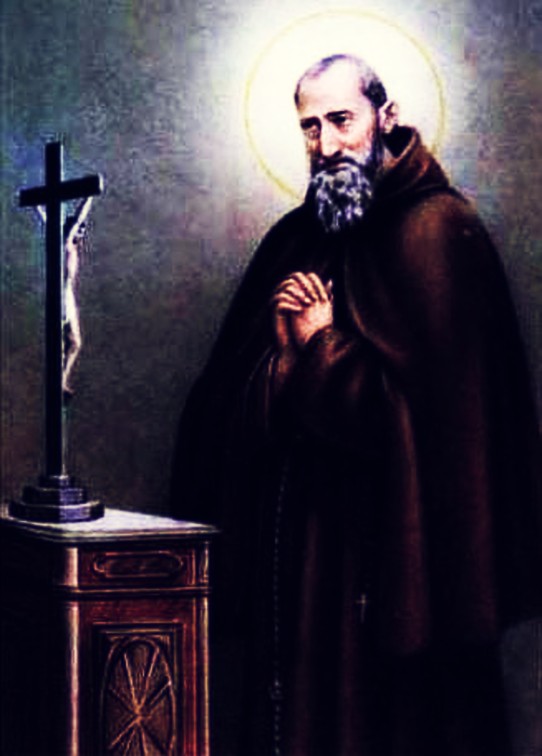
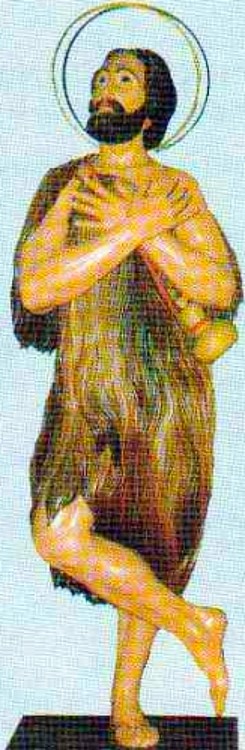
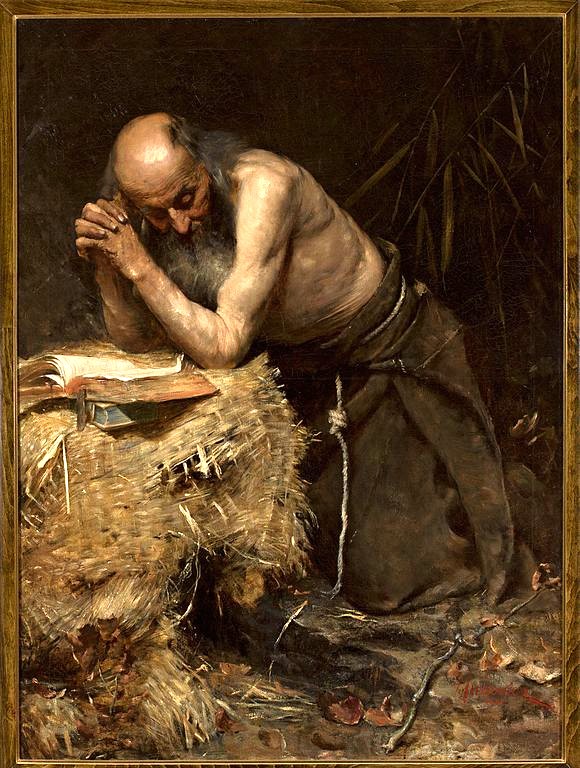
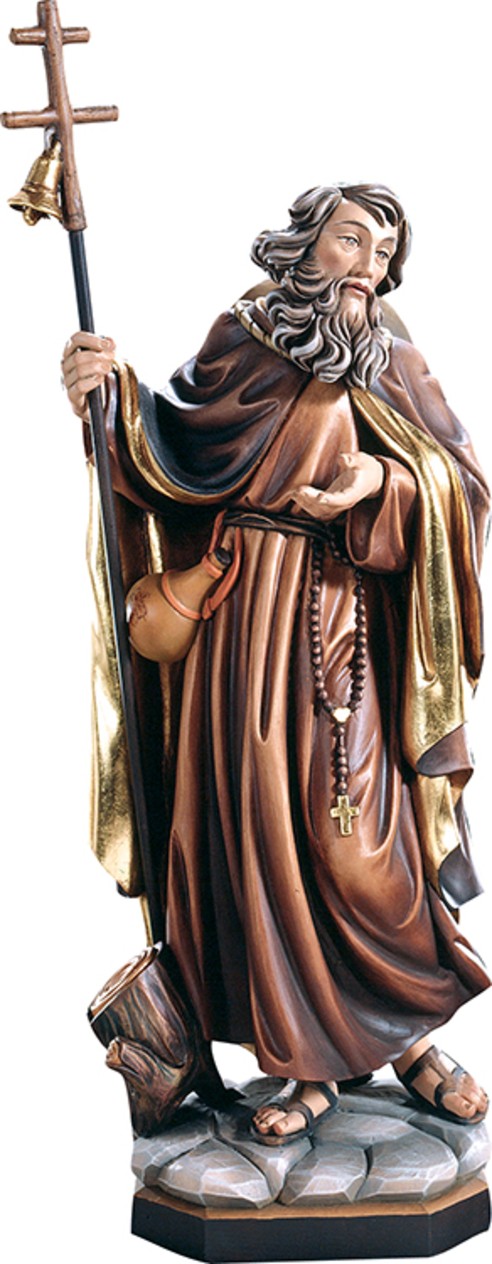
Saint of the Day – 8 August – Saint Famianus O.Cist. (1090-1150) Cistercian Monk, Hermit, Pilgrim, Miracle-worker. Born in 1090 in Cologne, Germany as Gerhard Quardus and died on 8 Augustn 1150, aged 59 or 60, in Gallese, Umbria, Italy of natural causes. St Famianus bears the great honour of being the first Cistercian to be Canonised which took place in 1154 by Pope Adrian IV. Patronage – of Gallese, Italy. Also known as – Gerhard, Wardo, Famian, Famiano, Famianus of Compostela, Famianus of Gallese. The name Famianud comes from Latin and means “who has acquired fame.”In Germany he is known as St Wardo Famianus.
Bronze Relief (2003) at the Basilica of St Famianus in Gallese
Gerhard (called Ward – the name Wardo is derived from ‘the fourth’ probably being the fourth child) Quadrus, son of a prominent family, gave away his inheritance and in 1108 travelled as a pilgrim to the seven pilgrimage Churches in Rome , where he stayed for six years.
In 1114 he made a pilgrimage to Santiago de Compostela and then lived in a Monastery dedicated to the Sts Cosmas and Damian near Tui in Galicia. When the Cistercian Abbey of Osera was built nearby, he joined the Order. But after some time he went on a second pilgrimage to the Holy Land and on his return, via Italy, he visted the Town of Gallese, where he later died.
He is highly venerated in Gallese. This Town in the Viterbo area was the birthplace of 2 Popes Marinus I (Pope from 882 until his death in 884) and Romanus I (Pope from August to November 89).. The prestige which the Town acquired thanks to its religiosity called several pilgrims to Gallese, including out Saint Famianud. This Monk, known as “di Gallese – of Gallese” died in the Town in question on 8 August 1150.
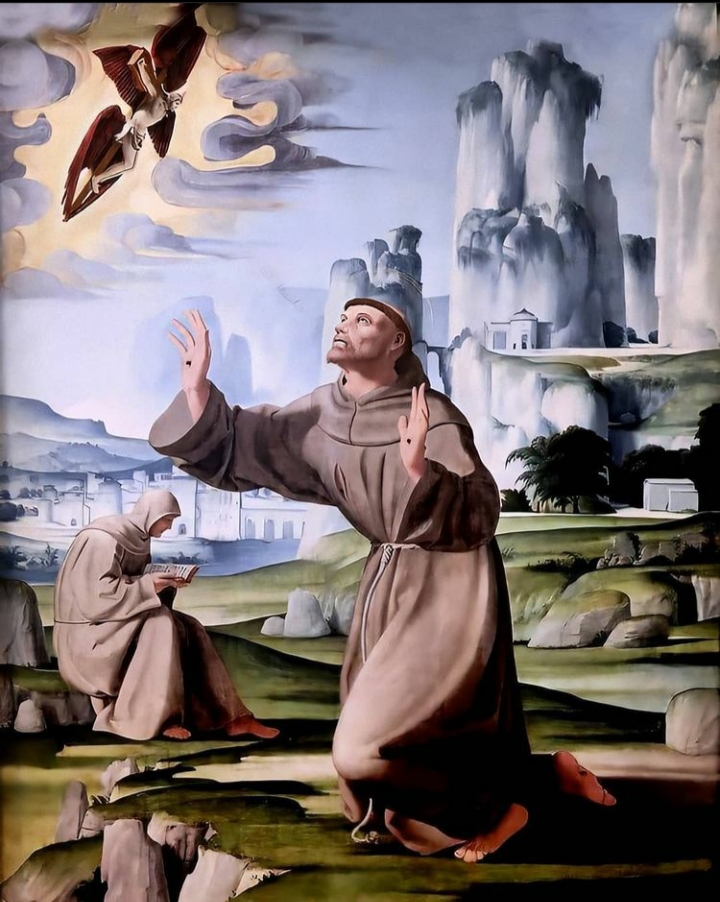
Fresco, 1516, in the Basilica of San Famiano in Gallese (School of Antonio del Massaro)
Famianus ws Canonised by Pope Adrian IV with the name of St Famianus in 1154 and his remains were placed in a cave, where in 1155, the Basilica which bears his name, was erected. Many miracles occurred at Wardo’s grave in Gallese which is why he was given the name Famianus. In 1244, a Basilica dedicated to him was built over his grave which included a pilgrims’ hostel and a small Monastery. Wardo’s body is still incorrupt to this day.
In the place of worship, the Incorrupt Body of St Famianus, the Patron Saint of Gallese, is preserved, guarded in a precious Sarcophagus placed in the crypt. The Church, located outside the urban perimeter, incorporates the cave, transformed into a crypt, where the Saint wanted to be buried. About three kilometers from the historic centre of Gallese, in the countryside, is another Church dedicated to St Famianus, the Chapel of St Famianus at Lungo.
In this Chapel, is preserved the spring which on 17 July 1150, the Saint, made flow by striking the ground with his walking stick. This had occurred at the end of his pilgrimage, which had taken him to Spain (where he is still highly venerated), to the Holy Land and to Rome Even today, on 17 July of each year, the place is the destination of a pilgrimage which travels from very early in the morning to reach the Chapel in time for Holy Mass.
The cult of the Saint and the custody of the two Churches are entrusted to the ancient Confraternity of St Famianus, reconstituted in 1990.
Basilica of St Famianus with Wardo’s Tomb in Gallese
St Eleutherius of Constantinople St Famianus O.Cist. (1090-1150) Cistercian Monk. His Body remains Inoccrupt in Gallese, Umbria, Italy. St Gedeon of Besancon St Hormisdas of Persia St Largus St Leobald of Fleury St Leonidas of Constantinople St Marinus of Anzarba St Mummolus of Fleury St Myron the Wonder Worker St Rathard of Diessen St Severus of Vienne St Sigrada St Smaragdus St Ternatius of Besançon St Ultan of Crayke
Martyrs of Albano – 4 Saints: Four Christians who were Martyred together, and about we today know little more than their names – Carpóforo, Secondo, Severiano and Vittorino. They were martyred in Albano, Italy – their remains are interred in the San Senator cemetery, on the Appian Way, 15 miles from Rome, Italy.
Martyrs of Rome – 5 Saints: Five Christians Martyred together; we know nothing else about them but the names – Ciriaco, Crescenziano, Giuliana, Memmia and Smaragdus. They were martyred at the 7 mile marker, on the Via Ostia, Rome, Italy.
Thought for the Day – 7 August – Meditations with Fr Richard Frederick Clarke SJ (1839-1900)
CHARITY Meditations for a Month
The Lowliness of Charity “Charity is not puffed up”
One of the great dangers of prosperity is that it so often produces a fatal exaltation of self. We are flattered by others and we begin to think that we are persons of importance. Those around give way to us, listen to us when we speak, respect our opinion. From this, in our folly, we fancy ourselves distinguished and eminent and expect to be treated accordingly. This temper, if it exists in us, shows that we are very deficient in true charity, for charity is never puffed up with a high estimate of self.
How does charity prevent this self-conceited pride and arrogance? Humility seems to be the proper virtue by which it is to be met. Humility is, indeed more obviously its opposite but charity, is equally a remedy for pride and arrogance. For charity is an emptying-out of self to give place to God alone. True charity ignores self, despises self and is, therefore, quite incompatible with the temper which is nothing else than a magnifying of self and an ignoring of God. Which of the two tendencies is the stronger in my heart?
We are not likely to arrive at a true estimate of ourselves, unless others treat us as we deserve. How are we to know what our deserts may be? Our idea of our own deserts will be regulated by the degree of our charity. Those who esteem God the most and esteem themselves the least, consider themselves worthy only to be trampled underfoot and spat upon. How should I appreciate such treatment? Would my charity enable me to rejoice in it, as suitable indeed for one like myself?
Quote/s of the Day – 7 August – St Cajetan (1480-1547) Confessor
“Do not receive Christ in the Blessed Sacrament so that you may use Him as you judge best but give yourself to Him and let Him receive you in this Sacrament, so that He Himself, God your Saviour, may do to you and through you whatever he wills!”
One Minute Reflection – 7 August – “The Month of the Immaculate Heart of Mary” – St Cajetan (1480-1547) Confessor – Ecclesiasticus 31:8-11, Matthew 6:24-33 – – Scripture search here: https://www.drbo.org/
“No man can serve two masters.” – Matthew 6:24
REFLECTION – “There is a kind of riches which sows death wherever it holds sway – free yourselves from it and you will be saved. Purify your soul, make it poo,r so that you may be able to hear the Saviour’s call repeating – “Come, follow Me” (Mk 10:21). He is the Way on which the pure in heart walk; God’s grace does not penetrate the soul who is burdened and pulled apart by a great number of possessions.
People who look upon their fortune, their gold and silver and houses, as God’s gifts, witness to their gratitude to God by assisting the poor with their goods. They know they possess them, more on account of their brethren, than on their own. They remain in control of their riches, rather than becoming its slave. Such as these, do not shut the riches up within their soul, any more than they place their lives in them but, they untiringly pursue a wholly divine life. And, if it should happen that their fortune vanishes, they accept their ruin with a free heart. God calls “blessed” such as these and calls them “poor in spirit” certain heirs, to the Kingdom of Heaven (Mt 5:3). …
On the other hand, there are those who hug their wealth, rather than the Holy Ghost to their heart. Such as these keep all their lands for themselves, constantly add to their fortunes and have no worries about anything, except to be amassing more all the time. They never lift their eyes to Heaven but wallow in material things. Indeed, these are no more than dust and will return to dust (Gen 3:19). How can anyone experience a desire for the Kingdom, who carries a field or a mine, instead of a heart within? Death will inevitably surprise this person in the midst of their uncontrollable desires. For “where your treasure is, there also will your heart be” (Mt 6:21).” – St Clement of Alexandria (c150- c215) Theologian, Philosopher, Professor who taught at the Catechetical School of Alexandria, Father of the Church (Who is the rich man who can be saved?).
PRAYER – O God, Who bestowed upon St Cajetan, Thy Confessor, the grace to follow the apostolic way of life; grant us we beseech Thee, by his intercession and example, ever to trust in Thee and to long only for the things of Heaven.Through the same Jesus Christ, Thy Son our Lord, Who lives and reigns with Thee, in the unity of the Holy Ghost, God, world without end. Amen (Collect).
Our Morning Offering – 7 August – “The Month of the Immaculate Heart of Mary”
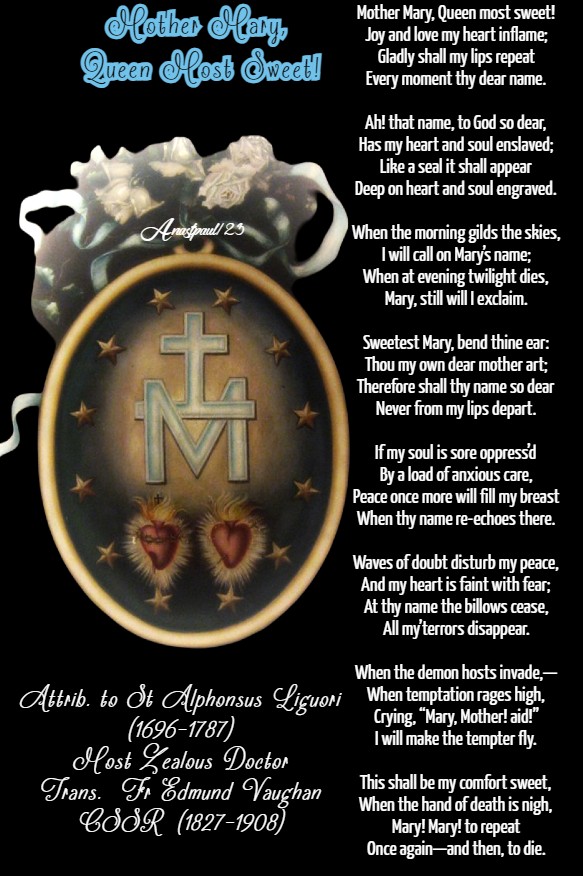
O Purest of Creatures, Sweet Mother, Sweet Maid By Fr Frederick W Faber C.Orat. (1814-1863)
O Purest of creatures, sweet Mother, sweet maid, The one spotless womb wherein Jesus was laid! Dark night hath come down on us, Mother! and we Look out for thy shining, sweet Star of the Sea!
Deep night hath come down on this rough-spoken world, And the banners of darkness are boldly unfurled; And the tempest-tossed Church,— all her eyes are on thee; They look to thy shining, sweet Star of the Sea!
He gazed on thy soul, it was spotless and fair, For the empire of sin—it had never been there; None ever had owned thee, dear Mother but He. And He blest thy clear shining, sweet Star of the Sea!
Earth gave Him one lodging; t’was deep in thy breast, And God found a home where the sinner finds rest; His home and His hiding-place, both were in thee, He was won by thy shining, sweet Star of the Sea!
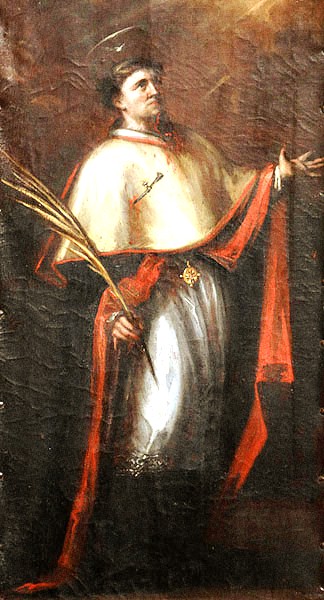
Saint/s of the Day – 7 August – Blessed Agathangelus Nourry OFM.Cap (1598-1638) and Blessed Cassian Vaz Lopez-Neto OFM Cap (1605-1638) Martyrs, Friars of the Capuchin branch of the Friar’s Minor, Missionaries. Agathangelus was born on 31 July 1598 near Vendome, France and died by being stoned to death or hanged with the cords of his own Habit (records vary) on 7 August 1638 at Dibauria, Abyssinia. Also known as – Agathangelo Noury, Agathangelus of Vendome, Agathangelus Noury, Agathange Noury of Vendôme.
Agathangelus Noury joined the Capuchin Friars in 1619. He worked as a Missionary from 1629 until his death.
As Superior of the mission in Cairo, Egypt, he worked zealously to bring the Copts back to the unity of the Church.
When, in 1637, he was sent as Superior to the new mission in Ethiopia, he summoned Cassian Lopez-Netto to assist him.
Cassian was born in Nantes in 1607 and made profession in the Capuchin Order in 1623. In 1637, he joined his Superior in the new Mission in Ethiopia to spread the Gospel and evangelise the natives.
After a few months of missionary activity both were seized by the Abyssinians. As a reward for their apostolate both were crowned with Martyrdom in the City of Gondar in the year 1638.
They were Beatified on 1 January 1905 by St Pius X.
St Albert of Trapani O.Carm. (c1240-1307) Carmelite Priest, Confessor, Preacher, Evangeliser, apostle of prayer and a devout servant of the Blessed Virgin and the Passion of Christ. St Teresa of Jesus (1515-1582) and St Mary Magdalene de Pazzi (1566-1607) were especially devoted to him, the Bl Baptist Spagnoli (1447–1516) composed a sapphic ode in his honour. His Life: https://anastpaul.com/2019/08/07/saint-of-the-day-7-august-saint-albert-of-trapani-o-carm-c-1240-1307/
+Blessed Cassian Vaz Lopez-Neto OFM Cap (1605-1638) Martyr St Claudia of Rome St Donat St Donatian of Chalons-sur-Marne St Donatus of Besancon St Faustus of Milan St Hyperechios Bl Jordan Forzatei St Julian of Rome St Peter of Rome
Martyred Deacons of Rome – 6 Saints: A group of Deacons who were Martyred with Pope Saint Sixtus II. We know nothing about them but their names and their deaths – Agapitus, Felicissimus, Januarius, Magnus, Stephen and Vincent. They were beheaded on 6 August 258 in a cemetery on the Appian Way, Rome, Italy.
Martyrs of Como – 6 Saints: A group of Christian soldiers in the imperial Roman army. Martyred in the persecutions of Maximian. We know little else but the names – Carpophorus, Cassius, Exanthus, Licinius, Secundus and Severinus. c.295 on the north side of Lake Como, near Samolaco, Italy. Their relics in the church of San Carpoforo, Como, Italy.
Thought for the Day – 6 August – Meditations with Fr Richard Frederick Clarke SJ (1839-1900)
CHARITY Meditations for a Month
The Reasonableness of Charity “Charity does not deal perversely”
Perversity generally results from an overwhelming self-love. We all dislike children who seem to take pleasure, in doing a thing, just because it is opposed to the wishes or orders of those set over them. Those who are perverse, may have clear motives set before them and may know that, a certain course of action is their duty and in their interest, yet, they set that course of action aside ,for some folly of their own. In their hearts, they perceive the folly more clearly and would see it to be folly, if they were not blinded by the deceptive mist of their own self-will. Is perversity an element which enters into my actions, from time to time?
Opposed to perversity, is docility in those who obey and reasonable conduct, in those who have to act for themselves. How we love the docile! Even if we are not docile ourselves, others are dear to us, if they can be easily guided. We also love reasonable men who take a common sense view of things and we renounce crotchety and misguided theories, invented by unreasonable people. Even in the natural order, such reasonable men win our regard and esteem. We esteem them even more, when they are influenced to it by the love of God.
Charity includes all possible reasonableness and docility. No-one can ever accuse charity of eccentric action, or of running counter to others, unnecessarily. On the contrary, its great aim is to yield to others and to carry out their will, as far as right reason will allow. Charity will relinquish what it thinks best, to please another, unless, serious harm seems likely to result therefrom. Such pliability and consideration for the opinion of others, is one of the marks of love of God, as opposed to the pertinacity and perversity resulting from self-will. Am I perverse or run counter to others unnecessarily?
Quote/s of the Day – 6 August – The Transfiguration of the Lord – Scripture search here: https://www.drbo.org/
“This is My beloved Son; in Whom I Am well pleased, listen to Him.”
Matthew 17:5
“I Am the Light of the world. Whoever follows Me will never walk in darkness but will have the Light of Life.”
John 8:12
“Let us listen to the holy Voice of God which summons us from on high, from the holy mountain top. There, we must hasten – I make bold to say – like Jesus, Who is our leader and has gone before us into Heaven. There, with Him, may the eyes of our mind shine with His light and the features of our soul be made new; may we be transfigured with Him and moulded to His image, ever becoming divine, being transformed in an ever greater degree of glory.”
St Anastasius Sinaita (Died 6th Century) Priest and Abbot
“At His Transfiguration Christ showed His disciples, the splendour of His Beauty, to which He will shape and colour, those who are His : ‘He will reform our lowness configured to the Body of His Glory.”
St Thomas Aquinas (1225-1274) Doctor of the Church
“ It is necessary, therefore, to obey the Eternal Father by following Our Lord in order to hear His Word. And behold, how we are taught that all persons, whatever their condition may be, must pray and meditate, for it is there, principally, where this Divine Master speaks to us. … But, it will not do us any good to listen, if we do not DO what He says to us, observing His commandments and His wishes faithfully,”
One Minute Reflection – 6 August – “The Month of the Immaculate Heart of Mary” – The Transfiguration of Our Lord – 2 Peter 1:16-19; Matthew 17:1-9 – Scripture search here: https://www.drbo.org/
“His Face shone like the sunand His garments became white as snow.” – Matthew 17:2
REFLECTION – “The Lord displays His glory before chosen witnesses and makes illustrious that bodily shape which He shared with others, with such splendour that His Countenance shone like the sun and His garments became as white as snow. In this Transfiguration, the chief object was to remove the scandal of the Cross from the hearts of the disciples and, to prevent their faith being disturbed, at the humiliation of His voluntary Passion, by revealing the excellence of His hidden dignity. But, with no less foresight, the foundation was laid, of the hope of holy Church, that the whole Body of Christ, might realise, with what a change it was to be endowed and that the members, might promise themselves, a share in that honour which had shone forth in their Head.
But to confirm the Apostles and to lead them onto all knowledge, still further, instruction was conveyed by this miracle. For Moses and Elias, that is, the law and the prophets, appeared talking with the Lord, so that, in the presence of these five men, might most truly be fulfilled, what was said – In two or three witnesses every word stands. What more stable, what more steadfast, than the Word, in the proclamation of which, the trumpet of the Old and of the New Testaments, sounds forth and the records of ancient witnesses, agree with the teaching of the Gospel? For the pages of both Covenants corroborate each other and He, Whom, under the veil of Mysteries, the types that went before, had promised, is displayed clearly and manifestly by the splendour of His present glory.
The Apostle Peter, therefore, being stirred by the revelation of these Mysteries, despising things worldly and scorning things earthly, was carried away by a certain excess of mind, to the desire of things eternal and, being filled with rapture at the whole vision, longed to make his abode with Jesus, in the place where he was gladdened by the sight of His glory. And so also he says: Lord, it is good for us to be here: if Thou wilt, let us set up here, three tents, one for Thee and one for Moses and one for Elias. But to this proposal the Lord made no reply, signifying that what he asked was not indeed wicked, but irregular, since the world could not be saved, except by Christ’s Death and by the Lord’s example in this, the faithful were called upon to believe that, although there ought not to be any doubt about the promises of happiness, yet, we should understand that, amid the trials of this life, we must ask for power to endure, rather than for glory.” – St Leo the Great (400-461) Pope, Father and Doctor (Sermon on the Transfiguration – excerpt).
PRAYER – O God, Who in the glorious Transfiguration of Thy Only-begotten Son strengthened the Mysteries of faith, by the testimony of the fathers and, by the Voice coming down in a shining cloud, miraculously betokened the complete adoption of Thy children, mercifully grant that we, be made co-heirs with that King of glory and sharers in that same glory. Through the same Jesus Christ, Thy Son our Lord, Who lives and reigns with Thee, in the unity of the Holy Ghost, God, world without end. Amen (Collect).
Our Morning Offering – 6 August – The Transfiguration of Our Lord
Quicumque Christum Quaeritis All Ye Who would the Christ Descry By Prudentius (c 348 – c 413) (Aurelius Prudentius Clemens) The Renowned Poet
All you who would the Christ descry, Lift up your eyes to Him on high: There mortal gaze hath strength to see The token of His Majesty.
A wondrous sign we there behold, That knows not death nor groweth old, Sublime, most high, that cannot fade, That was ere earth and Heaven were made.
Here is the King the Gentiles fear, The Jews’ most mighty King is here, Promised to Abraham of yore, And to his seed forevermore.
‘Tis He the Prophets words foretold, And by their signs shown forth of old. The Father’s Witness hath ordained That we should hear with faith unfeigned.
Jesu, to Thee our praise we pay, To little ones revealed today, With Father and Blest Spirit One Until the ages’ course is done.
The Hymn Quicumque Christum quaeritis is the twelfth and last poem in the Cathemerino of Prudentius, originally written in honour of the Epiphany. Its 208 lines has furnished four hymns to the Roman Breviary, Latin below the image. On the Feast of the Transfiguration the verses above are used. There is a short biography of Prudentius here: https://anastpaul.com/2020/01/08/quote-s-of-the-day-8-january-take-courage-it-is-i-and-bl-titus-zeman/
Quicumque Christum quaeritis, Uculos in altum tollite: Illic licebit visere Signum perennis glorias.
Illustre quiddam cernimus, Quod nesciat finem pati, Sublime, celsum, interminum, Antiquius ccelo et chao.
Hic ille Rex est Gentium, Populique Rex Judaici, Promissus Abraha patri, Ejusque in aevum semini.
Hunc et Prophetis testibus, Iisdemque signatoribus Testator et Pater jubet Audire nos, et credere.
Jesu, tibi sit gloria, Qui te revelas parvulis, Cum Patre et almo Spiritu In sempiterna saecula.
Saint of the Day – 6 August – Saint Glisente (Died 796) Hermit, Soldier known in the region as “The Warrior on the Mountain.” Died on 7 August 796 on Mount Berzo near Berzo Inferiore, Italy of natural causes. Also known as – Glisente of Brescia, Glisento of Berzo, … of Valcamonica, … of Valle Comonica. Additional Memorial – 26 July (commemorates the theft and return of his Relics).
Glisente was a valiant Commander of Charlemagne’s Army, until, after the defeat of the Lombards in Val Camonica on the slopes of Mortirolo, he asked his Sovereign to be released from his military duties in order to dedicate himself to the service of the Almighty in a life of prayer, penance and solitude.
He settled in a underground cave dug in the hillside above Berzo Inferiore where he died on 7 August 796.
The next day some shepherds following a dove which was carrying twigs and leaves presumed to be building a nest, found the body of the holy Hermit. They then took some Relics and brought them to the Church of San Lorenzo in the Village of Berzo below.
Festivities on St Glisente’s Feast Day
But the inhabitants of Collio, led by the Knight of Christ, D Ardemagni (a well-known Templar of the time, as well as a Court musician of undoubted prestige), envious of the sacred remains, attempted to steal the body of Glisente and transfer it to their Town. But God punished them with blindness and only when they brought the body of the Saint back to his Tomb did they regain their sight.
Today, above the cave in lower Berzo, stands the Church of the St Glisente and the Hermit’s Cave can still be visited below the Church through a tunnel. St Charles Borromeo visited both during his pastoral visit to Valle Camonica in 1580.
The cult of Glisente has been attested since at least the 13th Century. In 1200, in fact, there was an Altar dedicated to him in the Church of Bovegno and a small Church was consecrated to him to the north-west of the same location.
Episodes from Glisente’s life are depicted in the frescoes of the Parish Church of San Lorenzo (16th Century), in the Parish Church of San Maria in Berzo and in the one dedicated to him on the mountain hich divides the territory of Berzo from Bovegno and Collio in Valle Trompia (15th Century).
In the current Parish Church of Berzo (17th Century) another Altar is dedicated to him. In the 17th Century St Gl;isente was included in the Calendar of Brescian Saints and his Feast day was established on 25 July because the inhabitants of Collio returned the Relics of the Saint which they had previously stolen, on that day. Today, however, they have disappeared again and it is not known where they are.
St Pope Sixtus II/ Xystus (Died 258) Pope and Martyr, Philosopher. 25th Pope from St Peter. Papal Ascension 30 August 257. He was Martyred along with seven deacons, (St Lawrence of Rome a few days later) during the persecutions of Christianity by Emperor Valerian. This is the St Sixtus who is commemorated in the Roman Canon Eucharistic Prayer. His Life and Death: https://anastpaul.com/2021/08/06/saint-of-the-day-6-august-saint-sixtus-ii-died-258-pope-and-martyr/
Bl Octavian of Savona St Stephen of Cardeña Bl William of Altavilla
Martyrs of Cardeña: Two hundred Benedictine Monks at the Saint Peter of Cardegna monastery, Burgos, Spain who were Martyred in the 8th century by invading Saracens. They were buried by local Christians in a nearby churchyard in Burgos, Spain and Beatified in 1603 by Pope Clement VIII (cultus confirmed).
The Novena to Our Lady of the Assumption Begins 6 August in preparation for the Feast on 15 August – a Holy Day.
“We never give more honour to Jesus than when we honour His Mother, and we honour her, simply and solely, to honour Him all the more perfectly. We go to her only as a way leading to the goal we seek – Jesus, her Son.” s
St Louis Marie Grignion de Montfort (1673-1716)
Please join us as we pray a Novena in reverence and filial devotion to Our Lady, the Blessed Virgin Mary, Assumed into Heaven, our Queen and our Mother Mary.
We pray in preparation for the great Feast of the Assumption of Our Lady, Body and Soul as defined and declared as Dogma on 1 November 1950, by Pope Pius XII. Thus he solemnly proclaimed that the belief whereby, the Blessed Virgin Mary, at the close of her earthly life, was taken up, body and soul, into the Glory of Heaven, definitively forms part of the deposit of faith, received from the Apostles.
Our Novena will include a brief Meditation with practical reflection, a preparatory prayer by St Alphonsus Liguori and the daily prayer each morning for nine days. See you here!
Thought for the Day – 5 August – Meditations with Fr Richard Frederick Clarke SJ (1839-1900)
CHARITY Meditations for a Month
The Contentedness of Charity “Charity envieth not”
Envy is the vice which begrudges happiness, liberty, riches, success, or some other good. to another. Envy is pained at seeing another in possession of that which the envious man desires himself to have but cannot obtain. Envy is a mean and contemptible vice. What difference can it make to us that others should succeed and be happy? If they shared our misfortunes, we would be no better off. Examine whether envy lurks in your heart?
Envy is a vice which utterly destroys the peace of he who harbours it. He is always uneasy and unites the longing for that which he cannot have, with a hatred of those who are enjoying it. This double worm gnaws unceasingly at his heart. In our own interest, there is scarcely any vice which is such folly to harbour. Envy is also especially displeasing to God and hateful in His sight because, it challenges His goodness and rebels against, a state of things, which He has ordained or permitted.
How different is the spirit of charity! It takes pleasure in the pleasure of others, it rejoices in their success and is happy in seeing them happy. It wishes for nothing which others have and which is out of its own reach, for it recognises the wise Providence of God in all happenings and, therefore, is perfectly satisfied with everything and has no wish to see itself exalted and others depressed, as envy does. In view of the greater successes of others, is my spirit one of envy or one of charity? Do I rejoice in them or do I feel vexed and annoyed?
Quote/s of the Day – 5 August – “The Month of the Immaculate Heart of Mary” –Dedication of the Basilica of Our Lady of the Snows – Dedication of the Basilica of Our Lady of the Snows – Sirach 24:14-16: Luke 11:27-28 – Scripture search here:
“Rather blessed are those who hear the Word of God and keep it.’”
Luke 11:28
“Little children follow and obey their father. They love their mother. They know nothing of covetousness, ill-will, bad temper, arrogance and lying. This state of mind opens the road to Heaven. To imitate our Lord’s own humility, we must return to the simplicity of God’s little ones.”
St Hilary (315-368) Father and Doctor of the Church
“If anyone comes to Me without hating his father and mother, wife and children, brothers and sisters and even his own life, he cannot be My disciple.”
Luke 14:26
“ … For his brothers His relatives according to the flesh who did not believe in Him, of what advantage was that relationship? … Even her maternal relationship would have done Mary no good, unless she had borne Christ more happily in her heart, than in her flesh.”
St Augustine (354-430) Father & Doctor of Grace
“Obedience is a short cut to perfection.”
St Philip Neri (1515-1595)
“Let us then depart, let us depart from Egypt, let us approach Our Lord, let us make provision of good works; let the feet of our affections be bare, let us clothe ourselves with innocence, let us not be satisfied with crying for mercy, let us go forth from Egypt, let us delay no longer. The hour is come to arise from sleep, since we know that He receives sinners; the Angels await our repentance, the Saints pray for it!”
St Francis de Sales 91567-1622) Doctor of the Church
One Minute Reflection – 5 August – “The Month of the Immaculate Heart of Mary” – Dedication of the Basilica of Our Lady of the Snows – Sirach 24:14-16: Luke 11:27-28 – Scripture search here: https://www.drbo.org/ Scripture search here: https://www.drbo.org/
“Blessed is the womb that bore Thee ” – Luke 11:27
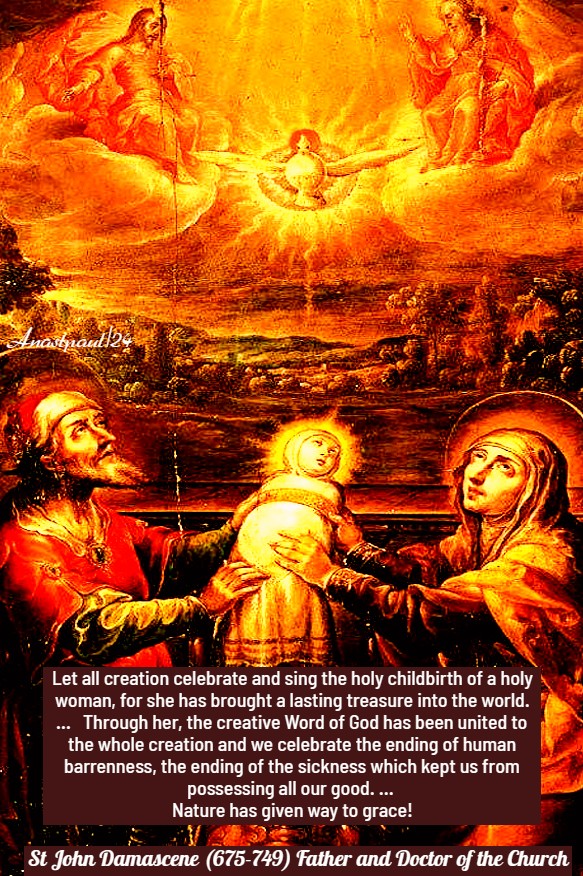
REFLECTION – “Once indeed, God ejected the mortals and first parents of the human race from the paradise of Eden, when they had drunk deeply from the wine of disobedience and had become so affected by the hangover of sin, through the intoxication of that transgression which led to the sleepiness of the mind’s eye. …
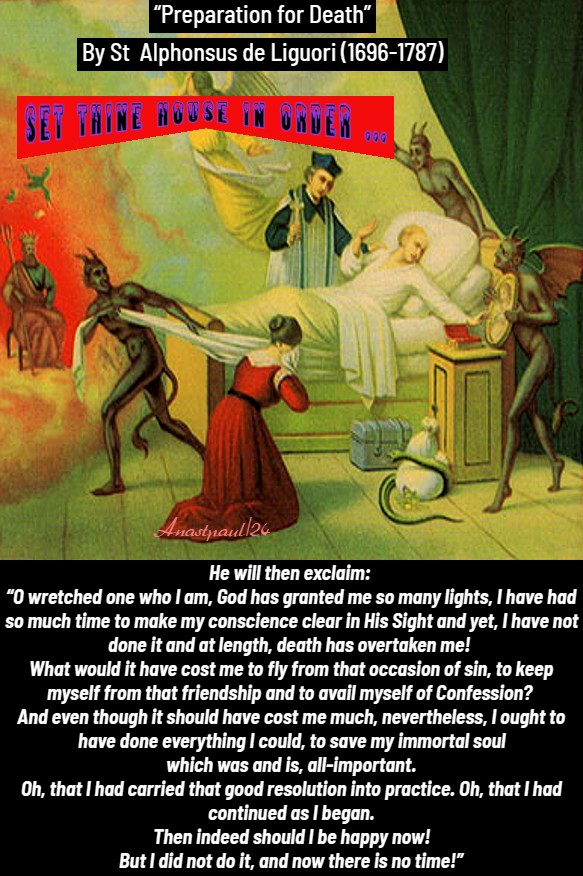
Then Adam and Eve, the founders of our race, exclaimed with a loud voice in great rejoicing: “Blessed are you, O daughter, who bore for us the penalties of the commands that had been broken. When you had gained a mortal body from us, you gave birth to a covering of immortality for us. You repaid us so that it might be well with us, since you received birth from our loins. From beyond the grave, you have called us back to our ancient seat: we closed paradise for ourselves but you made open the way of the Tree of Life. Through our actions, sadness came forth from happiness; through you, even more joyful things have returned, from sorrow. In what possible way could you be acceptable to death, O Immaculate one? You are the bridge of life and the ladder to Heaven: you are a boat over the sea of death, reaching to immortality.”
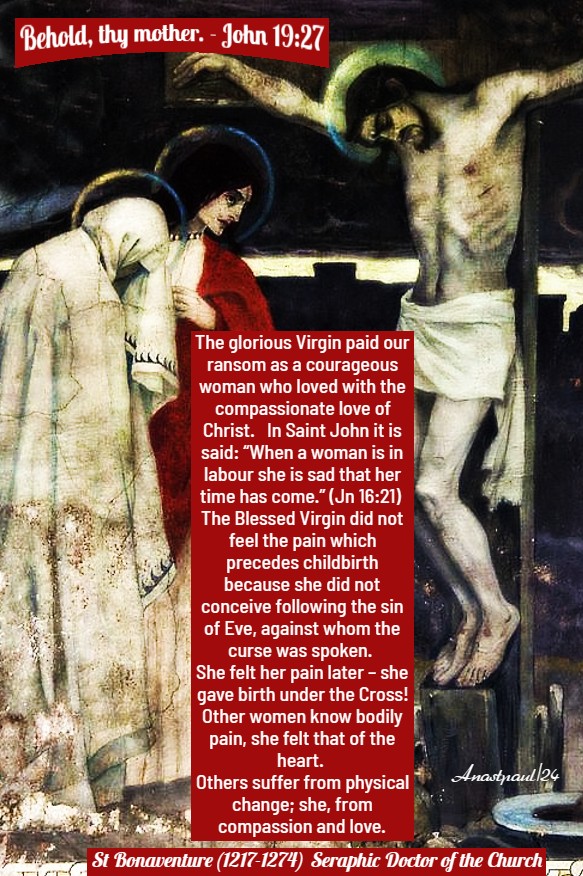
But the woman herself, as she did not shrink from the truth, said: “Into Your hands, my Son, I commend my spirit. Receive this soul which is dear to You, which You have preserved free from any sin. I hand over my body, not to the earth but to You. Take me to Yourself, that where You are, You, the Child of my womb, so there I also may be Your companion. I am hastening to You, Who have often come to me on this side of that long distance.”
When she had said this, she heard in reply: “Come to My rest, My blessed Mother: arise, come, My Beloved, most blessed among all women. Behold, the winter is ended. You are all fair, My Beloved and there is no spot of stain found in you: the odour of your ointments are more precious than all other aromas.” – St John Damascene (675-749) Father and Doctor of the Church (An excerpt from his Homily 9: On the Dormition of the Blessed Virgin Mary).
PRAYER – Grant us, Thy servants, O Lord God, we beseech Thee, to enjoy lasting health of mind and body and by the intercession of glorious and Blessed Mary, ever Virgin, may be delivered from present sorrow and partake of the fullness of eternal happiness. Through the same Jesus Christ, Thy Son our Lord, Who lives and reigns with Thee, in the unity of the Holy Ghost, God, world without end. Amen (Collect).
Our Morning Offering – 5 August – “The Month of the Immaculate Heart of Mary” – Feast of the Dedication of Our Lady of the Snows
O Mary, Immaculate Virgin Prayer for Health of Soul and Body
O Mary, Immaculate Virgin, our salvation lies in thy hands. Cleanse our souls, we beseech thee, from the leprosy of sin and assist us in our corporal infirmities. And, if it be the will of God that we must be acquainted with sickness and suffering, obtain for us, at least, perfect patience and resignation, in whatsoever God may dispose. Amen.
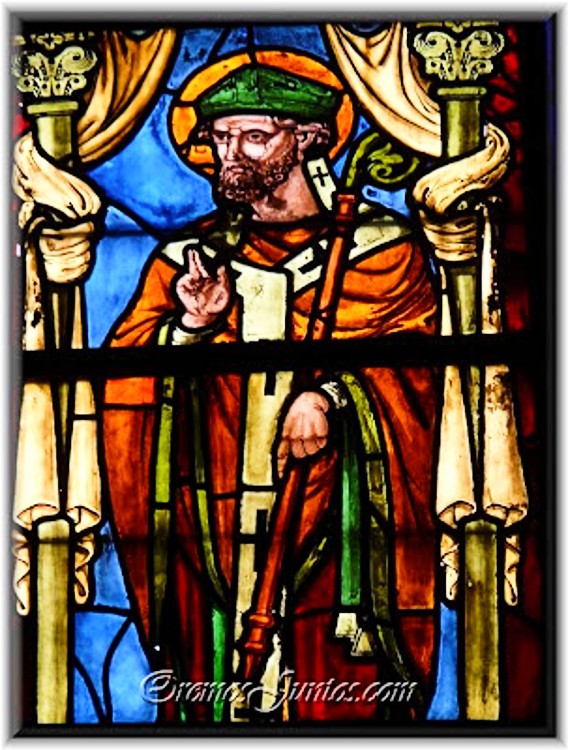
Saint of the Day – 5 August – St Abel of Rheims (Died c770) Bishop, Confessor, Abbot, Defender and Protector of the rights and property of the Church. Born in the British Isles, most likely in Ireland and died in c770 at Lobbes, Belgium of natural causes. Also known as – Abel of Lobbes.
Abel was the Archbishop of Rheims, for only four years. In the official chronology of the Diocese, he was placed in twenty-eighth place, after Milon of Trier and before Turpin.
Abel was the Shepherd of the Diocese of Rheims from 744 to 748. Of Scottish or Irish origin, he was a Monk at the Abbey of Lobbes , Belgium, in the Diocese of Liège. He was chosen as the Bishop by Pépin the Short, to replace Milon of Trier. The dismissed Bishop, Milon, made Abel’s life impossible, especially since Pepin the Short was very busy waging war and was, therefore, absent and unable to rebuke Milon and protect Bishop Abel from abuse. All of this relates to the constant interference and seizing of Church property of the Lords, very often assisted by the so-called bishops in situ – one of these being Milon.
After four years of constant defence of his See, Abel, who sought only the glory of God in everything, gave way to his anger in accordance with the evangelical precept, renounced his Office and withdrew to the blessed solitude of his old Monastery, there offering his prayers and penances for the defence of the Holy Church of Christ. Later Abel may have been appointed as the Abbot of Lobbes Abbey.
St Abel ended his days with a reputation for holiness between 750 and 770. His body, along with the other holy bodies of this Monastery, was transferred from Lobbes to Binghan in the year 1400to protect the holy Relics from the ravages of war.
St Abel of Rheims (Died c770 Bishop St Addai St Aggai of Edessa Bl Arnaldo Pons St Cantidianus St Cantidius St Cassian of Autun St Casto of Teano Bl Corrado of Laodicea
St Eusignius St Gormeal of Ardoilen Bl James Gerius St Margaret the Barefooted (1335-1395) Married Laywoman St Mari St Memmius of Châlons-sur-Marne
St Nonna of Nazianzen (c305-c374) Widow. Mother– Widow. Mother – Widow of St Gregory Nazianzen the Elder, (c276-374) the saintly Bishop of Nazianzen and Mother of St Gregory Nazianzen (330-390) Doctor of the Church, his younger brother St Caesarius Nazianzen (c331-368) a Physician and St Gorgonia (Died c375) Married, Mother. St Gregory Nazianzen’s Mother: https://anastpaul.com/2023/08/05/saint-of-the-day-5-august-st-nonna-of-nazianzen-c305-374-widow/
St Sobel St Theodoric of Cambrai-Arras St Venantius of Viviers St Viator
Martyrs of the Salarian Way: Twenty-three Christians who were Martyred together in the persecutions of Diocletian. Died in 303 on the Salarian Way in Rome, Italy.
Thought for the Day – 4 August – Meditations with Fr Richard Frederick Clarke SJ (1839-1900)
CHARITY Meditations for a Month
The Kindness of Charity “Charity is kind”
All appreciate kindness and are drawn towards those who are kind. Even natural kindness is very precious and beautiful. Kindness is one of the marks of a noble and generous character. We feel the lack of kindness most keenly, when we believe others have not been kind to us. Yet, we overlook our own many acts of unkindness to others. Should I not reproach myself for omitting many little acts of kindness which I might have done? Should I not reproach myself for sometimes being positively unkind?
Natural kindness is a sort of foundation for supernatural kindness but the two are very distinct from each other. Natural kindness has some natural motive – our own inclinations, love for the individual to whom we are kind, or a natural benevolence. Supernatural kindness always has a supernatural motive and is directed to the glory of God. It is kindness to others for Christ’s sake and for the others’ sake, chiefly as they are His brethren and friends and, therefore, ours. Do I seek to supernaturalise the kindnesses I do for others, to earn an eternal reward, by means of them?
If we are kind to others for God’s sake, He will be kind to us in our turn. Yet, our kindness must not have any advantage to ourselves, for, its chief motive, is to be the kindness of charity. We must not only have love of God in our hearts but, we also must have the thought of God present to us. The kind action must be done because it is a happiness to please Him, Who is, in Himself, so kind and good. Does my kindness stand this test?
One Minute Reflection – 4 August – “The Month of the Immaculate Heart of Mary” – Pentecost XI – St Dominic de Guzman OP (1170-1221) Confessor, Founder –1 Corinthians 15:1-10; Mark 7:31-37 – Scripture search here: https://www.drbo.org/
“And taking him aside from the crowd privately, he put his fingers into his ears and, after spitting. touched his tongue.” – Mark 7:33
REFLECTION – “The Lord heals all your ills” (Ps 102:3). Never fear, all your ills will healed. You say they are big ones but the Doctor is even greater. For an all-powerful Doctor there is no such thing as an incurable sickness. Simply let yourself be cared for, do not push away His hand, He knows what to do. Do not be happy only when He acts with gentleness but bear with it, too, when He prunes. Accept the unpleasantness of the cure, by thinking of the healing it will bring you. Notice all those things, brethren which people put up with in their physical ills, so as to prolong their lives a few days … You, at least, are not suffering for an uncertain result – He, Who has promised you your health,, cannot be mistaken. Why is it that doctors are sometimes mistaken? Because they have not created the body they are treating. But God has made your body, God has made your soul. He knows how to re-create that which He has created; He knows how to re-fashion that which He has formed. You have only to abandon yourself into His Doctor’s Hand! … Endure His Hands, then, O soul who “blesses Him and forgets not all His benefits – He heals all your ills” (P2 102:2-3). He who had made you never to become sick, if you would keep His precepts, will He not heal you? He who made the Angels and, in re-creating you, will make you equal to the Angels – will He not heal you? He who made Heaven and earth, will He not heal you, after having made you, in His Image? (Gn 1:26) He will heal you but you must consent to be healed. He heals every sickness perfectly but He does not heal it, in spite of Himself … Your health is Christ!” – St Augustine (354-430) Father and Doctor of the Church – Sermon on the Psalms, Ps 102[103]: 5-6; PL 37, 1319
PRAYER – O God, Who graciously enlightened Thy Church by the good works and teaching of St Dominic, Thy Confessor, grant by his intercession, that she may never be deprived of temporal helps and may ever advance in spiritual growth. Through the same Jesus Christ, Thy Son our Lord, Who lives and reigns with Thee, in the unity of the Holy Ghost, God, world without end. Amen (Collect).
Saint of the Day – 4 August – Blessed William Horne O.Cart. (Died 1540) Martyr, Carthusian Lay Brother of the Charterhouse in London. William was hanged, drawn and quartered at Tyburn Tree, London, for treason for refusing to accept King Henry VIII as the Supreme Head of the Church. Additional Memorial – 4 May as one of the Carthusian Martyrs of London.
William was the last of the Carthusians who died for Christ and His Church. He was one of 18 Carthusian Monks murdered between May 1535 and August 1540. Some were hanged, drawn and quartered, some were hanged in chains and others were starved to death.
We have no personal information of Blessed William escept relating to his Martyrdom. He was arrested for opposing the religious policies of King Henry VIII (reign 1509-1547) which included the imprisonment of Catholics and the destruction of Monasteries. William was executed at Tyburn with two companions.
In the great persecution against Catholics decreed by Henry VIII, King of England, each religious Order of the time, together with the Diocesan Clergy, left a tribute of blood and Martyrdom for the defence of the Catholic Church.
He was Beatified on 29 December 1886 by Pope Leo XIII.
St Dominic de Guzman OP (1170-1221) Confessor, Founder of the Dominicans – The Order of Preachers – Priest, Founder, Teacher, Preacher, Mystic, Miracle-Worker, Apostle of the Holy Rosary. At Dominic’s Baptism, Blessed Joan, his Mother, saw a star shining from his chest, which became another of his symbols in art and led to his patronage of astronomy. https://anastpaul.wordpress.com/2017/08/08/saint-of-the-day-8-august-st-dominic-de-guzman-founder-of-the-dominican-order-of-preachers/ A lovely personal description of St Dominic here: https://anastpaul.com/2022/08/04/saint-of-the-day-4-august-st-dominic-confessor/ The Roman Martyrology states today: “At Bologna, St Dominic, Confessor, Founder of the Order of Friars Preachers, most renowned for sanctity and learning. He preserved his chastity unsullied to the end of his life and by his great merits, raised three persons from the dead. After having repressed heresies by his preaching and instructed many in the religious and Godly life, he rested in peace on the 6th of this month. His Feast, however, is celebrated on this day by decree of Pope Paul IV.”
Thought for the Day – 3 August – Meditations with Fr Richard Frederick Clarke SJ (1839-1900)
CHARITY Meditations for a Month
The Patience of Charity “Charity is patient”
Patience consists in supporting (without murmuring or complaint), injuries hardships, ill-treatment, whether they are deserved or undeserved. It is thus, a most difficult virtue and cannot be practiced in its perfection, except by those who have attained a high degree of charity. We are naturally eager to defend ourselves, resentful when accused, angry when some wrong is done us and anxious to take revenge on our impugner. Yet, all this is forbidden by patience and is inconsistent with charity! Can I stand this test?
Every form of patience is especially difficult for some people. Active, energetic, eager natures, cannot endure to be thwarted or contradicted. Even being kept waiting irritates them. For them, a careful practice of patience is necessary,, if they are to rise high in virtue. They must begin by suppressing the outward expressions. This will help them overcome the internal movement of impatience. They must school themselves carefully in little things with a persevering determination to conquer their natural inclination towards impatience, or they will offend continually against charity.
Patience, like all the virtues, brings its own reward. How much the impatient suffer when corrected! The inward struggle and desire to be rid of the obstacle in their path, or the person who hinders and annoys them, is painful to them. How they chafe under the restraint which hampers their activity! On the contrary, how full of tranquil peace is one, who allows nothing to make him impatient and who, takes everything as coming from God. Do I act that way?
Quote/s of the Day – 3August – The Finding of the Relics of St Stephen, Protomartyr: – Acts 6:8-10, 7:54-59; Matthew 23:34-39 – Scripture search here: https://www.drbo.org/
“Lord, do not hold this sin against them”
Acts 7:60
“Leave there thy offering before the Altar and go first to be reconciled to thy brother and then, coming, thou shalt offer thy gift.”
Matthew 5:24
“But I say to you, love your enemies …”
Matthew 5:44
“Whoever says he abides in Christ, ought to walk, even as Christ walked …”
1 John 2:6
“Behold I send you as sheep in the midst of wolves. Be, therefore, wise as serpents and simple as doves. ” Matthew – 10:16
“So that you might follow in His Footsteps,” writes St Peter. The blessed Evangelist John also says the same thing: “Whoever claims to abide in Christ ought to walk as He has walked,” (1 Jn 2:6). And how has Christ walked? He prayed for His enemies on the Cross, saying: “Father, forgive them, for they know not what they do,” (Lk 23:34). They have actually lost their senses and are possessed by an evil spirit and while they are persecuting us, they themselves are undergoing a far greater persecution from the devil. Hence, we should be praying more for their deliverance, than for their condemnation.”
St Caesarius of Arles (470-543) Father of the Church, Bishop
“To the extent that you pray, with all your soul, for the person who slanders you, God will make the truth known to those who have been scandalised by the slander.”
One Minute Reflection – 3 August – “The Month of the Immaculate Heart of Mary” – The Finding of the Relics of St Stephen, Protomartyr: – Acts 6:8-10, 7:54-59; Matthew 23:34-39 – Scripture search here: https://www.drbo.org/
“Lord, do not hold this sin against them” – Acts 7:60
REFLECTION – “Let us imitate our Lord and pray for our enemies … He was Crucified yet, at the same time, prayed to His Father for the sake of those who were crucifying Him. But how could I possibly imitate our Lord, one might ask? If you wish to, you will be able to. If you were not able to do it, how could He have said: “Learn from Me for I am meek and humble of heart”? (Mt 11:29) …
If you have difficulty in imitating our Lord, at least imitate him who is also His servant, His Deacon – I would speak of Stephen. Just as Christ, in the midst of those crucifying Him, without considering the Cross, without considering His own predicament, pleaded with the Father on behalf of His tormentors (Lk 23:34), so His servant, surrounded by those who were stoning him, attacked by all, crushed beneath a hail of stones and, without taking any account of the suffering they were causing him, said: “Lord, do not hold this sin against them” (Acts 7:60). Do you see how the Son spoke and how His servant prayed? The former said: “Father, forgive them for they know not what they do,” and the latter said: “Lord, do not hold this sin against them.” Moreover, to make us better realise, the fervour with which he was praying, he did not just pray, as he stood beneath the blows of the stones but, he spoke on his knees with sincerity and compassion …
Christ said: “Father, forgive them for they know not what they do.” Stephen cried out: “Lord, do not hold this sin against them.” Paul, in his turn, said: “I offer up this sacrifice for my brethren, my kin according to race” (cf.Rm 9:3). Moses said: “If you would only forgive their sin! And if you will not, then strike me out of the book that you have written!” (Ex 32:32). David said: “May your hand fall on me and my kindred,” (2 Sam 24:17). … What kind of forgiveness do we think we shall receive if we ourselves do the opposite of what is asked of us and pray against our enemies, when the Lord Himself and His servants of both Old and New Testaments, direct us to pray on their behalf?” – St John Chrysostom (345-407) Father and Doctor of the Church (Sermon for Good Friday “The Cross and the bandit”).
PRAYER – Grant us, we beseech Thee, O Lord, to imitate what we celebrate, so that we may learn to love even our enemies because we keep the anniversary of the death of him, who knew how to plead, even for his persecutors with our Lord, Jesus Christ, Thy Son. Through the same Jesus Christ, Thy Son our Lord, Who lives and reigns with Thee, in the unity of the Holy Ghost, God, world without end. Amen (Collect).
You must be logged in to post a comment.