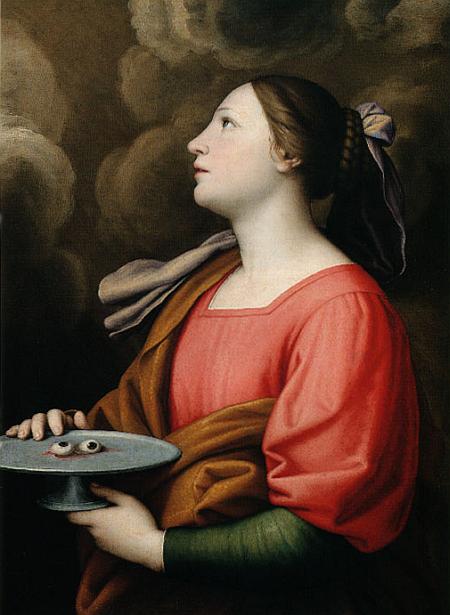
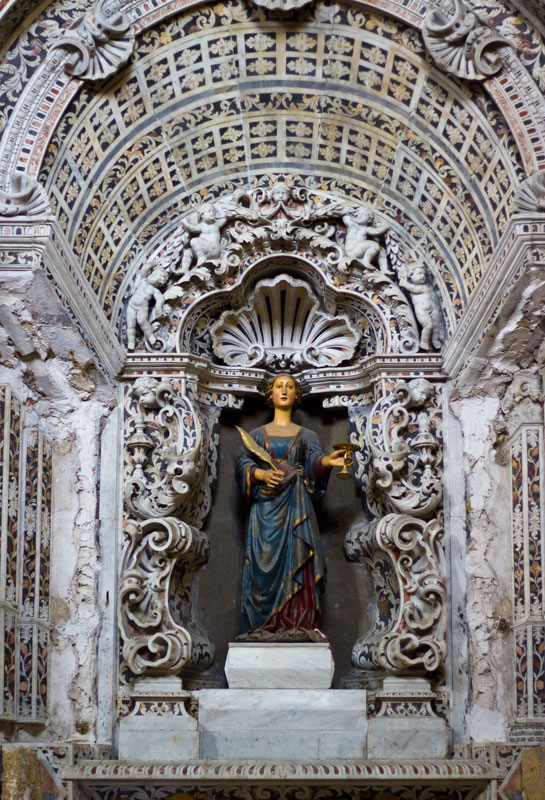
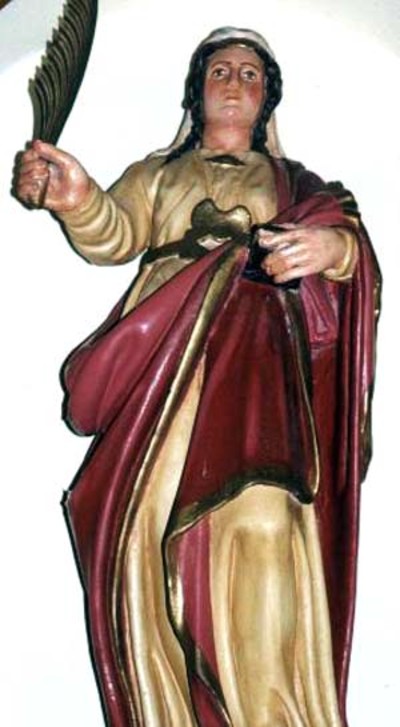
Our Morning Offering – 13 December – The Feast of St Lucy, Virgin Martyr, Patron Against Eye Diseases and Blindness
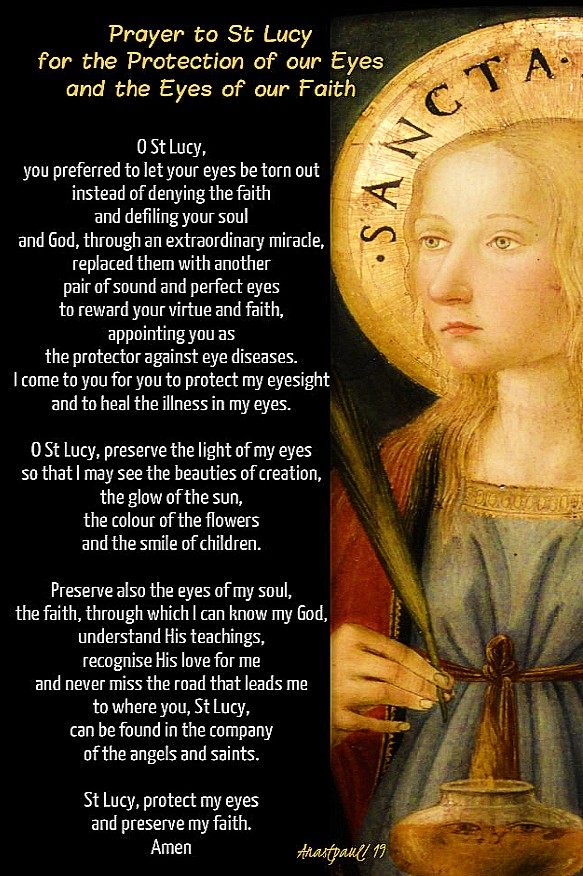
Prayer to St Lucy [Prayer to St Lucy for the Protection of our Eys and the Eys of our Faith]
O St Lucy, you preferred to let your eyes be torn out instead of denying the faith and defiling your soul and God, through an extraordinary miracle, replaced them with another pair of sound and perfect eyes to reward your virtue and faith, appointing you as the protector against eye diseases. I come to you for you to protect my eyesight and to heal the illness in my eyes.
O St Lucy, preserve the light of my eyes so that I may see the beauties of creation, the glow of the sun, the colour of the flowers and the smile of children.
Preserve also the eyes of my soul, the faith, through which, I can know my God, understand His teachings, recognise His love for me and never miss the road that leads me to where you, St Lucy, can be found in the company of the angels and saints. St Lucy, protect my eyes and preserve my faith.
St Lucy, “Bringer of Light” Pray for those with eye ailments, Pray for us all!
Saint of the Day – 13 December – Saint Aubertus of Cambrai-Arras (c600-c669) Bishop and Confessor, Monk and Hermit, Apostle of the poor, Founder of several Churches and Monateries in the region of what is now Belgium. Born in France in c600 and died there in c669 of natural causes. Patronages – of bakers and confectioners, merchants, Cambrai, France, Ghent, Belgium, Hainault, Belgium. Also known as – Aubert of Cambrai, Aubert of Cambrai-Arras, Aubert of Avranches , Albert…Audebertus…Authbert…Autbertus…Obrecht…
The Roman Martyrology reads today: “At Cambrai, in France, St Aubertus, Bishop and Confessor.”
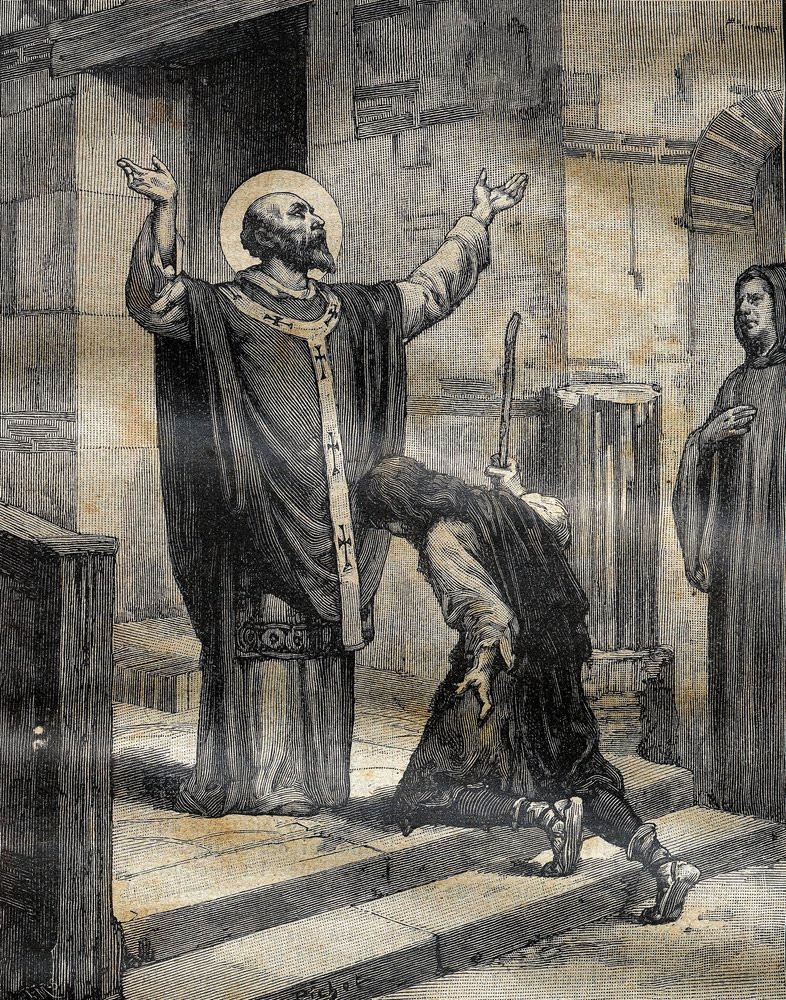
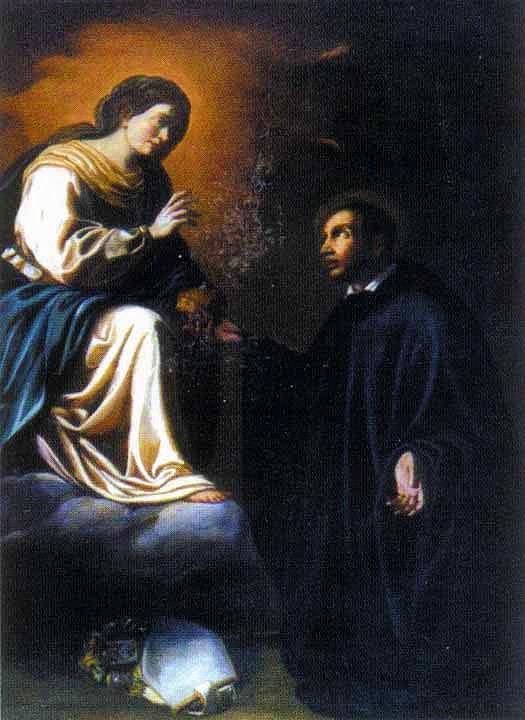
Saint Aubertus, the Bishop of Cambrai-Arras, welcomed his disciple and prodigal godson, St Landelin and forgives him his three years of error. Engraving in Le Pelerin.
Aubertus was the 8th Bishop of Cambrai, in France who lived around the middle of the 7th Century.
He was born around 600 in Haucourt en Cambrésis, belonging to the family of the Merovingian King Dagobert I. He became a Monk in the Abbey founded by Saint Columban in 590 in Luxeuil, during the years in which Saint Eustasius was the Abbot.
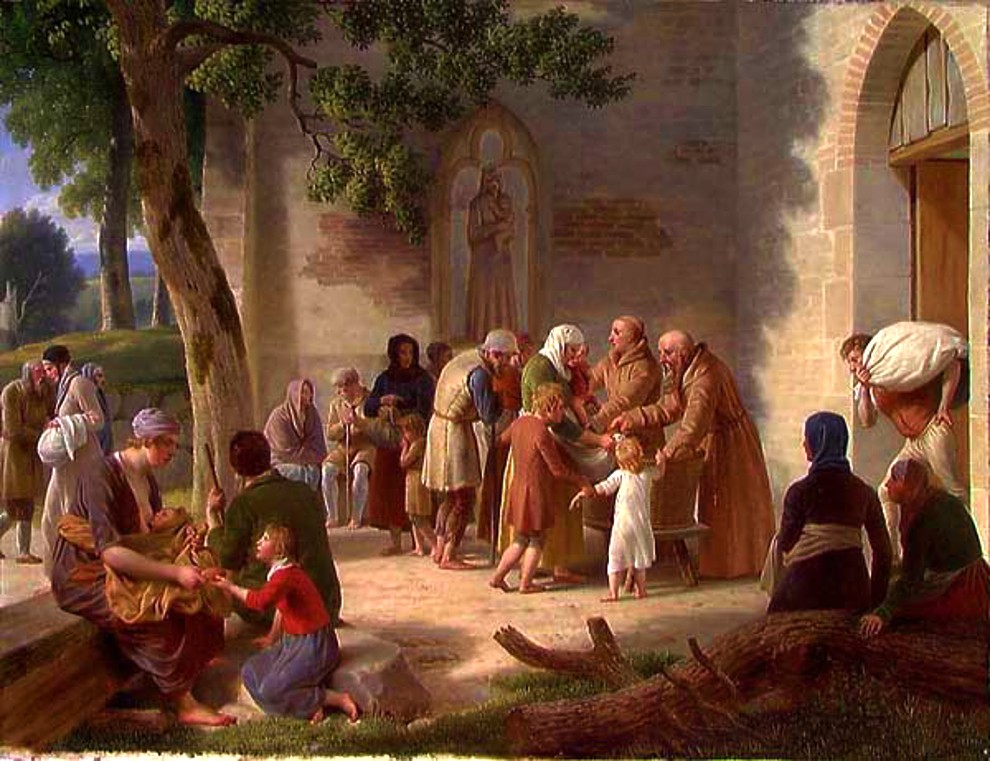
After this first experience, tradition tells us that he became a Hermit and chose to live in solitude in the mountains. In his solitude he made bread which he then, with the help of his donkey, went to sell and donate the proceeds to the poor.
Around 652, Autbertus became the Bishop of Cambrai, after Saint Adalbert. Serving as the Bishop for 36 years, Bishop Aubertus promoted religion and the study of holy texts in Hainaut and Flanders. Through his influence, many nobles were converted and King Dagobert became a major supporter of the Christian Church. St Landelin was entrusted to his care and was educated in learning and piety by Aubertus. The Bishop of Cambrai gave his benediction to St Ghislain and blessed his hermitage (now Saint-Ghislain). Aubertus bestowed the religious habit upon the Count of Hainaut, Vincent Madelgarius, his wife, Saint Waltrude and her sister, St Aldegundis, who was admitted to the vows of a Nun by our St Aubertus of Cambrai and St Amandus of Maestricht, before becoming the first Abbess of Maubeuge Abbey.
In c655, Aubertus alongside St Eligius, arrived 30 days after St Fursey’s death to exhume his body for his Canonisation. In 666, he solemnly performed the translation of the Relics of St Vedast at Arras.
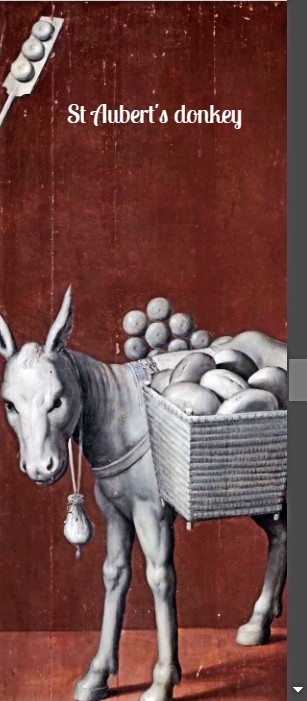
He governed the Diocese until 669, the year of his death. Among his disciples we also find Saint Vindician, his successor. Autbertus is the Patron Saint of bakers and in Belgium he is represented, with a donkey loaded with two baskets full of bread and carrying a bag around his neck.
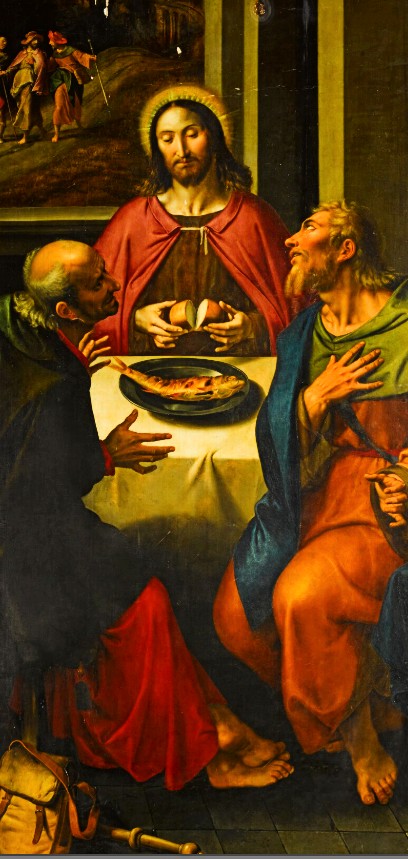
Bishop Aubertus died around 669 in Cambrai, Francia. He was buried in St Peter Church and is celebrated today, 13 December. His Shrine is kept in a Cambrai Abbey of Canons Regular, established in 1066. This beautiful image below features our Saint Aubertus. Itis a double-sided Altarpiece wing depicts The Supper at Emmaus and Saint Aubert, Bishop of Cambrai-Arras on the right(?). The Artist was Ambrosius Francken the Elder (Herentals 1544/45–1618 Antwerp).
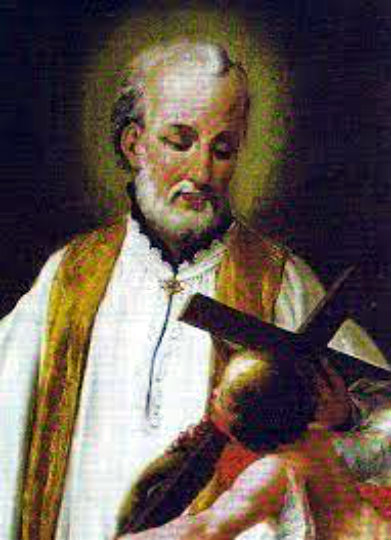
Blessed Antonio Grassi Cong. Orat. (1592 – 1671) Priest of the Oratorians of St Philip Neri, Confessor, Tertiary of the Order of St Francis, Spiritual advisor, Counsellor, Mediator, Miracle Worker, Apostle of the poor and the sick. He was Beatified on 30 September 1900 by Pope Leo XIII. Blessed Antonio’s biography: https://anastpaul.com/2018/12/13/saint-of-the-day-13-december-blessed-antonio-grassi-cong-orat-1592-1671/
St Aristone St Arsenius of Latro St Aubertus of Cambrai (c600-c669) Bishop and Confessor Bl Bartholomew of Tuscany St Edburgh of Lyminge St Einhildis of Hohenburg Bl Elizabeth Rose St Jodocus
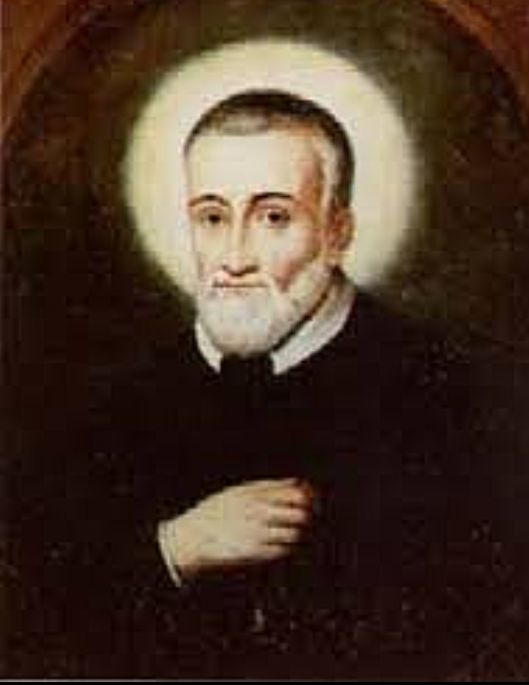
Blessed Giovanni Marinoni CR (1490-1562) Priest of the Theatines of St Cajetan (1480-1547) (The Congregation of the Clerics Regular of the Divine Providence), renowned Preacher and spiritual director. Patron of Preachers. He was Beatified on 5 December 1764, by a Bull of Pope Clement XIII, who also granted an Office in his honour, to his Order, to be celebrated on 13 December. Biography: https://anastpaul.com/2019/12/13/saint-of-the-day-blessed-giovanni-marinoni-cr-1490-1562/
St Martino de Pomar St Roswinda St Tassio of Bavaria
Blessed Mercedarian Knights – 7 Beati: A group of Mercedarian Knights who fought the enemies of the Catholic faith in the first Century of the Order. Blessed Bernardo de Podio Blessed Giacomo de Copons Blessed Giovanni de Bruquera Blessed Guglielmo de Sa Blessed Pietro Boguer Blessed Pietro Ricart Blessed Raimondo de Frexa
Martyrs of Sebaste – 5 Saints: A group of Christians Martyred together in the persecutions of Diocletian. We know little more than their names – Auxentius, Eustratius, Eugene, Mardarius and Orestes. They were martyred in c 302 at Sebaste, Armenia (in modern Turkey) and their relics are enshrined at the church of Saint Apollinaris in Rome, Italy.
Thought for the Day – 12 December – Meditations with Fr Richard Frederick Clarke SJ (1839-1900)
Meditations for Advent From “The Devout Year” By Fr Richard Frederick Clarke SJ (1839-1900)
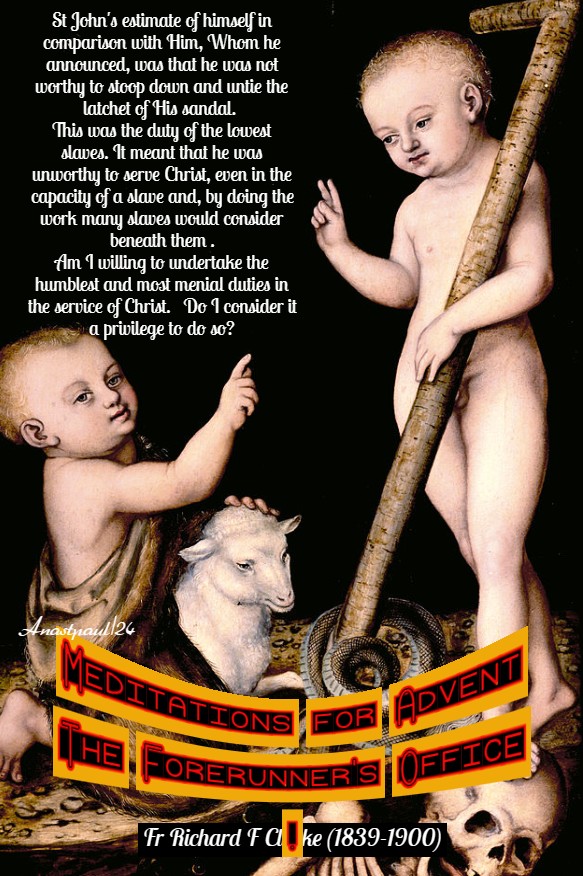
The Forerunner’s Office .
+1. St John was something more than a Herald. He had to prepare the way for the King, to make the crooked ways straight and the rough places smooth. His office was that which is entrusted to us all in our own sphere – to try and make the way in which the followers of Christ have to tread straight and easy. What a privilege, if we can, by our charity and our edifying life, make the path of life more easy for those whose lot it is to tread the way of the Cross and to walk over rough or stormy paths! Is this your endeavour in your daily life, or do you place obstacles in the path of others by your bad example, want of charity and consideration, impatience, etc?
+2. St John , as the Herald or Forerunner of Christ, had to proclaim the coming of the King. He, himself expresses this by his description of himself as the voice of one who cries in the desert; that is , Christ spoke through his mouth. So He speaks through the mouths of all His servants in proportion to their devotion and singleness of purpose. How poor an echo are my words of the whispers of Christ to the faithful soul! How mixed with the discordant notes of self-will and worldliness!
+3. St John’s estimate of himself in comparison with Him, Whom he announced, was that he was not worthy to stoop down and untie the latchet of His sandal. This was the duty of the lowest slaves. It meant that he was unworthy to serve Christ, even in the capacity of a slave and, by doing the work many slaves would consider beneath them . Am I willing to undertake the humblest and most menial duties in the service of Christ. Do I consider it a privilege to do so?
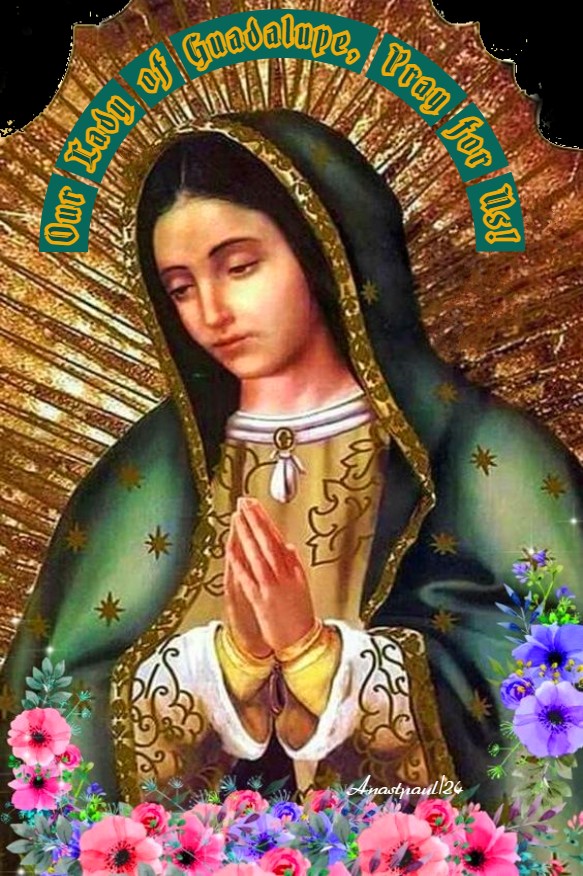
Quote/s of the Day – 12 December – “The Month of the Divine Infancy and the Immaculate Conception of the Blessed Virgin Mary” and the Feast of Our Lady of Guadalupe
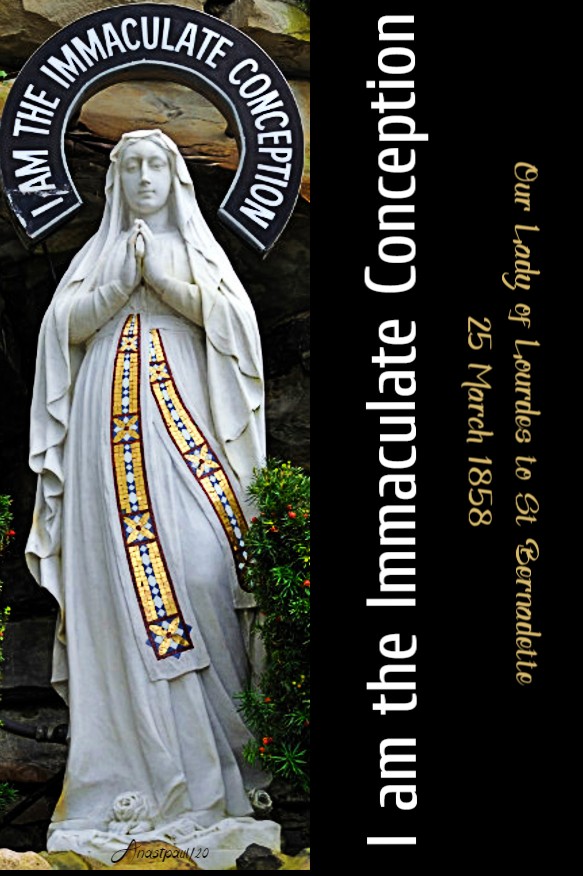
“I am the Immaculate Conception.”
Our Lady to St Bernadette at Lourdes on 25 March 1858
(Remember the Dogma was proclaimed in 1954)
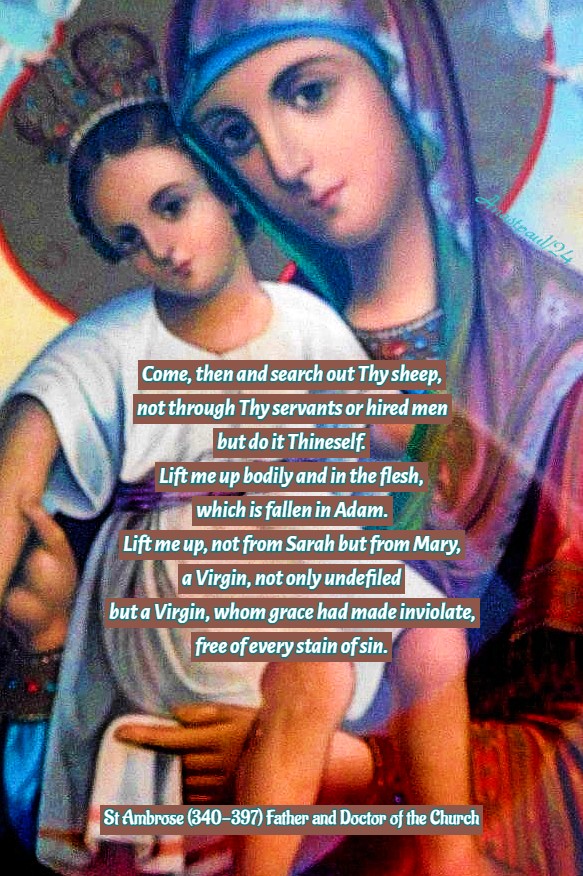
“Come, then and search out Thy sheep, not through Thy servants or hired men but do it Thineself. Lift me up bodily and in the flesh, which is fallen in Adam. Lift me up, not from Sarah but from Mary, a Virgin, not only undefiled but a Virgin, whom grace had made inviolate, free of every stain of sin.”
St Ambrose (340-397) Father and Doctor of the Church
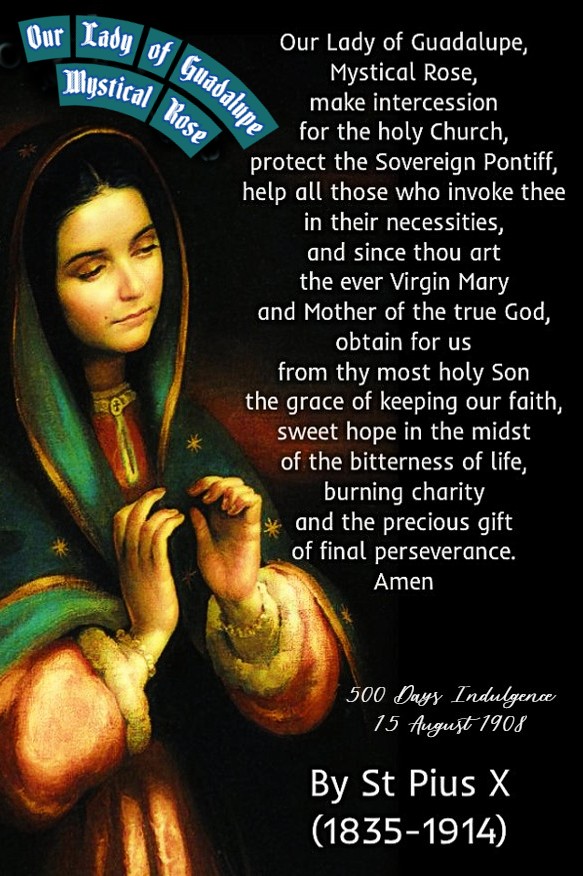
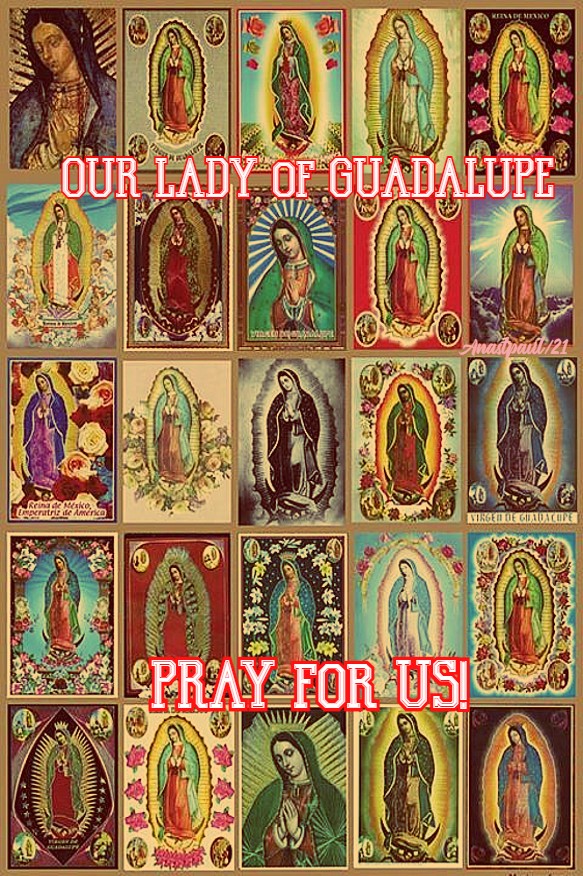
Our Lady of Guadalupe, Mystical Rose Prayer to Our Lady of Guadalupe By St Pius X (1835-1914)
Our Lady of Guadalupe, Mystical Rose, make intercession for the holy Church, protect the Sovereign Pontiff, help all those who invoke thee in their necessities, and since thou art the ever Virgin Mary and Mother of the true God, obtain for us from thy most holy Son the grace of keeping our faith, sweet hope in the midst of the bitterness of life, burning charity and the precious gift of final perseverance. Amen
This prayer was approved and enriched with an Indulgence of Five Hundred Days by St Pius X at an Audience held on 15 August, 1908 and was included in the official edition of Approved Indulgenced prayers (1950). Raccolta number 389, 500 days Indulgence, St Pope Pius X Audience, 15 August 1908.
One Minute Reflection – 12 December – “The Month of the Divine Infancy and the Immaculate Conception of the Blessed Virgin Mary” – Within the Octave – Our Lady of Gaudulupe – Proverbs 8:22-35; Luke 1:26-28 – Scripture search here: https://www.drbo.org/
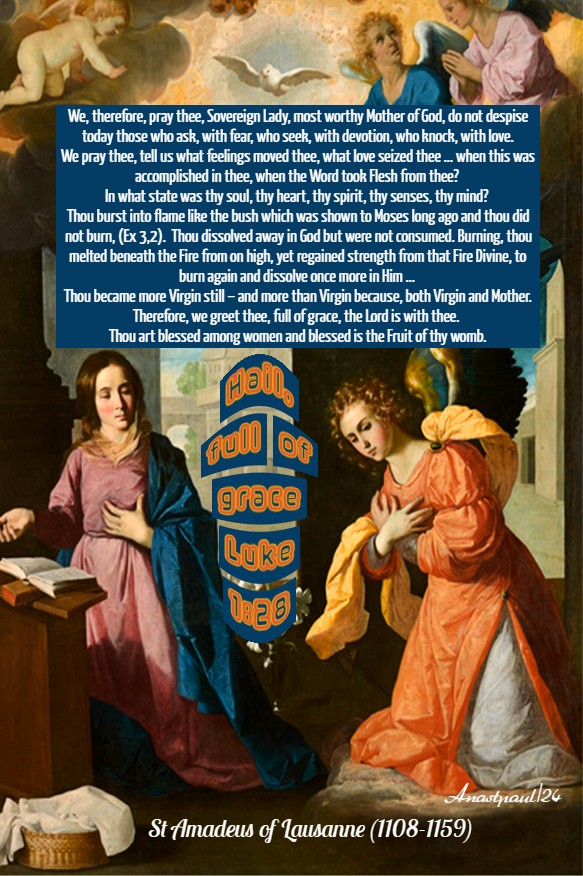
“Hail, full of grace …” – Luke 1:28
REFLECTION – “The Holy Spirit will come upon thee.” He will arise within thee, Mary. In some Saints He has come; in others He will come but in thou, He will arise… He will arise by means of the fertility, the abundance, the fullness of His outpouring in thy being. Even when He has filled thee, He will yet be upon thee; He will sweep over thy waters, to create in thee, a work greater and more admirable, than when, hovering over the waters at the beginning, He brought created substance into being in all its various forms (Gn 1:2). “And the power of the Most High will overshadow thee.” Christ, the Power and Wisdom of God, will overshadow thee. Then, He will take human nature from thee while keeping the fullness of God which thou art unable to bear, even as He assumes our flesh. He will take thee beneath His shadow because, the humanity to be taken by the Word, is to be a screen for the inaccessible Light of God. This Light, filtered by Its screen, will penetrate thine most chaste womb…
We, therefore, pray thee, Sovereign Lady, most worthy Mother of God, do not despise today those who ask, with fear, who seek, with devotion, who knock, with love. We pray thee, tell us what feelings moved thee, what love seized thee … when this was accomplished in thee, when the Word took Flesh from thee? In what state was thy soul, thy heart, thy spirit, thy senses, thy mind? Thou burst into flame like the bush which was shown to Moses long ago and thou did not burn, (Ex 3:2). Thou dissolved away in God but were not consumed. Burning, thou melted beneath the Fire from on high, yet regained strength from that Fire Divine, to burn again and dissolve once more in Him … Thou became more Virgin still – and more than Virgin because, both Virgin and Mother. Therefore, we greet thee, full of grace, the Lord is with thee. Thou art blessed among women and blessed is the Fruit of thy womb.” – St Amadeus of Lausanne (1108-1159) Cistercian Bishop of Lausanne (Marian Sermons).
PRAYER – O God, Who by the Immaculate Conception of the Virgin, prepared a worthy dwelling for Thy Son and Who, by Thy Son’s death, foreseen by Thee, preserved her from all taint, grant, we beseech Thee, through her intercession that we too may come to Thee unstained by sin.Through Jesus Christ, Thy Son our Lord, Who lives and reigns with Thee, in the unity of the Holy Ghost, God, world without end. Amen (Collect).
Our Morning Offering – 12 December – “The Month of the Divine Infancy and the Immaculate Conception of the Blessed Virgin Mary” – Within the Octave
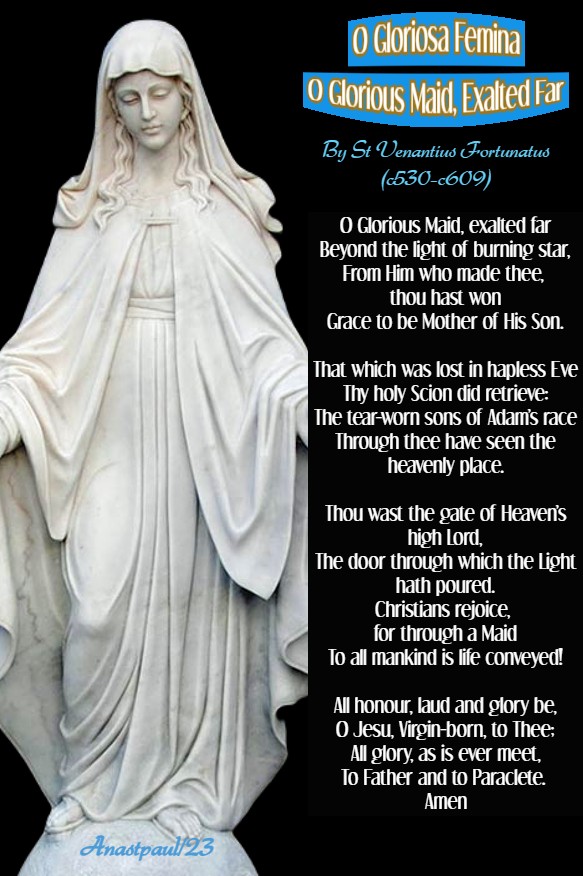
O Gloriosa Femina O Glorious Maid, Exalted Far By St Venantius Fortunatus (c530 – c609) Bishop, Father o the Church
O Glorious Maid, exalted far Beyond the light of burning star, From Him who made thee, thou hast won Grace to be Mother of His Son.
That which was lost in hapless Eve Thy holy Scion did retrieve: The tear-worn sons of Adam’s race Through thee have seen the heavenly place.
Thou wast the gate of Heaven’s high Lord, The door through which the Light hath poured. Christians rejoice, for through a Maid To all mankind is life conveyed!
All honour, laud and glory be, O Jesu, Virgin-born, to Thee; All glory, as is ever meet, To Father and to Paraclete. Amen.
This Hymn was used for Lauds in the Sarum Breviary for the Feasts of the Immaculate Conception, the Purification of the Blessed Virgin Mary, the Annunciation, the Assumption and the Nativity of the Blessed Virgin Mary. The above is the original text of this Hymn as it appears in The English Hymnal (1906), where it is listed as a Morning Office Hymn for Feasts of the Blessed Virgin Mary: Chant Tone: “O Gloriosa Domina” Gregorian Chant, Mode II, traditional.
Saint of the Day – 12 December – Saint Florentius of Carracedo O.Cist. (Died 1152) Abbot, Reformer. Died on 25 December 1152 at Carracedo in Spain og natural causes. Also known as – Fiorenzo, Florent. Additional Memorial – 10 December (on some calendars).
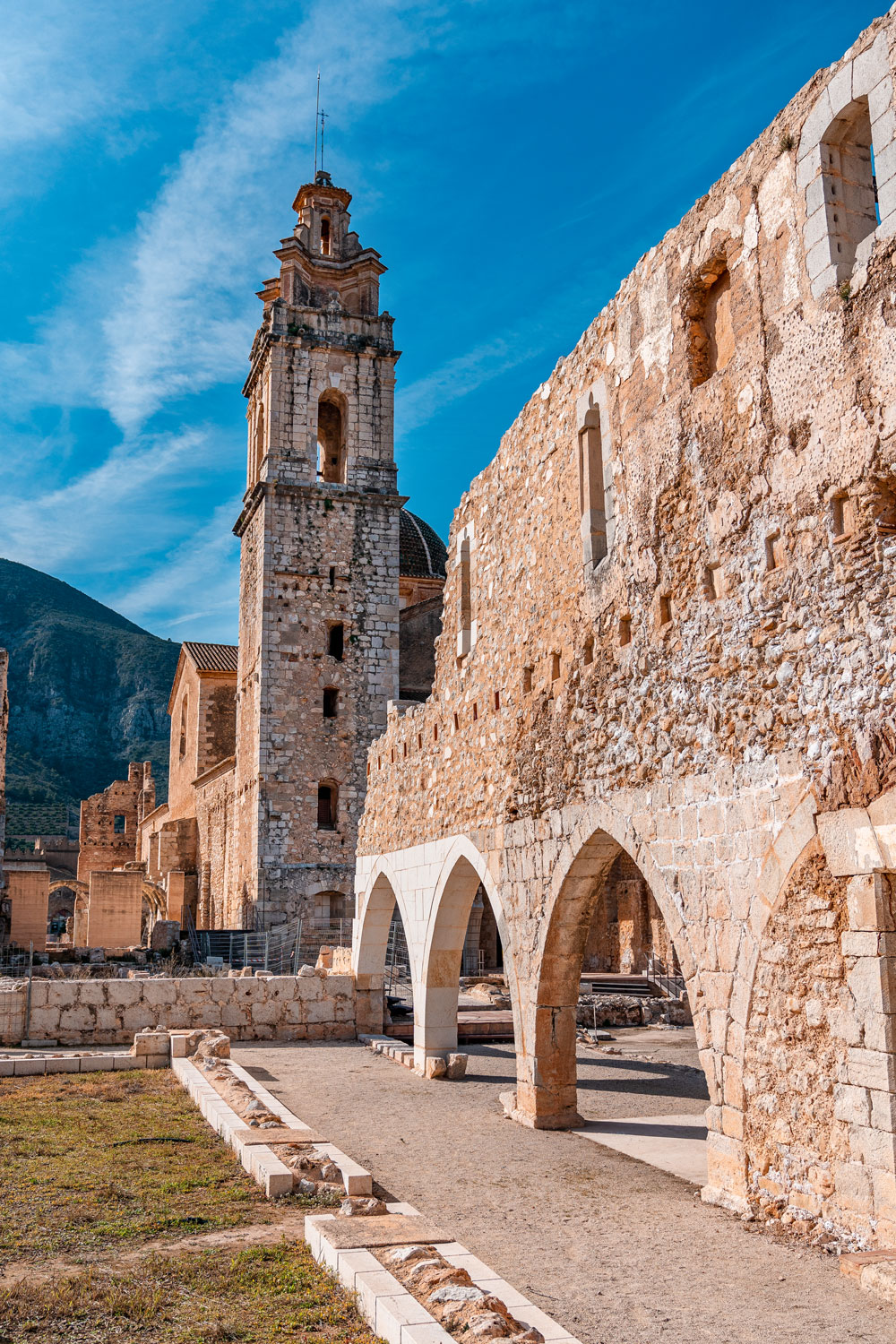
Florentius was an Abbot of the Abbey of Santa Maria di Valverde and Carracedo, who lived in the 12th Century.
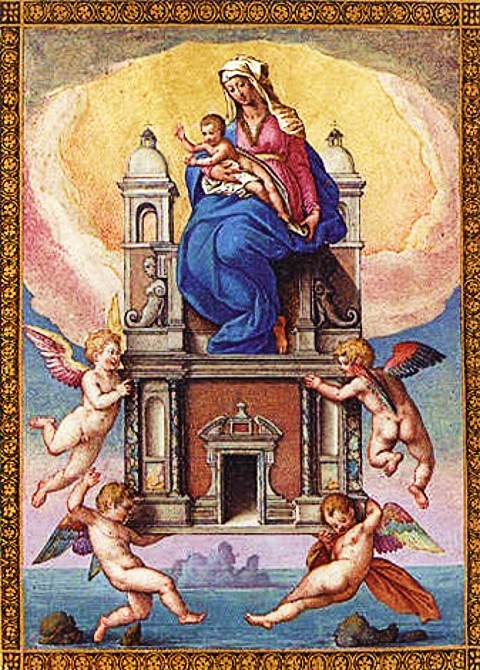
Santa Maria di Valverde and Carracedo
This Abbot, in the Cistercian texts, is remembered for having introduced the reform in the Spanish Monasteries of León, Castile and León, Spain. He brought the Cistercian reform to the House, bringing in help from the nearby Monastery of Santa María de Valverde which had been founded by Vermulo II, King of Léon and united in a single community in 1138. Furthermore, being greatly esteemed by King Alphonsus VII, also appears in some Royal documents.
Santa Maria di Valverde and Carracedo
From the sepulchral inscription found in the Charterhouse of Carracedo,where our Saint is buried and venerated, we know that he died on 25 December 1152. In the same inscription he is called a Saint and his virtues, his qualities of government and his wisdom, are exalted.
The Cistercian Calendar commemorate and celebrate St Florentius today, 12 December.
Martyrs of Alexandria – 6 Saints: A group of six Christians Martyred for their faith during the persecutions of Decius. We know little more than five of their names – Alexander, Ammonaria, Dionysia, Epimachus and Mercuria. They were burned to death c 250 in Alexandria, Egypt.
Martyrs of Trier – 4 Saints and Companions: “At Treves (Trier), the holy Martyrs, Maxentius, Constantius, Crescentius, Justinus and their companions, who suffered in the persecutions of Diocletian, under the Governor Rictiovarus.”
Thought for the Day – 11 December – Meditations with Fr Richard Frederick Clarke SJ (1839-1900)
Meditations for Advent From “The Devout Year” By Fr Richard Frederick Clarke SJ (1839-1900)
The Forerunner’s Message
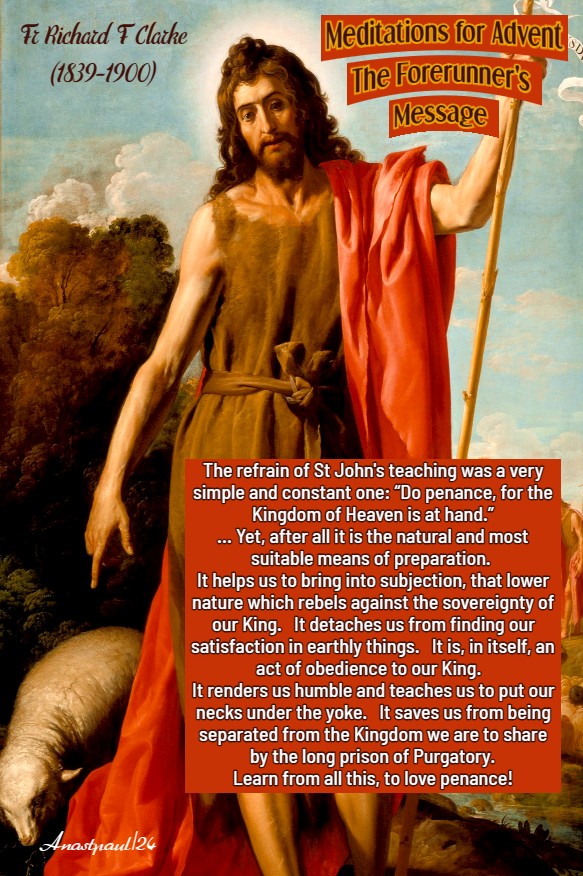
+1. The refrain of St John’s teaching was a very simple and constant one: “Do penance, for the Kingdom of Heaven is at hand.” It seems strange advice . The Coming of the King of Heaven might be a reason for joy, on the part of those who looked for Him and of dread, on the part of His enemies. But why, for doing penance? Yet the teaching of St John is true now, as it was at the time his words were first spoken. Penance is the means of preparation for the Advent of our King. This explains the Saint’s love of penance. What penance do I practice with this object?
+2. Yet, after all it is the natural and most suitable means of preparation. It helps us to bring into subjection, that lower nature which rebels against the sovereignty of our King. It detaches us from finding our satisfaction in earthly things. It is, in itself, an act of obedience to our King. It renders us humble and teaches us to put our necks under the yoke. It saves us from being separated from the Kingdom we are to share by the long prison of Purgatory. Learn from all this, to love penance!
+3. Penance is a necessary preparation for receiving our King when He comes to us in humble form in Holy Communion. This is why Confession is the preliminary of that sacred feast and why, contrition is necessary. We must purge our souls by prayer and penance and sorrow for sins, if we are to rejoice exceedingly in the Bridegroom’s presence and to hear His Voice sweetly whispering in our ears. Do I prepare thus for Holy Communion?
Quote/s of the Day – 11 December – Advent Preparation and Penance
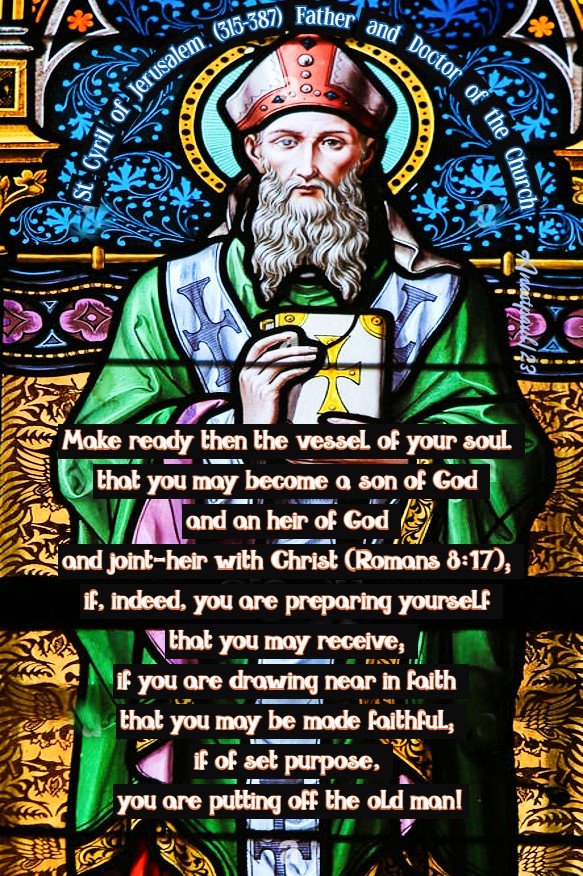
“Make ready then the vessel of your soul that you may become a son of God and an heir of God and joint-heir with Christ (Romans 8:17); if, indeed, you are preparing yourself that you may receive; if you are drawing near in faith that you may be made faithful; if of set purpose, you are putting off the old man!”
St Cyril of Jerusalem (315-387) Father and Doctor of the Church
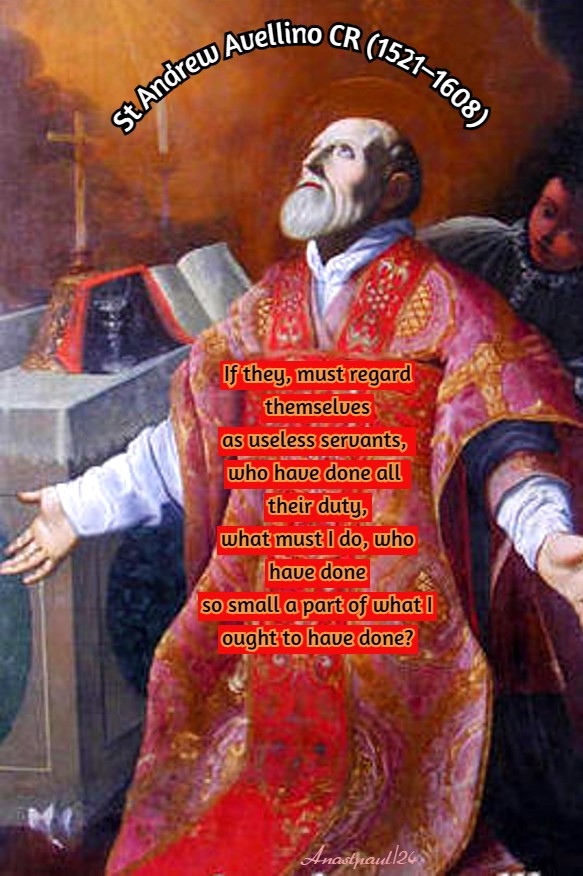
“If they, must regard themselves as useless servants, who have done all their duty, what must I do, who have done so small a part of what I ought to have done?”
St Andrew Avellino CR (1521–1608)
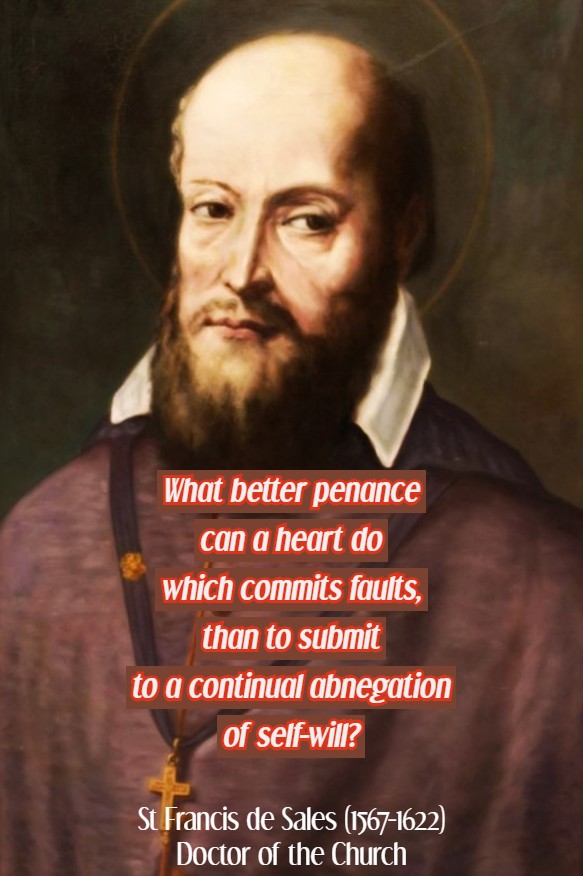
“What better penance can a heart do which commits faults, than to submit to a continual abnegation of self-will?”
St Francis de Sales (1567-1622) Doctor of the Church
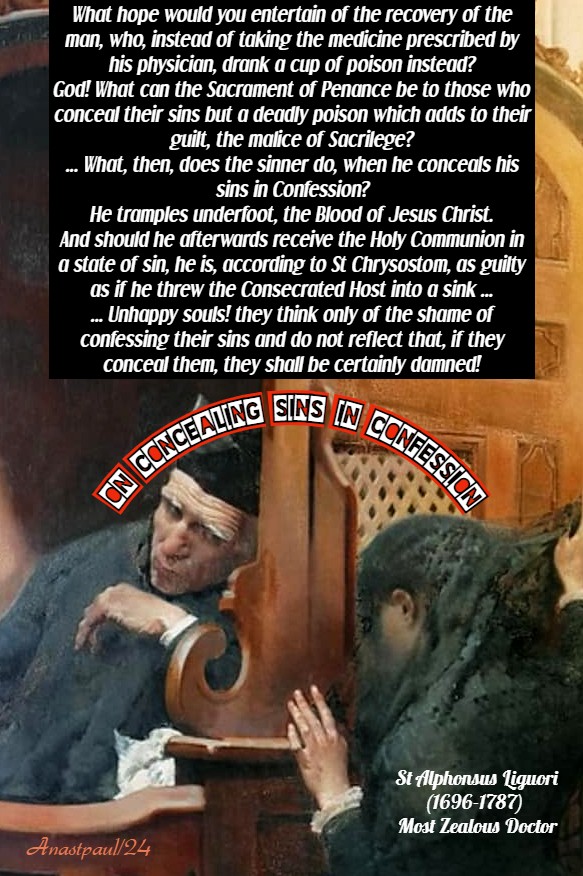
“What hope would you entertain of the recovery of the man, who, instead of taking the medicine prescribed by his physician, drank a cup of poison instead? God! What can the Sacrament of Penance be to those who conceal their sins but a deadly poison which adds to their guilt, the malice of Sacrilege? What, then, does the sinner do, when he conceals his sins in Confession? He tramples underfoot, the Blood of Jesus Christ. And should he afterwards receive the Holy Communion in a state of sin, he is, according to St Chrysostom, as guilty as if he threw the Consecrated Host into a sink … Accursed shame! how many poor souls do you bring to hell? … Unhappy souls! they think only of the shame of confessing their sins and do not reflect that, if they conceal them, they shall be certainly damned!”
St Alphonsus Maria de Liguori (1696-1787) Most Zealous Doctor
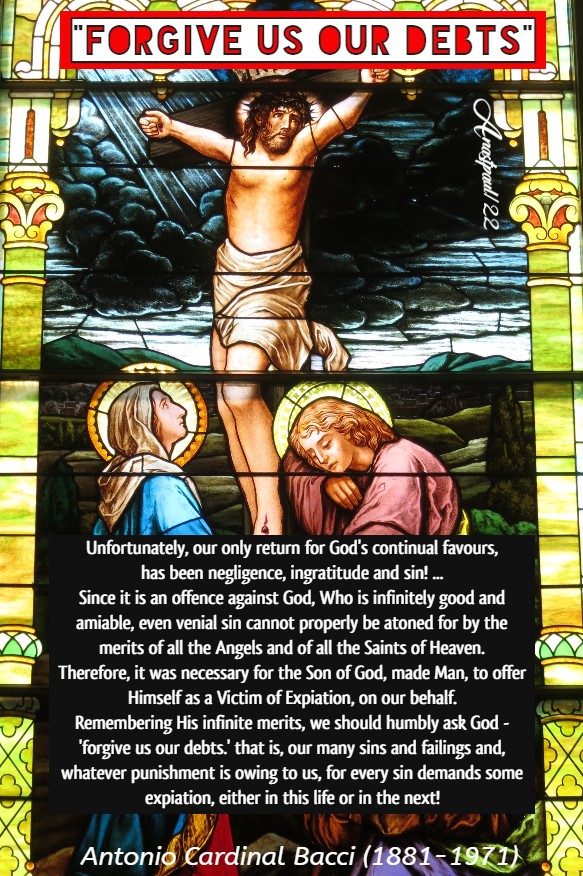
“Unfortunately, our only return for God’s continual favours, has been negligence, ingratitude and sin! Since it is an offence against God, Who is infinitely good and amiable, even venial sin cannot properly be atoned for by the merits of all the Angels and of all the Saints of Heaven. Therefore, it was necessary for the Son of God, made Man, to offer Himself as a Victim of Expiation, on our behalf. Remembering His Infinite Merits, we should humbly ask God – ‘forgive us our debts.‘ that is, our many sins and failings and, whatever punishment is owing to us, for every sin demands some expiation, either in this life or in the next!”
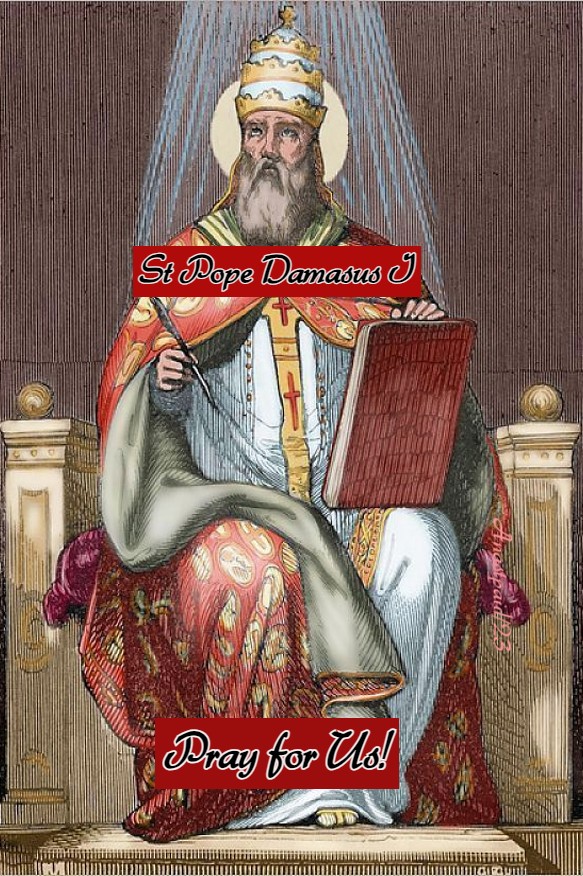
One Minute Reflection – 11 December – “The Month of the Divine Infancy and the Immaculate Conception of the Blessed Virgin Mary” – Within the Octave – St Pope Damasus I (c305-384) Confessor. – 1 Peter 5:1-4, 10-11; Matthew 16:13-19 – Scripture search here: https://www.drbo.org/
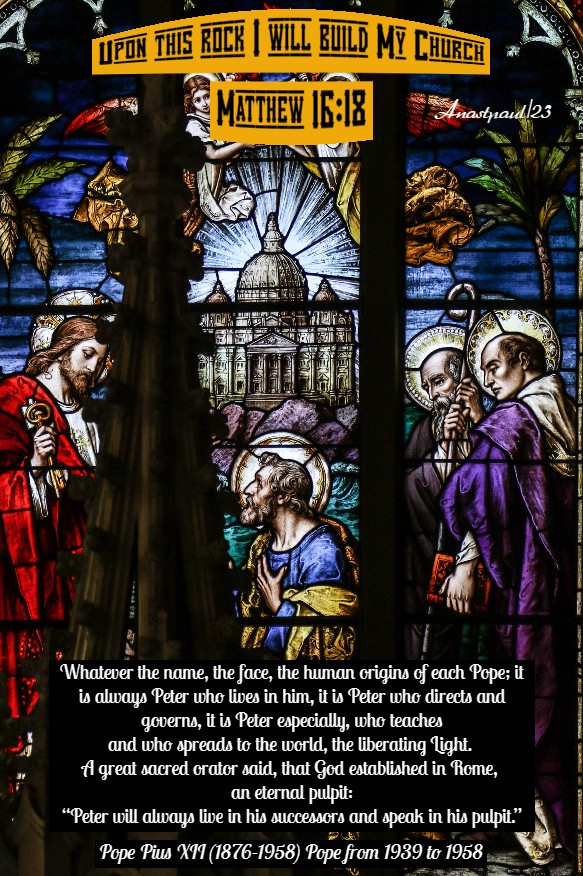
“Upon this rock I will build My Church” – Matthew 16:18
REFLECTION – “You came here on the eve of the day when the Church celebrates the feast of the Chair of Saint Peter in Rome. … Look at the pulpit from which the first Pope spoke to the first Christians, like myself in this moment. It was there, he incited them to vigilance against the devil, who, like a roaring lion, prowls around us and seeks who to devour (1 Pet 5:8-9). It was there, he exhorted them to keep firmness in faith, so as not to be dragged into the errors of false prophets (2 Pet 2:1; 3:17). This Papal teaching continues in his successors and will continue, immutable, through all time because this is the mission which Christ Himself has given to the Head of His Church.
To identify the universal and unwavering character of this teaching, the seat of spiritual primacy was, after a providential preparation, fixed in the City of Rome. God, according to the remark of our predecessor, Saint Léo the Great, united the peoples by his Providence in a single empire, of which Rome was the capital, so that the Light of Truth, revealed for the salvation of all Peoples would spread more efficaciously to all of its members (Sermon LXXXII C, 3-5).
Peter’s successors, mortal like all men, pass, more or less quickly. But the primacy of Peter will always remain, thanks to the special assistance which was promised to him when Jesus charged him to confirm his brothers in faith (Lk 22:32). Whatever the name, the face, the human origins of each Pope; it is always Peter who lives in him, it is Peter who directs and governs, it is Peter especially, who teaches and who spreads to the world, the liberating Light. A great sacred orator said, that God established in Rome, an eternal pulpit: “Peter will always live in his successors and speak in his pulpit.” – Pope Pius XII (1876-1958)Pope from 1939 to 1958 (Pius XII Audience of 17 January 1940).
PRAYER – Look forgivingly on Thy flock, Eternal Shepherd and keep it in Thy constant protection, by the intercession of blessed Damasus Thy Sovereign Pontiff, whom Thou didst constitute Shepherd of the whole Church. Through Jesus Christ, Thy Son our Lord, Who lives and reigns with Thee, in the unity of the Holy Ghost, God, world without end. Amen (Collect).
Our Morning Offering – 11 December – “The Month of the Divine Infancy and the Immaculate Conception of the Blessed Virgin Mary” – Within the Octave
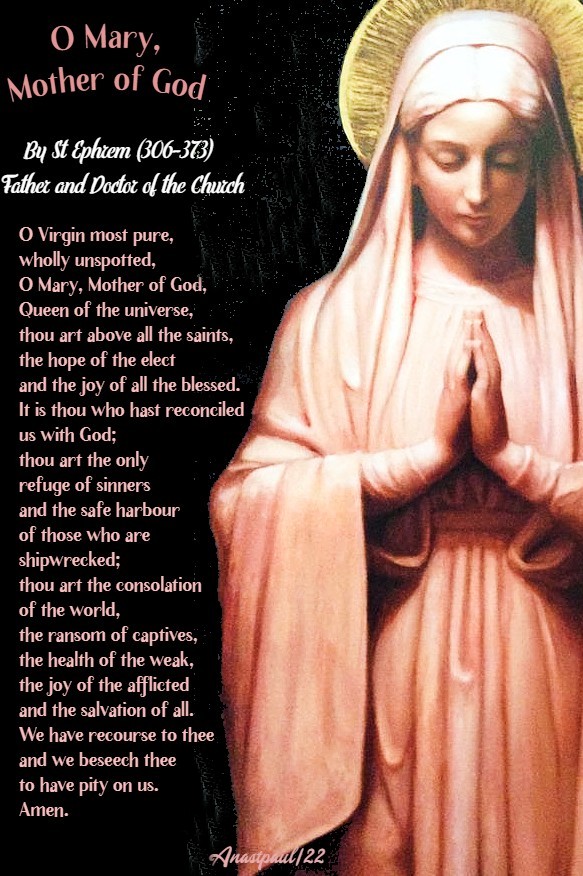
O Mary, Mother of God (O Virgin Most Pure, Wholly Unspotted) By St Ephrem of Syria (306-373) Father and Doctor of the Church
O Virgin most pure, wholly unspotted, O Mary, Mother of God, Queen of the universe, thou art above all the saints, the hope of the elect and the joy of all the blessed. It is thou who hast reconciled us with God; thou art the only refuge of sinners and the safe harbour of those who are shipwrecked; thou art the consolation of the world, the ransom of captives, the health of the weak, the joy of the afflicted and the salvation of all. We have recourse to thee and we beseech thee to have pity on us. Amen
Saint of the Day – 11 December – Saint Sabinus of Piacenza (Died c420) Bishop, learned Defender of the Faith against heretics, Miracle-worker. Friend and assistant to St Ambrose. Sabinus was born in Milan around 330 – 340 and died in Piacenza in c420. Initially he was a Deacon of Milan, then became the Bishop of Piacenza for other 50 years. Patronage – of Piacenza. Also known as – Sabino, Savinus, Savino.
The Roman Martyrology states today: “At Piacenza, St Sabinus, a Bishop, renowned for miracles.”
Sabinus was in contact with the great St Ambrose of Milan (340-†397; Feast 7 December). They met again during the Council of Aquilea in 381. There Sabinus was noticed for his resolute attitude against the Arians.
Ambrose even had such a high opinion of Sabinus’ knowledge and skills, he submitted all his writings to him for evaluation. He seems to have been not only a wise man but also an exceptionally holy man.
Is he the Bishop Sabinus of Piacenza about whom Gregory the Great in his Dialogues (III,x) tells a wonderful anecdote? At any rate, he says in passing, that Sabinus was a respected man. This agrees with the reports of our Saint.
St Sabinus’ Statue in Piacenza Basilica
‘[Reliable informants] affirm that there was a Bishop in Piacenza named Sabinus, a man of great miraculous power. One day his Deacon reported that the Po River had overflowed its banks and had flooded the Ecclesiastical lands. The water of that river covered all the fields where food could be grown for the people. Bishop Sabinus, whose way of life commanded respect, answered him: “Go and say to that river: ‘The Bishop orders you to control yourself and to return to your own bed!’” The Deacon heard this but he pretended not to notice and made fun of it. Then the man of the Lord summoned a Notary and dictated to him the following: “Sabinus, servant of the Lord Jesus Christ, is sending an official warning to the Po. I command you in the Name of the Lord Jesus Christ not to go beyond your bed in that region again. Do not dare to harm the Ecclesiastical lands any longer.” And, furthermore, he said to the Notary: “Go, make that official document and throw it into the water of the river.” And so it was so done. The water of the river received the command of the holy man, whereupon it immediately respected the Ecclesiastical lands. It returned to its own bed and did not dare to exceed its boundaries any longer in the direction of that area.’ [St Gregory the Great ‘Dialogues. The life of Benedict and other Saints]
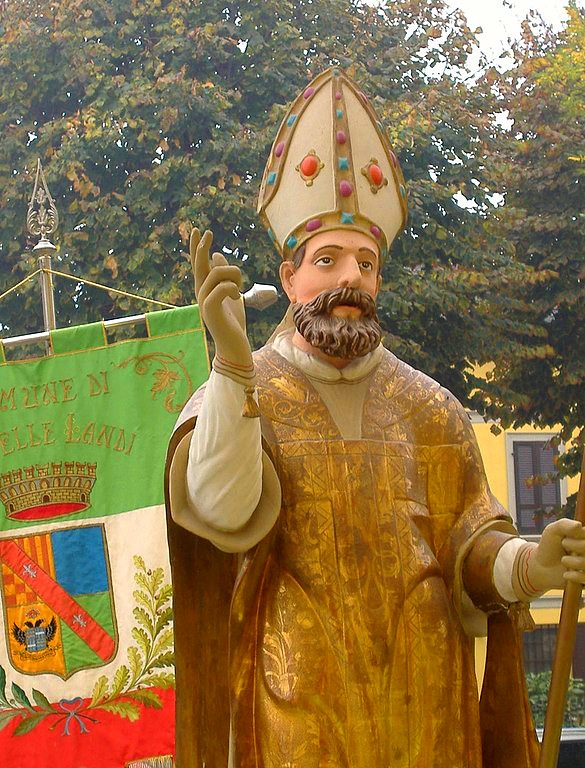
His Relics are located in the Basilica of San Savino in Piacenza. Saint Sabinus is venerated in Caselle and Landi, in both of which places the Churches are dedicated to him, in the neighbourhood of Piacenza.
Bl Hugolinus Magalotti Blessed Jean Laurens O. Praem.(1548-1613)
Blessed Jerome Ranuzzi OSM (c 1410-c 1468) “The Angel of Good Counsel,” “The Blessed Bachelor,” Priest and Friar of the Order of the Servants of Mary, the Servites, Theologian, Adviser both spiritual and secular, renowned for his learning and scholarship, Penitent and Hermit with a great love of solitude and silence. His body is incorrupt and is still available for veneration in St Mary of the Servites, Urbano, Italy. His cult was confirmed on 1 April 1775 by Pope Pius VI with the title of Blessed. The Roman Martyrology states: “In Sant’Angelo in Vado always in the Marches, Blessed Girolamo, Priest of the Order of the Servants of Mary, who in solitude and silence reached the wisdom of holiness.” The Angel of Good Counsel: https://anastpaul.com/2021/12/11/saint-of-the-day-11-december-blessed-jerome-ranuzzi-osm-c-1410-c-1468-the-angel-of-good-counsel/
St Pens St Sabinus of Piacenza Blessed Severin Ott O.Praem. (1627-1708) Priest and Friar of the Norbertines or Premonstratensians.
Martyrs of Saint Aux-Bois – 3 Saints: Two Christian missionaries and one of their local defenders who faith in the persecutions of governor Rictiovarus – Fuscian, Gentian and Victoricus. They were beheaded in 287 in Saint Aux-Bois, Gaul (in modern France).
Martyrs of Rome – 3 Saints: Three Christians murdered in the persecutions of Diocletian for giving aid to Christian prisoners – Pontian, Practextatus and Trason. They were imperial Roman citizens. They were martyred in c 303 in Rome, Italy.
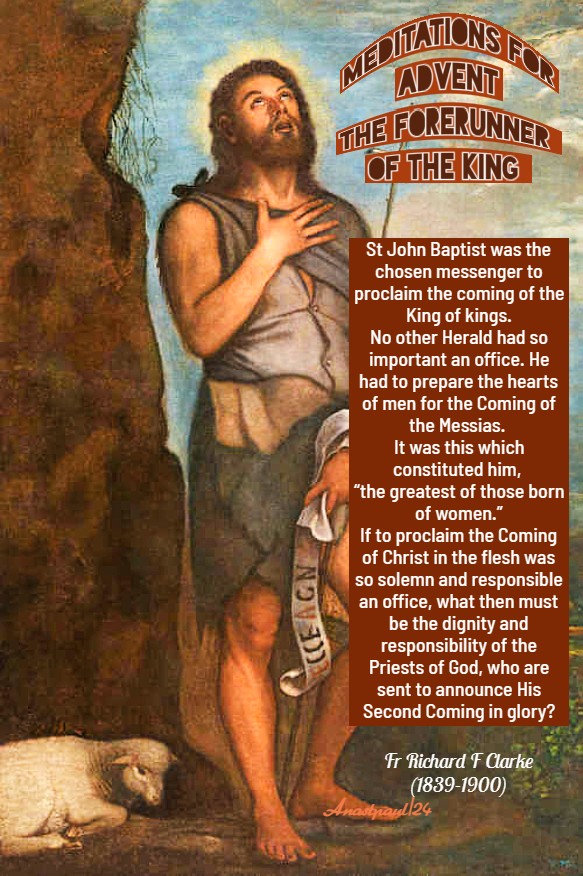
Thought for the Day – 10 December – Meditations with Fr Richard Frederick Clarke SJ (1839-1900)
Meditations for Advent From “The Devout Year” By Fr Richard Frederick Clarke SJ (1839-1900)
The Forerunner of the King
+1. St John Baptist was the chosen messenger to proclaim the coming of the King of kings. No other Herald had so important an office. He had to prepare the hearts of men for the Coming of the Messias. It was this which constituted him, “the greatest of those born of women.” If to proclaim the Coming of Christ in the flesh was so solemn and responsible an office, what then must be the dignity and responsibility of the Priests of God, who are sent to announce His Second Coming in glory?
+2. How did St John prepare for his work? By a life of seclusion and penance. From childhood, he lived alone in the desert, his bed the hard ground, his meat locusts and wild honey, his dress a camel’s skin. Our Lord contrasts him with those who wear soft raiment. No-one who lives a life of luxury, will ever be an efficient messenger of God. A Priest, above all, must avoid a life of ease and self-indulgence, if he wishes to win souls for Christ.
+3. The secret of St John’s success was thus, the result of practising what he preached. He practiced much more than he preached, for he enjoined upon his hearers, the simple performance of ordinary duties, while he himself, led a life of continual penance and self-denial. If our words are to carry any weight, we must not preach without practising. The parent or superior, who has the training of the young, will never train them to virtue, unless he himself is a man of virtue. No-one can reach the hearts of others, unless he firstly fulfils the lessons he teaches. Do I do this?
Quote/s of the Day – 10 December – “The Month of the Divine Infancy and the Immaculate Conception of the Blessed Virgin Mary” – Within the Octave – Romans 15:4-13; Matthew 11:2-10 – Scripture search here: https://www.drbo.org/
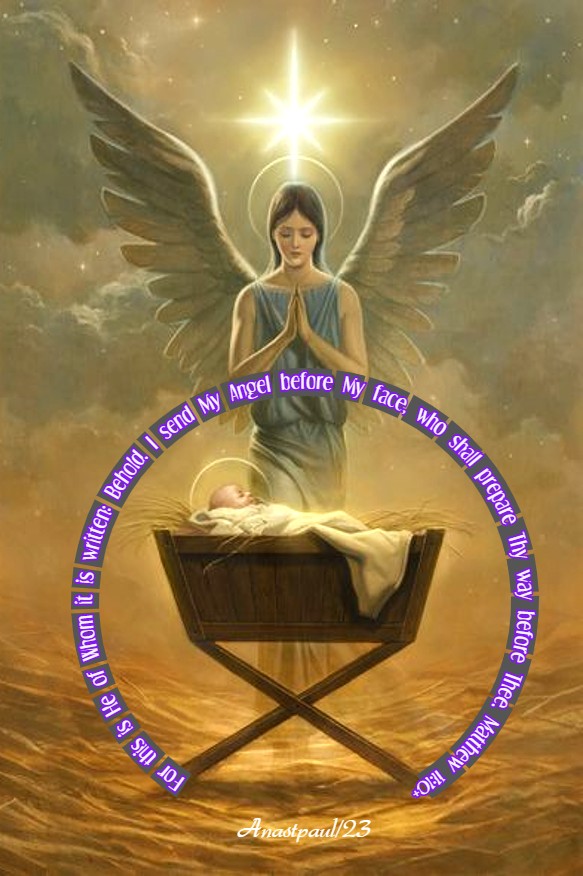
“For this is He of Whom it is written: Behold. I send My Angel before My face, who shall prepare Thy way before Thee.”
Matthew 11:10
“It is time now for us to rise from sleep!”
St Benedict (c 480-547)
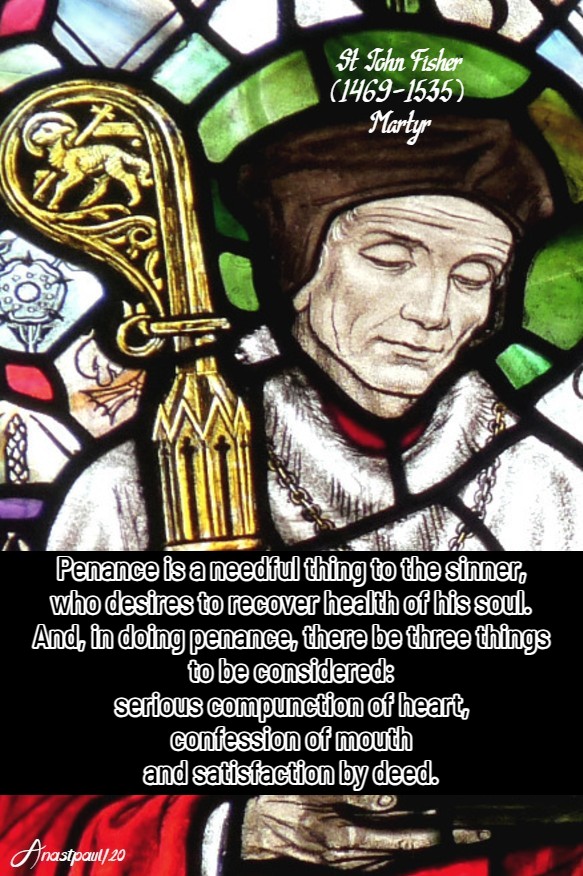
“Penance is a needful thing to the sinner, who desires to recover health of his soul. And, in doing penance, there be three things to be considered: serious compunction of heart, confession of mouth and satisfaction by deed.”
St John Fisher (1469-1535) Martyr
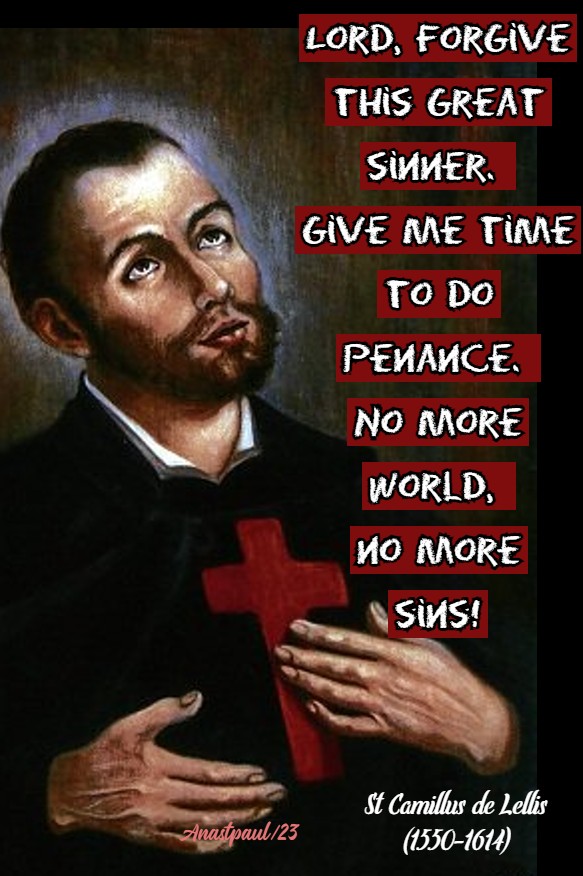
“Lord, forgive this great sinner. Give me time to do penance. No more world, no more sins!”
St Camillus de Lellis MI (1550-1614)
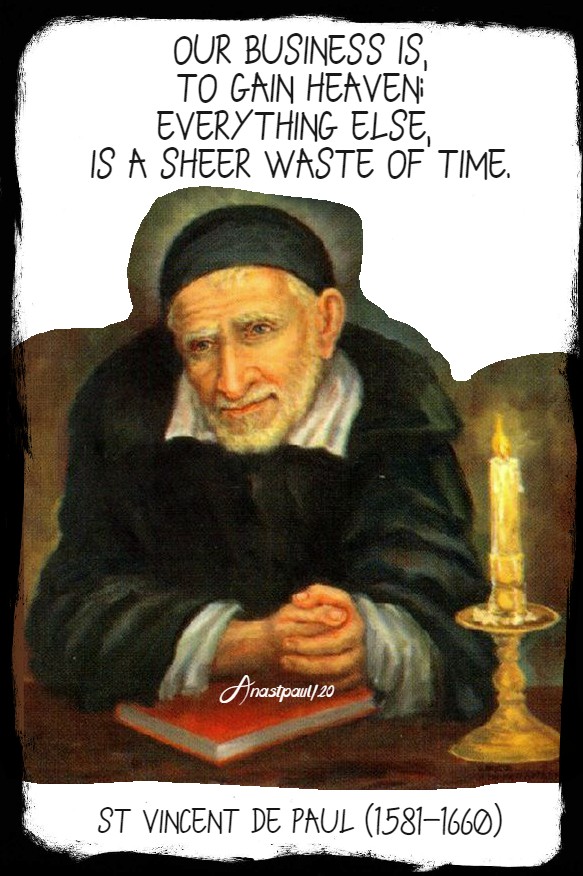
“Our business is, to gain heaven; everything else, is a sheer waste of time.”
One Minute Reflection – 10 December – “The Month of the Divine Infancy and the Immaculate Conception of the Blessed Virgin Mary” – Within the Octave – Romans 15:4-13; Matthew 11:2-10 – Scripture search here: https://www.drbo.org/
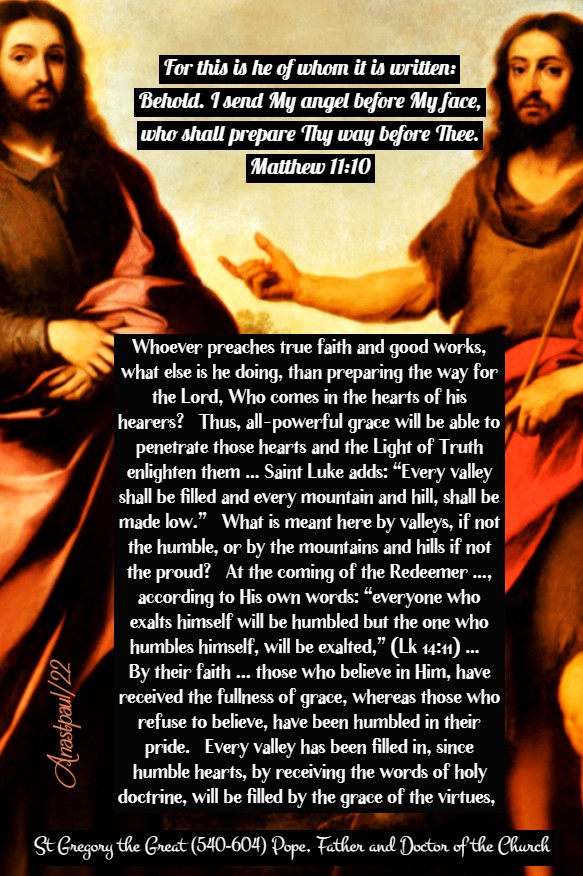
“For this is He of Whom it is written: Behold. I send My Angel before My face, who shall prepare Thy way before Thee.” – Matthew 11:10
REFLECTION – “It is obvious to any reader that John did not just preach but that he administered a baptism of repentance. However, he could not give a baptism which remits sins, since the remission of sins is only granted to us, with the Baptism of Christ. That is why the Evangelist says, that he was “preaching a baptism of repentance for the forgiveness of sins,” (Lk 3:3) being unable himself to give the baptism which forgives sins, he announced that, which was to come. Just as the word of his preaching was the forerunner, of the Word of the Father made Flesh, so, his baptism … preceded that of the Saviour, as shadow to the Truth (cf. Col 2:17).
This same John, when questioned as to who he was, replied: “I am the voice of one crying out in the desert,” (Jn 1:23; Is 40:3) . The Prophet Isaiah called him “voice” because, he came before the Word. As for what he cried out, that which follows teaches us: “Prepare the ways of the Lord, make straight his paths.” Whoever preaches true faith and good works, what else is he doing, than preparing the way for the Lord, Who comes in the hearts of his hearers? Thus, all-powerful grace will be able to penetrate those hearts and the Light of Truth enlighten them …
Saint Luke adds: “Every valley shall be filled and every mountain and hill, shall be made low.” What is meant here by valleys, if not the humble, or by the mountains and hills if not the proud? At the coming of the Redeemer … according to His own words: “everyone who exalts himself will be humbled but the one who humbles himself, will be exalted,” (Lk 14:11) … By their faith in “the mediator between God and the human race, Christ Jesus, Himself, human” (1 Tim 2:5), those who believe in Him, have received the fullness of grace, whereas those who refuse to believe, have been humbled in their pride. Every valley has been filled in, since humble hearts, by receiving the words of holy doctrine, will be filled by the grace of the virtues, as it is written: “He made springs gush forth in the watercourses that wind among the valleys,” (cf. Ps 104:10).” – St Gregory the Great (540-604) Pope, Father and Doctor of the Church (Gospel Homilies no. 20).
PRAYER – O God, Who by the Immaculate Conception of the Virgin, prepared a worthy dwelling for Thy Son,and Who, by Thy Son’s death, foreseen by Thee, preserved her from all taint, grant, we beseech Thee, through her intercession, that we too may come to Thee unstained by sin.Through the same Jesus Christ, Thy Son our Lord, Who lives and reigns with Thee, in the unity of the Holy Ghost, God, world without end. Amen (Collect).
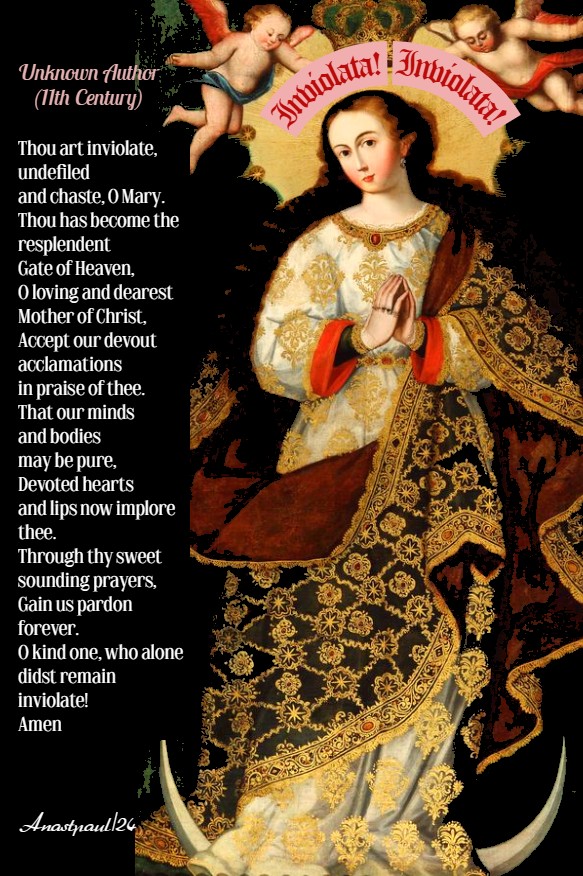
Thou art inviolate, undefiled and chaste, O Mary. Thou has become the resplendent Gate of Heaven, O loving and dearest Mother of Christ, Accept our devout acclamations in praise of thee. That our minds and bodies may be pure, Devoted hearts and lips now implore thee. Through thy sweet sounding prayers, Gain us pardon forever. O kind one, who alone didst remain inviolate. Amen
The Hymn Inviolata has been claimed by the Carmelite Order, as a Traditional Hymn originating within their ranks. The Hymn is also used by Dominican Friars in the chanting of Compline. Its origins trace to the 11th Century. It appears in Hymnals from 1860 to 1920.
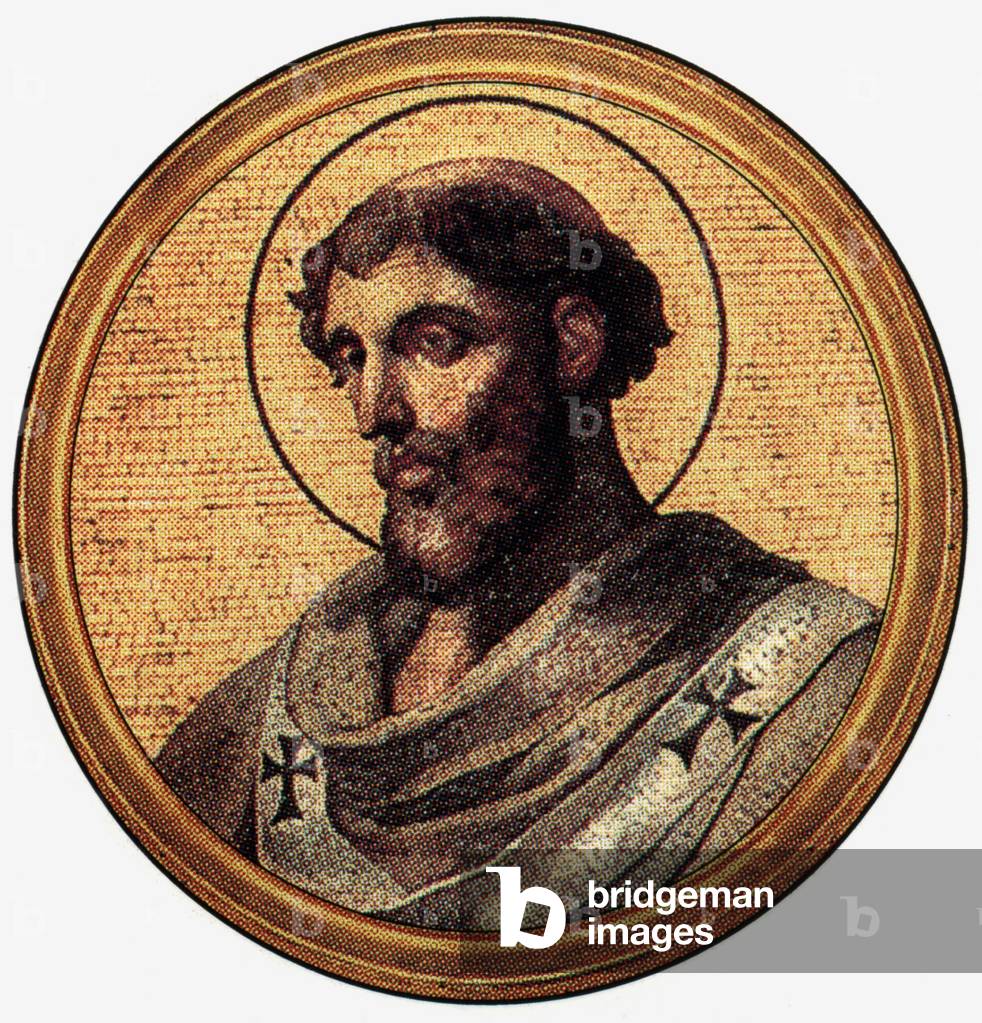
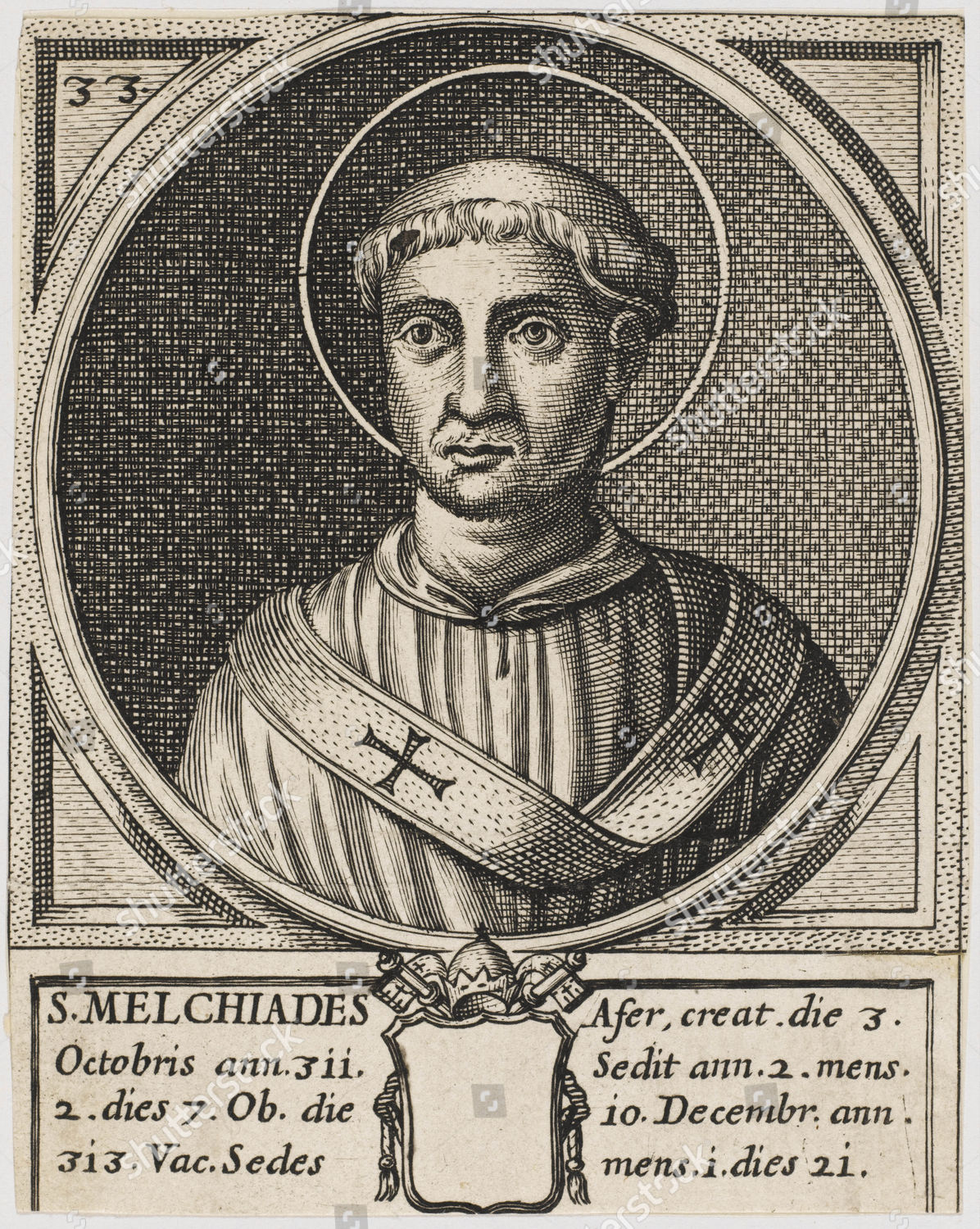
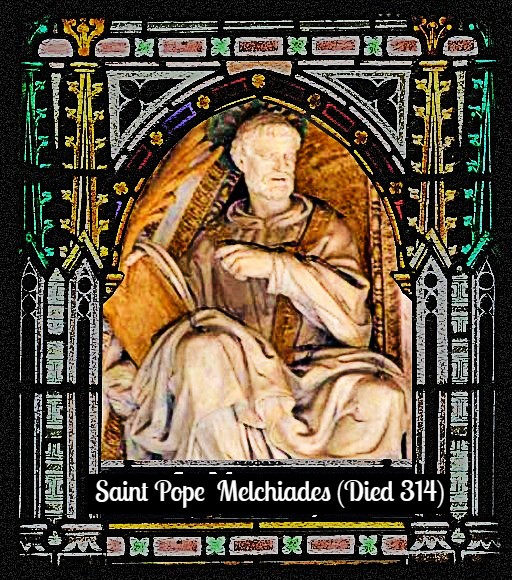
Saint of the Day – 10 December – Saint Melchiades (Died 314) Bishop of Rome from 2 July 311- 19 or 11 January 314). Born in Africa and died in Rome in 314. Also known as – Melchiade, Melquíades, Milziade, Miltiades.
The Roman Martyrology reads today: “At Rome, Pope St Melchiades, who, having suffered much in the persecution of Maxentius, rested in the Lord when peace was given to the Church.”
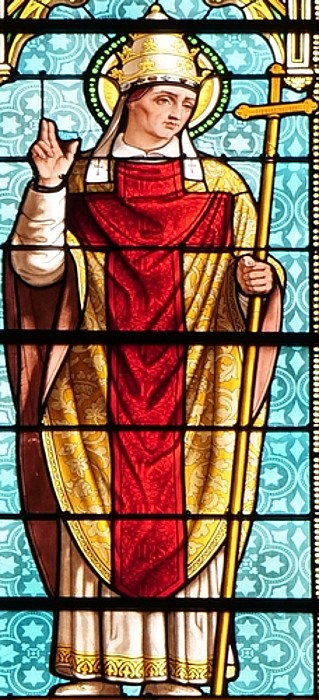
Pope Melchiades is the Holy Vicar of Christ, under whom the Cross, until then a sign of infamy, became a symbol of glory and a harbinger of victory, on the Imperial Banners of Constantine.
It is not, as one might think, Pope Saint Sylvester, under whose long Pontificate what is called “the Triumph of Christianity” was crowned and the Emperor Constantine, close to death, received Baptism. The extraordinary passage from the age of persecution to that of protection, from the atmosphere of suspicion, to that of respect towards Christians, occurred under the Pope celebrated today, Saint Melchiades.
PVD1698815 Miltiades or Melchiades, pope in 311-314 (print); (add.info.: Miltiades or Melchiades, pope in 311-314, after a medalion of the Basilica of Saint Paul Outside the Walls (-Rome)); PVDE.
Please note: This photograph requires additional permission prior to use. If you wish to reproduce this image, please contact Bridgeman Images and we will manage the permission request on your behalf.
Almost nothing is known about his life, before his pontificate. He was of African origin and must have been in Rome at the end of the bloody persecution of Diocletian. He then witnessed the ambiguous conduct towards the Christians of the Emperor Maxentius, who, in order to quell the discord of the Roman Church, exiled both Pope Eusebius and an antipope, Heraclius, a representative of a group of poorly repentant apostates.
Eusebius died shortly after, in 310. The new Pope, who was Melchiades, was elected only a year later. In that year, in fact, an important event had occurred. Galerius had issued an Edict of religious tolerance, which was then signed by the ‘Augustes’ Licinius and Constantine. Maxentius had not signed that Edict but he still followed the policy of benevolence, towards the Christians. He did not want to jeopardise the favour of his subjects, in the imminence of the political dispute.
The newly elected Melchiades took advantage of this changed policy to energetically reorganise the Church. Firstly, he regained the property of the Christians of Rome confiscated during the persecutions. Then, he sent his Deacons to regain possession of the places of worship, which are, the ancient titular Churches.
After the battle of Ponte Milvio, having defeated Maxentius, Constantine entered Rome raising the Sign of the Cross. The Pope then exploited the situation effectively, the excellent dispositions of the victorious Emperor, in favor of the faithful. In fact, Constantine did not limit himself to returning the property of the Church; he established that the treasury should contribute to the needs of worship. He was not content to reintegrate the Christians in the modest homes where the sacred meetings took place; he wanted new and grandiose Basilicas to be built. The first to be begun was the one called the Lateran, the Basilkica of the Savioiur which has remained the Cathedral of Rome and in the Lateran, in a palace owned by the Imperial Treasury, Constantine hosted the Holy Bishop of Rome.
The Pontificate of Saint Melchiades was brief. In 314, the works he fervently began were continued by Saint Sylvester. But three years of government of the Church were enough to earn him the praise of Saint Augustine: “A true son of peace and true father for Christians.”
Strangely enough, however, this “son of peace”, the first Pope of the Constantinian age of the “triumph of Christianity”received the honourary title of Martyr, perhaps for having been buried in the Catacombs.
St Pope Melchiades (Died 314) Bishop of Rome from 2 July 311- 19 or 11 January 314)
St Abundius St Albert of Sassovivo St Angelina of Serbia Blessed Brian Lacey (Died 1591) Lay Martyr BL Bruno of Rommersdorf St Caesarius of Epidamnus St Carpophorus St Deusdedit of Brescia (Died c700) Bishop
St Edmund Gennings St Emérico Martín Rubio St Florentius of Carracedo St Fulgentius of Afflighem St Gemellus of Ancyra St Gonzalo Viñes Masip Bl Guglielmo de Carraria St Guitmarus St Hildemar of Beauvais Bl Jerome Ranuzzi Bl John Mason
St Julia of Merida St Lucerius St Maurus of Rome St Mercury of Lentini St Polydore Plasden Bl Sebastian Montanol Bl Sidney Hodgson St Sindulf of Vienne St Swithun Wells
Martyrs of Alexandria – 3 Saints: A group of Christians murdered for their faith in the persecutions of Galerius Maximian – c 312. The only details that have survived are three of the names – Eugraphus, Hermogenes and Mennas.
Thought for the Day – 9 December – Meditations with Fr Richard Frederick Clarke SJ (1839-1900)
Meditations for Advent From “The Devout Year” By Fr Richard Frederick Clarke SJ (1839-1900)
The Fulfilment of the Decree
+1. The promised Coming of the Redeemer had indeed been long delayed. Patriarch had succeeded Patriarch, and died without having the privilege of seeing that long-expected day . The long line of the Prophets had passed away but, their desire, for the Messias, had not been satisfied. God always keeps His servants waiting, for His best gifts and, therefore, it was but fitting, they should wait for thousands of years before receiving this Gift of gifts, this Gift in which He gave them Himself.
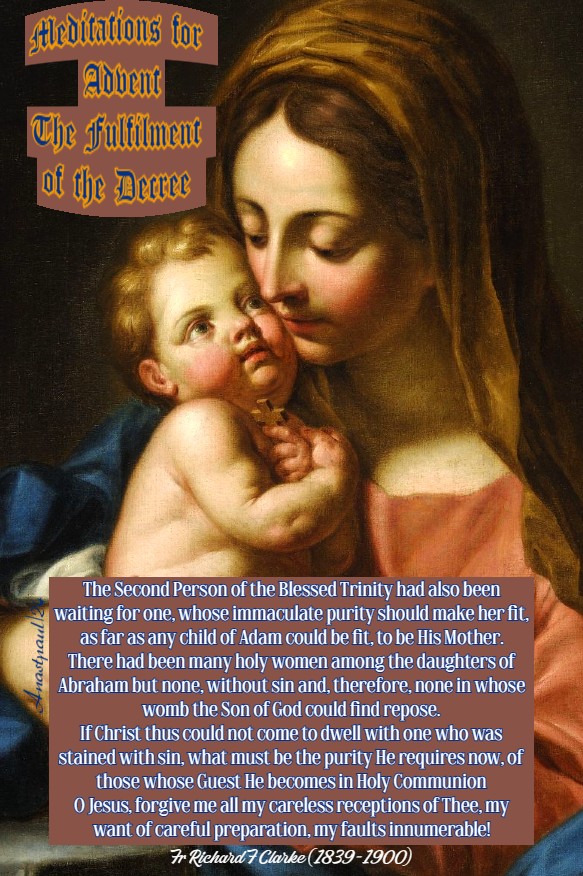
+2. The Second Person of the Blessed Trinity had also been waiting for one, whose immaculate purity should make her fit, as far as any child of Adam could be fit, to be His Mother. There had been many holy women among the daughters of Abraham but none, without sin and, therefore, none in whose womb the Son of God could find repose. If Christ thus could not come to dwell with one who was stained with sin, what must be the purity He requires now, of those whose Guest He becomes in Holy Communion O Jesus, forgive me all my careless receptions of Thee, my want of careful preparation, my faults innumerable!
+3. Christ Himself had prepared a resting-place for Himself in Mary’s sacred breast. As we read in Holy Scripture “The Most High has sanctified a tabernacle for Himself.” So now, if I am to be fit to receive Him, He must prepare my heart. Do I think of this during my preparation for Communion and pray Him to cleanse me from every stain in His Most Precious Blood, to beautify with many graces the tabernacle where He is to abide?
Quote/s of the Day – 9 December – “The Month of the Divine Infancy and the Immaculate Conception of the Blessed Virgin Mary” – Resumed Mass of Sunday – Romans 15:4-13; Matthew 11:2-10 – Scripture search here: https://www.drbo.org/
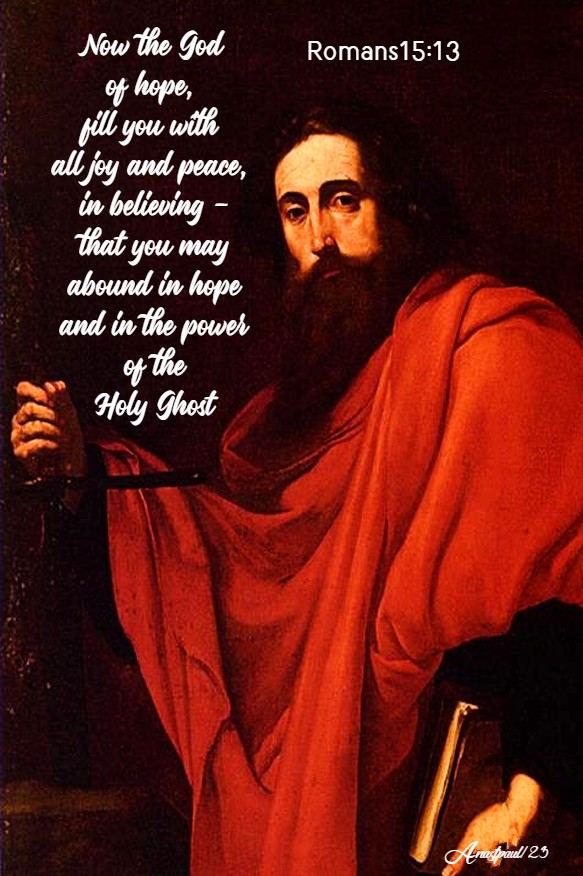
“Now, the God of hope, fill you with all joy and peace in believing – that you may abound in hope and in the power of the Holy Ghost.”
Romans 15:13
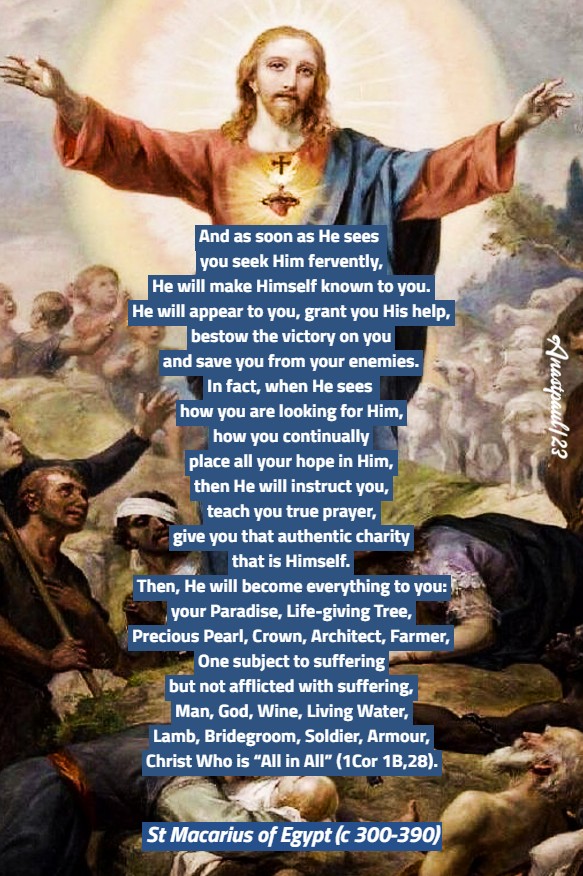
“And as soon as He sees you seek Him fervently, He will make Himself known to you. He will appear to you, grant you His help, bestow the victory on you and save you from your enemies. In fact, when He sees how you are looking for Him, how you continually place all your hope in Him, then He will instruct you, teach you true prayer, give you that authentic charity that is Himself. Then, He will become everything to you: your Paradise, Life-giving Tree, Precious Pearl, Crown, Architect, Farmer, One subject to suffering but not afflicted with suffering, Man, God, Wine, Living Water, Lamb, Bridegroom, Soldier, Armour, Christ Who is “All in All” (1Cor 1B,28).
St Macarius of Egypt (c300-390)
“God accepts our desires as though they were of great value. He longs ardently for us to desire to and love Him. He accepts our petitions for benefits, as though we were doing Him a favour. His joy in giving, is greater than ours in receiving. So let us not be apathetic in our asking, nor set too narrow bounds to our requests; nor ask for frivolous things unworthy of God’s greatness.”
St Gregory Nazianzen (330-390) Father & Doctor of the Church
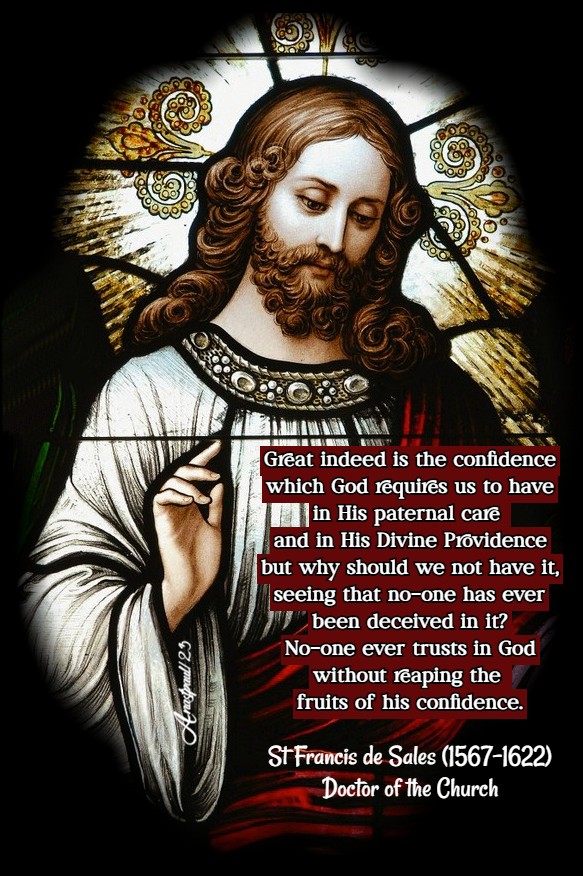
“Great indeed is the confidence which God requires us to have in His paternal care and in His Divine Providence but why should we not have it, seeing that no-one has ever been deceived in it? No-one ever trusts in God without reaping the fruits of his confidence.”
St Francis de Sales (1567-1622) Doctor of the Church
One Minute Reflection – 9 December – “The Month of the Divine Infancy and the Immaculate Conception of the Blessed Virgin Mary” – Resumed Mass of Sunday – Romans 15:4-13; Matthew 11:2-10 – Scripture search here: https://www.drbo.org/
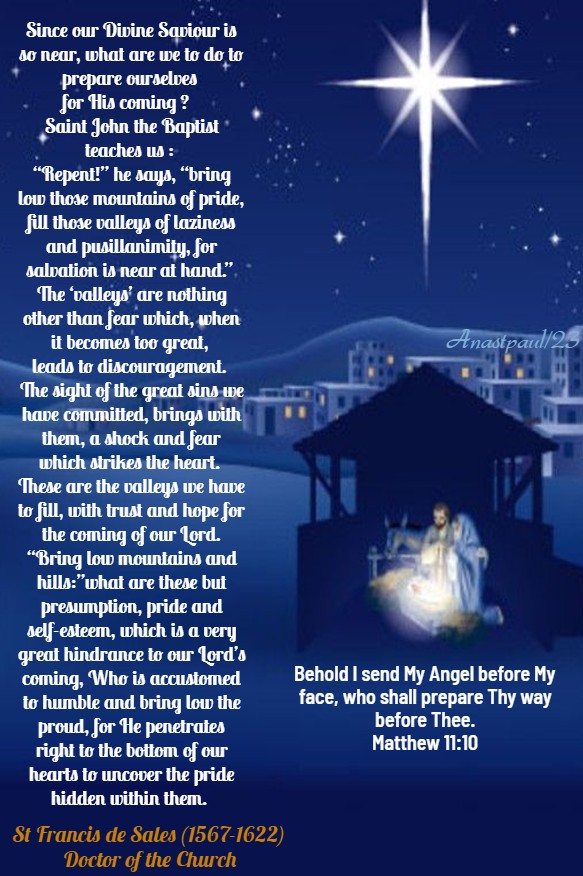
“Behold I send My Angel before My Face, who shall prepare Thy way before Thee.” – Matthew 11:10
REFLECTION – “Since our Divine Saviour is so near, what are we to do to prepare ourselves for His coming ? Saint John the Baptist teaches us : “Repent!” he says, “bring low those mountains of pride, fill those valleys of laziness and pusillanimity, for salvation is near at hand.” The ‘valleys’ are nothing other than fear which, when it becomes too great, leads to discouragement. The sight of the great sins we have committed, brings with them, a shock and fear which strikes the heart. These are the valleys we have to fill, with trust and hope for the coming of our Lord.
“Bring low mountains and hills:”what are these but presumption, pride and self-esteem, which is a very great hindrance to our Lord’s Coming, Who is accustomed to humble and bring low the proud, for He penetrates right to the bottom of our hearts to uncover the pride hidden within them. “Level the highways, the crooked ways make straight to make them a plain.” This is as though He were to say: “Put right all those doubtful intentions, so that you may have none but that of pleasing God, by doing penance, this being the goal to which we should all aim.”
Make straight the path, smooth down your feelings by the mortification of your passions, inclinations and aversions. Oh, what a desirable thing it is, this equanimity of mind and feeling; how faithfully we ought to work to acquire it! For, we are more changing and inconstant, than can be told. People are to be found, who at one moment, being in a good temper, will be of a pleasant and joyful conversation; yet, look on the other side and you will find them sad and restless –in sum, the winding and uneven ways, are to be made straight for the Coming of our Lord!” – St Francis de Sales (1567-1622) Bishop of Geneva, Doctor of the Church (Sermon for the 4th Sunday of Advent).
PRAYER – O God, Who by the Immaculate Conception of the Virgin, prepared a worthy dwelling for Thy Son,and Who, by Thy Son’s death, foreseen by Thee, preserved her from all taint, grant, we beseech Thee, through her intercession, that we too may come to Thee unstained by sin.Through the same Jesus Christ, Thy Son our Lord, Who lives and reigns with Thee, in the unity of the Holy Ghost, God, world without end. Amen (Collect).
Our Morning Offering – 9 December – “The Month of the Divine Infancy and the Immaculate Conception of the Blessed Virgin Mary” – Resumed Mass of Sunday
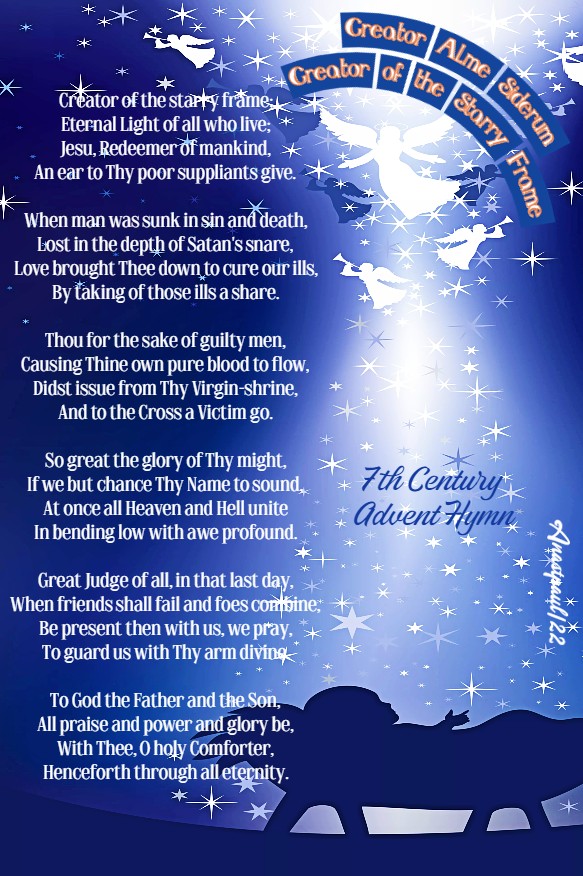
Creator Alme Siderum Creator of the Starry Frame 7th Century Advent Hymn
Creator of the starry frame; Eternal Light of all who live; Jesu, Redeemer of mankind, An ear to Thy poor suppliants give.
When man was sunk in sin and death, Lost in the depth of Satan’s snare, Love brought Thee down to cure our ills, By taking of those ills a share.
Thou for the sake of guilty men, Causing Thine own pure blood to flow, Didst issue from Thy Virgin-shrine, And to the Cross a Victim go.
So great the glory of Thy might, If we but chance Thy Name to sound, At once all Heaven and Hell unite In bending low with awe profound.
Great Judge of all, in that last day, When friends shall fail and foes combine, Be present then with us, we pray, To guard us with Thy arm divine.
To God the Father and the Son, All praise and power and glory be, With Thee, O holy Comforter, Henceforth through all eternity.
Also known as Advent Hymn, this translation of the Latin hymn Creator Alme Siderum (Pope Urban VIII’s 1632 revision of the 7th Century Hymn Conditor alme siderum) was first published in Fr Edward Caswall’s Lyra Catholica,
Saint of the Day – 9 December – St Gorgonia (Died c370) Married, Mother, Sister of St Gregory Nazianzen and St Caesarius, daughter of Saint Gregory the Elder and Saint Nonna. Born in Nazianzen in modern Turkey and probably died there in c370 of natural causes.
The Roman Martyrology reads today: “At Nazianzen, St Gorgonia, sister of the blessed Gregory the Theologian, who has related her vitues and miralces.”
That which we know of Gorgonia is best found in the funeral oration which her brother dedicated to her. She was given in marriage at a young age to a citizen of Iconium, called Alypius, by whom she had two sons and three daughters; one of these, Alypiana, appears in Gregory’s Will, who excluded the others whose conduct was reprehensible.
It seems that Gorgonia was Baptised shortly before her marriage; it is certain that St. Gregory attributes to her glory, the fact that she led her husband and children to Baptism.
She died around 370, after her brother St Caesarius and before their parents, as St Gregory says in one of his poems.
The cult paid to Gorgonia is quite ancient, since Nicephorus Callistus says in the 14th Century that it was fully justified by her virtues.
St Michaela Andrusikiewicz St Nectarius of Auvergne
St Peter Fourier CRSA (1565-1640) “The Good Father of Mattaincourt,” Priest, Founder, Reformer, Confessor, Ascetic, Theologian, Teacher, Preacher, Apostle of Prayer, Penance and Charity, Marian devotee. Together with the Blessed Alix Le Clerc, in 1597, Fourier founded the Congregation of Notre Dame of Canonesses Regular of St Augustine, who were committed to the free education of children, taking a fourth vow to that goal. St Peter was Beatified on 20 January 1730 by Pope Benedict XIII and Canonised on 27 May 1897 by Pope Leo XIII. Biography: https://anastpaul.com/2018/12/09/saint-of-the-day-9-december-st-peter-fourier-c-r-s-a-1565-1640/
St Proculus of Verona (Died c320) Bishop of Pav ia. The Roman Martyrology says today: “In Verona, during the persecution of Diocletian, St Proculus, Bishop, who was buffeted, scourged with rods and driven out of the City. Being at length, restored to his Church, he rested in peace.” One who survived Diocletian: https://anastpaul.com/2023/12/09/saint-of-the-day-9-december-saint-proculus-of-verona-died-c320-bishop/
Blessed Mercedarian Fathers – (10 Beati): The memorial of ten Mercedarian Friars who were especially celebrated for their holiness: Arnaldo de Querol • Berengario Pic • Bernardo de Collotorto • Domenico de Ripparia • Giovanni de Mora • Guglielmo Pagesi • Lorenzo da Lorca • Pietro Serra • Raimondo Binezes • Sancio de Vaillo
Martyrs of North Africa – (24 Saints): Twenty-four Christians murdered together in North Africa for their faith. The only details to survive are four of their names – Bassian, Peter, Primitivus and Successus.
Martyrs of Samosata – (7 Saints): Seven Martyrs crucified in 297 in Samosata (an area of modern Turkey) for refusing to perform a pagan rite in celebration of the victory of Emperor Maximian over the Persians. They are – Abibus, Hipparchus, James, Lollian, Paragnus, Philotheus and Romanus. They were crucified in 297 in Samosata (an area in modern Turkey).
Thought for the Day – 8 December – Meditations with Fr Richard Frederick Clarke SJ (1839-1900)
Meditations for Advent From “The Devout Year” By Fr Richard Frederick Clarke SJ (1839-1900)
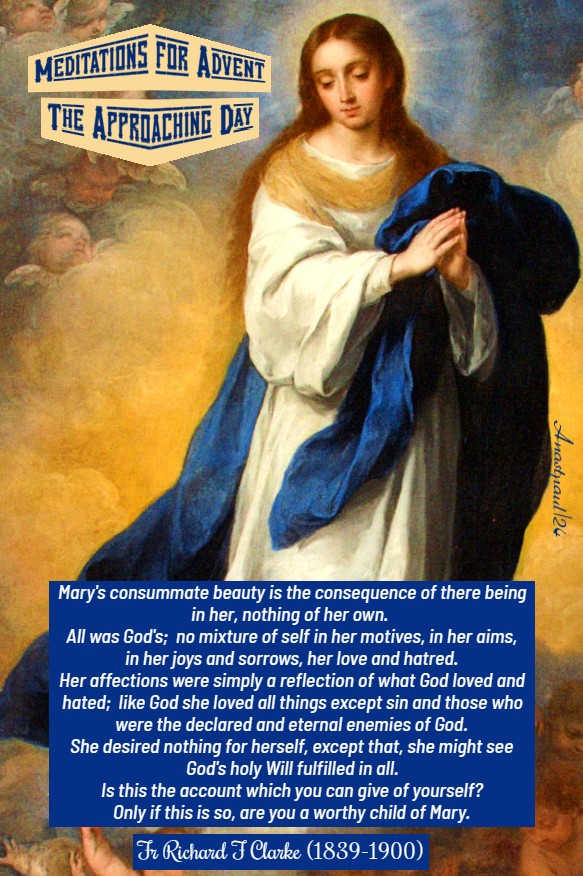
The Approaching Day
+1. When the sun is soon to appear above the horizon, the morning star, shining with a light derived indeed from Him but, nevertheless, shining bright and clear, even before His Coming, gives the signal of His approach. So, the holy Mother of God, dawning upon the world, with a grace and beauty which was the gift of her Divine Son, anticipated His Incarnation and made the world more beautiful in God’s Sight, than it had ever been before. Mary was more precious to God than all the rest of men and this, quite independently of her Divine Maternity. Consider why this was and learn a lesson for yourself.
+2. The morning star is still clearly seen when all other stars have been extinguished by the light of the Coming Day . Mary has a brilliancy so great that the brightness of all the other Saints fades into nothing in comparison with hers. If this was the case even in comparison with the glory of St John Baptist, St Joseph, Abraham the Patriarch, the friend of God – Job, the model of patience, Daniel, the beloved of God, what must her glory be! Thank God for having created one child of Adam worthy of Himself!
+3. Mary’s consummate beauty is the consequence of there being in her, nothing of her own. All was God’s ; no mixture of self in her motives, in her aims, in her joys and sorrows, her love and hatred. Her affections were simply a reflection of what God loved and hated; like God she loved all things except sin and those who were the declared and eternal enemies of God. She desired nothing for herself, except that, she might see God’s holy Will fulfilled in all. Is this the account which you can give of yourself ? Only if this is so, are you a worthy child of Mary.
Quote/s of the Day – 8 December – “The Month of the Divine Infancy and the Immaculate Conception of the Blessed Virgin Mary” – The Feast of the Immaculate Conception
“Hail, full of grace, the Lord is with thee, blessed art thou among women”
Luke 1:28
“Thou alone and Thy Mother, are in all things fair, there is no flaw in Thee and no stain in Thy Mother.”
St Ephrem (306-373) Father & Doctor of the Church
“You have guarded the integrity of the temple [of your body]; you have kept your tabernacle free from all sin, so that the Father becomes your guest, the Holy Ghost overshadows you and the Only-begotten Son Incarnate is born of you.”
St Hesychius of Jerusalem (Died c450) Priest, Exegete, Father
“O Mother blest! And chosen Shrine wherein the Architect Divine, Whose Hand contains the earth and sky vouchsafed in hidden guise to lie; Blest in the message Gabriel brought; blest in the work, the Spirit wrought; Most blest, to bring to human birth, the long desired of all the earth!”
St Venantius Fortunatus (c530 – c609) Bishop, Poet, Theologian, Father
“Let all the children of the Catholic Church, who are so very dear to us, hear these words of ours. With a still more ardent zeal for piety, religion and love, let them continue to venerate, invoke and pray, to the most Blessed Virgin Mary, Mother of God, conceived without original sin. Let them fly with utter confidence to this most sweet Mother of mercy and grace in all dangers, difficulties, needs, doubts and fears. Under her guidance, under her patronage, under her kindness and protection, nothing is to be feared; nothing is hopeless. Because, while bearing toward us, a truly motherly affection and having in her care, the work of our salvation, she is solicitous about the whole human race. And since, she has been appointed by God, to be the Queen of Heaven and Earth and is exalted above all the Choirs of Angels and Saints and, even stands at the Right Hand, of her only-begotten Son, Jesus Christ our Lord, she presents our petitions in a most efficacious manner. What she asks, she obtains. Her pleas can never be unheard!”
Pope Pius IX (1792-1878) Ineffabilis Deus (which proclaimed the Dogma of the Immaculate Conception on 8 December 1854)
One Minute Reflection – 8 December – “The Month of the Divine Infancy and the Immaculate Conception of the Blessed Virgin Mary” – The Feast of the Immaculate Conception – Proverbs 8:22-35, Luke 1:26-28 – Scripture search here: https://www.drbo.org/
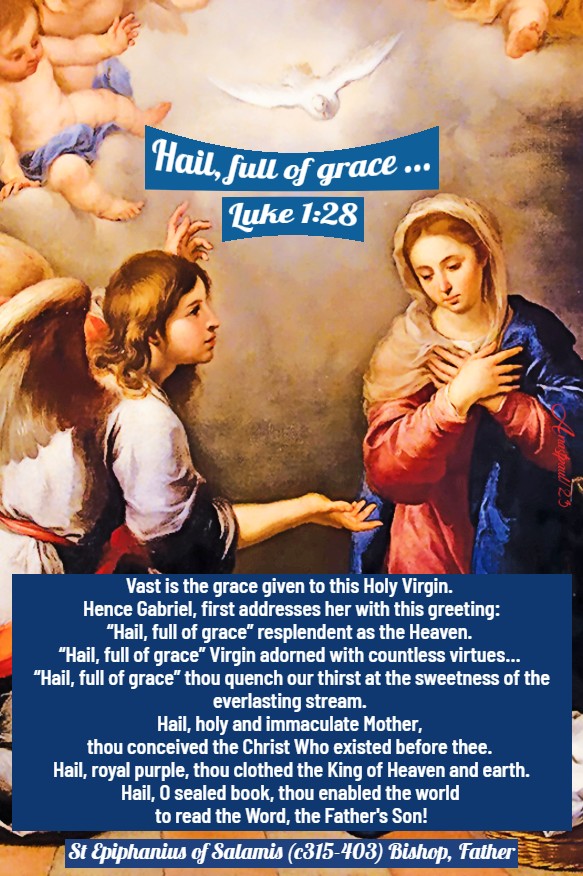
“Hail, full of grace …” – Luke 1:28
REFLECTION – “How can I speak? What praises could I possibly make of the holy and glorious Virgin? She surpasses all other beings except for God Himself. She is by nature more beautiful than the Cherubim and Seraphim and the whole Angelic Host. No language, whether of Heaven or earth, or even of the Angels, is enough to praise her. Blessed Virgin, spotless dove, heavenly bride… temple and throne of the Godhead! Christ, the Sun Who shines resplendently in Heaven and on earth, belongs to thee. Thou art the luminous cloud which brought Christ down to earth, He Who is the bright streak of lightening, Who shines across the world.
Rejoice, full of grace, gate of Heaven! It was of thee, the author of the Song of Songs speaks … when he cries aloud: “A garden enclosed is my sister, my bride; an enclosed garden, a fountain sealed” (4:12)… Holy Mother of God, spotless ewe – thou gave birth to Christ, the Lamb, the Word made flesh in thee … How amazing a wonder in the heavens – a woman clothed with the sun (Apoc 12:1), carrying the Light in her arms! … How amazing a wonder in the heavens – the Lord of Angels becomes the Virgin’s Child. Angels judged Eve; now they fill Mary with glory, since it was she who raised Eve from her fall and brought Adam, expelled from Paradise, into Heaven.
Vast is the grace given to this Holy Virgin. Hence Gabriel, first addresses her with this greeting: “Hail, full of grace” resplendent as the Heaven. “Hail, full of grace” Virgin adorned with countless virtues… “Hail, full of grace” thou quench our thirst at the sweetness of the everlasting stream. Hail, holy and Immaculate Mother, thou conceived the Christ Who existed before thee. Hail, royal purple, thou clothed the King of Heaven and earth. Hail, O sealed book, thou enabled the world to read the Word, the Father’s Son!” – St Epiphanius of Salamis (c315-403) Bishop of Salamis, known as the Oracle of Palestine and Father of the Church (Sermon No 5)
PRAYER – O God, Who by the Immaculate Conception of the Virgin, prepared a worthy dwelling for Thy Son, and Who, by Thy Son’s death, foreseen by Thee, preserved her from all taint, grant, we beseech Thee, through her intercession that we too, may come to Thee, unstained by sin. T Through Jesus Christ, Thy Son our Lord, Who lives and reigns with Thee, in the unity of the Holy Ghost, God, world without end. Amen (Collect).






















 AnaStpaul
You must be logged in to post a comment.