Quote of the Day – 25 June
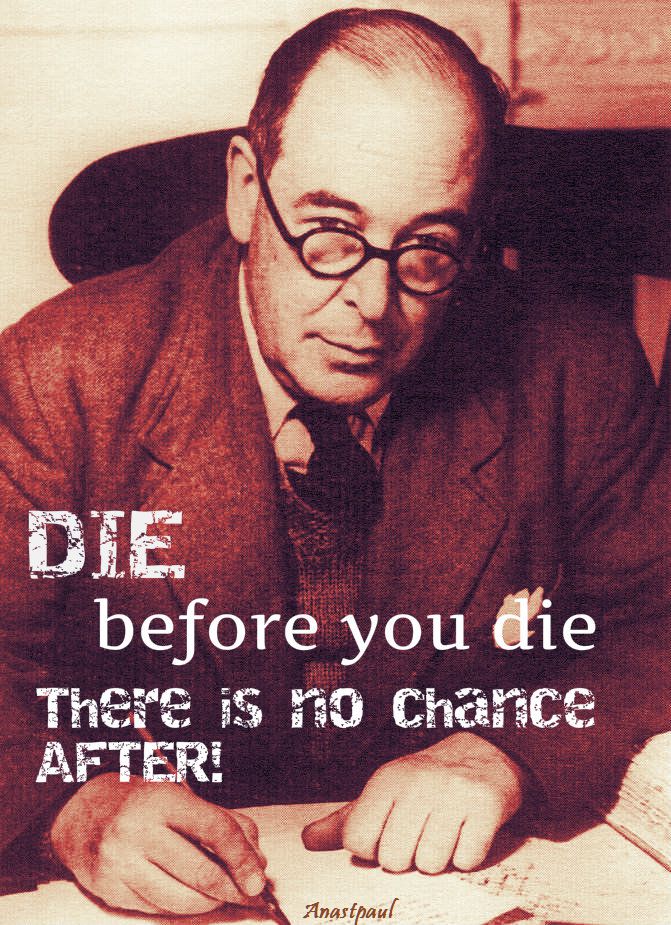
“DIE before you die
there is no chance after.”
Prof C S Lewis

Quote of the Day – 25 June
Prof C S Lewis

One Minute Reflection – 25 June
Blessed be God the Father . who gave us a new birth to a living hope…..to an inheritance that is imperishable, undefiled and unfading, kept in heaven for you………1 Peter 1:3-4

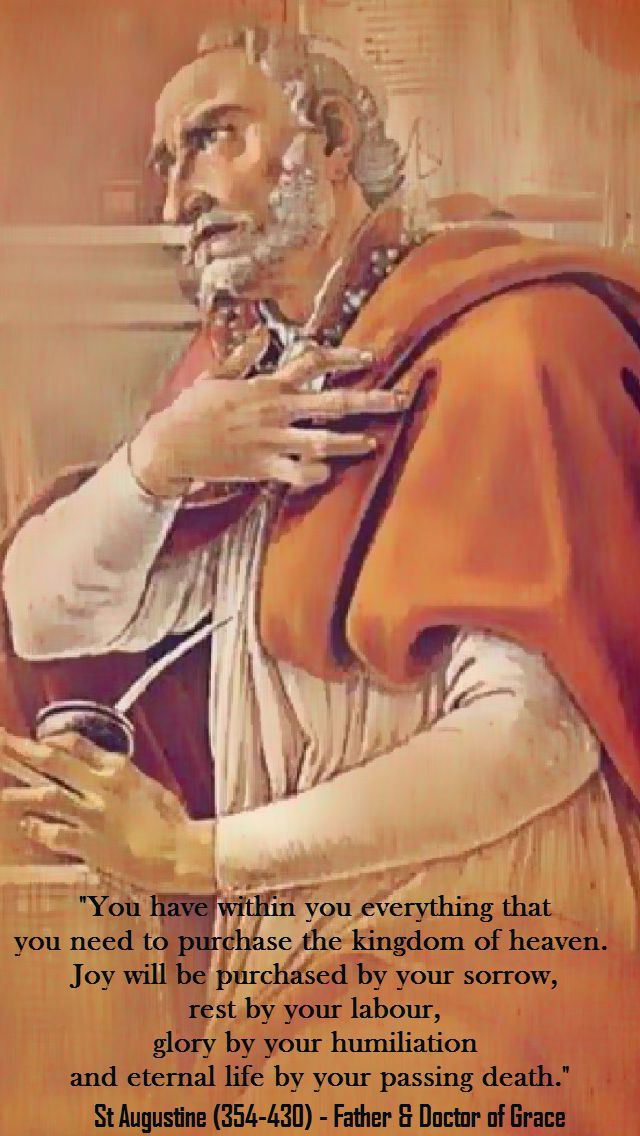
REFLECTION – “You have within you, everything that you need to purchase the kingdom of heaven.
Joy will be purchased by your sorrow,
rest by your labour,
glory by your humiliation
and eternal life by your passing death.”………………….St Augustine

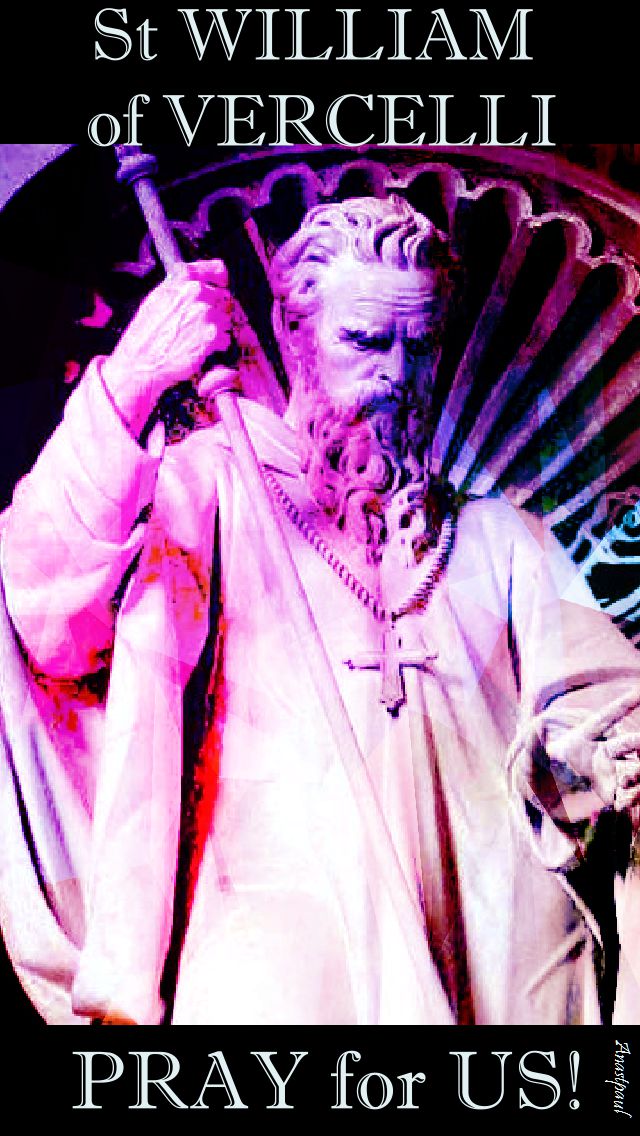
PRAYER – Loving Father,. teach me how to make every event on earth lay up treasures for me in heaven. Help me to endure sorrows, labour, humiliations, pain and death willingly so as to attain heaven with You, in unity with Your Son, Lord Jesus Christ and the Holy Spirit, one God forever and ever. St William of Vercelli, your life was a focused gift to God, pray for us that we too may join you in eternal life. Amen

Celebrating the Solemnity of the Most Sacred Heart of Jesus – 23 June 2017
“That Christ has come to us with a heart made of flesh tells us a lot about how the Sacred Heart loves us and about the kind of love we need. We are loved by any number of hearts during our earthly lives but one alone among them we call Sacred. We know how it feels to be loved by fallen people—by those who try but cannot love perfectly. But what it is to be loved by a Sacred Heart?
At the outset of the last supper, the Lord gets down on His hands and knees and washes the feet of His disciples. “Do you understand this?” He asks them. Before He tells the Apostles about union with Him, about the great commandment of love, about His joy, Jesus first shows them what it all “looks” like.
“Do you understand this?” This is perhaps the ultimate question as we reflect on what it means to be loved by the Sacred Heart. Perhaps the answer will be an honest, “No, Lord, I do not understand your love for me,” and that could be nearer the truth than anything. “I don’t understand what God is doing on His hands and knees wiping the dirt off of my feet. If I were Jesus, I wouldn’t treat me like He treats me. I wouldn’t be so tolerant and forgiving. I wouldn’t keep on loving someone like me.”
But to spend our lives in contemplation of His love for us, as the apostles surely did, is what will bring us ever closer to the source of the Love that constantly reaches into our lives, showing itself to be subtle, selfless and inexhaustible. If the fire, thorns and blood are the divinely revealed gauge of divine love in a human heart, then the more I welcome His tireless forgiveness, His unflinching friendship in the face of my infidelity, the more I will appreciate the mystery of divine charity which the Sacred Heart reveals.
Now we see imperfectly, in part but the part we do see should teach us why He needed to come to us with a heart of flesh, like ours.”


Quote/s of the Day – The Solemnity of the Body and Blood of Christ
“How I loved the feasts!….
I especially loved the processions in honour
of the Blessed Sacrament. What a joy it was
for me to throw flowers beneath the feet of God!…
I was never so happy as when I saw my roses
touch the sacred Monstrance…”
– from St. Therese’s Autobiography Story of A Soul

“It is invaluable to converse with Christ
and leaning against Jesus’ breast like His beloved disciple,
we can feel the infinite love of his Heart.
We learn to know more deeply the One who gave Himself totally,
in the different mysteries of His divine and human life,
so that we may become disciples and in turn enter into
this great act of giving, for the glory of God
and the salvation of the world. Through adoration,
the Christian mysteriously contributes to the
radical transformation of the world and to the sowing of the Gospel.
Anyone who prays to the Saviour draws the whole world with him
and raises it to God. Those who stand before the Lord
are therefore fulfilling an eminent service.
They are presenting to Christ all those who do not know Him
or are far from Him; they keep watch in His presence on their behalf!”
– from St Pope John Paul II’s 1996 letter to the Bishop of Liege,
written on the occasion of the 750th anniversary of the first celebration of the Feast of Corpus Christi

“When you have received Him,
stir up your heart to do Him homage,
speak to Him about your spiritual life,
gazing upon Him in your soul where He is present
for your happiness; welcome Him as warmly as possible,
and behave outwardly in such a way, that your actions
may give proof to all of His Presence.”
– St. Francis de Sales

One Minute Reflection – 18 June – Feast of Corpus Christi
He who abides in me and I in him, he it is that bears much fruit, for apart from me you can do nothing……John 15:5
REFLECTION – “Eternal happiness begins now for the Christian who is comforted with the definitive manna of the Eucharist. The old life has gone forever. Let us leave everything behind us so that everything will be new, “our hearts, our words and our actions.” This is the Good News. News, because it speaks to us of a deep love which we never could have dreamed of. Good, because there is nothing better than uniting ourselves to God, the greatest Good of all. It is Good News, because in an inexplicable way it gives us a foretaste of heaven.”……….St Josemaria Escriva (Christ is passing By – On the Feast of Corpus Christ No 153)

PRAYER – In response to Your Presence, O Lord,
I offer You my presence.
In response to Your silence,
I offer You my silence.
In response to the gaze of Your Eucharistic Face,
I offer You my eyes.
In response to Your Eucharistic Heart,
I offer You every heartbeat of mine.
In response to the mystery of Your Eucharistic poverty,
I offer You my poverty.
My one desire is to remain before You
even as You remain before me
in this the Sacrament of Your Love.
(Benedictines of Perpetual Adoration)

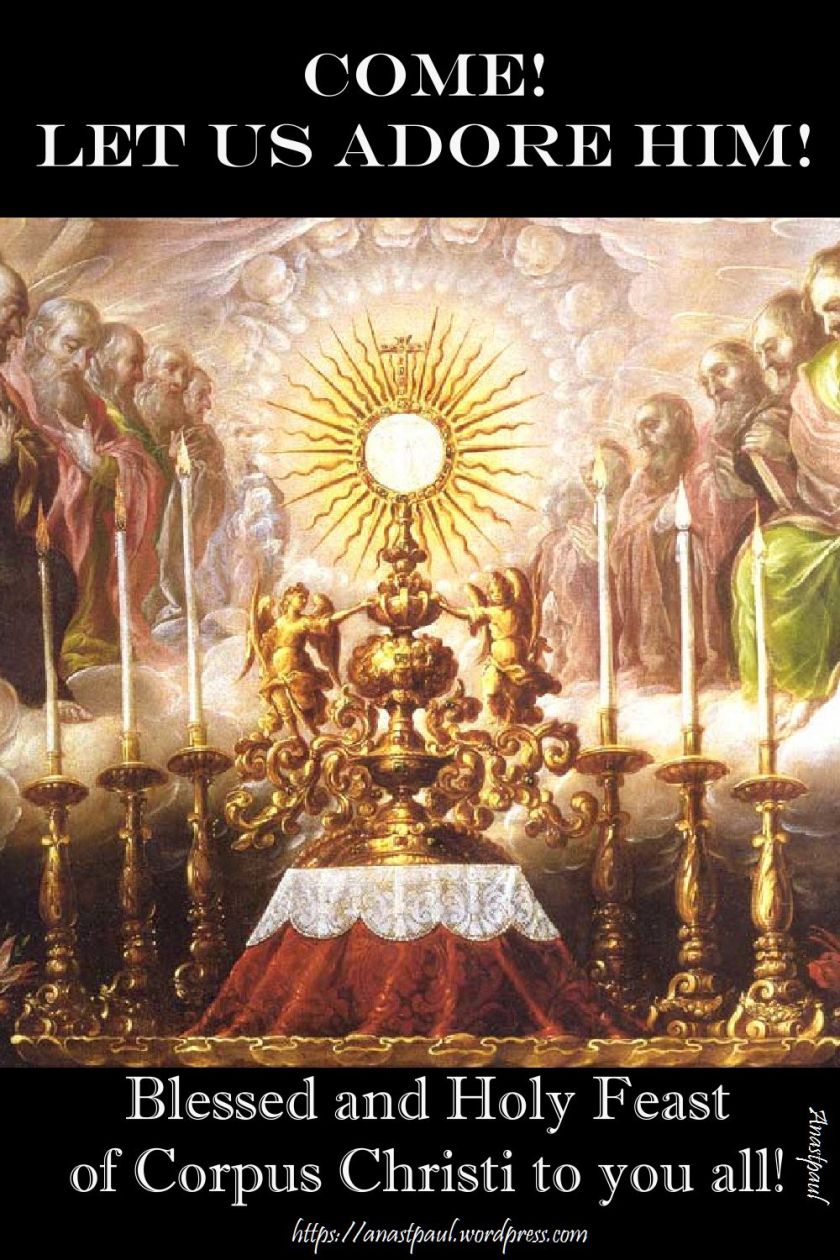
Blessed and Holy Feast of Corpus Christi! 18 June 2017

“The solemnity of Corpus Christi originated within a very precise cultural and historical context. Its aim was to proclaim openly the faith of the People of God in Jesus Christ’s real, living presence in the Blessed Sacrament of the Eucharist.”


Pope Benedict XVI explains the history of this feast, which dates back to the 13th century, as follows:
St Juliana of Cornillon had a vision which “presented the moon in its full splendour, crossed diametrically by a dark stripe. The Lord made her understand the meaning of what had appeared to her. The moon symbolised the life of the Church on earth, the opaque line, on the other hand, represented the absence of a liturgical feast (…) in which believers would be able to adore the Eucharist so as to increase in faith, to advance in the practice of the virtues and to make reparation for offences to the Most Holy Sacrament. (…)
Jacques Pantaléon of Troyes was also won over to the good cause of the Feast of Corpus Christi during his ministry as Archdeacon in Lièges. It was he who, having become Pope with the name of Urban IV in 1264, instituted the Solemnity of Corpus Christi on the Thursday after Pentecost as a holiday of obligation for the universal Church.
Until the end of the world
In the Bull of its institution, entitled Transiturus de hoc mundo, (11 Aug. 1264), Pope Urban even referred discreetly to Juliana’s mystical experiences, corroborating their authenticity. He wrote: “Although the Eucharist is celebrated solemnly every day, we deem it fitting that at least once a year it be celebrated with greater honour and a solemn commemoration.
“Indeed we grasp the other things we commemorate with our spirit and our mind but this does not mean that we obtain their real presence. On the contrary, in this sacramental commemoration of Christ, even though in a different form, Jesus Christ is present with us in his own substance. While he was about to ascend into Heaven he said ‘And lo, I am with you always, to the close of the age’ (Matthew 28:20).”
The Pontiff made a point of setting an example by celebrating the solemnity of Corpus Christi in Orvieto, the town where he was then residing. Indeed, he ordered that the famous Corporal with the traces of the Eucharistic miracle which had occurred in Bolsena the previous year, 1263, be kept in Orvieto Cathedral — where it still is today.
While a priest was consecrating the bread and the wine he was overcome by strong doubts about the Real Presence of the Body and Blood of Christ in the sacrament of the Eucharist. A few drops of blood began miraculously to ooze from the consecrated Host, thereby confirming what our faith professes.
Texts that move the heart
Urban IV asked one of the greatest theologians of history, St Thomas Aquinas — who at that time was accompanying the Pope and was in Orvieto — to compose the texts of the Liturgical Office for this great feast. They are masterpieces, still in use in the Church today, in which theology and poetry are fused. These texts pluck at the heartstrings in an expression of praise and gratitude to the Most Holy Sacrament, while the mind, penetrating the mystery with wonder, recognizes in the Eucharist the Living and Real Presence of Jesus, of His Sacrifice of love that reconciles us with the Father and gives us salvation.
“How inestimable a dignity, beloved brethren, divine bounty has bestowed upon us Christians from the treasury of its infinite goodness! For there neither is nor ever has been a people to whom the gods were so nigh as our Lord and God is nigh unto us.
“Desirous that we be made partakers of His divinity, the only-begotten Son of God has taken to Himself our nature so that having become man, He would be enabled to make men gods. Whatever He assumed of our nature He wrought unto our salvation. For on the altar of the Cross He immolated to the Father His own Body as victim for our reconciliation and shed His blood both for our ransom and for our regeneration. Moreover, in order that a remembrance of so great benefits may always be with us, He has left us His Body as food and His Blood as drink under appearances of bread and wine.
“O banquet most precious! O banquet most admirable! O banquet overflowing with every spiritual delicacy! Can anything be more excellent than this repast, in which not the flesh of goats and heifers, as of old, but Christ the true God is given us for nourishment? What more wondrous than this holy sacrament! In it bread and wine are changed substantially, and under the appearance of a little bread and wine is had Christ Jesus, God and perfect Man. In this sacrament sins are purged away, virtues are increased, the soul is satiated with an abundance of every spiritual gift. No other sacrament is so beneficial. Since it was instituted unto the salvation of all, it is offered by Holy Church for the living and for the dead, that all may share in its treasures.
“My dearly beloved, is it not beyond human power to express the ineffable delicacy of this sacrament in which spiritual sweetness is tasted in its very source, in which is brought to mind the remembrance of that all-excelling charity which Christ showed in His sacred passion? Surely it was to impress more profoundly upon the hearts of the faithful the immensity of this charity that our loving Savior instituted this sacrament at the last supper when, having celebrated the Pasch with His disciples. He was about to leave the world and return to the Father. It was to serve as an unending remembrance of His passion, as the fulfillment of ancient types — this the greatest of His miracles. To those who sorrow over His departure He has given a unique solace.”
“Eucharistic springtime”
I would like to affirm with joy that today there is a “Eucharistic springtime” in the Church. How many people pause in silence before the Tabernacle to engage in a loving conversation with Jesus! It is comforting to know that many groups of young people have rediscovered the beauty of praying in adoration before the Most Blessed Sacrament.
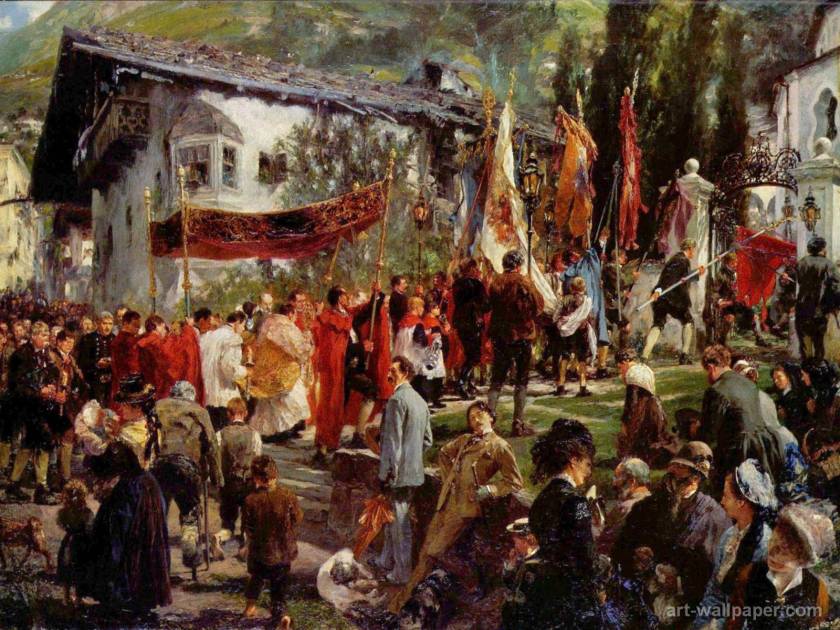
John Paul II said in his Encyclical Ecclesia de Eucharistia: “In many places, adoration of the Blessed Sacrament is also an important daily practice and becomes an inexhaustible source of holiness. The devout participation of the faithful in the Eucharistic procession on the Solemnity of the Body and Blood of Christ is a grace from the Lord which yearly brings joy to those who take part in it. Other positive signs of Eucharistic faith and love might also be mentioned” (no. 10).
In remembering St Juliana of Cornillon let us also renew our faith in the Real Presence of Christ in the Eucharist. As we are taught by the Compendium of the Catechism of the Catholic Church, “Jesus Christ is present in the Eucharist in a unique and incomparable way. He is present in a true, real and substantial way, with his Body and his Blood, with his Soul and his Divinity. In the Eucharist, therefore, there is present in a sacramental way, that is, under the Eucharistic Species of bread and wine, Christ whole and entire, God and Man” (no. 282).
Dear friends, fidelity to the encounter with Christ in the Eucharist in Holy Mass on Sunday is essential for the journey of faith but let us also seek to pay frequent visits to the Lord present in the Tabernacle! In gazing in adoration at the consecrated Host, we discover the gift of God’s love, we discover Jesus’ Passion and Cross and likewise his Resurrection.
Source of joy
It is precisely through our gazing in adoration that the Lord draws us towards Him into His mystery in order to transform us as He transforms the bread and the wine.
The Saints never failed to find strength, consolation and joy in the Eucharistic encounter. Let us repeat before the Lord present in the Most Blessed Sacrament the words of the Eucharistic hymn Adoro te devote, “Devoutly I adore Thee: Make me believe ever more in you, Draw me deeply into faith, into Your hope, into Your love”.
BENEDICT XVI, General Audience, November 17, 2010

Quote of the Day – 17 June
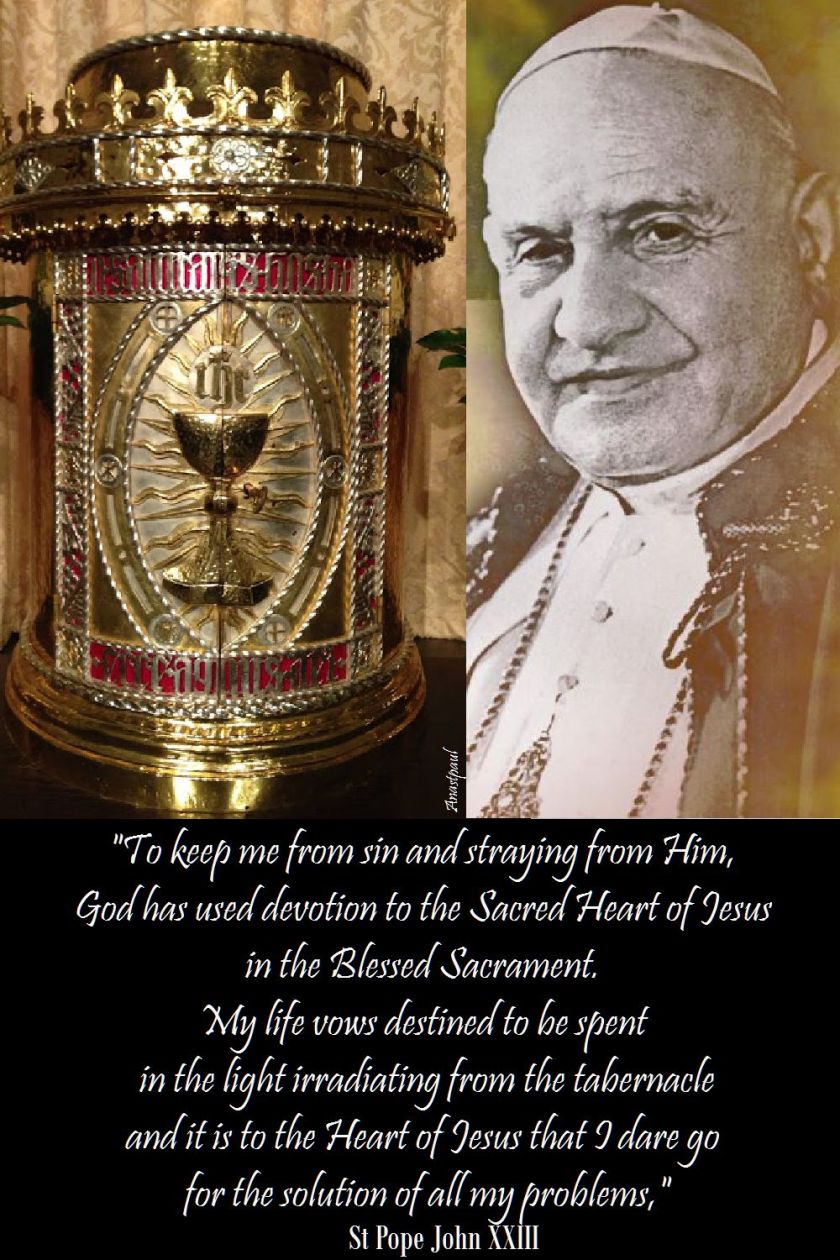
– Pope John XXIII

One Minute Reflection – 17 June
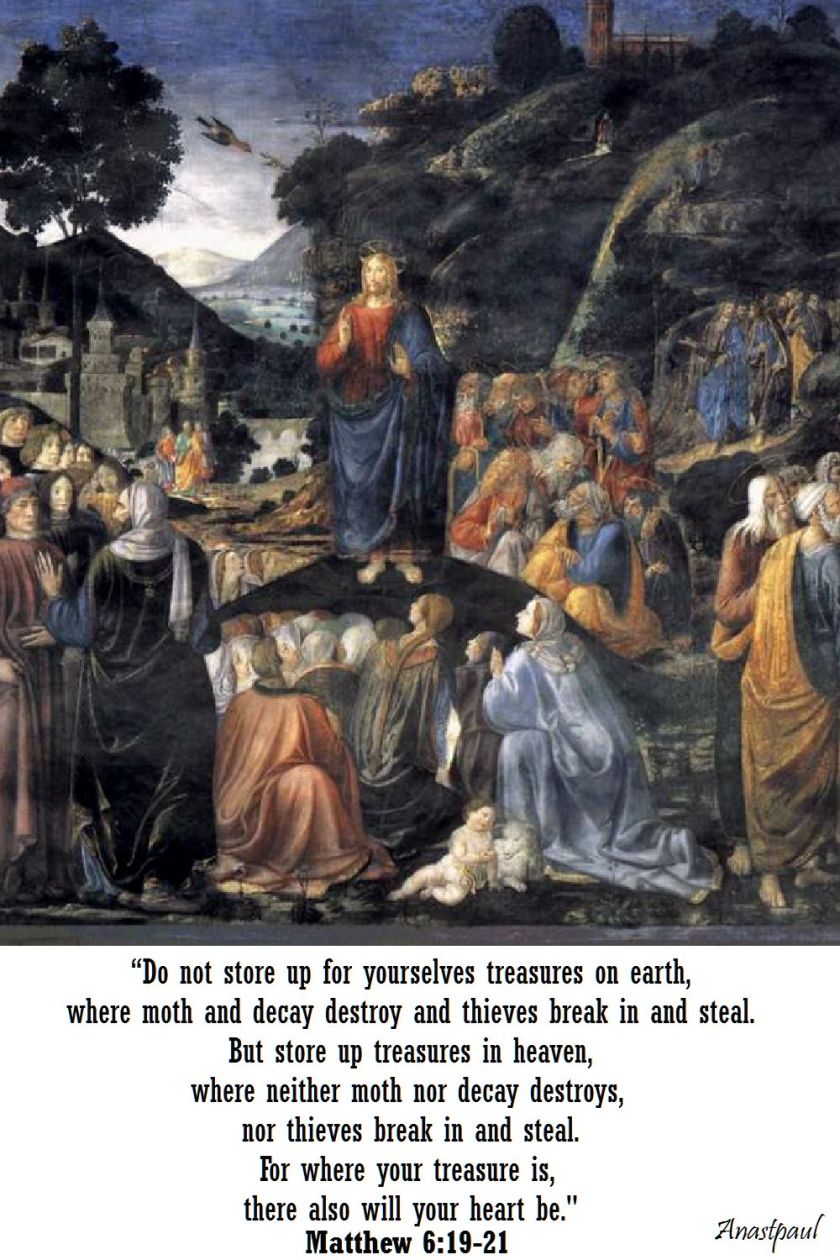
“Do not store up for yourselves
treasures on earth,
where moth and decay destroy
and thieves break in and steal.
But store up treasures in heaven,
where neither moth nor decay destroys,
nor thieves break in and steal.
For where your treasure is,
there also will your heart be.”….Matthew 6:19-21

REFLECTION – Reflecting on his own priestly vocation, Pope John Paul II wrote in 1996 that Brother Albert had played a role in its formation …..“because I found in him a real spiritual support and example in leaving behind the world of art, literature and the theater and in making the radical choice of a vocation to the charity” ………..St John Paul speaking of St Albert Chmielowski (Gift and Mystery: On the Fiftieth Anniversary of My Priestly Ordination)
PRAYER – Father of goodness, make me realise and understand that each and all of my brothers represent the face of Jesus and that He is the only way to You for us all! Help me to extend all of myself to my neighbour in loving imitation of Your Son. St Albert Chmielowski, pray for us that we too may be a light in the darkness of this world, to all who call out to us in their pain and suffering. And please pray for us! Amen

Thought for the Day – 16 June
“How consoling it is to think that in the very moment of the Eucharist’s eternal birth I was present to the mind of God and He foreknew the number of times I would allow Him to come to me in Holy Communion; that, even then, His tender love thankfully appreciated my hospitality, as if not I, a miserable creature of one day but He Himself were to be the favoured beneficiary.
“It was in the beginning . . . ” What, then, will be the duration of His “eucharistic life”?
Christ’s eucharistic life will last till the consummation of the world because until then will men have to eat His flesh to have life everlasting. When He said to His Apostles: “Behold, I am with you all days, even unto the consummation of the world,” He doubtlessly meant not only His divine and spiritual presence and His moral assistance but also His eucharistic presence.
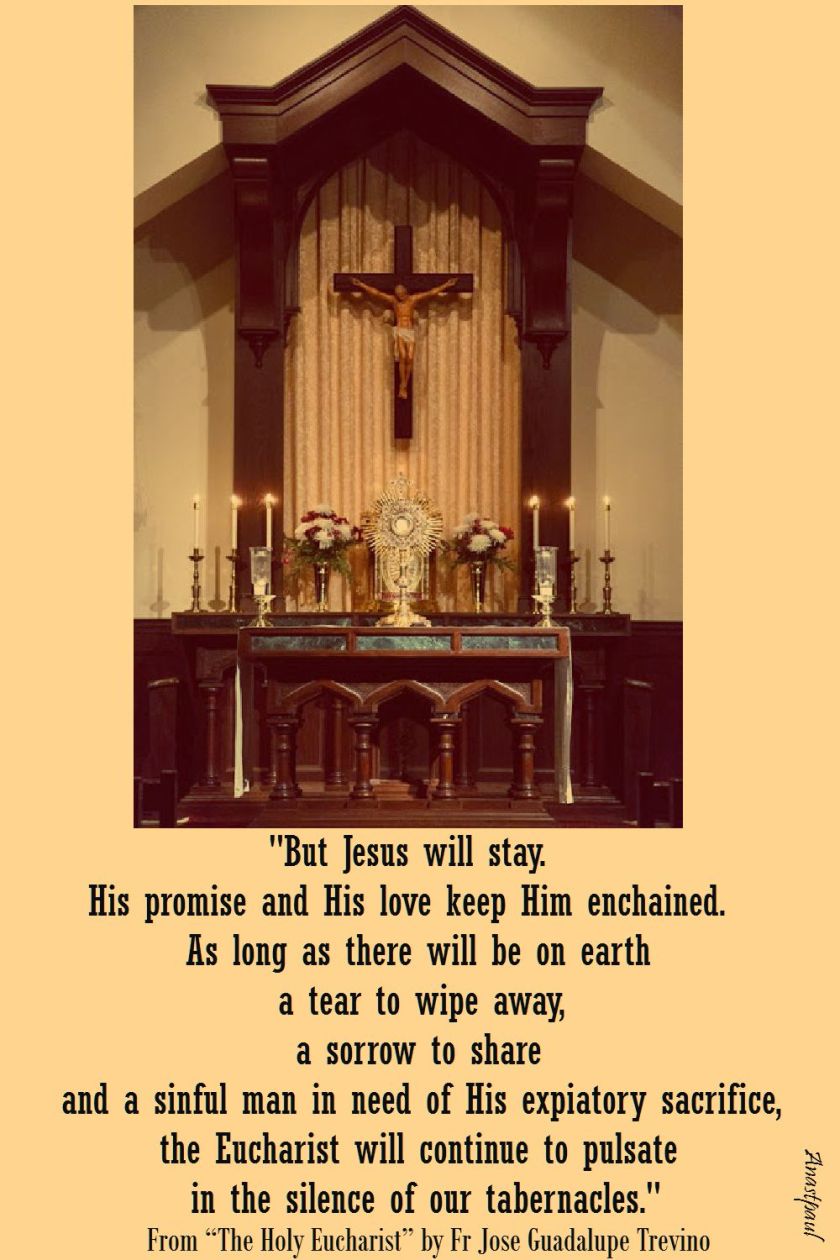
His enemies may refuse Him rights they would not deny even the lowest pariah, imprisoning Him within the narrow limits of His temples; they may subject Him to the most abominable outrages, thereby making His mystic passion in the Eucharist in some way exterior and visible. Those who call themselves His friends may multiply the traitor’s kiss, deny Him and His works and abandon Him who showered upon them the tokens of His love. But Jesus will stay. His promise and His love keep Him enchained. As long as there will be on earth a tear to wipe away, a sorrow to share and a sinful man in need of His expiatory sacrifice, the Eucharist will continue to pulsate in the silence of our tabernacles.”
“The Holy Eucharist” by Fr Jose Guadalupe Trevino

Quote of the Day – 16 June

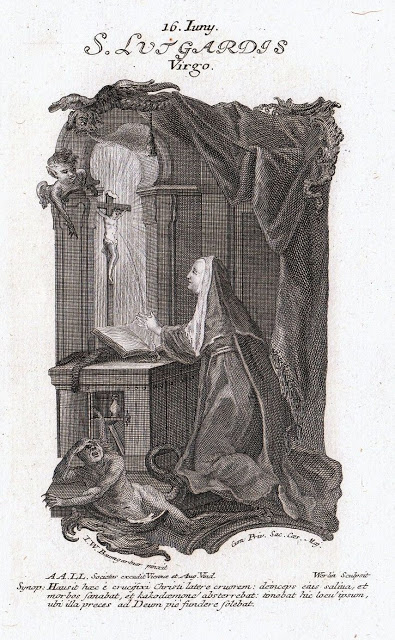
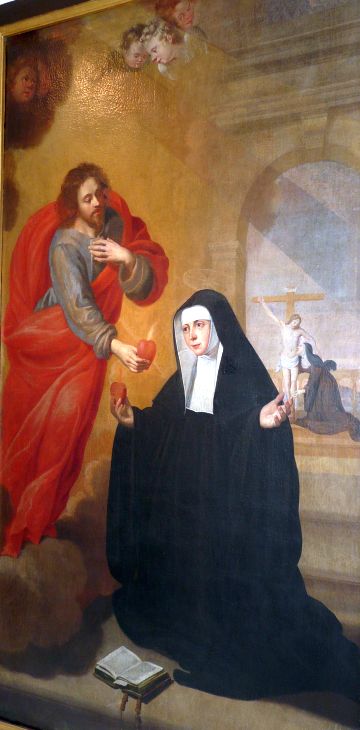
Saint of the Day – 16 June – St Lutgarde of Aywières (1182-1246 –The first known female stigmatic of the Church and one of the first promoters of devotion to the Sacred Heart – Religious, Mystric, Miracle-Worker, Stimatist, Visionary (1182 at Tongres, Limburg, Belgium – 16 June 1246 at Aywieres (modern Awirs), Belgium of natural causes, just as night office began on the Saturday night following Feast of the Holy Trinity) Her relics were transferred to Ittre, Belgium on 4 December 1796 to avoid destruction in the French Revolution. Patronages – birth, childbirth, blind people, againts blindness, disabled, handicapped of physically challenged people, Belgium, Flanders, Belgium. Attributes – • woman with Christ showing her His wounded side, blind Cistercian abbess, Cistercian nun being blinded by the Heart of Jesus, Cistercian to whom Christ extends his hand from the cross, woman in attendance when Christ shows his Heart to the Father

When Lutgarde was twelve, her parents placed her in the care of the Benedictine sisters at St. Catherine’s monastery near Liège, Belgium. The convent allowed visitors and young men came to court the beautiful young woman. Once when an ardent fellow and Lutgarde were talking, Christ appeared to her. Opening His garment, Christ showed Lutgarde the wound in His side bleeding as if recently opened and He said to her, “Do not seek any longer the caresses of unseemly love. Contemplate here what you should love and why you should love it. Here, I pledge to you are the delights of total purity, which will follow it.” When the confused young man tried to resume their conversation, Lutgarde chased him off. “Get away from me, you fodder of death,” she said, “for I have been overtaken by another lover.”
St. Lutgarde made unusually rapid progress in the spiritual life. She opened herself fully to Christ in prayer and He favoured her with an intimate experience of His presence. He gave her gifts of healing and of understanding the convent’s Latin prayers. But she asked him to take them back because both kept her from focusing on loving Him. Then the Lord said to her, “What do You want?” “I want Your heart,” she said. “No, rather it is Your heart that I want,” replied the Lord. “So be it, Lord,” said Lutgarde, “so long as Your heart’s love is mingled with mine and I have and hold my heart in You. For with You as my shield, my heart is secure for all time.”

St Lutgarde spent nine years in St. Catherine’s convent and she was elected to be Superioress of the community there. The year was 1205, when the saint was twenty-three years old. Far from being flattered or pleased by her elevation to this dignity, Lutgarde regarded it as a disaster. Indeed, it seems to have moved her to look elsewhere and to seek some other Order. She thought St. Catherine’s could provide her with sufficient opportunities for living as a contemplative as long as she was an obscure member of the community but not when she took her place at its head. While taking up her role as Superior, it was natural that her thoughts should turn to the austere Cistercian nuns, commonly known as Trappists, who had by this time, many flourishing convents in the Low Countries.
She asked the advice of a learned preacher of Liege, Jean de Lierre, who urged her to give up her post as prioress and leave the Benedictine Order for the Cistercian convent of Aywieres, (Awirs) which had recently been founded near Liege but had been transferred to a site in Brabant, near the village of Lillois. She was very reluctant to accept this particular choice because French was spoken in Brabant and she felt it would be unwise to enter a convent where she would not understand the language of her superiors or spiritual directors. Meanwhile, Christ Himself intervened and spoke the following words to her: “It is My will that you go to Aywieres, and if you do not go, I will have nothing more to do with you.”
As if this were not enough, Lutgarde was also admonished by a saintly friend, who has since been venerated as St. Christine “the Admirable” who told her to go to Aywieres and so with no further possibility of doubt as to the convent of the Cistercian Order to which she was called, Lutgarde left St. Catherine’s without consulting her community and went to Aywieres.
When the nuns of St. Catherine’s discovered their loss, they were inconsolable, but it was too late to do anything about it. Lutgarde, in her turn, prayed earnestly for the peace of the community she had left and was assured by the Blessed Virgin that her prayers would be answered. Indeed, Thomas of Cantimpre ends the first book of his life of St. Lutgarde with the comment: “The indubitable effect of these prayers is to be seen even today [some fifty years later] in the community of St. Catherine’s. For this particular convent continues to grow in fervour more than ever, and to increase, at the same time, in temporal prosperity.”
Three times she fasted for periods of seven years, subsisting only on bread and liquids. The saint dedicated each fast for the Lord’s purposes: once for Lutgarde of Aywières the conversion of heretics, a second time for the salvation of sinners and a final time for Emperor Frederick II, who was threatening the church. Before her death she prophesied the latter’s demise, which occurred in 1250.
St Lutgardis is considered one of the leading mystics of the 13th century.[ A life of Lutgardis, Vita Lutgardis, was composed less than two years after her death by Thomas of Cantimpre, a Dominican friar and a theologian of some ability. Lutgardis was venerated at Aywières for centuries and her relics were exhumed in the 16th century. Works of art depicting the saint include a baroque statue of Lutgardis on the Charles Bridge by Matthias Braun in Prague and a painting by Goya.
Thomas Merton, in his biography of the Saint, reports that she had a particular devotion to St. Agnes, the Roman virgin martyr. She was one day praying to St. Agnes when “suddenly a vein near her heart burst, and through a wide open wound in her side, blood began to pour forth, soaking her robe and cowl.” She then sank to the floor and “lost her senses.” She was never known to have been wounded in this way again but it is known that she kept the scar until the end of her life. This took place when she was twenty-nine years old. Witnesses to this event were two nuns, one named Margaret, the other Lutgarde of Limmos, who washed the Saint’s clothes.
Thomas Merton also tells that on many occasions, this saintly Cistercian, in meditating on Christ’s Passion, would fall into ecstasy and sweat blood. A priest who had heard of this sweat of blood watched for an opportunity to witness it himself. One day he found her in ecstasy, leaning against a wall, her face and hands dripping with blood. Finding a pair of scissors, he managed to snip off a lock of the Saint’s hair which was wet with blood (he did so thinking to have proof of the event and also to have the lock of hair as a relic) As he stood marveling at the blood on the lock of hair, the Saint suddenly came to herself. Instantly the blood vanished; not only from her face and hands but also from the lock in his hands and also the blood that was on his hands! Thomas Merton writes “At this, the priest was so taken aback that he nearly collapsed from astonishment.”
St. Lutgarde spent four decades at Aywières entirely devoted to the heart of Christ. Five years before her death, that is, in 1241, St. Lutgarde received the revelation that she would enter heaven on the third Sunday after Pentecost, when the Gospel of the Great Marriage Feast would be sung. She died in 1246.


Read further about St Lutgarde here : http://www.mysticsofthechurch.com/2015/09/st-lutgarde-of-aywieres-first-known.html
Thought for the Day – 15 June
It is impossible to identify the Holy Eucharist too closely with Jesus Christ. We should remember He is in the Holy Eucharist not merely with His substance. I have corrected many of my students over the years who tell me “Transubstantiation means that the substance of bread and wine become the substance of Jesus Christ.” I reply, “No, transubstantiation means the substance of bread and wine are no longer there. The substance of bread and wine is replaced not only by the substance of Christ’s Body and Blood. What replaces the substance of bread and wine is Jesus Christ!” Everything that makes Christ, Christ replaces what had been the substance of bread and wine. The substance of bread and wine become the whole Christ.
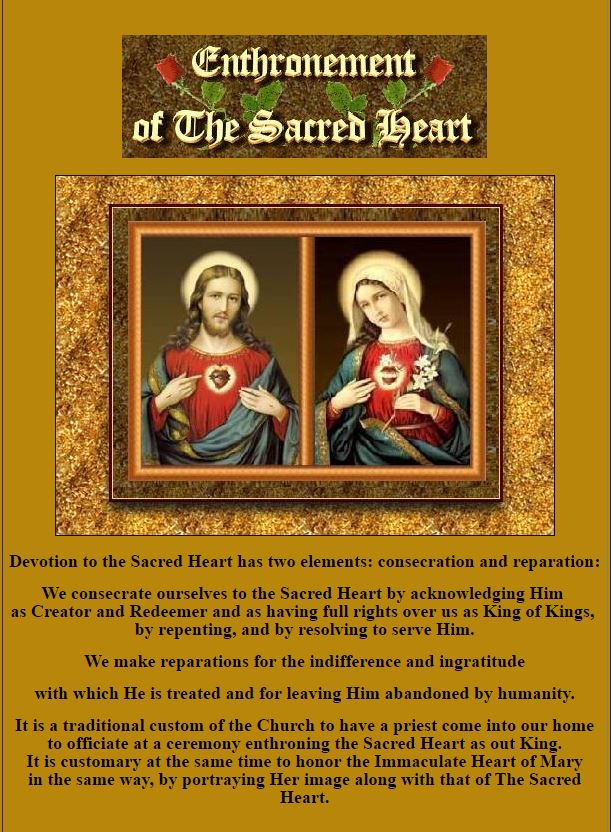
Therefore, Christ in the Holy Eucharist is here with His human heart. Is it a living heart? Yes! That is why the revelations our Lord made to St. Margaret Mary about promoting devotion to the Sacred Heart were all made from the Holy Eucharist.
Why do we equate the Sacred Heart with the Holy Eucharist? Because the Holy Eucharist is the whole Christ with His human heart. According to St. Margaret Mary, the Sacred Heart is the Holy Eucharist. So it follows that devotion to the Sacred Heart is devotion to the Holy Eucharist. It is infinite Love Incarnate living in our midst in the Blessed Sacrament.
Servant of God Fr John A Hardon SJ

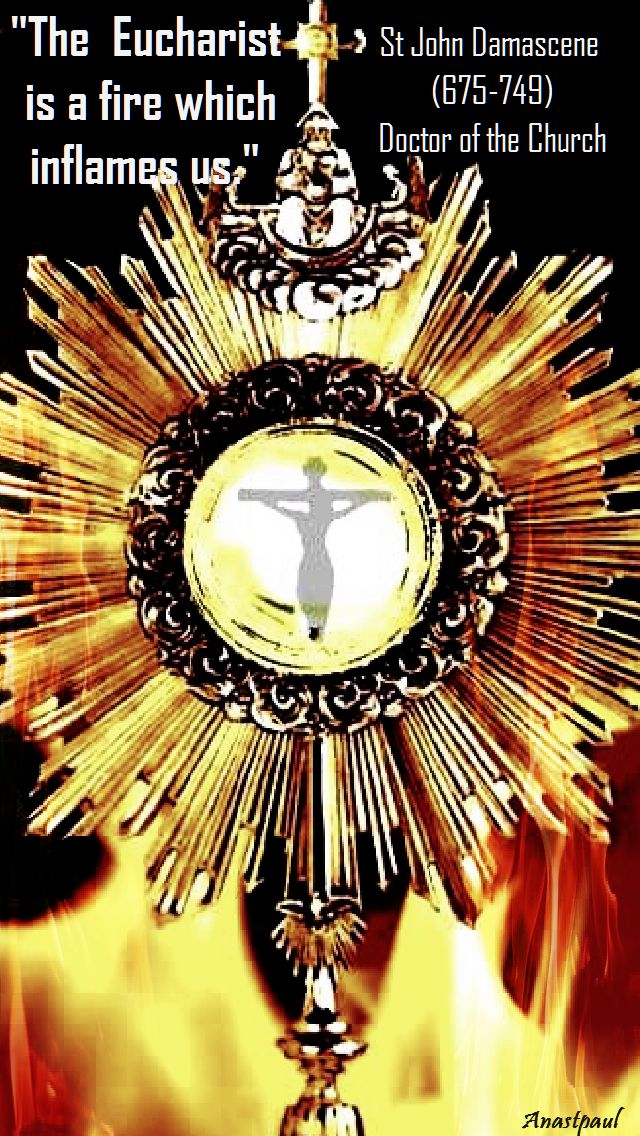
Quote of the Day – 15 June
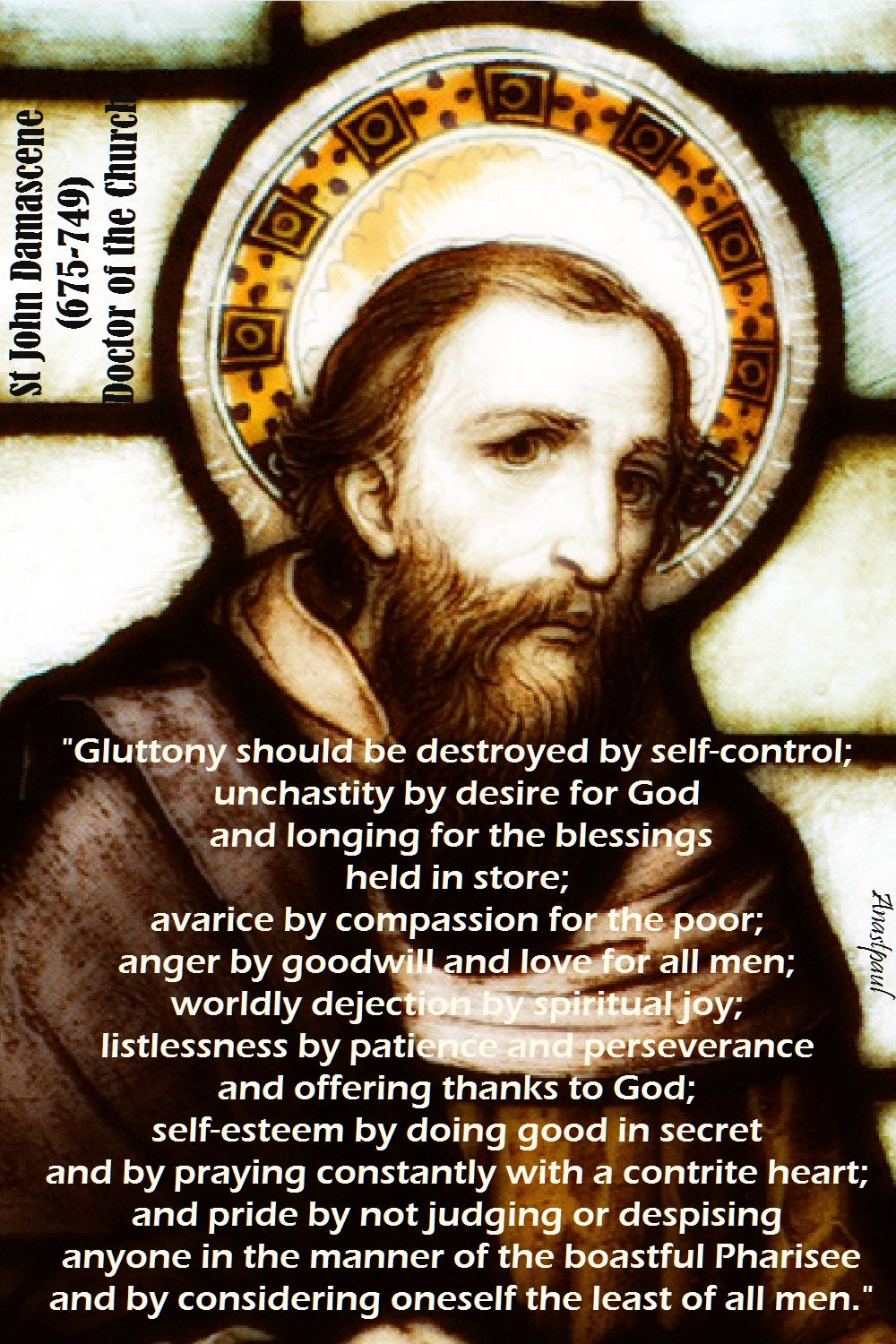
St John Damascene (675-749) – Doctor of the Church

One Minute Reflection – 15 June
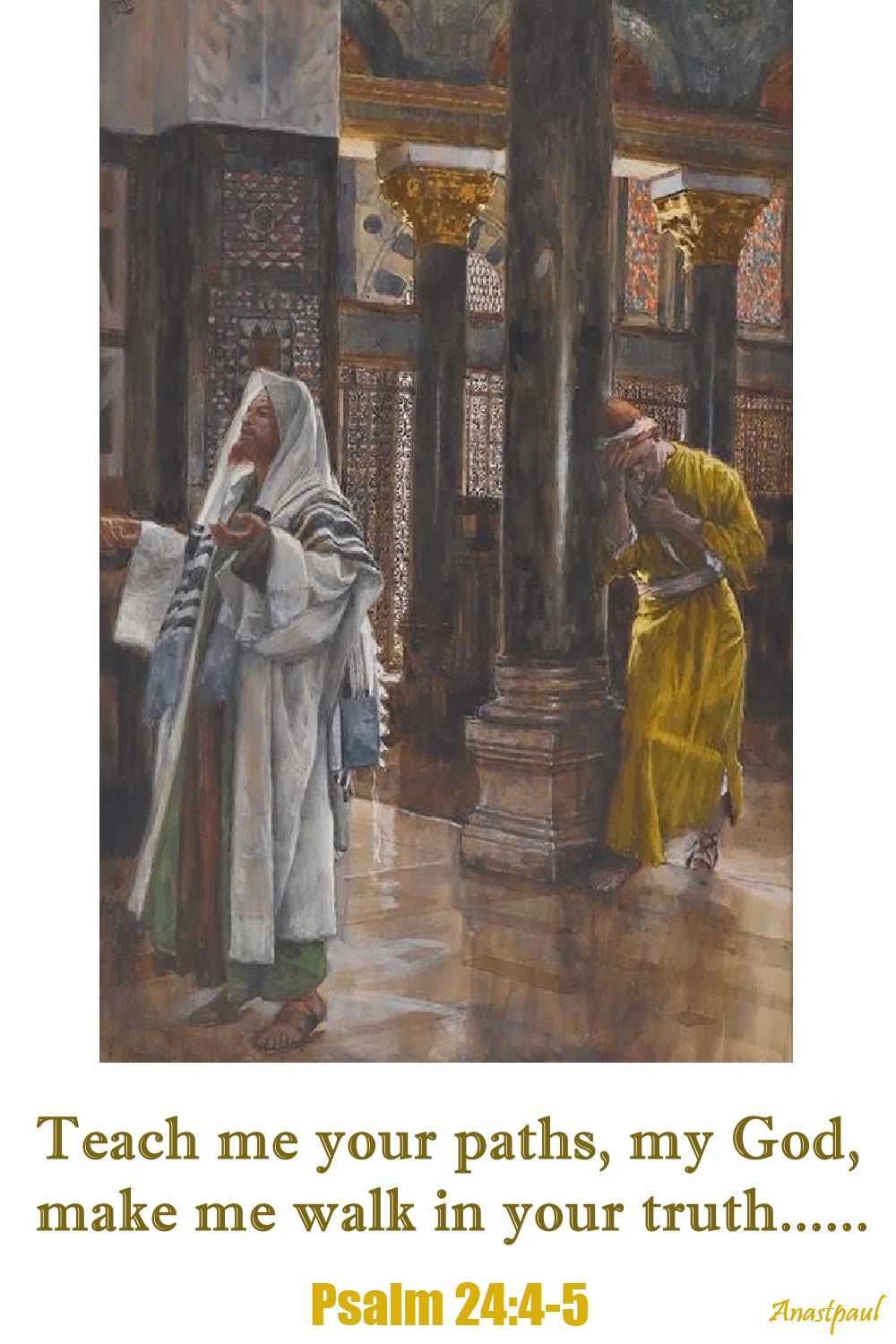
Teach me your paths, my God,
make me walk in your truth………..Psalm 24:4-5

REFLECTION – “Gluttony should be destroyed by self-control; unchastity by desire for God and longing for the blessings held in store; avarice by compassion for the poor; anger by goodwill and love for all men; worldly dejection by spiritual joy; listlessness by patience, perseverance and offering thanks to God; self-esteem by doing good in secret and by praying constantly with a contrite heart; and pride by not judging or despising anyone in the manner of the boastful Pharisee, and by considering oneself the least of all men.”………..St John Damascene (675-749) – Doctor of the Church

PRAYER – Heavenly Father, teach me Your paths and help me to walk always in Your truth, following ever more closely the way set before me by Your Divine Son, Our Lord Jesus Christ. May Your Grace and Your Spirit fill my heart with the love, courage, zeal and strength I need to overcome the world and be a light to my neighbour. Amen
Quote/s of the Day – 13 June
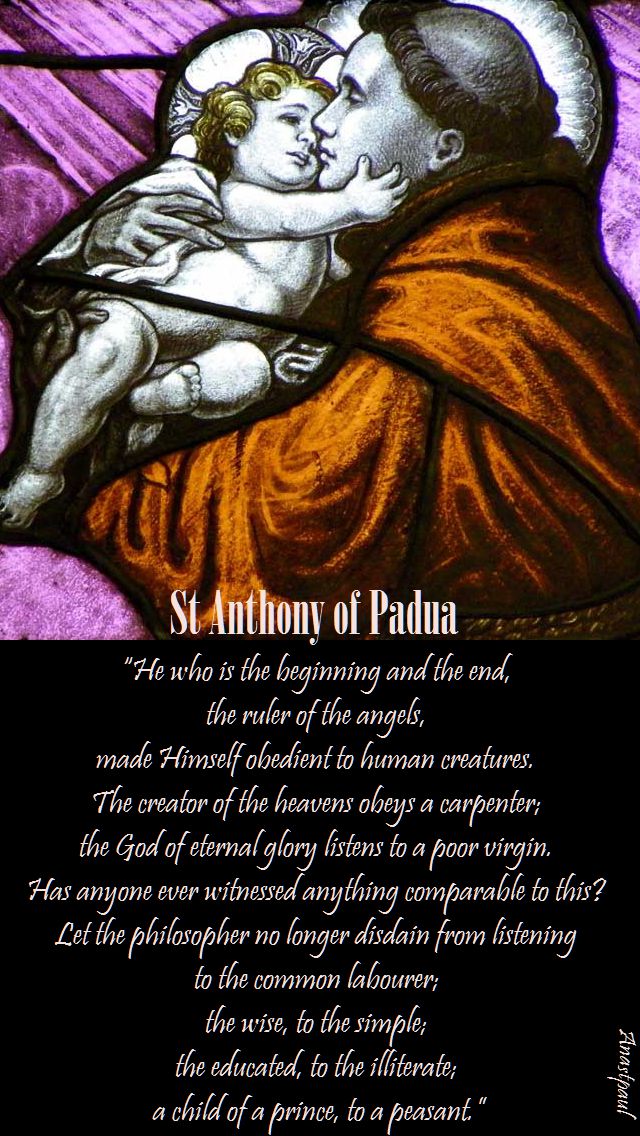
“He who is the beginning and the end,
the ruler of the angels,
made Himself obedient to human creatures.
The creator of the heavens obeys a carpenter;
the God of eternal glory listens to a poor virgin.
Has anyone ever witnessed anything comparable to this?
Let the philosopher no longer disdain from listening
to the common labourer;
the wise, to the simple;
the educated, to the illiterate;
a child of a prince, to a peasant.”

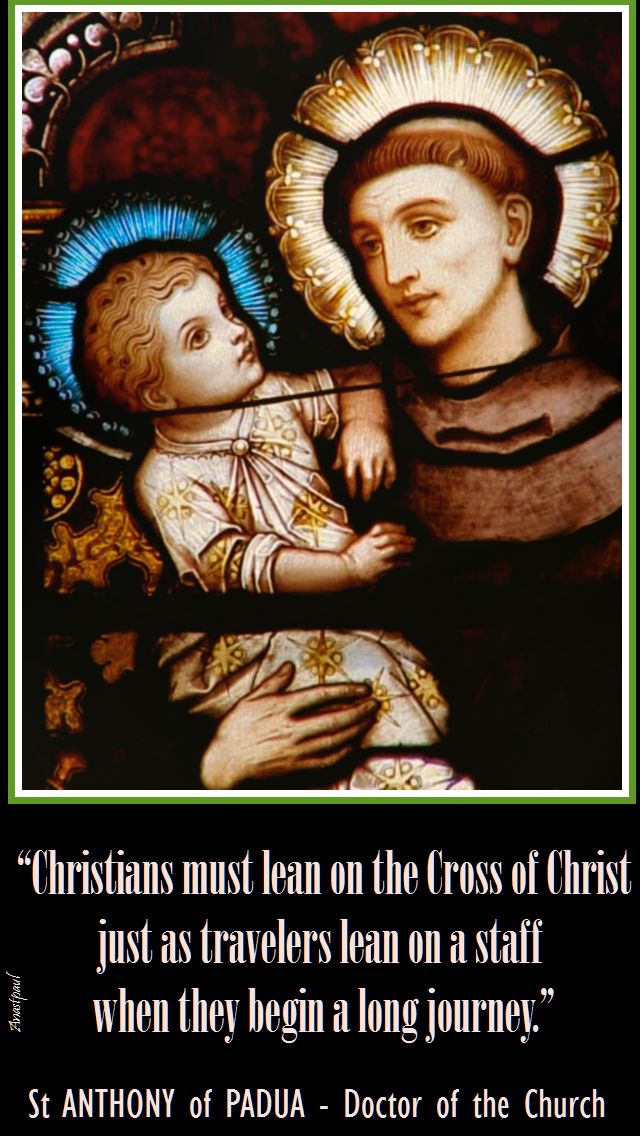
“Christians must lean on the Cross of Christ
just as travelers lean on a staff
when they begin a long journey.”

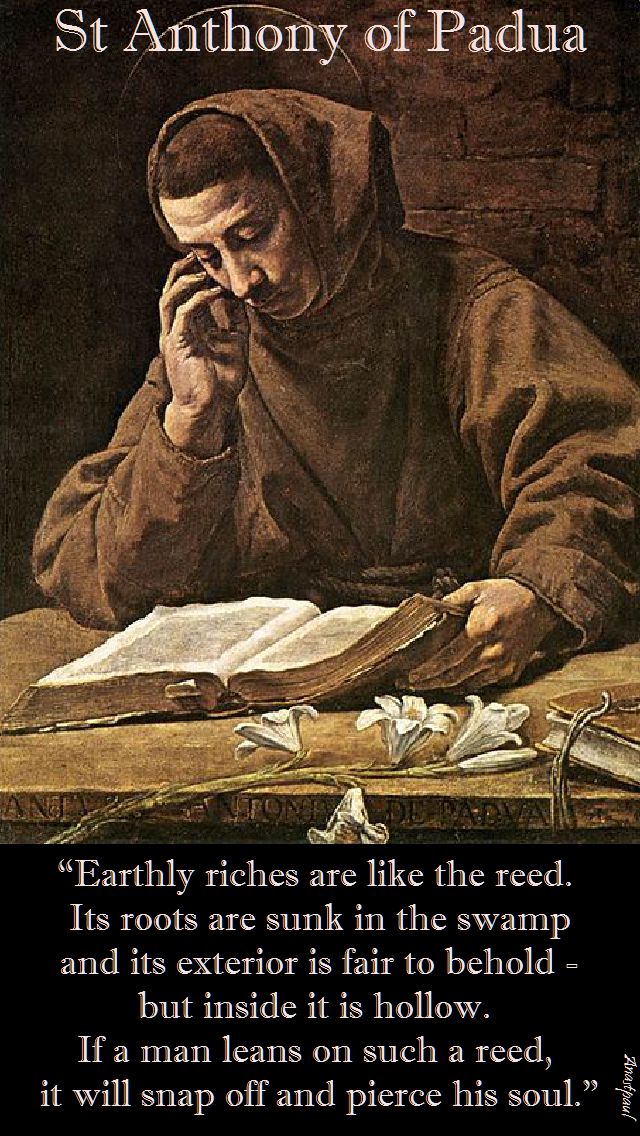
“Earthly riches are like the reed.
Its roots are sunk in the swamp
and its exterior is fair to behold –
but inside it is hollow.
If a man leans on such a reed,
it will snap off and pierce his soul.”

“Not without a long procession does the devil wish the sinner to be carried to his grave
and therefore he arranges the file after the usual manner:
Ambition carries the cross,
Detraction the incense,
Oppression the holy – or rather the cursed – water,
Hypocrisy bears the lights.
There are two chanters:
one is the Fallacious Confidence of living a long time
and he sings, Requiem aeternam – you still have abundant time;
the other is Presumption as to the Divine Mercy
and he sings, In Paradisnm le ducant angeli.
Pride celebrates the office.
Then follow Vain-Glory on the right,
Envy on the left, and, walking after,
Anger, Impatience, Insolence, Blasphemy,
Contumely, Arrogance, Lasciviousness,
Gluttony, Idle Talk, Boasting, Injury, Curiosity
and Uneasiness.
Lo! what a crowd in the conscience following him
who is dead in trespasses and sin.”
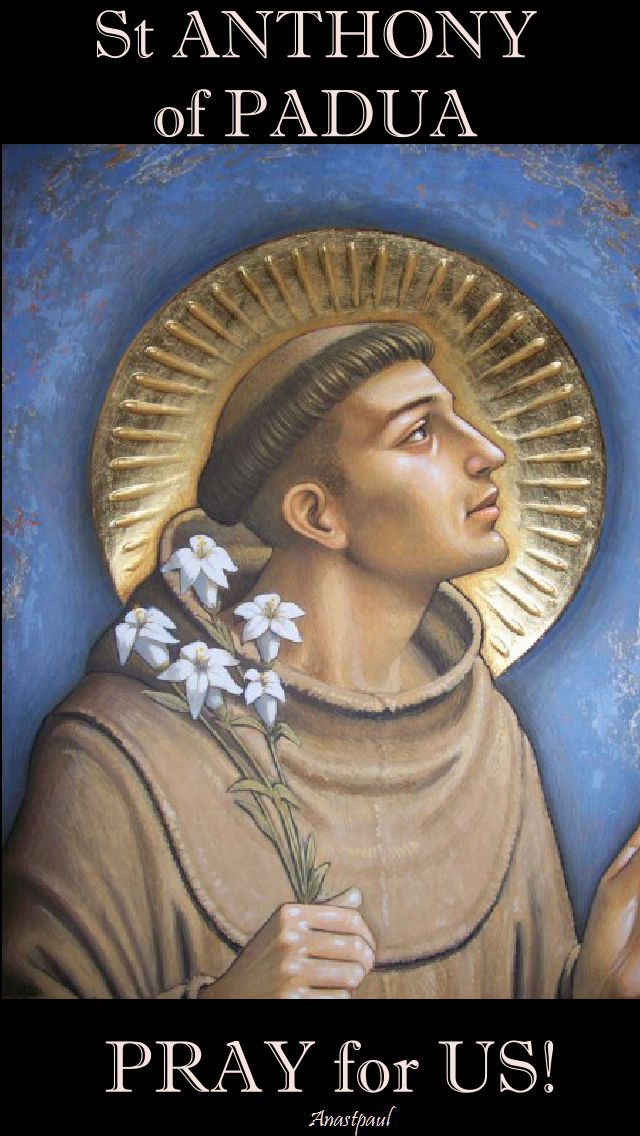
St Anthony of Padua Pray for us!

One Minute Reflection – 13 June
“You are the light of the world. A city built on a hill cannot be hid. No one after lighting a lamp puts it under the bushel basket, but on the lampstand, and it gives light to all in the house. In the same way, let your light shine before others, so that they may see your good works and give glory to your Father in heaven.”………….Matthew 5:15-16

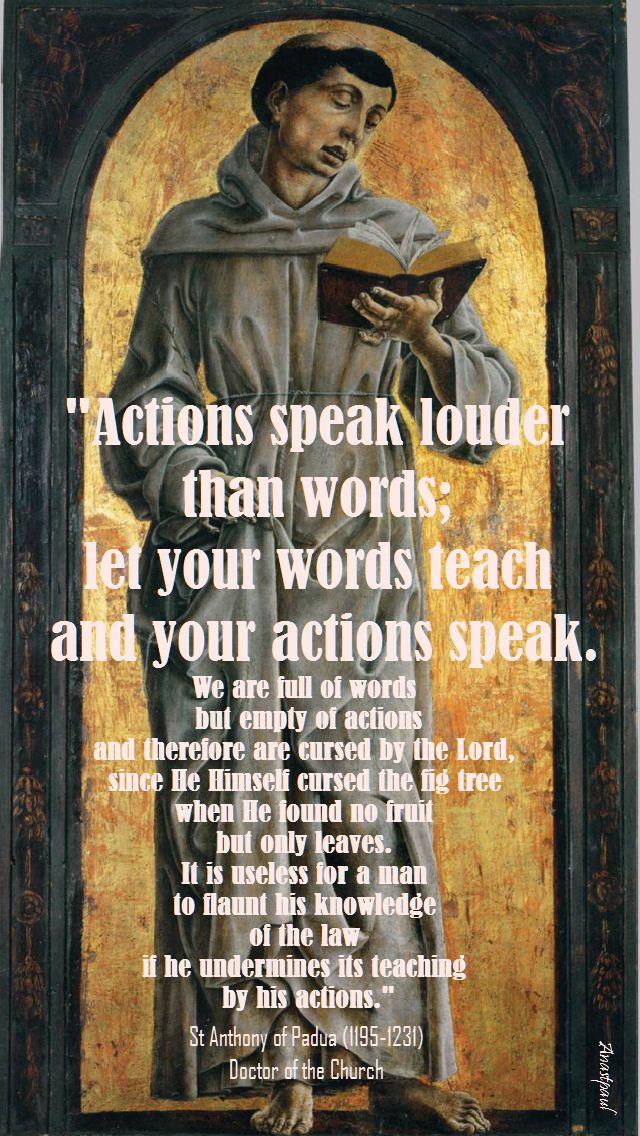
REFLECTION – “Actions speak louder than words;
let your words teach and your actions speak.
We are full of words but empty of actions
and therefore are cursed by the Lord,
since He Himself cursed the fig tree
when He found no fruit but only leaves.
It is useless for a man to flaunt his knowledge
of the law if he undermines its teaching by his actions.”…….St Anthony of Padua

PRAYER – My Lord and my God, teach me the gift of silence and the gift of charity. Help me to live as I speak and to do as You say. Let my fruit be the proof of my love for You and for my neighbour. St Anthony your preaching and teaching was always accompanied by love and charity, pray for us all that we may be a light for the world, amen.

Quote of the Day – 12 June
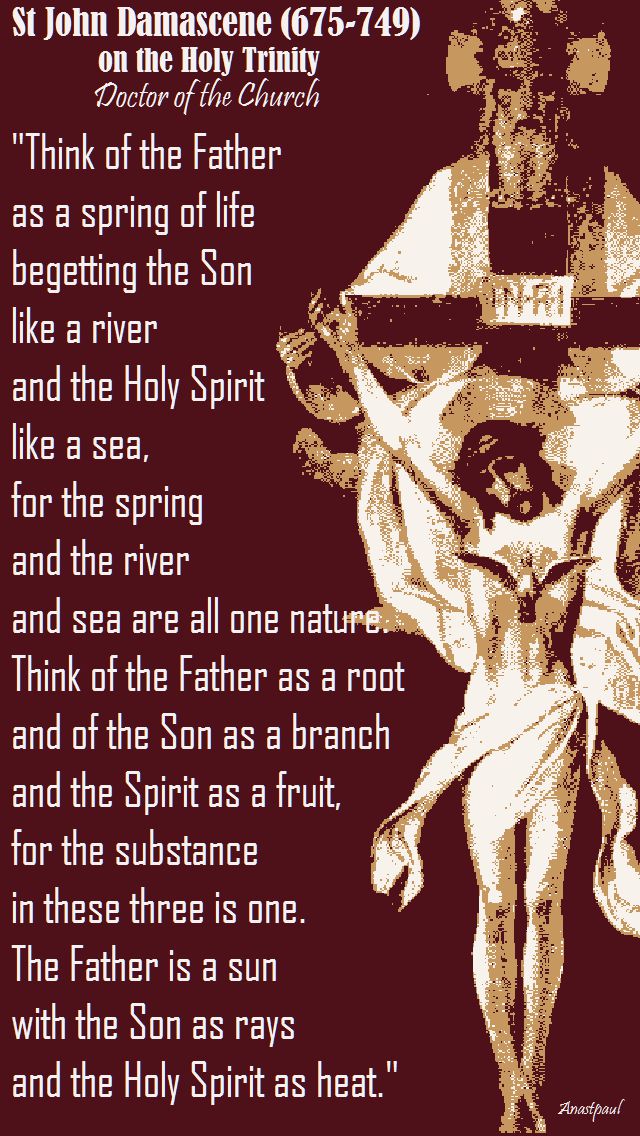
St John Damascene (675-749) – Doctor of the Church on the Holy Trinity
“Think of the Father as a spring of life
begetting the Son like a river
and the Holy Ghost like a sea,
for the spring and the river and sea are all one nature.
Think of the Father as a root
and of the Son as a branch
and the Spirit as a fruit,
for the substance in these three is one.
The Father is a sun
with the Son as rays
and the Holy Spirit as heat.”

One Minute Reflection – 12 June
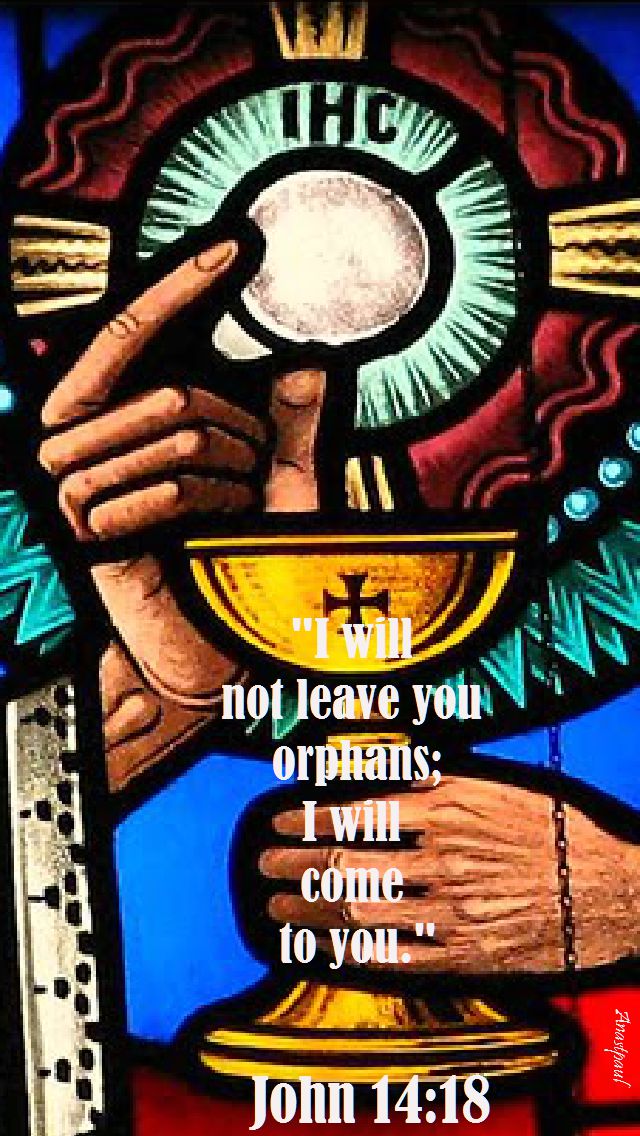
“I will not leave you orphans; I will come to you.”…..John 14:18

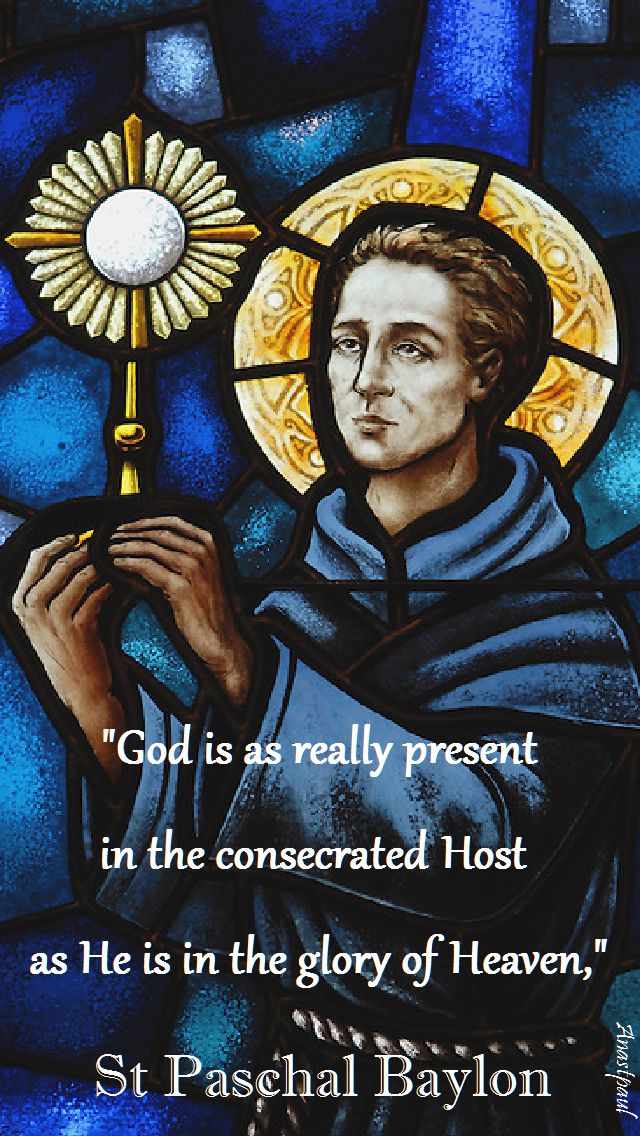
REFLECTION – “God is as really present in the consecrated Host as He is in the glory of Heaven,”…………St Paschal Baylon

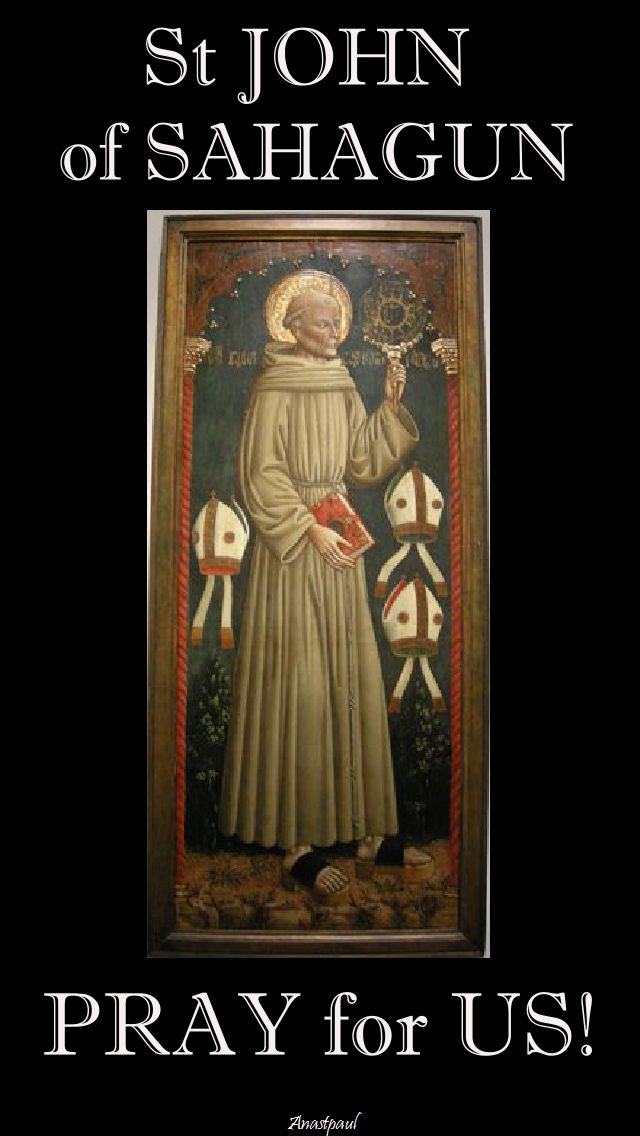
PRAYER – Jesus my Lord and God, You have come to us. You are here with us. How blessed we are and how blessed St John of Sahagun who was able to speak with You during the celebration of the Eucharist and who spent countless hours with You in holy adoration. Teach us all, that we too may learn the glory of spending time with You in loving adoration. St John of Sahagun pray for us! amen.

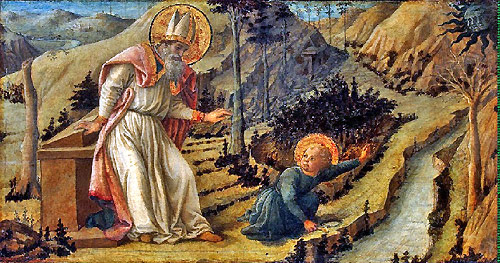
St Augustine, the Holy Trinity, the Child and the SeaShell
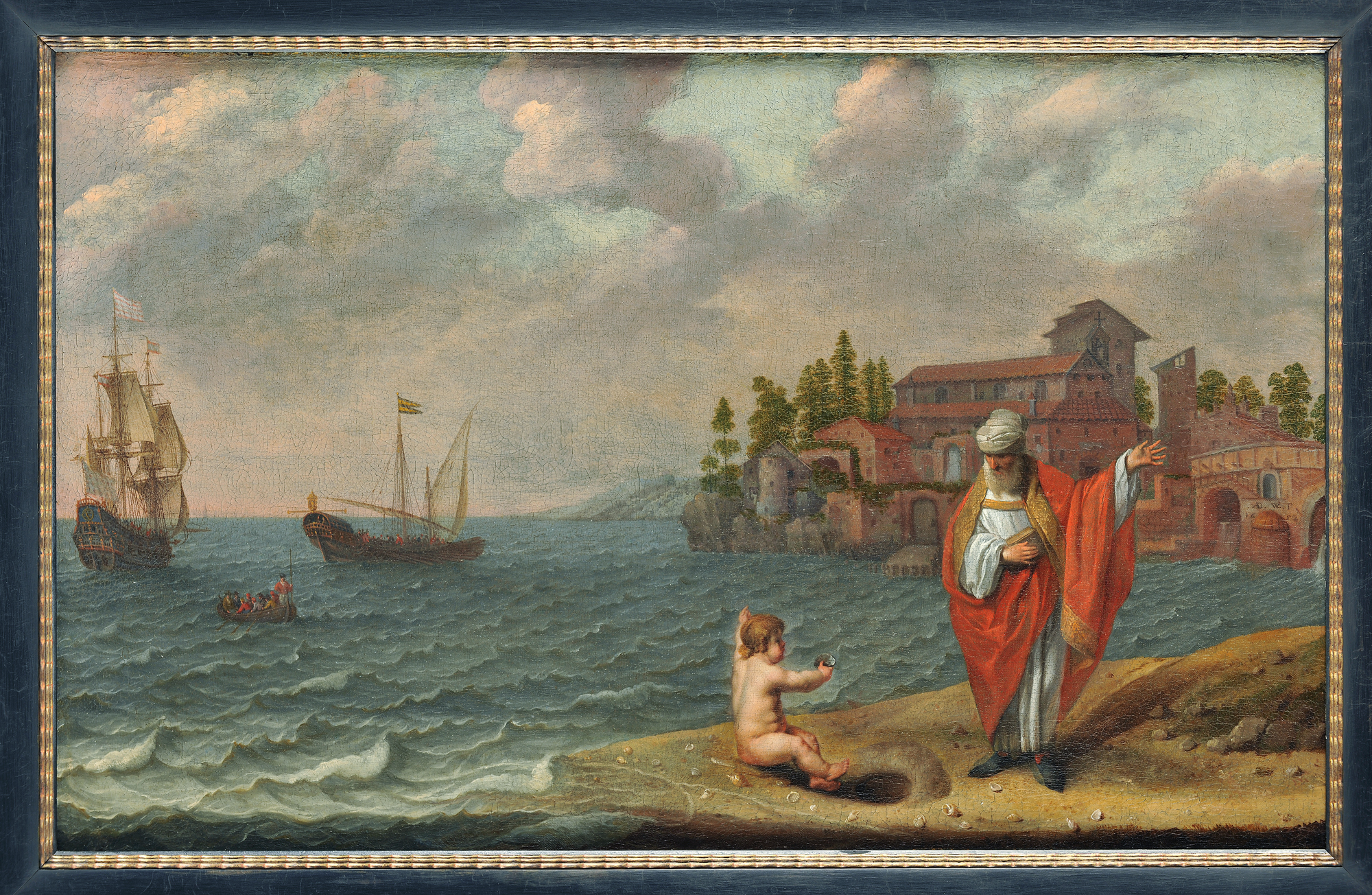
Today, 11 June 2017, on the Solemnity of the Holy Trinity, we remember the legend of St Augustine and the Seashell.

The great Doctor of the Church St. Augustine of Hippo spent over 30 years working on his treatise De Trinitate [about the Holy Trinity], endeavouring to conceive an intelligible explanation for the mystery of the Trinity.
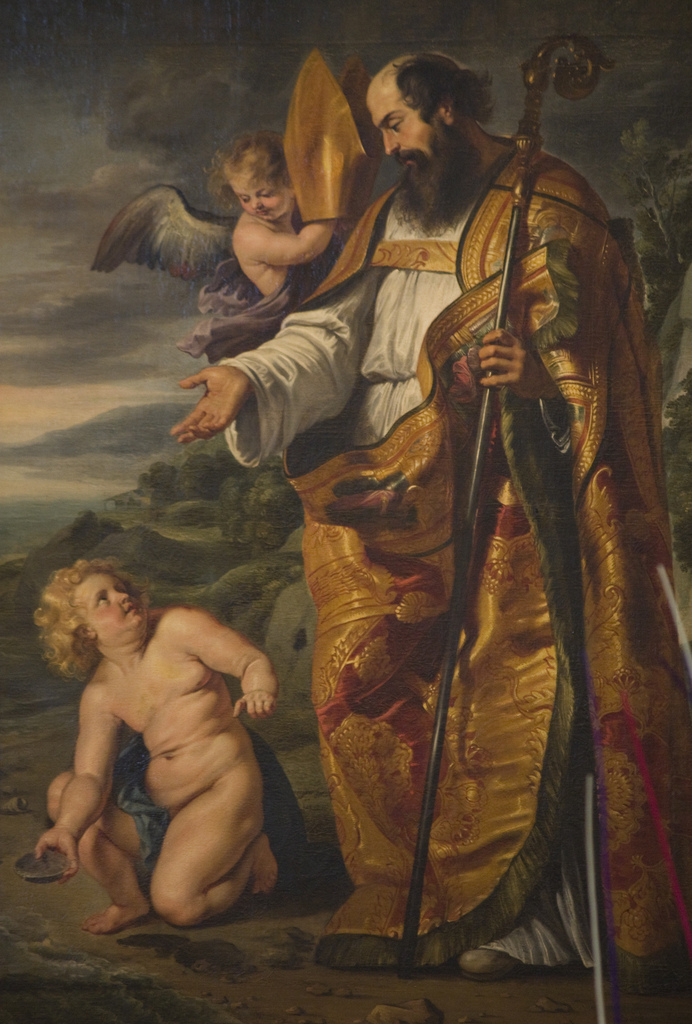
He was walking by the seashore one day contemplating and trying to understand the mystery of the Holy Trinity when he saw a small boy running back and forth from the water to a spot on the seashore. The boy was using a sea shell to carry the water from the ocean and place it into a small hole in the sand.
The Bishop of Hippo approached him and asked, “My boy, what are doing?”
“I am trying to bring all the sea into this hole,” the boy replied with a sweet smile.
“But that is impossible, my dear child, the hole cannot contain all that water” said Augustine.
The boy paused in his work, stood up, looked into the eyes of the Saint, and replied, “It is no more impossible than what you are trying to do – comprehend the immensity of the mystery of the Holy Trinity with your small intelligence.”
The Saint was absorbed by such a keen response from that child, and turned his eyes from him for a short while. When he glanced down to ask him something else, the boy had vanished.


Some say that it was an Angel sent by God to teach Augustine a lesson on pride in learning. Others affirm it was the Christ Child Himself who appeared to the Saint to remind him of the limits of human understanding before the great mysteries of our Faith.
One Minute Reflection – 11 June – The Solemnity of the Holy Trinity
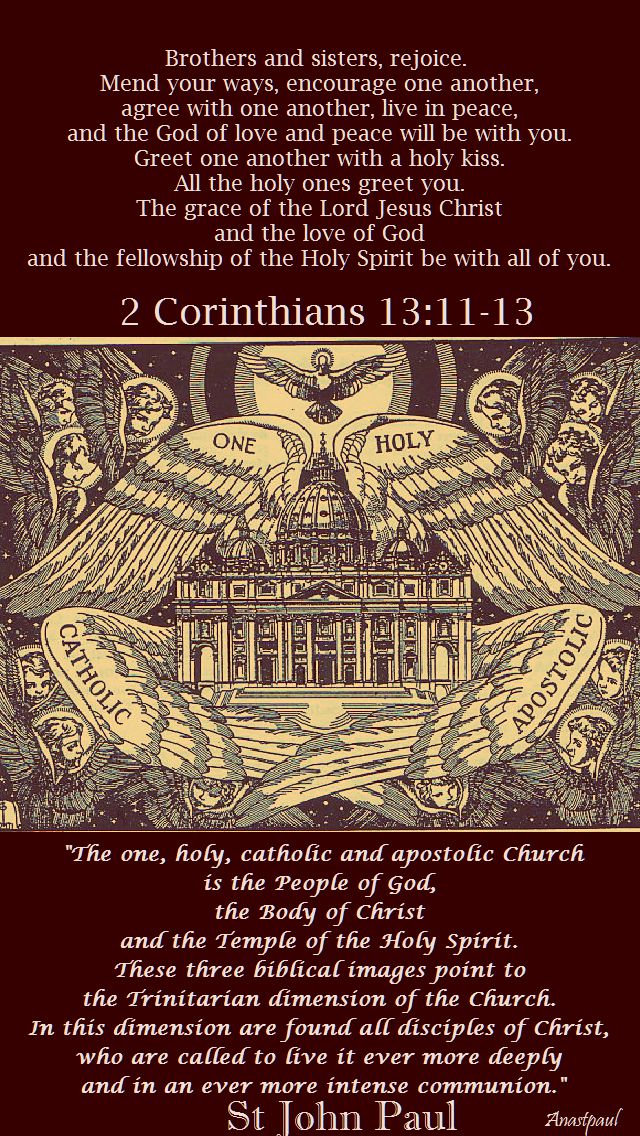
Brothers and sisters, rejoice.
Mend your ways, encourage one another,
agree with one another, live in peace,
and the God of love and peace will be with you.
Greet one another with a holy kiss.
All the holy ones greet you.
The grace of the Lord Jesus Christ
and the love of God
and the fellowship of the Holy Spirit be with all of you………..2 Corinthians 13:11-13
REFLECTION – “The one, holy, catholic and apostolic Church is the People of God, the Body of Christ and the Temple of the Holy Spirit. These three biblical images point to the Trinitarian dimension of the Church. In this dimension are found all disciples of Christ, who are called to live it ever more deeply and in an ever more intense communion.”…..St John Paul

PRAYER – God our Father, who by sending into the world. the Word of truth and the Spirit of sanctification, made known to the human race your wondrous mystery, grant us, we pray, that in profession the true faith, we may acknowledge the Trinity of eternal glory and adore your Unity, powerful in majesty. T hat we, as your chosen may too live our lives in total unity with all the peoples of Christ’s Church. Through our Lord Jesus Christ, your Son, who lives and reigns with you in the unity of the Holy Spirit, one God, for ever and ever. Amen
Thought for the Day – 11 June 2017 – The Solemnity of the Holy Trinity
The Trinity dogma is not the result of poetic fantasies or of philosophical elucubrations. Nor it is a rational theological formulation that offers the pretext of saying that it is a mystery so detached from our lives that more than one Christian feels quietly authorised to ignore it. The Mystery of the Trinity is a great mystery which surpasses our minds but speaks deeply to our heart because it is, in its essence, nothing but the explication of the profound expression of Saint John: “God is love” (1 Jn 4: 8,16). If God is love, he cannot be loneliness in Himself. In order to have a love affair, it must be at least two. To love only oneself is not love, it is selfishness. God Love is, at least, one who always loves and one who has always been loved and reciprocates love: an eternal Lover, an eternal Beloved and an eternal Love.
The Lover is God, the Father in love, infinitely free and generous in love, motivated to love by no other thing than love.
The eternal Beloved, is the one who always welcomes love: He is eternal gratitude, grace without beginning and end. He is the Son in love.
Love is the Holy Spirit, in whom Their love is always open to self-donation and to “go out of their being”. Therefore, the Spirit is said to be a gift of God, a living source of love, a fire that powers in us the ability to reciprocate Love with love.
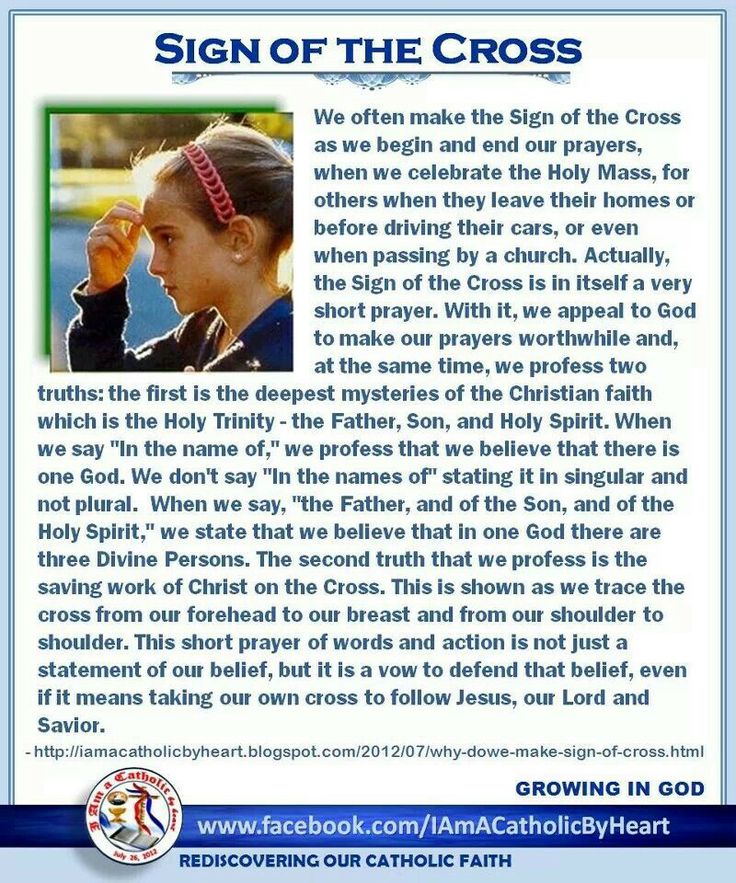
This mystery of love is concrete and close to us more than we think and we live it in practice when, above all in the most important or critical times where we most need God, we make the sign of the cross. By marking this holy sign, almost without being fully aware, we call upon the One and Triune God , saying, “In the name of the Father, of the Son, and of the Holy Ghost”. Not only do we invoke God Trinity to help us but we praise with the prayer “Glory to the Father, and to the Son and the Holy Ghost … Amen”. St. Teresa of Calcutta often recited as follows: “Glory to the Father-Prayer and to the Son -Poverty and the Holy Spirit- Zeal for souls. Amen-Mary. “ (JUNE 9, 2017 ARCHBISHOP FRANCESCO FOLLO)


How can we put the sign of the Cross into practice? Here are some ways you can make the sign of the Cross a part of your daily life.
1. Immediately after waking and before sleeping – making the sign of the Cross immediately after waking and before sleeping is as ancient as Christianity. It is a powerful way to consecrate our day to Our Lord.
2. When passing a Catholic Church – there is a beautiful Catholic tradition of crossing oneself while passing a Catholic Church in order to recognize Jesus present in the tabernacle and to show Him honour and love.
2. At the Name of the Holy Trinity – in Catholic prayer, the name of the Holy Trinity is often invoked. To show honour to the Holy Trinity, it is a good idea to Cross yourself when saying the Glory Be or any other time the Name is invoked.
3. In reparation for blasphemy – the name of God is abused frequently in daily conversations. If you want to make an act of reparation to God for this abuse of his Name, you can quietly make the sign of the Cross.
4. Before entering a room or house – G.K. Chesterton, the famous Catholic convert and all around genius, was said to have made the sign of the cross before entering any room. This Catholic custom also applies to entering a house and many have Holy Water fonts next to the door for blessings oneself when entering or leaving the home.
5. Blessing people or things – a small sign of the cross can be traced on the forehead of a child or upon an object which you wish to bless.
6. When afraid – in old movies that involve Catholicism, you will often see people cross themselves when in the presence of death, upon receiving bad news, or when generally afraid. Sadly, this custom has fallen out of use but it is an excellent way to drive away fear and to inspire courage.
There are countless other ways to employ the powerful sign of the Cross. The point is, we should use this powerful sign frequently and reverently, paying attention to what we are doing.

“Let us not then be ashamed to confess the Crucified. Be the Cross our seal made with boldness by our fingers on our brow and in everything; over the bread we eat and the cups we drink; in our comings in and goings out; before our sleep, when we lie down and when we awake; when we are in the way and when we are still. Great is that preservative; it is without price, for the poor’s sake; without toil, for the sick, since also its grace is from God. It is the Sign of the faithful and the dread of evils; for He has triumphed over them in it, having made a shew of them openly; for when they see the Cross, they are reminded of the Crucified; they are afraid of Him, Who hath bruised the heads of the dragon. Despise not the Seal, because of the freeness of the Gift; but for this rather honour thy Benefactor.”
– St. Cyril of Jerusalem
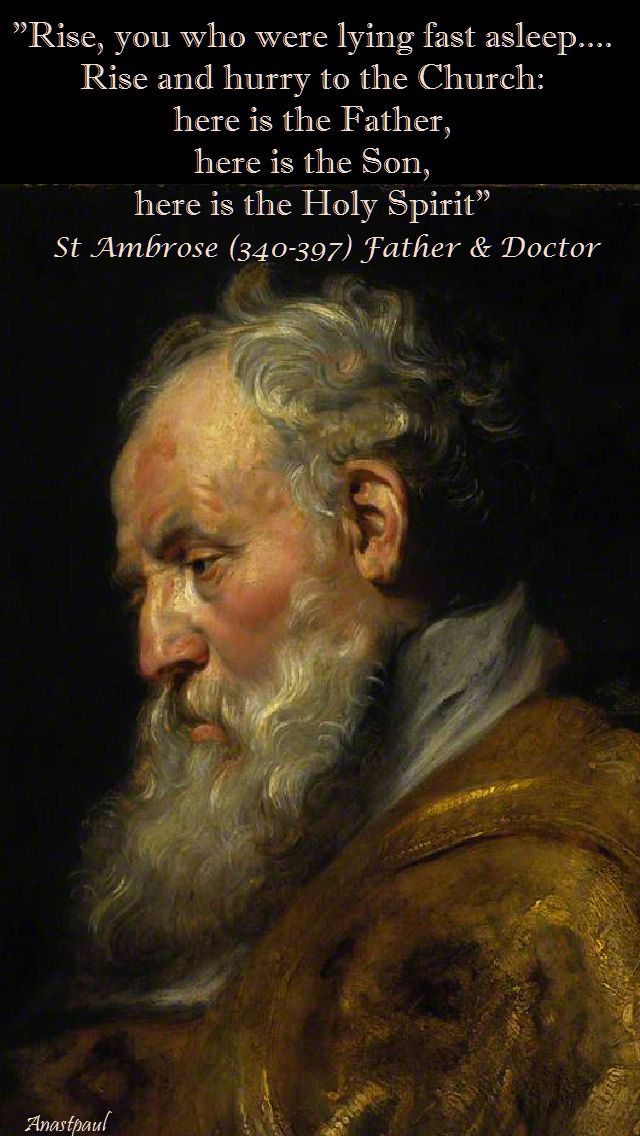
Quote of the Day – 11 June 2017 – Solemnity of the Holy Trinity
St Ambrose (340-397) Father & Doctor

“Thought for the Day – 10 June
The Eucharist: sun of his life!
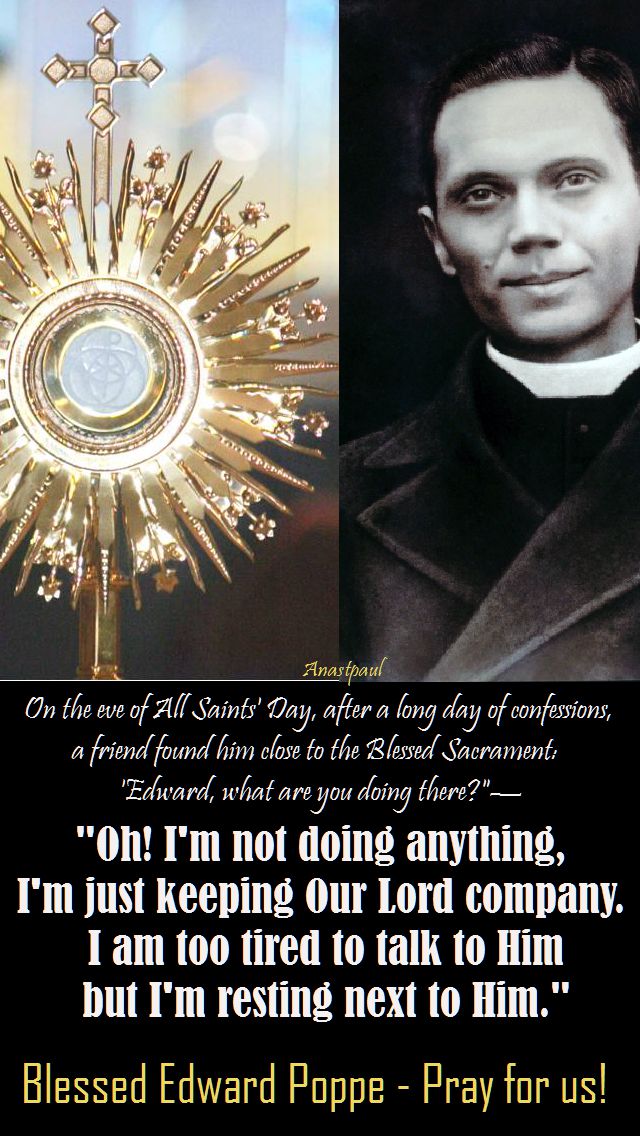
To find the strength he needed, Bl Edward Poppe spent a great deal of time before the Tabernacle.
Sometimes he sighed, “Oh, Jesus, how little men love You! At least, the two of us love each other.”
On the eve of All Saints’ Day, after a long day of confessions,
a friend found him close to the Blessed Sacrament:
‘Edward, what are you doing there?”—
“Oh! I’m not doing anything, I’m just keeping Our Lord company.
I am too tired to talk to Him,
but I’m resting next to Him.”
Blessed Edward Joannes Maria Poppe, Pray for us!

Prayer For Blessed Edward’s Intercession and Canonisation:
Heavenly Father,
We thank you for giving us Blessed Edward Poppe.
Through his intercession graciously hear our prayer.
Grant that our love
for your Son, for His Church and for the Blessed Eucharist may
increase.
May his testimony encourage many to live as true Christians.
May his example inspire young men to become priests for today.
Hasten the day of his glorification in the communion of your saints.
We
ask this through the intercession of Mary, his and our Mother. Amen.
Our Father…. Hail Mary…
Blessed Edward Poppe, Pray for us!
Quote of the Day – 10 June
– St. Bernard of Clairvaux (1090-1153)
Doctor of the Church

One Minute Reflection – 10 June
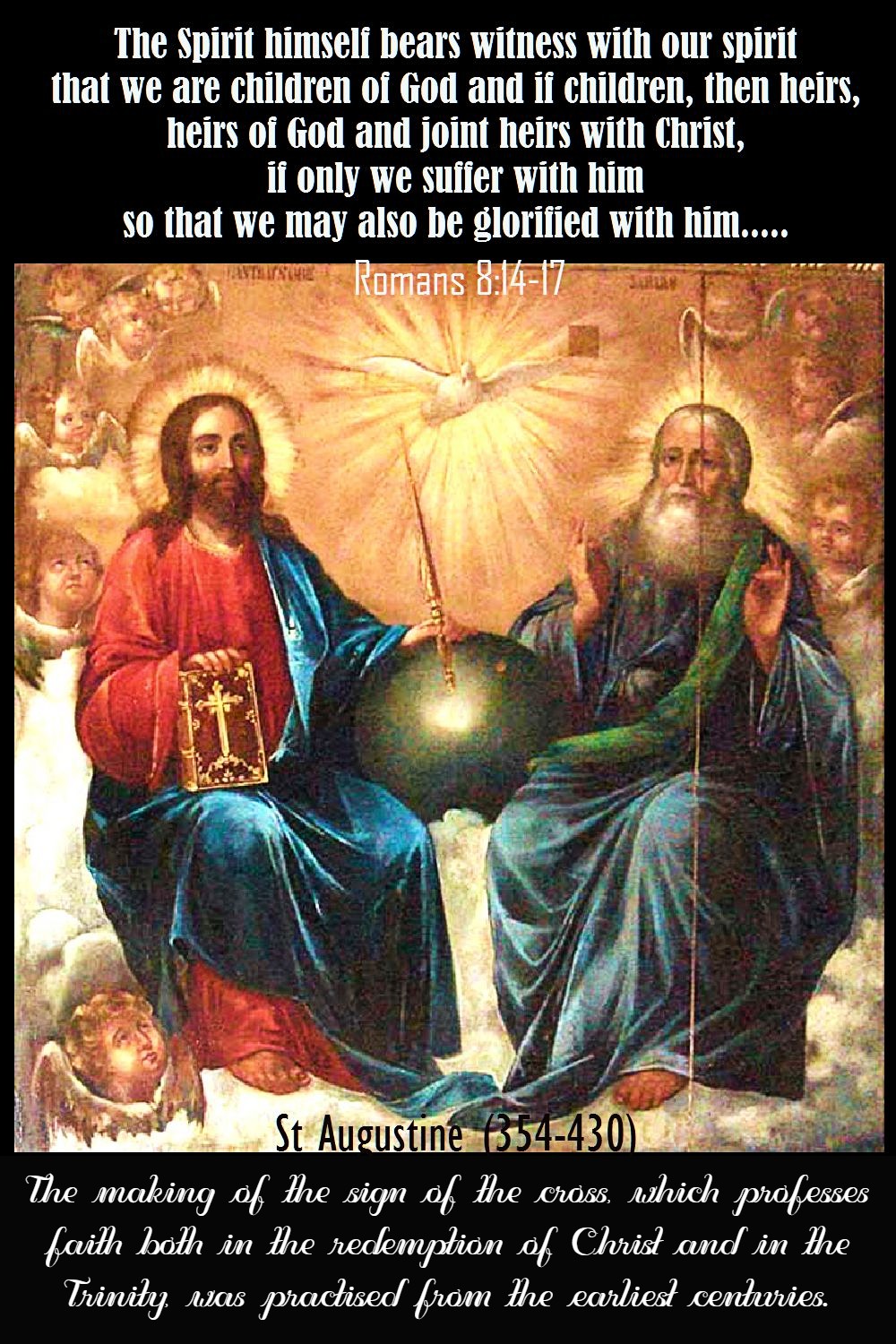
The Spirit himself bears witness with our spirit
that we are children of God
and if children, then heirs,
heirs of God and joint heirs with Christ,
if only we suffer with him,
so that we may also be glorified with him. …. Romans 8:14-17
REFLECTION – “The making of the sign of the cross, which professes faith both in the redemption of Christ and in the Trinity, was practised from the earliest centuries.”………….. St Augustine (354-430) Father and Doctor of the Church
PRAYER – God our Father, who by sending into the world the Word of truth and the Spirit of sanctification made known to the human race your wondrous mystery, grant us, we pray, that in professing the true faith, we may acknowledge the Trinity of eternal glory and adore your Unity, powerful in majesty. Through our Lord Jesus Christ, your Son, who lives and reigns with you in the unity of the Holy Spirit, one God, for ever and ever. Amen
Thought for the Day – 9 June
The writings of Saint Ephrem speak volumes about his passion for the truth of the Gospel and his zeal for spreading the Word of God. We are blessed to have poems, hymns, prayers and writings today, penned nearly 2 centuries ago, reminding us not only of the constancy of the love of the Lord but of the long-standing traditions and teachings of the Church. As we read the writings of Saint Ephrem, we pray for his zeal for the Lord and the future of His Church on earth.
Before his death, Saint Ephrem reflected on his life, writing in his testament: “There grew a vine-shoot on my tongue: and increased and reached unto heaven. And it yielded fruit without measure: leaves likewise without number. It spread, it stretched wide, it bore fruit: all creation drew near. And the more they were that gathered,the more its clusters abounded. These clusters were the Homilies and these leaves the Hymns. God was the giver of them, glory to Him for His grace! For He gave to me of His good pleasure, from the storehouse of His treasures.”
St Ephrem, pray for us that we too may grow a vine-shoot on our tongues by the grace of God!

One Minute Reflection – 9 June
Be on Guard and pray that you may not undergo the test…………….Matthew 26:41

REFLECTION – “Jesus, who feared nothing, experienced fear and asked to be freed from death – although He knew it was impossible.
How much more must we persevere in prayer before temptation assails us – so that we may be freed when the test has come!”…St Ephrem

PRAYER – Heavenly Father, help me to work out my salvation in fear and trembling. Let me pray daily that I may withstand temptation and carry out Your will in all things. St Ephrem, please pray for us, that we may withstand the evils which surround us! Amen
One Minute Reflection – 8 June
Let us not grow tired of doing good,
for in due time we shall reap our harvest,
if we do not give up……….Galatians 6:9
REFLECTION – ………“how much I still love the soil of my country and the beloved land of the Auvergne. And yet God has given me the grace to love even more these uncultivated fields of Madagascar, where I can only catch a few souls for our Lord… The mission progresses, even though the fruit is still a matter of hope in some places and hardly visible in others. But what does it matter, so long as we are good sowers? God will give growth when the time comes.” …………………St Jacques Berthieu SJ

PRAYER – Heavenly Father, may the intercession of St Jacques Berthieu help us to recognise the strength that is given to us in our weakness, so that we might live our vocation with fidelity and joy and give ourselves totally to the mission received from Your Divine Son, the Lord! St Jacques Berthieu, pray for us, amen.
Quote/s of the Day – 7 June
“How can anyone be lonely, with Our Lord in the Blessed Sacrament?”

“Three things I cannot escape:
the eye of God,
the voice of conscience,
the stroke of death.
In company, guard your tongue.
In your family, guard your temper.
When alone guard your thoughts.”
Venerable Matt Talbot – Memorial today 7 June

Quote of the Day – 6 June
On the day of his ordination, St Norbert said:
“O Priest! You are not of yourself because you are of God. You are not of yourself because you are the servant and minister of Christ.
You are not your own because you are the spouse of the Church.
You are not yourself because you are the mediator between God and man.
You are not from yourself because you are nothing.
What then are you? Nothing and everything.
O Priest! Take care, lest what was said to Christ on the cross be said to you:
‘He saved others, himself he cannot save!”

You must be logged in to post a comment.