
Our Morning Offering – 25 February – “Wednesday of The First Week of Lent
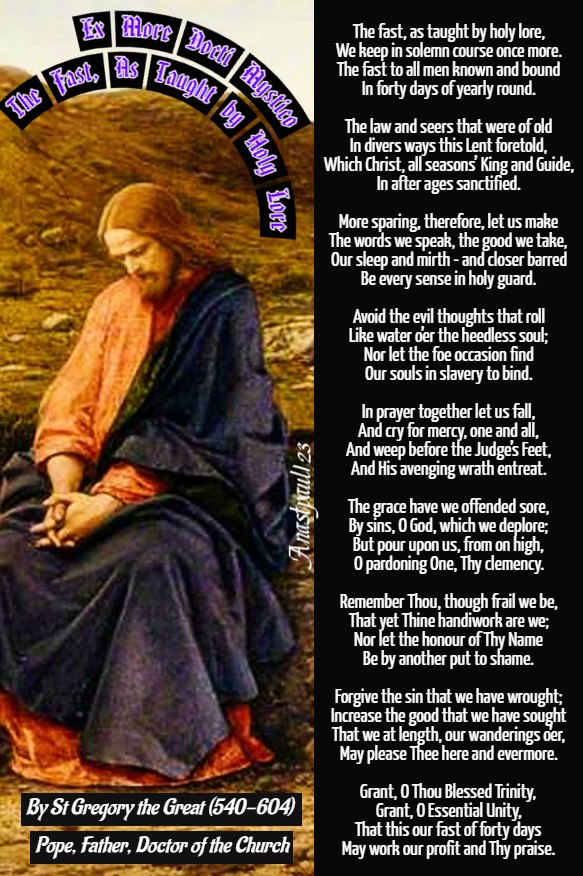
Ex More Docti Mystico
The Fast, As Taught by Holy Lore
By St Gregory the Great (540-604)
Pope, Father, Doctor of the Church
Trans. John Mason Neale
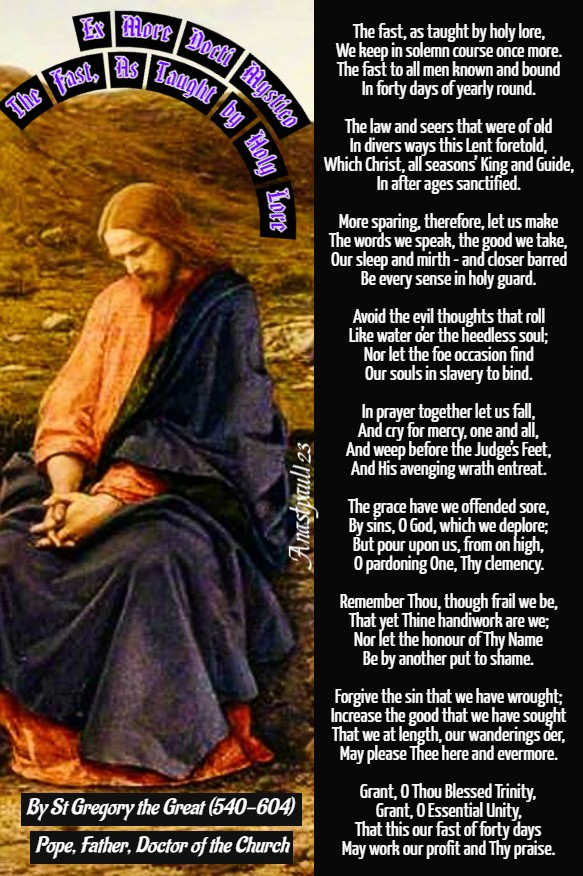
The fast, as taught by holy lore,
We keep in solemn course once more.
The fast to all men known and bound
In forty days of yearly round.
The law and seers that were of old
In divers ways this Lent foretold,
Which Christ, all seasons’ King and Guide,
In after ages sanctified.
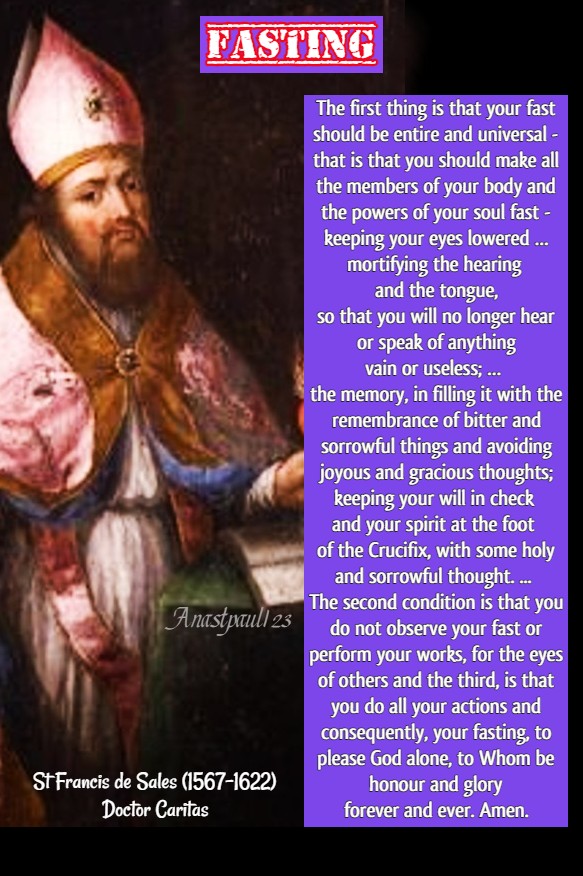
More sparing, therefore, let us make
The words we speak, the good we take,
Our sleep and mirth – and closer barred
Be every sense in holy guard.
Avoid the evil thoughts that roll
Like water o’er the heedless soul;
Nor let the foe occasion find
Our souls in slavery to bind.
In prayer together let us fall,
And cry for mercy, one and all,
And weep before the Judge’s Feet,
And His avenging wrath entreat.
The grace have we offended sore,
By sins, O God, which we deplore;
But pour upon us, from on high,
O pardoning One, Thy clemency.
Remember Thou, though frail we be,
That yet Thine handiwork are we;
Nor let the honour of Thy Name
Be by another put to shame.
Forgive the sin that we have wrought;
Increase the good that we have sought
That we at length, our wanderings o’er,
May please Thee here and evermore.
Grant, O Thou Blessed Trinity,
Grant, O Essential Unity,
That this our fast of forty days
May work our profit and Thy praise.
There are twelve translations of this lovely Lenten Hymn.
This one by L M Neale
Liturgical Use: Matins Hymn on Sundays
and week-days during Lent.

















































 AnaStpaul
You must be logged in to post a comment.