Quote/s of the Day – 2 February – The Feast of the Purification of the Blessed Virgin and the Presentation of the Lord
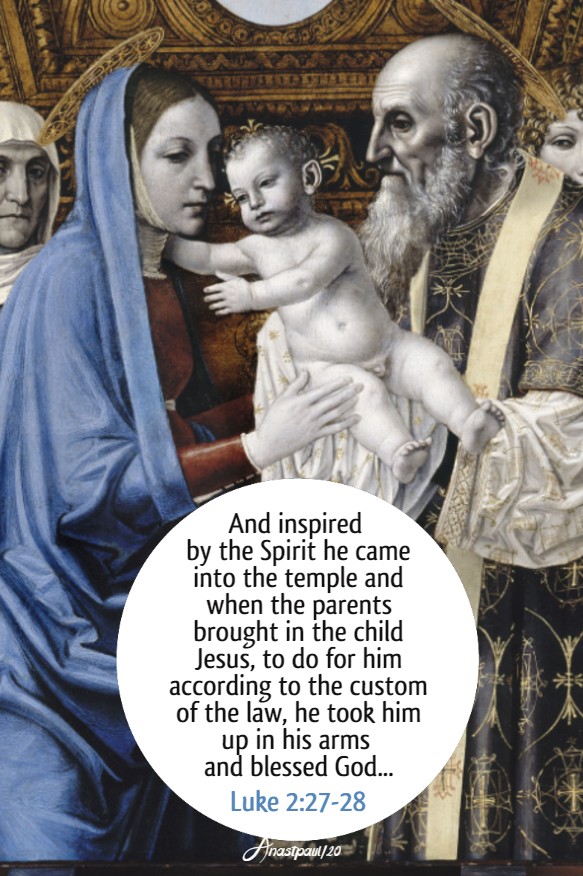
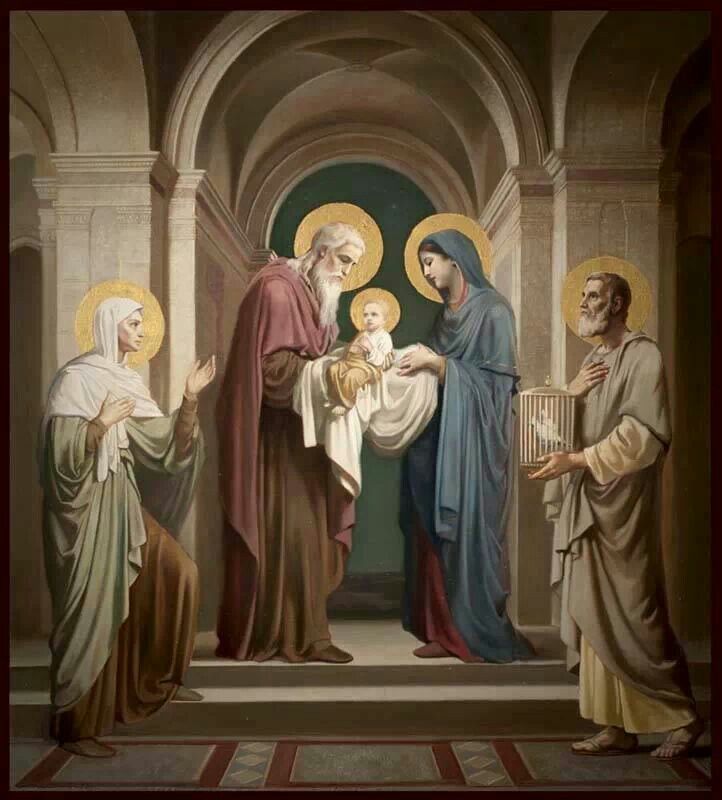
“And inspired by the Spirit he came into the temple and when the parents brought in the child Jesus, to do for him according to the custom of the law, he took him up in his arms and blessed God ..…”
Luke 2:27-28
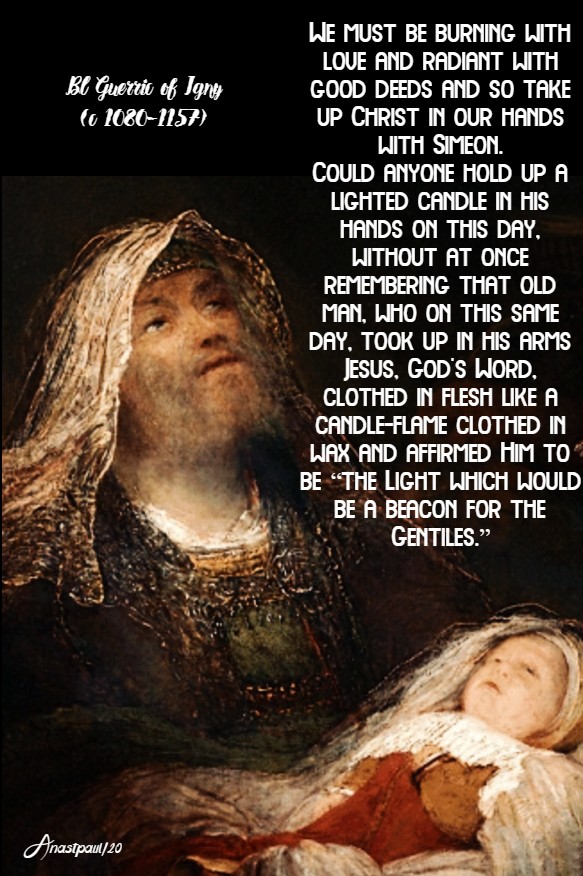
“We must be burning with love and radiant with good deeds and so take up Christ in our hands with Simeon. Could anyone hold up a lighted candle in his hands on this day, without at once remembering that old man, who on this same day, took up in his arms Jesus, God’s Word, clothed in flesh like a candle-flame clothed in wax and affirmed Him to be “the Light which would be a beacon for the Gentiles.”
Bl Guerric of Igny O.Cist (c 1080-1157)
“She, the holy Mother of God, must go to the Temple like other Hebrew mothers, as though she had lost something, which needed restoring by a legal sacrifice. He, that is the Son of God and Son of Man, must be treated in all things, as though He were a servant and be ransomed in common. with the poorest Jewish boy. Mary adores the will of God and embraces it with her whole heart. … She was in the Temple of Jerusalem, what she was in the house of Nazareth, when she received the Archangel’s visit; she was the Handmaid of the Lord.”
Servant of God Abbot Prosper Guéranger (1805-1875)
One Minute Reflection – 2 February – The Feast of the Purification of the Blessed Virgin and the Presentation of the Lord, Readings: Malachi 3:1-4, Psalm 24:7-10, Hebrew 2:14-18, Luke 2:22-40
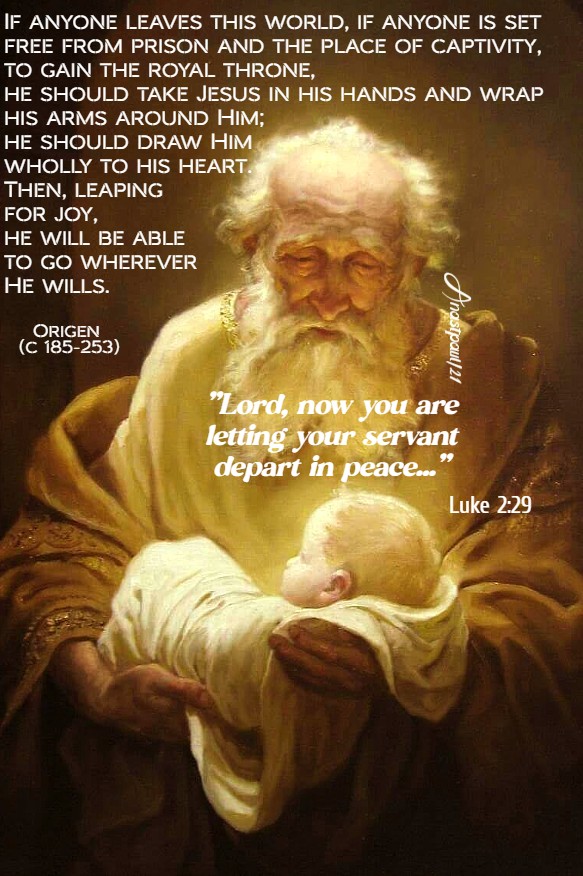
“Lord, now you are letting your servant depart in peace …” Luke 2:29
REFLECTION – “A woman touched the tassel on Jesus’ cloak and she was cured.” (cf. Mt 9:20). If this woman gained so many benefits from touching the border of His cloak, what are we to think of Simeon who “took the child in his arms” and, holding him, gave himself up to rejoicing as he perceived, that he was carrying the Child who had come to “proclaim liberty to captives” (Lk 4:18) and that he himself, was about to be set free from the constraints of the body? He recognised, that no one could release someone from the prison-house of the body, in hope of the life to come, except He whom he held in his arms. And it was to Him that he spoke, saying: “Now, Master, you may let your servant go in peace. For so long as I was not holding Christ, so long as I was not cradling Him in my arms, I was held fast and unable to escape from my bonds.”
Moreover, not Simeon alone but the whole human race, is to be understood by these words. If anyone leaves this world, if anyone is set free from prison and the place of captivity, to gain the royal throne, he should take Jesus in his hands and wrap his arms around Him; he should draw Him wholly to his heart. Then, leaping for joy, he will be able to go wherever He wills.” – Origen (c 185-253) Priest and Theologian, Father of the Church – Homilies on Saint Luke’s Gospel, no 15
PRAYER – O Light of All the Earth! Prayer, Morning Hymn for the Feast of the Presentation Liturgy of the Hours
Hail to the Lord who comes, comes to His temple gate, not with His angel host, not in His kingly state.
But borne upon the throne of Mary’s gentle breast, thus to His Father’s house He comes, the heavenly guest.
There Joseph at her side, in reverent wonder stands and, filled with holy joy, old Simeon in his hands, takes up the promised Child, the glory of all lands.
The world’s true light draws near, All darkness to dispel, the flame of faith is lit and dies the power of hell.
Our bodies and our souls, are temples now for Him, for we are are born of grace – God lights our souls within.
O Light of all the earth! We light our lives with Thee, the chains of darkness gone, all sons of God are free.
Our Morning Offering – 2 February – The Feast of the Purification of the Blessed Virgin and the Presentation of the Lord in the Temple
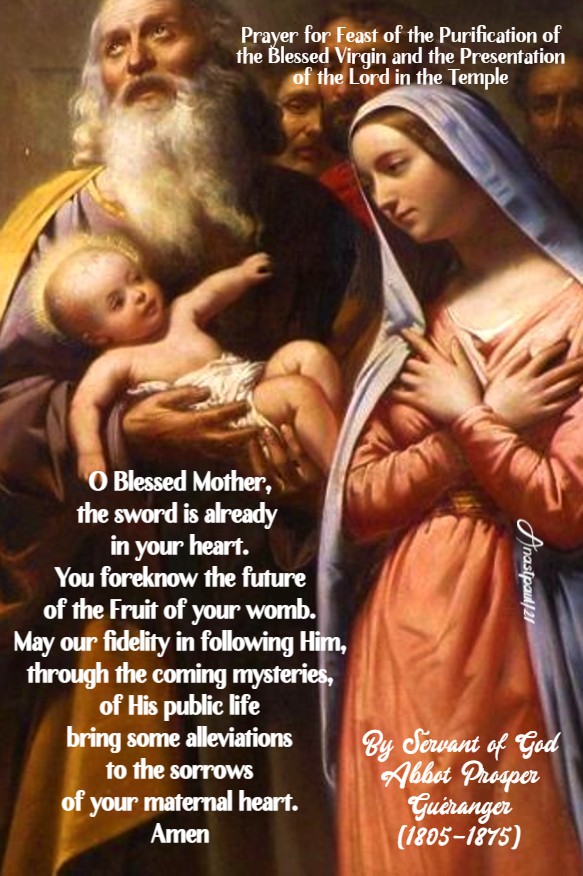
Prayer for the Feast By Servant of God Abbot Prosper Guéranger OSB (1805-1875)
O Blessed Mother, the sword is already in your heart. You foreknow the future of the Fruit of your womb. May our fidelity in following Him, through the coming mysteries, of His public life bring some alleviations to the sorrows of your maternal heart. Amen
Feast of the Purification of Our Lady, the Presentation of Our Lord in the Temple – Candlemas Day – 2 February
Master of Saint Severin c 1490
Besides commemorating the Presentation of Christ in the Temple, this day has another meaning, for it is called Candlemas Day. The candle is one of the most widely used sacramentals in the Church; one blessed in a special Mass.
We use candles at Baptism, at Mass and other church devotions, at the Ordination of a Priest, the Consecration of a Bishop, at Easter, at Christmas to signify the coming of Christ. Two blessed candles should be in every home, to use in times of sickness, death, storms and calamities.
In the blessing of candles, the Church reminds us, that the candles signify light; they are blessed for the service of mankind, for health of body and soul, for those who desire to carry them in their hands with honour. Christ, the true Light and Fire of Charity, is asked to bless these candle,; to dispel the darkness of night, to free us from the blindness of vice and to discern what is pleasing to Him and profitable for our salvation.
On the Feast of Mary’s Purification, we greet her with lighted candles – shining with faith and understanding, burning with love and zeal, as Sion welcomed Christ the King; today we go to Christ through Mary, to Christ, the new Light that gives Faith, Hope and Charity to us all.
The two-fold Jewish rites, to which the Holy Family submitted on this occasion, were the legal purifying of the mother after childbirth and the offering of the first-born male child to the Lord. They showed reverence for the Father’s Law, by fulfilling its obligations and so, the Mother submitted to the Purification in all humility.
Angels beheld in wondering awe, what was the greatest event the Temple had ever witnessed. It was nothing less than the second coming of the Lord to His Temple, which the prophets had foretold. At the Presentation, God the Son made Man, took possession of the Temple built for His Father’s glory and so, ratified the worship which is offered to God in sacred courts, churches.
This simple ceremony is the link between the mystery of the Incarnation and the Redemption; here the Saviour renews the oblation of Himself; “Sacrifice and oblation Thou wouldst not but a body Thou hast fitted to me. Then, I said: “Behold, I come: in the head of the book it is written of me, that I should do Thy will, O God.”
Jesus really begins His Passion in this mystery of the Presentation and so, too, Mary begins her dolors. It is by Mary’s hands, that Jesus makes the oblation, which is the prelude to His Sacrifice. We honour the Presentation among the Joyful Mysteries but it is also, first in place among Mary’s Sorrows.
Simeon enlightened by the Holy Spirit, understood the mystery and so, too, did Mary. After his first transports of joy at seeing the Messiah, he blessed them and said to His Mother, “Behold this Child is set for the fall and the resurrection of many in Israel and for a sign which shall be contradicted and thy own soul, a sword shall pierce, that out of many hearts, thoughts may be revealed.”
This prophecy reminds us, that Mary is always to be associated with the destiny of Jesus, the one solitary partner of His lot, singled out to suffer with Him. Heresies that pierced the Son have trans-pierced the Mother. The early Church guarded the doctrines of Jesus by defining Mary’s titles; today, those who repudiate the honour of Mary, turn from the Son also; in the mind of satan as in the mind of the Church, the honour of Son and Mother go together.
The Church of Jerusalem was the first to celebrate this Feast. On this day, also, a procession was held to the Constantinian basilica. The Armenians still keep the day on 14 February and call it “The Coming of the Son of God into the Temple.” The Greeks called it “Hypapante” the meeting of the Child Jesus and His Mother with Simeon and Anna in to Temple.
This Feast reminds us how intimately Mary is associated with her Son in the work of Redemption. We welcome Her Child to our hearts with love and faith, we bless the Mother, too, for she had “not spared her life by reason of the distress and tribulation of her people but has prevented our ruin, in the presence of our God.”
Feast of the Purification of the Blessed Virgin and the Presentation of the Lord – also known as Candlemas – 2 February: The feast commemorates the purifying of the Blessed Virgin according to the Mosaic Law, 40 days after the birth of Christ and the presentation of the Infant Jesus in the Temple. The feast was introduced into the Eastern Empire by Emperor Justinian I and is mentioned in the Western Church in the Gelasian Sacramentary of the 7th century. Candles are blessed on that day in commemoration of the words of Holy Simeon concerning Christ “a light to the revelation of the Gentiles” (Luke 2) and a procession with lighted candles is held in the church to represent the entry of Christ, the Light of the World, into the Temple of Jerusalem. “Candlemas” is still the name in Scotland for a legal term-day on which interest and rents are payable (2 February). Patronages – Jaro, Philippines, Western Visayas, Philippines.
Our Lady of the Candles – (formally known as Nuestra Señora de la Purificación y la Candelaria) is a Marian title and image venerated by Filipino Catholics. The image, which is enshrined on the balcony of Jaro Cathedral, is known as the patroness of Jaro District of Iloilo City and the whole of the Western Visayas. The feast day of Our Lady of the Candles is on Candlemas (2 February) and is celebrated in Iloilo City with a Solemn Pontifical Mass presided by the Archbishop of Jaro.
St Adalbald of Ostrevant St Adeloga of Kitzingen St Agathodoros of Tyana St Andrea Carlo Ferrari St Apronian the Executioner St Bruno of Ebsdorf St Burchard of Wurzburg St St Candidus the Martyr St Columbanus of Ghent St Cornelius the Centurion St Felician the Martyr St Feock St Firmus of Rome St Flosculus of Orléans St Fortunatus the Martyr St Hilarus the Martyr St Jeanne de Lestonnac St Lawrence of Canterbury Bl Louis Alexander Alphonse Brisson Blessed Maria Domenica Mantovani (1862-1934) Her Life: https://anastpaul.com/2020/02/02/saint-of-the-day-2-february-blessed-maria-domenica-mantovani-1862-1934/ St Marquard of Hildesheim St Mun Blessed Peter Cambiano OP (1320-1365) Priest and Martyr St Rogatus the Martyr St Saturninus the Martyr St Sicharia of Orleans St Simon of Cassia Fidati Bl Stephen Bellesini St Theodoric of Ninden St Victoria the Martyr — Martyrs of Ebsdorf: Members of the army of King Louis III of France under the leadership of Duke Saint Bruno of Ebsdorf. The martyrs died fighting invading pagan Norsemen, and defending the local Christian population. Four bishops, including Saint Marquard of Hildesheim and Saint Theodoric of Ninden, eleven nobles, and countless unnamed foot soldiers died repelling the invaders. They were martyred in the winter of 880 in battle at Luneberg Heath and Ebsdorf, Saxony (modern Germany).
Quote/s of the Day – 25 January – Feast of the Conversion of St Paul, Readings: Acts 22:3-16 or Acts 9: 1-22, Psalms 117:1, 2, Mark 16:15-18
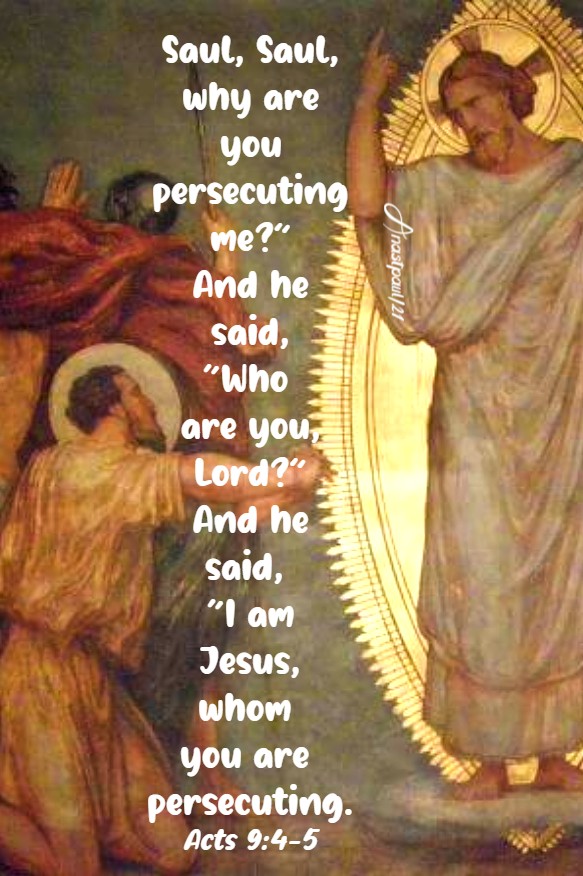
“Saul, Saul, why are you persecuting me?” And he said, “Who are you, Lord?” And he said, “I am Jesus, whom you are persecuting.”
Acts 9:4-5
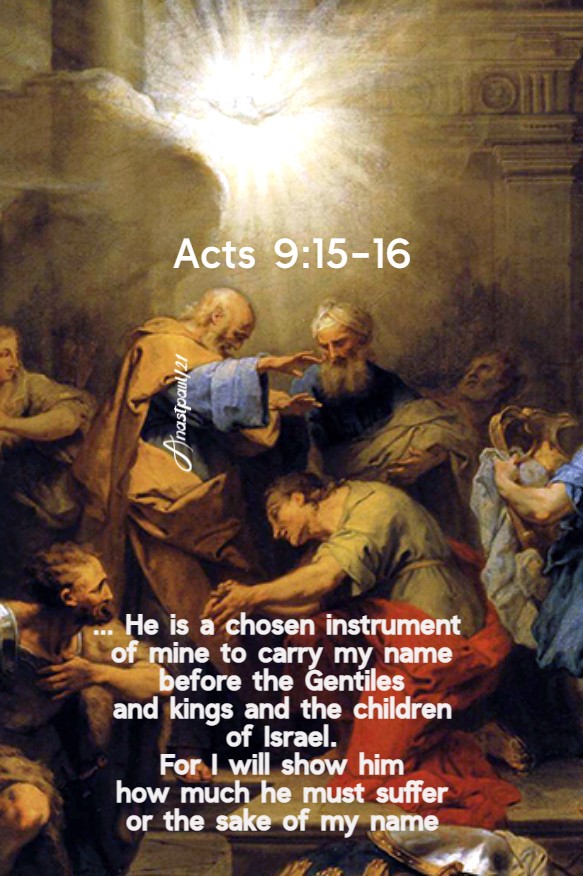
“ … He is a chosen instrument of mine to carry my name before the Gentiles and kings and the children of Israel. For I will show him how much he must suffer or the sake of my name.”
Acts 9:15-16
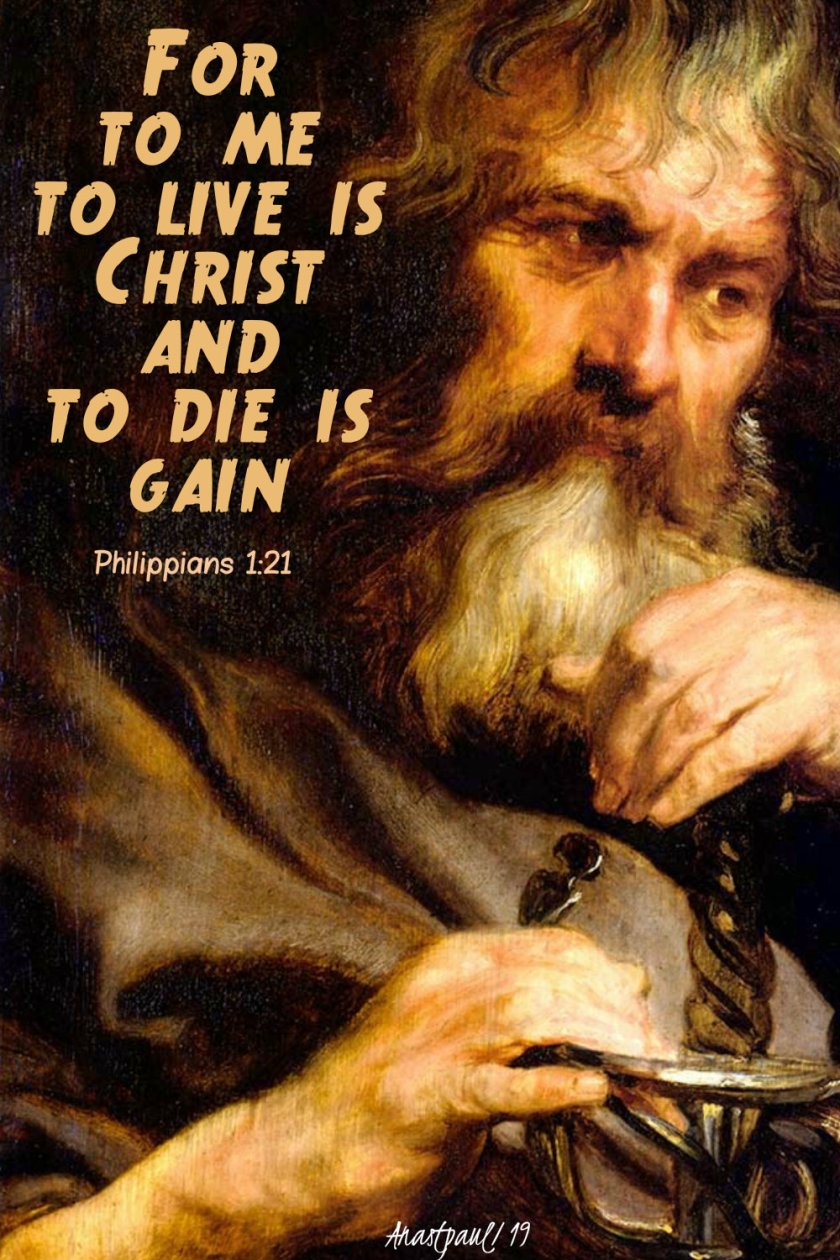
“For to me, to live is Christ and to die is gain.”
Philippians 1:21
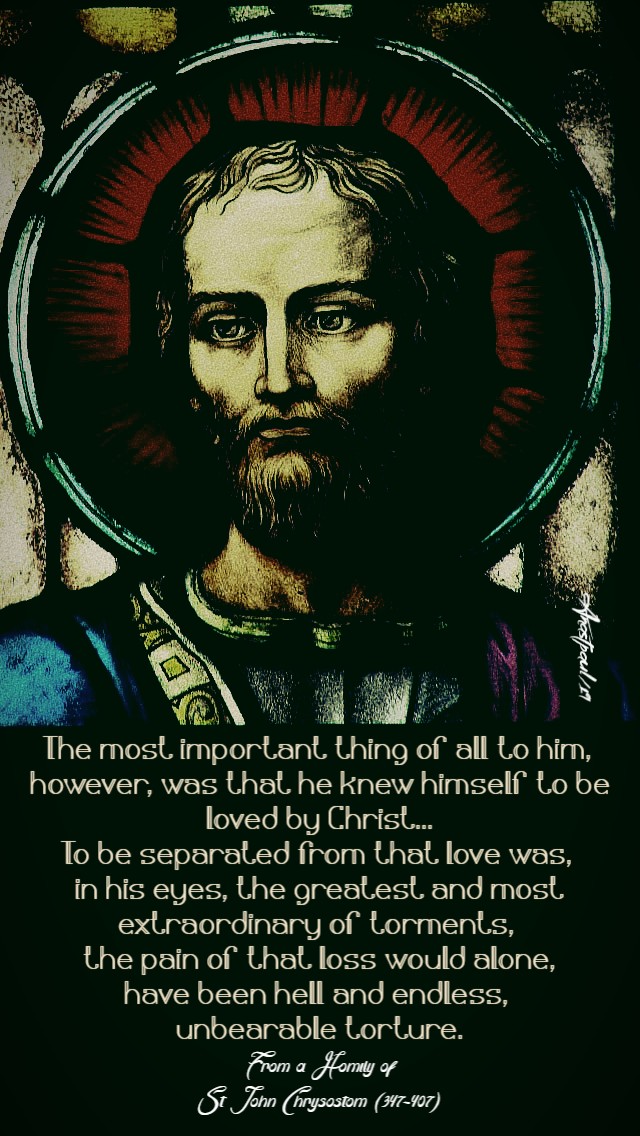
“The most important thing of all to him, however, was that he knew himself to be loved by Christ. … To be separated from that love was, in his eyes, the greatest and most extraordinary of torments, the pain of that loss, would alone, have been hell and endless, unbearable torture.”
St John Chrysostom (347-407) Father ad Doctor of the Church
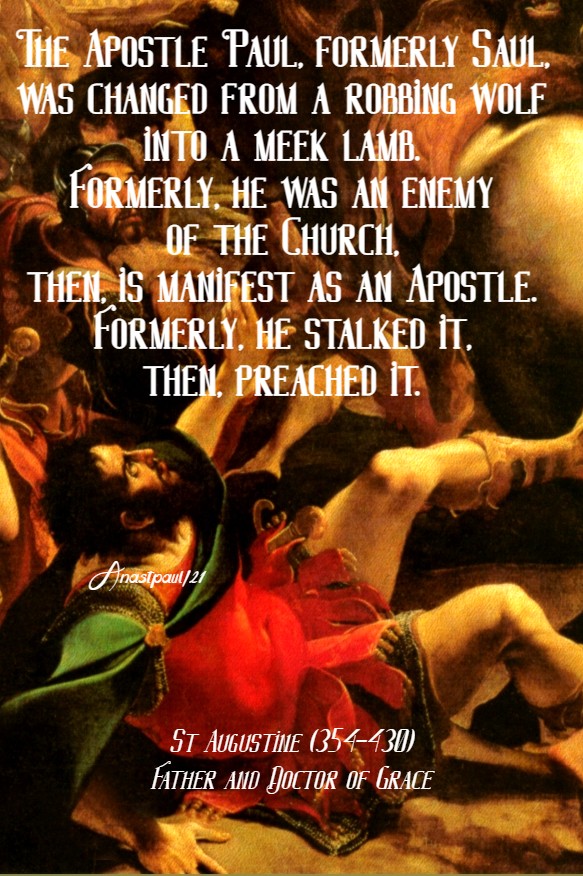
“The Apostle Paul, formerly Saul, was changed from a robbing wolf into a meek lamb. Formerly, he was an enemy of the Church, then, is manifest as an Apostle. Formerly, he stalked it, then, preached it.”
“Go into all the world and proclaim the gospel to vthe whole creation.” – Mark 16:15
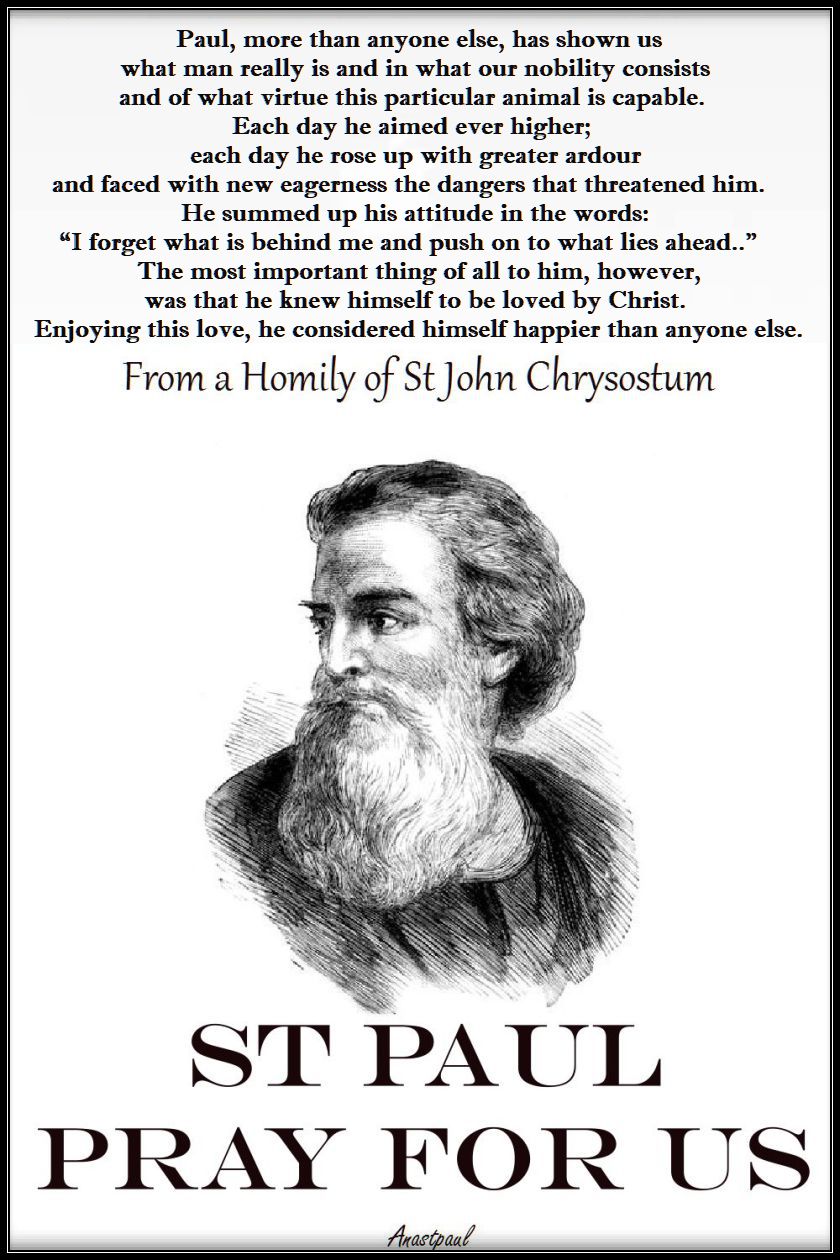
REFLECTION – “Paul, more than anyone else, has shown us what man really is and in what our nobility consists and of what virtue this particular animal is capable. Each day, he aimed ever higher; each day, he rose up with greater ardour and faced with new eagerness the dangers that threatened him. He summed up his attitude in the words: “I forget what is behind me and push on to what lies ahead”… The most important thing of all to him, however, was that he knew himself to be loved by Christ. Enjoying this love, he considered himself happier than anyone else” – St John Chrysostom (347-407) Father and Doctor
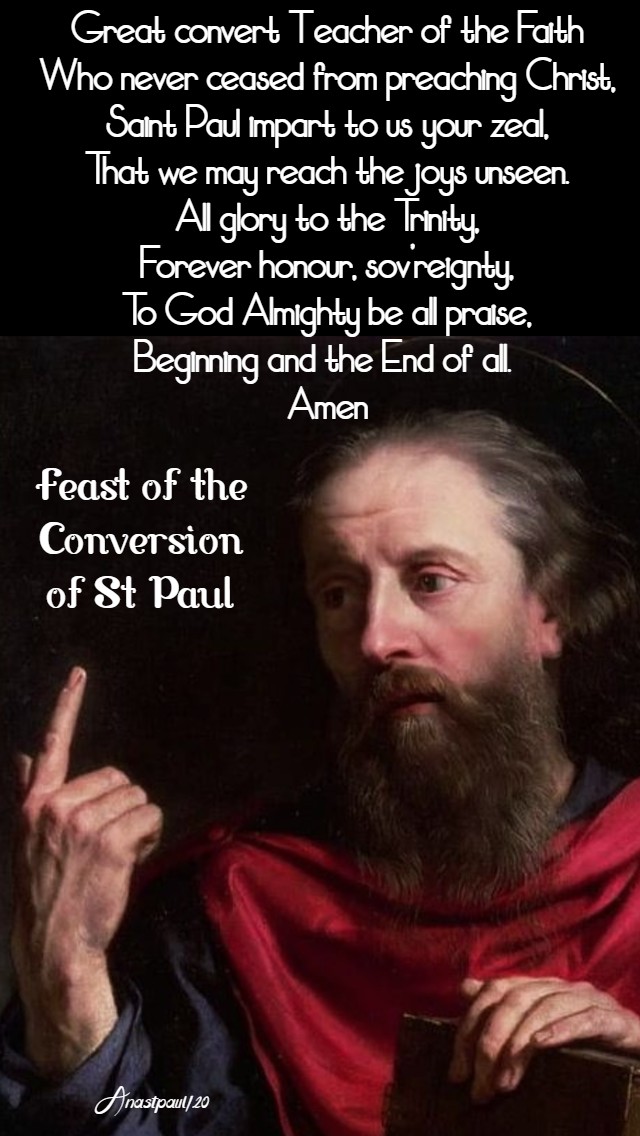
PRAYER – Great convert Teacher of the Faith Who never ceased from preaching Christ, Saint Paul impart to us your zeal, That we may reach the joys unseen.
All glory to the Trinity, Forever honour, sov’reignty, To God Almighty be all praise, Beginning and the End of all.
St Agape the Martyr St Agileus of Carthage St Amarinus of Clermont St Ananias of Damascus Blessed Antonio Migliorati OSA (1355-1450) Priest Bl Antoni Swiadek St Apollo of Heliopolis St Artemas of Pozzuoli St Auxentius of Epirus St Bretannion of Tomi St Donatus the Martyr St Dwynwen St Emilia Fernández Rodríguez de Cortés St Eochod of Galloway St Joel of Pulsano St Juventinus of Antioch Bl Manuel Domingo y Sol St Maximinus of Antioch St Palaemon St Poppo of Stavelot (977-1048) Biography: https://anastpaul.com/2020/01/25/saint-of-the-day-25-january-saint-poppo-of-stavelot-977-1048/ St Praejectus of Clermont St Publius of Zeugma St Racho of Autun St Sabinus the Martyr
Quote/s of the Day – 10 January – Feast of the Baptism of the Lord
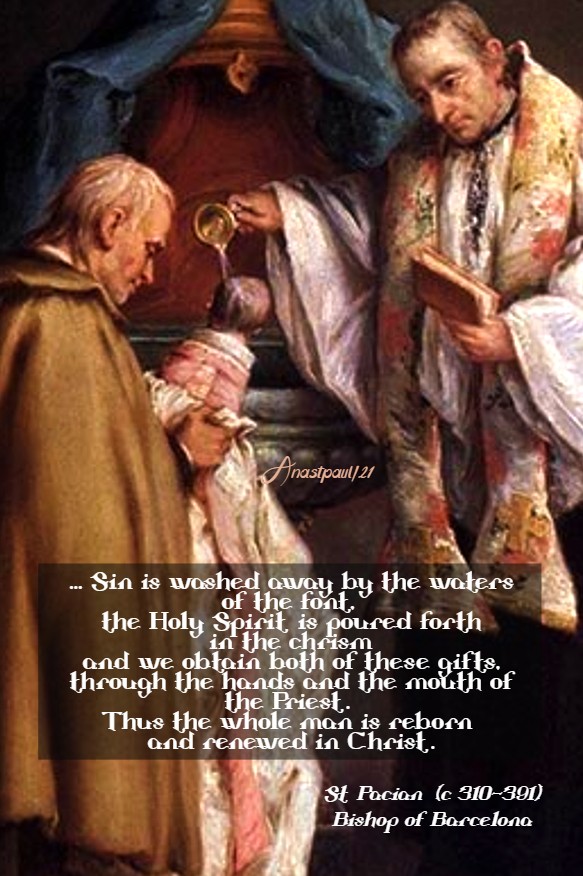
“ … Sin is washed away by the waters of the font, the Holy Spirit is poured forth in the chrism and we obtain both of these gifts, through the hands and the mouth of the Priest. Thus the whole man is reborn and renewed in Christ.”
St Pacian (c 310–391) Bishop of Barcelona
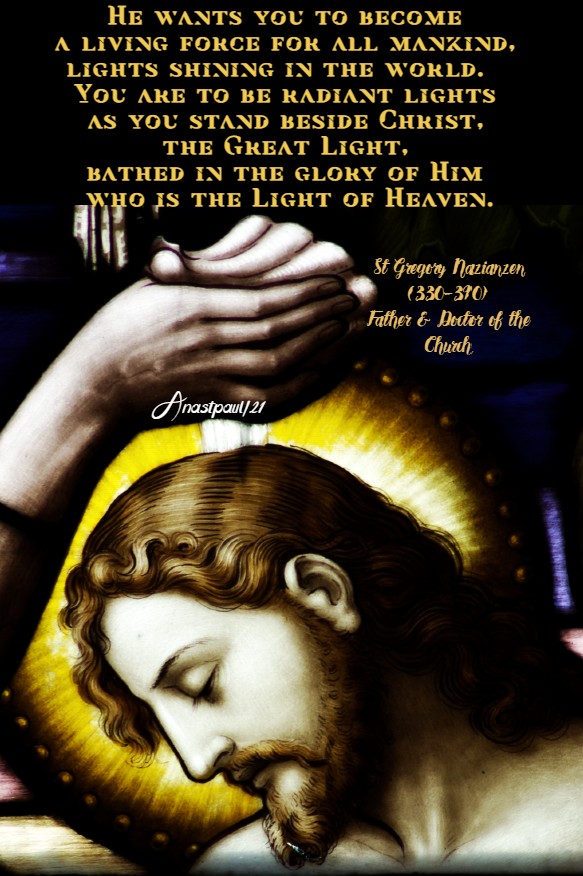
“He wants you to become a living force for all mankind, lights shining in the world. You are to be radiant lights as you stand beside Christ, the Great Light, bathed in the glory of Him who is the Light of Heaven.”
St Gregory Nazianzen (330-390) Father & Doctor of the Church
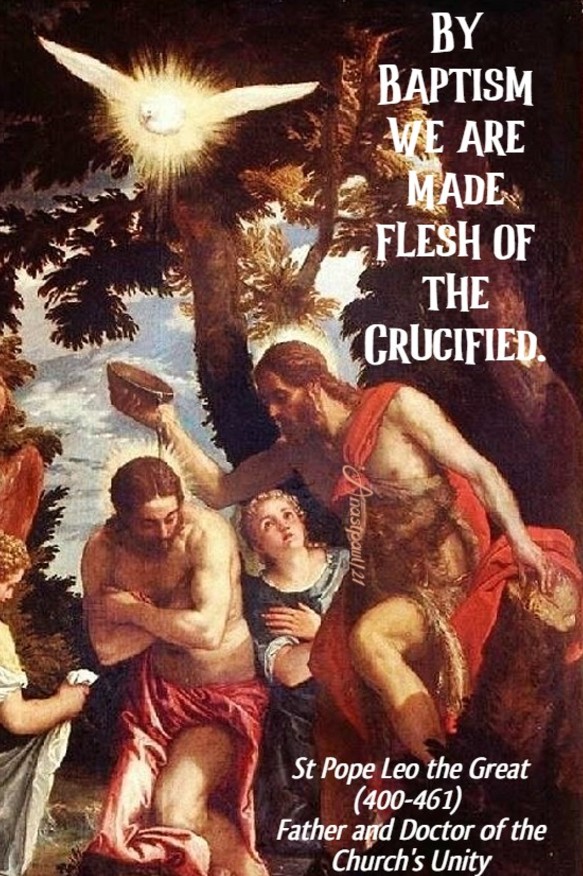
“By Baptism we are made flesh of the Crucified.”
St Pope Leo the Great (400-461) Father and Doctor of the Church’s Unity
One Minute Reflection – 10 January – Feast of the Baptism of the Lord , Readings: Isaiah 55:1-11, Isaiah 12:2-3,4,5-6, 1 John 5:1-9, Mark 1:7-11
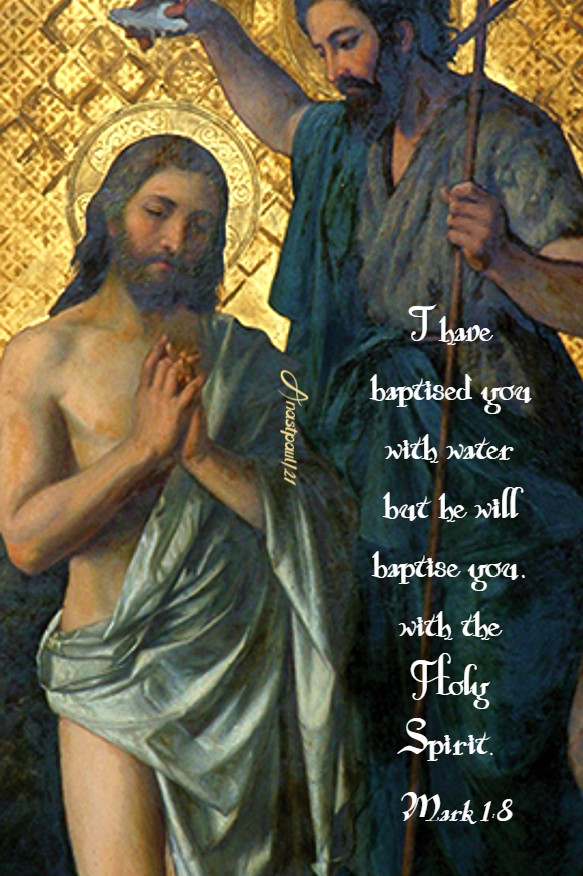
“I have baptised you with water but he will baptise you, with the Holy Spirit.” – Mark 1:8
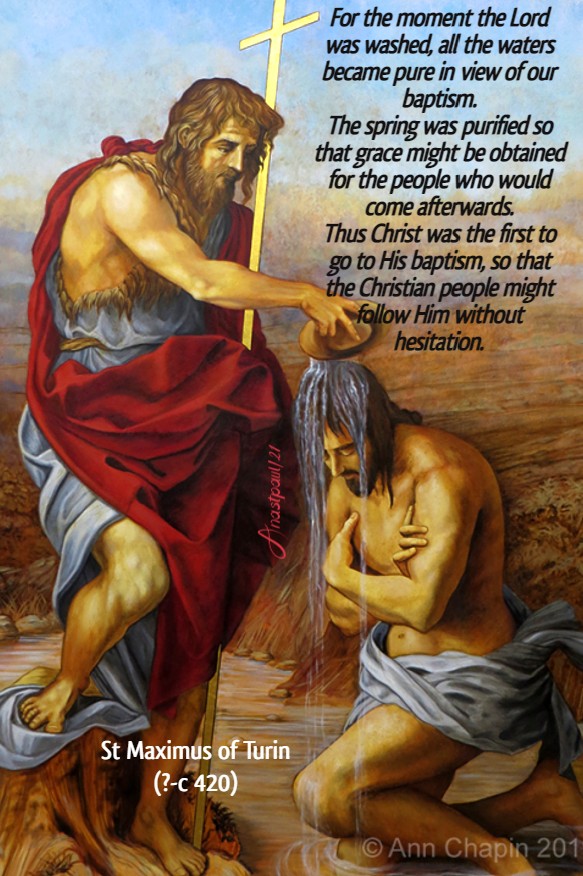
REFLECTION – “Today, the Lord Jesus has come to be baptised. He wanted to wash His body in the water of the Jordan. Someone might say: “Why did He who was the Holy One want to be baptised?” So listen. Christ was baptised, not in order to be sanctified by the water but so that He, Himself would sanctify the water and would purify the waves, that He touched by His personal action. Thus, we have to do with the consecration of the water much more than with that of Christ. For the moment the Lord was washed, all the waters became pure in view of our baptism. The spring was purified so that grace might be obtained for the people who would come afterwards. Thus Christ was the first to go to His baptism, so that the Christian people might follow Him without hesitation. And in this I perceive a mystery. Did not the column of fire go ahead into the Red Sea in this way, so as to encourage the children of Israel to walk behind it? It crossed the water first so as to break a path for those who would follow. According to the testimony of the Apostle Paul, this event was a symbol of baptism (1 Cor 10:1f.). Without any doubt, when the people were covered by the cloud and carried by the water, it was a kind of baptism. And all that was fulfilled by the same Christ our Lord, who in the column of His body now precedes the Christian people to baptism, just as He preceded the children of Israel across the sea, in the column of fire. The same column, which in times past enlightened the eyes of those who were walking, now gives light to the hearts of the believers. Then it marked a solid path in the waves, now in this bath, it strengthens the steps of faith.” – St Maximus of Turin (?-c 420) Bishop – Sermon for the feast of the Epiphany
PRAYER– By the Benedictines of Stanbrook When Jesus comes to be baptised, He leaves the hidden years behind, The years of safety and of peace, To bear the sins of all mankind.
The Spirit of the Lord comes down Anoints the Christ to suffering, To preach the word, to free the bound And to the mourner comfort bring.
Our everlasting Father, praise, With Christ, His well-beloved Son, Who with the Soirit reigns serene, Untroubled Trinity in One. Amen
Our Morning Offering – 10 January – Feast of the Baptism of the Lord
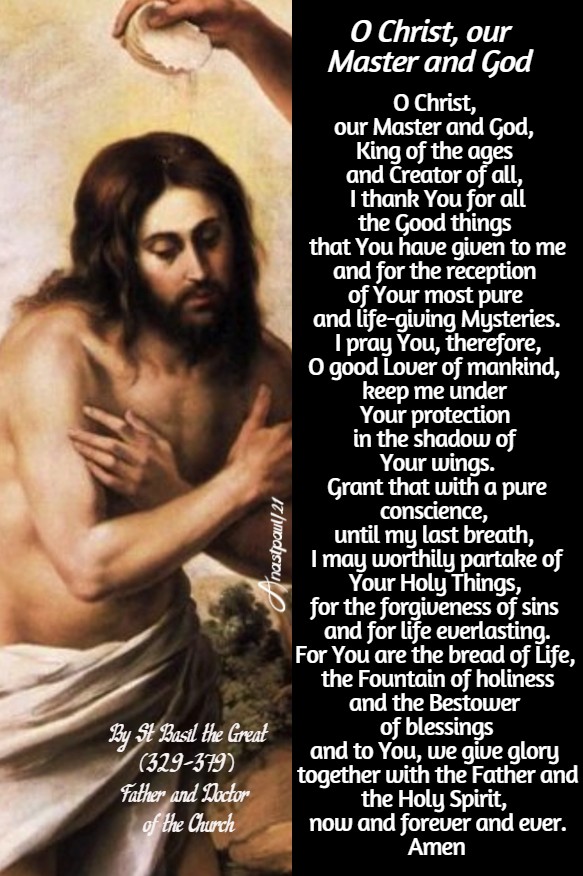
O Christ, our Master and God St Basil the Great (329-379) Father and Doctor of the Church
O Christ, our Master and God, King of the ages and Creator of all, I thank You for all the Good things that You have given to me and for the reception of Your most pure and life-giving Mysteries. I pray You, therefore, O good Lover of mankind, keep me under Your protection in the shadow of Your wings. Grant that with a pure conscience, until my last breath, I may worthily partake of Your Holy Things, for the forgiveness of sins and for life everlasting. For You are the bread of Life, the Fountain of holiness and the Bestower of blessings and to You, we give glory together with the Father and the Holy Spirit, now nad forever and ever. Amen
Thought for the Day – 6 January – Meditations with Antonio Cardinal Bacci (1881-1971) The Solemnity of the Epiphany of the Lord
The Epiphany
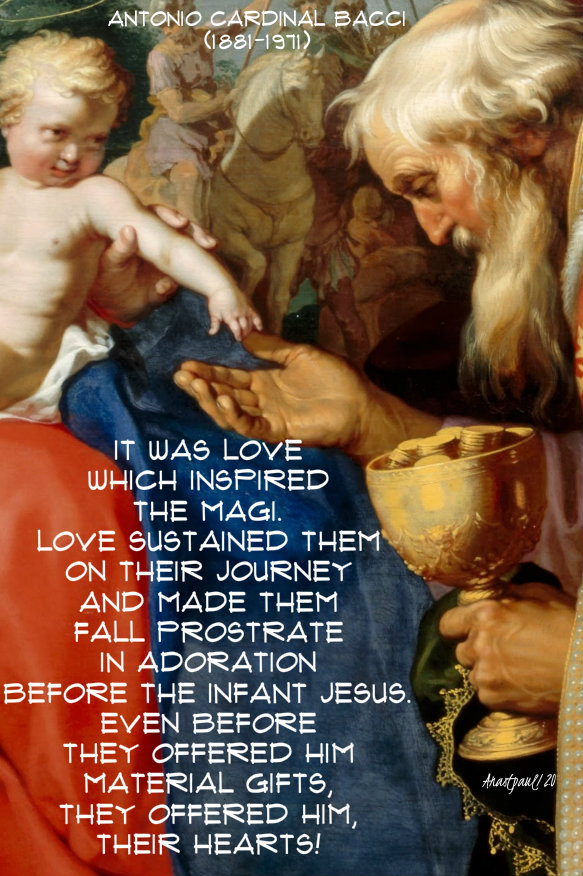
It was love which inspired the Magi. Love sustained them on their journey and made them fall prostrate in adoration before the Infant Jesus. Even before they offered Him material gifts, they offered Him, their hearts! As a reward for their faith and charity, God showered his graces upon them and an immense supernatural joy pervaded their souls. In that moment of adoration, they received the highest possible reward for their hardships and perseverance. With deep interior joy, they gave Jesus their hearts and never withdrew them. A pious tradition maintains, that they apostles and Saints and, in fact, the Church venerates them as such, today.
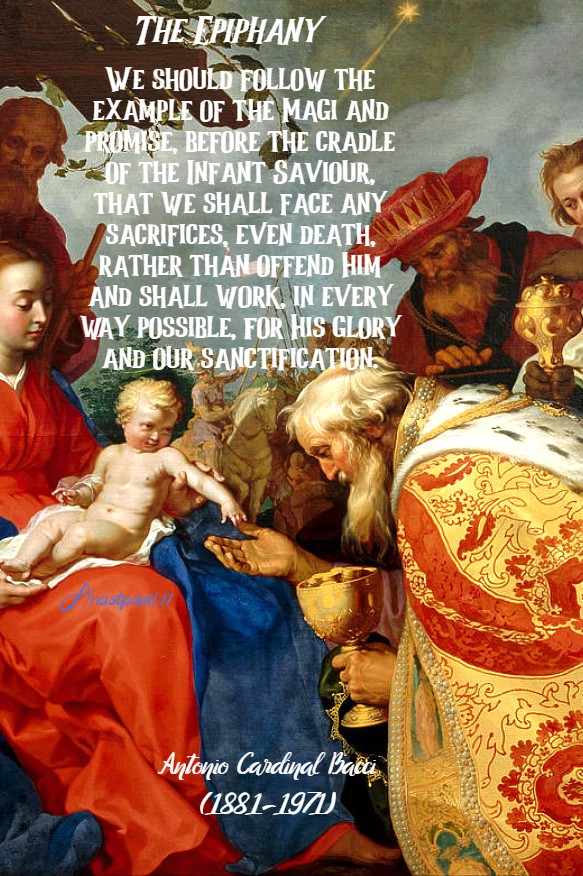
We should follow the example of the Magi and promise, before the cradle of the Infant Saviour, that we shall face any sacrifices, even death, rather than offend Him and shall work, in every way possible, for His glory and our sanctification.”
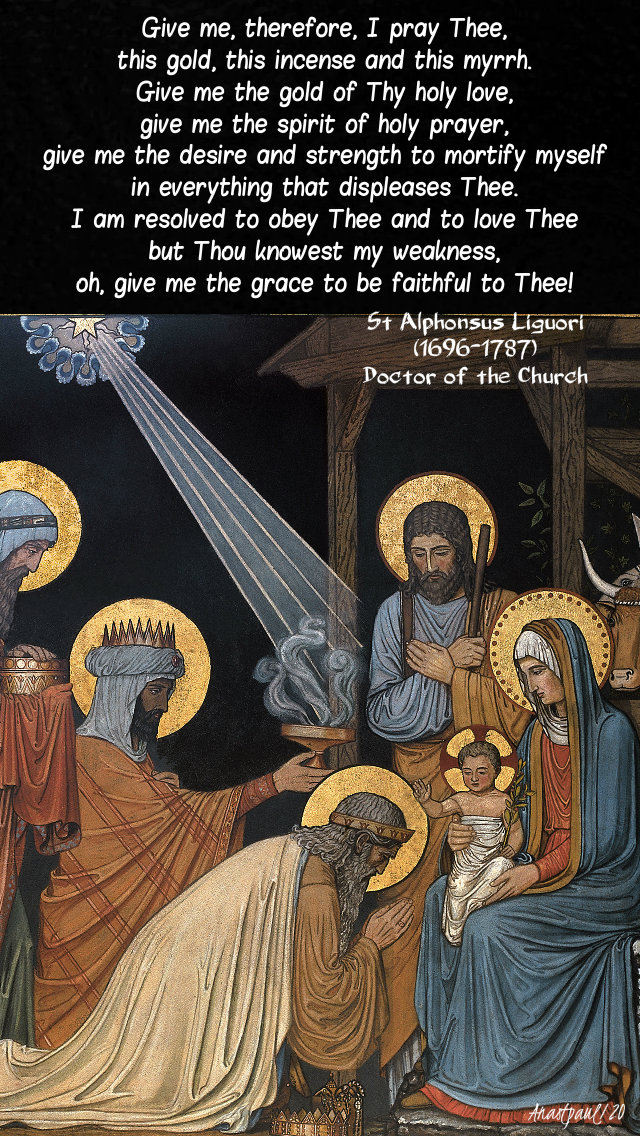
“… They fell down and worshipped him. Then, opening their treasures, they offered him gifts, gold and frankincense and myrrh.” … Matthew 2:11
REFLECTION – “But if, with careful thought, we wish to see how their threefold kind of gift, is also offered by all who come to Christ, with the foot of faith — is not the same offering repeated in the hearts of true believers? For he who acknowledges ,Christ the King of the universe brings Gold from the treasure of his heart, he who believes the Only-begotten of God to have united man’s true nature to Himself, offers Myrrh and he who confesses Him, in no wise, inferior to the Father’s Majesty, worships Him in a manner, with Incense.” … St Pope Leo the Great (400-461) Father and Doctor of the Church
PRAYER – “Give me, therefore, I pray Thee, this gold, this incense and this myrrh. Give me the gold of Thy holy love, give me the spirit of holy prayer, give me the desire and strength to mortify myself in everything that displeases Thee. I am resolved to obey Thee and to love Thee but Thou knowest my weakness, oh, give me the grace to be faithful to Thee!” … St Alphonsus Liguori (1696-1787) Doctor of the Church
Our Morning Offering – 6 January – The Solemnity of the Epiphany of the Lord
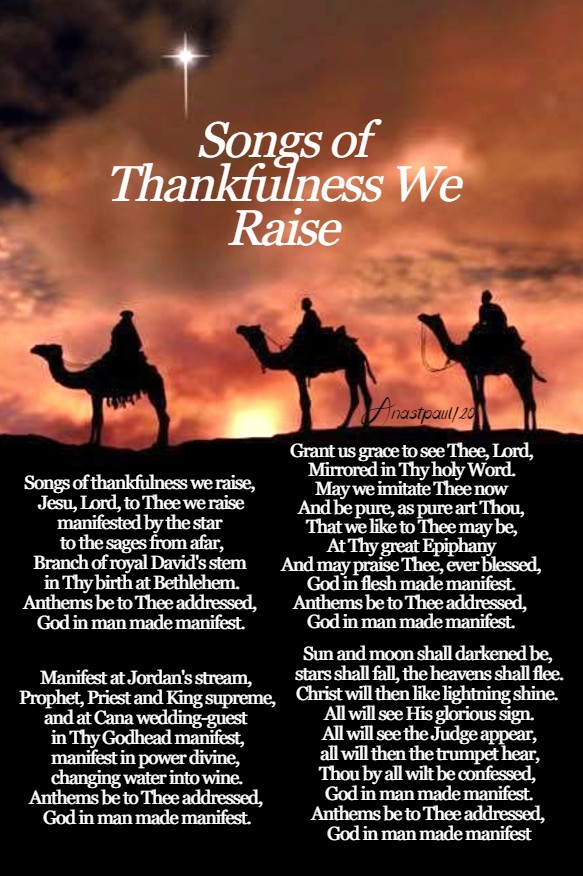
Songs of Thankfulness We Raise By Christopher Wordsworth (1807-1885) (1862)
Songs of thankfulness we raise, Jesu, Lord, to Thee we raise manifested by the star to the sages from afar, Branch of royal David’s stem in Thy birth at Bethlehem. Anthems be to Thee addressed, God in man made manifest.
Manifest at Jordan’s stream, Prophet, Priest and King supreme, and at Cana wedding-guest in Thy Godhead manifest, manifest in power divine, changing water into wine. Anthems be to Thee addressed, God in man made manifest.
Grant us grace to see Thee, Lord, Mirrored in Thy holy Word. May we imitate Thee now And be pure, as pure art Thou, That we like to Thee may be, At Thy great Epiphany And may praise Thee, ever blessed, God in flesh made manifest. Anthems be to Thee addressed, God in man made manifest.
Sun and moon shall darkened be, stars shall fall, the heavens shall flee. Christ will then like lightning shine. All will see His glorious sign. All will see the Judge appear, all will then the trumpet hear, Thou by all wilt be confessed, God in man made manifest. Anthems be to Thee addressed, God in man made manifest
Christopher Wordsworth (b. Lambeth, London, England, 1807; d. Harewood, Yorkshire, England, 1885), nephew of the great Romantic poet William Wordsworth, wrote this hymn in five stanzas.
The Solemnity of the Epiphany of the Lord – Epiphany celebrates the visit of the three kings or wise men to the Christ Child, signifying the extension of salvation to the Gentiles. The date of Epiphany, one of the oldest Christian feasts, is 6 January the 12th day after Christmas. However, in most countries, the celebration of Epiphany is transferred to the Sunday that falls between 2 January and 8 January (inclusive). Greece, Ireland, Italy and Poland continue to observe Epiphany on 6 January as do some dioceses in Germany. Because Epiphany is one of the most important Christian feasts, it is a Holy Day of Obligation in most countries.
St Demetrius of Philadelphia St Diman Dubh of Connor St Edeyrn St Eigrad St Erminold of Prüfening St Felix of Nantes Bl Frederick of Saint-Vanne Bl Gertrud of Traunkirchen Bl Gertrude van Oosten St Guarinus of Sion St Guy of Auxerre St Honorius St Hywyn of Aberdaron St Juan de Ribera (1532-1611) Bishop St Julian of Antinoë St Julius Bl Luc of Roucy Bl Macarius the Scot St Macra of Rheims St Merinus St Nilammon of Geris St St Petran of Landévennec St Peter of Canterbury St Pia of Quedlinburg St Pompejanus St Rafaela Porras y Ayllón Bl Raymond de Blanes Bl Rita Amada de Jesus St Schotin St Wiltrudis of Bergen — Martyrs in Africa: Unknown number of Christian men and women who were martyred in the persecutions of Septimus Severus. They were burned to death c 210.
Martyrs of Sirmium – 8 saints: A group of Christians martyred together for their faith. The only surviving details are the names of eight of them – Anastasius VIII, Florianus, Florus, Jucundus, Peter, Ratites, Tatia and Tilis. They were martyred in the 4th century at Syrmium, Pannonia (modern Sremska Mitrovica, Vojvodina, Serbia).
Twelve Apostles – Saints of Ireland: Twelve 6th century Irish monks who studied under Saint Finian at Clonard Abbey and then spread the faith throughout Ireland. Each has his own commemoration but on this day they and their good work are considered and celebrated together. Though Saint Finian is sometimes included, most ancient writers list them as – • Brendan of Birr • Brendan the Navigator • Columba of Iona • Columba of Terryglass • Keiran of Saighir • Kieran of Clonmacnois • Canice of Aghaboe • Lasserian of Leighlin • Mobhí of Glasnevin • Ninnidh the Saintly of Loch Erne • Ruadh´n of Lorrha • Senan of Iniscathay
Quote/s of the Day – 3 January – Feast of the Most Holy Name of Jesus
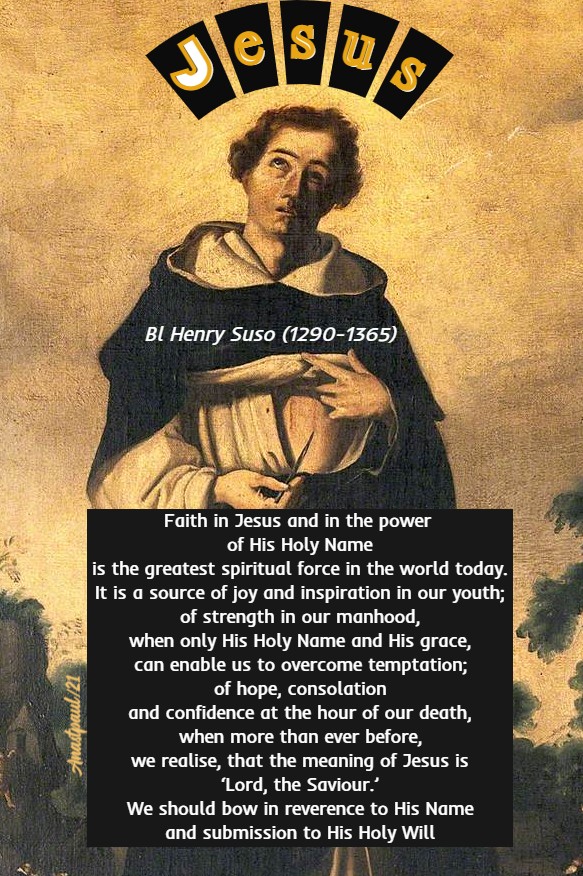
“Faith in Jesus and in the power of His Holy Name is the greatest spiritual force in the world today. It is a source of joy and inspiration in our youth; of strength in our manhood, when only His Holy Name and His grace, can enable us to overcome temptation; of hope, consolation and confidence at the hour of our death, when more than ever before, we realise, that the meaning of Jesus is ‘Lord, the Saviour.’ We should bow in reverence to His Name and submission to His Holy Will.”
Bl Henry Suso (1290-1365)
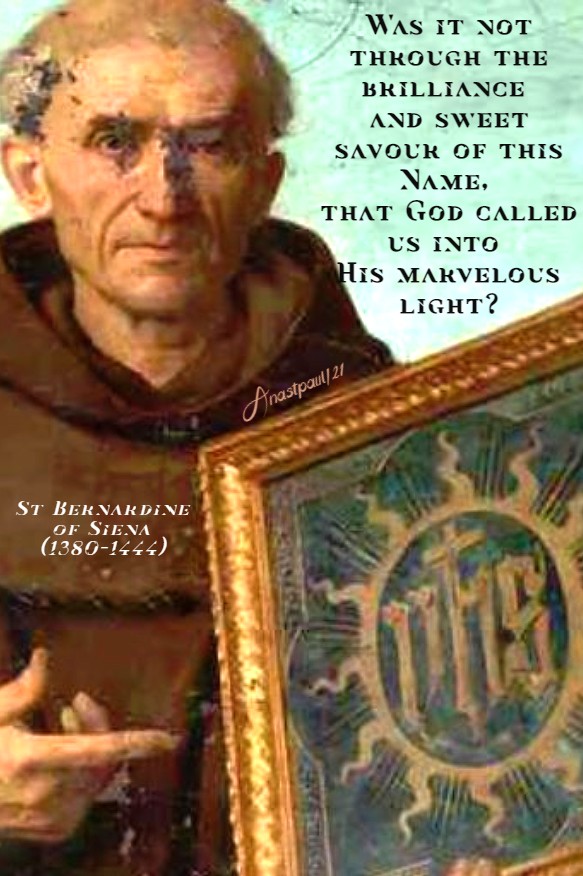
“Was it not through the brilliance and sweet savour of this Name, that God called us into His marvelous light?”
St Bernardine of Siena (1380-1444)
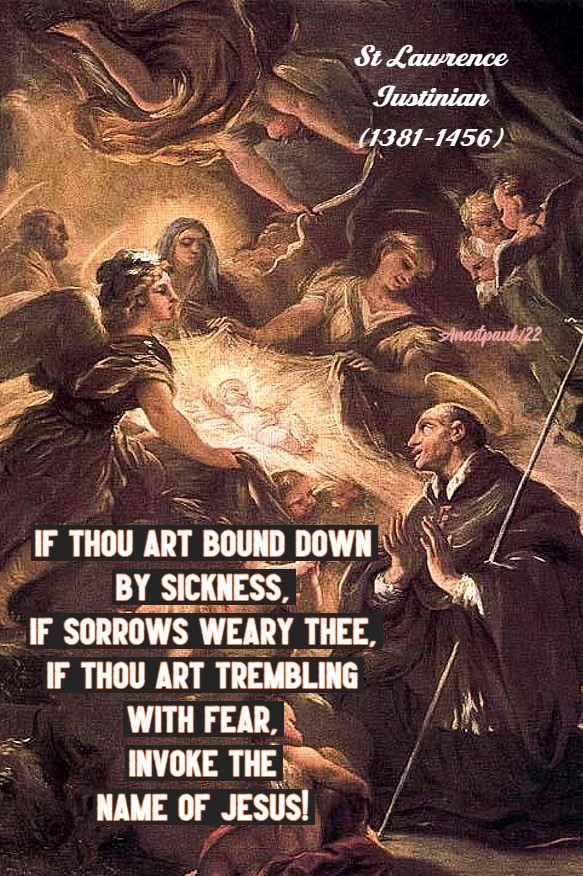
“If thou are bound down by sickness, if sorrows weary thee, if thou are trembling with fear, invoke the name of Jesus.”
One Minute Reflection – 3 January – Feast of the Most Holy Name of Jesus, Readings: Epistle Acts 4:8-12, Psalm 105:47, Isa 63:16, Ps 144:21, Gospel Luke 2:21-24
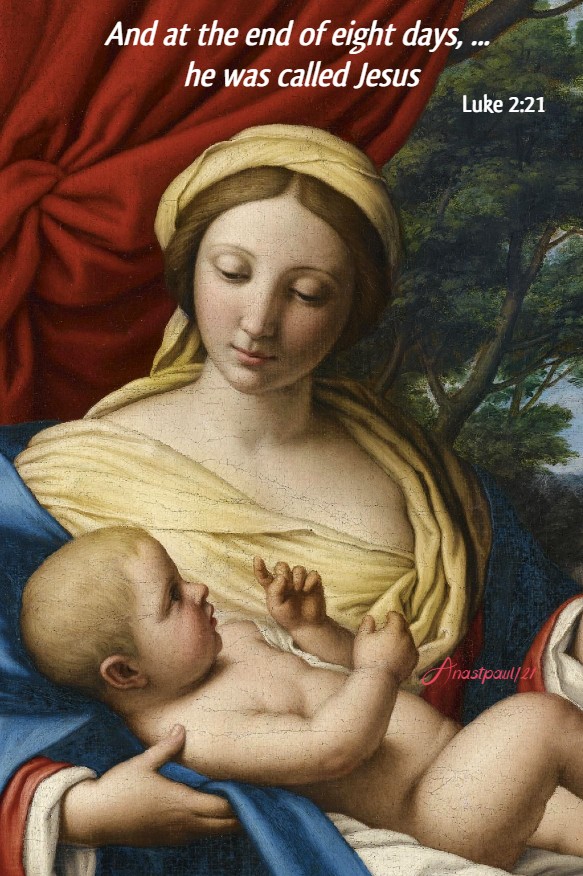
“And at the end of eight days, when he was circumcised, he was called Jesus”…Luke 2:21
REFLECTION – “The Name stands as a complete summary and description of our Lord’s character and office and it is under this aspect that it has been regarded by thousands of Saints, whose hearts have melted at its mere sound. To them Jesus is their God, Jesus is their King, Jesus is their Redeemer, Jesus is their Mediator, Jesus is their Saviour, Jesus is their great Priest, Jesus is their Intercessor, Jesus is the Captain under Whom they fight, Jesus is the Leader Whom they follow, Jesus is their Teacher, Jesus is the Giver of their law, Jesus is the Spouse and Shepherd of their souls, Jesus is their Light, Jesus is their Life, Jesus is the Judge before Whom they rejoice to think, that they must one day stand, Jesus is their final and eternal Reward, for which alone they live.
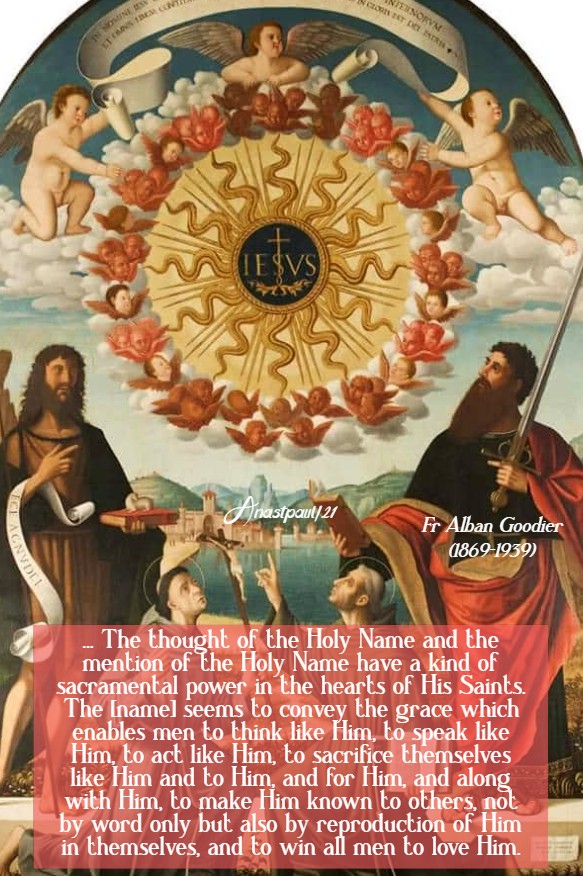
But He is also to them the Mirror of all the most glorious and winning virtues. He is, and His Name tells them that He is, unbounded Charity, infinite Mercy, extremest Kindness, deepest Humility, most devoted Piety, transparent Simplicity, uttermost Poverty, Chastity without a stain. It is the prerogative of love to transform those who love into the likeness of Him Whom they love and as the mere name of one who is loved cannot sound in the ear or be thought of in the mind, without adding to the love which is already there, so the thought of the Holy Name and the mention of the Holy Name have a kind of sacramental power in the hearts of His Saints. The [name] seems to convey the grace which enables men to think like Him, to speak like Him, to act like Him, to sacrifice themselves like Him and to Him, and for Him, and along with Him, to make Him known to others, not by word only but also by reproduction of Him in themselves, and to win all men to love Him.” – Fr Alban Goodier SJ (1869-1939) Archbishop – Excerpted from The Prince of Peace
PRAYER – O God, who founded the salvation of the human race on the Incarnation of Your Word, give Your people the mercy they implore, so that all may know there is no other Name to be invoked but the Name of Your Only Begotten Son. Who lives and reigns with You in the unity of the Holy Spirit, one God, forever and ever. Amen
Quote/s of the Day – 1 January – The Solemnity of Mary, Mother of God and the Octave Day of the Nativity of the Lord
“If anyone does not believe that Holy Mary is the Mother of God, such a one is a stranger to the Godhead.”
St Gregory of Nazianzen (330-390) Father & Doctor of the Church
“That anyone could doubt, the right of the holy Virgin to be called the Mother of God, fills me with astonishment. Surely, she must be the Mother of God, if our Lord Jesus Christ is God and she gave birth to Him!”
St Cyril of Alexandria (376-444) Father and Doctor
“Having confidence in you, O Mother of God, I shall be saved. Being under you protection, I shall fear nothing. With your help, I shall give battle to my enemies and put them to flight, for devotion to you, is an arm of Salvation.”
St John Damascene (676-749) Father and Doctor of the Church
“What shall we say, brethren? Is she not our mother? Certainly, brethren, she is in truth our mother. Through her we are born, not to the world but to God.”
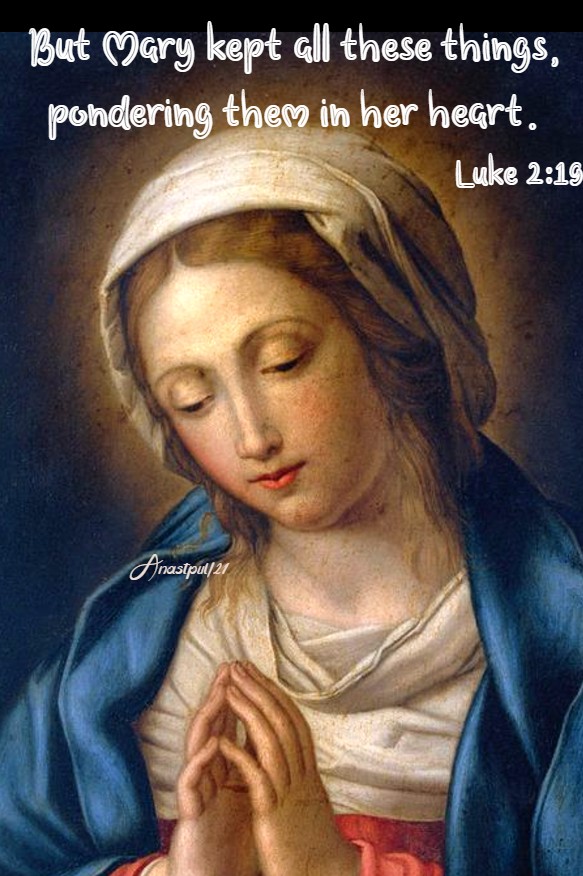
But Mary kept all these things, pondering them in her heart. … Luke 2:19
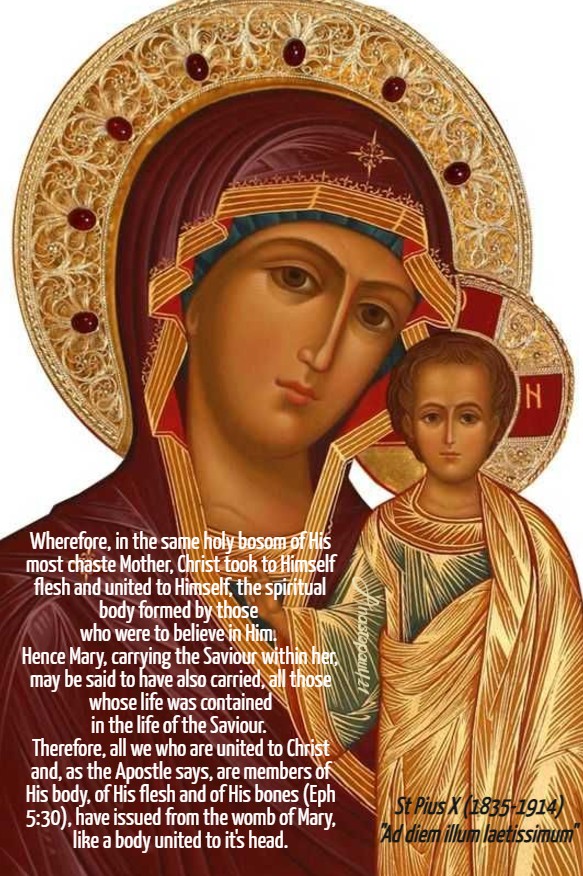
REFLECTION – “Is not Mary the Mother of Christ? Then she is our Mother also. And we must in truth hold that Christ, the Word made Flesh, is also the Saviour of mankind. He had a physical body like that of any other man and again, as Saviour of the human family, He had a spiritual and mystical body, the society, namely, of those who believe in Christ. “We are many, but one sole body in Christ” (Rom. xii., 5). Now the Blessed Virgin did not conceive the Eternal Son of God, merely in order, that He might be made man taking His human nature from her but, also in order, that by means of the nature assumed from her, He might be the Redeemer of men. For which reason, the Angel said to the Shepherds: “To-day there is born to you a Saviour who is Christ the Lord” (Luke 2:11). Wherefore, in the same holy bosom of His most chaste Mother, Christ took to Himself flesh and united to Himself, the spiritual body formed by those who were to believe in Him. Hence Mary, carrying the Saviour within her, may be said to have also carried, all those whose life was contained in the life of the Saviour. Therefore, all we who are united to Christ and, as the Apostle says, are members of His body, of His flesh and of His bones (Eph 5:30), have issued from the womb of Mary, like a body united to it’s head. Hence, though in a spiritual and mystical fashion, we are all children of Mary and she is Mother of us all. … If then, the most Blessed Virgin is the Mother at once of God and men, who can doubt that she will work with all diligence to procure that Christ, Head of the Body of the Church (Col 1:18), may transfuse His gifts into us, His members and above all, that of knowing Him and living through Him (I John 4:9)?” – Saint Pius X (1835-1914) – Pope from 1903 to 1914 – Encyclical “Ad diem illum laetissimum” §10-11
PRAYER – God, our Father, since You gave mankind a Saviour through the blessed Mary, virgin and mother and a heavenly mother through our Saviour, grant that we may feel the power of her intercession, when she pleads for us with Jesus Christ, Your Son, the author of life, who lives and reigns with You and the Holy Spirit, God, forever and ever, amen.
Titular Feast of the Society of Jesus – But now celebrated on 3 January, the Feast of the Holy Name of Jesus
Bl Adalbero of Liege St Baglan of Wales St Basil of Aix Bl Bonannus of Roio St Brogan St Buonfiglio Monaldi Bl Catherine de Solaguti St Clarus of Vallis Regia St Clarus of Vienne St Colman mac Rónán St Colman Muillin of Derrykeighan St Concordius of Arles St Connat St Cuan St Demet of Plozévet St Elvan St Eugendus of Condat St Euphrosyne of Alexandria St Fanchea of Rossory St Felix of Bourges St Frodobert of Troyes St Fulgentius of Ruspe (c 462 – 533) About St Fulgentius! https://anastpaul.com/2020/01/01/saint-of-the-day-1-january-saint-fulgentius-of-ruspe-c-462-533-the-pocket-augustine/ St Gisela of Rosstreppe St Gregory Nazianzen the Elder Bl Hugolinus of Gualdo Cattaneo Bl Jean-Baptiste Lego Bl Jean of Saint-Just-en-Chaussée St Joseph Mary Tomasi St Justin of Chieti Bl Lojze Grozde St Maelrhys St Magnus the Martyr Bl Marian Konopinski St Mydwyn St Odilo of Cluny OSB (962-1049) Priest, Monk, 5th Abbot of Cluny St Odilo of Stavelot St Peter of Atroa St Peter of Temissis Bl René Lego St Sciath of Ardskeagh St Severino Gallo St Telemachus St Thaumastus of Mainz St Theodotus St Tyfrydog Bl Valentin Paquay St Vincent Strambi St William of Dijon St Zedislava Berka St Zygmunt Gorazdowski — Breton Missionaries to Britain Martyred Soldiers of Rome: Thirty soldiers martyred in Rome as a group during the persecutions of Diocletian. We don’t even known their names. They were martyred c 304 at Rome, Italy.
Martyrs of Africa – 8 saints: Eight Christians martyred together in Africa, date unknown. The only details we have are four of their names – Argyrus, Felix, Narcissus and Victor.
Martyred in the Spanish Civil War: • Blessed Andrés Gómez Sáez
Quote/s of the Day – 28 December – The Feast of the Holy Innocents – The Fourth Day of the Christmas Octave, Readings: 1 John 1:5-2:2, Psalm 124:2-5, 7-8, Matthew 2:13-18
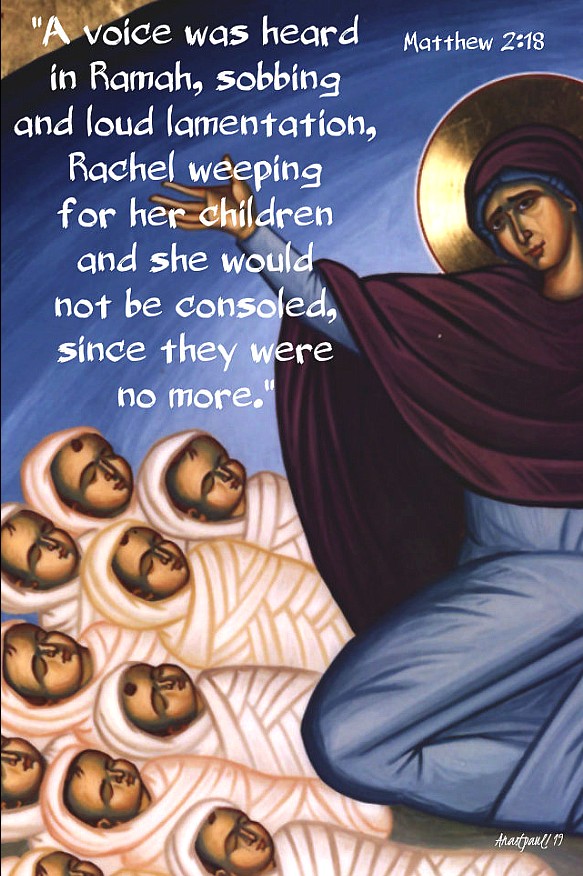
“A voice was heard in Ramah, sobbing and loud lamentation; Rachel weeping for her children and she would not be consoled, since they were no more.”
Matthew 2:18
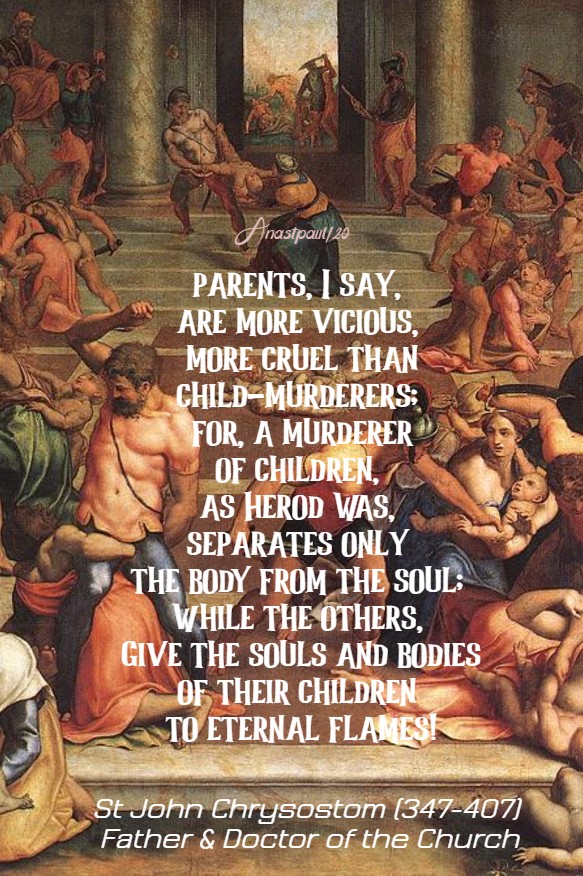
“Thus, parents, I say, are more vicious, more cruel than child-murderers; for, a murderer of children, as Herod was, separates only the body from the soul; while the others, give the souls and bodies of their children to eternal flames! Further, those who are killed would have died in the course of time, though they had not been murdered; while children, neglected by their parents, might have avoided eternal death, had not the wickedness of their parents prepared it for them. Besides this, the general resurrection would have compensated for the bodily death, while the death and destruction of the soul, nothing can restore. A child, condemned by the parent’s fault, has no hope of salvation but has to suffer eternal pains. Hence I am right in saying, that such parents are worse than child-murderers.”
One Minute Reflection – 28 December – The Feast of the Holy Innocents – The Fourth Day of the Christmas Octave, Readings: 1 John 1:5-2:2, Psalm 124:2-5, 7-8, Matthew 2:13-18
When Herod realised that he had been deceived by the magi, he became furious. He ordered the massacre of all the boys in Bethlehem and its vicinity, two years old and under, in accordance with the time he had ascertained from the magi. – Matthew 2:16
REFLECTION – “The Apostle John said: “Whoever says he abides in Christ, ought to walk even as Christ walked” (1 Jn 2:6). Moreover, the blessed Apostle Paul exhorts and teaches us, saying: “We are God’s children but if children, then heirs of God and joint-heirs with Christ; if so be that we suffer with him that we may also be glorified together” (Rm 8:16f.) … Let us, beloved brethren, imitate righteous Abel, who initiated martyrdom, he being the first to be slain for righteousness’s sake (Gn 4:8) …; let us imitate the three children Ananias, Azarias and Misael, who … overcame the king by the power of faith (Dn 3) … What of the prophets whom the Holy Spirit quickened to a foreknowledge of future events? What of the Apostles whom the Lord chose? Since these righteous men were slain for righteousness’ sake, have they not taught us also to die?
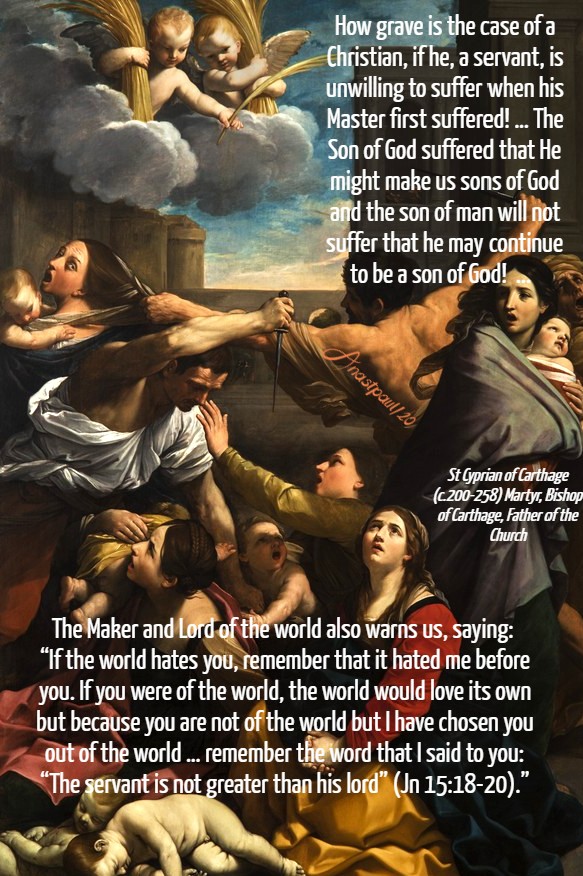
The nativity of Christ at once witnessed the martyrdom of infants, so that they who were two years old and under were slain for His name’s sake. An age, not yet fitted for the battle, appeared fit for the crown. That it might be manifest that they who are slain for Christ’s sake are innocent, innocent infancy was put to death for His name’s sake … How grave is the case of a Christian, if he, a servant, is unwilling to suffer when his Master first suffered! … The Son of God suffered that He might make us sons of God and the son of man will not suffer that he may continue to be a son of God! … The Maker and Lord of the world also warns us, saying: “If the world hates you, remember that it hated me before you. If you were of the world, the world would love its own but because you are not of the world but I have chosen you out of the world … remember the word that I said to you: “The servant is not greater than his lord” (Jn 15:18-20).” – St Cyprian of Carthage (c.200-258) Martyr, Bishop of Carthage, Father of the Church – Letter 55
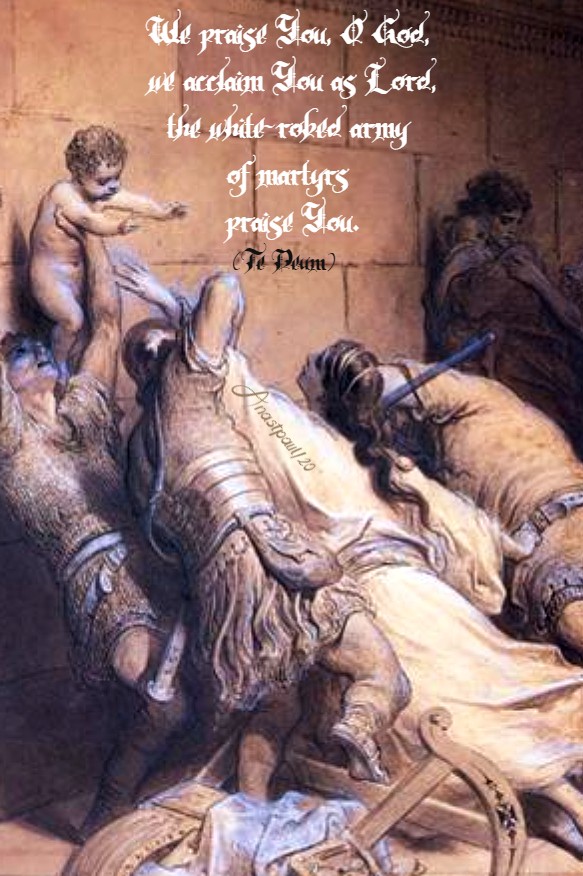
PRAYER – We praise You, O God, we acclaim You as Lord, the white-robed army of martyrs praise You. (from the Te Deum).
Our Morning Offering – 28 December – The Feast of the Holy Innocents – The Fourth Day of the Christmas Octave.
O Dearest Infant By St Alphonsus Liguori (1696-1787) Most Zealous Doctor
O dearest Infant, tell me what You came on earth to do. Tell me whom You are seeking. Ah, yes, I now understand… You have come to die for me, a lost sheep, in order that I may no more hide from You but love You. O Jesus, my treasure, my life, my love, my all, if I do not love You, then whom shall I love? Where can I find a mother or father, a friend, or a spouse more loving than You? And who has ever loved me more than You have? I am sorry that I have lived so many years in this world and yet still love You so little, even having offended You and sometimes forgotten You. Amen
BL Claudia Weinhardt St Conindrus St Domitian the Deacon St Domnio of Rome St Eutychius St Gowan of Wales Bl Gregory of Cahors Bl Hryhorii Khomyshyn St Iolande of Rome Bl Johannes Riedgasser Blessed Matthia de Nazzarei OSC (1253-1319) Virgin, Nun Bl Nicolas Mello Bl Otto of Heidelberg St Romulus St Simon the Myroblite St Theonas of Alexandria St Theodore of Tabenna St Troadius of Pontus — 20,000 Martyrs of Nicomedia: 20,000 Christians who were murdered during in 303 in Nicomedia, Bithynia (modern Izmit, Turkey) during the persecutions of Diocletian. Many of them were killed en masse when they were ordered, during Christmas Mass, to sacrifice to idols; when they refused, they were locked in the churches and the buildings burned around them. We know some details of a few of them, but most are known only to God. The names we have are – Agape, Anthimos, Domna, Domna, Dorotheus, Esmaragdus, Eugene, Euthymius, Glykerios, Gorgonius, Hilary, Indes, Mardonius, Mardonius, Maximus, Migdonius, Migdonus, Peter, Peter, Theophila, Theophilus and Zeno. 303 in Nicomedia, Bithynia (modern Izmit, Turkey).
Martyrs of Africa – (3 saints): Three Christians murdered together in Africa for their faith. The only details to survive are their names – Castor, Rogatian and Victor.
Thought for the Day – 26 December – Meditations with Antonio Cardinal Bacci (1881-1971) – Feast of St John the Apostle and Evangelist, the Beloved
St John the Apostle and Evangelist
“St John was the beloved disciple of Jesus Christ. He was allowed, along with St Peter and St James, to enjoy the glory of the Transfiguration and, he was invited with them into the Garden of Gethsemane to witness the agonu ofour divine Redeemer. In the Cenacle, moreover, after he had received the Blessed Eucharist, he was the only one of the Apostles privileged to rest his head on the breast of Jesus. He stood at the foot of the Cross on Mount Calvary and heard his Master entrust to him, with His dying breath, the most precious treasure which still remained to Him on earth, the Blessed Virgin Mary. “Son, behold thy Mother.”
It is true, that Jesus loved all His Apostles, to all of whom He granted the happiness of enjoying His company, listening to His teaching and witnessing, His miracles. Even so, He had a special affection for St John. This was because John was a virgin when Jesus called him and remained so, all his life. The state of virginity is especially pleasing to God. It makes us like the Angels and, in a sense, superior to them, since these pure spirits are naturally chaste and, we can only succeed in being so, by means of great self-control. “Blessed are the pure of heart,” says Jesaus in the Gospel, “for they shall see God” (Mt 5:8).
The privilege of the vision of God is attributed, in a special way, to the pure of heart. Therefore, St John, the virgin Apostle, begins his Gospel with a descriptio of the intimate life of the eternal God. “In the beginning was the Word and the Word was with God and the Word, was God” (Jn 1:1). He soars above the earth like an eagle, as St Jerome observes and penetrates into the presence of God Himself.
We know that we shall never be called to scale such heights. We may not even have a vocation to live as virgins. But, we are all required to be clean of heart. Purity is a virtue which all Christians should possess in whatever manner is appropriate to their position in life. Let us examine ourselves strictly on this matter and make suitable resolutions for the future.”
Quote/s of the Day – 27 December – Feast of the Holy Family of Jesus, Mary and Joseph – On the Family by Pope Pius XII
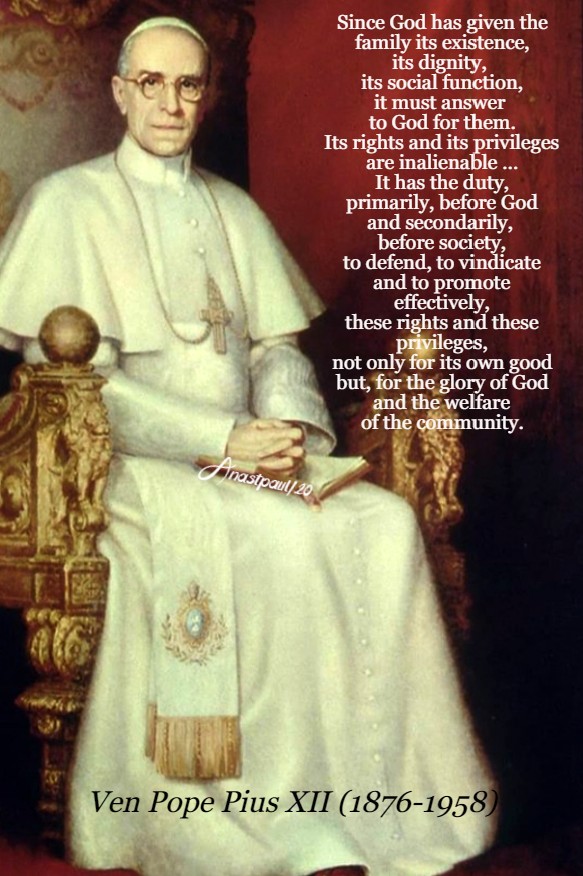
“Since God has given the family its existence, its dignity, its social function, it must answer to God for them. Its rights and its privileges are inalienable … It has the duty, primarily, before God and secondarily, before society, to defend, to vindicate and to promote effectively, these rights and these privileges, not only for its own good but, for the glory of God and the welfare of the community.”
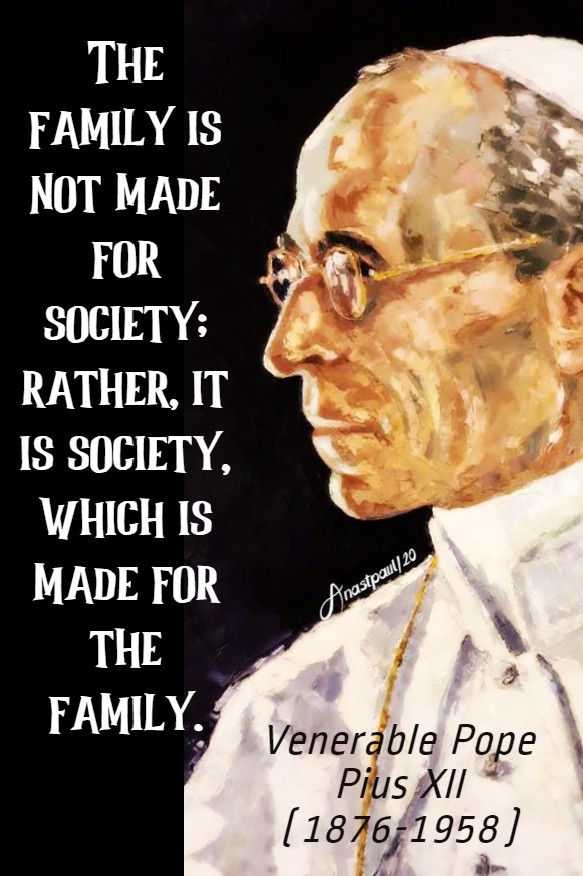
“ … The family is not made for society; rather, it is society, which is made for the family.”
“God did not create a human family made up of segregated, dissociated, mutually independent members. No; He would have them all united by the bond of total love of Him and consequent self-dedication to assisting each other to maintain that bond intact.”
“Christian mothers, if only you knew the future of distress and peril, of shame ill-restrained, that you prepare for your sons and daughters in imprudently accustoming them, to live hardly clothed and in making them lose the sense of modesty, you should be ashamed of yourselves! and of the harm done the little ones whom heaven entrusted to your care, to be reared in Christian dignity and culture.”
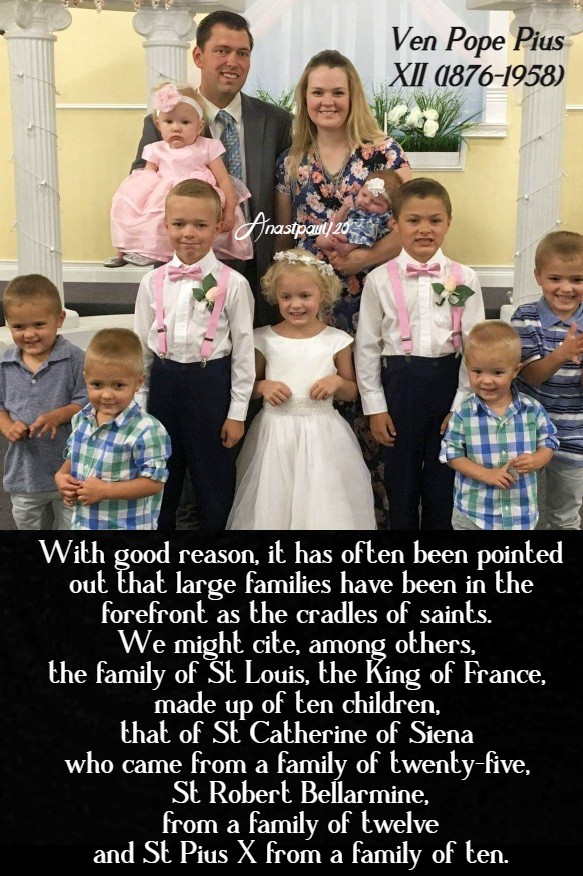
“With good reason, it has often been pointed out that large families have been in the forefront as the cradles of saints. We might cite, among others, the family of St Louis, the King of France, made up of ten children, that of St Catherine of Siena who came from a family of twenty-five, St Robert Bellarmine, from a family of twelve and St Pius X from a family of ten.”
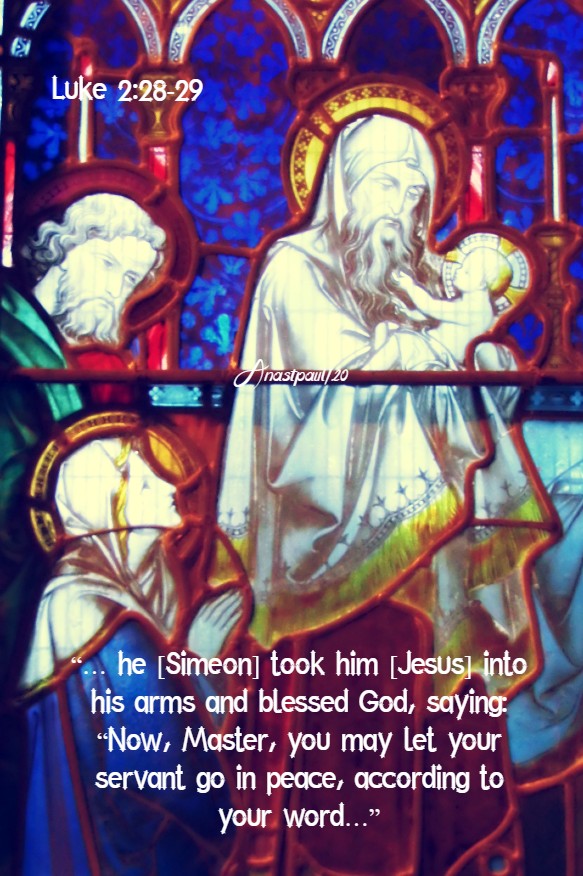
“… he [Simeon] took him [Jesus] into his arms and blessed God, saying: “Now, Master, you may let your servant go in peace, according to your word…” – Luke 2:28-29
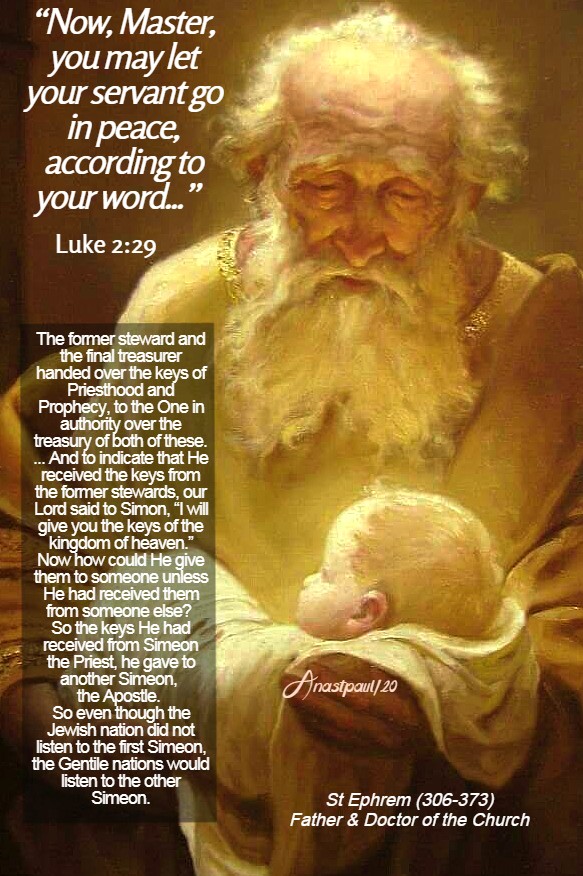
REFLECTION – “The Son came to the servant not to be presented by the servant but so that, through the Son, the servant might present to his Lord, the priesthood and prophecy that had been entrusted to his keeping. Prophecy and priesthood, which had been given through Moses, were both passed down and came to rest on Simeon. He was a pure vessel who consecrated himself, so that, like Moses, he too could contain them both. These were feeble vessels that accommodated great gifts — gifts that one might contain because of their goodness but that many cannot accept because of their greatness. Simeon presented our Lord and in Him he presented the two gifts he had, so that what had been given Moses in the desert, was passed on by Simeon, in the temple. Because our Lord is the vessel in which all fullness dwells, when Simeon presented Him to God, He poured out both of these upon him – the priesthood from his hands and prophecy from his lips. The priesthood had always been on Simeon’s hands, because of ritual purifications. Prophecy, in fact, dwelt on his lips because of revelations. When both of these saw the Lord of both of these, they were combined and were poured into the Vessel that could accommodate them both, in order to contain Priesthood, Kingship and Prophecy. That Infant who was wrapped in swaddling clothes by virtue of His goodness, was also dressed in Priesthood and Prophecy by virtue of His Majesty. Simeon dressed Him in these and presented Him to the One who had dressed Him in swaddling clothes. Then, as the old man returned Him to his mother, he returned the Priesthood with Him. And when he prophesied to her about Him: “This child is destined for the downfall and rising,” he gave her Prophecy with him as well. So Mary took her firstborn and left. Although He was visibly wrapped in swaddling clothes, He was invisibly clothed with Prophecy and Priesthood. Thus, what Moses had been given, was received from Simeon and it remained and continued with the Lord of these two gifts. The former steward and the final treasurer handed over the keys of Priesthood and Prophecy, to the One in authority over the treasury of both of these. This is why His Father gave Him the Spirit without measure because all measures of the Spirit are under His hand. And to indicate that He received the keys from the former stewards, our Lord said to Simon, “I will give you the keys of the kingdom of heaven.” Now how could He give them to someone unless He had received them from someone else? So the keys He had received from Simeon the Priest, he gave to another Simeon, the Apostle. So even though the Jewish nation did not listen to the first Simeon, the Gentile nations would listen to the other Simeon.” – St Ephrem (306-373) Father and Doctor of the Church –Homily on Our Lord, 53
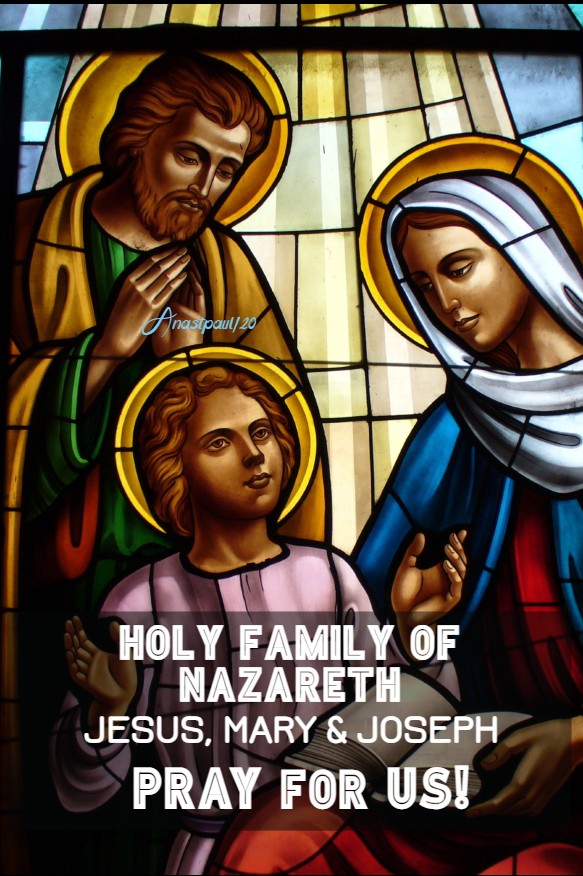
PRAYER – God, our Father, in the Holy Family of Nazareth, You have given us the true model of a Christian home. Grant, that by following Jesus, Mary and Joseph in their love for each other and in the example of their family life, we may come to Your home of peace and joy. We make our prayer through our Lord Jesus Christ, Your Son Who lives and reigns with You and the Holy Spirit, God, now and forever, amen.
Our Morning Offering – 27 December – Sunday within the Octave of Christmas and the Feast of the Holy Family
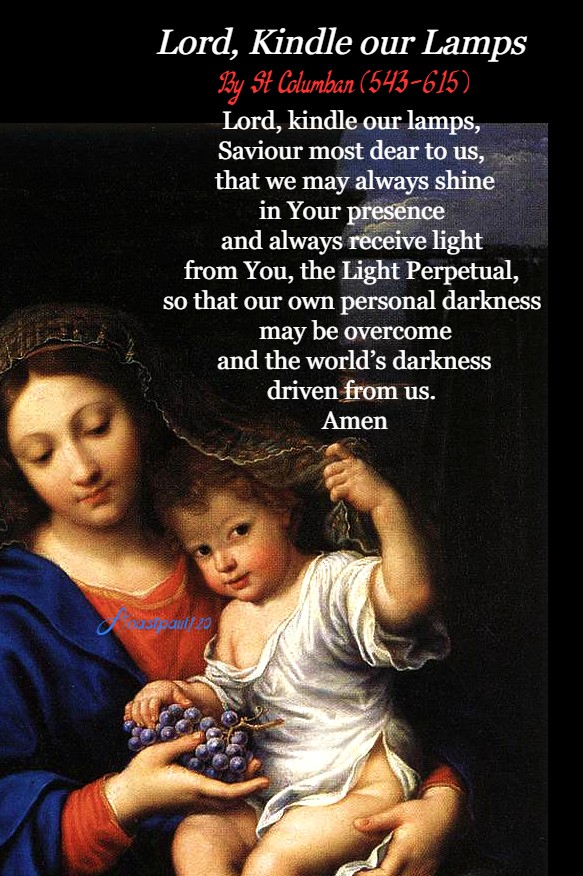
Lord, Kindle our Lamps By St Columban (543-615)
Lord, kindle our lamps, Saviour most dear to us, that we may always shine in Your presence and always receive light from You, the Light Perpetual, so that our own personal darkness may be overcome and the world’s darkness driven from us. Amen
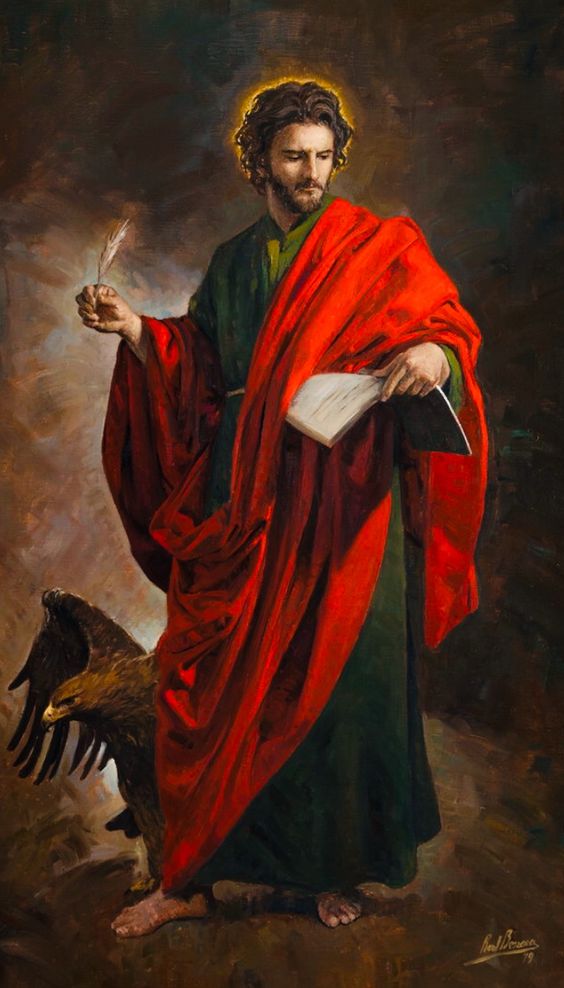
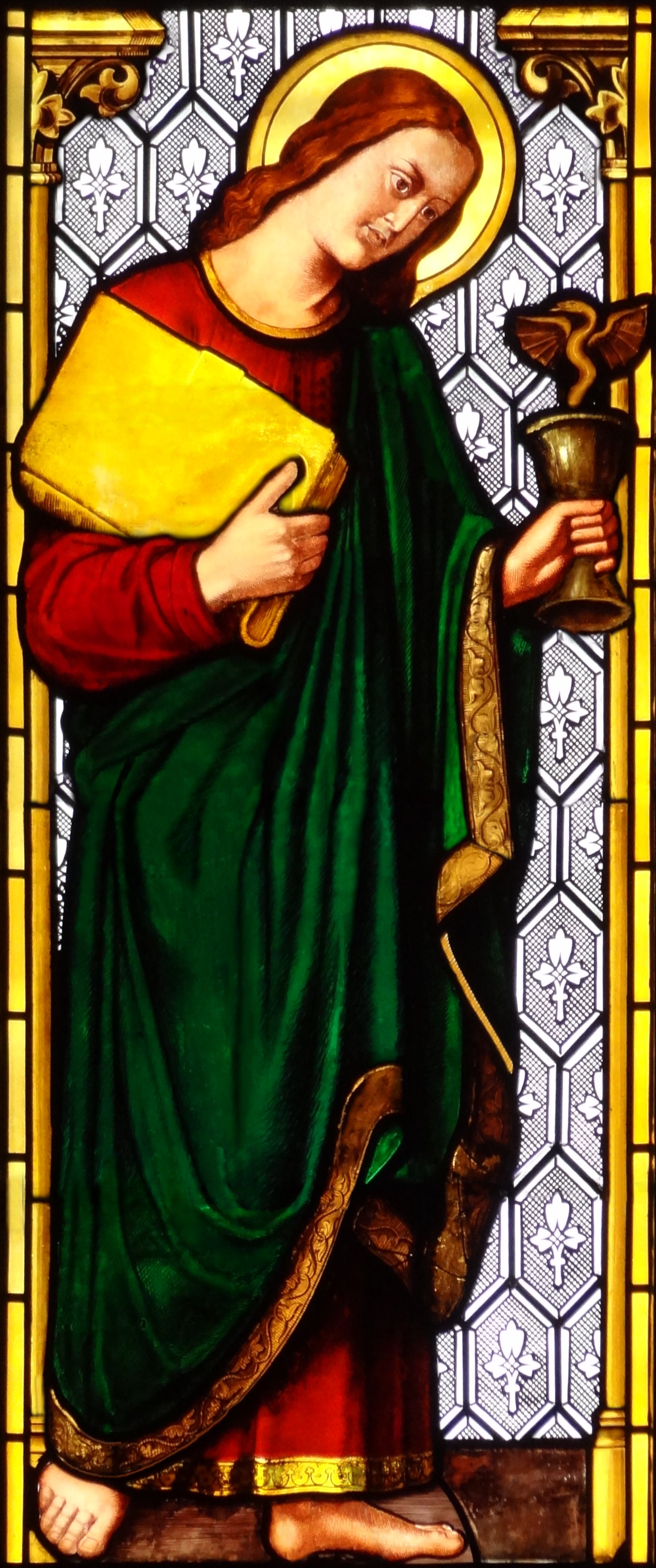
Saint of the Day – 27 December – St John the Apostle and Evangelist. Patronages – • against burns; burn victims• against epilepsy• against foot problems• against hailstorms• against poisoning• art dealers• authors, writers• basket makers• bookbinders• booksellers• butchers• compositors• editors• engravers• friendships• glaziers• government officials• harvests• lithographers• notaries• painters• papermakers• publishers• saddle makers• scholars• sculptors• tanners• theologians• typesetters• vintners• Asia Minor (proclaimed on 26 October 1914 by Pope Benedict XV)• 6 Diocese• 7 Cities.
The days following Christmas are full of symbolic meaning, as on 26 December we honour the first Martyr, St Stephen, who shed his blood for Jesus. 27 December, honours St John the Evangelist, the Disciple of Jesus who wrote the Gospel of John and the book of Revelation. Interestingly enough, he is the only Gospel writer to omit a narrative of Jesus’ birth. Based on this fact alone, it seems strange to include him during the Octave of Christmas. What is the Church’s reason behind this choice? Servant of God, Dom Prosper Guéranger in his Liturgical Year, points to St John’s pure chastity and his focus on the Divinity of Christ, as the reasons why he is honoured now at the Crib of Christ.
Dom Prosper Guéranger OSB (1805-1875)
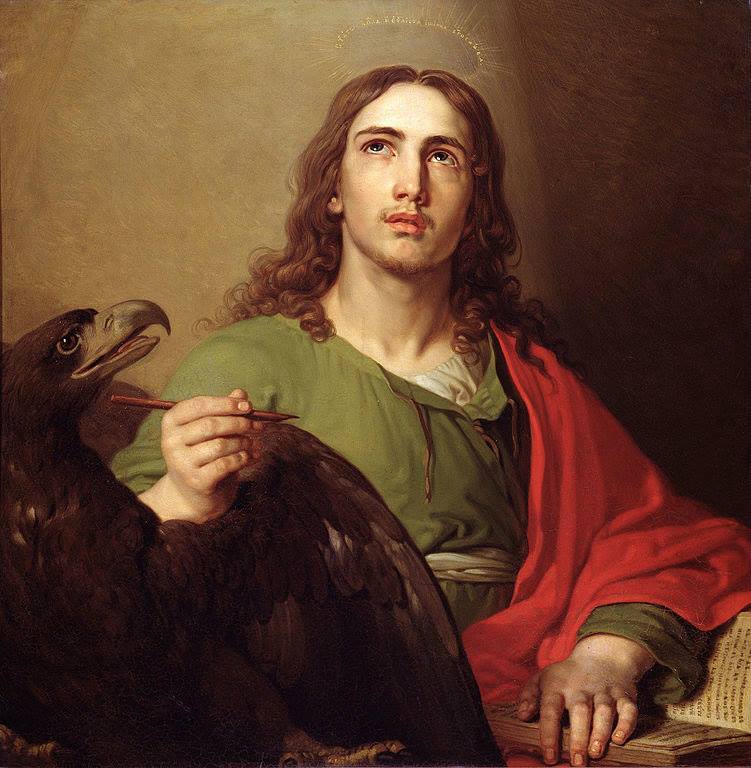
The Disciple Whom Jesus Loved, the Eagle
“Nearest to Jesus’ Crib, after Stephen, stands John, the Apostle and Evangelist. It was only right, that the first place should be assigned to him, who so loved his God, that he shed his blood in his service; for, as this God Himself declares, greater love than this hath no man, that he lay down his life for his friends [1 John, 15:13] and Martyrdom has ever been counted, by the Church, as the greatest act of love and as having, consequently, the power of remitting sins, like a second Baptism. But, next to the sacrifice of Blood, the noblest, the bravest and, which most wins the heart of Him, who is the Spouse of souls, is the sacrifice of Virginity. Now, just as St Stephen is looked upon as the type of Martyrs, St John is honoured as the Prince of Virgins. Martyrdom won for Stephen the Crown and palm; Virginity merited for John most singular prerogatives, which, while they show how dear to God, is holy Chastity, put this Disciple among those, who, by their dignity and influence, are above the rest of men.
St. John was of the family of David, as was our Blessed Lady. He was, consequently, a relation of Jesus. This same honour belonged to St James the Greater, his Brother; as also to St James the Less and St Jude, both Sons of Alpheus. When our Saint was in the prime of his youth, he left, not only his boat and nets, not only has lather Zebedee but, even his betrothed, when everything was prepared for the marriage. He followed Jesus and never once looked back. Hence, the special love which our Lord bore him. Others were Disciples or Apostles, John was the Friend, of Jesus. The cause of this our Lord’s partiality, was, as the Church tells us in the Liturgy, that John had offered his Virginity to the Man-God. Let us, on this his Feast, enumerate the graces and privileges that came to St John from his being The Disciple whom Jesus loved.
This very expression of the Gospel, which the Evangelist repeats several times — The Disciple whom Jesus loved [John, 13:23, 19:26, 21:7, 21:20] — says more than any commentary could do. St Peter, it is true, was chosen by our Divine Lord, to be the Head of the Apostolic College and the Rock whereon the Church was to be built – he, then, was honoured most but St John was loved most. Peter was bid to love more than the rest loved and he was able to say, in answer to Jesus’ thrice repeated question, that he did love Him in this highest way and yet, notwithstanding, John was more loved by Jesus than was Peter himself, because his Virginity deserved this special mark of honour.
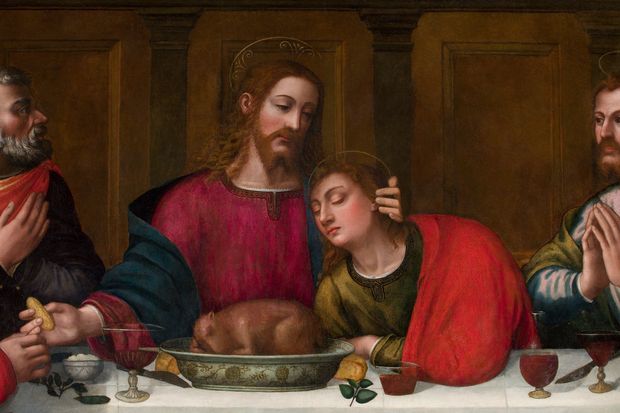
Chastity of soul and body brings him, who possesses i,t into a sacred nearness and intimacy with God. Hence it was, that at the Last Supper – that Supper, which was to be renewed on our Altars, to the end of the world, in order to cure our spiritual infirmities and give life to our souls – John was placed near to Jesus, nay, was permitted, as the tenderly loved Disciple, to lean his head upon the Breast of the Man-God. Then it was, that he was filled and from their very Fountain, with Light and Love, it was both a recompense and a favour and became the source of two signal graces, which make St John an object of special reverence to the whole Church.
Divine wisdom, wishing to make known to the world, the Mystery of the Word and commit to Scripture, those profound secrets, which, so far, no pen of mortal had been permitted to write — the task was put upon John. Peter had been crucified, Paul had been beheaded and the rest of the Apostles had laid down their lives in testimony of the Truths they had been sent to preach to the world; John was the only one left in the Church. Heresy had already begun its blasphemies against the Apostolic Teachings; it refused to admit the Incarnate Word as the Son of God, Consubstantial to the Father. John was asked by the Churches to speak and he did so in language heavenly above measure. His Divine Master had reserved to this, his Virgin-Disciple, the honour of writing those sublime Mysteries, which the other Apostles had been commissioned only to teach — THE WORD WAS GOD, and this WORD WAS MADE FLESH for the salvation of mankind.
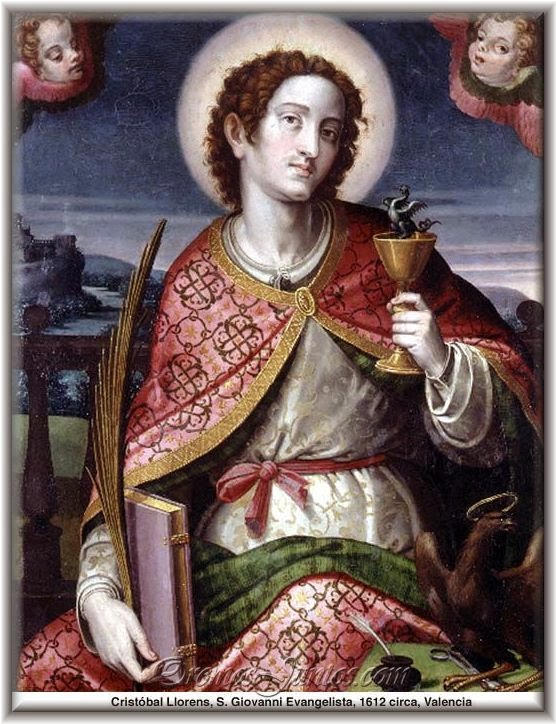
Thus did our Evangelist soar, like the Eagle, up to the Divine Sun and gaze upon Him with undazzled eye, because his heart and senses were pure and, therefore, fitted for such vision of the uncreated Light. If Moses, after having conversed with God in the cloud, came from the divine interview with rays of miraculous light encircling his head – how radiant must have been the face of St John, which had rested on the very Heart of Jesus, in whom are hid all the treasures of wisdom and knowledge! [Col. 2:3] how sublime his writings! how divine his teaching! Hence, the symbol of the Eagle, shown to the Prophet Ezechiel, [Ezechiel 1:10, 10:14] and to St John himself in his Revelations, [Apoc. 4:7] has been assigned to him by the Church and, to this title of The Eagle has been added, by universal tradition, the other beautiful name of Theologian. This was the first recompense given by Jesus to his Beloved John, a profound penetration into divine Mysteries. The second was the imparting to him a most ardent charity, which was equally a grace consequent upon his angelic purity, for purity unburdens the soul from grovelling egotistic affections and raises it to a chaste and generous love. John had treasured up in his heart the Discourses of his Master, he made them known to the Church and, especially, that divine one of the Last Supper, wherein Jesus had poured forth His whole Soul to His own, whom he had always tenderly loved but most so, at the end [John, 13:1]. He wrote his Epistles and Charity is his subject – God is Charity — he that loveth not, knoweth not God — perfect Charity casteth out fear — and so on throughout, always on Love. During the rest of his life, even when so enfeebled by old age as not to be able to walk, he was forever insisting upon all men loving each other, after the example of God, who had loved them and so loved them! Thus, he that had announced more clearly than the rest of the Apostles the divinity of the Incarnate Word, was by excellence, the Apostle of that divine Charity, which Jesus came to enkindle upon the earth.
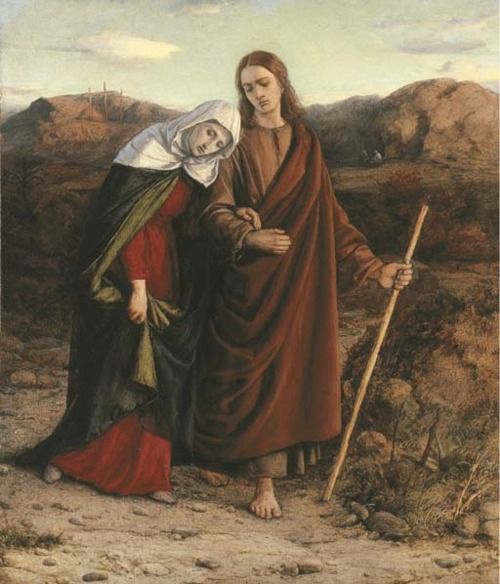
But, our Lord had a further gift to bestow and it was sweetly appropriate to the Virgin-Disciple. When dying on His cross, Jesus left Mary upon this earth. Joseph had been dead now some years. Who, then, shall watch over His Mother? who is there worthy of the charge? Will Jesus send His Angels to protect and console her? — for, surely, what man could ever merit to be to her as a second Joseph? Looking down, he sees the Virgin-Disciple standing at the foot of the Cross – we know the rest, John is to be Mary’s Son — Mary is to be John’s Mother. Oh! wonderful Chastity, that wins from Jesus such an inheritance as this! Peter, says St Peter Damian, shall have left to him the Church, the Mother of men; but John, shall receive Mary, the Mother of God, whom he will love as his own dearest Treasure and to whom, he will stand in Jesus’ stead; whilst Mary will tenderly love John, her Jesus’ Friend, as her Son.
The Blessed Virgin in the House of St John by Dante Gabriel Rossetti, 1859
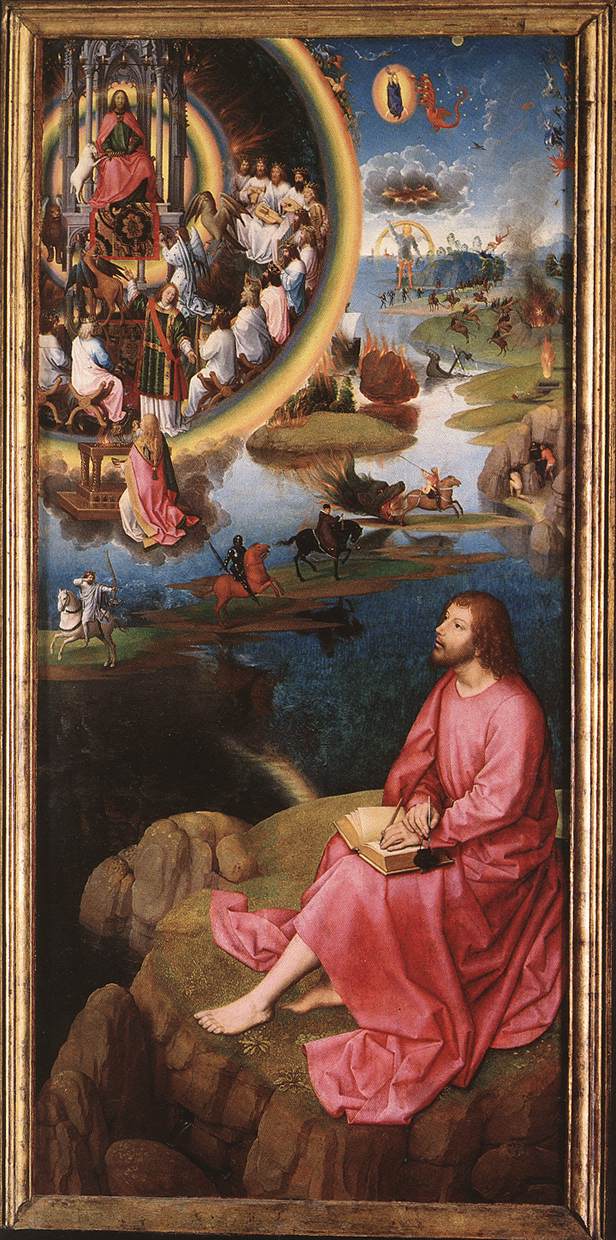
Can we be surprised after this, that St John is looked upon by the Church as one of her greatest glories? He is a Relative of Jesus in the flesh; he is an Apostle, a Virgin, the Friend of the Divine Spouse, the Eagle, the Theologian, the Son of Mary; he is an Evangelist, by the history he has given of the Life of his Divine Master and Friend; he is a Sacred Writer, by the three Epistles he wrote under the inspiration of the Holy Ghost; he is a Prophet, by his mysterious Apocalypse, wherein are treasured the secrets of time and eternity. But, is he a Martyr? Yes, for if he did not complete his sacrifice, he drank the Chalice of Jesus [Matt. 20:22], when, after being cruelly scourged, he was thrown into a caldron of boiling oil, before the Latin Gate, at Rome. He was, therefore, a Martyr in desire and intention, though not in fact. If our Lord, wishing to prolong a life so dear to the Church, as well as to show how he loves and honours Virginity, — miraculously stayed the effects of the frightful punishment, St John had, on his part, unreservedly accepted Martyrdom.
Such is the companion of Stephen at the Crib, wherein lies our Infant Jesus. If the Protomartyr dazzles us with the robes he wears of the bright scarlet of his own blood — is not the virginal whiteness of John’s vestment fairer than the untrod snow? The spotless beauty of the Lilies of Mary’s adopted Son and the bright vermilion of Stephen’s Roses — what is there more lovely than their union? Glory, then, be to our New-Born King, whose court is tapestried with such heaven-made colours as these! Yes, Bethlehem’s Stable is a very heaven on earth and we have seen its transformation. First, we saw Mary and Joseph alone there — they were adoring Jesus in his Crib; then, immediately, there descended a heavenly host of Angels singing the wonderful Hymn; the Shepherds soon followed, the humble simple-hearted Shepherds; after these, entered Stephen the Crowned and John the Beloved Disciple; and, even before there enters the pageant of the devout Magi, we shall have others coming in and there will be, each day, grander glory in the Cave and gladder joy in our hearts. Oh! this Birth of our Jesus! Humble as it seems, yet, how divine! What King or Emperor ever received, in his gilded cradle, honours like these shown to the Babe of Bethlehem? Let us unite our homage with that given him by these the favoured inmates of his court. Yesterday, the sight of the Palm in Stephen’s hand animated us and we offered to our Jesus the promise of a stronger Faith: to-day, the Wreath, that decks the brow of the Beloved Disciple, breathes upon the Church the heavenly fragrance of Virginity — an intenser love of Purity must be our resolution and our tribute to the Lamb.
Feast of the Holy Family+2020: Today’s Feast is held on the Sunday between Christmas and New Year’s Day. If both are Sundays, the Feast is celebrated on 30 December.
Today is the Feast day of the Holy Family but also every family’s feast day, since the Holy Family is the Patron and model of all Christian families. Today should be a huge family feast, since it is devoted entirely to the Holy Family as a model for the Christian family life. As Rev. Edward Sutfin states:





















 AnaStpaul
You must be logged in to post a comment.