Our Morning Offering – 29 August – The Beheading of Saint John the Baptist
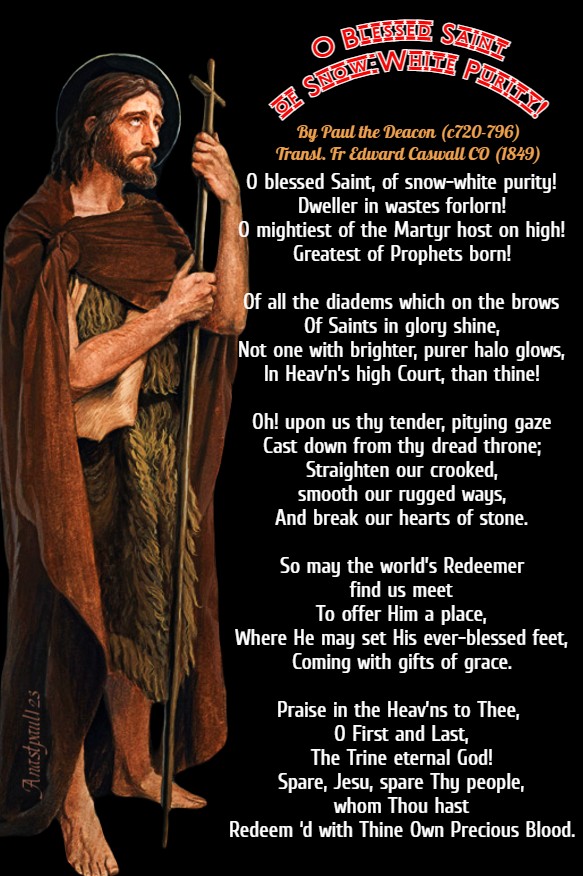
O Blessed Saint of Snow-White Purity! By Paul the Deacon (c720-796) Transl. Fr Edward Caswall C.Orat. (1814-1878) Breviary Hymn for Lauds
O blessed Saint, of snow-white purity! Dweller in wastes forlorn! O mightiest of the Martyr host on high! Greatest of Prophets born!
Of all the diadems which on the brows Of Saints in glory shine, Not one with brighter, purer halo glows, In Heav’n’s high Court, than thine!
Oh! upon us thy tender, pitying gaze Cast down from thy dread throne; Straighten our crooked, smooth our rugged ways, And break our hearts of stone.
So may the world’s Redeemer find us meet To offer Him a place, Where He may set His ever-blessed feet, Coming with gifts of grace.
Praise in the Heav’ns to Thee, O First and Last, The Trine eternal God! Spare, Jesu, spare Thy people,whom Thou hast Redeem ‘d with Thine Own Precious Blood.
Our Morning Offering – 27 August – “The Month of the Immaculate Heart of Mary” – The Feast of the 7 Joys of Our Lady
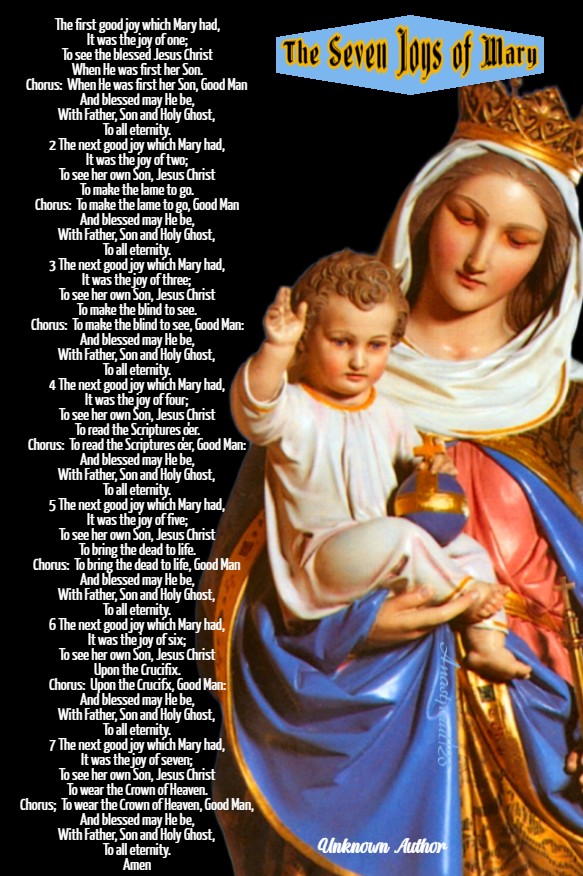
The Seven Joys of Mary Author Unknown Earlist known date: 1833
The first good joy which Mary had, It was the joy of one; To see the blessed Jesus Christ When He was first her Son. Chorus: When He was first her Son, Good Man And blessed may He be, With Father, Son and Holy Ghost, To all eternity. 2 The next good joy which Mary had, It was the joy of two; To see her own Son, Jesus Christ To make the lame to go. Chorus: To make the lame to go, Good Man And blessed may He be, With Father, Son and Holy Ghost, To all eternity. 3 The next good joy which Mary had, It was the joy of three; To see her own Son, Jesus Christ To make the blind to see. Chorus: To make the blind to see, Good Man: And blessed may He be, With Father, Son and Holy Ghost, To all eternity. 4 The next good joy which Mary had, It was the joy of four; To see her own Son, Jesus Christ To read the Scriptures o’er. Chorus: To read the Scriptures o’er, Good Man: And blessed may He be, With Father, Son and Holy Ghost, To all eternity. 5 The next good joy which Mary had, It was the joy of five; To see her own Son, Jesus Christ To bring the dead to life. Chorus: To bring the dead to life, Good Man And blessed may He be, With Father, Son and Holy Ghost, To all eternity. 6 The next good joy which Mary had, It was the joy of six; To see her own Son, Jesus Christ Upon the Crucifix. Chorus: Upon the Crucifx, Good Man: And blessed may He be, With Father, Son and Holy Ghost, To all eternity. 7 The next good joy which Mary had, It was the joy of seven; To see her own Son, Jesus Christ To wear the Crown of Heaven. Chorus; To wear the Crown of Heaven, Good Man, And blessed may He be, With Father, Son and Holy Ghost, To all eternity.
Feast of the Seven Joys of Our Lady – This Feast is also known as “The Franciscan Crown,” The Seven Joys of the Virgin. Today was kept by the Franciscans as the Feast of the Seven Joys of the Virgin Mary. As an expression of the Seraphic Order’s devotional life, it corresponds to the Feast of the Holy Rosary, which began among the Dominicans and the observance on 15 September of the Seven Sorrows of the Virgin, https://anastpaul.com/2022/08/27/27-august-feast-of-the-seven-joys-of-our-lady-the-franciscan-crown/
St Agilo of Sithin St Angelus of Foligno St Anthusa the Younger St Arontius of Potenza St Baculus of Sorrento St Carpophorus St David Lewis St Decuman St Ebbo of Sens St Etherius of Lyons St Euthalia of Leontini St Fortunatus of Potenza
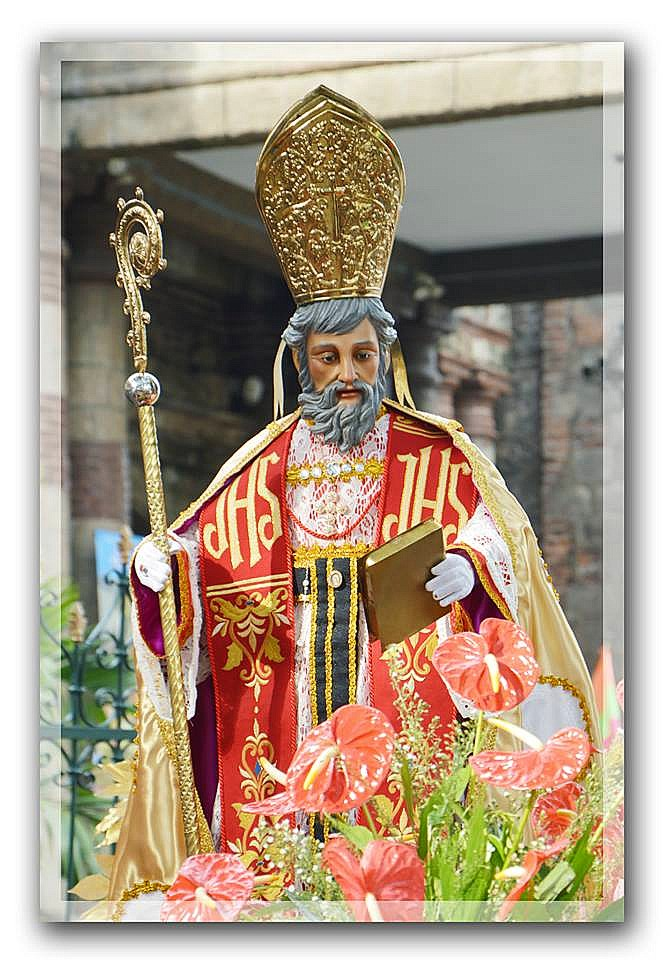
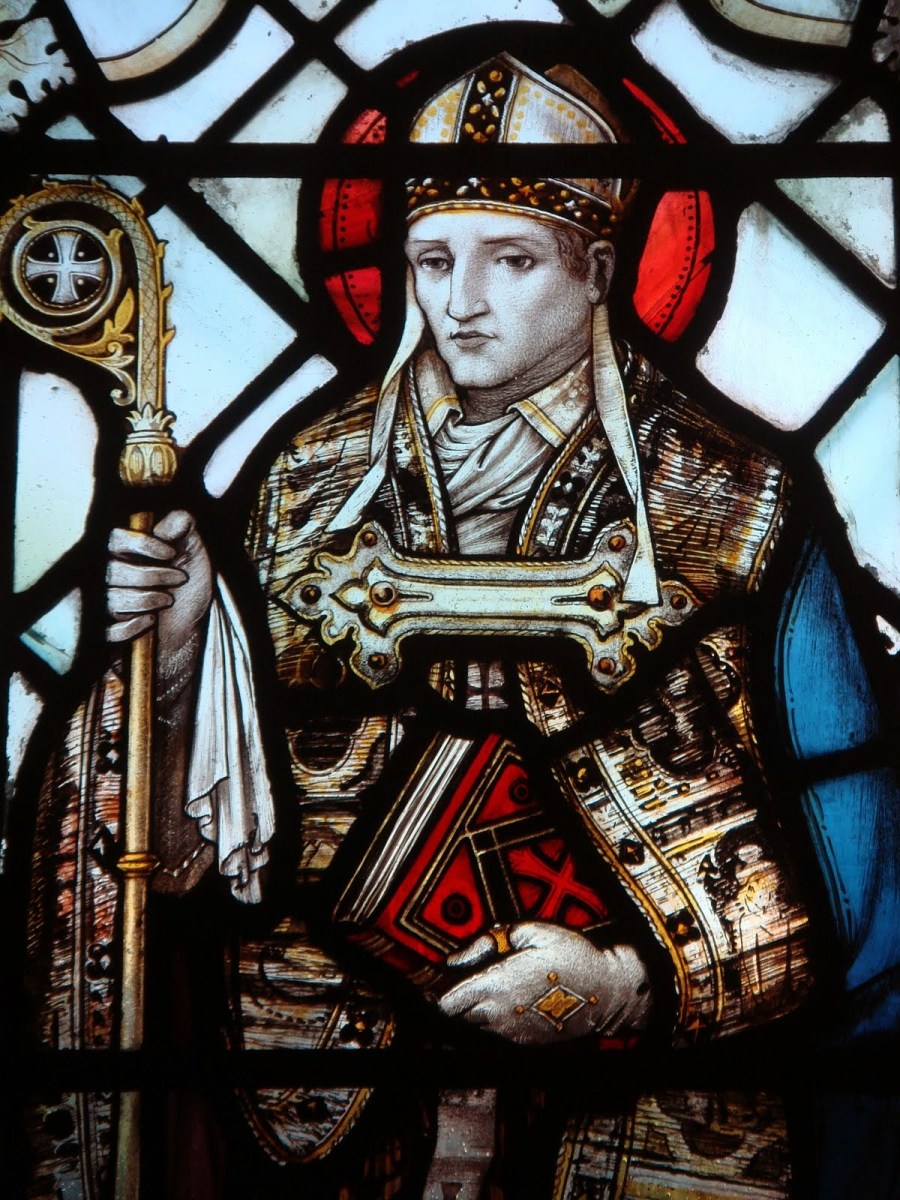
St Osio (c256-c357) Bishop and Confessor of Córdoba
St Phanurius St Poemen Bl Roger Cadwallador St Rufus of Capua St Sabinian of Potenza St Syagrius of Autun
Martyrs of Tomi – 5 Saints: A group of 17 Christians imprisoned and excuted for their faith during the persecutions of Diocletian. They miraculously were unburned by fire and untouched by wild animals. We know the names and a few details on five of them – John, Mannea, Marcellinus, Peter and Serapion. They were tied to stakes and burned alive; they emerged unharmed – thrown to wild animals in the amphitheatre; the animals ignored them; they were beheaded in 304 in Tomi, Mesia (modern Costanza, Romania).
Martyrs of Nagasaki – 14 Beati: A group of fourteen missionaries and Japanese native Christians, who were Martyred together for their faith. They died on 16 August 1627 in Nagasaki, Japan and were Beatified on 7 May 1867 by Pope Pius IX. They are – Blessed Antonius of Saint Francis, Blessed Bartolomé Díaz Laurel, Blessed Caius Akashi Jiemon, Blessed Francisca Pinzokere, Blessed Francisco of Saint Mary, Blessed Franciscus Kuhyoe, Blessed Leo Kurobyoe Nakamura, Blessed Lucas Tsuji Kyuemon, Blessed Ludovicus Matsuo Soyemon, Blessed Magdalena Kiyota, Blessed Maria Shobyoe, Blessed Michaël Koga Kizayemon, Blessed Thomas Sato Shin’emon, Blessed Tsuji Shobyoe.
Our Morning Offering – 16 August – “The Month of the Immaculate Heart of Mary” – Feast of St Joachim, Father of the Blessed Virgin Mary
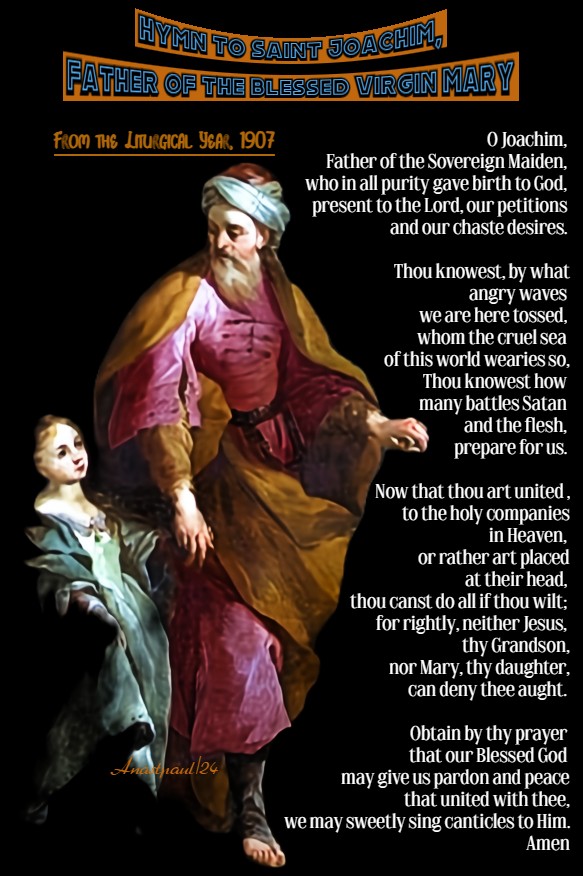
Hymn to St Joachim, Father of the Blessed Virgin Mary From the Liturgical Year, 1907
O Joachim, Father of the Sovereign Maiden, who in all purity gave birth to God, present to the Lord, our petitions and our chaste desires.
Thou knowest, by what angry waves we are here tossed, whom the cruel sea of this world wearies so, Thou knowest how many battles Satan and the flesh, prepare for us.
Now that thou art united , to the holy companies in Heaven, or rather art placed at their head, thou canst do all if thou wilt; for rightly, neither Jesus, thy Grandson, nor Mary, thy daughter, can deny thee aught.
Obtain by thy prayer that our Blessed God may give us pardon and peace that united with thee, we may sweetly sing canticles to Him. Amen
One Minute Reflection – 15 August – “The Month of the Immaculate Heart of Mary” – The Assumption of the Blessed Virgin Mary into Heaven – Judith 13:22-25; 15:10 – Luke 1:41-50 – Scripture search here: https://www.drbo.org/
“Most blessed art thou among women and blessed is the fruit of thy womb.” – Luke 1:42
REFLECTION – “Let us honour the Queen of Heaven, Mother of life, Source of mercy, overflowing delights, leaning on her Beloved. Let us praise her, knowing full well that our praise will be insufficient.
Risen above the tallest trees of paradise and exalted above the highest peaks of mountains, she will penetrate Heaven with incredible majesty accompanied by the singing of the choirs of celestial Angels and surrounded by the dancing of Angels. Happy are those who dwell in Thy house, O Lord, they will praise Thee without end! In you we praise not Eve who introduced the poison but Mary who gave life, who is the Mother and nursemaid of all, the life of all the living. In you we praise even our own mother.
May all hear and rejoice, the humble Virgin rises, crowned, to the throne of glory, may the humble rejoice.May those who exalt themselves in their presumption fall. Mary, who gives herself as a holocaust to the fullness of grace. May the Blessed Virgin, unique in her merits, stand in the presence of her Creator interceding always in our favour. She will be radiant in the fullness of glory, she who brought forth from her virginal womb, the King of glory.” – St Amadeus of Lausanne (1108-1159) Bishop, Cistercian Monk (Marian Homily VIII).
PRAYER – O Lord, we beseech Thee, forgive the transgressions of Thy servants and, forasmuch as by our own deeds, we cannot please Thee, may we find safety through the prayers of the Mother of Thy Son and our Lord. Through the same Jesus Christ, Thy Son our Lord, Who lives and reigns with Thee, in the unity of the Holy Ghost, God, world without end. Amen (Collect).
St Alypius (Died 430) Bishop of the See of Thagaste (in what is now Algeria) in 394, Confessor, Reformer, Defender of the Faith against heresy, Lawyer, teacher, spiritual advisor. He was a lifelong disciple and friend of Saint Augustine and joined him in his conversion (in 386; Confessions 8.12.28) and life in Christianity. He is credited with helping establish Augustine’s Monastery in Africa. Most of what is known about him comes from Augustine’s autobiographical Confessions. A Life of Holiness: https://anastpaul.com/2021/08/15/saint-of-the-dy-saint-alypius-of-thagaste-died-430/
Blessed Alfred OSB (Died 874) Bishop of Hildesheim, Benedictine Monk, Confessor, Founder of Essen Abbey, Hildesheim Cathedral, many Convents, Schools and Seminaries, Royal Spiritual Adviser to the East Frankish King Louis the German, Diplomatic Peacemaker, he was know for his great devotion to the Blessed Virgin Mary. His Lifeot Grace: https://anastpaul.com/2020/08/15/saint-of-the-day-15-august-blessed-alfred-of-hildesheim-osb-died-874-bishop/
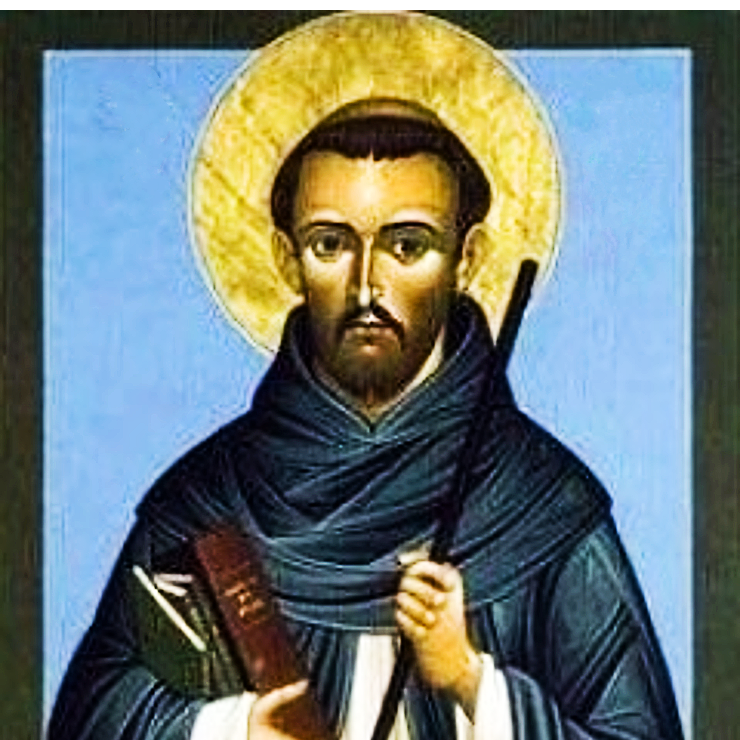
Blessed Aimo Taparelli OP (c 1395-1495) Priest and Friar of the Order of Preachers, widower and father, Reformer, spiritual writer. He served as an Inquisitor-General for his Order in the Lombard and Liguria regions of Italy and became a travelling preacher in Northern Italian Cities. His name means “defends the house with the sword.” Aimo was Beatified on 29 May 1856 by Pope Pius IX. Blessed Aimo’s Zealous Life: https://anastpaul.com/2022/08/15/saint-of-the-day-15-august-blessed-aimo-taparelli-op-c-1395-1495/
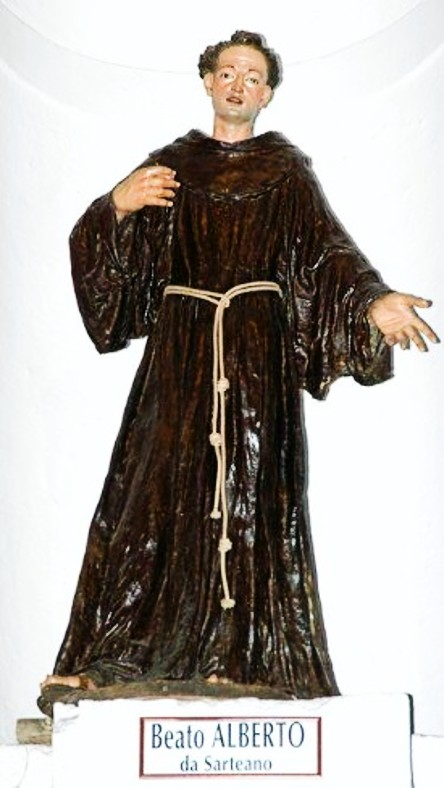
Blessed Alberto Berdini OFM Conv. (1385– 1450) Priest and Friaer of the Friars Minor Conventual, known as the “King of Preachers – Rex Praedicatorum” Disciple and companion of St Bernardine of Siena in his Missionary work in Italy., often called upon to assist in peace discussions between warring Cities. Born in 1385 in Sarteano, Tuscany, Italy and died on 15 August 1450 in Milan, Italy of natural causes. Blessed Holy Albert’s Life: https://anastpaul.com/2023/08/15/saint-of-the-day-14august-blessed-alberto-berdini-ofm-conv-1385-1450/
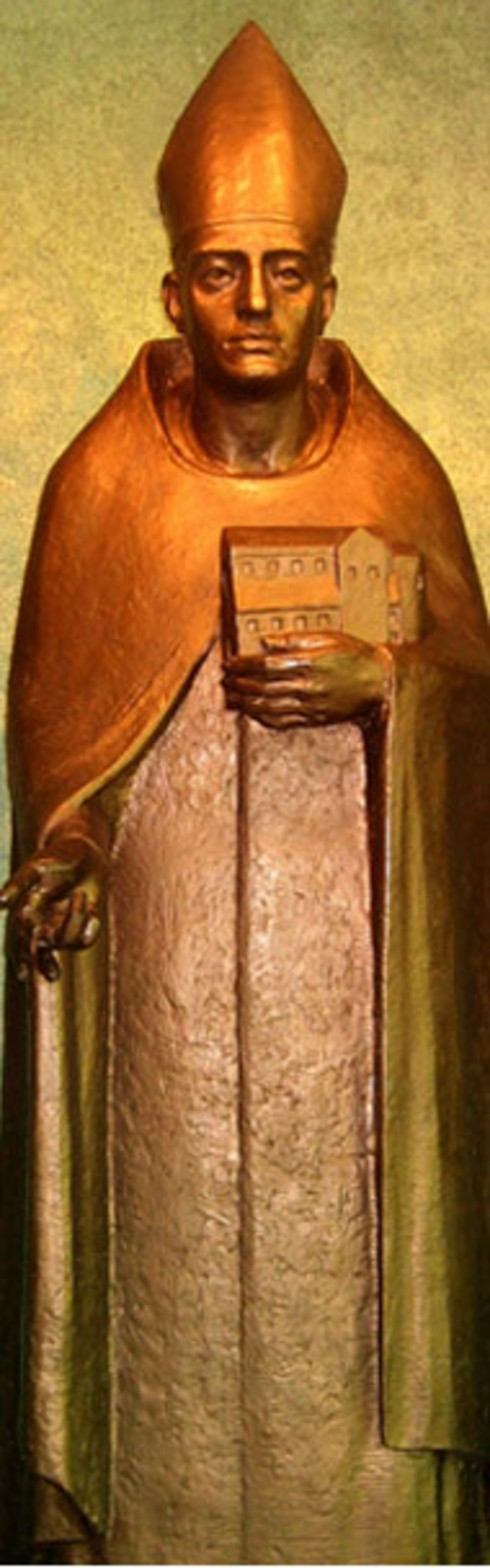
St Simplician (c320-c401) Archbishop of Milan and Successor of St Ambrose (340-397) Doctor of the Church in the Archdiocese of Milan, Teacher, Catechist, Writer, Mystic. St Ambrose used to call Simplician father, as a sign of spiritual relationship but they were also great friends. Simplician took also an active part in the conversions of both Alypius of Thagaste and Augustine of Hippo. The meeting between Augustine and Simplican occurred in Milan in 386 and it is recorded in Augustine’s Confessions. After his conversion, Augustine also called Simplician father and in 397 he dedicated to Simplician two books on the issue of predestination, known as De Diversis Quaestionibus ad Simplicianum. St Augustine, remembered and referred to him with deep gratitude, calling him the “spiritual father of my soul” and would submit his own writings to him to review and comment. Details of the life of St Simplician here: https://anastpaul.wordpress.com/2017/08/15/saint-of-the-day-15-august-st-simplician-of-milan/
Martyrs of Nicomedia – 3 Saints: Three Christians Martyred together. No details survive but the names – Eutychian, Philip and Straton. They were martyred in Nicomedia, Bithynia (in modern Turkey).
Quote/s of the Day – 14 August – “The Month of the Immaculate Heart of Mary” – Vigil of the Assumption
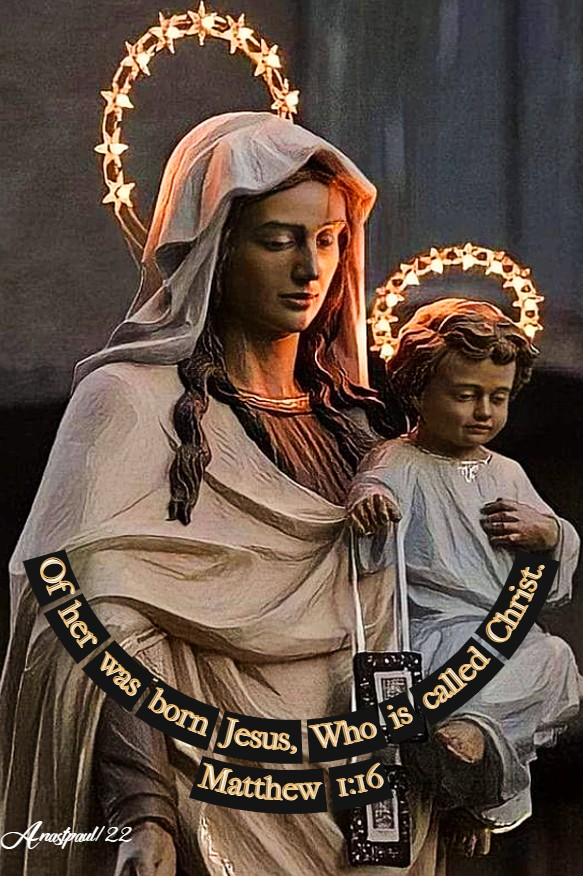
“And Jacob begot Joseph, the husband of Mary and of her was born Jesus, Who is called Christ.”
Matthew 1:16
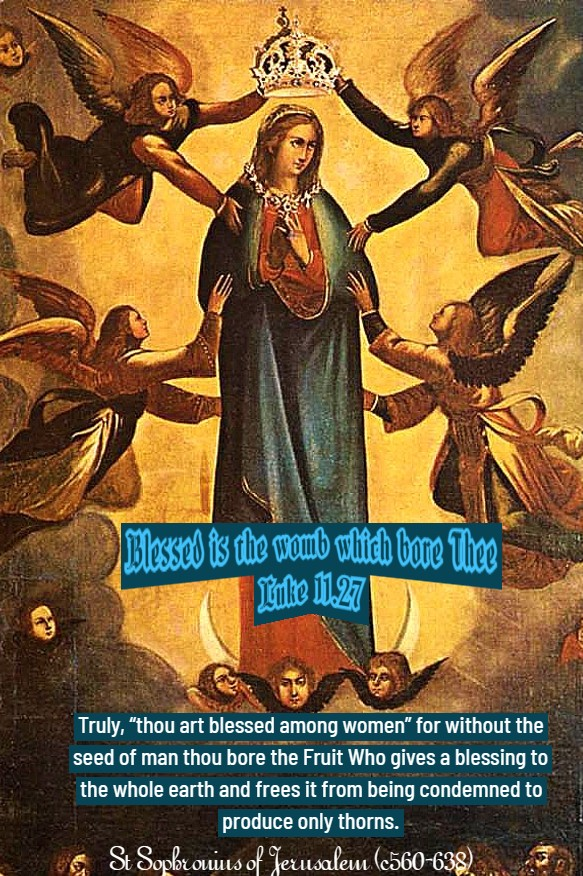
“Truly, “thou art blessed among women” for without the seed of man thou bore the Fruit Who gives a blessing to the whole earth and frees it from being condemned to produce only thorns.”
St Sophronius of Jerusalem (c560-638) Bishop, Father of the Church
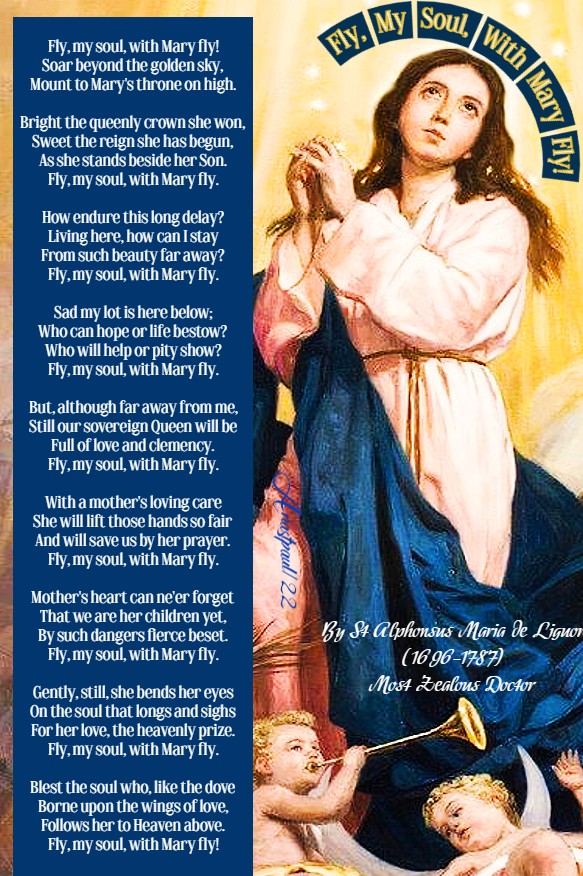
Fly, My Soul, with Mary Fly! By St Alphonsus Maria de Liguori (1696-1787) Most Zealous Doctor (From “The Glories of Mary”) Trans. Redemptoris Fathers, 1931)
Fly, my soul, with Mary fly! Soar beyond the golden sky, Mount to Mary’s throne on high.
Bright the queenly crown she won, Sweet the reign she has begun, As she stands beside her Son. Fly, my soul, with Mary fly.
How endure this long delay? Living here, how can I stay From such beauty far away? Fly, my soul, with Mary fly.
Sad my lot is here below; Who can hope or life bestow? Who will help or pity show? Fly, my soul, with Mary fly.
One Minute Reflection – 6 August – “The Month of the Immaculate Heart of Mary” – The Transfiguration of Our Lord – 2 Peter 1:16-19 – Matthew 17:1-9 – Scripture search here: https://www.drbo.org/
“His Face shone like the sunand His garments became white as snow.” – Matthew 17:2
REFLECTION – “The Lord displays His glory before chosen witnesses and makes illustrious that bodily shape which He shared with others, with such splendour that His Countenance shone like the sun and His garments became as white as snow. In this Transfiguration, the chief object was to remove the scandal of the Cross from the hearts of the disciples and, to prevent their faith being disturbed, at the humiliation of His voluntary Passion, by revealing the excellence of His hidden dignity. But, with no less foresight, the foundation was laid, of the hope of holy Church, that the whole Body of Christ, might realise, with what a change it was to be endowed and that the members, might promise themselves, a share in that honour which had shone forth in their Head.
But to confirm the Apostles and to lead them onto all knowledge, still further, instruction was conveyed by this miracle. For Moses and Elias, that is, the law and the prophets, appeared talking with the Lord, so that, in the presence of these five men, might most truly be fulfilled, what was said – In two or three witnesses every word stands. What more stable, what more steadfast, than the Word, in the proclamation of which, the trumpet of the Old and of the New Testaments, sounds forth and the records of ancient witnesses, agree with the teaching of the Gospel? For the pages of both Covenants corroborate each other and He, Whom, under the veil of Mysteries, the types that went before, had promised, is displayed clearly and manifestly by the splendour of His present glory.
The Apostle Peter, therefore, being stirred by the revelation of these Mysteries, despising things worldly and scorning things earthly, was carried away by a certain excess of mind, to the desire of things eternal and, being filled with rapture at the whole vision, longed to make his abode with Jesus, in the place where he was gladdened by the sight of His glory. And so also he says: Lord, it is good for us to be here: if Thou wilt, let us set up here, three tents, one for Thee and one for Moses and one for Elias. But to this proposal the Lord made no reply, signifying that what he asked was not indeed wicked, but irregular, since the world could not be saved, except by Christ’s Death and by the Lord’s example in this, the faithful were called upon to believe that, although there ought not to be any doubt about the promises of happiness, yet, we should understand that, amid the trials of this life, we must ask for power to endure, rather than for glory.” – St Leo the Great (400-461) Pope, Father and Doctor (Sermon on the Transfiguration – excerpt).
PRAYER – O God, Who in the glorious Transfiguration of Thy Only-begotten Son strengthened the Mysteries of faith, by the testimony of the fathers and, by the Voice coming down in a shining cloud, miraculously betokened the complete adoption of Thy children, mercifully grant that we, be made co-heirs with that King of glory and sharers in that same glory. Through the same Jesus Christ, Thy Son our Lord, Who lives and reigns with Thee, in the unity of the Holy Ghost, God, world without end. Amen (Collect).
Our Morning Offering – 6 August – The Transfiguration of Our Lord
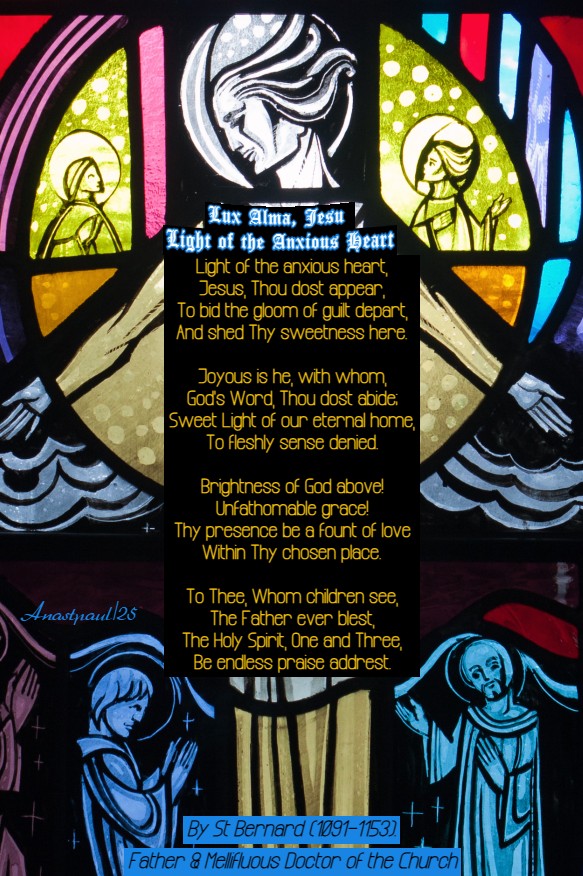
Lux Alma, Jesu Light of the Anxious Heart By St Bernard (1091-1153). Father & Mellifluous Doctor of the Church
Light of the anxious heart, Jesus, Thou dost appear, To bid the gloom of guilt depart, And shed Thy sweetness here.
Joyous is he, with whom, God’s Word, Thou dost abide; Sweet Light of our eternal home, To fleshly sense denied.
Brightness of God above! Unfathomable grace! Thy presence be a fount of love Within Thy chosen place.
To Thee, Whom children see, The Father ever blest, The Holy Spirit, One and Three, Be endless praise addrest.
Translation by Cardinal Newman (1800-1890). There are eight translations. Liturgical Use: Hymn for Lauds on the Feast of the Transfiguration of Our Lord. This Hymn is a cento from St Bernard’s Jesu Dulcis Memoria.
St Pope Sixtus II/ Xystus (Died 258) Pope and Martyr, Philosopher. 25th Pope from St Peter. Papal Ascension 30 August 257. He was Martyred along with seven deacons, (St Lawrence of Rome a few days later) during the persecutions of Christianity by Emperor Valerian. This is the St Sixtus who is commemorated in the Roman Canon Eucharistic Prayer. His Life and Death: https://anastpaul.com/2021/08/06/saint-of-the-day-6-august-saint-sixtus-ii-died-258-pope-and-martyr/
Bl Octavian of Savona St Stephen (Died 872) Abbot and Martyr of Cardeña
Martyrs of Cardeña: Two hundred Benedictine Monks at the Saint Peter of Cardegna monastery, Burgos, Spain who were Martyred in the 8th century by invading Saracens. They were buried by local Christians in a nearby churchyard in Burgos, Spain and Beatified in 1603 by Pope Clement VIII (cultus confirmed).
The Portiuncula Indulgence: An Indulgence which may be gained in any Church so designated by the Bishop, by all the faithful who, after Confession and Holy Communion, visit such Churches between noon of 1 August and midnight of 2 August, or on the Sunday following. The Indulgence is toties quoties and is applicable to the souls in Purgatory.
St Felix of Gerona (Died c304) Deacon Martyr, Missionary, Preacher and courageous Evangeliser heading directly into the Diocletian persecutions. The Roman Martyrology reads: “At Gerona in Spain, the birthday of the holy Martyr Felix. After enduring various torments, by order of Daciall, he was cut with knives, until he gave his undaunted soul to Christ.” His Life and Death: https://anastpaul.com/2024/08/01/saint-of-the-day-1-august-st-felix-of-gerona-died-c304-deacon-martyr/
St Jonatus St Justin of Paris St Kenneth of Wales St Leontius of Perga St Maur St Nemesius Confessor No information about him has survived. Bl Orlando of Vallombrosa St Peregrinus of Modena St Rioch Bl Rudolph St Secundel St Secundus of Palestrina St Sophia St Verus (4th Century) Bishop pf Vienne in France
Seven Holy Brother Maccabees – 8 Saints: “At Antioch, the Martyrdom of the Seven Holy Brothers, the Maccabees and thei mother, who suffered under King Antiochus Epiphanes. Their relics were transferred to Rome and placed in the Church of St Peter in Chains.”
Saints Faith, Hope and Charity: The daughters of Saint Sophia. While still children, they were tortured and Martyred for their faith in the persecutions of Hadrian. They were scourged, thrown into a fire, and then beheaded.
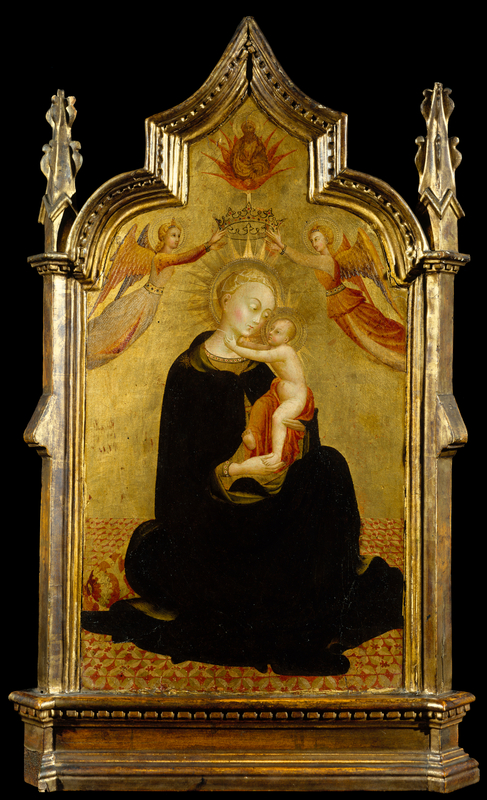
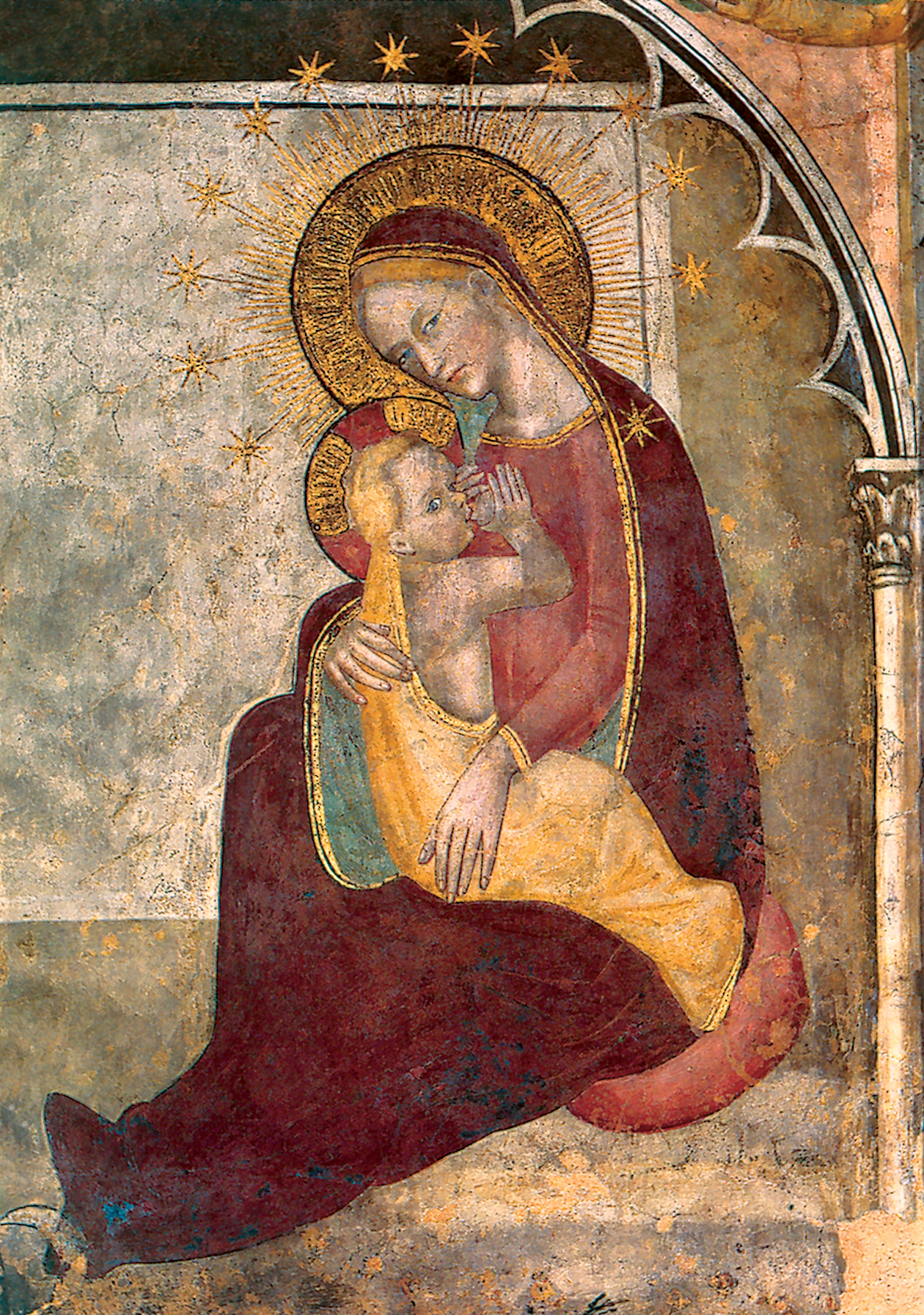
TheFeast of The Humility of the Blessed Virgin Mary or the Madonna of Humility: The Feast of the Humility of the Blessed Virgin Mary was included in the General Roman Calendar of 1954 among the feasts ‘pro aliquibus locis’ (in some places) but was removed from the General Roman Calendar of 1960. However, many Diocese worldwide still celebrate this beautiful Feast as do all Traditional Catholics. https://anastpaul.com/2022/07/17/saint-of-the-day-17-july-the-humility-of-mary-by-st-alphonsus/
Martyrs of Compiegne (16 Carmelite Beati): Sixteen Blessed Teresian Martyrs of Compiègne. Eleven Discalced Carmelite nuns, three lay sisters and two lay women servants who were Martyred together in the French Revolution. They were the earliest Martyrs of the French Revolution that have been recognised. They were: Angelique Roussel • Anne Pelras • Anne-Marie-Madeleine Thouret • Catherine Soiron • élisabeth-Julitte Vérolot • Marie Dufour • Marie Hanniset • Marie-Anne Piedcourt • Marie-Anne-Françoise Brideau • Marie-Claude-Cyprienne Brard • Marie-Françoise de Croissy • Marie-Gabrielle Trezel • Marie-Geneviève Meunier • Marie-Madeleine-Claudine Lidoine • Rose-Chretien de Neuville • Thérèse Soiron. They were guillotined on 17 July 1794 at the Place du Trône Renversé (modern Place de la Nation) in Paris, France. The 16 Martyrs Story: https://anastpaul.com/2017/07/17/saints-of-the-day-17-july-the-carmelite-martyrs-of-compiegne-o-c-d/
Bl Bénigne Bl Biagio of the Incarnation St Clement of Ohrid St Cynllo St Ennodius (c473-521) Bishop and Confessor of Pavia St Fredegand of Kerkelodor St Generosus St Gorazd St Hyacinth of Amastris St Kenelm
St Pope Leo IV (c790-855) The 103rd Bishop of Rome. Papal Ascension: 847. St Leo is particularly remembered for repairing Roman Churches those which had been damaged during the Arab raid and for building the Leonine Wall around Vatican Hill to protect the City. Pope Leo organised a league of Italian Cities which fought and won, the sea Battle of Ostia, against the Saracens. St Leo IV’s Life and Works: https://anastpaul.com/2024/07/17/saint-of-the-day-17-july-st-leo-iv-c790-855-the-103rd-bishop-of-rome/
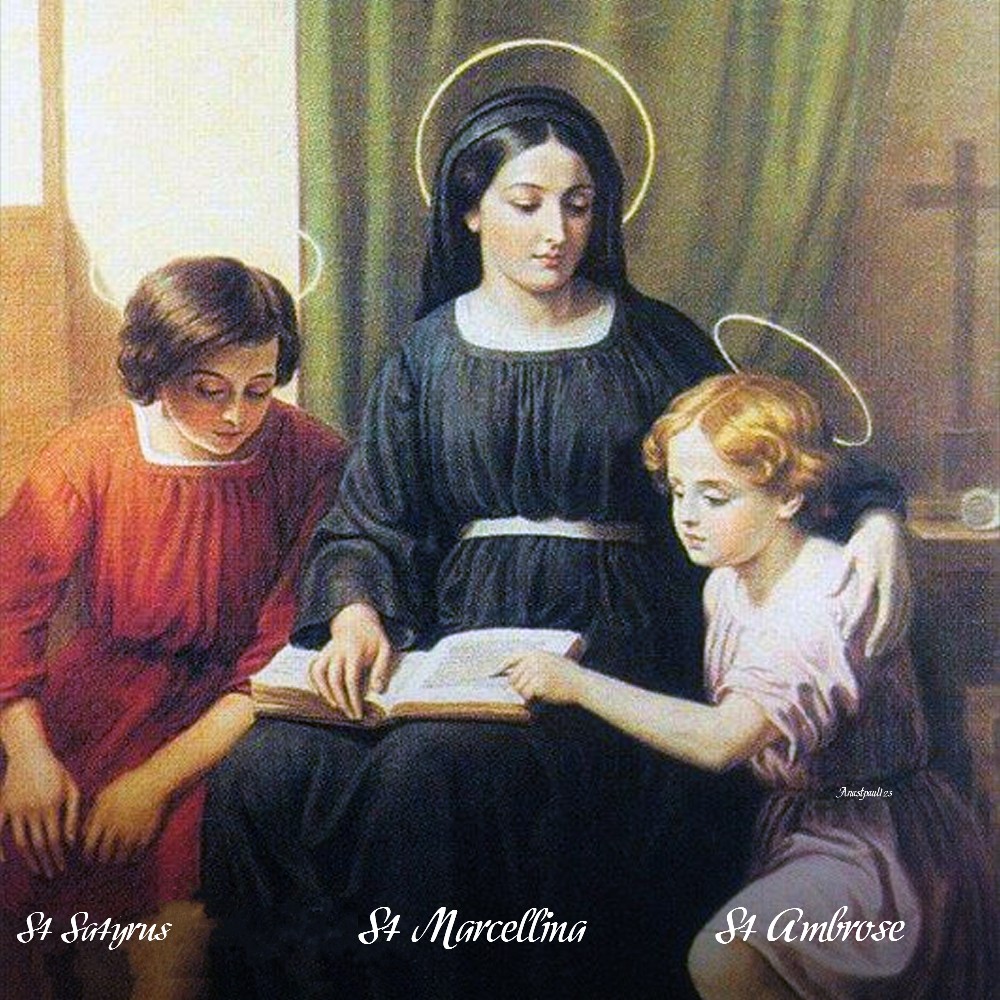
St Marcellina (c330-c398) Consecrated Virgin, sister of St Ambroseand St Satyrus. The Roman Martyrology reads: “At Milan, the Virgin St Marcellina, sister of the blessed Archbishop Ambrose, who received the religious veil from Pope Liberius, in the Basilica of St Peter at Rome. Her sanctity is attested by St Ambrse in his writings.” Lovely Marcellina: https://anastpaul.com/2023/07/17/saint-of-the-day-17-july-st-marcellina-c330-c398-virgin/
St Nerses Lambronazi Bl Sebastian of the Holy Spirit Bl Tarsykia Matskiv St Theodosius of Auxerre St Theodota of Constantinople St Turninus
Martyrs of Scillium (12 Saints): A group of twelve Christians Martyred together, the final deaths in the persecutions of Emperor Marcus Aurelius. Upon their conviction for the crime of being Christians, the group was offered 30 days to reconsider their allegiance to the faith; they all declined. Their official Acta still exist. Their names : • Acyllinus • Cythinus • Donata • Felix • Generosa • Januaria • Laetantius • Narzales • Secunda • Speratus • Vestina • Veturius They were beheaded on 17 July 180 in Scillium, Numidia (in North Africa).
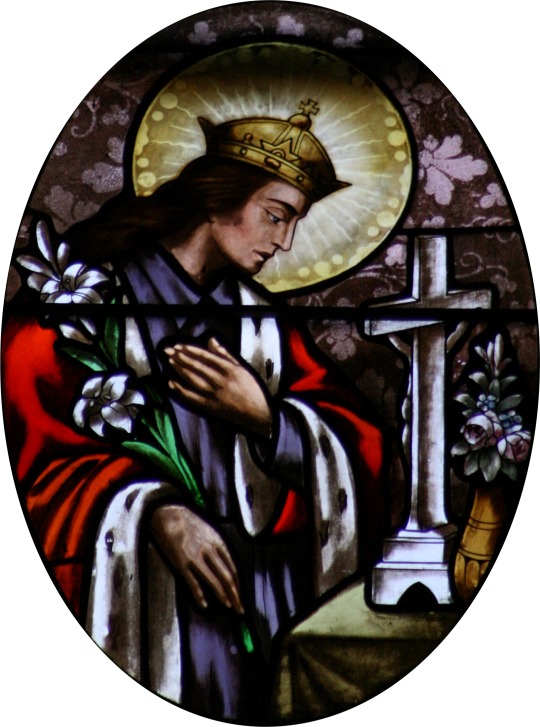
St Henry II (972-1024) Confessor, Holy Roman Emperor. Henry was well known for his Missionary spirit and for his protection of the Pope in times of trouble. Henry ruled with a spirit of great humility and always sought to give the glory to God. He used his position to promote the work of the Church and the peace and happiness of the people. Another Saints whose Feast was moved in 1969 from today, 15 July to 13 July. Biography: https://anastpaul.wordpress.com/2017/07/13/saint-of-the-day-13-july-st-henry-ii-holy-roman-emperor/
St Abundantia of Spoleto St Abudemius of Bozcaada St Adalard the Younger
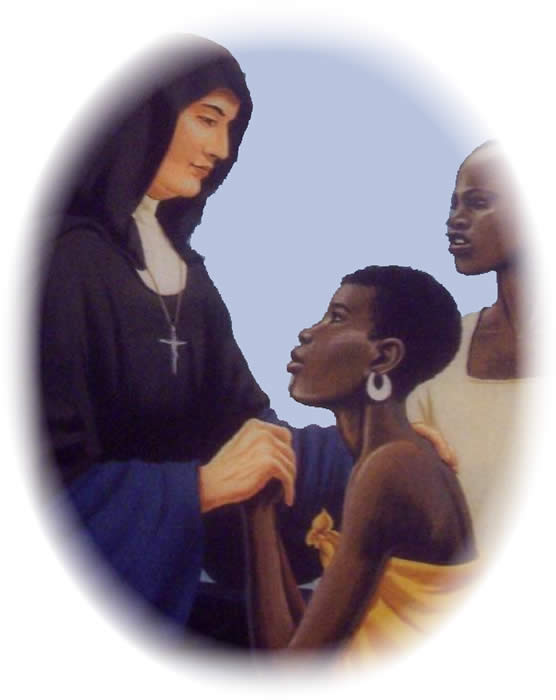
Blessed Anne-Mary Javouhey (1779-1851) “The Mother of the Slaves,” Religious Sister, Missionary and Founder of the Sisters of Saint Joseph of Cluny. Imagine a Mother Teresa in the France of Napoleon’s day and you will have a picture of Anne-Marie Javouhey. Nanette, as she was called, was a “velvet brick,” a thin layer of gentleness covering her determined core. A competent leader, Nanette dominated every scene in her adventurous life. Blessed Anne-Marie was Beatified on 15 October 1950 by Pope Pius XII. :“The Mother of the Slaves” https://anastpaul.com/2019/07/15/saint-of-the-day-15-july-blessed-anne-mary-javouhey-1779-1851/
St Apronia
St Athanasius (c830-c 872) Confessor, Bishop of Naples from 849 until his death, Papal Legate, Reformer and restoring of Monasteries, he built a Hospice for pilgrims and a new Monastery, a man of austerity and prayer. This Athanasius should not be confused with his nephew, Athanasius II, also the Bishop of Naples. About this St Athanasius, a Patron of Naples among +70 Patrons: https://anastpaul.com/2022/07/15/saint-of-the-day-15-july-st-athanasius-of-naples-c-830-c-872/
St Antiochus of Sebaste St Benedict of Angers
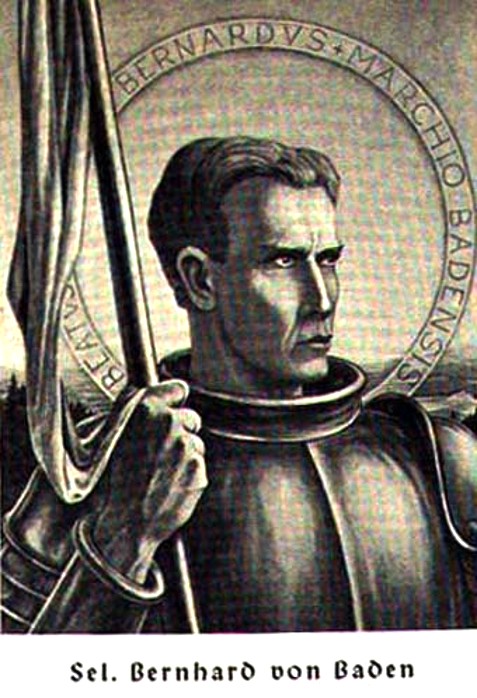
Blessed Bernard TOSF (1428-1458) Margrave of Baden, Germany (Margrave was originally the medieval title for the military commander assigned to maintain the defence of one of the border provinces of the Holy Roman Empire.) Tertiary of the Order of St Francis, Apostle of the poor and the needy. Bernard was Beatified on 16 September 1769 by Pope Clement XIV. His Canonisation process continues, at present, the second miracle required is being investigated. Blessed Bernard’s Holy Life: https://anastpaul.com/2021/07/15/saint-of-the-day-15-july-blessed-bernard-of-baden-tosf-1428-1458/
St David of Sweden (Died 1082) Bishop of Västeras in Sweden, Martyr St Donivald St Eberhard of Luzy St Edith of Tamworth St Eternus St Felix of Pavia St Gumbert of Ansbach St Haruch of Werden St Jacob of Nisibis St Joseph Studita of Thessalonica Bl Peter Aymillo St Plechelm of Guelderland
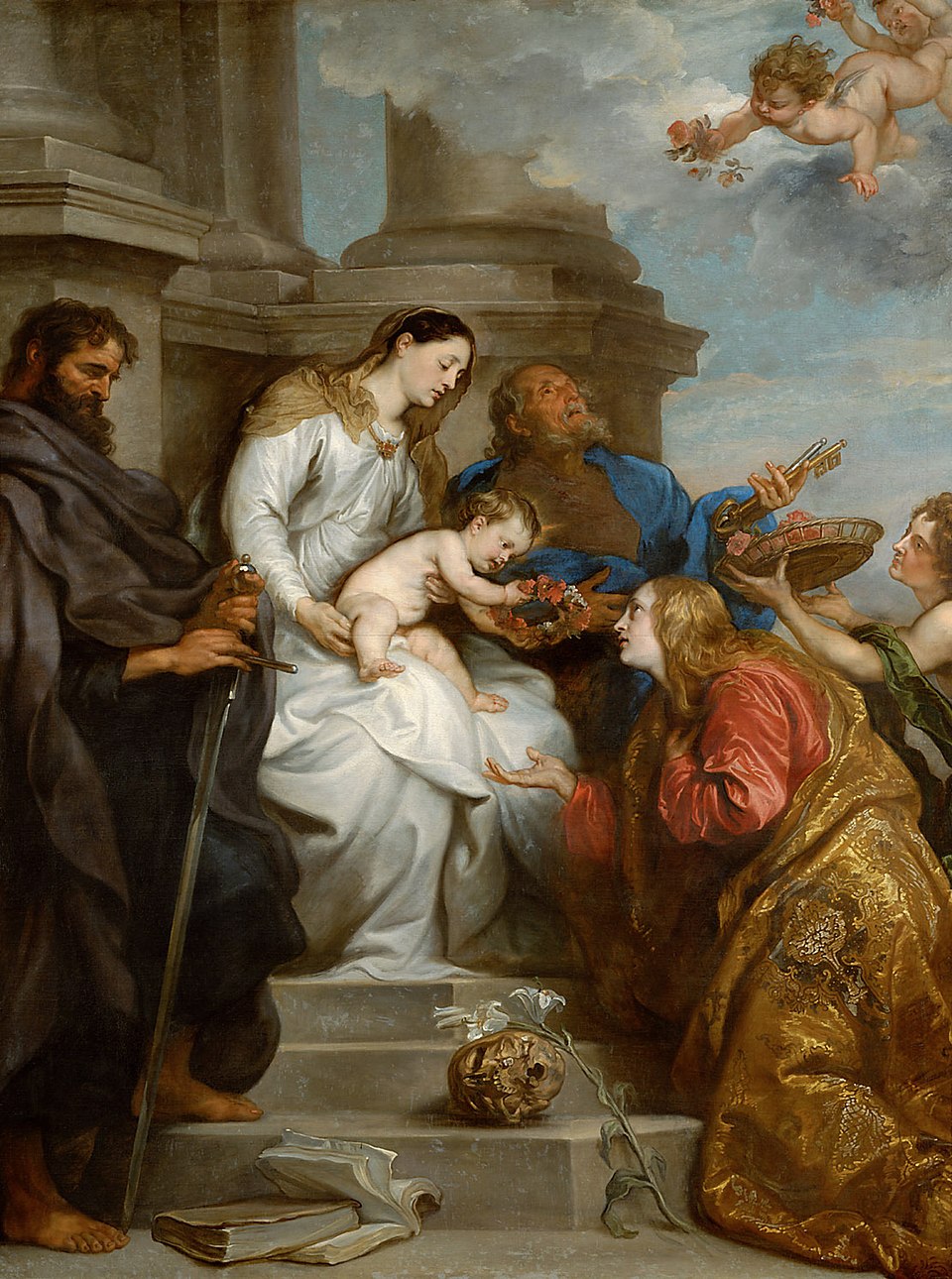
The Coronation of Saint Rosalia,with Sts Peter and Paul, is an oil on canvas Painting by Sir Anthony van Dyck – 1629.
St Valentina of Nevers No information has survived. St Vladimir I of Kiev
Martyred Jesuit Missionaries of Brazil – 40 Beati: A band of forty Spanish, Portugese and French Jesuit Missionaries Martyred by the Huguenot pirate Jacques Sourie while en route to Brazil. They are – Aleixo Delgado • Alonso de Baena • álvaro Borralho Mendes • Amaro Vaz • André Gonçalves • António Correia • Antônio Fernandes • António Soares • Bento de Castro • Brás Ribeiro • Diogo de Andrade • Diogo Pires Mimoso • Domingos Fernandes • Esteban Zuraire • Fernando Sánchez • Francisco Alvares • Francisco de Magalhães • Francisco Pérez Godoy • Gaspar Alvares • Gonçalo Henriques • Gregorio Escribano • Ignatius de Azevedo • Iõao • João Fernandes • João Fernandes • Juan de Mayorga • Juan de San Martín • Juan de Zafra • Luís Correia • Luís Rodrigues • Manuel Alvares • Manuel Fernandes • Manuel Pacheco • Manuel Rodrigues • Marcos Caldeira • Nicolau Dinis • Pedro de Fontoura • Pedro Nunes • Simão da Costa • Simão Lopes • They were Martyed on 15 and 16 July 1570 on the ship Santiago near Palma, Canary Islands. They were Beatified on 11 May 1854 by Pope Pius IX.
Martyrs of Alexandria – 13 Saints: Thirteen Christians who were Martyred together. We know the names of three, no details about them and the other ten were all children. – Narseus, Philip and Zeno. Martyred in the early 4th-century in Alexandria, Egypt.
Martyrs of Carthage – 9 Saints: A group of nine Christians who were Martyred together. We know nothing else but their names – Adautto, Catulinus, Felice, Florentius, Fortunanziano, Januarius, Julia, Justa and Settimino. They were Martyred in Carthaginian and their relics at the Basilica of Fausta at Carthage.
Martyrs of Pannonia – 5 Saints: Five 4th-century Martyrs killed together. No information about them has survived except the names – Agrippinus, Fortunatus, Martialis, Maximus and Secundinus.
Quote/s of the Day – 6 July – The Octave Day of Sts Peter and Paul
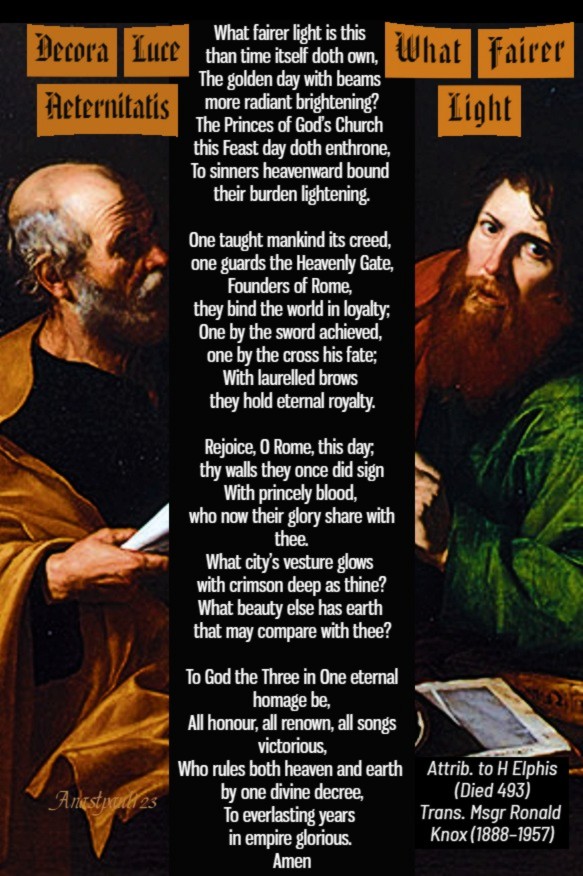
Decora Luce Aeternitatis What Fairer Light? Attrib. to H Elphis (Died 493) Wife of BL Severinus Boethius c 477– 524) Trans. Msgr Ronald Knox (1888–1957)
What fairer light is this than time itself doth own, The golden day with beams more radiant brightening? The Princes of God’s Church this Feast day doth enthrone, To sinners heavenward bound their burden lightening.
One taught mankind its creed, one guards the Heavenly Gate, Founders of Rome, they bind the world in loyalty; One by the sword achieved, one by the cross his fate; With laurelled brows they hold eternal royalty.
Rejoice, O Rome, this day; thy walls they once did sign With princely blood, who now their glory share with thee. What city’s vesture glows with crimson deep as thine? What beauty else has earth that may compare with thee?
To God the Three in One eternal homage be, All honour, all renown, all songs victorious, Who rules both heaven and earth by one divine decree, To everlasting years in empire glorious. Amen
5th cCntury Latin Hymn “Aurea Luce” attributed to H Elphis (Died 493), first wife of the Roman philosopher-poet Boethius (c475–c525). He would eventually be Martyred for his defence of the Faith against the Arian ruler, Theodoric. Msgr Knox, a convert from Anglicanism, was a noted Scholar, Author, Hymnist and Translator, becoming the Secretary to St Pius X. Under direction of his religious superiors, he re-translated the Latin Vulgate Bible into English from Hebrew and Greek sources. What Fairer Light is set to the tune, Decora Lux by the English Catholic Composer, Samuel Webbe (1740–1816).
In 1632, in accord with changes called for by the Council of Trent, Pope Urban VIII (1568-1644) revised the original text of Aurea Luce and divided it into two new Hymns for Lauds and Vespers: Decora Lux and Beate Pastor Petre. In the Liturgy of the Hours, What Fairer Light is used on 29 June, the Solemnity of Sts Peter and Paul, Apostles. The above is the Older version.
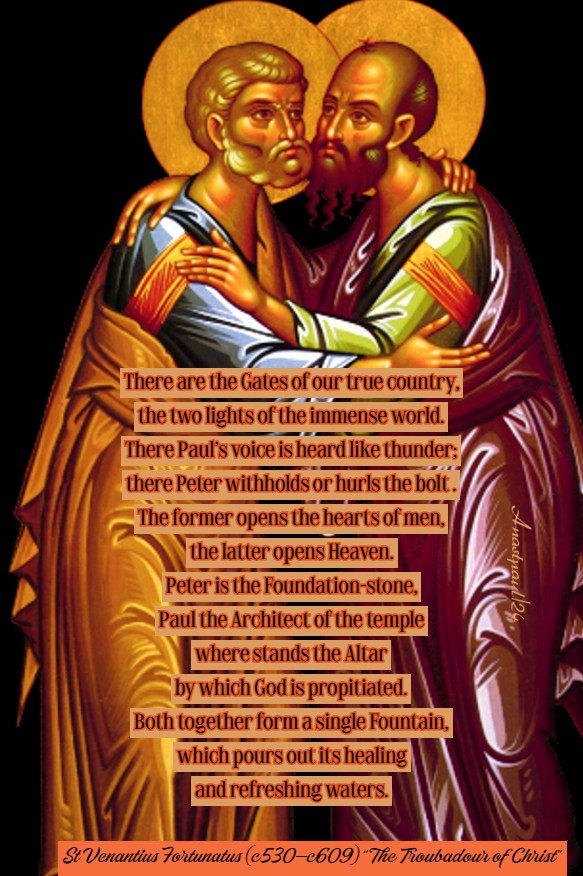
“There are the Gates of our true country, the two lights of the immense world. There Paul’s voice is heard like thunder; there Peter withholds or hurls the bolt . The former opens the hearts of men, the latter opens Heaven. Peter is the Foundation-stone, Paul the Architect of the temple where stands the Altar by which God is propitiated. Both together form a single Fountain, which pours out its healing and refreshing waters.”
St Venantius Fortunatus (c 530 – c 609) “The Troubadour of Christ”
Bl Andreas Ebersbach Bl Barbara Jeong Sun-mae St Bladus St Byblig St Cillene St Dathus (Died c190) Bishop and Confessor of Ravenna St Eusebius of Laodicea St Firminus St Firmus Bl Gelduin St Giuse Nguyen Ðình Uyen St Gunthiern St Guthagon
St Heliodorus (c332-c390) the first Bishop of Altino in Italy, disciple, close friend and assistant of St Jerome. Scholar, ex-soldier, The Roman Martyrology reads: “At Altino, St Heliodorus, a Bishop, distinguished for holiness and learning.” Holy Heliodorus: https://anastpaul.com/2024/07/03/saint-of-the-day-3-july-st-heliodorus-332-390-bishop/
St Hyacinth of Caesarea St Irenaeus of Chiusi St Maelmuire O’Gorman St Mark of Mesia St Mennone the Centurian St Mucian of Mesia St Paul of Mesia
St Raymond Gayrard(Died 1118) ArchDeacon, Canon of the Lateran Canons Regular at St Sernin Basilica in Toulouse, France. The Roman Martyrology reads: “In Toulouse on the Garonne in France, Saint Raymond Gayrard, who, as a teacher, remained a widower, passionately devoted himself to works of charity, founded a hospice and was finally admitted among the Canons of the Basilica of St Saturnin.” https://anastpaul.com/2023/07/03/saint-of-the-day-3-july-saint-raymond-of-toulouse-died-1118/
Martyrs of Alexandria – 13 Saints: Thirteen Christian companions Marytred together. No details about them have survived but the names – Apricus, Cyrion (2 of), Eulogius, Hemerion, Julian, Julius, Justus, Menelaus, Orestes, Porfyrios and Tryphon (2 of). They martyred in Alexandria, Egypt, date unknown.
Martyrs of Constantinople – 24 Saints: A group of 24 Christians Martyred in the persecutions of Arian Emperor Valens. We know little more than their names – Acacios, Amedinos, Ammonius, Ammus, Cerealis, Cionia, Cionius, Cyrianus, Demetrius, Eulogius (2), Euphemia, Heliodoros, Heraclios, Horestes, Jocundus, Julian, Martyrios, Menelaeus, Sestratus, Strategos, Thomas, Timotheos and Tryphon. They were martyred in c367 in Constantintinople.
Theodotus and Companions – 6 Saints: Six Christians who were imprisoned, tortured and Martyred together in the persecutions of Trajan. Saint Hyacinth ministered to them in prison. We know nothing else about them but their names – Asclepiodotus, Diomedes, Eulampius, Golinduchus, Theodota and Theodotus. They were beheaded in c110, location unknown.
DISCLAIMER: Please note: I cannot control the content of the Advertisements on this Site, or of pop-ups which may appear, The revenue from the Advertisements, however, does provide a little assistance in the support of the Site. I do apologise for any inappropriate content.
Bl Giovanni (Died c1420) and Bl Pietro da Fabriano BecchettiOSA (Died c1421) Priests of the Order of the Hermits of Saint Augustine St Jacques Fermin Bl Jarich of Mariengaarde St Jéroche
Martyred Soldiers of Rome – 3 Saints: Three soldiers who were converted at the Martyrdom of Saint Paul the Apostle. Then they were martyred, as well. We known nothing else about them but their names – Acestes, Longinus and Megistus. Martyred c68 in Rome, Italy
Martyrs in Carthage by Hunneric – 7 Saints: A group of seven Christians tortured and murdered in the persecutions of the Arian Vandal king Hunneric for remaining loyal to the teachings of orthodox Christianity. They were some of the many who died for the faith during a period of active Arian heresy. – Boniface, Liberatus, Maximus, Rogatus, Rusticus, Septimus and Servus.
Martyrs of Campania – 10 Saints: A group of ten Christians Marytred together in the persecutions of Diocletian. The only details about them to have survived are their names – Ariston, Crescention, Eutychian, Felicissimus, Felix, Justus, Marcia, Symphorosa, Urban and Vitalis. Martyred in 284 in Campania, Italy.
St Aaron of Caerleon St Aaron the Patriarch St Arnulf of Mainz St Calais of Anisole St Carilephus St Castus of Sinuessa St Cewydd St Concordius of Toledo St Cuimmein of Nendrum
St Domitian (c347-440) Abbot, who had been the first Hermit of the surrounding region in France, Founder of a Monastery which became the foundation of the spiritual, cultural and social teachings of its region and day. Born in c347 in Rome and died in 440 at the Saint Rambert de Joux Abbey in the Diocese of Lyons in France. The Roman Martyrology reads: “In the Diocese of Lyons, the decease of St Domitian, Abbot, who was the first to lead there, an eremitical life. After having assembled, in that place, many servants of God and gained great renown for virtues and miracles, he was gathered to his fathers at an advanced age.” His Devoted Life: https://anastpaul.com/2024/07/01/saint-of-the-day-1-july-st-domitian-c347-440-abbot/
Bl Elisabeth de Vans St Eparchius of Perigord St Eutychius of Umbria St Esther the Queen
St Gall of Clermont St Golvinus of Leon St Gwenyth of Cornwall Bl Huailu Zhang St Julius of Caerleon St Justino Orona Madrigal St Juthware St Leonorious of Brittany St Leontius of Autun St Martin of Vienne St Nicasius of Jerusalem
St Secundinus of Sinuessa St Servan of Culross St Simeon Salus (Died c570) Confessor, Monk, Hermit known as “The Holy Fool”
St Theobald of Vicenza St Theodoric of Mont d’Or St Veep
Martyrs of Rome – 6 Saints: Six Christians who were Martyred together. No details have survived except their names – Esicius, Antonius, Processus, Marina, Serenus and Victor. They were martyred i
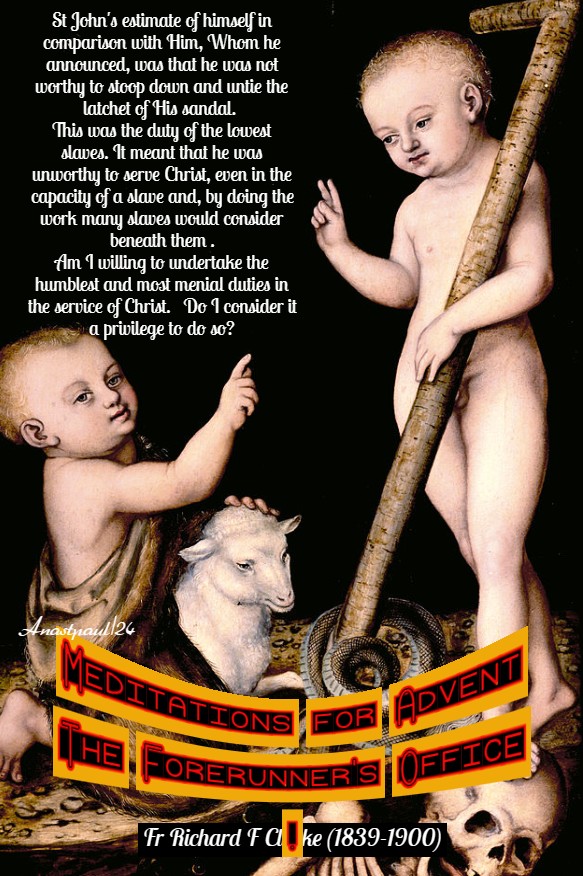
Thought for the Day – 24 June – Meditations with Fr Richard Frederick Clarke SJ (1839-1900)
From “The Devout Year” By Fr Richard Frederick Clarke SJ (1839-1900)
The Forerunner’s Office .
+1. St John was something more than a Herald. He had to prepare the way for the King, to make the crooked ways straight and the rough places smooth. His office was that which is entrusted to us all in our own sphere – to try and make the way in which the followers of Christ have to tread straight and easy. What a privilege, if we can, by our charity and our edifying life, make the path of life easier for those whose lot it is to tread the way of the Cross and to walk over rough or stormy paths! Is this your endeavour in your daily life, or do you place obstacles in the path of others by your bad example, want of charity and consideration, impatience, etc?
+2. St John , as the Herald or Forerunner of Christ, had to proclaim the coming of the King. He, himself expresses this by his description of himself as the voice of one who cries in the desert; that is , Christ spoke through his mouth. So He speaks through the mouths of all His servants in proportion to their devotion and singleness of purpose. How poor an echo are my words of the whispers of Christ to the faithful soul! How mixed with the discordant notes of self-will and worldliness!
+3. St John’s estimate of himself in comparison with Him, Whom he announced, was that he was not worthy to stoop down and untie the latchet of His sandal. This was the duty of the lowest slaves. It meant that he was unworthy to serve Christ, even in the capacity of a slave and, by doing the work many slaves would consider beneath them . Am I willing to undertake the humblest and most menial duties in the service of Christ. Do I consider it a privilege to do so?
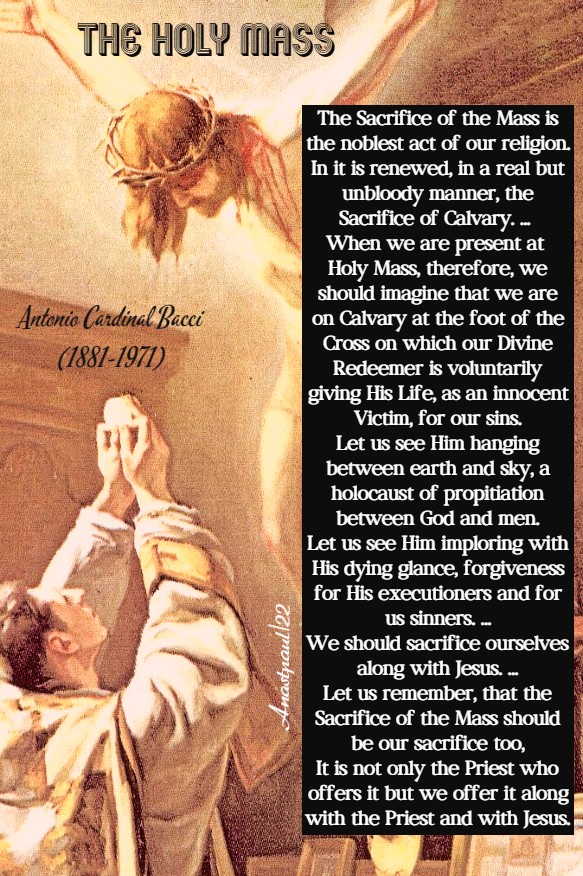
Thought for the Day – 22 June – Meditations with Antonio Cardinal Bacci (1881-1971)
The Holy Mass
“The Sacrifice of the Mass is the noblest act of our religion. In it is renewed, in a real but unbloody manner, the Sacrifice of Calvary.
Jesus desired to remain with us throughout the centuries in the Blessed Eucharist as our friend, comforter and spiritual food. Similarly, not being satisfied with having shed His Precious Blood on the Cross for our Redemption, it was His wish that this sacrificial action should be renewed daily in every corner of the world, in such a way, that everyone could participate in it and benefit from it. When we are present at Holy Mass, therefore, we should imagine that we are on Calvary at the foot of the Cross on which our Divine Redeemer is voluntarily giving His Life, as an innocent Victim, for our sins. Let us see Him hanging between earth and sky, a holocaust of propitiation between God and men. Let us see Him imploring with His dying glance, forgiveness for His executioners and for us sinners.
Let us imagine, moreover, His most Holy Mother as she gazes sorrowfully upon her suffering Son. With love far greater than that of any other human creature, she offers herself in union with Jesus, for our salvation.
We should make a similar offering when we assist at the Sacrifice of the Altar. We should sacrifice ourselves along with Jesus. If we are tormented by sufferings, let us offer them up along with those of Jesus. If we are troubled by passionate inclinations to sin, let us sacrifice these bravely, along with Jesus and for love of Him. If we are full of hatred and coldness towards others, let us sacrifice these feelings for love of Jesus, Who forgave everyone who asked and repented and prayed even for His executioners.
Let us remember, the Sacrifice of the Mass should be our sacrifice too. It is not only the Priest who offers it but we offer it along with the Priest and with Jesus. “Receive, O Holy Trinity, this oblation which we make to Thee.” Let us unite the offering of our entire selves to the Sacrifice of Jesus and we sgall obtain great spiritual benefits.”
Our Morning Offering – 22 June – “The Month of the Most Sacred Heart of Jesus” – he Solemnity of Corpus Christi and Within the Corpus Christi Octave
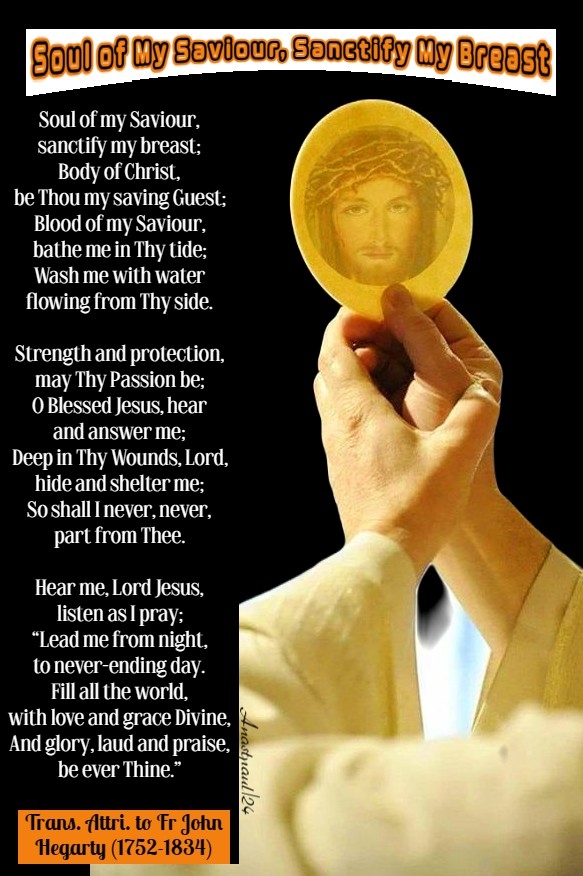
Soul of My Saviour, Sanctify My Breast Trans. Attri. to Fr John Hegarty (1752-1834)
Soul of my Saviour, sanctify my breast; Body of Christ, be Thou my saving Guest; Blood of my Saviour, bathe me in Thy tide; Wash me with water flowing from Thy side.
Strength and protection, may Thy Passion be; O Blessed Jesus, hear and answer me; Deep in Thy Wounds, Lord, hide and shelter me; So shall I never, never, part from Thee.
Hear me, Lord Jesus, listen as I pray; “Lead me from night, to never-ending day. Fill all the world, with love and grace Divine, And glory, laud and praise, be ever Thine.”
This Hymn is based on the original Latin text of the Anima Christi. Fr Hegarty is attributed with its translation and/or arrangement. He was born in County Derry, Ireland, educated at Dublin University and was Ordained in June 1890 and spent most of active apostolic years in Brisbane, Australia. He died aged 82 years.
The Solemnity of Corpus Christi, The Most Holy Body and Blood of Our Lord Jesus Christ: Corpus Christi The Feast is liturgically celebrated on the Thursday after Trinity Sunday which this year was 19 June. https://anastpaul.com/2022/06/16/the-festival-of-corpus-christi/
St Paulinus of Nola (c354-431) Bishop, Confessor, Poet, Writer, Apostle of Charity, Preacher, Orator, Senator and Governor. St Paulinus was an inspiration to many—including six great Saints of the Church, who referenced him in letters of encouragement to others: St Augustine, St Jerome, Melania, St Martin of Tours, St Gregory and St Ambrose. St Augustine wrote, “Go to Campania– there study Paulinus, that choice servant of God. With what generosity, with what still greater humility, he has flung from himself the burden of this world’s grandeurs to take on him the yoke of Christ and in His service how serene and unobtrusive his life!” This glorious Saint Paulinus!: https://anastpaul.com/2018/06/22/saint-of-the-day-22-june-st-paulinus-of-nola-c-354-431/ AND: https://anastpaul.com/2022/06/22/saint-of-the-day-22-june-st-paulinus-of-nola-c-354-431-2/
St Aaron of Brettany St Aaron of Pais-de-Laon St Alban of Britain Bl Altrude of Rome St Consortia St Cronan of Ferns
St Eberhard (1085-1164)Archbishop of Salzburg, Austria, Defender of the Papacy, Apostle of the poor and sick, Papal Legate and negotiator. Born in 1085 at Nuremberg, Germany and died on 21 June 1164 at the Cistercian Monastery of Rein, Austria of natural causes. Patronages – Bamberg, Germany, Salzburg, Austria. His Holy Life: https://anastpaul.com/2024/06/22/saint-of-the-day-22-june-saint-eberhard-of-salzburg-1085-1164-bishop/
St Eusebius of Samosata St Exuperantius of Como St Flavius Clemens St Giovanni d’Acquarola (Died c849) Bishop of Naples
St Gregory of Agrigento St Heraclius the Soldier St Hespérius of Metz
Blessed Pope Innocent V OP (c 1225-1275) Papal Ascesion 21 January 1276 unril 22 June 1276 (the date of his death. Friar of the Order of Preachers, Theologian, renowned Preacher, Scholar, Writer,, Dominican Office bearer, disciple of St Albert the Great and collaborator and friend of St Thomas Aquinas.and St Bonaventure. His Life: https://anastpaul.com/2021/06/22/saint-of-the-day-22-june-blessed-pope-innocent-v-op-c-1225-1275/
St John IV of Naples St Julius of Pais-de-Laon Bl Kristina Hamm Bl Marie Lhuilier St Nicetas of Remesiana St Precia of Epinal St Rotrudis of Saint-Omer St Rufinus of Alexandria
Martyrs of Samaria – 1480 Saints: 1480 Christians massacred in and near Samaria during the war between the Greek Emperor Heraclius and the pagan Chosroas of Persia. c 614 in the vicinity of Samaria, Palestine.
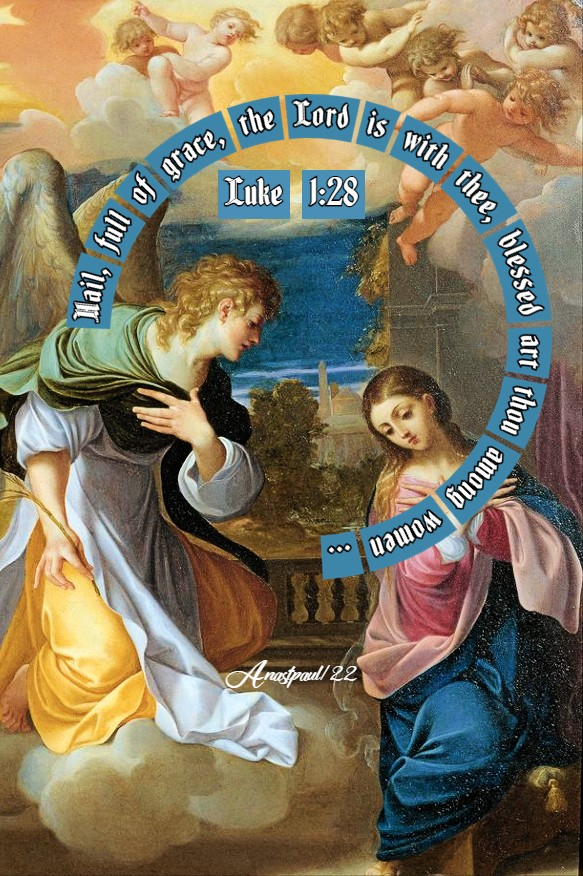
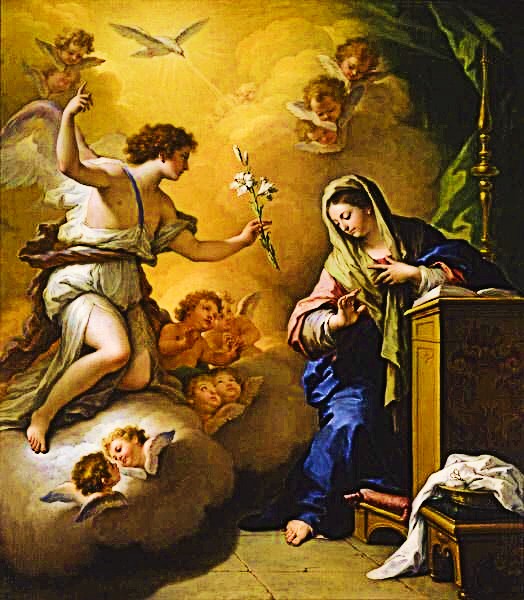
One Minute Reflection – 25 March – “The Month of Saint Joseph” – The Annunciation of the Blessed Virgin Mary – Isaias 7:10-15 – Luke 1:26-38 – Scripture search here: https://www.drbo.org/
“And Mary said: Behold, I am the handmaid of the Lord: be it done to me according to thy word.” – Luke 1:38
REFLECTION – “You have heard, O Virgin, that you are to conceive and bring forth a Son and that this will not be through the power of man but, by the virtue of the Holy Spirit. The Angel awaits your reply, for it is time that he should return to God Who sent him. We, too, are waiting, O Lady, for a word of mercy, we, who are groaning under the sentence of condemnation. See, the price of our salvation is offered to you; if you consent, we shall at once be delivered. By the Eternal Word of God were we all created and behold, we will all die. By your brief answer, we shall be refreshed and recalled to life! …
Hasten, then, O Lady, to give your answer; hasten to speak the word so longed for by all on earth, in limbo and in Heaven. Yes, the King and Lord of all things, Who has “greatly desired your beauty” (Ps 44:12), desires, as eagerly, your word of consent by which He has purposed to save the world. He, Whom you pleased by your silence, will be yet more pleased by your reply. Hark! He calls to you from Heaven – “O most beautiful among women, let me hear your voice” (Sg 1:8; 2:14) … Answer the Angel quickly, then; yes, through the Angel give your consent to your God. Answer one syllable, receive the Word; utter your own word and conceive that which is Divine. Speak the word that is transitory and embrace the Word which is everlasting! …”
“Behold,” she says, “I am the handmaid of the Lord. Be it done to me according to thy word.” – St Bernard (1091-1153) Father and Doctor of the Church (Homily 4 on the “Missus est” [He was sent] #8-9).
PRAYER – O God, Who, by the message of an Angel, willed to take flesh in the womb of the Blessed Virgin Mary, grant that we, Thy suppliants, who believe her to be truly, the Mother of God, may be helped by her intercession with Thee. Through Jesus Christ, Thy Son our Lord, Who lives and reigns with Thee, in the unity of the Holy Ghost, God, world without end. Amen (Collect).
St Dula the Slave Bl Everard of Nellenburg Bl Herman of Zahringen St Hermelandus (Died c720) Priest, Abbot St Humbert of Pelagius Bl James Bird St Kennocha of Fife
St Lucia Filippini (1672-1732) Virgin, Religious Sister, Founder. On 22 June 1930, Lucia Filippini was declared a Saint of the Church by Pope Pius XI and her Statue was given the last available niche in the Basilica of Saint Peter in Rome. Her statue can be seen in the first upper niche from the main entrance on the left (south) side of the nave of St Peter’s. Biography: https://anastpaul.com/2022/03/25/saint-of-the-day-25-march-st-lucia-filippini-1672-1732/
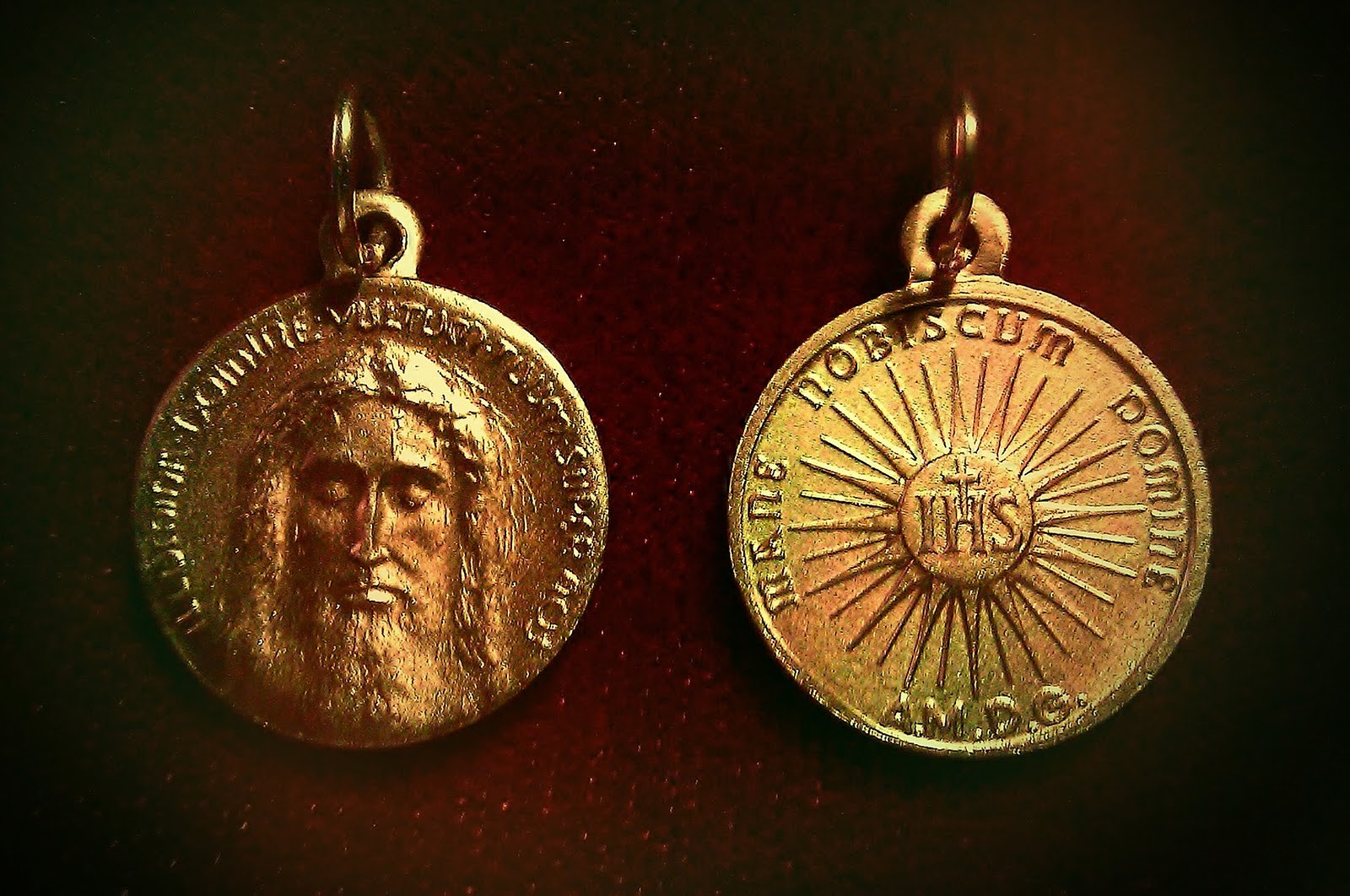
The Feast of the HOLY FACE of JESUS: In the 19th Century Jesus expressed His wishes to Sister Mary of St Peter (1816-1848), a Carmelite Nun in Tours, France, that there be an actual Devotion to his Holy Face. Our Lord wanted this in reparation for blasphemies against Himself and His Holy Name as well, as for the profanation of Sunday (when people engage unnecessarily in commerce and other such labours and chores on Sunday, a day meant for rest and reflection on God). In August of 1843 He dictated to her the well-known Golden Arrow Prayer. He also gave her Promises for those who would honour His Holy Face. The first Holy Medal of the Holy Face was given to Ven Pope Pius XII, who approved the Devotion and the Medal. In 1958 he formally declared the Feast of the Holy Face of Jesus as Shrove Tuesday for all Catholics in perpetuity. https://anastpaul.com/2022/03/01/feast-of-the-holy-face/
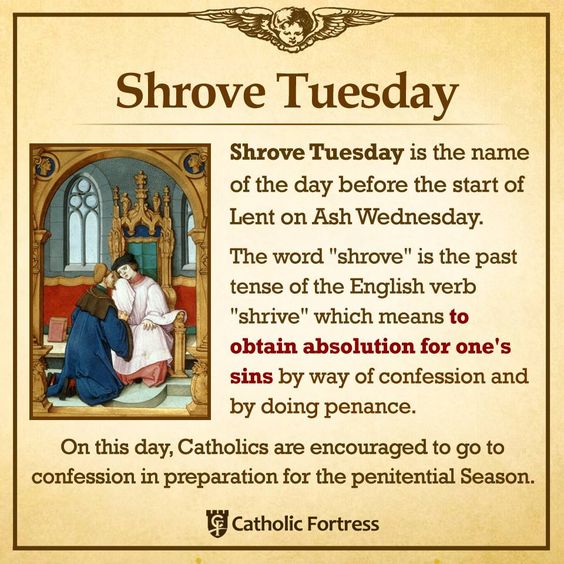
Shrove Tuesday: Shrove is the past tense of the word Shrive, which means “to hear a confession, assign penance and absolve from sin.” In the Middle Ages, especially in Northern Europe and England, it became the custom to confess one’s sins on the day before Lent began in order to enter the penitential season in a repentant spirit.
St Lucius I (Died 254) Pope and Martyr. The 22nd Bishop of Rome from 25 June 253 to his death on 5 March 254. He was banished soon after his consecration but gained permission to return. Patronage – Copenhagen, Denmark. Lucius I’s Tombstone is still extant in the Catacomb of Callixtus. His Relics were later brought to the Church of Santa Cecilia in Trastevere, along with the Relics of St Cecilia and others. His head is preserved in a reliquary in St. Ansgar’s Cathedral in Copenhagen, Denmark. This Relic was brought to Roskilde around the year 1100, after Lucius had been declared Patron Saint of the Danish region Zeeland. The Roman Martyrology reads today: “At Rome, on the Appian Way. during the persecution of Valerian, the birthday of St Lucius, Pope and Martyr, who was first exiled for the Faith of Christ but, being permitted by Divine Providence to return to his Church, he suffered Martyrdom by decapitation, after having combated the Novatians. His praises have been published by the blesseed Saint Cyprian, Bishop of Carthage(200-258).” His Life and Death: https://anastpaul.com/2023/03/04/saint-of-the-day-4-march-st-lucius-i-died-254-pope-and-martyr/
St Adrian of May St Adrian of Nicomedia Bl Alexander Blake St Appian of Comacchio St Arcadius of Cyprus St Basinus of Trier Bl Christopher Bales St Felix (c970-1038) Abbot of Rhuys Abbey St Gaius of Nicomedia
Blessed Humbert III Count of Savoy (1136–1189) Layman Prince. It is recorded of Humberto “who, forced to leave the cloister to deal with public affairs, practiced the monastic life with greater dedication, to which he later returned.” Born in 1136 in Avigliana, Italy and died on 4 March 1189 in Chambéry, France of natural causes. Beatified in 1838 by Pope Gregory XVI. Holy Humbert: https://anastpaul.com/2024/03/04/saint-of-the-day-4-march-blessed-humbert-iii-count-of-savoy-1136-1189/
St Leonard of Avranches Bl Nicholas Horner St Nestor the Martyr St Owen Bl Paolo of Brescia
Martyrs on the Appian Way – 900 Saints: Group of 900 Martyrs buried in the Catacombs of Saint Callixtus on the Appian Way, Rome.
Martyrs of Nicomedia – 20 Saints: A group of 20 Christians murdered together for their faith. The only details about them to survive are three of their names – Archelaus, Cyrillos and Photius. Nicomedia, Bithynia (in modern Turkey)
Martyrs of the Crimea – 7 Saints: A group of 4th century missionary Bishops who evangelised in the Crimea and southern Russia and were Martyred for their work. We know little else beyond the names – Aetherius, Agathodorus, Basil, Elpidius, Ephrem, Eugene and Gapito.
Our Morning Offering – 22 February – The Chair of St Peter at Antioch
O Prince of the Apostolic Senate! Hymn to the Prince of the Apostles By St Peter Damian (1007-1072) Cardinal Bishop of Ostia Doctor of the Church
O Prince of the Apostolic Senate! Herald of our Lord! First Shepherd of the Faithful! watch over the Flock intrusted to thee.
Lead us through verdant pastures, feeding us with the nourishment of the Word and lead us, thus fed, into the heavenly fold, whither thou hast already gone.
To thee, Peter, have been delivered the Keys of heaven’s gate and all things, both in Heaven and on earth, acknowledge thy authority.
Tis thou that choosest the City where is to be established the Rock of the True Faith, the foundation of the building, on which the Catholic Church stands immoveable.
Thy shadow, as thou passest by, heals the sick and Tabitha, who made garments for the poor, was raised to life at thy bidding.
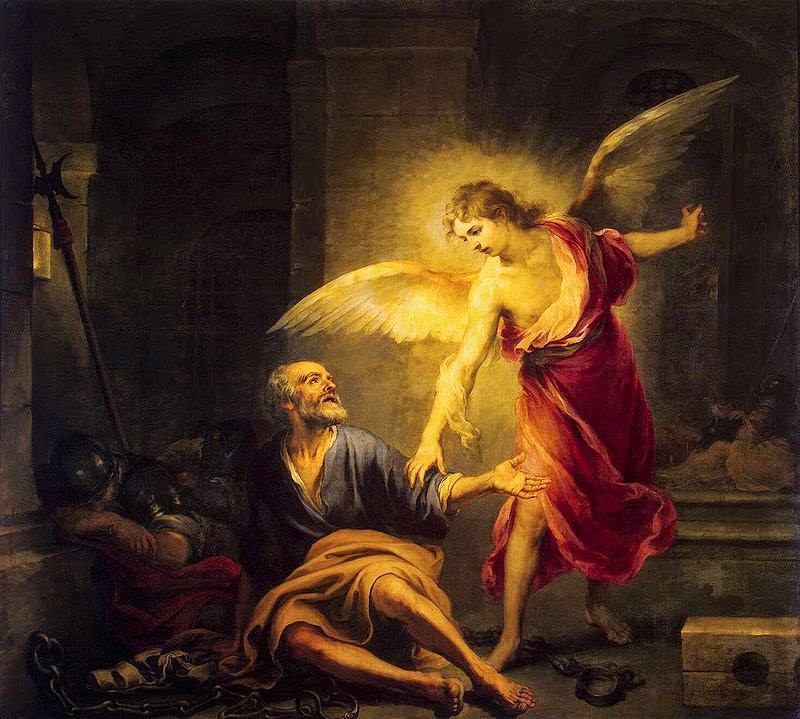
Bound with two chains, thou wast set free by an Angel’s power; he bids thee put on thy garments and thy sandals and lo! the prison door is opened.
To the Father unbegotten and to the Only-Begotten Son and to the co-equal Spirit of them both, be praise and kingly highest power. Amen.
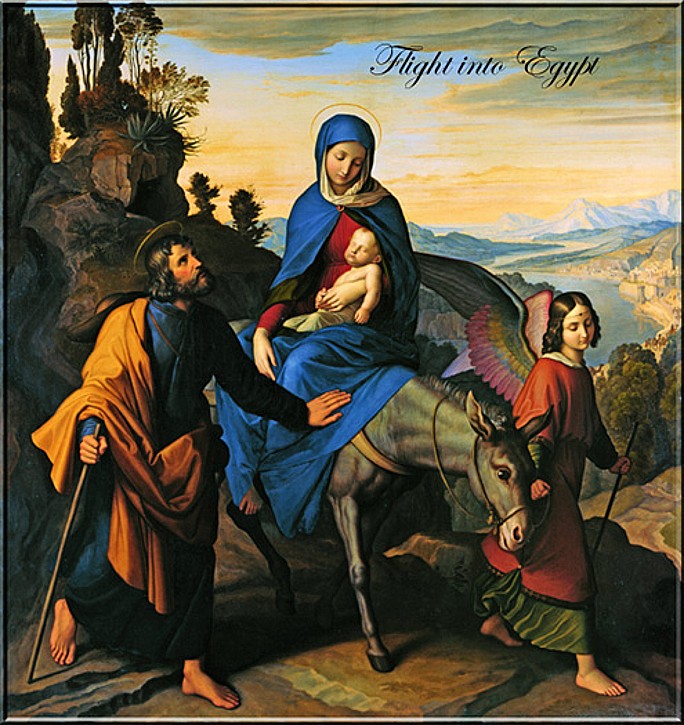
It was on the seventeenth of February, fifty five days after the Nativity of Jesus, when King Herod’s soldiers — sent to slaughter all little boys in Bethlehem and its neighbourhood who were two years old or under, in order to destroy a rival King, Jesus — were getting perilously near the cave at Bethlehem, where at first they little expected Our Lord to be. Saint Joseph received a message from God through an Angel, whereupon he took Our Lady and the Divine Infant and set off leaving the land of the Jews to travel to a land of the Gentiles. They took no-one with them, by way of servants or friends, as Saint Peter Chrysologus tells us.
The Town to which the Holy Family fled was called Fostat. It was three hundred miles from Bethlehem. A Church has been erected there, on the site of the house where the Holy Family lived during their exile. The little Town where the Holy Family lived in Egypt was not far from Heliopolis, a City in which — when Jesus, Mary and Joseph passed through it — statues of pagan gods crashed to the ground. Both Fostat and Heliopolis are not far from Cairo in Egypt.
St Lupiano St Mesrop the Teacher St Polychronius of Babylon St Romulus the Martyr St Secundian the Martyr St Silvinus (c650-c717) Bishop St Theodulus of Caesarea
One Minute Reflection – 3 February – “The Month of the Blessed Trinity” – Resumed Mass of Sunday – Malachias 3:1-4; – Luke 2:22-32 – Scripture search here: https://www.drbo.org/
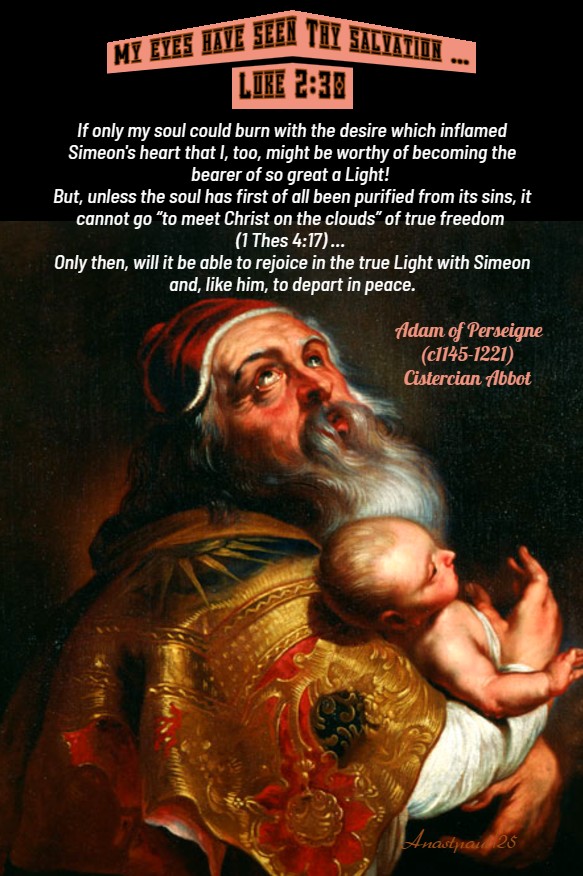
“My eyes have seen Thy salvation …” – Luke 2:30
REFLECTION – “The “Father of lights” (Jam 1:17) is inviting the children of Light (Lk 16:18) to celebrate the Feast of Light: “Look to Him that you may be radiant with joy” says the Psalm (33:6). In fact, He Who “dwells in unapproachable light” (1Tm 6:16) has condescended to become approachable. He has come down in the cloud of His Flesh that the weak and small might mount up to Him. What a descent of mercy! “He inclined the heavens,” that is to say, the heights of His Divinity, “and came down” by becoming present in the flesh, “with dark clouds under His Feet” (Ps 17:10) …
A necessary darkness to turn us to Light! The true Light was hidden beneath the cloud of His Flesh (cf. Ex 13:21) – a dark cloud by reason of its “likeness to sinful flesh” (Rm 8:3) … Since the true Light has made flesh His hiding place, let us, who are beings of flesh, draw near to the Word made Flesh … that we may learn to pass, by degrees to the spiritual flesh. Let us now draw near, for today a new Sun is shining even more than is its wont. Up until now, he was enclosed in the narrowness of a crib in Bethlehem and was known by hardly anyone but today, at Jerusalem, he is presented in front of a great number of people in the Temple of the Lord … Today, the Sun breaks out to shine over the whole world …
If only my soul could burn with the desire which inflamed Simeon’s heart that I, too, might be worthy of becoming the bearer of so great a Light! But, unless the soul has first of all been purified from its sins, it cannot go “to meet Christ on the clouds” of true freedom (1 Thes 4:17) … Only then, will it be able to rejoice in the true Light with Simeon and, like him, to depart in peace.” – Adam of Perseigne (c1145-1221) Cistercian Abbot (Sermon 4 for the Purification).
PRAYER – Almighty, eternal God, we humbly beseech Thy Majesty that, as Thy Only-begotten Son was this day presented in the temple in the nature of our flesh, so may Thou grant us to be presented to Thee with purified minds. Through Jesus Christ, Thy Son our Lord, Who lives and reigns with Thee, in the unity of the Holy Ghost, God, world without end. Amen (Collect).
Our Morning Offering – 3 February – Resumed Mass of Sunday
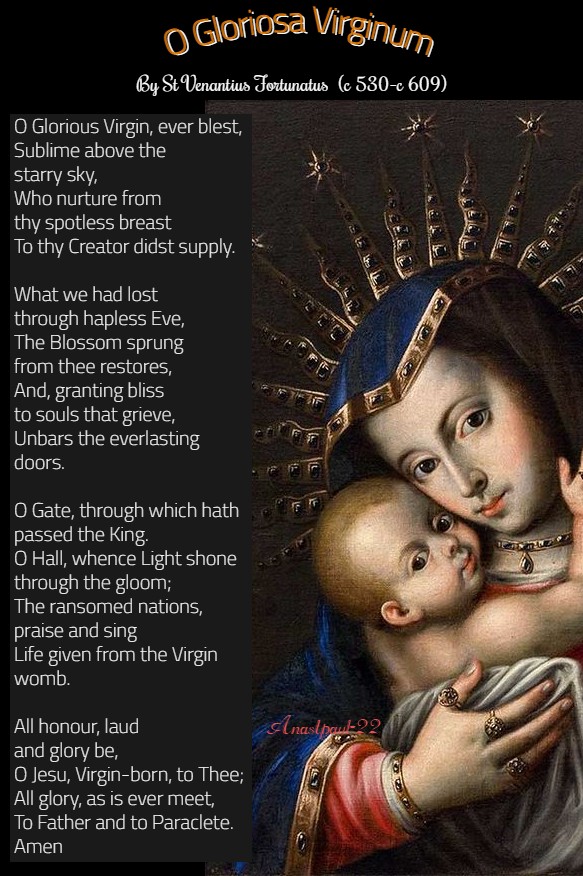
O Gloriosa Virginum By St Venantius Fortunatus (c530 – c609)
O Glorious Virgin, ever blest, Sublime above the starry sky, Who nurture from thy spotless breast To thy Creator didst supply.
What we had lost through hapless Eve, The Blossom sprung from these restores, And, granting bliss to souls that grieve, Unbars the everlasting doors.
O Gate, through which hath passed the King. O Hall, whence Light shone through the gloom; The ransomed nations, praise and sing Life given from the Virgin womb.
All honour, laud and glory be, O Jesu, Virgin-born, to Thee; All glory, as is ever meet, To Father and to Paraclete. Amen
O Gloriosa Domina is the second half of the Hymn: Quem Terra, Pontus, Aethera. It was composed by St Venantius Fortunatus (c530 – c609) the Bishop of Poitiers. In 1632, in accordance with revisions made to the hymns of the Divine Office by Pope Urban VIII (1568-1644), it was altered and changed to O Gloriósa Vírginum. It is sung in the Common of the Blessed Virgin Mary of the Roman Breviary. It is said that St Anthony of Padua (1195-1231) was always singing this Hymn. His mother sang it to him as a baby and even on his death bed, after receiving Extreme Unction, he intoned the Hymn.
One Minute Reflection – 2 February – “The Month of the Blessed Trinity” – The Feast of the Purification of the Blessed Virgin, Candlemas – Malachias 3:1-4; Luke 2:22-32 – Scripture search here: https://www.drbo.org/
“The Lord, Whom you are seeking, will suddenly enter His Temple” – Malachias 3:1
REFLECTION – “Your lamps must be burning in your hands” (Lk 12:35). By this outward sign let us remind ourselves of the joy of Simeon, carrying the Light in his hands … We must be burning with love and radiant with good deeds and so, take up Christ in our hands with Simeon … Let us discuss this charming custom of the Church of bearing lights aloft on this Feast day … Could anyone hold up a lighted candle in his hands on this day, without at once remembering that old man, who on this same day, took up in his arms, Jesus, God’s Word, clothed in flesh like a candle-flame clothed in wax and affirmed Him to be “the Light which would be a beacon for the Gentiles.”Surely he was that “burning and radiant lamp” (Jn 5:35; 1,7) which bore witness to the Light. For this purpose he came in the Spirit, who had filled him, into the temple, that he might “receive, O God, your loving-kindness in the midst of your temple” (Ps 48[47]:10) and declare him to be loving-kindness indeed and the light of your own people.
Truly, O holy Simeon, in the quiet contentment of old age, you carried this Light not simply in your hands but in the very dispositions of your heart. You were like a lamp-standard, seeing so clearly how much the Gentiles would one day be lit up, while reflecting … the bright rays of our faith. Old, yet still sincere, you can now be happy, in that, you really see what once you but foresaw. Gone is the world’s gloom, “the Gentiles bask in this light of yours,” “the whole earth is full of his glory” (Is 60:3; 6:3).” … Blessed Guerric of Igny O.Cist. (c 1080-1157) Cistercian Abbot
PRAYER – Almighty, eternal God, we humbly beseech Thy Majesty that, as Thy Only-begotten Son was this day presented in the temple in the nature of our flesh, so may Thou grant us to be presented to Thee with purified minds. Through Jesus Christ, Thy Son our Lord, Who lives and reigns with Thee, in the unity of the Holy Ghost, God, world without end. Amen (Collect). Through Jesus Christ, Thy Son our Lord, Who lives and reigns with Thee, in the unity of the Holy Ghost, God, world without end. Amen (Collect).


























You must be logged in to post a comment.