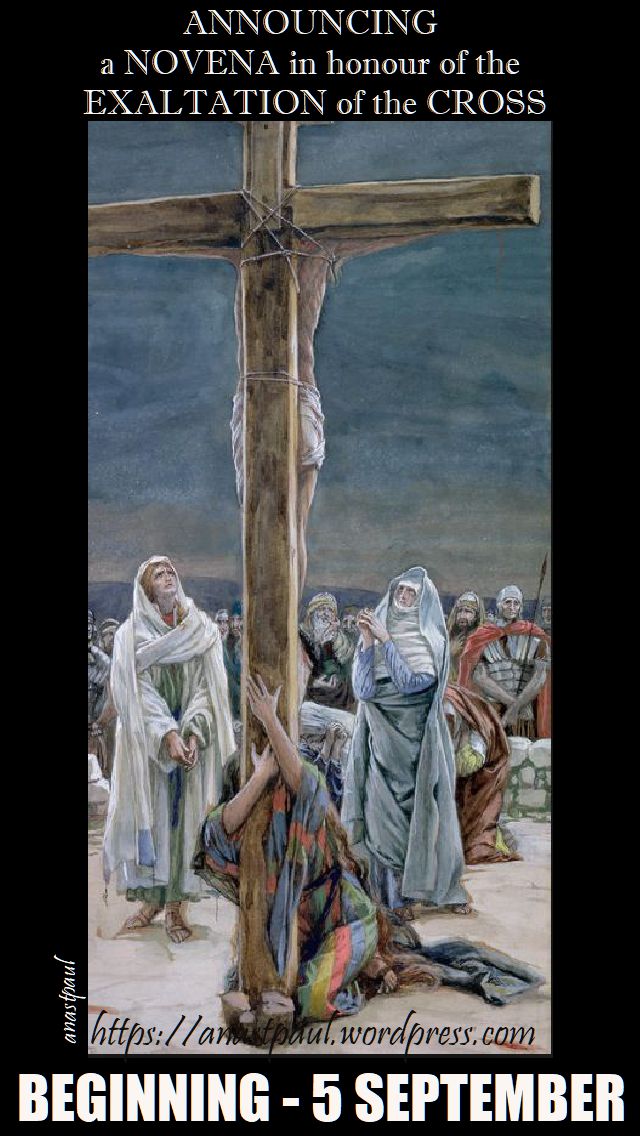
This feast was observed in Rome before the end of the seventh century. It commemorates the recovery of the Holy Cross, which had been placed on Mount Calvary by St. Helena and preserved in Jerusalem but then had fallen into the hands of Chosroas, King of the Persians. The precious relic was recovered and returned to Jerusalem by Emperor Heralius in 629.
The lessons from the Breviary tell us that Emperor Heraclius carried the Cross back to Jerusalem on his shoulders. He was clothed with costly garments and with ornaments of precious stones. But at the entrance to Mount Calvary a strange incident occurred. Try as hard as he would, he could not go forward. Zacharias, the Bishop of Jerusalem, then said to the astonished monarch: “Consider, O Emperor, that with these triumphal ornaments you are far from resembling Jesus carrying His Cross.” The…
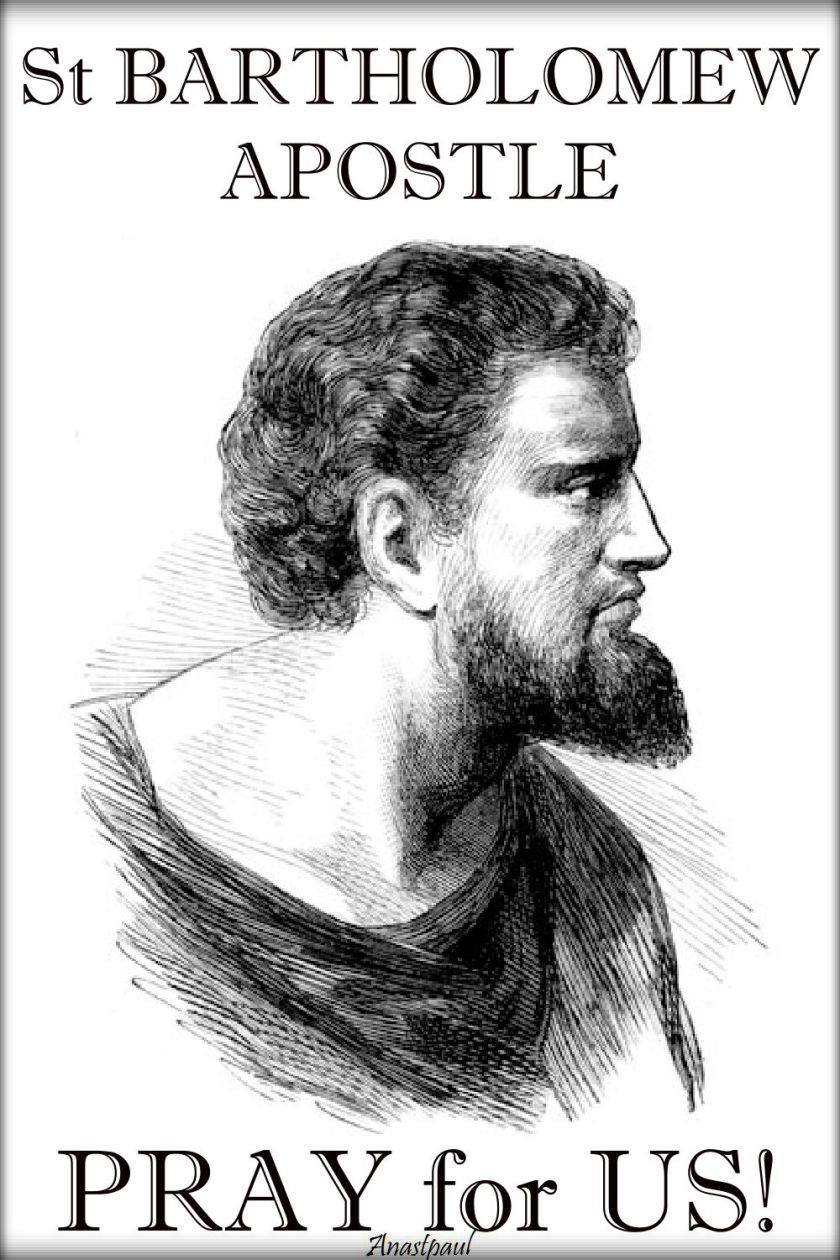
Quote of the Day – 24 August – The Feast of St Bartholomew, Apostle
“Here is a true child of Israel. There is no guile in him.” Bartholomew/Nathanael answered him : “Rabbi, you are the Son of God; you are the King of Israel.”
One Minute Reflection – 24 August – The Feast of St Bartholomew, Apostle of Christ – Today’s Gospel: John 1:45–51
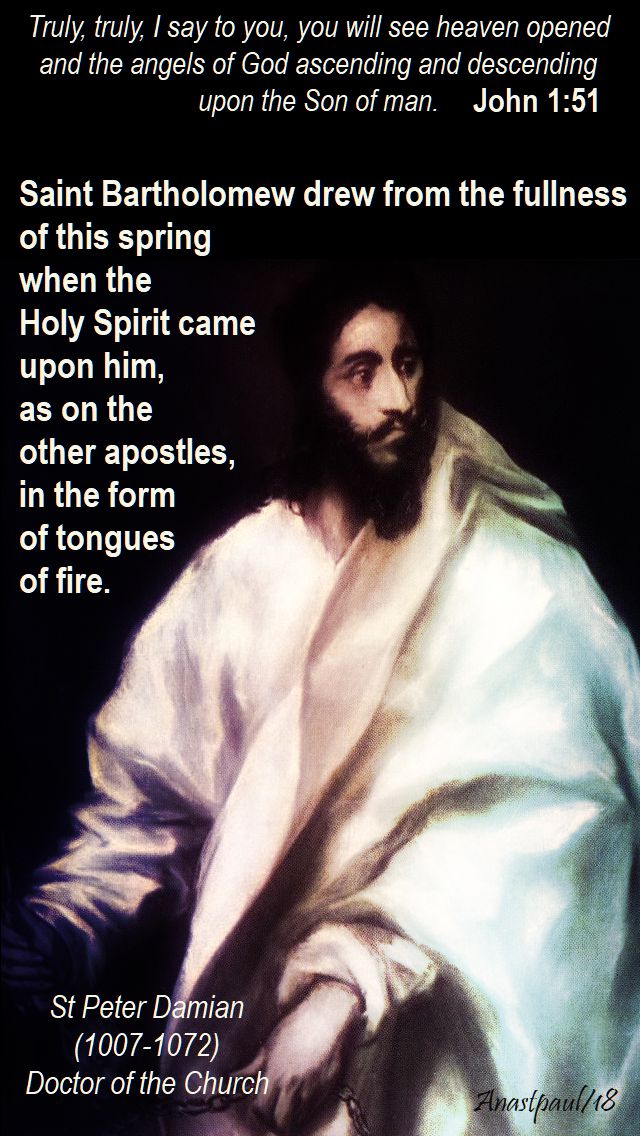
“Truly, truly, I say to you, you will see heaven opened and the angels of God ascending and descending upon the Son of man.”…John 1:51
REFLECTION – “The apostles’ glory is so indistinguishable and so bonded together by the cement of so many graces that in celebrating the feast of one of them the common greatness of all is called to our interior attention. For they share together the same authority of supreme judge, the same honourable rank and they hold the same power to bind and loose (Mt 19:28; 18:18). They are those precious pearls that Saint John tells us he beheld in the Book of Revelation out of which are constructed the gates of the heavenly Jerusalem (Rv 21:21.14)… And indeed, whenever the apostles beam divine light through their signs or miracles, they open up the heavenly glory of Jerusalem to all those peoples who have been converted to the christian faith…
Of them, too, the prophet says: “Who are these who fly along like clouds?” (Is 60:8)… God raises the minds of His preachers to contemplation of truths on high… so that they can abundantly pour down the rain of God’s word into our hearts. Thus they drink water from the spring so as to give drink to us too. Saint Bartholomew drew from the fullness of this spring when the Holy Spirit came upon him, as on the other apostles, in the form of tongues of fire (Acts 2:3).”… St Peter Damian (1007-1072) – Bishop, Doctor of the Church (Sermon 42, 2nd for Saint Bartholomew, PL 144, 726)
PRAYER – Almighty Lord and Father, strengthen in us that faith with which St Bartholomew gave himself wholeheartedly to Christ Your Son. Grant, at his intercession, that Your Church may become the Sacrament of salvation, for all the nations of the earth. We make our prayer through Jesus, our Lord and Christ, in the unity of the Holy Spirit, one God, forever, amen.
Our Morning Offering – 24 August – The Feast of St Bartholomew, Apostle of Christ
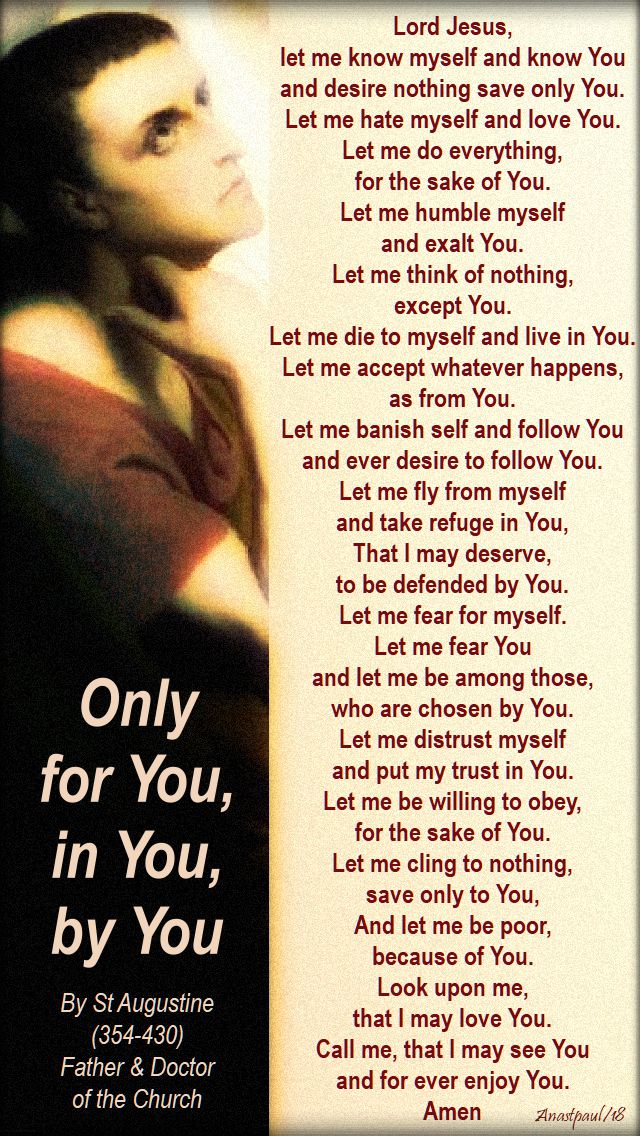
Only for You, in You, by You. By St Augustine (354-430) Father & Doctor of the Church
Lord Jesus,
let me know myself and know You
and desire nothing save only You.
Let me hate myself and love You.
Let me do everything, for the sake of You.
Let me humble myself and exalt You.
Let me think of nothing, except You.
Let me die to myself and live in You.
Let me accept whatever happens, as from You.
Let me banish self and follow You
and ever desire to follow You.
Let me fly from myself and take refuge in You,
That I may deserve, to be defended by You.
Let me fear for myself.
Let me fear You
and let me be among those, who are chosen by You.
Let me distrust myself and put my trust in You.
Let me be willing to obey, for the sake of You.
Let me cling to nothing, save only to You,
And let me be poor, because of You.
Look upon me, that I may love You.
Call me, that I may see You
and for ever enjoy You.
Amen
St Abban
St Abyce
St Agofridus of Lacroix
Bl André Fardeau
Bl Antonio de Blanes
St Emilie de Vialar (1797–1856)
St Eutychius of Troas
St George Limniotes
St Irchard
St María Micaela of the Blessed Sacrament
Bl Miroslav Bulesic
St Ouen of Rouen
St Patrick the Elder
St Ptolemy of Nepi
St Romanus of Nepi
St Sandratus
St Taziano of Claudiopolis
—
Martyred in the Spanish Civil War:
• Blessed Fortunato Velasco Tobar
• Blessed Isidre Torres Balsells
• Blessed Rigoberto Aquilino de Anta Barrio
Martyred in World War II: 6 Beati
Czeslaw Jozwiak
Edward Kazmierski
Edward Klinik
Franciszek Kesy
Jarogniew Wojciechowski
Luis Almécija Lázaro
Thought for the Day – 19 August – On the Assumption of the Blessed Virgin Mary
By Blessed John Henry Cardinal Newman (1801-1890)
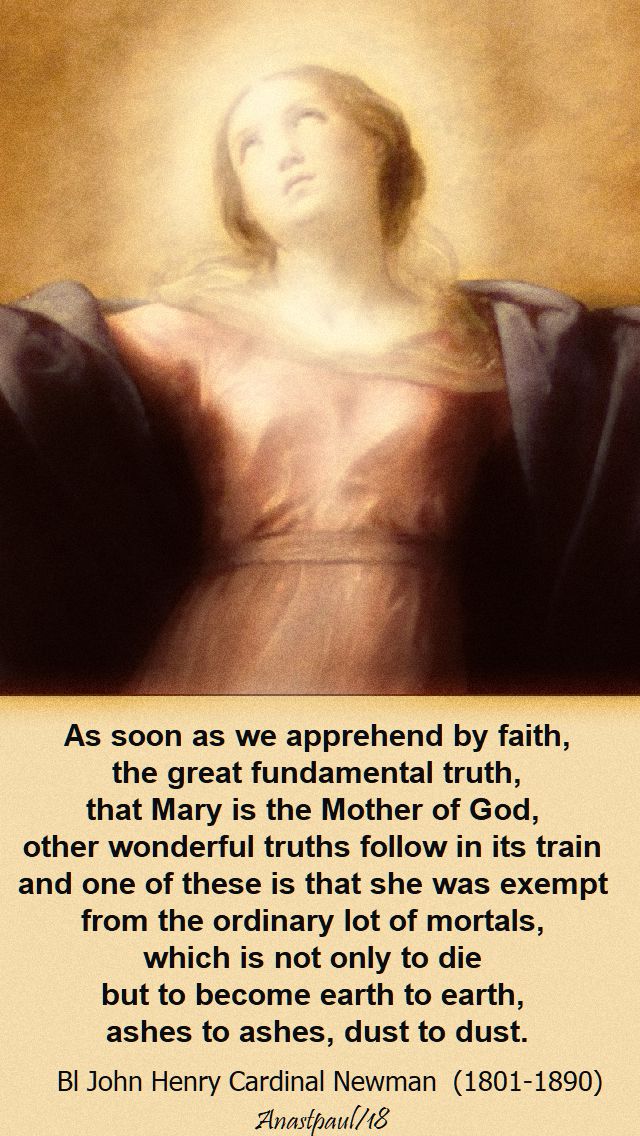
Blessed Newman says it begins with who Mary: “As soon as we apprehend by faith, the great fundamental truth, that Mary is the Mother of God, other wonderful truths follow in its train and one of these, is that, she was exempt from the ordinary lot of mortals, which is not only to die but to become earth to earth, ashes to ashes, dust to dust.” Mary receives honour because of who her Son is – our only Lord and Saviour and from His victory over sin and death, Mary is blessed with this gift.
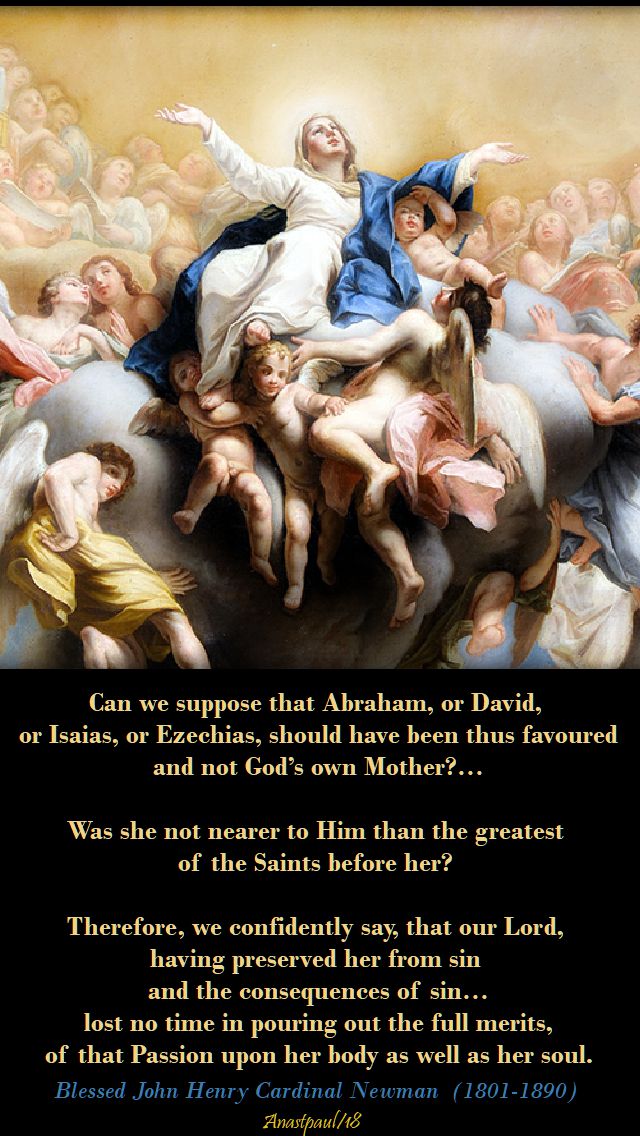
Yet, Mary was not the first or the only one to have her body preserved from corruption. Blessed Newman quotes St Matthew, who reports that bodies of the saints came out of the tombs following our Lord’s resurrection. “Can we suppose that Abraham, or David, or Isaias, or Ezechias, should have been thus favoured and not God’s own Mother?…Was she not nearer to Him than the greatest of the Saints before her? Therefore we confidently say that our Lord, having preserved her from sin and the consequences of sin…lost no time, in pouring out the full merits, of that Passion upon her body as well as her soul.”
We, too, want to be more fully conformed to our Lord, just as our Lady is and to be in Heaven as she is united with the Object of our love. She will help us bring to Him the little that we have and to rely on Him, as she did. She is the Mother of our Lord and she is our Mother too.
Let us go to her today and, with confidence, to our Heavenly Father, who never fails to honour and bless those who surrender to Him.
Mary, Holy Mother, Assumed into Heaven, Pray for us!
The Solemnity of the Assumption of the Blessed Virgin Mary – 19 August
The Solemnity of the Assumption is a day of joy. God has won . Love has won. It has won life. Love has shown that it is stronger than death, that God possesses the true strength and that His strength is goodness and love.
The Catechism of the Catholic Church (974) states that the “Most Blessed Virgin Mary, when the course of her earthly life was completed, was taken up body and soul into the glory of heaven, where she already shares in the glory of her Son’s Resurrection, anticipating the resurrection of all members of His Body.”
St John Damascene (675-749) Father & Doctor of the Church, an outstanding herald of this traditional truth, spoke with powerful eloquence when he compared the bodily Assumption of the loving Mother of God with her other prerogatives and privileges: “It was fitting that she, who had kept her virginity intact in childbirth, should keep her own body free from all corruption even after death. It was fitting that she, who had carried the Creator as a child at her breast, should dwell in the divine tabernacles. It was fitting that the spouse, whom the Father had taken to himself, should live in the divine mansions. It was fitting that she, who had seen her Son upon the cross and who had thereby received into her heart the sword of sorrow which she had escaped in the act of giving birth to him, should look upon him as he sits with the Father. It was fitting that God’s Mother should possess what belongs to her Son and that she should be honoured by every creature as the Mother and as the handmaid of God.”
Gathering together the testimonies of the Christians of earlier days, St Robert Bellarmine S.J. (1542-1621) Doctor of the Church exclaimed: “And who, I ask, could believe that the ark of holiness, the dwelling place of the Word of God, the temple of the Holy Spirit, could be reduced to ruin? My soul is filled with horror at the thought that this virginal flesh which had begotten God, had brought Him into the world, had nourished and carried Him, could have been turned into ashes …”
Blessed John Henry Cardinal Newman (1801-1890) expressed similar thoughts on the Assumption of Mary when he said “It was becoming, that she [Mary] should be taken up into heaven and not lie in the grave till Christ’s second coming, who had passed a life of sanctity and of miracle such as hers.” He added, “If her body was not taken into heaven, where is it? Why are not pilgrimages made to it? Why are not relics producible of her, as of the saints in general? Plainly because that sacred body is in heaven, not on earth.”
It is important to note also that the Venerable Pope Pius XII in the official church document did not say specifically whether or not Mary actually died before being taken up to heaven, only that she “completed the course of her earthly life.” The important thing is that she did not experience the corruption of her body from death that we do as a result of our being born with Original Sin.
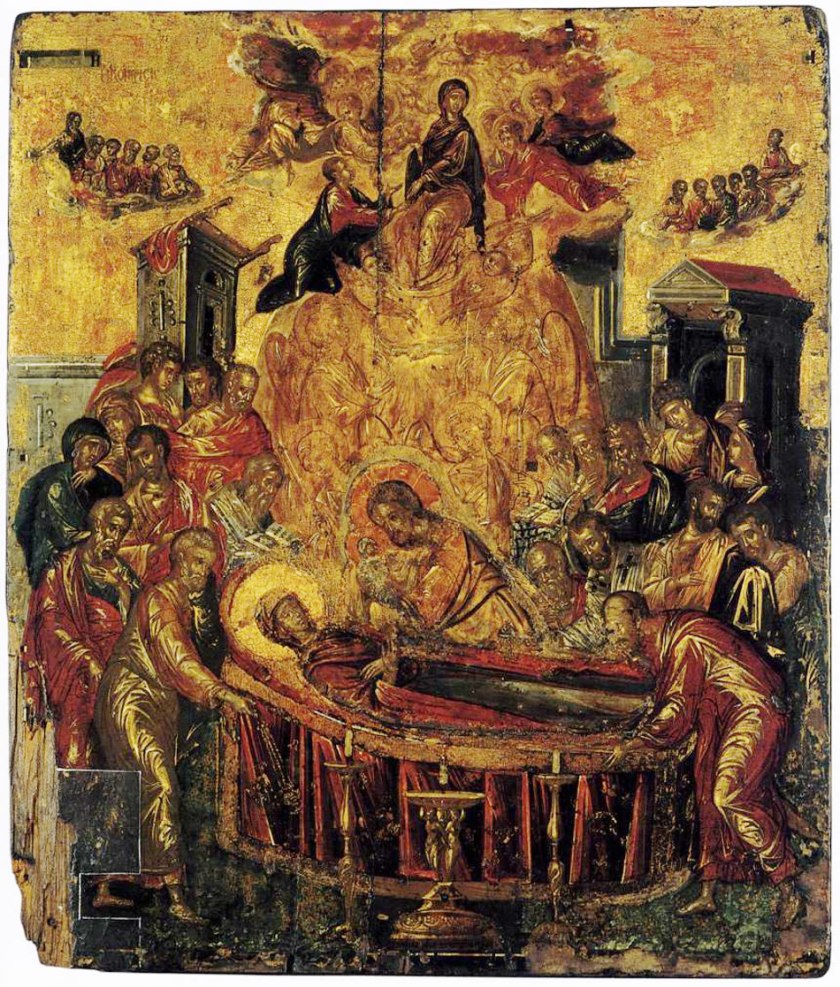
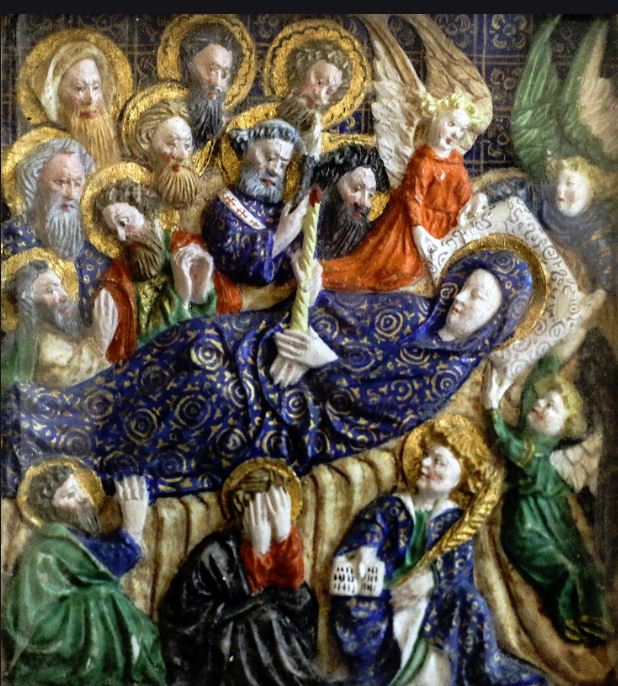
Dormition of the Virgin Mary
“In the liturgical books which deal with the feast either of the dormition or of the Assumption of the Blessed Virgin there are expressions that agree in testifying that, when the Virgin Mother of God passed from this earthly exile to heaven, what happened to her sacred body was, by the decree of divine Providence, in keeping with the dignity of the Mother of the Word Incarnate and with the other privileges she had been accorded.
Thus, to cite an illustrious example, this is set forth in that sacramentary which Adrian I, our predecessor of immortal memory, sent to the Emperor Charlemagne. These words are found in this volume: “Venerable to us, O Lord, is the festivity of this day on which the holy Mother of God suffered temporal death but still could not be kept down by the bonds of death, who has begotten your Son our Lord incarnate from herself.””
“Christ overcame sin and death by his own death and one who through Baptism has been born again in a supernatural way has conquered sin and death through the same Christ. Yet, according to the general rule, God does not will to grant to the just the full effect of the victory over death until the end of time has come. And so it is that the bodies of even the just are corrupted after death, and only on the last day will they be joined, each to its own glorious soul.
Now God has willed that the Blessed Virgin Mary should be exempted from this general rule. She, by an entirely unique privilege, completely overcame sin by her Immaculate Conception and as a result she was not subject to the law of remaining in the corruption of the grave and she did not have to wait until the end of time for the redemption of her body.”
Venerable Pope Pius XII (1876-1958) from the Apostolic Constitution ‘Munificentissimus Deus’ (The most bountiful God) which defined ex cathedra The Assumption as Dogma by the Catholic Church in 1950.
So what does the Dogma of the Assumption of Mary into Heaven mean for us on a more down-to-earth level? It gives us great hope that, as we strive to live in our Lord’s grace and to do His will, with Mary’s assistance, we might share in His resurrection someday!
Assumption Day on 15 August is a nationwide public holiday in Andorra, Austria, Belgium, Burundi, Cameroon, Central African Republic, Chile, Republic of Congo, Côte d’Ivoire, Croatia, Colombia, Costa Rica, Cyprus, East Timor, France, Gabon, Greece, Georgia, Republic of Guinea, Haiti, Italy, Lebanon, Lithuania, Luxembourg, Republic of Macedonia, Madagascar, Malta, Mauritius, Republic of Moldova, Monaco, Montenegro (Albanian Catholics), Paraguay, Poland (Polish Army Day), Portugal, Romania, Rwanda, Senegal, Seychelles, Slovenia, Spain, Syria, Tahiti, Togo and Vanuatu and was also in Hungary until 1948. In India, 15 August also celebrates Independence Day.
It is also a public holiday in parts of Germany (Bavaria and Saarland) and Switzerland (in 14 of the 26 cantons). In Guatemala, it is observed in Guatemala City and in the town of Santa Maria Nebaj, both of which claim her as their patron saint. Also, this day is combined with Mother’s Day in Costa Rica and parts of Belgium.
Prominent Catholic and Orthodox countries in which Assumption Day is an important festival but is not recognized by the state as a public holiday include Brazil, Bulgaria, Czech Republic, Ireland, Mexico, the Philippines and Russia.
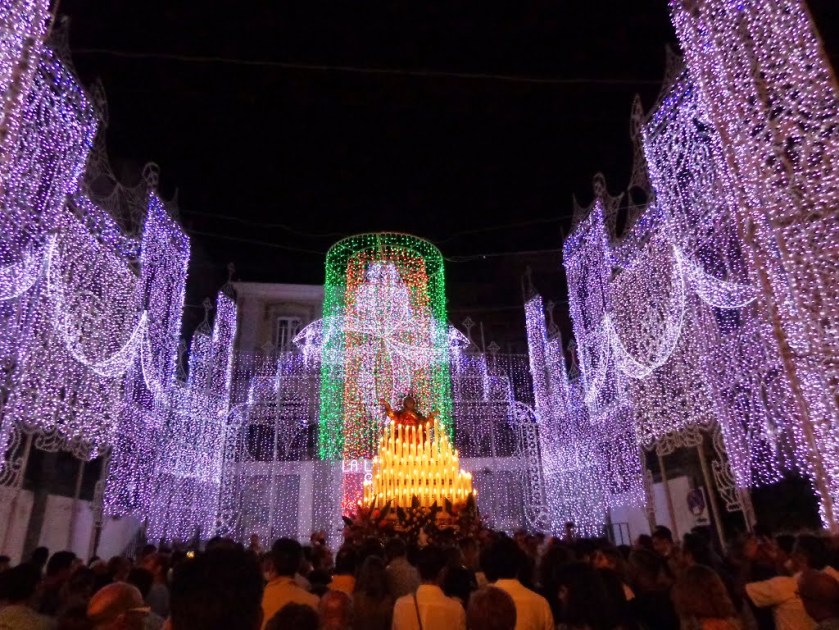
In many places, religious parades and popular festivals are held to celebrate this day. In Canada, Assumption Day is the Fête Nationale of the Acadians, of whom she is the patron saint. Some businesses close on that day in heavily francophone parts of New Brunswick, Canada. The Virgin Assumed in Heaven is also patroness of the Maltese Islands and her feast, celebrated on 15 August, apart from being a public holiday in Malta is also celebrated with great solemnity in the local churches especially in the seven localities known as the Seba’ Santa Marijiet.
Below is an image of the feast of the Assumption of the Virgin Mary at Novara di Sicilia.
The Solemnity of the Assumption of the Blessed Virgin Mary – celebrated today in South Africa and most countries of Africa, many others and in many Diocese where the local Bishops have decided to move the Solemnity to a Sunday.
St John Eudes (Optional Memorial)
Biography here: https://anastpaul.wordpress.com/2017/08/19/saint-of-the-day-19-august-st-john-eudes-apostle-of-two-hearts/
St Andrew the Tribune
St Badulf of Ainay
St Bertulf of Luxeuil
St Calminius
St Credan of Evesham
St Donatus of Mount Jura
St Elaphius of Châlons
St Ezekiel Moreno Y Diaz
St Guenninus
Bl Guerricus
Bl Hugh Green
St Julius of Rome
St Louis of Toulouse
St Magnus of Anagni
St Magnus of Avignon
St Magnus of Cuneo
St Marianus of Entreaigues
St Marinus of Besalu
St Magino of Tarragona
St Mochta
St Namadia of Marsat
St Rufinus of Mantua
St Sarah the Matriarch
St Sebaldus
St Thecla of Caesarea
St Timothy of Gaza
—
Martyrs of Nagasaki – 15 beati: A group of missionaries and their laymen supporters who were executed for spreading Christianity in Japan.
• Antonius Yamada
• Bartholomaeus Mohyoe
• Iacobus Matsuo Denji
• Ioachim Díaz Hirayama
• Ioannes Miyazaki Soemon
• Ioannes Nagata Matashichi
• Ioannes Yago
• Laurentius Ikegami Rokusuke
• Leo Sukeemon
• Ludovic Frarijn
• Marcus Takenoshita Shin’emon
• Michaël Díaz Hori
• Paulus Sankichi
• Pedro de Zúñiga
• Thomas Koyanagi
Theywere beheaded on 19 August 1622 at Nagasaki, Japan and Beatified on 7 May 1867 by Pope Pius IX.
Martyred in the Spanish Civil War
Martyred Carmelite Sisters of Charity – 9 beati
Martyred Salesians of Ciudad Real – 8 beati
Martyred Subiaco Benedictines of Barcelona – 7 beati
• Blessed Agueda Hernández Amorós
• Blessed Agustí Busquets Creixell
• Blessed Andrés Pradas Lahoz
• Blessed Antolín Martínez y Martínez
• Blessed Antoni Pedró Minguella
• Blessed Càndid Feliu Soler
• Blessed Cipriano González Millán
• Blessed Damián Gómez Jiménez
• Blessed Elvira Torrentallé Paraire
• Blessed Félix González Bustos
• Blessed Francisca de Amézua Ibaibarriaga
• Blessed Francisco de Paula Ibáñez y Ibáñez
• Blessed Ignasi Guilà Ximenes
• Blessed Isidro Muñoz Antolín
• Blessed Joan Roca Bosch
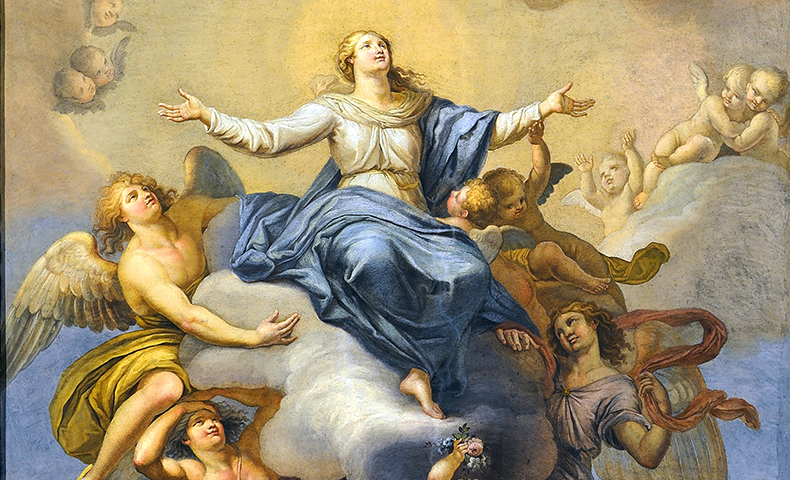
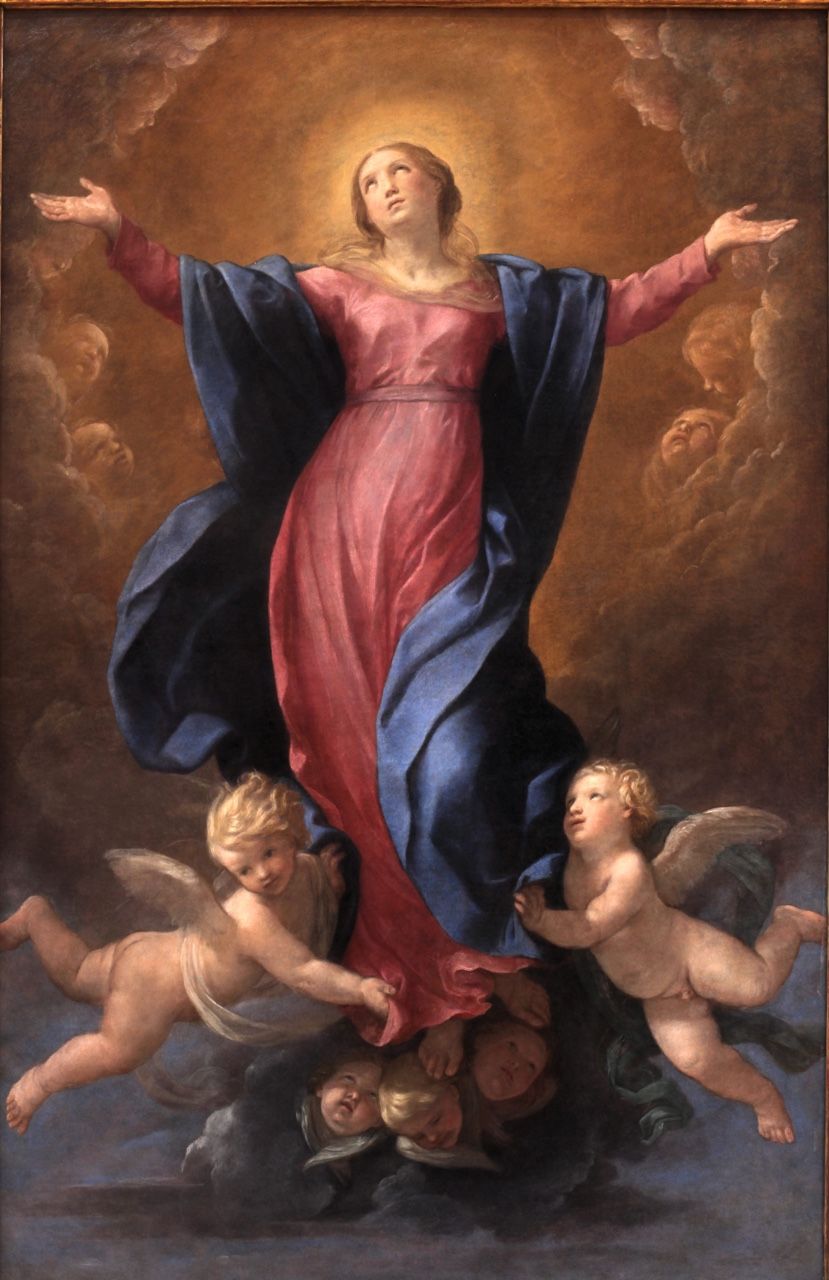
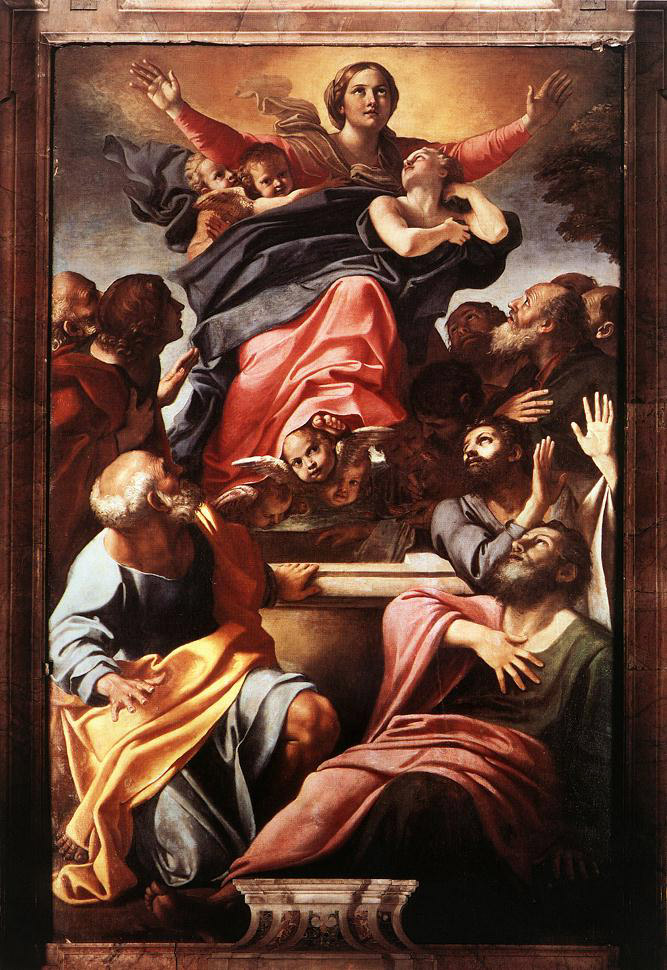
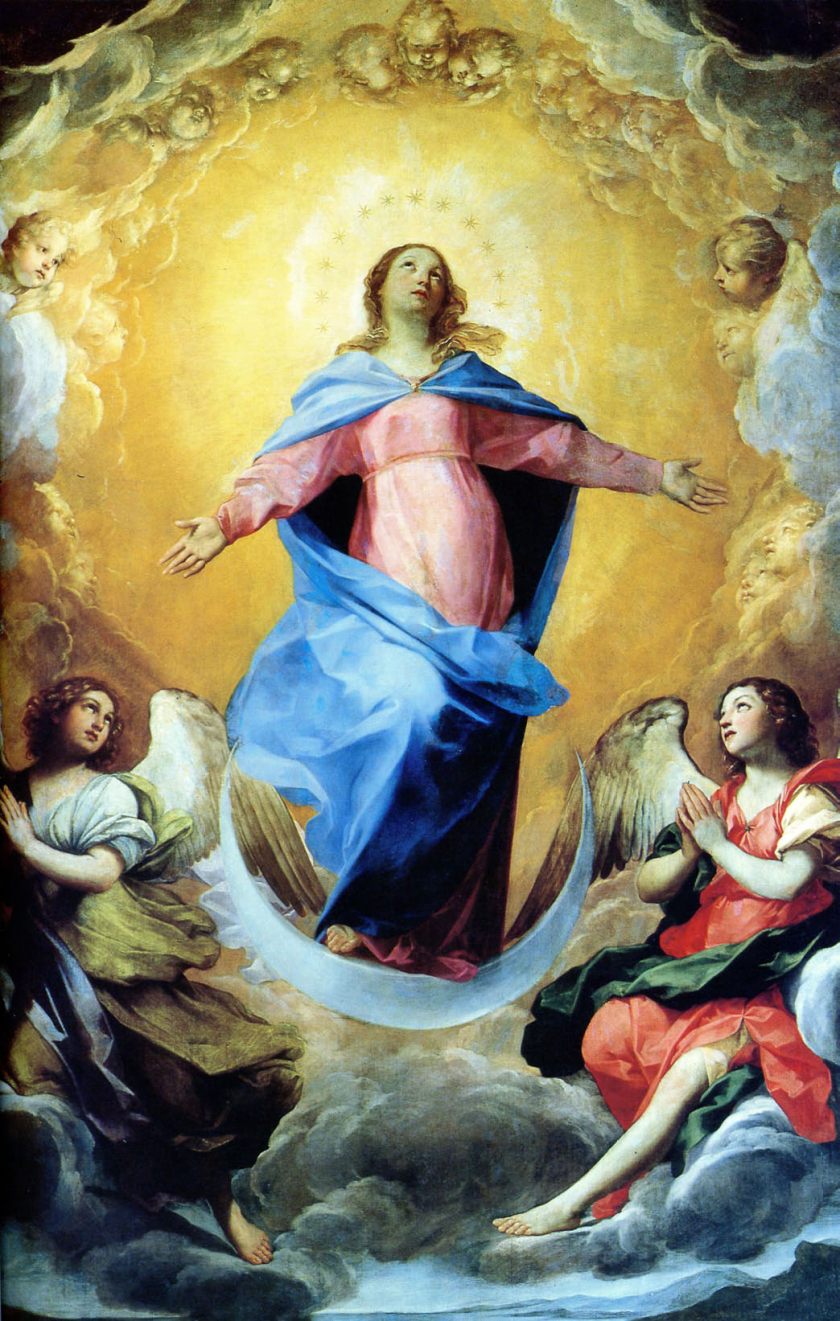
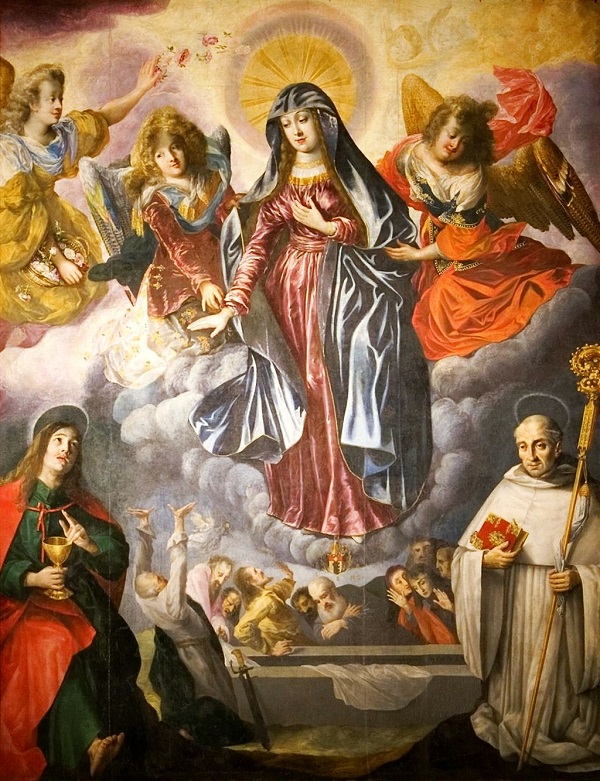
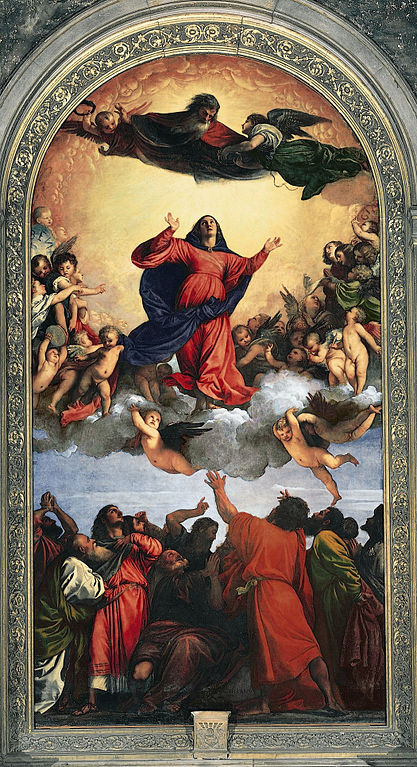
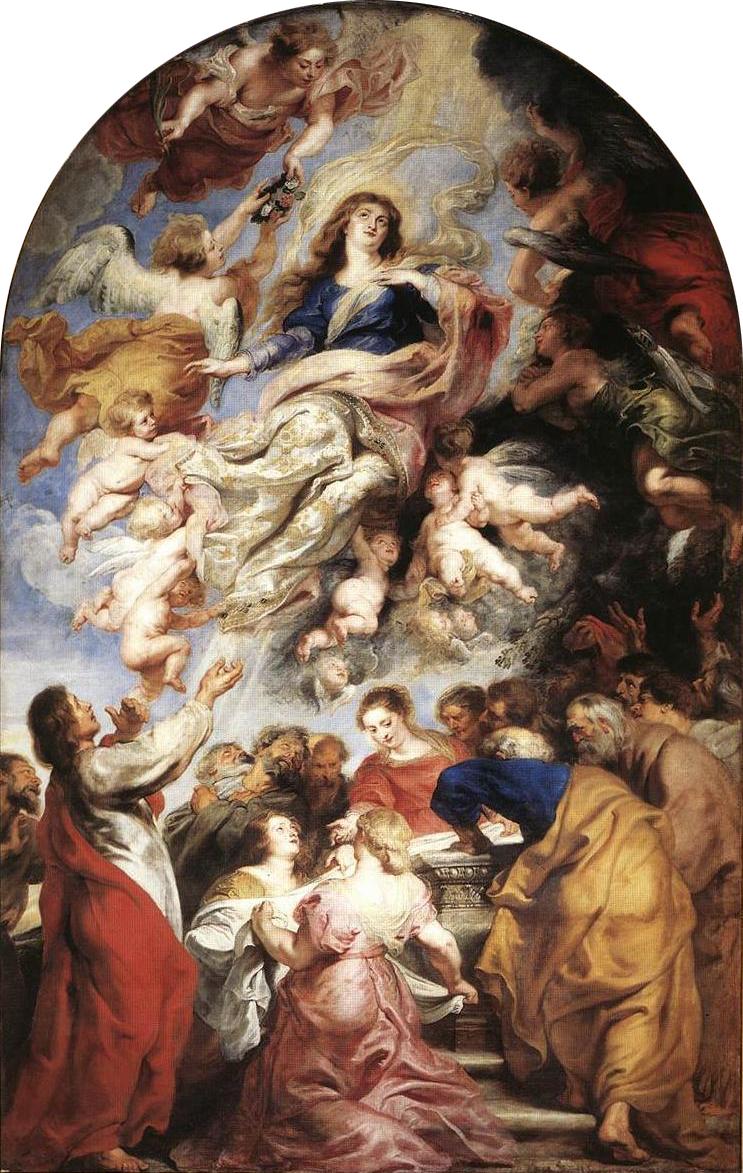
Solemnity of the Assumption of the Blessed Virgin Mary – 15 August (in the US, however, in most countries of Africa, the Solemnity will celebrated on Sunday 19 AUGUST): The feast celebrates the assumption of the body of the Blessed Virgin Mary into heaven upon her death. According to Pope Benedict XIV, it is a probable opinion, which it is impious to deny, though not an article of faith but has since in 1950 has been raised to a DOGMA of the Faith. The origin of the feast day is not known but it was celebrated in Palestine before the year 500. It is a holy day of obligation, its vigil being a fast day, in many English-speaking countries. Among the many masters who have painted the subject of the Assumption are Fra Angelico, Ghirlandajo, Rubens, Del Sarto and Titian.
Patronages:
• Acadians, Cajuns
• Cistercian Order, Cistercians
• fish dealers, fishmongers
• French air crews
• harness makers
• France
• Guatemala
• India
• Jamaica
• Malta
• Paraguay
• Slovakia
• East Africa (region of east Africa which includes diverse countries, proclaimed on 15 March 1952 by Pope Pius XII)
• South Africa (THIS IS NOT A REGION BUT A COUNTRY and the Assumption is, therefore, the Patronal Feast of the Country of South Africa – proclaimed on 15 March 1952 by Pope Pius XII)
• 24 dioceses
• 38 cities
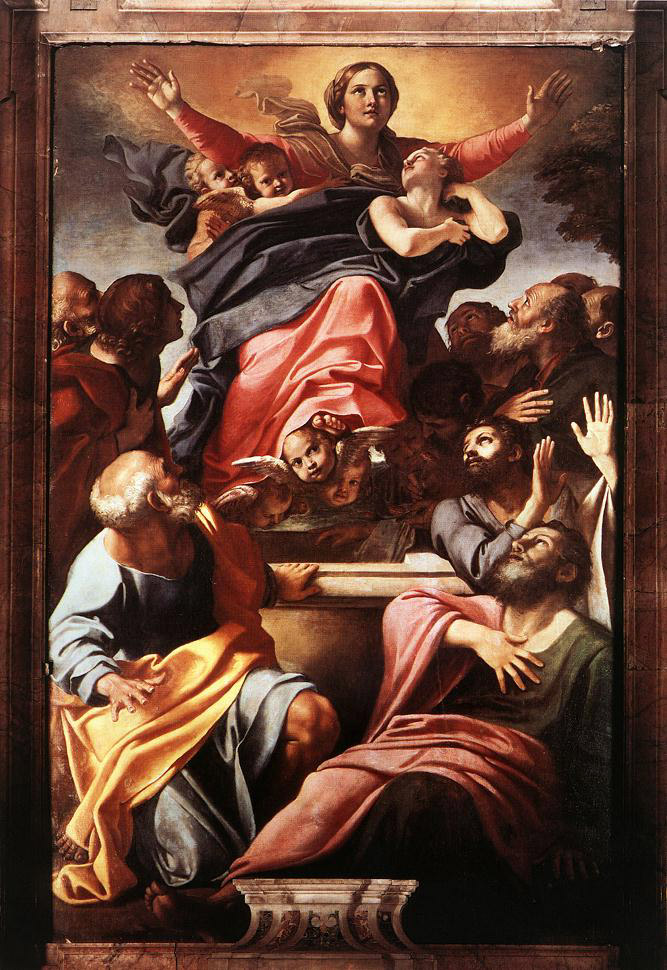
Annabale Carraci 1600-1601
St Alipius of Tagaste
Bl Alfred of Hildesheim
Bl Agustín Hurtado Soler
St Arduinus of Rimini
St Arnulphus of Soissons
Bl Claudio Granzotto
Bl George Halley
St Napoleon of Alexandria
Bl Pio Alberto del Corona
St Simplician (c 320-c 401) Bishop and Successor of St Ambrose (340-397) Doctor of the Church in the ArchDiocese of Milan.
Details of the life of St Simplician here: https://anastpaul.wordpress.com/2017/08/15/saint-of-the-day-15-august-st-simplician-of-milan/
St Tarcisius (3rd century) Martyr
Martyrs of Nicomedia – 3 saints: Three Christians martyred together. No details survive but the names – Eutychian, Philip and Straton. They were martyred in Nicomedia, Bithynia (in modern Turkey).
Martyred in the Mexican Revolution: 4 Saints –
St David Roldán Lara
St Luis Batiz Sainz
St Manuel Moralez
St Salvador Lara Puente
Martyred in the Spanish Civil War: Thousands of people were murdered in the anti-Catholic persecutions of the Spanish Civil War from 1934 to 1939.
• Blessed Agustì Ibarra Angüela
• Blessed Carmelo Sastre y Sastre
• Blessed Clemente Vea Balaguer
• Blessed Francisco Míguez Fernández
• Blessed Ildefonso Alberto Flos
• Blessed Jaume Bonet Nadal
• Blessed Joan Ceró Cedó
• Blessed Josep Santonja Pinsach
• Blessed Juan Francisco Barahona Martín
• Blessed Juan Mesonero Huerta
• Blessed Luis Ros Ezcurra
• Blessed Manuel Formigo Giráldez
• Blessed Miguel Alberto Flos
• Blessed Sebastià Balcells Tonijuan
• Blessed Severiano Montes Fernández
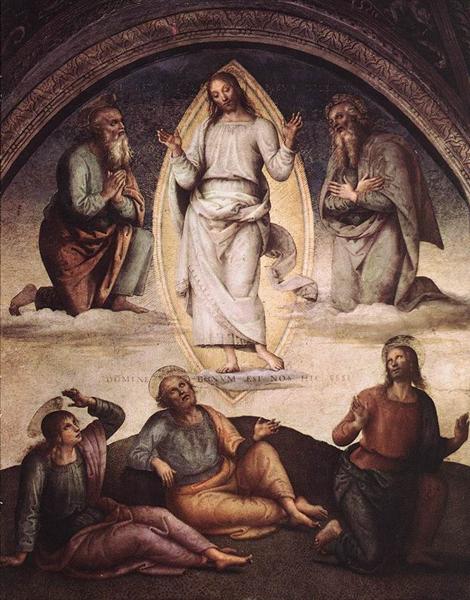
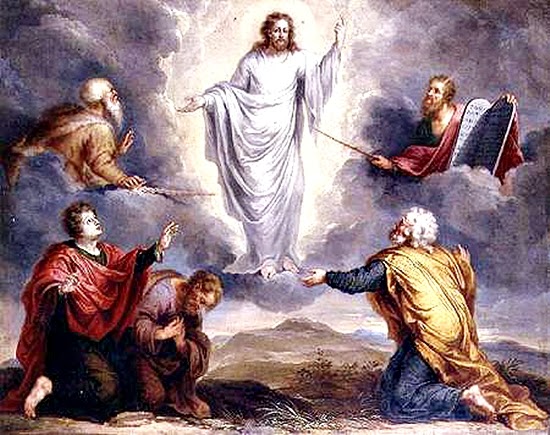
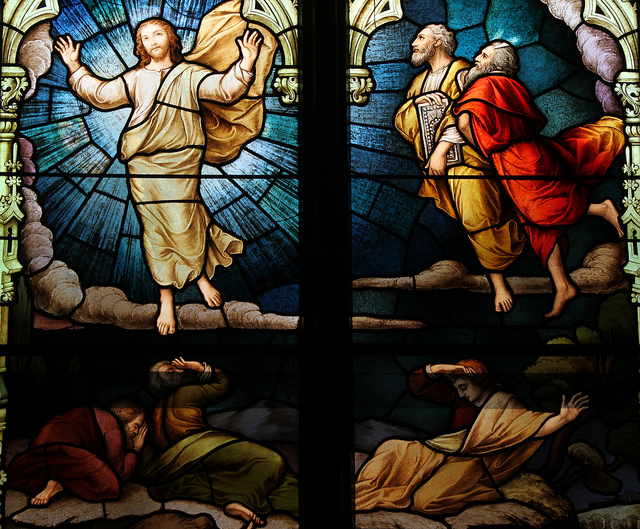
Quote of the Day – 6 August – Feast of the Transfiguration of the Lord – Today’s Gospel: Mark 9:2–10
It is indeed good to be here, as you have said, Peter. It is good to be with Jesus and to remain here for ever. What greater hap piness or higher honour could we have than to be with God, to be made like Him and to live in His light?
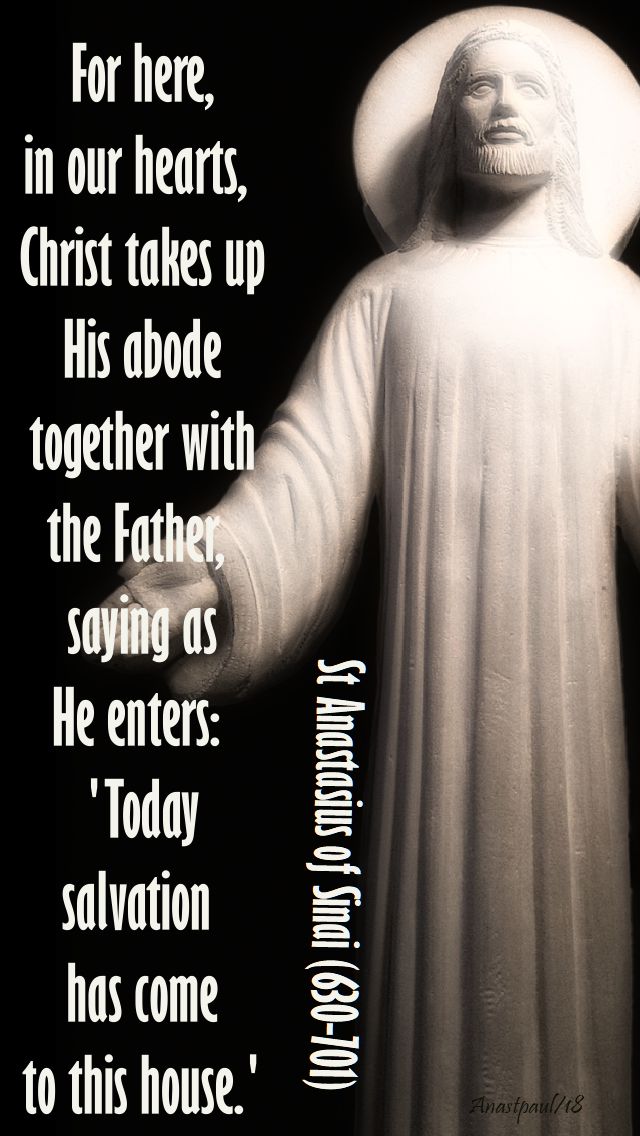
Therefore, since each of us possesses God in his heart and is being transformed into His divine image, we also should cry out with joy: It is good for us to be here – here where all things shine with divine radiance, where there is joy and gladness and exultation; where there is nothing in our hearts but peace, serenity and stillness; where God is seen. For here, in our hearts, Christ takes up His abode together with the Father, saying as He enters: Today salvation has come to this house.
With Christ, our hearts receive all the wealth of His eternal blessings and there where they are stored up for us in Him, we see reflected as in a mirror both the first fruits and the whole of the world to come.
One Minute Reflection 6 August – Feast of the Transfiguration of the Lord – Today’s Gospel: Mark 9:2–10
And a cloud overshadowed them, and a voice came out of the cloud, “This is my beloved Son; listen to him.”...Mark 9:7
REFLECTION – …”And the path of Jesus is another, Jesus triumphs through humiliation, the humiliation of the cross. But, as this would be a scandal for them, Jesus lets them see what will come next, what is after cross, what awaits us, all of us. This glory and this heaven. And this is very beautiful, very beautiful because Jesus and this feels good, always prepares us for the test. In one way or another but this is the message. It always prepares us. It gives us the strength to go on in moments of trial and to win with its strength. Jesus does not leave us alone in the trials of life, He always prepares us, He helps us as He prepares these (the disciples) with the vision of His glory. And so they remembered this moment, to bear the weight of the humiliation. And this is the first thing that the church teaches, that Jesus always prepares us and rehearses with us. He does not leave us alone, never!
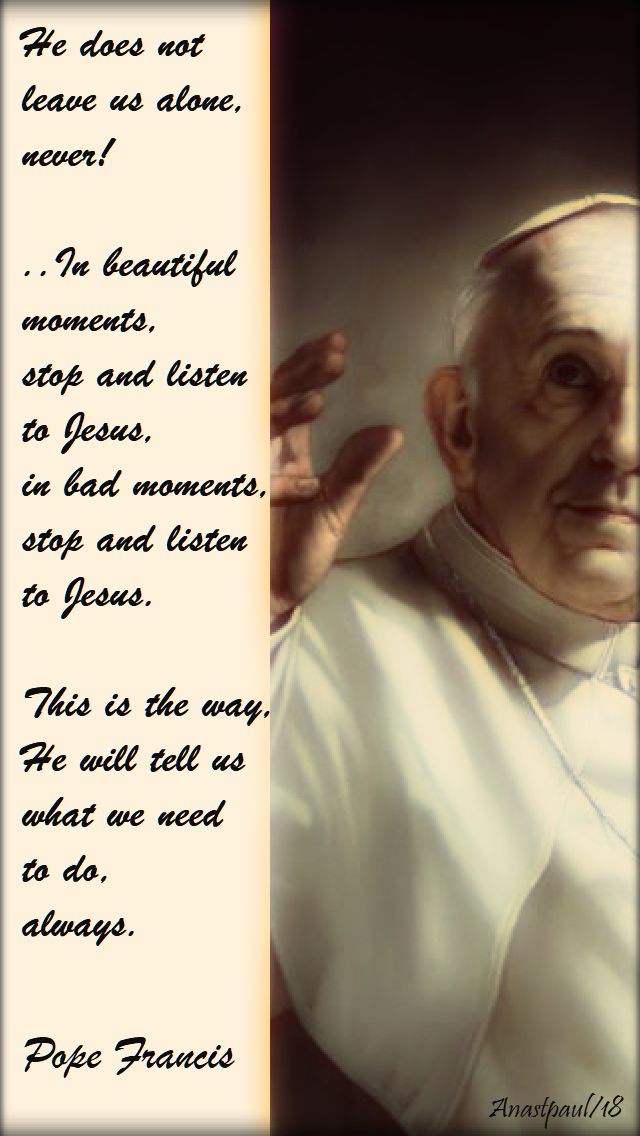
“This is my beloved son. Listen to him.” This is the message which the Father gives to the Apostles, the message of Jesus prepares them to see His glory, the message of the Father is “Listen to him.” There is no moment in life which cannot be fully lived by listening to Jesus. In beautiful moments, stop and listen to Jesus, in bad moments, stop and listen to Jesus. This is the way, He will tell us what we need to do, always.”…Pope Francis 25 February 2018
PRAYER – Father, at the Transfiguration in glory of Your only-begotten Son, You confirmed the mysteries of faith by the witness to Jesus of the prophets Moses and Elijah. You foreshadowed what we shall be when You bring our sonship to its perfection. Grant that by listening to the voice of Jesus, we may become heirs with Him, who lives and reigns with You and the Holy Spirit, God forever and may Mary, our tender and caring Mother, help us to be bright rays of the saving light of her Son Jesus. Amen
Feast of the Transfiguration of the Lord – 6 August – Today’s Gospel: Mark 9:2-10
All three Synoptic Gospels tell the story of the Transfiguration (Matthew 17:1-8; Mark 9:2-9; Luke 9:28-36). With remarkable agreement, all three place the event shortly after Peter’s confession of faith that Jesus is the Messiah and Jesus’ first prediction of his passion and death. Peter’s eagerness to erect tents or booths on the spot suggests it occurred during the week-long Jewish Feast of Booths in the fall.
According to Scripture scholars, in spite of the texts’ agreement it is difficult to reconstruct the disciples’ experience, because the Gospels draw heavily on Old Testament descriptions of the Sinai encounter with God and prophetic visions of the Son of Man. Certainly Peter, James and John had a glimpse of Jesus’ divinity strong enough to strike fear into their hearts. Such an experience defies description, so they drew on familiar religious language to describe it. And certainly, Jesus warned them, that His glory and His suffering were to be inextricably connected—a theme John highlights throughout his Gospel.
Tradition names Mount Tabor as the site of the revelation. A church first raised there in the fourth century was dedicated on 6 August. A feast in honour of the Transfiguration was celebrated in the Eastern Church from about that time. Western observance began in some localities about the eighth century.
On 22 July 1456, Crusaders defeated the Turks at Belgrade. News of the victory reached Rome on 6 August and Pope Callistus III placed the feast on the Roman calendar the following year.
One of the Transfiguration accounts is read on the second Sunday of Lent each year, proclaiming Christ’s divinity to the Elect and baptised alike. The Gospel for the first Sunday of Lent, by contrast, is the story of the temptation in the desert—affirmation of Jesus’ humanity.
More here: https://anastpaul.wordpress.com/2017/08/06/august-6-the-feast-of-the-transfiguration-of-the-lord/
Bl Gezelin of Schlebusch
St Gislain of Luxemburg
St Glisente of Brescia
Bl Goderanno
Bl Guillermo Sanz
St Hardulf of Breedon
St Pope Hormisdas
St James the Syrian
St Justus of Alcala
Bl Maria Francesca Rubatto
Bl Octavian of Savona
St Pastor of Alcala
St Stephen of Cardeña
Bl Tadeusz Dulny
Bl William of Altavilla
—
Martyrs of Cardeña: Two hundred Benedictine monks at the Saint Peter of Cardegna monastery, Burgos, Spain who were martyred in the 8th century by invading Saracens. They were buried by local Christians in a nearby churchyard in Burgos, Spain and Beatified in 1603 by Pope Clement VIII (cultus confirmed).
Martyred in the Spanish Civil War: 10 Beati
• Blessed Alejandro Casare Menéndez
• Blessed Andrés Soto Carrera
• Blessed Antoni Serra Hortal
• Blessed Carlos López Vidal
• Blessed Francesc Vives Antich
• Blessed José González Ramos Campos
• Blessed José María Recalde Magúregui
• Blessed Juan Silverio Pérez Ruano
• Blessed Pau Bertrán Mercadé
• Blessed Saturnino Ortega Montealegre
Our Lady of Copacabana: A statue of the Blessed Virgin Mary standing four feet tall, made of plaster and maguey fiber, and created by Francisco Tito Yupanqui. Except for the face and hands, it is covered in gold leaf, dressed like an Inca princess, and has jewels on neck, hands and ears. There is no record of what the image looks like under the robes, the carved hair has been covered by a wig, and the image never leaves the basilica. On 21 February 1583 it was enthroned in an adobe church on the peninsula of Copacabana, which juts into Lake Titicaca nearly 3 miles above sea level. In 1669 the viceroy of Peru added a straw basket and baton to the statue, which she still holds today. The present shrine dates from 1805. The image was crowned during the reign of Pope Pius XI, and its sanctuary was promoted to a basilica in 1949. It has been the recipient of many expensive gifts over the years, most of which were looted by civil authorities in need of quick cash.
Patronage – Bolivia, Bolivian navy.
St Abel of Rheims
St Addai
St Aggai of Edessa
Bl Arnaldo Pons
St Cantidianus
St Cantidius
St Cassian of Autun
St Casto of Teano
Bl Corrado of Laodicea
St Emidius of Ascoli Piceno
St Eusignius
St Gormeal of Ardoilen
Bl James Gerius
St Margaret the Barefooted
St Mari
St Memmius of Châlons-sur-Marne
St Nonna
St Oswald of Northumbria
St Paris of Teano
Bl Pierre-Michel Noël
St Sobel
St Theodoric of Cambrai-Arras
St Venantius of Viviers
St Viator
—
Martyrs of Fuente la Higuera: A group of Augustinian priests and clerics who were martyred together in the Spanish Civil War. 5 August 1936 in Fuente la Higuera, Valencia, Spain. They were Beatified on 28 October 2007 by Pope Benedict XVI.
10 Beati:
• Anastasio Díez García
• Ángel Pérez Santos
• Cipriano Polo García
• Emilio Camino Noval
• Felipe Barba Chamorro
• Gabino Olaso Zabala
• Luciano Ramos Villafruela
• Luis Blanco Álvarez
• Ubaldo Revilla Rodríguez
• Victor Gaitero González
Martyrs of the Salarian Way: Twenty-three Christians who were martyred together in the persecutions of Diocletian.
303 on the Salarian Way in Rome, Italy.
Martyred in the Spanish Civil War:
Bl Eduardo González Santo Domingo
Bl Jaume Codina Casellas
Bl Joan Gibert Galofré
Bl José Trallero Lou
Bl Lluís Domingo Mariné
Bl Manuel Moreno Martínez
Maximino Fernández Marinas
Bl Pau Virgili Monfá
Bl Pere Massó Llagostera
Bl Salvi Huix Miralpeix
Bl Victor García Ceballos
Quote of the day -25 July – Feast of St James, Apostle of Christ
Since the ninth century Spain has claimed the honour of possessing St James relics, though it must be said that actual proof is far less in evidence than the devotion of the faithful. The pilgrimage to St James/Santiago of Compostela in the Middle Ages attracted immense crowds,after the pilgrimage to Rome or the Holy Land, it was the most famous and the most frequented pilgrimage in Christendom. The pilgrim paths to Compostela form a network over Europe; they are dotted with pilgrims’ hospices and chapels. Santiago de Compostela, is the third largest shrine in all of Christendom.
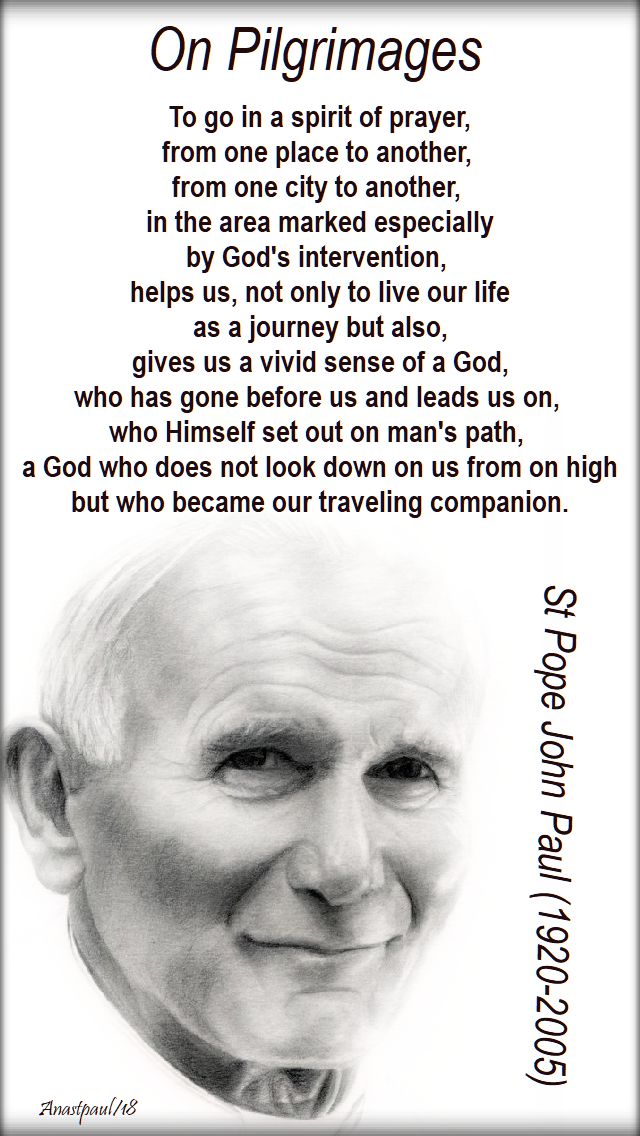
“To go in a spirit of prayer from one place to another, from one city to another, in the area marked especially by God’s intervention, helps us not only to live our life as a journey but also gives us a vivid sense of a God, who has gone before us and leads us on, who Himself set out on man’s path, a God who does not look down on us from on high but who became our travelling companion.”
One Minute Reflection – 25 July – The Memorial of St James the Greater, Apostle of Christ – Today’s Gospel: Matthew 20:20–28
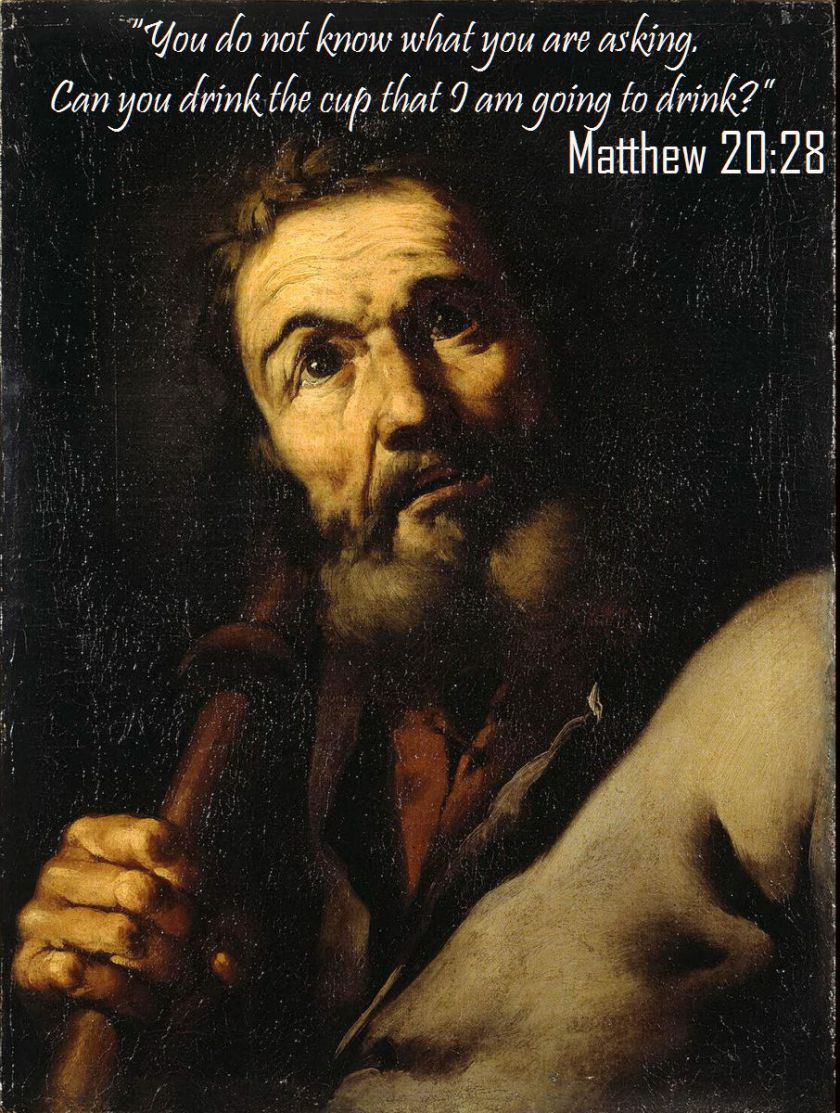
Jesus said in reply, “You do not know what you are asking. Can you drink the cup that I am going to drink?” They said to him, “We can.”……Matthew 20:28
REFLECTION – “Through their mother’s mediation, the sons of Zebedee press Christ as follows in the presence of their fellow apostles: “Command that we may sit, one at your right side and one at your left” (cf. Mk 10:35f.)… Christ hastens to free them from their illusions, telling them they must be prepared to suffer insults, persecutions, even death. “You do not know what you are asking. Are you able to drink the cup that I shall drink?” Let no one be surprised to see the apostles displaying such imperfect dispositions. Wait until the mystery of the cross has been fulfilled and the strength of the Holy Spirit given to them. If you want to see the strength of their souls, take a look at them later on and you will see them to be above all human weakness. Christ does not conceal their pettiness so you will be able to see what they become later on by the power of the grace that will transform them…”… St John Chrysostom (c 345-407) Father & Doctor of the Church
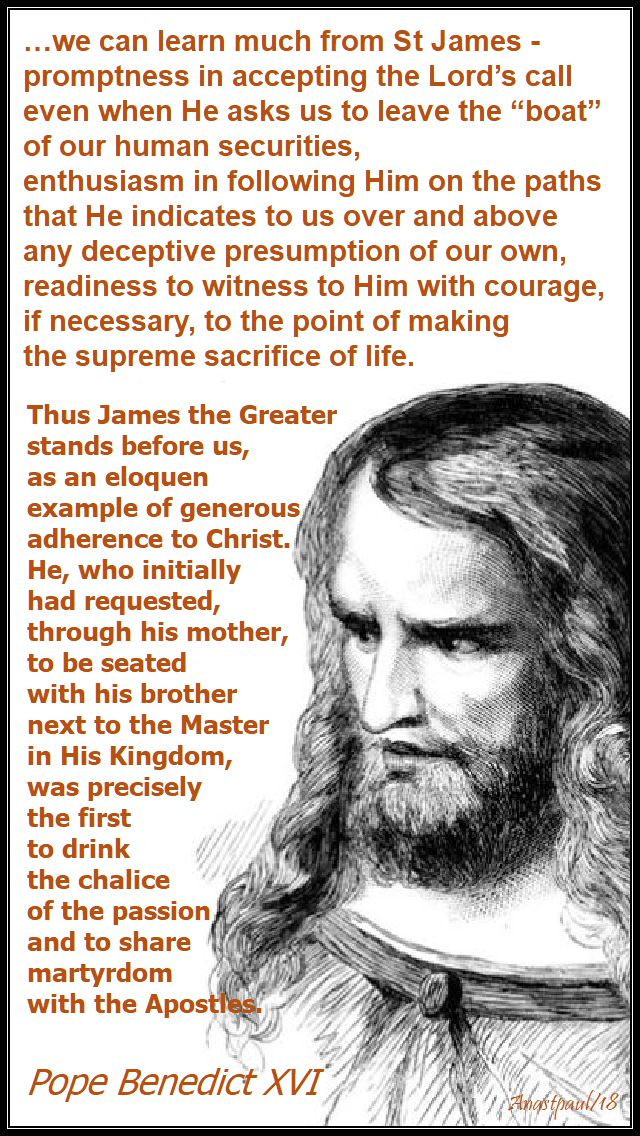
“…we can learn much from St James: promptness in accepting the Lord’s call even when He asks us to leave the “boat” of our human securities, enthusiasm in following Him on the paths that He indicates to us over and above any deceptive presumption of our own, readiness to witness to Him with courage, if necessary to the point of making the supreme sacrifice of life. Thus James the Greater stands before us, as an eloquent example of generous adherence to Christ. He, who initially had requested, through his mother, to be seated with his brother next to the Master in His Kingdom, was precisely the first to drink the chalice of the passion and to share martyrdom with the Apostles.”…Pope Benedict XVI – General Audience, 21 June 2006
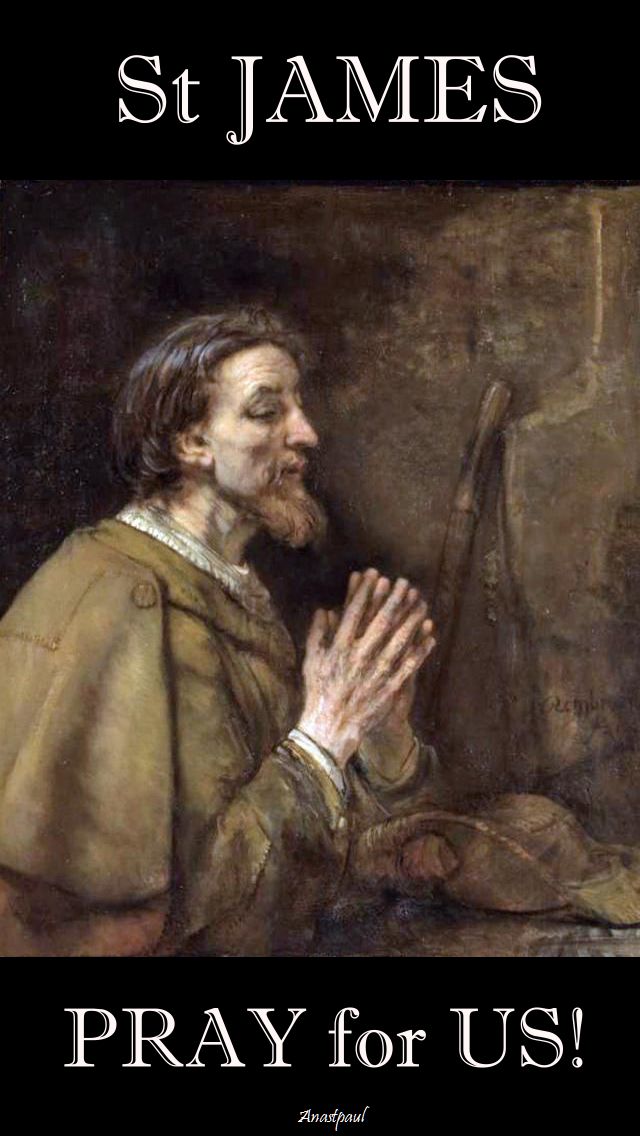
PRAYER – Lord our God, You accepted the sacrifice of St James, the first of Your Apostles to give his life for Your sake. May Your Church find strength in his martyrdom and support in his constant prayer. Through our Lord Jesus Christ, your Son, who lives and reigns with you in the unity of the Holy Spirit, one God, for ever and ever. St James the Greater, Apostle of Christ, Pray for us! Amen
St James the Greater (Feast) – Son of Zebedee and Salome, brother of Saint John the Apostle. He is called “the Greater” simply because he became an Apostle before Saint James the Lesser.
All about him here: https://anastpaul.wordpress.com/2017/07/25/saint-of-the-day-25-july-feast-of-st-james-the-greater-apostle-of-christ/
Bl Alexius Worstius
Bl Antonio Lucci O.F.M.Conv. (1682-1752) Bishop of Bovino
Bl Antonio of Olmedo
St Bantu of Trier
St Beatus of Trier
St Christopher
St Cugat del Valles
Bl Darío Acosta Zurita
St Ebrulfus
St Euphrasia
St Fagildo of Santiago
St Felix of Furcona
St Florentius of Furcona
St Glodesind of Metz
St Magnericus of Trier
Bl Michel-Louis Brulard
Bl Mieczyslawa Kowalska
St Mordeyren
St Nissen of Wexford
St Olympiad of Constantinople
St Paul of Palestine
Bl Pietro Corradini of Mogliano
St Theodemir of Cordoba
—
Martyrs of Caesarea – 3 saints: Three Christians martyred together in the pesecutions of emperor Maximilian and governor Firmilian – Paul, Tea and Valentina. 309 in Caesarea, Palestine.
Martyrs of Cuncolim – 20 saints: On 15 July 1583 the group met at the church of Orlim, and hiked to Cuncolim to erect a cross and choose land for a new church. Local anti-Christian pagans, seeing the unarmed Christians, gathered their weapons and marched on them. One of the parishioners, a Portuguese emigre named Gonçalo Rodrigues, carried a firearm, but Father Alphonsus Pacheco stopped him from using it. The pagans then fell upon them, and killed them all without mercy. They were –
• Alphonsus Pacheco
• Alphonsus the altar boy
• Anthony Francis
• Dominic of Cuncolim
• Francis Aranha
• Francis Rodrigues
• Gonçalo Rodrigues
• Paul da Costa
• Peter Berno
• Rudolph Acquaviva
• ten other native Christian converts whose names have not come down to us
They were martyred on Monday 25 July 1583 at the village of Cuncolim, district of Salcete, territory of Goa, India. Beatified on 30 April 1893 by Pope Leo XIII.
Martyrs of Furci:
Martyrs of Motril – 5 beati: Four priests and a brother, all members of the Augustinian Recollects, who were martyred together in the Spanish Civil War:
• Deogracias Palacios del Río
• José Rada Royo
• José Ricardo Díez Rodríguez
• Julián Benigno Moreno y Moreno
• León Inchausti Minteguía
They were shot on 25 July 1936 in Motril, Granada, Spain and Beatified on 7 March 1999 by Pope John Paul II.
Martyrs of Toledo – 4 beati: Four brothers and a priest, all members of the Hospitallers of Saint John of God, and all martyred together in the Spanish Civil War.
• Carlos Rubio álvarez
• Eloy Francisco Felipe Delgado Pastor
• Jerónimo Ochoa Urdangarín
• Primo Martínez De San Vicente Castillo
25 July 1936 in Talavera de la Reina, Toledo, Spain. They were Beatified on 25 October 1992 by Pope John Paul II.
Martyrs of Urda – 3 beati: Three members of the Passionists who were martyred together in the Spanish Civil War.
• Benito Solana Ruiz
• Felix Ugalde Irurzun
• Pedro Largo Redondo
They were shot on 25 July 1936 in Urdá, Toledo, Spain and Beatified on 1 October 1989 by Pope John Paul II.
Martyred in the Spanish Civil War:
Antonio Varona Ortega
Bl Dionisio Pamplona-Polo
Enric Morante Chic
Higinio Roldán Iriberri
Jaume Balcells Grau
Jesús Eduard Massanet Flaquer
Jesús Juan Otero
José López Tascón
José Luis Palacio Muñiz
Josep Bardolet Compte
Josep Más Pujolrás
Juan Crespo Calleja
Bl Miquel Peiro Victori
Ricard Farré Masip
Santos López Martinez
Vicente Fernández Castrillo
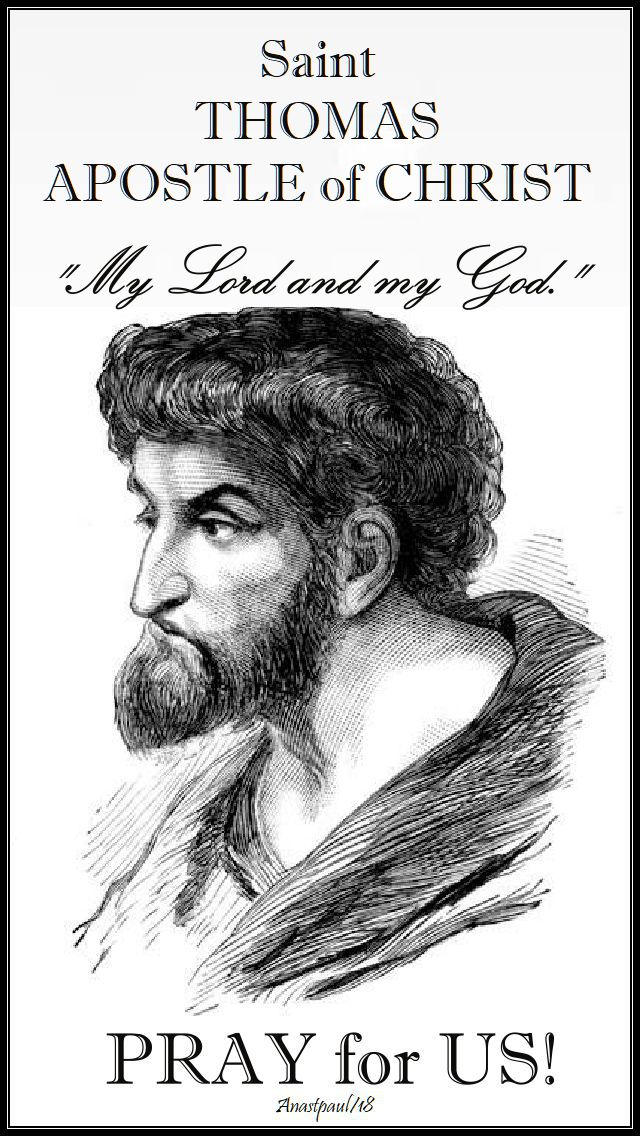
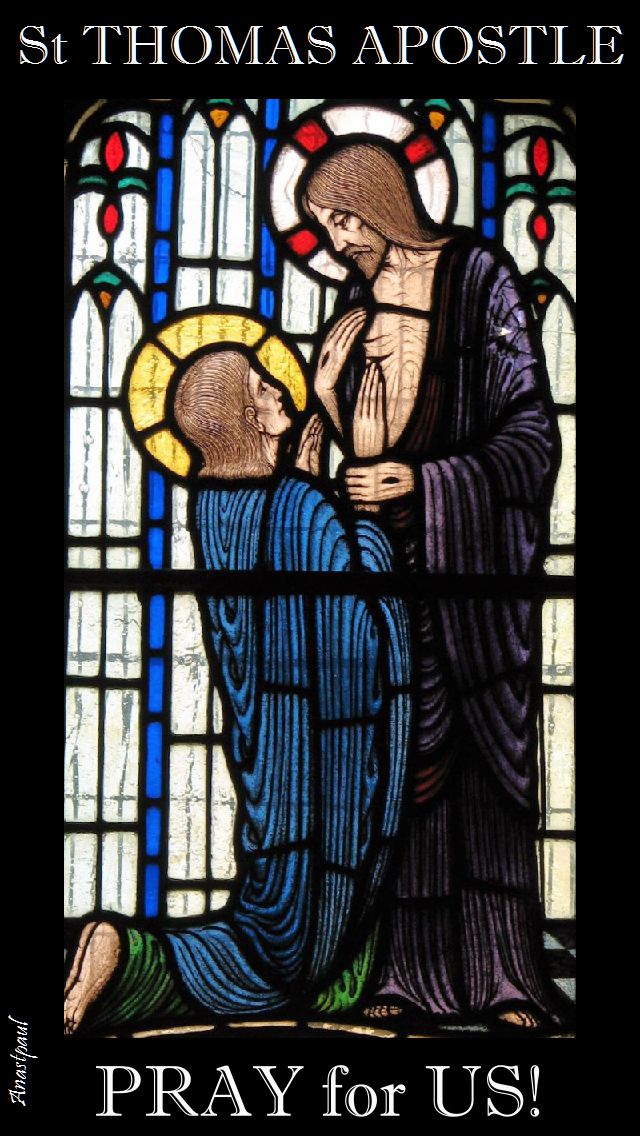
Thought for the Day – 3 July – Feast of St Thomas Apostle
The weakness of Thomas’s faith
is a source of our Lord’s great blessing for the Church
We must not suppose that St Thomas differed greatly from the other apostles. They all, more or less, mistrusted Christ’s promises when they saw Him led away to be crucified. When He was buried, their hopes were buried with Him and when the news was brought them, that He was risen again, they all disbelieved it. On His appearing to them, He “upbraided them with their unbelief and hardness of heart.” (Mark 16:14)… Thomas was convinced latest, because He saw Christ latest. On the other hand, it is certain that, though he disbelieved the good news of Christ’s resurrection at first, he was no cold-hearted follower of his Lord, as appears from his conduct on a previous occasion, when he expressed a desire to share danger and to suffer with Him…: “Let us also go, that we may die with him.” (Jn 11:16)… It was at the instance of Thomas that they hazarded their lives with their Lord.
St Thomas then loved his Master, as became an apostle and was devoted to His service; but when he saw him crucified, his faith failed for a season with that of the rest… and more than the rest. His standing out alone, not against one witness only but against his ten fellow disciples, besides Mary Magdalene and the other women is evidence of this… He seems to have required some sensible insight into the unseen state, some infallible sign from heaven, a ladder of angels like Jacob’s (Gn 28:12), which would remove anxiety by showing him the end of the journey at the time he set out. Some such secret craving after certainty beset him. And a like desire arose within him on the news of Christ’s resurrection.
While our Saviour allowed Thomas his wish and satisfied his senses that He was really alive, He accompanied the permission with a rebuke: “Because thou hast seen me, thou hast believed: blessed are they that have not seen and yet have believed.”… All His disciples minister to Him even in their weaknesses, that so He may convert them into instruction and comfort for His Church….Blessed John Henry Newman (1801-1890)PPS II, Sermon 2. “Faith without Sight”
“My Lord and my God!”
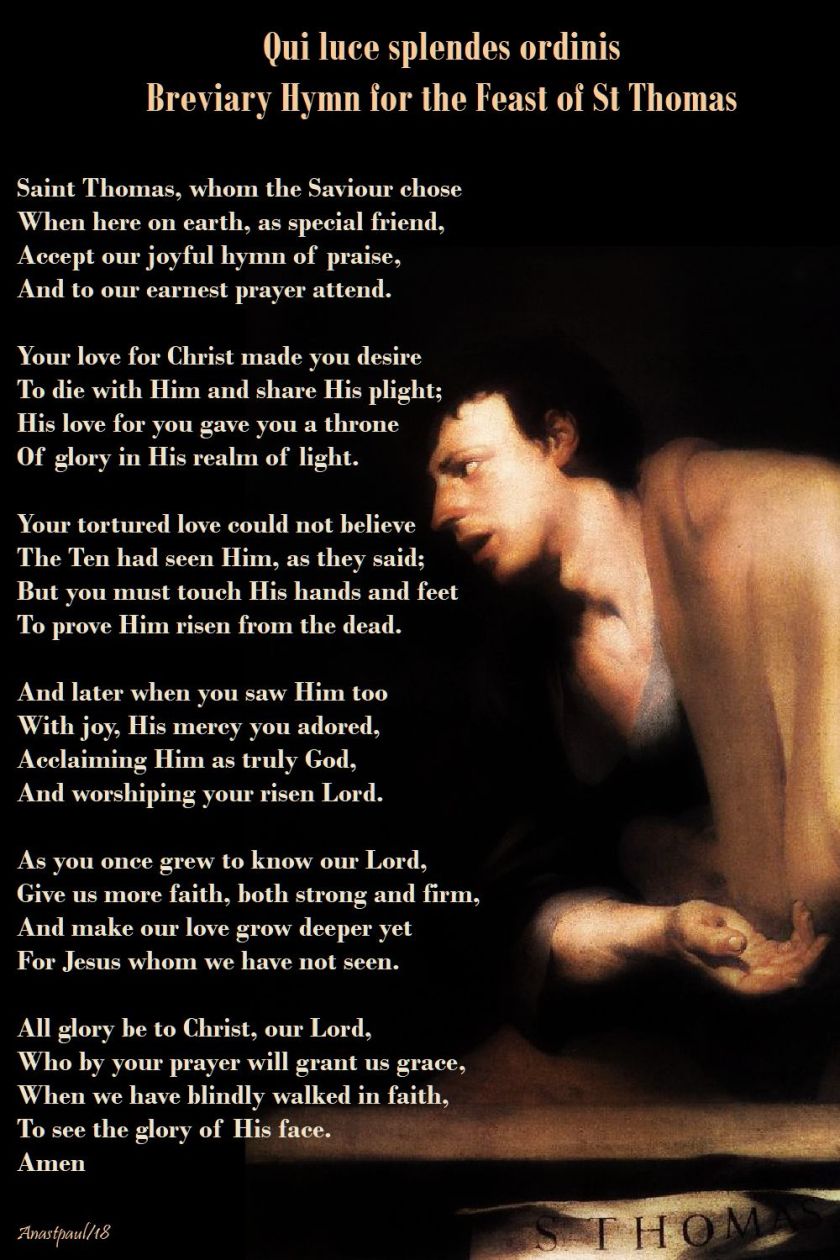
St Thomas, Pray for us that we too may so love our Lord and our God and “follow Him” to the end of time!
Quote of the Day – 3 July – Feast of St Thomas Apostle
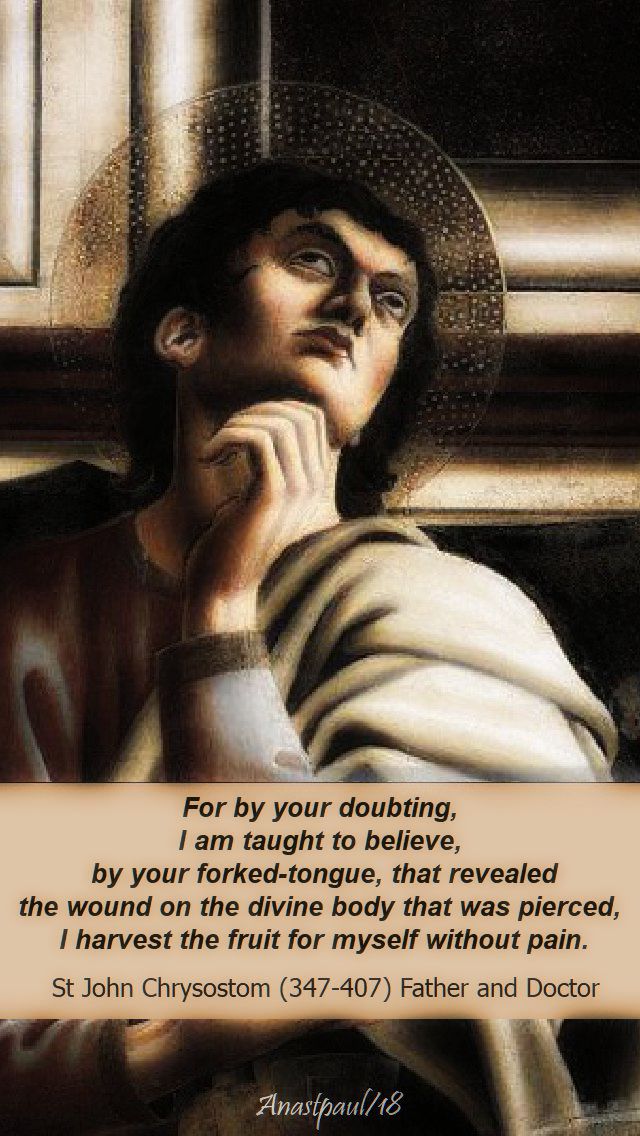
“For by your doubting, I am taught to believe, by your forked-tongue, that revealed the wound on the divine body that was pierced, I harvest the fruit for myself without pain.”
One Minute Reflection – 3 July – Feast of St Thomas Apostle – Today’s Gospel: John 20:24-29.
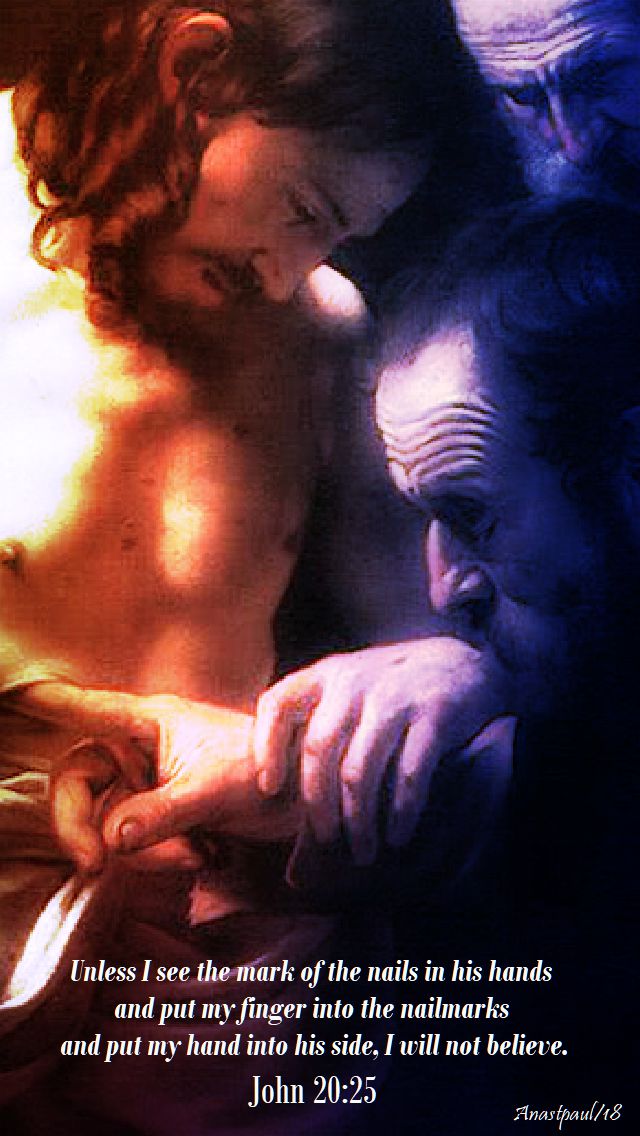
Thomas, called Didymus, one of the Twelve, was not with them when Jesus came. So the other disciples said to him, “We have seen the Lord.” But he said to them, “Unless I see the mark of the nails in his hands and put my finger into the nailmarks and put my hand into his side, I will not believe.”...John 20:24-25
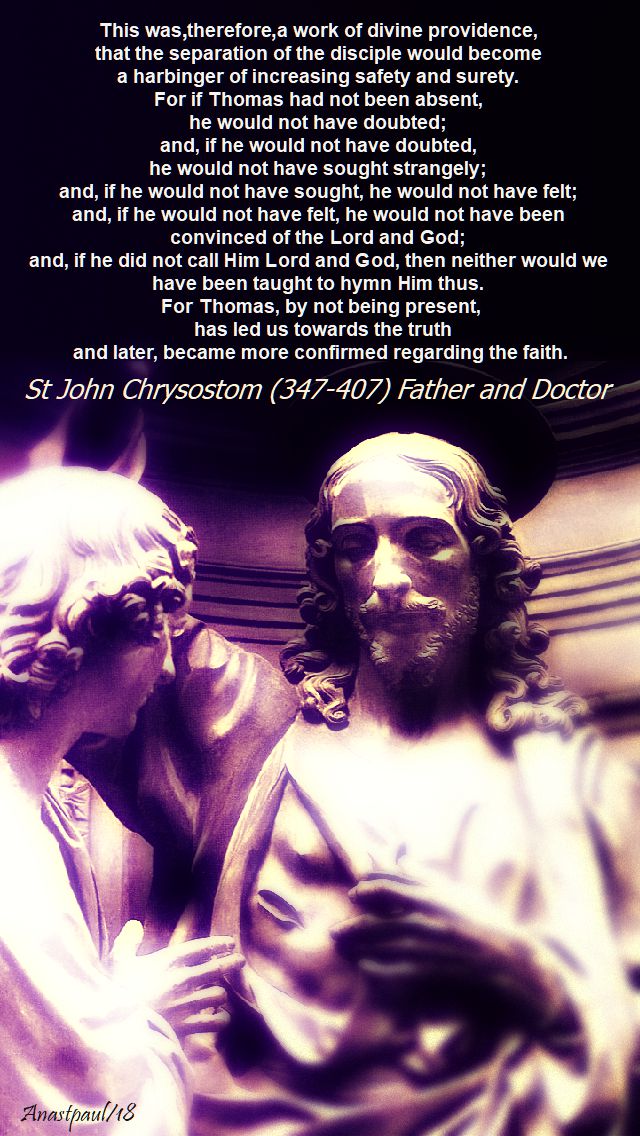
REFLECTION – “This was, therefore, a work of divine providence, that the separation of the disciple, would become a harbinger of increasing safety and surety. For if Thomas had not been absent, he would not have doubted; and, if he would not have doubted, he would not have sought strangely; and, if he would not have sought, he would not have felt; and, if he would not have felt, he would not have been convinced of the Lord and God; and, if he did not call Him Lord and God, then neither would we have been taught to hymn Him thus. For Thomas, by not being present, has led us towards the truth and later, became more confirmed regarding the faith.”… St John Chrysostom (347-407) Father and Doctor
PRAYER – Father, let our celebration on the feast of Saint Thomas the Apostle, be the source of his unfailing help and protection. Fill us with Your life-giving grace through our faith in Your Son, Jesus the Christ, whom Thomas acknowledged to be his Lord and his God. We make our prayer, through our Lord Jesus in union with the Holy Spirit, one God with You, forever and ever, amen.
Saint of the Day – 3 JULY _ Feast of St Thomas, Apostle of Christ
Thomas the twin By Pope Benedict XVI – General Audience, 27 September 2006
Dear Brothers and Sisters,
Continuing our encounters with the Twelve Apostles chosen directly by Jesus, today we will focus our attention on Thomas. Ever present in the four lists compiled by the New Testament, in the first three Gospels he is placed next to Matthew (cf. Mt 10: 3; Mk 3: 18; Lk 6: 15), whereas in Acts, he is found after Philip (cf. Acts 1: 13).
His name derives from a Hebrew root, ta’am, which means “paired, twin”. In fact, John’s Gospel several times calls him “Dydimus” (cf. Jn 11: 16; 20: 24; 21: 2), a Greek nickname for, precisely, “twin”. The reason for this nickname is unclear.
It is above all the Fourth Gospel that gives us information that outlines some important traits of his personality. The first concerns his exhortation to the other Apostles when Jesus, at a critical moment in His life, decided to go to Bethany to raise Lazarus, thus coming dangerously close to Jerusalem (Mk 10: 32).
On that occasion Thomas said to his fellow disciples: “Let us also go, that we may die with him” (Jn 11: 16). His determination to follow his Master is truly exemplary and offers us a valuable lesson: it reveals his total readiness to stand by Jesus, to the point of identifying his own destiny with that of Jesus and of desiring to share with Him the supreme trial of death.
In fact, the most important thing is never to distance oneself from Jesus. Moreover, when the Gospels use the verb “to follow”, it means that where He goes, his disciple must also go.
Thus, Christian life is defined as a life with Jesus Christ, a life to spend together with Him. St Paul writes something similar when he assures the Christians of Corinth: “You are in our hearts, to die together and to live together” (II Cor 7: 3). What takes place between the Apostle and his Christians must obviously apply first of all to the relationship between Christians and Jesus himself: dying together, living together, being in his Heart as He is in ours.
A second intervention by Thomas is recorded at the Last Supper. On that occasion, predicting his own imminent departure, Jesus announced that He was going to prepare a place for His disciples so that they could be where He is found and He explains to them: “Where [I] am going you know the way” (Jn 14: 4). It is then that Thomas intervenes, saying: “Lord, we do not know where you are going; how can we know the way?” (Jn 14: 5).
In fact, with this remark he places himself at a rather low level of understanding but his words provide Jesus with the opportunity to pronounce His famous definition: “I am the Way and the Truth and the Life” (Jn 14: 6). Thus, it is primarily to Thomas that He makes this revelation but it is valid for all of us and for every age. Every time we hear or read these words, we can stand beside Thomas in spirit and imagine that the Lord is also speaking to us, just as He spoke to him. At the same time, his question also confers upon us the right, so to speak, to ask Jesus for explanations. We often do not understand Him. Let us be brave enough to say: “I do not understand you, Lord, listen to me, help me to understand”. In such a way, with this frankness which is the true way of praying, of speaking to Jesus, we express our meagre capacity to understand and at the same time place ourselves in the trusting attitude of someone who expects light and strength from the One able to provide them.
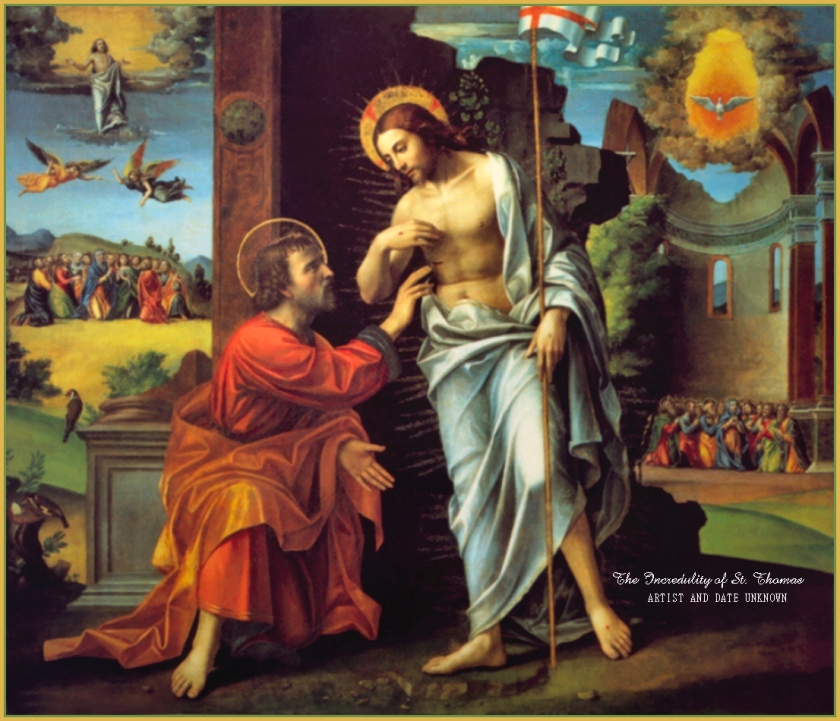
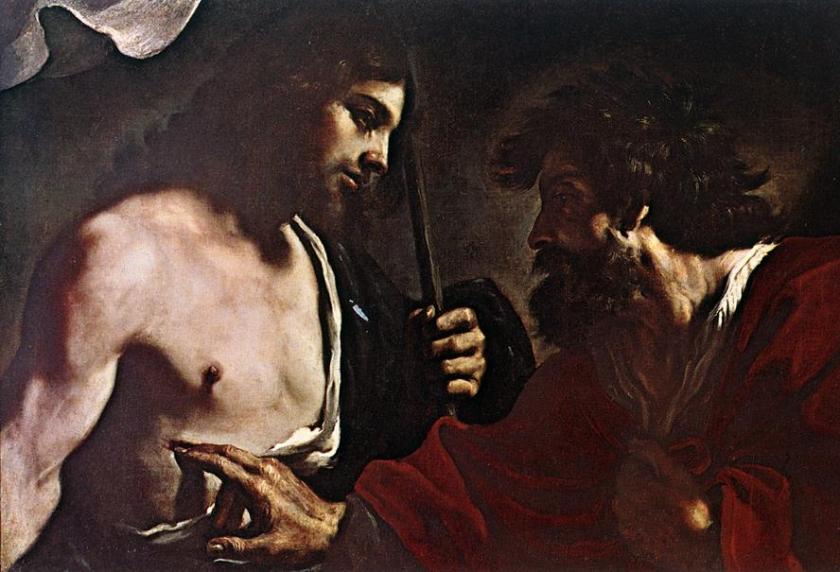
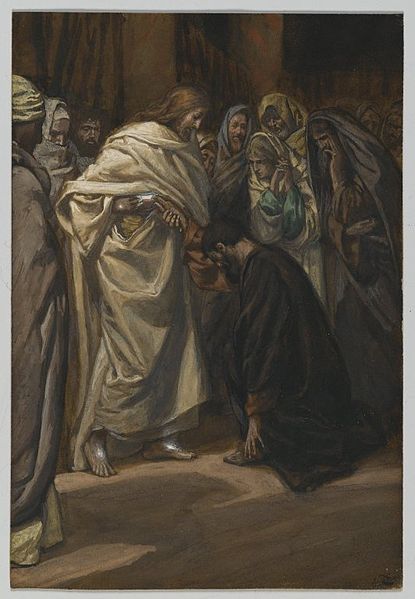
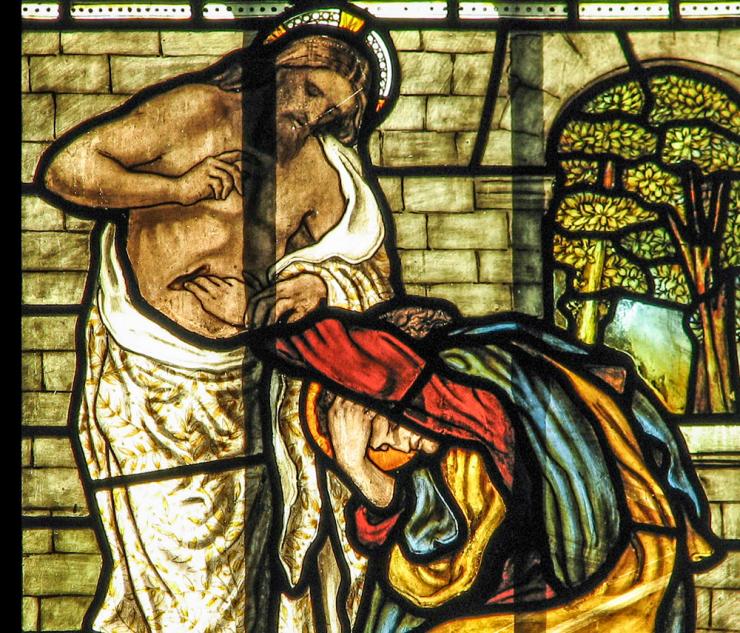
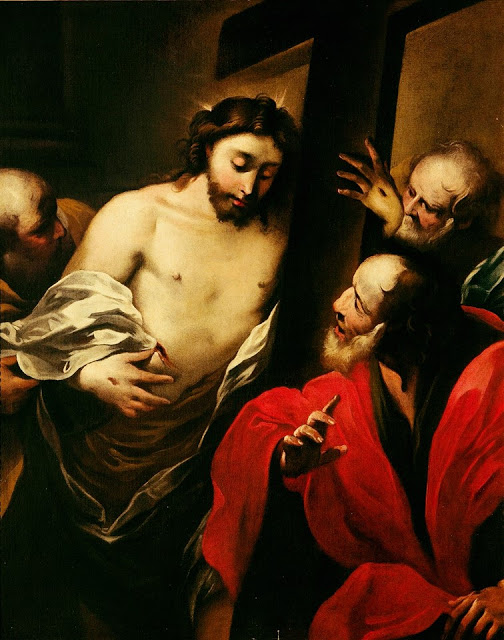
Then, the proverbial scene of the doubting Thomas that occurred eight days after Easter is very well known. At first he did not believe that Jesus had appeared in his absence and said: “Unless I see in his hands the print of the nails, and place my finger in the mark of the nails, and place my hand in his side, I will not believe” (Jn 20: 25).
Basically, from these words emerges the conviction that Jesus can now be recognised by His wounds rather than by His face. Thomas holds that the signs that confirm Jesus’ identity are now above all His wounds, in which He reveals to us how much He loved us. In this the Apostle is not mistaken.
As we know, Jesus reappeared among his disciples eight days later and this time Thomas was present. Jesus summons him: “Put your finger here, and see my hands; and put out your hand, and place it in my side; do not be faithless, but believing” (Jn 20: 27). Thomas reacts with the most splendid profession of faith in the whole of the New Testament: “My Lord and my God!” (Jn 20: 28). St Augustine comments on this: Thomas “saw and touched the man and acknowledged the God whom he neither saw nor touched but by the means of what he saw and touched, he now put far away from him every doubt and believed the other” (In ev. Jo. 121, 5).
The Evangelist continues with Jesus’ last words to Thomas: “Have you believed because you have seen me? Blessed are those who have not seen and yet believe” (Jn 20: 29). This sentence can also be put into the present: “Blessed are those who do not see and yet believe”.
In any case, here Jesus spells out a fundamental principle for Christians who will come after Thomas, hence, for all of us.
It is interesting to note that another Thomas, the great Medieval theologian of Aquinas, juxtaposed this formula of blessedness with the apparently opposite one recorded by Luke: “Blessed are the eyes which see what you see!” (Lk 10: 23). However, Aquinas comments: “Those who believe without seeing are more meritorious than those who, seeing, believe” (In Johann. XX lectio VI 2566).
In fact, the Letter to the Hebrews, recalling the whole series of the ancient biblical Patriarchs who believed in God without seeing the fulfilment of His promises, defines faith as “the assurance of things hoped for, the conviction of things not seen” (Heb 11: 1).
The Apostle Thomas’ case is important to us for at least three reasons: first, because it comforts us in our insecurity; second, because it shows us that every doubt can lead to an outcome brighter than any uncertainty and, lastly, because, the words that Jesus addressed to him remind us of the true meaning of mature faith and encourage us to persevere, despite the difficulty, along our journey of adhesion to Him.
A final point concerning Thomas is preserved for us in the Fourth Gospel, which presents him as a witness of the Risen One in the subsequent event of the miraculous catch in the Sea of Tiberias (cf. Jn 21: 2ff.).
On that occasion, Thomas is even mentioned immediately after Simon Peter: an evident sign of the considerable importance that he enjoyed in the context of the early Christian communities.
Indeed, the Acts and the Gospel of Thomas, both apocryphal works but in any case important for the study of Christian origins, were written in his name.
Lastly, let us remember that an ancient tradition claims that Thomas first evangelised Syria and Persia (mentioned by Origen, according to Eusebius of Caesarea, Ecclesiastical History 3, 1) then went on to Western India (cf. Acts of Thomas 1-2 and 17ff.), from where also he finally reached Southern India.
Let us end our reflection in this missionary perspective, expressing the hope that Thomas’ example will never fail to strengthen our faith in Jesus Christ, Our Lord and Our God. Amen…Pope Benedict, vatican.va
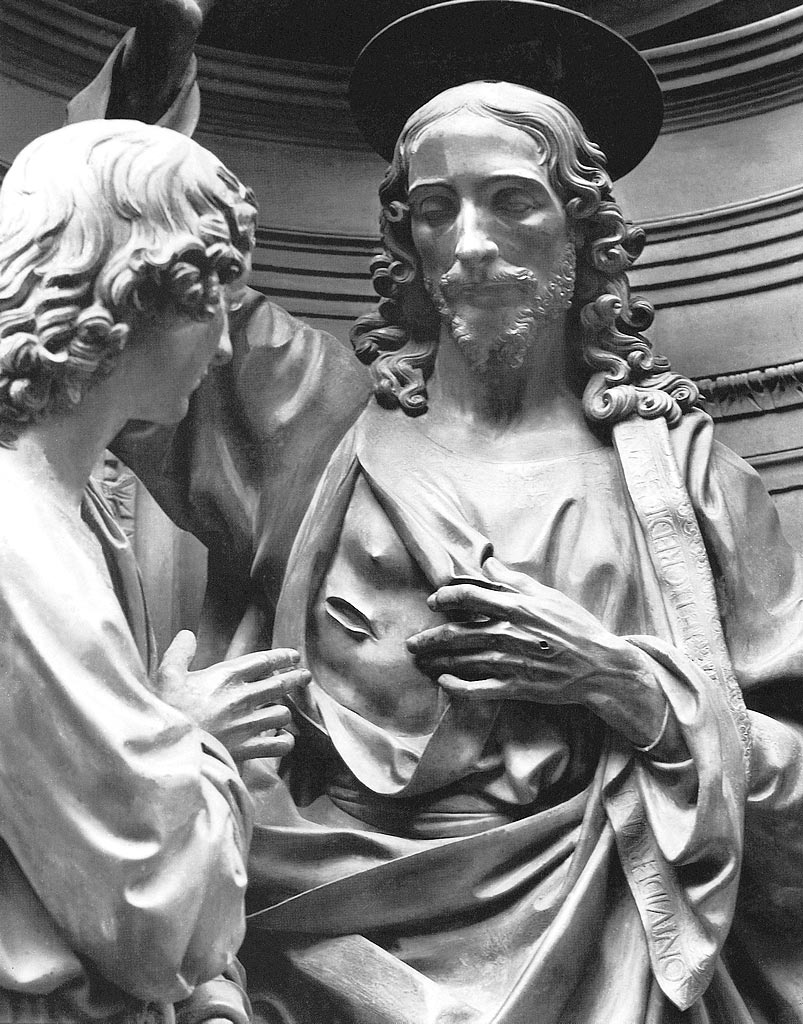
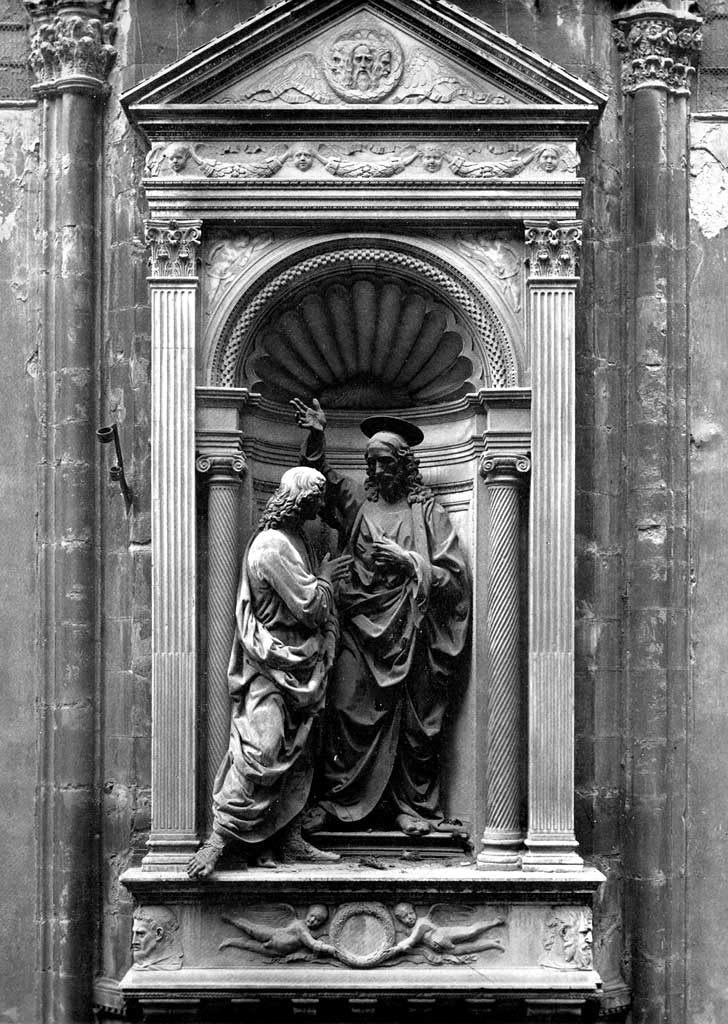
Christ and St Thomas – San Michele, Florence by Andrea del Verrocchio 1465-1483
There is a large population of native Christians who call themselves ‘the Christians of St Thomas’. They have an ancient oral tradition that he landed at Cranganoreon, the west coast and established seven churches in Malabar though his landing on the west coast is disputed today, the rest is not. He then passed eastward to the Coromandel Coast, where he was Martyred, by spearing, on the ‘Big Hill’, eight miles from Madras and was buried at Mylapore, now a suburb of that city. There are several medieval references to the tomb of St Thomas in India, some of which name Mylapore and in 1522 the Portuguese discovered the tomb there, with certain small relics now preserved in the cathedral of St Thomas at Mylapore. But the bulk of his relics were certainly at Edessa in the fourth century, as the Acta Thomae relate. They were later translated from Edessa to the island of Khios in the Aegean and from thence to Ortona in the Abruzzi, where they are still venerated.
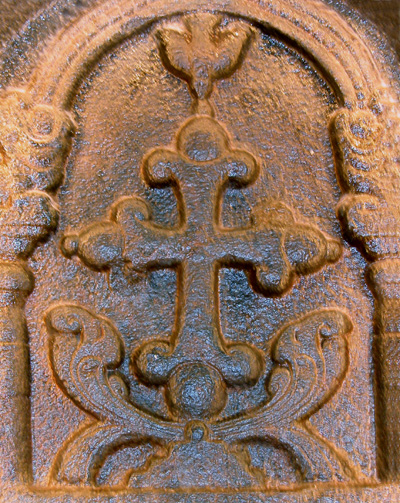
When St Francis Xavier came to India, the signs of blood were still to be seen on the cross where the murderous deed of the martyrdom of St Thomas was committed and more than once drops of blood appeared on this cross during the celebration of Mass, when crowds of people were present. St Xavier, shortly after his arrival in India, went to the tomb of St Thomas, and passed many days and nights there in prayer. He begged God fervently to bestow upon him the Spirit and zeal of this holy Apostle, that he might be able to restore the Christian faith which St Thomas had preached there but which had gradually been entirely exterminated. Before undertaking any important work, he went, if possible, to the tomb of St Thomas and when this was impossible, he invoked the holy Apostle’s intercessio, and endeavoured to follow his example in all things.
The Bleeding Cross
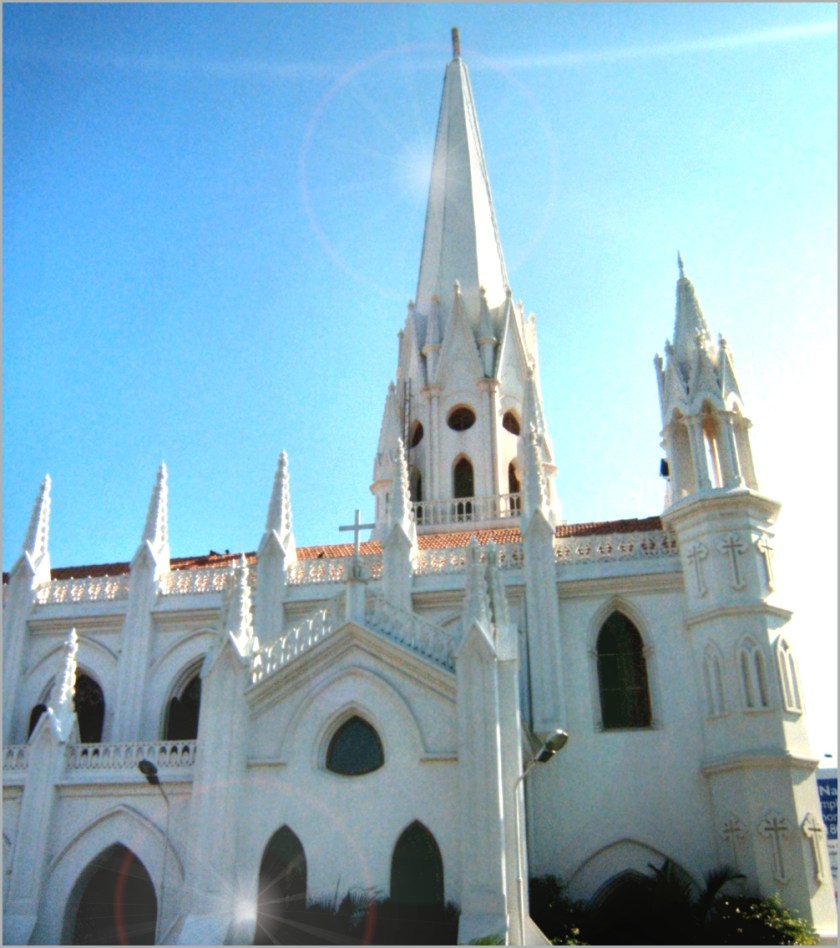
Saint Thomas was declared the “Apostle of India” by Pope Paul VI in 1972. Below is the St Thomas Cathedral in Madras, India.
More info with patronages etc and many pics here: https://anastpaul.wordpress.com/2017/07/03/saint-of-the-day-3-july-st-thomas-the-apostle-of-christ/
St Anatolius of Alexandria
St Anatolius of Constantinople
Bl Andreas Ebersbach
Bl Barbara Jeong Sun-mae
St Bladus
St Byblig
St Cillene
St Dathus of Ravenna
St Eusebius of Laodicea
St Firminus
St Firmus
Bl Gelduin
St Germanus of Man
St Giuse Nguyen Ðình Uyen
St Gunthiern
St Guthagon
St Heliodorus of Altinum
St Hyacinth of Caesarea
St Ioannes Baptista Zhao Mingxi
St Irenaeus of Chiusi
St Pope Leo II
St Maelmuire O’Gorman
St Mark of Mesia
St Mennone the Centurian
St Mucian of Mesia
St Paul of Mesia
St Petrus Zhao Mingzhen
St Philiphê Phan Van Minh
St Raymond of Toulouse
—
Martyrs of Alexandria – 13 saints: Thirteen Christian companions marytred together. No details about them have survived but the names – Apricus, Cyrion (2 of), Eulogius, Hemerion, Julian, Julius, Justus, Menelaus, Orestes, Porfyrios and Tryphon (2 of). They martyred in Alexandria, Egypt, date unknown.
Martyrs of Constantinople – 24 saints: A group of 24 Christians martyred in the persecutions of Arian emperor Valens. We know little more than their names – Acacios, Amedinos, Ammonius, Ammus, Cerealis, Cionia, Cionius, Cyrianus, Demetrius, Eulogius (2), Euphemia, Heliodoros, Heraclios, Horestes, Jocundus, Julian, Martyrios, Menelaeus, Sestratus, Strategos, Thomas, Timotheos and Tryphon. They were martyred in c367 in Constantintinople.
Theodotus and Companions – 6 saints: Six Christians who were imprisoned, tortured and martyred together in the persecutions of Trajan. Saint Hyacinth ministered to them in prison. We know nothing else about them but their names – Asclepiodotus, Diomedes, Eulampius, Golinduchus, Theodota and Theodotus. They were beheaded in c110, location
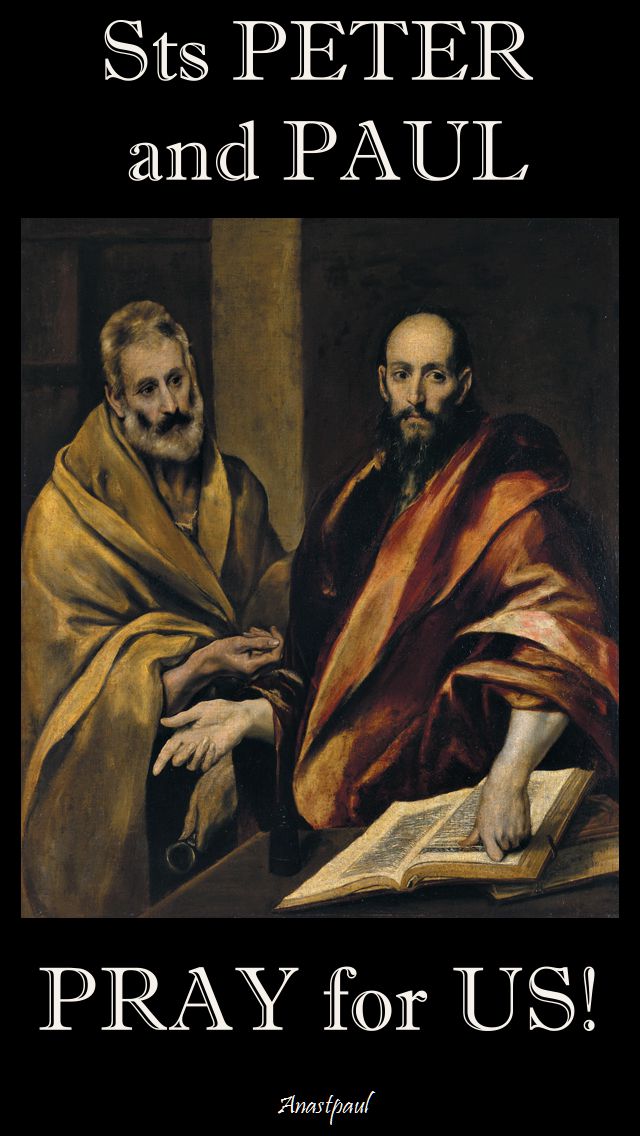
Thought for the Day – 29 June – The Solemnity of Saints Peter and Paul
We would probably go to confession to Peter, sooner than to any of the other apostles. He is perhaps a more striking example of the simple fact of holiness. Jesus says to us as he said, in effect, to Peter: “It is not you who have chosen me but I who have chosen you. Peter, it is not human wisdom that makes it possible for you to believe but my Father’s revelation. I, not you, build my Church.”
Paul’s experience of the risen Jesus on the road to Damascus was the driving force that made him one of the most zealous, dynamic and courageous ambassadors of Christ the Church has ever had. But persecution, humiliation and weakness became his day-by-day carrying of the cross, material for further transformation. The dying Christ was in him; the living Christ was his life.
We owe our faith to these two great Apostles and like Jesus, Himself, their death was our life!
St Peter, the foundation of our home on earth, incomparable St Paul, “the chosen vessel”, you were partners in death and share the glorious crown. You are both lamps to guide our feet, lights and jewels of the Universal Church, please Pray for us!
Quote/s of the Day – 29 June – The Solemnity of Saints Peter and Paul
“Their sound has gone out into all the earth and their words to the ends of the world”
Psalm 19
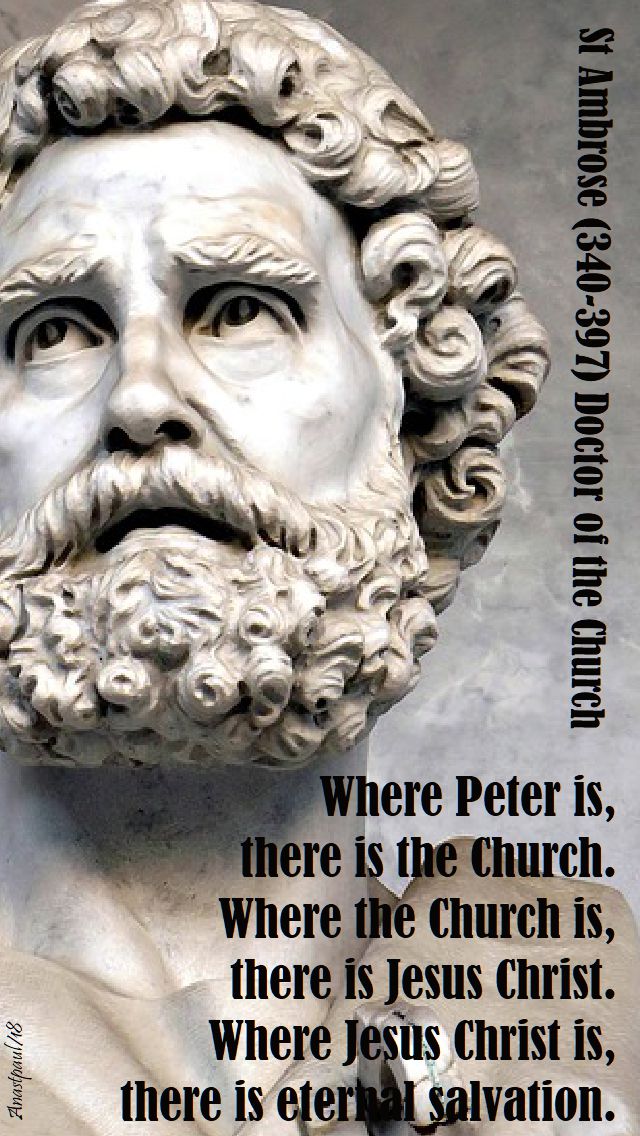
“Where Peter is, there is the Church. Where the Church is, there is Jesus Christ. Where Jesus Christ is, there is eternal salvation.”
St Ambrose (340-397)
One of the original four Doctors of the Church
“There is one day for the passion of two apostles. But these two also were as one; although they suffered on different days, they were as one. Peter went first, Paul followed. We are celebrating a feast day, consecrated for us by the blood of the apostles. Let us love their faith, their lives, their labours, their sufferings, their confession of faith, their preaching.”
St Augustine (354-430) Father & Doctor of the Church
“There must be general rejoicing, dearly beloved, over this holy company whom God has appointed for our example in patience and for our confirmation in faith. But we must glory even more in the excellence of their fathers, Peter and Paul, whom the grace of God has raised to such a height among all the members of the Church that He has set them like twin lights of eyes in that Body whose head is Christ.”
St Pope Leo the Great (400-461) Father & Doctor of the Church
Today the Lord repeats to me, to you…: Follow Me! Waste no time in questioning or in useless chattering; do not dwell on secondary things but look to what is essential and follow Me. Follow Me without regard for the difficulties. Follow Me in preaching the Gospel. Follow Me by the witness of a life shaped by the grace you received in baptism….. and holy orders. Follow Me by speaking of Me, to those with whom you live, day after day, in your work, your conversations and among your friends. Follow Me by proclaiming the Gospel to all, especially to the least among us, so that no one will fail to hear the word of life, which sets us free from every fear and enables us to trust in the faithfulness of God. Follow Me!
One Minute Reflection – 29 June – The Solemnity of Saints Peter and Paul – Today’s Gospel: Matthew 16:13–19
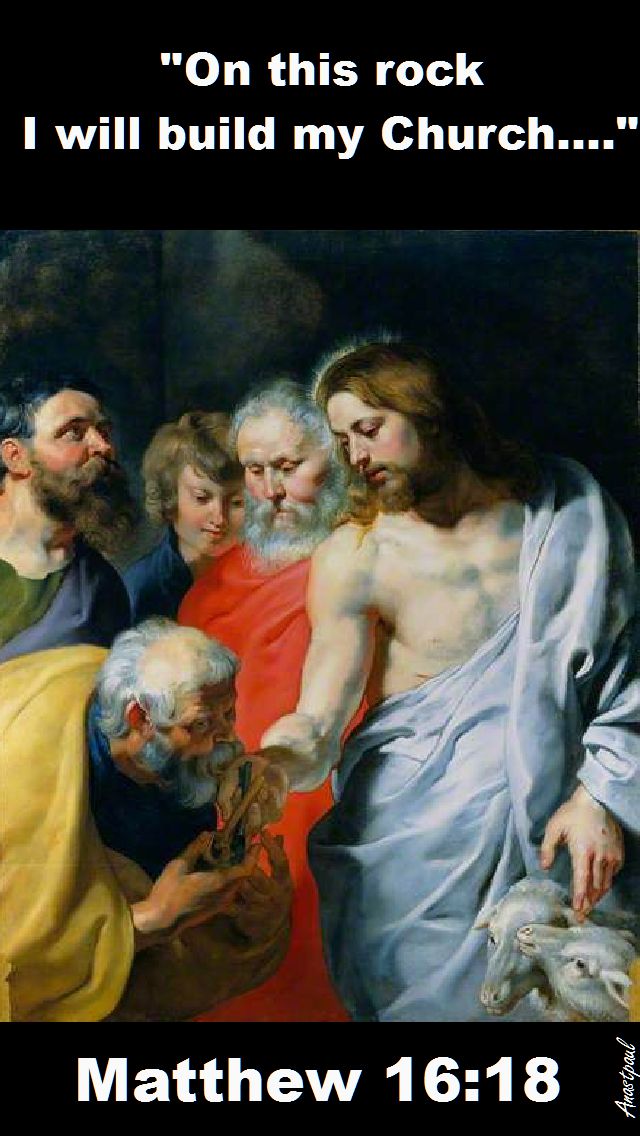
And I tell you, you are Peter and on this rock I will build my church and the powers of death shall not prevail against it. I will give you the keys of the kingdom of heaven and whatever you bind on earth shall be bound in heaven, and whatever you loose on earth shall be loosed in heaven.” …Matthew 16:18-19
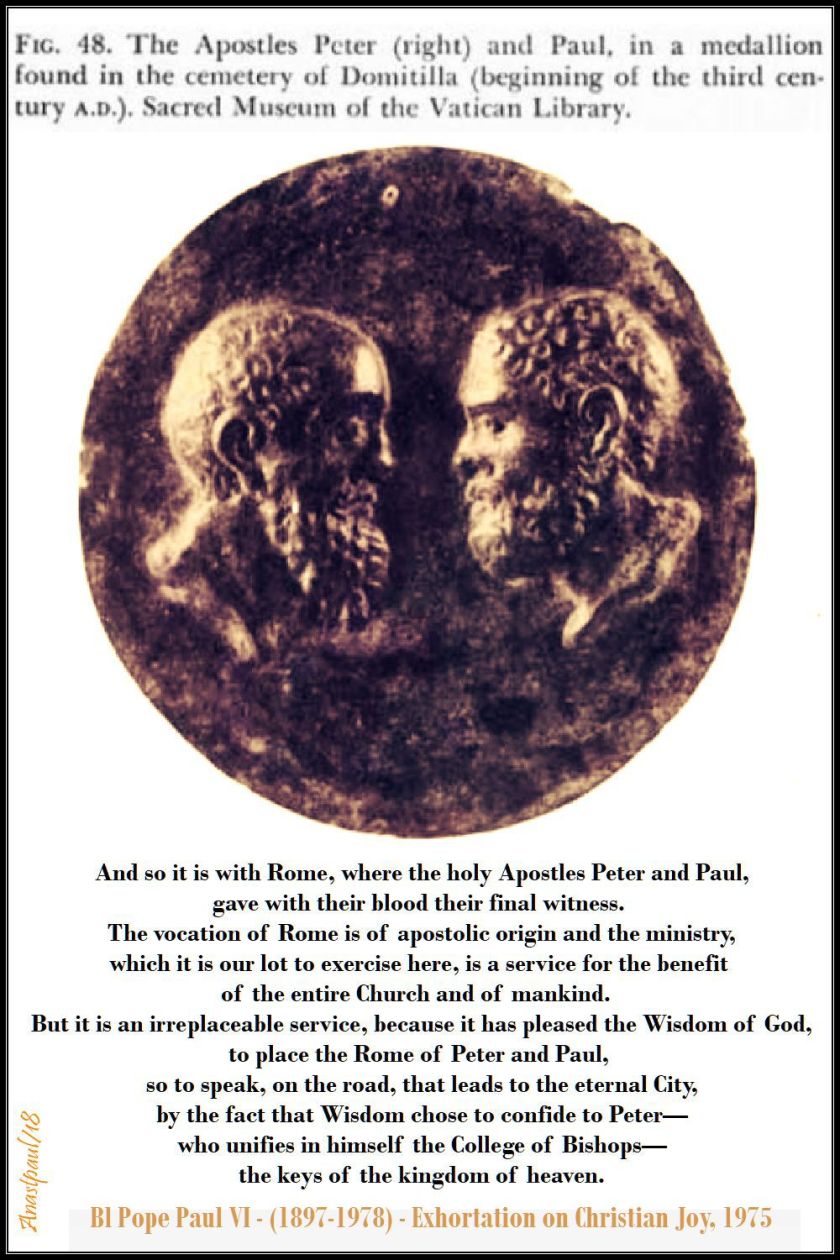
REFLECTION – “And so it is with Rome, where the holy Apostles Peter and Paul, gave with their blood their final witness. The vocation of Rome is of apostolic origin and the ministry which it is our lot to exercise here, is a service for the benefit of the entire Church and of mankind. But it is an irreplaceable service, because it has pleased the Wisdom of God to place the Rome of Peter and Paul, so to speak, on the road that leads to the eternal City, by the fact that Wisdom chose to confide to Peter—who unifies in himself the College of Bishops—the keys of the kingdom of heaven. What remains here, not through the effect of man’s will but through the free and merciful benevolence of the Father and the son and the Holy Spirit, is the soliditas Petri, such as our predecessor Saint Leo the Great extolled in unforgettable terms: “Saint Peter does not cease to preside over his See and preserves an endless sharing, with the Sovereign Priest. The firmness that he received from the Rock which is Christ, he himself, having become the Rock, transmits it equally to his successors.”…Blessed Pope Paul VI (1897-1978) – Exhortation on Christian Joy, 1975
PRAYER – Lord our God, You give us the great joy of devoting this day to the honour of the apostles Peter and Paul. Provide us, by their intercession, with help for our eternal salvation. Grant that Your Church may follow their teaching to the full, because these are the men who first taught us to worship You in Christ, Your Son, who lives and reigns with You and the Holy Spirit, one God forever, amen.
Our Morning Offering – 29 June – The Solemnity of Saints Peter and Paul
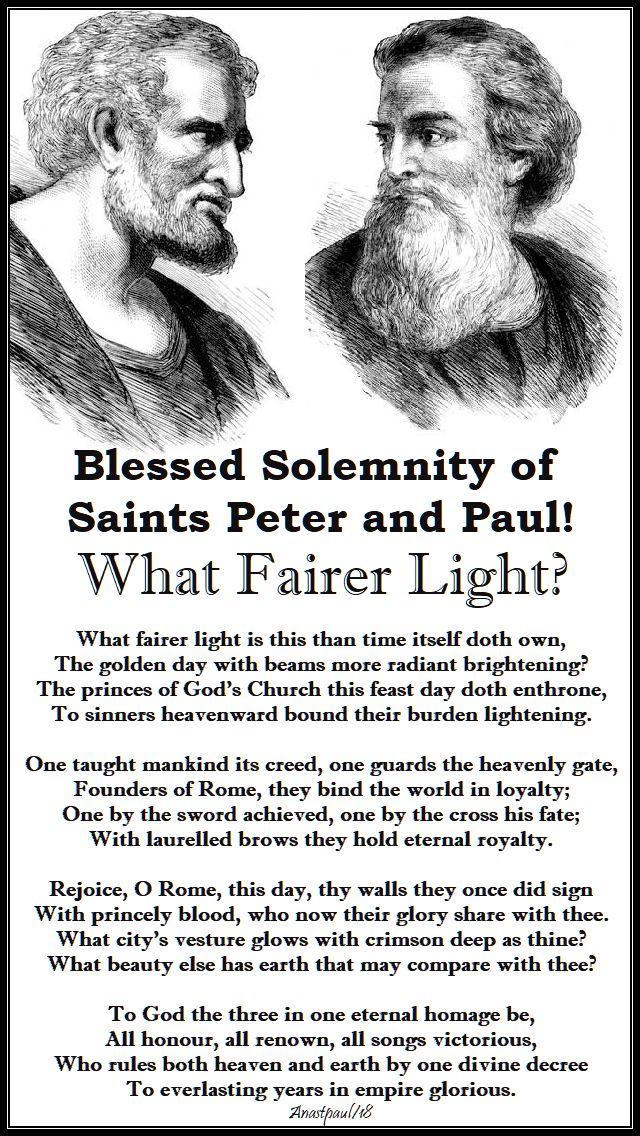
What Fairer Light?
Hymn for the Solemnity of Sts Peter and Paul Elphis, c 493, wife of Boethius c 477– 524 Translation: R A Knox, 1888-1957
What fairer light is this than time itself doth own,
The golden day with beams more radiant brightening?
The princes of God’s Church this feast day doth enthrone,
To sinners heavenward bound their burden lightening.
One taught mankind its creed, one guards the heavenly gate,
Founders of Rome, they bind the world in loyalty;
One by the sword achieved, one by the cross his fate;
With laurelled brows they hold eternal royalty.
Rejoice, O Rome, this day, thy walls they once did sign
With princely blood, who now their glory share with thee.
What city’s vesture glows with crimson deep as thine?
What beauty else has earth that may compare with thee?
To God the three in one eternal homage be,
All honour, all renown, all songs victorious,
Who rules both heaven and earth by one divine decree
To everlasting years in empire glorious.
Wishing you all a Holy and Blessed Solemnity of Saints Peter and Paul
The Solemnity of Saints Peter and Paul
St Augustine (354-430)
This day has been consecrated for us by the Martyrdom of the blessed apostles Peter and Paul. It is not some obscure martyrs we are talking about. “Their sound has gone out into all the earth and their words to the ends of the world” (Psalm 19). These martyrs had seen what they proclaimed, they pursued justice by confessing the truth, by dying for the truth.
The blessed Peter, the first of the Apostles, the ardent lover of Christ, who was found worthy to hear, “And I say to you, that you are Peter” (Matthew 16:13-20). He himself, you see, had just said, “You are the Christ, the Son of the living God.” Christ said to him, “And I say to you that you are Peter, and upon this rock I will build my Church.” Upon this rock I will build the faith you have just confessed. Upon your words, “You are the Christ, the Son of the living God,” I will build My Church, because you are Peter. Peter comes from petra, meaning a rock. Peter, “Rocky”, from “rock” not “rock” from “Rocky”. Peter comes from the word for a rock in exactly the same way as the name Christian comes from Christ.
Before His passion the Lord Jesus, as you know, chose those disciples of His whom He called apostles. Among these it was only Peter who almost everywhere, was given the privilege of representing the whole Church. It was in the person of the whole Church, which he alone represented, that he was privileged to hear, “To you will I give the keys of the kingdom of heaven.” After all, it is not just one man that received these keys but the Church in its unity. So this is the reason for Peter’s acknowledged pre-eminence, that he stood for the Church’s universality and unity, when he was told, “To you I am entrusting,” what has in fact been entrusted to all. To show you that it is the Church which has received the keys of the kingdom of heaven, listen to what the Lord says in another place to all His apostles: “Receive the Holy Spirit” and immediately afterwards, “Whose sins you forgive, they will be forgiven them; whose sins you retain, they will be retained” (John 20:22-23).
Quite rightly, too, did the Lord after His resurrection entrust His sheep to Peter to be fed (Jn. 21: 15-19). It is not, you see, that he alone among the disciples was fit to feed the Lord’s sheep but when Christ speaks to one man, unity is being commended to us. And He first speaks to Peter, because Peter is the first among the apostles. Do not be sad, Apostle. Answer once, answer again, answer a third time. Let confession conquer three times with love, because self-assurance was conquered three times by fear. What you had bound three times must be loosed three times. Loose through love what you had bound through fear. And for all that, the Lord once and again, and a third time, entrusted His sheep to Peter.
There is one day for the passion of two apostles. But these two also were as one; although they suffered on different days, they were as one. Peter went first, Paul followed.
We are celebrating a feast day, consecrated for us by the blood of the apostles. Let us love their faith, their lives, their labours, their sufferings, their confession of faith, their preaching.
O God, who on the Solemnity of the Apostles Peter and Paul
give us the noble and holy joy of this day,
grant, we pray, that Your Church
may in all things follow the teaching
of those through whom she received
the beginnings of right religion.
Through our Lord Jesus Christ, Your Son,
who lives and reigns with You in the unity of the Holy Spirit,
one God, forever and ever.
Amen
St Anastasius of Bourges
St Benedicta of Sens
St Cassius of Narni
St Ciwg ap Arawn
St Cocha
Bl Hemma of Gurk
St Ilud Ferch Brychan
St Judith of Niederaltaich
St Marcellus of Bourges
St Mary, the Mother of John Mark
Bl Pierre of Tarentaise the Elder
St Salome of Niederaltaich
St Syrus of Genoa
Bl William of Sann
—
Martyrs of China
Ioannes Baptista Wu Mantang
Magdalena Du Fengju
Maria Du Tianshi
Paulus Wu Anju
Paulus Wu Wanshu














 AnaStpaul
You must be logged in to post a comment.