Posted in DOCTORS of the Church, EASTER, FATHERS of the Church, FEASTS and SOLEMNITIES, MORNING Prayers, PAPAL SERMONS, QUOTES - J R R Tolkien and MORE, QUOTES of the SAINTS, SPEAKING of ....., The RESURRECTION

Quote/s of the Day – 5 April – Easter Thursday Fifth Day in the Easter Octave

Quote/s of the Day – 5 April – Easter Thursday Fifth Day in the Easter Octave

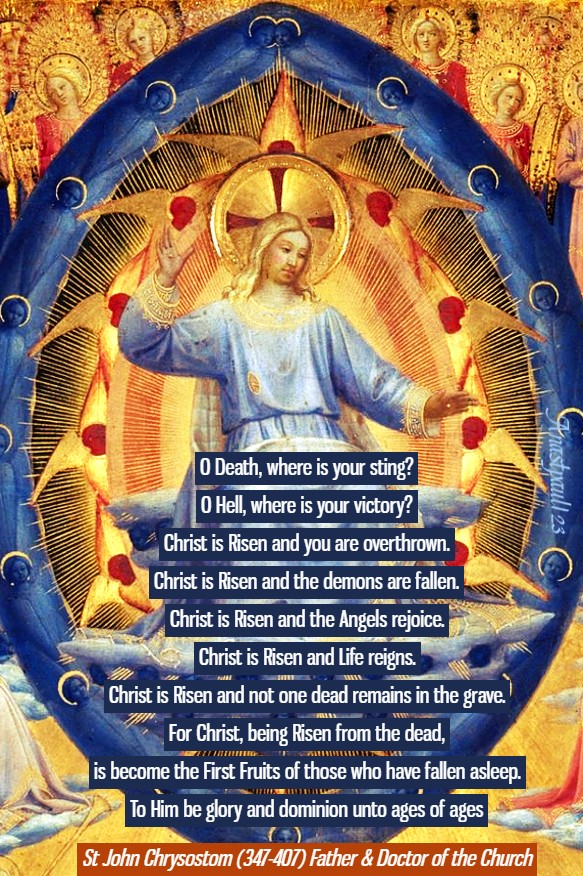
O Death, where is your sting?
O Hell, where is your victory?
Christ is Risen and you are overthrown.
Christ is Risen and the demons are fallen.
Christ is Risen and the Angels rejoice.
Christ is Risen and Life reigns.
Christ is Risen and not one dead remains in the grave.
For Christ, being Risen from the dead,
is become the First Fruits of those who have fallen asleep.
To Him be glory and dominion unto ages of ages.

St John Chrysostom (347-407)
Father & Doctor of the Church

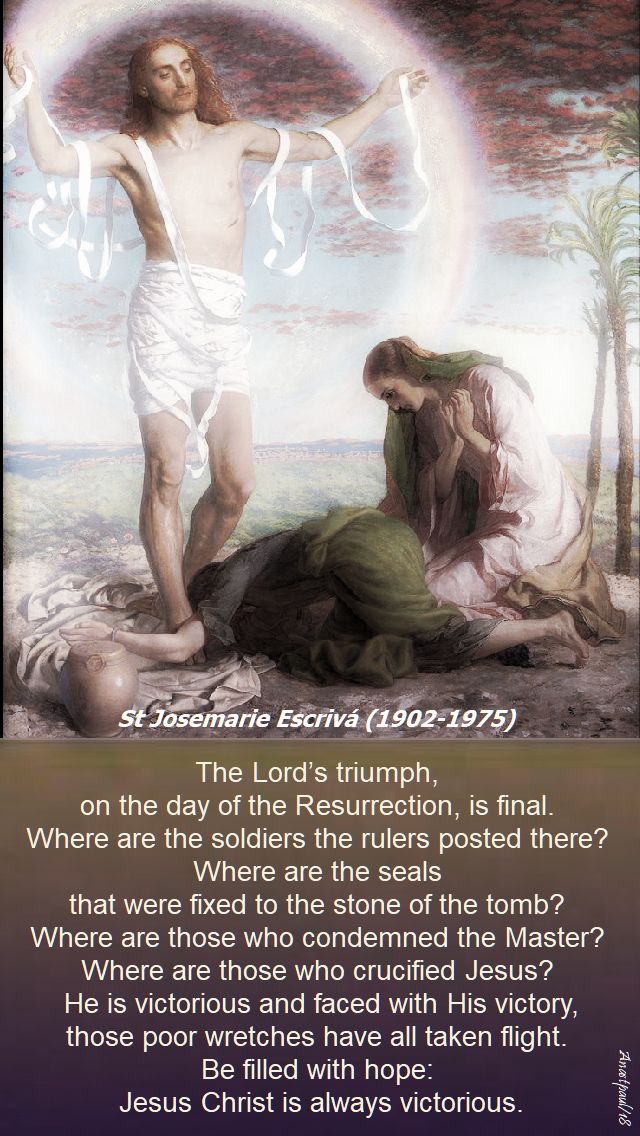
The Lord’s triumph, on the day of the Resurrection, is final.
Where are the soldiers the rulers posted there?
Where are the seals that were fixed to the stone of the tomb?
Where are those who condemned the Master?
Where are those who crucified Jesus?
He is victorious and faced with His victory,
those poor wretches have all taken flight.
Be filled with hope:
Jesus Christ is always victorious.”

St Josemarie Escrivá (1902-1975), The Forge, 660the lord triumph on the day of the resurrection is final - st josemaria - easter thursday 5 april 2018

Posted in CONFESSION/PENANCE, DOCTORS of the Church, EASTER, FATHERS of the Church, FEASTS and SOLEMNITIES, MORNING Prayers, QUOTES of the SAINTS, QUOTES on FAITH, QUOTES on FORGIVENESS, QUOTES on the CHURCH, SAINT of the DAY

Quote/s of the Day – 4 April – Easter Wednesday and the Memorial of St Isidore of Seville (560-636) Father & Doctor of the Church

Quote/s of the Day – 4 April – Easter Wednesday and the Memorial of St Isidore of Seville (560-636) Father & Doctor of the Church

“War with vices
but peace with individuals.”

“The more you devote yourself
to study of the sacred utterances,
the richer will be your understanding of them,
just as the more the soil is tilled,
the richer the harvest.”

“We, as Catholics, are not permitted
to believe anything of our own will,
nor to choose what someone has believed of his.
We have God’s apostles as authorities,
who did not themselves of their own wills,
choose anything of what they wanted to believe
but faithfully transmitted to the nations,
the teachings of Christ.”war with vices...the more you devote yourself...we, as catholics - st isidore - 4 april 2018

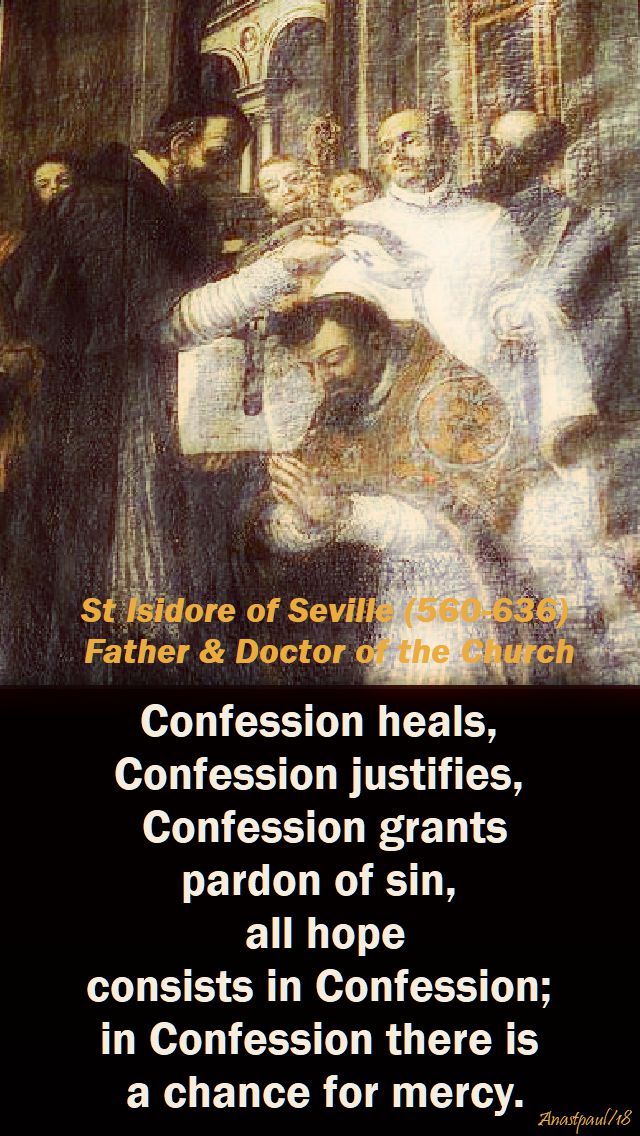
“Confession heals,
Confession justifies,
Confession grants pardon of sin,
all hope consists in Confession;
in Confession there is
a chance for mercy.”

St Isidore of Seville (560-636) Father & Doctor of the Churchconfession heals - st isidore - 4 april 2018

Posted in DOCTORS of the Church, EASTER, FATHERS of the Church, FEASTS and SOLEMNITIES, MORNING Prayers, QUOTES of the SAINTS, QUOTES on CONVERSION, QUOTES on FAITH, QUOTES on LOVE, QUOTES on PRAYER, QUOTES on REPENTANCE, QUOTES on SANCTITY, QUOTES on TRUST and complete CONFIDENCE in GOD, SPEAKING of .....

Quote/s of the Day – 3 April – Tuesday in the Easter Octave – Speaking of….. Seeking Sanctity from the Wisdom St Augustine

Quote/s of the Day – 3 April – Tuesday in the Easter Octave 
Speaking of ….. Seeking Sanctity from the Wisdom of St Augustine

Lord, teach me to know You
and to know myself.lord, teach me to know you and to know myself - st augustine - 3 april 2018

A Christian is:
a mind through which Christ thinks,
a heart through which Christ loves,
a voice through which Christ speaks
and a hand through which Christ helps.a cchristian is a mind through which christ thinks - st augustine - 3 april 2018

As the soul is the life of the body,
so God is the life of the soul.
As, therefore, the body perishes
when the soul leaves it,
so the soul dies
when God departs from it.as the soul is the life of the body - st augustine - 3 april 2018

For grace is given not because
we have done good works
but in order that,
we may be able,
to do them.for grace is given - st augustine - 3 april 2018

Since love grows within you,
so beauty grows.
For love is the beauty of the soul.

St Augustine (354-430) Father & Doctor of the Churchsince love grows within you - st augustine - 3 april 2018

Posted in EASTER, FEASTS and SOLEMNITIES, MORNING Prayers, QUOTES - J R R Tolkien and MORE, QUOTES on CONVERSION, QUOTES on LOVE, The RESURRECTION, The WORD, Thomas a Kempis

Thought for the Day – Easter Monday of the Easter Octave – 2 April 2018

Thought for the Day – Easter Monday of the Easter Octave – 2 April 2018

The Resurrection of Jesus Christ is the Figure of our spiritual resurrection.

“So they departed quickly from the tomb with fear and great joy, and ran to tell his disciples. And behold, Jesus met them and said, “Hail!” And they came up and took hold of his feet and worshiped him. Then Jesus said to them, “Do not be afraid; go and tell my brethren to go to Galilee, and there they will see me.”… Matthew 28:8-10

Let us represent to ourselves anew, the glory of the Sepulchre of Jesus.

“In this way we enter the depths of the Paschal mystery.   The astonishing event of the resurrection of Jesus is essentially an event of love:  the Father’s love in handing over His Son for the salvation of the world;  the Son’s love in abandoning Himself to the Father’s will for us all;  the Spirit’s love in raising Jesus from the dead in His transfigured body.   And there is more: the Father’s love which “newly embraces” the Son, enfolding Him in glory;  the Son’s love returning to the Father in the power of the Spirit, robed in our transfigured humanity.   From today’s solemnity, in which we relive the absolute, once-and-for-all experience of Jesus’s Resurrection, we receive an appeal to be converted to Love;   we receive an invitation to live by rejecting hatred and selfishness and to follow with docility in the footsteps of the Lamb that was slain for our salvation, to imitate the Redeemer who is “gentle and lowly in heart”, who is “rest for our souls” (cf. Mt 11:29).”

Pope Benedict 23 March 2008

easter monday - 2 april 2018 - the astonishing even of the resurrection - pope benedict

Adorable Lord, bestow on us grace to rise spiritually, by leaving the tomb of indifference, to lead a life of fervour.

At Easter we recall the words God spoke to Moses concerning the Paschal solemnity:  For it is the Phase – that is, the Passage – of the Lord.  Now we celebrate the Passage of our Lord from Death to Life and think upon our own passage from a life of tepidity to one of fervour, from an imperfect to a holy life.   Jesus, in leaving the Tomb, disengaged Himself from the winding-sheet in which His Sacred Body had been wrapped;  this should make us understand that we must extricate ourselves from the imperfections and bad habits, which for so long a time have kept out souls bound and motionless for good.   If we rise with Jesus and set ourselves free from the paralysed state in which our evil inclinations have retained us, they will infallibly disappear.   Our Risen Lord was clothed with the power of agility to teach us to despise all resistance of nature, to pass quickly out of its reach, to triumph over every obstacle and that our souls should tend upwards to Him alone.   If we are indeed risen with Christ we shall seek the things that are above and our whole being will be spiritualised, responding with agility to the promptings not of nature, but of grace.   May we be enabled fully to enter into the Mystery of the Resurrection-Life of Jesus and to receive the plenitude of His favours, offered to us at this time especially.

Jesus, in rising from the Sepulchre, clothed in light, wills that we should understand what is the beauty of a soul disengaged from the ties of nature and renewed in the spiritual life.   The soul, like Jesus, becomes luminous, the Holy Spirit enlightens it interiorly, by filling it with the knowledge of divine things;  it is possessed of a lustrous beauty and its virtues shine visibly, contributing to the edification of others.   By the impassibility of the Body of Jesus, we comprehend that grace raises the soul, by means of holy courage, above temptations;  it renders it invulnerable against the darts of the enemies of its salvation and gives it the power of mastering its downward tendencies. Such are the happy privileges granted to His faithful ones, who lovingly enter into the spirit of the Mystery of Easter.   Sufferings indeed we must still endure, for we are still on this side of the grave but if they serve only to raise us near to Jesus, we may be said to share already in the effects of His impassibility.   We range ourselves therefore around Him, to rejoice at the sight of the glory He received in His Resurrection and to honour the marvellous capabilities of His Adorable Body, by rendering ourselves worthy, by our fervour, to participate in them spiritually.

O my Saviour, I thank You for the favour You accord me, permitting me to partake in the glorious privileges of the new life You began.   Make me to be entirely renewed in the spirit of my mind so that, freed from the servitude of sense and natural affections, I may rise constantly towards You, with a pure and generous heart.

Aided by the grace Jesus bestows, I will endeavour to reproduce spiritually in myself, the capabilities observable in His Sacred Humanity after the Resurrection.

If by the Spirit, you mortify the deeds of the flesh, you shall live.

Father de Brant, Growth in the Knowledge of Our Lord volume 2, 1882

Posted in BREVIARY Prayers, CATHOLIC-PRAYERS OF THE CHURCH, DEVOTIO, EASTER, FEASTS and SOLEMNITIES, HYMNS, PRACTISING CATHOLIC, PRAYERS of the CHURCH

Our Morning Offering – 2 April – Easter Monday

Our Morning Offering – 2 April – Easter Monday

The beautiful ancient Easter sequence Victimae Paschali Laudes can be said or sung before the Gospel every day during the Octave:

Victimae Paschali Laudes

Christians, to the Paschal Victim
Offer your thankful praises!
A Lamb the sheep redeems;
Christ, who only is sinless,
Reconciles sinners to the Father.

Death and life have contended
in that combat stupendous:
The Prince of Life, who died, reigns immortal.

Speak, Mary, declaring
What you saw, wayfaring.
“The tomb of Christ, who is living,
The glory of Jesus’ resurrection;

Bright angels attesting,
The shroud and napkin resting.
Yes, Christ my hope is arisen;
To Galilee He goes before you.”

Christ indeed from death is risen,
our new life obtaining.
Have mercy, victor King, ever reigning!
Amen. Alleluia!++eater monday 2 april 2018 - Victimae Paschali Laudes - easter sequence

Posted in FEASTS and SOLEMNITIES, HOLY WEEK

29 March 2018 – Maundy/Holy Thursday

29 March 2018 – Maundy/Holy Thursday – The First Day of the Paschal Triduum

The History of Holy Thursday
Holy Thursday is more than just the lead-in to the events of Good Friday;  it is, in fact, the oldest of the celebrations of Holy Week.   And with good reason—Holy Thursday is the day on which Catholics commemorate the institution of three pillars of the Catholic Faith:  the Sacrament of Holy Communion, the priesthood and the Mass.   During the Last Supper, Christ blessed the bread and wine that He shared with His disciples with the very words that Catholic and Orthodox priests use today to consecrate the Body and Blood of Christ during the Mass and the Divine Liturgy.   In telling His disciples to “Do this in remembrance of Me,” Jesus instituted the Mass and made them the first priests.


Maundy Thursday:   A New Commandment
Near the end of the Last Supper, after Judas had left to arrange for the betrayal of Christ, Jesus said to His disciples, “A new commandment I give unto you:  That you love one another, as I have loved you, that you also love one another.”  The Latin word for “commandment,” mandatum, became the source of another name for Holy Thursday: Maundy Thursday.I give you a new commandment - maundy thursday

The Chrism Mass
On Holy Thursday, the priests of each diocese gather with their bishop to consecrate holy oils, which are used throughout the year for the sacraments of Baptism, Confirmation, Holy Orders and the Anointing of the Sick.   This ancient practice, which can be traced back as far as the fifth century, is known as the Chrism Mass.

(Chrism is a mixture of oil and balsam used for the holy oils.)   The gathering of all the priests in the diocese to celebrate this Mass with their bishop stresses the role of the bishop as a successor to the apostles.

The Mass of the Lord’s Supper
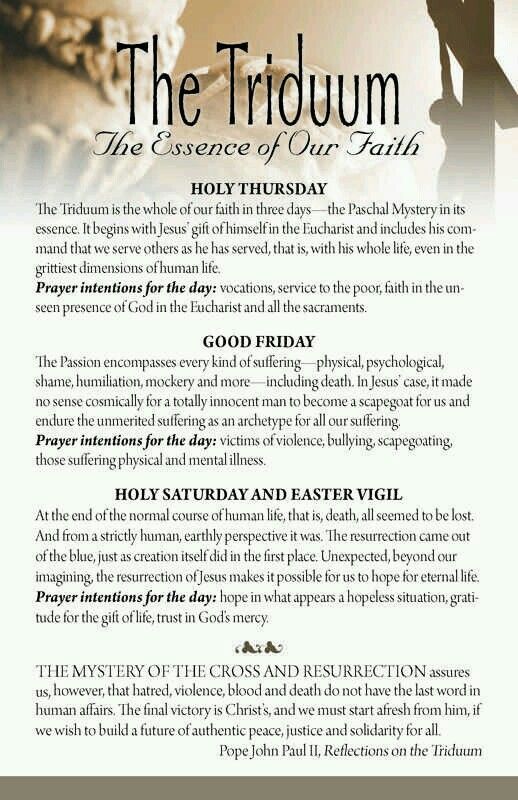
Except in very rare circumstances, there is only one Mass other than the Chrism Mass celebrated on Holy Thursday in each church:  the Mass of the Lord’s Supper, which is celebrated after sundown.   It commemorates the institution of the Sacrament of Holy Communion and it ends with the removal of the Body of Christ from the tabernacle in the main body of the church.   The Eucharist is carried in procession to another place where it is kept overnight, to be distributed during the commemoration of the Lord’s Passion on Good Friday (when no Mass is held and therefore no hosts are consecrated). After the procession, the altar is stripped bare and all bells in the church are silent until the Gloria at the Easter Vigil on Holy Saturday.st jp the essence of our truthholy week trad

Posted in DOCTORS of the Church, FATHERS of the Church, FEASTS and SOLEMNITIES, HOLY WEEK, LENT, MORNING Prayers, QUOTES of the SAINTS, QUOTES on SANCTITY, SUNDAY REFLECTIONS

Sunday Reflection – 25 March 2018 – Palm Sunday

Sunday Reflection – 25 March 2018 – Palm Sunday

LET US SING TO THE LORD A SONG OF LOVE
St Augustine (354-430) Father & Doctor of the Church

Sing to the Lord a new song;  His praise is in the assembly of the saints.   We are urged to sing a new song to the Lord, as new men who have learned a new song.   A song is a thing of joy, more profoundly, it is a thing of love.   Anyone, therefore, who has learned to love the new life has learned to sing a new song and the new song reminds us of our new life.   The new man, the new song, the new covenant, all belong to the one kingdom of God and so the new man will sing a new song and will belong to the new covenant.

There is not one who does not love something but the question is, what to love.   The psalms do not tell us not to love but to choose the object of our love.   But how can we choose unless we are first chosen?   We cannot love unless someone has loved us first. Listen to the apostle John:  We love him, because he first loved us.   The source of man’s love for God can only be found in the fact that God loved him first.   He has given us Himself as the object of our love and He has also given us its source.   What this source is you may learn more clearly from the apostle Paul who tells us:  The love of God has been poured into our hearts.   This love is not something we generate ourselves;  it comes to us through the Holy Spirit who has been given to us.

Since we have such an assurance, then, let us love God with the love He has given us.   As John tells us more fully:  God is love and whoever dwells in love dwells in God and God in him.   It is not enough to say:  Love is from God.   Which of us would dare to pronounce the words of Scripture:  God is love?   He alone could say it who knew what it was to have God dwelling within him.   God offers us a short route to the possession of Himself.   He cries out:  Love me and you will have me for you would be unable to love me if you did not possess me already.

My dear brothers and sons, fruit of the true faith and holy seed of heaven, all you who have been born again in Christ and whose life is from above, listen to me, or rather, listen to the Holy Spirit saying through me:   Sing to the Lord a new song.   Look, you tell me, I am singing.   Yes indeed, you are singing, you are singing clearly, I can hear you. But make sure that your life does not contradict your words.   Sing with your voices, your hearts, your lips and your lives:   Sing to the Lord a new song’.

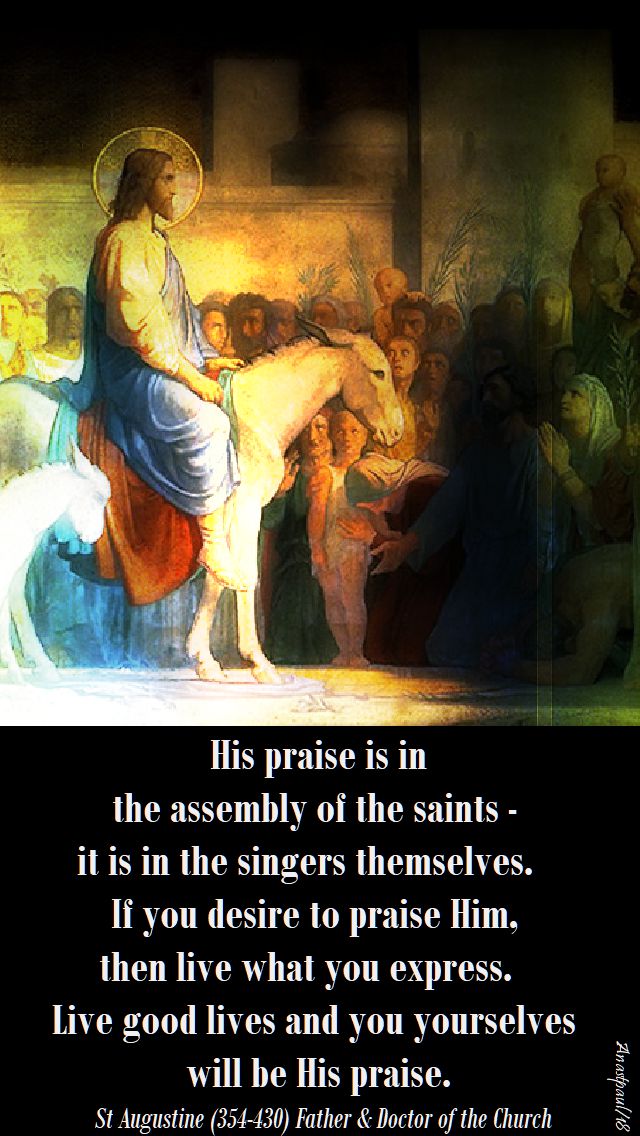
Now it is your unquestioned desire to sing of Him whom you love but you ask me how to sing His praises.   You have heard the words:  Sing to the Lord a new song and you wish to know what praises to sing.   The answer is:   His praise is in the assembly of the saints – it is in the singers themselves.   If you desire to praise Him, then live what you express.   Live good lives and you yourselves will be His praise.his praise is in the assembly of saints - st augustine - 25 march 2018 palm sunday

Posted in DOCTORS of the Church, FEASTS and SOLEMNITIES, HOLY WEEK, LENT, MORNING Prayers, PRAYERS of the CHURCH

Our Morning Offering – 25 March 2018 – Palm Sunday

Our Morning Offering – 25 March 2018 – Palm Sunday

To You, O Jesus
By St Bonaventure (1217-1274) Doctor of the Church

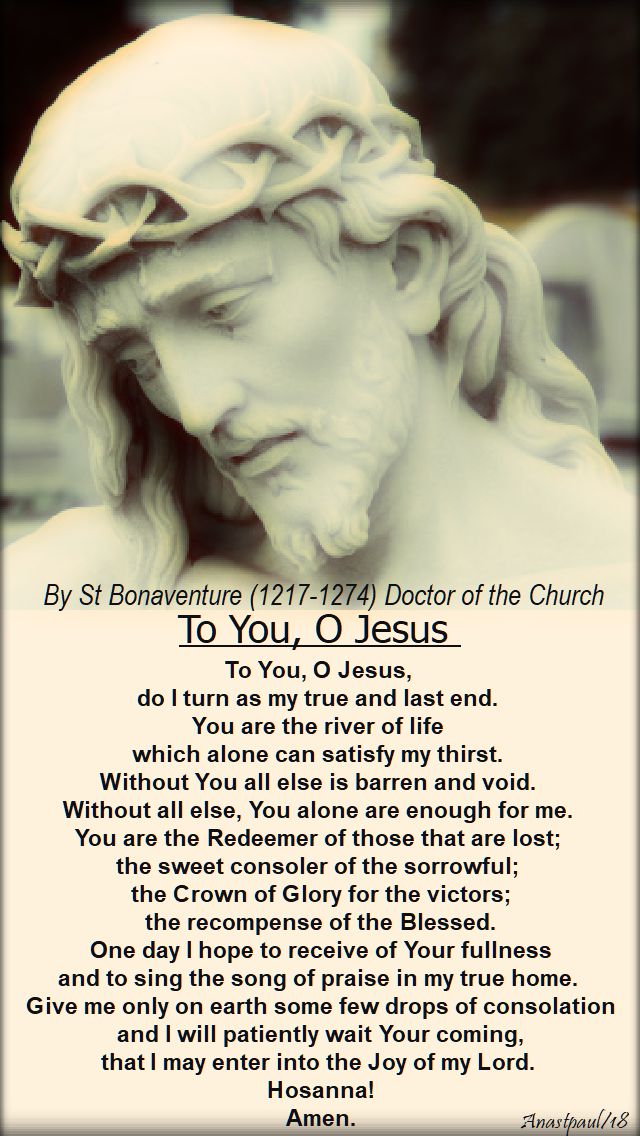
To You, O Jesus,
do I turn as my true and last end.
You are the river of life
which alone can satisfy my thirst.
Without You all else is barren and void.
Without all else, You alone are enough for me.
You are the Redeemer of those that are lost;
the sweet consoler of the sorrowful;
the Crown of Glory for the victors;
the recompense of the Blessed.
One day I hope to receive of Your fullness
and to sing the song of praise in my true home.
Give me only on earth some few drops of consolation
and I will patiently wait Your coming,
that I may enter into the Joy of my Lord.
Hosanna!
Amen.to you, o Jesus - by st bonaventure - palm sunday - 25 march 2018

Posted in DOGMA, FEASTS and SOLEMNITIES, HOLY WEEK, MARIAN TITLES, SAINT of the DAY

25 March 2018, Palm Sunday, the Solemnity of the Annunciation and Memorials of the Saints

Palm Sunday (2018)

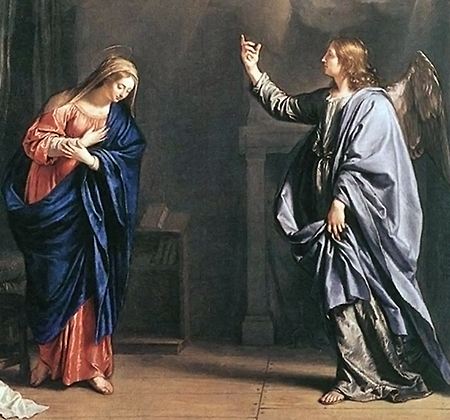
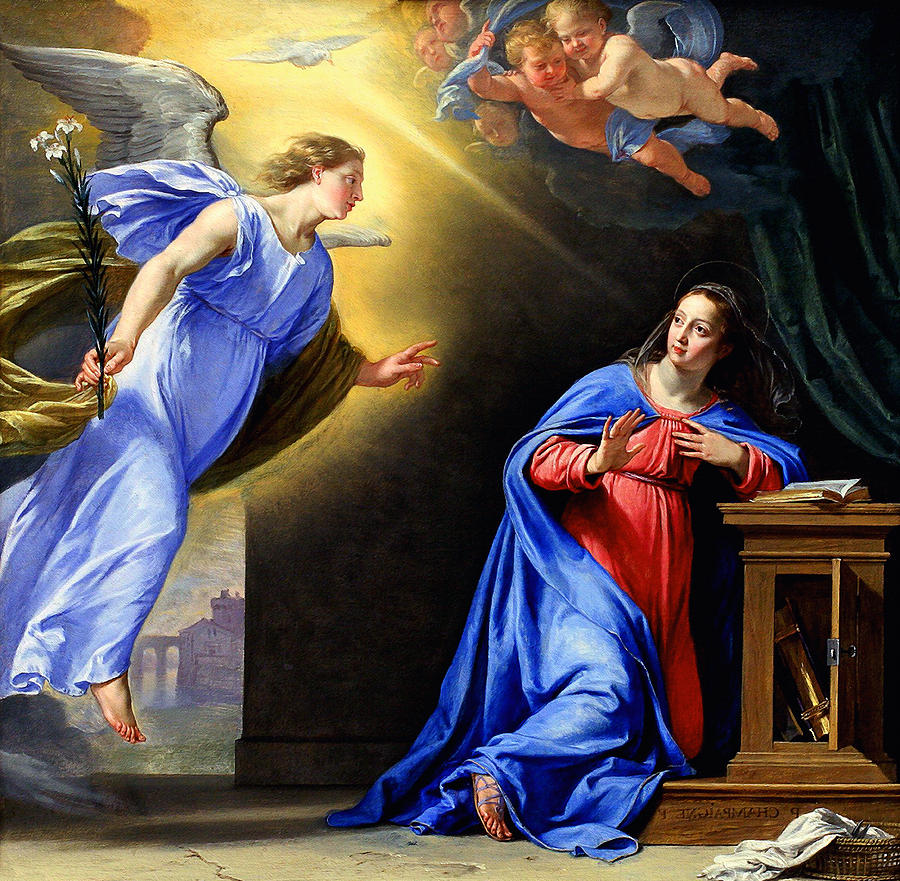
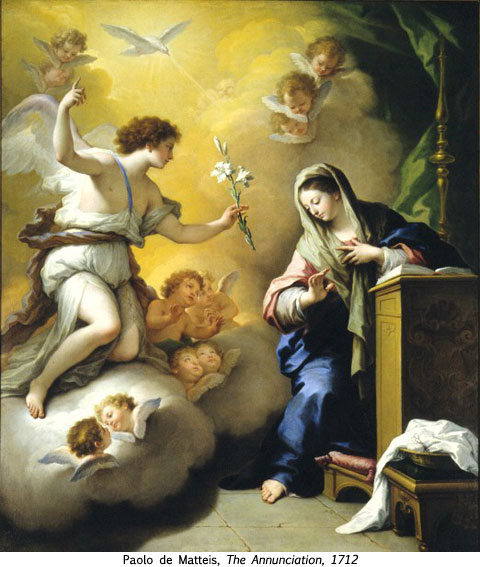
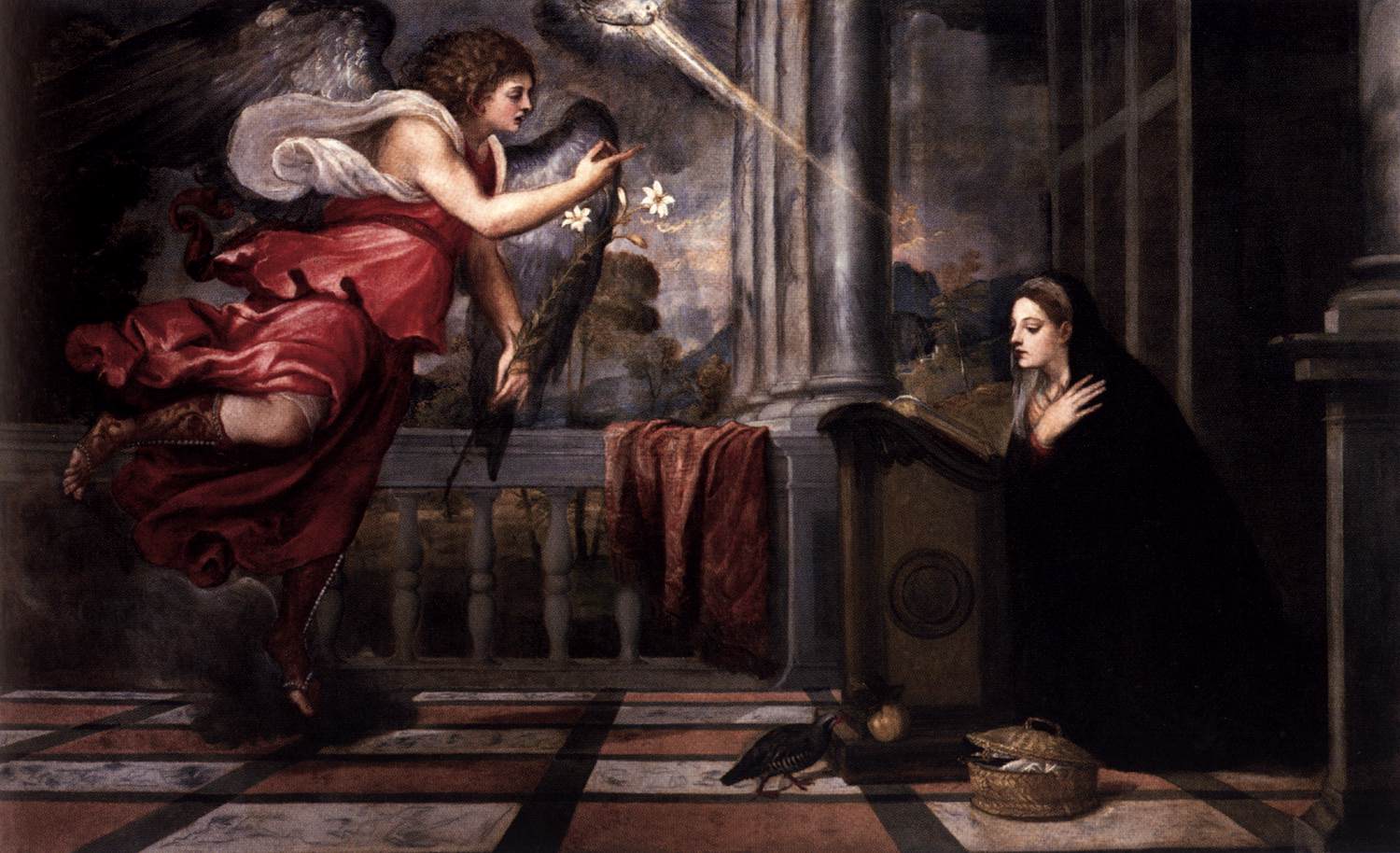
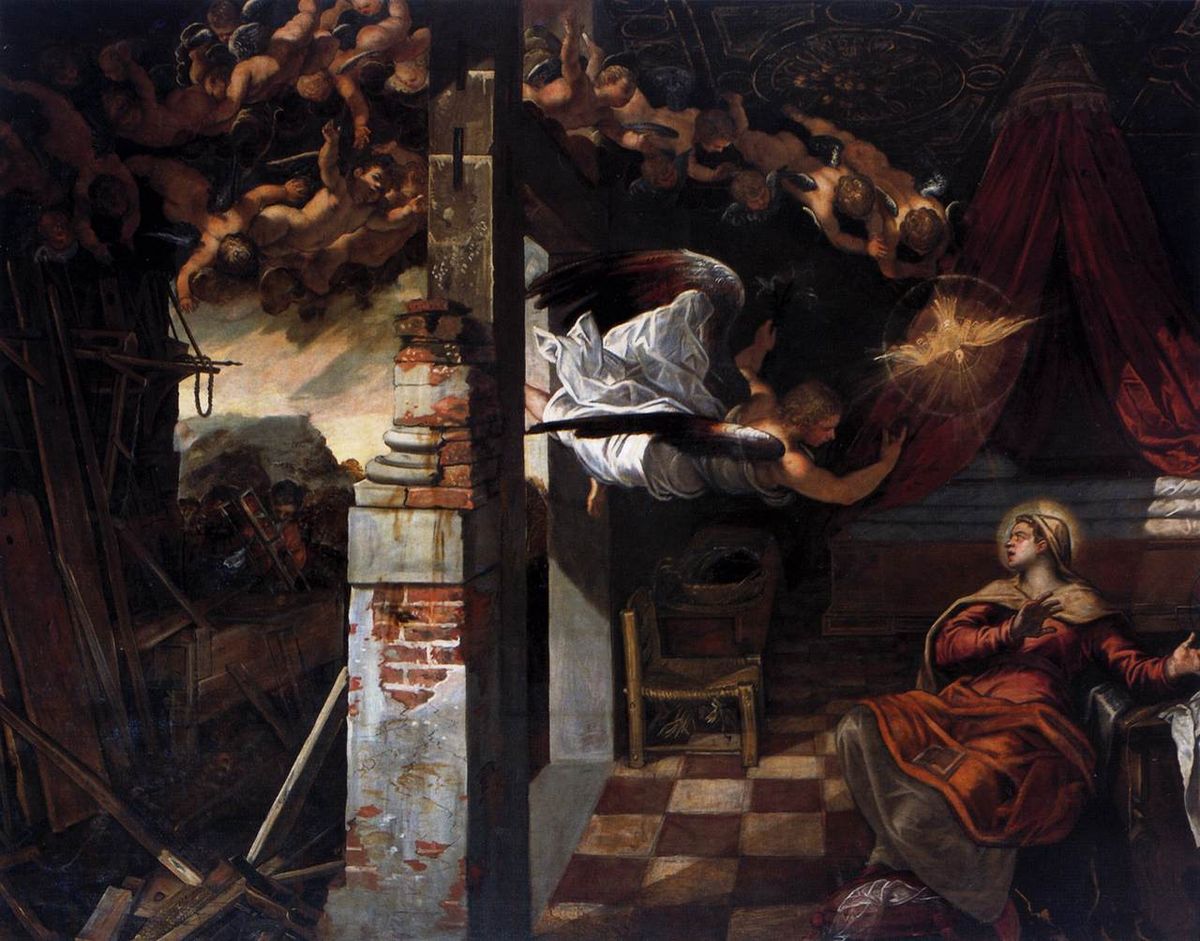
Annunciation of the Blessed Virgin Mary (Solemnity): The Annunciation to the Blessed Virgin Mary by Gabriel the Archangel that she was to be the Mother of God (Luke 1), the Word being made flesh through the power of the Holy Spirit.   The feast probably originated about the time of the Council of Ephesus, c 431 and is first mentioned in the Sacramentary of Pope Gelasius (died 496).   The Annunciation is represented in art by many masters, among them Fra Angelico, Hubert Van Eyck, Jan Van Eyck, Philippe de Champaigne (1 and 2 below), Ghirlandajo, Holbein the Elder, Lippi, Pinturicchio, Titian (2nd last below), Tintoretto (last below) and Del Sarto.Annunciation_Philippe de Champaigneannunciation-philippe-de-champaignethe annunciation - paolo de matteis 1712the-annunciation1200px-Zwiastowanie_Tintoretta

Our Lady of Betania:   Actually the name Betania means Bethany in Spanish. It was originally given this name by Maria Esperanza and was the site of their farm, in Venezuela.   Apparitions of the Blessed Virgin Mary were reported and eventually a small chapel was built here and the faithful began to gather, especially on Feast Days but throughout the year.

St Alfwold of Sherborne
St Barontius of Pistoia
St Desiderius of Pistoia
St Dismas
St Dula the Slave
Bl Emilian Kovch
Bl Everard of Nellenburg
Bl Herman of Zahringen
St Hermenland
St Humbert of Pelagius
Bl James Bird
Bl Josaphata Mykhailyna Hordashevska
St Kennocha of Fife
St Lucia Filippini
St Margaret Clitherow
Bl Margaretha Flesch
St Mariam Sultaneh Danil Ghattas
St Matrona of Barcelona
St Matrona of Thessaloniki
St Mona of Milan
St Ndre Zadeja
Bl Pawel Januszewski
St Pelagius of Laodicea
Bl Placido Riccardi
St Procopius
St Quirinus of Rome
Bl Tommaso of Costacciaro

262 Martyrs of Rome: A group 262 Christians martyred together in Rome. We know nothing else about them, not even their names.

Posted in FEASTS and SOLEMNITIES, MORNING Prayers, SAINT of the DAY, St JOSEPH

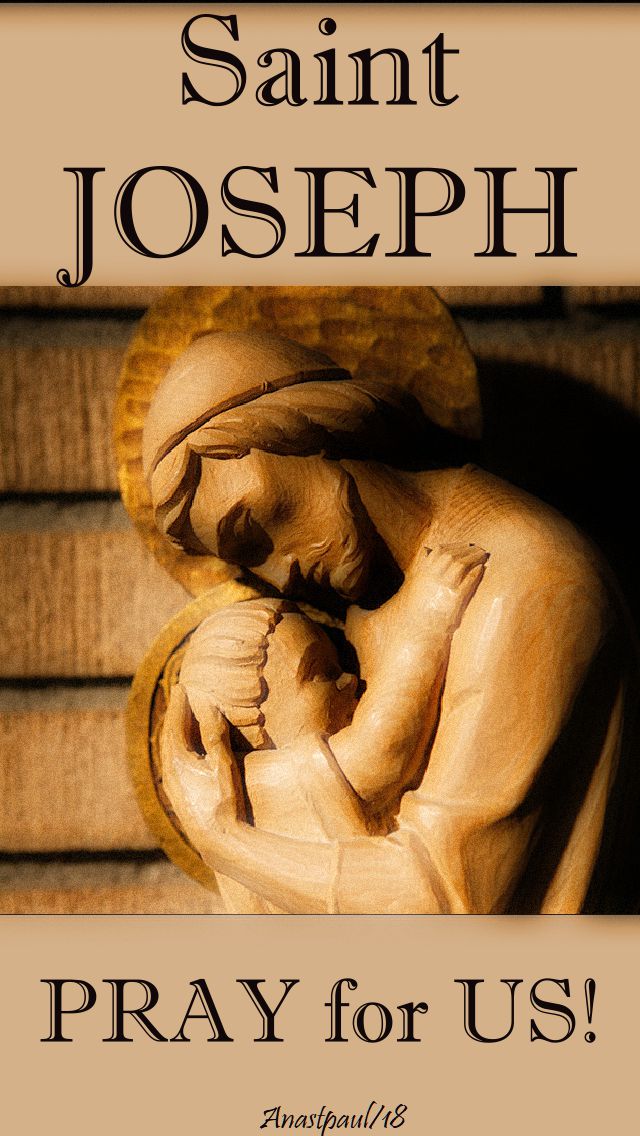
Thought for the Day 19 March – The Solemnity of the Feast of St Joseph, Spouse of the Blessed Virgin Mary and Patron of the Universal Church Go to Joseph

Thought for the Day 19 March – The Solemnity of the Feast of St Joseph, Spouse of the Blessed Virgin Mary and Patron of the Universal Church

Go to Joseph

J O S E P H
By Fr Francis Peffley

J
Joseph the Just Man

St John Paul in his apostolic exhortation “The Guardian of the Redeemer” calls Joseph the just man.   What does that mean?   It means that he was a holy man.   A righteous man.  A man of honesty, integrity, and virtue.    St Joseph is the greatest and holiest saint after the Blessed Mother herself.   In fact, some of the Doctors of the Church said that there was no grace ever given to any of the Saints (except Mary) that was not given to St Joseph as well.

St. Thomas Aquinas says that God gives grace proportionate to our office and to our state in life.   So if you are a husband and father, you will be given the grace to be a holy husband and father.   When someone has been ordained a priest he will be given the grace to be a priest.   Think how much grace St Joseph received to be the foster father of the Son of God and the virginal spouse of the Immaculate Conception.   So St Joseph is that just man.   He is the greatest of Saints because he was the closest one to Jesus and to the Blessed Mother.

As fathers and husbands you are called to holiness ‑ an obligation of every member of the Church.   It is not just the priests and nuns but everyone who is called to holiness. Every single person has this vocation ‑ the universal call to holiness.   We should ask ourselves, “Am I developing the virtues that St. Joseph has? Am I developing the integrity and character of St. Joseph?”

O
Joseph the Obedient one.

Joseph was truly obedient to the will of God in his life.   The Angel said, “Have no fear about taking Mary to be your wife.”   As soon as Joseph knew God’s will for him, he obeyed.   When the angel told Joseph that Herod was planning to destroy the child, Joseph immediately got up and began the flight to Egypt.

Some people ask if St Joseph was old.   This is due to the apocryphal writings of the early church, ancient writings which were not divinely inspired, or approved by the Church as Sacred Scripture.   These ancient writings say that when Joseph married the Blessed Mother he was 89 years old and that he died at the age of 111.   There is nothing in the Bible to suggest that St Joseph was so old.   We can be assured that Mary didn’t have to push St Joseph in a wheel chair through the desert.   Actually, I believe that Joseph was young and strong.   Obviously older than the Blessed Mother;  perhaps in his 20s or 30s. He was her guardian and protector. Scripture speaks about Mary’s betrothal to a man named Joseph.   It does not say he was an old man, as Simeon or Zachary.   So Joseph wasn’t as old as some would like to claim him to be.   Even in the ancient catacomb of Priscilla, Joseph was drawn without a beard showing him to be a young man.

But Joseph was an obedient man.   Whenever he was warned in a dream he always obeyed the will of God.   He never questioned Divine Providence.   Even though Mary was 8 3/4 months pregnant, Joseph had to believe it was God’s will for them to leave Nazareth and go down to Bethlehem.   This was to fulfil the prophecy of Micah that the Saviour would be born in Bethlehem.   Joseph abandoned himself to the will of God.   Ask yourself these questions:   “Am I obedient to the will of God?   Am I obedient to the Ten Commandments?   Am I obedient to the teaching of Christ and the teachings of the Church on marriage and family life?”   Go to St. Joseph to become obedient sons of the Church.

S
Joseph the Silent One.

There are no recorded words of St Joseph in the entire Bible.   There are words in the Old Testament for the great patriarch that we can apply to St Joseph.   But in the New Testament there are no recorded words for St Joseph.   He’s always there, though, as a silent presence.   In fact, even his death is wrapped in silence.   There is no account as to how Joseph was buried.   He’s a man of silence.   A strong man.   A man with a deep interior life.   Silence in our life helps us develop a life of prayer.   Joseph was a man of prayer who listened to the word of God.   He was not distracted by the many exterior things ‑ he was always a man of interior life.   Why?   Because God lived in his very house.

We picture St Joseph as a silent worker, as a craftsman, who suffered in silence as well. He did not complain and he did not grow angry at God and say, “Why are you doing this, why do we have to flee to Egypt?”   He was a man who accepted these things in silence. We should ask ourselves, “Do I have enough silence in my life?   Do I spend enough time in prayer with Jesus?   Do I listen to Jesus when he speaks to me during the Sunday readings?   Do I spend time in the Blessed Sacrament chapel listening to Jesus who is truly present?   Do I use my speech for lying, gossiping or backbiting?   Or, do I truly follow St. Joseph by being a man of integrity and silence?”

E
Joseph the Example.

Imagine the kind of man Joseph was.   God the Father picked Joseph out of the whole human race to be the man to raise his only begotten Son, Jesus Christ.   When you get a babysitter you don’t just pick anyone, even if it is for only a few hours.   Imagine entrusting your only son to the care of another person.   That is why adoption agencies have to be careful in selecting to whom they entrust other people’s children.   That is why God chose the very best.   He chose St Joseph to be a great example.

St Joseph was an example to Jesus in his words and in his actions.   He has been called the World’s Greatest Father.   Joseph was truly a father to Jesus in every way except for physical generation.   He was the father who taught Jesus how to speak, how to read and how to make doors and ploughs.   Note the example that St Joseph gave the Christ child and remember the saying, “Your example shouts so loudly I cannot hear what you say.” Isn’t that the way children look at their parents?   What was the example that St. Joseph gave to the Christ child?   He was the perfect example, the world’s greatest father, the educator of Jesus.

Joseph homeschooled Jesus and taught him the virtues.   This was the Son of God who always had the beatific vision but (as the catechism says) He had to grow in the experiential and had to develop as a boy develops.   Jesus looked up to St Joseph, even imitating his mannerisms.   Let us ask ourselves, “What examples are we giving? What example do you give to your wife? To your children?   Do you teach your children the faith? Do you study your own Catholic Faith by reading at least 10 ‑ 20 minutes every day?   Do you make good use of your travel time to deepen your faith, so you can be a good example to your wife and children?   Do you go on retreats?   Are you living out your vocation as leader of your family?”

P
Joseph the Protector and Patron.

St Joseph is our benefactor who prays for us.   Joseph is the patron Saint of fathers, husbands and workers.   We should always pray that we will have the same kind of death that St Joseph had, dying in the arms of Jesus and Mary.   He is the patron Saint of a happy death, which means dying in the arms of Jesus and Mary and Holy Mother Church.   Go to St. Joseph for the grace of a happy death.

He is also the patron Saint of the universal Church.   Everything that St Joseph did for Jesus he now does for the Church.   Why?   Because the Catholic Church is the mystical body of Christ himself.   The Blessed Mother is the mother of the Church and St Joseph is the foster father and guardian of the Church.

St Joseph lately has become the patron Saint of selling houses.   I have to wonder about Aunt Selma selling her house by burying a statue of St Joseph facing east.   I have to wonder if that is what God really wants us to do.   If you want to sell your house, place a statue of St. Joseph on your mantle and do a nine-day novena to him.   You don’t have to suffocate the guy!   Keep him there and ask his intercession.   He will help you sell your house or keep your job in every way.   Remember that Joseph is the protector and the guardian of the whole Church, as well as ourselves as individuals.   Ask yourself the question, “Do I pray to St. Joseph every day?   Do I pray to him for a happy death?”   Pray to him for your whole family that you will have a happy death.   And ask St. Joseph to help you protect your family from all the immorality on TV or in the media.

H
St Joseph the Helper of the Blessed Mother.

St Joseph was the virginal spouse of the Blessed Virgin Mary.   In God’s plan of salvation he was a loving husband, kind, considerate, affectionate and self-sacrificing.   St Joseph had an awesome responsibility with the Blessed Virgin.   They worked as a team.   St Joseph had the responsibility for spiritual leadership since he was the head of the family. God’s message from the angel was revealed to him even though the Blessed Mother was much holier through her Immaculate Conception.   Obviously, Jesus as the Son of God and creator was far greater but St. Joseph was chosen because he was the head of that family, just as every one of you is the spiritual head of your family.

Joseph and Mary worked as a team.   Remember TEAM spells “Together Everyone Achieves More.”   Develop teamwork with your wife.   I love the story that Zig Zigler tells of courtship after marriage using the example of Belgian horses.   These huge Belgian horses could only pull 8,000 pounds individually.   But when they are harnessed together, two horses working together can pull 32,000 pounds of weight.   Isn’t that amazing?   It almost defies every law of mathematics.   So when you are joined with your spouse in an effort to move your family towards God, you will accomplish much more than if you were to do it individually.   Ask yourself this question, “Am I a helper to my spouse?” Your vocation is really to get your spouse and your children to Heaven.   This is your ultimate vocation in life.

Let us reflect on St Joseph:  that Just man, that loving leader, that Obedient man;   let us reflect on his Silence, his Example and his Patronage of our own lives and of the Church, and let us to try to imitate St Joseph the Helper of Mary.

God bless you.

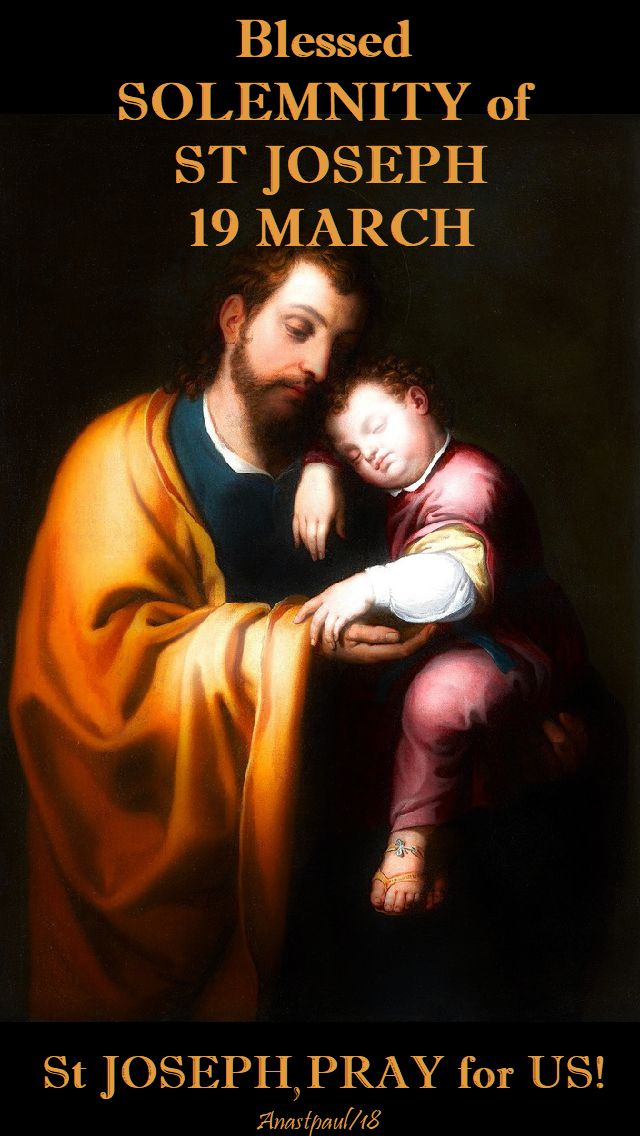
Happy and Blessed Solemnity of the Great St Joseph!blessed solemnity of st joseph - 19 march 2018
Fr Francis Peffley currently serves as parochial vicar at Saint John the Apostle in Leesburg, Virginia.

 

Posted in BREVIARY Prayers, DOCTORS of the Church, FEASTS and SOLEMNITIES, MORNING Prayers, QUOTES of the SAINTS, SAINT of the DAY, St JOSEPH, The WORD

One Minute Reflection – 19 March – The Solemnity of the Feast of St Joseph, Spouse of the Blessed Virgin Mary and Patron of the Universal Church

One Minute Reflection – 19 March – The Solemnity of the Feast of St Joseph, Spouse of the Blessed Virgin Mary and Patron of the Universal Church

Joseph, her husband, was an upright man...Matthew 1:19joseph her husband - matthew 1 19

REFLECTION – Saint Joseph was the just man by his constant fidelity, an effect of justice; by his perfect discretion, a sister to prudence; by his upright conduct, a mark of strength and by his inviolable chastity, a flower of temperance…St Albert the Great (1200-1280) Doctor of the Churchst joseph was the just man - st albert the great - 19 march 2018

PRAYER – Almighty God, at the beginning of our salvation, when Mary conceived Your Son and brought Him forth into the world, You placed them under Joseph’s watchful care. May his prayer still guide us and help Your Church, to be an equally faithful guardian of Your Mysteries and a sign of Christ to mankind. Through Your Son, our Saviour, in unity of the Holy Spirit, one God forever, amen.st joseph pray for us - 19 march 2018

Posted in ACCOUNTANTS, MONEY MANAGERS etc, CARPENTERS, WOODWORKERS, JOINERS, CABINETMMAKERS, CHEFS and/or BAKERS, CONFECTIONERS, EMMIGRANTS / IMMIGRANTS, FEASTS and SOLEMNITIES, Of a Holy DEATH & AGAINST A SUDDEN DEATH, of the DYING, FINAL PERSEVERANCE, DEATH of CHILDREN, DEATH of PARENTS, Of LAWYERS & CANON Lawyers, Attorneys, Solicitors, Barristers, Notaries, Para-Legals, Of PARENTS & FAMILIES of LARGE Families, PATRONAGE - HAPPY MARRIAGES, of MARRIED COUPLES, PATRONAGE - HOUSE HUNTERS, HOUSE SELLERS, PATRONAGE - of BASKET-WEAVERS, CRAFTSMEN, PATRONAGE - of MOTHERS, MOTHERHOOD, PATRONAGE - ORPHANS,ABANDONED CHILDREN, PATRONAGE - THE UNIVERSAL CHURCH, PATRONAGE-ENGINEERS, Electrical, Mechanical etc, PREGNANCY, SAINT of the DAY, St JOSEPH, TEACHERS, LECTURERS, INSTRUCTORS, WORKERS

Saint of the Day – 19 March – The Solemnity of St Joseph, Spouse of the Most Blessed Virgin Mary, Mother of God and Patron of the Universal Church

Saint of the Day – 19 March – The Solemnity of St Joseph, Spouse of the Most Blessed Virgin Mary, Mother of God and Patron of the Universal Church.   The name ‘Joseph’ means “whom the Lord adds”.   Patronages • against doubt and hesitation • accountants • all the legal professions • bursars • cabinetmakers • carpenters • cemetery workers • children • civil engineers • confectioners • craftsmen • the dying • teachers • emigrants • exiles • expectant mothers • families • fathers • furniture makers • grave diggers • happy death • holy death • house hunters • immigrants • joiners • labourers • married couples • orphans • against Communism • pioneers • pregnant women • social justice • teachers • travellers • the unborn • wheelwrights • workers • workers • Catholic Church • Oblates of Saint Joseph • for protection of the Church • Universal Church • Vatican II • Americas • Austria • Belgium • Bohemia • Canada • China • Croatian people • Korea • Mexico • New France • New World • Peru • Philippines • Vatican City • VietNam • Canadian Armed Forces • Papal States • 46 dioceses • 26 cities • states and regions.

St Joseph is invoked as patron for many causes.   He is the patron of the Universal Church. He is the patron of the dying because Jesus and Mary were at his death-bed.   He is also the patron of fathers, of carpenters and of social justice.   Many religious orders and communities are placed under his patronage.

St Joseph, the spouse of the Blessed Virgin Mary and the foster-father of Jesus, was probably born in Bethlehem and probably died in Nazareth.   His important mission in God’s plan of salvation was “to legally insert Jesus Christ into the line of David from whom, according to the prophets, the Messiah would be born, and to act as his father and guardian” (Directory on Popular Piety and the Liturgy).   Most of our information about St. Joseph comes from the opening two chapters of St Matthew’s Gospel.   No words of his are recorded in the Gospels;  he was the “silent” man.   We find no devotion to St Joseph in the early Church.   It was the will of God that the Virgin Birth of Our Lord be first firmly impressed upon the minds of the faithful.   He was later venerated by the great saints of the Middle Ages.   Pius IX (1870) declared him patron and protector of the universal family of the Church.

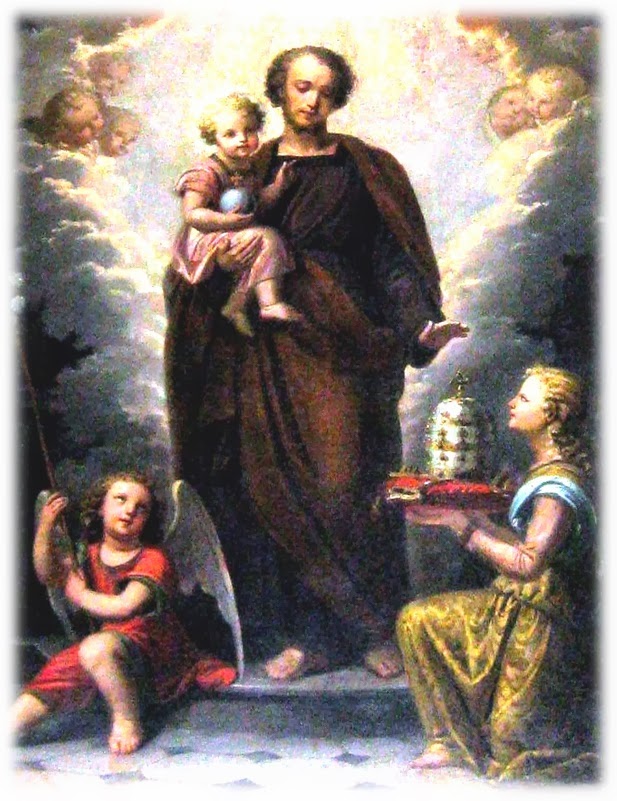
st-joseph-patron-of-the-church-unknown-19th-century-italy
Unknown artist, 19th century, Italian

St Joseph was an ordinary manual labourer although descended from the royal house of David.   In the designs of Providence he was destined to become the spouse of the Mother of God.   His high privilege is expressed in a single phrase, “Foster-father of Jesus.”   About him Sacred Scripture has little more to say than that he was a just man-an expression which indicates how faithfully he fulfilled his high trust of protecting and guarding God’s greatest treasures upon earth, Jesus and Mary.

The darkest hours of his life may well have been those when he first learned of Mary’s pregnancy;  but precisely in this time of trial Joseph showed himself great.   His suffering, which likewise formed a part of the work of the redemption, was not without great providential import:  Joseph was to be, for all times, the trustworthy witness of the Messiah’s virgin birth.   After this, he modestly retires into the background of holy Scripture.

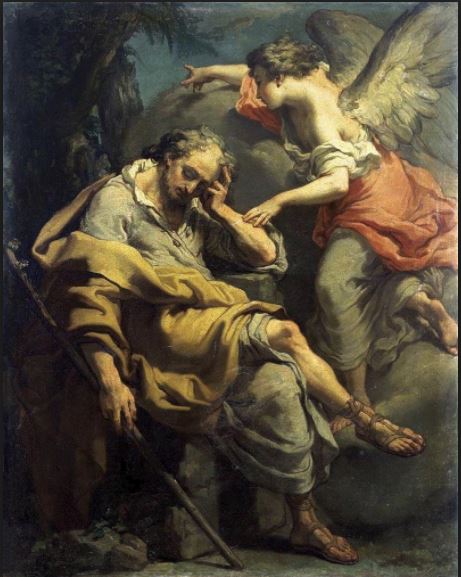
dream of st joseph

Of St Joseph’s death the Bible tells us nothing.   There are indications, however, that he died before the beginning of Christ’s public life.   His was the most beautiful death that one could have, in the arms of Jesus and Mary.   Humbly and unknown, he passed his years at Nazareth, silent and almost forgotten he remained in the background through centuries of Church history.   Only in more recent times has he been accorded greater honour.   Liturgical veneration of St Joseph began in the fifteenth century, fostered by Sts Brigid of Sweden and Bernadine of Siena.   St Teresa of Avila, too, did much to further his cult.

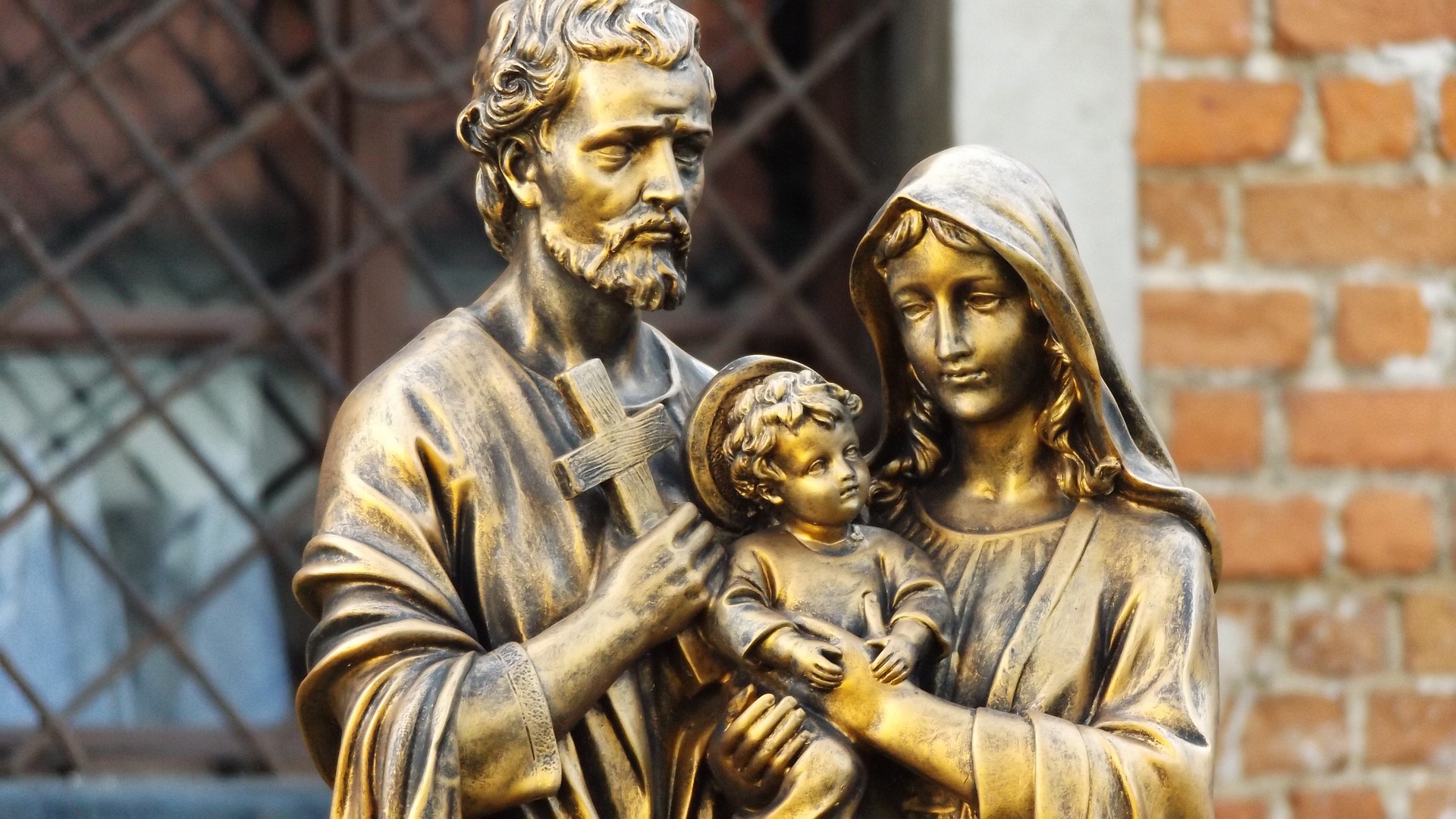
At present there are two major feasts in his honour.   Today 19 our veneration is directed to him personally and to his part in the work of redemption and is his main Feast and a Solemnity in the Universal Church, while on 1 May we honour him as the patron of workmen throughout the world and as our guide in the difficult matter of establishing equitable norms regarding obligations and rights in the social order….Excerpted from The Church’s Year of Grace, Pius Parschj m and joseph

COLLECT PRAYER

Grant, we pray, almighty God, that by Saint Joseph’s intercession Your Church may constantly watch over the unfolding of the mysteries of human salvation, whose beginnings You entrusted to his faithful care.   Through our Lord Jesus Christ, your Son, who lives and reigns with you in the unity of the Holy Spirit, one God, for ever and ever.

Posted in FEASTS and SOLEMNITIES, SAINT of the DAY, St JOSEPH

Memorials of the Saints – 19 March

St Joseph (Solemnity)

St Adrian of Maastricht
St Alkmund of Northumbria
St Amantius of Wintershoven
Bl Andrea Gallerani
Bl Anton Muzaj
St Apollonius of Braga
St Auxilius of Ireland
Bl Clement of Dunblane
St Colocer of Saint-Brieuc
St Corbasius of Quimperlé
St Cuthbert of Brittany
St Gemus
Bl Isnard de Chiampo
Bl Jan Turchan
Bl John of Parma
St John the Syrian of Pinna
St Lactali of Freshford
St Landoald of Maastricht
St Leontinus of Braga
St Leontinus of Saintes
Bl Marcel Callo – Martyr
Bl Mark of Montegallo
St Pancharius of Nicomedia
Bl Sibyllina Biscossi

Martyrs of Sorrento:  A group of three sisters and a brother who were martyred together. We have little more than their names – Mark, Quartilla, Quintilla and Quintius. They were martyred in Sorrento, Italy, date unknown.
Mark
Quartilla
Quintilla
Quintius

Martyred in the Spanish Civil War
• Blessed Alberto Linares de La Pinta
• Blessed Jaume Trilla Lastra

Posted in CATHOLIC Quotes, FEASTS and SOLEMNITIES, MARIAN QUOTES, MARIAN TITLES, MARY, MATER ECCLESIAE, PAPAL DECREE, The BLESSED VIRGIN MARY

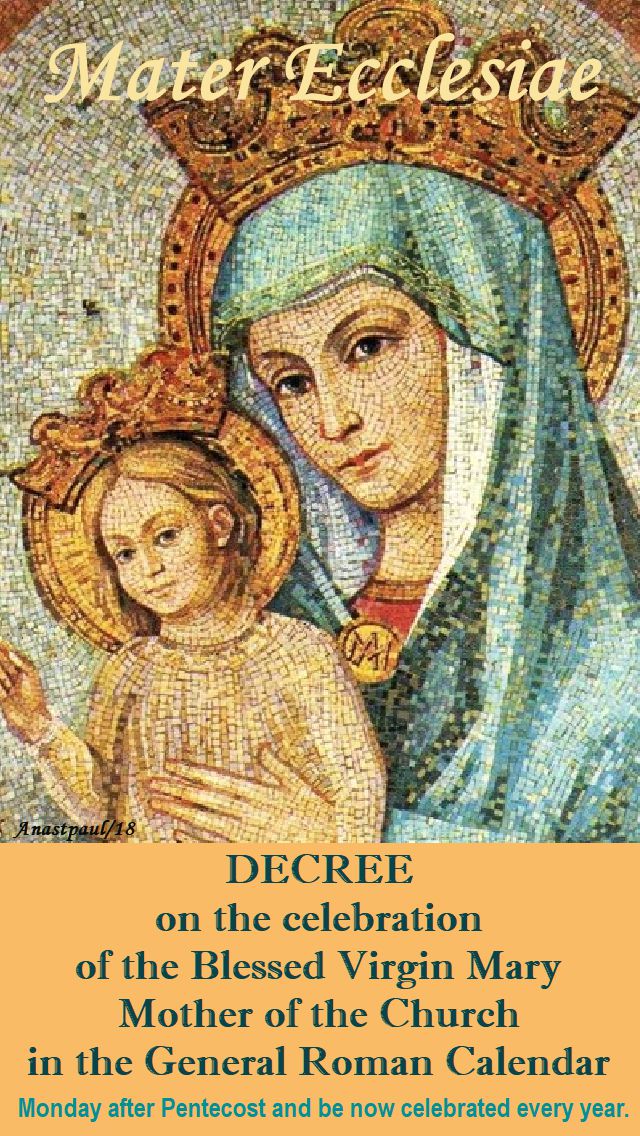
Pope Francis institutes new celebration of Mary, Mother of the Church

Pope Francis institutes new celebration of Mary, Mother of the Church

Congregation of Divine Worship and the Discipline of the Sacraments

DECREE
on the celebration
of the Blessed Virgin Mary
Mother of the Church
in the General Roman Calendar

The joyous veneration given to the Mother of God by the contemporary Church, in light of reflection on the mystery of Christ and on his nature, cannot ignore the figure of a woman (cf. Gal 4:4), the Virgin Mary, who is both the Mother of Christ and Mother of the Church.

In some ways this was already present in the mind of the Church from the premonitory words of Saint Augustine and Saint Leo the Great.   In fact the former says that Mary is the mother of the members of Christ, because with charity she co-operated in the rebirth of the faithful into the Church, while the latter says that the birth of the Head is also the birth of the body, thus indicating that Mary is at once Mother of Christ, the Son of God, and mother of the members of his Mystical Body, which is the Church.   These considerations derive from the divine motherhood of Mary and from her intimate union in the work of the Redeemer, which culminated at the hour of the cross.

Indeed, the Mother standing beneath the cross (cf. Jn 19:25), accepted her Son’s testament of love and welcomed all people in the person of the beloved disciple as sons and daughters to be reborn unto life eternal.   She thus became the tender Mother of the Church which Christ begot on the cross handing on the Spirit.   Christ, in turn, in the beloved disciple, chose all disciples as ministers of his love towards his Mother, entrusting her to them so that they might welcome her with filial affection.

As a caring guide to the emerging Church, Mary had already begun her mission in the Upper Room, praying with the Apostles while awaiting the coming of the Holy Spirit (cf. Acts 1:14).   In this sense, in the course of the centuries, Christian piety has honoured Mary with various titles, in many ways equivalent, such as Mother of Disciples, of the Faithful, of Believers, of all those who are reborn in Christ and also as “Mother of the Church” as is used in the texts of spiritual authors as well as in the Magisterium of Popes Benedict XIV and Leo XIII.

Thus the foundation is clearly established by which Blessed Paul VI, on 21 November 1964, at the conclusion of the Third Session of the Second Vatican Council, declared the Blessed Virgin Mary as “Mother of the Church, that is to say of all Christian people, the faithful as well as the pastors, who call her the most loving Mother” and established that “the Mother of God should be further honoured and invoked by the entire Christian people by this tenderest of titles”.

Therefore the Apostolic See on the occasion of the Holy Year of Reconciliation (1975), proposed a votive Mass in honour of Beata Maria Ecclesiæ Matre, which was subsequently inserted into the Roman Missal.   The Holy See also granted the faculty to add the invocation of this title in the Litany of Loreto (1980) and published other formularies in the Collection of Masses of the Blessed Virgin Mary (1986).   Some countries, dioceses and religious families who petitioned the Holy See were allowed to add this celebration to their particular calendars.

Having attentively considered how greatly the promotion of this devotion might encourage the growth of the maternal sense of the Church in the pastors, religious and faithful, as well as a growth of genuine Marian piety, Pope Francis has decreed that the Memorial of the Blessed Virgin Mary, Mother of the Church, should be inscribed in the Roman Calendar on the Monday after Pentecost and be now celebrated every year.

This celebration will help us to remember that growth in the Christian life must be anchored to the Mystery of the Cross, to the oblation of Christ in the Eucharistic Banquet and to the Mother of the Redeemer and Mother of the Redeemed, the Virgin who makes her offering to God.

The Memorial therefore is to appear in all Calendars and liturgical books for the celebration of Mass and of the Liturgy of the Hours.   The relative liturgical texts are attached to this decree and their translations, prepared and approved by the Episcopal Conferences, will be published after confirmation by this Dicastery.

Where the celebration of the Blessed Virgin Mary, Mother of the Church, is already celebrated on a day with a higher liturgical rank, approved according to the norm of particular law, in the future it may continue to be celebrated in the same way.

Anything to the contrary notwithstanding.

From the Congregation of Divine Worship and the Discipline of the Sacraments, 11 February 2018, the memorial of the Blessed Virgin Mary of Lourdes.

Robert Card. Sarah
Prefect

+ Arthur Roche
Archbishop Secretarydecree - mater ecclesiae - new memorial monday after pentecost - 4 march 2018

Posted in FEASTS and SOLEMNITIES, MORNING Prayers, PAPAL SERMONS, QUOTES on the CHURCH, SAINT of the DAY, The BLESSED VIRGIN MARY

Thought for the Day – 22 February – The Feast of the Chair of Saint Peter

Thought for the Day – 22 February – The Feast of the Chair of Saint Peter

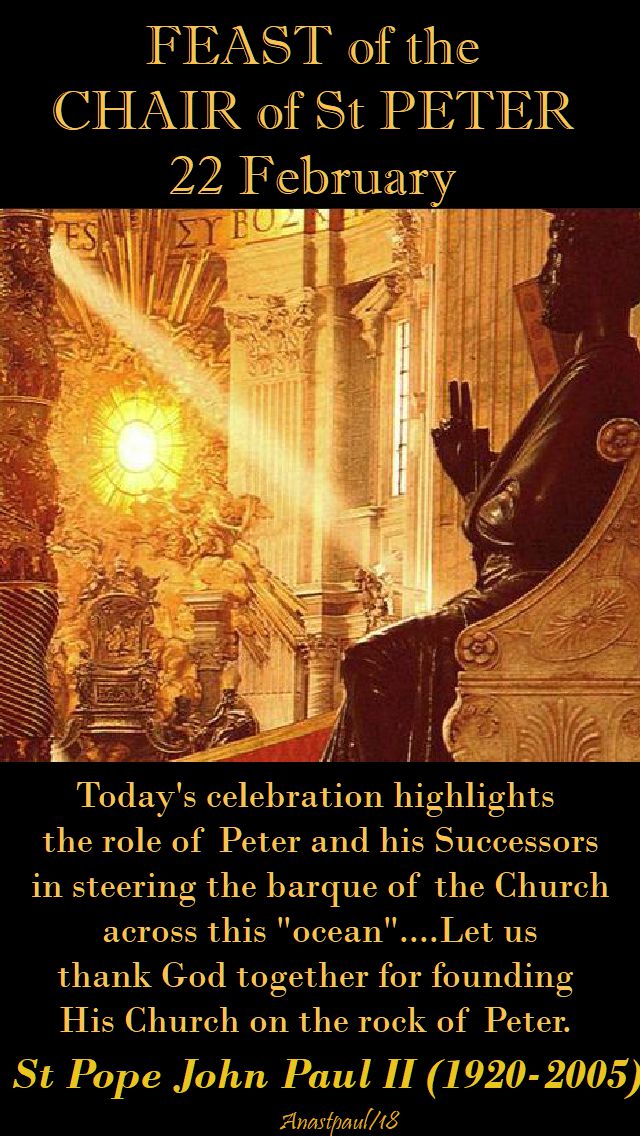
Today’s celebration highlights the role of Peter and his Successors in steering the barque of the Church across this “ocean”….  Let us thank God together for founding His Church on the rock of Peter.   As the opening prayer suggests, let us pray intensely that amid the upheavals of the world, she may not be shaken but advance with courage and trust.

By virtue of the transforming experience of the Good Shepherd, Peter described himself, in his Letter to the Churches of Asia Minor, as “a witness of the sufferings of Christ as well as a partaker in the glory that is to be revealed” (1 Pt 5: 1).   He urges “the elders” to tend the flock of God and become examples to it (cf. 1 Pt 5: 2-3).   Today, dear friends, this exhortation is addressed particularly to you, whom the Good Shepherd has wished to associate in the most eminent way with the ministry of Peter’s Successor.   Be faithful to your mission and ready to lay down your lives for the Gospel.   The Lord is asking this of you, and the Christian people who have gathered around you today with joy and affection expect it of you.

“I have prayed for you that your faith may not fail” (Lk 22: 32).   This is what the Lord said to Simon Peter at the Last Supper.   Jesus’ words, fundamental for Peter and his Successors, also spread light and comfort to those who cooperate more closely in their ministry.   Today, …Christ is repeating to each of you:  “I have prayed for you” that your faith will not fail in the situations in which your fidelity to Christ, to the Church, to the Pope, may be put to the greatest test.

May this prayer, which never ceases to flow from the Good Shepherd’s heart, always be your strength!   Have no doubt that just as it was for Christ and for Peter, so it will be for you:  your most effective witness will always be one that is marked by the Cross.   The Cross is God’s chair in the world.   On it Christ has offered humanity the most important lesson, that of loving one another as He has loved us (cf. Jn 13: 34): even to the ultimate gift of oneself.feast of the chair of st peter - 22 feb 2018 - today's celebration highlights - st john paul

The Mother of Christ and of the disciples, Mary Most Holy, always stands beneath the Cross.   The Lord entrusted us to her when He said:  “Woman, behold, your son!” (Jn 19: 26).   Since the Blessed Virgin, Mother of the Church, protected Peter and the Apostles in a special way, she will not fail to protect the Successor of Peter and his collaborators.  May this consoling certainty encourage you not to be afraid of trials and difficulties.  But, reassured by God’s constant protection, let us obey together the command of Christ, who vigorously asked Peter, and with him the Church, to put out into the deep: “Duc in altum” (Lk 5: 4).   Yes, dear Brothers, let us put out into the deep, let us cast our nets for the catch and let us “go forward in hope!”  (Novo millennio ineunte, n. 58).

Christ, the Son of the living God, is the same yesterday and today and forever. Amen!…Excerpt from the Homily of St John Paul on Thursday, 22 February 2001, Feast of Saint Peter’s Chair

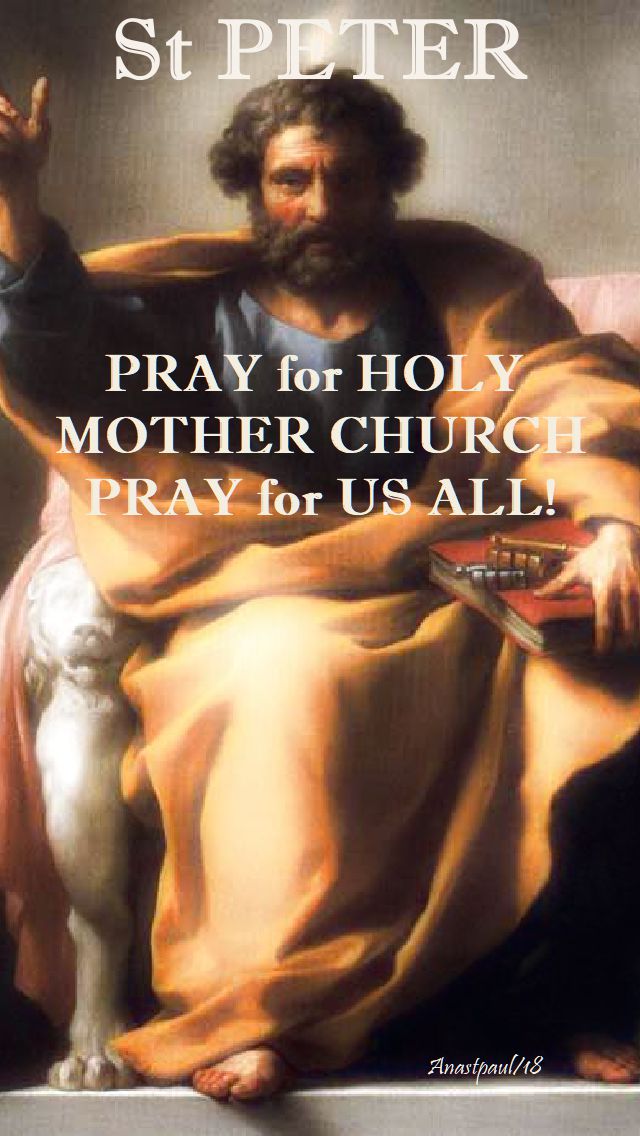
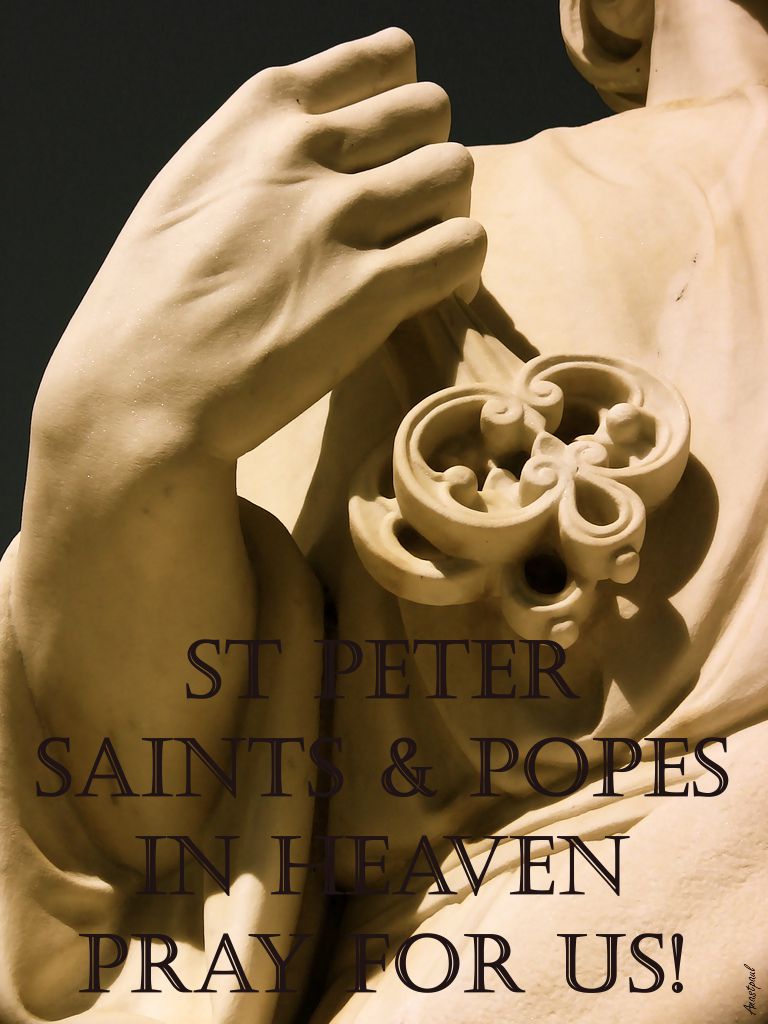
St Peter Pray for Holy Mother Church, Pray for us all!st peter - pray for us - 22 feb 2018

Posted in DOCTORS of the Church, FATHERS of the Church, FEASTS and SOLEMNITIES, MORNING Prayers, QUOTES of the SAINTS, QUOTES on the CHURCH, SAINT of the DAY

Quote/s of the Day – 22 February – The Feast of the Chair of Saint Peter

Quote/s of the Day – 22 February – The Feast of the Chair of Saint Peter

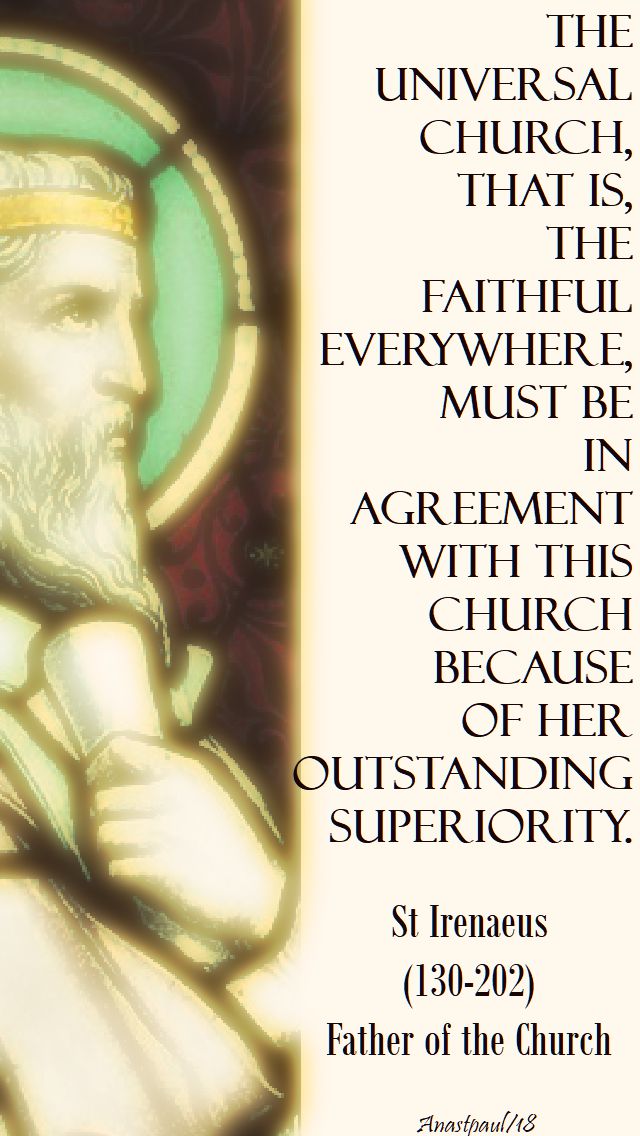
“The universal Church, that is,
the faithful everywhere, must be
in agreement with this Church
because of her outstanding superiority.”

St Irenaeus, Bishop of Lyons (130-202) Father of the Churchthe universal church - st irenaeus - 22 feb 2018

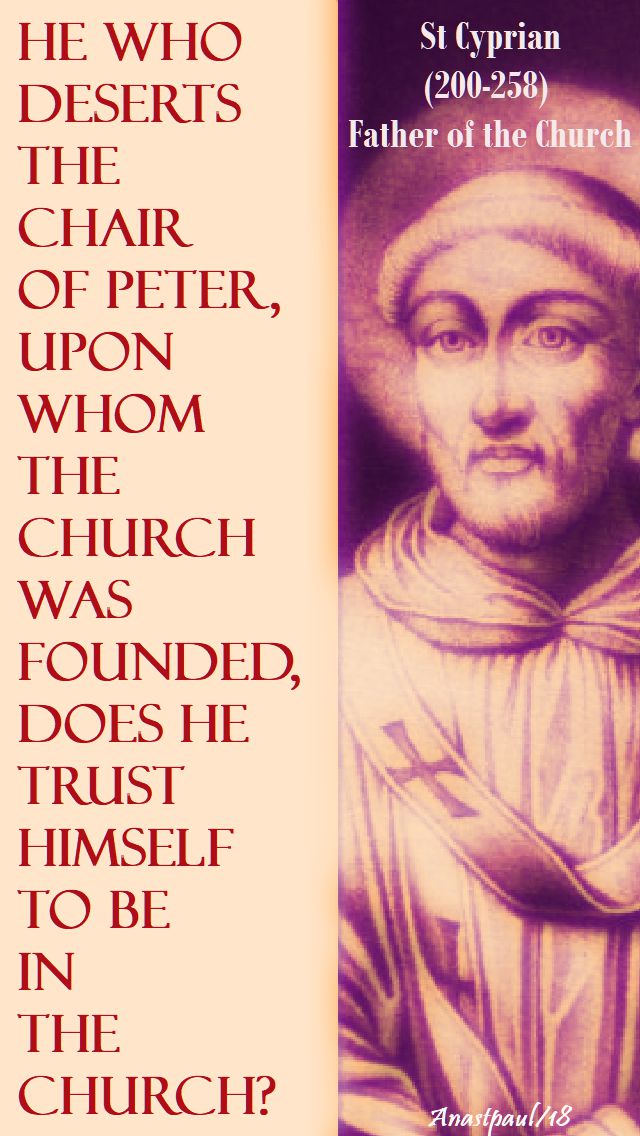
“He who deserts the
Chair of Peter, upon whom
the Church was founded,
does he trust himself
to be IN the Church?”

(De Catholicae Ecclesiae Unitate, 251)

St Cyprian, Bishop of Carthage and Martyr (200-258) Father of the Churchhe who deserts the chair of peter - st cyprian - 22 feb 2018


Posted in DOCTORS of the Church, FATHERS of the Church, FEASTS and SOLEMNITIES, MORNING Prayers, QUOTES of the SAINTS, QUOTES on the CHURCH, SAINT of the DAY, The APOSTLES & EVANGELISTS, The WORD, Uncategorized

One Minute Reflection – 22 February – The Feast of the Chair of Saint Peter

One Minute Reflection – 22 February – The Feast of the Chair of Saint Peter

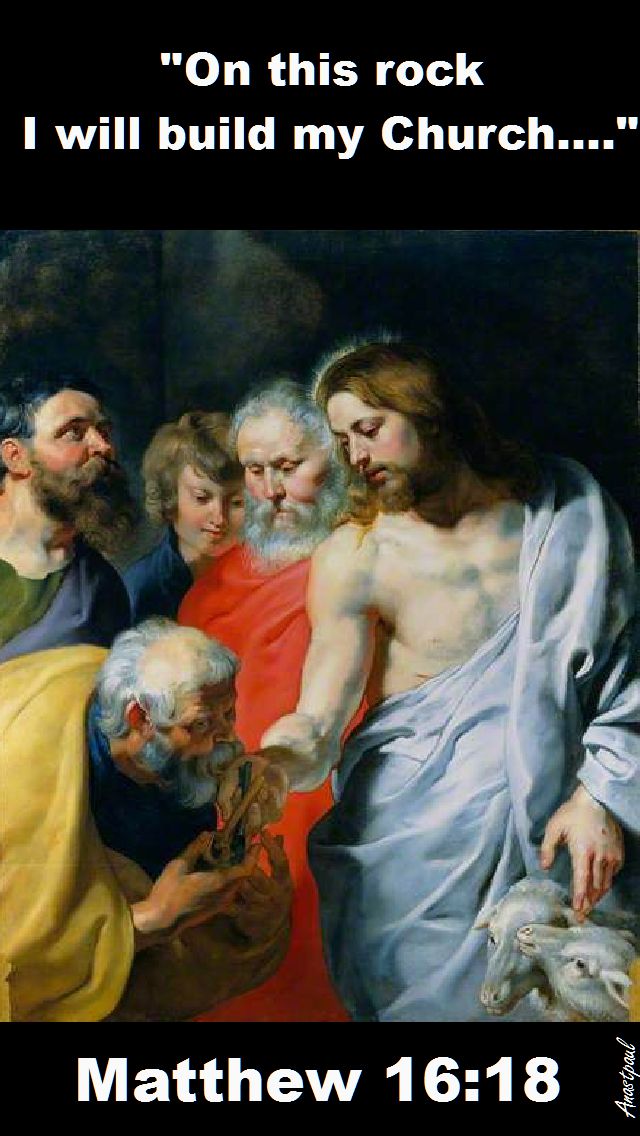
“On this rock I will build my Church”…Matthew 16:18on-this-rock-matthew-16-18.22 feb 2017

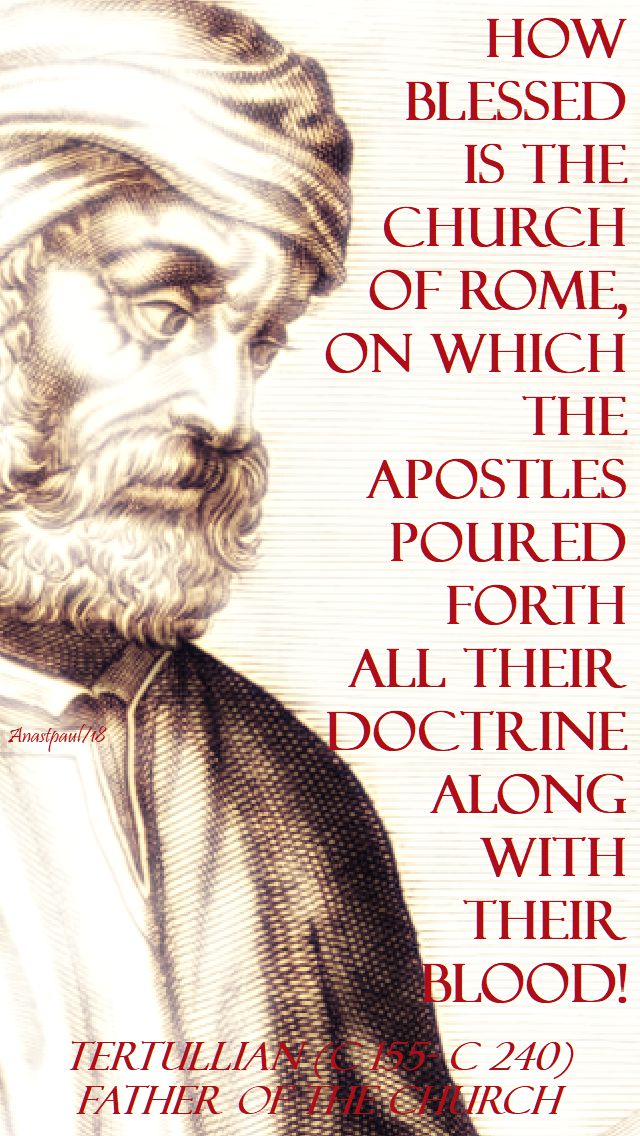
REFLECTION – “How blessed is the Church of Rome, on which the Apostles poured forth all their doctrine along with their blood!” (De Praescriptione Hereticorum, 36)…….Tertullianhow blessed is the church of rome - tertullian - 22 feb 2018
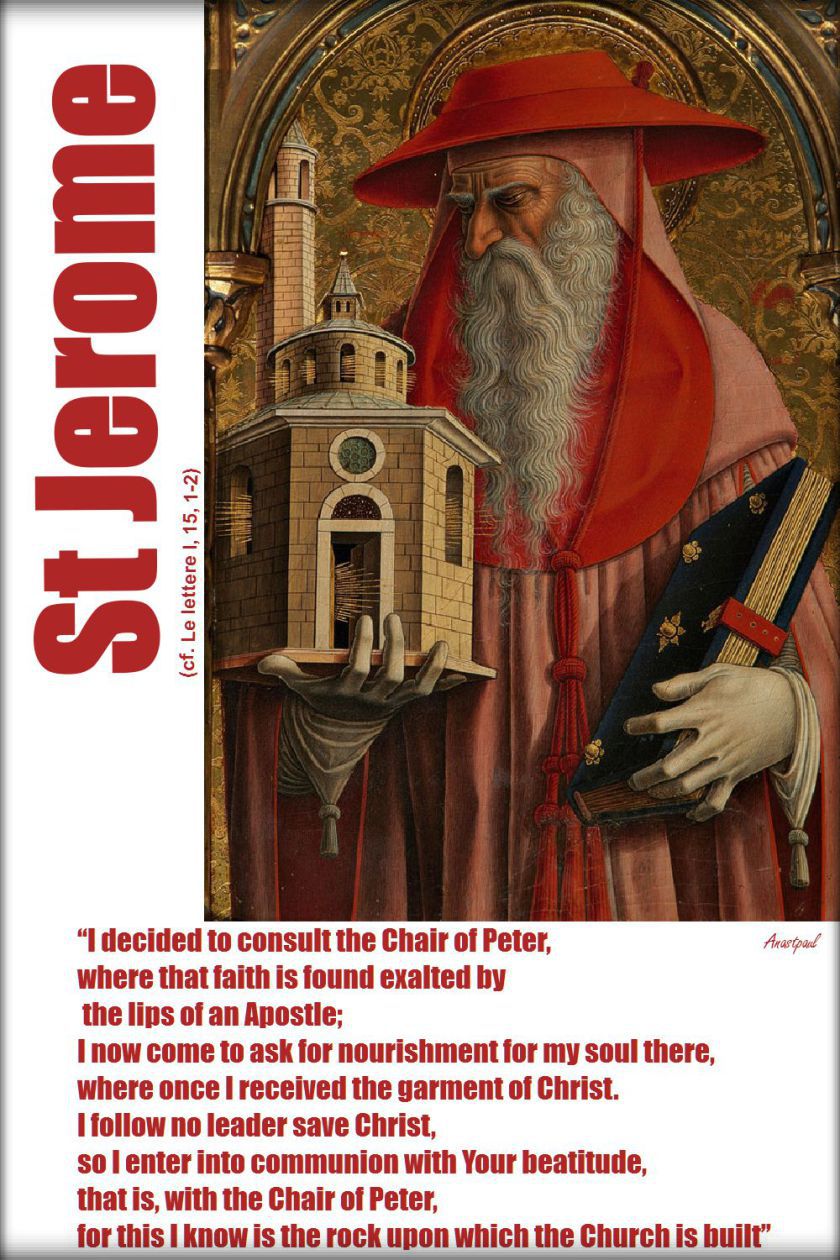
“I decided to consult the Chair of Peter, where that faith is found exalted by the lips of an Apostle;  I now come to ask for nourishment for my soul there, where once I received the garment of Christ.   I follow no leader save Christ, so I enter into communion with Your beatitude, that is, with the Chair of Peter, for this I know is the rock upon which the Church is built.” (cf. Le lettere I, 15, 1-2)…………..St Jerome  (343-420)  Father & Doctori-decided-to-consult-the-chair-of-peter-st-jerome-22feb 2017

PRAYER – Holy Father, send Your Divine Enlightener into the hearts of all Your faithful, filling us with the strength to fulfil our mission as the followers of the Chair of St Peter. And most of all, we pray Lord Holy God to inspire and light the way of our Holy Father, Francis.   Sustain and guide him, keep him in health and strength, to lead Your people by the Light of the Way and the Truth.   Holy Father, have mercy on us, Holy Spirit guide and lead us, Lord Jesus Christ be our intercessor and teacher, amen.st-peter-saints-and-popes.-22 feb 2017

Posted in FEASTS and SOLEMNITIES, SAINT of the DAY

Feast of the Chair of St Peter/Cathedra Petri– 22 February

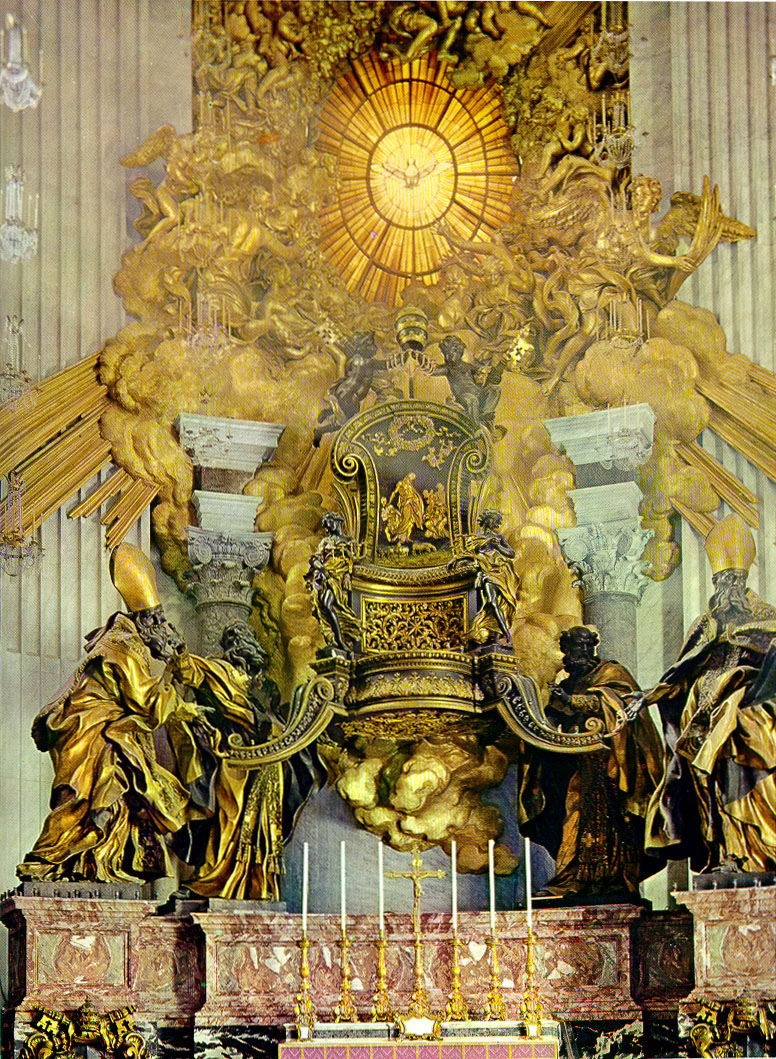
Feast of the Chair of St Peter/Cathedra Petri– 22 February – The Chair is the cathedra of St Peter’s Basilica.   Cathedra is Latin for “chair” or “throne” and denominates the chair or seat of a bishop, hence “cathedral” denominates the Bishop’s church in an episcopal see.   The Popes formerly used the Chair.    It is distinct from the Papal Cathedra in St John Lateran Archbasilica, also in Rome, which is the actual cathedral church of the Pope, because the Cathedra he currently and officially sits upon is in its apse.


When the pope cautions world leaders, pleads for peace, or condemns social injustice, people listen and respond.   What makes the world listen to this man?   The answer lies in Scripture and in Tradition.   Peter is named first among the apostles of Jesus;  he was often their spokesman and leader;  he was the first to preach after Pentecost;  and he was the leader in defending Christ and his message.   Peter was at the Transfiguration and in the garden.

He proclaimed to Jesus, “You are the Christ,” and Christ singled him out:

“So I say to you, you are Peter, and upon this rock I will build my church, and the gates of the netherworld shall not prevail against it. I will give you the keys to the kingdom of heaven. Whatever you bind on earth shall be bound in heaven; and whatever you loose on earth shall be loosed in heaven.” (Matthew 16:18–19)

Jesus prayed for Peter that he might strengthen his brothers. (Luke 22:32)   And Jesus gave Peter a threefold commission to “feed my sheep.” (John 21:15–17)


From the beginning, the primacy, of Peter has been recognised.   On the feast of the Chair of Peter, we celebrate our unity as a Church.   We celebrate the love, presence and protection of Christ for us, the Church.   The title Chair of Peter refers to the chair from which a bishop presided, a symbol of his authority.   When the title refers to Saint Peter, it recalls the supreme teaching power of Peter and his successors.   It is from the chair, from the pastoral power given him, that the pope shepherds Christ’s flock.cathedra-altar

Last year’s post has a homily from Pope Benedict: https://anastpaul.wordpress.com/2017/02/22/feast-of-the-chair-of-st-peter-22-february/

Posted in FEASTS and SOLEMNITIES, SAINT of the DAY, Uncategorized

Feast of the Chair of St Peter and Memorials of the Saints – 22 February

The Chair of Saint Peter (Feast)

St Ailius of Alexandria
St Angelus Portasole
St Aristion of Salamis
St Athanasius of Nicomedia
St Baradates of Cyrrhus
Bl Diego Carvalho
St Elwin
Bl Émilie d’Oultremont d’Hoogvorst
Bl Isabella of France
St John the Saxon
St Limnaeus
St Margaret of Cortona
St Maximian of Ravenna
St Miguel Facerías Garcés
St Mohammed Abdalla
St Papias of Heirapolis
St Paschasius of Vienne
St Raynerius of Beaulieu
St Thalassius

Martyrs of Arabia – A memorial for all the unnamed Christians martyred in the desert and mountainous areas south of the Dead Sea during the persecutions of Emperor Valerius Maximianus Galerius.

Posted in FEASTS and SOLEMNITIES, MARIAN TITLES, MIRACLES, SAINT of the DAY, The BLESSED VIRGIN MARY, Uncategorized

Feast of Madonna del Pilerio and Memorials of the Saints – 12 February

Madonna del Pilerio:   The term Pilerio probably derives from piliero (pillar), or it could be older and derive from the greek puleròs (guardian, guardian of the city gate).   The cult of the Madonna del Pilerio as the patron saint of Cosenza, dates back to the end of the 16th century.   It is said that in the year 1576, while the plague desolated different regions of Italy, a devotee, praying before the icon of the Madonna del Pilerio, noticed a stain similar to the pestiferous bubo (the marks of the plague), present on the face of the Image.   The phenomenon was noted by the people and by the ecclesiastical authorities. The stain was considered a prodigy and a revealing sign of the protection of the Madonna for the City of Cosenza, saved by her from the plague.   Since then the Virgin of Pilerio became the Protectress of the City.
The news of the prodigious sign did not take long to spread and from the neighbouring countries a growing rush of devotees began.   The pilgrimages continued over time and grew in number, so much so that in 1603, the Archbishop Monsignor Giovan Battista Costanzo (1591-1617), to better serve the influx of pilgrims, removed the painting from the place where it was and placed it before on one of the pillars of the central nave of the Duomo, then on the main altar and finally in 1607 in the specially built chapel dedicated to the Virgin and where even today is venerated.   On April 17, 1607, at the unanimous request of the inhabitants of Cosenza, the Archbishop Mgr. Costanzo crowned the Virgin of Pilerio Regina and Patrona della Città.  In 1783 a violent earthquake struck down on Cosenza. On that occasion another sign was found on the face of the image of the Pilerio.


St Alexius of Kiev
St Ammonius of Alexandria
Bl Anthony of Saxony
St Anthony Kauleas
St Benedict of Aniane (747-821)

Bl Benedict Revelli
St Damian of Africa
St Damian of Rome
St Ethelwald of Lindisfarne
St Eulalia of Barcelona
St Gaudentius of Verona
St Goscelinus of Turin
Bl Gregory of Tragurio
Bl Humbeline of Jully
St Jak Bushati
St Julian of Alexandria
St Julian the Hospitaller
Bl Ladislaus of Hungary
Bl Ludan
St Meletius of Antioch
St Modestus of Alexandria
St Modestus of Carthage
St Modestus the Deacon
Bl Nicholas of Hungary
St Sedulius
Bl Thomas of Foligno

Martyrs of Albitina – 46 saints:
During the persecutions of Diocletian, troops were sent to the churches of Abitina, North Africa on a Sunday morning; they rounded up everyone who had arrived for Mass and took them all to Carthage for interrogation by pro-consul Anulinus. The 46 who proclaimed their Christianity were executed. We know some of their names and stories.
• Ampelius
• Cassiano
• Ceciliano
• Cecilia
• Danzio
• Deciano
• Emeritus
• Ercolina
• Eva
• Fausto
• Felice (2 by this name)
• Felix
• Gennara (2 by this name)
• Gennaro
• Giriale
• Hilarion
• Maggiore
• Margherita
• Martino
• Mary
• Massimiano
• Matrona (2 by this name)
• Onorata
• Pelusio
• Pomponia
• Prima
• Quinto
• Regiola
• Restituta
• Rogatian (3 by this name)
• Rogato (2 by this name)
• Saturninus the Elder
• Saturninus the Younger
• Seconda (2 by this name)
• Thelica
• Victoria
• Vincenzo
• Vittoriano
• Vittorino
They were tortured to death in 304 in prison at Albitina, North Africa.

Martyred in England:
Bl George Haydock
Bl James Fenn
Bl John Nutter
Bl John Munden
Bl Thomas Hemeford

Martyred in the Spanish Civil War:
Josep Gassol Montseny

Posted in CATHOLIC-PRAYERS OF THE CHURCH, CONSECRATION Prayers, FEASTS and SOLEMNITIES, MORNING Prayers, PRACTISING CATHOLIC, PRAYERS for VARIOUS NEEDS, PRAYERS of the CHURCH, The BLESSED VIRGIN MARY, The CHRIST CHILD, VOCATIONS

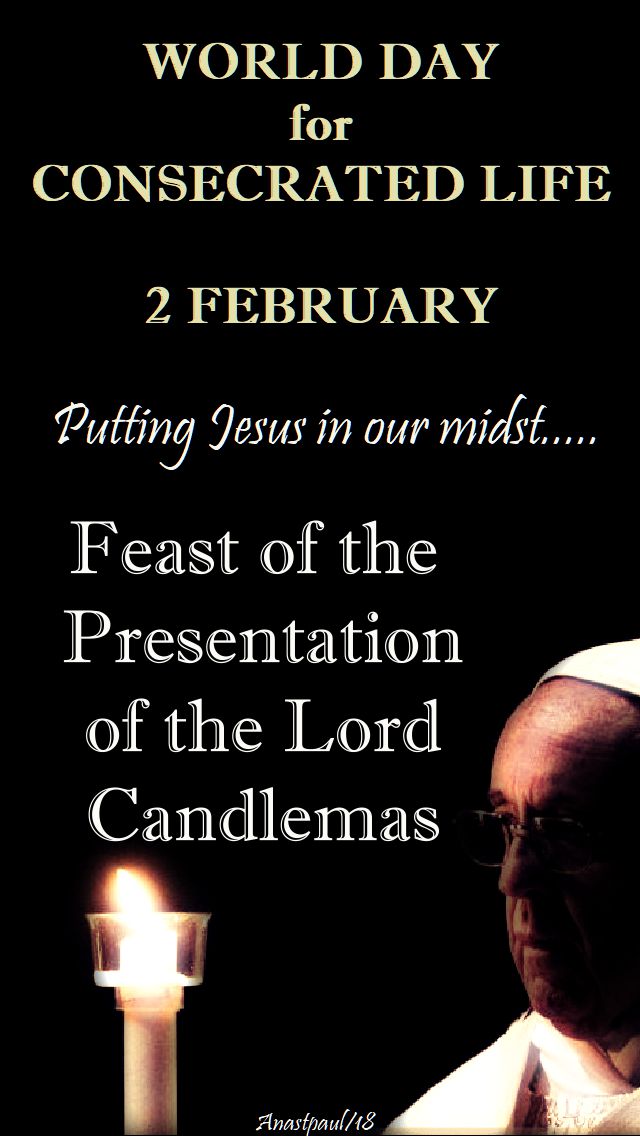
Thought for the Day – 2 February – Feast of the Presentation of the Lord and the World Day of Prayer for Consecrated Life

Thought for the Day – 2 February – Feast of the Presentation of the Lord and the World Day of Prayer for Consecrated Life

On this holy feast-day we each have an opportunity to consecrate our lives anew to the Lord.    How do we do this?    We can simply make a prayer of re-dedication to God which can take many forms.    It can be a simple heartfelt prayer reaffirming our baptismal promises or a re-visiting of our religious or marriage vows.    Or it can be a prayer which asks the Holy Spirit to renew our sense of vocation as a priest or religious or as a lay person in our chosen job, trade or profession.
We gave our life to the Lord when we were baptised but the call to conversion continues to resound throughout our lives and ‘this second conversion is an uninterrupted task for the whole church’ (Catechism of the Catholic Church 1428).    A re-dedication or renewal of vows or promises is a movement of conversion within our heart and is always a work of the Holy Spirit.
Today, step out in faith, whatever your vocation, whatever your calling and give your life to the Lord, in the assurance of God’s grace, blessing and renewal in the power of the Holy Spirit.

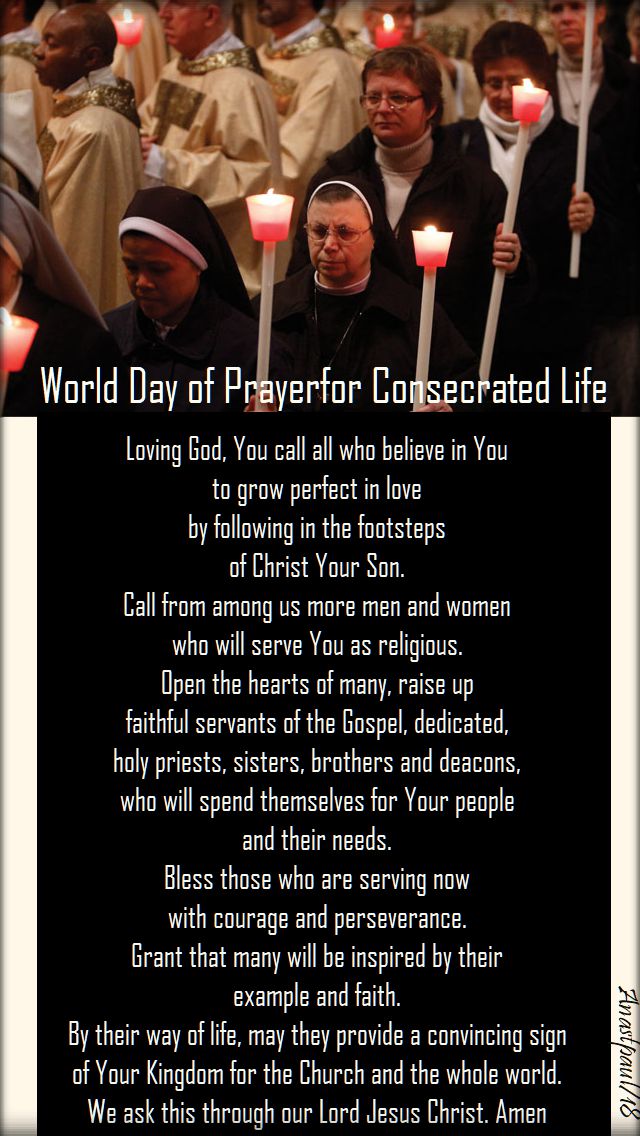
LET US PRAY FOR ALL CONSECRATED MEN & WOMEN AND FOR VOCATIONS:

Loving God, You call all who believe in You
to grow perfect in love
by following in the footsteps
of Christ Your Son.
Call from among us more men and women
who will serve You as religious.
Open the hearts of many, raise up
faithful servants of the Gospel, dedicated,
holy priests, sisters, brothers and deacons,
who will spend themselves for Your people
and their needs.
Bless those who are serving now
with courage and perseverance.
Grant that many will be inspired by their
example and faith.
By their way of life, may they provide a convincing sign
of Your Kingdom for the Church and the whole world.
We ask this through our Lord Jesus Christ. Amen.prayer for the consecrated and vocations - 2018

Posted in DOCTORS of the Church, FATHERS of the Church, FEASTS and SOLEMNITIES, QUOTES of the SAINTS, The BLESSED VIRGIN MARY, The CHRIST CHILD

Quote of the Day – 2 February – Feast of the Presentation of the Lord and the World Day of Prayer for Consecrated Life

Quote of the Day – 2 February – Feast of the Presentation of the Lord and the World Day of Prayer for Consecrated Life

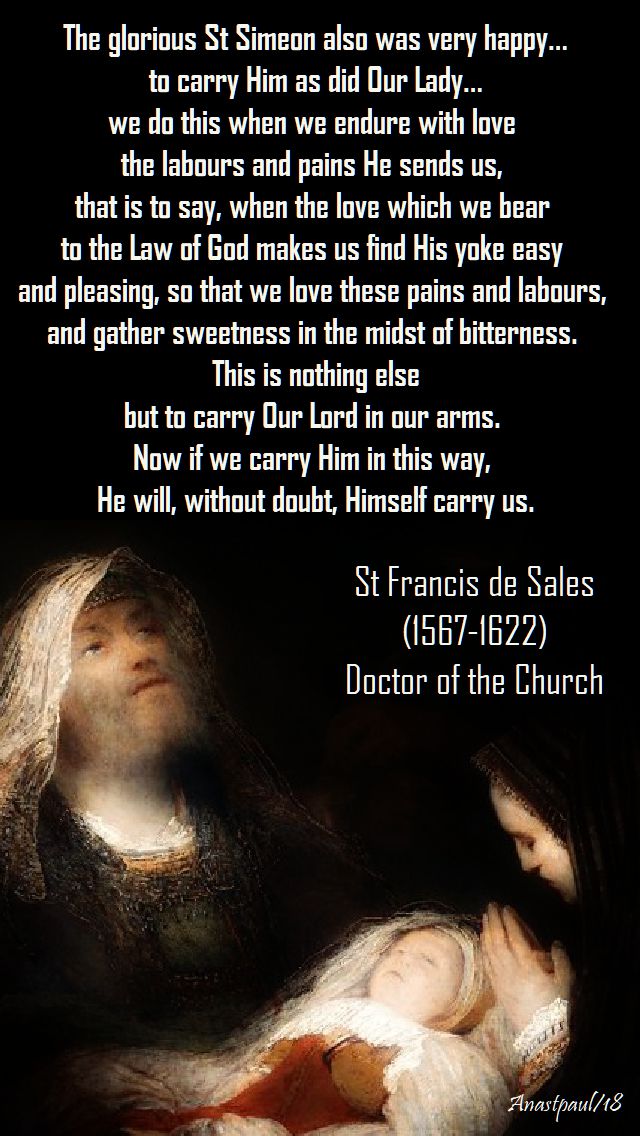
“The glorious St Simeon also was very happy…
to carry Him as did Our Lady…
we do this when we endure with love
the labours and pains He sends us,
that is to say, when the love which we bear
to the Law of God makes us find His yoke easy
and pleasing, so that we love these pains and labours,
and gather sweetness in the midst of bitterness.
This is nothing else but to carry Our Lord in our arms.
Now if we carry Him in this way,
He will, without doubt, Himself carry us.”

St Francis de Sales (1567-1622) Doctor of the Churchthe glorious st simeon - st francis de sales - 2 feb 2018

Posted in FEASTS and SOLEMNITIES, MORNING Prayers, The BLESSED VIRGIN MARY, The CHRIST CHILD, The WORD, Uncategorized

One Minute Reflection – 2 February – Feast of the Presentation of the Lord and the World Day of Prayer for Consecrated Life

One Minute Reflection – 2 February – Feast of the Presentation of the Lord and the World Day of Prayer for Consecrated Life

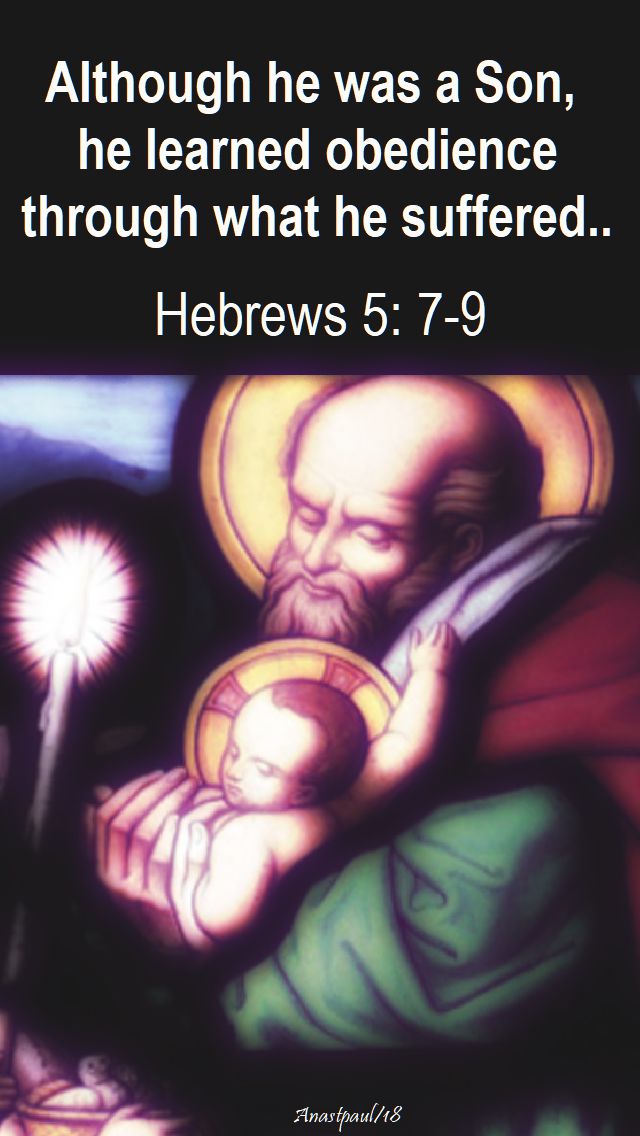
Although he was a Son, he learned obedience through what he suffered...Hebrews 5: 7-9although he was a son - hebrews 5 - 7-9

REFLECTION – “When Mary let Simeon take the Son of the Promise into his arms, the old man began to sing of his dreams.    Whenever she puts Jesus in the midst of His people, they encounter joy.    For this alone will bring back our joy and hope, this alone will save us from living in a survival mentality.    Only this will make our lives fruitful and keep our hearts alive:  putting Jesus where He belongs, in the midst of His people…Hence, it is all the more important for consecrated men and women to be one with Jesus, in their lives and in the midst of these great changes (in the world)…Putting Jesus in the midst of His people means having a contemplative heart, one capable of discerning how God is walking through the streets of our cities, our towns and our neighbourhoods.  Putting Jesus in the midst of His people means taking up and carrying the crosses of our brothers and sisters.  It means wanting to touch the wounds of Jesus in the wounds of a world in pain, which longs and cries out for healing.”…Pope Francis on the Feast of the Presentation of the Lord and the World Day of Prayer for Consecrated Life – 2 February 2017world day consecrated life 2018

PRAYER – May the Lord renew in you and in all consecrated people each day the joyful response to His freely given and faithful love.   Dear brothers and sisters, like lighted candles, always and everywhere shine with the love of Christ, Light of the world.   May Mary Most Holy, the consecrated Woman, help you to live to the full, your special vocation and mission in the Church for the world’s salvation.   And may we all follow our Lord in obedience. Amen!

Posted in BREVIARY Prayers, FEASTS and SOLEMNITIES, HYMNS, MORNING Prayers, PRAYERS of the CHURCH

Our Morning Offering – 2 February – The Feast of the Presentation of the Lord

Our Morning Offering – 2 February – The Feast of the Presentation of the Lord

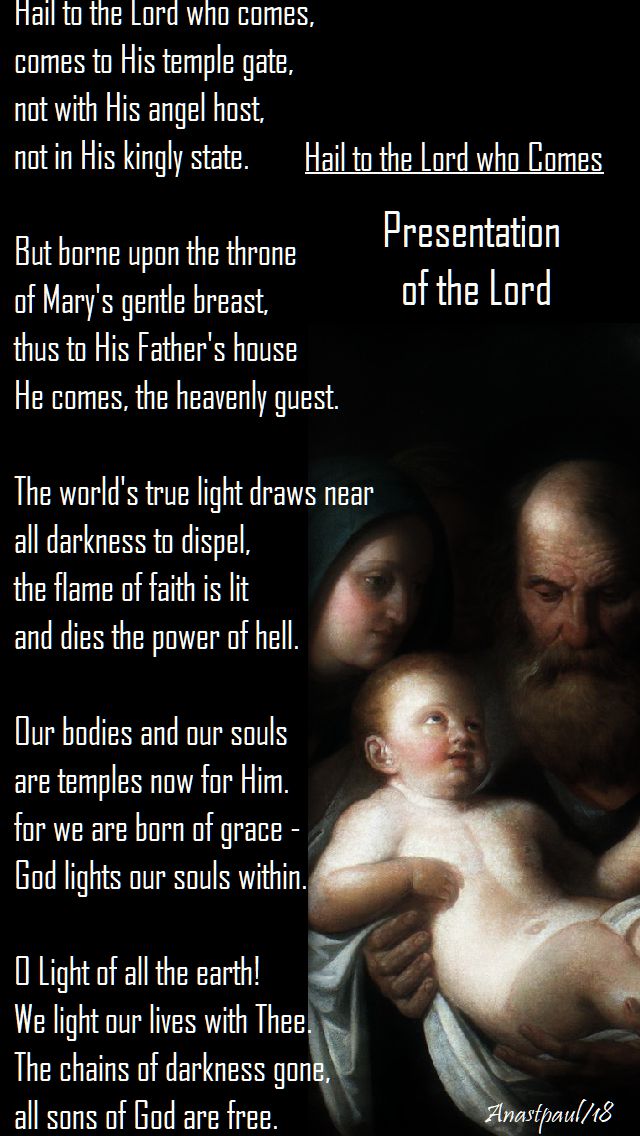
Hail to the Lord who Comes
Prayers/Hymns “Liturgy of the Hours”

Hail to the Lord who comes,
comes to His temple gate,
not with His angel host,
not in His kingly state.

But borne upon the throne
of Mary’s gentle breast,
thus to His Father’s house
He comes, the heavenly guest.

The world’s true light draws near
all darkness to dispel,
the flame of faith is lit
and dies the power of hell.

Our bodies and our souls
are temples now for Him.
for we are born of grace –
God lights our souls within.

O Light of all the earth!
We light our lives with Thee.
The chains of darkness gone,
all sons of God are free.hail to the lord who comes - presentation of the lord - from the breviary - 2 feb 2018

Posted in FEASTS and SOLEMNITIES, The BLESSED VIRGIN MARY, The CHRIST CHILD

Feast of the Presentation of the Lord – 2 February

Today is the Feast of the Presentation of the Lord, a day that is also known as Candlemas.

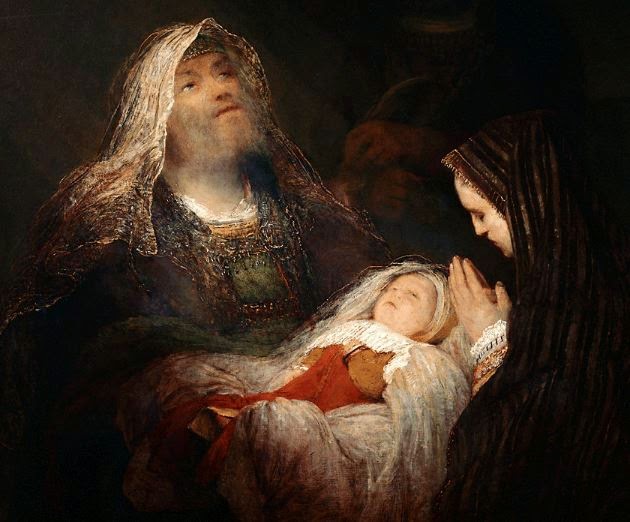
The Presentation of the Lord is a second ‘epiphany’—revealing Jesus as the Messiah through the canticle of Simeon and the testimony of Anna the prophetess.   Christ, the Light of the World, is revealed in obedience to the Old Lawsand in creation of the new. Traditionally, in recognition of the saving light of Christ, this feast was referred to as “Candlemas,” and marked by candlelight processionals and Masses.

The Presentation of the Lord commemorates the Lord Jesus’ participation in a ritual encoded in the Mosaic Law, in which a newborn child had to be “redeemed” through the performance of a prescribed sacrifice. Christ “embeds” Himself through his Incarnation in the people He has chosen to be His own.   He makes himself an Israelite and accepts that people and culture as His own.   His willingness to participate in this ritual indicates the election of Israel by God in terms of its mission to bear into the world the divine presence and to become the means through which communion with the one, true God would be extended to the whole world.presentation of the lord

The event of the Lord’s Presentation also foreshadows His Paschal Mystery.   Christ will make of His suffering and death a sacrifice, a redemptive offering in which humanity’s reconciliation with God will be accomplished.   The Lord will be revealed, in the event of Christ’s passion, to be a God who is willing to forgive, even to the point of placing himself in the position of the sinner! Such is God’s solidarity with humanity in Christ!

The readings for today all orientate us toward Christ’s revelation as priest.

The prophet Malachi envisions the divine presence entering the temple and once this happens, the God of Israel reigns as the ruler of Israel, effecting the restoration of His people and setting them all in right relationship with Himself.   Christ in His Incarnation is this divine presence and His entry into the temple is happening at the moment of his Presentation.

The Letter to the Hebrews reminds us that Christ’s sacrifice was to enter into the fullness of our humanity by accepting for Himself a human nature and uniting it to His divine nature.   Christ does this for our benefit and through this Incarnation makes of Himself a gift that is for us.

In this respect, Christ is a priest, the sacrifice that He offers is Himself and the beneficiary of this sacrifice is all of us.

The Gospel of Luke highlights the event of Christ’s presentation in the temple as the revelation of the divine presence, which the prophet Ezekiel had seen abandoning the temple centuries earlier, returning to the great sanctuary.   Christ is the divine high priest who comes to His temple to offer sacrifice but more than this, Christ is the divine presence.   With the arrival of the divine presence, a new age for Israel and for the world begins- the age of the Messiah.

Simeon and Anna can see this revelation and appreciate it.   For them the moment is as profound as it is bittersweet, for they know that with the beginning of this new age for Israel, the previous era has ended.   Their mission is now complete.   The Israel of the covenant, the prophets, the law, the temple and the kingdom has been brought to its fulfilment.   All these divine gifts were foreshadowings of the greatest of all divine Gifts- Christ the Lord- God with us.

The gifts of Israel will be returned to the world but they will all be transformed in Christ, becoming what we know and experience as the Church.

Candles that are used in the Church’s rituals are often blessed on this day and a procession is recommended with candles to commemorate the entrance of Christ into the temple.

The symbolism of the candle is meant to recall the divine presence, manifested to Israel at the time of the Exodus as a “pillar of fire.”   This “pillar of fire” led the Israelites from bondage in Egypt to the land of God’s promise.   Christ is this “pillar of fire” who leads humanity from the bondage of sin and death to the promises of resurrection and eternal life. (Fr Steve Grunow)

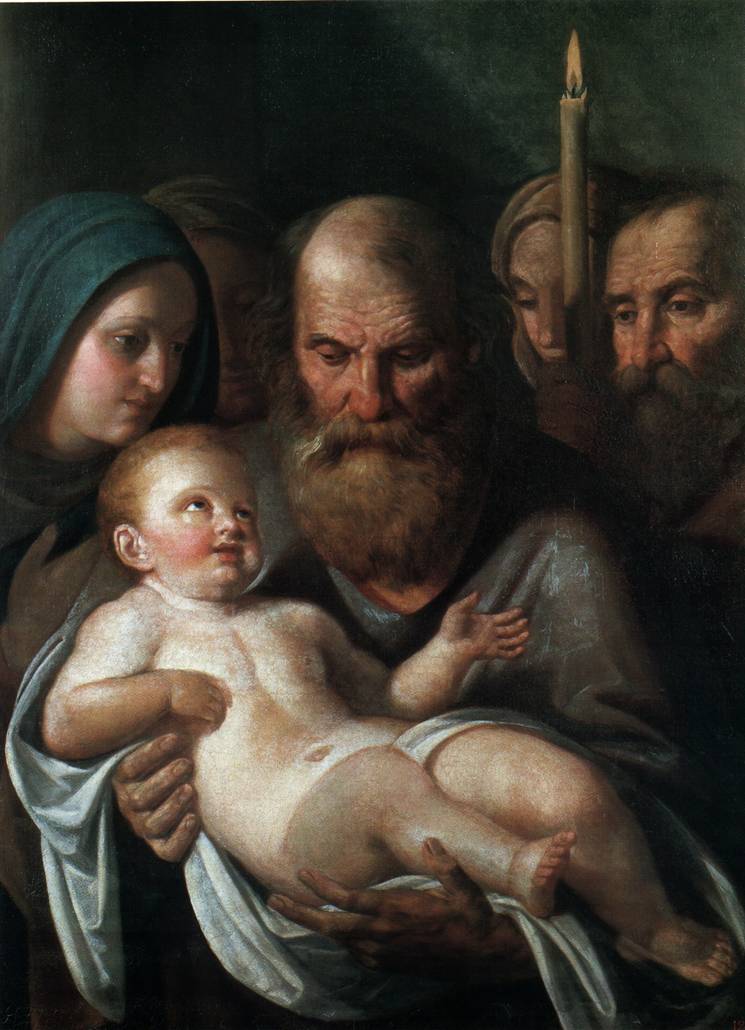
It is Christ, the divine fire, that leads us still…presentation and simeonsimeonSOD-0202-PresentationoftheLord-790x480


Posted in FEASTS and SOLEMNITIES, SAINT of the DAY, The BLESSED VIRGIN MARY, The CHRIST CHILD

Feast of the Presentation of the Lord and Feasts of Our Lady & Memorials of the Saints – 2 February

Presentation of the Lord (Feast):   The feast commemorates the purifying of the Blessed Virgin according to the Mosaic Law, 40 days after the birth of Christ, and the presentation of the Infant Jesus in the Temple.   The feast was introduced into the Eastern Empire by Emperor Justinian I and is mentioned in the Western Church in the Gelasian Sacramentary of the 7th century.   Candles are blessed on that day in commemoration of the words of Holy Simeon concerning Christ “a light to the revelation of the Gentiles” (Luke 2) and a procession with lighted candles is held in the church to represent the entry of Christ, the Light of the World, into the Temple of Jerusalem. “Candlemas” is still the name in Scotland for a legal term-day on which interest and rents are payable (2 February).
Patronage
• Jaro, Philippines
• Western Visayas, Philippines

Our Lady of Candelaria
Our Lady of Good Success
Santa María de Santa Anita

World Day of Prayer for Consecrated Life:  Begun in 1997 by St Pope John Paul II, the World Day for Consecrated Life was intended to serve three purposes:
• to praise the Lord and thank him for the great gift of consecrated life;
• to promote a knowledge of and esteem for the consecrated life by the entire People of God;
• to allow those in consecrated life to celebrate together the marvels which the Lord has accomplished in them, to discover by a more illumined faith the rays of divine beauty, spread by the Spirit in their way of life and to acquire a more vivid consciousness of their irreplaceable mission, in the Church and in the world;
It serves an opportunity to highlight the extraordinary contributions of men and women religious, as well as a time to pray for vocations to the consecrated life.

St Adalbald of Ostrevant
St Adeloga of Kitzingen
St Agathodoros of Tyana
St Andrea Carlo Ferrari
St Apronian the Executioner
St Bruno of Ebsdorf
St Burchard of Wurzburg
St St Candidus the Martyr
Catherine del Ricci
St Columbanus of Ghent
St Cornelius the Centurion
St Felician the Martyr
St Feock
St Firmus of Rome
St Flosculus of Orléans
St Fortunatus the Martyr
St Giovanni Battista Clemente Saggio
St Hilarus the Martyr
St Jean Theophane Venard
St Jeanne de Lestonnac
St Lawrence of Canterbury
Bl Louis Alexander Alphonse Brisson
Bl Maria Domenica Mantovani
St Marquard of Hildesheim
St Mun
Bl Peter Cambiano
St Rogatus the Martyr
St Saturninus the Martyr
St Sicharia of Orleans
St Simon of Cassia Fidati
Bl Stephen Bellesini
St Theodoric of Ninden
St Victoria the Martyr

Martyrs of Ebsdorf: Members of the army of King Louis III of France under the leadership of Duke Saint Bruno of Ebsdorf. The martyrs died fighting invading pagan Norsemen, and defending the local Christian population. Four bishops, including Saint Marquard of Hildesheim and Saint Theodoric of Ninden, eleven nobles, and countless unnamed foot soldiers died repelling the invaders. They were martyred in the winter of 880 in battle at Luneberg Heath and Ebsdorf, Saxony (modern Germany).

Posted in DOCTORS of the Church, FATHERS of the Church, FEASTS and SOLEMNITIES, MORNING Prayers, QUOTES of the SAINTS, QUOTES on FAITH, SAINT of the DAY, St PAUL!, The APOSTLES & EVANGELISTS, The WORD

One Minute Reflection – 25 January – Feast of the Conversion of St Paul the Apostle

One Minute Reflection – 25 January – Feast of the Conversion of St Paul the Apostle

I have appeared to you for this purpose, to appoint you as a servant and witness of what you have seen and what you will be shown.   I shall deliver you from this people and from the Gentiles to whom I send you,to open their eyes that they may turn from darkness to light and from the power of Satan to God, so that they may obtain forgiveness of sins and an inheritance among those who have been consecrated by faith in me…Acts 26:16-18acts 26-16

REFLECTION – “Paul, more than anyone else, has shown us what man really is and in what our nobility consists and of what virtue this particular animal is capable.   Each day he aimed ever higher; each day he rose up with greater ardour and faced with new eagerness the dangers that threatened him.   He summed up his attitude in the words:  “I forget what is behind me and push on to what lies ahead”…The most important thing of all to him, however, was that he knew himself to be loved by Christ.   Enjoying this love, he considered himself happier than anyone else”…….St John Chrysostomchrysostum-on-paul-2018

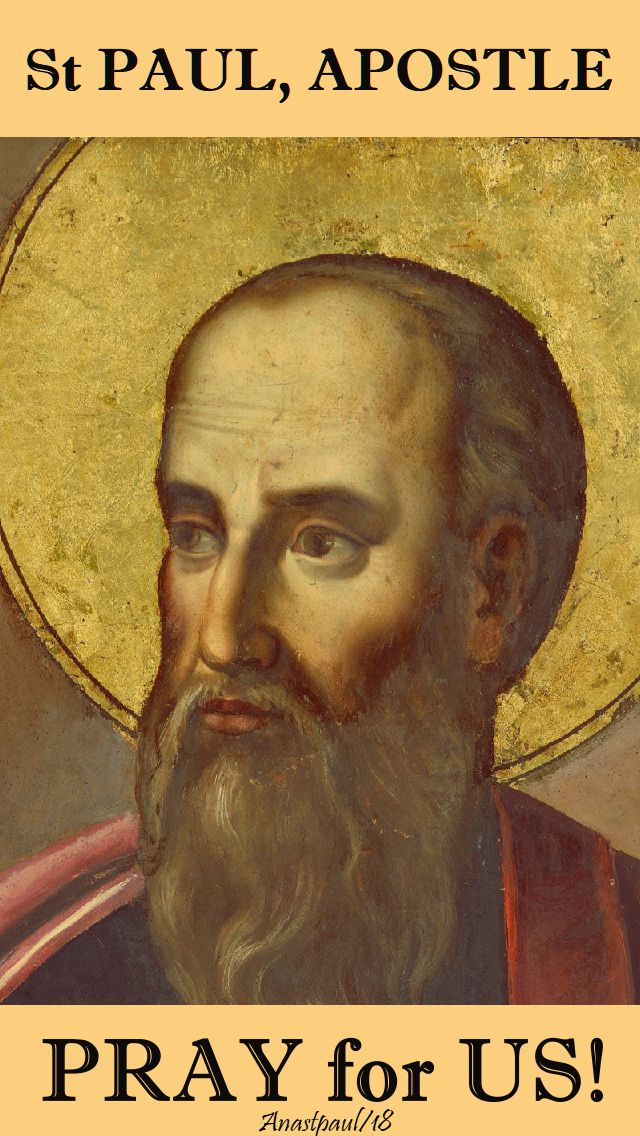
PRAYER – Today Lord, we celebrate the conversion of St Paul, Your chosen vessel for carrying Your name to the whole world.   Help us to make our way towards You by following in his footsteps and by being Your disciples before the men and women of our day.   Grant that by the prayers of St Paul, we too may say, “Yet I live, no longer I, but Christ lives in me; insofar as I now live in the flesh, I live by faith in the Son of God who has loved me and given himself up for me.” (Galatians 2:20)   Through Jesus Christ, our Lord, in union with the Holy Spirit, one God forever and ever, amen.st paul apostle, pray for us - 25 jan 2018

Posted in FEASTS and SOLEMNITIES, MIRACLES, MORNING Prayers, ON the SAINTS, QUOTES of the SAINTS, SAINT of the DAY, St PAUL!, The APOSTLES & EVANGELISTS

Feast of the Conversion of St Paul – 25 January

Feast of the Conversion of St Paul – 25 January

St Paul the Apostle is the greatest of the early Christian missionaries.   He first appears in the Acts of the Apostles under the name of Saul.   Saul was raised in the Jewish faith as a Pharisee trained in the strict observance of God’s Law.   He believed the Law should be obeyed by himself and all Jews.   Saul was upset by the early Christian Church, believing that the early Christians had broken away from their Jewish traditions.   He actively persecuted the Church in Jerusalem.   As the first Christian martyr Stephen was being stoned to death, Saul watched the cloaks of the persecutors (Acts 7:58).

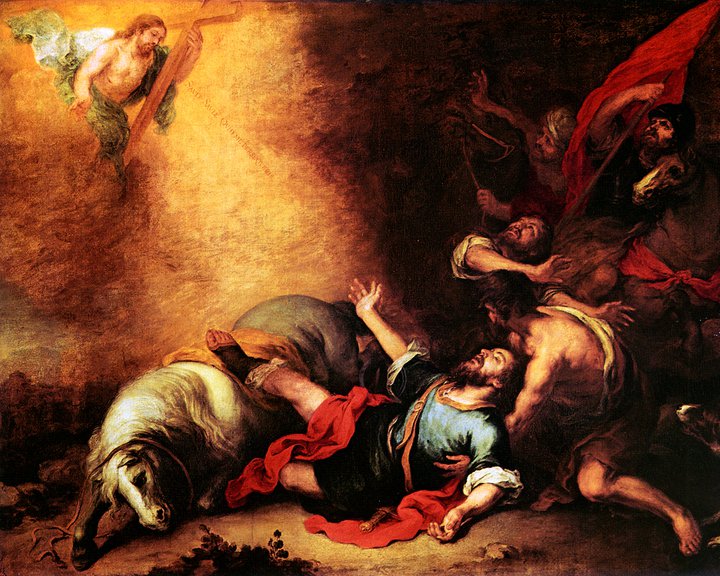
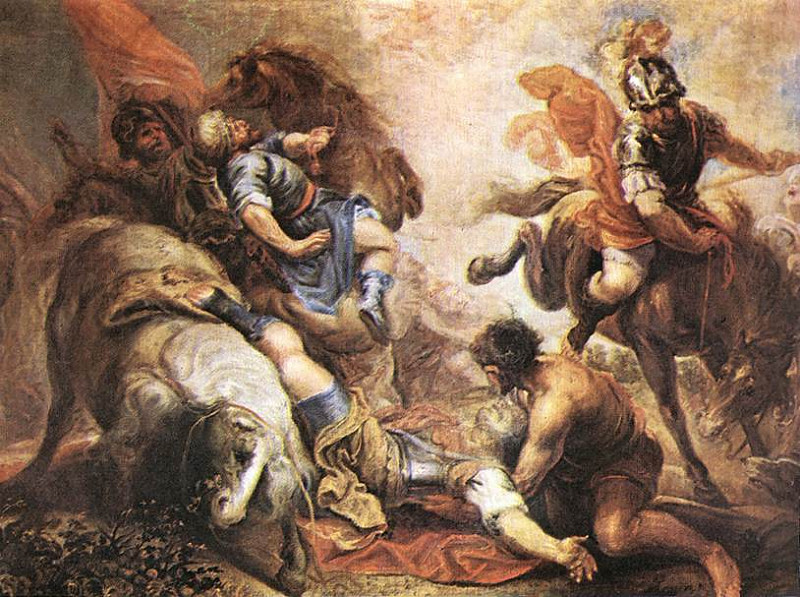
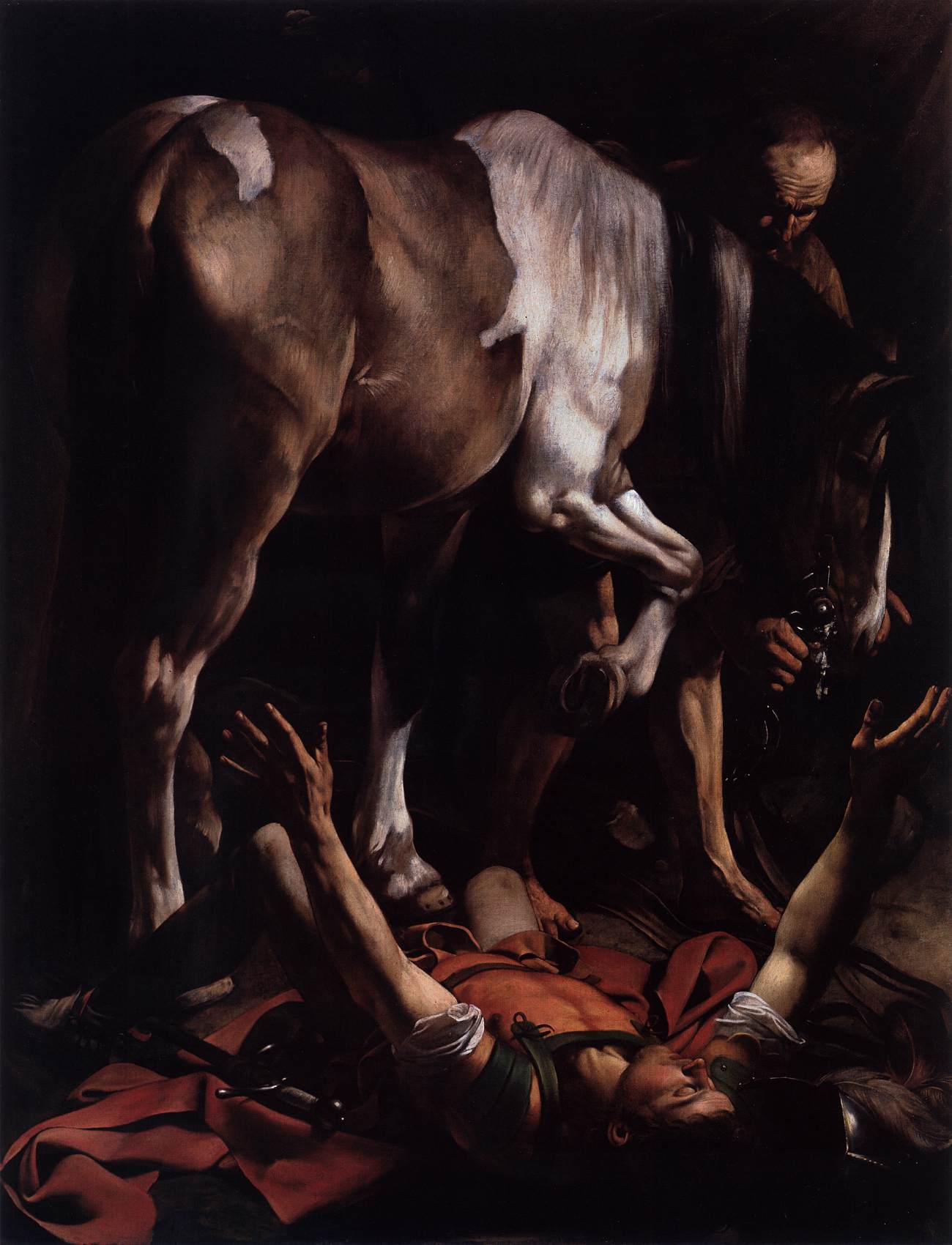
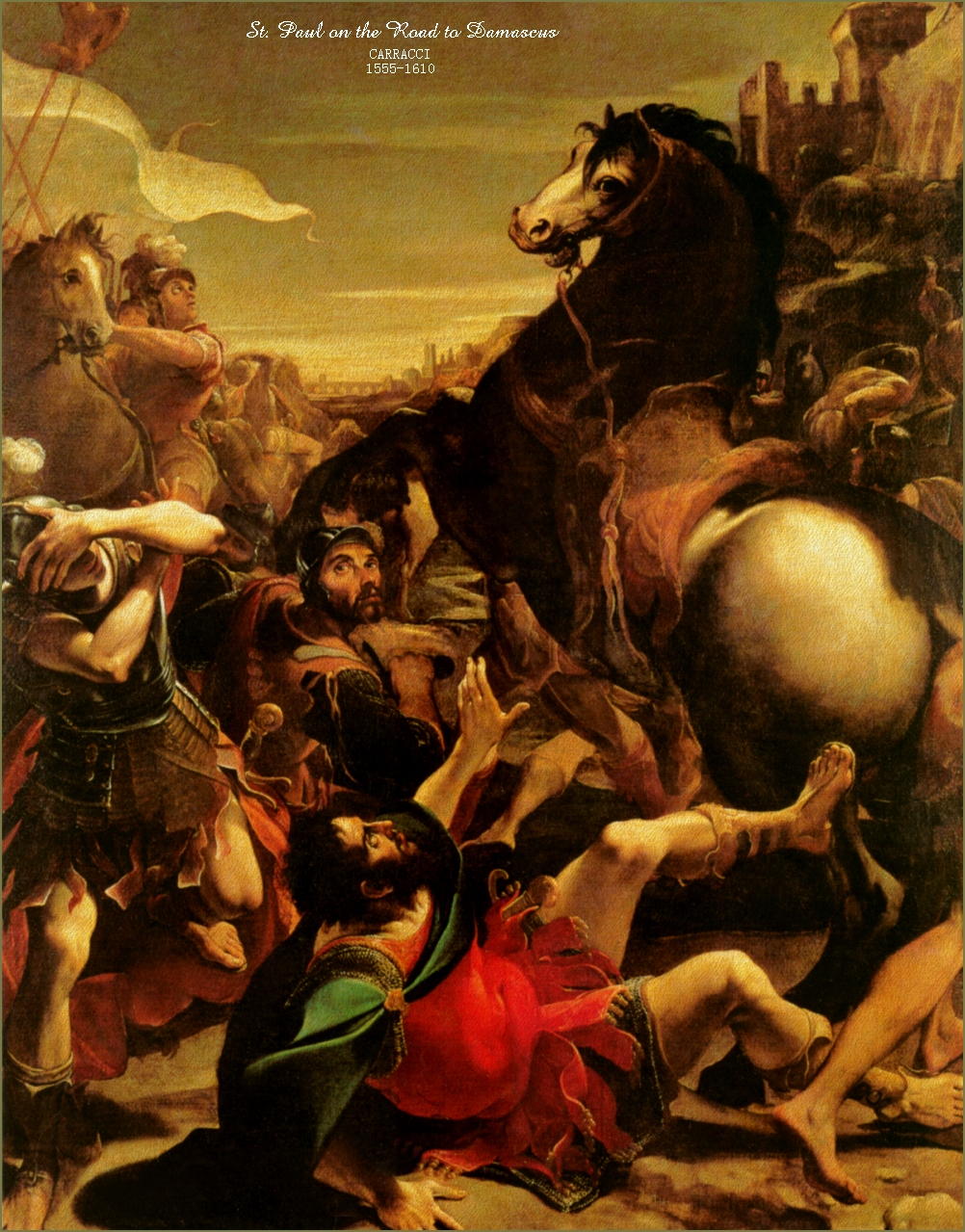
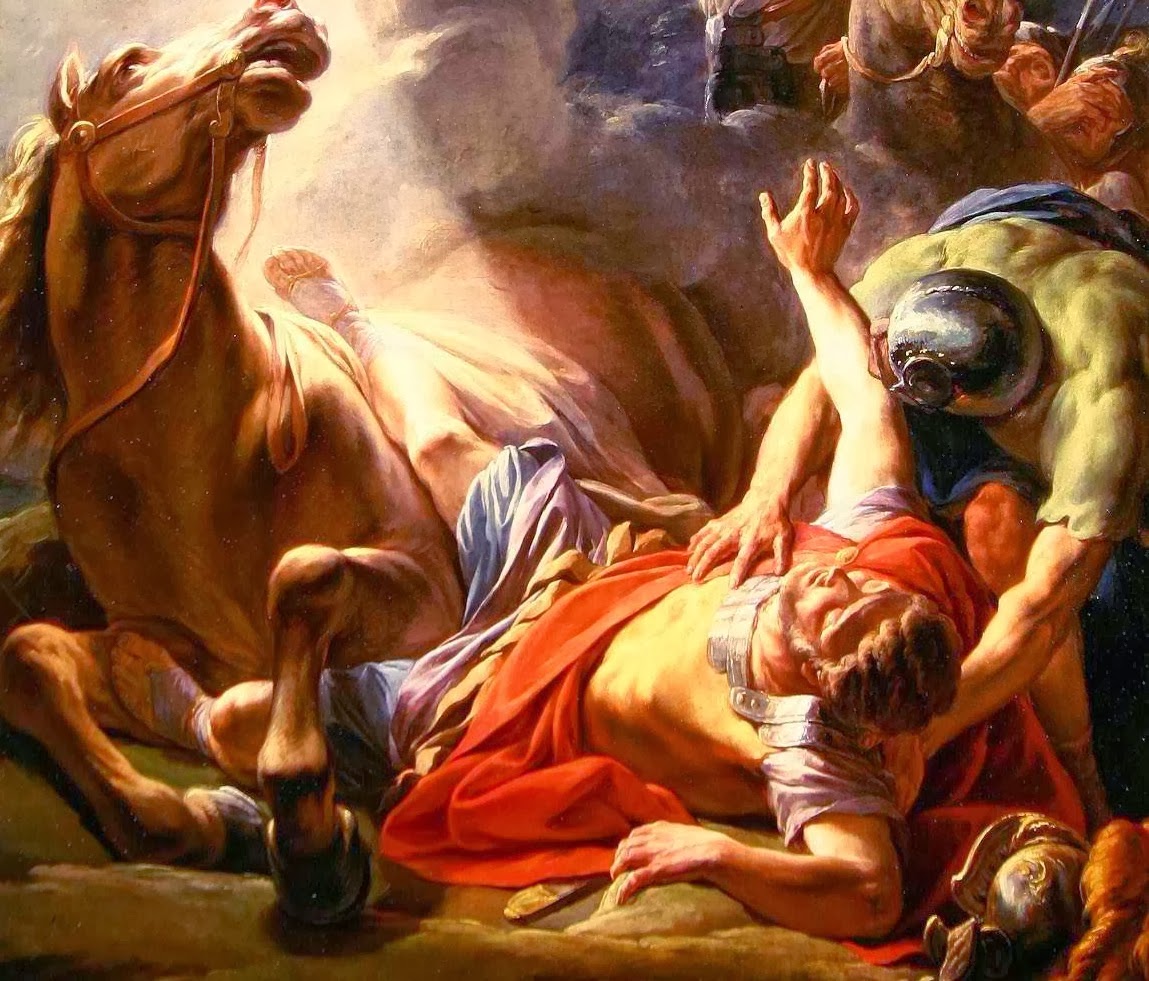
Paul then traveled to Damascus to further persecute early Christians.   On the road to Damascus Saul had an encounter with the Risen Jesus Christ (Acts of the Apostles 9:1–19, Galatians 1: 13–14).   Jesus asked, “Saul, Saul, why are you persecuting me?”   Paul replied, “Who are you, sir?”   Jesus responded, “I am Jesus whom you are persecuting” (Acts 9: 4 – 5).   Jesus then sent Saul into Damascus to wait for further instructions.   Saul was shaken and blinded by the experience.   When a Christian named Ananias came and baptised Saul, his blindness went away.   As a result of this encounter Saul became a follower of Christ.   He was now convinced that fellowship with the risen Jesus Christ, not the observance of the Law, was all that was needed to receive God’s promise of salvation. (Galatians 1:11–12; 3:1–5)header 1 conversionHEADER 2 - conversion of st paulheader - conversionStPaulEscalante

Saul, whose name now became Paul, went to Jerusalem to consult with Peter (Galatians 1: 18).   After his first missionary journeys, Paul was called by Jesus to proclaim the Gospel to the Gentiles.   He spent the rest of his life journeying on his missions, establishing local churches and writing to them when he heard of their accomplishments and failures.   Paul’s letters are the earliest records of the life and history of the early Church.   As inspired by the Holy Spirit Paul’s letters are part of the Canon of the New Testament.   As a record of the happenings in the early Church they are in invaluable record of the expansion of the Christianity.LARGE - conversion - caravaggio

St Paul’s Writings

All together, there are 13 epistles that bear Paul’s name as the author.   However, scholars do not believe that he wrote them all.   Paul himself was the author of first and second Thessalonians, Galatians, Philippians, first and second Corinthians, Romans and Philemon.  The epistles to the Ephesians, Colossians, Titus and first and second Timothy bear Paul’s name but it is believed that they were written after his death.   The writers of these letters were disciples of Paul who wanted to continue his teaching.   Whoever the authors of these epistles were, these writings have been accepted into the New Testament as inspired by the Holy Spirit.

Centrality of Jesus Christ

The most profound and moving day in Paul’s life was when he met the risen Jesus Christ. Paul was well respected by the Jewish community and his peers.   But he gave it all up for Christ.  “More than that, I even consider everything as a loss because of the supreme good of knowing Jesus Christ my Lord.” (Philippians 3:8) Jesus Christ, Paul realised, was sent by the Father to bring salvation for all.   Paul taught that we are united with Christ in faith and Baptism – “We were indeed buried with him through baptism into death, so that, just as Christ was raised from the dead by the glory of the Father, we too might live in newness of life.” (Romans 6:4)

On the personal level, individual Christians recognise that when they are united with Christ, they receive the grace needed to overcome sin and to live moral lives.  (Galatians 5:16–26)conversion of st paul 2conversion of st paul - LARGE VERSION detail

Justification

Paul teaches that the justice of God was saving justice at its best.   God is faithful, fulfilling the promises made in the Old Testament covenant.   Through the sin of Adam and Eve the human family was alienated from God.   Through Christ the human family is called back into relationship with God.   This process of reuniting the human family with God is called justification. (Romans 3:21–31)   It is impossible for us to justify ourselves; we are only justified by being united in faith with Jesus Christ and by accepting the gift of grace won by Christ. (Romans 5:1–2)   We can only be made right with God and set free from a life of immoral living by accepting the gift of God’s reconciling grace.

Life in the Spirit

Paul teaches that the love of God is being poured into our hearts through the Holy Spirit. (Romans 5:5)   The Holy Spirit is the source of all love.   The Holy Spirit creates a bond between us and God like children bound to a father.  (Romans 8:14–16)   The Holy Spirit not only establishes our relationship with the Father.   Even though we are weak, the Holy Spirit helps us to live faithfully within that relationship. (Romans 8:26–27) It is through the Holy Spirit that we can live in love with all people. (1 Corinthians 13:3–7)

The Moral Life

What does it mean to live a Christian moral life?   Paul thought deeply about this question.   He was raised as a faithful Jew.   As we have seen Paul, was raised to believe that following the strict moral code of the Jewish faith was the way to salvation.   Paul believed “… the law is holy and the commandment is holy and righteous and good.” (Romans 7:12.)   What Paul realised, however, that because we are weakened by the sin of Adam and Eve, it was impossible to us to reconnect in our relationship with God through our efforts alone (Romans 7:14).

After his experience with Jesus Christ, Paul knew that he was not alone on the road to salvation.   Jesus Christ has already accomplished salvation for us.   In faith and Baptism, Christians receive the grace of the Holy Spirit, who is our constant guide.   The Holy Spirit helps us to live in relationship with God and others.

So Paul’s great message to the world was:  You are saved entirely by God, not by anything you can do.   Saving faith is the gift of total, free, personal and loving commitment to Christ, a commitment that then bears fruit in more “works” than the Law could ever contemplate.

St Paul Pray for us!conversion-of-st-paul-2018

Posted in FEASTS and SOLEMNITIES, SAINT of the DAY

Feast of the Conversion of St Paul and Memorials of the Saints – 25 January

Conversion of Paul the Apostle (Feast)


St Agape the Martyr
St Agileus of Carthage
St Amarinus of Clermont
St Ananias of Damascus
Bl Antoni Swiadek
Bl Antonio Migliorati
St Apollo of Heliopolis
Bl Archangela Girlani
St Artemas of Pozzuoli
St Auxentius of Epirus
St Bretannion of Tomi
St Donatus the Martyr
St Dwynwen
St Emilia Fernández Rodríguez de Cortés
St Eochod of Galloway
Bl Francesco Zirano
Bl Henry Suso
St Joel of Pulsano
St Juventinus of Antioch
Bl Manuel Domingo y Sol
St Maximinus of Antioch
St Palaemon
St Poppo
St Praejectus of Clermont
St Publius of Zeugma
St Racho of Autun
St Sabinus the Martyr
Bl Teresa Grillo Michel

Posted in DOCTORS of the Church, FEASTS and SOLEMNITIES, MARIAN QUOTES, MARIAN TITLES, SAINT of the DAY, The BLESSED VIRGIN MARY

24 January – Feast of Our Lady of Tears and Memorials of the Saints – 24 January

St Francis de Sales (1567-1622) (Memorial) – Doctor of the Church: Doctor caritatis (Doctor of Charity)

Our Lady of Tears: Also known as the Weeping Madonna of Syracuse, this plaster hanging wall plaque depicts the Immaculate Heart of Mary in the style of the 1950’s. Like many others just like it, it was mass-produced in a factory in Tuscany and shipped to various locations throughout the world.   This particular plaque of Our Lady of Tears was purchased for a wedding gift for a couple who wed on 21 March 1953. The couple, Angelo and Antonian Iannuso, would later admit that they were not devout, but they liked the plaque and placed it on the wall over their bed. Antonian soon became pregnant but the happy couple soon learned that the pregnancy caused Antonian to suffer from toxemia that caused frequent convulsions and even temporary blindness.
On the morning of 29 August, 1953, Antonian awoke to find that her sight had been restored.
“I opened my eyes and stared at the image of the Madonna above the bedhead. To my great amazement I saw that the effigy was weeping.   I called my sister-in-law Grazie and my aunt, Antonian Sgarlata, who came to my side, showing them the tears. At first they thought it was an hallucination due to my illness but when I insisted, they went close up to the plaque and could well see that tears were really falling from the eyes of the Madonna, and that some tears ran down her cheeks onto the bedhead.   Taken by fright they took it out the front door, calling the neighbours, and they too confirmed the phenomenon…”

The plaque of Our Lady of Tears was publically displayed, convincing even the skeptics of the prodigy as many of the sick were miraculously healed of their ailments.   Some of the tears were collected for scientific examination and the findings were as follows:
“…the liquid examined is shown to be made up of a watery solution of sodium chloride in which traces of protein and nuclei of a silver composition of excretiary substances of the quanternary type the same as found in the human secretions used as a comparison during the analysis.   The appearance, the alkalinity and the composition induce one to consider the liquid examined analogous to human tears.”

The tears stopped four days later at 11:40 am.
On October 17, 1954, Pope Pius XII stated the following during a radio broadcast:
“…we acknowledge the unanimous declaration of the Episcopal Conference held in Sicily on the reality of that event.   Will men understand the mysterious language of those tears?”

OurLadyofTears


St Anicet Hryciuk
St Artemius of Clermont
St Bartlomiej Osypiuk
Bertrand of Saint Quentin
St Daniel Karmasz
St Exuperantius of Cingoli
St Felician of Foligno
St Filip Geryluk
Bl Francesc de Paula Colomer Prísas
St Guasacht
St Ignacy Franczuk
Bl John Grove
St Julian Sabas the Elder
St Luigj Prendushi
St Macedonius Kritophagos
Bl Marcolino of Forli
Bl Marie Poussepin
Bl Paula Gambara Costa
St Projectus
St Sabinian of Troyes
St Suranus of Sora
St Thyrsus
Bl William Ireland

Martyrs of Asia Minor – 4 saints: A group of Christians martyred together for their faith. The only details to survive are four of their names – Eugene, Mardonius, Metellus and Musonius. They were burned at the stake in Asia Minor.

Martyrs of Podlasie – 13 beati: Podlasie is an area in modern eastern Poland that, in the 18th-century, was governed by the Russian Empire. Russian sovereigns sought to bring all Eastern-rite Catholics into the Orthodox Church. Catherine II suppressed the Greek Catholic church in Ukraine in 1784. Nicholas I did the same in Belarus and Lithuania in 1839. Alexander II did the same in the Byzantine-rite Eparchy of Chelm in 1874, and officially suppressed the Eparchy in 1875. The bishop and the priests who refused to join the Orthodox Church were deported to Siberia or imprisoned. The laity, left on their own, had to defend their Church, their liturgy, and their union with Rome.
On 24 January 1874 soldiers entered the village of Pratulin to transfer the parish to Orthodox control. Many of the faithful gathered to defend their parish and church. The soldiers tried to disperse the people, but failed. Their commander tried to bribe the parishioners to abandon Rome, but failed. He threaten them with assorted punishments, but this failed to move them. Deciding that a show of force was needed, the commander ordered his troops to fire on the unarmed, hymn-singing laymen. Thirteen of the faithful died, most married men with families, ordinary men with great faith.
We know almost nothing about their lives outside of this incident. Their families were not allowed to honour them or participate in the funerals, and the authorities hoped they would be forgotten. They were:
• Anicet Hryciuk
• Bartlomiej Osypiuk
• Daniel Karmasz
• Filip Geryluk
• Ignacy Franczuk
• Jan Andrzejuk
• Konstanty Bojko
• Konstanty Lukaszuk
• Lukasz Bojko
• Maksym Hawryluk
• Michal Wawryszuk
• Onufry Wasyluk
• Wincenty Lewoniuk
Martyrdom:
• shot on 14 January 1874 by Russian soldiers in Podlasie, Poland
• buried nearby without rites by those soldiers
Beatified
6 October 1996 by Pope John Paul II

Martyrs of Antioch:
Babylas
Epolonius
Prilidian
Urban