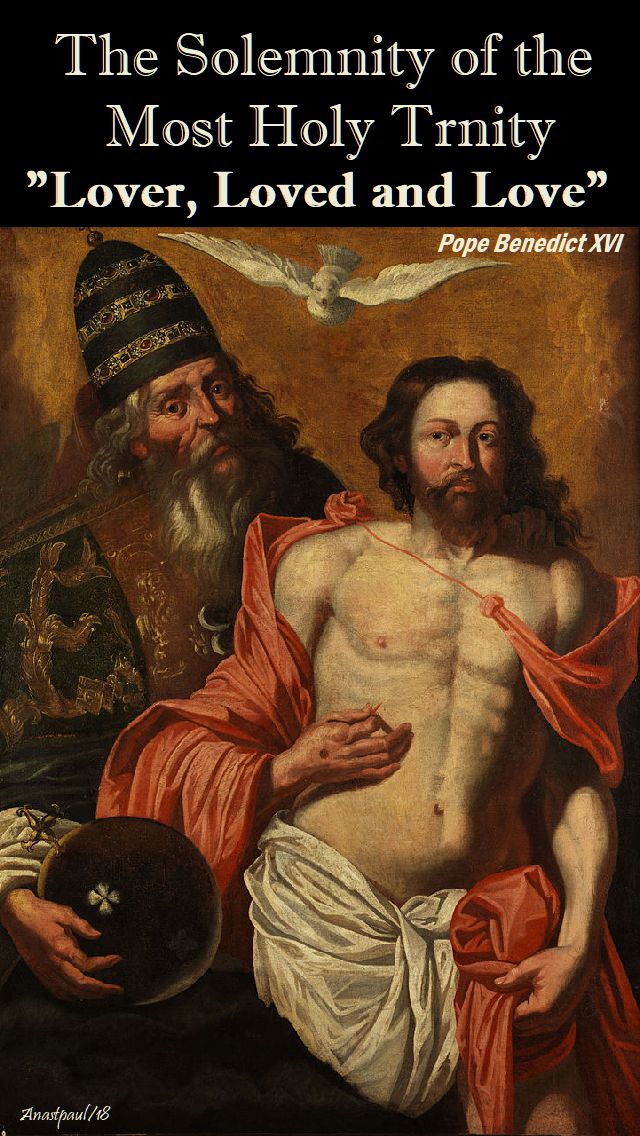
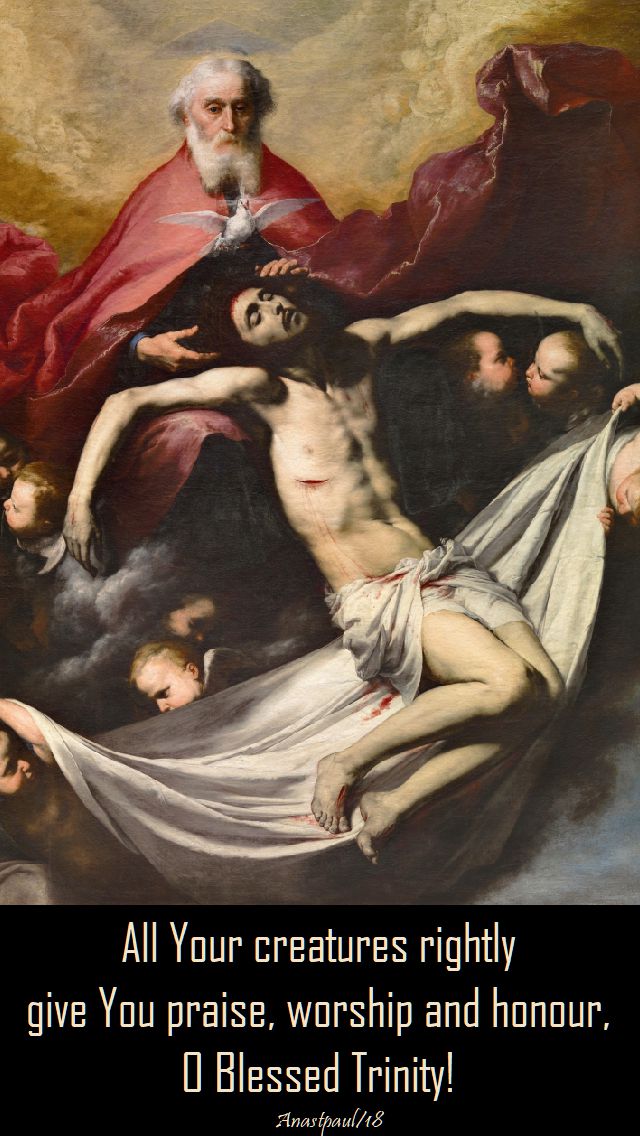
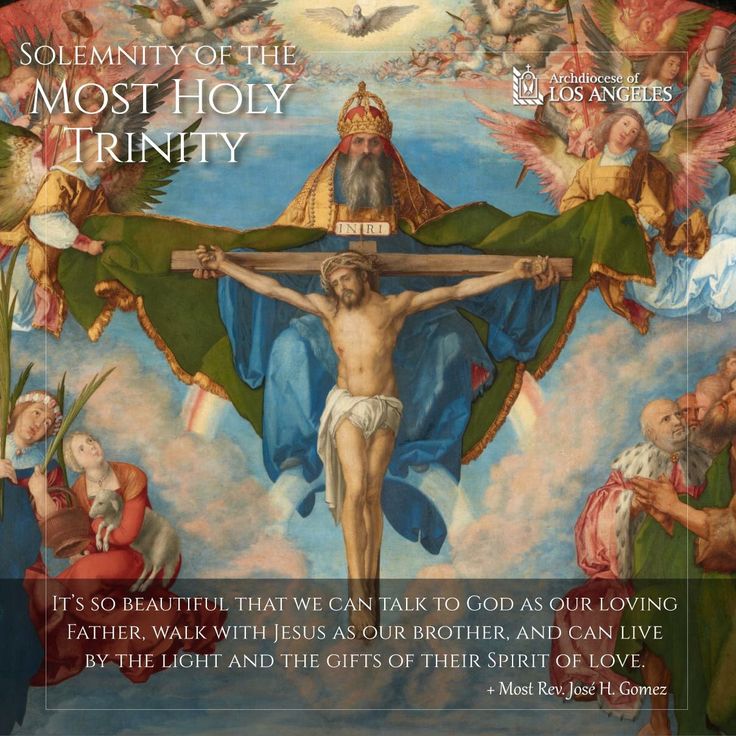
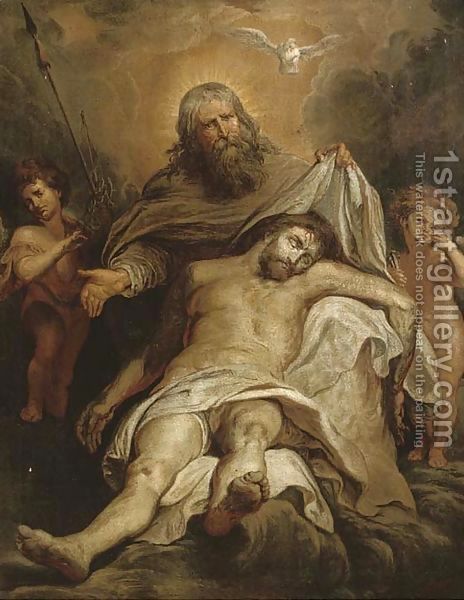
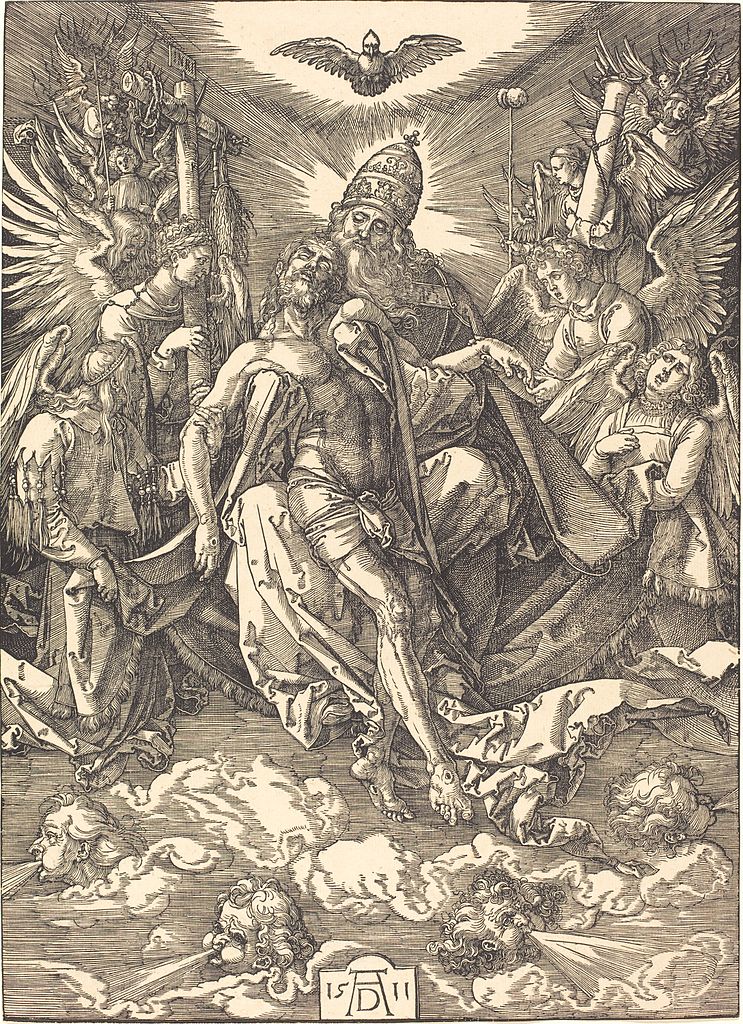
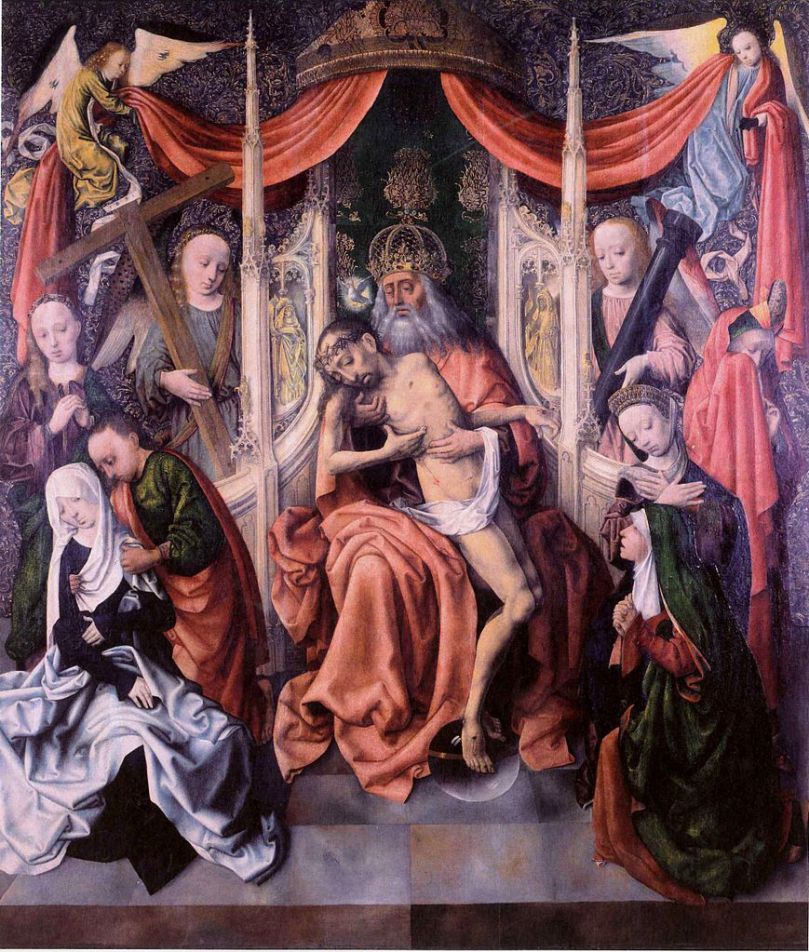
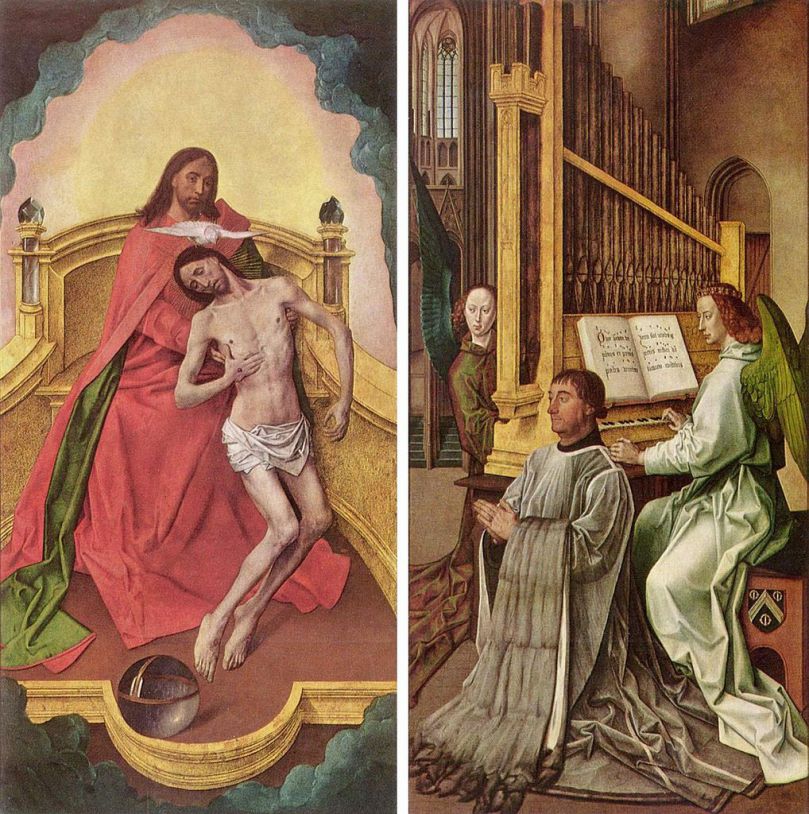
Quote of the Day – 27 May – The Solemnity of the Most Holy Trinity
Category: FEASTS and SOLEMNITIES
One Minute Reflection – 27 May – The Solemnity of the Most Holy Trinity
“Go therefore and make disciples of all nations, baptising them in the name of the Father and of the Son and of the Holy Spirit…“…Matthew 28:19
REFLECTION – “The Son is in the Father and the Father in the Son. O adorable mystery which has been from eternity! I adore You. O my incomprehensible Creator, before whom I am an atom, a being of yesterday or an hour ago! Go back a few years and I simply did not exist, I was not in being and things went on without me but You are from eternity and nothing whatever from one moment could go on without You. O adorable mystery! In the name of God, the Omnipotent Father, who created me! In the name of Jesus Christ, our Lord, Son of the living God, who bled for me! In the name of the Holy Spirit, who has been poured out on me!”…Bl John Henry Newman (1801-1890)
PRAYER – God our Father, You revealed the great mystery of Your Godhead to men, when You sent into the world, the Word who is Truth and the Spirit who makes us holy. Help us to believe in You and worship You, as the true faith teaches, three persons eternal in glory, one God, infinite in mystery. We make our prayer through Jesus our Lord, in the unity of the Holy Spirit, one God with you forever amen.
Our Morning Offering – 27 May – The Solemnity of the Most Holy Trinity
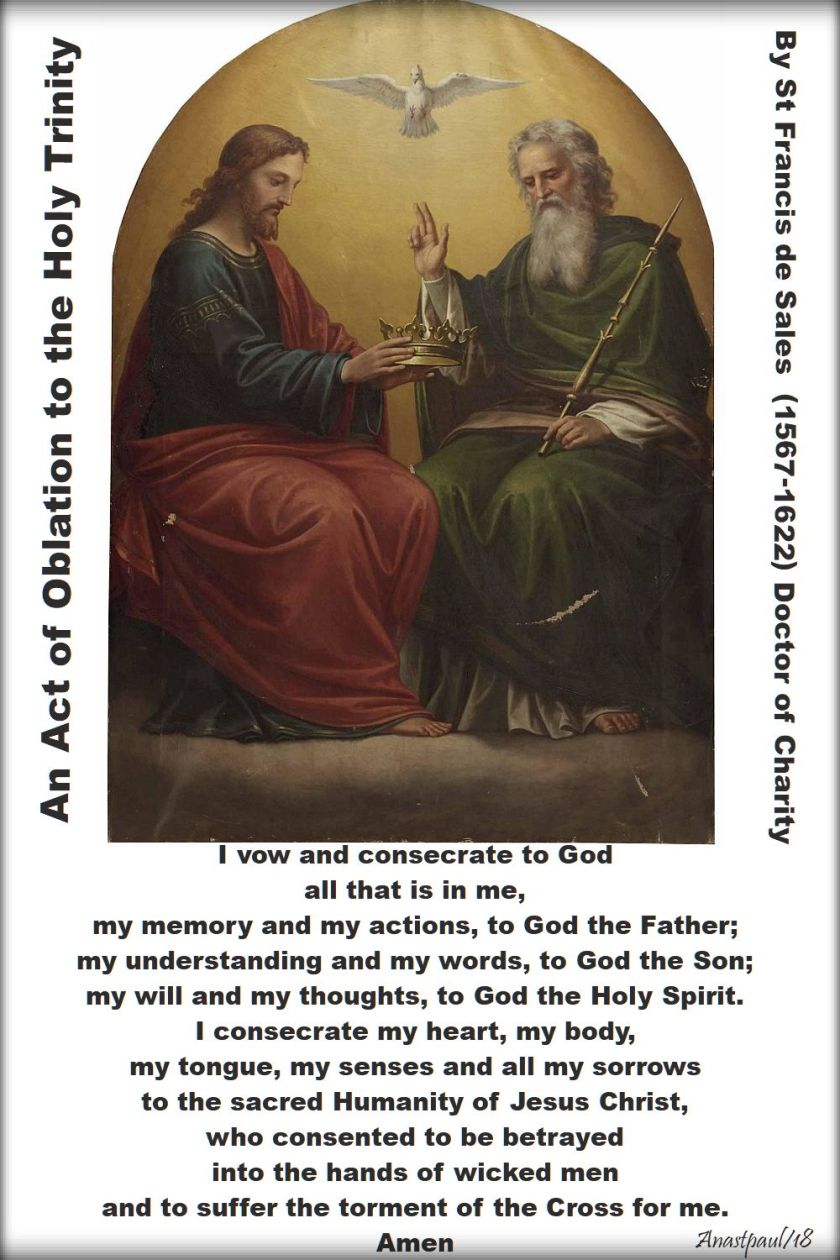
An Act of Oblation to the Holy Trinity
By St Francis de Sales (1567-1622) Doctor of Charity
I vow and consecrate to God
all that is in me,
my memory and my actions, to God the Father;
my understanding and my words, to God the Son;
my will and my thoughts, to God the Holy Spirit.
I consecrate my heart, my body,
my tongue, my senses and all my sorrows
to the sacred Humanity of Jesus Christ,
who consented to be betrayed
into the hands of wicked men
and to suffer the torment of the Cross for me.
Amen
Solemnity of the Most Holy Trinity – Trinity Sunday – 27 May 2018
Wishing you all a Blessed and Holy Solemnity of the Most Holy Trinity – Trinity Sunday – 27 May 2018
HISTORY AND LITURGY
ORIGIN — The greatest dogma of the Christian faith is the mystery of the Holy Trinity. (Mystery, in this connection, means a supernatural fact revealed by God which in itself transcends the natural power of human reasoning.) During the first thousand years of Christianity there was no special feast celebrated in honour of this mystery but, as Pope Alexander II (1073) declared, every day of the liturgical year was devoted to the honour and adoration of the Sacred Trinity.

However, to counteract the Arian heresy, which denied the fullness of divinity to the Son, a special Mass text in honour of the Holy Trinity was introduced and incorporated in the Roman liturgical books. This Mass was not assigned for a definite day but could be used on certain Sundays according to the private devotion of each priest. (Such Mass texts which are not prescribed but open to choice on certain days are now known as “votive Masses.”) From the ninth century on, various bishops of the Frankish kingdoms promoted in their own dioceses a special feast of the Holy Trinity, usually on the Sunday after Pentecost. They used a Mass text that Abbot Alcuin (804) is said to have composed.
Thus the custom of observing a special feast in honour of the Trinity became increasingly popular in the northern countries of Europe. Several synods prescribed it for their respective territories in France, Germany, England and The Netherlands. In the thirteenth centur, the orders of the Benedictines and Cistercians adopted the annual celebration of the feast. It was kept on different Sundays in different places, until in 1334 Pope John XXII accepted the festival into the official calendar of the Western Church and ordered that henceforth it should be held everywhere on the Sunday after Pentecost.
A new Mass text was written and published. It is interesting to note that the beautiful Preface of the Trinity as read today is the same one that appeared in the first text of the Sacramentary of Saint Pope Gregory the Great (540-604) Father and Doctor of the Church. Most of the other prayers are of later origin. The Divine Office in its present form, was arranged under Pope Saint Pius V (1572). It is one of the most sublime offices of the breviary.
The Feast of the Holy Trinity, now belongs among the great annual festivals of Christianity. Although it is not observed with additional liturgical services outside the Mass, its celebration quickly took root in the hearts and minds of the faithful and in all countries of Europe popular traditions are closely associated with this feast.


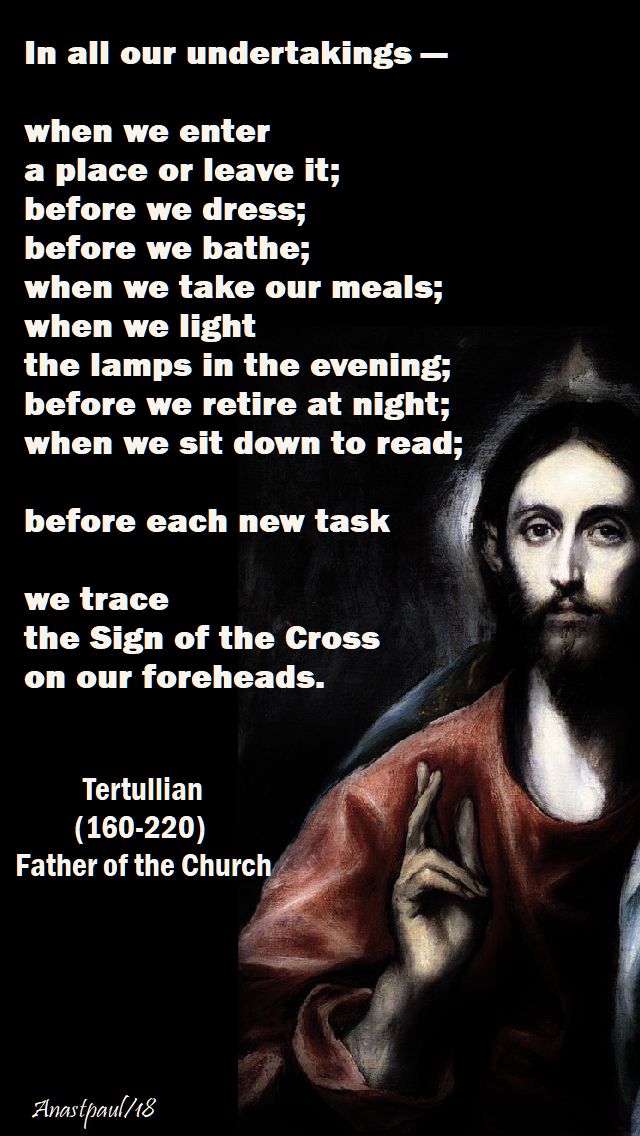
SIGN OF THE CROSS — The making of the sign of the cross, which professes faith both in the redemption of Christ and in the Trinity, was practised from the earliest centuries. Saint Augustine (431) mentioned and described it many times in his sermons and letters. In those days Christians made the sign of the cross (Redemption) with three fingers (Trinity) on their foreheads. The words (“In the name of the Father and the Son and the Holy Ghost”) were added later. Almost two hundred years before Augustine, in the third century, Tertullian had already reported this touching and beautiful early Christian practice:
“In all our undertakings — when we enter a place or leave it; before we dress; before we bathe; when we take our meals; when we light the lamps in the evening; before we retire at night; when we sit down to read; before each new task — we trace the sign of the cross on our foreheads.” Tertullian (160-220)
DOXOLOGY — The ancient Christian doxology (prayer of praise) “Glory be to the Father, and to the Son, and to the Holy Ghost” was used in the Oriental Church. The second part (“as it was in the beginning…”) seems to have been added at the time of Emperor Constantine. During the fifth century this beautiful short prayer came into the Western Church and spread very quickly. Since then it has been in constant use in both liturgical and private devotions. Finally, the Council of Narbonne (589) prescribed that it should be added after every psalm and hymn in the Divine Office. It is an ancient tradition that in poetical hymns of the liturgy the Gloria Patri is rendered in a paraphrase (free version) within the last stanza.
EASTERN RITES — The churches of the Byzantine Rite do not celebrate the Feast of the Holy Trinity. Instead, they observe the Sunday after Pentecost as the Feast of All Saints (Kyriake Ton Hagion Panton). The official calendar of the Greek Church announces this feast with the interesting words “Today, on the first Sunday after Pentecost, we celebrate the festive day of all Saints everywhere in the world: in Asia, Lybia, in northern and eastern Europe.” As may be seen from the territories mentioned, the term “whole world” applies only to the countries of that rite. The Uniate Armenians keep the Feast of the Holy Trinity on the same day as the Latin Church.
FOLKLORE
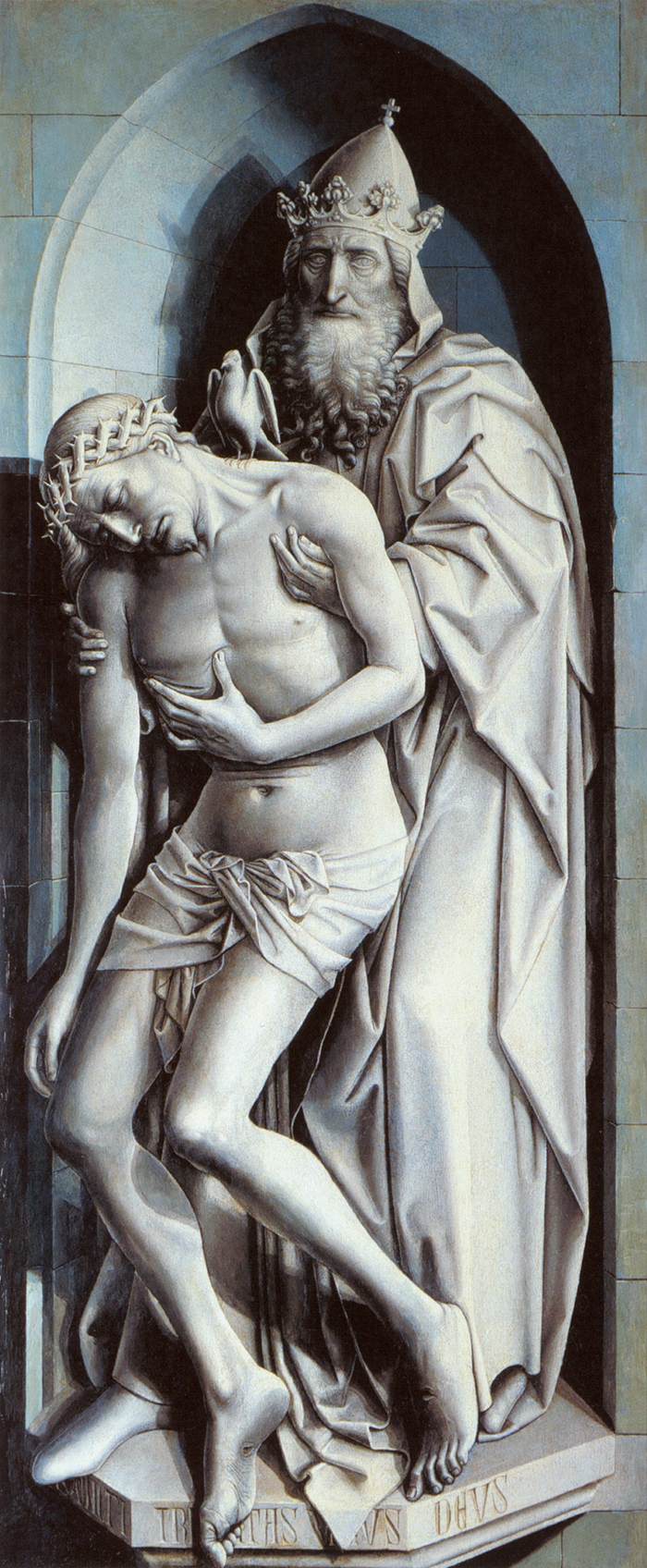
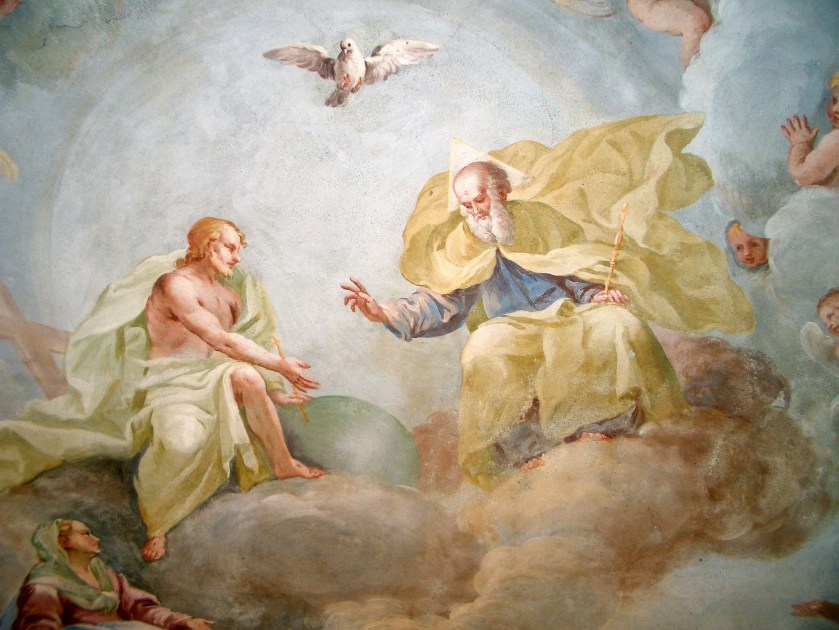
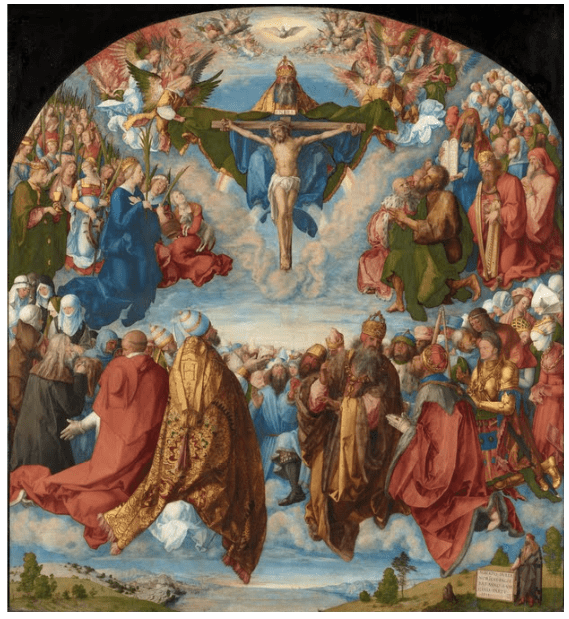
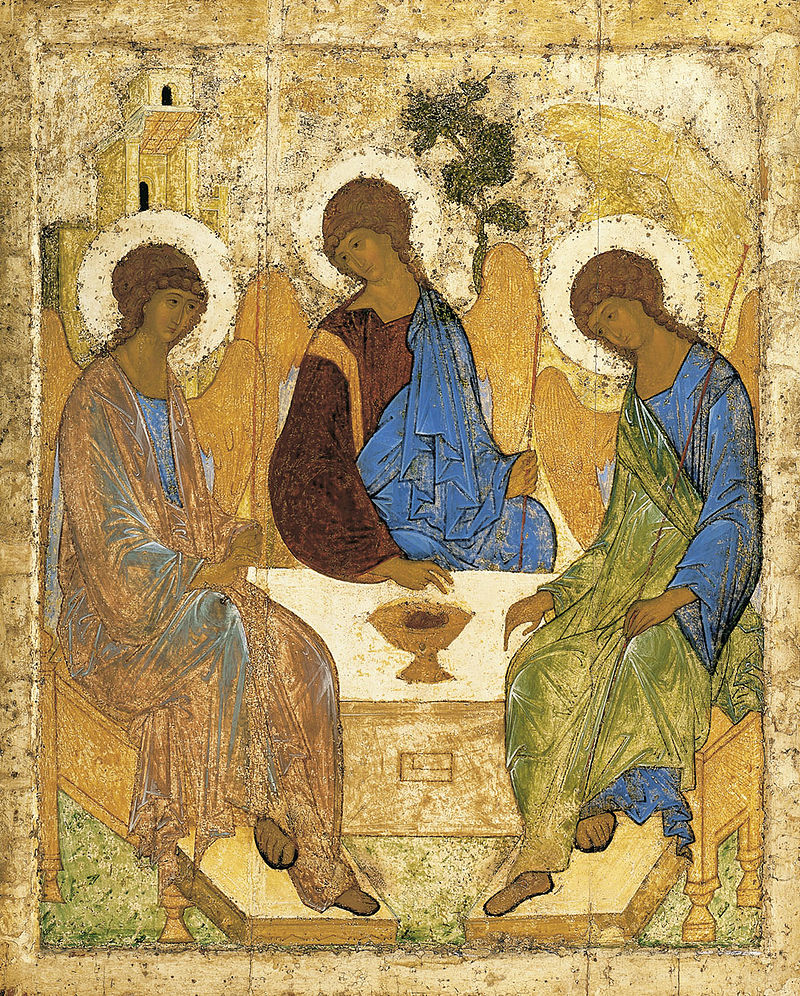
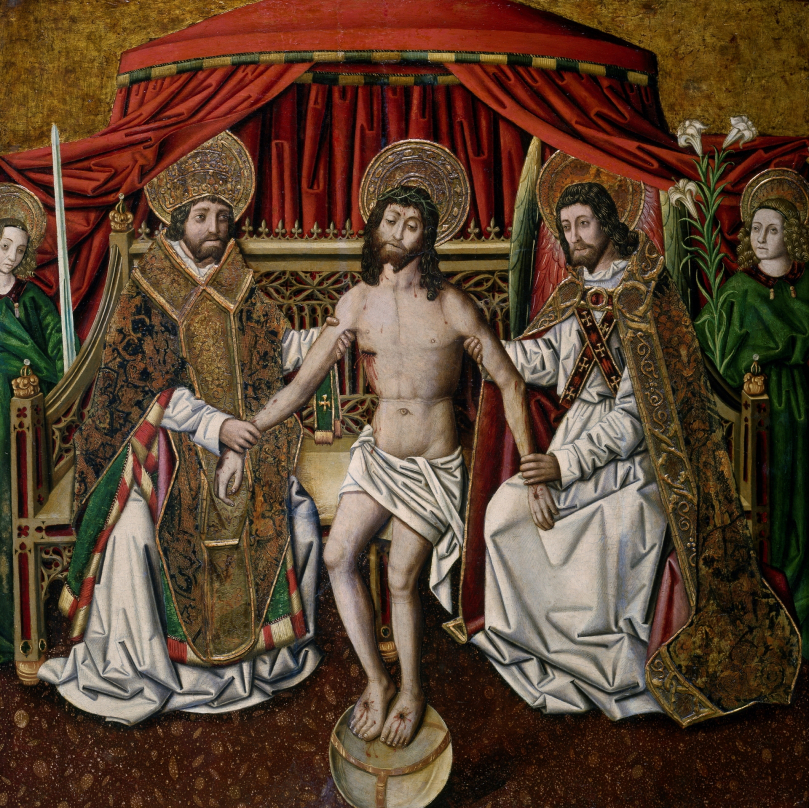
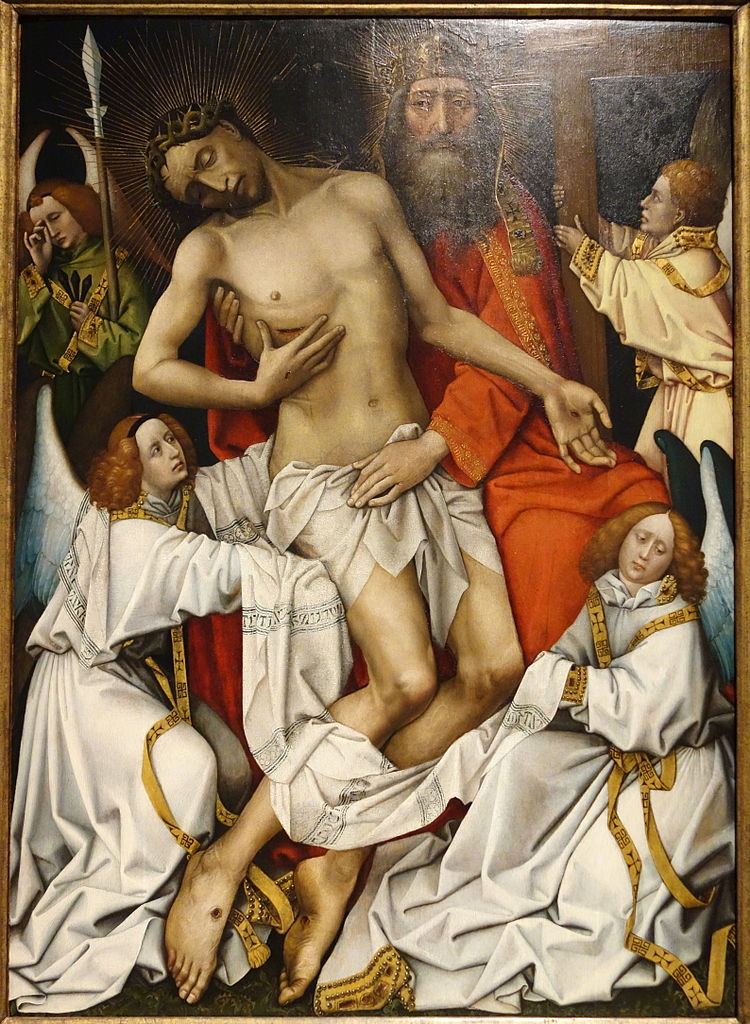
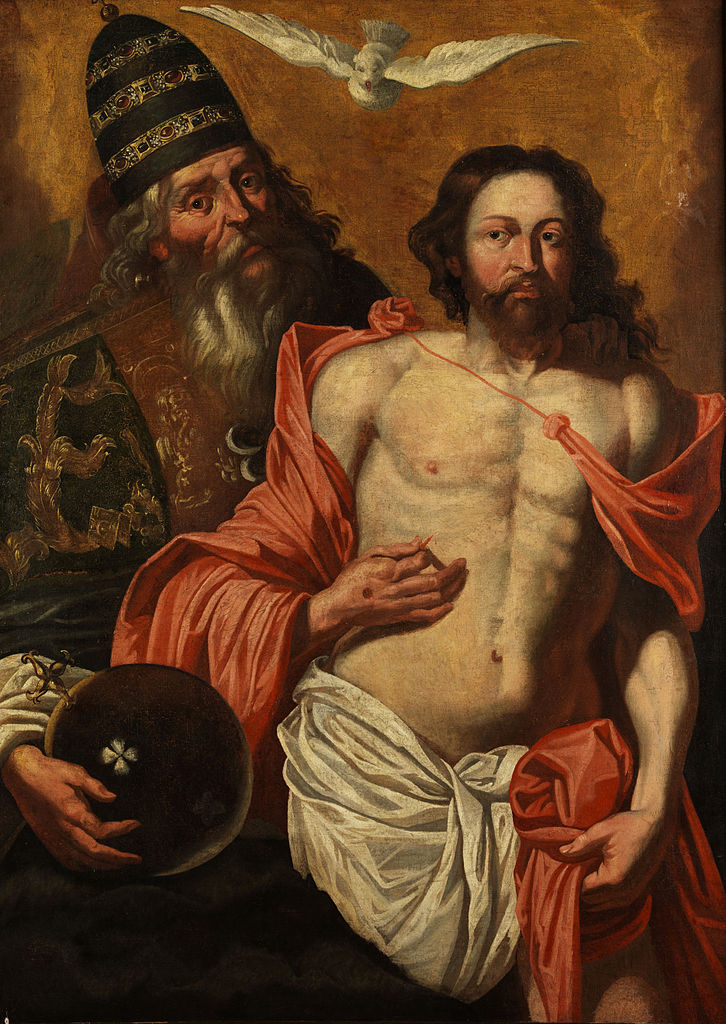
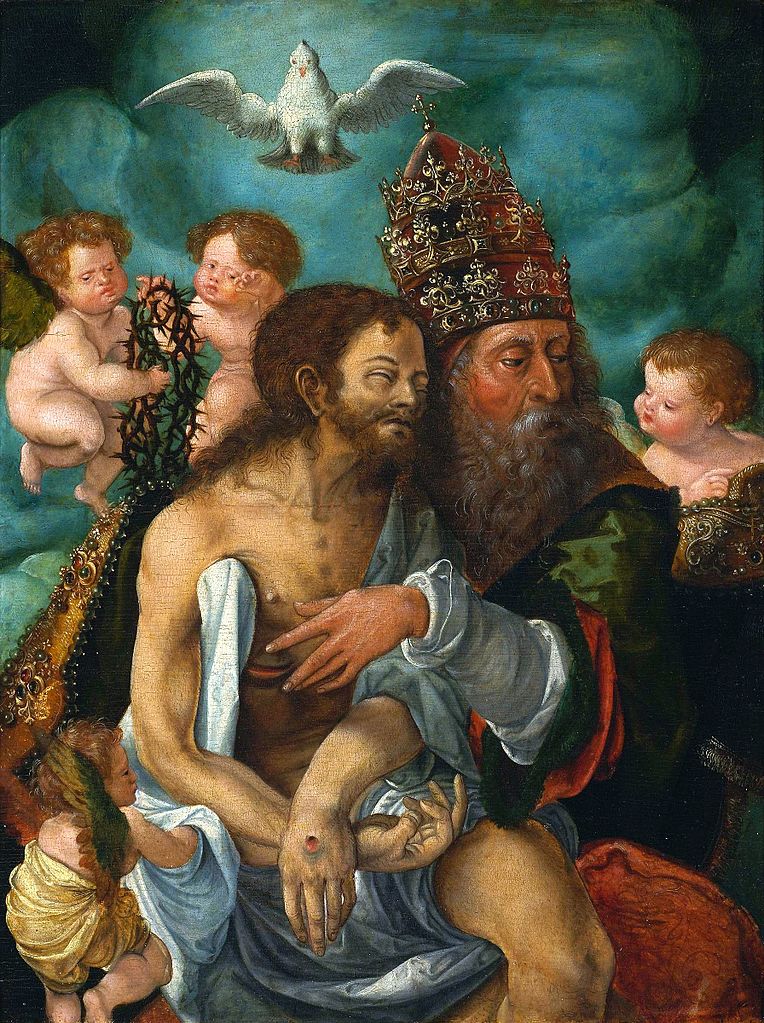
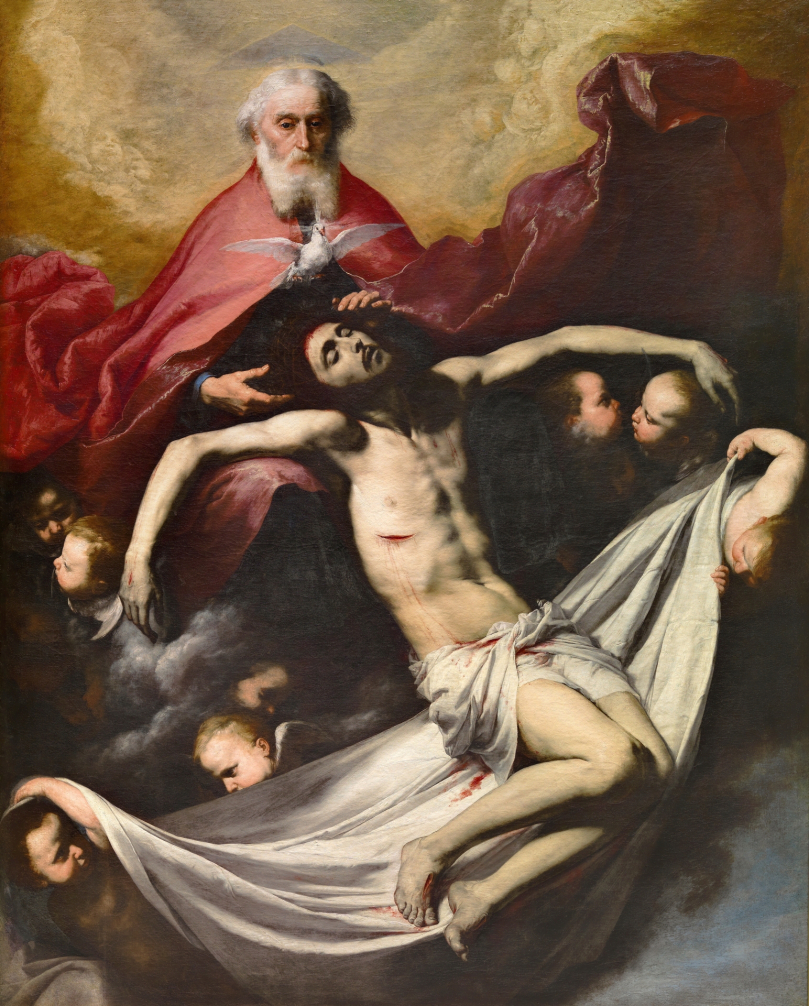
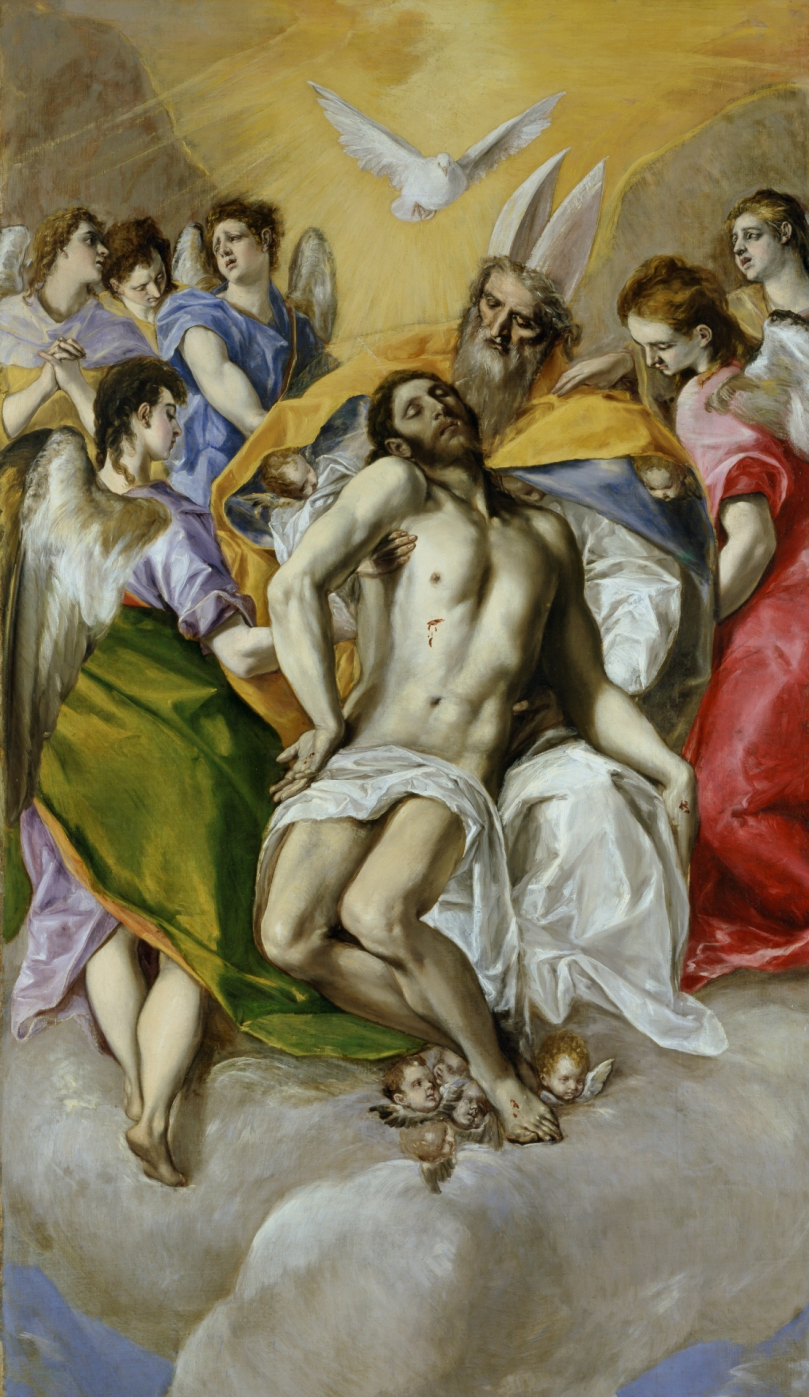
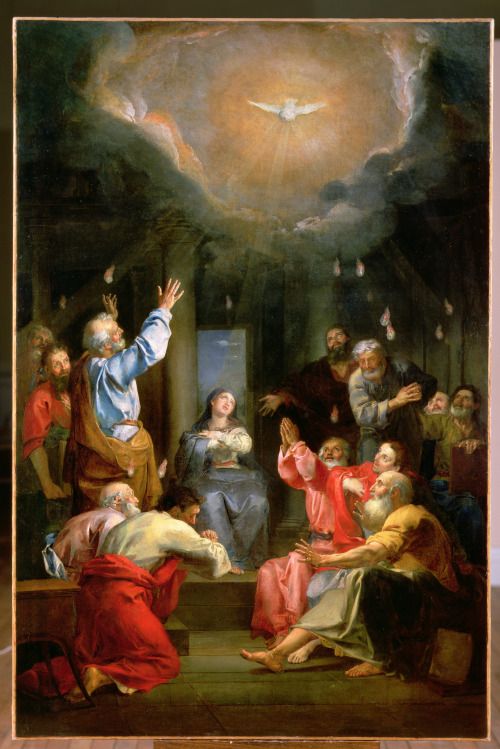
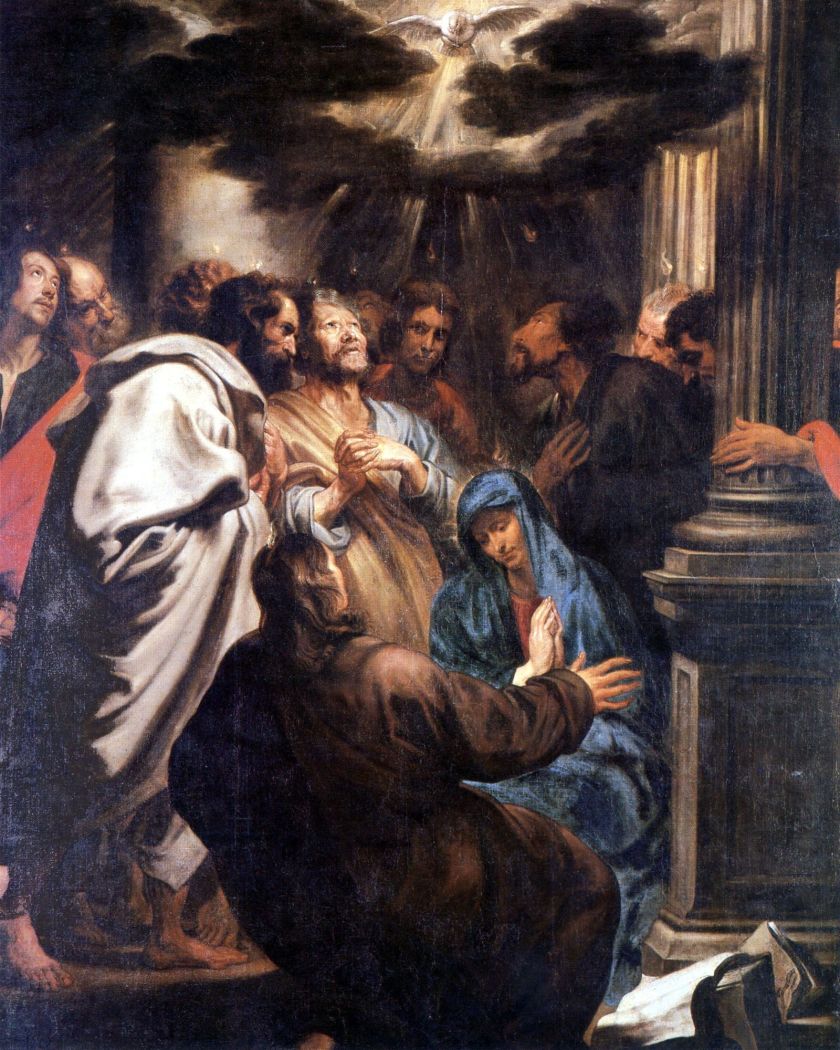
SYMBOLS — During the first centuries of the Christian era the Holy Trinity was sometimes represented in paintings by three young men of identical shape and looks. By the sixth century, however, it had become an accepted practice that only the Father and Son should be shown in human form; the Holy Spirit is represented by the figure of a dove.


In medieval times there were many imaginative and symbolic pictures, as well as designs, to indicate the great mystery of the faith. The Church has not officially accepted any of them, has tolerated some, forbidden others. One of the best-known symbols of this kind is the trefoil (shamrock). A second plant to which this symbolism is attached is the pansy (viola tricolor), which even today is called “Trinity flower” in many parts of Europe. In Puerto Rico a delicately perfumed white flower with three petals is called Trinitaria. Another symbol is the figure of a triangle (Trinity) surrounded by rays (divinity) with the picture of an eye inside the triangle (omniscience and providence). This design became very popular and may be found all over Europe in homes, on wayside shrines and even in churches. An interesting version of this symbol may be seen in the Great Seal of the United States (reproduced on every one-dollar bill).
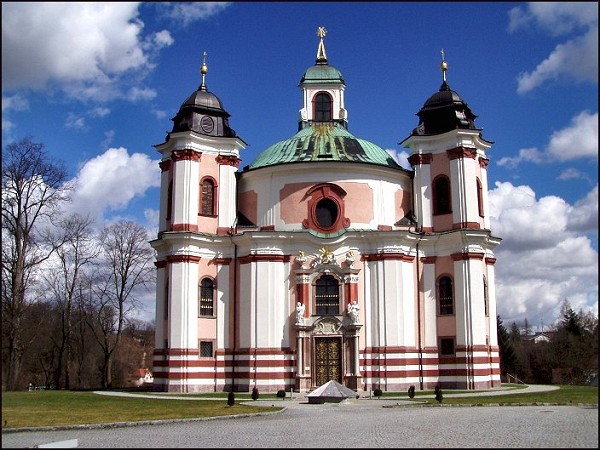
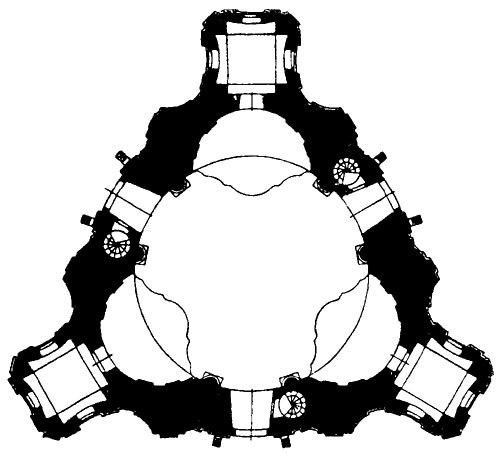
Centuries ago, architecture made use of many and sometimes strange, symbols to indicate the Trinity, like three animals (hares, stags, birds) in a circle, or three interlocked rings, or a candle with three flames. Some churches display an architectural number symbolism in honour of the Trinity. One of the most remarkable examples of this kind is the Holy Trinity Church of Stadl-Paura, Austria, built in 1722 – see below. It has three aisles, three towers, three doors, three windows on either side, three altars, three bells, and three rows of pews.

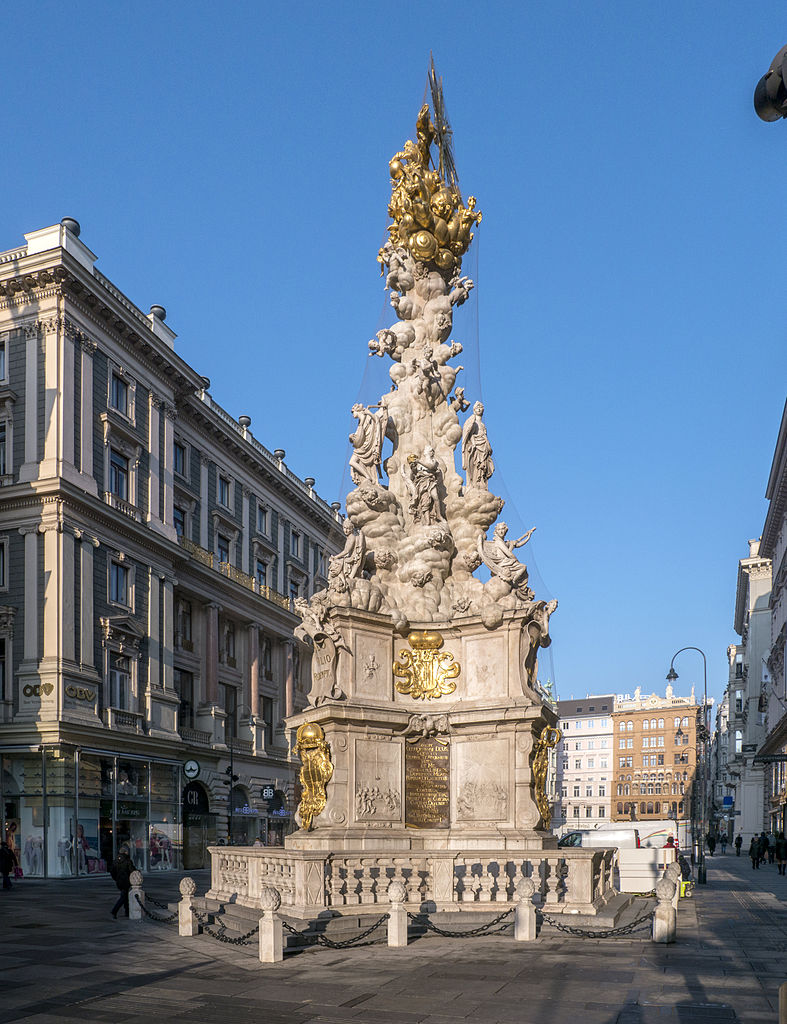
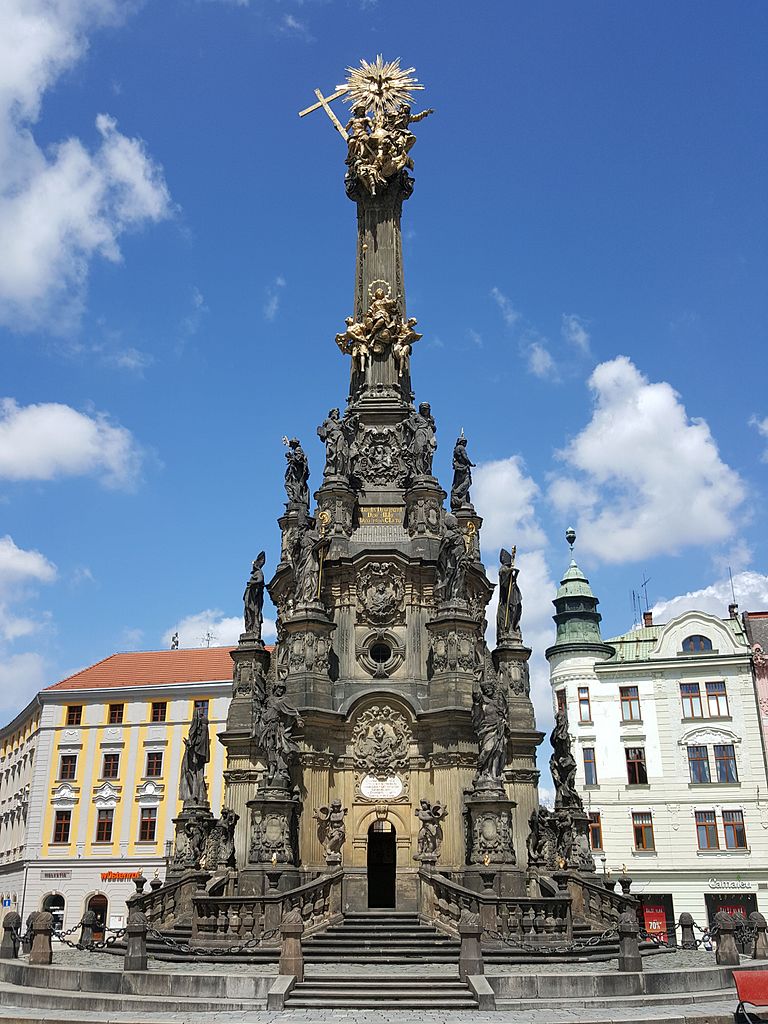
SHRINES AND COLUMNS — From the fourteenth century on, the Holy Trinity was generally invoked for help against the dreaded epidemics of the Black Death. Hundreds of Trinity churches in Europe owe their existence to public vows made in time of pestilence and cholera. In subsequent ravages of those terrible diseases, these churches became much-frequented pilgrim shrines. Later, during the seventeenth and eighteenth centuries, public columns in honour of the Holy Trinity were placed in the main squares of cities and towns in central Europe. Sculptured in marble or granite, they carry the traditional image of the Trinity and statues of the saints who were patrons against epidemics. Many of these columns are outstanding examples of late baroque art. The city of Vienna alone has eleven such Trinity columns which were erected during the epidemics of 1679 and 1713.


POPULAR CELEBRATION — During the late Middle Ages and up to the eighteenth century, the Feast of the Holy Trinity was celebrated with popular manifestations of solemnity, special honour and joy. As an example may serve the festival at the Trinity column of downtown Vienna, in 1680, where the famous Augustinian preacher Abraham a Santa Clara (1709) delivered a sermon before many thousands in the festively decorated square. At the end he appealed to the choir band to express with their instruments the honour, adoration and gratitude of all to the Holy Trinity, “upon which the whole group of many trumpets and kettle-drums right joyfully broke out in a ringing fanfare.”
A proof of the great devotion to the Trinity was the Holy Trinity Confraternities, which flourished to such a degree during the seventeenth century that they surpassed most of the other similar organisations both in the number of local groups and in membership…
Handbook of Christian Feasts and Customs by Francis X. Weiser, S.J., Harcourt, Brace and Company, New York, 1958.
COLLECT PRAYER
God our Father, who by sending into the world the Word of truth and the Spirit of sanctification made known to the human race your wondrous mystery, grant us, we pray, that in profession the true faith, we may acknowledge the Trinity of eternal glory and adore your Unity, powerful in majesty. Through our Lord Jesus Christ, your Son, who lives and reigns with you in the unity of the Holy Spirit, one God, for ever and ever.
Glory and honour be to God in the Unity of the Trinity; to the Father and to the Son with the Holy Spirit, forever and ever.


The Solemnity of the Most Holy Trinity Year B and Memorials of the Saints – 27 May 2018
The Solemnity of the Most Holy Trinity/ Trinity Sunday (2018)
St Augustine of Canterbury (Optional Memorial) (Died c 605)
For the life of St Augustine here: https://anastpaul.wordpress.com/2017/05/27/saint-of-the-day-27-may-st-augustine-of-canterbury/
St Acculus of Alexandria
St Antanansio Bazzekuketta
St Barbara Kim
St Barbara Yi
St Bruno of Würzburg
Bl Dionysius of Semur
Bl Edmund Duke
St Eutropius of Orange
St Evangelius of Alexandria
St Frederick of Liège
Bl Gausberto of Montsalvy
St Gonzaga Gonza
St James of Nocera
Bl John Hogg
St Julius the Veteran and Companions
St Liberius of Ancona
St Matiya Mulumba
Bl Matthias of Nagasaki
St Melangell
St Ranulphus of Arras
St Restituta of Sora and Companions
Bl Richard Hill
Bl Richard Holiday
St Secundus of Troia
Thought for the Day – 20 May – The Solemnity of Pentecost, Alleluia!
“If the damned were asked: Why are you in Hell? they would answer: ‘ For having resisted the Holy Spirit.’
And if the saints were asked: Why are you in Heaven? they would answer: ‘For having listened to the Holy Spirit.’
When good thoughts come into our minds, it is the Holy Spirit who is visiting us.
The Holy Spirit is a power.
The Holy Spirit …. sustained the martyrs. Without the Holy Spirit, the martyrs would have fallen like the leaves from the trees. When the fires were lighted under them, the Holy Spirit extinguished the heat of the fire by the heat of divine love.
The good God, in sending us the Holy Spirit, has treated us like a great king who should send his minister to guide one of his subjects, saying, “You will accompany this man everywhere and you will bring him back to me safe and sound.”
How beautiful it is, my children, to be accompanied by the Holy Spirit!
He is indeed a good Guide and to think, that there are some, who will not follow Him!
The Holy Spirit is like a man with a carriage and horse, who should want to take us to Pans. We should only have to say “yes,” and to get into it. It is indeed an easy matter to say “yes”!… Well, the Holy Spirit wants to take us to Heaven; we have only to say “yes,” and to let Him take us there.“St John Vianney (1786-1859)
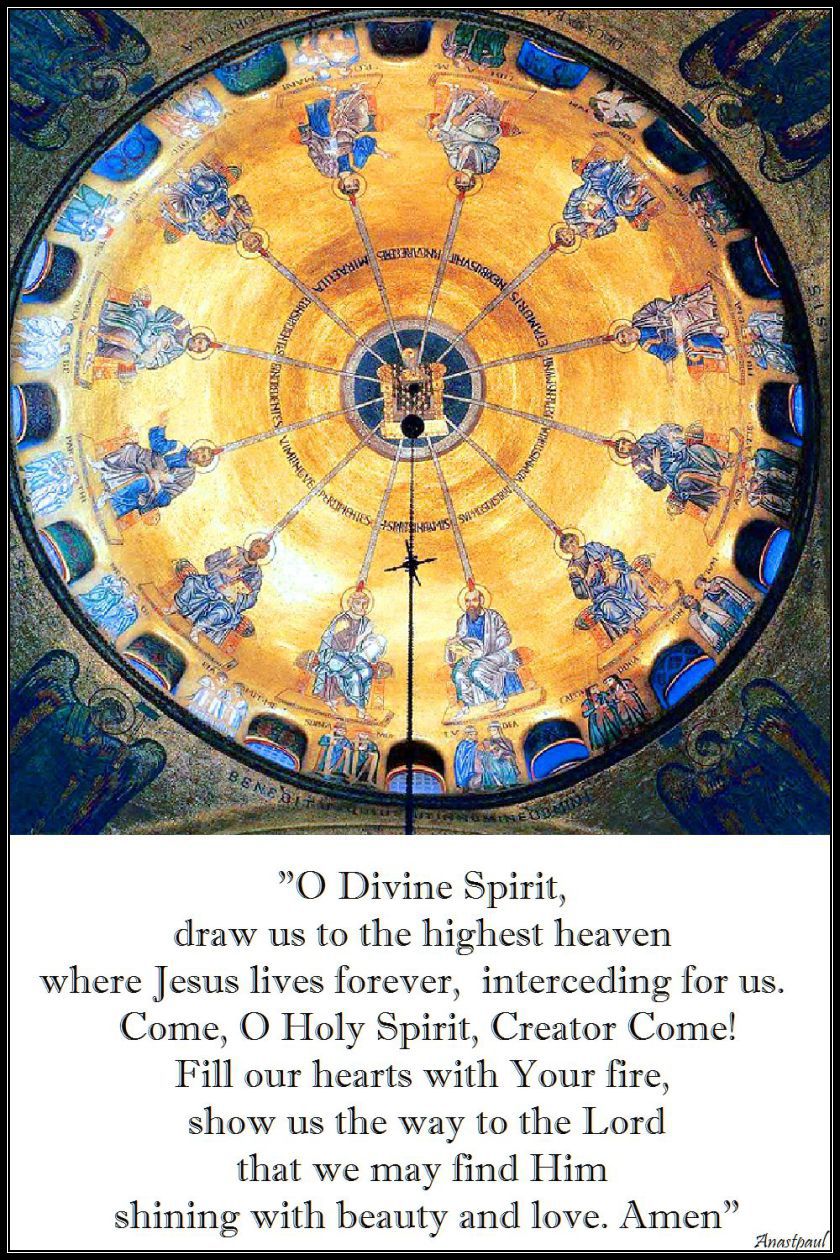
“O Divine Spirit, draw us to the highest heaven where Jesus lives forever, interceding for us. Come, fill our hearts with Your fire, show us the way to the Lord that we may find Him shining with beauty and love. Amen”
My most Holy Lord and Sanctifier,
If I differ at all from the world,
it is because You have chosen me out of the world
and have lit up the love of God, in my heart.
If I differ from Your Saints, it is because I do not ask
earnestly enough for Your grace and for enough of it
and because I do not diligently improve
what You have given me.
Increase in me this grace of love,
in spite of all my unworthiness.
It is more precious than anything else in the world.
I accept it in place of all the world can give me.
O give it to me! It is my life.
Come Holy Spirit, Come!
Amen
Bl John Henry Newman – 1801-1890
Quote/s of the Day – 20 May – The Solemnity of Pentecost, Alleluia!
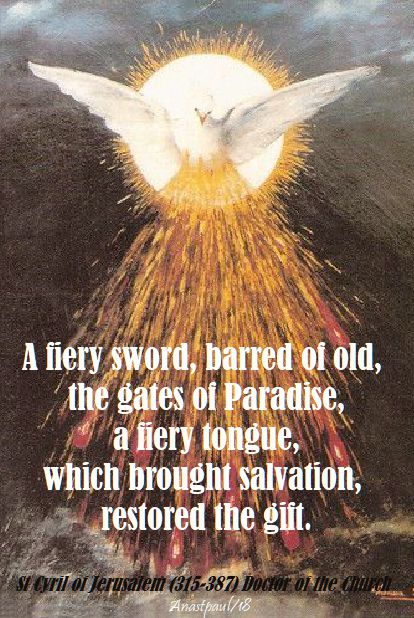
“A fiery sword, barred of old,
the gates of Paradise,
a fiery tongue, which brought salvation,
restored the gift.”
St Cyril of Jerusalem (315-387) Doctor of the Church
(Catechetical Lectures: Lecture 17 no. 15)
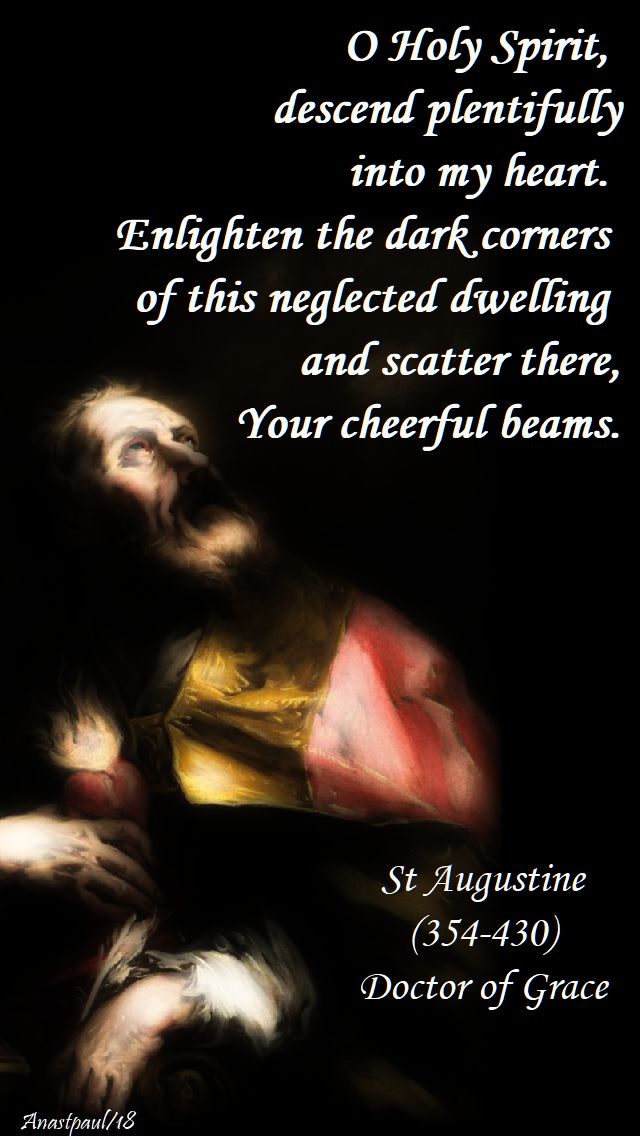
“O Holy Spirit, descend plentifully into my heart.
Enlighten the dark corners of this neglected dwelling
and scatter there, Your cheerful beams.”
St Augustine (354-430) Doctor of Grace
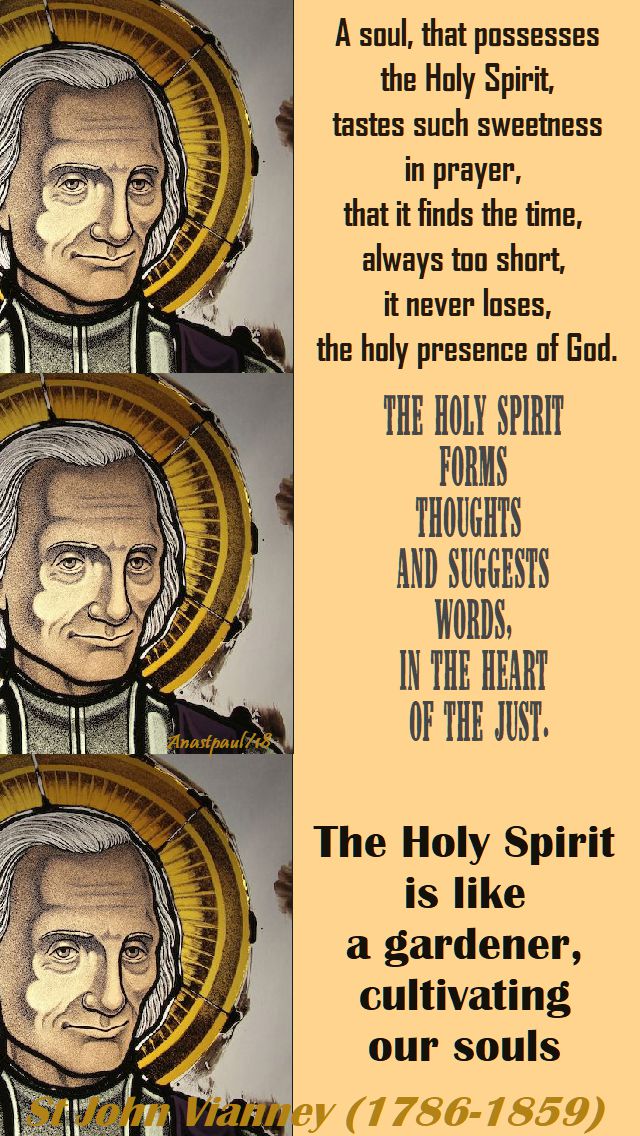
“A soul, that possesses the Holy Spirit,
tastes such sweetness, in prayer,
that it finds the time, always too short,
it never loses, the holy presence of God.”
“The Holy Spirit forms thoughts
and suggests words, in the hearts of the just.”
“The Holy Spirit is like a gardener,
cultivating our souls.”
St John Vianney (1786-1859)
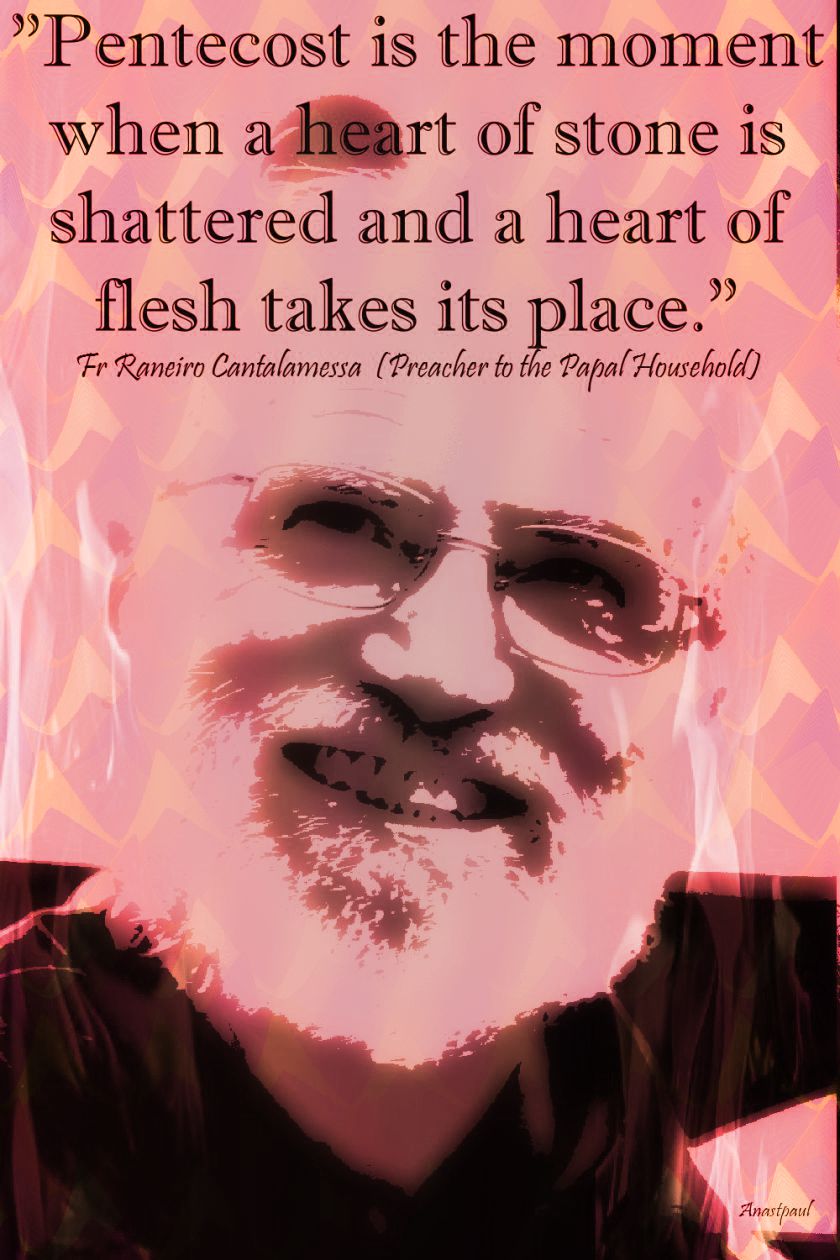
“Pentecost is the moment
when a heart of stone is
shattered and a heart of
flesh takes its place.”
Fr Raneiro Cantalamessa
(Preacher to the Papal Household)
One Minute Reflection – 20 May – Pentecost Sunday, Alleluia!
One Minute Reflection – 20 May – The Solemnity of Pentecost, Alleluia!
Today’s Readings : Acts 2:1-11, Psalm 104:1, 24, 29-31, 34, Galatians 5:16-25, John 15:26-27; 16:12-15
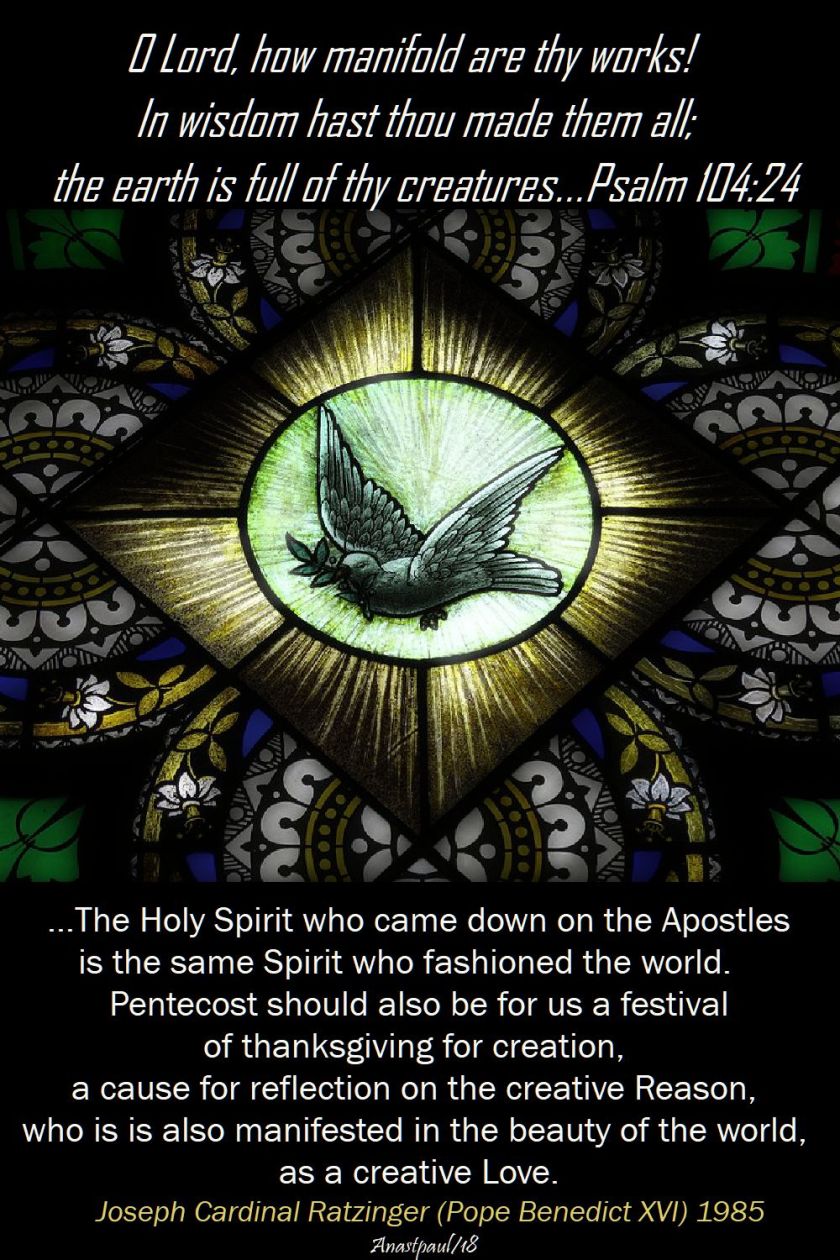
O Lord, how manifold are thy works! In wisdom hast thou made them all; the earth is full of thy creatures…Psalm 104:24
REFLECTION – “…the Holy Spirit who came down on the Apostles is the same Spirit who fashioned the world. Pentecost should also be for us a festival of thanksgiving for creation, a cause for reflection on the creative Reason, who is is also manifested in the beauty of the world, as a creative Love.”…Joseph Cardinal Ratzinger (Pope Benedict XVI) 1985
PRAYER – Lord God, pour out the gifts of the Holy Spirit on all mankind and fulfil now, in the hearts of Your faithful, what You accomplished at the beginning of the world, every second of every day and when the Gospel was first preached on earth. Come, O Holy Spirit, come! We make our prayer through our Lord Jesus Christ, Your Son, in the unity of the Holy Spirit, one God forever, amen.
Our Morning Offering – 20 May – Pentecost Sunday, Alleluia!
Veni Sancte Spiritus – The Golden Sequence
Before the Alleluia, proclamation of the Gospel, the ancient sequence Veni Sancte Spiritus (Come, Holy Spirit) is recited or sung on each day of Pentecost week. This hymn appeared first in liturgical books around the year 1200. It has been variously ascribed to Pope Innocent III (1216), to King Robert of France (1031) and even to Saint Gregory the Great (604). Most probably, however, its author was Cardinal Stephen Langton (1128), Archbishop of Canterbury. The poem has been known from medieval times as the “Golden Sequence” because of its richness in thought and expression. Each one of the short stanzas is a sentence in itself, thus facilitating meditation. Below is one of the many translations used today.
Prayer:
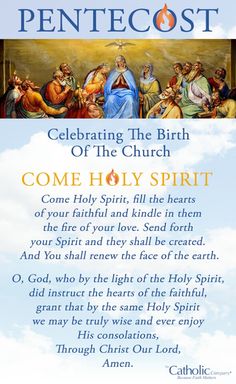
Come, Holy Spirit and bring from above
The splendour of Thy light.
Come, father of the poor, come, giver of graces,
Come, light of our hearts.
Best of Consolers, sweet guest of the soul,
And comfort of the weary.
Thou rest in labour, relief in burning toil,
Consoling us in sorrow.
O blessed light, fill the innermost hearts
Of those who trust in Thee.
Without Thy indwelling there is nothing in man,
And nothing free of sin.
Cleanse what is sordid, give water in dryness,
And heal the bleeding wounds.
Bend what is proud, make warm what is cold,
Bring back the wayward soul.
Give to the faithful who trustingly beg Thee
Thy seven holy gifts.
Grant virtue’s reward, salvation in death,
And everlasting joy. Amen. Alleluia.
The Solemnity of Pentecost – 20 May
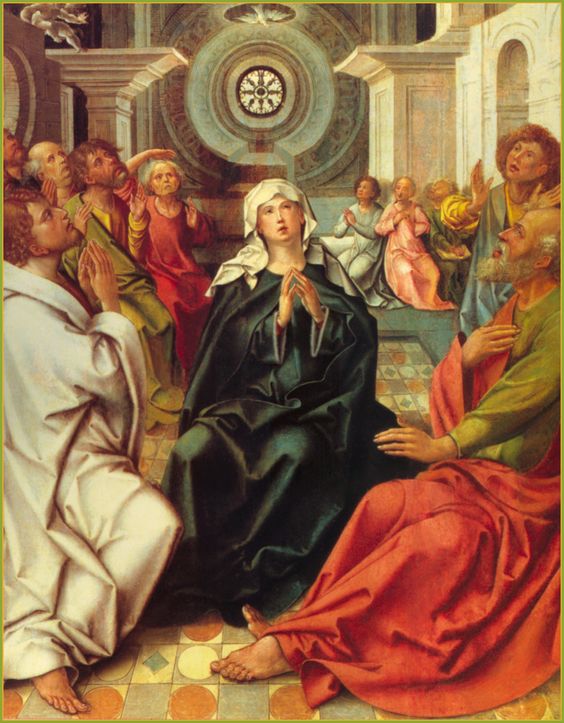
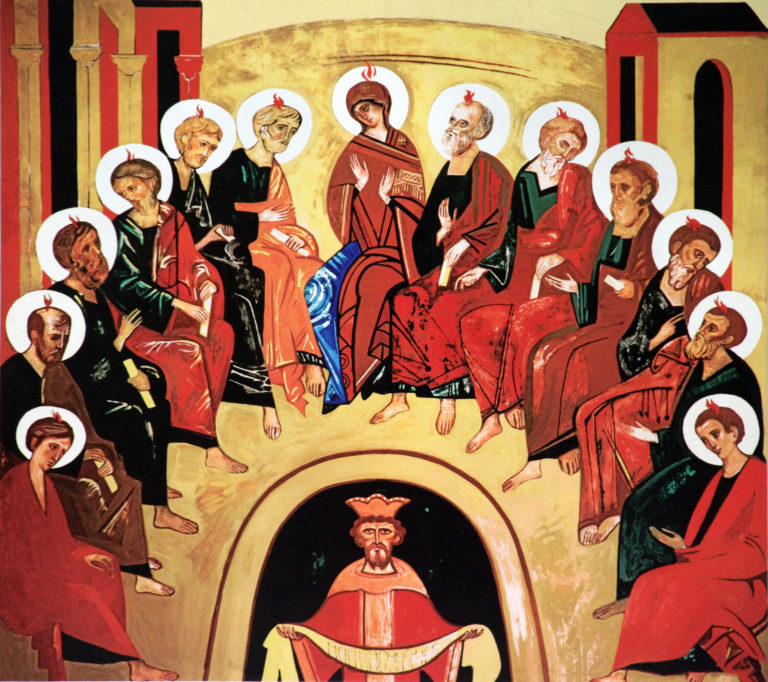
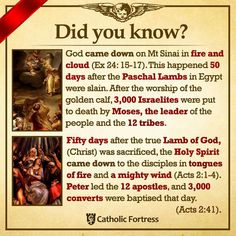
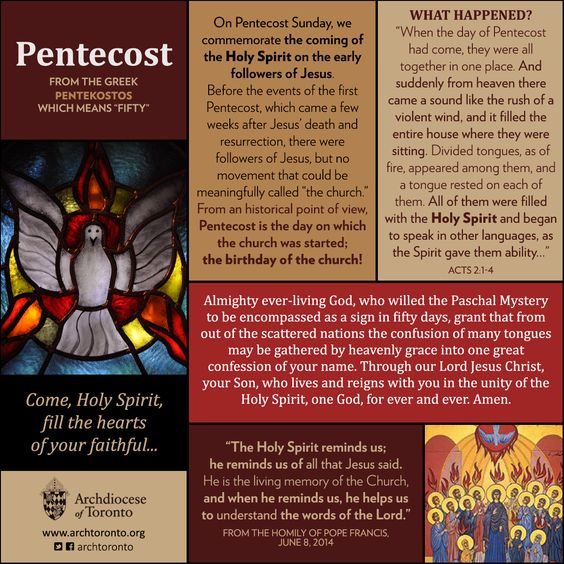
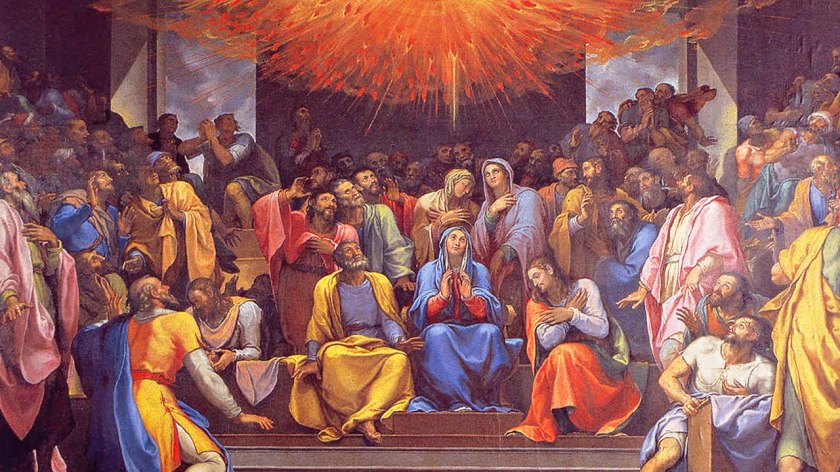
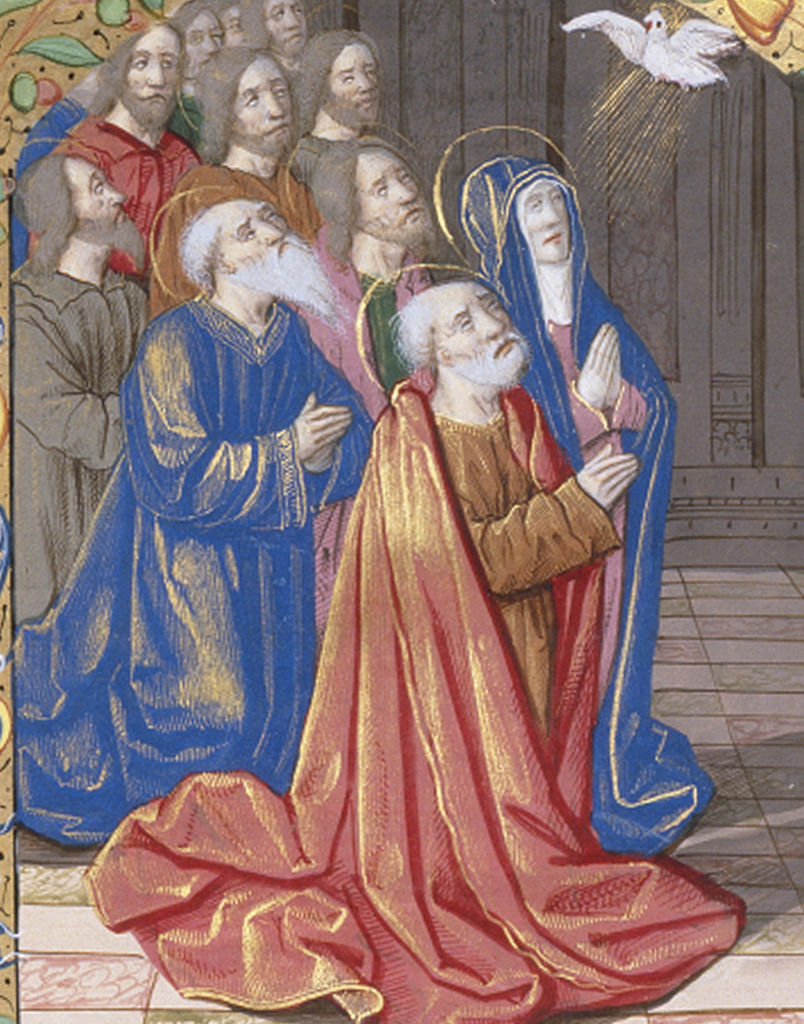
And when the days of Pentecost were drawing to a close, they were all together in one place. And suddenly there came a sound from heaven, as of a violent wind coming and it filled the whole house where they were sitting. And there appeared to them parted tongues as of fire, which settled upon each of them. And they were all filled with the Holy Spirit and began to speak in foreign tongues, even as the Holy Spirit prompted them to speak... (Acts 2, 1-4).
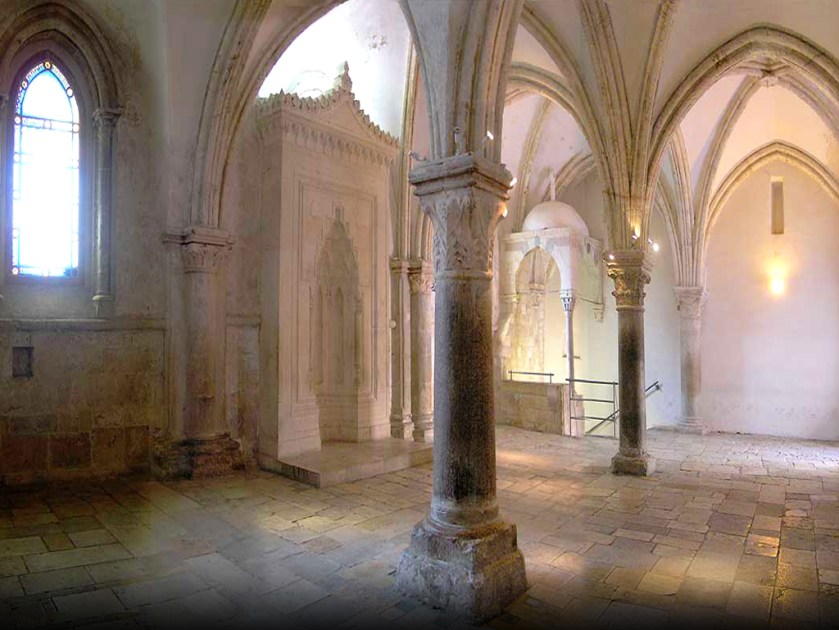
After Jesus had ascended to heaven, the apostles and disciples returned to the Holy City. They remained together in the Upper Room or Cenacle, the place where Jesus had appeared to them and which may well be called, the first Christian church. About a hundred and twenty persons were assembled there. They chose Matthias as an apostle in place of the unhappy Judas; they prayed and waited for the Paraclete.

Ten days had passed, it was Sunday, the seventh Sunday after the resurrection. At about nine o’clock in the morning, as they were together praying fervently, the Holy Spirit descended upon them. Note how all the great theophanies in Christ’s life occurred during the course of prayer. After His baptism, for instance, when Jesus was praying the heavens opened and the Holy Spirit descended in the form of a dove; likewise, it was during prayer at night, that the transfiguration took place on Tabor. Surely too, it was while Mary was praying, that Gabriel delivered his message and the Holy Spirit overshadowed her. Pentecost followed precedent. The small community of Christians had prepared themselves through prayer for the coming of the Paraclete. The same is true at Mass today, every day; through prayer we ready our souls for the advent of the Spirit.

The descent upon the apostles was internal and invisible in nature although accompanied by certain visible phenomena. There came a mighty roar, like the onrush of a violent wind. It came suddenly, from heaven but unlike storms that strike a structure from without, this one penetrated and filled the room where the disciples were gathered. Therefore it was not a natural wind, it was a miracle peculiar to the occasion. A second visible sign consisted in tongues of fire, that descended upon each one present. These fiery tongues gave visible evidence that the Holy Spirit had descended upon them.

Today at Mass, particularly at holy Communion, the power of the Holy Spirit will come down upon us, fiery tongues will not be seen but invisible tongues of fire will not be absent. There was still another external manifestation of the Holy Spirit, the apostles and disciples were enabled to speak various languages.
After the roar of the wind many of Jerusalem’s pilgrims hurried to the Cenacle. Pentecost was one of the three festivals which obliged all Jews to be present in Jerusalem. Jews from distant lands and Jewish converts from paganism too, attended these feasts. As a result, a colourful crowd, speaking a variety of languages, surrounded the house. Now the apostles, who so shortly before had hid in fear behind locked doors, came forth and courageously walked among the multitude, speaking to each in his native tongue. It was indeed amazing! Galileans, and multilingual?
But the malicious too were present, they had the answer. Nothing marvellous at all! Those Galileans were simply drunk and their drunken babble sounded like a foreign language! Peter showed no hesitation in answering the charge. None of their number, he said, were intoxicated, it was but nine o’clock in the morning and at that hour men usually are sober. What the multitude saw was, in fact, the fulfilment of Joel’s prophecy: In those days (of the Messiah), God will pour forth His Spirit upon men and they will prophesy. . . . Then the apostle pointed his words more directly against the accusers, they had killed Jesus, had nailed Him to the Cros; but God had awakened Him and after His departure to heaven, He sent the Holy Spirit.
The pilgrims who had heard Peter give this first Pentecostal sermon “were pierced to the heart and said, Brethren, what shall we do? But Peter said to them, Repent and be baptised and you will receive the gift of the Holy Spirit.” Three thousand responded.
One final question, why the miracle of tongues? In answer, recall the story regarding the tower of Babel. Puffed up by pride, men attempted to build a tower that would touch the heavens. To punish their sin, God confused their speech. Sin causes confusion and division. Now Christ came to gather all men into His Church and thereby to unite them to Himself. This should result in creating but one family of nations again. To this blessed state the miracle of tongues points.
Yes, even we as individuals have a gift of tongues which all men can understand. It is the gift of love infused into us by the Holy Spirit. Love unites, love is a common language, by means of love we can speak to all nations…Excerpted from The Church’s Year of Grace, Pius Parsch
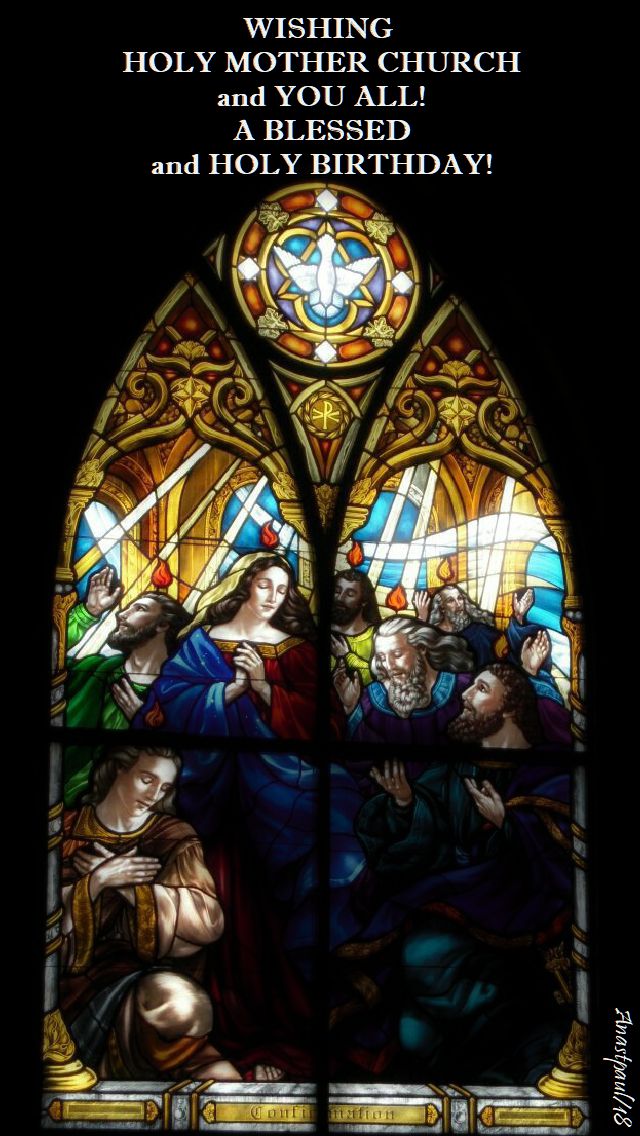
Wishing Holy Mother Church and
you all a Blessed, Holy and love-filled Pentecost! Alleluia!
The Solemnity of Pentecost and Memorials of the Saints – 20 May
The Solemnity of Pentecost (2018)
St Bernadine of Siena O.F.M. (1380-1444) (Optional Memorial)
St Abercius
Bl Albert of Bologna
St Alexander of Edessa
St Althryda
St Anastasius of Brescia
St Aquila of Egypt
St Arcangelo Tadini
Bl Arnaldo Serra and Companions
St Asterius of Edessa
St Austregisilus of Bourges
St Basilla of Rome
St Baudelius of Nîmes
St Codrato
Bl Columba of Rieti
St Ethelbert of East Anglia
Bl Guy de Gherardesca
St Helena
St Hilary of Toulouse
St José Pérez Fernández
St Lucifer of Caglieri
St Marcello
Bl Maria Angelica Perez
St Plautilla of Rome
St Protasius Chong Kuk-bo
St Rafaél García Torres
St Talaleo of Egea
St Thalalaeus of Edessa
St Theodore of Pavia
St Tomás Valera González
Feast of St Matthias, Apostle and Memorials of the Saints 14 May
St Matthias the Apostle (Feast)
St Ampelio
St Boniface of Ferentino
St Boniface of Tarsus
St Carthage the Younger
St Corona the Martyr
St Costanzo of Capri
St Costanzo of Vercelli
Bl Diego of Narbonne
St Dyfan
St Engelmer
St Erembert of Toulouse
St Felice of Aquileia
St Fortunatus of Aquileia
St Gal of Clermont-Ferrand
Bl Giles of Santarem
St Henedina of Sardinia
St Justa of Sardinia
St Justina of Sardinia
St Maria Domenica Mazzarello
St Maximus
St Michael Garicoïts
St Pons of Pradleves
St Pontius of Cimiez
St Tuto of Regensburg
St Victor the Martyr
—
Martyrs of Seoul – 5 Beata: A group of lay people martyred together in the apostolic vicariate of Korea.
• Petrus Choe Pil-je
• Lucia Yun Un-hye
• Candida Jeong Bok-hye
• Thaddeus Jeong In-hyeok
• Carolus Jeong Cheol-sang
14 May 1801 at the Small West Gate, Seoul, South Korea – Beatified: 15 August 2014 by Pope Francis
13 May – The Solemnity of the Ascension of the Lord
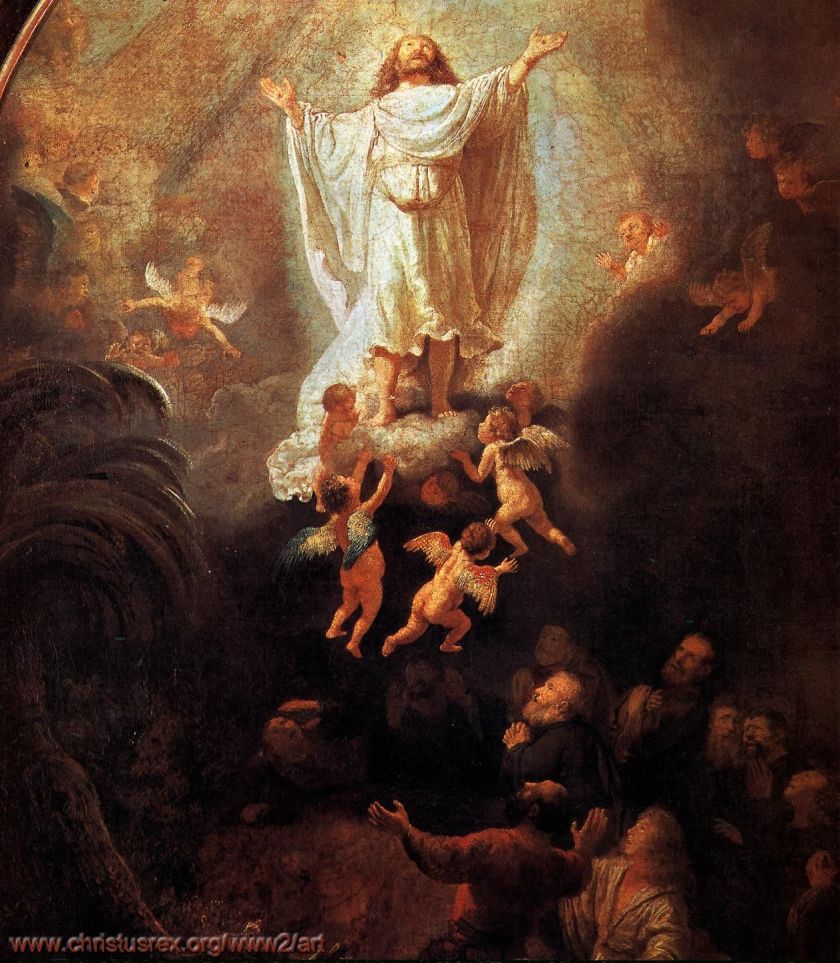
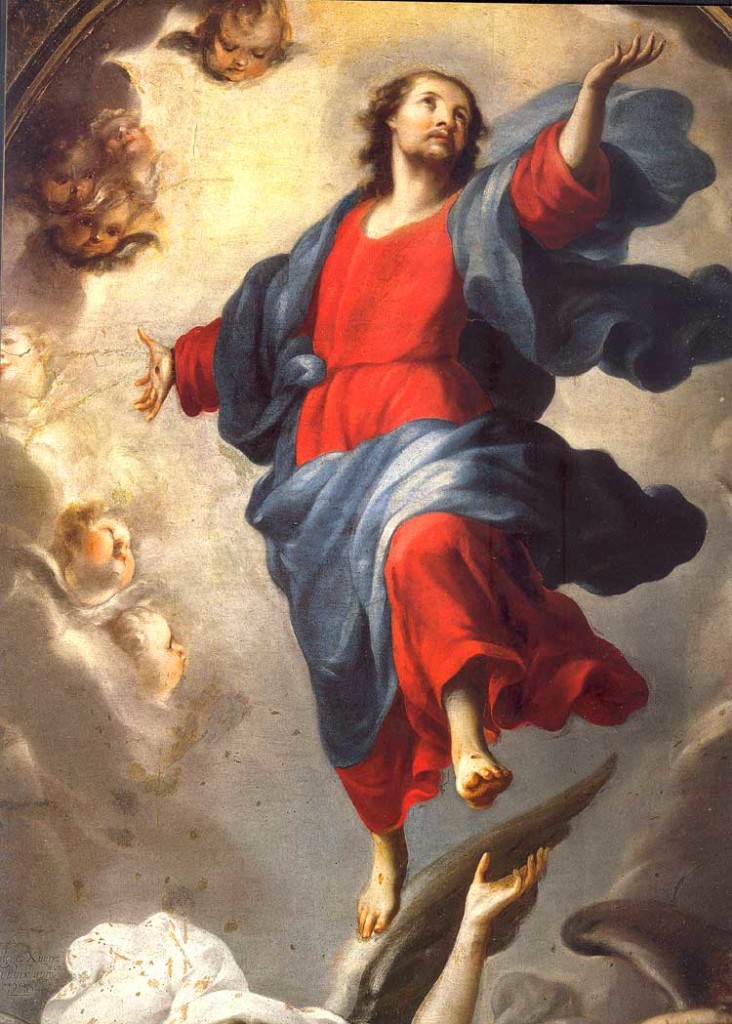
We, the members of Christ’s body, ascended to heaven with the Lord, through love…. a Sermon by St Augustine(354-430)- Father and Doctor of Grace , delivered on the Solemnity of the Ascension of our Lord
Today our Lord Jesus Christ ascended into heaven; let our hearts ascend with Him. Listen to the words of the Apostle: If you have risen with Christ, set your hearts on the things that are above where Christ is, seated at the right hand of God; seek the things that are above, not the things that are on earth. For just as he remained with us even after His ascension, so we too are already in heaven with Him, even though what is promised us, has not yet been fulfilled in our bodies.
Christ is now exalted above the heavens but He still suffers on earth all the pain that we, the members of His body, have to bear. He showed this when He cried out from above: Saul, Saul, why do you persecute me? and when He said: I was hungry and you gave me food.
Why do we on earth not strive to find rest with Him in heaven even now, through the faith, hope and love that unites us to Him? While in heaven, He is also with us and we while on earth, are with Him. He is here with us by His divinity, His power and His love. We cannot be in heaven, as He is on earth, by divinity but in Him, we can be there, by love.


He did not leave heaven when He came down to us, nor did He withdraw from us when He went up again into heaven. The fact that He was in heaven even while He was on earth is borne out, by His own statement: No one has ever ascended into heaven except the one who descended from heaven, the Son of Man, who is in heaven.
These words are explained by our oneness with Christ, for He is our head and we are His body. No one ascended into heaven except Christ, because we also are Christ: He is the Son of Man by His union with us and we by our union with Him are the sons of God. So the Apostle says: Just as the human body, which has many members, is a unity, because all the different members make one body, so is it also with Christ. He too has many members, but one body.
Out of compassion for us He descended from heaven and although He ascended alone, we also ascend, because we are in Him by grace. Thus, no one but Christ descended and no one but Christ ascended, not because there is no distinction between the head and the body but because the body, as a unity, cannot be separated from the head.
This reading, used in the Roman Liturgy’s office of readings for the Solemn Feast (Solemnity) of the Ascension, is taken from a homily by St Augustine (Sermo de Ascensione Domini, Mai 98, 1-2, PLS 2, 494-495). The Ascension is the second glorious mystery of the Rosary.

Feast of Our Lady of the Most Blessed Sacrament – 13 May
History of the Title of Our Lady of the Most Blessed Sacrament
St Peter Julian Eymard (1811-1868), of France, had a strong devotion to the Holy Eucharist and Our Lady and began his priestly life in the Society of Mary. “But his heart burned with the desire to establish perpetual adoration of Jesus in the Blessed Sacrament exposed upon a royal throne and surrounded by a large court of adorers.” On 2 February 1851, at the shrine of Fourvière, the most Blessed Virgin had made him understand its necessity. ‘All the mysteries of my Son have a religious order of men to honour them. The Eucharist alone has none . . . .’
After several years of prudent reflection and interior combat, encouraged by Pope Pius IX, he founded the Congregation of the Most Blessed Sacrament at Paris on 13 May 1856
The title of Our Lady of the Blessed Sacrament was first given to Mary by St Peter Julian Eymard in May 1868, while speaking to his novices. A few years later he described what her statue should look like: “The Blessed Virgin holds the Infant in her arms and He holds a chalice in one hand and a Host in the other.” He exhorted them to invoke Mary: “Our Lady of the Blessed Sacrament, pray for us who have recourse to thee!”
Later, Pius IX enriched the invocation with indulgences. Twice, St Pius X did the same. On 30 December 1905, he granted a 300 days indulgence to the faithful who pray: “Our Lady of the Most Blessed Sacrament, pray for us.”
“This title, Our Lady of the Blessed Sacrament, is perhaps the most meaningful of all,” said St. Pius X.
In 1921 the Sacred Congregation of Rite authorised the Blessed Sacrament Congregations to celebrate each year, on 13 May, a “solemn commemoration of the Blessed Virgin,” with the intention of honouring Mary under the title of “Our Lady of the Most Blessed Sacrament.” And of course this Feast is still celebrated today with great joy by all the spiritual sons and daughters of St Peter Julian Eymard.
St Pope John XXIII codified the title of Our Lady of the Most Blessed Sacrament when he declared St Peter Julian Eymard a saint on 9 December 1962, at the end of the last session of the Second Vatican Council.
13 May – Ascension Sunday, Feast of Our Lady of Fatima, Our Lady of Help, Our Lady of the Most Blessed Sacrament, Dedication of Saint Mary of the Martyrs and Memorials of the Saints
Ascension Sunday (2018)
Our Lady of Fatima 101st Anniversary of the First Apparition 
Our Lady of Help: Devotion to the Blessed Virgin Mary under this title began in Palermo, Sicily in the 14th century, and has since spread throughout the Augustinians. It began when Father Nicola Bruno, who suffered from severe and long-term pains in his side, prayed to Our Lady for healing while meditating on a painting of Mary in which she used a stick or club to chase away the dragon and protect the infant Jesus; the artist was making reference to passages in Genesis and Revelations that referred to the eternal enmity between The Woman and the serpent. That night, Father Nicola received a vision of Mary and was healed. The painting received the title “Our Lady of Help” and the devotion began. Since 1804 the celebration has had its own liturgy.
Our Lady of the Most Blessed Sacrament: The title of Our Lady of the Blessed Sacrament was first given to Mary by St Peter Julian Eymard in May 1868, while speaking to his novices. A few years later he described what her statue should look like: “The Blessed Virgin holds the Infant in her arms and He holds a chalice in one hand and a Host in the other.” He exhorted them to invoke Mary: “Our Lady of the Blessed Sacrament, pray for us who have recourse to thee!”
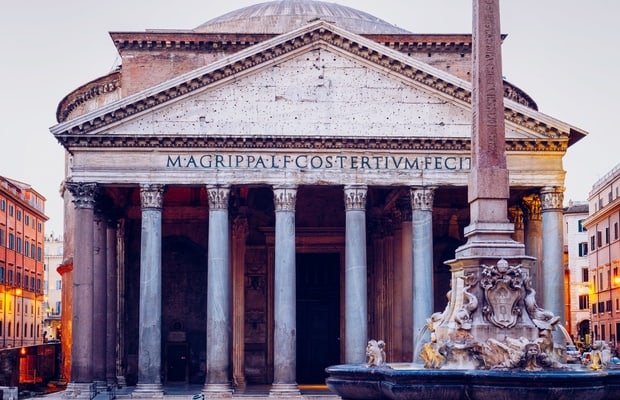
Dedication of Saint Mary of the Martyrs: Commemorates and celebrates the dedication of Minor Basilica of Saint Mary of the Martyrs, formerly a temple of all the pagan Roman gods called the Pantheon, in Rome, Italy by Pope Boniface IV in 609.


St Abban of Abingdon
St Agnes of Poitiers
St André-Hubert Fournet
St Anno of Verona
St Argentea of Cordoba
St Euthymius the Illuminator
Bl Fortis Gabrielli
Bl Gerard of Villamagna
Bl Gemma of Goriano
St Glyceria of Trajanopolis
St John the Silent
Bl Julian of Norwich
St Lucius of Constantinople
St Mael of Bardsey
Bl Magdalen Albrizzi
St Merewenna of Rumsey
St Mucius of Byzantium
St Natalis of Milan
St Onesimus of Soissons
St Servatus of Tongres
St Valerian of Auxerre
—
Martyrs of Alexandria: A group of Catholic Christians martyred in the church of Theonas, Alexandria, Egypt by order of the Arian Emperor Valens. Their names have not come down to us. 372 in Alexandria, Egypt.
3 May – Feast of Sts Philip and James – Apostles and Martyrs

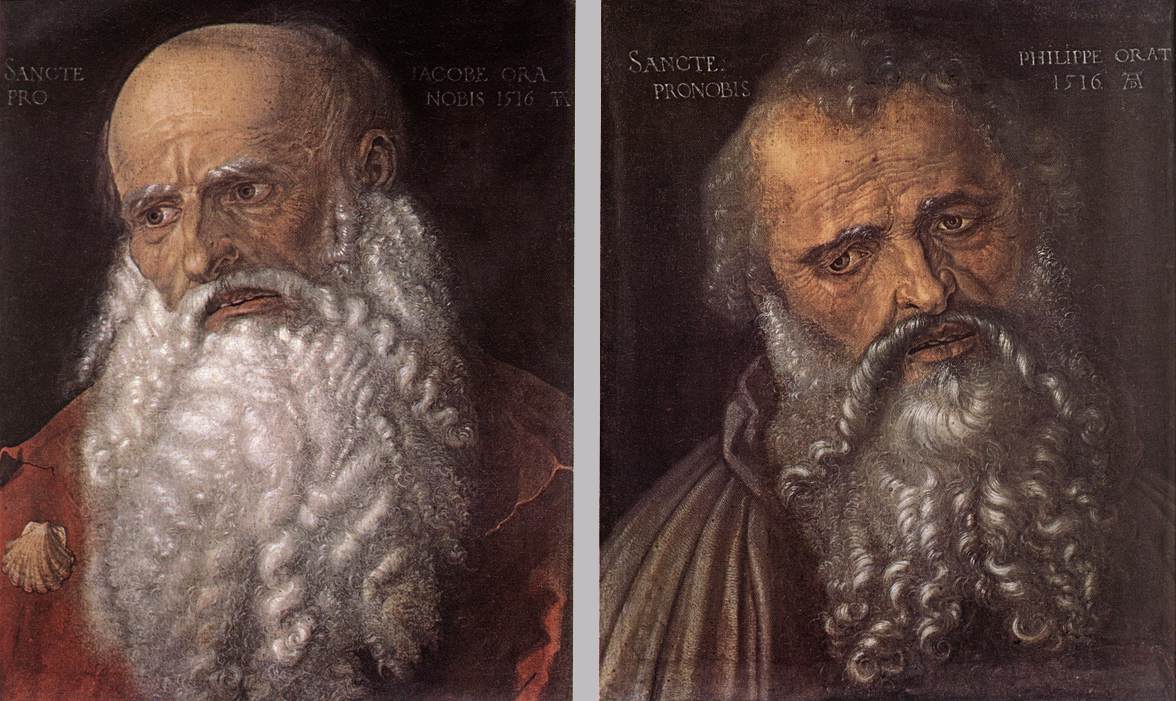
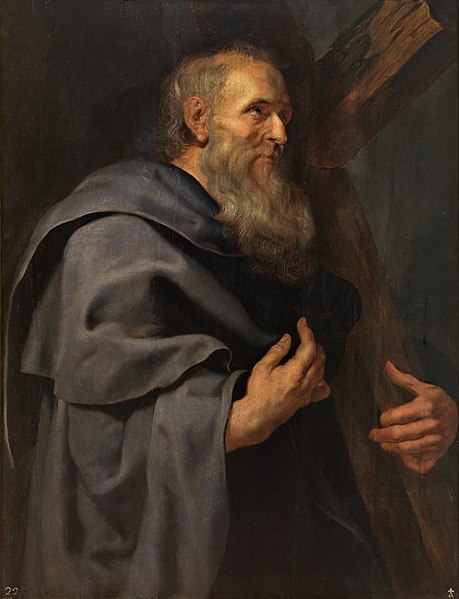
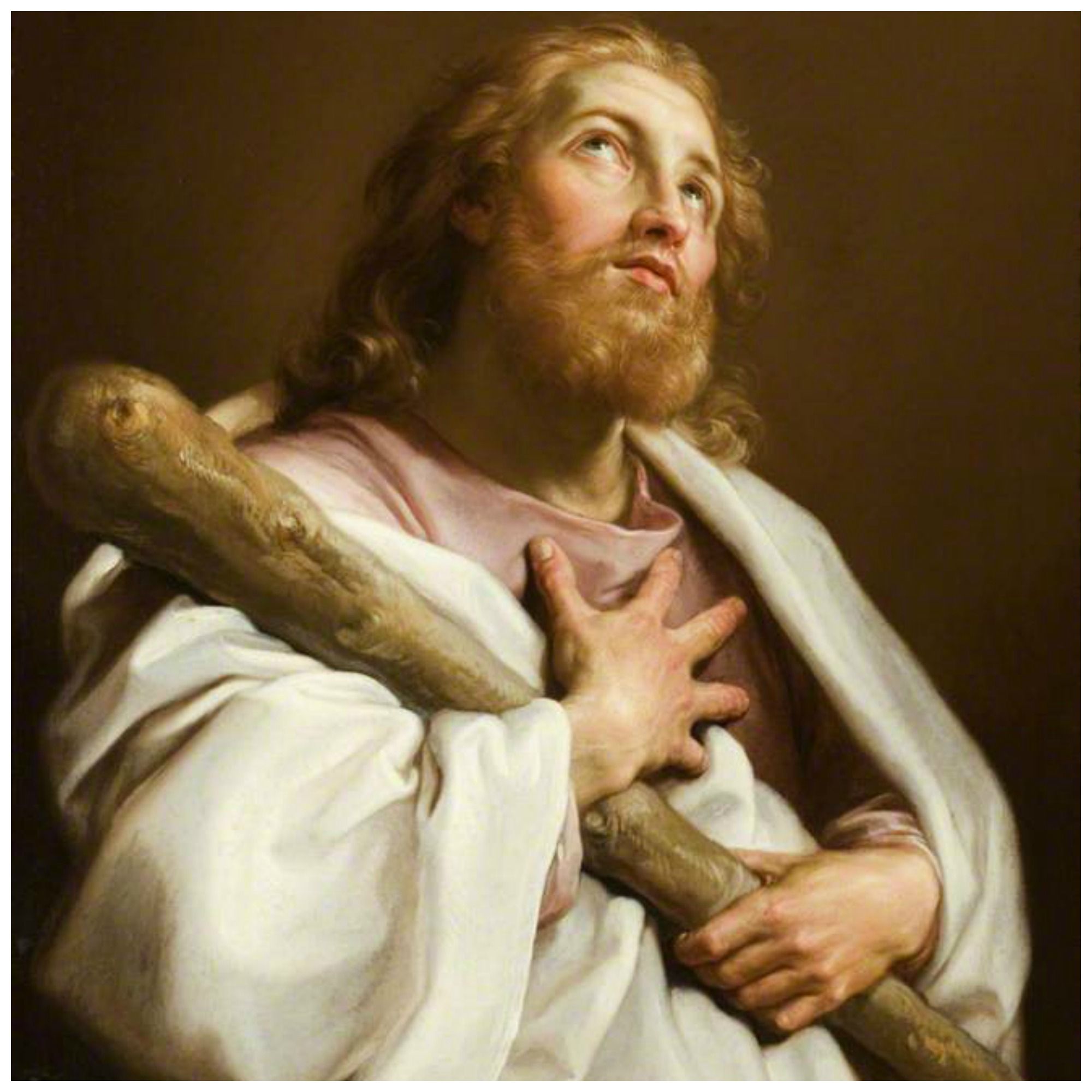
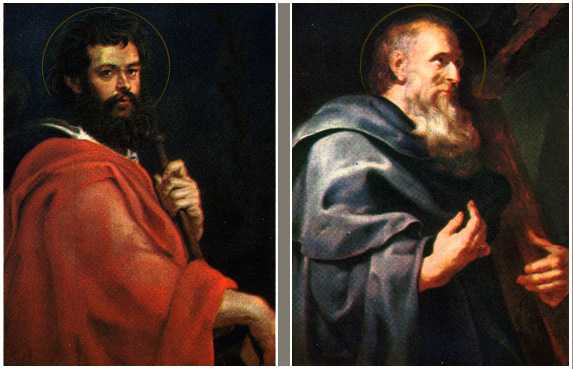
Philip was one of the first chosen Disciples of Christ. On the way from Judea to Galilee Our Lord found Philip and said, “Follow Me.” Philip straightway obeyed and then in his zeal and charity sought to win Nathaniel also, saying, “We have found Him of Whom Moses and the prophets did write, Jesus of Nazareth” and when Nathaniel in wonder asked, “Can any good come out of Nazareth?” Philip simply answered, “Come and see” and brought him to Jesus. Another characteristic saying of this apostle is preserved for us by St John. Christ in His last discourse had spoken of His Father and Philip exclaimed, in the fervour of his thirst for God, “Lord, show us the Father and it is enough.” According to the anonymous Acts of Philip, through a miraculous healing and his preaching, Philip converted the wife of the proconsul of the city of Phyrgia. This enraged the proconsul, and he had Philip, Bartholomew tortured. Philip and Bartholomew were then crucified upside down and Philip preached from his cross. As a result of Philip’s preaching the crowd released Bartholomew from his cross but Philip insisted that they not release him, and Philip died on the cross. Another account is that he was martyred by beheading in the city of Hierapolis.


St James the Less, the author of an inspired epistle, was also one of the Twelve. St Paul tells us that he was favoured by a special apparition of Christ after the Resurrection. On the dispersion of the apostles among the nations, St James was left as Bishop of Jerusalem and even the Jews held in such high veneration his purity, mortification and prayer, that they named him the Just. The earliest of Church historians has handed down many traditions of St James’s sanctity. He was always a virgin, says Hegesippus, and consecrated to God. He drank no wine, wore no sandals on his feet and but a single garment on his body. He prostrated himself so much in prayer that the skin of his knees was hardened like a camel’s hoof. The Jews, it is said, used out of respect to touch the hem of his garment. He was indeed a living proof of his own words, “The wisdom that is from above first indeed is chaste, then peaceable, modest, full of mercy and good fruits.” He sat beside St Peter and St Paul at the Council of Jerusalem and when St Paul at a later time escaped the fury of the Jews by appealing to Caesar, the people took vengeance on James and crying, “The just one hath erred,” stoned him to death.


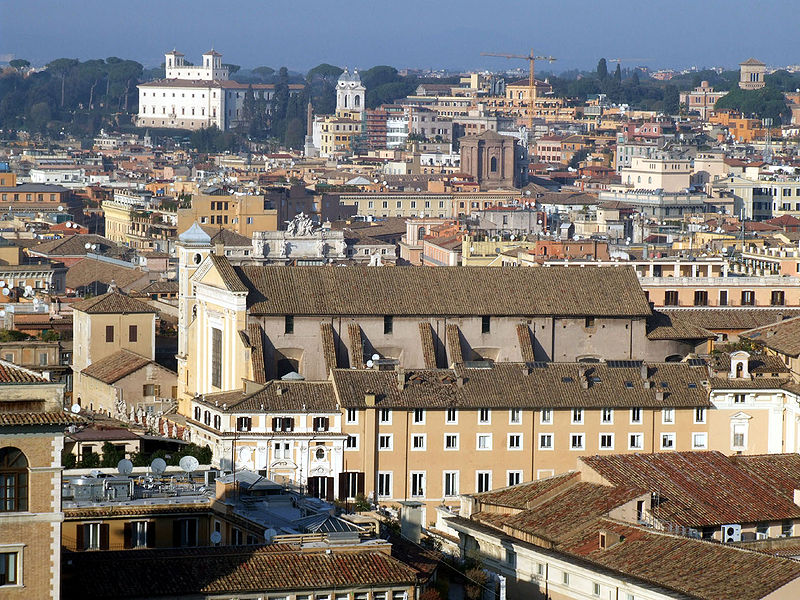
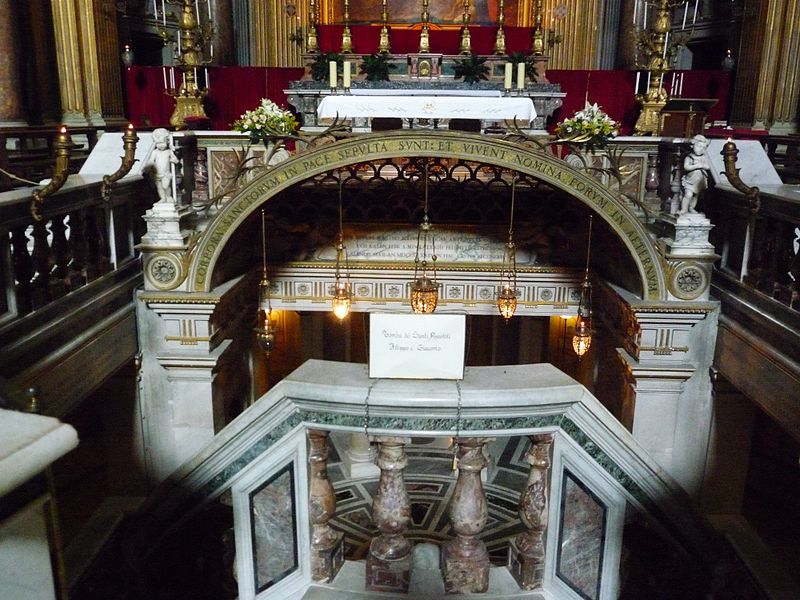
Why do we celebrate the feasts of St Philip and St James the Less on the same day? We celebrate them on the same day because their relics were brought to Rome together on the same day in early May. They rest there still, in the Basilica of the Holy Apostles. The reception of the Bodies of Sts Philip and James, which were brought from the East, somewhere about the 6th Century, gave rise to the institution of to-day’s Feast and this led gradually, to the insertion into the Calendar, of the special Feasts for the other Apostles and Evangelists.

For more on Sts Philip & James: https://anastpaul.wordpress.com/2017/05/03/blessed-feast-day-of-sts-philip-and-james-apostles-of-jesus-christ/
Memorials of the Saints – 3 May – Feast of Sts Philip and James – Apostles and Martyrs
St James the Lesser Apostle (Feast)
St Philip the Apostle (Feast)
—
St Adalsindis of Bèze
Bl Adam of Cantalupo in Sabina
St Ahmed the Calligrapher
St Aldwine of Peartney
St Pope Alexander I
St Alexander of Constantinople
Bl Alexander of Foigny
St Alexander of Rome
Bl Alexander Vincioli
St Ansfrid of Utrecht
St Antonina of Constantinople
St Diodorus the Deacon
Bl Edoardo Giuseppe Rosaz
St Ethelwin of Lindsey
St Eventius of Rome
St Fumac
St Gabriel Gowdel
St Juvenal of Narni
Bl Maria Leonia Paradis
St Maura of Antinoe
St Peter of Argos
St Philip of Zell
Bl Ramon Oromí Sullà
St Rhodopianus the Deacon
St Scannal of Cell-Coleraine
Bl Sostenaeus
St Stanislas Kazimierczyk
St Theodolus of Rome
St Timothy of Antinoe
Bl Tommaso Acerbis
Bl Uguccio
Bl Zechariah
One Minute Reflection – 25 April – Wednesday of the Fourth Week of Easter and the Feast of St Mark the Evangelist
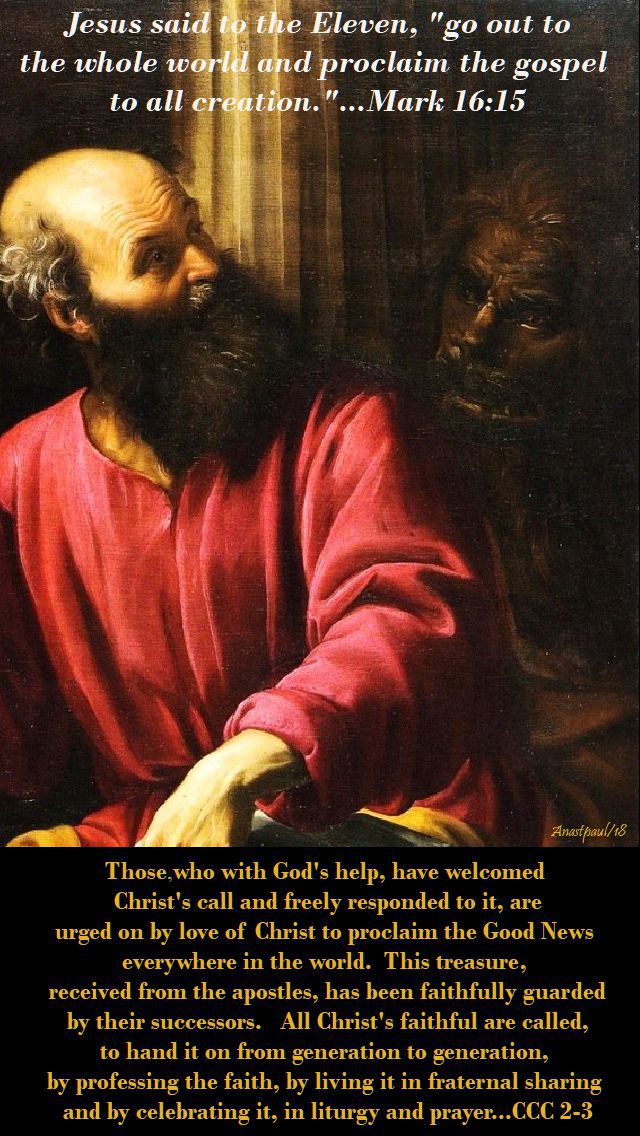
Jesus said to the Eleven, “go out to the whole world and the proclaim the gospel to all creation.”…Mark 16:15
REFLECTION – So that this call should resound throughout the world, Christ sent forth the apostles he had chosen, commissioning them to proclaim the gospel: “Go therefore and make disciples of all nations, baptising them in the name of the Father and of the Son and of the Holy Spirit, teaching them to observe all that I have commanded you; and lo, I am with you always, to the close of the age.” Strengthened by this mission, the apostles “went forth and preached everywhere, while the Lord worked with them and confirmed the message by the signs that attended it.”
Those, who with God’s help, have welcomed Christ’s call and freely responded to it, are urged on, by love of Christ, to proclaim the Good News, everywhere in the world. This treasure, received from the apostles, has been faithfully guarded by their successors. All Christ’s faithful are called to hand it on, from generation to generation, by professing the faith, by living it in fraternal sharing and by celebrating it, in liturgy and prayer…CCC 2-3
PRAYER – Almighty God, You chose the Evangelist St Mark and ennobled him with grace, to preach the Gospel. Let his teaching so improve our lives and his prayers so support us, that we may walk faithfully in his footsteps, which are the footsteps of Christ our Lord. Through Jesus Christ our Lord, in union with the Holy Spirit, one God forever, amen.
Saint of the Day – 25 April – St Mark the Evangelist
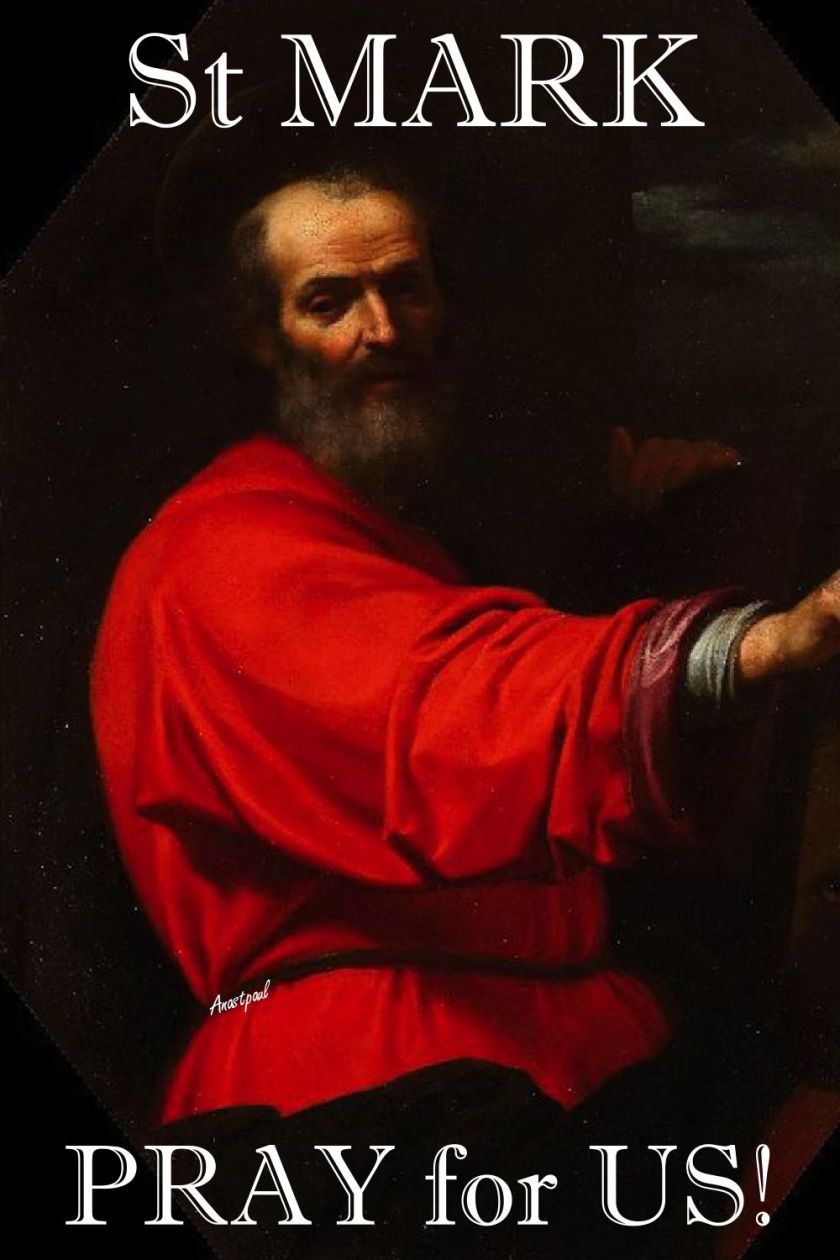
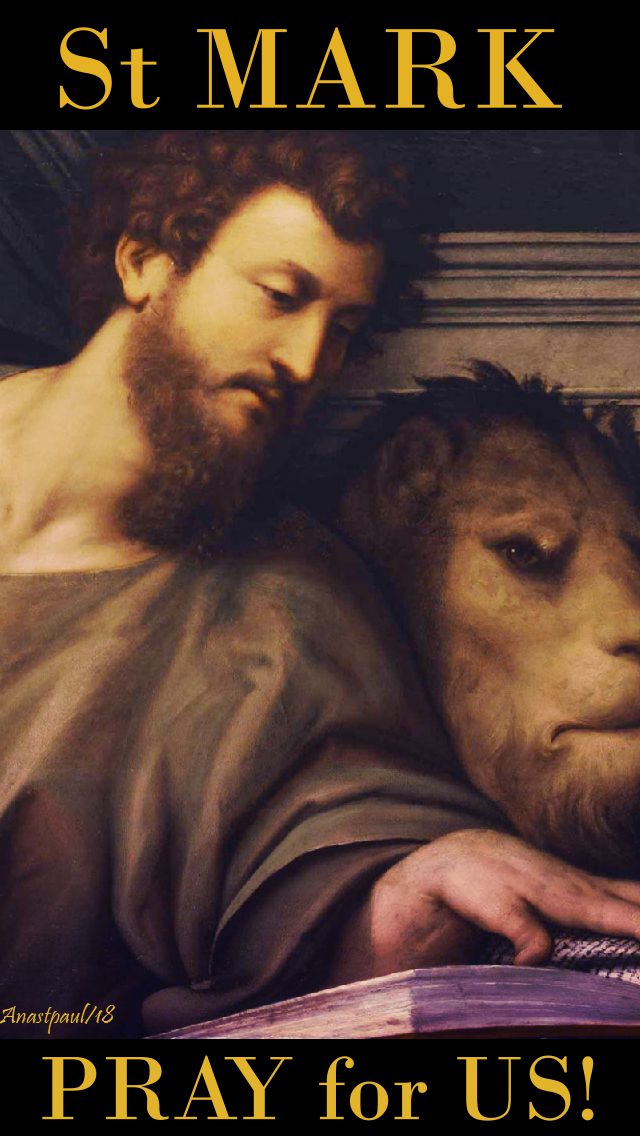
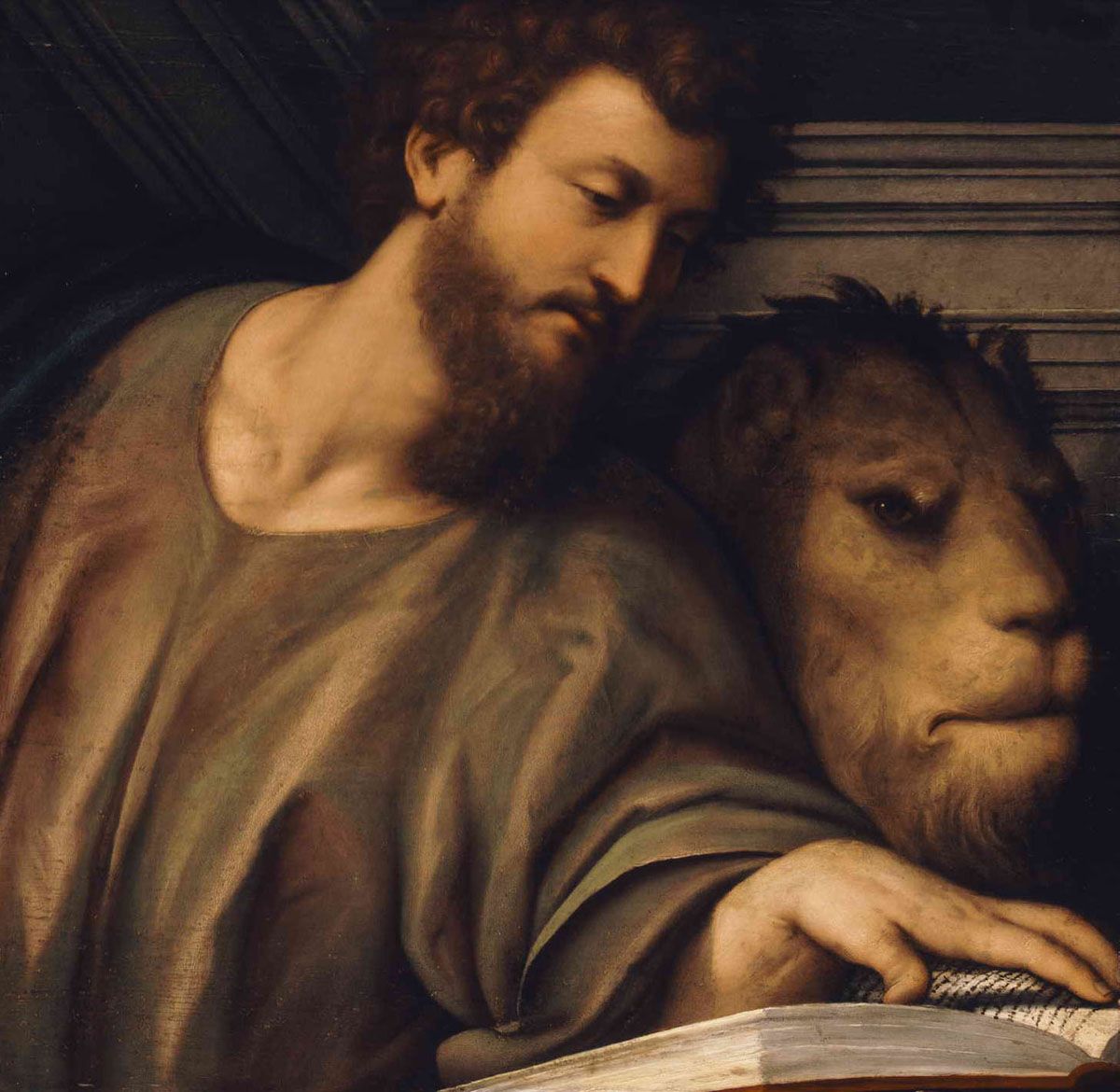
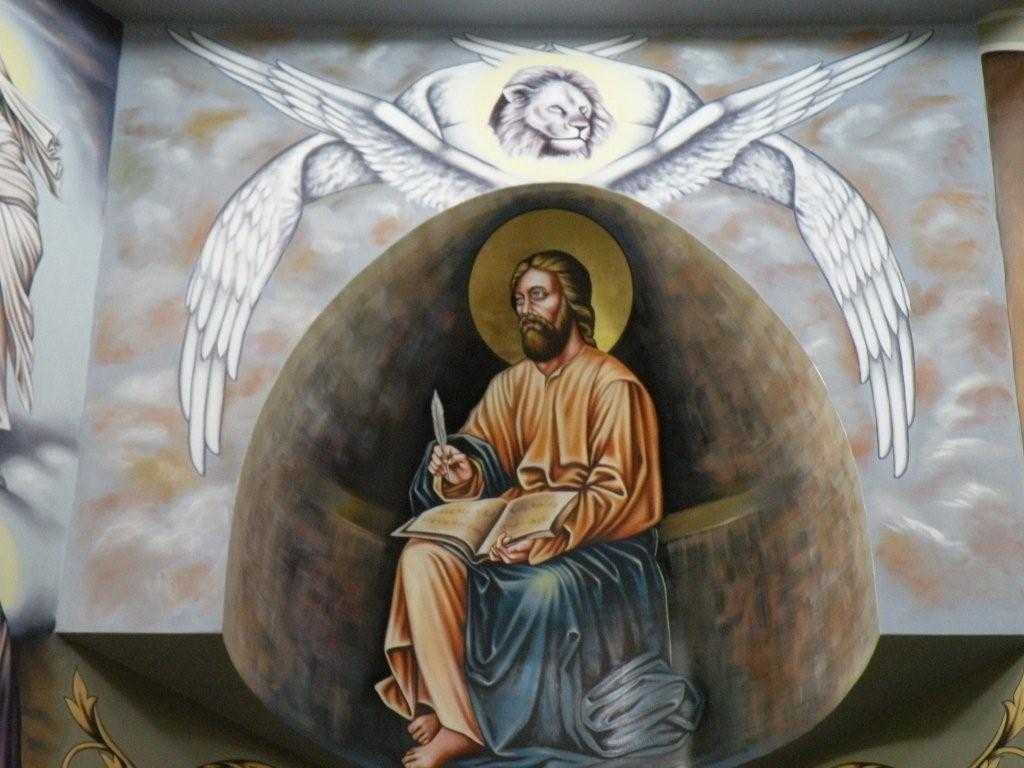
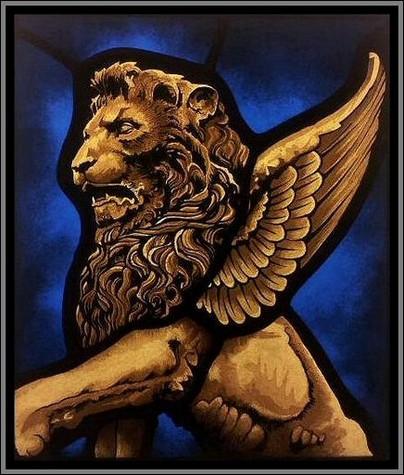
Saint of the Day – 25 April – St Mark the Evangelist – also known as John Mark (Born 1st century – Martyred 25 April 68 at Alexandria, Egypt) – The Winged Lion – Evangelist, Martyr, Missionary, Preacher, Teacher, friend and assistant to St Peter, St Paul, cousin of St Barnabas.

John Mark, later known simply as Mark, was a Jew by birth. He was the son of that Mary who was proprietress of the Cenacle or “upper room” which served as the meeting place for the first Christians in Jerusalem (Acts 12:12). He was still a youth at the time of the Saviour’s death. We cannot be certain whether he knew Jesus personally. Some scholars feel that the evangelist is speaking of himself (so he then did know Jesus) when describing the arrest of Jesus in Gethsemane: “Now a young man followed him wearing nothing but a linen cloth about his body. They seized him, but he left the cloth behind and ran off naked” (Mark 14:51-52).
During the years that followed, the rapidly maturing youth witnessed the growth of the infant Church in his mother’s Upper Room and became acquainted with its traditions. This knowledge he put to excellent use when compiling his Gospel. Later, we find Mark acting as a companion to his cousin Barnabas and Saul on their return journey to Antioch and on their first missionary journey. But Mark was too immature for the hardships of this type of work and therefore left them at Perge in Pamphylia to return home.
As the two apostles were preparing for their second missionary journey, Barnabas wanted to take his cousin with him. Paul, however, objected. Thereupon the two cousins undertook a missionary journey to Cyprus. Time healed the strained relations between Paul and Mark and during the former’s first Roman captivity (61-63), Mark rendered Paul valuable service (Col. 4:10; Philem. 24) and the Apostle learned to appreciate him. When in chains the second time Paul requested Mark’s presence (2 Tim. 4:11).
An intimate friendship existed between Mark and Peter; he played the role of Peter’s companion, disciple and interpreter. According to the common patristic opinion, Mark was present at Peter’s preaching in Rome and wrote his Gospel under the influence of the prince of the apostles. This explains why incidents which involve Peter are described with telling detail (e.g., the great day at Capharnaum, 1:14f)). Little is known of Mark’s later life. It is certain that he died a Martyr’s death as bishop of Alexandria in Egypt. His relics were transferred from Alexandria to Venice, where a worthy tomb was erected in St Mark’s Cathedral.


The Gospel of St Mark, the shortest of the four, is, above all, a Roman Gospel. It originated in Rome and is addressed to Roman, or shall we say, to Western Christianity. Another high merit is its chronological presentation of the life of Christ. For we should be deeply interested in the historical sequence of the events in our blessed Saviour’s life.


Furthermore, Mark was a skilled painter of word pictures. With one stroke he frequently enhances a familiar scene, shedding upon it new light. His Gospel is the “Gospel of Peter,” for he wrote it under the direction and with the aid of the prince of the apostles. “The Evangelist Mark is represented as a lion because he begins his Gospel in the wilderness, ‘The voice of one crying in the desert: Make ready the way of the Lord,’ or because he presents the Lord as the unconquered King.”…Excerpted from The Church’s Year of Grace, Pius Parsch


25 April – Feast of St Mark the Evangelist and Memorials of the Saints
St Mark the Evangelist (Feast) Also known as John Mark (Born 1st century – martyred 25 April 68 at Alexandria, Egypt) – The Winged Lion
—
St Agathopodes of Antioch
Bl Andrés Solá Molist
St Anianus of Alexandria
Bl Antonio Pérez Lários
St Callista of Syracuse
St Clarentius of Vienne
St Ermin of Lobbes
St Evodius of Syracuse
St Franca Visalta
St Giovanni Piamarta
St Heribaldus of Auxerre
St Hermogenes of Syracuse
Bl José Trinidad Rangel y Montaño
St Kebius
St Macaille
St Macedonius
St Mario Borzaga
St Pasicrate of Mesia
St Paul Thoj Xyooj
Pedro de San Jose Betancur
Phaebadius of Agen
Philo of Antioch
Robert of Syracuse
Bl Robert Anderton
Stefano of Antioch
St Valenzio of Mesia
Bl William Marsden
—
Martyrs of Yeoju – 3 saints: Three Christian laymen martyred together in the apostolic vicariate of Korea. 25 April 1801 in Yeoju, Gyeonggi-do, South Korea
They were Beatified15 August 2014 by Pope Francis
• Ioannes Won Gyeong-do
• Marcellinus Choe Chang-ju
• Martinus Yi Jung-bae
Solemnity of the Annunciation of the Lord 2018 & Memorials of the Saints – 9 April
Feast of the Annunciation of the Lord 2018
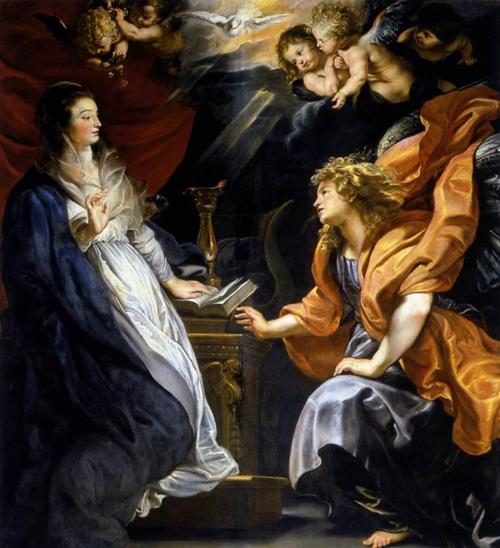
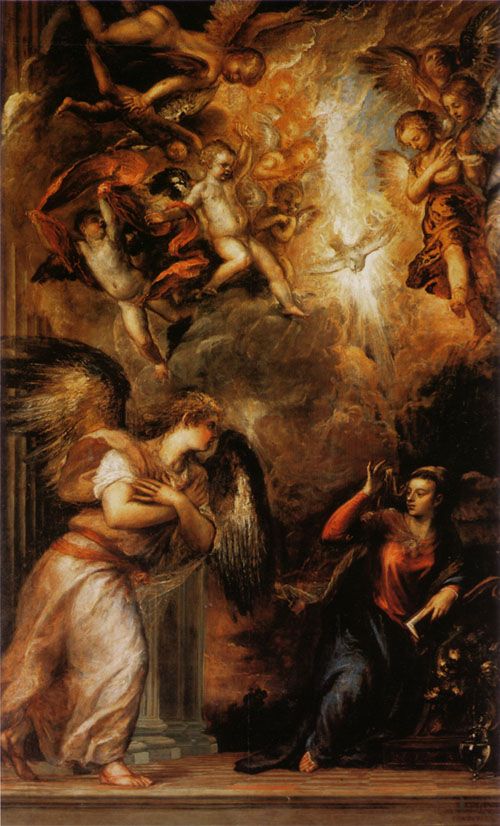
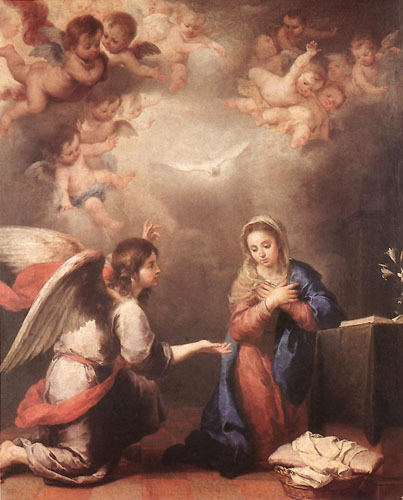
The Annunciation of the Lord celebrates the angel Gabriel’s appearance to the Virgin Mary, announcing that she had been chosen to be the Mother of Our Lord.
How Is the Date of the Feast of the Annunciation Determined?
The Annunciation always falls on 25 March, exactly nine months before the birth of Jesus Christ at Christmas. However, the celebration of the feast is transferred to a different date if it falls on a Sunday of Lent, during Holy Week (which was the case this year), or during the octave of Easter.
The Church considers Masses for the Sundays of Lent, any time in Holy Week and any time from Easter through the Sunday after Easter (Divine Mercy Sunday) to be so important that even this Marian feast cannot replace one of them. So, when the Annunciation falls on a Sunday in Lent (before Palm Sunday), it is transferred to the following Monday. If it falls on Palm Sunday or on any day in Holy Week, it is transferred to Low Monday, the Monday after the Sunday after Easter and so, this year, 2018, the Solemnity of the Annunciation of the Lord is transferred to today, Monday, 9 April 2018.


_
St Acacius of Amida
St Aedesius of Alexandria
Bl Antony of Pavoni
St Brogan
St Casilda of Toledo
St Concessus the Martyr
St Demetrius the Martyr
St Dotto
St Eupsychius of Cappadocia
St Gaucherius
St Hedda the Abbot
St Heliodorus of Mesopotamia
St Hilary the Martyr
St Hugh of Rouen
Bl James of Padua
Bl John of Vespignano
Bl Katarzyna Faron
St Liborius of Le Mans
Bl Lindalwa Justo de Oliveira
St Madrun of Wales
St Marcellus of Die
Bl Marguerite Rutan
St Maximus of Alexandria
Bl Pierre Camino
St Prochorus
Bl Thomas of Tolentino
Bl Ubaldo Adimari
St Waltrude of Mons
—
Martyrs of Croyland – 9 saints: A group of Benedictine monks martyred by pagan Danes – Agamund, Askega, Egdred, Elfgete, Grimkeld, Sabinus, Swethin, Theodore and Ulric. Croyland Abbey, England.
Martyrs of Masyla: Massylitan Martyrs Group of Christians martyred in Masyla in northwest Africa.
Martyrs of Pannonia: Seven virgin-martyrs in Sirmium, Pannonia (modern Sremska Mitrovica, Serbia).
Martyrs of Thorney Abbey – 3+ saints: A group of Hermits, hermitesses and monks who lived in or around Thorney Abbey who were martyred together during raids by pagan Danes. We know little more than the names of three – Tancred, Torthred and Tova. 869 by raiders at Thorney Abbey, Cambridgeshire, England.
Sunday Reflection – 8 April – Low Sunday the Octave Day of Easter and Divine Mercy Sunday
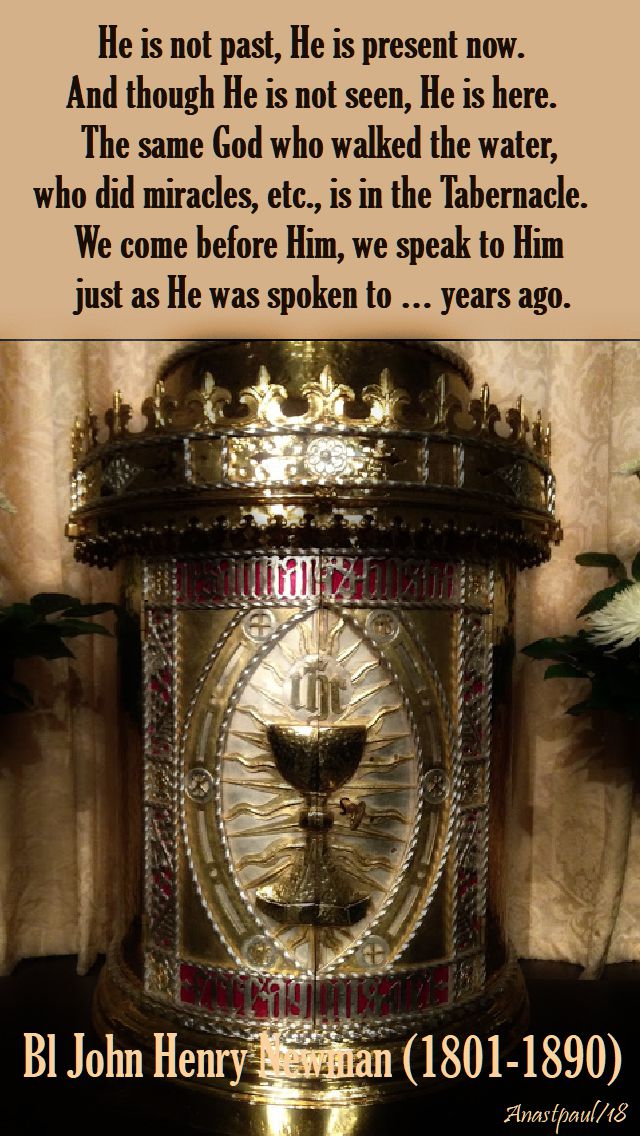
“He is not past, He is present now.” – Bl John Henry Newman (1801-1890) on the Eucharist
In every Mass Christ comes to us, in the Blessed Eucharist, Christ remains with us – Christ counteracts Time and the World
What makes Christianity in its fullness, much more than a historical religion – though Protestants claim their religion to be just that, and, indeed, Christ died long ago – is the fact that He is “living among us with a continual presence”.
In every Holy Mass we are touched by Christ’s spiritual presence when the Gospel is proclaimed. We are touched by His real, full and personal presence in the Eucharist. When we walk up to receive the Eucharist, Christ Jesus comes to us. He remains with us in the Blessed Sacrament, whether in the tabernacle or exposed for our adoration. With Newman’s words from a sermon of 25th May 1858:
“He is not past, He is present now. And though He is not seen, He is here. The same God who walked the water, who did miracles, etc., is in the Tabernacle. We come before Him, we speak to Him just as He was spoken to … years ago.”
We receive Christ Jesus, when we receive the consecrated host. We adore Him, we listen to Him and we dare to speak to Him. When we receive Holy Communion, He wants to grow in us and wants us to grow towards Him:
“In every holy mass and especially in communion but also whenever we adore Christ Jesus, kneeling before the tabernacle or before the exposed Blessed Sacrament, our fleeting lives touch eternity as the living God touches us. God, does not merely present Himself before us as the Object of worship but God actually gives Himself to us to be received into our breasts. wonderful communion”!
The Eucharist brings Christians of all times, whether in the action of holy Mass or in the stillness of the Blessed Sacrament into the presence of Christ and is the living reminder that we live at all times in the presence of God and have the presence of God within us and before us in a passing world. It makes us realise that although every day and hour passes and will never come back, we are held and find our stay in the presence and love of God. The real presence of God in the Holy Eucharist makes us realise that eternal life, our life with God, has begun for us with baptism and cannot be lost to us by any outward force, only by severe sin. Therefore Newman can say that by the Holy Eucharist “We are brought into the unseen world.” (Excerpted Sr Brigitte Maria Hoegemann FSO)
Thought for the Day – 8 April – Low Sunday the Octave Day of Easter and Divine Mercy Sunday
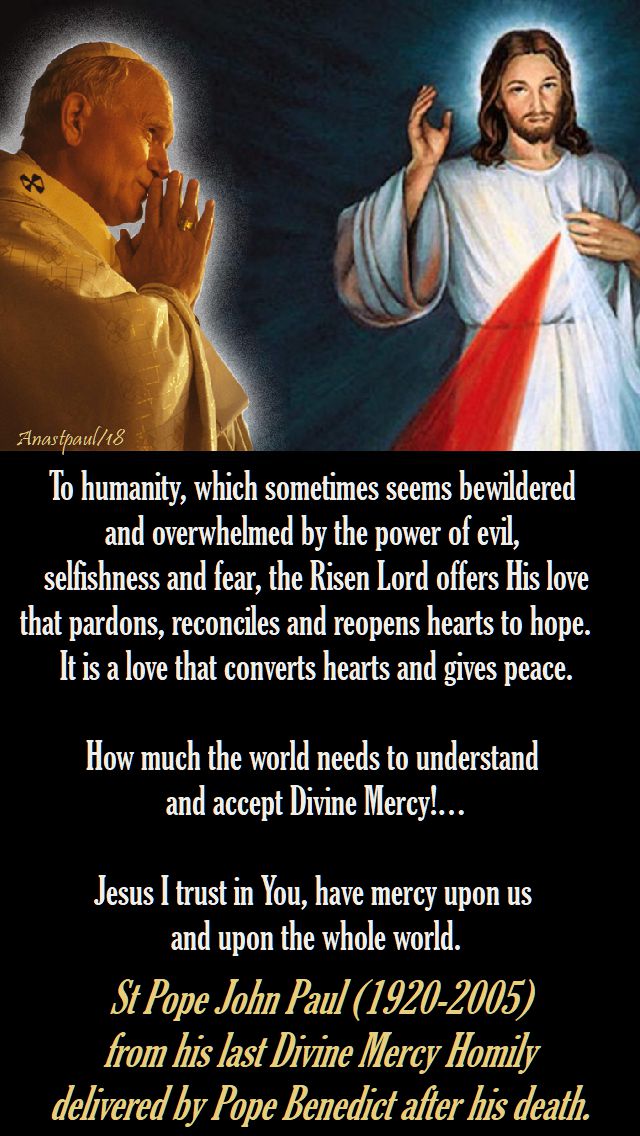
What many do not know is that St John Paul II had been anticipating preaching a homily on Divine Mercy Sunday 2005 at a new parish in Albis, Rome. It was dedicated to God, the Merciful Father. We all watched with grief as his health rapidly declined during that Lent of 2005. He began to prepare his homily for the event, what some believe may be the last handwritten lines of our saintly pontiff. He left this world hours before it was to be delivered.
It would be his successor, Benedict XVI, who would deliver to that community the pope’s final words . In fact Pope Benedict called them St John Paul II’s spiritual last will and testament. It’s clear he didn’t intend them solely for a parish in the suburbs but for all of us. It represents his final mercy mandate to the world. ”To humanity, which sometimes seems bewildered and overwhelmed by the power of evil, selfishness and fear, the Risen Lord offers His love that pardons, reconciles and re-opens hearts to hope. It is a love that converts hearts and gives peace.”
Ten years later, with the emergence of unimagined evils perpetrated by groups like ISIS and others, we may be more overwhelmed than ever. Jesus and the Gospel are our only hope. He continued, “How much the world needs to understand and accept Divine Mercy!…Jesus I trust in You, have mercy upon us and upon the whole world.”
This Divine Mercy Sunday invites us each to evaluate our lives in light of St John Paul II and the Church’s profound message of mercy. Take a few moments to reflect on the meaning of your life, evaluate your plans and goals. Consider where you spend your attention, energy and affection. Gathered together would a fitting summary of your life be, “Here was one who modelled God’s Divine Mercy in prayer, word and deed. Here was one who loved, forgave, pardoned, reconciled and reopened hearts to hope”? It is my prayer for you and it is certainly possible by God’s grace and the intercession of St Faustina and St John Paul II……Thomas Smith – writer/presenter/speaker and more
Quote of the Day – 8 April – Low Sunday the Octave Day of Easter and Divine Mercy Sunday
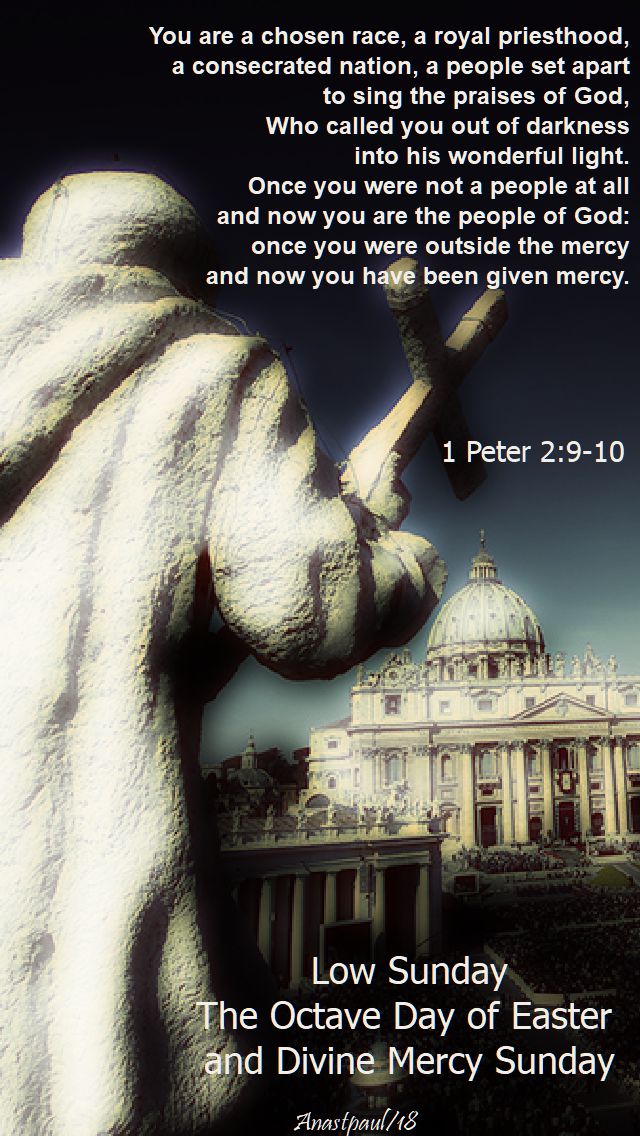
“You are a chosen race, a royal priesthood, a consecrated nation, a people set apart to sing the praises of God, Who called you out of darkness into his wonderful light. Once you were not a people at all and now you are the people of God: once you were outside the mercy and now you have been given mercy.”
1 Peter 2:9-10
One Minute Reflection – 8 April – Low Sunday the Octave Day of Easter and Divine Mercy Sunday and the Memorial of Bl Augustus Czartoryski S.D.B. (1858-1893)
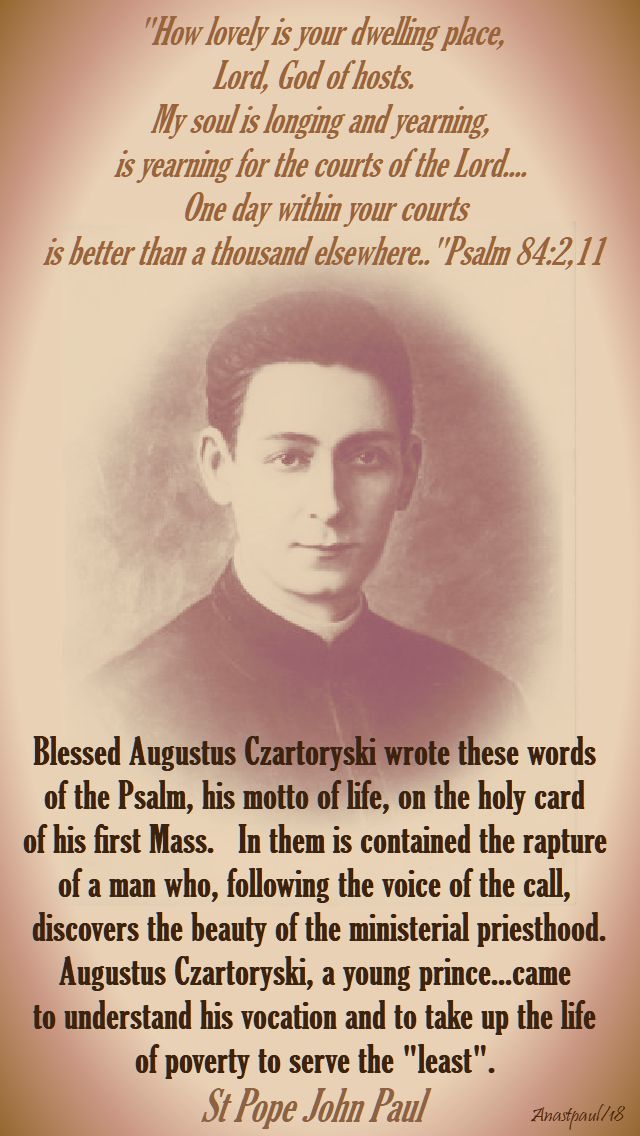
“How lovely is your dwelling place, Lord, God of hosts. My soul is longing and yearning, is yearning for the courts of the Lord…. One day within your courts is better than a thousand elsewhere” …Psalm 84[83]: 2, 11
REFLECTION – “Blessed Augusto Czartoryski wrote these words of the Psalm, his motto of life, on the holy card of his first Mass. In them is contained the rapture of a man who, following the voice of the call, discovers the beauty of the ministerial priesthood. In them resounds the echo of the different choices that the person who is discerning God’s will and wishes to fulfil it must make. Augustus Czartoryski, a young prince, carefully prepared an effective method to discern the divine plan. In prayer, he presented to God all questions and deep perplexities and then in the spirit of obedience he followed the counsel given by his spiritual guides. In this way he came to understand his vocation and to take up the life of poverty to serve the “least”. The same method enabled him throughout the course of his life to make decisions, so that today we can say that he accomplished the designs of Divine Providence in a heroic way. I would like to leave this example of holiness especially to young people, who today search out the way to decipher God’s will relating to their own lives and desire to faithfully forge ahead each day according to the divine word. My dear young friends, learn from Blessed Augustus to ask ardently in prayer for the light of the Holy Spirit and wise guides, so that you may understand the divine plan in your lives and are able to walk constantly on the path of holiness.”…St Pope John Paul on the Beatification of Blessed Augustus on Sunday, 25 April 2004

PRAYER – Heavenly God and Father and Your divine Son, dear Jesus in whom we trust, send Your Holy Spirit to guide and teach us, to lead us into the ways of holiness. Grant, we pray, that by the intercession of Blessed Augustus, we may fulfil Your Holy Will by the light of the Holy Spirit. Through Jesus Christ, our Lord, in union with the Holy Spirit, one God forever, amen.
Our Morning Offering – 8 April – Low Sunday the Octave Day of Easter and Divine Mercy Sunday
Most Merciful Jesus,
whose very nature it is
to have compassion on us
and to forgive us,
do not look upon our sins
but upon our trust which we place
in Your infinite goodness.
Receive us all into the abode
of Your Most Compassionate Heart
and never let us escape from It.
We beg this of You by Your love
which unites You to the Father
and the Holy Spirit.
Eternal Father, turn Your merciful gaze
upon all mankind and especially upon poor sinners,
all enfolded in the Most Compassionate Heart of Jesus.
For the sake of His sorrowful Passion,
show us Your mercy,
that we may praise the omnipotence of Your mercy
forever and ever.
Amen.
One Minute Reflection – 7 April – Easter Saturday and the Memorial of St John Baptiste de La Salle (1651-1719)
Do not worry about tomorrow; tomorrow will take care of itself. Sufficient for a day is its own evil.…Matthew 6:34
REFLECTION – “Do not have any anxiety about the future. Leave everything in God’s hands, for He will take care of you.” …St John Baptiste de La Salle (1651-1719)
PRAYER – In Your providence, Lord God, You chose St John Baptiste de la Salle, to educate the young in the Christian faith and way of life. Raise up, Lord, in the Church today, teachers who will devote themselves wholeheartedly to the human and Christian education of our youth. May the prayers of St John, help us all to seek and do Your holy will in all things, amen.
Our Morning Offering – 7 April – Easter Saturday and the Memorial of St John Baptiste de La Salle (1651-1719)
LaSallian Prayer
Father in heaven, God of love,
all I have and am is Yours.
Grant that I may become
a living sign of Your compassion in this world.
Grant me the faith
to live my life,
always in the awareness of Your loving presence.
Grant me zeal
to serve without thought of reward,
those to whom you send me.
Grant me charity
to bear the burdens of my brothers and sisters.
Teach me to seek Your Son’s face,
in the last
the lost
and the least.
In whatever I undertake,
may I seek above all things,
to procure Your glory,
as far as I am able
and as You will require of me.
Strengthen me by Your Holy Spirit,
to follow Jesus by living
the commitment I make this day.
Amen
LaSallian Invocation:
Live Jesus in our hearts forever!
Thought for the Day – 6 April – Easter Friday the Sixth day in the Easter Octave
“When they got out on land, they saw a charcoal fire there, with fish lying on it, and bread. Jesus said to them, “Bring some of the fish that you have just caught.” So Simon Peter went aboard and hauled the net ashore, full of large fish, a hundred and fifty-three of them; and although there were so many, the net was not torn. Jesus said to them, “Come and have breakfast.” Now none of the disciples dared ask him, “Who are you?” They knew it was the Lord. Jesus came and took the bread and gave it to them, and so with the fish. This was now the third time that Jesus was revealed to the disciples after he was raised from the dead.”…John 21:9-14
“Today …. is bathed in the luminous joy of Easter. In these days, in fact, the Church celebrates the mystery of the Resurrection and experiences the great joy that comes to her from the Good News of Christ’s victory over evil and over death. This joy is not only prolonged in the Octave of Easter but is extended for 50 days until Pentecost.
Christ’s Pasch is the supreme and unequalled act of God’s power. It is an absolutely extraordinary event, the most beautiful, ripe fruit of the “Mystery of God”. It is so extraordinary that it is ineffable in its dimensions that escape our human capacity for knowing and investigating. Yet, it is also a “historical” event, witnessed to and documented. It is the event on which the whole of our faith is founded. It is the central content in which we believe and the main reason why we believe.
There is a glorified Resurrected Saviour now seated at the right hand of the Father, holding the place He has prepared for each of us. His wounds are glorified now, beautiful, streaming the light of grace upon an earth being reborn, revealing the depth of His love and the Hope that springs eternal. Through taking on our very humanity, He did for us what we could never have done for ourselves. He “who knew no sin” walked in the perfect obedience of the Son and bridged the gap between the Father and the sons and daughters who had rejected His invitation to communion, through the offering of His own Body on the altar of the Cross.
Through His passion, obedience unto death, and Resurrection, He welcomed us into the very inner life of the Trinity. In Him we now make our home in God. In His sacred humanity He transforms the entire human experience. He invites us to live differently and shows us the path to a fullness of life now and eternal glory in the new world to come. He opened eternity to all who were bound by the chains of time. He clothed in glorious freedom those once wrapped in the grave clothes of death. He gave purpose to the sheep who had wandered aimlessly in empty self pursuits.
The whole world, created through Him, is now re-created in Him. We can see our lives differently as we open ourselves to His Spirit and allow Him to replace our finite vision with the eyes of eternal perspective. Our feet are now shod with the hope of the Good News. His redemptive mission continues through us to a world waiting to be born anew. He walks through time in His Body on earth, His church; the world reconciled and invites all men and women to follow Him.”
Pope Benedict XVI
Faith helps us recognise that Christ is God; it shows that He is our saviour; it brings us to identify ourselves with Him and to act as He acted. When the risen Christ frees the apostle Thomas from his doubts, showing him His wounds, Jesus exclaims: “Blessed are they who have not seen, and yet have believed.” And St Gregory the Great comments that “He is referring in particular to us, for we possess spiritually Him whom we have not seen in the body.” He is referring to us, provided our behaviour agrees with our faith. A person does not truly believe unless he puts into practice what he believes. That is why St Paul says of those whose faith is limited to words: “They profess recognition of God, but in their behaviour they deny him”
St Josemaria Escrivá (1902-1975)
(Christ is Passing By)


You must be logged in to post a comment.