Posted in HOLY COMMUNION, LENT 2026, MAUNDY THURSDAY, QUOTES on UNITY/with GOD, The HOLY EUCHARIST / The HOLY MASS, The PASSION, Thomas Aquinas

Maundy Thursday – 2 April – Our Lenten Journey With St Thomas Aquinas – The Last Supper

Maundy Thursday – 2 April – Our Lenten Journey With St Thomas Aquinas (1225-1274) Doctor of the Church

Maundy Thursday
The Last Supper
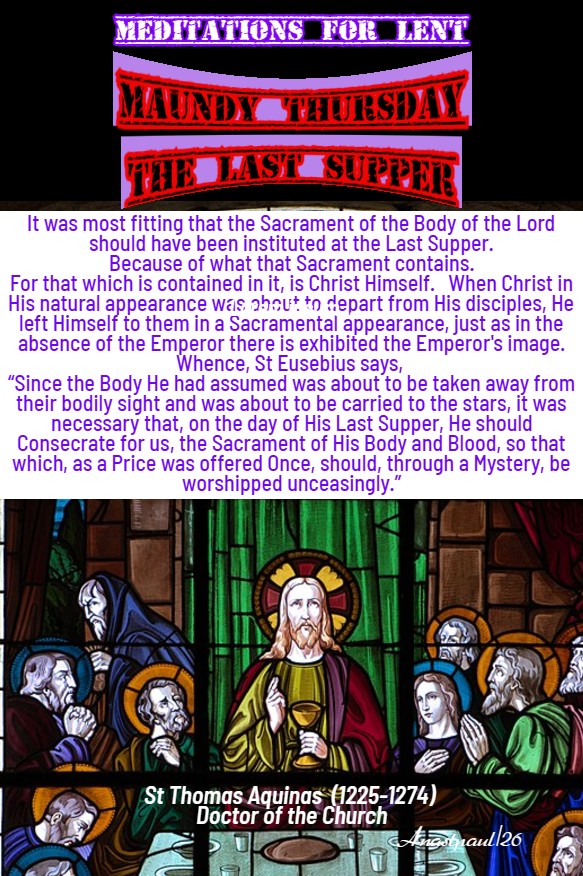
It was most fitting that the Sacrament of the Body of the Lord should have been instituted at the Last Supper.

  1. Because of what that Sacrament contains.
    For that which is contained in it, is Christ Himself. When Christ in His natural appearance was about to depart from His disciples, He left Himself to them in a Sacramental appearance, just as in the absence of the Emperor there is exhibited the Emperor’s image. Whence, St Eusebius says, “Since the Body He had assumed was about to be taken away from their bodily sight and was about to be carried to the stars, it was necessary that, on the day of His Last Supper, He should Consecrate for us, the Sacrament of His Body and Blood, so that which, as a Price was offered Once, should, through a Mystery, be worshipped unceasingly.”
  2. Because, without faith in the Passion, there can never be Salvation.
    Therefore, it is necessary that there should be forever among men, something which would represent the Lord’s Passion and the chief of such representationd in the Old Testament, was the Paschal Lamb.
    To this there succeeded in the New Testament, the Sacrament of the Eucharist which is commemorative of the past Passion of the Lord, as the Paschal Lamb was a foreshadowing of the Passion to come.

And, therefore, was it most fitting that, on the very eve of the Passion, the old sacrament of the Paschal Lamb having been celebrated, Our Lord should institute the new Sacrament.

  1. Because the last words of departing friends remain longest in the memory, our love being at such moments most tenderly alert.
    Nothing can be greater in the realm of sacrifice than that of the Body and Blood of Christ, no offering can be more effective.
    And hence, in order that the Sacrament might be held more securely in all veneration, it was in His last leave-taking of the Apostles, when Our Lord instituted it.

Hence, St Augustine says, “Our Saviour, to bring before our minds with all His Power, the heights and the depths of this Sacrament willed, ere He left the disciples to go forth to His Passion, to fix it in their hearts and their memories as His last Act.”

Let us note that this Sacrament has a threefold meaning:
(i) In regard to the past, it is commemorative of the Lord’s Passion which was a true Sacrifice and because of this, the Sacrament is called a Sacrifice.
(ii) In regard to a fact of our own time, i.e. to the unity of the Church and that through this Sacrament, mankind should be gathered together.
Because of this, the Sacrament is called Communion.
St John Damascene says, the sacrament is called Communion because, by means of it, we communicate with Christ and this because we hereby share in His Body and in His Divinity and because by it, we are communicated to and united with one another.
(iii) In regard to the future, the Sacrament foreshadows that enjoyment of God which shall be ours in our Fatherland.
On this account, the Sacrament is called “Viaticum” since it provides us with the means of journeying to that Fatherland.

ST THOMAS AQUINAS (1225-1274)
Priest, Theologian, Dominican
Doctor Angelicus (Angelic Doctor)
Doctor Communis (Common Doctor)
Added by Pope Saint Pius V in 1568
Posted in "Follow Me", AUGUSTINIANS OSA, CHRIST the WORD and WISDOM, CHRIST, the WAY,TRUTH,LIFE, DOCTORS of the Church, FATHERS of the Church, GOD ALONE!, GOD is LOVE, LOVE of NEIGHBOUR, QUOTES on LOVE, QUOTES on LOVE of GOD, REDEMPTORISTS CSSR, St Francis de Sales, St PAUL!, The WORD

Quote/s of the Day – 2 April – Maundy Thursday

Quote/s of the Day – 2 April – Maundy Thursday

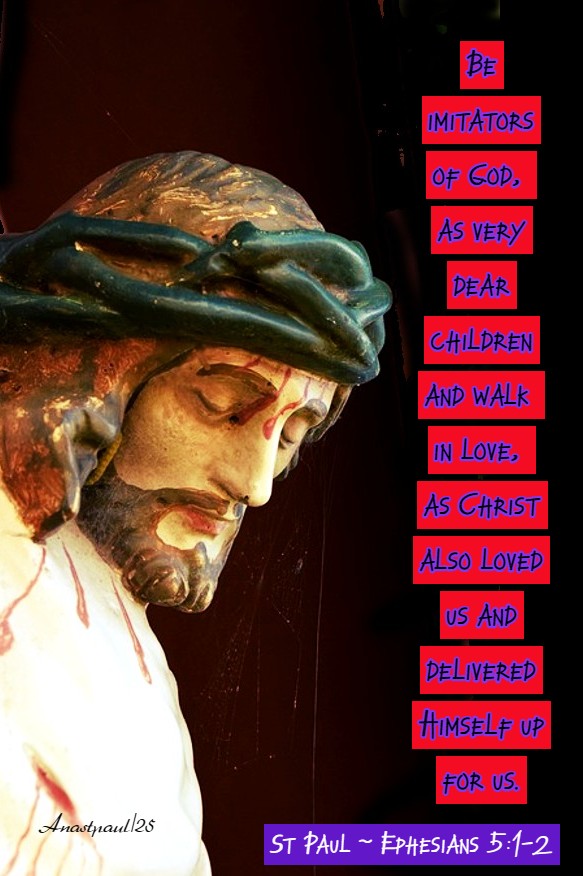
Be imitators of God, as very dear children
and walk in love, as Christ also Loved us
and delivered Himself up for us 
…”

St Paul … Ephesians 5:1-2

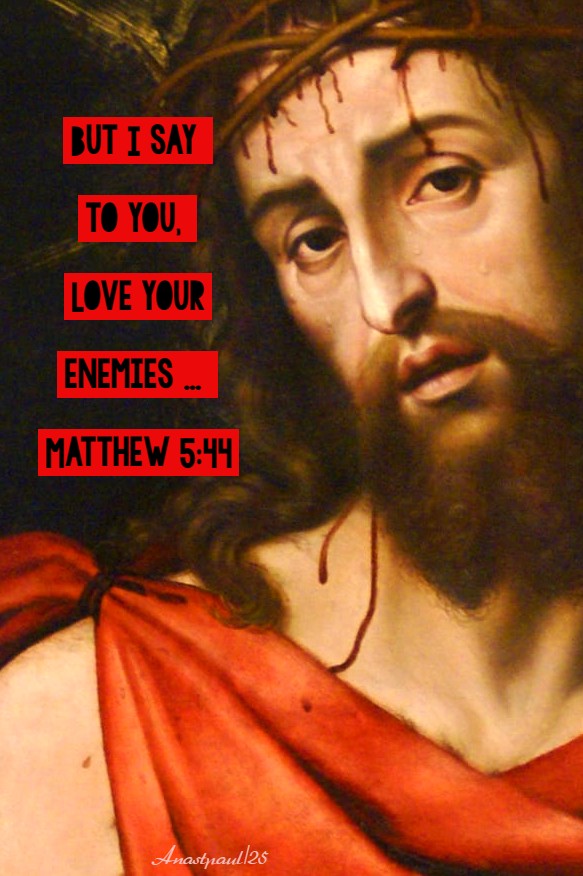
But I say to you,
Love your enemies 
…”

Matthew 5:44

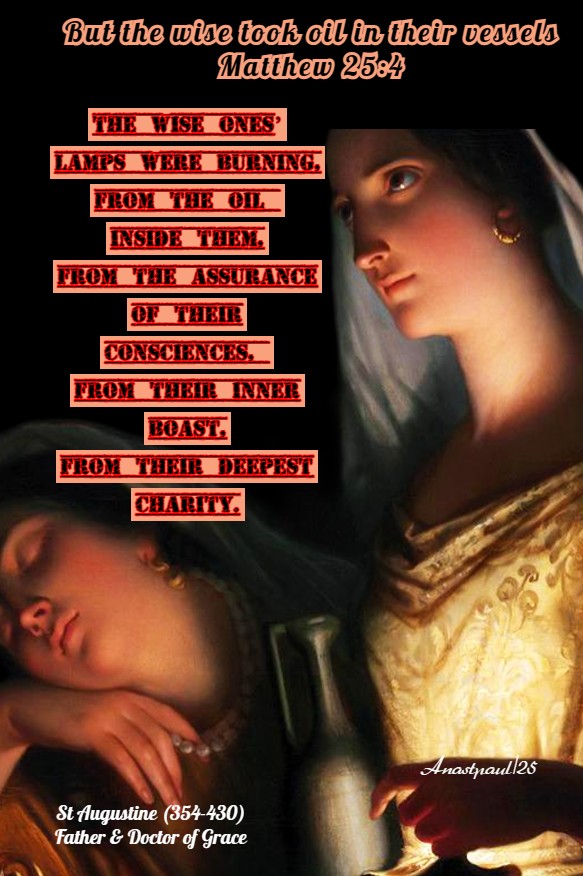
But the wise took oil
in their vessels

Matthew 25:4

The wise ones’ lamps were burning,
from the oil inside them,
from the assurance of their consciences,
from their inner boast,
from their deepest charity.

St Augustine (354-430)
Father & Doctor of Grace

“Father, forgive them.
With this prayer, He wanted to make us understand
the Love He bore us, undiminished
by any suffering and to teach us how
our heart should be toward our neighbour.

St Francis de Sales (1567-1622)
Doctor Caritas

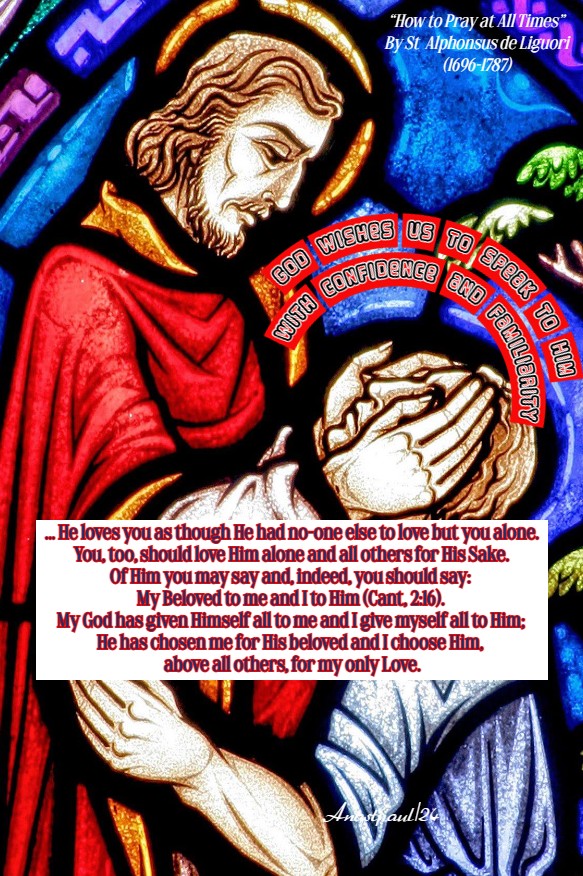
“He Loves you as though He had
no-one else to love but you alone.
You, too, should love Him alone
and all others for His Sake.
Of Him you may say and, indeed, you should say:
My Beloved to me and I to Him (Cant, 2:16).
My God has given Himself all to me
and I give myself all to Him;
He has chosen me for His beloved
and I choose Him, above all others,
for my only Love.

How to Pray at All Times
By St Alphonsus Maria de Liguori (1696-1787)

Posted in "Follow Me", CHRIST the WORD and WISDOM, CHRIST, the WAY,TRUTH,LIFE, GOD ALONE!, GOD is LOVE, HOLY WEEK, MAUNDY THURSDAY, ONE Minute REFLECTION, QUOTES for CHRIST, The PASSION, The WORD

One Minute Reflection – 2 April – ‘ … Not for His benefit but only for their own!’

One Minute Reflection – 2 April – “The Month of the Resurrection and the Blessed Sacrament” – Maundy Thursday – 1 Corinthians 11:20-32 – John 13:1-15 – Scripture search here: https://www.drbo.org/

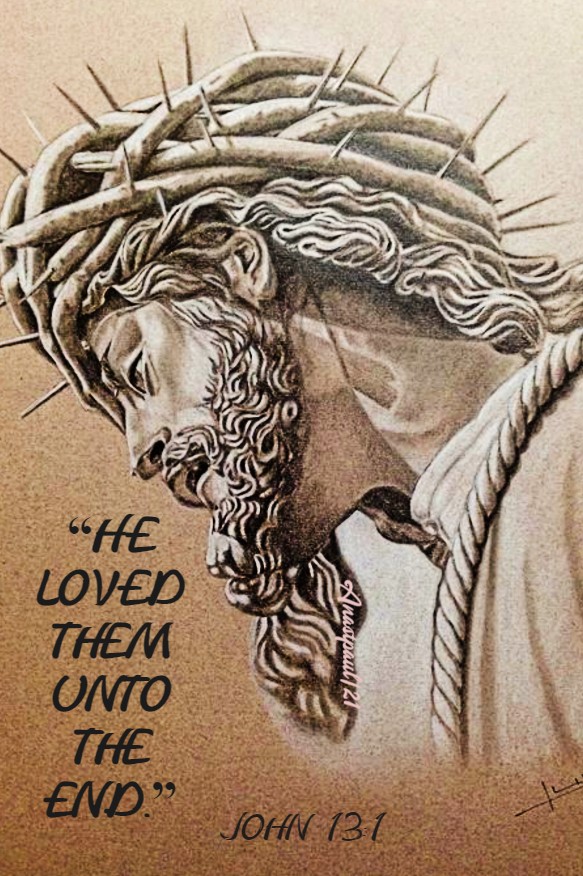
He Loved them unto the end.” – John 13:1

REFLECTION – “Before the feast of the Pasch, Jesus, knowing His hour had come to leave this world and go unto His Father, “having loved those who were His Own, unto the end, He Loved them”… In the Gospel John was epecially called “the disciple whom Jesus Loved.” This disciple declares here what manner of faithful Lover our holy Saviour was, of Whom he, himself, was so Beloved.

For unto these words, he straightaway joins, the rehearsing of Christ’s bitter Passion, beginning with the Last Supper and therein, His humble washing of His disciples’ feet, the sending forth of the traitor and after that, His teaching, His prayer, His capture, His judging, His scourging, His crucifying andH all the whole piteous tragedy of His most bitter Passion.

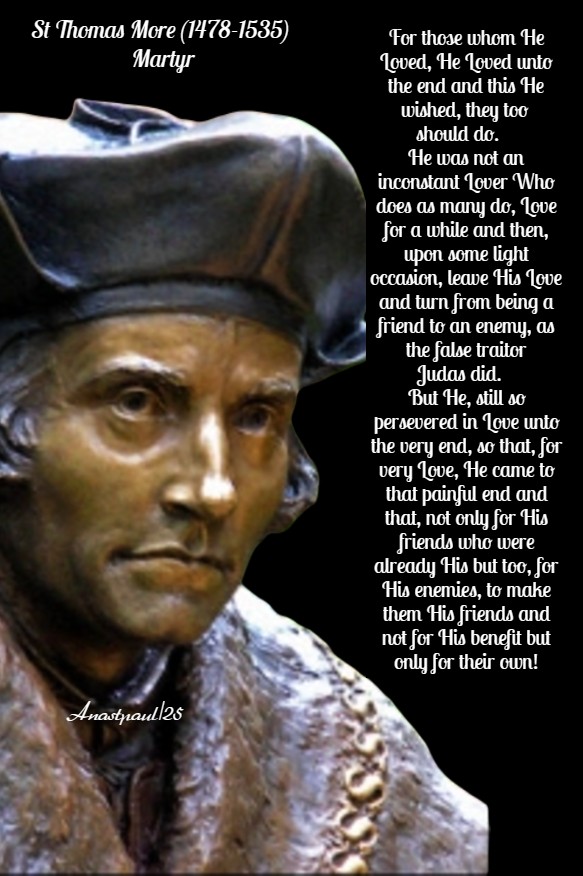
Before which things, St John sets the aforesaid words to declare all these things which Christ did, in all this, He did it for very Love. Which Love He declared well unto his disciples in many ways, at the time of His Last Supper, giving them charge that, in loving each other they should follow His example (Jn 13:34). For those whom He Loved, He Loved unto the end and this He wished, they too should do. He was not an inconstant Lover Who does as many do, Love for a while and then, upon some light occasion, leave His Love and turn from being a friend to an enemy, as the false traitor, Judas did. But He, still so persevered in Love unto the very end, so that, for very Love, He came to that painful end and that, not only for His friends who were already His but too, for His enemies, to make them His friends and not for His benefit but only for their own!” – St Thomas More (1478-1535) Martyr, Lord Chancellor of England (Treatise on the Passion, 1).

PRAYER – O God, from Whom Judas received the punishment of his guilt and the thief the reward of his confession: grant unto us the full fruit of Thy clemency, that even as in His Passion, our Lord Jesus Christ gave to each a retribution according to his merits, so having taken away our old sins, He may bestow upon us the grace of His Resurrection. Who with Thee lives and reigns in the unity of the Holy Ghost, God, world without end. Amen (Collect).

Posted in HYMNS, MAUNDY THURSDAY, PRAYERS on the CROSS of CHRIST, QUOTES on the CROSS of CHRIST, SEPTEMBER-The SEVEN SORROWS of MARY and The HOLY CROSS, STATIONS of the CROSS, The HOLY CROSS, The PASSION

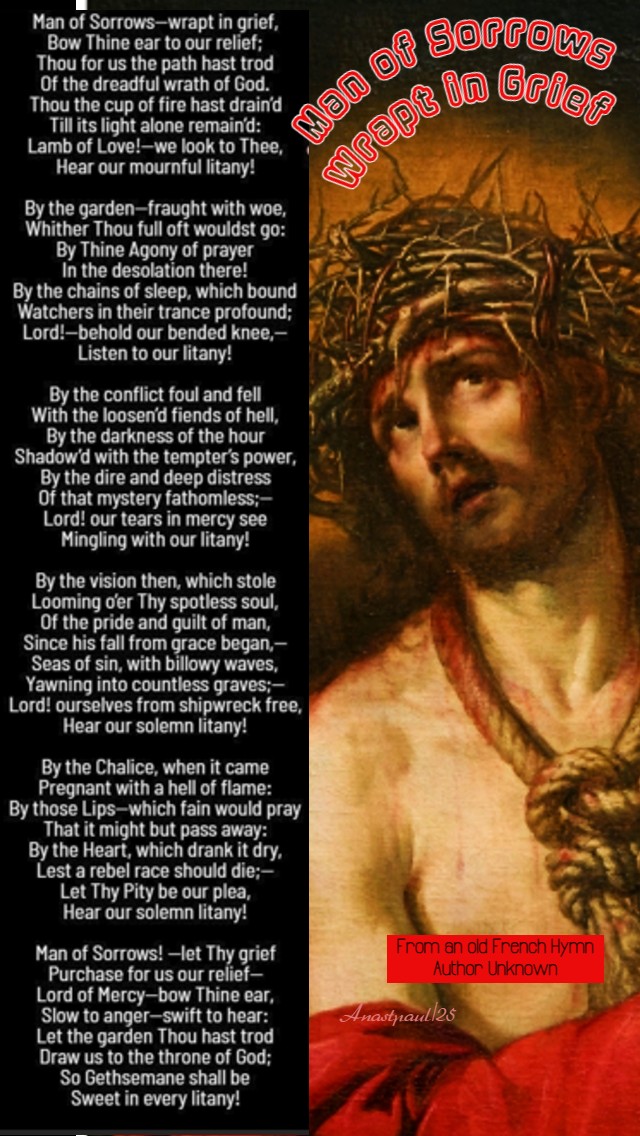
Our Morning Offering – 2 April – Maundy Thursday – Man of Sorrows—Wrapt in Grief

Our Morning Offering – 2 April – Maundy Thursday in Holy Week

Man of Sorrows—Wrapt in Grief
From an old French Hymn
Author Unknown

Man of Sorrows—wrapt in grief,
Bow Thine ear to our relief;
Thou for us the path hast trod
Of the dreadful wrath of God.
Thou the cup of fire hast drain’d
Till its light alone remain’d:
Lamb of Love!—we look to Thee,
Hear our mournful litany!

By the garden—fraught with woe,
Whither Thou full oft wouldst go:
By Thine Agony of prayer
In the desolation there!
By the chains of sleep, which bound
Watchers in their trance profound;
Lord!—behold our bended knee,—
Listen to our litany!

By the conflict foul and fell
With the loosen’d fiends of hell,
By the darkness of the hour
Shadow’d with the tempter’s power,
By the dire and deep distress
Of that mystery fathomless;—
Lord! our tears in mercy see
Mingling with our litany!

By the vision then, which stole
Looming o’er Thy spotless soul,
Of the pride and guilt of man,
Since his fall from grace began,—
Seas of sin, with billowy waves,
Yawning into countless graves;—
Lord! ourselves from shipwreck free,
Hear our solemn litany!

By the Chalice, when it came
Pregnant with a hell of flame:
By those Lips—which fain would pray
That it might but pass away:
By the Heart, which drank it dry,
Lest a rebel race should die;—
Let Thy Pity be our plea,
Hear our solemn litany!

Man of Sorrows! —let Thy grief
Purchase for us our relief—
Lord of Mercy—bow Thine ear,
Slow to anger—swift to hear:
Let the garden Thou hast trod
Draw us to the throne of God;
So Gethsemane shall be
Sweet in every litany!

This translation by Matthew Bridges (1800-1894)
(The Passion of Jesus 1852) Hymnist, Poet, Writer
Converted to Catholicism in 1848, by the influence of
John Henry Newman (1801-1890)

Posted in DYING / LAST WORDS, SAINT of the DAY

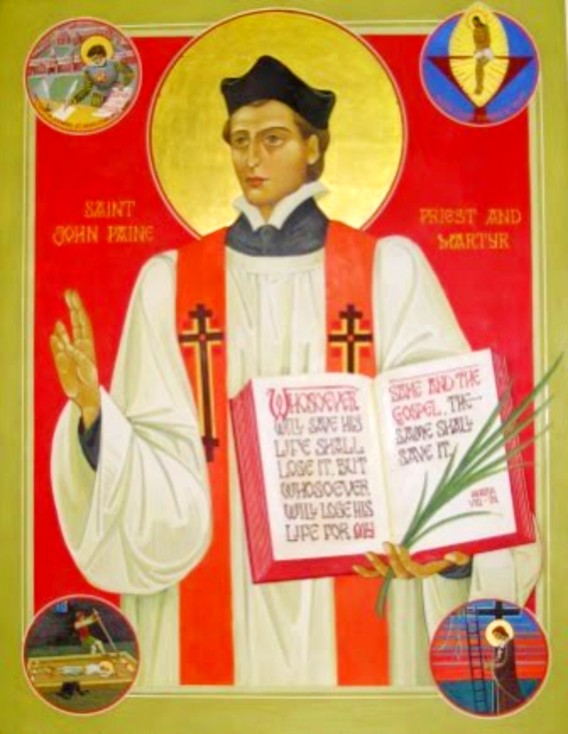
Saint of the Day – 2 April – Blessed John Payne (c1550-1582) Priest Martyr

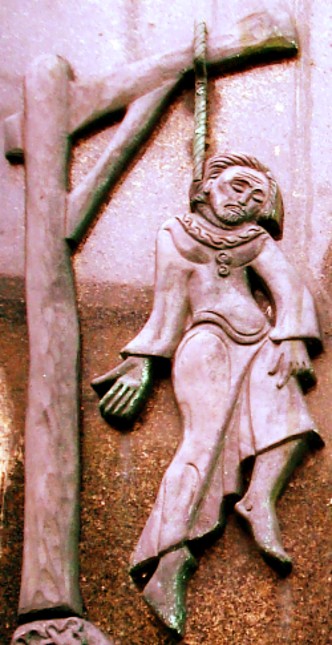
Saint of the Day – 2 April – Blessed John Payne (c1550-1582) Priest Martyr, Born in c1532 in Peterborough, Huntingdonshire, Cambridge, England and died on 2 April 1582 in Chelmsford, Essex by being hung, drawn and quartered, Also known as – Pain, Paine. Blessed John was Beatified on 29 December 1885 by Pope Leo XIII.

John Payne was born around 1550 near Peterborough in Huntingdonshire. Nothing is known of his youth, except that he was raised a Protestant. Only later did he convert to Catholicism and in 1574, he entered the new college in Douai to prepare for the Priesthood. There he was entrusted with the task of Bursar and in 1576 he was Ordained a Priest, although this suggests Blessed John had already undertaken Theological studies elsewhere.

He then returned home with Blessed Cuthbert Mayne, to exercise his ministry, settling in Essex at Ingatestone Hall, a guest of the Petres family, who were strongly opposed to the religious policies of the English Government. This facilitated his pastoral activity among the local Catholics, even though these were still difficult times for Catholics in communion with the Holy See.

In 1577 he was arrested and briefly imprisoned. Once released, he returned to Douai but by mid-1578 he was back at Ingatestone Hall.

In 1581, while working in Warwickshire, John Payne was betrayed, arrested and taken to the Tower of London. Accused of treason against the Queen, he was tortured on the wheel and sentenced to be hung, drawn and quartered.

He refused the assistance offered him by a certain George Elliott, reiterating instead “he had always, in mind or word, honoured her Majesty the Queen more than any other woman in the world; that he would always happily obey every civil duty; that he prayed for her as for his own soul; that he had never thought or plotted any treason against her Majesty or any nobleman of England.”

On 2 April 1582, the sad event occurred near Chelmsford in Essex which earned John Payne the Martyr’s Ccrown. Those who witnessed his execution, struck by the Priest’s upright conduct, asked that his body be left hanging until death, thus waiting to perform the gruesome procedures prescribed.

The Saint died uttering the words “Jesus, Jesus, Jesus.”

Posted in HOLY WEEK, MARIAN TITLES, MAUNDY THURSDAY, SAINT of the DAY

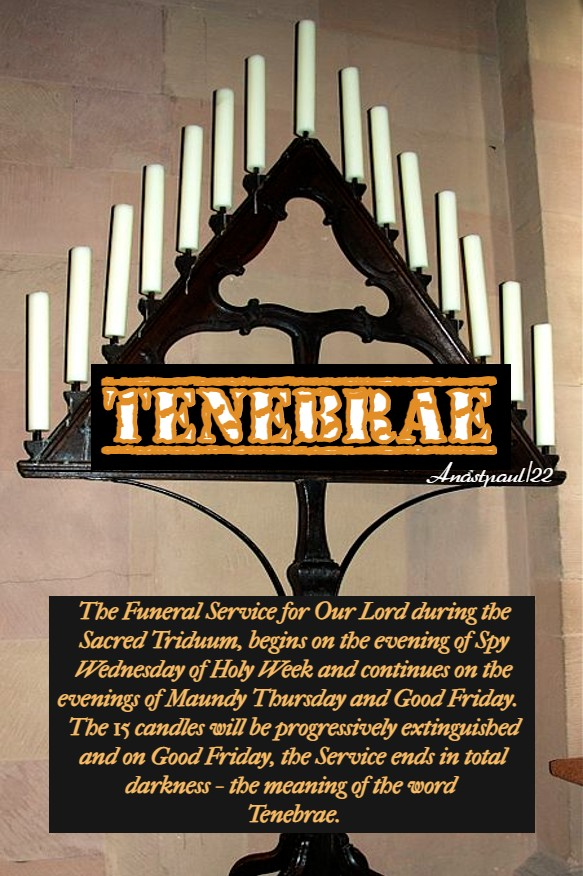
Maundy Thursday, The Office of Tenebrae, Nuestra Señora de la Altagracia / Our Lady of the Highest Grace, (1506), St Francis of Paola and the Saints for 2 April

MAUNDY THURSDAY

Nuestra Señora de la Altagracia / Our Lady of the Highest Grace, Higuey, Dominican Republic (1506) Patron of Dominicans- 2 April:
HERE:

https://anastpaul.com/2021/04/02/nuestra-senora-de-la-altagracia-our-lady-of-the-highest-grace-1506-and-memorials-of-the-saints-2-april/

St Francis of Paola O.M. (1416-1507) known as “Saint Francis the Fire Handler” – Confessor, Monk and Founder, inspired with the Gift of Prophecy and still called the “Miracle-Worker” Apostle of the poor, Peacemaker. He was an Italian mendicant Friar and the Founder of the Order of Minims. Unlike the majority of founders of men’s religious orders and like his Patron Saint, Francis was never ordained a priest. His Body was Incorrupt until destroyed in the French Revolution. He was Canonised in 1519 by Pope Leo X.
St Francis’s Life:

https://anastpaul.wordpress.com/2018/04/02/saint-of-the-day-2-april-st-francis-of-paola-o-m-1416-1507/

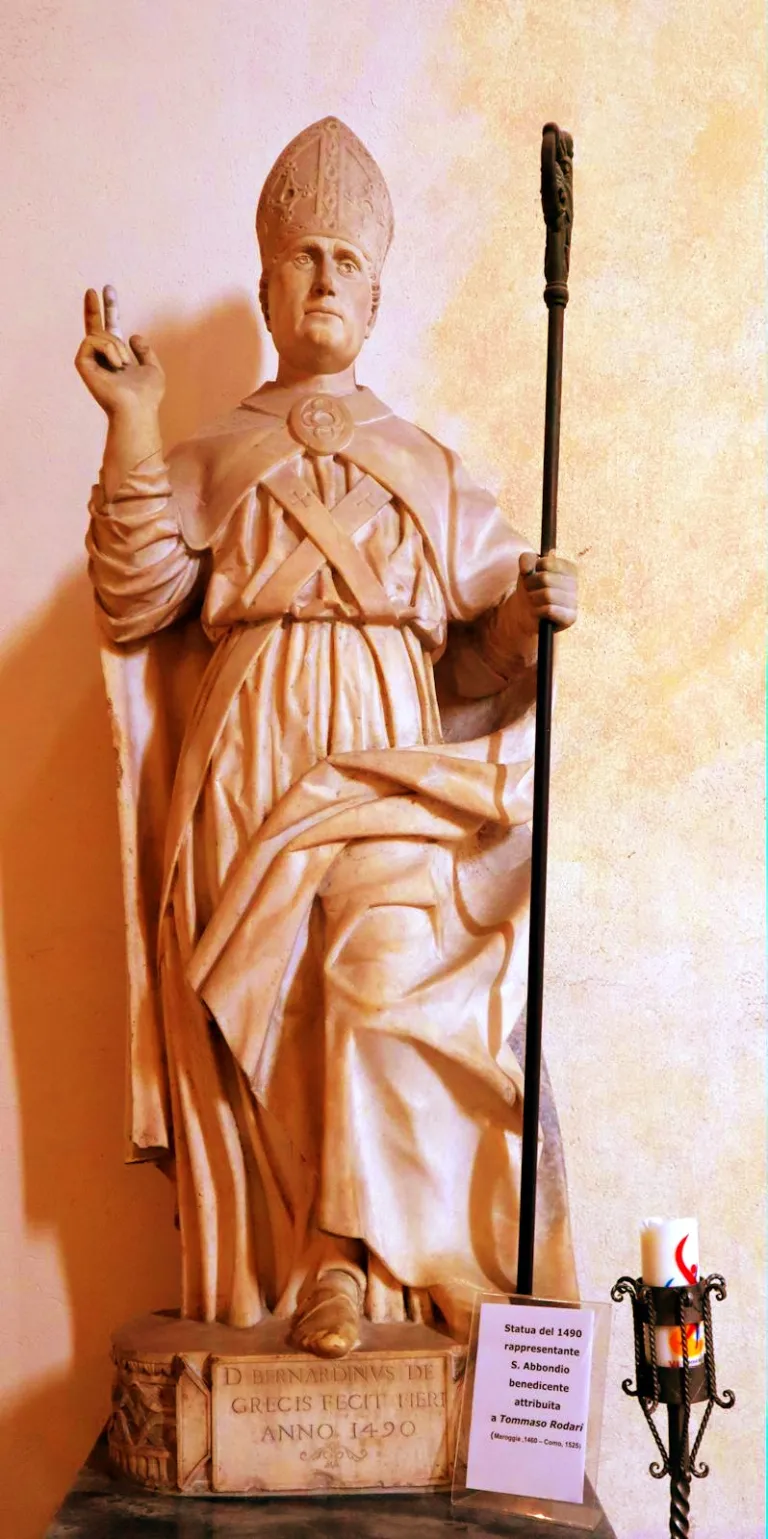
St Abundius (Died c489) Bishop and Confessor of of Como, Italy, wonder Miracle-worker.
Devout and Devoted St Abundius:

https://anastpaul.com/2025/04/02/saint-of-the-day-2-april-st-abundius-died-c489-bishop-and-confessor/

St Agnofleda of Maine
St Appian of Caesarea (c287-306) Martyr, Layman

Blessed Arnulf O.Cist. (c1200-1276) Abbot of the Cistercian Abbey in Villers-la-Ville, in Leuven, France, Poet, Writer. After serving in this office for ten years, he abdicated, hoping to pursue a life devoted to study and asceticism but he died within a year thereafter.
His Holy Life:

https://anastpaul.com/2023/04/02/saint-of-the-day-2-april-blessed-arnulf-of-leuven-o-cist-c1200-1276-abbot/

St Bronach of Glen-Seichis
St Constantine of Scotland
St Ebbe the Younger
St Eustace of Luxeuil
St Gregory of Nicomedia
Blessed John Payne (c1550-1582) Priest Martyr

Blessed Leopold of Gaiche OFM Cap (1732-1815) Priest and Friar of the Order of Friars Minor of the Capuchin branch, Missionary Preacher in Italy, called “The Apostle of Umbria.” He became renowned for wearing a crown of thorns. He served in a position of power in the Franciscan Order in the Umbrian region in which he supported strong adherence to the Rule of Saint Francis.
Biography:

https://anastpaul.com/2022/04/02/saint-of-the-day-2-april-blessed-leopold-of-gaiche-ofm-cap-1732-1815/

St Lonochilus of Maine
St Musa of Rome

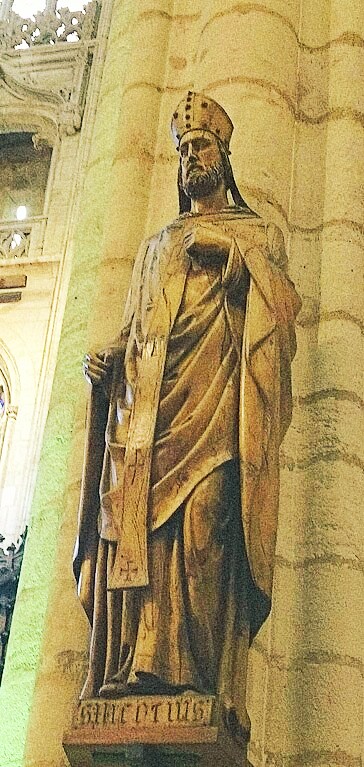
St Nizier (c513-573) Bishop of Lyon. Nizier was a man of ascetic lifestyle, his care for the poor and his promotion of Church music have since been remembered and praised.
The Roman Martyrology reads: “At Lyon, St Nizier, renowned for his saintly life and miracles.”
His Life of Grace:

https://anastpaul.com/2024/04/02/saint-of-the-day-2-april-saint-nizier-of-lyon-c513-573-archbishop-of-lyon/

St Rufus of Glendalough
St Theodora of Tiria

St Urban (c 327-c 390) Bishop, the sixth Bishop of Autun and Langres, in Burgundy, France from 374 until his death, Confessor.
About St Urban:

https://anastpaul.com/2021/04/02/saint-of-the-day-2-april-saint-urban-of-langres-c-327-c-390/

Martyrs of Africa – 10 Saints: A group of ten Christians Martyred together in Africa, date unknown. We have six of their names – Marcellinus, Procula, Quiriacus, Regina, Satullus and Saturnin but no other information has survived.

Martyrs of Thessalonica – 16 Saints: Sixteen Christians who were Martyred together in Thessalonica in Greece, date unknown. We know nothing else about them but 13 of their names – Agapitus, Agatophus, Cyriacus, Dionysius, Gagus, Julianus, Mastisius, Proculus, Publius, Theodoulus, Urbanus, Valerius and Zonisus.