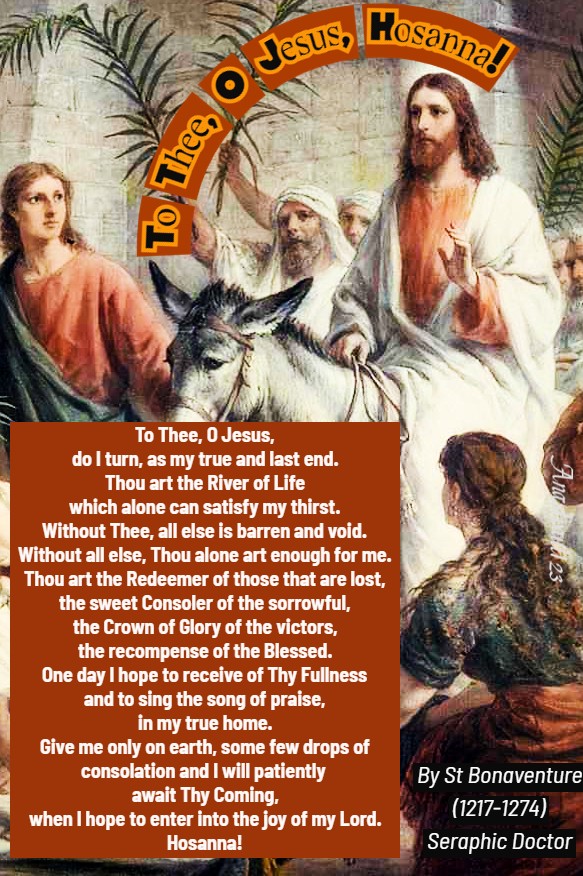
To Thee, O Jesus, Hosanna! By St Bonaventure (1217-1274) Seraphic Doctor of the Church
To Thee, O Jesus, do I turn, as my true and last end. Thou art the River of Life which alone can satisfy my thirst. Without Thee, all else is barren and void. Without all else, Thou alone art enough for me. Thou art the Redeemer of those that are lost, the sweet Consoler of the sorrowful, the Crown of Glory of the victors, the recompense of the Blessed. One day I hope to receive of Thy Fullness and to sing the song of praise, in my true home. Give me only on earth, some few drops of consolation and I will patiently await Thy Coming, when I hope to enter into the joy of my Lord. Hosanna!
Saint of the Day – 19 March – Blessed John of Parma OFM (c1209-1289) Priest and Friar of the Friars Minor, the 7th Minister General of the Order (1247–1257) and a noted Theologian. He was known for his attempts to bring back the earlier spirit of the Order after the death of Saint Francis of Assisi. Born in 1209 at Parma, Italy as Giovanni Burali and died in 1289 at Greccio, Italy of natural causes. Patronage – of his birthplace, Parma, Italy. His cult was confirmed in 1777 by his Beatification by Pope Pius VI. Also known as – Giovanni di Parma, John Burall. Additional Memorial – 20 March on some calendars.
John was born in Parma, Italy, around 1209 of the noble Burali family. His education was undertaken by his uncle, the Chaplain of the St Lazarus hospice in Parma. It was when he was a young Philosophy Professor known for his piety and learning that God called him to bid good-bye to the world he was used to and enter the new world of the Franciscan Order.
After his profession, John was sent to Paris to complete his Theological studies in order to be Ordained to the Priesthood. After his Ordaination, he was appointed to teach Theology at Bologna, then in Naples and finally in Rome.
In 1245, Pope Innocent IV called a General Council in the City of Lyons, France. Crescentius, the Franciscan Minister General at the time, was ailing and unable to attend. In his place he sent Friar John, who made a deep impression on the Church leaders gathered there. Two years later, when the same Pope presided at the election of a new Minister General of the Franciscans, he remembered Friar John well and proposed him as the man best qualified for the office.
And so, in 1247, John of Parma was elected to the position of the 7th Minister General. The surviving disciples of St Francis rejoiced in his election, expecting a return to the spirit of poverty and humility of the early days of the Order. And they were not disappointed. As General of the Order, John travelled on foot, accompanied by one or two companions, to practically all of the Franciscan Convents in existence. Sometimes he was able to visit incognito and unrecognised, remaining there for a number of days to test the true spirit of the Friars.
The Pope called on John to serve as the Papal Legate to Constantinople, where he was most successful in winning back the schismatic Greeks. Upon his return, he asked that someone else take his place to govern the Order. At John’s urging, Saint Bonaventure was chosen to succeed him. John then took up a life of prayer in the Hermitage at Greccio, one of St Francis favourite Hermitages. and where he founded the first Nativity devotion.
Many years later, John learned that the Greeks who had been reconciled with the Church for a time, had again relapsed into schism. Although 80 years old by then, John received permission from Pope Nicholas IV to return to the East in an effort to restore unity once more. On his way, John became ill and died. He was Beatified in 1777. The Office was granted to the Franciscan Order in 1780 and extended to the ducal States on 24 April 1781.
Our Morning Offering – 5 March – Tuesday of the Third Week in Lent
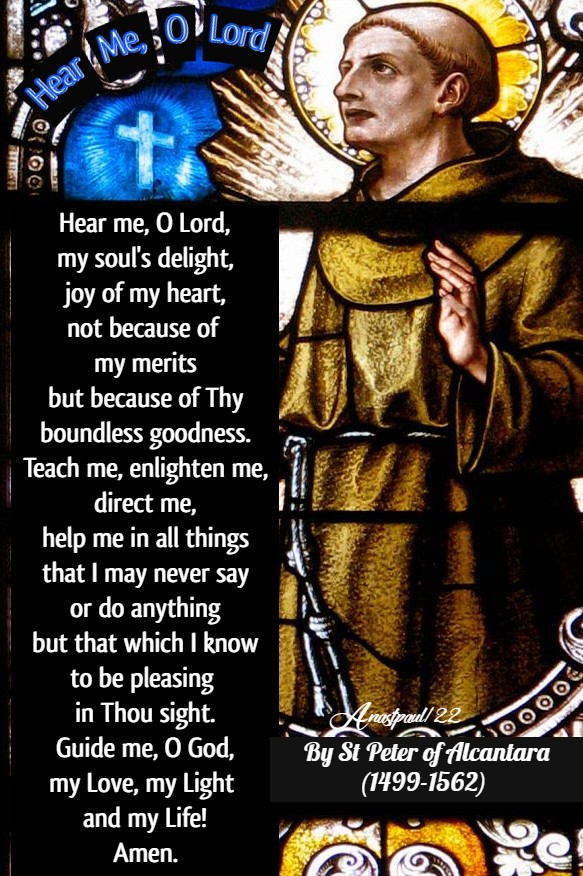
Hear Me, O Lord By St Peter of Alcantara (1499-1562)
Hear me, O Lord, my soul’s delight, joy of my heart, not because of my merits but because of Thy boundless goodness. Teach me, enlighten me, direct me, help me in all things that I may never say or do anything but that which I know to be pleasing in Thou sight. Guide me, O God, my Love, my Light and my Life! Amen
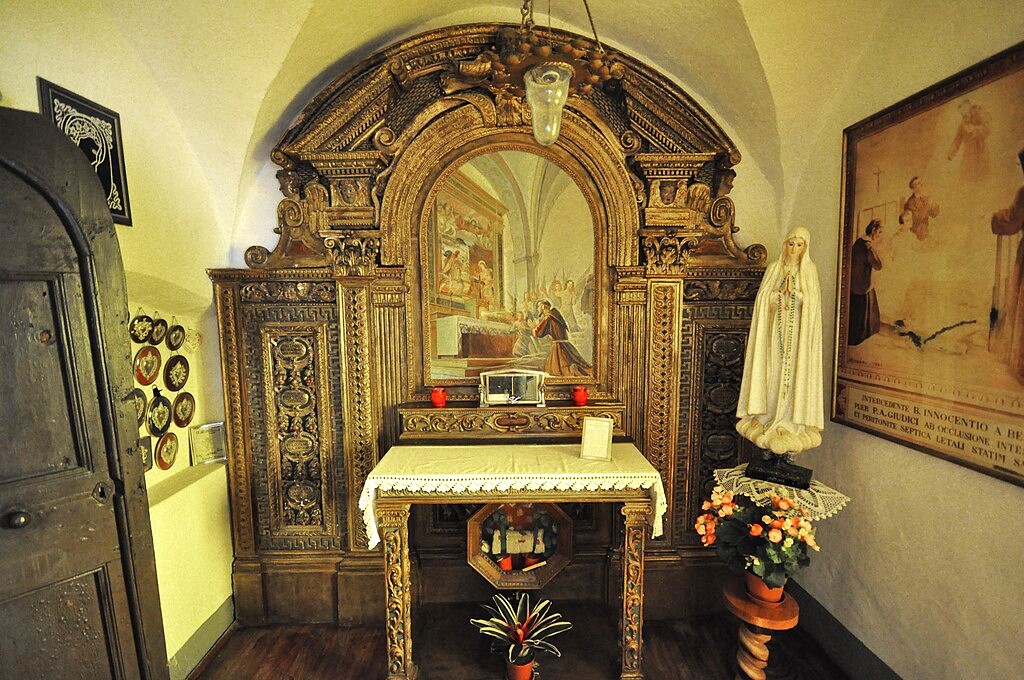
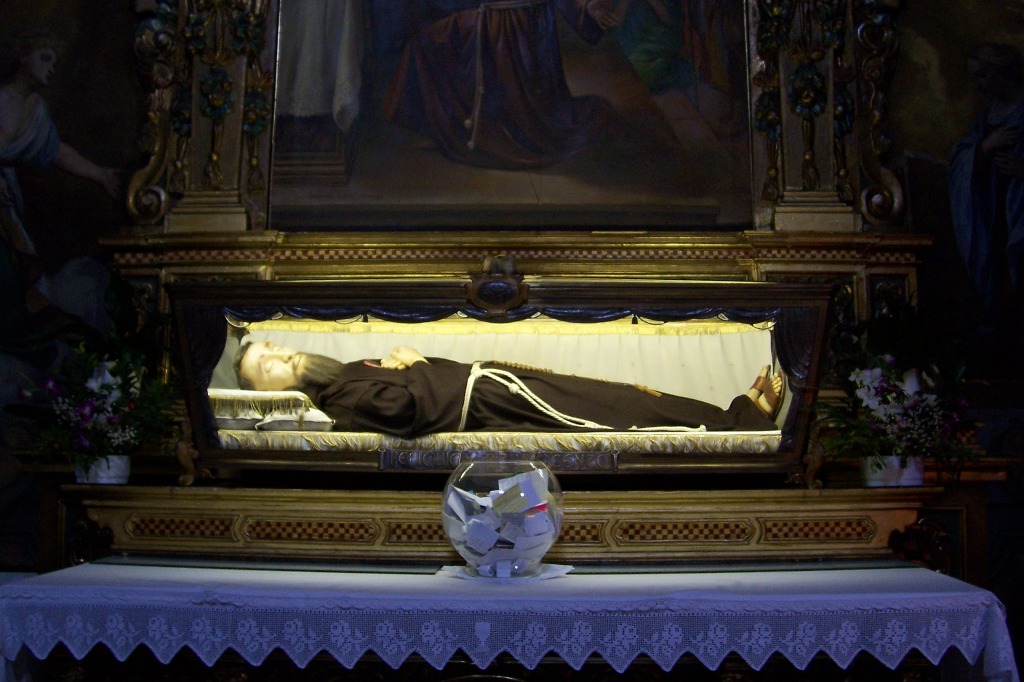
Saint of the Day – 3 March – Blessed Innocento of Berzo OFM Cap. (1844-1890) Priest, Friar of the Friars Minor of the Capuchins, Born on 19 March 1844 at Niardo, Brescia, Italy as Giovanni Scalvinoni and died on 3 March 1890 at Bergamo, Italy from influenza. Patronages – of children, Berzo Inferiore, Italy. Also known as – Giovanni Scalvinoni, Innocent, Innocenzo. Additional Memorial – 28 September (Capuchins), the Sunday after the Pardon of Assisi , that is the Sunday after 2 August at his Annunziata Convent.
Among the votive offerings preserved in the humble birthplace of Blessed Innocento in Berzo, now transformed into a Museum, there is a fragment of rope in memory of a miracle which occurred in the 1920s. A mountaineer, during a climb, fell into a crevice and, having no-one to help him, asked for the intervention of the humble Capuchin Friar, to whom he was devoted. A rope came from above while the movements to climb the cliff were suggested to him but, once he reached the top, he was astonished to see that no-one was waiting for him.
Giovanni Scalvinoni was born in Niardo (Brescia), his mother’s hometown, on 19 March 1844. A few months later a terrible disaster suddenly struck the young family. His father, in just two days, died of pneumonia. Giovannino spent his childhood simply — making the strong faith of the mountain people his own. From an early age he had great pity for the poor, generously giving what little he had to those who knocked on his door. He woulf retain this deeply experienced compassion throughout his life — when, as a Capuchin, he went around collecting alms, he was extremely satisfied to return to the Convent with an empty bag. That which he had received as an offering, he had immediately distributed to those in even more need than the Friars of the Convent.
He studied with excellent results in the Municipal College of Lovere (Bergamo) and from there, he moved onto the Seminary of Brescia, where he imposed a demanding spiritual disciplineupon himself. Giovanni was Ordained a Priest in 1867. Thereafter, he held various positions, including that of Vice Rector of the Seminary but each time he was removed because he absolutely lacked authority. His innate shyness led him to desire to live in solitude, between prayers and penances. On 16 April 1874 he finally began his Novitiate among the Capuchins, taking the name Innocento, at the Annunziata Convent. Four years later he made his Solemn Profession and was appointed Assistant Master of Novices.
Except for brief assignments and the preaching of spiritual exercises in some Lombard Convents, it was in the Annunziata Convent where he intensely experienced total abandonment to the Lord. Despite his excellent knowledge of theology, also passed onto his brothers, he always appeared humble and modest, with the desire to disappear and never be noticed. In love with the Eucharist (his Masses were of exceptional intensity), he stopped as much as he could in front of the Tabernacle. He loved the Crucifix very much too and the exercise of theWay of the Cross which he always recommended to his penitents.
On 3 March 1890, at the age of forty-six, he fell seriously ill and died in the Infirmary of the Convent in Bergamo. A few months later his mortal remains were solemnly transferred to Berzo. A reputation for sanctity had already surrounded him in life. On 21 March 1943 Innocento was venerated by Pope Pius XII by a Decree of Heroic Virtue and on 12 November 1961, John XXIII proclaimed him Blessed and Patron of children, protagonists of the two miracles of the recorded for his Beatification process.
Private Chapel of Innocento da Berzo in Piancogno
His writings (a few letters, diary fragments, notes for sermons), collected in a thousand pages, reveal the disarming secret of his sanctity — the unconditional abandonment in the arms of the Father. “Jesus is offended by everyone in the world — it is up to me not to leave Him alone in His affliction. The love of God does not consist in great feelings but in great nakedness and patience, for the beloved God. There is no other better means to guard the spirit, than to suffer, do and remain silent. I will have a great desire to be subject to everyone and I will have a horror of being preferred to the least.”
A path which leads to the Annunziata Convent, which he followed many times to reach various locations in Valcamonica, where he was sought as a Confessor and Preacher, is today named after him. From his cell, a destination for continuous pilgrimages, a small window allows you to contemplate the enchanting landscape of the lower valley, Lake Iseo and his native town of Berzo.
The Order of Friars Minor Capuchin commemorates his Feast on 28 September, while in the Sanctuary of the Santissima Annunziata, the Convent where the Blessed lived, the Feast is on the Sunday after the Pardon of Assisi (after 2 August).
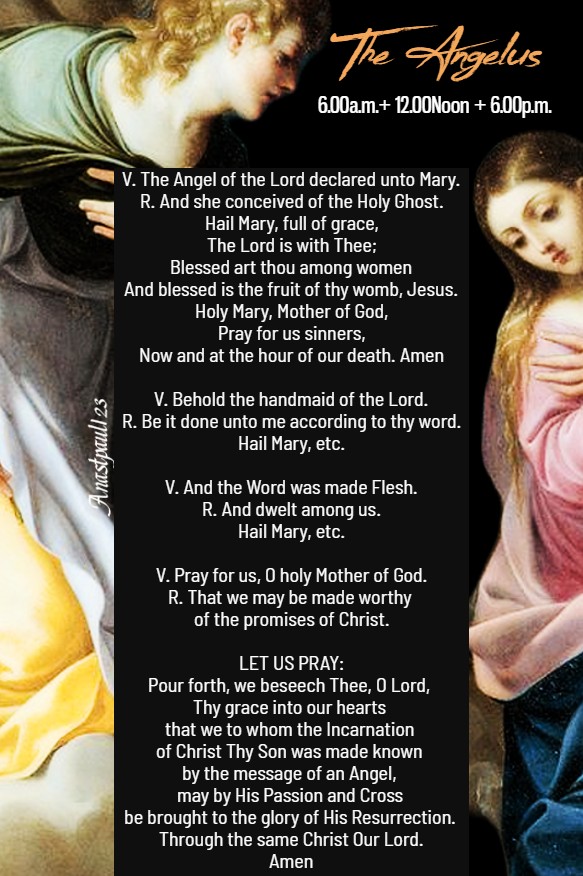
Blessed Benedetto Sinigardi da Arezzo OFM (1190-1282) Friar of the Order of Friars Minor, who received the Habit directly from St Francis of Assisi. Although rarely mentioned, Blessed Benedetto is the Author of the Angelus! Furthermore, the beautiful custom of reciting the Marian Antiphon “The Angelus Domini” is attributed to Blessed Benedetto, meditating on the saving Mystery of the Incarnation of the Son of God in Mary’s virginal womb. The Angelus Domini became a pious practice firstly to the entire Franciscan Order, then to the whole Church, as it still is today. Biography: https://anastpaul.com/2023/03/03/saint-of-the-day-3-march-blessed-benedetto-sinigardi-da-arezzo-ofm-c1190-1282-the-author-of-the-angelus/
St Anselm of Nonantola St Arthelais of Benevento St Calupan St Camilla St Cele-Christ
St Cunegundes (c975-1040) Empress of the Holy Roman Empire, Nun, she took a vow of Virginity before her marriage, which, after a miracle was upheld by her husband, the King (also a Saint). Founder of Monasteries and Churches, Nun in one of her Convents, Apostle of Charity. Born in c 975 and died in 1040 of natural causes. Biography: https://anastpaul.com/2022/03/03/saint-of-the-day-3-march-st-cunegundes-c-975-1040/
St Foila Bl Frederick of Hallum St Gervinus Blessed Innocento of Berzo OFM Cap. (1844-1890) Priest Bl Jacobinus de’ Canepaci St Lamalisse St Non
Bl Pierre-René Rogue St Sacer St Teresa Eustochio Verzeri St Titian of Brescia Bishop and Confessor St Winwallus of Landévennec
40 Martyrs in North Africa – A group of Christians Martyred together in North Africa, date unknown. No details have survived, but we know these names – Antonius, Artilaus, Asclipius, Astexius, Basil, Bosimus, Carissimus, Castus, Celedonius, Claudianus, Cyricus, Donata, Emeritus, Emeterius, Euticus, Felix, Fortunatus, Frunumius, Gajola, Georgius, Gorgonius, Hemeterus, Isicus, Janula, Julius, Luciola, Luciolus, Marcia, Marinus, Meterus, Nicephorus, Papias, Photius, Risinnius, Sabianus, Savinianus and Solus
Martyrs of Pontus – 3+ Saints – A large group of Christians Martyred together in the persecutions of Emperor Maximian Galerius and governor Ascleopiodato. We have some details on three of them – Basiliscus, Cleonicus and Eutropius. 308 in Pontus (in modern Turkey) Martyrs of Caesarea; Asterius Marinus
Martyrs of Calahorra: Cheledonius Emeterius
Martyrs of Gondar, Ethiopia: Bl Antonio Francesco Marzorati Bl Johannes Laurentius Weiss Bl Michele Pío Fasol
One Minute Reflection – 1 March – Friday of the Second Week in Lent and the Feast of the Holy Shroud – Genesis 37:6-22; Matthew 21:33-46 – Scripture search here: https://www.drbo.org/
“They seized him, threw him out of the vineyard and killed him.”– Matthew 21:39
REFLECTION – “I am the true vine,” Jesus says (Jn 15:1)… People dig trenches around this Vine, that is to say, cunningly dig traps. When they plot to make someone fall into a snare, it is as if they dug a pit in front of him. That is why He mourns about it, saying: “They have dug a pit before Me” (Ps 56:7)… Here is one example of these snares: “They brought a woman who had been caught in adultery” to our Lord Jesus, “saying: ‘Moses commanded us to stone such women. So what do you say?’ ” (Jn 8:3f)… And here is another: “Is it lawful to pay the census tax to the Emperor or not?” (cf. Mt 22:17)…
However, they discovered that these traps caused no harm to the Vine. To the contrary, in digging these pits, they themselves fell into them (Ps 56:7) … Then they kept on digging, not just His Hands and His Feet (Ps 21:17) but they pierced His Side with a lance (Jn 19:34) and uncovered the interior of that Sacred Heart, which had already been wounded by the spear of love. The Bridegroom says in the song of His love that: “You have wounded My heart, My sister, My spouse” (Sg 4:9). O Lord Jesus, Your Heart has been wounded with love by Your spouse, Your friend, Your sister. Why, then, was it necessary for Your enemies to wound You again? O you enemies, what are you doing?… Do you not know that this Heart of Our Lord Jesus, already pierced, is already dead, already open and cannot be touched by any other suffering? The Heart of the Bridegroom, Our Lord Jesus, has already received the wound of love, the death of love. What other death could touch Him?… The Martyrs also laugh when they are threatened, rejoice when they are struck, triumph when they are killed. Why? Because they have already died through love in their hearts, “dead to sin” (Rm 6:2) and to the world…
Thus Jesus’ Heart has been wounded and put to death for our sake… Physical death triumphed for a moment but only to be conquered forever. It was blotted out when Christ rose from the dead because “death has no power over Him anymore” (Rm 6:9). –St Bonaventure (1221-1274), Franciscan, Doctor of the Church (The Mystical Vine, ch. 3, § 5-10)
PRAYER – O God, Who hast left us a Relic of Thy passion in the Holy Shroud in which Thy body, taken down from the Cross, was wrapped by Joseph [of Arimathea], grant, we beseech Thee that through Thy Death and Burial, we may be brought to the glory of resurrection. Thou who livest and reignests with The Father, in the unity of the Holy Ghost, God, world without end. Amen (Collect).
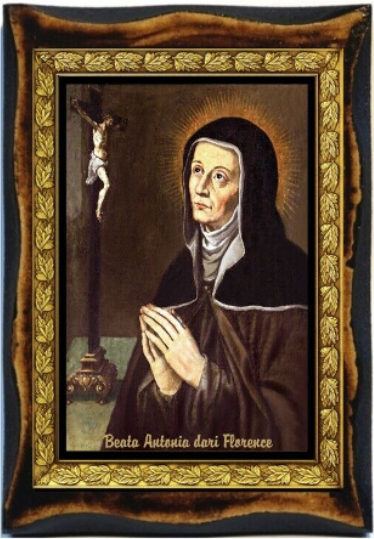
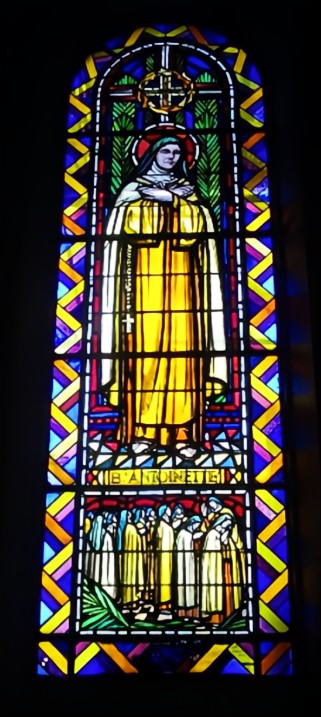
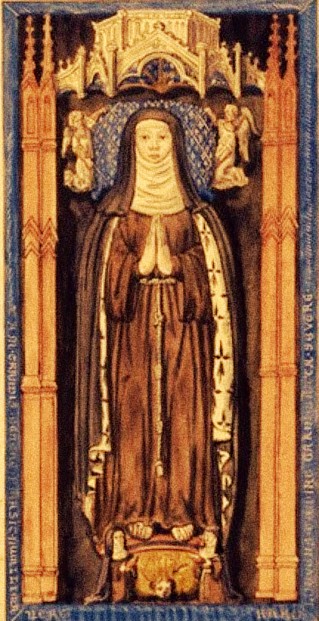
Saint of the Day – 29 February – Blessed Antonia of Florence OSC (1401-1472) Widow, Abbess of the Monastery of Corpus Christi in L’Aquila. Born in 1401 in Florence, Italy and died on 29 February 1472 in her Convent at Aquila, Italy of natural causes, her Feast Day is, therefore, celebrated on 28 February in non-Leap years. Her body is incorrupt. Antonia was Beatified in 1847 by Pope Pius IX.
Blessed Antonia of Florence was born of a noble family in Florence, Italy, in 1401. She entered the married state at a very early age, in compliance with the wish of her parents. She and her husband had one child, a son. When her husband died in 1428, she allowed nothing to induce her to contract a second marriage but resolved to withdraw from the world and live only for God and the salvation of her soul.
These were the years in which Saint Bernardino of Siena, with some companions, spread the Observance movement and the return of an original “Franciscanism” in many Italian cities. Most of the sermons were given in the square, the churches were unable to contain the crowds that punctually flocked. Brother Bernardino preached in Santa Croce in Florence from 8 March to 3 May 1425. Antonia, listening to him, responded yes, without conditions, to God’s call. She had known the experience of married life, she was a mother, but the Lord gave a turning point to her life. Four years later, once family matters were settled, she entered
In 1429, after ensuring the comfort and care of her son, she entered the Convent of Tertiaries which Blessed Angelina had ounded at Florence. Here she so distinguished herself by virtue and wisdom that after a few years, the Superiors called her to Foligno to preside as Superior of the Convent there.
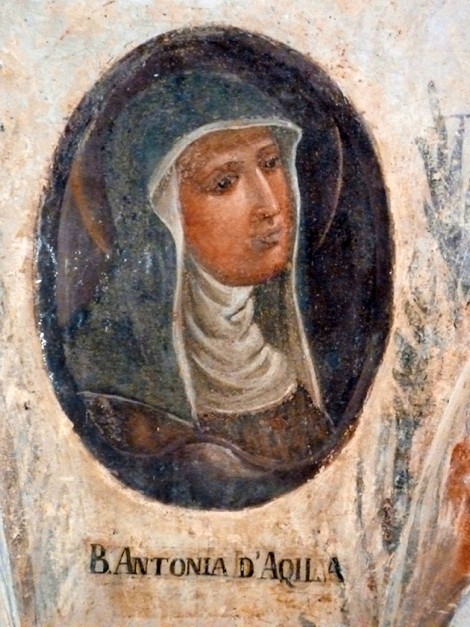
A fresco of Blessed Antonia – c1500
Although, in her humility, she found it difficult to accept the advancement, she was happy to carry out the appointment under the guidance of Blessed Angelina, who, as Superior General of the several Convents she had founded, dwelt at Foligno. Antonia so availed herself of the opportunity to profit by the holy example and the good counsel of the Foundress that she could be honoured as an example of how a Superior. should conduct herself and her responsibilities.
In consequence, after a few years, Blessed Antonia of Florence was sent to establish a Convent in Aquila. There, under her maternal direction, a veritable sanctuary of holiness budded forth, the fame of which brought joy to that City and the entire vicinity.
Although the religious community zealously served God according to the rule of the Third Order, it did not satisfy Blessed Antonia in her yearning for personal perfection. She felt strongly drawn to a stricter life, to more perfect poverty and to more complete renunciation of the world, as practiced in the Order of St Clare.
At a visitation she communicated her desire to her spiritual Coinfessor, St John of Capistrano OFM (1386-1456). He approved it and, at his suggestion and with the sanction of the Holy Father, in 1447, a new Convent of the Poor Clares was founded at Aquila which ,Antonia with twelve consecrated virgins, entered. She was appointed Superior and Abbess but, while she occupied the highest place, she always strove to find the last. The lowliest tasks, worn clothes, the most disagreeable occupations she assigned to herself, while she shunned all honour and distinction. In all she did and said, there shone forth the most sincere humility.
Just as pronounced was the patience with which she bore the burdens of her position, the weakness of all her subjects, the many importunities of her relatives and finally, the sufferings of a lingering illness.
While she was extraordinarily severe with herself, she possessed truly motherly concern for her Sisters. They, in turn, clung to her with filial love and, when after seven years of administration, she was relieved of the burden, she was still considered, by the sisters, as their mother and model.
God distinguished His faithful servant with special graces. Her prayer amounted to perfect contemplation of heavenly things, the ardour of her devotion sometimes causing her to be raised aloft bodily. Once a glowing sphere was seen suspended over her head.
Blessed Antonia of Florence reached the age of seventy-one years and died on 29 February 1472, addressing words of comfort and holy exhortation to her sorrowing fellow Sister, who were gathered around her.
Numerous miracles occurred at her tomb and her body is a constant miracle, for, up to the present time, it is preserved wholly incorrupt and is of an extraordinary freshness and beauty which is emphasised by the open eyes. The uninterrupted veneration which began with the day of her death received the sanction of Pope Pius IX.
St Justus the Potter St Llibio St Macarius the Potter St Maidoc St Marana of Beroea
St Oswald of Worcester (Died 992) Monk, Archbishop of York from 972-992, as well as simultaneously being the Bishop of Worcester and a leading figure in the reform of the Anglo-Saxon Church which took place in the second half of the tenth Century. He died on 29 February in 992 of natural causes, a leap year, therefore, his Feast is celebrated on the 28th. (Feast Day 29 February in a Leap Year) St Oswald’s Life: https://anastpaul.com/2023/02/28/saint-of-the-day-28-february-saint-oswald-of-worcester-c912-992-bishop/
St Proterius of Alexandria St Pupulus of Alexandria
St Ruellinus of Treguier St Rufinus the Potter St Serapion of Alexandria St Sillan of Bangor St Theophilus the Potter Blessed Villana de’Botti OP (1332-1361) Widow, Mother, Penitent, Mystic.
Martyrs of Alexandria – A number of clerics and layman who died as Martyrs of charity for ministering to the sick during a plague that ravaged Alexandria, Egypt in 261.
Martyrs of Antwerp – 14 Christians who were Martyred together. We know nothing about them but the names Alexander, Anicetus, Cyriacus, Eulalia, Faustus, Genesius, Hirena, Macarius, Mauritius, Modestus, Placidus, Rochus, Symforian and Victorinus. Died in Rome, Italy, date unknown. Their Relics were transferred and enshrined in Antwerp, Belgium.
Martyrs of Corinth – A group of Christians Martyred together in Corinth, Greece. The only information we have about them are the names Basilia, Betha, Caius, Claudius, Diodorus, Donatus, Enuclus, Felix, Hermes, Januaria, Januarius, Maccaris, Maninlia, Mansuetus, Nicophorus, Papias, Quinquianus, Rufunia, Serapion, Servilia, Silvana, Stercola, Tella, Veneria, Victor and Victorinus.
St Alexander of Alexandria (Died c 326) Bishop of Alexandria, Confessor, Defender of the True Faith against heresies, in particular the Arians. The Roman Martyrology states of him today: “At Alexandria, the Bishop St Alexander, an aged man held in great honour who was a successor of the blessed Peter as Bishop of the City. He expelled from the Church, Arius, one of his Priests, tainted with heretical impiety and convicted by Divine Truth and, subsequently, was one of the three hundred and eighteen Fathers, who condemned him at the Council of Nicea.” Biography: https://anastpaul.com/2022/02/26/saint-of-the-day-26-february-st-alexander-of-alexandria-died-c-326/
St Andrew of Florence St Dionysius of Augsburg St Faustinian of Bologna Bishop St Felix St Fortunatus St Irene Bl Ottokar of Tegernsee
St Caesarius of Nazianzen (c329-369) Celibate Layman, Son of Saint Gregory of Nazianzen the Elder and Saint Nonna, Brother of Saint Gorgonia and Saint Gregory of Nazianzen.
St Donatus the Martyr St Felix III, Pope St Gerland the Bishop St Gothard the Hermit St Herena the Martyr St Justus the Martyr
Martyrs of Egypt – A group oSeven f Christian men who were exiled to Egypt for their faith and were eventually Martyred for their faith in the persecutions of Numerian. We know little more than their names: Claudianus, Dioscurus, Nicephorus, Papias, Serapion, Victor, Victorinus.
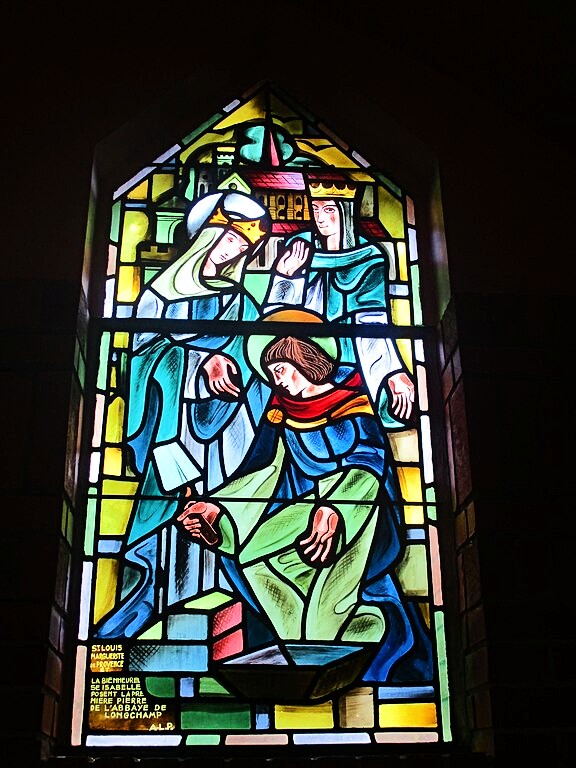
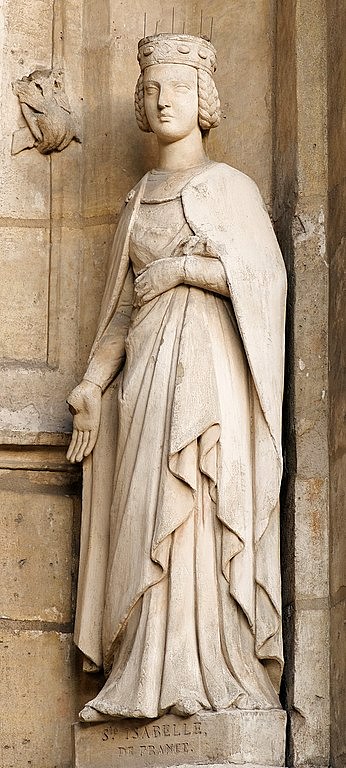
Saint of the Day – 22 February – Saint Isabella of France (1225-1270) Virgin, Apostle of the poor, the sick and needy, Founder Nun of a Convent based on the Poor Clares Order, known as the Sisters Minor and forming part of the Franciscan family. Sister of Saint Louis IX, Aunt of Saint Louis of Toulouse, Princess. Born in March 1225 in Paris and died on 23 February 1270 (aged 45) at the Convent in Longchamp, Pays de France. Patronages – of the ill and infirm, of the Royal Abbey of Longchamp. Also known as – Isabel, Isabelle. Additional Memorial 8 June (Franciscans), 8 November – as one of the Saints of the Diocese of Evry, 23, 24 and 26 February – on some calendars.
St Isabella with St Louis IX – laying the cornerstone ofthe Longchamps Convent
In Pays de France, just outside the City of Paris, along the Seine, lived King Louis VIII and Blanche of Castile, the Queen of France. The Royal couple were a holy example of Christian love and they had alreadybeen blessed with several children when their daughter, Isabella, came into the world in March 1225.
When Isabella was less than two years old, King Louis VIII died, leaving her older brother to reign as King. King St Louis IX was installed in 1226 and he reigned until 1270. His mother supervised the education of the young children, ensuring that Isabella not only learned the feminine arts butm also learned Latinm in order to study the Fathers of the Church.
Isabella demonstrated great piety from a very early age and, it must be noted, she received much support in practising her faith from her mother, her brother the King and other members of the Royal Court. Isabella dedicated her sewing skills to providing clothing for the poor and preparing Vestments for liturgical celebrations. On one occasion, as she was embroidering a new hat, King Louis IX asked her to give the hat to him. She refused, explaining, “No, this is the first of its kind and I must make it for my Saviour Jesus Christ.” When she finished it, she gave it to a poor and sick person. Then, she made another cap of similar design for her Royal brother.
Arranged marriages, common at the time, were a part of Isabella’s life from the age of two. The Treaty of Vendome, created in March 1227 and signed in June 1230, betrothed Isabella to Hugh, the eldest son and heir of Hugh X of Lusignan which was an area on the western coast of France. However, Isabella refused to celebrate this marriage. Some years later, she also refused to marry another Royal personage, Conrad, the son of the Holy Roman Emperor Frederick II. Her mother and brother both urged her to marry Conrad. Even Pope Innocent IV tried to persuade her to marry the son of the Emperor but, again she refused. When she learned of the Pope’s hope that she would marry Conrad, Isabella wrote to him explaining that she had consecrated her virginity to Christ and would never marry. The Pope, witnessing her steadfast faithfulness to Christ, admired her for her perseverance and agreed with her position. Her brother finally acquiesced and no longer tried to persuade her to marry Conrad or anyone else. Not long after this episode, their mother died.
In 1255, Isabella requested her brother’s permission to leave the Court and to establish a home for a group of devout women. . Thus, King St Louis IX undertook the purchase of some land in the Forest of Rouvray, just west of Paris, for this purpose. The cornerstone was placed on 10 June 1256 and four years later, the building was completed. On 2 February 1259, Pope Alexander IV gave his approval to the new Rule prepared by Princess Isabella. This Rule had been compiled by Fr Mansuetus, a Franciscan, who based it on the Rule of the Order of St Clare, also referred to as the Poor Clares. The Rule was approved by St Bonaventure, who was then the Minister General of the Franciscan Order. The new Monastery was called the Monastery of the Humility of the Blessed Virgin. The Nuns of this Monastery were called Sisters Minor.
The Rules were unique and specific to this group of women, being somewhat simpler than the Rules of the Poor Clares, in that the fasting was not as rigid and the community was allowed to hold property. But like the Poor Clares, these women also helped Tthe poor and needy of the neighbourhood. . The first Nuns to join this new Monastery were from the Convent of the Poor Clares at Rheims, nearly 100 miles east of Paris. Although Isabella never resided at the Monastery herself, she observed the Rules in the privacy of her home.
After a few years, Isabella adjusted the Rule and King St Louis submitted and obtained confirmation of the revised Rule. Pope Urban IV approved the new Rule on 27 July 1263, giving the Nuns of Longchamp, the official title of Sisters Minor. This title emphasised the close relationship with the Order of Friars Minor.
Isabella had refused to become the Abbess but continued to observe the Rule, as well as additional mortifications. She practiSed nearly total silence, fasted three days a week and lived a life of heroic virtue.
In 1270 Isabella died at the new house in Longchamp. The Nuns declared that when she died, the singing of Angels could be heard. She was buried in the Convent Church. After only nine days, her body was exhumed and it was still supple, suffering no decay. Not surprisingly, many miracles occurred at her gravesite. In 1521 Pope Leo X Beatified Isabella, permitting the Abbey of Longchamp to celebrate her Feast with a special office. On 4 June 1637 Isabella’s body was exhumed again and it was still incorrupt. 50 years later, on 25 January 1688, the Nuns received permission to celebrate Isabella’s Feast with an Octave observance. In 1696, on her Canonisation, Pope Innocent XII extended the permission to the entire Franciscan Order.
Quote/s of the Day – 20 February – Tuesday of the First Week in Lent – Ferial Day – Isaias 55:6-11, Matthew 21:10-17 – Scripture search here: https://www.drbo.org/
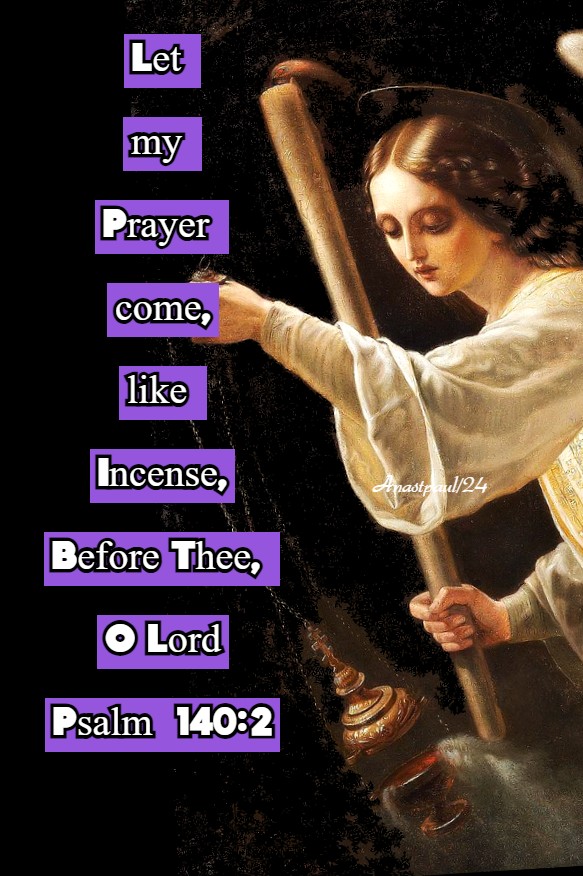
“Let my prayer come like incense before Thee, O Lord”
Psalm 140:2
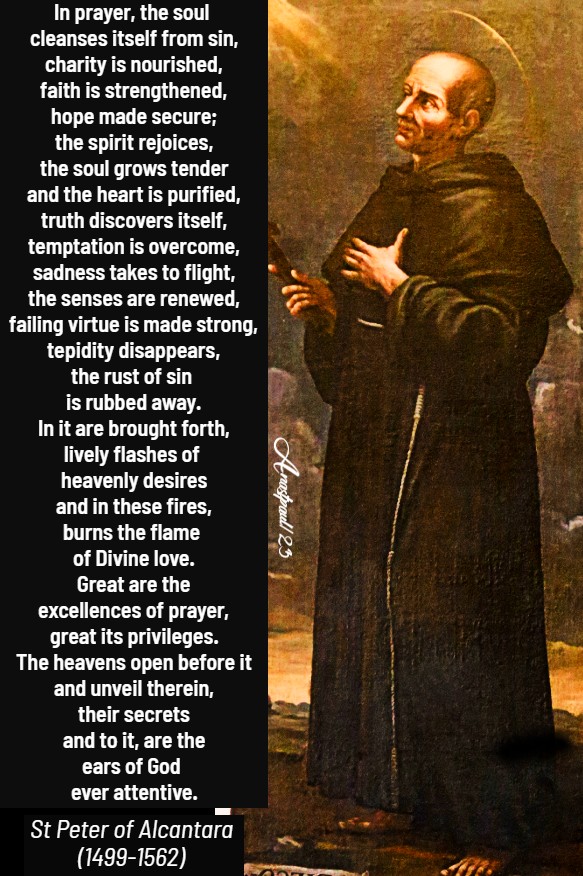
“In prayer, the soul cleanses itself from sin, charity is nourished, faith is strengthened, hope made secure; the spirit rejoices, the soul grows tender and the heart is purified, truth discovers itself, temptation is overcome, sadness takes to flight, the senses are renewed, failing virtue is made strong, tepidity disappears, the rust of sin is rubbed away. In it are brought forth, lively flashes of heavenly desires and in these fires, burns the flame of Divine love. Great are the excellences of prayer, great its privileges. The heavens open before it and unveil therein, their secrets and to it, are the ears of God ever attentive.”
One Minute Reflection – 16 February – Friday after Ash Wednesday – The Feast of the Sacred Crown of Thorns of Our Lord Jesus Christ – Isa 58:1-9; Matthew 5:43-48; 6:1-4 – Scripture search here: https://www.drbo.org/
“But I say to you, Love your enemies …” Matthew 5:44
REFLECTION – “Let us pay attention, all my brothers, to what the Lord says: “Love your enemies and do good to those who hate you,” for our Lord Jesus Christ, Whose footprints we must follow (cf 1 Pt 2:21), called His betrayer “friend” (Mt 26:50) and gave Himself willingly to those who crucified Him. Our friends, then, are all those who, unjustly afflict upon us, trials and ordeals, shame and injuries, sorrows and torments, martyrdom and death! We must love them greatly for we will possess eternal life because of what they bring upon us.” – St Francis of Assisi (c1181-1226) Founder of the Friars Minor (Earlier Rule, #22).
PRAYER – May Thy kindly favour, we beseech Thee, O Lord, accompany the fast we have begun that we, maybe able to practice, with a pure mind and heart, that which we perform bodily. Through Jesus Christ, Thy Son our Lord, Who lives and reigns with Thee, in the unity of the Holy Ghost, God, world without end. Amen (Collect).
Ash Thursday – 15 February – Our Lenten Journey With The Angels and the Saints – Isaias 38:1-6; Matthew 8:5-13 – Scripture search here: https://www.drbo.org/
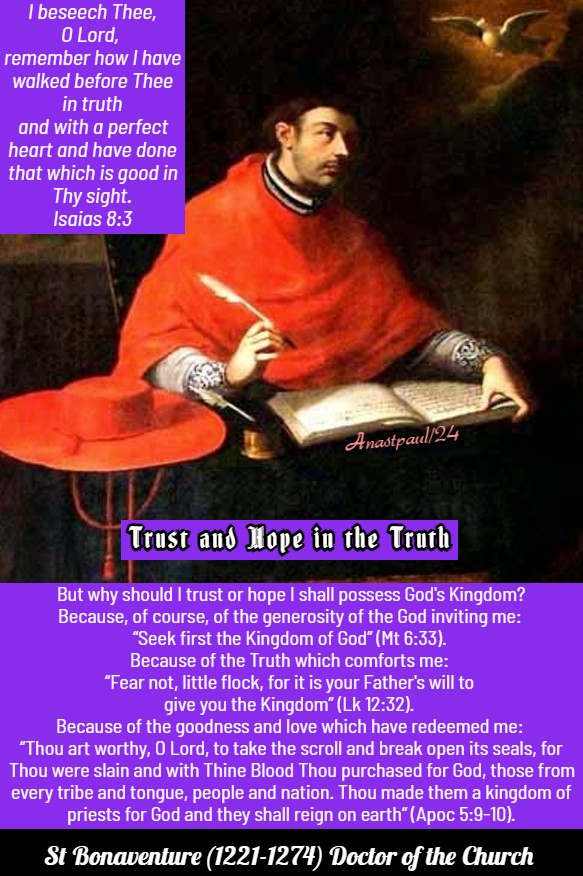
“I beseech Thee, O Lord, remember how I have walked before Thee in truth and with a perfect heart and have done that which is good in Thy sight.”
Isaias 8:3
“Many shall come from the east and the west and shall sit down with Abraham and Isaac and Jacob in the Kingdom of Heaven …”
Matthew 8:11
Trust and Hope in the Truth
St Bonaventure (1221-1274) Franciscan, Doctor of the Church
“The Kingdom of Heaven is as broad as the breadth of endless charity. Although, it is composed of individuals, “of every language and people, of every tribe and nation” (Apoc 5:9) yet, none is found wanting because, to the contrary, it expands and the glory of each is increased all the more. Which prompted Saint Augustine to say that: “When many people share the same joy, the joy of each is all the greater because each one inflames the other.”
This breadth of the Kingdom is expressed in these words of Scripture: “Ask and I shall give you the nations for your heritage” (Ps 2:8) and, “Many shall come from east and west and take their places with Abraham, Isaac and Jacob in the Kingdom of Heaven.” (Matthew 8:11). Neither the multitude of those who long for it, nor the multitude of those who now live, nor the multitude of those who possess it, nor the multitude of those arriving, can restrict the space in this Kingdom, nor compromise anyone.
But why should I trust or hope I shall possess God’s Kingdom? Because, of course, of the generosity of the God inviting me: “Seek first the Kingdom of God” (Mt 6:33). Because of the Truth which comforts me: “Fear not, little flock, for it is your Father’s will to give you the Kingdom” (Lk 12:32). Because of the goodness and love which have redeemed me: “Thou art worthy, O Lord, to take the scroll and break open its seals, for Thou were slain and with Thine Blood Thou purchased for God, those from every tribe and tongue, people and nation. Thou made them a kingdom of priests for God and they shall reign on earth“ (Apoc 5:9-10).” (On the Kingdom of the Gospel)
Quote/s of the Day – 12 February – The Seven Holy Founders of the Servite Order (1233) – Ecclus 44:1-15; Matthew 19:27-29 – Scripture search here: https://www.drbo.org/
“And everyone who has left house, or brethren, or sisters, or father, or mother, or wife, or children, or lands for My Name’s sake, shall receive a hundredfold and shall possess life everlasting.”
Matthew 19:29
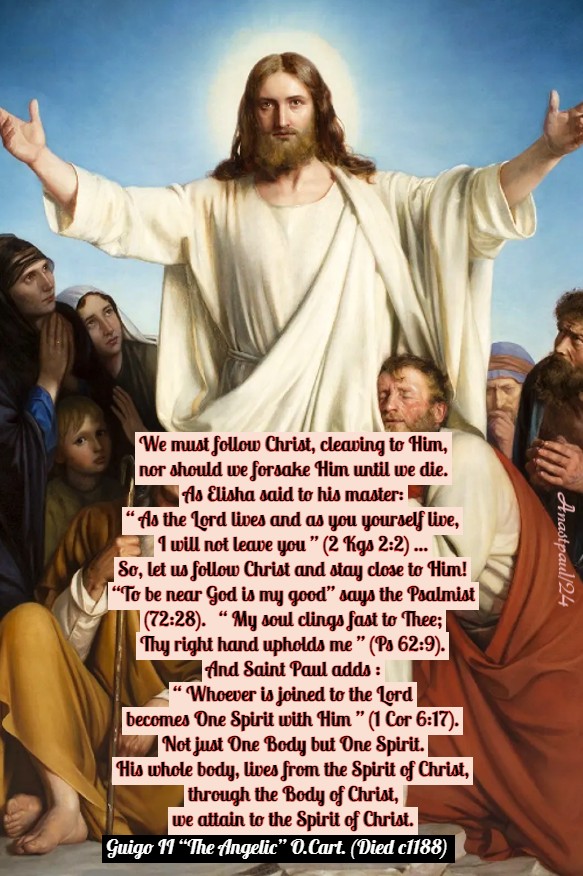
“We must follow Christ, cleaving to Him, nor should we forsake Him until we die. As Elisha said to his master: “ As the Lord lives and as you yourself live, I will not leave you ” (2 Kgs 2:2) … So, let us follow Christ and stay close to Him! “To be near God is my good” says the Psalmist (72:28). “ My soul clings fast to Thee; Thy right hand upholds me ” (Ps 62:9). And Saint Paul adds : “ Whoever is joined to the Lord becomes One Spirit with Him ” (1 Cor 6:17). Not just One Body but One Spirit. His whole body, lives from the Spirit of Christ, through the Body of Christ, we attain to the Spirit of Christ.”
Guigo II “The Angelic” O.Cart. (Died c1188)
The 9th Prior of Grande Chartreuse, from 1174 to 1180 (Meditation 10).
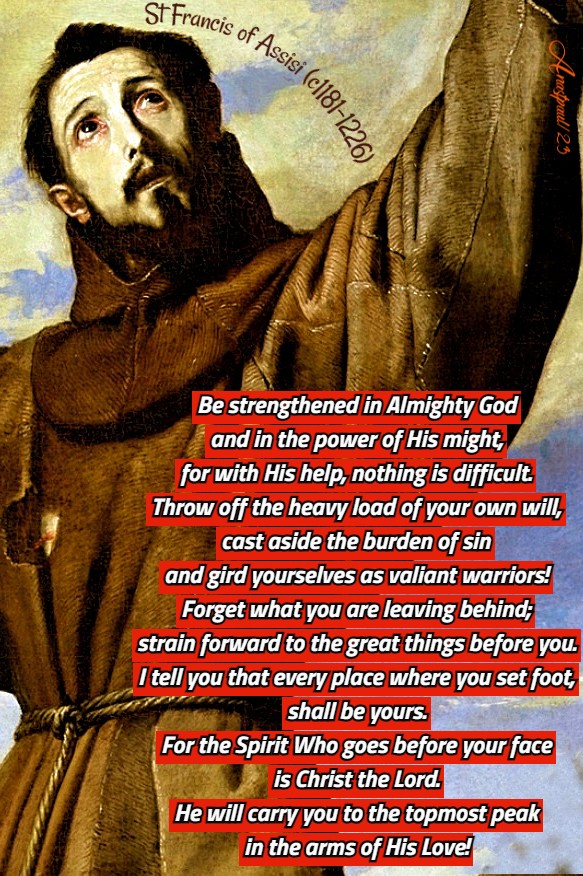
“Be strengthened in Almighty God and in the power of His might, for with His help, nothing is difficult. Throw off the heavy load of your own will, cast aside the burden of sin and gird yourselves as valiant warriors! Forget what you are leaving behind; strain forward to the great things before you. I tell you that every place where you set foot, shall be yours. For the Spirit, Who goes before your face is Christ the Lord. He will carry you to the topmost peak in the arms of His Love.”
St Francis of Assisi (c1181-1226)
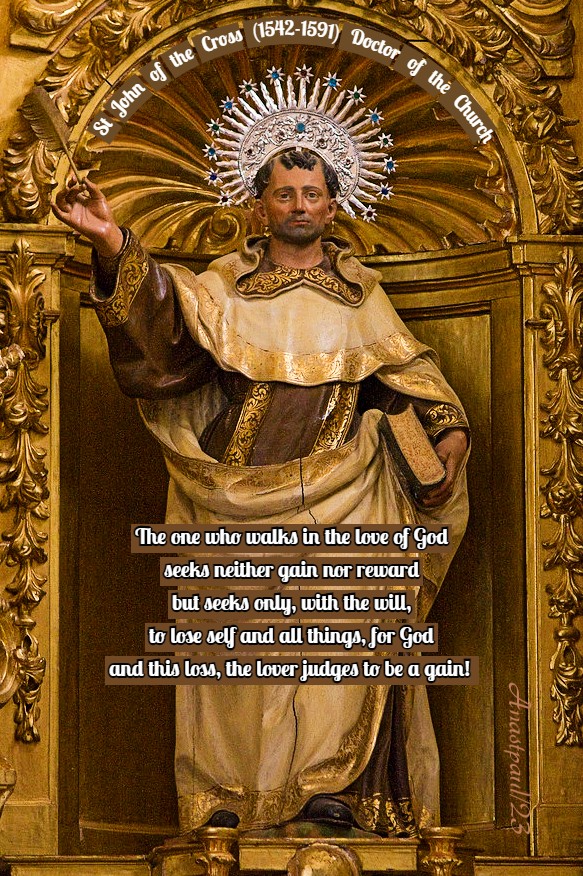
“The one who walks in the love of God seeks neither gain nor reward but seeks only, with the will, to lose self and all things, for God and this loss, the lover judges to be a gain! ”
“Happiness is not a destination, it is a method of travel.”
St John of the Cross (1542-1591) Doctor of the Church
Quote/s of the Day – 6 February – “The Month of the Most Holy and Blessed Trinity” – – St Titus (Died c96) Bishop, Confessor – Ecclesiasticus 44:16-27; 45:3-20, Luke 10:1-9 – Scripture search here: https://www.drbo.org/
“The harvest indeed is great but the labourers are few. Pray ye, therefore, the Lord of the harvest that He send labourers into His harvest.”
Luke 10:2
“Jesus gives His disciples the power to heal bodies, while waiting before confiding to them, the equally important power to heal souls. Note how He demonstrates both the ease and the necessity of this work, at the same time. What does He say, in fact? “The harvest is plentiful but the labourers are few.” I am not sending you out to sow but to harvest… In speaking like this, our Lord gave them confidence and showed them that the most important work had already been achieved!”
St John Chrysostom (347-407) Father and Doctor of the Church
“At that time, the Lord appointed seventy-two others and sent them forth …” Luke 10:1
“By saying that He is sending them as the Father has sent Him, therefore, He summarised, in a few words, the character of the Apostles’ mission. In this way, they would know that they were bound to call sinners to repentance, to heal the sick, whether of body or soul and in all their dealings as stewards, not by any means to follow their own will but the will of Him Who sent them and, finally, to save the world, insofar as it received the teachings of the Lord.”
St Cyril of Alexandria (380-444) Father and Doctor of the Church ”
“Carry neither purse, nor wallet …” Luke 10:4
“All the brothers should strive to follow the humility and the poverty of our Lord Jesus Christ … And they must rejoice when they live among people who are considered to be of little worth and who are looked down upon, among the poor and the powerless, the sick and the lepers and the beggars by the wayside. And when it may be necessary, let them go to seek alms. And they should not be ashamed but rather recall that our Lord Jesus Christ, the Son of the living and all-powerful God … was a poor man and a transient and lived on alms, He and the Blessed Virgin and His disciples.”
Quote/s of the Day – 4 February – Sexagesima Sunday – 2 Corinthians 11:19-33; 12:1-9, Luke 8:4-15 – Scripture search here: https://www.drbo.org/
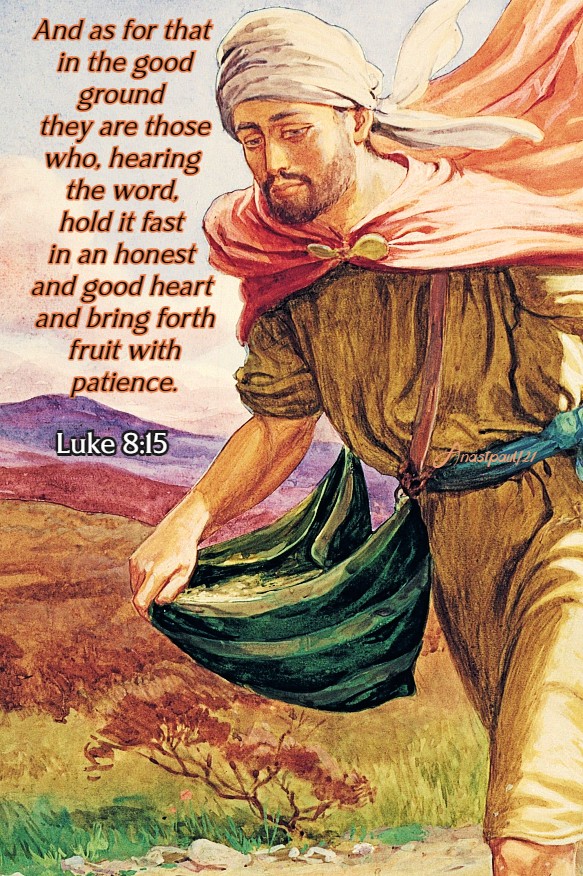
“And as for that in the good ground they are those who, hearing the word, hold it fast in an honest and good heart and bring forth fruit with patience.”
Luke 8:15
“Those who are My sheep hear My Voice and follow Me”
John 10:27
“What a happy day they spent! What a blessed night! Who can say what it was they heard from the Lord’s mouth? Let us, too, build a dwelling in our hearts, construct a house where Christ can come to teach and converse with us.”
St Augustine (354-430) Father & Doctor of the Church
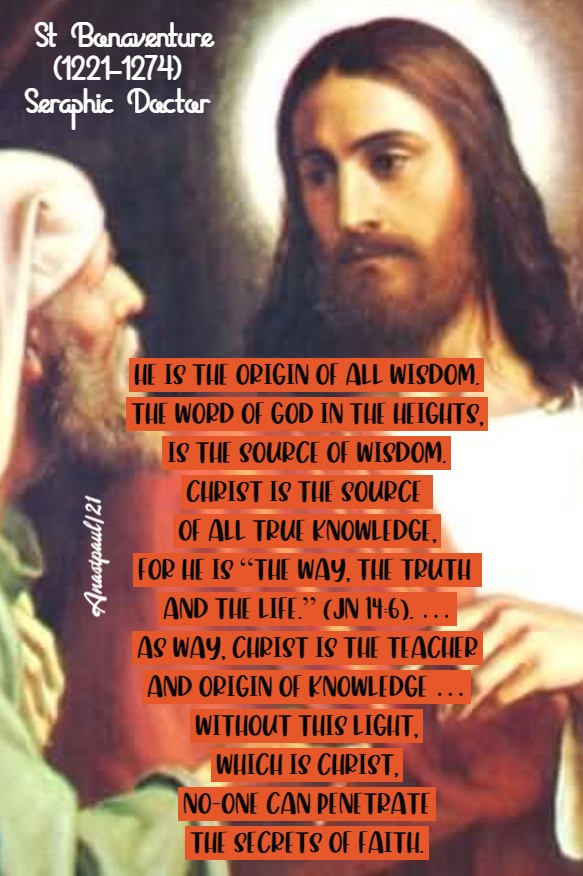
“He is the origin of all wisdom. The Word of God in the heights, is the source of wisdom. Christ is the source of all true knowledge, for He is “the way, the truth and the life.” (Jn 14:6). … As way, Christ is the teacher and origin of knowledge … Without this Light, which is Christ, no-one can penetrate the secrets of faith.”
St Bonaventure (1221-1274) Seraphic Doctor
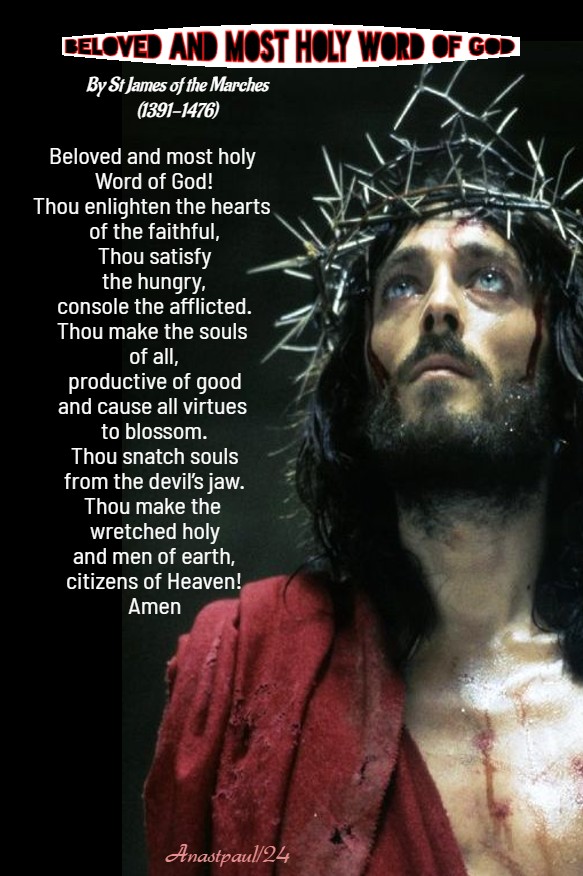
Beloved and Most Holy Word of God By St James of the Marches (1391-1476)
Beloved and most holy Word of God! Thou enlighten the hearts of the faithful, Thou satisfy the hungry, console the afflicted. Thou make the souls of all, productive of good and cause all virtues to blossom. Thou snatch souls from the devil’s jaw. Thou make the wretched holy and men of earth, citizens of Heaven! Amen
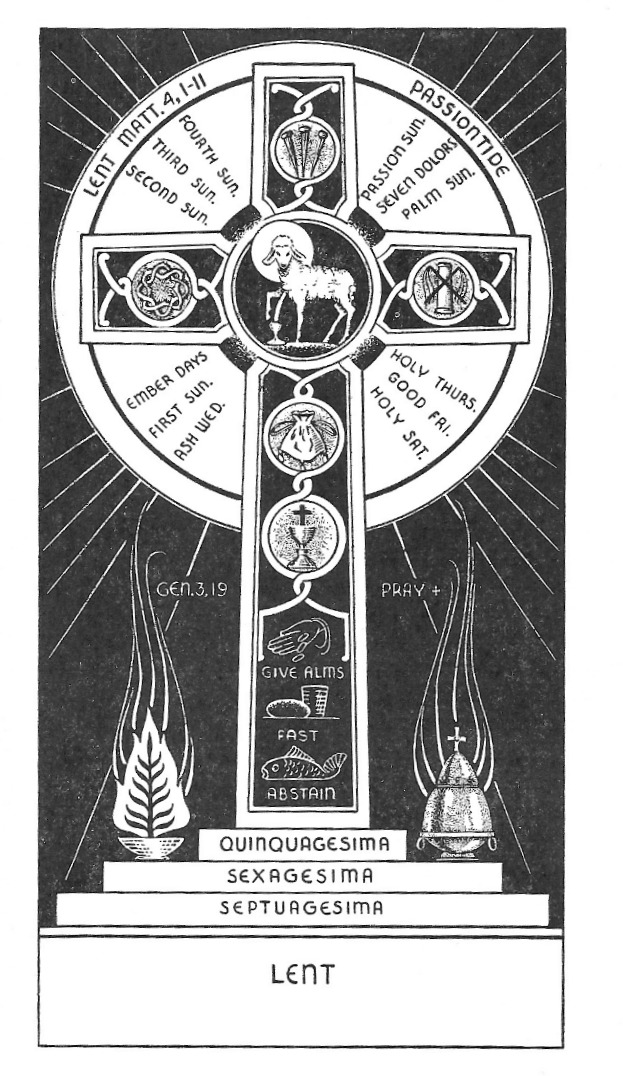
SEXAGESIMASUNDAY: (Latin – Sexagesima, sixtieth) is the eighth Sunday before Easter and the second before Lent. The Ordo Romanus, St Alcuin and others, count the Sexagesima from this day to Wednesday after Easter. The name was already known to the Fourth Council of Orléans in 541. To the Latins it is also known as “Exsurge” from the beginning of the Introit. The station was at Saint Paul’s Outside the Walls of Rome and hence, the oratio calls upon the Doctor of the Gentiles. The Epistle is from Paul, 2 Corinthians 11 and 12, describing his suffering and labours for the Church. The Gospel (Luke 8) relates the falling of the seed on good and on bad ground, while the Lessons of the first Nocturn continue the history of man’s iniquity and speak of Noah and of the Deluge.
Bl Dionisio de Vilaregut St Donatus of Fossombrone St Eutychius of Rome St Filoromus of Alexandria St Firmus of Genoa Bl Frederick of Hallum St Gelasius of Fossombrone St Geminus of Fossombrone St Gilbert of Limerick (c1070–1145) Bishop
St Jane de Valois O.Ann.M and TOSF (1464-1505) Princess, Queen, Founder, Religious Sister, Mystic, Teacher. Founded the monastic Order of the Sisters of the Annunciation of Mary. From this Order later sprang the religious congregation of the Apostolic Sisters of the Annunciation, founded in 1787 to teach the children of the poor. She was Canonised on 28 May 1950 by Pope Pius XII. Biography: https://anastpaul.wordpress.com/2018/02/04/saint-of-the-day-4-february-saint-jane-of-valois-o-ann-m-1464-1505/
St Themoius St Theophilus the Penitent St Vincent of Troyes St Vulgis of Lobbes
Jesuit Martyrs of Japan: A collective memorial of all members of the Jesuits who have died as Martyrs for the faith in Japan.
Martyrs of Perga – 4 Saints: A group of shepherds Martyred in the persecutions of Decius. The only details we have about them are the names – Claudian, Conon, Diodorus and Papias. They were Martyred in c 250 in Perga, Asia Minor (in modern Turkey).
Quote/s of the Day – 25 January – Feast of the Conversion of St Paul, Apostle
“O my brethren, if only we wanted to, if only we all wanted to perceive our soul’s paralysis in all its depth! Then we would see that it is lying on a stretcher of sins, deprived of strength. Christ’s action within us, would be a source of light and we would understand that each day He sees our lack of faith, harmful as it is, that He draws us towards healing remedies and sharply presses our rebellious wills. “My son” He says, “your sins are forgiven you.”
St Peter Chrysologus (c 400-450) “Golden Words” Father & Doctor of the Church
“What are you afraid of, you men of little faith? That He will not pardon your sins? But with His own hands He has nailed them to the Cross. That you are used to soft living and your tastes are fastidious? But He knows the clay of which we are made (Gn 2:7). That a prolonged habit of sinning binds you like a chain? But the Lord loosens the shackles of prisoners. Or perhaps that angered by the enormity and frequency of your sins, He is slow to extend a helping hand? But where sin abounded, grace became superabundant (Rom 5,20). Are you worried about clothing and food and other bodily necessities so that you hesitate to give up your possessions? But He knows that you need all these things (Mt 6,32). What more can you wish? What else is there to hold you back from the way of salvation? ”
St Bernard (1091-1153) Mellifluous Doctor of the Church
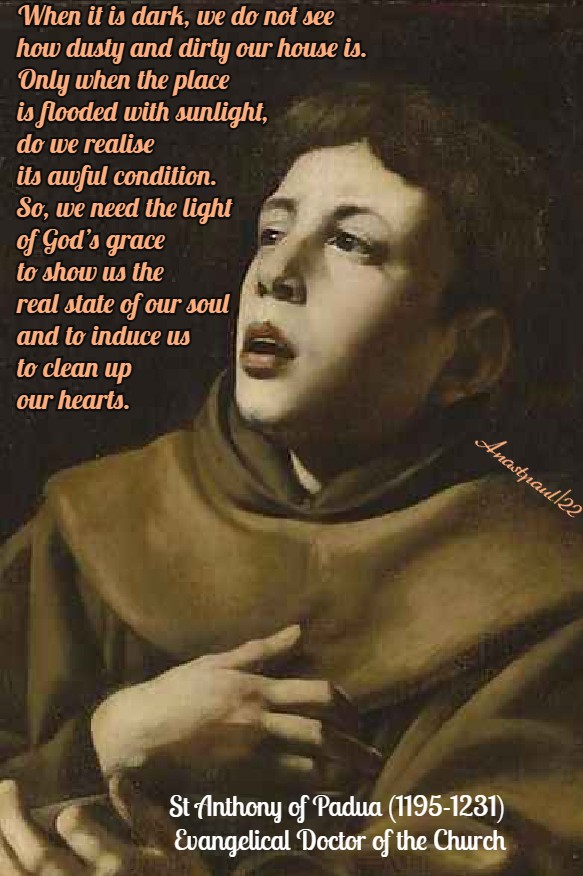
“When it is dark, we do not see how dusty and dirty our house is. Only when the place is flooded with sunlight, do we realise its awful condition. So, we need the light of God’s grace to show us the real state of our soul and to induce us to clean up our hearts!”
St Anthony of Padua (1195-1231) Evangelical Doctor of the Church
“I see clearly with the interior eye, that the sweet God loves, with a pure love, the creature that He has created and has a HATRED for nothing but SIN, which is more opposed to Him, than can be thought or imagined.”
St Catherine of Genoa (1447-1510)
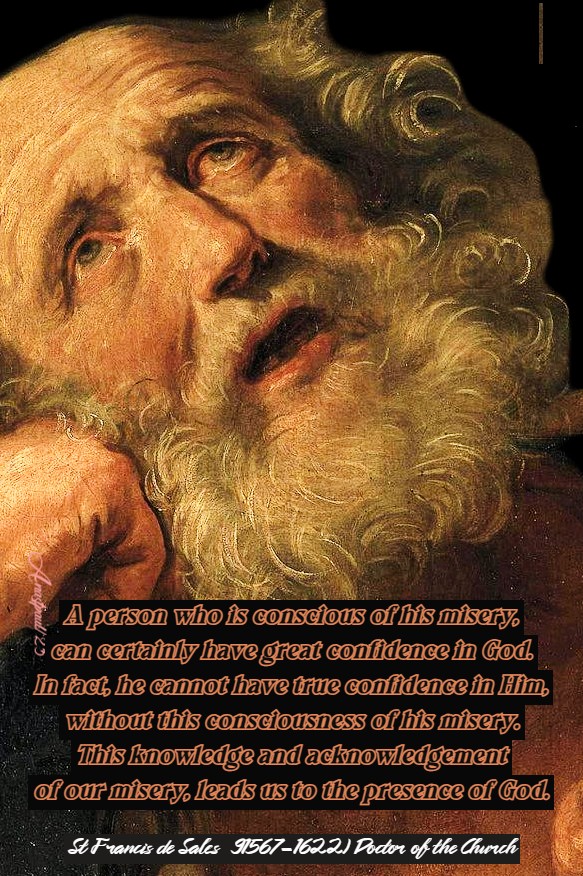
“A person who is conscious of his misery, can certainly have great confidence in God. In fact, he cannot have true confidence in Him, without this consciousness of his misery. This knowledge and acknowledgement of our misery, leads us to the presence of God.”
“Let us then depart, let us depart from Egypt, let us approach Our Lord, let us make provision of good works; let the feet of our affections be bare, let us clothe ourselves with innocence, let us not be satisfied with crying for mercy, let us go forth from Egypt, let us delay no longer. The hour is come to arise from sleep, since we know that He receives sinners; the Angels await our repentance, the Saints pray for it!”
St Francis de Sales 91567-1622) Doctor of the Church
Quote/s of the Day – 22 January – “The Month of the Most Holy Name of Jesus and of the Holy Family” – St Vincent of Saragossa (Died 304) Protomartyr of Spain and St Anastasius the Persian (Died 628) Martyr – Wisdom 3:1-8; Luke 21:9-19 – Scripture search here: https://www.drbo.org/
“And you shall be hated by all men, for My Name’s sake.”
Luke 21:17
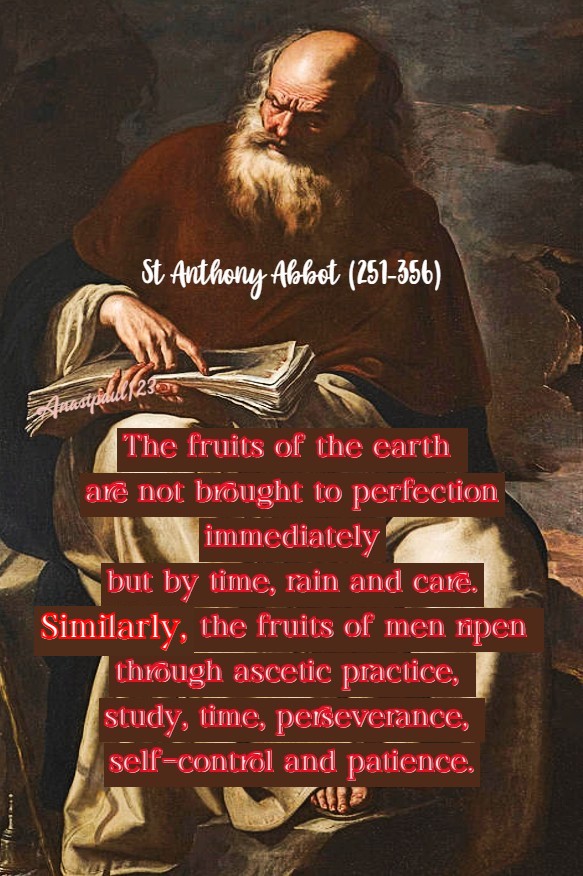
“The fruits of the earth are not brought to perfection immediately but by time, rain and care. Similarly, the fruits of men ripen through ascetic practice, study, time, perseverance, self-control and patience.”
St Anthony Abbot (251-356)
“Rejoice and be happy! Persevere to the end and prefer to die rather than abandon the post, to which God has called you!”
St Catherine of Siena (1347-1380) Doctor of the Church
“Love consists, not in feeling great things but, in having great detachment and in suffering for the Beloved.”
St John of the Cross (1542-1591) Doctor Mysticus
“Now, you must always persevere in firmly placing all your trust in our Lord, in the troublesome business you have in hand. It will give you a fine opportunity of laying a good foundation of submission to God’s will and peace of soul.”
St Francis de Sales (1567-1622) Doctor Caritatis
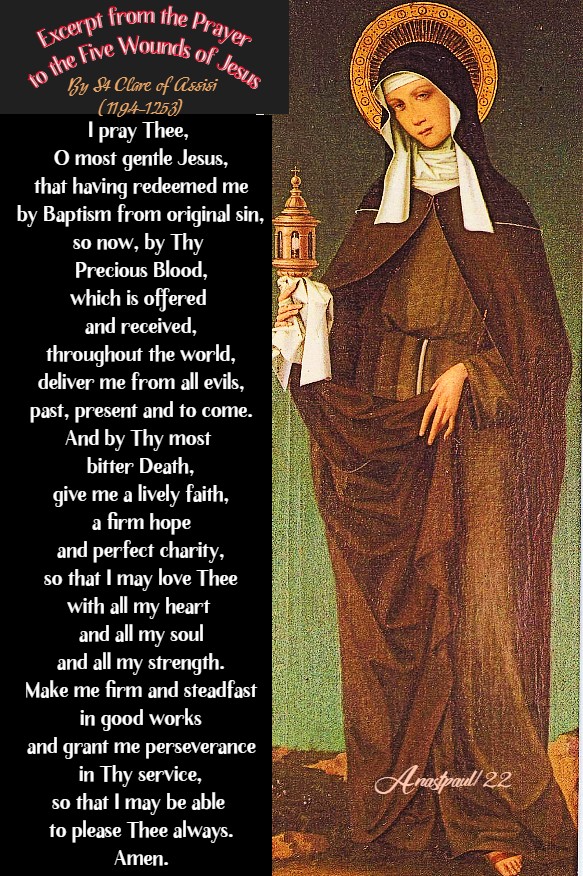
Excerpt from the Prayer to the Five Wounds of Jesus By St Clare of Assisi (1194-1253)
I pray Thee, O most gentle Jesus, that having redeemed me by Baptism from original sin, so now, by Thy Precious Blood, which is offered and received, throughout the world, deliver me from all evils, past, present and to come. And by Thy most bitter Death, give me a lively faith, a firm hope and perfect charity, so that I may love Thee with all my heart and all my soul and all my strength. Make me firm and steadfast in good works and grant me perseverance in Thy service, so that I may be able to please Thee always. Amen.
St Henry of Coquet St Honoratus of Arles (c350-c429) Bishop and Confessor St Honoratus of Fondi Abbot Bl James of Luino St James of Tarentaise Bl Joan of Bagno di Romagna Bl Konrad II of Mondsee St Leobazio St Liberata of Pavia St Melas of Rhinocolura St Otto of Morocco St Peter of Morocco St Priscilla of Rome St Sigeberht of East Anglia
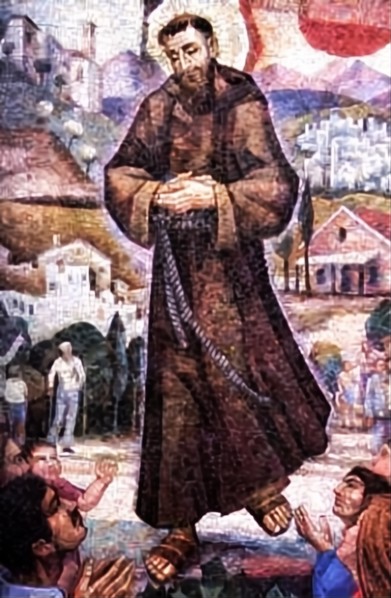
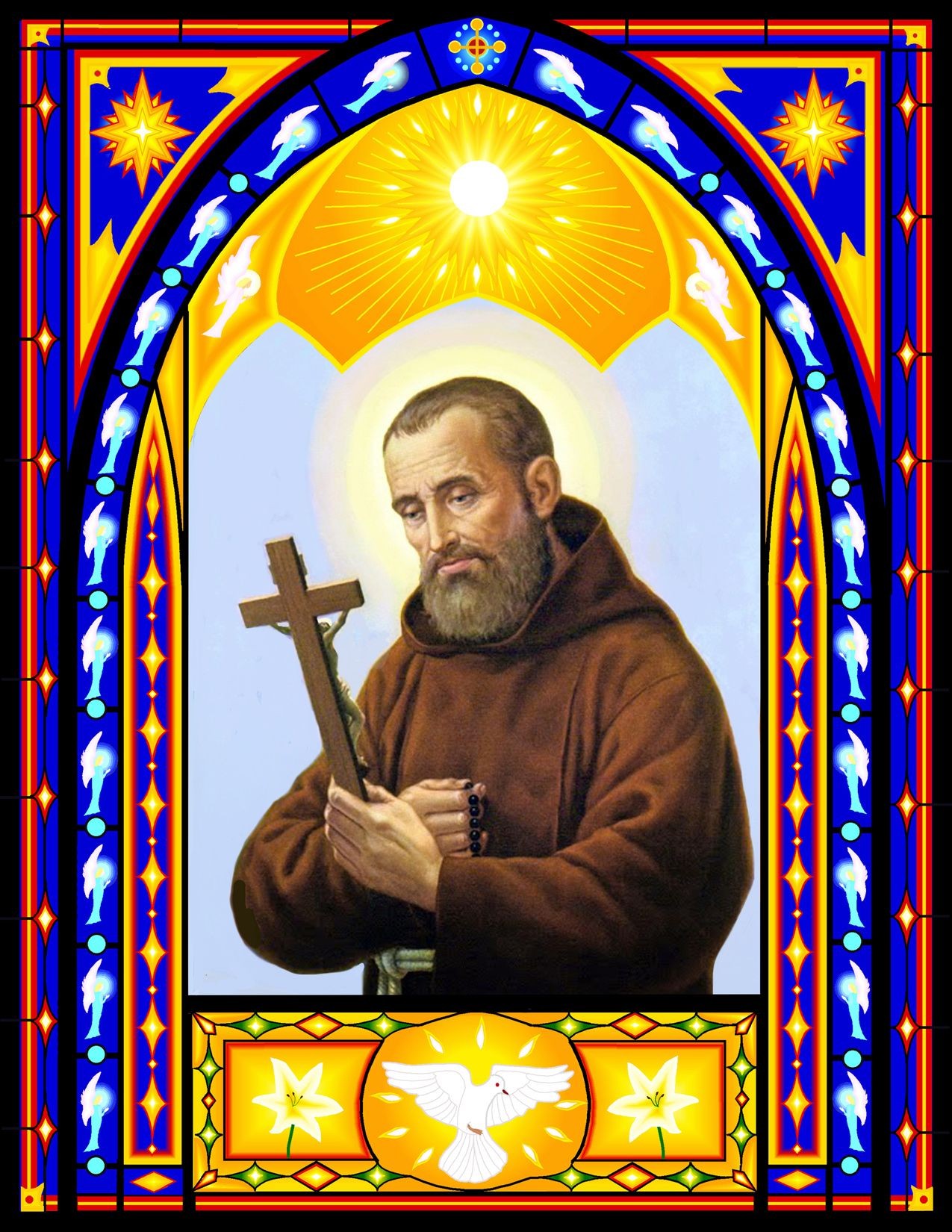
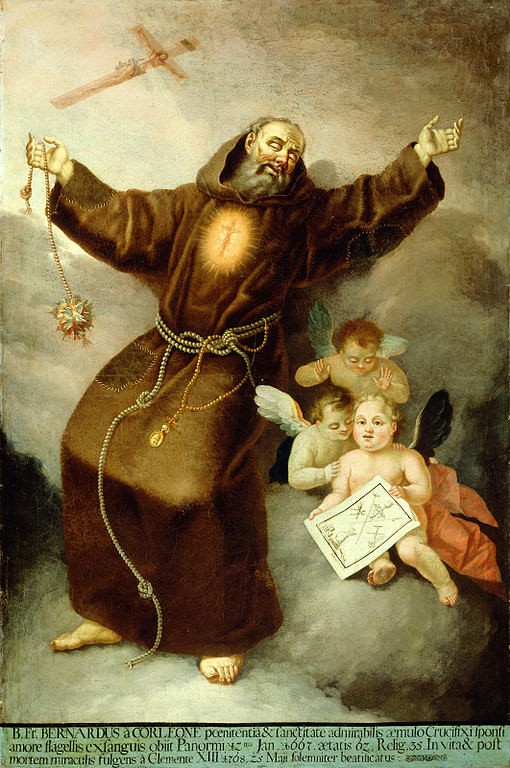
Saint of the Day – 12 January – Blessed Bernard of Corleone OFM Cap (1605-1667) Lay Brother of the Order of Friars Minor Capuchin, previously a Cobbler. Born on 6 February 1605 at Corleone, Palermo, Sicily as Filippo Latino and died on 12 January 1667 at Palermo, Sicily. Patronages – Mafia victims, expectant mothers. Also known as – Bernardo de Corleone, Brother Bernardo, Filippo Latino, Philipi Latini. He was Beatified on 15 May 1768 by Pope Clement XIII.
Bernard was born in Corleone in the Province of Palermo, in Sicily, Italy. He was the third of six children of Leonardo and Francesca Latini. The family lived in modest circumstances but they never lacked the essentials. The Town of Corleone received its name, “Lionheart” for its heroism during the uprising against the French occupation in 1282 which is known in history. as “The Sicilian Vesper.”
The family house was commonly known as Casa di Santi (House of the Saints) because of the charity of the father and the kindness of all the children. Filippo’s father was a Tanner and he himself, became a Cobbler by profession. But he had another passion, namely the sword and he was considered the best duelist in all of Sicily.
After competing in a duel, he had wounded a man named Vito Canino, so severely that he would be permanently disabled, forcing him to flee from the authorities and seeking Ecclesiastical asylum in the Church of the Capuchins in Palermo. He was safe there, because in the 17th Century, the Church’s right of asylum still applied – no-one could be arrested in a holy place, being a “City of Refuge” (Numbers 35:11-28).
In the silence of the Church, Bernard began to meditate on his life and his past sins and he was graced and penetrated with a deepe sense of self-knowledge and self-dislike, realising that he had not obeyed or loved God. With remorseful tears, he asked God for forgiveness and decided to live the rest of his life in repentance and penance. He left Corleone and went to Caltanisetta, where in 1632, he joined the Capuchins as a Lay Brother with the Religious name “Bernard.”
The only thing he longed for was to grow in spiritual perfection and the way there was humility and penance. The strict rule of lathe Order was not enough for him, so he imposed extreme penance on himself to atone for his past sins. He slepton the floor and never for more than three hours at a time. Even the poor Monastery meals he considered as gluttony.
But his graces were as great as his penances. He never learned to read and write, yet he reached the highest spiritual heights. In time, he could read people’s hearts and became renowned for his many miracles. His intercession was also instrumental in miraculous cures of animals.
Bernard lived a simple life, working as a cook, bering transferred from one Monastery to another, in the Province. We know that he spent his last fifteen years in Palermo itself. Exhausted by pmortifications, he sought refuge at the Tabernacle, where he prayed continually. There, he became ill on the Feast of The Epiphany on 6 January 1667 and he died on 12 January 1667, barely 62 years old. Before the funeral, his tunic had to be changed a total of nine times because all had been torn to pieces by the faithful who wanted to secure a Relic.
Our Morning Offering – 11 January – “The Month of the Most Holy Name of Jesus and of the Holy Family” – Sixth Day within the Octave of Epiphany
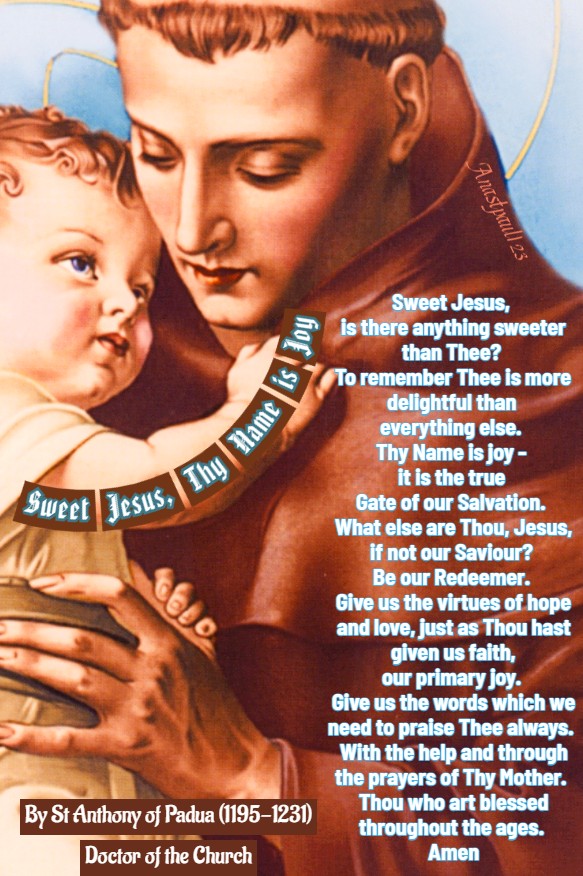
Sweet Jesus, Thy Name is Joy By St Anthony of Padua OFM (1195-1231) Doctor of the Church
Sweet Jesus, is there anything sweeter than Thee? To remember Thee is more delightful than everything else. Thy Name is joy – it is the true Gate of our Salvation. What else are Thou, Jesus, if not our Saviour? Be our Redeemer. Give us the virtues of hope and love, just as Thou hast given us faith, our primary joy. Give us the words which we need to praise Thee always. With the help and through the prayers of Thy Mother. Thou who art blessed throughout the ages. Amen
The Epiphany of the Lord Epiphany celebrates the visit of the three Kings or iMagi (Wise Men) to the Christ Child, signifying the extension of salvation to the Gentiles. The date of Epiphany, one of the oldest Christian Feasts, is 6 January, the 12th day after Christmas. However, in some countries, the celebration of Epiphany is transferred to the Sunday which falls between 2 January and 8 January (inclusive). Greece, Ireland, Italy and Poland continue to observe Epiphany on 6 January as do some Dioceses throughout the world. Because Epiphany is one of the most important Feasts, it is a Holy Day of Obligation.
St Charles of Sezze OFM (1613-1670) Stigmatist, Friar, of the Friars Minor, Mystic, Writer, Advisor. His Beatification was celebrated in 1882 while Pope Pius XII approved his Canonisation in 1958 but the Pope died before he could Canonise the Friar so his successor, Pope John XXIII did so on 12 April 1959. His body is incorrupt. About St Charles: https://anastpaul.wordpress.com/2018/01/06/saint-of-the-day-6-january-st-charles-of-sezze-o-f-m-1613-1670/
St Demetrius of Philadelphia St Diman Dubh of Connor St Edeyrn St Eigrad St Erminold of Prüfening
St Julian of Antinoë St Julius Bl Luc of Roucy Bl Macarius the Scot St Macra of Rheims St Merinus St Nilammon of Geris (Died c404) Hermit St Petran of Landévennec
St Pia of Quedlinburg St Pompejanus Bl Raymond de Blanes St Schotin St Wiltrudis of Bergen
Martyrs in Africa: Unknown number of Christian men and women who were Martyred in the persecutions of Septimus Severus. They were burned to death c 210.
Martyrs of Sirmium – 8 Saints: A group of Christians Martyred together for their faith. The only surviving details are the names of eight of them – Anastasius VIII, Florianus, Florus, Jucundus, Peter, Ratites, Tatia and Tilis. They were martyred in the 4th century at Syrmium, Pannonia (modern Sremska Mitrovica, Vojvodina, Serbia).
Twelve Apostles – Saints of Ireland: Twelve 6th Century Irish Monks who studied under Saint Finian at Clonard Abbey and then spread the Faith throughout Ireland. Each has his own commemoration but on this day, they and their good works are considered and celebrated together. Although Saint Finian is sometimes included, most ancient writers list them as –
Quote/s of the Day – 3 January – Help for those New Year Resolutions
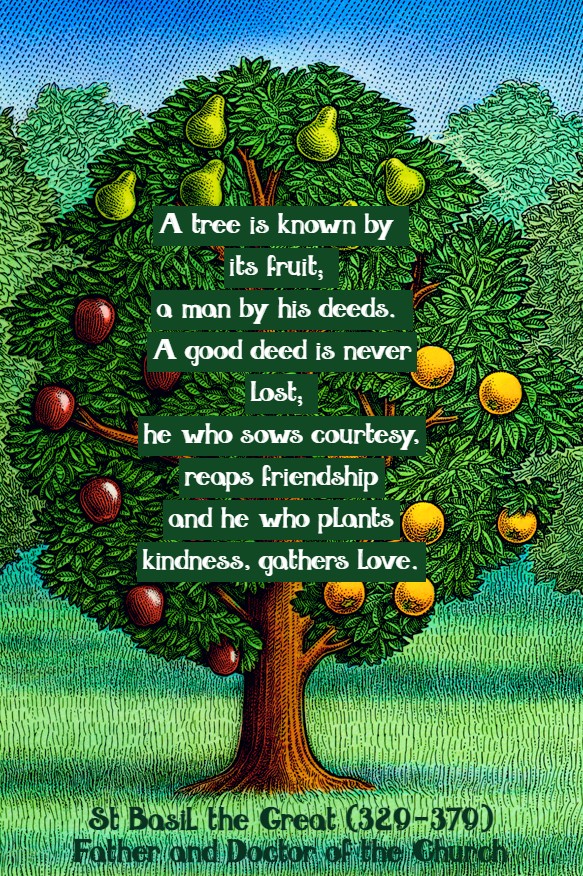
“A tree is known by its fruit, a man by his deeds. A good deed is never lost, he who sows courtesy, reaps friendship and he who plants kindness, gathers love.”
St Basil the Great (329-379) Father and Doctor of the Church
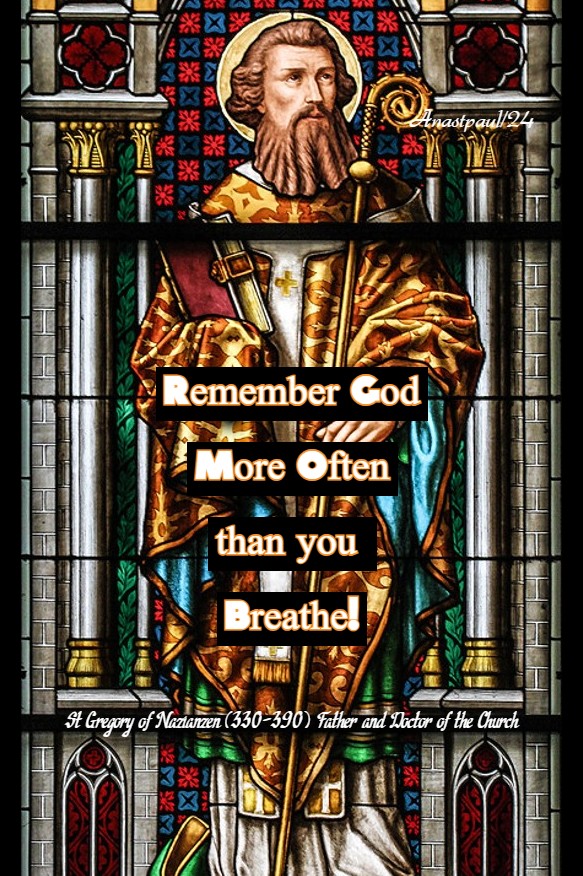
“Remember God more often than you breathe!”
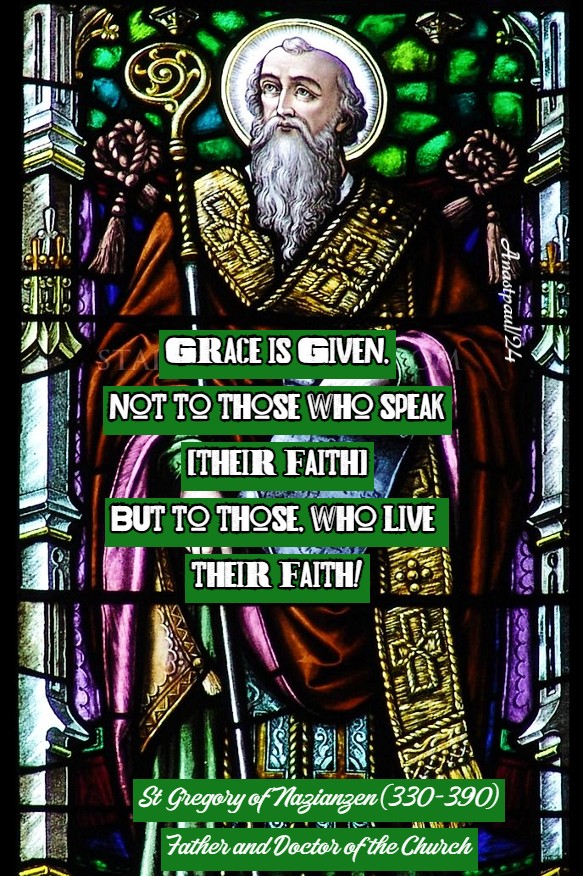
“Grace is given, not to those who speak [their faith] but to those, who live their faith!”
St Gregory of Nazianzen (330-390) Father and Doctor of the Church
“Be strengthened in Almighty God and in the power of His might, for with His help, nothing is difficult. Throw off the heavy load of your own will, cast aside the burden of sin and gird yourselves as valiant warriors! Forget what you are leaving behind; strain forward to the great things before you. I tell you that every place where you set foot, shall be yours. For the Spirit, Who goes before your face is Christ the Lord. He will carry you to the topmost peak in the arms of His Love.”
Quote/s of the Day – 2 January – “The Month of the Most Holy Name of Jesus and of the Holy Family” and the Feast of the Most Holy Name of Jesus AND of the INFANT of PRAGUE – Acts 4:8-12; Luke 2:21 – Scripture search here: https://www.drbo.org/
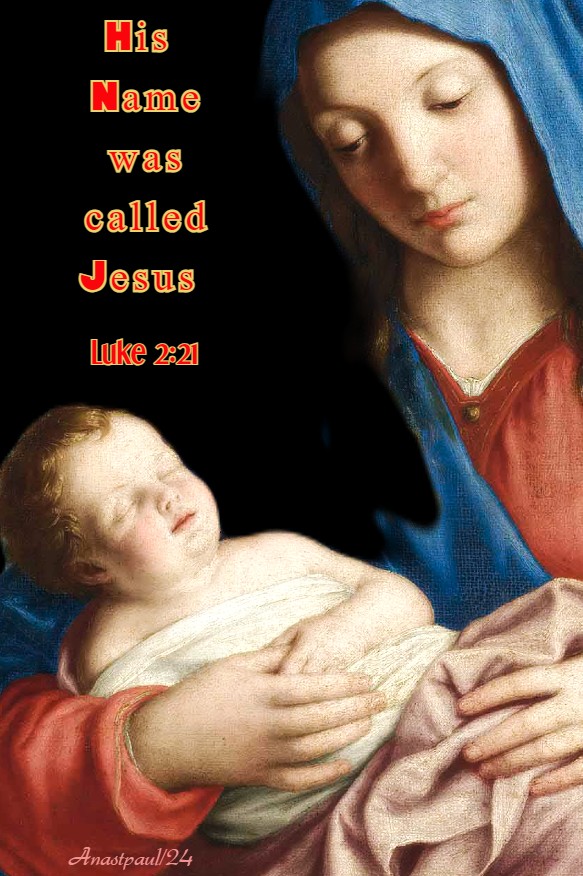
“His Name was called Jesus …”
Luke 2:21
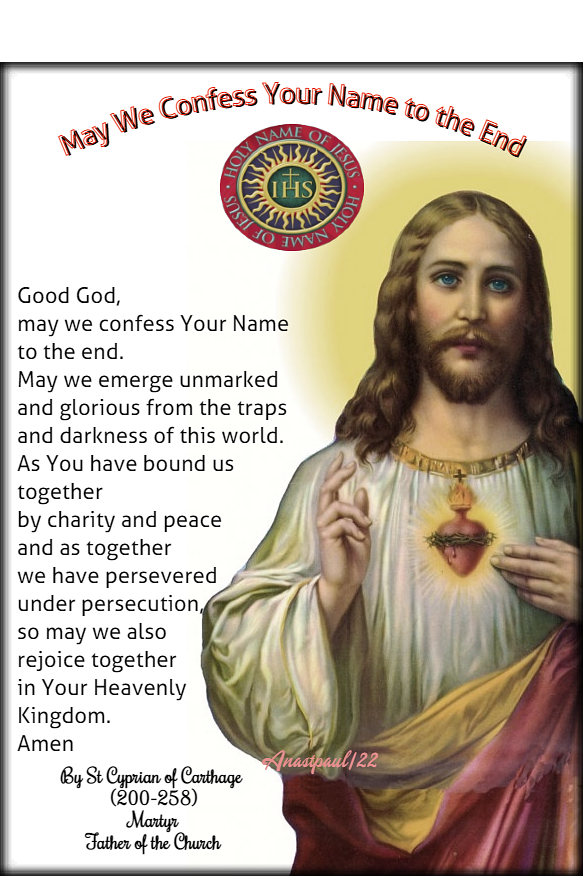
May We Confess Your Name to the End By St Cyprian of Carthage (200-258)
Good God, may we confess Your Name to the end. May we emerge unmarked and glorious from the traps and darkness of this world. As You have bound us together by charity and peace and as together we have persevered under persecution, so may we also rejoice together in Your heavenly Kingdom. Amen
St Cyprian of Carthage (c 200-258) Martyr, Bishop of Carthage, Father of the Church
“Wake up then, believer and note what is stated here: “In My Name.” That [Name] is Christ Jesus. Christ signifies King, Jesus signifies Saviour. Therefore, whatever we ask for that would hinder our salvation, we do not ask in our Saviour’s Name and yet, He is our Saviour, not only when He does what we ask but also, when He does not. When He sees us ask anything to the disadvantage of our salvation, He shows Himself our Saviour by not doing it. The physician knows whether what the sick person asks for, is to the advantage or disadvantage of his health. And [the physician] does not allow what would be harmful to him, although the sick person himself, desires it. But the physician looks to his final cure.”
St Augustine (354-430) Father and Doctor of Grace of the Church
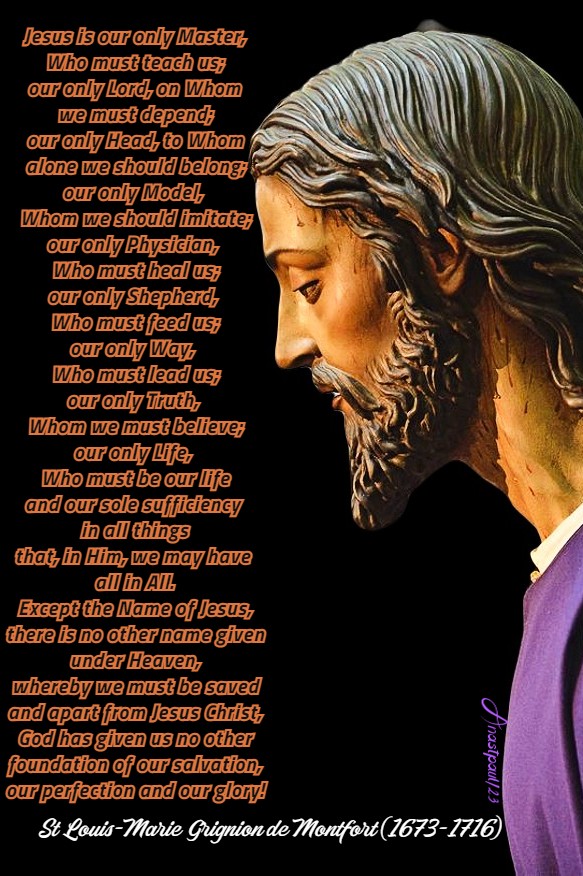
“[Jesus] is our only Master, Who must teach us; our only Lord, on Whom we must depend; our only Head, to Whom alone we should belong; our only Model, Whom we should imitate; our only Physician, Who must heal us; our only Shepherd, Who must feed us; our only Way, Who must lead us; our only Truth, Whom we must believe; our only Life, Who must be our life and our sole sufficiency in all things that, in Him, we may have all in All. Except the Name of Jesus, there is no other name given under Heaven, whereby we must be saved and apart from Jesus Christ, God has given us no other foundation of our salvation, our perfection and our glory! ”
St Louis-Marie Grignion de Montfort (1673-1716)
“Oh Most Sacred Name, Name of peace, Balsam of life, which is the centre of all the sighs, of the most fervent lovers of Jesus. The Sign of those, who truly love Jesus, is to bear Jesus imprinted in the heart and to name often and with devotion, the Most Holy Name of Jesus.”
St Leonard of Port Maurice (1676-1751)
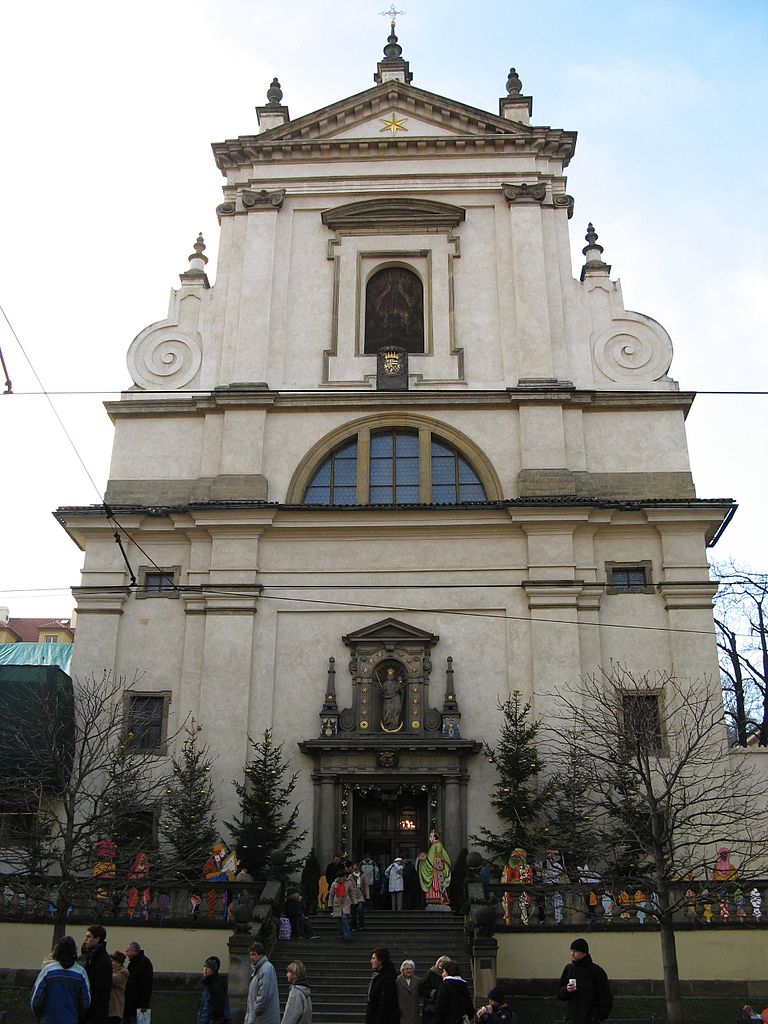
Transport yourself “in spirit” to the Church in Prague where the original Statue of the Infant still stands and let Jesus help you with your intentions!
This wonderful prayer to the Infant Jesus of Prague is known as the Prayer of Father Cyrillus, (c 1637) truly one of the first champions of the loving little Infant!
Prayer of Fr Cyrillus, to the Beloved and Miraculous Infant Jesus of Prague
Jesus, unto Thee I flee, Through Thy Mother praying Thee In my need to succour me. Truly, I believe of Thee God Thou art with strength to shield me; Full of trust, I hope of Thee Thou, Thy grace wilt give to me. All my heart I give to Thee, Therefore, do my sins repent me; From them breaking, I beseech Thee, Jesus, from their bonds to free me. Firm my purpose, is to mend me; Never more will I offend Thee. Wholly unto Thee I give me, Patiently to suffer for Thee, Thee to serve eternally. And my neighbour like to me I will love, for love of Thee. Little Jesus, I beseech Thee, In my need, to succour me, That with Joseph and Mary And the Angels, I may Thee Once enjoy eternally. Amen.
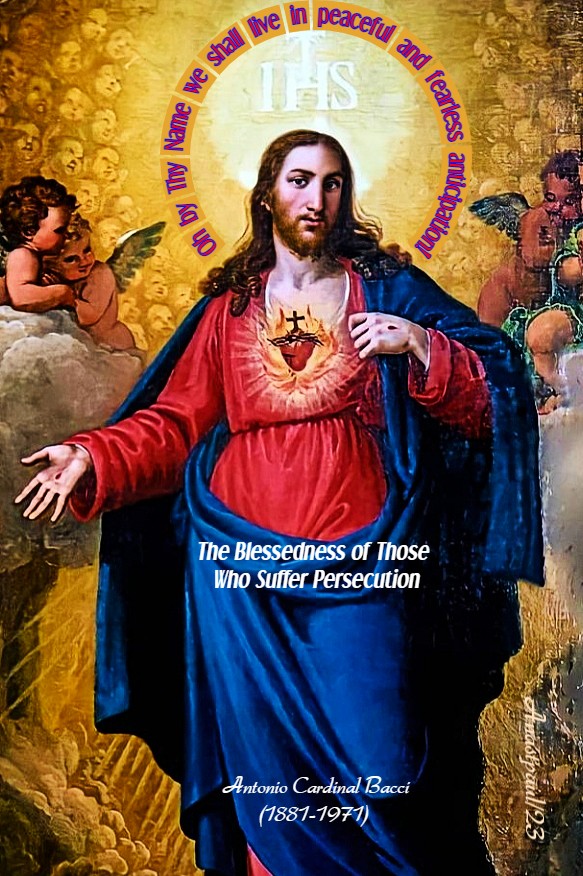
“Oh by Thy Name we shall live in peaceful and fearless anticipation!”
Our Morning Offering – 2 January – “The Month of the Most Holy Name of Jesus and of the Holy Family” and the Feast of the Most Holy Name and of the Miraculous Infant Jesus of Prague
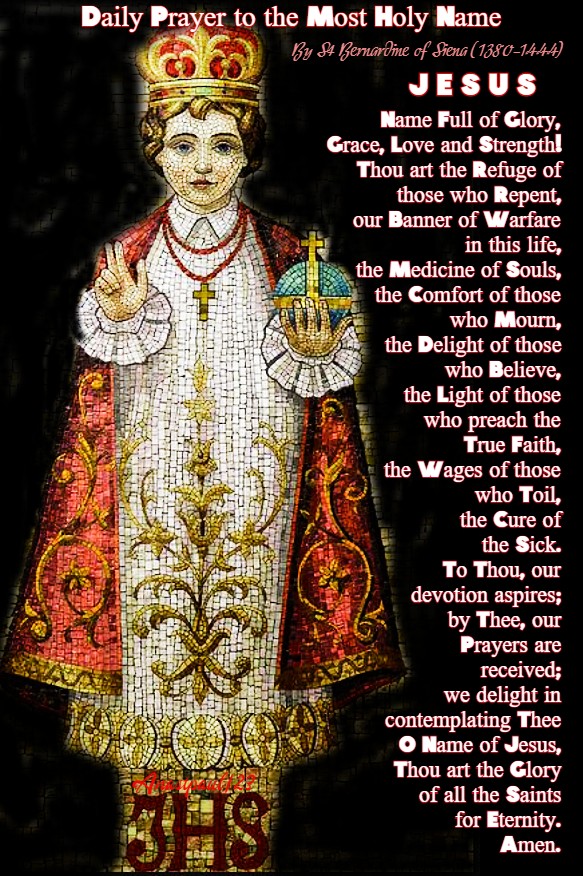
Daily Prayer to the Most Holy Name By St Bernardine of Siena (1380-1444) Apostle of the Most Holy Name
Jesus, Name full of glory, grace, love and strength! Thou art the Refuge of those who repent, our Banner of warfare in this life, the Medicine of souls, the Comfort of those who mourn, the Delight of those who believe, the Light of those who preach the true faith, the Wages of those who toil, the Cure of the sick. To Thou, our devotion aspires; by Thee, our prayers are received; we delight in contemplating Thee. O Name of Jesus, Thou art the glory of all the Saints for eternity. Amen.
One Minute Reflection – 30 December – “The Month of the Divine Infancy and the Immaculate Conception of the Blessed Virgin Mary” – The Sixth Day Within the Octave of the Nativity of our Lord – Titus 3:4-7, Luke 2:15-20 – Scripture search here: https://www.drbo.org/
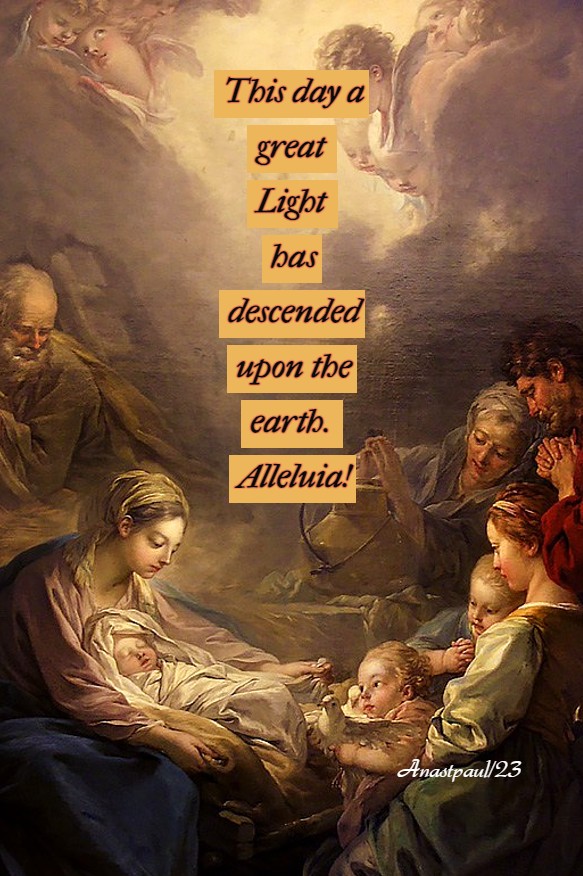
“And they came with haste and they found, Mary and Joseph and the Infant lying in the manger. ” – Luke 2:16
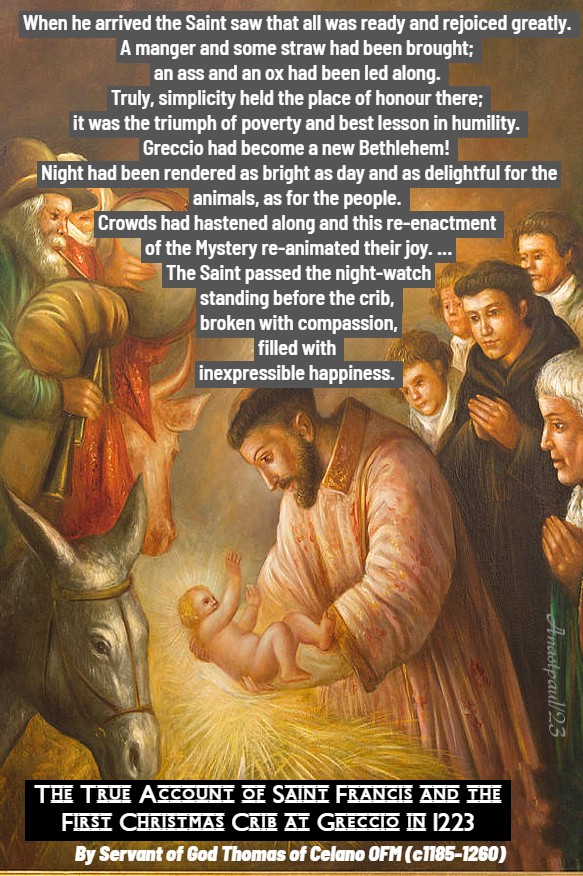
REFLECTION – “About two weeks before Christmas, Francis said: … “I wish to call to mind, the Child Who was born at Bethlehem and all the sufferings He endured, from His childhood … I wish to see Him with the eyes of my flesh, just as He was, laid in a manger and sleeping on the hay between an ox and an ass”…
The joyful day arrived … The Friars from several Convents thereabouts were gathered together. In festive spirit the people round about, both men and women, all according to their means, made torches and candles ready with which to illuminate the night which saw the bright star arise, to light up all the ages! When he arrived the Saint saw that all was ready and rejoiced greatly. A manger and some straw had been brought; an ass and an ox had been led along. Truly, simplicity held the place of honour there; it was the triumph of poverty and best lesson in humility. Greccio had become a new Bethlehem! Night had been rendered as bright as day and as delightful for the animals, as for the people. Crowds had hastened along and this re-enactment of the Mystery re-animated their joy. The woods resounded with songs and the mountains threw back their echoes. The brethren sang the Lord’s praises and the whole night was spent in rejoicing. The Saint passed the night watch standing before the crib, broken with compassion, filled with inexpressible happiness. Finally, Mass was celebrated on the manger as on an Altar and the Priest experienced fervour of a kind he had never felt before.
Francis had put on his Dalmatic, for he was a Deacon and he sang the Gospel with resonant voice … Then he preached to the people, finding words as sweet as honey, to speak of the birth of the poor King and the little Town of Bethlehem.” – Servant of God Thomas of Celano OFM (c1185-1260) Biographer of Saint Francis and Saint Clare (The First Life of Saint Francis, #84-86).
PRAYER – Grant, we beseech Thee, Almighty God that the new birth, in the flesh, of Thine Only-begotten Son, may deliver us, whom the bondage of old keeps under the yoke of sin. Through the same Jesus Christ, Thy Son our Lord, Who lives and reigns with Thee, in the unity of the Holy Ghost, God, world without end. Amen (Collect).
































 AnaStpaul
You must be logged in to post a comment.