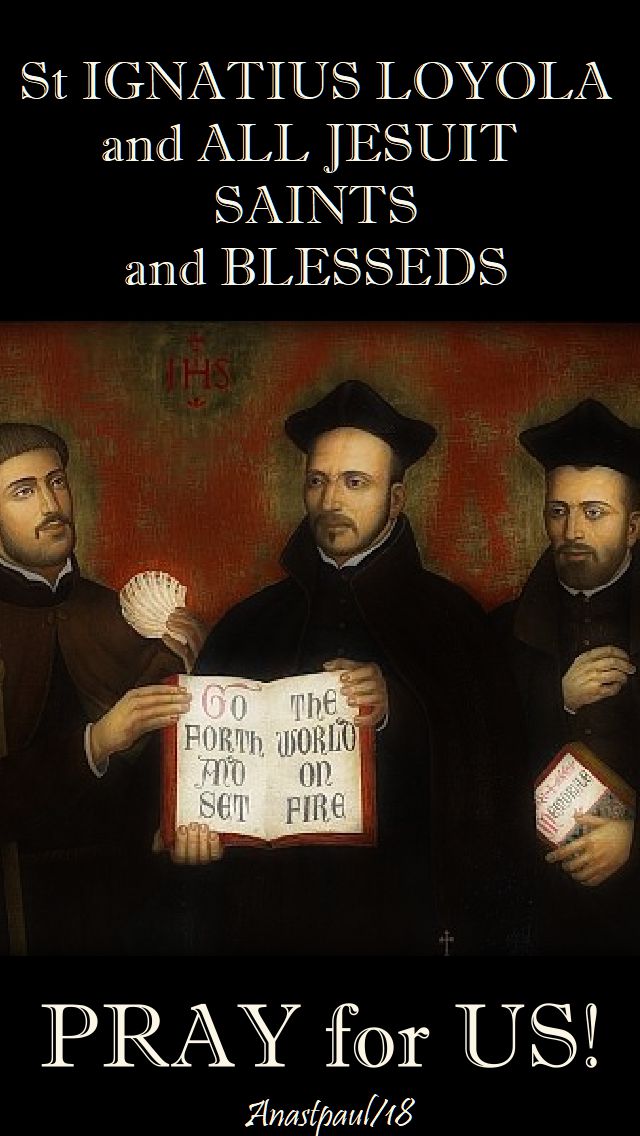
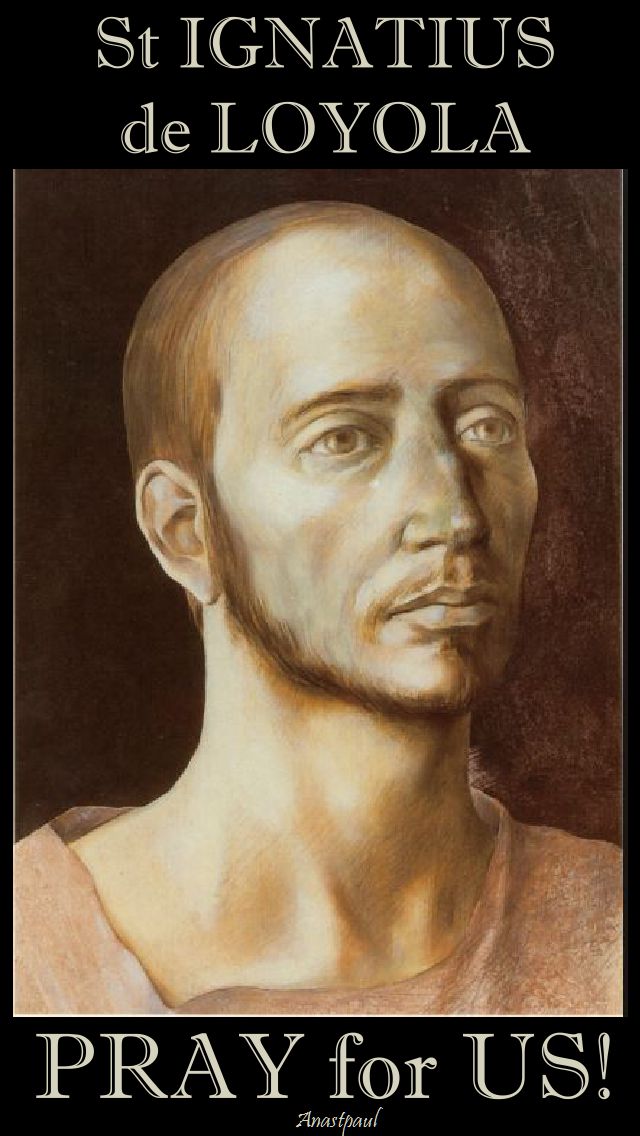
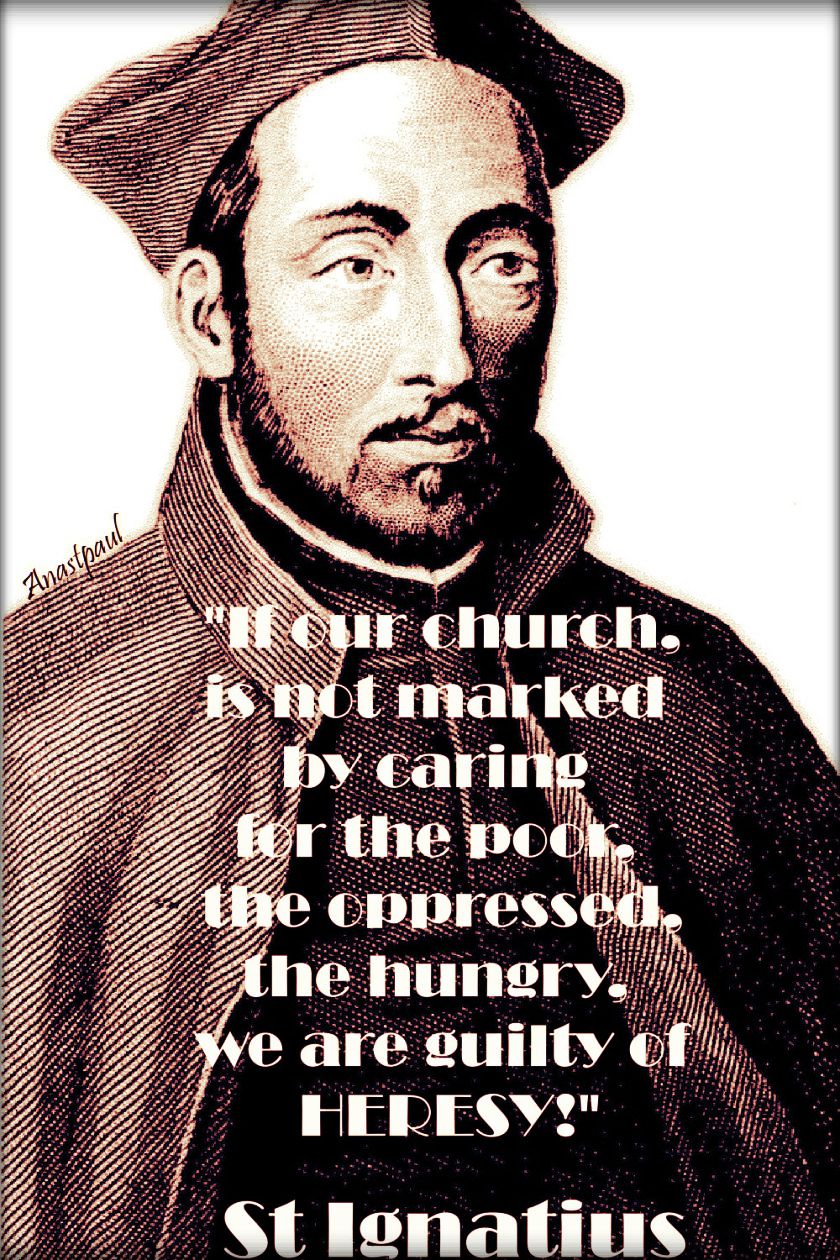
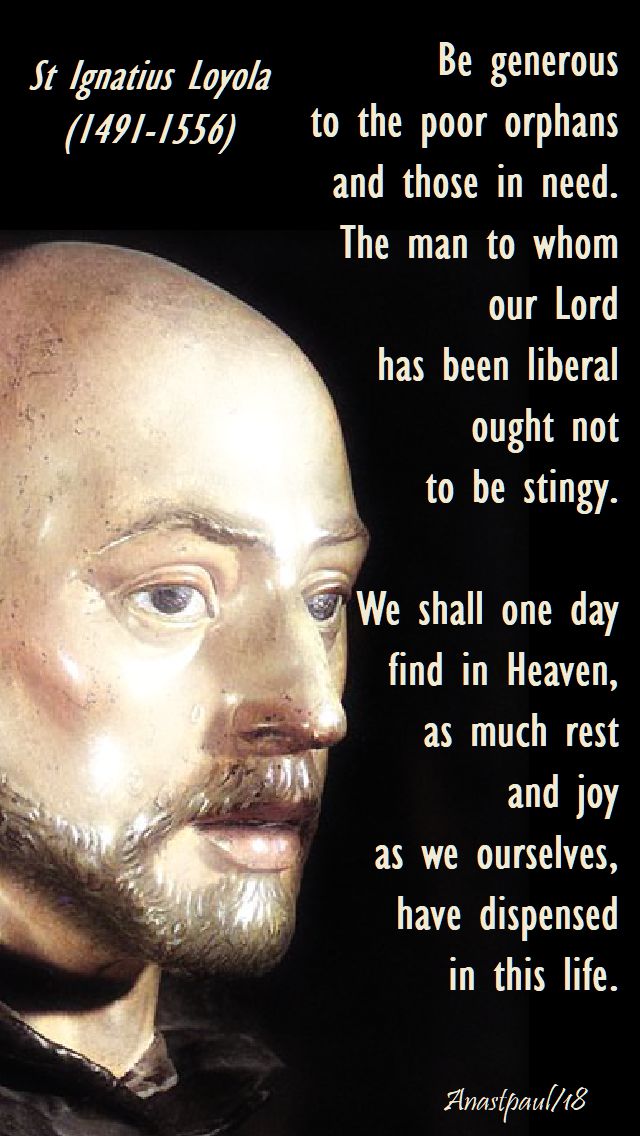
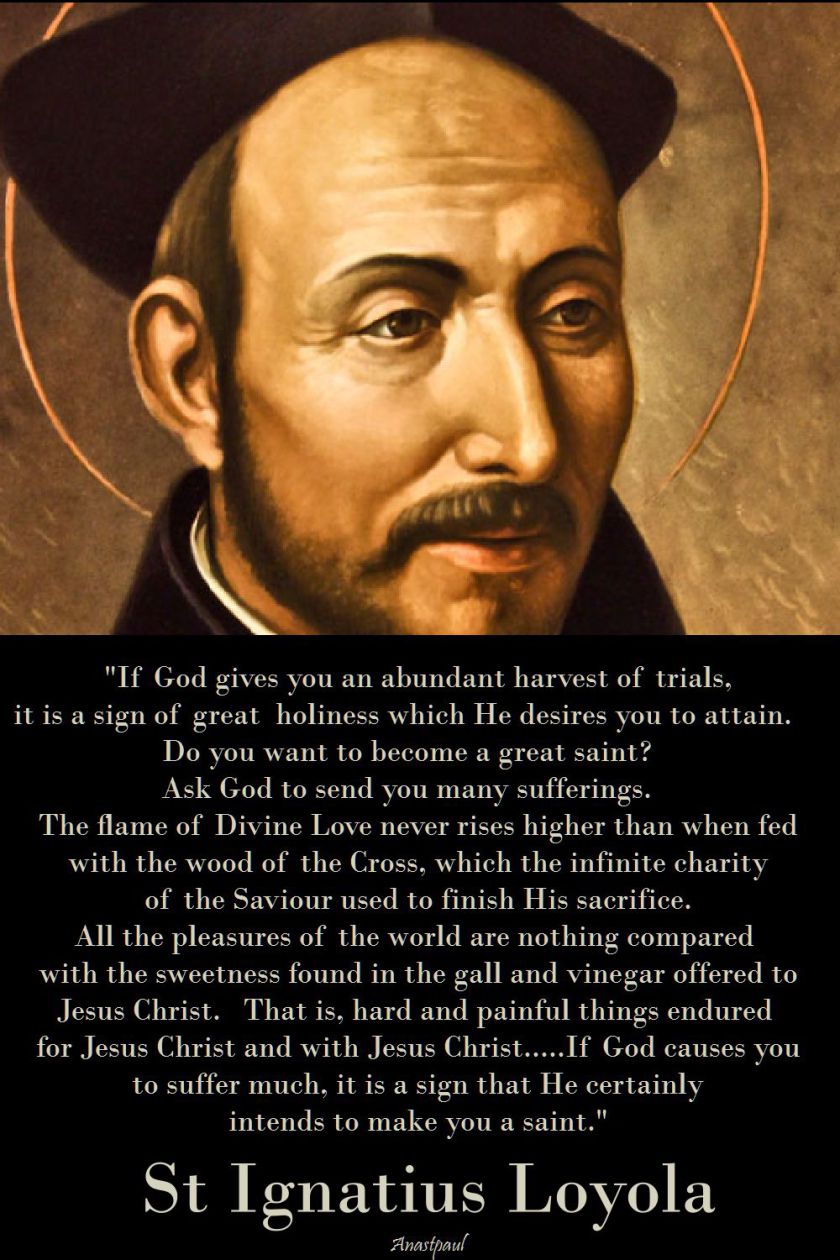
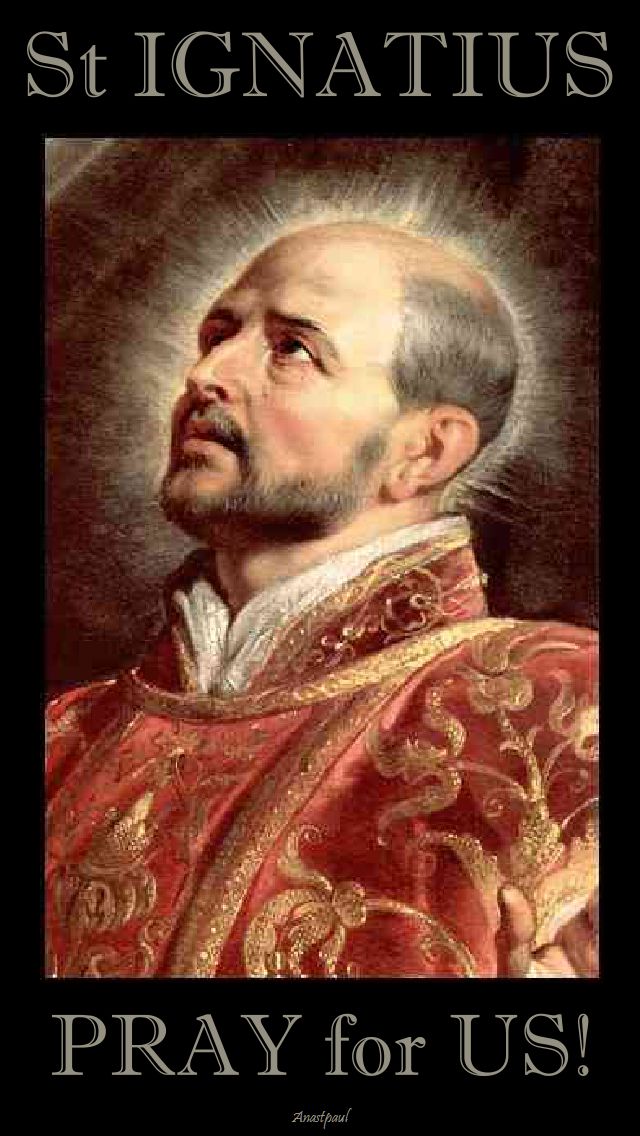
One Minute Reflection – 31 July – The Memorial of St Ignatius Loyola (1491-1556)
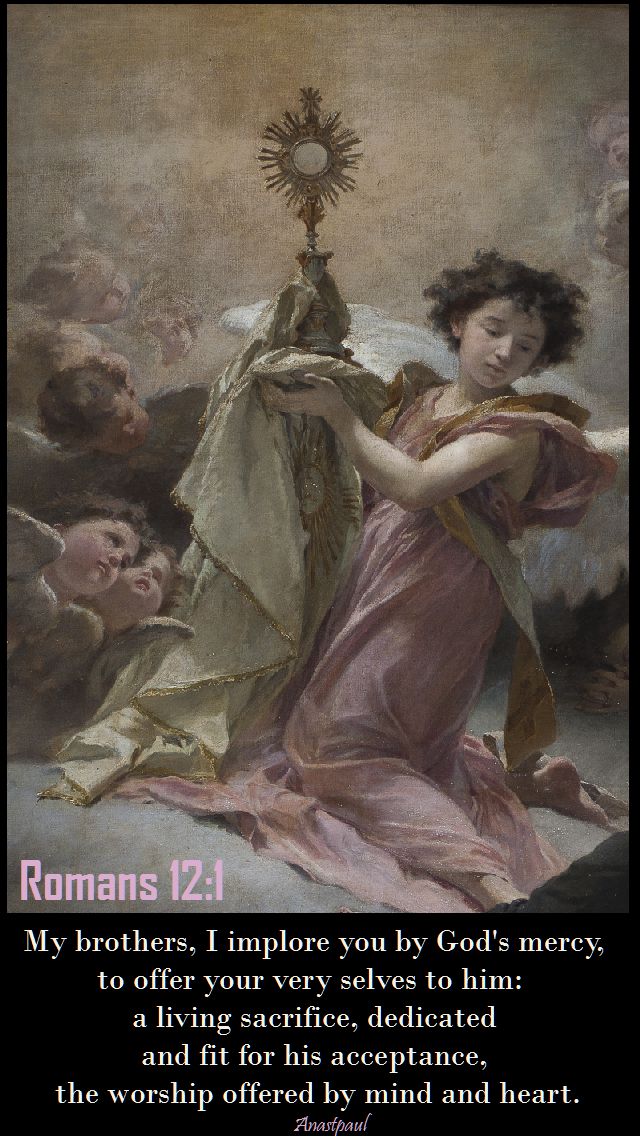
My brothers, I implore you by God’s mercy, to offer your very selves to him: a living sacrifice, dedicated and fit for his acceptance, the worship offered by mind and heart………Romans 12:1
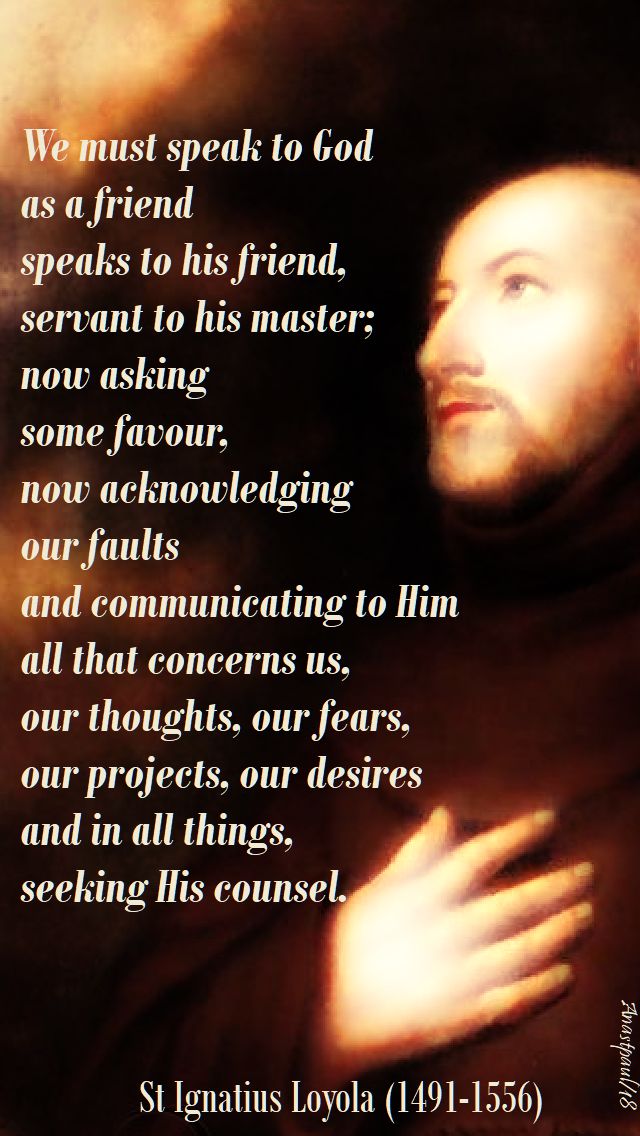
REFLECTION – “We must speak to God as a friend speaks to his friend, servant to his master – now asking some favour, now acknowledging our faults and communicating to Him all that concerns us, our thoughts, our fears, our projects, our desires and in all things seeking His counsel.”…St Ignatius of Loyola (1491-1556)
PRAYER – Almighty God, grant that the example of Your saints may spur us on to perfection, so that we who are celebrating the feast of St Ignatius, may follow him step by step in his way of life to reach You in heaven. St Ignatius, pray for us, amen.
Our Morning Offering – 31 July – The Memorial of St Ignatius Loyola (1491-1556)
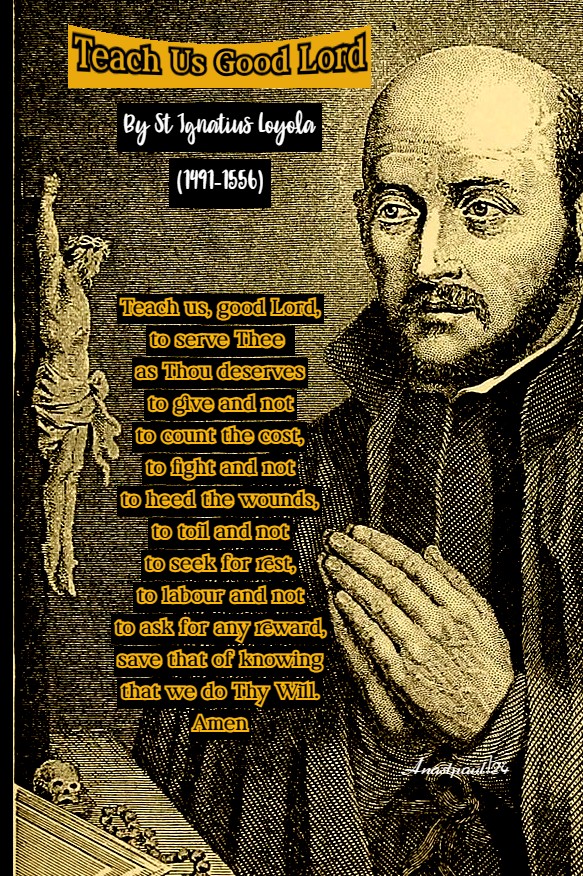
Teach Us Good Lord By St Ignatius Loyola (1491-1556)
Teach us, good Lord, to serve Thee as Thou deserves to give and not to count the cost, to fight and not to heed the wounds, to toil and not to seek for rest, to labour and not to ask for any reward, save that of knowing that we do Thy Will. Amen
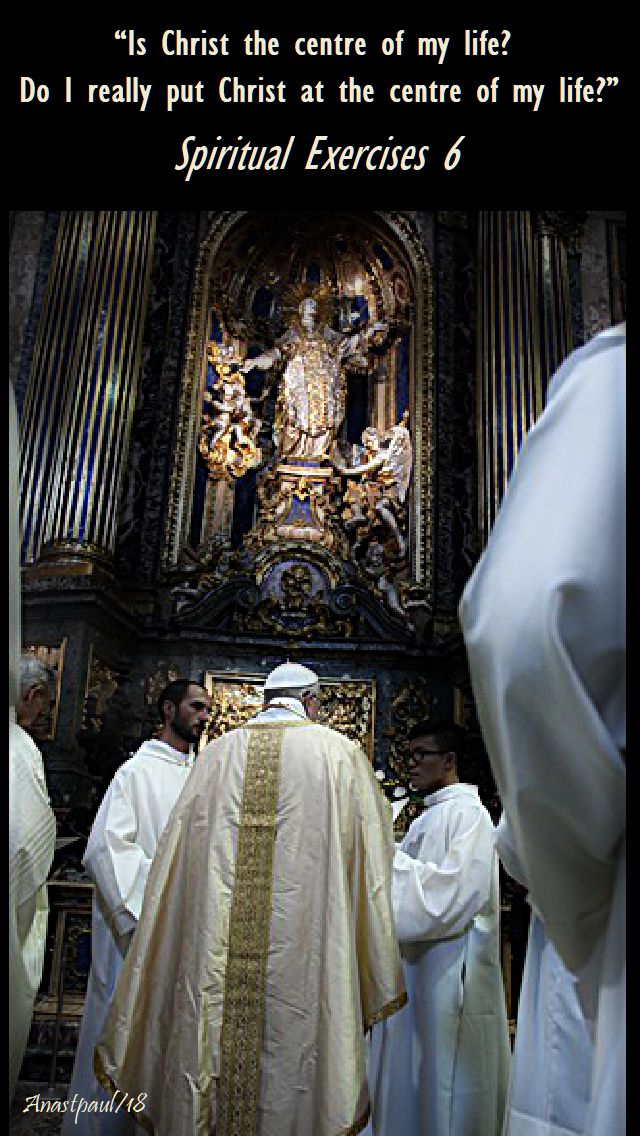
Today, 31 July, the Church liturgically recalls for us, one of the Master’s of the spiritual life, Saint Ignatius of Loyola (1491-1556). The Pilgrim died in 1556 and was the author of the Spiritual Exercises and founder of the Society of Jesus. Saint Ignatius of Loyola, a man who’s path to be a soldier for Christ and His Church, was started by a cannonball injury.
From the life of Saint Ignatius from his own words by Luis Gonzalez
Ignatius was passionately fond of reading worldly books of fiction and tales of knight-errantry. When he felt he was getting better, he asked for some of these books to pass the time. But no book of that sort could be found in the house, instead they gave him a life of Christ and a collection of the lives of saints written in Spanish.
By constantly reading these books he began to be attracted to what he found narrated there. Sometimes in the midst of his reading, he would reflect on what he had read. Yet at other times he would dwell on many of the things which he had been accustomed to dwell on previously. But at this point our Lord came to his assistance, insuring that these thoughts were followed by others which arose from his current reading.
While reading the life of Christ our Lord, or the lives of the saints, he would reflect and reason with himself: “What if I should do what Saint Francis or Saint Dominic did?” In this way he let his mind dwell on many thoughts, they lasted a while until other things took their place. Then those vain and worldly images would come into his mind and remain a long time. This sequence of thoughts persisted with him for a long time.
But there was a difference. When Ignatius reflected on worldly thoughts, he felt intense pleasure; but when he gave them up out of weariness, he felt dry and depressed. Yet when he thought of living the rigourous sort of life he knew the saints had lived, he not only experienced pleasure when he actually thought about i, but even after he dismissed these thoughts, he still experienced great joy. Yet he did not pay attention to this, nor did he appreciate it until one day, in a moment of insight, he began to marvel at the difference. Then he understood his experience – thoughts of one kind left him sad, the others full of joy. And this was the first time he applied a process of reasoning to his religious experience. Later on, when he began to formulate his spiritual exercises, he used this experience, as an illustration to explain the doctrine he taught his disciples, on the discernment of spirits.
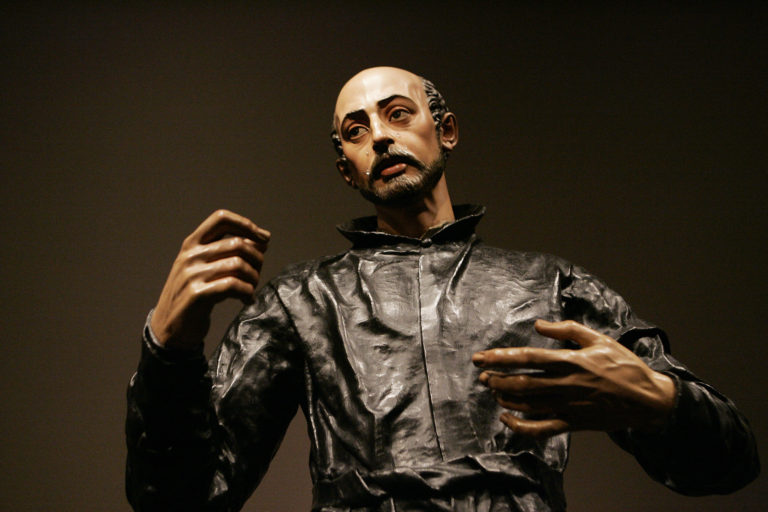
The upper portion of the sculpture “Saint Ignatius Loyola,” by Juan Martinez Montanes and Francisco Pacheco.
“After we experience the great peace of knowing God’s love for us, which quiets our anxieties and insecurities, we find another deep desire stirring within us. We desire greatness, because we are made for greatness.”
Milanese School – St Ignatius receiving a vision of Christ
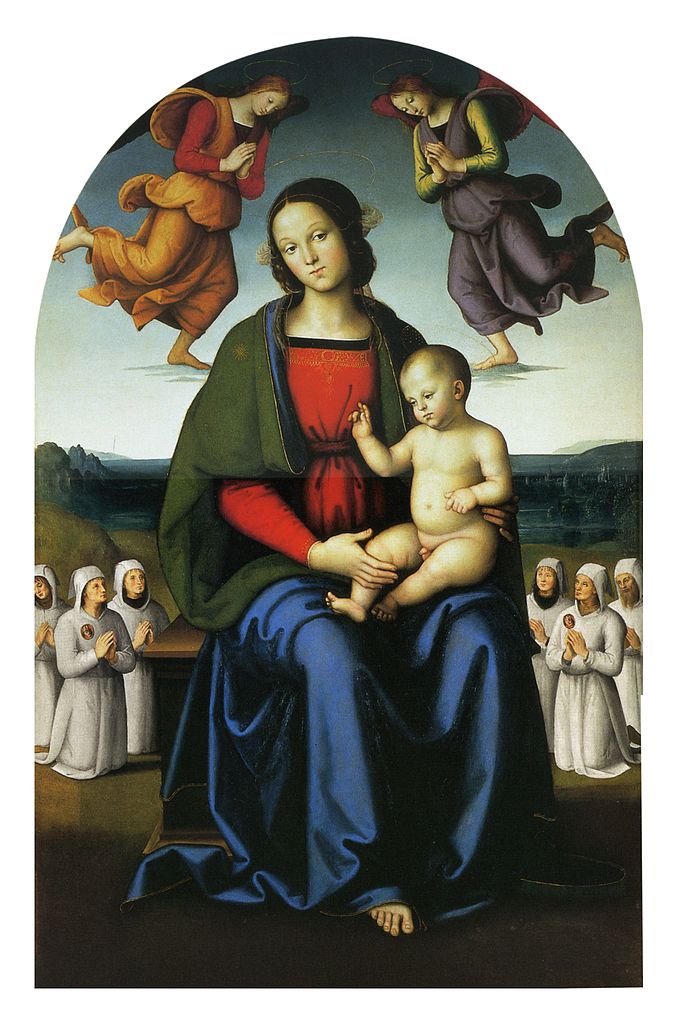
Our Lady of Consolation: Starting in the 2nd century, Catholics venerated Mary as Our Lady of Consolation, one of her earliest titles of honour. The title of Our Lady of Consolation, or Mary, Consoler of the Afflicted, comes from the Latin Consolatrix Afflictorum. The origin of this invocation is derived from the Augustinian monks who propagated this particular devotion. In 1436 the Confraternity of the Holy Cincture of Our Lady of Consolation was founded in Bologna, Italy. It was based on an Augustinian tradition which hold that Saint Monica in the fourth century, was distraught with anxiety for her wayward son, Augustine and that Mary gave her a sash which the Virgin wore, with the assurance that whoever wore this belt would receive her special consolation and protection. Along with Augustine and Monica, Our Lady of Consolation is one of the three patrons of the Augustinians. The “Augustinian Rosary” is sometimes called the “Corona (or Crown) of Our Mother of Consolation”.
—
St Calimerius of Milan
Bl Cecilia Schelingov
Bl Everard Hanse
St Fabius of Caesarea
St Firmus of Tagaste
St Germanus of Auxerre (c 378 – c 448)
St Giustino de Jacobis
St Helen of Skofde
Bl Jean-François Jarrige de La Morelie de Breuil
Bl John Colombini
St Marcel Denis
St Neot
—
Matyrs of Syria – 350 saints: 350 monks massacred by heretics for their adherence to orthodox Christianity and the decrees of the Council of Chalcedon. 517 in Syria.
Martyrs of Synnada: 3 Saints
Democritus
Dionysius the Martyr
Secundus
Martyred in the Spanish Civil War: Thousands of people were murdered in the anti-Catholic persecutions of the Spanish Civil War from 1934 to 1939.
• Blessed Ciriaco Olarte Pérez de Mendiguren
• Blessed Dionisio Vicente Ramos
• Blessed Francisco Remón Játiva
• Blessed Miguel Goñi Ariz
• Blessed Miguel Francisco González-Díez González-Núñez
• Blessed Agapito Alcalde Garrido
• Blessed Ciriaco Olarte Pérez de Mendiguren
• Blessed Dionisio Vicente Ramos
• Blessed Francisco Remón Játiva
• Blessed Jaume Buch Canals
• Blessed Maria Roqueta Serra
• Blessed Miguel Goñi Ariz
• Blessed Miguel Francisco González-Díez González-Núñez
• Blessed Prudencio Gueréquiz y Guezuraga
• Blessed Segundo de Santa Teresa
• Blessed Teresa Subirà Sanjaume
• Blessed Vicenta Achurra Gogenola
• Blessed Francisca Pons Sardá
Our Morning Offering – 23 July – Monday of the Sixteenth week in Ordinary Time B
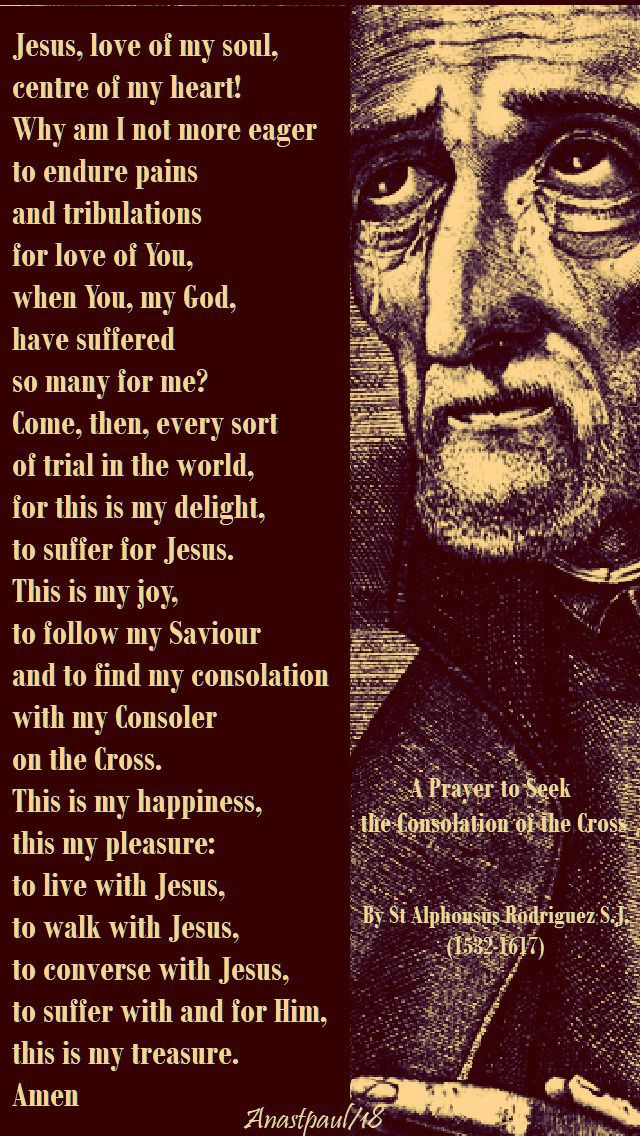
A Prayer to Seek the Consolation of the Cross By St Alphonsus Rodriguez S.J. (1532-1617)
Jesus, love of my soul,
centre of my heart!
Why am I not more eager to endure pains
and tribulations for love of You,
when You, my God,
have suffered so many for me?
Come, then, every sort of trial in the world,
for this is my delight, to suffer for Jesus.
This is my joy, to follow my Saviour
and to find my consolation
with my Consoler on the Cross.
This is my happiness,
this my pleasure:
to live with Jesus,
to walk with Jesus,
to converse with Jesus,
to suffer with and for Him,
this is my treasure.
Amen
Probably most of us, if we think of contemplative prayer at all, regard it as something that is beyond us and practiced only by a few contemplative monks and nuns whose whole lives are devoted to prayer. Yet I have heard respected and experienced spiritual guides say that contemplation is often given to those you would least expect—to harassed mothers and people who think they can’t pray, to children, to the sick and dying, to people with no academic learning about prayer or Scripture or theology. God sometimes seems to speak, heart to heart, in this mysterious way, to the untaught and unpracticed. None of us should imagine that the ways of contemplative prayer are closed to us because God is always infinitely larger than our expectations.
I suggest that creation itself gives us a gateway. In every moment of our lives, a silent, invisible miracle of exchange is taking place. We breathe out the air that our bodies no longer need, which is mainly carbon dioxide, a waste product for us but the very thing that the green leaves on the trees and plants need to produce their own energy. So they receive our carbon dioxide and, through the process of photosynthesis, produce not only their own life energy, but also oxygen—a waste product for them but the very thing we need to live. Whenever I stop my busyness for a few moments to look around me, I am amazed at this arrangement and it makes me think of prayer.
So perhaps a good way to open our hearts up to the gift of contemplation is simply to become still, and, quite literally, to breathe out our waste—all that clogs us and deadens us—and to breathe in God’s renewing life, as we breathe in the fresh oxygen that the plants have made for us. This simple, deliberate breathing exercise can become something like what the French peasant was doing as he looked at God and God looked at him. We are becoming aware of the mysterious exchange of life between ourselves and God. And there is no reason that any period of quiet might not become prayer of this kind.
There may be other creatures who can help you cross the threshold of contemplation. If there is a baby in the family, try simply holding her in your arms as she sleeps and letting God hold both of you in his. Nothing more. No deep thoughts. No search for meaning. Just be there.
A cat (if you are not allergic to them!) can also be a great aid to prayer. My own cat loves to sleep round my neck. At first I found this disturbing but when he has settled into a particular hollow (perhaps where he can feel my pulse), he will lie there, quite still, just purring deeply, until he falls asleep and the purring ceases. When he does this, I let myself find a hollow close to God’s pulse and let my own prayer become just a sleepy purr and then the silence of content. Or you might discover prayer on a park bench. The other day I was in Hyde Park and I spent a few minutes listening to the deep-throated cooing of the pigeons. I wanted to join them because, in their way, they were engaged in contemplative prayer, simply expressing, in this peaceful murmur, the song of their beings.
In your own home, prayer awaits you in the opening of a flower, the rising of your bread dough, or the steady, imperceptible development of a child. Spend time in silence, aware of the wonder that is being unfolded in your cakes and your children, your houseplants or your garden. For this is the essence of contemplative prayer—simple awareness, allowing God to be God, without trying to put the limitations of shape or meaning around him.
Contemplation, like all prayer, is pure gift and not anything we can achieve. It happens when prayer becomes, wholly and utterly, the flow of God’s grace, transforming the land it flows through, like Ezekiel’s stream. Or it happens when we lose consciousness of our own part in it and become simply receptors and carriers of grace. It happens when we realise that our transformation depends on nothing but God’s grace and love, and, like the chrysalis, let go of all activity to try to achieve our own redemption.
When we try to describe it, we fail, for it lies beyond the world of words. We can open our hearts to it by the practice of awareness but we cannot bring it about, any more than we can force a flower to open or an egg to hatch. And in our silent, trustful waiting, we are acknowledging that God is God, the source and the destination, the means and the end of all our prayer, whatever form it may take.
from Close to the Heart: A Practical Approach to Personal Prayer
Make my Heart Still
“Lord take my poor heart. It is often so far from You, lost in a thousand things and in the trifles that fill up my everyday life. Lord, only You can collect the thoughts of my heart and have it concentrate on You, You who are the centre of all hearts, the Lord of all souls. Only You can bestow the spirit of prayer, only Your grace is able to allow me to find You amidst this multitude of things, amidst the distractions of everyday life, YOU, the one necessity, the one person with whom my heart can become still.”
“When man comes to God in awe and love, then he is praying.”
Karl Rayner SJ – The Mystical Way in Everyday Life
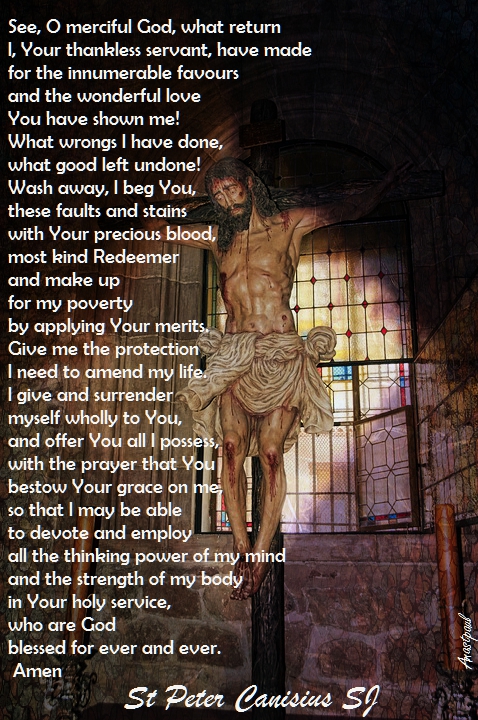
Wash Me With Your Precious Blood By St Peter Canisius, S.J. (1521-1597) Doctor of the Church
See, O merciful God, what return
I, Your thankless servant, have made
for the innumerable favors
and the wonderful love You have shown me!
What wrongs I have done, what good left undone!
Wash away, I beg You, these faults and stains
with Your precious blood, most kind Redeemer,
and make up for my poverty by applying our merits.
Give me the protection I need to amend my life.
I give and surrender myself wholly to You,
and offer You all I possess,
with the prayer that You bestow Your grace on me,
so that I may be able to devote and employ
all the thinking power of my mind
and the strength of my body in Your holy service,
who are God blessed for ever and ever.
Amen
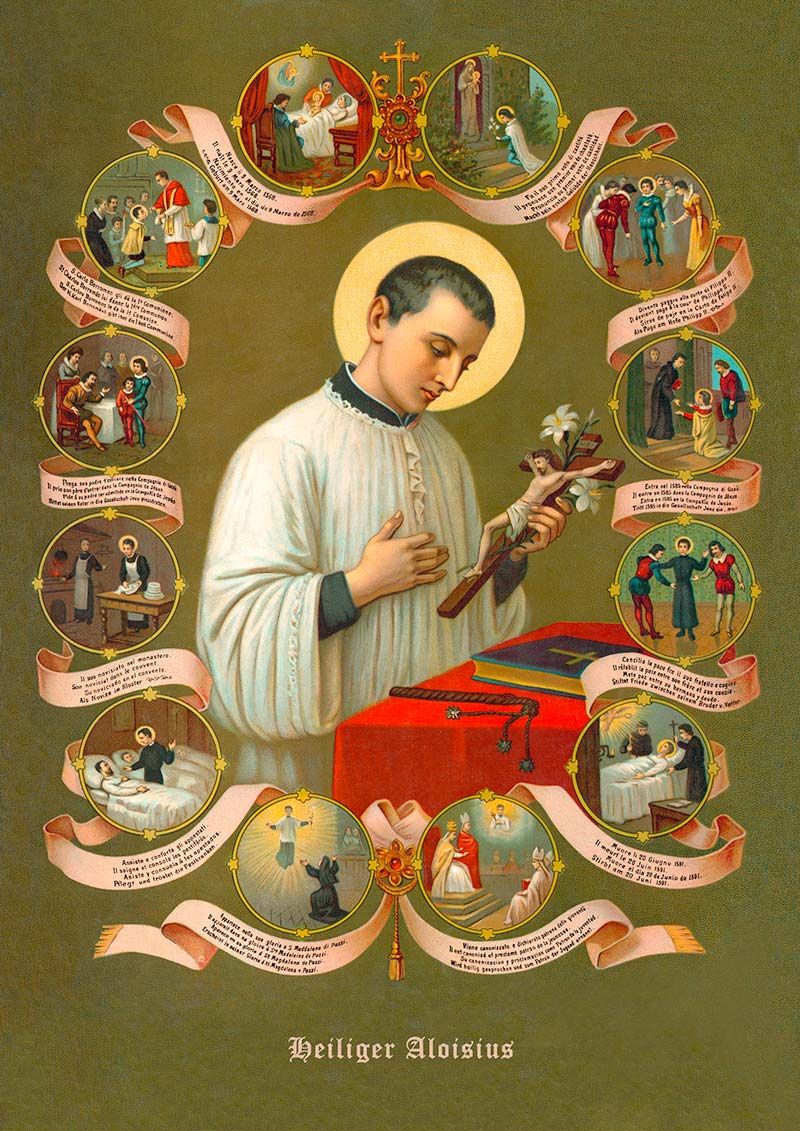
Thought for the Day – 21 June – The Memorial of St Aloysius de Gonzaga S.J. (1568-1591)
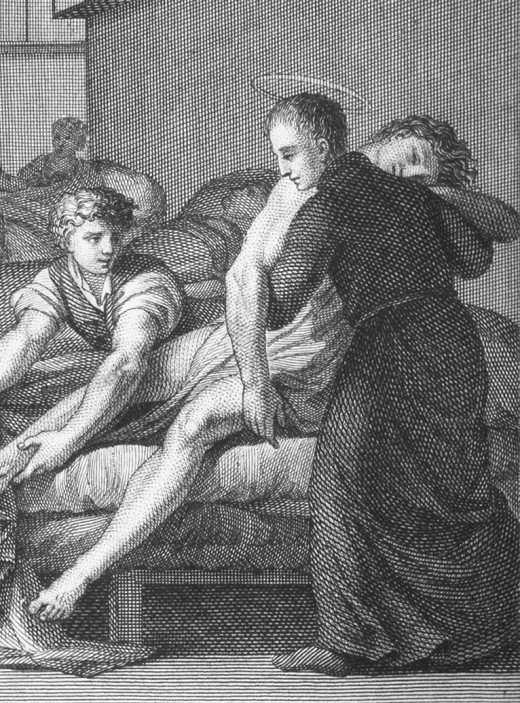
Aloysius also volunteered to work at the local hospital. On closer inspection, this was heroic of him since he was very sensitive to disgusting sores and odors. He strove to conquer his inborn squeamishness and attend to the most repulsive cases. A fellow novice, Decio Striverio, remembers approaching a particularly loathsome patient, full of bleeding sores. Aloysius turned completely pale as they approached but as if summoning some hidden strength, his colour returned and he approached the victim as if he were Christ Himself. “Whatever you did for one of the least of these brothers of Mine, you did it for Me.” (Mt. 25:40)
Aloysius worked first at the overcrowded hospital of St Sixtus. He traversed the streets of Rome and carried the ill on his back to the hospital; when there, he undressed and washed the victims, gave them fresh clothing, placed them in a bed and fed them. However, the Jesuit superiors took alarm, as some of the novices started dying. They assigned Aloysius to the hospital of Santa Maria di Consolazione, reserved for non-contagious patients.
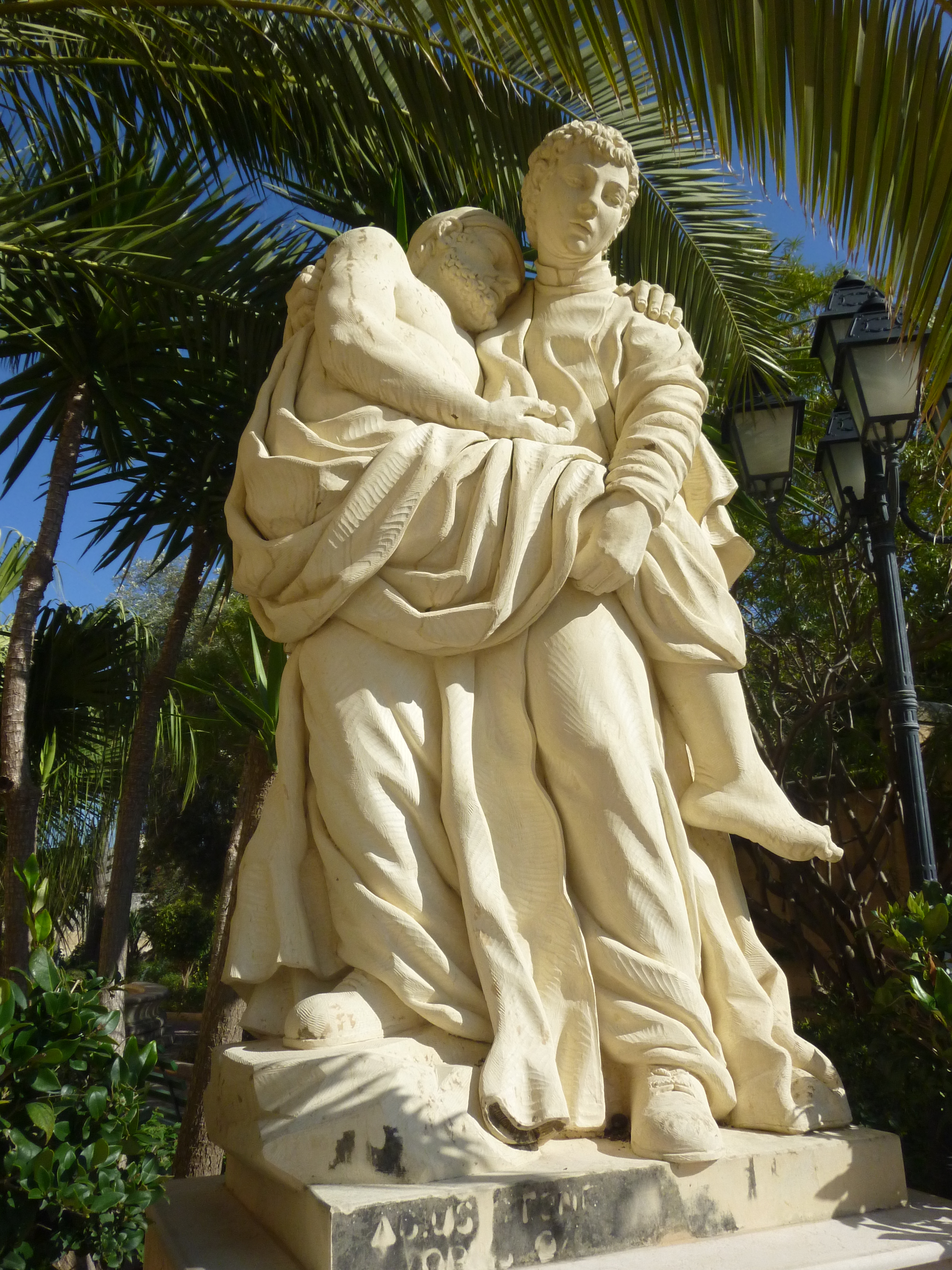
While assisting at this hospital, he lifted an unknowingly infected man out of his bed, tended his needs and returned him to his bed. Unfortunately, this act of charity cost Aloysius his life. He received the diagnosis of infection on 3 March 1591, and died on 21 June 1591. He was 23 years old. In a letter addressed to his mother shortly before his death, he wrote, “Our parting will not be for long; we shall see each other again in heaven; we shall be united with our Saviour; there we shall praise Him with heart and soul, sing of His mercies forever, and enjoy eternal happiness.”
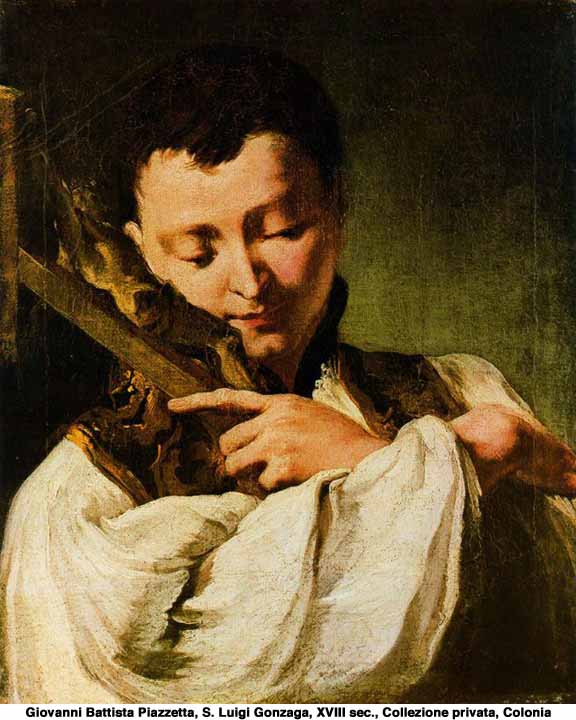
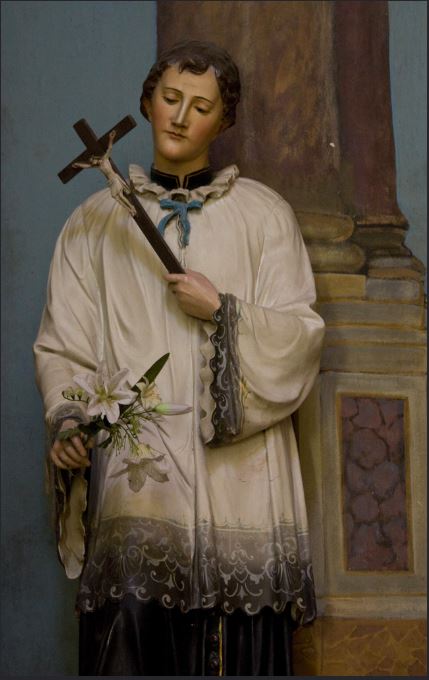
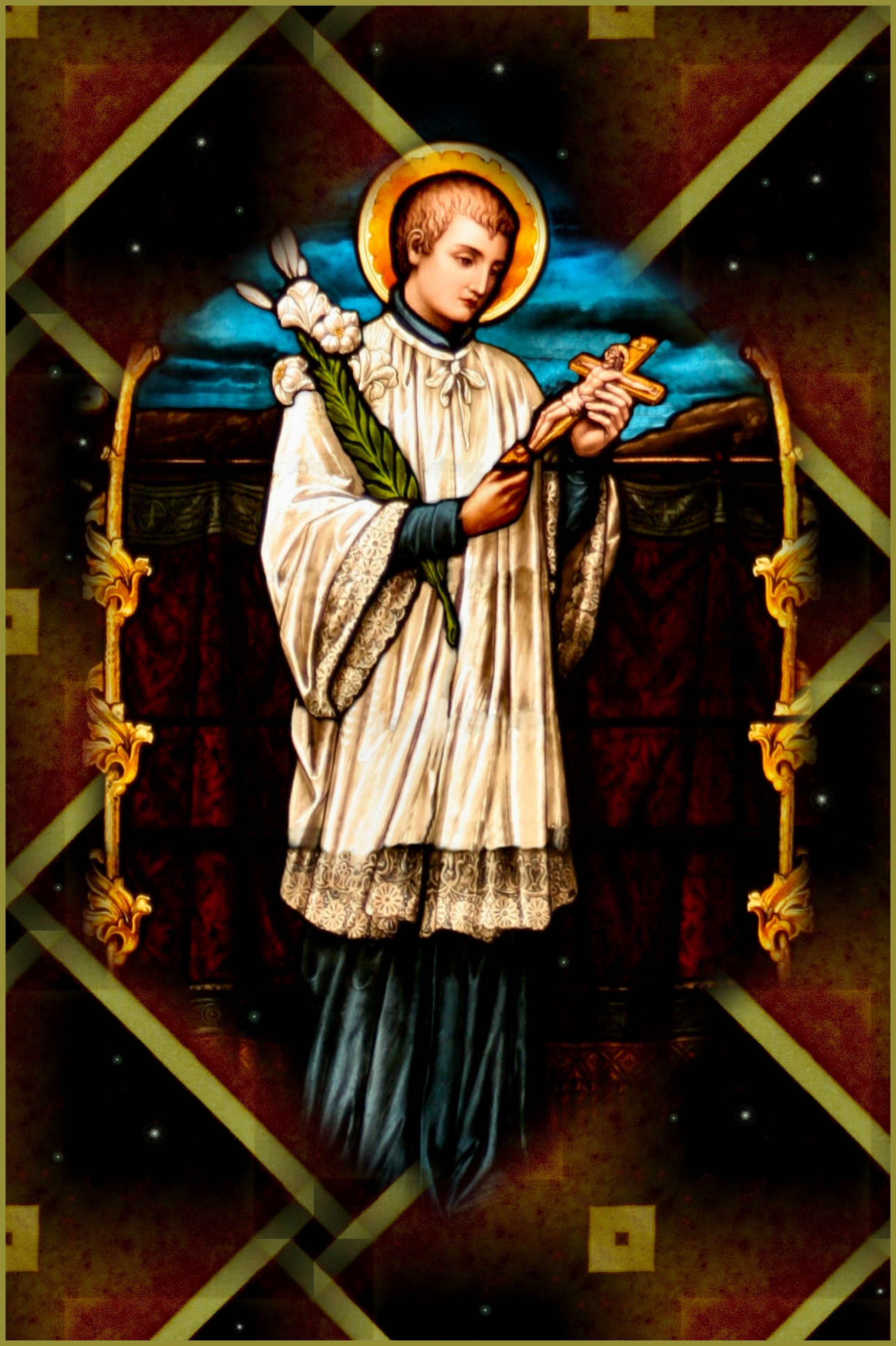
Aloysius’ patronage extends foremost over the youth. Thus, artists have made the effort to emphasise his angelic purity, as a role model for chastity. While undoubtedly commendable, the realisation of this virtue in pictorial form often results in a caricature. There is a fine line between heroic purity and honey-dripping effeminacy, at least in artistic terms. Interestingly, St Aloysius is also the patron of AIDS patients and caregivers, due to his compassionate care and ultimate infection of an incurable disease. In the final analysis, the sugarcoated holy card depiction of St Aloysius is misleading, as he possessed ferocious will power. Moreover, one can easily absolve his youthful quirkiness before entering the Jesuits, in light of his large-hearted compassion revealed in the end….(Reference – The Life of St. Aloysius Gonzaga, Patron of Christian Youth by Maurice Meschler, S.J.)
Aloysius seems an unlikely patron of youth, in a society where asceticism is confined, to training camps of football teams and boxers and sexual permissiveness has little left to permit. Can an overweight, sin-soaked and air-conditioned society deprive itself of anything? It will, when it discovers a reason, as Aloysius did. The motivation for letting God purify us is the experience of God loving us in prayer. Prayer is our most urgent work!
St Aloysius Gonzaga, help us to pray and please Pray for us all!
Quote of the Day – 21 June – The Memorial of St Aloysius de Gonzaga S.J. (1568-1591)
“May the comfort and grace of the Holy Spirit be yours for ever, most honoured lady.
Your letter found me lingering still in this region of the dead but now I must rouse myself to make my way on to heaven at last and to praise God for ever in the land of the living; indeed I had hoped that before this time my journey there would have been over.
If charity, as Saint Paul says, means “to weep with those who weep and rejoice with those who are glad,” then, dearest mother, you shall rejoice exceedingly that God in His grace and His love for you, is showing me the path to true happiness and assuring me, that I shall never lose Him. Take care above all things, most honoured lady, not to insult God’s boundless loving kindness; you would certainly do this, if you mourned as dead, one living face to face with God, one whose prayers, can bring you in your troubles, more powerful aid, than they ever could on earth.
And our parting will not be for long; we shall see each other again in heaven; we shall be united with our Saviour; there we shall praise Him with heart and soul, sing of His mercies forever and enjoy eternal happiness.”
– from a letter to his mother by Saint Aloysius Gonzaga
One Minute Reflection – 21 June – The Memorial of St Aloysius de Gonzaga S.J. (1568-1591)
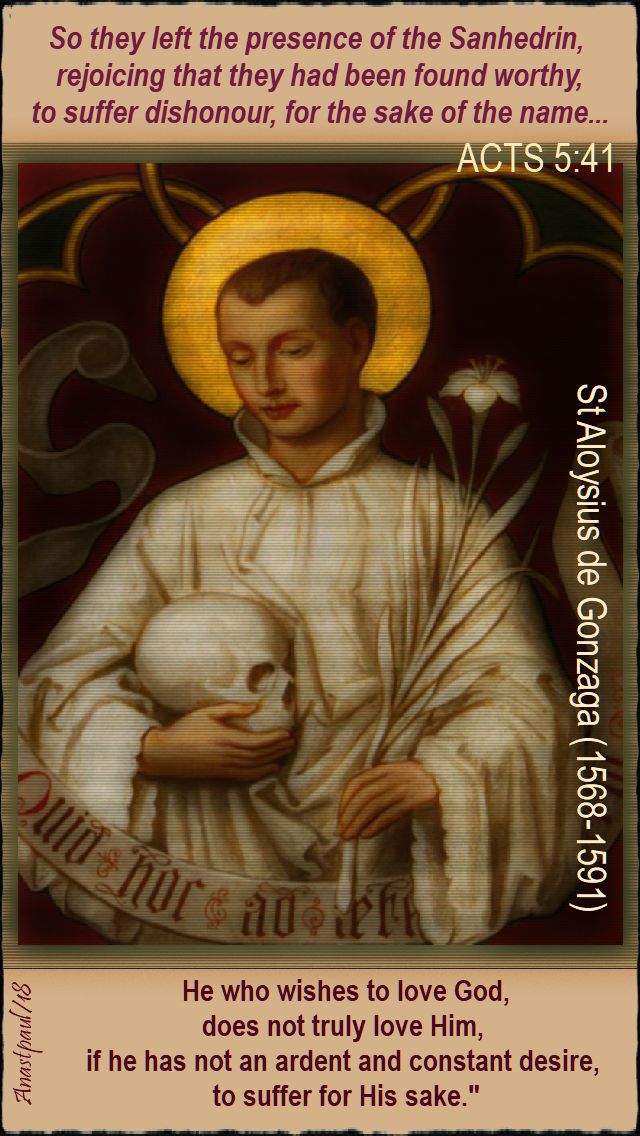
So they left the presence of the Sanhedrin, rejoicing that they had been found worthy, to suffer dishonour, for the sake of the name...Acts 5:41
REFLECTION – “He who wishes to love God, does not truly love Him, if he has not an ardent and constant desire, to suffer for His sake.”…St Aloysius de Gonzaga (1568-1591)
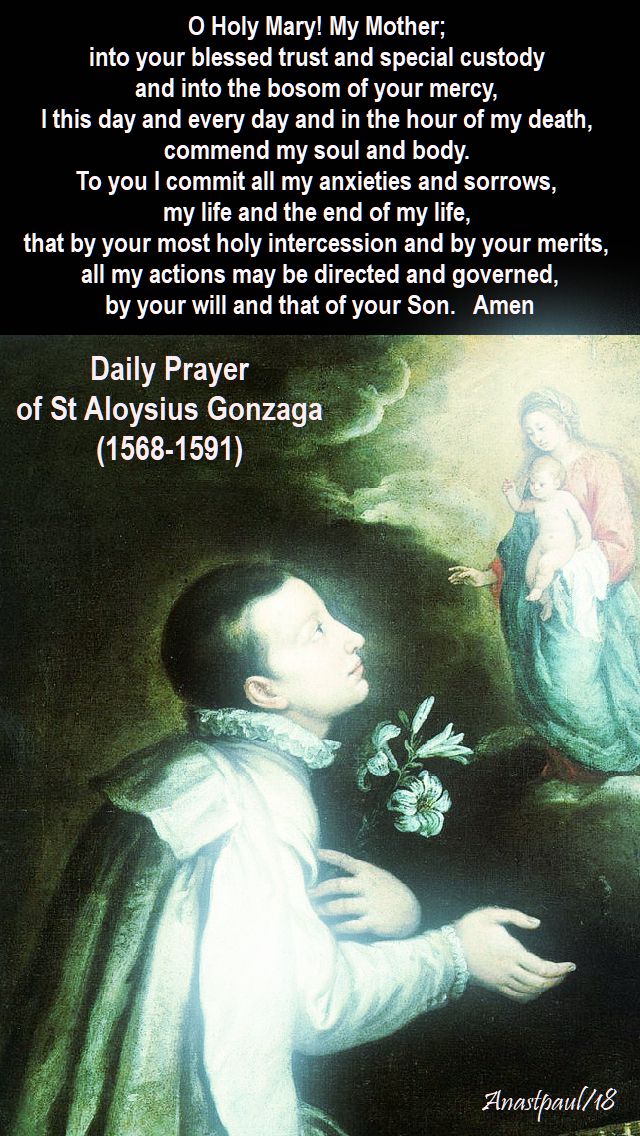
PRAYER – “O Holy Mary! My Mother; into your blessed trust and special custody and into the bosom of your mercy, I this day and every day and in the hour of my death, commend my soul and body. To you, I commit all my anxieties and sorrows, my life and the end of my life, that by your most holy intercession and by your merits, all my actions may be directed and governed by your will and that of your Son.”… by St Aloysius de Gonzaga (1568-1591)
Our Morning Offering – 21 June – The Memorial of St Aloysius de Gonzaga S.J. (1568-1591)
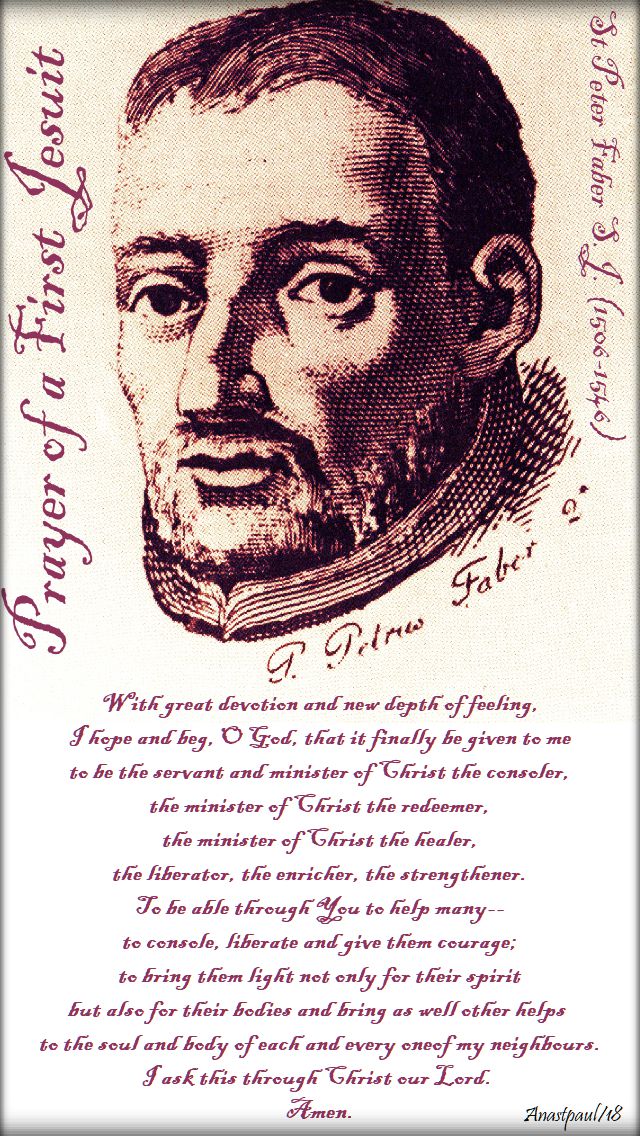
Prayer of a First Jesuit By St Peter Faber S.J. (1506-1546)
With great devotion and new depth of feeling,
I hope and beg, O God, that it finally be given to me
to be the servant and minister of Christ the consoler,
the minister of Christ the redeemer,
the minister of Christ the healer,
the liberator, the enricher the strengthener.
To be able through You to help many–
to console, liberate and give them courage;
to bring them light not only for their spirit
but also for their bodies,
and bring as well other helps
to the soul and bodyof each and every one
of my neighbours.
I ask this through Christ our Lord.
Amen.
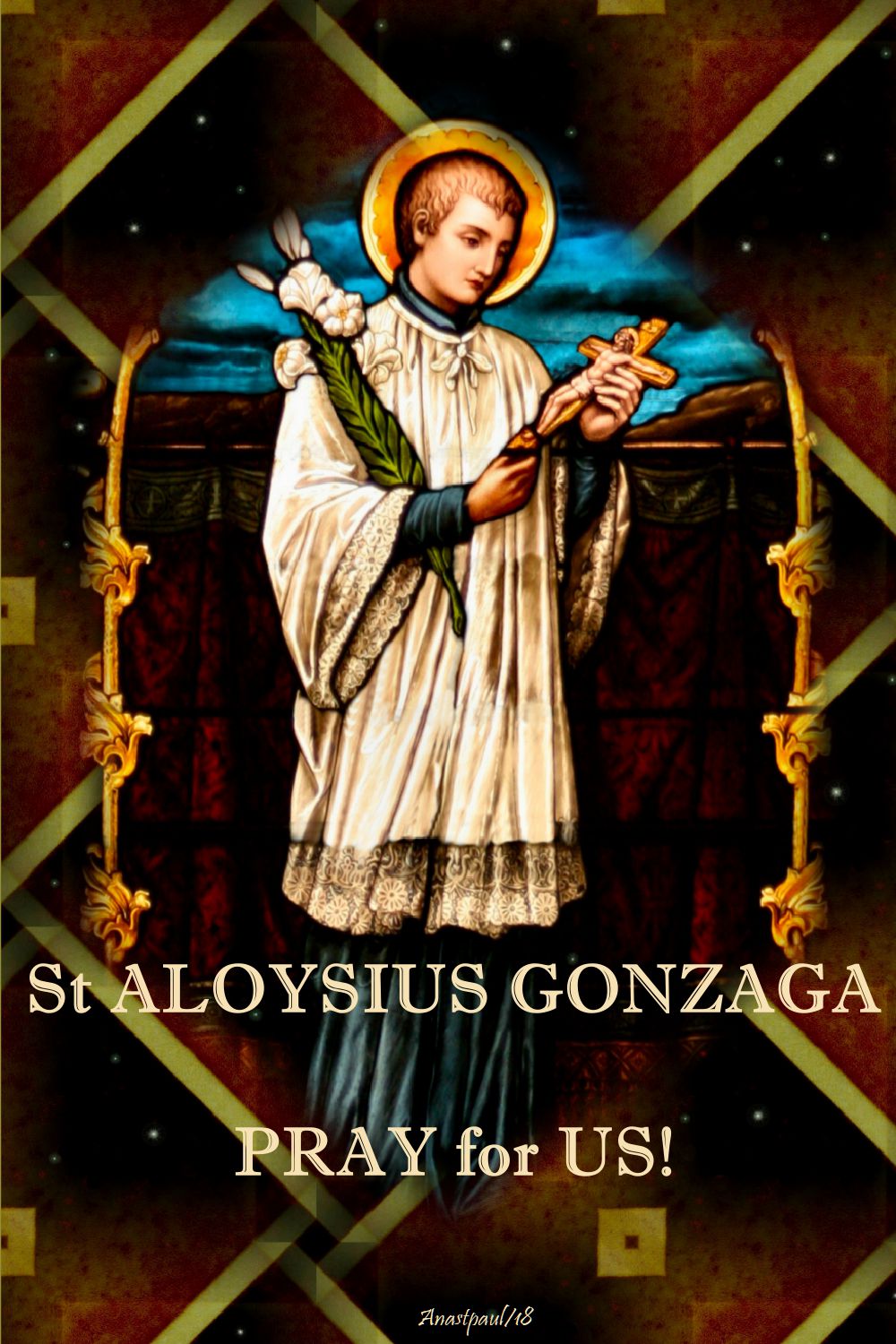
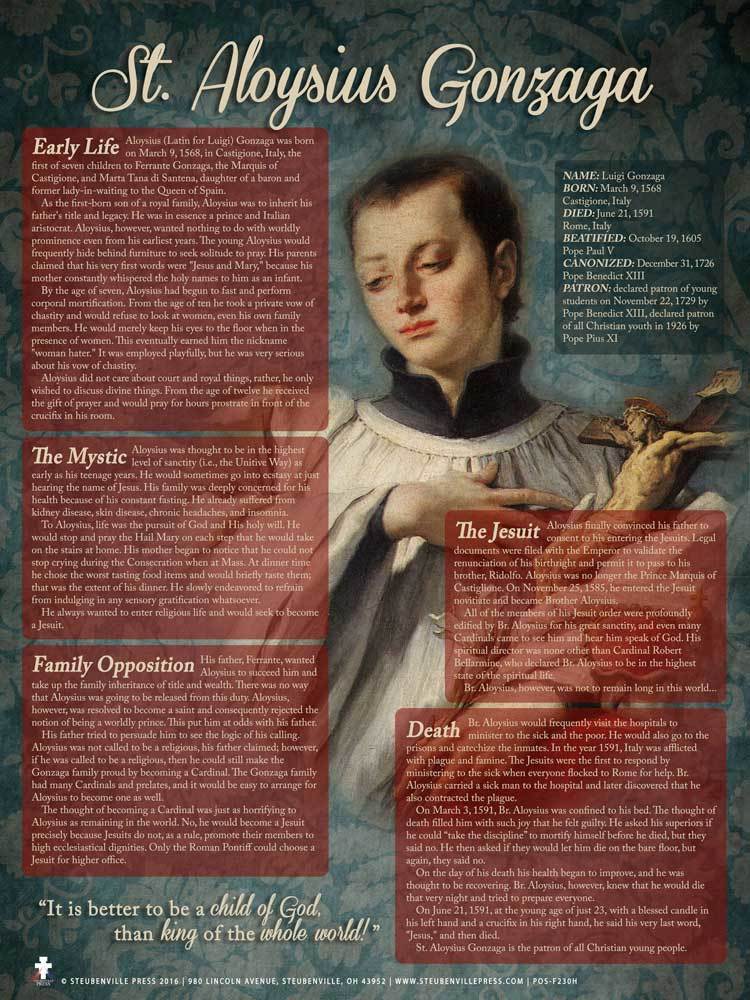
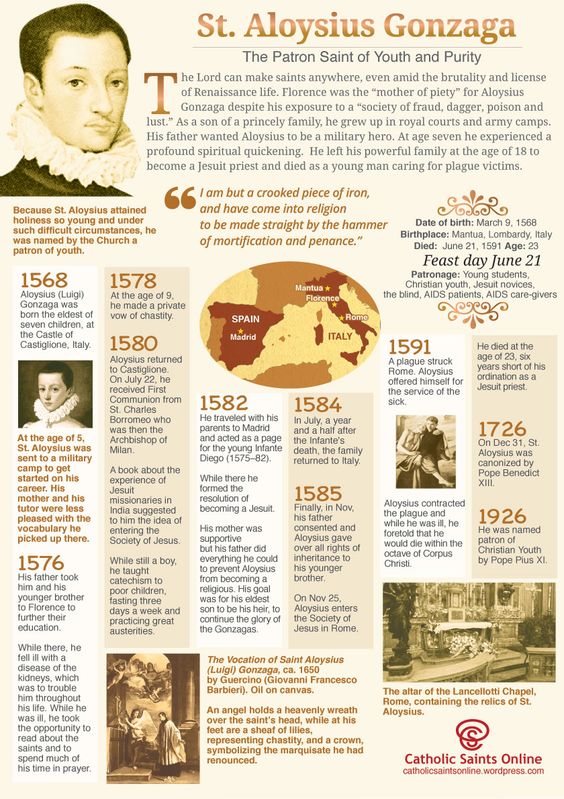
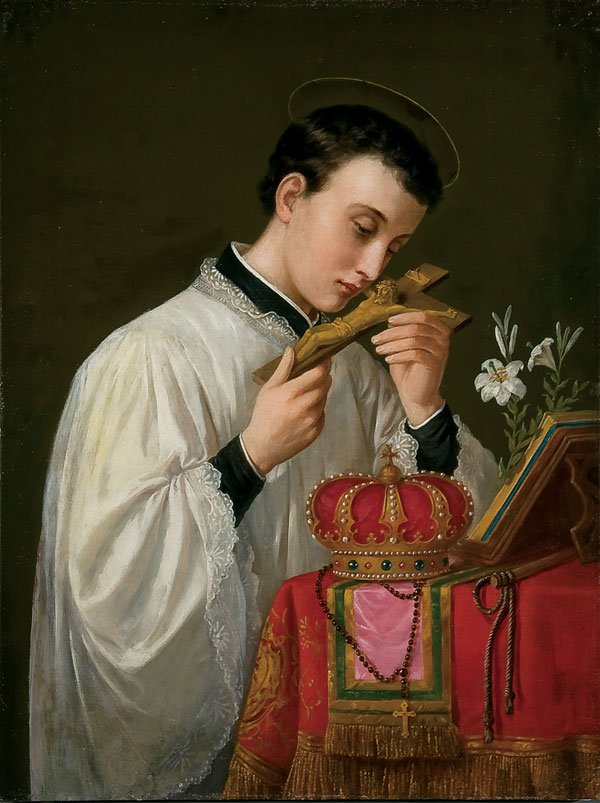
Saint of the Day – 21 June – St Aloysius de Gonzaga S.J. (1568-1591) Jesuit Seminarian, Mystic, Marian devotee, Apostle of Charity – born as Luigi de Gonzaga on 9 March 1568 in the family castle of Castiglione delle Stivieri in Montua, Lombardy, Italy and died on 21 June 1591 at Rome, Italy of plague, fever and desire to see God. His relics are entombed under the Altar of Saint Ignatius Church, Rome. Patronages – Catholic youth, Jesuit scholastics, the blind, eye ailments, AIDS patients, care-givers, Jesuit students, for relief from pestilence, young people, Castiglione delle Stiviere, Italy, Valmonte, Italy. His attributes are a lily, referring to innocence; a cross, referring to piety and sacrifice; a skull, referring to his early death and a Rosary, referring to his devotion to the Blessed Virgin Mary.
Aloysius de Gonzaga was born the eldest of seven children, at his family’s castle in Castiglione delle Stiviere, between Brescia and Mantua in northern Italy in what was then part of the Duchy of Mantua, into the illustrious House of Gonzaga. “Aloysius” is the Latin form of Aloysius de Gonzaga’s given name in Italian, Luigi. He was the son of Ferrante de Gonzaga (1544–1586), Marquis of Castiglione, and Marta Tana di Santena, daughter of a baron of the Piedmontese Della Rovere family. His mother was a lady-in-waiting to Isabel, the wife of Philip II of Spain.
As the first-born son, he was in line to inherit his father’s title and status of Marquis. His father assumed that Aloysius would become a soldier, as that was the norm for sons of the aristocracy and the family was often involved in the minor wars of the period. His military training started at an early age but he also received an education in languages and the arts. As early as age four, Luigi was given a set of miniature guns and accompanied his father on training expeditions so that the boy might learn “the art of arms.” At age five, Aloysius was sent to a military camp to get started on his training. His father was pleased to see his son marching around camp at the head of a platoon of soldiers. His mother and his tutor were less pleased with the vocabulary he picked up there.
He grew up amid the violence and brutality of Renaissance Italy and witnessed the murder of two of his brothers. In 1576, at age 8, he was sent to Florence along with his younger brother, Rodolfo, to serve at the court of the Grand Duke Francesco I de’ Medici and to receive further education. While there, he fell ill with a disease of the kidneys, which troubled him throughout his life. While he was ill, he took the opportunity to read about the saints and to spend much of his time in prayer. He is said to have taken a private vow of chastity at age 9. In November 1579, the brothers were sent to the Duke of Mantua. Aloysius was shocked by the violent and frivolous lifestyle he encountered there.
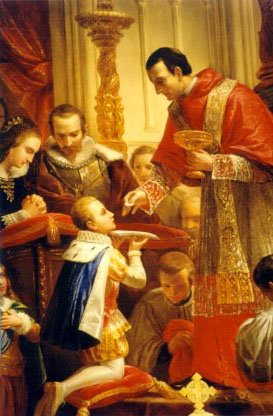
Aloysius returned to Castiglione where he met St Cardinal Charles Borromeo (1538-1584 – feast day 4 November) and from him received First Communion on 22 July 1580. After reading a book about Jesuit missionaries in India, Aloysius felt strongly that he wanted to become a missionary. He started practising by teaching catechism classes to young boys in Castiglione in the summers. He also repeatedly visited the houses of the Capuchin friars and the Barnabites located in Casale Monferrato, the capital of the Gonzaga-ruled Duchy of Montferrat where the family spent the winter. He also adopted an ascetic lifestyle.
St Aloysius receives his First Holy Communion from St Charles Borromeo
The family was called to Spain in 1581 to assist the Holy Roman Empress Maria of Austria. They arrived in Madrid in March 1582, where Aloysius and Rodolfo became pages for the young Infante Diego. Aloysius started thinking in earnest about joining a religious order. He had considered joining the Capuchins but he had a Jesuit confessor in Madrid and decided instead to join that order. His mother agreed to his request but his father was furious and prevented him from doing so.
In July 1584, a year and a half after the Infante’s death, the family returned to Italy. Aloysius still wanted to become a priest but several members of his family worked hard to persuade him to change his mind. When they realised there was no way to make him give up his plan, they tried to persuade him to become a secular priest and offered to arrange for a bishopric for him. If he were to become a Jesuit he would renounce any right to his inheritance or status in society. His family’s attempts to dissuade him failed, Aloysius was not interested in higher office and still wanted to become a missionary.
In November 1585, Aloysius gave up all rights of inheritance, which was confirmed by the emperor. He went to Rome and, because of his noble birth, gained an audience with Pope Sixtus V. Following a brief stay at the Palazzo Aragona Gonzaga, the Roman home of his cousin, Cardinal Scipione Gonzaga, on 25 November 1585, he was accepted into the novitiate of the Society of Jesus in Rome. During this period, he was asked to moderate his asceticism somewhat and to be more social with the other novices.
Aloysius’ health continued to cause problems. In addition to the kidney disease, he also suffered from a skin disease, chronic headaches and insomnia. He was sent to Milan for studies but after some time he was sent back to Rome because of his health. On 25 November 1587, he took the three religious vows of chastity, poverty and obedience. In February and March 1588, he received minor orders and started studying theology to prepare for ordination. In 1589, he was called to Mantua to mediate between his brother Rodolfo and the Duke of Mantua. He returned to Rome in May 1590. It is said that later that year, he had a vision in which the Archangel Gabriel told him that he would die within a year.
In 1591, a plague broke out in Rome. The Jesuits opened a hospital for the stricken and Aloysius volunteered to work there. After begging alms for the victims, Aloysius began working with the sick, carrying the dying from the streets into a hospital founded by the Jesuits. There he washed and fed the plague victims, preparing them as best he could to receive the sacraments. But though he threw himself into his tasks, he privately confessed to his spiritual director, Fr Robert Bellarmine (St Robert Bellarmine (1542-1621) Doctor of the Church), that his constitution was revolted by the sights and smells of the work; he had to work hard to overcome his physical repulsion.
At the time, many of the younger Jesuits had become infected with the disease, and so Aloysius’s superiors forbade him from returning to the hospital. But Aloysius—long accustomed to refusals from his father—persisted and requested permission to return, which was granted. Eventually he was allowed to care for the sick but only at another hospital, called Our Lady of Consolation, where those with contagious diseases were not admitted. While there, Aloysius lifted a man out of his sickbed, tended to him, and brought him back to his bed. But the man was infected with the plague. Aloysius grew ill and was bedridden by 3 March 1591, a few days before his 23rd birthday.
Aloysius rallied for a time but as fever and a cough set in, he declined for many weeks. It seemed certain that he would die in a short tie, and he was given Extreme Unction. While he was ill, he spoke several times with his confessor, the cardinal and later saint, Robert Bellarmine. Aloysius had another vision and told several people that he would die on the Octave of the feast of Corpus Christi. On that day, 21 June 1591, he seemed very well in the morning but insisted that he would die before the day was over. As he began to grow weak, Bellarmine gave him the last rites and recited the prayers for the dying. He died just before midnight. As Fr Tylenda tells the story, “When the two Jesuits came to his side, they noticed a change in his face and realised that their young Aloysius was dying. His eyes were fixed on the crucifix he held in his hands and as he tried to pronounce the name of Jesus he died.”
Aloysius was buried in the Church of the Most Holy Annunciation, which later became the church of Saint Ignatius of Loyola (Sant’Ignazio) in Rome. His name was changed to “Robert” before his death, in honour of his confessor. Many people considered him to be a saint soon after his death and his remains were moved into the Sant’Ignazio church, where they now rest in an urn of lapis lazuli in the Lancellotti Chapel. His head was later translated to the basilica bearing his name in Castiglione delle Stiviere. He was beatified only fourteen years after his death by Pope Paul V, on 19 October 1605. On 31 December 1726, he was canonised together with another young Jesuit novice, Stanislaus Kostka, by Pope Benedict XIII.
Purity was his notable virtue. The Carmelite mystic St Maria Magdalena de Pazzi had a vision of him on 4 April 1600. She described him as radiant in glory because of his “interior works,” a hidden martyr for his great love of God.
Our Morning Offering 18 June – Monday of the Eleventh Week in Ordinary Time, Year B
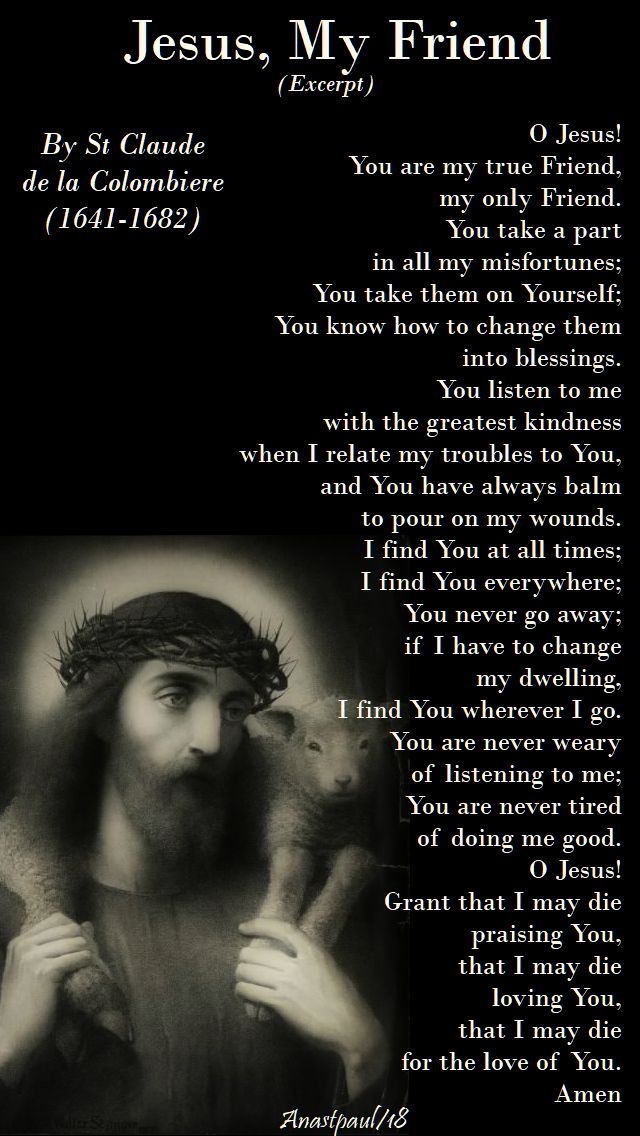
Excerpt from Jesus, My Friend By St Claude de la Colombiere (1641-1682)
O Jesus!
You are my true Friend,
my only Friend.
You take a part in all my misfortunes;
You take them on Yourself;
You know how to change them into blessings.
You listen to me with the greatest kindness
when I relate my troubles to You,
and You have always balm to pour on my wounds.
I find You at all times;
I find You everywhere;
You never go away;
if I have to change my dwelling,
I find You wherever I go.
You are never weary of listening to me;
You are never tired of doing me good.
O Jesus!
Grant that I may die praising You,
that I may die loving You,
that I may die for the love of You.
Amen
Quote/s of the Day – 15 June – June, the Month of the Sacred Heart
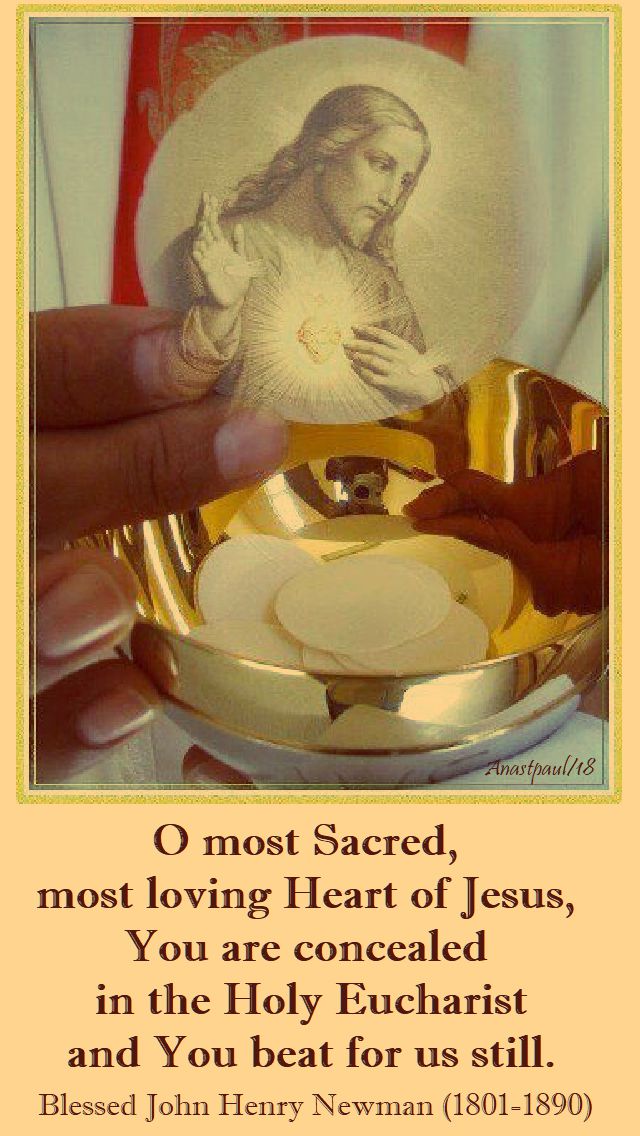
“O most Sacred, most loving Heart of Jesus, You are concealed in the Holy Eucharist and You beat for us still.”
Blessed John Henry Newman (1801-1890)
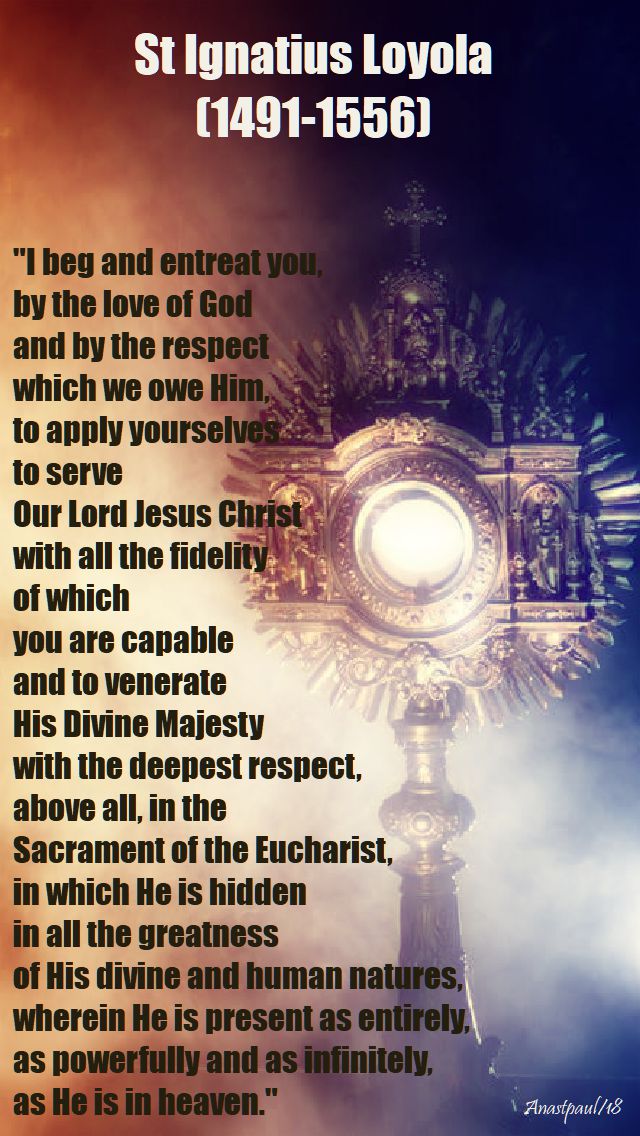
“I beg and entreat you, by the love of God and by the respect which we owe Him, to apply yourselves to serve Our Lord Jesus Christ with all the fidelity of which you are capable and to venerate His Divine Majesty with the deepest respect, above all in the Sacrament of the Eucharist, in which He is hidden in all the greatness of His divine and human natures, wherein He is present as entirely, as powerfully and as infinitely, as He is in heaven.”
Our Morning Offering – 14 June – June the Month of the Sacred Heart of Jesus
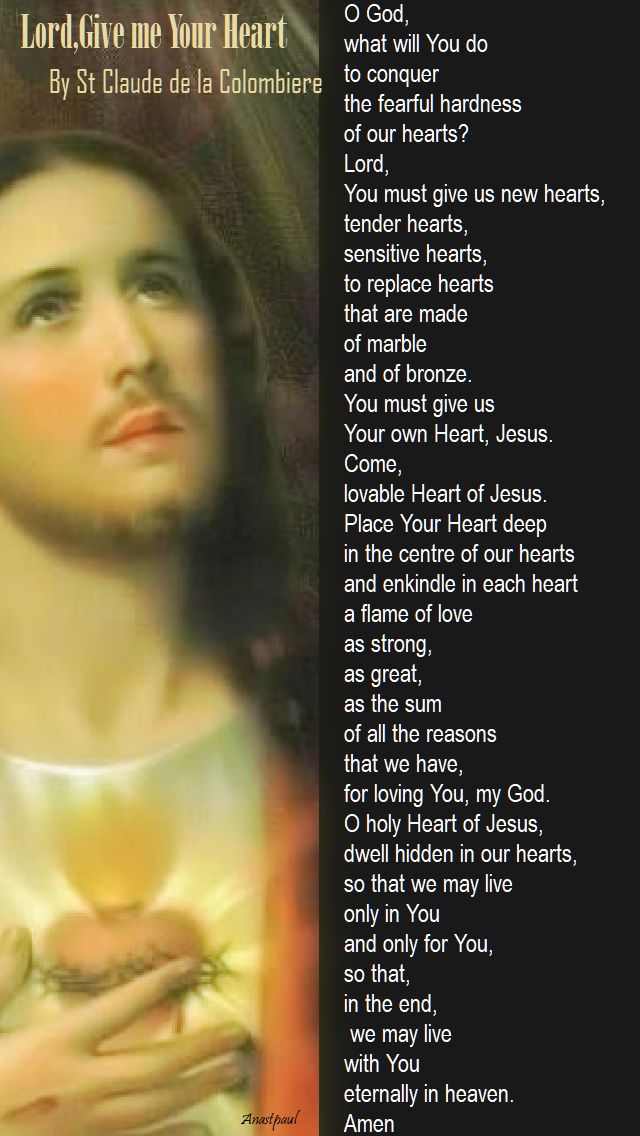
Lord Give me Your Heart! By St Claude de la Colombiere
O God, what will You do to conquer
the fearful hardness of our hearts?
Lord, You must give us new hearts,
tender hearts,
sensitive hearts,
to replace the hearts that are made of
marble and of bronze.
You must give us Your own Heart, Jesus.
Come, lovable Heart of Jesus.
Place Your Heart
deep in the centre of our hearts
and enkindle in each heart a flame of love
as strong, as great,
as the sum of all the reasons
I have for loving You, my God.
O Holy Heart of Jesus,
dwell hidden in my heart,
so that I may live only in You
and only for You,
so that, in the end,
I may live with You
eternally in heaven.
Amen
Our Morning Offering – 10 June – Tenth Sunday of the Year B
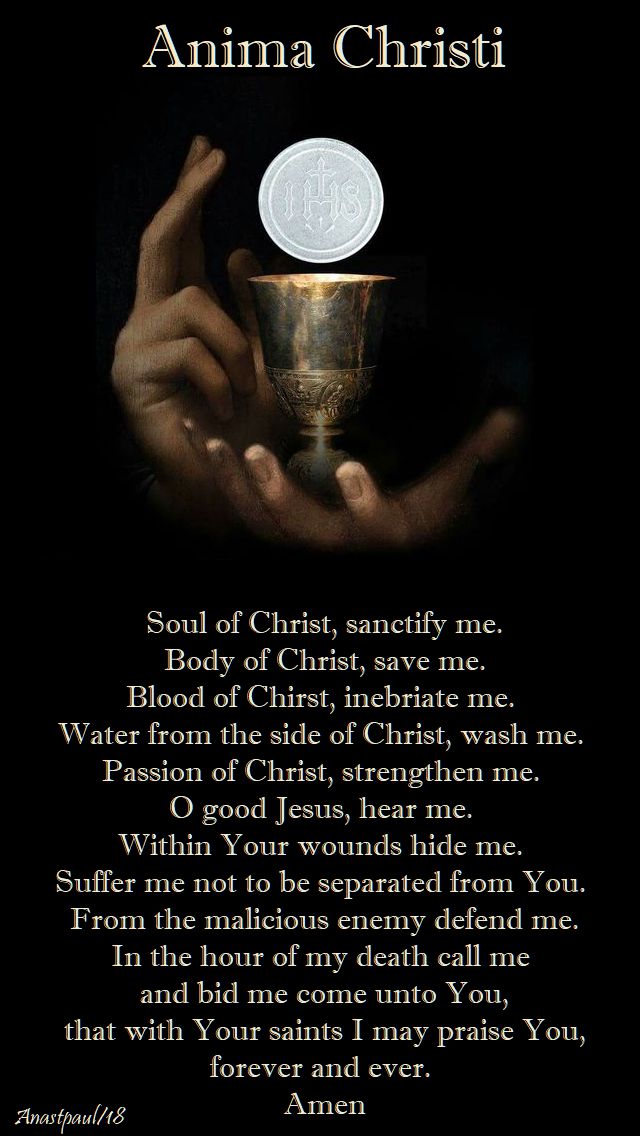
Anima Christi
Soul of Christ, sanctify me.
Body of Christ, save me.
Blood of Chirst, inebriate me.
Water from the side of Christ, wash me.
Passion of Christ, strengthen me.
O good Jesus, hear me.
Within Your wounds hide me.
Suffer me not to be separated from You.
From the malicious enemy defend me.
In the hour of my death call me
and bid me come unto You,
that with Your saints I may praise You,
forever and ever.
Amen
This well known Catholic prayer dates to the early fourteenth century and was possibly written by Pope John XXII but its authorship remains uncertain. The prayer takes its name from its Latin incipit, meaning “Soul of Christ”. The Anima Christi was popularly believed to have been composed by St Ignatius of Loyola (1491-1556), as he puts it at the beginning of his Spiritual Exercises and often refers to it but it was so well known and so popular at the time of St Ignatius, that in the first edition of his Spiritual Exercises he merely mentions it, evidently supposing that the reader would know it. In later editions, it was printed in full. It was by assuming that everything in the book was written by St Ignatius that it came to be looked upon as his composition.
Our Morning Offering – 3 June 2018 – The Solemnity of Corpus Christi
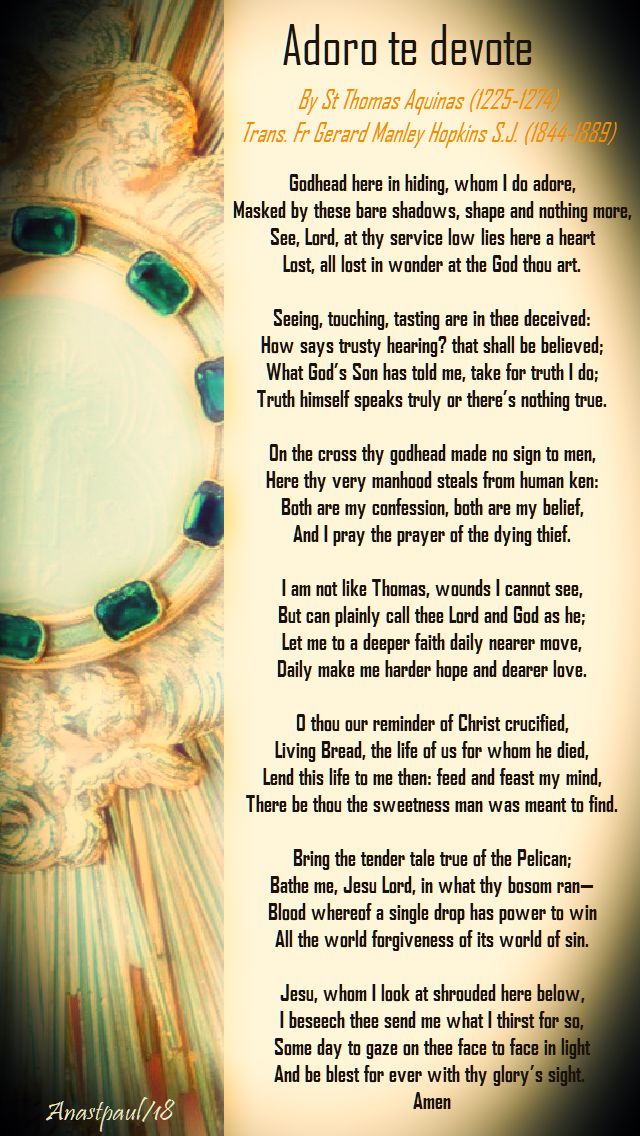
Adoro te devote
By St Thomas Aquinas (1225-1274) Doctor of the Church
Trans. Fr Gerard Manley Hopkins S.J. (1844-1889)
Godhead here in hiding, whom I do adore,
Masked by these bare shadows, shape and nothing more,
See, Lord, at thy service low lies here a heart
Lost, all lost in wonder at the God thou art.
Seeing, touching, tasting are in thee deceived:
How says trusty hearing? that shall be believed;
What God’s Son has told me, take for truth I do;
Truth himself speaks truly or there’s nothing true.
On the cross thy godhead made no sign to men,
Here thy very manhood steals from human ken:
Both are my confession, both are my belief,
And I pray the prayer of the dying thief.
I am not like Thomas, wounds I cannot see,
But can plainly call thee Lord and God as he;
Let me to a deeper faith daily nearer move,
Daily make me harder hope and dearer love.
O thou our reminder of Christ crucified,
Living Bread, the life of us for whom he died,
Lend this life to me then: feed and feast my mind,
There be thou the sweetness man was meant to find.
Bring the tender tale true of the Pelican;
Bathe me, Jesu Lord, in what thy bosom ran—
Blood whereof a single drop has power to win
All the world forgiveness of its world of sin.
Jesu, whom I look at shrouded here below,
I beseech thee send me what I thirst for so,
Some day to gaze on thee face to face in light
And be blest for ever with thy glory’s sight.
Amen
Original Latin
Adoro te devote, latens Deitas,
Quæ sub his figuris vere latitas;
Tibi se cor meum totum subjicit,
Quia te contemplans totum deficit.
Visus, tactus, gustus in te fallitur,
Sed auditu solo tuto creditur.
Credo quidquid dixit Dei Filius;
Nil hoc verbo veritátis verius.
In cruce latebat sola Deitas,
At hic latet simul et Humanitas,
Ambo tamen credens atque confitens,
Peto quod petivit latro pœnitens.
Plagas, sicut Thomas, non intueor:
Deum tamen meum te confiteor.
Fac me tibi semper magis credere,
In te spem habere, te diligere.
O memoriale mortis Domini,
Panis vivus, vitam præstans homini,
Præsta meæ menti de te vívere,
Et te illi semper dulce sapere.
Pie Pelicane, Jesu Domine,
Me immundum munda tuo sanguine:
Cujus una stilla salvum facere
Totum mundum quit ab omni scelere.
Jesu, quem velatum nunc aspicio,
Oro, fiat illud quod tam sitio:
Ut te revelata cernens facie,
Visu sim beátus tuæ gloriæ.
Amen
Our Morning Offering- 1 May – Tuesday of the Fifth Week of Eastertide, the Memorial of St Joseph the Worker and the 1st day of the Month of Mary
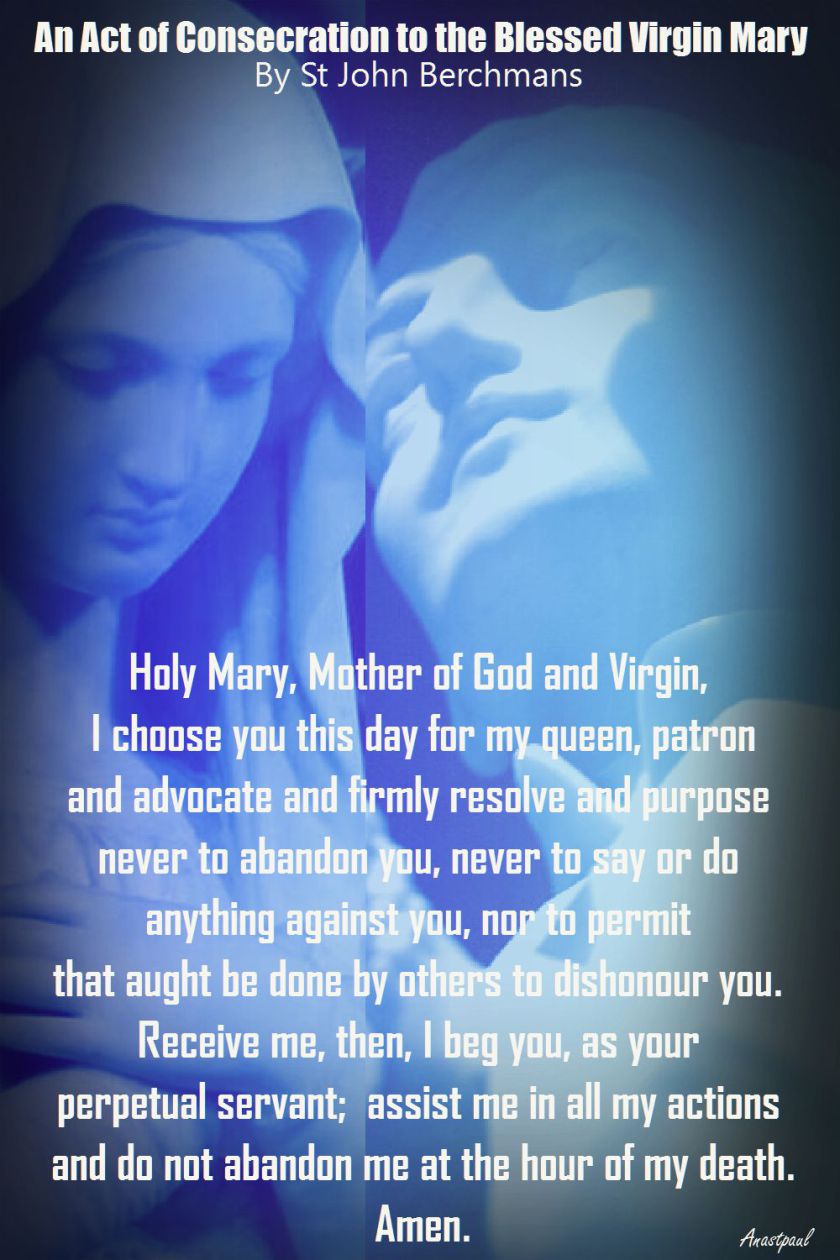
An Act of Consecration to the Blessed Virgin Mary By St John Berchmans S.J. (1599-1621)
Holy Mary, Mother of God and Virgin,
I choose you this day for my queen,
patron and advocate
and firmly resolve and purpose,
never to abandon you,
never to say or do anything,
against you,
nor to permit that aught be done by others,
to dishonour you.
Receive me, then, I beg you,
as your perpetual servant,
assist me in all my actions
and do not abandon me
at the hour of my death.
Amen
Quote/s of the Day – 30 April – Monday of the Fifth Week of Eastertide and the Memorial of St Joseph Benedict Cottolengo (1786-1842) – known as “The Labourer of Divine Providence”.
Speaking of: Recognising God’s Hand
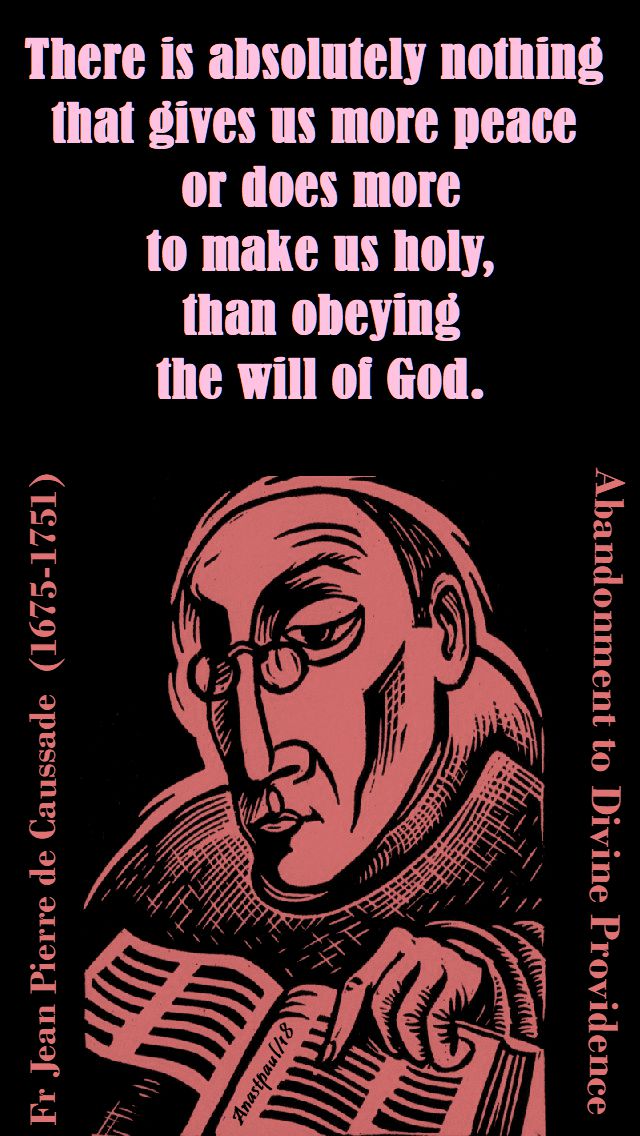
“There is absolutely nothing that gives us more peace, or does more to make us holy, than obeying the will of God.”
“God makes all chosen souls, pass through a fearful time of poverty, misery and nothingness. He desires to destroy in them gradually, all the help and confidence they derive from themselves, so that He may be their sole source of support, their confidence, their hope, their only resource.”
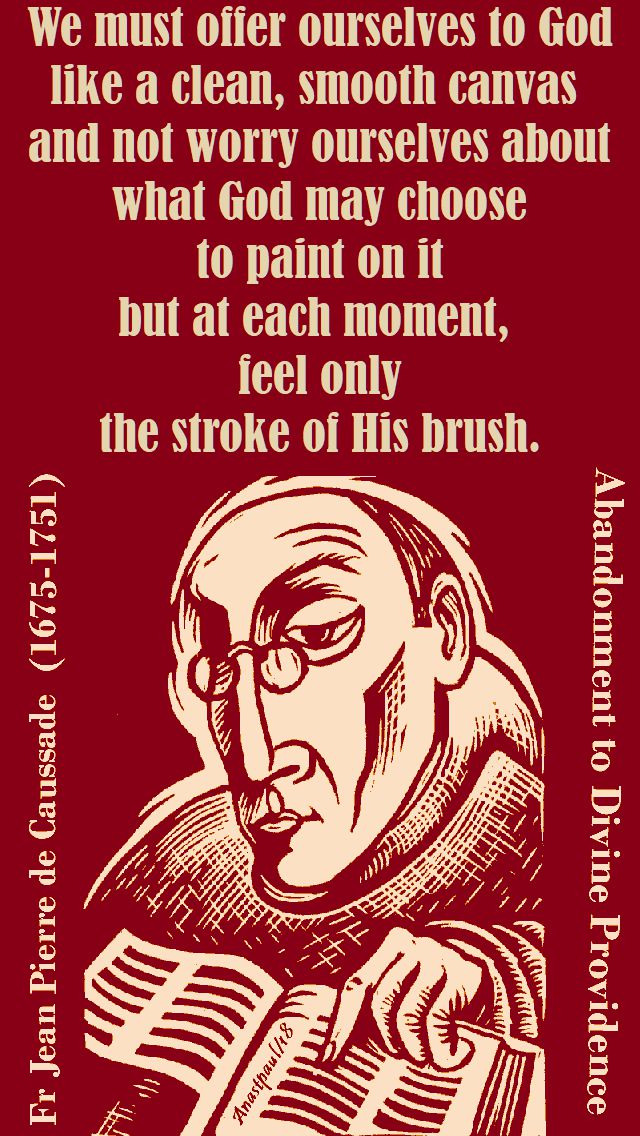
“We must offer ourselves to God like a clean, smooth canvas and not worry ourselves about what God may choose to paint on it but at each moment, feel only, the stroke of His brush.”
Fr Jean Pierre de Caussade (1675-1751)
‘Abandonment to Divine Providence’
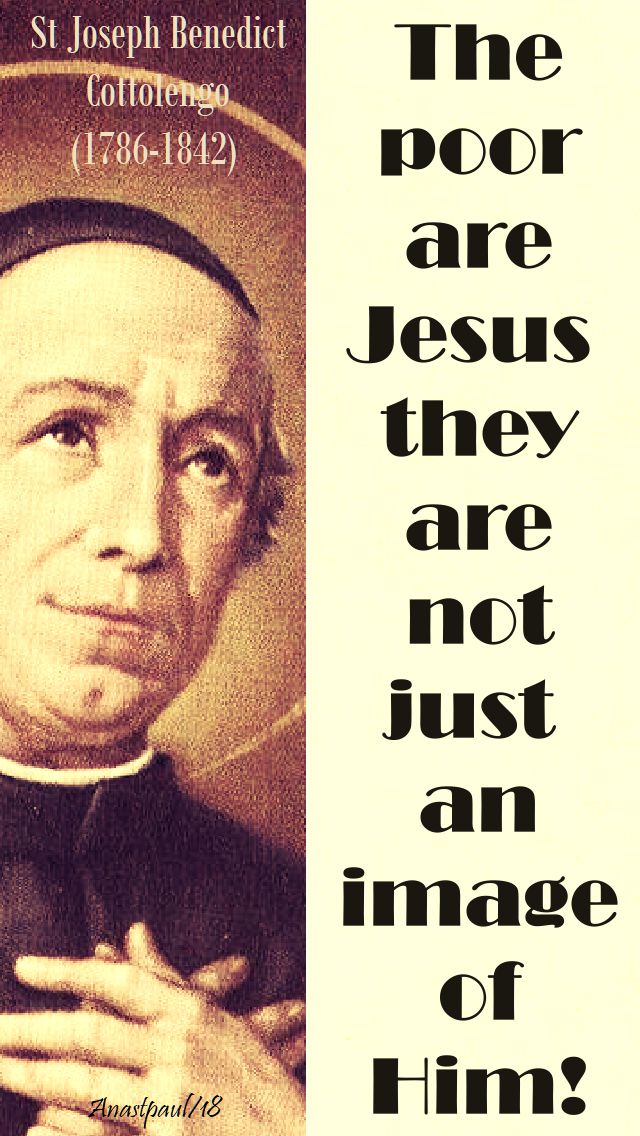
“The poor are Jesus they are not just an image of Him.”
St Joseph Benedict Cottolengo (1786-1842)
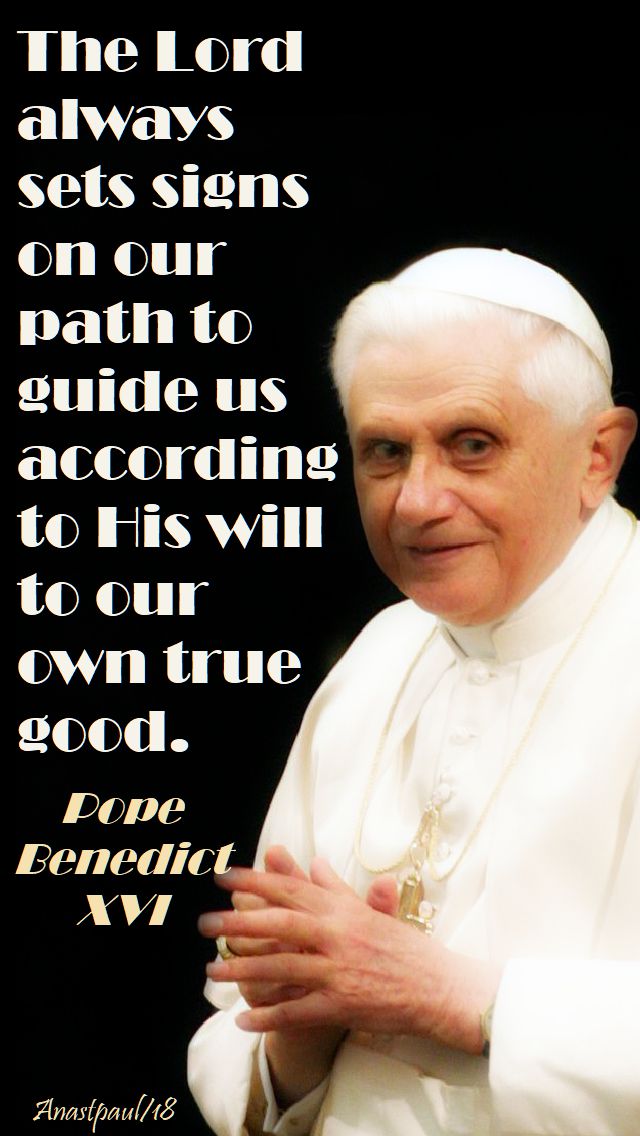
“The Lord always sets signs on our path to guide us according to His will, to our own true good.”
Pope Benedict XVI
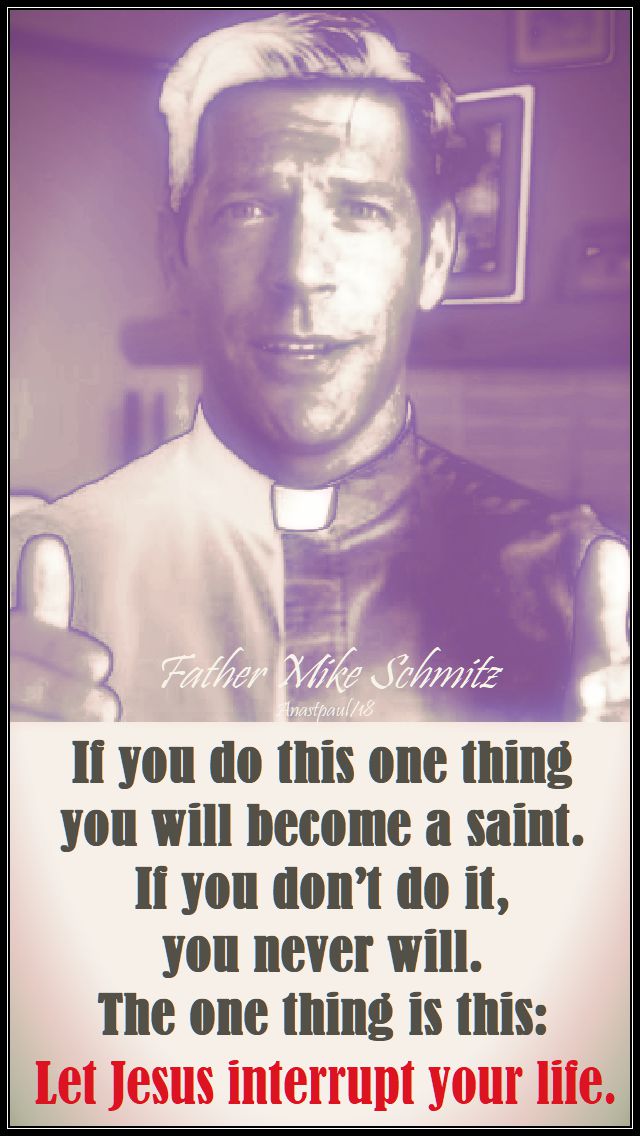
“If you do this one thing you will become a saint. If you don’t do it, you never will. The one thing is this: Let Jesus interrupt your life.”
Our Morning Offering – 30 April – Monday of the Fifth Week of Eastertide and the Memorial of St Joseph Benedict Cottolengo (1786-1842) – known as “The Labourer of Divine Providence”.
Prayer of Abandonment – Lord, I Glorify You in Everything By Fr Jean Pierre de Caussade S.J. (1675-1751)
Lord, may Your kingdom come into my heart
to sanctify me, nourish me and purify me.
How insignificant is the passing moment
to the eye without faith!
But how important each moment is,
to the eye enlightened by faith!
How can we deem insignificant anything
which has been caused by You?
Every moment and every event, is guided by You,
and so contains Your infinite greatness.
So, Lord, I glorify You in everything
that happens to me.
In whatever manner You make me live and die,
I am content.
Events please me for their own sake,
regardless of their consequences,
because Your action lies behind them.
Everything is heaven to me,
because all my moments manifest Your love.
Amen
Our Morning Offering – 26 April – Thursday of the Fourth Week of Eastertide
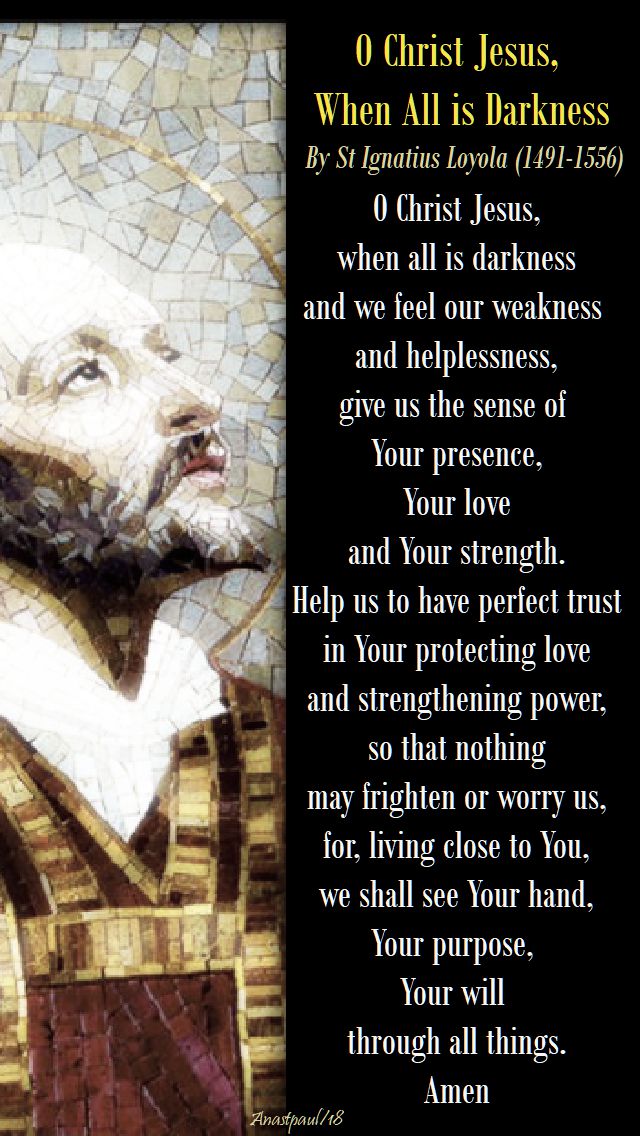
O Christ Jesus, When All is Darkness By St Ignatius Loyola (1491-1556)
O Christ Jesus,
when all is darkness
and we feel our weakness
and helplessness,
give us the sense of
Your presence,
Your love
and Your strength.
Help us to have perfect trust
in Your protecting love
and strengthening power,
so that nothing
may frighten or worry us,
for, living close to You,
we shall see Your hand,
Your purpose,
Your will
through all things.
Amen
Our Morning Offering – 20 April – Friday of the Third Week of Eastertide
Jesus, Help Me! By St Claude de la Colombière S.J. (1641-1682)
Jesus, Help Me!
In every need let me come to You
with humble trust, saying,
Jesus, help me!
In all my doubts, perplexities
and temptations,
Jesus, help me!
In hours of loneliness,
weariness and trials,
Jesus, help me!
In the failure of my plans and hopes;
in disappointments, troubles and sorrows,
Jesus, help me!
When my heart is cast down by failure,
at seeing no good come from my efforts,
Jesus, help me!
When others fail me
and Your grace alone can assist me,
Jesus, help me!
When I throw myself on Your tender love
as Brother and Saviour,
Jesus, help me!
When I feel impatient
and my cross irritates me,
Jesus, help me!
When sickness and loneliness
overcome me,
Jesus, help me!
Always, in weakness, falls
and shortcomings of every kind,
Jesus, help me and never forsake me.
Amen
Quote/s of the Day – 14 April – Saturday of the Second Week of Eastertide
“Speaking of Divine Providence”
“To escape the distress caused by regret for the past or fear about the future, this is the rule to follow: leave the past to the infinite mercy of God, the future to His good Providence, give the present wholly to His love by being faithful to His grace.”
“But,” say you, “what will become of me if . . . ?” This is indeed a temptation of the enemy. Why should you be so ingenious in tormenting yourself beforehand about something which perhaps will never happen? Sufficient for the day is the evil thereof. Uneasy forebodings do us much harm; why do you so readily give way to them? We make our own troubles and what do we gain by it? but lose, instead, so much both for time and eternity.“
“never lose sight of the great and consoling truth that nothing happens in this world but by the command of God, or at least, with His divine permission; and that, whatever He wills, or permits turns infallibly to the advantage of those, who are submissive and resigned.”
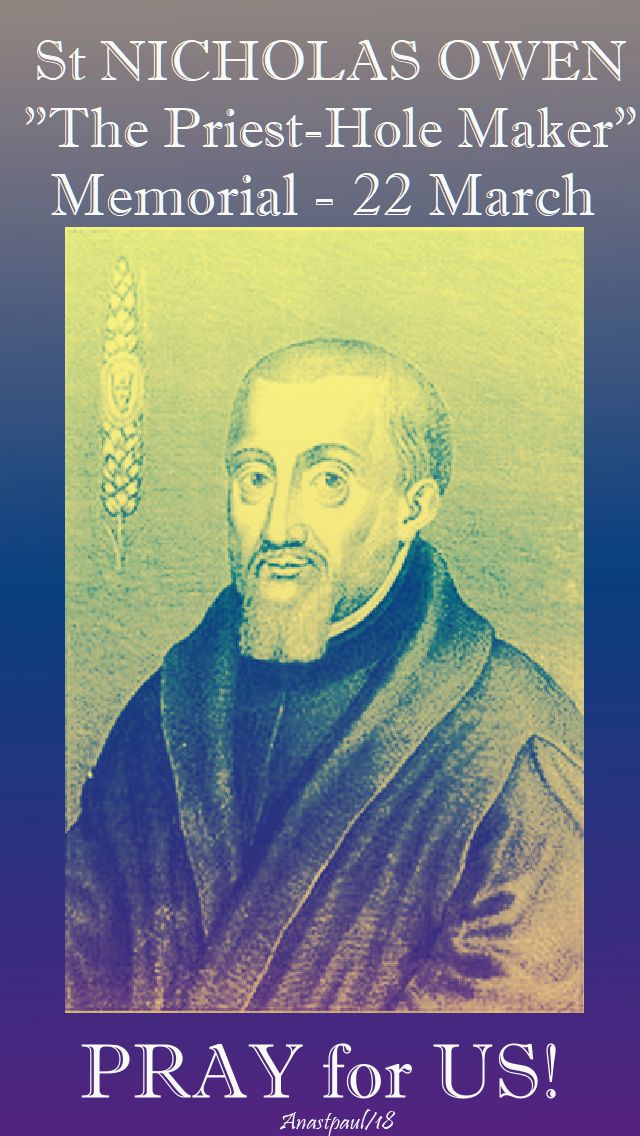
Thought for the Day- 22 March – The Memorial of St Nicholas Owen S.J. (1562-1606) Martyr – “The Priest Hole Maker”
Saint Nicholas Owen possessed great faith and courage and he is highly respected for this, for he is a Saint. However, what also makes him memorable, is how he used a rather obscure skill and talent for the good of God. His ability to make hiding places ultimately became a tool of God for protecting the Church.
Saint Nicholas reminds us that any of our talents, regardless of how seemingly unusual or unimportant, can be put to good use for the good of God and our neighbour. What are your talents and how can you use them for good?
Prayer
Dear God, please use me to do Your will. St Nicholas Owen, pray for us!
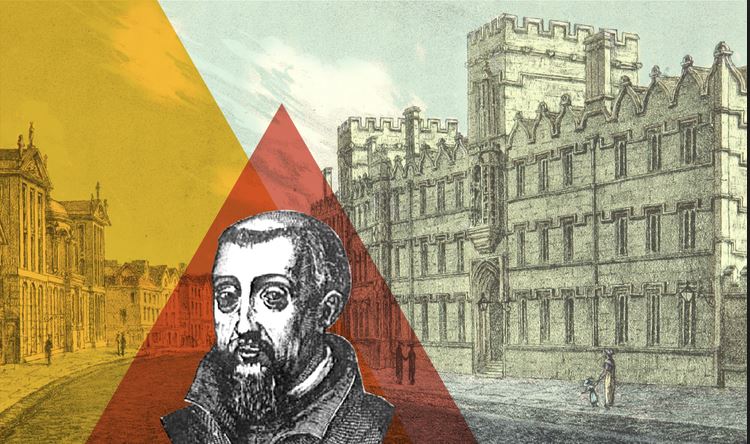
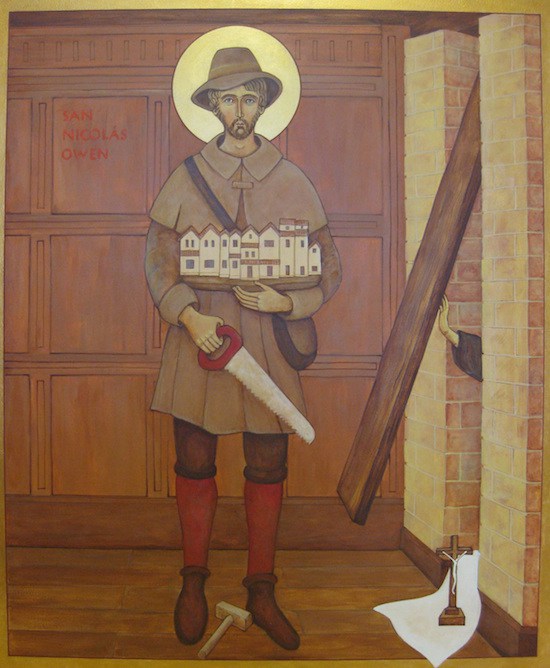
Saint of the Day – 22 March – St Nicholas Owen S.J. (1562-1606) The Priest-Hole Builde, Martyr , Lay Brother of the Society of Jesus, Assistant to St Edmund Campion- born in the 16th century in Oxford, England and was tortured to death on 2 March 1606 in London, England. Also known as • John Owen and • Little John. St Nicholas was a Jesuit lay brother who was the principal designer and builder of priest holes during the reigns of Queen Elizabeth I and King James I of England. He was Canonised on 25 October 1970 by Pope Paul VI.
St Nicholas was born in Oxford, England, around 1562 into a devoutly Catholic family and grew up during the Penal Laws. His father, Walter Owen, was a carpenter and Nicholas was apprenticed as a joiner in February 1577 where he acquired skills that he was to use in building hiding places. Two of his older brothers became priests. St Nicholas served as St Edmund Campion’s (1540-1381) assistant and was arrested for protesting Campion’s innocence. Upon his release, he entered the service of Henry Garnet S.J. around 1588 and for the next 18 years built hiding places for priests in the homes of Catholic families. He frequently travelled from one house to another, under the name of “Little John”, accepting only the necessities of life as payment before starting off for a new project. He also used the aliases “Little Michael”, “Andrewes”, and “Draper”. During the daytime he would work as a travelling carpenter to deflect suspicion.
Owen was only slightly taller than a dwarf and suffered from a hernia, as well as a crippled leg from a horse falling on him. Nevertheless, his work often involved breaking through thick stonework and to minimise the likelihood of betrayal he often worked at night and always alone. Sometimes he built an easily discovered outer hiding place which concealed an inner hiding place. The location of the secret room was known only to himself and the owner of the house. Examples of his work survive at Sawston Hall (Cambs),[Oxborough] [Norfolk] Huddington Court (Worcestershire) and Coughton Hall (Warwickshire). Harvington Hall in Worcestershire has seven “priest holes”. Due to the ingenuity of his craftsmanship, some may still be undiscovered. Below are 3 at Harvington Hall, the first 2 pics are the entrance and inside the hole. The third is another in the staircase.
For many years, St Nicholas worked in the service of the Jesuit priest Henry Garnet and was admitted into the Society of Jesus as a lay brother. He was arrested in 1594 and was tortured at the Poultry Compter but revealed nothing. He was released after a wealthy Catholic family paid a fine on his behalf, the jailers believing that he was merely the insignificant friend of some priests. He resumed his work and is believed to have masterminded the famous escape of Father John Gerard from the Tower of London in 1597.
Early in 1606, St Nicholas was arrested a final time at Hindlip Hall in Worcestershire, giving himself up voluntarily in hope of distracting attention from his master Fr Garnet who was hiding nearby with another priest. Realising just whom they had caught and his value, Secretary of State Robert Cecil exulted: “It is incredible, how great was the joy caused by his arrest… knowing the great skill of Owen in constructing hiding places and the innumerable quantity of dark holes which he had schemed for hiding priests all through England.”
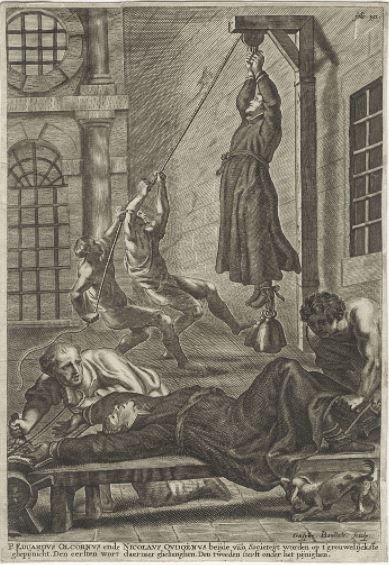
After being committed to the Marshalsea, a prison on the southern bank of the Thames, St Nicholas was then removed to the Tower of London. He was submitted to terrible “examinations” on the Topcliffe rack, dangling from a wall with both wrists held fast in iron gauntlets and his body hanging. As his hernia allowed his intestines to bulge out during this procedure, the rackmaster strapped a circular plate of iron to his stomach. When he remained stubborn, it is believed that he was transferred to the rack, where the greater power of the windlass forced out his hernia which was then slashed by the plate, resulting in his death. He revealed nothing to his inquisitors and died in the night between 1 and 2 March 1606. Father Gerard wrote of him:
I verily think no man can be said to have done more good of all those who laboured in the English vineyard. He was the immediate occasion of saving the lives of many hundreds of persons, both ecclesiastical and secular.
St Nicholas was canonised as one of the Forty Martyrs of England and Wales by Pope Paul VI on 25 October 1970. Catholic stage magicians who practice Gospel Magic consider St Nicholas Owen the patron saint of Illusionists and Escapologists, due to his facility at using “trompe l’oeil” when creating his hideouts and the fact that he engineered an escape from the Tower of London.
There is a Roman Catholic church dedicated to Saint Nicholas Owen in Little Thornton, Lancashire.
Nostra Signora dei Sette Veli / Our Lady of the Seven Veils, Foggia, Italy (11th Century) – 22 March:
In the Cathedral of Foggia one can find an ancient and mysterious image of the Blessed Virgin Mary. This icon, called “Our Lady of the Seven Veils,” once caused Saint Alphonsus to go into ecstasy, which I will describe below. As a young priest, St Pio of Pietreclina would make a visit to this image everyday. In the eleventh century Foggia, Italy was a tiny town perched around the Tavern of the Owl. One day some local farmers saw three flames over a small pond or bog. Intrigued, they dug where the miraculous fire had been and discovered a large “table” buried in the mud. They realised that this “table” was actually a Byzantine icon that had remained somewhat preserved despite being soaked in water and mud. The image was cleaned and then cloaked with new veils. I assume there were seven veils and hence the name but I cannot verify this. The icon was then placed in the local Tavern of the Owl for veneration. Soon the tavern became a place of pilgrimage. In 1080 Robert Guiscard built a church to honour the sacred image. In 1172 the church was expanded by William II “the Good” of Sicily. The “face hole” is all that one can now see of the original wooden icon. It is black and the face is now indiscernible. However, on Maundy Thursday of 1731, the Virgin Mary’s white face appeared in this portal, which was usually black and dark. Saint Alphonsus Liguori heard about apparition and went to Foggia to venerate the Immaculate Mother of the Saviour. He also received an apparition of the Virgin’s face in the small black portal. He described the Blessed Virgin’s face on that occasion as a girl of 13-14 with a white veil. The apparitions of the Virgin’s face on the icon continued until about 1745. As the city grew larger, the church was decorated and enriched. The Normans, Swabians, Angevins, Aragonese, Spaniards and Bourbons considered the church to be one of the most important in Italy. It has served as the site for several royal weddings. Today, the image is said to be covered in seven layers of precious metal and embroidered material – hence the name Madonna of the Seven Veils.
St Avitus of Périgord St Basil of Ancyra St Basilissa of Galatia St Benevenuto Scotivoli of Osimo Bl Bronislaw Komorowski St Callinica of Galatia Bl Clemens August von Galen St Darerca of Ireland St Deghitche St Epaphroditus of Terracina St Failbhe of Iona Bl François-Louis Chartier St Harlindis of Arland Bl Hugolinus Zefferini St Lea of Rome Bl Marian Górecki St Nicholas Owen S.J. (1562-1606)
St Octavian of Carthage St Paul of Narbonne St Saturninus the Martyr St Trien of Killelga
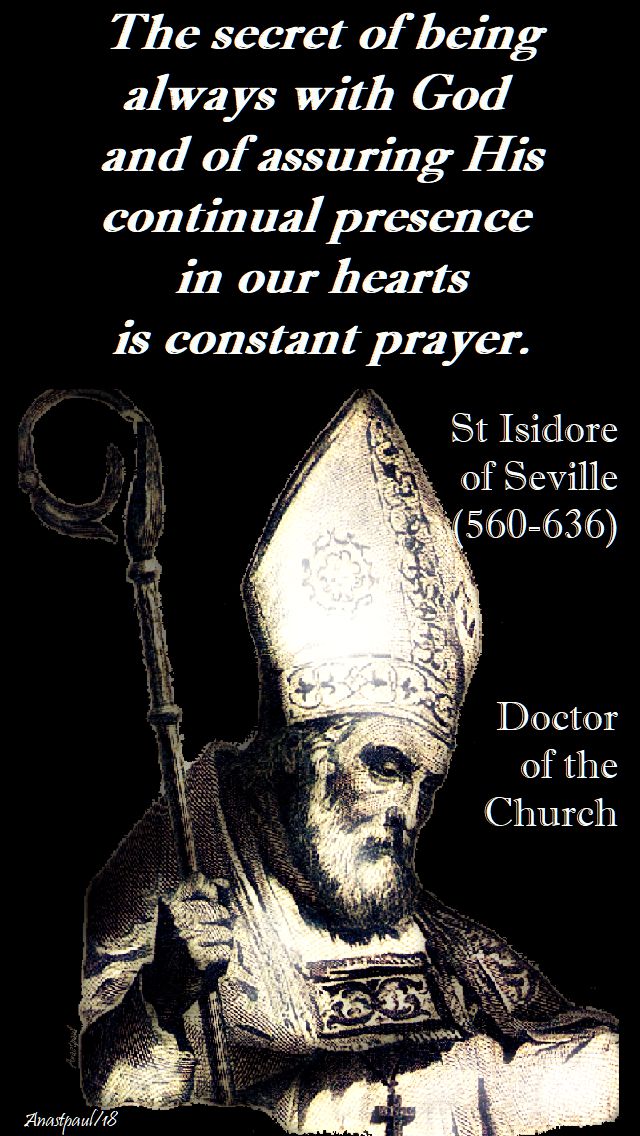
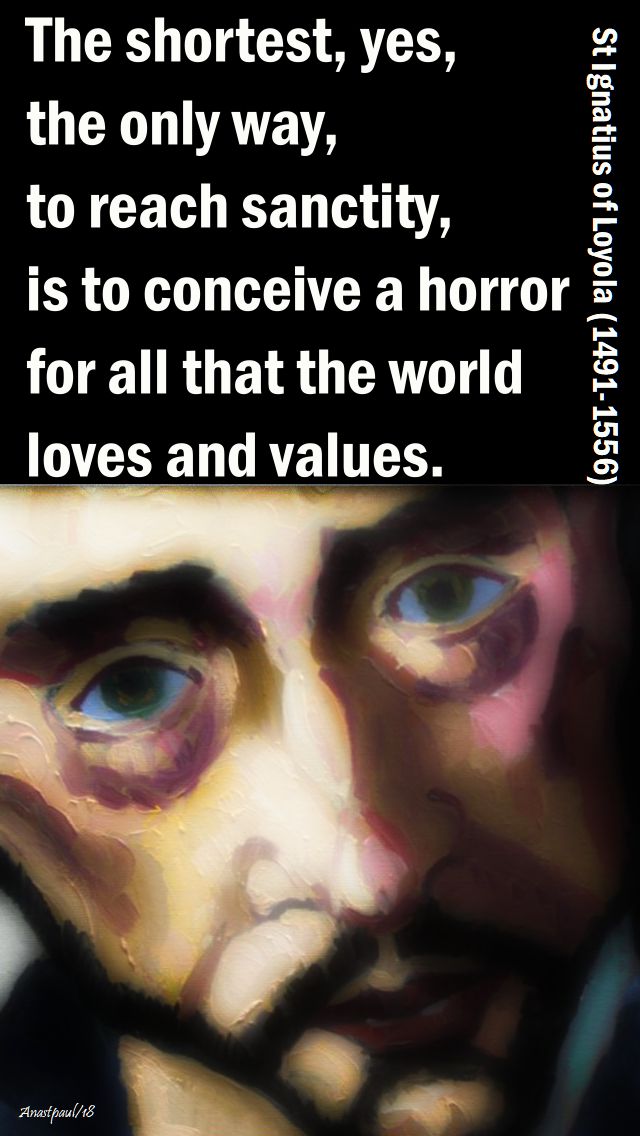
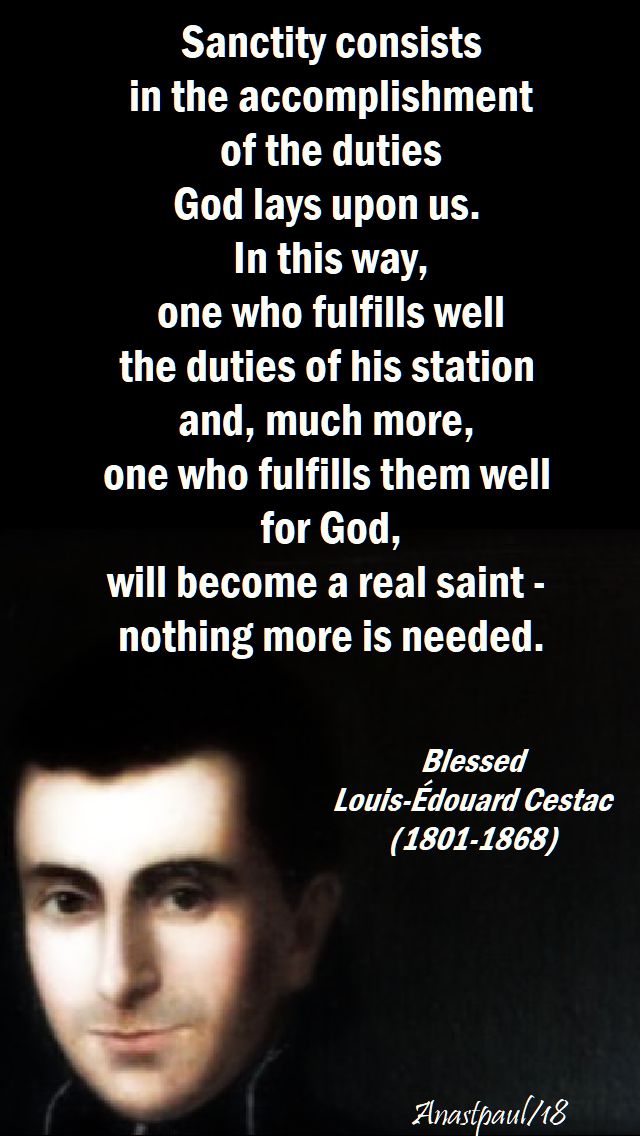
Quote/s of the Day – 21 March “Speaking of Sanctity”
“The secret of being always with God and of assuring His continual presence in our hearts is constant prayer.”
St Isidore of Seville (560-636) Doctor of the Church
“The shortest, yes, the only way, to reach sanctity, is to conceive a horror for all that the world loves and values.”
St Ignatius of Loyola (1491-1556)
“Sanctity consists in the accomplishment of the duties God lays upon us. In this way, one who fulfills well the duties of his station and, much more, one who fulfills them well for God, will become a real saint – nothing more is needed.”
Blessed Louis-Édouard Cestac (1801-1868)
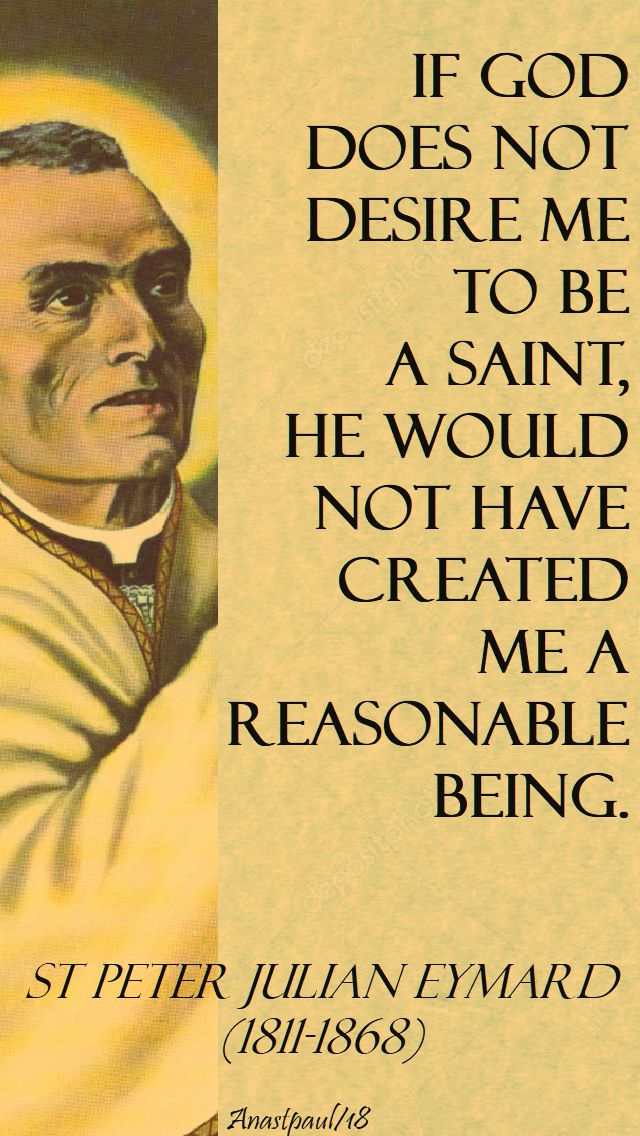
“If God does not desire me to be a saint, He would not have created me a reasonable being.”
St Peter Julian Eymard (1811-1868)
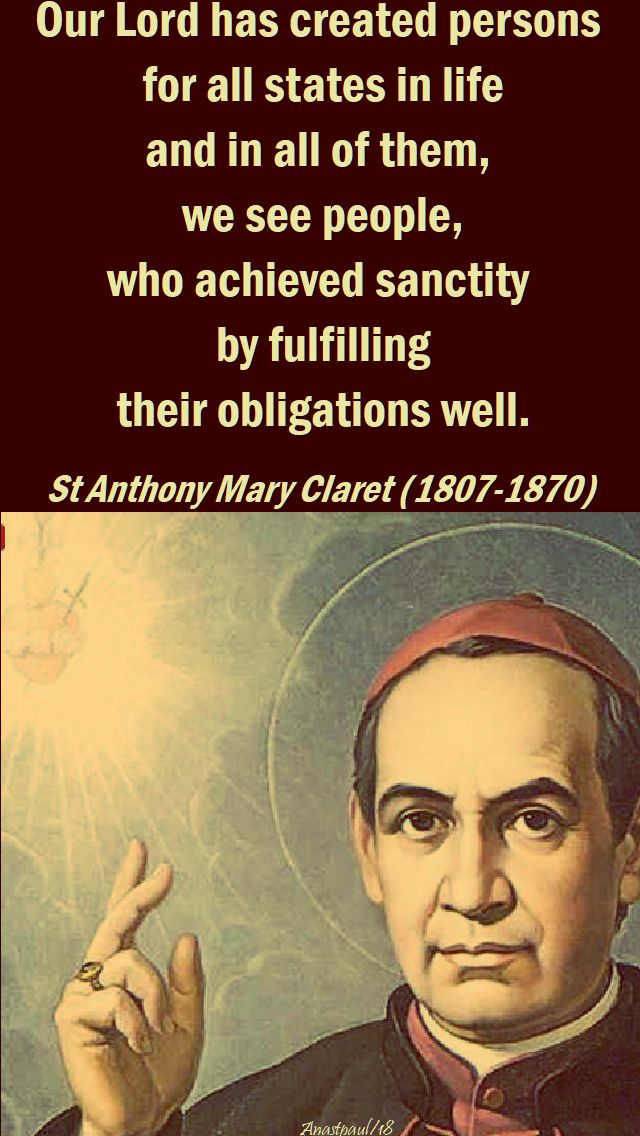
“Our Lord has created persons for all states in life and in all of them, we see people, who achieved sanctity by fulfilling their obligations well.”
St Anthony Mary Claret (1807-1870)
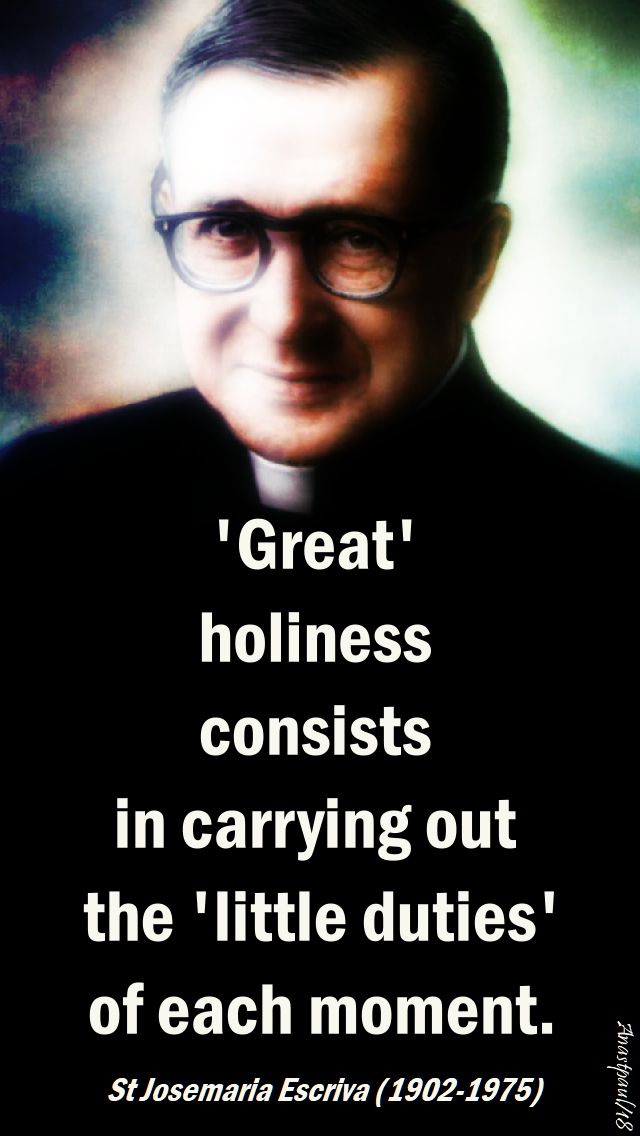
“Great’ holiness consists in carrying out the ‘little duties’ of each moment.”
St Josemaria Escriva, (1902-1975) The Way, 81
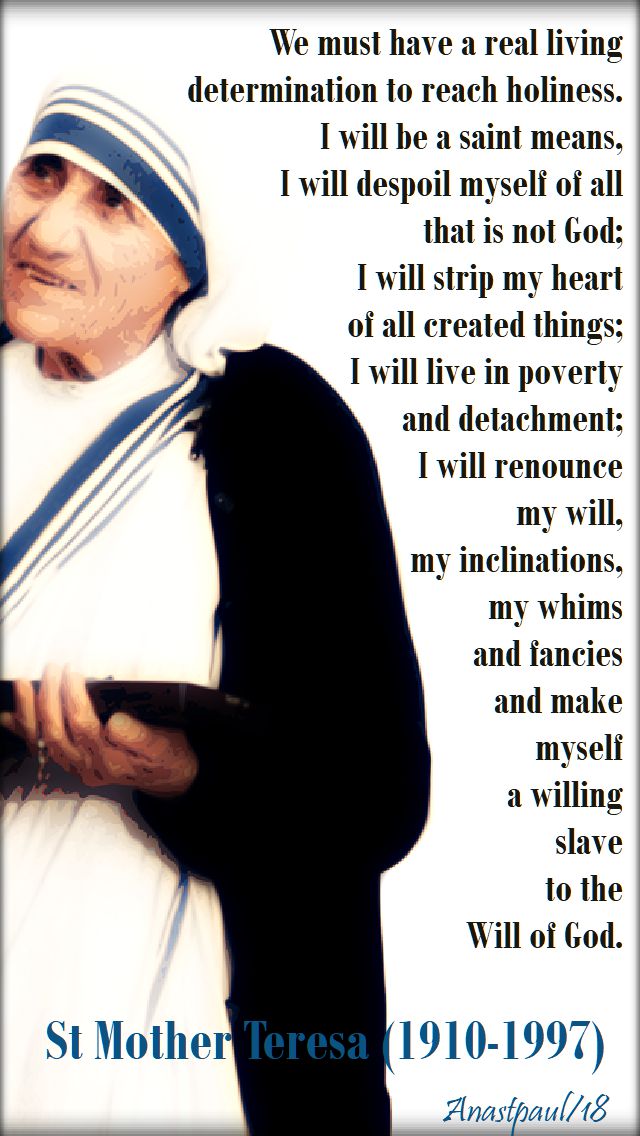
“We must have a real living determination to reach holiness. I will be a saint means, I will despoil myself of all, that is not God; I will strip my heart of all created things; I will live in poverty and detachment; I will renounce my will, my inclinations, my whims and fancies and make myself a willing slave to the will of God.”
Thought for the Day – 16 March – The Memorial of St Jean de Brébeuf (1593-1649) Martyr
St Jean de Brébeuf is a giant of Canadian history. His writings in the Jesuit Relations, for example, offer an invaluable window into life in 17th-century Canada, while his gift for languages, which prompted him to create the first Huron dictionary, earn him the label of Canada’s first ethnographer. Brébeuf’s impact on the Canadian experience looms large; he is credited with everything from coining the term lacrosse to penning the lyrics of The Huron Carol, a Canadian Christmas classic.
One of the most telling details of his life, however, is found in the name the Huron people gave him — Echon. One translation means “healing tree,” a reference to Brébeuf’s height and gentle nature. The alternative translation, however, “one who carries a heavy burden,” speaks to the spiritual life of the most famous of the men known collectively as the Canadian Martyrs.
When the Iroquois tribe infiltrated them, he was captured with many others. A missionary to his death, he addressed the Huron who were captured with him, telling them, ”God is the witness of our sufferings and will soon be our exceeding great reward. Let us die in this faith…Sustain with courage the few remaining torments. They will end our lives. The glory which follows them will never have an end.”It is said he never cried out once but suffered in silence. His heroic virtue of suffering is laid out as an example for us all, to continue to fight the fight and win the race.
One Minute Reflection – 16 March – The Memorial of St Jean de Brébeuf (1593-1649) Martyr and Friday in the 4th Week of Lent 2018
..Let us condemn him to a shameful death, for according to his own words, God will take care of him…Wisdom 2:20 (Today’s First Reading)
REFLECTION – “My God and my Saviour Jesus, what return can I make to You for all the benefits You have conferred on me? I make a vow to You never to fail, on my side, in the grace of martyrdom, if by Your infinite mercy You offer it to me some day.”…St Jean de Brébeuf
PRAYER – Heavenly Father, only in You re we able to stand against our enemies, those within and without. Seeking to follow Your Son, our Saviour, Lord give us strength! Grant we pray, that by the intercession of Your Holy Martyr, St Jean de Brébeuf, we may obtain the courage and be filled with Your Holy Spirit, to go forth in truth, amen.
Our Morning Offering – 16 March – The Memorial of St Jean de Brébeuf (1593-1649)
Jesus, What Can I Give You in Return? Prayer of St Jean de Brébeuf SJ (1593-1649)
Jesus, my Lord and Saviour,
what can I give You in return
for all the favours You have first conferred on me?
I will take from Your hand, the cup of Your sufferings
and call on Your name.
I vow before Your eternal Father and the Holy Spirit,
before Your most holy Mother
and her most chaste spouse,
before the angels, apostles and martyrs,
before my blessed fathers,
Saint Ignatius and Saint Francis Xavier,
in truth, I vow to You, Jesus my Saviour,
that as far as I have the strength,
I will never fail to accept the grace of martyrdom,
if someday You, in Your infinite mercy, should offer it to me,
Your most unworthy servant…
My beloved Jesus,
here and now, I offer my body and blood and life.
May I die only for You, if You will grant me this grace,
since You willingly died for me.
Let me so live that You may grant me
the gift of such a happy death.
In this way, my God and Saviour,
I will take from Your hand, the cup of Your sufferings
and call on Your name, Jesus, Jesus, Jesus!
Amen
You must be logged in to post a comment.