
Quote of the Day – 24 February 2018 – Saturday of the First Week of Lent
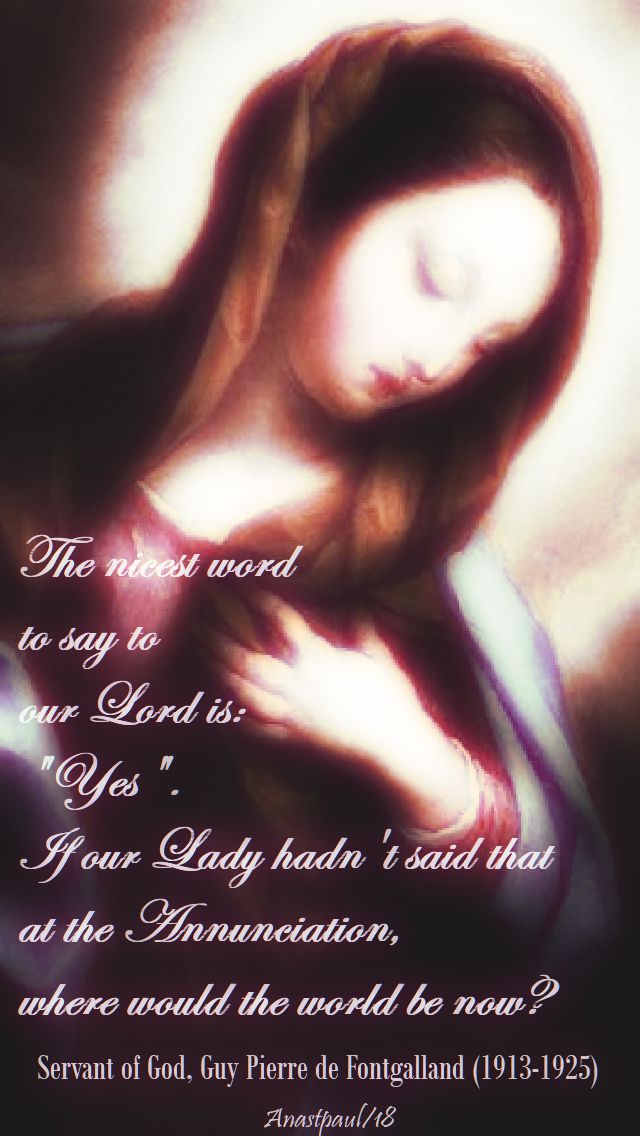
“The nicest word to say to our Lord is: “Yes”.
If our Lady hadn’t said that at the Annunciation,
where would the world be now?”
Quote of the Day – 24 February 2018 – Saturday of the First Week of Lent
“The nicest word to say to our Lord is: “Yes”.
If our Lady hadn’t said that at the Annunciation,
where would the world be now?”
Quote/s of the Day – 21 February – The Memorial of St Peter Damian O.S.B. (1007-1072) and St Robert Southwell S.J. (1561-1595)
“He pours light into our minds,
arouses our desire and gives us strength…
As the soul is the life of the body,
so the Holy Spirit is the life of our souls.”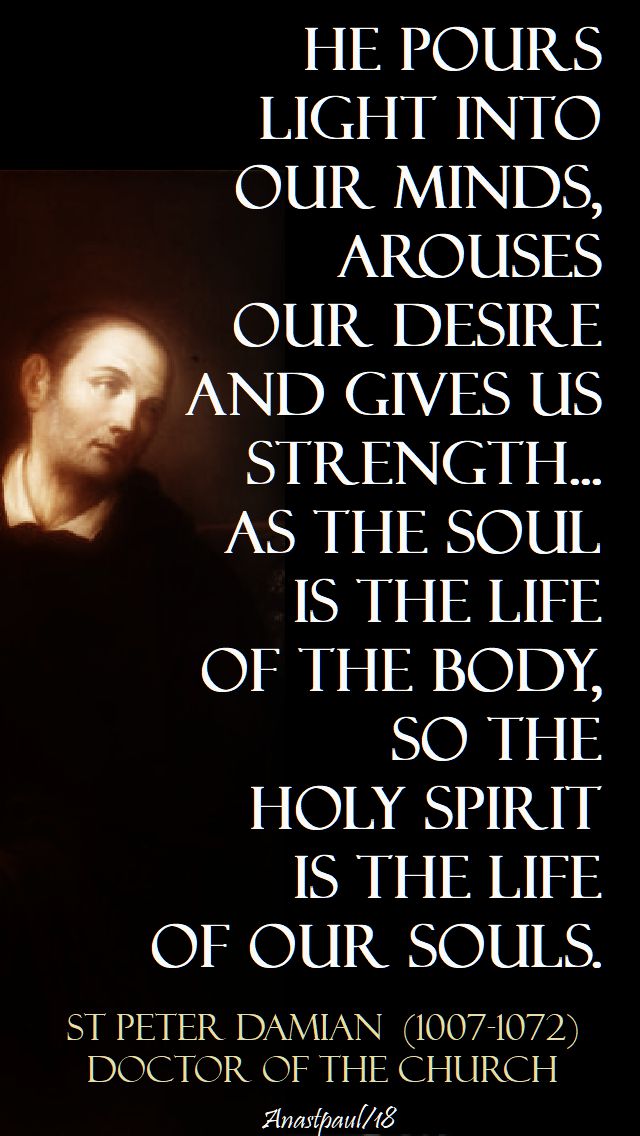
“Through a woman [Eve]
a curse fell upon the earth;
through a woman [Mary] as well,
there returned to the earth a blessing.”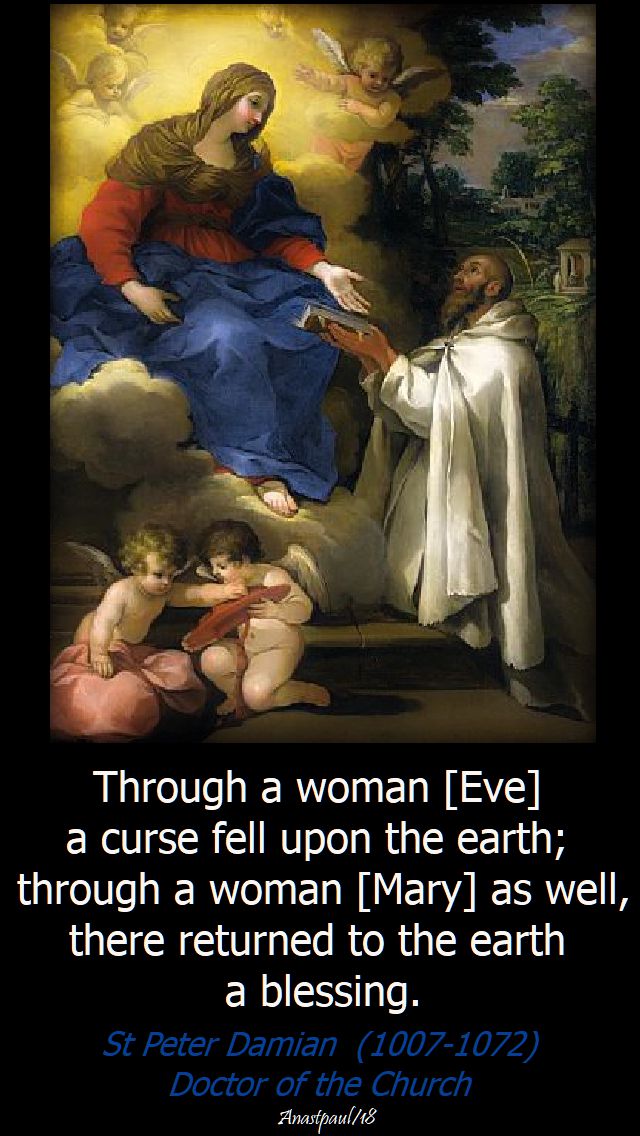
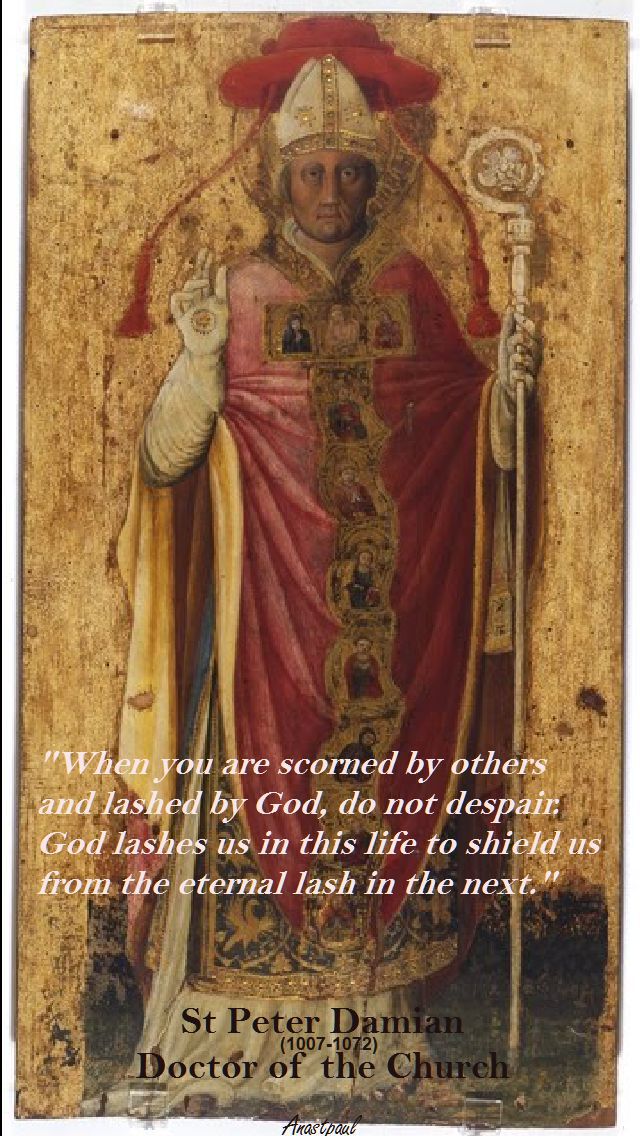
“When you are scorned by others
and lashed by God, do not despair.
God lashes us in this life,
to shield us from the eternal lash in the next.”
“God gave Himself to you:
give yourself to God.”
“Where sin was hatched, let tears now wash the nest.”
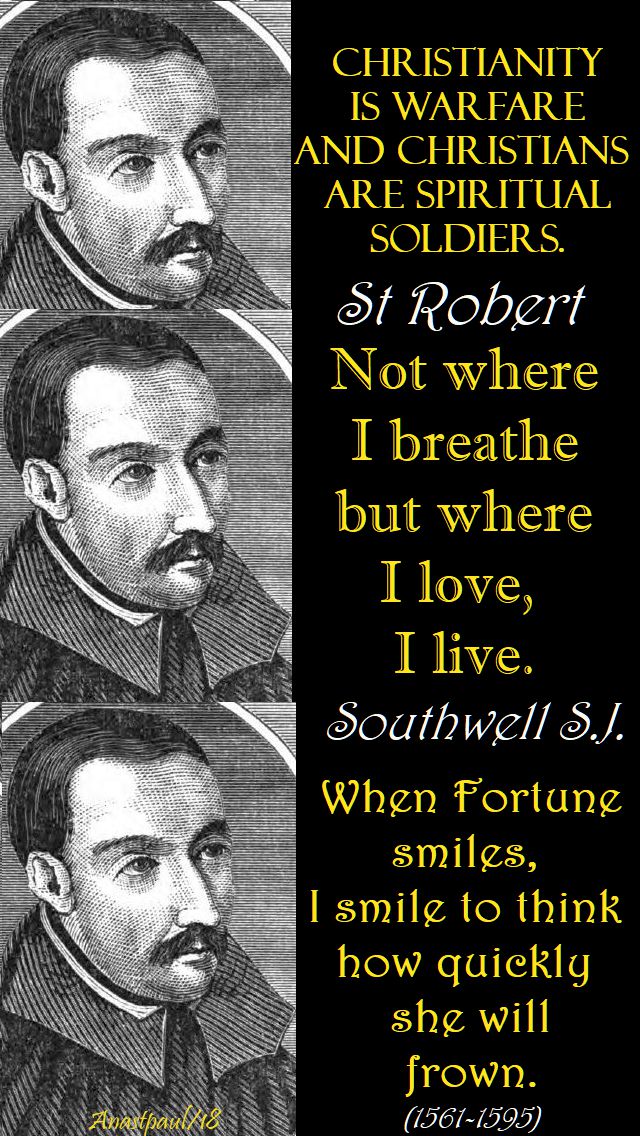
“Christianity is warfare
and Christians are spiritual soldiers.”
“Not where I breathe
but where I love,
I live.”
“When Fortune smiles,
I smile to think, how quickly she will frown.”
Quote/s of the Day – 20 February 2018 -The First Memorial of Saints Francisco (1908-1919) and Jacinta (1910-1920) – “The Shepherds of Fatima”
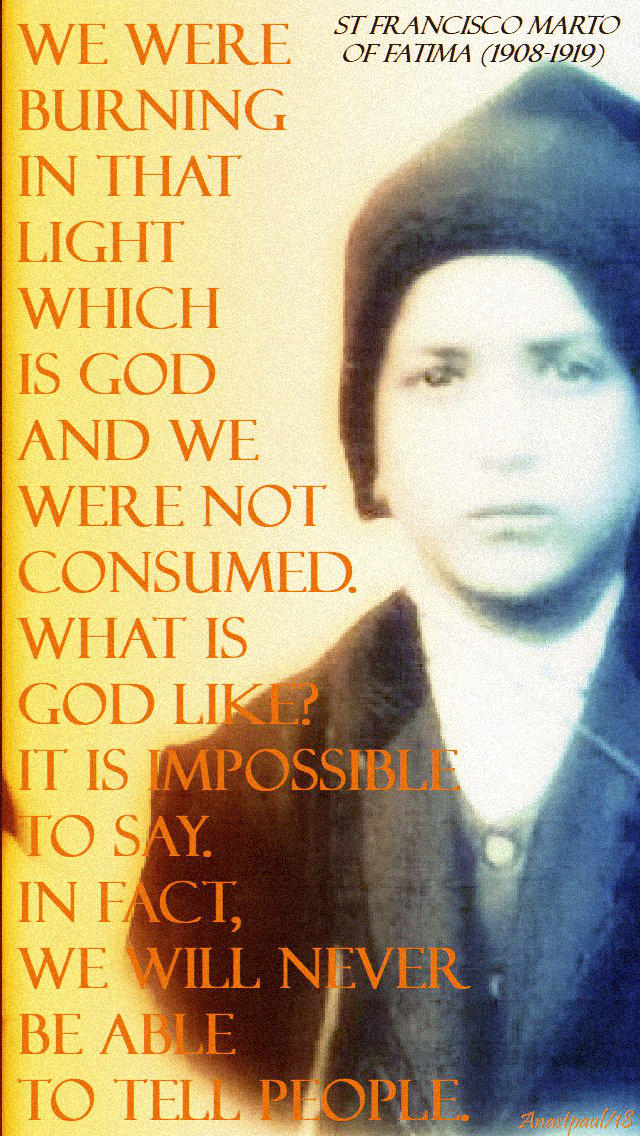
“We were burning in that light
which is God and we were not consumed.
What is God like?
It is impossible to say.
In fact, we will never be able to tell people”
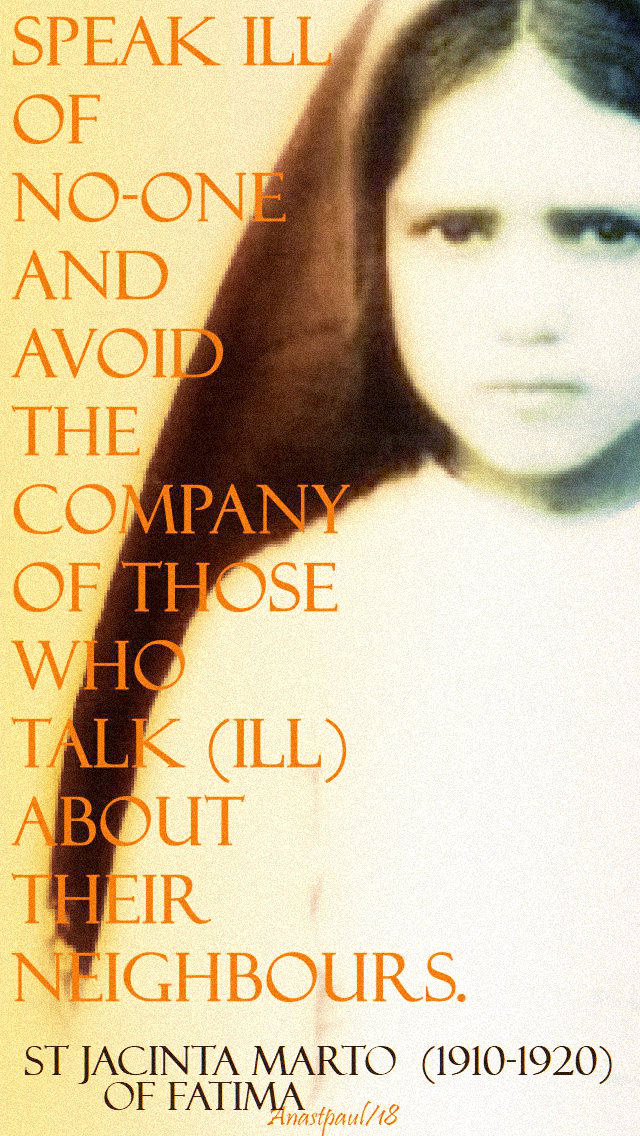
“Speak ill of no-one and avoid the company
of those who talk (ill) about their neighbours.”
“Father, to You I offer praise, for you have revealed these things to the merest children”. Today Jesus’ praise takes the solemn form of the beatification of the little shepherds, Francisco and Jacinta. With this rite the Church wishes to put on the candlelabrum these two candles which God lit to illumine humanity in its dark and anxious hours. …Father, to You I offer praise for all Your children, from the Virgin Mary, Your humble Servant, to the little shepherds, Francisco and Jacinta. May the message of their lives live on forever to light humanity’s way!”
One Minute Reflection – 20 February 2018 – Tuesday of the First Week of Lent and The First Memorial of Saints Francisco (1908-1919) and Jacinta (1910-1920)
“Unless a grain of wheat falls into the earth and dies, it remains just a single grain; but if it dies, it bears much fruit..” …John 12:24
REFLECTION – “In Lucia’s account, the three chosen children found themselves surrounded by God’s light as it radiated from Our Lady. She enveloped them in the mantle of Light that God had given her. According to the belief and experience of many pilgrims, if not of all, Fatima is more than anything this mantle of Light that protects us, here, as in almost no other place on earth. We need but take refuge under the protection of the Virgin Mary and to ask her, as the Salve Regina teaches: “show unto us… Jesus”.
“The Lord, who always goes before us, said this and did this (Jn 12:24). Whenever we experience the cross, He has already experienced it before us. We do not mount the cross to find Jesus. Instead it was He who, in His self-abasement, descended even to the cross, in order to find us, to dispel the darkness of evil within us and to bring us back to the light.”…Pope Francis at the Canonisation of Saints Francisco and Jacinta on 14 May 2017

PRAYER – Heavenly Father, just as the little children, Francisco and Jacinta, were chosen to be bearers of Your message, grant we pray, that by their prayers on our behalf, we too may Your bearers of light. Be with us, holy Mother, during our Lenten journey to the Resurrection of your Son, help us to become like little children and in that new purity, shine with His Light. Through Jesus our Lord, with the Holy Spirit, one God forever, amen.
Saints of the Day – 20 February 2018 – Today, is the First Memorial of Saints Francisco (1908-1919) and Jacinta Marta (1910-1920) who were Canonised last year, 13 May 2017 – “The Shepherds of Fatima”
Between 13 May and 13 October 1917, three Portuguese shepherd children from Aljustrel, received apparitions of Our Lady at Cova da Iria, near Fátima, a city 110 miles north of Lisbon. At that time, Europe was involved in an extremely bloody war. Portugal itself was in political turmoil, having overthrown its monarchy in 1910; the government disbanded religious organisations soon after.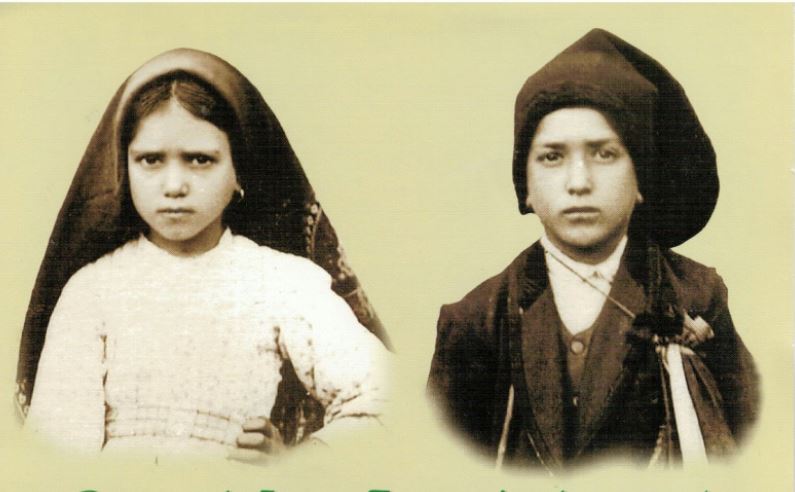
At the first appearance, Mary asked the children to return to that spot on the thirteenth of each month for the next six months. She also asked them to learn to read and write and to pray the rosary “to obtain peace for the world and the end of the war.” They were to pray for sinners and for the conversion of Russia, which had recently overthrown Czar Nicholas II and was soon to fall under communism. Up to 90,000 people gathered for Mary’s final apparition on 13 October 1917, when Our Lady of the Rosary asked them to build a chapel on the rocky hillside. This apparition is now known as the Miracle of the Sun. The entire crowd saw a remarkable sight. The sun seemed to dance in the sky. It was spinning like a top and shooting off brilliant colours of the rainbow. Suddenly the sun dropped treacherously close to earth. People dropped to their knees and the sun just as quickly returned to its play in the sky.
Less than two years later, Francisco died of influenza in his family home. He was buried in the parish cemetery and then re-buried in the Fátima basilica in 1952. Jacinta died of influenza in Lisbon in 1920, offering her suffering for the conversion of sinners, peace in the world and the Holy Father. She was re-buried in the Fátima basilica in 1951, when it was discovered that her body is incorrupt. Their cousin Lúcia dos Santos, became a Carmelite nun and was still living when Jacinta and Francisco were beatified in 2000; she died five years later.
Pope Francis canonised the younger children on his visit to Fátima to commemorate the 100th anniversary of the first apparition, last year, 13 May 2017. 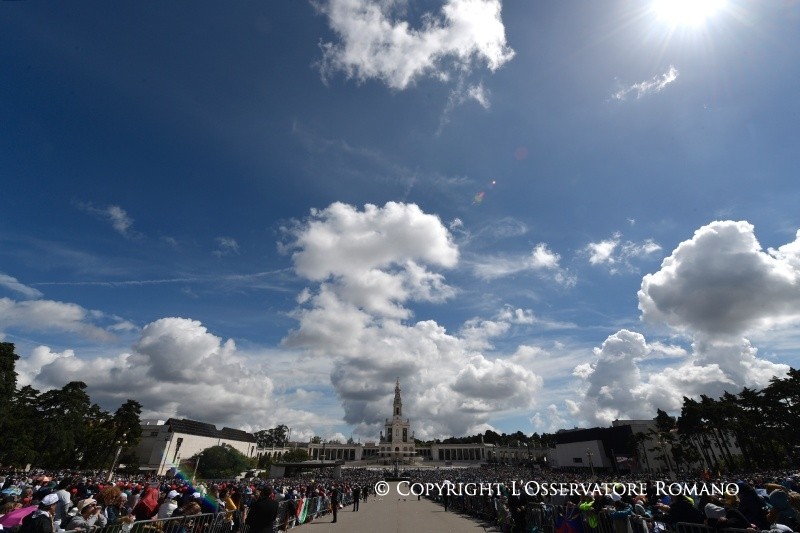
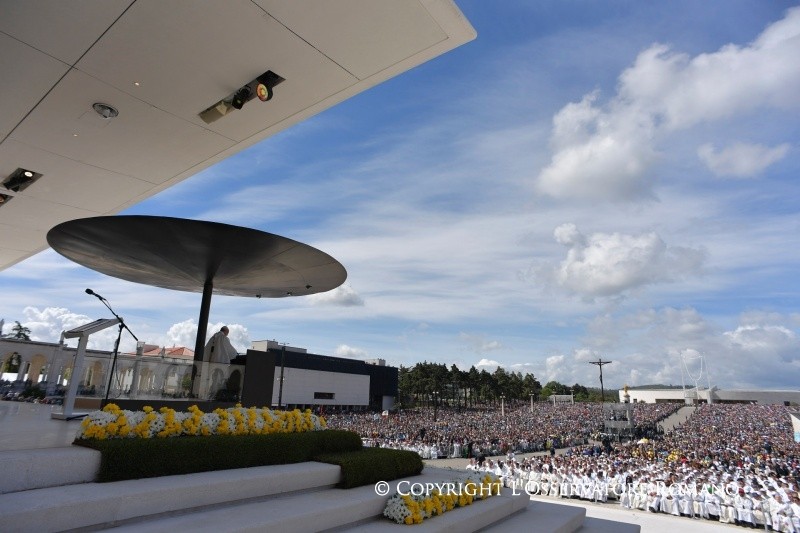
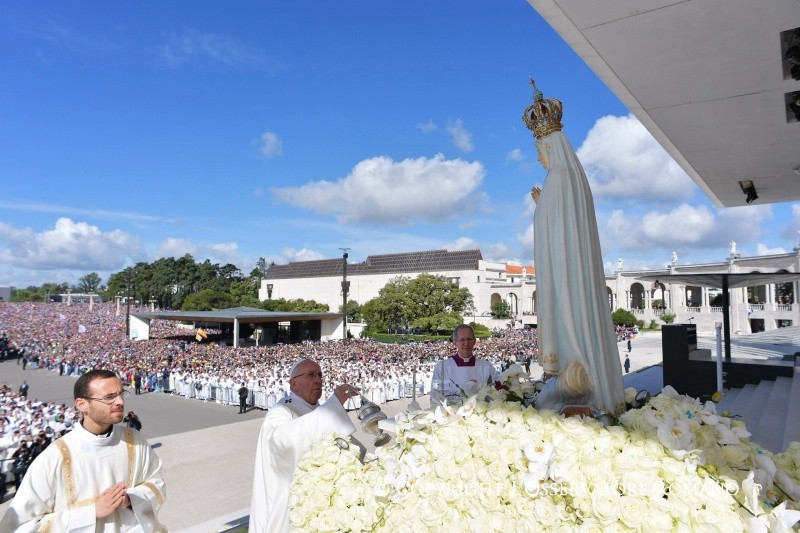
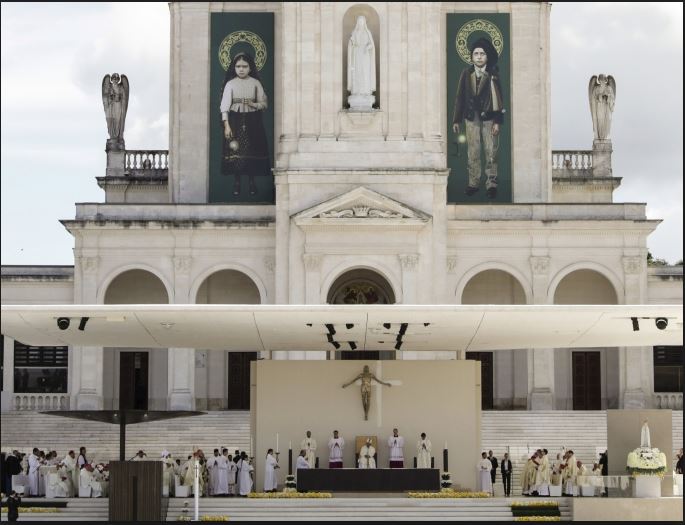
The shrine of Our Lady of Fátima is visited by up to 20 million people a year.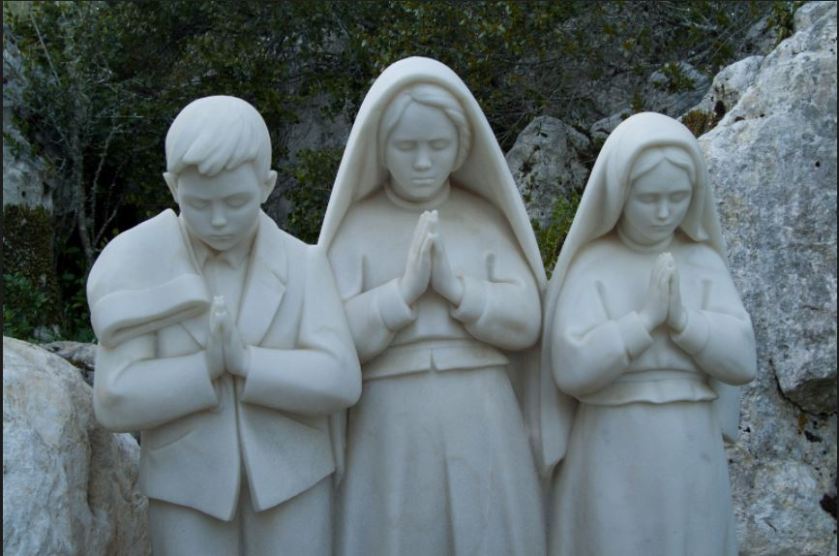
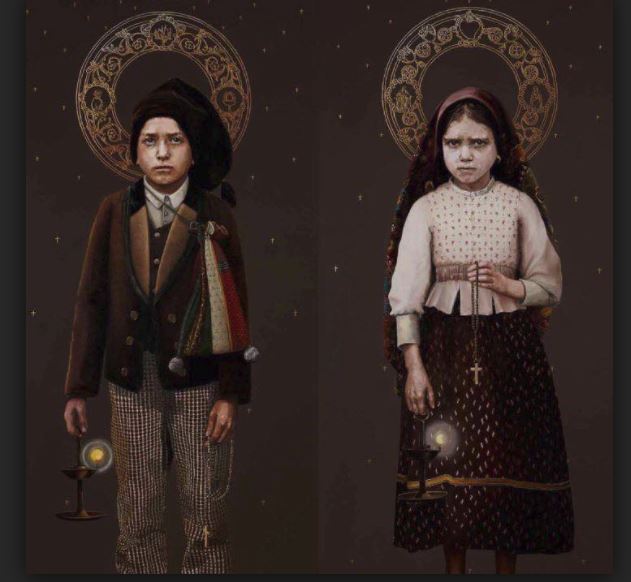
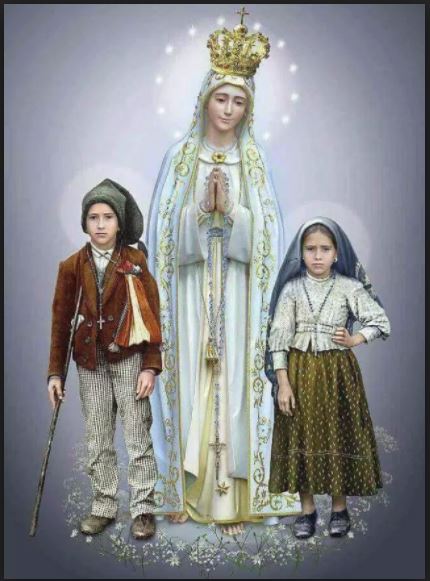
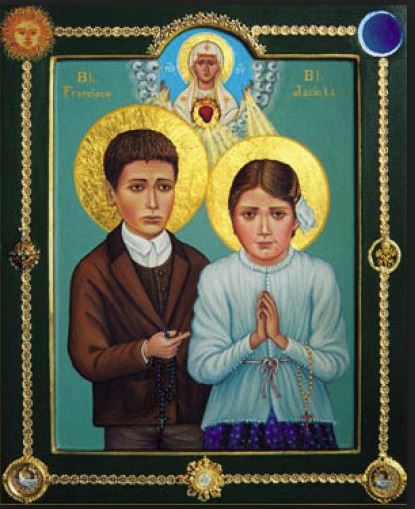
For fuller details and more images here is my post from last year: – https://anastpaul.wordpress.com/2017/02/20/saints-of-the-day-20-february-blessed-francisco-and-jacinta-marto/
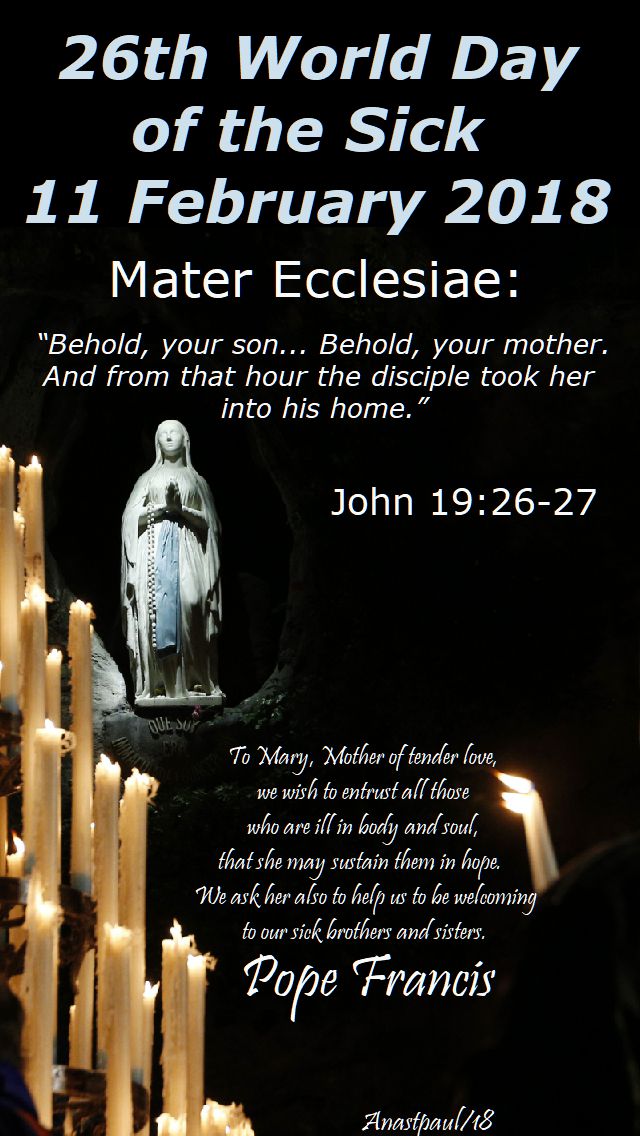
Quote of the Day – 11 February – Memorial of Our Lady of Lourdes and the 26th World Day of Prayer for the Sick
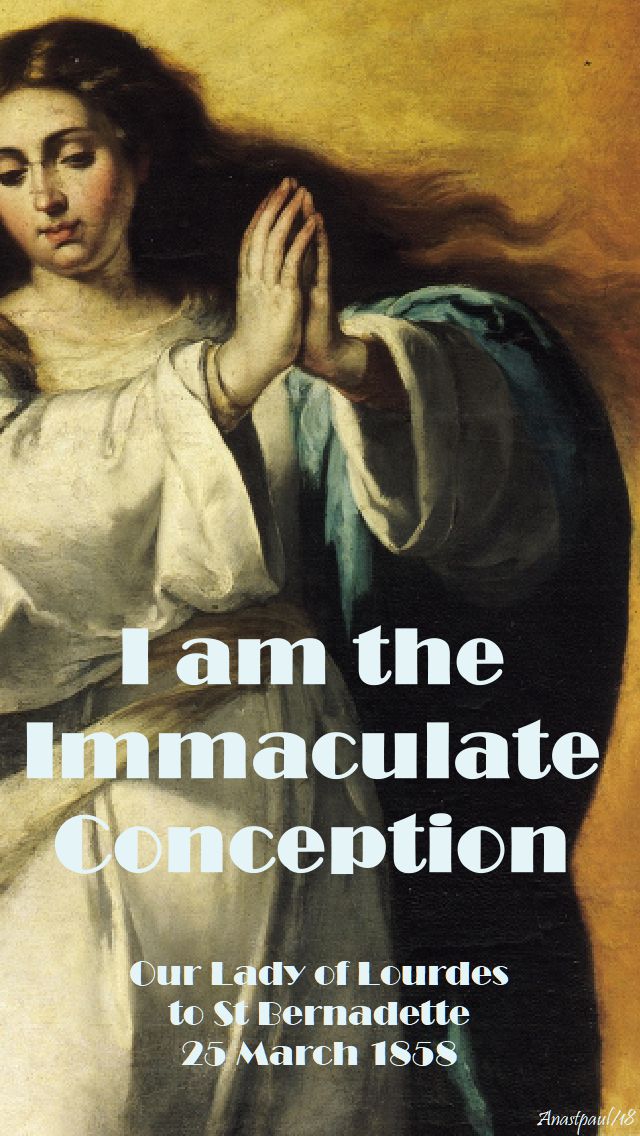
One Minute Reflection – – 11 February – 6th Sunday of Year B, Memorial of Our Lady of Lourdes and the 26th World Day of Prayer for the Sick
….if you will, you can make me clean…Mark 1:41.
REFLECTION – “Jesus, who is present in our suffering neighbour, wishes to be present in every act of charity and service of ours, which is expressed also, in every glass of water we give “in his name” (cf Mk 9:41). Jesus wants love, the solidarity of love, to grow from suffering and around suffering. He wants, that is, the sum of that good which is possible in our human world. A good that never passes away. The Pope, who wishes to be a servant of this love, kisses the forehead and kisses the hands of all those who contribute to the presence of this love and to its growth in our world. He knows, in fact and believes that he is kissing the hands and the forehead of Christ himself, who is mystically present in those who suffer and in those who, out of love, serve the suffering.”…St Pope John Paul, Memorial of Our Lady of Lourdes – 1979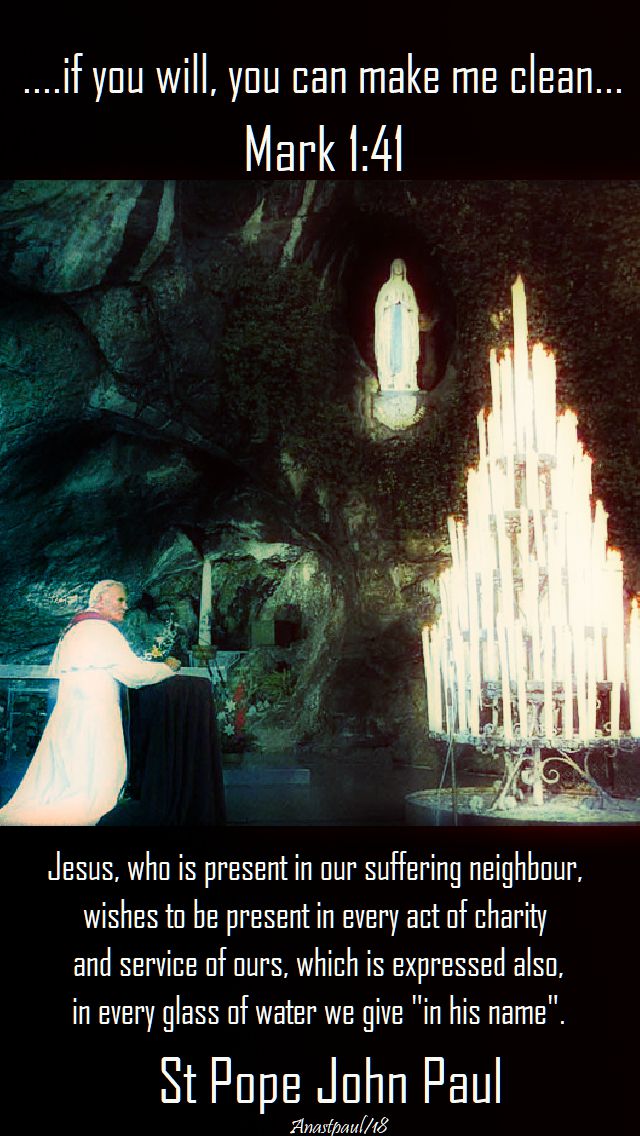
PRAYER – Christ of our sufferings,
Christ of our sacrifices,
Christ of our Gethsemane,
Christ of our difficult transformations,
Christ of our faithful service to our neighbour,
Christ of our pilgrimages to Lourdes,
Christ of our community, today, in St Peter’s Basilica,
Christ our Redeemer,
Christ our Brother!
Amen.
Our Lady of Lourdes, Pray for us that we may live this solidarity of love, in You and with You and for You, amen.
Quote/s of the Day – 31 January -The Memorial of St John Bosco (1815-1888)
“Do you want our Lord to give you many graces?
Visit him often.
Do you want him to give you few graces?
Visit him seldom.
Visits to the Blessed Sacrament are powerful
and indispensable means of overcoming the attacks of the devil.
Make frequent visits to Jesus in the Blessed Sacrament
and the devil will be powerless against you.”
“I beg you to recommend to everyone,
first, adoration of Jesus in the Blessed Sacrament
and then reverence for most holy Mary.”
“Take refuge often at the feet of Jesus…
My dear ones, the Visit to the Blessed Sacrament
is an extremely necessary way to conquer the devil.
Therefore, go often to visit Jesus
and the devil will not come out victorious against you.”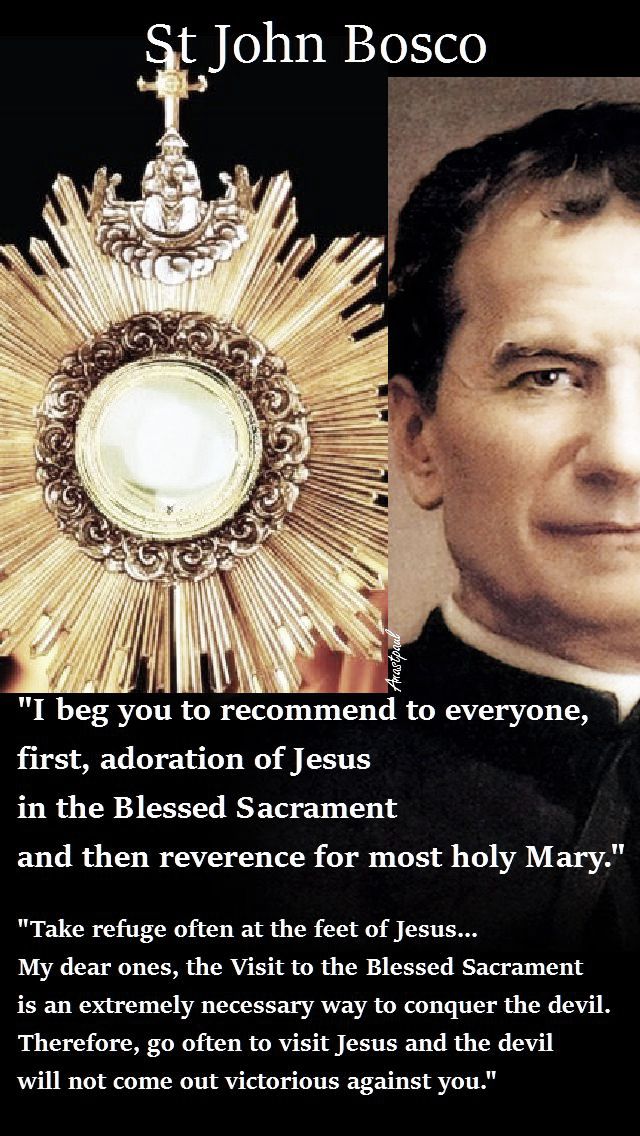
“Jesus could have limited His presence only
to the celebration of Mass, but no!
He wanted to make a permanent dwelling among us.
Night and day He awaits us and offers Himself to us at all times.
Like a most tender mother, He opens His arms to us.
He is there generously to give us His gifts.
He is there to draw us to Him
and lead us to paradise with Him.
Oh! Let us go visit Him often.”

“I beg you to recommend to everyone,
first, adoration of Jesus in the Blessed Sacrament
and then reverence for most holy Mary.”
“Ask the Blessed Virgin for the grace
to receive Communion frequently
and worthily… Try to imagine,
that the Blessed Virgin herself,
will give you the Sacred Host.
No one would dare strike
at the Heart of Jesus
while He is in Mary’s hands.”
“The power of evil men lives on the cowardice of the good.”
“The fullness of love, in all the mothers of this earth,
could never equal, the love Mary has, for each one of us.”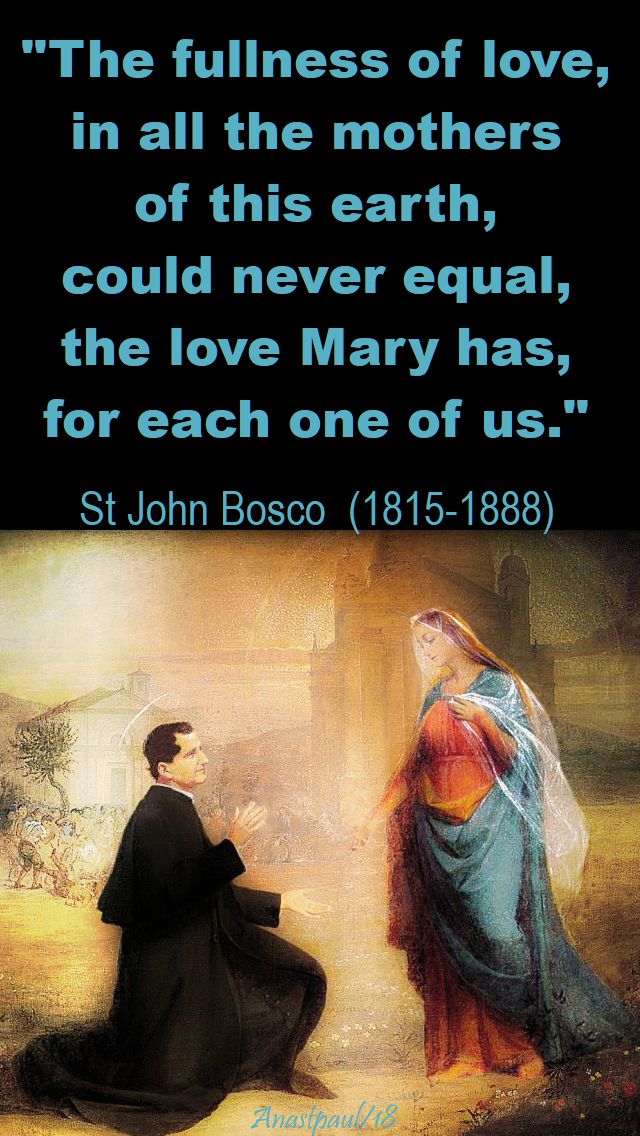
Quote/s of the Day – 28 January – The Memorial of St Thomas Aquinas (1225-1274) Doctor angelicus (Angelic Doctor) and Doctor communis (Common Doctor)
“Nothing created has ever been able
to fill the heart of man.
God alone can fill it infinitely.”
“It is only God who creates.
Man merely rearranges.”
“When the devil is called
the god of this world,
it is not because he made it
but because we serve him
with our worldliness.”
“To pretend angels do not exist
because they are invisible,
is to believe we never sleep
because we don’t see ourselves sleeping.”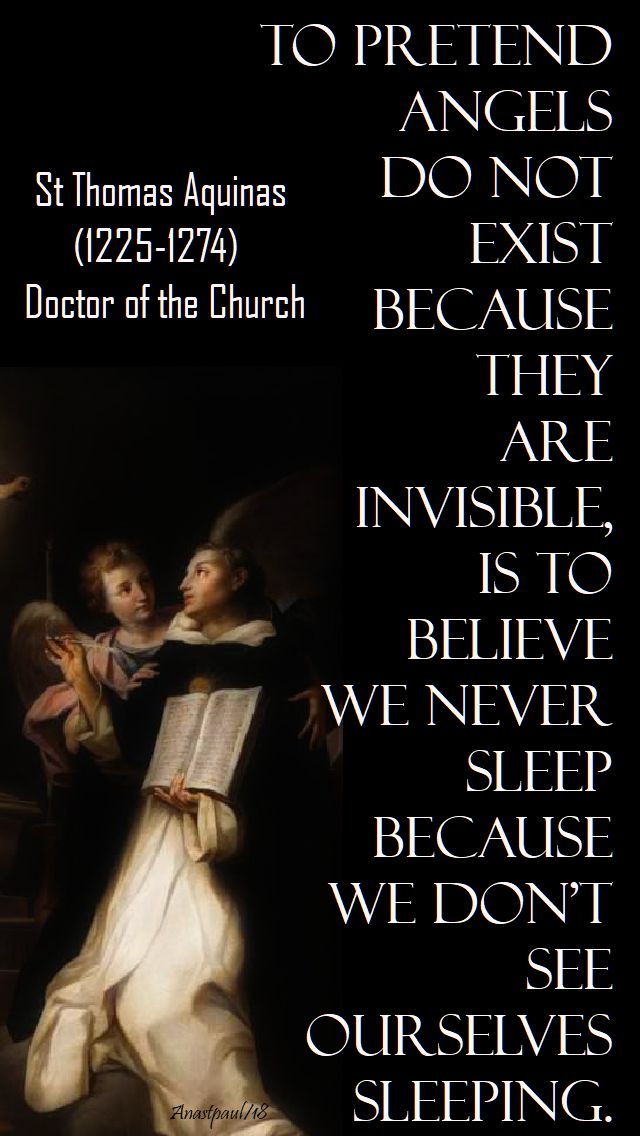
“Charity is
the form,
mover,
mother
and root
of all
the virtues.”
“To love is to
will the good
of the other.”
“The greatest kindness
one can render
to any man
consists in leading him
from error to truth.”
“Believing is
an act of the intellect
assenting to the divine truth,
by command of the will,
moved by God through grace.”
“He who is NOT angry
when there is just cause
for anger is IMMORAL.
WHY?
Because anger looks to
the good of justice.
And if you can live amid injustice
without anger,
you ARE IMMORAL
as well as UNJUST!”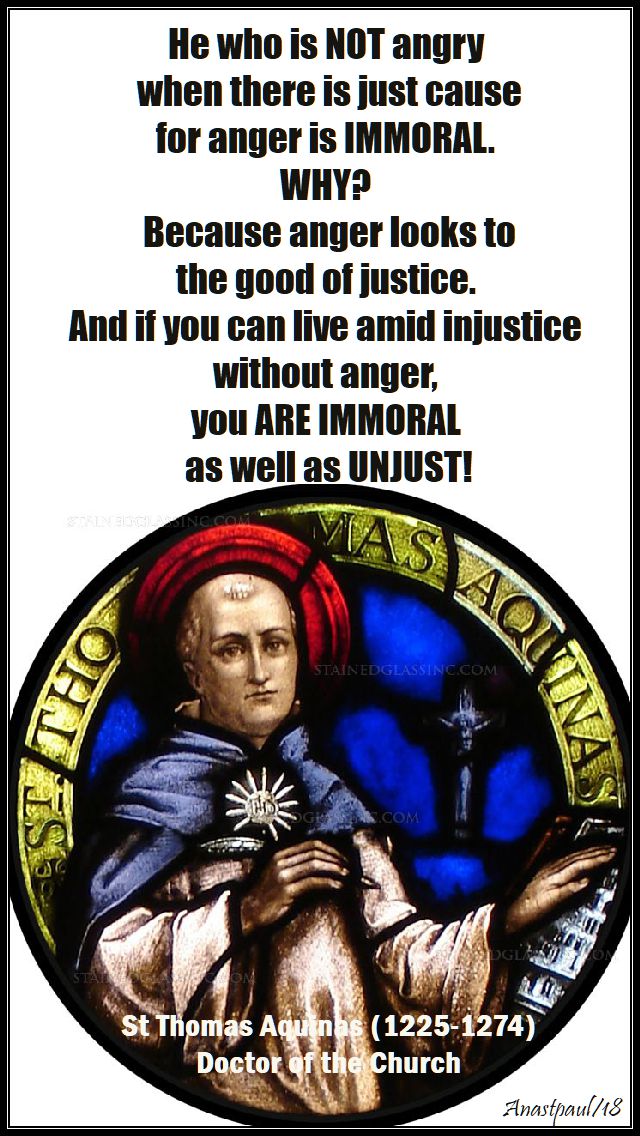
“The celebration of Holy Mass
is as valuable, as the death
of Jesus on the cross.”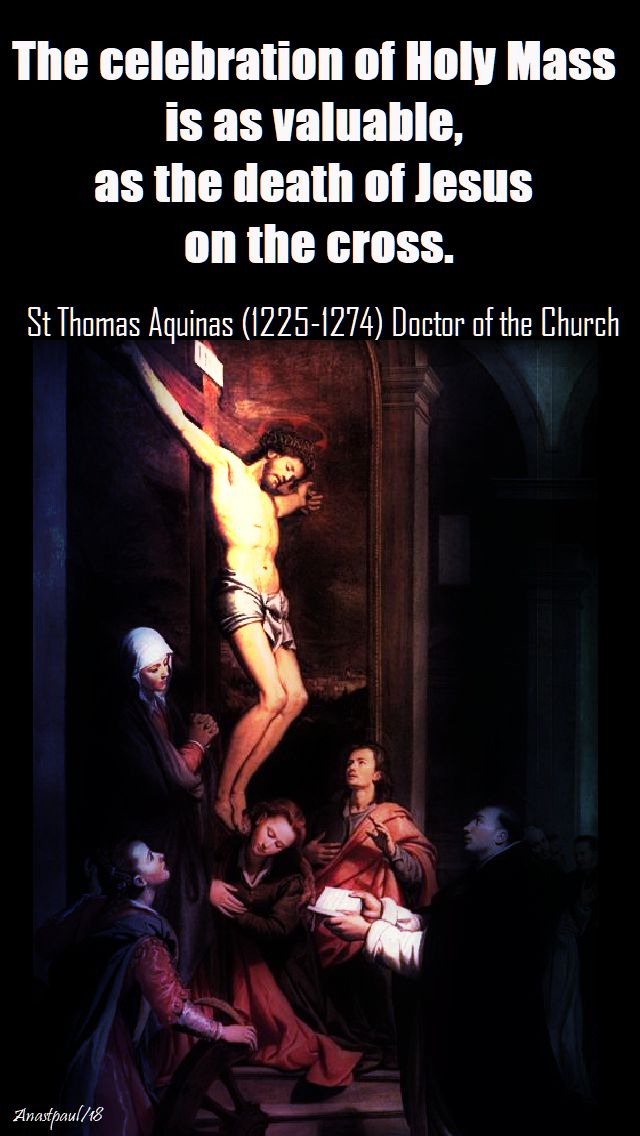
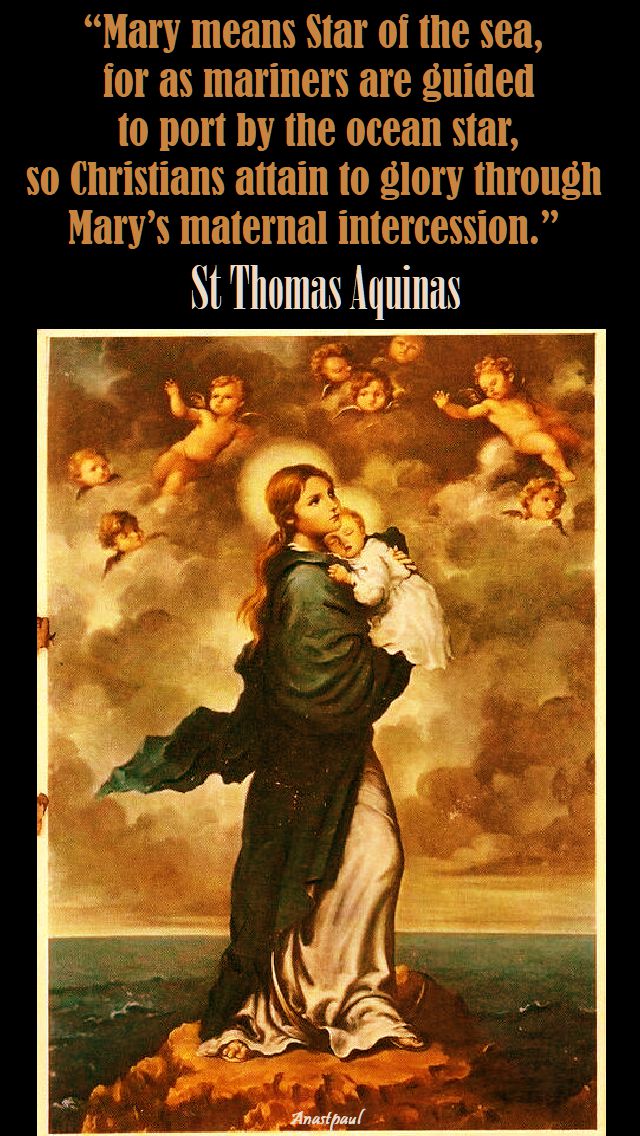
“Mary means Star of the sea,
for as mariners are guided to port
by the ocean star, so Christians attain
to glory through Mary’s maternal intercession.”
St Francis de Sales (1567-1622) (Memorial) – Doctor of the Church: Doctor caritatis (Doctor of Charity)
Our Lady of Tears: Also known as the Weeping Madonna of Syracuse, this plaster hanging wall plaque depicts the Immaculate Heart of Mary in the style of the 1950’s. Like many others just like it, it was mass-produced in a factory in Tuscany and shipped to various locations throughout the world. This particular plaque of Our Lady of Tears was purchased for a wedding gift for a couple who wed on 21 March 1953. The couple, Angelo and Antonian Iannuso, would later admit that they were not devout, but they liked the plaque and placed it on the wall over their bed. Antonian soon became pregnant but the happy couple soon learned that the pregnancy caused Antonian to suffer from toxemia that caused frequent convulsions and even temporary blindness.
On the morning of 29 August, 1953, Antonian awoke to find that her sight had been restored.
“I opened my eyes and stared at the image of the Madonna above the bedhead. To my great amazement I saw that the effigy was weeping. I called my sister-in-law Grazie and my aunt, Antonian Sgarlata, who came to my side, showing them the tears. At first they thought it was an hallucination due to my illness but when I insisted, they went close up to the plaque and could well see that tears were really falling from the eyes of the Madonna, and that some tears ran down her cheeks onto the bedhead. Taken by fright they took it out the front door, calling the neighbours, and they too confirmed the phenomenon…”
The plaque of Our Lady of Tears was publically displayed, convincing even the skeptics of the prodigy as many of the sick were miraculously healed of their ailments. Some of the tears were collected for scientific examination and the findings were as follows:
“…the liquid examined is shown to be made up of a watery solution of sodium chloride in which traces of protein and nuclei of a silver composition of excretiary substances of the quanternary type the same as found in the human secretions used as a comparison during the analysis. The appearance, the alkalinity and the composition induce one to consider the liquid examined analogous to human tears.”
The tears stopped four days later at 11:40 am.
On October 17, 1954, Pope Pius XII stated the following during a radio broadcast:
“…we acknowledge the unanimous declaration of the Episcopal Conference held in Sicily on the reality of that event. Will men understand the mysterious language of those tears?”
—
St Anicet Hryciuk
St Artemius of Clermont
St Bartlomiej Osypiuk
Bertrand of Saint Quentin
St Daniel Karmasz
St Exuperantius of Cingoli
St Felician of Foligno
St Filip Geryluk
Bl Francesc de Paula Colomer Prísas
St Guasacht
St Ignacy Franczuk
Bl John Grove
St Julian Sabas the Elder
St Luigj Prendushi
St Macedonius Kritophagos
Bl Marcolino of Forli
Bl Marie Poussepin
Bl Paula Gambara Costa
St Projectus
St Sabinian of Troyes
St Suranus of Sora
St Thyrsus
Bl William Ireland
—
Martyrs of Asia Minor – 4 saints: A group of Christians martyred together for their faith. The only details to survive are four of their names – Eugene, Mardonius, Metellus and Musonius. They were burned at the stake in Asia Minor.
Martyrs of Podlasie – 13 beati: Podlasie is an area in modern eastern Poland that, in the 18th-century, was governed by the Russian Empire. Russian sovereigns sought to bring all Eastern-rite Catholics into the Orthodox Church. Catherine II suppressed the Greek Catholic church in Ukraine in 1784. Nicholas I did the same in Belarus and Lithuania in 1839. Alexander II did the same in the Byzantine-rite Eparchy of Chelm in 1874, and officially suppressed the Eparchy in 1875. The bishop and the priests who refused to join the Orthodox Church were deported to Siberia or imprisoned. The laity, left on their own, had to defend their Church, their liturgy, and their union with Rome.
On 24 January 1874 soldiers entered the village of Pratulin to transfer the parish to Orthodox control. Many of the faithful gathered to defend their parish and church. The soldiers tried to disperse the people, but failed. Their commander tried to bribe the parishioners to abandon Rome, but failed. He threaten them with assorted punishments, but this failed to move them. Deciding that a show of force was needed, the commander ordered his troops to fire on the unarmed, hymn-singing laymen. Thirteen of the faithful died, most married men with families, ordinary men with great faith.
We know almost nothing about their lives outside of this incident. Their families were not allowed to honour them or participate in the funerals, and the authorities hoped they would be forgotten. They were:
• Anicet Hryciuk
• Bartlomiej Osypiuk
• Daniel Karmasz
• Filip Geryluk
• Ignacy Franczuk
• Jan Andrzejuk
• Konstanty Bojko
• Konstanty Lukaszuk
• Lukasz Bojko
• Maksym Hawryluk
• Michal Wawryszuk
• Onufry Wasyluk
• Wincenty Lewoniuk
Martyrdom:
• shot on 14 January 1874 by Russian soldiers in Podlasie, Poland
• buried nearby without rites by those soldiers
Beatified
6 October 1996 by Pope John Paul II
Martyrs of Antioch:
Babylas
Epolonius
Prilidian
Urban
Quote/s of the Day – 23 January – The Memorial of St Ildephonsus (607-667) and St Marianne Cope (1838-1918)
“No one will ever be
the servant of the Son
without serving the Mother.”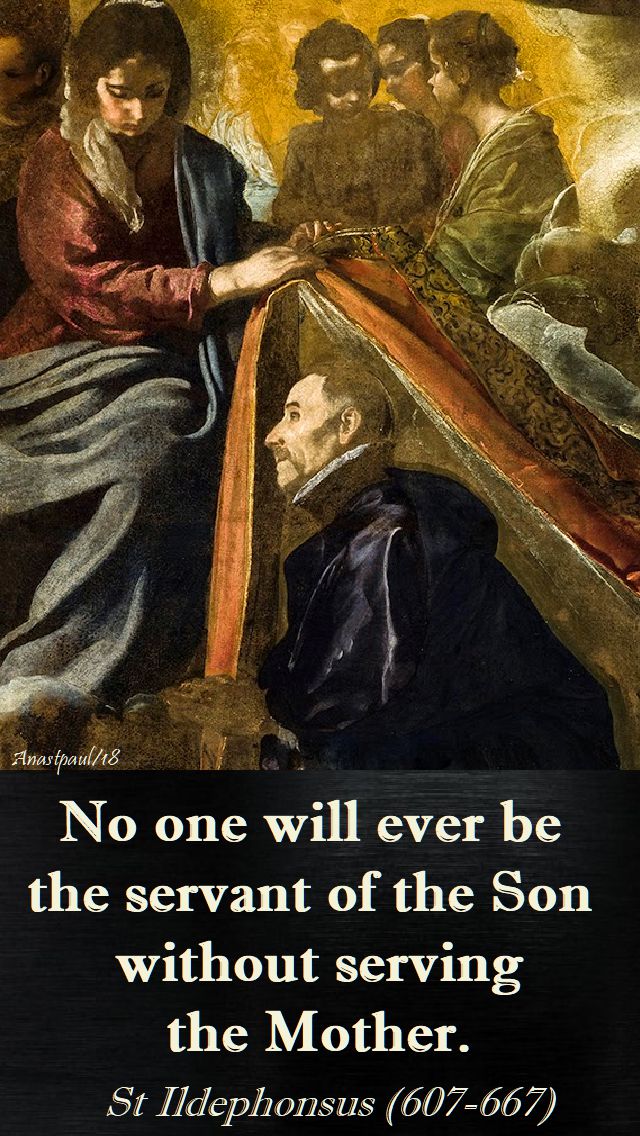
“Go to Mary and sing her praises
and you will be enlightened.
For it is through her,
that the true Light
shines on the sea of this life.”
“Creep down into the heart of Jesus.
He alone can comfort you in your
supreme hour of sorrow.”
“Let us make the very best use of the precious moments
and do all in our power for His dear sake
and for His greater honour and glory…………
I do not think of reward;
I am working for God and do so cheerfully.”
“Try to accept what God
is pleased to give you
no matter how bitter –
‘God wills it’,
is the thought
that will strengthen you
and help you over
the hard places
if we wish to be
true children of God.”
“Our dear
heavenly Mother Mary…
how little do our trials
and sorrows appear
when compared
to her bitter sufferings.”
Saint of the Day – 23 January – St Ildephonsus (607-667) Monk, Priest, Theologian, Scholar, Marian devotee, Writer, Evangeliser, Archbishop of Toledo. Abbot Dom Guéranger calls him the Doctor of the Virginity of Mary. Saint Ildephonsus established the feast of the Expectation of the Blessed Virgin Mary, which is still kept in some places on 18 December. Patronages – Toledo, Zamora and several smaller towns in Spain and Portugal.
Ildephonsus was born to a prominent family in Toledo. His uncle Eugenius, who later became Toledo’s bishop, began educating the devout youth. Ildephonsus began his religious career circa 632 when Bishop Eladius of Toledo ordained him as a deacon. However, Ildefonse defied his family’s plans for his clerical career by becoming a monk at the Agali monastery outside the city. While he was still a simple monk, he founded and endowed a monastery of nuns. In 650 Ildephonsus was elected its abbot of Agali. When his uncle Bishop Eugenius II died in 657, Ildefonsus was elected his successor as bishop of Toledo. King Recceswinth compelled him to accept the position, as Ildephonsus later complained to his protege and successor, Bishop Quiricus of Barcelona, who wrote St Ildephonsus biography after his death. His later successor, Julian, included Ildefonsus among the biographies added in his own continuation to the De viris illustribus. Another successor, Cixila, wrote a hagiographical life of Ildefonsus. During the 13th century, the Dominican Rodrigo de Cerrato included Ildefonsus among his vignettes of illustrious men.
Spanish Catholics esteem St Ildefonsus as one of their greatest saints, second only to St Isidore of Seville (560-636), who is a Doctor of the Church. As archbishop of Toledo, he led the Spanish church from 658 to 667. Like Isidore, Ildefonsus contributed to the creation of the collaborative union of church and state that came to typify medieval Europe. For example, he presided over a council in 653 that granted secular leaders the right to participate in ecclesiastical decisions. But at the same time, bishops participated in the election of kings and joined with state officials in publishing secular laws and pardoning traitors. Thus the saint helped forge medieval political relationships well ahead of their time.


Pastorally, Ildefonsus aimed to raise the faith level of the laypeople in Toledo, so he set about to educate them in Christian truth. For example, he wrote On Understanding Baptism to elevate their ideals. Here is a quote from that popular book:
We come to the font as to the Red Sea. Moses was the leader in saving Israel; Christ was the leader in redeeming man. The former left Egypt; the latter left the world. The Egyptians pursued the Israelites; sin pursued man. The sea is coloured by the red of its shore; baptism is consecrated with the blood of Christ. The vast sea is divided by a rod; the entrance to the font is opened with the sign of the cross. Israel enters the sea; man is washed in the font. Israel passes on a dry path between the waters without hindrance; through the waters man journeys the way of salvation. The pursuing Egyptians are drowned with Pharaoh; sins are destroyed in baptism together with the devil in a destruction not of life but of power. The children of Israel left Egypt in the spring of the year and passed through the sea; in the same season we celebrate the Pasch of our Lord Jesus Christ. In baptism, souls cross from vices to virtues. They pass from the lusts of the flesh to grace and sobriety of spirit. And they escape from the leaven of malice and wickedness to truth and sincerity. Thus we say to those born again: “This month shall be to you the beginning of months: it shall be the first of the months of the year” (see Exodus 12:2). For he who is washed abandons Pharaoh, the leader of this world, with all its works.
Veneration of the Virgin Mary runs deep in the Hispanic Catholic tradition. That stream of Marian devotion can trace its roots in part to Ildefonsus. He loved Mary and honoured her in his landmark book, On the Perpetual Virginity of Holy Mary. Its themes inspired the Marian “breastplate” songs of Irish monks in Europe and through many centuries copyists placed quotes from it in books of hours. Ildefonsus’s work influenced the long-standing practice of celebrating Mass on Saturdays in honour of Mary.
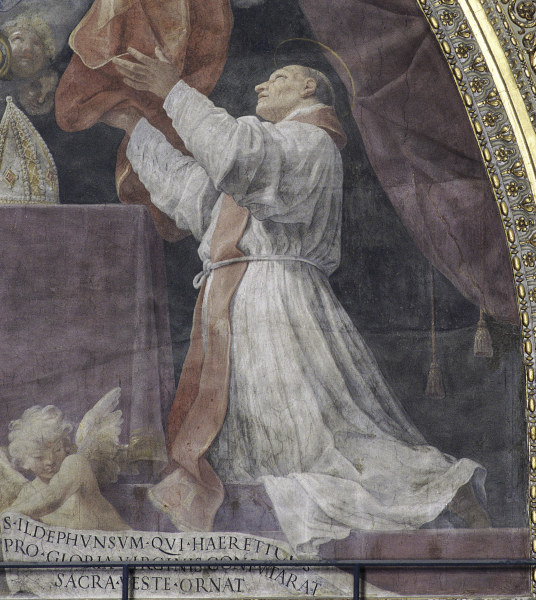
It is recounted that on this feast of the Mother of God, Archbishop Ildephonsus, together with some of his clergy, hastened to church before the hour of Matins to honour Our Blessed Lady with their songs. Arriving close to the church, they found it all ablaze with a heavenly radiance. This so frightened the little band that all fled, except for Archbishop Ildephonsus and his two faithful deacons. Deacons, take note! With wildly beating hearts, these entered the church and made their way to the altar. A great mystery was about to unfold.
A Chasuble from the Treasury of Heaven
There, seated on the Archbishop’s throne, was the august Queen of Heaven surrounded by choirs of angels and holy virgins. The chants of paradise filled the air. Our Blessed Lady beckoned Ildephonsus to approach her. Looking upon him with tenderness and majesty, she said: “Thou art my chaplain and faithful notary. Receive from me this chasuble, which my Son sends you from His treasury.” Having said this, the Immaculate Virgin clothed Ildephonsus in the chasuble, and instructed him to wear it for the Holy Sacrifice on her festivals.
The account of this apparition, and of the miraculous chasuble, was deemed so certain and utterly beyond doubt, that news of it spread through the Church, even reaching the Ethiopians. The Church of Toledo honoured the event with a special proper Mass and Office. What was the miraculous chasuble like? Artists through the ages have sought to depict it, more often than not in rich brocades of gold and blue.

Gifts from Heaven
Sceptics may smile condescendingly and dismiss the story as a pious fabrication. Serious studies of the various gratiae gratis datae — graces freely given — are not without evidence of the phenomenon of material gifts brought from heaven. One finds examples of it as recently as in the life of Mother Yvonne-Aimée of Malestroit (1901-1951). A classic example of the phenomenon would be the cincture of the Angelic Warfare with which angels girded Saint Thomas Aquinas after his victory over a temptation of the flesh.
Ildephonsus died after a decade in office and was buried at his (and the city’s) basilica, Toledo’s Church of Santa Leocadia. Another Council of Toledo decreed that henceforth 18 December would be celebrated as a Marian feast day, to commemorate his vision. Even during the Muslim occupation, when the basilica was converted into a mosque, the area where the vision occurred remained sacred and dedicated to the Virgin Mary. Pilgrims travelled to Toledo to see the stone where Mary stepped during Ildephonsus’ vision. During later wars, the saint’s remains were transferred Zamora, where they remain at the Church of Sts Peter and Ildephonso.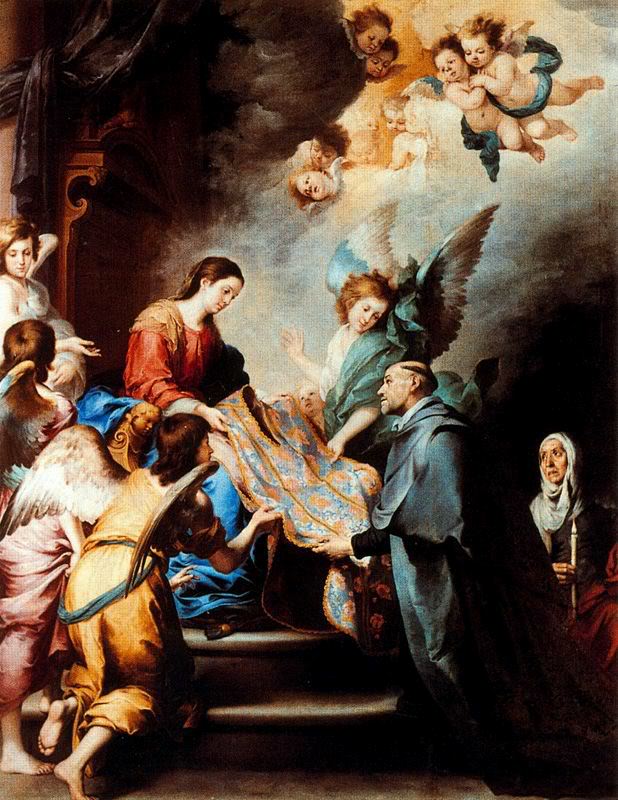
Quote/s of the Day – 22 January – The Memorial of St Vincent Pallotti (1795-1850) and Blessed William Joseph Chaminade (1761-1850)
Before his First Holy Mass
“Not the intellect
but God
Not the will
but God
Not the heart
but God
Not taste
but God
Not touch
but God
Not food and drink
but God
Not clothing
but God
Not tranquillity
but God
Not the worldly goods
but God.
Not riches
but God.
Not honours
but God.
Not distinction
but God.
Not dignities
but God.
Not advancement
but God.
God in all
God always.”
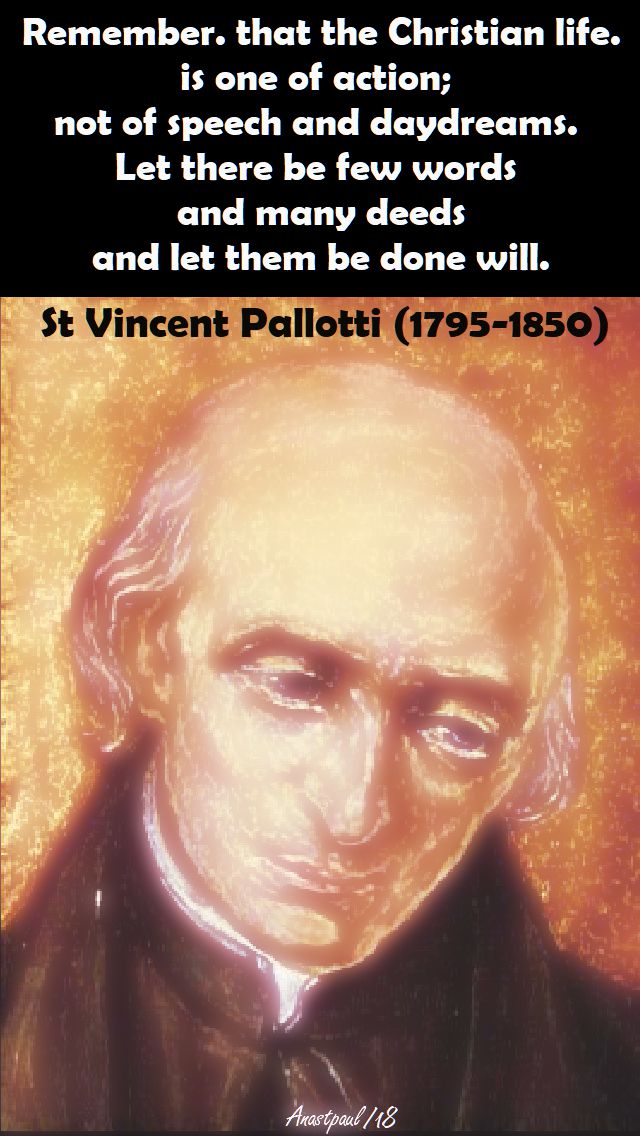
“Remember. that the Christian life.
is one of action;
not of speech and daydreams.
Let there be few words
and many deeds
and let them be done will.”
“Jesus made Mary
the companion
of His labours,
of His joy,
of His preaching,
of His death.
Mary had a part in all the
glorious, joyous
and sorrowful mysteries of Jesus.”
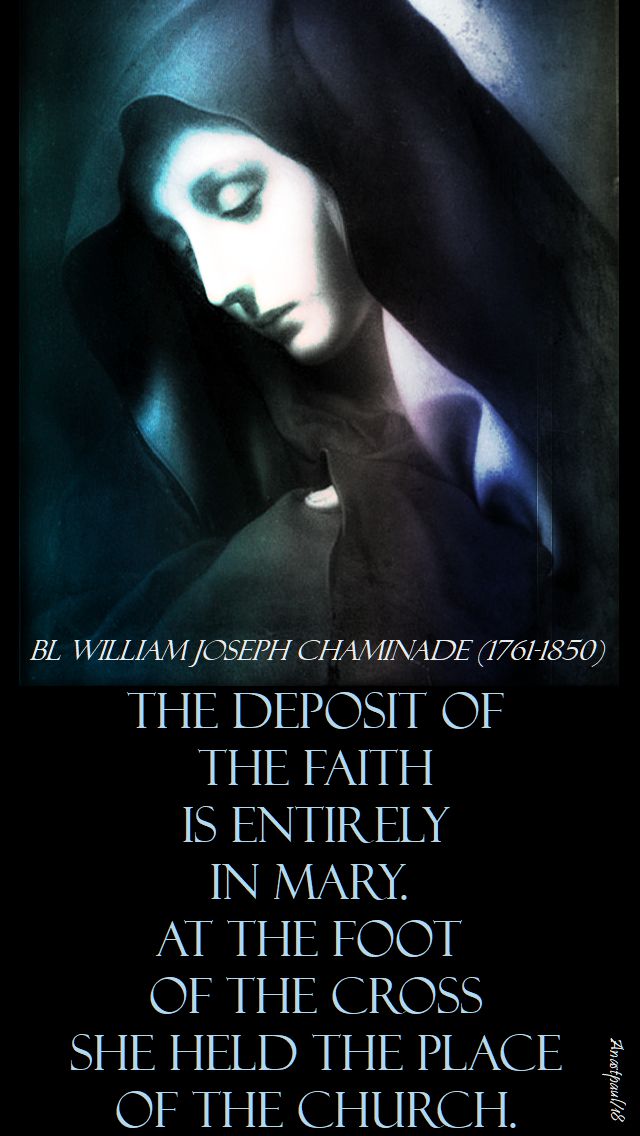
“The deposit of the Faith
is entirely in Mary.
At the foot of the Cross
she held the place of the Church. “
Thought for the Day – 15 January – The Feast of Our Lady of Banneux – Our Lady of the Poor and Queen of Nations
There are many ways of “being poor” and in today’s world, the more we have, the poorer we can be. Our Lady of Banneux is a most worthy intercessor to pray on our behalf to our God of such loving mercy, for all the needs of the poor of the world, for so many who are rich in goods but poor in spirit.
As St John Paul said on a visit to Banneux – “The poor today – and there are many ways of being poor! – feel at home in Banneux. They come here to find comfort, courage, hope, union with God in their affliction. I encourage the pilgrims who come here to pray to her, who, always and everywhere in the Church, reflects the face of the Mercy of God.”
Holy Mother Mary, Mother of God, Pray for us!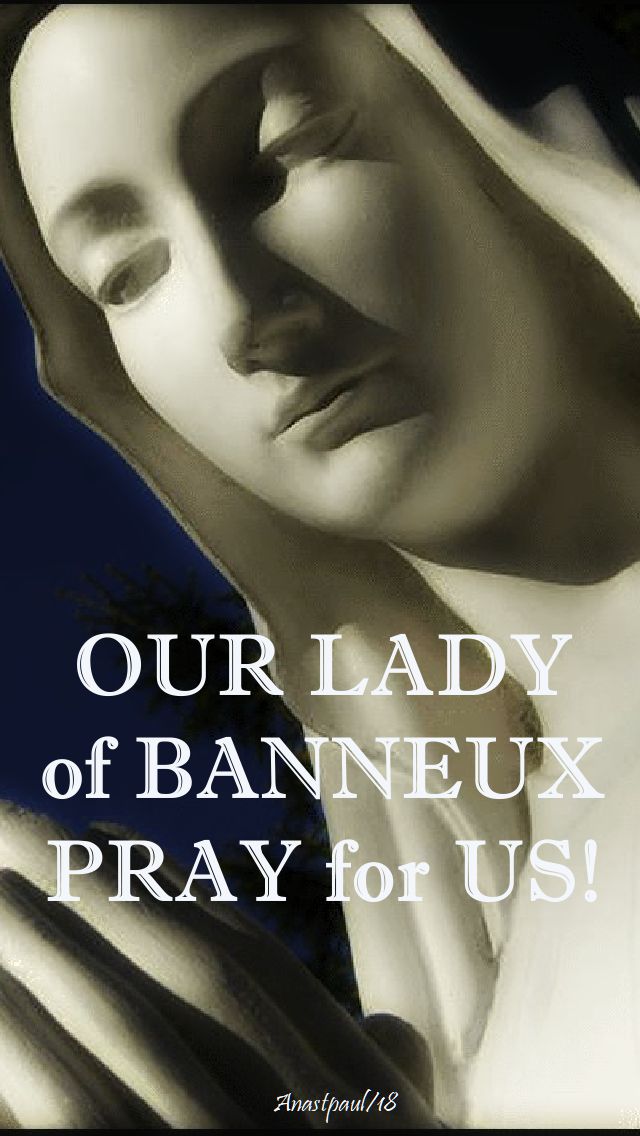
Quote/s of the Day – 15 January – The Feast of Our Lady of Banneux – “Speaking of Mary”
“That one woman is both mother and virgin,
not in spirit only but even in body.
In spirit she is mother, not of our Head,
who is our Saviour Himself—of whom all,
even she herself, are rightly called children of the Bridegroom—
but plainly she is the mother of us, who are His members
because by love, she has co-operated, so that the faithful,
who are the members of that Head, might be born in the Church.
In body, indeed, she is the Mother of that very Head”
“Seek refuge in Mary because she is the city of refuge.
We know that Moses set up three cities of refuge
for anyone who inadvertently killed his neighbour.
Now the Lord has established a Refuge of Mercy, Mary,
even for those who deliberately commit evil.
Mary provides shelter and strength for the sinner.”
”Let not that man presume to look for mercy from God,
who offends His Holy Mother!”
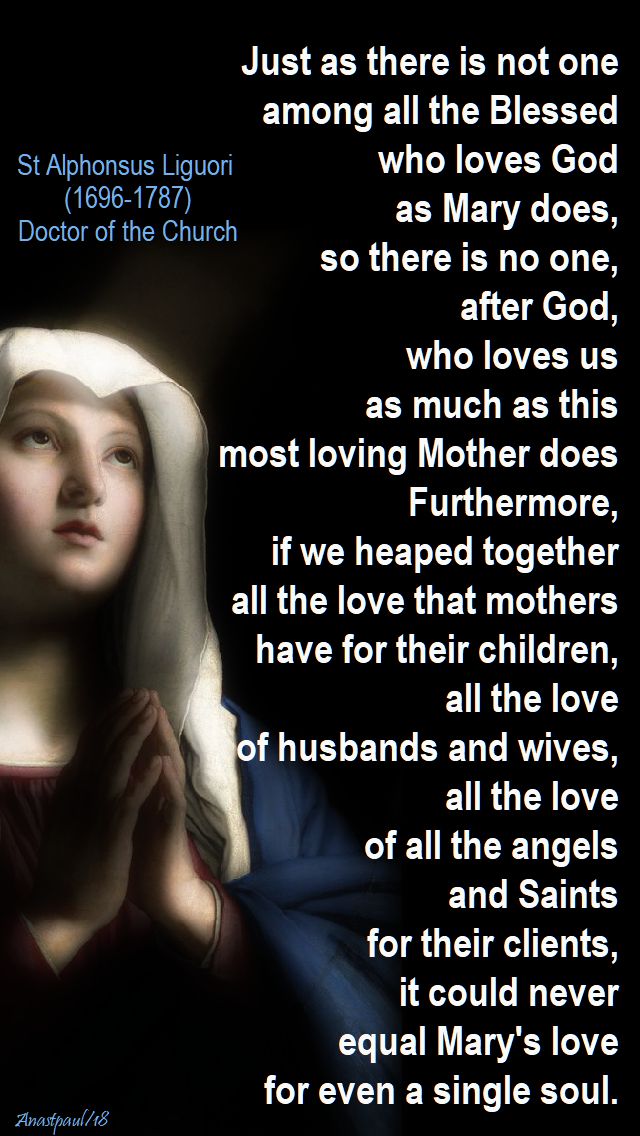
“Just as there is not one among all the Blessed
who loves God as Mary does, so there is no one,
after God, who loves us as much as this most loving Mother does.
Furthermore, if we heaped together
all the love that mothers have for their children,
all the love of husbands and wives,
all the love of all the angels and Saints for their clients,
it could never equal Mary’s love for even a single soul.”
“Only after the Last Judgment will Mary get any rest;
from now until then, she is much too busy with her children.”
“To serve the Queen of Heaven, is already to reign there
and to live under her commands, is more than to govern.”
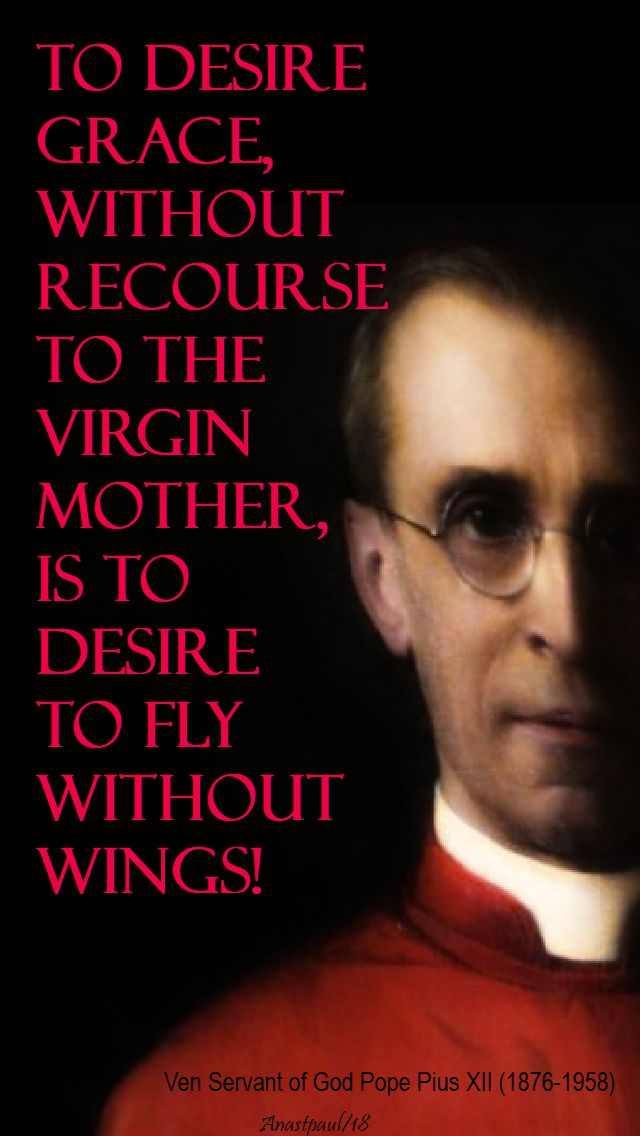
”To desire grace, without recourse to the Virgin Mother,
is to desire to fly without wings!”
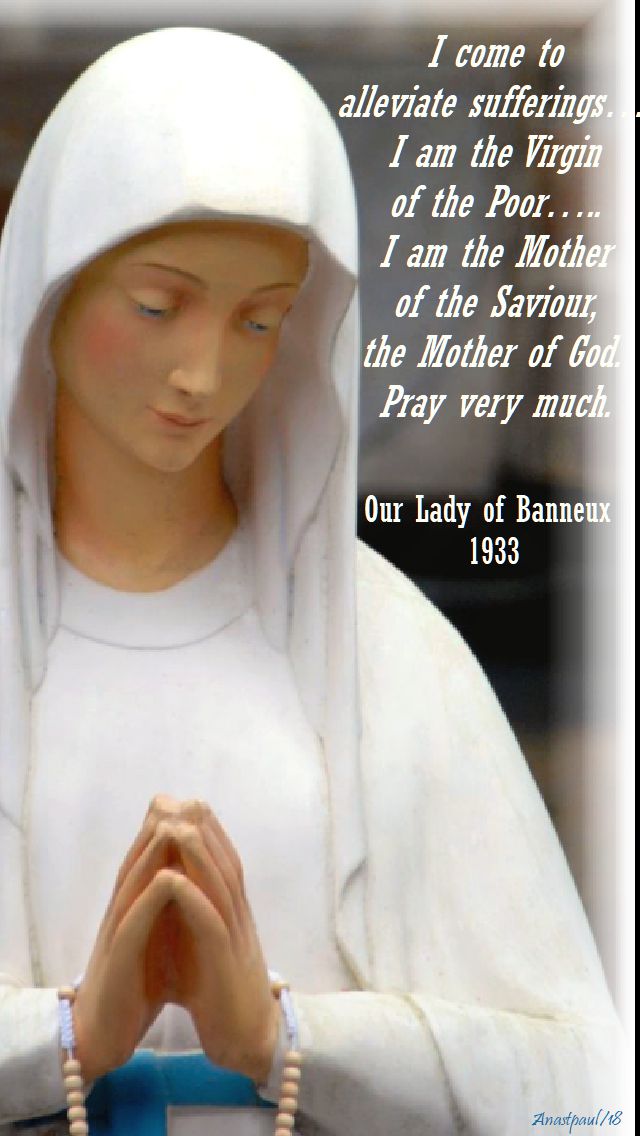
“I come to alleviate sufferings….
I am the Virgin of the Poor…..
I am the Mother of the Saviour,
the Mother of God.
Pray very much.”
One Minute Reflection – 15 January – The Feast of Our Lady of Banneux
“Rejoice, O highly favoured daughter,! The Lord is with you.”…Luke 1:28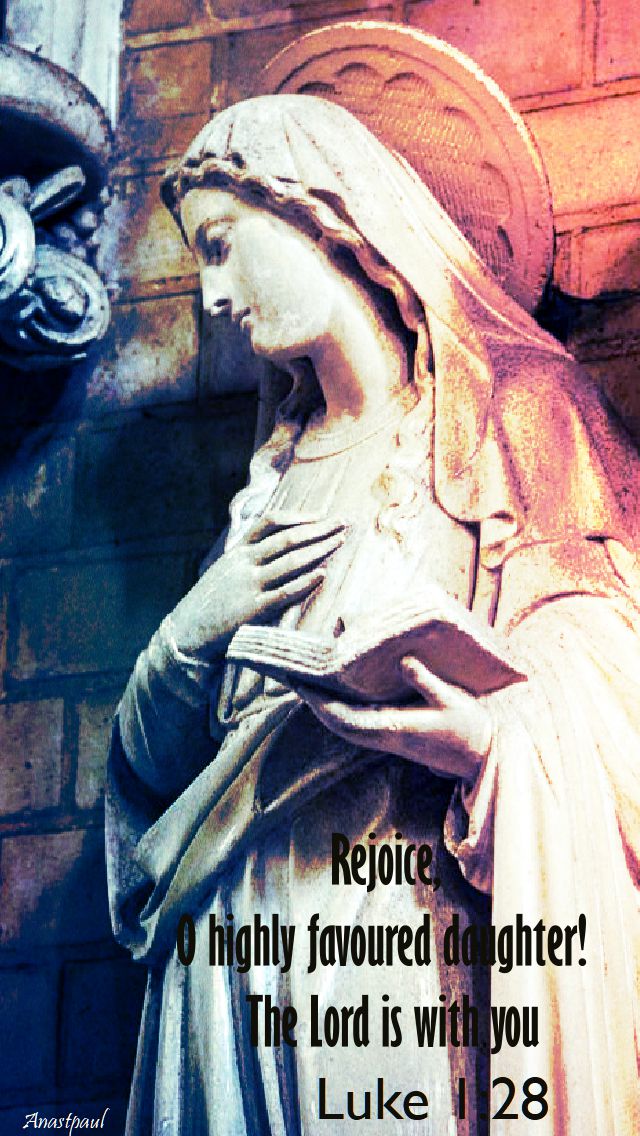
REFLECTION – ” All others had a Redeemer Who delivered them from sin with which they were already defiled but that the most Blessed Virgin had a Redeemer Who, because He was her Son, preserved her from ever being defiled by it. “…St Alphonsus Liguori (1696-1787) Doctor of the Church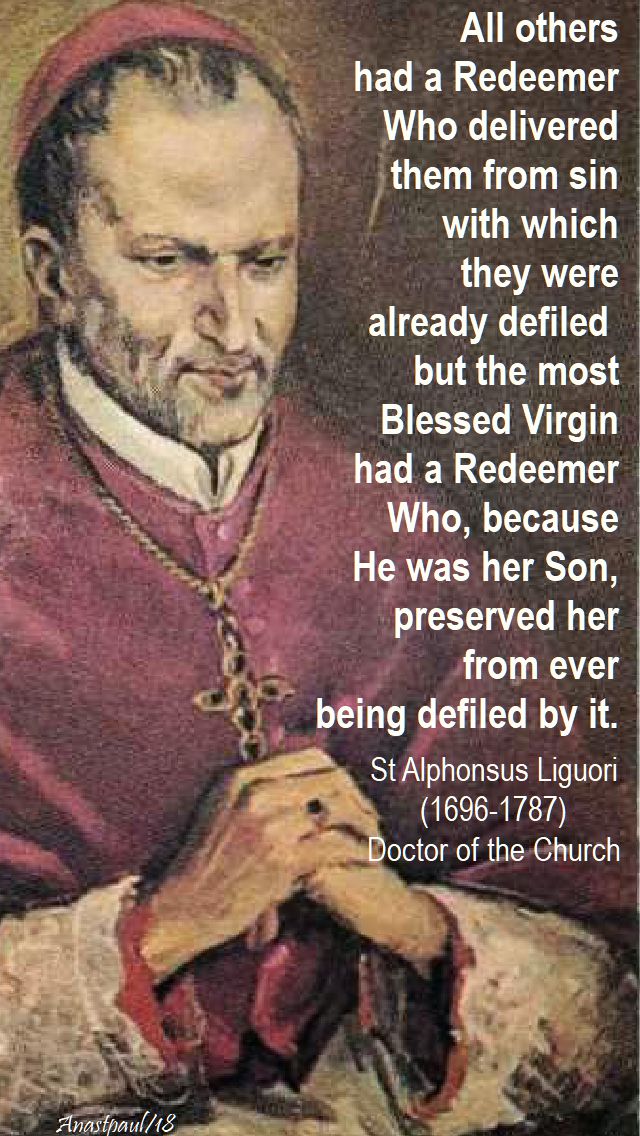
PRAYER – Heavenly Father, grant me the grace to have Mary as my constant intercessor. In all difficulties, let me call on her aid, for she is Your beloved Daughter and our Blessed Mother. Holy Mother of Banneux, Pray for us, amen!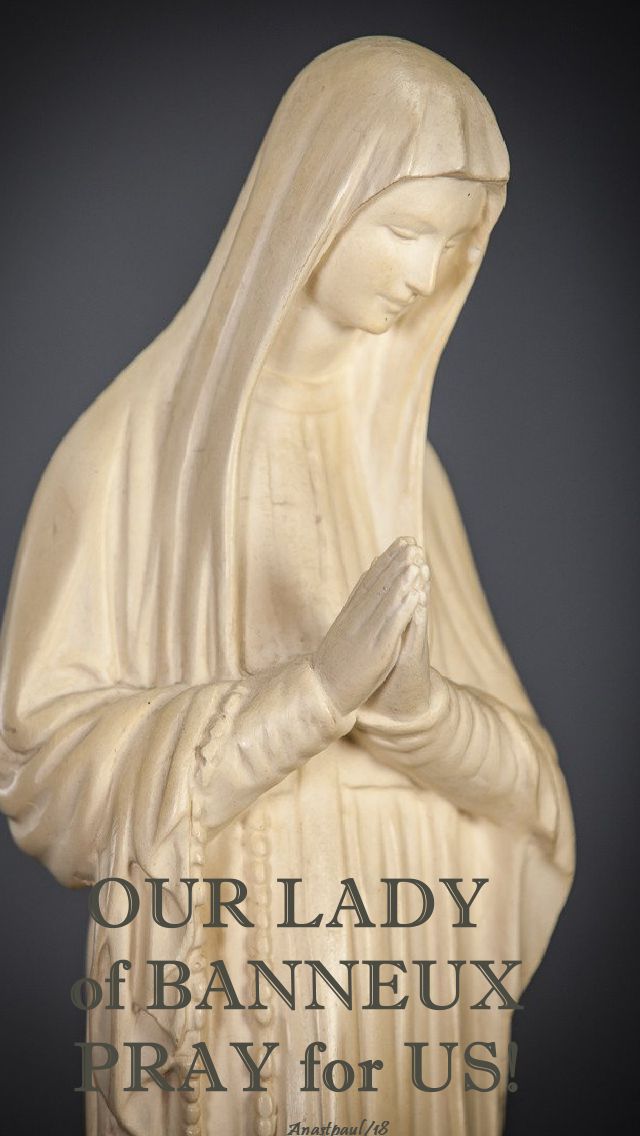
Quote/s of the Day – 13 January – The Memorial of St Hilary of Poitiers (315-368) Father & Doctor of the Church
“The privilege of our Church is such that
it is never stronger
than when it is attacked,
never better known
than when it is accused,
never more powerful
than when it appears forsaken.”
(Treatise on the Trinity)
“The Church is the Ship
outside which
it is impossible to understand
the Divine Word,
for Jesus spoke from the boat
to the people gathered
on the shore.”
“No matter how sinful
one may have been,
if he has devotion to Mary,
it is impossible that he be lost.”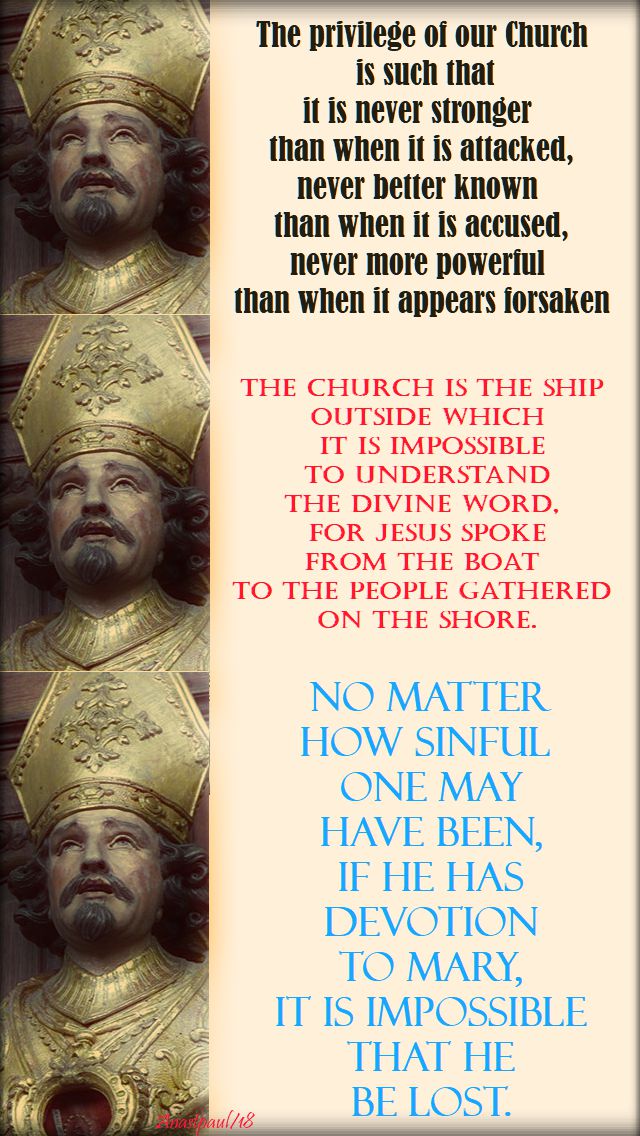
“I am well aware,
almighty God and Father,
that in my life,
I owe you a most particular duty.
It is to make my every thought
and word speak of You.”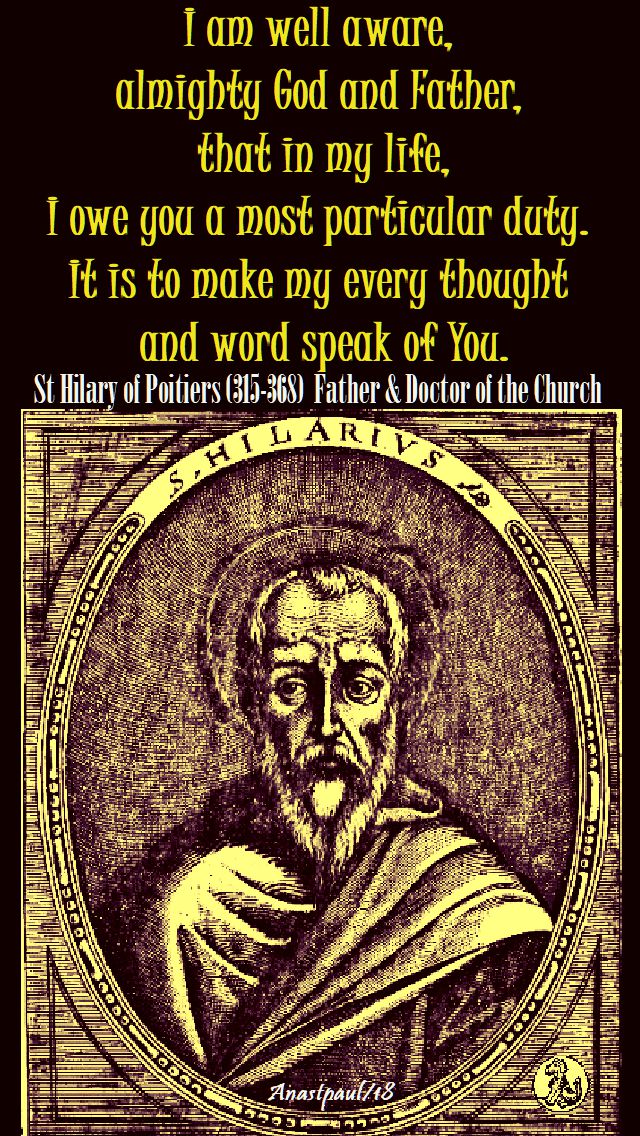
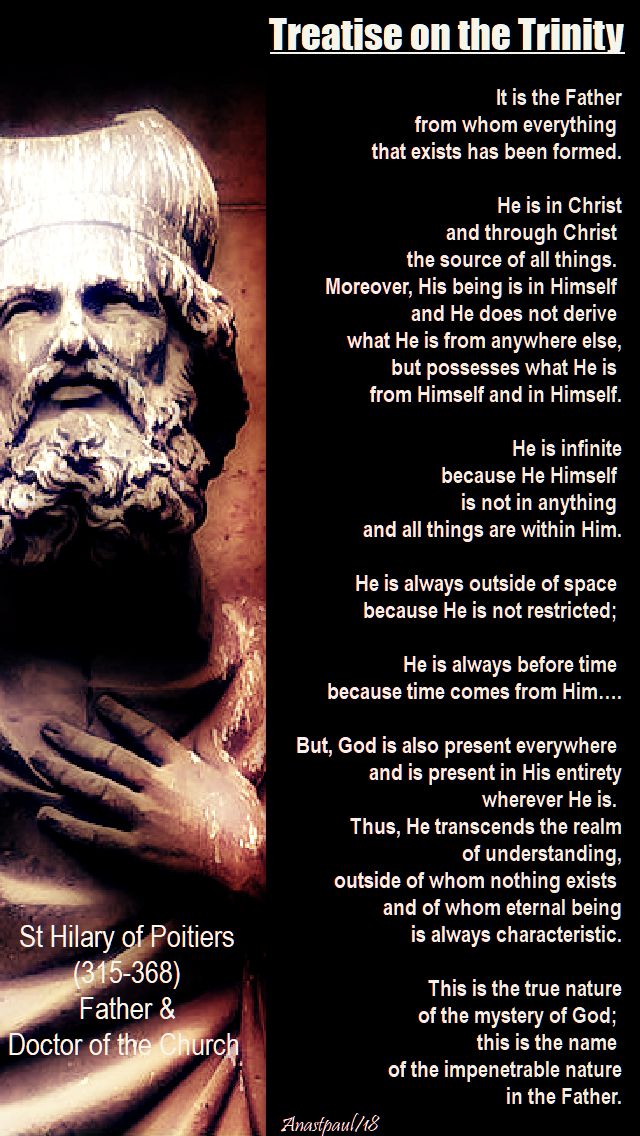
“It is the Father from whom everything
that exists has been formed.
He is in Christ and through Christ
the source of all things.
Moreover, His being is in Himself
and He does not derive
what He is from anywhere else,
but possesses what He is
from Himself and in Himself.
He is infinite because He Himself
is not in anything
and all things are within Him,
He is always outside of space
because He is not restricted;
He is always before time
because time comes from Him….
But, God is also present everywhere
and is present in His entirety wherever He is.
Thus, He transcends the realm of understanding,
outside of whom nothing exists
and of whom eternal being is always characteristic.
This is the true nature of the mystery of God;
this is the name
of the impenetrable nature in the Father.”
(Treatise on the Trinity)
Quote/s of the Day – 2 January – The Memorial of St Basil the Great (329-379) and St Gregory of Nazianzen (330-390) Fathers & Doctors of the Church
“The bread which you use
is the bread of the hungry;
the garment hanging in your wardrobe
is the garment of him who is naked;
the shoes you do NOT wear,
are the shoes of the one who is barefoot;
the acts of charity that you do NOT perform,
are so many INJUSTICES that you commit.”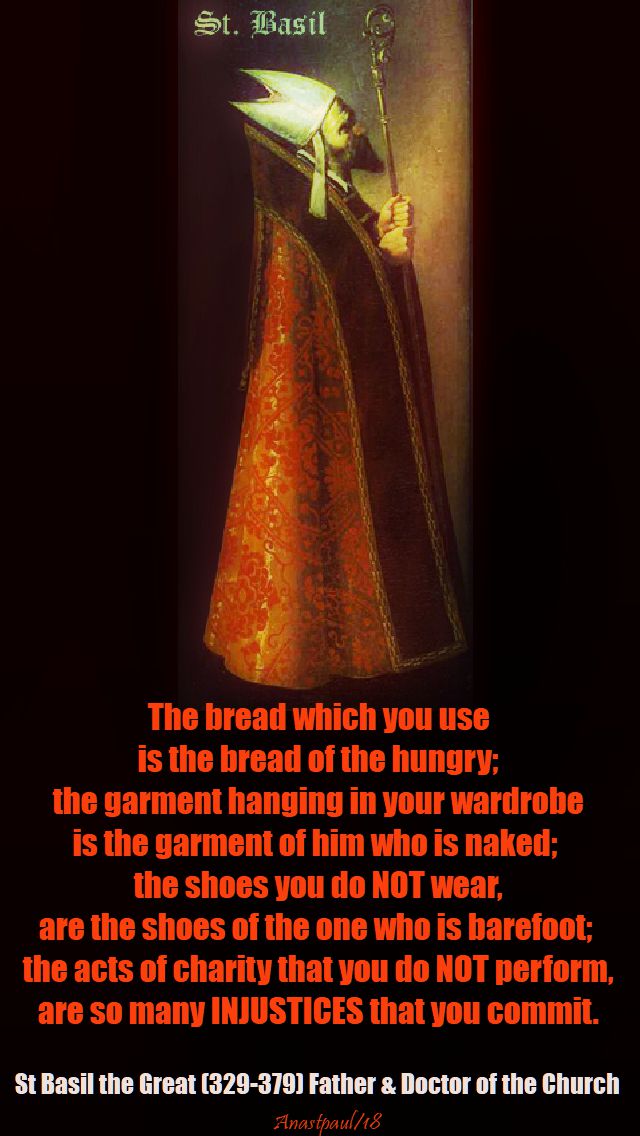
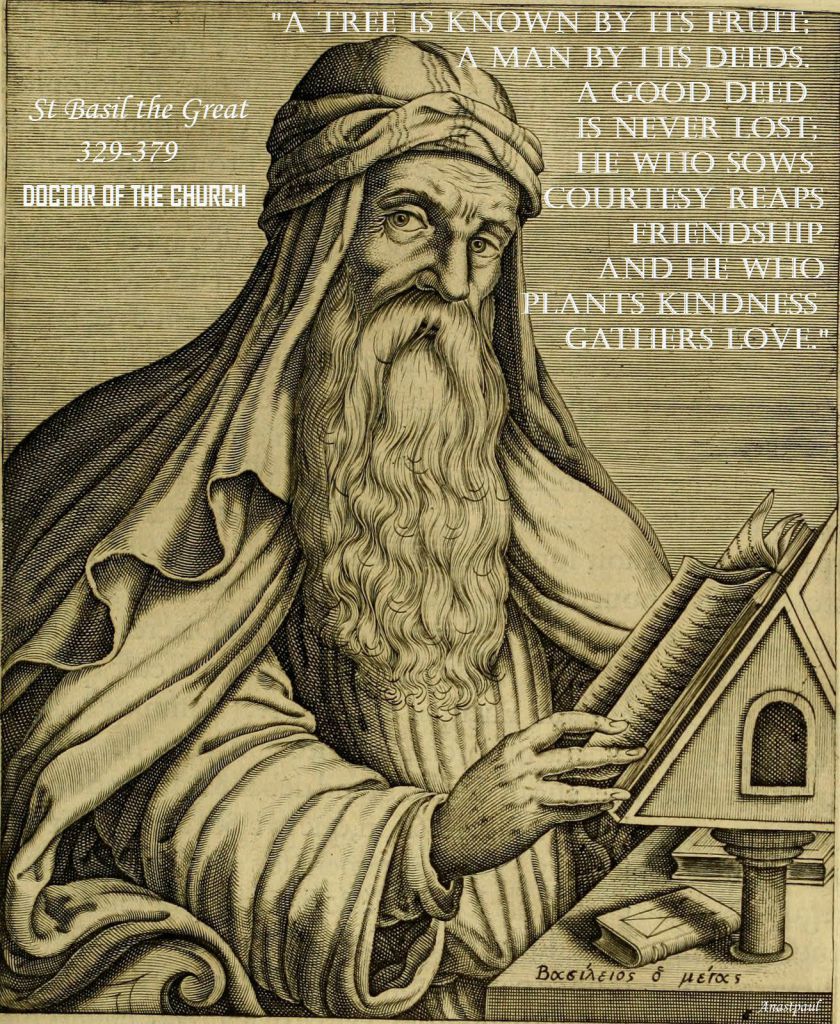
“A tree is known by its fruit;
a man by his deeds.
A good deed is never lost;
he who sows courtesy reaps friendship
and he who plants kindness gathers love.”
“Give something, however small,
to the one in need.
For it is not small to one who has nothing.
Neither is it small to God,
if we have given what we could.”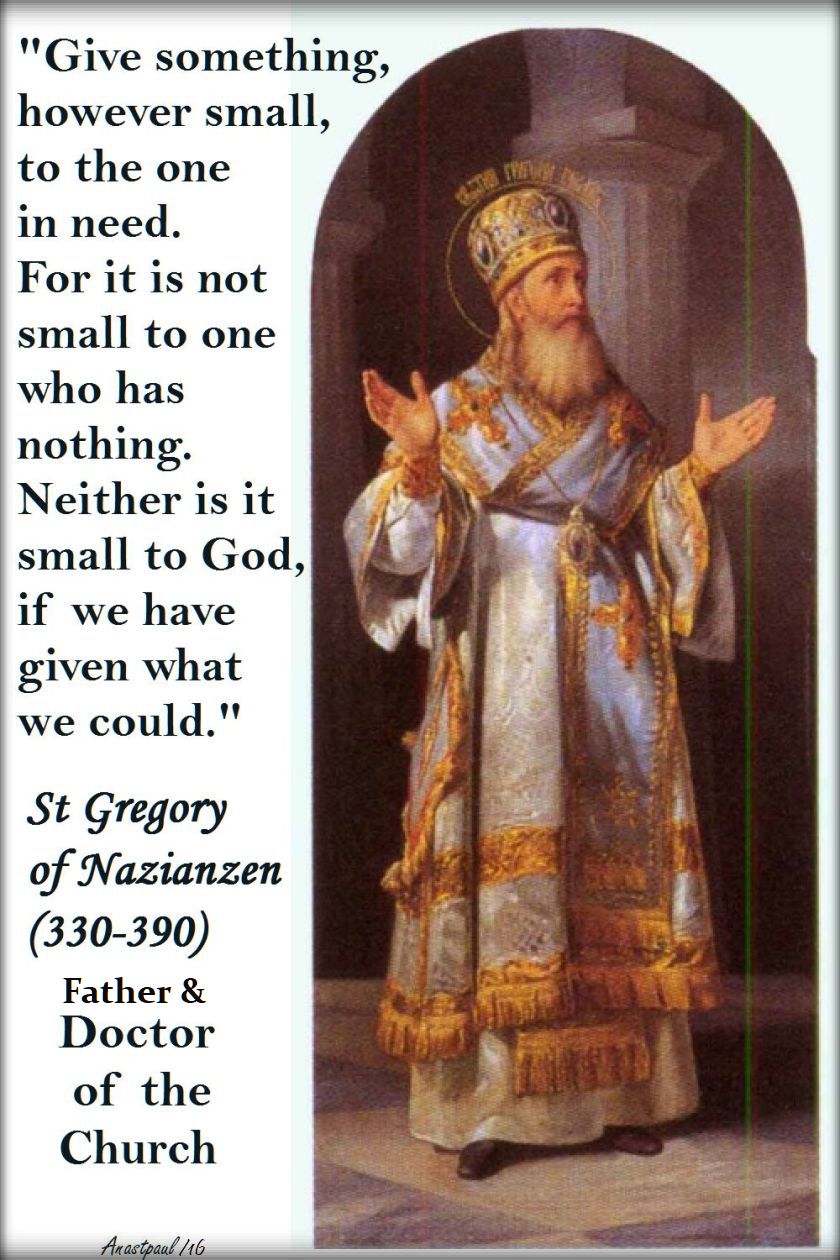
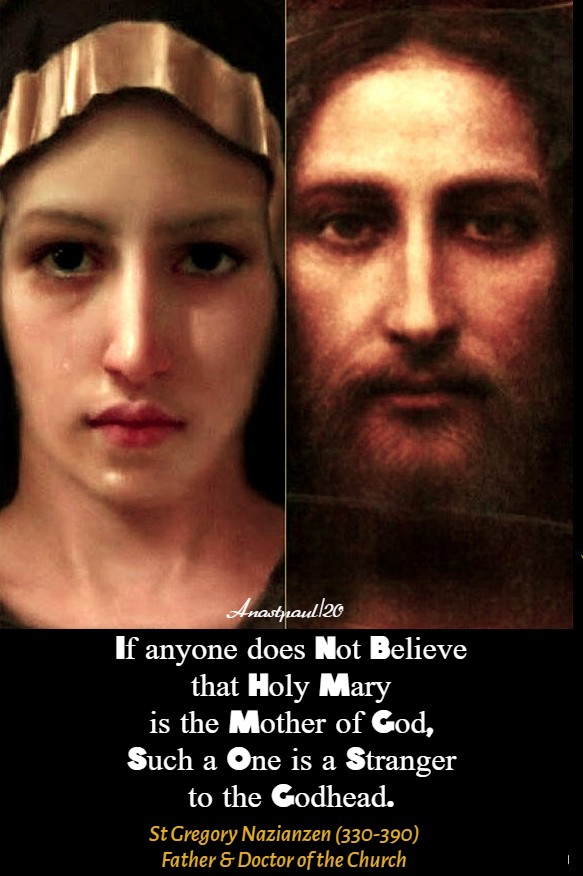
“If anyone does not believe that Holy Mary
is the Mother of God,
such a one is a stranger
to the Godhead.”
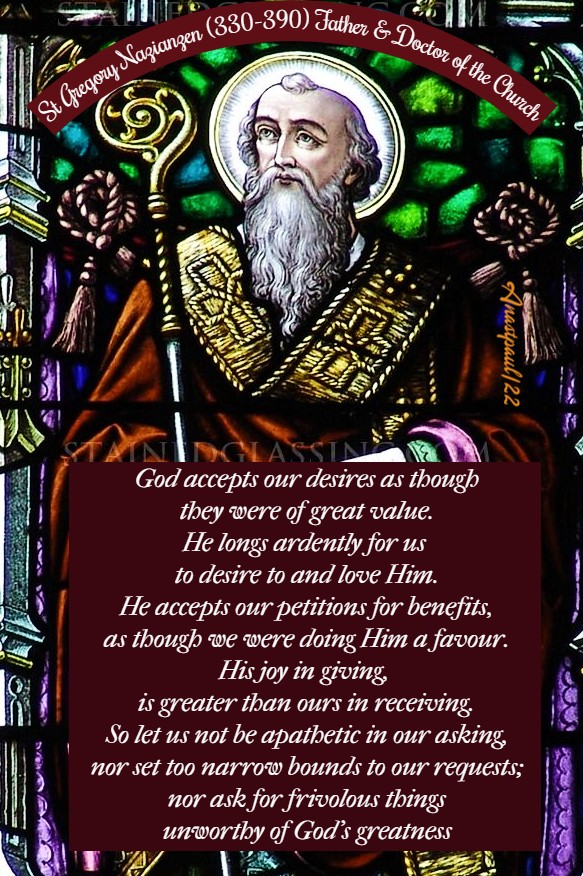
“God accepts our desires as though
they were of great value.
He longs ardently for us
to desire to and love Him.
He accepts our petitions for benefits,
as though we were doing Him a favour.
His joy in giving,
is greater than ours in receiving.
So let us not be apathetic in our asking,
nor set too narrow bounds to our requests;
nor ask for frivolous things
unworthy of God’s greatness.”
Thought for the Day – 1 January 2018 – The Solemnity of Mary, Mother of God and the Octave Day of the Nativity of Our Lord
Reflect on this.
Jesus, Who is God, is the only natural-born son who chose His mother.
He had a plan for her life and she accepted it with her fiat, her yes given to the Archangel Gabriel at the Annunciation.
For that we are eternally grateful and indebted to Mary, who was given to us to be our mother by her Son from the Cross.
And if anyone ever suggests to you that you love Mary too much, answer,
“Oh no, I could not possibly love Mary too much
because I could never love her as much as she is loved by her son!”
Blessed Virgin Mary,
who can worthily repay you
with praise and thanksgiving
for having rescued a fallen world
by your generous consent?
…accept then such poor thanks as we have to offer,
unequal though they be to your merits.
Receive our gratitude
and obtain by your prayers the pardon of our sins.
Take our prayers into the sanctuary of heaven
and enable them to bring about our peace with God
…Holy Mary, help the miserable,
strengthen the discouraged,
comfort the sorrowful,
pray for your people,
plead for the clergy,
intercede for all women consecrated to God.
May all who venerate you,
feel now your help and protection. …
Make it your continual care to pray for the people of God,
for you were blessed by God
and were made worthy to bear the Redeemer of the world,
who lives and reigns for ever. Amen
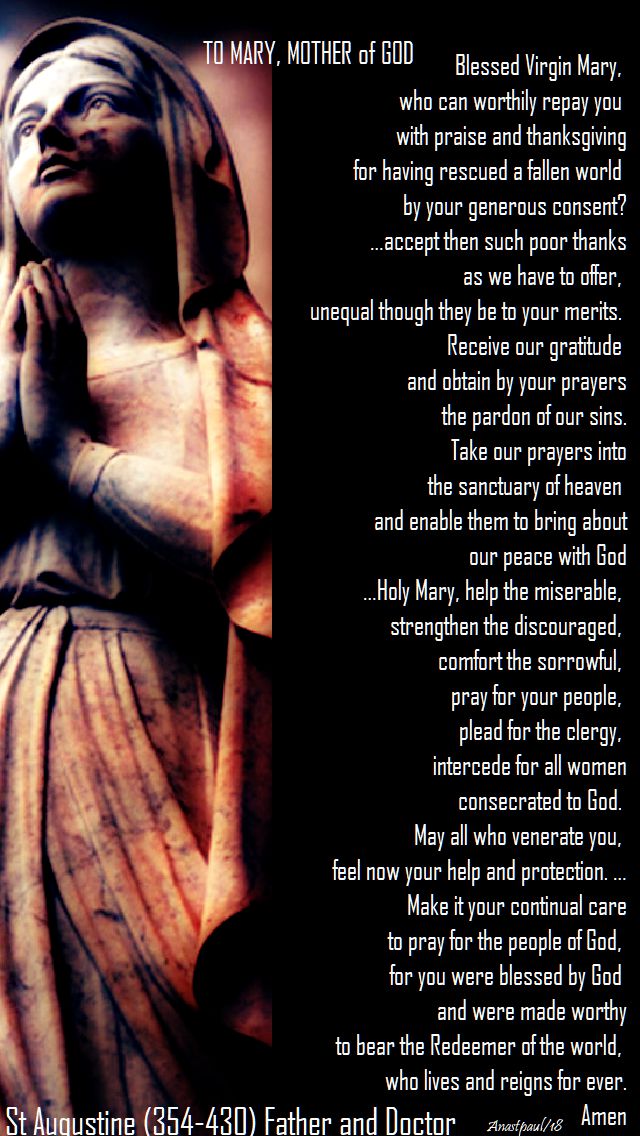
Mary, Mother of God, pray for us!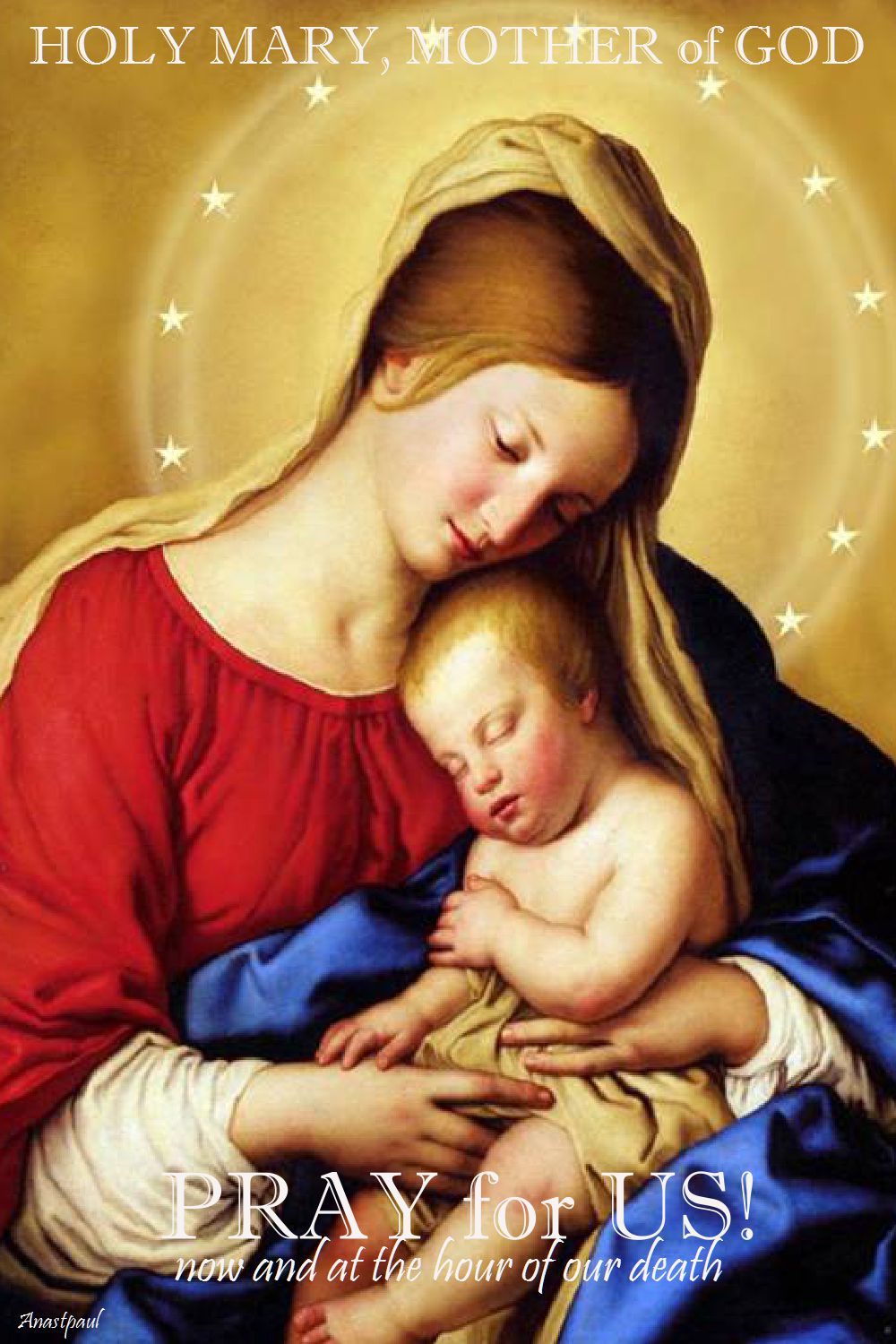
Quote/s of the Day – 1 January 2018 – The Solemnity of Mary, Mother of God and the Octave Day of the Nativity of Our Lord
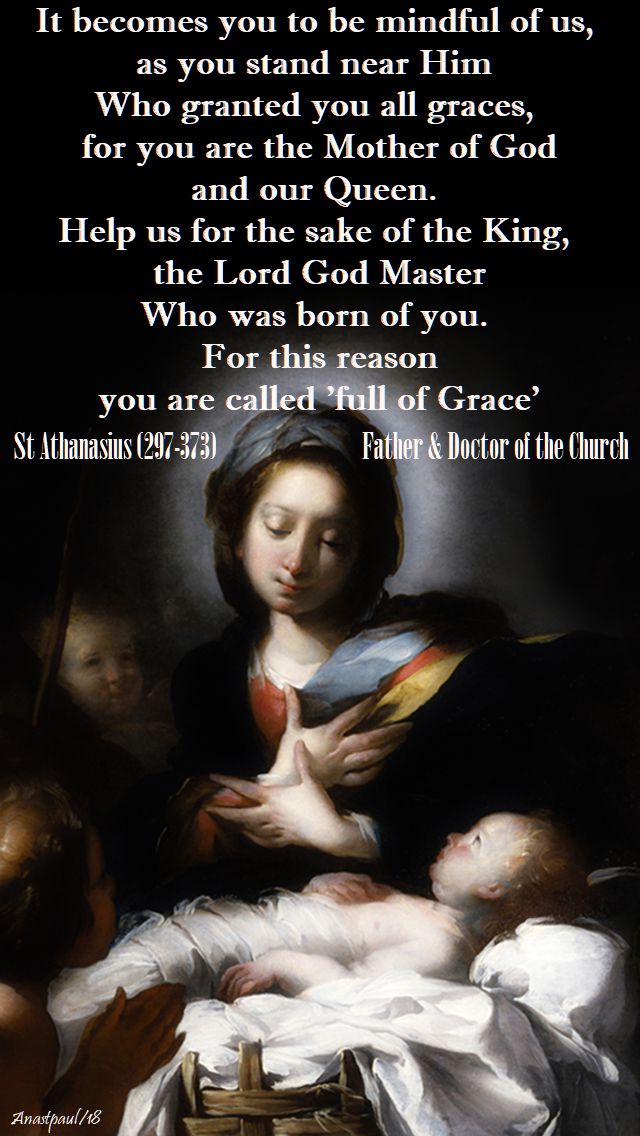
“It becomes you to be mindful of us,
as you stand near Him
Who granted you all graces,
for you are the Mother of God and our Queen.
Help us for the sake of the King,
the Lord God Master Who was born of you.
For this reason you are called ‘full of Grace’…”
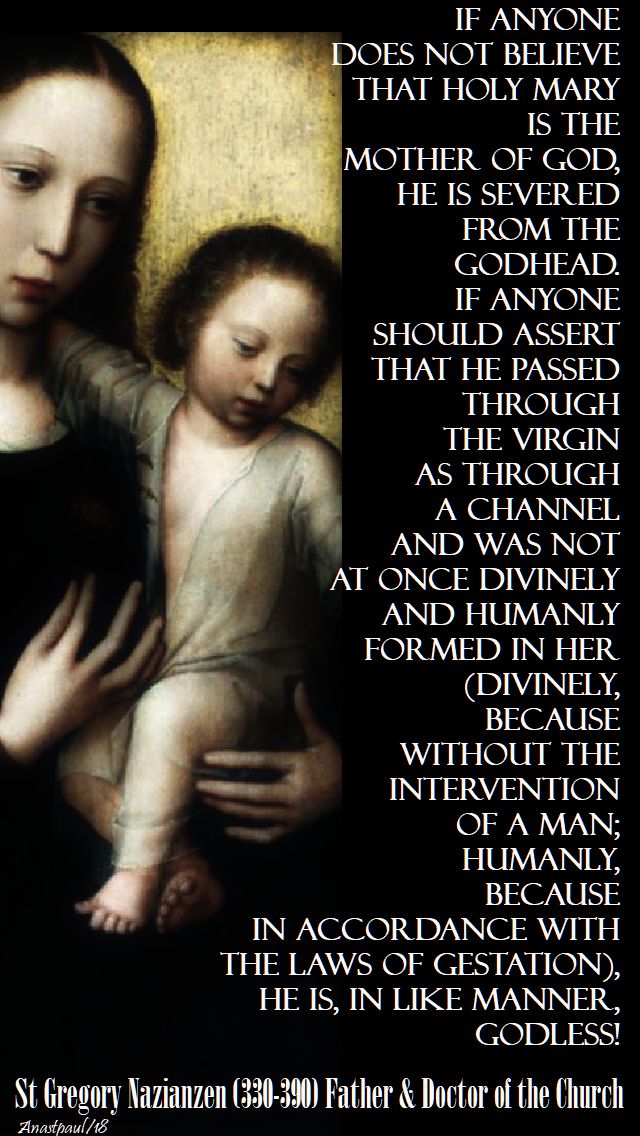
“If anyone does not believe that Holy Mary
is the Mother of God,
he is severed from the Godhead.
If anyone should assert that He passed through the Virgin
as through a channel
and was not at once divinely and humanly formed in her
(divinely, because without the intervention of a man;
humanly, because in accordance with the laws of gestation),
he is in like manner godless.”
“What the Catholic faith believes about Mary
is based on what it believes about Christ
and what it teaches about Mary,
illumines in turn, its faith in Christ”

One Minute Reflection – 1 January 2018 – The Solemnity of Mary, Mother of God, the Octave Day of the Nativity of Our Lord and the first day of the Month of the Most Holy Name of Jesus
But Mary kept all these things, pondering them in her heart.…Luke 2:19
REFLECTIONS – “Today’s liturgy celebrates the solemnity of the Mother of God.
Mary is the one who was chosen to be Mother of the Redeemer, sharing intimately in his mission.
In the light of Christmas, the mystery of her divine motherhood is illumined.
Mary, Mother of Jesus who was born in the Bethlehem cave,
is also the Mother of every man and woman who comes into the world.
How is it possible not to commend to her the year that is beginning,
to implore a time of serenity and peace for all humanity?
On the day when this new year begins under the blessed gaze of the Mother of God,
let us invoke the gift of peace for each one and all.”…St Pope John Paul – 1997
PRAYER – God, our Father, since You gave mankind a saviour through blessed Mary, virgin and mother, grant that we may feel the power of her intercession when she pleads for us with Jesus Christ, Your Son, the author of life, who lives and reigns with You and the Holy Spirit, God forever and ever, amen.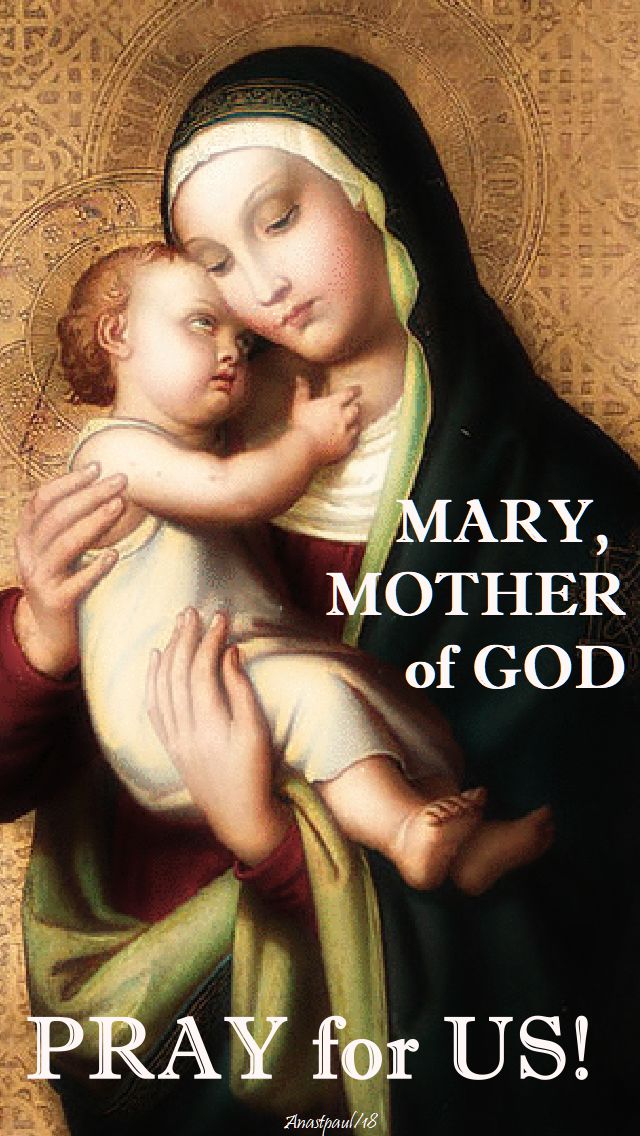
Quote/s of the Day – 25 December – The Solemnity of the Nativity of the Lord
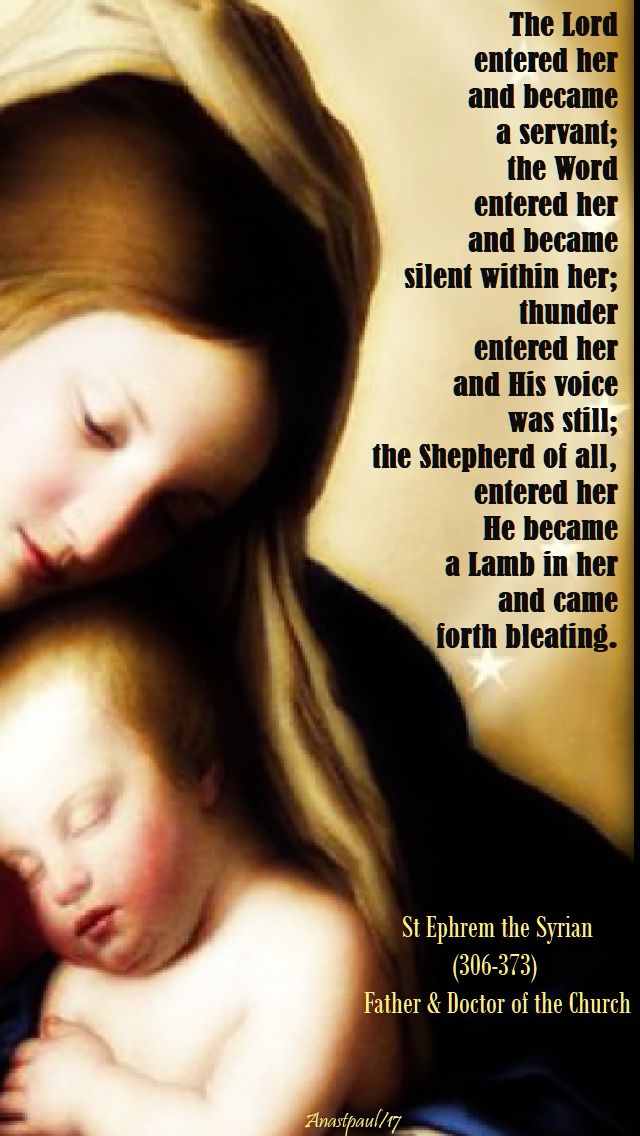
“The Lord entered her
and became a servant;
the Word entered her
and became silent within her;
thunder entered her
and His voice was still;
the Shepherd of all, entered her
He became a Lamb in her
and came forth bleating.”
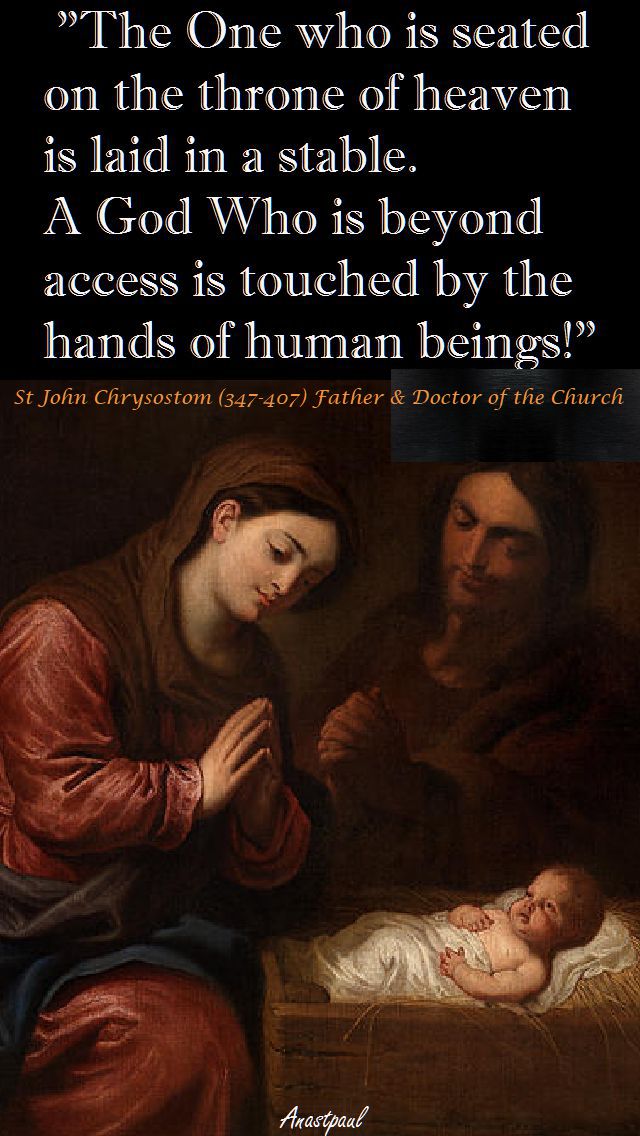
“The One who is seated
on the throne of heaven
is laid in a stable.
A God Who is beyond access
is touched by the hands
of human beings!”
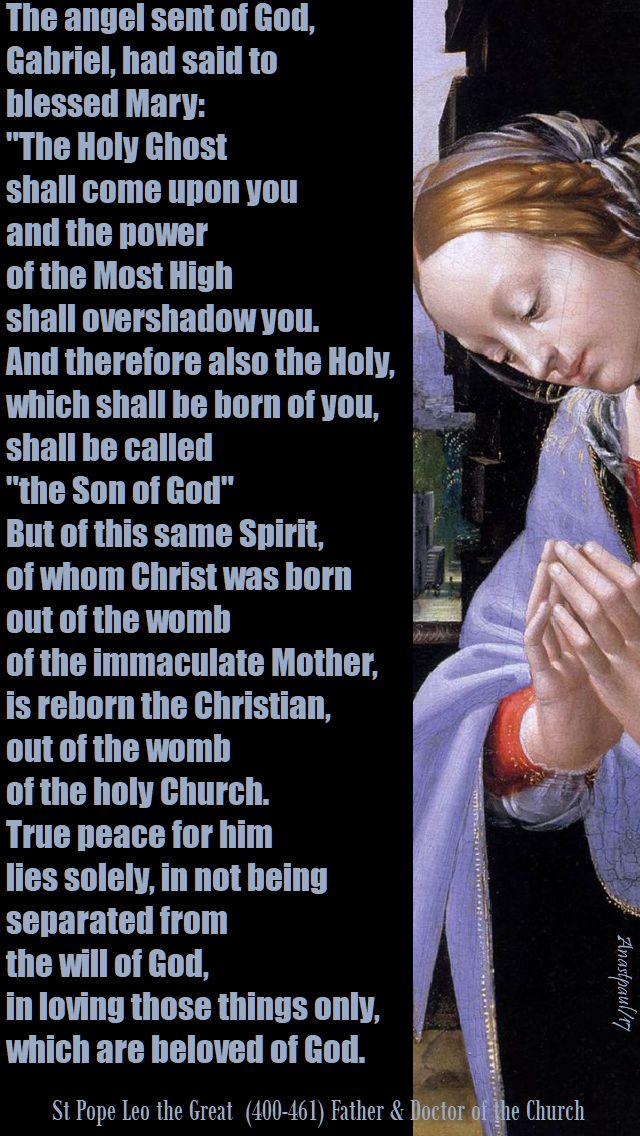
“The angel sent of God, Gabriel,
had said to blessed Mary:
“The Holy Ghost shall come upon you
and the power of the Most High
shall overshadow you.
And therefore also the Holy,
which shall be born of you,
shall be called the Son of God” (Luke 1:35).
But of this same Spirit,
of whom Christ was born
out of the womb
of the immaculate Mother,
is reborn the Christian,
out of the womb of holy Church.
True peace for him lies solely,
in not being separated from the will of God,
in loving those things only,
which are beloved of God.”
The Fourth Sunday of Advent – 24 December

Daily Meditation:
Behold, I am the handmaid of the Lord.
May it be done to me according to your word.”
“temple of God’s Word”
because she was so ready to do God’s will.
As we approach this anniversary of our redemption,
let’s spend the day placing our life in God’s hands
embracing the ways He will come to us
and let us be His instruments for others.
Let the Lord enter; he is the king of glory.
Closing Prayer:
Oh, God-With-Us,
For so long You have promised
forgiveness, peace, salvation.
Now in my heart, I am filled with joy
because of Your coming.
Thank You for Your promises and for the way I can trust in You.
I feel a new freedom in my life
and a courage I have not known before.
I know You came to save me and bring new life
and I am so grateful to You.
Let me show my thankfulness
with my life.
You have brought me through the darkness
and into the light of Your saving grace.
Guide my feet on the way of peace.
Rejoice! Rejoice! Emmanuel
Shall come to thee, O Israel!
May the Lord bless us,
protect us from all evil
and bring us to everlasting life.
Amen.
One Minute Reflection – 21 December – The Memorial of St Peter Canisius (1521-1597) Doctor of the Church
God who is mighty,
has done great things for me,
holy is his name…….Luke 1:49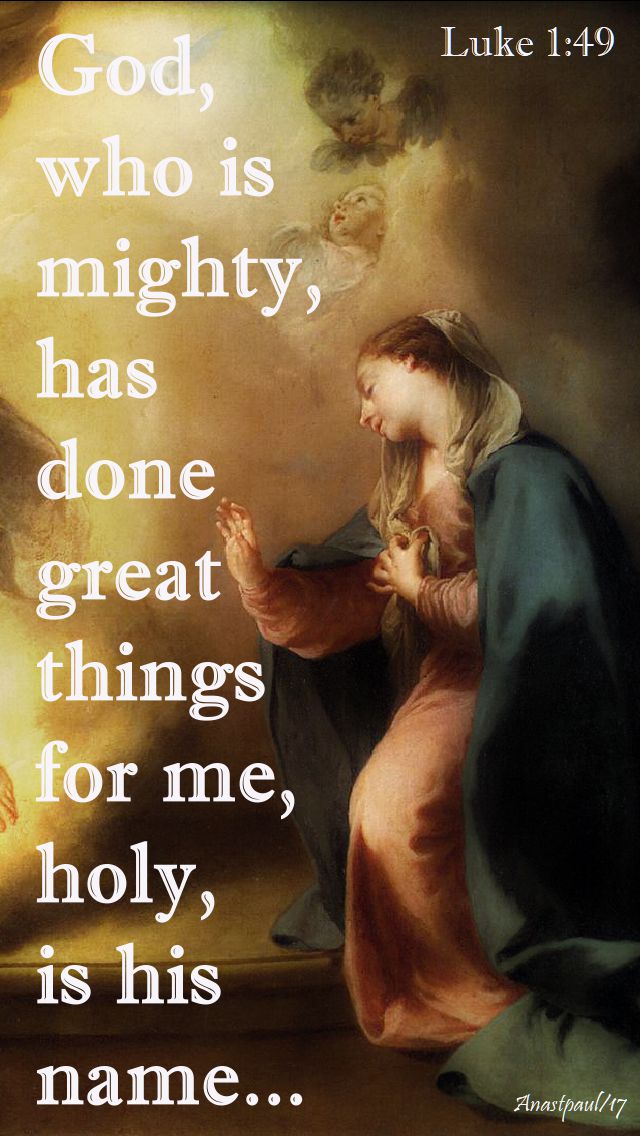
REFLECTION – “While remaining the Mother of our Judge, Mary is a mother to us, full of mercy. She constitutes our protection. She keeps us close to Christ and she faithfully takes the matter of our salvation into her charge.”……………….St Peter Canisius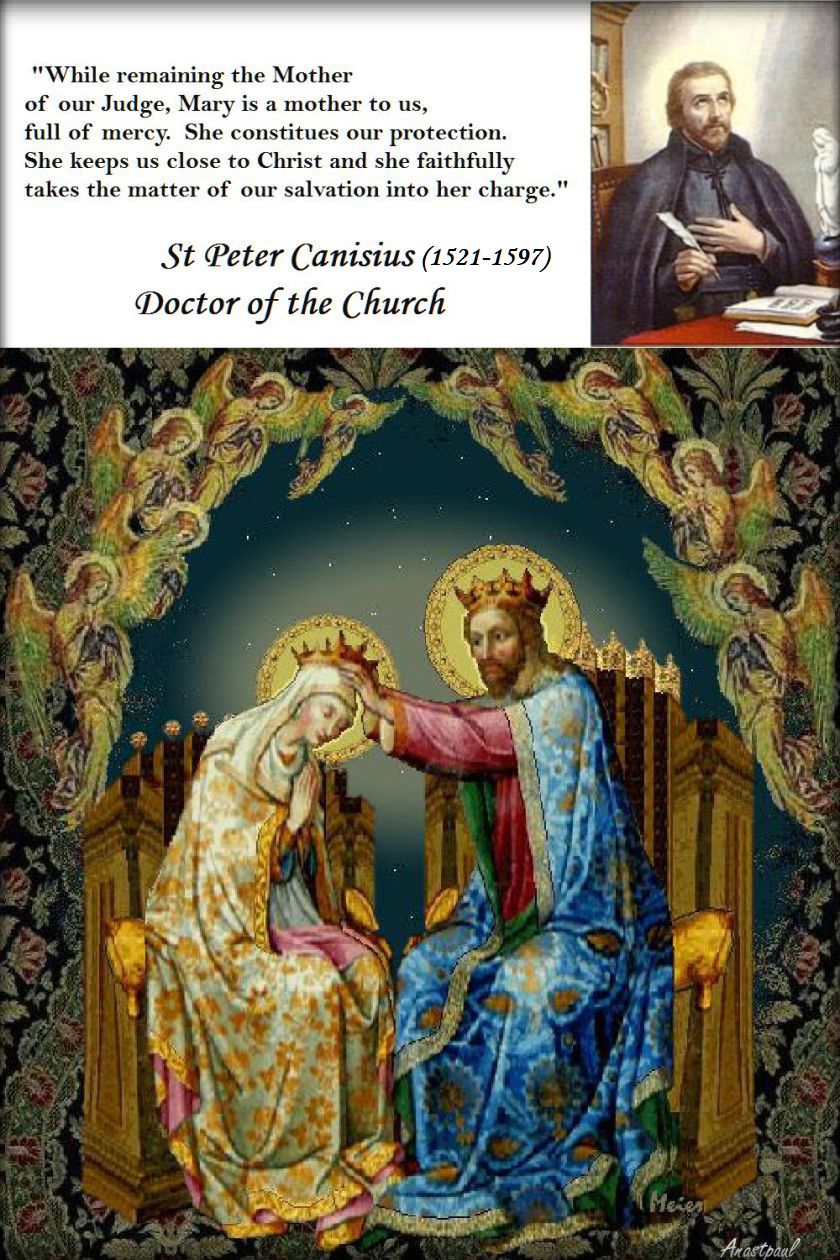
PRAYER – Heavenly Father, You have filled Mary with grace and made her a Co-Meaditrix with Christ Your Son. Grant that I may have constant recourse to her and attain the salvation she helped win for the world. St Peter Canisius, you lived a life of total and full dedication to our Father, to His divine Son and his holy and most blessed mother and in complete openness to the inspiration of the Holy Spirit. Please pray for us that as you were strengthened in sanctity and doctrine for the defence and growth of the Catholic faith, every seeker of truth may have the joy of finding our God and that all Catholics may persevere and grow in love and zeal for the one true faith. amen.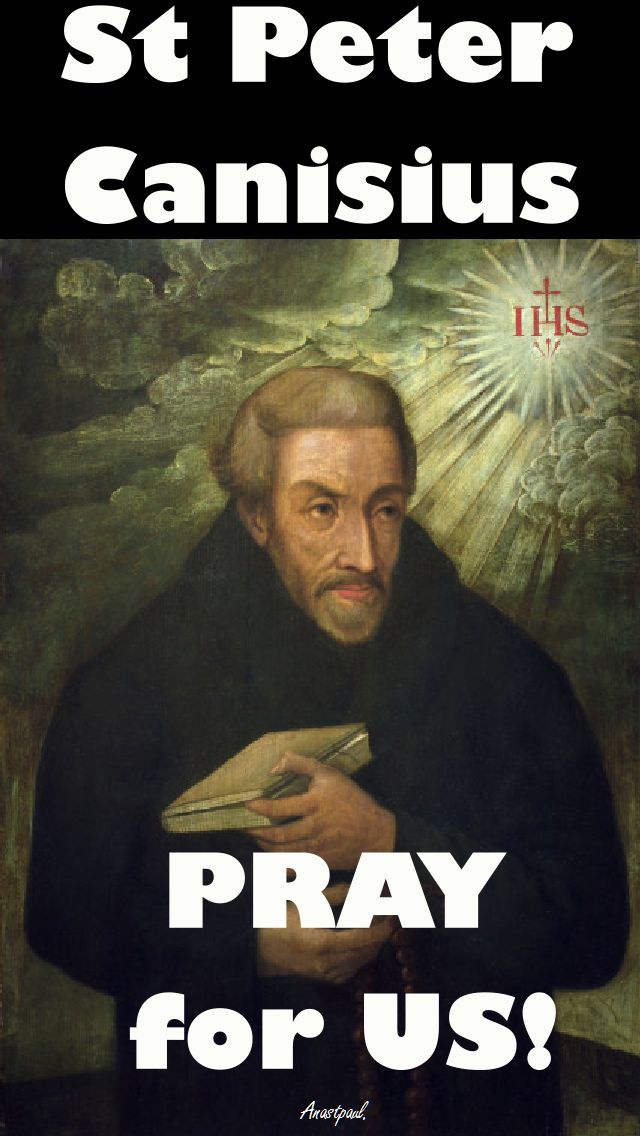
Thought for the Day – 12 December – The Feast of Our Lady of Guadalupe and Rome’s Response
Over the years the Popes have responded with unparalleled enthusiasm to all the pious demands of the Mexican hierarchy to further the cause of their Benefactress. In all, fifteen Pontiffs have affixed their signatures to Guadalupan decrees. She has been canonised the Patroness of Mexico and of all Latin America. Pope Pius XII extended her reign even further by declaring her Empress of all the Americas, North, South and Central.
We cannot pass by the Popes without mentioning the most devoted of all the Vicars of Christ to Our Lady of Guadalupe, Pope Benedict XIV. This enigmatic Pontiff, who refused even the Catholic Queen Mary of England a Mass in honour of the then controverted devotion to the Sacred Heart (1750’s) proved incapable of applying his famed over-cautious rigourism to the Mother as he did to her Son. Toward the Mexican Virgin his heart became soft as wax. He did everything he could to honour her. He gave her a Mass, a place in the Divine Office and the first of the above-mentioned titles. And he once told Fr Lopez, the Mexican Jesuit who had introduced him to the miraculous Image, that, if his duties did not prevent him, he would make a pilgrimage to the New World shrine and approach the Holy Virgin as the other poor pilgrims did, “barefoot and on his knees”. In 1754, when none of his predecessors in the chair of Peter had as yet officially approved the apparition, that was a courageous and beautiful thing for a Pope to say.
However, the privilege was left to Holy Father John Paul II [1981] to be the first Pope to visit Guadalupe in person. That was in January, 1979. Though it is true that wherever he went in his world-wide tours he drew record-breaking crowds of welcomers, nowhere did he receive the overwhelming turnout that he did in Mexico. God alone knows where they came from or how they got there but an estimated nine million people lined this poor country’s thoroughfares to greet the Holy Father, waving their bandettas and shouting thunderously,
(*excerpt from BR. MICHAEL, M.I.C.M.)
Mary’s appearance to St Juan Diego as one of his people, is a powerful reminder that Mary–and the God who sent her–accept and love all peoples.
While a number of (the indigenous peoples) had converted before this incident, they now came in droves. According to a contemporary chronicler, nine million Indians became Catholic in a very short time. In these days when we hear so much about God’s preferential option for the poor, Our Lady of Guadalupe cries out to us that God’s love for and identification with the poor is an age-old truth that stems from the Gospel itself.
Our Lady of Guadalupe, protect us, guide us, teach us, pray for us!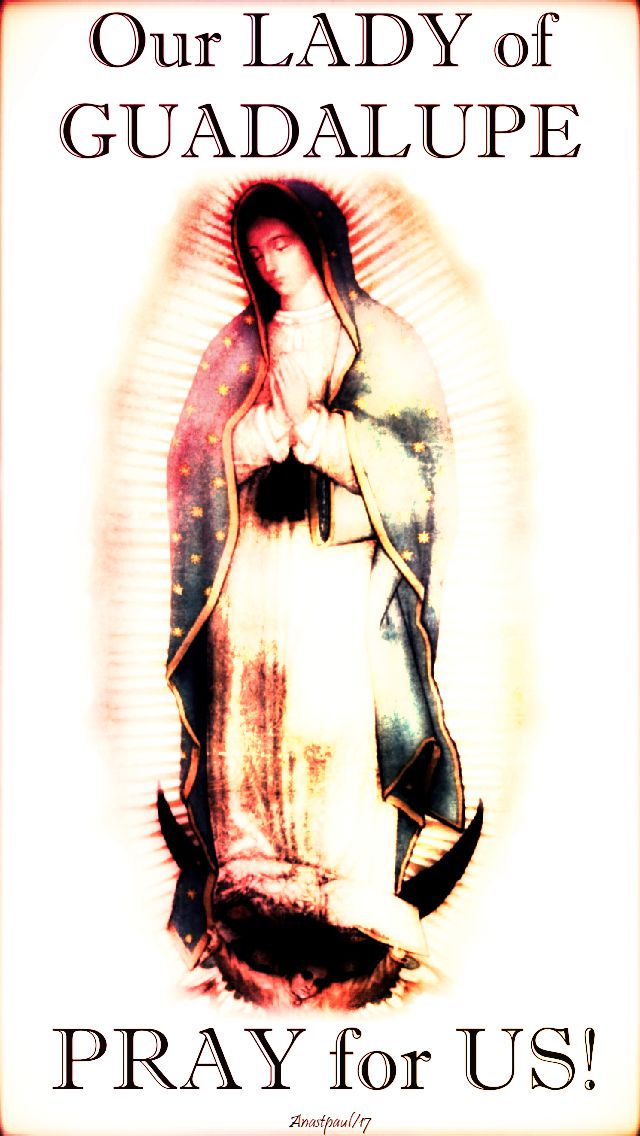
One Minute Reflection – 12 December – The Feast of Our Lady of Guadalupe
Who is this that comes like the dawn ….. as awe-inspiring as bannered troops?…..Song 6:10
REFLECTION – “Mary is an arsenal of graces and she comes to the aid of her clients. She sustains, strengthens and revives us by the heavenly favours that she heaps on us.”…..St Paulinus of York (died 644)
PRAYER – Lord Jesus Christ my Lord, help me to become a devoted client of Your holy Mother Mary. Through Your grace, may I receive the spiritual strength she has promised to all her clients. May I, in simplicity, like St Juan Diego, become her vessel to share Your Light of Love throughout my world. Our Lady of Guadalupe Pray for us! Amen
St Josemaria and Our Lady of Loreto – 10 December
Msgr Josemaria Escriva went to Loreto for the first time on January 3 and 4, 1948. But he considered himself especially indebted to Our Lady of Loreto for a very particular reason: she had heard his prayer in a time of acute need. The 1950s were years of great suffering for St Josemaria because of misunderstandings and conflicts. Amidst all these difficulties he decided to go to Loreto to place himself under our Lady’s protection. In her book Tiempo de Caminar, Ana Sastre tells the story of that visit:
“On August the fourteenth, 1951, Monsignor Escrivá decided to go to Loreto by car to be there on the fifteenth and consecrate Opus Dei to our Blessed Lady. The heat was stifling and they were very thirsty all the way. There was no motorway. The road followed the line of valleys, went steeply up the Apennine Mountains and finally plunged down towards the Adriatic coast.
According to a centuries-old tradition the Holy House of Nazareth has stood on the hill of Loreto since 1294, and a basilica was later built around it. The Holy House is rectangular in shape and its walls are about four and a half meters high. One of the walls is modern, but the others, which have no foundations and are blackened by the smoke of candles, are, according to tradition, the walls of the House at Nazareth. The structure of the Holy House and the materials of which it is built, bear no relation to those of local architecture in olden times but are exactly similar to houses built in Palestine twenty centuries ago: sandstone blocks with a limestone mortar. The shrine stands on a ridge covered in laurel-trees, from which comes the name ‘Loreto’.
St Josemaria’s party parked in the central square and he got out of the car quickly. For fifteen or twenty minutes he was lost to sight among the people filling the basilica. Finally he emerged, after praying to our Lady, smiling and in good spirits. It was seven-thirty in the evening and they had to go back to Ancona to spend the night.
The next morning, before the sun was high, they drove back to Loreto. In spite of the early hour, the shrine was already completely full. St Josemaria vested for Mass in the sacristy and came to the altar of the Holy House of Nazareth to say Mass. The small space was packed with people and the heat was stifling.


Holy Mass:
Under the votive lamps, he wanted to celebrate the sacred liturgy with all possible devotion. But he had not allowed for the fervour of the congregation on this feast day. He wrote later, “When I would kiss the altar in accordance with the rubrics, three or four local women would accompany me. It was distracting but certainly moving. I also noticed that above the altar in that holy house, which tradition says was the home of Jesus, Mary and Joseph, these words were written: ‘Here the Word was made flesh.’ Here, on a bit of the earth on which we live, in a house built by men, God dwelt” (Christ is Passing By, 12).
During the Mass, without a formula but in words filled with faith, St Josemaria consecrated Opus Dei to our Lady. Afterwards, speaking quietly to the people with him, he repeated it in the name of everyone in Opus Dei. “We consecrate to you our being and our life; everything that is ours: all that we love and all that we are. Our bodies, our hearts and our souls are for you; we are yours. And to make this consecration truly effective and lasting, today at your feet, O Mary, we renew the dedication that we made to God in Opus Dei. Inspire us with a deep love for the Church and the Pope and make us live in full submission to all their teachings.”

Invoking our Lady:
St Josemaria had been noticeably tired when he left Rome. But on the way back he seemed like a new man, as though all the obstacles in God’s path had crumbled into dust. Some weeks before he had suggested a new aspiration to his sons and daughters in Opus Dei, an invocation to the Mother of Jesus for them to repeat constantly: “Most sweet heart of Mary, prepare a safe way!” Our Lady’s loving smile always went ahead along the paths of Opus Dei. Once again, its founder had stepped forward in the parameters of faith. He used the human means but trusted in a decisive intervention from on high. “God is the same as always. It is men of faith that are needed: and then, there will be a renewal of the wonders we read of in the Gospel. Ecce non est abbreviata manus Domini, – God’s arm, his power, has not grown weaker!” (The Way, 586).
St Josemaria visited the Holy House of Nazareth on six further occasions: 7 November, 1953; 12 May 1955; 8 May 1960; 22 April 1969; 8 May 1969 and the last one on 22 April 1971. On 9 December 1973, he said, “I think that all the representations, all the names, all the invocations given by Christians to the Virgin Mary, are wonderful. But in Loreto I am especially indebted to our Lady.”





You must be logged in to post a comment.