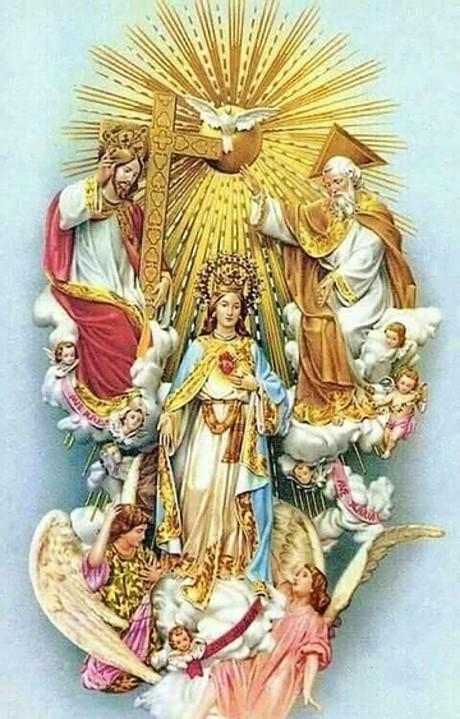
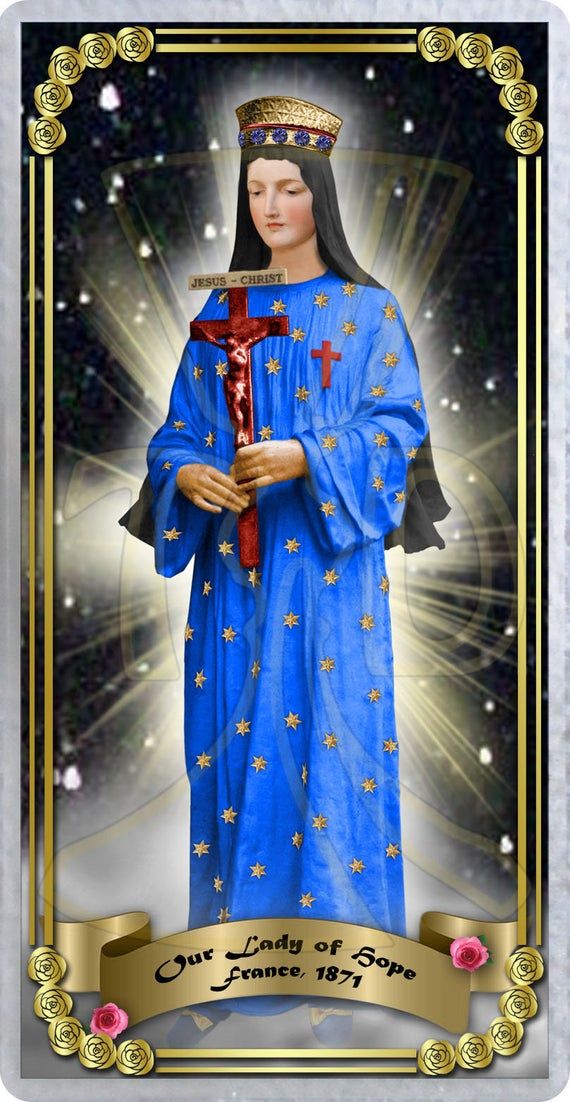
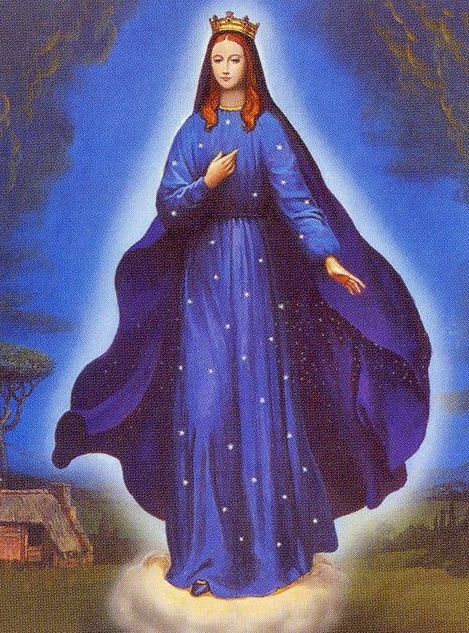
Queenship of Mary (Memorial): On 22 August, the Roman Catholic Church celebrates a memorial in honour of the Queenship of Mary. This memorial is placed an octave, that is, eight days after celebrating Mary’s Assumption into Heaven. The Queenship can be considered a prolongation of the celebration of the Assumption. The Memorial of the Queenship of Mary – 22 August – A Marian feast day decreed by Pope Pius XII on 11 October 1954, in his encyclical Ad caeli reginam to recognise and celebrate the Blessed Virgin Mary as Queen of the world, of the universe, of the angels, of heaven, Prophets, Apostles, Martyrs, Confessors, Virgins, all Saints,of Families, Queen conceived without original sin Queen assumed into Heaven, Queen of the Most Holy Rosary, Queen of Mercy, Queen of Peace. Amen, Holy Queen and Mother!
St Andrew of Fiesole St Anthusa of Seleucia St Antoninus of Rome St Arnulf of Eynesbury St Athanasius of Tarsus Bl Bernard Perani St Dalmau Llebaría Torné Bl Élie Leymarie de Laroche St Epictetus of Ostia St Ethelgitha of Northumbria St Fabrician of Toledo St Felix of Ostia Bl Giacomo/James Bianconi OP (1220–1301) Biography: https://anastpaul.com/2019/08/22/saint-of-the-day-22-august-blessed-giacomo-bianconi-op-1220-1301/ St Gunifort St Joan Farriol Sabaté St John Kemble (1599 – 1679) Martyr Biography: https://anastpaul.com/2018/08/22/saint-of-the-day-22-august-st-john-kemble-1599-1679-martyr/ St John Wall St Josep Roselló Sans St Julio Melgar Salgado St Maprilis of Ostia St Martial of Ostia St Maurus of Rheims St Narciso de Esténaga y Echevarría St Philibert of Toledo Bl Richard Kirkman St Saturninus of Ostia Bl Simeon Lukach St Sigfrid of Wearmouth St Symphorian of Autun Blessed Timoteo da Monticchio OFM (1444-1503) Priest St Thomas Percy St Timothy of Rome Bl William Lacey _ Martyred in the Spanish Civil War: • Blessed Dalmau Llebaría Torné • Blessed Joan Farriol Sabaté • Blessed Josep Roselló Sans • Blessed Julio Melgar Salgado • Blessed Narciso de Esténaga y Echevarría
Our Lady of Knock: Our Lady, Saint Joseph and Saint John the Evangelist appeared in a blaze of light at the south gable of Saint John the Baptist Church, Knock, County Mayo, Ireland, on 21 August 1879. They appeared to float about two feet above the ground and each would occasionally move toward the visionaries and then away from them. The Blessed Virgin Mary was clothed in white robes with a brilliant crown on her head. Where the crown fitted to her brow, she wore a beautiful full-bloom golden rose. She was praying with her eyes and hands raised towards Heaven. Saint Joseph wore white robes, stood on Our Lady’s right and was turned towards her in an attitude of respect. Saint John was dressed in white vestment, stood was on Mary’s left and resembled a Bishop, with a small mitre. He appeared to be preaching and he held an open book in his left hand. Behind them and a little to the left of Saint John was a plain altar on which was a cross and a lamb with adoring angels. The apparition was witnessed by fifteen people. Miraculous cures were reported soon after in the area and it is now a major pilgrimage destination. Patronage – Ireland.
St Abraham of Smolensk (Died c 1222) His Life: https://anastpaul.com/2019/08/21/saint-of-the-day-21-august-saint-abraham-of-smolensk-died-c-1222/ St Agapius of Edessa St Agathonicus of Constantinople St Anastasius Cornicularius St Aria of Rome St Avitus I of Clermont St Bassa of Edessa Bl Beatrice de Roelas St Bernhard of Lérida St Bernard de Alziva St Bonosus Bl Bruno Zembol St Camerinus of Sardinia St Cameron St Cisellus of Sardinia St Cyriaca St Euprepius of Verona St Fidelis of Edessa Bl Gilbert of Valenciennes St Gracia of Lérida St Hardulph St Joseph Nien Vien Bl Ladislaus Findysz St Leontius the Elder St Luxorius of Sardinia St Maria of Lérida St Maximianus the Soldier St Maximilian of Antioch St Natale of Casale Monferrato St Paternus of Fondi St Privatus of Mende St Quadratus of Utica St Sidonius Apollinaris (c 430 – 489) Bishop St Theogonius of Edessa Bl Victoire Rasoamanarivo St Zoticus the Philosopher
Martyred in the Spanish Civil War: • Blessed Joan Cuscó Oliver • Blessed Joan Vernet Masip • Blessed Pedro Mesonero Rodríguez • Blessed Pere Sadurní Raventós • Blessed Ramon Peiró Victori • Blessed Salvador Estrugo Salves
Our Morning Offering – 13 August – “Month of the Immaculate Heart of Mary” – Thursday of the Nineteenth week in Ordinary Time and the Feast of Our Lady, Refuge of Sinners
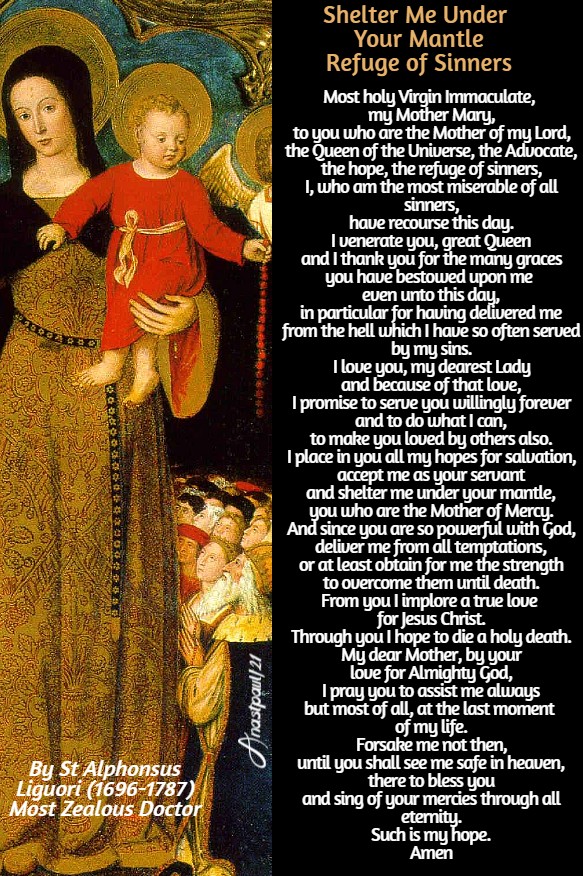
Shelter Me Under Your Mantle Refuge of Sinners By St Alphonsus Liguori (1696-1787) Most Zealous Doctor
Most holy Virgin Immaculate, my Mother Mary,
to you who are the Mother of my Lord,
the Queen of the Universe, the Advocate,
the hope, the refuge of sinners,
I, who am the most miserable of all sinners,
have recourse this day.
I venerate you, great Queen
and I thank you for the many graces
you have bestowed upon me even unto this day,
in particular for having delivered me from the hell
which I have so often served by my sins.
I love you, my dearest Lady
and because of that love,
I promise to serve you willingly forever
and to do what I can,
to make you loved by others also.
I place in you all my hopes for salvation,
accept me as your servant
and shelter me under your mantle,
you who are the Mother of Mercy.
And since you are so powerful with God,
deliver me from all temptations,
or at least obtain for me the strength
to overcome them until death.
From you I implore a true love for Jesus Christ.
Through you I hope to die a holy death.
My dear Mother, by your love for Almighty God,
I pray you to assist me always
but most of all, at the last moment of my life.
Forsake me not then,
until you shall see me safe in heaven,
there to bless you
and sing of your mercies through all eternity.
Such is my hope.
Amen
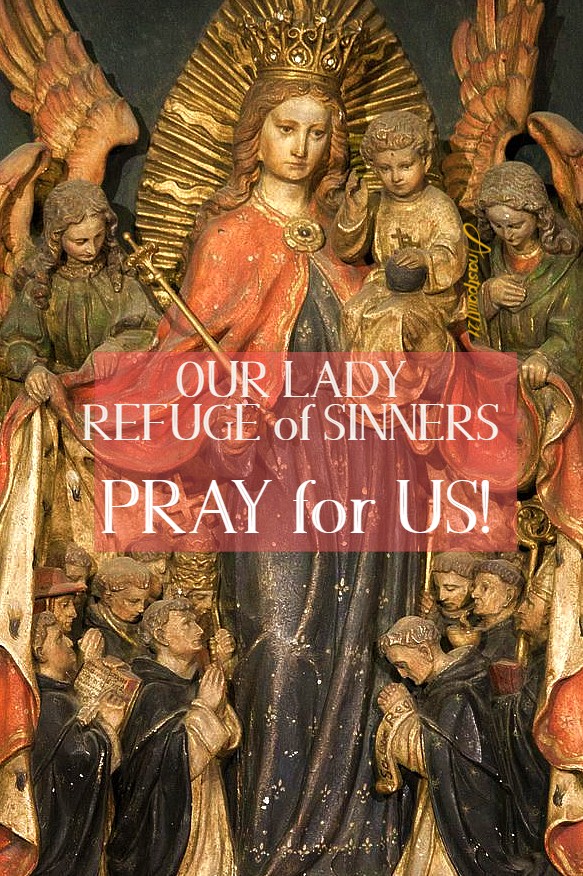
Our Lady, Refuge of Sinners/Refugium Peccatorum: St John Damascene calls Mary a city of refuge to all who flee to Her.
Blessed Antonio Baldinucci SJ (1665-1717) had a particular devotion to the Refugium Peccatorum image of Virgin Mary in the Church of the Gesu (Frascati) in Italy and commissioned a copy which he considered miraculous and carried it with him in his travels. The Jesuits spread copies of the image of the Madonna of Refuge in Mexico by the 19th century and it began to be depicted in missions there, often with clouds surrounding the lower portion of the image of the Virgin Mary holding the Child Jesus.
The term “Refugium Pstjohnberchmanseccatorum” is also used other works of Roman Catholic Marian art. For instance, there is a marble statue representing the Virgin Mary, on the grand staircase of the old municipal palace in Venice, Italy. The name came from the fact that the convicts were allowed to stop in front of the Virgin Mary’s statue to pray for their soul on the way to the scaffold.
The traditional feast day of Our Lady, Refuge of Sinners is today, 13 August.
St Nerses Glaietsi
St Patrick O’Healy
Bl Pierre Gabilhaud
St Radegund
St Radegunde
St Wigbert of Fritzlar
Bl William Freeman
—
Martyred in the Spanish Civil War:
• Blessed Francesc Castells Areny
• Blessed Inocencio García Díez
• Blessed José Bonet Nadal
• Blessed José Boher y Foix
• Blessed José Juan Perot y Juanmarti
• Blessed Jose Tàpies y Sirvant
• Blessed Josep Alsina Casas
• Blessed Luciano Hernández Ramírez
• Blessed Maria de Puiggraciós Badia Flaquer
• Blessed Mateo Despóns Tena
• Blessed Modesto García Martí
• Blessed Pascual Araguàs y Guàrdia
• Blessed Pedro Martret y Molet
• Blessed Silvestre Arnau y Pascuet
Martyred Claretians of Barbastro – 51 beati:
• Blessed Agustín Viela Ezcurdia
• Blessed Alfons Miquel Garriga
• Blessed Alfons Sorribes Teixidó
• Blessed Antolín Calvo y Calvo
• Blessed Antoni Dalmau Rosich
• Blessed Atanasio Vidaurreta Labra
• Blessed Eduardo Ripoll Diego
• Blessed Esteve Casadevall Puig
• Blessed Eusebi Maria Codina Millà
• Blessed Felipe de Jesús Munárriz Azcona
• Blessed Francesc Roura Farró
• Blessed Francisco Castán Meseguer
• Blessed Gregorio Chirivas Lacamba
• Blessed Hilario Llorente Martín
• Blessed Jaume Falgarona Vilanova
• Blessed Joan Baixeras Berenguer
• Blessed Joan Codinachs Tuneu
• Blessed José Amorós Hernández
• Blessed José Blasco Juan
• Blessed José Figuero Beltrán
• Blessed José Pavón Bueno
• Blessed Josep Maria Badía Mateu
• Blessed Josep Ormo Seró
• Blessed Josep Ros Florensa
• Blessed Juan Díaz Nosti
• Blessed Juan Echarri Vique
• Blessed Juan Sánchez Munárriz
• Blessed Leoncio Pérez Ramos
• Blessed Lluís Escalé Binefa
• Blessed Lluís Lladó Teixidor
• Blessed Lluís Masferrer Vila
• Blessed Manuel Buil Lalueza
• Blessed Manuel Martínez Jarauta
• Blessed Manuel Torras Sais
• Blessed Miquel Masip González
• Blessed Nicasio Sierra Ucar
• Blessed Pedro García Bernal
• Blessed Pere Cunill Padrós
• Blessed Rafael Briega Morales
• Blessed Ramon Illa Salvia
• Blessed Ramon Novich Rabionet
• Blessed Salvador Pigem Serra
• Blessed Sebastià Riera Coromina
• Blessed Sebastián Calvo Martínez
• Blessed Secundino Ortega García
• Blessed Teodoro Ruiz de Larrinaga García
• Blessed Tomàs Capdevila Miró
• Blessed Wenceslau Clarís Vilaregut
They were martyred on 2 August through 18 August 1936 in Barbastro, Huesca, Spain and Beatified on 25 October 1992 by Pope John Paul II.
Our Morning Offering – 5 August – “Month of the Immaculate Heart of Mary” – Wednesday of the Eighteenth Week in Ordinary Time and the Memorial of the Dedication of Mary Major
Concórdi lætítia Harmonious Joy
Sounds of joy have put to flight
All the sadness of the night.
Now a Maid beyond compare
Hears her praises fill the air:
Virgo María.
Who is she whom angels sing,
Making all creation ring?
She it is who wins our priase,
As on earth our voice we raise:
Virgo María.
Queen of virgins, Maiden mild,
Hear me, take me for your child.
Ever my protector be,
Bring eternal life to me:
Virgo María.
Mighty Godhead, Three in One,
While eternal ages run,
Look to Mary, full of grace,
And forgive the human race:
Virgo María.
Amen
Our Lady of Copacabana: A statue of the Blessed Virgin Mary standing four feet tall, made of plaster and maguey fibre and created by Francisco Tito Yupanqui. Except for the face and hands, it is covered in gold leaf, dressed like an Inca princess and has jewels on neck, hands and ears. There is no record of what the image looks like under the robes, the carved hair has been covered by a wig and the image never leaves the Basilica. On 21 February 1583 it was enthroned in an adobe church on the Peninsula of Copacabana, which juts into Lake Titicaca nearly 3 miles above sea level. In 1669 the Viceroy of Peru added a straw basket and baton to the statue, which she still holds today. The present shrine dates from 1805. The image was crowned during the reign of Pope Pius XI and it’s sanctuary was promoted to a Basilica in 1949. It has been the recipient of many expensive gifts over the years, most of which were looted by civil authorities in need of quick cash. Patronage – Bolivia, Bolivian navy.
St Abel of Rheims
St Addai
St Aggai of Edessa
Bl Arnaldo Pons
St Cantidianus
St Cantidius
St Cassian of Autun
St Casto of Teano
Bl Corrado of Laodicea
St Emidius of Ascoli Piceno
St Eusignius
St Gormeal of Ardoilen
Bl James Gerius
St Margaret the Barefooted
St Mari
St Memmius of Châlons-sur-Marne
St Nonna St Oswald of Northumbria (604-642) Martyr Biography: https://anastpaul.com/2019/08/05/saint-of-the-day-5-august-saint-oswald-of-northumbria-c-604-642-martyr/
St Paris of Teano
Bl Pierre-Michel Noël Blessed Salvio Huix-Miralpeix C.O. Cong Orat (1877–1936) Bishop and Martyr
St Sobel
St Theodoric of Cambrai-Arras
St Venantius of Viviers
St Viator
—
Martyrs of Fuente la Higuera: A group of Augustinian priests and clerics who were martyred together in the Spanish Civil War. 5 August 1936 in Fuente la Higuera, Valencia, Spain. They were Beatified on 28 October 2007 by Pope Benedict XVI.
10 Beati:
• Anastasio Díez García
• Ángel Pérez Santos
• Cipriano Polo García
• Emilio Camino Noval
• Felipe Barba Chamorro
• Gabino Olaso Zabala
• Luciano Ramos Villafruela
• Luis Blanco Álvarez
• Ubaldo Revilla Rodríguez
• Victor Gaitero González
Martyrs of the Salarian Way: Twenty-three Christians who were martyred together in the persecutions of Diocletian.
303 on the Salarian Way in Rome, Italy.
Martyred in the Spanish Civil War:
Bl Eduardo González Santo Domingo
Bl Jaume Codina Casellas
Bl José Trallero Lou
Bl Lluís Domingo Mariné
Bl Manuel Moreno Martínez
Bl Maximino Fernández Marinas
Bl Victor García Ceballos
“This Virgin Mother of the Only begotten of God is called Mary, worthy of God, Immaculate of the Immaculate, one of the one.”
Origen (c 185-253)
Historically, devotion to Mary Most Holy in the form of her Immaculate Heart first occurs in the thirteenth century with St Mechtilde, St Gertrude, St Bernardine of Siena and others. In the seventeenth century, St Francis de Sales was an exponent of this devotion. But it was St John Eudes the great apostle of the Immaculate Heart (1601-1680), who gave the decisive impulse to the practice.
In the same century, the devotion to the Sacred Heart of Jesus came back to light through St Margaret Mary Alacoque and her confessor, St Claude de La Colombiere. As the devotion to the Sacred Heart spread, so did the devotion to the Immaculate Heart. Both St Margaret Mary and St Claude, were deeply dedicated to the Immaculate Heart of Mary as well.
Beginning with Pope Pius VI, several popes incrementally spread the devotion but in 1944 Pope Pius XII extended it to the whole Church, fixing the Feast Celebration on 22 August. Today, the feast of the Immaculate Heart of Mary is celebrated on the Saturday following the feast of the Sacred Heart of Jesus, which is movable, always observed on a Friday, nineteen days after Pentecost Sunday.
The Physical Heart, Symbol of the Spiritual Heart
The Fathers of the Church consider that when, from the Cross, Our Lord Jesus made the Blessed Lady, the mother of St John and thus He appointed her the mother of all men.
Thus, Mary’s heart is the physical symbol of her boundless love for God and humankind. But Our Lady’s physical heart is also the symbol of her spiritual heart. Thus, in the Immaculate Heart of Mary we also honour her inner life, her virtues, her perfect purity, her boundless humility, her affections and her sorrow.
Poignant in Catholic tradition is the representation of Mary’s heart pierced by a sword, symbol of her immense sorrow at witnessing and willing her Son’s passion and death for the salvation of our souls.
Fatima and the Immaculate Heart of Mary
–The Five First Saturdays Devotion
In the second apparition of Fatima, Our Lady showed the seers, Lucia, Francisco and Jacinta, her heart encircled by thorns. Later, on 10 December 1925, in a private apparition to Sister Lucia, she asked for the devotion of reparation of the Five First Saturdays.
The Blessed Mother appeared alongside the Child Jesus who stood over a luminous cloud. Our Lady rested one hand on the Child’s shoulder while she held on the other hand a heart pierced with thorns.
The Child said,
“Have pity on the Heart of your Most Holy Mother which is covered with thorns with which ungrateful men pierce it at every moment with no-one to extract them with an act of reparation.
I want My Church to…put the devotion to this Immaculate Heart beside the devotion to My Sacred Heart.”
“Look, my daughter, My Heart surrounded with thorns with which ungrateful men pierce me at every moment with blasphemies and ingratitude. You, at least, make sure to console me and announce that all those who for five months, on the first Saturdays, go to Confession, receive Communion, say five decades of the Rosary and keep me company for 15 minutes meditating on the Mysteries of the Rosary, with the purpose of making reparation to Me, I promise to assist them at the hour of death with all the graces necessary for the salvation of their souls.”
Our Lady assured Lúcia: “My Immaculate Heart will be your refuge and the way that will lead you to God.” Thus, if we devote ourselves to her Immaculate Heart, Mary will lead us to her Son, Jesus Christ and we will be on the way to Heaven.
Our Lady of Fatima
“…Let us continue Immaculate Mary’s mission. All is included in it. May [we].. follow her example and be the handmaid of the Lord in everything, everywhere and always.”
Bl Josep Sala Picó
Bl Juan de Luca
Bl Juan de Montesinos
Bl Leonard da Recanati Blessed Margarita María López de Maturana (1884-1934)
Bl Pedro Ruiz de los Paños Angel
St Phocas the Gardener
St Primitiva of Rome
St Rasyphus of Macé
St Rasyphus of Rome
St Ravennus of Macé
St Redempta of Rome
St Romula of Rome
St Severus of Bizye
St Theophilus of Rome
St Trophimus of Rome
St Valerian of Cimiez
Bl Wojciech Gondek
—
Martyrs of Barcelona – 7 beati: Seven Christians, some lay people, some members of the Missionaries of the Sacred Hearts of Jesus and Mary and some of the Franciscan Daughters of Mercy, who were martyred in two groups on the same day in the Spanish Civil War.
• Catalina Caldés Socías
• Francesc Mayol Oliver
• Miquel Pons Ramis
• Miquela Rul-Làn Ribot
• Pau Noguera Trías
• Prudència Canyelles Ginestà de Aguadé
• Simó Reynés Solivellas
23 July 1936 in Barcelona, Spain. They were Beatified on 28 October 2007 by Pope Benedict XVI.
Martyrs of Bulgaria: An unknown number of Christians killed for their faith during the 9th century war between the Greek Emperor Nicephorus and the Bulgars.
Martyrs of Carabanchel Bajo – 9 beati: A group of nine Passionist priests, brothers and clerics who were martyred together in the Spanish Civil War.
• Anacario Benito Nozal
• Felipe Ruiz Fraile
• Felipe Valcobado Granado
• José Osés Sainz
• José Ruiz Martinez
• Julio Mediavilla Concejero
• Laurino Proaño Cuesta
• Manuel Pérez Jiménez
• Maurilio Macho Rodríguez
22 July 1936 in Carabanchel Bajo, Madrid, Spain. They were Beatified on 1 October 1989 by Pope John Paul II.
Martyrs of Horta – 10 beati: A lay woman and nine Minim nuns who were martyred together in the Spanish Civil War.
• Ana Ballesta Gelmá
• Dolors Vilaseca Gallego
• Josefa Pilar García Solanas
• Josepa Panyella Doménech
• Lucrecia García Solanas
• Maria Montserrat Ors Molist
• Mercè Mestre Trinché
• Ramona Ors Torrents
• Teresa Ríus Casas
• Vicenta Jordá Martí
23 July 1936 at the Sant Genís dels Agudells highway, Horta, Barcelona, Spain. They were Beatified on
27 October 2013 by Pope Benedict XVI.
Martyrs of Manzanares – 5 beati: Five Passionist clerics who were martyred together in the Spanish Civil War.
• Abilio Ramos y Ramos
• Epifanio Sierra Conde
• José Estalayo García
• Vicente Díez Tejerina
• Zacarías Fernández Crespo
They were shot on 23 July 1936 in Manzanares, Ciudad Real, Spain and Beatified on 1 October 1989 by Pope John Paul II.
Our Lady of Kazan:
This miraculous icon, also known as the Theotokos of Kazan, is thought to have originated in Constantinople in the 13th century before it was taken to Russia. When the Turks took Kazan in 1438, the icon may have been hidden. Ivan the Terrible liberated Kazan in 1552 and the town was destroyed by fire in 1579.
The icon was eventually found in the ruins of a burnt-out house at Kazan on the River Volga on 8 July in 1579. According to tradition, the location of the icon was revealed during a dream by the Blessed Virgin Mary to a ten year old girl named Matrona. Matrona told the local Bishop of her dream, but he did not believe her. There were two more similar dreams, after which Matrona and her mother went to the place indicated by the Blessed Virgin and dug in the ruins what had been a house until the uncovered the icon. It appeared untouched by the flames, with the colours as vivid and brilliant as if it were new. The Bishop took the icon to the Church of Saint Nicholas and immediately there was a miracle of a blind man’s sight being restored to him. A Monastery was built over the place where the icon had been found.
Known as the Holy Protectress of Russia, the icon was stolen on 29 June 1904. The thieves were later caught and claimed that they had destroyed the icon after taking the gold frame and jewels attached to the image. In any event, the original has never been found, though there are many copies in existence, thanks to the popularity of the icon. Many of the copies are known to be miracle working.
In 1993 a copy of the icon was given to Pope John Paul II, who kept it in his personal study before it was given to representatives of the Russian Orthodox Church in 2004.
Bl Agrícola Rodríguez García de Los Huertos
St Alberic Crescitelli Blessed Angelina of Marsciano TOR (1357-1435) – Foundress and Abbess
St Arbogast of Strasbourg
St Barhadbescialas
St Benignus of Moyenmoutier
Bl Claudius of Avignon
St Claudius of Troyes
St Corona of Marceille
Bl Cristóbal López de Valladolid Orea
Bl Daniel Molini
St Daniel the Prophet
St Eleutherius of Marseille
St Eternus of Evreaux
Bl Gabriel Pergaud
St Iosephus Wang Yumei
St John of Edessa
St John of Moyenmoutier
Bl Juan de Las Varillas
Bl Juan de Zambrana
St Jucundinus of Troyes
St Julia of Troyes
St Justus of Troyes
Bl Parthenius of Thessaly
St Praxides of Rome
St Simeon Salus St Victor (of Marseilles) (3rd century) Martyr His Story: https://anastpaul.com/2019/07/21/saint-of-the-day-21-july-st-victor-3rd-century-martyr/
St Wastrada
St Zoticus of Comana
—
Martyrs of Africa – 6 saints: Six Christians who were martyred together. We know no other details about them but the names – Emilian, Hugal, Motanus, Saphus, Stercorius and Victor. They were martyred in an unknown location in Africa, date unknown.
One Minute Reflection – 18 July – “Month of the Most Precious Blood” – Saturday of the Fifteenth Week in Ordinary Time, Year A, Readings: Micah 2:1-5, Psalm 10:1-4, 7-8, 14, Matthew 12:14-21and the Feast of Our Lady of Good Deliverance
“In his name the Gentiles will hope” … Matthew 12:21
REFLECTION – “Who among us can know all the treasures of wisdom and knowledge hidden in Christ and buried within the poverty of His flesh? For, “for your sake he became poor although he was rich, so that by his poverty, you might become rich” (2 Cor 8:9). Since He came in order to assume our mortal condition and lay low death itself, He appeared as one who was poor. But He who has promised us distant riches has by no means lost those, from which He is kept away. “How great is his abundant goodness which he keeps in store for those who fear him, he satisfies those who hope in him” (cf. Ps 31[30]:20). …
So that we might be able to lay hold of it, He who is equal to the Father, having the nature of God, became like us by taking the nature of a servant and recreates us in God’s likeness. Having become son of man, the only Son of God transforms numberless men into sons of God. And after having sustained His servants by His own visible nature of a servant, He sets them free to contemplate the nature of God. For “we are God’s children; what we shall be has not yet been revealed. We do know that when it is revealed we shall be like him, because we shall see him as he really is” (1 Jn 3:2). For in what do these treasures of wisdom and knowledge and these divine riches consist? In what is this abundant goodness? All we know is, that it is this, that satisfies us.” … St Augustine (354-430) Father and Doctor of Grace – Sermon 194 ; PL 38, 1016
PRAYER – Lord God, in Your wisdom You created us, by Your Providence, You rule us. Penetrate our inmost being with Your holy light so that our way of life may always be one of faithful service and childlike trust in You. Grant that by the intercession of Our Lady of Good Deliverance, we may always follow behind Your Son and grasp His hand, to lead us to You, Through Jesus Christ our Lord with the Holy Spirit, one God, forever, amen.
Saint of the Day – 18 July – Our Lady of Good Deliverance, also known as the “Black Madonna of Paris.” The statue dates from the 14th century, replacing an 11th-century version. It is 150 centimeters (59 in) tall, and made from painted limestone. The Virgin wears a white veil and dark blue mantle ornamented with fleur-de-lis over a red robe.
France, known as “the Eldest Daughter of the Church” is a country rooted in Catholicism, where her love of the faith is depicted in it’s magnificent Cathedrals, literature, sacred music, artistic works of paintings, frescoes and sculptures. Prayer books contain Illuminations penned in gold leaf and plant colours and the very air holds the fragrance of religion. In France, Marian devotion runs deep in the hearts of the faithful. One of the first recorded apparitions of our Lady was at Le-Puy, France in the year 70. A Shrine at LePuy was erected and has drawn many saints and faithful throughout the centuries. Today in France, there is still a distinct dedication to Our Lady of Good Deliverance. This devotion refers to a classic fourteenth century gothic statue of the Virgin holding the Child Jesus, both coal black in colour.
A Confraternity in honour of Our Lady of Good Deliverance was established in 1533 by a Priest , Fr Jean-Jacques Olier SS (1608 – 1657) (Founder of the Sulpicians – Congregation of the Holy Spirit). Fr Jean-Jacques was “greatly pious, devoted to Our Lady with strong affection, in the service of the Queen of Angels.” The Confraternity numbered thousands of members, which included aristocratic and common members alike, including the King and Queen of France, Louis XIII and Anne of Austria. The society was dedicated to honour God and his “very dignified Mother, the glorious Virgin Mary to keep a singular devotion alive in all real Christian men and women.” The group organised processions and aided prisoners, paying their debts when possible. Our Lady of Good Deliverance was invoked in all needs, tragedies and sufferings, spiritual and temporal.
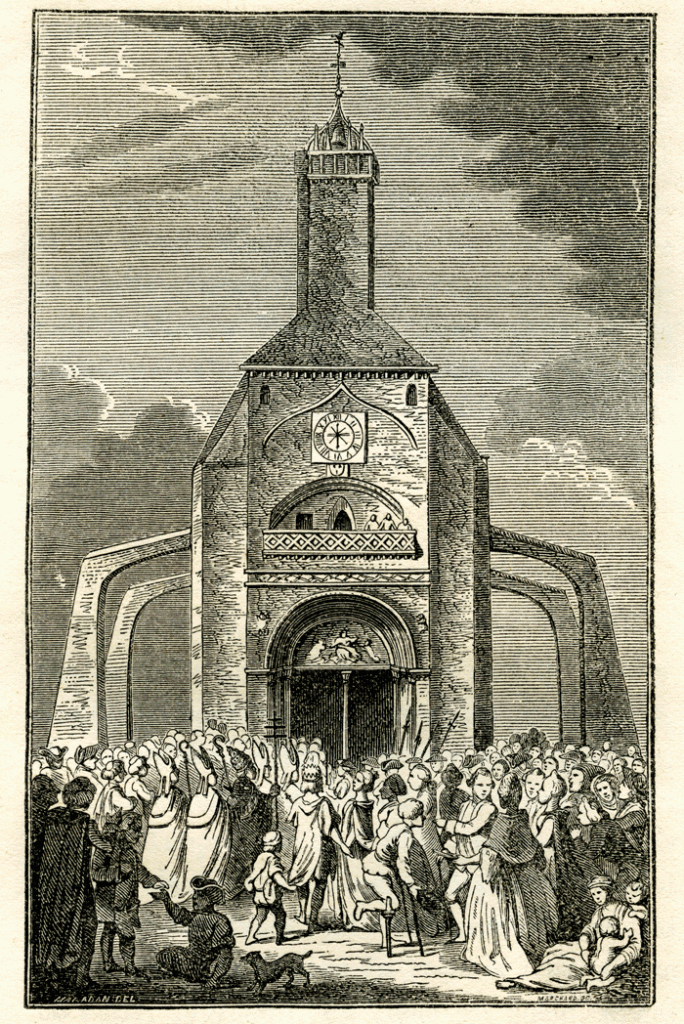
Our Lady of Good Deliverance used to stand in the Church Saint-Etienne-des-Grès in the Latin Quarter but that Church was destroyed during the Revolution and all its content sold.
An exterior view of Saint-Étienne-des-Grès as it appeared before the French Revolution, taken from Book Three of Tableau historique et pittoresque de Paris by Jacques Bins, comte de Saint-Victor.
Madame de Carignan, a pious rich lady bought the Statue and venerated her in her private home until she was arrested during the Reign of Terror (a period of 11 months following the Revolution, which cost 20-40,000 people their lives.) In jail she used to pray to Our Lady of Good Deliverance with others who had been arrested for their faith, in particular the Sisters of St Thomas. When all of them survived and were freed in 1806, Madame gave the Black Virgin to the Sisters. The statue is still located in the Chapel of the Congregation of the Sisters of St Thomas of Villeneuve in Neuilly-sur-Seine, see below. The Sisters of St Thomas pray every day in the chapel on behalf of families, the sick, religious vocations, those who have entrusted themselves to the Virgin, and peace in the world.
The Chapel of Grace, E#insiedeln
Our Lady of Good Deliverance was invoked as a helper in all kinds of calamities and suffering, whether of a spiritual or material nature. She was also called upon as the Victorious One in the fight against the Huguenots and other heretics.
The great Saints of Paris, most notably St Vincent de Paul and St Francis de Sales prayed before her.
The de Sales family were members of the minor nobility and staunch Catholics but young St Francis de Sales fell victim to the religious turmoil of his age. The question of predestination, the hottest point of contention between Catholic and Calvinist theologians, tormented him while he was a student in Paris. In his distress over the uncertain fate of his soul he cried out to God, “Whatever happens, Lord, may I at least love you in this life if I cannot love you in eternity.”At the age of 18, while studying at the Jesuit run Collège de Clermont at the University of Paris, according to the book The Spirit of St. Francis de Sales, by Jean-Pierre Camus:
“…The evil spirit was permitted by God to insinuate into his mind the terrible idea that he was one of the number of the damned. This delusion took such possession of his soul, that he lost his appetite, was unable to sleep and day-by-day grew more wasted and languid. His tutor and director, noticing how his health was affected and how pale, listless and joyless he had become, often questioned him as to the cause of his dejection and evident suffering but his tormentor, who had filled his mind with this delusion, being what is called a dumb devil, the poor youth could give no explanation.
For one whole month he suffered this mental torture, this agony of soul. He had lost all the sweetness of divine love but not, happily, his fidelity to it. He looked back with happy tears to the happy time when he was, as it were, inebriated with that sweetness, nor did any ray of hope illumine the darkness of that night of despair. In late December, at last, led by a divine inspiration, he entered a Church to pray that this agony might pass. On his knees before the Statue of the Blessed Virgin, Our Lady of Good Deliverance, he implored the assistance of the Mother of Mercy with tears and sighs and the most fervent devotion.”
According to De Sales’ Selected Letters, the “torment of despair came to a sudden end” as he knelt in prayer before the statue of Our Lady of Good Deliverance at the church of Saint-Étienne-des-Grès, Paris, saying the Memorare. Francis credited the Blessed Virgin with “saving him from falling into despair or heresy”thereafter, he “recited the Memorare day after day” and she “did not leave him unaided.”
Not long after this event another Priest with great love for Our Mother, who ministered to the poor and to prisoners in Paris, especially those condemned to death, spread the fame of this prayer. He was Fr Claude Bernard (23 December 1588 – 23 March 1641). Known as “Le Pauvre Prêtre” “The Poor Priest,” he is primarily remembered as the populariser of the Memorare, over 200,000 copies of which he distributed by leaflets printed in various languages.
Notable pilgrims to Our Lady of Good Deliverance—some before the Revolution, some after—have included Fr Claude Bernard, Fr Jean-Jacques Olier, St John Bosco, Blessed Prosper Guéranger and St Madeleine Sophie Barat RSCJ (1779 – 1865).
The Memorare
Remember, O most gracious Virgin Mary, that never was it known, that anyone who fled to thy protection, implored thy help, or sought thy intercession, was left unaided. Inspired by this confidence, I fly unto thee, O Virgin of Virgins, my Mother. To thee do I come, before thee I stand, sinful and sorrowful. O Mother of the Word Incarnate, despise not my petitions but in thy mercy hear and answer me. Amen
Notre-Dame-de-Bonne Délivrance / Our Lady of Good Deliverance: 18 July
Since the 1000s, the Church of Saint-Etienne-des-Grès in the old Latin Quarter of Paris had a chapel to Our Lady of Good Deliverance, where, across the centuries, pilgrims sought the Virgin’s help in their of sufferings. During the Wars of Religion and counter-Reformation, her Confraternity had 12,000 members, including the King and Queen of France.
St Goneri of Treguier
St Gundenis of Carthage
Bl Herveus
Bl Jean-Baptiste de Bruxelles
St Marina of Ourense
St Maternus of Milan
St Minnborinus
St Pambo of the Nitrian Desert
St Philastrius of Brescia
St Rufillus of Forlimpopoli
St Scariberga of Yvelines St Simon (Szymon) of Lipnica (1435/1440-c 1482) His Story: https://anastpaul.com/2019/07/18/saint-of-the-day-18-july-saint-simon-of-lipnica-1435-1440-c-1482/
St Theneva
St Theodosia of Constantinople
—
Martyrs of Silistria – 7 saints: Seven Christians who were martyred together. No details about them have survived but the names – Bassus, Donata, Justus, Marinus, Maximus, Paulus and Secunda. They were martyred in Silistria (Durostorum), Moesia (in modern Bulgaria), date unknown.
Martyrs of Tivoli – 8 saints: A widow, Symphorosa and her seven sons ( Crescens, Eugene, Julian, Justin, Nemesius, Primitivus and Stracteus) martyred in Tivoli, Italy in the 2nd-century persecutions of Hadrian.
One Minute Reflection – 17 July – “Month of the Most Precious Blood” – Friday of the Fifteenth Week in Ordinary Time, Year A, Readings: Isaiah 38:1-6, 21-22, 7-8, Responsorial psalm Isaiah 38:10-12, 16, Matthew 12:1-8 and the Feast of The Madonna of Humility
“I say to you, something greater than the temple is here …” … Matthew 12:6
REFLECTION – ““Christ also reminded them of another prophecy, so that they might learn, that all things that were spoken of previously, were accomplished in Him through the law, that the priests in the temple broke the sabbath without offence, clearly revealing that Jesus Himself was the temple.
In Him, salvation was given to the Gentiles, through the teaching of the apostles, while the people who were bound by the law, wandered about faithlessly, so that He Himself might be greater than the sabbath.
Evangelical faith lived in Christ, transcends the law.” … St Hilary of Poitiers (315-368) – Father and Doctor of the Divinity of Christ – On Matthew, 12
PRAYER – Almighty God, to whom this world with all its goodness and beauty belongs, give us grace joyfully to begin this day in Your name and to fill it, with an active love for You and for our neighbour. Grant us the grace to repent of our sins, to turn to the Cross of Your Son and to beg Him in His great love and suffering to forgive us again! Mary, the Madonna of Humility, intercede for us in our weakness and help us become humble and look only at the face of Christ. Amen
Saint of the Day – 17 July – Madonna dell’Umiltà / The Madonna of Humility -Pistoia, Tuscany, Italy (1490) of which City the Madonna is the Patron.
In 1383, Paolo Serafini painted the fresco of the Madonna dell’Umiltà for the Chapel of Santa Maria Forisportam (St Mary Outside the Gate) outside town. A century later, Pistoia erupted in bloody civil strife due to internal conflict between local families of the Panciatichi and Cancellieri.
On 17 July 1490, a group of people took refuge in the Chapel. While the Mass was being celebrated by the Priest, Fr Tommaso Benannati at the Altar of the Madonna. In the light of a rays of the sun, they could see oozing from the front of the Virgin’s image, a few drops of liquid of vermilion colour – which was immediately understood to be blood, descended to the Virgin’s feet, trickling down and tracing wide streaks. Some witnesses rang the bell, while others ran to spread the news. he combat ended and both sides ran to see the miracle. This miracle lasted for several months and it’s traces are still visible.
The Pistoiese wept for this painful sorrow of the heavenly Mother, caused by their obstinacy in hatred and divisions, they swore peace and forgiveness and promised to build a Holy Shrine to the heavenly Mediatrix.
The authenticity of the miracle, after careful examination, was confirmed by the Bishop Niccolò Pandolfini, the Podestà Pietro Vettori, the Capitano del Popolo, the Gonfaloniere and the Priori. The enthusiasm and popular devotion to the Madonna of Humility grew dramatically, so much so, that the need arose immediately to provide for an expansion of the small Church to contain the crowds of believers who came from everywhere and still do. And, to fulfil their promise, a magnificent new sanctuary, renamed for the painting, was dedicated at the site on 31 December 1582. In 1931, Pope Pius XI elevated the church to the status of Minor Basilica.
The Altar of the Madonna of HumilityThe Basilica of the Madonna in Pistoia
The image shows the humble Madonna seated on a cushion on the floor, nursing the child at her right breast. The Basilica celebrates the Feast of the Madonna of Humility on 17 July with solemn Mass and vespers.
There is also a beautiful Chapel to the Madonna of Humility in Rome, a favourite of Pope Pius IX. It is said that, as a boy, Pius IX, born Giovanni Maria Mastai-Ferretti, regularly attended Mass in the Chapel of the Madonna of Humility.
The original Miracle and painting by Paolo Serafini occurred in 1383 but their have been earlier depictions of the Madonna under this title, though not accompanied by a Miracle. The earliest known painting of this type dates to 1346 and is at the Museo Nazionale in Palermo, Sicily. It represents a Madonna seated on a small cushion just above the ground. The Child Jesus that she holds partially looks at the viewer. Domenico di Bartolo’s Madonna of Humility, painted in 1433, was described by art historian Andrew Ladis as one of the most innovative devotional images from the early Renaissance.
Madonna of humility by Domenico di Bartolo, 1433.
Other key examples include the Madonna dell’Umiltà, a tempera painting on wood by Gentile da Fabriano , dating from around 1420 – 1423. Fra Angelico’s representation of about 1430 (which includes two angels) is notable in that Jesus is approached from above, focusing on his divinity. Giovanni di Paolo’s depiction of about 1456 represents a transition in the perception of nature, with the visual landscape forming itself around the seated Madonna.
Gentile da Fabriano
Fra Angelico
Another rendition by Fra Angelico
Giovanni di Paolo
Sassesta
This Feast of Our Lady of Humility is not celebrated much today, yet I have a fondness for this particular Feast, perhaps because it is so important to recognize the need for all of us to be humble as Jesus told us: “Take My yoke upon you and learn of Me for I am Meek and Humble of Heart…” (Mt. 11:29)
Mary is His first and most perfect disciple who indeed took His yoke – His Father’s Will – even to Calvary! Mary continually learned throughout her life as we are called to do. In looking at the painting I noticed something similar to the icon of Our Lady of Tenderness – Mary is not looking at Jesus but looking at us! As Jesus looks at us, so does she. How important it is for us to find God in prayer and then find Him in all those He sends us to serve!
Jesus Meek and Humble of Heart, make my heart like Yours. Our Lady of Humility, Pray for Us.
St Petrus Liu Zeyu
Bl Sebastian of the Holy Spirit
Bl Tarsykia Matskiv
St Theodosius of Auxerre
St Theodota of Constantinople
St Turninus
— Martyrs of Compiegne (16 beati): Sixteen Blessed Teresian Martyrs of Compiègne.
Eleven Discalced Carmelite nuns, three lay sisters and two lay women servants who were martyred together in the French Revolution. They were the earliest martyrs of the French Revolution that have been recognised.
• Angelique Roussel • Anne Pelras • Anne-Marie-Madeleine Thouret • Catherine Soiron • élisabeth-Julitte Vérolot • Marie Dufour • Marie Hanniset • Marie-Anne Piedcourt • Marie-Anne-Françoise Brideau • Marie-Claude-Cyprienne Brard • Marie-Françoise de Croissy • Marie-Gabrielle Trezel • Marie-Geneviève Meunier • Marie-Madeleine-Claudine Lidoine • Rose-Chretien de Neuville • Thérèse Soiron •
They were guillotined on 17 July 1794 at the Place du Trône Renversé (modern Place de la Nation) in Paris, France.
Martyrs of Scillium (12 saints): A group of twelve Christians martyred together, the final deaths in the persecutions of Emperor Marcus Aurelius. Upon their conviction for the crime of being Christians, the group was offered 30 days to reconsider their allegiance to the faith; they all declined. Their official Acta still exist. Their names –
• Acyllinus • Cythinus • Donata • Felix • Generosa • Januaria • Laetantius • Narzales • Secunda • Speratus • Vestina • Veturius
They were beheaded on 17 July 180 in Scillium, Numidia (in North Africa).
One Minute Reflection – 16 July – “Month of the Most Precious Blood” – Thursday of the Fifteenth week in Ordinary Time, Year A, Readings: Isaiah 26:7-9, 12, 16-19, Psalm 102:13-21, Matthew 11:28-30 and the Memorial of Our Lady of Mount Carmel and of Blessed Ceslaus Odrowaz OP (c 1184– 1242) (Brother of St Hyacinth)
“Take my yoke upon you and learn from me, for I am meek and humble of heart and you will find rest for yourselves…” … Matthew 11:29
REFLECTION – “Dearest sister in Jesus. I, Catherine, servant of the servants of Jesus, write to you in His Precious Blood, wishing only that you feed yourself with God’s love and nourish yourself with it, as at a mother’s breast. Nobody, in fact, can live without this milk!
Who possesses God’s love, finds so much joy that every bitterness transforms itself into sweetness and that every great weight becomes light. One must not be astonished because living in charity you live in God – “God is love and he who abides in love, abides in God and God abides in him”(1 John 4:16)
Thus, living in God, you can have no bitterness because God is delight, gentleness and never-ending joy!
This is why God’s friends are always happy! Even if we are sick, poor, grieved, troubled, persecuted, we are always joyful.
… We do not seek joy elsewhere than in Jesus and we avoid any glory which is not that of the Cross.
Embrace, then, Jesus crucified, raising to Him the eyes of your desire! Consider His burning love for you, which made Jesus pour out His blood from every part of His body!
Embrace Jesus crucified, loving and beloved and in Him you will find true life because He is God made man. Let your heart and your soul burn with the fire of love drawn from Jesus on the Cross!
You must, then, become love, looking at God’s love who loved you so much not because He had any obligation towards you but out of pure gift, urged only by His ineffable love.
You will have no other desire than to follow Jesus! As if you were drunken with Love, it will no longer matter whether you are alone or in company – do not think about many things but only about finding Jesus and following Him!
Run, Bartolomea, do not stay asleep, because time flies and does not wait one moment!
Dwell in God’s sweet love.
Sweet Jesus, Jesus love.” … St Catherine of Sienna (1347-1380) – Doctor of the Church – From the “Letters” (letter no. 165 to Bartolomea, wife of Salviato of Lucca).
PRAYER – “Holy God, our Father, we turn to You in confidence as children and pray, give us meekness of heart, make us “poor in spirit” that we may recognise that we are not self-sufficient, that we are unable to build our lives on our own but need You, we need to encounter You, to listen to You, to speak to You. Help us to understand that we need Your gift, Your wisdom, which is Jesus Himself, in order to do the Your will in our lives and thus to find rest in the hardships of our journey.” Hear the prayers we request of the Mother of our Jesus Crucified and our Mother, Our Lady of Carmel, dear Lord and holy God, which we pray through Christ, our Light, in the Holy Spirit, one God for all eternity, amen. … Pope Benedict XVI, General Audience, 7 December 2011
Our Morning Offering – 16 July – The Memorial of Our Lady of Mount Carmel
“The Flower of Carmel” By St Simon Stock (1165-1265)
This prayer, also known as the “Flos Carmeli” (“The Flower of Carmel”), was composed by St Simon Stock (1165-1265), a Carmelite, so-called because he and other members of his order lived atop Mount Carmel in the Holy Land. St Simon Stock was visited by the Blessed Virgin Mary on 16 July 1251, at which time, she bestowed upon him a scapular, or habit, (commonly called “the Brown Scapular”), which became part of the liturgical clothing of the Carmelite order.
O most beautiful Flower of Mount Carmel,
fruitful vine, splendour of Heaven,
Blessed Mother of the Son of God,
Immaculate Virgin,
assist me in this my necessity.
O Star of the Sea,
help me and show me herein
that you are my Mother.
O Holy Mary, Mother of God,
Queen of Heaven and earth,
I humbly beseech you from the bottom of my heart,
to succour me in this my necessity.
There are none that can withstand your power.
O show me herein that you are my Mother.
O Mary, conceived without sin,
pray for us that have recourse to thee.
(Repeat three times)
Sweet Mother, I place this cause in your hands.
(Repeat three times)
Bl André de Soveral
St Andrew the Hermit
St Antiochus of Sebaste
Bl Arnold of Clairvaux
Bl Arnold of Hildesheim
St Athenogenes of Sebaste St Bartholomew of Braga OP – ArchBishop of Braga also known as Bl Bartholomew of the Martyrs (Bartolomeu Fernandez dei Martiri Fernandes) (1514-1590) St Bartholomew: https://anastpaul.com/2018/07/16/saint-of-the-day-16-july-blessed-bartholomew-of-the-martyrs-1514-1590/
On 8 July 2019, Pope Francis approved the favourable votes cast by the Eminent and Excellent members of the Congregation and extended to the Universal Church the liturgical worship in honour of Blessed Bartholomew of the Martyrs (born Bartolomeu Fernandes), of the Order of Preachers, Archbishop of Braga, born in Lisbon, Portugal on 3 May 1514 and died in Viana do Castelo, Portugal, on 16 July 1590, inscribing him in the book of Saints (Equipollent Canonisation).
Alleluia! Saint Bartholomew of the Martyrs, Pray for Us!
St Benedict the Hermit Blessed Ceslaus Odrowaz OP (c 1184– 1242) (Brother of St Hyacinth)
Bl Claude Beguignot
Bl Domingos Carvalho
St Domnin
St Domnio of Bergamo
Bl Dorothée-Madeleine-Julie de Justamond
St Elvira of Ohren
St Eugenius of Noli
St Faustus
St Faustus of Rome and Milan
St Fulrad of Saint Denis
St Generosus of Poitou
St Gobbán Beg
St Gondolf of Saintes
St Grimoald of Saintes
St Helier of Jersey
Bl Irmengard
Bl John Sugar
St Landericus of Séez
Bl Madeleine-Françoise de Justamond
Bl Marguerite-Rose de Gordon
Bl Marguerite-Thérèse Charensol
Bl Marie-Anne Béguin-Royal
Bl Marie-Anne Doux St Marie-Madeline Postel (1756-1846)
Her Life: https://anastpaul.com/2019/07/16/saint-of-the-day-16-july-st-marie-madeline-postel-
Bl Marie-Rose Laye
Bl Milon of Thérouanne
Bl Nicolas Savouret
Bl Ornandus of Vicogne
St Paulus Lang Fu
St Reinildis of Saintes
Bl Robert Grissold
Bl Simão da Costa
St Sisenando of Cordoba
St Tenenan of Léon
St Teresia Zhang Heshi
St Valentine of Trier
St Vitalian of Capua
St Vitaliano of Osimo
St Yangzhi Lang
—
Martyrs of Antioch – 5 saints: Five Christians who were martyred together. No details about them have survived by the names – Dionysius, Eustasius, Maximus, Theodosius and Theodulus. They were Martyred in Antioch, Syria, date unknown.
Our Lady of Dromon: Saint-Geniez, Alpes de Haute-Provence, Provence-Alpes-Côte d’Azur, France
In 1656, about 2.5 miles from the alpine village of Saint-Geniez, as 12-year-old herder Honoré was praying before a wooden cross on a stone mound, he heard the voice of the Blessed Virgin asking him to dig there to uncover chapels dedicated to her long ago. Excavations on the mountain located a crypt chapel dating back to around 1000, on the site of the ancient city of Theopolis. The upper chapel holds an alabaster statue of the Virgin and Child from the 1600s. The annual pilgrimage takes place on Bastille Day, 14 July.
Bl Angelina di Marsciano
Bl Boniface of Canterbury
St Colman of Killeroran
St Cyrus of Carthage
St Deusdedit of Canterbury
St Donatus of Africa
Bl Dorotea Llamanzares Fernández St Francisco Solano y Jiménez OFM (1549 – 1610) Priest – “The Wonder Worker of the New World”
St Dogfan
Bl Élisabeth Verchière
St Emanuele Lê Van Phung
St Esdras the Prophet
St Eugene of Carthage
Bl Ferdinand Mary Baccilleri
St Iosephus Wang Kuiju
Bl James of Voragine
Bl Jean of France
St Joel the Prophet
Bl Louis-Armand-Joseph Adam Blessed Mariano de Jesus Euse Hoyos (1845-1926)
Bl Marie-Anastasie de Roquard
Bl Marie-Anne Depeyre
Bl Marie-Anne Lambert
St Mildred of Thanet
St Muritta of Carthage
St Myrope
St Paulus Liu Jinde
St Salutaris of Carthage
St Sarra of Egypt
St Serapion of Alexandria
Serapion of Macedonia
Bl Thérèse-Henriette Faurie
Bl Thomas Tunstal
St Turiaf
—
Martyrs of Cyprus – 300 saints: 300 Christians who retired to Cyprus to live as cave hermits, devoting themselves to prayer and an ascetic life devoted to God. Tortured and martyred for their faith and their bodies dumped in the various caves in which they had lived. We know the names of five of them but no other details even about them – Ammon, Choulélaios, Epaphroditus, Eusthénios and Héliophotos. They were beheaded in the 12th century on Cyprus and their bodies dumped in the cave where they had lived and only rediscovered long afterwards.
Martyrs of Philomelio – 31 saints: 31 soldiers martyred for their faith in the persecutions of prefect Magno, date unknown. The only name that has come down to us is Alexander. In Philomelio, Phrygia (in modern Turkey).
Virgen del Rosario / Our Lady of the Rosary (Chiquinquirá, Boyacá, Colombia) (1586) – 9 July, 26 December:
In the mid-16th century the Spanish painter Alonso de Narvaez created a portrait of the Virgin of the Rosary. He painted in pigments from the soil, herbs and flowers of the region of modern Colombia and his canvas was a rough 44 inch x 49 inch cloth woven by local Indians. The image of Mary is about a meter high. She has a small, sweet smile, both her face and the Divine Child’s are light coloured and she looks like she’s about to take a step. She wears a white toque, a rose-coloured robe and a sky blue cape. A Rosary hangs from the little finger of her left hand and she holds a sceptre in her right. She holds the Christ Child cradled in her left arm and looks toward Him. Christ has a little bird tied to His thumb and a small Rosary hangs from His left hand. To either side of Mary stand Saint Anthony of Padua and Saint Andrew the Apostle, the personal Patrons of the colonist, Don Antonio de Santana and Monk, Andrés Jadraque, who commissioned the work.
In 1562 the portrait was placed in a rustic Chapel. It was exposed to the air, the roof leaked and soon the damage caused by the humidity and sun completely obscured the image. In 1577 the damaged painting was moved to Chiquinquirá, Colombia and stored in an unused room. In 1585 Maria Ramos, a pious woman from Seville, cleaned up the little Chapel and hung the faded canvas in it. Though the image was in terrible shape, she loved to sit and contemplate it.
On Friday 26 December 1586 the faded, damaged image was suddenly restored. It’s colours were bright, the canvas cleaner, the image clear and seemingly brand new. The healing of the image continued as small holes and tears in the canvas miraculously self-sealed. It still has traces of its former damage and the figures seem brighter and clearer from a distance than up close. For 300 years the painting hung unprotected and thousands of objects were touched against the frail cotton cloth by pilgrims. This rough treatment should have destroyed it but it healed and survives. In 1829, Pope Pius VII declared Our Lady of Chiquinquirá Patroness of Colombia and granted a special liturgy. In 1897 a thick glass plate was placed over it to shield the painting from the weather and the excess zeal of the faithful. The image was canonically crowned in 1919 and in 1927 her sanctuary declared a Basilica.
Patronages – Colombia (1829), Venezuelan National Guard.
___
St Augustine Zhao Rong, Priest and Martyr (Died + 1815) and his 119 companions or Martyrs of China (Died 1648–1930, Qing dynasty and Republic of China) (Optional Memorial): 25 priests, friars, nuns, seminarians and lay people. The 87 Chinese Catholics and 33 Western missionaries, from the mid-17th century to 1930, were martyred because of their ministry and, in some cases, for their refusal to apostatise.
Many died in the Boxer Rebellion, in which xenophobic peasants slaughtered 30,000 Chinese converts to Christianity along with missionaries and other foreigners.
Canonised on 1 October 2000 by Pope John Paul II in Rome. Full story here:
St Agrippinus of Autun
St Alexander of Egypt
St Audax of Thora
St Brictius of Martola
St Copra of Egypt
St Cyril of Gortyna
Bl Dionysius the Rhetorician
St Everild of Everingham
St Faustina of Rome
St Felician of Sicily
Bl Fidelis Chojnacki
St Floriana of Rome
St Hérombert of Minden
Bl Jane Scopelli
St Joachim Ho
Bl Luigi Caburlotto
Bl Marguerite-Marie-Anne de Rocher
Bl Marie-Anne-Madeleine de Guilhermier Blessed Marija of Jesus Crucified Petković CRM (1892-1966)
St Patermutius of Egypt
St Paulina do Coração Agonizante de Jesus St Veronica/Ursula Giuliani OSC Cap. (1660-1727) Biography:
Four Holy Polish Brothers – 4 saints: Four brothers who became hermits, Benedictine monks and saints – Andrew, Barnabas, Benedict and Justus. They were born in Poland and died in 1008 of natural causes.
Martyrs of Gorkum – 19 saints: Nineteen martyrs killed by Calvinists for loyalty to the Pope and for their belief in the Real Presence in the Eucharist. They are –
• Adrianus van Hilvarenbeek • Andreas Wouters • Antonius van Hoornaar • Antonius van Weert • Cornelius van Wijk • Francisus de Roye • Godfried van Duynen • Godfried van Melveren • Hieronymus van Weert • Jacobus Lacops • Joannes Lenaerts • John of Cologne • Leonardus van Veghel • Nicasius Janssen van Heeze • Nicolaas Pieck • Nicolaas Poppel • Petrus van Assche • Theodorus van der Eem • Willehad van Deem •
They werehanged on 9 July 1572 in Brielle, Zuid-Holland, Netherlands.
Beatified on 24 November 1675 by Pope Clement X and Canonised on 29 June 1867 by Pope Pius IX.
Martyrs of Orange – 32 beati: 32 nuns from several orders who spent up to 18 months in prison and were finally executed for refusing to renounce Christianity during the persecutions of the French Revolution.
• Anne Cartier • Anne-Andrée Minutte • Dorothée-Madeleine-Julie de Justamond • élisabeth Verchière • élisabeth-Thérèse de Consolin • Jeanne-Marie de Romillon • Madeleine-Françoise de Justamond • Madeleine-Thérèse Talieu • Marguerite-Eléonore de Justamond • Marguerite-Marie-Anne de Rocher • Marguerite-Rose de Gordon • Marguerite-Thérèse Charensol • Marie Cluse • Marie-Anastasie de Roquard • Marie-Anne Béguin-Royal • Marie-Anne Depeyre • Marie-Anne Doux • Marie-Anne Lambert • Marie-Anne-Madeleine de Guilhermier • Marie-Claire du Bac • Marie-Clotilde Blanc • Marie-Elisabeth Pélissier • Marie-Gabrielle-Françoise-Suzanne de Gaillard de Lavaldène • Marie-Gertrude de Ripert d’Alauzier • Marie-Marguerite Bonnet • Marie-Marguerite de Barbégie d’Albrède • Marie-Rose Laye • Rosalie-Clotilde Bes • Suzanne-Agathe Deloye • Sylvie-Agnès de Romillon • Thérèse-Henriette Faurie
They were guillotined between 6 July and 26 July 1794 at Orange, Vaucluse, France.
Beatified on 10 May 1925 by Pope Pius XI.
Martyrs of the Baths – 10,204 saints: A group of Christians enslaved by Diocletian to build the gigantic baths in imperial Rome, Italy. The end of their labours coincided with the beginning of the great persecutions of Diocletian and they were all executed. Ancient records indicated there were 10,204 of them; Zeno of Rome is the only one whose name has come down to us and we know nothing else about any of their individual lives.
c 304.
4 July – Our Lady of Refuge, Nuestra Señora del Refugio, is Patroness of California and parts of Mexico.
This painting is from the hands of the artist, Joseph de Paez, 1750, Mexico.
The Franciscan missionary Francisco Diego Garcia y Moreno was the first Bishop of Baja, California. He proclaimed Nuestra Señora del Refugio, as Patron on 4 January 1843, at Mission Santa Clara in Alta California.
His proclamation included the following:
The entire text of Bishop Garcia Diego’s declaration is recorded in Mission Santa Clara’s Libro de Patentes. After citing the early Fathers of the Church on the practice and spiritual benefits of naming patron Saints, the first Bishop of the Californias stated: “We make known to you that we hereby name the great Mother of God in her most precious title, ‘del Refugio, ‘ the principal patroness of our Diocese . . . With so great a patroness and protectress, what can we not promise ourselves? What can be wanting and whom need we fear?”
The Liturgical Feast:
In 1981 the California Catholic Conference of Bishops petitioned the Vatican Congregation for the Sacraments and Divine Worship for authorisation to observe the Feast of Our Lady of Refuge on 5 July as an obligatory memorial. This was approved by official document dated 15 January 1982 and signed by Archbishop Giuseppe Casoria.
The Diocese of Baja California celebrate this Patronal Feast on 4 July.
Paintings of Our Lady of Refuge are, with few exceptions, quite similar in design and execution. The heads of the Infant Jesus and his Mother Mary lean together with no background between them. Both figures wear a crown. Mary’s eyes are turned toward the observer, while the gaze of the child seems to turn left of the viewer.
In the Santa Clara Mission church the painting of Our Lady of Refuge is found above the larger picture of Our Lady of Guadalupe in one of the side altar niches on the left as one nears the sanctuary. Another painting by Eulalio, a local Native American, is on display in Santa Clara University’s De Saisset Museum near the mission church.
The above image is darker than the Eulalio painting, which has a wood-tone background. The flower motif is almost the same, the two figures are almost identical in both images.
Bl Agatha Yun Jeom-Hye
St Albert Quadrelli
St Andrew of Crete
St Anthony Daniel
St Aurelian of Lyons
St Bertha of Blangy
St Carileffo of Anille
Bl Catherine Jarrige
St Cesidio Giacomantonio
Bl Damiano Grassi of Rivoli
St Donatus of Libya
St Edward Fulthrop
St Elias of Jerusalem
St Finbar of Wexford
St Fiorenzo of Cahors
St Flavian of Antioch
St Giocondiano
Bl Giovanni of Vespignano
St Haggai the Prophet
Bl Hatto of Ottobeuren
Bl Henry Abbot
St Henry of Albano
St Hosea the Prophet
St Innocent of Sirmium
Bl John Carey
Bl John Cornelius
Bl Jozef Kowalski
St Jucundian
St Laurian of Seville
St Lauriano of Vistin
Bl Maria Crocifissa Curcio
St Namphanion the Archmartyr
Bl Natalia of Toulouse
St Odo the Good
Bl Odolric of Lyon
Bl Patrick Salmon
Bl Pedro Romero Espejo Blessed Petrus Kasui Kibe SJ (c 1587-1639) Priest and Martyr The first of the 188 Japanese Martyrs
One Minute Reflection – 27 June – “Month of the Sacred Heart”- Saturday of the Twelfth week in Ordinary Time, Year A, Readings: Lamentations 2:2, 10-14, 18-19, Psalm 74:1-7, 20-21, Matthew 8:5-17 and the Feast of Our Mother of Perpetual Succour and the Memorial of St Cyril of Alexandria (376-444) – Doctor of the Church “The Pillar of Faith” & “Seal of all the Fathers” – Doctor Incarnationis (Doctor of the Incarnation) and Bl Louise-Thérèse de Montaignac de Chauvance OSHJ (1820-1885)
“Lord, I am not worthy that you should enter under my roof” … Matthew 8:8
REFLECTION – “When the Lord promised to go to the centurion’s house to heal his servant, the centurion answered, “Lord, I am not worthy to have you come under my roof but only say the word and my servant will be healed.” By viewing himself as unworthy, he showed himself worthy for Christ to come, not merely into his house but also into his heart. He would not have said this with such great faith and humility, if he had not already welcomed in his heart, the One who came into his house. It would have been no great joy for the Lord Jesus to enter into his house and not to enter his heart. For the Master of humility, both by word and example, sat down also in the house of a certain proud Pharisee, Simon and, though He sat down in his house, there was no place in his heart. For in his heart the Son of Man could not lay his head.” – St Augustine (354-430) Father and Doctor of Grace – Sermon 62
PRAYER – God our Father, You open the gates of the kingdom of heaven to those who are born again of water and the Holy Spirit. Increase the grace You have given, so that the people who have been purified from all sin, may not forfeit the promised blessing of Your love. Grant that we may ever keep Your Son, the Lord Jesus Christ, before our eyes and do all in Him and through Him and for Him and may the prayers of our Mother of Perpetual Succour may ever guide and bear us in her care and may Your Saints pray for Holy Mother Church and us all! We make our pray through Christ, our Lord, in union with You and the Holy Spirit, one God forever, amen.
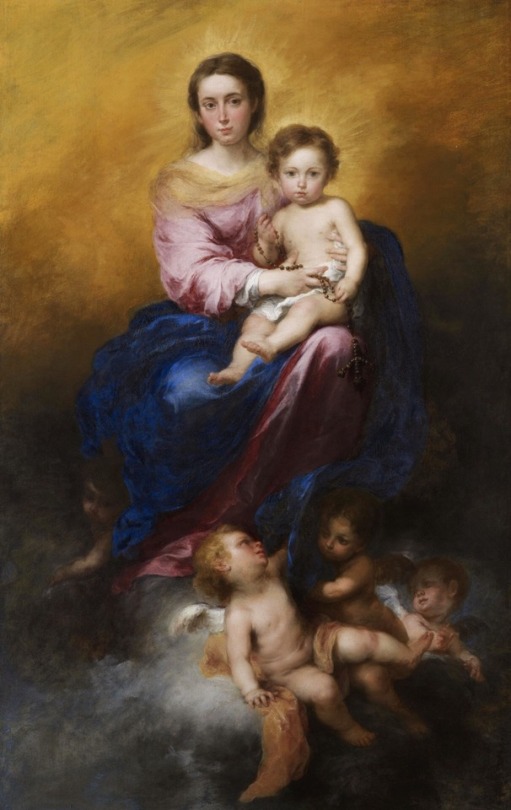
Our Morning Offering – 27 June – “Month of the Sacred Heart”- Saturday of the Twelfth week in Ordinary Time and the Feast of Our Mother of Perpetual Succour
Prayer to our Mother of Perpetual Succour When In Need By St Alphonsus’ Redemptorists
O Mother of Perpetual Succour,
numerous clients continually surround
thy Holy picture,
all imploring thy mercy.
All bless thee as the assured help of the miserable,
all feel the benefit of thy motherly protection.
With confidence, then, do we present ourselves before thee in our misery.
See, dear Mother, the many evils to which we are exposed,
see how numerous are our wants.
Trials and sorrows often depress us,
reverses of fortune and privations,
often grievous, bring misery into our lives,
everywhere we meet the Cross.
Have pity, compassionate Mother,
on us and in our dear ones,
especially in this our necessity
…………… (mention your need).
Help us, dear Mother in our distress,
deliver us from all our ills,
or, if it be the Will of God,
that we should suffer still longer,
grant that we may endure all,
with love and patience.
These Grace’s we expect of thee with confidence,
because thou art our Perpetual Succour,
amen.
St Adeodato of Naples
St Aedh McLugack
St Anectus of Caesarea
St Arialdus of Milan
St Arianell of Wales
Bl Benvenutus of Gubbio
St Brogan
St Crescens of Galatia
St Crescentius of Mainz
Bl Daniel of Schönau
Bl Davanzato of Poggibonsi
St Desideratus of Gourdon
St Dimman
St Felix of Rome
St Ferdinand of Aragon
St Gudene of Carthage
Blessed Maria Pia Mastena
St Sampson of Constantinople
St Spinella of Rome
St Tôma Toán
St Zoilus of Cordoba
—
Martyrs Killed Under Communist Regimes in Eastern Europe: Among the thousands of Christians murdered by various Communist regimes in their hatred of the faith, there were 25 members of the Ukrainian Greek Catholic Church and Russian Byzantine Catholic Church, priests, bishops, sisters and lay people, whose stories are sufficiently well documented that we know they were murdered specifically for their faith in eastern Europe and whose Causes for Canonization were opened. Their Causes were combined and they were beatified together. They have separate memorials but are remembered together today. They are –
• Andrii Ischak • Hryhorii Khomyshyn • Hryhorii Lakota • Ivan Sleziuk • Ivan Ziatyk • Klymentii Sheptytskyi • Leonid Feodorov • Levkadia Harasymiv • Mykola Konrad • Mykola Tsehelskyi • Mykolai Charnetskyi • Mykyta Budka • Oleksa Zarytskyi • Ol’Ha Bida • Ol’Ha Matskiv • Petro Verhun • Roman Lysko • Stepan Baranyk • Symeon Lukach • Vasyl Vsevolod Velychkovskyi • Volodomyr Bairak • Volodymyr Ivanovych Pryima • Yakym Senkivsky • Yosafat Kotsylovskyi • Zenon Kovalyk
Beatified – 27 June 2001 by Pope John Paul II in Ukraine
Blessed Virgin of Potente del Trompone:
Visionary: Domenica di Miglianotto on 26 June 1562
2nd Visionary: St Peter of Alcantara (1499-1562) – seen below:
Our Lady of Longing: Matka Boża Tęskniąca / Longing Mother of God, Warsaw, Poland – One of the oldest churches in the Archdiocese of Warsaw is St Elizabeth Powsin Located on the main altar is a painting of Our Lady of Longing – artist unknown – from the first half of the seventeenth century. At either side, the image is surrounded by statues of Saints Adalbert and Stanislaus – Polish bishops and martyrs . The testimony of miracles and graces relating to the Our Lady of Longing icon have been collected at least since the mid-seventeenth century. On 28 June 1998, the image became the fourth image of Mary in the Archdiocese of Warsaw to be canonically crowned.
St Acteie of Rome
St Albinus of Rome Blessed Andrea Giacinto Longhin OFM. Cap(1863 – 1936) Bishop
Bl Andrii Ischak
St Anthelm of Belley
St Babolenus of Stavelot-Malmédy
St Barbolenus of Fossés
Bl Bartholomew of Vir
St Corbican
St David of Thessalonica
St Deodatus of Nola
St Dionysius of Bulgaria
St Edburga of Gloucester
St Hermogius of Tuy
St Iosephus Ma Taishun
St John of Rome
St John of the Goths
St José Maria Robles Hurtado St Josemaria Escriva (1902-1975) Biography: https://anastpaul.com/2018/06/26/saint-of-the-day-26-june-st-josemaria-escriva-de-balaguer-y-albas-1902-1975-the-saint-of-ordinary-life/
Blessed Jacques Ghazir Haddad OFM Cap (1875-1954) Beautiful Blessed Jacques: https://anastpaul.com/2019/06/26/saint-of-the-day-blessed-jacques-ghazir-haddad-ofm-cap-1875-1954/
St Maxentius of Poitou
St Medico of Otricoli
Bl Mykola Konrad
St Paul of Rome
St Pelagius of Oviedo
St Perseveranda of Poitiers
Bl Raymond Petiniaud de Jourgnac
St Salvius
Bl Sebastian de Burgherre
St Soadbair
St Superius
St Terence of Rome
St Vigilius of Trent
Bl Volodymyr Ivanovych Pryima
—
Martyrs of Africa – 4 saints: Four Christians who were martyred together – Agapitus, Emerita, Felix and Gaudentius at an unknown location in Africa, date unknown.
Martyrs of Alexandria – 3 saints: Three Christians who were martyred together, but we really know little more that the names – Agatho, Diogenes and Luceja. They were martyred in Alexandria, Egypt, date unknown.
Martyrs of Cambrai – 4 beati: Four Daughters of Charity of Saint Vincent de Paul nuns at Arras, France. Imprisoned together in 1792 and executed together two years later in the anti-Catholic excesses of the French Revolution. They were:
• Jeanne Gerard
• Marie-Françoise Lanel
• Marie-Madeleine Fontaine
• Thérèse-Madeleine Fantou
They were guillotined on 26 June 1794 at Cambrai, Nord, France and Beatified in June 1920 by Pope Benedict XV.
One Minute Reflection – 25 June – “Month of the Sacred Heart” – Thursday of the Twelfth week in Ordinary Time, Year A, Readings: 2 Kings 24:8-17, Psalm 79:1-5, 8-9, Matthew 7:21-29
“Everyone then who hears these words of mine and does them will be like a wise man who built his house on the rock. And the rain fell and the floods came and the winds blew and beat on that house but it did not fall, because it had been founded on the rock.” … Matthew 7:24-25
REFLECTION – “The just, (that is to say those who in baptism have put on the new man created in justice) live, insofar as they are just, by faith, by the light that the sacrament of illumination brings to them. The more they live by faith, the more they realise in themselves, the perfection of His divine adoption. Notice this expression carefully: ‘EX fide,’ the exact meaning of this is that faith ought to be the root of all our actions, of all our life. There are souls who live with faith (CUM fide). They have faith and one cannot deny that they practise it. But it is only on certain occasions … that they remember their faith to any purpose. …
But when faith is living, strong, ardent, when we live by faith, that is to say, when in everything, we are actuated by the principles of faith, when faith is the root of all our actions, the inward principle of all our activity, then we become strong and steadfast, in spite of difficulties within and without, in spite of obscurities, contradictions and temptations. Why so? Because, by faith, we judge, we estimate all things as God sees and estimates them – we participate in the divine immutability and stability.
Is not this what our Lord said? “Everyone who listens to these words of mine and acts on them” – that is to live by faith – “will be like a wise man who built his house on rock. The rain fell, the floods came, and the winds blew and buffeted the house. But it did not collapse.” For Jesus Christ immediately adds: “it had been set solidly on rock” (Mt 7:24-25).” … Bl Columba Marmion (1858-1923) Abbot – Our Faith, the Victory over the World (Christ, the Ideal of the Monk
PRAYER – God our Father, You open the gates of the kingdom of heaven to those who are born again of water and the Holy Spirit. Increase the grace You have given, so that the people who have been purified from all sin, may not forfeit the promised blessing of Your love. Grant that we may ever keep Your Son, the Lord Jesus Christ, before our eyes and do all in Him and through Him and for Him and may the prayers of our Our Lady of Grace ever guide and bear us in her care. We make our pray through Christ, our Lord, in union with You and the Holy Spirit, one God forever, amen
St Adalbert of Egmond
St Amand of Coly
Bl Burchard of Mallersdorf
St Cyneburga of Gloucester
St Domingo Henares de Zafra Cubero
Bl Dorothy of Montau
St Eurosia of Jaca
St Febronia of Nisibis
Bl Fulgentius de Lara
St Gallicanus of Embrun
St Gallicanus of Ostia
St Gohard of Nantes
Bl Guy Maramaldi
Bl Henry Zdick
Bl John the Spaniard
St Luceias and Companions St Maximus of Turin (? – c 420) Biography: https://anastpaul.com/2018/06/25/saint-of-the-day-25-june-st-maximus-of-turin-c-420-father-of-the-church/
Madonna della Navicella – 24 June:
On 24 June 1508, in the afternoon, a strong storm, with disastrous effects, hit the inhabited area of Chioggia and Sottomarina. Rain, wind and storm had lashed the coast for a few hours. In the evening, fortunately, the storm stopped and the weather got better.
A greengrocer, Baldissera Zalon, went to the vegetable gardens, where the sanctuary stands today, to see for himself the damage that the strong storm had caused. Baldissera was a simple man, a peasant, who lived near his fields and lived on his work in the vegetable gardens.
As soon as he left the house, after scanning the clouds of the sky that were moving away and the setting sun was peeping, he heard himself called by name. After the first moments of amazement, Baldissera turned and saw a majestic Lady, all dressed in black, who sat on a trunk thrown on the beach by the waves of the stormy sea.
The greengrocer was stunned to say the least, so much so that he was about to pass out, when the Lady revealed to her that she was the Mother of Jesus , giving him courage and inviting him to go to the Bishop to warn him that the sins of the Chioggia challenged the justice of God and that penance had to be preached tenaciously to avoid worse punishment.
Then the Lady got on a craft that was near the shore but before leaving and disappearing, she opened her cloak showing the wounded and bleeding body of Jesus, making it clear that it had also been reduced by the sins of the Chioggiotti.
Baldiserra wasted no time and went to the Bishop, who organised a pilgrimage to the place of the apparition and the turnout of the faithful became more and more consistent day after day. In a short time, a Chapel was built on the spot and then, in 1515, a sanctuary which was, however, destroyed in 1814.
The current Church was built between 1952 and 1958 and was Consecrated on 24-25 June 1958 by Bishop Piasentini.
The miraculous image was found, according to popular belief, a few days after the apparition, together with the log on which the Madonna would sit when she appeared to Baldissera. The image and the LOG from 15 November 1806 are preserved and are visible in the Basilica of San Giacomo.
This slideshow requires JavaScript.
St Aglibert of Créteil
St Agoard of Créteil
St Alena of Brussels
St Amphibalus of Verulam St Bartholomew of Farne OSB (Died 1193)
Bl Christopher de Albarran
St Erembert I of Kremsmünster
St Faustus of Rome and Companions
St Festus of Rome
St Germoc
St Gohardus of Nantes
Bl Henry of Auxerre/the Hagiographer
St Ivan of Bohemia
St John of Rome
St John of Tuy
St Joseph Yuan Zaide
Bl Maksymilian Binkiewicz St Maria Guadalupe García Zavala (1878-1963) Biography: https://anastpaul.com/2019/06/24/saint-of-the-day-st-maria-guadalupe-garcia-zavala-1878-1963/
St Rumold
St Simplicio of Autun
Bl Theodgar of Vestervig
St Theodulphus of Lobbes
—
Martyrs of Satala: Seven Christian brothers who were soldiers in the imperial Roman army. They were kicked out of the military, exiled and eventually martyred in the persecutions of Maximian. We know little more about them than their names – Cyriacus, Firminus, Firmus, Longinus, Pharnacius, Heros and Orentius. The martyrdoms occurred in c 311 at assorted locations around the Black Sea.
St Agofredus of La-Croix
St Alban of Mainz
St Apollinaris of Africa
Bl Colagia
St Corbmac
St Cyriacus of Africa
St Demetria of Rome
St Dominic of Comacchio
St Engelmund
Bl Jacques-Morelle Dupas
St John Rigby
St José Isabel Flores Varela
Bl Juan of Jesus
St Lazarus
St Leutfridus
St Martia of Syracuse
St Martin of Tongres
Bl Melchiorre della Pace
St Mewan of Bretagne
Bl Nicholas Plutzer St Ralph of Bourges (Died 866)
St Raymond of Barbastro
St Rufinus of Syracuse
St Suibhne the Sage
St Terence
St Ursicenus of Pavia
—
Martyrs of Taw – 3+ saints: Three Christians of different backgrounds who were martyred together – Moses, Paphnutius, Thomas. They were beheaded in Taw, Egypt, date unknown.
You must be logged in to post a comment.