Posted in MORNING Prayers, ON the SAINTS, PAPAL SERMONS, SAINT of the DAY, The BLESSED VIRGIN MARY

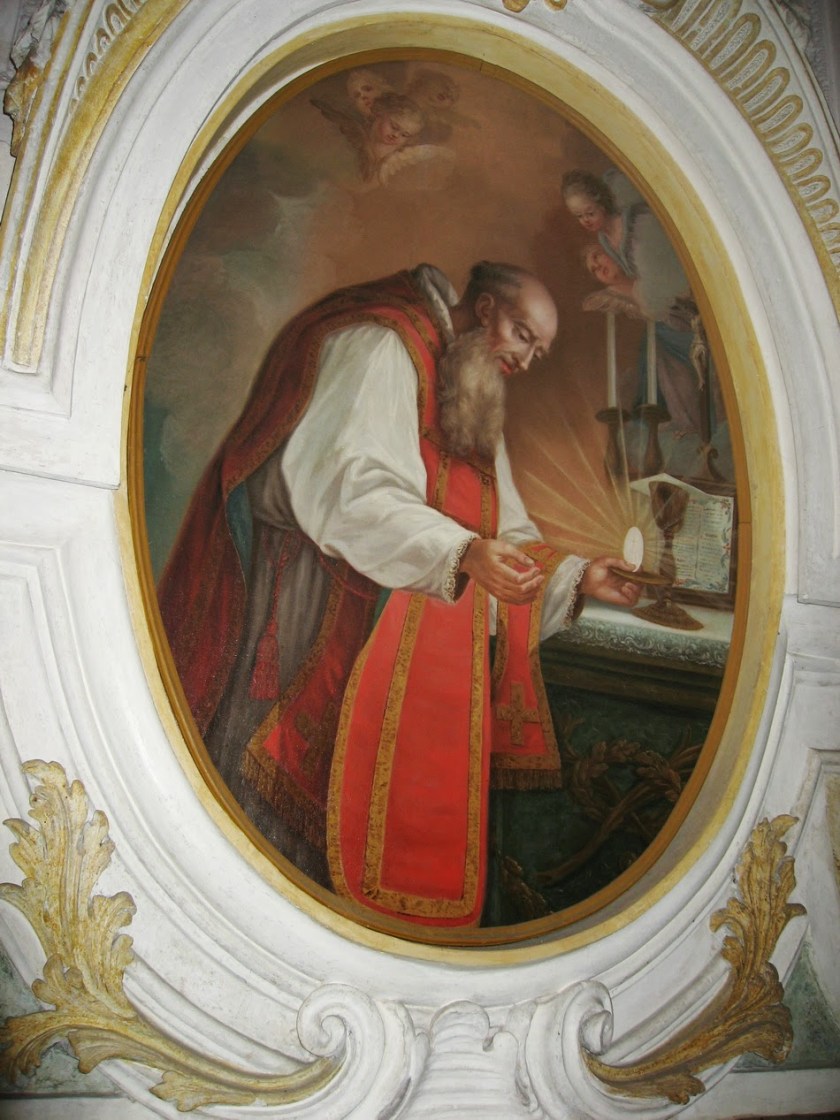
Second Thoughts for the Day – 15 August – The Memorial of St Tarcisius (Died c 257) Martyr of the Holy Eucharist – Patron of Altar Servers

Second Thoughts for the Day – 15 August – The Memorial of St Tarcisius (Died c 257) Martyr of the Holy Eucharist – Patron of Altar Servers

Pope Benedict XVI – 4 August 2010 – General Audience to the International Pilgrimage of Altar Servers to St Peter’s, Rome

I am addressing those of you who are present here and, through you, all the altar servers of the world!

Serve Jesus present in the Eucharist generously.   It is an important task that enables you to be particularly close to the Lord and to grow in true and profound friendship with Him.    Guard this friendship in your hearts jealously, like St Tarcisius, ready to commit yourselves, to fight and to give your lives so that Jesus may reach all peoples.

May you too communicate to your peers the gift of this friendship with joy, with enthusiasm, without fear, so that they may feel that you know this Mystery, that is true and that you love it!

Every time that you approach the altar, you have the good fortune to assist in God’s great loving gesture as He continues to want to give Himself to each one of us, to be close to us, to help us, to give us strength to live in the right way.   With consecration, as you know, that little piece of bread becomes Christ’s Body, that wine becomes Christ’s Blood.   You are lucky to be able to live this indescribable Mystery from close at hand!

Do your task as altar servers with love, devotion and faithfulness, do not enter a church for the celebration with superficiality but rather, prepare yourselves inwardly for Holy Mass!   Assisting your priests in service at the altar helps to make Jesus closer, so that people can understand, can realise better – He is here.   You collaborate to make Him more present in the world, in everyday life, in the Church and everywhere.

Dear friends!   You lend Jesus your hands, your thoughts, your time.   He will not fail to reward you, giving you true joy and enabling you to feel where the fullest happiness is.   St Tarcisius has shown us that love can even bring us to give our life for an authentic good, for the true good, for the Lord.

Martyrdom will probably not be required of us but Jesus asks of us fidelity in small things, inner recollection, inner participation, our faith and our efforts to keep this treasure present in every day life.   He asks of us fidelity in daily tasks, a witness to His love, going to church through inner conviction and for the joy of His presence.   Thus we can also make known to our friends that Jesus is alive.   May St John Mary Vianney’s intercession help us in this commitment.   Today is the liturgical Memorial of this humble French Parish Priest who changed a small community and thus gave the world a new light.   May the example of St Tarcisius and St John Mary Vianney impel us every day to love Jesus and to do His will, as did the Virgin Mary, faithful to her Son to the end.   Thank you all once again! May God bless you in these days and I wish you a good journey home!

Blessed Mother Mary, Pray for us!mary immaculate - pray for us - 4 mary 2018

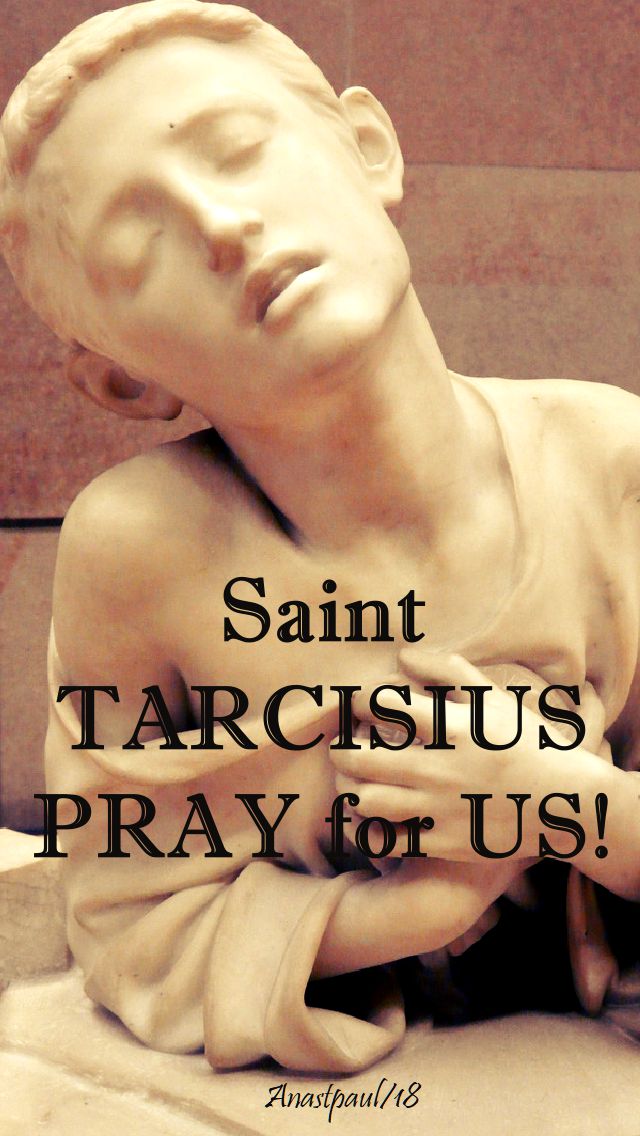
St Tarcisius, Pray for us!st tarcisius pray for us - 15 aug 2018

Posted in DOCTORS of the Church, FATHERS of the Church, MORNING Prayers, PAPAL SERMONS, QUOTES of the SAINTS, QUOTES on LOVE, SAINT of the DAY, The WORD

Quote of the Day – 10 August – Feast of St Lawrence, Martyr (died 258) – Today’s Gospel: John 12:24–26

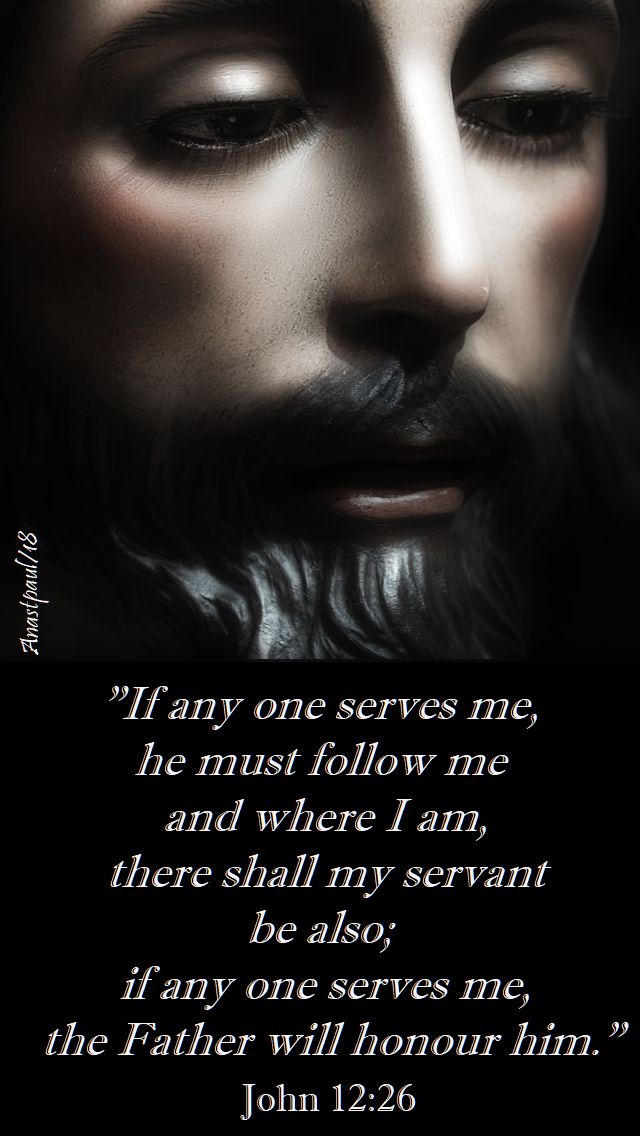
Quote of the Day – 10 August – Feast of St Lawrence, Martyr (died 258) – Today’s Gospel: John 12:24–26if anyone serves me - john 12 26 - 10 august 2018

“Jesus brought new hope into the world and He did so in the manner of the seed:  He became very small, like a grain of wheat, He left his heavenly glory in order to come among us, He “fell into the earth”.
But this still was not enough.
In order to bear fruit, Jesus experienced love to the fullest, allowing Himself to be split open by death as a seed lets itself split open under the ground.   Precisely there, at the lowest point of His abasement — which is also the loftiest point of love — hope burgeoned.
When we choose the hope of Jesus, we gradually discover, that the successful way of life is that of the seed, that of humble love.   There is no other way to conquer evil and give hope to the world.   But you might tell me: “No, it is a losing rationale!”  . It might seem so, seem that it is a losing rationale because those who love, lose power.   Have you considered this?   Those who love, lose power;  those who give, impart something and loving is a gift.
In reality, the rationale of the seed that dies, of humble love, is God’s way and only this bears fruit.”

Pope Francis General Audience, 12 April 2017)when we choose the hope of jesus - john 12 24-26 - pope francis - 10 aug 2018.jpg

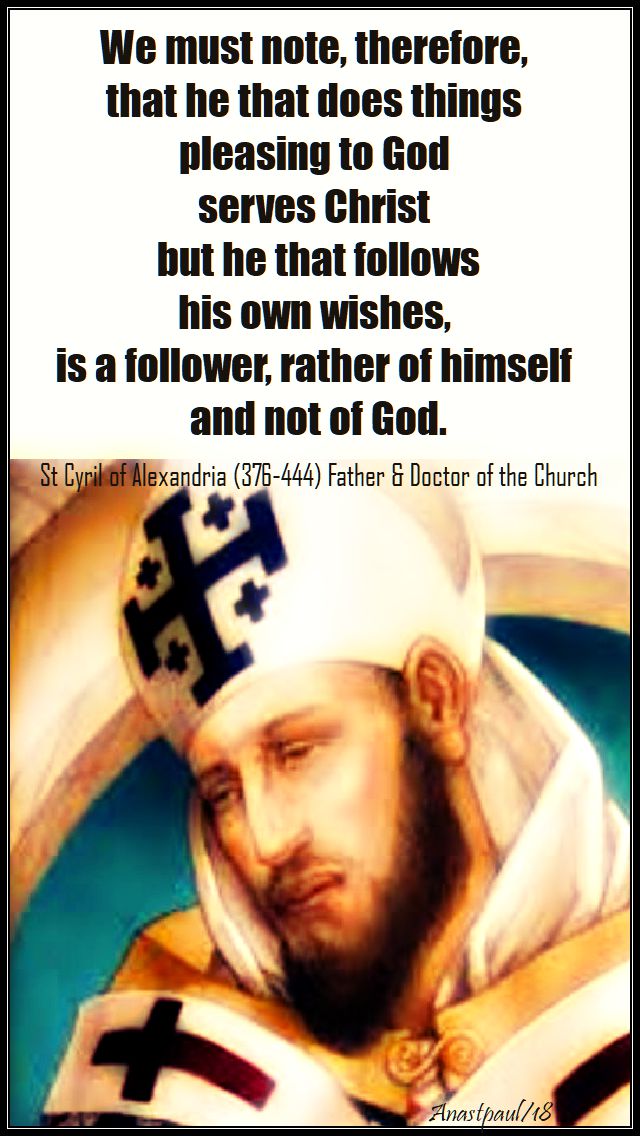
“We must note, therefore,
that he that does things pleasing to God,
serves Christ but he that follows his own wishes,
is a follower, rather of himself and not of God.”

St Cyril of Alexandria (376-444)we must note therefore that he does - st cyril of alex - 10 august 2018

Posted in MORNING Prayers, PAPAL SERMONS, SAINT of the DAY

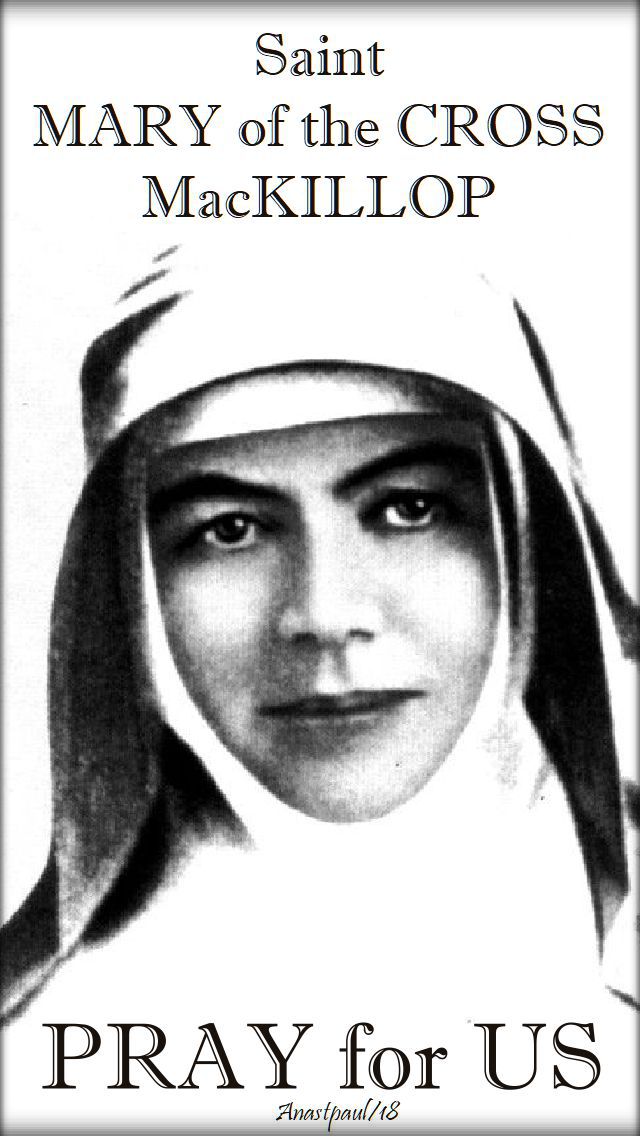
Second Thoughts for the Day – 8 August – The Memorial of St Mary of the Cross MacKillop (1842-1909)

Second Thoughts for the Day – 8 August – The Memorial of St Mary of the Cross MacKillop (1842-1909)

“In the vastness of the Australian continent, Blessed Mary MacKillop was not daunted by the great desert, the immense expanses of the outback, nor by the spiritual “wilderness” which affected so many of her fellow citizens.   Rather, she boldly prepared the way of the Lord, in the most trying situations.   With gentleness, courage and compassion, she was a herald of the Good News among the isolated “battlers” and the urban slum-dwellers.   Mother Mary of the Cross knew that behind the ignorance, misery and suffering which she encountered there were people, men and women, young and old, yearning for God and his righteousness.   She knew, because she was a true child of her time and place:  the daughter of immigrants who had to struggle at all times to build a life for themselves in their new surroundings.

Her story reminds us of the need to welcome people, to reach out to the lonely, the bereft, the disadvantaged.   To strive for the kingdom of God and His righteousness, means to strive to see Christ in the stranger, to meet Him in them and to help them to meet Him in each one of us!”

– Pope Benedict XVI on the Beatification of St Mary of the Cross MacKillop (Thursday 19 January 1005), whose prayers we request!st mary of the cross mackillop pray for us 8 aug 2018-no 4.

Posted in DOMINICAN OP, MORNING Prayers, PAPAL SERMONS, QUOTES on FAITH, SAINT of the DAY, The WORD

One Minute Reflection – 8 August – Today’s Gospel: Matthew 15:21–28

One Minute Reflection – 8 August – Wednesday of the Eighteenth week in Ordinary Time, Year B – Today’s Gospel: Matthew 15:21–28 and The Memorials of St Dominic (1170-1221) and St Mary of the Cross MacKillop (1842-1909)

Then Jesus answered her, “O woman, great is your faith!   Be it done for you as you desire.” And her daughter was healed instantly...Matthew 15:28

REFLECTION – “Jesus points to this humble woman as a model of unwavering faith.   Her persistence in beseeching Christ’s intervention is incentive for us not to become discouraged, not to despair when we are burdened by life’s difficult trials.   The Lord does not turn away in the face of our needs and, if at times, He seems insensitive to our requests for help, it is in order to put to the test and to strengthen, our faith.   We must continue to cry out like this woman:  “Lord, help me! Lord, help me!”.  In this way, with perseverance and courage.   This is the courage needed in prayer.   He can help us to find our way, when we have lost the compass of our journey; when the road no longer seems flat but rough and arduous; when it is hard to be faithful to our commitments.

It is important to nourish our faith every day, by carefully listening to the Word of God, with the celebration of the Sacraments, with personal prayer as a “cry” to Him — “Lord, help me!” — and with concrete acts of charity toward our neighbour.”…Pope Francis – Angelus, 20 August 2017matthew 15 38 - o woman great is your faith - the lord does not turn away - pope francis - 8 aug 2018

PRAYER – Lord God, You gave St Dominic and St Mary of the Cross Mackillop, to the Church in their days, as lessons in total love, charity and zeal.   We pray that they may help us in our times, by their merits, their inspiration, their words and their prayers. Through Jesus Christ our Lord, in the unity of the Holy Spirit, one God forever, amen.st-dominic-pray-for-us.8 aug 2017.pgst mary of the cross mackillop pray for us 8 aug 2018

Posted in MORNING Prayers, PAPAL SERMONS, QUOTES on FAITH, QUOTES on PRAYER, SAINT of the DAY, The WORD

One Minute Reflection – 7 August – Today’s Gospel: Matthew 14:22–36

One Minute Reflection – 7 August – Tuesday of the Eighteenth week in Ordinary Time, Year B – Today’s Gospel: Matthew 14:22–36

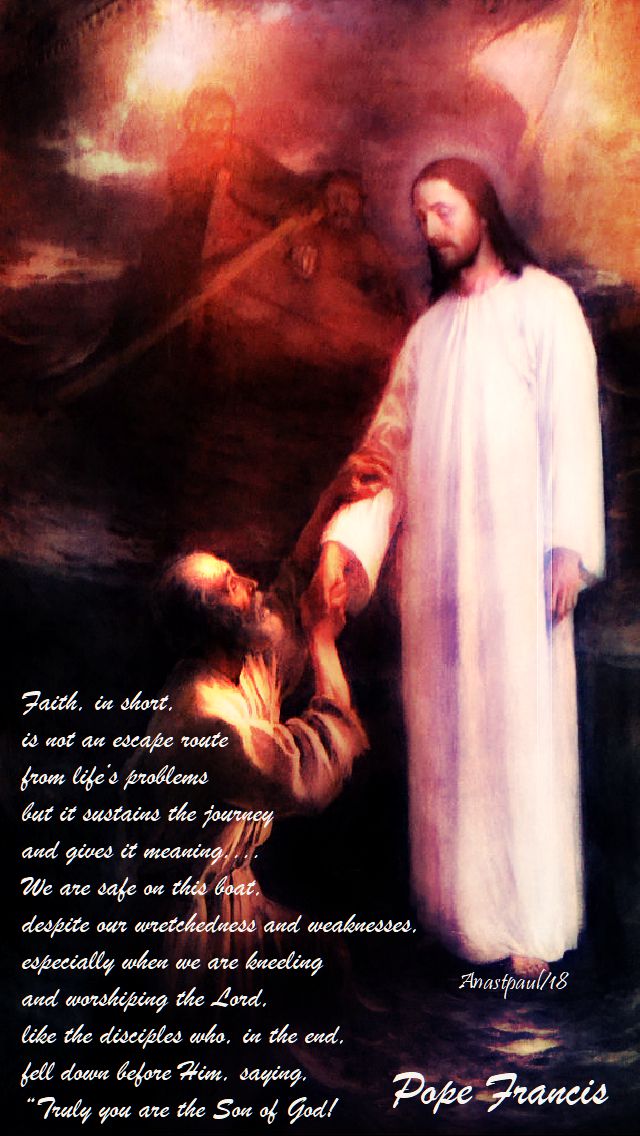
Jesus immediately reached out his hand and caught him, saying to him, “O man of little faith, why did you doubt?”   And when they got into the boat, the wind ceased.   And those in the boat worshipped him, saying, “Truly you are the Son of God.”…Matthew 14:31-33jesus immediately reached out his hand - matthew 14 31-33 - 7 aug 2018

REFLECTION – “Today’s Gospel reminds us that faith in the Lord and in His Word does not open a way for us where everything is easy and calm, it does not rescue us from life’s storms.   Faith gives us the assurance of a Presence, the presence of Jesus who encourages us to overcome the existential tempests, the certainty of a hand that grabs hold of us so as to help us face the difficulties, pointing the way for us even when it is dark.

Faith, in short, is not an escape route from life’s problems but it sustains the journey and gives it meaning.   This episode offers a wonderful image of the reality of the Church throughout the ages – a boat that, as she makes the crossing, must also weather contrary winds and storms which threaten to capsize her.   What saves her are not the courage and qualities of her men, the guarantee against shipwreck is faith in Christ and in his Word.   This is the guarantee, faith in Jesus and in His Word.   We are safe on this boat, despite our wretchedness and weaknesses, especially when we are kneeling and worshipping the Lord, like the disciples who, in the end, fell down before Him, saying, “Truly you are the Son of God!”...Pope Francis – Angelus, 13 August 2017faith in short is not an escape route - pope francis - 7 aug 2018

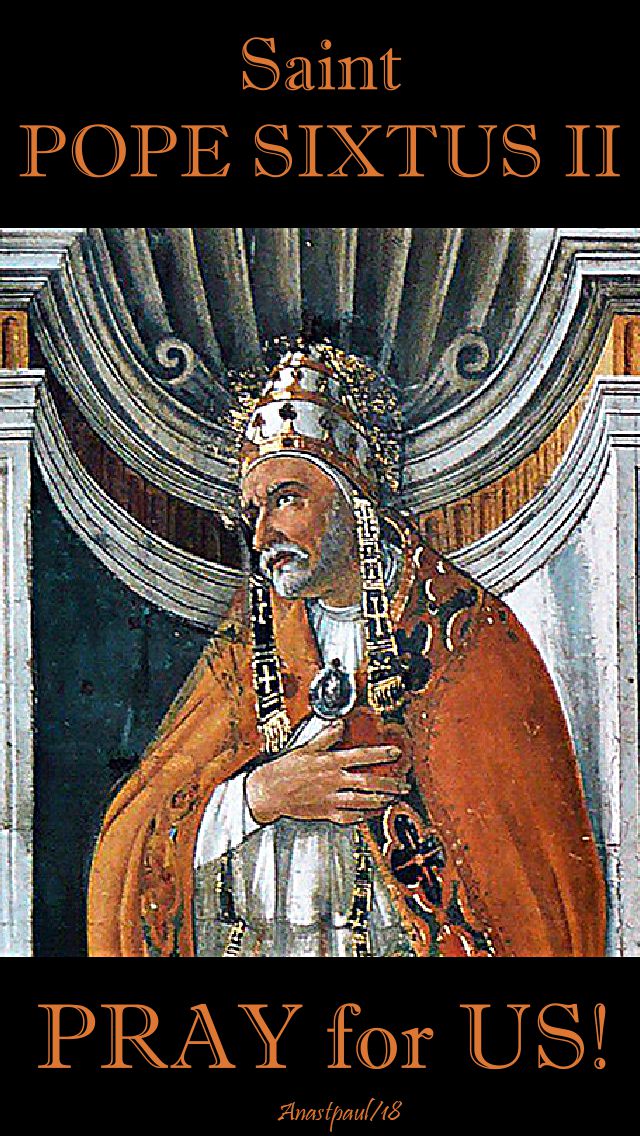
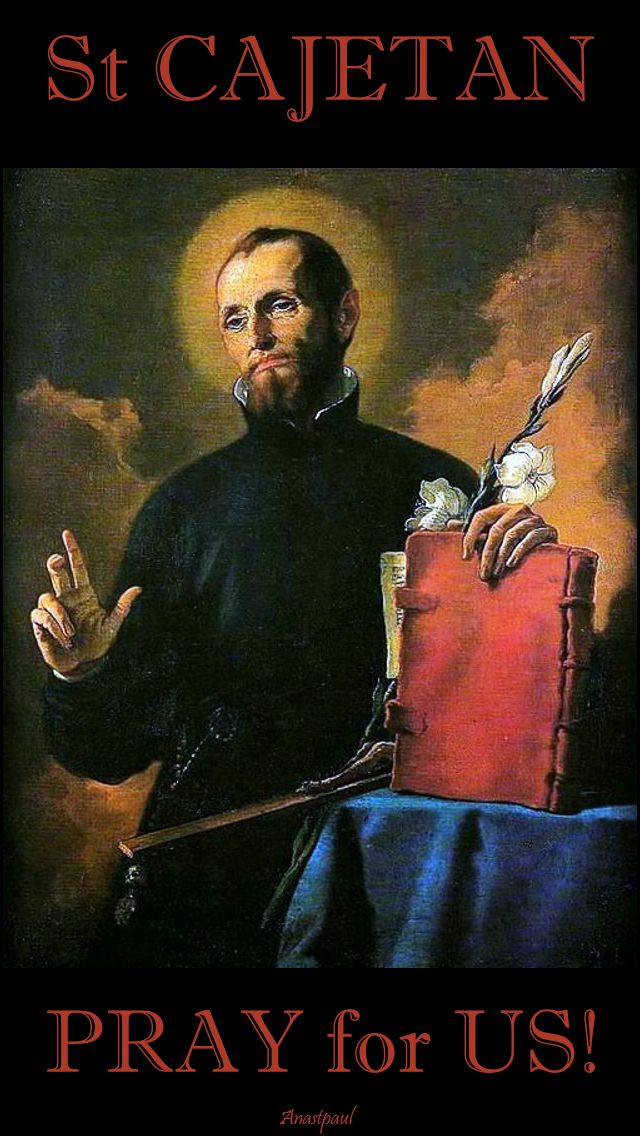
PRAYER – Almighty God, by the power of the Holy Spirit, You enabled St Pope Sixtus II and his companions to lay down their lives for Your Word and to bear witness to Jesus, never fearing as they were tossed around in the tempest but always trusting in Your saving grace.   Give us a ready and true faith, the courage to profess it and to hold tightly to the hand of Your Son in all of life’s storms.   May the prayers of St Pope Sixtus, his companions and St Cajetan, fill us with strength.   We make our prayer through Christ, our Lord, with the Holy Spirit, one God forever, amen.st pope sixtus II - pray for us - 7 aug 2018st-cajetan-pray-for-us.7 aug 2017


Posted in MARIAN PRAYERS, MORNING Prayers, PAPAL SERMONS, SAINT of the DAY, The TRANSFIGURATION

Thought for the Day – 6 August – Feast of the Transfiguration of the Lord – Today’s Gospel: Mark 9:2–10

Thought for the Day – 6 August – Feast of the Transfiguration of the Lord – Today’s Gospel: Mark 9:2–10

This invitation from the Father is very important. We, the disciples o  f Jesus, are called to be people who listen to His voice and take His words seriously.   To listen to Jesus, we must be close to Him, to follow Him, like the crowd in the Gospel who chase Him through the streets of Palestine.

Jesus did not have a teaching post or a fixed pulpit, He was an itinerant teacher, who proposed His teachings, teachings given to Him by the Father, along the streets, covering distances that were not always predictable or easy.   Follow Jesus in order to listen to Him.   But also let us listen to Jesus in His written Word, in the Gospel.   I pose a question to you: do you read a passage of the Gospel everyday?   Yes, no… yes, no… half of the time … some yes, some no.   It is important!   Do you read the Gospel?   It is so good;  it is a good thing to have a small book of the Gospel, a little one and to carry in our pocket or in our purse and read a little passage in whatever moment presents itself during the day.   In any given moment of the day I take the Gospel from my pocket and I read something, a short passage. Jesus is there and He speaks to us in the Gospel!   Ponder this. It’s not difficult, nor is it necessary to have all four books: one of the Gospels, a small one, with us.   Let the Gospel be with us always, because it is the Word of Jesus in order for us to be able to listen to Him.

From the event of the Transfiguration I would like to take two significant elements that can be summed up in two words:  ascent and descent.   We all need to go apart, to ascend the mountain in a space of silence, to find ourselves and better perceive the voice of the Lord.   This we do in prayer.   But we cannot stay there!   Encounter with God in prayer inspires us anew to “descend the mountain” and return to the plain where we meet many brothers weighed down by fatigue, sickness, injustice, ignorance, poverty both material and spiritual.   To these brothers in difficulty, we are called to bear the fruit of that experience with God, by sharing the grace we have received.
And this is curious.   When we hear the Word of Jesus, when we listen to the Word of Jesus and carry it in our heart, this Word grows.   Do you know how it grows?   By giving it to the other!   The Word of Christ grows in us when we proclaim it, when we give it to others!   And this is what Christian life is.   It is a mission for the whole Church, for all the baptised, for us all – listen to Jesus and offer Him to others.
Do not forget!   this week listen to Jesus!   And think about the matter of the Gospel, will you?   Will you do this?   Then next Sunday you tell me if you have done this, that you have a little book of the Gospel in your pocket or in your purse to read in little stages throughout the day.and this is what the christian life is listen to jesus and offer him to others - transfiguration 2 - 6 aug 2018

And now let us turn to our Mother Mary and entrust ourselves to her guidance in pursuing with faith and generosity this path of …., learning a little more how to “ascend” with prayer and listen to Jesus and to “descend” with brotherly love, proclaiming Jesus.

Pope Francis -16 March 2014blessed virgin mary - pray for us - 25 may 2018

Posted in BREVIARY Prayers, FEASTS and SOLEMNITIES, MORNING Prayers, PAPAL SERMONS, SAINT of the DAY, The TRANSFIGURATION, The WORD

One Minute Reflection 6 August – Feast of the Transfiguration of the Lord – Today’s Gospel: Mark 9:2–10

One Minute Reflection 6 August – Feast of the Transfiguration of the Lord – Today’s Gospel: Mark 9:2–10

And a cloud overshadowed them, and a voice came out of the cloud, “This is my beloved Son; listen to him.”...Mark 9:7this is my beloved son listen to him mark 9 7 - 6 aug 2018

REFLECTION – …”And the path of Jesus is another, Jesus triumphs through humiliation, the humiliation of the cross.   But, as this would be a scandal for them, Jesus lets them see what will come next, what is after cross, what awaits us, all of us.   This glory and this heaven.   And this is very beautiful, very beautiful because Jesus and this feels good, always prepares us for the test.   In one way or another but this is the message.   It always prepares us.   It gives us the strength to go on in moments of trial and to win with its strength.   Jesus does not leave us alone in the trials of life, He always prepares us, He helps us as He prepares these (the disciples) with the vision of His glory.   And so they remembered this moment, to bear the weight of the humiliation.   And this is the first thing that the church teaches, that Jesus always prepares us and rehearses with us.   He does not leave us alone, never!
“This is my beloved son.   Listen to him.” This is the message which the Father gives to the Apostles, the message of Jesus prepares them to see His glory, the message of the Father is “Listen to him.”   There is no moment in life which cannot be fully lived by listening to Jesus.   In beautiful moments, stop and listen to Jesus, in bad moments, stop and listen to Jesus.   This is the way, He will tell us what we need to do, always.”…Pope Francis 25 February 2018he does not leave us alone never - pope francis - transfiguration homily feb 2018 - 6 aug 2018

PRAYER – Father, at the Transfiguration in glory of Your only-begotten Son, You confirmed the mysteries of faith by the witness to Jesus of the prophets Moses and Elijah. You foreshadowed what we shall be when You bring our sonship to its perfection.   Grant that by listening to the voice of Jesus, we may become heirs with Him, who lives and reigns with You and the Holy Spirit, God forever and may Mary, our tender and caring Mother, help us to be bright rays of the saving light of her Son Jesus. Amenmary beloved mother-pray for us all

Posted in MORNING Prayers, ON the SAINTS, PAPAL SERMONS, QUOTES of the SAINTS, SAINT of the DAY, The TRANSFIGURATION

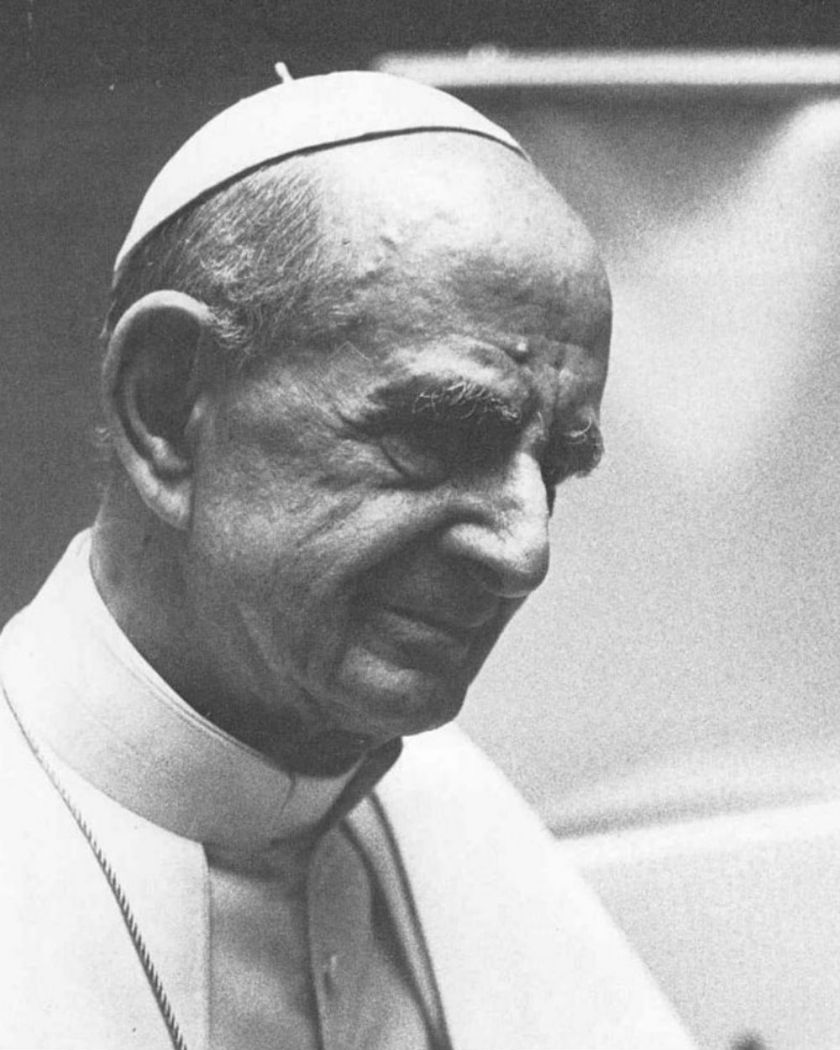
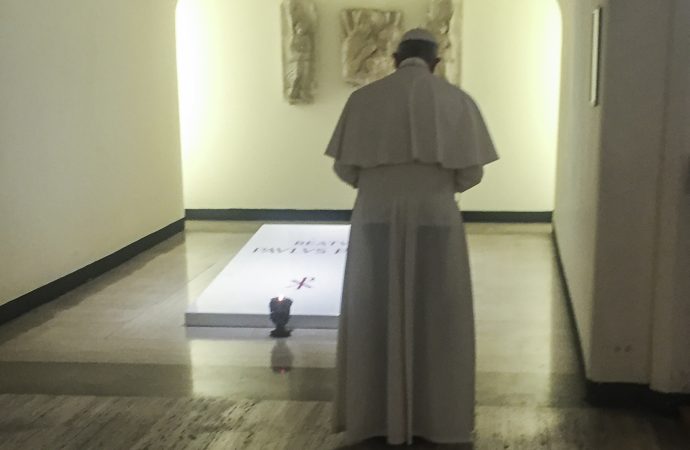
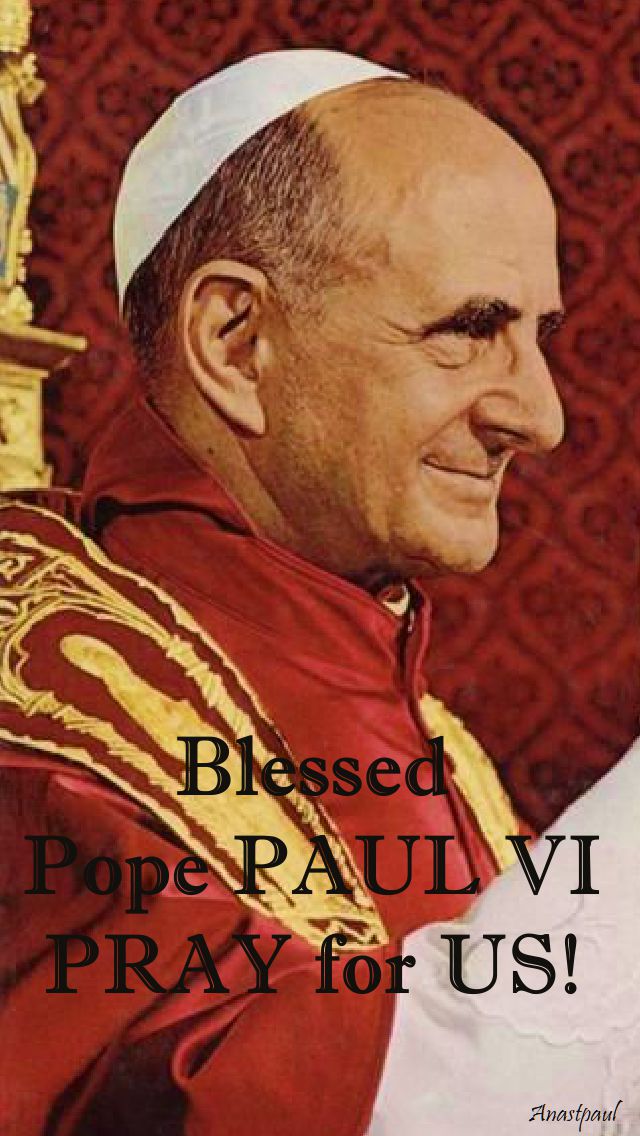
6 August, Feast of the Transfiguration of the Lord and the 40th Anniversary of the Death of Blessed Pope Paul VI (1897-1978)

6 August, Feast of the Transfiguration of the Lord

and the 40th Anniversary of the Death of Blessed Pope Paul VI (1897-1978) – Feast Day 26 September

Sunday 6 August 2000 – St Pope John Paul on the 22nd Anniversary of the death of Blessed Paul VI

“We are preparing to celebrate Holy Mass on the feast of the Transfiguration of the Lord, cherishing in our hearts the ever-living memory of the Servant of God Paul VI, 22 years after his “going forth” to eternity.

Today’s liturgy invites us to turn our gaze to the face of the Son of God who, as the Synoptics unanimously attest, is transfigured on the mountain before Peter, James and John, while the Father’s voice proclaims from the cloud:  “This is my beloved Son; listen to him” (Mk 9: 7).   St Peter will recall the event with emotion, saying: “We were eyewitnesses of his majesty” (2 Pt 1: 16).

In our era, pervaded by the so-called “image culture”, the desire to be able fill one’s eyes with the figure of the divine Master becomes more intense but it is appropriate to recall his words:  “Blessed are those who have not seen and yet believe” (Jn 20: 29).   It was precisely with his eyes of faith fixed on the adorable face of Christ, true man and true God, that the revered and unforgettable Paul VI lived.   Contemplating him with burning and impassioned love, he said:  “Christ is beauty, human and divine beauty, the beauty of reality, of truth, of life” (General Audience, 13 January 1971).   And he added: “The figure of Christ presents, over and above the charm of his merciful gentleness, an aspect which is grave and strong, formidable, if you like, when dealing with cowardice, hypocrisy, injustice and cruelty but never lacking a sovereign aura of love”   (General Audience, 27 January 1971).Paulo_VI

As we approach the altar with grateful hearts, praying for the blessed soul of this great Pontiff, we also wish, like him and like the disciples, to turn our gaze to the radiant face of the Son of God to be illumined by it.   Let us ask God, through the intercession of Mary, Teacher of faith and contemplation, to enable us to receive within us, the light that shines brightly on the face of Christ, so that we may reflect its image on everyone we meet.”SP-PAOLO-VI-1-690x450

“Forty years ago, Blessed Paul VI was living his last hours on earth.   In fact, he died on the evening of 6 August 1978,” Francis recounted.   “We remember him with so much veneration and gratitude while awaiting his Canonisation next October 14.   From Heaven, may he intercede for the Church, which he so loved and for peace in the world.   We all greet with applause this great Pope of modernity!”...Pope Francis 5 August 2018 .

Blessed Pope Paul VI, Pray for us!

blessed pope paul vi - pray for us.2

Posted in JESUIT SJ, MORNING Prayers, ON the SAINTS, PAPAL SERMONS, QUOTES of the SAINTS, SAINT of the DAY

Thought for the Day – 2 August – The Memorial of St Peter Faber (1506-1546)

Thought for the Day – 2 August – The Memorial of St Peter Faber (1506-1546)

The Mass for the Feast of the Most Holy Name of Jesus, the titular feast day for the Society of Jesus, was offered on 3 January 2014, by Pope Francis in the Gesu Church in Rome.   Today the Church reminds us “to let the centre of … [our] heart be occupied by Christ.”   Gathering for prayer was an opportunity for the Holy Father to gather with his religious community in Rome to give God thanks for the many blessings received, and to give thanks for the new Jesuit saint Peter Faber (Pierre Favre).

In his homily Francis said: (excerpt)

“The heart of Christ is the heart of a God who, out of love, “emptied” himself.   Every one of us Jesuits who follow Jesus should be willing to empty himself.   We are called to this abasement: to be of the “emptied.”   To be men that do not live centred on themselves because the centre of the Society is Christ and his Church.   And God is the Deus semper maior, the God who always surprises us.   And if the God of surprises is not at the centre, the Society becomes disoriented.   Because of this, to be a Jesuit means to be a person of incomplete thought, of open thought: because one always thinks looking at the horizon which is the ever greater glory of God, who ceaselessly surprises us.   And this is the restlessness of our void, this holy and beautiful restlessness!

This is the restlessness that Peter Faber had, man of great desires, another Daniel.   Faber was a “modest, sensible man of profound interior life and gifted with the gift of close relations of friendship with persons of all sorts” (Benedict XVI, Address to Jesuits, April 22, 2006).   However, he was also a restless, uncertain and never satisfied spirit.   Under the guidance of Saint Ignatius he learned to unite his restless but also gentle — I would say exquisite –, sensibility with the capacity to take decisions.   He was a man of great desires; he took charge of his desires, he acknowledged them.   In fact for Faber, it was precisely when difficult things were proposed that his true spirit was manifested which moved him to action (cf. Memoriale, 301).   Authentic faith always implies a profound desire to change the world.   Here is the question we should ask ourselves: do we also have great visions and dash?   Are we also daring?   Does our dream fly high? Does zeal devour us (cf. Psalm 69:10)?   Or are we mediocre and content with our laboratory apostolic programs?   Let us remember always:   the strength of the Church does not lie in herself and in her organisational capacity but is hidden in the profound waters of God.   And these waters agitate our desires and desires enlarge the heart.   It is what Saint Augustine says:   pray to desire and desire to enlarge the heart. In fact it was in his desires that Faber could discern God’s voice.   Without desires one goes nowhere and it is because of this that we must offer our desires to the Lord.   

Faber had the real and profound desire to “be dilated in God”:   he was completely centred on God and because of this, he could go, in the spirit of obedience, often also on foot, everywhere in Europe to speak to all with gentleness and to proclaim the Gospel.  As Saint Peter Favre wrote, “We never seek in this life a name that is not connected with that of Jesus” (Memoriale, 205).   And we pray to Our Lady to be messengers with her Son.”…Pope Francis, 3 January 2014

Holy Mother, Pray for us!holy mary mother of god - pray for us - 13 may 2018

St Peter Faber, Pray for us!st peter faber pray for us - no 2 - 2 aug 2018

Posted in JESUIT SJ, MORNING Prayers, ON the SAINTS, PAPAL SERMONS, QUOTES of the SAINTS, QUOTES on CHARITY, QUOTES on CONVERSION, QUOTES on COURAGE, QUOTES on FAITH, QUOTES on MERCY, QUOTES on OBEDIENCE, QUOTES on PRAYER, QUOTES on REPENTANCE, QUOTES on SIN, QUOTES on the CHURCH, QUOTES on the CROSS of CHRIST, SAINT of the DAY, The BLESSED VIRGIN MARY

Pope Francis’ Homily on the feast of St Ignatius 2013 – Wednesday, 31 July 2013

Pope Francis honours Ignatius, calls us to more faithful life in Christ
Pope Francis’ Homily on the feast of St Ignatius 2013 – Wednesday, 31 July 2013

“In this Eucharist in which we celebrate our Father Ignatius of Loyola, in light of the Readings we have heard, I would like to propose three simple thoughts guided by three expressions: to put Christ and the Church in the centre; to allow ourselves to be conquered by Him in order to serve; to feel the shame of our limitations and our sins, in order to be humble before Him and before the brothers.

The emblem of us Jesuits is a monogram, the acronym of “Jesus, the Saviour of Mankind” (IHS).   Every one of you can tell me – we know that very well!   But this crest continually reminds us of a reality that we must never forget –  the centrality of Christ for each one of us and for the whole Company, the Company that Saint Ignatius wanted to name “of Jesus” to indicate the point of reference.

Moreover, even at the beginning of the Spiritual Exercises he places our Lord Jesus Christ, our Creator and Saviour (Spiritual Exercises, 6) in front of us.   And this leads all of us Jesuits and the whole Company, to be “decentred,” to have “Christ more and more” before us, the “Deus semper maior”, the “intimior intimo meo”, that leads us continually outside ourselves, that brings us to a certain kenosis, a “going beyond our own loves, desires, and interests” (Sp. Ex., 189).
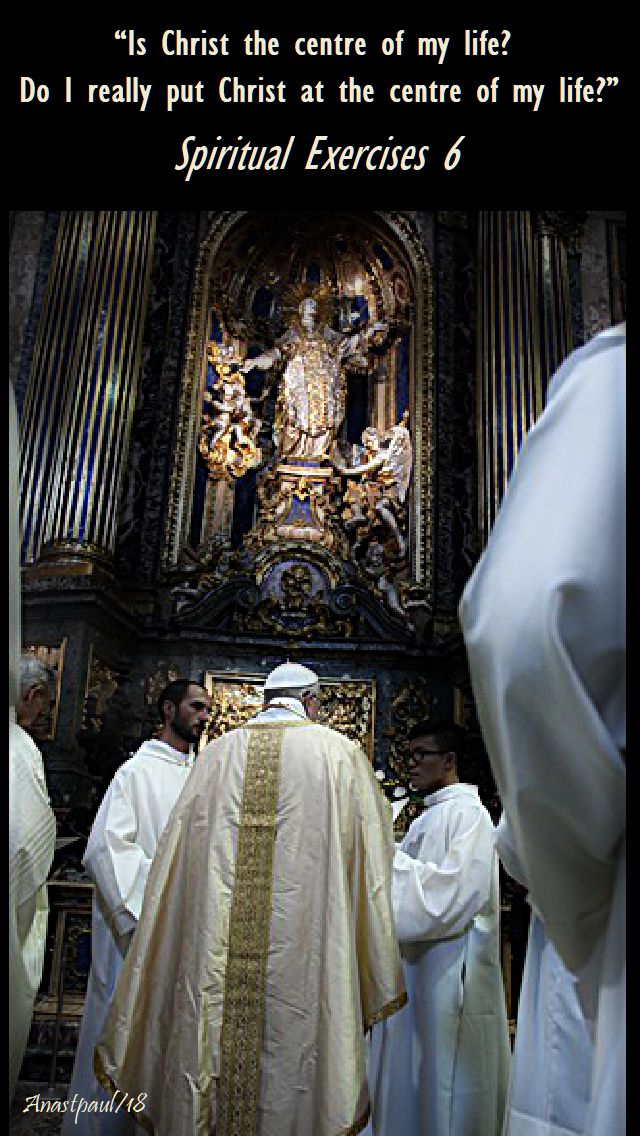
Isn’t it obvious, the question for us?   For all of us? “Is Christ the centre of my life? Do I really put Christ at the centre of my life?”   Because there is always the temptation to want to put ourselves in the centre.   And when a Jesuit puts himself and not Christ in the centre, he goes astray.is christ the centre of my life - pope francis - 31 july 2013

In the first Reading, Moses forcefully calls upon the people to love the Lord, to walk in His ways, “because He is your life” (cf. Deut. 30, 16-20).   Christ is our life!   The centrality of Christ corresponds also to the centrality of the Church:  they are two flames that cannot be separated:  I cannot follow Christ except in and with the Church.   And even in this case we Jesuits and the whole Company, are not at the centre, we are, so to speak, “displaced”, we are at the service of Christ and of the Church, the Bride of Christ our Lord, who is our Holy Mother Hierarchical Church (cf. Sp. Ex. 353).

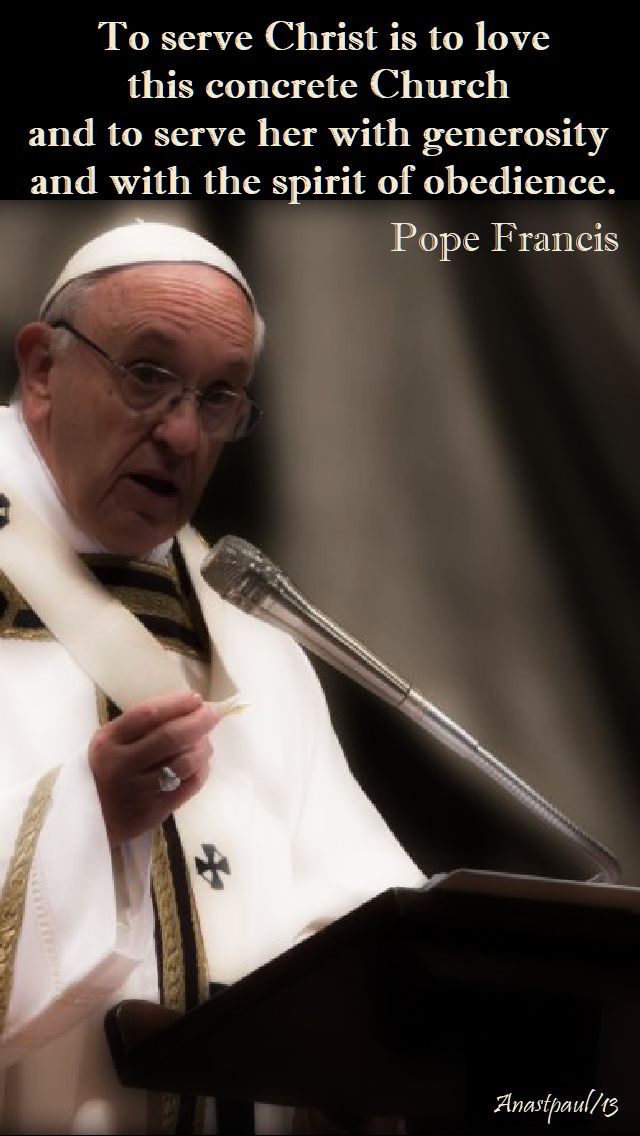
To be men routed and grounded in the Church, that is what Jesus desires of us.   There cannot be parallel or isolated paths for us.   Yes, paths of searching, creative paths, yes, this is important: to go to the peripheries, so many peripheries.   This takes creativity but always in community, in the Church, with this membership that give us the courage to go forward.   To serve Christ is to love this concrete Church and to serve her with generosity and with the spirit of obedience.to serve christ is to love this concrete church - pope francis - 31 july 2018

“Whoever would save his life will lose it, but whoever loses his life for my sake will save it . . . If anyone is ashamed of me . . .” (Lk 9:23).   And so on.   The shame of the Jesuit.   The invitation that Jesus makes is for us to never be ashamed of Him but to always follow Him with total dedication, trusting Him and entrusting ourselves to Him.   But looking at Jesus, as Saint Ignatius teaches us in the First Week, above all looking at Christ crucified, we have that very human and noble feeling that is the shame of not reaching the highest point;  we look at the wisdom of Christ and at our ignorance;  at His omnipotence and our weakness;  at His justice and our iniquity;  at His goodness and our wickedness (cf. Sp. Ex. 59).

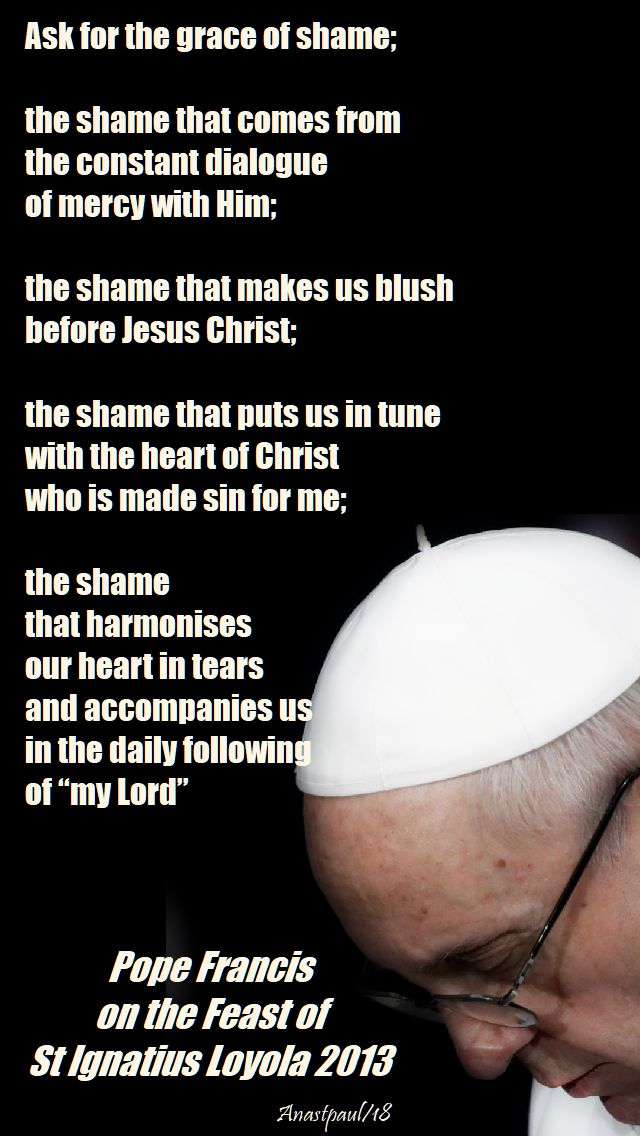
Ask for the grace of shame;  the shame that comes from the constant dialogue of mercy with Him;  the shame that makes us blush before Jesus Christ;  the shame that puts us in tune with the heart of Christ who is made sin for me;  the shame that harmonises our heart in tears and accompanies us in the daily following of “my Lord”.   And this always brings us, as individuals and as a Company, to humility, to living this great virtue.   Humility that makes us understand, each day, that it is not for us to build the Kingdom of God but it is always the grace of God working within us;  humility that pushes us to put our whole being not at the service of ourselves and our own ideas but at the service of Christ and of the Church, like clay pots, fragile, inadequate, insufficient but having within them an immense treasure that we carry and that we communicate (2 Cor. 4:7).ask for the grace of shame - pope francis - 31 july 2018

It is always pleasant for me to think of the sunset of the Jesuit, when a Jesuit finishes his life, when the sun goes down.   And two icons of the sunset of the Jesuit always come to me:  one classical, that of Saint Francis Xavier, looking at China.   Art has painted this sunset so many times, this ‘end’ of Xavier.   Even in literature, in that beautiful peace by Pemàn.   At the end, having nothing but in the sight of the Lord; it does me good to thing about this.   The other sunset, the other icon that comes to me as an example, is that of Padre Arrupe in the last interview in the refugee camp, when he told us – something he himself said – “I say this as if it were my swan song: pray.”   Prayer, the union with Jesus. And, after having said this, he caught the plane and arrived at Rome with the stroke that was the beginning of so long and so exemplary a sunset.   Two sunsets, two icons that all of us would do well to look at, and to go back to these two.   And to ask for the grace that our sunset will be like theirs.

Dear brothers, let us turn again to Our Lady, to her who bore Christ in her womb and accompanied the first steps of the Church.   May she help us to always put Christ and His Church at the centre of our lives and of our ministry.   May she, who was the first and most perfect disciple of her Son help us to allow ourselves to be conquered by Christ in order to follow Him and to serve Him in every situation.   May she that answered the announcement of the Angel with the most profound humility:  “Behold the handmaid of the Lord, be it done unto me according to thy word” (Lk 1:38), make us feel the shame for our inadequacy before the treasure that has been entrusted to us, in order to live the virtue of humility before God.   mary mother of god - pray for us - 10 may 2018

May our journey be accompanied by the paternal intercession of Saint Ignatius and of all the Jesuit saints, who continue to teach us to do all things “ad majorem Dei gloriam.”st ignatius and all jesuit saints pray for us 31 july 2018

Posted in DOCTORS of the Church, FATHERS of the Church, MORNING Prayers, PAPAL SERMONS, QUOTES of the SAINTS, QUOTES on CHARITY, QUOTES on ETERNAL LIFE, QUOTES on FAITH, QUOTES on JOY, QUOTES on PERSEVERANCE, QUOTES on SANCTITY, SAINT of the DAY, The WORD

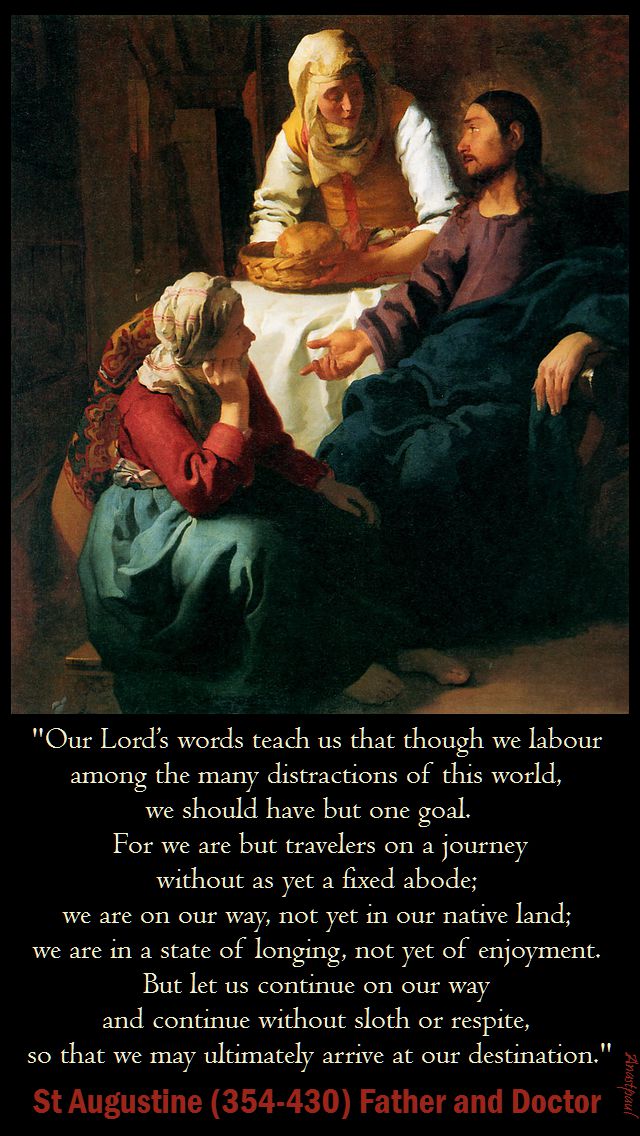
Quote/s of the Day – 29 July – Today’s Gospel: John 6:1–15 and the Memorial of St Martha

Quote/s of the Day – 29 July – Seventeenth Sunday in Ordinary Time – Today’s Gospel: John 6:1–15 and the Memorial of St Martha

“Martha, Martha, you are anxious and worried about many things.
There is need of only one thing.
Mary has chosen the better part and it will not be taken from her.” – Luke 10:42

“Our Lord’s words teach us that though we labour
among the many distractions of this world,
we should have but one goal.
For we are but travelers
on a journey without as yet a fixed abode;
we are on our way, not yet in our native land;
we are in a state of longing, not yet of enjoyment.
But let us continue on our way
and continue without sloth or respite,
so that we may ultimately arrive at our destination.”

St Augustine (354-430) Father and Doctor
(Sermo 103, 1-2, 6: PL 38, 613, 615)our-lords-words-teach-us-st-augustine.29 july 2017

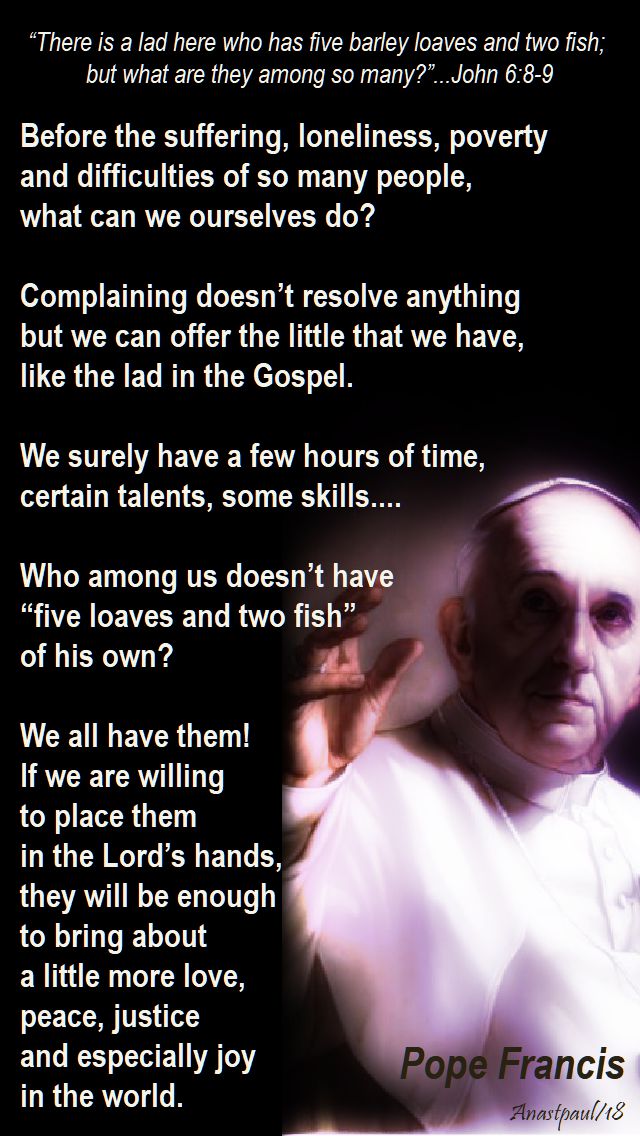
One of his disciples, Andrew, Simon Peter’s brother, said to him,
“There is a lad here who has five barley loaves and two fish; but what are they among so many?”…John 6:8-9

“Before the suffering, loneliness, poverty
and difficulties of so many people,
what can we ourselves do?
Complaining doesn’t resolve anything
but we can offer the little that we have,
like the lad in the Gospel.
We surely have a few hours of time, certain talents, some skills….
Who among us doesn’t have “five loaves and two fish” of his own?
We all have them!
If we are willing to place them in the Lord’s hands,
they will be enough to bring about a little more love,
peace, justice and especially joy in the world.”

Pope Francis – Angelus, 26 July 2015before the suffering loneliness poverty ....pope francis - 29 july 2018

Posted in MORNING Prayers, PAPAL SERMONS, PRAYERS for VARIOUS NEEDS, QUOTES on the PRIESTHOOD, SAINT of the DAY

Thought for the Day – 28 July 2018 – “The Shepherd Who Didn’t Run”

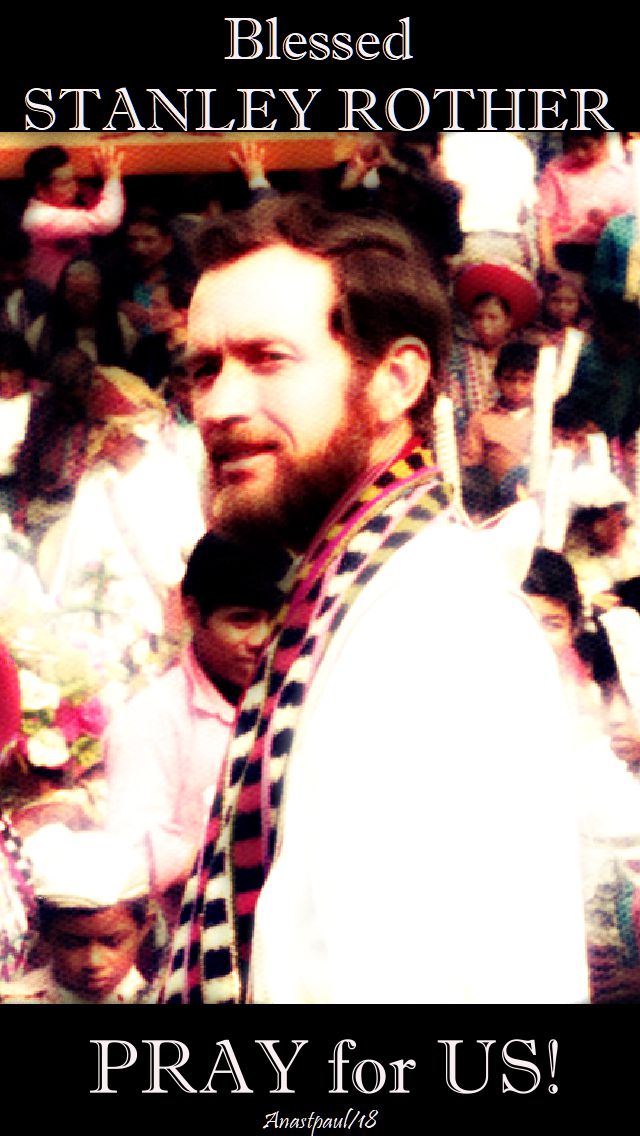
Thought for the Day – 28 July 2018 – The First Memorial of Blessed Stanley Francis Rother (1935-1981) Martyr
“The Shepherd Who Didn’t Run”

In Guatemala, Blessed Stanley spent his life in the service of his flock and, over time, he became one of them.   He helped his people cultivate farms for crops, advised them in all manner of life’s problems and even pulled teeth for them when necessary.   But he was more than a social worker; he was their father — the one who preached to them the Word of God in their native tongue, catechised them and their children and distributed the sacraments through which they grew ever closer to God.

The backdrop to his work and ministry in Guatemala is the political turmoil that wreaked havoc on the country in the 1970s and ’80s.   Eventually, Rother became a victim of the guerrilla fighting and was killed for defending the rights and dignity of his people. His death was no less noble than his life had been.   Though he had been warned multiple times that he was a target and despite having been home months before his death, Rother willingly chose to return to Guatemala to defend and remain close to his people.   He wrote to this effect just months before his death, saying, “the shepherd cannot run at the first sign of danger.   Pray for us that we might be a sign of the love of Christ for our people, that our presence among them will fortify them to endure these sufferings in preparation for the Kingdom.” (excerpt OSV)

This loving shepherd brings to mind the words of Pope Francis way back on 28 March 2013, just 2 weeks after his election to the Papacy, that our priests must be “shepherds living with the smell of the sheep.”   And so, we too, must be extending ourselves to our neighbour!

Prayer for the Canonisation of
Blessed Stanley Rother

O God, fount of all holiness,
make us each walk worthily in our vocation,
through the intercession of Your saints,
on whom You bestowed
a great variety of graces on earth.
Having graced Your Church
with the life of
your priest and martyr,
Blessed Stanley Rother,
grant that by his intercession
this humble flock may reach
where the brave Shepherd has gone.
Grant that Your Church may proclaim
him a saint living in Your presence
and interceding for us all.
Through Christ our Lord.
Amenprayer for the canonisation of bl stanley rother - 28 july 2018

Below is a plan and facade view of the huge Cathedral Shrine, planned to honour Blessed Stanley in Oklahoma. – http://stanleyrother.org/shrine/Church-at-Shrine-1church-1024x486

Blessed Stanley Rother, Pray for us!bl stanley rother pray for us no 2 - 28 july 2018

Posted in CONFESSION/PENANCE, MARIAN TITLES, MORNING Prayers, PAPAL SERMONS, QUOTES on CONVERSION, QUOTES on PRAYER, The BLESSED VIRGIN MARY, The WORD

Thought for the Day – 27 July – Today’s Gospel: Matthew 13:18–23

Thought for the Day – 27 July – Friday of the Sixteenth week in Ordinary Time, Year B – Today’s Gospel: Matthew 13:18–23

“As for what was sown on good soil, this is he who hears the word and understands it;
he indeed bears fruit and yields, in one case a hundredfold, in another sixty and in another thirty.”…Matthew 13:23

“Dear brothers and sisters, Jesus invites us today to look inside ourselves:  to give thanks for our good soil and to tend the soil that is not yet good.

Let us ask ourselves if our heart is open to welcome the seed of the Word of God with faith.

Let us ask ourselves if our rocks of laziness are still numerous and large;  let us identify our thorns of vice and call them by name.

Let us find the courage to reclaim the soil, to effect a conversion of our heart, bringing to the Lord in Confession and in prayer, our rocks and our thorns.” …Pope Francis (Angelus, 16 July 2017)let us ask ourselves if our rocks of laziness - pope francis - 27 july 2018

Holy Mary, Mother of God, Pray for us!mary mother of god pray for us - 27 july 2018

Posted in BREVIARY Prayers, DOCTORS of the Church, FATHERS of the Church, MORNING Prayers, PAPAL SERMONS, QUOTES of the SAINTS, The GOOD SHEPHERD, The WORD

One Minute Reflection – 22 July – Sixteenth Sunday in Ordinary Time, Year B – Today’s Gospel: Mark 6:30-34

One Minute Reflection – 22 July – Sixteenth Sunday in Ordinary Time, Year B – Today’s Gospel: Mark 6:30-34

And he said to them, “Come away by yourselves to a lonely place and rest a while.”...Mark 6:31

REFLECTION – “So they got into the boat and went away by themselves to a deserted spot”… The people followed them.   They showed how concerned they were for their salvation by the effort they made in going along the deserted road, not on donkeys or in carts of various kinds but on foot.   In return Jesus welcomed those weary, ignorant, sick and hungry people, instructing, healing and feeding them as a kindly saviour and physician and so letting them know how pleased He is by believers’ devotion to Him.”…Saint Bede the Venerable (c 673-735) Father & Doctor of the Church (Commentary on Saint Mark’s gospel, 2 ; CCL 120, 510)
“Today we could pray during this mass for our shepherds, that the Lord may give them the grace to walk with the people and to be present for them with much tenderness and closeness.   When people find their shepherd, they feel that special sensation only felt in the presence of God.   The amazement comes from the feeling of the closeness and tenderness of God in the shepherd.”…Pope Francis – Santa Marta, 30 January 2018come away with me - mark 6 31 and so they got into the boat - st bede - 22 july 2018

PRAYER – Be gracious, Lord, to us who serve You and in Your kindness increase Your gifts of grace within us, so that fervent in faith, hope and love, we may be ever on the watch and persevere in doing what You command.   Guard, protect and inspire our own shepherds, our priests who serve Your people, keep them faithful, loyal and prayerful. May our Mother, the most Holy and Pure Blessed Virgin Mary, keep our priests and all of us at her side.   Through our Lord Jesus Christ, one God with Holy Spirit, forever and ever, amen.bl virgin mother mary protect and pray for our priests - 22 july 2018

Posted in DOCTORS of the Church, MORNING Prayers, ON the SAINTS, PAPAL SERMONS, SAINT of the DAY, The RESURRECTION

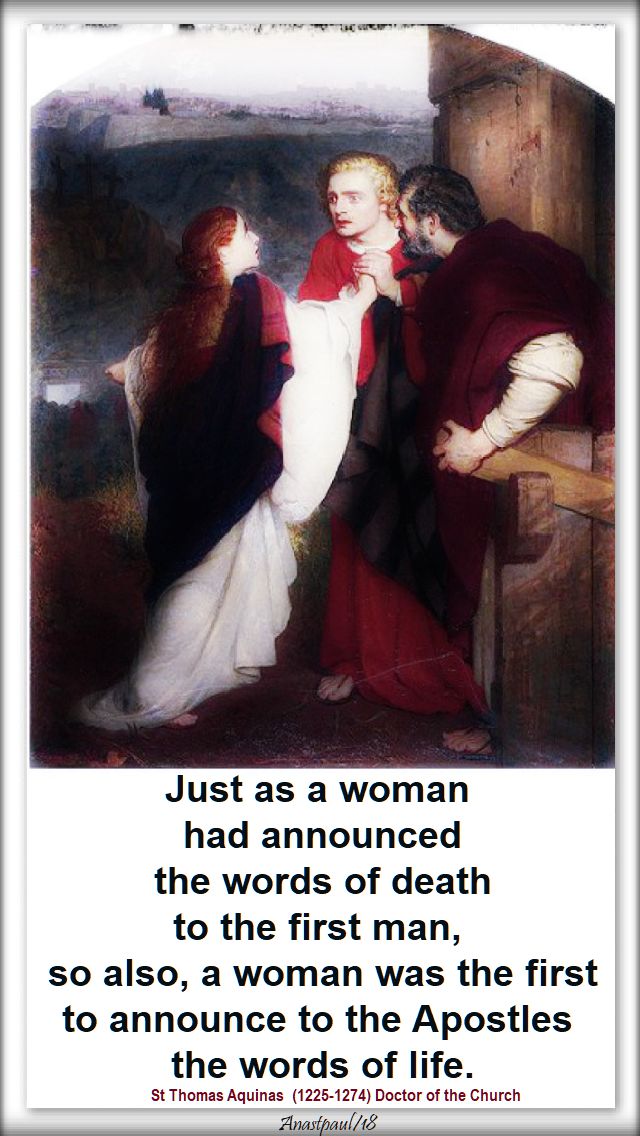
Quote/s of the Day – 22 July – Feast of St Mary of Magdala

Quote/s of the Day – 22 July – Feast of St Mary of Magdala

“Just as a woman
had announced
the words of death
to the first man,
so also, a woman was the first
to announce to the Apostles
the words of life.”

St Thomas Aquinas (1225-1274)just as a woman had announced - st thomas aquinas - 22 july 2018

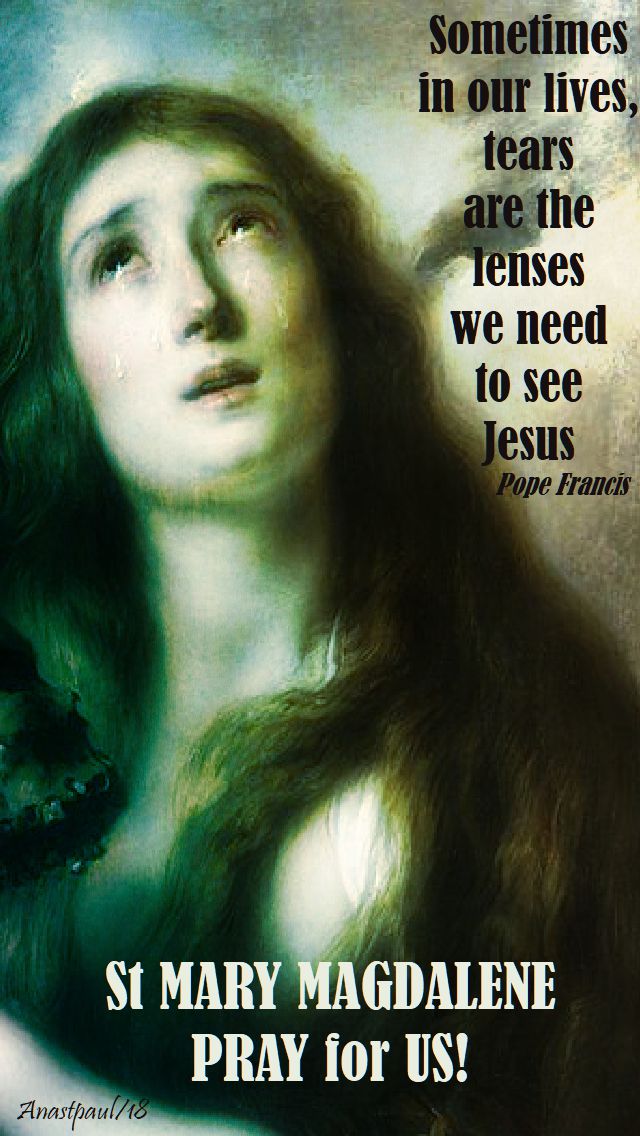
“…Sometimes in our lives,
tears are the lenses
we need to see Jesus…”

Pope Francis 2 April 2013sometimes in our lives - pope francis - st mary magdalene - pray for us - no 2. - 22 july 2018

Posted in DOCTORS of the Church, franciscan OFM, MARIAN QUOTES, PAPAL SERMONS, QUOTES on PRAYER, QUOTES on SANCTITY, QUOTES on the PRIESTHOOD, SAINT of the DAY, The HOLY GHOST, The WORD

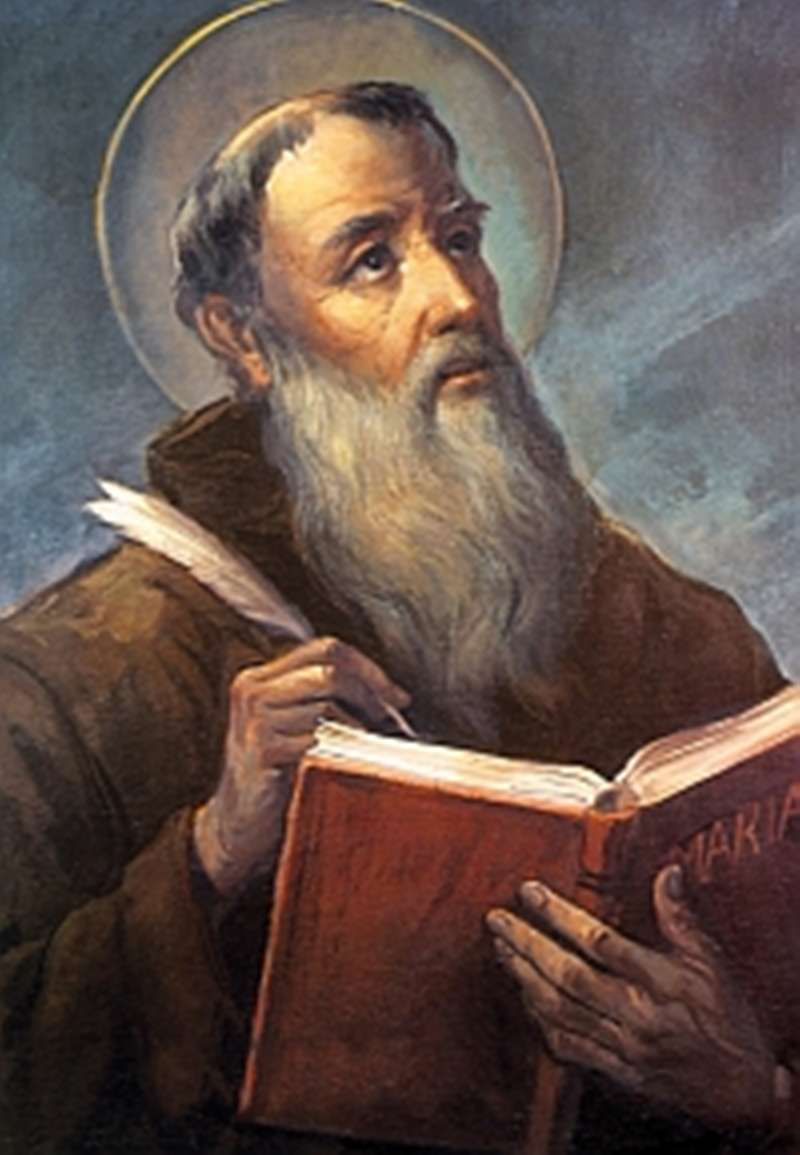
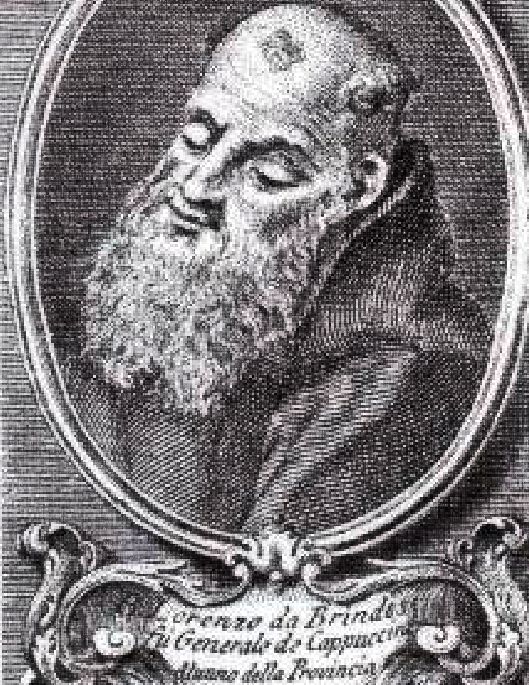
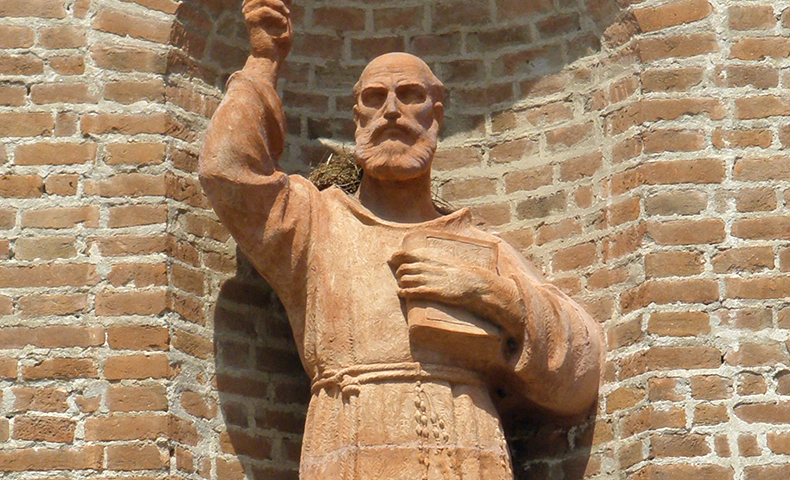
Saint of the Day – 21 July – St Lawrence of Brindisi OFM Cap (1559-1619) Doctor of the Church –  The “Franciscan Renaissance Man”

Saint of the Day – 21 July – St Lawrence of Brindisi OFM Cap (1559-1619) Doctor of the Church.   He was created a Doctor of the Church by St Pope John XXIII in 1959 with the title Doctor apostolicus (Apostolic Doctor).   Patronages –  Brindisi, Italy.

St Lawrence is known as the “Franciscan Renaissance Man”  – he was a Religious member of the Franciscan Friars Minor Capuchin, a Priest, Theologian, Vicar General of the Franciscans, Language scholar, Apologist of immense and calm resources, Humanist, Philosopher, Biblicist, Preacher, Missionary, Professor, International Administrator, Confidant of Popes, Emperors, Kings and Princes, Diplomatic envoy, Army Chaplain, Military Strategist and Morale builder, Polemicist, Prolific writer.

Saint Lawrence of Brindisi

By Pope Benedict XVI
General Audience, 23 March 2011

I still remember with joy the festive welcome I was given in Brindisi in 2008.   It was in this city that in 1559 was born a distinguished Doctor of the Church, St Lawrence of Brindisi, the name that Julius Caesar Russo took upon entering the Capuchin Order.

He had been attracted since childhood by the family of St Francis of Assisi.   In fact, his father died when he was seven years old and his mother entrusted him to the care of the Friars Minor Conventual in his hometown.   A few years later, however, Lawrence and his mother moved to Venice and it was precisely there that he became acquainted with the Capuchins who in that period were generously dedicated to serving the whole Church in order to further the important spiritual reform promoted by the Council of Trent.

With his religious profession in 1575, Lawrence became a Capuchin friar and in 1582 he was ordained a priest.   During his ecclesiastical studies for the priesthood he already showed the eminent intellectual qualities with which he had been endowed.   He learned with ease the ancient languages, such as Greek, Hebrew and Syriac, as well as modern languages, such as French and German.   He added these to his knowledge of Italian and of Latin that was once spoken fluently by all clerics and by all cultured people.   Thanks to his mastery of so many languages, Lawrence was able to carry out a busy apostolate among the different categories of people.   As an effective preacher, his knowledge, not only of the Bible but also of the rabbinic literature, was so profound that even the Rabbis, impressed and full of admiration, treated him with esteem and respect.

As a theologian steeped in Sacred Scripture and in the Fathers of the Church, he was also able to illustrate Catholic doctrine in an exemplary manner to Christians who, especially in Germany, had adhered to the Reformation.   With his calm, clear exposition he demonstrated the biblical and patristic foundation of all the articles of faith disputed by Martin Luther.   These included the primacy of St Peter and of his Successors, the divine origin of the Episcopate, justification as an inner transformation of man, and the need to do good works for salvation.   Lawrence’s success helps us to realise that today too, in pursuing ecumenical dialogue with such great hope, the reference to Sacred Scripture, interpreted in accordance with the Tradition of the Church, is an indispensable element of fundamental importance. I wished to recall this in my Apostolic Exhortation Verbum Domini (n. 46).   Even the simplest members of the faithful, those not endowed with great culture, benefited from the convincing words of Lawrence, who addressed humble people to remind them all to make their lives consistent with the faith they professed.st lawrence of brindisi

This was a great merit of the Capuchins and of other religious Orders which, in the 16th and 17th centuries, contributed to the renewal of Christian life, penetrating the depths of society with their witness of life and their teaching.   Today too, the new evangelisation stands in need of well-trained apostles, zealous and courageous, so that the light and beauty of the Gospel, may prevail over the cultural tendencies of ethical relativism and religious indifference and transform the various ways of thinking and acting into genuine Christian humanism.

It is surprising that St Lawrence of Brindisi was able to continue without interruption his work as an appreciated and unflagging preacher in many cities of Italy and in different countries, in spite of holding other burdensome offices of great responsibility.   Indeed, within the Order of Capuchins he was professor of theology, novice master, for several mandates minister provincial and definitor general and finally, from 1602 to 1605, minister general.   In the midst of this mountain of work, Lawrence cultivated an exceptionally fervent spiritual life.   He devoted much time to prayer and, especially, to the celebration of Holy Mass — often protracted for hours — caught up in and moved by the memorial of the Passion, death and Resurrection of the Lord.St Lawrence of Brindisi (1)

At the school of the saints, every priest, as was emphasised frequently during the recent Year for Priests, may only avoid the danger of activism — acting, that is, without remembering the profound motives of his ministry — if he attends to his own inner life.

In speaking to priests and seminarians in the Cathedral of Brindisi, St Lawrence’s birthplace, I recalled that “the time he spends in prayer is the most important time in a priest’s life, in which divine grace acts with greater effectiveness, making his ministry fruitful. The first service to render to the community is prayer.   And, therefore, time for prayer must be given true priority in our life… if we are not interiorly in communion with God, we cannot even give anything to others.   Therefore, God is the first priority.   We must always reserve the time necessary to be in communion of prayer with Our Lord” (Address of Benedict XVI to priests, deacons and seminarians of the Archdiocese of Brindisi, Cathedral of Brindisi, 15 June 2008).

Moreover, with the unmistakable ardour of his style, Lawrence urged everyone and not only priests, to cultivate a life of prayer, for it is through prayer that we speak to God and that God speaks to us:  “Oh, if we were to consider this reality!”, he exclaimed. “In other words that God is truly present to us when we speak to him in prayer;  that he truly listens to our prayers, even if we pray only with our hearts and minds. And that not only is he present and hears us, indeed he willingly and with the greatest of pleasure wishes to grant our requests”.

Another trait that characterises the opus of this son of St Frances, is his action for peace. Time and again both Supreme Pontiffs and Catholic Princes entrusted him with important diplomatic missions, to settle controversies and to encourage harmony among the European States, threatened in those days by the Ottoman Empire.   The moral authority he enjoyed made him a counsellor both sought after and listened to.   Today, as in the times of St Lawrence, the world is in great need of peace, it needs peaceful and peacemaking men and women.  All who believe in God must always be sources and artisans of peace.st-lawrence-of-brindisi-into-battle


It was precisely on the occasion of one of these diplomatic missions that Lawrence’s earthly life ended, in 1619 in Lisbon, where he had gone to see King Philip III of Spain, to plead the cause of the Neapolitan subjects oppressed by the local authorities.

He was Canonised in 1881 and his vigorous and intense activity, his vast and harmonious knowledge, earned him the title of Doctor Apostolicus, “Apostolic Doctor”.   The title was conferred on him by St Pope John XXIII in 1959, on the occasion of the fourth centenary of his birth.   This recognition was also granted to Lawrence of Brindisi because he was the author of numerous works of biblical exegesis, theology and sermons.   In them he offers an organic presentation of the history of salvation, centred on the mystery of the Incarnation, the greatest expression of divine love for humankind.lawrence - my edit and enlargement

Furthermore, since he was a highly qualified Mariologist, the author of a collection of sermons on Our Lady entitled “Mariale”, he highlighted the unique role of the Virgin Mary, whose Immaculate Conception and whose role in the redemption brought about by Christ he clearly affirms.

With a fine theological sensitivity, Lawrence of Brindisi also pointed out the Holy Spirit’s action in the believer’s life.   He reminds us that the Third Person of the Most Holy Trinity illumines and assists us with his gifts in our commitment to live joyously the Gospel message.

“The Holy Spirit”, St Lawrence wrote, “sweetens the yoke of the divine law and lightens its weight, so that we may observe God’s commandments with the greatest of ease and even with pleasure”.

I would like to complete this brief presentation of the life and doctrine of St Lawrence of Brindisi by underlining that the whole of his activity was inspired by great love for Sacred Scripture, which he knew thoroughly and by heart and by the conviction that listening to and the reception of the word of God produces an inner transformation that leads us to holiness.

“The word of the Lord”, he said, “is a light for the mind and a fire for the will, so that man may know and love God. For the inner man, who lives through the living grace of God’s Spirit, it is bread and water but bread sweeter than honey and water better than wine or milk…. It is a weapon against a heart stubbornly entrenched in vice.   It is a sword against the flesh, the world and the devil, to destroy every sin”.

St Lawrence of Brindisi teaches us to love Sacred Scripture, to increase in familiarity with it, to cultivate daily relations of friendship with the Lord in prayer, so that our every action, our every activity, may have its beginning and its fulfilment in him.   This is the source from which to draw so that our Christian witness may be luminous and able to lead the people of our time to God….vatican.va Pope Benedict 

A lot more about St Lawrence here: https://anastpaul.wordpress.com/2017/07/21/saint-of-the-day-21-july-st-lawrence-of-brindisi-o-f-m-cap-doctor-of-the-church/SOD-0721-SaintLawrenceofBrindisi-790x480

Posted in MORNING Prayers, PAPAL SERMONS, QUOTES - J R R Tolkien and MORE, QUOTES on CHARITY, QUOTES on LOVE, QUOTES on MERCY, QUOTES on REPENTANCE, The WORD

Quote/s of the Day – 20 July – Today’s Gospel: Matthew 12:1-8

Quote/s of the Day – 20 July – Today’s Gospel: Matthew 12:1-8

” And if you had known what this means, ‘I desire mercy and not sacrifice,’ you would not have condemned the guiltless…”.…Matthew 12:7

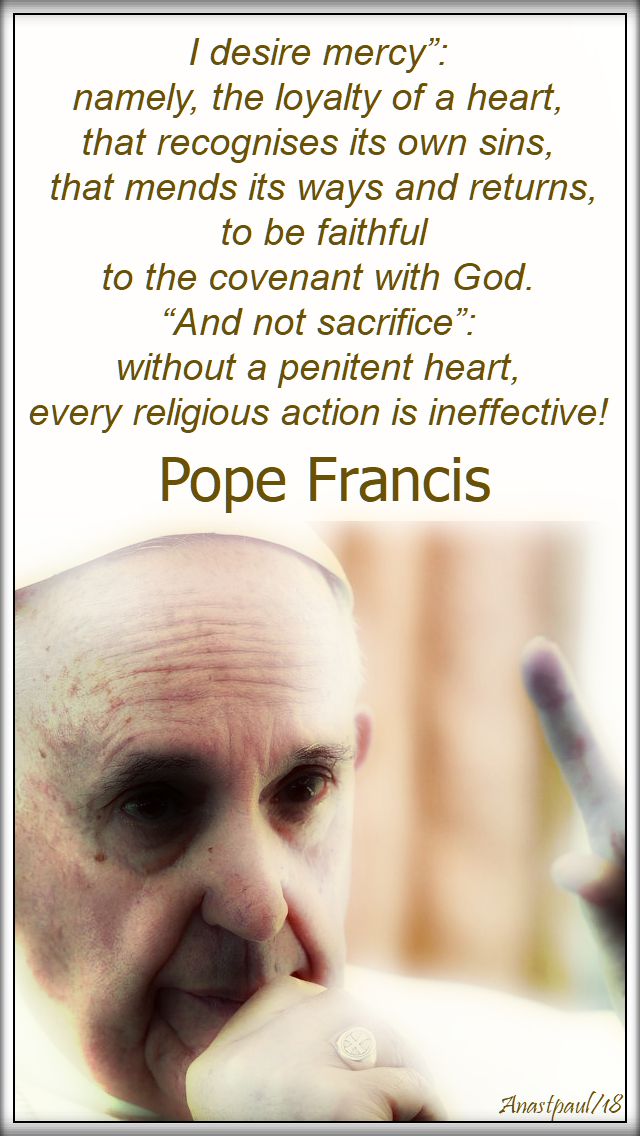
“I desire mercy”:
namely, the loyalty of a heart,
that recognises its own sins,
that mends its ways and returns,
to be faithful to the covenant with God.
“And not sacrifice”:
without a penitent heart,
every religious action is ineffective!”i desire mercy - namely, the loyalty - pope francis - 20 july 2018

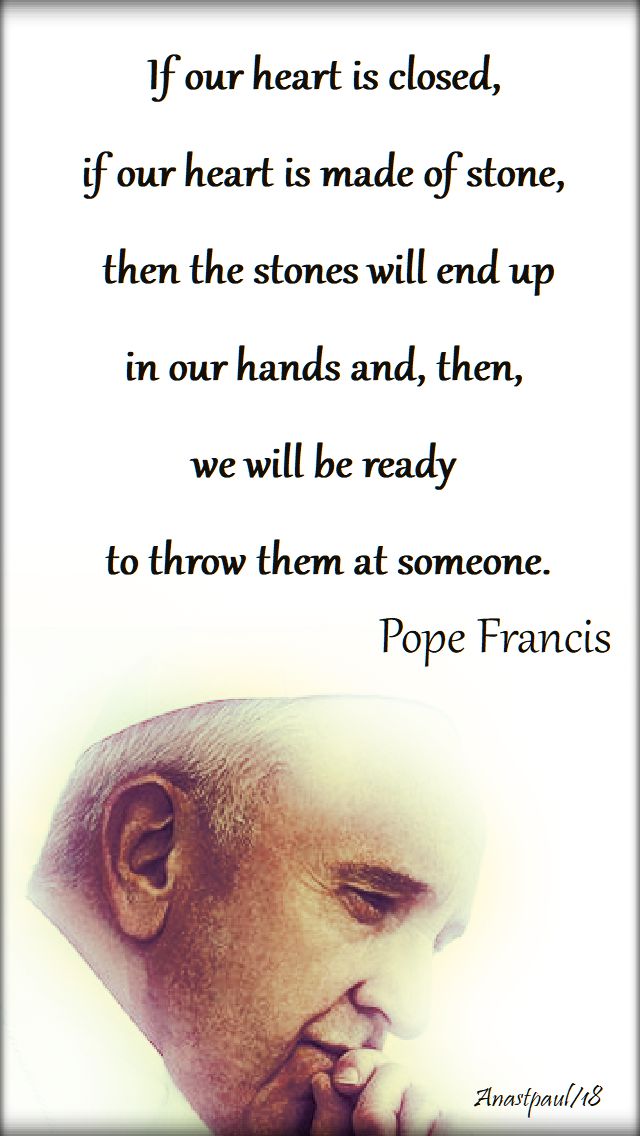
” If our heart is closed,
if our heart is made of stone,
then the stones will end up
in our hands and, then,
we will be ready
to throw them at someone.”

Pope Francis – General audience, 13 April 2016if our heart is closed - pope francis - 20 july 2018

Posted in ART DEI, MORNING Prayers, PAPAL SERMONS, QUOTES - J R R Tolkien and MORE, SAINT of the DAY, The WORD

One Minute Reflection – 19 July – Today’s Gospel: Matthew 11:28-30.

One Minute Reflection – 19 July – Thursday of the Fifteenth week in Ordinary Time, Year B – Today’s Gospel: Matthew 11:28-30.

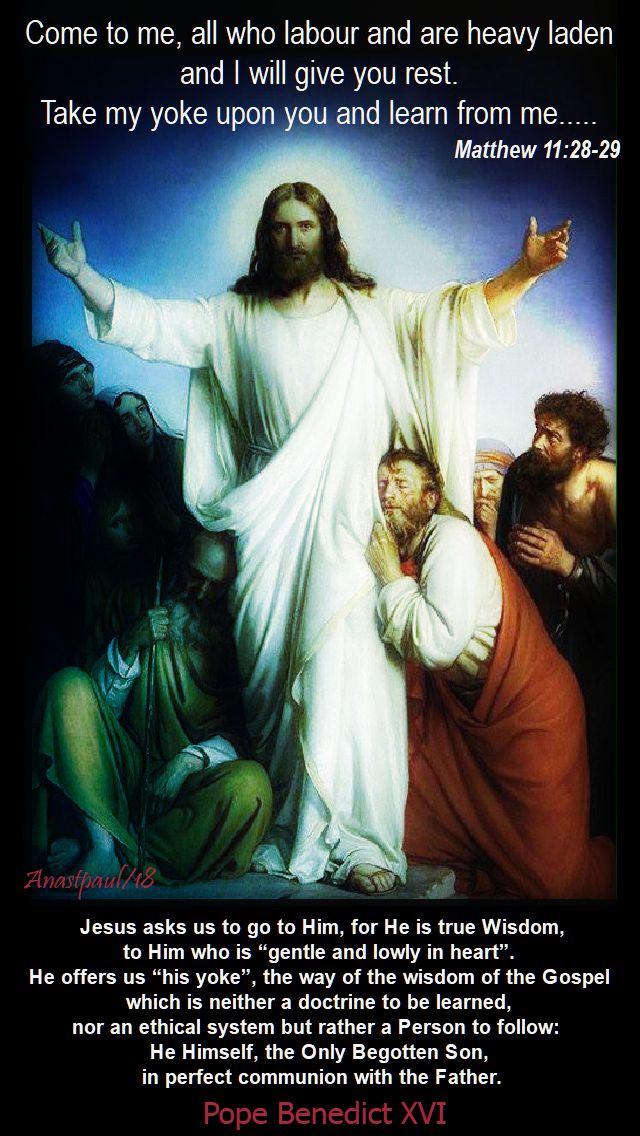
“Come to me, all who labour and are heavy laden and I will give you rest. Take my yoke upon you and learn from me; for I am gentle and lowly in heart and you will find rest for your souls. For my yoke is easy, and my burden is light.”…Matthew 11:28-30

REFLECTION – “Jesus asks us to go to Him, for He is true Wisdom, to Him who is “gentle and lowly in heart”.   He offers us “his yoke”, the way of the wisdom of the Gospel which is neither a doctrine to be learned, nor an ethical system but rather a Person to follow: He Himself, the Only Begotten Son, in perfect communion with the Father.”…Pope Benedict, XVI, General Audience, 7 December 2011come to me all who are burdened - matthew 11 28-29- jesus asks us to go to him - pope benedict - 19 july 2018

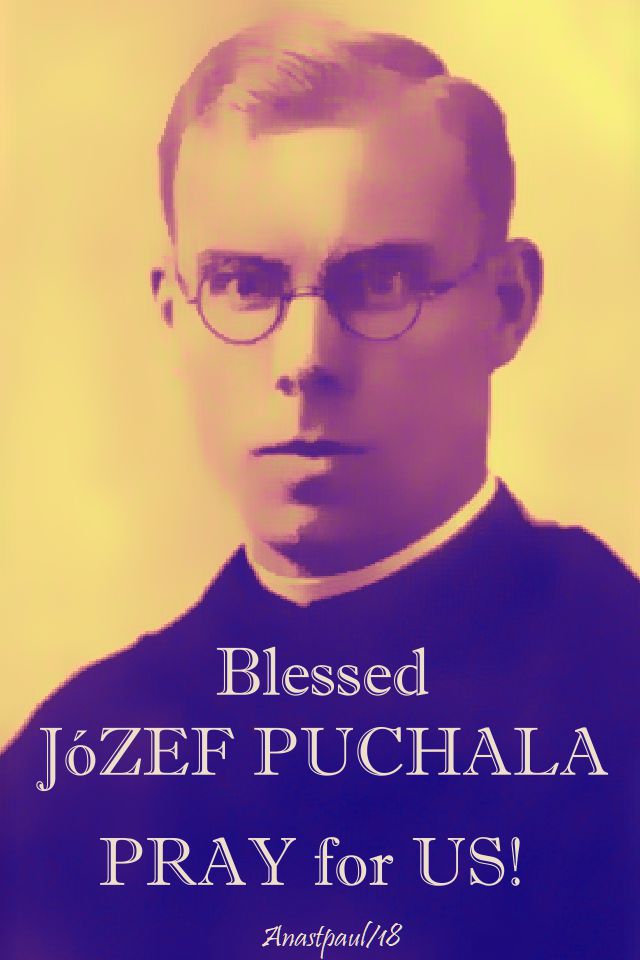
PRAYER – “Holy God, our Father, we turn to You in confidence as children and pray, give us meekness of heart, make us “poor in spirit” that we may recognise that we are not self-sufficient, that we are unable to build our lives on our own but need You, we need to encounter You, to listen to You, to speak to You.   Help us to understand that we need Your gift, Your wisdom, which is Jesus Himself, in order to do the Your will in our lives and thus to find rest in the hardships of our journey.”   Blessed Jozef Puchala, Holy Martyr for Christ, Pray for us, amen.   (Adapted from the same homily above.)bl jozef puchala martyr - 19 july 2018- pray for us

NOTE:   The Image used for the Reflection above is called “Christ the Consolator” by Carl Heinrich Bloch (1834-1890).   You would be mistaken in believing that this great Artist was a Mormon but of course, he was a Danish Artist of a Christian leaning (Mormons are NOT Christians and were begun by Joseph Smith in the 1820s in New York), studied and was inspired and drawn to Catholicism (but did not convert) in Rome and was vastly influenced by Rembrandt (a protestant) in Holland.   The Mormons have used his artworks endlessly – in their temples, advertising and media, he would be highly indignant I believe, without a doubt!

Posted in MORNING Prayers, PAPAL SERMONS, QUOTES on REPENTANCE, The WORD

One Minute Reflection – 17 July – Today’s Gospel: Matthew 11:20-24.

One Minute Reflection – 17 July – Tuesday of the Fifteenth week in Ordinary Time, B – Today’s Gospel: Matthew 11:20-24.

“But I tell you, it will be more tolerable for Tyre and Sidon on the day of judgement than for you..”…Matthew 11:22

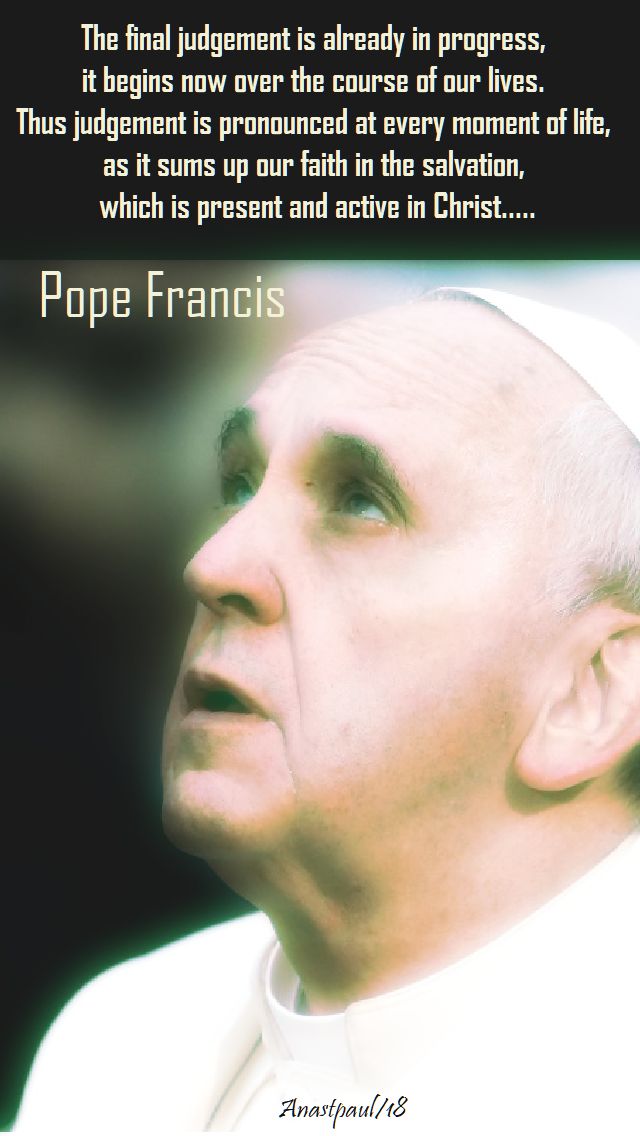
REFLECTION – “The final judgement is already in progress, it begins now over the course of our lives.   Thus judgement is pronounced at every moment of life, as it sums up our faith in the salvation which is present and active in Christ, or of our unbelief, whereby we close in upon ourselves.   But if we close ourselves to the love of Jesus, we condemn ourselves.   Salvation is, to open oneself to Jesus, it is He who saves us.”…Pope Francis – General Audience, 11 December 2013the final judgment - pope francis - 17 july 2018

PRAYER – Almighty God, to whom this world with all its goodness and beauty belongs, give us grace joyfully to begin this day in Your name and to fill it, with an active love for You and for our neighbour.   Grant us the grace to repent of our sins, to turn to the Cross of Your Son and to beg Him in His great love and suffering to forgive us again!   Mary, Holy Mother, intercede for us in our weakness and help us to turn our backs on sin and look only at the face of Christ.  Amenmary immaculate holy mother of god - pray for us - 28 may 2018

Posted in MORNING Prayers, PAPAL SERMONS, QUOTES of the SAINTS, QUOTES on CHARITY, QUOTES on DIVINE PROVIDENCE, QUOTES on FAITH, QUOTES on FEAR, QUOTES on HOPE, QUOTES on TRUST and complete CONFIDENCE in GOD, The WORD

One Minute Reflection – 16 July – Today’s Gospel: Matthew 10:34-42,11:1.

One Minute Reflection – 16 July – Monday of the Fifteenth week in Ordinary Time, B – Today’s Gospel: Matthew 10:34-42,11:1.

Whoever loves father or mother more than me is not worthy of me and whoever loves son or daughter more than me is not worthy of me and whoever does not take up his cross and follow after me is not worthy of me...Matthew 10:37-38

REFLECTION – “A further means of staying faithful, Daughters, is perfect detachment from father, mother, relations and friends in such a way that you are God’s alone.   And to possess this great good you have to strip yourself of everything and have nothing of your own.   The apostles had just such a detachment.   For one cent you will have a hundred, as many women, as many mothers which Providence, Daughters, will never fail you.   Don’t you have any courage at all to give yourselves to the God who is so mindful of you?   Never claim you are saving something for your own livelihood; always put your trust in Providence.   Rich people can fall into need through the accidents that often happen but they will never be in want, who intend to rely solely on God.
Isn’t it good, Daughters, to live like this?   What is there to fear?   For God has promised that people who care for the poor will never lack anything.   O my Daughters, would you not love God’s promises better than the world’s deceits?   God is obliged to provide for all our needs.”…St Vincent de Paul (1581-1660) – Conferences to the Daughters of Charitymatthew 10 - 37 - 38 - whoever loves father and mother more than me - providence, daughters, will never fail you. st vincent de paul - 16 july 2018

PRAYER – Grant us Your Grace O Holy God almighty, rule over our hearts and bodies this day.   Sanctify us and guide our every thought, word and deed according to the commandments of Your divine Son, so that now and forever Your Grace may free us from the world and save us for Yourself.   “May the Virgin Mary, first disciple and missionary of the Word of God, help us to take the message of the Gospel to the world, in humble and radiant exultance, beyond every rejection, incomprehension or tribulation. Amen”… Pope Francisblessed virgin mary - first missionary - pray for us - 16 july 2018

Posted in MORNING Prayers, PAPAL SERMONS, The WORD

Thought for the Day – 13 July

Thought for the Day – 13 July – Friday of the Fourteenth Week in Ordinary Time, Year B – Today’s Gospel: Matthew 10:16-23.

“Jesus said to his Apostles:

“Behold, I am sending you like sheep in the midst of wolves”

Matthew 10:16

Jesus’ sending disciples on mission does not guarantee their success, just as it does not protect them from failure and suffering.   They have to take into account both the possibility of rejection and that of persecution.   This is somewhat frightening but it is the truth.
The disciple is called to conform his life to Christ who was persecuted by men, knew rejection, abandonment and death on the cross.   There is no Christian mission marked by tranquility!   Difficulties and tribulations are part of the work of evangelisation and we are called to find in them the opportunity to test the authenticity of our faith and of our relationship with Jesus.   We must consider these difficulties as the opportunity to be even more missionary and to grow in that trust toward God our Father, who does not abandon His children during the storm.
Even in our day, brothers and sisters, persecution against Christians is present.
Their example helps us not to hesitate in taking the position in favour of Christ, bearing witness bravely in everyday situations.
Besides sending us out as “sheep in the midst of wolves”, the Lord even in our times sends us out as sentinels in the midst of people who do not want to be woken from their worldly lethargy which ignores the Gospel’s words of Truth, building for themselves their own ephemeral truths.   And if we go to or live in these contexts and we proclaim the Words of the Gospel, this is bothersome and they will look at us unkindly.
But in all this, the Lord continues to tell us, as He did to the disciples of His time:  “Do not fear!”…Pope Francis (Angelus, 25 June 2017)

“When they deliver you up, do not be anxious how you are to speak or what you are to say;  for what you are to say will be given to you in that hour;  for it is not you who speak but the Spirit of your Father, speaking through you.”…Matthew 10:19-20besides sending us out - pope francis - 13 july 2018

Posted in MORNING Prayers, PAPAL SERMONS, QUOTES of the SAINTS, QUOTES on PRAYER, QUOTES on SILENCE, QUOTES on WORK/LABOUR, SAINT of the DAY

Thought for the Day – 11 July – The Memorial of St Benedict of Nursia OSB (c 480-547)

Thought for the Day – 11 July – The Memorial of St Benedict of Nursia OSB (c 480-547)

Excerpt from the Homily of Pope Benedict

General Audience, 9 April 2008

“Today, I would like to speak about Benedict, the Founder of Western Monasticism and also the Patron of my Pontificate.

I begin with words that St Gregory the Great wrote about St Benedict:  “The man of God who shone on this earth among so many miracles was just as brilliant in the eloquent exposition of his teaching” (cf. Dialogues II, 36).   The great Pope wrote these words in 592 AD.   The holy monk, who had died barely 50 years earlier, lived on in people’s memories and especially in the flourishing religious Order he had founded.   St Benedict of Nursia/Norcia, with his life and his work, had a fundamental influence on the development of European civilisation and culture.   The most important source on Benedict’s life is the second book of St Gregory the Great’s Dialogues.   It is not a biography in the classical sense.   In accordance with the ideas of his time, by giving the example of a real man – St Benedict, in this case – Gregory wished to illustrate the ascent to the peak of contemplation which can be achieved by those who abandon themselves to God.   He therefore gives us a model for human life in the climb towards the summit of perfection.   St Gregory the Great also tells in this book of the Dialogues of many miracles worked by the Saint and here too he does not merely wish to recount something curious but rather to show how God, by admonishing, helping and even punishing, intervenes in the practical situations of man’s life.   Gregory’s aim was to demonstrate that God is not a distant hypothesis placed at the origin of the world but is present in the life of man, of every man.

Throughout the second book of his Dialogues, Gregory shows us how St Benedict’s life was steeped in an atmosphere of prayer, the foundation of his existence.   Without prayer there is no experience of God.   Yet Benedict’s spirituality was not an interiority removed from reality.   In the anxiety and confusion of his day, he lived under God’s gaze and in this very way never lost sight of the duties of daily life and of man with his practical needs.   Seeing God, he understood the reality of man and his mission.   In his Rule he describes monastic life as “a school for the service of the Lord” (Prol. 45) and advises his monks, “let nothing be preferred to the Work of God” [that is, the Divine Office or the Liturgy of the Hours] (43, 3).

However, Benedict states that in the first place prayer is an act of listening (Prol. 9-11), which must then be expressed in action.   “The Lord is waiting every day for us to respond to his holy admonitions by our deeds” (Prol. 35).   Thus, the monk’s life becomes a fruitful symbiosis between action and contemplation, “so that God may be glorified in all things” (57, 9).   In contrast with a facile and egocentric self-fulfilment, today often exalted, the first and indispensable commitment of a disciple of St Benedict is the sincere search for God (58, 7) on the path mapped out by the humble and obedient Christ (5, 13), whose love he must put before all else (4, 21; 72, 11) and in this way, in the service of the other, he becomes a man of service and peace  . In the exercise of obedience practised by faith inspired by love (5, 2), the monk achieves humility (5, 1), to which the Rule dedicates an entire chapter (7).   In this way, man conforms ever more to Christ and attains true self-fulfilment as a creature in the image and likeness of God.

Benedict describes the Rule he wrote as “minimal, just an initial outline” (cf. 73, 8);  in fact, however, he offers useful guidelines not only for monks but for all who seek guidance on their journey toward God.   For its moderation, humanity and sober discernment between the essential and the secondary in spiritual life, his Rule has retained its illuminating power even to today.

By proclaiming St Benedict Patron of Europe on 24 October 1964, Paul VI intended to recognise the marvellous work the Saint achieved with his Rule for the formation of the civilisation and culture of Europe.

Having recently emerged from a century that was deeply wounded by two World Wars and the collapse of the great ideologies, now revealed as tragic utopias, Europe today is in search of its own identity.   Of course, in order to create new and lasting unity, political, economic and juridical instruments are important, but it is also necessary to awaken an ethical and spiritual renewal which draws on the Christian roots of the Continent, otherwise a new Europe cannot be built.   Without this vital sap, man is exposed to the danger of succumbing to the ancient temptation of seeking to redeem himself by himself – a utopia which in different ways, in 20th-century Europe, as Pope John Paul II pointed out, has caused “a regression without precedent in the tormented history of humanity” (Address to the Pontifical Council for Culture, 12 January 1990).

Today, in seeking true progress, let us also listen to the Rule of St Benedict as a guiding light on our journey.   The great monk is still a true master at whose school we can learn to become proficient in true humanism.

Here is a PDF of the Rule for downloading:  http://www.documentacatholicaomnia.eu/03d/0480-0547,_Benedictus_Nursinus,_Regola,_EN.pdf

St Benedict, Pray for Europe, Pray for the World,

Pray for the Church, Pray for us all!st-benedict-pray-for-us-11 july 2017 - 3

Posted in MORNING Prayers, PAPAL SERMONS, SAINT of the DAY, The WORD

One Minute Reflection – 10 July – Tuesday of the Fourteenth Week of Ordinary Time, Year B – Today’s Gospel: Matthew 9:32-38

One Minute Reflection – 10 July – Tuesday of the Fourteenth Week of Ordinary Time, Year B – Today’s Gospel: Matthew 9:32-38

Jesus went around to all the towns and villages, teaching in their synagogues, proclaiming the Gospel of the Kingdom..…Matthew 9:35

REFLECTION – “This is the central message of every Christian mission.   When a missionary goes, a Christian goes to proclaim Jesus, not to proselytise, as if he were a fan trying to drum up new supporters for his team.   No, he goes simply to proclaim:  “The kingdom of God is in our midst!”.
But what is this kingdom of God, this kingdom of heaven?   They are synonymous.   We think immediately of the afterlife:  eternal life.   Of course this is true, the kingdom of God will extend without limit beyond earthly life but the good news that Jesus brings us — and that John predicts — is that we do not need to wait for the kingdom of God in the future:  it is at hand.   In some way it is already present and we may experience spiritual power from now on.
The condition for entering and being a part of this kingdom, is to implement a change in our life, which is to convert, to convert every day, to take a step forward each day.   It is a question of leaving behind the comfortable but misleading ways of the idols of this world:  success at all costs, power to the detriment of the weak, the desire for wealth, pleasure at any price.   And instead, preparing the way of the Lord:  this does not take away our freedom but gives us true happiness…Pope Francis (Angelus, Dec 4, 2016)matthew 9 35 - jesus went around - the condition for entering - pope francis - 10 july 2018

PRAYER – All-powerful God, to serve You is to reign.   Your love gave the saints Victoria and Anatolia the courage to proclaim the truth of Christ and by their mission of preaching of the Kingdom, to suffer a cruel martyrdom.   Grant that by their prayers, our lives bear witness to the faith we profess and our love bring others, to the peace and joy of your gospel.   Through our Lord Jesus Christ, Your Son, who lives and reigns with You in the unity of the Holy Spirit, one God, forever and ever. Amensts victoria and anatolia pray for us 10 july 2018

Posted in PAPAL SERMONS, SAINT of the DAY, VATICAN Resources

Saints of the Day – 8 July – Priscilla and Aquila

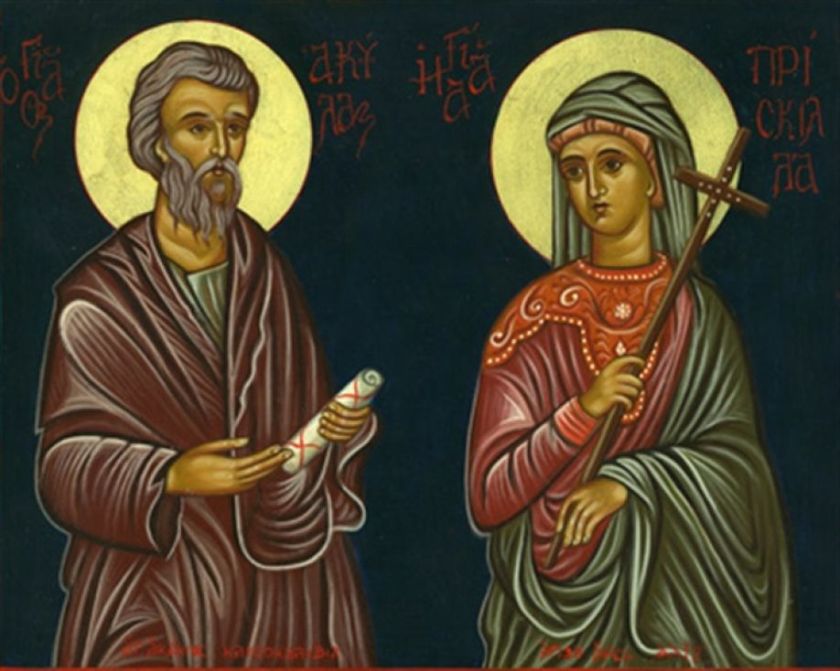
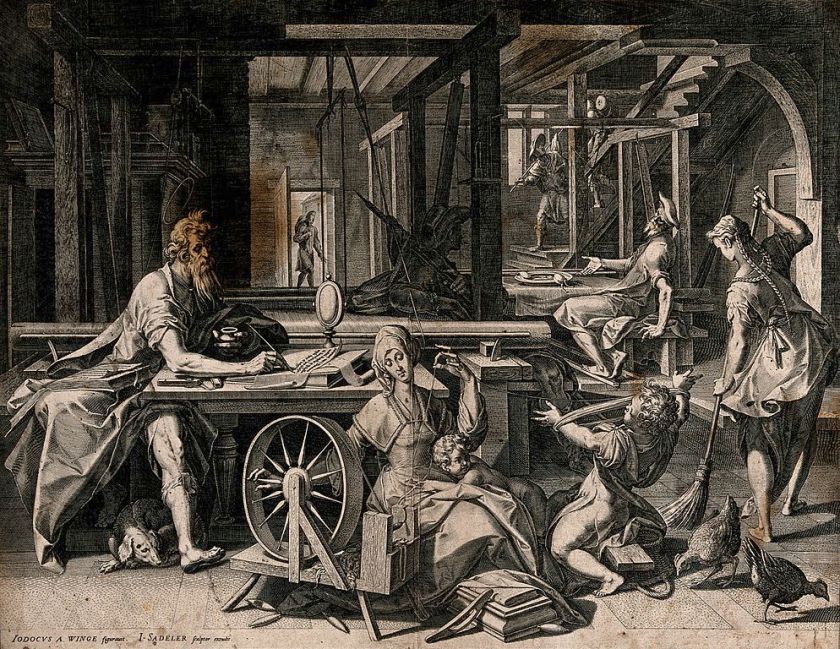
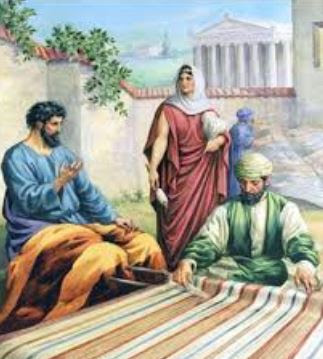
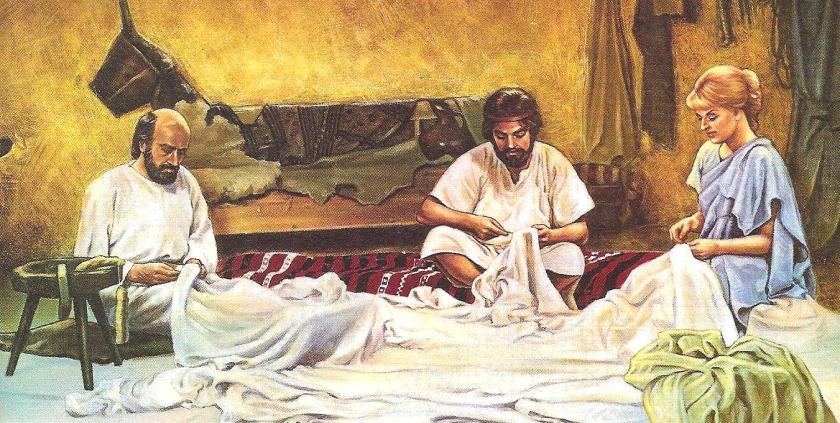
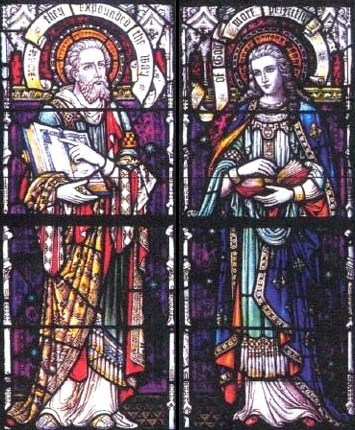
Saints of the Day – 8 July – Priscilla and Aquila – Continuing his catechesis on the early witnesses of the Christian faith, Pope Benedict XVI dedicated his 7 February 2007 General Audience Address to the Roman couple Priscilla and Aquila, who collaborated with St Paul in Corinth.aquila and priscilla - icon 2

Dear Brothers and Sisters,

Taking a new step in this type of portrait gallery of the first witnesses of the Christian faith which we began some weeks ago, today we take into consideration a married couple.

The couple in question are Priscilla and Aquila, who take their place, as we already mentioned briefly last Wednesday, in the sphere of numerous collaborators who gravitated around the Apostle Paul.   Based on the information in our possession, this married couple played a very active role in the post-Paschal origins of the Church.

The names Aquila and Priscilla are Latin but the man and woman who bear them were of Hebrew origin.   At least Aquila, however, geographically came from the diaspora of northern Anatolia, which faces the Black Sea – in today’s Turkey – while Priscilla was probably a Jewish woman from Rome (cf. Acts 18: 2).Paul, priscilla and aquila - icon

However, it was from Rome that they reached Corinth, where Paul met them at the beginning of the 50s.   There he became associated with them, as Luke tells us, practising the same trade of making tents or large draperies for domestic use and he was even welcomed into their home (cf. Acts 18: 3).   The reason they came to Corinth was the decision taken by the Emperor Claudius to expel from Rome, the city’s Jewish residents. Concerning this event the Roman historian Suetonius tells us that the Hebrews were expelled because “they were rioting due to someone named Chrestus” (cf. “The Lives of the Twelve Caesars, Claudius”, n. 25).

One sees that he did not know the name well – instead of Christ he wrote “Chrestus” – and he had only a very confused idea of what had happened.   In any case, there were internal discords within the Jewish community about the question if whether Jesus was the Christ.   And for the Emperor, these problems were the reason to simply expel all Jews from Rome.

One can deduce that the couple had already embraced the Christian faith in the 40s and now they had found in Paul, someone who not only shared with them this faith – that Jesus is the Christ – but who was also an Apostle, personally called by the Risen Lord.  Therefore, their first encounter is at Corinth, where they welcomed him into their house and worked together making tents.

St._Paul_is_staying_in_the_house_of_Aquila_and_his_wife_Pris_Wellcome_V0039575aquila and priscilla 2header 2 - paul, aquila and priscilla

In a second moment, they transferred to Ephesus in Asia Minor.   There they had a decisive role in completing the Christian formation of the Alexandrian Jew Apollo, who we spoke about last Wednesday.   Since he only knew the faith superficially, “Priscilla and Aquila… took him and expounded to him the way of God more accurately” (Acts 18: 26).  When Paul wrote the First Letter to the Corinthians from Ephesus, together with his own greeting, he explicitly sent those of “Aquila and Prisca, together with the church in their house” (16: 19).   Hence, we come to know the most important role that this couple played in the environment of the primitive Church:  that of welcoming in their own house the group of local Christians when they gathered to listen to the Word of God and to celebrate the Eucharist.   It is exactly this type of gathering that in Greek is called “ekklesìa” – the Latin word is “ecclesia”, the Italian “chiesa” – which means convocation, assembly, gathering.   In the house of Aquila and Priscilla, therefore, the Church gathered, the convocation of Christ, which celebrates here the Sacred Mysteries.

Thus, we can see the very birth of the reality of the Church in the homes of believers. Christians, in fact, from the first part of the third century did not have their own places of worship.   Initially it was the Jewish Synagogue, until the original symbiosis between the Old and New Testaments dissolved and the Church of the Gentiles was forced to give itself its own identity, always profoundly rooted in the Old Testament.   Then, after this “break”, they gathered in the homes of Christians that thus become “Church”.   And finally, in the third century, true and proper buildings for Christian worship were born.   But here, in the first half of the first century and in the second century, the homes of Christians become a true and proper “Church”.   As I said, together they read the Sacred Scripture and celebrate the Eucharist.

That was what used to happen, for example, at Corinth, where Paul mentioned a certain “Gaius, who is host to me and to the whole church” (Rom 16: 23), or at Laodicea, where the community gathered in the home of a certain Nympha (cf. Col 4: 15), or at Colossae, where the meeting took place in the house of a certain Archippus (cf. Phlm 2).

Having returned subsequently to Rome, Aquila and Priscilla continue to carry out this precious function also in the capital of the Empire.   In fact, Paul, writing to the Romans, sends this precise greeting: “Greet Prisca and Aquila, my fellow workers in Christ Jesus, who risked their necks for my life, to whom not only I but also all the churches of the Gentiles, give thanks;  greet also the church in their house” (Rom 16: 3-5).

What extraordinary praise for these two married persons in these words!   And it is none other than Paul who extends it!   He explicitly recognises in them, two true and important collaborators of his apostolate.

The reference made to having risked their lives for him is probably linked to interventions in his favour during some prison stay, perhaps in the same Ephesus (cf. Acts 19: 23; I Cor 15: 32; II Cor 1: 8-9).   And to Paul’s own gratitude, even that of all the Churches of the Gentiles, is joined.   Although considering the expression perhaps somewhat hyperbolic, it lets one intuit how vast their ray of action was and therefore, their influence for the good of the Gospel.

Later hagiographic tradition has given a very singular importance to Priscilla, even if the problem of identifying her with the martyr Priscilla remains.   In any case, here in Rome we have a Church dedicated to St Prisca on the Aventine Hill, near the Catacombs of Priscilla on Via Salaria.   In this way, the memory of a woman who has certainly been an active person and of great value in the history of Roman Christianity is perpetuated. One thing is sure:  together with the gratitude of the early Church, of which St Paul speaks, we must also add our own, since thanks to the faith and apostolic commitment of the lay faithful, of families, of spouses like Priscilla and Aquila, Christianity has reached our generation.

It could grow not only thanks to the Apostles who announced it.   In order to take root in people’s land and develop actively, the commitment of these families, these spouses, these Christian communities, of these lay faithful was necessary in order to offer the “humus” for the growth of the faith.   As always, it is only in this way that the Church grows.

This couple in particular demonstrates how important the action of Christian spouses is. When they are supported by the faith and by a strong spirituality, their courageous commitment for the Church and in the Church becomes natural.   The daily sharing of their life prolongs and in some way is sublimated, in the assuming of a common responsibility, in favour of the Mystical Body of Christ, even if just a little part of it.   Thus it was in the first generation and thus it will often be.img-Saints-Aquila-and-Priscilla-the-Tent-Makersheader - aquila and priscilla

A further lesson we cannot neglect to draw from their example:  every home can transform itself in a little church.   Not only in the sense that in them must reign the typical Christian love made of altruism and of reciprocal care but still more in the sense that the whole of family life, based on faith, is called to revolve around the singular lordship of Jesus Christ.

Not by chance does Paul compare, in the Letter to the Ephesians, the matrimonial relationship to the spousal communion that happens between Christ and the Church (cf. Eph 5: 25-33).   Even more, we can maintain that the Apostle indirectly models the life of the entire Church on that of the family.   And the Church, in reality, is the family of God.

Therefore, we honour Aquila and Priscilla as models of conjugal life responsibly committed to the service of the entire Christian community.   And we find in them the model of the Church, God’s family for all times.by Pope Benedict XVI –
General Audience Address 7 February 2007

aquila and priscilla - maxresdefault
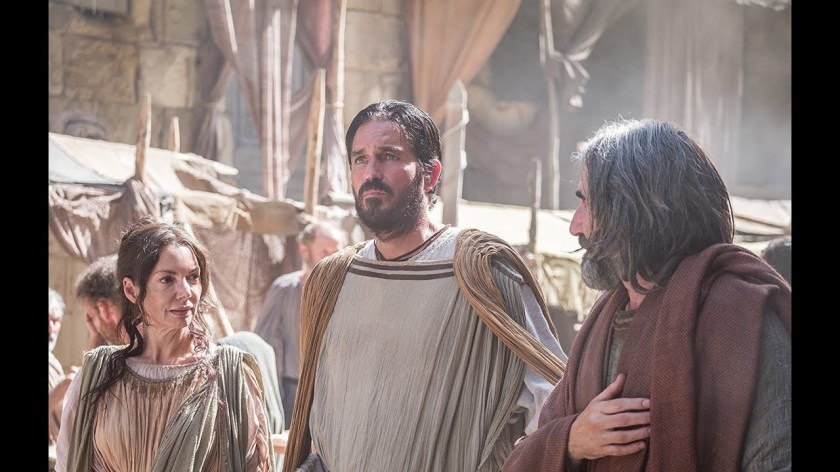
From the Movie ‘St Paul” – St Luke with Priscilla and Aquila in Rome
Posted in FEASTS and SOLEMNITIES, PAPAL SERMONS, SAINT of the DAY, The APOSTLES & EVANGELISTS, VATICAN Resources

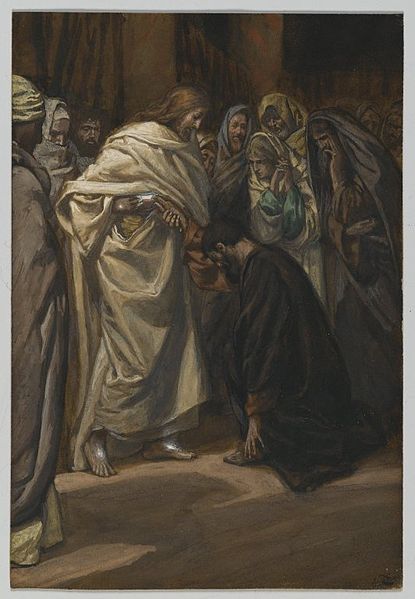
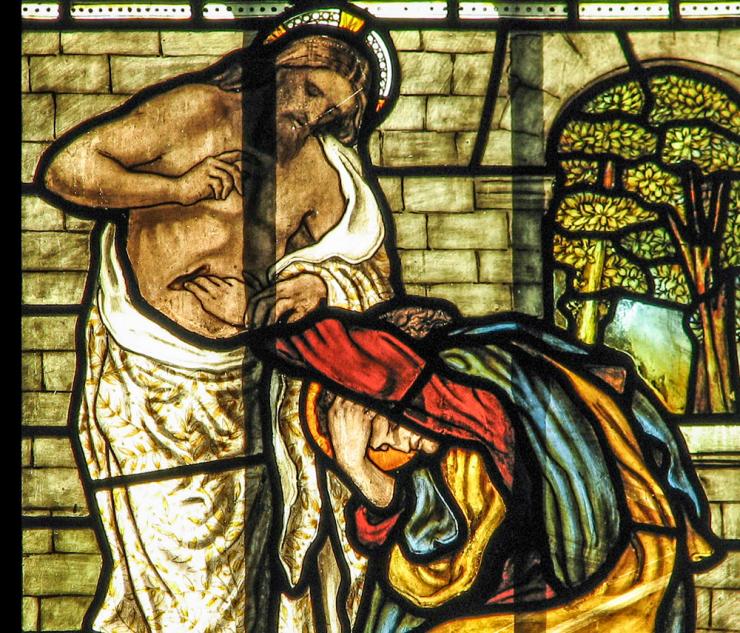
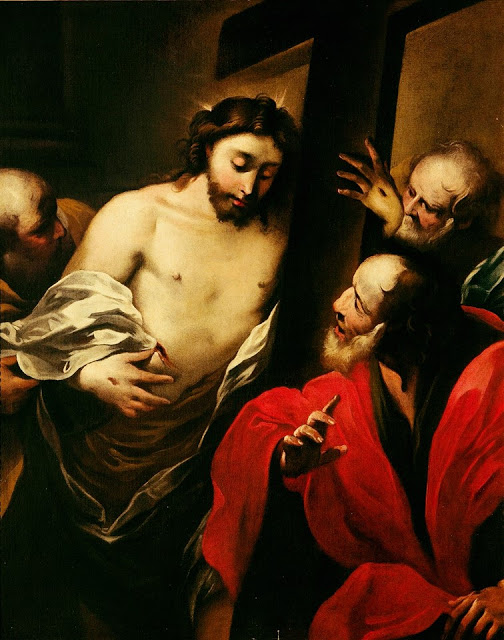
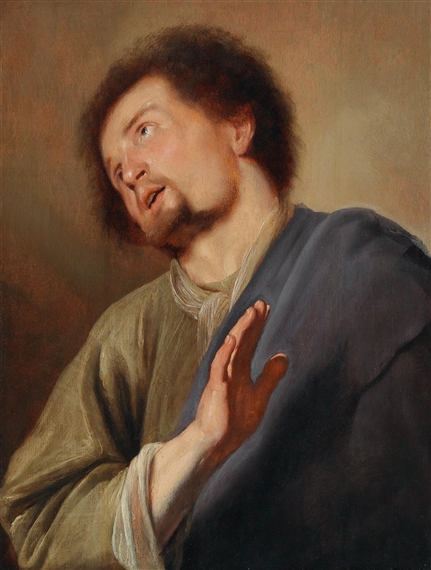
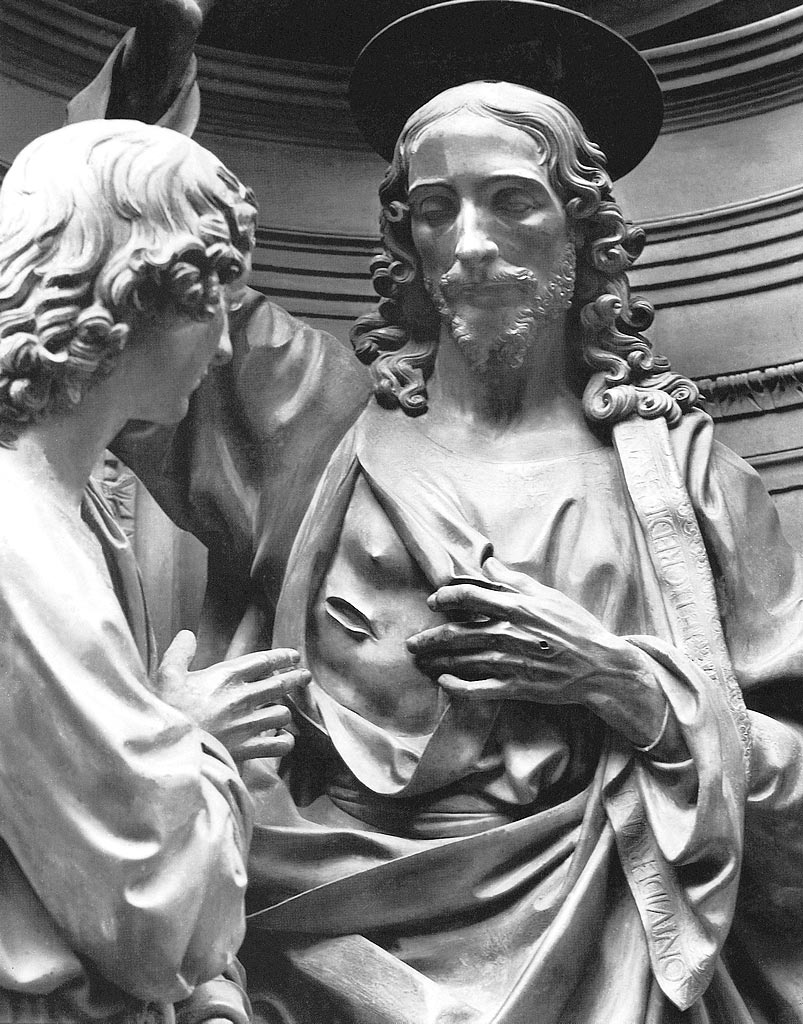
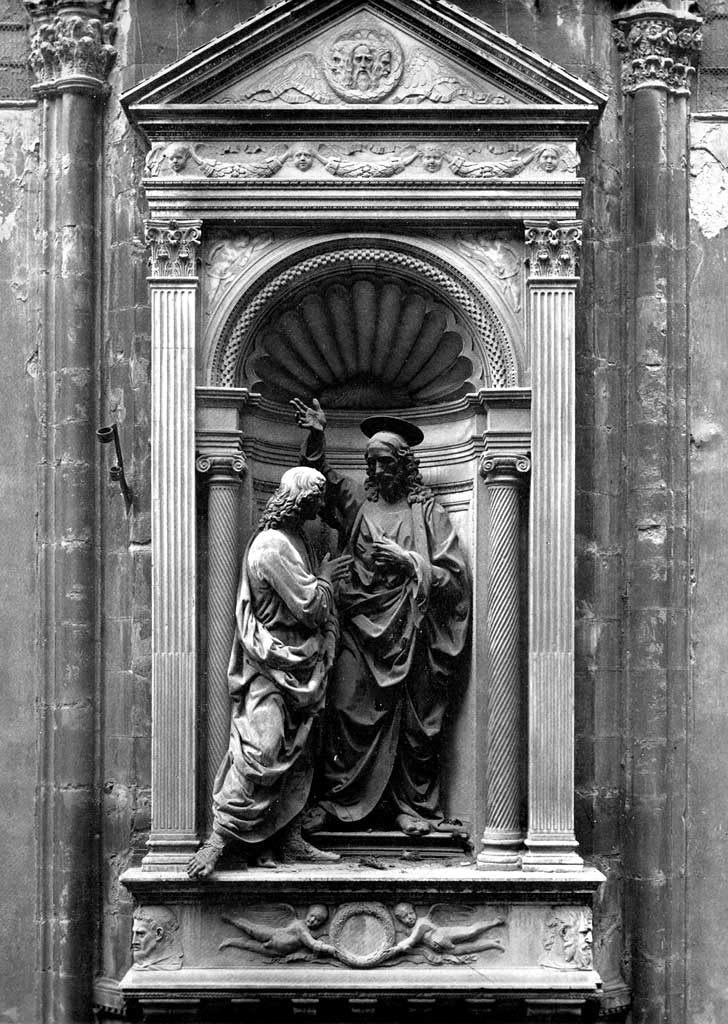
Saint of the Day – 3 JULY – Feast of St Thomas, Apostle of Christ

Saint of the Day – 3 JULY _ Feast of St Thomas, Apostle of Christ

Thomas the twin
By Pope Benedict XVI – General Audience, 27 September 2006

Dear Brothers and Sisters,

Continuing our encounters with the Twelve Apostles chosen directly by Jesus, today we will focus our attention on Thomas.  Ever present in the four lists compiled by the New Testament, in the first three Gospels he is placed next to Matthew (cf. Mt 10: 3; Mk 3: 18; Lk 6: 15), whereas in Acts, he is found after Philip (cf. Acts 1: 13).

His name derives from a Hebrew root, ta’am, which means “paired, twin”. In fact, John’s Gospel several times calls him “Dydimus” (cf. Jn 11: 16; 20: 24; 21: 2), a Greek nickname for, precisely, “twin”.   The reason for this nickname is unclear.header - St. Thomas the Apostle (2)Header 2 Guercino - Doubting Thomas

It is above all the Fourth Gospel that gives us information that outlines some important traits of his personality.
The first concerns his exhortation to the other Apostles when Jesus, at a critical moment in His life, decided to go to Bethany to raise Lazarus, thus coming dangerously close to Jerusalem (Mk 10: 32).
On that occasion Thomas said to his fellow disciples:  “Let us also go, that we may die with him” (Jn 11: 16).   His determination to follow his Master is truly exemplary and offers us a valuable lesson:  it reveals his total readiness to stand by Jesus, to the point of identifying his own destiny with that of Jesus and of desiring to share with Him the supreme trial of death.

In fact, the most important thing is never to distance oneself from Jesus.
Moreover, when the Gospels use the verb “to follow”, it means that where He goes, his disciple must also go.
Thus, Christian life is defined as a life with Jesus Christ, a life to spend together with Him. St Paul writes something similar when he assures the Christians of Corinth:  “You are in our hearts, to die together and to live together” (II Cor 7: 3).   What takes place between the Apostle and his Christians must obviously apply first of all to the relationship between Christians and Jesus himself: dying together, living together, being in his Heart as He is in ours.

A second intervention by Thomas is recorded at the Last Supper.   On that occasion, predicting his own imminent departure, Jesus announced that He was going to prepare a place for His disciples so that they could be where He is found and He explains to them: “Where [I] am going you know the way” (Jn 14: 4).   It is then that Thomas intervenes, saying: “Lord, we do not know where you are going; how can we know the way?” (Jn 14: 5).
In fact, with this remark he places himself at a rather low level of understanding but his words provide Jesus with the opportunity to pronounce His famous definition:  “I am the Way and the Truth and the Life” (Jn 14: 6).
Thus, it is primarily to Thomas that He makes this revelation but it is valid for all of us and for every age.   Every time we hear or read these words, we can stand beside Thomas in spirit and imagine that the Lord is also speaking to us, just as He spoke to him.
At the same time, his question also confers upon us the right, so to speak, to ask Jesus for explanations.   We often do not understand Him.   Let us be brave enough to say:  “I do not understand you, Lord, listen to me, help me to understand”.   In such a way, with this frankness which is the true way of praying, of speaking to Jesus, we express our meagre capacity to understand and at the same time place ourselves in the trusting attitude of someone who expects light and strength from the One able to provide them.

Then, the proverbial scene of the doubting Thomas that occurred eight days after Easter is very well known.   At first he did not believe that Jesus had appeared in his absence and said:  “Unless I see in his hands the print of the nails, and place my finger in the mark of the nails, and place my hand in his side, I will not believe” (Jn 20: 25).
Basically, from these words emerges the conviction that Jesus can now be recognised by His wounds rather than by His face.   Thomas holds that the signs that confirm Jesus’ identity are now above all His wounds, in which He reveals to us how much He loved us. In this the Apostle is not mistaken.

The_Disbelief_of_Saint_Thomas-569ffff65f9b58eba4ae6452
As we know, Jesus reappeared among his disciples eight days later and this time Thomas was present.   Jesus summons him:  “Put your finger here, and see my hands; and put out your hand, and place it in my side; do not be faithless, but believing” (Jn 20: 27).
Thomas reacts with the most splendid profession of faith in the whole of the New Testament:  “My Lord and my God!” (Jn 20: 28).   St Augustine comments on this: Thomas “saw and touched the man and acknowledged the God whom he neither saw nor touched but by the means of what he saw and touched, he now put far away from him every doubt and believed the other” (In ev. Jo. 121, 5).
The Evangelist continues with Jesus’ last words to Thomas:  “Have you believed because you have seen me? Blessed are those who have not seen and yet believe” (Jn 20: 29).   This sentence can also be put into the present:  “Blessed are those who do not see and yet believe”.
In any case, here Jesus spells out a fundamental principle for Christians who will come after Thomas, hence, for all of us.DO---0307--St-Thomas-Apostle-by-Lawrence-Lew-OP_0St. Thomas, Apostle

It is interesting to note that another Thomas, the great Medieval theologian of Aquinas, juxtaposed this formula of blessedness with the apparently opposite one recorded by Luke:  “Blessed are the eyes which see what you see!” (Lk 10: 23).   However, Aquinas comments:  “Those who believe without seeing are more meritorious than those who, seeing, believe” (In Johann. XX lectio VI 2566).

In fact, the Letter to the Hebrews, recalling the whole series of the ancient biblical Patriarchs who believed in God without seeing the fulfilment of His promises, defines faith as “the assurance of things hoped for, the conviction of things not seen” (Heb 11: 1).

The Apostle Thomas’ case is important to us for at least three reasons:  first, because it comforts us in our insecurity;  second, because it shows us that every doubt can lead to an outcome brighter than any uncertainty and, lastly, because, the words that Jesus addressed to him remind us of the true meaning of mature faith and encourage us to persevere, despite the difficulty, along our journey of adhesion to Him.

Jan Lievens, The Apostle Saint Thomas

A final point concerning Thomas is preserved for us in the Fourth Gospel, which presents him as a witness of the Risen One in the subsequent event of the miraculous catch in the Sea of Tiberias (cf. Jn 21: 2ff.).
On that occasion, Thomas is even mentioned immediately after Simon Peter:  an evident sign of the considerable importance that he enjoyed in the context of the early Christian communities.
Indeed, the Acts and the Gospel of Thomas, both apocryphal works but in any case important for the study of Christian origins, were written in his name.

Lastly, let us remember that an ancient tradition claims that Thomas first evangelised Syria and Persia (mentioned by Origen, according to Eusebius of Caesarea, Ecclesiastical History 3, 1) then went on to Western India (cf. Acts of Thomas 1-2 and 17ff.), from where also he finally reached Southern India.

Let us end our reflection in this missionary perspective, expressing the hope that Thomas’ example will never fail to strengthen our faith in Jesus Christ, Our Lord and Our God. Amen…Pope Benedict, vatican.vaTHOMAS - verrocch_ph96_pl124_050404

THOMAS - verrocchio_gp69_28_012503
Christ and St Thomas – San Michele, Florence by Andrea del Verrocchio 1465-1483

There is a large population of native Christians who call themselves ‘the Christians of St Thomas’.   They have an ancient oral tradition that he landed at Cranganoreon, the west coast and established seven churches in Malabar though his landing on the west coast is disputed today, the rest is not. He then passed eastward to the Coromandel Coast, where he was Martyred, by spearing, on the ‘Big Hill’, eight miles from Madras and was buried at Mylapore, now a suburb of that city.   There are several medieval references to the tomb of St Thomas in India, some of which name Mylapore and in 1522 the Portuguese discovered the tomb there, with certain small relics now preserved in the cathedral of St Thomas at Mylapore.   But the bulk of his relics were certainly at Edessa in the fourth century, as the Acta Thomae relate.   They were later translated from Edessa to the island of Khios in the Aegean and from thence to Ortona in the Abruzzi, where they are still venerated.

When St Francis Xavier came to India, the signs of blood were still to be seen on the cross where the murderous deed of the martyrdom of St Thomas was committed and more than once drops of blood appeared on this cross during the celebration of Mass, when crowds of people were present.   St Xavier, shortly after his arrival in India, went to the tomb of St Thomas, and passed many days and nights there in prayer. He begged God fervently to bestow upon him the Spirit and zeal of this holy Apostle, that he might be able to restore the Christian faith which St Thomas had preached there but which had gradually been entirely exterminated.   Before undertaking any important work, he went, if possible, to the tomb of St Thomas and when this was impossible, he invoked the holy Apostle’s intercessio, and endeavoured to follow his example in all things.

the bleeding cross
The Bleeding Cross

Saint Thomas was declared the “Apostle of India” by Pope Paul VI in 1972.   Below is the St Thomas Cathedral in Madras, India.

More info with patronages etc and many pics here:  https://anastpaul.wordpress.com/2017/07/03/saint-of-the-day-3-july-st-thomas-the-apostle-of-christ/apostle-thomas5b-madras cathedralrubens-san-giacomo-minoresnip st thomas

Posted in DOCTORS of the Church, FATHERS of the Church, FEASTS and SOLEMNITIES, MORNING Prayers, PAPAL SERMONS, QUOTES of the SAINTS, QUOTES on the CHURCH, SAINT of the DAY, The APOSTLES & EVANGELISTS, The WORD

Quote/s of the Day – 29 June – The Solemnity of Saints Peter and Paul

Quote/s of the Day – 29 June – The Solemnity of Saints Peter and Paul

“Their sound has gone out into all the earth
and their words to the ends of the world”

Psalm 19psalm-19-sts-peter-and-paul-29 june 2017

“Where Peter is,
there is the Church.
Where the Church is,
there is Jesus Christ.
Where Jesus Christ is,
there is eternal salvation.”

St Ambrose (340-397)
One of the original four Doctors of the Churchwhere peter is - st ambrose - 29 june 2018where-peter-is-2 - 29 june 2017 - st ambrose

“There is one day for the passion of two apostles.
But these two also were as one;
although they suffered on different days, they were as one.
Peter went first, Paul followed.
We are celebrating a feast day, consecrated for us by the blood of the apostles.
Let us love their faith, their lives, their labours,
their sufferings, their confession of faith, their preaching.”

St Augustine (354-430) Father & Doctor of the Churchthese-two-also-were-as-one-staugustine-29 june 2017

“There must be general rejoicing, dearly beloved,
over this holy company whom God has appointed
for our example in patience and for our confirmation in faith.
But we must glory even more in the excellence of their fathers,
Peter and Paul, whom the grace of God has raised
to such a height among all the members of the Church
that He has set them like twin lights
of eyes in that Body whose head is Christ.”

St Pope Leo the Great (400-461) Father & Doctor of the Churchhe has set them like twin lights inthe eyes - st pope leo the great - 29 june 2018

Today the Lord repeats to me, to you…: Follow Me!
Waste no time in questioning or in useless chattering;
do not dwell on secondary things but look to what is essential and follow Me.
Follow Me without regard for the difficulties.
Follow Me in preaching the Gospel.
Follow Me by the witness of a life shaped by the grace you received in baptism….. and holy orders.
Follow Me by speaking of Me, to those with whom you live, day after day,
in your work, your conversations and among your friends.
Follow Me by proclaiming the Gospel to all, especially to the least among us,
so that no one will fail to hear the word of life,
which sets us free from every fear
and enables us to trust in the faithfulness of God.
Follow Me!

Pope Francis – Homily 29 June 2014today the lord repeats to me - follow me - pope francis - 29 june 2018

Posted in FATHERS of the Church, PAPAL SERMONS, SAINT of the DAY, VATICAN Resources

Saint of the Day – 28 June – St Irenaeus of Lyons (c 135 – c 202) Father of the Church

Saint of the Day – 28 June – St Irenaeus of Lyons (c 135 – c 202) Father of the Church, Bishop, Theologian, Writer, Confessor, Defender of the Faith, Apologist.  St Irenaeus was born in c130 in Smyrna, Asia Minor (modern Izmir, Turkey) and is presumed to have been martyred in c 202 in Lyons, France.

Catechesis of Pope Benedict XVI on St Irenaeus of Lyon

General Audience, Wednesday, 28 March 2007

In the Catechesis on the prominent figures of the early Church, today we come to the eminent personality of St Irenaeus of Lyons.   The biographical information on him comes from his own testimony, handed down to us by Eusebius in his fifth book on Church History.a crash course on st irenaeus mem 28 june

Irenaeus was, in all probability, born in Smyrna (today, Izmir in Turkey) in about 135-140, where in his youth, he attended the school of Bishop Polycarp, a disciple in his turn of the Apostle John.   We do not know when he moved from Asia Minor to Gaul but his move must have coincided with the first development of the Christian community in Lyons, here, in 177, we find Irenaeus listed in the college of presbyters.   In that very year, he was sent to Rome, bearing a letter from the community in Lyons, to Pope Eleutherius.   His mission to Rome saved Irenaeus from the persecution of Marcus Aurelius which took a toll of at least 48 martyrs, including the 90-year old Bishop Pontinus of Lyons, who died from ill-treatment in prison.   Thus, on his return, Irenaeus was appointed Bishop of the city.   The new Pastor devoted himself without reserve to his episcopal ministry which ended in about 202-203, perhaps with martyrdom.snip - st irenaeus
Irenaeus was first and foremost a man of faith and a Pastor.   Like a good Pastor, he had a good sense of proportion, a wealth of doctrine and missionary enthusiasm.   As a writer, he pursued a twofold aim, to defend true doctrine from the attacks of heretics and to explain the truth of the faith clearly.   His two extant works – the five books of The Detection and Overthrow of the False Gnosis and Demonstration of the Apostolic Teaching (which can also be called the oldest “catechism of Christian doctrine”) – exactly corresponded with these aims.   In short, Irenaeus can be defined as the champion in the fight against heresies.

The second-century Church was threatened by the so-called Gnosis, a doctrine which affirmed that the faith taught in the Church was merely a symbolism for the simple who were unable to grasp difficult concepts, instead, the initiates, the intellectuals – Gnostics, they were called – claimed to understand what was behind these symbols and thus formed an elitist and intellectualist Christianity. Obviously, this intellectual Christianity became increasingly fragmented, splitting into different currents with ideas that were often bizarre and extravagant, yet attractive to many.   One element these different currents had in common was “dualism” – they denied faith in the one God and Father of all, Creator and Saviour of man and of the world.   To explain evil in the world, they affirmed the existence, besides the Good God, of a negative principle.   This negative principle was supposed to have produced material things, matter.

Firmly rooted in the biblical doctrine of creation, Irenaeus refuted the Gnostic dualism and pessimism which debased corporeal realities.   He decisively claimed the original holiness of matter, of the body, of the flesh no less than of the spirit.   But his work went far beyond the confutation of heresy, in fact, one can say, that he emerges as the first great Church theologian who created systematic theology, he himself speaks of the system of theology, that is, of the internal coherence of all faith.   At the heart of his doctrine is the question of the “rule of faith” and its transmission.   For Irenaeus, the “rule of faith” coincided in practice with the Apostles’ Creed, which gives us the key for interpreting the Gospel, for interpreting the Creed in light of the Gospel.   The Creed, which is a sort of Gospel synthesis, helps us understand what it means and how we should read the Gospel itself.st irenaeus glass detail snip face
In fact, the Gospel preached by Irenaeus is the one he was taught by Polycarp, Bishop of Smyrna, and Polycarp’s Gospel dates back to the Apostle John, whose disciple Polycarp was.
The true teaching, therefore, is not that invented by intellectuals which goes beyond the Church’s simple faith.   The true Gospel is the one imparted by the Bishops who received it in an uninterrupted line from the Apostles.   They taught nothing except this simple faith, which is also the true depth of God’s revelation.   Thus, Irenaeus tells us, there is no secret doctrine concealed in the Church’s common Creed.   There is no superior Christianity for intellectuals.   The faith publicly confessed by the Church is the common faith of all.   This faith alone is apostolic, it is handed down from the Apostles, that is, from Jesus and from God.   In adhering to this faith, publicly transmitted by the Apostles to their successors, Christians must observe what their Bishops say and must give special consideration to the teaching of the Church of Rome, pre-eminent and very ancient.   It is because of her antiquity that this Church has the greatest apostolicity; in fact, she originated in Peter and Paul, pillars of the Apostolic College.   All Churches must agree with the Church of Rome, recognising in her the measure of the true Apostolic Tradition, the Church’s one common faith.st-irenaeus-3
With these arguments, summed up very briefly here, Irenaeus refuted the claims of these Gnostics, these intellectuals, from the start.   First of all, they possessed no truth superior to that of the ordinary faith, because what they said was not of apostolic origin, it was invented by them.   Secondly, truth and salvation are not the privilege or monopoly of the few but are available to all through the preaching of the Successors of the Apostles, especially of the Bishop of Rome.   In particular – once again disputing the “secret” character of the Gnostic tradition and noting its multiple and contradictory results – Irenaeus was concerned to describe the genuine concept of the Apostolic Tradition which we can sum up here in three points.

a) Apostolic Tradition is “public”, not private or secret.   Irenaeus did not doubt that the content of the faith transmitted by the Church is that received from the Apostles and from Jesus, the Son of God.   There is no other teaching than this.   Therefore, for anyone who wishes to know true doctrine, it suffices to know “the Tradition passed down by the Apostles and the faith proclaimed to men” –  a tradition and faith that “have come down to us through the succession of Bishops” (Adversus Haereses, 3, 3, 3-4).   Hence, the succession of Bishops, the personal principle and Apostolic Tradition, the doctrinal principle, coincide.

b) Apostolic Tradition is “one”.   Indeed, whereas Gnosticism was divided into multiple sects, Church Tradition is one in its fundamental content, which – as we have seen – Irenaeus calls precisely regula fidei or veritatis –  and thus, because it is one, it creates unity through the peoples, through the different cultures, through the different peoples; it is a common content like the truth, despite the diversity of languages and cultures.   A very precious saying of St Irenaeus is found in his book Adversus Haereses:  “The Church, though dispersed throughout the world… having received [this faith from the Apostles]… as if occupying but one house, carefully preserves it.   She also believes these points [of doctrine] just as if she had but one soul and one and the same heart and she proclaims them and teaches them and hands them down with perfect harmony, as if she possessed only one mouth.   For, although the languages of the world are dissimilar, yet the import of the tradition is one and the same.   For the Churches which have been planted in Germany do not believe or hand down anything different, nor do those in Spain, nor those in Gaul, nor those in the East, nor those in Egypt, nor those in Libya, nor those which have been established in the central regions of the world” (1, 10, 1-2).   Already at that time – we are in the year 200 – it was possible to perceive the Church’s universality, her catholicity and the unifying power of the truth that unites these very different realities, from Germany, to Spain, to Italy, to Egypt, to Libya, in the common truth revealed to us by Christ.

c) Lastly, the Apostolic Tradition, as he says in the Greek language in which he wrote his book, is “pneumatic”, in other words, spiritual, guided by the Holy Spirit, in Greek, the word for “spirit” is “pneuma”.   Indeed, it is not a question of a transmission entrusted to the ability of more or less learned people but to God’s Spirit, who guarantees fidelity to the transmission of the faith.
This is the “life” of the Church, what makes the Church ever young and fresh, fruitful with multiple charisms.

For Irenaeus, Church and Spirit were inseparable:  “This faith”, we read again in the third book of Adversus Haereses, “which, having been received from the Church, we do preserve and which always, by the Spirit of God, renewing its youth as if it were some precious deposit in an excellent vessel, causes the vessel itself containing it, to renew its youth also…. For where the Church is, there is the Spirit of God and where the Spirit of God is, there is the Church and every kind of grace” (3, 24, 1).st irenaeus beautiful glass detail snip
As can be seen, Irenaeus did not stop at defining the concept of Tradition.   His tradition, uninterrupted Tradition, is not traditionalism, because this Tradition is always enlivened from within by the Holy Spirit, who makes it live anew, causes it to be interpreted and understood in the vitality of the Church.   Adhering to her teaching, the Church should transmit the faith in such a way that it must be what it appears, that is, “public”, “one”, “pneumatic”, “spiritual”.   Starting with each one of these characteristics, a fruitful discernment can be made of the authentic transmission of the faith in the today of the Church.

More generally, in Irenaeus’ teaching, the dignity of man, body and soul, is firmly anchored in divine creation, in the image of Christ and in the Spirit’s permanent work of sanctification.   This doctrine is like a “high road” in order to discern together with all people of good will, the object and boundaries of the dialogue of values and to give an ever new impetus to the Church’s missionary action, to the force of the truth, which is the source of all true values in the world.Irenæus_af_Lyon_Frederikskirken
Posted in DOCTORS of the Church, FATHERS of the Church, ON the SAINTS, PAPAL SERMONS, SAINT of the DAY, VATICAN Resources

Saint of the Day – 27 June – St Cyril of Alexandria (376-444) Father and Doctor of the Church

Saint of the Day – 27 June – St Cyril of Alexandria (376-444) Father and Doctor of the Church – “The Pillar of Faith” & “Seal of all the Fathers”Doctor Incarnationis (Doctor of the Incarnation) – Patronage – Alexandria, Egypt.

Pope Benedict’s Catechesis on The Fathers of the Church
St Cyril of Alexandria
Wednesday, 3 October 2007

Today too, continuing our journey following the traces left by the Fathers of the Church, we meet an important figure:  St Cyril of Alexandria.   Linked to the Christological controversy which led to the Council of Ephesus in 431 and the last important representative of the Alexandrian tradition in the Greek Orient, Cyril was later defined as “the guardian of exactitude” – to be understood as guardian of the true faith – and even the “seal of the Fathers”.   These ancient descriptions express clearly a characteristic feature of Cyril:  the Bishop of Alexandria’s constant reference to earlier ecclesiastical authors (including, in particular, Athanasius), for the purpose of showing the continuity with tradition of theology itself.   He deliberately, explicitly inserted himself into the Church’s tradition, which he recognised as guaranteeing continuity with the Apostles and with Christ himself.   Venerated as a Saint in both East and West, in 1882 St Cyril was proclaimed a Doctor of the Church by Pope Leo XIII, who at the same time also attributed this title to another important exponent of Greek Patristics, St Cyril of Jerusalem (315-387).   Thus are revealed the attention and love for the Eastern Christian traditions of this Pope, who later also chose to proclaim St John Damascene (675-749) a Doctor of the Church, thereby showing that both the Eastern and Western traditions express the doctrine of Christ’s one Church.header - st cyril of alexandria

We have almost no information on Cyril’s life prior to his election to the important See of Alexandria.   He was a nephew of Theophilus, who had governed the Diocese of Alexandria as Bishop since 385 AD with a prestigious and iron hand. It is likely that Cyril was born in this Egyptian metropolis between 370 and 380 A.D., was initiated into ecclesiastical life while he was still very young and received a good education, both culturally and theologically. In 403, he went to Constantinople in the retinue of his powerful uncle.   It was here that he took part in the so-called “Synod of the Oak” which deposed the Bishop of the city, John (later known as “Chrysostom”) and thereby marked the triumph of the Alexandrian See over its traditional rival, the See of Constantinople, where the Emperor resided.   Upon his uncle Theophilus’ death, the still young Cyril was elected in 412 as Bishop of the influential Church of Alexandria, which he governed energetically for 32 years, always seeking to affirm her primacy throughout the East, strong also because of her traditional bonds with Rome.

Two or three years later, in 417 or 418, the Bishop of Alexandria showed himself to be realistic in mending the broken communion with Constantinople, which had lasted by then since 406 as a consequence of Chrysostom’s deposition.   But the old conflict with the Constantinople See flared up again about 10 years later, when in 428 Nestorius was elected, a severe and authoritarian monk trained in Antioch.   The new Bishop of Constantinople, in fact, soon provoked opposition because he preferred to use as Mary’s title in his preaching “Mother of Christ” (Christotòkos) instead of “Mother of God” (Theotòkos), already very dear to popular devotion.   One reason for Bishop Nestorius’ decision was his adherence to the Antiochean type of Christology, which, to safeguard the importance of Christ’s humanity, ended by affirming the division of the Divinity. Hence, the union between God and man in Christ could no longer be true, so naturally it was no longer possible to speak of the “Mother of God”.st cyril of alexandria - detail

The reaction of Cyril – at that time the greatest exponent of Alexandrian Christology, who intended on the other hand to stress the unity of Christ’s person – was almost immediate, and from 429 he left no stone unturned, even addressing several letters to Nestorius himself.   In the second of Cyril’s letters to Nestorius (PG 77, 44-49), written in February 430, we read a clear affirmation of the duty of Pastors to preserve the faith of the People of God.   This was his criterion, moreover, still valid today:  the faith of the People of God is an expression of tradition, it is a guarantee of sound doctrine.   This is what he wrote to Nestorius:  “It is essential to explain the teaching and interpretation of the faith to the people in the most irreproachable way and to remember that those who cause scandal, even to only one of the little ones, who believe in Christ, will be subjected to an unbearable punishment”.

In the same letter to Nestorius – a letter which later, in 451, was to be approved by the Council of Chalcedon, the Fourth Ecumenical Council – Cyril described his Christological faith clearly:  “Thus, we affirm that the natures are different that are united in one true unity but from both, has come only one Christ and Son, not because, due to their unity, the difference in their natures has been eliminated but rather, because divinity and humanity, reunited in an ineffable and indescribable union, have produced for us one Lord and Christ and Son”.   And this is important –  true humanity and true divinity are really united in only one Person, Our Lord Jesus Christ. Therefore, the Bishop of Alexandria continued:  “We will profess only one Christ and Lord, not in the sense that we worship the man together with the Logos, in order not to suggest the idea of separation by saying “together’ but in the sense that we worship only one and the same, because He is not extraneous to the Logos, His body, with which He also sits at His Father’s side, not as if “two sons” are sitting beside Him but only one, united with His own flesh”.Icon_St._Cyril_of_Alexandria

And soon the Bishop of Alexandria, thanks to shrewd alliances, obtained the repeated condemnation of Nestorius, by the See of Rome, consequently with a series of 12 anathemas which he himself composed and finally, by the Council held in Ephesus in 431, the Third Ecumenical Council.   The assembly which went on with alternating and turbulent events, ended with the first great triumph of devotion to Mary and with the exile of the Bishop of Constantinople, who had been reluctant to recognise the Blessed Virgin’s right to the title of “Mother of God” because of an erroneous Christology that brought division to Christ Himself.    After thus prevailing against his rival and his doctrine, by 433 Cyril was nevertheless already able to achieve a theological formula of compromise and reconciliation with the Antiocheans.   This is also significant, on the one hand, is the clarity of the doctrine of faith but in addition, on the other, the intense search for unity and reconciliation.   In the following years he devoted himself in every possible way to defending and explaining his theological stance, until his death on 27 June 444.

Cyril’s writings – truly numerous and already widely disseminated in various Latin and Eastern translations in his own lifetime, attested to by their instant success – are of the utmost importance for the history of Christianity.   His commentaries on many of the New and Old Testament Books are important, including those on the entire Pentateuch, Isaiah, the Psalms and the Gospels of John and Luke.   Also important are his many doctrinal works, in which the defence of the Trinitarian faith against the Arian and Nestorian theses recurs.   The basis of Cyril’s teaching is the ecclesiastical tradition and in particular, as I mentioned, the writings of Athanasius, his great Predecessor in the See of Alexandria.   Among Cyril’s other writings, the books Against Julian deserve mention. They were the last great response to the anti-Christian controversies, probably dictated by the Bishop of Alexandria in the last years of his life to respond to the work Against the Galileans, composed many years earlier in 363 by the Emperor known as the “Apostate” for having abandoned the Christianity in which he was raised.st-cyril-of-alexandria-4

The Christian faith is first and foremost the encounter with Jesus, “a Person, which gives life a new horizon” (Deus Caritas Est, n. 1).   St Cyril of Alexandria was an unflagging, staunch witness of Jesus Christ, the Incarnate Word of God, emphasising above all his unity, as he repeats in 433 in his first letter (PG 77, 228-237) to Bishop Succensus:  “Only one is the Son, only one the Lord Jesus Christ, both before the Incarnation and after the Incarnation.   Indeed, the Logos born of God the Father was not one Son and the one born of the Blessed Virgin another but we believe, that the very One who was born before the ages, was also born according to the flesh and of a woman”.   Over and above its doctrinal meaning, this assertion shows that faith in Jesus the Logos born of the Father is firmly rooted in history because, as St Cyril affirms, this same Jesus came in time with His birth from Mary, the Theotò-kos and in accordance with His promise will always be with us.

And this is important –  God is eternal, He is born of a woman and He stays with us every day.   In this trust we live, in this trust we find the way for our life…. Pope Benedict XVI

For more on St Cyril here : https://anastpaul.wordpress.com/2017/06/27/saint-of-the-day-27-june-st-cyril-of-alexandria-doctor-father-of-the-church-the-pillar-of-faith-seal-of-all-the-fathers-doctor-incarnationis-doctor-of-the-incarnation/cyril in prague.jpg


Posted in MARIAN PRAYERS, MARIAN TITLES, MORNING Prayers, ON the SAINTS, PAPAL SERMONS, QUOTES of the SAINTS, SAINT of the DAY, The BLESSED VIRGIN MARY, Uncategorized

Thought for the Day – 26 June – The Memorial of St Josemaria Escrivá (1902-1975)

Thought for the Day – 26 June – The Memorial of St Josemaria Escrivá (1902-1975)

Excerpt from St John Paul’s Homily

on the Canonisation of St Josemaria – 6 October 2002

“All who are led by the Spirit of God are sons of God” (Rom 8,14).   These words of the Apostle Paul, … help us understand better the significant message of today’s canonisation of Josemaría Escrivá de Balaguer.   With docility he allowed himself to be led by the Spirit, convinced that only in this way can one fully accomplish God’s will.

This fundamental Christian truth was a constant theme in his preaching.   Indeed, he never stopped inviting his spiritual children to invoke the Holy Spirit to ensure that their interior life, namely, their life of relationship with God and their family, professional and social life, totally made up of small earthly realities, would not be separated but would form only one life that was “holy and full of God”.   He wrote, “We find the invisible God in the most visible and material things” (Conversations with Josemaría Escrivá, n. 114).

This teaching of his is still timely and urgent today.   In virtue of the Baptism that incorporates him into Christ, the believer is called to establish with the Lord an uninterrupted and vital relationship.   He is called to be holy and to collaborate in the salvation of humanity.

To fulfil such a rigorous mission, one needs constant interior growth nourished by prayer.   St Josemaría was a master in the practice of prayer, which he considered to be an extraordinary “weapon” to redeem the world.   He always recommended: “in the first place prayer;  then expiation;  in the third place but very much in third place, action” (The Way, n. 82).   It is not a paradox but a perennial truth:  the fruitfulness of the apostolate lies above all in prayer and in intense and constant sacramental life.   This, in essence, is the secret of the holiness and the true success of the saints.
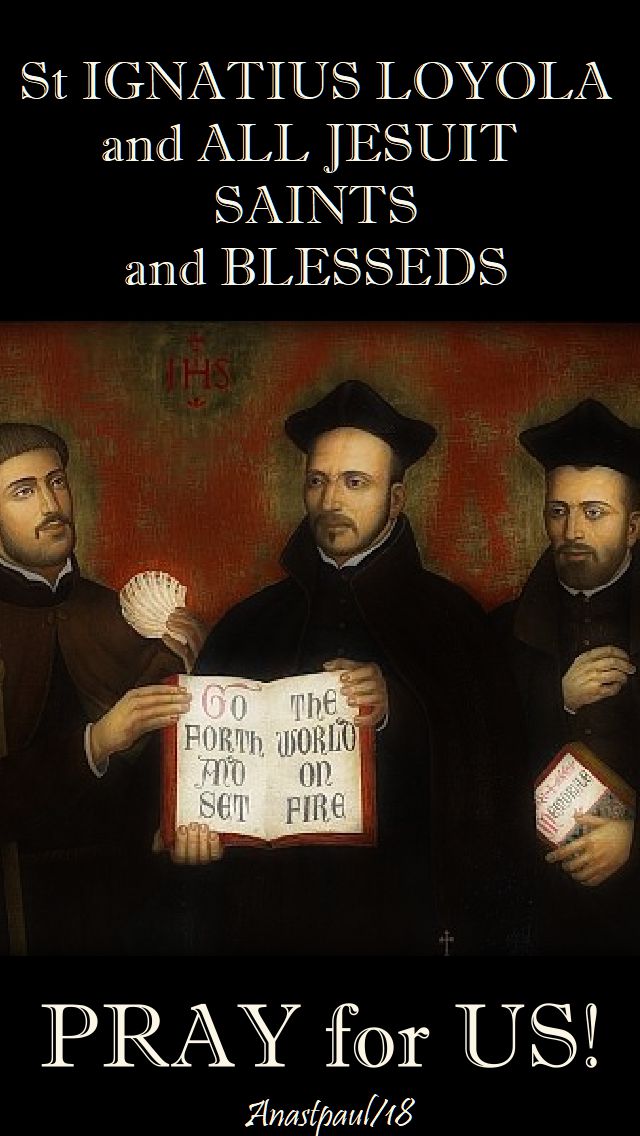
May the Lord help you, dear brothers and sisters, to accept this challenging ascetical and missionary instruction.   May Mary sustain you, whom the holy founder invoked as “Spes nostra, Sedes Sapientiae, Ancilla Domini!” (Our Hope, Seat of Wisdom, Handmaid of the Lord).

May Our Lady make everyone an authentic witness of the Gospel, ready everywhere to make a generous contribution to building the Kingdom of Christ!   May the example and teaching of St Josemaría be an incentive to us, so that at the end of the earthly pilgrimage, we too may be able to share in the blessed inheritance of heaven!   There, together with the angels and all the saints, we will contemplate the face of God and sing His glory for all eternity.”

Mary, Our Hope, Seat of Wisdom, Handmaid of the Lord, Pray for us!mary our hope handmaid of the lord - pray for us - 26 june 2018

St Josemaria, Pray for us!st-josemaria-pray-for-us-21- 26 june 2017

Posted in FATHERS of the Church, PAPAL SERMONS, SAINT of the DAY, VATICAN Resources

Saint of the Day – 25 June – St Maximus of Turin (? – c 420) Father of the Church

Saint of the Day – 25 June – St Maximus of Turin (? – c 420) Father of the Church, Bishop, Writer, Theologian  –  known as Massimo – date of birth unknown – his date of death is also not certain.   St Maximus is believed to have been a native of Rhaetia (modern day Northern Italy).  Patron of Turin, Italy.   St Maximus attended the synod of Milan where northern Italian bishops accepted the letter of Pope Leo I which set forth the orthodox doctrine of the Incarnation.   He also attended the the Synod of Rome in 465.   He was a prolific and inspirational Theological writer with 118 homilies, 116 sermons and 6 treatises surviving.

ST maximus of turin

“Between the end of the fourth century and the beginning of the fifth, another Father of the Church after St Ambrose made a great contribution to the spread and consolidation of Christianity in Northern Italy – St Maximus, whom we come across in 398 as Bishop of Turin, a year after St Ambrose’s death.   Very little is known about him, in compensation, we have inherited a collection of about 116 of his Sermons.   It is possible to perceive in them the Bishop’s profound and vital bond with his city, which attests to an evident point of contact between the episcopal ministry of Ambrose and that of Maximus.

At that time serious tensions were disturbing orderly civil coexistence.   In this context, as pastor and teacher, Maximus succeeded in obtaining the Christian people’s support. The city was threatened by various groups of barbarians.   They entered by the Eastern passes, which went as far as the Western Alps.   Turin was therefore permanently garrisoned by troops and at critical moments became a refuge for the populations fleeing from the countryside and urban centres where there was no protection.   Maximus’ interventions in the face of this situation testify to his commitment to respond to the civil degradation and disintegration.   Although it is still difficult to determine the social composition of those for whom the Sermons were intended, it would seem that Maximus’ preaching – to avoid the risk of vagueness – was specifically addressed to a chosen nucleus of the Christian community of Turin, consisting of rich landowners who had property in the Turinese countryside and a house in the city.   This was a clear-sighted pastoral decision by the Bishop, who saw this type of preaching as the most effective way to preserve and strengthen his own ties with the people.St. Maximus presents to the people of Turin the Icon of the Madonna Consolata.

To illustrate this view of Maximus’ ministry in his city, I would like to point out for example Sermons 17 and 18, dedicated to an ever timely topic:  wealth and poverty in Christian communities.   In this context too, the city was fraught with serious tensions. Riches were accumulated and hidden.   “No one thinks about the needs of others”, the Bishop remarked bitterly in his 17th Sermon.   “In fact, not only do many Christians not share their own possessions but they also rob others of theirs.   Not only, I say, do they not bring the money they collect to the feet of the apostles but in addition, they drag from priests’ feet, their own brethren who are seeking help”.   And he concluded:  “In our cities there are many guests or pilgrims.   Do what you have promised”, adhering to faith, “so that what was said to Ananias will not be said to you as well:  “You have not lied to men but to God'” (Sermon 17, 2-3).

In the next Sermon, the 18th, Maximus condemns the recurring forms of exploitation of others’ misfortunes.   “Tell me, Christian”, the Bishop reprimands his faithful, “tell me why you snatched the booty abandoned by the plunderers?   Why did you take home “ill-gotten gains’ as you yourself think, torn apart and contaminated?”.   “But perhaps”, he continues, “you say you have purchased them and thereby believe you are avoiding the accusation of avarice.   However, this is not the way to equate purchasing with selling.   “It is a good thing to make purchases but that means what is sold freely in times of peace, not goods looted during the sack of a city… So act as a Christian and a citizen who purchases in order to repay”  (Sermon 18: 3).   Without being too obvious, Maximus thus managed to preach a profound relationship between a Christian’s and a citizen’s duties.   In his eyes, living a Christian life also meant assuming civil commitments.   Vice-versa, every Christian who, “despite being able to live by his own work, seizes the booty of others with the ferocity of wild beasts”;  who “tricks his neighbour, who tries every day to nibble away at the boundaries of others, to gain possession of their produce, does not compare to a fox biting off the heads of chickens but rather to a wolf savaging pigs.” (Sermon 41, 4).

img-Saint-Maximus-of-Turin

In comparison with the cautious, defensive attitude that Ambrose adopted to justify his famous project of redeeming prisoners of war, the historical changes that occurred in the relationship between the Bishop and the municipal institutions are clearly evident. By now sustained through legislation that invited Christians to redeem prisoners, Maximus, with the collapse of the civil authority of the Roman Empire, felt fully authorised in this regard to exercise true control over the city.   This control was to become increasingly extensive and effective until it replaced the irresponsible evasion of the magistrates and civil institutions.   In this context, Maximus not only strove to rekindle in the faithful the traditional love for their hometown but he also proclaimed the precise duty to pay taxes, however burdensome and unpleasant they might appear (cf. Sermon 26, 2).   In short, the tone and substance of the Sermons imply an increased awareness of the Bishop’s political responsibility in the specific historical circumstances. He was “the lookout tower” posted in the city.   Whoever could these watchmen be, Maximus wonders in Sermon 92, “other than the most blessed Bishops set on a lofty rock of wisdom, so to speak, to defend the peoples and to warn them about the evils approaching in the distance?”.   And in Sermon 89 the Bishop of Turin describes his tasks to his faithful, making a unique comparison between the Bishop’s function and the function of bees:  “Like the bee”, he said, Bishops “observe bodily chastity, they offer the food of heavenly life using the sting of the law.   They are pure in sanctifying, gentle in restoring and severe in punishing”.   With these words, St Maximus described the task of the Bishop in his time.st maximus of turin - snip

In short, historical and literary analysis show an increasing awareness of the political responsibility of the ecclesiastical authority in a context in which it continued de facto to replace the civil authority.
Indeed, the ministry of the Bishop of Northwest Italy, starting with Eusebius who dwelled in his Vercelli “like a monk” to Maximus of Turin, positioned “like a sentinel” on the highest rock in the city, developed along these lines.   It is obvious that the contemporary historical, cultural and social context is profoundly different.   Today’s context is rather the context outlined by my venerable Predecessor, Pope John Paul II, in the Post-Synodal Apostolic Exhortation Ecclesia in Europa, in which he offers an articulate analysis of the challenges and signs of hope for the Church in Europe today (nn. 6-22).   In any case, on the basis of the changed conditions, the believer’s duties to his city and his homeland still remain effective.   The combination of the commitments of the “honest citizen” with those of the “good Christian” has not in fact disappeared.
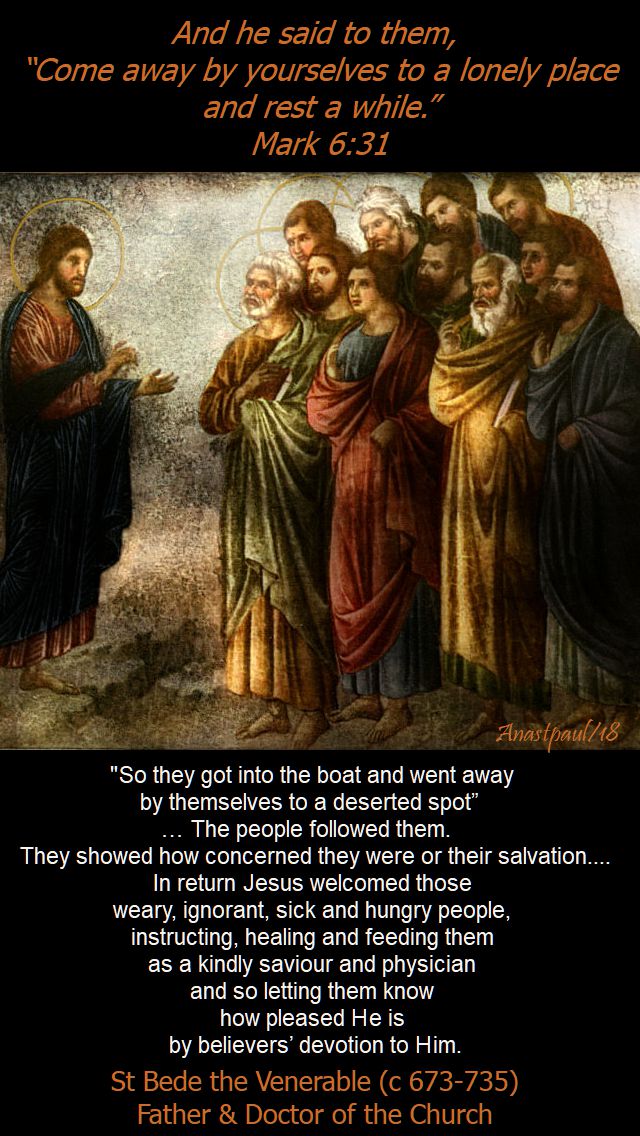
In conclusion, to highlight one of the most important aspects of the unity of Christian life, I would like to recall the words of the Pastoral Constitution Gaudium et Spes:  consistency between faith and conduct, between Gospel and culture.   The Council exhorts the faithful “to perform their duties faithfully in the spirit of the Gospel.   It is a mistake to think that because we have here no lasting city, but seek the city which is to come, we are entitled to shirk our earthly responsibilities;  this is to forget that by our faith we are bound all the more to fulfil these responsibilities according to the vocation of each one” (n. 43).   
In following the Magisterium of St Maximus and of many other Fathers, let us make our own, the Council’s desire, that the faithful may be increasingly anxious to “carry out their earthly activity in such a way as to integrate human, domestic, professional, scientific and technical enterprises with religious values, under whose supreme direction all things are ordered to the glory of God” (ibid.) and thus for humanity’s good.”…Pope Benedict XVI, General Audience, Wednesday, 31 October 2007header - st maximus of turin