Posted in Against SNAKE BITES / POISON, Against SORE THROATS, COUGHS, WHOOPING COUGH,, Against STORMS, EARTHQUAKES, THUNDER & LIGHTENING, FIRES, DROUGHT / NATURAL DISASTERS, Of BUILDERS, CONSTRUCTION WORKERS, Of the SICK, the INFIRM, All ILLNESS, PATRONAGE - HEADACHES, PATRONAGE - ORPHANS,ABANDONED CHILDREN, PATRONAGE - TOOTHACHE and Diseases of the TEETH,, of DENTISTS, SAINT of the DAY, SKIN DISEASES, RASHES, STOMACH DISEASES and PAIN, INTESTINAL DISORDERS, Thomas a Kempis, Uncategorized

Saint of the Day – 3 February – St Blaise (Died c 316) – Martyr

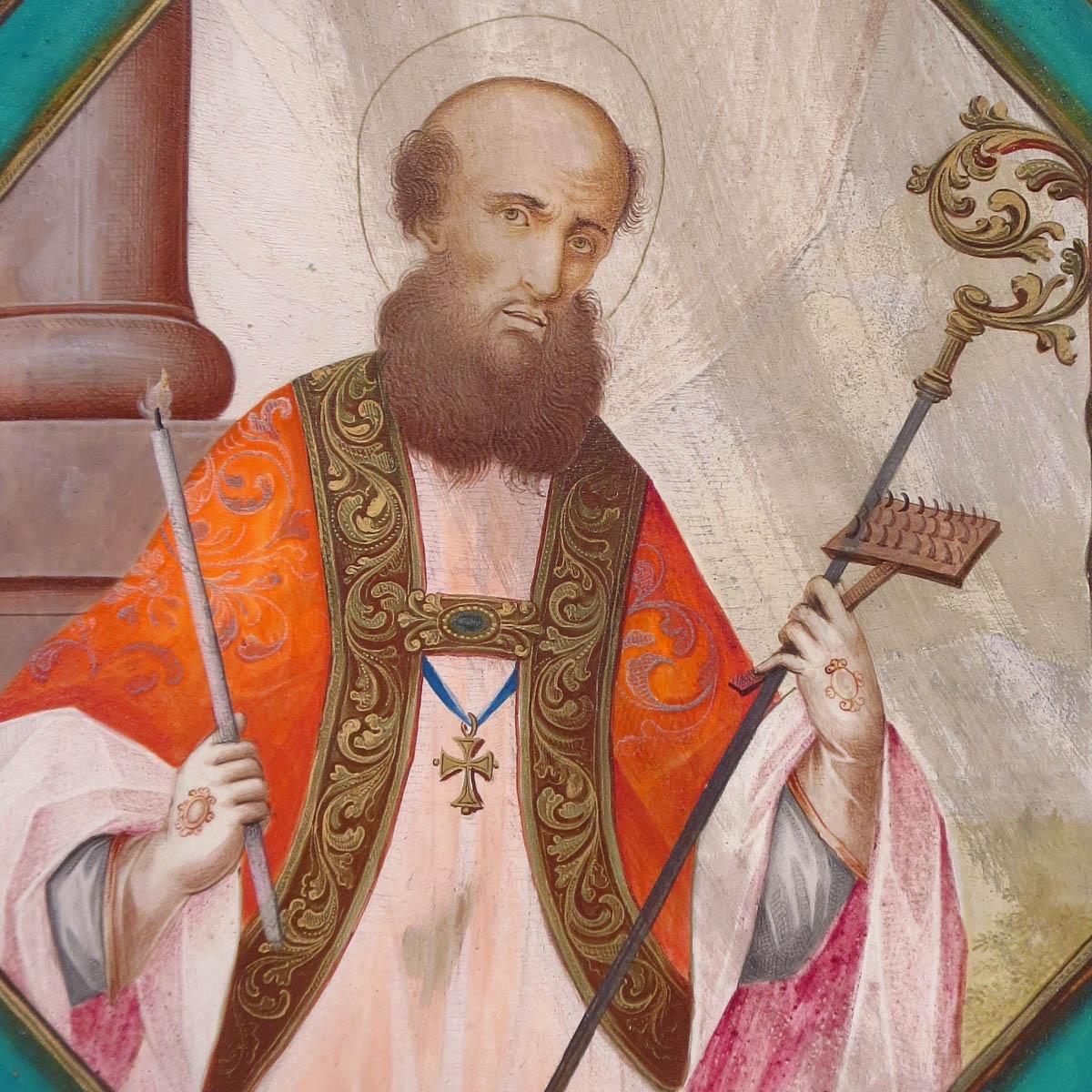
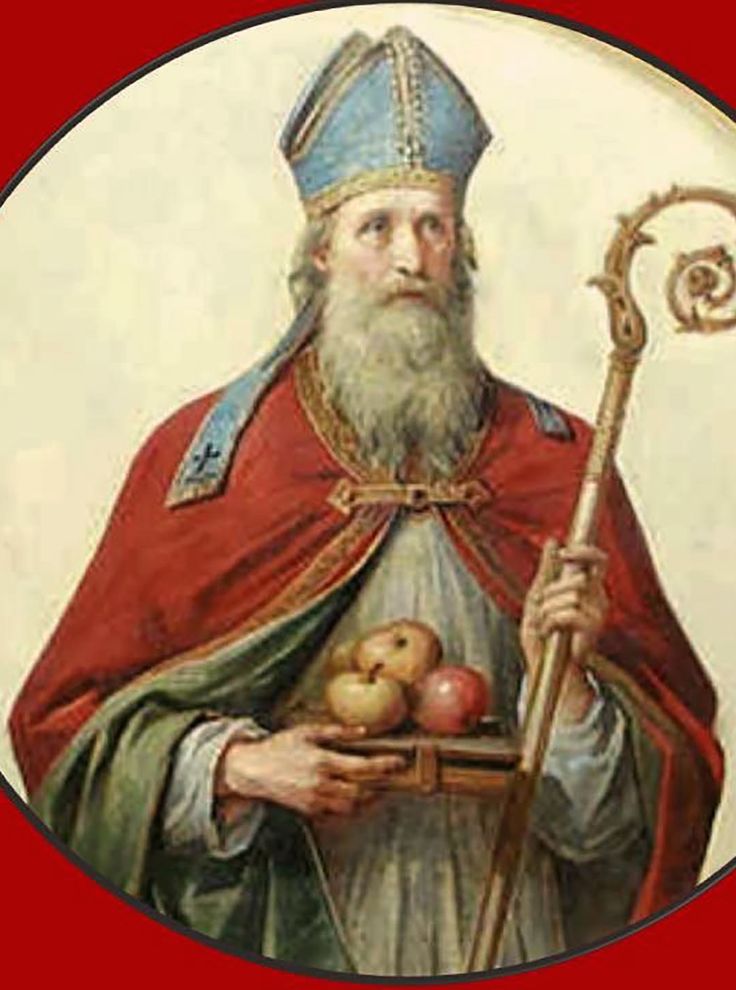
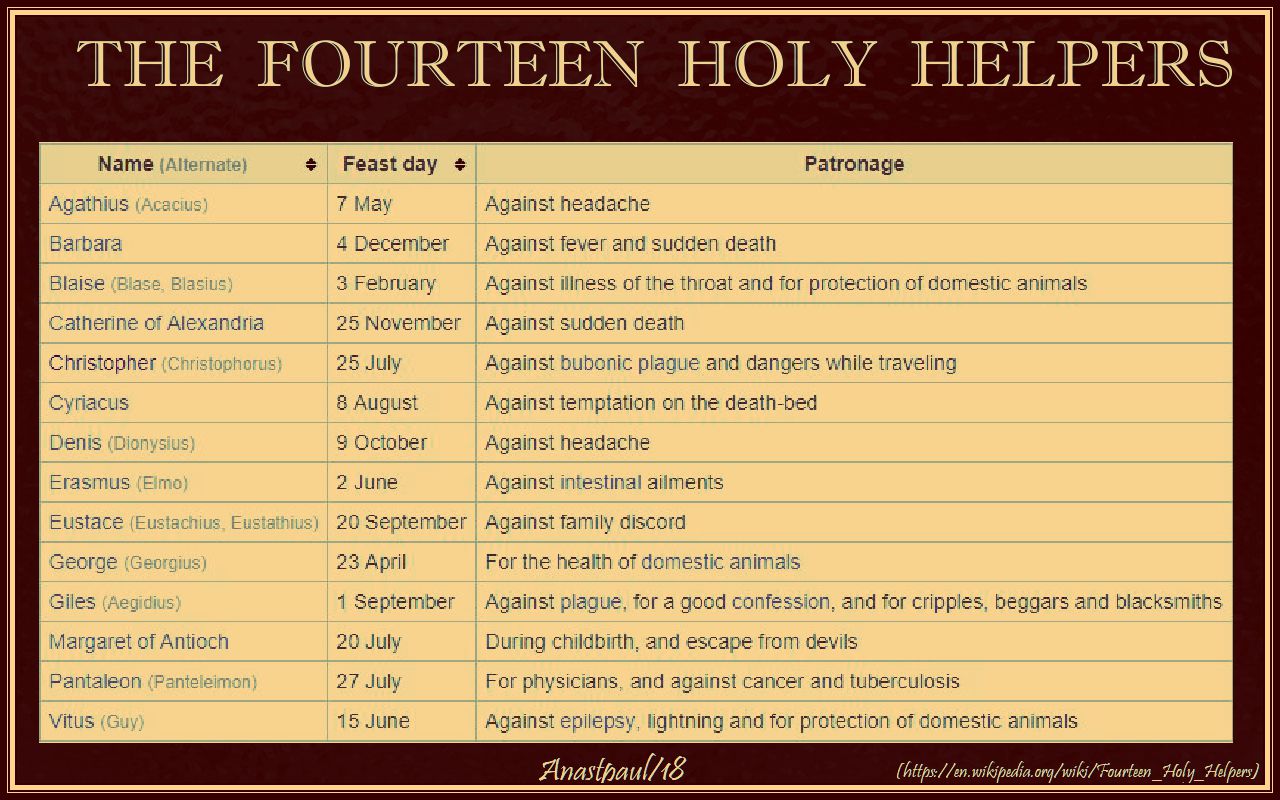
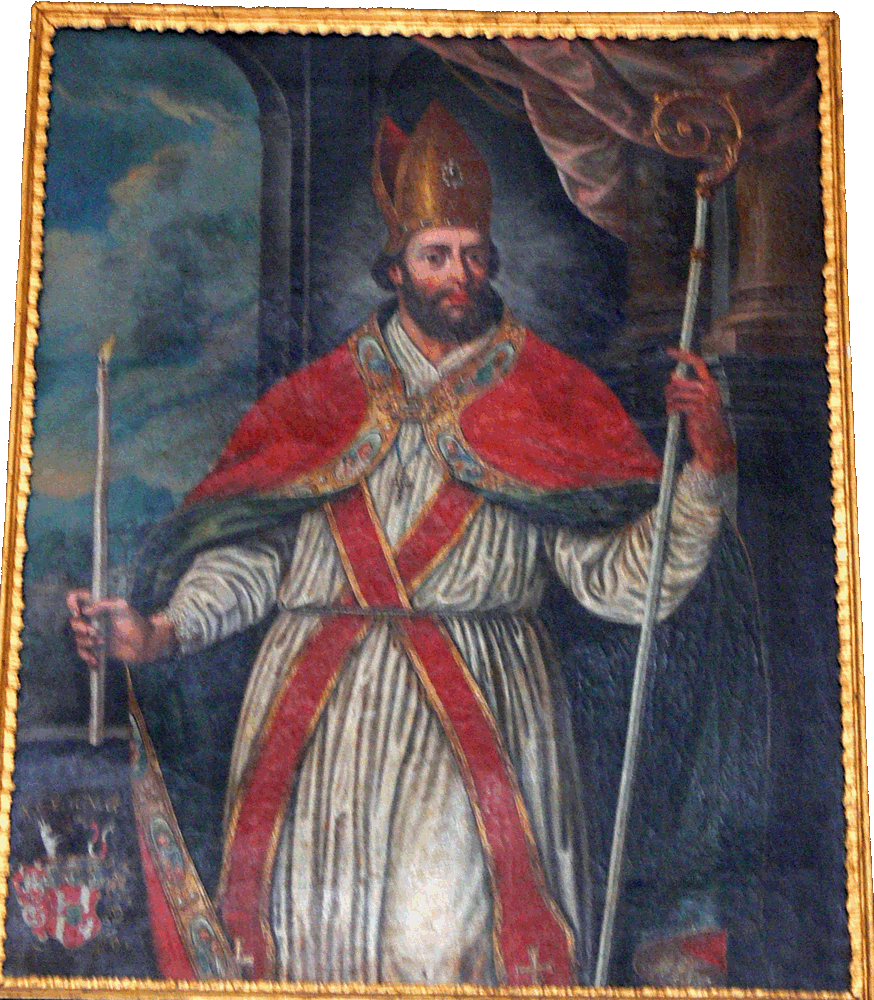
Saint of the Day – 3 February – St Blaise (Died c 316) – Martyr, Bishop of Sebaste, Armenia, Physician, Miracle-worker.   Died in c 316 by his flesh being torn off his body by iron wool-combs, then beheaded.  Patronages – against angina • against bladder diseases • against blisters • against coughs • against dermatitis • against dropsy • against eczema • against edema • against fever • against goitres • against headaches • against impetigo • against respiratory diseases • against skin diseases • against snake bites • against sore throats • against stomach pain • against storms • against teething pain • against throat diseases • against toothaches • against ulcers • against whooping cough • against wild beasts • angina sufferers of ; of children, animals, builders, drapers, against choking, veterinarians, infants, of 21 Cities, of stonecutters, carvers, wool workers. St Blaise is one of the Fourteen Holy Helpers – https://anastpaul.com/2018/07/25/thought-for-the-day-25-july-the-memorial-of-st-christopher-died-c-251-one-of-the-fourteen-holy-helpers/
Today the Church remembers the life and witness of Saint Blaise, a 3rd century Armenian bishop who endured terrifying torments and surrendered his life rather than repudiate his profession of Faith.st blaise statue - large
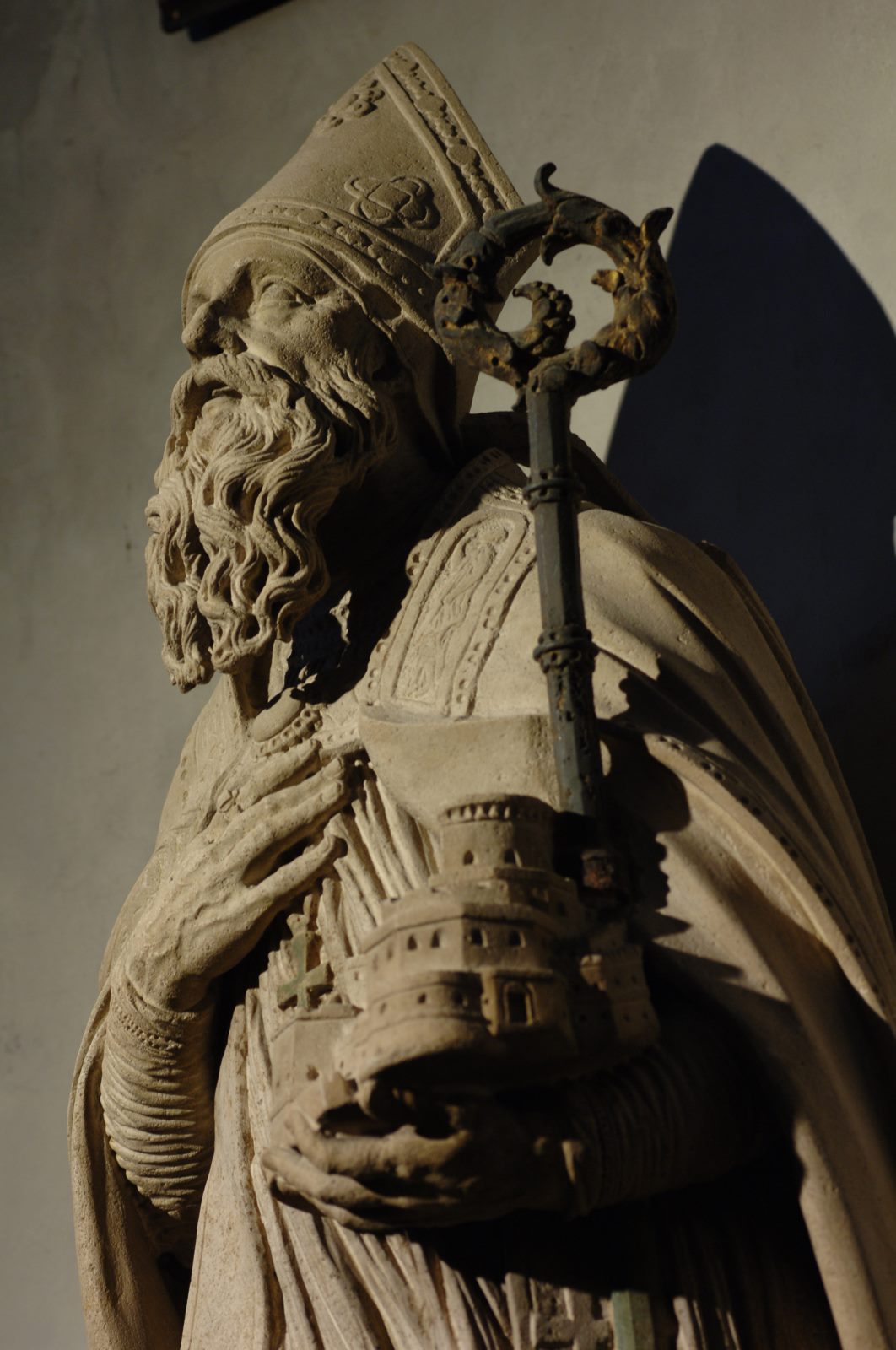
Much of the life of Saint Blaise is history that has passed into legend but even these legendary accounts offer spiritual insight.

Blaise was renowned as a wonderworker, effecting miraculous cures. T  his would have been enough to attract attention but he was also not averse to calling out the Roman officials who ruled the region in which he lived, Cappadocia, for their tyranny and intolerance of Christian faith and practice.   The combination of a reputation for supernatural power and the courage of his convictions was not welcomed by Rome and the governor ordered Bishop Blaise to be arrested.   Blaise was able to elude capture and took refuge in the wilderness.   It was there in the caves of Cappadocia that his ministry and his mission continued.

There is an account of Saint Blaise that identifies not only his pastoral care for the Christian faithful but also for the animals of the wilderness.

A woman had witnessed her piglet carried off by a wolf and spoke of her plight to the bishop.   Saint Blaise called for the wolf, demanded her return the piglet to its rightful owner and reminded the wolf of the grave penalty that awaited a thief.   The wolf complied and returned the piglet to its owner- a credit to the bishop’s power of persuasion.   The woman would later return the favour to Saint Blaise when he was finally captured and imprisoned.   She brought to him candles to illuminate his dank and dreary cell.

This legend hints at how the saints represent, in their holiness, the restoration of a paradise lost and regained in Christ.   The ease and familiarity with which the Biblical character of Adam is believed to have communed with nature before the fall is recapitulated in Saint Blaise- he is a sign that anticipates the restoration of all things in Christ where the lion will rest with the lamb and in this case, the wolf will return stolen property to its rightful owner.
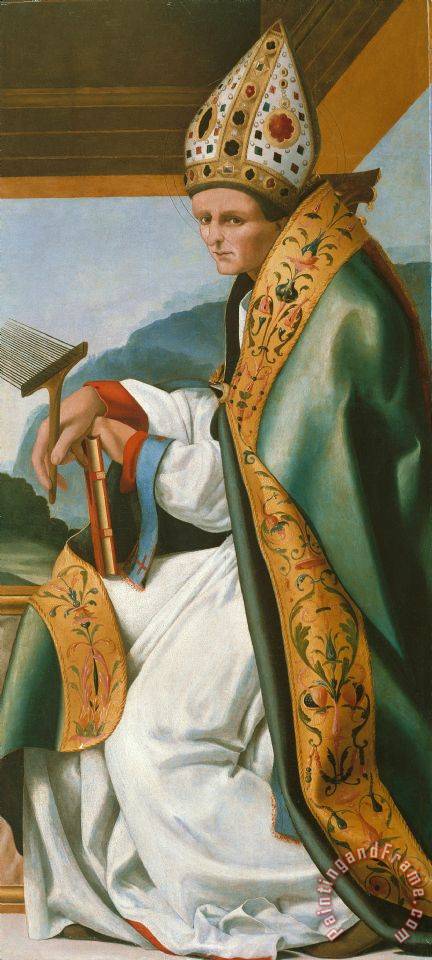
Saint Blaise Painting by Pere Fernandez; Saint Blaise Art Print for sale

Saint Blaise has been invoked for centuries as a specialist in diseases of the throat.   The origin of this practice might be in the story of a child brought to the saint who was either choking or suffering from some other malady of the throat.   Saint Blaise blessed the boy and he was restored to health.

The practice of blessing throats on the Feast of Saint Blaise is a commemoration of this miracle, that crossed candles are often used to impart this blessing might also be a recollection of the kindness of the woman who gave candles to the saint as he languished in prison.
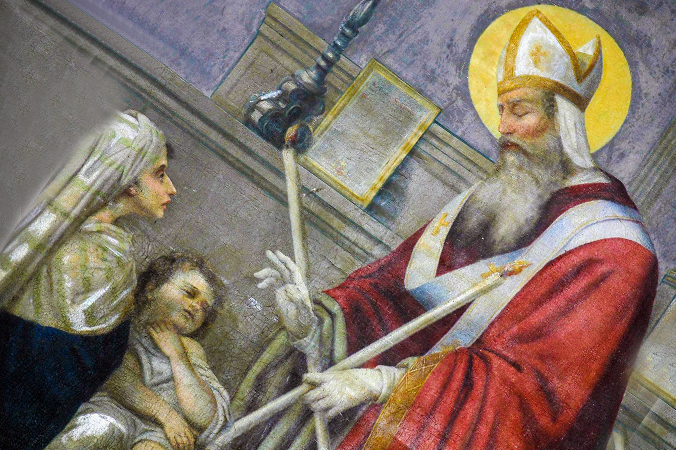
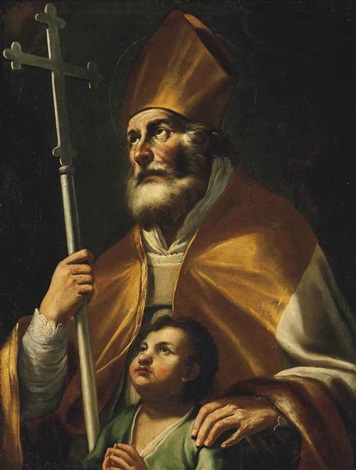
Saint Blaise was an extraordinarily popular saint during the Middle Ages in Europe. Presentations of his miraculous and mighty deeds were commonly represented in art and sculpture, and he was included in a listing of saints called the Fourteen Holy Helpers (or Auxiliary Saints), holy men and women who could be counted on as intercessors for all manner of maladies from madness to travelers in distress.   During times in which a sore throat could be a signal of an impending epidemic or an early death, the faithful were all too happy to accept the help of a heavenly specialist in such matters like Saint Blaise.

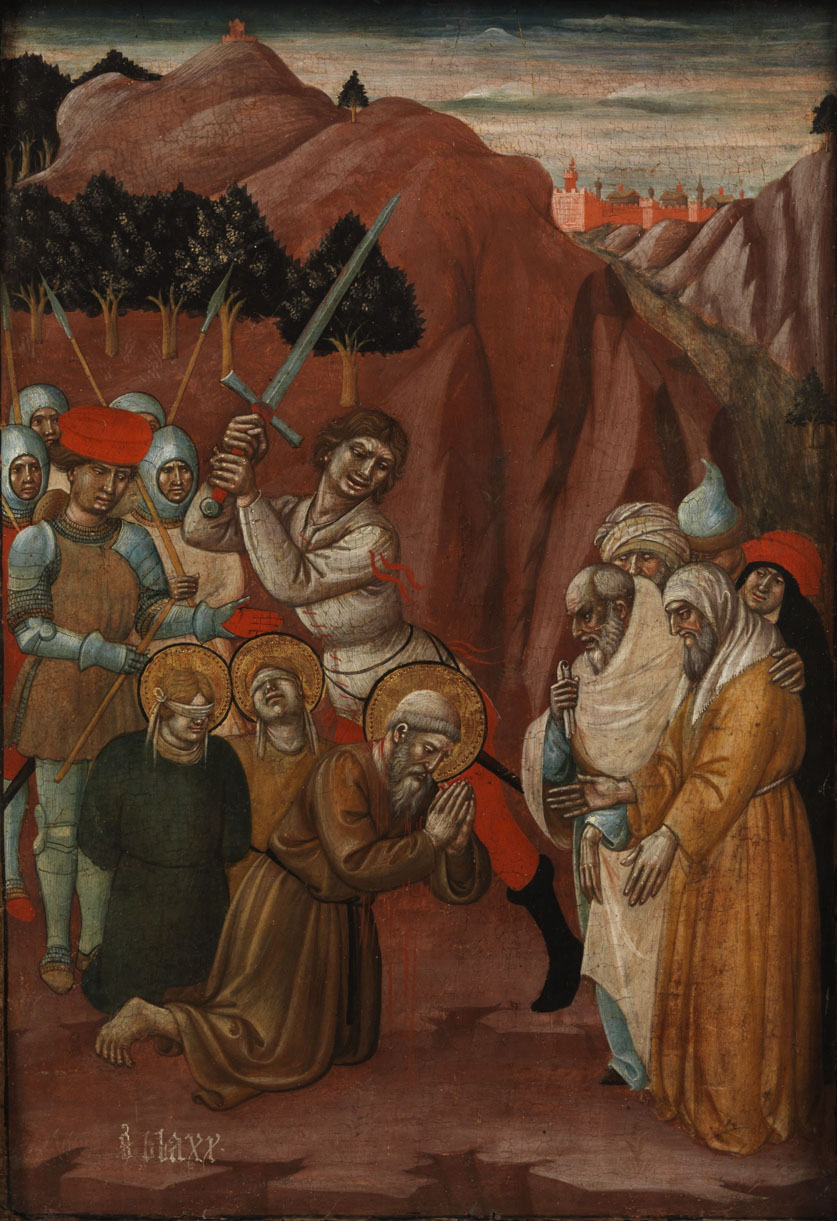
The legends regarding Saint Blaise report that his sojourn in the wilderness did not protect him for very long.   He was eventually arrested and brought to trial.   The judge advised him that only a pinch of incense offered to the image of Caesar and the gods of Rome could win him his freedom.   Blaise refused.   He was cruelly tortured and beheaded. Giovanni Antonio da Pesaro, St. Blaise Martyrdom, 15th cent.
The Church does not mourn Saint Blaise, for we know that in Christ this world is not all that there is.   While tyrants like Caesar and his successors can threaten us with death, Christ promises us a life that like his own, is transformed through suffering and death, into resurrection.

The scriptures proclaim, “though they slay me I will trust in you.”

Saint Blaise did precisely this.   He trusted that Christ would not abandon him to the power of death nor allow his suffering to be meaningless.   Our lives might never be raised to the legendary status of Saint Blaise but we can trust in Christ as he did and live in hope that one day we will join him in communion with all the saints who have gone before us in faith and who, from their place in heaven, guide and protect us still. (Fr Steve Grunow)blaiseCandlelarge - st blaise
Posted in Against SNAKE BITES / POISON, Against STORMS, EARTHQUAKES, THUNDER & LIGHTENING, FIRES, DROUGHT / NATURAL DISASTERS, All THEOLOGIANS, Moral Theologians, CHRISTMASTIDE!, EPILEPSY, FEASTS and SOLEMNITIES, GOUT, KNEE PROBLEMS, ARTHRITIS, etc, MORNING Prayers, Of Catholic Education, Students, Schools, Colleges etc, PATRONAGE - VINTNERS, WINE-FARMERS, PATRONAGE - WRITERS, PRINTERS, PUBLISHERS, EDITORS, etc, SAINT of the DAY, The APOSTLES & EVANGELISTS

Saint of the Day – 27 December – St John the Apostle and Evangelist –

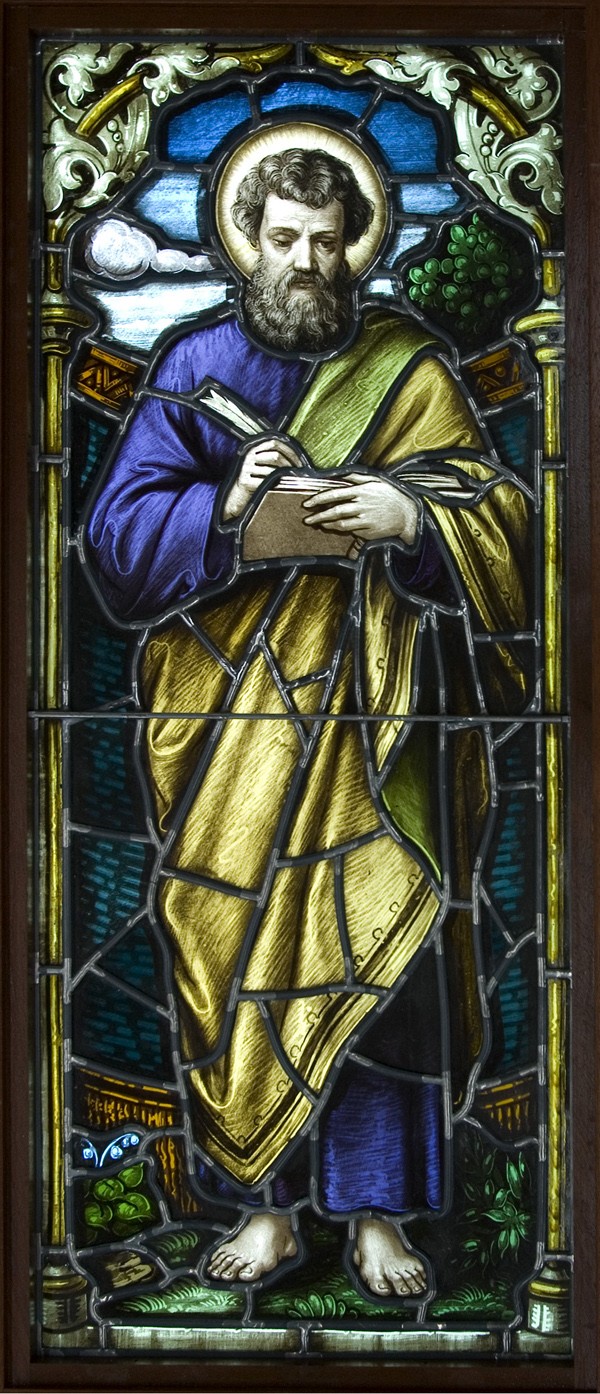
Saint of the Day – 27 December – St John the Apostle and Evangelist – “The Disciple whom Jesus Loved”  – (died c 101)  Also known as • The Apostle of Charity • The Beloved Apostle • Giovanni Evangelista • John the Divine • John the Evangelist • John the Theologian  Patronages – • against burns; burn victims• against epilepsy• against foot problems• against hailstorms• against poisoning• art dealers• authors, writers• basket makers• bookbinders• booksellers• butchers• compositors• editors• engravers• friendships• glaziers• government officials• harvests• lithographers• notaries• painters• papermakers• publishers• saddle makers• scholars• sculptors• tanners• theologians• typesetters• vintners• Asia Minor (proclaimed on 26 October 1914 by Pope Benedict XV)• 6 Diocese• 7 Cities,   Attributes – • book• cauldron• chalice• chalice with a serpent in allusion to the cup of sorrow foretold by Jesus• eagle, representing his role as the evangelist who most concentrated on Jesus’s divine nature• serpent.   The author of five books of the Bible (the Gospel of John, the First, Second, and Third Letters of John and Revelation), Saint John the Apostle was one of earliest disciples of Christ.   Commonly called Saint John the Evangelist because of his authorship of the fourth and final gospel, he is one of the most frequently mentioned disciples in the New Testament, rivaling Saint Peter for his prominence in the Gospels and the Acts of the Apostles.   Yet outside of the Book of Revelation, John preferred to refer to himself, not by name but as “the disciple whom Jesus loved.”   He was the only one of the Apostles to die, not of martyrdom but of old age, around the year 101.
st john - header 2 - Cliffecastlemus_068
st john - header - maxresdefault
st john the evangelist

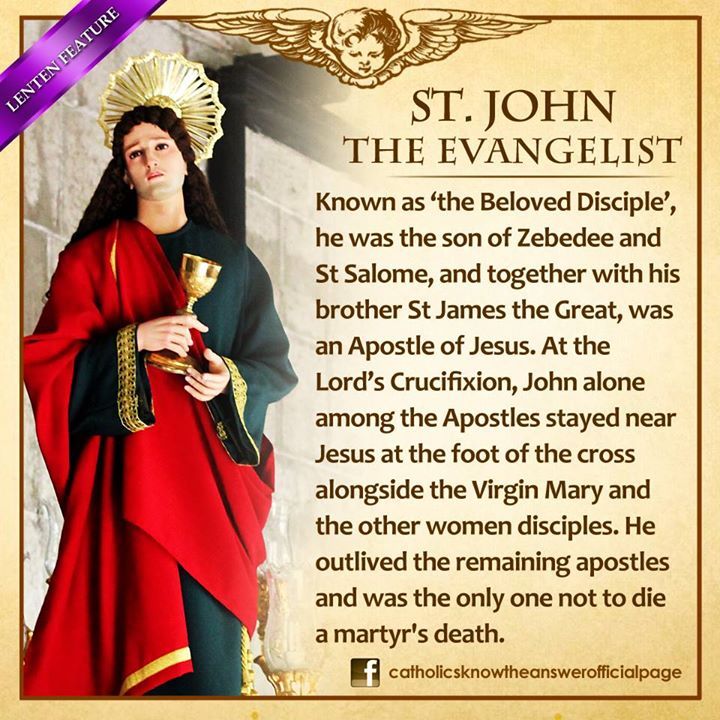
St John the Evangelist was a Galilean and the son, along with Saint James the Greater, of Zebedee and Salome.   Because he is usually placed after St James in the lists of the apostles (see Matthew 10:3, Mark 3:17 and Luke 6:14), John is generally considered the younger brother, perhaps as young as 17-18 at the time of Christ’s death.

With St James, he is always listed among the first four apostles (see Acts 1:13), reflecting not only his early calling (he is the other disciple of St John the Baptist, along with St Andrew, who follows Christ in John 1:34-40) but his honoured place among the disciples. (In Matthew 4:18-22 and Mark 1:16-20, James and John are called immediately after the fellow fishermen Peter and Andrew.)

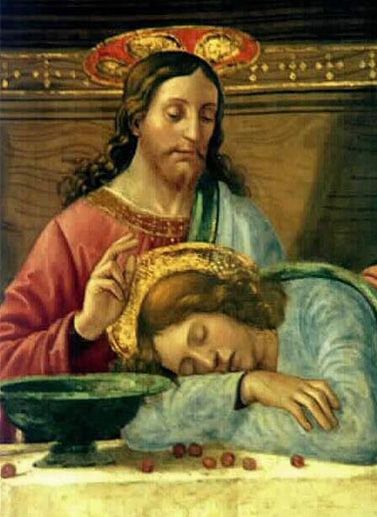
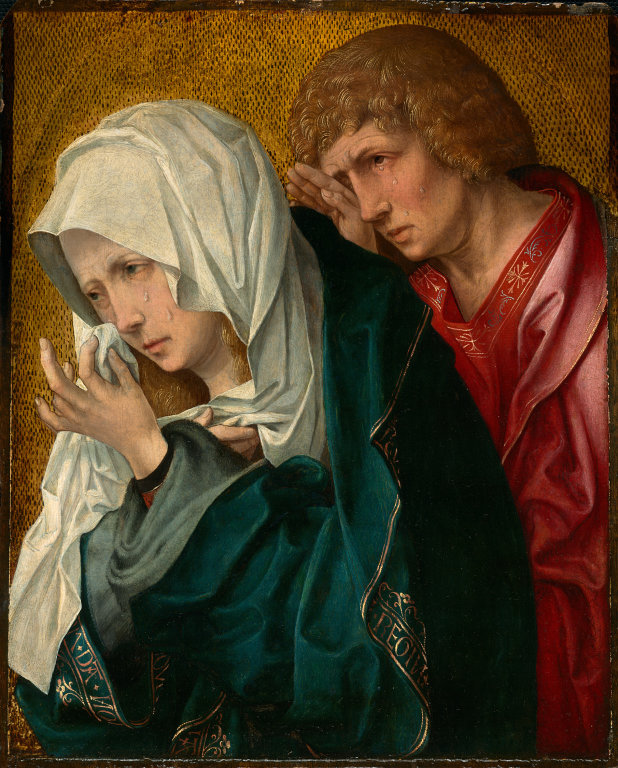
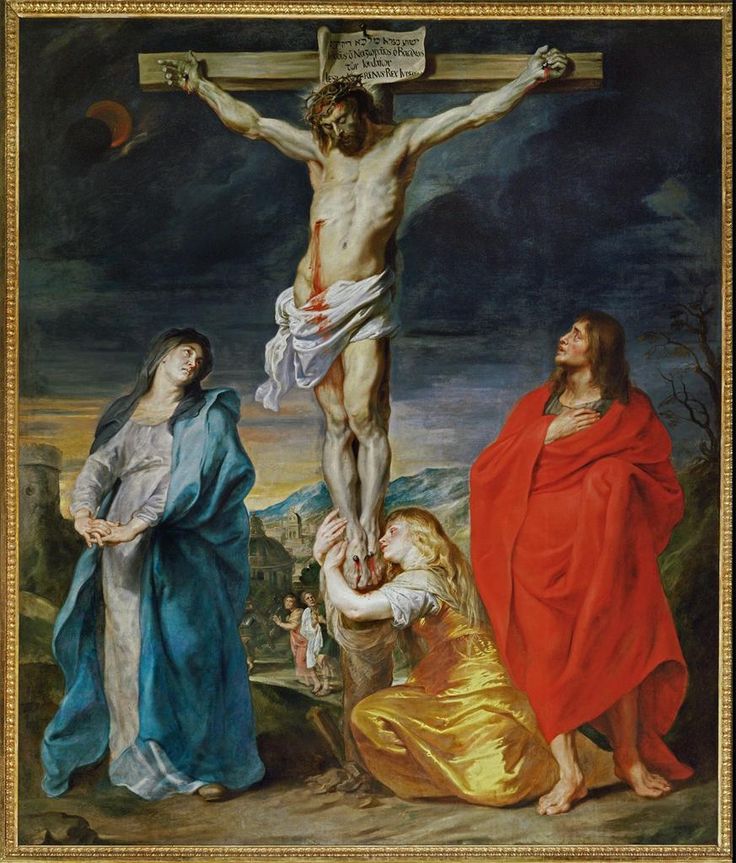
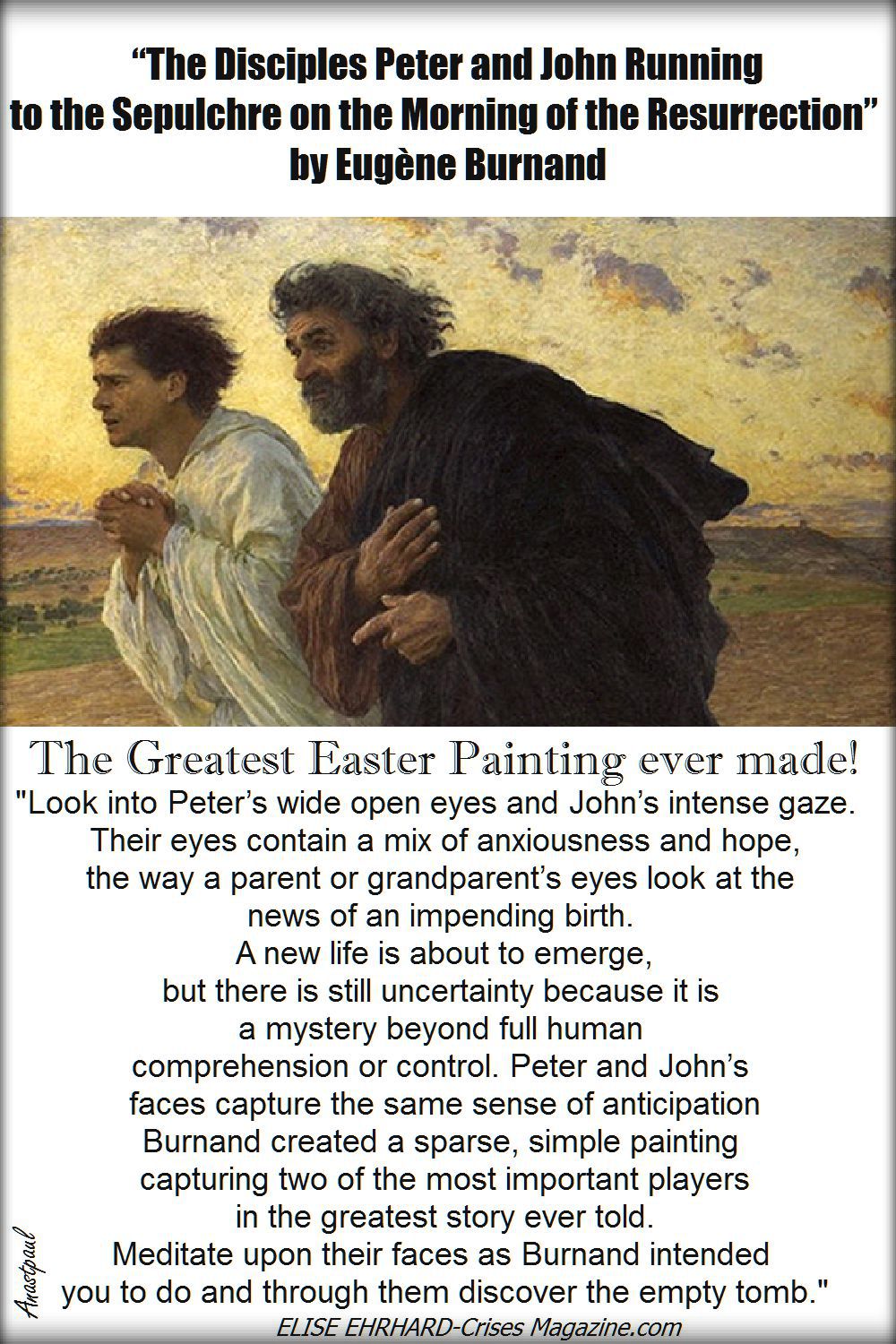
Like Peter and James the Greater, John was a witness to the Transfiguration (Matthew 17:1 ) and the Agony in the Garden (Matthew 26:37).    His closeness to Christ is apparent in the accounts of the Last Supper (John 13:23), at which he leaned on Christ’s breast while eating and the Crucifixion (John 19:25-27), where he was the only one of Christ’s disciples present.   Christ, seeing St John at the foot of the Cross with His mother, entrusted Mary to his care.   He was the first of the disciples to arrive at the tomb of Christ on Easter, having outraced Saint Peter (John 20:4) and while he waited for Peter to enter the tomb first, St John was the first to believe that Christ had risen from the dead (John 20:8).

FOR THE FEAST OF ST JOHN THE BELOVED
van weyden - at the cross.jpg
c3a9a8da5cd514e1aa9015621308dfb3--antoon-van-dyck-follow-jesus
THE GREATEST EASTER PAINTING - ELISE EHRHARD CRISES MAG

As one of the two initial witnesses to the Resurrection, St John naturally took a place of prominence in the early Church, as the Acts of the Apostles attest (see Acts 3:1, Acts 4:3, and Acts 8:14, in which he appears alongside St Peter himself.)   When the apostles dispersed following the persecution of Herod Agrippa (Acts 12), during which John’s brother James became the first of the apostles to win the crown of martyrdom (Acts 12:2), tradition holds that John went to Asia Minor, where he likely played a role in founding the Church at Ephesus.

Exiled to Patmos during the persecution of Domitian, he returned to Ephesus during Trajan’s reign and died there.

While on Patmos, John received the great revelation that forms the Book of Revelation and likely completed his gospel (which may, however, have existed in an earlier form a few decades before).

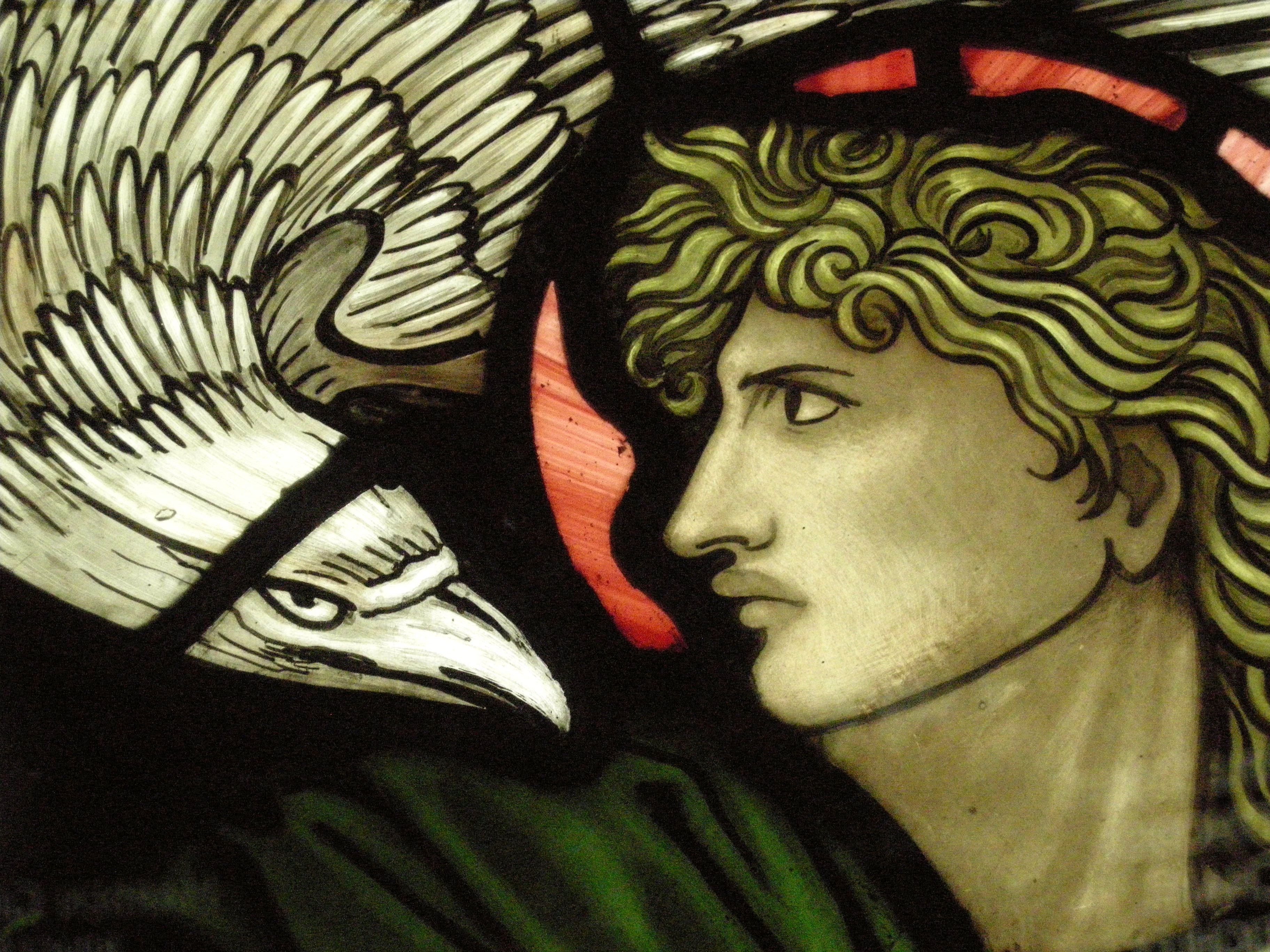
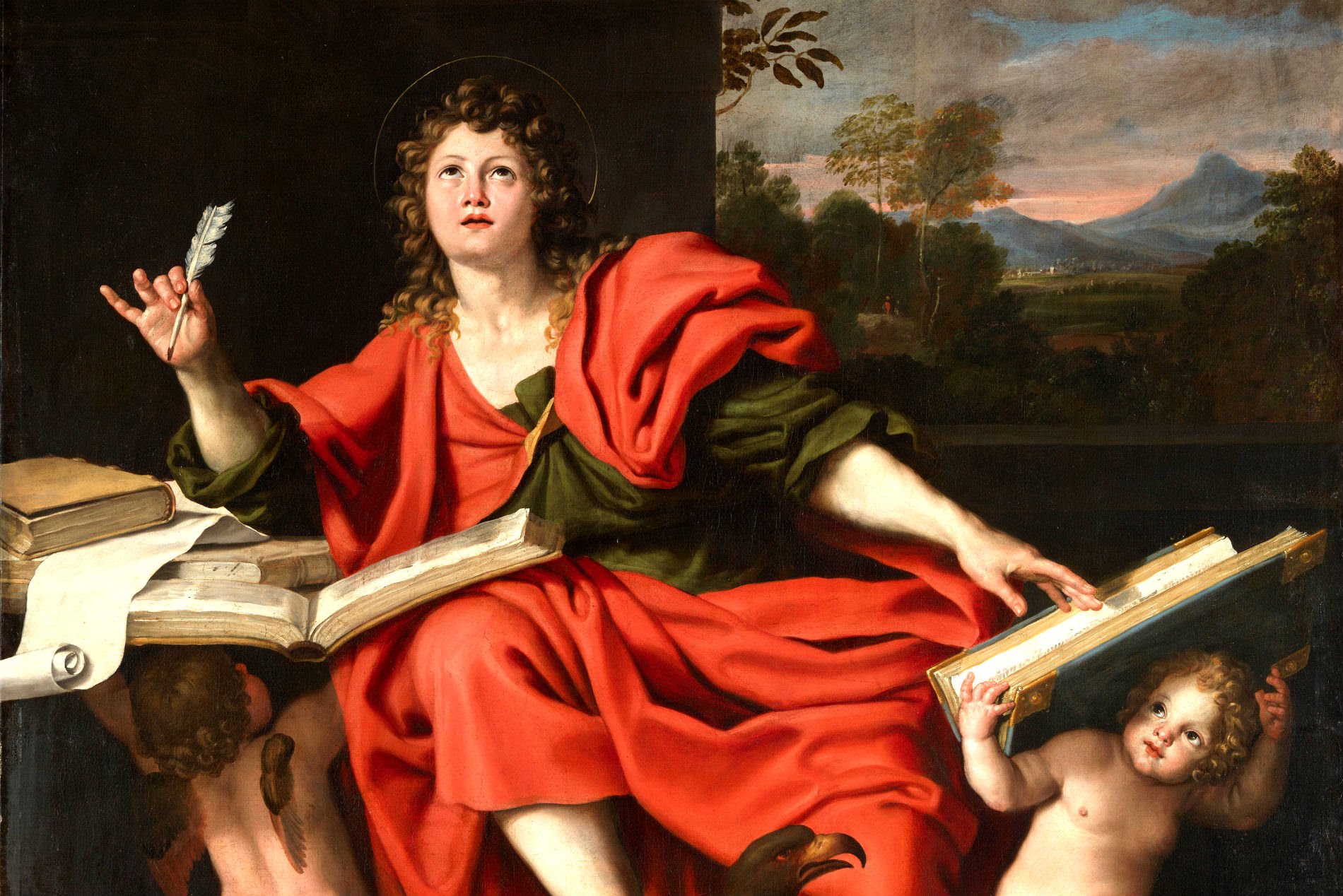
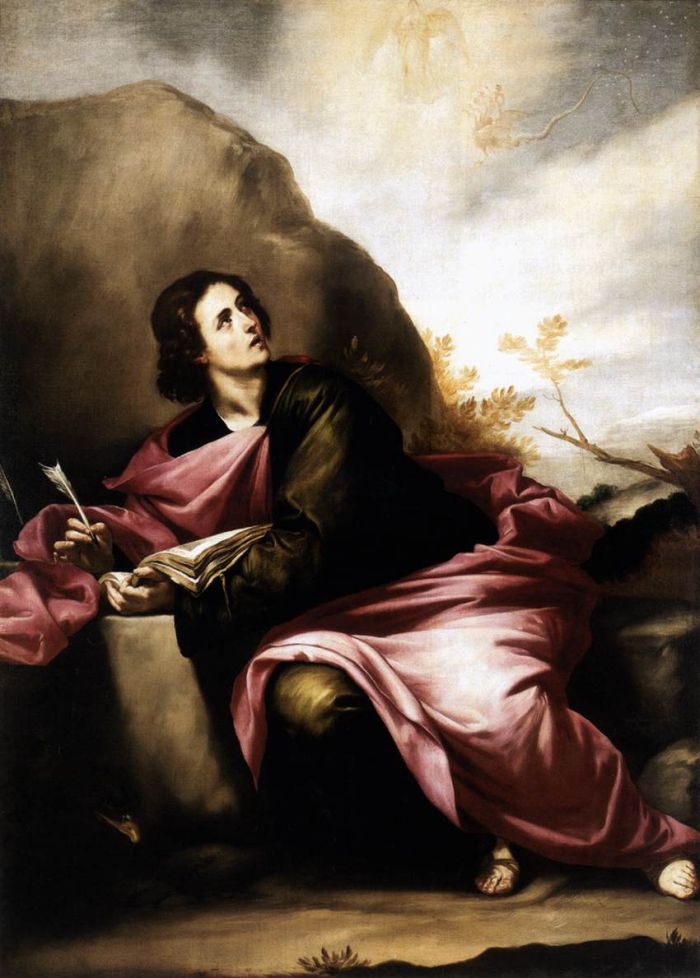
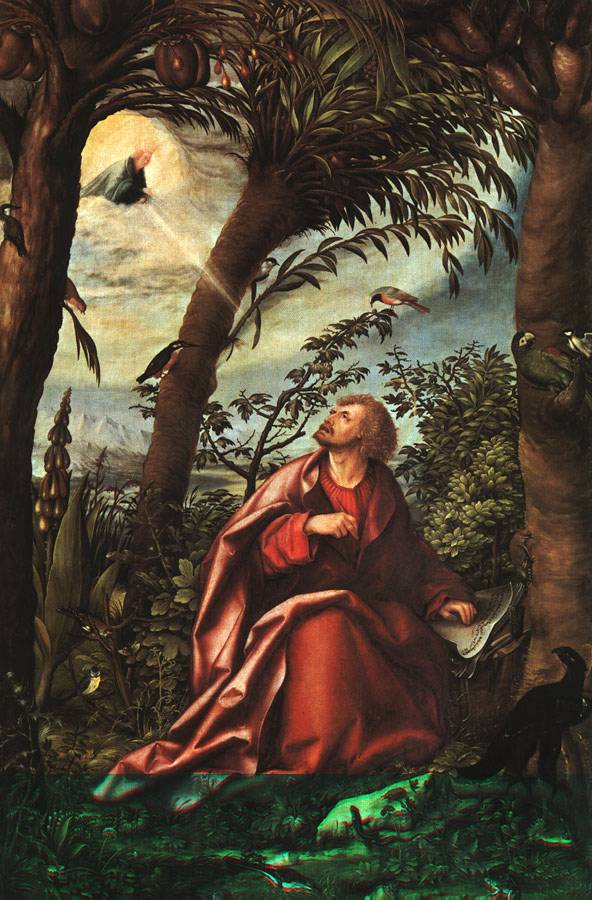
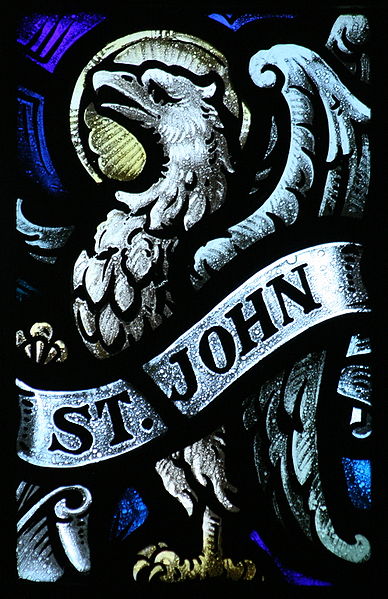
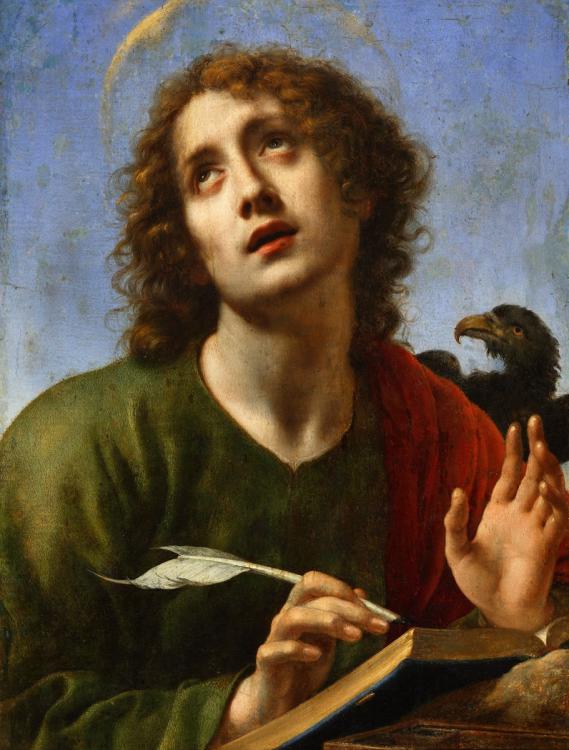
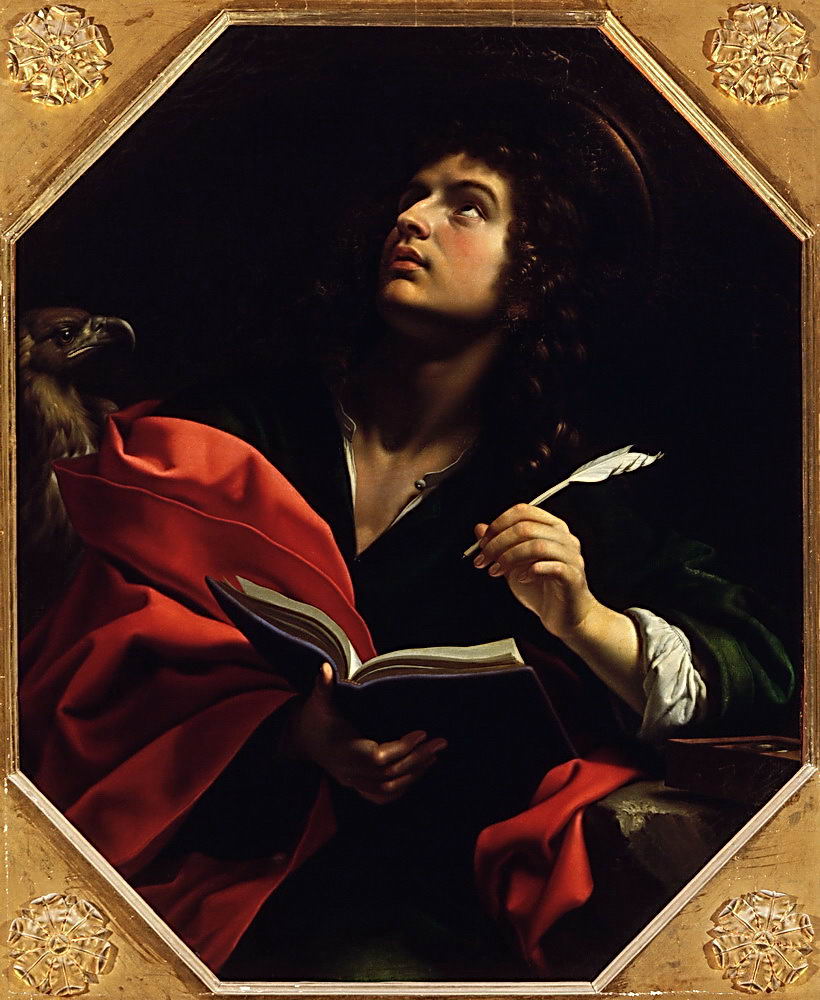
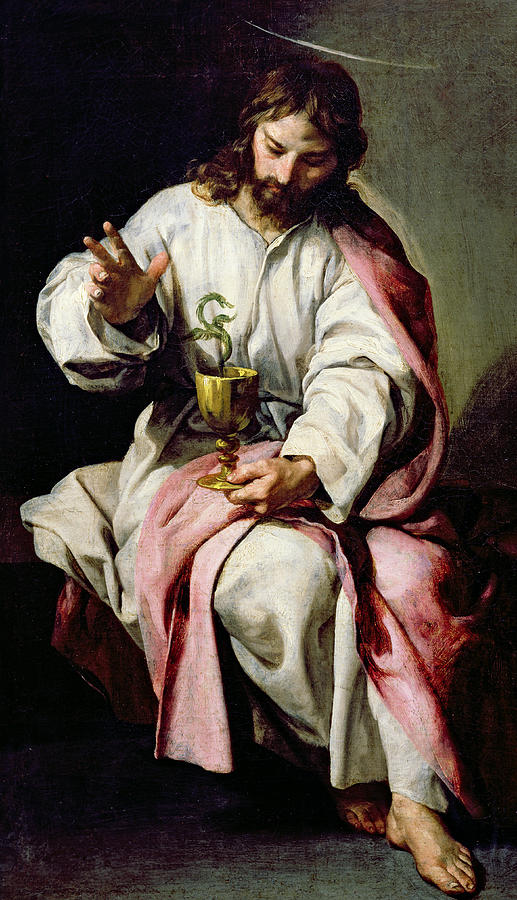
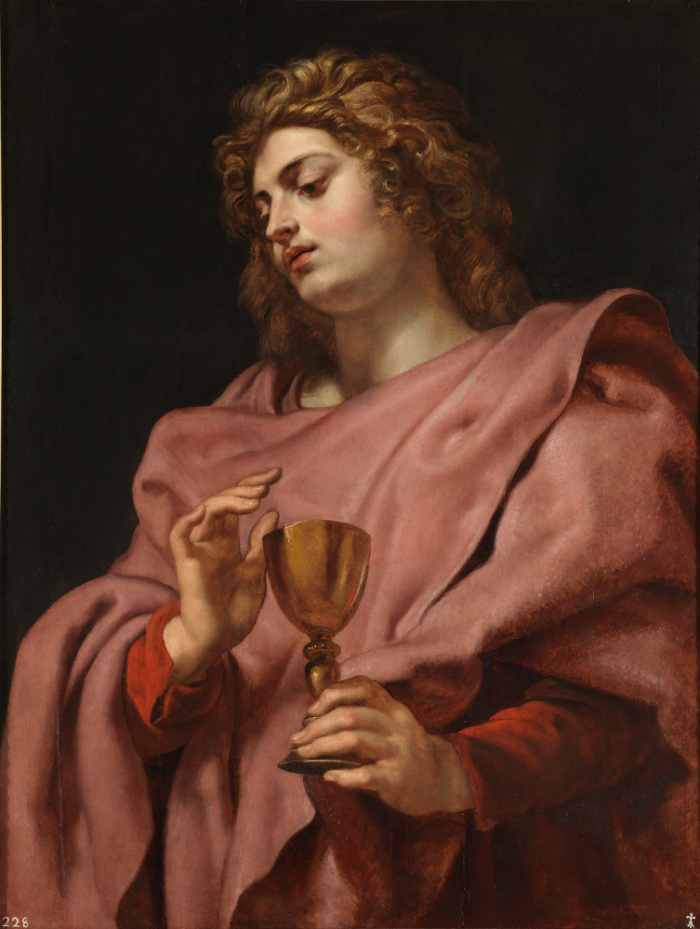
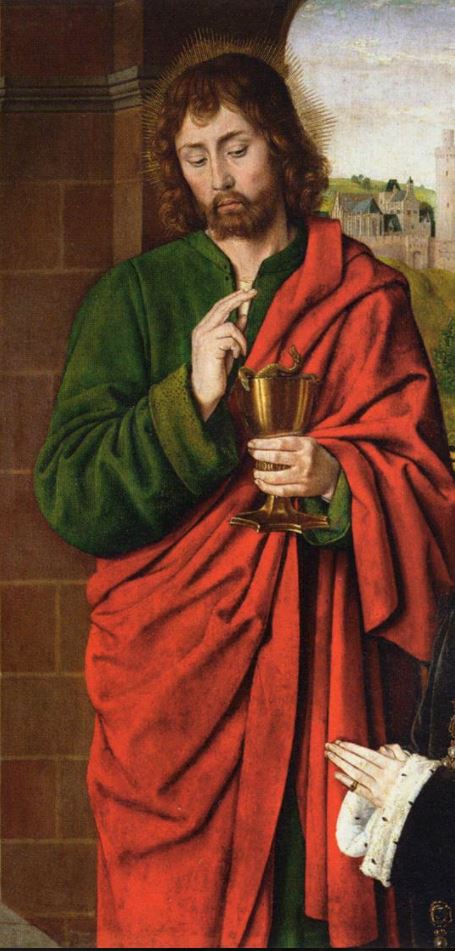
Traditional iconography has represented St John as an eagle, symbolising “the heights to which he rises in the first chapter of his Gospel.”   Like the other Evangelists, he is sometimes symbolised by a book  and a later tradition used the chalice as a symbol of St John, recalling Christ’s words to John and James the Greater, in Matthew 20:23, “My chalice indeed you shall drink.”

A MARTYR WHO DIED A NATURAL DEATH
Christ’s reference to the chalice inevitably calls to mind His own Agony in the Garden, where He prays, “My Father, if this chalice may not pass away but I must drink it, thy will be done” (Matthew 26;42).   It thus seems a symbol of martyrdom and yet John, alone among the apostles, died a natural death.   Still, he has been honoured as a martyr from the earliest days after his death, because of an incident related by Tertullian, in which John, while in Rome, was placed in a pot of boiling oil but emerged unharmed.

St.-John-Evangelist.- symbolSaint_John_the_Evangelist_by_Carlo_Dolcewww.artshopua.com   www.arttrans.com.uast-john-the-evangelist-and-the-poisoned-cup-alonso-canorubens_apostel_johannes_grtJOHN - MY SNIP - MASTER OF MOULINS

Posted in ADVENT, Against STORMS, EARTHQUAKES, THUNDER & LIGHTENING, FIRES, DROUGHT / NATURAL DISASTERS, ALTAR BOYS, DEACONS, SACRISTANS, BREWERS, BRIDES and GROOMS, CHEFS and/or BAKERS, CONFECTIONERS, MORNING Prayers, Of BACHELORS, Of BANKERS, Of BEGGARS, the POOR, against POVERTY, Of Catholic Education, Students, Schools, Colleges etc, Of FISHERMEN, FISHMONGERS, Of GARDENERS, Horticulturists, Farmers, Of LAWYERS & CANON Lawyers, Attorneys, Solicitors, Barristers, Notaries, Para-Legals, Of PHARMACISTS / CHEMISTS, Of TRAVELLERS / MOTORISTS, ON the SAINTS, PATRONAGE - HAPPY MARRIAGES, of MARRIED COUPLES, PATRONAGE - ORPHANS,ABANDONED CHILDREN, PATRONAGE - PENITENTS, PATRONAGE - PRISONERS, PATRONAGE - VINTNERS, WINE-FARMERS, PATRONAGE-INFERTILITY & SAFE CHILDBIRTH, SAILORS, MARINERS, NAVIGATORS, SAINT of the DAY, Spinsters - Single LAYWOMEN

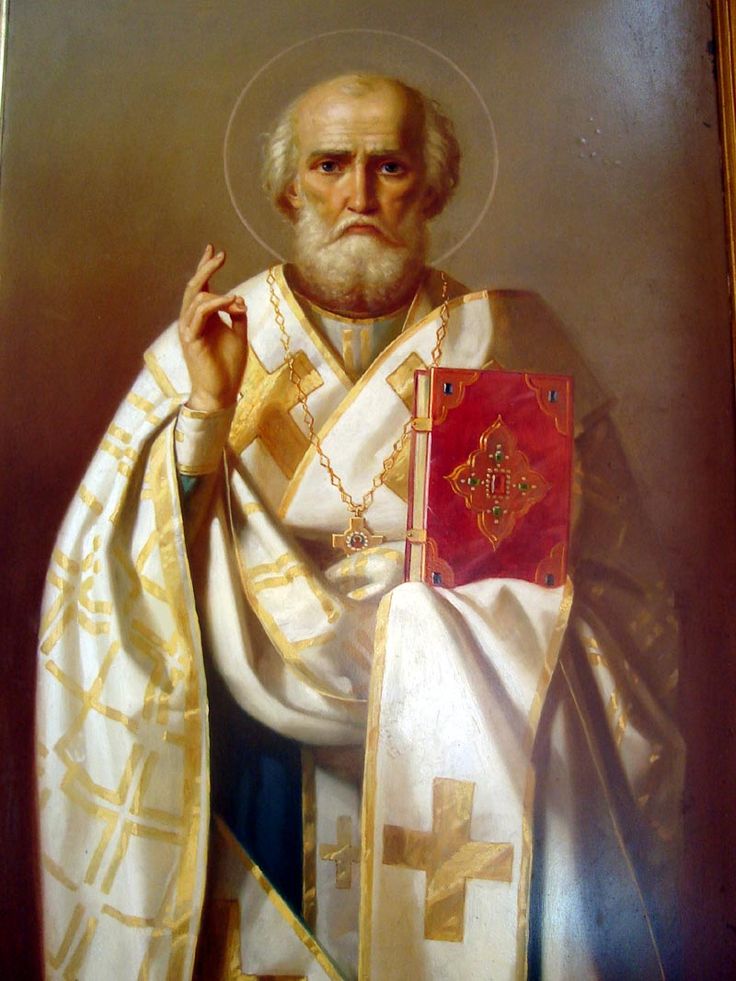
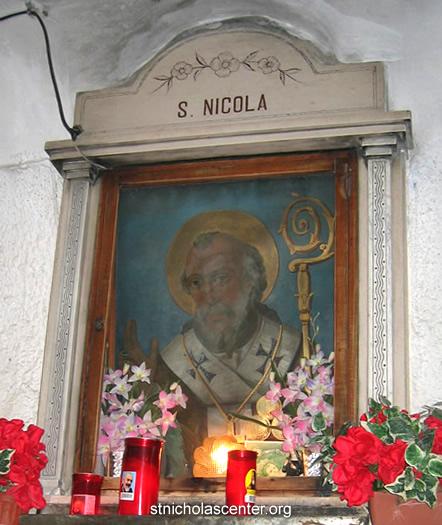
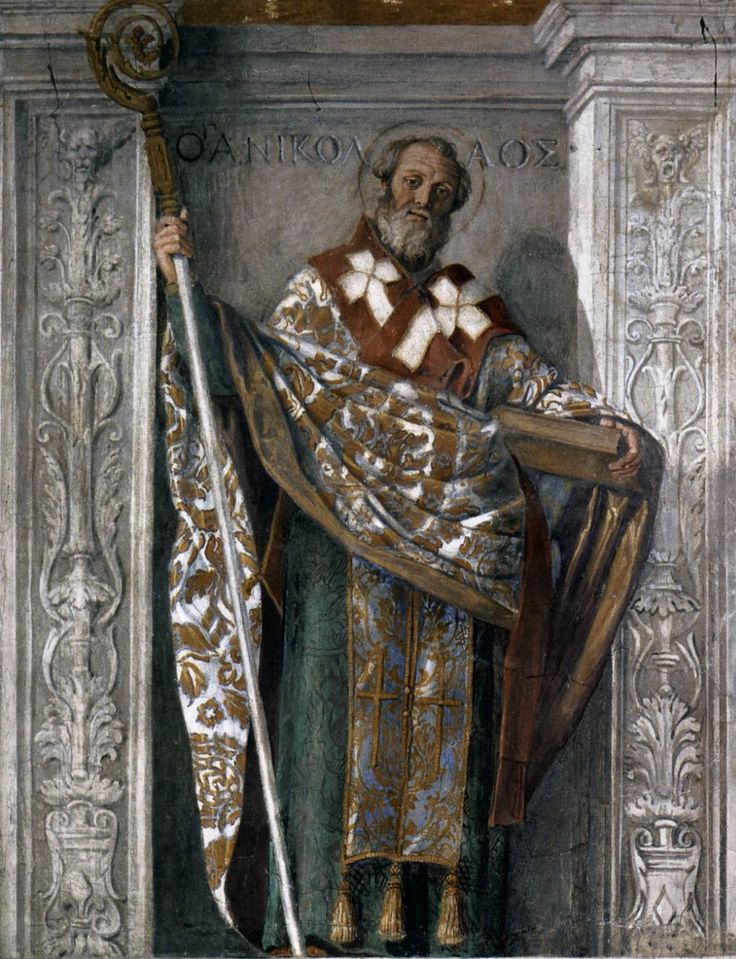
Saint of the Day – 6 December – St Nicholas (270-343)

Saint of the Day – 6 December – St Nicholas (270-343)  Confessor, Bishop, Miracle-Worker, Apostle of Charity.   Also known as – • Nicholas of Bari• Nicholas of Lpnenskij • Nicholas of Lipno • Nicholas of Sarajskij • Nicholas the Miracle Worker • Klaus, Mikulas, Nikolai, Nicolaas, Nicolas, Niklaas, Niklas. Nikolaus, Santa Claus.   st nicholas header

Patronages -• against fire • against imprisonment • against robberies • against robbers • against storms at sea • against sterility • against thefts • altar servers • archers • boys • brides • captives • children • choir boys • happy marriages • lawsuits lost unjustly • lovers • maidens • penitent murderers • newlyweds • paupers • pilgrims • poor people • prisoners • scholars • schoolchildren, students • penitent thieves • travellers • unmarried girls • apothecaries • bakers • bankers • barrel makers • boatmen • boot blacks • brewers • butchers • button makers • candle makers • chair makers • cloth shearers • coopers • dock workers • educators • farm workers, farmers • firefighters • fish mongers • fishermen • grain merchants • grocers • grooms • hoteliers • innkeepers • judges • lace merchants • lawyers • linen merchants • longshoremen • mariners • merchants • millers • notaries • parish clerks • pawnbrokers • perfumeries • perfumers • poets • ribbon weavers • sailors • ship owners • shoe shiners • soldiers • spice merchants • spinners • stone masons • tape weavers  • toy makers • vintners • watermen • weavers • Greek Catholic Church in America • Greek Catholic Union • Varangian Guard • Germany • Greece • Russia • 3 Diocese • 78 Cities.

Attributes – • anchor • bishop calming a storm • bishop holding three bags of gold • bishop holding three balls • bishop with three children • bishop with three children in a tub at his feet • purse • ship • three bags of gold • three balls • three golden balls on a book • boy in a boat.   Saint Nicholas’ reputation evolved among the faithful, as was common for early Christian saints and his legendary habit of secret gift-giving gave rise to the traditional model of Santa Claus through Sinterklaas.   St Nicholas was generous to the poor and special protector of the innocent and wronged.   Many stories grew up around him prior to his becoming associated with Santa Claus.

Some examples of the Miracles of St Nicholas and the reasons for various Patronages:

• Upon hearing that a local man had fallen on such hard times that he was planning to sell his daughters into prostitution, Nicholas went by night to the house and threw three bags of gold in through the window, saving the girls from an evil life.   These three bags, gold generously given in time of trouble, became the three golden balls that indicate a pawn broker’s shop.

• He raised to life three young boys who had been murdered and pickled in a barrel of brine to hide the crime.   These stories led to his patronage of children in general and of barrel-makers besides.

• Induced some thieves to return their plunder.   This explains his protection against theft and robbery and his patronage of them – he’s not helping them steal but to repent and change.   In the past, thieves have been known as Saint Nicholas’ clerks or Knights of Saint Nicholas.

• During a voyage to the Holy Lands, a fierce storm blew up, threatening the ship.   He prayed about it and the storm calmed – hence the patronage of sailors and those like dockworkers who work on the sea.

St Nicholas died in 346 at Myra, Lycia (in modern Turkey) of natural causes and his  relics are believed to be at Bari, Italy.bari-shrine3-detail

Here is the story of St Nicholas by Prosper Dom Gueranger:

Nicholas was born in the celebrated city of Patara, in the province of Lycia.   His birth was the fruit of his parents’ prayers.  Evidences of his great future holiness were given from his very cradle.   For when he was an infant, he would only take his food once on Wednesdays and Fridays and then not till evening but on all other days he frequently took the breast:  he kept up this custom of fasting during the rest of his life.

Having lost his parents when he was a boy, he gave all his goods to the poor.   Of his Christian kindheartedness there is the following noble example.   One of his fellow-citizens had three daughters but being too poor to obtain them an honourable marriage, he was minded to abandon them to a life of prostitution.   Nicholas having learned of the case, went to the house during the night and threw in by the window a sum of money sufficient for the dower of one of the daughters;  he did the same a second and a third time and thus the three were married to respectable men.

Having given himself wholly to the service of God, he set out for Palestine, that he might visit and venerate the holy places.   During this pilgrimage, which he made by sea, he foretold to the mariners, on embarking, though the heavens were then serene and the sea tranquil, that they would be overtaken by a frightful storm.   In a very short time, the storm arose.   All were in the most imminent danger, when he quelled it by his prayers.

His pilgrimage ended, he returned home, giving to all men example of the greatest sanctity.   He went, by an inspiration from God, to Myra, the Metropolis of Lycia,which had just lost its Bishop by death and the Bishops of the province had come together for the purpose of electing a successor.   Whilst they were holding council for the election, they were told by a revelation from heaven, that they should choose him who, on the morrow, should be the first to enter the church, his name being Nicholas.   Accordingly, the requisite observations were made, when they found Nicholas to be waiting at the church door:  they took him and, to the incredible delight of all, made him the Bishop of Myra.

During his episcopate, he never flagged in the virtues looked for in a bishop;  chastity, which indeed he had always preserved, gravity, assiduity in prayer, watchings, abstinence, generosity and hospitality, meekness in exhortation, severity in reproving. He befriended widows and orphans by money, by advice and by every service in his power.   So zealous a defender was he of all who suffered oppression, that, on one occasion, three Tribunes having been condemned by the Emperor Constantine, who had been deceived by calumny and having heard of the miracles wrought by Nicholas, they recommended themselves to his prayers, though he was living at a very great distance from that place:   the saint appeared to Constantine and angrily looking upon him, obtained from the terrified Emperor their deliverance.

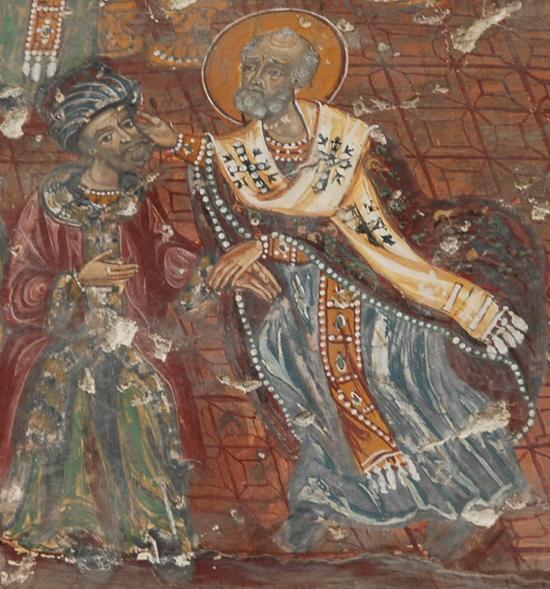
Having, contrary to the edict of Dioclesian and Maximian, preached in Myra the truth of the Christian faith, he was taken up by the servants of the two Emperors.  He was taken off to a great distance and thrown into prison, where he remained until Constantine, having become Emperor, ordered his rescue and the Saint returned to Myra.   Shortly afterwards, he repaired to the Council which was being held at Nicaea:  there he took part with the three hundred and eighteen Fathers in condemning the Arian heresy (Tradition has it that he became so angry with the heretic Arius during the Council that he struck him in the face).St Nicholas of Myra slapping Arius at the Council of Nicaea.

Scarcely had he returned to his See than he was taken with the sickness of which he soon died.   Looking up to heaven and seeing Angels coming to meet him, he began the Psalm, In thee, O Lord, have I hoped and having come to those words, Into your hands I commend my spirit, his soul took its flight to the heavenly country.   His body, having been translated to Bari in Apulia, is the object of universal veneration.

st nicholas beautifulst nicholas.2

For St Nicholas traditional biscuits see here:  https://anastpaul.wordpress.com/2016/12/06/st-nicholas-6-december/

Posted in Against STORMS, EARTHQUAKES, THUNDER & LIGHTENING, FIRES, DROUGHT / NATURAL DISASTERS, JESUIT SJ, SAINT of the DAY

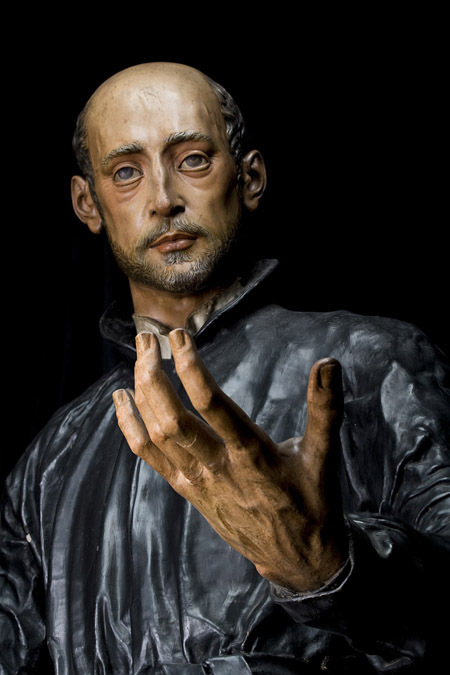
Saint of the Day – 10 October – St Francis Borgia S.J. (1510-1572)

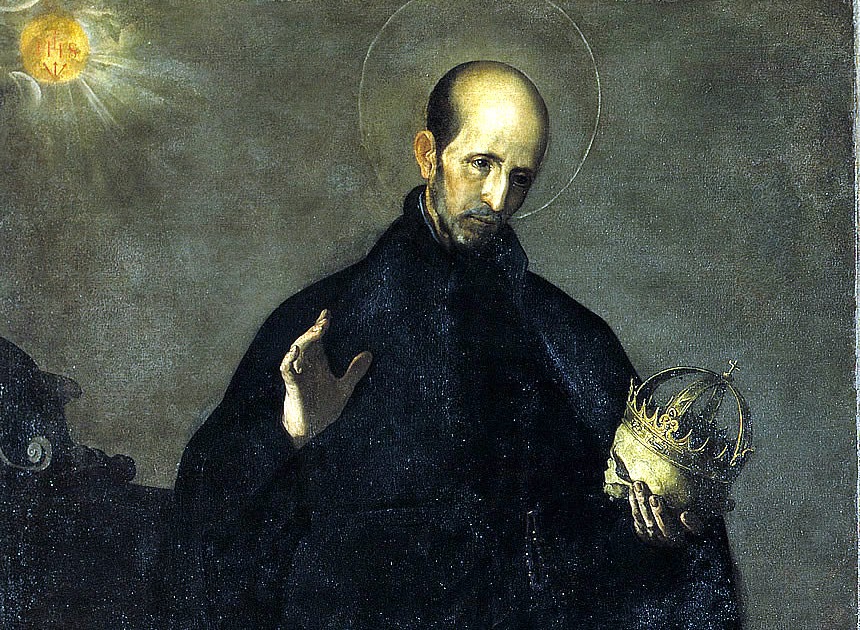
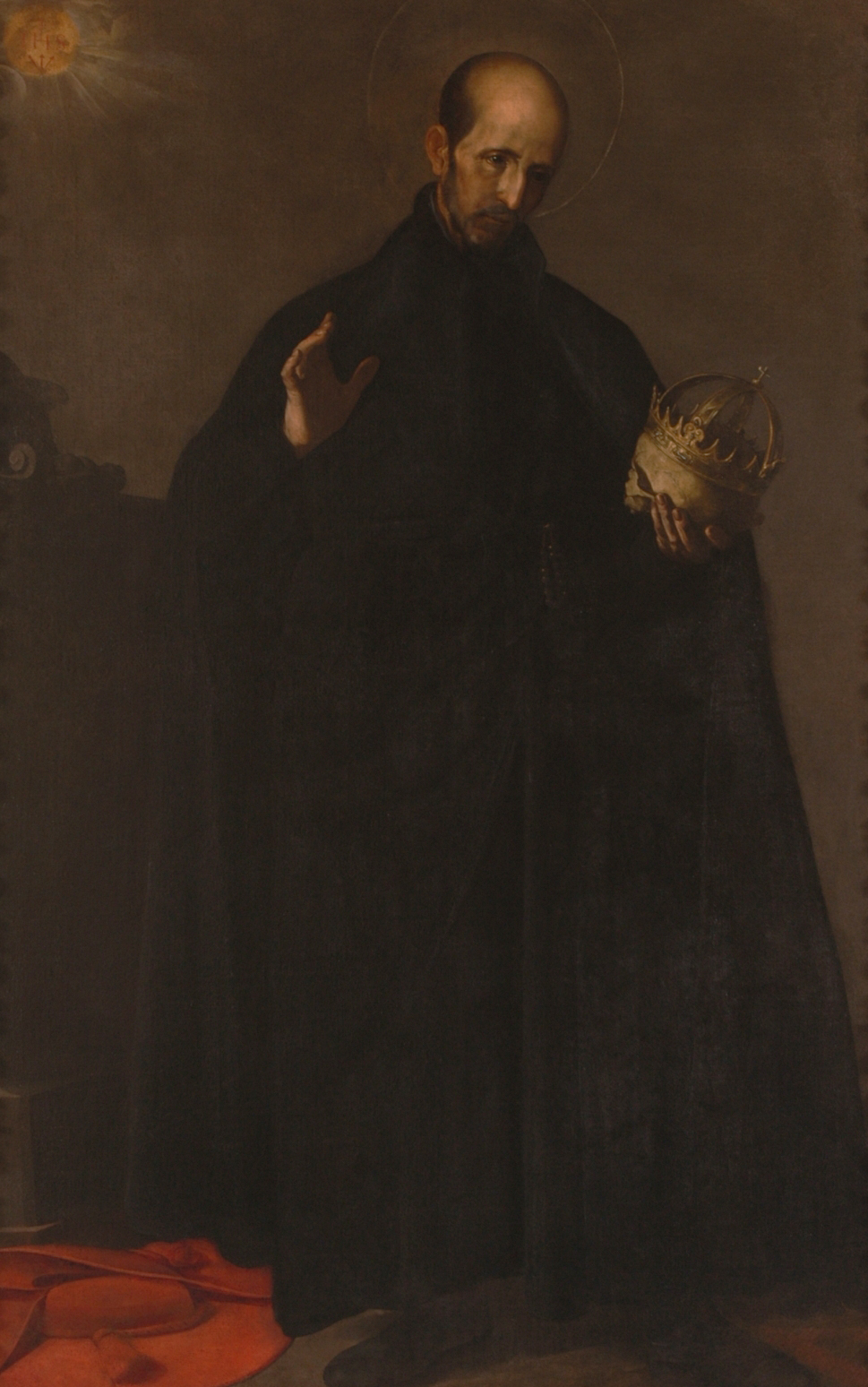
Saint of the Day – 10 October – St Francis Borgia S.J. (1510-1572) Priest, Advisor, Missionary, Evangelist, Administrator par excelleance.   Born – Francisco de Borja y Aragon was the 4th Duke of Gandía, was a Grandee of Spain, a Spanish Jesuit and third Superior General of the Society of Jesus –  (28 October 1510 at Gandia, Valencia, Spain – 30 September 1572 at Ferrara, Italy).   His relics were translated to the Jesuit church in Madrid, Spain in 1901.  He was Beatified on 23 November 1624 at Madrid by Pope Urban VIII and Canonised on 20 June 1670 by Pope Clement X in Rome, Italy.  Patronages – against earthquakes, Portugal, Rota, Marianas.   Attributes – Skull crowned with an emperor’s diadem.

HEADER - saint-francis-borgia-01 (1)

St Francis was born in Duchy of Gandía, Valencia, on 28 October 1510.   His father was Juan Borgia, 3rd Duke of Gandía, the son of Giovanni Borgia, the son of Pope Alexander VI (Rodrigo Borgia).   His mother was Juana, daughter of Alonso de Aragón, Archbishop of Zaragoza, who, in turn, was the illegitimate son of King Ferdinand II of Aragon.   His brother, Tomás de Borja y Castro, also became a clergyman, becoming the Bishop of Málaga and later the Archbishop of Zaragoza.

As a relative of Pope Alexander VI, King Ferdinand of Aragon and Emperor Charles V, joined Spain’s imperial court at age eighteen,  although as a child he was very pious and wished to become a monk, his family sent him instead to court.  He distinguished himself there, accompanying the Emperor on several campaigns.  The next year he married Eleanor de Castro, who bore him eight children.   In 1539, shortly after experiencing a religious conversion, Francis left the court but continued in public life as viceroy of Catalonia.   At this time under the influence of St Peter of Alcántara O.F.M. and St Peter Favre S.J, he progressed in prayer and the spiritual life.

In 1543, Francis succeeded his father as duke of Gandia.   He was much opposed to gaming and did not allow his servants to indulge in it.   He used to say: “Gaming is accompanied by great losses; loss of money, loss of time, loss of devotion and loss of conscience.”   The same aversion he had for the reading of frivolous books, even if they were not immoral.   He found his greatest delight in reading devout books and said:  “The reading of devout books is the first step towards a better life.”   At the period in which he lived the principal enjoyments of the higher classes were music and hawking;  and, as he could not abstain from them entirely, he took care, at such times, to raise his thoughts to the Almighty and to mortify himself.   Thus, when he went hawking, he closed his eyes at the very moment when the hawk swooped; the sight of which, they say, was the chief pleasure of this kind of hunting.

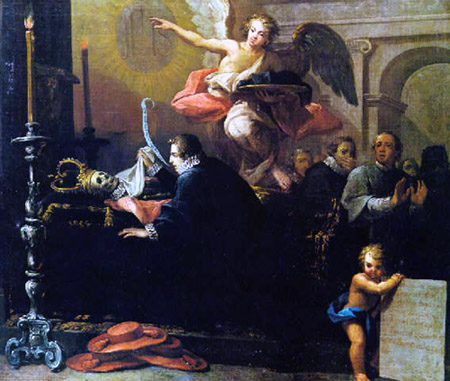
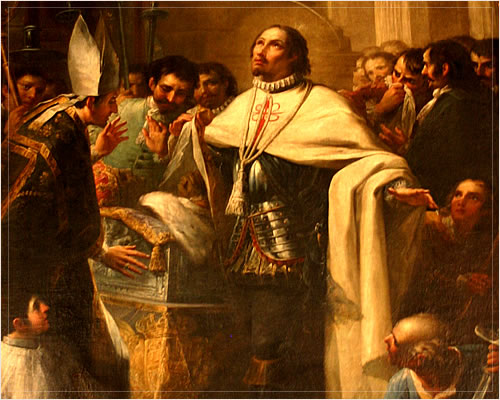
The Almighty, to draw His servant entirely away from the world, sent him several severe maladies, which made him recognise the instability of all that is earthly.   He became more fully aware of this after the death of the Empress, whose wondrous beauty was everywhere extolled.   By the order of the Emperor, it became the duty of Francis to escort the remains to the royal vault at Granada.   There the coffin was opened before the burial took place, and the sight that greeted the beholders was most awful.   Nothing was left of the beautiful Empress but a corpse, so disfigured, that all averted their eyes, whilst the odour it exhaled was so offensive that most of the spectators were driven away.   St. Francis Borgia 01

St Francis was most deeply touched, and when, after the burial, he went into his room, prostrated himself before the crucifix and having given vent to his feelings, he exclaimed: “No, no, my God! in future I will have no master whom death can take from me.”   He then made a vow that he would enter a religious order, should he survive his consort.   He often used to say afterwards:  “The death of the Empress awakened me to life.”   When Francis returned from Granada the Emperor created him Viceroy of Catalonia and in this new dignity the holy Duke continued to lead rather a religious than a worldly life.   He had a fatherly care for his subjects and every one had at all hours admittance to him.   Towards the poor he manifested great kindness.   He daily gave four or five hours to prayer.   He fasted almost daily and scourged himself to blood.   He assisted at Mass and received Holy Communion every day.   When he heard that disputes had arisen among the theologians at the universities, in regard to the frequent use of Holy Communion, he wrote to St. Ignatius, at Rome and asked his opinion on the subject. St. Ignatius wrote back to him, approving of the frequent use of Holy Communion and strengthening him in his thoughts about it.

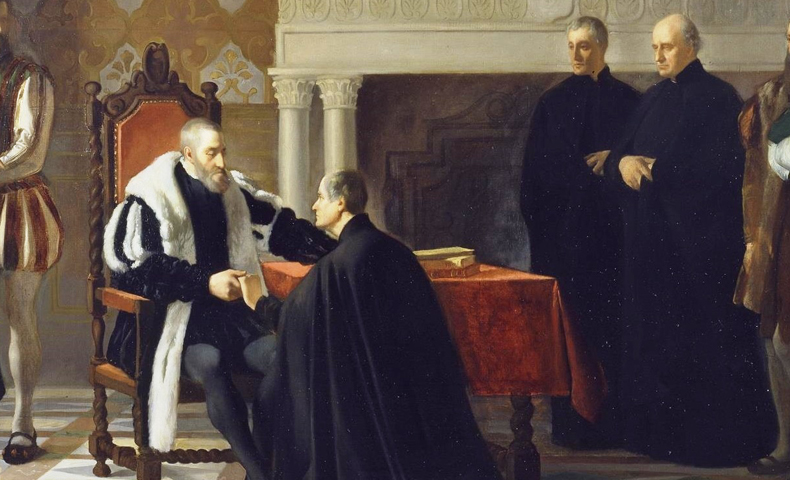
Meanwhile, the death of his father brought upon him the administration of his vast estates, without, however, in the least changing his pious manner of living.   Soon after his pious consort, who was his equal in virtue, became sick.   Francis prayed most fervently to God for her recovery.   One day, while he was thus praying, he heard an interior voice, which said these words: “If thou desirest that thy consort should recover, thy wish shall be fulfilled but it will not benefit thee.”   Frightened at these words, he immediately conformed his own will in all things to the Divine will.   From that moment the condition of the Duchess grew worse and she died, as she had lived, piously and peacefully.   St Francis, remembering his vow, determined to execute it without delay. Taking counsel of God and of his confessor, he chose the Society of Jesus, which had recently been instituted.   Writing to St. Ignatius, he asked for admittance, which was cheerfully granted.   But, to settle his affairs satisfactorily, he was obliged to remain four years longer in his offices.  Having at length, by the permission of the Emperor, resigned his possessions to his eldest son, he took the religious habit and proceeded to Rome. Scarcely four months had elapsed since his arrival, when he was informed that the Pope wished to make him a cardinal;  and, to avoid this dignity, he returned to Spain.   Being ordained priest, he said his first Mass in the chapel of the Castle of Loyola, where St Ignatius had been born;  and then spent a few years in preaching and instructing the people.   It would take more space than is allowed to us to relate how many sinners he converted, and how much he laboured for the honour of God and the salvation of souls.Carlos V receives a visit from Saint Francis Borgia in Yuste

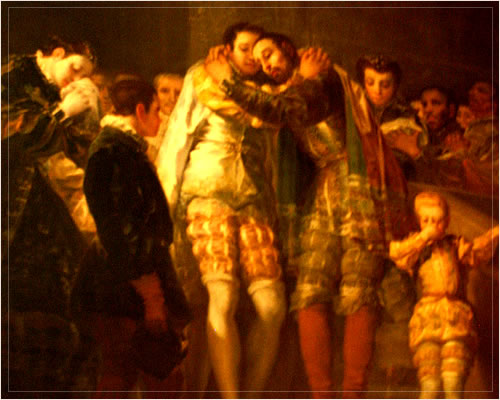
St. Francis Borgia saying goodbye to his family, GOYA
Saying goodbye to his family

While he preferred a quiet life of solitude, the Jesuits felt differently and promoted him so that he could use his great administrative talents for the church.   In 1554, St Ignatius appointed Francis commissary for Spain, where he founded twelve colleges and a novitiate.   The Jesuits chose Francis as their general in 1565.   His consolidation of the society and expansion of its ministry has caused him to be recognised as the second founder of the order.   He established disciplined novitiates in every Jesuit province, writing regulations and books of spiritual instruction for them.

Francis created a new Jesuit base in Poland and strengthened the community’s work in Germany and France.   Between 1566 and 1572 he launched the Jesuit mission to Spanish colonies in Florida, Mexico and Peru.   He maintained contact with the missioners by letter, advising them about their own spiritual lives and counseling them on strategy. Following is an excerpt from his correspondence:

“We must perform all our works in God and refer them to His glory so that they will be permanent and stable.   Everyone—whether kings, nobles, tradesmen or peasants—must do all things for the glory of God and under the inspiration of Christ’s example. . . . When you pray, hear Mass, sit at table, engage in business and when at bedtime you remove your clothes—at all times crave that by the pain which He felt when He was stripped just before His crucifixion, He may strip us of our evil habits of mind.   Thus, naked of earthly things, we may also embrace the cross.

Wherever our brethren may be, let their first care be for those already converted.   Their first aim must be to strengthen these in the faith and to help them save their souls.   After this they may convert others not yet baptised.   But let them proceed prudently and not undertake more than they can carry through.   It is not desirable for them to hurry here and there to convert heathen with whom they cannot afterwards keep in touch.   It is better to advance step by step and consolidate conquests already made. . . . They are not to risk their lives unnecessarily in excursions among unconquered people.   The swift loss of life in God’s service may be advantageous for them.   However, it is not for the greater good of the many for there are only a few labourers for the vineyard and it is difficult to replace them.”

His successes during the period 1565-1572 have caused historians to describe Francis as the greatest General after Saint Ignatius.   He founded the Collegium Romanum, which was to become the Gregorian University in Rome, advised kings and popes and closely supervised all the affairs of the rapidly expanding order.   Yet, despite the great power of his office, Francis led a humble life and was widely regarded in his own lifetime as a saint.

In 1571 the pope sent Francis to Spain and Portugal to help build an alliance against the Turks.   He grew increasingly ill on this ambassadorial trip and died after returning to Rome in 1572.

Francis_Borgia

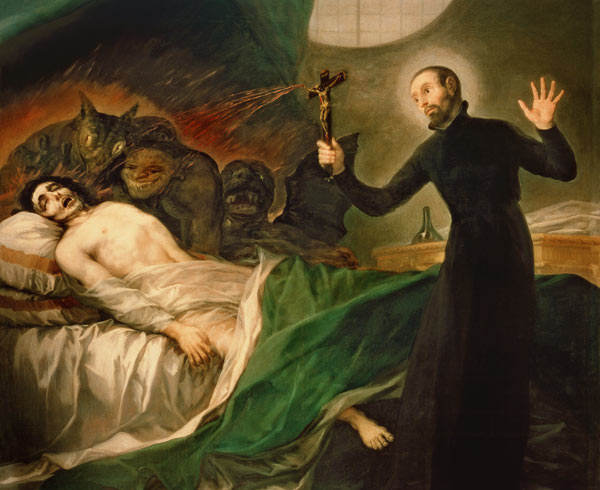
ST FRANCIS BORGIA - GOYA

San_Francisco_de_BorjaSaint Francis Borgia

Posted in Against STORMS, EARTHQUAKES, THUNDER & LIGHTENING, FIRES, DROUGHT / NATURAL DISASTERS, MORNING Prayers, Of and For PEACE, SAINT of the DAY, The APOSTLES & EVANGELISTS

Saint of the Day – St Barnabas the Apostle, Son of Encouragement – 11 June

Saint of the Day – 11 June –  St Barnabas the Apostle – his name means  “Son of Encouragement.”   Patronages – Cyprus, Antioch, against hailstorms, invoked as peacemaker.

Say the word “Apostles” and most people will respond, “the twelve.”   By which, they mean the twelve-become-eleven-and-then-twelve-again:  Simon Peter, Andrew, James (son of Zebedee) John, Philip, Bartholomew, Thomas, Matthew, James (Son of Alphaeus), Jude (Thaddeus), Simon the Zealot, Judas and Matthias, who replaced Judas.   How, then, can the Church celebrate the Feast of St. Barnabas the Apostle every 11 June?

There are more than twelve apostles. The list includes Paul, Luke, John Mark, Lazarus and, today’s saint, Barnabas, who, like Paul, his travelling and preaching companion, was probably converted after Christ’ death, resurrection and ascension. We first hear of Barnabas in Acts 4:36-37:

“There was a Levite, a native of Cyprus, Joseph, to whom the apostles gave the name Barnabas (which means “son of encouragement”).   He sold a field of that belonged to him, then bought the money and laid it at the apostles’ feet.”
The story of Barnabas is told just before the story of Ananias and Sapphira, who kept back part of the proceeds from land they, like Barnabas, had sold and then, unlike Barnabas, lied to Peter about it.   Ananias and Sapphira wanted to be thought of as faithful without doing the work of faithfulness.   It’s instructive that Luke links their stories.

1128

From the day of his conversion Barnabas was faithful.   He was generous and open to all who came seeking Christ.   When the elders of the Jerusalem Church doubted Paul’s conversion, Barnabas vouched for him.   Born, like Paul, a Jew, Barnabas welcomed gentile converts and did not insist that their conversion be two-fold, first to Judaism and only then to Christianity.   With Paul, he spent a year in Antioch preaching Christ crucified to the gentiles.   From Antioch, Barnabas and Paul went to Cyprus and Asia Minor.   They had only one message: Jesus of Nazareth was crucified, died and was buried.   On the third day he rose again and appeared to the ones who have been sent out to tell this good news to all the world.

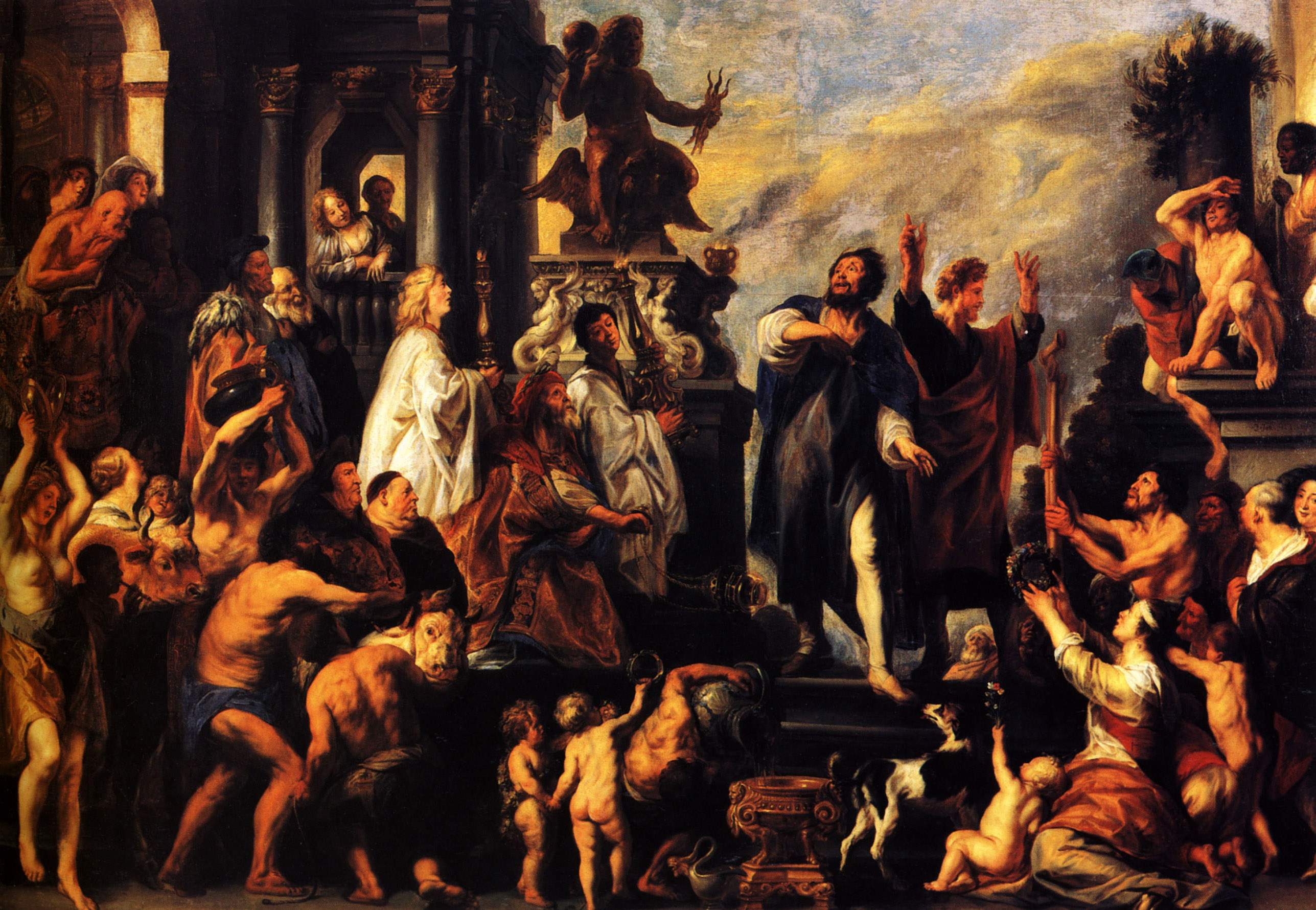
the-apostles-st-paul-and-st-barnabas-at-lystra-1645
← → The Apostles, St. Paul And St. Barnabas At Lystra Jacob Jordaens – 1645

Barnabas and Paul finally separated in their ministries, while remaining apostles of the one Catholic Church, over Paul’s insistence that Mark not travel with them again.

In death, however, the “Apostles to the Gentiles” were reunited. Mark is said to have buried Barnabas after he was killed by a mob in Cyprus around the year 62.   St Paul and St Mark were, in turn, reconciled before St. Paul’s martyrdom five years later.

He is said to have been stoned to death in Salamis in the year 61.

Paul writes of him in first letter to the church at Corinth, where he makes clear that both he and Barnabas have to work for a living.   So we know he was preaching and teaching as late as 56 or 57 A.D.   Some sources say he was the first Bishop of Milan.   In Acts 11:24, St. Luke called him “a good man, full of the Holy Spirit and of faith.”   Luke writes as a result of Barnabas’ preaching in Antioch, “a great many people were brought to the Lord.”

Sometimes the stories of martyrdoms are so dramatic and so compelling that we focus on the death of the saint rather than the life.   Barnabas calls us to consider the way we live, and then through this way, preparing for our deaths.

St Barnabas, pray for us!

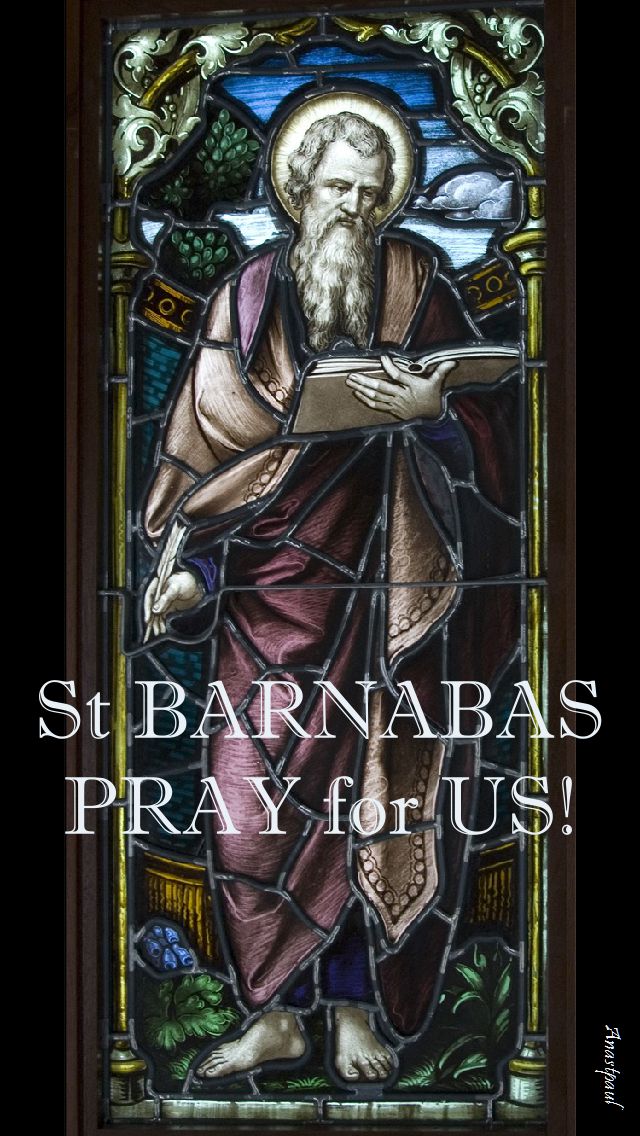
st barnabas pray for us

Posted in Against EPIDEMICS, Against FAMINE, Against SORE THROATS, COUGHS, WHOOPING COUGH,, Against STORMS, EARTHQUAKES, THUNDER & LIGHTENING, FIRES, DROUGHT / NATURAL DISASTERS, Of GARDENERS, Horticulturists, Farmers, PATRONAGE - OF DOGS and against DOG BITES and/or RABIES, SAILORS, MARINERS, NAVIGATORS, SAINT of the DAY

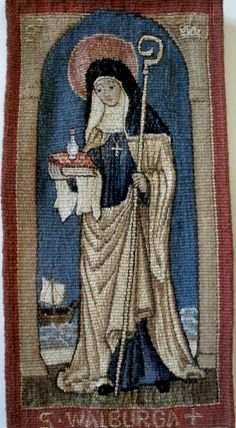
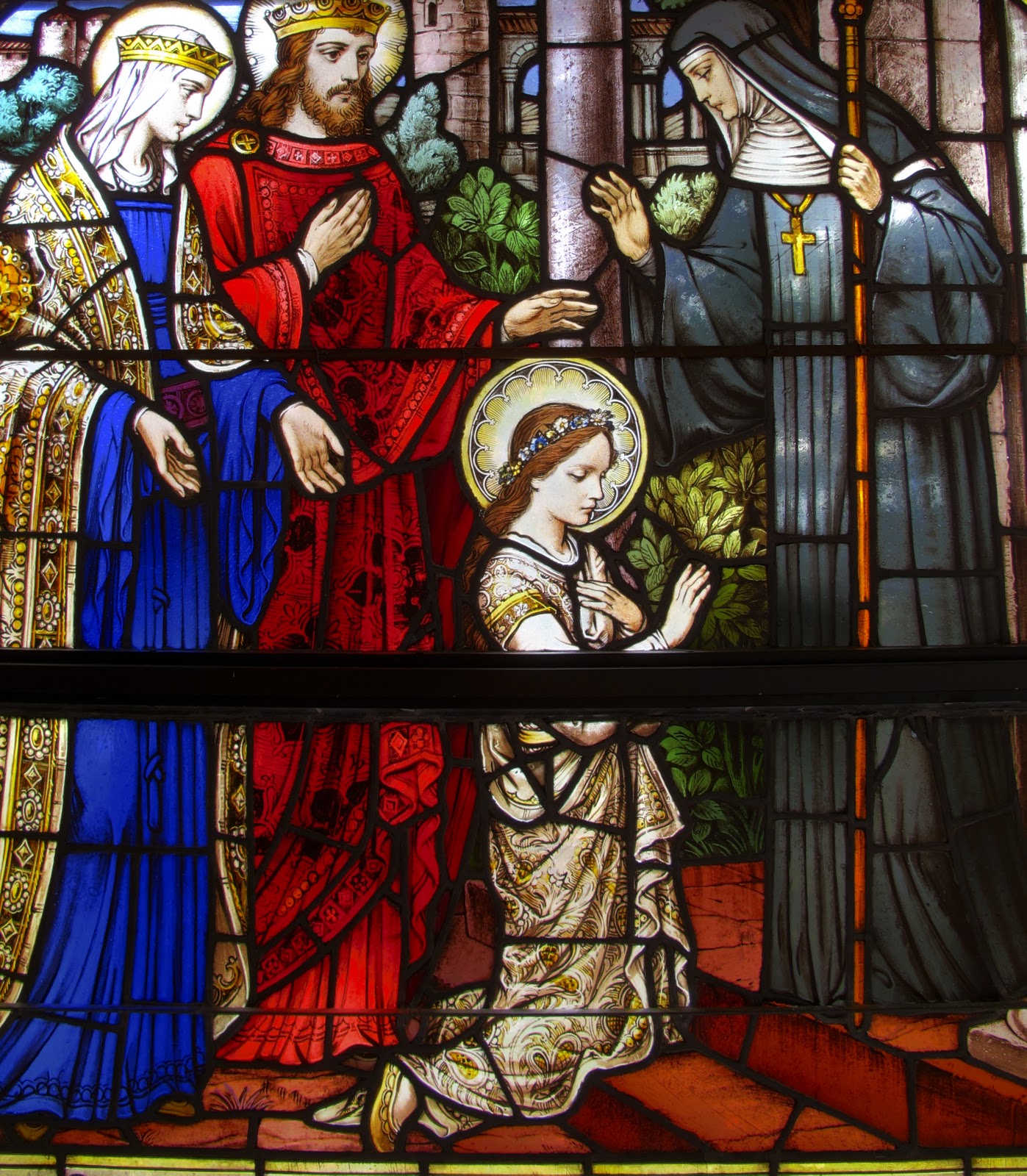
Saint of the Day – 25 February – St Walburga (c 710-779)

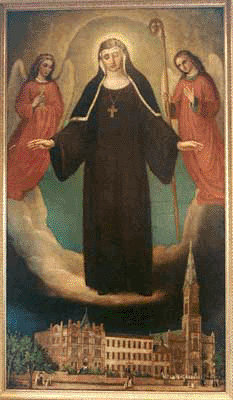
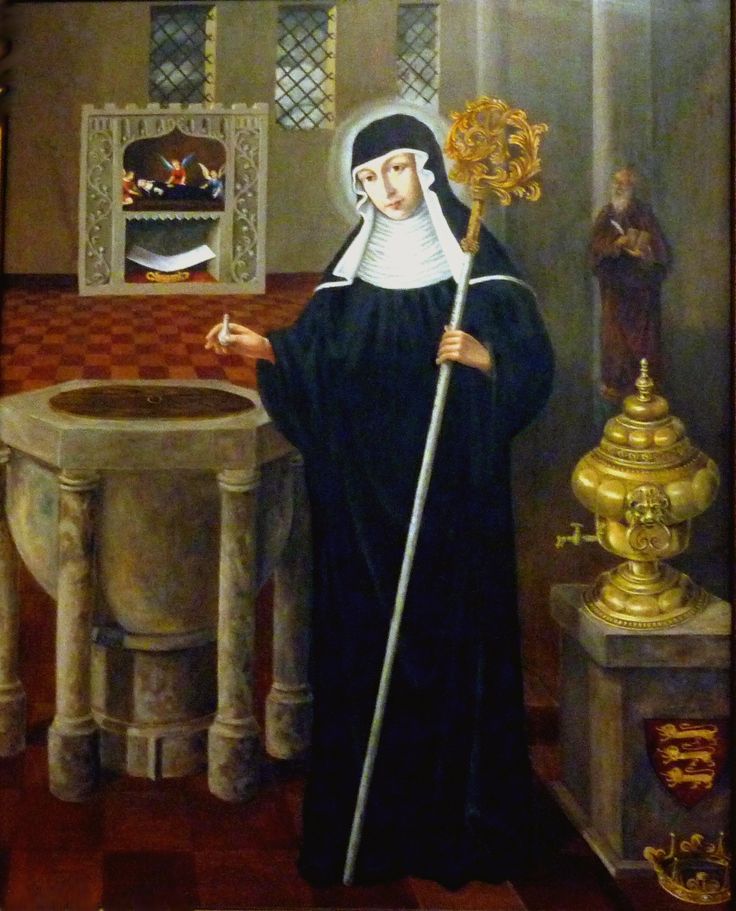
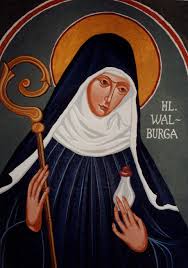
Saint of the Day – 25 February – St Walburga (c 710-779) Nun and Missionary. Daughter of St Richard the King. Sister of St Willibald and St Winebald, niece of St Boniface.  Also known as:-Auboué, Avangour, Avongourg, Bugga, Falbourg, Gaubourg, Gauburge, Gaudurge, Gualbourg, Valborg, Valburg, Valpurge, Valpuri, Vaubouer, Vaubourg, Walbourg, Walburg, Walburge, Walpurd, Walpurga, Walpurgis, Waltpurde, Warpurg – Religious/Missionary – Patronages – against coughs,,against dog bites, against famine, against hydrophobia (as a symptom of) rabies, against mad dogs, against plague/epidemics, against storms, sailors, farmers, harvests, Eichstätt, Germany, Diocese of, Plymouth, England, Diocese of and  4 Cities. Additional Memorials – 12 October (translation of relics to Eichstätt), 24 September (translation of relics to Zutphen).

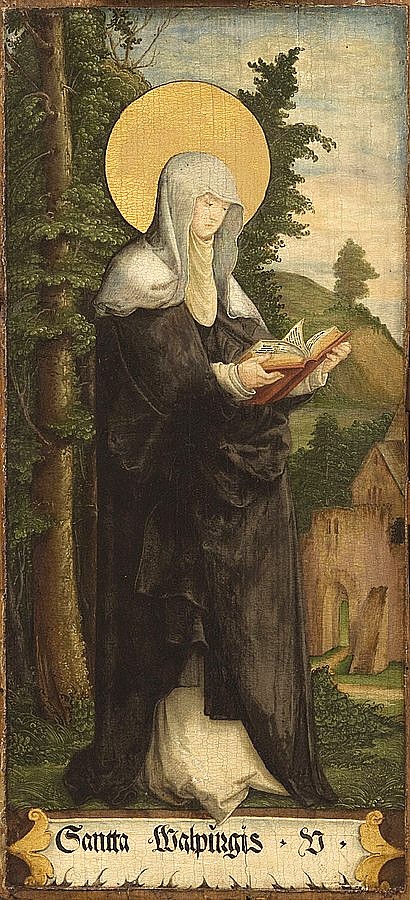
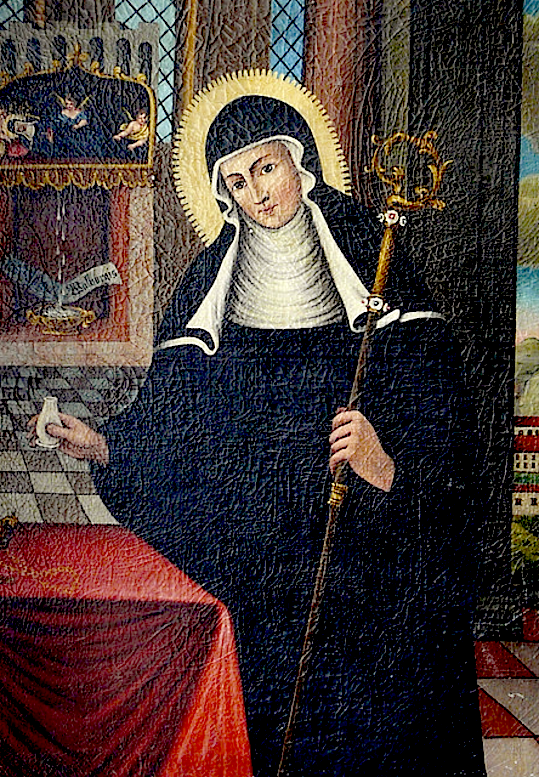
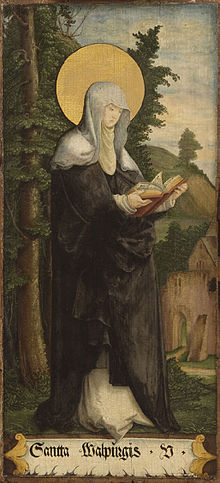
Painting by the Master of Meßkirch, c 1535–1540.

St Walburga was English, the sister of two associates of St Boniface in evangelising Germany and the Lowlands.  She was the daughter of St.Richard the Pilgrim, a West Saxon chieftain and Winna, sister of St. Boniface, Apostle to Germany. She had at least three siblings; two of her brothers are known by name, St Willibald and St Winibald.

In 720 her father and two older brothers went on a pilgrimage to Rome. Her father died at Lucca, Italy, but the brothers reached Rome where St. Winibald (c.701-761) became a monk, while St. Willibald (c.700-787) went on to the Holy Land.

Walburga was educated at Wimborne Monastery in Dorset, where she became a nun. In 748, she was sent with St. Lioba to Germany to help St. Boniface in his missionary work. She spent two years at Bishofsheim, after which she became Abbess of the monastery at Heidenheim founded by her brother St. Winebald.    At her brother’s death in 761, St. Walburga was appointed Abbess of both monasteries by her other brother St. Willibald, who was then Bishop of Eichstadt.    She remained superior of both men and women until her death on February 25, 779.

She was buried first at Heidenheim but her body was tranferred next to that of her brother, St. Winebald, at Eichstadt. n the 870s, Walpurga’s remains were transferred to Eichstätt. In Finland, Sweden, and Bavaria, her feast day commemorates the transfer of her relics on May 1.   At present the most famous of the oils of saints is the Oil of Saint Walburga (Walburgis oleum).   It flows from the stone slab and the surrounding metal plate on which rest the relics of Saint Walburga in her church in Eichstädt in Bavaria.   The fluid is caught in a silver cup, placed beneath the slab for that purpose, and is distributed among the faithful in small vials by the Sisters of Saint Benedict, to whom the church belongs.   A chemical analysis has shown that the fluid contains nothing but the ingredients of water. Though the origin of the fluid is probably due to natural causes, the fact that it came in contact with the relics of the saint justifies the practice of using it as a remedy against diseases of the body and the soul.   Mention of the oil of Saint Walburga is made as early as the ninth century by her biographer Wolfhard of Herrieden. – from the Catholic Encyclopedia article Oil of Saints

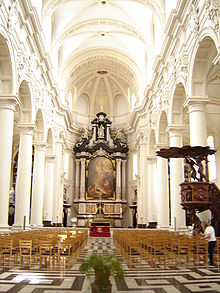
Second-last – Painting by the Master of Meßkirch, c. 1535–40.   Last image – The St. Walburga Church in Bruges was originally a Jesuit church


Posted in Against STORMS, EARTHQUAKES, THUNDER & LIGHTENING, FIRES, DROUGHT / NATURAL DISASTERS, Of Catholic Education, Students, Schools, Colleges etc, SAINT of the DAY

Saint of the Day -10 February – St Scholastica

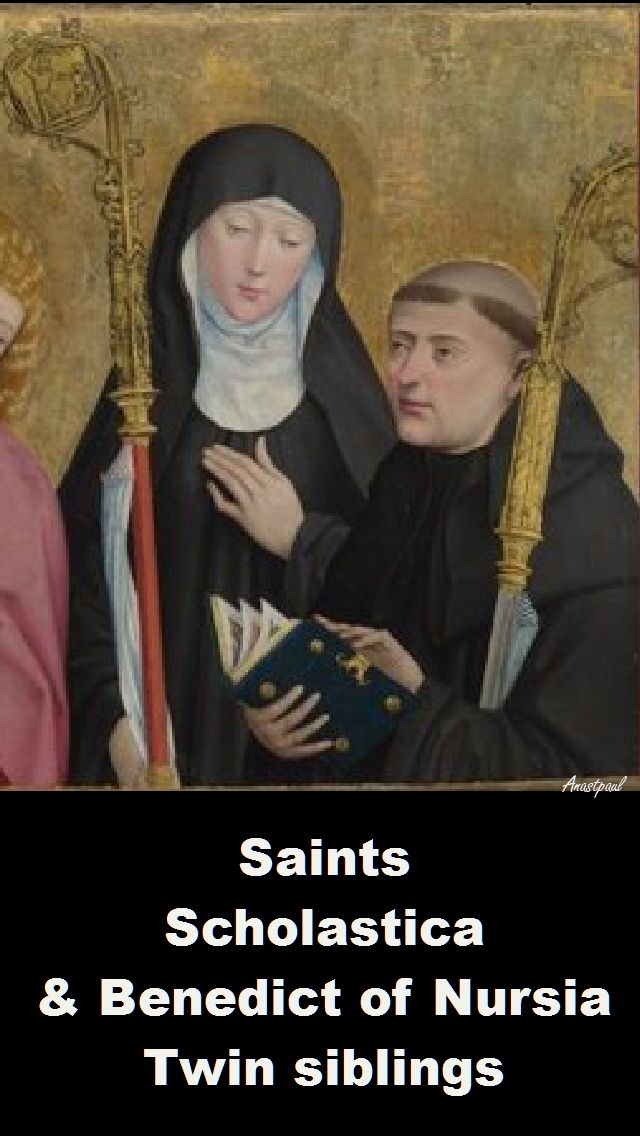
Saint of the Day -10 February – St Scholastica Virgin and Religious – (c482-547) Patron of schools – tests, reading; convulsive children; nuns; invoked against storms, lightening and rain; City of Le Mans.

Scholastica was born in 480 in Nursia, Umbria, of wealthy parents and according to Gregory the Great’s Dialogues, was dedicated to God from a young age.   She and her twin brother Benedict were brought up together until the time he left to pursue studies in Rome.

131029691288fb5eb308d48c66351305

A young Roman woman of Scholastica’s class and time would likely have remained in her father’s house until marriage (likely arranged) or entry into religious life.   But wealthy women could inherit property, divorce and were generally literate.   On occasion several young women would live together in a household and form a religious community.

Benedictine tradition holds that Scholastica lived in a convent at Plumbariola about five miles from Monte Cassino and that this was the first “Benedictine” convent.   However, it has been suggested that it is more likely that she lived in a hermitage with one or two other religious women in a cluster of houses at the base of Mount Cassino where there is an ancient church named after her.   Ruth Clifford Engs notes that since Dialogues indicates that Scholastica was dedicated to God at an early age, perhaps she lived in her father’s house with other religious women until his death and then moved nearer to Benedict.

The most commonly told story about her is that she would, once a year, go and visit her brother at a place near his abbey and they would spend the day worshiping together and discussing sacred texts and issues.

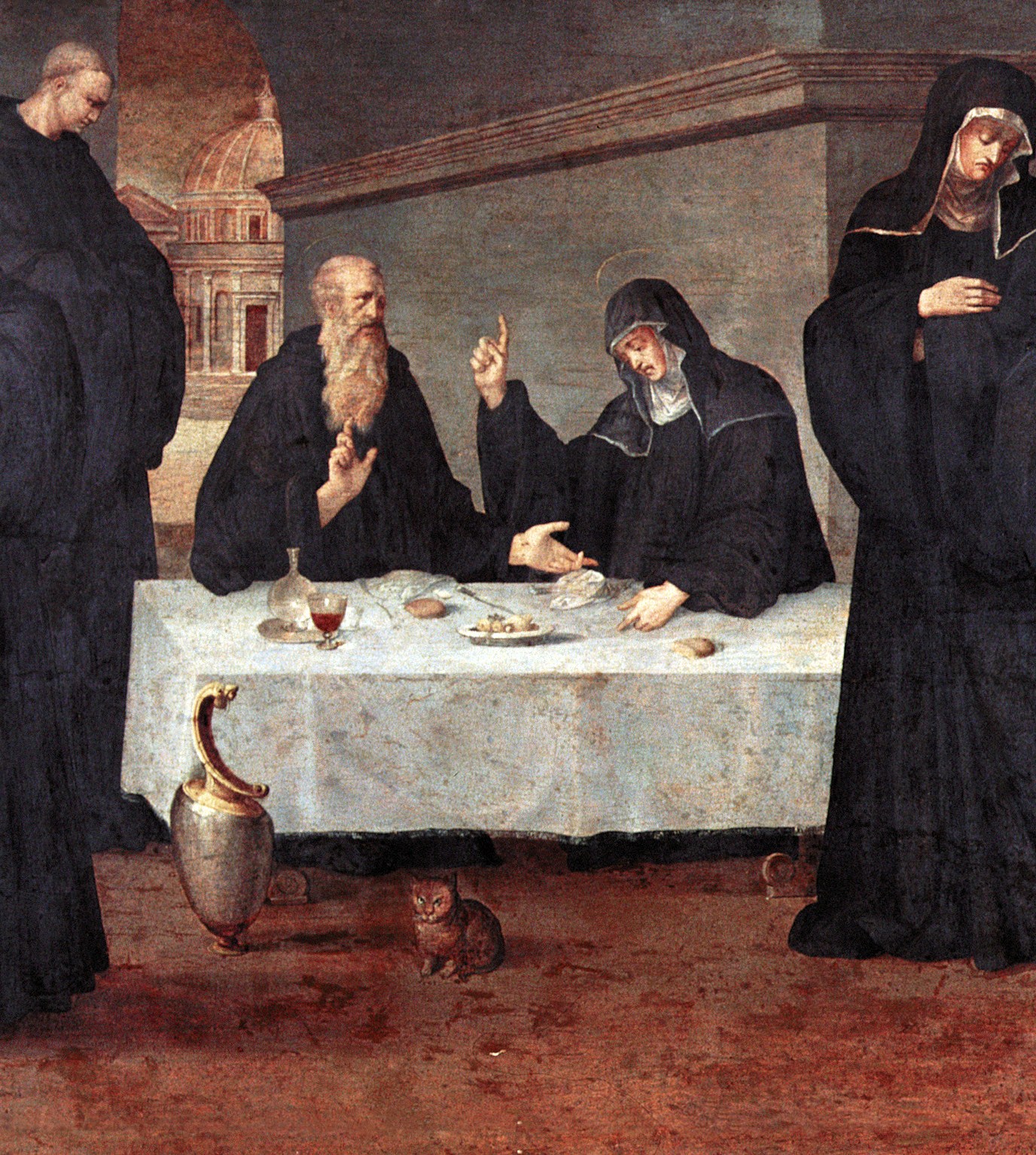
One day they had supper and continued their conversation.   When Benedict indicated it was time for him to leave, perhaps sensing the time of her death was drawing near, Scholastica asked him to stay with her for the evening so they could continue their discussions.   Not wishing to break his own Rule, Benedict refused, insisting that he needed to return to his cell.   At that point, Scholastica closed her hands in prayer and after a moment, a wild storm started outside of the guest house in which they were housed.   Benedict asked, “God forgive you, Sister.What have you done?”, to which she replied, “I asked you and you would not listen; so I asked my God and He did listen. So now go off, if you can, leave me and return to your monastery.”   Benedict was unable to return to his monastery, and they spent the night in discussion.

scholastica-and-benedict

According to Gregory’s Dialogues, three days later, from his cell, he saw his sister’s soul leaving the earth and ascending to heaven in the form of a shining white dove.   Benedict had her body brought to his monastery, where he caused it to be laid in the tomb which he had prepared for himself.