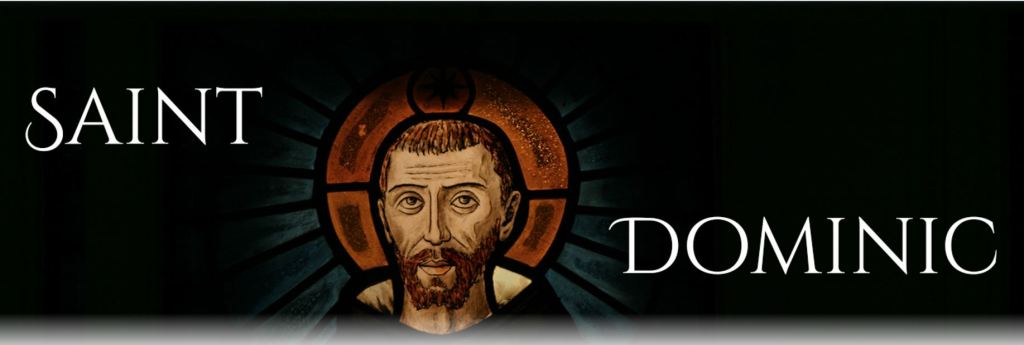
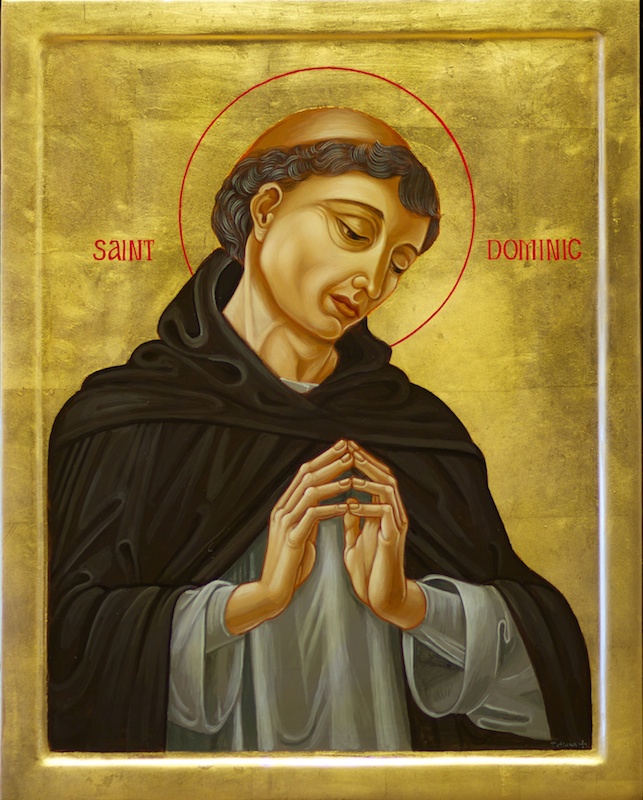
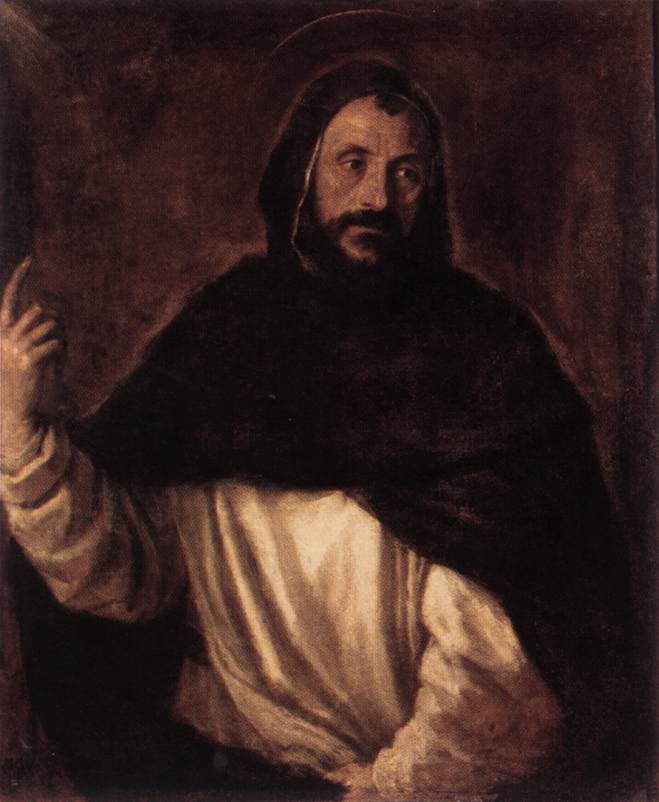
Saint of the Day – 4 August – St Dominic de Guzman OP (1170-1221) Confessor, Founder of the Dominican Order of Preachers – Priest, Founder, Teacher, Preacher, Mystic, Miracle-Worker, Apostle of the Holy Rosary
The Roman Martyrology states today: “At Bologna, St Dominic, Confessor, Founder of the Order of Friars Preachers, most renowned for sanctity and learning. He preserved his chastity unsullied to the end of his life and by his great merits, raised three persons from the dead. After having repressed heresies by his preaching and instructed many in the religious and Godly life, he rested in peace on the 6th of this month. His Feast, however, is celebrated on this day by decree of Pope Paul IV.”
The Virtues and Gifts of Saint Dominic (By the Order of Preachers, England and Wales)
Dominic was of middling height and slender build. His face was ruddy and his hair and beard had a reddish colour. His eyes were striking and he was said to have a beautiful face and one, which seemed to radiate a certain light. He was intelligent but sensitive, usually cheerful except when moved, as quite often occurred, to tears, by people’s suffering. He was known as a man of humility and purity, of prayer and penance and of deep compassionate love.
Dominic was very disciplined with himself but merciful with others. He was noted for his peace and joy. He had great patience and courage. He made good friendships with both men and women and was a good companion, enjoying others and being enjoyed by them.
He was generous, putting God and others before his own needs and wants. He loved Jesus and the Gospel, always carrying some of the Sacred Scriptures (Matthew’s Gospel and Paul’s letters, in particular) with him. He had a great passion for helping people know and love Jesus and so ‘save their soul.s’ He had great energy and commitment to the works of Jesus, his Master and His God.
When Dominic preached, His passion was so patent that, he often moved people to tears for their errors and sins. He explained the Truth of Jesus Christ so well that his listeners were eager to confess and repent.
Dominic’s life and conversation were so Godly, so full of the Lord and heavenly thoughts, that it was said that he only ever spoke to God or about God – yet, he seems to have done this in ways which were warm, appealing, human and attractive to all who heard him.
He was a good leader and a good organiser and good at making sensible laws to organise communities. He trusted others and gave them freedom and opportunities and encouragement to develop and use their gifts. In these ways, he showed himself a true spiritual father. He was also wise and diplomatic. He saw clearly the needs of people in his time and what the Church needed to do and set about bringing this about, in other words, our Saint Dominic was a true Shepherd – never absent, never belittling the problems the faithful faced in their daily lives but assisting them, in many ways, to devoutly submit to the Will of God and learn the great gift of suffering in silence. In all this, Dominic placed himself in the hands of the Holy Ghost
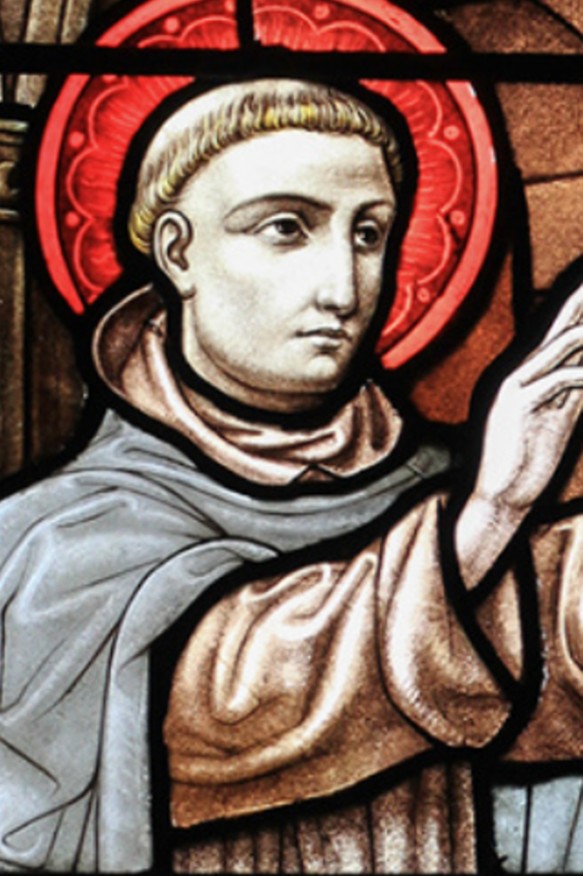
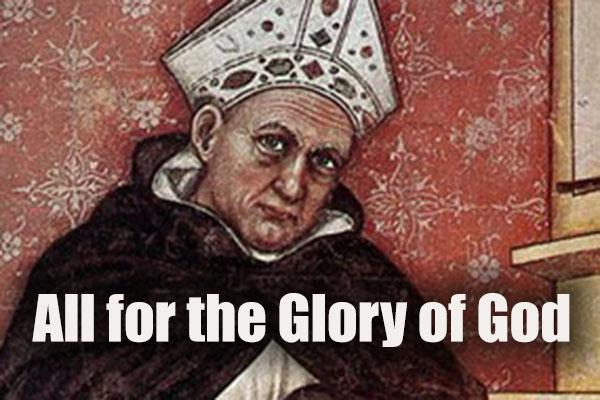
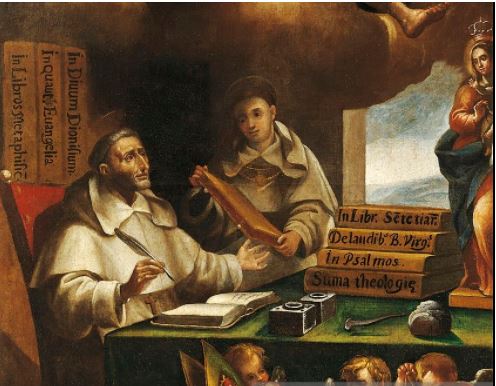
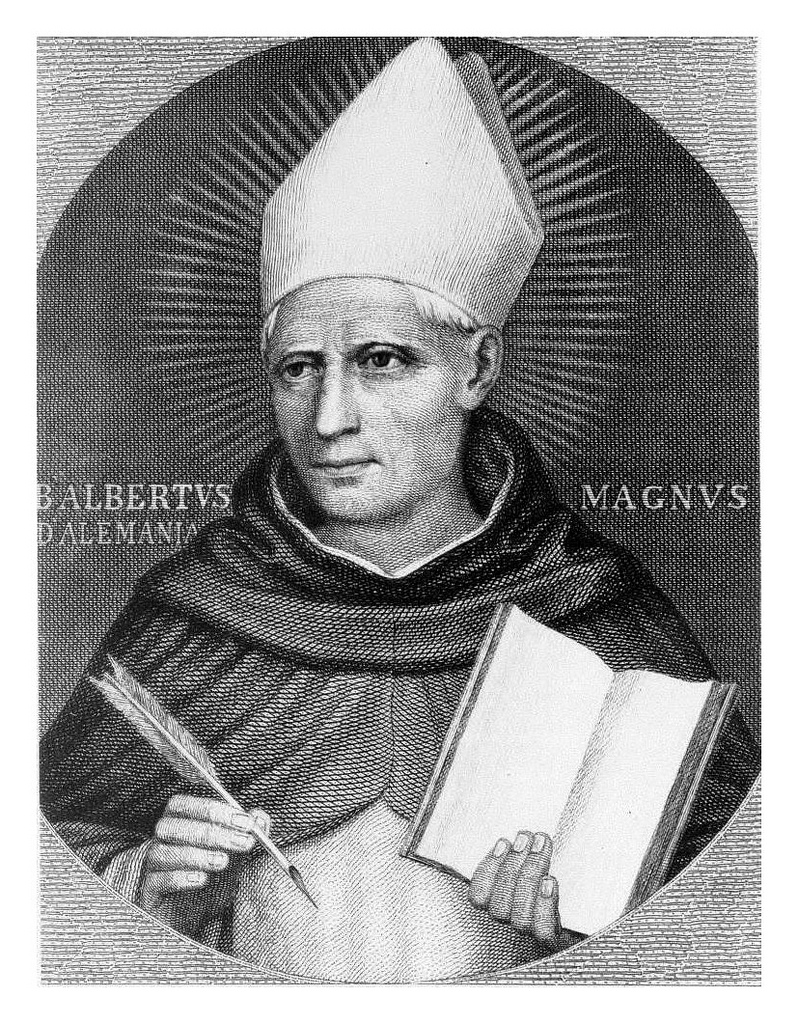
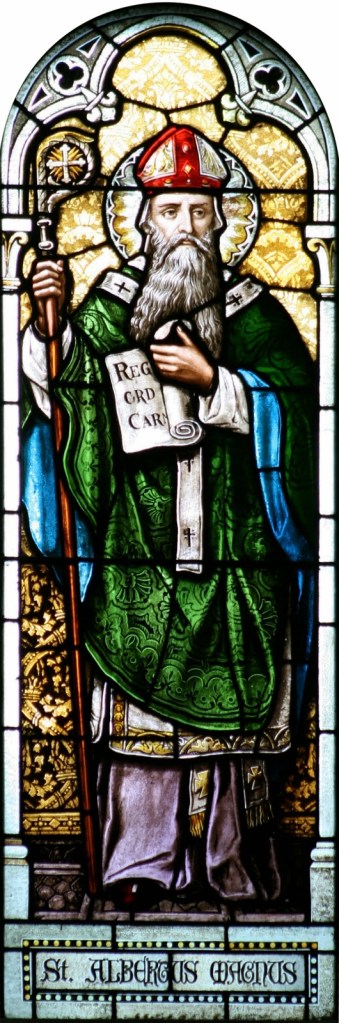
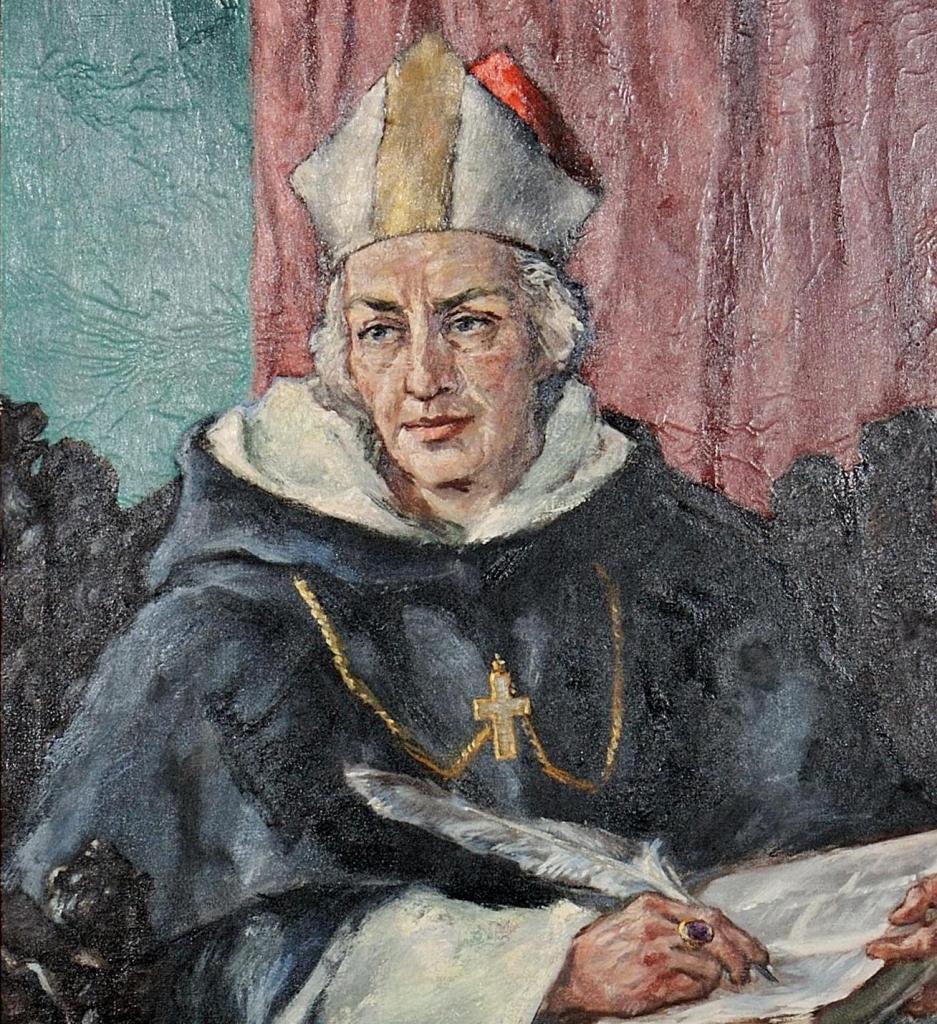
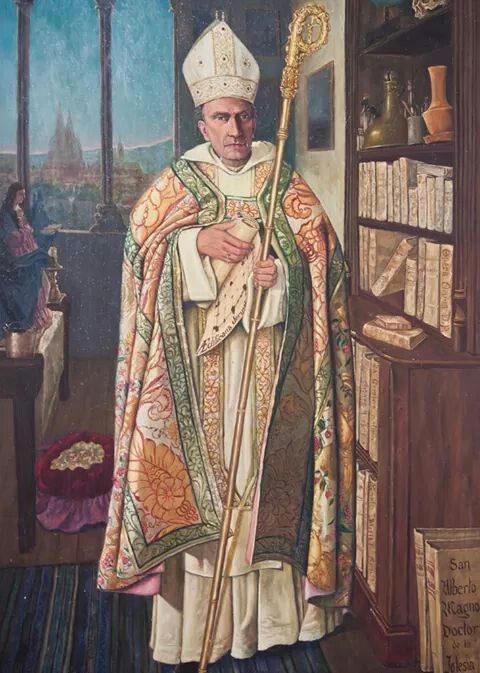
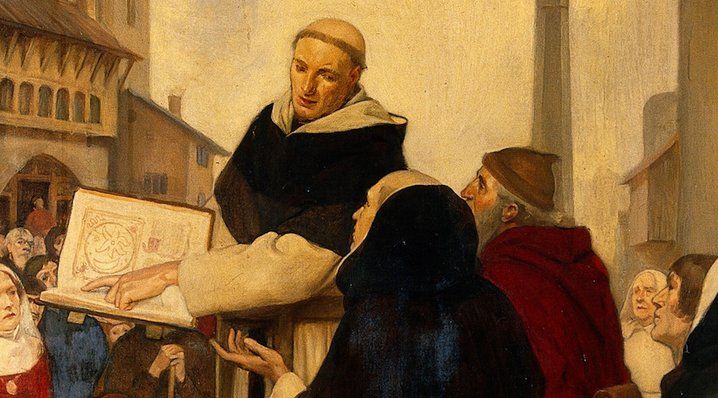
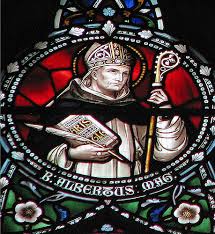
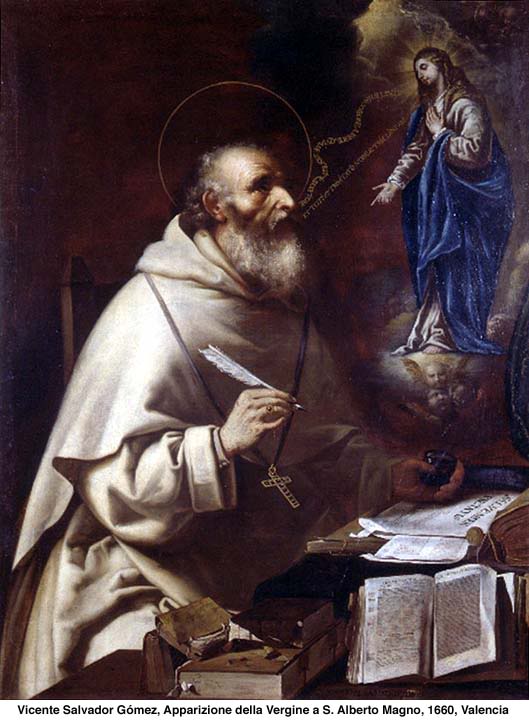
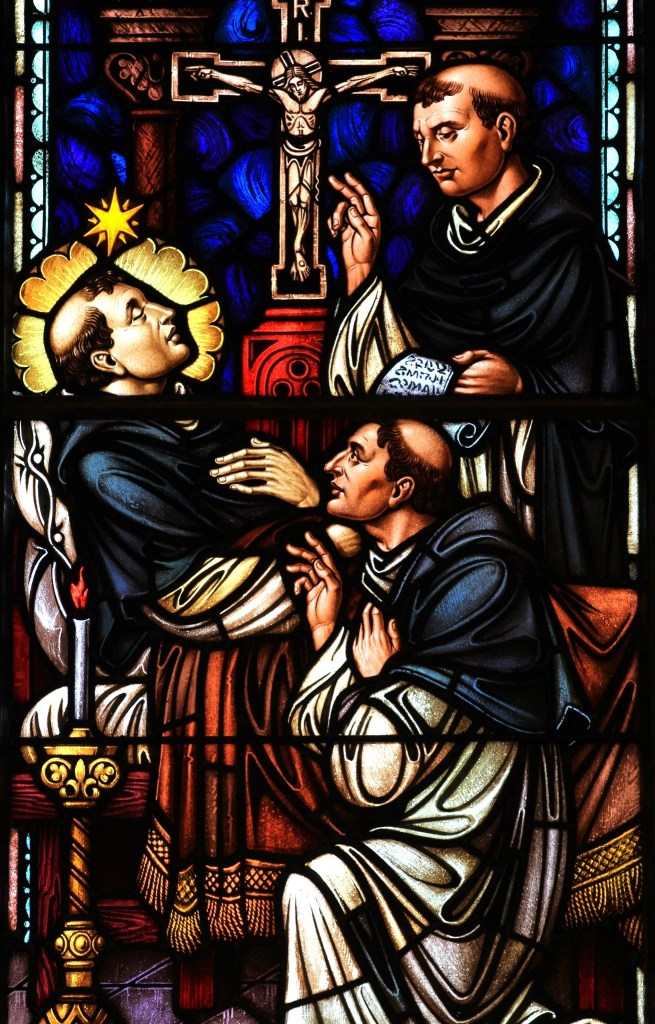
Saint of the Day – 15 November – St ALBERTUS MAGNUS/Albert the Great OP (1200-1280) Bishop, Confessor, Doctor of the Church – Doctor universalis (Universal Doctor) – Priest and Friar of the Order of Preachers,Theologian, Scientist, Philosopher, Teacher, Writer. Born in c 1200 at Lauingen an der Donau, Swabia (part of modern Germany) – 15 November 1280 at Cologne, Prussia (part of modern Germany) of natural causes. Patronages – • Medical Technicians• Natural Sciences• Philosophers• schoolchildren• Scientists (proclaimed on 13 August 1948 by Pope Pius XII) Theology students. Scholars have referred to him as the greatest German philosopher and theologian of the Middle Ages.
Born around 1206 in Launingen, Germany, Albert was educated as a young man at the University of Padua, and joined the Dominican Order in 1223. He spent the following years engaged in various studies and teaching assignments in several German cities, most prominently Cologne. He left Cologne for the University of Paris in 1245.
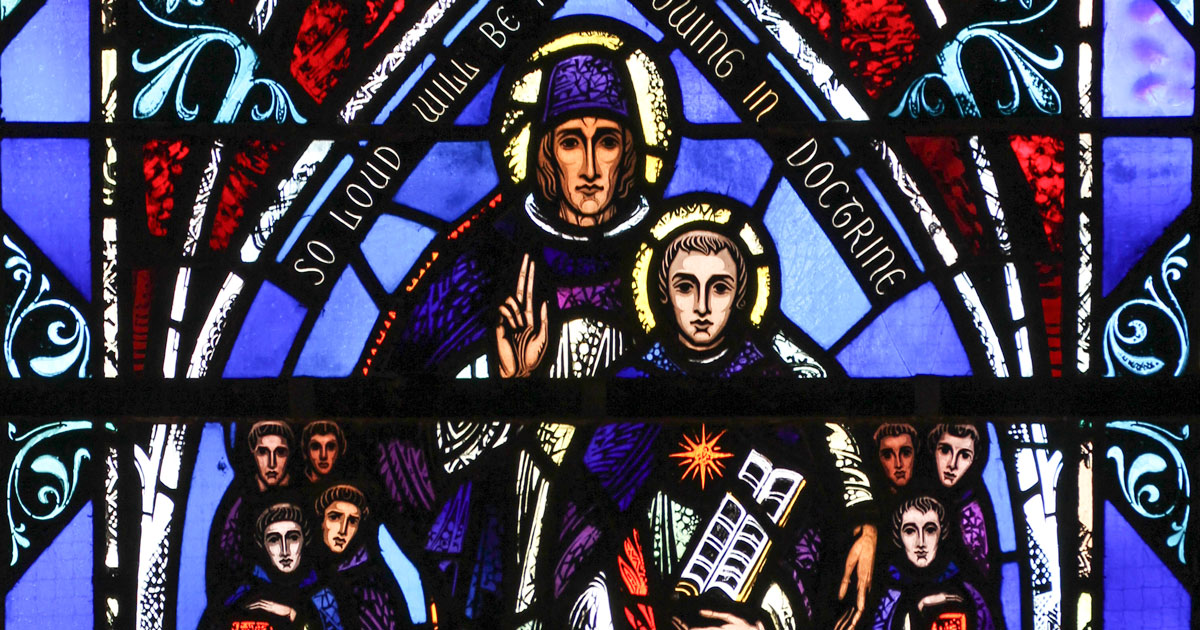
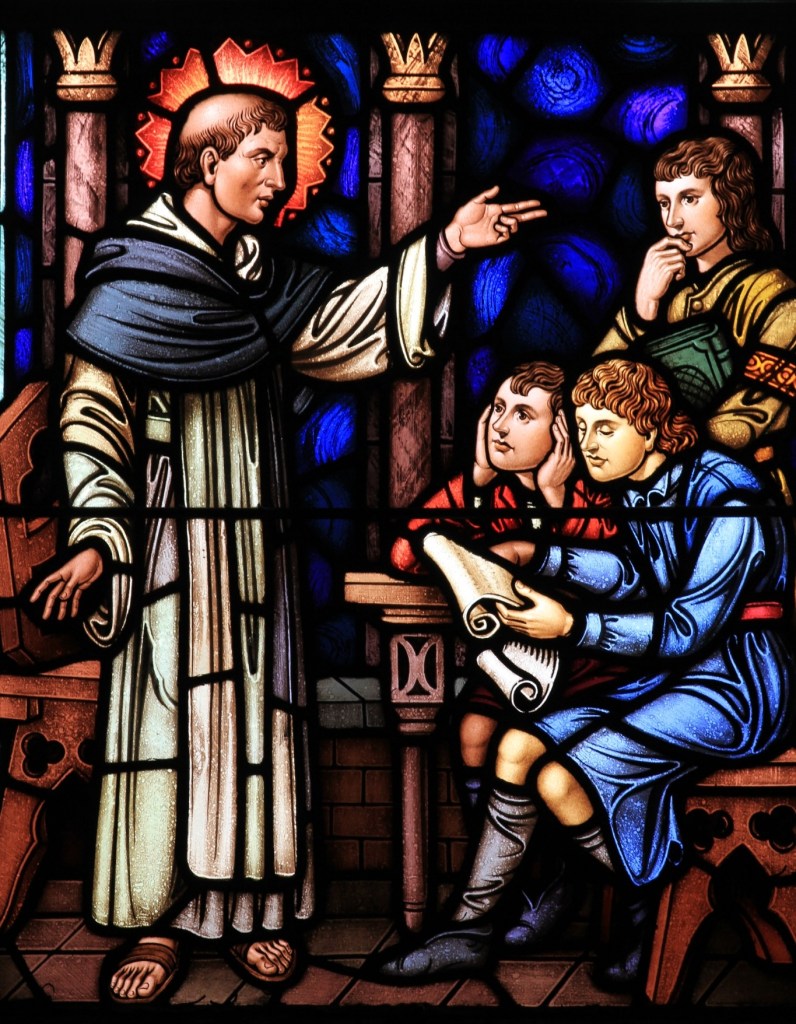
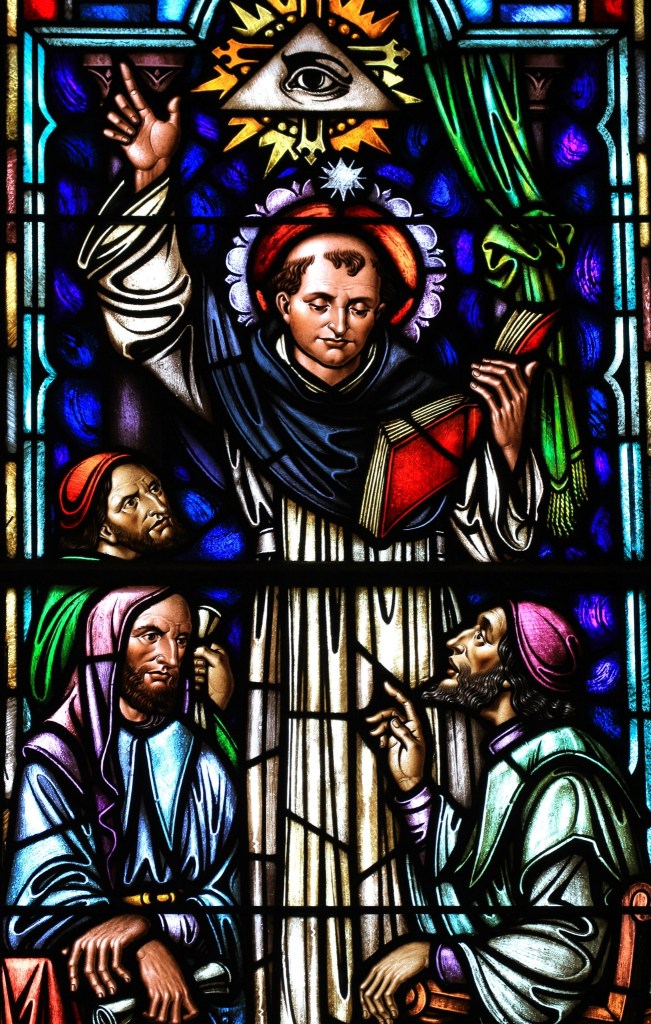
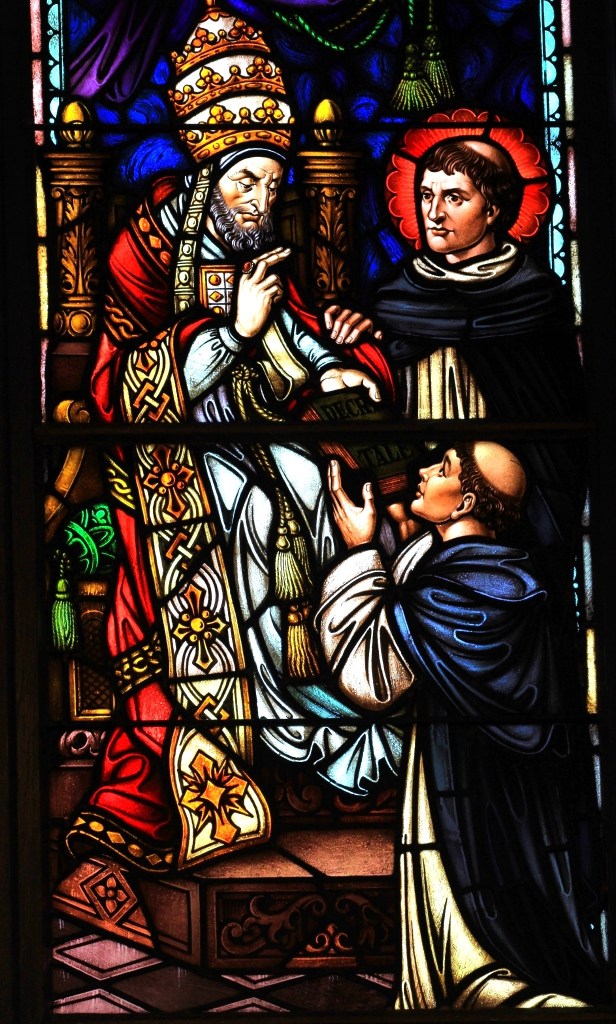
It was there that one of his students, a brilliant if quiet and heavy-set young man was so impressed by him that he later accompanied him back to Cologne and later became his most famous pupil! Albert said of his student, St Thomas Aquinas, after St. Thomas’ remarkable explanation of a difficult treatise, “We call this young man a dumb ox but one day his bellowing in his teaching will be heard throughout the world.”
Not that St Albert wasn’t an intellectual heavyweight in his own right. He was known as Albertus Magnus (Albert the Great). St Albert can truly be called a Renaissance man, a century before the Renaissance actually began! This Dominican friar and bishop was also known for his scholarly contributions to the sciences and philosophy as well as theology. The publication of his complete writings in Paris in 1899 came to 38 volumes and covered his extensive knowledge of such diverse subjects as theology, botany, astronomy, mineralogy, alchemy (the forerunner of chemistry), justice and law among others! He was the first to comment on virtually all of the writings of Aristotle, thus making them accessible to wider academic debate. The study of Aristotle brought him to study and comment on the teachings of Muslim academics, notably Avicenna and Averroes and this would bring him into the heart of academic debate.
In 1254 Albert was made provincial of the Dominican Order and fulfilled the duties of the office with great care and efficiency. During his tenure he publicly defended the Dominicans against attacks by the secular and regular faculty of the University of Paris, commented on John the Evangelist and answered what he perceived as errors of the Islamic philosopher Averroes.
In 1259 he took part in the General Chapter of the Dominicans at Valenciennes together with Thomas Aquinas, masters Bonushomo Britto, Florentius, and Peter (later Pope Innocent V) establishing a ratio studiorum or program of studies for the Dominicans that featured the study of philosophy as an innovation for those not sufficiently trained to study theology. This innovation initiated the tradition of Dominican scholastic philosophy put into practice, for example, in 1265 at the Order’s studium provinciale at the convent of Santa Sabina in Rome, out of which would develop the Pontifical University of Saint Thomas Aquinas, the “Angelicum”
In 1260 Pope Alexander IV made him bishop of Regensburg, an office from which he resigned after three years. During the exercise of his duties he enhanced his reputation for humility by refusing to ride a horse, in accord with the dictates of the Order, instead traversing his huge diocese on foot. This earned him the affectionate sobriquet “boots the Bishop” from his parishioners. In 1263 Pope Urban IV relieved him of the duties of bishop and asked him to preach the eighth Crusade in German-speaking countries. After this, he was especially known for acting as a mediator between conflicting parties. In Cologne he is not only known for being the founder of Germany’s oldest university there but also for “the big verdict” (der Große Schied) of 1258, which brought an end to the conflict between the citizens of Cologne and the archbishop. Among the last of his labours was the defense of the orthodoxy of his former pupil, Thomas Aquinas, whose death in 1274 grieved Albert (the story that he travelled to Paris in person to defend the teachings of Aquinas can not be confirmed).
After suffering a collapse of health in 1278, he died on 15 November 1280, in the Dominican convent in Cologne, Germany. Since then 15 November 1954, his relics are in a Roman sarcophagus in the crypt of the Dominican St Andreas Church in Cologne. Although his body was discovered to be incorrupt at the first exhumation three years after his death, at the exhumation in 1483 only a skeleton remained.
Pope Pius XI, when he canonised him in 1931, said he had “that rare and divine gift, scientific instinct, in the highest degree.” Like St Thomas, he was very much influenced by Aristotle in seeing the compatibility of natural sciences and philosophy with theology. Also like his star pupil, he rightly saw God’s hand behind all creation!
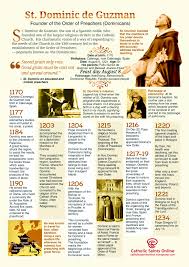
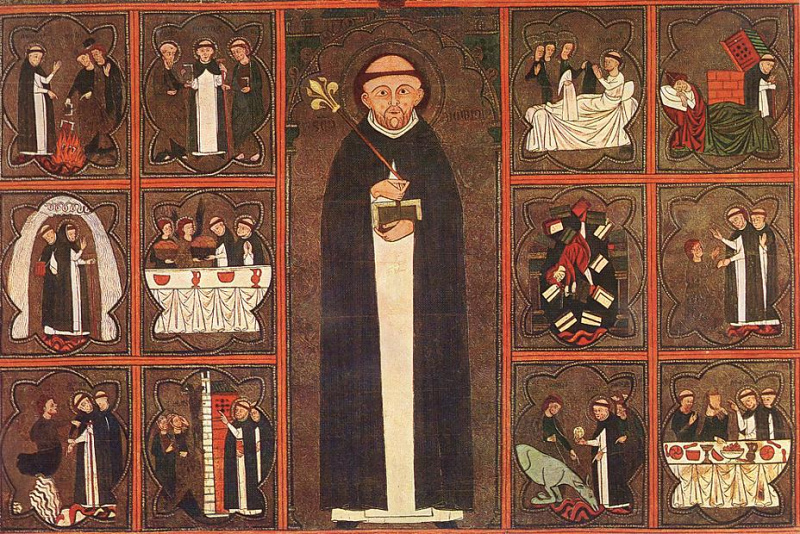
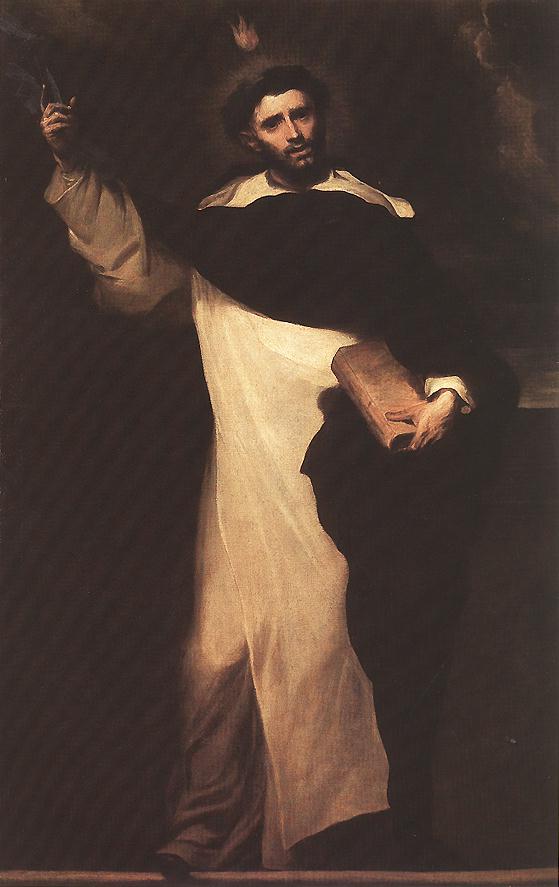
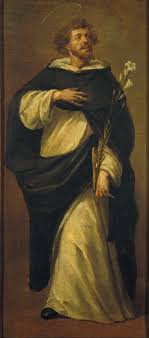
Saint of the Day – 8 August – St Dominic de Guzman (1170-1221) – Confessor, Founder of the Dominican Order of Preachers – Priest, Founder, Teacher, Preacher, Mystic, Miracle-Worker, Apostle of the Holy Rosary (1170 at Calaruega, Burgos, Old Castile – noon 6 August 1221 at Bologna, Italy). He was Canonised on 13 July 1234 by Pope Gregory IX at Rieti, Italy who declared, after signing the Bull of Canonisation on 13 July, 1234, Pope Gregory IX declared that he no more doubted the saintliness of Saint Dominic than he did that of Saint Peter and Saint Paul. Patronages: astronomers, astronomy, the falsely accused, of scientists, The Dominican Republic, Batanes-Babuyanes, in the Philippines, prelature of, Bayombong, Philippines, Diocese of, Santo Domingo, Santo Domingo Indian Pueblo, Valletta, Malta. Attributes – chaplet, Dominican carrying a rosary and a tall cross, Dominican holding a lily, Dominican with dog and globe, Dominican with fire, Dominican with star shining above his head, dog with a torch in its mouth, rosary, star.
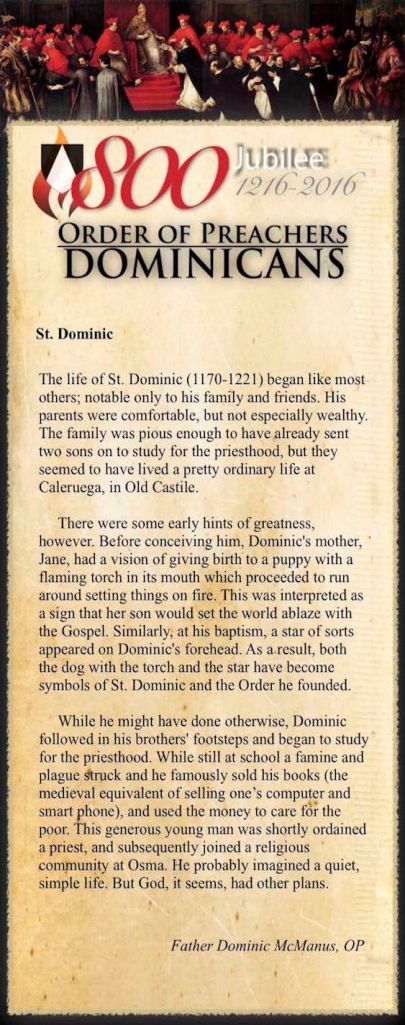
Dominic de Guzman was born in Calaruega, Spain, son to noble parents Felix Guzman and Blessed Joan of Aza. While only a boy, he demonstrated great piety, spending his days in contemplation and prayer, under the influence of his mother’s great love of the Lord. At Dominic’s baptism, Blessed Joan saw a star shining from his chest, which became another of his symbols in art, and led to his patronage of astronomy.
Educated by his uncle, a Priest, Dominic soon travelled to Palencia, where he attended University and was eventually Ordained to the Priesthood. While at University, he demonstrated strict penances and rigorous study but his teachers and classmates soon also noted the tenderest of hearts and the gentlest of spirits. Dominic demonstrated great care for those in need, practising love and charity without judgement.
Following his Ordination, Dominic was appointed the Prior Superior of his Augustinian Order and strictly observed the Benedictine rule prescribed. Selected as Canon to the Bishop of Osma, he accompanied Bishop Diego de Avezedo to Languedoc to join with the Cistercian Order in their fight against heresy. It was here that the idea of founding an Order of Preachers, committed to eradicating heresy, first occurred to Dominic.
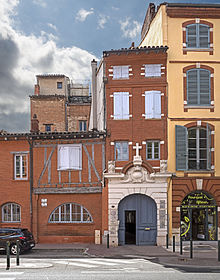
In 1215, Dominic established himself, with six followers, in a house given by Peter Seila, a rich resident of Toulouse. Dominic saw the need for a new type of organisation to address the spiritual needs of the growing cities of the era, one that would combine dedication and systematic education, with more organisational flexibility than either monastic orders or the secular clergy. He subjected himself and his companions to the monastic rules of prayer and penance; and meanwhile bishop Foulques gave them written authority to preach throughout the territory of Toulouse. In the same year, the year of the Fourth Lateran Council, Dominic and Foulques went to Rome to secure the approval of the Pope, Innocent III. Dominic returned to Rome a year later and was finally granted written authority in December 1216 and January 1217 by the new pope, Honorius III for an order to be named “The Order of Preachers” (“Ordo Praedicatorum”, or “O.P.,” popularly known as the Dominican Order).
St Dominic’s House in Toulouse
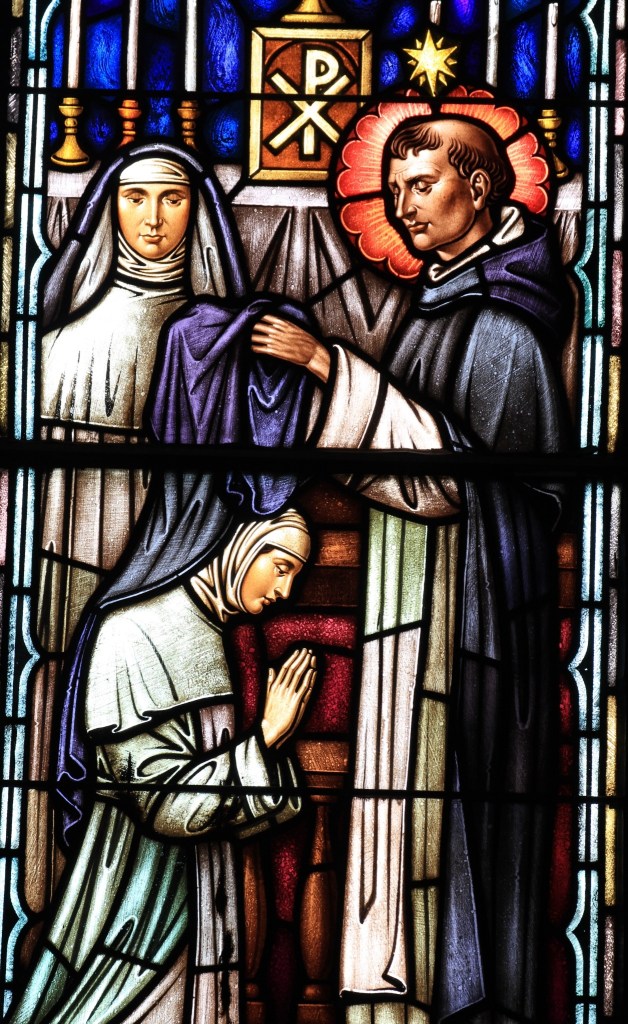
It was not long thereafter that Dominic founded an institute for women at and attached several preaching friars to it. During a subsequent crusade against the Albigensian heresy, Dominic followed the papal armies and preached to all who would listen. He had little success, however and returned home to a castle bequeathed to him, where he founded an order dedicated to the conversion of the Albigensians. The order was canonically approved by the bishop of Toulouse the following year and two years later received Pope Honorius III’s approval. The Order of Preachers, the Dominicans, was founded.
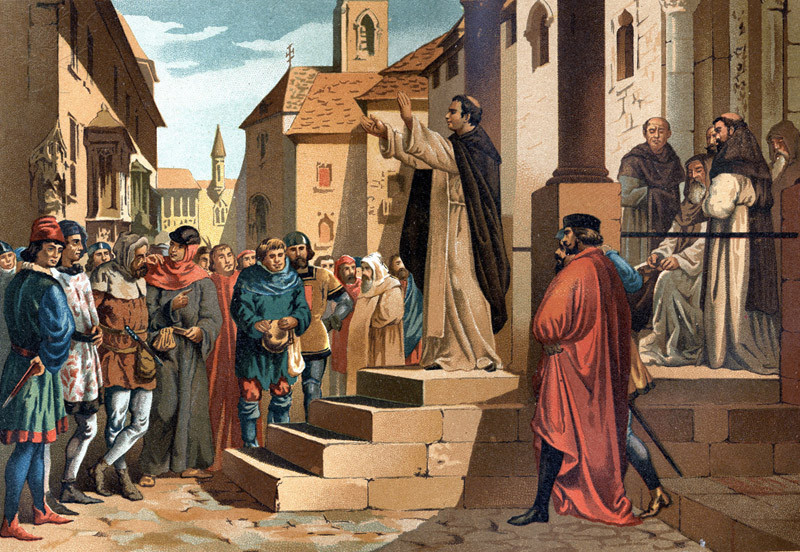
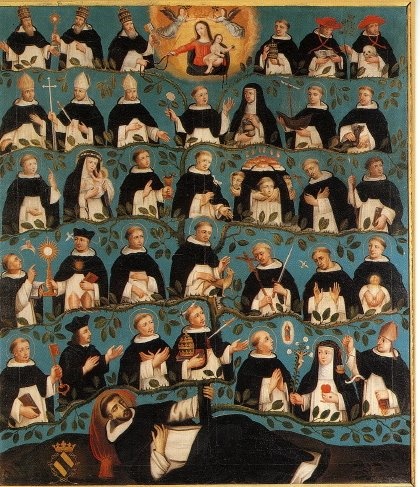
Saint Dominic spent the remaining years of his life organising his new order, traveling throughout Europe preaching and attracting new members and establishing new houses. The new order, under his direction, was astoundingly successful in conversion, based upon contemplative and intellectual approaches, coupled with the contemporary and popular needs of the people. His ideal, and that of his Order, was to link organically a life with God, study and prayer in all forms, with a ministry of salvation to people by the word of God. His ideal: contemplata tradere: “to pass on the fruits of contemplation” or “to speak only of God or with God.” (Read the Nine Ways of Prayer of St Dominic here: https://www.fisheaters.com/stdominic9ways.html)
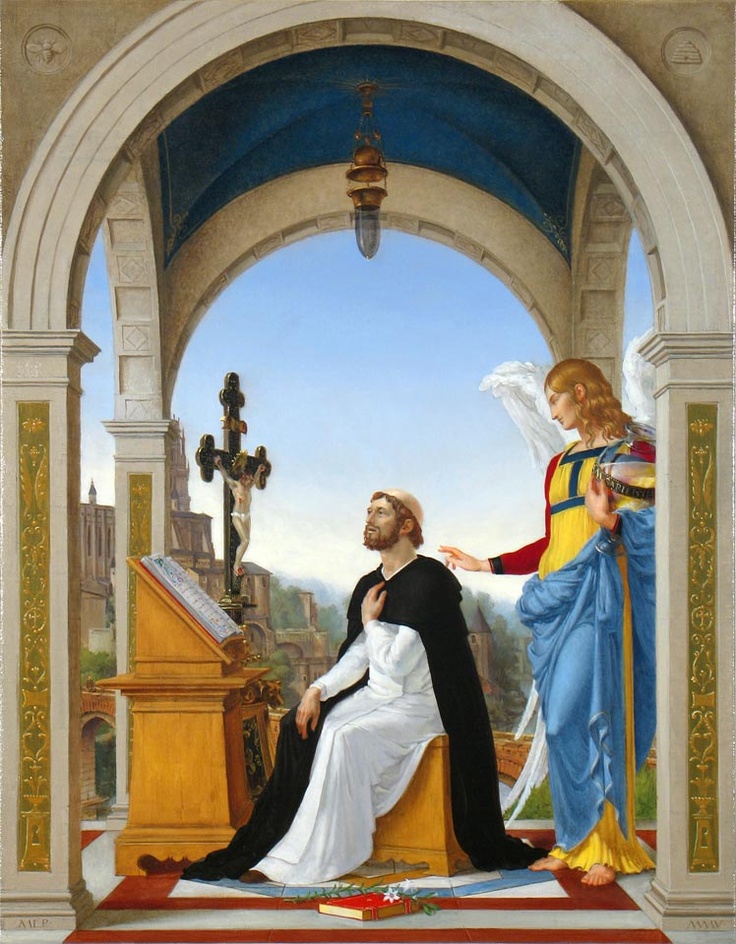
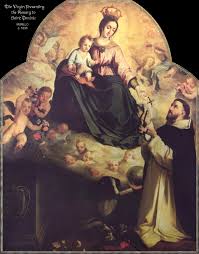
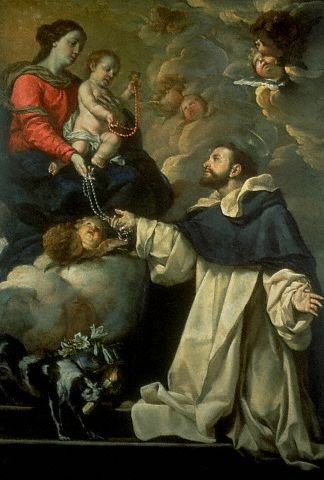
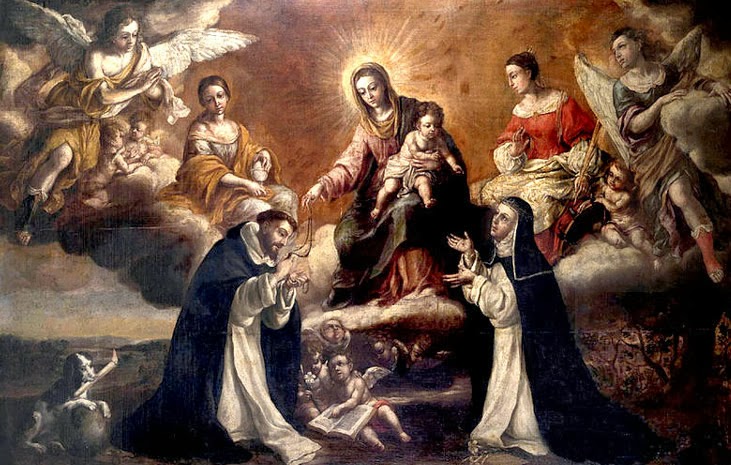
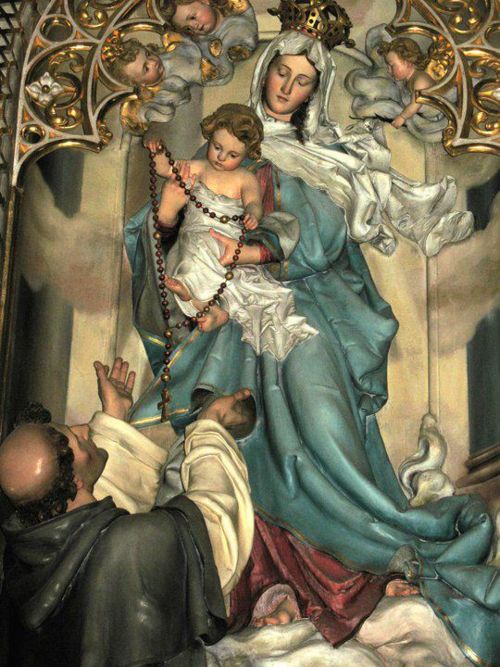
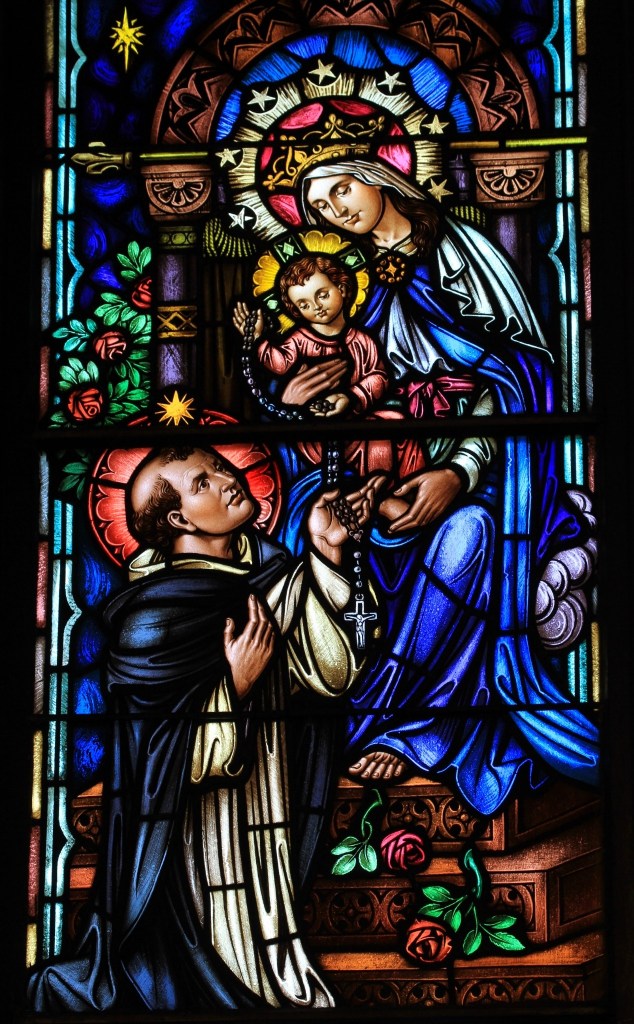
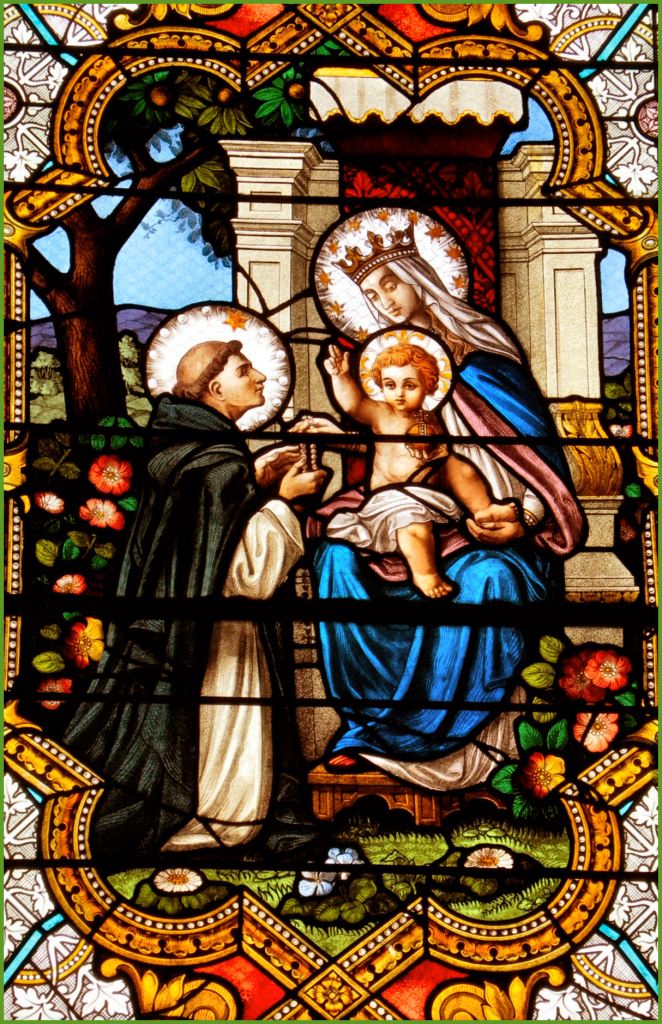
There was a time that St Dominic became discouraged at the progress of his mission. To him, it seemed that no matter how much he worked, heresy remained. As he contemplated the future of his order, he received a vision from Our Blessed Mother, who showed him a wreath of roses, representing the Holy Rosary. Mary told him to say the Rosary daily, to teach it to all who would listen and eventually the faith would defeat heresies. The spread of the Rosary, is attributed to the preaching of Saint Dominic. The Rosary has for centuries been at the heart of the Dominican Order. Pope Pius XI stated, “The Rosary of Mary is the principle and foundation on which the very Order of Saint Dominic rests for making perfect the life of its members and obtaining the salvation of others.” For centuries, Dominicans have been instrumental in spreading the rosary and emphasizing the Catholic belief in the power of the rosary. Saint Dominic is spread devotion to the Rosary, and used it to strengthen his own spiritual life.
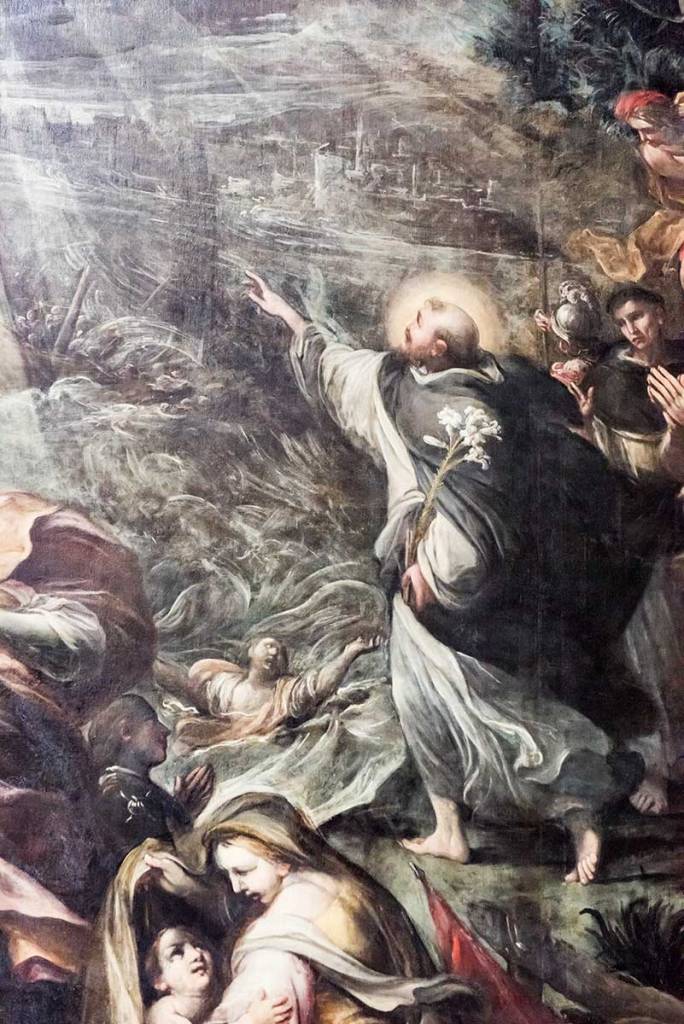
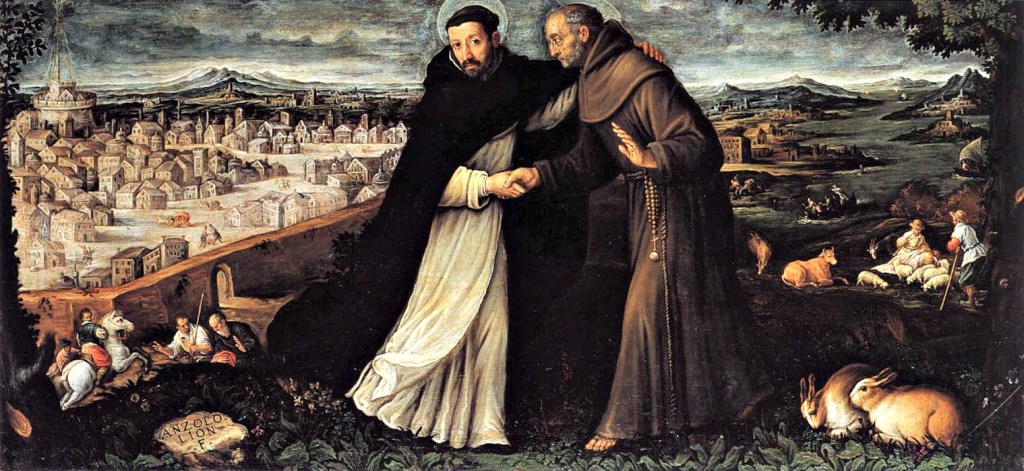
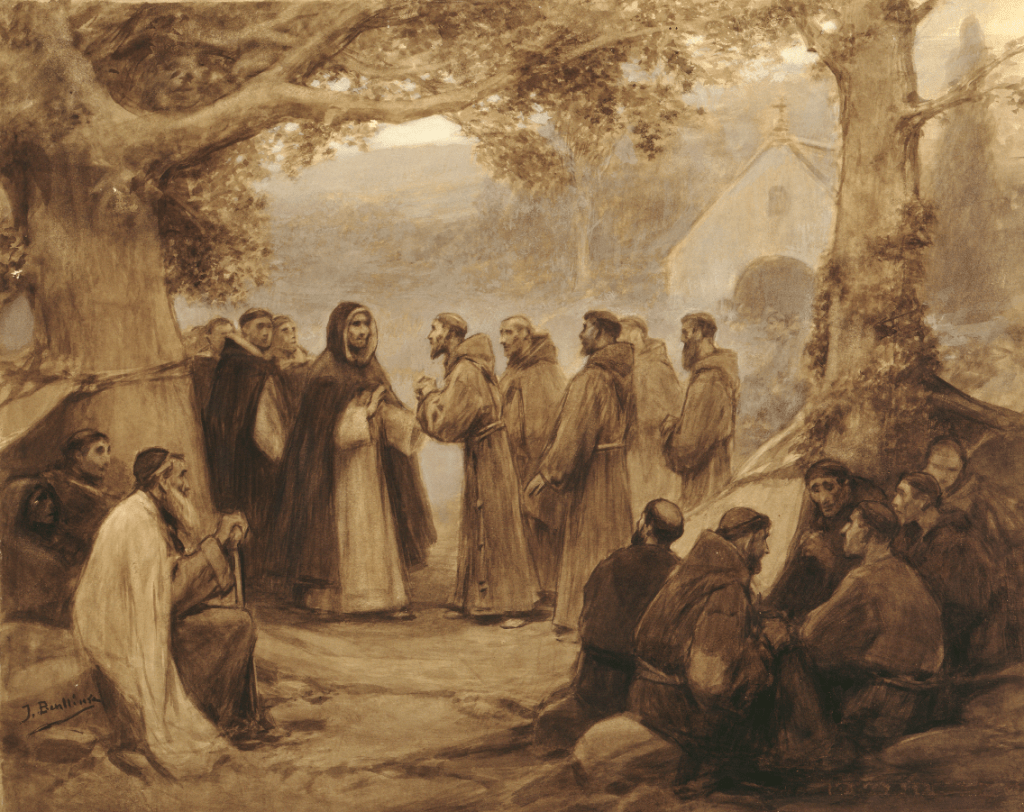
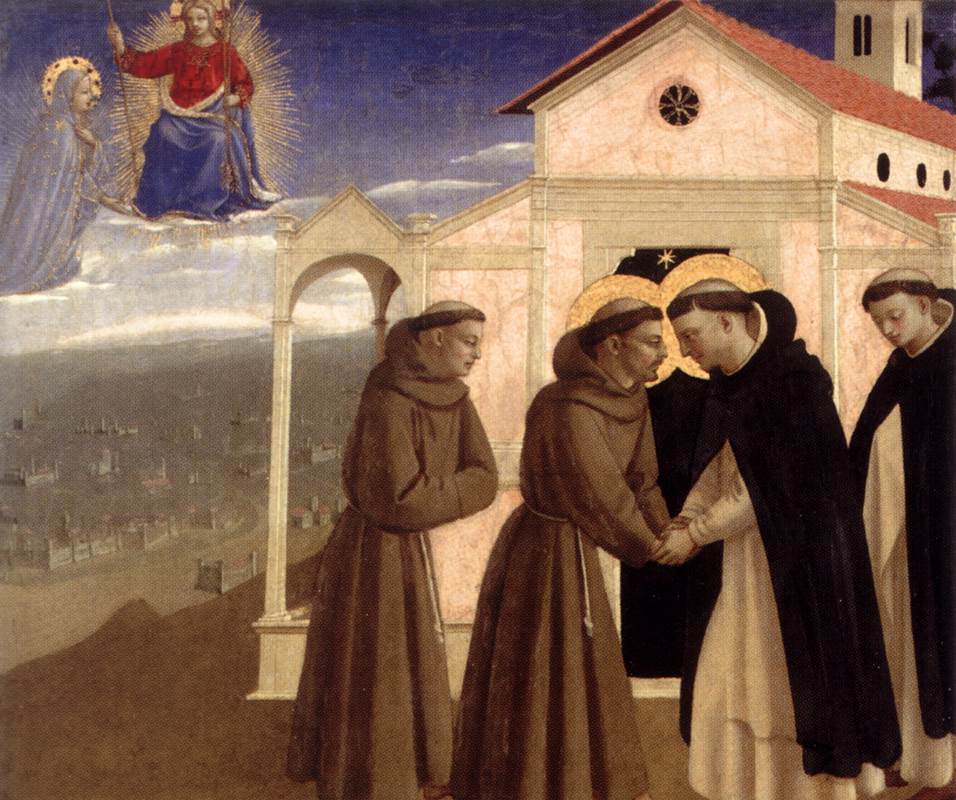
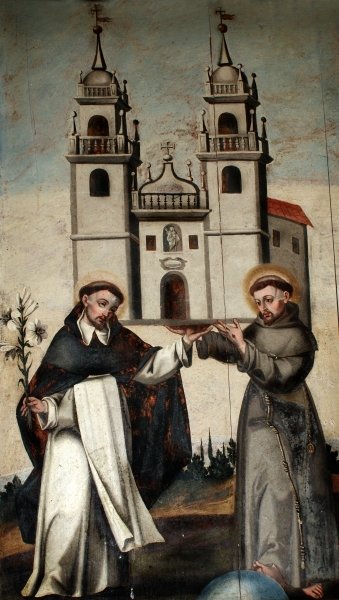
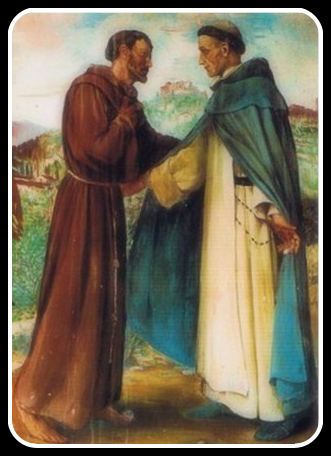
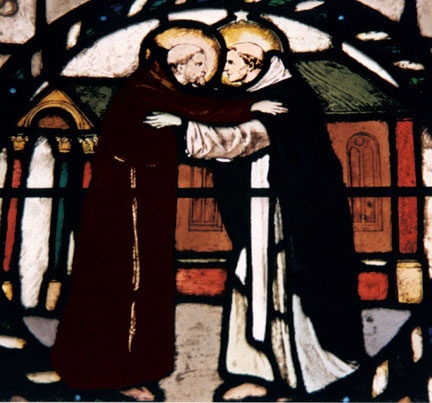
Saint Dominic is also remembered for miracles (raising four people from the dead) and miraculous visions. On one occasion, he received a vision of a poor beggar, who he sought out the following day. Finding the beggar, Dominic embraced him and said, “You are my companion and must walk with me. If we hold together, no earthly power can withstand us.” The beggar turned out to be Saint Francis of Assisi and the two holy men became the closest of friends.
St Dominic died at the age of fifty-one, “exhausted with the austerities and labours of his career”. He had reached the convent of St Nicholas at Bologna, Italy, “weary and sick with a fever”. He “made the monks lay him on some sacking stretched upon the ground” and that “the brief time that remained to him was spent in exhorting his followers to have charity, to guard their humility, and to make their treasure out of poverty”. He died at noon on 6 August 1221. His body was moved to a simple sarcophagus in 1233. Under the authority of Pope Gregory IX, Dominic was canonised in 1234. In 1267 Dominic’s remains were moved to the shrine, made by Nicola Pisano and his workshop. The feast of Saint Dominic is celebrated with great pomp and devotion in Malta, in the old city of Birgu and the capital city Valletta. The Dominican order has very strong links with Malta and Pope St. Pius V, a Dominican friar himself, aided the Knights of St. John to build the city of Valletta.





 AnaStpaul
You must be logged in to post a comment.