Saint of the Day – 18 August – St Helena (c250 – c 330) Empress, Mother of Saint Constantine, Founder of the True Cross of Christ. Patronages – against fire, against thunder, archeologists, converts, difficult marriages, divorced people, dyers, empresses, needle makers, Birkirkara, Malta, Helena, Diocese of Montana. Helena ranks as an important figure in the history of Christianity and of the world due to her influence on her son. In her final years, she made a religious tour of Syria Palaestine and Jerusalem, during which she discovered the True Cross.
Helena’s birthplace is not known with certainty. The 6th-century historian Procopius is the earliest authority for the statement that Helena was a native of Drepanum, in the province of Bithynia in Asia Minor. Her son Constantine renamed the city “Helenopolis” after her death around 330, which supports the belief that the city was her birthplace. She married a Roman General, Constantius Chlorus and became the mother of Constantine the Great. She embraced Christianity late in life but her incomparable faith and piety greatly influenced her son Constantine, the first Christian emperor and served to kindle a holy zeal in the hearts of the Roman people. Forgetful of her high dignity, she delighted to assist at the Divine Office amid the poor and by her alms deeds showed herself a mother to the indigent and distressed.
In her eightieth year she made a famous pilgrimage to Jerusalem, with the ardent desire of discovering the cross on which our Blessed Redeemer had suffered. After many labours, three crosses were found on Mount Calvary, together with the names and the inscription recorded by the Evangelists. The pious empress, transported with joy, built a beautiful Basilica on Mount Calvary to receive the precious relic, sending portions of it also to Rome and Constantinople, where they were solemnly exposed to the adoration of the faithful. She built two other famous churches in Palestine to honour the sacred sites of Our Lord’s life, one at the site of His Ascension and the other, known as the Basilica of the Nativity, in Bethlehem, which she and her son richly adorned.
Saint Helen’s influence on her son Constantine is recognised by all historians. He always honoured her in every way. In the year 312, when Constantine found himself attacked by Maxentius with vastly superior forces and the very existence of his western empire was threatened, he remembered the crucified Christian God whom his mother Helen worshipped. Kneeling down, he prayed God to reveal Himself as the supreme God, by giving him an otherwise impossible victory. Suddenly at noonday, a cross of fire was seen by his army in the calm and cloudless sky and beneath it the words, In hoc signo vinces — In this sign thou shalt conquer. By divine command, Constantine made a standard like the cross he had seen, to be borne at the head of his troops. This is the famous banner known as the Roman Labarum. Under this Christian ensign they marched against the enemy and obtained a complete victory.
Peter Paul Rubens, Constantine Worshipping the True Cross (Tapestry)
She died around 330, with her son at her side. She was buried in the Mausoleum of Helena, outside Rome on the Via Labicana. Her sarcophagus is on display in the Pio-Clementine Vatican Museum, below and the statue of her at St Peter’s.
Saint of the Day – 15 August – St Tarcisius (3rd century) Martyr of the Eucharist – Patronages – Altarboys, First Holy Communicants.
Here is Pope Benedict’s story of St Tarcisius from his Homily at the General Audience for the International Pilgrimage of Altar Servers on 4 August 2010
“How many of you there are! While flying over St Peter’s Square in the helicopter I saw all the colours and the joy filling this Square! Thus not only do you create a festive atmosphere in the Square but you also fill my heart with joy! Thank you! The statue of St Tarcisius has come to us after a long pilgrimage. In September 2008 it was unveiled in Switzerland in the presence of 8000 altar servers, some of you were certainly present. From Switzerland it travelled through Luxembourg on the way to Hungary. Let us greet it festively today, glad at being able to become better acquainted with this figure of the early Church. Later, as Bishop Gächter told us, the statue will be taken to the Catacombs of St Calixtus, where St Tarcius was buried. The hope that I express to all is that this place, namely the Catacombs of St Calixtus and this statue, may become a reference point for altar servers, boys and girls, and for all who wish to follow Jesus more closely through the priestly, religious or missionary life. May they all be able to look at this strong and courageous boy and renew their commitment to friendship with the Lord, to learn to live with Him always, following the path He points out to us with His word and the witness of so many Saints and Martyrs whose brothers and sisters we have become through Baptism.
Who was St Tarcisius? We do not have much information about him. We are dealing with the early centuries of the Church’s history or, to be more precise, with the third century.
It is said that he was a boy who came regularly to the Catacombs of St Calixtus here in Rome and took his special Christian duties very seriously. He had great love for the Eucharist and various hints lead us to conclude that he was presumably an acolyte, that is, an altar server.
Those were years in which the Emperor Valerian was harshly persecuting Christians who were forced to meet secretly in private houses or, at times, also in the Catacombs, to hear the word of God, to pray and to celebrate Holy Mass. Even the custom of taking the Eucharist to prisoners and the sick became increasingly dangerous. One day, when, as was his habit, the priest asked who was prepared to take the Eucharist to the other brothers and sisters who were waiting for it, young Tarcisius stood up and said: “send me!”. This boy seemed too young for such a demanding service! “My youth”, Tarcisius said, “will be the best shield for the Eucharist”.Convinced, the priest entrusted to him the precious Bread, saying: “Tarcisius, remember that a heavenly treasure has been entrusted to your weak hands. Avoid crowded streets and do not forget that holy things must never be thrown to dogs nor pearls to pigs. Will you guard the Sacred Mysteries faithfully and safely?”. “I would die”, Tarcisio answered with determination, “rather than let go of them”.
As he went on his way he met some friends who approached him and asked him to join them. As pagans they became suspicious and insistent at his refusal and realised he was clasping something to his breast that he appeared to be protecting. They tried to prize it away from him but in vain. The struggle became ever fiercer, especially when they realised that Tarcisius was a Christian. They kicked him, they threw stones at him but he did not surrender. While Tarcisius was dying a Pretorian guard called Quadratus, who had also, secretly, become a Christian, carried him to the priest. Tarcisius was already dead when they arrived but was still clutching to his breast a small linen bag containing the Eucharist. He was buried straight away in the Catacombs of St Calixtus.
Pope Damasus had an inscription carved on St Tarcisius’ grave, it says that the boy died in 257. The Roman Martyrology fixed the date as 15 August and in the same Martyrology a beautiful oral tradition is also recorded. It claims that the Most Blessed Sacrament was not found on St Tarcisius’ body, either in his hands or his clothing. It explains that the consecrated Host which the little Martyr had defended with his life, had become flesh of his flesh thereby forming, together with his body, a single immaculate Host offered to God.
Dear altar servers, St Tarcisius’ testimony and this beautiful tradition teach us the deep love and great veneration that we must have for the Eucharist: it is a precious good, a treasure of incomparable value, it is the Bread of life, it is Jesus Himself who becomes our nourishment, support and strength on our daily journey and on the open road that leads to eternal life. The Eucharist is the greatest gift that Jesus bequeathed to us.”
Saint of the Day – 11 August – St Philomena (c 291 – 304) “The Wonder Worker” Virgin, Martyr. Patronages – against barrenness, infertility, sterility, against bodily ills, against mental illness, against sickness, sick people, babies, infants, newborns, toddlers , children, young people, youth, Children of Mary, desperate, forgotten, lost or impossible causes, Living Rosary, orphans, poor people, Priests, prisoners, students, test takers.
The tomb of this virgin and martyr, unknown until the first years of the 19th century, was providentially discovered in 1802 in the catacombs of Priscilla on the Via Salaria, Rome, Italy. It was covered by stones, the symbols on which indicated that the body was a martyr named Saint Philomena. The bones were exhumed, catalogued and effectively forgotten since there was so little known about the person.
In 1805 Canon Francis de Lucia of Mugnano, Italy was in the Treasury of the Rare Collection of Christian Antiquity (Treasury of Relics) in the Vatican. When he reached the relics of Saint Philomena he was suddenly struck with a spiritual joy and requested that he be allowed to enshrine them in a chapel in Mugnano. After some disagreements, settled by the cure of Canon Francis following prayers to Philomena, he was allowed to translate the relics to Mugnano. Miracles began to be reported at the shrine including cures of cancer, healing of wounds and the Miracle of Mugnano in which Venerable Pauline Jaricot was cured a severe heart ailment overnight. Philomena became the only person recognised as a Saint solely on the basis of miraculous intercession as nothing historical was known of her except her name and the evidence of her martyrdom.
God, by many miracles, made the discovery of Saint Philomena’s body famous and the cult of the young Saint spread everywhere with an extraordinary rapidity. She received such exceptional homage, that she deserves to be placed in the first ranks of the virgin martyrs, whom the Church venerates. The Holy Curé of Ars called her his dear little Saint and performed wonders himself by his prayers to her.
Certain revelations having the character of authenticity say that Saint Philomena was the daughter of a Greek prince, who accompanied her parents to Rome on a journey and that her glorious martyrdom occurred there under Diocletian in the third century. The two arrows engraved on her tombstone in opposite directions referred to the efforts of the persecutor to slay her with a volley of arrows, after Angels preserved her from death by drowning; the arrows turned against the archers. Finally she was beheaded, like so many other miraculously protected heroes and heroines of Christ. This opinion, which certain circumstances attending the translation of her relics in 1805 to the city of Mugnano appeared to verify, has prevailed. In that city, devotion to her has been extraordinary and remains so to this day, miracles have multiplied both there and elsewhere for those who invoke her.
Other very serious studies, maintain that she was a child of the Roman people, immolated in the first century for Jesus Christ, at the age of twelve or thirteen years. An examination of her bones permitted her age to be estimated and the vial of dried blood in her tomb clearly indicated her martyrdom. The instruments of torture painted on the terra cotta plaque which enclosed her tomb — an arrow, an anchor, a torch — show us what sort of tortures she bore, all of which are known to us through other martyrdoms of the same early centuries. The inscription: Peace be with you, Philomena, reveals her name.
What is beyond doubt is that this Saint responds unfailingly to the faith of those who invoke her. Invoked everywhere with wonderful success, she was entitled the wonder-worker of the 19th century. She has shown herself to be the protectress, in particular, of small children. A mother whose young son died despite her prayers, placed a picture of the Saint on his corpse, begging that he be returned to her. And the child rose as though from sleep, stood up beside his bed and had no more symptoms of any sickness whatsoever. A little girl who had put out her eye playing with a pair of scissors, which injury was declared irreparable by physicians, had her eye restored when she washed her face in oil taken from the Saint’s lamp and this eye seemed to everyone more vivid and bright than the other.
Many doubts remain about this little Saint, however, although she is no longer anywhere on the Church’s calendar, devotion to her has never floundered or diminished. Personal devotion to any saint and we know ourselves, that there are many unknown saints around us and when they leave this earth, we ask them for their prayers of intercession and therefore, the faithful continue without doubt to venerate St Philomena.
Popes loved her and they were joined in fervour by some of the era’s greatest saints . John Vianney, the Cure of Ars, called Philomena the True Light of the Church Militant. He built a basilica in her honour, where he installed the relic he had been given by the Venerable Pauline Jaricot, foundress of the Society for the Propagation of the Faith. (Innumerable “pagan babies” were given the name Philomena in honour of the foundress’s favourite saint, as I recall.) Father Damien dedicated the first leper chapel on Molokai in her honour. The American missionary saints John Neumann and Frances Cabrini spread devotion to Philomena throughout the Catholic United States. St Peter Julian Eymard was a great devotee as was St Anthony Mary Claret. Padre Pio, himself no mean wonder-worker, once silenced critics of her cult by snarling, “For the love of God! It might well be that her name is not Philomena but this Saint has performed many miracles and it is not the name that did them.”
St John Baptist Mary Vianney was born near Lyon, France, on 8th May 1786. Overcoming many difficulties prior to his ordination on 13th Aug 1815, he was thereafter entrusted with the remote parish of Ars, a village of 230 souls. His Bishop had warned him that he would find religious practice there in a sorry state: “There is little love of God in that parish; you will have to be the one to put it there”. As a result, he was deeply aware that he needed to embody Christ’s presence and bear witness to God’s saving mercy: “Lord, grant me the conversion of my parish. I am willing to suffer whatever you wish, for my entire life!” With that prayer he entered upon his mission.
His first biographer tells us that “upon his arrival, he chose the church as his home. He entered the church daily before dawn and did not leave it until after the evening Angelus. There he was to be sought whenever needed”.
Inside the Old Church where St John Mary Vianney preached and heard confessions
The Curé d’Ars taught his parishioners primarily by the witness of his life. It was from his example that they learned to pray, to visit Jesus frequently in the Tabernacle. “One need not say much to pray well”, he explained to them, “we know that Jesus is there in the Tabernacle. Let us open our hearts to Him, let us rejoice in His sacred presence. That is the best prayer”. And He would urge them: “Come to communion, my brothers and sisters, come to Jesus. Come to live from Him in order to live with Him… Of course you are not worthy of Him but you need Him!”
He regularly visited the sick and families and organised missions and feast day celebrations. He also enlisted lay persons to collaborate in the collection and management of funds for his charitable works, providing also for the education of children. He personally cared for the orphans and teachers of the “Providence”, an institute he founded.
The Curé of Ars was known for his humility, while as a priest he was conscious of being an immense gift to his people. “A good shepherd, a pastor after God’s heart, is the greatest treasure which the good Lord can grant to a parish and one of the most precious gifts of divine mercy”.
Explaining to his parishioners the importance of the Sacraments, he would say: “Without the Sacrament of Holy Orders, we would not have the Lord. Who put him there in that tabernacle? The priest. Who welcomed your soul at the beginning of your life? The priest. Who feeds your soul and gives it strength for its journey? The priest. Who will prepare it to appear before God, bathing it one last time in the blood of Jesus Christ? The priest, always the priest. And if this soul should die as a result of mortal sin, who will raise it up, who will restore its calm and peace? Again, the priest… Only in heaven will he fully realise what he is.”
Those who attended the Masses he celebrated have said that “it was not possible to find a finer example of worship… He gazed upon the Host with immense love”. He was convinced that the fervour of a priest’s life depended entirely upon the Mass, “All good works, taken together, do not equal the sacrifice of the Mass since they are human works, while the Holy Mass is the work of God… The reason why a priest is lax is that he does not pay attention to the Mass! My God, how we ought to pity a priest who celebrates as if he were engaged in something routine!”
“The priest is not a priest for himself, he is a priest for you”
His profound sense of responsibility as a priest was palpable. “Were we to fully realise what a priest is on earth, we would die: not of fright but of love… Without the priest, the passion and death of our Lord would be of no avail. It is the priest who continues the work of redemption on earth… What use would be a house filled with gold, were there no one to open its door? The priest holds the key to the treasures of heaven: it is he who opens the door: he is the steward of the good Lord; the administrator of his goods… Leave a parish for 20 years without a priest and they will end by worshipping the beasts there… The priest is not a priest for himself, he is a priest for you”.
By spending long hours in church before the Tabernacle, he inspired the faithful to imitate him by coming to visit Jesus, knowing that their parish priest would be there, ready to listen and offer forgiveness. Later, the growing numbers of penitents from all over France would keep him in the confessional for up to 16 hours a day. It was said that Ars had become “a great hospital of souls”.
He once explained to a fellow priest his self-imposed mortifications and expiations for those souls whose confessions he heard, “I will tell you my recipe: I give sinners a small penance and the rest I do in their place.” He was moved knowing that souls have been won at the price of Jesus’ own blood and a priest cannot devote himself to their salvation if he refuses to share personally in the precious cost of Christ’s redemption.
A century after his death, the Shrine of Our Lady of Mercy was built in Ars-sur-Formans, where the relic of the heart of the Saint is venerated in the Chapel of the Heart. His incorrupt body lies at the main altar of the Shrine in a glass reliquary. The Curé’s humble cottage is presently a museum.
St John Vianney’s Bedroom in his house which is now the Museum
Current estimates indicate that over 400,000 pilgrims visit the shrine every year.
Saint of the Day – 1 August – St Alphonsus Maria de Liguori C.Ss.R. (1696-1787) – Confessor, Bishop, Doctor of the Church, Founder of the Redemptorists, Spiritual Writer, Composer, Musician, Artist, Poet, Lawyer, Scholastic Philosopher and Theologian. Patronages – against arthritis, against scrupulosity, of Confessors (given on 26 February 1950 by Pope Pius XII), final perseverance, moral theologians, moralists (1950 by Pope Pius XII), scrupulous people, vocations, Diocese of Acerra, Italy, Diocese of Agrigento, Italy,l Pagani, Italy, Sant’Agata de’ Goti, Italy.
The Roman Martyrology states of St Alphonsus today: “At Nocera-de-Pagani, Saint Alphonsus Maria de Liguori, Bishop of St Agatha of the Goths and Founder of the Congregation of the Most Holy Redeemer (the Redemptorists), distinguished by his zeal for the salvation of souls, by his writings, his preaching and his example.
He was inscribed on the Calendar of the Saints by Pope Gregory XVI in the year 1839, the 52nd after his happy death and , in 1871, was declared Doctor of the Universal Church by Pius IX, according to a decree of the Sacred Congregation of Rites.“
St Alphonsus was born of noble parents, near Naples, in 1696. His spiritual training was entrusted to the Fathers of the Oratory in that city and from his boyhood Alphonsus was known as a most devout Brother of the Little Oratory. At the early age of sixteen he was made doctor in law and he threw himself into this career with ardour and success.
A mistake, by which he lost an important cause, showed him the vanity of human fame and determined him to labour only for the glory of God. He entered the priesthood, devoting himself to the most neglected souls and to carry on this work he founded later the missionary Congregation of the Most Holy Redeemer, The Redemptorists.
At the age of sixty-six he became Bishop of St Agatha and undertook the reform of his diocese with the zeal of a Saint. He made a vow never to lose time and, though his life was spent in prayer and work, he composed a vast number of books, filled with such science, unction and wisdom that he has been declared one of the Doctors of the Church.
St Alphonsus wrote his first book at the age of forty-nine and in his eighty-third year had published about 100 volumes, when his director forbade him to write more. Very many of these books were written in the half-hours snatched from his labours as missionary, religious superior and Bishop, or in the midst of continual bodily and mental sufferings. With his left hand he would hold a piece of marble against his aching head while his right hand wrote.
Yet he counted no time wasted which was spent in charity. He did not refuse to hold a long correspondence with a simple soldier who asked his advice, or to play the harpsichord while he taught his novices to sing spiritual canticles. He lived in evil times, and met with many persecutions and disappointments.
For his last seven years he was prevented by constant sickness from offering the Adorable Sacrifice but he received Holy Communion daily and his love for Jesus Christ and his trust in Mary’s prayers sustained him to the end.
He died in 1787, in his ninety-first year.
For lots more details on St Alphonsus here: https://anastpaul.wordpress.com/2017/08/01/saint-of-the-day-1-august-st-alphonsus-maria-de-liguori-c-ss-r-doctor-of-the-church/
Saint of the Day – 30 July – St Peter Chrysologus (c 400-450) “Golden Words” Father & Doctor of the Church – Bishop of Ravenna, Italy. Patronages – against fever, against mad dogs, of Imola, Italy.
Today we celebrate the Memorial of Saint Peter Chrysologus, a fifth-century Italian bishop known for testifying courageously to Christ’s full humanity and divinity during a period of the heresy called Monophysite.
The saint’s title, Chrysologus, signifies “golden speech” in Greek. Named as a Doctor of the Church in 1729, he is distinguished as the “Doctor of Homilies” for the concise but theologically rich reflections he delivered during his time as the Bishop of Ravenna.
His surviving works (176 of sermons), offer eloquent testimony to the Church’s traditional beliefs about Mary’s perpetual virginity, the penitential value of Lent, Christ’s Eucharistic presence, and the primacy of St Peter and his successors in the Church.
Few details of St Peter Chrysologus’ early life are known. He was born in the Italian Town of Imola in either the late fourth or early fifth century but sources differ as to whether this occurred around 380 or as late as 406.
Following his study of theology, Peter was Ordained to the Diaconate by Imola’s local Bishop Cornelius, whom he greatly admired and regarded as his spiritual father. Cornelius not only Ordained Peter but taught him the value of humility and self-denial. The lessons of his mentor inspired Peter to live as a Monk for many years, embracing a lifestyle of asceticism, simplicity and prayer. His simple monastic life came to an end, however, after the death of Archbishop John of Ravenna in 430. After John’s death, the clergy and people of Ravenna chose a successor and asked Cornelius, still the Bishop of Imola, to journey to Rome and obtain Papal approval for the candidate. Cornelius brought Peter, then still a Deacon, along with him on the visit to Pope Sixtus III.
Tradition relates that the Pope had experienced a vision from God on the night before the meeting, commanding him to overrule Ravenna’s choice of a new Archbishop. The Pope declared that Peter, instead, was to be Ordained as John’s successor.
In Ravenna, Peter was received warmly by the Western Roman Emperor Valentinian III and his mother Galla Placidia. She is said to have given him the title of “Chrysologus” because of his preaching skills. Throughout the Archdiocese, however, he encountered the surviving remnants of paganism, along with various abuses and distortions of the Catholic faith. Peter exercised zeal and pastoral care in curbing abuses and evangelising non-Christians, during his leadership of the Church in Ravenna.
One of the major heresies of his age, Monophysitism, held that Christ did not possess a distinct human nature in union with His eternal divine nature. Peter laboured to prevent the westward spread of this error, promoted from Constantinople by the monk Eutyches.
The Archbishop of Ravenna also made improvements to the City’s Cathedral and built several new Churches. Near the end of his life he addressed a significant letter to Eutyches, stressing the Pope’s authority in the Monophysite controversy.
Having returned to Imola in anticipation of his death, St Peter Chrysologus died in 450, one year before the Church’s official condemnation of Monophysitism. 176 of his sermons have survived; it is the strength of these beautiful explanations of the Incarnation, the Creed, the place of Mary and John the Baptist in the great plan of salvation, etc., that led to his being proclaimed a Doctor of the Church in 1729 by Pope Benedict XIII.
Saint of the Day – 29 July – St Martha Virgin (1st century) – Sister of Saint Lazarus and Saint Mary of Bethany. Friend of Jesus and hostess to him in her house.
St John tells us that “Jesus loved Martha and Mary and Lazarus” and yet but few glimpses are vouchsafed us of them. First, the sisters are set before us with a word. Martha received Jesus into her house and was busy in outward, loving, lavish service, while Mary sat in silence at the feet she had bathed with her tears. Then, their brother is ill, and they send to Jesus, “Lord, he whom Thou lovest is sick.” And in His own time the Lord came and they go out to meet Him and then follows that scene of unutterable tenderness and of sublimity unsurpassed: the silent waiting of Mary, Martha strong in faith but realising so vividly, with her practical turn of mind, the fact of death and hesitating: “Canst Thou show Thy wonders in the grave?” And then once again, on the eve of His Passion, we see Jesus at Bethany. Martha, true to her character, is serving; Mary, as at first, pours the precious ointment, in adoration and love, on His divine head.
According the tradition we find the tomb of St Martha, at Tarascon, in Provence. When the storm of persecution came, the family of Bethany, with a few companions, were put into a boat, without oars or sail and borne to the coast of France. St Mary’s tomb is at S. Baume; St Lazarus is venerated as the founder of the Church of Marseilles; and the memory of the virtues and labours of St Martha is still fragrant at Avignon and Tarascon.
Reflection: -When Martha received Jesus into her house, she was naturally busy in preparations for such a Guest. Mary sat at His feet, intent alone on listening to His gracious words. Her sister thought that the time required other service than this and asked our Lord to bid Mary help in serving. Once again Jesus spoke in defence of Mary. “Martha, Martha,” He said, “thou art lovingly anxious about many things, be not over-eager, do thy chosen work with recollectedness. Judge not Mary. Hers is the good part, the one only thing really necessary. Thine will be taken away, that something better be given thee.” The life of action ceases when the body is laid down but the life of contemplation endures and is perfected in heaven.
Saint of the Day – 11 July – St Benedict of Nursia OSB (c 480-547) Patron of Europe and Founder of Western Monasticism. Some of his many Patronages – of Europe, Against Poison, Against Witchcraft, Agriculture, Cavers, Civil Engineers, Coppersmiths, Dying People, Farmers, Fevers, Inflammatory Diseases, Kidney Disease, Monks, Religious Orders, Schoolchildren, Temptations.
St Benedict founded twelve communities for monks about 40 miles east of Rome, before moving to Monte Cassino, in the mountains of southern Italy. St Benedict’s main achievement is his “Rule”, containing precepts for his monks. The unique spirit of balance, moderation and reasonableness influences it and this persuaded most religious communities founded throughout Middle Ages, to adopt it. As a result, the Rule of St Benedict became one of the most influential religious rules in western Christendom. For this reason, Benedict is often called the “founder” of western Christian Monasticism.
St Benedict is the twin brother of St Scholastica and is considered patron of many things. He was born in Nursia, Italy and educated in Rome.
St Benedict and hisd twin sister, St Scholastica
He was repelled by the vices of the city and around 500, fled to Enfide – thirty miles away. He decided to live the life of a hermit and lived in a cave for three years. Despite Benedict’s desire for solitude, his holiness became known and he was asked to be the Abbot by a community of monks at Vicovaro. He accepted but when the monks resisted his strict rule and tried to poison him, he returned to Subiaco and became a centre of spirituality and learning.
St Benedict and the Cup of Poison
He eventually moved back to Monte Cassino and destroyed a temple to Apollo on its crest and brought the people of the neighbouring area back to Christianity. In 530 he began to build the monastery that was to be the birthplace of western monasticism.
Monte Cassino in ruins after Allied bombing in February 1944.Rebuilt Abbey
Soon, disciples again flocked to him as his reputation for holiness, wisdom and miracles spread far and wide. It wasn’t long and he organised his monks into a single monastic community and wrote his official Rule, prescribing common sense, a life of moderate asceticism, prayer, study, work and community under one superior. It stressed obedience, stability, zeal and had the Divine Office as the centre of monastic life. While ruling his monks, most of whom – including Benedict, were not ordained, he counselled rulers and Popes and ministered to the poor and destitute. He died at Monte Cassino on 21 March 547 and was named patron protector of Europe by Pope Paul VI in 1964. The Universal Church celebrates his feast day today.
The St Benedict medal is very popular among Christians to this day and are hung above doors and windows, for protection against evil. It is believed that evil cannot enter your house if you protect every opening with a St Benedict medal and Crucifix. The medal has an image of St Benedict, holding the Holy Rule in his left hand and a cross in his right. There is a raven on one side of him, with a cup on the other side. Around the medal’s outer margin are the words “Eius in obitu nostro praesentia muniamur” – “May we, at our death, be fortified by His presence”. The other side of the medal has a cross with the initials CSSML on the vertical bar which signify “Crux Sacra Sit Mihi Lux”“May the Holy Cross be my light” and on the horizontal bar are the initials NDSMD which stand for “Non Draco Sit Mihi Dux”“Let not the dragon be my overlord”. The initials CSPB stand for “Crux Sancti Patris Benedicti”“The Cross of the Holy Father Benedict” and are located on the interior angles of the cross. Either the inscription “PAX” Peace or the Christogram “HIS” may be found at the top of the cross in most cases. Around the medal’s margin on this side are the initials VRSNSMV which stand for “Vade Retro Satana, Nonquam Suade Mihi Vana” ”Begone Satan, do not suggest to me thy vanities” then a space followed by the initials SMQLIVB which signify “Sunt Mala Quae Libas, Ipse Venena Bibas”“Evil are the things thou profferest, drink thou thy own poison”.
The Medal of St Benedict can serve as a constant reminder of the need for us to take up our cross daily and “follow the true King, Christ our Lord,” and thus learn “to share in his heavenly kingdom,” as St. Benedict urges us in the Prologue of his Rule.
More on St Benedict, his Rule and the Medal here: https://anastpaul.wordpress.com/2017/07/11/saint-of-the-day-11-july-st-benedict-of-nursia-o-s-b-abbot-patron-of-europe-patronus-europae/
Saint of the Day – 5 July – St Anthony Mary Zaccaria CRSP. (1502-1539) – Confessor, Priest, Founder, Philosopher, Doctor of Medicine/Physician, Renewal of the Forty Hours’ Adoration Devotion, Preacher, Administrator, one of the early leader of the Counter Reformation. Founder of the The Clerics Regular of St Paul (the Barnabites) and the Angelic Sisters of St Paul., both of whom he is the Patron and of Doctors/Physicians. His body is incorrupt.
Today we celebrate the life of Saint Anthony Mary Zaccaria. A renowned preacher and promoter of Eucharistic Adoration, he founded the order of priests now known as the Barnabites.
In 2001, the future Pope Benedict XVI, Cardinal Joseph Ratzinger, wrote the preface for a book on St Anthony Mary Zaccaria, praising the saint as “one of the great figures of Catholic reform in the 1500s,” who was involved “in the renewal of Christian life in an era of profound crisis.” “St Anthony”, Cardinal Ratzinger wrote, “deserves to be rediscovered” as “an authentic man of God and of the Church, a man burning with zeal, a demanding forger of consciences, a true leader able to convert and lead others to good.”
Anthony Mary Zaccaria was born into an Italian family of nobility in Cremona during 1502. His father Lazzaro died shortly after Anthony’s birth and his mother Antonietta – though only 18 years old – chose not to marry again, preferring to devote herself to charitable works and her son’s education. Antonietta’s son took after her in devotion to God and generosity toward the poor. He studied Latin and Greek with tutors in his youth and was afterward sent to Pavia to study philosophy. He went on to study medicine at the University of Padua, earning his degree at age 22 and returning to Cremona.
Despite his noble background and secular profession, the young doctor had no intention of either marrying or accumulating wealth. While caring for the physical conditions of his patients, he also encouraged them to find spiritual healing through repentance and the sacraments. He also taught catechism to children, and went on to participate in the religious formation of young adults. He eventually decided to withdraw from the practice of medicine and with the encouragement of his spiritual director, he began to study for the priesthood.
Ordained a priest at age 26, Anthony is experienced a miraculous occurrence during his first Mass, being surrounded by a supernatural light and a multitude of angels during the consecration of the Eucharist. Contemporary witnesses marvelled at the event and testified to it after his death.
Church life in Cremona had suffered decline in the late 15th and early 16th centuries. The new priest encountered widespread ignorance and religious indifference among laypersons, while many of the clergy were either weak or corrupt. In these dire circumstances, Anthony Mary Zaccaria devoted his life to proclaiming the truths of the Gospel both clearly and charitably. Within two years, his eloquent preaching and tireless pastoral care is said to have changed the moral character of the city dramatically.
In 1530, Anthony moved to Milan, where a similar spirit of corruption and religious neglect prevailed. There, he decided to form a priestly society, the Clerics Regular of St. Paul. Inspired by the apostle’s life and writings, the order was founded on a vision of humility, asceticism, poverty, and preaching. After the founder’s death, they were entrusted with a prominent church named for St Barnabas and became commonly known as the “Barnabites.”
St Anthony also founded a women’s religious order, the Angelic Sisters of St Paul and an apostolate, the Laity of St Paul, geared toward the sanctification of those outside the priesthood and religious life. He pioneered the “40 Hours” devotion, involving continuous prayer before the Blessed Sacrament.
In 1539, Anthony became seriously ill and returned to his mother’s house in Cremona. The founder of the Clerics Regular of St Paul died on 5 July during the liturgical octave of the Feast of Sts Peter and Paul, at the age of only 36.
Nearly three decades after his death, St Anthony Mary Zaccaria’s body was found to be incorrupt. He was beatified by Blessed Pope Pius IX in 1849 and declared a saint by Pope Leo XIII in 1897. His body is now enshrined at the Church of St Barnabas in Milan, Italy. More about St Anthony and all about the 40 hour devotion, here: https://anastpaul.wordpress.com/2017/07/05/saint-of-the-day-5-july-st-anthony-mary-zaccaria-b-or-c-r-s-p/
Church of St Barnabas, RomeTomb of St Anthony Mary ZaccariaAltar and TombSt Anthony Mary Zaccaria
The Solemnity of the Nativity of St John the Baptist – 24 June. Patronages – Baptism; bird dealers; converts; against convulsions; convulsive children; cutters; epilepsy; epileptics; farriers; hail; hailstorms; Knights Hospitaller; Knights of Malta; lambs; lovers; monastic life; motorways; printers, spasms; tailors; Genoa, Italy; Quebec; Sassano, Italy; Diocese of Savannah, Georgia; Diocese of Charleston, South Carolina; Diocese of Dodge City, Kansas; Diocese of Paterson, New Jersey; Diocese of Portland, Maine.
“Today, 24 June, we are celebrating the Solemnity of St John the Baptist. He is the only saint — with the exception of the Virgin Mary — whose birth the liturgy celebrates and it does so because it is closely connected with the mystery of the Incarnation of the Son of God. In fact, from the time when he was in his mother’s womb, John was the precursor of Jesus: the Angel announced to Mary his miraculous conception as a sign that “nothing is impossible to God” (Lk 1:37), six months before the great miracle that brings us salvation, God’s union with man, brought about by the Holy Spirit.
The four Gospels place great emphasis on the figure of John the Baptist, the prophet who concludes the Old Testament and inaugurates the New, by identifying Jesus of Nazareth as the Messiah, the Anointed One of the Lord. In fact, Jesus Himself was to speak of John in these terms: “This is he of whom it is written ‘Behold I send my messenger before your face, / who shall prepare your way before you. Truly I say to you, among those born of women there has risen no one greater than John the Baptist; yet he who is least in the kingdom of heaven is greater than he!” (Mt 11:10-11).
John’s father, Zechariah — Elizabeth’s husband and a relative of Mary — was a priest of Old Testament worship, he did not immediately believe in the announcement of such an unexpected fatherhood. This is why he was left mute until the day of the circumcision of the child to whom he and his wife gave the name God had indicated to them, that is, John, which means “graced by God”. Inspired by the Holy Spirit, Zechariah spoke thus of his son’s mission: “And you, child, will be called the prophet of the Most High; for you will go before the Lord to prepare his ways, to give knowledge of salvation to his people in the forgiveness of their sins” (Lk 1:76-77).
All this came to pass 30 years later when John began baptising people in the River Jordan, calling them to prepare themselves with this act of penance for the imminent coming of the Messiah, which God had revealed to them during their wanderings in the desert of Judaea. This is why he was called the “Baptist”, the “Baptiser” (cf. Mt 3:1-6). When one day Jesus himself came from Nazareth to be baptised, John at first refused but then consented; he saw the Holy Spirit settle on Jesus and heard the voice of the heavenly Father proclaiming him His Son (cf. Mt 3:13-17). However, the Baptist’s mission was not yet complete. Shortly afterwards he was also asked to precede Jesus in a violent death: John was beheaded in King Herod’s prison and thus bore a full witness to the Lamb of God who had recognised him and publicly pointed him out beforehand.
Dear friends, the Virgin Mary helped her elderly kinswoman Elizabeth when she was expecting John to bring her pregnancy to completion. May she help all people to follow Jesus, the Christ, the Son of God, whom the Baptist proclaimed with deep humility and prophetic fervour.”….Pope Benedict XVI, Angelus Address, 24 June 2012
Here is a great sermon from St Augustine on the reason for this Solemnity: https://anastpaul.wordpress.com/2017/06/24/solemnity-of-the-nativity-of-saint-john-the-baptist-24-june/
Saint of the Day – 21 June – St Aloysius de Gonzaga S.J. (1568-1591) Jesuit Seminarian, Mystic, Marian devotee, Apostle of Charity – born as Luigi de Gonzaga on 9 March 1568 in the family castle of Castiglione delle Stivieri in Montua, Lombardy, Italy and died on 21 June 1591 at Rome, Italy of plague, fever and desire to see God. His relics are entombed under the Altar of Saint Ignatius Church, Rome. Patronages – Catholic youth, Jesuit scholastics, the blind, eye ailments, AIDS patients, care-givers, Jesuit students, for relief from pestilence, young people, Castiglione delle Stiviere, Italy, Valmonte, Italy. His attributes are a lily, referring to innocence; a cross, referring to piety and sacrifice; a skull, referring to his early death and a Rosary, referring to his devotion to the Blessed Virgin Mary.
Aloysius de Gonzaga was born the eldest of seven children, at his family’s castle in Castiglione delle Stiviere, between Brescia and Mantua in northern Italy in what was then part of the Duchy of Mantua, into the illustrious House of Gonzaga. “Aloysius” is the Latin form of Aloysius de Gonzaga’s given name in Italian, Luigi. He was the son of Ferrante de Gonzaga (1544–1586), Marquis of Castiglione, and Marta Tana di Santena, daughter of a baron of the Piedmontese Della Rovere family. His mother was a lady-in-waiting to Isabel, the wife of Philip II of Spain.
As the first-born son, he was in line to inherit his father’s title and status of Marquis. His father assumed that Aloysius would become a soldier, as that was the norm for sons of the aristocracy and the family was often involved in the minor wars of the period. His military training started at an early age but he also received an education in languages and the arts. As early as age four, Luigi was given a set of miniature guns and accompanied his father on training expeditions so that the boy might learn “the art of arms.” At age five, Aloysius was sent to a military camp to get started on his training. His father was pleased to see his son marching around camp at the head of a platoon of soldiers. His mother and his tutor were less pleased with the vocabulary he picked up there.
He grew up amid the violence and brutality of Renaissance Italy and witnessed the murder of two of his brothers. In 1576, at age 8, he was sent to Florence along with his younger brother, Rodolfo, to serve at the court of the Grand Duke Francesco I de’ Medici and to receive further education. While there, he fell ill with a disease of the kidneys, which troubled him throughout his life. While he was ill, he took the opportunity to read about the saints and to spend much of his time in prayer. He is said to have taken a private vow of chastity at age 9. In November 1579, the brothers were sent to the Duke of Mantua. Aloysius was shocked by the violent and frivolous lifestyle he encountered there.
Aloysius returned to Castiglione where he met St Cardinal Charles Borromeo (1538-1584 – feast day 4 November) and from him received First Communion on 22 July 1580. After reading a book about Jesuit missionaries in India, Aloysius felt strongly that he wanted to become a missionary. He started practising by teaching catechism classes to young boys in Castiglione in the summers. He also repeatedly visited the houses of the Capuchin friars and the Barnabites located in Casale Monferrato, the capital of the Gonzaga-ruled Duchy of Montferrat where the family spent the winter. He also adopted an ascetic lifestyle.
St Aloysius receives his First Holy Communion from St Charles Borromeo
The family was called to Spain in 1581 to assist the Holy Roman Empress Maria of Austria. They arrived in Madrid in March 1582, where Aloysius and Rodolfo became pages for the young Infante Diego. Aloysius started thinking in earnest about joining a religious order. He had considered joining the Capuchins but he had a Jesuit confessor in Madrid and decided instead to join that order. His mother agreed to his request but his father was furious and prevented him from doing so.
In July 1584, a year and a half after the Infante’s death, the family returned to Italy. Aloysius still wanted to become a priest but several members of his family worked hard to persuade him to change his mind. When they realised there was no way to make him give up his plan, they tried to persuade him to become a secular priest and offered to arrange for a bishopric for him. If he were to become a Jesuit he would renounce any right to his inheritance or status in society. His family’s attempts to dissuade him failed, Aloysius was not interested in higher office and still wanted to become a missionary.
In November 1585, Aloysius gave up all rights of inheritance, which was confirmed by the emperor. He went to Rome and, because of his noble birth, gained an audience with Pope Sixtus V. Following a brief stay at the Palazzo Aragona Gonzaga, the Roman home of his cousin, Cardinal Scipione Gonzaga, on 25 November 1585, he was accepted into the novitiate of the Society of Jesus in Rome. During this period, he was asked to moderate his asceticism somewhat and to be more social with the other novices.
Aloysius’ health continued to cause problems. In addition to the kidney disease, he also suffered from a skin disease, chronic headaches and insomnia. He was sent to Milan for studies but after some time he was sent back to Rome because of his health. On 25 November 1587, he took the three religious vows of chastity, poverty and obedience. In February and March 1588, he received minor orders and started studying theology to prepare for ordination. In 1589, he was called to Mantua to mediate between his brother Rodolfo and the Duke of Mantua. He returned to Rome in May 1590. It is said that later that year, he had a vision in which the Archangel Gabriel told him that he would die within a year.
In 1591, a plague broke out in Rome. The Jesuits opened a hospital for the stricken and Aloysius volunteered to work there. After begging alms for the victims, Aloysius began working with the sick, carrying the dying from the streets into a hospital founded by the Jesuits. There he washed and fed the plague victims, preparing them as best he could to receive the sacraments. But though he threw himself into his tasks, he privately confessed to his spiritual director, Fr Robert Bellarmine (St Robert Bellarmine (1542-1621) Doctor of the Church), that his constitution was revolted by the sights and smells of the work; he had to work hard to overcome his physical repulsion.
At the time, many of the younger Jesuits had become infected with the disease, and so Aloysius’s superiors forbade him from returning to the hospital. But Aloysius—long accustomed to refusals from his father—persisted and requested permission to return, which was granted. Eventually he was allowed to care for the sick but only at another hospital, called Our Lady of Consolation, where those with contagious diseases were not admitted. While there, Aloysius lifted a man out of his sickbed, tended to him, and brought him back to his bed. But the man was infected with the plague. Aloysius grew ill and was bedridden by 3 March 1591, a few days before his 23rd birthday.
Aloysius rallied for a time but as fever and a cough set in, he declined for many weeks. It seemed certain that he would die in a short tie, and he was given Extreme Unction. While he was ill, he spoke several times with his confessor, the cardinal and later saint, Robert Bellarmine. Aloysius had another vision and told several people that he would die on the Octave of the feast of Corpus Christi. On that day, 21 June 1591, he seemed very well in the morning but insisted that he would die before the day was over. As he began to grow weak, Bellarmine gave him the last rites and recited the prayers for the dying. He died just before midnight. As Fr Tylenda tells the story, “When the two Jesuits came to his side, they noticed a change in his face and realised that their young Aloysius was dying. His eyes were fixed on the crucifix he held in his hands and as he tried to pronounce the name of Jesus he died.”
Aloysius was buried in the Church of the Most Holy Annunciation, which later became the church of Saint Ignatius of Loyola (Sant’Ignazio) in Rome. His name was changed to “Robert” before his death, in honour of his confessor. Many people considered him to be a saint soon after his death and his remains were moved into the Sant’Ignazio church, where they now rest in an urn of lapis lazuli in the Lancellotti Chapel. His head was later translated to the basilica bearing his name in Castiglione delle Stiviere. He was beatified only fourteen years after his death by Pope Paul V, on 19 October 1605. On 31 December 1726, he was canonised together with another young Jesuit novice, Stanislaus Kostka, by Pope Benedict XIII.
Purity was his notable virtue. The Carmelite mystic St Maria Magdalena de Pazzi had a vision of him on 4 April 1600. She described him as radiant in glory because of his “interior works,” a hidden martyr for his great love of God.
Saint of the Day – 13 June – St Anthony of Padua OFM (1195-1231) Evangelical Doctor – Hammer of Heretics – Professor of Miracles – Wonder-Worker – Ark of the Testament – Repository of Holy Scripture.
St Anthony of Padua is one of the most famous disciples of St Francis of Assisi. He was a famous preacher and worker of miracles in his own day and throughout the eight centuries since his death, he has so generously come to the assistance of the faithful who invoke him, that he is known throughout the world amongst many who are not Catholics too.
The gospel call to leave everything and follow Christ was the rule of Anthony’s life. Over and over again, God called him to something new in his plan. Every time Anthony responded with renewed zeal and self-sacrifice to serve his Lord Jesus more completely.
His journey as the servant of God began as a very young man when he decided to join the Augustinians in Lisbon, giving up a future of wealth and power to be a servant of God. Later when the bodies of the first Franciscan martyrs went through the Portuguese city where he was stationed, he was again filled with an intense longing to be one of those closest to Jesus himself: those who die for the Good News.
So Anthony entered the Franciscan Order and set out to preach to the Moors. But an illness prevented him from achieving that goal.
He went to Italy and was stationed in a small hermitage where he spent most of his time praying, reading the Scriptures and doing menial tasks.
The call of God came again at an ordination where no one was prepared to speak. The humble and obedient Anthony hesitantly accepted the task. The years of searching for Jesus in prayer, of reading sacred Scripture and of serving him in poverty, chastity and obedience had prepared Anthony to allow the Spirit to use his talents. Anthony’s sermon was astounding to those who expected an unprepared speech and knew not the Spirit’s power to give people words.
Recognised as a great man of prayer and a great Scripture and theology scholar, Anthony became the first friar to teach theology to the other friars. Soon he was called from that post to preach to the Albigensians in France, using his profound knowledge of Scripture and theology to convert and reassure those who had been misled by their denial of Christ’s divinity and of the sacraments..
The number of those who came to hear him was sometimes so great that no church was large enough to accommodate and so he had to preach in the open air. Frequently St Anthony wrought veritable miracles of conversion. Deadly enemies were reconciled. Thieves and usurers made restitution. Calumniators and detractors recanted and apologised. He was so energetic in defending the truths of the Catholic Faith that many heretics returned to the Church. This occasioned the epitaph given him by Pope Gregory IX “the ark of the covenant.”
In all his labours he never forgot the admonition of his spiritual father, St Francis, that the spirit of prayer must not be extinguished. If he spent the day in teaching and heard the confession of sinners till late in the evening, then many hours of the night were spent in intimate union with God before the Blessed Sacrament.
After he led the friars in northern Italy for three years, he made his headquarters in the city of Padua. He resumed his preaching and began writing sermon notes to help other preachers. In the spring of 1231 Anthony withdrew to a friary at Camposampiero where he had a sort of treehouse built as a hermitage. There he prayed and prepared for death. After receiving the last sacraments he kept looking upward with a smile on his countenance. When he was asked what he saw there, he answered: “I see my Lord.” He breathed forth his soul on 13 June 1231 being only thirty six years old. Soon the children in the streets of the city of Padua were crying: “The saint is dead, Anthony is dead.”
Once a man, at whose home St Anthony was spending the night, came upon the saint and found him, in ecstasy, holding in his arms the Child Jesus, unspeakably beautiful and surrounded with heavenly light. For this reason St Anthony is often depicted holding the Child Jesus.
Saint of the Day – 11 June – St Barnabas, Apostle – Prophet, Disciple, Apostle to Antioch and Cyprus, Missionary and Martyr – born in Cyprus as Joseph – martyred in c 61 at Salamis. At his Baptism, when he sold all his goods and gave the money to the apostles in Jerusalem, they gave him a new name, “Barnabas”, which means “Son of Encouragement; Son of Consolation.” Patronages – Cyprus, Antioch, against hailstorms, invoked as peacemaker.
St Barnabas, was designated by the Holy Spirit to share the charge and mission of the twelve Apostles, is venerated by the Church as one of them. He played an important part in the first extension of Christianity outside the Jewish world. It was Barnabas who presented St Paul to the other Apostles when, after his long retreat in Arabia, he came to Jerusalem for the first time after his conversion, to submit for Peter’s approval, the mission to the Gentiles entrusted to him, by the Master Himself. Barnabas was Paul’s companion and helper on his first missionary journey and returned with him to Jerusalem but left him, when he set out on his second journey and went to Cyprus. The name of St Barnabas is mentioned in the Canon of the Mass.
We know nothing about St Barnabas except what Scripture tells us. St Luke says he was “a good man, filled with the Holy Spirit and faith” (Acts 11:24). No one could ask for a better recommendation! The saint was born at Cyprus, a Jew of the tribe of Levi. His given name was Joseph, but the apostles called him Barnabas, which meant “son of encouragement” (Acts 4:36). That nickname suited him to a tee, for everywhere he went he seems to have played a major supportive role in establishing the Christian community. For example, he sold his property and donated the money to the apostles for the poor.
Later the apostles sent him to care for the fledgling church at Antioch (Acts 11:20–22). He brought Paul from Tarsus to help him and the community flourished under their leadership (Acts 11:25–26). Twice Barnabas and Paul travelled to Jerusalem on behalf of the church at Antioch (Acts 11:27–30; 15:2). He also accompanied Paul on his first missionary journey that began in Cyprus and circuited through Asia Minor (Acts 13:1–2, 7).
Before the next missionary journey, however, Paul and Barnabas quarreled over some personal and pastoral matters and decided to separate. Barnabas returned to Cyprus and evangelised the island. Paul’s later references to Barnabas in his letters indicate that the two apostles were ultimately reconciled (see 1 Corinthians 9:6; Colossians 4:10).
Early Christians attributed an epistle to Barnabas but modern scholars say he probably did not write it. Tertullian and other Western writers regard Barnabas as the author of the Letter to the Hebrews. This may have been the Roman tradition—which Tertullian usually follows—and in Rome the epistle may have had its first readers. Modern biblical scholarship disagree.
It is believed that he was Martyred at Salamis in 61.
There are two ways of doctrine and authority, one of light and the other of darkness. But these two ways differ greatly. For over one are stationed the light-bringing angels of God but the angels of Satan are over the other. This, then, is the way of light: Love God who created you. Glorify God who redeemed you from death. Be simple in heart, and rich in spirit. Hate doing anything unpleasing to God. Do not exalt yourself but be of a lowly mind. Do not forsake the commandments of the Lord. Love your neighbour more than your own soul. Do not slay the child by procuring an abortion, nor destroy it after it is born. Receive your trials as good things. Do not hesitate to give without complaint. Confess your sins. This is the way of light. But the way of darkness is crooked and cursed, for it is the way of eternal death with punishment. In this way are the things that destroy the soul: idolatry, overconfidence, the arrogance of power, hypocrisy, double-heartedness, adultery, rape, haughtiness, transgressions, deceit, malice, avarice and absence of any fear of God. Also in this way are those who persecute the good, those who hate truth, those who do not attend to the widow and orphan, those who do not pity the needy, those who murder children, those who oppress the afflicted and are in every respect transgressors.
The Epistle of Barnabas
The Catholic religious order officially known as “Regular Clerics of St Paul” (Clerici Regulares Sancti Pauli – C.R.S.P.), founded in the 16th Century, was in 1538 given the grand old Monastery of Saint Barnabas by the city wall of Milan. This becoming their main seat, the Order was thenceforth known by the popular name of the Barnabites.
More about St Barnabas here: https://anastpaul.wordpress.com/2017/06/11/saint-of-the-day-st-barnabas-the-apostle-11-june/
Saint of the Day – 5 June – St Boniface (672-754) Martyr – Bishop/Archbishop, Missionary and Evangelist, Teacher, Writer, Preacher, Theologian, Founder of Schools, Convents, Monasteries and Churches – known as “The Apostle of Germany.” Patron of brewers, file cutters, tailors, Germany, Archdiocese of Saint-Boniface, Manitoba, Canada, diocese of Fulda, Germany.
Boniface, known as the Apostle of the Germans, was an English Benedictine Monk who gave up being elected Abbot to devote his life to the conversion of the Germanic tribes. Two characteristics stand out: his Christian orthodoxy and his fidelity to the Pope of Rome.
How absolutely necessary this orthodoxy and fidelity were, is borne out by the conditions Boniface found on his first missionary journey in 719 at the request of Pope Gregory II. Paganism was a way of life. What Christianity he did find, had either lapsed into paganism or was mixed with error. The clergy were mainly responsible for these latter conditions since they were in many instances uneducated, lax and questionably obedient to their bishops. In particular instances their very ordinations were questionable.
These are the conditions that Boniface was to report in 722 on his first return visit to Rome. The Holy Father instructed him to reform the German Church. The pope sent letters of recommendation to religious and civil leaders. Boniface later admitted that his work would have been unsuccessful, from a human viewpoint, without a letter of safe-conduct from Charles Martel, the powerful Frankish ruler, grandfather of Charlemagne. Boniface was finally made a regional bishop and authorised to organise the whole German Church. He was eminently successful.
In the Frankish kingdom, he met great problems because of lay interference in bishops’ elections, the worldliness of the clergy and lack of papal control.
In order to restore the Germanic Church to its fidelity to Rome and to convert the pagans, Boniface had been guided by two principles. The first was to restore the obedience of the clergy to their bishops in union with the pope of Rome. The second, was the establishment of many houses of prayer which took the form of Benedictine monasteries. A great number of Anglo-Saxon monks and nuns followed him to the continent, where he introduced the Benedictine nuns to the active apostolate of education.
For nearly 35 years, Boniface traveled all over Germany, preaching, teaching, and building schools, monasteries, and convents. He went to Rome to report to the pope about his work. There, the pope ordained him bishop and told him to return to Germany to continue missionary work. Boniface invited monks and sisters from England to come and help him. The monastery at Fulda is probably the most famous one started by Boniface, below is the Cathedral and a Statue of him there.
During a final mission to the Frisians, Boniface and 53 companions were massacred while he was preparing converts for confirmation by a band of angry natives. who rushed into the church and murdered them. Today Saint Boniface is the patron of Germany.
Martyrdom of St Boniface and Companions
St Boniface & the Christmas Tree
It is told that Saint Boniface, one day came upon a group of pagans gathered around a big oak tree about to sacrifice a child to the god Thor, which was represented by the tree. To stop the sacrifice and save the child’s life Boniface felled the tree with one mighty blow of his fist. Nearby grew a small fir tree. The saint told the pagan worshippers that the tiny fir was the Tree of Life and stood for the eternal life of Christ . Saint Boniface also used the triangular shape of the fir tree to describe the Holy Trinity of God the Father, Son and Holy Ghost. By the 12th Century, Christmas trees were used all over Europe as a symbol of Christianity.
More info on St Boniface here: https://anastpaul.wordpress.com/2017/06/05/saint-of-the-day-5-june-st-boniface/
Saint of the Day – 26 May – St Philip Neri Cong. Orat. (1515-1595) Priest and Founder, Mystic, Missionary of Charity known as “The Third Apostle of Rome”, after Saints Peter and Paul, was an Italian priest noted for founding a society of secular clergy called the Congregation of the Oratory. Patronages – Rome, Gravina, Italy, archdiocese of Manfredonia-Vieste-San Giovanni Rotondo, Italy Mandaluyong, US Special Forces, Institute of Christ the King Sovereign Priest, Piczon Vill, Catbalogan, laughter, humour. St Philip Neri was extraordinarily touched by the divine presence and radiated such joy that he was moved to share it with all he met.
St Philip made a life for himself in Rome, becoming a priest at the age of 35 and becoming known as one who had a particular apostolate for giving young men spiritual direction using unconventional ways to challenge the vain young men of the Eternal City. Once a man came to St Philip Neri and asked him if he thought wearing a hair shirt was a good penance. St Philip replied that it would be a good penance if he wore the hair shirt outside his nice clothes.
St Philip had a long history of playing jokes on a distinguished friend of his, Cesare Baronius, who would become a cardinal. St Philip would send Baronius shopping for wine, with the strict instruction that he was to taste every wine in the shop until he found the right one. After taking such great trouble sampling many types of wine, St Philip would tell Baronius casually that he only required half a bottle of wine.
He was greatly unsettled when many Italians started leaving the Church because of a bogus and damaging history of the Church was doing the rounds. He commissioned Baronius to write a factual history of the Catholic Church and when Baronius would give him drafts to read, St Philip would flippantly throw them over his shoulder. St Philip didn’t allow anyone in his circle to take themselves too seriously. It took Baronius 30 years to write a true history of the Church, which was entitled, Ecclesiastical Annals.
The saint’s best-known achievement is that he founded the Roman Congregation of the Oratory. Key to his success was that he used humour as his medicine. He may have made others laugh, from going around Rome with half his beard shaved off, doing humorous dances or setting penances for young men that involved them making fools of themselves in public. But he needed jokes more badly than those around him. He was said to have had an all consuming love of God and in order to concentrate before offering Mass, St Philip would need to hear jokes or read humorous anecdotes which distracted him just a little from total absorption in the glory of God, so that he was able to concentrate on the task at hand, which was to offer the Holy Sacrifice of the Mass.
He had a phenomenal capacity for love – his heart would hammer so strongly against his chest that it shook furniture. His facility to love so greatly was received on the eve of Pentecost, 1544, when St Philip saw a vision of a ball of fire enter through his mouth and go to his heart. Straightaway he was filled with an intense divine love and fell to the floor, crying out, “Enough, enough, Lord, I can bear no more!”
St Philip Neri is the patron saint of joy and with this in mind, he could become a powerful intercessor for people who have periods of feeling down. We pray a lot to St Valentine and St Raphael – so that these saints may find us romantic partners who will love us. But we might do well to pray to St Philip Neri that he inspires us with the ability to cherish others and to be filled with the joy of love… Perhaps most acutely for our selfie age, he could become an intercessor for people who agonise over how they look, who spend all their free time finding flattering selfies to post on Facebook and fear that that narcissism is beginning to rule their lives.
More on St Philip’s life: https://anastpaul.wordpress.com/2017/05/26/saint-of-the-day-26-may-s-philip-neri-cong-orat/
The work of the Oratory continues in Rome and across the world today. The Oratorians take no formal vows but promise to live in charity with one another. Some 500 priests serve more than 70 oratories around the world today. Cardinal Blessed John Henry Newman and St Francis de Sales were both members of this order.
Philip was always in touch with the supernatural—people said that they noticed his face radiating light and he often fell into deep, ecstatic trances while celebrating Mass. In fact, his normal congregations got used to beginning Mass with him, then leaving after the “Lamb of God” to let him experience his rapture and return two hours later to finish the liturgy and receive Communion.
Philip died of a massive heart attack on this date in 1595, which was the feast of Corpus Christi. His relics rest in the reliquary chapel in the Basilica and the Shrine contains the sketch below, which depicts him conversing with someone on the streets in Rome.
St Philip Neri, your body and soul were touched with divine love and you shared it with with all others, pray for us!
Saint of the Day – 17 May – St Paschal Baylon OFM (1540-1592) Religious Brother of the Order of Lay Brothers Minor, Mystic, Contemplative, Apostle of the Eucharist and Mary, Apostle of the Sick and the poor, known as the “Seraph of the Eucharist,” “Saint of the Blessed Sacrament,” “Servant of the Blessed Sacrament.” St Paschal was born on 24 May 1540 (feast of Pentecost) at Torre Hermosa, Aragon, (modern Spain) and he died on 15 May 1592 (feast of Pentecost) at Villa Reale, Spain of natural causes. Patronages – cooks, shepherds, Eucharistic congresses and organisations (proclaimed by Pope Leo XIII on 28 November 1897), Shepherds, Male Children and Priesthood Vocation, Eucharistic Adoration, Diocese of Segorbe-Castellón de la Plana, Spain, Obado, Bulacan, Philippines. Like his holy father of the Franciscans, St Francis of Assisi, St Paschal is best known for his strong and deep devotion to the Eucharist, which manifested in his childhood.
In Paschal’s lifetime the Spanish empire in the New World was at the height of its power, though France and England were soon to reduce its influence. The 16th century has been called the Golden Age of the Church in Spain, for it gave birth to Ignatius of Loyola, Francis Xavier, Teresa of Avila, John of the Cross, Peter of Alcantara, Francis Solano, Salvator of Horta, St John of Avila and many others.
Paschal’s Spanish parents were poor and pious. Between the ages of seven and 24 he worked as a shepherd and began a life of mortification. He was able to pray on the job and was especially attentive to the church bell, which rang at the Elevation during Mass. Paschal had a very honest streak in him. He once offered to pay owners of crops for any damage his animals caused!
In 1564, Paschal joined the Friars Minor and gave himself wholeheartedly to a life of penance. Though he was urged to study for the priesthood, he chose to be a brother. At various times he served as porter, cook, gardener and official beggar.
Paschal was careful to observe the vow of poverty. He would never waste any food or anything given for the use of the friars. When he was porter and took care of the poor coming to the door, he developed a reputation for great generosity. The friars sometimes tried to moderate his liberality!
Paschal spent his spare moments praying before the Blessed Sacrament. In time, many people sought his wise counsel. It was Jesus in the Blessed Sacrament, that gave St Paschal great wisdom. He was hardly able to read and write but he was able to hold intelligent conversations with learned doctors in theology. Some of the theologians felt that Paschal was inspired by God. The priests of the monastery used to ask his advice about preaching. When the saint spoke about the Birth of Jesus and the Last Supper, it was as though he had been present at these events.
On Whit-Sunday, in 1592, St Paschal turned fifty-two years old. He knew that death was near and tried to put his habit on but being very weak he fell to the floor. Just then, a Brother entered. He placed the habit on Paschal and put him in bed.
During this time the monks told Paschal that Mass had started and his heart was filled with joy. As the monastery bell was ringing for the Elevation of the Host, the dying saint said, “Jesus, Jesus,” and then breathed his last. The news of his death spread like fire over the whole country.
On the day of St Paschal’s funeral Mass, a wonderful miracle took place. Paschal opened his eyes from the coffin and looked at the Host and the Chalice during the elevation of the Mass – He adored God publicly, even though he was dead.
Perhaps the most amazing thing about St Paschal, are the strange happenings known as the “Knocks of St Paschal.” At first, the knocks came from Paschal’s tomb. Later they came from relics and pictures of the saint. Sometimes the knocks have come as a kind of warning, to let people know that a terrible event was about to take place. It is also said that in Spain and Italy, those who are devoted to St Paschal, are warned about their death, days before, so that they may have a chance to receive the Last Sacraments.
People flocked to his tomb immediately after his burial; miracles were reported promptly. Paschal was Canonised in 1690 and was named patron of Eucharistic congresses and societies in 1897.
Saint of the Day – 14 May – Feast of St Matthias Apostle – Patron of alcoholics, carpenters, against smallpox, tailors, hope, perseverance, various Diocese and Cities. Attributes – lance, spear.
St Matthias was one of the first to follow our Saviour and he was an eye-witness of all His divine actions up to the very day of the Ascension. He was one of the seventy-two disciples but our Lord had not conferred upon him the dignity of an apostle. And yet, he was to have this great glory, for it was of him that David spoke, when he prophesied that another should take the bishopric, left vacant by the apostasy of Judas the traitor. In the interval between Jesus’ Ascension and the descent of the Holy Ghost, the apostolic college had to complete the mystic number fixed by our Lord Himself, so that there might be the twelve on that solemn day, when the Church, filled with the Holy Ghost, was to manifest herself to the Synagogue. The lot fell on Mathias, he shared with his brother-apostles the persecution in Jerusalem and, when the time came for the ambassadors of Christ to separate, he set out for the countries allotted to him. Tradition tells us that these were Cappadocia and the provinces bordering on the Caspian Sea.
The Election of St MatthiasThe Election of St Matthias
The virtues, labour and sufferings of St Mathias have not been handed down to us. This explains the lack of proper lessons on his life, such as we have for the feasts of the rest of the apostles. St Clement of Alexandria (150-215), records in his writings several sayings of our holy apostle. One of these is so very appropriate to the spirit of the present season, that we consider it a duty to quote it. ‘It behooves us to combat the flesh and make use of it, without pampering it by unlawful gratifications. As to the soul, we must develop her power by faith and knowledge.’ How profound is the teaching contained in these few words! Sin has deranged the order which the Creator had established. It gave the outward man, such a tendency to grovel in things which degrade him, that the only means left us, for the restoration of the image and likeness of God, unto which we were created, is the forcible subjection of the body to the spirit. But the spirit itself, that is, the soul, was also impaired by original sin and her inclinations were made prone to evil, what is to be her protection? Faith and knowledge. Faith humbles her and then exalts and rewards her and the reward is knowledge.
— Excerpted from The Liturgical Year, Abbot Gueranger O.S.B.
Saint of the Day – 29 April – St Catherine of Siena (1347-1380) Doctor of the Church, Virgin, Stigmatist, Mystic, Scholastic Philosopher and Theologian, Writer, Reformer, Adviser, Mediator, Dominican Tertiary. St Catherine was born Caterina Benincasa on 25 March 1347 at Siena, Tuscany, Italy and died on 29 April 1380 in Rome, Italy of a mysterious and painful illness which manifested itself suddenly and was never diagnosed. Her body was buried in the Dominican church of Santa Maria sopra Minerva in Rome. The first funerary monument was erected in 1380 by Blessed Raymond of Capua, her Relics were re-enshrined in 1430 and again in 1466, at the High Altar of the Church. She was Canonised in July 1461 by Pope Pius II.
Patronages – against bodily ills, against fire, against miscarriages, against sexual temptation, against sickness, firefighters, nurses, nursing services, people ridiculed for their piety, joint patron of Europe with St Benedict of Nursia, St Gertrude of Sweden, Sts Cyril & Methodius and St Edith Stein,3 Diocese, Siena, Joint Patron of Italy, with St Francis of Assisi, of Varazze, Italy.
Caterina Benincasa was born in Siena on 25 March 1347, the last of 25 children of the wealthy wool-dyer Jacopo Benincasa and Lapa di Puccio dé Piacenti.
At the age of six, Catherine received her first vision, near the Church of San Domenico. From this moment onwards the child began to follow a path of devotion, taking the oath of chastity only a year later. After initial resistance from her family, eventually her father gave in and left Catherine to follow her inclinations. In 1363, at just 15 years of age, Catherine donned the black cloak of the Dominican Tertiary sisters. In 1367 she began working tirelessly to help the sick at the hospital of Santa Maria della Scala.As her fame spread throughout Christendom, during a visit to the city of Pisa, Catherine received the stigmata from a wooden cross hanging in the Church of Santa Cristina. Her many travels abroad to act as mediator for the Papacy included a trip to Avignon, where she urged Pope Gregory to bring the Papal Court back to Rome from its exile in France.
On returning to Siena, Catherine founded the Monastery of Santa Maria degli Angeli in the castle of Belcaro. With the death of Pope Gregory XI in 1378, his successor Urban VI had to face strong opposition from a number of cardinals who had elected a second Pope with the name of Clement VII, thereby provoking what would later come to be termed the Great Schism of the West. Pope Urban VI called on Catherine to act as mediator with princes, politicians and members of the Church, with a view to legitimising his election.
In 1380, at just 33, Catherine died and was buried in the Rome church of Santa Maria Sopra Minerva. In 1461 Pope Pius II proclaimed her saint and in 1866 Pius IX included her as one of the patron saints of Rome. In 1939, along with St Francis of Assisi, St Catherine of Siena was proclaimed patron saint of Italy by Pope Pius XII.
In 1970 Paul VI conferred the title of Doctor of the Universal Church on Catherine and in 1999 she was proclaimed co-patron saint of Europe by Pope John Paul II.
Catherine of Siena is one of the outstanding figures of medieval Catholicism, by the strong influence she has had in the history of the papacy. She is behind the return of the Pope from Avignon to Rome and then carried out many missions entrusted by the pope, something quite rare for a simple nun in the Middle Ages.
Her writings—and especially The Dialogue, her major work which includes a set of treatises she would have dictated during ecstasies—mark theological thought. She is one of the most influential writers in Catholicism, to the point that she is one of only four women to be declared a doctor of the Church. This recognition by the Church consecrates the importance of her writings.
St Catherine’s home now known as The Sanctuary of St Catherine is a major Pilgrimage Site in Siena. The architecture of this sanctuary dedicated to Saint Catherine isn’t entirely original but the atmosphere definitely is. As are many of the objects that belonged to the saint. The rooms have been altered a lot since 1461, when the house was bought by the city of Siena and transformed into a museum. The idea wasn’t faithful architectural conservation but rather preserving her honour and memory, hence the eclectic art collection celebrating her life and work. It’s a sensitive place, full of religious passion and historical references and well reflects the extraordinary life of this woman.
The Oratory of the Bedroom: this houses the small cubicle where Catherine rested and prayed and the stone where the saint would lay her head. This space is connected with the first phase of Catherine’s life, where she would withdraw from the world in contemplation. Images below.
Church of the Crucifix: The church is home to the wooden crucifix from which Saint Catherine received the stigmata, an event which took place in Pisa, where Catherine had gone in 1375 to persuade the Lords of the city to shun the anti-papal league. The stigmata remained visible only to the Saint for the rest of her life, miraculously appearing at the moment of her death.
Saint of the Day – 25 April – St Mark the Evangelist – also known as John Mark (Born 1st century – Martyred 25 April 68 at Alexandria, Egypt) – The Winged Lion – Evangelist, Martyr, Missionary, Preacher, Teacher, friend and assistant to St Peter, St Paul, cousin of St Barnabas.
John Mark, later known simply as Mark, was a Jew by birth. He was the son of that Mary who was proprietress of the Cenacle or “upper room” which served as the meeting place for the first Christians in Jerusalem (Acts 12:12). He was still a youth at the time of the Saviour’s death. We cannot be certain whether he knew Jesus personally. Some scholars feel that the evangelist is speaking of himself (so he then did know Jesus) when describing the arrest of Jesus in Gethsemane: “Now a young man followed him wearing nothing but a linen cloth about his body. They seized him, but he left the cloth behind and ran off naked” (Mark 14:51-52).
During the years that followed, the rapidly maturing youth witnessed the growth of the infant Church in his mother’s Upper Room and became acquainted with its traditions. This knowledge he put to excellent use when compiling his Gospel. Later, we find Mark acting as a companion to his cousin Barnabas and Saul on their return journey to Antioch and on their first missionary journey. But Mark was too immature for the hardships of this type of work and therefore left them at Perge in Pamphylia to return home.
As the two apostles were preparing for their second missionary journey, Barnabas wanted to take his cousin with him. Paul, however, objected. Thereupon the two cousins undertook a missionary journey to Cyprus. Time healed the strained relations between Paul and Mark and during the former’s first Roman captivity (61-63), Mark rendered Paul valuable service (Col. 4:10; Philem. 24) and the Apostle learned to appreciate him. When in chains the second time Paul requested Mark’s presence (2 Tim. 4:11).
Opnamedatum: 2010-11-30
An intimate friendship existed between Mark and Peter; he played the role of Peter’s companion, disciple and interpreter. According to the common patristic opinion, Mark was present at Peter’s preaching in Rome and wrote his Gospel under the influence of the prince of the apostles. This explains why incidents which involve Peter are described with telling detail (e.g., the great day at Capharnaum, 1:14f)). Little is known of Mark’s later life. It is certain that he died a Martyr’s death as bishop of Alexandria in Egypt. His relics were transferred from Alexandria to Venice, where a worthy tomb was erected in St Mark’s Cathedral.
St Mark’s Tomb inside the Altar at St Mark’s, Venice
St Mark’s Venice
The Gospel of St Mark, the shortest of the four, is, above all, a Roman Gospel. It originated in Rome and is addressed to Roman, or shall we say, to Western Christianity. Another high merit is its chronological presentation of the life of Christ. For we should be deeply interested in the historical sequence of the events in our blessed Saviour’s life.
Ceilings in the Vatican depicting St Mark
Furthermore, Mark was a skilled painter of word pictures. With one stroke he frequently enhances a familiar scene, shedding upon it new light. His Gospel is the “Gospel of Peter,” for he wrote it under the direction and with the aid of the prince of the apostles. “The Evangelist Mark is represented as a lion because he begins his Gospel in the wilderness, ‘The voice of one crying in the desert: Make ready the way of the Lord,’ or because he presents the Lord as the unconquered King.”…Excerpted from The Church’s Year of Grace, Pius Parsch
Saint of the Day – 24 April – St Mary Euphrasia Pelletier (1796-1868) Nun, Foundress of the Congregation of Our Lady of Charity of the Good Shepherd. St Mary Euphrasia was born on 31 July 1796 at Noirmoutier, Vendée, France as Rose Virginie Pelletier – Died 24 April 1868 at Angers, Maine-et-Loire, France of natural causes. Patronages – Good Shepherd Sisters, travellers.
Rose Virginie was born on 31 July 1796 on Noirmoutier a small island off the northwest coast of France. Her parents had fled there thinking that they could escape the violence of the French Revolution. She was the 8th child of Dr Julian and Anne Pelletier. An elder sister and her father died when she was ten years old. In 1810 her mother placed Rose Virginie in a boarding school in Tours. Shortly after her eldest brother died and then her mother in 1813. All these deaths were great tragedies and hardships for the young girl.
Near the boarding school was the convent of the Order of Our Lady of Charity of the Refuge, a religious Congregation founded by Saint John Eudes to provide care and protection for women and girls who were homeless and at risk of exploitation. Despite her guardian’s reservations Rose Virginie was allowed to join the sisters provided that she not make her vows before she turned 21. She made her profession in 1816, taking the name of Mary of Saint Euphrasia. The sisters of the community had been dispersed at one point during the revolution; the majority had been imprisoned. Rose Virginie joined what was a community of elderly weary sisters. A short time after her profession, she became first mistress of the penitents and about eight years later was made prioress of the house of Tours. She founded a community, the “Sisters Magdalen” for women who wanted to lead a contemplative and enclosed life and would support, by their ministry of prayer, the different works of the Congregation. It is now known as the Contemplatives of the Good Shepherd.
The city of Angers asked that Sister Mary Euphrasia establish a Convent of Refuge there. She established a house in an old factory and called it “Bon Pasteur” (Good Shepherd). In 1831 she was appointed as Mother Superior of the House in Angers. The congregation in Tours did not wish to expand to Angers, nor did the house in Nantes. St John Eudes had established his houses as separate and autonomous. Mother Mary Euphrasia came to believe that if the work was to grow, that each house should be under the direction of a Generalate. She founded additional convents in Le Mans, Poitiers, Grenoble and Metz.
In April 1835, Pope Gregory XVI granted approval of the Mother-House at Angers for the institute known as Congregation of Our Lady of Charity of the Good Shepherd of Angers. Convents that developed for Angers would be part of the institute while those houses that did not attach themselves to the General Administration would remain Refuges. The development of the Generalate made possible the sending of the sisters to wherever they were needed. Convents were also established in Italy, Belgium, Germany and England. The institute is directly subject to the Holy See; Cardinal Odescalchi was its first cardinal-protector.
For some time, Mother Mary Euphrasia Pelletier had to deal with the opposition of the Bishop Angebault of Angers, who wished to exercise the authority of Superior General, although the constitutions of the Order did not provide for this. She was accused of ambition, of innovation and of disobedience. Sometimes she was put in the position of addressing conflicting instructions from Rome and the bishop. Although she had the support of Rome, the local clergy tended to keep their distance from someone who had incurred the bishop’s displeasure. According to Sister Norma O’Shea, the bishop’s opposition, coupled with the deaths of a number of sisters and longtime supporters, made Sister Mary Euphrasia’s last years very lonely.
Mother Mary Euphrasia Pelletier devoted herself to the work entrusted to her. By 1868, she was Superior General of 3,000 religious, in 110 convents, in thirty-five countries. She died of cancer on 24 April 1868. She is buried on the property of the Motherhouse of the Sisters of the Good Shepherd in Angers, France.
On 11 December 1897, Pope Leo XIII declared her “Venerable.” She was Beatified on 30 April 1933 and Canonised on 2 May 1940 by Venerable Pope Pius XII.
Saint of the Day – 23 April – St George (died c 303) also known as St George of Lydda, Jirí, Jordi, Zorzo, Victory Bringer – Martyr and Soldier. St George was born c 256-285 in Palestine and was tortured and beheaded to death in c 303 in Nicomedia, Bithynia, Roman Empire. Patronages – • against herpes • against leprosy • against plague • against skin diseases • against skin rashes • against syphilis • agricultural workers • Aragon • archers • armourers • Boy Scouts • butchers • Canada • Cappadocia • Catalonia • cavalry • chivalry • Crusaders • England • equestrians • Ethiopia • farmers • field hands • field workers • Georgia • Germany • Greece • halberdiers • horsemen • horses • knights • lepers • Lithuania • Malta • Montenegro • Order of the Garter • Palestine • Palestinian Christians • Portugal • riders • Romanian Army • saddle makers • saddlers • Serbia • sheep • shepherds • soldiers • Teutonic Knights • 2 Dioceses • 181 Cities. He isone of the Fourteen Holy Helpers.
St George was a Roman soldier of Greek origin and officer in the Guard of Roman emperor Diocletian, who was sentenced to death for refusing to recant his Christian faith. As a Christian Martyr, he later became one of the most venerated saints in Christianity and was especially venerated by the Crusaders. George’s parents were Christians of Greek background, his father Gerontius was a Roman army official from Cappadocia and his mother Polychronia was a Christian and a Greek native from Lydda in the Roman province of Syria Palaestina.
St George is commemorated and remembered as one of the Fourteen Holy Helpers and one of the most prominent military Saints, he is immortalised in the myth of Saint George and the Dragon. Due to his chivalrous behaviour (protecting women, fighting evil, dependence on faith and might of arms, largesse to the poor), devotion to Saint George became popular in the Europe after the 10th century. In the 15th century his feast day was as popular and important as Christmas. Many of his areas of patronage have to do with life as a knight on horseback. The celebrated Knights of the Garter are actually Knights of the Order of Saint George. The shrine built for his relics at Lydda, Palestine was a popular point of pilgrimage for centuries.
There is little information on the early life of Saint George. Herbert Thurston in The Catholic Encyclopedia states that based upon an ancient cultus, narratives of the early pilgrims and the early dedications of churches to Saint George, going back to the fourth century, “there seems, therefore, no ground for doubting the historical existence of St. George”. According to Donald Attwater, “No historical particulars of his life have survived, … The widespread veneration for St George as a soldier saint from early times had its centre in Palestine at Diospolis, now Lydda. St George was apparently martyred there, at the end of the third or the beginning of the fourth century; that is all that can be reasonably surmised about him.”
On 24 February 303, Diocletian, who hated Christians, announced that every Christian the army passed would be arrested and every other soldier should offer a sacrifice to the Roman gods. George refused to abide by the order and told Diocletian, who was angry but greatly valued his friendship with George’s father. When George announced his beliefs before his peers, Diocletian was unable to keep the news to himself. In an effort to save George, Diocletian attempted to convert him to believe in the Roman gods, offered him land, money and slaves in exchange for offering a sacrifice to the Roman gods and made several other offers that George refused.
Finally, after exhausting all other options, Diocletian ordered George’s execution. In preparation for his death, George gave his money to the poor and was sent for several torture sessions. He was lacerated on a wheel of swords and required resuscitation three times but still George did not turn from God.
Saint George dragged through the city behind horses – 15th century – Bernardo Martorell
George was decapitated before Nicomedia’s outer wall. His body was sent to Lydda for burial and other Christians went to honour George as a martyr.
Saint George and the Dragon
There are several stories about George fighting dragons but in the Western version, a dragon or crocodile made its nest at a spring that provided water to Silene, believed to be modern-day Lcyrene in Libya. The people were unable to collect water and so attempted to remove the dragon from its nest on several occasions. It would temporarily leave its nest when they offered it a sheep each day, until the sheep disappeared and the people were distraught. This was when they decided that a maiden would be just as effective as sending a sheep. The townspeople chose the victim by drawing straws. This continued until one day the princess’ straw was drawn. The monarch begged for her to be spared but the people would not have it. She was offered to the dragon but before she could be devoured, George appeared. He faced the dragon, protected himself with the sign of the Cross and slayed the dragon. After saving the town, the citizens abandoned their paganism and were all converted to Christianity.
Interesting Facts
Saint George stands out among other saints and legends because he is known and revered by both Muslims and Christians.
It is said Saint George killed the dragon near the sea in Beirut, thus Saint George Bay was named in his honour.
Saint George’s feast day is celebrated on 23 April but if it falls before Easter, it is celebrated Easter Monday.
The Russian Orthodox Church celebrates three St George feast days each year -23 April, 3 November, to commemorate the consecration of a cathedral dedicated to him in Lydda, and on 26 November for when a church in Kiev was dedicated to him.
In Bulgaria, his feast day is celebrated 6 May with the slaughter and roasting of a lamb.
In Egypt, the Coptic Orthodox Church of Alexandria calls St George the “Prince of Martyrs” and celebrates on 1 May. There is a second celebration 17 November in honour of the first church dedicated to him.
Saint George is the patron saint of England and Catalonia and his cross can be found throughout England including on the English and other Commonwealth flags.
In older works, Saint George is depicted wearing armour and holding a lance or fighting a dragon, which represents Christ’s enemies.
Saint of the Day – 16 April – Saint Bernadette Soubirous (1844-1879) Marian Visionary of Lourdes, Virgin, Consecrated Religious. Born on 7 January 1844 at Lourdes, Hautes-Pyrénées, France and died on 16 April 1879, Nevers, Nièvre, France of natural causes, aged 35. Patronages – Bodily illness, Lourdes, France, shepherds, against poverty, people ridiculed for their faith. She was Canonised on 8 December 1933 by Pope Pius XI. Her Body is incorrupt and is on display in Nevers, France.
The eldest of nine children, only four of whom survived childhood, Marie-Bernarde Soubirous was born at Lourdes, in the foothills of the Pyrenees. After her father, a miller, lost his job in 1854, the family was exposed to the direst extremes of poverty.
By the time she was 14, Bernadette had been sick so often that she hadn’t grown properly. She was the size of a much younger girl. She, her parents and her younger brothers and sisters all lived in a tiny room at the back of someone else’s house, a building that had actually been a prison many years before. They slept on three beds: one for the parents, one for the boys and one for the girls. Every night they battled mice and rats. Every morning, they woke up, put their feet on cold stone floors and dressed in clothes that had been mended more times than anyone could count. Each day they hoped the work they could find would bring them enough bread to live on that day.
“Bernadette” grew up uneducated, undernourished and asthmatic, obliged to work as a waitress and a farmhand. The little girl spoke in a Basque dialect and could scarcely read or write. She did, however, imbibe from her parents a deep Catholic devotion.
By 1856 the Soubirous were living in an abandoned prison cell which stank of sewage. On 11 February 1858 Bernadette, with her sister Toinette and a friend, went to gather firewood. In a grotto beside the River Gave, at a place used as a watering hole for pigs, she saw a vision of a “Lady” wearing a white dress, a blue girdle and a yellow rose on each foot. Bernadette’s companions saw nothing and she herself wondered whether her experience had been an illusion. Three days later, though, she returned to the grotto, and again saw the apparition. On 18 February her third visit, the vision spoke for the first time, asking for her presence over the next fortnight. Next day, the Lady instructed Bernadette to tell the priests to build a chapel at the grotto.
Crowds began to gather to witness the regular phenomenon of the small girl in ecstasy. The police, concerned, interrogated Bernadette, who related her experiences with clarity and conviction. Local interest quickened after the Lady told Bernadette to drink from a muddy trickle in the grotto. By the morrow the trickle had turned into an active spring.
On 4 March at the end of the prescribed fortnight, a crowd of 10,000 gathered to watch Bernadette. In fact, she would experience three more apparitions, bringing the total to 18. Chivied by the parish priest, she insisted that the Lady should give her name. “I am the Immaculate Conception,” came the reply, in perfect Basque dialect. Bernadette had no idea what this meant. She repeated it to herself over and over on her way back to the village so she wouldn’t forget the strange, long words. When she told her parish priest what the lady had said, he was quite surprised. The priest knew that what the mysterious lady had said meant that she was Mary, Jesus’ mother. The mysterious lady of the grotto had told Bernadette who she was. But it was not very common for people—especially poor little girls who couldn’t read—to think of Mary as the “immaculate conception,” a phrase that reminds us of how God saved Mary from sin even before she was born. The Blessed Virgin also told her: “I do not promise to make you happy in this world but in the next,” the apparition had told her.
ibernad001p1
Disliking the attention she was attracting, Bernadette went to the hospice school run by the Sisters of Charity of Nevers where she had learned to read and write. Although she considered joining the Carmelites, her health precluded her entering any of the strict contemplative orders. On 29 July 1866, with 42 other candidates, she took the religious habit of a postulant and joined the Sisters of Charity at their motherhouse at Nevers. Her Mistress of Novices was Sister Marie Therese Vauzou. The Mother Superior at the time gave her the name Marie-Bernarde in honour of her godmother who was named “Bernarde”.
Bernadette spent the rest of her brief life there, working as an assistant in the infirmary and later as a sacristan, creating beautiful embroidery for altar cloths and vestments. Her contemporaries admired her humility and spirit of sacrifice. One day, asked about the apparitions, she replied:
“The Virgin used me as a broom to remove the dust. When the work is done, the broom is put behind the door again.” and “They think I’m a saint,” she observed. “When I’m dead they’ll come and touch holy pictures and rosaries to me, and all the while I’ll be getting boiled on a grill in purgatory.”
She later contracted tuberculosis of the bone in her right knee. She had followed the development of Lourdes as a pilgrimage shrine while she still lived at Lourdes but was not present for the consecration of the Basilica of the Immaculate Conception there in 1876.
For several months prior to her death, she was unable to take an active part in convent life. She eventually died of her long-term illness at the age of 35 on 16 April 1879 (Easter Wednesday) while praying the holy rosary. On her deathbed, as she suffered from severe pain and in keeping with the Virgin Mary’s admonition of “Penance, Penance, Penance,” Bernadette proclaimed that “all this is good for Heaven!” Her final words were, “Blessed Mary, Mother of God, pray for me! A poor sinner, a poor sinner”.
In the 1858 Lourdes apparitions, the Blessed Virgin Mary declared herself as the Immaculate Conception to the innocent little shepherd girl named Bernadette: … The Immaculate Conception (CCC, 490-3)
Saint of the Day – 13 April – Blessed Margaret of Castello O.P. (1287-1320) was an Italian professed member from the Third Order of the Order of Preachers of St Dominic. Margaret was disabled and became known for her deep faith and holiness. Patronages – against poverty, disabled people, handicapped people, people rejected by religious orders,Pro-Right Groups. Her body is incorrupt.
Bl Margaret of Castello was born in the fourteenth century in Metola, Italy to noble parents who wanted a son. When the news was brought to the new mother that her newborn daughter was a blind, hunchbacked dwarf, both parents were horrified. Little Margaret was kept in a secluded section of the family castle in the hopes that her existence would be kept secret. However, when she was about six years old, she accidentally made her presence known to a guest. Determined to keep her out of the public eye, her father had a room without a door built onto the side of the parish church and walled Margaret inside this room. Here she lived until she was sixteen, never being allowed to come out. Her food and other necessities were passed in to her through a window. Another window into the church allowed her to hear Mass and receive Holy Communion. The parish priest became a good friend and took upon himself the duty to educate her. He was amazed at her docility and the depth of her spiritual wisdom.
When Margaret was sixteen years old, her parents heard of a shrine in Citta di Castello, Italy, where many sick people were cured. They made a pilgrimage to the shrine so that she could pray for healing. However, Margaret, open to the will of God, was not healed that day, or the next, so her parents callously abandoned her in the streets of the town and left for home, never to see her again. At the mercy of the passersby, Margaret had to beg her food and eventually sought shelter with some Dominican nuns.
W. R. Bonniwell writes, “Her cheerfulness, based on her trust in God’s love and goodness, was extraordinary. She became a Dominican tertiary and devoted herself to tending the sick and the dying” as well as prisoners in the city jail.
Deprived of all human companionship, Margaret learned to embrace her Lord in solitude. Instead of becoming bitter, she forgave her parents for their ill treatment of her and treated others as well as she could. Her cheerfulness stemmed from her conviction that God loves each person infinitely, for He has made each person in His own image and likeness. This same cheerfulness won the hearts of the poor of Castello and they took her into their homes for as long as their purses could afford. She passed from house to house in this way, “a homeless beggar being practically adopted by the poor of a city” (Bonniwell, 1955).
Bl Margaret died on 13 April 1320 at the age of 33. More than 200 miracles have been credited to her intercession since her death. She was beatified on 19 October 1609 by Pope Paul V (concession of indult for Mass and Office). Thus, the daughter that nobody wanted is now one of the glories of the Church.
Saint of the Day – 12 April – St Zeno of Verona (c 300 – 371) Bishop of Verona, Monk, Confessor, Reformer, believed to be a Martyr the persecutions of Constantius II and Julian the Apostate – Born c 300 at Mauretania near Algiers, North Africa and died on 12 April 371. Patronages – anglers, children learning to speak, children learning to walk, fishermen, newborn babies, Diocese of Verona, Italy, 41 Cities.
Statue of Saint Zeno from the Basilica of San Zeno
St Zeno of Verona came from Mauretania (Algeria and Morocco) in North Africa, born in the year c 300. He may have been a follower of St Athanasius of Alexandria who followed his master to Verona in about 340. The ancient Sermones texts on Old Testament exegesis have been attributed to St Zeno due to the style of the 90 or so Sermones attributed to Zeno has been considered evidence of his African origins.
San Zeno Altarpiece. Zeno is on the far right.
He entered monastic life and would be appointed a bishop, winning converts back from Arianism, setting up a convent for women, living a life of poverty, training priests to work in the diocese and reforming how the Agape feast was celebrated. (The term Agape or Love feast was used for certain religious meals among early Christians that seem to have been originally closely related to the Eucharist.) He would not allow loud groaning and wailing at funerals, supported adult baptism by complete immersion and established a practice of giving medals to the newly baptised.
He was the eighth bishops of Verona for a decade or so and is described as a ‘confessor of the faith’ in early martyrologies, may have suffered persecution under Constantius II and Julian the Apostate — a reference to his ‘happy death’ on 12 April, 371, indicates he may have been martyred. Saint Gregory the Great calls him a martyr in his Dialogues. A contemporary letter from St Ambrose of Milan refers to Zeno’s holiness. He is known to have lived in great poverty.
St Zeno is the patron saint of fishermen and anglers, of the city of Verona, of newborn babies as well as children learning to speak and walk. A saint for spiritual toddlers. At least 30 churches and chapels bear his name. He may have been fond of fishing in the River Adige but the depictions of him with a fishing rod are thought to refer to his success in ‘catching converts’ for the faith. A fisher of men and women for Christ.
In the year 589, at the same time that the Tiber overflowed a considerable quarter of Rome, and the flood over-topped the walls, the waters of the Adige, which fails from the mountains with excessive rapidity, threatened to drown or submerge a great part of the city of Verona. The people flocked in crowds to the church of their holy patron Zeno: the waters seemed to respect its doors, they gradually swelled as high as the windows, yet the flood never broke into the church but stood like a firm wall, as when the Israelites passed the Jordan; and the people remained there twenty-foul hours in prayer, till the water subsided within the banks of the channel. This miracle had as many witnesses as there were inhabitants of Verona. The devotion of the people to St Zeno was much increased by this and other miracles.
The Adige flowing through Verona
St Zeno’s liturgical feast day is celebrated today, 12 April but in the diocese of Verona, it is also celebrated on 21 May, in honor of the translation of his relics on 21 May 807.
Tradition states that Zeno built the first basilica in Verona, situated in the area probably occupied by the present-day cathedral. His eponymous church in its present location dates to the early ninth century, when it was endowed by Charlemagne and his son Pepin, King of Italy. It was consecrated on 8 December 806; two local hermits, Benignus and Carus, were assigned the task of translating Zeno’s relics to a new marble crypt. King Pepin was present at the ceremony, as were the Bishops of Cremona and Salzburg, as well as an immense crowd of townspeople. The church was damaged at the beginning of the tenth century by Hungarians, though the relics of Zeno remained safe. The basilica was rebuilt again, and made much larger and stronger. Financial support was provided by Otto I, and it was re-consecrated in 967, at a ceremony presided over by the Bishop Ratherius of Verona.
The present church of San Zeno in Verona is a work of the twelfth, thirteenth and early fifteenth centuries for the most part. It is well known for its bronze doors (c 1100 – c 1200) which depict, besides stories from the Bible, the miracles of Saint Zeno, images drawn from stories, including those recorded by the notary Coronato, the facade sculpture signed by Nicholaus and an associate Guglielmus and the rose window (c 1200), which is the work of Brioloto.
Saint of the Day – 9 April – St Liborius of Le Mans (early 4th Century – 397) Bishop, Confessor, Reformer, Evangeliser and Shepherd of souls, Builder of Churches and Monasteries. Patronages – abdominal pains, against urinary tract diseases, kidney stones or gall stones, against colic, against fever/general illness, of a Holy death, Archdiocese of Paderborn, Germany, City of Paderborn, Germany, Paderborn Cathedral.
St Liborius was born of an illustrious family of Gaul (a region in the Roman Empire which extended to the area on the west bank of the Rhine river of the present day Germany) and became Bishop of Le Mans, France. He was a trusty companion and great friend to St Marinus (Martin of Tours). They were both bishops, neighbours in office. St Liborius was bishop for about 49 years and ordained 217 priests, 186 deacons and 93 sub deacons and other churchmen.
Much of the ministerial life of Bishop Liborius covered the second half of the 4th century. By this time, the Roman Empire ended its persecution of Christianity with Emperor Constantine the Great’s Edict of Milan in the year 313. Freed from persecution, the Christian faith was now free to grow. However, during this time, foreign tribes roamed the land. There was chaos and misery. Bishop Liborius’ Episcopal area had been Christian for some time but heathen Druids were still active and through their mysterious pagan rites were able to influence the people. So, Bishop Liborius built many churches and celebrated the Eucharist with piety and dignity. The well-trained priests in his diocese finally triumphed over the Druids. Nowadays, we would call the works of Bishop Liborius and his clergy at the time as primary evangelisation.
In the year, 836 A.D., (9th century), the relics of Saint Liborius were brought from Le Mans, France, to Paderborn, Germany. At this time, relics of the saints were well guarded and venerated in churches and dioceses which had them. The willingness of the diocese of Le Mans to handover the relics of St Liborius to the diocese of Paderborn was a true act of charity. The event forged a long lasting friendship between the sister cities of Le Mans and Paderborn; it has existed for over 1,000 years to this day.
Since St Liborius died in the arms of his friend St Martin of Tours, he is looked to as a patron of a good death. Since the century he is prayed to for assistance against that gallstones that are caused by the water of the limestone area; the first account of a healing of this kind concerns the cure of Archbishop Werner von Eppstein, who came on pilgrimage to the saint’s shrine in 1267. This is the origin of the saint’s attribute of three stones placed on a copy of the Bible. In the same period he became the patron of the cathedral and the archdiocese, rather than the Blessed Virgin Mary and Saint Kilian, who were previously in first place. And he is often cited as a patron of peace and understanding among peoples. He is invoked against colic, fever, and gallstones.
As well as being shown as a bishop carrying small stones on a book, Saint Liborious is also shown with the attribute of a peacock because of a legend that, when his body was brought to Paderborn, a peacock guided the bearers.
The popularity of the saint in Paderborn is shown in the week-long yearly festival known as “Libori”, that begins on the Saturday after his local 23 July feast day but his universal memorial is today, 9 April. Today, many parishes across the world are named after this great man and Saint, as their patron.
Saint of the Day – 5 April – St Vincent Ferrer O.P. (1350-1419), called the “Angel of the Apocalypse/The Last Judgement” and the “The Mouthpiece of God.”- Dominican Priest, Missionary, Master of Sacred Theology, Philosopher, Teacher, Preacher, Logician, Apostle of Charity – born on 23 January 1350 in Valencia (part of modern Spain) and died on 5 April 1419 at Vannes, Brittany, France of natural causes. His remains are interred in the Cathedral of Vannes. Patronages – Archdiocese of Valencia, Builders, Prisoners, Construction workers, Plumbers, Fishermen, Spanish orphanages, Calamonaci, Italy, Casteltermini, Agrigento, Italy, Leganes, Philippines, Orihuela-Alicante, Spain, diocese of.
St Vincent was born in Valencia, Spain. However, even in utero he was performing miracles. His mother visited a blind woman she often helped. The lady placed her head on the mother’s womb to hear the baby’s heart beat and was instantly healed of her blindness. The entire city was quite animated at his birth and their town square argument over his name had to be settled by the local bishop who recommended he share the name of the city’s patron saint (St Vincent of Zaragosa, a third century martyr, died 304). Before St Vincent was three months old, Valencia was struck by a terrible famine. The infant spoke in a perfectly intelligible manner to his mother, informing her that all the townspeople needed to carry a venerated statue in procession about the city to end the famine. No sooner had the procession begun than rain began to fall and the famine was broken.
From his tenderest years, it was clear that God was calling St Vincent to serve Him at His Altar. The boy was gifted with great intelligence and even more profound piety. When Vincent joined the Dominicans, he zealously practiced penance, study and prayer. He was a teacher of philosophy and a naturally gifted preacher called the “Mouthpiece of God.” His saintly life was what made his preaching so effective. Vincent’s subjects were judgement, heaven, hell and the need for repentance. Soon he was teaching and preaching all over Spain.
But at this time, three men claimed to be pope in the 1300s and 1400s. Kings, princes, priests and laypeople fought one another to support the different claimants for the Chair of Peter. This chaos led to the Western Schism and then God raised up Vincent Ferrer.
Even the holiest people can be misled. Pope Urban VI was the real pope and lived in Rome but Vincent and many others thought that Clement VII and his successor Benedict XIII, who lived in Avignon, France, were the true popes. Vincent convinced kings, princes, clergy and almost all of Spain to give loyalty to them. After Clement VII died, Vincent tried to get both Benedict and the pope in Rome to abdicate so that a new election could be held. Vincent returned to Benedict in Avignon and asked him to resign. Benedict refused.
Vincent came to see the error in Benedict’s claim to the papacy. Discouraged and ill, Vincent begged Christ to show him the truth. In a vision, he saw Jesus with Saint Dominic and Saint Francis, commanding him to “go through the world preaching Christ.” For the next twenty years he travelled to England, Scotland, Ireland, Aragon, Castile, France, Switzerland and Italy, preaching the Gospel and converting many. Many biographers believe that he could speak only Valencian but was endowed with the gift of tongues. St Vincent also had great success in preaching to the Moors and Jews. Countless converts came into the Church and on one single day he converted more than five thousand Jews. His spiritual success was even more fruitful among Catholics. Hatreds, envies, wars and other divisions were all brought to an abrupt end under his guidance. Once he raised a woman from the dead so that she could testify to all present that he was indeed the Angel of the Apocalypse (cf. Apco 14:6), sent by God to call a world seeped in sin to repentance. He preached to St Colette of Corbie and to her nuns and it was she who told him that he would die in France. Too ill to return home to Spain, he did, indeed, die in Brittany in 1419, at the age of sixty-nine. Breton fishermen still invoke his aid in storms. Vincent spread the Good News throughout Europe. He fasted, preached, worked miracles and drew many people to become faithful Christians.
One day while Benedict was presiding over an enormous assembly, Vincent, though close to death, mounted the pulpit and denounced him as the false pope. He encouraged everyone to be faithful to the one, true Catholic Church in Rome. Benedict fled, knowing his supporters had deserted him. The Great Western Schism was finally ended in 1417 when all the world universally acknowledged Martin V as rightful pope.
St Vincent was canonised by Pope Calixtus III on 3 June 1455.
Saint of the Day – 2 April – St Francis of Paola O.M. (1416-1507) also known as “Saint Francis the Fire Handler” – Monk and Founder, inspired with the Gift of Prophecy and still called the “Miracle-Worker“, Apostle of the poor, Peacemaker – born on 27 March 1416 at Paola, Calabria, Kingdom of Italy (part of modern Italy) and died on 2 April 1507 (Good Friday) at Plessis, France of natural causes. He was an Italian mendicant Friar and the Founder of the Order of Minims. Unlike the majority of founders of men’s religious orders and like his Patron Saint, Francis was never Ordained a Priest In 1562 Huguenots broke open his tomb, found his body incorrupt and burned it. The bones were salvaged by Catholics and distributed as relics to various churches. Patronages – against fire, against plague/epidemics, against sterility, mariners, sailors, naval officers, travellers, 7 Cities.
St Francis founded the Hermits of St Francis which Rule was formally approved by Pope Alexander VI, who, however, changed their title into that of “Minims”. Their name refers to their role as the “least of all the faithful”. Humility was to be the hallmark of the brothers as it had been in Francis’s personal life. bstinence from meat and other animal products became a “fourth vow” of his religious order, along with the traditional vows of poverty, chastity and obedience. Francis instituted the continual, year-round observance of this diet in an effort to revive the tradition of fasting during Lent, which many Roman Catholics had ceased to practice by the 15th century. The rule of life adopted by Francis and his religious was one of extraordinary severity. He felt that heroic mortification was necessary as a means for spiritual growth. They were to seek to live unknown and hidden from the world. After the approbation of the order, Francis founded several new monasteries in Calabria and Sicily. He also established monasteries of nuns and a third order for people living in the world, after the example of St Francis of Assisi.
Francis was born in the town of Paola, which lies in the southern Italian Province of Cosenza, Calabria. In his youth he was educated by the Franciscan friars in Paola. His parents were remarkable for the holiness of their lives, having remained childless for some years after their marriage, they had recourse to prayer and especially commended themselves to the intercession of St Francis of Assisi, after whom they named their first-born son. Two other children were eventually born to them.
When still in the cradle, Francis suffered from a swelling which endangered the sight of one of his eyes. His parents again had recourse to Francis of Assisi and made a vow that their son should pass an entire year wearing the “little habit” of St Francis in one of the friaries of his Order, a not-uncommon practice in the Middle Ages. The child was immediately cured.
From his early years Francis showed signs of extraordinary sanctity and at the age of 13, being admonished by a vision of a Franciscan friar, he entered a friary of the Franciscan Order to fulfil the vow made by his parents. Here he gave great edification by his love of prayer and mortification, his profound humility and his prompt obedience. At the completion of the year he went with his parents on a pilgrimage to Assisi, Rome, and other places of devotion. Returning to Paola, he selected a secluded cave on his father’s estate and there lived in solitude; but later on he found an even-more secluded cave on the sea coast. Here he remained alone for about six years, giving himself to prayer and mortification.
Soon others joined him and they took the name Hermits of Saint Francis of Assisi and followed the practices of the Franciscans, or the Franciscan Minim Friars. The order attracted many candidates within a sort space of time.
Francis later felt God calling him to defend those who were poor and oppressed. He scolded King Ferdinand of Naples and his sons for their wrongdoing. In 1482, when King Louis XI of France was dying, he begged that Francis come to cure him. Francis at first refused but Pope Sixtus IV ordered him to care for the king and prepare him for death. When the king saw Francis, he pleaded for a miracle. Francis rebuked him, saying that the lives of kings are in the hands of God. Francis restored peace between France and Great Britain and between France and Spain.
Famous Miracles:
According to a famous story, in the year 1464, he was refused passage by a boatman while trying to cross the Strait of Messina to Sicily. He reportedly laid his cloak on the water, tied one end to his staff as a sail and sailed across the strait with his companions following in the boat. The second of Franz Liszt’s “Legendes” (for solo piano) describes this story in music.
After his nephew died, the boy’s mother—the saint’s own sister—appealed to Francis for comfort and filled his apartment with lamentations. After the Mass and divine office had been said for the repose of his soul, St Francis ordered the corpse to be carried from the church into his cell, where he continued praying until, to her great astonishment, the boy’s life was restored and Francis presented him to his mother in perfect health. The young man entered his order and is the celebrated Nicholas Alesso who afterwards followed his uncle into France and was famous for sanctity and many great actions.
St Francis also raised his pet lamb, Martinello, from the dead after it had been eaten by workmen. “Being in need of food, the workmen caught and slaughtered Francis’ pet lamb, Martinello, roasting it in their lime kiln. They were eating when the Saint approached them, looking for his lamb. They told him they had eaten it, having no other food. He asked what they had done with the fleece and the bones. They told him they had thrown them into the furnace. Francis walked over to the furnace, looked into the fire and called ‘Martinello, come out!’ The lamb jumped out, completely untouched, bleating happily on seeing his master.”
Pope Leo X canonised him in 1519. He is considered to be a patron saint of boatmen, mariners and naval officers. His liturgical feast day is celebrated by the universal Church today, the day on which he died. In 1963, Pope John XXIII designated him as the patron saint of Calabria. Though his miracles were numerous, he was canonised for his humility and discernment in blending the contemplative life with the active one.
Devotion of the Thirteen Fridays:
Pope Clement XII, in the brief “Coelestium Munerum Dispensatio” of 2 December 1738, promulgated an indulgence to all the faithful who, upon 13 Fridays continuously preceding the Feast of St Francis of Paola (2 April), or at any other time of the year, shall, in honour of this Saint, visit a church of the Minims and pray there for the Church. In this brief, mention is made of a devotion which originated with St Francis himself, who, on each of 13 Fridays, used to recite 13 Pater Nosters (Our Fathers) and as many Ave Marias (Hail Marys) and this devotion he promulgated by word of mouth and by letter to his own devout followers, as an efficacious means of obtaining from God the graces they desired, provided they were for the greater good of their souls
Saint of the Day – 19 March – The Solemnity of St Joseph, Spouse of the Most Blessed Virgin Mary, Mother of God and Patron of the Universal Church. The name ‘Joseph’ means “whom the Lord adds”. Patronages • against doubt and hesitation • accountants • all the legal professions • bursars • cabinetmakers • carpenters • cemetery workers • children • civil engineers • confectioners • craftsmen • the dying • teachers • emigrants • exiles • expectant mothers • families • fathers • furniture makers • grave diggers • happy death • holy death • house hunters • immigrants • joiners • labourers • married couples • orphans • against Communism • pioneers • pregnant women • social justice • teachers • travellers • the unborn • wheelwrights • workers • workers • Catholic Church • Oblates of Saint Joseph • for protection of the Church • Universal Church • Vatican II • Americas • Austria • Belgium • Bohemia • Canada • China • Croatian people • Korea • Mexico • New France • New World • Peru • Philippines • Vatican City • VietNam • Canadian Armed Forces • Papal States • 46 dioceses • 26 cities • states and regions.
St Joseph is invoked as patron for many causes. He is the patron of the Universal Church. He is the patron of the dying because Jesus and Mary were at his death-bed. He is also the patron of fathers, of carpenters and of social justice. Many religious orders and communities are placed under his patronage.
St Joseph, the spouse of the Blessed Virgin Mary and the foster-father of Jesus, was probably born in Bethlehem and probably died in Nazareth. His important mission in God’s plan of salvation was “to legally insert Jesus Christ into the line of David from whom, according to the prophets, the Messiah would be born, and to act as his father and guardian” (Directory on Popular Piety and the Liturgy). Most of our information about St. Joseph comes from the opening two chapters of St Matthew’s Gospel. No words of his are recorded in the Gospels; he was the “silent” man. We find no devotion to St Joseph in the early Church. It was the will of God that the Virgin Birth of Our Lord be first firmly impressed upon the minds of the faithful. He was later venerated by the great saints of the Middle Ages. Pius IX (1870) declared him patron and protector of the universal family of the Church.
Unknown artist, 19th century, Italian
St Joseph was an ordinary manual labourer although descended from the royal house of David. In the designs of Providence he was destined to become the spouse of the Mother of God. His high privilege is expressed in a single phrase, “Foster-father of Jesus.” About him Sacred Scripture has little more to say than that he was a just man-an expression which indicates how faithfully he fulfilled his high trust of protecting and guarding God’s greatest treasures upon earth, Jesus and Mary.
The darkest hours of his life may well have been those when he first learned of Mary’s pregnancy; but precisely in this time of trial Joseph showed himself great. His suffering, which likewise formed a part of the work of the redemption, was not without great providential import: Joseph was to be, for all times, the trustworthy witness of the Messiah’s virgin birth. After this, he modestly retires into the background of holy Scripture.
Of St Joseph’s death the Bible tells us nothing. There are indications, however, that he died before the beginning of Christ’s public life. His was the most beautiful death that one could have, in the arms of Jesus and Mary. Humbly and unknown, he passed his years at Nazareth, silent and almost forgotten he remained in the background through centuries of Church history. Only in more recent times has he been accorded greater honour. Liturgical veneration of St Joseph began in the fifteenth century, fostered by Sts Brigid of Sweden and Bernadine of Siena. St Teresa of Avila, too, did much to further his cult.
At present there are two major feasts in his honour. Today 19 our veneration is directed to him personally and to his part in the work of redemption and is his main Feast and a Solemnity in the Universal Church, while on 1 May we honour him as the patron of workmen throughout the world and as our guide in the difficult matter of establishing equitable norms regarding obligations and rights in the social order….Excerpted from The Church’s Year of Grace, Pius Parsch
COLLECT PRAYER
Grant, we pray, almighty God, that by Saint Joseph’s intercession Your Church may constantly watch over the unfolding of the mysteries of human salvation, whose beginnings You entrusted to his faithful care. Through our Lord Jesus Christ, your Son, who lives and reigns with you in the unity of the Holy Spirit, one God, for ever and ever.
Saint of the Day – 17 March – St Gertrude of Nivelles O.S.B. (626-659) was a 7th-century Religious Abbess who, with her mother Itta, founded the Abbey of Nivelles located in present-day Belgium. She was born in 626 at Landen, Belgium and died on 17 March 659 at Nivelles, Belgium of natural causes. Patronages – against fear of mice and rates, against suriphobia, fever, mental disorders, insanity, of cats, of gardeners, innkeepers, hospitals, the mentally ill, pilgrims, travellers, suriphobics, sick, poor, prisoners, Landen, Belgium, Nivelles, Belgium, Wattenscheid, Germany. Attributes – a nun with a crosier, with cats, with mice, a woman spinning.
Our Saint was born at Landen, Belgium in 626 and died at Nivelles, 659; she was just thirty-three, the same age as Our Lord. Both her parents, Pepin of Landen and Itta were held to be holy by those who knew them; her sister Begga is numbered among the Saints. On her husband’s death in 640, Itta founded a Benedictine monastery at Nivelles, which is near Brussels and appointed Gertrude its abbess when she reached twenty, tending to her responsibilities well, with her mother’s assistance and following her in giving encouragement and help to monks, particularly Irish ones, to do missionary work in the locale.
Saint Gertrude’s piety was evident even when she was as young as ten, when she turned down the offer of a noble marriage, declaring that she would not marry him or any other suitor: Christ alone would be her bridegroom.
She was known for her hospitality to pilgrims and her aid to missionary monks. She gave land to one monk so that he could build a monastery at Fosse. By her early thirties Gertrude had become so weakened by the austerity of abstaining from food and sleep that she had to resign her office and spent the rest of her days studying Scripture and doing penance. It is said that on the day before her death she sent a messenger to Fosse, asking the superior if he knew when she would die.
His reply indicated that death would come the next day during holy Mass-the prophecy was fulfilled. Her feast day is observed by gardeners, who regard fine weather on that day as a sign to begin spring planting.
Devotion to St. Gertrude became widely spread in the Lowlands and neighbouring countries.
Commonly seen running up her pastoral staff or cloak are hopeful-looking mice representing Souls in Purgatory, to which she had an intense devotion, just as with St Gertrude the Great. Even as recently as 1822, offerings of mice made of gold and silver were left at her shrine. Another patronage is to travellers on the high seas. It is held that one sailor, suffering misfortune while under sail, prayed to the Saint and was delivered safely.
Just before her death in 659, Gertrude instructed the nuns at Nivelles to bury her in an old veil left behind by a travelling pilgrimess and Gertrude’s own hair shirt. Gertrude’s choice of burial clothing is a pattern in medieval hagiography as an expression of humility and piety. Her death and the image of her weak and humble figure is in fact a critical point in her biographer’s narrative. Her monastery also benefited from this portrayal because the hair cloth and veil in which Gertrude was interred became relics. At Nivelles, her relics were only publicly displayed for feast days, Easterand other holy days.
s.
Shrine of St Gertrude of Nivelles, originally made in 1272-1298; this reproduction, in the Pushkin Museum, was cast from the original. In 1940, a German bomb smashed the original reliquary into 337 fragments. It was subsequently rebuilt.
Saint of the Day – 23 February – St Polycarp of Smyrna – (69-155) – Martyr, Apostolic Church Father and Bishop of Smyrna, Writer, Preacher, Theologian – Patron against dysentery and earache. Bishop of Smyrna (Asia Minor), Polycarp was martyred between 155 and 167. His name means “much fruit”.
It is recorded by St Irenaeus, who heard him speak in his youth and by Tertullian, that he had been a disciple of John the Apostle. Saint Jerome wrote that Polycarp was a disciple of John and that John had ordained him bishop of Smyrna.
With Clement of Rome and Ignatius of Antioch, Polycarp is regarded as one of three chief Apostolic Fathers. The sole surviving work attributed to his authorship is his Letter to the Philippians and a letter addressed to him by Ignatius of Antioch, he is known especially for the account of his martyrdom, the first such account to be written after the narrative of Stephen’s martyrdom in the Acts of the Apostles. This extraordinary narrative was composed shortly after Polycarp’s death. Many passages should be quoted here, like this one, where the governor invites Polycarp to curse Christ. Here is the bishop’s response:
“For eighty six years I have been His servant and He has done me no wrong. How can I blaspheme against my king and saviour?”
This text is also the first one where we find a mention of the cult of relics and of the celebration of the anniversary of the martyrdom: “Collecting the remains that were dearer to us than precious stones and finer than gold, we buried them in a fitting spot. Gathering there, so far as we can, in joy and gladness, we will be allowed by the Lord to celebrate the anniversary day of his martyrdom, both as a memorial for those who have already fought the contest and for the training and preparation of those who will do so one day.”

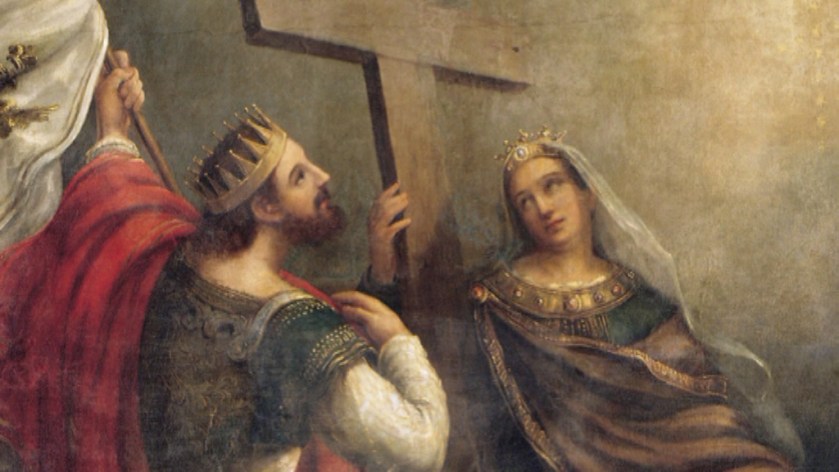
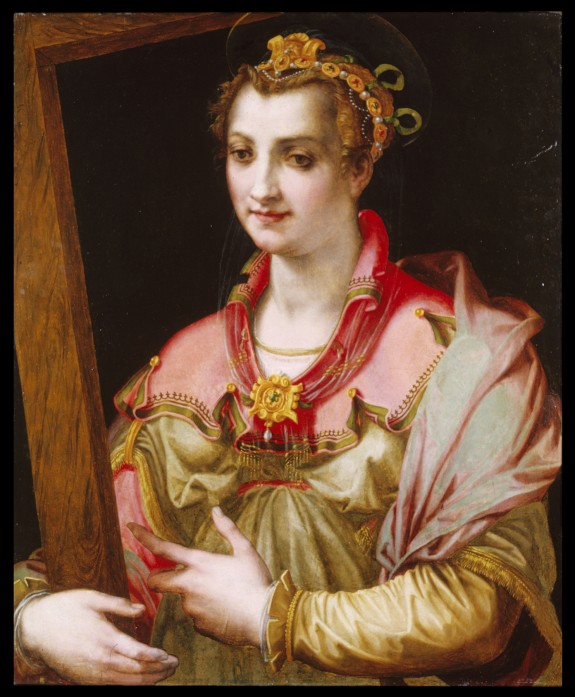 She married a Roman General, Constantius Chlorus and became the mother of Constantine the Great. She embraced Christianity late in life but her incomparable faith and piety greatly influenced her son Constantine, the first Christian emperor and served to kindle a holy zeal in the hearts of the Roman people. Forgetful of her high dignity, she delighted to assist at the Divine Office amid the poor and by her alms deeds showed herself a mother to the indigent and distressed.


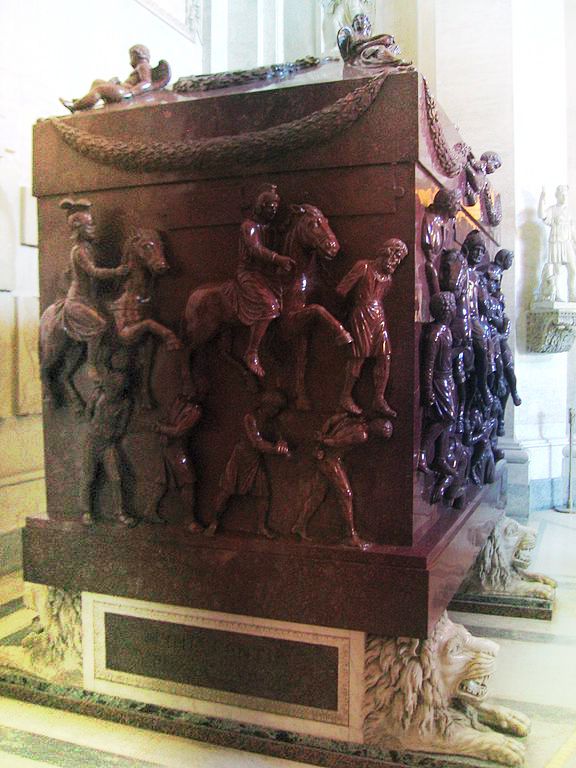

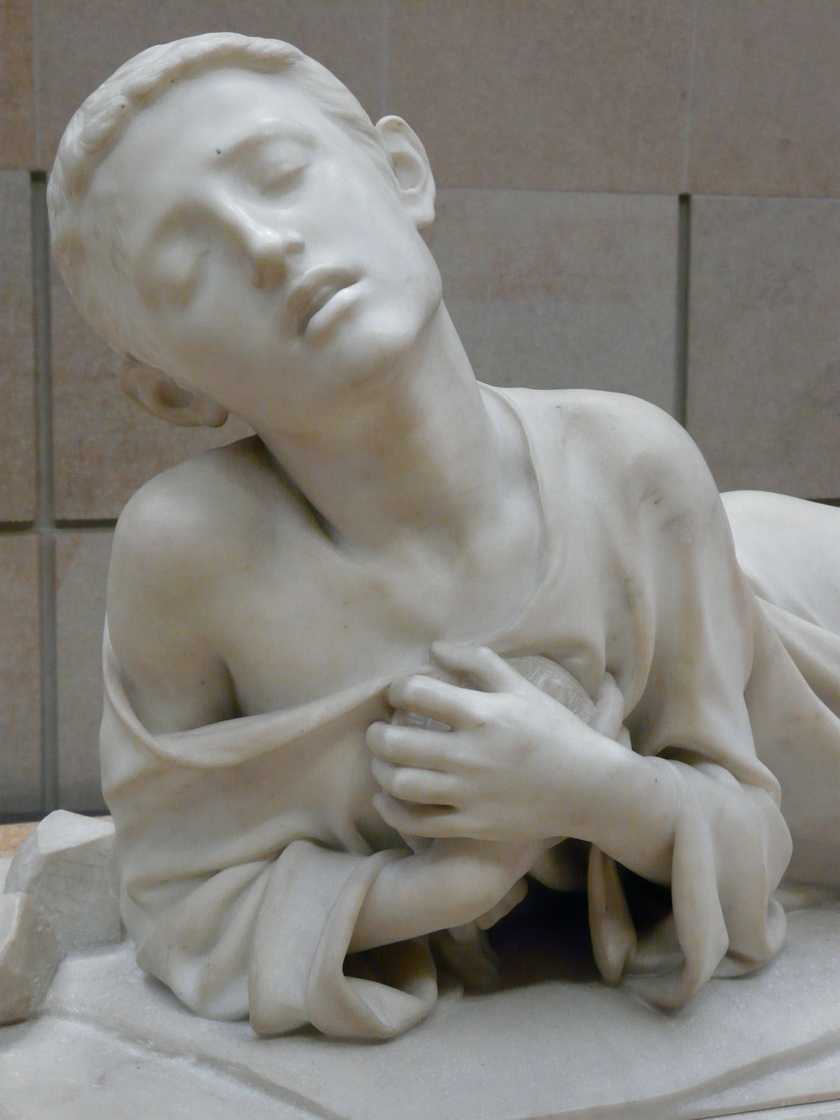
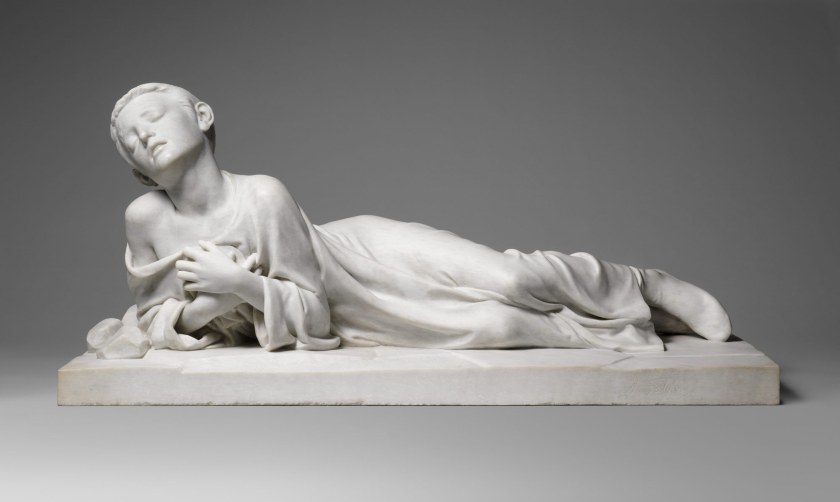
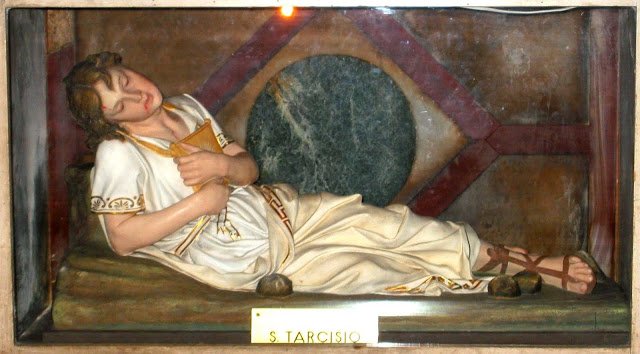
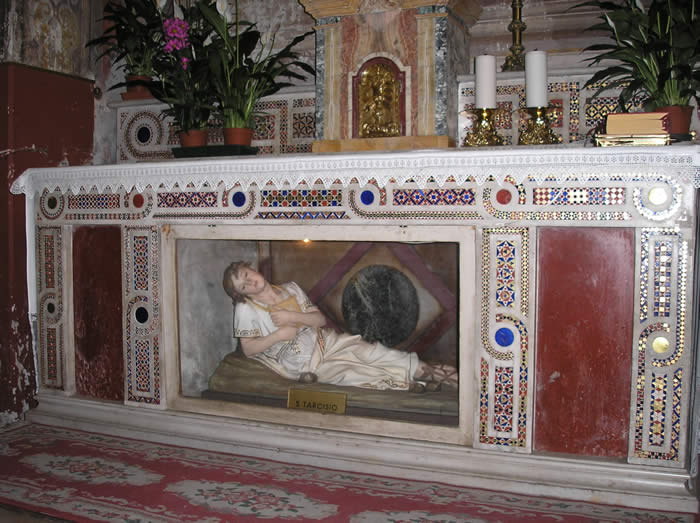
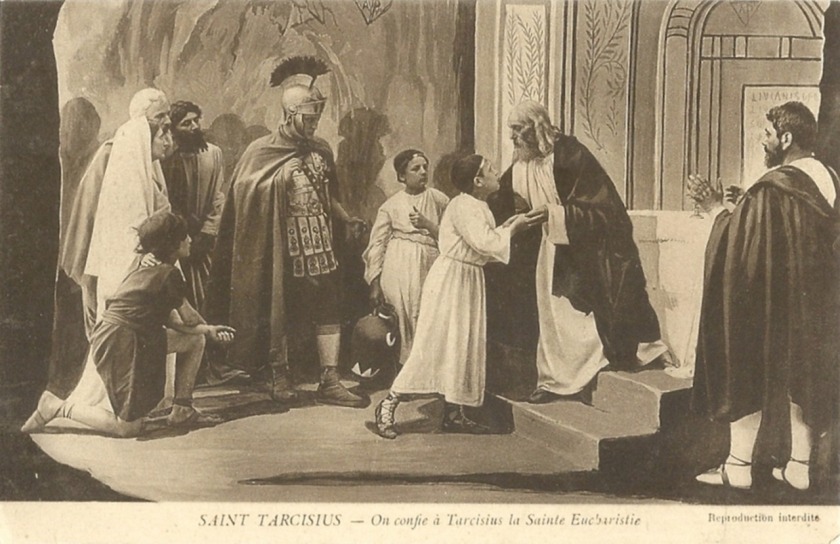 Convinced, the priest entrusted to him the precious Bread, saying: “Tarcisius, remember that a heavenly treasure has been entrusted to your weak hands. Avoid crowded streets and do not forget that holy things must never be thrown to dogs nor pearls to pigs. Will you guard the Sacred Mysteries faithfully and safely?”. “I would die”, Tarcisio answered with determination, “rather than let go of them”.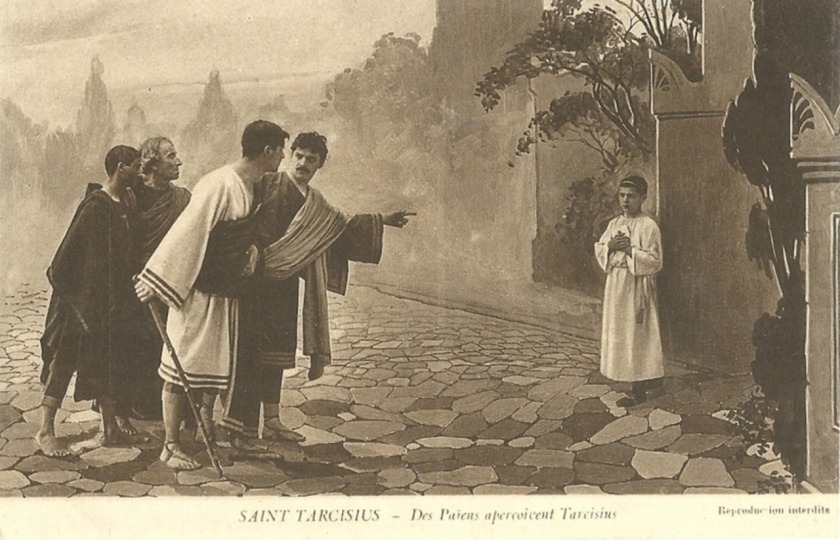

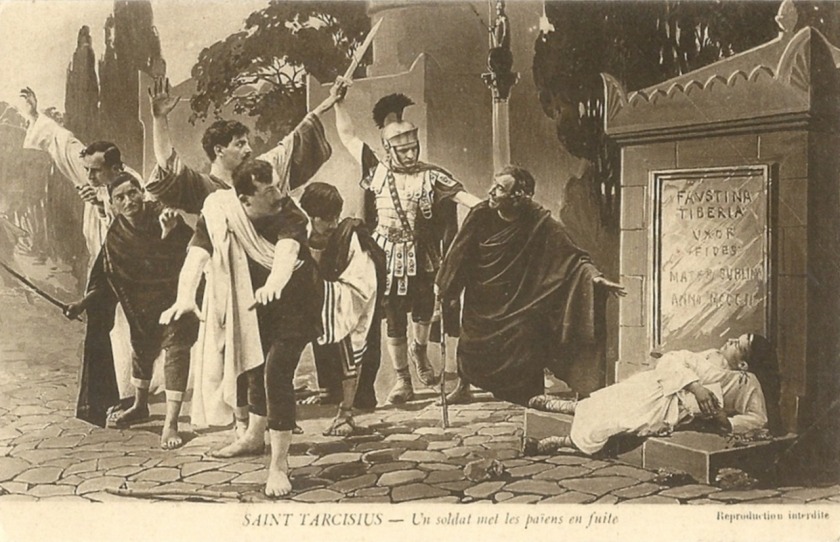
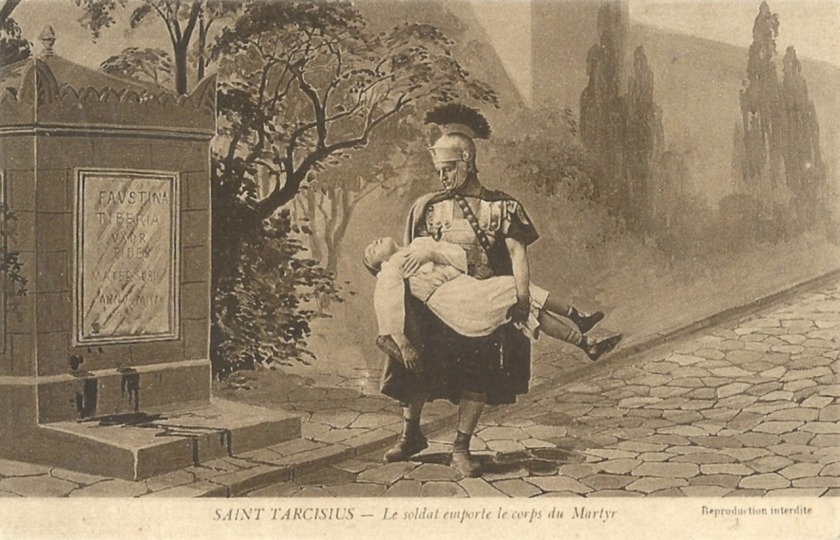
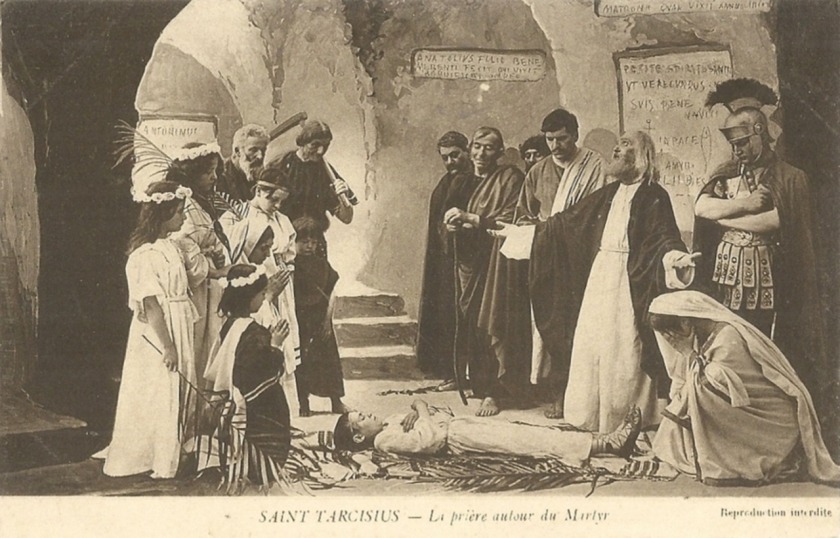
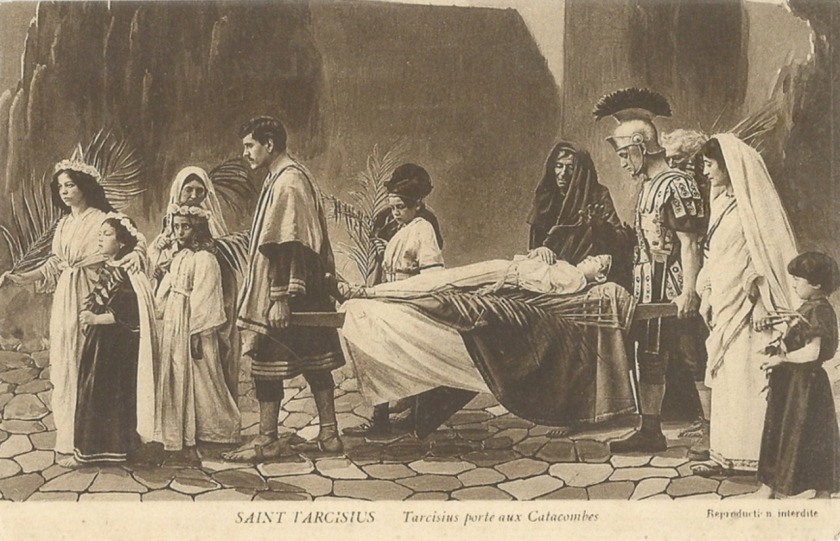
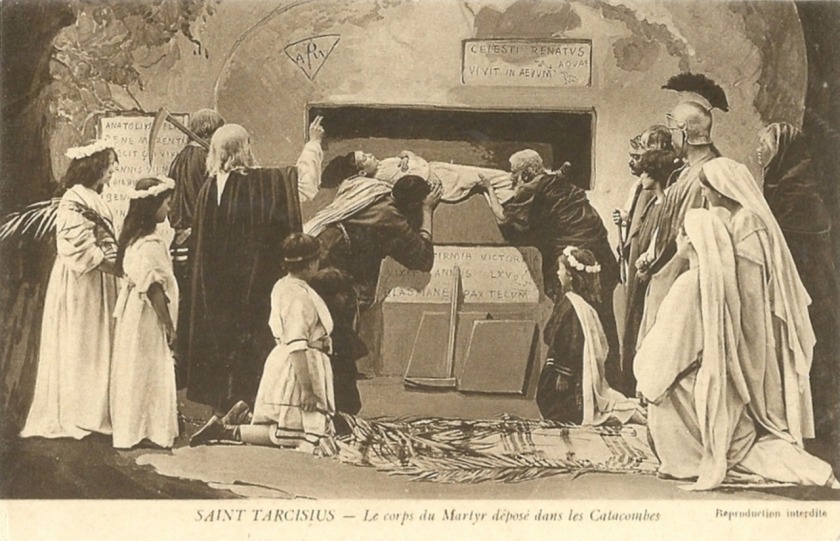


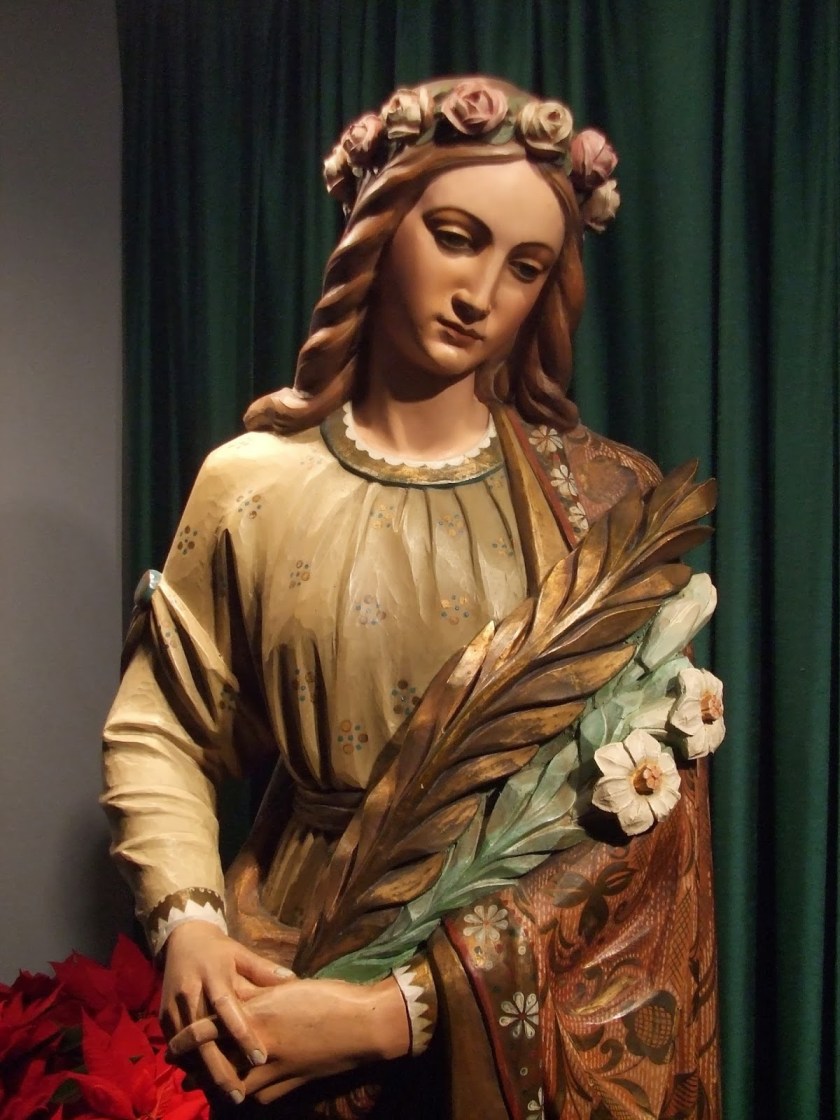
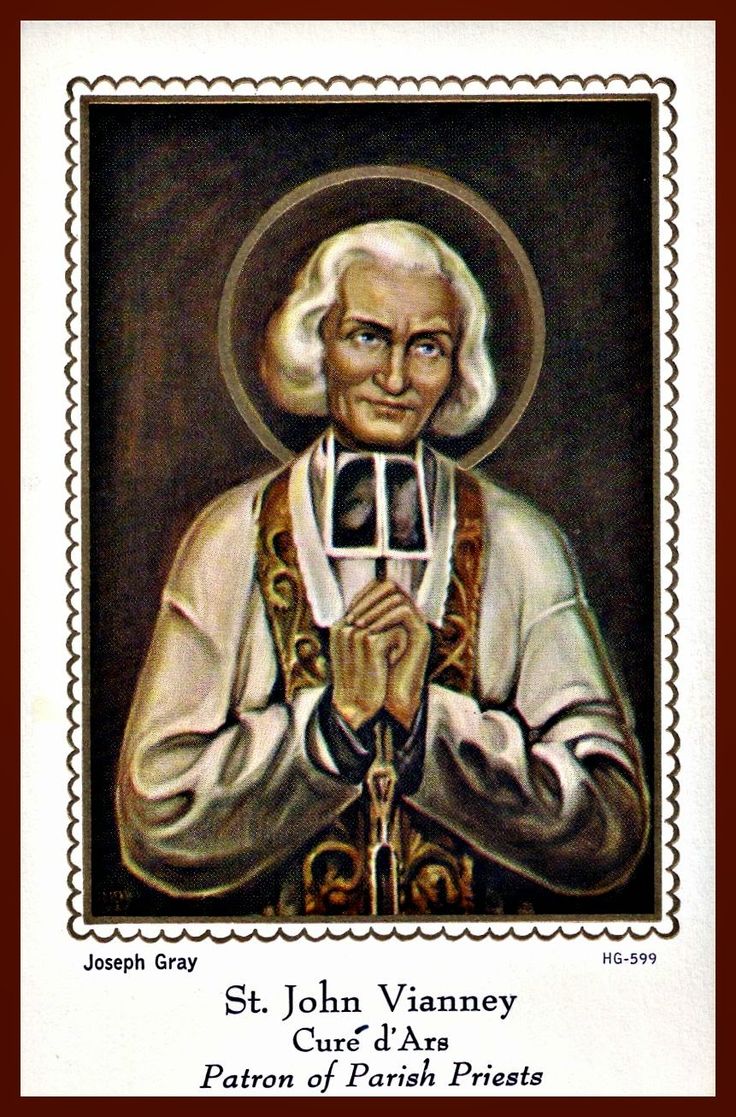
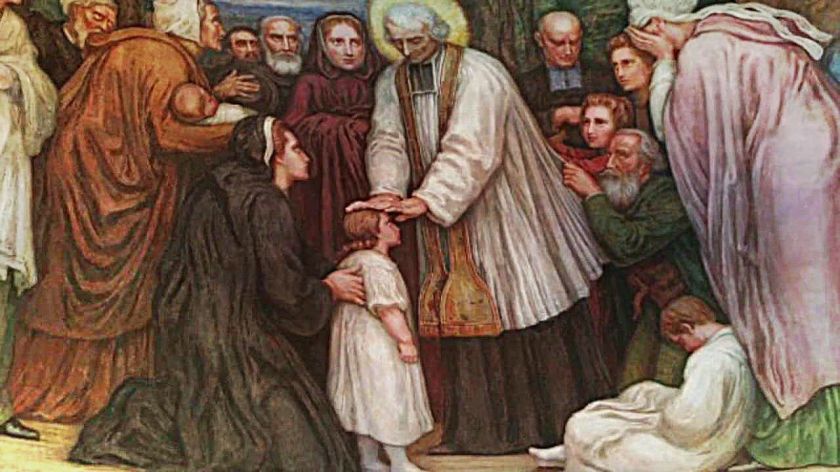
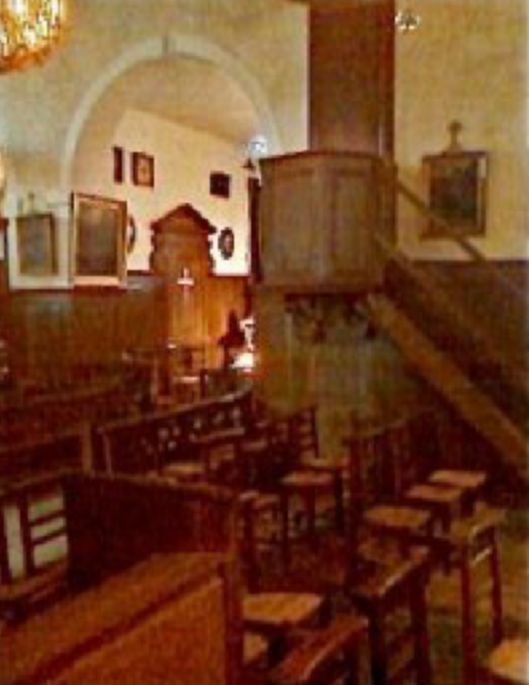
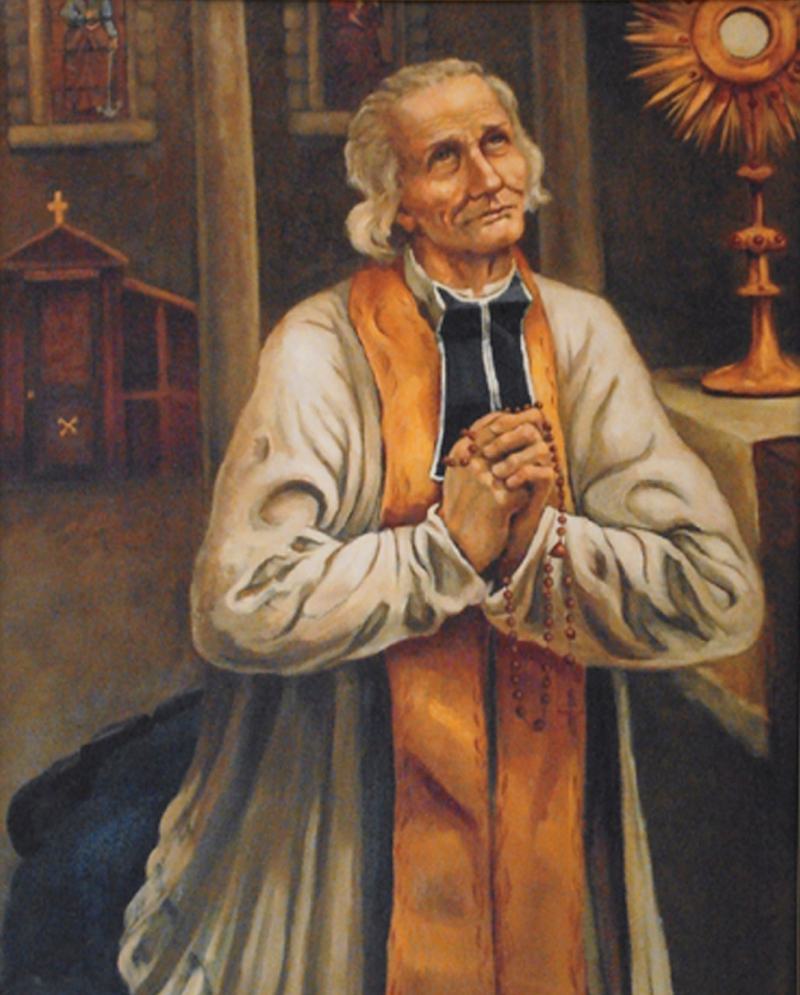
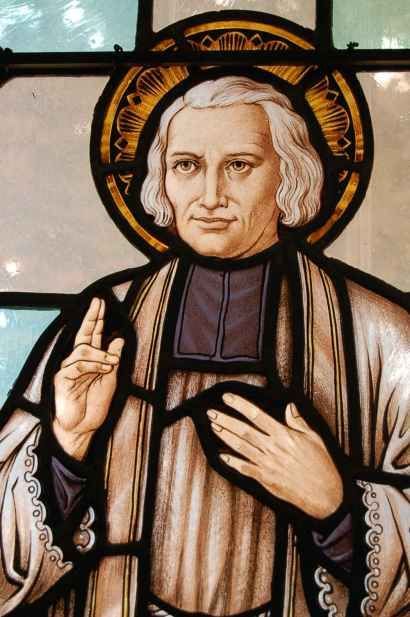


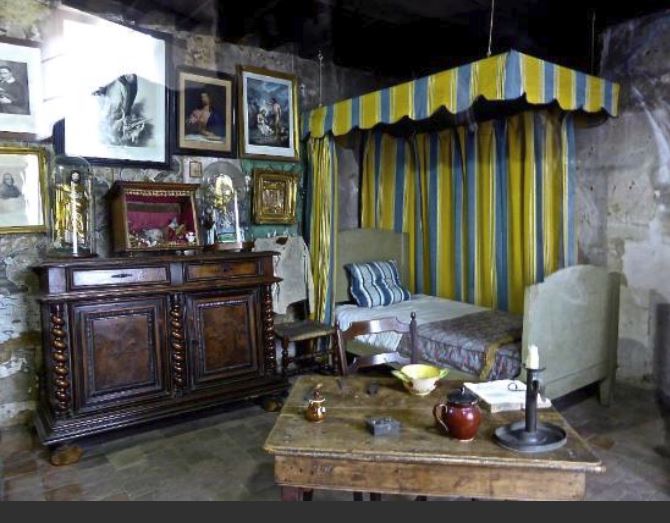

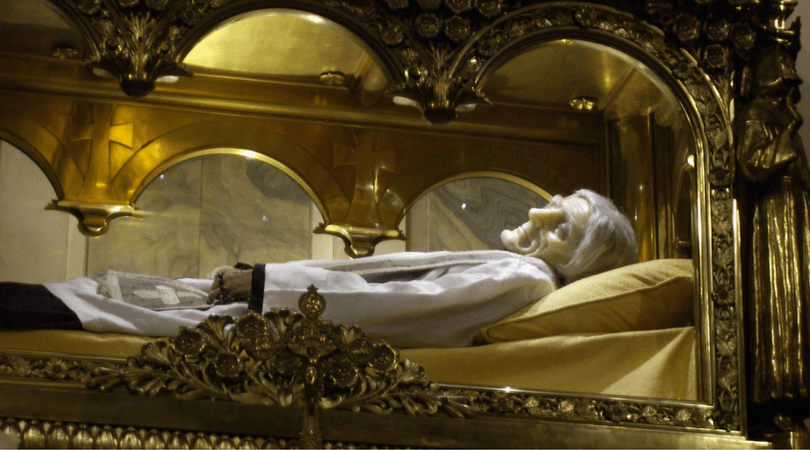
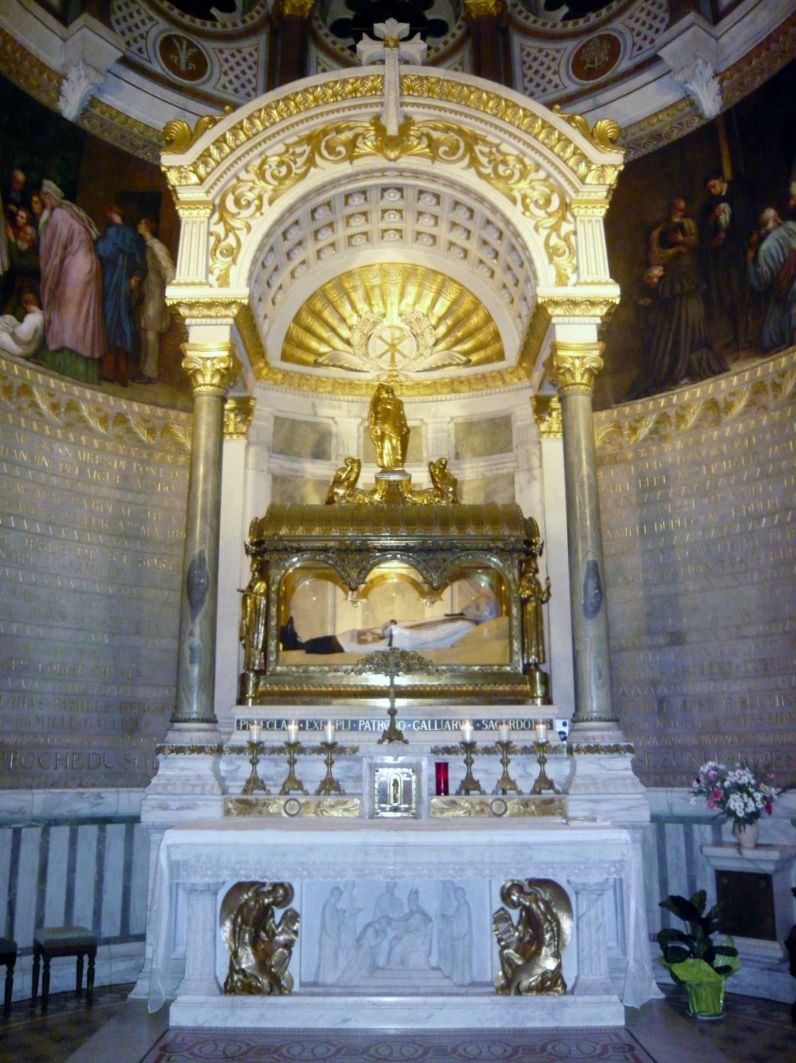
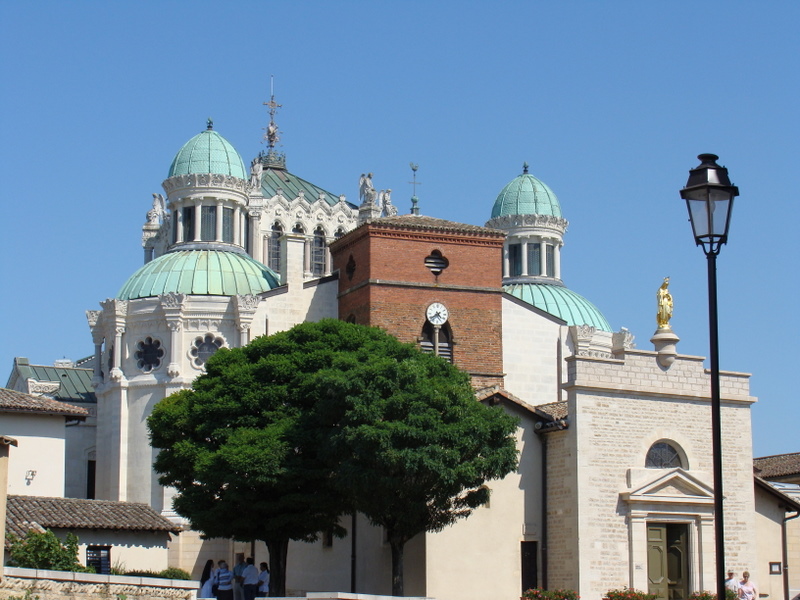
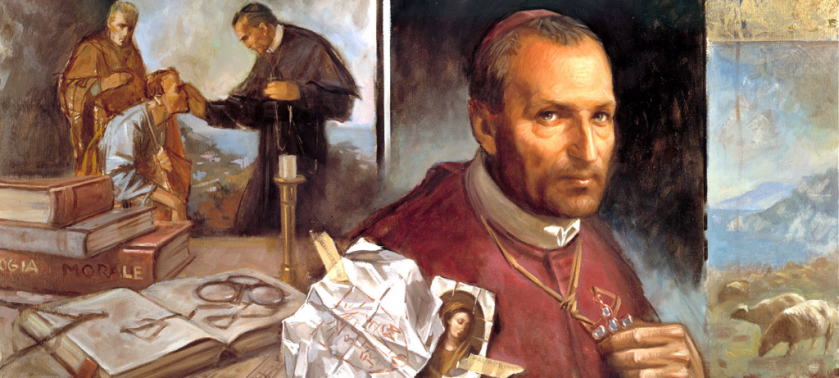
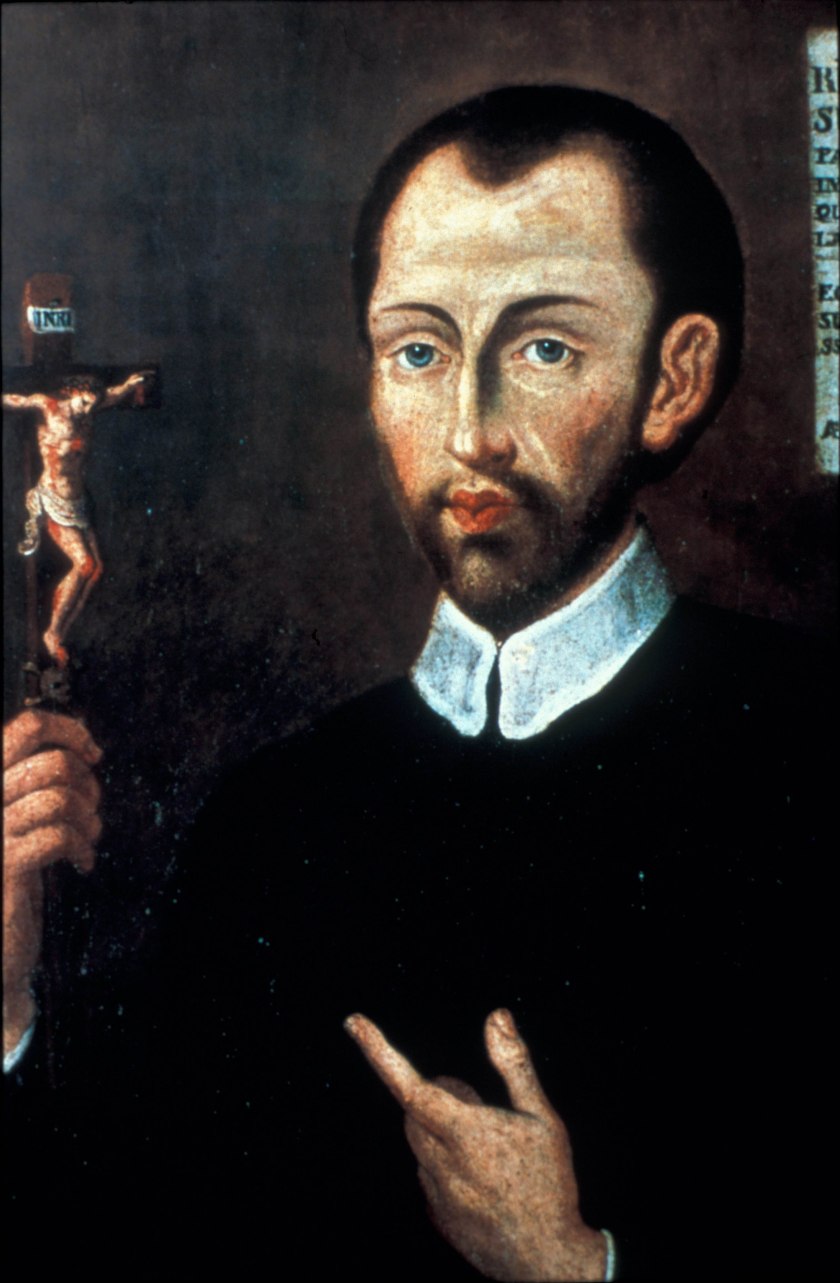
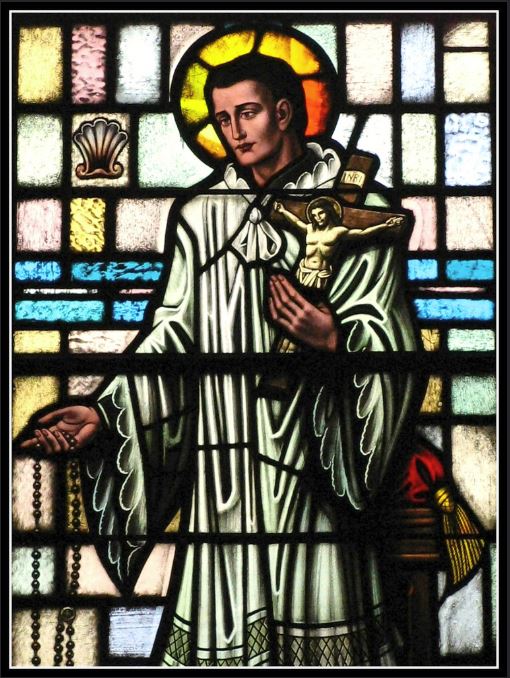
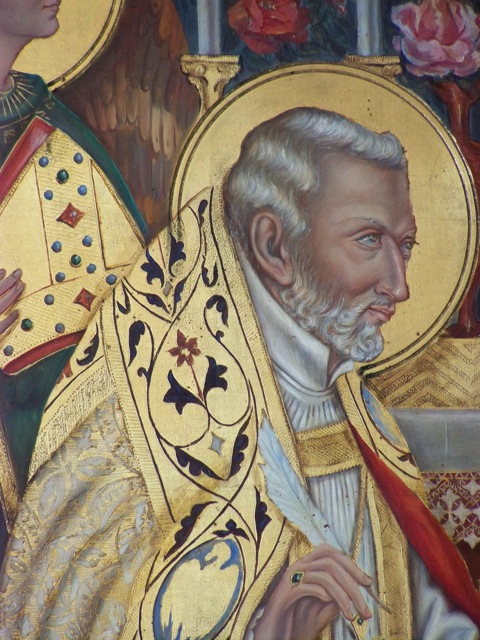
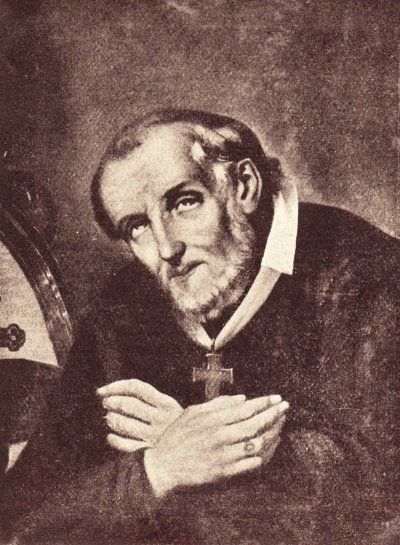
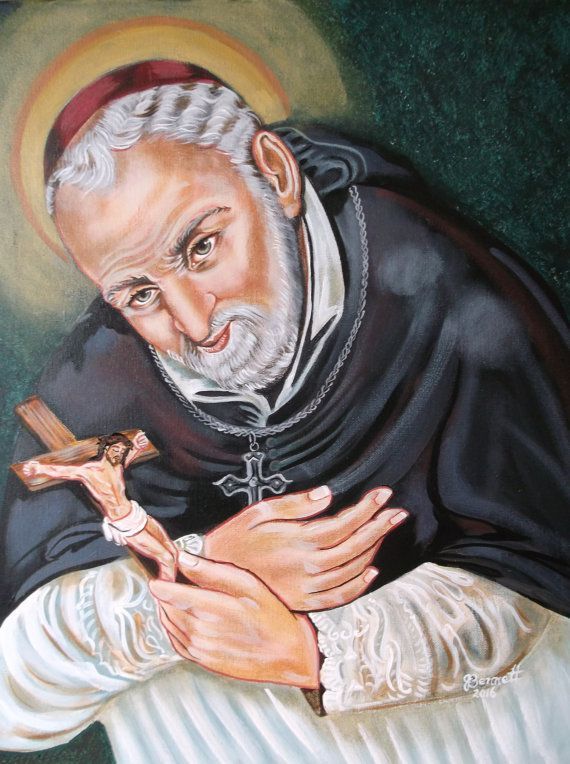
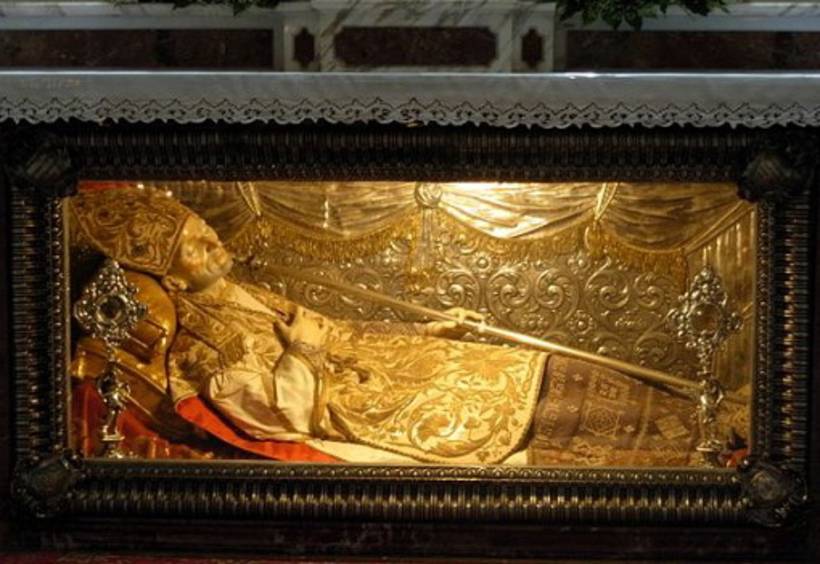
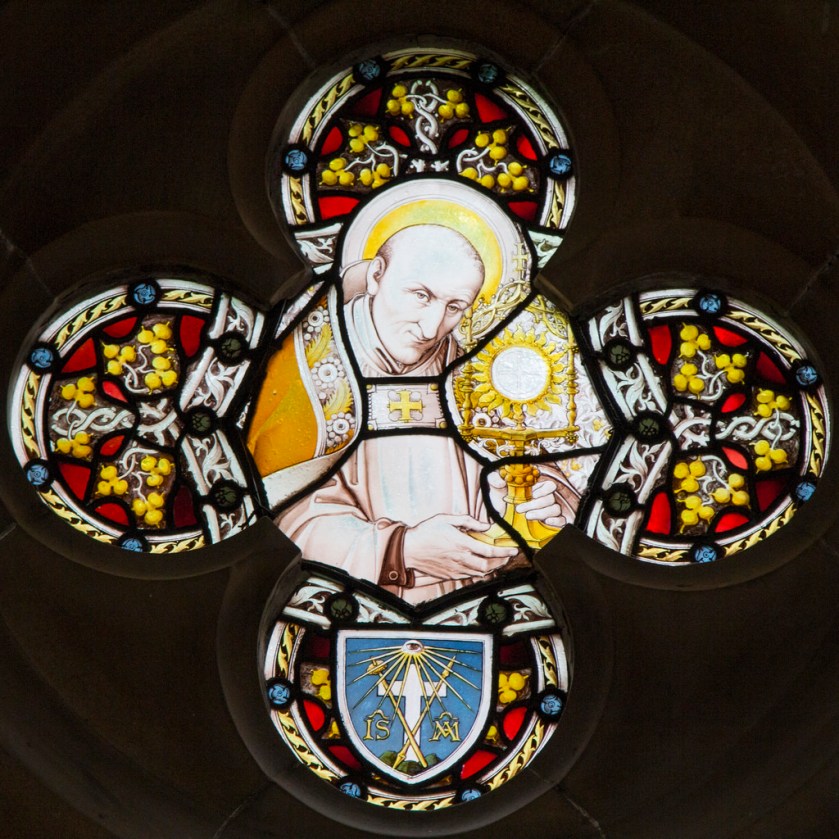
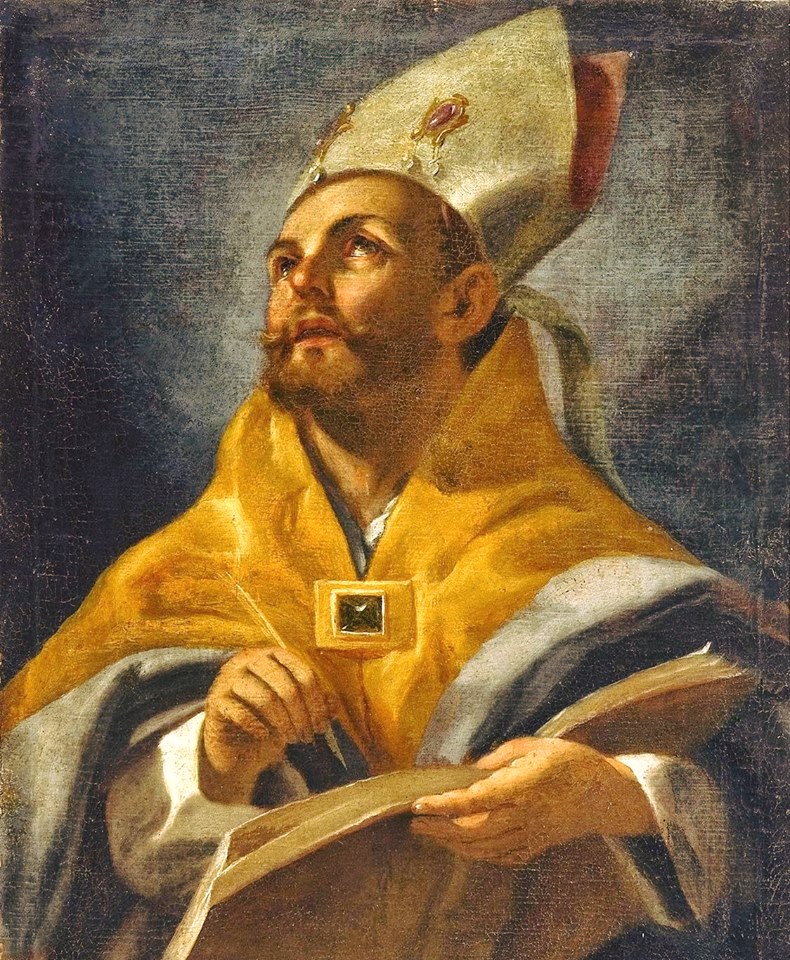


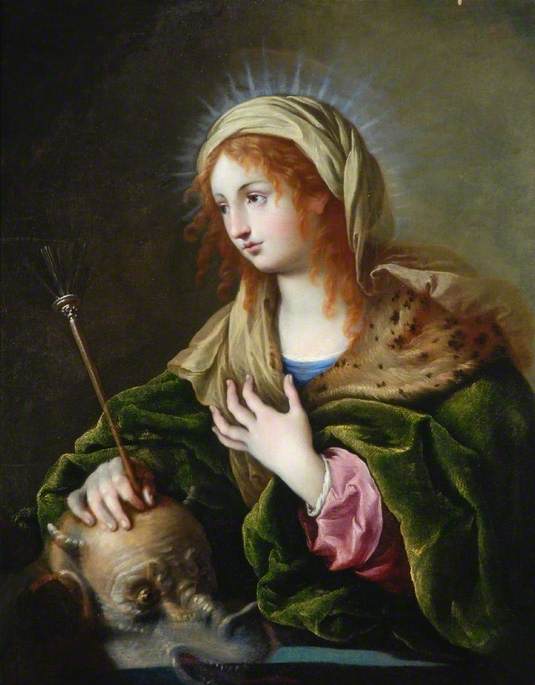

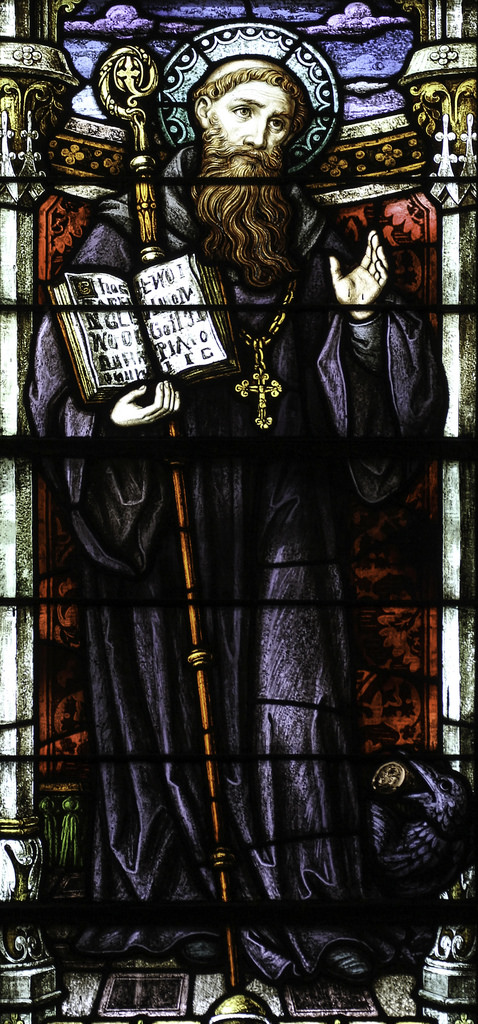
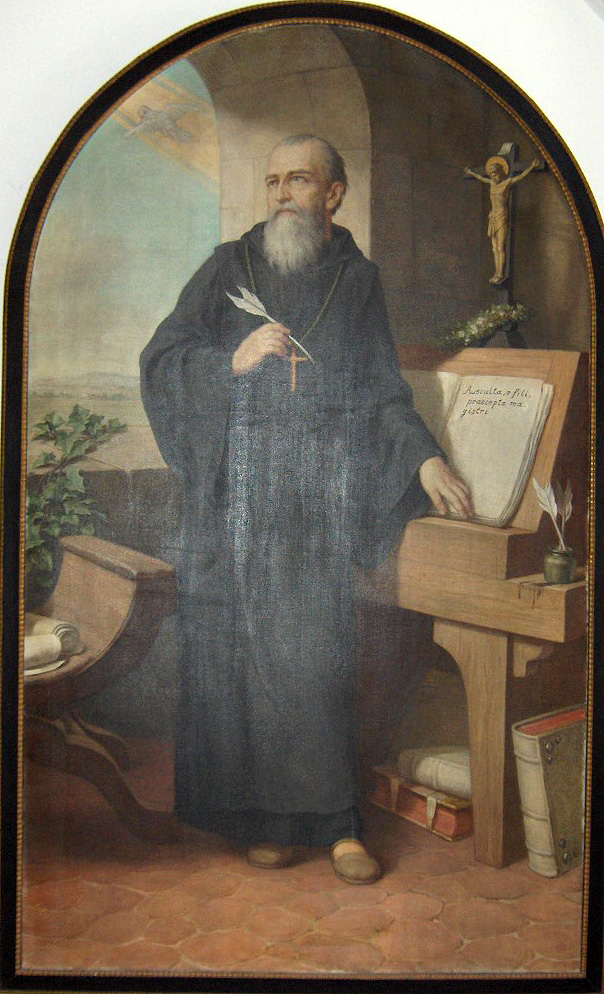
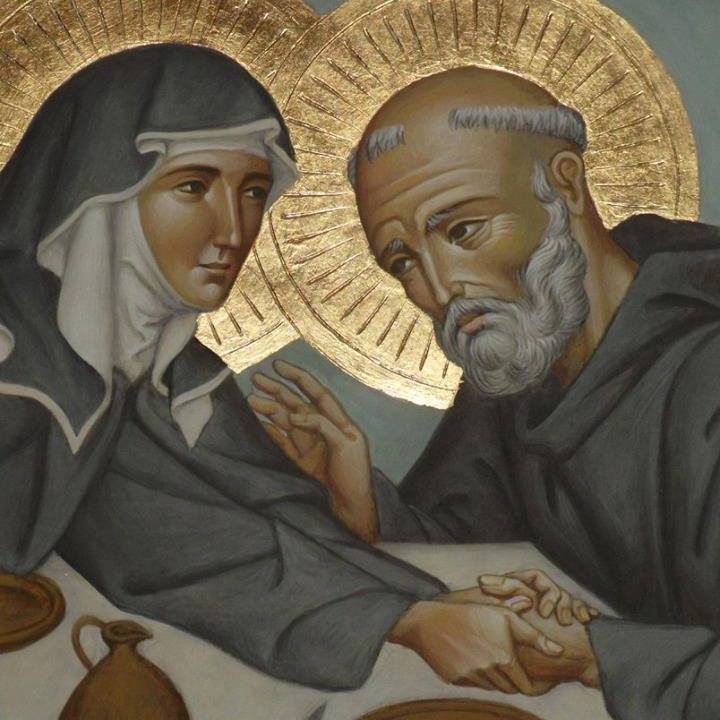
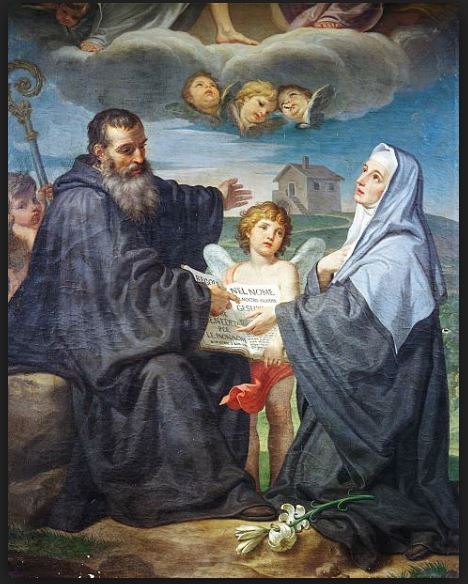
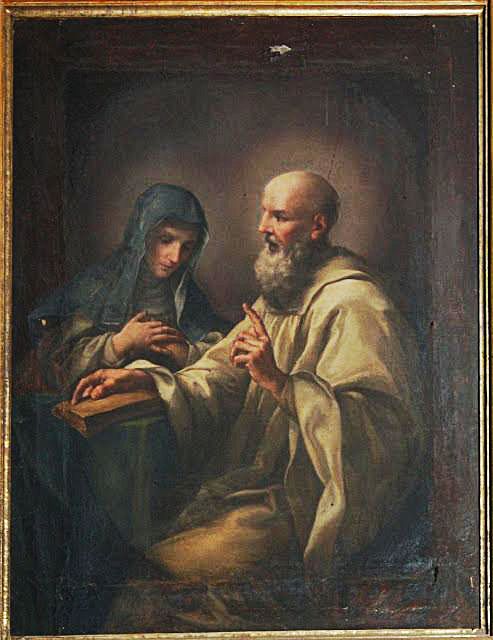
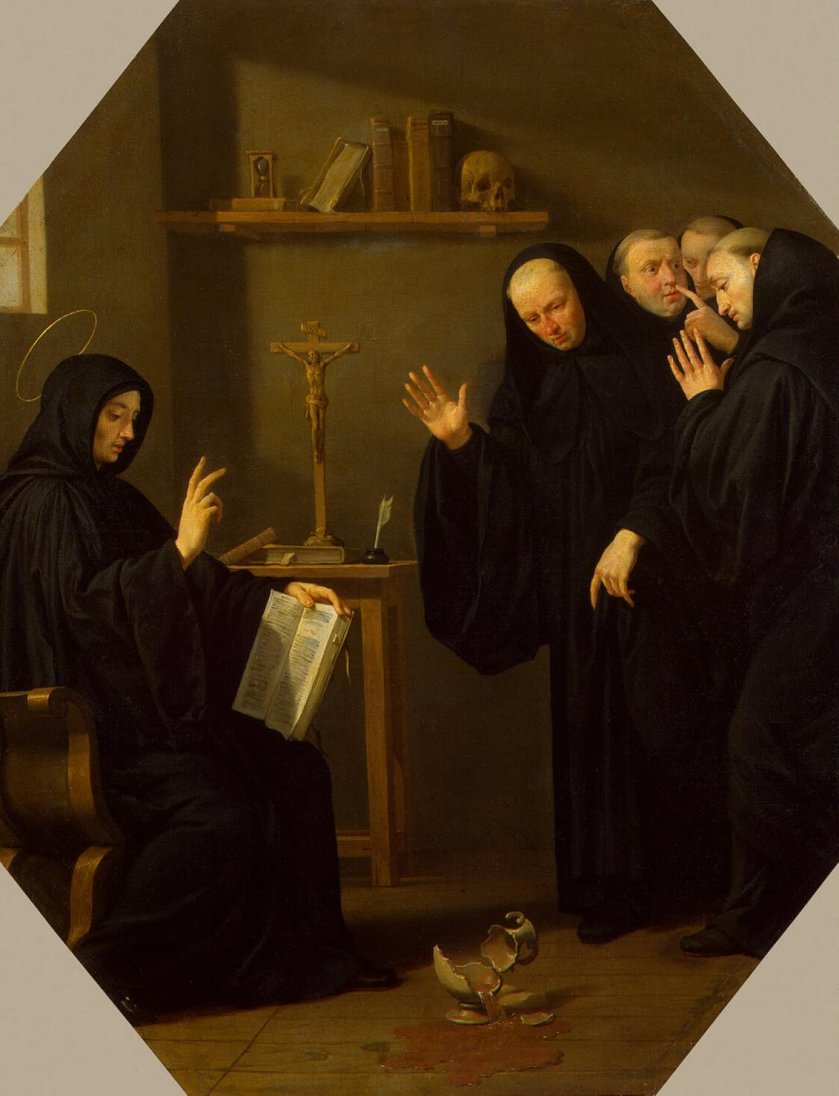
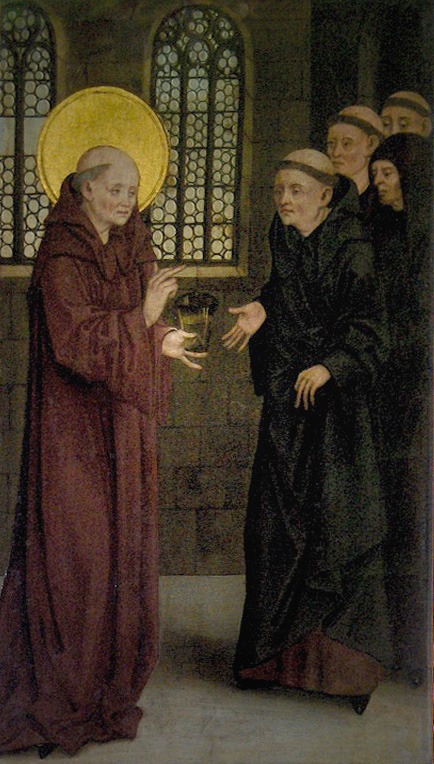
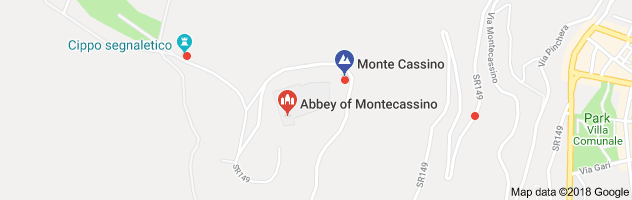
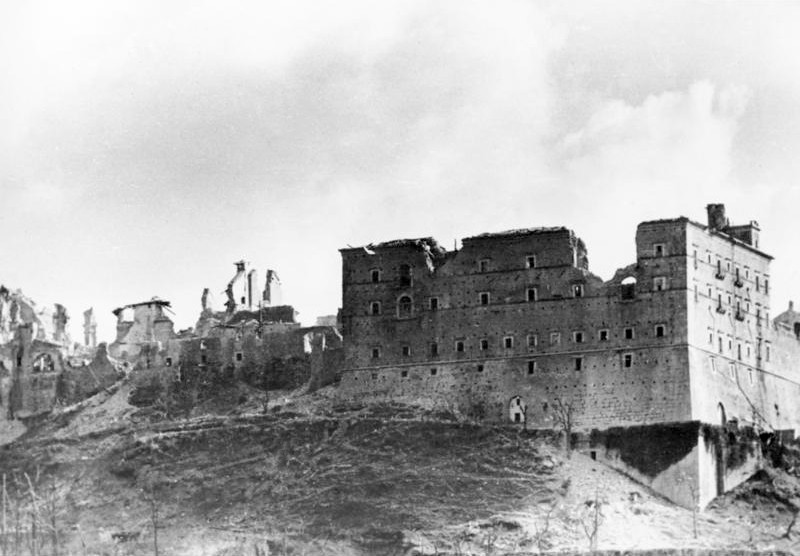
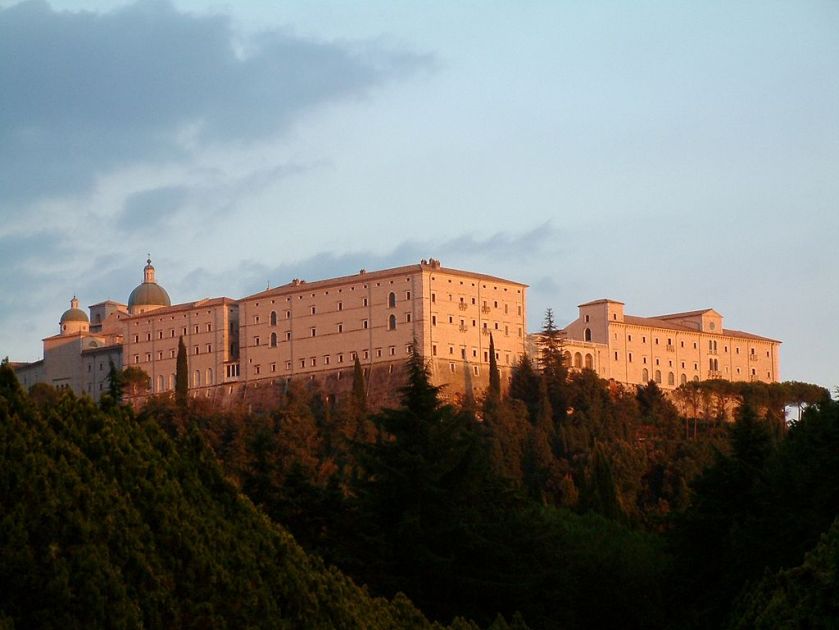

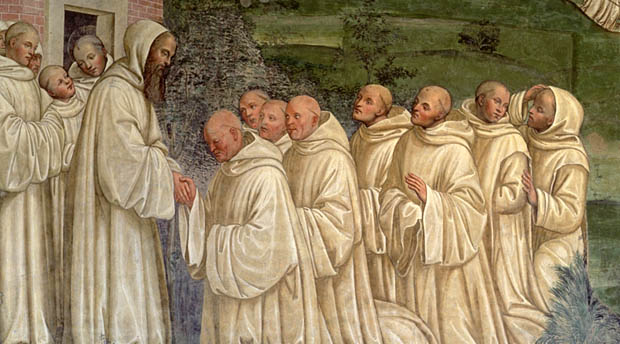
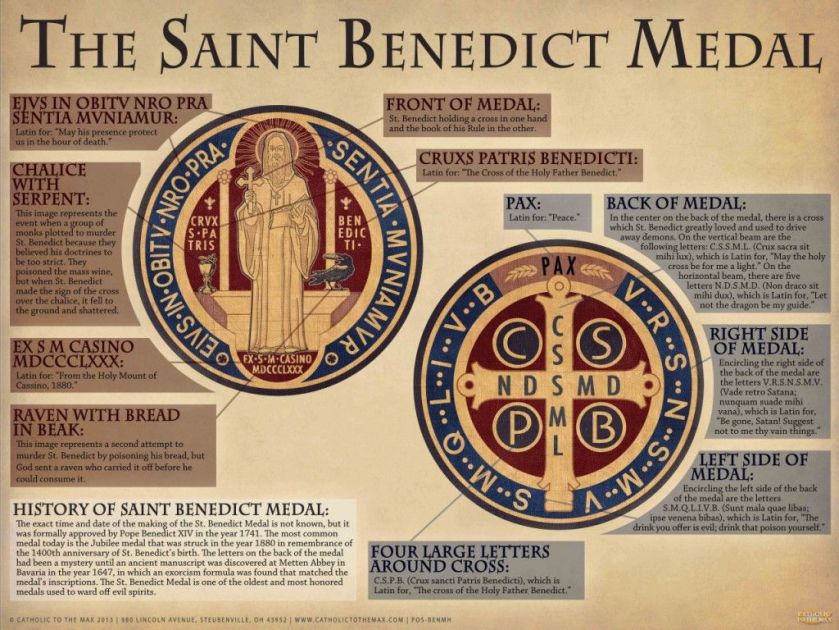
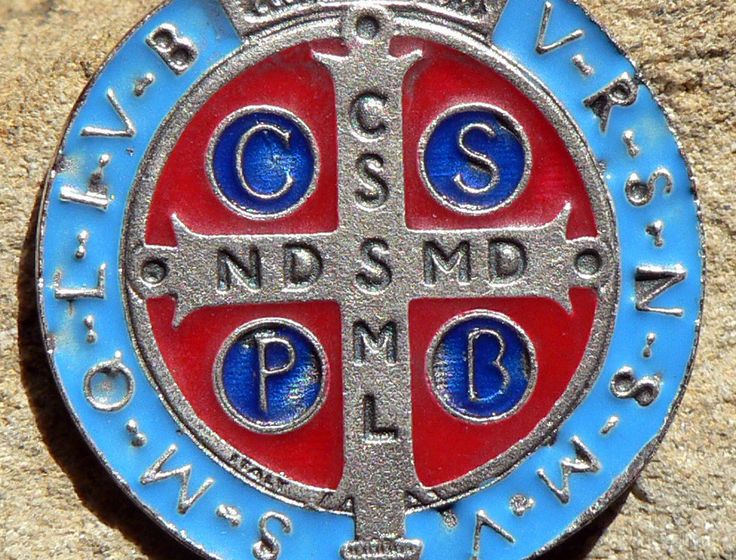
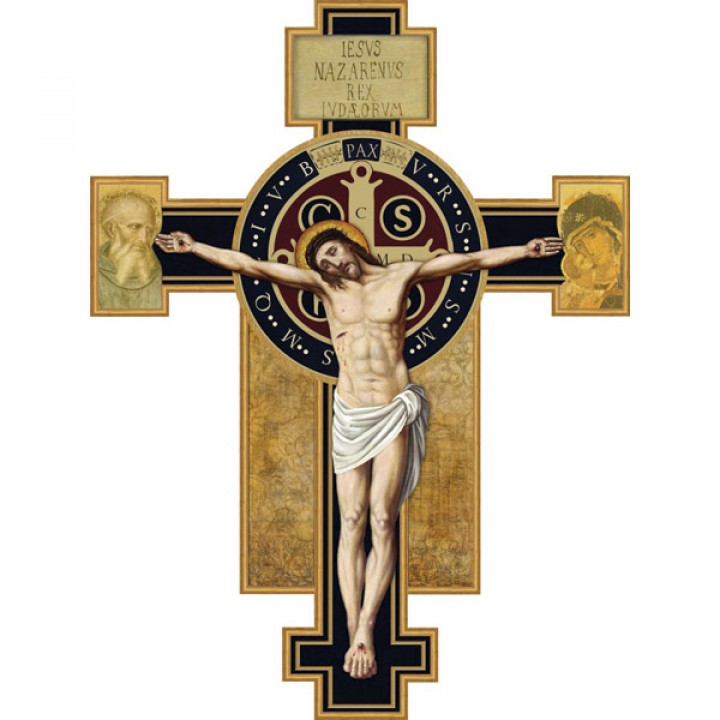
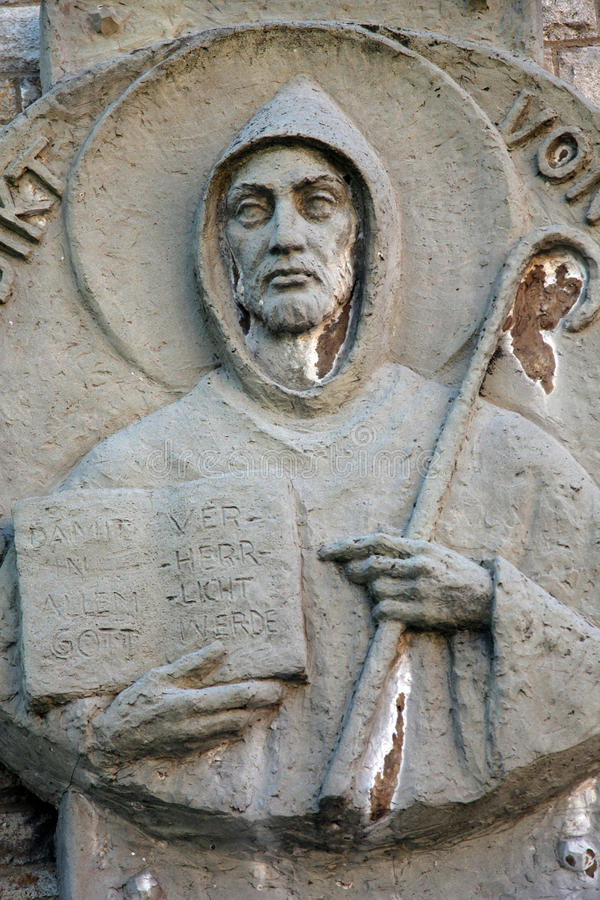

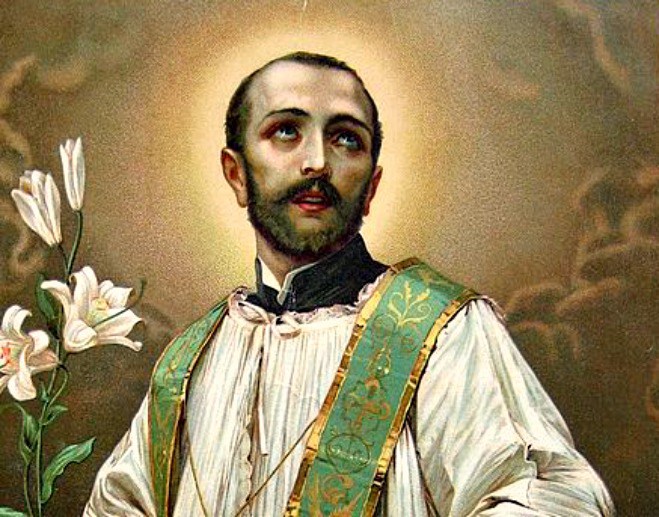
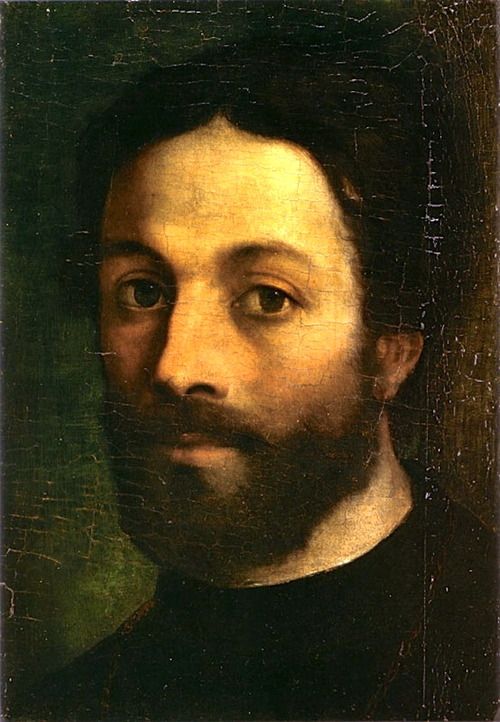


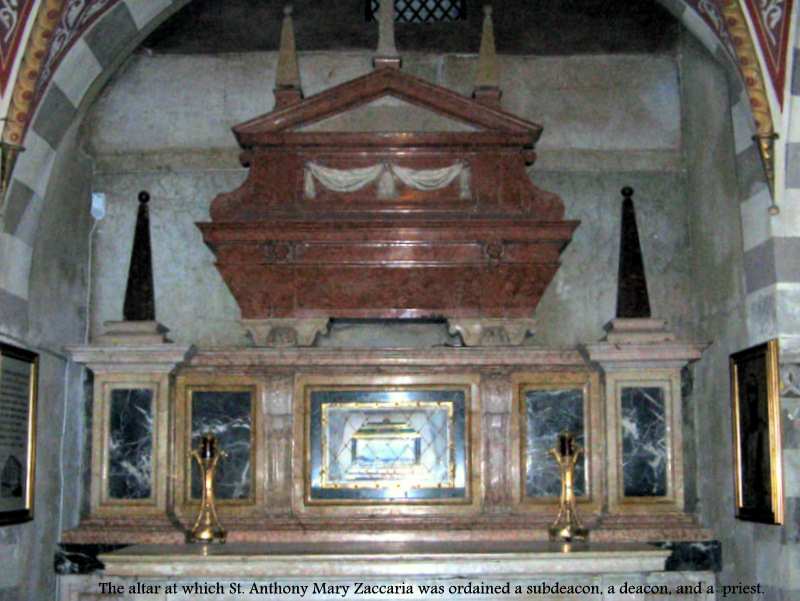
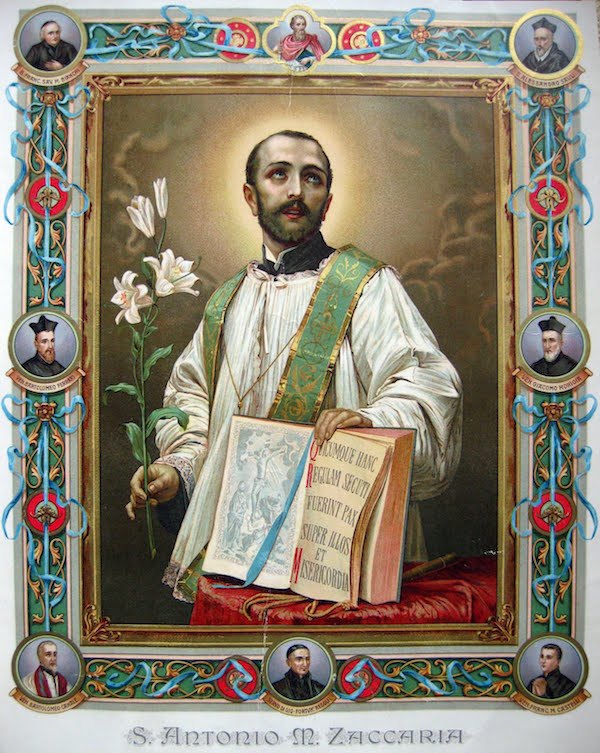
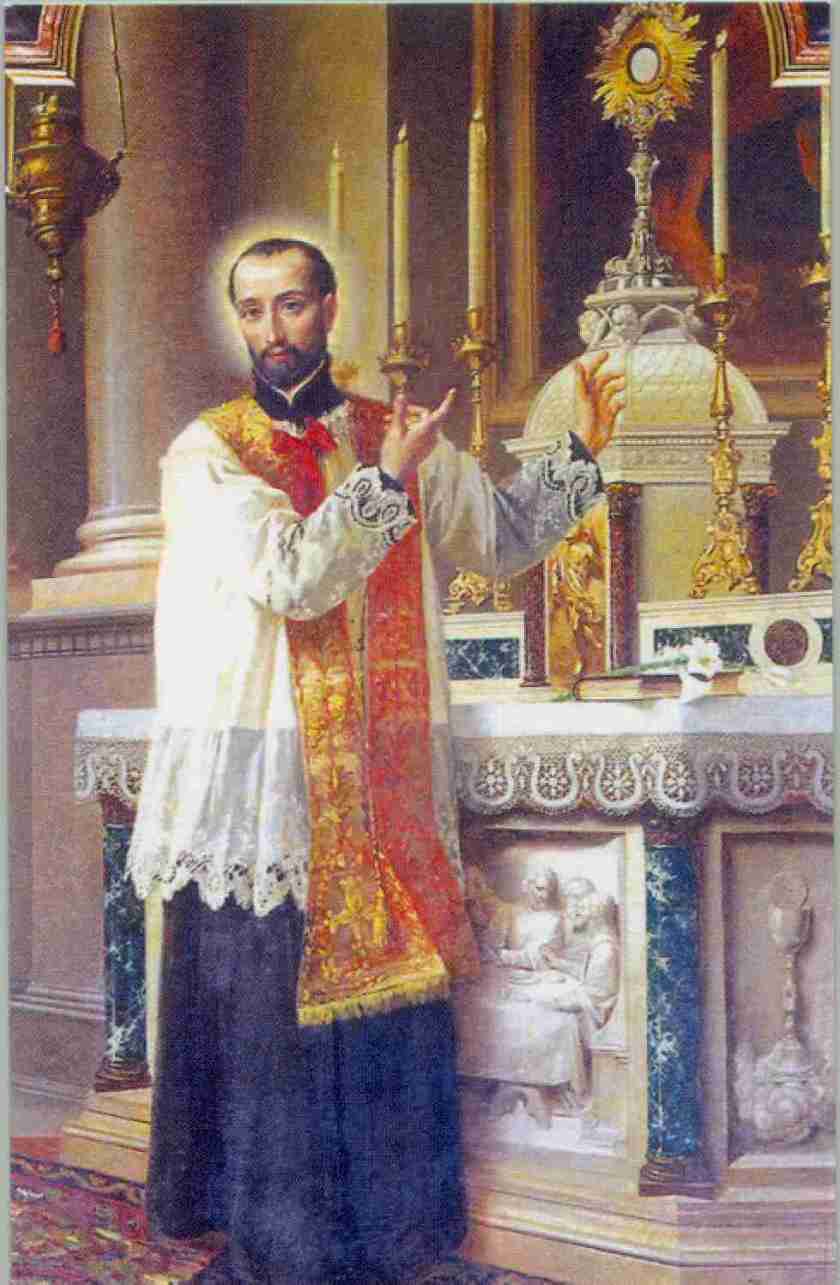

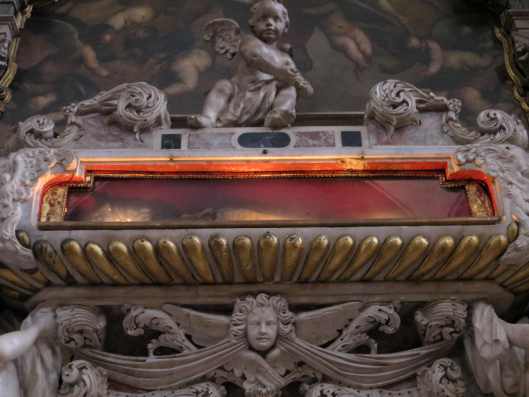
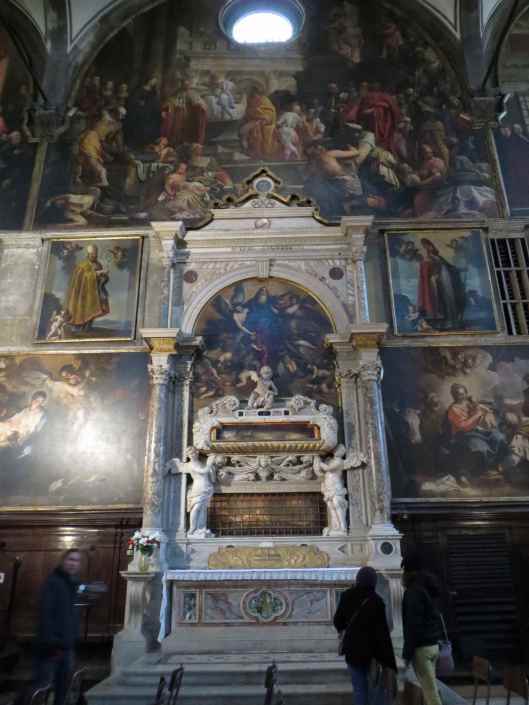
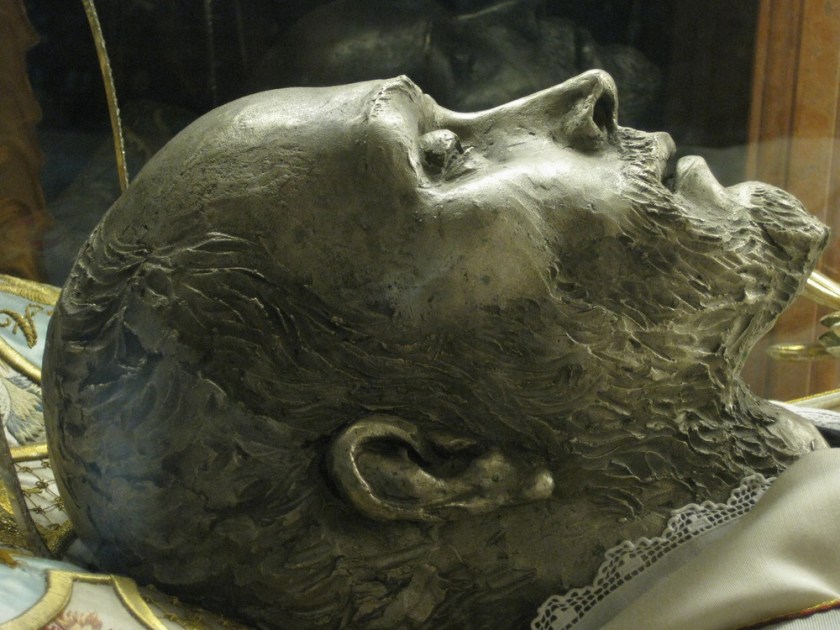
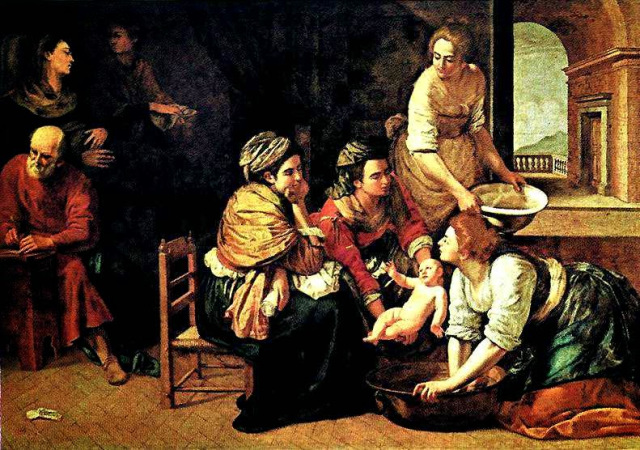
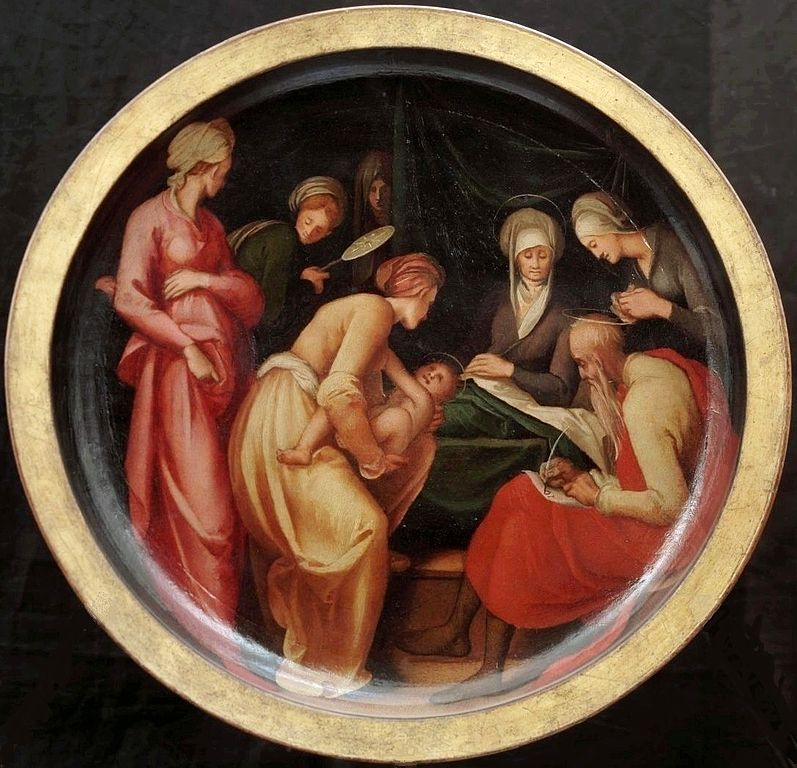
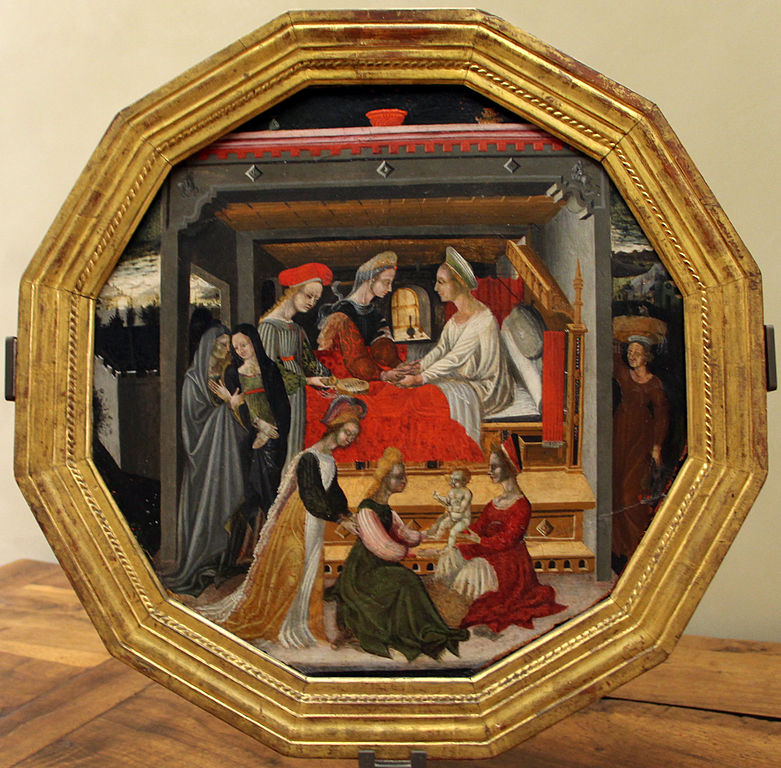
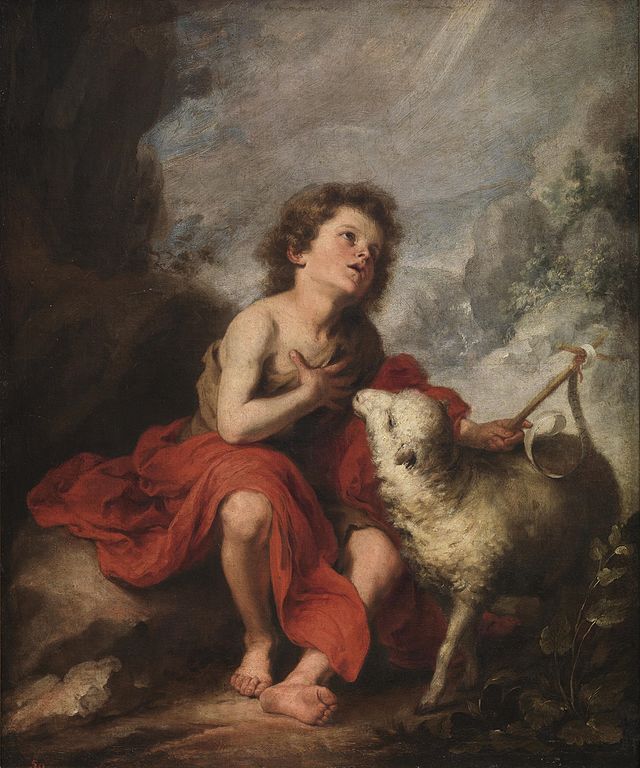


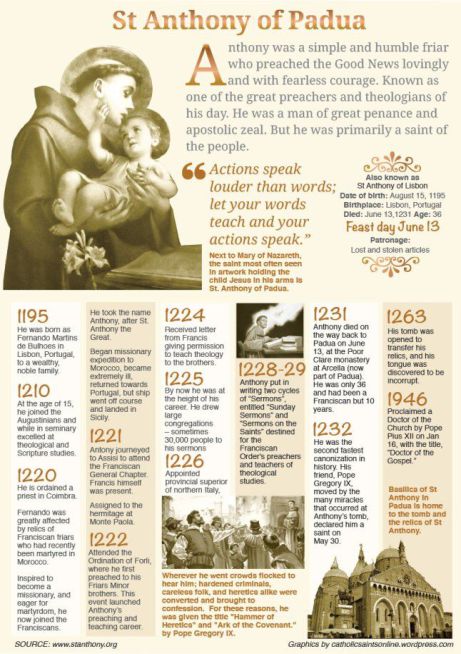
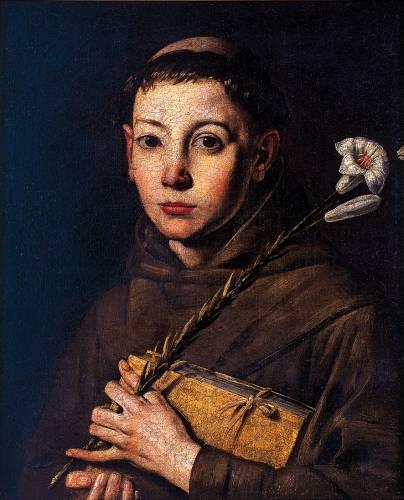
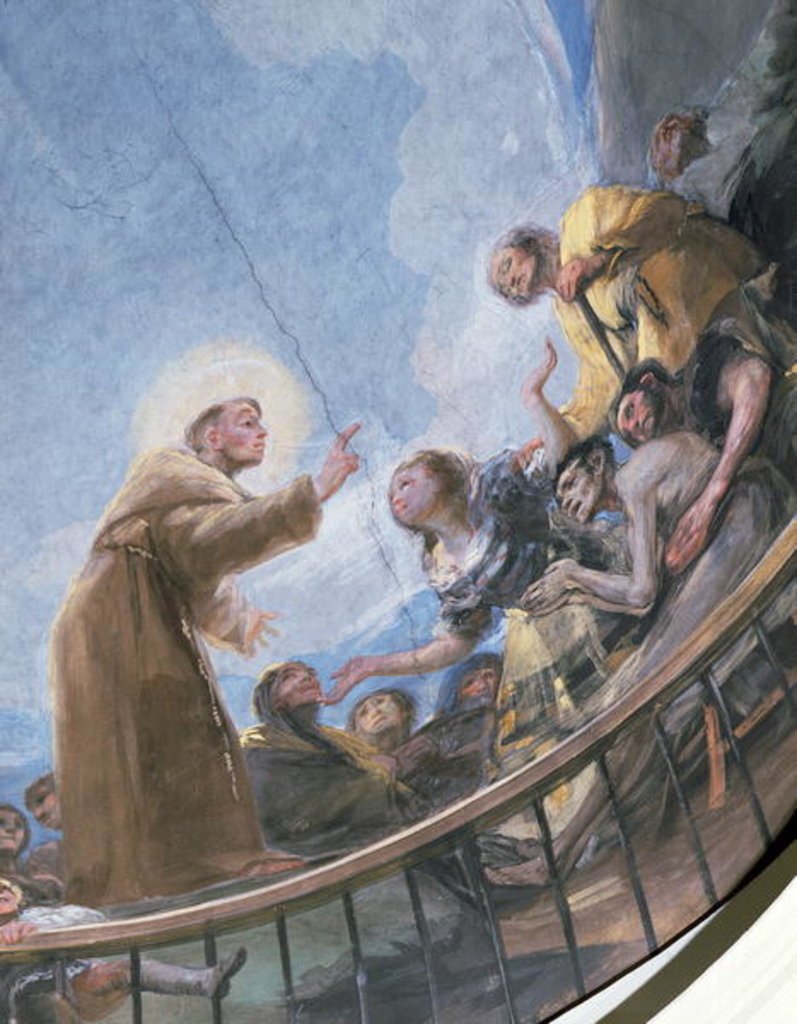
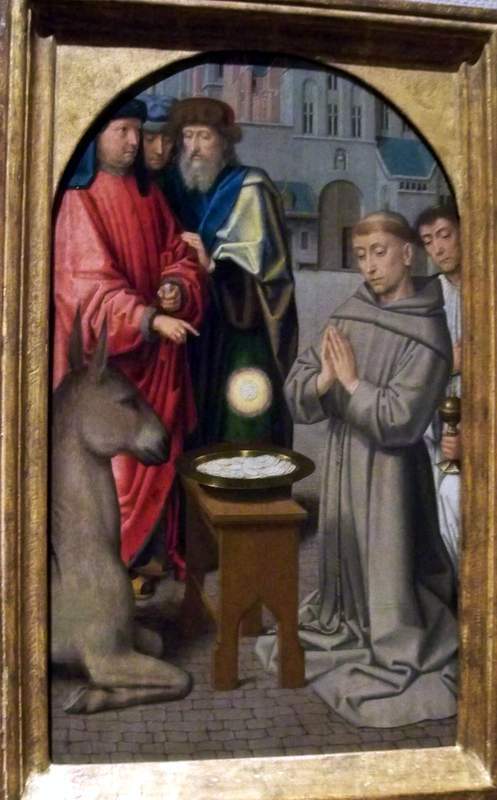
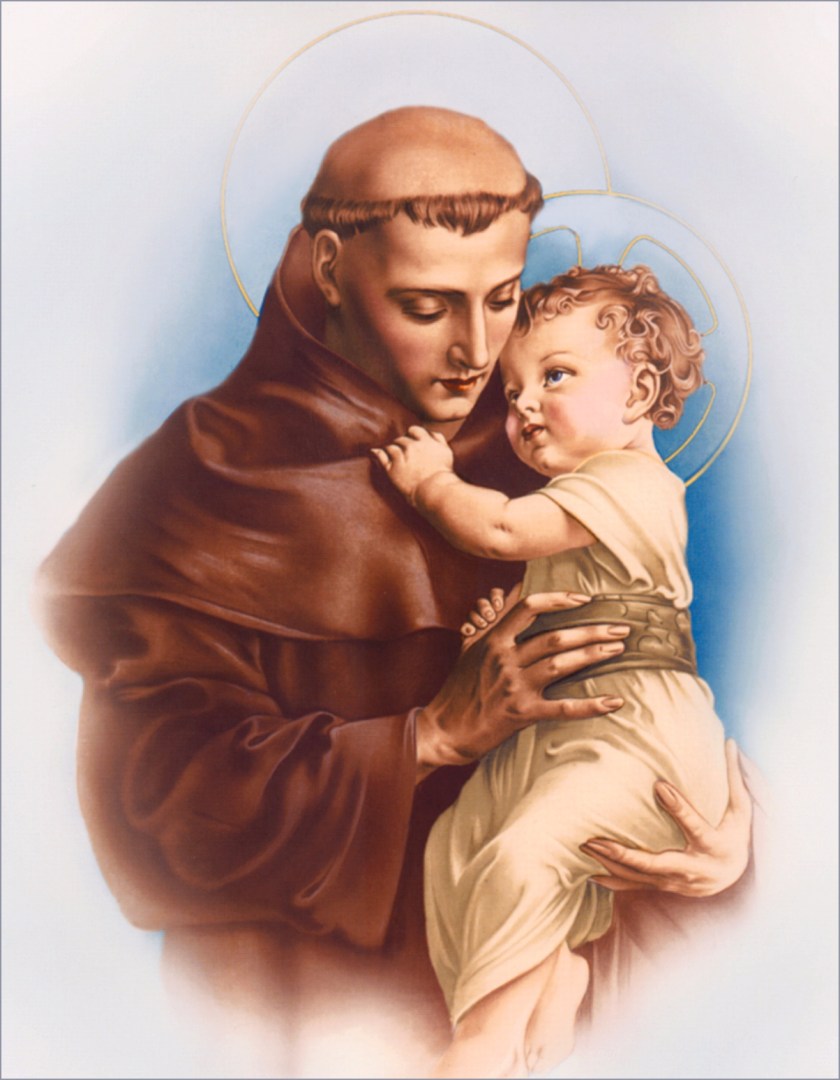

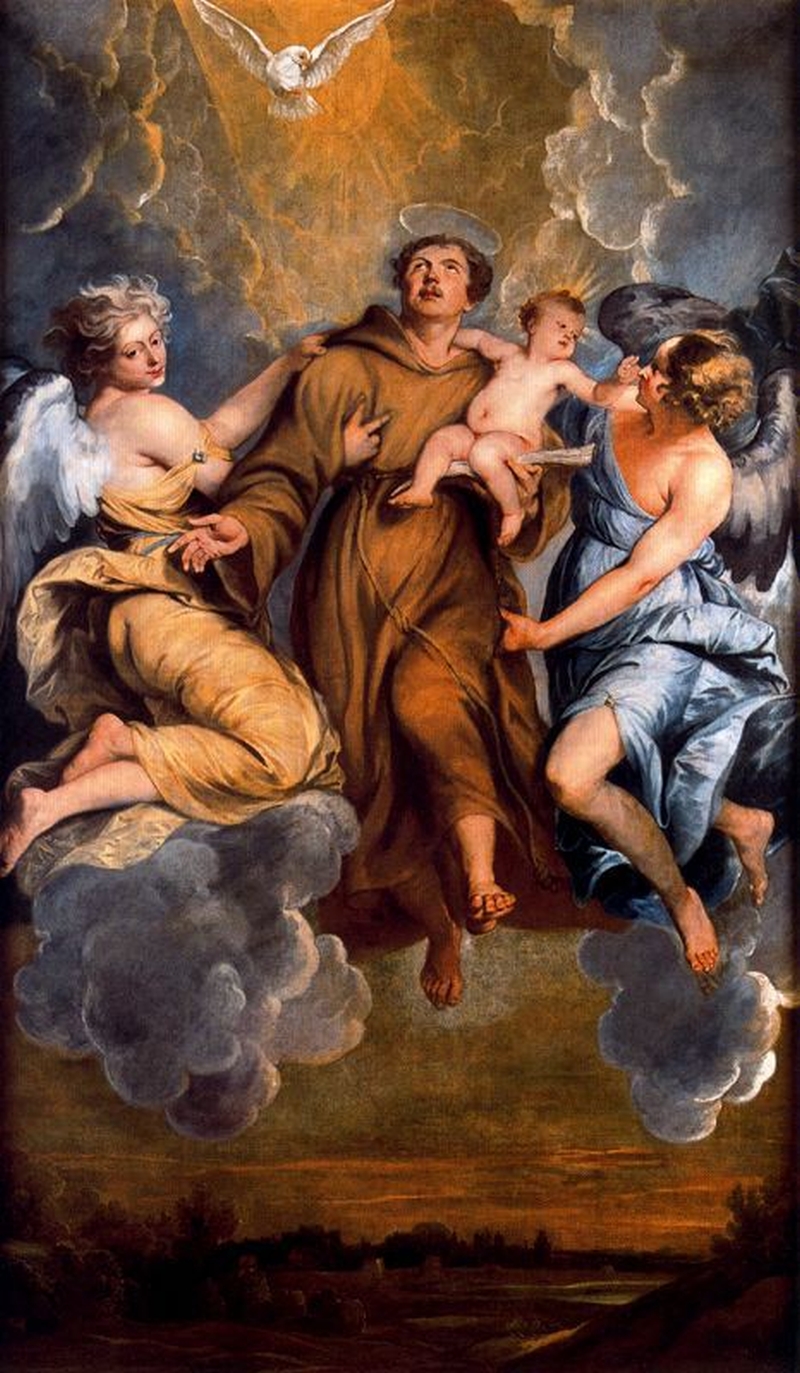
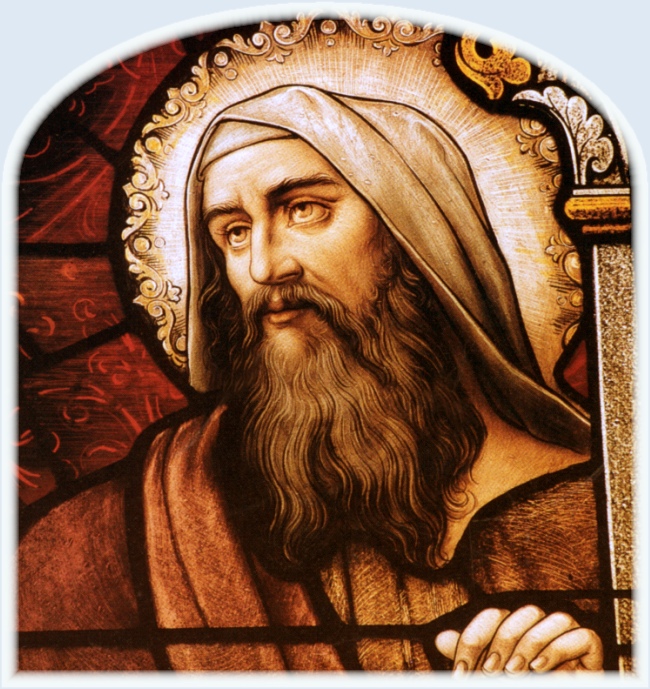
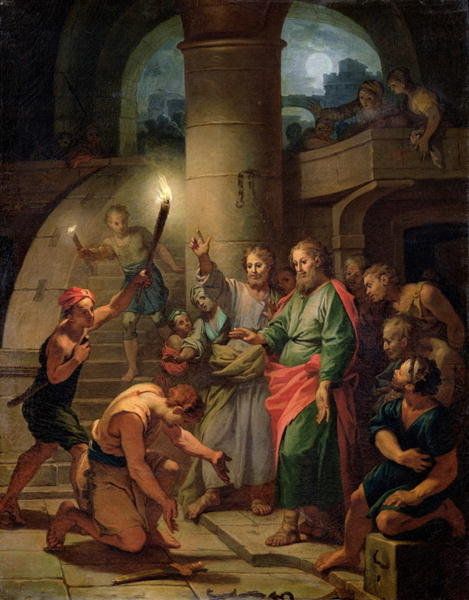
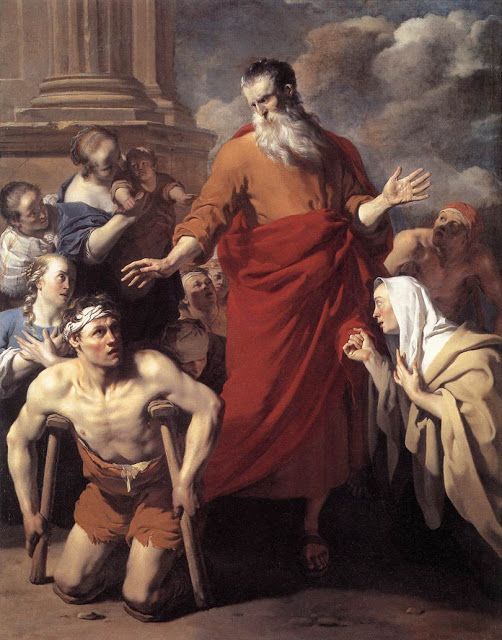
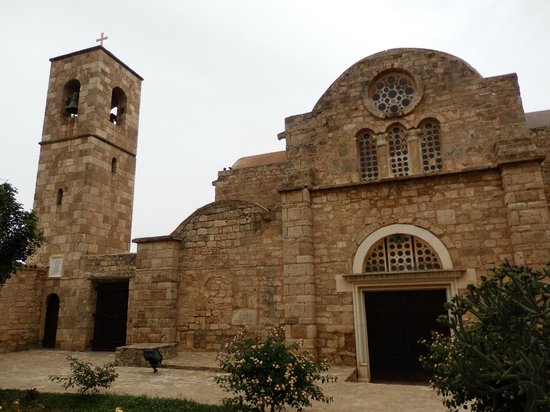


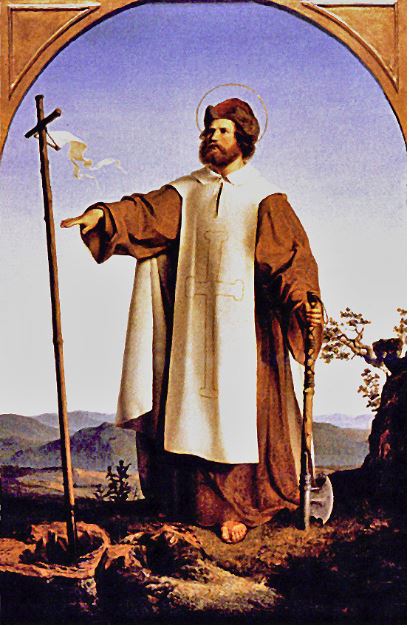
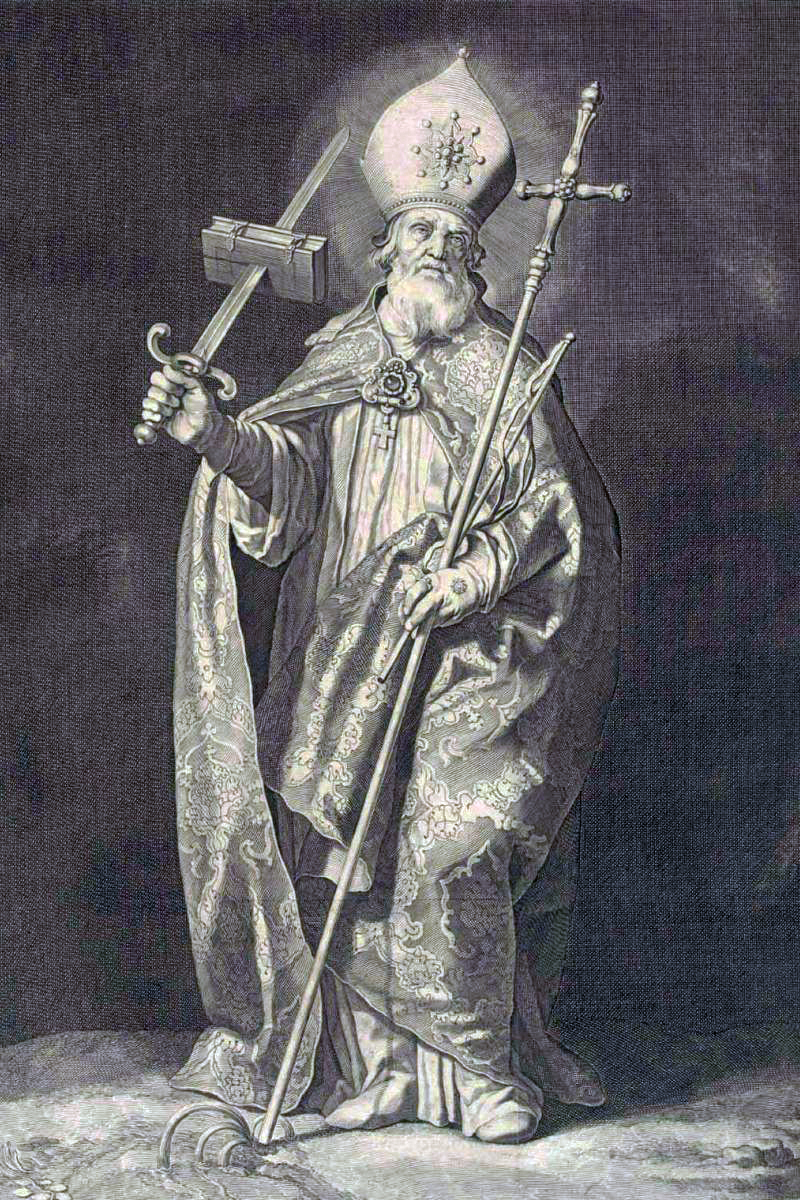


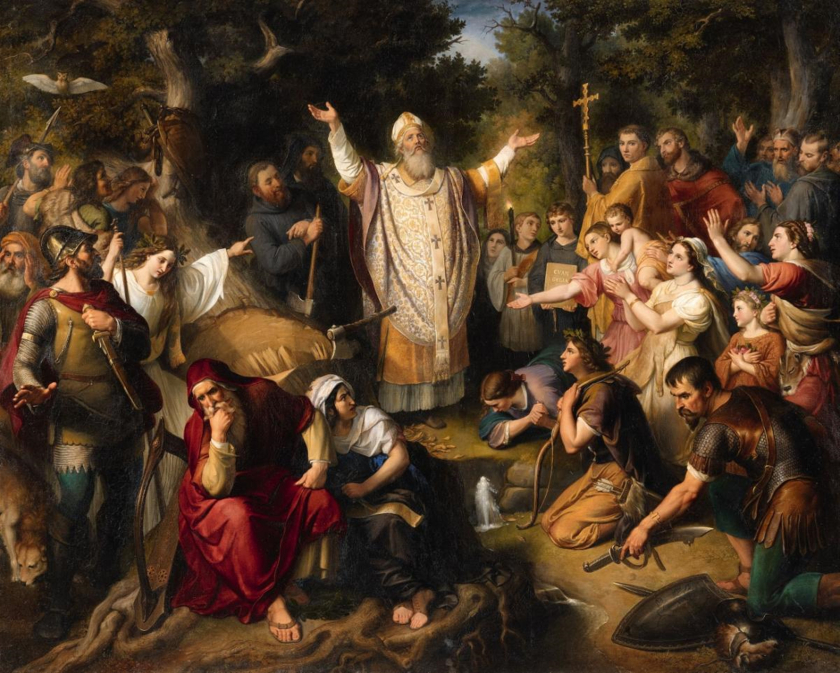
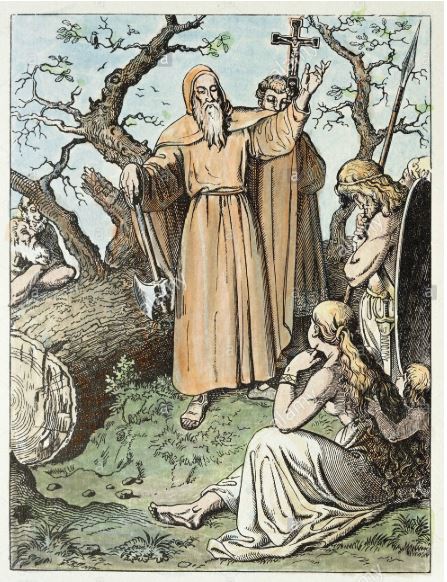
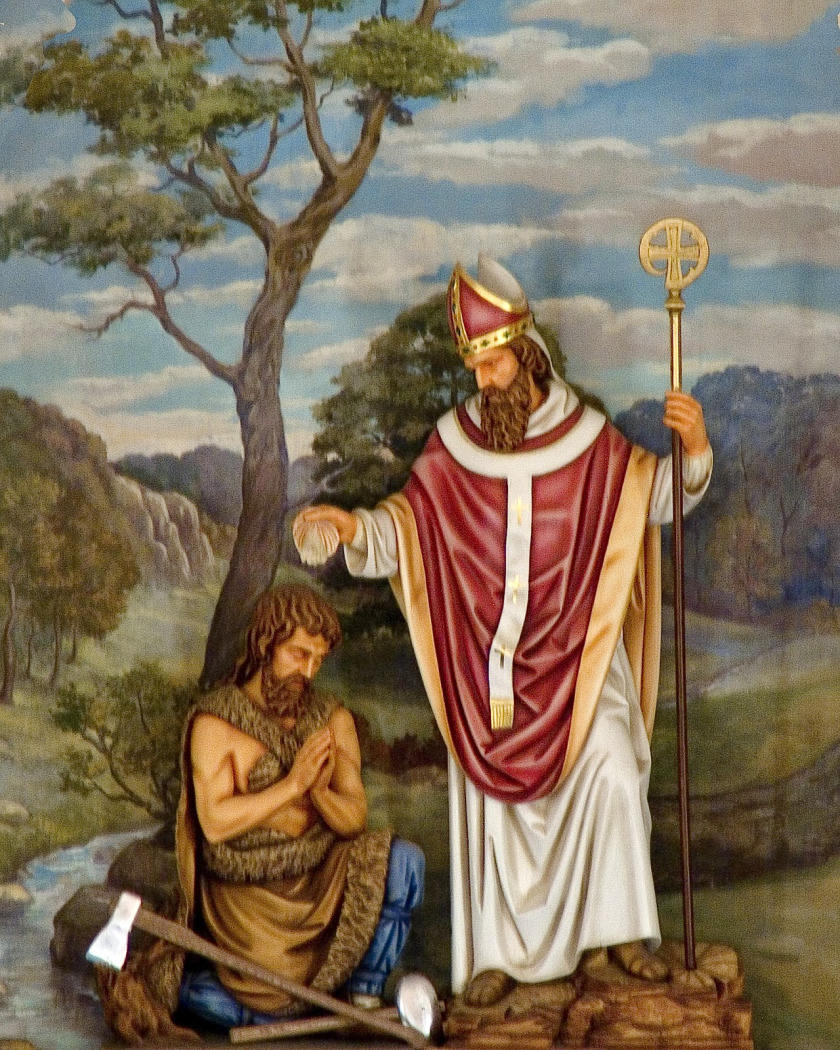

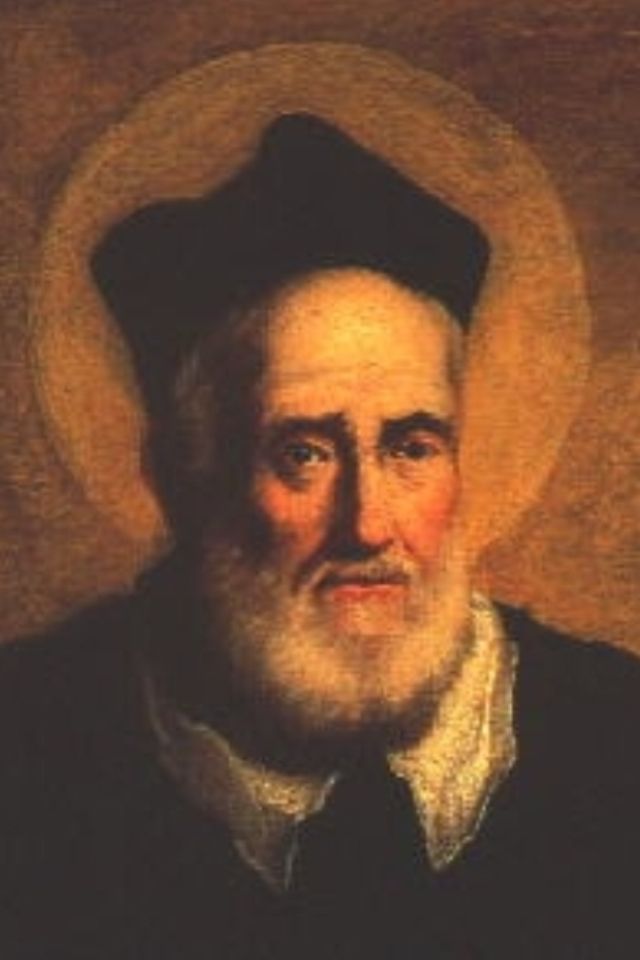
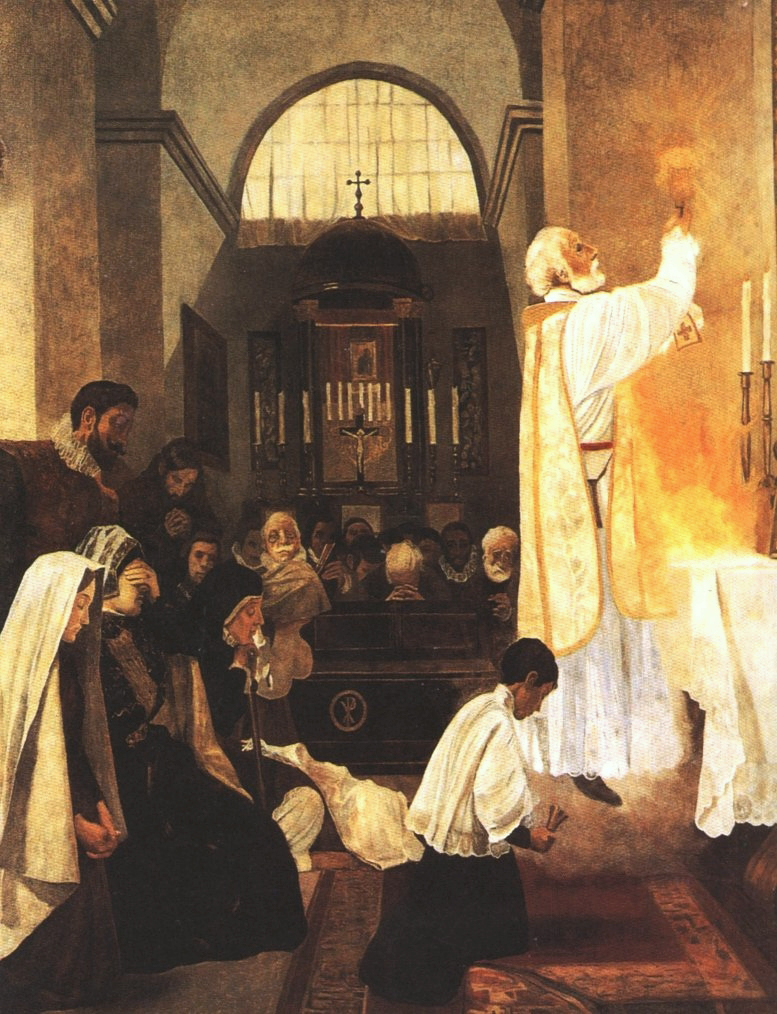
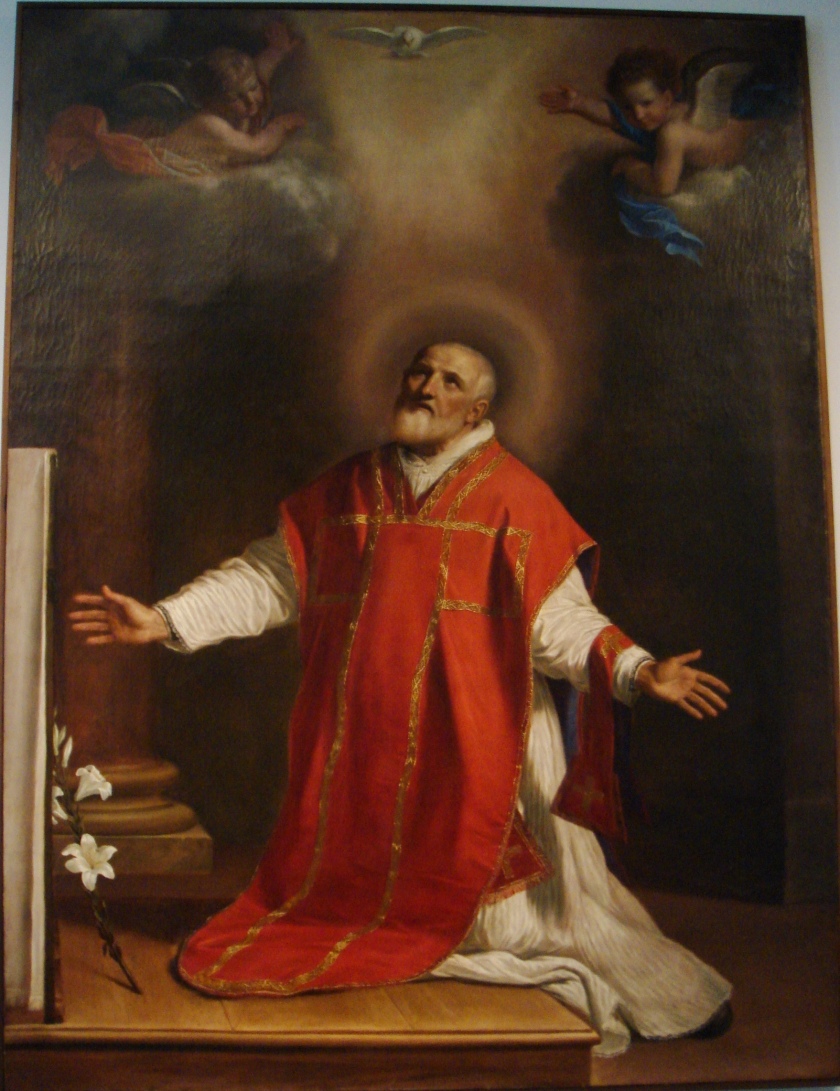
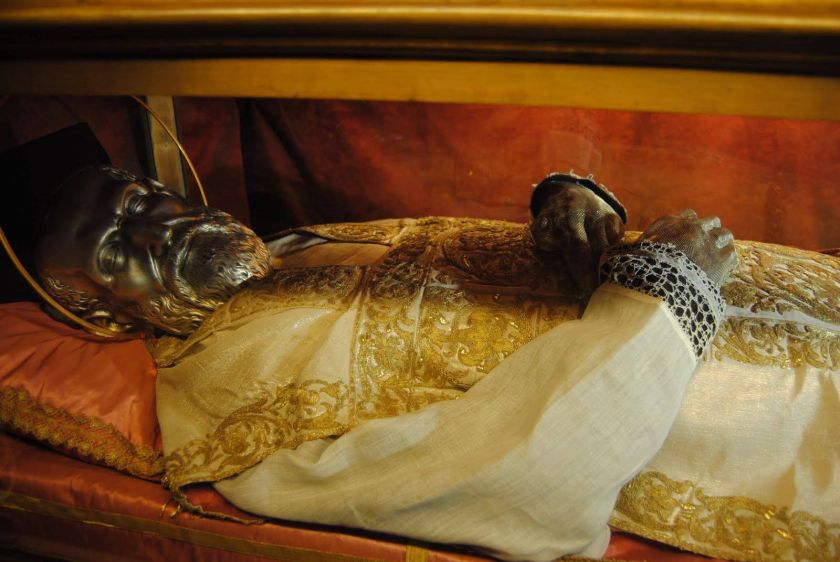


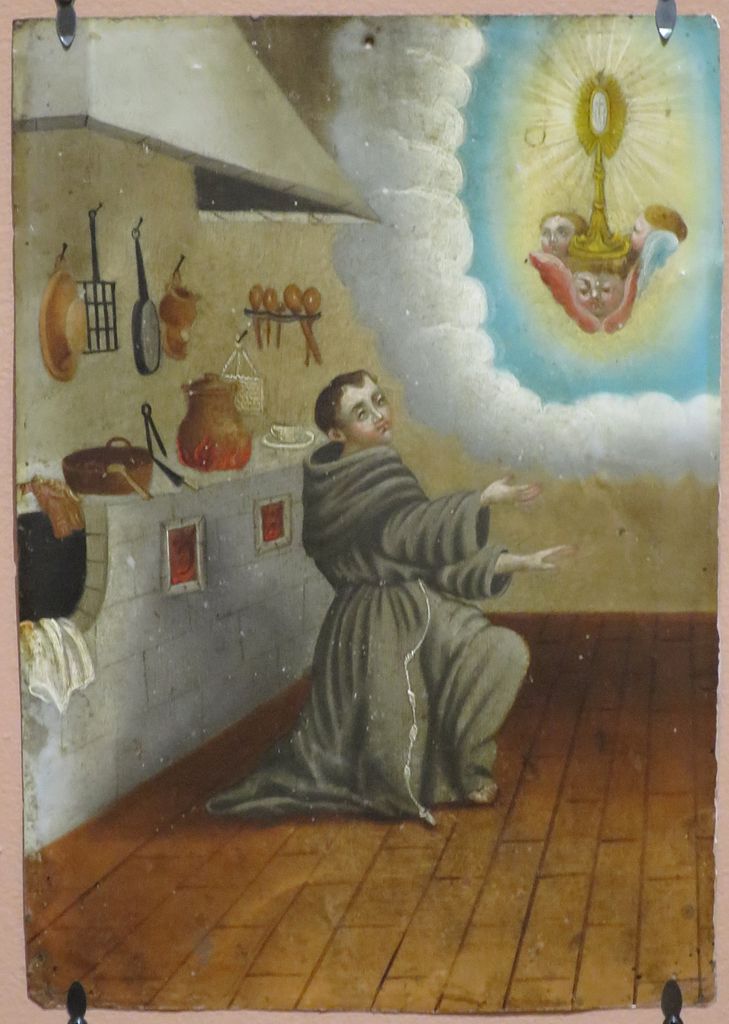


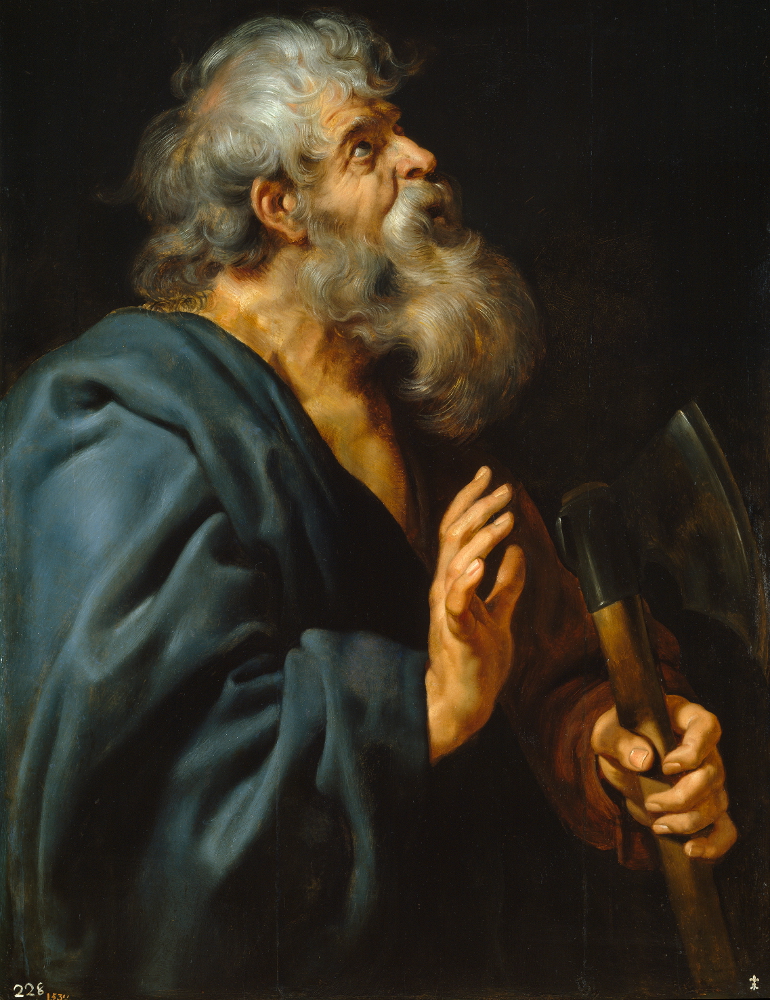
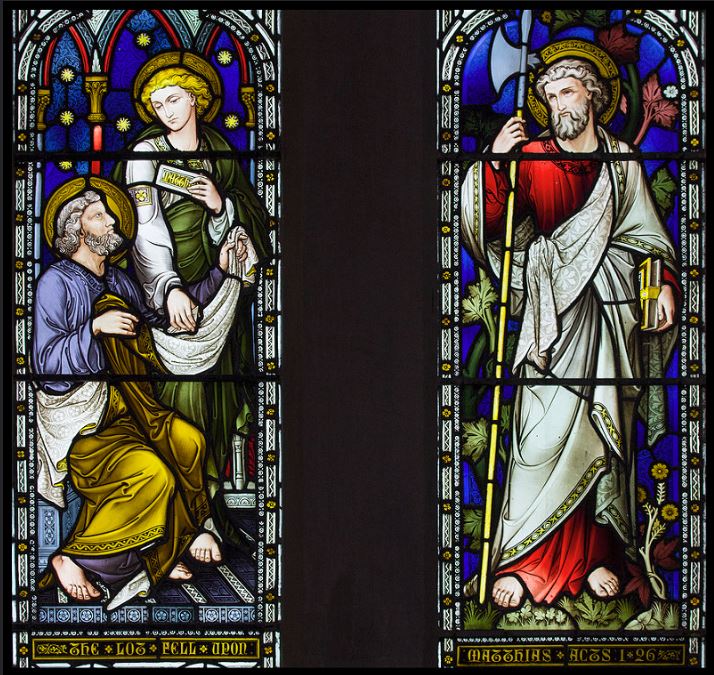
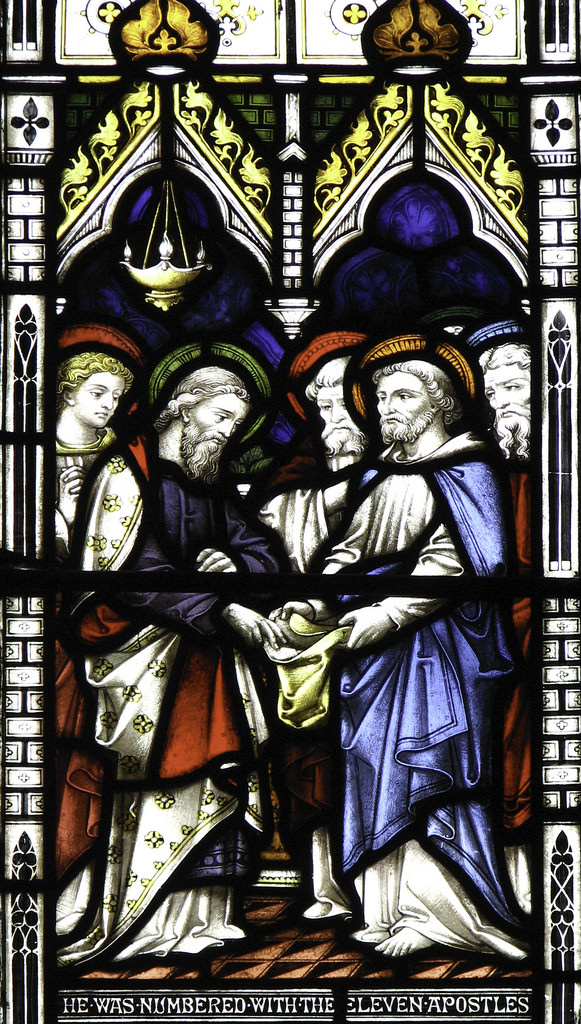
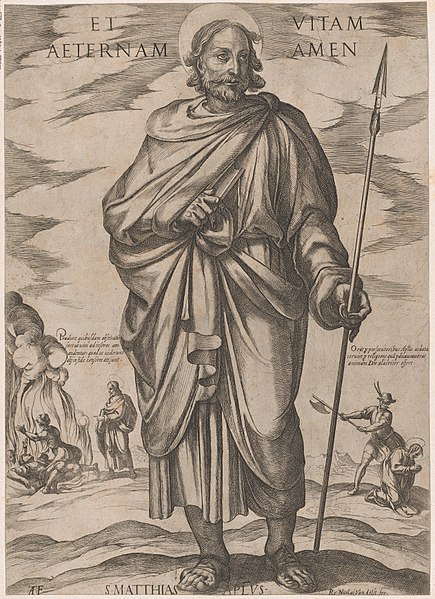


 The Oratory of the Bedroom: this houses the small cubicle where Catherine rested and prayed and the stone where the saint would lay her head. This space is connected with the first phase of Catherine’s life, where she would withdraw from the world in contemplation. Images below.



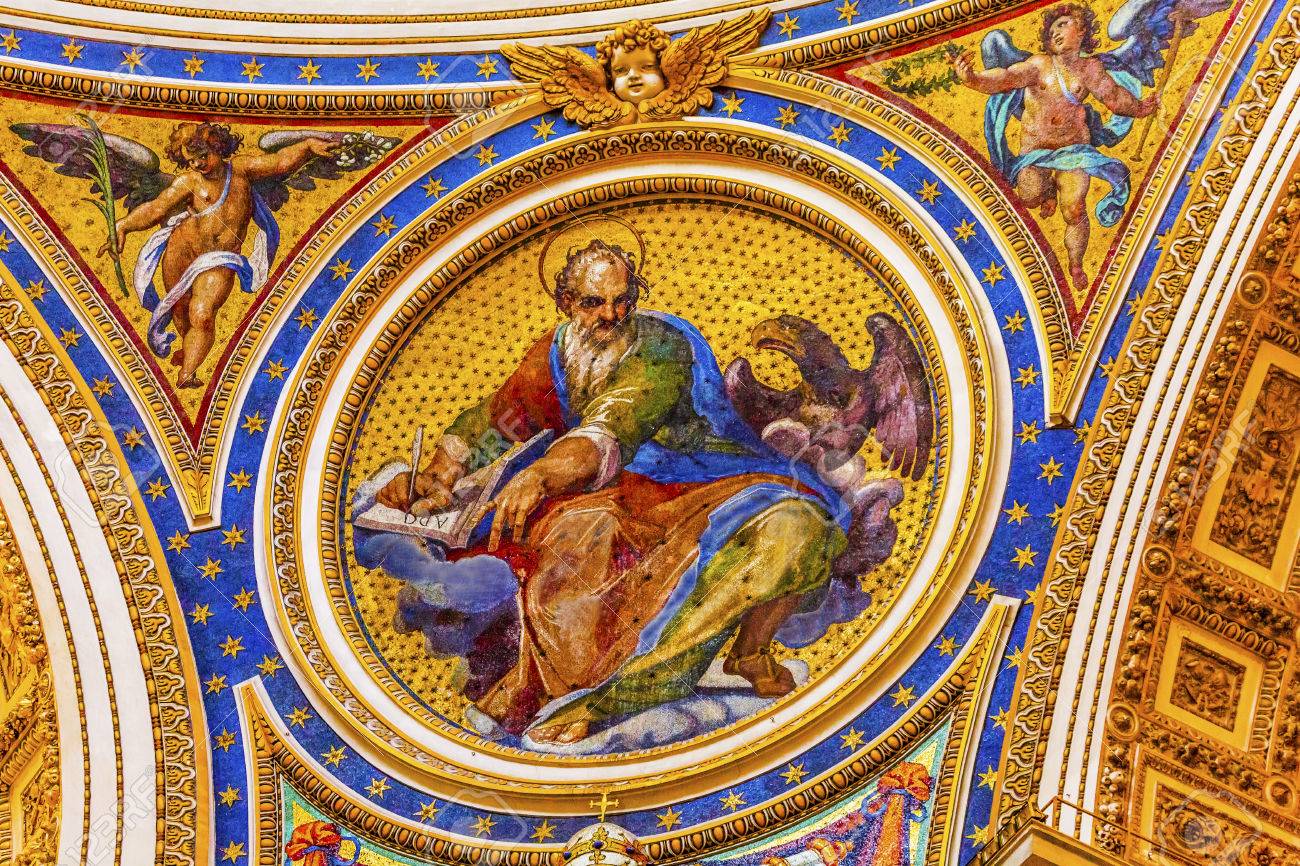
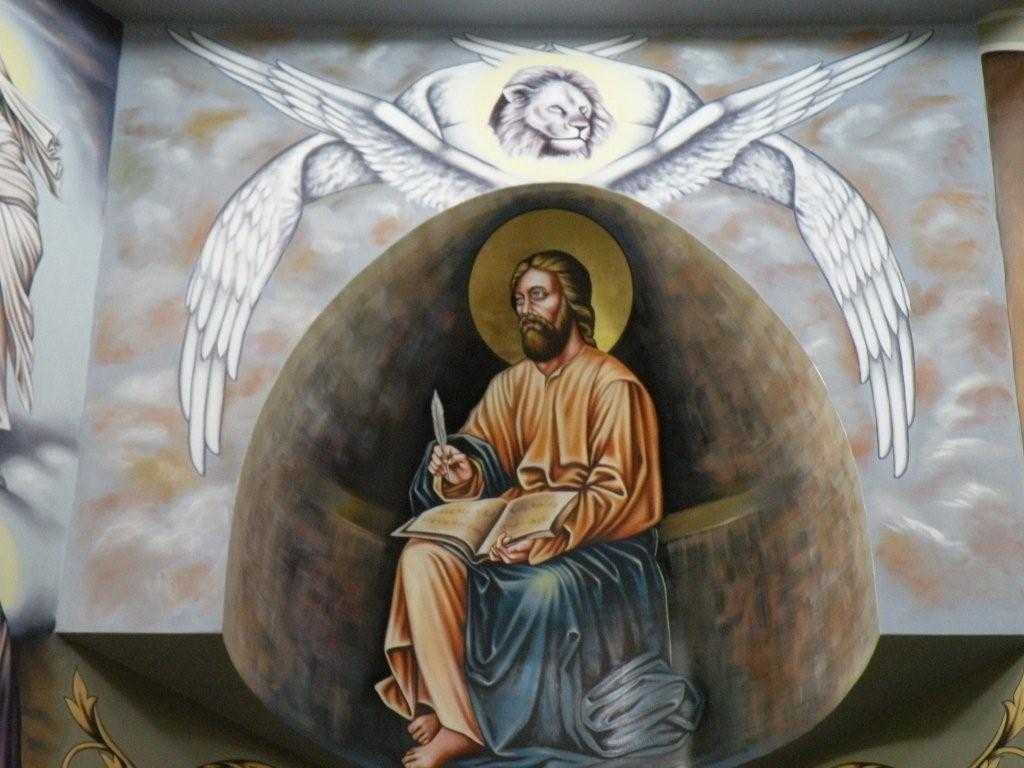


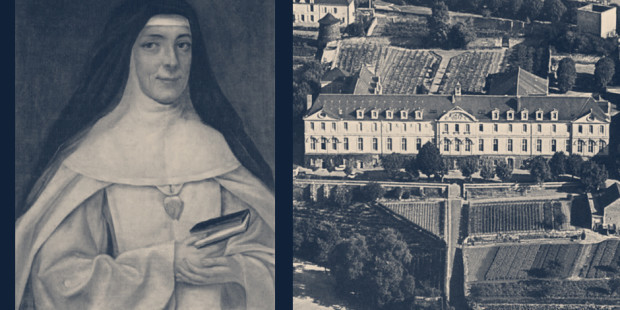


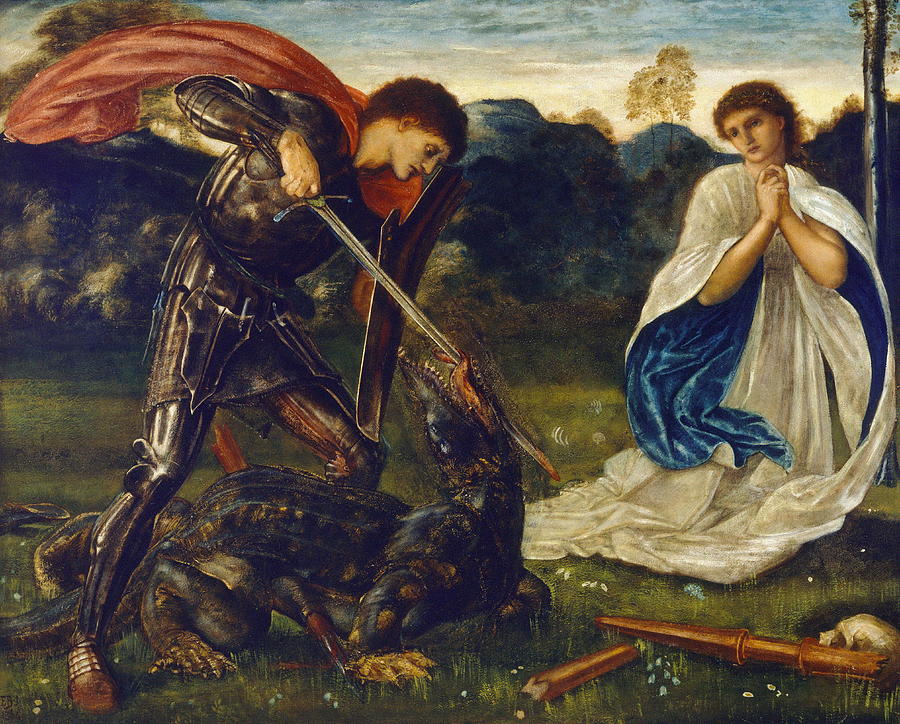
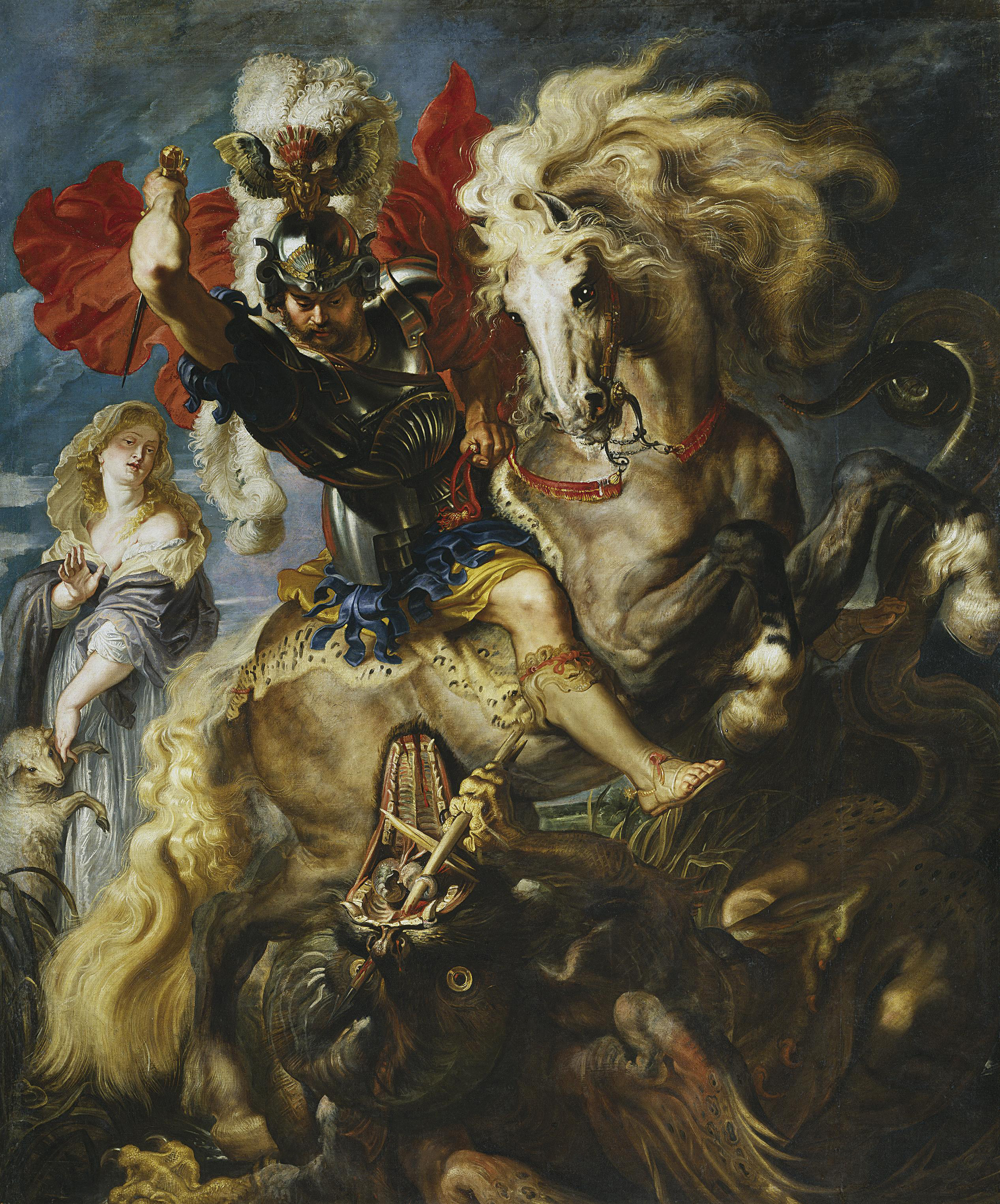
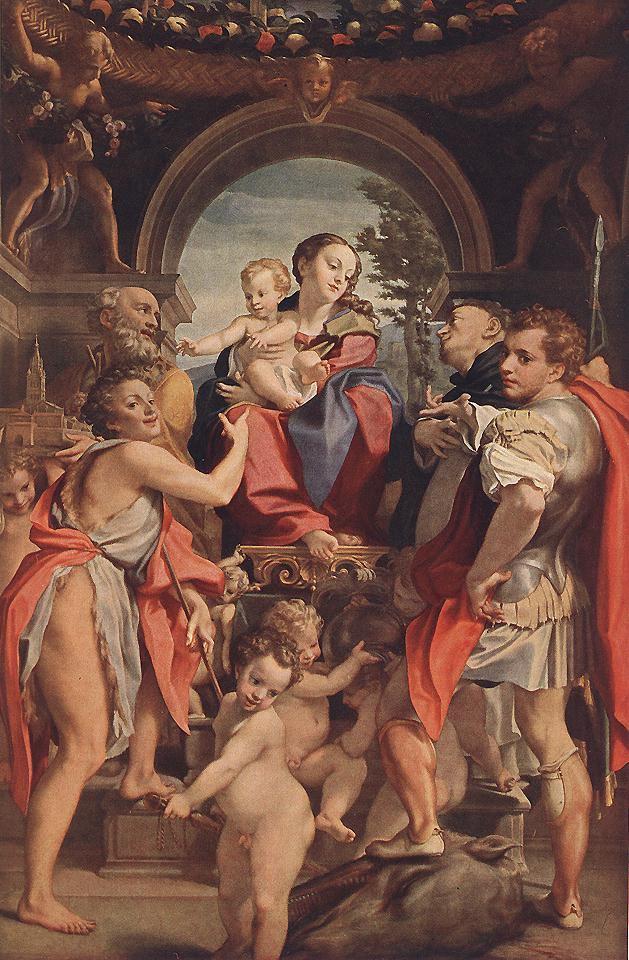


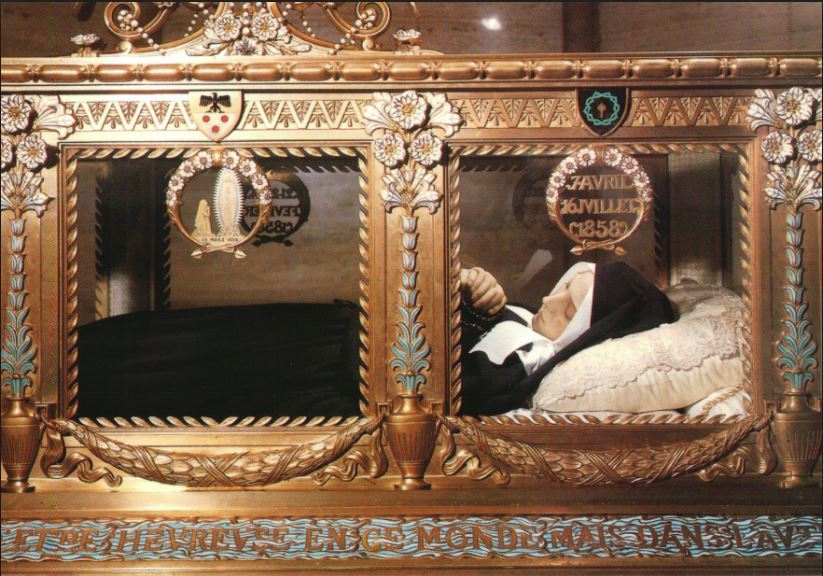
![Bernardette Soubirous_web[1]](https://i0.wp.com/anastpaul.com/wp-content/uploads/2018/04/bernardette-soubirous_web1.jpg?w=386&h=557&ssl=1 "Bernardette Soubirous_web[1]")




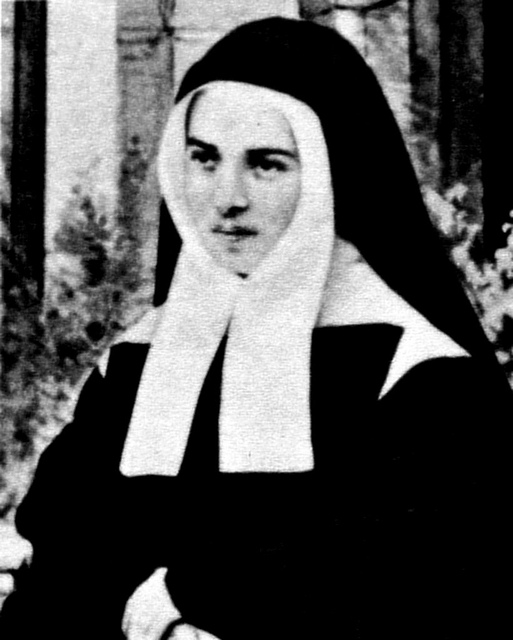
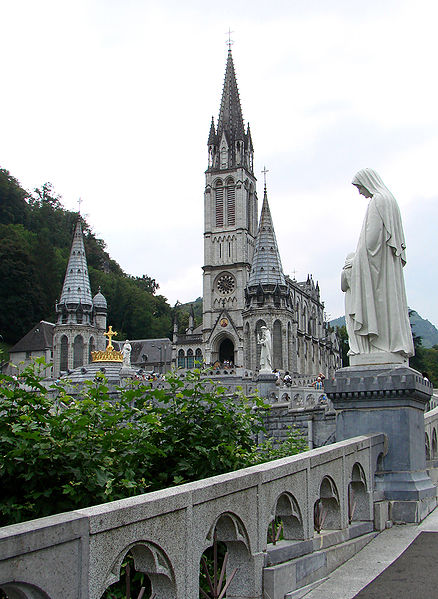


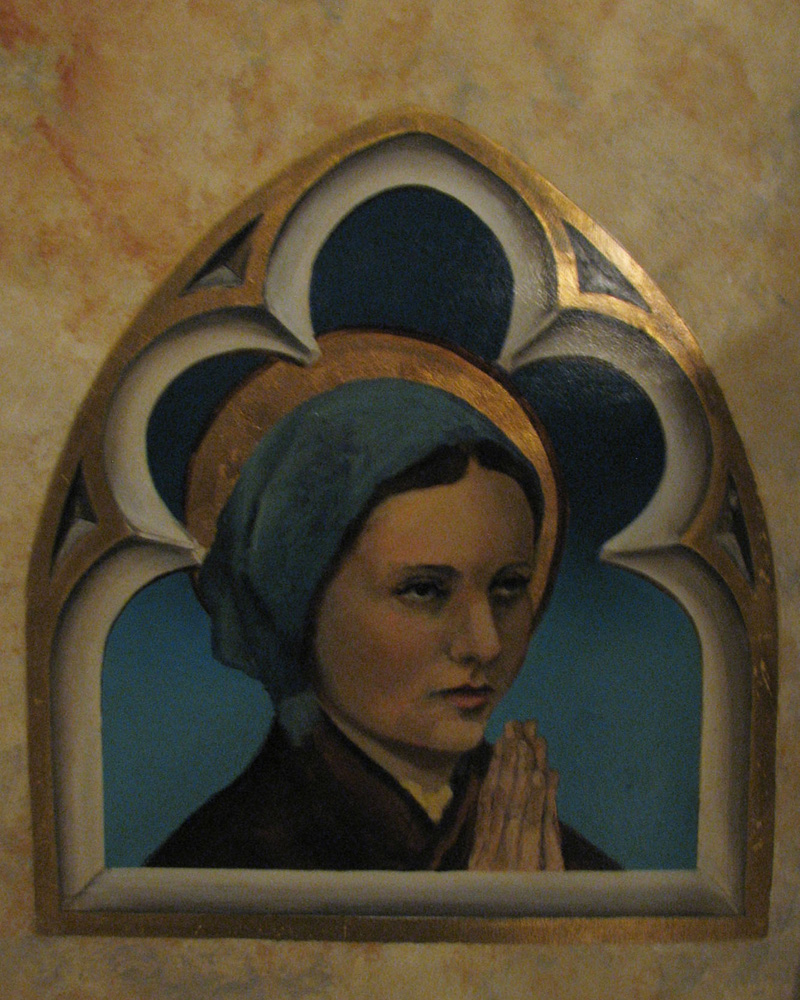
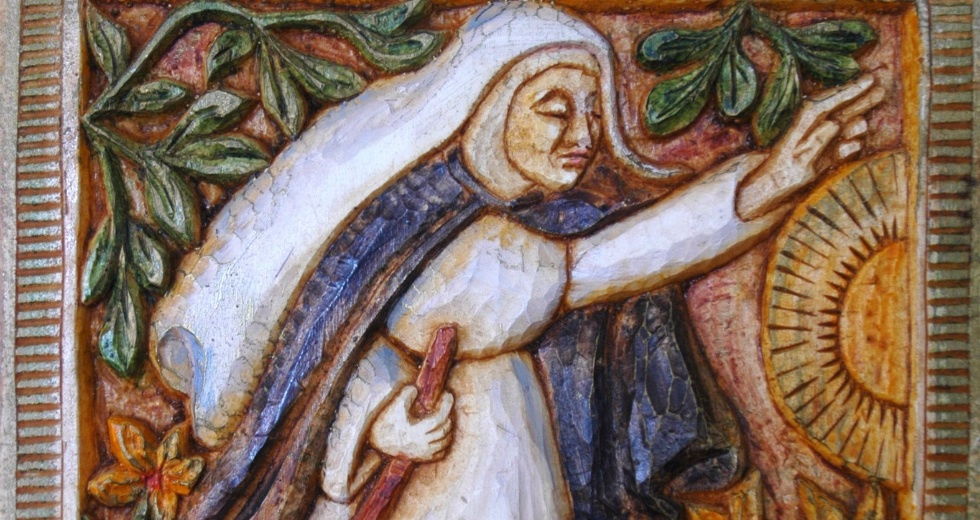
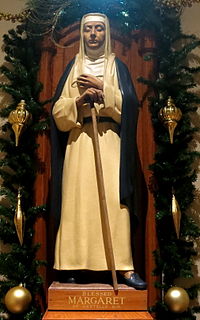
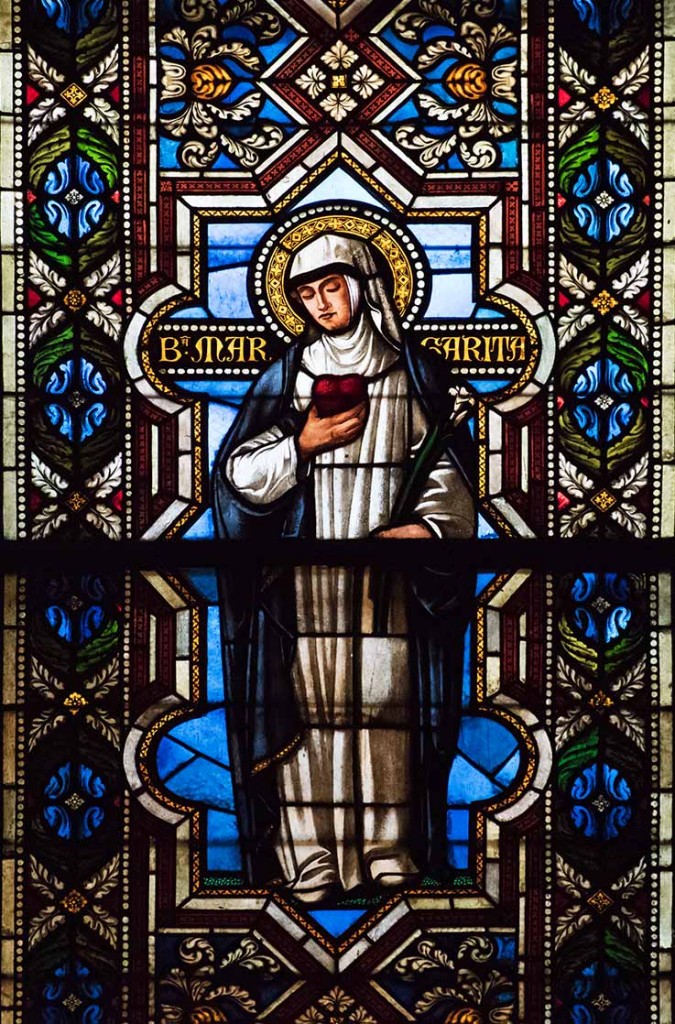
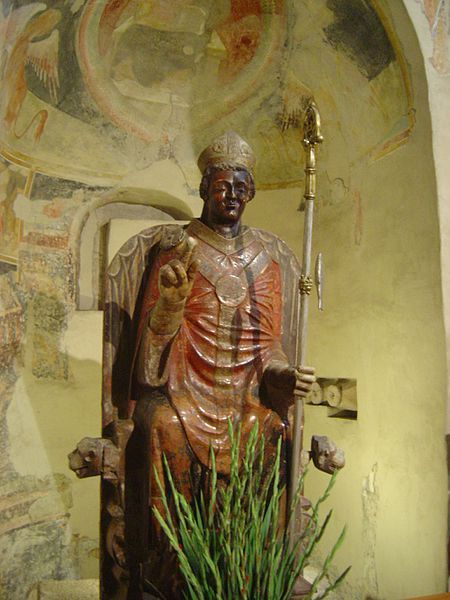
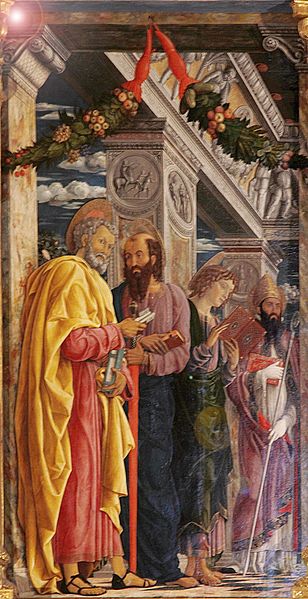
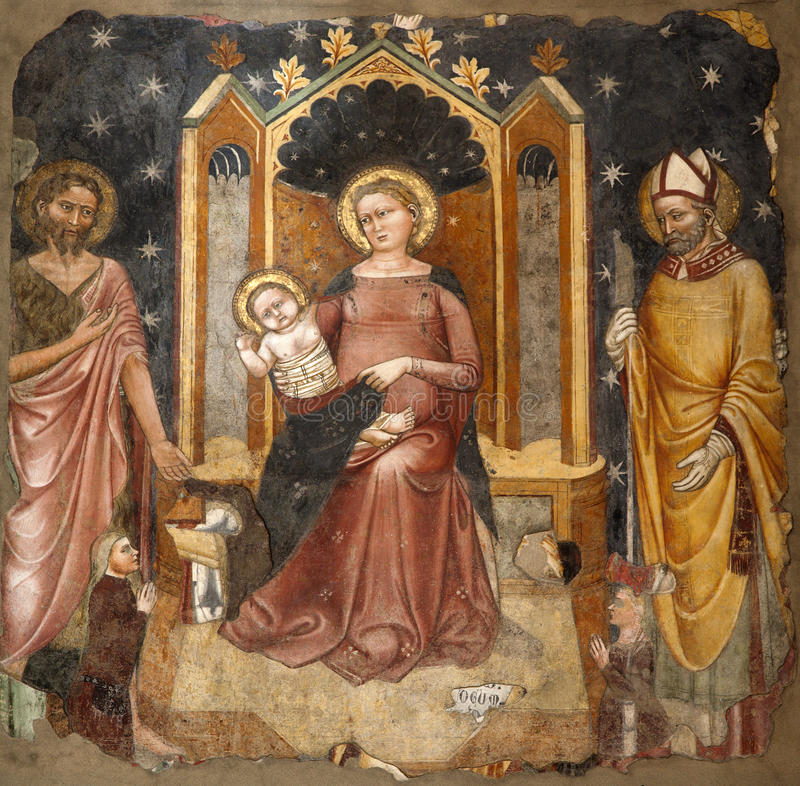
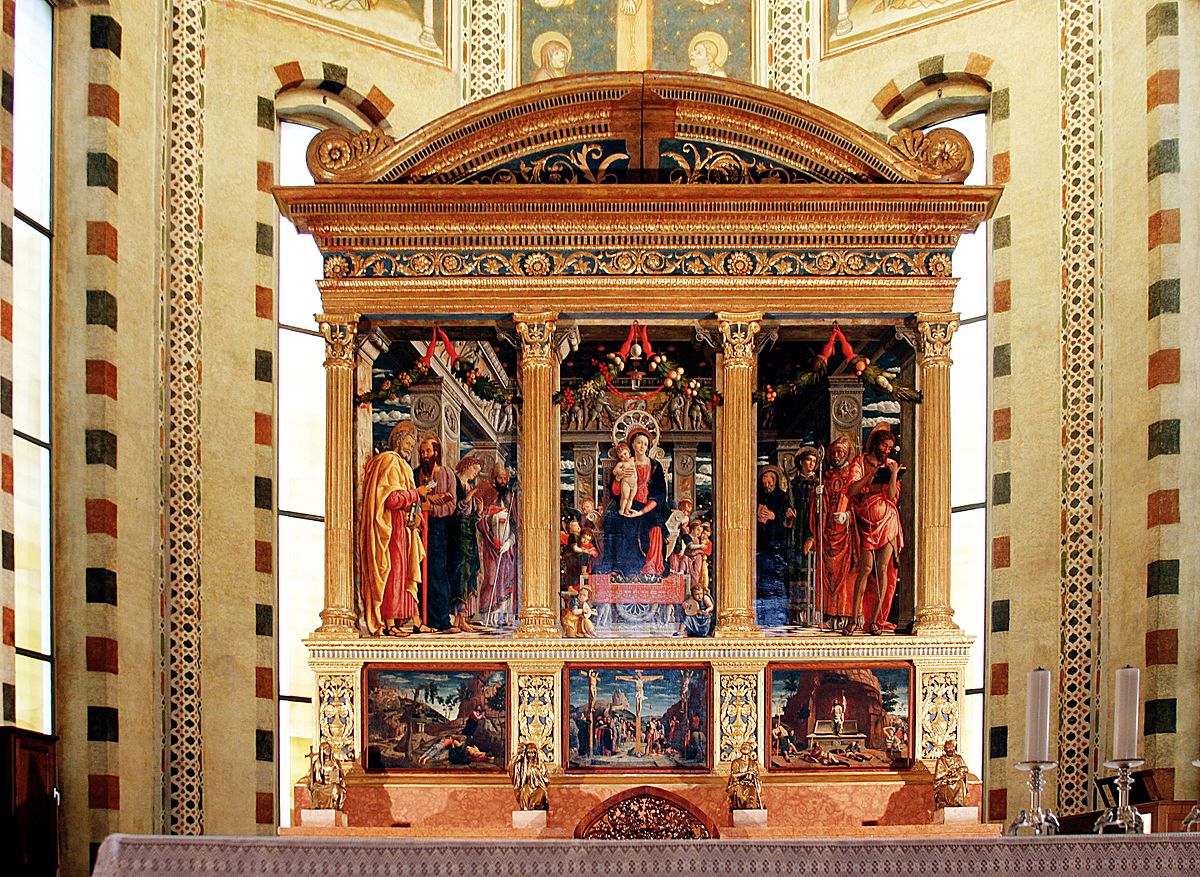
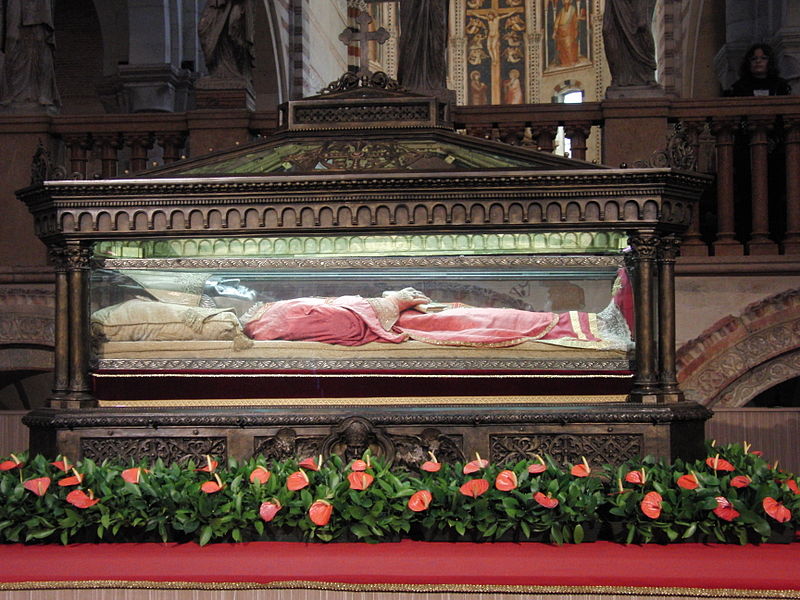
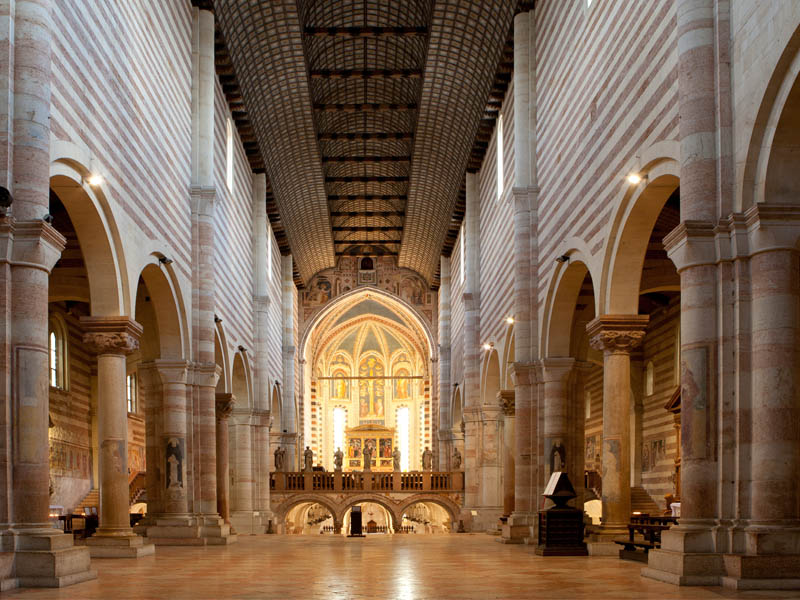
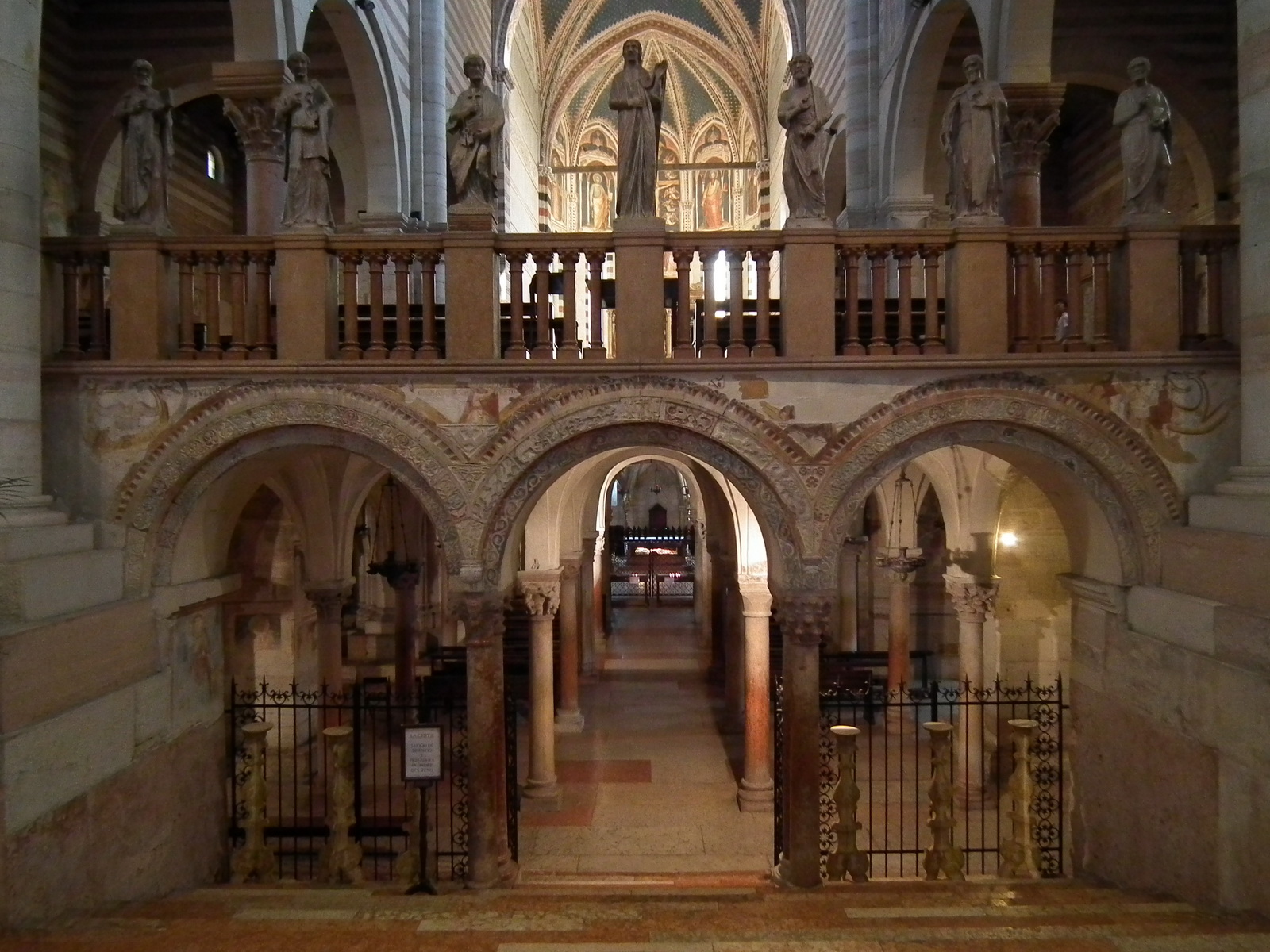
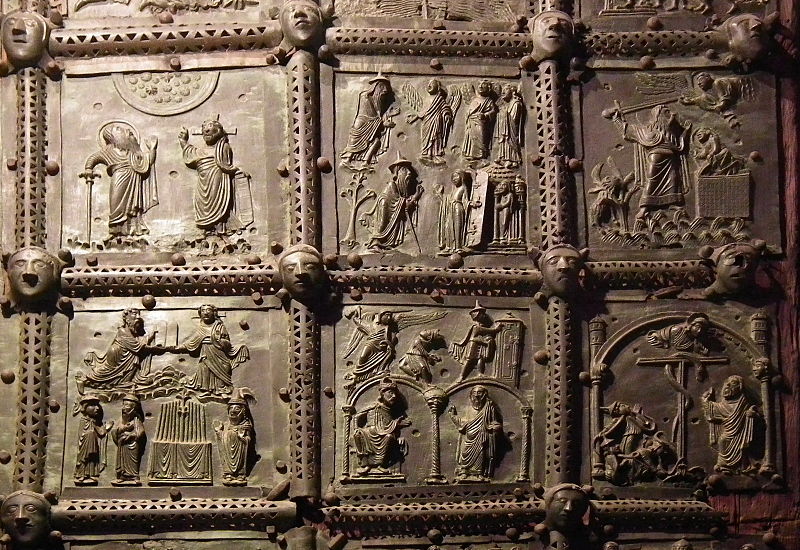
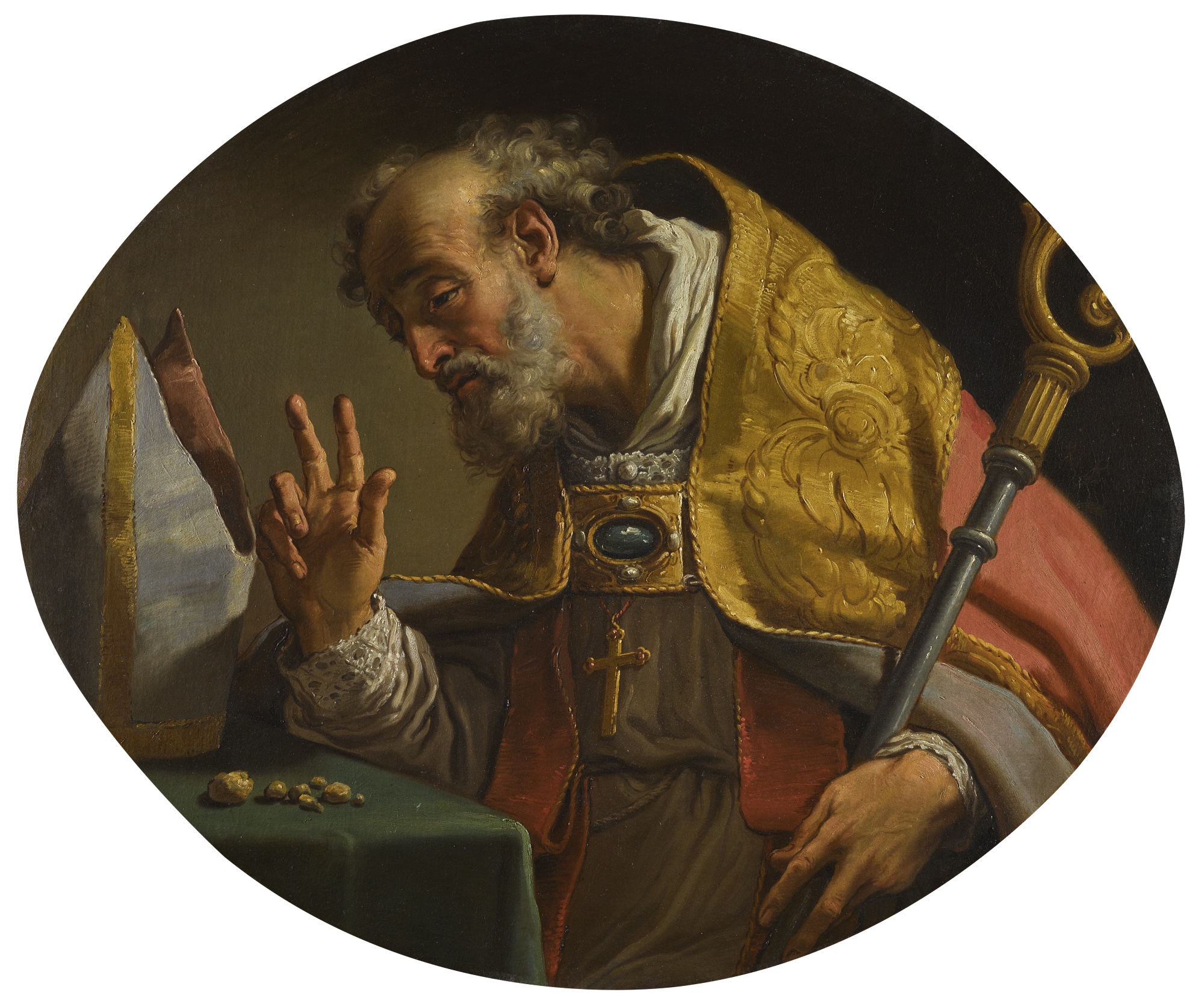
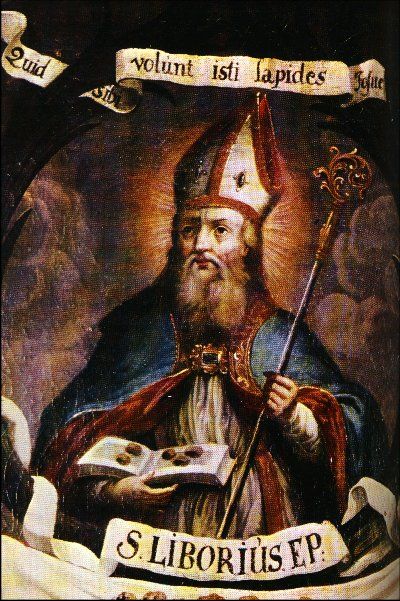
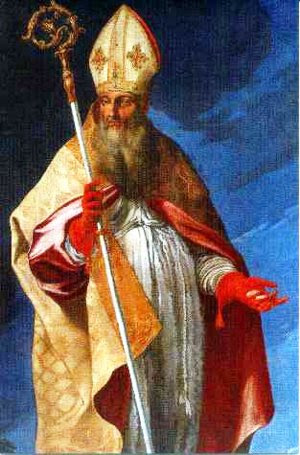


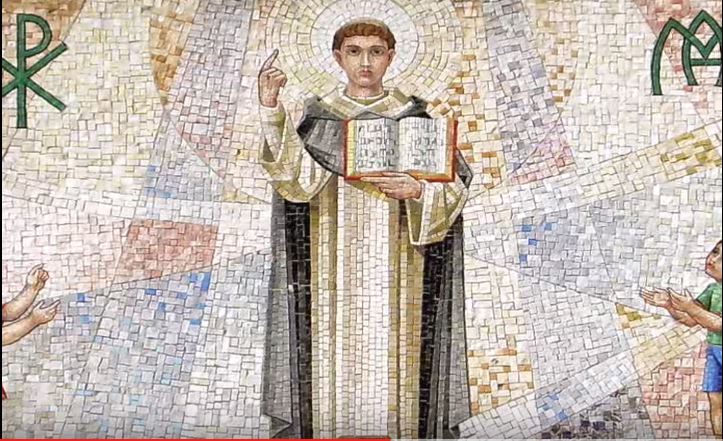
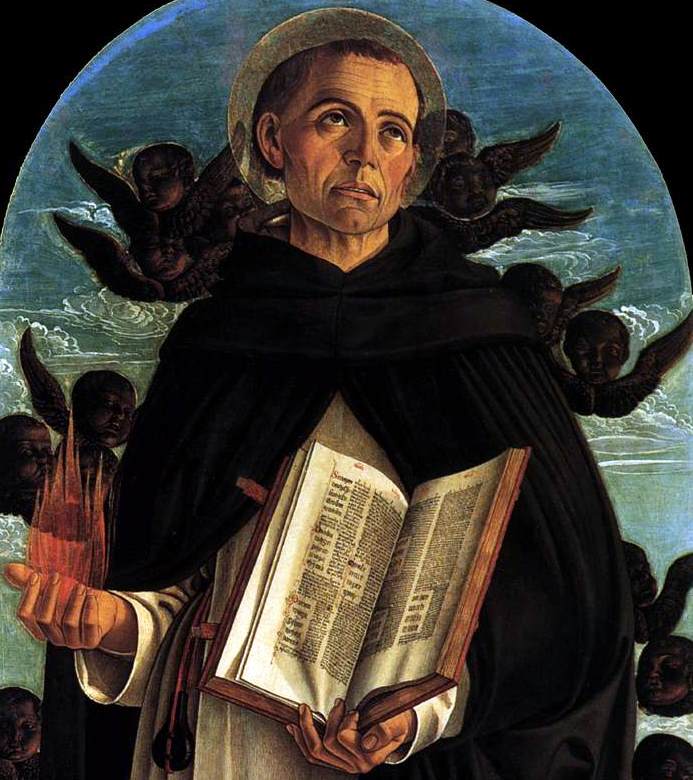


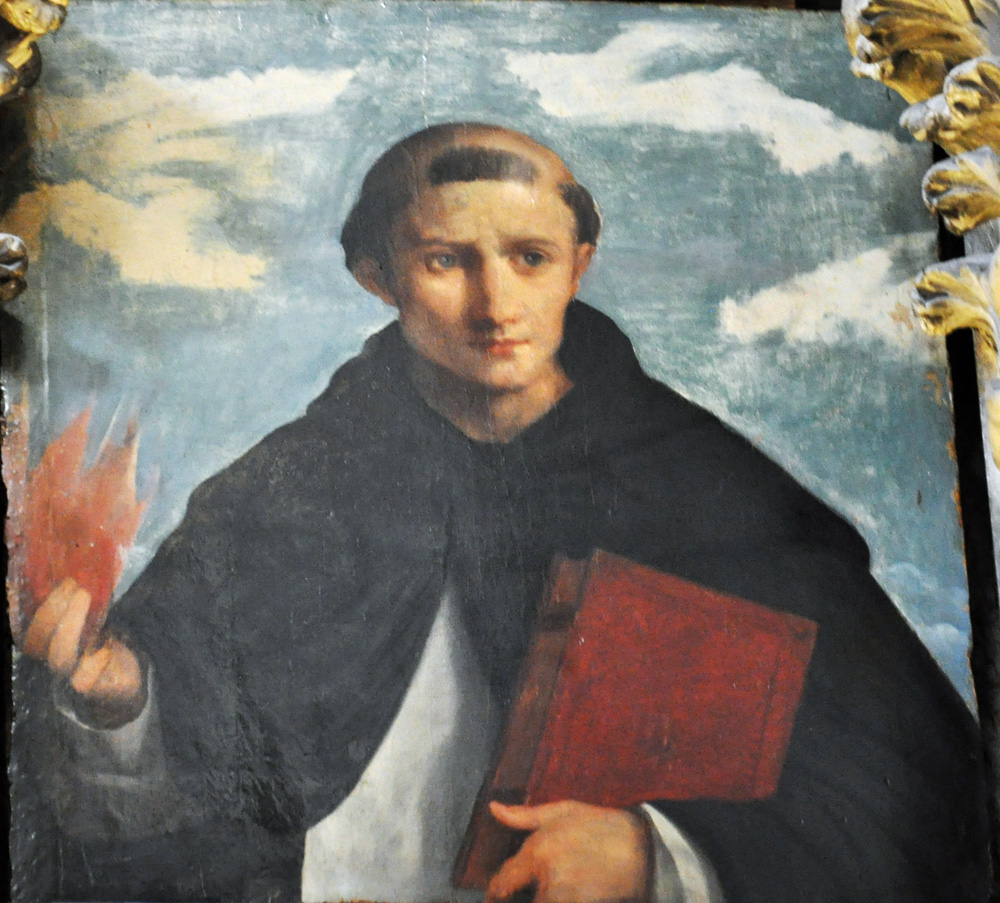


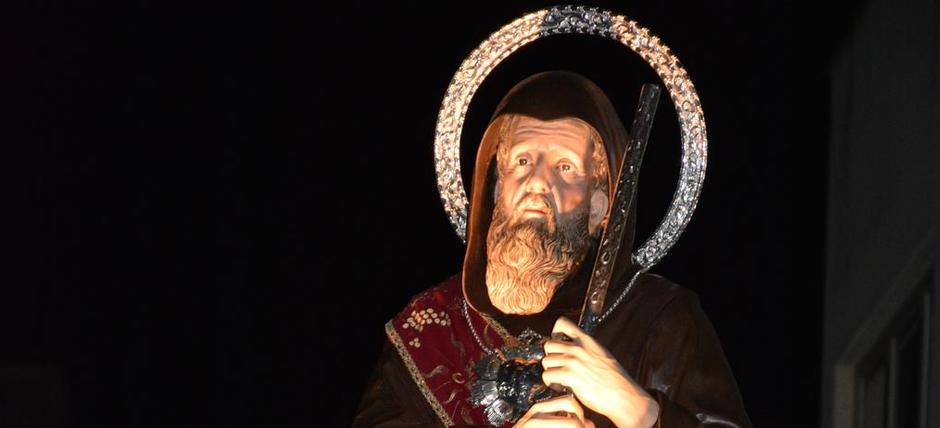
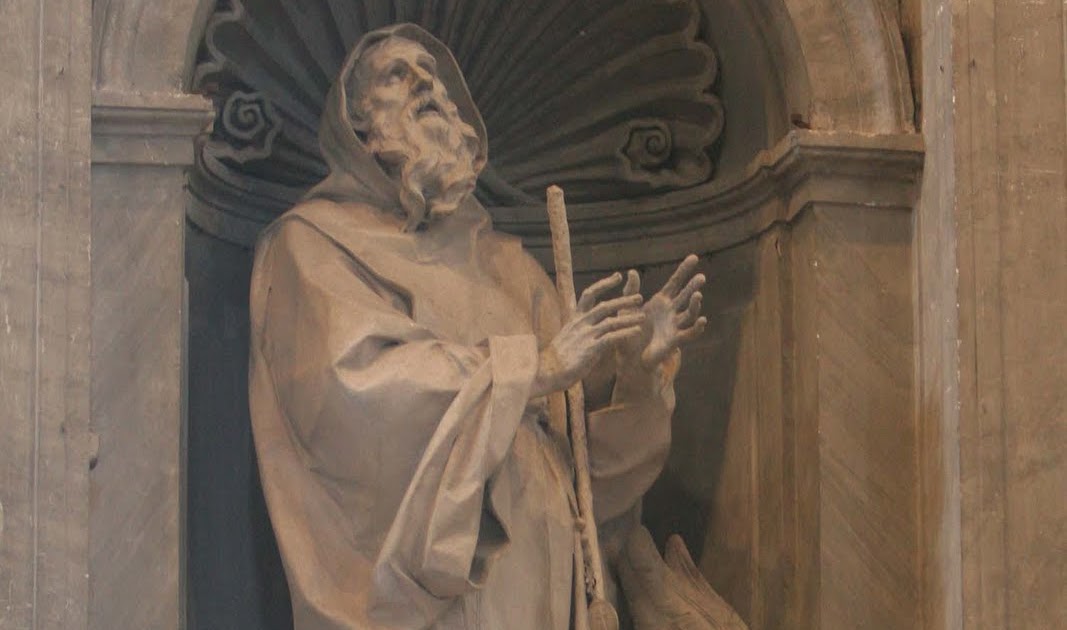


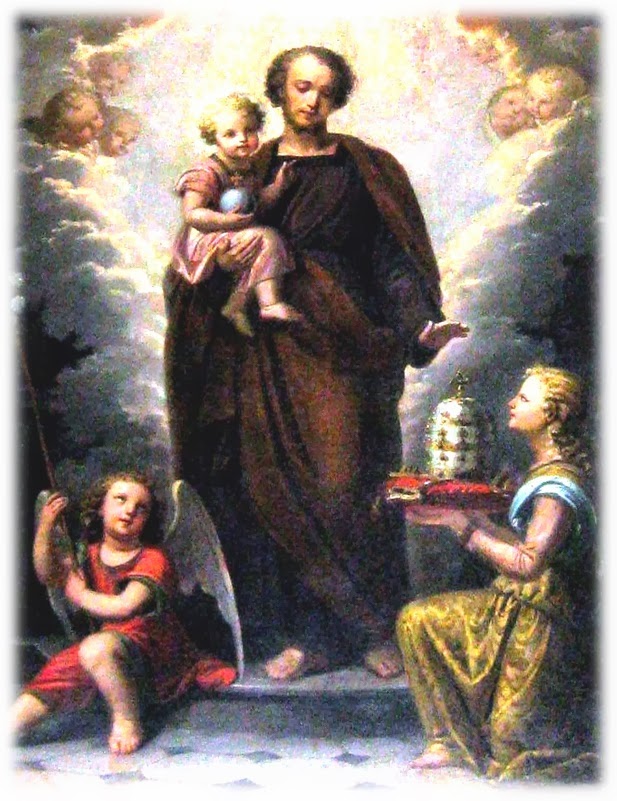


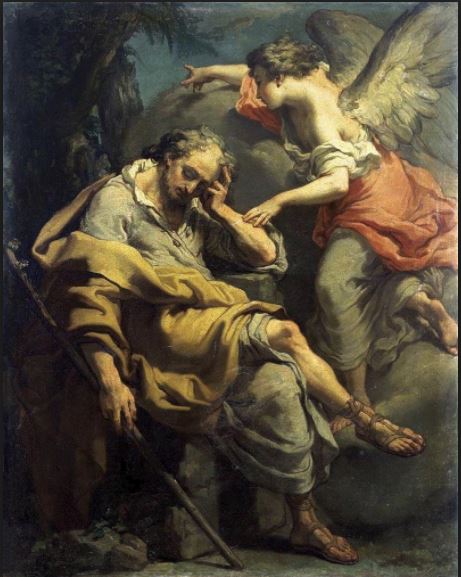


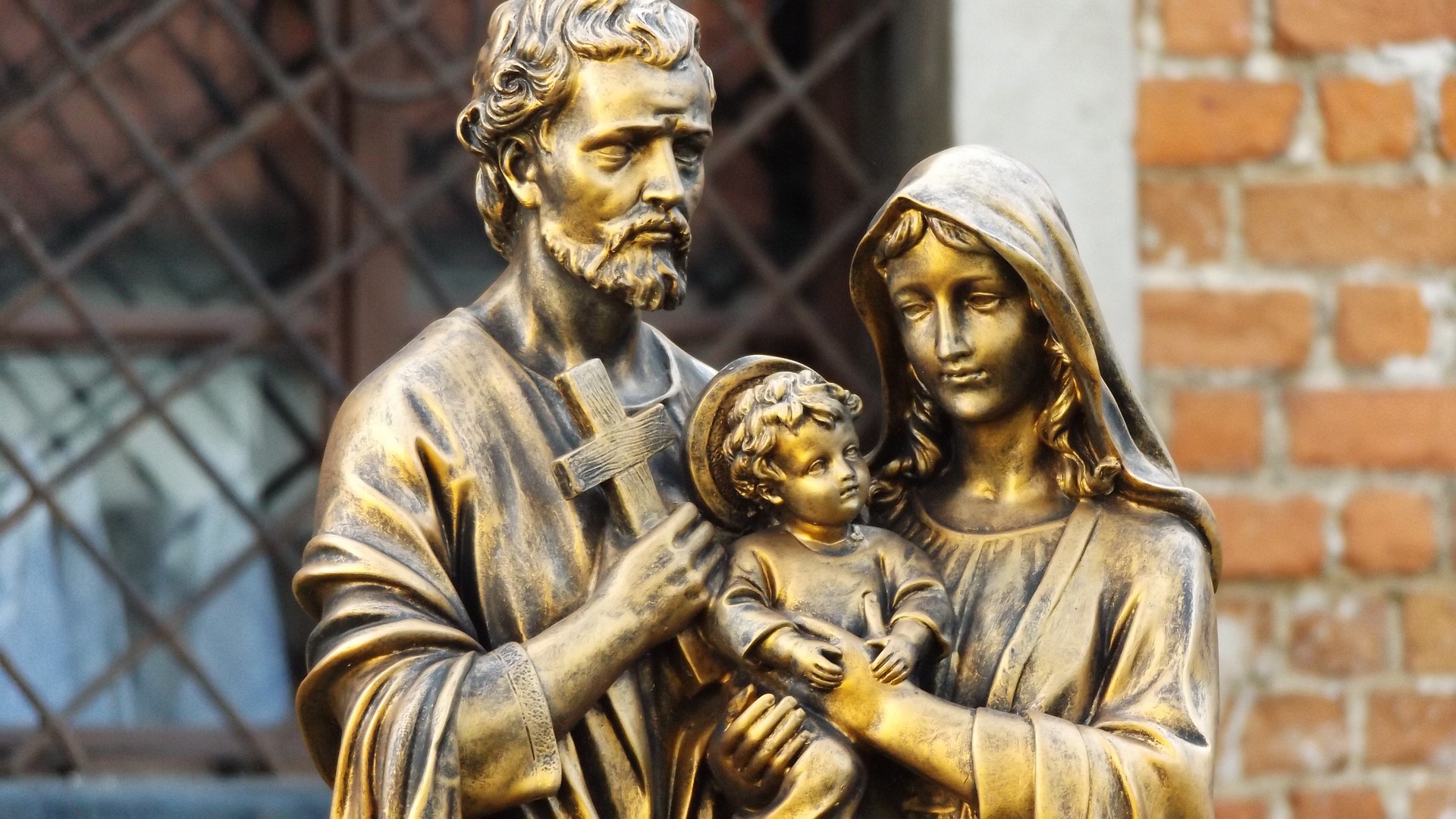
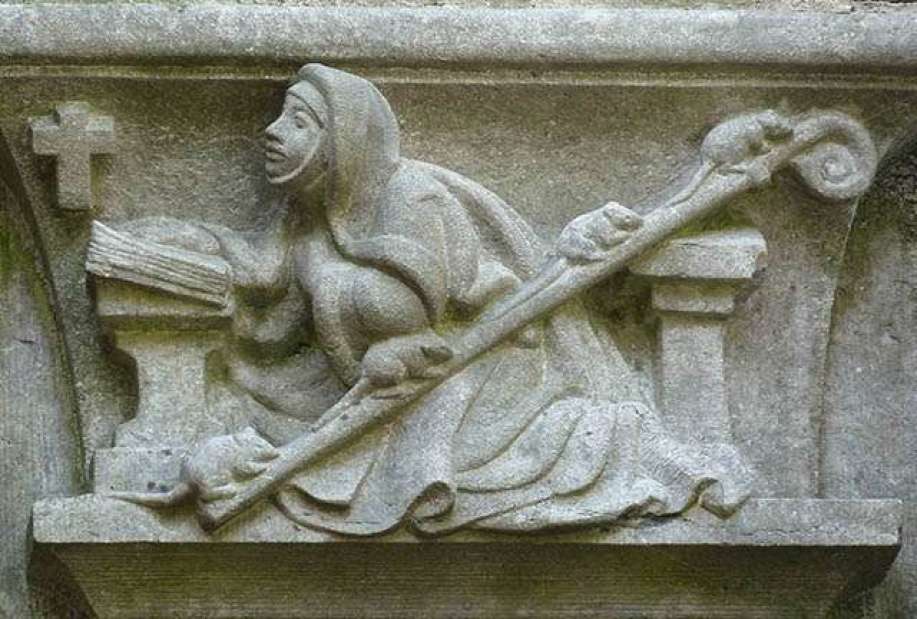
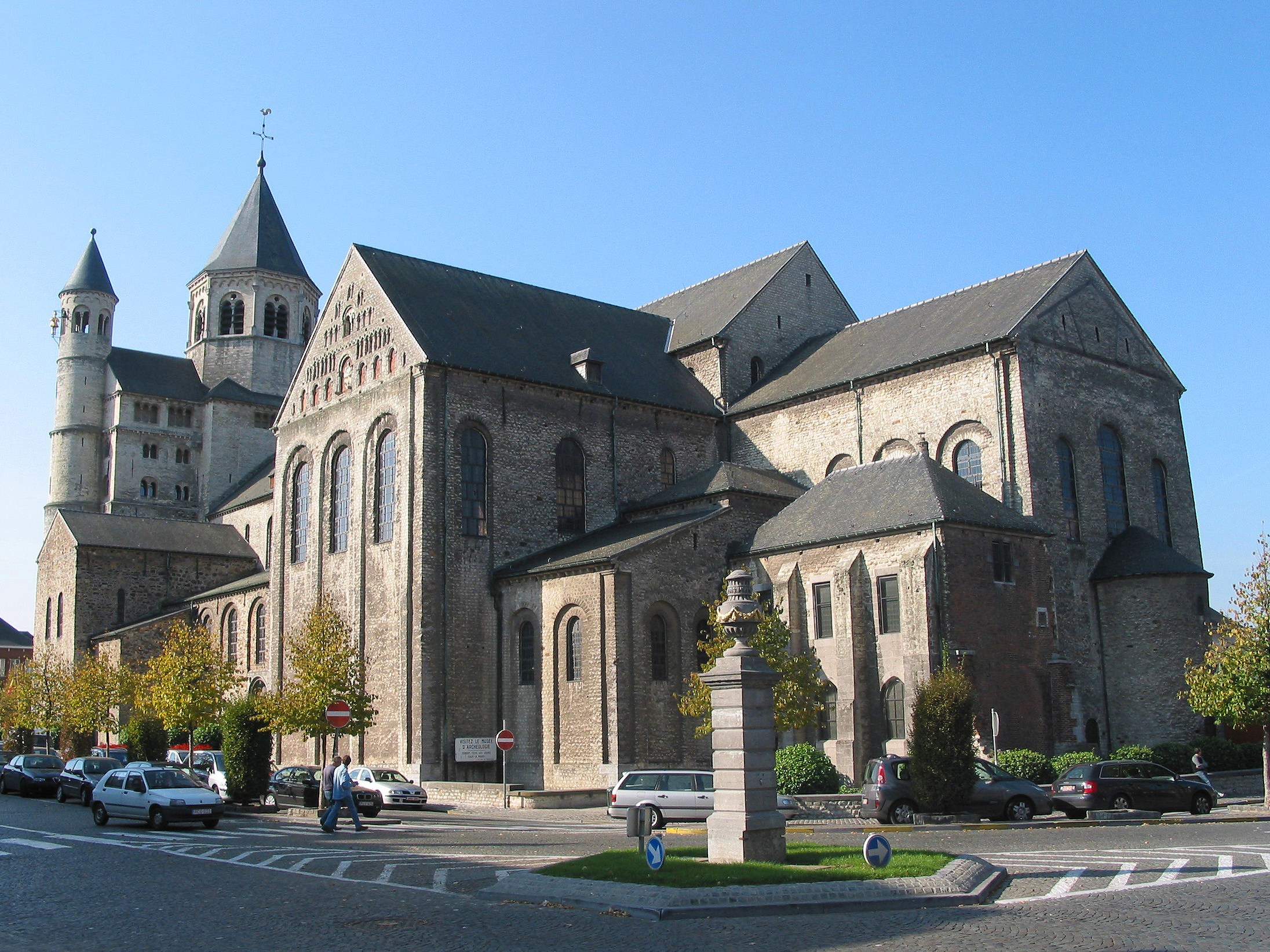

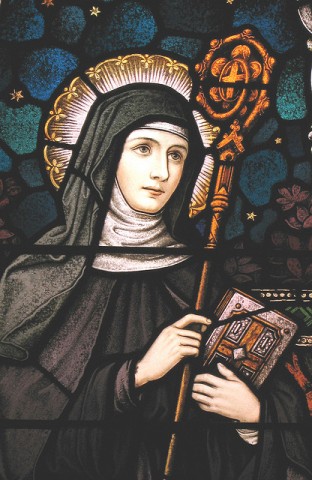
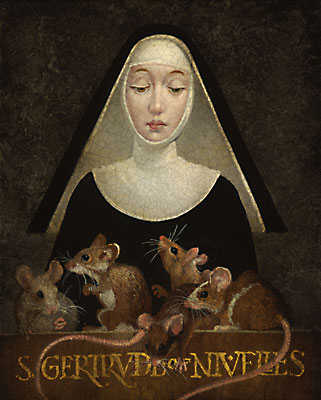


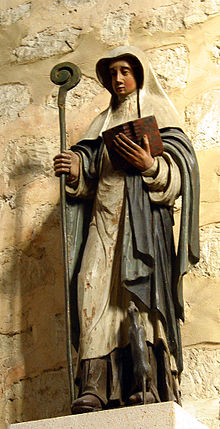
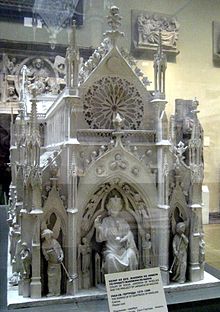
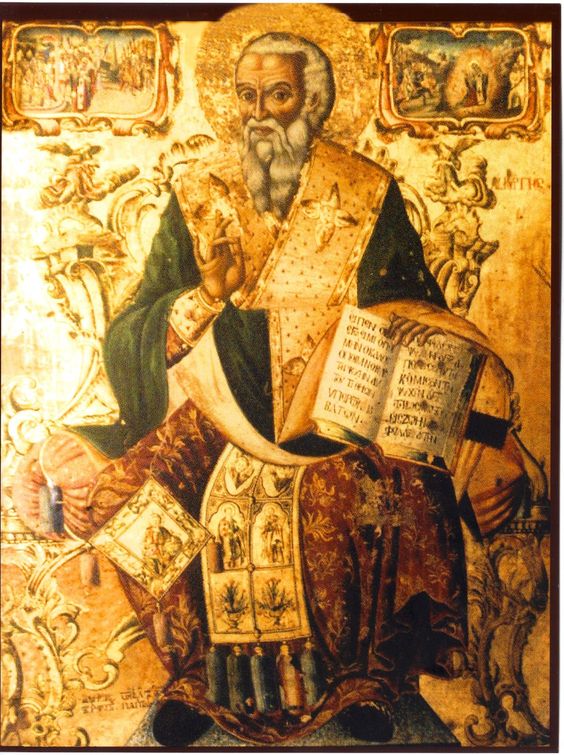
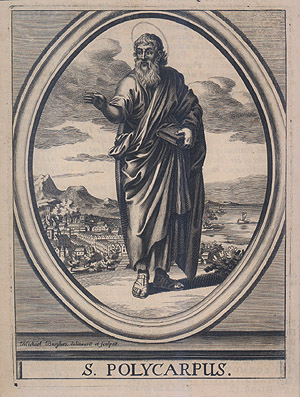

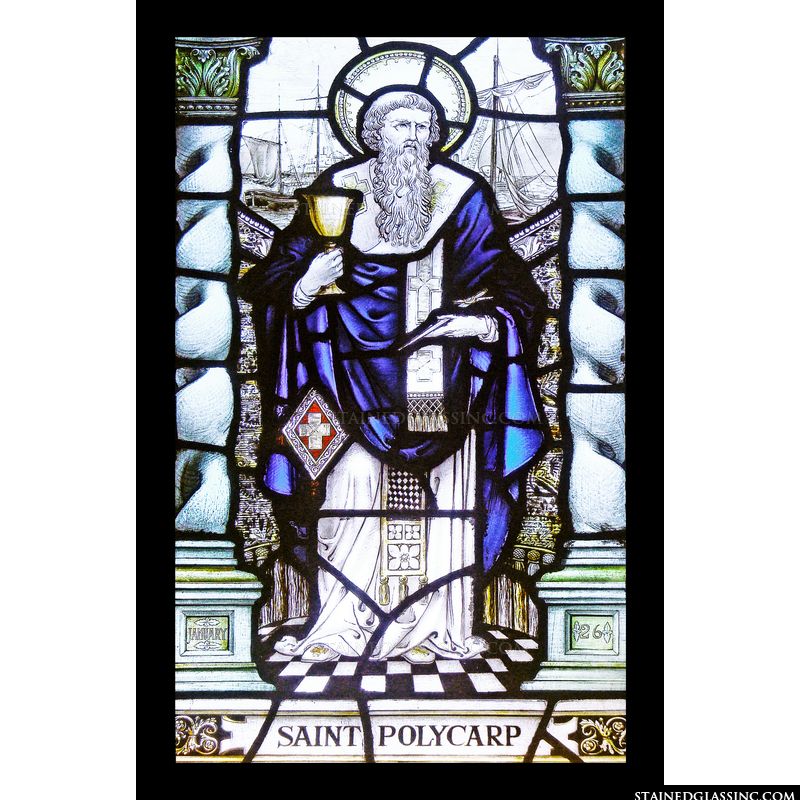


You must be logged in to post a comment.