Posted in Of LAWYERS & CANON Lawyers, Attorneys, Solicitors, Barristers, Notaries, Para-Legals, SAINT of the DAY

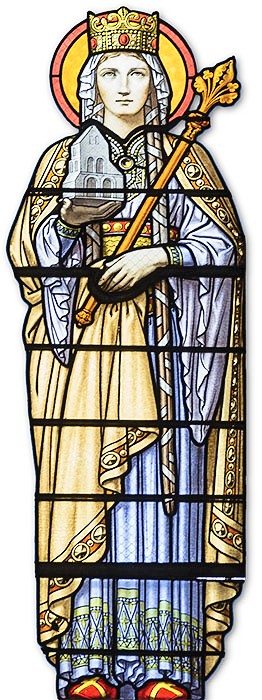
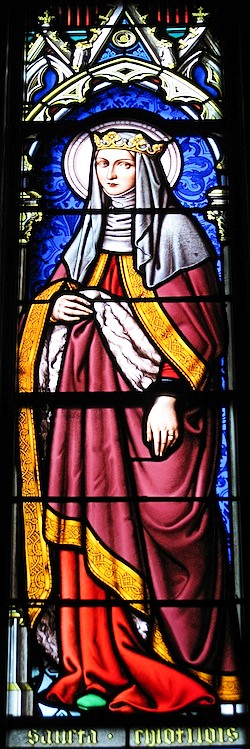
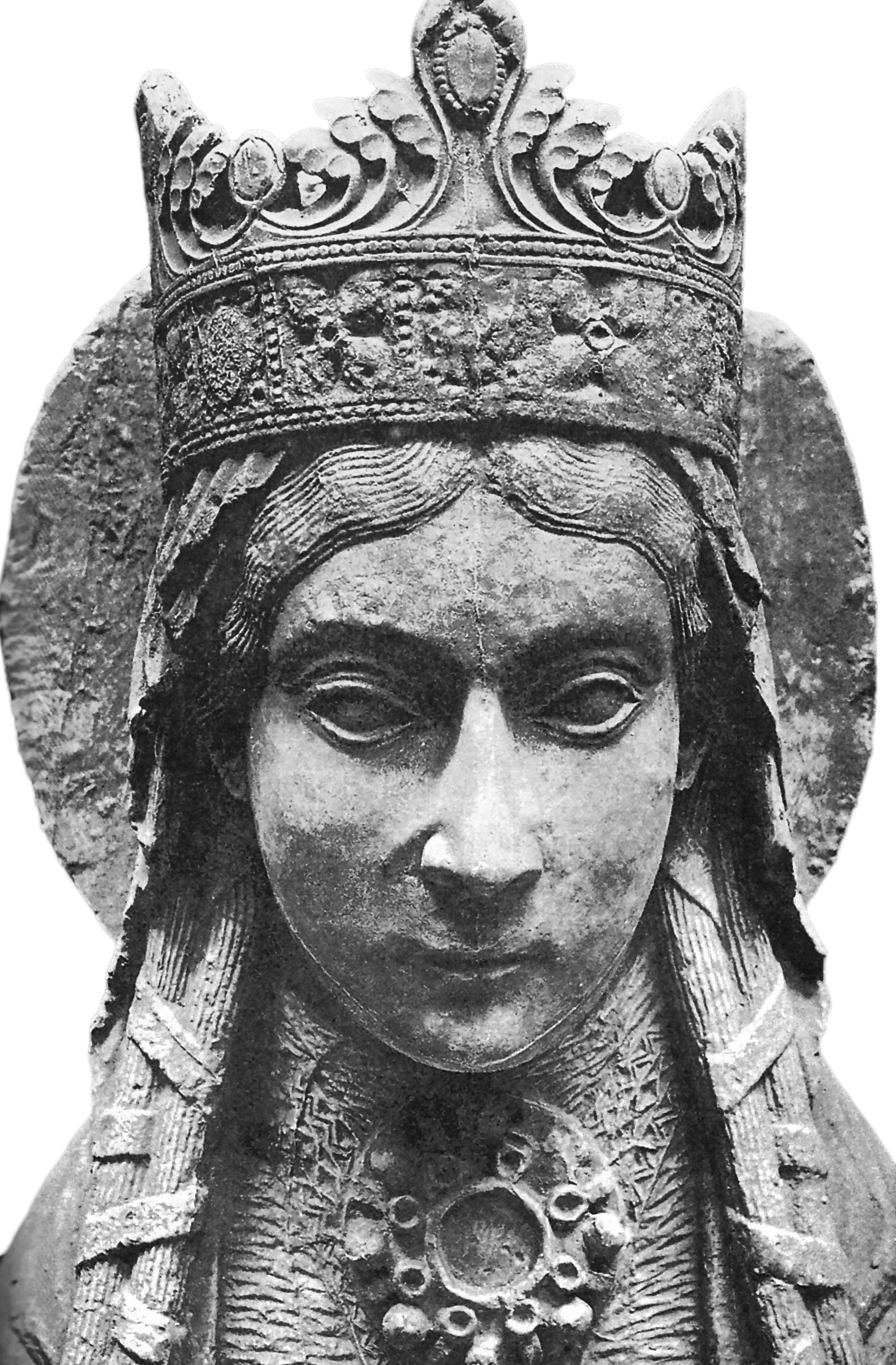
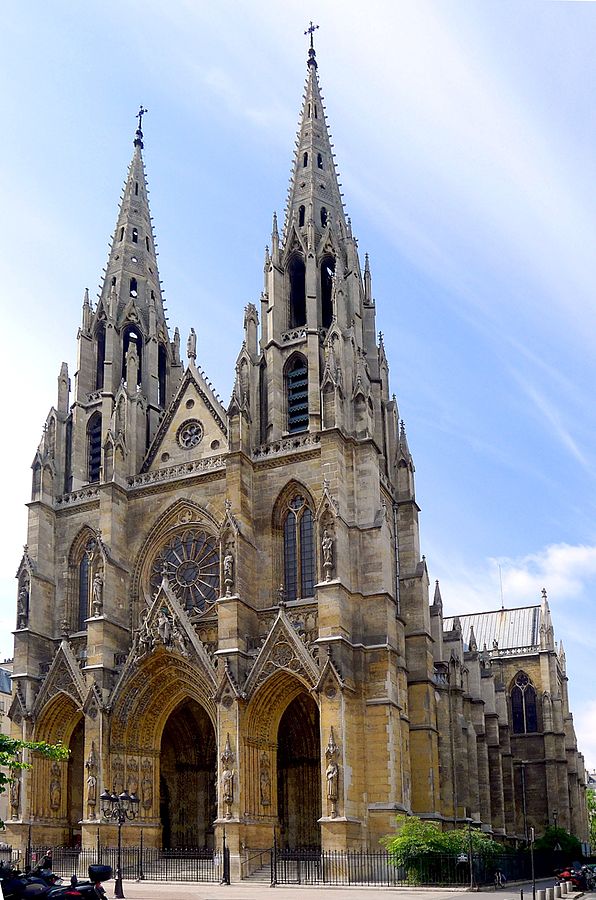
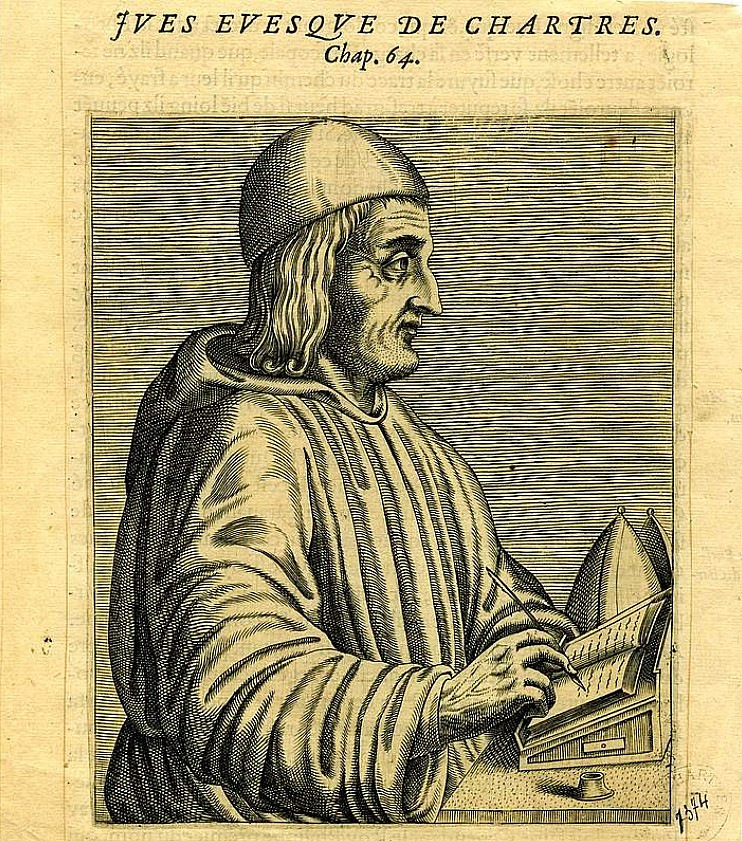
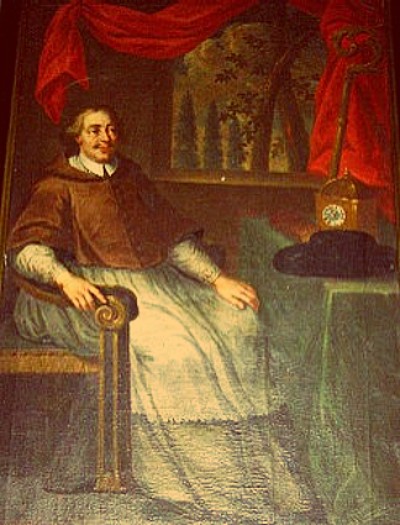
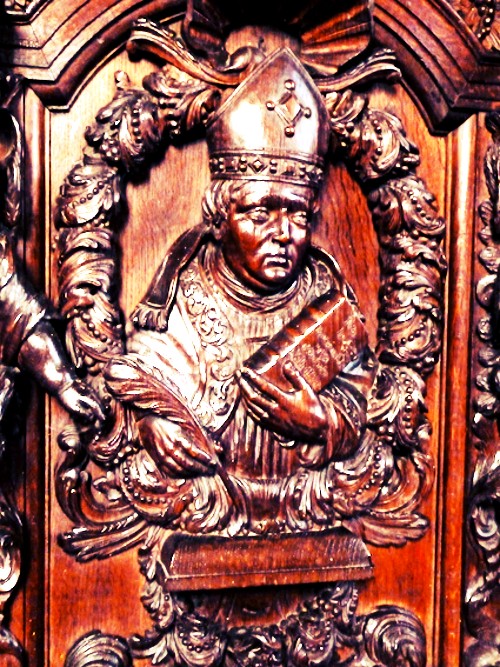
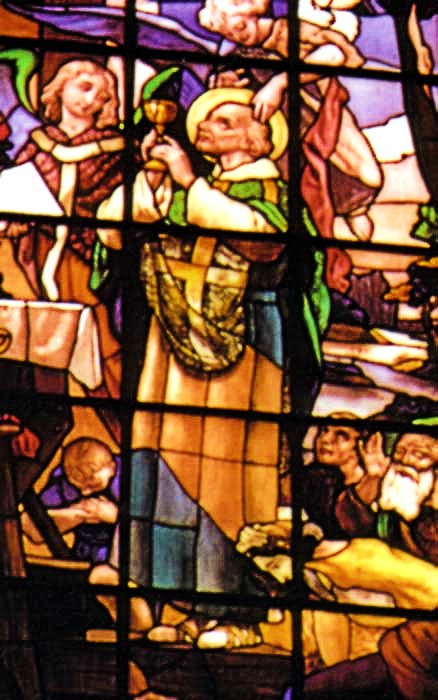
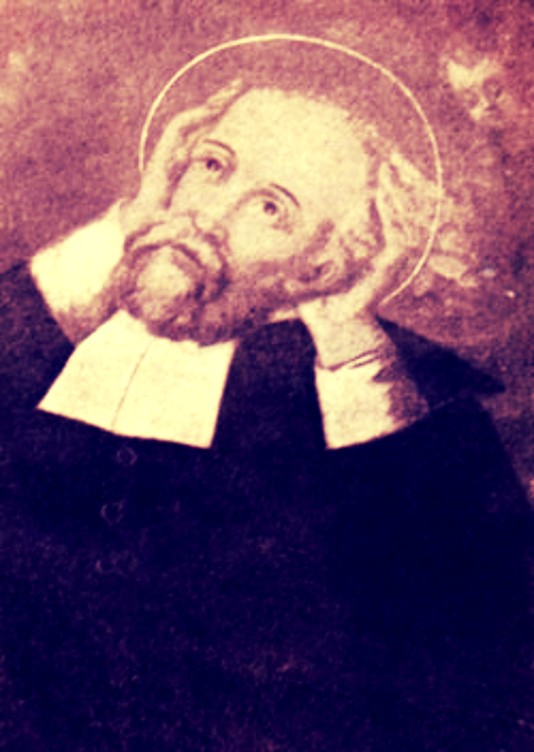
Saint of the Day – 23 May – Saint Ivo of Chartres (1040-1116) Bishop of Chartres. Copnfessor

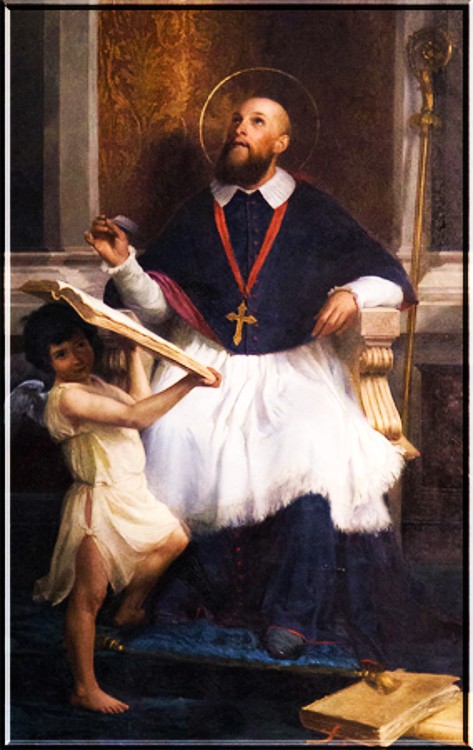
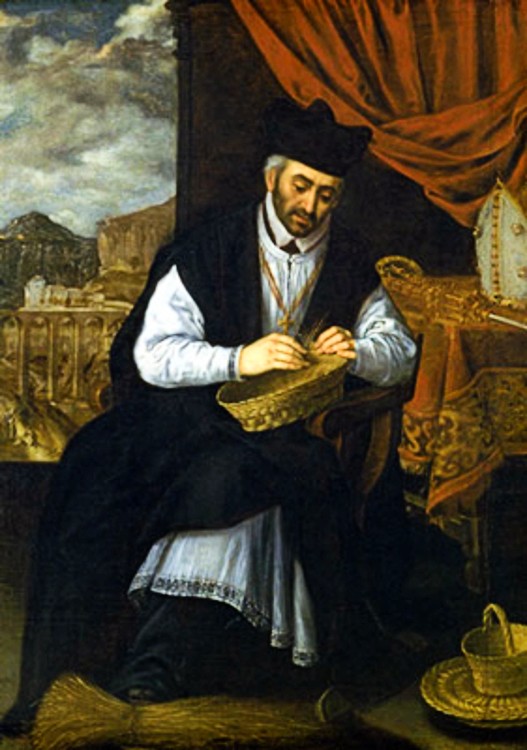
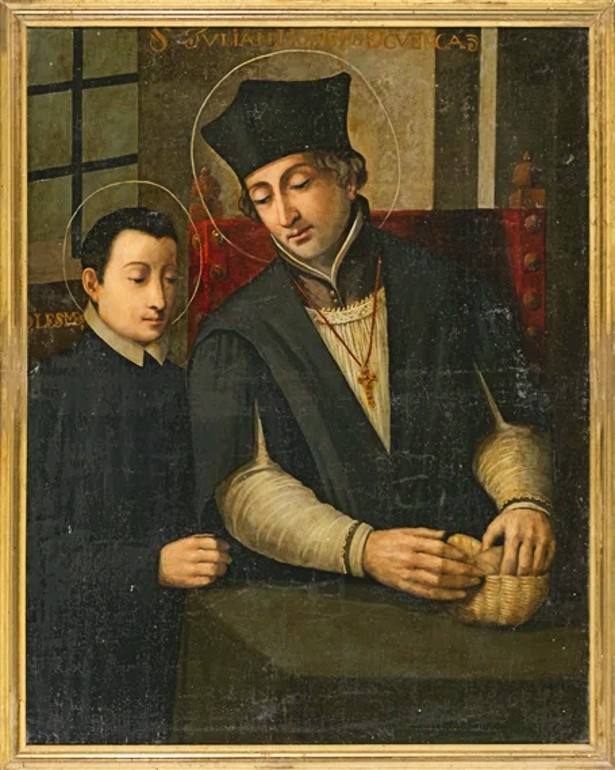
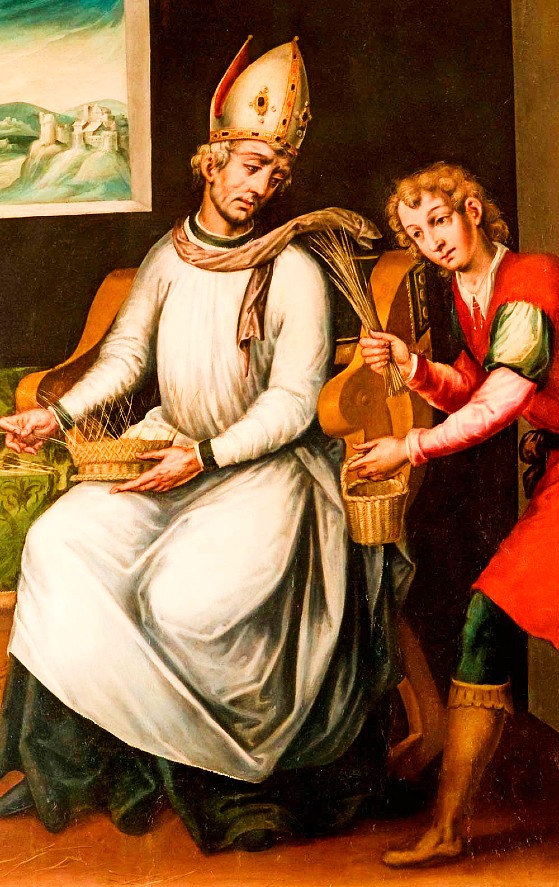
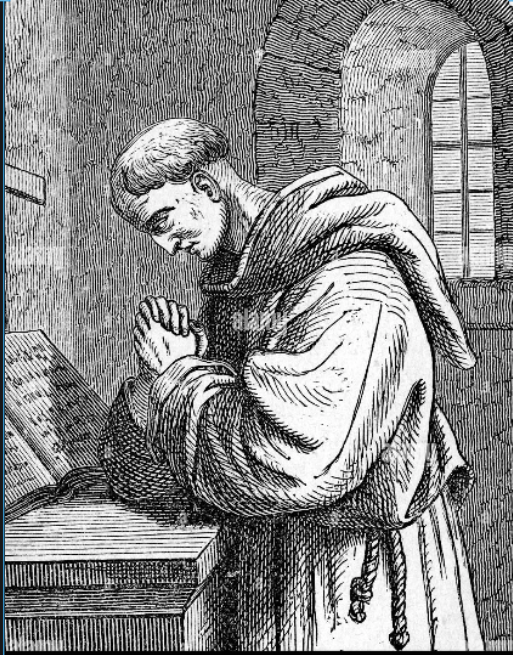
Saint of the Day – 23 May – Saint Ivo of Chartres (1040-1116) Bishop of Chartres from 1090 until his death, Confessor, renowned Scholar, Writer, Expert in Canon Law. Ivo was an important Canon Lawyer during the Investiture Crisis. He left extensive Canon writings as well as much correspondence and wonderful sermons. Born in 1040 in Beauvais, France and died on 23 December in 1116 of natural causes at Chartres. Also known as – Ives, Yves, or Yvo. Patronages – of Canon Lawyers, Lawyers. . He was Canonised on 18 December 1570 by St Pius V. Additional Memorials – 20 May and 23 December, on some Calendars.

Ivo was born of a noble family in Beauvais. From the neighbourhood of Beauvais, his native country, he went for his studies first to Paris and thence to the Abbey of Bee in Normandy, at the same time as St Anselm of Canterbury, to attend the lectures given by St Lanfranc.

In about 1080 he became, at the desire of his Bishop, Prior of the Canons of St-Quentin at Beauvais. He was then one of the best teachers in France and so prepared himself to infuse a new life into the celebrated schools of Chartres, of which City he was appointed Bishop in 1090, his predecessor, Geoffroy, having been deposed for simony.

His Episcopal government, ranged over a period of twenty-five years. No man, perhaps, is better portrayed in his writing than is Ivo in his letters and sermons – in both, he appears as a man always faithful to his duties, high-minded, full of zeal and piety, sound in his judgements, a keen jurist, straight-forward, mindful of others’ rights, devoted to the Papacy and to his country, at the same time, openly disapproving of all which he considered wrong and which IS wrong by Sacred Scripture. Very often, Ivo was consulted on Theological, Liturgical, Political and especially Canonical matters. Ivo was regarded as a moral and intellectual authority by many Prelates in northern Europe.

During his Episcopacy, he wrote the majority of his extant works, for which he later became famous and is considered among the greatest scholars of the mediaeval era.

Of his life, little more is known than may be gathered from his own letters. As Bishop, he strongly opposed Philip the First, who wished to desert Bertha, his legitimate wife and marry Bertrade of Anjou (1092) – his opposition gained him a prison cell.

In the Investiture struggle then raging in France and especially in Germany, Ivo represented the moderate party. Although he died too early to witness the final triumph of his ideas, with the Concordat of Worms (1122), his endeavours and his doctrines may be said to have paved the way for an agreement satisfactory to both sides. His views on the subject are fully expressed in several of his letters, especially those of the years 1099, 1106 and 1111. These letters are still of interest as to the question of the relationship between Church and State, the efficacy of the Sacraments administered by heretics, the sin of simony and much more.

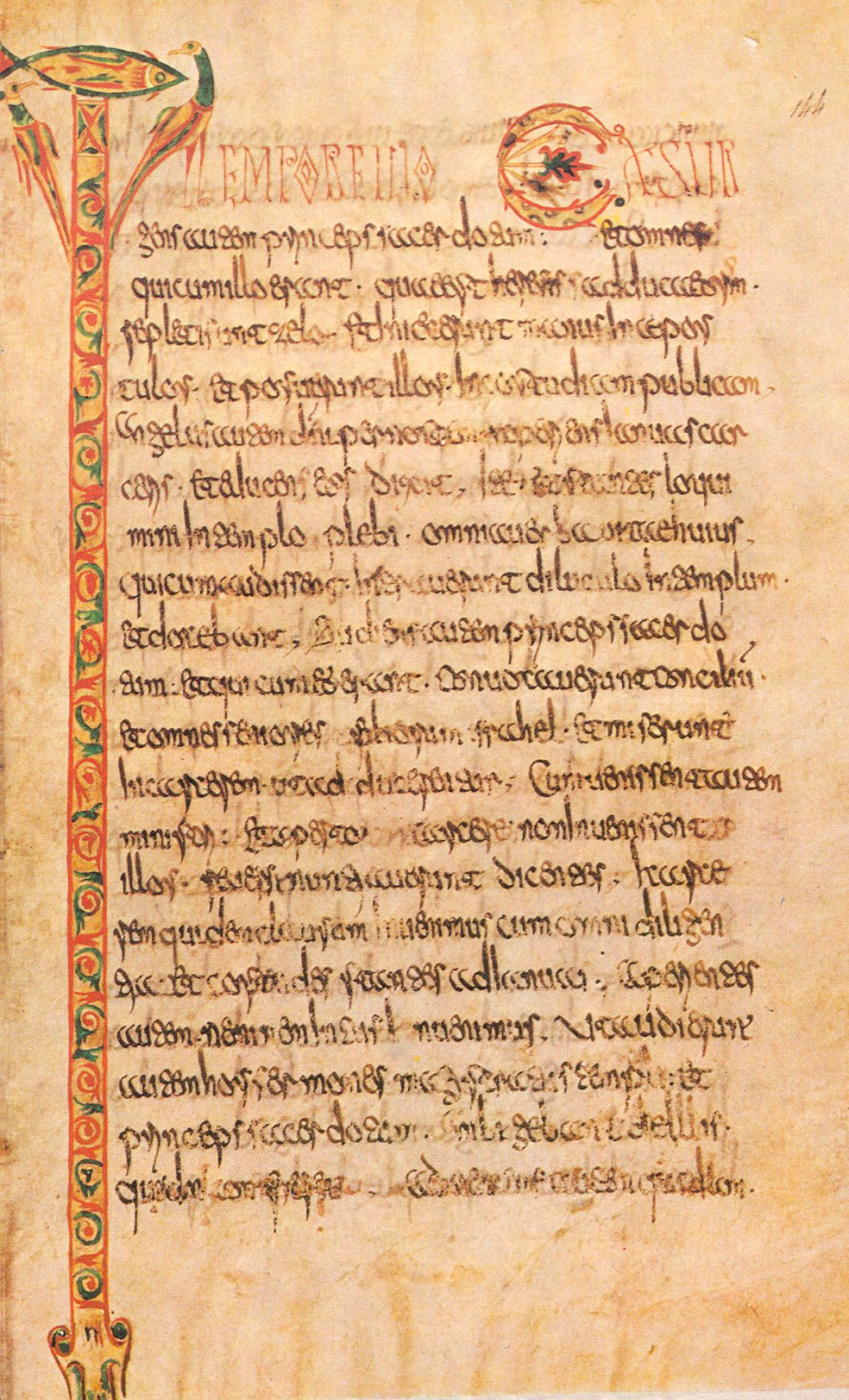
The printed works of Ivo of Chartres may be arranged into three categories – canonical writings, letters and sermons. Some of his works had great influence and his letters are a valuable reflection of his era. Many of his letters and sermons circulated already in his lifetime and were copied widely, especially in the mid-twelfth century. The same is true for the canonical collections; they were copied frequently and used in the making of other collections.

His works are replete with treatments of charity and dispensation in a pastoral manner regarding the Holy See. He believed that caritas was the solution for sin and not harsh punishment without contrition. This theme is most evident in his Prologus, which is most often compared to the teachings of the Church Fathers than those of the scholars of his day. Paul’s message of loving one’s fellow man as one would oneself, is particularly prevalent in Ivo’s works:

He was called to teach. His lesson was love.
It was all that mattered.

Saint Ivo of Chartres (1040-1116)

Posted in AUGUSTINIANS OSA, MYSTICS, SAINT of the DAY, WIDOWS and WIDOWERS

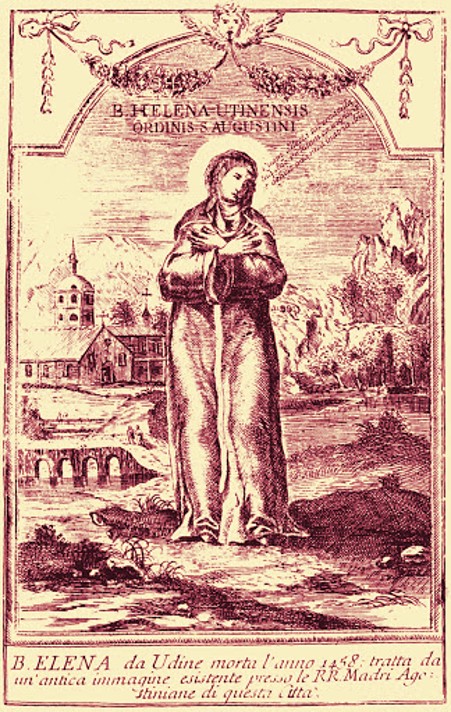
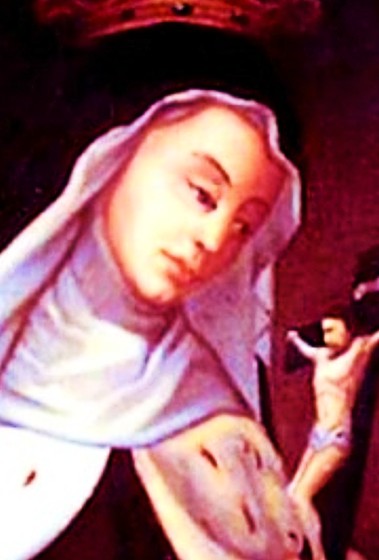
Saint of the Day – 23 April – Blessed Helen del Cavalanti OSA (1396-1458) Widow

Saint of the Day – 23 April – Blessed Helen del Cavalanti OSA (1396-1458) Widow, Mother, Third Order Augustinian, Mystic, Miracle-worker. Helen was known for her spirit of penance, obedience, humility, devotion to the Passion of Christ and to the Eucharist and for her love of neighbour. Born in 1396 at Udine, Italy and died om 23 April 1458, at Udine of natural causes. Patronages – against temptations, of widows. Also known as – Helen Valentini. Helen of Udine, Helena Valentini of Udine, Elena…

Helen was born in Udine in 1396 to the nobleman Count Valentinis – a Lord of Maniago. We know of only one sibling, a sister: named Perfetta.

In 1411 at the age of 15, she married the Florentine Knight, Antonio del Cavalcanti, an Official of the City of Udine and the pair had six children – three males and three females, living happily as a loving family.

After 30 years together, raising their 6 children, Antonio died. Helen cut off her hair and placed it with her jewels in his coffin, saying:
These I wore for love of you – take them to the grave with you.

A short while later, still within 1441, Helen heard a sermon in the Augustinian Church of Santa Lucia and decided then and there to join the Order. She became a professed Third Order member of the Order of Saint Augustine (the first for the Third Order in Udine).

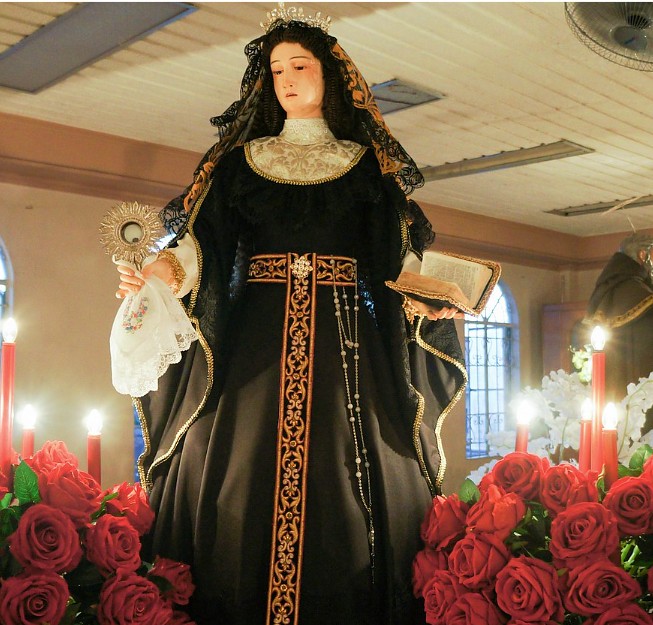
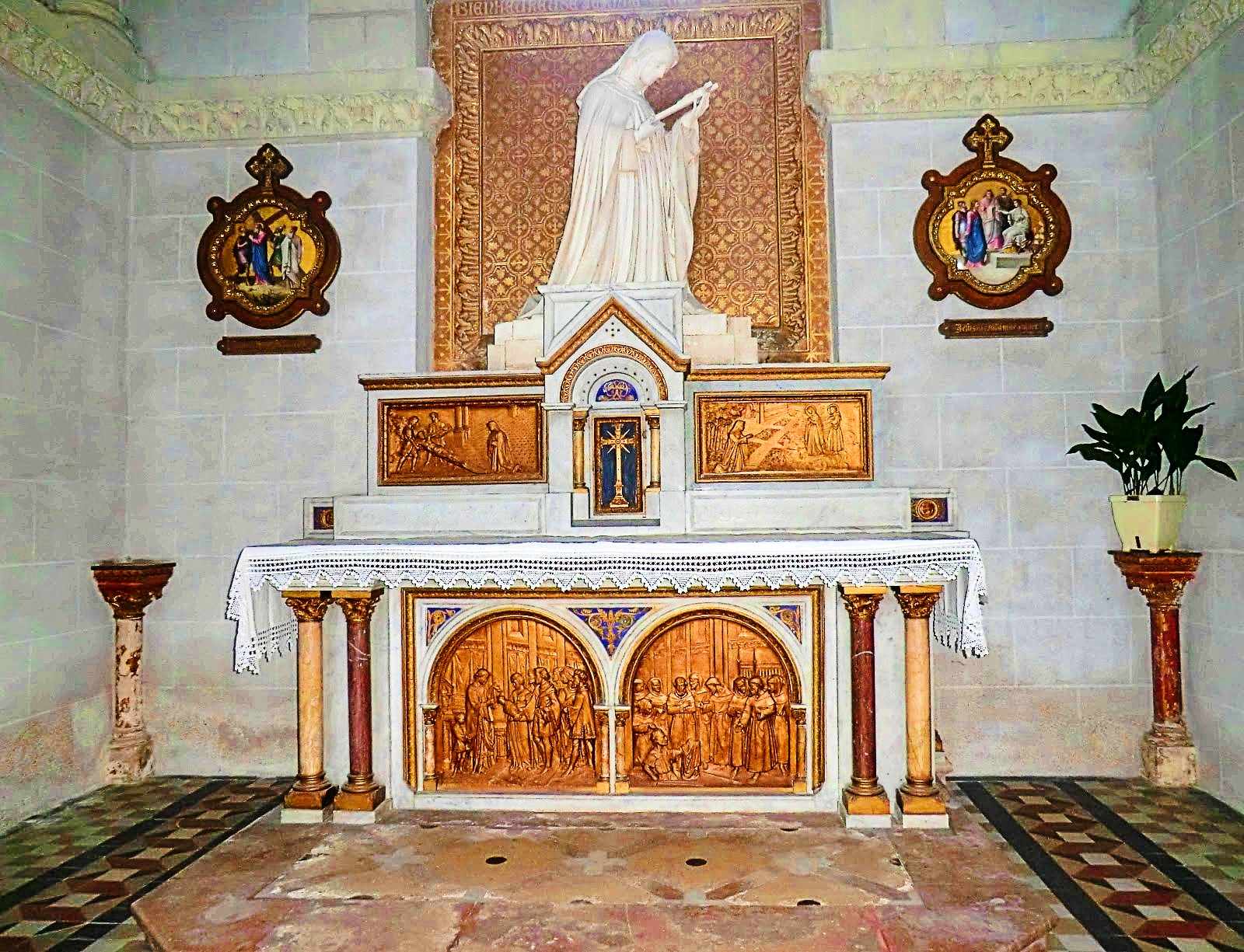
A Statue of Blessed Helen in Udine

She soon became known for her several austerities and her life of dedication to her fellowman. One of her mortifications was to take a vow of silence, speaking on Christmas alone. Helen placed 33 pebbles in jer shoes walking with pain for the rest of her days and slept on a stone pallet in place of a bed. She continued to live at home, in 1446 she moved in with her sister who was also a Third Order Augustinian, residing there until her death. She dedicated herself completely to God. She devoted long hours to prayer and meditation on the Gospels. She provided personal service and material contributions, to works of mercy. Helen developed a reputation as a Miracle worker with the power of curing the sick.

Helen became bedridden in 1455 after fracturing both her femurs in a fall. Even now, in this painful time, Helen preferred a pallet of stones and straw to a bed. Her declining health led to her death on the Saturday evening of 23 April 1458. Mass was celebrated in her room and Friars from a nearby Convent came to chant the Psalms.

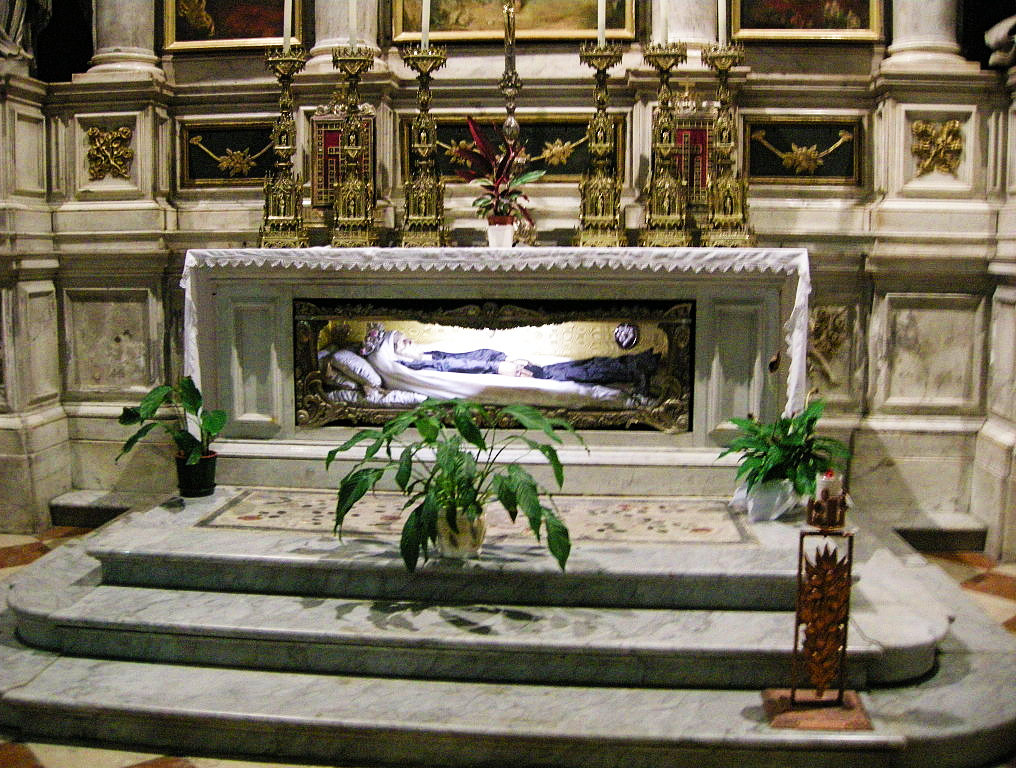
Her remains were interred in Santa Lucia but in 1845. they were moved to the Udine Cathedral. On 27 September 1848, Pope Pius IX confirmed her cultus and Beatified her.

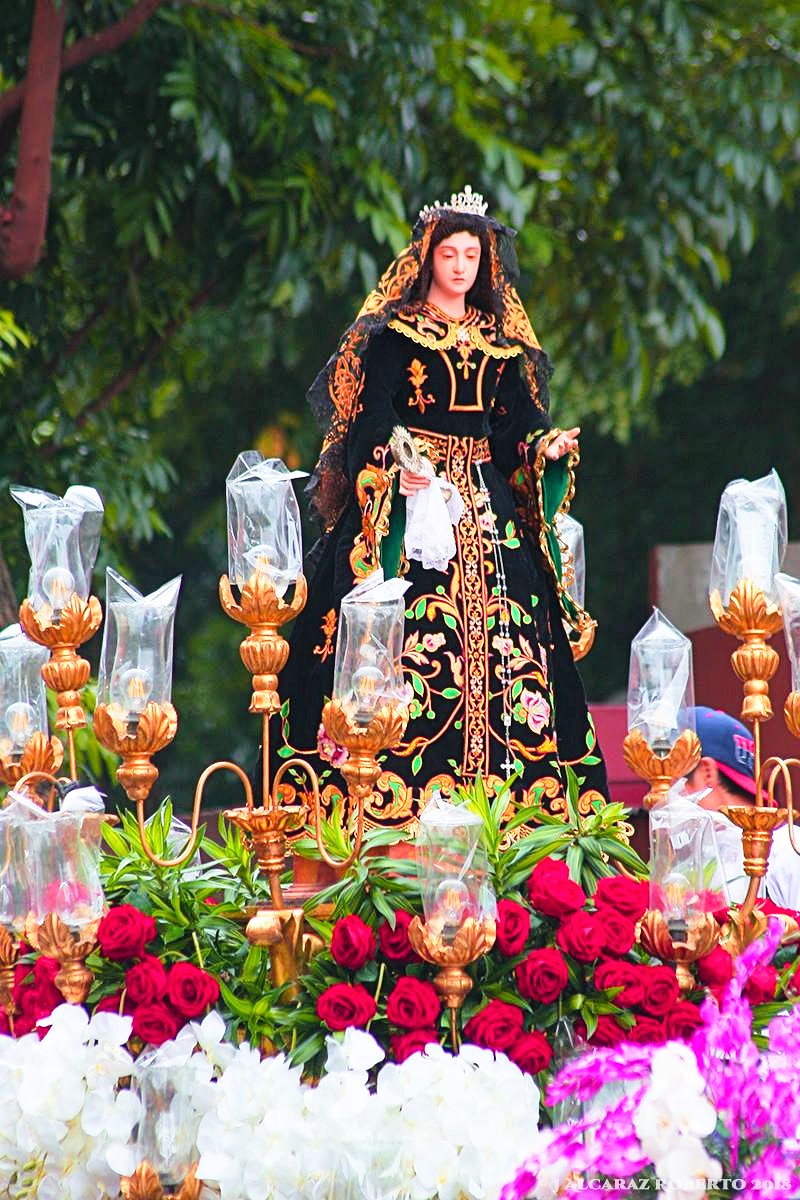
There is a wonderful procession in her honour each year.

Posted in DOCTORS of the Church, FATHERS of the Church, GOD ALONE!, I BELIEVE!, LOVE of NEIGHBOUR, Of PILGRIMS, QUOTES on CHARITY, QUOTES on CREATION, QUOTES on FAITH, QUOTES on FORGIVENESS, QUOTES on LOVE, QUOTES on LOVE of GOD, QUOTES on SANCTITY, St Francis de Sales, The HEART, The WORD

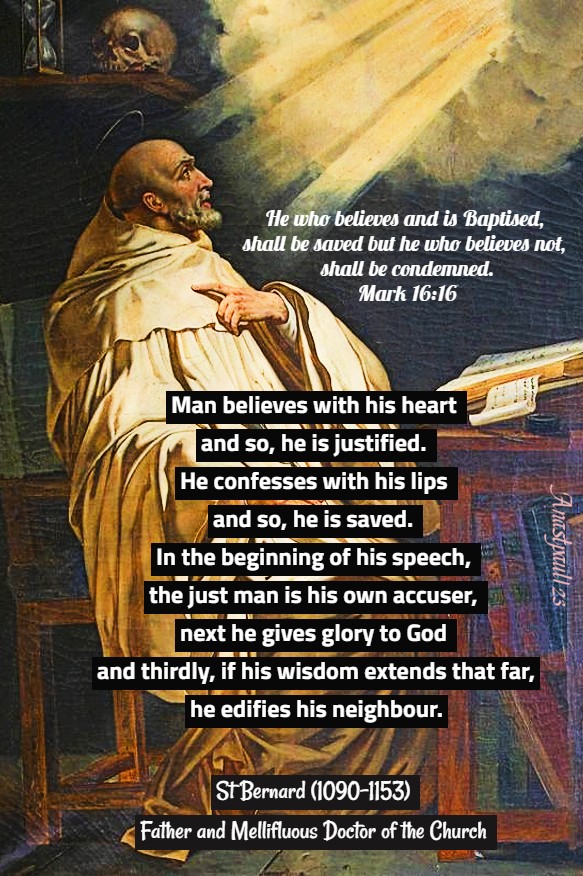
Quote/s of the Day – 20 April – ‘… Man believes with his heart …’

Quote/s of the Day – 20 April – “The Month of the Resurrection” – Feria Day, Thursday in the Second Week of Easter – 1 John 5:4-10, John 20:19-31 – Scripture search here: https://www.drbo.org/

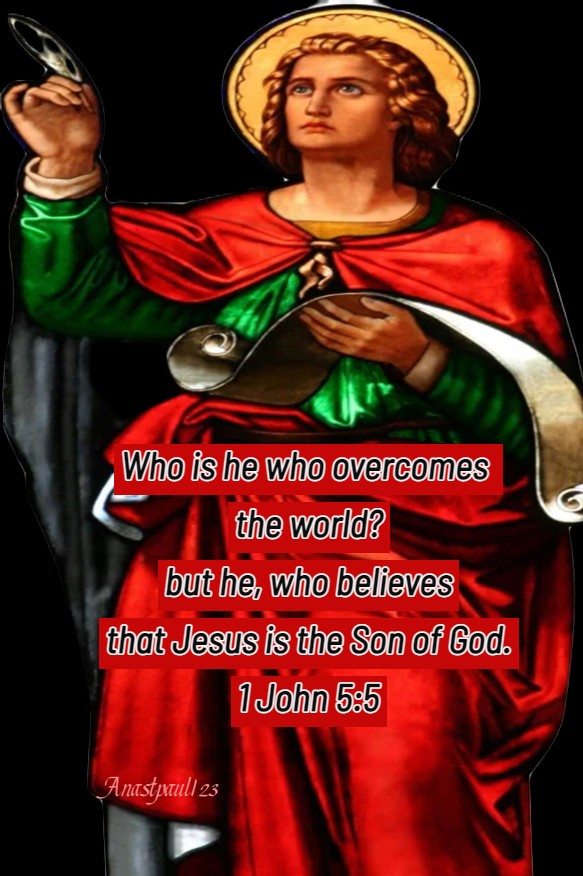
Who is he who overcomes the world?
but he who believes
that Jesus is the Son of God.

1 John 5:5

This people honours Me with their lips
but their heart is far from Me.

Matthew 15:8

He who believes and is Baptised,
shall be saved but he who believes not,
shall be condemned.

Mark 16:16

Man believes with his heart
and so, he is justified.
He confesses with his lips
and so, he is saved.
In the beginning of his speech,
the just man is his own accuser,
next he gives glory to God
and thirdly, if his wisdom extends that far,
he edifies his neighbour.

St Bernard (1090-1153)
The “Last Father”
and Mellifluous Doctor of the Church

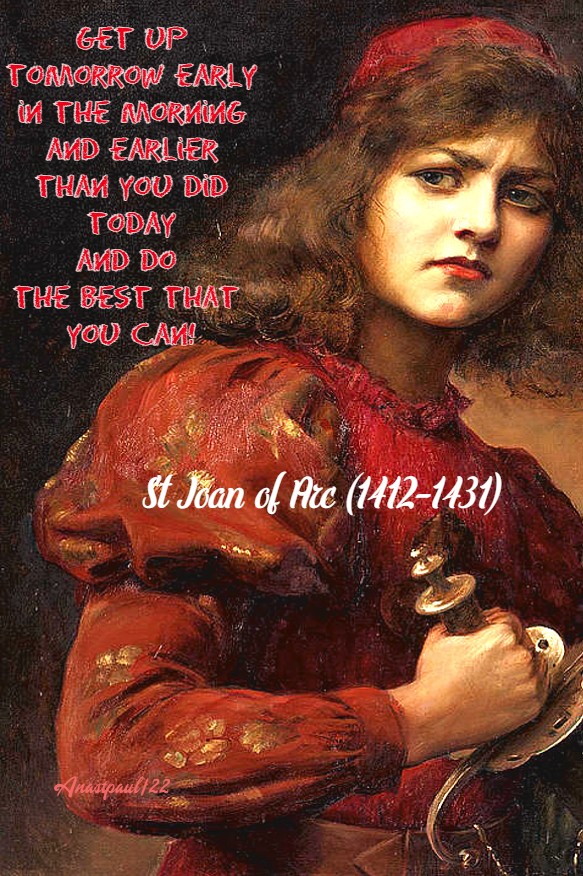
Get up tomorrow early in the morning
and earlier than you did today
and do the best that you can!

St Joan of Arc (1412-1431)

The very prince of the universe, is man;
the crowning point of man, is his heart;
of the heart, is love
and the perfection of love, is charity.
That is why the love of God is the goal,
the crowning point,
the be-all and end-all of the universe.

(Treatise on the Love of God, Book 10, Chapter 1)

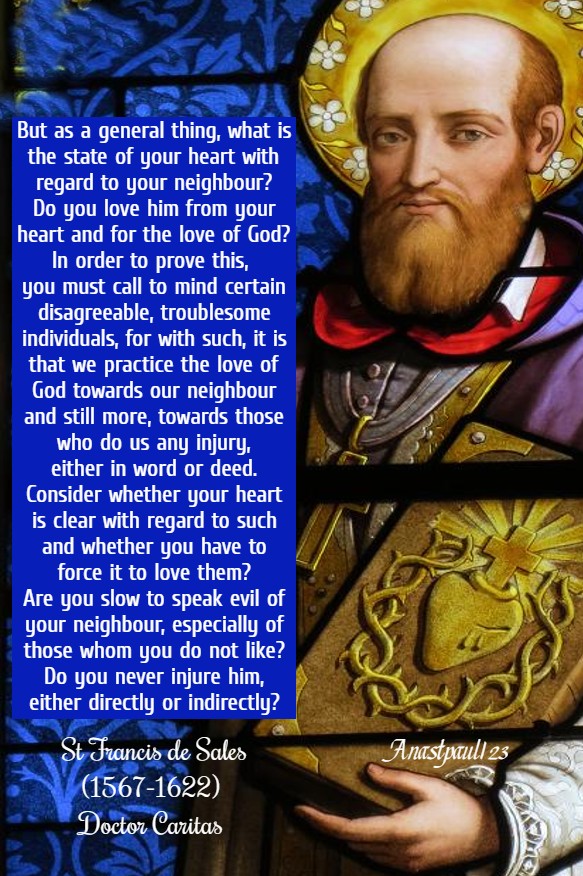
But as a general thing,
what is the state of your heart
with regard to your neighbour?
Do you love him from your heart
and for the love of God?
In order to prove this,
you must call to mind
certain disagreeable, troublesome individuals,
for with such, it is that we practice
the love of God towards our neighbour
and still more, towards those who do us any injury,
either in word or deed.
Consider whether your heart is clear
with regard to such and whether
you have to force it to love them?
Are you slow to speak evil of your neighbour,
especially of those whom you do not like?”
Do you never injure him, either directly or indirectly
?”

(Introduction to the Devout Life).

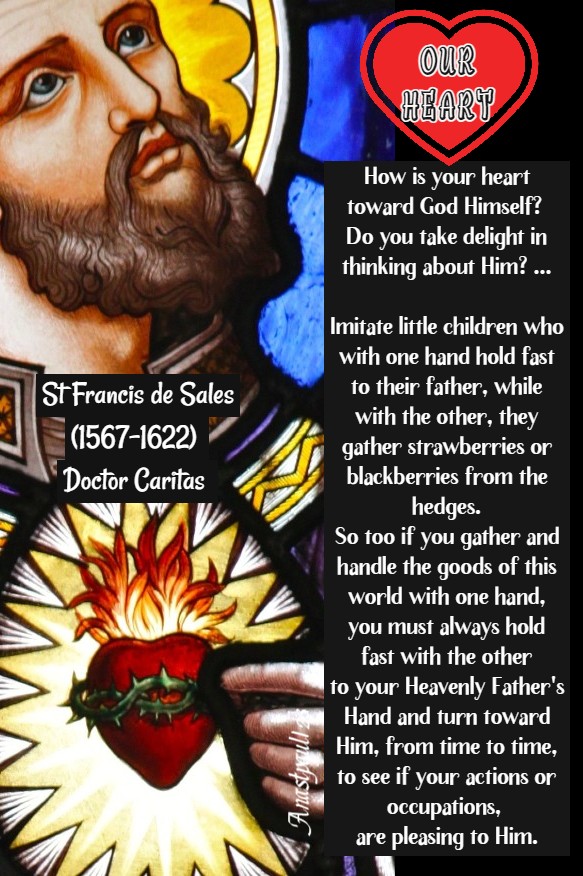
HOW IS YOUR HEART TOWARDS GOD HIMSELF?
Do you take delight in thinking about Him? …
Imitate little children who, with one hand hold fast to their father,
while with the other, they gather strawberries
or blackberries from the hedges.
So too if you gather and handle
the goods of this world with one hand,
you must always hold fast with the other
to your Heavenly Father’s Hand
and turn toward Him, from time to time,
to see if your actions or occupations,
are pleasing to Him.

(Introduction to the Devout Life, Part 3, Chapter 10)

St Francis de Sales (1567-1622)
Doctor of Charity

Posted in Of PILGRIMS, PATRONAGE - PENITENTS, PATRONAGE - PRISONERS, SAINT of the DAY

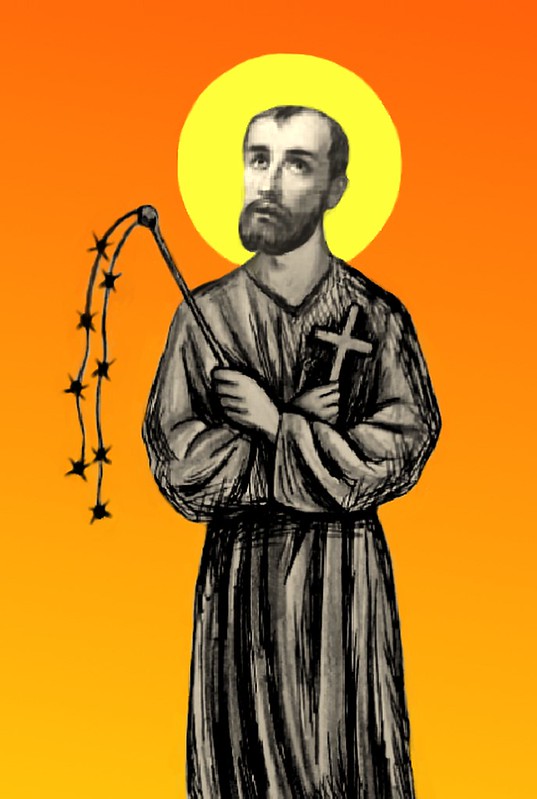
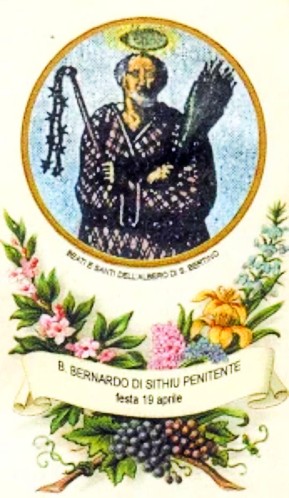
Saint of the Day – 19 April – Blessed Bernard of Sithiu (Died 1182) Layman Penitent

Saint of the Day – 19 April – Blessed Bernard of Sithiu (Died 1182) Layman Penitent, Pilgrim, Hermit Died on 19 April 1182 in the Monastery of Saint-Bertin, Thérouanne region, France of natural causes. Patronages – of sinners, convicts, prisoners, penitents, pilgrims. Also known as – Bernard of Maguellone, Bernard the Penitent, Bernard the Pilgrim.

The Roman Martyrology: “At the Monastery of Saint-Bertin in the territory of France in Thérouanne, lies the tomb of Blessed Bernard, penitent, who, eager to atone for the sins of his youth with an austere penitence, voluntarily chose exile and, barefooted, wearing rough garments, was a tireless pilgrim to the holy places.

Like St Nicholas of Trani, St Benedict Joseph Labre, St Rocco and several others this Saint lived as an itinerant pilgrim to the Shrines of Europe.

The few reports received about the life of Blessed Bernard of Sithiu are those handed down in the writings of John of Sithiu, Abbot in 1187, a source of extraordinary interest. There is also the Office composed in his honour and in 1465, an inventory of his remains are cited, “relics of St Bernard, Penitent. “

From such documents and testimonies, we discover that Bernard, following a murder, was ordered to make a pilgrimage of atonement.

After wandering far and wide for a long time, he finally settled near the former town of Sithiu, where, for four years he lived in poverty and deprivation. He prayed and fasted incessantly and endured the elements, as well as many other trials and sufferings. He became a very saintly man in love with God and self-renunciation. Finally dying on 19 April 1182.

The fame for holiness which was gained in life, was later confirmed after death, by many miracles occurring at his tomb.

Posted in CARMELITES, Of BEGGARS, the POOR, against POVERTY, SAINT of the DAY, WIDOWS and WIDOWERS

Saint of the Day – 18 April – Blessed Barbara Aurillot / Marie of the Incarnation OCD (1566-1618) Widow,

Saint of the Day – 18 April – Blessed Barbara Aurillot / Marie of the Incarnation OCD (1566-1618) Widow, Third Order Lay Discalced Carmelite Sister, Apostle of Charity, Mystic. Barbara is considered the Foundress of the French branch of Carmel. She was known for receiving visions and ecstasies and for supernatural gifts. Born on 1 February 1566 at Paris, France as Barbe Aurillot and died on 18 April 1618 at Pontoise, France of natural causes. Patronages – against impoverishment, against loss of parents, against poverty, parents separated from children, the poor, widows. Also known as – Le belle Acarie (the beautiful Acarie), as she was known in Paris, Barbara Aurillot, Barbara Avrillot, Barbe Acarie, Barbe Aurillot, Barbe Avrillot, Madame Acarie, Marie Acarie Marie or Mary of the Incarnation.

Barbara was the daughter of a French Government Official named Nicholas Aurillot,the Accountant General in the Paris Chamber and Chancellor of Marguerite of Navarre, first wife of Henri IV. Her mother, Marie Lhuillier. was a descendant of Etienne Marcel, the famous prévôt des marchands (Chief municipal Magistrate). She was educated at her Aunt’s Convent at Longchamps, the Minor Sisters of Humility of Our Lady.

Although Barbara was attracted to the religious life, at the age of 16  in 1684, through obedience,  she was married to Pierre Acarie, the Viscount of Villemoran, a wealthy young man of high standing, who was a fervent Catholic and Government Treasury Official. She became the Mother of six children, three of whom became Carmelites Nuns and one a Priest.

Her husband, Pierre, supported the Catholic League, of which he was a staunch member, against Henry IV. Pierre was one of the sixteen who organised the resistance in Paris. When Henry became King, he seized the Acarie estates, impoverished the family and exiled Pierre from Paris, separated husband and father from his family. Barbara had to contend with creditors and irate businessmen. Although she had been severely injured due to a fall from her horse and medical treatment which had only made matters worse and left her an invalid for the rest of her life. Barbara still, legally challenged the matter and went to Court to fight and she won. The family was able to reclaim part of the their property and fortune.

Barbara was devoted to the writings of Saint Teresa of Avila. Her good works eventually won her the admiration and support of the same King Henry! who assisted her later when she was the greatest protagonist in bringing the reformed Carmelites of St Teresa to France. At this time, she received a vision of St Teresa who informed her that God wished Barbara to do this work.

At the beginning of the Seventeenth Century Madame Acarie was widely known for her virtue, her supernatural gifts and especially, for her charity towards the poor and the sick in the hospitals. To her residence came all the distinguished and devout people of the day. Among them was St Vincent de Paul and St Francis de Sales, the latter of whom became her Spiritual Counsellor.

Barbara was instrumental in bringing the Discalced Carmelites of Saint Teresa to France, founding five houses between 1604 and 1609. The Carmel spread rapidly and profoundly influenced the French  religious and secular society  of the day. In 1618, the year of Barbara’s death, Carmel numbered fourteen houses.

She also shared in two foundations of the day, that of the Oratory and of the Ursulines. She urged De Bérulle to refuse the tutorship of Louis XIII and on 11 November 1611, she, with St Vincent de Paul, assisted at the Mass of the installation of the Oratory of France.

Among the many postulants whom Mme Acarie received for the Carmel, there were some who had no vocation and she conceived the idea of getting them to undertake the education of young girls and broached her plan to her holy cousin, Mme. de Sainte-Beuve. To establish the new order they brought Ursulines to Paris and adopted their rule and name.

When Pierre died in 1613, his widow settled her affairs and begged leave to enter the Carmel, asking as a favour to be received as a lay sister in the poorest community. In 1614 she withdrew to the Monastery of Amiens, taking the name of Marie of the Incarnation. Her three daughters had preceded her into the cloister and one of them was Sub-prioress at Amiens. In 1616, by order of her Superiors for health reasons, she went to the Carmelite Convent at Pontoise, where she died at the aged of 52/53. St Francis de Sales considered her death in spiritual poverty as laudable as that of St Francis Xavier’s, who died in utter physical poverty.

Her cause was introduced at Rome in 1627 and she was Beatified on 24 April 1791 by Pope Pius VI – her Feast is widely celebrated in Paris on 18 April. Her mortal remains are in the Chapel of the Carmelites of Pontoise.

It has been said that the vigorous and saintly Madame Acarie, provided the first definite impulse towards that interior growth which made the exquisite and urbane St Francis de Sales, a fit guide for the soul of St Jane Frances de Chantal.

Posted in Against EPIDEMICS, Against STORMS, EARTHQUAKES, THUNDER & LIGHTENING, FIRES, DROUGHT / NATURAL DISASTERS, For RAIN OR Against RAIN, SAINT of the DAY

Saint of the Day – 11 April – Saint Godeberta (c640-c700) Abbess

Saint of the Day – 11 April – Saint Godeberta (c640-c700) Abbess, Miracle-worker. Born in c640 near Amiens, France and died in c700 at Noyon, France of natural causes. Patronages – against plague/epidemics, for drought relief )fpr rain) , of Noyon, France. Also known as – Godeberta of Noyon, Godebertha, Godberta. Godeberta means “fervour.” Additional Memorials – 11 June, the Fifth Sunday after Easter.

Godeberta was born about the year 640, at Boves, a few leagues from Amiens, in France;. She was very carefully educated, her parents being of noble rank and attched to the Court of King Clovis II. When the question of her marriage was being discussed in the presence of the King, the saintly Bishop of Noyon, St Eligius, as if by inspiration, presented Godeberta with a golden ring and expressed the hope that she might devote her life to the service of God. Godeberta, moved by the Holy Spirit and feeling her heart suddenly filled with Divine love, turned away from the bright prospects before her and refused the advantageous offers which had been made by her noble suitors. She declared her willingness to be the spouse of Christ and asked the holy prelate to allow her to assume the veil.

The Legend of Saint Eligius and Saint Godeberta, by Petrus Christus.


In a short time all opposition to her wishes disappeared and she entered on her new life under the guidance of St Eligius. The King of the Franks was so impressed by her conduct and her zeal that he made her a present of the small palace which he had at Noyon, together with a little Chapel dedicated to St George. Godeberta’s example inspired a number of young women to follow in the same path and she founded in her new home, a Convent, of which she became the Abbess

Here she passed the remainder of her life in prayer and solitude, save when the call of charity or religion, brought her forth among the people, many of whom were still sunk in the vices of paganism. She was remarkable ,in particular, for the constant penances and fasts, to which she subjected herself. She had a wonderful faith in the efficacy of that ancient practice of the early Christians–the Sign of the Cross and, it is recorded, that on one occasion, in 676, during the Episcopacy of St Mommelinus, when the town was threatened with total destruction by fire, she made the Sign of the Cross over the flames,and the conflagration was forthwith extinguished.

The exact year of her death is unknown but it is said to have occurred on 11 June, on which day her feast is marked in the Proprium of Beauvais. In Noyon, however, by virtue of an indult, dated 2 April, 1857, it is kept on the fifth Sunday after Easter, the feast of 11 April appears to stem from the belief that this was the date of the translation of her Relics. The body of the Saint was interred in the Church of St George, which was afterwards called by her name.

In 1168 Godeberta’s body was solemnly translated from the ruined Church where it had rested for over 450 years, by Bishop Baudoin to the Cathedral of Noyon. Providentially her relics have escaped the ravages of time and fire and the malice of the irreligious. At the period of the Revolution a pious townsman secretly buried them near the Cathedral. When the storm had passed they were recovered from their hiding place and their authenticity, being canonically established, they were replaced in the Church.

A bell is still preserved which tradition avers, to have been the one actually used by Godeberta in her Convent. It is certainly very ancient and there seems no good reason, in particular from an archaeological point of view, for doubting the trustworthiness of the legend. In the treasury of the Cathedral, likewise may be seen a gold ring, said to have been that presented by St Eligius to the Saint. Mention is made in a record of the year 1167 of this Relic having been then in the possession of the Church of Noyon.

Unfortunately the most ancient documents we have giving details of Godeberta’s life do not, in all probability, date beyond the Eleventh Century, as the oldest “Vita” which, in truth, is rather a panegyric for her feast than a biography, is believed to have been composed by Radbodus, who became Bishop of Noyon in 1067. In those days, too, the aim of such writers was the edification rather than the instruction of the faithful, so we find in this life, the usual wonders related in such pious works of that period with but few historic facts. It is certain, however, that St. Godeberta was looked upon as a protector in the time of plagues and catastrophes and we have every reason to hold that this practice was justified by the results that followed her solemn invocation.

In 1866 a violent outbreak of typhoid fever occurred in Noyon, decimating the Town. On 23 May in that year, one of the leading citizens, whose child had just been stricken down, approached the cure of the Church and recalling the favours that had been granted in ages past to the clients of the Saint, earnestly asked that the Shrine containing her Relics should be exposed and a Novena of intercession begun. This was done the following day,and forthwith, the scourge ceased; it was officially certified that not another case of typhoid occurred. In thanksgiving a solemn procession took place under the guidance of the Bishop, Mgr Gignoux, a few weeks later, the Relics of St Godeberta being carried triumphantly through the town. A beautiful statue of the saint, the cathedral of Noyon, which was blessed by the Bishop on 25 February, 1867, perpetuated the memory of this wonderful event.

The wonderful St Eligius here:
https://anastpaul.com/2021/12/01/saint-of-the-day-1-december-good-st-eligius-st-eligius-of-noyon-c-588-660/

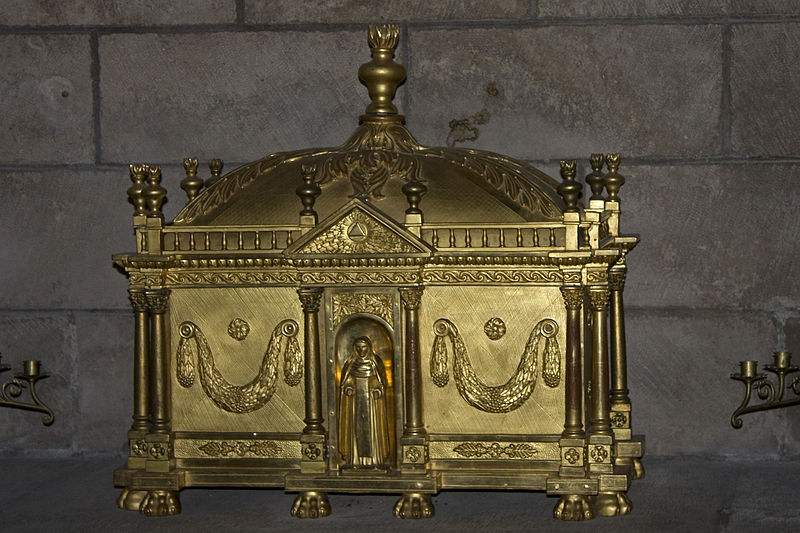
The Relics of St Godeberta
Posted in ALTAR BOYS, DEACONS, SACRISTANS, GOLDSMITHS, SILVERSMITHS, GILDERS, MINERS, JEWELLERS, CLOCK/WATCH-MAKERS, METAL CRAFTSMEN, PATRONAGE-INFERTILITY & SAFE CHILDBIRTH, PREGNANCY, SAINT of the DAY

Saint of the Day – 7 April – Saint Hermann Joseph O.Praem (c1150-1241) Priest, “The Boy who Played with Angels” 

Saint of the Day – 7 April – Saint Hermann Joseph O.Praem (c1150-1241) Priest, Friar of the Order of of Canons Regular of Prémontré (the Norbertines or White Canons), Mystic, a prolific writer on spiritual subjects and the Sacred Scriptures, known as “The Boy who Played with Angels.” From childhood, Hermann had an intense devotion to Our Bless Mother Mary, who herself, assisted him in many ways and throughout his life. This beautiful painting below by Sir Antony van Dyck, shows Mother Mary receiving an apple from Hermann, to give to Baby Jesus. Born im c1150 as Hermann von Steinfeld in Cologne, Germany and died on 7 April 1241 in Hoven, Germany of natural causes. Additional Memorials – 24 May (translation of relics) and 21 May (Diocese of Cologne) and the the Sixth Sunday after Easter at Steinfeld in Cologne. In 1958 Hermann’s status as a Saint of the Church was formally recognised by Pope Pius XII. Patronages – watch and clockmakers, children and young students, Altar boys, Acolytes, Sextons and Sacristans, expectant mothers and safe childbirth. Also known as St Hermann Josef.

Hermann was born in Cologne, the son of Count Lothair of Meer and his wife Blessed Hildegund O.Praem (c1130-1185). His sister was Blessed Hadewych of Meer, also a Norbertine Nun. Although of the nobility, the family was not overly wealthy.

According to the biography by Razo Bonvisinus, a contemporary and Prior of Steinfeld Abbey, at the age of seven, Hermann attended school and very early was known for devotion to the Blessed Virgin. At every available moment he could be found at the Church of St Maria im Kapitol, where he would kneel rapt in prayer to Mary. Bonvisinus says that the boy once presented an apple, saved from his own lunch, to a statue of Jesus Who accepted it. On another occasion, when on a cold day he made his appearance with bare feet, Mary procured him the means of obtaining shoes.

At the age of twelve, he entered the Abbey of the Premonstratensian at Steinfeld. As he was too young to be accepted into the Order, he was sent to study, probably in the Netherlands. Upon his return, he made his vows and was given the Habit and later, the additional name “Joseph.”

As a Novice, he was initially entrusted with the service of the Refectory and later, of the Sacristy. After his Ordination, Hermann was sometimes sent out to perform pastoral duties and was also in frequent demand for the making and repairing of clock – a talent and skill which he enjoyed as a recreation. Hermann became noted for the devotion with which he celebrated the Holy Sacrifice of the Mass. Indeed, he fell into an ecstasy of prayer so often at Mass that his Masses went on “forever.”

As a Monk, Father Hermann retained all the blameless innocence of spirit which had characterised him as a child. He was much loved for his readiness to assist anyone in need and anyone who asked. But while he had practical skills (he was an able mechanic and clock-maker), he was essentially a contemplative.

His confreres jokingly called him “Joseph” for his attention to the Madonna and Child. Typically, he declared himself unworthy to be called after the father of the Holy Family. But Our Lady took a fancy to the name and in a vision, put upon his finger a wedding ring to confirm that he was her spiritual spouse. On the basis of this vision, Hermann added “Joseph” to his other name.

The Mystical Marriage of St Hermann Joseph by Jean-Guillaume Carlier

He was also active in pastoral care outside the Monastery, especially in the female monasteries in the region, as both his mother (after her widowhood) and his sister had become Norbertine Nuns.

Hermann was characterised by his child-like devotion to Mary. Late in his life, he had, under his charge, the spiritual welfare of the Cistercian Nuns at Hoven whom he served as Chaplain. There he died and was buried in their cloister.

Countless miracles were reported at his tomb – the blind were cured, physical ailments were cured and even demons fled those who were possessed and were brought to Herman’s tomb. Hermann Joseph received visits from expectant women who asked his intercession for a safe delivery. The patronage of expectant mothers has been handed down since the 17th century in the use of “touch relics”, such as brooches and clasps, which were left on the Reliquary or tomb and retrieved later and then fastened to their clothing, in the hope of a happy and safe childbirth, through the intercession of the Saint. We presume that Hermann’s prayers, both during life and after, had proved efficacious in these matters.

His body was later transferred back to Steinfeld Monastery, where his marble tomb and large picture may be seen to the present day. By custom apples are left at his tomb – in the image below the large picture (as posted above by Sir Antony van Dyck) as well as an apple, can be seen. Portions of his Relics are at Cologne and at Antwerp. His grave in Steinfeld is a pilgrimage destination – in the Middle Ages, especially by mothers, in modern times, by children and students. The Hermann Joseph Festival is held at Steinfeld on the Sixth Sunday after Easter, every year.

Posted in EYES - Diseases, of the BLIND, QUOTES on PHYSICAL SICKNESS, ILLNESS, SAINT of the DAY

Saint of the Day – 29 March – St Eustasius of Luxeuil (c560–c626)

Saint of the Day – 29 March – St Eustasius of Luxeuil (c560–c626) the Second Abbot of Luxeuil Monastery, (after its Founder, St Columbanus) Missionary and Founder of another Monastery in Bavaria, Miracle-worker, Disciple of St Columban. Patronages – against blindness and eye diseases, of all illness and sick people. Also know in Francen as Eustace.

The Roman Martyrology reads today: “In the Monastery of Luxeuil, the decease of the Abbot, St Eustasius, a disciple of St Columban, who had under his guidance, nearly six hundred Monks. Eminent in sanctity, he was also renowned for miracles.

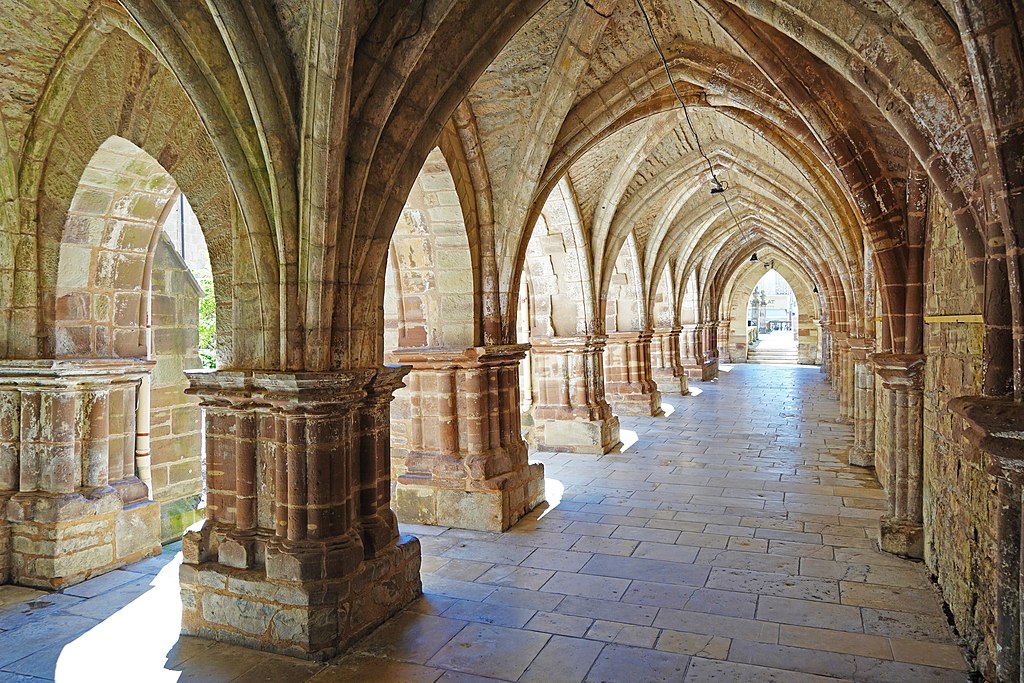
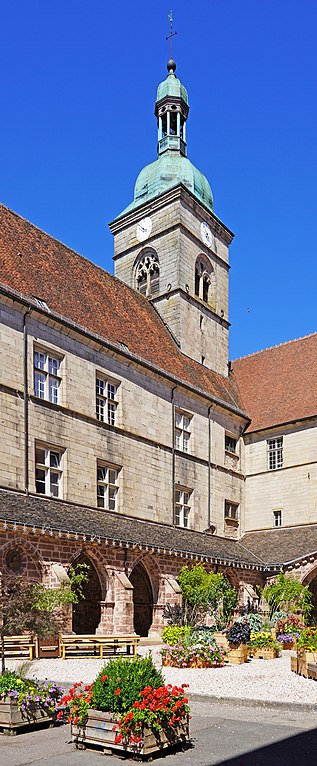
Luxeuil

Eustasius was born in Burgundy and became a Monk at Luxeuil Monastery. When Columbanus, the Founder of Luxeuil, was banished from the Kingdom of Burgundy, on account of his reproving the morals of King Theuderic II, he recommended his community choose Eustasius as his successor. At the time, Eustasius was head of the Monastery School, which under his direction, had established and renowned reputation for learning, devotions and excellence. St Columbanus travelled to Italy and settled in Bobbio, founding a new Monastery there. After the death of Theuderic, Clothaire II sent Eustasius to Bobbio in Italy, to ask St Columbanus to return but the exiled Abbot declined.

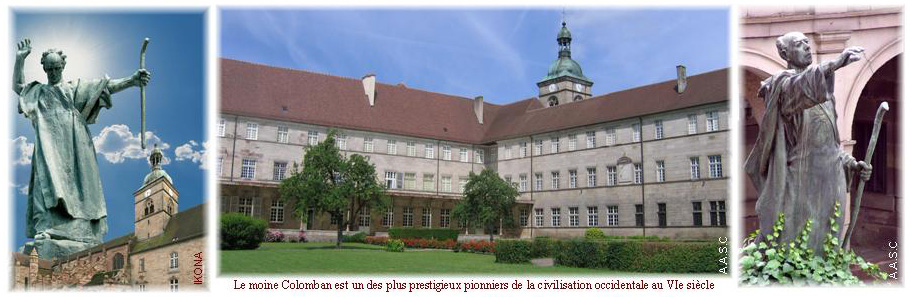
Luxeuil Monastery with Statues of St Columban

Under the administration of Eustasius, the Monastery flourished and acquired renown as a seat of learning and sanctity. Through the royal patronage, its benefices and lands were increased, King Clotaire II devoting a yearly sum, from his own revenues, towards its support. Eustasius and his Monks devoted themselves to preaching in remote districts, not yet evangelised, chiefly in the north-eastern extremities of Gaul. Their missionary work extended even to Bavaria. Between the Monasteries of Luxeuil in France and that of Bobbio in Italy (both founded by Columbanus), connection and intercourse seem to have long been maintained,

Seventh-century Lectionary produced at Luxeuil

During his Abbacy, the Monastery increased in vocations and contained about 600 Monks and produced both Bishops and Saints, including the Saints Acarius, Amatus, Audomar and Romaric. Eustasius was noted for his humility, continual prayer, and fasting. Eustasius undertook great missionary journeys to the Variscans on the river Doubs and as far as Bavaria. Around 625 he founded a Monastery on the island of Herrenchiemsee in southern Bavaria. He was succeeded as Abbott by St Waldebert.

Eustasius cured St Sadalberga, the Duke of Alsace’s daughter, of blindness. Upon returning from Bavaria, her father, Gundoin, Duke of Alsace, provided hospitality to the Abbot on his travels. Duke Gundoin and his wife brought two of their sons for the Abbot’s blessing but were hesitant to present the blind child. Through the prayers of Eustasius. the child was cured of her blindness. He also cured for St Burgundofara from a deadly illness and assisted her escape from marriage. With Eustasiu’ support and the approval of Bishop Gundoald of Meaux, Burgundofara established an Abbey on her father’s lands and became its first Abbess.

Luxeuil
Posted in franciscan OFM, PATRONAGE - IN-LAW PROBLEMS, PATRONAGE - SPOUSAL ABUSE / DIFFICULT MARRIAGES / VICTIMS OF ABUSE, SAINT of the DAY, WIDOWS and WIDOWERS

Saint of the Day – 28 March – Blessed Jeanne Marie de Maille TOSF (1331-1414) Virgin, Widow,

Saint of the Day – 28 March – Blessed Jeanne Marie de Maille TOSF (1331-1414) Virgin, Widow, Recluse Born on 14 April 1331 at the Castle of La Roche, France and died on 28 March 1414 at Tours France of natural causes. Patronages – abuse victims, against in-law problems, against the death of parents, of exiles, people ridiculed for their piety, widows. Also known as – Jane Mary de Maille. Jeanne Marie was Beatified on 27 April 1871 by Pope Pius IX .

Jeanne, the daughter of the wealthy Baron of Maille, was born at the chateau of her father near St Quentin in France. Because she possessed, from her earliest youth, a tender devotion and love for the Blessed Virgin Mary, she was given the additional name of Marie at Confirmation and from then on, she always used it with her Baptismal name. Under the direction of a Franciscan, who conducted the divine services at the chateau, she strove earnestly to attain perfection. Self-denial, mortification, prayer and works of charity towards her neighbour were the special means she employed.

Jeanne Marie was scarcely fifteen years old when her father died. She was placed under the guardianship of her grandfather, who was already quite advanced in years and who, therefore, believed it his duty to see his grandchild settled in life, as soon as possible. He chose as her husband Baron Robert of Silly, a man who was noble both by birth and by virtue. On the evening of their wedding day the grandfather died suddenly. This made such an impression on the pious husband that he readily yielded to the wish of his young wife to live in virginity.
The young couple’s first concern was to order their household in a Christian fashion. Only virtuous and God-fearing persons were admitted as their servants; all had to observe the commandments of God and of the Church faithfully; frivolous conversations, cursing and swearing, as well as games of chance, were not tolerated. In everything their Master and Mistress set the best example. Jeanne Marie interested herself too, in all the needs of her people and never sent a needy person away from her door without giving him assistance.

But the cross is the real test of all true fidelity to God;and it was not to be wanting in this home either. A terrible war broke out between England and France. The Baron of Silly and his vassals took the field in defence of their country but the war was disastrous for France.

Mortally wounded, the young Baron was brought to his chateau but hardly had he arrived there, when the English took possession of it and led him away as a prisoner. Through the efforts of his faithful wife, he obtained his freedom but he died not long afterwards.

Her in-laws were unkind to her and blamed her for her husband squandering his fortune for charitable ends and so deprived her of her widow’s inheritance and cut ties with her. completely. She first went to seek shelter at the home of an old ex-servant but the servant treated her with harshness, when realising she was poor. She went to reside with her mother but left when the latter tried to pressure her into finding another husband. Now Jeanne Marie withdrew entirely from the world. She moved to a little house near the Franciscan Church in Tours. Dressed in the ash-grey habit of the Third Order, she went out to nurse the sick and the poor. The remaining time she spent in prayer.

She prayed especially that God might bless the labours of Priests, particularly those who preached the Divine Word. She prayed most of all for the Universal Church, which at that time had to endure one of its severest trials. Christendom was divided into two groups – one pope resided in Italy, another in France and even saintly people did not know which one was the rightful head of the Church. Confusion and many scandals were the inevitable results. Had the Church been the work of human hands, it must certainly have gone to ruin. In answer to the prayers of many pious souls, God came to the assistance of the Church and Jeanne Marie had the consolation, before her death, of seeing the Church again united under one head.

Blessed Jeanne Marie de Maille died in the year 1414, at the age of eighty-two years. When her remains, clothed in the habit of the Third Order, were brought into the Church, the body appeared to have the freshness of youth. The veneration paid to her since her death was approved by Pope Pius IX.

The Shrine of Blessed Jeanne Marie de Maille
Posted in NOVENAS, Of a Holy DEATH & AGAINST A SUDDEN DEATH, of the DYING, FINAL PERSEVERANCE, DEATH of CHILDREN, DEATH of PARENTS, QUOTES on DEATH

NOVENA FOR THE INTERCESSION OF SAINT JOSEPH – Day Eight – 18 March – Patron of a Holy Death

NOVENA FOR THE INTERCESSION OF SAINT JOSEPH

DAY EIGHT

Patron of a Holy Death

O glorious Saint Joseph,
faithful follower of Jesus Christ,
to you we raise our hearts and hands,
to implore your powerful intercession,
to obtain from the gentle heart of Jesus
all the help and graces necessary
for our spiritual and temporal welfare,
particularly the grace of a holy death
and the special grace I now implore:
…………….. (Mention your request)
O guardian of the Word Incarnate
we feel animated with confidence,
that your prayers on our behalf,
will be graciously heard,
before the throne of God.
St Joseph, Patron of the Dying, Pray for us!
Amen

Our Father, Hail Mary, Glory be to the Father 

Posted in Against EPIDEMICS, AVIATORS, PILOTS, AEROPLANE industry related WORKERS, Of a Holy DEATH & AGAINST A SUDDEN DEATH, of the DYING, FINAL PERSEVERANCE, DEATH of CHILDREN, DEATH of PARENTS, Of TRAVELLERS / MOTORISTS, SAINT of the DAY, WIDOWS and WIDOWERS

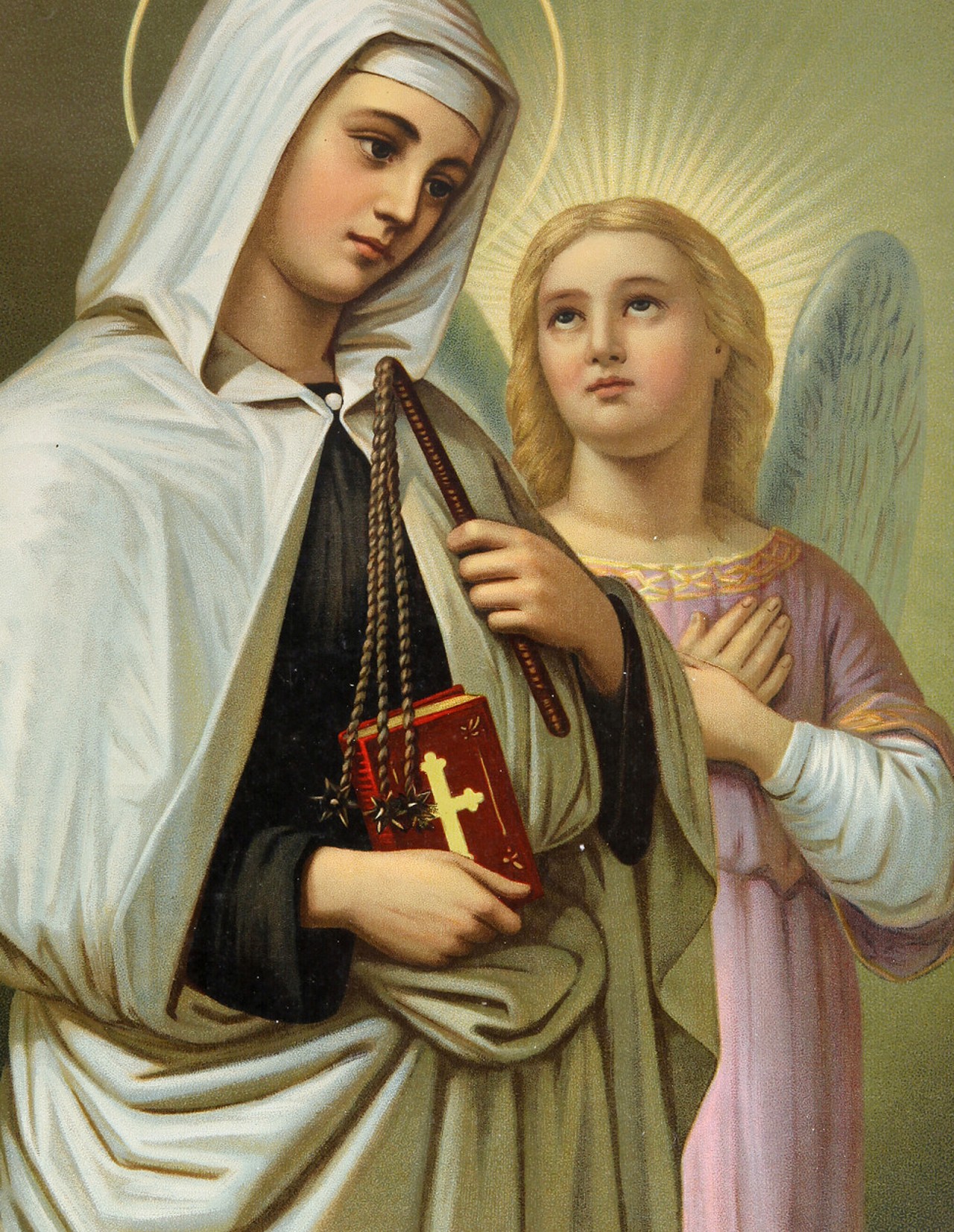
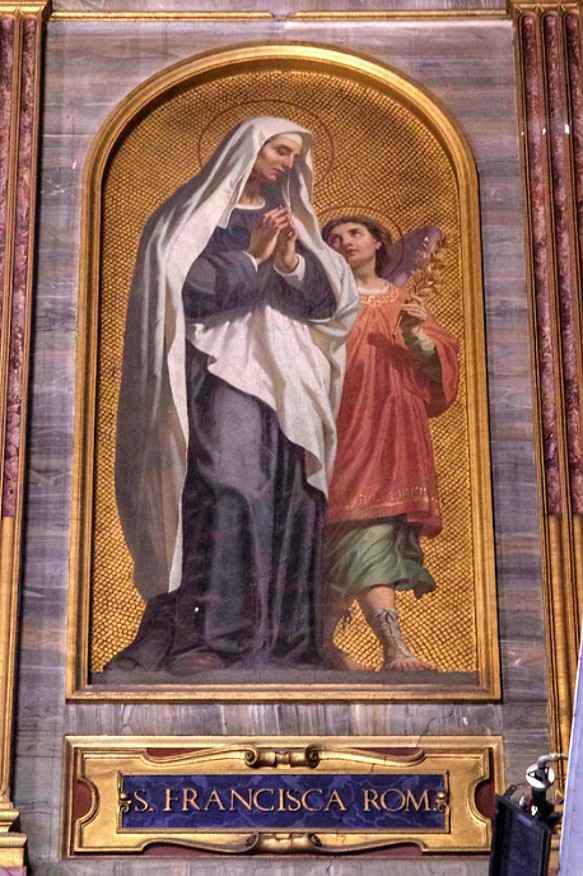
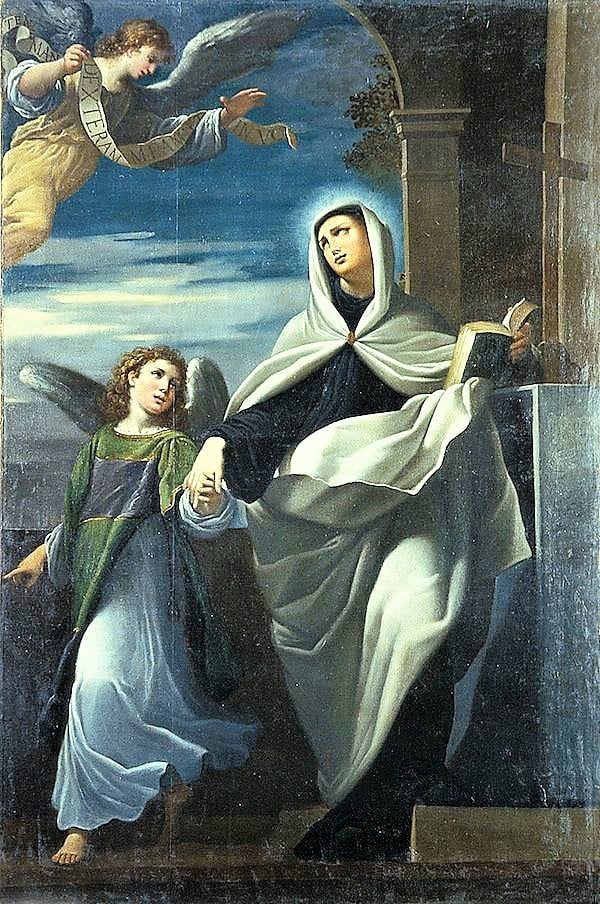
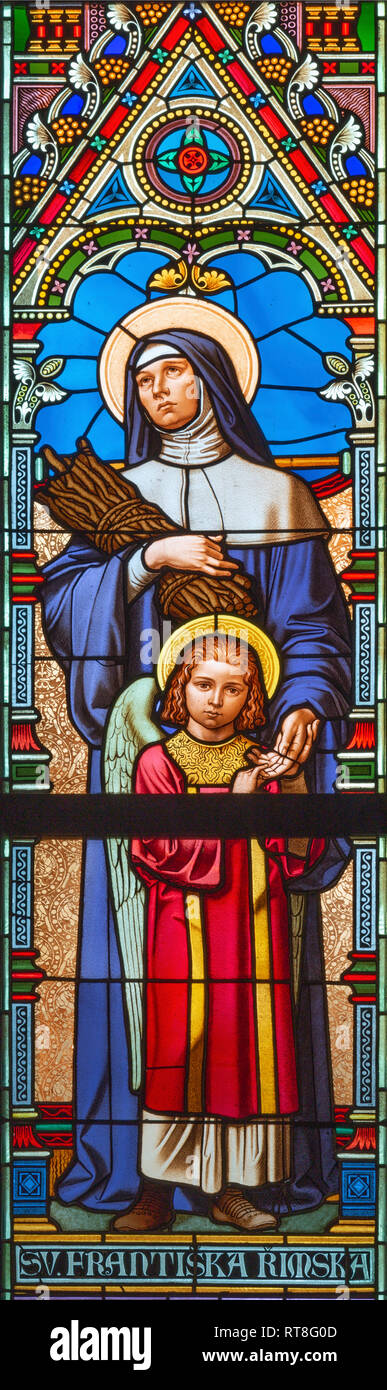
Saint of the Day – 9 March – St Frances of Rome (1384-1440) Widow

Saint of the Day – 9 March – St Frances of Rome Obl.S.B. (1384-1440) Widow, Founder, Wife, Mother, Mystic, Organiser of charitable services and a Benedictine Oblate who founded a religious community of Oblates, who share a common life without religious vows. Patronages – against plague/epidemics, of automobile drivers (given in 1951), aviators, taxi drivers, death of children, the laity, motorcyclists, motorists, people ridiculed for their piety, Roman housewives, widows, women, Rome, Italy.

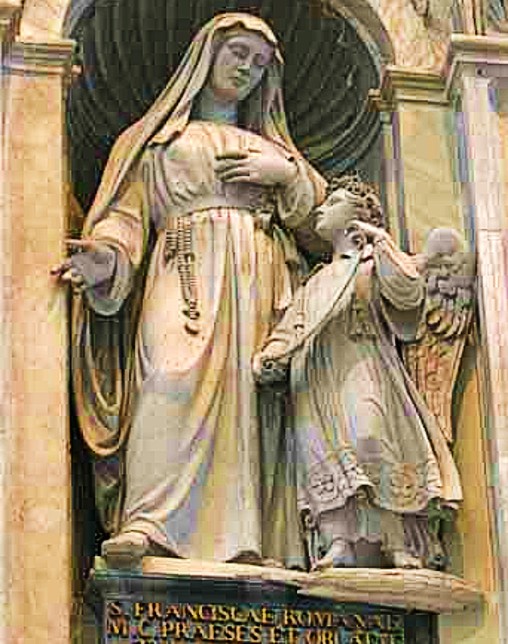
Saint Frances of Rome, Widow
From the Liturgical Year, 1870

Frances, a noble lady of Rome, led a most virtuous life, even in her earliest years. She despised all childish amusements and worldly pleasures, her only delight being solitude and prayer. When eleven years old, she resolved on consecrating her virginity to God and seeking admission into a Monastery. But she humbly yielded to the wishes of her parents and married a young and rich nobleman, by name Lorenzo Ponziani.

As far as it was possible, she observed, in the married state, the austerities of the more perfect life to which she had aspired. She carefully shunned theatrical entertainments, banquets and other such amusements. Her dress was of serge and extremely plain. Whatever time remained after she had fulfilled her domestic duties, was spent in prayer and works of charity. But her zeal was mainly exercised in endeavouring to persuade the ladies of Rome, to shun the world and vanity in dress. It was with a view to this, that she founded, during her husband’s life, the House of Oblates of the Congregation of Monte-Oliveto, under the Rule of St Benedict.

She bore her husband’s banishment, the loss of all her goods and the trouble which befel her whole family, not only with heroic patience but was frequently heard to give thanks, saying with holy Job: “The Lord hath given and the Lord hath taken away; blessed be the Name of the Lord!”

At the death of her husband, she fled to the aforesaid House of Oblates and there, barefooted, with a rope tied around her neck and prostrate on the ground, she humbly and with many tears, begged admission. Her petition being granted, she, though mother of the whole community, gloried in calling herself everyone’s servant and a worthless woman and a vessel of dishonour. She evinced the contempt she had for herself by her conduct, as well as by her expressions. Thus, when returning from a vineyard in the suburbs, she would go through the city, sometimes carrying faggots on her head, sometimes driving an ass laden with them.

She looked after, and bestowed abundant alms upon the poor. She visited the sick in the hospitals and consoled them, not only with corporal food but with spiritual advice. She was untiring in her endeavours to bring her body into subjection, by watchings, fasting, wearing a hair-shirt and an iron girdle and by frequent disciplines. Her food, which she took but once in the day, consisted of herbs and pulse and her only drink was water. But she would somewhat relent in these corporal austerities, as often as she was requested to do so by her Confessor, whom she obeyed with the utmost exactitude.

Her contemplation of the Divine Mysteries and especially of the Passion, was made with such intense fervour and abundance of tears that she seemed as though she would die with grief. Frequently, too, when she was praying and above all, after Holy Communion, she would remain motionless, with her soul fixed on God and rapt in heavenly contemplation.

The enemy of mankind seeing this, endeavoured to frighten her out of so holy a life, by insults and blows but she feared him not, invariably baffled his attempts and, by the assistance of her Angel Guardian, whose visible presence was granted to her, she gained a glorious victory.

God favoured her with the gift of healing the sick, as also with that of prophecy, whereby she foretold future events and could read the secrets of hearts. More than once, when she was intent on prayer, either in the bed of a torrent, or during a storm of rain, she was not touched by the water. On one occasion, when all the bread they had was scarcely enough to provide a meal for three of the Sisters, she besought our Lord and he multiplied the bread so that after fifteen persons had eaten as much as they needed, there was sufficient left to fill a basket.

At another time, when the Sisters were gathering wood outside the City walls, in the month of January, she amply quenched their thirst by offering them bunches of fresh grapes, which she plucked from a vine and which she had miraculously obtained.

Her virtues and miracles procured for her the greatest veneration from all. Our Lord called her to Himself in the fifty-sixth year of her age and she was Canonised in 1384 by Pope Paul the Fifth.

Posted in CATECHESIS, CATHOLIC Quotes, DOCTORS of the Church, FATHERS of the Church, I BELIEVE!, LENT 2023, LENTEN THOUGHTS, Of PILGRIMS, PRACTISING CATHOLIC, QUOTES on CHARITY, QUOTES on FAITH, QUOTES on GOOD WORKS, QUOTES on Lukewarmness, QUOTES on MYSTERIES of our FAITH, QUOTES on SLOTH, QUOTES on TRUTH, QUOTES on VIRTUE, QUOTES on WATCHING, SOLDIERS/ARMOUR of CHRIST, St Francis de Sales, The FOUR CARDINAL VIRTUES: JUSTICE, PRUDENCE, TEMPERANCE, FORTITUDE

Our Lenten Journey with St Francis de Sales – 4 March –

Our Lenten Journey with St Francis de Sales – 4 March – The Memorial of St Casimir (1458-1484) Confessor, Prince – Saturday of Ember Week in Lent – Ecclesiasticus Sirach 31:8-11,Luke 12:35-40 – Scripture search here: https://www.drbo.org/

The just shall flourish like the palm tree,
he shall grow up, like the cedar of Lebanon
.

Psalm 91:13

Stay dressed for action
and keep your lamps burning …

Luke 12:35-36

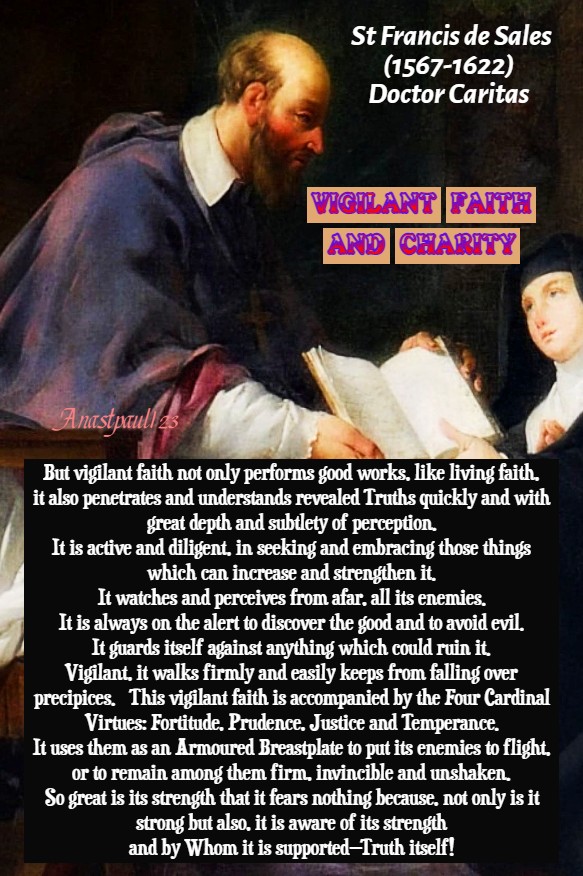
VIGILANT FAITH AND CHARITY
St Francis de Sales (1567-1622)
Doctor Caritas

IT WORKS THE SAME WAY with faith as with charity.
We know by the works which charity performs, whether faith is dead or dying. When it produces no good works, we conclude that it is dead and when they are few and sluggish, that, it is dying.
But just as there is a dead faith, there must also be a living one which is its opposite.
It is excellent. Joined and United with charity and vivified by it, it is strong, firm and Constant. It performs many great and good works which deserve the praise: “Oh, how great is your faith! Let all that you desire be done.” …

It is great because of the good works it performs and also because of the many virtues which accompany it and which it governs. … So charity united to faith is not only followed by all the virtues but, as a queen, she commands them and all obey and fight for her and, according to her will. From this, results the multitude of good works, of a living faith.

There is a vigilant faith which, again, depends on its union with charity.
But there is also one which is sluggish, dull and apathetic and, it is the opposite of vigilant faith. It is lax in applying itself to the consideration of the Mysteries of our Religion.
It is completely torpid and, for this reason, it does not penetrate revealed Truths at all. It sees them, to be sure and knows them, because its eyes are not altogether closed.
It is not asleep but it is drowsy or dozing. It resembles weary people who, although their eyes are open, see almost nothing and although they hear talking, they neither know nor understand what is said. Why? Because they are quite overcome with sleepiness. …

But vigilant faith not only performs good works, like living faith, it also penetrates and understands revealed Truths quickly and with great depth and subtlety of perception.
It is active and diligent, in seeking and embracing those things which can increase and strengthen it.
It watches and perceives from afar, all its enemies.
It is always on the alert to discover the good and to avoid evil.
It guards itself against anything which could ruin it.
Vigilant, it walks firmly and easily keeps from falling over precipices.

This vigilant faith is accompanied by the Four Cardinal Virtues: Fortitude, Prudence, Justice and Temperance.
It uses them as an Armoured Breastplate to put its enemies to flight, or to remain among them firm, invincible and unshaken.
So great is its strength that it fears nothing because, not only is it strong but also, it is aware of its strength and by Whom it is supported—Truth itself!
” (Sermon for Thursday after the First Sunday of Lent, 17 February 1622).

Posted in AUGUSTINIANS OSA, BLESSED TRINITY PRAYERS, CHRIST the LIGHT, CHRIST the WORD and WISDOM, CHRIST, the WAY,TRUTH,LIFE, DOCTORS of the Church, FATHERS of the Church, GOD the FATHER, I BELIEVE!, Of PILGRIMS, PRAYERS of the SAINTS, QUOTES on ETERNAL LIFE, QUOTES on FAITH, QUOTES on HEAVEN, QUOTES on the CROSS of CHRIST, QUOTES on THE WORLD, The HOLY CROSS, The WORD

Quote/s of the Day – 2 March – O woman, great is thy faith! Matthew 15:28

Quote/s of the Day – 2 March – Thursday of the First Week in Lent – Ezechiel 18:1-9, Matthew 15:21-28 – Scripture search here: https://www.drbo.org/

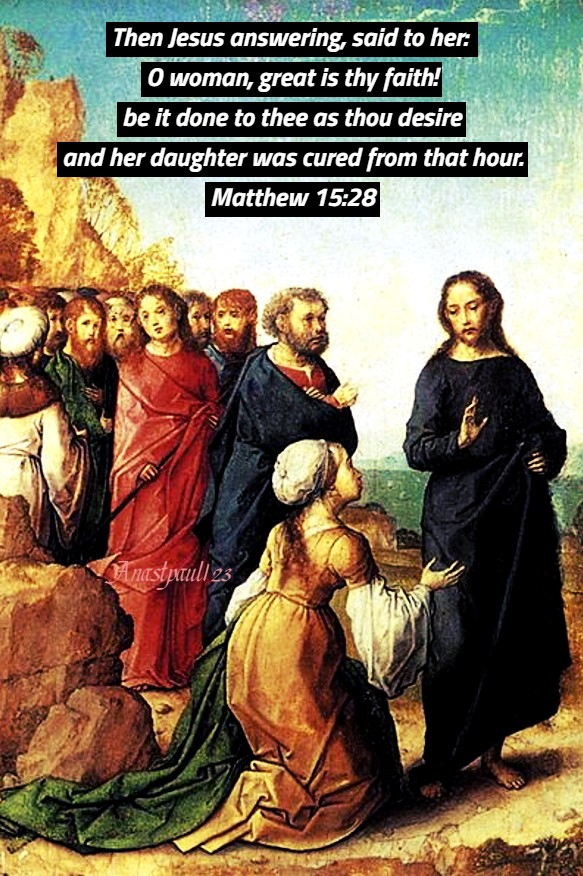
Then Jesus answering, said to her:
O woman, great is thy faith!
be it done to thee as thou desire
and her daughter was cured from that hour
.”

Matthew 15:28

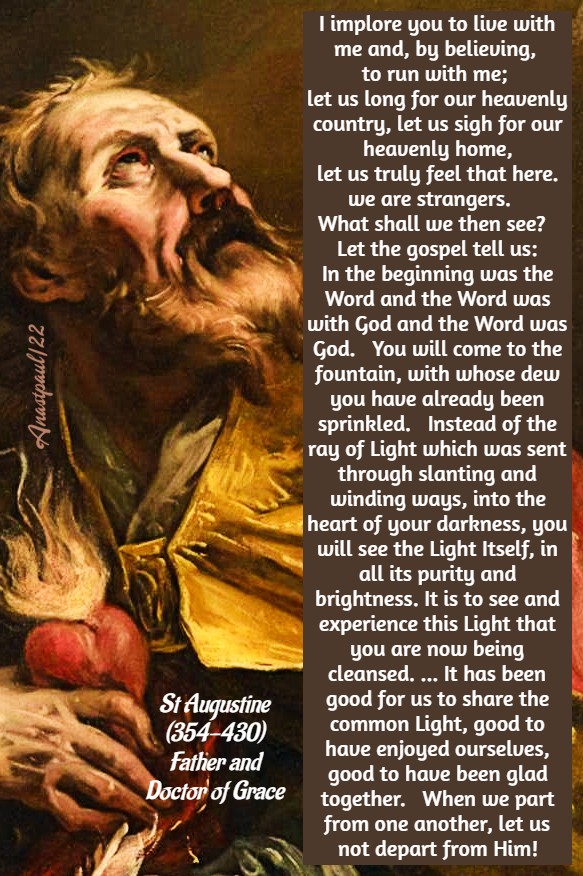
I implore you to live with me and,
by believing, to run with me;
let us long for our Heavenly Country,
let us sigh for our Heavenly Home,
let us truly feel that here, we are strangers.
What shall we then see?
Let the gospel tell us:
In the beginning was the Word
and the Word was with God
and the Word was God.
You will come to the fountain,
with whose dew you have already been sprinkled.
Instead of the ray of Light
which was sent through slanting
and winding ways, into the heart of your darkness,
you will see the Light Itself,
in all its purity and brightness.
It is to see and experience this Light
that you are now being cleansed. …
It has been good for us to share
the common Light,
good to have enjoyed ourselves,
good to have been glad together.
When we part from one another,
let us not depart from Him!

St Augustine (354-430)
Father and Doctor of Grace

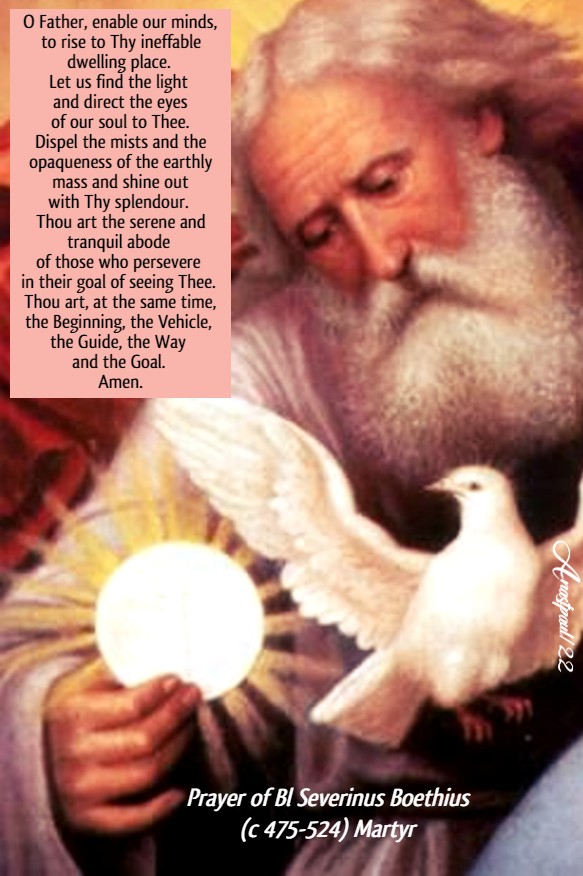
Prayer of Blessed Severinus Boethius
(c 475-524) Martyr

O Father, enable our minds,
to rise to Thy ineffable dwelling place.
Let us find the Light
and direct the eyes of our soul to Thee.
Dispel the mists and the opaqueness
of the earthly mass
and shine out with Thy splendour.
Thou art the serene and tranquil abode
of those who persevere
in their goal of seeing Thee.
Thou art, at the same time,
the Beginning, the Vehicle,
the Guide, the Way and the Goal.
Amen
”.

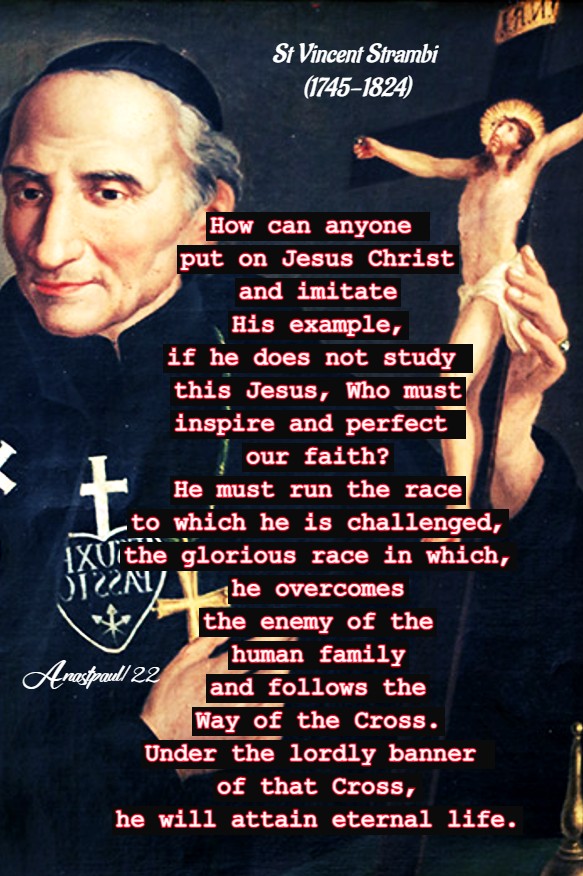
“… How can anyone put on Jesus Christ
and imitate His example,
if he does not study this Jesus,
who must inspire and perfect our faith?
He must run the race to which he is challenged,
the glorious race in which,
he overcomes the enemy of the human family
and follows the Way of the Cross.
Under the lordly banner of that Cross,
he will attain eternal life.

St Vincent Strambi CP (1745-1824)

Posted in ACCOUNTANTS, MONEY MANAGERS etc, CARPENTERS, WOODWORKERS, JOINERS, CABINETMMAKERS, CHILDREN / YOUTH, EMMIGRANTS / IMMIGRANTS, MARCH the month of ST JOSEPH, Of a Holy DEATH & AGAINST A SUDDEN DEATH, of the DYING, FINAL PERSEVERANCE, DEATH of CHILDREN, DEATH of PARENTS, Of LAWYERS & CANON Lawyers, Attorneys, Solicitors, Barristers, Notaries, Para-Legals, Of TRAVELLERS / MOTORISTS, PAPAL APOSTOLIC LETTERS, PATRONAGE - HAPPY MARRIAGES, of MARRIED COUPLES, PATRONAGE - HOUSE HUNTERS, HOUSE SELLERS, PATRONAGE - ORPHANS,ABANDONED CHILDREN, PATRONAGE-INFERTILITY & SAFE CHILDBIRTH, PREGNANCY, St JOSEPH, TEACHERS, LECTURERS, INSTRUCTORS, WORKERS

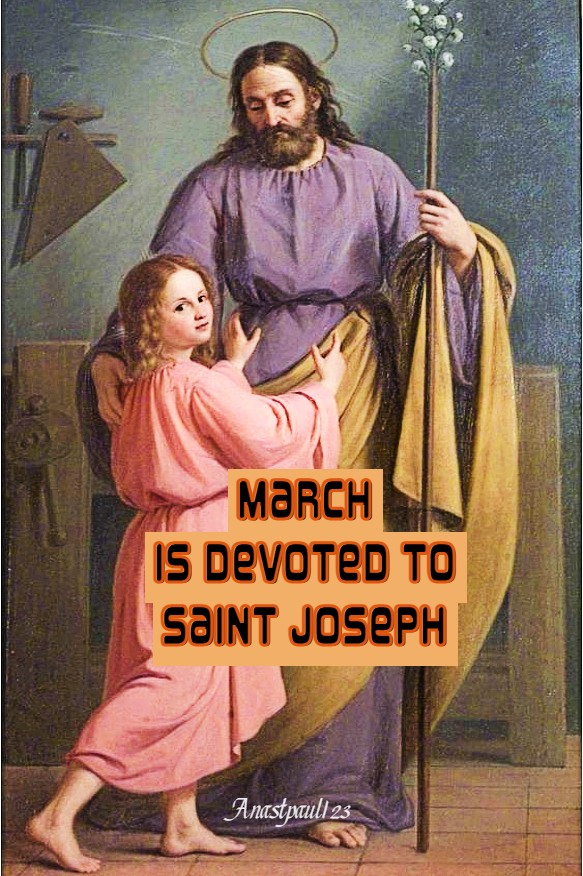
Devotion for March – St Joseph

Devotion for March
St Joseph

The beloved Foster-Father and Guardian of Jesus and Protector of the Holy Family, is celebrated for this whole month and his Feast Day falls in the middle of it – 19 March – this year moved to the 20th as the 19th is Laetare Sunday, the Fourth Sunday of Lent.

Quamquam Pluries
On the Devotion to St Joseph
Pope Leo XIII

“On 10 March, [11 MARCH THIS YEAR], we begin the Novena to St Joseph, entrusting so many of our woes and cares to his holy and fatherly care and intercession.
His Patronages are numerous, as we know, one of them will fit our needs perfectly and if not, then we should all ask him to intercede on our behalf for our families and for a Happy and Holy Death.
On the 20th [FEAST normally 19th] we pray the Consecration to St Joseph.”

Patronages in Alphabetical Order:

  • of Accountants • Bursars • Cabinetmakers • Carpenters • Catholic Church • Cemetery Workers • Children • Civil Engineers • against Communism • Confectioners • Craftsmen • against Doubt and Hesitation • the Dying • Emigrants • Exiles • Expectant Mothers • Families • Fathers • Furniture Makers • Grave diggers • Happy Death • Holy Death • House Hunters • House Sellers • Immigrants • Joiners • Labourers • all the Legal Profession • Married Couples • Oblates of Saint Joseph • Orphans • Pioneers • Social Justice • Teachers • Travellers • the Unborn • Wheelwrights • Workers • Americas • Austria • Belgium • Bohemia • Canada • China • Croatian people • Korea • Mexico • New France • New World • Peru • Philippines • Vatican City • VietNam • Canadian Armed Forces • Papal States • 46 Diocese • 26 Cities,States and Regions.
Posted in DOCTORS of the Church, LENT, LENT 2023, Of PILGRIMS, QUOTES on CONSOLATION, QUOTES on ETERNAL LIFE, QUOTES on FAITH, QUOTES on FEAR, QUOTES on GREED, WEALTH, QUOTES on SLOTH, QUOTES on SUFFERING, QUOTES on TEMPTATION, QUOTES on the DEVIL/EVIL, QUOTES on TRUTH, SOLDIERS/ARMOUR of CHRIST

Our Lenten Journey with St Francis de Sales – 27 February – THESE FORTY DAYS …

Our Lenten Journey with St Francis de Sales – 27 February – Monday of the First Week in Lent – Scripture search here: https://www.drbo.org/

My son, when you come to serve God,
prepare your sould for temptation
.”
Ecclus. Sirach 2:1

Then the devil left Him
and behold, Angels came
and ministered to Him
.”
Matthew 4:11

THESE FORTY DAYS …
St Francis de Sales (1567-1622)
Doctor Caritas

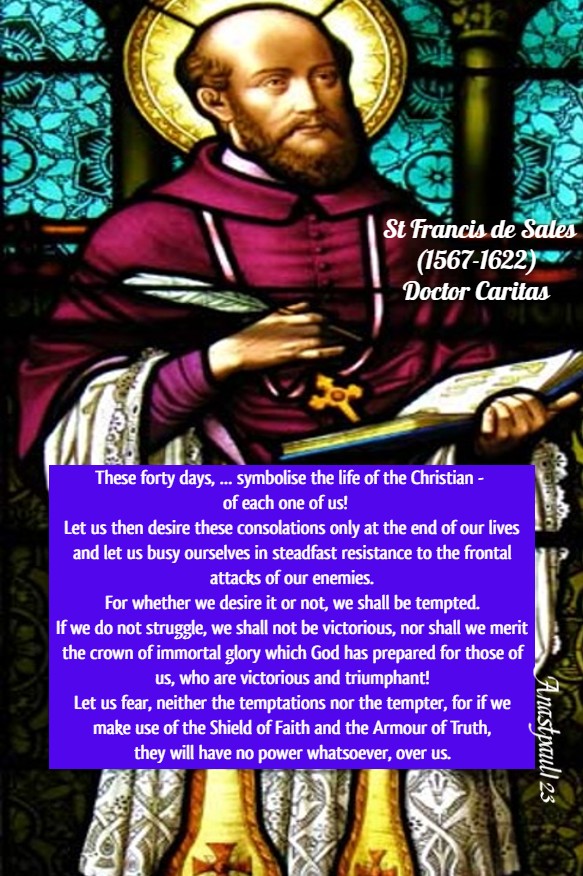
I DOUBT NOT that many prefer the end of today’s Gospel (Mt 4:1-11) to its beginning.
It is said there that after Our Lord had overcome His enemy and rejected his temptations, Angels came and brought Him heavenly food.
What joy to find oneself with the Saviour at this delicious feast!
My dear friends, we shall never be capable of keeping company with Him in His consolations, nor be invited to His Heavenly banquet, if we are not sharers of His labours and sufferings (2 Cor 1:7).
He fasted for forty days but the Angels brought Him something to eat only at the end of that time.

These forty days, … symbolise the life of the Christian – of each one of us!
Let us then desire these consolations only at the end of our lives and let us busy ourselves in steadfast resistance to the frontal attacks of our enemies.
For whether we desire it or not, we shall be tempted.
If we do not struggle, we shall not be victorious, nor shall we merit the crown of immortal glory which God has prepared for those of us, who are victorious and triumphant!

Let us fear, neither the temptations nor the tempter, for if we make use of the Shield of Faith and the Armour of Truth, they will have no power whatsoever, over us.

… Let us also shun both spiritual avarice and the ambition which occasions so much disorder in our hearts and so greatly impedes our perfection.
The noonday devil will be powerless in causing us to fail in our firm and steadfast resolution, to serve God generously and as perfectly as possible, in this life, so that after this life, we shall go to enjoy Him forever. May He be blessed ! Amen.” – (Extract-Sermon 1st Sunday of Lent – 13 February 1622).

Posted in Of BACHELORS, Of BEGGARS, the POOR, against POVERTY, SAINT of the DAY

Saint of the Day – 8 February – Saint Cuthman of Steyning (Died 8th Century)

Saint of the Day – 8 February – Saint Cuthman of Steyning (Died 8th Century) Hermit, builder of Churches, Miracle-worker. Born in c681 at Chidham, near Bosham, Sussex (some legends say Devon or Cornwall) in England and diedin the 8th Century at Steyning, Sussex, England. Patronages – against poverty, bachelors, poor people, shepherds, of Steyning, England. Also known as – Cuthmann, Cutmano, Cutmanus.

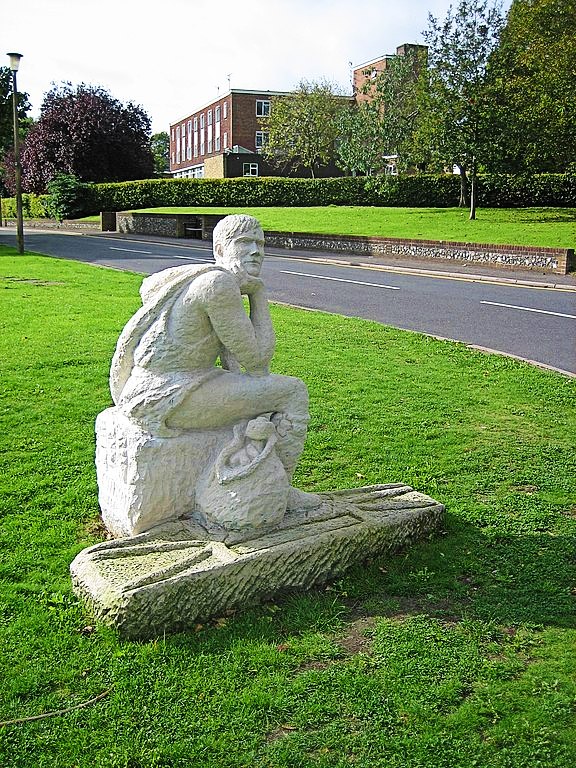
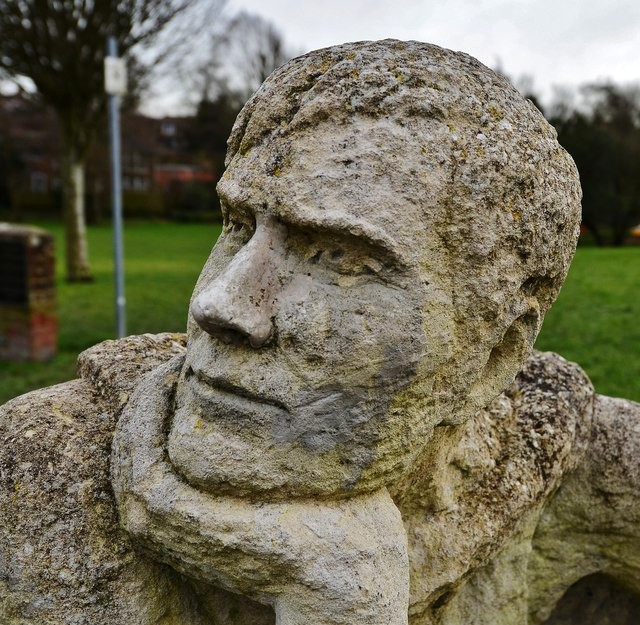
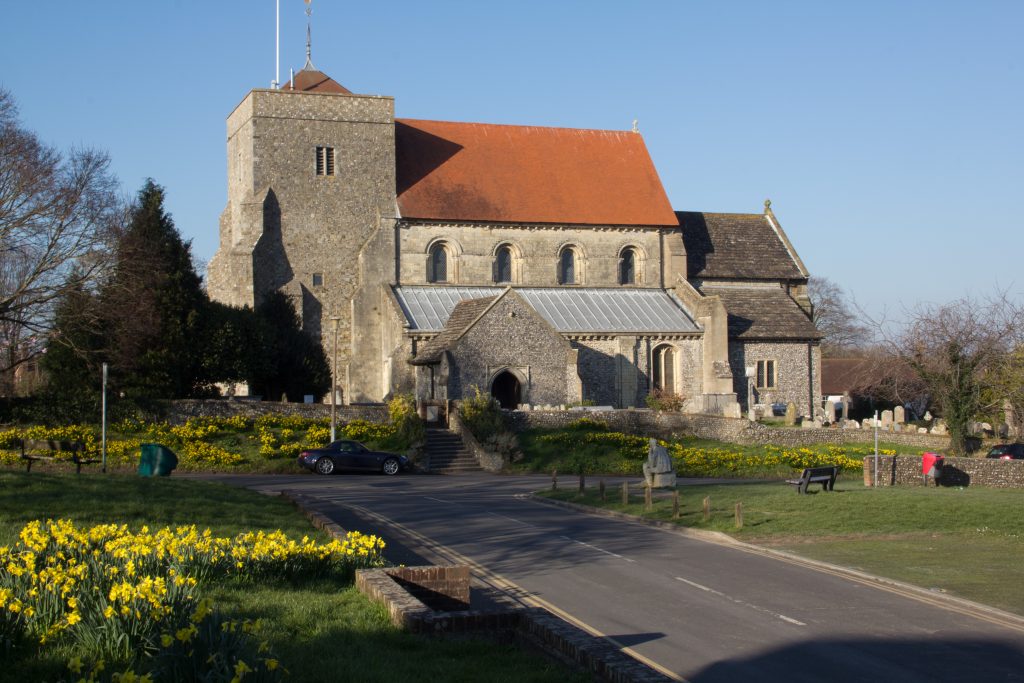
Modern statue of St Cuthman by Penny Reeve, looking over the road to the Church he founded at Steyning.

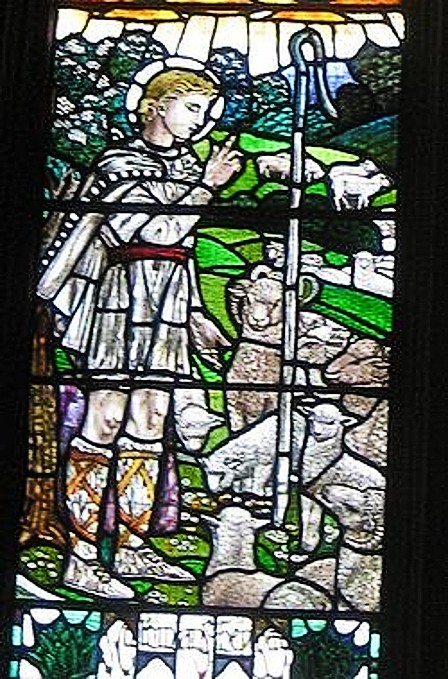
The earliest surviving written record of Cuthman’s life is a volume of the Acta Sanctorum, published by the Bollandists at Antwerp in 1658. According to the story, Cuthman was a shepherd who grew up either in the West Country or at Chidham, near Chichester. He was probably born in the late seventh century and may have been Baptised by St Wilfrid himself, the ‘Apostle of Sussex.’

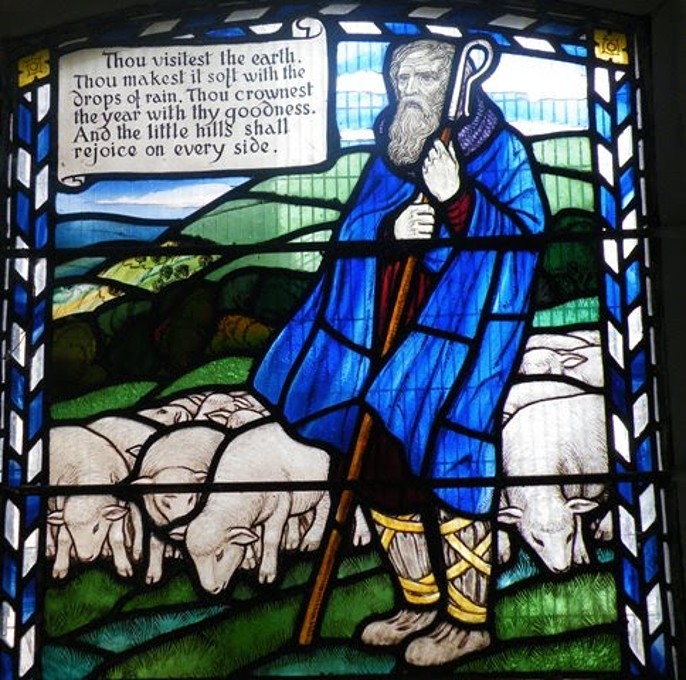
Even as a young boy, Cuthman showed signs of his closeness to God. One day, while tending his sheep, he drew a line around them with his staff so that he could get away to collect food. On his return, he found that the flock had not left the invisible boundary. This miracle may have taken place in a field near Chidham, which, for centuries was known as ‘St Cuthman’s Field’ or ‘St Cuthman’s Dell.’ It was said that a large stone in the field, ‘on which the holy shepherd was in the habit of sitting,’ held miraculous properties.

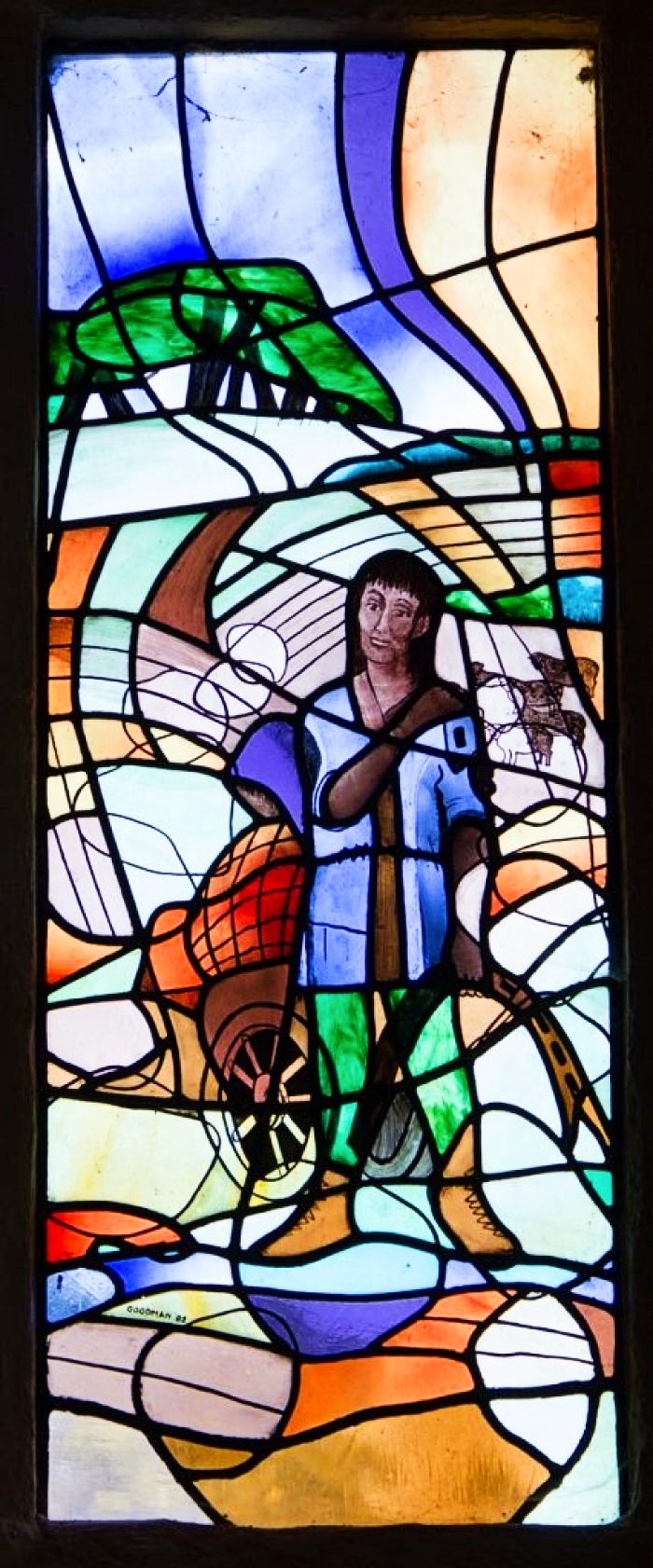
A turning point in Cuthman’s life was the death of his father, which left both him and his mother destitute. They decided to leave their home and journey eastwards – in the direction of the rising sun. By this time, Cuthman’s mother was an invalid and so he had to push her in a wheeled wooden cart. A rope that stretched from the handles to the Saint’s shoulders helped carry the burden. When the rope snapped, he made a new one out of withies (willow tree branches used for basketry). The local haymakers laughed at Cuthman’s rather pathetic efforts but Providence soon responded to their merriment by sending a sudden rainstorm, destroying their harvest. Later versions of the story say that, from that moment onwards, it always rained in that field during the haymaking season!

Cuthman decided that once this replacement rope made of withies broke, it would be a sign from God to settle at that place and build a Church. This happened at Steyning, which, according to the Acta Sanctorum, was ‘a place lying at the base of a lofty hill, then woody, overgrown with brambles and bushes but now rendered by agriculture fertile and fruitful, enclosed between two streams springing from the hill above. The Bollandist Monks have also provided us with Cuthman’s prayer as he reached this blessed spot:

Father Almighty, Thou hast brought my wanderings to an end; now enable me to begin this work. For who am I, Lord, that I should build a house to Thy Name? If I rely on myself, it will be of no avail but it is Thou Who will assist me. Thou hast given me the desire to be a builder; make up for my lack of skill and bring the work of building this holy house to its completion.”

And so, this unlikely builder began constructing a worthy Sanctuary in honour of the One who had guided him safely along his journey ad orientem. Many of the local inhabitants helped him in this great task and on one occasion, according to the legend, he even received Divine assistance. The builders were having trouble with a roof-beam, when a stranger appeared and provided them with a solution. When asked his name, the newcomer replied: ‘I am He in Whose name you are building the Church.

He built a wooden Chapel in Steyning, probably on the site of the present Church of St Andrew’s. This building was certainly well established by 857, when King Ethelwulf (father of St Alfred the Great) was buried there.

It seems that pilgrims visited the Tomb of St Cuthman and that his intercession led to many miraculous cures. During the reign of St Edward the Confessor, the Church at Steyning was given to the Abbey of the Holy Trinity at Fécamp, Normandy. This Benedictine house, founded in the seventh century, is famous for its ‘Benedictine’ liqueur, which today is commercially produced in the grounds of the old Abbey. It was to this Monastery that the Black Monks took the body of St Cuthman and his Feast (8 February) was celebrated at many of the religious houses of Normandy. Thus, St Cuthman became well known on the continent – as can be seen in a mid fifteenth century German engraving of the saint by Martin Schongauer and in the writings of the seventeenth century Bollandists.

Meanwhile, the Church at Steyning was rebuilt and dedicated to St Andrew. However, St Cuthman was not forgotten in his beloved land. A ‘Guild of St Cuthman’ was in existence at Chidham on the eve of the Reformation and a misericord in Ripon Cathedral depicts him pushing his mother in a three-wheeled barrow. There are quite a few Churches dedicated to St Cuthman in England but in Steyning, he is particularly loved and venerated.

St Andrew’s Church in Steyning

The colourful tale of St Cuthman presents us with a charming example of filial piety, prayer, evangelisation and Church building in Saxon England. In the words of Christopher Fry:

It is there in the story of Cuthman, the working together
Of man and God like root and sky; the son
Of a Cornish shepherd, Cuthman, the boy with a cart,
The boy we saw trudging the sheep-tracks with his mother
Mile upon mile over five counties; one
Fixed purpose biting his heels and lifting his heart.
We saw him; we saw him with a grass in his mouth, chewing
And travelling. We saw him building, at last,
A Church among whortleberries…

Posted in Against STORMS, EARTHQUAKES, THUNDER & LIGHTENING, FIRES, DROUGHT / NATURAL DISASTERS, SAINT of the DAY

Saint of the Day – 5 February – Saint Bertulph c640-c705) Priest, Abbot

Saint of the Day – 5 February – Saint Bertulph c640-c705) Priest, Abbot, Miracle-worker, Founder of a Monastery in Renty, France. Born in c640 in eastern Europe and died in c705 of natural causes in Renty near Calais, France. Patronage – against storms. Also known as – Berton, Bertou, Bertoul, Bertulf, Bertulphe, Bertulphus. Name means: the shining wolf (old high German). Additional Memorial – 20 May (transfer of Relics).

Bertulph came to Flanders with his pagan parents . Under the influence of St Audomar of Thérouanne, he converted to Christianity, was Baptised and was Ordained a Priest by St Audomar.

He then became steward of the estates of the pious Earl Wambert in Renty, showing generosity to the poor. Envious people accused him of extravagance; his innocence was miraculously confirmed as cheese and bread turned into roast meat and water into wine. Bertulph persuaded his master to found four Churches in the area. Together they made a pilgrimage to the seven pilgrimage Churches in Rome.

During the journey, while Bertulph was tending the horses at night and reading a book, he and his book remained dry despite the heavy rain. An eagle soaring overhead covered him with its wings and a heavenly torchlight shone for him to read. Overwhelmed by such miracles, Wambert made Bertulph his adoptive son.

After Wambert and his wife died, leaving their inheritance to Bertulph, he established a Monastery dedicated to Dionysius on the inherited estates at Renty, which he presided over as Abbot.

To protect Bertulph’s Relics from being desecrated by the invading Normans, they were transferred to Boulogne-sur-Mer in 898. Then they came to the Saint-Sauveur Collegiate Church in Harelbeke in Flanders, finally in 955 to the Saint-Pierre-au-Mont-Blandin Monastery in Ghent, where they were destroyed in the Reformation in 1578. The Monastery at Renty later became a Cistercian Monastery, demoted to priory in 1168 and dissolved in 1668.

Posted in "Follow Me", CHRIST the LIGHT, CHRIST the SUN of JUSTICE, CHRIST the WORD and WISDOM, CHRIST, the WAY,TRUTH,LIFE, DOCTORS of the Church, FATHERS of the Church, Of PILGRIMS, PRACTISING CATHOLIC, QUOTES on ETERNAL LIFE, QUOTES on GOOD WORKS, QUOTES on GRACE, QUOTES on KINDNESS, QUOTES on MERCY, QUOTES on PURITY, QUOTES on PURITY of INTENTION, The BEATITUDES, The WORD

Quote/s of the Day – 4 February – Trading with our talents

Quote/s of the Day – 4 February – St Andrew Corsini O.Carm (1302-1373) Bishop, Confessor – Sirach 44:16-27; 45:3-20, Matthew 25:14-23 – Scripture search here: https://www.drbo.org/

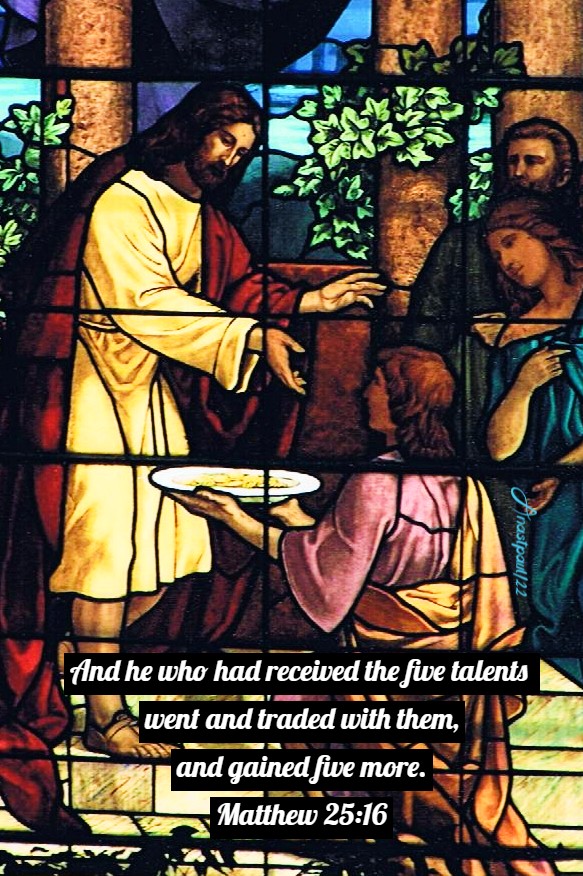
And he who had received the five talents
went and traded with them,
and gained five more.

Matthew 25:16

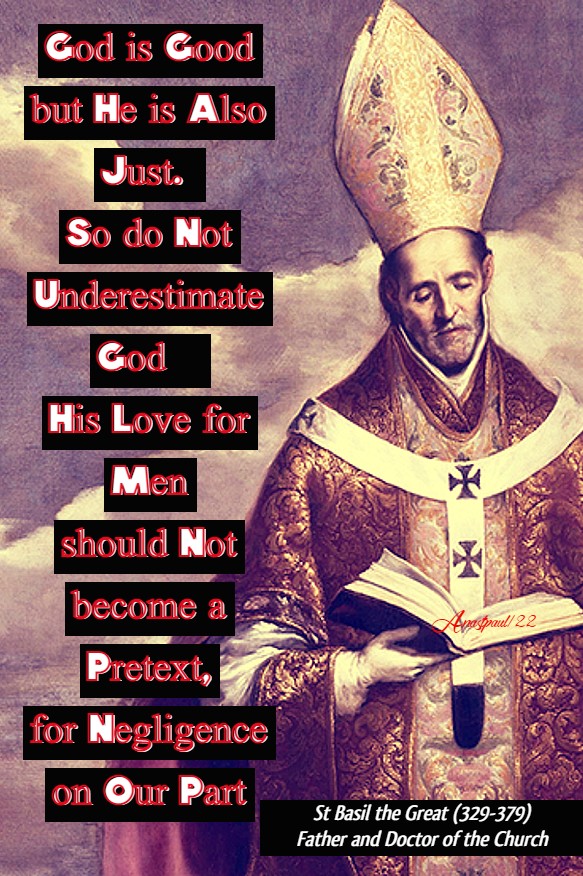
God is Good but He is also Just…
So do not underestimate God –
His love for men
should not become a pretext,
for negligence on our part.

St Basil the Great (329-379)
Father and Doctor of the Church

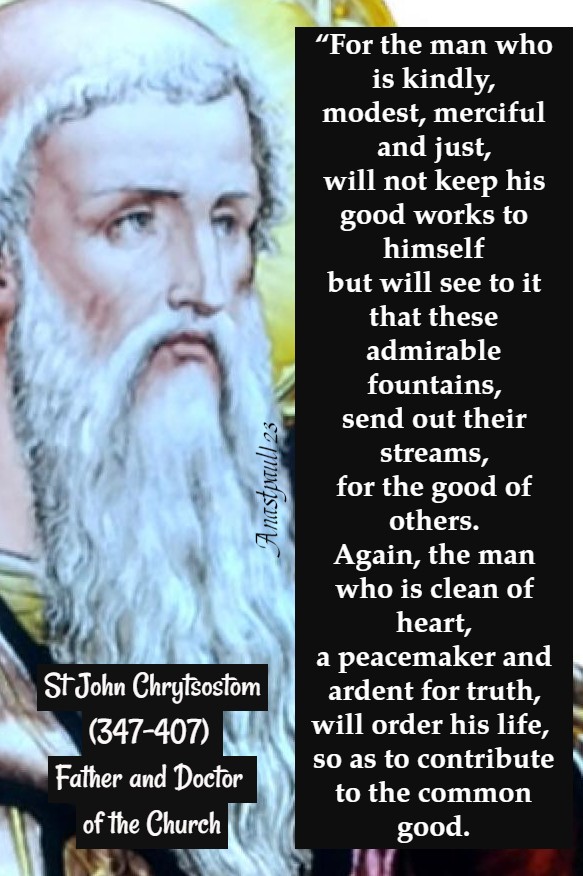
For the man who is kindly,
modest, merciful and just,
will not keep his good works to himself
but will see to it
that these admirable fountains,
send out their streams,
for the good of others.
Again, the man who is clean of heart,
a peacemaker and ardent for truth,
will order his life, so as to contribute
to the common good
.”

St John Chrysostom (347-407)
Father and Doctor of the Church

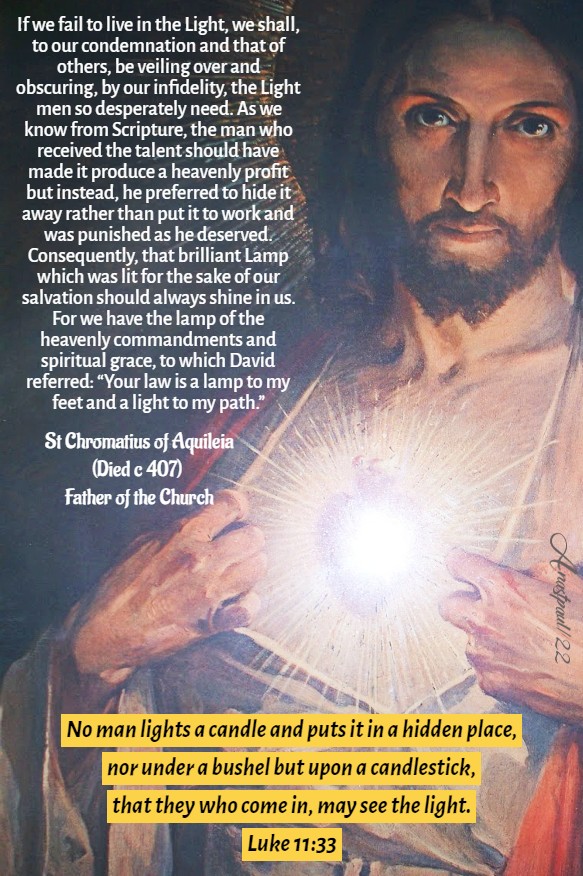
If we fail to live in the Light,
we shall, to our condemnation
and that of others,
be veiling over and obscuring,
by our infidelity,
the Light men so desperately need.
As we know from Scripture,
the man who received the talent
should have made it produce a heavenly profit
but instead, he preferred to hide it away
rather than put it to work
and was punished as he deserved.
Consequently, that brilliant Lamp
which was lit for the sake of our salvation
should always shine in us.
For we have the lamp
of the heavenly commandments
and spiritual grace,
to which David referred:
Your law is a lamp to my feet
and a light to my path.

St Chromatius of Aquileia (Died c 407)
Bishop of Aquileia,

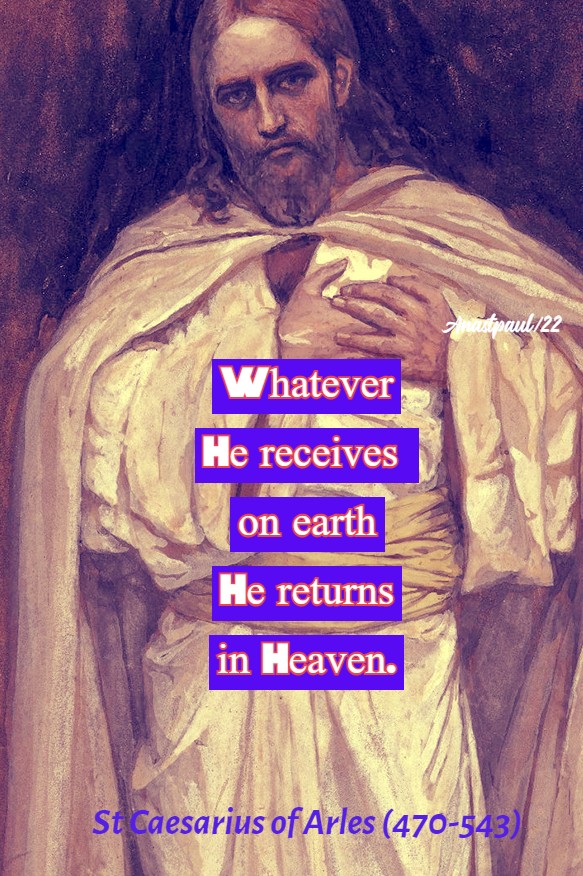
Whatever He receives on earth,
He returns in Heaven
.”

St Caesarius of Arles (470-543)

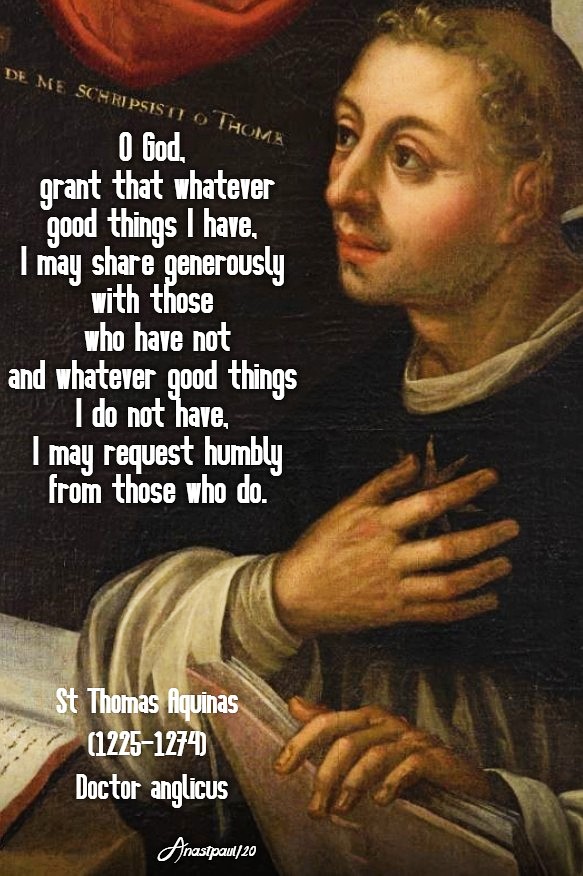
O God, grant that whatever good things I have,
I may share generously with those who have not
and whatever good things, I do not have,
I may request humbly, from those who do.

St Thomas Aquinas (1225-1274)
Doctor Angelicus

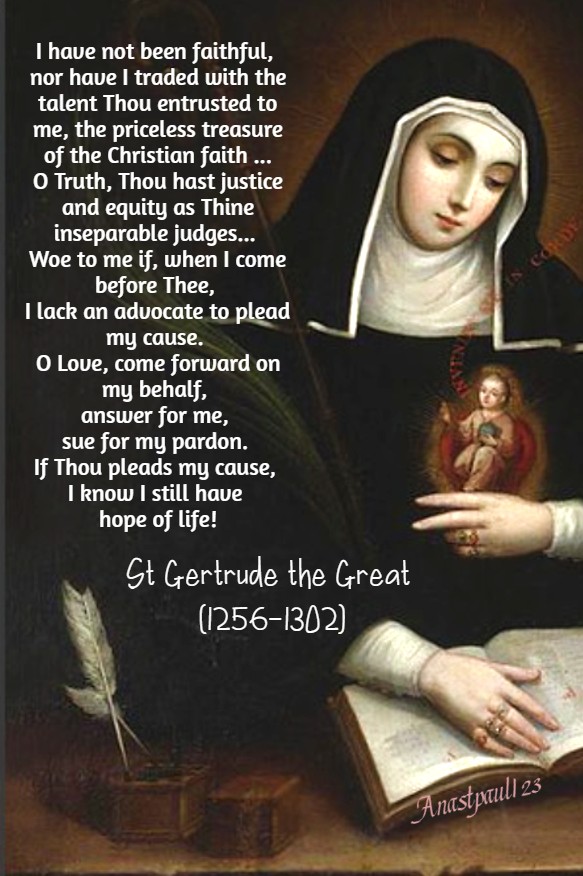
I have not been faithful,
nor have I traded with the talent
Thou entrusted to me,
the priceless treasure of the Christian faith …
O Truth, Thou hast justice and equity
as Thine inseparable judges…
Woe to me if, when I come before Thee,
I lack an advocate to plead my cause.
O Love, come forward on my behalf,
answer for me, sue for my pardon.
If Thou pleads my cause,
I know I still have hope of life
!”

St Gertrude the Great (1256-1302)

Posted in Of ANIMALS / ANIMAL WELFARE, Of the SICK, the INFIRM, All ILLNESS, PATRONAGE - HEADACHES, PRAYERS to the SAINTS, SAINT of the DAY

Saint of the Day – 4 February – Saint Aventinus of Troyes (Died c538) Priest, Hermit

Saint of the Day – 4 February – Saint Aventinus of Troyes (Died c538) Priest, Almoner and Administrator of the funds for the See of Troyes, Hermit, Miracle-worker, gifted with a great affinity with animals, who came to him for help when ill or hurt. Born in Bourges, France and died in c538 of natural causes. Patronages – headaches, nervous disorders, of ill animals, of Saint Aventin sous Verrières and the Town of Creney, France. Also known as – Aventin, Aventine.

In the heart of ancient Gaul (today’s France), in the second half of the fifth century, Saint Aventinus was born, probably in Bourges. From the few documents which have come down to us, we know that his parents belonged to the middle class and were very religious. According to tradition, Christianity in those lands already spread in the third century. The sound moral and Christian principles of the parents would form the basis of his holiness – from an early age, Aventinus was held up as a model.

As a teenager, he began to wonder about the purpose of his life. He wanted to visit the most famous holy manof that region, the Bishop St Lupus of Troyes who, in the year 451 had saved the city from the invasion of Attila the Hun, by offering himself as a hostage. The elderly prelate was not slow to see sincere Christian virtues in the young man and desiring to see them brought to fruition for the glory of the Lord and the Church and so, St Lupo kept him with him as a disciple and assistant. It was the happy meeting of two true men of God.

Aventinus distinguished himself by the humility and zeal with which he carried out the work; constant in the practices of piety, he was growing internally. He had as an example a Saint who continually turned his attentions to him. The virtue that shone most in him was charity towards others. Slavery of foreign prisoners of war was widespread in those days – St Lupus and Aventinus did not remain indifferent to the children of God who were treated like beasts. They ransomed as many as they could, collecting alms for this purpose. Given their freedom, they worried about their spiritual health, often helping them to approach the Sacraments. St Luuso died in 479 and was succeeded by St Camelianus, who, knowing well the virtues of Aventinus, made him Steward, with ample power to manage alms.

God only knows how widespread poverty was and Aventinus’ attention to the poor was never limited to material aid. He aroused amazement at the miraculous way the Bishop’s finances could cope with so many expenses, there was something supernatural at work. Aventinus fame went on spreading but he, keeping faith with his humility and with the deep regret of the Bishop, decided to retire.

He was welcomed into a hermitage with the will to sanctify himself by living in solitude. Although he was not inclined to lead, he was soon elected Superior of the community. Precious was his example and the retreat became a school of perfection. That place was later named after him.

While living withdrawn from the world, he could not help but think about the redemption of slaves. Among others, news reached him of a certain Fidolus, of rare virtues, perhaps already a cleric, originally from Auvergne, who had lost his freedom at the hands of Theodoric I, King of Austrasia. It was about the year 530. Aventinus ransomed him for twelve gold pieces. Fidolus’ happiness and gratitude was immense and he decided to join the holy community, which seemed a most natural development.

Meanwhile, Aventinus’ fame was spreading again among the people who often visited him. The tranquility of the brothers was compromised and Aventinus decided to leave. It was Fidolus himself who took over the position of Superior (he died with fame as a Saint on 16 May 540).

Aventinus withdrew to a solitary place along the Seine, about seven miles distant from Troyes. He had only brought with him some bread, legumes, a hoe and some seeds. He did not want to be a burden to anyone. Finally he had achieved the desired tranquility, dividing his time between prayer, work and penance. He slept little, wore a poor and rough dress, ate only three days a week.

A few years passed but even here he could not escape the admiration of the people, while not even the Bishop St Camelianus had forgotten about him. The latter, who also knew well of his knowledge of the Psalms and Sacred Scripture, conferred upon him Sacred Orders. The maturity of the years was crowned by the Priesthood. He lived peacefully the last period of his life celebrating Mass near his hut, for the benefit of the locals.
Demanding with himself, he looked to the needs of his neighbour with his big heart, also curing those who were sick. His charity became legendary and it is said that even a bear knocked on his door one night. He lay down on the ground and held out a paw in which a thorn was stuck. The hermit assisted him by releasing the thorn and bandaging his wound.

He fell asleep in the peace of the Lord on 4 February of the year 538. Acclaimed Saint and Patron of those places he had lived, a few years later Bishop Vincent had a Church built in his honour, where he placed his precious Relics and in which he then wanted to be buried. Chapels and Churches were erected in his honour, even outside France. From time immemorial he has been particularly invoked against headaches and nervous diseases. Today, near Troyes, a Town has his name (Saint Aventin sous Verrières) and Creney venerates him as Patron.

St Aventinus, Hermit and Priest, is not to be confused with the Aventinus, the Saint Bishop of Chartres, who died in 520, also venerated on today, 4 February.

PRAYER

Among the many graces
which the Lord grants through your intercession,
glorious Saint Aventinus,
frequent are the cures from headaches
and other nervous diseases,
of which you have been a singular protector
since time immemorial.
With all humility and trust
I resort to your patronage
and I ask you to obtain
from the Supreme Giver of all good,
health of mind and body
so that I may serve God with greater fervour
and attend to the duties of my state.
I ask you, not only for freedom from headaches
but also for the grace
to live as a studious emulator of your examples,
that I may one day attain eternal happiness,
where faith guides me
and hope invites me.
Amen

Posted in Against SORE THROATS, COUGHS, WHOOPING COUGH,, Of the SICK, the INFIRM, All ILLNESS, SAINT of the DAY

Quote of the Day – 3 February – The Blessing of St Blaise

Quote of the Day – 3 February – St Blaise (Died c316) Martyr Bishop, Physician, Miracle-worker

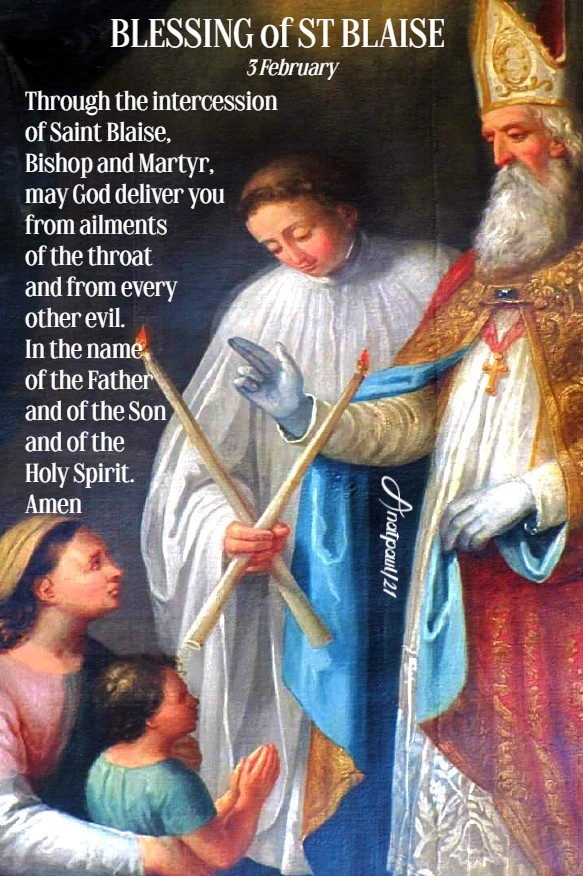
The Blessing of the Throats is a Sacramental of the Church, ordinarily celebrated today, the Feast day of Saint Blaise.

THE BLESSING of ST BLAISE
Through the intercession
of Saint Blaise,
Bishop and Martyr,
may God deliver you
from ailments of the throat
and from every other evil.
In the name of the Father
and of the Son
and of the Holy Spirit.
Amen

Posted in DOCTORS of the Church, FATHERS of the Church, Of PILGRIMS, Our MORNING Offering, PRACTISING CATHOLIC, PRAYERS for VARIOUS NEEDS, PRAYERS of the SAINTS

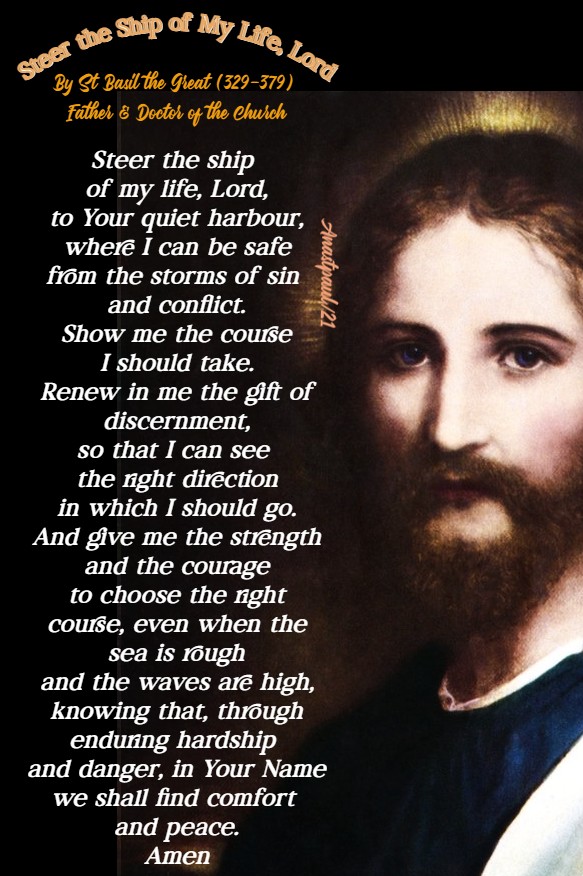
Our Morning Offering – 30 January – Steer the Ship of My Life, Lord

Our Morning Offering – 30 January – Memorial of St Martha (1st Century) Virgin Martyr

Steer the Ship of My Life, Lord
By St Basil the Great (329-379)
Father & Doctor of the Church

Steer the ship of my life, Lord,
to Your quiet harbour,
where I can be safe from
the storms of sin and conflict.
Show me the course I should take.
Renew in me the gift of discernment,
so that I can see the right direction
in which I should go.
And give me the strength
and the courage
to choose the right course,
even when the sea is rough
and the waves are high,
knowing that through enduring
hardship and danger in Your name
we shall find comfort and peace.
Amen

Posted in SAINT of the DAY, SERVANTS, MAIDS, BUTLERS, CHAMBERMAIDS

Saint of the Day – 30 January – Saint Adelelmus (Died c 1100) Abbot

Saint of the Day – 30 January – Saint Adelelmus (Died c 1100) Abbot, Soldier, Miracle-worker. Born in the 11th Century at Laudun, Poitou, France and died in c 1100 at Burgos, Castilla la Vieja, Spain of natural causes. Patronages – Burgos, Spain, butlers, domestic servant, housemaids, manservants, servants. Also known as – Adelunie, Aleaume, Alleaume, Elesmes, Lesmes.

Adelelmus joined the military at a young age. During a pilgrimage to Rome he met St Robert de Turlande (c 1000-1067), Founder of the Abbey of La Chaise-Dieu – “Home of God” and left the military life to become a Monk in the Benedictine Order, under the spiritual direction of Saint Robert.

Soon, Adelelmus was known for miles around because of his miracles. Queen Constance of Burgundy of Castile was so impressed with the reports of Adelelmus’ holiness, she invited him to live in Burgos, Spain. She and King Alfonso VI founded a Monastery in the City in 1079, on the condition that he would be its first Abbot . He added a hospital and a Church to the building soon after. He later used his military training to help King Alfonso against the Moors.

One night, while out on some holy business, Abbot Adelelmus and his aide were caught in a storm. Adelelmus ordered his servany to light a candle in order to complete their journey in the darkness. Not only was he able to light the exposed candle in the rain and wind but it stayed alight throughout their whole wet, windy, stormy travels.

After death, Adelelmus became the Patron Saint of the City of Burgos in Spain. His remains lie in the Iglesia de San Lesmes Abad, dedicated to him.

Adelelmus’ life was written soon after his death by a French Monk named Rodulph, who travelled to Burgos with the sole purpose of writing the Saint Vita. This volume gives a detailed account of the life and miracles of Saint Adelelmus and includes all the liturgical chants for the Mass which celebrate this Saint. As an attestation of the centuries-long veneration of the Patron Saint of Burgos, the Vita Adelelmi represents a unique and indescribably valuable artifact.

Adelelmus’ Feast day is kept on 30 January and celebrated honourably in Burgos but it is no longer observed in the General Roman Calendar.

The Vita of St Adelelmus
Posted in All THEOLOGIANS, Moral Theologians, CATHOLIC PRESS, CONFESSORS, DOCTORS of the Church, franciscan OFM, Of the DEAF, against DEAFNESS, PATRONAGE - WRITERS, PRINTERS, PUBLISHERS, EDITORS, etc, SAINT of the DAY, TEACHERS, LECTURERS, INSTRUCTORS

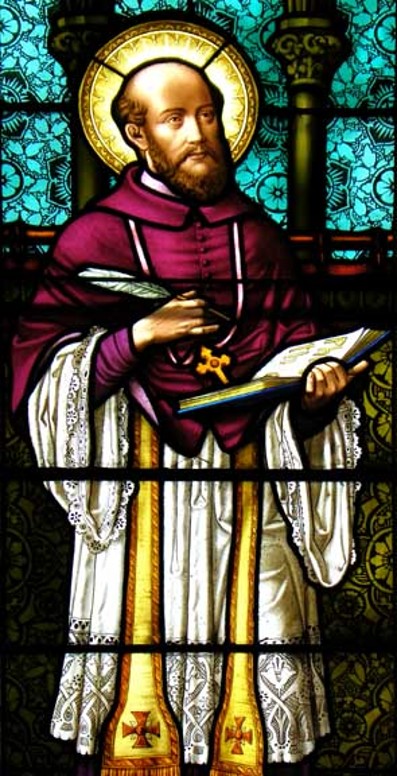
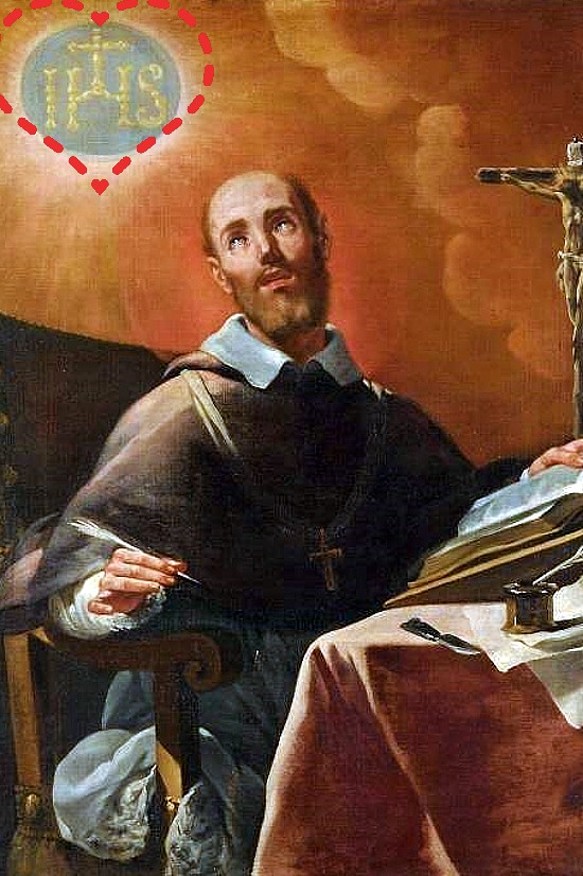
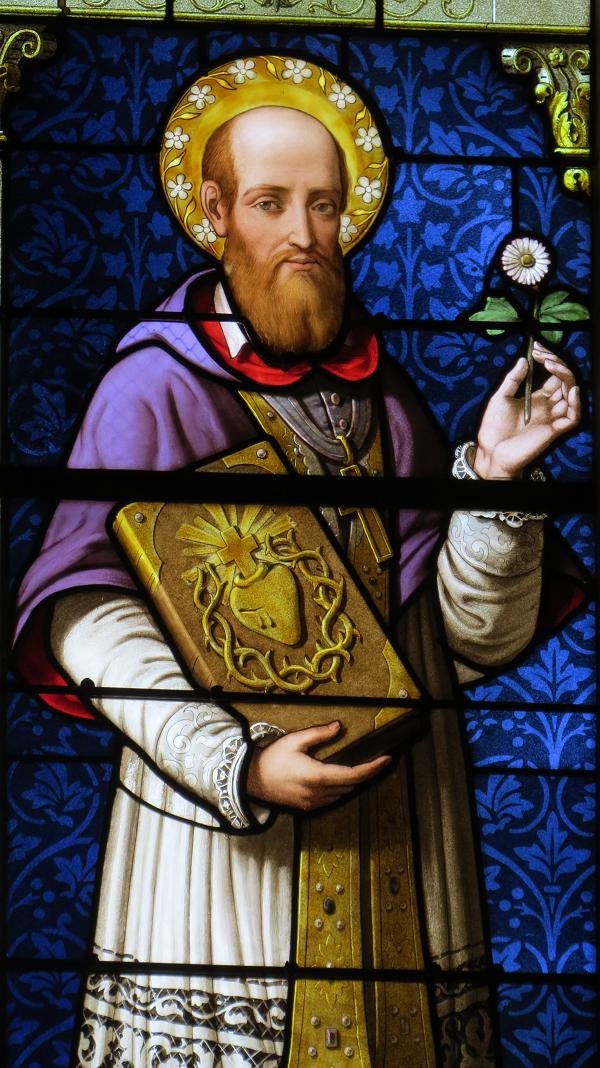
Saint of the Day – 29 January – St Francis de Sales (1567-1622) Bishop, Confessor, Doctor

Saint of the Day – 29 January – St Francis de Sales (1567-1622) Bishop, Confessor, Doctor of the Church – Doctor Caritatis (Doctor of Charity) “The Gentle Christ of Geneva” and the “Gentleman Saint.

From the Office of the Church
for the Feast, of St Francis de Sales.

Francis was born of pious and noble parents, in the town of Sales, from which the family took their name. From his earliest years, he gave pledge of his future sanctity by the innocence and gravity of his conduct. Having been instructed in the liberal sciences during his youth, he was sent early to Paris that he might study Philosophy and Theology and, in order that his education might be complete, he was sent to Padua, where he took, with much honour, the degree of Doctor in both Civil and Canon Law. He visited the Sanctuary of Loreto, where he renewed the vow he had already taken in Paris, of perpetual virginity, in which holy resolution he continued till death, in spite of all the temptations of the devil and all the allurements of the flesh.

He refused to accept an honourable position in the Senate of Savoy and entered into the Ecclesiastical state. He was Ordained Priest and was made Provost of the Diocese of Geneva, which charge he so laudably fulfilled that Granier, his Bishop, selected him for the arduous undertaking of labouring, by the preaching of God’s Word, for the conversion of the Calvinists of Chablais and the neighbouring country round about Geneva.

This mission he undertook with much joy. He had to suffer the harshest treatment on the part of the heretics, who frequently sought to take away his life, caluminated him and laid all kinds of plots against him. But, he showed heroic courage in the midst of all these dangers and persecutions and by the Divine assistance, converted, as it is stated, seventy-two thousand heretics to the One True Catholic Faith, among whom were many distinguished by the high position they held in the world and by their learning.

After the death of Granier, who had already made him his Co-adjutor, he was made Bishop of Geneva. Then it was that his sanctity showed itself in every direction, by his zeal for Ecclesiastical discipline, his love of peace, his charity to the poor and every virtue.

From a desire to give more honour to God, he founded a new Order of Nuns, which he called the Visitation, taking for their Rule that of St Augustine, to which he added Constitutions of admirable wisdom and sweetness. He enlightened the children of the Church by the works he wrote, which are full of a heavenly wisdom and pointed out a path, which is at once safe and easy, to christian perfection.

In his fifty-fifth year, whilst returning from France to Annecy, he was taken with his last sickness, immediately after having celebrated Mass, on the Feast of St. John the Evangelist. On the following day, his soul departed this life for Heaven, in the year of our Lord 1622. His body was taken to Annecy and was buried, with great demonstration of honour, in the Church of the Nuns of the above mentioned Order. Immediately after his death, miracles began to be wrought through his intercession, which, being officially authenticated, he was Canonised by Pope Alexander the Seventh and his Feast was appointed to be kept on the twenty ninth day of January.

Posted in For RAIN OR Against RAIN, PATRONAGE - of BASKET-WEAVERS, CRAFTSMEN, SAINT of the DAY

Saint of the Day – 28 January – Saint Julián of Cuenca (1127-1208) Bishop

Saint of the Day – 28 January – Saint Julián of Cuenca (1127-1208) the second Bishop of Cuenca, Spain from c 1196 until his death. Professor, Hermit, Reformer, Miracle-worker, basket-weaver using the money he gained from this trade to support the poor and needy, He was also a regular visitor to prisoners, assisting them spiritually and with material succour. Born as Julián Ben Tauro in c 1127 at Burgos, Spain and died on 28 January 1208 in Cuenca, Spain of natural causes, aged around 80 years. Patronages – basket-weavers, for rain, of the City and Diocese of Cuenca. Also known as – Julian of Burgos. Canonised on 18 October 1594 by Pope Clement VIII.

Saint Julián of Cuenca by Eugenio Cajes.

Most details we have collected about Saint Julián’s life are due to tradition (mixed with “pious” stories), writings that developed, especially from the 16th Century. These writings depict a holy man, chosen by God from the mother’s womb (like the prophets), a man full of humility and apostolic zeal, great benefactor of the poor, with a deep and intense spirit of prayer and great devotion to the Virgin Mary.

Julián’s name was Julián Ben Tauro (meaning Julián son of Tauro). His surname indicates his Mozarab ancestry – that is, Christians who lived in Muslim kingdoms, thus, in a delicate position. This document leads most historians to state the Toledan Mozarab origins of Julián.

Historical sources do not offer much information on the early life of Julián, except that he was born in Burgos to the nobleman Tauro. He studied at the Cathedral school there before he studied at the University of Palencia where he earned his Doctorate. In 1153, he was appointed a Professor in the philosophical and theological departments in Palencia in 1153. During his time in Palencia he worked as a basket-weaverr in order to earn extra income for the poor, as well to support himself.

Saint Julian of Cuenca and St Adelelmus of Burgos – Spanish School, 17th Century

In 1163 he left Palencia and his teaching duties to live a life of solitude in a modest house outside Burgos, located on the banks of the Arlanzón. He was Ordained to the Priesthood in 1166 after having received the minor orders. He and his servant, Lesmes lived a life of mortification and contemplation. The two then took to the road as itinerant preachers and reached both Córdoba and Toledo in 1191. A note about Lesmes – “the figure of Lesmes, the loyal servant who would not leave the company of Saint Julián until his death.

Saint Julián with Lesmes, his servant

But this solitude and travelling ended in 1191 when the Archbishop of Toledo, Martín II López de Pisuerga appointed Julián as the Archdeacon at Toledo. He exercised his administrative duties but continued preaching, as well as making baskets in order to generate income for the poor. From 1196, Julián served as the Archdeacon until the Bishop of Cuenca, Juan Yáñez died and Alfonso VIII of Castile chose Julián to succeed him.

The Archbishop of Toledo conferred Episcopal Consecration upon him that June of 1196. Julián was known for his almsgiving and he visited the poor in prisons too. His outreach to all faiths was equally generous and kind, as was his desire to make pastoral visits to care for the faithful in his Diocese. He often offered grain to the poor to alleviate their suffering and also aided the poor peasant farmers in the region.

He continued to preach during his travels to all the areas in his Diocese, as well as reforming the practices of the Diocesan Priests in addition to engaging with charitable organisations to better help the poor. He likewise supported these charities to provide for the needs of his flock, in addition to the Jews and Muslims. On an annual basis, he would retire to live a life of solitude and contemplation and continued his habit of making baskets. There is a wonderful miracle reported that one day Jesus Himself appeared to him in the guise of a beggar, in order to thank him.

Colonial School, Cuzco, Peru. 18th century – Saint Julian Bishop of Cuenca

He died in his Diocese in 1208. His remains were housed in the Cuenca Cathedral but his body was re-interred in 1578 under an Altar built in his honour in a side Chapel at the same Cathedral.

In the Reading V of the Office it is stated that “he was a true father of the poor and used his money and his talents to help the needy, widows and orphans. He used the yield of his Church to help the miserable, as well as to establish and decorate the Churches, using little support for himself, obtaining what he needed personally with his own hands. He was devoted to prayer, through which he achieved from God many and great things for his people. The beautiful miracle is related as follows: Since the whole Diocese suffered shortage of grain and nothing was left in the Episcopal barns, taking pity on the people suffering this great calamity, he prayed fervently to the Lord along with many tears. Then it occurred that a huge quantity of grain was transported to the gates of the Episcopal palace carried by numerous donkeys, which disappeared after leaving their load.

In memory and as a tribute to the charity of Saint Julián, the Chapter established at the beginning of the 15th century the “Chest of Saint Julián” or “of the Alms”, which became a charitable institution to attend the urgent needs of the dispossessed. Essentially it gave daily alms of bread, ensured the upbringing and accommodation of orphan children and provided dowries so orphan ladies could marry, something otherwise impossible given the customs and the way of thinking at the time. (This Chest was perpetuated in Cuenca until recent times).

According to the old obituaries of Cuenca’s Bishopric, the death or departure of Saint Julián took place on 20th January 1208, at the age of 80. However, his celebration was set on the 28th of the same month, probably for the sake of liturgical-pastoral expediency, and during centuries his festivity has been celebrated on that date in Cuenca and in other places where he is greatly venerated.

As the tradition brings to light and is easy to imagine, Saint Julián was a great preacher, going through many places of Spain preaching the Gospel of Salvation. He was an excellent missionary, also within Cuenca’s recently created Diocese, repopulated with peoples from the North, as a result of the re-conquest. Despite the many difficulties of travelling from one place to another, Julián spared no effort to preach the Gospel to everyone, as the Lord commended after His Resurrection.

Saint Julián’s Canonisation was solemnised under Pope Clement VIII on 18 October 1594.

The Cathedral in Cuenca
Posted in All THEOLOGIANS, Moral Theologians, CONFESSORS, DOCTORS of the Church, EPILEPSY, FATHERS of the Church, PATRONAGE - WRITERS, PRINTERS, PUBLISHERS, EDITORS, etc, PREACHERS, SAINT of the DAY

Saint of the Day – 27 January – St John Chrysostom (347-407) Bishop, Confessor, Father and Doctor of the Church

Saint of the Day – 27 January – St John Chrysostom (347-407) Bishop, Confessor, Father and Doctor of the Church “Golden Mouthed.”

The Church, in the Lessons of today’s Office,
thus speaks the praises of our Saint.

John, surnamed Chrysostom on account of his golden eloquence, was born at Antioch. Having gone through the study of the law and the profane sciences, he applied himself, with extraordinary application and success, to the study of the Sacred Scriptures.
Having been admitted to Holy Orders and made a Priest of the Church at Antioch, he was appointed Bishop of Constantinople, after the death of Nectarius, by the express wish of the Emperor Arcadius. No sooner had he entered upon the pastoral charge, than he began to inveigh against the licentious lives led by the rich. Thus, his courageous preaching procured him many enemies. He likewise gave great offence to the Empress Eudoxia because he had reproved her, for having appropriated to herself, the money belonging to a widow, name, Callitropa and for having taken possession of some land which was the property of another widow.

At the instigation, therefore, of Eudoxia, several Bishops met together at Chalcedon. Chrysostom was cited to appear, which he refused to do because it was not a Council, either lawfully or publicly convened. Whereupon, he was sent into exile. He had not been gone long, before the people rose in sedition on account of the Saint’s banishment and he was recalled, to the immense joy of the whole City.

But, his continuing to inveigh against the scandals which existed, and his forbidding the games, held before the silver statue of Eudoxia which was set up in the space opposite Sancta Sophia, were urged by certain Bishops, enemies of the Saint, as motives for a second banishment.

The widows and the poor of the City bewailed his departure as that of a father. It is incredible how much Chrysostom had to suffer in this exile and how many he converted to the Christian Faith by his sufferings!

At the very time that Pope Innocent the First, in a Council held at Rome, was issuing a Decree, ordering that Chrysostom should be set at liberty – he was being treated by the soldiers, who were taking him into exile, with unheard of harshness and cruelty.
Whilst passing through Armenia, the holy Martyr Basiliscus, in whose Church he had offered up a prayer, thus spoke to him during the night:
“Brother John! we shall be united together tomorrow.“ Whereupon, on the following morning, Chrysostom received the Sacrament of the Eucharist and, signing himself with the Sign of the Cross, he breathed forth his soul to his God, on the eighteenth of the Calends of October (14 September).

A fearful hail-storm happened at Constantinople after the Saint’s death and, four days after, the Empress died. Theodosius, the Son of Arcadius, had the Saint’s body brought to Constantinople, with all due honour, where, amidst a large concourse of people, it was buried on the sixth of the Calends of February (27 January). Theodosius, whilst devoutly venerating the Saint’s Relics, interceded for his parents that they might be forgiven. The body was, at a later period, translated to Rome and placed in the Vatican Basilica.

All men agree in admiring the unction and eloquence of his sermons, which are very numerous, as indeed of all his other writings. He is also admirable in his interpretation of the Sacred Scriptures which he explains in their genuine sense. It has always been thought that he was aided, in his writings and sermons, by St Paul the Apostle, to whom he entertained an extraordinary devotion.

St Paul guiding St John Chrysostom
Posted in GOD ALONE!, HYMNS, Of PILGRIMS, Our MORNING Offering, PRACTISING CATHOLIC, PRAYERS for VARIOUS NEEDS, QUOTES on LOVE of GOD

Our Morning Offering – 23 January – Lord, for Tomorrow and its Needs

Our Morning Offering – 23 January

Lord, for Tomorrow and its Needs
By Sister Mary Xavier (1877)

Lord, for tomorrow and its needs
I do not pray;
keep me, my God, from stain of sin,
just for today.

Let me both diligently work
and duly pray;
let me be kind in word and deed,
just for today.

Let me no wrong or idle word
unthinking say;
set Thou a seal upon my lips,
just for today.

And if today my tide of life
should ebb away,
give me Thy Sacraments Divine,
sweet Lord, today.

So, for tomorrow and its needs
I do not pray
but keep me, guide me, love me, Lord,
just for today.
Amen

Posted in EYES - Diseases, of the BLIND, SAINT of the DAY

Saint of the Day – 23 January – Saint Maimbod (Died c 880) Martyr

Saint of the Day – 23 January – Saint Maimbod (Died c 880) Martyr, Irish Pilgrim in France, Missionary Preacher, Born in Ireland and died in c 880 in Kaltenbrunn, Alsace, Gaul (modern France). Maimbod is regarded as an unofficial Patron of eye diseases and ailments. Also known as – Mainbeouf, Mainbodo, Maimbodus.

In the wake of St Columban, many Irish Monks travelled to France and Italy, spreading the Faith “on a pilgrimage for the love of Christ.” Maimbod was one of them, a pilgrim to the Tombs of many Saints and holy Shrines of the Blessed Virgin Mary. As he wandered, he preached, spreading the Faith throughout northern Italy and France.

In Burgundy, a nobleman gave him hospitality and unsuccessfully pressed him to settle there. Upon Maimbod’s departure, the nobleman gave Maimbod a pair of gloves as a reminder to pray for him.

He was praying at the Church of Domnipetra near Alsace, when he was set upon by robbers who, believed he had money because he was wearing gloves, murdered him.

There is a second version of his death which omits the gloves and relates his murder having been accomplished by pagans, enraged by Maimbod’s confession of Christ.

When miracles began to occur at his Tomb in Domnipetra, Count Aszo of Monteliard asked the blind Bishop Berengarius for a gift of the Saint’s Relics. Berengarius delegated the translation ceremony to his co-adjutor, Bishop Stephen. During the rite, Berengarius miraculously received his sight and instituted a Feast in honour of the Saint. Maimrod’s Relics were destroyed during the French Revolution.

Maimbod was Canonised by the confirmation of his cult on 24 November 1900 by Pope Leo XIII. His Feast today is especially celebrated in the Diocese of Besançon.

Posted in GOLDSMITHS, SILVERSMITHS, GILDERS, MINERS, JEWELLERS, CLOCK/WATCH-MAKERS, METAL CRAFTSMEN, PATRONAGE - HEADACHES, SAINT of the DAY

Saint of the Day – 21 January – St Anastasius the Persian (Died 628) Martyr, Monk

Saint of the Day – 21 January – St Anastasius the Persian (Died 628) Martyr, Monk. Born in Persia as Magundat and died by strangulation and beheading in 628 in Persia. Patronages – against headaches, of goldsmiths.

The Roman Martyrology reads: “At Rome, at Aquiae, Salviae, St Anastasius, a Persian Monk, who, after suffering much at Caesarea in Palestine, from imprisonment, stripes and fetters, had to bear many afflictions from Chosroes, King of Persia, who caused him to be beheaded. He had sent before him, to Martyrdom, seventy of his companions, who were precipitated into rivers. His head was brought to Rome, together with his venerable likeness, by the sight of which, the demons are expelled and diseases cured, as is attested by the Acts of the Second Council of Nicacea.

Anastasius was born in the City of Ray. He was the son of a Magian named Bau. He had a brother whose name is unknown. He was a cavalryman in the army of Khosrow II (590–628) and participated in the capture of the True Cross in Jerusalem which was carried to the Sasanian capital.

The occasion prompted him to ask for information about the Christian religion. He then experienced a conversion of faith, left the army, became a Christian and then a Monk at the Monastery of Saint Savvas (Mar Saba) in Jerusalem.

Anastasius was baptised by St Modestus, the Bishop of Jerusalem, receiving the Christian name Anastasius to honour the Resurrection of Jesus Christ (anástasis” in Greek meaning resurrection).

After seven years of the monastic observance, he was moved by the Holy Ghost to go in quest of Martyrdom and went to Caesarea, then subject to the Sasanians. There he interrupted and ridiculed the pagan priests for their religion and was, as a result, arrested by the local governor, taken prisoner, cruelly tortured to make him deny Christ and finally carried down near the Euphrates river, where his tortures was continued, while at the same time, the highest honours in the service of King Khosrow II, as a Magi, were promised him, if he would renounce Christianity.

Finally, after refusing to renounce Christ, with seventy others, he was strangled to death and decapitated on 22 January 628. His body, which was thrown to the dogs but was left untouched by them, was carried from there to Palestine, then to Constantinople and finally, to Rome, where the relics were venerated at the Tre Fontane Abbey.

A Passio written in Greek, was devoted to the Saint. An adapted Latin translation, possibly by Archbishop Theodore of Canterbury, was available to the Anglo-Saxon Historian, the Venerable St Bede, who criticised the result and took it upon himself to improve it. There are sadly, no surviving manuscripts of St Bede’s revision, although one copy did survive to the 15th Century.

Reliquary of St Anastasios the Persian
Posted in Of BEGGARS, the POOR, against POVERTY, SAINT of the DAY, WIDOWS and WIDOWERS

Saint of the Day – 14 January – St Macrina the Elder (Died c 340) Widow

Saint of the Day – 14 January – St Macrina the Elder (Died c 340) Widow, Mother of the elder St Basil and, therefore, the Grandmother of St Basil the Great, St Gregory of Nyssa, St Peter of Sebaste and St Macrina the Younger. Macrina was a native of Cappadocia, in what is now eastern Turkey. Patronages – against poverty, of the poor, of widows. Also known as – Macrina of Caesarea.

The Roman Martyrology says today: “St Macrina, disciple of St Gregory Thaumaturgus and the grandmother of St Basil, whom she brought up in the Faith.

Our knowledge of the life of the elder Macrina is derived mainly from the testimony of the great Cappadocian Fathers of the Church, her grandchildren – Basil, Gregory of Nyssa (Vita Macrinae Junioris) and the panegyric of St Gregory of Nazianzen on St Basil.

Two of these grandsons helped shape the Faith which we proclaim today—Basil the Great, a Doctor of the Church and his brother, Gregory of Nyssa, who helped the Church better articulate her understanding of the Trinity. Both of these men played crucial roles in formulating the Nicene Creed which Catholics still recite every Sunday at Mass. Macrina raised both of these men and their influential younger sister, Macrina the Younger. She gave all these great Saints their first religious instruction as children.

The works of Basil indicate that she studied under Gregory Thaumaturgus (or the Wonderworker), the great father of the Faith in Cappadocia, he of whom it is said that when he arrived in the territory, there were only seventeen Christians in the Town of Neocaesarea; when he died in 268, there were only seventeen pagans. It was his teachings, handed down through Macrina to Basil and Gregory that were particularly formative for the two Cappadocian brothers.

Her home was at Neocaesarea in Pontus and according to Gregory Nazianzen, during the persecution of Christians under Galerius and Diocletian, Macrina fled with her husband to the shores of the Black Sea. They left their home and hid in the woods for seven years. They were often hungry and had to live off the land and whatever animals they could hunt. After they were finally allowed to go home to Neocaesarea, another round of persecution took effect and their possessions were confiscated. These trials are the reason for her patronage of the poor.

She was widowed and is also the Patron of widows. She is said to have died in the early 340s

Posted in Against FAMINE, PATRONAGE - PRISONERS, PATRONAGE - VINTNERS, WINE-FARMERS, SAINT of the DAY

Saint of the Day – 8 January – Saint Severinus of Noricum (c410-482) “The Apostle to Noricum”

Saint of the Day – 8 January – Saint Severinus of Noricum (c410-482) Abbot, Hermit, Missionary, established Monasteries and refuge centres for those stricken by war. Severinus was graced with the gifts of prophecy and miracles. He is known as “The Apostle to Noricum” – Noricum is the Latin name for the Celtic Kingdom or Federation of Tribes which included most of modern Austria and part of Slovenia. Born in c410 and died on 8 January 482 at Favianae, Noricum of natural causes. Patronages – against famine, of linen weavers, prisoners, vineyards/vintners/wine farms, Austria, Bavaria, Germany, the Diocese of Linz, Austria. Also known as – Severrin, Severino.

Saint Severin blesses Austria – Hans Gustav Dittenberger von Dittenberg, 1849

The Roman Martyrology reads today: “This same day, among the inhabitants of Noricum (now Austria), the Abbot, St Severin, who preached the Gospel in that country and is called it’s apostle. By Divine Power, his body was carried to Lucullanum, near Naples and thence transferred to the Monastery of St Severin.”

It has been speculated that Severinus was born in either Southern Italy or in the Roman province of Africa. Severinus himself refused to discuss his personal history prior to arriving along the Danube in Noricum. However, he did mention experiences with eastern desert monasticism and his Vita draws connections between Severinus and Saint Anthony of Lérins (c 428-c 520) https://anastpaul.com/2021/12/28/saint-of-the-day-28-december-saint-anthony-of-lerins-c-428-c-520/

Little is known of his origins. The source for information about him is the Commemoratorium Vitae St Severini (511) by Eugippius (c 460-c 535), who was a disciple of Severinus. In 511 Eugippius wrote to Paschasius and asked his venerated and dear friend, who had great literary skill, to write a biography of St Severinus from the accounts of the Saint which he (Eugippius) had put together in crude and unartistic form. Paschasius, however, replied that the acts and miracles of the Saint could not be described better than had done by Eugippius. This Vita is available online at: https://www.tertullian.org/fathers/severinus_02_text.htm

St Severinus – St.Severin Parish Church Lower Austria

Severinus was a high-born Roman living as an Hermit in the East. He was an ascetic in practice. He is first recorded as travelling along the Danube in Noricum and Bavaria, preaching Christianity, procuring supplies for the starving, redeeming captives and establishing Monasteries at Passau and Favianae,

While the Western Empire was falling apart, Severinus, thanks to his virtues and organisational skills, committed himself to the religious and material care of the frontier peoples, also taking care of their military defence. He organised refugee camps, migrations to safer areas and food distribution.

Madonna and Child Enthroned between San Severino and San Sossio – Protasio Crivelli, 1506

Serverinus offered practical leadership, as well as spiritual leadership. He was a tireless preacher and a marvellous Miracle-worker – he miraculously multiplied food reserves, cured the sick, cast out devils, commanded the elements of nature and once even resurrected the dead.

The main theme of his teaching was the value of penance. It was a propitious choice. The sufferings of his people under the Germanic invasions were acute and, uniting them with Christ’s sufferings for the reparation of sin and the conversion of sinners, enabled them to find meaning and strength amid calamity. He also practiced what he preached. In his constant barefoot journeying throughout Austria and Bavaria, he ate only one meal a day and slept on a sack which he carried around with him, wherever he happened to find himself at bedtime.
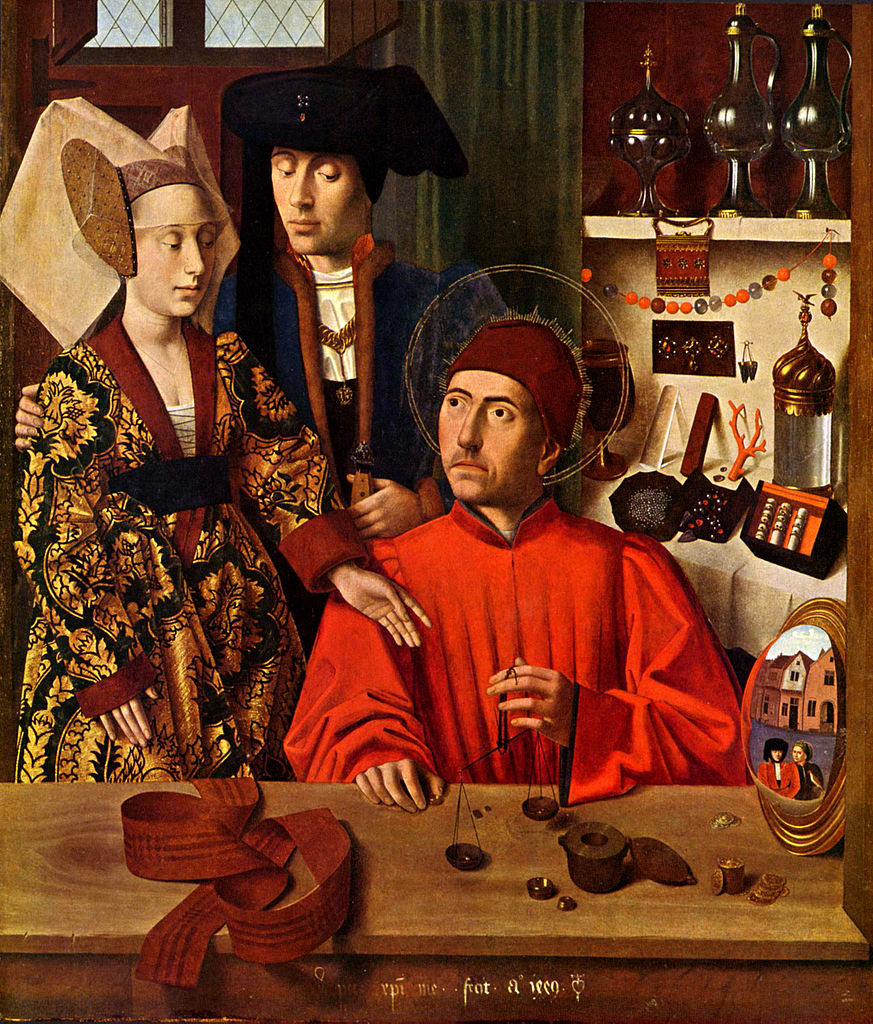
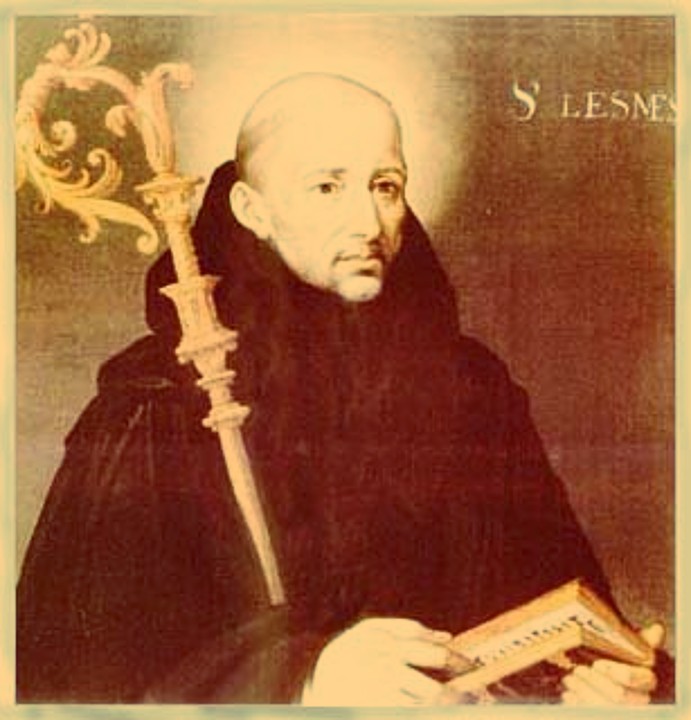
His efforts seem to have won him wide respect, including that of the Germanic chieftain Odoacer. Eugippius credits him with the prediction that Odoacer would become king of Rome. However, Severinus warned that Odoacer would rule not more than fourteen years.

Severinus also prophesied the destruction of Asturis in Austria, by the Huns. When the people would not heed his warning, he took refuge in Comagena. There he established refugee centres for people displaced by the invasion and founded Monasteries to re-establish spirituality and preserve learning in the stricken region.

He died in his monastic cell at Favianae while singing Psalm 150. Six years after his death, his Monks were driven from their Abbey and his body was taken to Italy, where it was at first kept in the Castel dell’Ovo, Naples, then eventually interred at the Benedictine Monastery rededicated to him, the Abbey of San Severino in the City of Naples.

Austrian postage stamp of their Patron Saint
St Severinus Statue on the Church in Church at Steinhof, Vienna