Posted in Against EPIDEMICS, INCORRUPTIBLES, SAILORS, MARINERS, NAVIGATORS, SAINT of the DAY

Saint of the Day – 20 March – Saint Cuthbert of Lindisfarne (c 634-687) “The Wonder-Worker of England”

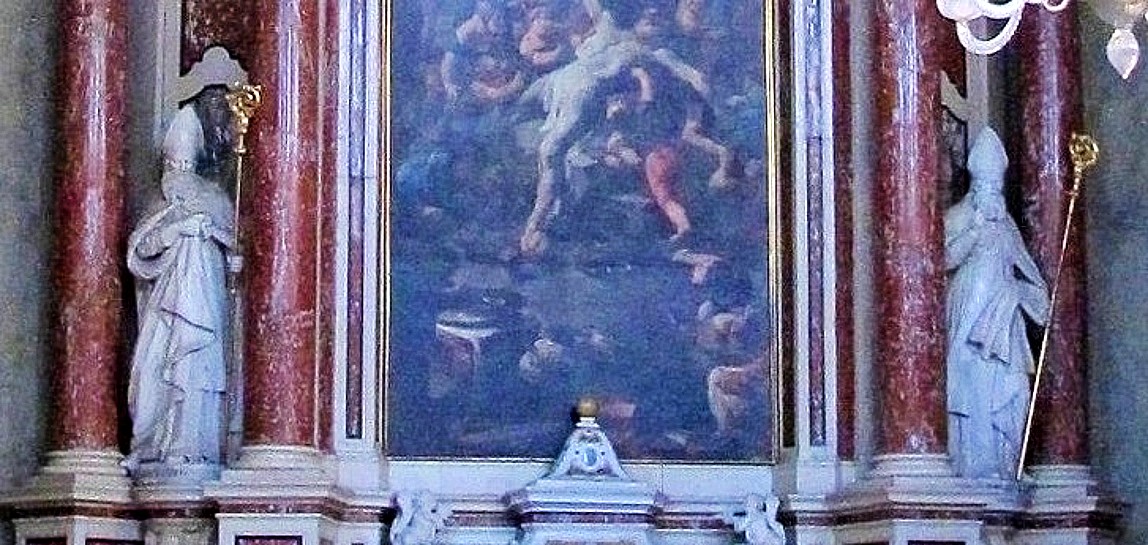
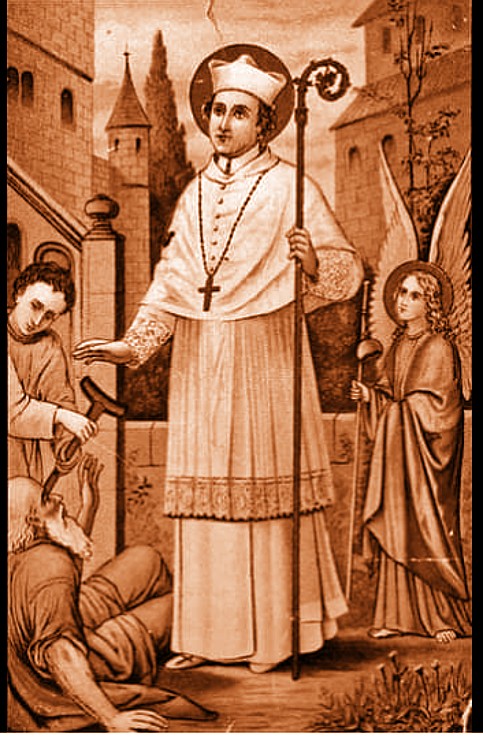
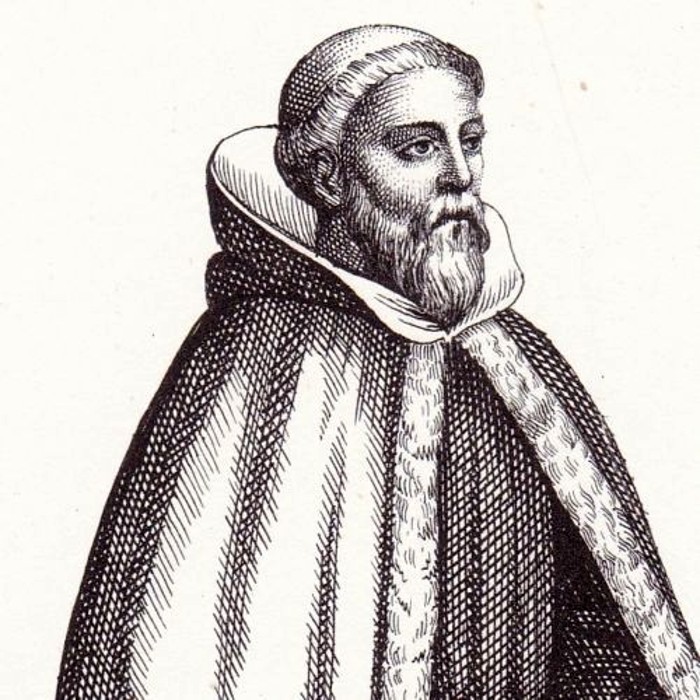
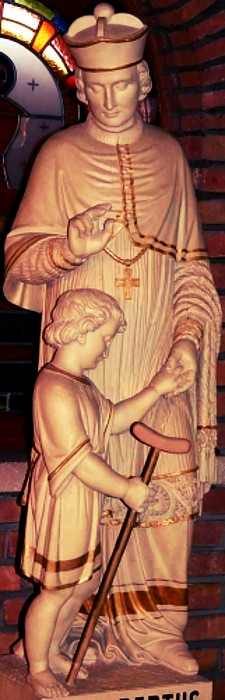
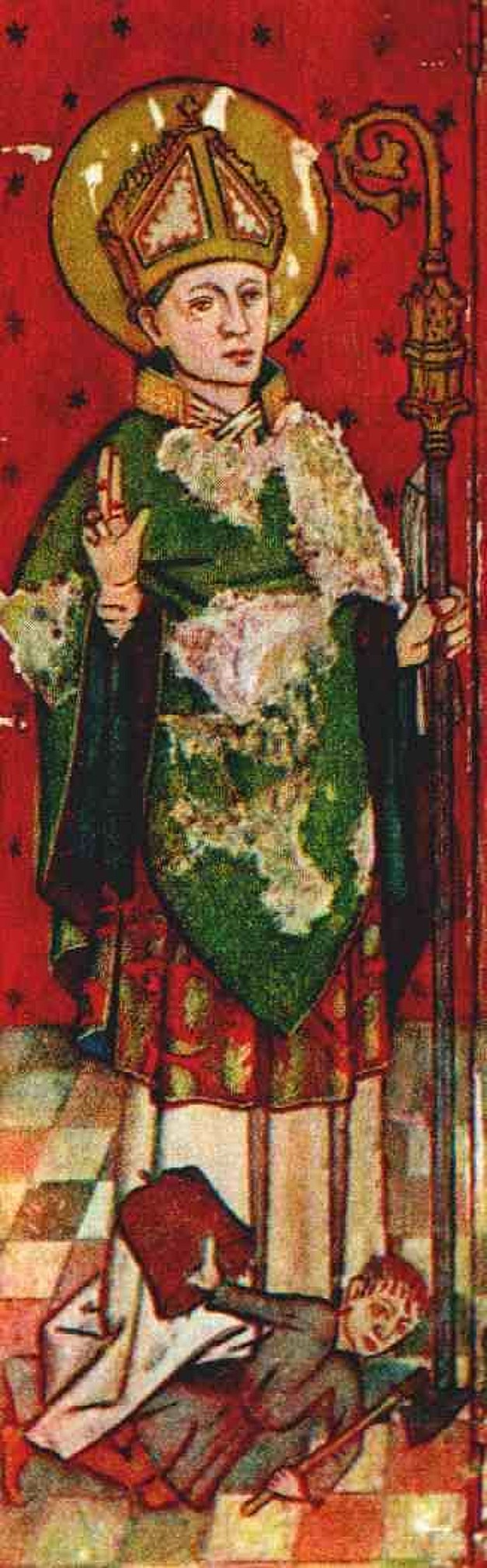
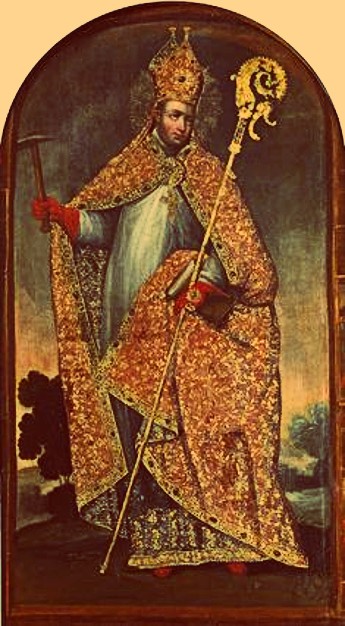
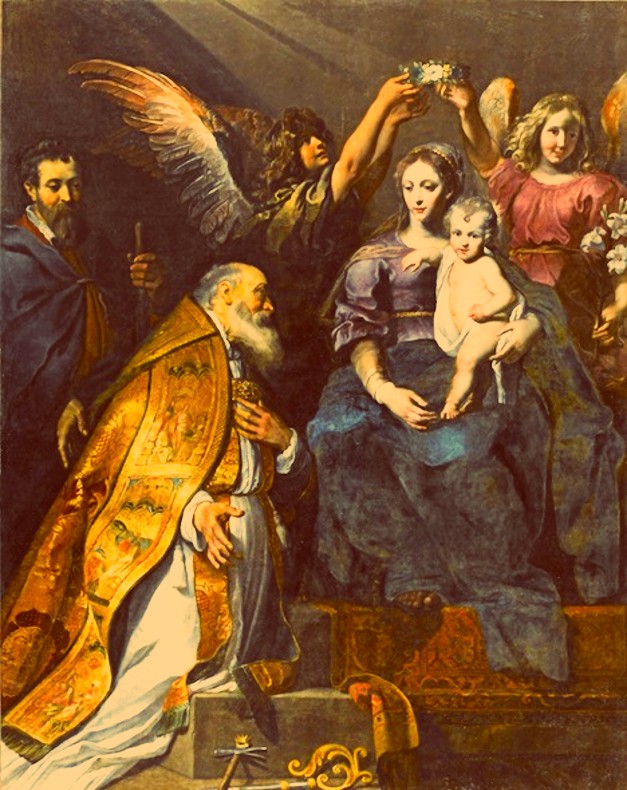
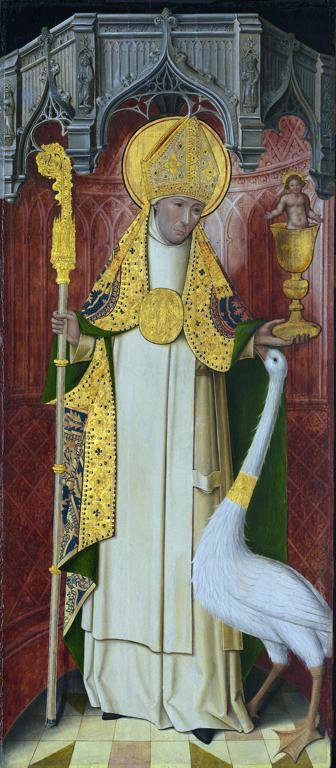
Saint of the Day – 20 March – Saint Cuthbert of Lindisfarne (c 634-687) “The Wonder-Worker of England,” Bishop of Lindisfarne, Monk, Hermit, Miracle-worker, Born in c 634 possibly in Northumbria, England and died on 20 March 687 at Lindisfarne, England of natural causes. Patronages – against plague and epidemics, of boatmen, mariners, sailors, shepherds, England, the Diocese of Hexham and Newcastle, England, Diocese of Lancaster, England, of Durham, England, Northumbria, England. Both during his life and after his death he became a popular medieval Saint of Northern England, with a cult centred on his tomb at Durham Cathedral. I am always saddened by the almost total lack of veneration at this Tomb, although there are still a few organised Catholic pilgrimages per year. The Church is now no longer ours (Anglican) and for the most part, the only visitors to the Tomb are camera-flashing tourists.

The Roman Martyrology reads today: “In England, St Cuthbert, Bishop of Lindisfarne, who, from his childhood until his death, was renowned for good works and miracles.

Cuthbert was born in North Northumbria in about the year 634 – the same year in which St Aidan founded the Monastery at Lindisfarne. He came from a notable and wea\lthy English family and like most boys of that class, he was placed with foster-parents for part of his childhood and taught the arts of war. We know nothing of his foster-father but he was very fond of his foster-mother, Kenswith.

It seems, from stories about his childhood, that he was brought up as a Christian. He was credited, for instance, with having saved, by his prayers, some Monks who were being swept out to sea on a raft. There is some evidence that, in his mid-teens, he was involved in at least one battle, which would have been quite normal for a boy of his social background.

St Cuthbert discovers a piece of timber to save drowning Monks, from a 12th-century manuscript of St Bede’s ‘Life of St Cuthbert.’

His life changed when he was about 17 years old. He was looking after some neighbour’s sheep on the hills. (As he was certainly not a shepherd boy it is possible that he was mounting a military guard – a suitable occupation for a young warrior!) Gazing into the night sky he saw a light descend to earth and then return, escorting, he believed, a human soul to Heaven. The date was 31 August 651- the night that St Aidan died! Perhaps Cuthbert had already been considering a possible monastic calling but that was his moment of decision.

He went to the Monastery at Melrose, also founded by St Aidan and asked to be admitted as a Novice. For the next 13 years he was with the Melrose Monks. When Melrose was given land to found a new Monastery at Ripon, North Yorkshire, Cuthbert went with the founding party and was made Administrator. In his late 20s he returned to Melrose and found that his former teacher and friend, the Prior Boisil, was dying of the plague. Cuthbert became Prior (second to the Abbot) at Melrose.

In 664 the Synod of Whitby decided that Northumbria should cease to look to Ireland for its spiritual leadership and turn instead to the continent. The Irish Monks of Lindisfarne, with others, went back to Iona. The Abbot of Melrose subsequently became also Abbot of Lindisfarne and Cuthbert its Prior.
Cuthbert seems to have moved to Lindisfarne at about the age of 30 and lived there for the next 10 years. He ran the Monastery; – he was an active missionary; he was much in demand as a spiritual guide and he was graced with the charism of miraculous curing of the ill. He was an outgoing, cheerful, compassionate person and no doubt became popular. But when he was 40 years old he believed that he was being called to be a hermit and to do the hermit’s job of fighting the spiritual forces of evil in a life of solitude.

After a short trial period on the tiny islet adjoining Lindisfarne, he moved to the more remote and larger island known as ‘Inner Farne’ and built a hermitage where he lived for 10 years. Of course, people did not leave him alone – they went out in their little boats to consult him or ask for healing. However, on many days of the year the seas around the islands are simply too rough to make the crossing and Cuthbert was left in peace.

Cuthbert’s fame for piety, diligence, and obedience quickly grew.and at the age of about 50 he was asked by both Church and King to leave his hermitage and become a Bishop. He reluctantly agreed. For two years he was an active, travelling Bishop as St Aidan had been. He seems to have journeyed extensively. On one occasion he was visiting the Queen in Carlisle (on the other side of the country from Lindisfarne) when he knew by miraculous understanding that her husband, the King, had been slain by the Picts in battle in Scotland.
Feeling the approach of death, he retired back to the hermitage on the Inner Farne where, in the company of Lindisfarne Monks, he died on 20 March 687.

His body was brought back and buried at Lindisfarne. People immediately came to pray at the grave and many miracles occured. To the Monks of Lindisfarne this was a clear sign that Cuthbert was a Saint in Heaven and they, desired to declare to the world the great power of intercession, of their St Cuthbert.
 
They decided to allow 11 years for his body to become a skeleton and then ‘elevate’ his remains on the anniversary of this death (20 March 698). We believe that during these years, the beautiful manuscript known as ‘The Lindisfarne Gospels‘ was made, to be used for the first time at the great ceremony of the Translation of St Cuthbert. The declaration of Cuthbert’s sainthood was to be a day of joy and thanksgiving. It turned out to be also a day of surprise, even shock, for when they opened the coffin ,they found no skeleton but a complete and undecayed body. That was a sign of very great sainthood indeed.
 
So the cult of St Cuthbert began. Pilgrims began to flock to the Shrine. The ordinary life of the Monastery continued for almost another century until, on 8 June 793, the Vikings came. The Monks were totally unprepared; some were killed; some younger ones and boys were taken away to be sold as slaves; gold and silver was taken and the monastery partly burned down. After that, the Monastery lived under threat and it seems that in the 9th century there was a gradual movement of goods and buildings to the nearby mainland. The traditional date for the final abandonment of Lindisfarne is 875.

The body of St.Cuthbert, together with other relics and treasures which had survived the Viking attack, were carried by the Monks and villagers onto the mainland.
 
For over 100 years the community settled at the old Roman Town of Chester-le-Street. It was said that fear of further attack took them inland to Ripon but not for long and on their journey back from there they finally settled at Durham.
After the Norman Conquest (1066) a Benedictine community began to build the great Cathedral at Durham. They proposed to honour the body of St.Cuthbert with a new Shrine immediately east of the new High Altar and in 1104, all was ready for the translation. The Durham Monks opened up the coffin and found, that the St Cuthbert’s body was indeed still incorrupt. Throughout the Middle Ages the coffin was placed in a beautiful Shrine and visited by great numbers of pilgrims. But at the reformation, when the Monastery was dissolved, the Shrine was dismantled and the coffin opened – the body was still complete. It was buried in a plain grave behind the High Altar and the Sacred items buried with St Cuthbert were removed. Below is St Cuthbert’s Gospel of St John, recovered from his coffin; the original tooled red goatskin binding is the earliest surviving Western binding. 

The human remains were then re-interred in the same place and marked by a plain gravestone with the name Cuthbertus. The Site, remaibs the focus of many pilgrimages today, including myself and family who have venerated St Cuthbert, a few times, in the Cathedral built to house his Shrine – of course, this is now a protestant church.
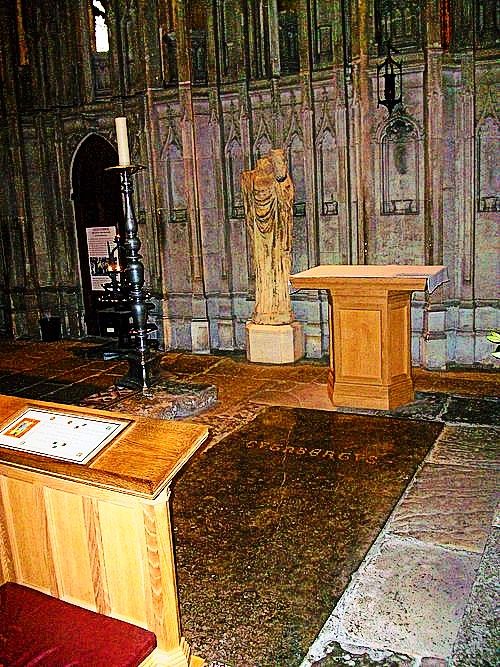
The 8th-century historian St Bede, wrote both a verse and a prose life of St Cuthbert around 720. He has been described as the most popular Saint in England prior to the death of Thomas Becket in 1170.
In particular, Alfred the Great, King of Wessex, was inspired and encouraged in his struggle against the Danes by a vision or dream he had of St Cuthbert. Thereafter, the royal house of Wessex, who became the Kings of England, made a point of great devotion to St Cuthbert.

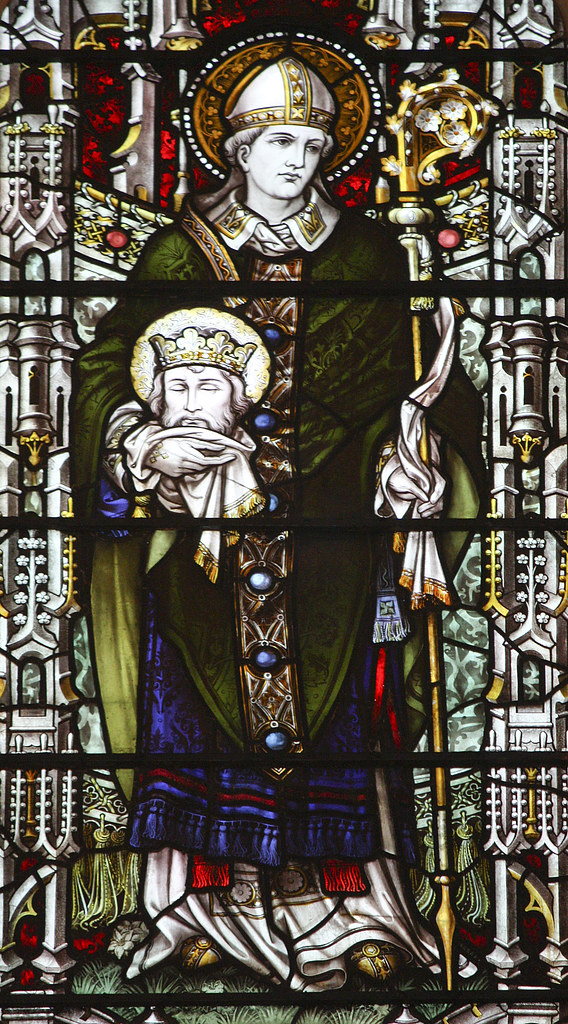
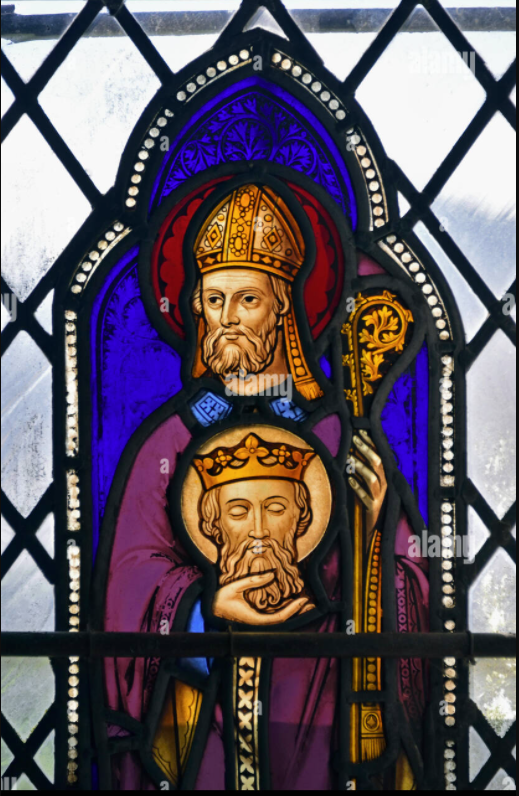
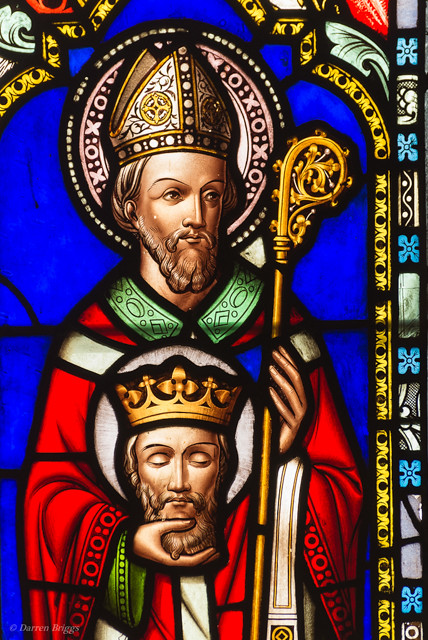
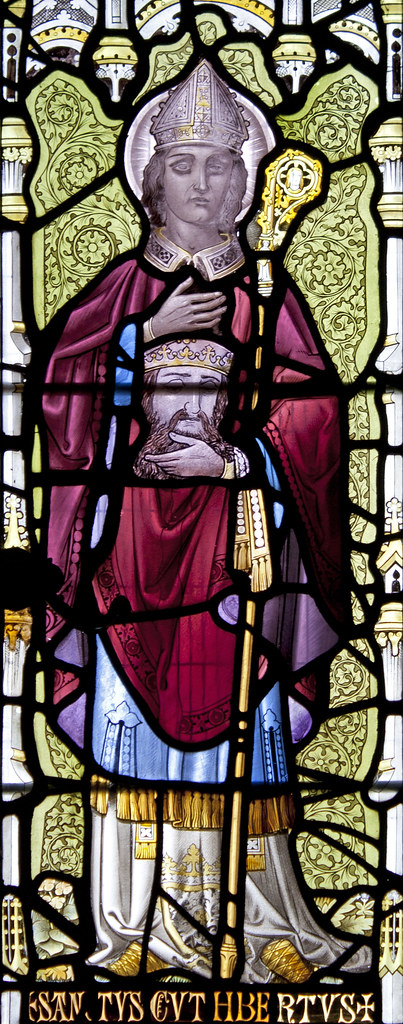
Why is St Cuthbert depicted holding St Oswald’s Head (c 605-642) King of Northumbia and why is it entombed with St Cuthbert?
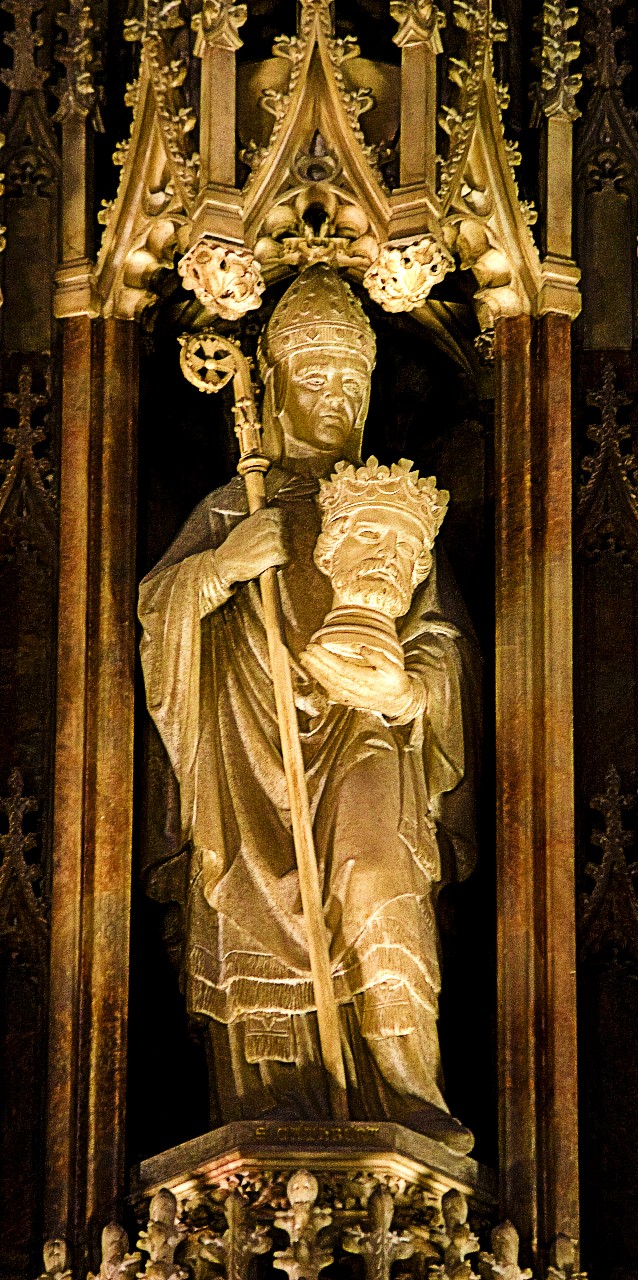
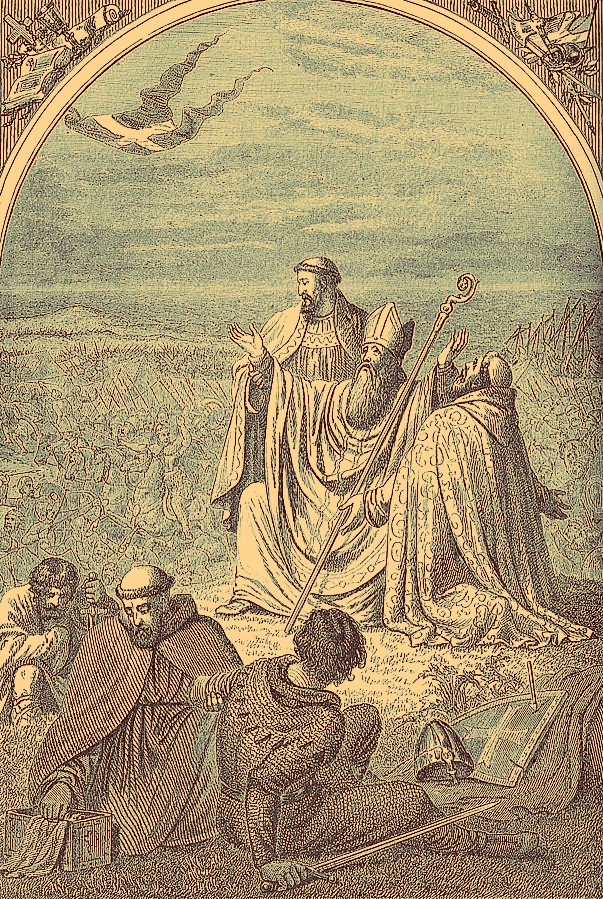
St Bede tells us that Oswald was born around 605, the son of the King of Northumbria. After his father’s death, Oswald and his brothers were exiled to western Scotland, possibly to Iona, where they were inspired by St Columba’s Monks and were Baptised. In 634 Oswald returned to Northumbria where Cadwalla was massacring the people having killed King Edwin. After setting up a Cross as his standard and leading his men in prayer on the night before battle, Oswald defeated Cadwalla’s much larger army at Heavenfield and reclaimed the throne. The Intercession of St Columba,who died some 35 years earlier, assisted Oswald and his men, for Columba,appeared to Oswald in a vision and promised Heavenly assistance.

Oswald asked the Monks at Iona to send Missionaries to convert and guide his people. The first Monk they sent went back and reported that he could make no progress, due to the ungovernability, obstinacy and barbarous temperament of Oswald’s people, so they sent St Aidan instead. Oswald let Aidan choose where to base his Monastery and his mission. Aidan chose Lindisfarne and Oswald then worked closely with Aidan, travelling the countryside, acting as Aidan’s translator. In St Bede’s words, “while the Bishop, who was not fluent in the English language, preached the gospel, it was most delightful to see the King himself, interpreting the word of God to his ealdormen and thegns; for he, himself, had obtained perfect command of the Irish tongue during his long exile.”

Oswald was killed at Oswestry on 5 August 642, fighting the Mercians led by King Penda. His head was rescued from the battlefield and is buried in the Durham Cathedral, in St Cuthbert’s tomb, which is why you sometimes see pictures or statues of Cuthbert holding Oswald’s head. Soon miracles occurred at the place of his death, as they had at the place where he knelt to pray before battle and he was effectively canonised by the loving devotion of his people.
Posted in Of GARDENERS, Horticulturists, Farmers, SAINT of the DAY

Saint of the Day – 13 March – Saint Ansovinus of Camerino (Died 868)

Saint of the Day – 13 March – Saint Ansovinus of Camerino (Died 868) Bishop, Hermit, Peace-maker, Spiritual Adviser and Confessor to the Holy Roman Emperor, Miracle-worker. Born at Camerino, Italy and died in 868 at Camerino, Italy from a fever contracted at Rome. Also known as – Ansovino, Ansuinus, Answin, Oswin. Patronages – gardeners, protection of crops, Diocese of Camerino-San Severino Marche, Italy.

St Ansovinus and St Jerome(detail), Carlo Crivelli

Ansovinus was educated at the Cathedral school of Pavia. After Ordination to the Priesthood, he became a Hermit at Castel Raimondo near Torcello. Before being elected Bishop of Camerino, he served as Confessor to Louis II, Holy Roman Emperor. Ansovinus refused to accept the office of Bishop until Louis was agreed that his See be kept exempt from the conscription of the locals into the army. During this time, Bishops were often required to be responsible for recruiting men for the imperial army.

He was Consecrated at Rome by Pope Leo IV and returned to this City for the Council of Rome held by Pope Nicholas I in 861, where records show that he signed as Ansuinus Camerinensis. His Episcopate was characterised by his generosity to the poor and his pacification of the City’s various warring factions.

The gift of multiplying food was attributed to Ansovinus. He fed thousands of starving people from the regional granary at Castel Raimondo but the grain never ran out.

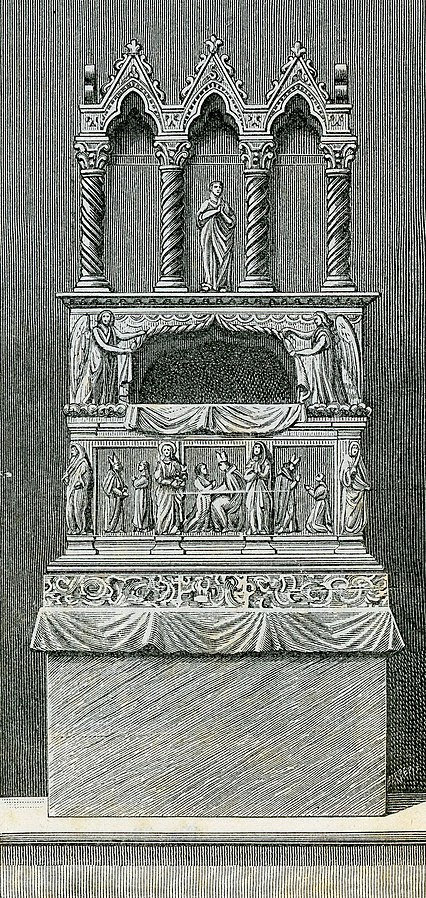
The Cathedral at Camerino includes the marble medieval arch of St Ansovinus. A monumental sarcophagus erected around 1390 holds his relics. His festival was once celebrated by Camerino and the nobles of other castles in the region. The Church of Santi Venanzio e Ansovino at Rome was dedicated to him. Additionally, there are rural Churches dedicated to him at Avacelli, Casenove, Bevagna and Monsammartino.

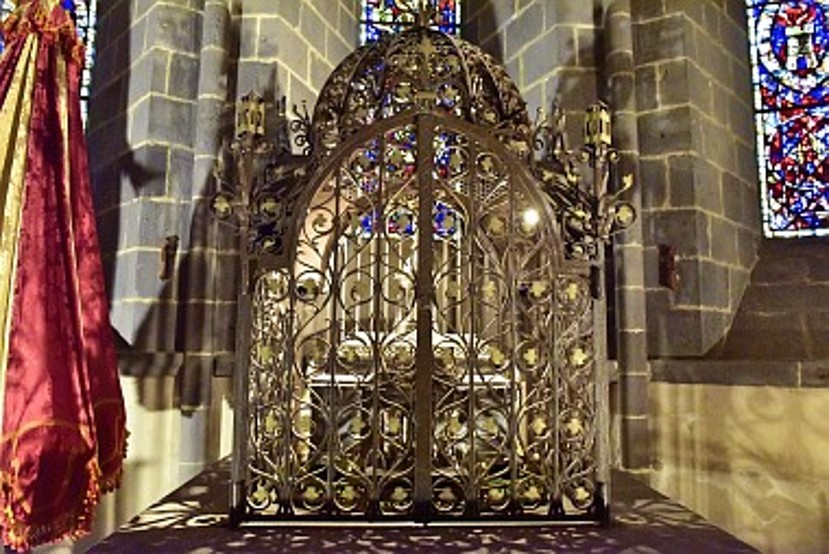
Mausoleum of St Ansovinus, Cathedral of Camerino.
Posted in Of BOYS, JUVENILE DELINQUETS, SAINT of the DAY

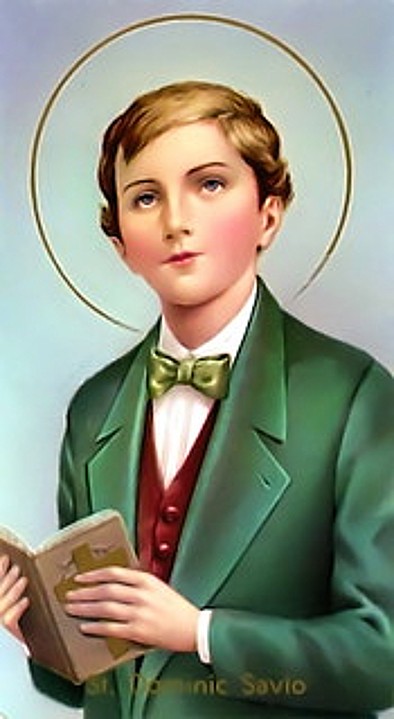
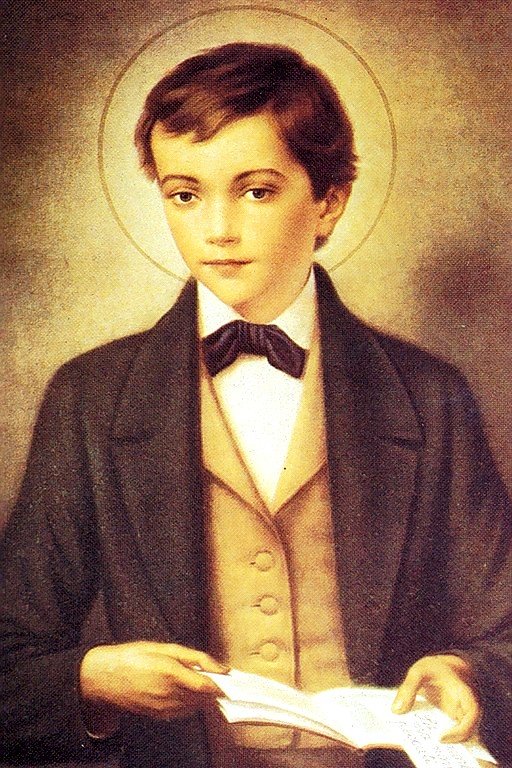
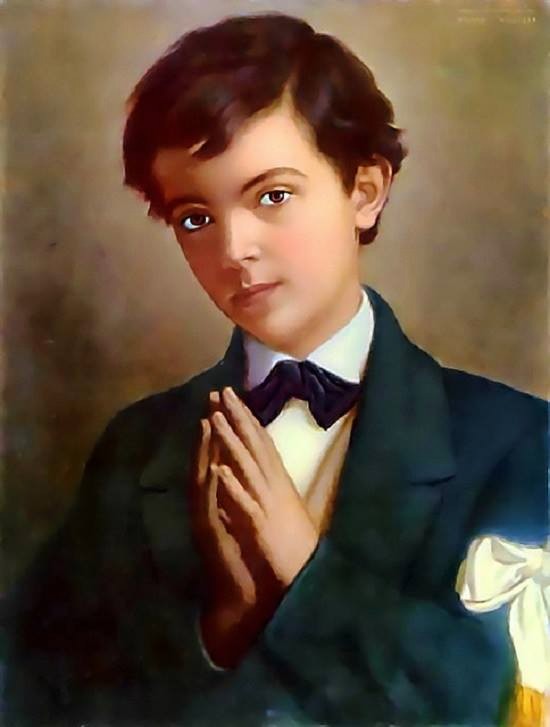
Saint of the Day – 9 March – St Dominic Savio (1842-1857) “The Little Giant”

Saint of the Day – 9 March – St Dominic Savio (1842-1857) “The Little Giant”, Student of Saint John Bosco. He was studying to become a priest when he became ill and died at the age of 14. Born on 2 April 1842 at Riva di Chieri, Turin, Italy and died on 9 March 1857 at Mondonio, Italy of natural causes. Patronages – boys, children’s choirs, choir boys (given on 8 June 1956 by Pope Pius XII), choirs, falsely accused people, juvenile delinquents, Pueri Cantors, Colegio Santo Domingo, Bogotá, Colombia (chosen in January 1977), singers.

Dominic was born on 2 April 1842, in San Giovanni di Riva, near Chieri (Turin). On the occasion of his First Communion, at the age of seven, he set out his life’s program: “I will go to Confession frequently and Communion as often as my Confessor allows. I want to make Sundays and feast days holy. My friends will be Jesus and Mary. Death but not sin!”

At the age of twelve, he was accepted by Don Bosco into the Oratory of St Francis de Sales in Turin and Dominic asked his help in order to “become a saint.” Gentle, serene and happy, he put great effort into fulfilling his duties as a student and helping his companions in every way he could, teaching them Catechism, assisting the sick and settling quarrels.

One day he said to a companion who had just arrived in the Oratory: “You should know that here we make holiness consist in being always joyful. We try to avoid sin, which is the great enemy that robs us of the grace of God and peace of heart and, we try to fulfil our duties exactly.” He was very faithful to his program of work, sustained by intense participation in sacramental life, by a filial devotion to Mary and by joyful sacrifice. God enriched him with many special gifts.

On 8 December 1854, when Pope Pius IX proclaimed the Dogma of the Immaculate Conception, Dominic consecrated himself to Mary and began to advance rapidly in holiness. In 1856, he founded the Immaculate Conception Sodality among his friends. This was a group dedicated to apostolic action and peer ministry.

Mamma Margaret, St John Bosco’s Mother, who had come to Turin to help her Priest son, one day said to John “You have many good boys, but no-one surpasses the beauty of heart and soul of Dominic Savio.” And she explained: “I see him always praying, even remaining in Church after the others. Everyday he leaves recreation to visit the Blessed Sacrament; when he is in Church, he is like an angel in Heaven.

He died in Murialdo on 9 March 1857, possibly of pleurisy. Pope Pius XI defined him as “a little, or rather, a great giant of the Spirit.”

St John Bosco regarded Savio very highly and wrote a Biography of his young student, The Life of Dominic Savio. This volume, along with other accounts of hims life were critical factors in his cause for sainthood. Dominic was Beatified on 5 March 1950 and Canonised on 12 June 1954, both by Pope Pius XII. He is the youngest non-martyr to be Canonised.

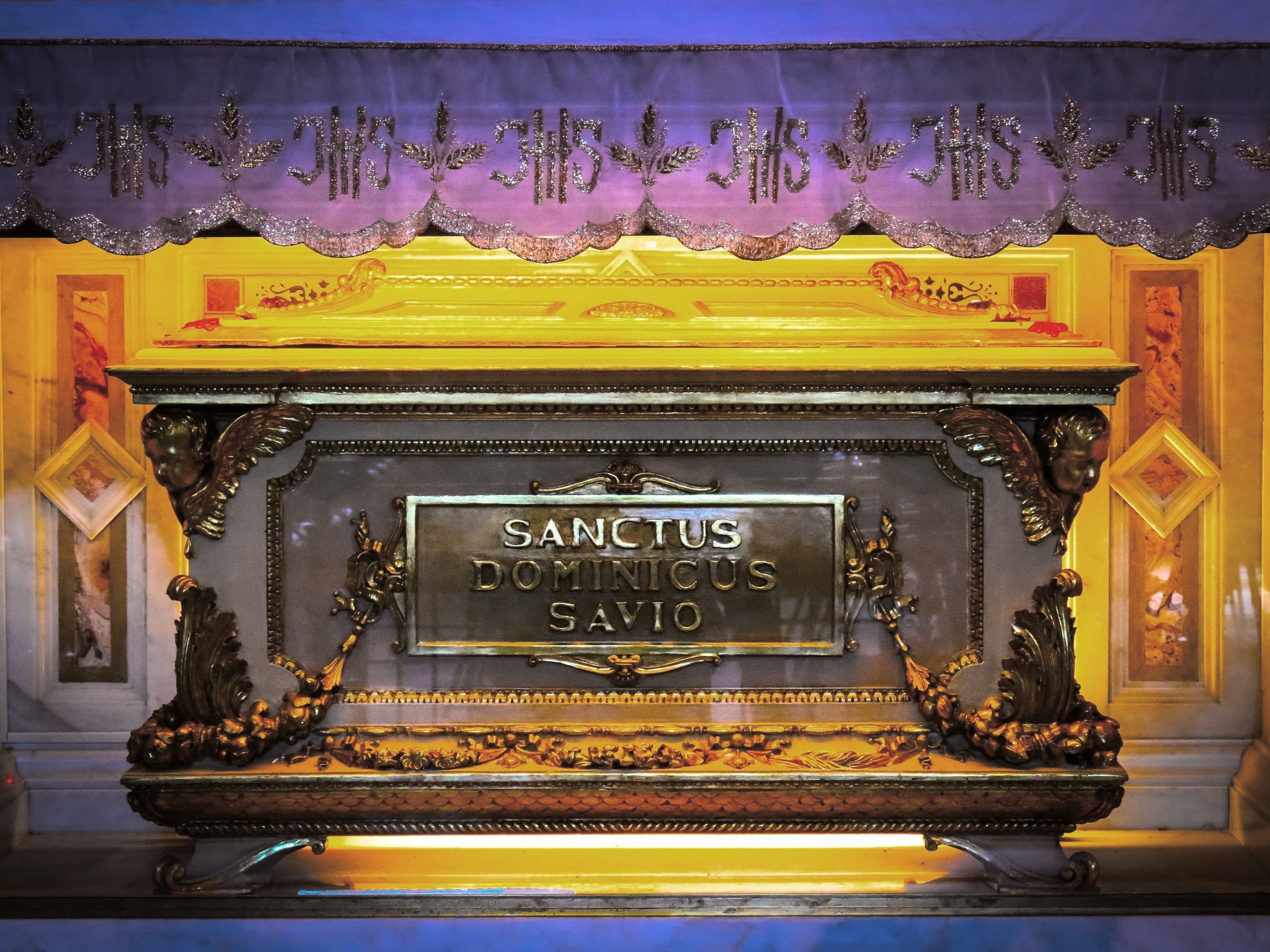
His birthplace is now a retreat house for teenagers and the home where he grew up in Morialdo is now a retreat house for children. The final house in which he lived is the home in Mondonio where the Savio family moved when he was 10 and where he eventually died. Here. you can see his father‘s metal shop and his mother‘s tailoring shop. His tomb is in the Basilica of Mary, Help of Christians in Turin, not far from the tomb of his mentor, teacher and biographer, Saint John Bosco.

Posted in Of the SICK, the INFIRM, All ILLNESS, SAILORS, MARINERS, NAVIGATORS, SAINT of the DAY

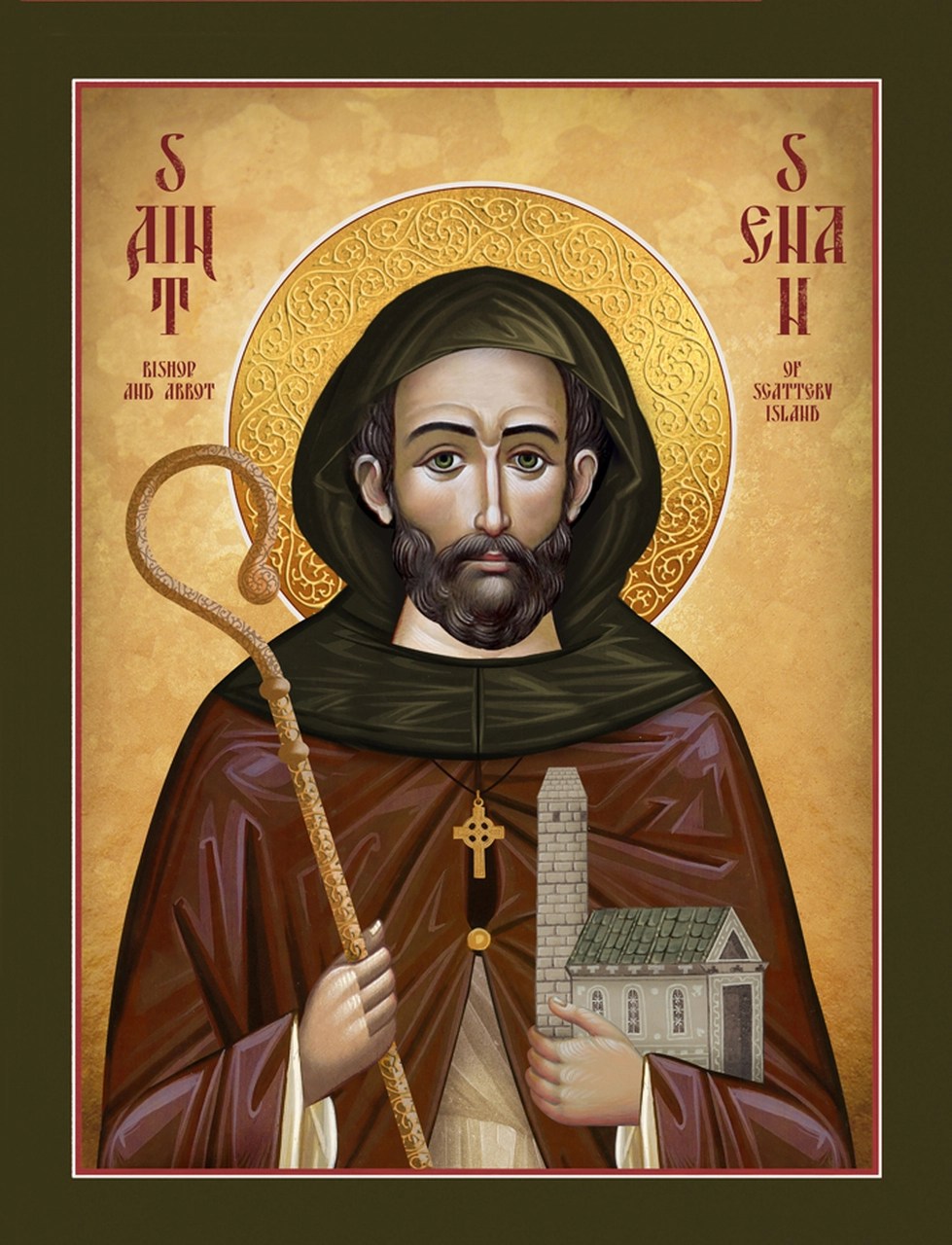
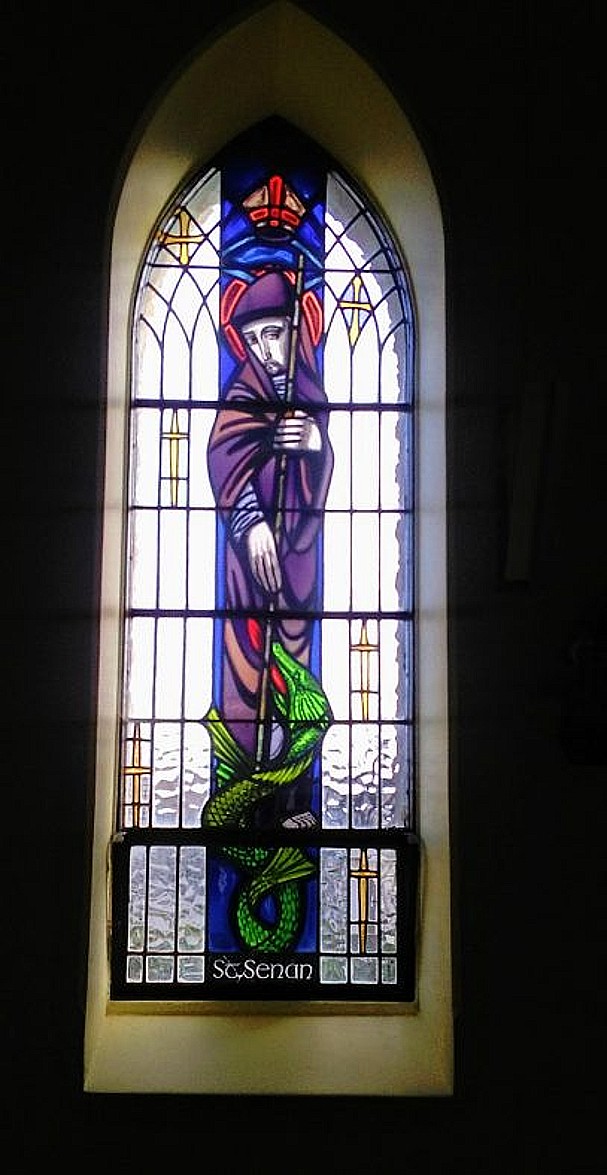
Saint of the Day – 8 March – Saint Senan of Scattery (c 488-541)

Saint of the Day – 8 March – Saint Senan of Scattery (c 488-541) Monk, Abbot, Founder of many Monasteries and Churches. miracle-worker, one of the Twelve Apostles of Ireland. Born in c 488 at Corca Bhaisin, County Clare, Ireland, tradition says that Saint Patrick foretold his birth and saintliness and died on 8 March 544 at Inish Cathaig, Ireland of natural causes. Patronages – sailors and bodily afflictions. Also known as – Senan of Inis Cathaigh, Senames… Additional Memorial – 6 January as one of the Twelve Apostles of Ireland.

Senan was born in Corca Bhaisin, County Clare about 488. It seems that Senan’s family had two farms, one at Moylough and the other at a place called Tracht Termainn.

He placed himself under the Abbot Cassidan and took the monastic Habit. Cassidan was originally from South-west Cork. Senan then went to the Monastery of Kilmanagh (Ossory) to continue his preparations for the religious life. There he was credited with the performance of many miracles. He is next heard of having established a Church at Enniscorthy. The Book of Lismore states that Senan went to Rome and from there to Tours, which was at that time, the great monastic establishment in West Europe. Returning to Ireland,Senan established a Church and Monastery at Inniscarra, in Cork. Returning to his native district, he began his work on the islands of the Fergus . He crossed to Mutton Island, then to Bishop’s Island, south of Kilkee. Finally, about 534, he established himself at Scattery, the low green island about a mile off the coast off Kilrush.

Before Senan arrived on Scattery, also called Inis Cathaig, a legendary monster called “The Cathach” inhabited the island and terrorised the people who were afraid to approach the island. Sometimes referred to as the “peist” or sea-serpent, the Cathach was depicted on a carving in the old chapel of Kilrush as the “Cata.” On his arrival in the island, the Angel Raphael led Senan to the highest hill from which he was able to locate the Cathach. He then faced the monster and ordered it, in the name of the Trinity, to depart from the island. The Cathach obeyed immediately and “neither stopped nor stayed” until he reached the dark waters of Doolough Lake at the foot of Mount Callan.

Little is known of the Saint’s life in Scattery beyond the miracles recorded and the fact that the rule of his monastery was austere in the extreme. Apparently, no woman was allowed to live in or even land on the island. St Cainir, a relation of enans, had a convent to the West of Ballylongford. She crossed the river and hoped to end her days on Scattery Island but Senan forbade her to come ashore. She requested the last sacraments and a grave on the island. Senan agreed to this and she was buried at high water mark.

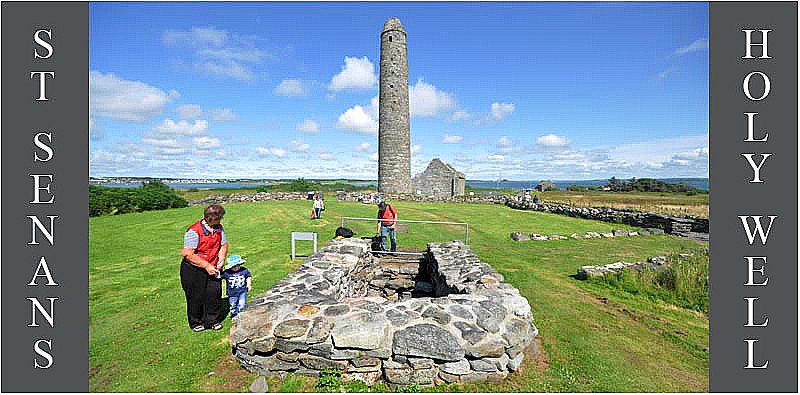
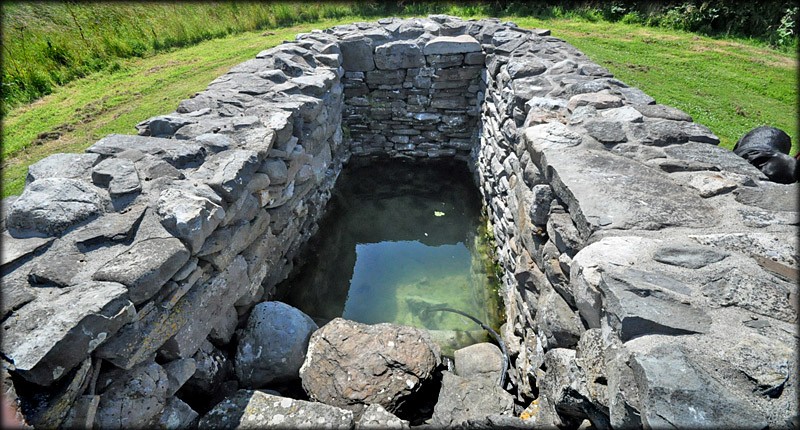
Senan died on 8 March 544. The river Shannon is believed to be named after him. His patron day on 8 March is an important day of pilgrimage to Inis Cathaig. He is buried on Scattery Island. The grave is supposed to be the site of miraculous cures as well as the miraculous holy well. Stones from St Senan’s Bed (his grave) were regarded as relics and a protection against diseases and especially drowning. In the folklore of West Clare the cult of Senan still survives.

In 1864 it is reported, that the Saint appeared in a vision to a paralysed woman who had visited Senan’s grave on the island. He came to her in a dream and asked her why she had come. She told the bearded man she wanted to be cured of her disease and trusted in the intercession of St Senan whom she had invoked. The next morning she awoke and found herself completely healed!

The above statue of St Senan came all the way from Australia and now rests in the parish of Doonbeg in West Clare.

Posted in Against DROWNING, PATRONAGE - MENTAL ILLNESS, SAINT of the DAY

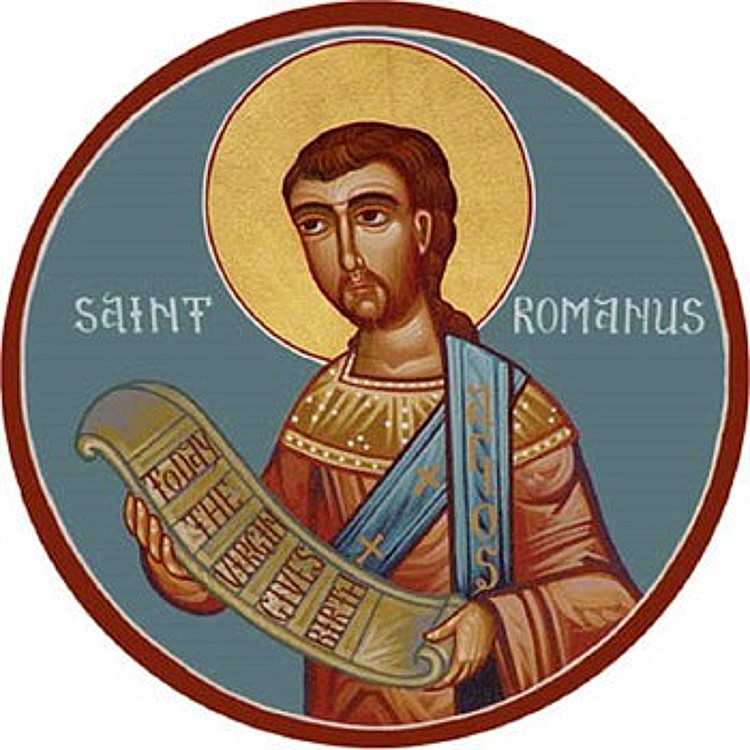
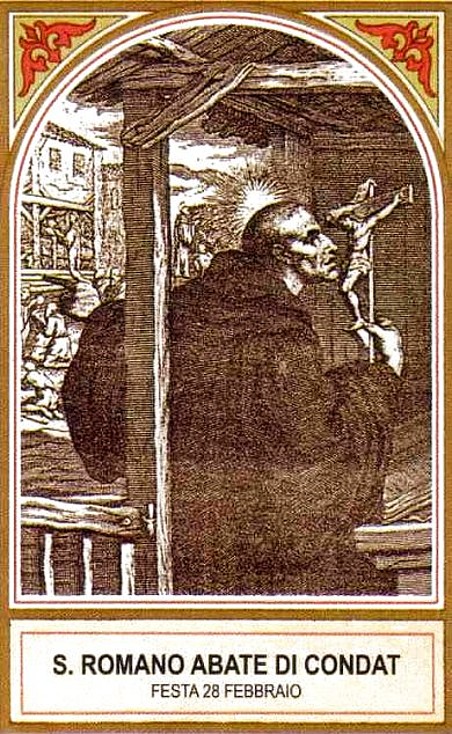
Saint of the Day – 28 February – Saint Romanus of Condat (c 390–c 463)

Saint of the Day – 28 February – Saint Romanus of Condat (c 390–c 463) Hermit, Abbot Born in c 390 at Upper Bugey, France and died in c 465 of natural causes. Patronages – drowning victims, insanity,mentally ill people. Together with his brother St Lupicinus, he founded the Monastery of Condat, that of Lauconne, that of the women of La Balme and that of Romainmôtier . His life was inspired by that of the Fathers of the Thebaid desert.
Romanus was born in the territory of the Sequani , today in the current Diocese of Belley-Ars. His parents sent him to study in the Ainay Monastery in Lyon , built at the confluence of the Saone with the Rhone , where he was a pupil of the Abbot Sabino who gave him a Life of the Desert Fathers. Soon he wished to live the life of a hermit, in order to better realise his ascetic ideal At the age of 35 he then retired to the forests of the Jura Massif , to a place called Condat. He lived as a Hermit, imitating the Desert Fathers of the Thebaid. He had found shelter under a great lonely pine, whose fronds protected him from the elements, feeding on wild fruit and drinking from a cool spring nearby. He had also brought a spade and seeds, which he sowed, obtaining good crops. After a few years his brother Lupicinus, who had remained a widower, joined him. Together they lived as Hermits for a few more years, fasting and doing penance.

The beginnings were difficult, above all due to the cold and humid climate of the place. Romanus and Lupicinus, discouraged by the effort, decided to abandon Condat. After a day of walking they stopped at a farmhouse and asked a woman for hospitality, but she encouraged them to go back, arguing that they should not leave the field free to Satan, who had wanted to chase them away from their hermitage.

After a few years, attracted by the fame of holiness that the few inhabitants of the surrounding area had spread, other young people came, eager to imitate them. In around 445, Romanus built the Monastery of Condat and Lupicinus, not far away, built the Monastery of Lauconne . The two brothers had completely different characters, Romanus was more good-natured and meek, while Lupicinus was austere and severe. They often alternated in the direction of the two Monasteries – when Lupicinus’ severity discouraged his Monks, Romanus intervened to encourage them with his gentleness.

In the two Monasteries a Roman rule was in force, derived from that of St. Basil, St Pachomius and the Monastery of the island of Lerino di Sant’Onorato di Arles. The whole community abstained from eating meat, on rare occasions they ate milk and eggs, dressed in animal skins and wore clogs . A few centuries later, the community founded by Romanus and Lupicinus adopted the Benedictine Rule .

When their sister Lola (or Yole) joined them, they founded for her the female Monastery of La Balme (or La Baume), on a sheer rock on the right bank of the Bienne river, which was soon populated by more than a hundred Nuns. . This Monastery was later called Saint Romain de Roche.

In 444 , the Bishop of Arles Saint Hilary, being in Besançon to depose the Bishop Celidonio, received news of the works of Romanus, he wanted to convene him in Besançon and to give him more authority and official recognition, he Ordained him a Priest but this honour did not change the behaviour of the Saint who continued to remain even more humble and kind with his Monks In 450 , Romanus founded the first Monastery of today’s Switzerland, which then took the name of Romainmôtier, which was active until 1536, when the Protestant reform destroyed it.

It is said that when going on a pilgrimage to the tomb of St Maurice in Saint Maurice-en-Valais , Romanus was surprised by the night near Geneva. He asked for hospitality from two lepers who lived in a hut and who wanted to reject him so as not to infect him but he he was not afraid of the disease and wanted to sleep under their roof. In the morning the two lepers realised that they were completely healed and went to Geneva to reveal their healing. The Genevans, who knew them well, went to look for Romanus and gave him a great celebration. Romanus, being a little confused by their attention, took the opportunity to invite them to convert and do penance.

Shortly after his return to Condat, around 465 Romano died. As he himself had arranged, he was buried in the Convent of La Balme. His relics were immediately the object of great veneration. In the seventh century they were moved to the Church of the Abbey of Condat (which, in the meantime, had been dedicated to Saint Eugendus). In 1522 a fire destroyed the Church and the relics of Romanus and Lupicinus. The few surviving remains were preserved in the Church of Saint-Romain-de-Roche built in the 16th century which replaced the Monastery of la Balme. They are enclosed in a 13th Century Reliquary in the shape of a mausoleum.

Posted in SAILORS, MARINERS, NAVIGATORS, SAINT of the DAY

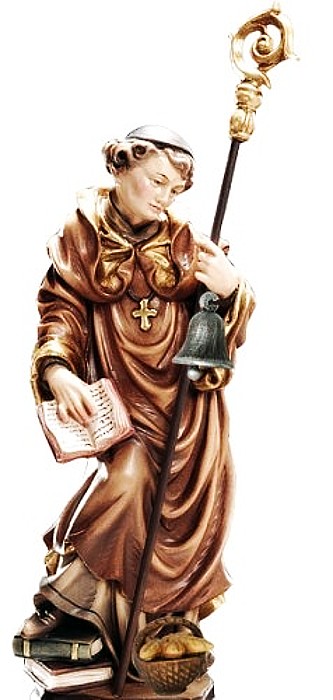
Saint of the Day – 17 February – Saint Constabilis of Cava OSB (c 1070-1124)

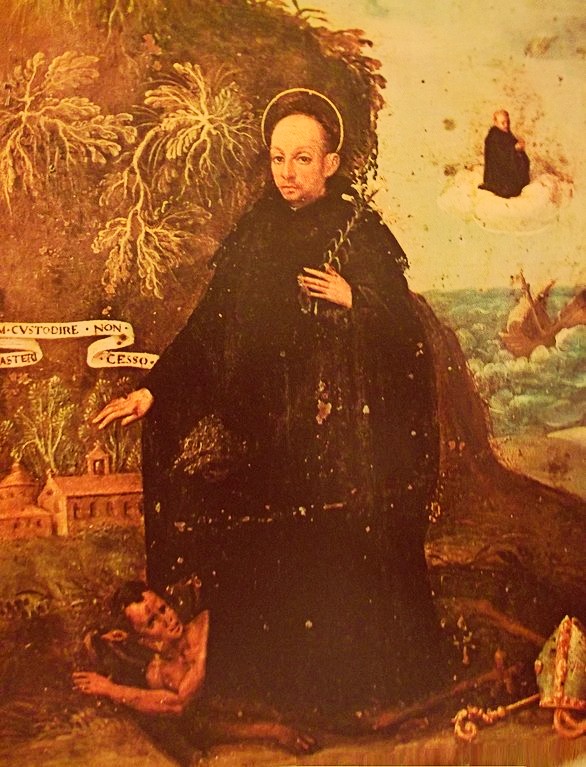
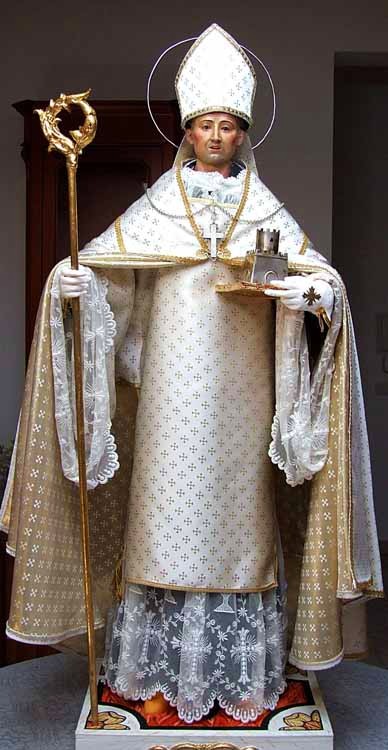
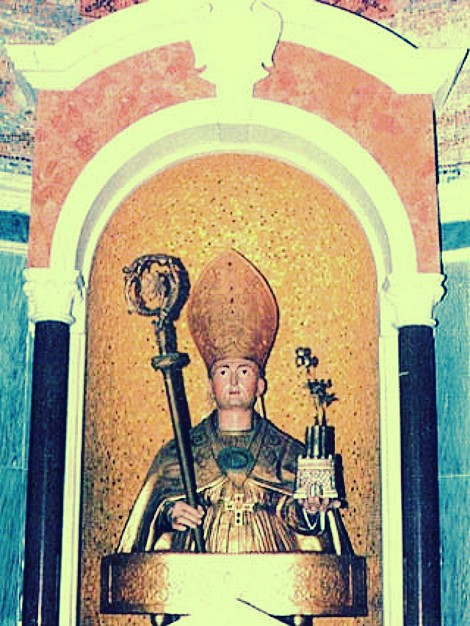
Saint of the Day – 17 February – Saint Constabilis of Cava OSB (c 1070-1124) Abbot, miracle-worker, known as “The Blanket of the Brothers” for his gentle kindness and caring humility for all the Monks in their trials and sorrows. He is the Patron Saint of the Town of Castellabate in Cilento, which he founded in 1123 and whose name clearly indicates it. Born in c1070 at Lucania, Italy and died on 17 February 1124 at Cava de’ Tirreni of natural causes. Patronages – • Castelabbate, Italy, of sailors, since 1979 he has been elevated to Co-Patron of the Diocese of Vallo della Lucania. Also known as – Constabile, Costabile.

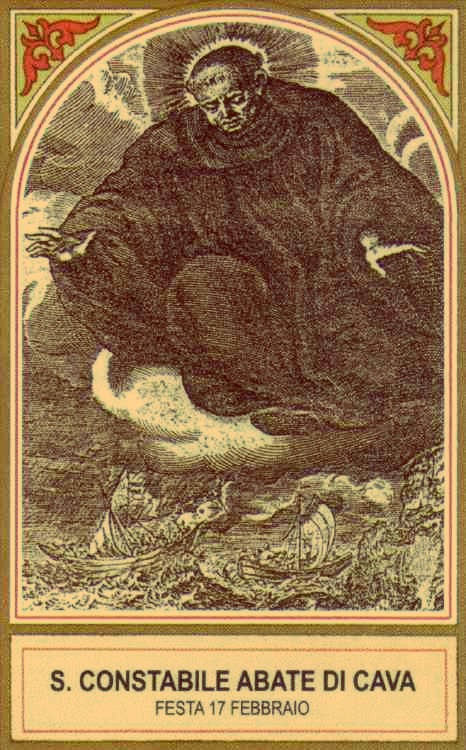
Miracle of the ships saved from wreckage

The Roman Martyrology reads today: “In the monastery of Cava de ‘Tirreni in Campania, Saint Constabilis, Abbot: – for his extraordinary meekness and his charity towards everyone, he was commonly called the “Blanket” of the brothers.

Constabilis was born around 1070 at Tresino, in Lucania to the noble Gentilcore family. At the age of seven, he was entrusted to the care of Abbot of Cava, St Leo I.

He became a Monk at the Abbey, which followed the Benedictine Rule . Constabilis zealously lived the Rule to perfection and was entrusted by the Abbot to manage important negotiations and transactions on behalf of the Abbey.

On 10 January 1118, he was promoted by Abbot St Peter of Pappacarbone to the position of Coadjutor. He subsequently succeeded Peter as the Abbot after the latter’s death on 4 March 1122. His work was carried out with kindness, understanding for each of the Monks and their individual problems, without imposing authoritarian superiority over them. He approached each with humility and gentleness in his administration of the Abbey,.

He died on 17 February 1124 at the age of around 53 and was buried in the part of the Church overlooking the ‘Arsicia’ Cave used by St Alferius. After his death he appeared several times to his successor Abbots, coming to their aid in contingencies, there are records of his miraculous interventions for the salvation of the ships, which later belonged to the famous Abbey. These miraculous intercessions granted him widespread veneration as the protector of sailors.

Protector of Sailors

On 21 December 1893, Pope Leo XIII recognised the ancient verneration and the title of Saint, to the first four Abbots, of the famous Abbey of Trinità di Cava dei Tirreni, founded in the 11th century. They are St Alferius the Founder and first Abbot († 1050), St Leo I (1050-1079), St Peter Pappacarbone (1079-1123) and St Constabilis (c 1122-1124). Their relics rest in the Abbey Church in the Chapel of the Saintly Fathers.’

If you would like to discover St Alferius, his Biography is here:
https://anastpaul.com/2021/04/12/saint-of-the-day-12-april-saint-alferius-of-la-cava-930-1050/

La Trinità della Cava
Posted in CHEFS and/or BAKERS, CONFECTIONERS, SAINT of the DAY

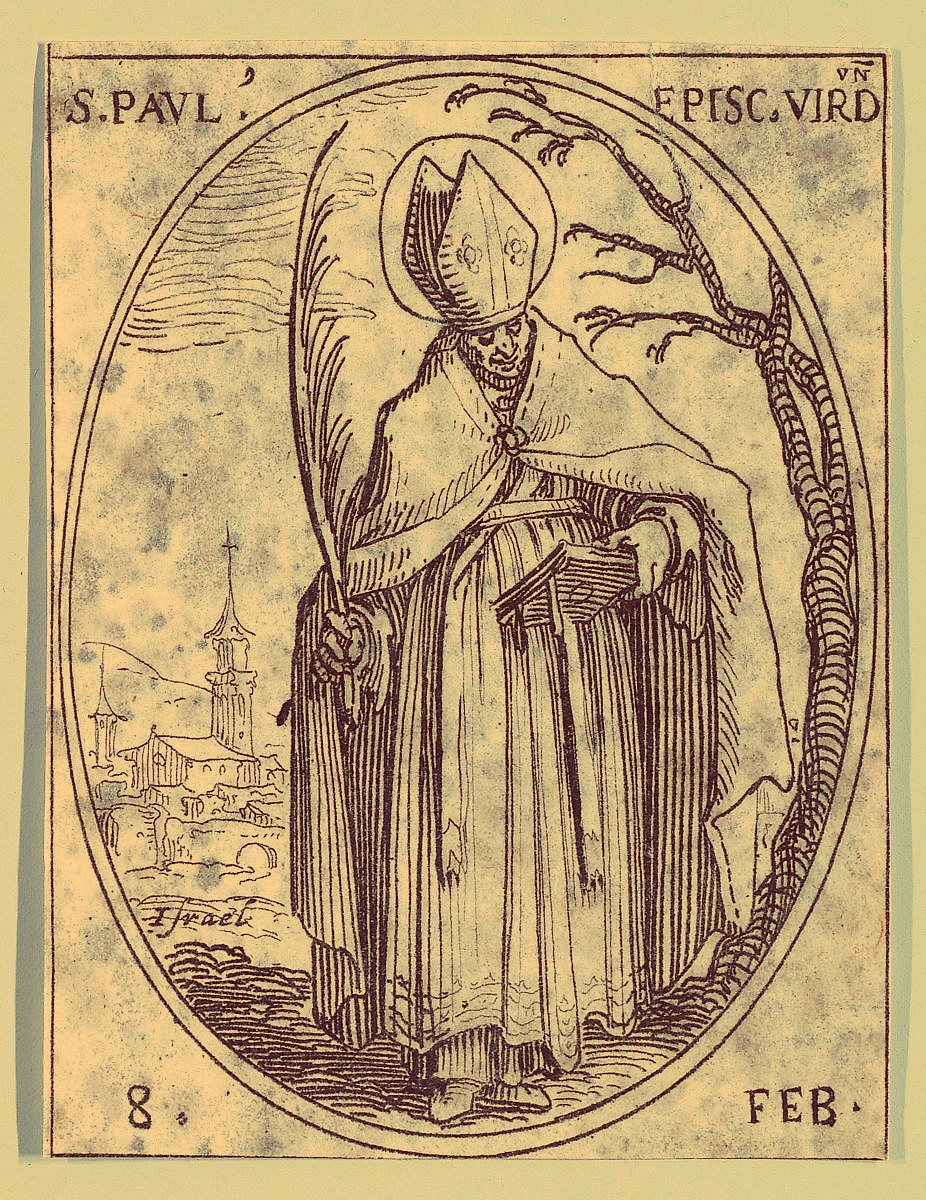
Saint of the Day – 8 February – St Paul of Verdun (c 576-c 648)

Saint of the Day – 8 February – St Paul of Verdun (c 576-c 648) Bishop of Verdun, in the Lorraine region of France from 630 until his death., Abbot. Patronage – Verdun, bakers and pastry chefs. Also known as St Paulus of Verdun.

The Roman Martyrology states: “At Verdun in France, St Paulus, Bishop renowned for miracles.”

Paul was the son of a wealthy family – his name suggests that he was part of the old Gallo-Roman aristocracy. According to St Augustine Abbey’s Book of Saints, Paulus was the brother of Saint Germanus of Paris, although in St Germanus’s Vita we find no reference to a brother, not that this is decisive, considering the little information we have of our ancient Saints.

Paul became a hermit and spent time in the mountains of Paulsberg (named for him in modern France), near Trier in modern Germany. Later he became a Monk at the Monastery at Tholey, Germany, where he was firstly appointed as the Master of the School and then the second Abbot.

In around 630, Paul was named the Bishop of Verdun, by King Dagobert I. According to his Vita he was made Bishop against his will and due to the influence of one of his students, Adalgisel Grimo. Reportedly he found the Diocese in a very poor financial state and was aided by grants from said Adalgisel and the Frankish King of Austrasia.

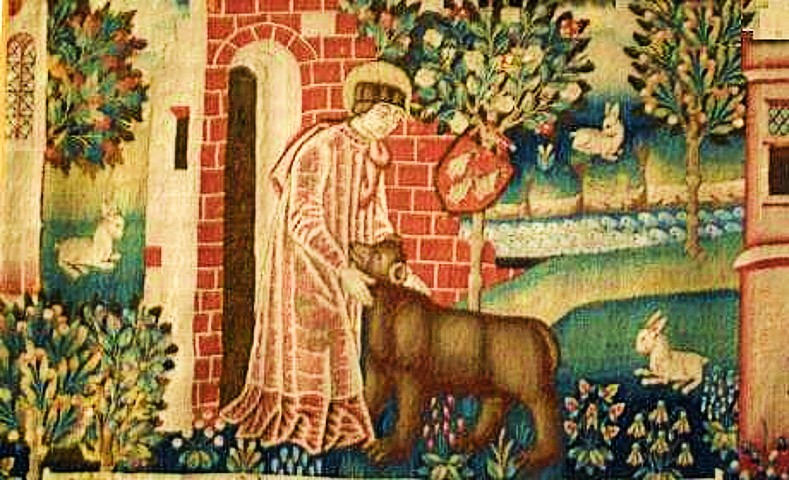
One of his numerous miracles relates, that as Paul was working in the bakery in the Abbey of Tholey when the oven became clogged with ash and malfunctioned. He feared that the bread would not be ready in time for the meal, so he climbed into the burning oven in full habit, cleaned it with his hood, arranged the loaves to be baked and later emerged from the oven with the fully baked loaves. Because of this miracle, Paulus became the Patron Saint of bakers and pastry chefs. On his feast day the “bread of Saint Paul” is distributed annually on the streets of Verdun.

Paul died in c 648 and was buried in the Church of St Saturninus in Verdun, which he had built and which was later renamed St Paul’s after him.

The Abbey of Saint-Paul de Verdun, founded by Bishop Viefrid from 970 to 973 was dedicated to him.

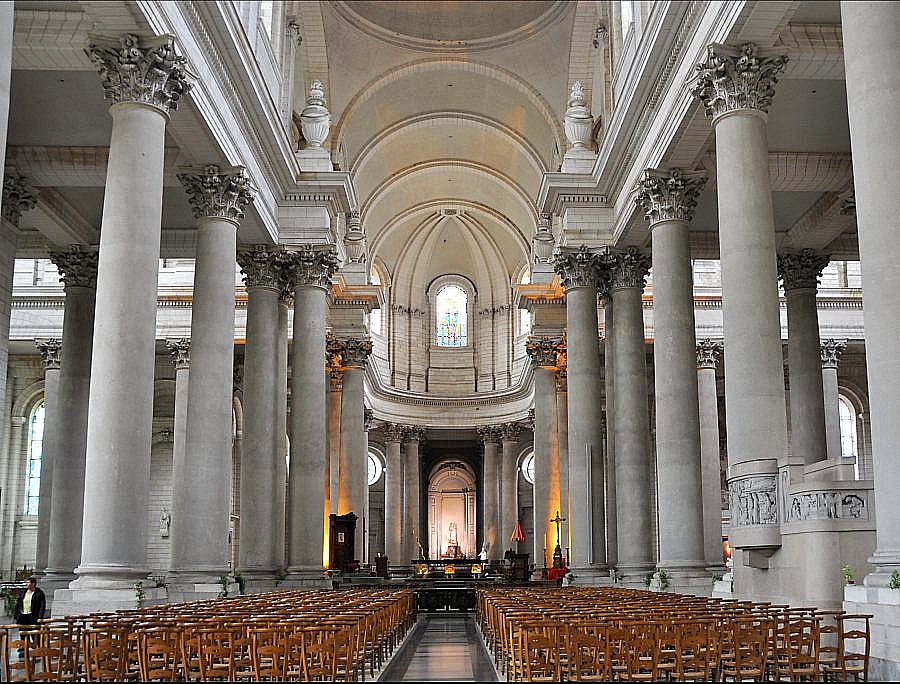
The Abbey of Verdun

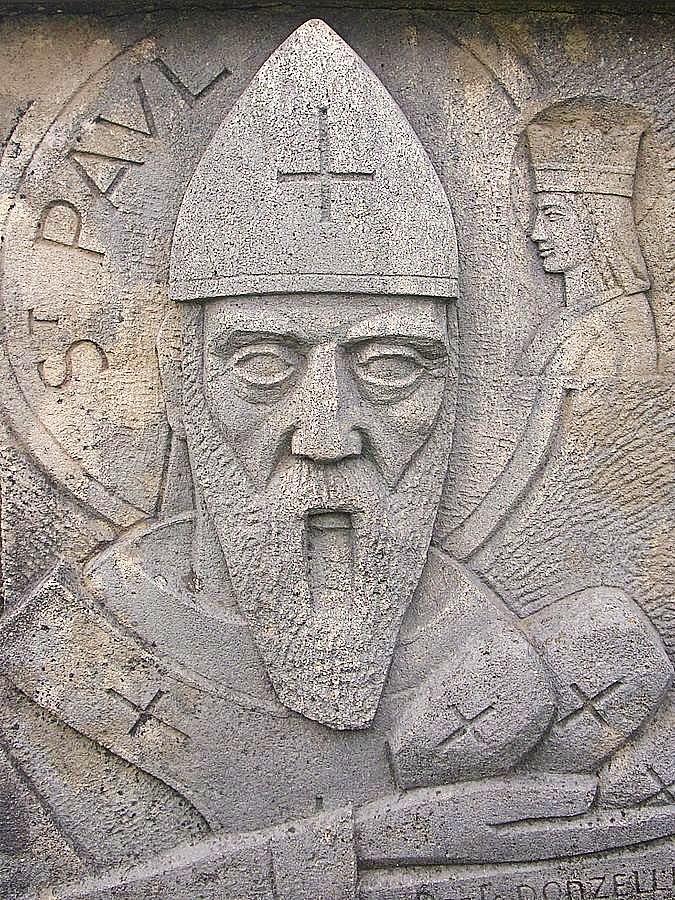
In addition, the “Paul-Cross” was erected in stone a few kilometers from Verdun, at a place called “Le Rozelier”. The Bishop Saint represented there was recognisable as Saint Paulus from the bread that he is holding. The Plague beneath this Cross states:

In the late Ninth Century, the Monks of Tholey translated to their Abbey in Saarland the relics of Saint Paul, Bishop of Verdun, a former Monk of Tholey Abbey, in order to evade the Norman invasion. Here they were stopped by a mysterious and miraculous force. A cross was erected in this place, commemorating the miraculous event and is called the Paul Cross. The Abbey of Saint-Vanne de Verdun established a Priory there in the 12th century. The current Cross and the Altar, which contains a relic of St Paul, were blessed by Monseigneur Petit, Bishop of Verdun, on 14 August 1963.”

St Paul distributing bread from the “St Paul Cross” near Verdun

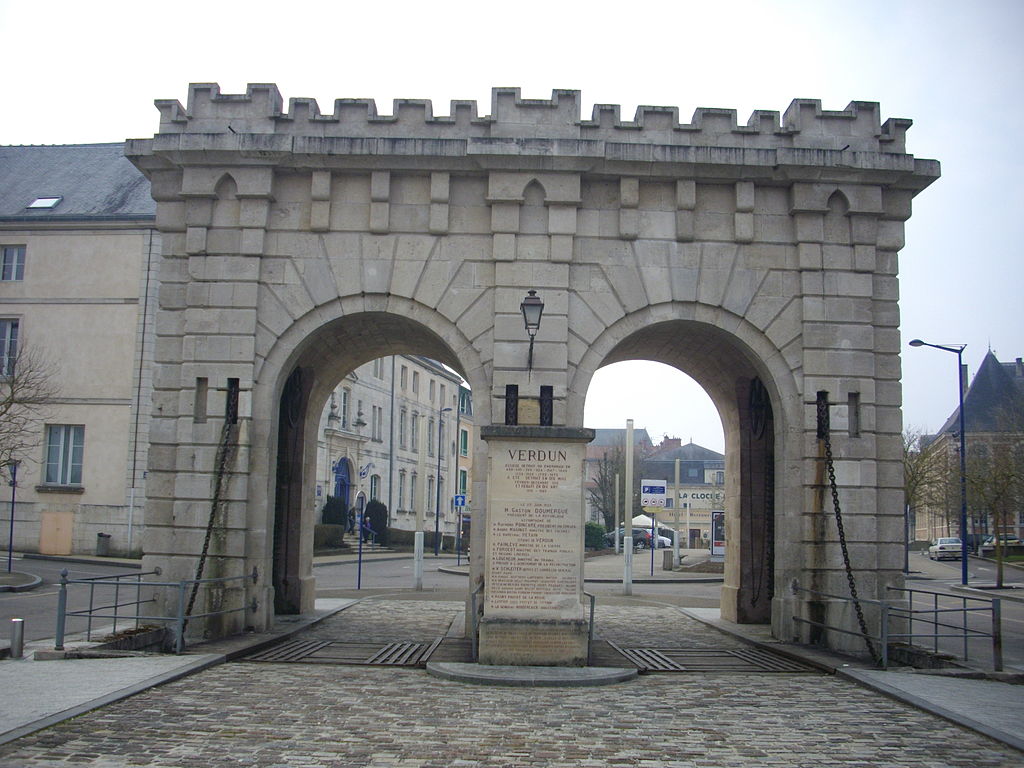
Added to the ramparts of the City of Verdun in the Nineteenth Century is a gate called “St Paul’s Gate.” iI is composed of two arched passages (entry and exit), each one protected by a drawbridge. The Gate allowed the Army conscripts arriving at the Station to enter the City centre and reach the Jeanne d’Arc Barracks. In the 1920s the ramparts around the lower City, weakened by the bombardments of 1916, were pulled down. The only surviving remnants are the Saint-Paul Gate along with the Tour Chaussée. The former has been decorated with commemorative plaques dedicated to victory in the Battle of Verdun and to the reconstruction of the City., believed, of course, to be due to the prayers of their people for the Intercession of the Blessed Virgin of Verdun and the beloved St Paul.

Posted in EYES - Diseases, of the BLIND, SAINT of the DAY

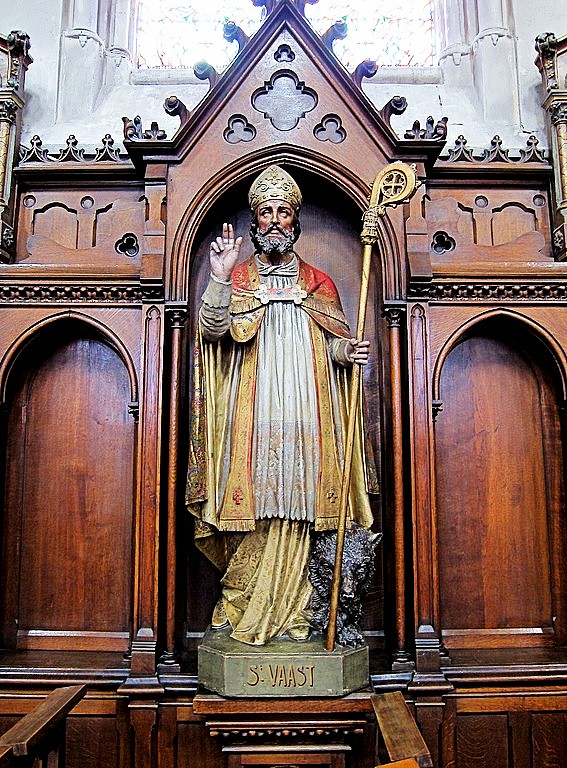
Saint of the Day – 6 February – Saint Vaast of Arras (c 453-539 or 540)

Saint of the Day – 6 February – Saint Vaast of Arras (c 453-539 or 540) The First Bishop of Arras, France, Hermit, Ascetic, Miracle-worker, Advisor to King Clovis. Born in c 453 at Limoges, France and died on 6 February in 539–540 at Arras, France of natural causes. Patronages against eye diseases, of the Diocese of Arras, Boulogne and Saint-Omer, France, of children, of children who late learning to walk. Also known as – Foster, Gaston, Gastone, Vaat, Vedast, Vedasto, Vedastus. Additional Memorials – 2 January (discovery of relics), 7 February (enshrinement of relics), 15 July (translation of relics in Cambrai), 1 October (translation of relics).

The Roman Martyrology reads: “In Arras in Belgian Gaul, today in France, Saint Vedastus, Bishop, who, sent by Saint Remigius Bishop of Rheims to the devastated City, catechised King Clovis, re-established the Church and held it for about forty years and brought to an end, the need of work for evangelisation among the previously still pagan peoples of the region.”

Vaast was a native of the Limoges region, born in the second half of the 5th century. He left his parents as a young man and embarked on a secluded ascetic life as a Hermit, hidden from the world in the Diocese of Toul, France. It was there, near Toul, that he accidentally met King Clovis I who, after defeating the Germans, was returning to his country.

The traditional account of the conversion of King Clovis by St Vaast, says while on the road to Rheims, they encountered a blind beggar at the bridge over the river Aisne. The man besought Vaast’s assistance. Vaast, in this account had already been Ordained a Priest, was inspired to pray and blessed the beggar, at which point the man immediately recovered his sight. The miracle convinced the King to adopt his wife’s religion. Vaast became and remained an advisor to King Clovis. until the King’s death.

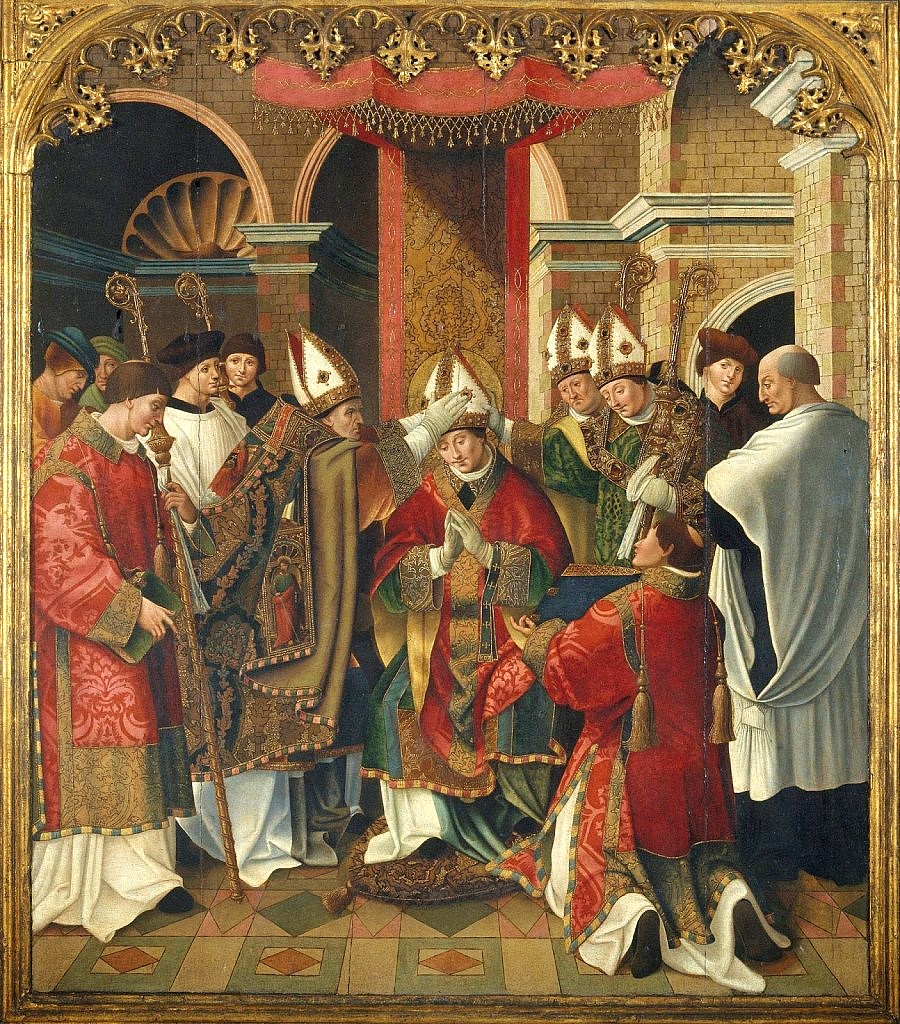
They continued their journey to Rheims, where Bishop St Remigius administered Baptism to the King. On his departure, Clovis recommended his instructor to the Bishop, who, knowing of the Hermit’s moral, devotional and theological qualities, first Ordained him as a Priest and then Consecrated him as the Bishop of Arras. (in the year 500).

The Consecration of St Vaast

This City of Arras was initially sacked by the Huns and the population, already Christian since the Fourth Century, had dispersed during the invasion. Arras was slowly repopulated but its inhabitants had practically returned to paganism. The new Bishop courageously embarked on his missionary work, reorganising his Diocese, converting numerous inhabitants in his many apostolic journeys in the vast territory entrusted to him.

He remained a friend of King Clovis and Queen Clotilde throughout his life and at the same time, he always remained a disciple, as it were, of St Remigius, who became his adviser, guide and trusted example.

After having ruled the Diocese for 40 years, he died on 6 February 539 or 540.
The news concerning the efficacious nature of prayer to Vaast and the many and diverse miracles and prodigies worked by God through his intercession, continued over the centuries. This resulted in three ‘Vitae,’ being written. One of the Vita’s by St Alcuin, recounts that on one occasion, having spent the day in instructing a nobleman, his host would see him on his way with a glass of wine to sustain him but found the cask empty. Vaast bid the servant to bring whatever he should find in the vessel. The servant then found the barrel overflowing with excellent wine, just like at Cana! The image below relates to another miracle for which I cannot find the legend.

St Vaast’s miracle of the beast

His body had many translations, due to the Norman invasion of the City of Arras in the Ninth Century. In December 880, the City was set on fire and its inhabitants massacred but the relics were rescued and hidden at Beauvais which was fortified.

In 667, St Aubert, the Seventh Bishop of Arras, began to build an Abbey for Benedictine Monks on the site of a little Chapel which Saint Vaast had erected in honour of Saint Peter. Vaast’s relics were transferred to the new Abbey, which was completed by Auburt’s uccessor and generously endowed by King Theuderic III, who together with his wife, was afterwards buried there. The relics, in the following centuries, remained in possession of the Abbey of St Vaast until the French Revolution, when the Abbey was sacked, however, the relics miraculously remained intact! They were later transferred to the Cathedral of Arras, where they still are today.

Cathedral of Arras

St Vaast’s cult, since ancient times, is widespread throughout France . It is reported in the litanies of the Saints and he is considered the Founder of the Episcopal See of Arras, for which he is the main Patron. In France he is more widely known as St Gastone.

St Vaast’s Statue at another Church in his honour at Wambrechies, France


Posted in Against STORMS, EARTHQUAKES, THUNDER & LIGHTENING, FIRES, DROUGHT / NATURAL DISASTERS, SAINT of the DAY

Saint of the Day – 5 February – Saint Albinus of Brixen (Died 1005)

Saint of the Day – 5 February – Saint Albinus of Brixen (Died 1005) Bishop of Brixen, Advisor to both Emperors of the Holy Roman Empire, Otto II and Henry II. Born in the 10th century Carinthia, Austria and died on 5 February 1005 in Brixen, Italy of natural causes. Patronages – against drought, the City of Brixen, Italy and the Diocese of Brixen, Italy. Also known as – Albinus of Sabion, Albinus of Bressanone, .lbuin, Alboino, Albuino, Albuinus

The Roman Martyrology: states: “In Bressanone (Brixen) in South Tyrol, commemoration of St Albuino, Bishop, who transferred the Episcopal Chair from Sabion to this seat.”

Albinus was born in the first half the 10th Century. He was the son of Blessed Agatha Hildegardis of Carinthia and Count Paul, Margrave of Carinthia, of the noble and powerful Ariboni family,

As a young man he attended the schools of the Cathedral of Brixen, then entered the clergy and became the Bishop of the City of Sabion, South Tyrol (in modern Italy) around 975.

During his Episcopal term he brought many gifts, lands and properties, endowed both by his family and by the Emperors Otto II and Henry II, in gratitude for his counsel, the latter to whom, Albinus was related, as well as being his close friend. Some of these endowments, for example, were: a property in Regensburg and another in Villach in his native Carinthia, which included a Castle and which was transformed by him, into a Church. This beautiful Church still stands today. Land was also awarded to him in Krain.

In 991 , he moved his Bishopric from Brixen (now Bressanone), closer to the Diocese that the See should govern. Thus he became the last Bishop of Sabion and the First of Bressanone (previously Brixen). He also arranged for the translation of the relics of St Ingenuinus (Died 605) a predecessor Bishop of Sabion.

He died on 5 February 1005, after over 30 years of ruling his See.

At the end of the 11th century he was already venerated as a saint and associated with Ingenuinus. Blessed Artmann (a successor) gathered the relics of both under the same Altar and from that time, their names were inserted together on 5 February in calendars, while their cult extended to the Dioceses of Trent, Freising and Eichstaett.

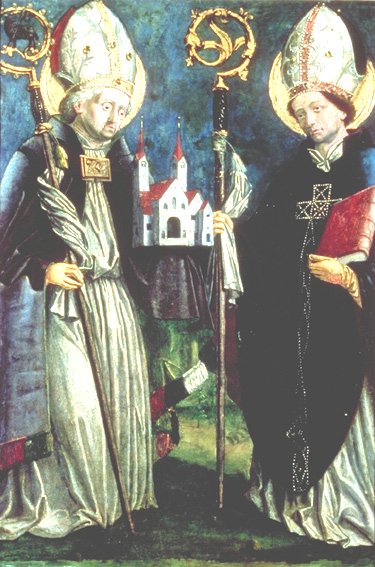
St Ingenuinu left and St Albinus on the right

The relics of the two Saints are kept on the Altar of St Cassian in the Basilica of Bressanone, which also contains a Chasuble which is believed to have belonged to St Albinus, while their heads are kept in two silver reliquaries.

St Ingenuinu left and St Albinus on the right
Posted in EYES - Diseases, of the BLIND, SAINT of the DAY

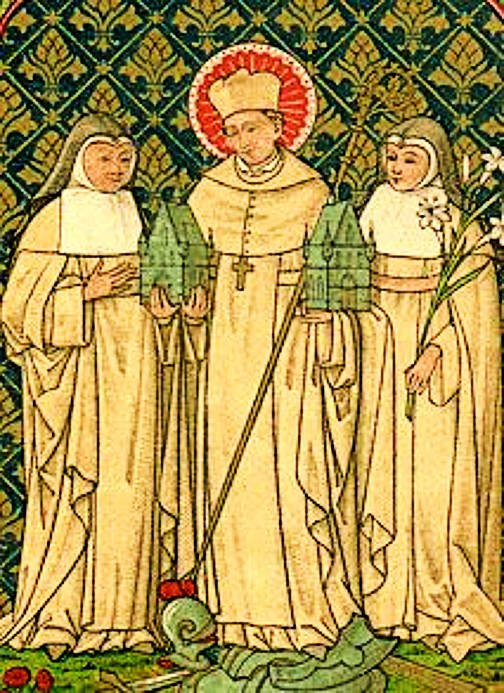
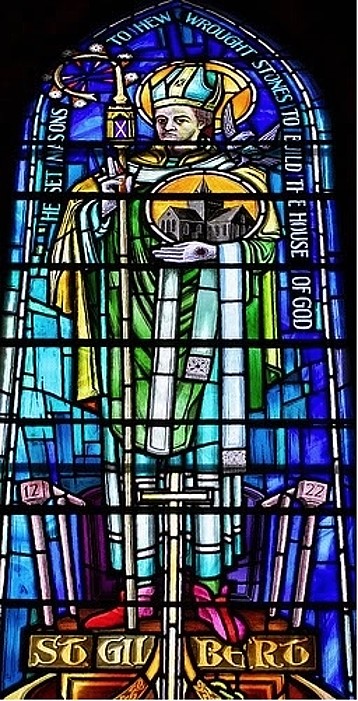
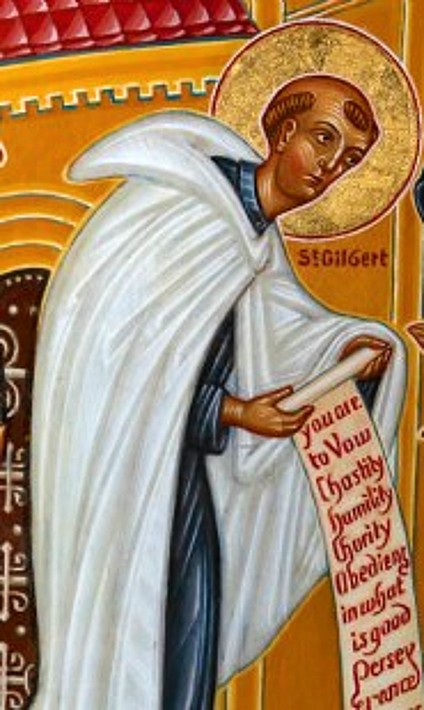
Saint of the Day – 4 February – St Gilbert of Sempringham (c 1083-1189)

Saint of the Day – 4 February – St Gilbert of Sempringham (c 1083-1189) Priest, Founder of the Gilbertine Order, Founder of 13 Monasteries and Churches, schools, homes and hostels for the sick and orphanages, Miracle-worker. Born in c. 1083 at Sempringham, Lincolnshire, England and died on 4 February 1189 at Sempringham, Lincolnshire. The Gilbertines came to an end in the 16th century at the time of the Dissolution of the Monasteries.

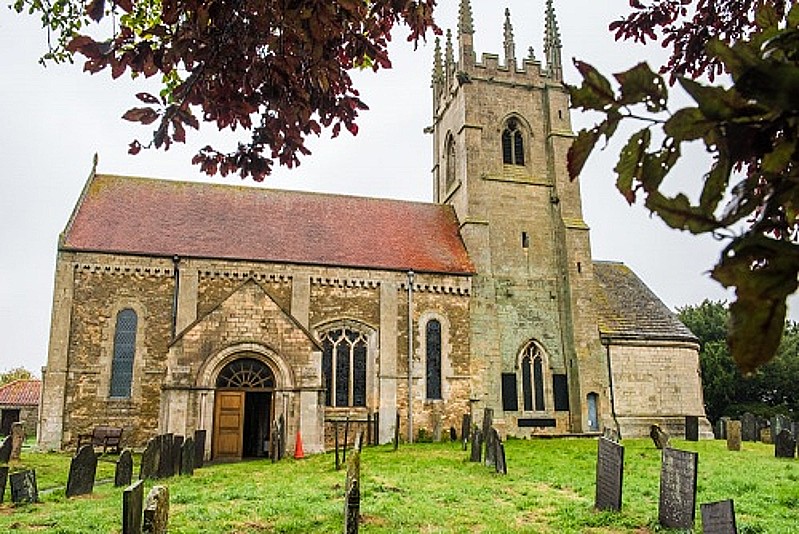
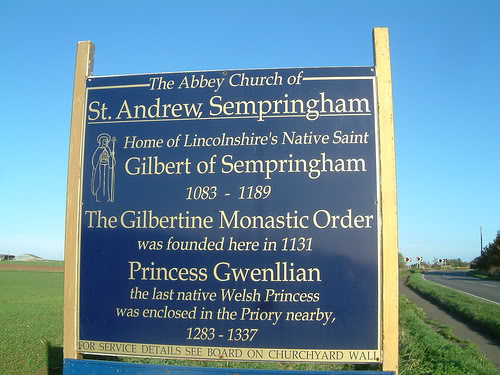
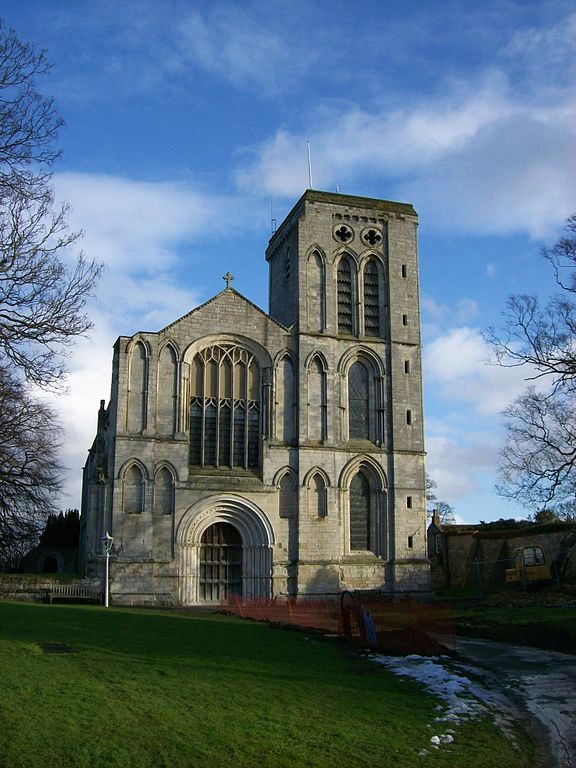
A narrow track from the main road in the Lincolnshire Village of Sempringham leads eventually to the tiny Church dedicated to St Andrew. Standing on a hilltop and noticeably isolated are the visible remains where St. Gilbert of Sempringham began his work, which resulted in the only English monastic Order for nuns, canons,lay brothers and sisters being founded. Little may be known about him but his influence, even after some 900 years, has not been forgotten.

Gilbert was the eldest son of Jocelyn, a Norman Knight and his low born Anglo-saxon wife. He was born around 1083 (in most biographies it is 1083), his mother had a vision that he would be special before his birth. It was a time within memory of the Norman invasion of England and he was half Norman half Saxon.

He is said to have been born with some form of disability and a variety of suggestions have been made as to the form that this was manifest – curvature of the spine being one. Whatever it was, he was unfit for military service and in his very early childhood seemed to have no enthusiasm of learning and is said to have been cared for by his mother and this is maybe why he had such an affinity and kindness for women – in an age when women were not generally allowed an education. At some point, however, his education led him to France . He returned having acquire the title of Master, by which he was known for posterity.

When he returned we see him educating the local children, of both sexes, which was unusual for the time in his district of Lincolnshire. His father was impressed with his education and abilities and his religious manner and presented him with the Churches of Sempringham and West Torrington. At that time, he was a Deacon and for a time, joined the household of the Bishop of Lincoln, firstly with Robert Bloet (died 1123) and with Alexander (1123-1148.

He was not Ordained to the Priesthood until his 40th year, due to his reservations of being unworth and for similar reasons, he refused the position of Archdeacon in the Diocese, which stretched from the Humber to the Thames and was the largest Diocese in Europe .

In 1131 he founded a home for girls whose residence was attached to his Church at Sempringham and hired a Priest named Geoffrey and they shared rooms above the Church entrance. In 1139 he moved his small community to a new site, a field’s distance from his Church and in due course, this became the Motherhouse for the Gilbertine Order of Sempringham. He was later to add lay sisters, Priests and lay brothers. In 1147, Gilbert travelled to France hoping to persuade the Cistercian Order to adopt his community of Nuns. This was refused but with the encouragement of Pope St Eugene III, who himself had been a Cistercian Monk and St Bernard of Clairvaux, he drew up the Institutes of the Gilbertine Order.

Back in England Gilbert became “Master” of the Order by the Popes decree. He was not attached to any particular house and was not the Prior of Sempringham. It was his responsibility to visit all the houses.

At the point when in old age he became blind he transferred, with the consent of the Order, his responsibility to Roger, the Prior of Malton. Gilbert did not take the vows of the Gilbertine Order until he was close to death. He felt that doing so would be a sign of arrogance, as he had written the Gilbertine Rule.

Miracles were attributed to him during his lifetime as well as after his death. When he reached his centennial year he felt compelled to “pass from this life in which he was so greatly broken for penance which he had endured in God’s service but yet all his members were whole,… save his sight.”

On Christmas night in 1188, whilst at his island house of Cadney, he was taken ill. He was given Extreme Unction and carried by his companion Roger and chaplain to Sempringham, a distance of forty miles. On 3 February of 1189, the Priors of all his Convents went to Sempringham to receive his blessing. On the last day, he lay unconscious with Roger (Prior of Malton), his successor, at his bedside. He died the following morning about the hour of Matins. He was buried three days later. His tomb was placed between the Altars of St Mary and St Andrew, on either side of the wall which divided the Priests from the Nuns, so that all alike might see him. During his lifetime Gilbert had built 13 Monasteries, nine for men and women together, four for men only. Besides these he had also built hostels for the poor, the sick, the lepers, the widows and the orphans

Eleven years after his death, Hubert Walter, Archbishop of Canterbury sent the Priors of the Lincolnshire Gilbertine houses of Swineshead, Bourn and Croxton to make inquisition to write an account of his life and his miracles. On 9 January 1201, King John and some of his nobles, visited Gilbert’s tomb. The Abbots arrived the same day and were satisfied as to the truth of the miracles . The King, Archbishop, Bishops and the three Priors sent letters to Pope Innocent III, asking for the Canonisation of Gilbert of Sempringham. The Pope decreed a three day’s fast on the whole Order and a further investigation into the life and miracles of Gilbert; the fast took place, on24 September 1202 with the inquisition on the third day.

Sempringham Abbey

Five canons and six men cured of infirmities by Gilbert, set out for Rome arriving on 31 December 1202 . The Pope gave the decree on 11 January and the feast of St Gilbert was commanded to be on h February, The Papal Bull was issued on 30 January 1202 and sent to the two Archbishops (Canterbury & York) and the Gilbertine Order.

The occasion of the translation of St Gilbert’s relics is detailed in depth “marked by the manifestations of bright lights, sweet odours and incorrupt clothing.” Additionally the Archbishop of Canterbury was privileged with a cure from illness which threatened to prevent him continuing with the lengthy ceremonies. The Archbishop issued an indulgence of 40 days and an additional one of 169 days from Bishops assisting at the translation, to all those visiting the Shrine or making grants to the priory.

In the centuries which have followed the life and death of St Gilbert of Sempringham, little is now visible of the Convents and Monasteries that he founded. The Priory Church of Malton in Yorkshire is still in use, Chicksands, however, has the most substantial remains of a cloister of the twenty five that were built in England .
In 1984 a group of parishioners met at the Cistercian Abbey of Mount St Bernard , Leicestershire. As a result, an apostolate was formed, “The Oblates of St. Gilbert,” who meet regularly to recite the Gilbertine liturgy and exercise charity for the needy.

Malton Priory
Posted in FEASTS and SOLEMNITIES, SAINT of the DAY, St PAUL!, STOMACH DISEASES and PAIN, INTESTINAL DISORDERS, The APOSTLES & EVANGELISTS

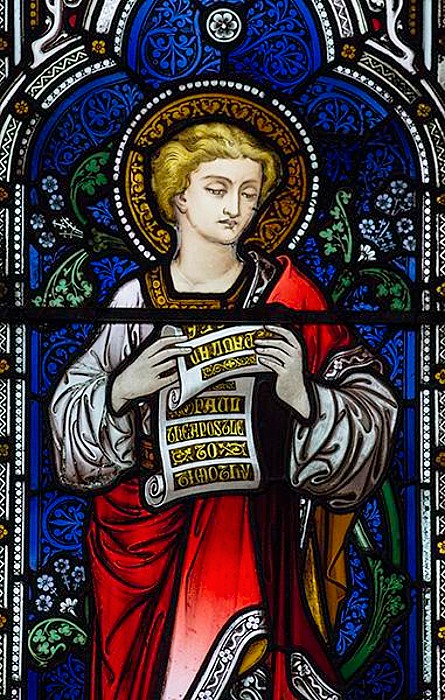
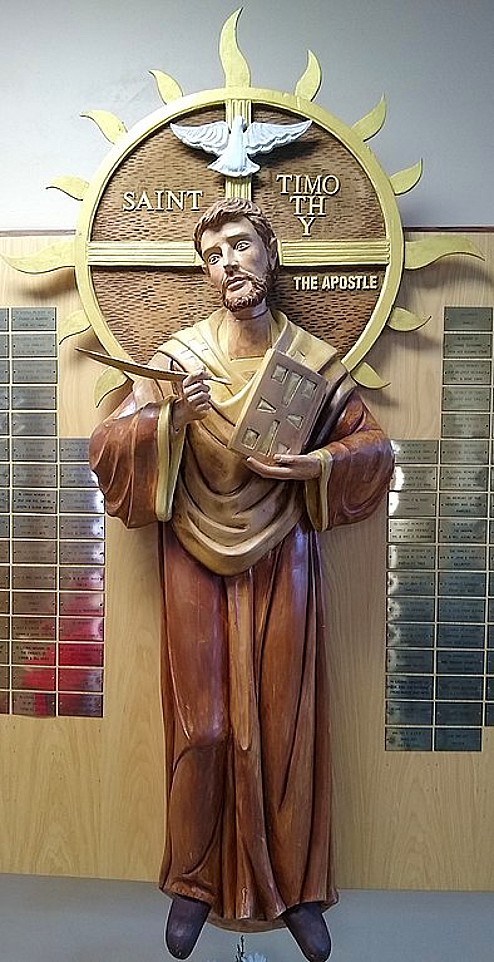
Saint of the Day – 24 January – Saint Timothy (Died c 97)

Saint of the Day – 24 January – Saint Timothy (Died c 97) Disciple of St Paul, Bishop of Ephesus and Martyr, Confessor, Missionary. Died by being stoned to death in c 97. Patronages – against intestinal disorders; of Termoli, Italy. Also known as – Timotheus. Additional Memorials – 26 January (Novus Ordo), 23 January (Australia), 27 January (Norway).

The Roman Martyrology states of St Timothy today: “The birthday of St Timothy, disciple of the Apostle, St Paul, who consecrated him Bishop of Ephesus. After many combats for Christ, he was stoned for reprehending those who offered sacrifices to Diana and shortly after, went peacefully to rest in the Lord.”

St Timothy, the beloved disciple of St Paul, was of Lycaonia and probably of the City of Lystra. His father was a Gentile but his mother, Eunice, was a Jewess. When Paul and Barnabas first visited Lystra, Paul healed a person crippled from birth, leading many of the inhabitants to accept his teaching. When he returned a few years later with Silas, Timothy was already a respected member of the Christian community as were his mother and grandmother Lois and St Paul commends their faith. Timothy had made the holy scriptures his study from his childhood. In 1 Corinthians 16:10, there is a suggestion that he was by nature reserved and quiet: “When Timothy comes, see that you put him at ease among you, for he is doing the work of the Lord.”

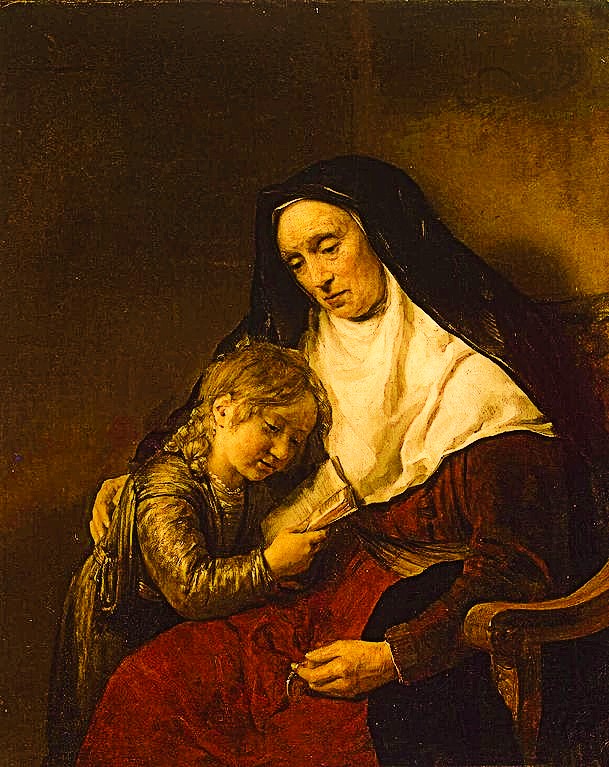
Rembrandt’s Timothy and his grandmother, 1648.

Timothy’s father was a Greek Gentile. Thus Timothy had not been circumcised and Paul now ensured that this was done, according to Acts 16:1-3, to enable Timothy’s acceptability to the Jews, who they would be evangelising. St Chrysostom here admires the prudence, steadiness and charity of St Paul and we may add, the voluntary obedience of our disciple, Timothy.

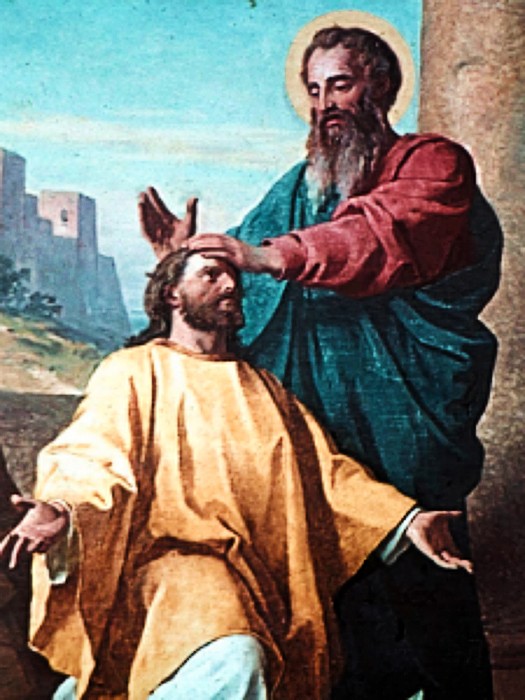
After he was circumcised, St Paul, by the imposition of hands, committed to him the ministry of preaching, his rare virtue making ample amends for his want of age. From that time the Apostle regarded him not only as his disciple and most dear son but as his brother and the companion of his labours. He calls him a man of God and tells the Philippians, that he found no-one so truly united to him in heart and sentiments, as Timothy.

Timothy became St Paul’s disciple and later his constant companion and co-worker in preaching.[18] In the year 52, Paul and Silas took Timothy along with them on their journey to Macedonia. Augustine extols his zeal and disinterestedness in immediately forsaking his country, his house, and his parents, to follow the apostle, to share in his poverty and sufferings.

Timothy may have been subject to ill health or frequent ailments” and Paul encouraged him to “use a little wine for your stomach’s sake,” hence his patronage of stomach ailments,”

When Paul went on to Athens, Silas and Timothy stayed for some time at Beroea and Thessalonica before joining Paul at Corinth.

Timothy’s bond with Paul was close. Timothy’s name appears as the co-author on 2 Corinthians, Philippians, Colossians, 1 Thessalonians, 2 Thessalonians and Philemon. Paul wrote to the Philippians about Timothy, “I have no-one like him.”

When Paul was in prison and awaiting martyrdom, he summoned his faithful friend Timothy for a last farewell.

That Timothy was jailed at least once during the period of the writing of the New Testament is implied by St Paul in Hebrews when he mentions Timothy’s release at the end of the epistle.

Although not stated in the Scriptures other sources have records of the Apostle’s death. The apocryphal Acts of Timothy (5th Century) states that in the year 97, the 80-year-old Bishop tried to halt a procession in honour of the goddess Diana by preaching the Gospel. The angry pagans beat him, dragged him through the streets and stoned him to death.

From the 13th century until 1969 the feast of Timothy (alone, that is without St Titus whose feast day is 6 February) is today, 24 January, the day before that of the Conversion of Saint Paul.

In the 4th century, the relics of Timothy were transferred from Ephesus to Constantinople and placed in the Church of the Holy Apostles near the tombs of Saints Andrew and Luke. In the 13th century, the relics seem to have been taken to Italy by a count returning from the crusades and buried, around 1239, in the Termoli Cathedral. The remains were re-discovered in 1945, during restoration works.

Posted in SAINT of the DAY, STOMACH DISEASES and PAIN, INTESTINAL DISORDERS

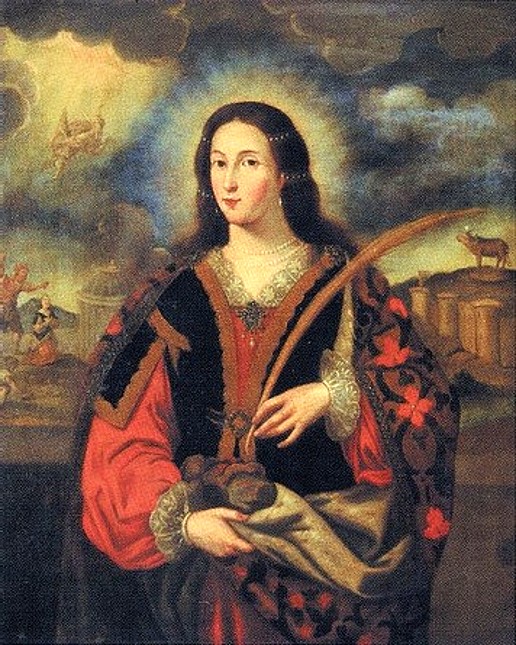
Saint of the Day – 23 January – St Emerentiana (Died c 301) Virgin, Martyr

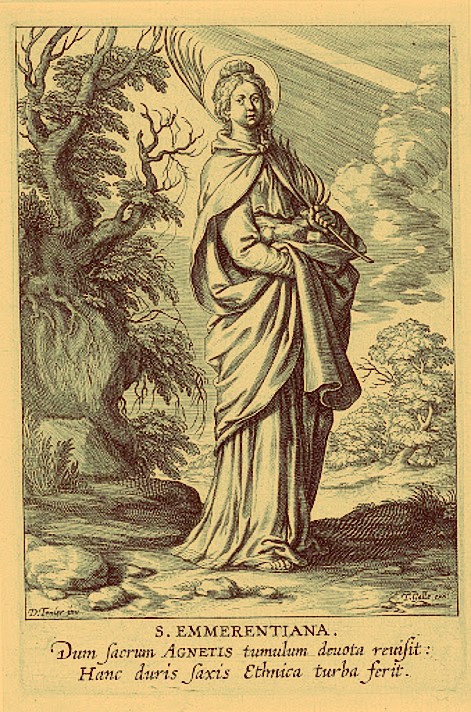
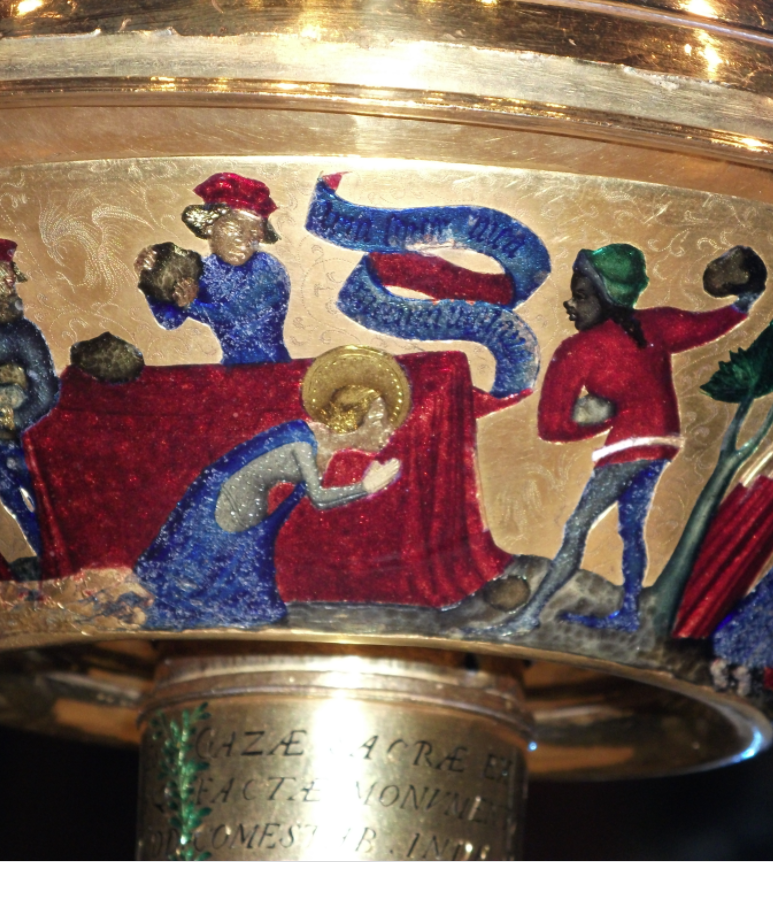
Saint of the Day – 23 January – St Emerentiana (Died c 301) Virgin, Martyr, Foster Sister pf St Agnes, Catechumen. Also known as – Emerentia. Died by being stoned to death in c 304 at Rome, Italy. Patronages – against abdominal pains, stomach ailments, against colic.

The Roman Martyrology states: “At Rome, the holy Virgin and Martyr, Emerentiana. Being only a Catechumen, she was stoned to death by the pagans, whilst praying t the tomb of St Agnes, her Foster Sister.”

An unknown author of the 5th century. added to the Latin Passio of St Agnes, a third chapter that dwells on the funeral of the Saint, on her appearance to her parents, eight days after her death and on the foundation of the Basilica built in her honour by St Costanza, daughter of Constantine.

Among the faithful who flocked to St Agnes’ funeral is also remembered “Emerentiana.”

A sudden attack by fanatical pagans scattered the Christians. Emerenziana, instead of fleeing, courageously addressed the assailants but ended up being stoned to death. The parents of St Agnes buried her body nearby on the limits of their property. There is no doubt, the author concludes, enunciating the doctrine on the Baptism of blood, that Emerenziana was Baptised in her blood, having died for the defence of justice, confessing the Lord.

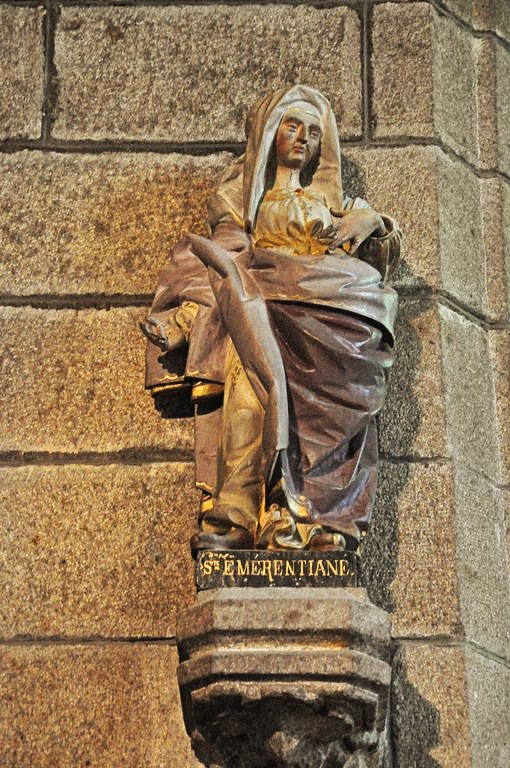
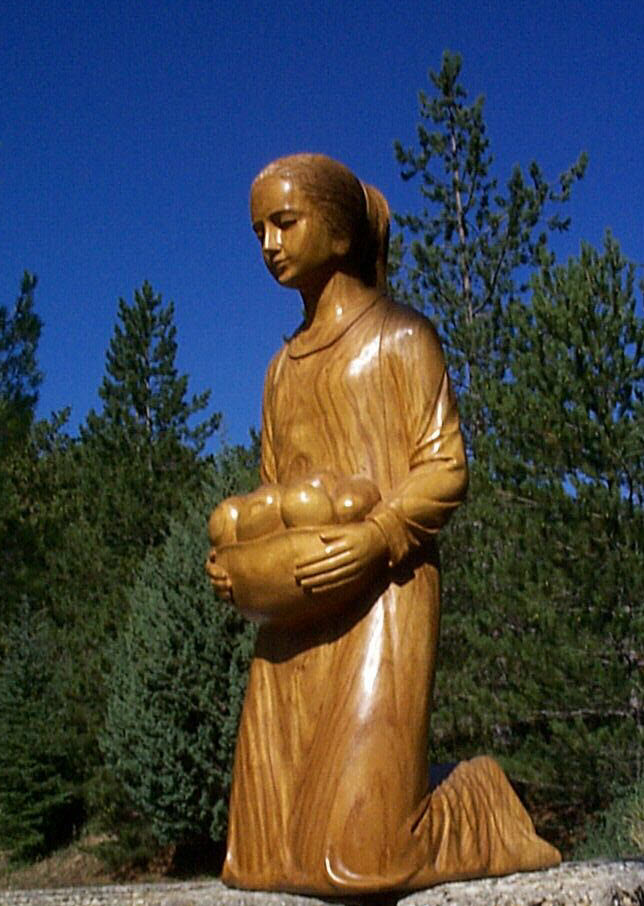
Emerentiana is represented as a young girl who either has stones in her lap and lilies in her hand, or as being stoned to death by a mob. Her tomb is inow n the Church of St Agnes outside the walls, in Rome. An Altar dedicated to her with a marble relief by Ercole Ferrata depicting her Martyrdom is in St Agnes in Agone.

There is another Chapel dedicated to St Emerentiana at the Marian Shrine of Notre Dame de Vie. Venasque, France, as a special Patron of the Secular Institute of Our Lady of Life. The Statue below resides in this Chapel.

Posted in Against STORMS, EARTHQUAKES, THUNDER & LIGHTENING, FIRES, DROUGHT / NATURAL DISASTERS, SAINT of the DAY

Saint of the Day – 20 January – Saint Henry of Uppsala (Died c 1156) Martyr,

Saint of the Day – 20 January – Saint Henry of Uppsala (Died c 1156) Martyr, Bishop of Uppsala, (then in eastern Sweden), Missionary. Born in England and died struck with an axe in c 1156 at Nousis, Finland. Patronages – against storms, of Finland. Also known as – Henry of Finland. Henry of Sweden, Heikki, Henrik. Additional Memorial – 18 June (translation of his relics).

According to his Vita (the legend of his life), which was written nearly one hundred years after his death, Henry was born in the early twelfth century and reigned in the See of Uppsala during the time when King Saint Eric of Sweden (also a Martyr) ruled the country. Apparently, Bishop, Henry and the Monarch were good friends and brothers in the Faith and Henry’s biographer blissfully describes this period in Sweden, as Christendom at its finest.

Turning his attention eastward, King Eric, decided to do battle with the pagan Finns, who were separated from Uppsala by the Gulf of Bothnia. Some legends attribute Eric’s campaign against the Finns as retaliatory measures for their plundering activities in Sweden. Other sources say that Eric and Henry worked in tandem and their motivations were largely evangelical. By conquering the Finns, the Bishop and the King hoped to win them over the Christianity.

Whatever their true motivations, King Eric and Bishop Henry conquered Finland and subsequently baptiSed the locals and built Churches. The Catholic Cathedral in Helsinki, Finland’s Capital City, is named in Henry’s honour, to recognise the credit that Finnish Christians give to this saintly Bishop for giving them their faith.

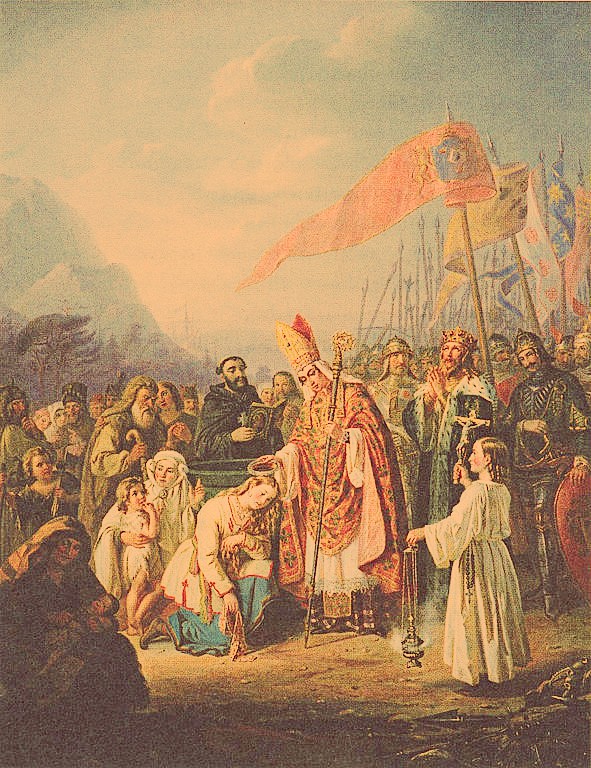
Bishop Henry Baptises the Finns at the spring of Kuppis.

King Eric returned to his home in Swede, but Henry stayed in Finland, as he loved serving as a Missionary in Finland, evangelising and converting numerous numbers.

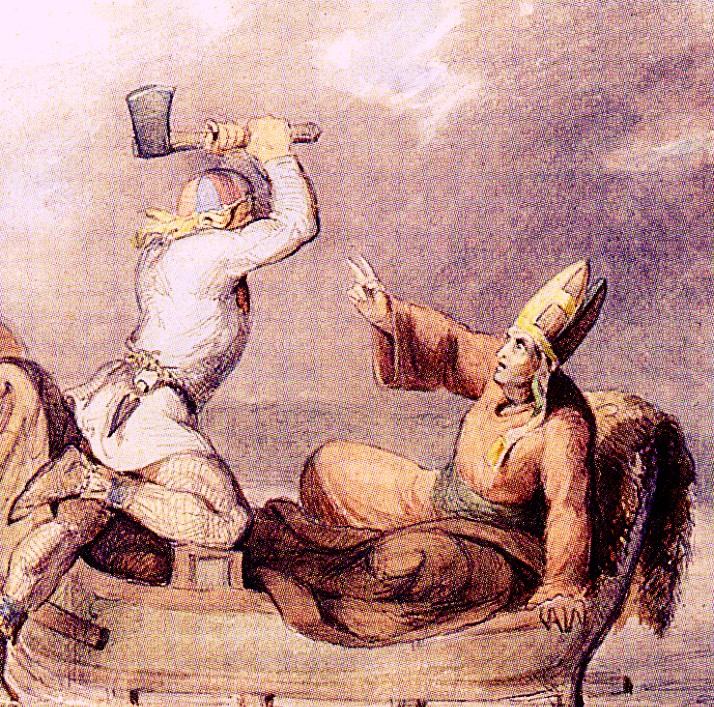
Henry was murdered by a soldier named Lalli. Lalli was a Baptised Christian who had murdered another soldier. After examining the case, Henry excommunicated Lalli, who flew into a rage and struck Henry with an axe. The murder of Henry is believed to have occurred in the year 1156. Immediately after Henry’s death, his legend records, many miracles began to occur around his tomb and in the surrounding towns – children were raised from the dead, a blind woman’s eyesight was restored, fishermen survived terrible storms at sea.

St Henry is an important figure in the medieval history of Finland and there are a plethora of colourful poems and legends written about his life.

Devotion to St Henry, which spread throughout Finland over subsequent centuries, is a beautiful testament to the pride that countries throughout the globe have taken in their origin stories of the brave men and women who have brought the Good News of Christ to their homeland.

Henry was buried at buried at Nousis in Finland and on 18 June 1300 his relics were translated to Totku but they were stolen by the Russian troops in 1720.

He was Canonised and declared Patron of Finland in 1158 by Pope Adrian IV, who had also been a Missionary in the area.

Posted in HORSES - and sick horses, JOCKEYS, all HORSE-related workers, SAINT of the DAY

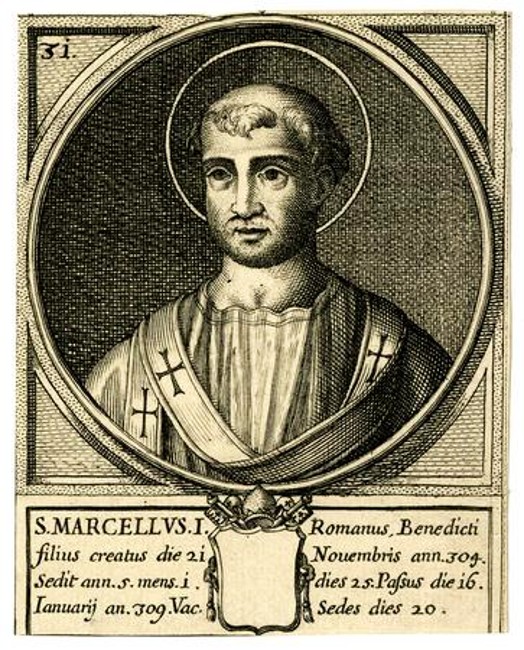
Saint of the Day – 16 January – Saint Pope Marcellus I (Died 309)

Saint of the Day – 16 January – Saint Pope Marcellus I (Died 309) Papal Ascension May-June 308. Also known as – Marcel, Marcelo. Patronage – Stablemen.

Nothing of Marcellus’ life before his papacy has survived the centuries. He became Pope at the end of the persecutions of Diocletian in aound 3089. The persecutions had disrupted the Church so much, that there had been a gap of over a year without a Pope.

Once he was elected, he faced several challenges, including reconsituting the clergy, which had been decimated and whose remnant had practiced their vocation only covertly and with the expectation of martyrdom. He worked hard to recover and welcome back all who had denied the faith in order to keep from being murdered.

When a group of the apostatised, known as the Lapsi, refused to do penance, Marcellus refused to allow their return to the Church. Some of these caused such civil disruption that Emperor Maxentius exiled the Pope in order to settle the matter.

Legend says that Marcellus was forced to work as a stable slave as punishment, however we do know that he died of the terrible conditions he suffered in exile and is considered a Martyr because of that.

The account in the Liber Pontificalis continues:
But although he served many days in the stable, he did not cease his service to the Lord with prayers and fastings. Moreover, in the ninth month, all his clergy came by night and removed him by night from the stable. A certain matron and widow whose name was Lucina, who had lived with her husband Marcus for 15 years and had been 19 years a widow, received the blessed man. And she dedicated her house as a Church in the name of the blessed Marcellus and there day and night the Lord Jesus Christ was confessed with hymns and prayers.

This is the Church known in modern times as San Lorenzo in Lucina where a Basilica was subsequently built in the mid-4th century, restored and embellished numerous times throughout the centuries. Traces of the original Roman structure may be seen amidst the foundations even to this day.

The Liber Pontificalis continues:
But Maxentius heard of it and sent and seized the blessed Marcellus a second time and gave orders that in that very Church, boards should be laid down and the animals of the stable should be collected and kept there and the blessed Marcellus should tend them. And he died in the service of the animals, clad only in a hair shirt.

And the blessed Lucina took is body and he was buried in the cemetery of Priscilla on the Via Salaria, 16 January.

And the Bishopric was empty 20 days.

Lucina herself was condemned by proscription.

The remains of the Martyred Pope were later transferred to the Basilica of San Marcello al Corso in Rome. An epitaph of Pope Saint Marcellus, written by Pope Damasus about 80 years after Marcellus’s Martyrdom, was found in the cemetery of Priscilla.

Posted in Against STORMS, EARTHQUAKES, THUNDER & LIGHTENING, FIRES, DROUGHT / NATURAL DISASTERS, All THEOLOGIANS, Moral Theologians, Of PILGRIMS, Of the SICK, the INFIRM, All ILLNESS, Of TRAVELLERS / MOTORISTS, PATRONAGE - HEADACHES, PATRONAGE - PRISONERS, PATRONAGE - TOOTHACHE and Diseases of the TEETH,, of DENTISTS, SAINT of the DAY

Saint of the Day – 15 January – Saint Romedius of Nonsberg (Died 4th Century or 11th Century)

Saint of the Day – 15 January – Saint Romedius of Nonsberg/theologians Hermit, Penitent., Pilgrim. Born in Thaur, Tyrol, Austria and died in the 4th Century in Salzburg, Austria of natural causes. Also known as – Romedio of Hohenwart, Romedio of Salzburg, Romedio of Sanzeno, Romedio of Thaur. Romedio. Additional Memorial – 1st Sunday in October (translation of relics). Patronages – against accidents, against bone diseases, against danger at sea, against fever, against fire, against floods, against hail, against headaches, against toothaches, of prisoners, theology students/theologians, travellers/pilgrims. Canonised on 24 July 1907 by Pope Pius X (cultus confirmation).

The Roman Martyrology states: “In the Val di Non in Trentino, St Romedius, an anchorite, who, having given his possessions to the Church, led a life of penance in the hermitage that still bears his name today.”

Romedius was the son and heir of the wealthy Count of Thaur, the lord of a castle near Innsbruck and owner of salt pans in the valley of the River Inn. After a pilgrimage to Rome, Romedius gave all his possessions to the Church, withdrawing into a hermitage in grottoes in the Val di Non. he was accompanied by two companions, Abraham and David.

A later date emerges from the history of his works and extensive research. It is most likely that Romedius came from the family of the Counts of Andechs , lived in the 11th century, gave up his fortune in Thaur and joined the then spreading mendicant movement.  After a visit to the Bishop of Trento , he visited the Martyrs’ graves of Alexander , Martyrius and Sisinnius in Sanzeno. It is believed that he died at the age of 74.

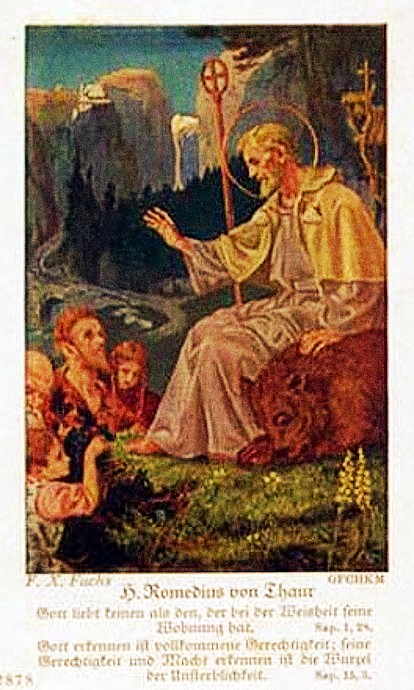
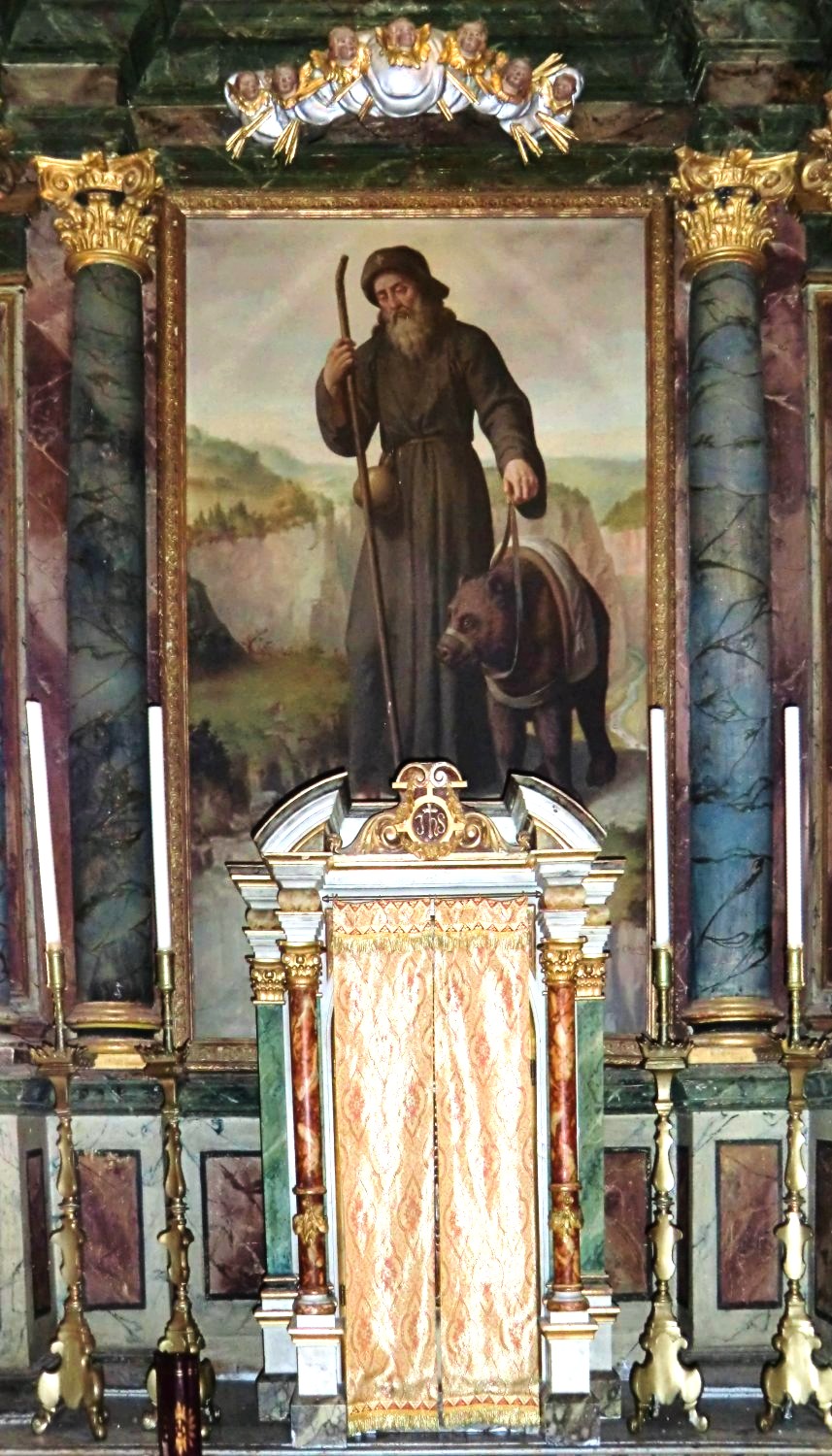
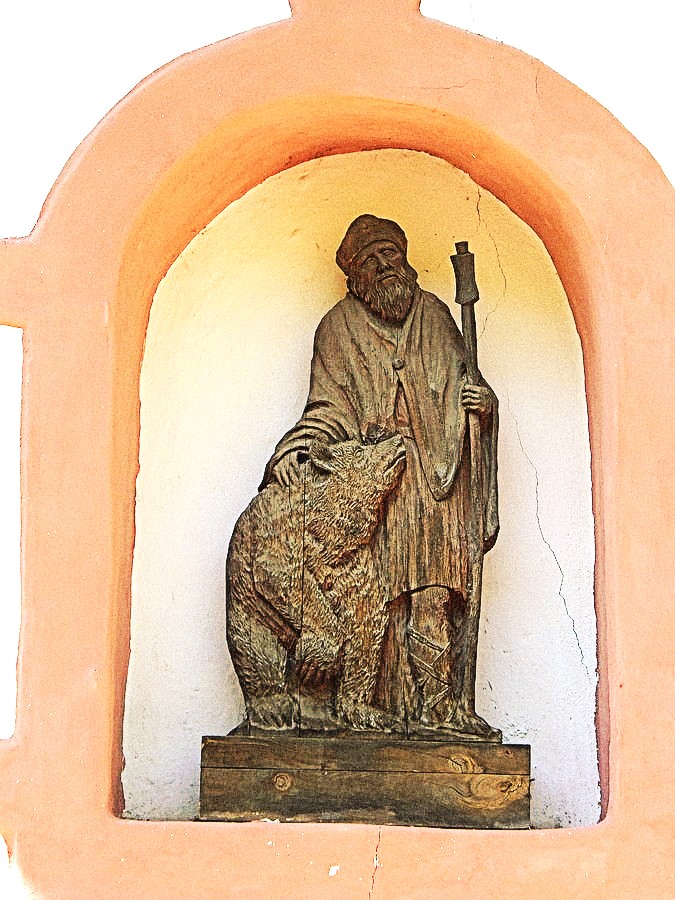
Romedius is often depicted alongside or astride a bear. According to his hagiography he wanted to visit the friend of his youth, St Vigilius, Bishop of Trento (who died in 405) but his horse was torn to pieces by a wild bear. Romedius, however, had the bear bridled by his disciple David. The bear became docile and carried Romedius on its back to Trento.

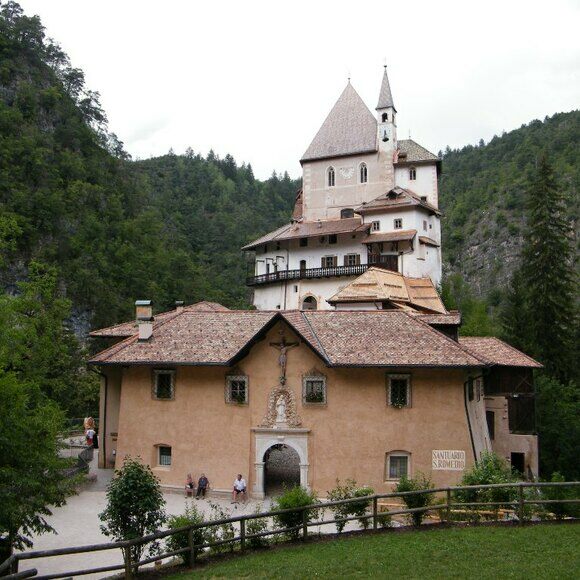
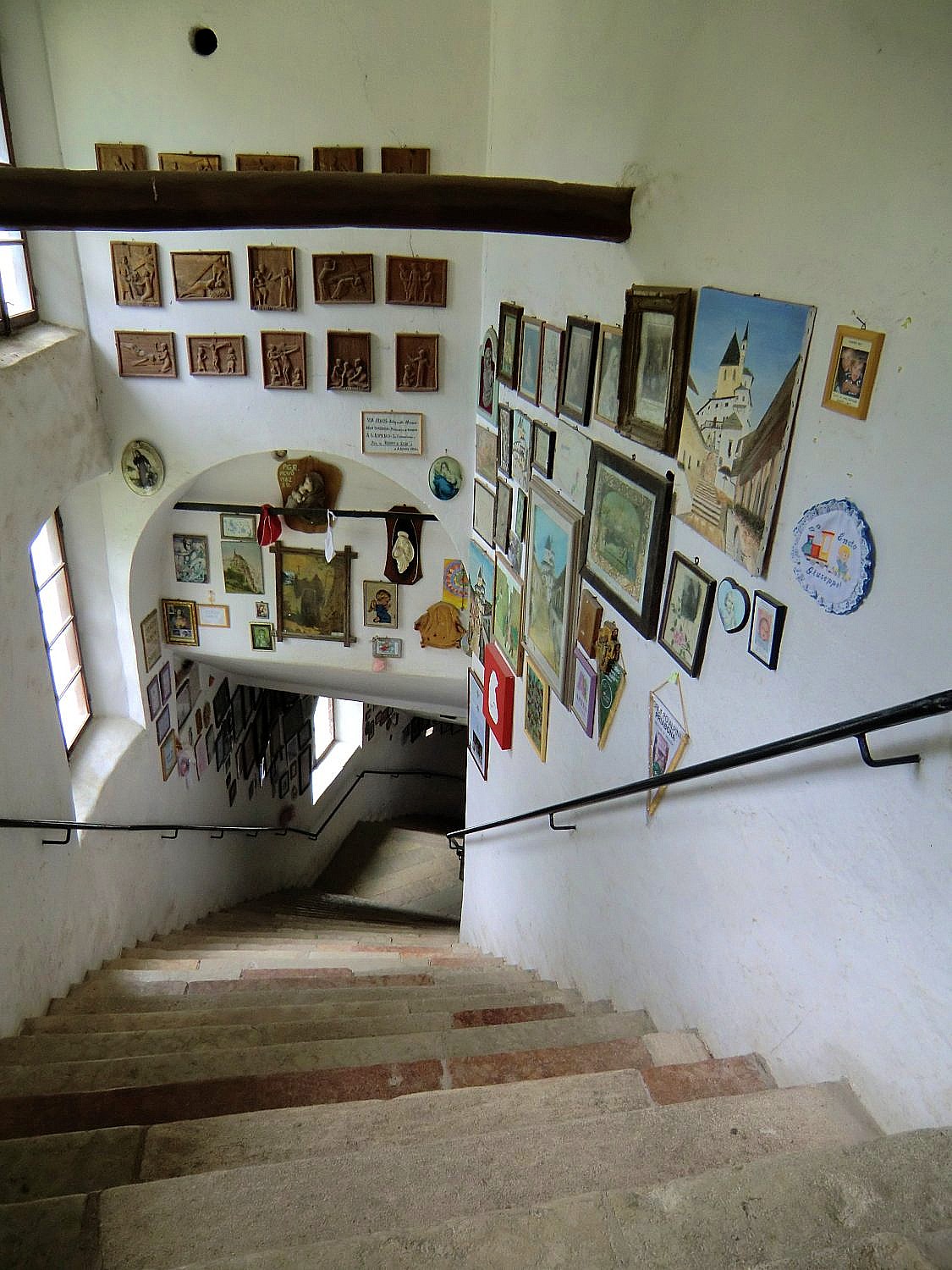
Upon Romedius’ death, his body was laid to rest in a small tomb above his cave in the mountains, a site that was soon visited by pilgrims. The Sanctuary of San Romedio grew from the little Church that was built to venerate him, to a popular pilgrimage site. The Santuario di San Romedio is across the lake from Cles at the head of the Val di Non, above the village of Sanzeno. The Sanctuary where Romedius lived with his bear companion, is now a complex of several Churches, from the Romanesque period to the 20th century beyond a gateway on the forested slopes. Votive offerings of crutches line the walls of the narrow stone stairwell up to the highest chapel, said to mark the site of the Saint’s retreat.

Staircase with votive offerings in the 
Hermitage at Tavon, 1706

His local cult, which consolidated itself in the course of the 11th century, was officially recognised in the twelfth by the Bishop of Trento. In 1795, permission was given for special offices in his name in the Diocese of Brixen, which at that time, included the Northern Tyrol. His cult remains popular in Trentino, Bavaria, and the Tyrol.

Romedius’ Bear
In remembrance of this legend, in 1958 Italian Senator G. G. Gallarati Scotti, honorary member of the committee for the foundation of the World Wildlife Fund in Italy, purchased Charlie, a bear intended to be killed and donated it to the Sanctuary of San Romedius, in the Valle di Non.

Today, the Province of Trentino protects the last brown bears of the Alps in the Adamello-Brenta National Park and, near the Sanctuary, takes care of young bears born in captivity in Trentino.

Relief at the pilgrimage church near Thaur

In the work known as Illustrissimi, a collection of letters written by Pope John Paul I when he was Patriarch of Venice, Romedius’ bear is one of the “recipients” of the letters.

Posted in Against EPIDEMICS, AUGUSTINIANS OSA, Of the SICK, the INFIRM, All ILLNESS, SAINT of the DAY

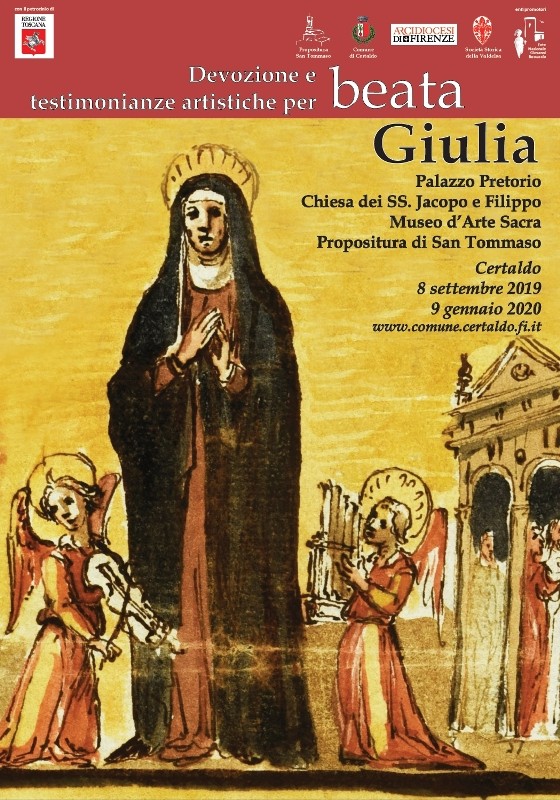
Saint of the Day – 9 January – Blessed Julia of Certaldo OSA(1319-1367)

Saint of the Day – 9 January – Blessed Julia of CertaldoOSA (1319-1367) Laywoman, Third Order Augustinian, Recluse, Ascetic, Mystic living a life of prayer and penance. Born in 1319 at Certaldo, Italy as Giulia and died on 9 January 1367 of natural causes. Patronages – of the City and Diocese of Certaldo, Augustinian tertiaries, Against the plague/epidemics. all sickness, ailments. Also known as – Giulia della Rena da Certaldo, Julia della Rena.

The Roman Martyrology states of her today: “In Certaldo in Tuscany, Blessed Giulia della Rena, of the Third Order of Saint Augustine, who lived alone for God in a narrow cell next to the Church.

Julia was born in Tuscany, near Certaldo, in 1319, of a family of noble origin. After being orphaned at a young age, she entered the service of the Tinolfi family in nearby Florence, There, having come into contact with the Augustinians and their spirituality, she took on the habit of the secular Third Order Augustinians when she was not yet twenty. She was professed in 1388 at the Church of the Holy Spirit.

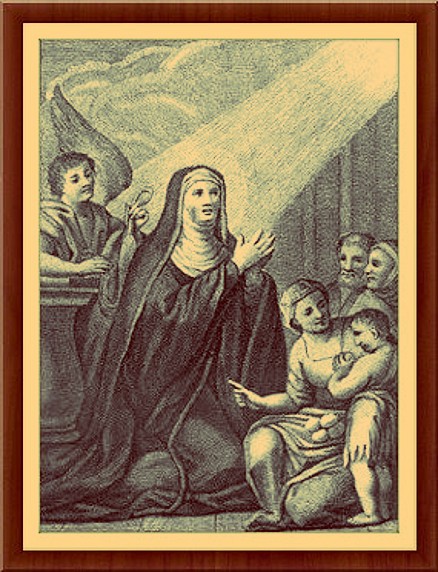
But the tumult in Florence caused her to return home to Certaldo where she rescued a child from a burning building. This act of charity and heroism brought her unwanted fame and attention. Julia, feeling drawn to a more radical and austere vocation, decided to take refuge in a small room attached to the Augustinian Church of Sts Michael and James. She had little in her small cell save for a two little windows and a Crucifix. The windows opened, one into the Church to attend the sacred mysteries, the other towards the outside, to receive the food that popular piety would send her.

Julia would never leave her little “hermitage.” She lived there, segregated from the world for thirty years, following the long path of asceticism and mysticism to the end. Penance and prayer filled her day, as she sought daily to unite herself to Christ and to do penance and mortification, for all the sins of the world.

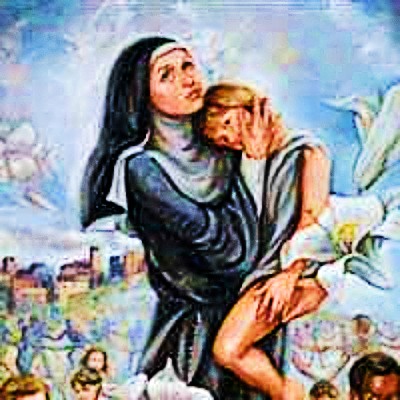
The people of Certaldo and the surrounding area, were devoted to this holy woman and took it upon themselves to assist her material existence with victuals and whatever she needed. The popular tradition tells, that even the children ran to her aid in large numbers, bringing her something to eat and that Julia, grateful and smiling, reciprocated with beautiful fresh flowers in any season of the year, even when the ground was covered with snow!

Nothing more is known about Julia, except that she was greatly revered by her fellow citizens for the life of piety she lived . It was as if she “belonged” to them as family.

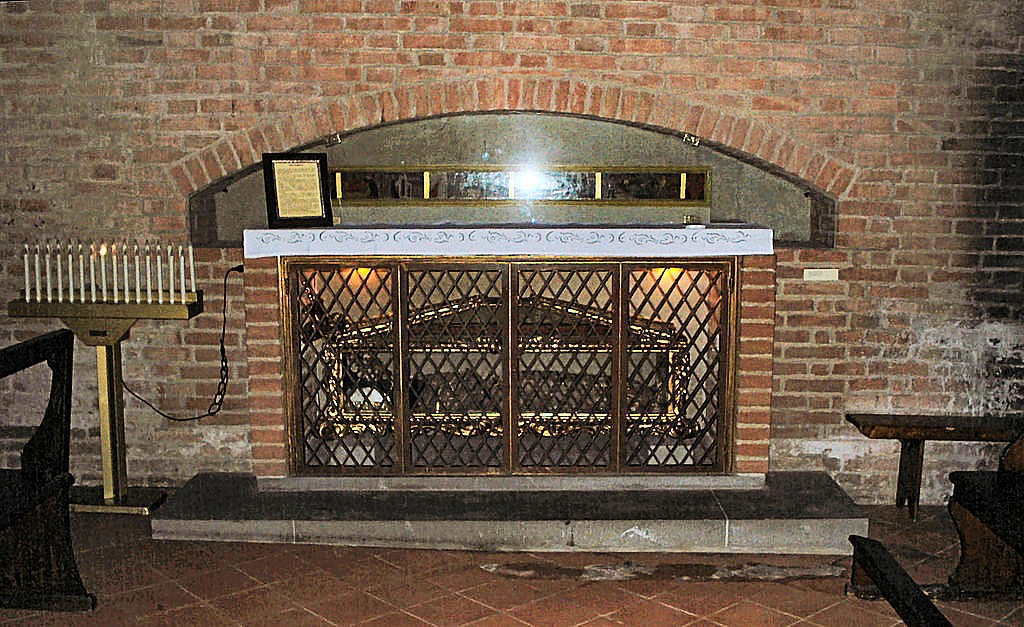
Julia died around the year 1367. Her cult developed immediately after her passing, since the dedication of an Altar in the same Church where she had lived and where her body had been interred dates to 1372. Since 1506, the Certaldese Municipality contributed to the feast in honour of the Blessed, whose intercessory protection was attributed, several times, for the liberation from contagions diseases and the plague.

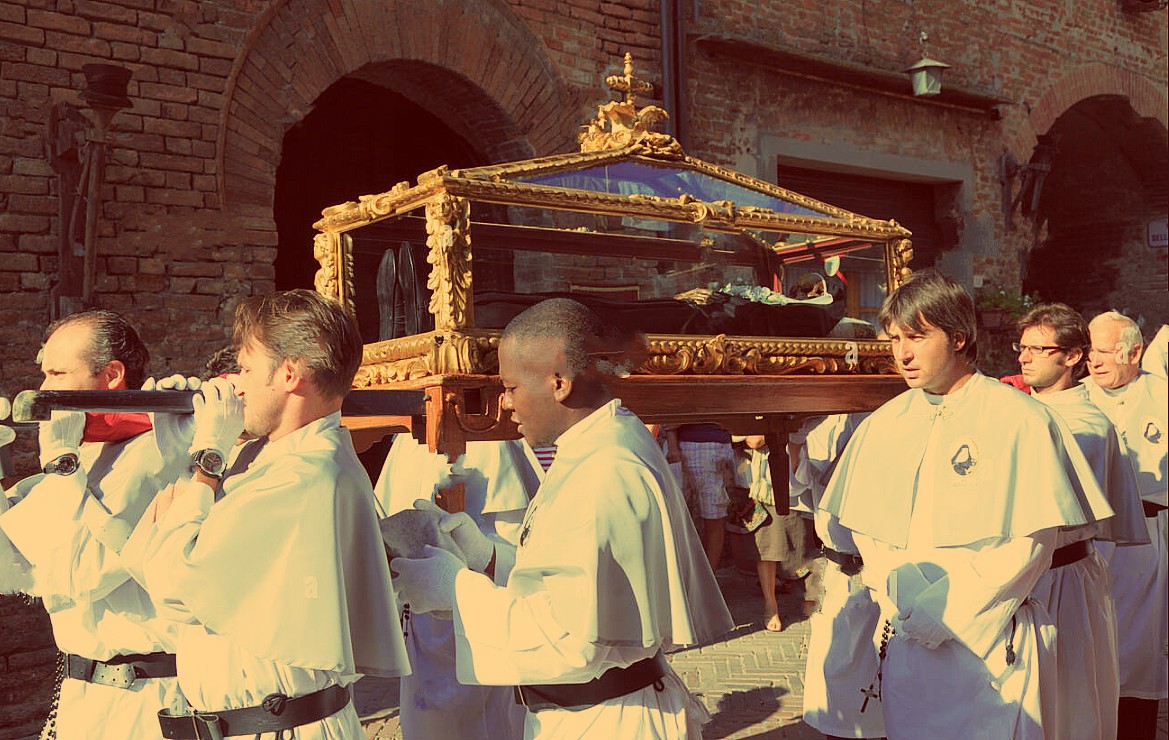
His mortal remains are venerated in Certaldo in the Church of Sts James and Philip, which once belonged to the Augustinians and where her Feast is celebrated with great honour each year, as the Patron of the region.

Her cult from time immemorial, was confirmed by Pope Pius VII on 18 May 1819 raising her to the Altars as Blessed Julia of Certaldo and inserting her name in the Roman Martyrology.

To celebrate the Bicentennial of the death of Blessed Julia, on 9 January 2019, the Bishop, Monsignor Andrea Migliavacca, launched a year of devotion to the protector of Certaldo, with a solemn Procession and Holy Mass to pay homage to Blessed Julia, Supported by the Municipality of Certaldo, a full year of exhibitionsm devotions and events began.

During the celebration, the new silver Reliquary, made for the occasion thanks to the gift of silver by the people of Certaldo and the new banner of the Opera Beata Giulia Apostolate was inaugurated and blessed. In addition, a votive lamp was lit, which burnt next to the Altar of the Blessed Julia, for the whole of 2019.

Posted in Against EPIDEMICS, Against FAMINE, SAINT of the DAY

Saint of the Day – 6 January – St Felix of Nantes (c 515-584)

Saint of the Day – 6 January – St Felix of Nantes (c 515-584) Bishop of Nantes, Confessor, Evangeliser, Negotiator and peace-maker, Social reformer. Born in c 515 in the Aquitaine region of modern France and died on 6 January 584 of natural causes. Patronages – against famine, against the plague/epidemics. Additional Memorial – 7 July (translation of relics).

The Roman Martyrology states: “In Nantes in Brittany, the memorial of Saint Felix, Bishop, who, in the service of his fellow citizens, gave testimony of his zeal, building the Cathedral Church and evangelising the rural populations relentlessly.

Born in c 513 to a well-known family of Aquilani and was Ordained a Priest in 540. Felix was married but when, at the age of 37, he was made Bishop of Nantes, on the death of Evemer. his wife became a Nun. He then sold his patrimony donating the proceeds to assist he poor.

He immediately began to evangelise the region and trained young Priests as Missionaries to assist in his programme.

He built and Consecrated a Cathedral within the walls of the City, as planned by his predecessor, Evemer. His social and secular improvements at Nantes were praised in the poems of the Bishop of Poitiers, St Venantius Fortunatus.

He often mediated between the people of Brittany and the Frankish kings. Guerech II, Count of Vannes, plundered the Diocese of Rennes and Vannes and repulsed the troops which King Chilperic sent against him but, at the entreaties of Bishop Felix, withdrew his forces and made peace . By intervening in the political affairs of his time, he saved Maclavius ​​from death, who was being persecuted by his brother Conone, Count of Vannes, who wanted to suppress him.

Felix was in attendance at the Council of Paris in 557 and the Council of Tours in 567.

Towards the end of his life Felix wanted to choose his nephew Burgundius as his successor but St Gregory of Tours, his Archbishop, who was against him (Felix had supported his rival Riculfo) refused to consecrate him, on the grounds that he was too young.

Felix died at the age of seventy, on 6 January 584 after 33 years of zealous service as Bishop of Nantes and was buried in the Cathedral which he had built and Consecrated.

Posted in SAINT of the DAY, Spinsters - Single LAYWOMEN

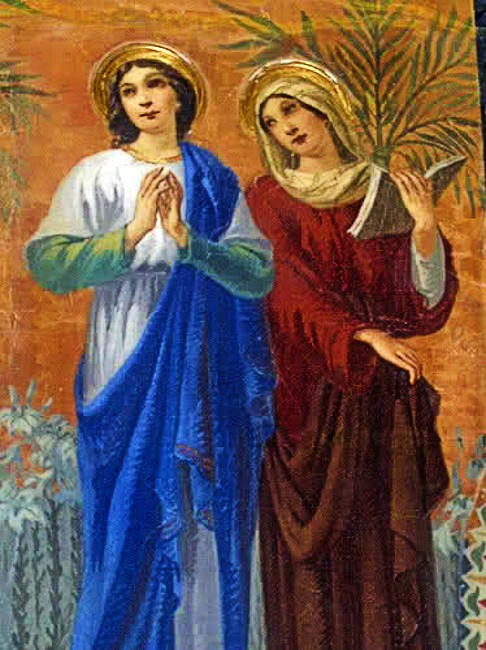
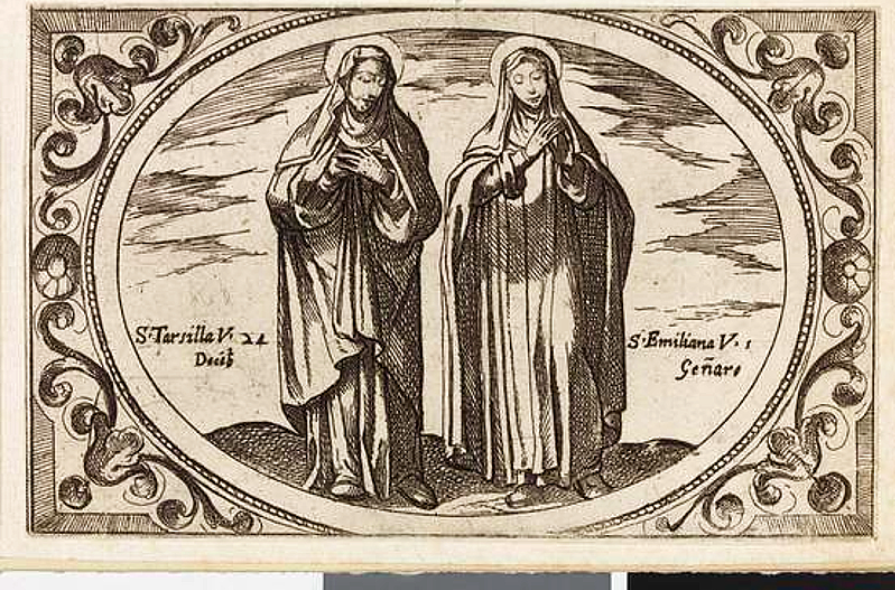
Saint of the Day – 5 January – Saint Emiliana of Rome (6th Century)

Saint of the Day – 5 January – Saint Emiliana of Rome (6th Century) Virgin, Recluse, Mystic. Patronage – single laywomen. Also known as – Aemiliana, Emilian, Emilienne.

The Roman Martyrology states: “In Rome, commemoration of Saint Emiliana, Virgin, Aunt of Pope Saint Gregory the Great, who, shortly after her sister Tarsilla, also returned to the Lord.”

Emiliana is remembered by her nephew, St Gregory the Great (540-604), for having been able to assist him in his discernment of his vocation. . We have the only biographical information about Emiliana thanks to the Pope who mentions his paternal aunt in a homily.

Emiliana, together with her sisters Tarsilla and Gordiana, retired to a consecrated and ascetic life, probably in the family home. But at a certain point Gordiana chose marriage. Tradition states that St Pope Felix III, their ancestor, appeared to Trasilla and bade her to enter Heaven and on the eve of Christmas Trasilla died, seeing Jesus Christ calling her. The legend also states that Trasilla, a few days later appeared to Emiliana, inviting her to celebrate Epiphany in Heaven.

Emiliana was the Daughter of the noble and wealthy Senator Gordian and Saint Silvia of Rome and the sister of Saint Trasilla and Gordiana.

She was the paternal aunt of Pope Saint Gregory the Great and the niece of Pope Saint Felix III who died in 365.

Emiliana spent so much time kneeling in prayer that her knees and elbows were locked arthritically in the position. She and her sister lived as Recluses in their father‘s house until Thrasilla‘s death.

Emiliana who received a visit from her recently deceased sister inviting her to depart this vale of tears and true to her desire to be with the Lord, Emiliana died a few days later.

Posted in PATRONAGE - SPOUSAL ABUSE / DIFFICULT MARRIAGES / VICTIMS OF ABUSE, PATRONAGE - TOOTHACHE and Diseases of the TEETH,, of DENTISTS, SAINT of the DAY, WIDOWS and WIDOWERS

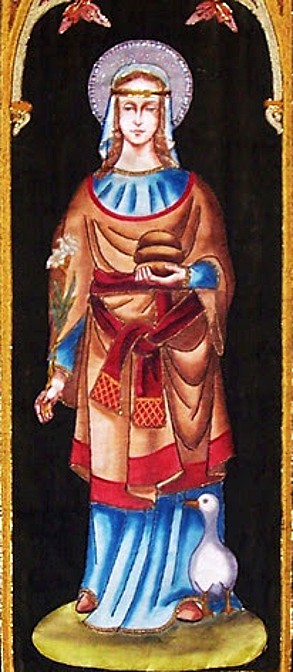
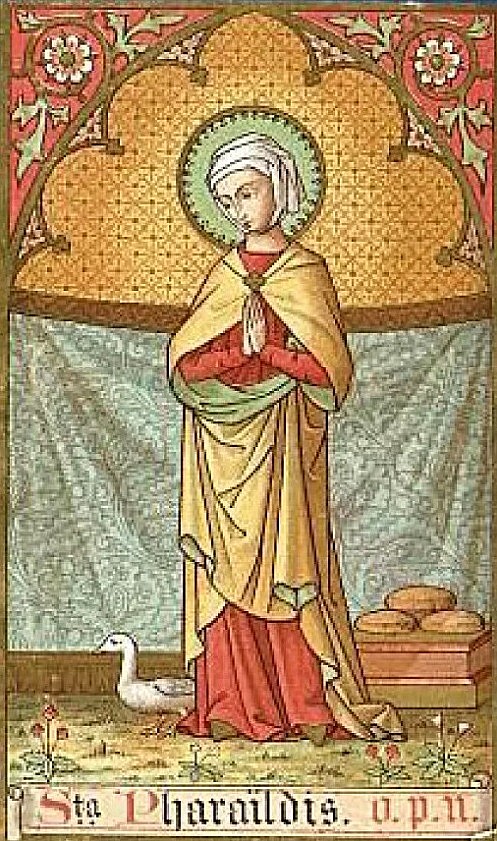
Saint of the Day – 4 January – Saint Pharaildis of Ghent (c 650-c 740)

Saint of the Day – 4 January – Saint Pharaildis of Ghent (c 650-c 740) Virgin, although married, she remained a virgin during her marriage, apostle of charity, miracle-worker. Born in c 650 in Ghent, Belgium and died in c 740 of natural causes. Patronages – against childhood diseases, of toothache, difficult marriages, poultry, victims of abuse, widows, Ghent, Belgium, Smetlede, Belgium, Bruay, France. Also known as – Farahilde, Farailde, Pharaild, Pharailde, Pherailde, Vareide, Varelde, Veerhilde, Veerle, Verylde. The name of this Saint, very popular in Flanders, varies according to the various local dialects.

The Roman Martyrology states: ”In Bruay-sur-l’Escaut near Valencienne nell’Artois in Neustria, in modern-day ||Belgium, Saint Pharaildis, widow, who, forced to marry a violent man, is said to have embraced a life of prayer and austerity until old age.

A native of a noble Belgium family, Pharaildis was the daughter of the Duke of Lotharingia called Witger and St Amalberga of Maubeuge. Her sister was Saint Gudule (c 646-c 700) and they were nieces of Saint Gertrude of Nivelles (c 628- 659).

After making a private vow of virginity, Pharaildis was given in marriage against her will, to a noble and rich suitor who treated her brutally, perhaps because she, who had consecrated her virginity to God, preferred to spend the nights in prayer in the Churches of the City rather than in the nuptial bed.

When Pharaildis was widowed, she was still a virgin and dedicated herself to charity.

Pharaildis is often depicted with a loaf or loaves of bread, in memory of one of her miracles, when she turned the loaves, into stone, that a miserly woman had refused to give to a beggar. She is also invoked by mothers concerned about their children’s health and against toothache.

A legend has it that to water thirsty reapers, Pharaildis made a spring gush out, whose waters were considered therapeutic.

The cult of Pharaildis has been documented as early as the eighth century. About the year 754, Agilfrid, Abbot of Saint Bavo’s Abbey, acquired her relics and brought them to Ghent. , where her feast is celebrated today.

Posted in CHEFS and/or BAKERS, CONFECTIONERS, SAINT of the DAY

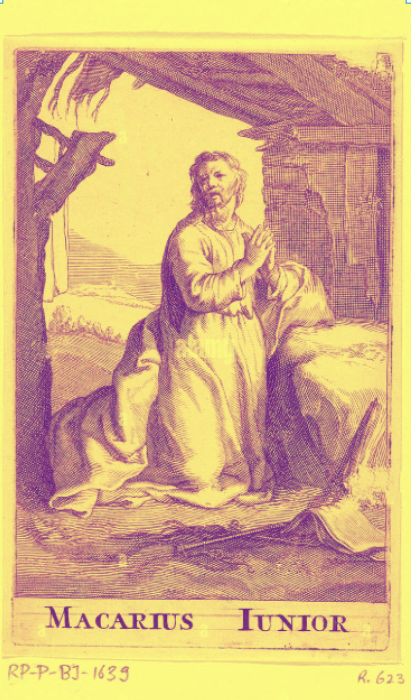
Saint of the Day – 2 January – Saint Macarius the Younger of Alexandria (Died c 401)

Saint of the Day – 2 January – Saint Macarius the Younger of Alexandria (Died c 401) Priest, Monk, desert Hermit, Abbot, Ascetic, Poet, miracle-worker. Born in the early 4th century at Alexandria, Egypt and died in c 401 in Alexandria, Egypt of natural causes. Also known as – Macarius of Alexandria, Macarius the Alexandrian. Additional Memorials – 1 May on the Coptic Catholic calendar. Patronages – confectioners, cooks, pastry chefs.

Macarius was a Successful merchant in fruits, sweetmeats and pastries in Alexandria, Egypt. In 335, when he converted to Christianity, he gave up his business to become a Monk and Hermit in the Thebaid dara, in Upper Egypt. For a while he lived near to and was a friend of Saint Anthony the Abbot. He was exiled by heretic Arians with Saint Macarius the Elder and other Monks to an island in the Nile because of his orthodoxy but he was later allowed to return. In later life he travelled to Lower Egypt, and was Ordained and lived in a desert cell with other Monks. He wrote a constitution for the Monastery at Nitria named after him and some of its rules were adopted by Saint Jerome for his Monastery.

Amazing accounts were told of his practice of severe austerities, some of which reached the proportion of legend. For seven years he lived on raw vegetables dipped in water with a few crumbs of bread, moistened with drops of oil on feast days. He once spent 20 days and 20 nights without sleep, burnt by the sun in the day, frozen by bitter desert cold at night. “My mind dried up because of lack of sleep and I had a kind of delirium,” he admitted. “So I gave in to nature and returned to my cell.”

In 373, to obtain greater solitude and longing to attain unity with God, Macarius moved to the desert of Nitria in Lower Egypt. The journey was through a harsh land, and when Macarius was at the end of his strength, the devil appeared and asked, “Why not ask God for the food and strength to continue your journey?” Macarius answered, “The Lord is my strength and glory. Do not tempt a servant of God.” The devil then gave him a vision of a camel laden with food. Macarius was about to eat but suspecting a trap he instead prayed very fervently and the camel vanished.

He spent six months nearly naked in the marshes, beset constantly by vicious blood-sucking flies and mosquitoes, in the hope of destroying his last bit of sexual desire. The terrible conditions and attacking insects left him so deformed that when he returned to the Monks, they could recognise him only by his voice.

A young brother once offered Macarius some very fine grapes. The old fruit dealer was about to eat when he decided to send them to a brother who was ill. This brother passed them to one he considered more in need; that one did the same and on and on, until the grapes made the rounds of all the cells and finally returned to Macarius, who we imagine then ate them?

Macarius returned to Skete and began to work on his worst worldly excess – his love of travel. The devil appeared and suggested Macarius go to Rome and chase out the demons there. Torn between travelling for such a good cause but wishing to fight his vice, Macarius filled a large basket with sand, put it on his back and set out. When someone offered to help him, he said, “Leave me alone! I am punishing my tormenter. He wishes to lead me, old and weak as I am, on a distant and vain voyage.” He then returned to his cell, body broken with fatigue but cured of his temptation.

In old age Macarius journeyed to a Monastery where 1,400 Hermits lived under the rigid rule of Saint Pachomius. Macarius was refused admittance. “You are too old to survive the great rigour we impose here,” Pachomius told him. “One should be trained in it from childhood, or else one cannot stand it. Your health would fail and you would curse us for harming you.” Macarius then stood at the Abbey gate for seven days and nights – without sleep, without food, without saying a word. Finally, the Monks relented and he let him in. Macarius stood in a corner of the Monastery in complete silence, for all of Lent, living on a few cabbage leaves each Sundaymore to avoid ostentation, than from any real need.” The Monks became so jealous of this new brother that they took their complaint to Pachomius, who asked God for illumination. When he learned that the old man was Macarius, he went to him and said, “My brother, I thank you for the lesson you have given myself and my sons. It will prevent us boasting about our modest mortifications. You have edified us sufficiently. Return to your own Monastery and pray for us each day.

St Macarius, Pray for us each day too, we beg you!

Posted in Against EPIDEMICS, Against SNAKE BITES / POISON, Against STORMS, EARTHQUAKES, THUNDER & LIGHTENING, FIRES, DROUGHT / NATURAL DISASTERS, All THEOLOGIANS, Moral Theologians, FEASTS and SOLEMNITIES, GOUT, KNEE PROBLEMS, ARTHRITIS, etc, Of Catholic Education, Students, Schools, Colleges etc, PATRONAGE - VINTNERS, WINE-FARMERS, PATRONAGE - WRITERS, PRINTERS, PUBLISHERS, EDITORS, etc, SAINT of the DAY, The APOSTLES & EVANGELISTS

Saint of the Day – 27 December – St John the Apostle and Evangelist.

Saint of the Day – 27 December – 27 December – St John the Apostle and Evangelist. Patronages – • against burns; burn victims• against epilepsy• against foot problems• against hailstorms• against poisoning• art dealers• authors, writers• basket makers• bookbinders• booksellers• butchers• compositors• editors• engravers• friendships• glaziers• government officials• harvests• lithographers• notaries• painters• papermakers• publishers• saddle makers• scholars• sculptors• tanners• theologians• typesetters• vintners• Asia Minor (proclaimed on 26 October 1914 by Pope Benedict XV)• 6 Diocese• 7 Cities.

St John, Apostle and Evangelist
by Father Francis Xavier Weninger SJ (1805-1888)

St John, Apostle and Evangelist of Jesus Christ, a brother of St James and son of Zebedee and Salome, was born at Bethsaida, a Town in Galilee. Christ, our Lord, called him and his brother James to follow Him, at the time when they were mending their nets in a boat, on the shore of the Sea of Genesareth. John, without delay, left all he possessed, even his own father and, with his brother, followed the Lord. Although the youngest of the Apostles, he was beloved by the Saviour above all the others – whence he is several times mentioned in the Gospel, as “the disciple whom Jesus loved.” The cause of this special love of Jesus for him, was, according to the Holy Fathers, his virginal purity, which he kept undefiled and the tender love he bore to the Lord. “He was more beloved than all the other Apostles,” writes St Thomas Aquinas, “on account of his purity.” “For the same reason,” says St. Anselm, “God revealed more mysteries to him, than to the other Apostles. Justly,” says he, “did Christ the Lord reveal the greatest mysteries to him, because he surpassed all in virginal purity.

Anthony van Dyck

It is evident from the Gospel, that St John was one of the most intimate of the friends of the Lord, and was, in consequence, sometimes admitted into Christ’s presence, when, except Peter and James, no other Apostle was allowed to be near. Thus, he was with Christ when He healed the mother-in-law of Peter; when He raised the daughter of Jairus from the dead and when He was transfigured on Mount Thabor. He also accompanied Christ when He suffered His Agony in the Garden of Olives. The other two above-named Apostles ,shared these favours with John but none was permitted to lean upon the Saviour’s bosom, at the last supper, save John; none was recommended as son to the divine Mother but John. Only he, of all the Apostles, followed Christ to Mount Calvary,and remained there with Him, until His death. To recompense this love, Christ gave him to His Mother as her son, when He said: “Behold thy Mother!” Christ, who had lived in virginal chastity, would trust His Virgin Mother to no-one else but John, who himself lived in virginal purity. As St.Jerome says: “Christ, a virgin, recommended Mary, a virgin, to John, a virgin.” No greater grace could John have asked of Christ; no more evident proof could he have received of His love. The most precious thing which the Lord possessed on earth, His holy Mother, He commended to His beloved disciple. He took him as brother, by giving Him as son to His Mother. Who cannot see from all this, that Christ loved and honoured St John above all others?

How deeply this beloved disciple must have suffered by seeing his Saviour die, so ignominious a death, is easily to be conceived; and St Chrysostom hesitates not to call him, therefore, a manifold Martyr. After Christ had died on the Cross, had been taken from it, and interred with all possible honours, St John returned home with the divine Mother, who was now also his mother, and waited for the glorious Resurrection of the Lord. When this had taken place, he participated in the many apparitions of the Lord, by which the disciples were comforted and, doubtless received again, particular marks of love from the Saviour. He afterwards assisted, with the divine Mother and the Apostles and other disciples of Christ, at the wonderful Ascension of the Lord. With these, also, he received, after a ten days’ preparation, the Holy Ghost, on the great festival of Pentecost.

Soon after this, he and Peter had, before all others, the grace to suffer for Christ’s sake. For when these two Apostles had, in the name of Christ, miraculously healed a poor cripple who was lying at the door of the temple of Jerusalem and used this opportunity, to show to the assembled people, that Jesus of Nazareth was the true Messiah.

Fresco in the Cappella Brancacci, Florence, attributed to Masolino da Panicale (1383 – c.1447). It is part of the cycle of frescoes painted between 1425 and 1427 depicting the life of St. Peter. It shows the Apostle, accompanied by StJohn, giving his hand to a cripple seeking alms. The cripple is instantly cured.

They were seized, at the instigation of the chief priests,and were cast into prison. On the following day, the priests came together and John and Peter were called before them and asked in whose name and by what power, they had healed the cripple. Peter and John answered fearlessly, that it had been done in the Name of Jesus Christ. The high priest dared not do anything further to them but, setting them free, prohibited them from preaching, in future, the Name of Christ. The two holy Apostles, however, nothing daunted, said: “If it be just in the sight of God to hear you rather than God, judge ye: for we cannot but speak the things which we have seen and heard.

Anthony van Dyck

St. John remained for some time in Jerusalem after this and, with the other Apostles, was zealous in his endeavors to convert the Jews. When the Apostles separated, to preach the Gospel over all the world, Asia Minor was assigned to St John. Going thither, he began with great zeal his apostolic functions and, by the gift of miracles, he converted many thousands to the Faith of Christ. The many Bishoprics which he instituted in the principal cities sufficiently prove this. In the course of time, he went also to other countries, preaching everywhere the Word of Christ, with equal success..

Anthony van Dyck oil, oak 64,5 x 50 cm

The Emperor Domitian, who, after the death of the Emperor Nero, again began to persecute the Christians, ordered his officers to apprehend John and bring him to Rome. Hardly had the holy Apostle arrived there, when he was commanded by the Emperor to sacrifice to the gods. As the Saint refused this and fearlessly confessed Christ, the Emperor had him most cruelly scourged and afterwards, cast into a large caldron, filled with boiling oil. The Saint signed himself and the cauldron with the Holy Cross and remained unharmed, when he was cast into it. This gave him an opportunity to announce, with great energy, to the assembled people, the Gospel of Jesus Christ. The tyrant, who could not suffer this, had him taken out of the cauldron, and sentenced him to banishment on the island of Patmos, to work in the mines and perform other hard labour, in company with other Christians. St John had, at that time, reached his ninetieth year but was willing to undergo the unjust sentence.

After his arrival on the island, he had many and wonderful visions, which, by command of God, he put down in writing. The book which contains them, is a part of Holy Writ, called the Apocalypse, or Revelation of St John, a book which,, according to St Jerome, contains almost as many mysteries as words. After the death of Domitian, St John was liberated and returning to Ephesus, remained there until his death. He outlived all the other Apostles, as he reached the age of 100 years. His great labours, wearisome travels and the many hardships he endured, at last enfeebled him to such an extent, that he could not go to the Church without being carried. F

Frequently he repeated, in his exhortations, the words: “My little children, love one another.” Some, annoyed at this, asked him why he so often repeated these words. He answered: “Because it is the commandment of the Lord and if that is done, it suffices.” By this he meant, that if we love each other rightly, we also love God and when we love God and our neighbour, no more is needed to gain salvation – as love to God and to our neighbour contains the keeping of all other commandments.

The holy Apostle, who had suffered and laboured so much for his beloved Master, was, at length, in the year 104, called by Him into heaven to receive his eternal reward.

Besides the Apocalypse, to which we referred above, St John also wrote three Epistles and his Gospel, on account of which, he is called Evangelist. In his Gospel he gives many more facts than the other Evangelists, to prove the Divinity of Jesus Christ; as, at that period, several heretics, as Cerinthus, Ebion and the Nicolaites, fought against this truth. In his Epistles, he exhorts particularly, to love God and our neighbour,and to avoid heretics. In the first, among other things, he explains that love to God consists in keeping the commandments of God, which are not difficult to keep. “For this is the charity of God,” writes he, “that we keep His commandments;and His commandments are not heavy.” Of the love of our neighbour he says, that it must manifest itself in works, that is, we must assist our brethren in their need and, if necessary, give even our lives for them, after the example of Christ. The holy Apostle exemplified his words by his actions.

Several holy Fathers relate the following of him. The Saint had given a youth in charge of a Bishop, with the commendation to instruct him carefully in virtue and sacred sciences. After some years, when the Saint returned to this Bishop and asked for the young man, he heard with deep sorrow, that he had secretly left and had joined the highwaymen and had even become their chief. The holy Apostle set out at once and went, not without danger to his life, into the woods, where the unhappy young man was said, to be. Finding him, he spoke most kindly to him and succeeded in bringing him back. It is touching to read how the holy, man promised to atone for the youth’s sins, if he would repent and lead a better life. The youth followed the Saint’s admonition and did penance with such fervour and zeal, that the Saint hesitated not to give him charge of the Church at Ephesus. (1876)

St John, Pray for Holy Mother Church, Pray for us all!

Posted in CHRIST the LIGHT, CHRIST the WORD and WISDOM, EYES - Diseases, of the BLIND, PRAYERS to the SAINTS, SAINT of the DAY

Quote/s of the Day – 13 December – Light! Dear St Lucy and St Odilia

Quote/s of the Day – 13 December – The Memorial of St Lucy (c 283-304) Virgin Martyr “Bringer of Light” and St Odilia of Alsace (c 660-720) Virgin Both Patrons of those with eye ailments

I am the light of the world;
he who follows me will not walk in darkness
but will have the light of life.

John 8:12

Saint Lucy’s name (Lucia in Italian) shares the root luc with the Latin word for light, lux. Because of this connection, Saint Lucy is often depicted in art and religious custom as a bringer of light – which also ties in to her Patronage of eyes and sight. Her feast day today, is during Advent when we await the Light of Christ and is in winter, for the Northern Hemisphere, so there is significant iconography of Lucy as a bringer of light in the darkness.

In your light God,
we see light.

Psalm 35:36

Let us pray to St Lucy, for the intercession for all those with eye illnesses and for the protection of the ‘eyes of our faith’ of all of us.

Let your light shine before men

Matthew 5:16

O St Lucy, you preferred to let your eyes be torn out
instead of denying the faith
and defiling your soul
and God, through an extraordinary miracle,
replaced them with another pair of sound and perfect eyes
to reward your virtue and faith,
appointing you as the protector against eye diseases.
I come to you for you to protect my eyesight
and to heal the illness in my eyes.

O St Lucy, preserve the light of my eyes
so that I may see the beauties of creation,
the glow of the sun,
the colour of the flowers
and the smile of children.

Preserve also the eyes of my soul,
the faith, through which I can know my God,
understand His teachings,
recognise His love for me
and never miss the road that leads me
to where you, St Lucy,
can be found in the company of the angels and saints.
St Lucy, protect my eyes and preserve my faith.

St Lucy, “Bringer of Light” Pray for those with eye ailments,
Pray for us all!

Light came into the world.”

John 3:19

St Odilia, born blind – at the age of 12, her bodily eyes were opened and she was equally enlightened by the “eyes of faith” when she was Baptised, Pray for those with eye ailments, Pray for us all that our faith may grow and strengthen as those around us grow more and more blind!

Then again He laid His hands
upon his eyes
and he looked intently
and was restored
and saw everything clearly.

Mark 8:25

Prayer for the Intercession of St Odilia

Merciful God,
I come to You to ask Your aid
that my life may always give You praise.
I ask through the intercession
of St Odilia and all your holy people
to be a beacon of Your Light to all I meet.
Give me holiness of soul and body
and bring me into Your divine Light.
May I obtain these favours,
as well as my special prayer,
St Odilia, pray for my eyes
and the eyes of my faith.
Through the merits of Our Saviour, Jesus Christ,
Your Son, our Lord,
Who lives with you and the Holy Spirit,
God forever and ever.
Amen.

Posted in EYES - Diseases, of the BLIND, SAINT of the DAY

Saint of the Day – 13 December – Saint Odilia of Alsace (c 660-720)

Saint of the Day – 13 December – Saint Odilia of Alsace (c 660-720) Virgin Abbess, born blind, but was miraculously granted her sight, miracle-worker. Born of a noble family in c 660 at Oberheim in the Vosges Mountains, Germany and died on 13 December 720 at Niedermunster, Mount Sainte Odile, Germany of natural causes. Also known as – Odilia of Hohenbourg, Odilia of Hohenburg, Adilia, Odile, Odilia, Othilia, Ottilia. Patronages – against eye diseases and partial sightedness, ear diseases and ailments, of Alsace, France (proclaimed in 1807 by Pope Pius VII). Additional Memorial 7 July – translation of her relics.

The Roman Martyrology states: “In the territory of Strasbourg in ancient Burgundia in France, Saint Ottilia, Virgin and first Abbess of the Monastery of Hohenbourg founded by her father, Duke Adalríco.

A Mosaic Depiction of St Odilia in Mont Sainte-Odile, Alsace

Odilia, daughter of Duke Adalric of Alsace, (also known as Etichon, Alderic, Aldarico, Athich) a region of eastern France but which region, in the past centuries, belonged to France or Germany alternatively, several times – she was, therefore, born in Alsace in the seventh century, blind from birth and according to legend, her father entrusted her to a peasant family.

When Odilia was 12 years old, they took the child to the Monastery of Balma (Baume-les-Dames) to be educated. At the time when the Bishop, St Erhard of Regensburg who was led by an angel to the Monastery, Baptised Odilia. When he touched her with the Oil of Chrism, she received her sight. Her younger brother Hugo had her brought home again, for [purposes of arranging a marriage for Odilia. Aldaric was so enraged at Hugo’s presumption, that he accidentally killed his son. Odilia miraculously revived him and immediately fled the family home again.

She fled across the Rhine to a cave or cavern in one of two places (depending on the source – the Musbach valley near Freiburg im Breisgau, Germany, or Arlesheim near Basel, Switzerland.) The cliff face opened up in order to rescue her from her plight. In the cave, she hid from her father. When he tried to follow her, he was injured by falling rocks and relinquished his search. This mountain has since then been called
Odilienberg.

But when Aldaric fell ill, Odile returned to nurse him. He finally capitulated, ceased resisting his headstrong daughter and founded the monastic community of Mont Ste. Odile (also known as Hohenburg Abbey) for her.

Some years later Odile was shown, in a vision, the site of Niedermünster at the foot of the mountain by St John the Baptist. There she founded a second Monastery, including a hospital. Here, the head and an arm of St Lazarus of Marseille were displayed but later transferred to Andlau. The buildings of the Niedermünster burned down in 1542 but the local well is still said to cure eye diseases.

Odilia died on 13 December 720 and the holy Abbess was buried in Hohenbourg in the Church of St John. This Church and Odilia’s Tomb were first mentioned by Pope Leo IX on 17 December 1050.

St Odilia in Avolsheim, Alsace

The relics have a history all of their own, the Emperor Charles IV received her right arm on 4 May 1353, which is now kept in Prague. Other relics which were in Odilienberg were saved from the French Revolution, although the marble covering the Sarcophagus was then lost. In 1842 the relics were placed in a chest under the Altar in Hohenbourg in the Church of St John and some are found in Alsace.

Odilia’s cult was widespread throughout the Middle Ages, in all Germanic Abbeys and in some French regions. She is still greatly venerated today in the Diocese of Alsace, Munich, Meissen, Strasbourg and in the Austrian fBenedictine Abbeys and by those all over the world suffering from eye ailments.

St Odilia has been the patron saint of Alsace since 1807, where she receives a great popular cult. Mont-Sainte-Odile is a very popular pilgrimage site, where her Feast day is celebrated on the anniversary of the transfer of her relics, which took place on 7 July 1842.

Chapels in her honour are built on hills and mountains, she is invoked especially for the healing of eyes, ears or headaches, in fact she is represented in the guise of Abbess, with an open book on which two eyes rest.

Sometimes she is depicted while freeing the soul of her father Aldaric from Purgatory and sometimes she carries a Chalice in her hand, which refers to a miraculous episode in which Odilia, being seriously ill, died without having received the Viaticum. Thanks to the prayers of her sorrowful Sisters, she rose again and had the Chalice with the Consecrated Hosts brought to her bedside. After communicating she died again.

This statue is in Strasbourg

Posted in Against EPIDEMICS, GOLDSMITHS, SILVERSMITHS, GILDERS, MINERS, JEWELLERS, CLOCK/WATCH-MAKERS, METAL CRAFTSMEN, HORSES - and sick horses, JOCKEYS, all HORSE-related workers, Of BEGGARS, the POOR, against POVERTY, PATRONAGE-ENGINEERS, Electrical, Mechanical etc, SAINT of the DAY

Saint of the Day – 1 December – “Good St Eligius” – St Eligius of Noyon (c 588-660)

Saint of the Day – 1 December – “Good St Eligius”- St Eligius of Noyon (c 588-660) Bishop, Goldsmith, Royal Courtier and adviser to the King, peace-maker, servant of the poor and of slaves. He founded Monasteries and donated his own property for the founding of the first female Monastery in the area. Born in c 588 at at Catelat, near Limoges, France and died on 1 December 660 at Noyon, France of high fever, Also known as – Alar, Elaere, Elar, Elard, Eler, Eloi, Eloy, Eloye, Iler, Loie, Loije, Loy, Additional Memorials – 24 June (translation of relics, and blessing of horses), 8 November as one of the Saints of the Diocese of Evry. Patronages – carpenters, cartwrights, clock/watch makers, coin collectors, craftsmen of all kinds, cutlers, gilders, goldsmiths, harness makers, horses especially sick horses, jewelers; jockeys; knife makers; labourers, locksmiths, metalworkers in general, miners, minters, Royal Electrical and Mechanical Engineers, Royal Australian Electrical and Mechanical Engineers, saddlers, tool makers, Veterinarians, against boils, against epidemics, against equine diseases, against poverty, against ulcers, agricultural workers, basket makers, Eloois-Vijve, Belgium, Sint-Eloois-Winkel, Belgium,
Schinveld, Netherlands.

The Roman Martyrology states: “In Noyon in Neustria, now in France, Saint Eligius, Bishop, who, goldsmith and adviser to King Dagobert, after having contributed to the foundation of many Monasteries and built Sepulchral buildings of outstanding art and beauty in honour of the Saints, was raised to the See of Noyon and Tournai, where he zealously evangelised.”

The Legend of Saint Eligius and Saint Godeberta, by Petrus Christus.

Eligius was born around 588, originally from Chaptelat in Limousin. He belonged to a wealthy rural family who worked their own land, unlike many landowners who left the cultivation to slaves. He left the care of the family farm to one of his brothers and entered trade as a Goldsmith apprentice in a shop in which the Royal Coin was hammered, according to ancient Roman methods. He saved some of the income from his family and gave it in charity to the poor and to slaves. He was as clever in enamel as in gold chiselling. These professional qualities went hand-in-hand with a scrupulous honesty. When they asked him to make a golden throne for King Clothair II (613-629), he made a second with the extra gold he did not want to hold for himself.

This gesture, extraordinary at the time, earned him the trust of the King, who asked him to reside in Paris as the Royal Goldsmith, a Royal Court Officer and Court Counselor. Named coinmaster in Marseilles, he would redeem many of the slaves sold at the Port. When Dagobert became King in 629, he was summoned to Paris where he directed the shops of the Frankish kingdom in which coin was minted, which were in Paris on the Quai des Orfèvres at the present-day Rue de la Monnaie. Among others, he had the task of embellishing the tombs of Saint Genevieve and Saint Denis.

He made Reliquaries for Saint Germain, Saint Severinus, Saint Martin and Saint Columba and numerous Liturgical objects for the new Abbey of Saint Denis. Thanks to his honesty, his frankness and his capacity for peaceable judgement, he came so far into the King’s trust, that the latter called him to himself, and entrusted him with a peace mission to the Breton king, King Judicael.

St Eligius Consecrated Bishop of Novon

Great was the piety and prayer life of this layman, who often attended monastic offices. In 632 he founded the Solignac Monastery south of Limoges. While Eligius still lived, the Monastery had grown to count more than 150 Monks under the two rules of St Benedict and St Colomba: – the Monastery was under the protection of the King and not under the authority of the Bishop. The religious fervour and the ardour of the Monks, made it one of the most illustrious Monasteries of the time. One year after the foundation of Solignac, Eligius founded, in his Ile de la Cité home, the first Monastic house for women religious in Paris, whose direction he entrusted to Saint Aurea.

A year after the death of King Dagobert, whom he had seen in the last moments of his life, Eligius left the Court together with Saint Audenus, who had served as adviser and Chancellor under Dagobert . Like Audenus, Eligius also entered formation and was Ordained Priest. On the same day, 13 May 641, they received the Episcopate: Saint Audenus to the See of Rouen; Eligius to that of Noyon and Tournai. Eligius put all his zeal into apostolic mission.

He died in 660, on the eve of his departure for Cahors. Holy Queen Bathilde travelled to greet him but she arrived too late.

There is a wonderful legend of St Eligius – the devil appeared to him dressed as a woman and he, Eligius, quickly grabbed him by the nose with his pincers. This colourful legend is depicted in two French Cathedrals (Angers and Le Mans) and in the Milan Cathedral, with the stained glass window by Niccolò da Varallo, a gift from the Milanese Goldsmiths in the fifteenth century. Ungfortunately, I cannot find any of these artworks.

In Paris, a Church was dedicated to him in the quarter of the blacksmiths, locksmiths and cabinet-makers. The Church of Saint Eligius was rebuilt in 1967. A church destroyed in 1793 was dedicated to him in the Rue des Orfèvres near the Hôtel de la Monnaie (the mint). In Notre Dame Cathedral, in the Chapel of Saint Ann, once home to the jewellers’ and goldsmiths’ confraternity, the jewellers and goldsmiths of Paris have placed his Statue and restored his Altar.

These are the Representations of this our little-known but o so holy and worthy Saint:
• anvil
• Bishop with a Crosier in his right hand, on the open palm of his left a miniature Church of chased gold
• Bishop with a hammer, anvil and horseshoe
• Bishop with a horse
• Courtier
• Goldsmith
• hammer
• horseshoe
• man grasping a devil’s nose with pincers
• man holding a Chalice and Goldsmith’s hammer
• man holding a horse’s leg, which he detached from the horse in order to shoe it more easily
• man shoeing a horse
• man with hammer and crown near a smithy
• man with hammer, anvil and Saint Anthony
• pincers
• man with Saint Godebertha of Noyon
• man giving a ring to Saint Godebertha
• man working as a Goldsmith.
(catholicsaintsinfo.mobi).

St Eligius at the feet of the Virgin and Child by Gerard Seghers
Posted in Of the SICK, the INFIRM, All ILLNESS, SAINT of the DAY

Saint of the Day – 17 November – Saint Hugh of Lincoln O.Cart. (1135-1200)

Saint of the Day – 17 November – Saint Hugh of Lincoln O.Cart. (1135-1200) Carthusian Monk, Bishop of Lincoln, England, Confessor, Exorcist, Diplomat, Social Reformer and Protector of the poor and unjustly treated. Born in c 1135 at Avalon Castle, Burgundy, France and died on 16 November 1200 at London, England of natural causes. Patronages – sick children, sick people, swans, shoemakers. Also known as – Hugh of Avalon, Hugh of Burgundy. St Hugh was the first Carthusian Monk to be Canonised.

The Roman Martyrology states of him today: “In England, St Hugh, Bishop, who was called from a Carthusian Monastery to the government of the Church of Lincoln. He ended his holy life in peace, renowned for many miracles.

Hugh was born at the Château of Avalon of a noble family, the son of Guillaume, Duke of Avalon. His mother died when he was eight, years old and because his father was a soldier, he was sent away for his education. When his father returned from military excursions, he retired from the world to the Augustinian Monastery of Villard-Benoît, near Grenoble and took his son Hugh, with him.

In 1140 Hugh joined the Carthusian Order at the age of 20 at Grande Chartreuse. He was highly regarded for his intellectual ability, his integrity and kind and caring nature. In 1175, at the request of Henry II, he was sent to England to found the first English Charterhouse at Witham in Somerset, which he did in the face of obstacles of all kinds. It flourished so well under his care, that in 1181 the King chose him to be Bishop of Lincoln. Hugh was reluctant to leave the monastic life but agreed and moved to Lincoln in 1186. He set about rebuilding the part of the Cathedral which had been damaged in an earthquake the previous year.

The Diocese was vast and Hugh travelled ceaselessly on horseback, ministering to the needs of the people. He stayed at small diocesan manors, as he travelled through the countryside. The most central of these was what has become Buckden Towers which he built, halfway between Lincoln and London. As a Bishop, he was exemplary, constantly in residence or travelling within his Diocese, generous with his charity, scrupulous in the appointments he made. He raised the quality of education at the Cathedral school and began the restoration of the Cathedral, which had been damaged by fire.
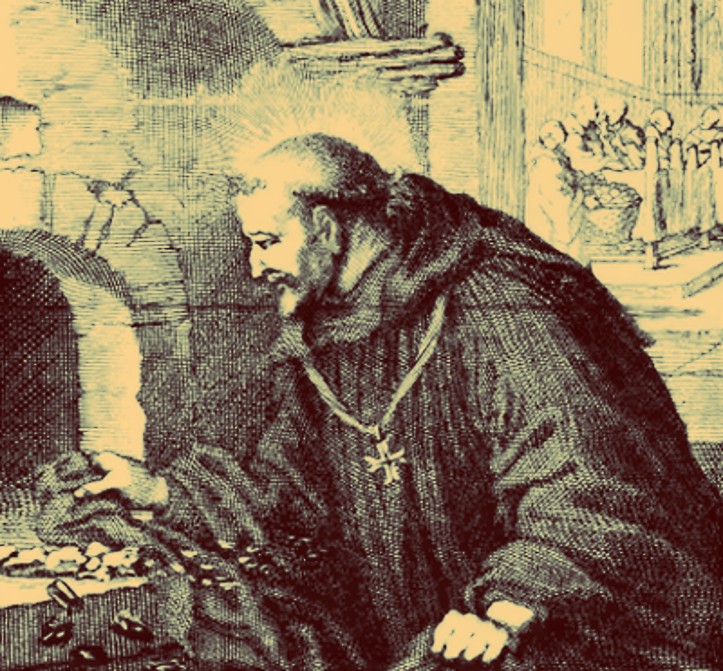
Hugh was known for his love of justice and his kindness to the oppressed, children and animals. Throughout his ministry he tended to lepers and in 1190 he risked his life to protect a group of Jews from violence. He also upheld the rights of the peasants against the King’s harsh and unjust forestry laws. Although he was highly principled and outspoken, his conciliatory nature and sense of humour helped him to win over his opponents.

St Hugh exorcises a man possessed by the devil

As one of the premier Bishops of the Kingdom of England Hugh more than once accepted the role of diplomat to France for Richard and then for King John in 1199, the latter trip took great toll on his health. He Consecrated St Giles’ Church, Oxford, in 1200. There is a Cross consisting of interlaced circles cut into the western column of the tower that is believed to commemorate this. Also in commemoration of the Consecration, St Giles’ Fair was established and continues to this day each September. While attending a national Council in London, a few months later, he was stricken with an unnamed ailment and died two months later on 16 November 1200

Hugh was held in great affection by everyone from peasants to monarchs and on his death at the age of 60, he was greatly mourned. At his magnificent funeral the Kings of England and Scotland helped to carry the bier. He was buried in Lincoln Cathedral and Canonised on 18 February 1220 by Pope Honorius III.

St Hugh is usually depicted as a Bishop, sometimes as a Carthusian. In either case he is accompanied by a swan, the swan of Stow, Lincolnshire (site of a palace of the bishops of Lincoln) which had a deep and lasting friendship with the Saint, even guarding him while he slept. The swan would follow him about, and was his constant companion while he was at Lincoln.as it was reported that a fierce swan at his manor at Stow became very tame and attached to him, eating from his hand and yet, the swan would attack anyone else who came near Hugh!

At Avalon, a round tower in the Romantic Gothic style, was built by the Carthusians in 1895 in Hugh’s honour on the site of the castle where he was born.

Posted in ENGAGED COUPLES, franciscan OFM, PATRONAGE - OF CHASTITY, SAINT of the DAY

Saint of the Day – 16 November – Saint Agnes of Assisi OSC (1197-1253)

Saint of the Day – 16 November – Saint Agnes of Assisi OSC (1197-1253) Virgin, Nun,Abbess, younger sister of Clare of Assisi and one of the first Abbesses of the Order of Poor Ladies (now the Poor Clares). Born Caterina Offreducia in 1197 at Assisi, Italy and died on 16 November 1253 at the Monastery of San Damiano of natural causes. Patronage – the Poor Clares, siblings, children of Mary, engaged couples, chastity.

Agnes was the younger daughter of Count Favorino Scifi. Her saintly mother, Blessed Hortulana, belonged to the noble family of the Fiumi and her cousin, Rufino, was one of the celebrated “Three Companions” of St Francis.

Agnes’s childhood was passed between her father’s Palace in the City and his Castle of Sasso Rosso on Mount Subasio.

On 18 March, 1212, her eldest sister Clare, moved by the preaching and example of St Francis, had left her father’s home to follow the way of life taught by the Saint. Sixteen days later, Agnes repaired to the Monastery of St Angelo in Panso, where the Benedictine Nuns had afforded Clare temporary shelter and resolved to share her sister’s life of poverty and penance. Agnes was just Fifteen years of age.

At this ocurrence, the fury of Count Favorino knew no bounds. He sent his brother Monaldo, with several relatives and some armed followers, to St Angelo’s Monastery, to force Agnes, if persuasion failed, to return home. The conflict which followed is related in detail in the “Chronicles of the Twent Four Generals.” Monaldo, (Agnes’ uncle) beside himself with rage, drew his sword to strike the young girl but his arm dropped, withered and useless, by his side; others dragged Agnes out of the Monastery by the hair, striking her and even kicking her repeatedly. Presently St.Clare came to the rescue and suddenly, Agnes’s body became so heavy that the soldiers having tried in vain to carry her off, dropped her, half dead, in a field near the Monastery.

Overcome by a spiritual power against which physical force availed not, Agnes’s relatives were obliged to withdraw and to allow her to remain with St Clare.

St Francis, who was overjoyed at Agnes’s heroic resistance to the entreaties and threats of her pursuers, presently cut off her hair and gave her the habit of Poverty. Soon after, he established the two sisters at St Damiano’s, in a small rude dwelling adjoining the humble Sanctuary, which he had helped to rebuild with his own hands. There several other noble ladies of Assisi joined Clare and Agnes, and thus began the Order of the Poor Ladies of St Damian’s, or Poor Clares, as these Franciscan nuns afterwards came to be called.

From the outset of her religious life, Agnes was distinguished by such an eminent degree of virtue, that her companions declared that she seemed to have discovered a new road to perfection, known only to herself.

As Abbess, she ruled with loving kindness and knew how to make the practice of virtue bright and attractive to her subjects. In 1219, Agnes, despite her youth, was chosen by St Francis to found and govern a community of the Poor Ladies at Monticelli, near Florence, which in course of time, became almost as famous as St Damiano’s. A letter written by St Agnes to St Clare, after this separation, is still extant, touchingly beautiful in its simplicity and affection. Nothing perhaps in Agnes’s character, is more striking and attractive, than her loving fidelity to Clare’s ideals and her undying loyalty in upholding the latter, in her lifelong and arduous struggle for Seraphic Poverty.

Full of zeal for the spread of the Order, Agnes established, from Monticelli, several Monasteries of the Poor Ladies in the north of Italy, including those of Mantua, Venice and Padua, all of which observed the same fidelity to the teaching of St Francis and St Clare.

In 1253 Agnes was summoned to St Damiano’s during the last illness of her beloved sister and assisted at the latter’s triumphant death and funeral.

On 16 November of the same year,she followed St Clare to her eternal reward. Her mother Hortulana and her younger sister Beatrice, both of whom had followed Clare and Agnes into the Order, had already passed away.

The precious remains of St Agnes repose near the body of her mother and sisters, in the Church of St Clare at Assisi. God, Who had favoured Agnes with many heavenly manifestations during life, glorified her Tomb after death, by numerous miracles. In 1753 Pope Benedict XIV recognised her holiness and recognised her cultus by and permitted the Order of St Francis to celebrate her Feast. It is kept on 16 November, as a double of the second class.

Posted in CHILDREN / YOUTH, SAINT of the DAY

Saint of the Day – 4 November – Saint Emeric of Hungary (c 1007-1031)

Saint of the Day – 4 November – Saint Emeric of Hungary (c 1007-1031) Confessor, Prince and Heir to the Hungarian Throne, Son of St Stephen, the first King of Hungary, Married but lived in continence with his wife, having vowed his virginity to God. Born in c 1007 in Veszprém, Hungary and died by being killed by a boar while hunting on 2 September 1031 in Hungary, aged 24. Patronages – Youth, Hungarian Americans. Also known as – Emerick, Emmerich, Emmericus, Henricus, Henry. Additional Memorial – 5 November the date of his Canonisation.

Emeric is believed to have been the second son of Saint Stephen I. Named after his maternal Uncle St Henry II, the Holy Roman Emperor, he was the only one of Stephen’s sons who reached adulthood.

Emeric was educated in a strict and ascetic spirit by the Benedictine Monk from Venice, St Gerard Sagredo (980-1046), from the age of 15 to 23. He was intended to be the next Monarch of Hungary and his father wrote his Admonitions to prepare him for this task – here: https://anastpaul.com/2019/08/16/thought-for-the-day-16-august-st-stephens-letter-to-st-emeric/

St Stephen here: https://anastpaul.com/2018/08/16/saint-of-the-day-16-august-st-stephen-of-hungary-c-975-038-apostle-of-hungary/ and St Gerard here: https://anastpaul.com/2020/09/24/saint-of-the-day-24-september-saint-gerard-sagredo-osb-980-1046-bishop-and-martyr-the-apostle-of-hungary/

Emeric married a Byzantine Princess but according to a biography written between 1109 and 1116, he lived during marriage in perfect chastity, collaborating with his father King Stephen in the conversion of his subjects.

The succession plans of Emeric’s father could never be fulfilled, for on 2 September 1031, at age 24, Emeric was killed by a boar while hunting. It is believed that this happened in Hegyközszentimre (presently Sântimreu, Romania). He was buried in the Székesfehérvár Basilica. Several wondrous healings and conversions happened at his grave. On 5 November 1083 King Ladislaus I translated Emeric’s relics in a large ceremony. Emeric was Canonised for his pious life and purity, along with his father and Bishop Gerard by Pope Gregory VII.

On the 900th Anniversary of the death of Prince Emeric, a National Memorial Year was organised in 1930–1931 and the village of Pestszentimre was named after him. The Church in the district also bears the name of the Saint-Prince and the first public Statue of the district depicts Saint Emeric. The Saint Emeric Memorial Year proclaimed for 1930–1931 moved the whole country and the settlements around Pest, which are now parts of Budapest. The two-year event series was such an important event that Pestszentimre, which belongs to the 18th District today, took the name of our first King’s, St. Stephen’s, son. The settlement had previously been called Soroksárpéteri.

St Emeric’s Church in the Town named for him
St Emeric in Pestszentimre
Posted in DOCTORS, / SURGEONS / MIDWIVES., SAINT of the DAY

Saint of the Day – 31 October – St Foillan of Fosses (Died 655)

Saint of the Day – 31 October – St Foillan of Fosses (Died 655) Bishop, Martyr, Missionary, Abbot. Born in the 7th Century in Ireland and died by murder on 31 October 655 in the forest near Nivelles, Belgium, Patronages – children’s nurses, dentists, Fosses, Belgium, surgeons, truss makers, Diocese of Mechelen and Tournai., Belgium. Also known as – Faelan, Faillan, Faolan, Feuillien, Foalan, Foelan. Additional Memorial – 5 November in the Diocese of Mechelen and Tournai.

Foillan was one of the numerous Irish missionaries who, in the course of the seventh century, evangelised in Europe, bringing the liturgy and sacred vessels, founding prosperous Monasteries and sharing considerably in the propagation of the Faith in these countries. Foillan played a significant part in Frankish ecclesiastical history, as shown by his share in the direction of Nivelles and by the foundation of the Monastery of Fosses-la-Ville.
Foillan was born in Ireland early in the seventh century and was the brother of Saints Ultan and Fursey, the latter a famous Missionary who preached the Faith to the Irish, the Anglo-Saxons and the Franks. Foillan, probably in company with Ultan, went with his brother Fursey, when the latter, fleeing from his country then devastated by foreign invaders, retired to a lonely islands. Fursey soon went among the Anglo Saxons and built a Monastery at Burgh Castle (Cnoberesburg) in Suffolk, between 634 and 650.

Seized again with the desire for solitude, Fursey left the Monastery in the care of Foillan, who remained at the head of the community and had the happiness of once more seeing his brother Fursey, who, having since gone to the kingdom of the Franks, came to visit him about 650. Soon a disastrous war broke out between Penda, the Mercian Chief and Ana, King of the Eastern Anglo-Saxons. Ana, having been put to flight, the Monastery of Cnoberesburg fell into the hand of the enemies. It was pillaged,and its Abbot, Foillan, barely escaped death. He hastened to ransom the captive Monks, recovered the relics, put the holy books and objects of veneration on board ship and departed for the country of the Franks, where his brother Fursey was buried. He and his companions, were well received at Péronne by Erconwald, Mayor of the Palace. But soon, for some unknown reason, Foillan and his companions left Péronne and went to Nivelles, a Monastery founded by St Ita and St Gertrude, wife and daughter of Duke Pepin I.
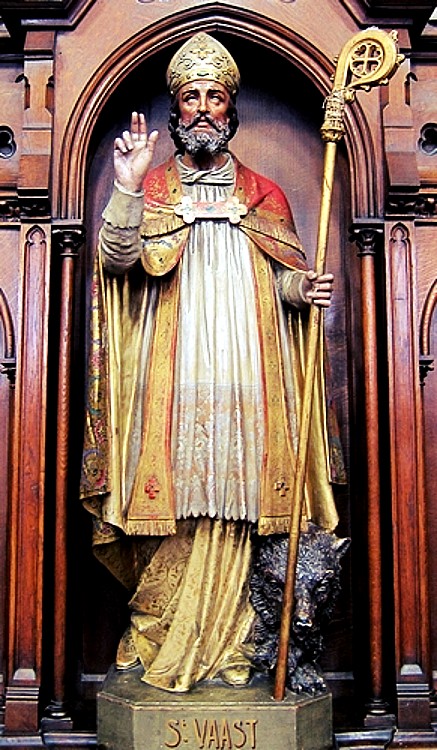
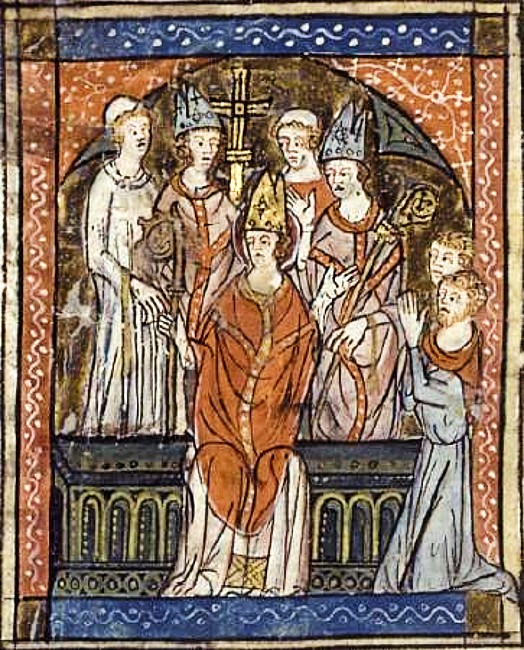
Foillan, like so many other Irishmen who went to the Continent in the seventh century, was invested with episcopal dignity, having doubtless been a monastic Bishop at Cnoberesburg. He was, therefore ,of great assistance in the organisation of worship and the holy books and relics, which he brought, were great; treasures for St Ita and St Gertrude. As the Monastery of Nivelles was under Irish discipline, the companions of Foillan were well received and lived, side by side, with the holy women, occupying themselves with the details of worship under the general direction of the Abbess. Through the liberality of Ita, Foillan was enabled to build a Monastery at Fosses, not far from Nivelles, in the Province of Namur.
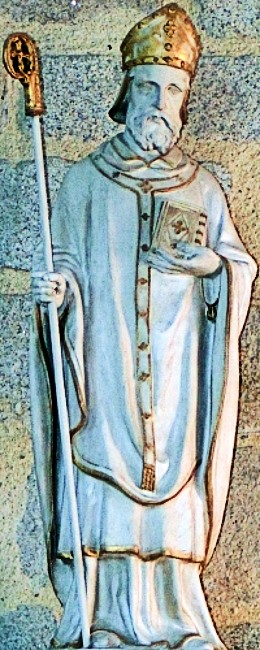
The Church at Fosses

After the death of Ita in 652, Foillan came one day to Nivelles and sang Mass, on the eve of the feast of St Quentin. The ceremony being finished, he resumed his journey, doubtless undertaken in the interests of his Monastery. In the forest of Senege the Saint and his companions fell into a trap set by bandits who inhabited that solitary place. They were slain, stripped, and their bodies concealed. But they were recovered by St Gertrude and when she had taken some relics of the Saint, his body was borne to the Monastery of Fosses, where it was buried in 655.

It is not surprising, after his death and because of his work in the area, that St Foillan should be honoured and venerated both at Nivelles and Fosses and, to find at Le Roeulx (Belgium) a Monastery bearing his name. As late as the twelfth century the veneration in which he was held, inspired Philippe Le Harvengt, Abbot of Bonne-Espérance, to compose a lengthy biography of the Saint. He is the Patron of Fosses, near Charieroi. In the Diocese of Namur his feast is celebrated on 31 October, in the Dioceses of Mechlin and Tournai on 5 November.

Posted in Against DEMONIC POSSESSION, Against SNAKE BITES / POISON, Against STORMS, EARTHQUAKES, THUNDER & LIGHTENING, FIRES, DROUGHT / NATURAL DISASTERS, PATRONAGE - MENTAL ILLNESS, SAINT of the DAY

Saint of the Day – 18 October – St Amabilis of Auvergne (c 397- c 475)

Saint of the Day – 18 October – St Amabilis of Auvergne (c 397- c 475) Priest, Confessor, Miracle-worker. Tradition tells that snakes and demons fled from his voice, often the images and medals depicting him bear the words “The demons flee as well as snakes and fire.” Born probably in Rimo, France in c 397 and died in Auvergne in c 475 of natural causes. Patronages – against demonic possession, against fire, against mental illness, against poison, against snake bite, against wild beasts, of Auvergne, France, of Riom, France. Also known as – Amabilis of Riom, Amabilis the Cantor. Additional Memorial – 1 November.

In the sixth century, St Gregory of Tours in his ‘De gloria confessorum,’ described the popular belief in this Saint’s power over demons and serpents as well as the veneration at his tomb. Gregory reports that he, himself witnessed two miracles there.

Notice the snake at his feet

Amabilis served as a Cantor in the Church of Saint Mary at Clermont and then as the Precentor at Clermont Cathedral . Later as Parish Priest at Riom, where, in 1120, a Church was dedicated to him. He acquired a reputation for holiness in his lifetime.

In the seventh century his relics were transferred to Riom from Clermont. Riom grew up around the collegiate Church of Saint Amable, which was the object of pilgrimages. In the eighteenth century a dispute occurred over these relics between neighbouring Clermont and Riom, where Amabilis is Patron.

Chapel of St Amabilis in the Church dedicated to him at Riom
Relics
St Amabilis Church

Public processions in his honour have been traditional in Riom for more than 1500 years, where he is invoked against fire and snakes. Father Antoine Déat, a Missionary in Canada , introduced his cult to North America, where he is also still venerated today. A chapel is dedicated to him in the Notre-Dame Basilica in Montreal.

Posted in franciscan OFM, Of Catholic Education, Students, Schools, Colleges etc, SAINT of the DAY

Saint of the Day – 17 October – Blessed Contardo Ferrini TOSF (1859-1902)

Saint of the Day – 17 October – Blessed Contardo Ferrini TOSF (1859-1902) Layman, Third Order Franciscan, Profesor, Civil and Canon Lawyer, Apostle of the poor, writer, A recognised specialist in Roman and Byzantine law, Contardo Ferrini was a Professor at several Universities but his name is mainly linked to the University of Pavia , where he studied in 1880 and later became a Professor. He was also a fervent Roman Catholic, who lived a devout life of prayer and service to the poor. Born on 4 April 1859 at Milan, Italy and died on 17 October 1902 at Suna, Verbano-Cusio-Ossola, Italy of typhus, aged 43. Patronages – academics, colleges, schools, universities.

The Roman Martyrology mentions him today: “In Suna near Lake Maggiore, Blessed Contardo Ferrini, who, in educating young people, with his example of faith and Christian life, went far beyond human science.

Contardo Ferrini was born on 5 April 1859 in Milan to Rinaldo Ferrini and Luigia Buccellati. He was Baptised at the font where Blessed Frédéric Ozanam, also a native of Milan, had been Baptised 46 years before. After receiving his First Holy Communion at age 12, he joined a Blessed Sacrament Confraternity.

Contardo’s father, a Professor of mathematics and science, taught his son at an early age. By the time he was a young man, he spoke several languages. His apparent love for his faith caused friends to call him by the nickname St. Aloysius (St. Aloysius Gonzaga). He entered University of Pavia at age 17 and, two years later, was appointed Dean of Students. At age 21 he became a Doctor of the law at the University. His doctoral thesis, which related penal law to Homeric poetry, was the basis of his being awarded a scholarship to the University in Berlin, where he specialised in Roman-Byzantine law, a field in which he became internationally acclaimed as expert.

Blessed Bartholomew Longo and Contardo Ferrini

During Contardo’s stay in Berlin, he wrote of his excitement at receiving the Sacrament of Reconciliation for the first time in a foreign country. The experience brought home to him, he wrote, the universality of the Church.

Upon his return to Italy, he was a Lecturer in Universities at Messina, Modena and Pavia. He received his first Professorship at age 26. Contardo, atthis time, attempted to discern a vocation as a secular priest, a religious, or as a married person. Ultimately, he remained an unmarried layperson. He vowed himself to God, became a member of the Third Order of St. Francis in 1886 and was a member of the Saint Vincent de Paul Society, to which he had been introduced by his father, a member of a St Vincent de Paul Conference himself.

As a faculty member at the University of Pavia, he was considered an expert in Roman Law. Over the course of his career he published books, articles and reviews. He taught for a time at the University of Paris. He became a Canon Lawyer in addition to being a Civil Lawyer. Mountaineering was an favourite hobby.

An anecdote, unsourced, about Contardo is that he was asked to attend a dinner party and, once there, found it tedious. His resort was to invite all the guests to join him in praying the Rosary.

In 1900, Contardo developed a heart lesion. In Autumn 1902, he went to his country home in Suna in order to rest. There he became ill with typhus. He died at age 43 on 17 October 1902. Residents of Suna immediately declared him a saint. His fellow faculty members at the University of Pavia wrote letters in which he was described as a saint. In 1909 Pope Pius X appointed Cardinal Ferrari to open a cause. Contardo was declared Venerable by Pope Pius XI and he was Beatified by Pope Pius XII on 13 April 1947. His body is venerated in a Chapel of Milan’s Catholic University. He is a patron of universities, colleges and academics. Yesterday we read some of the history of Milan Duomo and the 3159 Saint Statues there. One of the 2245 Spire Saints, on one the lofty Spires of this breathtaking Cathedral, resides our Blessed Contardo.

Shrine at Chapel of Milan’s Catholic University