Saint of the Day – 3 October – Sant Thérèse of the Child Jesus and the Holy Face or The Little Flower (1873 – 1897) Virgin.
Marie Francoise Thérèse Martin, known as the Little Flower of Jesus, was born 2 January 1873 at Alencon in Normandy, France, of very Christian parents. The Martins, who lost four of their little ones in early infancy or childhood, regarded their children as Gifts from Heaven and offered them to God before their birth. Thérèse was the last flower of this blessed stem, which gave four Sisters to the Carmel of Lisieux, still another to the Visitation of Caen.
The five sisters were left without their mother, a victim of cancer, when Thérèse was only four years old but her two oldest sisters were of an age to take excellent care of the household and continue the Christian character formation, of the younger ones, which their mother had initiated. Their saintly father was soon to see his little flock separated, however, when one after the other they left to enter religious life. He blessed each one and gave them all back to God, with humble gratitude to God for having chosen his daughters.
From childhood,Thérèse had manifested a tender piety which her naturally lively temperament could not alter. Her mother’s death affected her profoundly, however and, at the age of nine, she was visited with a severe trial in the form of an illness the doctors could not diagnose and which seemed incurable. She was instantly restored to her ordnary good health by the Virgin Mary, in answer to her desolate sisters’ prayers – Thérèse saw Her statue become animated, to smile at her with an ineffable tenderness as she lay on her bed of suffering.
Before the age of fifteen, Thérèse already desired to enter the Carmel of Lisieux, where her two eldest sisters were already nuns; a trip to Rome and a petition at the knees of the Holy Father, Leo XIII, gave her the inalterable answer – that her Superiors would regulate the matter. Many prayers finally obtained an affirmative reply to her ardent request and four months after her fifteenth birthday, she entered Carmel with a great joy. She could say then, “I no longer have any desire but to love Jesus even to folly.“
She adopted flowers as the symbol of her love for her Divine Spouse and offered all her little daily sacrifices and works, as rose petals at the feet of Jesus. Divine Providence gave to the world, the autobiography of this true Saint, whose little way of spiritual childhood was described in her own words, in her Story of a Soul. She could not offer God the macerations of the great soldiers of God, only her desires to love Him ,as they had loved Him and to serve Him, in every way possible. She chose “all” in spirit, for her beloved Lord.
Later, she would be named Patroness of missions. Her spirituality does not imply only sweetness and light, however, for this loving child of God, passed by a tunnel of desolate spiritual darkness, yet never ceased to smile at Him, wanting to serve Him, if it were possible, without His even knowing it.
When nine years had passed in the Carmel, the little flower was ready to be plucked for heaven and, in a slow agony of Consumption, Thérèse made her final offering to God. She suffered so severely that she said she would never have believed it possible and could only explain it by her desire to save souls for God. She died in 1897, was Beatified in 1923 and Canonised in 1925.
And now, as she foretold, she is spending her heaven in doing good upon earth. Countless miracles have been attributed to her intercession. Little Flower of Jesus please pray for Holy Mother Church and for all Her faithful children.
Saint of the Day – 25 August – St Louis IX (1214-1270) King of France Confessor, King, Reformer, Apostle of Charity.
This remarkable man was born on 25 April 1214, near Paris, France. When his grandfather, King Philip II of France, passed away, his son, Prince Louis the Lion, became King Louis VIII. His wife became Queen Blanche. Their son, now Prince Louis, was only nine-years-old.
Three years later Louis’ father died and the boy was crowned King Louis IX. Because of his young age the Queen Mother, Blanche, took over the reins of government. A great woman in her own right, she made sure her son would be prepared for his life as King. Queen Blanche, also known as Blanche of Castille, took her Catholic faith very seriously. She was rigid and determined in teaching her son the faith and managed to instill genuine piety and a deep sense of devotion in him. She was quoted as having told her son, “I love you, my dear son, as much as a mother can love her child but I would rather see you dead at my feet, than that you should commit a mortal sin.”
At the age of 21, Louis took charge of the government. His mother’s influence in his life was apparent because there was a force within Louis that made him strive to rule justly and to attain sanctity. King Louis had a pronounced affinity for the sick and poor of his kingdom. He treated the downtrodden with compassion, understanding and with a humility that was unheard of in a king.
Everyday King Louis IX would have three special guests called in from among the poor to have dinner with him…Since there were always crowds of poor and hungry outside the palace, he would try to have as many of them fed as was possible. During Lent and Advent anyone who presented themselves before him was given a meal and often, the King served them himself. He even had lists compiled of needy people in every Province under his rule.
Louis married his true love, Margaret of Provence on 27 May 1234. Queen Margaret was filled with religious fervour as was her husband and they truly made a beautiful couple while setting a fine example for all married couples. They both enjoyed each other’s company and liked riding together, listening to music and reading. King Louis and Queen Margaret had eleven children.
Louis was a strong-willed and strong-minded man with a powerful faith. His word was trusted throughout the Kingdom, and his courage, in taking action against wrongs was remarkable. Amazingly, this King had true respect for anyone with whom he had dealing, especially the poor and downtrodden. King Louis built Churches, libraries, hospitals and orphanages. He treated both Princes and commoners equally.
King Louis had taken his army on the 7th Crusade in 1248. This proved to be a disaster and the king was captured by the Muslims. After an absence of six years, he was successfully ransomed and returned home. In 1270 he sought redemption for his first failure and embarked on another crusade. It was summer in northern Africa and dysentery and typhoid swept through the dirty camps. King Louis IX, died while lying on a bed of ashes saying the name of the City he had not relieved; “Jerusalem, Jerusalem.”
Pope Boniface VIII, proclaimed Louis a Saint in 1297. He is the only King of France named a Saint by the Church. This man was a true gentleman as he tried to treat everyone with courtesy, love and respect, whilst remaining strong and just at the same time. He is most beloved both in France and across the Catholic world.
Saint of the Day – 24 August – St Bartholomew the Apostle and Martyr. Saint Bartholomew, whose name appears only in the lists of the Apostles, is believed to be Nathanael, whom Philip brought to Christ. He preached in Persia and Egypt and was flayed alive in Armenia. His relics are believed to be in the Church of Saint Bartholomew in Rome. Patronages –Armenia; bookbinders/publishers; butchers; Florentine cheese and salt merchants; Gambatesa, Italy; Catbalogan, Samar; Għargħur, Malta; leather workers; neurological diseases; plasterers/construction workers; shoemakers; tanners; trappers; skin diseases/rashes, against involuntary shaking disorders; Los Cerricos (Spain), 16 further cities all over the world.
Saint Bartholomew Apostle and Martyr Excerpt from The Liturgical Year By Prosper Guéranger OSB (1805-1875)
A witness of the Son of God, one of the princes who announced His glory to the nations, lights up this day with his apostolic flame.
Personally, who was this Apostle who borrowed such solemnity from the scene of his apostolic labours? Under the name or surname of Bartholomew (“Son of Tholmai“), the only mark of recognition given him, by the first three Gospels, do we see, as many have thought that Nathaniel, whose presentation to Jesus by Philip forms so sweet a scene in St John’s Gospel (1: 45-51)? A man of uprightness, innocence and simplicity, … for whom, the Man-God had choice graces and caresses from the very beginning.
Be this as it may, the lot which fell to our Saint among the Twelve, points to the special confidence of the Divine Heart. The heroism of the terrible Martyrdom which sealed his apostolate, reveals his fidelity. The dignity preserved by the nation he grafted onto Christ, in all the countries where it has been transplanted, witnesses to the excellence of the sap first infused into its branches. When, two centuries and a half later, St Gregory the Illuminator, so successfully cultivated the soil of Armenia, he did but quicken the seed sown by the Apostle, which the trials never wanting to that generous land, had retarded for a time but could not stifle. …
We learn from Eusebius and from St Jerome that before going to Armenia, his final destination, St Bartholomew evangelised the Indies, where Pantaenus a century later found a copy of St Matthew’s Gospel in Hebrew characters, left there by him. …
The City of Rome used to celebrate the Feast of St Bartholomew on the following day, as do also the Greeks who commemorate on 25 August – a translation of the Apostle’s relics. It is owing, in fact, to the various translations of his holy body and to the difficulty of ascertaining the date of his Martyrdom that different days have been adopted for his Feast ,by different Churches, both in the east and in the west. The 24th of this month, consecrated by the use of most of the Latin Churches, is the day assigned in the most ancient Martyrologies, including that of St Jerome. In the 13th Century, Pope Innocent III, having been consulted as to the divergence, answered that local custom was to be observed.
The Church gives just the following Lessons for the life of the Apostle of Armenia:
The Holy Apostle Bartholomew was a native of Galilee. It fell to his lot to preach the Gospel in western India;and he announced to those nations the coming of Our Lord Jesus Christ according to the Gospel of St Matthew. But after converting many souls to Jesus Christ in that Province and, undergoing much labour and suffering, he went into eastern Armenia.
Here he converted to the Christian Faith, the King Polymius and his Queen, as well as twelve Cities. This caused the pagan priests of that nation to be exceedingly jealous of him and they stirred up Astyages, the brother of King Polymius against the Apostle, so that he commanded him to be flayed alive and finally beheaded. In this cruel Martyrdom he gave up his soul to God.
His body was buried at Albanapolis, the town of eastern Armenia where he was Martyred but it was afterwards taken to the island of Lispari and thence to Beneventum. Finally it was translated to Rome by the Emperor Otto III and placed on the island of the Tiber, in a Church dedicated to God under his invocation.
On this day of thy Feast, O holy Apostle, the Church (in the Collect of the Mass) prays for grace to love what thou didst believe and to preach what thou didst teach. Not that the Bride of the Son of God, could ever fail, either in faith or in love but She knows, only too well that, although Her Head is ever in the light and Her heart ever united to the Spouse, in the Holy Ghost Who sanctifies Her, nevertheless ,Her members and particular Churches may detach themselves from their centre of life and wander away in darkness. O thou who didst choose the west as the place of thy rest, thou in whose precious relics Rome glories in possessing, bring back to St Peter, the nations thou didst evangelise, that we may together, enjoy the treasures of our concordant traditions and go to God, even at the cost of being despoiled of all things, by the course so grand and yet so simple, taught us by thy example and by thy sublime theology. Amen.
Saint of the Day – 21 August – St Jane Frances de Chantal (1572-1641) Widow, Mother, Foundress of the Congregation of the Visitation. Close friend of St Francis de Sales and St Vincent de Paul, both of whom guided and assisted her and her foundation, spiritually Patronages – against in-law problems, against the death of parents, forgotten people, parents separated from children, widows.
St Jane Frances de Chantal, Widow From the Liturgical Year, 1909
Jane Frances Freiniot de Chantal was born at Dijon in Burgundy, France, of noble parents and from her childhood gave clear signs of her future great sanctity. It was said that when only five years of age, she put to silence a Calvinist nobleman by substantial arguments, far beyond her age, and, when he offered her a little present, she immediately threw it into the fire, saying: “This is how heretics will burn in hell because they do not believe Christ when He speaks.”
When she lost her mother, she put herself under the care of the Virgin Mother of God,and dismissed a maid servant who was enticing her to love of the world. There was nothing childish in her manners. she shrank from worldly pleasures, and thirsting for martyrdom, she devoted herself entirely to religion and piety. She was given in marriage by her father to the Baron de Chantal and in this new state of life, she strove to cultivate every virtue and busied herself in instructing in faith and morals, her children, her servants and all under her authority. Her liberality in relieving the necessities of the poor was very great and more than once, God miraculously multiplied her stores of provisions – on this account, she promised never to refuse anyone who begged an alms in Christ’s Name.
Her husband, having been killed while hunting, she determined to embrace a more perfect life and bound herself ,by a vow of chastity. She not only bore her husband’s death with resignation but, overcame herself, so far, as to stand as the Godmother, to the child of the man who had killed him, in order to give a public proof that she pardoned him. She contented herself with a few servants and with plain food and dress, devoting her costly garments, to pious usages. Whatever time remained from her domestic cares, she employed in prayer, pious reading and good works. She could never be induced to accept offers of a second marriage, even though, honourable and advantageous. In order not to be shaken in her resolution of observing chastity, she renewed her vow and imprinted the most Holy Name of Jesus Christ upon her breast with a red-hot iron. Her love grew more ardent day by day. She had the poor, the abandoned, the sick and those, who were afflicted with the most terrible diseases, brought to her and not only sheltered, and comforted but also, nursed them. She washed and mended their filthy garments and did not shrink from putting her lips to their running sores.
Having learnt the will of God from St Francis de Sales, her Director, she founded the Institute of the Visitation of Our Lady. For this purpose, she quitted, with unfaltering courage, her father, her father-in-law and even her son, over whose body she had to step, in order to leave her home, so violently did he oppose her vocation. She observed her Rule with the utmost fidelity and so great was her love of poverty that she rejoiced to be in want, of even the necessaries of life.
She was a perfect model of Christian humility, obedience, and all other virtues. Wishing for still higher ascensions in her heart, she bound herself by a most difficult vow, always to do what she thought most perfect. At length when the Order of the Visitation had spread far and wide, chiefly through her endeavours, after encouraging her sisters to piety and charity, by words and example and also, by writings full of divine wisdom, laden with merits, she passed to the Lord at Moulins, having duly received the Sacraments of the Church. She died on the 13 December, in the year 1641.
St Vincent de Paul, who was, at a great distance, saw her soul being carried to Heaven and St Francis de Sales coming to meet her. Her body was afterwards translated to Annecy. Miracles having made her illustrious, both before and after her death, Pope Benedict XIV. placed her among the Blessed and Pope Clement XIII. among the Saints. Pope Clement XIV. commanded her Feast to be celebrated by the Universal Church.
Saint of the Day – 18 August – St Agapitus the Martyr (c 259- c 274) Roman Youth aged 15 Born in c 259 in Palestrina, Italy and died in c 274 by being thrown to wild animals in the arena. When the animals would not touch him, he was beheaded at Palestrina, Italy. Patronages – against colics, Palestrina, Italy. Also known as –
The Roman Martyrology reads: “At Palestina, the birthday of the holy Martyr Agapitus. Although only fifteen years of age, as he was fervent in the love of Christ, he was arrested by order of te Emperor Aurelian and scourged for a long time. Afterwards, under the Prefect Antiochus, he endured more severed torments and, being delivered to the lions by the Emperor’s order without receiving any injury, he was finally struck with the sword and thus, merited his crown.”
Agapitus, was a member of the noble Anicia family of Palestrina, He was condemned to death under the Prefect Antiochus and the Emperor Aurelian, for being a Christian.
Agapitus was but 15 years old, when he was apprehended by the tyrant Aurelian, on account of being a Christian. As he unflinchingly proclaimed his belief in Christ, he was whipped with scourges and then cast into a dungeon, without any food, that he might thus be forced to forsake Christianity.
When Antiochus, the Prefect, found him, at the end of five days, more determined than before, he ordered a live coal to be put upon his head. The brave youth stood immovably under this torture and praising God, said: “A head, which would wear an eternal crown in Heaven, must not hesitate to wear suffering and pain upon earth. Wounds and burns make my head the more worthy to be crowned with eternal glory.”
Antiochus, greatly provoked, ordered them to whip the holy youth till his body became one great wound, after which, they hung him by the feet over a fire, hoping to suffocate him. But they failed for, after a long silence, he addressed the Prefect saying: “Behold, Antiochus, the people will say that all thy ingenuity, all thy wit, ends in smoke.”
Statue of St Agapitus by Marco Antonio Prestinari (c 1605-1607) in Museo del Duomo, Milan
Enraged at this remark, the tyrant had him again cruelly whipped and ordered boiling water to be poured into the open wounds. After this, they knocked all his teeth out and broke his jaws with blows.
The Martyrdom of St Agapitus
But God punished the tyrant for his cruelty; He caused him to fall from his seat and break his neck. Aurelian, hearing of this, ordered the Martyr to be thrown to the wild beasts but, as they refused to touch him, he was finally beheaded. Thus ended the glorious Martyrdom of the holy youth, Agapitus, in around 274.
Agapitus is mentioned in the ancient Martyrologies, including the Martyrologium Hieronymianum of St Jerome, Around the 5th Century, Pope Felix III built a Basilica in his honour on the supposed site of his Martyrdom. His relics were kept in the Basilica and a cemetery grew around it. At some uncertain date, his relics were translated to the present Cathedral of Palestrina, dedicated to him.
Agapitus is honoured in the Tridentine Calendar by a commemoration added to the Mass and canonical hours in the liturgy of the day within the Octave of the Assumption.
Saint of the Day – 17 August – St Hyacinth OP (1185-1257) ) Confessor, Priest. “Apostle of Poland” and “Apostle of the North” also known as “the Polish St Dominic.
Saint Hyacinth, Confessor By Fr Francis Xavier Weninger SJ (1805-1888)
St Hyacinth, a great ornament of the celebrated Order of Preachers, was born in Poland. He was the son of illustrious parents, who educated him according to the dictates of Christianity. During the years devoted to his studies, he was an example of innocence, piety and industry. His uncle, the Bishop of Cracow, appointed him Canon in his Cathedral, so that he might employ him in the administration of his See. When he left for Rome, on account of troubles at home, he took Hyacinth with him. St Dominic, so celebrated for his apostolic zeal and for the miracles he wrought, was also in Rome at the time. Hyacinth, observing the wonderful zeal and piety of this holy man and of his companions, felt a growing desire to join them. He and three of his fellow-travellers, who had the same inclination, went to St Dominic and begged him to receive them into his newly founded Order. The Saint received them willingly and instructed them how to lead a religious life, to preach in a Christian spirit and to labour successfully for the spiritual welfare of men. After a few months, the holy founder had so thoroughly imbued them with his spirit that he did not hesitate, after they had taken their vows, to send them into their native country, to preach the word of God and promote the salvation of souls.
At Cracow, where Hyacinth had formerly preached, by his edifying life, he now began to preach with words and God gave them such power that he reformed the most hardened sinners, induced others to become more zealous in the service of the Almighty and animated all, to be more solicitous for the salvation of their souls. That all this might have a more solid foundation, he gathered a number of spiritual co-operators about himself and, having instructed them, according to the maxims of St Dominic, he established a Dominican Monastery at Cracow. Hyacinth, who had been chosen Superior by the new members, was an example to all. Besides the prescribed fast-days of his Order, he fasted all Fridays and vigils, on bread and water. The greater part of the night he passed in fervent prayer, before the Blessed Sacrament. He allowed himself only a very short rest on the bare floor and scourged himself severely every night. The whole day was occupied with hearing confessions, preaching, visiting the sick and similar pious exercises.
He had particular devotion to the Blessed Sacrament and to the Blessed Virgin and never undertook anything before offering his work to God and begging the assistance of His Blessed Mother. She appeared to him once, on the eve of the Feast of her Assumption, saying to him: “Be assured, my son, that thou shalt receive everything thou askest from my Son.” The comfort these words afforded the holy man, may be easily imagined. He, however, asked only for what was necessary for the salvation of souls. His own and his companion’s pious labours were all directed to the same end.
When he thought that he had firmly established religious principles and practices among the inhabitants of Cracow and the whole Diocese, he sent his preachers to different places to labour in the same manner. He himself, also left Cracow and it is astonishing, how many Countries he journeyed through, how many Convents he established everywhere for apostolic labourers, how many souls he converted to the true faith or to a more virtuous life. To aid his pious endeavours, God gave him power to work miracles and so great was their number, that he might well be called the Thaumaturgus, or wonder-worker of his age.
A miraculous event occurred in Russia, when the Tartars stormed Kiow, where the Saint had founded a Church and Convent. He was standing at the Altar when they entered the City, spreading destruction and desolation around them. After finishing the Holy Sacrifice, the Saint, still in his Priestly robes, took the Ciborium containing the Blessed Sacrament and telling his Priests to follow him without fear, he went towards the Church door. When passing a large alabaster statue of the Blessed Virgin, before which he had often said his prayers, he distinctly heard a voice saying: “My son Hyacinth, wilt thou leave me here to be at the mercy of my enemies?” The Saint’s eyes filled with tears. “How can I carry thee? ” said he; “the burden is too heavy.” “Only try,” was the response; “my Son will assist thee to carry me without difficulty.” The holy man with streaming eyes, took the statue and found it so light that he could carry it with one hand. Thus, carrying the Ciborium in one hand and the statue in the other, he and his companions passed through the enemy unassailed, to the gates of the City. Not finding any soldiers there, they passed on and reached Cracow in safety.
Whether Almighty God made His servants invisible to the Tartars on this occasion, or in some other manner prevented them from harming them, is not known but, it is a fact that they left the City unmolested. When they reached the river, over which there was no bridge, nor a boat to convey them across, the Saint, trusting in the power of Him Whom he carried in his right hand and, in the intercession of her whom he held in his left, fearlessly stepped upon the water and crossed it with dry feet.
A similar and perhaps, still greater miracle occurred at another time. He was going to Vicegrad to preach but, on reaching the river, found no vessel which he could use to reach the opposite bank. Spreading his cloak on the water, he sat upon it and was floated safely across and brought his companions over in the same manner. By this and many other miracles, God glorified His servant even on earth.
For forty years this holy man had laboured for the salvation of souls, when, in 1257, it was revealed to him that he should assist, in Heaven, at the triumph of the Blessed Virgin, on the Feast of her glorious Assumption. On the Feast of St Mary ad Nives, he was taken ill. On the eve of the Assumption, he gave his last instruction to the Priests of his Order, after which, he prepared for the festival and,, having recited the Office of the day, he fixed his eyes on Heaven and said the psalm, “In thee, O Lord, have I hoped,” to the words, “Into thy hands I commend my spirit,” when he calmly expired, at the age of 74. The innocence and chastity which he possessed at the time of his Baptism, remained unspotted until the end.
After his death, the miracles which the Almighty continued to work through this Saint, were the means of proclaiming to all the world, the sanctity and merits of His blessed servant.
Saint of the Day – 16 August – St Joachim, Father of the Blessed Virgin Mary. St Joachim is regarded as the Father of the Virgin Mary, Mother of God, our Lord Jesus and Saviour. St Joachim was a retired Priest or Holy man of his time. He is the Patron Saint of Fathers, Grandfathers, Grandparents, Married Couples, Cabinet Makers, Puerto Rico, Dolores, Eastern Samar; Fasnia (Tenerife). The name Joachim in Hebrew means, “God Prepares.”
At the temple, Joachim’s sacrifice was rejected, as the couple’s childlessness was interpreted as a sign of Divine displeasure. Joachim consequently withdrew to the desert, where he fasted and did penance and prayed for 40 days. Angels then appeared to both Joachim and Anne to promise them a child.
Joachim returned to Jerusalem and embraced Anne at the City gate, located in the Walls of Jerusalem. An ancient belief held that a child born of an elderly mother who had given up hope of having offspring was destined for great things. It is also tradition that Joachim would give Mary to the service of the Temple when the girl was only three years old.
Joachim is neither mentioned in historical or canonical writings but is still widely revered and is the namesake of many Church institutions. The only source of information regarding St Joachim, is the non-biblical Gospel of James, an apocryphal book that was, nonetheless, widely read.
St Joachim meets St Anne at the City Gate
In the 1500 – 1600’s, Joachim’s image appeared on many European coins ,including , in about 1520, the famous Joachim’s Taler, a silver coin in Bohemia. Some of those coins are still seen today, in the hands of collectors.
We know St Joachim as the Father of Our Lady. Although little is actually known about this Saint, one can imagine the love he had for his child, who came late in life to he and St Anne. The tradition tells us he was a Priest or Holy man of God and much can be taken from that. We too, may not always know what God may have in store for us – but one thing is certain, if we stay close to God, serve Him with all our strength, we too can merit life eternal, like St Joachim.
Saint of the Day – 13 August – St Wigbert of Fritzlar (c 675-c 746) a learned Scholar and Abbot, Missionary, Miracle-worker, gifted with a penetrating understanding of Sacred Scripture as well as the gift of prophecy, companion of St Boniface, the Apostle of Germany. Born in c 518 in Erfurt, Saxony (England) and died on 13 August c 587 in Poitiers, France of natural causes. Wigbert was known as a quiet and gentle man and a great teacher. Both St Alcuin and St Bede knew and mentioned him in their historical writings of the times and of the Church. St Bede admired his contempt of this world and his learning. Patronages – against drowning, against fever/high temperature, against leprosy/skin diseases for example against scabies, against the death of parents, against ulcers, difficult marriages, of potters, weavers, Poitiers, France.
Wigbert was born in England about 675 of noble parents. He was known for the purity of his morals, his zeal for the salvation of souls, his boundless love, his penetrating knowledge and familiarity with the Sacred Scriptures.
Wigbert became a Monk, working with great piety to increase his sanctity in the monastic environment, to live the Rule in its entirety and to help others to do the same. He spent many years in Ireland, there using his great skill in teaching to help others in their search for knowledge and wisdom. St Boniface summoned him from England to Germany and, in about the year 734 Wigbert went to Germany to join the great Missionary. , There he was made Abbot of the Monastery of Hersfeld in Hesse. Among his pupils was St Sturmi, first Abbot of Fulda.
In about 737, Boniface transferred Wigbert to Thuringia as Abbot of Ohrdruf, where he worked with the same success as in Hersfeld. Later, Wigbert obtained Boniface’s permission to return to Hersfeld to spend his remaining days in stillness and to prepare for the hour of death.
Even in old age and in illness, he continued his austere mode of life, until the very end. The Saint reposed at Hersfeld in about 746. He was buried at Fritzlar in an inconspicuous grave but during an incursion of Saxons (774), his remains were taken for safety to Buraburg and from there, in 780, his sacred relics were transferred by Abbot St Lullus to Hersfeld.
In the year 850 a beautiful Church was built and dedicated to St Wigbert but it was razed by fire in 1037. A new Church replaced it and dedicated in 1144 but it burned in 1761 in a great fire. Thereafter, St Wigbert’s sacred relics were never found again by men.
Saint of the Day – 12 August – St Clare of Assisi (1194-1253) Virgin. Patronages – embroiderers, needle workers, eyes, against eye disease, for good weather, gilders, gold workers, goldsmiths, laundry workers, television (proclaimed on 14 February 1958 by Pope Pius XII because when St Clare was too ill to attend the Holy Mass, she had been able to see and hear it, on the wall of her room.), television writers, Poor Clares, Assisi, Italy, Santa Clara Indian Pueblo.
The Roman Martyrology reads today: “At Assisi, in Umbria. Italy, St Clare, Virgin, the first of the poor woman of the Order of Minors. Being celebrated for holiness of life and miracles. she was placed among holy virgins, by Alexander IV.”
St Clare, Virgin, Founder, Mystic, Miracle-worker By Fr Francis Xavier Weninger SJ (1805-1888) (Excerpt)
St.Clare, Founder of the Order which bears her name, was born of rich and pious parents, at Assisi, in the district of Umbria, in Italy. She received the name of Clare, which means “clear or bright,” for the following reason. While her mother Hortulana, was kneeling before a Crucifix, praying that God might aid her in her hour of delivery, she heard the words: “Do not fear. You will give birth to a light which shall illumine the whole world.”
From her earliest childhood, prayer was Clare’s only delight. She gave to the poor all the presents which she received from her parents. She despised all costly garments, all worldly pleasures. Beneath the fine clothes she was obliged to wear, she wore a rough hair-girdle. She partook of so little food that it seemed as if she wished to observe a continual fast.
During this same period lived St Francis, surnamed “the Seraphic,” on account of his great virtues. Clare frequently went to him and confided to him, her desire to renounce the world and to consecrate her virginity to God and to lead a perfect life in the most abject poverty. St Francis who saw that besides other gifts and graces, she was filled with the most ardent love of God, possessing great innocence of heart and despising the world, strengthened her in her holy desire, while at the same time, he tested her constancy. Being sufficiently convinced that her desires were inspired by Heaven, he advised Clare to leave her home, which she did on Palm Sunday, going to the Church of the Portiuncula, where she had her hair cut off, as a sign that she would enter a religious life. She divested herself of all feminine ornament, and attired in a penitential garb, tied around her with a cord, she was placed. by St Francis in a vacant Benedictine Convent. She was at that time just eighteen years of age.
When her parents heard of what she had done, they hastened to the Convent, to take Clare home, declaring that this choice of a state of life was only a childish whim, or that she had been persuaded to it by others. Clare, however, after opposing their arguments, fled into the Church, and clinging to the Altar with one hand, with the other she showed her head shorn of its hair, exclaiming: “Know all, that I desire no other bridegroom but Jesus Christ. Understanding well what I was doing, I chose Him and I will never leave Him.” Astonished at this answer, all returned home, admiring her virtue and piety. Clare thanked God for this victory and was, on account of it, all the more strengthened in her resolution.
Clare had a sister younger than herself, named Agnes. A few days later she, too, fled from her parents’ roof and going to Clare, wished to be invested in the same habit and to serve God in the same manner. St Clare received her joyfully but as all her relatives were provoked beyond measure that she, too, had entered a Convent, twelve of them went and forcibly tore her from her sister’s arms. Clare took refuge in prayer and, as if inspired by the Almighty, ran after her sister, loudly calling her by name. God assisted her by a miracle. Agnes suddenly became immovable, as if rooted to the ground and no-one possessed strength enough to drag her from where she stood. Recognising in this, the powerful hand of God, they opposed her no longer but allowed her to return to the Convent.
Meanwhile, St Francis had rebuilt the old Church of St Damiano and had bought the neighbouring house. Into this house he placed his first two religious daughters, Clare and Agnes, who were speedily joined by others, desirous of conforming themselves to the rule of life which St Francis had given to Clare. This was the beginning of the Order of Poor Clares, which has since given to the world, so many shining examples of virtue and holiness, to the salvation of many thousands of souls.
St Clare was appointed Abbess by St Francis and filled the office for forty two years with wonderful wisdom and holiness. Her mother too, together with her youngest daughter, took the habit and submitted to the government of St Clare.
She was, to all in her charge, a bright example of poverty. In austerity towards herself, she was more to be admired than imitated. The floor or a bundle of straw was her bed, a piece of wood, her pillow. Twice during the year she kept a forty days’ fast on bread and water. Besides this, three days of the week, she tasted no food and so little on the others that it is marvellous that she could sustain life with it. The greater part of the night, she spent in prayer and her desire for mortification was so great that St. Francis compelled her to moderate her austerities.
She nursed the sick with the greatest pleasure, as in this work of charity, she found almost constant opportunity to mortify and overcome herself. Besides all her other virtues, she was especially remarkable for her devotion to the Blessed Sacrament. She sometimes remained whole hours immovable before the Tabernacle and was often seen in ecstacy, so great was her love for the Saviour it concealed. She sought her comfort in Him alone in all her trials, amidst all her persecutions and how great were the graces she thereby received, the following event will sufficiently illustrate.
The Saracens besieged Assisi and made preparations to scale the walls of the Convent. St Clare, who was sick at the time, had herself carried to the gates of the Convent, where, with the Ciborium, containing the Blessed Sacrament, in her hands, prostrating herself in company with all her religious, she cried aloud: “O Lord, do not give into the hands of the infidels, the souls of those who acknowledge and praise Thee. Protect and preserve Thy handmaidens whom Thou hast redeemed with Thy Precious Blood.” A voice was distinctly heard, saying: “I will protect you always.”
The result proved that this was the Voice of Heaven. The Saracens, seized with a sudden fear, betook themselves to flight, those who had already scaled the walls, became blind and flung themselves down. Thus were St Clare and her religious protected and the whole City preserved from utter devastation, by the piety and devotion of the Saint to the Blessed Sacrament. We must omit many miracles which God wrought through His faithful servant.
[When St Clare] … had reached the age of sixty years, during twenty-eight of which, she had suffered from various painful maladies, although she had not been confined to her bed, or rather, her bundle of straw. Her patience while suffering was remarkable and she was never heard to complain.
The hour of her death drew near and she saw a great many white-robed virgins come to meet her, among whom was one who surpassed all the rest in beauty. She followed them and they led her to see the Almighty face-to face. Several who had read in the depths of her heart, said that she died more from the fervour of her love for God, than from the effects of her sickness. Her holy death took place in 1253. The great number of miracles wrought after her death, through her intercession and the heroic virtues which made her so remarkable, induced Pope Alexander IV., only two years later, to place her in the number of Saints.
Saint of the Day – 10 August – St Lawrence (Died 258) Martyr “Keeper of the Treasures of he Church.”
St Lawrence, Martyr By Fr Francis Xavier Weninger SJ (1805-1888)
The many and high encomiums [praises] which were paid to St Lawrence by the most ancient and illustrious of the holy Fathers of the Church, St Augustine, St Ambrose, St Leo I, St Maximus and St Peter Chrysologus, are the surest sign that this Saint has always been considered one of the most famous Martyrs, who gave their blood for Christ.
He was born of Christian parents, in the middle of the Third Century, at Osca, a City in Aragon. His father’s name was Orentius, his mother’s, Patientia, both are honoured as Saints. Such parents gave a holy education to their son. He early evinced, on all occasions, an especial love for God, a fearless constancy in the true faith and a watchful care over the preservation of his purity. While yet young in years, he went to Rome and won, by his blameless life, the highest regard of all who came in contact with him. Pope Xystus or Sixtus Ordained him Deacon. His functions were to serve the Pope at the Altar, to take charge of the treasures of the church and to distribute the revenues which were destined for the maintenance of the sextons and the poor.
A terrible persecution of the Christians took place at the period of which we speak. Pope Sixtus was seized and thrown into the Mamertine prison. Lawrence seeing him, from a distance, dragged along, ran towards him and bitterly weeping, said: “Father, where are you going without your son? Holy Pontiff, where are you hastening without your deacon? You have never been wont to offer the Holy Sacrifice without me, your servant. In what have I displeased you, O my Father? Have you found me unworthy of you and of your sacred service? Prove me now and see if you have chosen a fit servant in trusting me with the dispensing of the Blood of Christ!” This and more said the Saint, desiring to suffer with St Sixtus for the Lord’s sake. The holy Pope replied: “I do not leave you, my son but you will have to suffer a great trial. We being old, have not much to endure but you, strong in your youth, must gain a more glorious victory over the tyrant. Do not weep. In three days, you will follow me. Go now and take care of the Treasures of the Church that are in your keeping.”
Lawrence, comforted by the prophecy of the holy Pope, went immediately and secured the sacred vessels of the Altar and the vestments of the Priests, distributed among the poor the money which had been collected for them, visited the Christians assembled in different houses and subterranean vaults, exhorted all to constancy and employed the whole night in deeds of charity and humility. The following day, when the Pope was being led away to execution, the holy Levite approached him again, saying: “Holy Father, do not leave me; for, the treasures which you committed to my care, are all distributed.” The Pope comforted the Saint as he had done the day before and was led away and ended his life by the sword.
Meanwhile, some of the soldiers, having heard Lawrence speak of treasures, informed the Emperor Valerian of the fact, and that tyrant, as avaricious as he was cruel, had Lawrenc apprehended and gave him, in charge of Hippolytus, an officer, who placed him in a prison where several malefactors were kept. One of these, Lucilius, had wept so much during his imprisonment, that he had become blind. St Lawrence, pitying him, advised him to embrace the Christian faith and be baptised, as by that, his sight would be restored. Lucilius followed his advice and soon after Baptism, his sight returned. Hippolytus, touched by the grace of God at this miracle, was converted with his whole household. The next day, the Emperor commanded that Lawrence should be brought to him.
The valiant Confessor of Christ rejoiced at this message and said to Hippolytus: “Let us go, for two glorious crowns are prepared for you and me.” The Emperor asked him who he was, whence he came and where he had concealed the Treasures of the Church. The first and second questions Lawrence fearlessly answered, saying: “I am a Christian, born in Spain.” To the third, he made answer, that if the Emperor would allow him a little time, he would gather the Treasures and show them to him. Delighted at this, the Emperor willingly granted him the desired time but ordered Hippolytus, not to leave his side for a moment, lest he should escape.
The Saint assembled all the poor he could find and leading them to the tyrant, said: “Behold, these are the Treasures of our Church.” The Emperor, regarding this as an insult, was greatly enraged and swore by the gods to be revenged. He gave Lawrence over to the prefect with the command to torture him in the most painful manner, if he refused to worship the idols. The prefect, who was as cruel as the Emperor himself, ordered his brutes to tear off the Saint’s clothes and to lash him, like a vile slave, till his whole body was a mass of blood and wounds. After this, he displayed a great many instruments of torture, with the menace that they would be used upon him, if he longer refused to worship the gods. Lawrence looked unconcernedly upon them and said: “They cannot frighten me. I have long desired to suffer for the sake of Christ. Your idols are not worthy to be worshipped, they are no gods and I will never sacrifice to them.”
Hardly had these words passed his lips, when the holy man was stretched upon the rack, then raised high in the air and his whole body whipped with scourges on the ends of which were fastened iron stars or spurs. After this, they applied lighted torches to his mangled body. The Martyr’s constancy could not be shaken. Turning his eyes heavenward, he only asked for strength to endure.
… Early on the next day, the prefect ordered the executioners to make an iron bed in the form of a gridiron, put live coals under it, stretch and bind the Saint upon it and slowly roast him. The command was fulfilled to the great horror of all present. The Saint, however, lay as quietly on the red hot gridiron as if it had been a bed of roses, only saying at intervals: “Receive, O Lord, this burnt-offering as an agreeable fragrance.” His countenance beamed with heavenly joy and the Christians, who were present, said that a divine light had surrounded him and his body exuded a sweet fragrance.
After having been burned thus a long time, he turned his eyes towards the prefect and said: “I am sufficiently roasted on one side, turn me over and eat my flesh.” How the tyrant received these words can easily be imagined. The Saint, however, continued to be cheerful and filled with divine consolation. He praised God and thanked Him for the grace vouchsafed him to die for his faith.
At last, with his eyes raised to Heaven, he gave his heroic soul into the hands of his Redeemer, on the 10th of August, 258. Many of the heathens, who were present, were converted by this glorious Martyrdom to the Faith of Christ.
Saint of the Day – 9 August – Saint Emigdius (c 272 – c 303) Bishop Martyr, Confessor, Miracle-worker. Born probably in Trier in south-western Germany in c 272 and died by being beheaded in c 303. Patronages – against earthquakes – against natural disaster, of the City and Diocese of Ascoli Piceno, of the Cities of L’Aquila, Cingoli, San Ginesio, Nocera Umbra, Italy. Also known as – Emygdius, Emigdius, Emigdio.
The Roman Martyrology states of him today: “St EmIgdius, Bishop and Martyr, who was Consecrated Bishop by Pope Marcellus and sent thither to preach the Gospel. He received the crown of Martyrdom for the confession of Christ, under the Emperor Diocletian.”
Emigdius was a pagan converted and was baptised by St Nazarius and St Celsus in Trier. . With others who had been converted to Christianity, he first went to Milan , where he was Ordained a Priest, then to Rome.
In Rome he cured the paralytic daughter of his host Gratianus, who had given him access to his home on Tiber Island. Gratianus and his family then converted to Christianity. Emigdius also cured a blind man. The people of Rome believed him to be the son of Apollo and carried him off by force to the Temple of Aesculapius on the island in the Tiber, where he cured many of the sick. Emygdius declared himself a Christian, however and tore down the pagan altars and smashed into pieces a statue of Aesculapius. H e also converted many to Christianity which enraged the Prefect of the City.
He was Consecrated a Bishop by Pope Marcellus and sent to Ascoli Piceno. On his way to Ascoli, Emigdius converted many more people, and performed a miracle where he made water gush out of a rockface after striking a portion of a cliff. Polymius, the local Governor, attempted to convince Emygdius to worship Jupiter and the goddess Angaria, the patroness of Ascoli. Polymius also offered him the hand of his daughter Polisia. Instead, Emygdius baptised her as a Christian in the waters of the Tronto, along with many others.
St Emigdius baptising Polisia
Enraged, Polymius decapitated him on the spot now occupied by the Sant’Emidio Red Temple, as well as his followers Eupolus (Euplus), Germanus and Valentius (Valentinus). Emygdius stood up, carried his own head to a spot on the mountainside, where he had constructed an Oratory (the site of the present-day Sant’Emidio alla Grotte). After Emygdius’ Martyrdom, his followers attacked Polymius’ palace and pulled it down.
Sant’Emidio Red Temple
The Martyrdom of St Emigdius
His hagiography was written probably by a Monk of French origin in the eleventh century, after the rediscovery of the Saint’s relics, which had been conserved in a Roman sarcophagus. However, his hagiography was attributed to his disciple Valentius, who was Martyred with him. The cult of Saint Emygdius is ancient, documented by Churches dedicated to him since the eighth century. The translation of his relics from the catacomb of Sant’Emidio alla Grotte to the Crypt of the Cathedral of Ascoli, happened probably around the year 1000 under Bernardo II, Bishop of Ascoli Piceno.
St Emigdius’ Tomb in Ascoli Cathedral
In 1703, a violent earthquake occurred in the Marche but did not affect the City of Ascoli Piceno. The City’s salvation was attributed to Emigdius and he was thenceforth, invoked against earthquakes. As a result of this event, a Church was deciated to the Saint in 1717. Additionally, many Towns appointed him as Patron, erecting Statues in his honour in the Parish Churches (L’Aquila, 1732; Cingoli, 1747; San Ginesio, 1751; and Nocera Umbra, 1751)
Emigdius is considered to have protected Ascoli from other dangers. A dazzling vision of Emigdius deterred Alaric I, King of the Visigoths, from destroying Ascoli in 409. The troops of Conrad II, Holy Roman Emperor passed through the region in 1038 carrying the dreaded disease – the Plague; Bernardo I, Bishop of Ascoli, invoked Emydgius’ aid and the spread of the Plague was immediately arrested. During World War II, on 3 October 1943, Emigdius protected the City against the Germans and against the hunting and arrest of the Italian partisans.
The Annunciation, with Saint Emigdius is an Altarpiece by Italian artist Carlo Crivelli showing an artistic adaptation of the Annunciation. The Altarpiece was painted for the Church of the Annunziata in Ascoli Piceno, in the region of Marche, to celebrate the self-government granted to the town in 1482 by Pope Sixtus IV. St Emygdius is shown in the passageway on the left.
Saint/s of the Day – 8 August – The Fourteen Holy Helpers. A group of Saints invoked with special confidence because they have proven themselves efficacious helpers in adversity and difficulties, are known and venerated under the name Fourteen Holy Helpers.
The Notable Martyrs Saints within the Group are: Acacius, Barbara, Blaise, Christopher, Cyriacus, Catherine of Alexandria, Denis, Erasmus of Formia, Eustace, George, Giles, Margaret of Antioch, Pantaleon and Vitus.
Devotion to these fourteen ,as a group, spread in response to the Black Plague which devastated Europe from 1346 to 1349. Among its symptoms were the tongue turning black, a parched throat, violent headache, fever, and boils on the abdomen. It attacked without warning, robbed its victims of reason and killed within a few hour. Many died without the last Sacraments.
Brigands roamed the streets, people suspected of contagion were attacked, animals died, people starved, whole villages vanished into the grave, social order and family ties broke down and the disease appeared incurable. The pious turned to Heaven, begging the intervention of the Saints, praying to be spared or cured. This group devotion began in Germany–the Diocese of Wurzburg having been renowned for its observance.
Pope Nicholas V attached Indulgences to devotion of the Fourteen Holy Helpers in the 16th century.
Saint Christopher and Saint Giles are nvoked against the plague itself. Saint Denis is prayed to for relief from headache, Saint Blaise for ills of the throat, Saint Elmo for abdominal maladies, Saint Barbara for fever and Saint Vitus against epilepsy. Saint Pantaleon is the Patron of physicians, Saint Cyriacus invoked against temptation on the deathbed and Saints Christopher, Barbara and Catherine, for protection against a sudden and unprovided death. Saint Giles is prayed to for a good Confession and Saint Eustace as healer of family troubles. Domestic animals were also attacked by the plague and so, Saints George, Elmo, Pantaleon and Vitus are invoked for the protection of these animals. Saint Margaret of Antioch is the Patron of safe childbirth.
The legends of the Fourteen Holy Helpers are replete with the most glorious examples of heroic firmness and invincible courage in the profession of the Faith, which ought to incite us to imitate their fidelity in the performance of the Christian and social duties. If they, with the aid of God’s grace, achieved such victories, why should not we, by the same aid, be able to accomplish the very little which is desired of us? God rewarded His victorious champions with eternal bliss – the same crown is prepared for us, if we but render ourselves worthy of it. God placed the seal of miracles on the intrepid confession of His Servants and a mind imbued with the spirit of faith, sees nothing extraordinary therein because our Divine Saviour, Himself said, “Amen, amen I say to you, he that believes in Me, the works that I do, he also shall do and greater than these shall he do” (John 14:12). In all the miraculous events wrought in and by the Saints, there appears only the victorious omnipotent Power of Jesus Christ and the living faith, in which His Servants operated in virtue of this power.
The histories of the Saints are called Legends. This word is derived from the Latin,and signifies something that is to be read, a passage the reading of which is prescribed. Therefore, the Legends of the Saints are the lives of the holy Martyrs and Confessors of the Faith. Some of them occur in the Roman Breviary which the Catholic Clergy is obliged to read everyday. (The corruption of this word has occurred in modern times, giving it a meaning of either “unprovable story or celebrity.”)
Saint of the Day – 7 August – St Cajetan (1480-1547) Confessor, Priest, Known as the “Father of Providence” and the “Huntsman of Souls” – Founder of the Theatine Order.
Saint Cajetan of Thienna, Confessor From the Liturgical Year, 1901
Cajetan was born at Vicenza of the noble house of Thienna and was at once dedicated, by his mother, to the Virgin Mother of God.
His innocence appeared so wonderful from his very childhood that everyone called him “the Saint.” He took the degree of Doctor in Canon and Civil law at Padua and then went to Rome where Julius II. made him a Prelate. When he received the Priesthood, such a fire of Divine love was enkindled in his soul that he left the Court to devote himself entirely to God. He founded hospitals with his, own money and himself served the sick, even those attacked with pestilential maladies. He displayed such unflagging zeal, for the salvation of his neighbour that he earned the name of the “Huntesman of Souls.”
His great desire was to restore Ecclesiastical discipline, then much relaxed, to the form of the Apostolic life and to this end, he founded the Order of Regular Clerks. They lay aside all care of earthly things, possess no revenues, do not beg, even the necessaries of life from the faithful but live only on alms, spontaneously offered. Clement VII. having approved this institution, Cajetan made his solemn vows at the High Altar of the Vatican Basilica, together with John Peter Caraffa, Bishop of Chieti, who was afterwards Pope Paul IV and two other men of distinguished piety.
During the sack of Rome, Cajetan was most cruelly treated by the soldiers, to make him deliver up his money which the hands of the poor, had long ago carried into the heavenly treasures. He endured with the utmost patience stripes, torture and imprisonment. He persevered unfalteringly in the kind of life he had embraced, relying entirely upon Divine Providence and God never failed him, as was sometimes proved by miracles.
He was a great promoter of constant and deeply pious attention at the Divine worship, of the beauty of the House of God, of exactness in holy ceremonies and of the frequence of the most Holy Eucharist. More than once he detected and foiled, the wicked subterfuges of heresy. He would prolong his prayers for eight hours, without ceasing, to shed tears being often rapt in ecstasy and was renowned for the gift of prophecy. At Rome, one Christmas night, while he was praying at our Lord’s crib, the Mother of God was pleased to lay the Infant Jesus in his arms.
He would spend whole nights in chastising his body with disciplines, and could never be induced to relax anyof the austerity of his life, for he would say, he wished to die in sackcloth and ashes.
At length he fell into an illness caused by the intense sorrow he felt, at seeing the people offend God by heresy and sedition and, at Naples, after being refreshed by a heavenly vision, he passed to Heaven. His body is honoured with great devotion in the Church of St. Paul in that Town. As many miracles worked by him both while living and in death. made his name illustrious, Pope Clement X. enrolled him amongst the Saints.
Saint of the Day – 4 August – St Dominic de Guzman OP (1170-1221) Confessor, Founder of the Dominican Order of Preachers – Priest, Founder, Teacher, Preacher, Mystic, Miracle-Worker, Apostle of the Holy Rosary
The Roman Martyrology states today: “At Bologna, St Dominic, Confessor, Founder of the Order of Friars Preachers, most renowned for sanctity and learning. He preserved his chastity unsullied to the end of his life and by his great merits, raised three persons from the dead. After having repressed heresies by his preaching and instructed many in the religious and Godly life, he rested in peace on the 6th of this month. His Feast, however, is celebrated on this day by decree of Pope Paul IV.”
The Virtues and Gifts of Saint Dominic (By the Order of Preachers, England and Wales)
Dominic was of middling height and slender build. His face was ruddy and his hair and beard had a reddish colour. His eyes were striking and he was said to have a beautiful face and one, which seemed to radiate a certain light. He was intelligent but sensitive, usually cheerful except when moved, as quite often occurred, to tears, by people’s suffering. He was known as a man of humility and purity, of prayer and penance and of deep compassionate love.
Dominic was very disciplined with himself but merciful with others. He was noted for his peace and joy. He had great patience and courage. He made good friendships with both men and women and was a good companion, enjoying others and being enjoyed by them.
He was generous, putting God and others before his own needs and wants. He loved Jesus and the Gospel, always carrying some of the Sacred Scriptures (Matthew’s Gospel and Paul’s letters, in particular) with him. He had a great passion for helping people know and love Jesus and so ‘save their soul.s’ He had great energy and commitment to the works of Jesus, his Master and His God.
When Dominic preached, His passion was so patent that, he often moved people to tears for their errors and sins. He explained the Truth of Jesus Christ so well that his listeners were eager to confess and repent.
Dominic’s life and conversation were so Godly, so full of the Lord and heavenly thoughts, that it was said that he only ever spoke to God or about God – yet, he seems to have done this in ways which were warm, appealing, human and attractive to all who heard him.
He was a good leader and a good organiser and good at making sensible laws to organise communities. He trusted others and gave them freedom and opportunities and encouragement to develop and use their gifts. In these ways, he showed himself a true spiritual father. He was also wise and diplomatic. He saw clearly the needs of people in his time and what the Church needed to do and set about bringing this about, in other words, our Saint Dominic was a true Shepherd – never absent, never belittling the problems the faithful faced in their daily lives but assisting them, in many ways, to devoutly submit to the Will of God and learn the great gift of suffering in silence. In all this, Dominic placed himself in the hands of the Holy Ghost
Saint of the Day – 23 July – St Phocas the Gardener (Died c 303) Layman Martyr, Apostle of the poor and needy. Died by beheading c 303 in Sinope, Pontus (in modern Turkey). Also known as – Phocas of Hovenier, Phocas of Sinop, Focas, Fokas. Patronages – against insect bites, against poisoning, against snake bites, agricultural workers, farm workers, farmers, field hands, boatmen, mariners, sailors, watermen, gardeners, husbandmen, market-gardeners.
Christian gardener who lived at Sinope, in Paphiagonia, on the Black Sea and was put to death during the persecutions launched by Emperor Diocletian. Phocas is sometimes confused with Phocas of Antioch, although there is no doubt about the historical act of his martyrdom. According to tradition, he gave welcome to the Roman soldiers sent to find and execute him and, as they did not know who he was, he agreed to take them to the Phocas whom they sought. After giving them a meal and allowing them to sleep in his house, he went out and dug his own grave, using the rest of the night to prepare his soul. In the morning, he led them to his prepared grave and informed them of his identity. When they were aghast and hesitated to slay him, he encouraged them to complete their task and behead him. He is especially venerated in the East and was long considered a Patron Saint for gardeners and farmers.
Phocas dwelt near the gate of Sinope, a city of Pontus and lived by cultivating a garden, which yielded him a handsome subsistence and wherewith, plentifully to relieve the indigent and hungry. In his humble profession, he imitated the virtue of the most holy anchorites and seemed, in part restored, to the happy condition of our first parents in Eden. To prune the garden without labour and toil was their sweet employment and pleasure. Since their sin, the earth yields not its fruit but by the sweat of our brow.
But still, no labour is more useful or necessary, or more natural to man and better adapted to maintain in him, vigour of mind and health of body, than that of tillage. Nor does any other part of the universe, rival the innocent charms which a garden presents to all our senses, by the fragrancy of its flowers, by the riches of its produce and the sweetness and variety of its fruits; by the melodious concert of its musicians, by the worlds of wonders which every stem, leaf and fibre exhibit to the contemplation of the inquisitive philosopher and by that beauty and variegated lustre of colours which clothe the numberless tribes of its smallest inhabitants and adorn its shining landscapes, vying with the brightest splendour of the heavens. And in a single lily, surpassing the dazzling lustre, with which Solomon was surrounded on his throne in the midst of all his glory.
And what a field for contemplation does a garden offer to our view in every part, raising our souls to God in raptures of love and praise, stimulating us to fervour, by the fruitfulness with which it repays our labour and multiplies the seed it receives and exciting us to tears of compunction for our insensibility to God, by the barrenness with which it is changed into a frightful desert, unless subdued by assiduous toil!
Our Saint joining prayer with his labour, found in his garden itself, an instructive book and an inexhausted fund of holy meditation. His house was open to all strangers and travellers who had no lodging in the place and after having, for many years most liberally bestowed the fruit of his labour on the poor, he was found worthy also, to give his life for Christ.
Although his profession was obscure and thought lowly by the world, he was well known over the whole country, by the reputation of his charity and virtue.
Saint of the Day – 19 July – St Vincent de Paul (1581-1660) Confessor. “Holy Hero of Divine Charity.” The Roman Martyrology states of him today: “St Vincent de Paul, Confessor, who slept in the Lord on 27 September, Leo XIII declared the Heavenly Patron before the Thron of God, of all Charitable Organisations throughout the Catholic world, owing in any manner, their origin to him.” Vincent’s body was exhumed in 1712, 53 years after his death. The written account of an eyewitness states that “the eyes and nose alone showed some decay“. However, when it was exhumed again during the Canonisation in 1737, it was found to have decomposed due to an underground flood . His bones have been encased in a waxen figure which is displayed in a glass Reliquary in the Chapel of the headquarters of the Vincentian fathers in Paris,
St Vincent de Paul (1581-1660) Confessor, Founder of the Congregation of the Mission (Vincentians) and Co-Founder of the Sisters of Charity, is an outstanding example of great love for the poor and unfortunate and the Celestial Patron of all Catholic Charitable Societies. (added by Pope Leo XIII). By Fr Francis Xavier Weninger SJ (1805-1888)
Vincent de Paul, a Frenchman, was born at Pouy, not far from Dax, in Gascony and from his boyhood, was remarkable for his exceeding charity towards the poor. From the care of his father’s flocks, he was sent to study letters. He learned the humanities at Dax and Theology first at Toulouse, then at Saragossa. Having been Ordained Priest and having taken a Degree in Theology, he fell into the hands of the Turks and was led captive by them, into Africa. But being sold into slavery, he won his owner (an apostate) back to Christ. By the help of the Mother of God, therefore, Vincent and his owner hurried away from the shores of the barbarians. Then Vincent undertook a journey to Rome, to visit the thresholds of the Apostles.
Having returned to France, he governed, in a most saintly manner, first, the Parish of Clichy and then, that of Chatillon. He was appointed by the King as Principal Chaplain of the French galleys and showed marvellous zeal in striving for the salvation of both the drivers and the rowers. The holy Francis de Sales, appointed him Superior of the Nuns of the Visitation, whom he ruled for nearly forty years, with so great prudence that he amply justified the opinion of their most holy Founder, who confessed that he knew no worthier Priest than Vincent.
To the preaching of the Gospel unto the poor, especially to the country people, he devoted himself unweariedly, until he was disabled by old age. To this apostolic work he obligated both himself and the members of the Congregation, which he specially founded under the name of Secular Priests of the Mission, by a perpetual vow confirmed by the Holy See. And how greatly he laboured for bettering the discipline of the clergy, is attested by the Seminaries erected for senior clerics, by the frequency of sacred conferences among the Priests and by the religious exercises preparatory to the Sacrament of Holy Orders; for which purposes, as well as that of giving pious retreats for laymen, he desired that the Houses of his Institute, should be freely opened. Moreover, for the extension of faith and piety, he sent evangelical labourers, not only into the Provinces of France but also into Italy, Poland, Scotland, Ireland and even to Barbary and to the Indies.
And at the death of Louis XIII, whom he had attended and exhorted on his deathbed, Vincent himself was summoned by the Queen, Anne of Austria, mother of Louis XIV and made a member of the young King’s Council of Conscience. In this position, he most zealously urged that only the more worthy men should be placed in authority over the Churches and Monasteries; that civil discords, single combats, slowly-spreading false doctrines, which he both perceived and dreaded, should be ended; and that due obedience should be rendered by all, to the apostolic decisions.
There was no kind of misfortune which he did not, with fatherly tenderness, endeavour to relieve . The faithful groaning beneath the Turkish yoke, infants which had been abandoned, wayward youths, maidens exposed to danger, Nuns driven from their Convents, fallen women, convicts condemned to the galleys, infirm strangers, disabled workmen and even lunatics and beggars without number, all these he received and devoutly assisted with resources and in hospices, which have lasted to this day. When Lorraine, Champagne, Picardy and other Provinces were devastated by plague, famine and war, he relieved their necessities with an open hand. He founded many societies for seeking out and alleviating the lot of the wretched, among them, a celebrated association of matrons, widely spread under the name of Sisters of Charity. He likewise promoted the foundation of the Daughters of the Cross, of Providence and of St Genevieve, for the education of the weaker sex.
Amid these and other most important affairs, he was ever intent upon God, affable to everyone and always true to himself, simple, upright, lowly and ever shrank from honours, riches and luxuries. He was heard to say that in nothing was there any pleasure for him, except in Christ Jesus, Whom he desired to imitate in all things.
At length, worn out with bodily pains, labours and old age, on 27 September in the year of salvation 1660 and, in the eighty-fifth year of age, at Paris, in the House of St Lazare, which is the Motherhouse of the Congregation the Mission, he calmly fell asleep.
Since he became illustrious for virtues, merits and miracles, Clement XII placed him among the Saints, assigning 19 July as his annual feast. And Leo XIII, at the earnest request of many Bishops, claimed and appointed this notable hero of divine charity, who has deserved so exceedingly well, of every class of men, the special Patron before God, of all the Charitable Societies existing in the entire Catholic world and in any way soever, emanating from his foundation.
Saint of the Day – 15 July – St Athanasius of Naples (c 830-c 872) Confessor, Bishop of Naples from 849 until his death, Papal Legate, Reformer and restoring of Monasteries, he built a Hospice for pilgrims and a new Monastery, a man of austerity and prayer. This Athanasius should not be confused with his nephew, Athanasius II, also the Bishop of Naples. Born in c 830 in Naples, Italy and died in c 872 at Veroli, Italy of natural causes. Patronage – of Naples.
Athanasius was the second son of Sergius I of Naples and not quite twenty years old when he became Bishop of Naples in 849. At the same time, his brother, Gregory, became Co-Duke. He was Consecrated Bishop in Rome by Pope Leo IV.
Athanasius led a life of austerity and prayer and was particular concerned with the proper education and training of the Clergy in his Diocese. He oversaw the restoration of the Monastery of the Most Holy Saviour and established a Monastery dedicated to Sts.Januarius and Agrippinus. He also established a hospice for pilgrims, and set up a process for ransoming prisoners captured by the Saracens.
He attended the Lateran Council of 863.[2]
Athanasius was an intimate of both the Court of the Western Emperor and that of the Pope. He was a relative of Emperors Lothair I and Louis II and was made a Papal legate because of his connections with the Roman Curia.
Before dying, Sergius, his father, bade Gregory , his brother the Duke, to follow the counsel of his brother the Bishop. Gregory did but his son, Sergius II, did not. He persecuted Athanasius, who was opposed to the alliance with the Aghlabids of Sicily and took possession of the treasures of the Cathedral. In 870 Duke Sergius II imprisoned his uncle Caesar, Admiral of the Neapolitan fleet, who similarly, opposed his closeness to the Aghlabids, Caesar died in prison.
The Bishop was exiled to a small island, only to be rescued by ships sent by the Emperor Louis. While travelling to Rome, Athanasius died at Veroli and was buried at Monte Cassino. His body was soon afterwards translated to the Cathedral of Naples.[6]
He is regarded as the Co-Patron Saint of the City of Naples. A Vita of Athanasius was written by John the Deacon in 872.
Saint of the Day – 11 July – Saint Kjeld of Viborg OSA (Died c 1150) St Francis of the North,” Priest, Apostle of the poor, needy and sick. Born in Denmark and died in c 1150 in Viborg, Denmark of natural causes. Patronage – Viborg, Denmark, of the blind and those with eye diseases. Also known as – “St Francis of Assisi of the North,” Ketil, Ketille, Kield, Exuperian.
Kjeld was born in the early 12th Century to wealthy parents, who lived on a farm in central Denmark. He was a Godly boy and it was soon decided that he should have a future in the Church. He was sent to Viborg, where he joined the Cathedral College or Chapter. The Cathedral Chapter was the place where Priests were trained and while they lived as Canons at the Cathedral, they assisted the Bishop in his administrative work. The Canons Regular lived in a community following St Augustine’s Rule and they were led by a Prior.
Kjeld thrived in the Cathedral Chapter, where he was elected as head of the Cathedral Chapter College and around 1145 he was elected Prior of the other Canons. Kjeld was a very caring, generous and compassionate man who gave all he could to the sick, poor and needy. It is told in his biography that IN 1145, when Viborg City was threatened by fire, Kjeld ran to the Tower of the Cathedral, where he prayed fervently to God to spare the City and the Church, after which the fire miraculously receded.
Despite the fact that the Canons had chosen Kjeld as their Prior, there soon came disputes between them and him, apparently because they objected to his generous distribution of the Cathedral Chapter’s funds to the poor. The Canons elected a new Prior and Kjeld moved to Aalborg for a while. Although Kjeld was popular in Aalborg he longed to spread the Christian faith and desired Martyrdom among the Wends. He went on a pilgrimage to Rome, where he visited the Tombs of the Apostles and had an audience with Pope Eugene III (1145-1153). He sought the Pope’s permission to go on a mission among the Wends but, although he received the desired authorisation, the Pope expressed the sentiment that he would rather see Kjeld return to Viborg and continue his work as Prior of the Cathedral College. The Pope wrote to the Cathedral College, who had to bow and take Kjeld back as their leader. But soon after, in 1150, Kjeld died in Viborg and was buried in the Cathedral.
Numerous miracles were granted by God at his grave. The sick became healthy after visits to the tomb and the blind especially, were granted their sight – according to the Saint’s biography, at least twelve people had their sight restored. The Church authorities now sought Kjeld’s Canonisation and they, therefore, sent a request to the Pope in Rome. In 1188 Pope Clement III (1187-1191) consented and the Archbishop Absalon celebrated Kjeld’s Canonisation locally, which occurred on 11 July 1189.
Saint of the Day – 8 July – St Edgar the Peaceful (c 943-975) King of the English, faithful son and Defender of the Church, Protector and Founder of Monasteries and Churches, a fair and wise ruler., always with the support of St Dunstan and the Bishops. Born in 943 or 944 in Wessex, England and died on 8 July 975 in Winchester, Wessex, England of natural causes. Patronage – kings, widowers. Also known as – Eadgar the Peaceful, Edgar the Peaceable, Edgar I, Edgar of England.
Edgar was King of England from 959 until his death. He was the younger son of Edmund I and St Elgiva of Shaftesbury and came to the throne as a teenager, following the death of his older brother Eadwig. As King, Edgar further consolidated the political unity achieved by his predecessors, with his reign being noted for its relative stability. His most trusted advisor was St Dunstan (909-988, who he recalled from exile and made Archbishop of Canterbury. The pinnacle of Edgar’s reign was his coronation at Bath in 973, which was organised by St Dunstan and forms the pattern for the current coronation ceremony in England. After his death he was succeeded by his son Edward.
One of Edgar’s first actions was to recall St Dunstan from exile and have him made Bishop of Worcester (and subsequently Bishop of London and later, Archbishop of Canterbury). St Dunstan remained Edgar’s advisor throughout his reign, by his advice and support, becoming the virtual Prime Minister. England underwent a religious revival during Edgar’s reign, with the spiritual and secular assistance of his friend, St Dunstan, as well as Archbishop Oswald of York and Bishop Aethelwold of Wincheste. Edgar founded Abbeys, encouraged the Benedictine Monks and their Rule and enacted penalties for nonpayment of tithes and Peter’s Pence, always encouraging faithful adherenceto the Pope.
Edgar was efficient and unusually tolerant of local customs; while he spent much time in military actions, his reign was a peaceful period for civilians. By the end of his reign, England was sufficiently unified, in that it was unlikely to regress back to a state of division among rival kingships. Indeed, an early eleventh century King Cnut the Great states in a letter to his subjects that “it is my will that all the nation, Ecclesiastical and lay, shall steadfastly observe Edgar’s laws, which all men have chosen and sworn at Oxford.”
Edgar was crowned at Bath and along with his wife Ælfthryth was anointed, setting a precedent for a coronation of a Queen in England itself. Edgar’s Coronation did not happen until 973 (just two years before his death), in an imperial ceremony planned, not as the initiation but as the culmination of his reign. This service was devised, written and arranged by St Dunstan himself and celebrated with a poem in the Anglo-Saxon Chronicle, forms the basis of the present-day British Coronation ceremony.
When Peaceful Edgar ruled the land He had eight kings at his command; How did he tame this royal band? Ah, he was knowing! These kings he did not subjugate And make them draw his coach of state Like Tamburlaine; he built an eight And taught them rowing
The symbolic Coronation was an important step – other Kings of Britain came and gave their allegiance to Edgar shortly afterwards, at Chester. Six kings in Britain, including the King of Scots and the King of Strathclyde, pledged their faith that they would be the King’s liege-men on land and sea. Later chroniclers made the kings into eight, all plying the oars of Edgar’s state barge on the River Dee.
Edgar died on 8 July 975 at Winchester, Hampshire. He left behind Edward, who was probably his illegitimate son by Æthelflæd and Æthelred, the younger, the child of his wife Ælfthryth. He was succeeded by Edward. Edgar also had a possibly illegitimate daughter by Wulfthryth, who later became Abbess of Wilton. She was joined there by her daughter, Edith of Wilton, who lived there as a nun until her death. Both women were later regarded as Saints.
Saint of the Day – 21 June – St Aloysius Gonzaga SJ (1568-1591) Confessor, Seminarian of the Society of Jesus, Mystic, Marian devotee, born of a noble family as Prince Luigi. Known as “The Angel of Purity.” Patronages – Catholic youth, Jesuit scholastics, the blind, eye ailments, AIDS patients, care-givers, Jesuit students, for relief from pestilence, young people, Castiglione delle Stiviere, Italy, Valmonte, Italy.
The Roman Martyrology reads: “At Rome, St Aloysius de Gonzaga, of the Society of Jesus, most renowned for his contempt of his Princely dignity and the innocence of his life.”
St Aloysius de Gonzaga (Excerpt) By Fr Virgilio Cepari SJ (1564-1631)
St Aloysius, unlike so many of his illustrious family, has not left behind him, the glory of a great Captain, or of a man of letters, or of a ruler or statesman. Perhaps we may gather from this brief life, that thanks to the laws of inheritance, or to the gifts specially bestowed upon him, had longer years and occasion been given to him, he would have made his mark in the world. Talents he had and they were very notable whenever circumstances called them into play. Father Budrioli, a contemporary of our Saint, records in his Memoirs of St Aloysius ,that it was the conviction of all the Fathers in the Roman College and, there were men of European fame amongst them, that young Gonzaga had been given to the Society of Jesus, by a special Providence, to be one day its General, a post for which his prudence, sound judgement and extraordinary ability in matters of business, seemed even then, to have marked him out.
But St Aloysius had a heart too great to be contented with earthly grandeur. Nothing seemed of value to him, except what is prized by God and what, like Him, is everlasting To our Saint, the highest science was the science of Saints, to conquer oneself, the greatest victory, to serve God was to reign.! His motto was: Quid hoc ad aeternitatem? What is this to eternity? Guided by this thought, the young Prince, though living in the midst of a profligate world, with its charms and seductions on every side, took in hand the difficult task of making himself a Saint. And in the short space that he lived, he reached such a height of sanctity, that Holy Church, not content with raising him to her Altars, honoured him with the title of “The Angel of Purity”and gave him as model and Patron to the youth of the future.
What commemoration more fitting or more profitable than, by the faithful picture of his life, to reproduce him, whose whole being, whose every word and deed, whose each joy and sorrow, every aspiration and success were a constant forward march towards that ideal of perfection, which attracted him from childhood!
Fr Virgilio Cepar was a contemporary of the Saint, an ocular witness of most of the facts he narrates; he was his fellow-student and lived with him for several years, during which time, he met him everyday and was honoured with his most entire confidence. And what Cepari himself had not seen and heard, he learned from the lips of those who had witnessed all that he narrates, the mother and brother of St Aloysius, his tutors, servants, his relatives and acquaintances, his masters, superiors in religion, his Confessor. Fr Cepari visited every place, except those in Spain, where the Saint had stayed for any length of time and took down on the spot, the most exact information, as can be learnt from the statements of the sworn witnesses. No other writer of the life of St Aloysius has done the same.
To download “The Life of St Aloysius Gonzaga”, click on the link below.
Saint of the Day – 20 June – Blessed Michelina of Pesaro TOSF (1300-1356) Widow, Religious of the Third Order of the Friars Minor, Stigmatic, Penitent, Apostle of all in need, Founder of the Confraternity of the Annunciation, to care for the poor, nurse the sick and bury the dead. Born in 1300 at Pesaro, Urbino, Italy and died on 19 June 1356 (aged 55–56) 1356 of natural causes. Patronages – Pesaro, widows, against mental illness, against death of children. Also known as – Michelina Metelli. Beatified on 13 April 1737 by Pope Clement XII.
The Town of Pesaro is situate on the shores of the Adriatic in Italy, not far from the famous Shrine of Loreto. There, in 1300, a daughter was born to the wealthy and noble Metelli family, who received the name Michelina in Baptism. The child was endowed with superior natural gifts and, in accordance with the pious tradition of the family, she was brought up in the holy fear of the Lord.
When she was twelve years old, Michelina was married to a nobleman of the powerful family of Malatesta. Although Michelina was good and pious, it is said that her heart was divided between creatures and the Creator, as is often the case. Her husband and a son, with whom the marriage was blessed, occupied her heart more than was becoming to a Christian woman.
The Lord severed one of these ties, by taking her husband to Himself, when Michelina was only twenty years old. This was a severe trial for the young wife but Michelina did not yet recognise the higher designs of God. Her maternal affections were now still more centred on her little son.
About this time, a pious Tertiary from Syria came to Pesaro and edified the entire Town by her fervour at prayer and the holiness of her life. Michelina also conceived a great veneration for this pious lady and invited her to take up her abode in her palace, promising to provide for all her needs, so that she could serve God alone. The stranger gratefully accepted this hospitality and almighty God rewarded Michelina by permitting her to learn to love God above all things and all other things only in God.
Once on the Feast of Pentecost, she conversed with her Tertiary guest on the need of surrendering one’s heart to God. The latter spoke of it in glowing terms and declared it was necessary. “That may be true” said Michelina, “but I cannot aspire to such perfection. My son, the tenderest object of my affections, occupies my heart too much and my earthly possessions do not leave me free enough to offer my heart completely to God.” “Let us then,” replied the Tertiary, “pray together that God may disengage your heart from those things which are an obstacle to your salvation and perfection.” The grace of the Holy Spirit was not wanting and Michelina answered, “Ah yes, let us. I, too, desire to serve God better than I have until now.”
The next morning both attended Holy Mass and prayed fervently for this intention. At the close of Mass, Blessed Michelina interiorly heard the voice of Our Lord: “I will set you free. I will take your son to Myself and you shall henceforth belong to Me alone.” When they arrived at home they found the child sick and soon God took him from this world, in which he would have been in great danger because of the inordinate tenderness of his mother. The two women saw how the Holy Angels carried his soul to heaven.
The mother was now like one transformed. Her heart was no longer attached to temporal goods. She distributed them lavishly among the poor in spite of the remonstrances of her relatives. After a while, she entered the Third Order of St Francis and adopted the afflicted and the indigent as her new family. She became a mother to the orphans, the support of poor widows, the nurse of the sick, the comfort of the sorrowful. Her house was the refuge of all unfortunate persons. She also practised severe acts of penance in order to atone for her former life.
She proceeded to give away all her belongings and property and founded the Confraternity of the Annunciation, to care for the poor, nurse the sick and bury the dead. Initially her family believed her to be insane and had her locked up. Upon her release from confinement, she made a pilgrimage to the Holy Land as penance for her sins. She received the Stigmata during the course of this journey. It was on Mount Calvary where she suffered so fervently that all present saw her in an ecstasy.
Upon her return to her native country, she redoubled her prayers, practices of penance and works of charity, until Our Lord called her to Himself on 19 June 1356. Her Tomb in the Franciscan Church of Pesaro, was made glorious by numerous miracles. The Apostolic See approved her public veneration in 1737, whereupon the Town of Pesaro chose her as its special Patron.
Saint of the Day – 17 June – Saint Ranieri Scaccero (c 1117-1161) Confessor, Pilgrim, Monk, Musician, Penitent, Ascetic, Preacher, Miracle-worker. Born in c 1117 in Pisa, Italy and died on 17 June 1161 at the Abbey of Saint Vito, Pisa, Italy of natural causes. Patronage – of Pisa, Italy. Also known as – Ranieri of Pisa, Ranieri de Aqua, Rainer, Rainerius, Rainier, Raniero, Raynerius, Regnier.
The Roman Martyrology reads today: “In Pisa, Saint Raniero, poor man and pilgrim for Christ.”
Ranieri was the son of Gandulfo Scacceri, a prosperous merchant and shipowner of Pisa and Mingarda Buzzaccherini. In his youth, he was a travelling musician. He spent a wild and sinful youth as a wandering minstrel and musician, carousing all night, sleeping by day if at all.
It was at the age of 19 that Ranieri decided to radically change his life. One evening, while performing for a merry crowd in a castle,he met a Hermit named Alberto, from Corsica “who wore a cloak of animal hair, like a goat” and had entered the Pisan Monastery of St Vitus and had become renowned for his work for the poor. This meeting led Ranieri to embrace the Faith with conviction, he burned his fiddle, and gave up the life of a minstrel. Thus he place himself, at the service of God
Desiring to visit the Holy Land, Raineri set himself up as a merchant in order to pay for his fare. The business took him to many ports and he became wealthy. His travels eventually took him to the Holy Land, where, it is said, he had a vision by which he understood that his wealth was hindering him from devoting himself to God.
At the age of 23 he decided to live in absolute poverty: he got rid of all the riches and gave them to the poor and needy. His only concern remained to imitate his teacher, Jesus Christ, as best as possible. Wearing the robe of the penitent given to all the pilgrims who went to Mount Calvary, he spent a long period with the Hermits in the Holy Land, where he performed numerous miracles.
He punished his body with long fasts, normally abstaining from food everyday of the week except Thursdays and Sundays. His austerity was so excessive, his later biographer noted, that God had to tell him to eat! The renunciation of himself and the total service to God, allowed him to overcome the numerous temptations that the evil one never ceased attacking him with during his 13-year stay in the Holy Land.
Returning to Pisa in 1154 and entered the Monastery of Saint Andrew and subsequently that of Saint Vitus. and became a renowned Preacher. Ranieri was already then, surrounded by the fame of a saint. He continued to work miracles even in his hometown. The admiration of his fellow citizens would accompany him, until the last day of his life. Ranieri died seven years after his return from the Holy Land on Friday 17 June 1161. His body was carried in a triumph through the City to the Cathedral of Pisa, its resting place.
In the eyes of the Pisans, Ranieri was a saint already in life. Once he abandoned his earthly life, one of his disciples, the Canon Benincasa, undertook to write a Life of the Saint in 1162, a text that knew a great success . In 1755 it was translated by the Carmelite Friar ,Giuseppe Maria Sanminiatelli . In 1842 it was re-published in Pisa.
The Blessed Ranieri Frees the Poor from a Prison in Florence (1437-44)
In 1632 the Archbishop of Pisa, the local clergy, the Pisan Magistrate, with the announcement of the sacred Congregation of Rites, elected Ranieri as the main Patron of the City and the Diocese. In 1689 the transfer of his body was decided, which was definitively placed on the High Altar. During the night of the translation, the Pisans illuminated their houses to pay homage to the figure of their most beloved Saint. He was Canonised by Pope Alexander III.
In 1161 or 1162, a Pisan Canon, Benincasa, wrote a long and invaluable Vita of the Saint. He says Raineri resembled the Son of God through his life of strict imitatio Christi – imitation of Christ. Benincasa wrote that Ranieri demonstrated “a royal priesthood in Christ” of which Raineri and all the Baptised are a part.
Ranieri is generally portrayed as a bearded hermit in a hairshirt holding a Rosary or Crucifix; as a young pilgrim in a hairshirt carrying a banner with the Pisan Cross; as being raised up by devils; or as dying in a hairshirt.
Saint of the Day – 14 June – St Basil the Great (329-379) – Bishop of Caesarea, Confessor, Father and Doctor of the Church, Theologian, Defender of True Faith against all heresies, outstanding Scholar, Preacher and Writer, he was filled with love and kindness for the poor and the sick, building a Hospital to assist the poor sick, Miracle-worker. Born in 329 at Caesarea, Asia Minor (modern Turkey) to the nobility, his was a pious family – his mother, father and four of his nine siblings, were Canonised, including Saint Gregory of Nyssa. Grandson of Saint Macrina the Elder. He died on 1 January 379 at Caesarea, Asia Minor of natural causes. Patronages – Cappadocia, Hospital Administrators, Monks, Reformers, Cessaniti in Italy, Russia.
The Roman Martyrology says of him today: “At Caesarea, in Cappadocia, the Consecration of St Basil, Bishop and Doctor of the Church, who was eminent for learning and wisdom in the time of the Emperor Valens. Being adorned with every virtue, he was a great light in the Church and defended her, with admirable constancy, against the Arians and Macedonians.”
St Basil the Great, Bishop of Caesarea, Confessor and Doctor of the Church By Fr Francis Xavier Weninger, SJ (1805-1888) (Excerpt)
St Basil, who is called by the Holy Church, the Great because he was truly so, not only in mind, eloquence and learning but also, in courage against the heretics, in zeal for the honour of God, in holiness and in miracles, was born in Cappadocia, of noble, rich but, at the same time, holy parents. He had three brothers who are also honoured as Saints. He studied the liberal arts at Csesarea, Constantinople and lastly at Athens: – in the last place he became acquainted with St Gregory Nazianzen. St.Porphyrius, who was superior of a Convent in Egypt, instructed him in Holy Writ.
After this, he visited the holy places and was on his return, Ordained Feacon by Bishop Meletius at Antioch and began to preach in that City and afterwards continued at Cassarea, not only with the fame of great wisdom but also, with indescribable benefit to his hearers. At the latter place he was Ordained Priest. When he, however, perceived that even the Bishop became jealous of him on account of the great reputation which he gained by his sermons, he fled secretly to a desert in the land of Pontus. There he lived several years with his friend Gregory, occupied in the study of Holy Writ, praying, fasting and watching. Many came to him, desirous to live more piously. The rules he gave them to regulate their conduct, were by no one kept more punctually than by himself. He also instructed the heathen inhabitants, of the surrounding places, in the true faith and converted many of them.
Some years later, Valens, an Arian, ascended the imperial throne and persecuted the Catholics most cruelly. When St Basil was informed of this, he left the desert, repaired to Cassarea, fearlessly opposed the heretics and strengthened the Catholics in their faith. Meanwhile the Bishop of that City died and Basil, much against his inclinations, became his successor. Invested with this dignity, he changed nothing in the austerity to which he had been accustomed while living in the desert but he used the opportunities offered to him, to be still more kind and charitable to the poor. A terrible famine took place at that time, by which many lost their lives. The holy Bishop sold all that he possessed and divided the money among the poor and exhorted others, in his sermons, to be charitable to the needy. The sick he nursed with admirable humility, in a hospital which he had built for them. He hesitated not ,to give them food with his own hands and to wash and bandage their wounds. But notwithstanding all these acts of pious kindness, he neglected not to combat the Arians, both with tongue and pen and to guard his flock from their ravages.
Valens, the Emperor, sent one of his chief officers to Caesarea to induce the Saint to join the Arians, or else to drive him out of the City. Modestus, the imperial officer, summoned Basil into his presence and addressed him haughtily, in the following words: “Why do you not comply with the Emperor’s wishes and confess yourself to belong to his faith?” Basil fearlessly replied: “Because the Lord, my God, Who is infinitely greater than your Emperor, forbids it.” “Do you not fear then,” said Modestus, “the power and wrath of the Emperor? He can deprive you of all your possessions, drive you from your country, make you suffer and languish and even take your life.” The holy man answered: “Whosoever possesses nothing, fears not that anything can be taken away from him. My Country is Heaven, out of which you cannot drive me. You cannot make me suffer long, as my body is so weak that his first blow will destroy my life. Death will be a favour to me, for it will bring me sooner to my God.” Modestus, astonished at the boldness of this answer, said: “Nobody has ever dared to speak to me in such a manner.” “This may be the case because you have never spoken to a Bishop,” said Basil; “for in cases like this, all Bishops speak as I do.” “I will give you this night,” said Modestus, “to consider the wishes of the Emperor.” “And I shall be the same tomorrow as today,” replied Basil, as he went away.
The Emperor himself was filled with admiration for the Saint, when he was informed of what had taken place but the heretics left him no peace, until he gave orders that Bishop Basil should be placed in a carriage during the night and secretly carried away. Everything was in readiness to execute the Emperor’s command, when suddenly the Empress and her son, a very young child, became dangerously sick. The physician despaired of their lives and the Emperor, thinking it was a punishment sent by God because of his evil intentions against the holy Bishop, sent hastily to him to request earnestly, that he would obtain from God the health of the mother and the child. Basil promised to comply with his wish, on the condition that the Emperor would promise, that the child should be Baptised and educated in the Catholic faith. The Emperor consented, Basil prayed and the Empress and the Prince entirely recovered in the same hour. Hardly, however, had the Saint left the Emperor, when the latter, breaking his promise, had the child christened by an Arian bishop but he was almost immediately punished, for the Prince became sick again and died!
Some time later, the Emperor, again incited against the Saint intended to banish him but when he sat down to sign the order, the chair suddenly broke under him. He rose, took three pens, one after the other but was not able to write his name. None of them gave any ink but all split in his hand, which itself began to tremble and lose all life. Hence, he tore the order and left the Saint undisturbed. Many other miraculous events took place in regard to this holy Bishop, to relate all of which, would occupy too much space; as also all the labour he performed for the salvation of his flock and to the benefit of the whole Church. Neither can we relate how much he wrote in defence of the True Faith, how valiantly he opposed the heretics, how carefully he guarded the faithful. To a steward of the Emperor, who dared to dispute with him about articles of faith, he gave an answer, which, by a slight change, would serve very well in our days, for many who deem themselves wiser than they are. “Your office is,” said he, “to attend to the soup in the kitchen and to see that it is not too much salted but not ,to dispute about articles of faith.“
St Ephrem saw the Holy Ghost in the form of a dove upon the shoulder of the Saint, whispering to him what to preach or to write. A Jew, who had crept secretly into the Church during Holy Mass, saw a beautiful child in the hands of the Bishop, when he raised the Consecrated Host, which miracle caused him to embrace Christianity. With another Jew, who had considerable medical knowledge, the Saint had frequent conversations in the hope of converting him to Christ. When Basil became dangerously sick, he called the Jewish physician into his presence and asked him what hope there was of his recovery. The Jew answered; “There is no hope– this very evening, the bishop will be a corpse.” “But what would you say,” said the Saint, “if I should still be alive tomorrow?” “It is impossible,” was the Jew’s reply; “if that should happen I will become a Christian.” “I will remind you of your promise,” said Basil and turning his heart to God, he prayed fervently that his life might be prolonged for the conversion of the Jew. And in fact, on the following day, the holy Bishop arose from his bed entirely recovered. The Jew came, saw the miracle and being already sufficiently instructed in the Christian faith, was led by the Saint into the Church and amidst a crowd of people, Baptised with his whole family. This being accomplished, the Saint returned to his bed, his sickness re-appeared and a happy death soon ended his earthly pilgrimage.
Before his end, he exhorted all present to remain constant in the true faith and zealous in the practice of virtue. After this, he saw a Host of Angels, who invited him to enter Heaven. His last words were; “Into Thy hands, O Lord, I commend my spirit.” His happy death took place in the year of our Lord 379.
Saint of the Day – 10 June – St Margaret of Scotland (1045-1093) Queen Consort of Scotland. Born as an English Princess in c 1045 in Hungary and died on 16 November 1093 at Edinburgh Castle, Scotland, four days after her husband and son died in defence of the Castle. Patronages – against the death of children, for students in their studies, parents of large families, queens, widows, of Scotland and of Dunfermline, Scotland. Additional Memorial – 16 June in Scotland. Also known as Margaret of Wessex. Margaret was Canonised in 1251 by Pope Innocent IV.
The Roman Martyrology reads: “In Scotland, St Margaret, Queen, celebrated for her love of the poor and of her own voluntary poverty.”
St Margaret of Scotland By Fr Francis Xavier Weninger SJ (1805-1888)
“St Margaret, Queen of Scotland, was descended by her father’s side from royalty, by her mother’s side, from imperial blood. She was born in Hungary at the time of the holy King St Stephen, at whose Court her father, Edward and her mother, Agatha resided. Her after life proved how piously she had been educated. Edward was the rightful heir to the English crown, but the power of his enemies had deprived him of it. After his death, Agatha resolved to go to England with Prince Edgar and the two Princesses Margaret and Christine, as she had been made to hope that Edgar would be placed upon the throne. A heavy storm arose when they were at sea and drove their ship to Scotland. The reigning King Malcolm, received and entertained them most kindly and making the acquaintance of the beautiful and virtuous Princess Margaret, he asked her hand in marriage. Agatha gladly consented and Margaret was obedient to her mother’s wishes. The wedding was celebrated; and Margaret, in the 24th year of her age, was crowned Queen of Scotland.
She reigned for 30 years and became famed for her wisdom and piety. On the spot where she had been crowned, she had a magnificent Church built in honour of the Holy Trinity, in order that her own and her husband’s souls might not be lost and in case she should have male heirs, she might have grace, to educate them in such a manner, that they would not sacrifice eternal life for temporal goods. She also built or restored several other Churches and Monasteries and provided them with all things necessary, She desired to have every article used in Church, most splendid and was, therefore, constantly occupied with her maids of honour, in working for the Churches.
Her conduct towards the King, her husband, was exemplary and by it, she caused him to lead a Christian life. She changed everything at the Court, in such a way, that her husband was royally served and was honoured by his subjects, with increased respect. She exhorted him particularly to be impartial in the administration of justice; to be kind and liberal to the poor but above all, to be zealous for the true faith and to uproot many abuses which had crept into his kingdom. Following her counsel, the King assembled the Bishops and represented to them, those abuses which he wished them to abolish – which was accordingly done. The Queen herself was a bright light of Christian virtues to all.
In the midst of regal splendour, she led a very austere life and was so assiduous in her prayers, that she gave to them even a part of the night. The reading of devout books was her greatest delight,and she led others to it also. To the word of God she listened with avidity and joy. She observed the prescribed fasts and besides, kept a strict abstinence of forty days before Christmas, even when she was sick. She evinced a more than motherly heart towards the poor and needy. Incredible is the amount of alms which she gave with her own hands to the poor, for whose benefit she founded many charitable institutions. She valued neither her own clothing, nor her magnificent jewels ,where the poor were concerned. Almost daily did she wash the feet of some and provide them with money Nine little orphans were at her Court, to whom she often gave food with her own hands. Three hundred poor were daily fed in the Royal hall, where she and the King frequently served them at table and at times ,kissed their feet.
The Almighty, who seldom fails to reward such deeds of kindness, even, in this life, blessed the pious Queen with many children, whom she most carefully educated. She was not content with merely giving them to the care of such, as were famed for piety and learning but, she also taught them herself, as well in reading and writing,as in virtue and the fear if God. She reproved them for the smallest faults and never allowed one to pass unpunished. One of the best admonitions which she gave them was as follows: “My children, love and fear God; for they who fear God, have not to fear death and they who love God with their whole heart, will not only be happy for the short space of time we live on this earth but, will be eternally blessed in the life to come.” She also taught them to behave most respectfully and reverentially in Church and was in this, as in all other things, a bright example to them. She would not suffer one to address a single unnecessary word to another in Church: ” For,” said she, “the Church is a place to pray and weep over our sins.”
After the pious Queen had, for many years, taken the utmost care of the education of her children and great solicitude for the welfare of the land, God revealed to her the day of her death. For nearly half a year, she suffered from a very painful sickness, which she bore with perfect submission to the divine will, manifesting an invincible patience. Having cleansed her conscience by a general confession, she told her Confessor, that she would not live much longer but that he would survive her some years. She then requested him, first, that he would remember her in saying Mass as long as he lived and secondly, that he would take all possible pains in the further instruction of her children. Four days before her death, the King was murdered, at the siege of the castle of Allwick. One of the royal Princes arrived to inform his mother of the sad news. She asked him, before he had time to speak, how her husband was but he, seeing how ill she was, would have concealed the fact from her, fearing rightly, that agitation and grief would shorten her days. She, however, said: “My son, I know the worst but request you, by the love you owe me as your mother, to acquaint me with the whole occurrence.“
These words obliged the Prince to speak. Having given her an account of the melancholy event, the Christian heroine raised her heart and eyes to Heaven and exclaimed: “I praise Thee and give thanks to Thee, O great God, that it has pleased Thee to send me this great cross before my end, in order that by patiently bearing it, I may pay the debt I still owe Thee on account of my sins.” Soon after, she repeated the most fervent exercises of virtue and said at last: “Jesus Christ! Thou Who hast given life to the world by Thy death, release me from the bonds of the flesh and take my soul into everlasting joy.”
Having pronounced these words, she ended her holy life. Her face, which from austere fasting and long sickness, was emaciated and pale, shone, soon after her death, with a wonderful beauty. The many and great miracles which God wrought in favour of those who invoked the holy Queen, prove how powerful, is her intercession at the Throne of the Almighty.”
St Margaret’s Memorial Church is the home of a precious first-class Relic of St Margaret of Scotland. This Relic (a shoulder bone of the Saint) was returned to Dunfermline on the Feast Day of St Margaret in 2008 after appropriate negotiation with Church authorities by Father David Barr, Parish Priest at the time. The relic had been in the care of the Ursuline Sisters (based in Edinburgh) for some 145 years prior to this but was now returned home. The transfer of a reliquary holding the relic was made during the solemn celebration of Mass in St Margaret’s by Cardinal Keith O’Brien together with Father Barr.
Saint of the Day – 7 June – Saint Deochar OSB (Died 847) Monk, Abbot, Hermit, Disciple and Spiritual Student of St Alcuin, Founder of a Monastery and first Abbot in Herrieden, in modern Bavaria, Germany, Royal Messenger and as such, translated the Relics of the great St Boniface to Fulda, Germany. Born in the late 8th century, probably in Bavaria, Germany and died in 847 at his Abbey of Herriedon, Germany of natural causes. Patronages – of the blind and of those with eye diseases. Also known as – Deocarus, Deotker, Dietger, Gottlief, Theotgar, Theutger.
Deochar was a disciple of the blessed Alcuin at the Court of Emperor Charlemagne. He retired to solitude in Haserode (later Herrieden) as a Hermit. In around 782, Charlemagne built him a Chapel and later a Benedictine Monastery on the site opposite the Church in Herrieden, which Church, is dedicated to him today. Here, Deochare became a Monk and the first Abbot. In 793 King Charles visited Deochar and in 796 ,he sent his Court theologian, Alcuin to settle the Abbot’s difficulties with some of his Monks.
Since 802, Deochar was also a Royal Messenger and, therefore, in 819, he was involved, in the transfer of the Relics of the great St Boniface to Fulda. The first image above depicts this event.
In 829, Deochar headed the list of signatories to the Synod of Mainz, being an authority on Sacred Scripture and on the monastic rule,
He died at an advanced age and received his final resting place in a Shrine in the Collegiate Church of St Vitus and St Deochar in Hasareoda / Herrieden. In 1316. a part of his Relics was transferred by King Ludwig as the spoils of victory, to the Chapel in the Church of St Lorenz in Nuremberg, now named after Deochar. In 1845 they came to Eichstätt . The part of the Relics brought by King Ludwig to his residence, the Alter Hof in Munich, was destroyed in World War II.
High grave, 1482, in the Blasisus Chapel of the Basilica of St Vitus and St Deocar in Herrieden
St Deochar’s Patronage of the blind relates to a famous miracle which occurred due to his prayer on behalf of a blind boy child, who was immediately cured.
Saint of the Day – 2 June – Saint Guido of Acqui (c 1004-1070) Bishop of Acqu in north-west Italy from 1034 until his death, zealous Reformer both in the lives of his clergy and his people. He built the Cathedral of Acqui amongst other religious buildings, including a Convent for Nuns. He donated his personal inheritance to the upkeep of the Diocese, the poor and for his building projects. Born in c 1004 in Acqui, Italy and died on 2 June 1070 of natural causes after 36 years as the Bishop of his home town, of which he is the Patron. Patronages – against famine, Diocese of Acqui, Italy, Acqui Terme, Italy. Also known as – Guy, Guisto, Guy, Vido, Wido.
Guido was born around 1004 to a noble family of the area of Acqui, the Counts of Acquesana, in Melazzo where the family’s wealth was concentrated.
He completed his education, by now an orphan, in Bologna. Guido was elected as the Bishop of Acqui in March 1034, aged just 30 years. His career was marked by reform in the areas of the Liturgy, the teaching of his flock and increasing their devotion and morality.
He was generous in donating his own money and possessions to the Diocese, in part to remove the economic pressures which had led to widespread corruption and, in part, to support new projects . The latter included the promotion of the education of young women and the foundation of the Convent of Santa Maria De Campis.
Under his government, too, Acqui Cathedral was erected, dedicated to the Madonna Assunta and consecrated on 13 November 1067.
Guido died on 2 June 1070. His remains are preserved in the Cathedral which he founded. His feast day is recorded in the Martyrologium Romanum as 2 June, the anniversary of his death . In Acqui, however, it is celebrated on the second Sunday of July. He was Canonised in 1853 by Pope Blessed Pius IX .
Saint of the Day – 1 June – Saint Angelica de Merici TOSF (1474-1540) Virgin, Founder the Company of St Ursula, later called the Ursulines, Third Order Franciscan, Mystic, Apostle of the poor, sick and needy, Teacher, Penitent and Ascetic. Patronages – sickness, handicapped people, loss of parents, courage,
Angela de Merici was born of virtuous parents at Decenzano, a town in the Diocese of Verona, near lake Benago, in the Venetian territory. From her earliest years, she kept the strictest guard over the lily of her virginity, which she had resolved should never be taken from her. She had a thorough contempt for those outward deckings, on which so many women set their hearts. She purposely disfigured the beauty of her features and hair, that she might find no favour, save with the Spouse of our souls.
Whilst yet in the bloom of youth, she lost her parents, whereupon, she sought to retire into a desert, that she might lead a life of penance. Being prevented by an uncle, she fulfilled, at home, what she was not permitted to do in a wilderness. She frequently wore a hairshirt and took the discipline. She never ate flesh-meat, except in case of sickness, she never tasted wine, except on the Feasts of our Lord’s Nativity and Resurrection and, at times, would pass whole days without taking any food at all.
She spent much time in prayer and exceedingly little in sleep and that little, on the ground. The devil having once appeared to her in the form of an angel of light, she at once detected his craft, and put him to flight. At length, having resigned her right to the fortune left her by her parents, she embraced the Rule of the Third Order of St. Francis, received the habit and united evangelical poverty, to the merit of virginity.
She showed her neighbour every kind office in her power and gave to the poor a portion of her own food, which she procured by begging. She gladly served the sick. She gained the reputation of great sanctity in several places, which she visited, either that she might comfort the afflicted, or obtain pardon for criminals, or reconcile them that were at variance, or reclaim sinners from the sink of crime.
She had a singular hungering after the Bread of Angels, which she frequently received and such was the vehemence of her love of God, that she was often in a state of ecstacy. She visited the Holy Places of Palestine with extraordinary devotion. During her pilgrimage, she lost her sight on landing on the isle of Candia but recovered it when leaving. She also miraculously escaped shipwreck and falling into the hands of barbarians. She went to Rome, during the Pontificate of Pope Clement the Seventh, in order to venerate the firm Rock of the Church and to gain the great Jubilee Indulgence. The Pope having had an interview with her, he at once discovered her sanctity and spoke of her to others in terms of highest praise, nor would he have allowed her to leave the City, had he not been convinced that heaven called her elsewhere.
Having returned to Brescia, she took a house near the Church of Saint Afra. There, by God’s command, which was made known to her by a voice from heaven and by a vision, she instituted a new society of Virgins under a special discipline and holy rules, which she herself drew up. She put her Institute under the title and patronage of Saint Ursula, the brave leader of the army of virgins.
She also foretold,, shortly before her death, that this Institute would last to the end of the world. At length, being close upon seventy years of age, laden with merit, she took her flight to Heaven and in the year 1540, on 27 January 27. Her corpse was kept for thirty days before being put in the grave and preserved the flexibility and appearance of a living body. It was laid in the Church of Saint Afra, amidst the many other Relics wherewith that Church is enriched.
Many miracles were wrought at her tomb. The rumour of these miracles spread not only through Brescia and Decenzano but also in other places. The name of Blessed was soon given to Angela and her image used, to be put on the Altars of St Charles Borromeo. A few years after Angela’s death, it was affirmed, that she was worthy of Canonisation. Clement the Thirteenth ratified and confirmed the devotion thus paid her by the Faithful, which had already received the approbation of several Bishops and the encouragement of several Indults of Sovereign Pontiffs. Finally, after several new miracles had been juridically proved, Pius the Seventh enroled Angela in the list of holy Virgins, in the solemn Canonisation celebrated in the Vatican Basilica, on the 24th of May, in the year 1807.
“Angela realised the whole meaning of her beautiful name. In a mortal body, she possessed the purity of the blessed Spirits and imitated their celestial energy by the vigorous practice of every virtue. This heroine of grace, trampled beneath her feet, everything that could impede her heavenward march.” – Abbot Dom Prosper Guéranger OSB (1805-1875)
Saint of the Day – 31 May – Blessed James Salomoni OP (1231-1314) Priest of the Order of Preachers, “Father of the Poor,” “Apostle of the Afflicted,” Miracle-worker graced with the ability to cure sickness. Born as Giacomo Salomoni in 1231 at Venice, Italy and died on 31 March 1314 of cancer at Forli, Italy. Patronages – cancer patients, of the sick. Also known as James the Venetian, Giacomo Salomonio, surname spelled variously as Salomone, Salomonelli, Salomonius,
James was born in Venice, in 1231, the only child of noble parents. His father died when he was very young and his mother became a Cistercian nun, leaving him to the care of his grandmother. She did well by her orphaned grandson and James became a good and studious boy, who responded eagerly to any spiritual suggestions.
Under the direction of a Cistercian Monk, he learned to meditate and on the Monk’s counsel, James became a Dominican at the Convent of Sts John and Paul, in Venice, as soon as he was old enough. He gave most of his money to the poor and arrived at the Convent with just enough left, to buy a few books. Seeing that one of the Lay Brothers there was in need of clothing, he gave his final small sum to the him and entered empty-handed.
James wore the Dominican habit with dignity and piety, if not with any worldly distinction, for sixty-six years. He was humble and good and obedient and there was nothing spectacular about his spirituality. He was well-known for his direction of souls but he fled, even from the distinction this work brought him.
Even his retiring habits did not protect him, for the people of Venice beat a path to his door. In self -defence, he transferred to another house, that of Forli. This was a house of strict observance and very poor. Nothing could suit him better. For the remainder of his life he worked and prayed in Forli, going out to visit the sick in the hospitals and spending long hours in the Confessional. His charity to the poor and the sick gave the name ” Father of the Poor.”
God granted James the grace of miracles during his lifetime. Once, while he was hearing the confession of a pious woman, she saw the Holy Spirit, in the form of a white dove, sitting on his shoulder and whispering into his ear. Another time, a young girl was cured through his prayer for her, of a terrible cancer on her leg.
James was himself afflicted with cancer, during the last four years of his life. At his death, the cancerous wound on his chest disappeared, leaving only a faint scar and from it arose a fragrant aroma.
He died on 31 May 1314, in his eighty-third year. His relics now lie in the Basilica of Sts John and Paul in Venice.
Devotion to Blessed James has been approved and encouraged by several Popes. In 1526 he was officiallt Beatified by Pope Clement VII
Prayer
O BLESSED JAMES, during your life you received, with utmost tenderness, those who came to you with their afflictions of body and soul, consoling them even to the point of working miracles on their behalf. Now that you are in Heaven, listen to my poor prayers and out of your goodness, help me in my needs with your unfailing intercession.
(Here state your intentions)
Obtain for me, I beg you, the grace to imitate your virtues, especially your generous love of God and neighbour, your profound humility, your tender devotion to our Lord in the Blessed Sacrament and to the Blessed Virgin Mary. Obtain for me too, patience in adversity, fortitude in suffering and preserve me from those dreadful ills against which you are invoked as a special protector.
May your assistance help me to live a holy life on earth, so that I may deserve to be with you some day in the glory of Heaven. AMEN
Saint of the Day – 25 May – St Madeleine Sophie Barat RSCJ (1779-1865) Virgin, Religious, Foundress of the Religious of the Sacred Heart of Jesus, a worldwide religious institute of Teachers. Born on 12 December 1779 at Joigny, France and died on Ascension Thursday, 25 May 1865, aged 85 at Paris, France of natural causes. Patronage – Teachers. Her body is incorupt.
She was a delicate little girl, spoilt, bubbling over with life and intelligence. Born during the night of 13 December 1779 in the little Burgundian town of Joigny in the glimmer from a neighbour’s burning house, she was premature and so frail that she was Baptised at dawn. She was the third child in a family of craftsmen, barrel-makers and vine-growers, who lived comfortably enough, in a small house in the rue du Puits-Chardon (today, 11 rue Davier). When she was seven, she became the pupil of her brother Louis, eleven years her senior. He was teaching in the local college until he was old enough to be able to be Ordained Priest. Under his austere direction, she made astonishing progress in all her subjects, both secular and religious, yet she regretted hardly having time to play with friends her own age, even at the time of the grape harvest and traditional holiday in the country of vineyards! Her family’s Jansenistic severity, might have crushed and destroyed her liveliness but, fortunately, she kept her spontaneous vivacity and joyful character.
During the Revolution, Sophie was a courageous adolescent. She, who so loved study had to work as a seamstress and became an excellent embroidress. She had to be the link between her father, a good workman but illiterate and her mother, more refined, sensitive and cultured. Above all, she had to sustain the courage of her family when her brother was made prisoner by the revolutionaries and only escaped the guillotine by the intervention of providence. It was then that Sophie discovered devotion to the Sacred Heart and now, she put all her trust in the love of Christ.
Still very young, she gave proof of resolve and generosity, when her brother, liberated by the fall of Robespierre, asked her to come to Paris to continue her education. Certainly it cost her dearly to tear herself away from her mother’s tenderness but she was resolved to give herself entirely to God. The Revolution had closed all the Convents and her brother’s offer ,opened to her a way of renunciation and generosity. For five years she lived in Paris, a life of prayer and study, giving herself to catechising the children of the Marais quartier.
In 1800 her brother introduced her to Fr Varin who was trying to establish a congregation of religious women, founded on the spirituality of the Heart of Christ and vowed to education. She had wanted to enter Carmel but the appeal of Fr Varin made her reflect. The exceptional culture she had acquired, the needs of a society that was gradually coming out of the revolutionary torments and which lacked guidelines, were these not signs of the Will of God for her?
On 21 November 1800, in Paris, she made her first religious commitment. A year later, a first community was established at Amiens, of which she was soon named Superior. While for political reasons, the Congregation could only take the name of Society of the Sacred Heart in 1815. II spread gradually, to Grenoble, then to Poitiers where the first noviciate was opened. She was named Superior General at the age of twenty-six. Henceforward, Madeleine Sophie’s life merged with that of the Society of the Sacred Heart, which she governed. She crossed France and Europe, going wherever she was asked to found Boarding Schools. And she insisted on opening a free school, or sometimes an orphanage, alongside each one, to which poor girls came flocking, since at that time, there were no communal schools.
This long religious life from 1800 to 1865 was filled with prayer, work and suffering but also with deep joy.
First, prayer, intense and prolonged for seven hours, day and night sometimes. Faith in the Love of God, manifested in the Heart of Jesus, was so important for her, that what counted was to respond to this Love by adoration and making it known and loved by all, throughout the world.
This prayer animated her immense work and her entire life. To bring up children and young people one must first love them, seek to understand them, respect their budding personality, instruct them in awakening their faculties, exercising their judgement, affirming their will and developing in them, the sense of responsibility. It was in that spirit that she formed the Religious of the Sacred Heart to be Teachers. Her task was varied. She had to open schools, to negotiate with religious and civil authorities, buy or rent property, construct or adapt buildings. She also had to send groups of religious to various places, at a time when these had to assume almost single-handedly, all the tasks of teaching, administration and material work.
Once she had established Convents, she had to visit them. But journeys at that time, by coach hired with much trouble, were long, difficult and sometimes dangerous. There was also, a large correspondence to maintain, so as to keep in touch, advise and encourage. She opened 122 Convents. Several disappeared, suppressed as a result of war, persecution by hostile regimes or simply because, certain foundations had not been wise.
At her death in 1865, 89 of them were flourishing. Thousands of young people were being educated there, by 3,500 religious. These houses were dispersed throughout 16 countries of Europe, Africa, North and South America. In 1818, she had sent St Philippine Duchesne to the United States, where she opened the first schools in very hard conditions and in great poverty.
These results that might make one think of a triumphant development, should not create an illusion – they were only obtained in the midst of great trials and at the price of suffering,: long and repeated illnesses, epidemics which ravaged entire regions, decimating religious and pupils alike. 1350 Religious of the Sacred Heart died before their foundress. Political troubles, revolutions and persecutions, chased the religious from Northern Italy and Switzerland. Mother Barat was also faced with contradictions and even calumnies against herself and her work, dissensions at the interior of the Congregation, as a result of misunderstandings and incomprehension. Twice, from 1809 to 1815 and from 1839 to 1843, crises put in peril the very existence of the Society of the Sacred Heart. Madeleine Sophie rose above them all with her usual weapons – silence, humility and the prayer which united her ever more closely to Jesus Christ. From Him she drew an unshakeable hope and full forgiveness for those who made her suffer.
What can one say of the joys, which, on the other hand lightened her life – her union with God, the approbation and support of the Church, to which she was so deeply attached, the esteem and affection which responded to her loving devotedness, for she had a truly exceptional gift of communion with others and friendship.. She welcomed everyone in the same way – Ecclesiastical dignitaries, Princesses, men distinguished by their culture or their power, workmen, religious, pupils and their parents. She showed so much interest, such a quality of listening and sympathy that one left her conscious of having been understood and comforted. Her preferences were for the poor and the deprived, for whom she always had time, help and delicate attention.
In her old age, the only relaxation she allowed herself, was to see the Junior School of the Rue de Varenne, brought to see her by their mistress. They came across the garden to the Mother House, Boulevard des Invalides and sat round her under a great cedar tree, whence ensued joyous exchanges. Saint Madeleine Sophie listened to them, asked them questions, answered their questions and passed round sweets. It was mutual joy; for the children knew well who loved them.
Saint Madeleine Sophie died in Paris on 25 May, 1865. Ascension Day. She was buried in the cemetery at Conflans. In 1904, when the French Sisters were expelled by the Combes laws, her body was transferred to the Sacred Heart at Jette, Brussels. Since her Beatification in 1908 by St Pius X, her well-preserved body has been exposed in a Shrine. She was Canonised n 24 May 1908 by Pope Pius XI
Since 20 May 1998, her Shrine has been at 31 rue de l’Abondance 1210 Brussels. You can go there to pray to Saint Madeleine Sophie.
Today nearly 4,000 religious try to follow her example and continue her work. All over the world, thousands of pupils, former pupils and all sorts of people, benefit, often without knowing it,, from her influence, her holiness and her love. St Madelein Sophie Barrat, pray for our children, pray for us all! Thanks be to God, amen.
Saint of the Day – 19 May – Saint Dunstan of Canterbury (909-988) Bishop of London, Worcester then Archbishop of Canterbury, Priest, Monk, Abbot. As Abbot, he was the principal agent in the restoration of English monasticism, following the devastation of the Viking invasions. He was renowned as a great Scholar, Painter, Musician and Metalsmith, Writer and Poet, as well as being a Counsellor of Kings and a zealous reforming Bishop. Born in 909 at Baltonsborough, Glastonbury, England and died on 19 May 988 at Canterbury, England of natural causes. Patronages – Armourers, blacksmiths, the blind and sight-impaired, bell-ringers, goldsmiths, silversmiths, jewellers, lighthouse keepers, locksmiths, musicians, swordsmiths, Diocese of Charlottetown, Prince Edward Island, Canada.
St Dunstan was the son of Heorstan, Anglo-Saxon nobleman, born in the early 10th century near Glastonbury during the reign of King Athelstan. Northern Europe and the British Isles had been under attack and conquest from the Danes and Vikings for several centuries and many coastal communities and monasteries, had been destroyed by the invaders. As a young boy he was introduced to the Irish scholars who visited the renowned Monastery at Glastonbury.
After recovering from a near fatal illness, beloved to be leprosy, he pursued his studies with a zeal for knowledge and artistic skills. He became well known for his devotion and was summoned by his uncle Athelm, Archbishop of Canterbury, to enter his service. He soon became a favourite of King Aethelstan which aroused the envy of the King’s Court. St. Dunstan was accused of studying magic and heathen literature and was attacked by his enemies who bound, gagged him and threw him into a filthy pit . He escaped to Winchester and entered the service of the Bishop, another uncle, St Alphege. Following an illness caused by his treatment at Court, he was persuaded by his uncle to become a Monk.
Following his Ordination to the Priesthood by his uncle in 934, he returned to Glastonbury and built a cell alongside the Church of St Mary. His cell was tiny only 5 feet (150 cms) long by 2ft 6ins(75 cms) wide. At this time, the devil tempted him but Dunstan seized Satan’s face with his smith’s tongs.
In 940 after the death of King Aethelstan, he was summoned by the new King, Eadmund and appointed a Counsellor but again he was driven from the Court by jealous courtiers. After narrowly escaping death while hunting, the King remembered the harsh treatment that Dunstan had received at Court. At Glastonbury, he took St Dunstan by the hand, gave him a kiss of peace and led him to the Abbot’s throne.
In his position as Abbot of Glastonbury, St Dunstan set about recreating the monastic life and rebuilding the Abbey. He rebuilt the Church of St Peter, the cloister and reestablished the monastic enclosure. Only two years later, King Eadmond was assassinated, and was succeeded by Eadred. As Abbot of Glastonbury, Dunstan was appointed Guardian of the Royal treasure. The new King encouraged the spread of Christian devotion and observance and the expulsion of heathendom. Dunstan became deeply involved in secular politics and incurred the enmity of the West Saxon nobles, for denouncing their immorality and for urging peace with the Danes.
In 955, Eadred died and was succeeded by Eadwig. Different from his predecessor he was under the influence of two unprincipled women. After the coronation, Dunstan discovered the King with his two harlots and was again forced to flee from the Court in exile. He took refuge at a Benedictine Monastery in Ghent. He stayed in Ghent for a year, during which time he came into contact with the reformed continental monasticism which was to inspire his vision of Benedictine perfection.
In 957, the nobles, unable to endure the excesses of King Eadwig, drove him out. His successor Eadgar, asked St Dunstan to return and appointed him Archbishop of Worchester In the following year, the See of London became vacant and was conferred on Dunstan, who held it simultaneously with Worcester.
One of Eadwig’s final acts had been to appoint a successor to Archbishop Oda of Canterbury, who died on 2 June 958. The chosen candidate was Ælfsige of Winchester but he died of cold in the Alps as he journeyed to Rome to receive the Pallium. In his place. Eadwig then nominated the Bishop of Wells, Byrhthelm. However, as soon as Edgar became King, he reversed this second choice on the ground that Byrhthelm had not been able to govern even his first Diocese in a successful manner. The Archbishopric was then conferred on Dunstan.
In 960, Dunstan journeyed to Rome to receive the Pallium from Pope John XII. On his journey there, Dunstan’s acts of charity were so lavish as to leave nothing for himself and his attendants. His steward complained but Dunstan replied that they trust in the Lord Jesus Christ and all would be well..
On his return from Rome, Dunstan at once regained his position as virtual prime minister of the Kingdom. By his advice, Ælfstan was appointed to the Bishopric of London and Oswald, to that of Worcester. In 963, Æthelwold, the Abbot of Abingdon, was appointed to the See of Winchester. With their aid and with the ready support of King Edgar, Dunstan was able to implement his reforms in the English Church. The Monks were taught to live in a spirit of self-sacrifice and Dunstan actively enforced the law of celibacy. He forbade the practices of simony (selling ecclesiastical offices for money) and ended the custom of clerics appointing relatives to offices under their jurisdiction. New Monasteries were built and in some of the great Cathedrals, Monks took the place of the Secular Canons and Canons were obliged to live according to rule. The Parish Priests were compelled to be qualified for their office; they were urged to teach Parishioners not only the truths of the Christian faith but als, trades to improve their lives. The state saw reforms as well. Good order was maintained throughout the realm and there was respect for the law. Trained bands policed the north and a navy guarded the shores from Viking raids. There was a level of peace in the Kingdom unknown in living memory.
Dunstan’s influence under the new Monarch began to wane and he retired to Canterbury. His retirement at Canterbury consisted of long hours, both day and night, spent in private prayer, as well as his regular attendance at Mass and the daily Office. He visited the Shrines of St Augustine and St Æthelberht, and there are reports of a vision of angels who sang to him heavenly canticles. He worked to improve the spiritual and temporal well-being of his people, to build and restore Churches, to establish schools, to judge suits, to defend widows and orphans, to promote peace and to enforce respect for purity. He practised his crafts, made bells and organs and collated the books in the Cathedral library. He encouraged and protected European scholars who came to England, and was active as a Teacher in the Cathedral school.
On the Vigil of Ascension Day 988, it is recorded that a vision of angels warned he would die in three days. On the Feast day of Ascension itself, Dunstan celebrated Holy Mass and preached three times to the faithful. In this last address, he announced his impending death and wished his congregation well. That afternoon he chose the spot for his tomb, then went to his bed. His strength failed rapidly and on Saturday morning, 19 May, he caused the Clergy to assemble. Mass was celebrated in his presence, then he received Extreme Unction and the Viaticum and died. Dunstan’s final words are reported to have been, “He hath made a remembrance of His wonderful works, being a merciful and gracious Lord: He hath given food to them that fear Him.“
The English people accepted him as a Saint shortly thereafter. He was formally Canonised in 1029 Pope John XIX. That year, at the Synod of Winchester, St Dunstan’s feast was ordered to be kept solemnly throughout England
English literature contains many references to St Dunstan, for example, in A Christmas Carol by Charles Dickens and in this folk rhyme:
St Dunstan, as the story goes, Once pull’d the devil by the nose With red-hot tongs, which made him roar, That he was heard three miles or more.
Another story relates how Dunstan nailed a horseshoe to the Devil’s hoof when he was asked to re-shoe the Devil’s horse. This caused the Devil great pain and Dunstan only agreed to remove the shoe and release the Devil, after he promised never to enter a place where a horseshoe is over the door. This is the origin of the lucky horseshoe. Until St Thomas Becket’s fame overshadowed Dunstan’s, St Dunstan was the most popular Saint in England for nearly two centuries, having gained fame for the many stories of his greatness, not least among which, were those concerning his famed cunning in defeating the Devil. Eighteen Churches in England are named after St Dunstan, including two famous ones in the City of London, as well as a number of schools, hospitals and other institutions, including the Charity established to help those blinded as a result of war.
Dunstan had been buried in his Cathedral and when that building was destroyed by a fire in 1074, his relics were translated by Archbishop St Lanfranc to a tomb on the south side of the High Altar, in the rebuilt Canterbury Cathedral. The Monks of Glastonbury used to claim, that during the sack of Canterbury by the Danes in 1012, Dunstan’s body had been carried ,for safety, to their Abbey. This story was disproved by Archbishop William Warham, who opened the tomb at Canterbury in 1508. They found Dunstan’s relics still to be there. Within a century, however, his s=Shrine was destroyed during the English Reformation.
BEFORE YOU ASK: _ I have been unsuccessful in ascertaining the reason for St Dunstan’s Patronage of the Blind. All I have so far found is the result of his Patronage – the worldwide organisations under his Patronage which are dedicated to the care and assistance of the blind and sight-impaired. I will keep trying.
The image below is from the Manuscript known as the “Glastonbury Classbook” – it is a portrait of Christ,and the Monk kneeling beside Him is believed to be a self-portrait of St Dunstan. The text beside the Monk says: “Dunstanum memet clemens rogo, Christe, tuere / Tenarias me non sinas sorbsisse procellas” (‘I ask, merciful Christ, that You protect me, Dunstan; do not permit the Taenarian storms to swallow me‘). Then the Statue of St Dunstan beneath the above, is on his tomb in Canterbury Cathedral and shows him holding the Glastonbury Classbook – how lovely!

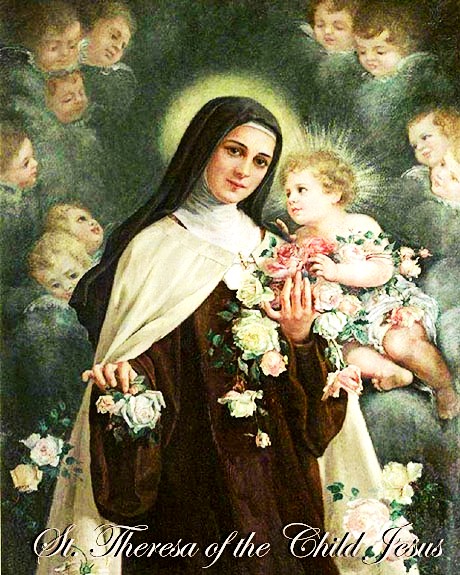
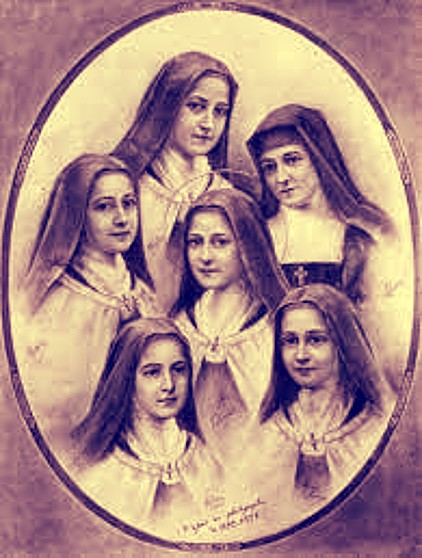




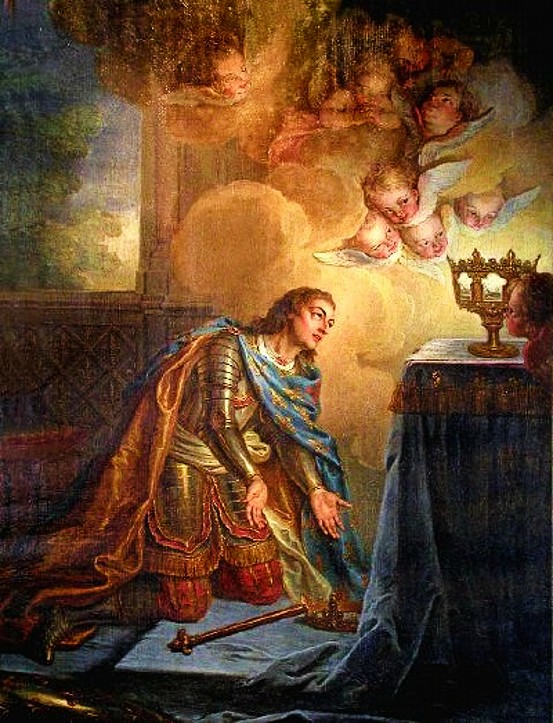
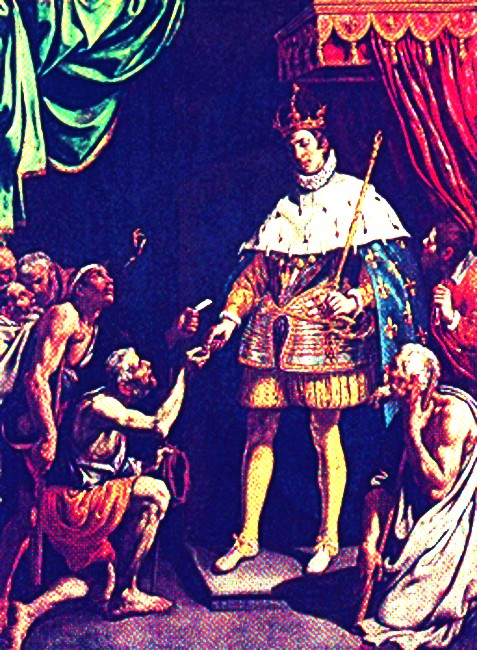
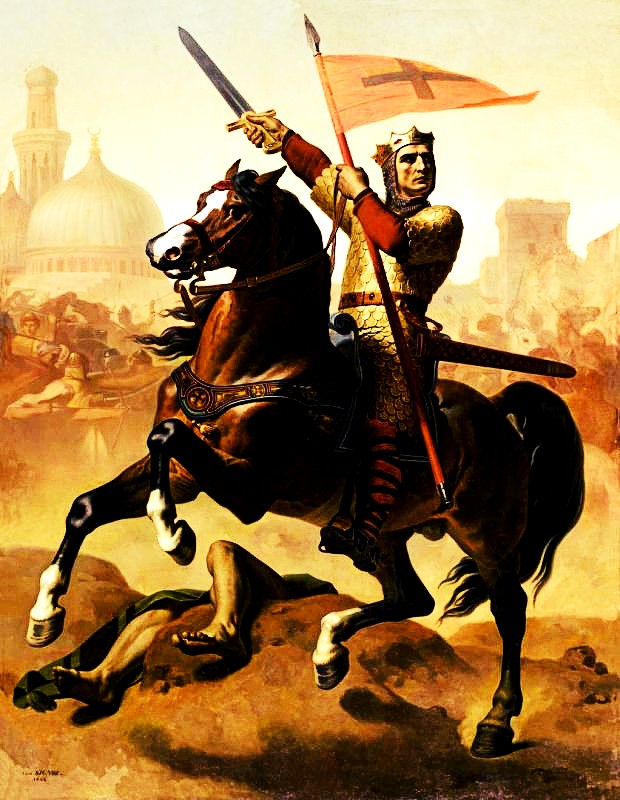
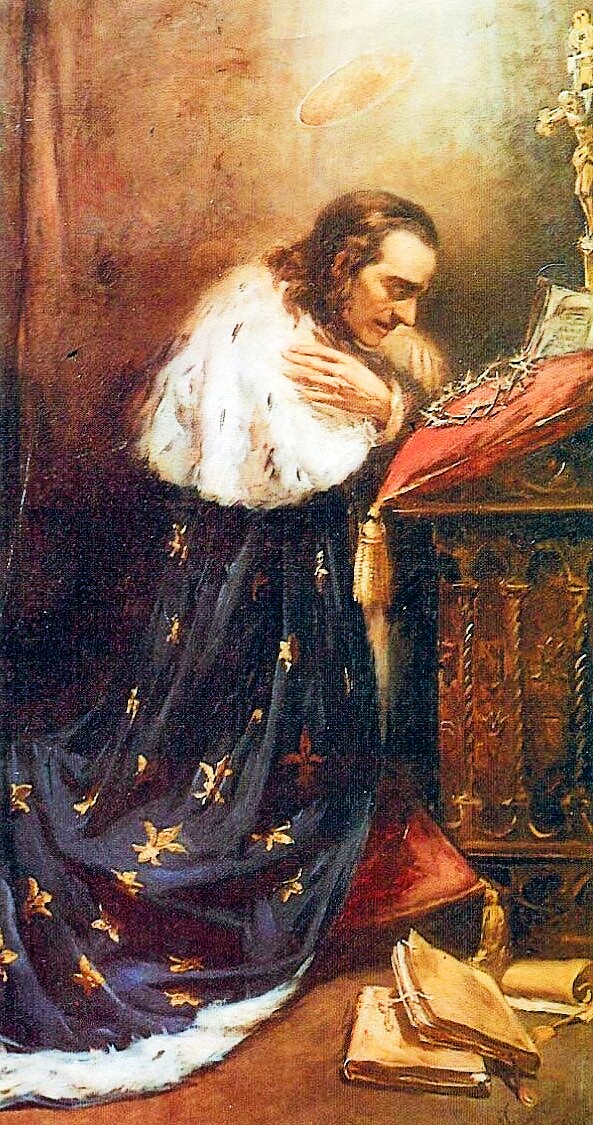

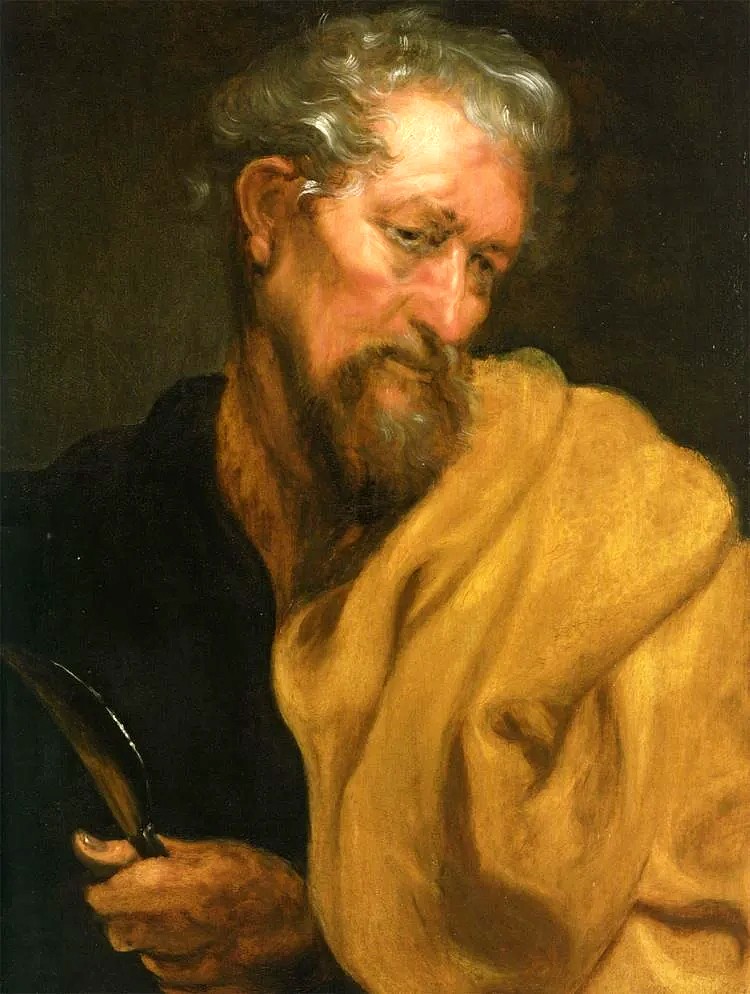
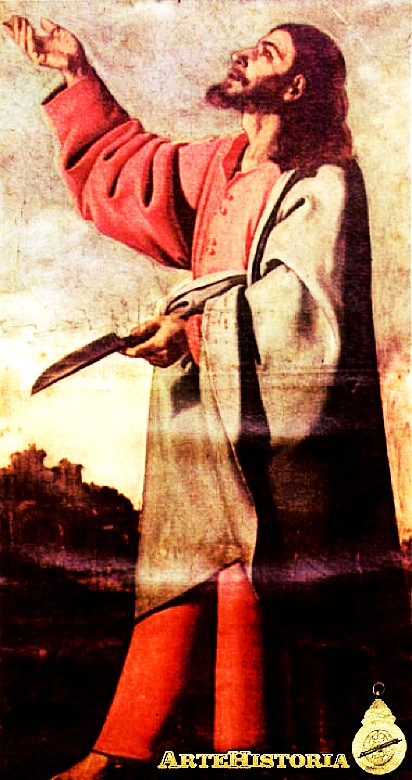
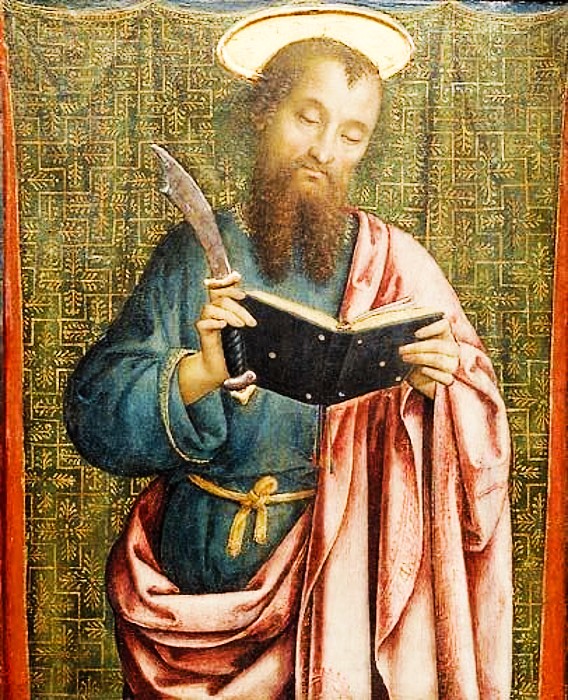
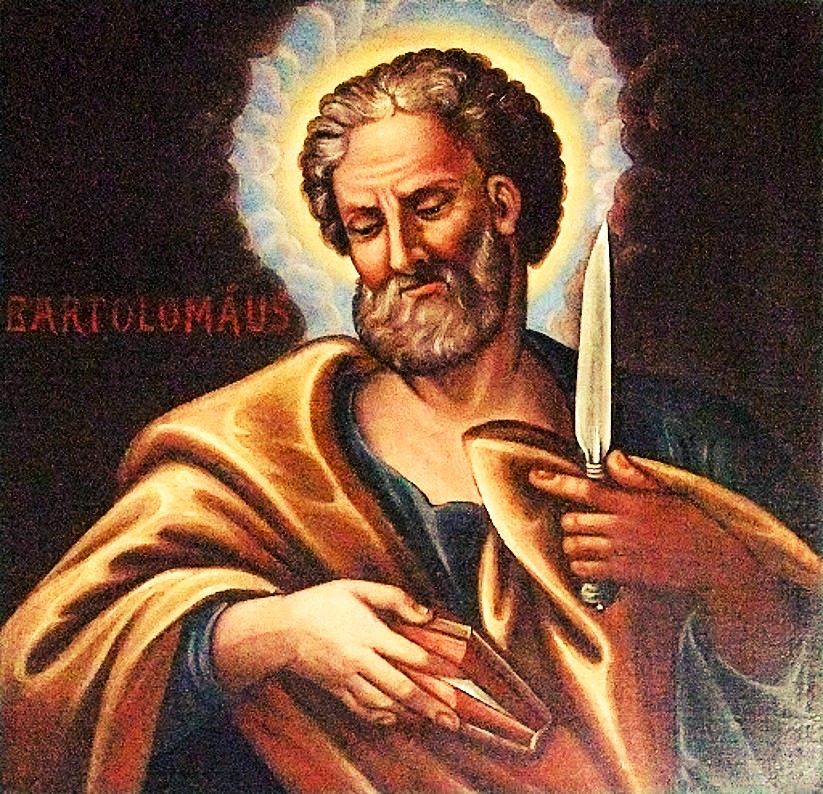
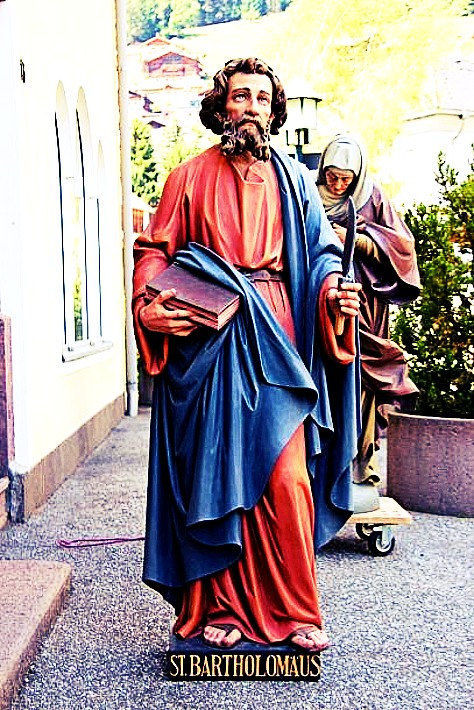


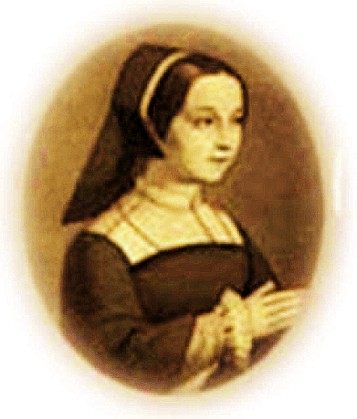
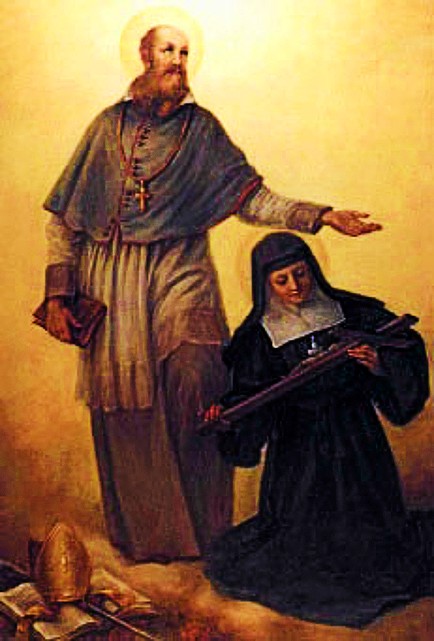
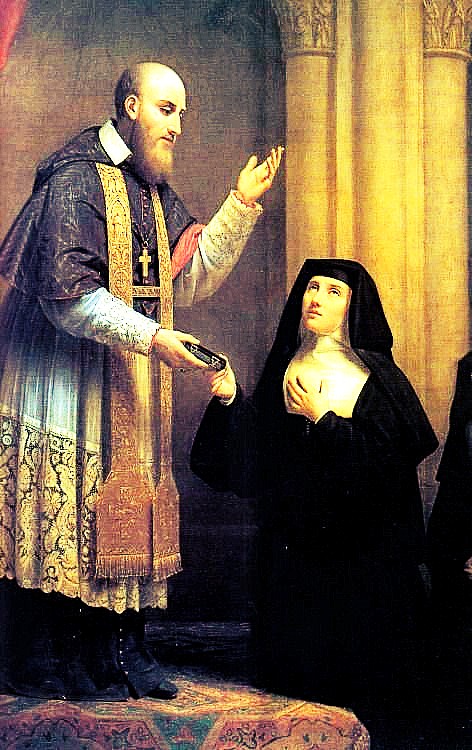
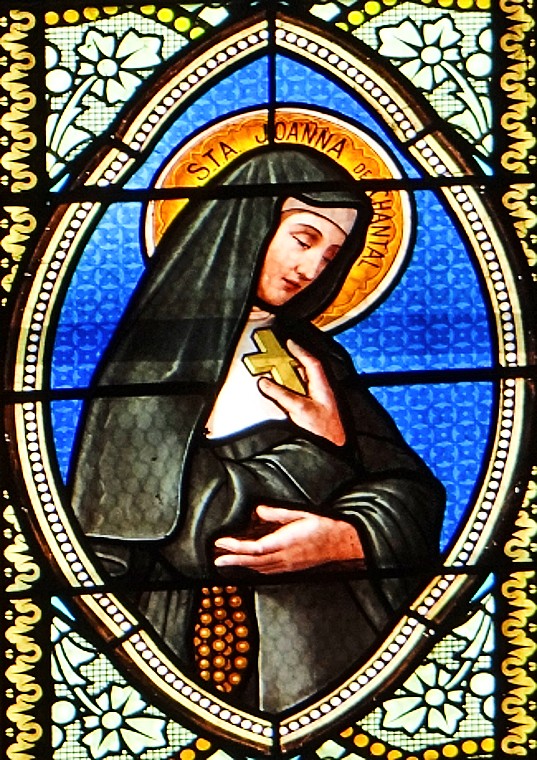
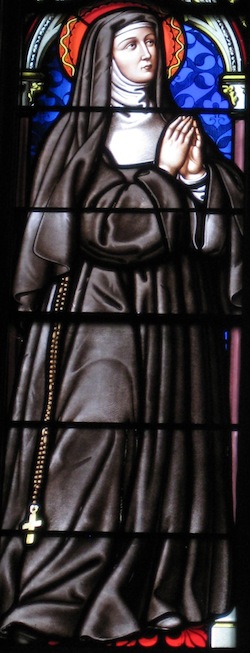


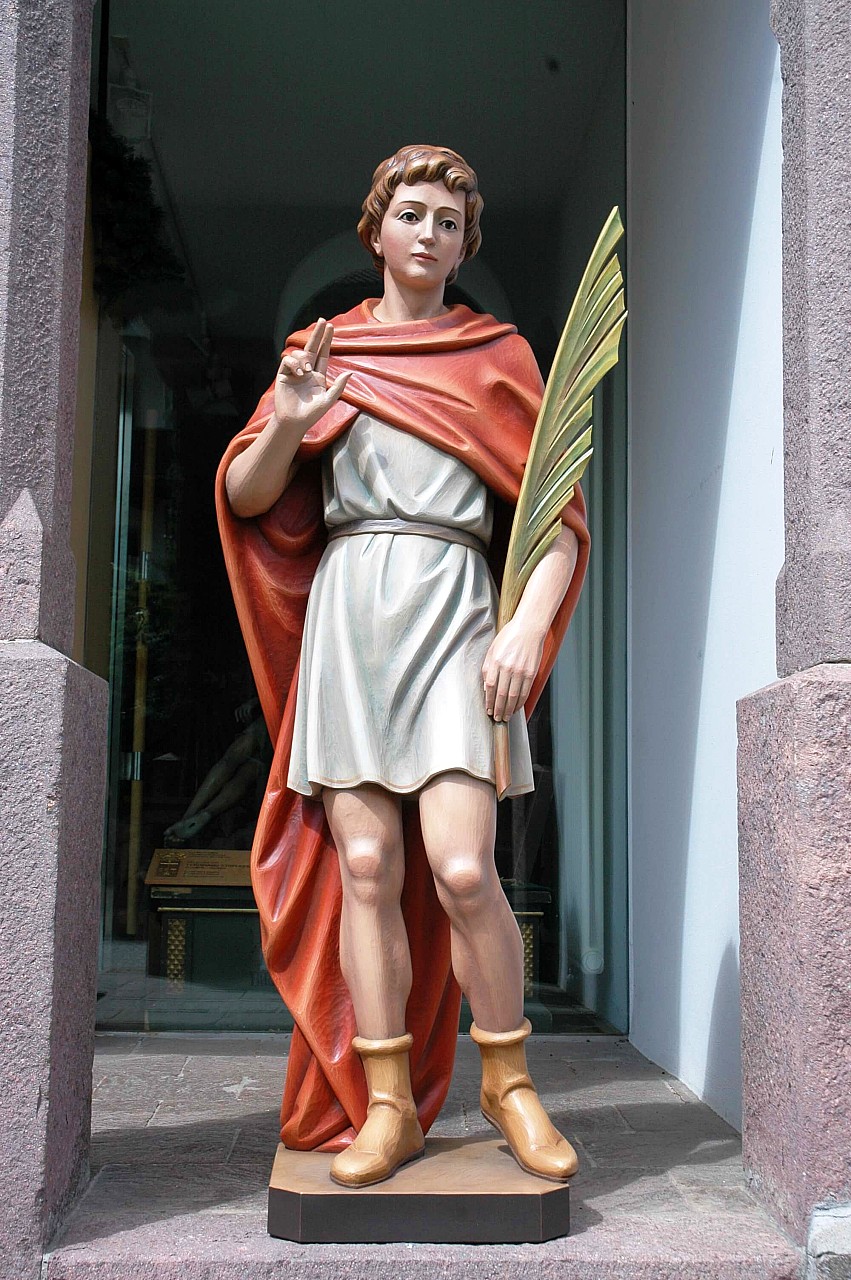
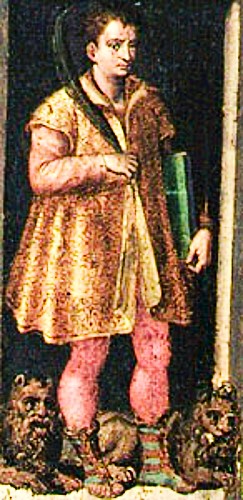


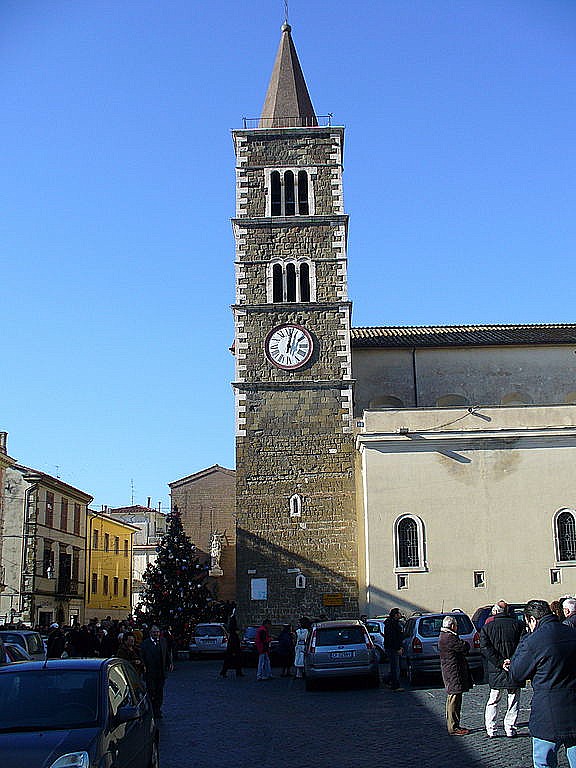
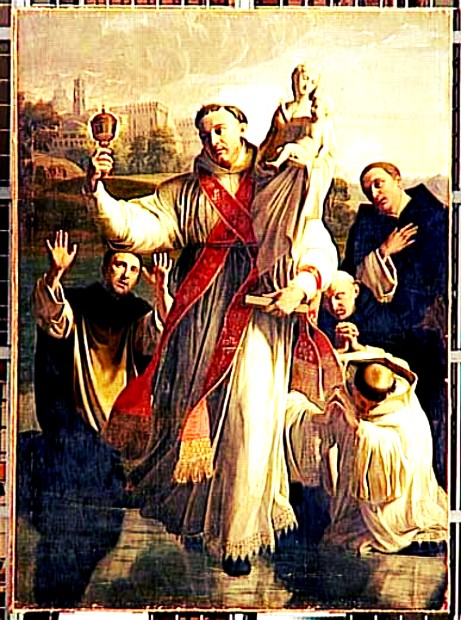

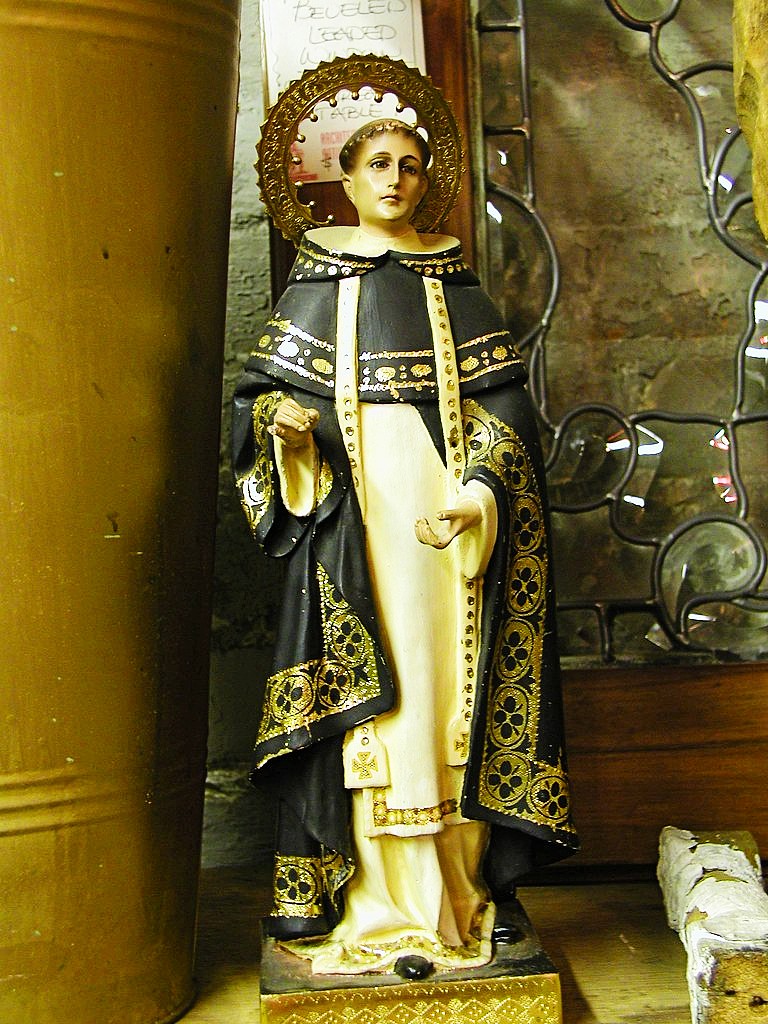

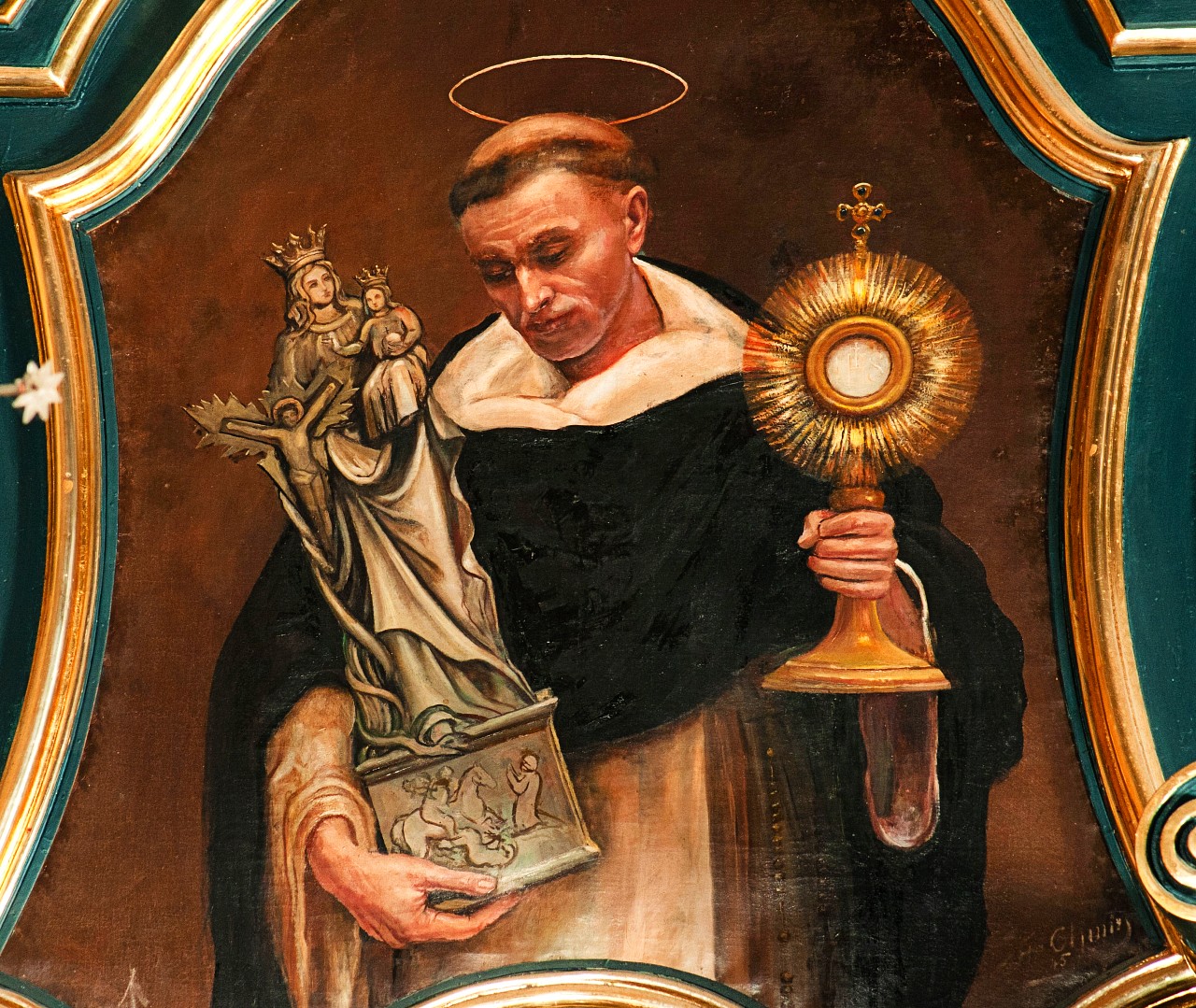
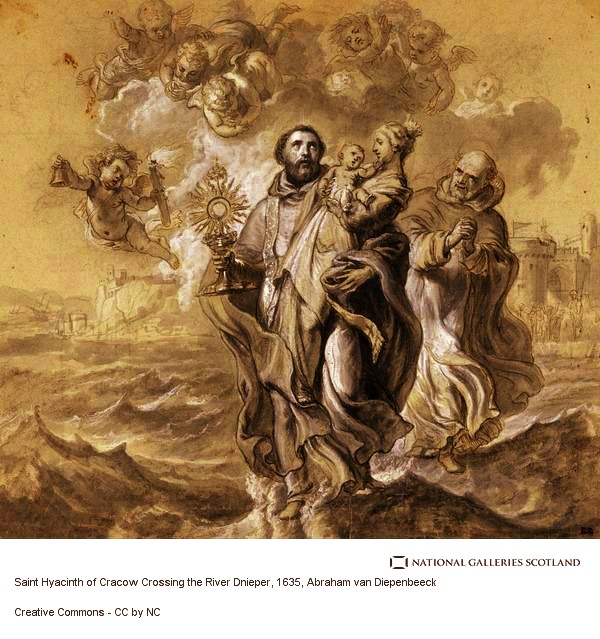
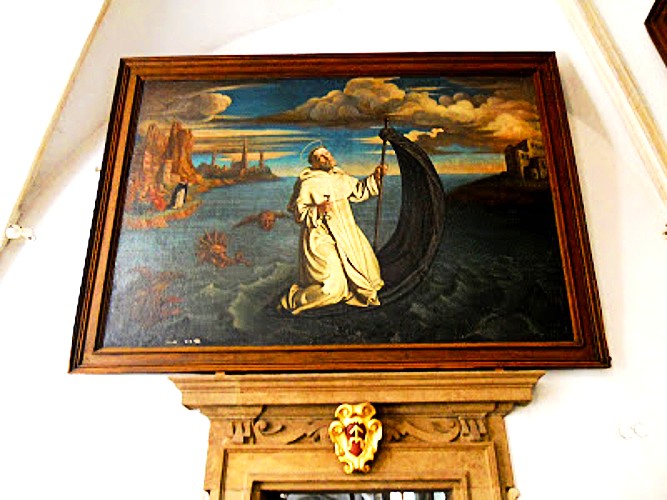


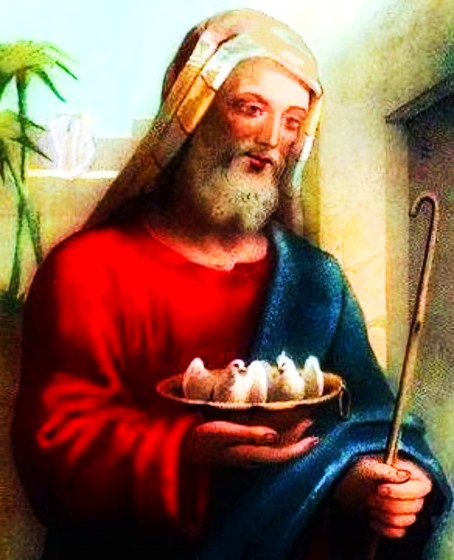
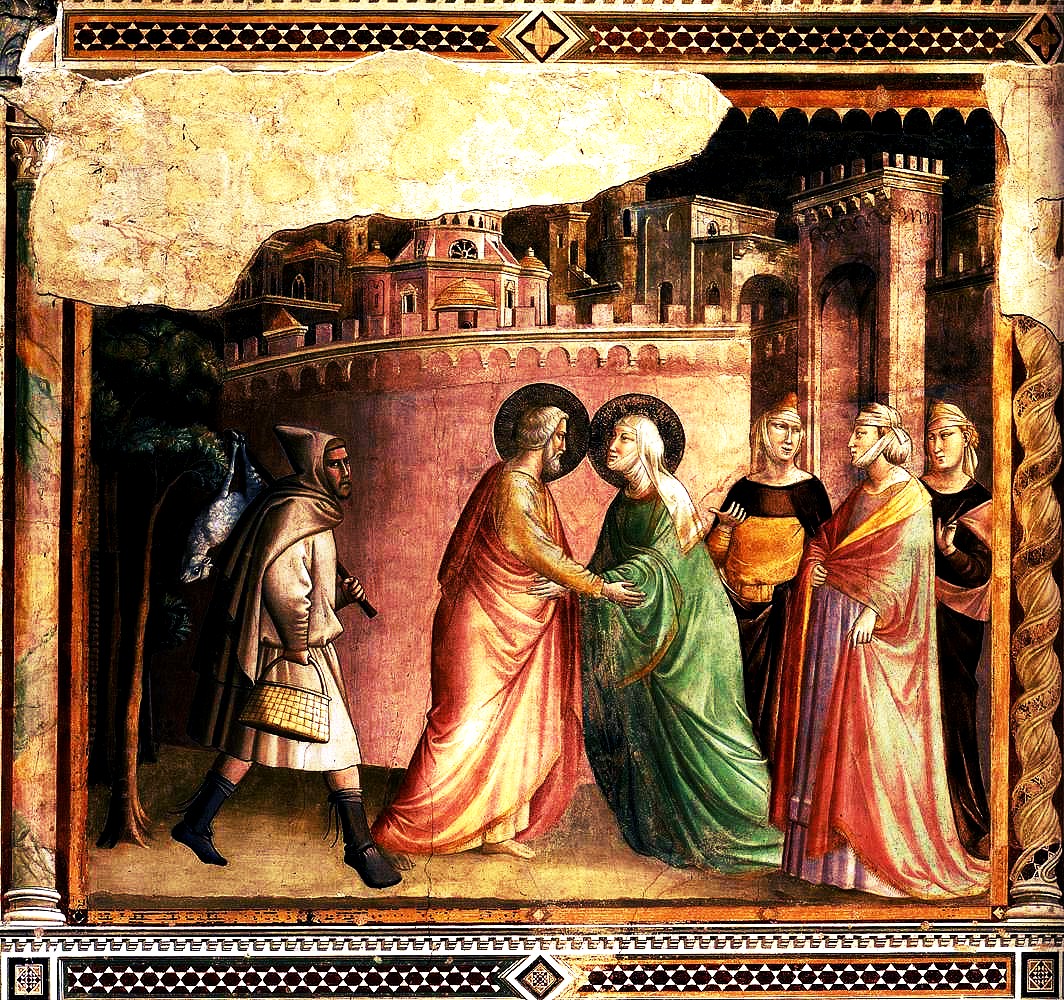
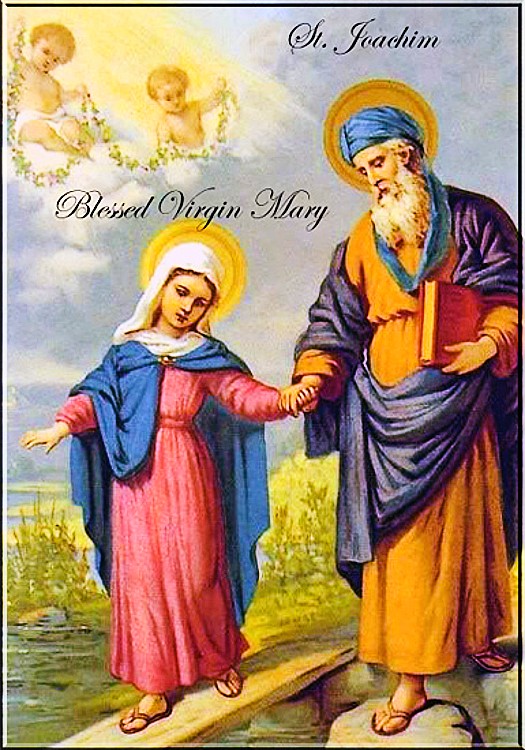
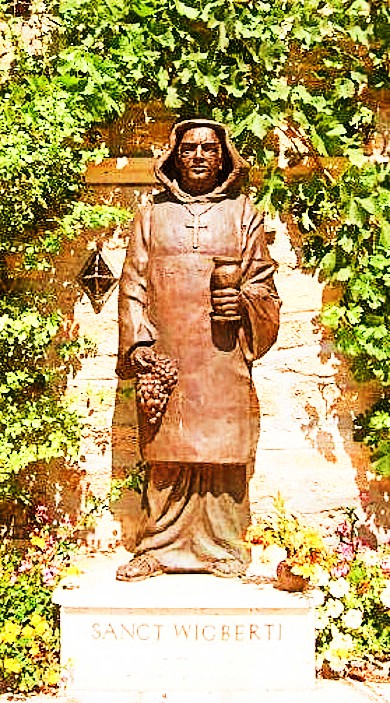


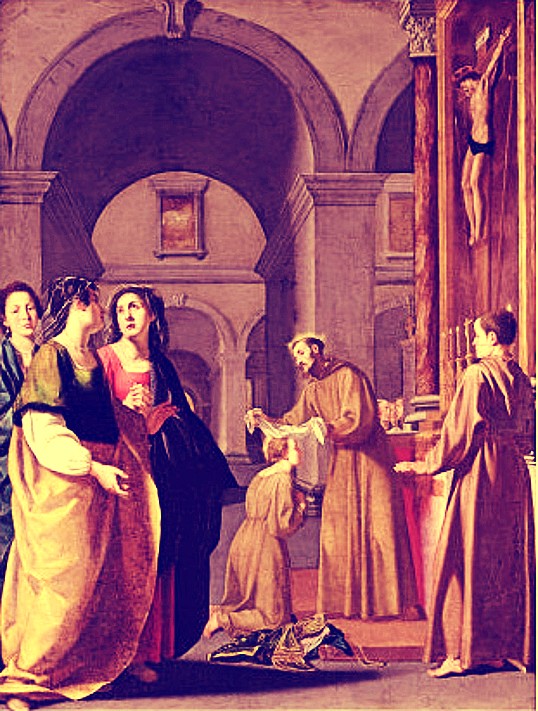
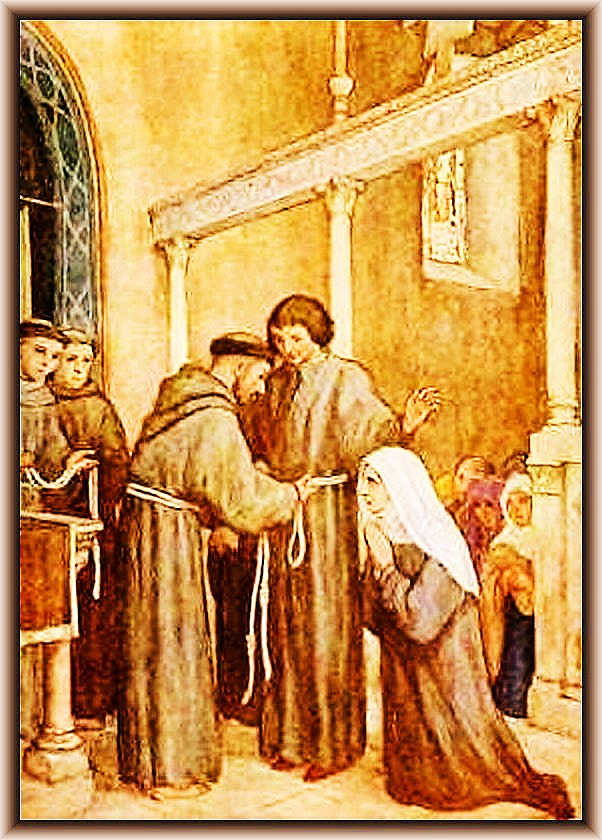
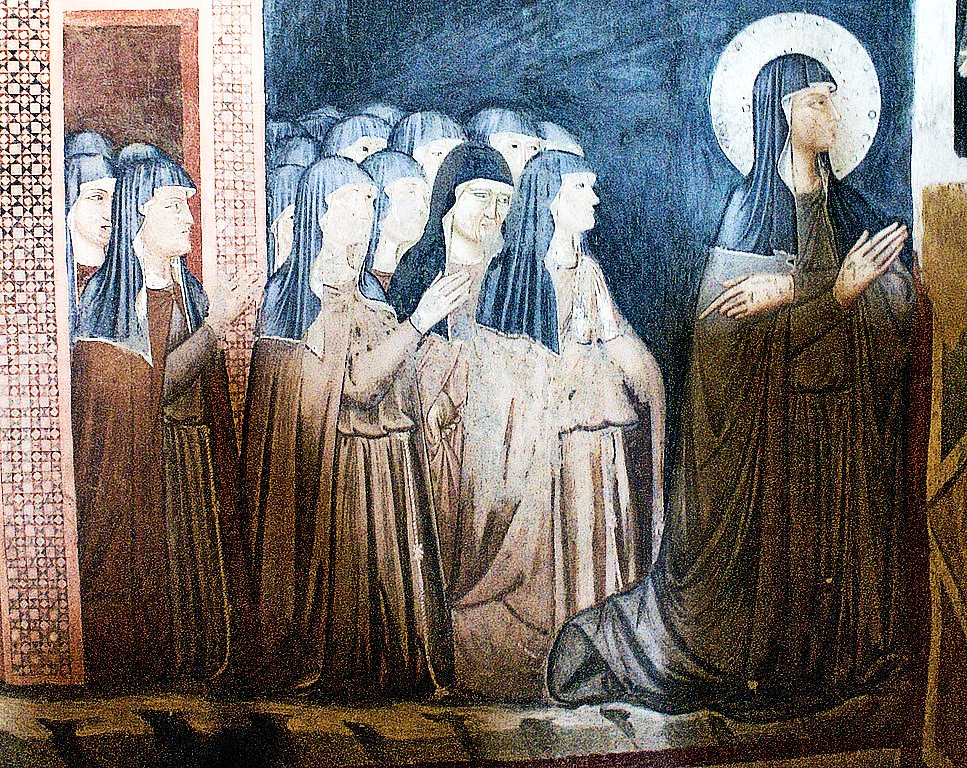
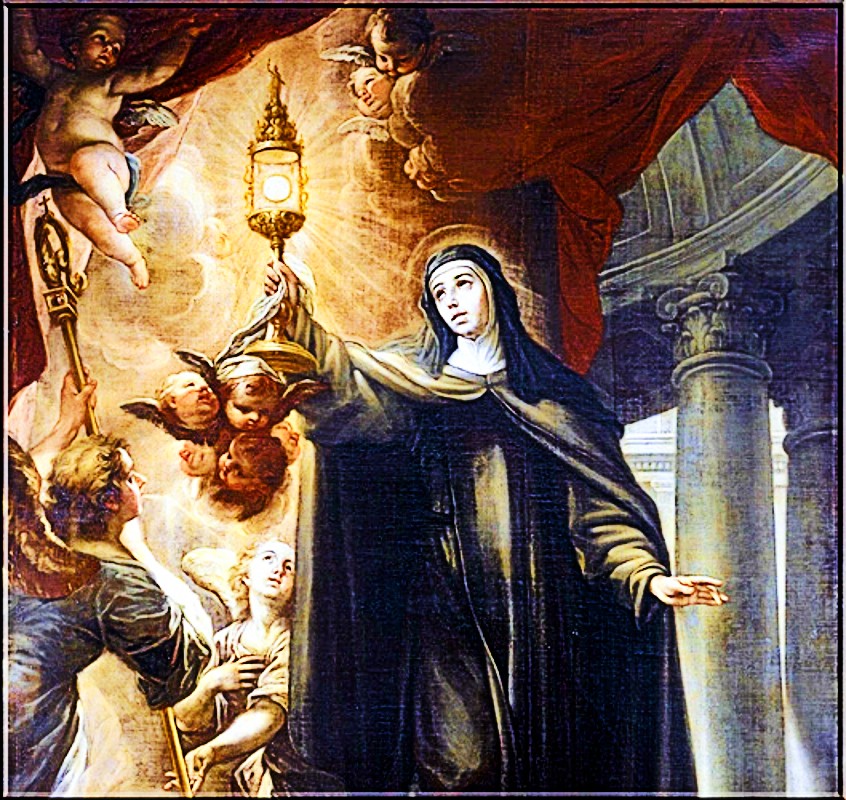
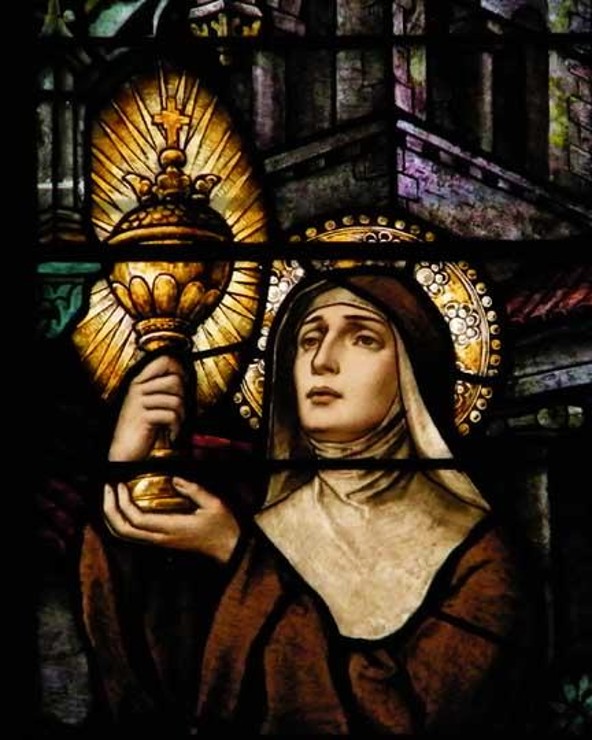
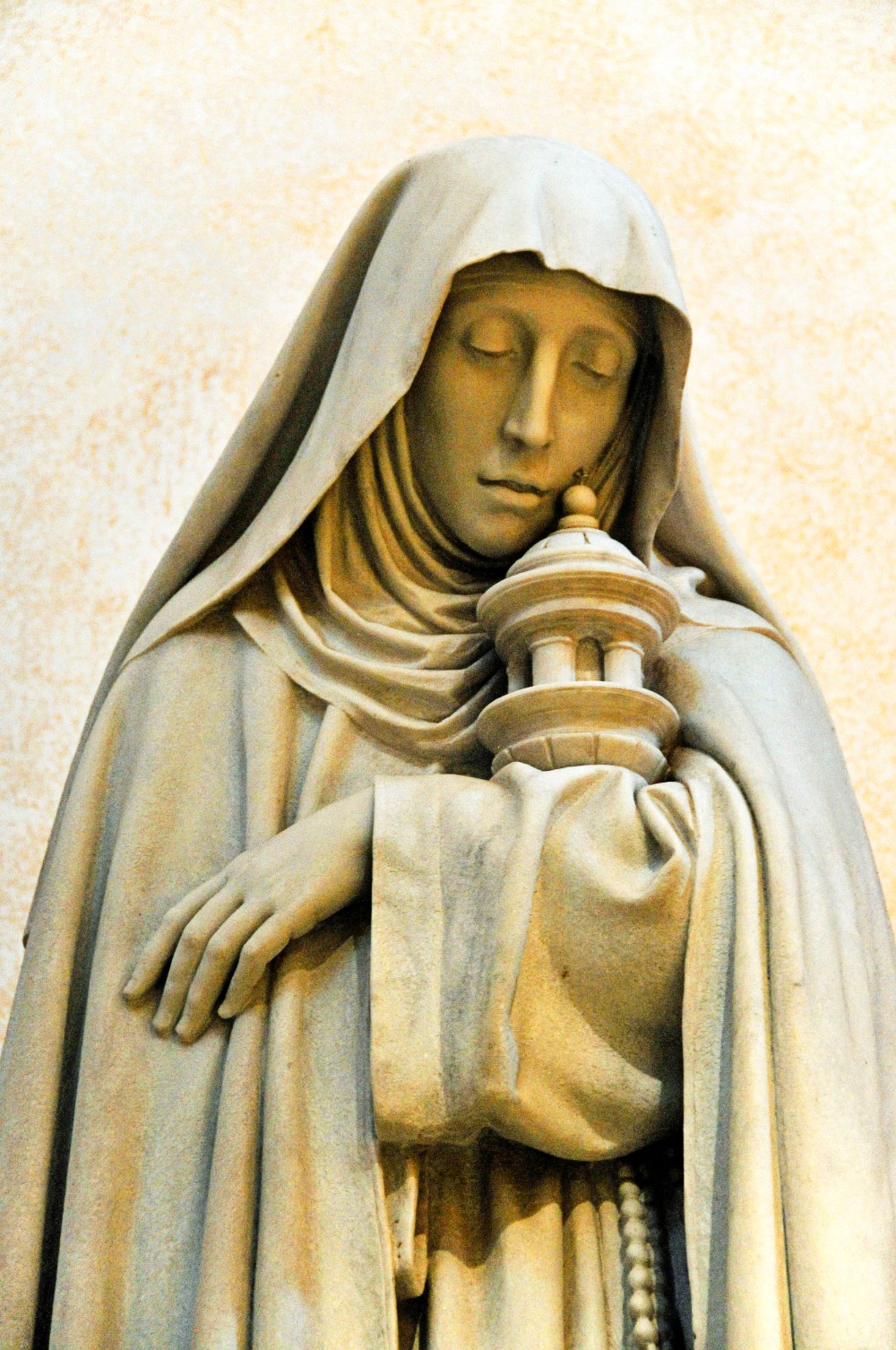
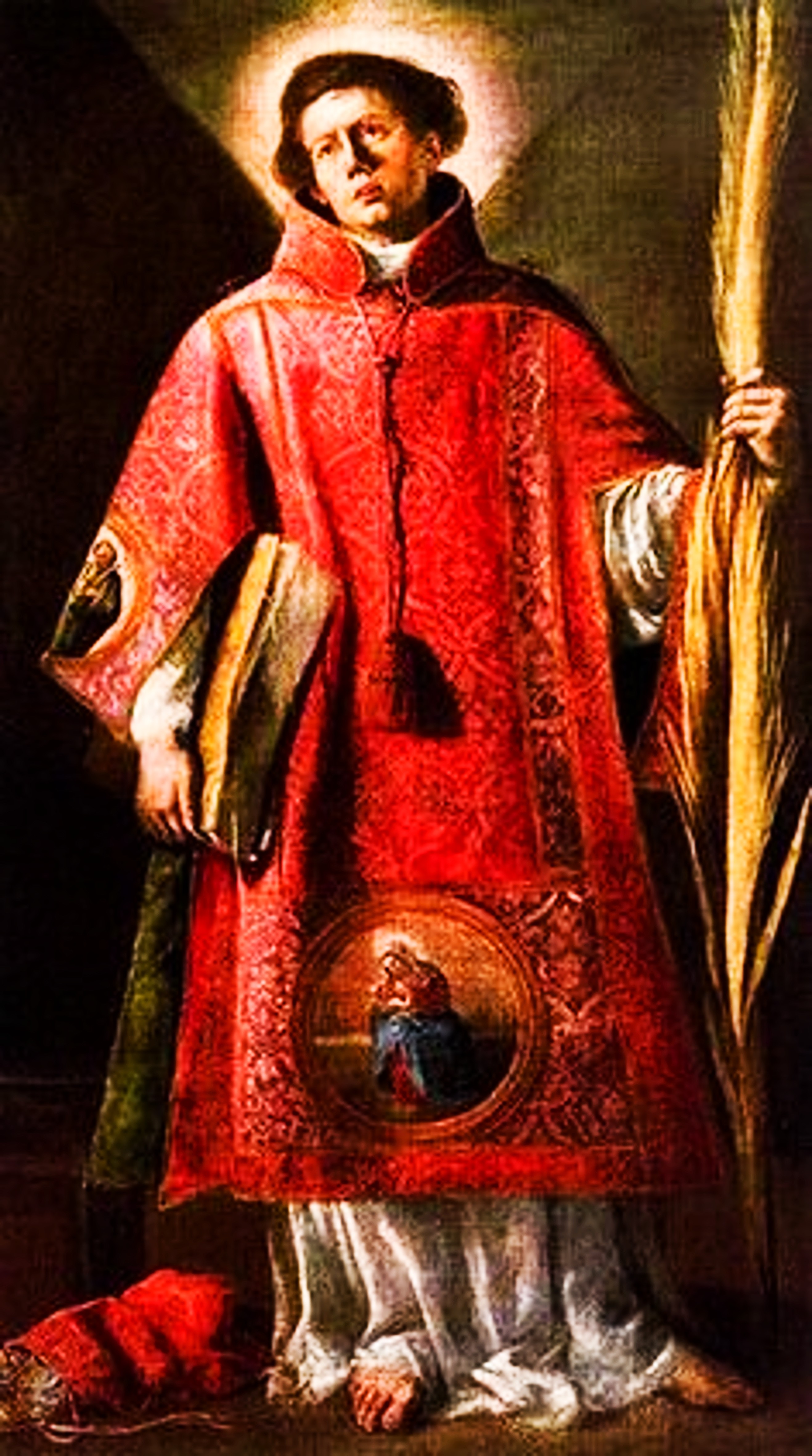
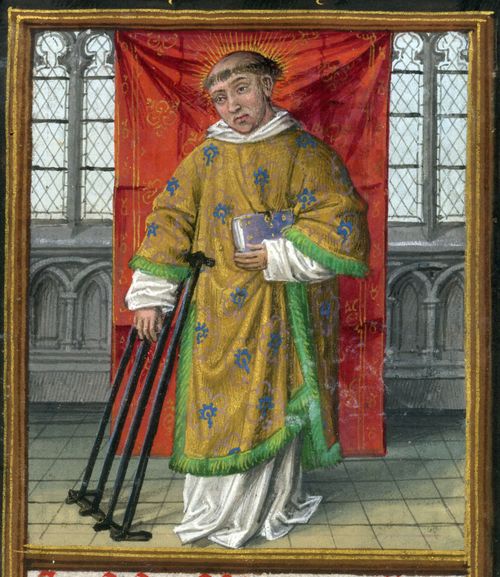
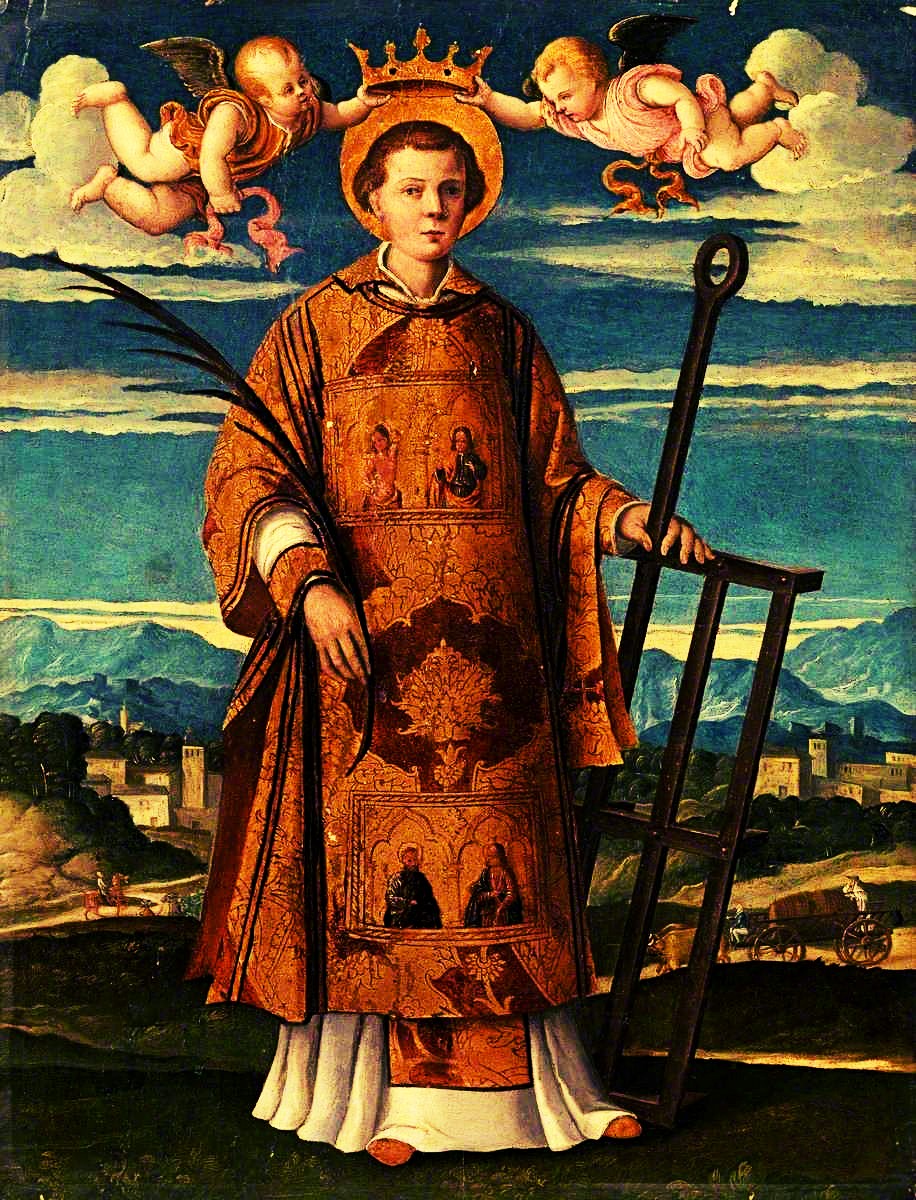
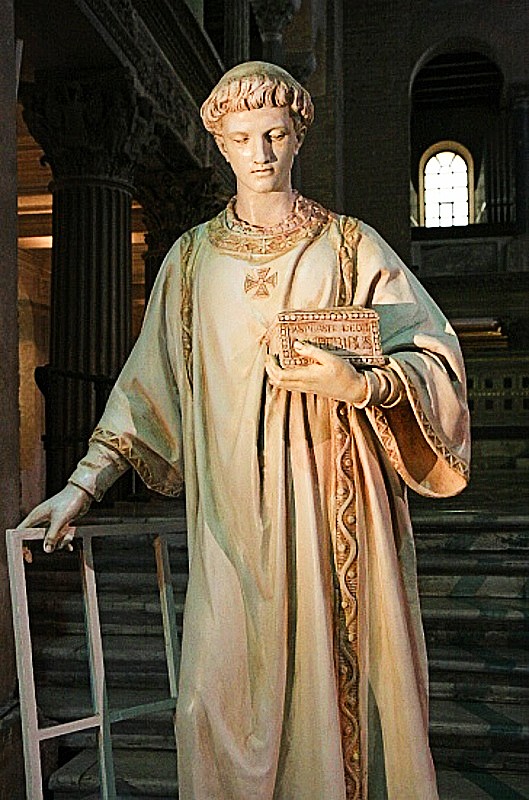
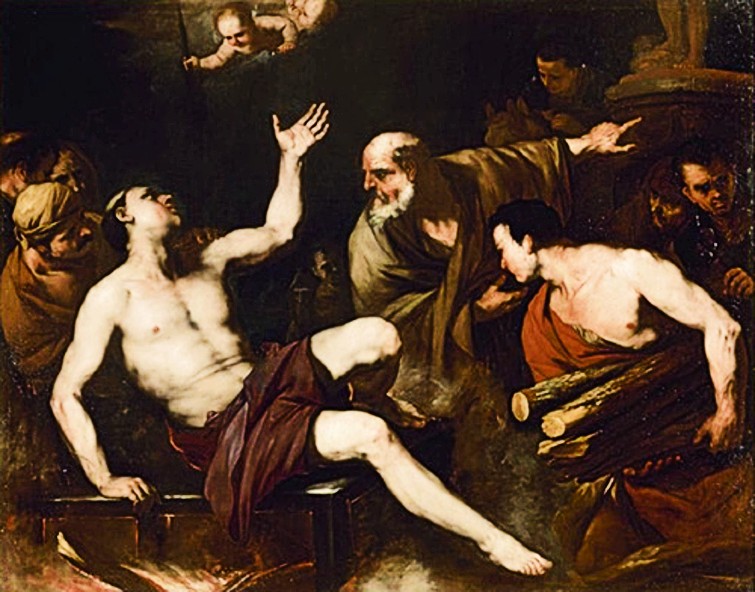

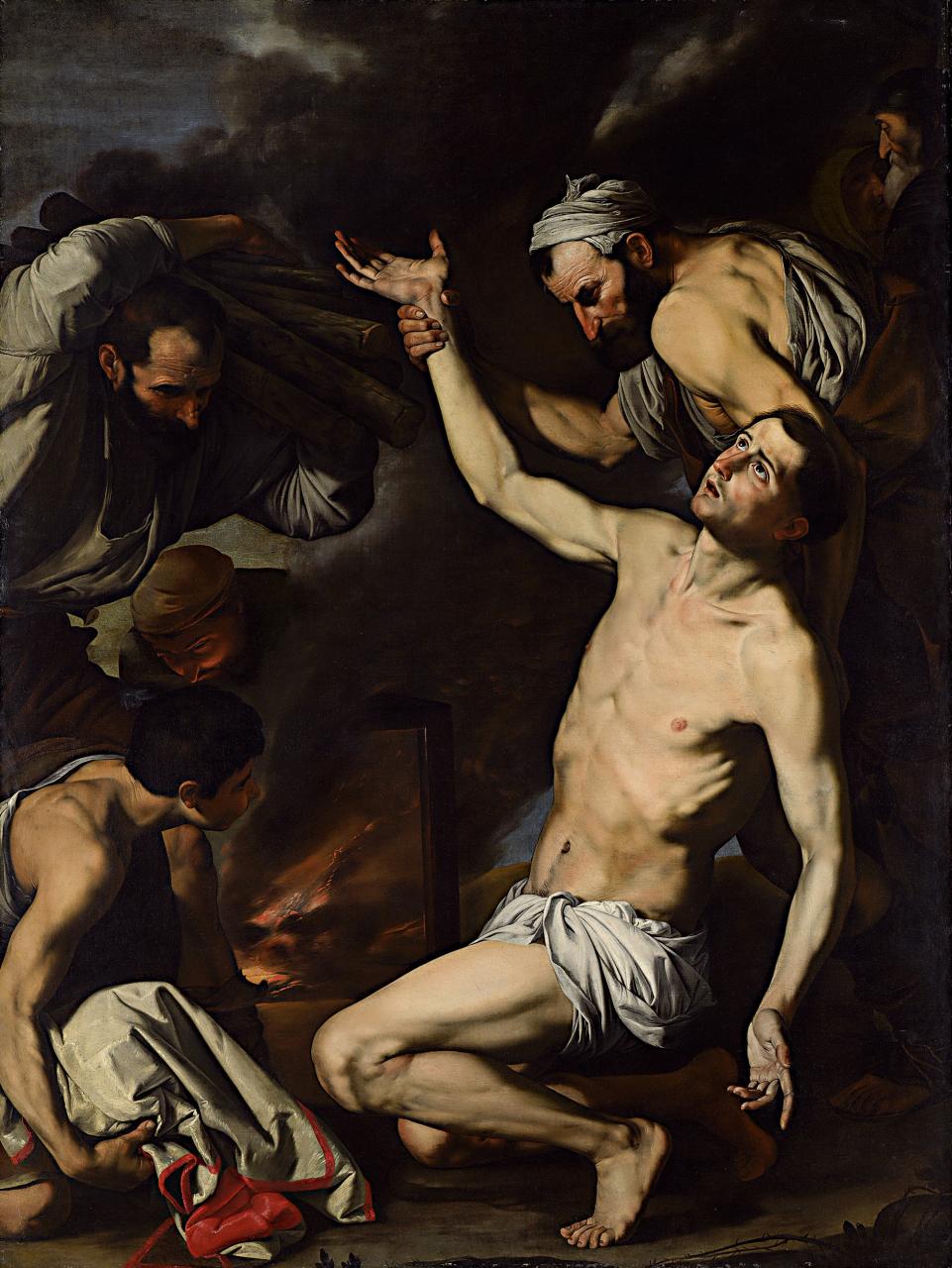

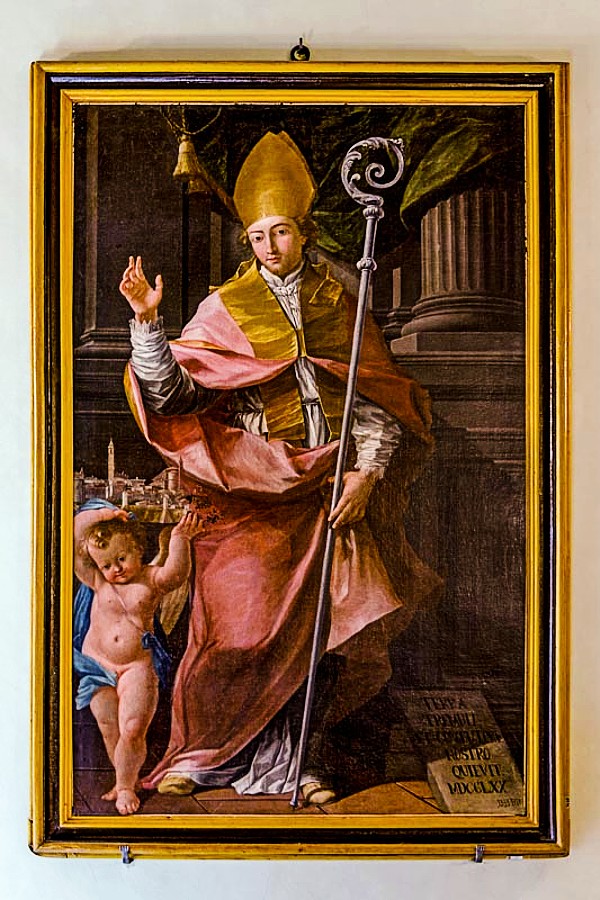
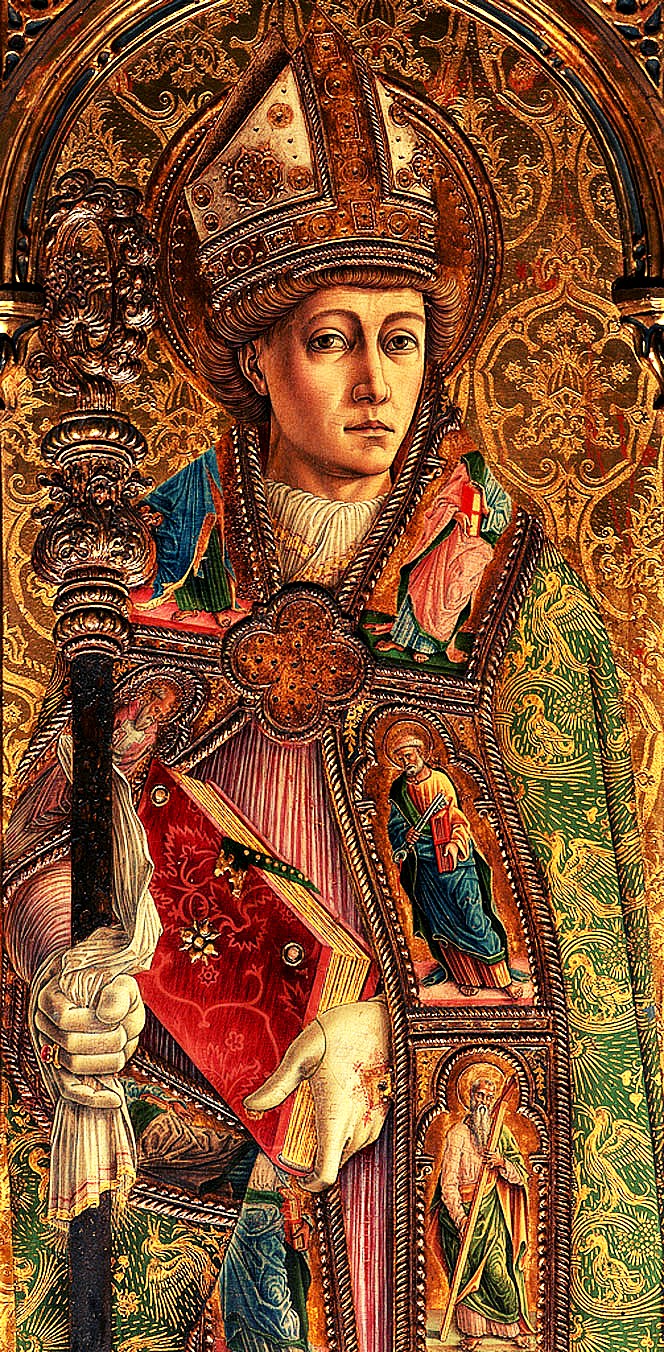
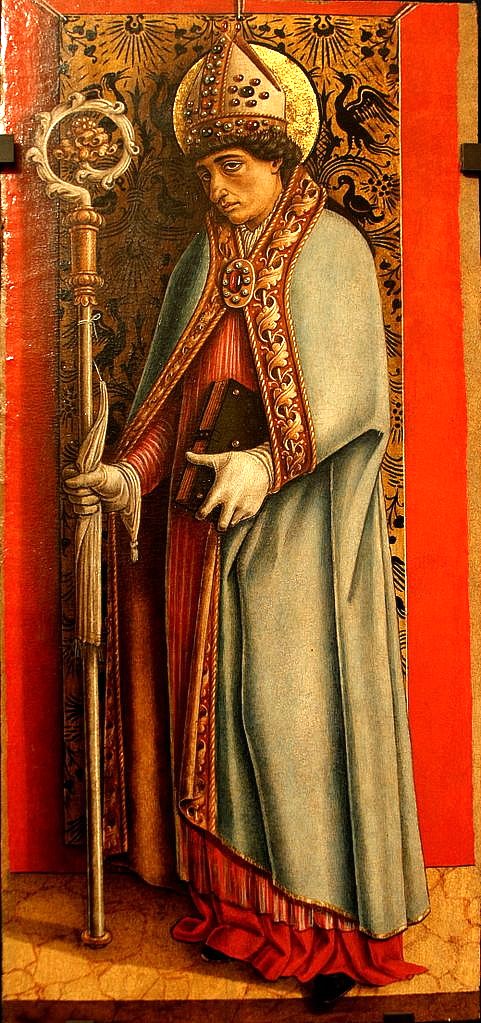
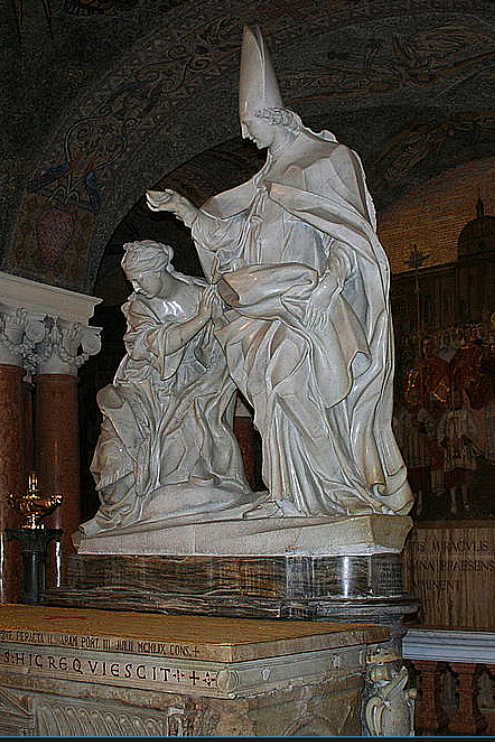
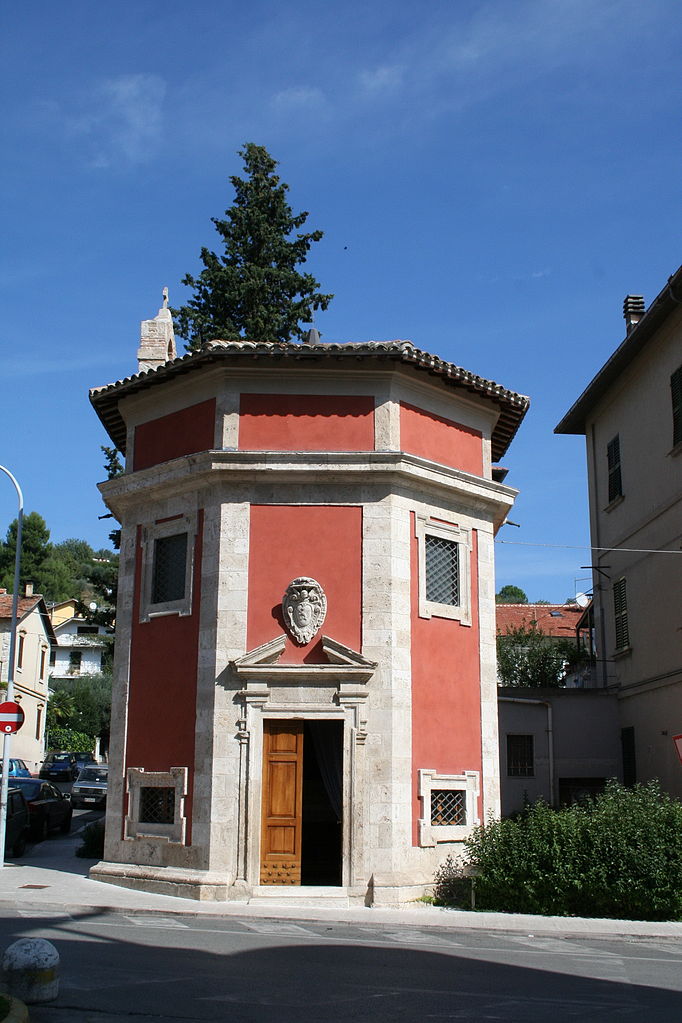
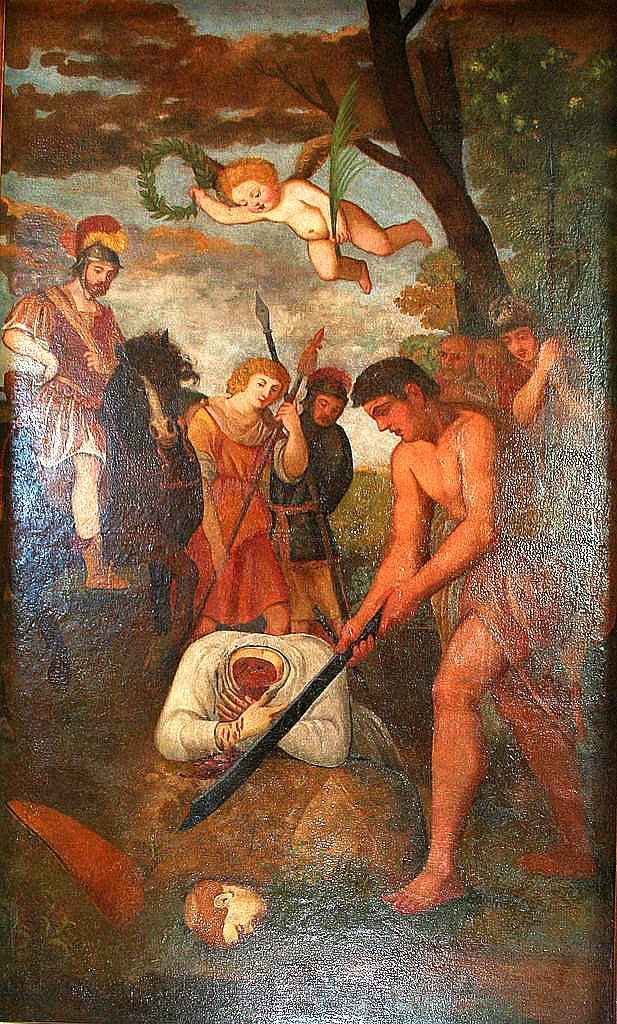
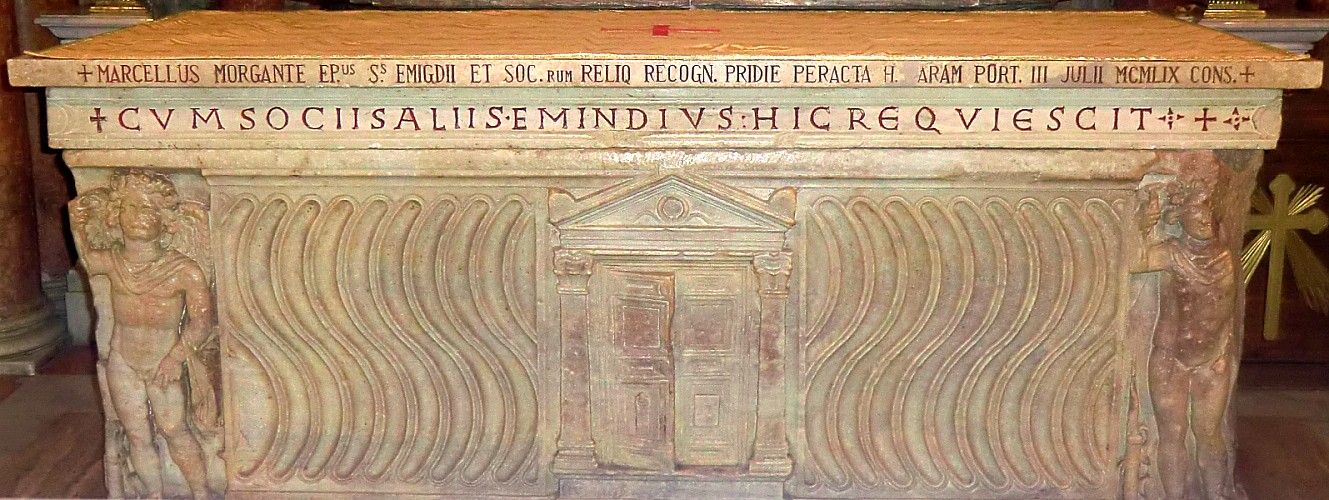
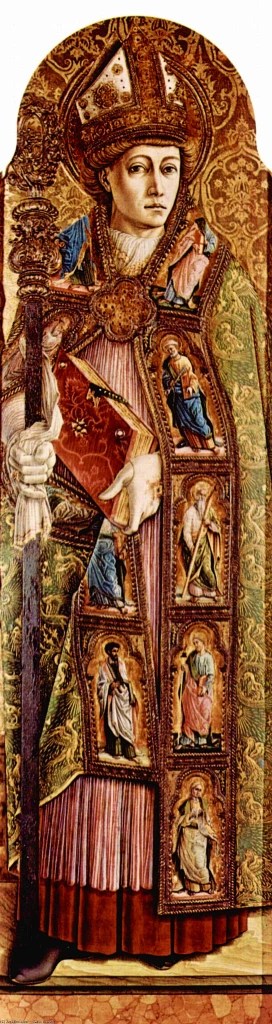
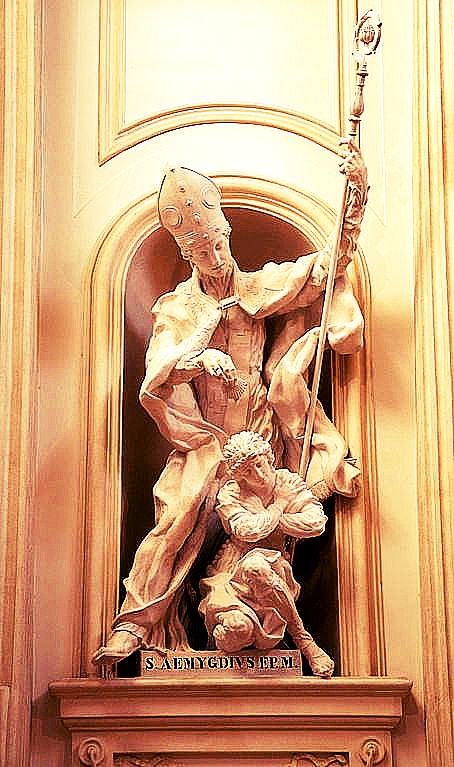


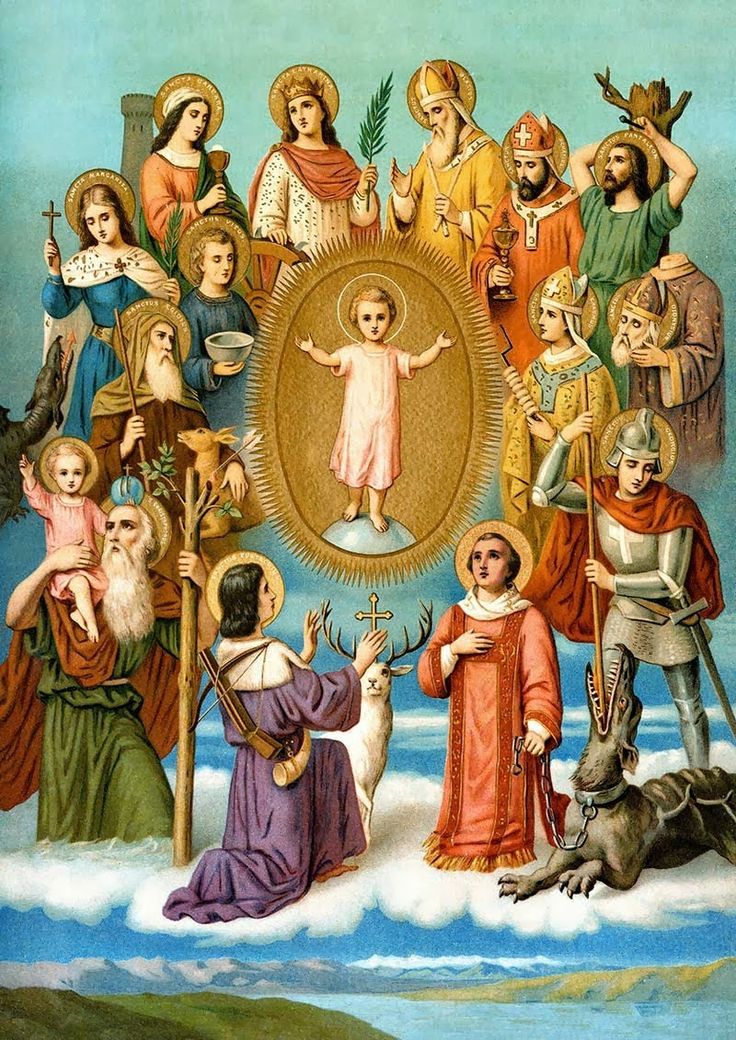
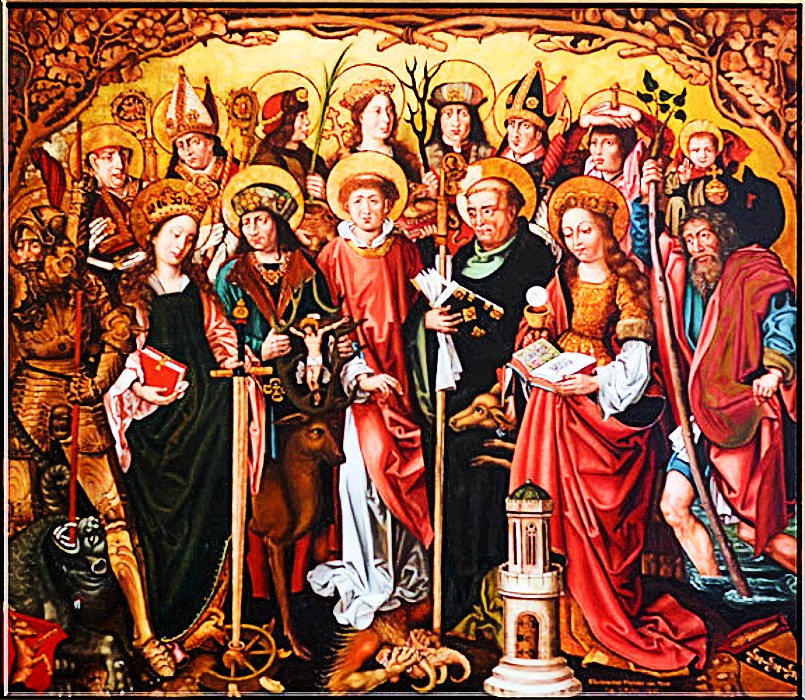

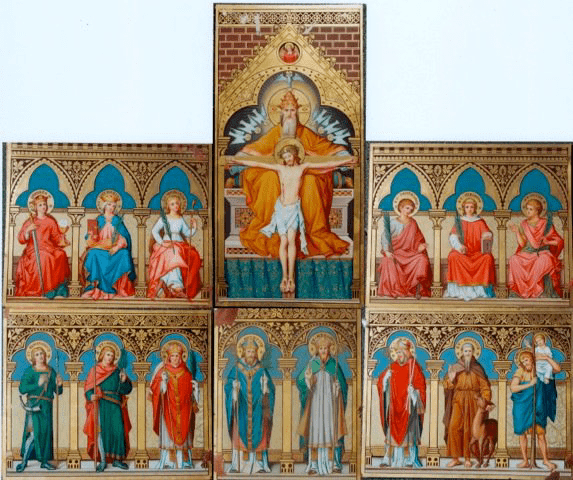
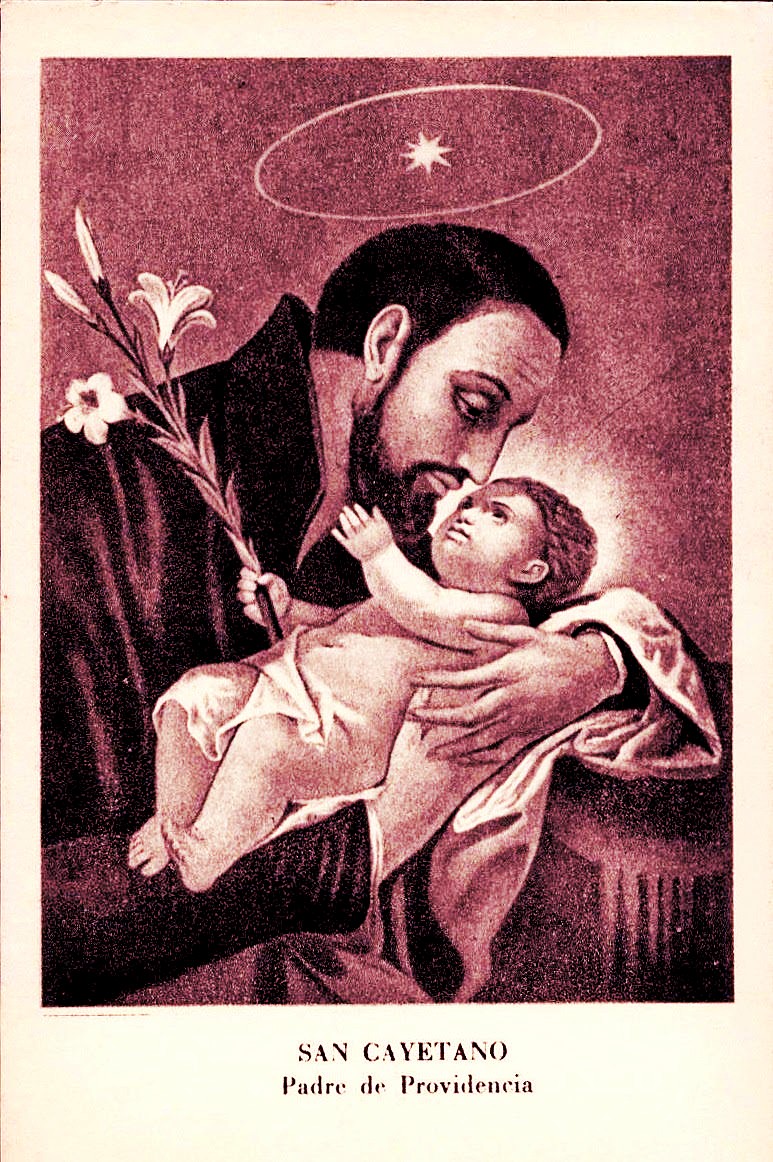
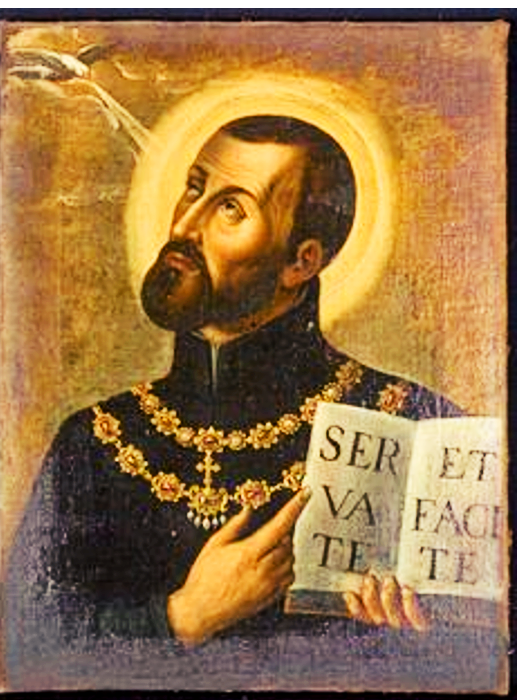
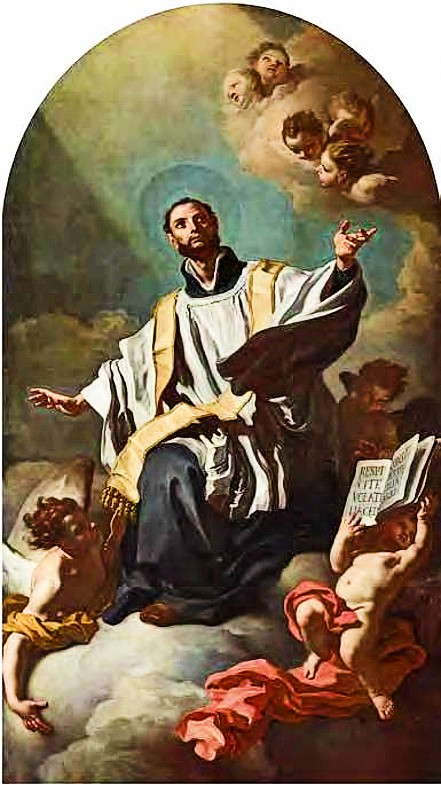
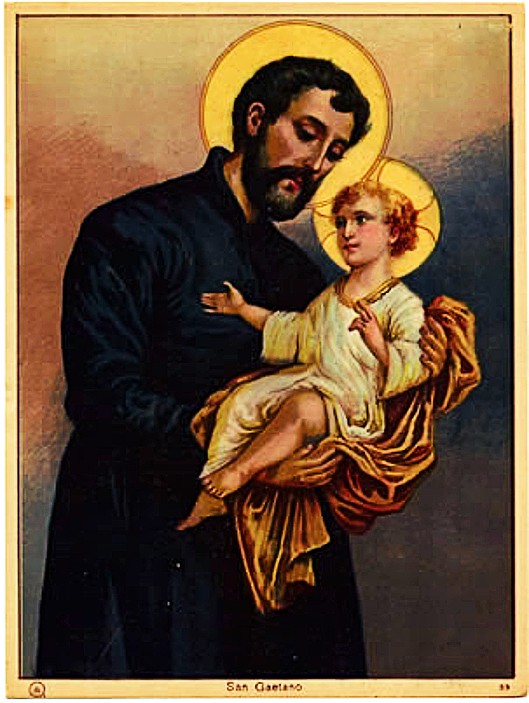
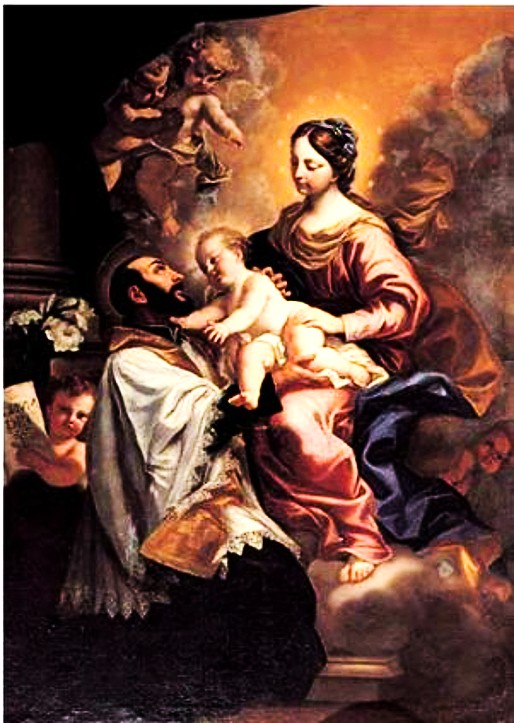
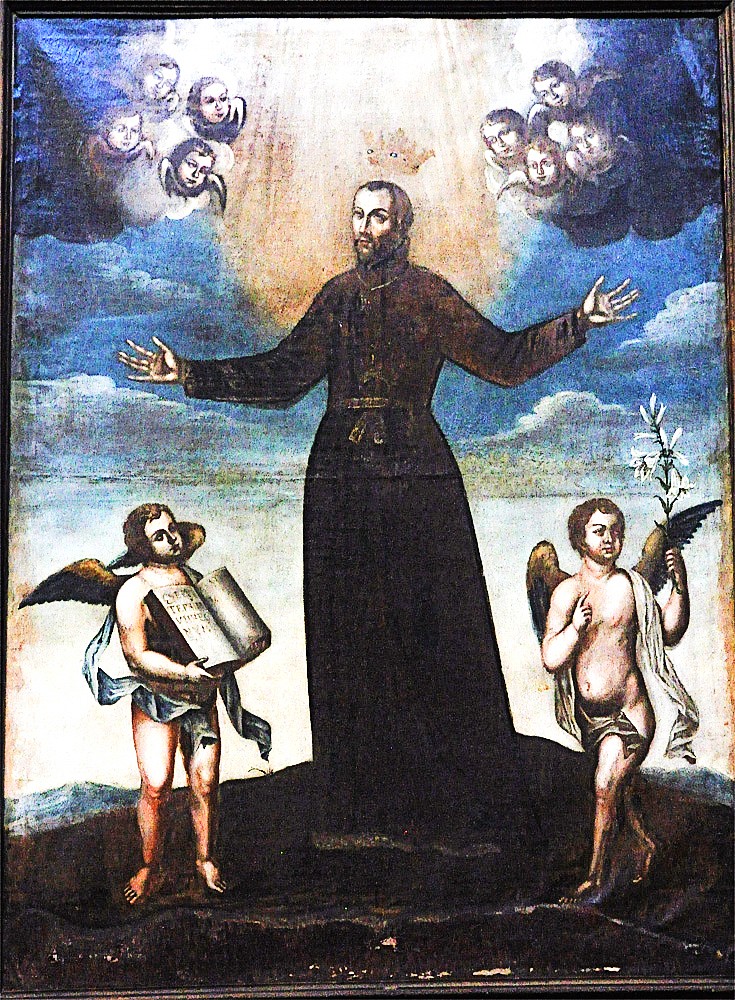


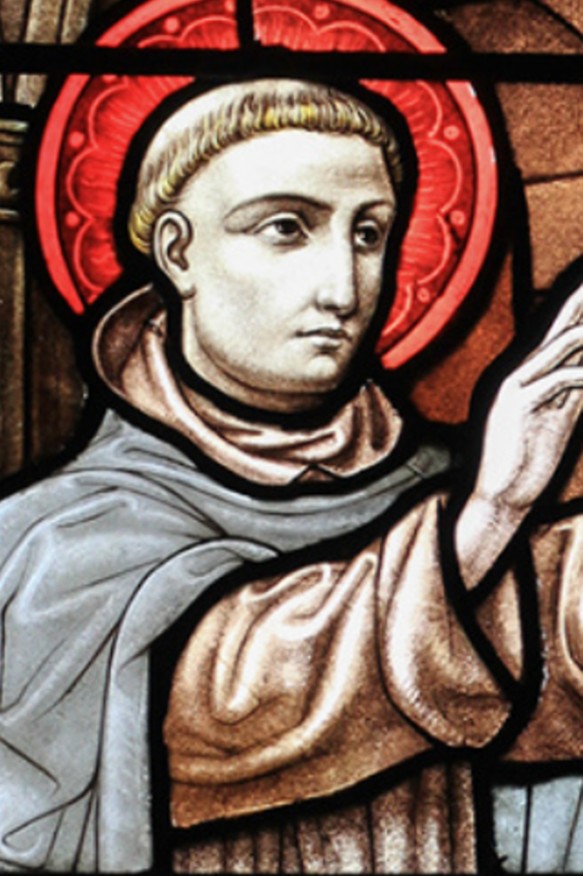

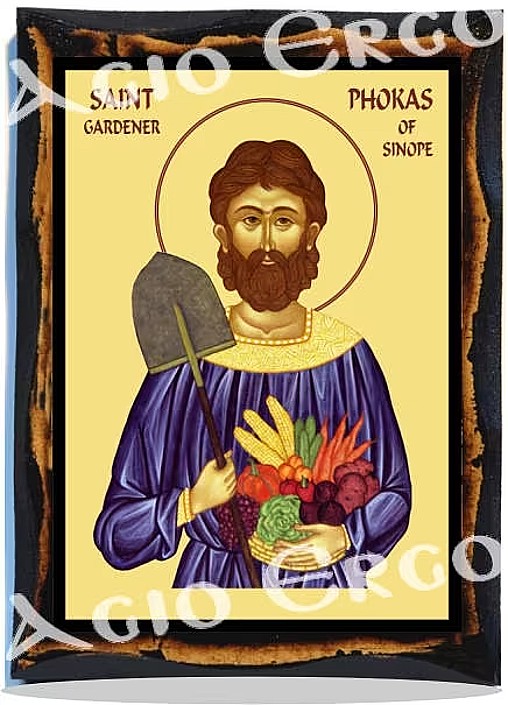
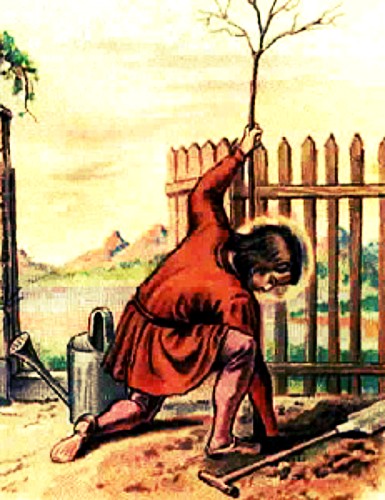
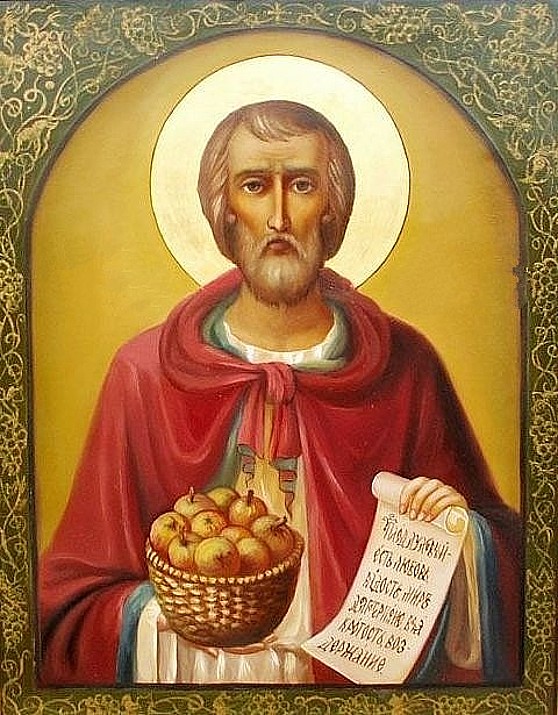
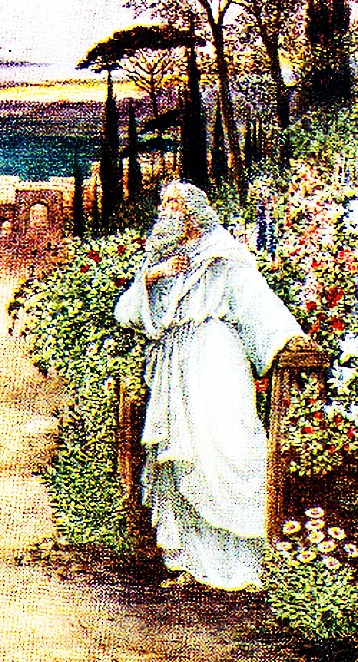

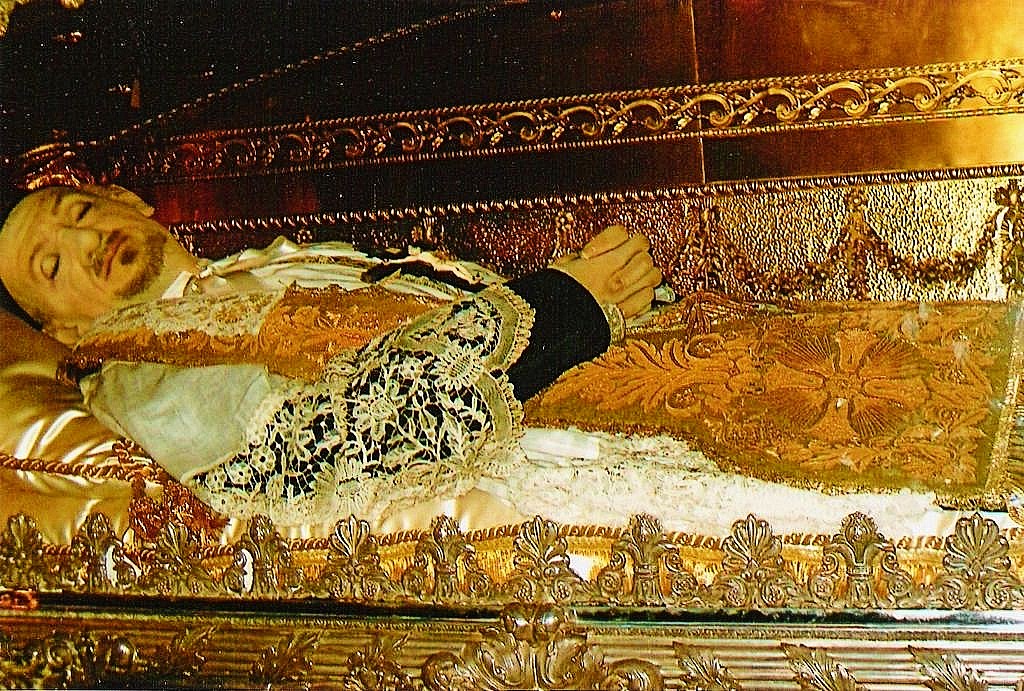
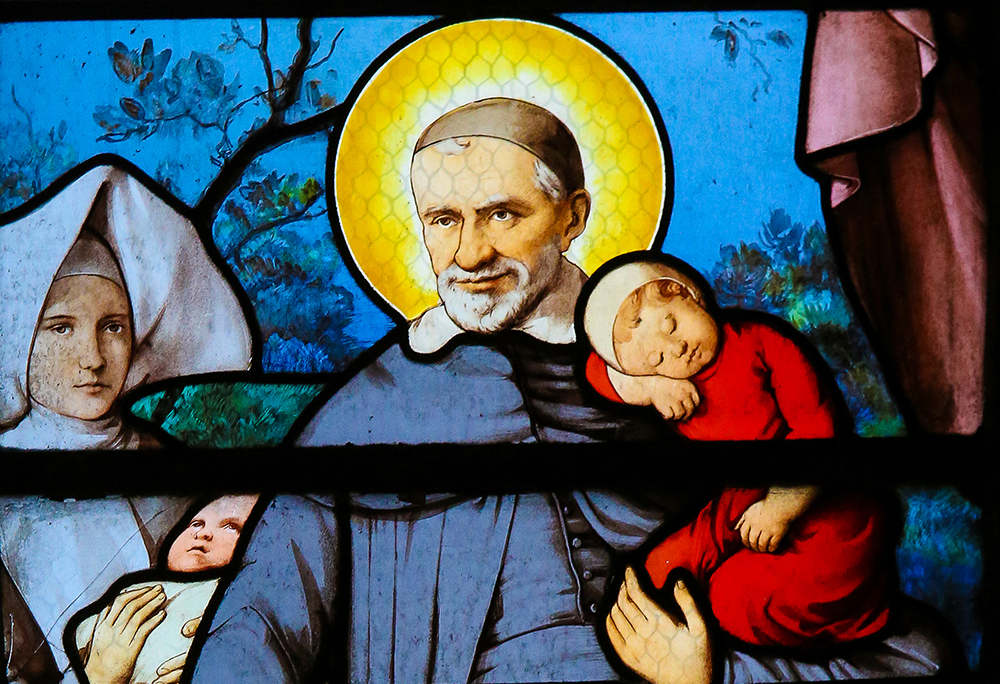
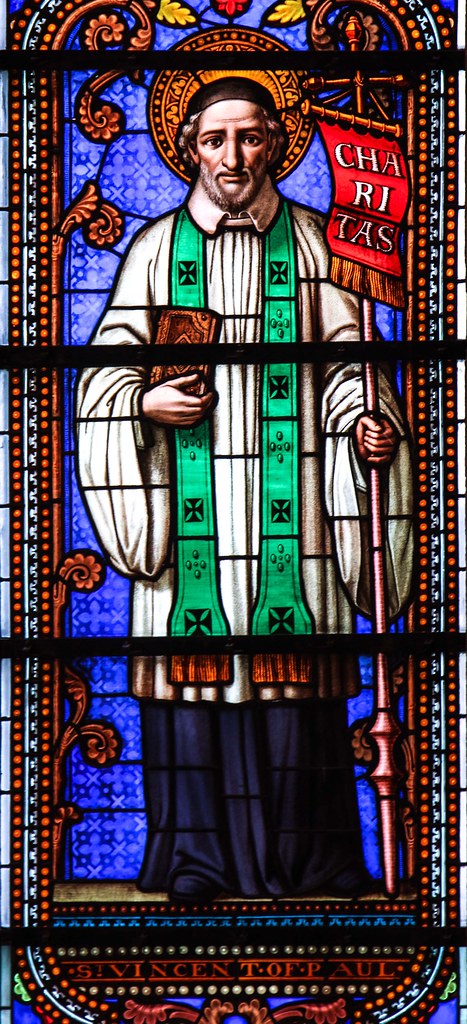
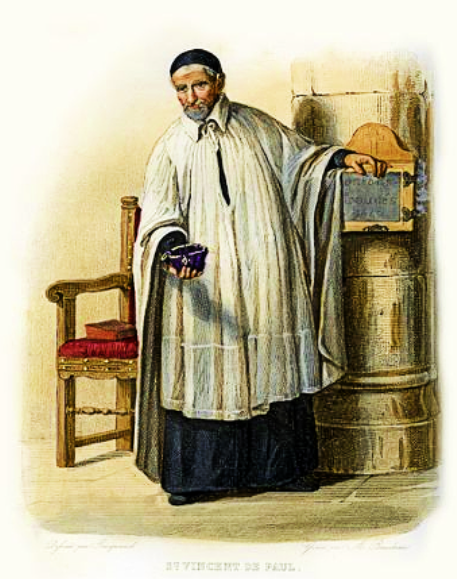
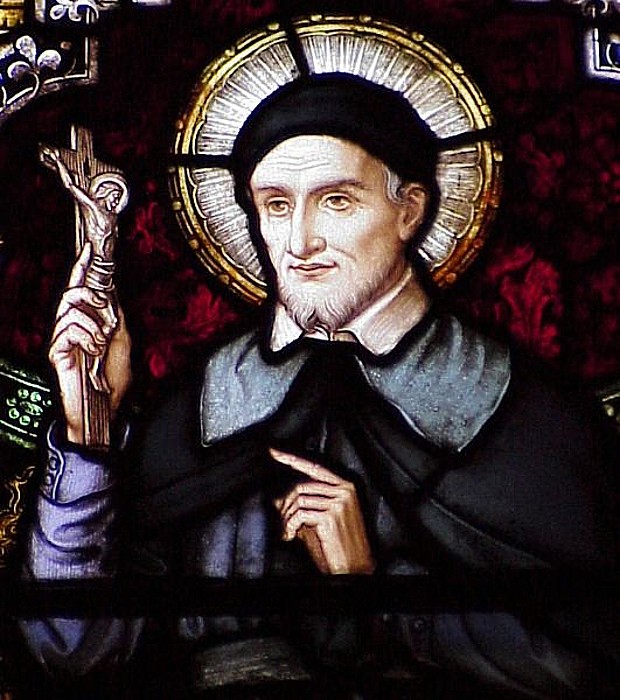
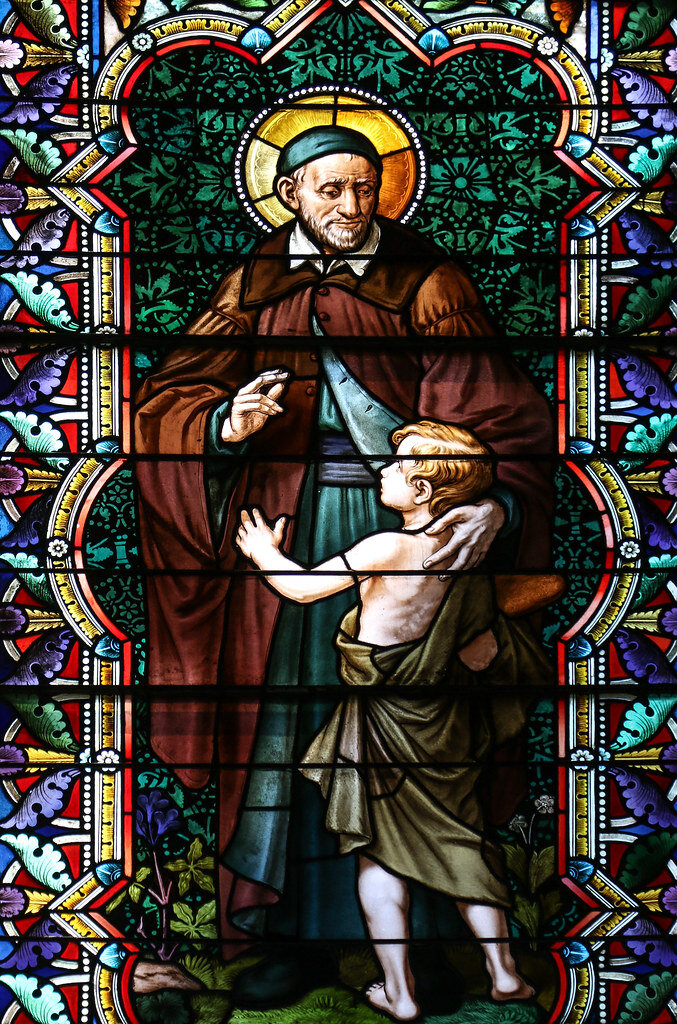
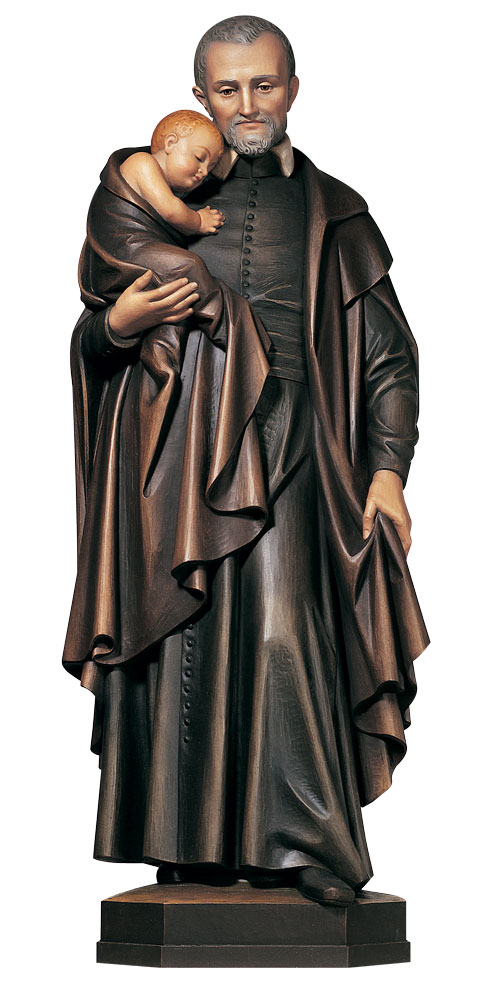
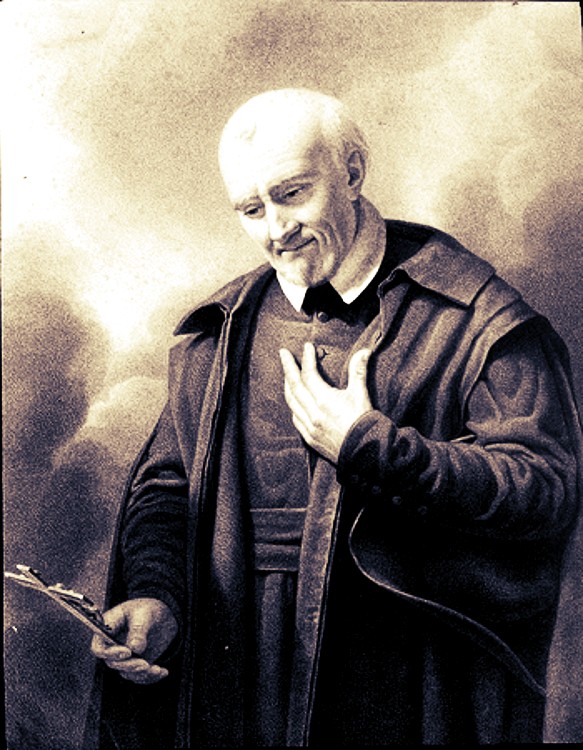
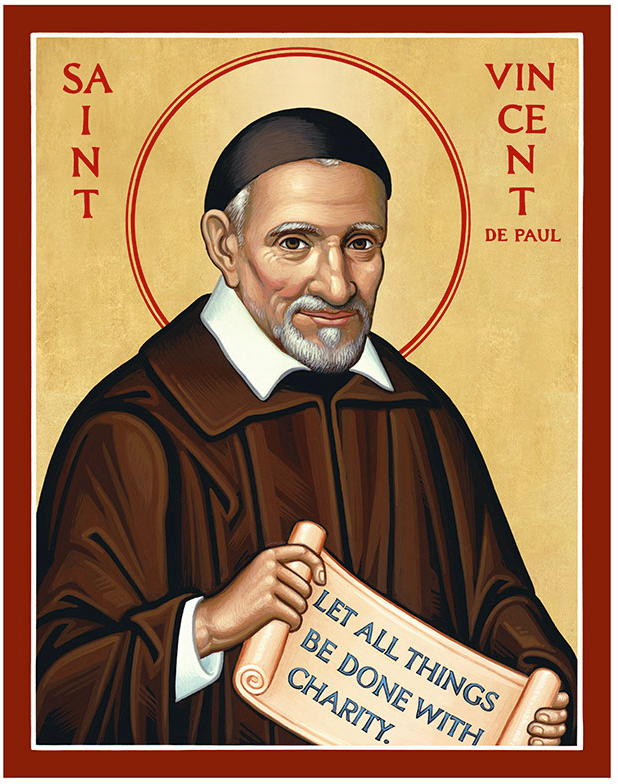
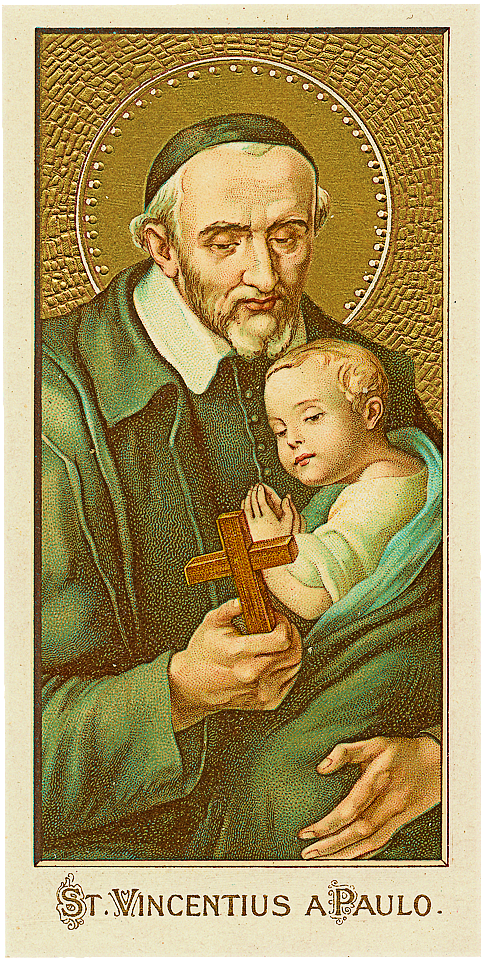
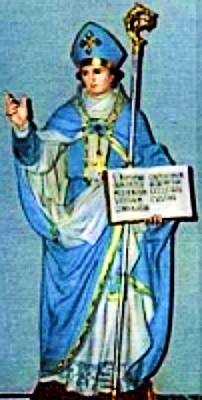

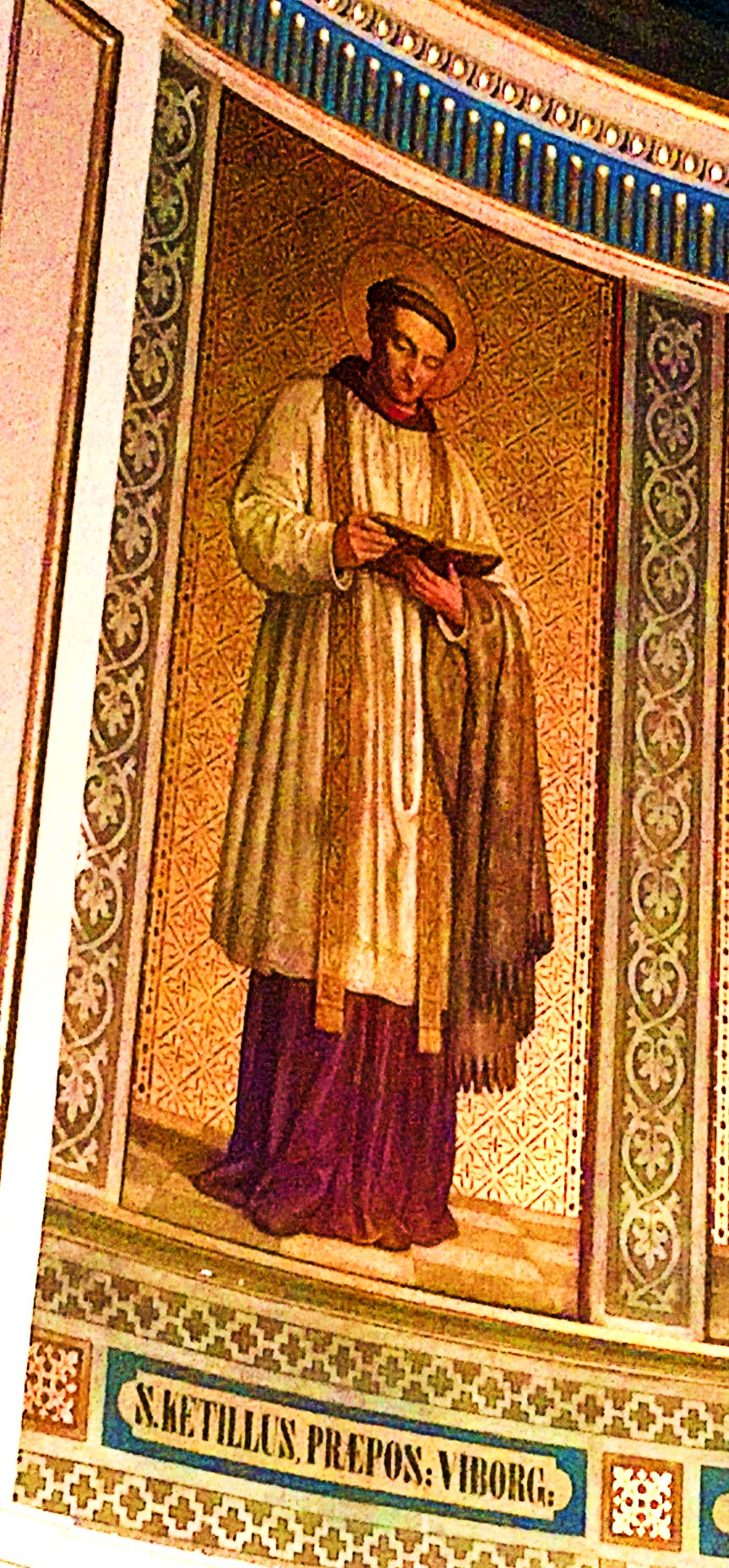
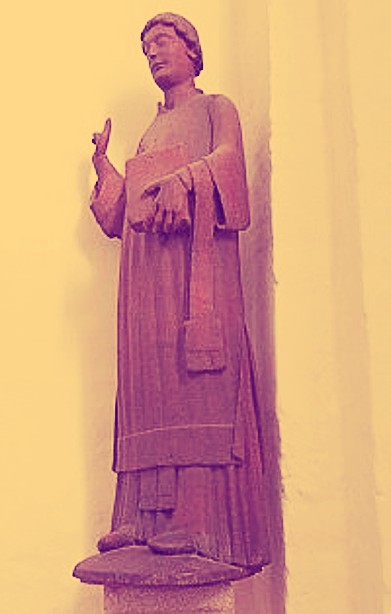
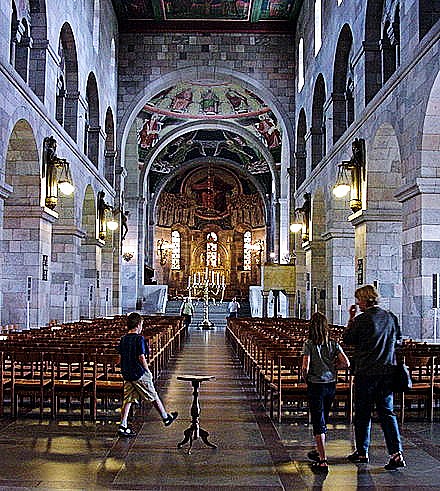
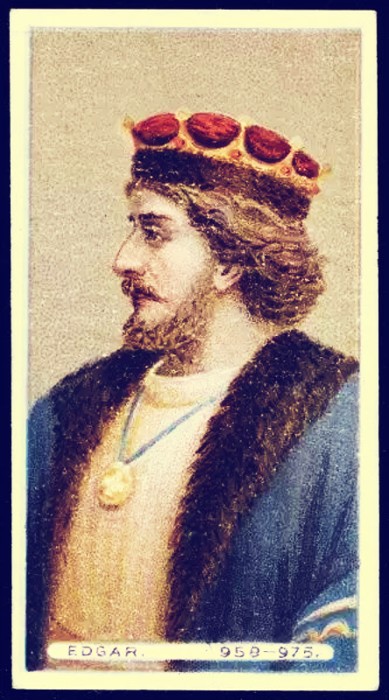
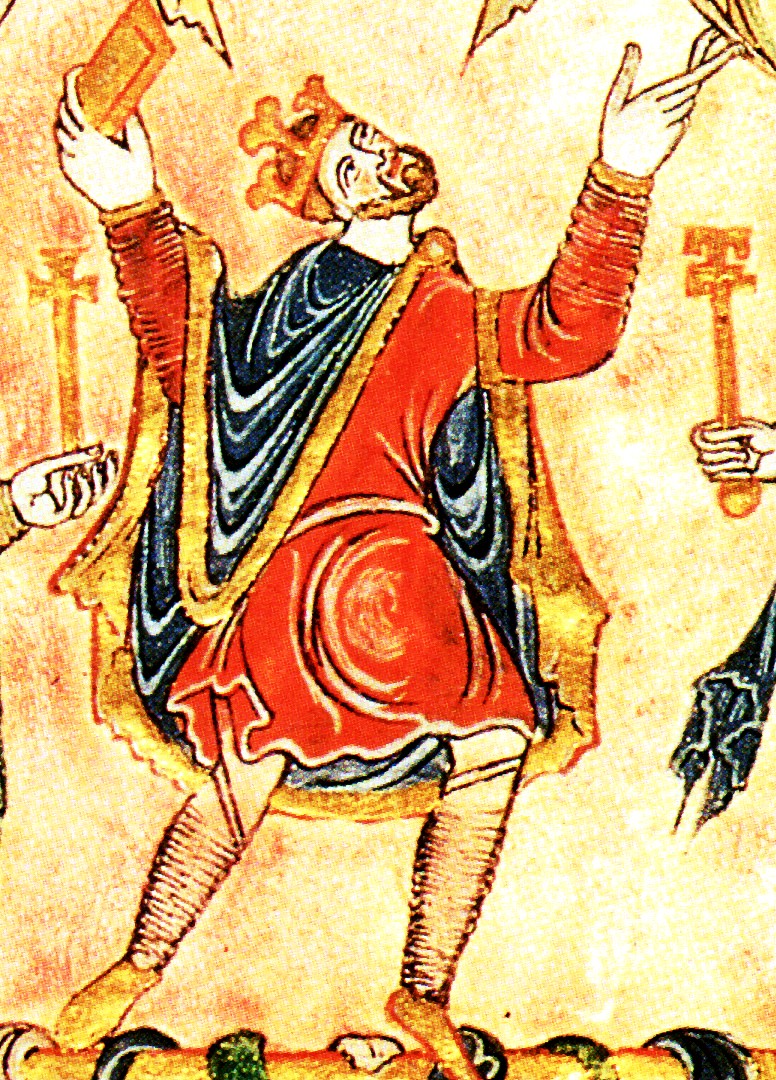
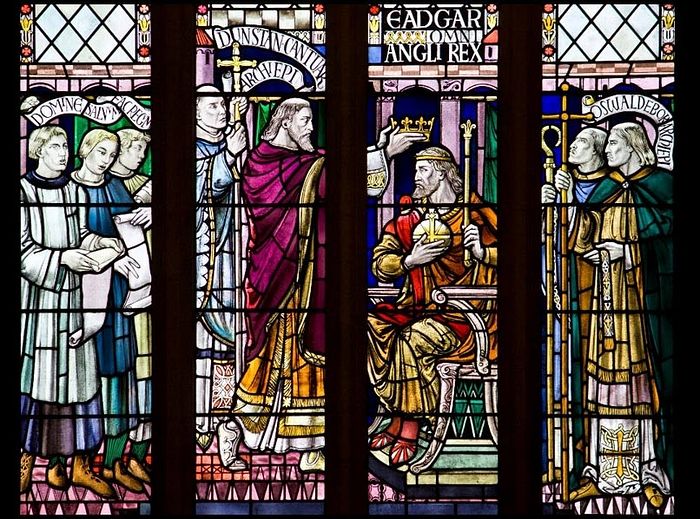
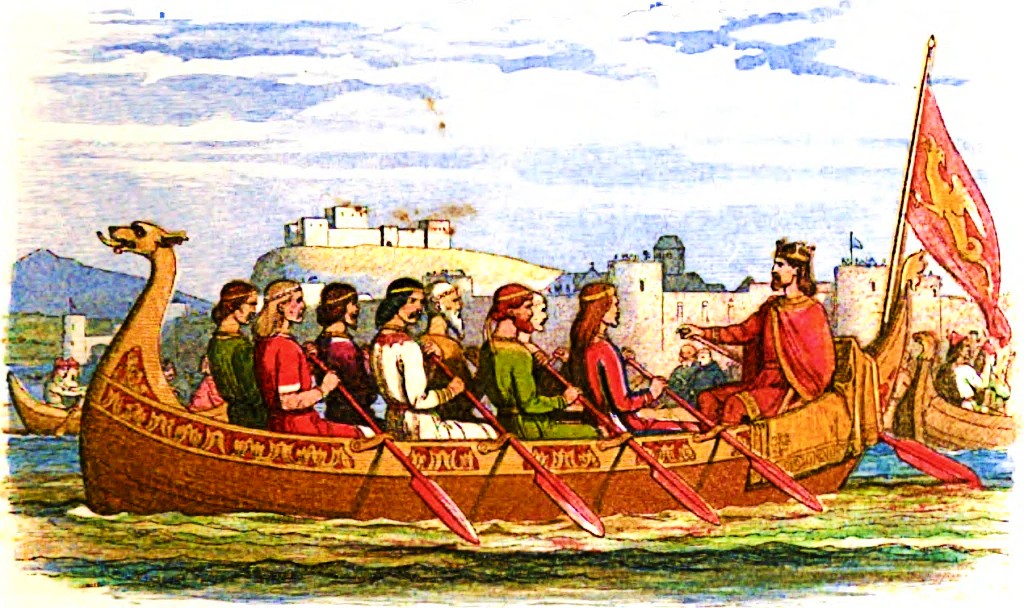
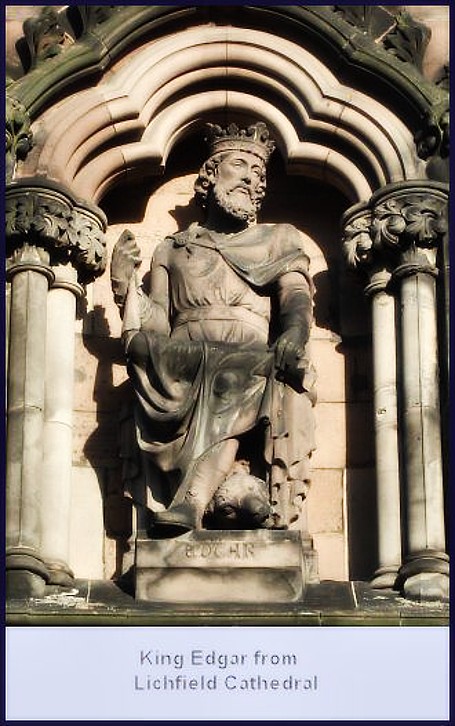

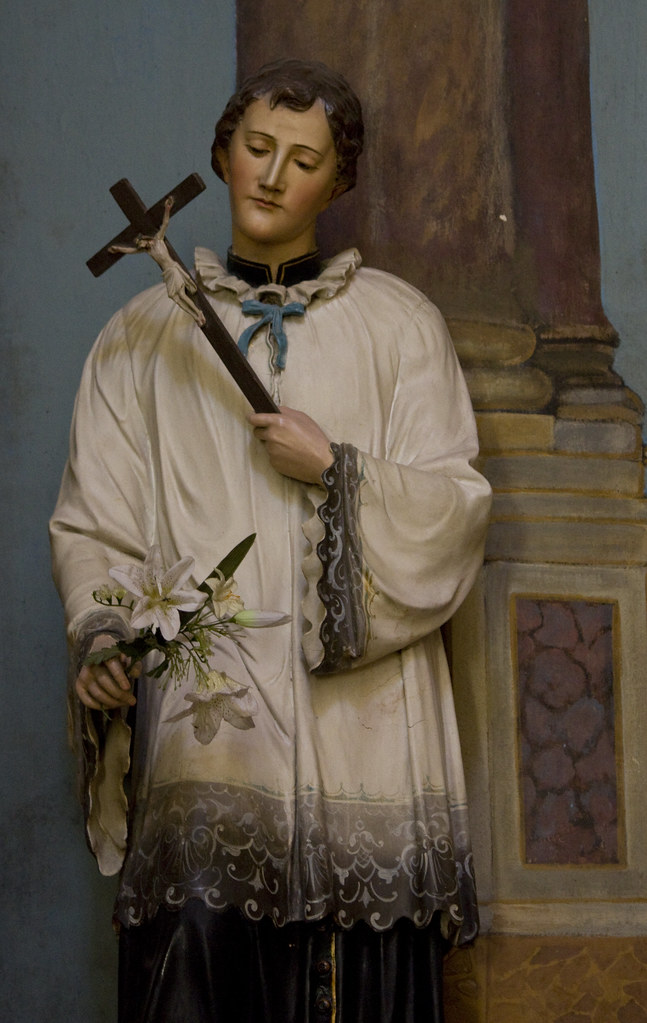
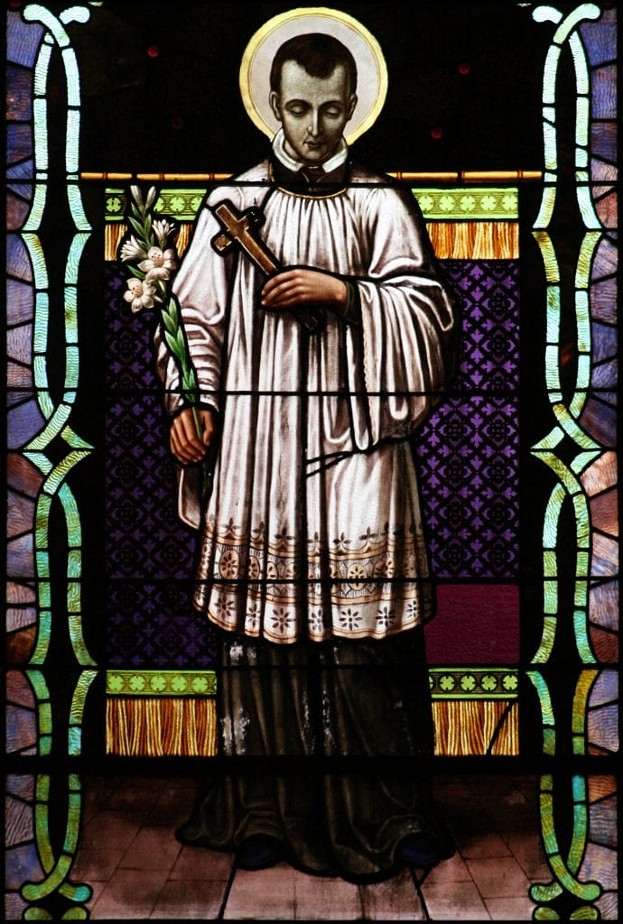
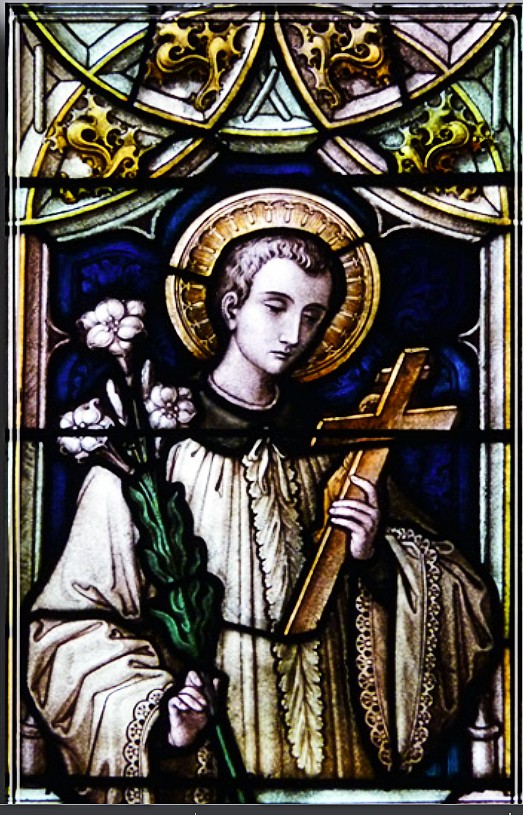

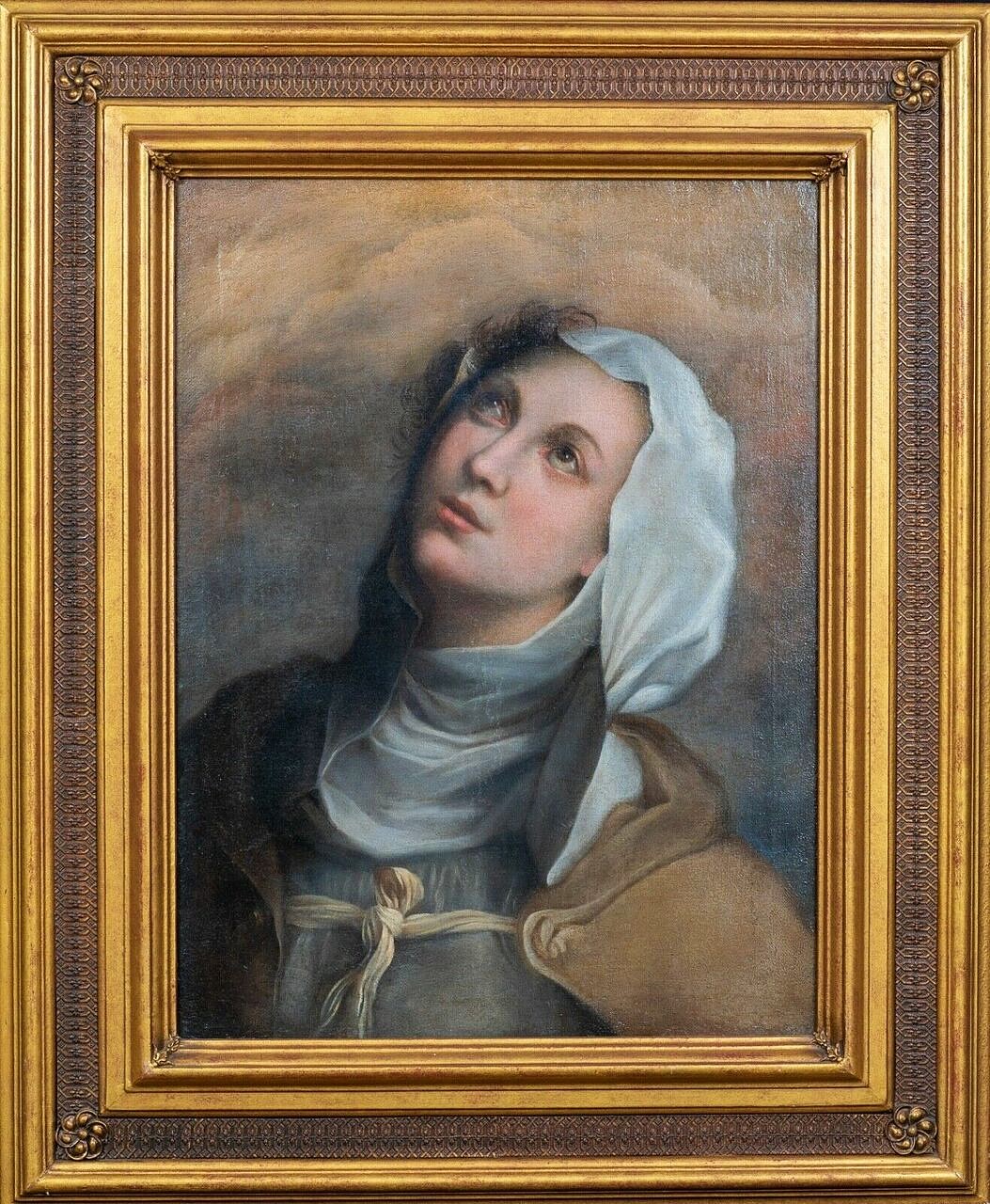
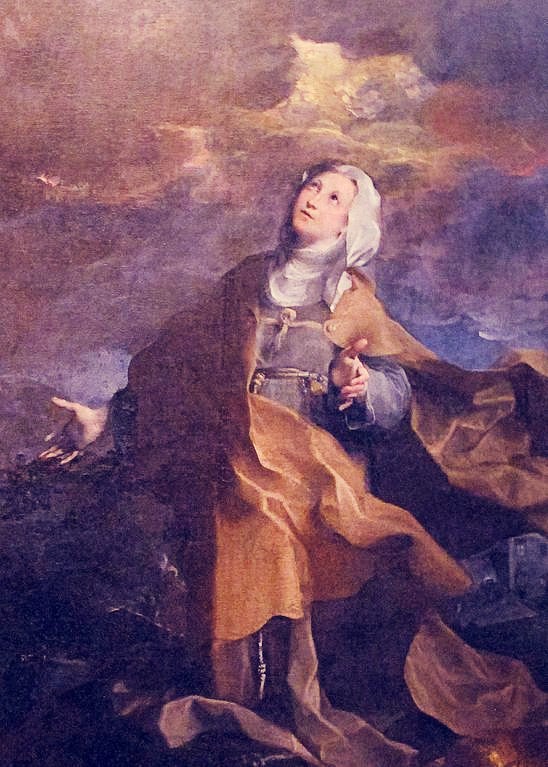
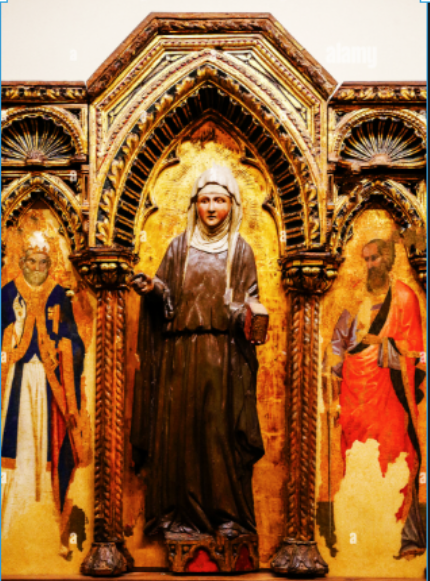
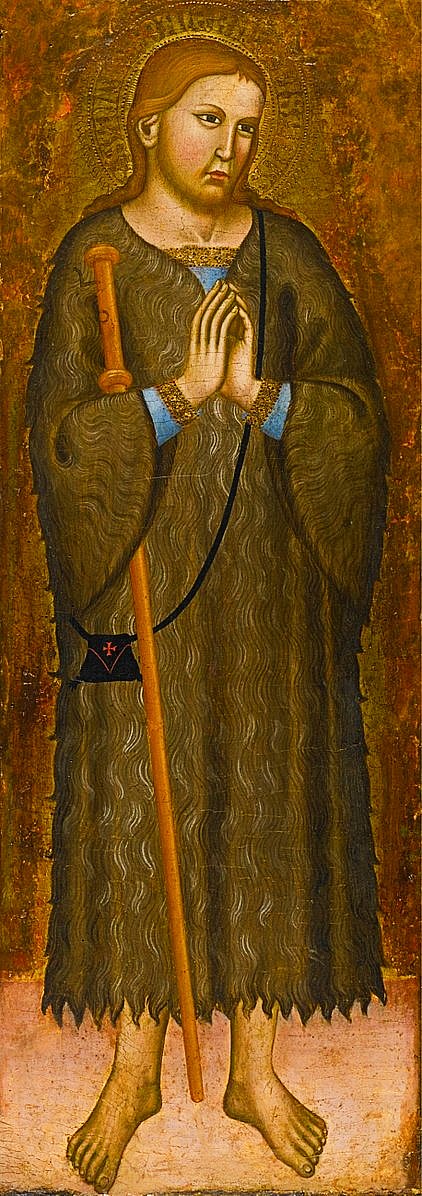
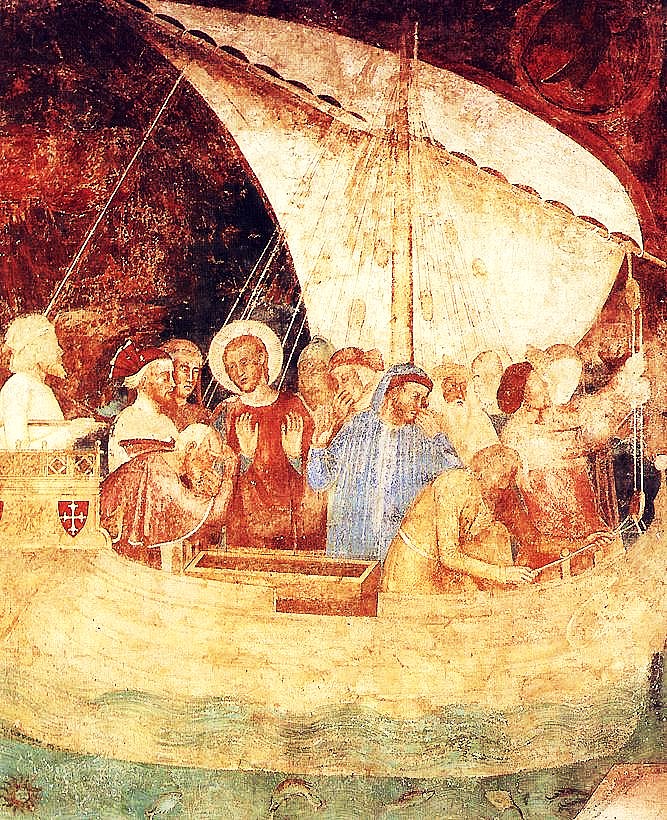
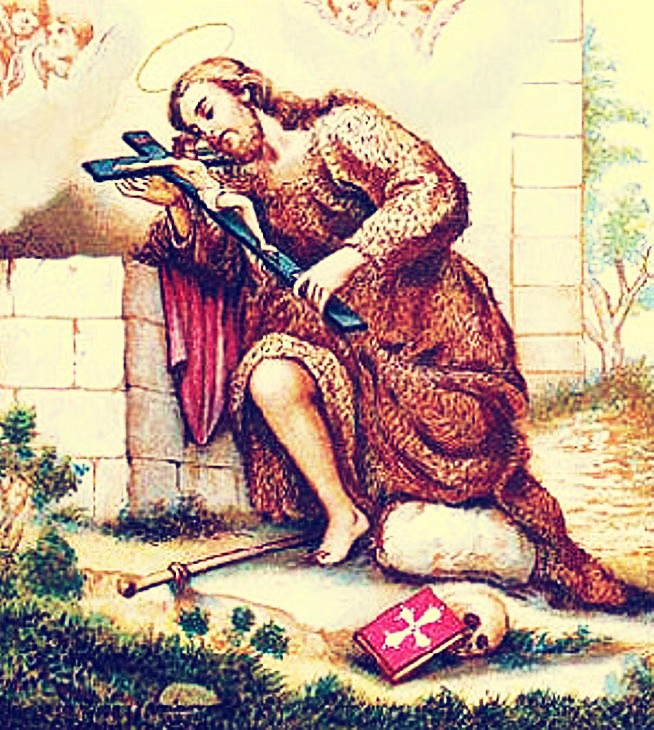
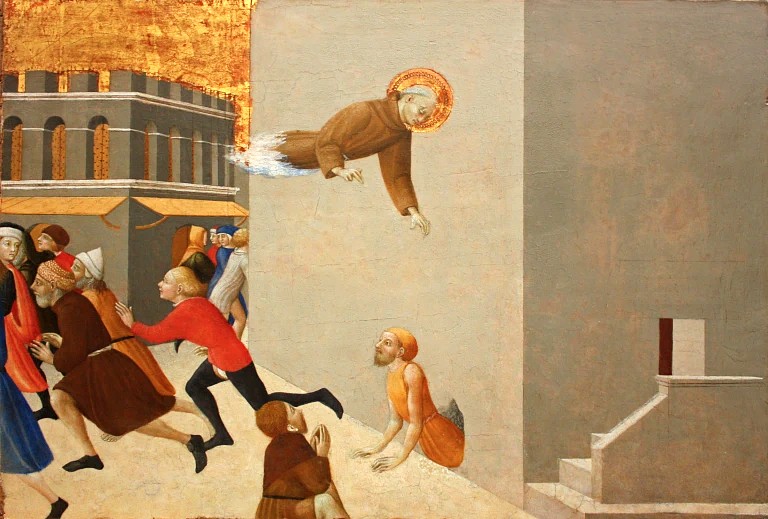
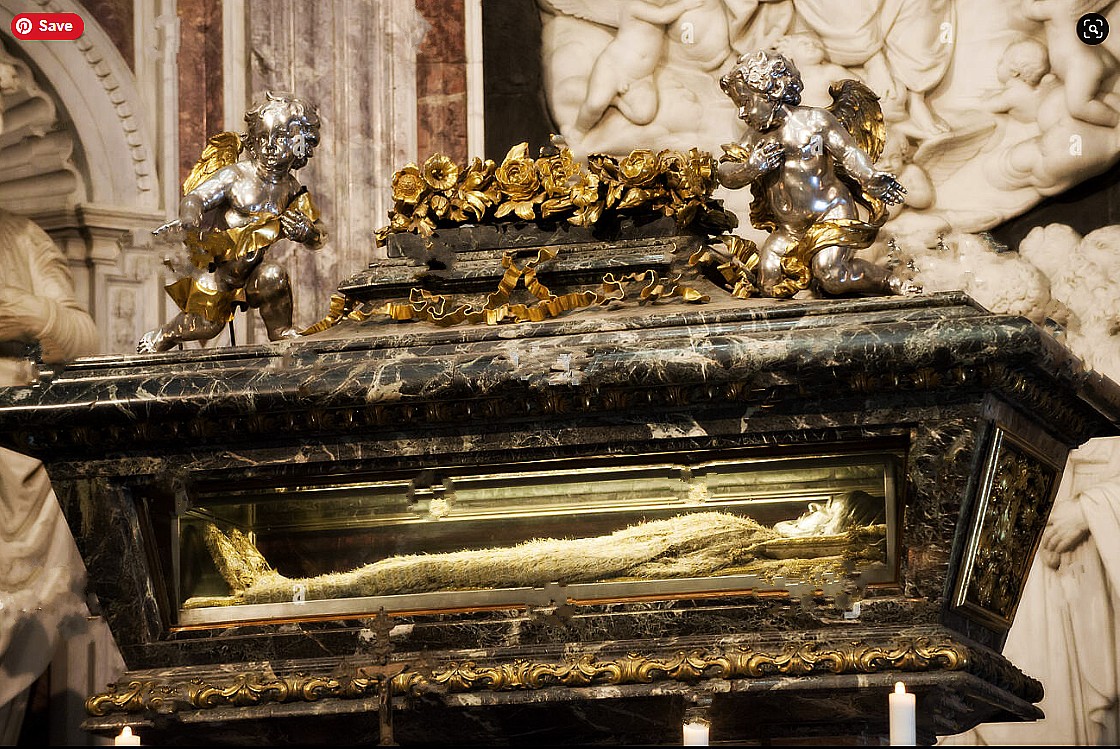
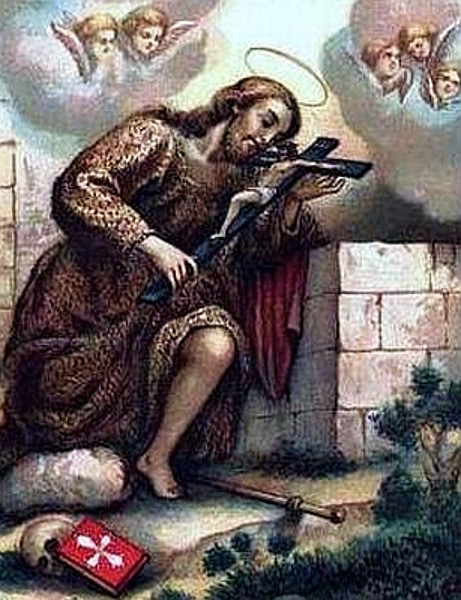

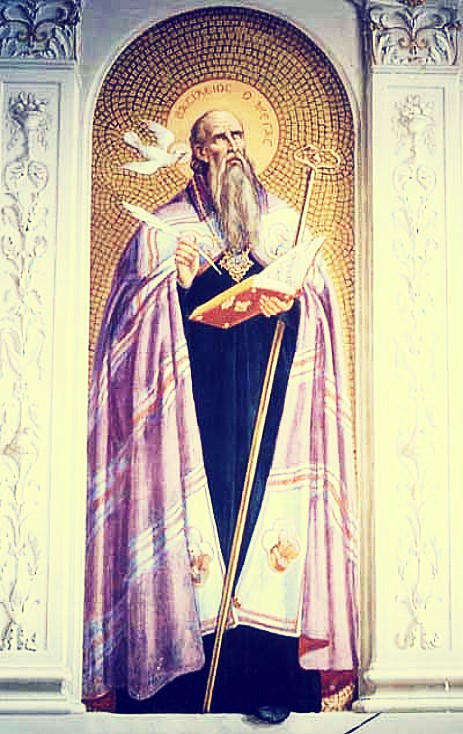
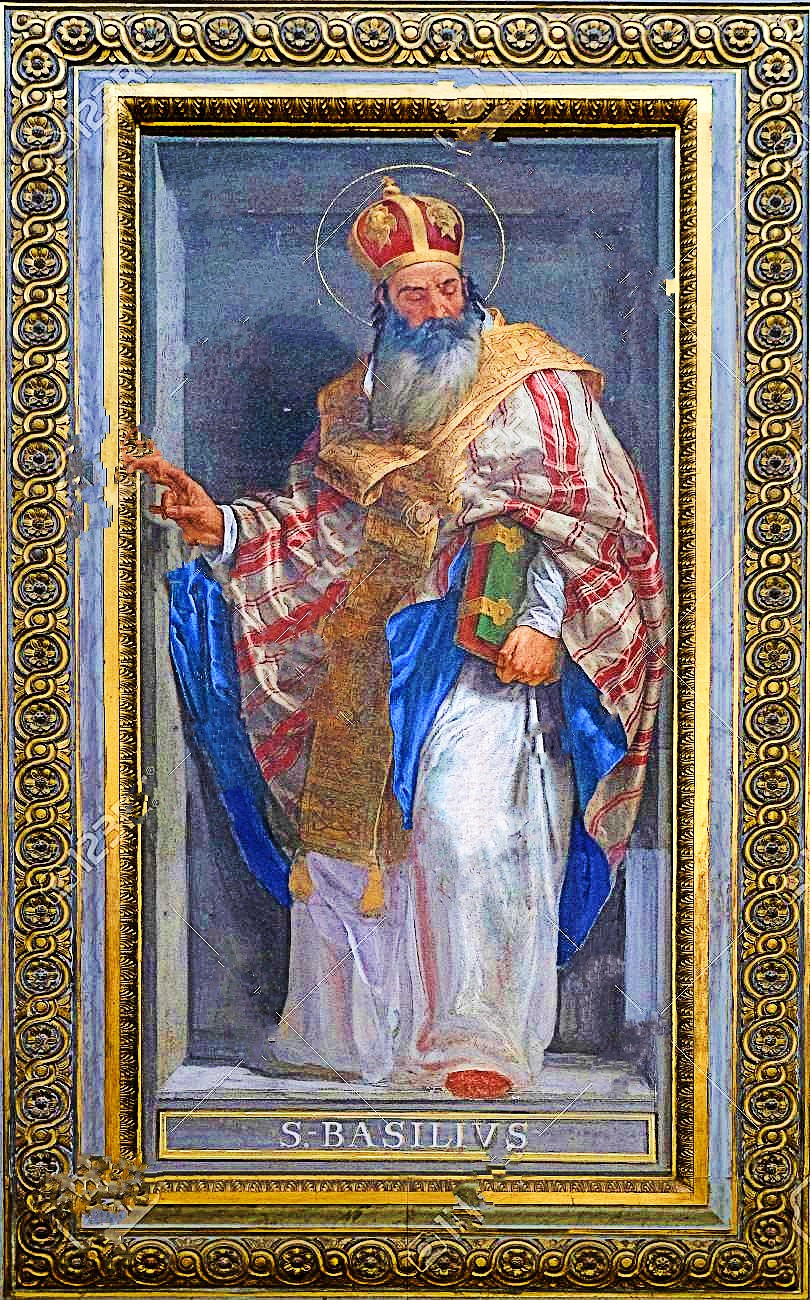
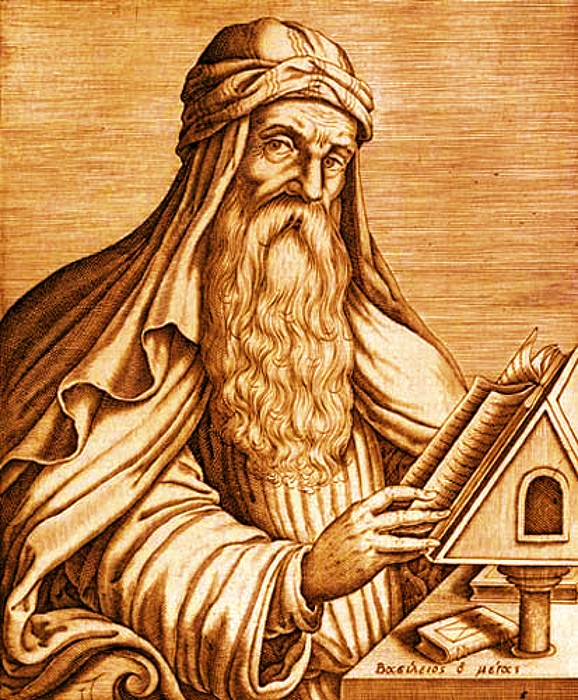
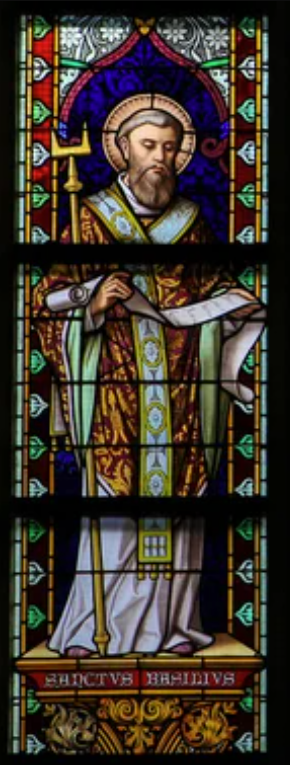
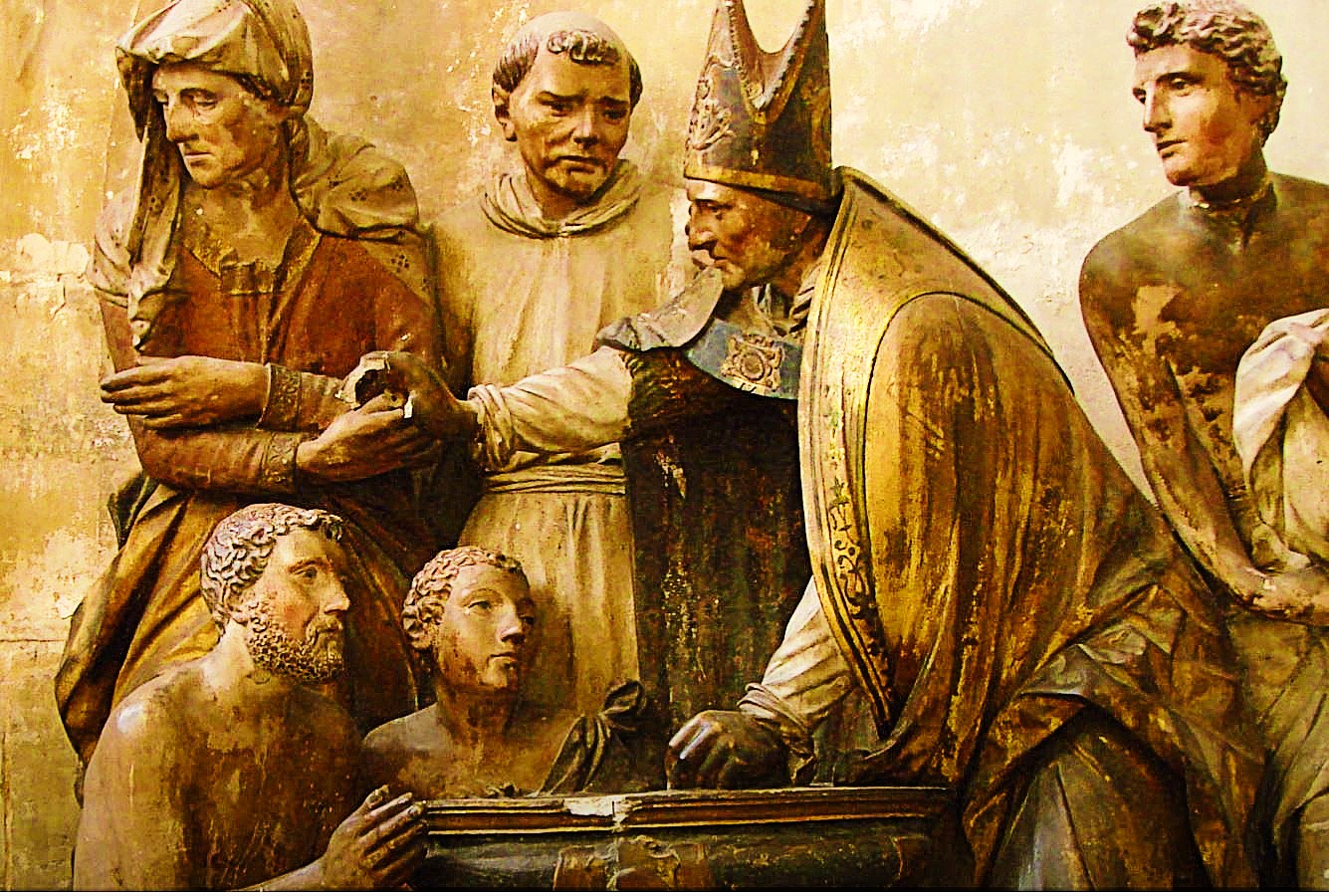
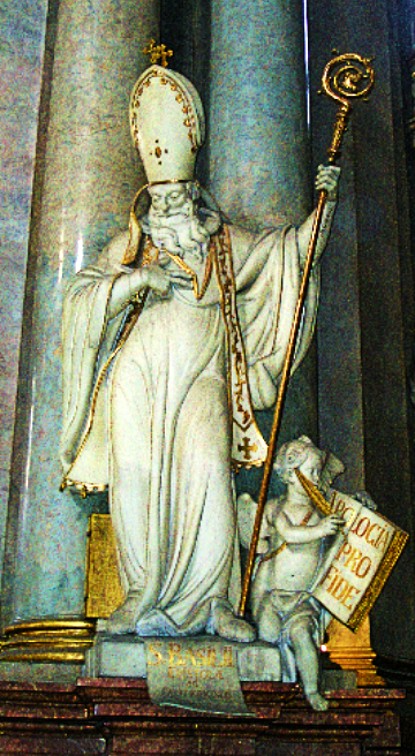
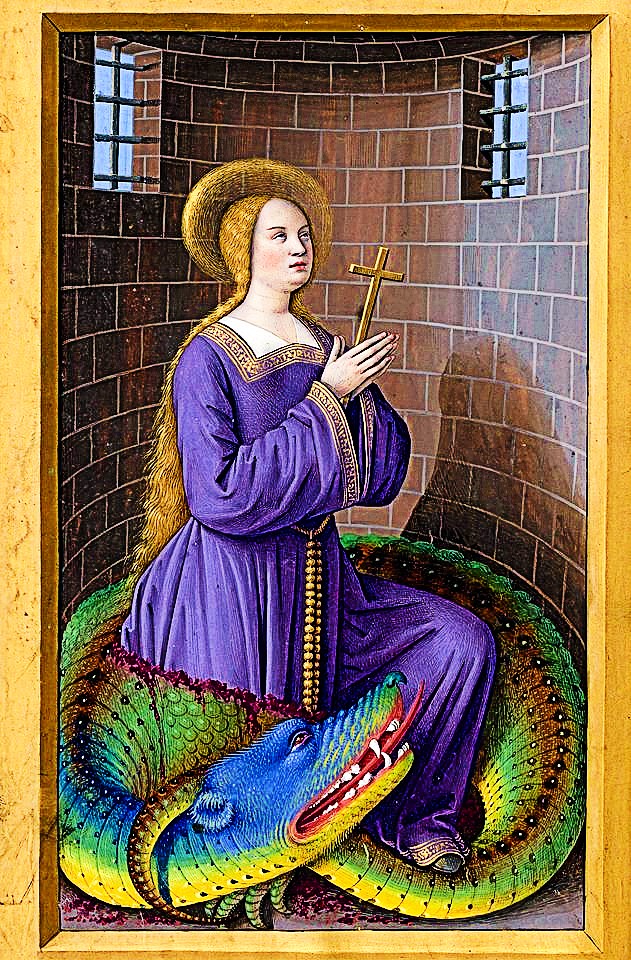
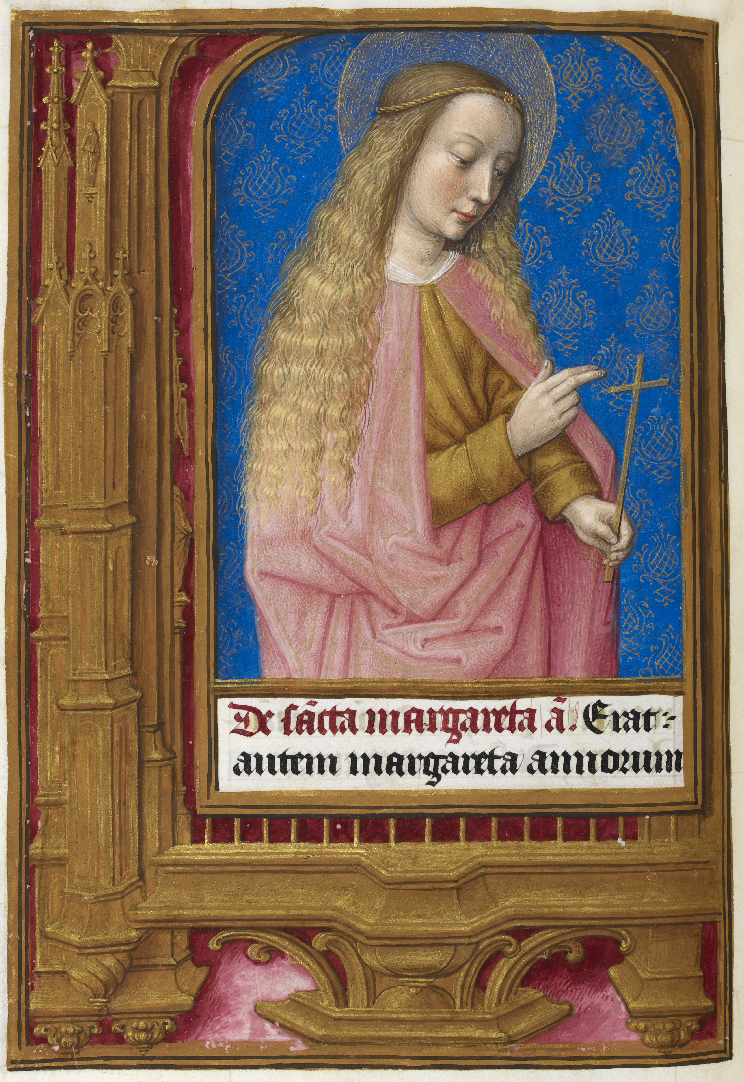

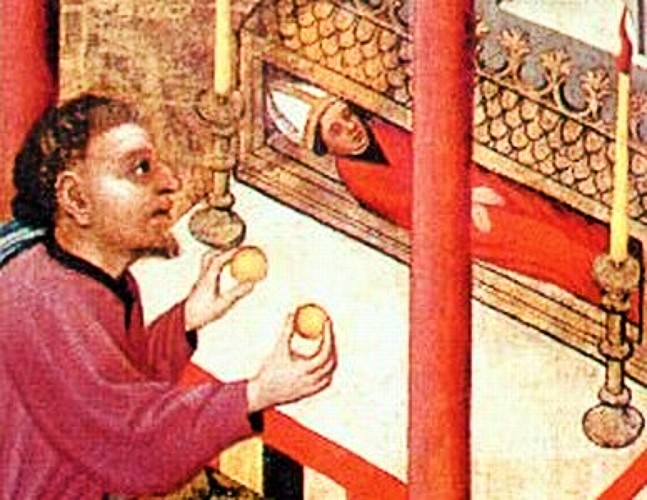
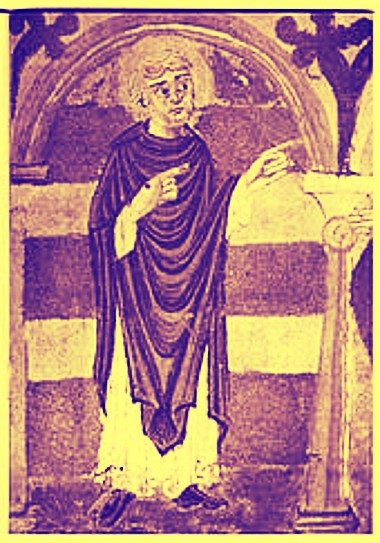
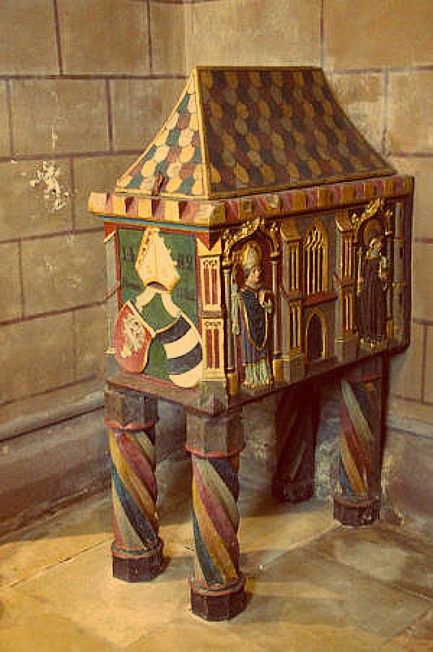
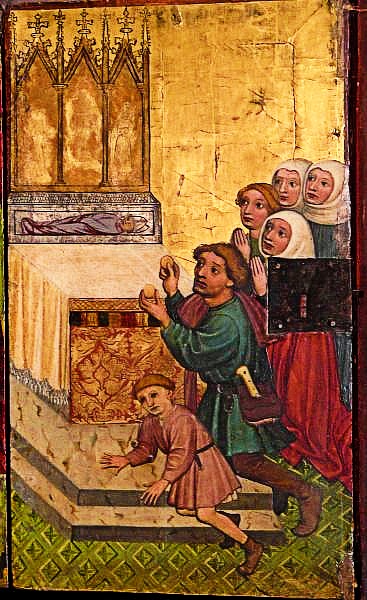
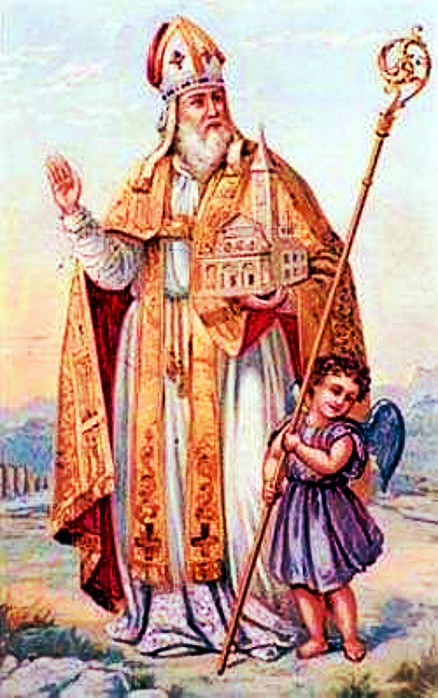
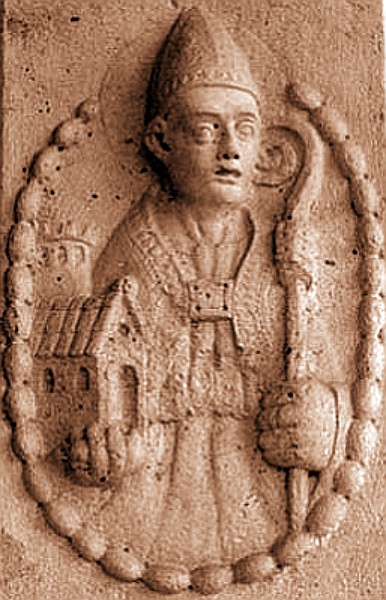
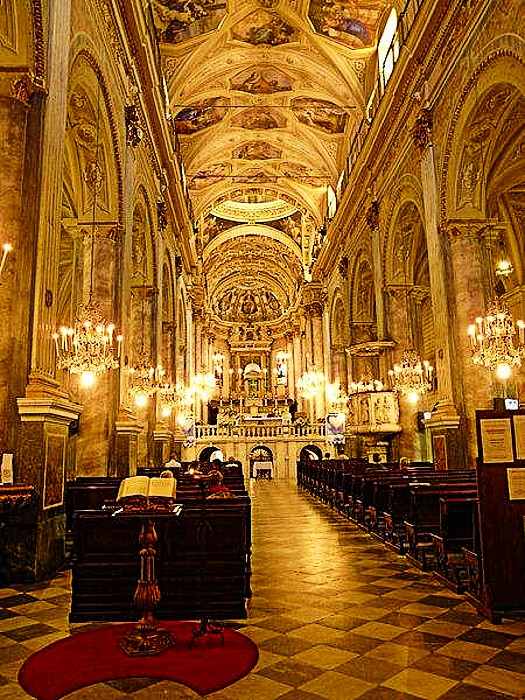
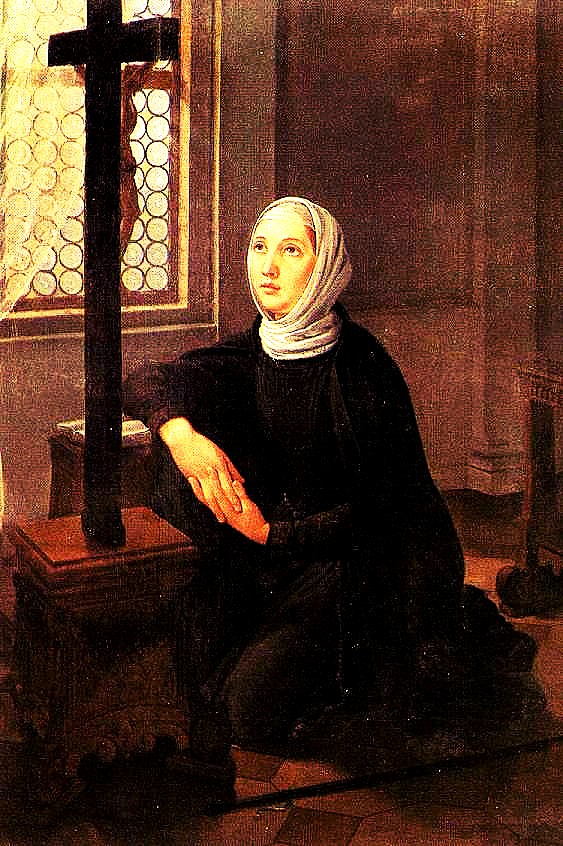
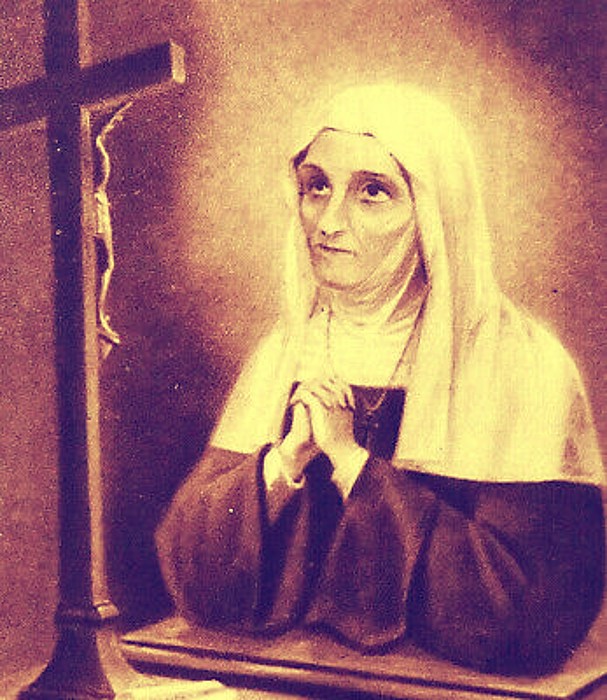
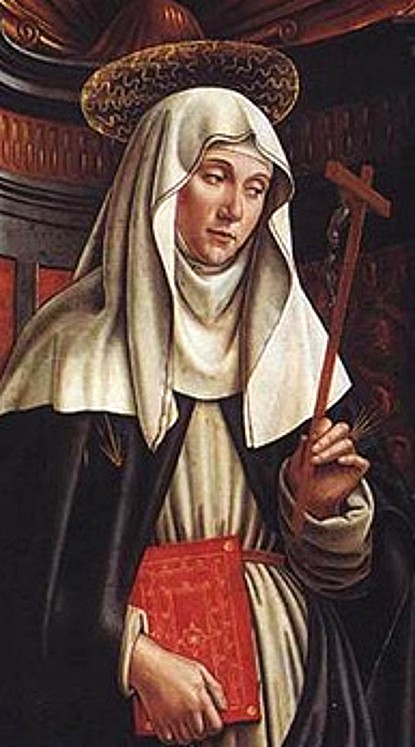
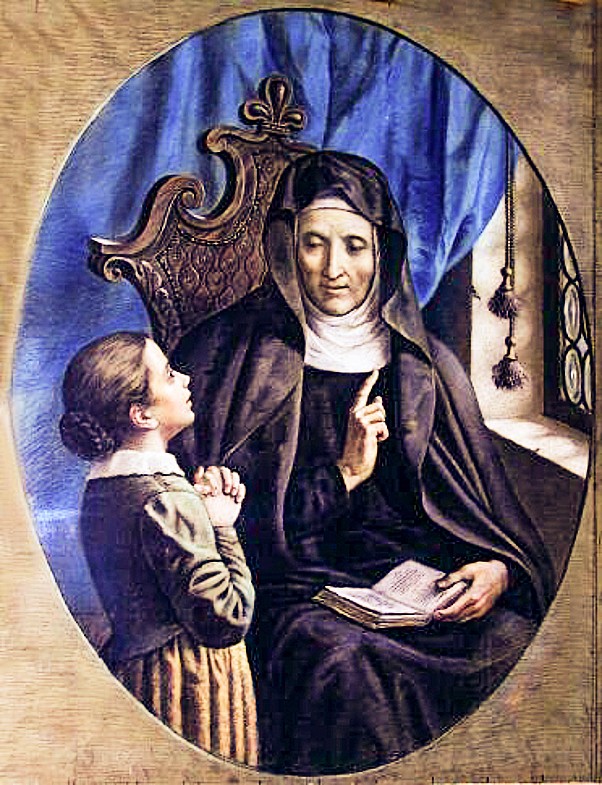
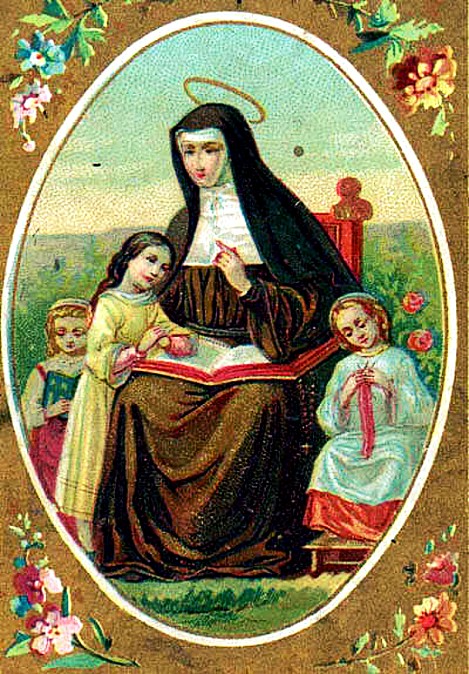
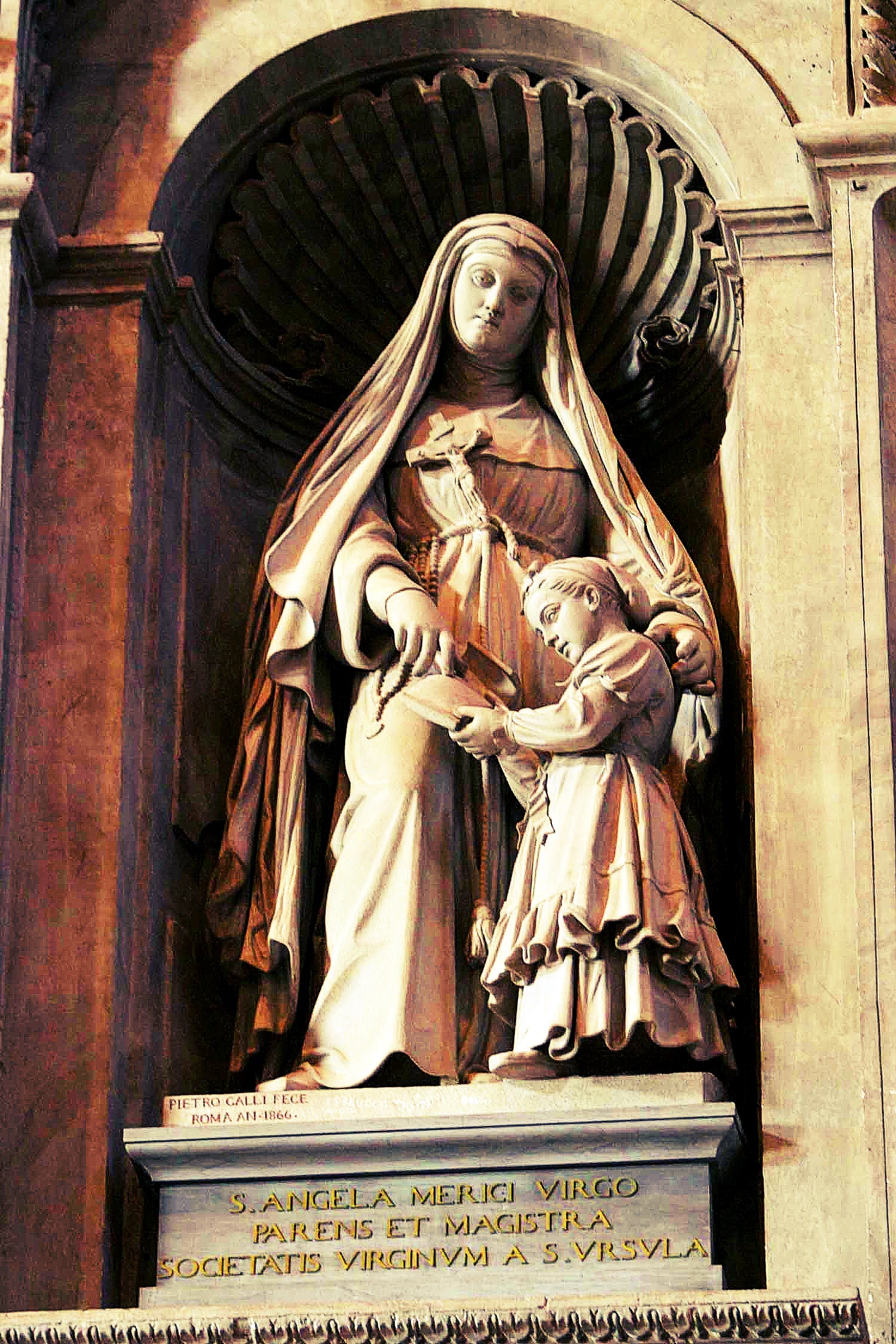
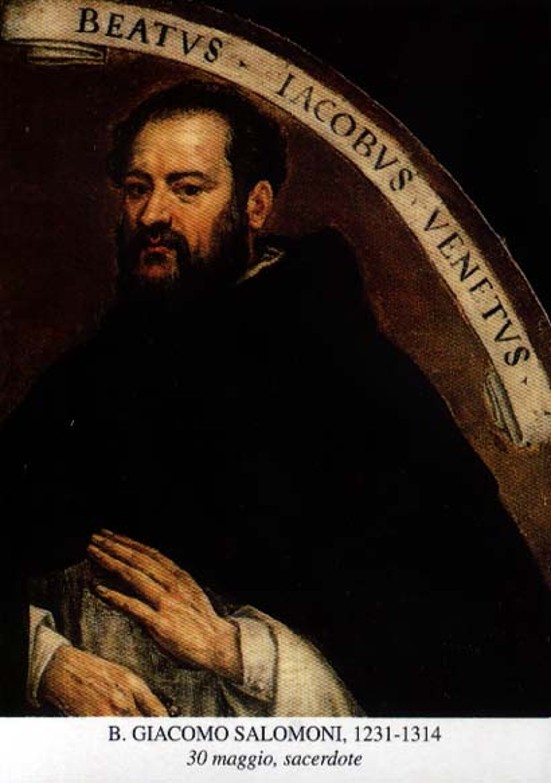


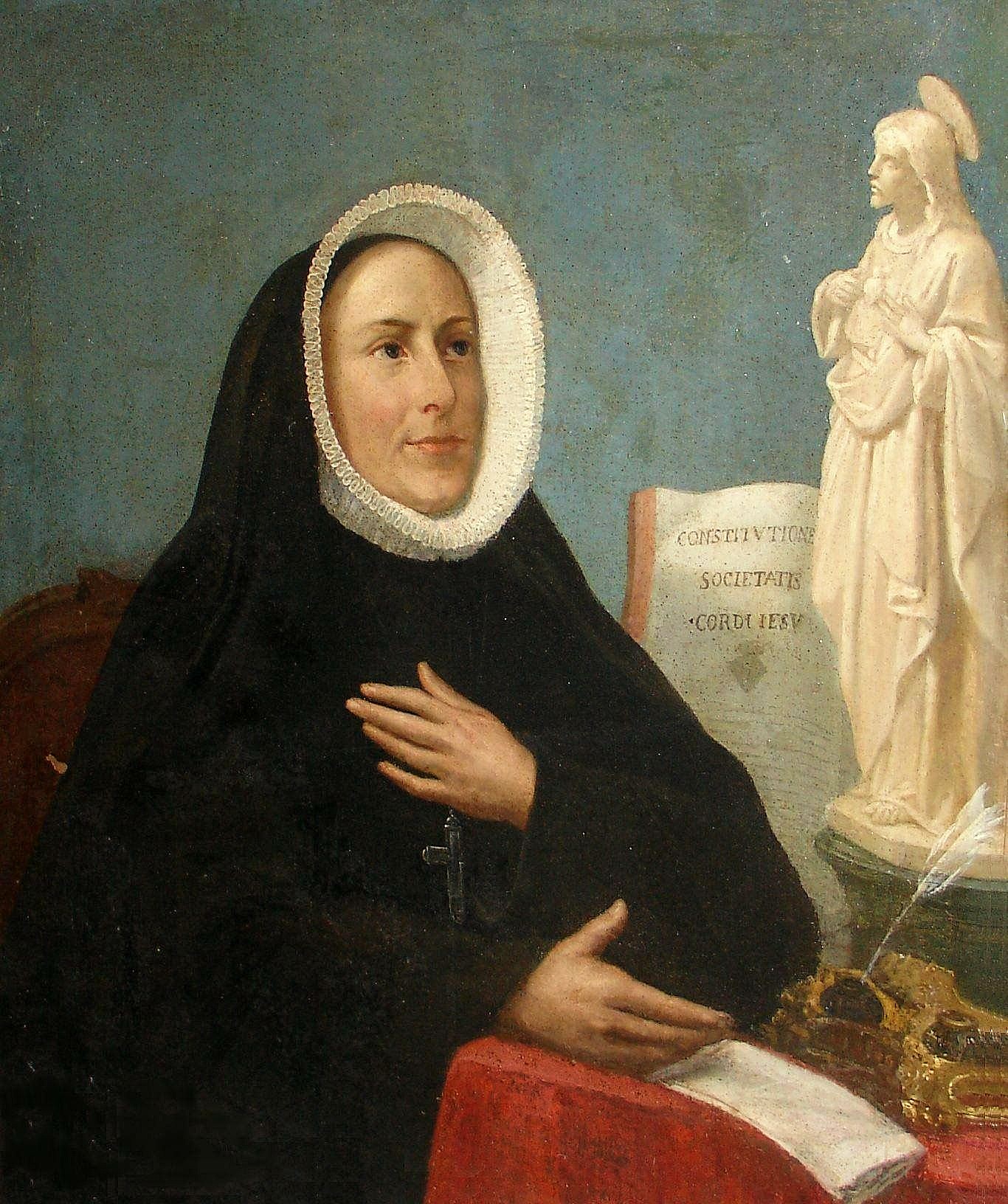
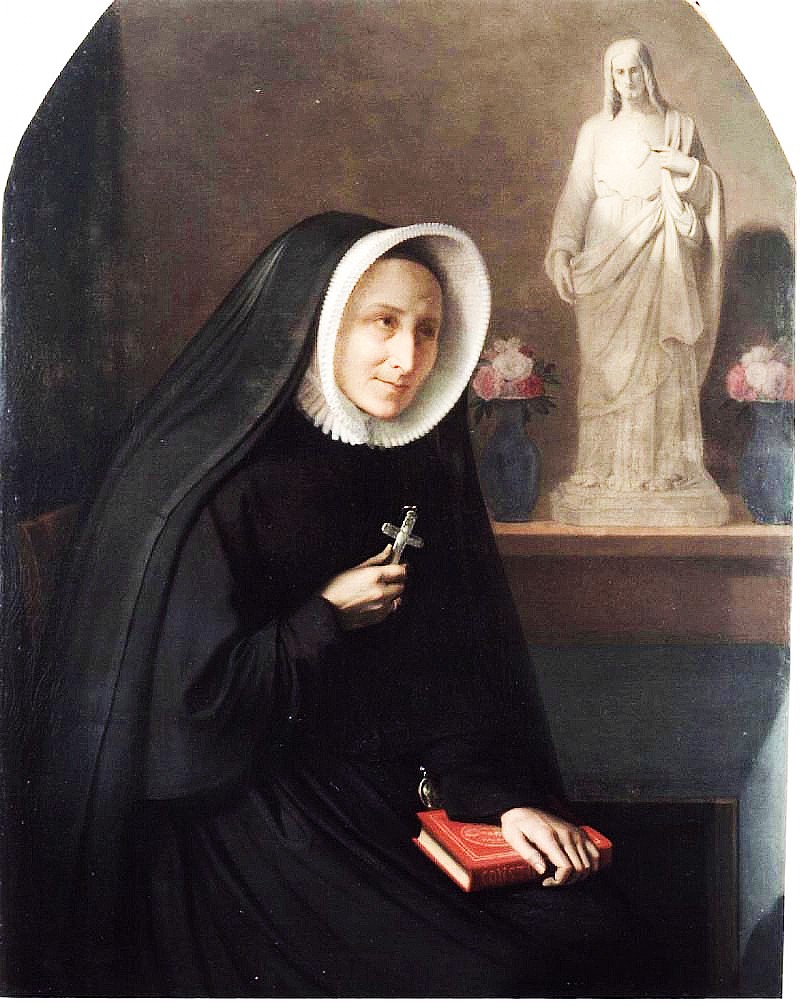
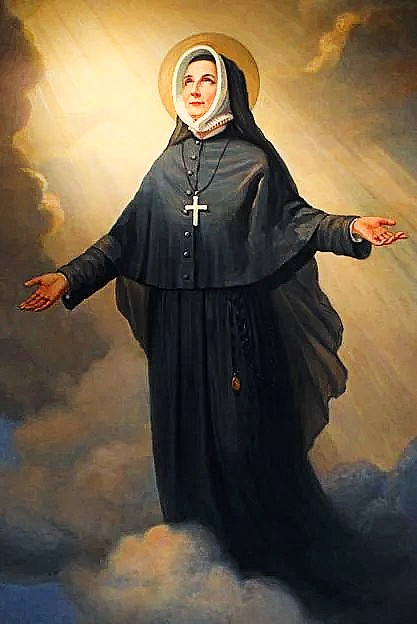
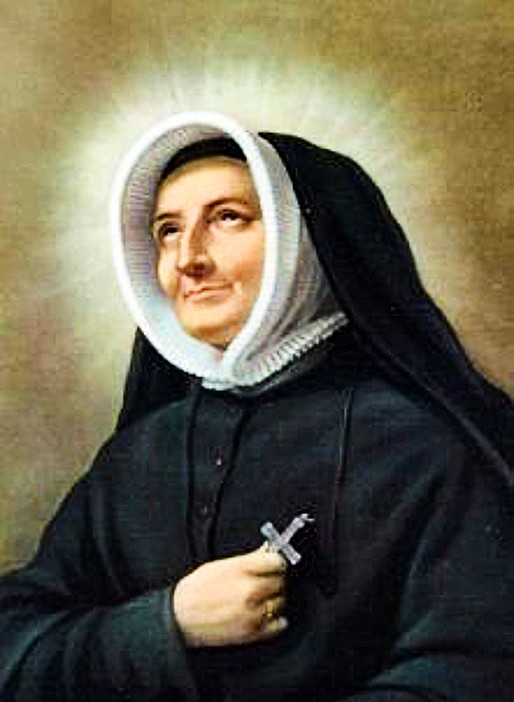
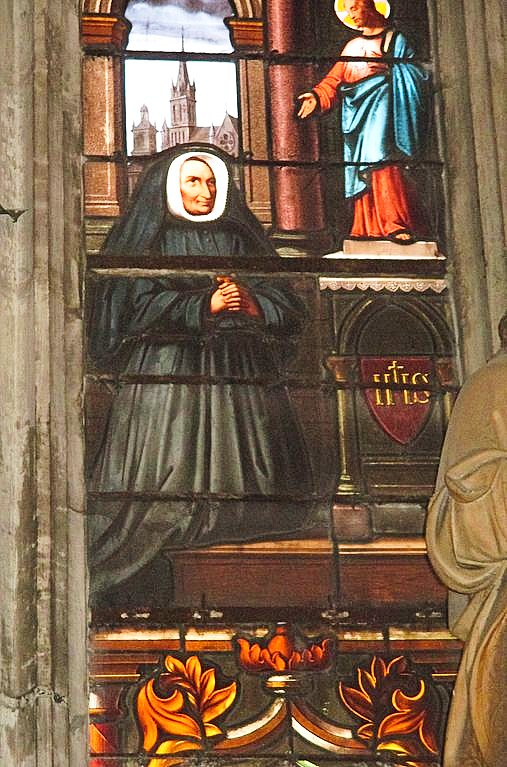
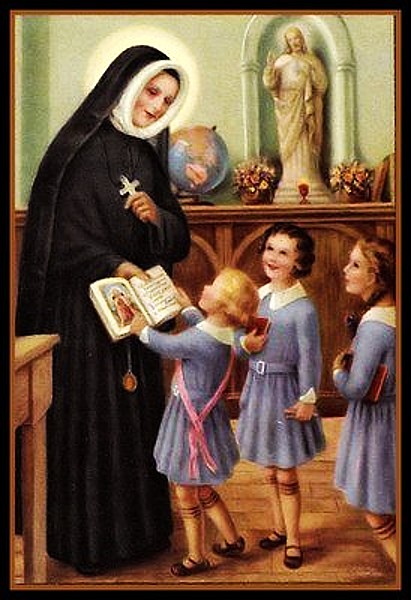
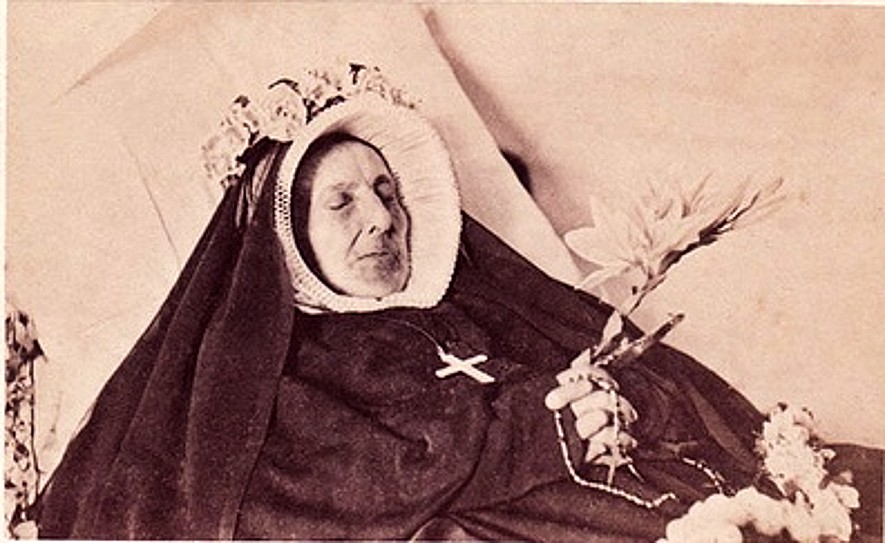
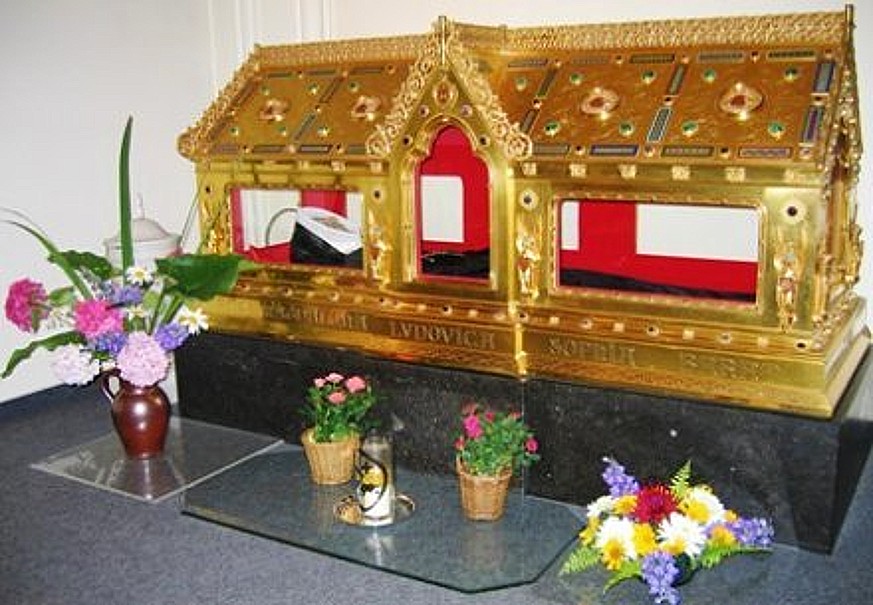
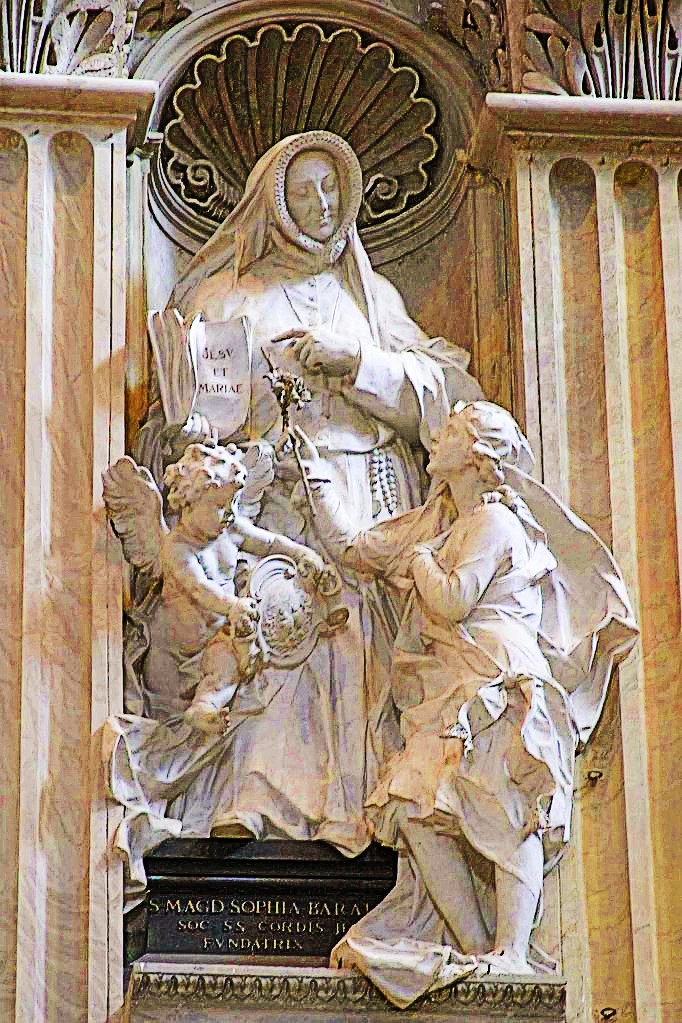

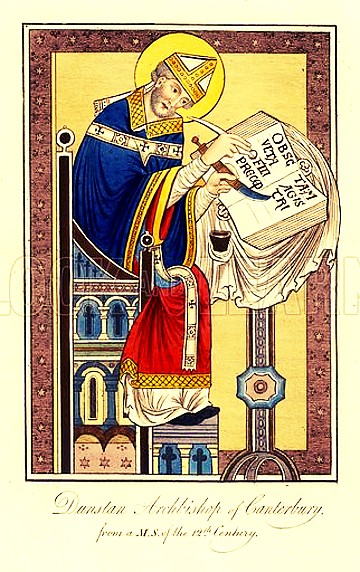
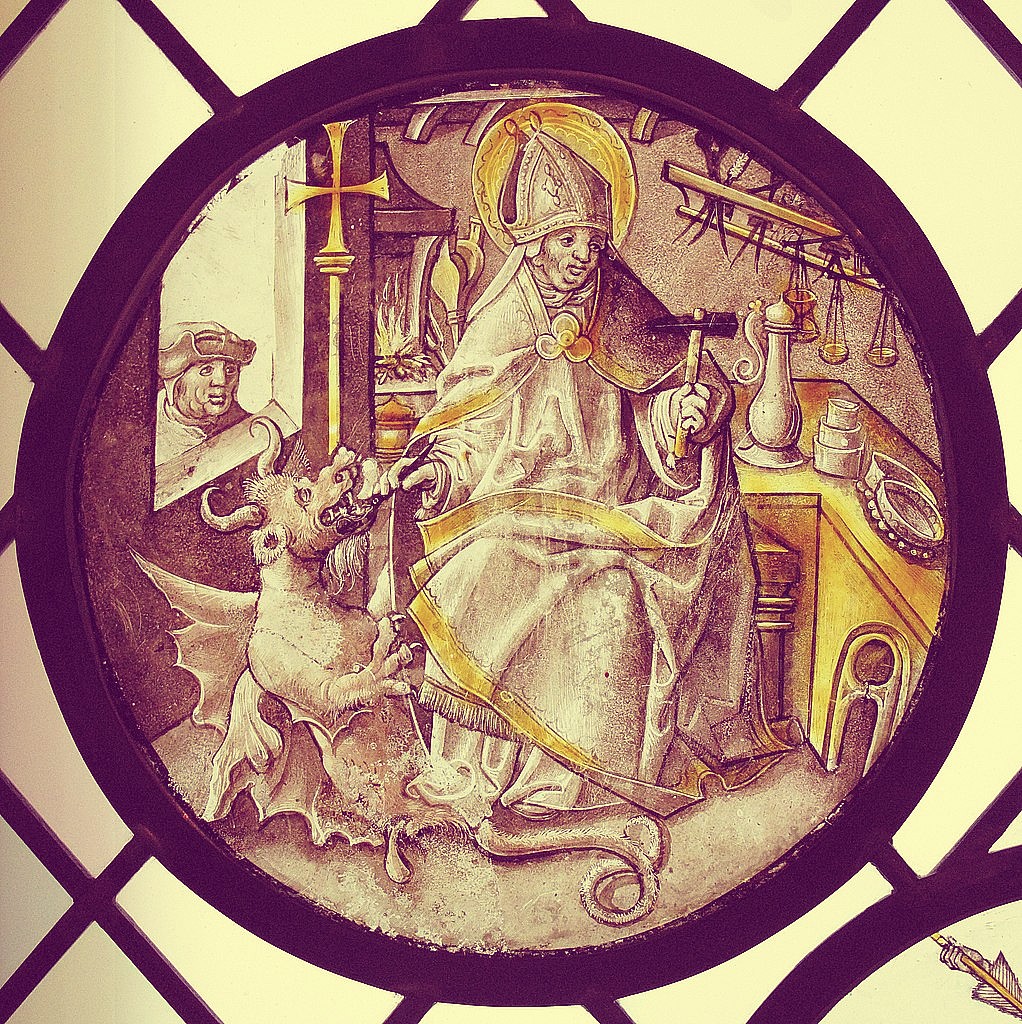
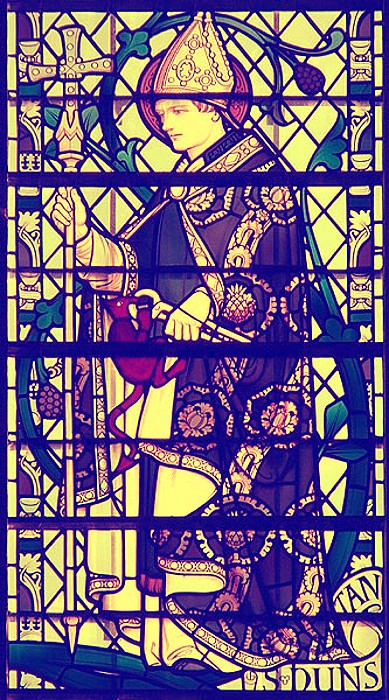
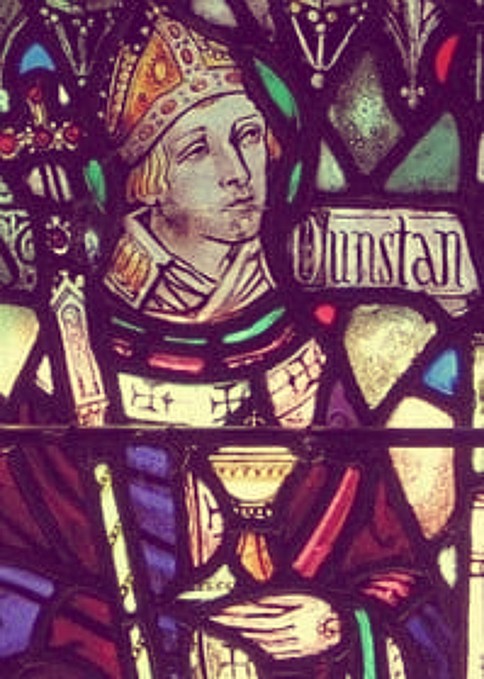
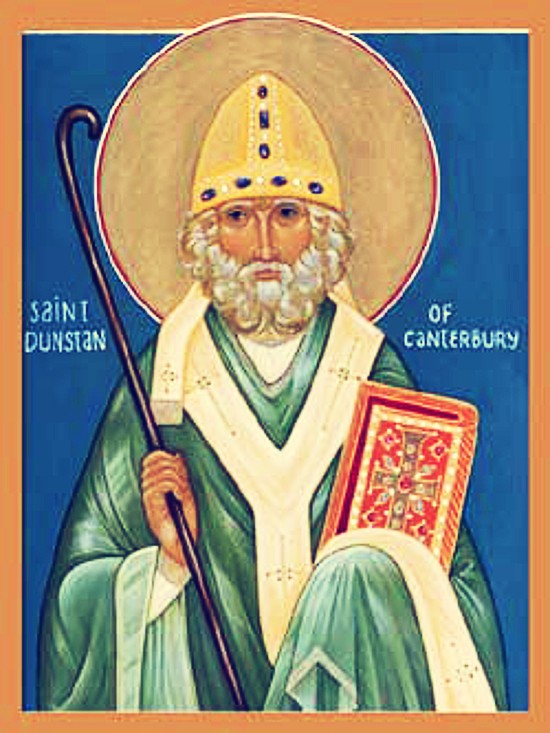
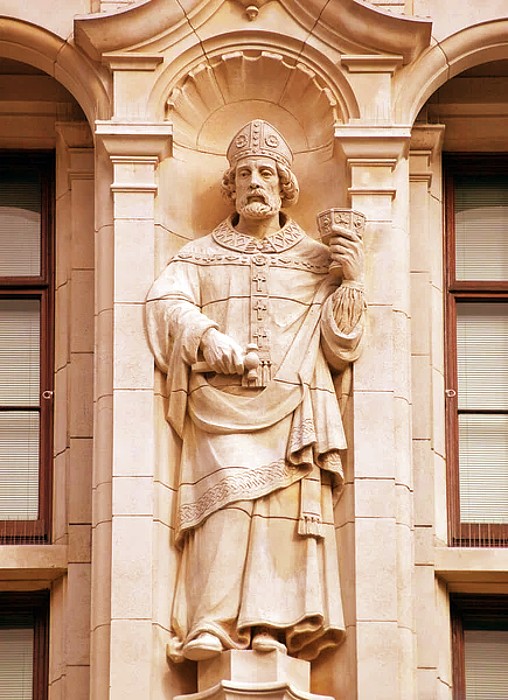
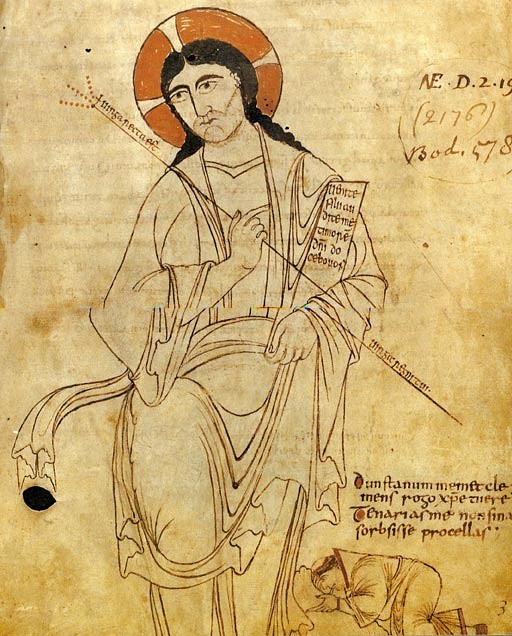
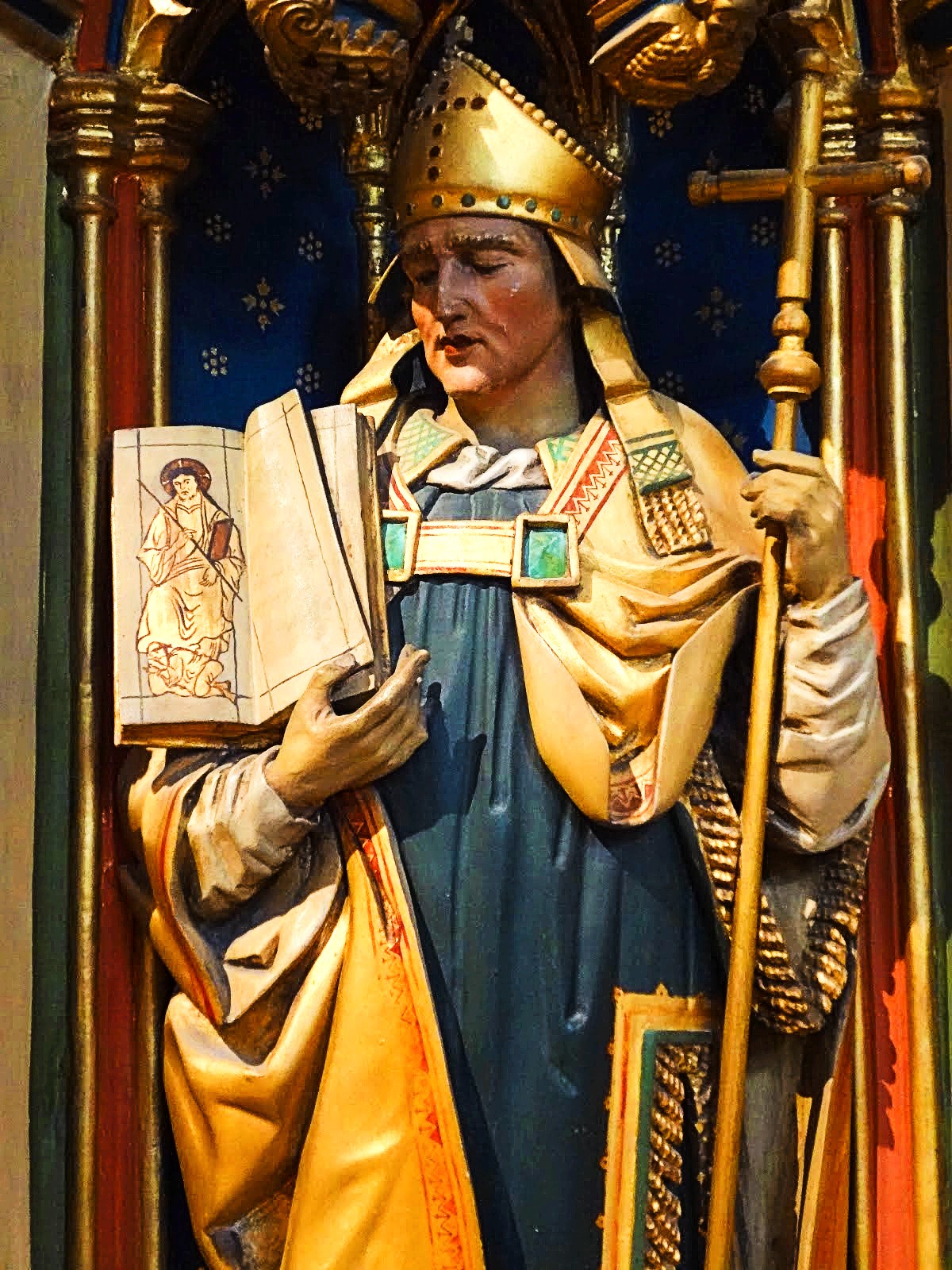



You must be logged in to post a comment.