Posted in MARIAN TITLES

Twenty Fourth Sunday after Pentecost, The Feast of All Saints of the Order of Preachers, Onze Liewe Vrou van Scherpenheuvel / Our Lady of Scherpenheuvel, Scherpenheuvel-Zichem, Belgium (17th Century) and Memorials of the Saints – 7 November

Twenty Fourth Sunday after Pentecost

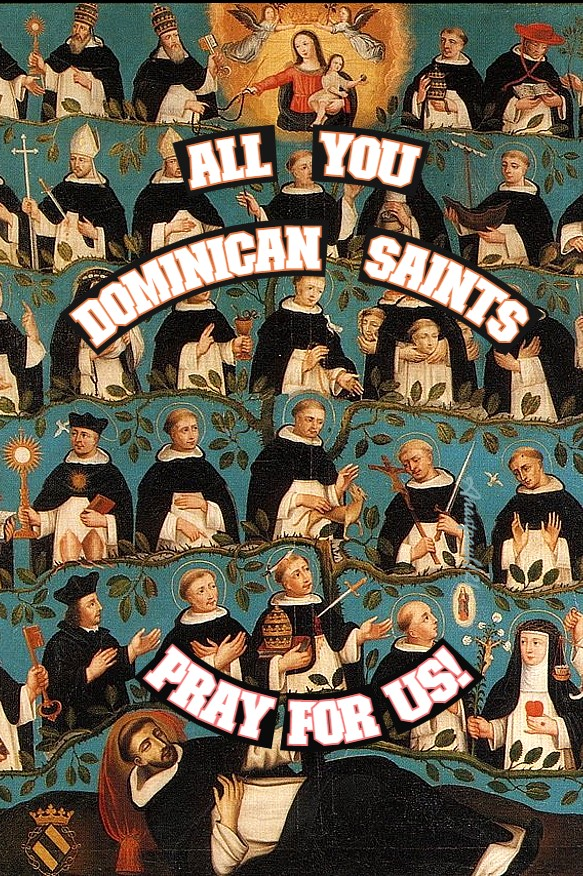
The Feast of All Saints of the Order of Preachers: “Fountain of all holiness, you stirred up in our holy brothers and sisters an extraordinary love of truth, conformity to Christ crucified, and a thirst for the salvation of souls: may we imitate them in offering you thanks on account of the way of life they gave us.” — From the Intercessions at Lauds for the feast of All Saints of the Order of Preachers.

Onze Liewe Vrou van Scherpenheuvel / Our Lady of Scherpenheuvel
Scherpenheuvel-Zichem, Belgium (17th Century)
– Commemorated on the First Sunday after the Feast of All Saints
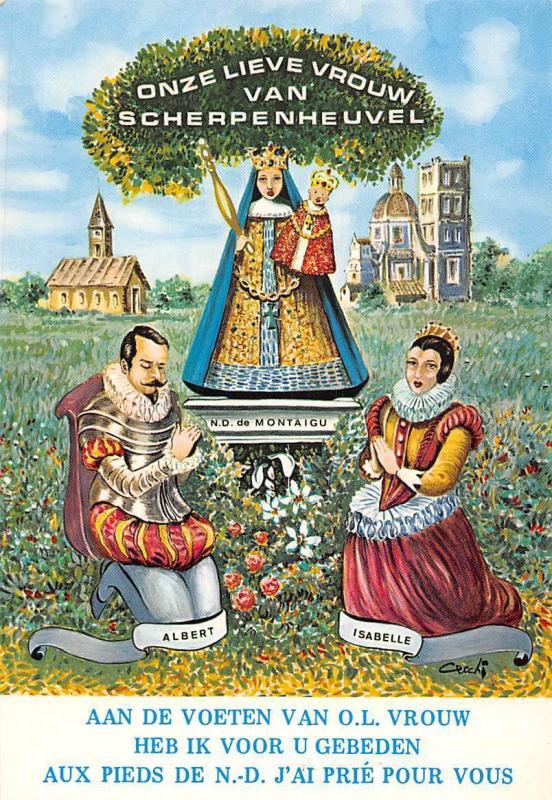
For many years the Marian cult on the Scherpenheuvel (“Sharp Hill”) centred at an oak tree on top of the hill. According to the foundation legend, a shepherd noticed that the image had fallen to the ground and decided to take it home. When he had lifted it, he discovered he was unable to move. As the herd did not return in the evening, his master became concerned and went to look for the shepherd. Only by restoring the Statue to its original place in the oak tree, could the master release the shepherd, thereby discovering the spiritual importance of the site.

The inhabitants of the nearby Town of Zichem would frequent the site in the second half of the sixteenth century whenever they were in need of the intercession of the Blessed Mother.
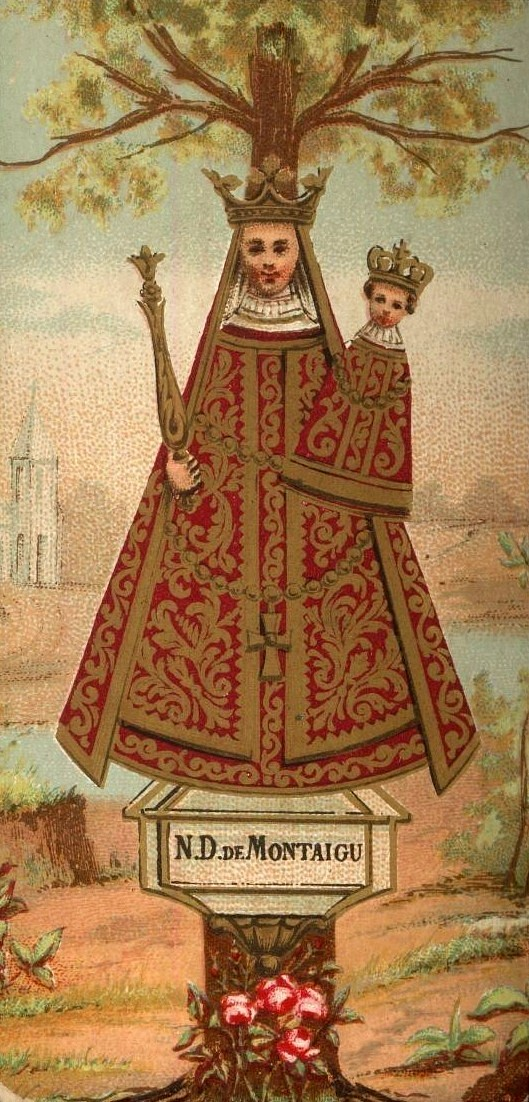
After an official enquiry in 1604 Mathias Hovius, Archbishop of Mechelen, approved the cult of Scherpenheuvel . The approval was accompanied by the publication of a collection of miracles ascribed to the intercession of the Virgin of Scherpenheuvel, issued in Dutch, French and Spanish. An English translation followed in 1606. Philip Numan, who had authored the collection, produced two more editions (1605 and 1606) as well as three more collections (1613-1614, 1617 and 1617-1618) in short succession. Latin versions were later published too. According to these publications, close to 700 miracles were credited to the intercession of Our Lady of Scherpenheuvel, in the course of the seventeenth century. The Latin collections, in particular, caused a lot of controversy among theologians, with Calvinist authors ridiculing the whole idea of miraculous intercession by the Saints.

Meanwhile, it had been decided in 1602, to remove the Statue from the oak tree and house it in a small wooden Chapel nearby. Within the year, the Chapel proved too small and was replaced by a modest stone edifice. Its foundation stone was laid on 13 July 1603 by Count Frederik van den Bergh on behalf of the Archdukes Albert and Isabella. From that point on, the Archdukes showed great interest in the development of the Shrine. Attributing the recent relief of the besieged Town of ‘s-Hertogenbosch to the intercession of the Virgin, Albert and Isabella made their first pilgrimage to Scherpenheuvel on 20 November 1603. It would soon become a yearly pilgrimage that took place in May or June and lasted the nine days of a novena.

Under the patronage of the Archdukes, the emerging Shrine was raised to the status of a Town in 1605 and of an independent Parish in 1610. Their support helped to ensure the grant of a Papal Indulgence on 16 September 1606, the feast of Our Lady of Sorrows. Shortly after reaching a cease-fire with the United Provinces, on 28 August 1607, Albert and Isabella announced that they would build a vast Church and surround it with a planned and fortified Town. The foundation stone of the third and present Church was laid by them in person, on 2 July 1609, the Feast of the Visitation.
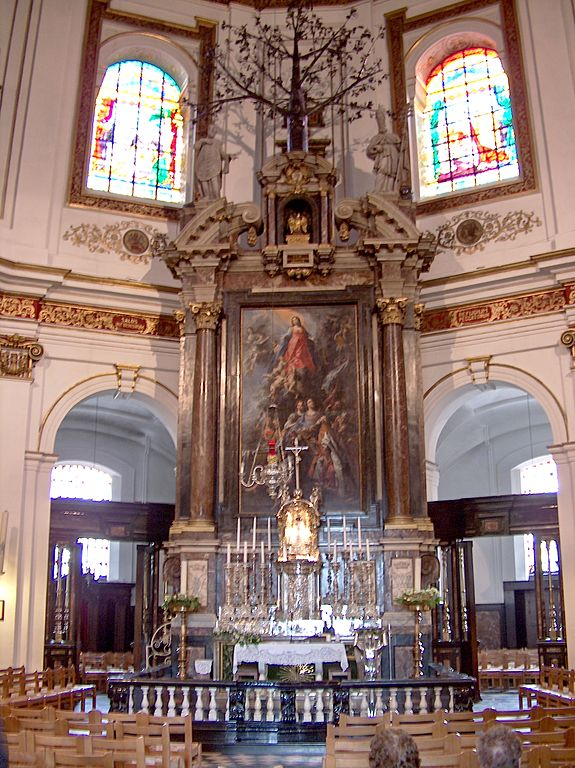
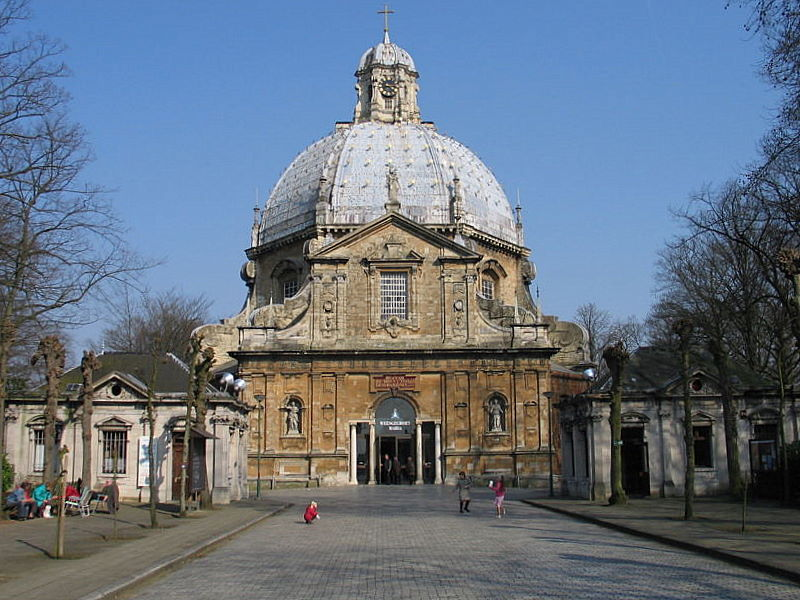
The iconographical decoration of the Basilica is particularly rich. The recurrent use of the number seven (in the shape of the Church and the Town, the number of Altars outside and inside, the shape of the stars on the dome) recalls the cult of the Seven Sorrows of the Virgin.

The image of Our Lady of Scherpenheuvel was solemnly crowned by Cardinal Victor-Auguste-Isidor Deschamps on behalf of the Blessed Pope Pius IX on 25 August 1872.

Fifty years later, on 2 May 1922, Pope Pius XI raised the Shrine to the status of a Minor Basilica.

St Achillas
St Amarand
St Amaranthus

Blessed Anthony Baldinucci SJ (1665-1717) Priest of the Society of Jesus, Preacher, Writer and Missionary.

St Athenodorus of Neo-Caesarea
St Auctus of Amphipolis
St Baud of Tours
St Blinlivet
St Congar
St Engelbert of Cologne (c 1185-1225) Archbishop Martyr
St Ernest of Mecca
St Florentius of Strasburg
St Gebetrude of Remiremont
St Herculanus of Perugia
St Hesychius of Mytilene
St Hieron of Mytilene
St Hyacinth Castañeda Puchasons
St Lazarus the Stylite
St Nicander of Mytilene
St Peter Ou
St Prosdocimus of Padua
St Prosdocimus of Rieti
St Raverranus of Séez
St Rufus of Metz
St Taurion of Amphipolis
St Thessalonica of Amphipolis
St Tremorus of Brittany
St Vincent Liem

St Willibrord (c 658 – 739) “Apostle to the Frisians,” Bishop, Missionary.

Martyred in the Spanish Civil War:
• Blessed Alfredo Fanjul Acebal
• Blessed Andrés Francisco Simón Gómez
• Blessed Isabelino Carmona Fernández
• Blessed José Delgado Pérez
• Blessed José Vega Riaño
• Blessed Juan Mendibelzúa Ocerín
• Blessed Manuel Marín Pérez
• Blessed Serviliano Riaño Herrero
• Blessed Vicente Rodríguez Fernández
Posted in Uncategorized

Saint of the Day – 7 November – Blessed Peter Ou

Blessed Peter Ou, also known as Peter Wu Gousheng, Wu Gousheng, Wu Guosheng Petrus, was a Chinese martyr. He was born in 1768 at Longping in Guizhou Province, China, to a pagan family, and was one of the first converts made by missionaries to his area.

Known from his youth for his sense of justice, his quick defense of the poor and oppressed; his outspoken frightened people in his traditionalist region. A husband and self-made businessman, he owned and ran a large hotel. Naturally enthusiastic, Peter tossed out his household idols, and preached Christianity to anyone who came by. He became the lay leader of the converts in his district, and took the name Peter at baptism. He worked as a catechist for missionaries in Sichuan; instrucing 600 people in Christianity.

He was arrested on 3 April 1814 during a violent backlash against the faith. Although imprisoned and tortured to break him from his faith, he worked to inspire faith in his fellow prisoners, and led prayer services in the cells. He was condemned to death and strangled on 7 November 1814 for refusing to step on a crucifix.

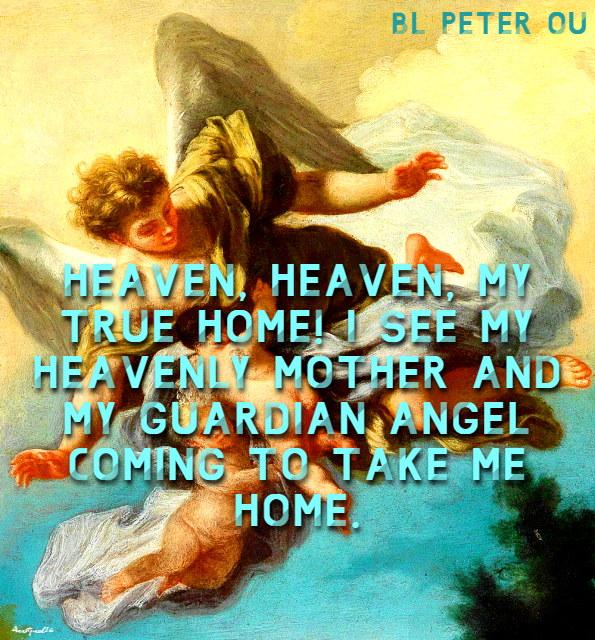
Heaven, heaven, my true home! I see my heavenly Mother and my guardian angel coming to take me home.

Peter’s dying words

Posted in Our MORNING Offering

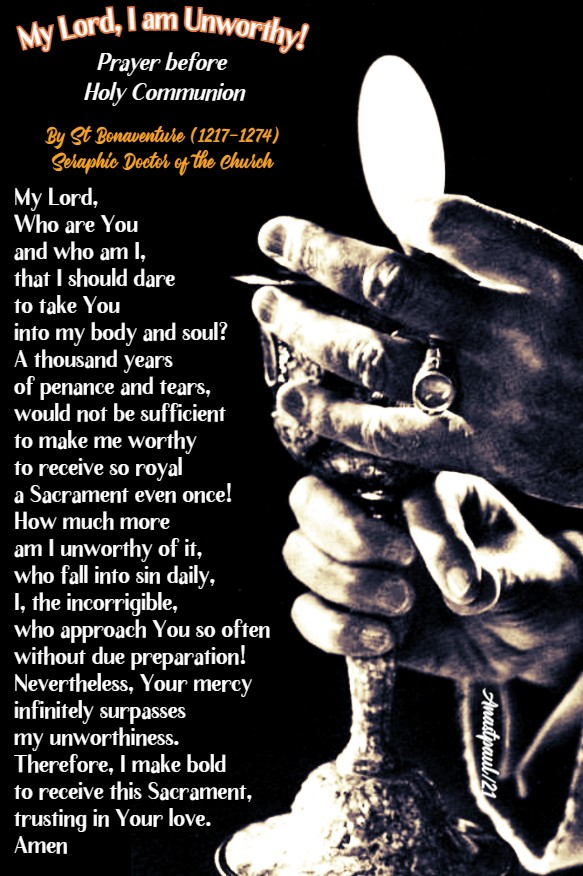
Our Morning Offering –7 November – My Lord, I am Unworthy!

My Lord, I am Unworthy!
Prayer before Holy Communion
By St Bonaventure (1217-1274)
Seraphic Doctor of the Church

My Lord,
Who are You
and who am I,
that I should dare to take You
into my body and soul?
A thousand years
of penance and tears,
would not be sufficient
to make me worthy
to receive so royal a Sacrament even once!
How much more am I unworthy of it,
who fall into sin daily,
I, the incorrigible,
who approach You so often
without due preparation!
Nevertheless, Your mercy
infinitely surpasses my unworthiness.
Therefore, I make bold
to receive this Sacrament,
trusting in Your love.
Amen

Posted in ONE Minute REFLECTION

One Minute Reflection – 7 November – The finger of God

One Minute Reflection – 7 November – Readings: Sedulius, Ps 44:2, Ecclus 24:14-16, Luke 11:27-28

At that time, as Jesus was speaking to the multitudes, a certain woman from the crowd lifted up her voice and said to Him, Blessed is the womb that bore You, and the breasts that nursed You. But He said, Rather, blessed are they who hear the word of God and keep it.

Luke 11:27-28

REFLECTION – May your hand be ready to help me! The Father’s beloved Son is he whom we call the hand of God, he through whom God created all things. This hand intervened when it took our flesh, not simply without injury to his mother, but still more, according to the prophet’s testimony, by taking on himself all our sicknesses and bearing our sufferings.

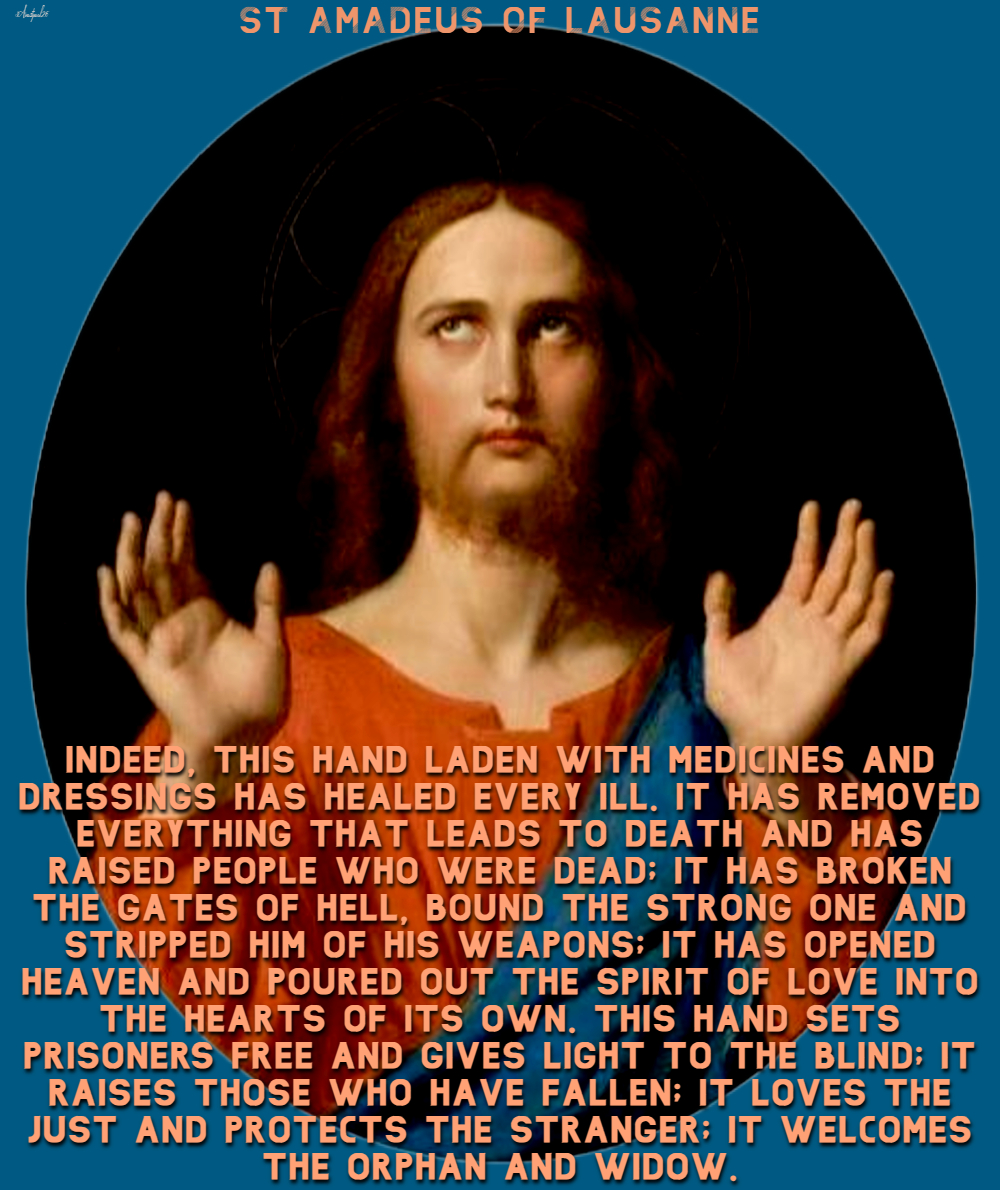
Indeed, this hand laden with medicines and dressings has healed every ill. It has removed everything that leads to death and has raised people who were dead; it has broken the gates of hell, bound the strong one and stripped him of his weapons; it has opened heaven and poured out the Spirit of love into the hearts of its own. This hand sets prisoners free and gives light to the blind; it raises those who have fallen; it loves the just and protects the stranger; it welcomes the orphan and widow. It snatches from temptation those in danger of giving way to it, restores with its comforting those who suffer; it gives joy back to the afflicted and shelters the weary in its shade; it writes for those desiring to meditate its Law and touches and blesses the hearts of those who pray, strengthening them in love by its touch; it makes them progress and persevere in their works. Finally, it leads them to their homeland; it brings them back to the Father.

For if it has become flesh it is so that it may draw man through a man, joining our flesh to his flesh so as lovingly to bring back to God, the almighty and invisible Father, the straying sheep. Because this sheep had fallen in the flesh by abandoning God, the mystery of this hand’s Incarnation had to guide it, to lift it up and lead it back to the Father

St Amadeus of Lausanne

PRAYER – Lord God, Your Son has shown us the way. As we follow in His steps, may we never wander from the path that leads to life. Renew the wonders of Your grace in our hearts so that neither death nor life may separate us from Your love. Holy Father, as You were glorified by the life and death of all the Dominican Saints and Blesseds, grant that by their prayers, we may receive Your grace to give first to You and then to our neighbour in complete love and service. Through our Lord, Jesus Christ, with You in union with the Holy Spirit, one God for all eternity, amen.

Posted in CATHOLIC Quotes

Quote/s of the Day – 7 November – Hail, holy Mother

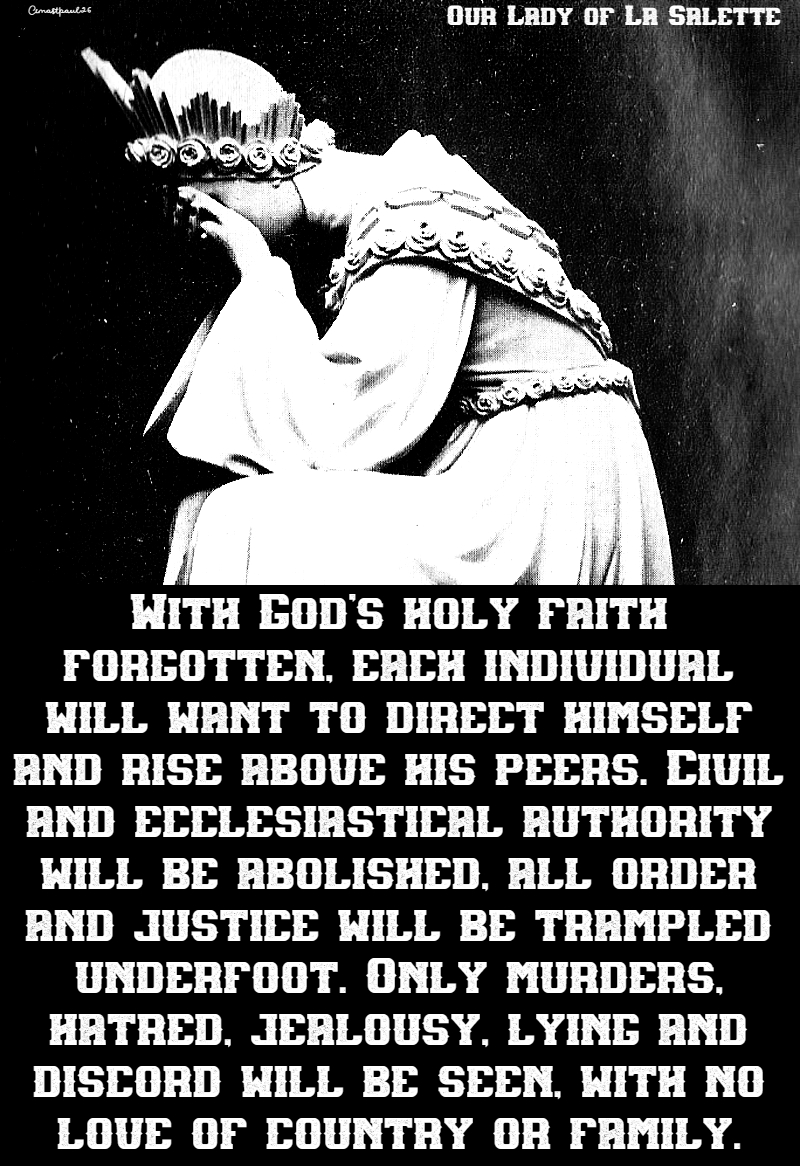
With God’s holy faith forgotten, each individual will want to direct himself and rise above his peers. Civil and ecclesiastical authority will be abolished, all order and justice will be trampled underfoot. Only murders, hatred, jealousy, lying and discord will be seen, with no love of country or family.

Our Lady of La Salette

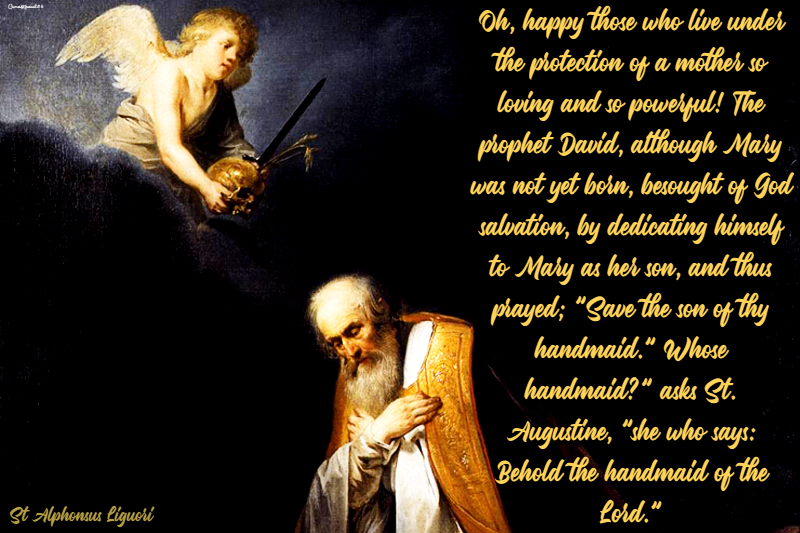
Oh, happy those who live under the protection of a mother so loving and so powerful! The prophet David, although Mary was not yet born, besought of God salvation, by dedicating himself to Mary as her son, and thus prayed; “Save the son of thy handmaid.” Whose handmaid?” asks St. Augustine, “she who says: Behold the handmaid of the Lord.”

St Alphonsus Liguori

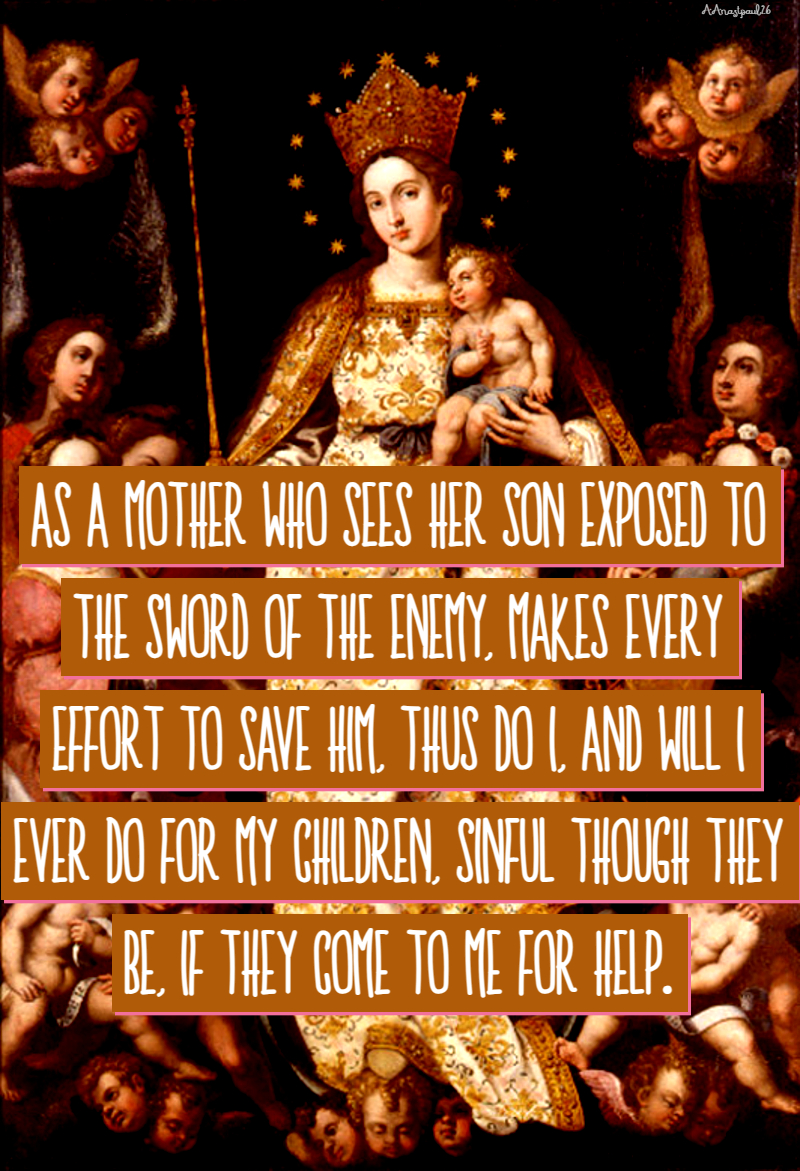
As a mother who sees her son exposed to the sword of the enemy, makes every effort to save him, thus do I, and will I ever do for my children, sinful though they be, if they come to me for help.

The Blessed Virgin to St Bridget

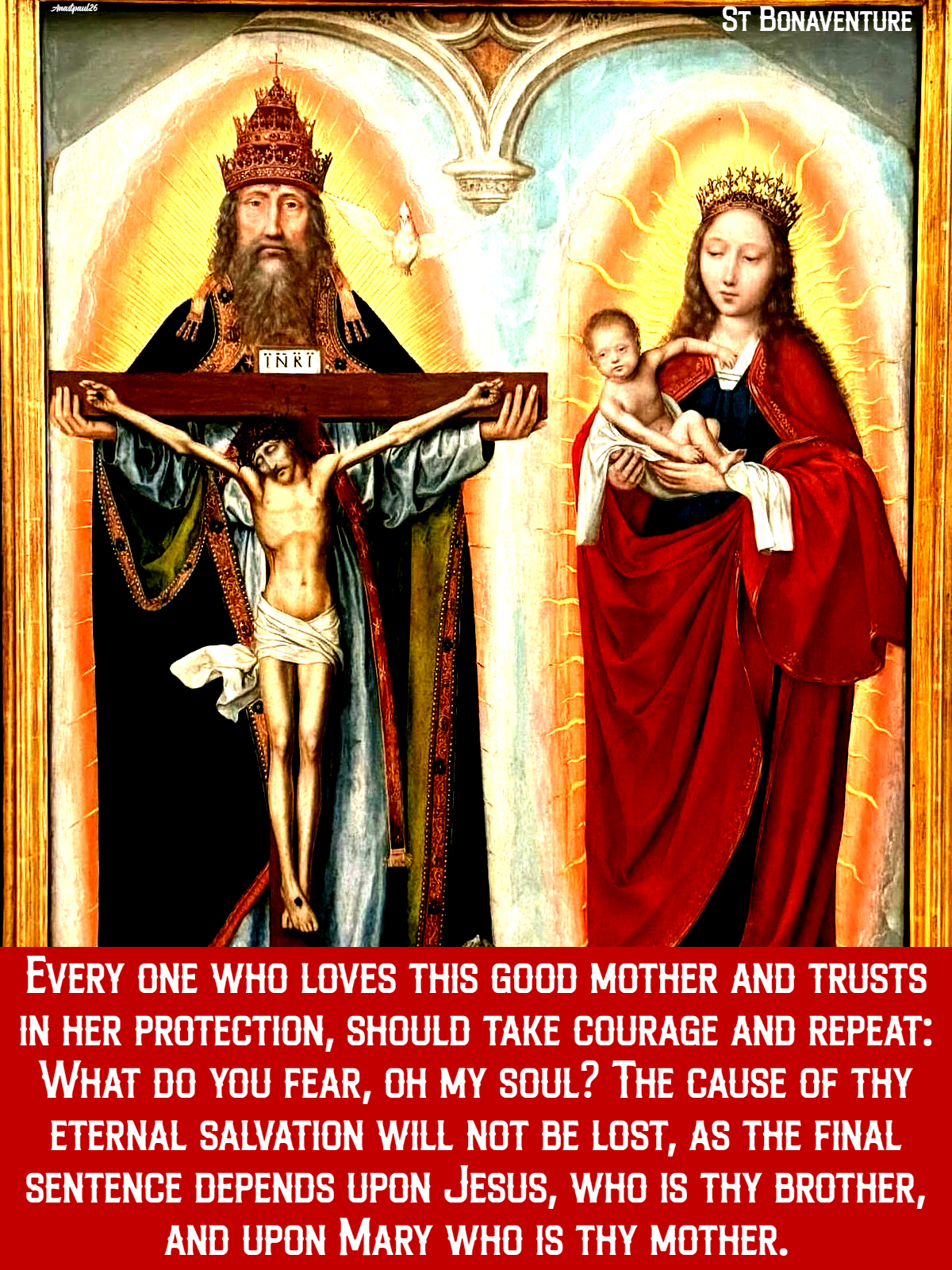
Every one who loves this good mother and trusts in her protection, should take courage and repeat: What do you fear, oh my soul? The cause of thy eternal salvation will not be lost, as the final sentence depends upon Jesus, who is thy brother, and upon Mary who is thy mother.

St Bonaventure

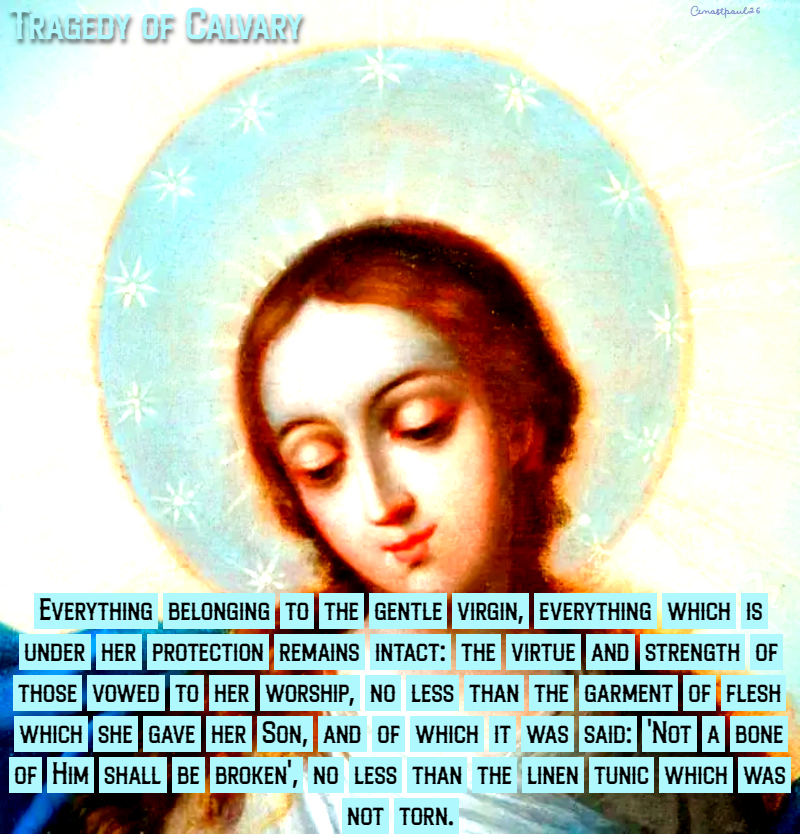
Everything belonging to the gentle virgin, everything which is under her protection remains intact: the virtue and strength of those vowed to her worship, no less than the garment of flesh which she gave her Son, and of which it was said: ‘Not a bone of Him shall be broken’, no less than the linen tunic which was not torn.

Tragedy of Calvary

Then he began again to talk with his sweet mother Mary, and repeating the word, ‘mother, mother’, he tranquilly expired, like a child falling asleep in the arms of its mother. Soon after, it was revealed to a devout religious that he had already entered paradise.

St Alphonsus Liguori

Posted in NOVEMBER - Month of the SOULS in PURGATORY

Thought for the Day – 7 November – Comparison to explain the impetuosity and love by which the souls in Purgatory desire to enjoy God

Treatise on Purgatory

St Catherine of Genoa

CHAPTER VI

Let us suppose that there existed in the world but one loaf of bread to satisfy the hunger of every creature, and that the mere sight of it could do this. In such a case a man, having naturally, if in good health, a desire for food, would find himself, so long as he was kept from dying or falling sick, growing more and more hungry; for his craving would continue undiminished, he would know that the bread, and nothing but the bread, could satisfy him, and not being able to reach it, would remain in intolerable pain ; the nearer he got to the bread without seeing it the more ardently would he crave for it, and would direct himself wholly towards it, as being the only thing which could afford relief ; and if he were assured that he never could see the bread he would have within him a perfect hell, and become like the damned, who are cut off from all hope of ever seeing God their Saviour, who is the true Bread.

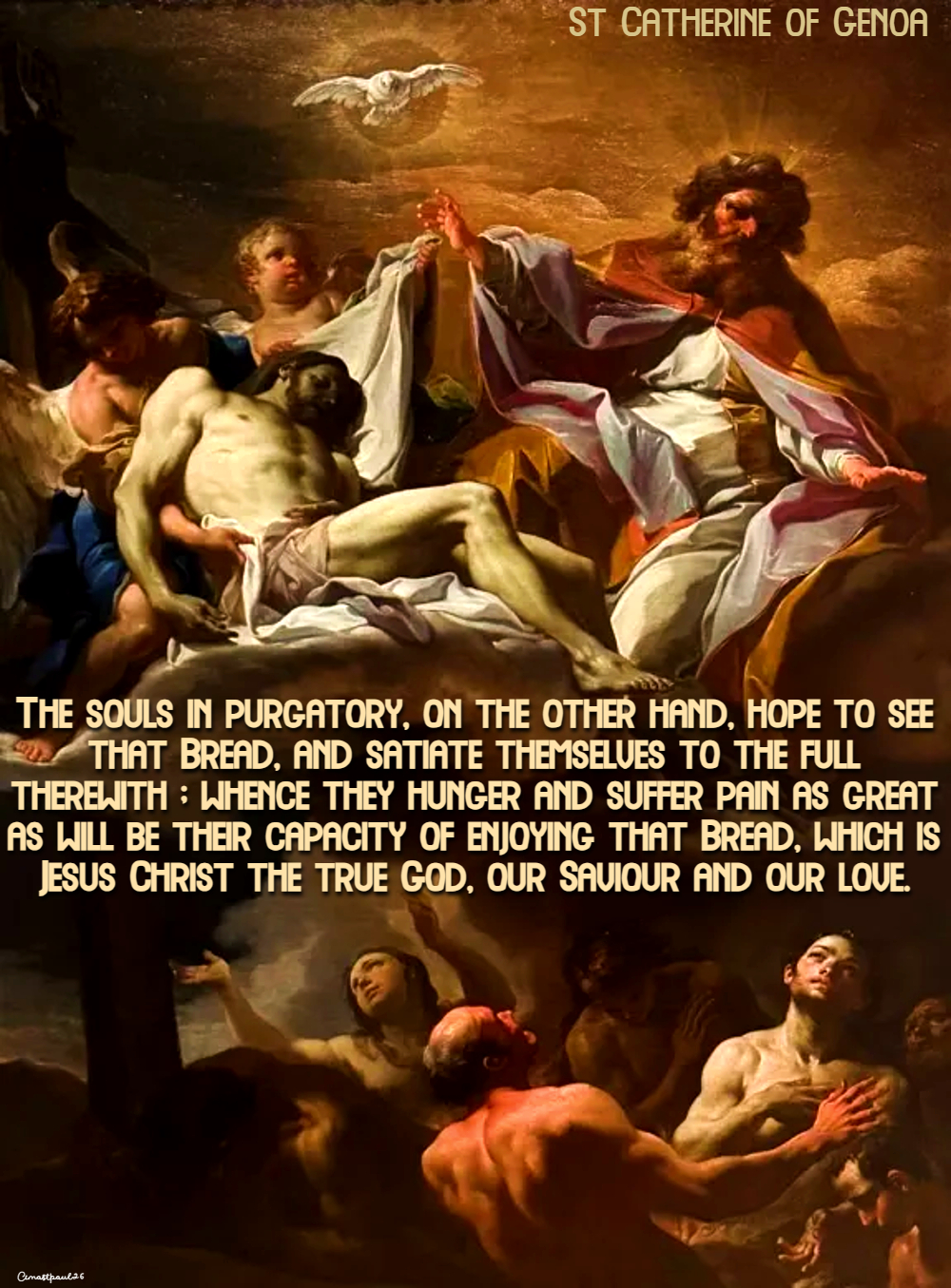
The souls in purgatory, on the other hand, hope to see that Bread, and satiate themselves to the full therewith ; whence they hunger and suffer pain as great as will be their capacity of enjoying that Bread, which is Jesus Christ the true God, our Saviour and our love.