Posted in MARIAN TITLES

Memorials of the Saints – 28 November

St Pope Gregory III (Died 741) Bishop of Rome 11 February 731 until his death on 28 November 741. (His Feast was moved to 10 December in 1969), The Roman Martyrology states: “St Rome, the blessed Pope Gregory III, who departed for Heaven with a reputation for great sanctity and miracles.“

Bl Calimerius of Montechiaro
St Fionnchu of Bangor

St Hilary of Dijon
St Hippolytus of Saint Claude
St Honestus of Nimes
St Irenarcus

St James of the Marches OFM Conv. (1391-1476) Priest of the Friars Minor Conventional, Confessor, brilliant Preacher, Penitent, Reformer, Writer, Papal legate, Inquisitor, founder of several monasteries in Bohemia, Hungary and Austria. St James was Canonised on 10 December 1726 by Pope Benedict XIII. His body is Incorrupt.

Blessed James Thompson (Died 1582) Priest Martyr
St Papius
St Quieta of Dijon
St Rufus
St Simeon the Logothete
St Sosthenes of Colophon (1st Century) Bishop, Martyr.
St Stephen the Younger
Bl Theodora of Rossano

Martyrs of Constantinople – 8 Saints: A group of over 300 Christians Martyred during the persecutions of the Iconoclast Emperors. We have a lot of information on Saint Stephen the Younger, but for the others we have nothing but seven of their names – Andrew, Auxentius, Basil, Gregor, John, Peter and Stefan. They were
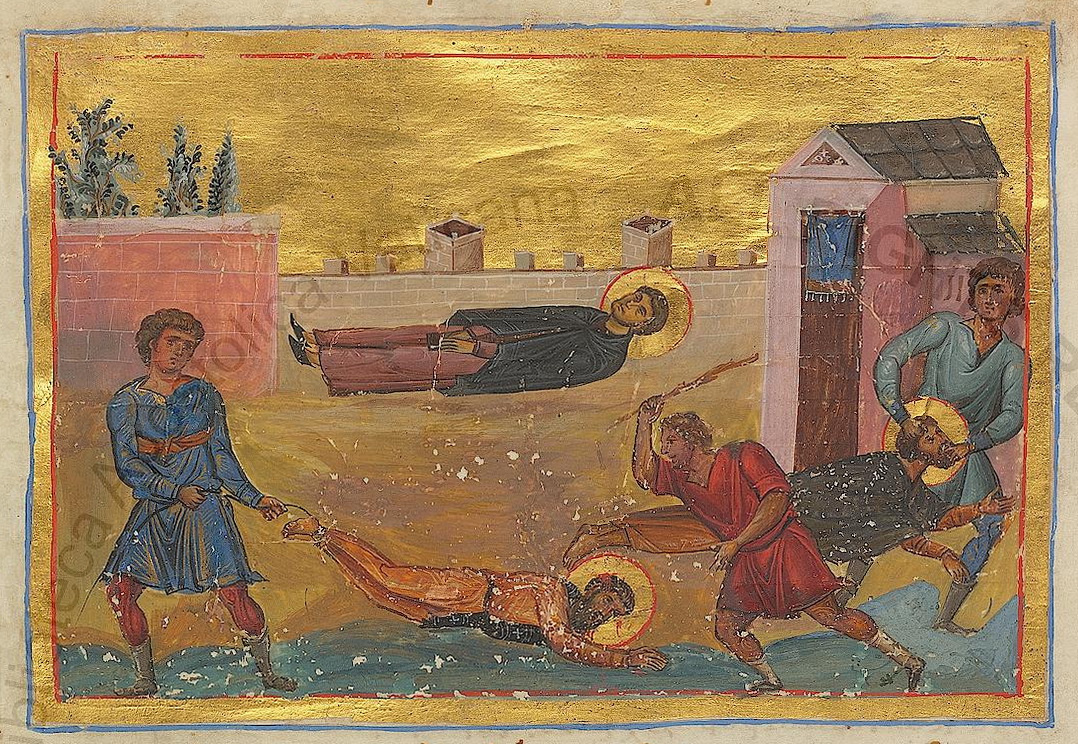
scourged, stoned and/or dragged to death through the streets of Constantinople in 764.

Martyrs of North Africa – 13 Saints: A group of thirteen clerics killed or exiled in the persecutions of Arian Vandals in North Africa – Crescens, Crescentian, Cresconius, Eustace, Felix, Florentian, Habetdeum, Hortulanus, Mansuetus, Papinianus, Quodvultdeus, Urban and Valerian.

Martyrs of Tiberiopolis – 14 Saints: A group of fourteen Christian Laymen, Deacons, Priests and Bishops who were Martyred together in the persecutions of Julian the Apostate – Basil, Chariton, Comasios, Daniel, Etymasius, Hierotheos, John, Nicephorus, Peter, Sergius, Socrates, Theodore, Thomas and Timothy.
361 at Tiberiopolis, Phyrgia (in modern Turkey)
Posted in SAINT of the DAY

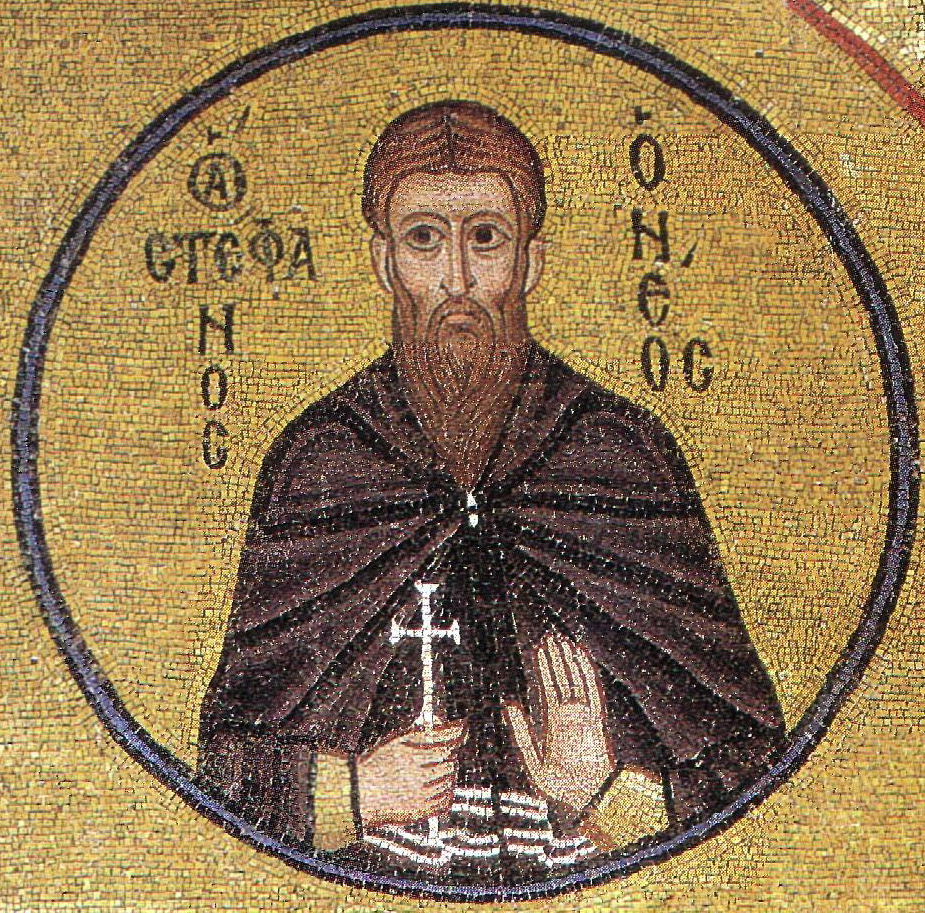
Saint of the Day – 28 November – Saint Stephen the Younger

Saint Stephen the Younger, also known as Stephen the New, was a martyr monk born in 714 at Constantinople.

His father, Gregory, was a craftsman. His mother was called Anna, and he had two older sisters, Theodote and an unnamed one. On Holy Saturday 716, he was baptised in the Hagia Sophia by Patriarch Germanus I. In his sixteenth year, he was brought by his parents to Mt. Auxentius in Bithynia, where he became a monk. He visited Constantinople again for his father’s funeral some years later and brought his mother and sisters to the convent of Mt. Auxentius. In his 31st year, his mentor, John, died, and Stephen succeeded him, founding a monastery. In his 42nd year, he retired to live as a hermit in a cave.

Soon after, the iconoclast movement became very active in the area, led by Emperor Constantine Copronynus V. The emperor tried to enlist Stephen in the movement, but the holy hermit refused, and was exiled. He refused to accept the decisions of the iconoclast Council of Hieria, but it was not until circa 760 that he began suffering persecution: he was accused of sexual relations with his mother, and of illegally tonsuring George Synkletos, a favourite of the Emperor Constantine V.

Years later he returned, and to prove how important it was to respect icons and other religious art, Stephen went to the emperor, pulled out a coin that bore the emperor’s likeness, threw it onto the floor, and stomped on it; as the emperor understood the importance of his own image, he imprisoned Stephen for 11 months.

On his release, Stephen returned to the court and resumed the argument as though nothing has happened.

Constantine V sent soldiers who arrested him and brought him to a monastery in Chrysopolis. There again he refused to accept the decisions of Hieria, and was banished to the island of Prokonnesos. In his second year of exile, he was brought to the Phiale prison in Constantinople and was questioned by the emperor himself. After almost a year of imprisonment in the prison of the city’s praetorium, he was condemned to death by Constantine alongside 300 others who opposed iconoclasm, and dragged by soldiers through the streets, where he was clubbed to death. His corpse was dragged through the streets, while his skull was rescued by one of his followers and brought to the Dius Monastery. His relics are recorded in various Constantinopolitan churches and monasteries during the 13th–15th centuries.

Constantine V died of an infestation of boils while failing to restore peace to the Balkans.

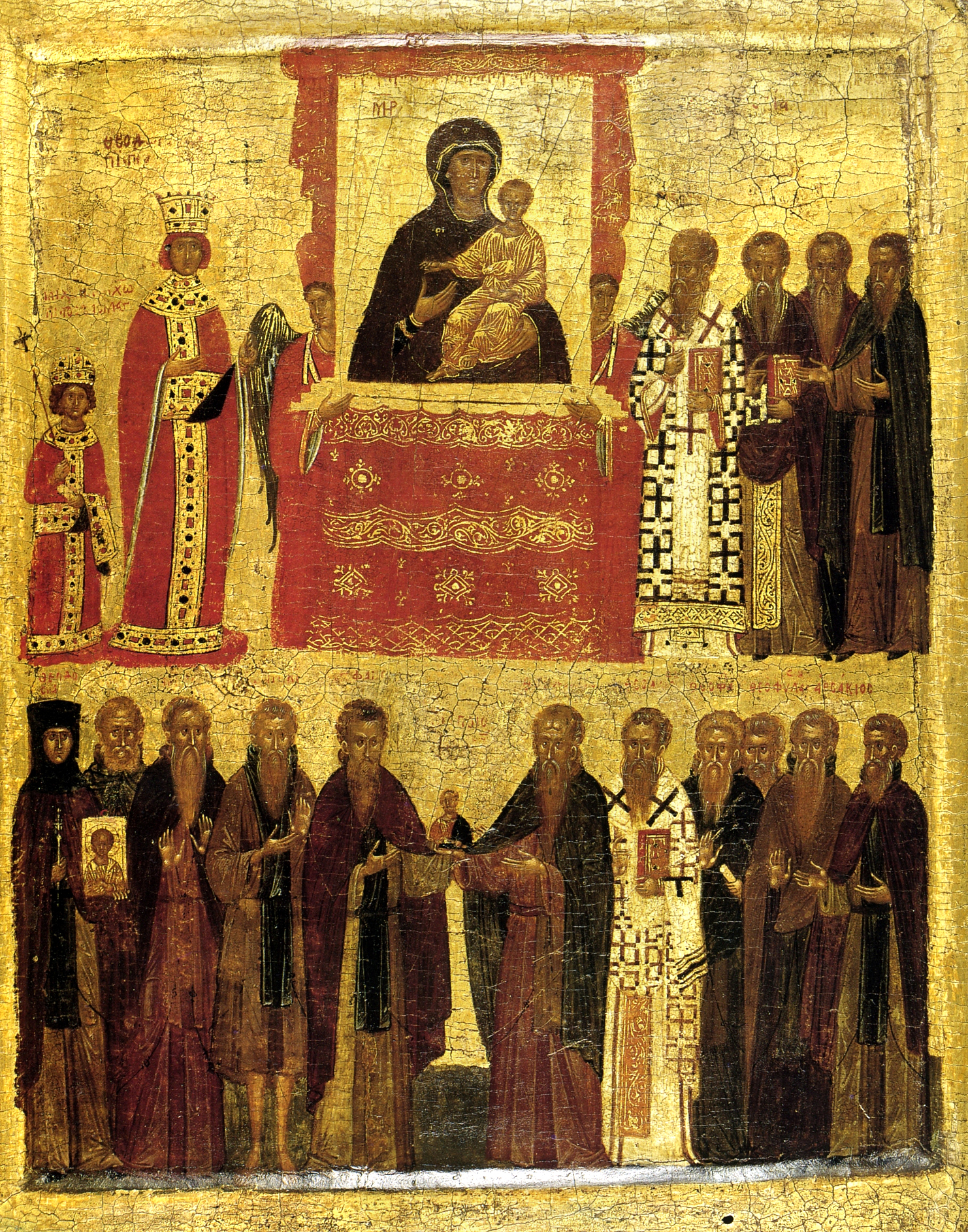
Byzantine icon celebrating the definite restoration of the veneration of images in 843 (the “Triumph of Orthodoxy”). Stephen the Younger is included among the iconodule martyrs who are presented as witnesses to the event.
Posted in Our MORNING Offering

Our Morning Offering – 28 November – Let Thy goodness, Lord, Appear to Us

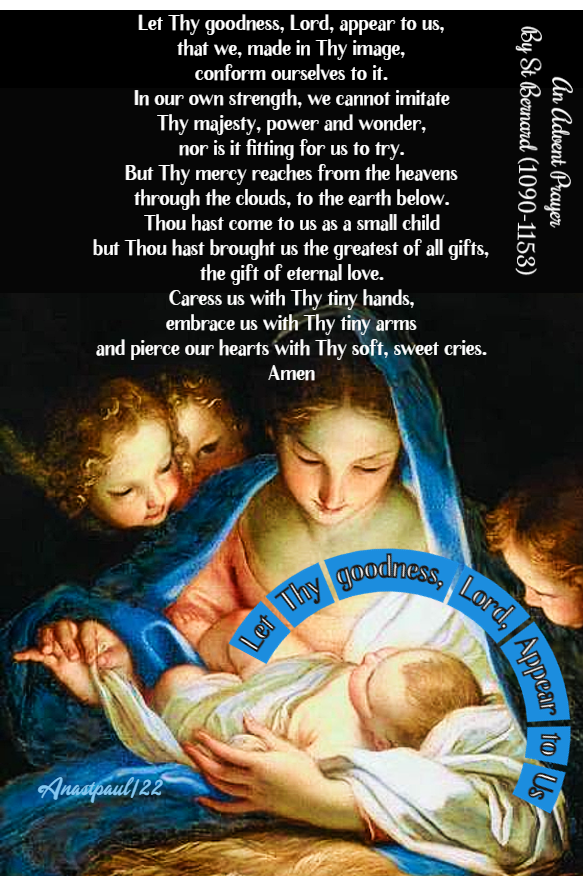
Let Thy goodness, Lord, Appear to Us
An Advent Prayer
By St Bernard (1090-1153)
Father and Mellifluous Doctor of the Church

Let Thy goodness, Lord,
appear to us,
that we, made in Thy image,
conform ourselves to it.
In our own strength, we cannot imitate
Thy majesty, power and wonder,
nor is it fitting for us to try.
But Thy mercy reaches from the heavens
through the clouds, to the earth below.
Thou hast come to us as a small child
but Thou hast brought us the greatest of all gifts,
the gift of eternal love.
Caress us with Thy tiny hands,
embrace us with Thy tiny arms
and pierce our hearts
with Thy soft, sweet cries.
Amen

Posted in ONE Minute REFLECTION

One Minute Reflection – 28 November – His mother kept all these things in her heart

One Minute Reflection – 28 November – The First Week of Advent – Readings: Sedulius, Ps 44:2, Ecclus 24:14-16, Luke 11:27-28

In the holy Tent I ministered before Him, and in Sion I fixed my abode. Thus in the chosen city He has given me rest, in Jerusalem is my domain.

Ecclus 24:14-16

REFLECTION – Amongst all the feasts of the Virgin Mary that of her heart is like the heart and queen of all the rest because the heart is the seat of love and charity. What is the subject matter of this particular solemnity? It is the heart of the well-beloved, only Daughter of the eternal Father, the heart of the Mother of God, the heart of the Bride of the Holy Spirit, the heart of the best of Mothers to all the faithful. It is a heart wholly on fire with love for God and aflame with charity towards us.

It is all love for God since it has never loved anything but God alone and whatever God wanted it to love in him and for his sake. It is wholly love since the blessed Virgin has always loved God with all her heart and soul and strength. It is all love because she has not only always wanted whatever God wanted and never wanted what he did not want, but still more because she has always placed all her happiness in God's most loveable will.

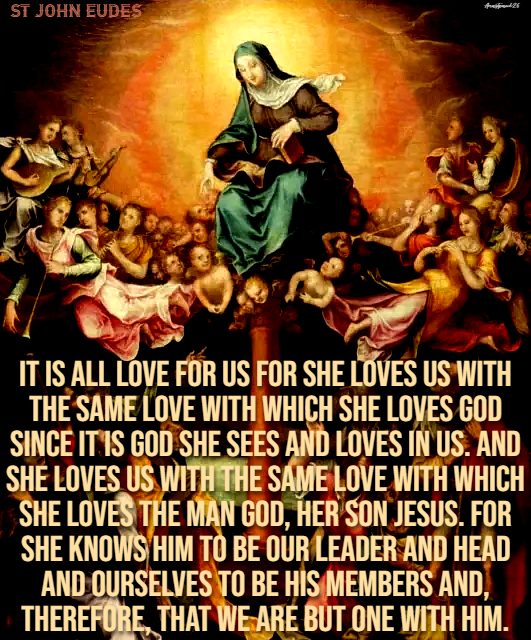
It is all love for us for she loves us with the same love with which she loves God since it is God she sees and loves in us. And she loves us with the same love with which she loves the Man God, her son Jesus. For she knows him to be our leader and head and ourselves to be his members and, therefore, that we are but one with him.

St John Eudes

PRAYER – O God, Who, by the message of an Angel, willed to take flesh in the womb of the Blessed Virgin Mary, grant that we, Thy suppliants, who believe her to be truly the Mother of God, maybe assisted by her intercession with Thee. Through Jesus Christ, Thy Son our Lord, Who lives and reigns with Thee, in the unity of the Holy Ghost, God, world without end. Amen

Posted in CATHOLIC Quotes

Quote/s of the Day – 28 November – I have struck root among the glorious people

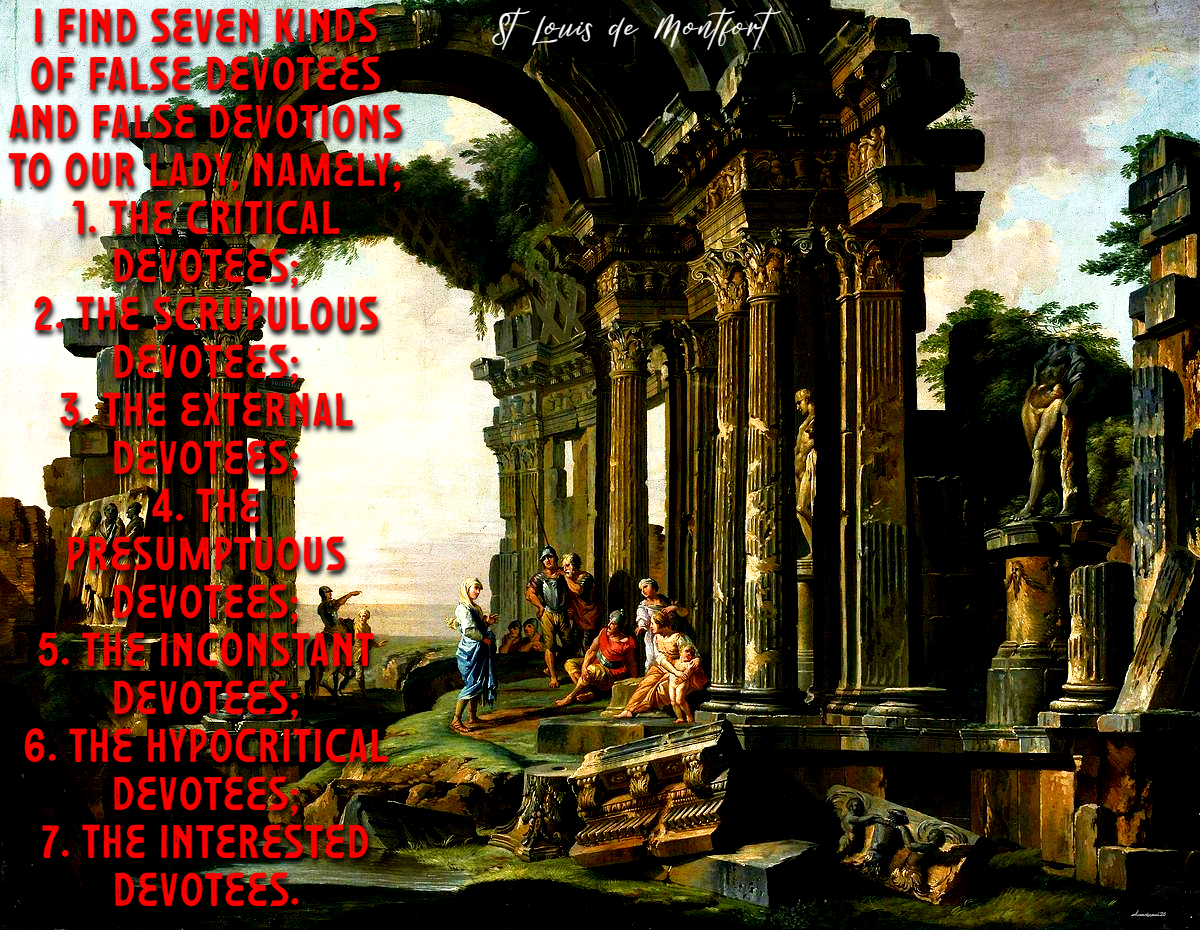
I find seven kinds of false devotees and false devotions to our Lady, namely;

1. The critical devotees;

2. The scrupulous devotees;

3. The external devotees;

4. The presumptuous devotees;

5. The inconstant devotees;

6. The hypocritical devotees;

7. The interested devotees.

St Louis de Montfort

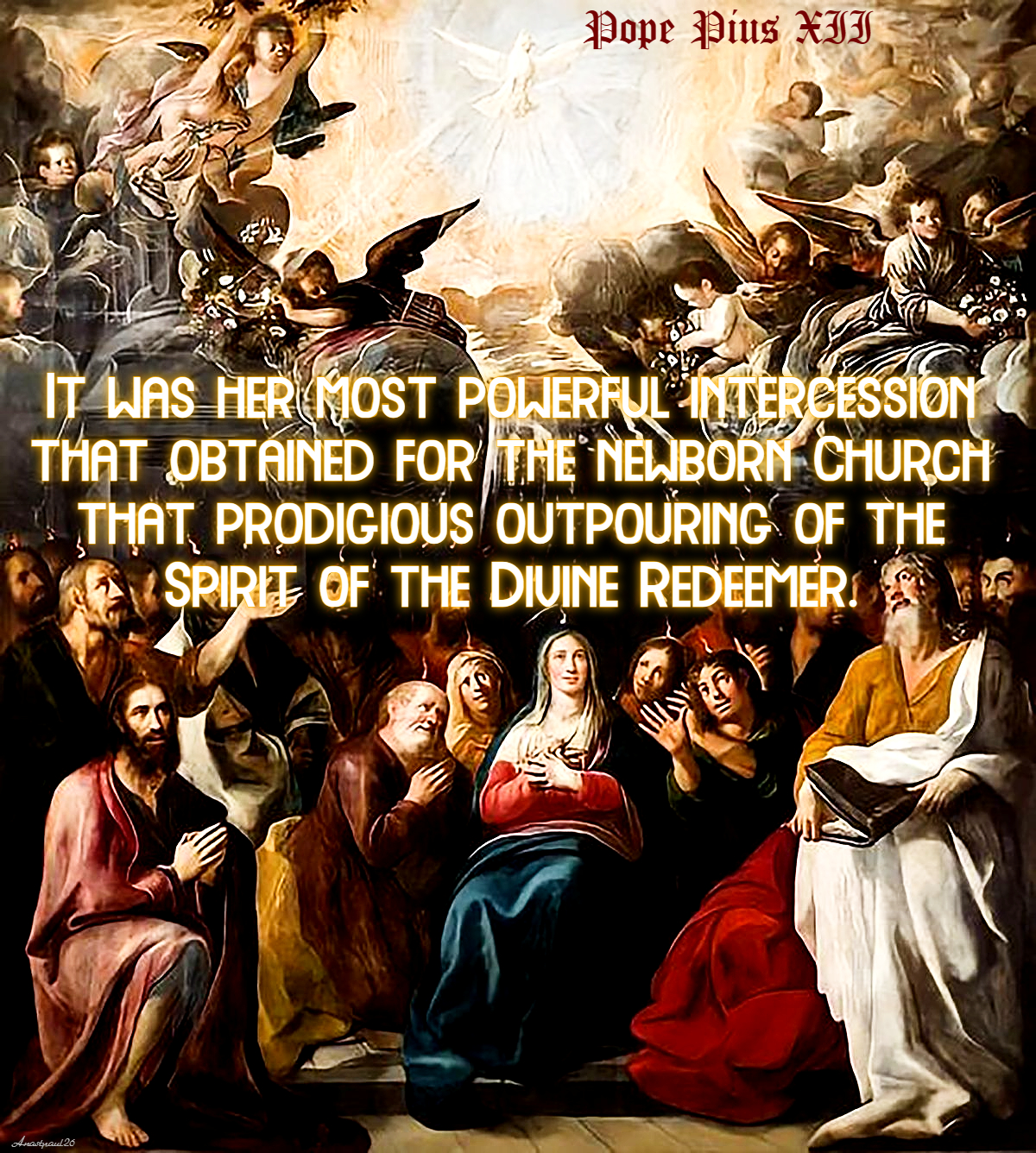
It was her most powerful intercession that obtained for the newborn Church that prodigious outpouring of the Spirit of the Divine Redeemer.

Pope Pius XII

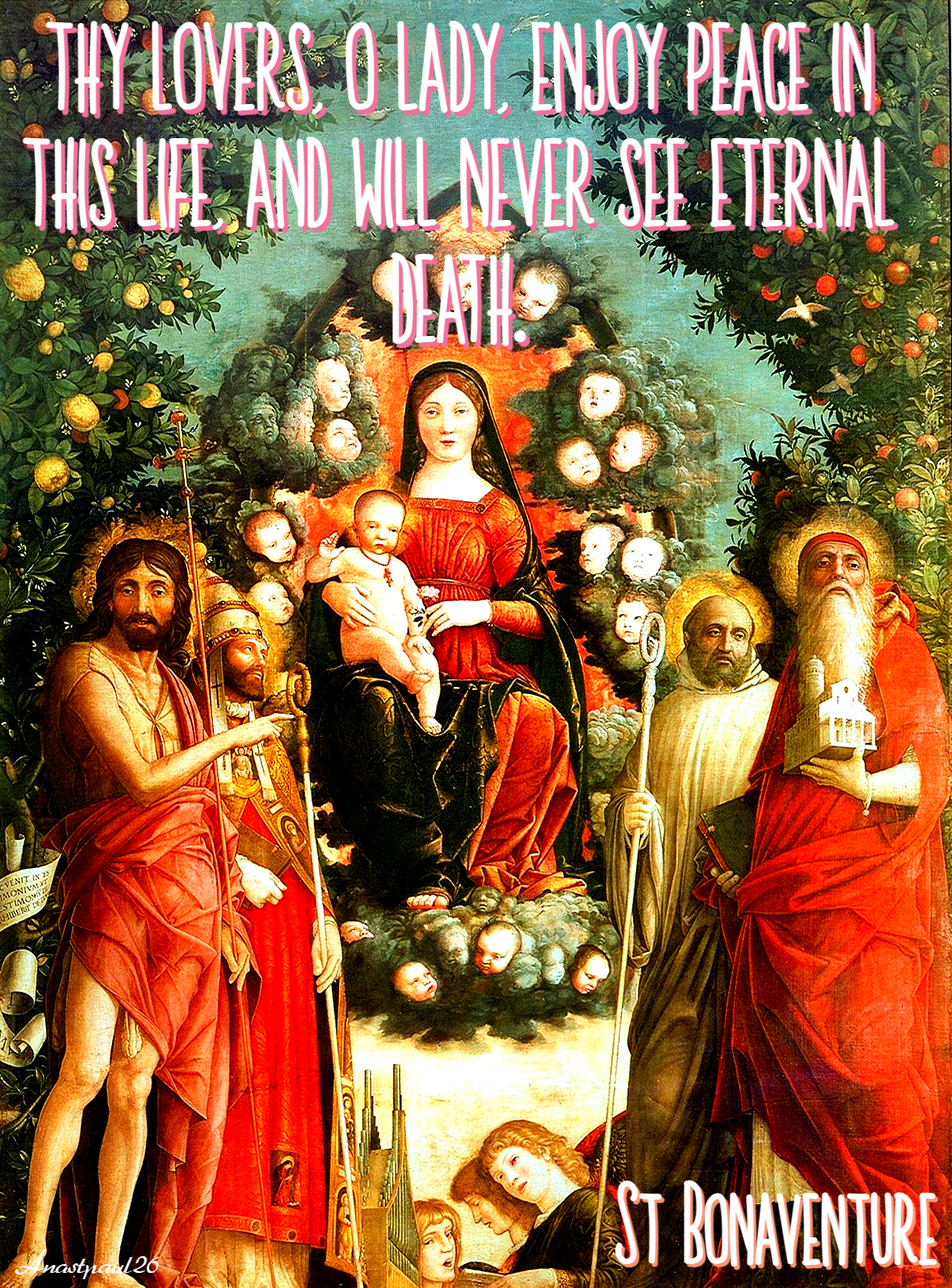
Thy lovers, O Lady, enjoy peace in this life, and will never see eternal death.

St Bonaventure

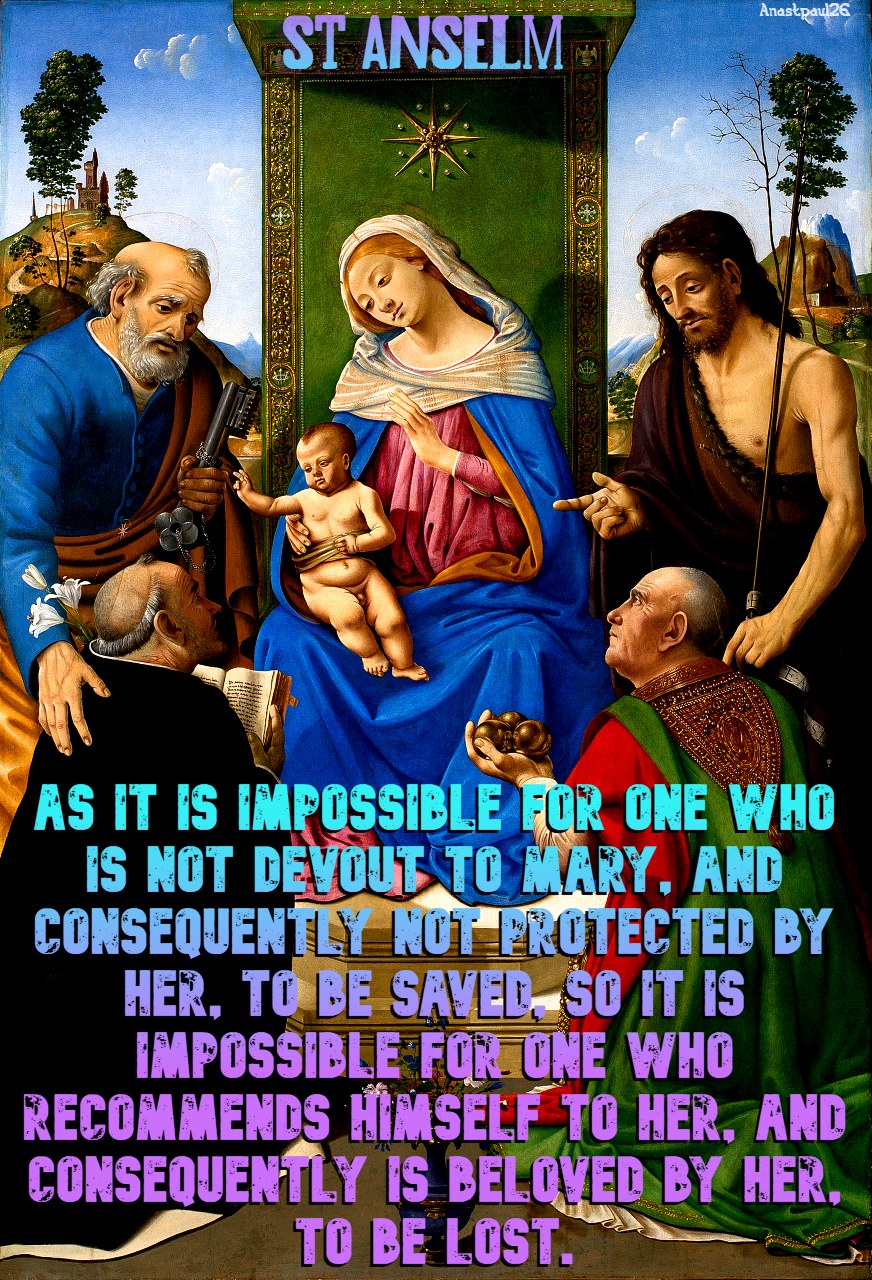
As it is impossible for one who is not devout to Mary, and consequently not protected by her, to be saved, so it is impossible for one who recommends himself to her, and consequently is beloved by her, to be lost.

St Anselm

And it is in the same sense does the Church apply to Mary the words of Proverbs “All that hate me love death” that is, all who do not love me, love eternal death.

St Alphonsus Liguori

True devotion to our Lady is holy; that is to say, it leads the soul to avoid sin, and to imitate in the Blessed Virgin particularly her profound humility, her lively faith, her continual prayer, her universal mortification, her divine purity, her ardent charity, her heroic patience, her angelical sweetness, and her divine wisdom. These are the ten principal virtues of the most holy Virgin.

St Louis de Montfort

Posted in NOVEMBER - Month of the SOULS in PURGATORY

Thought for the Day – 28 November – The Pain of Sense in Purgatory

Requiescant in Pace

Fr Richard Clarke

The pain of purgatory is the penalty of sin, and sin is a greater evil than all the physical misery men have endured from the Creation until now. Hence the corresponding punishment must involve greater suffering than any earthly anguish. Some have even maintained that the lightest suffering in purgatory is more intolerable than the worst suffering on earth, and this opinion hs in its favour the authority of St Thomas himself. What reason, then, I have to dread purgatory and seek to atone for sin now!

The physical pain that the soul suffers in this life is dulled in that it comes through the medium of the corruptible body, but in purgatory it directly and immediately affects the soul. Hence it comes with far greater intensity, inasmuch as the soul is the root and spring of all sensibility. It will be more closely in contact with the fire and at the same time the fire will be endowed with a power to torture it with misery far worse than the utmost pangs which can be inflicted when the body intervenes.

The pain that we suffer in this life has necessarily a limit by means of the weakness of the body. Men faint away under extreme torture. But in purgatory the soul, freed from the body, wil have no such limit fixed to its agony, its power of endurance will be in proportion to the suffering it has deserved. How can I avoid this awful agony that threatens me?

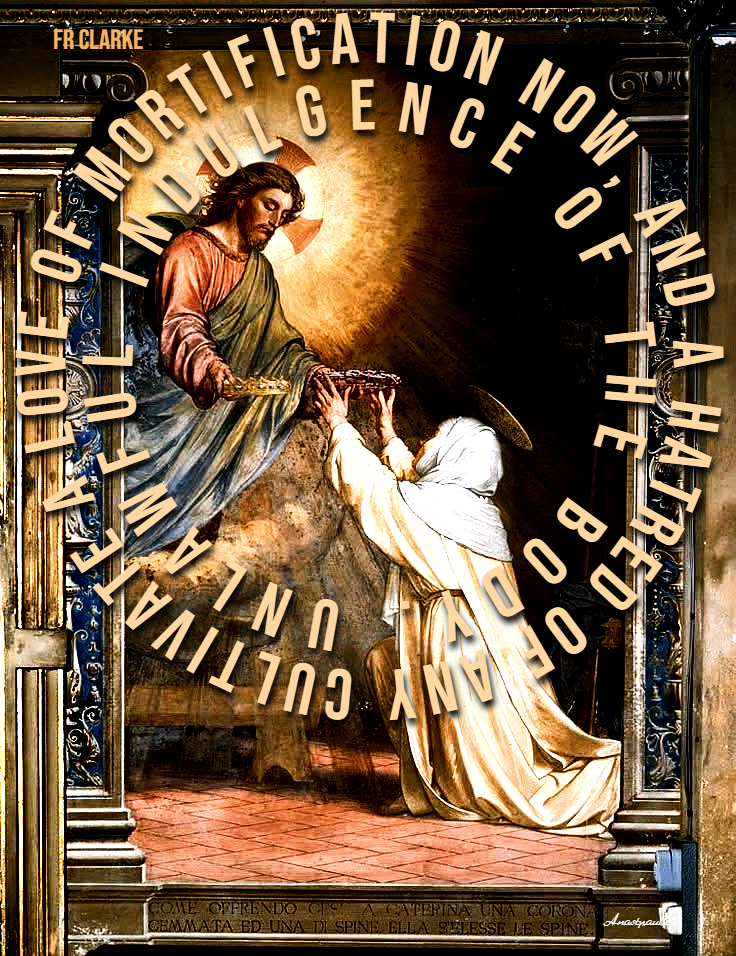
Cultivate a love of mortification now, and a hatred of any unlawful indulgence of the body.