Posted in CATHOLIC Quotes

Quote/s of the Day – 24 November – St John of the Cross

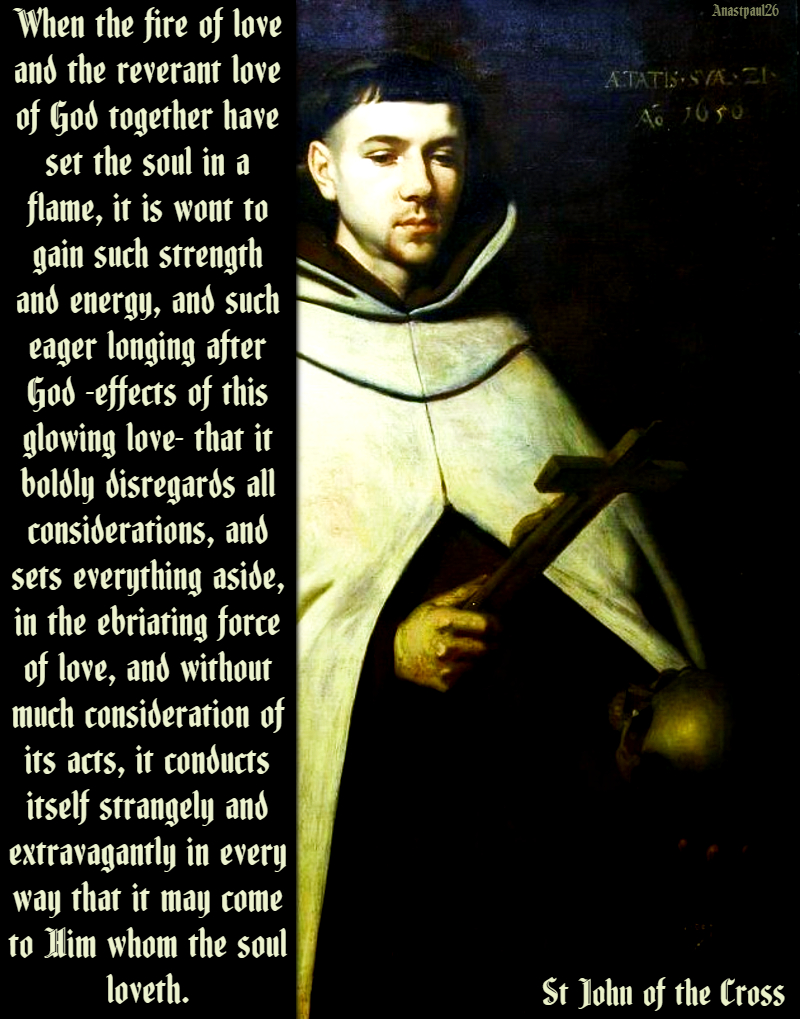
When the fire of love and the reverant love of God together have set the soul in a flame, it is wont to gain such strength and energy, and such eager longing after God -effects of this glowing love- that it boldly disregards all considerations, and sets everything aside, in the ebriating force of love, and without much consideration of its acts, it conducts itself strangely and extravagantly in every way that it may come to Him whom the soul loveth.
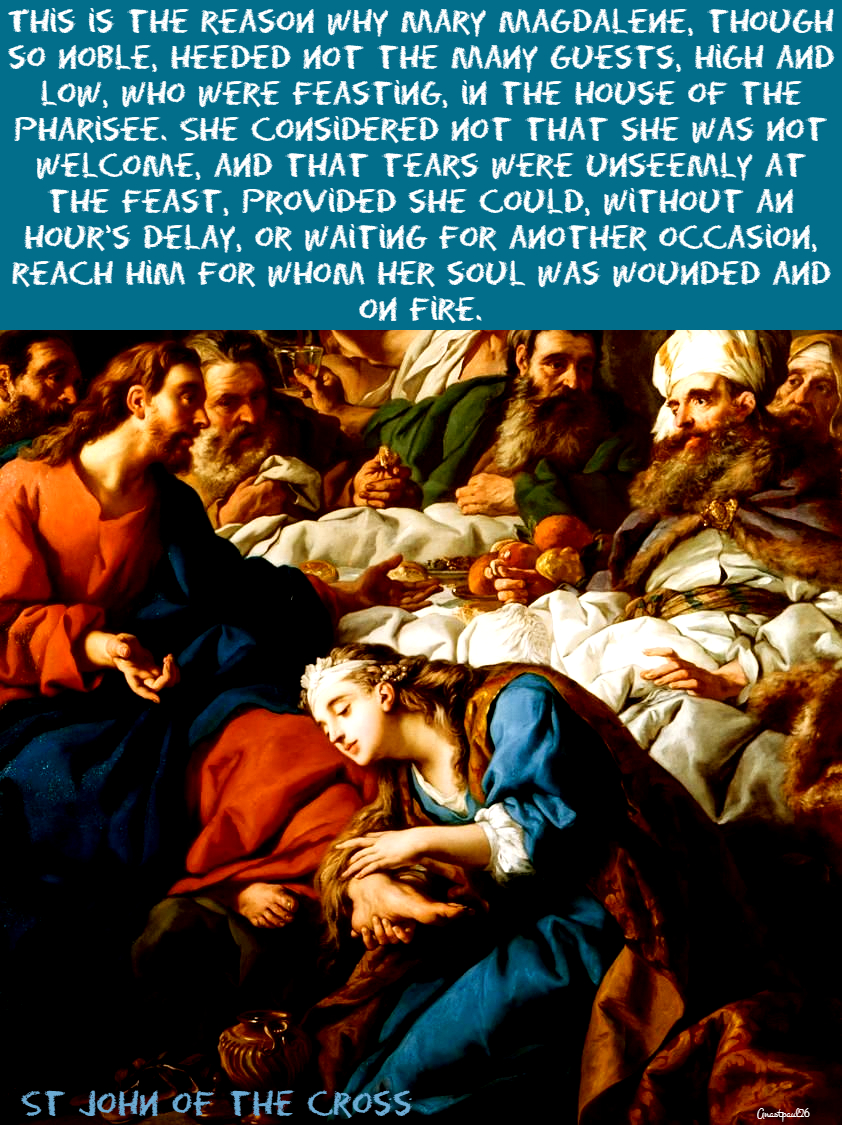
This is the reason why Mary Magdalene, though so noble, heeded not the many guests, high and low, who were feasting, in the house of the Pharisee. She considered not that she was not welcome, and that tears were unseemly at the feast, provided she could, without an hour’s delay, or waiting for another occasion, reach Him for whom her soul was wounded and on fire.
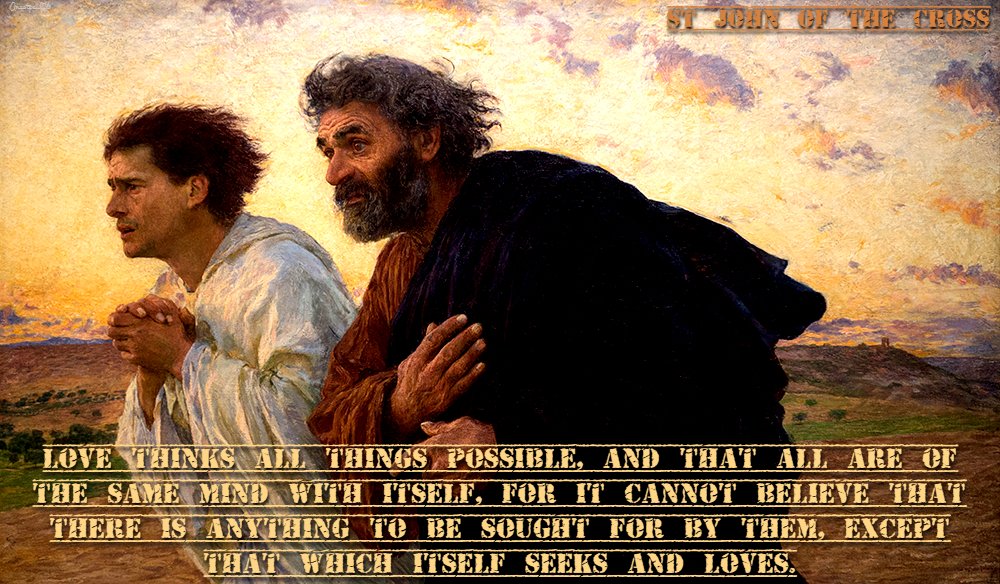
Love thinks all things possible, and that all are of the same mind with itself, for it cannot believe that there is anything to be sought for by them, except that which itself seeks and loves.
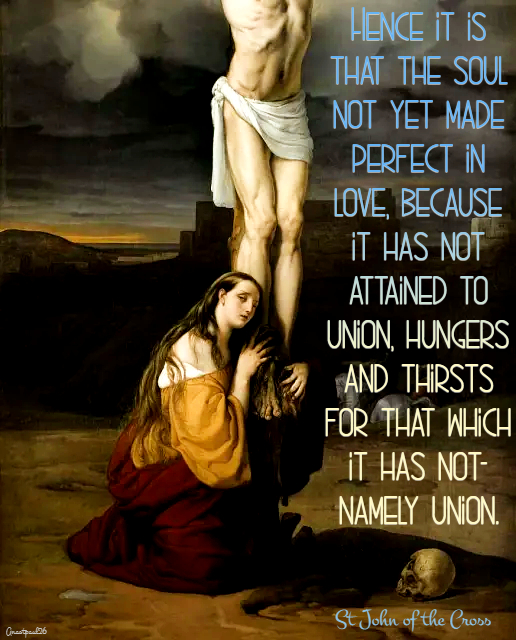
Hence it is that the soul not yet made perfect in love, because it has not attained to union, hungers and thirsts for that which it has not- namely union.

But when it has been purified by the knowledge and sense of its misery it will have eyes to discern the blessings of the divine light, and being delivered and set free from all darkness and imperfections, the great blessings and profit will become known which the soul is gaining for itself in this blessed night.
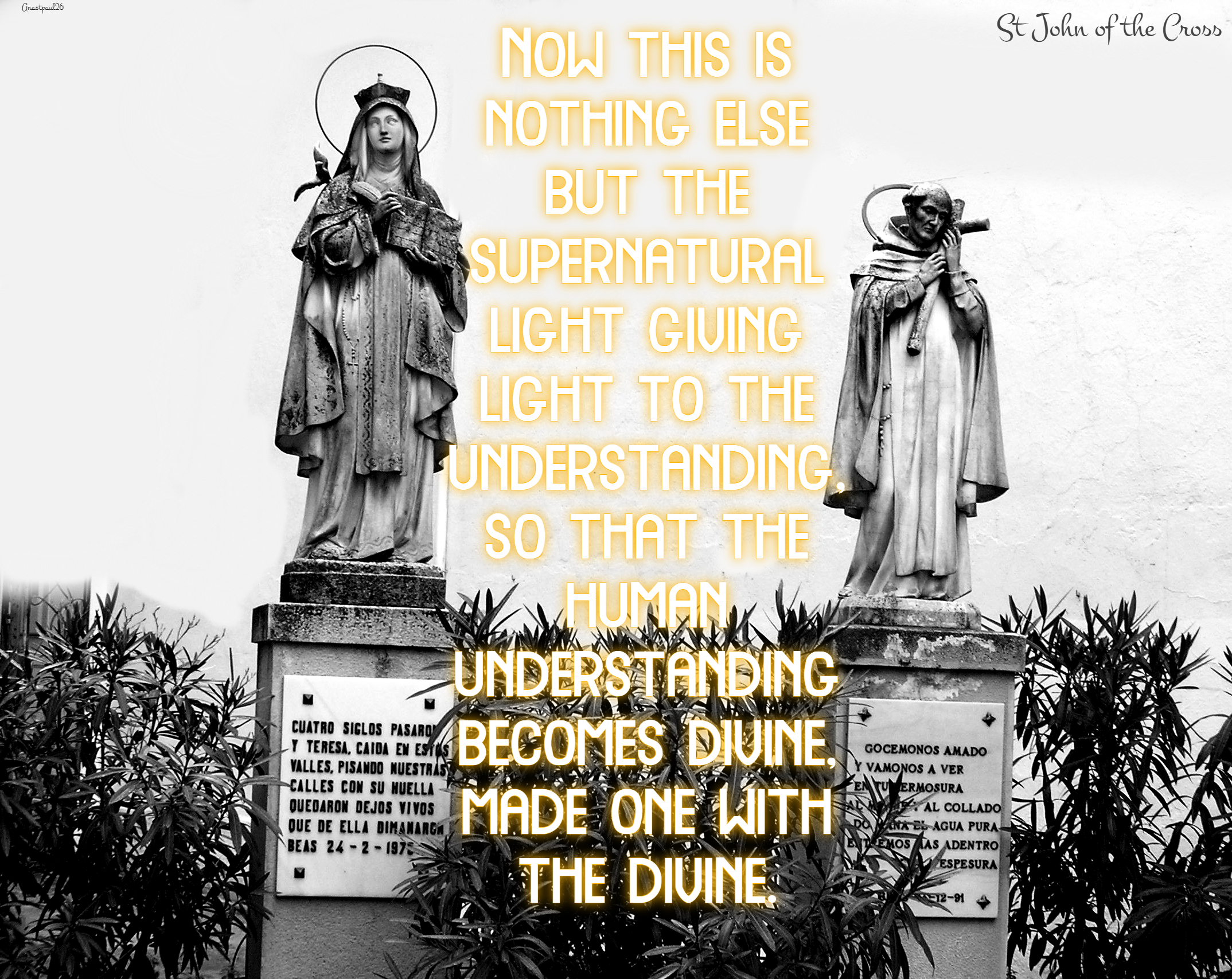
Now this is nothing else but the supernatural light giving light to the understanding, so that the human understanding becomes divine, made one with the divine.
Posted in MARIAN TITLES

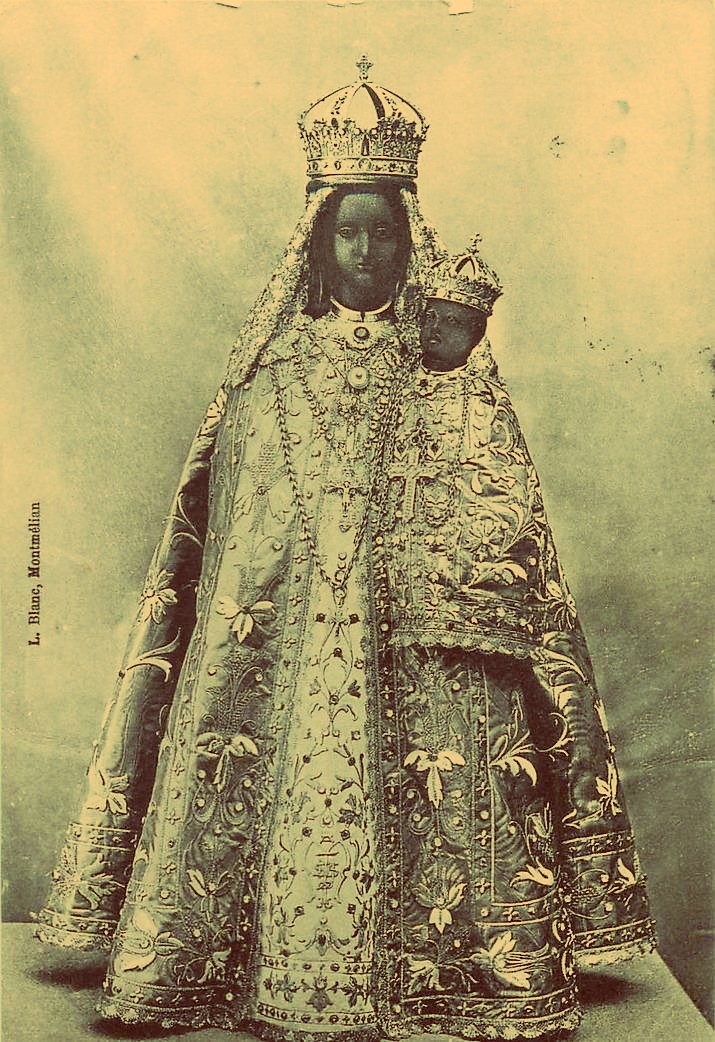
Vierge Noire de Myans / The Black Madonna of Myans, France (1248) and Memorials of the Saints – 24 November

Vierge Noire de Myans, / The Black Madonna of Myans, Montmélian, Chambéry, France (1248) 24 November:, 8 September:

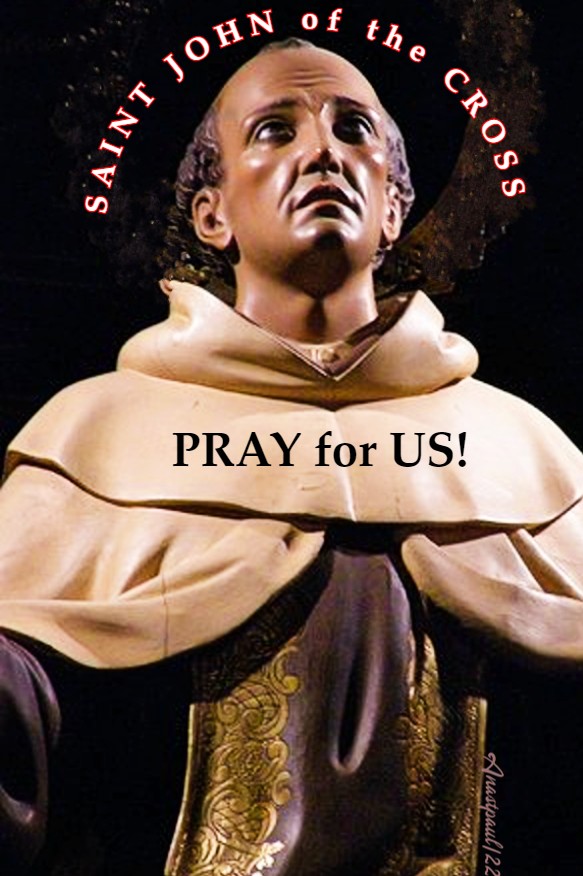
St John of the Cross OCD (1542-1591) Confessor, Carmelite Priest, Doctor of the Church, Mystic, Poet, Reformer, Writer
Feast Day 24 November

St Cardinal Albert of Louvain (1166-1192) Bishop and Martyr, Prince and Cardinal. St Albert was Canonised in 1621 by Pope Paul V.

St Alexander of Corinth
St Balsamus of Cava
St Bieuzy of Brittany
St Chrysogonus

St Colman of Cloyne (530 – 606) Bishop, Monk, Founder and Patron of Cloyne Monastery from which the area took its name, converted by St Brendan the Navigator, Poet (one of the earliest known Irish Poets to compose his works in the vernacular).

Bl Conrad of Frisach
St Crescentian of Rome
St Eanfleda of Whitby
St Felicissimus of Perugia
St Félix Alonso Muñiz
St Firmina of Amelia
St Flora of Cordoba
St Francisco Borrás Román
St Hitto of Saint-Gall
St Kenan of Damleag
St Leopardinus of Vivaris
Bl Maria Anna Sala
St Marinus of Maurienne
St Mary of Cordoba
St Pierre Rose Ursule Dumoulin Borie
St Portianus of Miranda
St Protasius of Milan
St Romanus of Le Mans

Posted in SAINT of the DAY

Saint of the Day – 24 November – Saint Eanfleda of Whitby

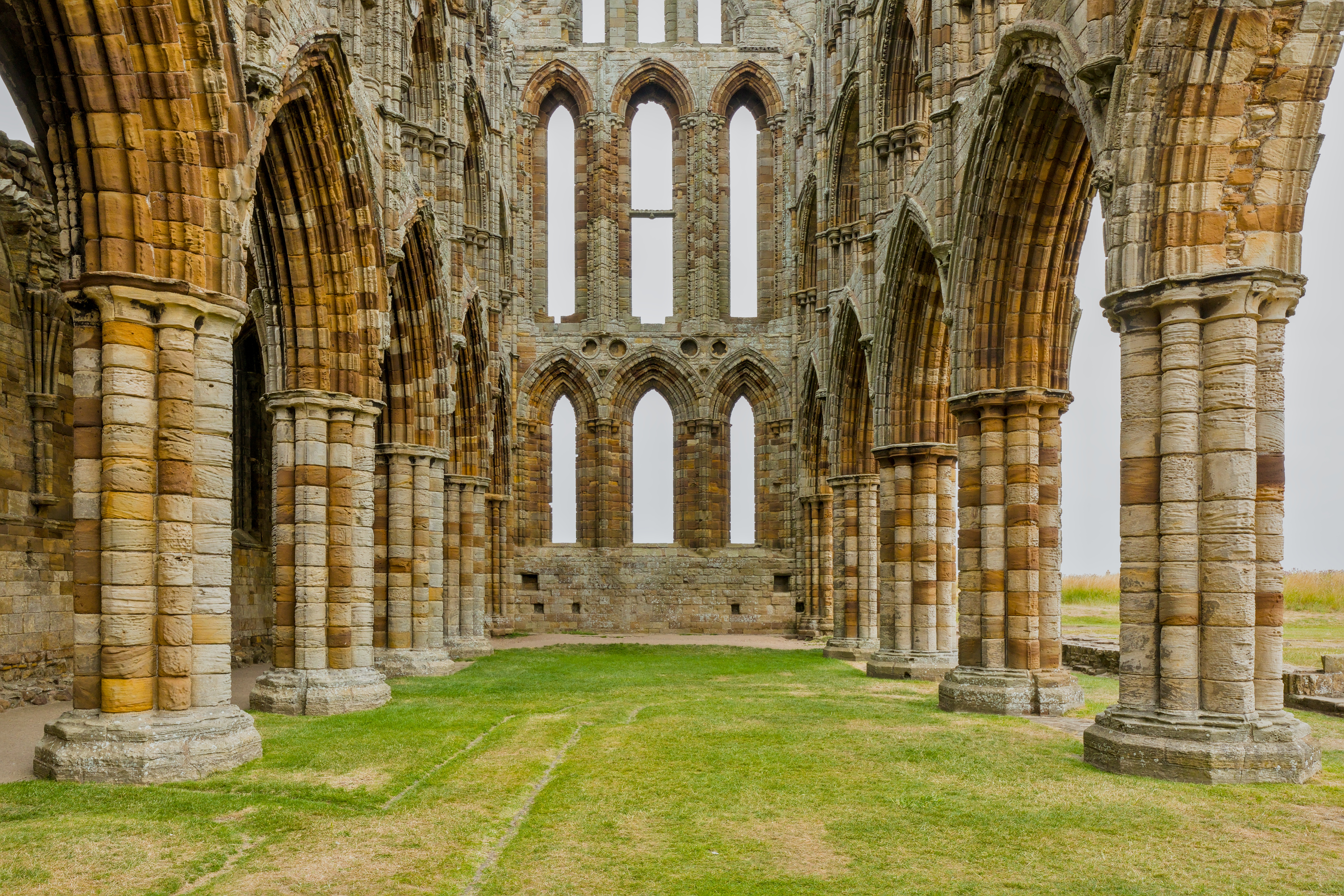
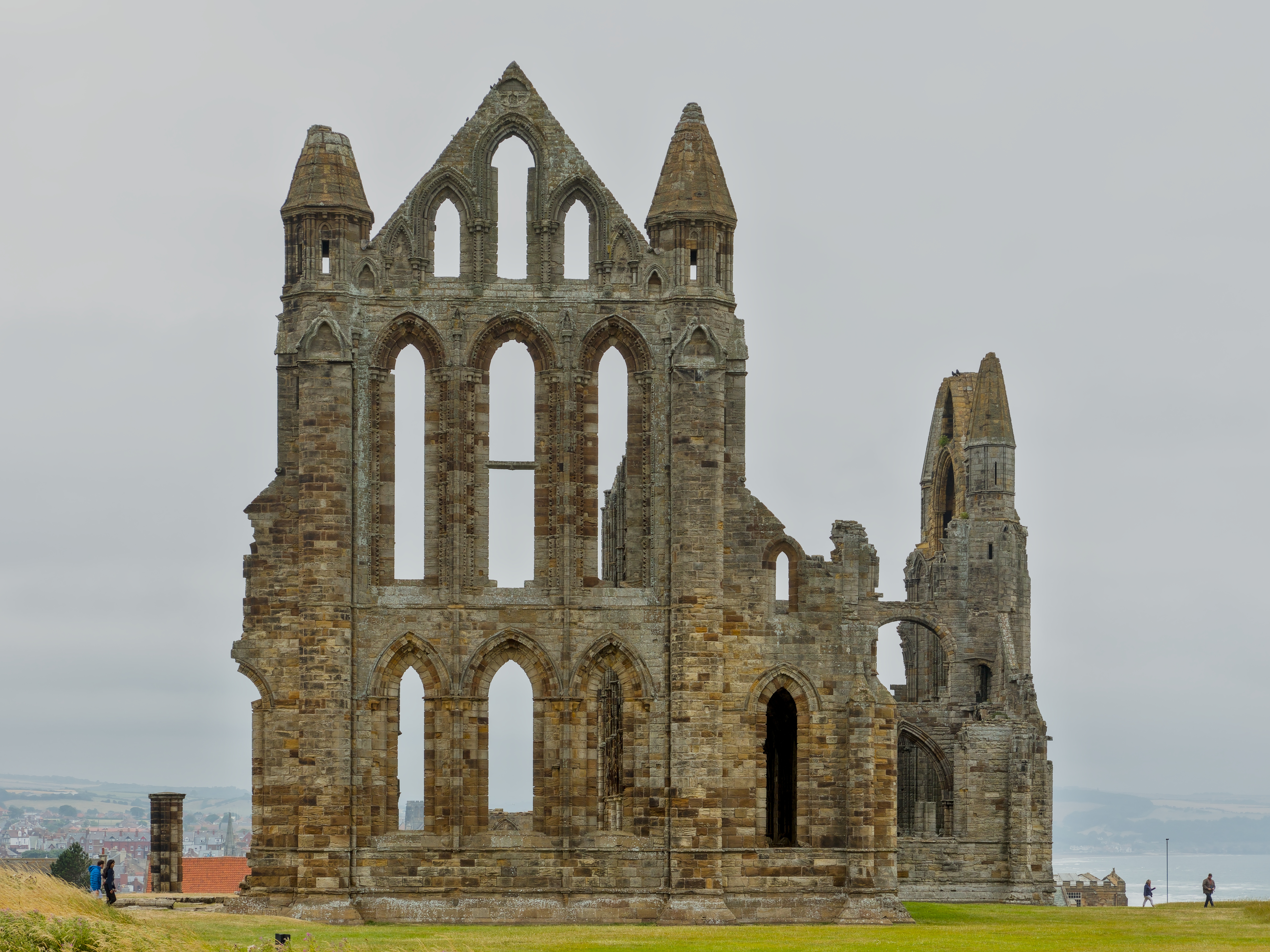
Saint Eanfleda of Whitby, also known as Eanflaed, was a 7th century Northumbrian princess and joint-abbess of the famous Whitby Abbey with her daughter. The daughter of Saint Edwin of Northumbria and Saint Ethelburga of Kent, Eanfleda was the cousin of Saint Hilda of Whitby, the founder of the monastery. The monastery had strong associations with members of the Northumbrian royal family and played an important role in the establishment of Roman Christianity in England. It was a double monastery, housing the nuns and monks in separate quarters although they shared the church and religious rites.

Eanfleda’s mother had grown up as a Christian, but her father was an Anglo-Saxon pagan and he remained uncommitted to the new religion when she was born on the evening before Easter in 626 at a royal residence by the River Derwent. Bede recounts that earlier on the day that Eanfleda was born, an assassin sent by Cwichelm of Wessex made an attempt on Edwin’s life. Afterward, Edwin, prompted by Æthelburg’s bishop, Paulinus, agreed to Eanfleda’s baptism and promised to become a Christian if he was granted a victory over Cwichhelm. Eanfleda was baptised, Bede says, on the feast of Pentecost (8 June 626) with eleven others of the royal household.

Edwin campaigned successfully against Cwichelm and adopted the new faith in 627. His reign ended in 633 with his defeat and death at the battle of Hatfield Chase. Fleeing the unsettled times which followed Edwin’s death, Æthelburg, together with Bishop Paulinus, returned to Kent, where Eanfleda grew up under the protection of her uncle, King Eadbald of Kent.

Baptized by Saint Paulinus of York, she was a great supporter and patron of Saint Wilfrid of York. Married to King Oswy of Northumbria, she was the mother of Saint Elfleda. Along with Edwin, Oswiu, Hilda, and later, Ælfflæd, she was buried at Whitby. William of Malmesbury believed that her remains later had been removed to Glastonbury Abbey, where a monument to her was said to exist in the twelfth century.

Posted in Our MORNING Offering

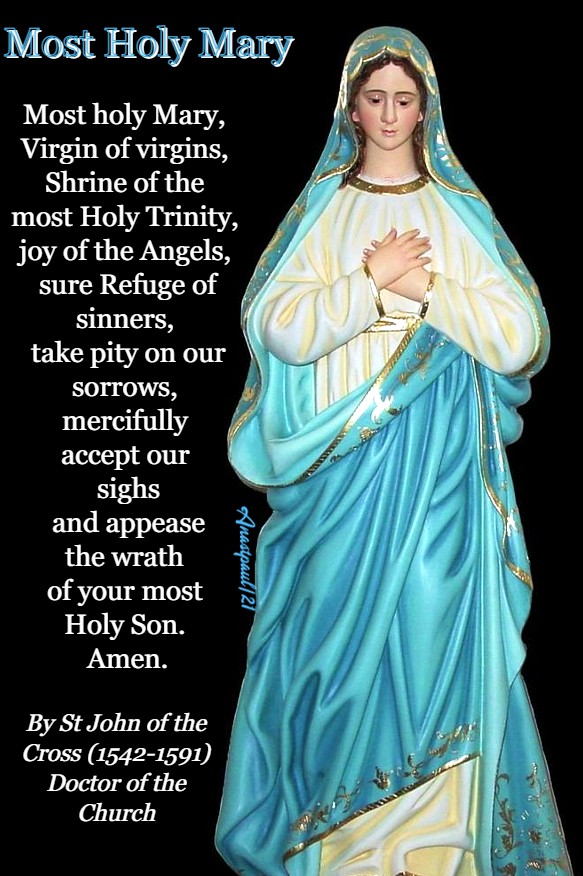
Our Morning Offering – 24 November – Most Holy Mary By St John of the Cross

Most Holy Mary
By St John of the Cross (1542-1591)
Doctor of the Church

Most holy Mary,
Virgin of virgins,
Shrine of the most Holy Trinity,
joy of the Angels,
sure Refuge of sinners,
take pity on our sorrows,
mercifully accept our sighs
and appease the wrath
of your most holy Son.
Amen.

Posted in ONE Minute REFLECTION

One Minute Reflection – 24 November – The Law rooted in our hearts

One Minute Reflection – 24 November – St John of the Cross OCD (1542-1591) Confessor, Doctor of the Church – Readings: Sir 15:5, Ps 91:2, 2 Tim 4:1-8, Matt 5:13-19

In that time Jesus said to His disciples: You are the salt of the earth. But if the salt lose its savour, wherewith shall it be salted? It is good for nothing any more but to be cast out, and to be trodden on by men.

Matt 5:13-19

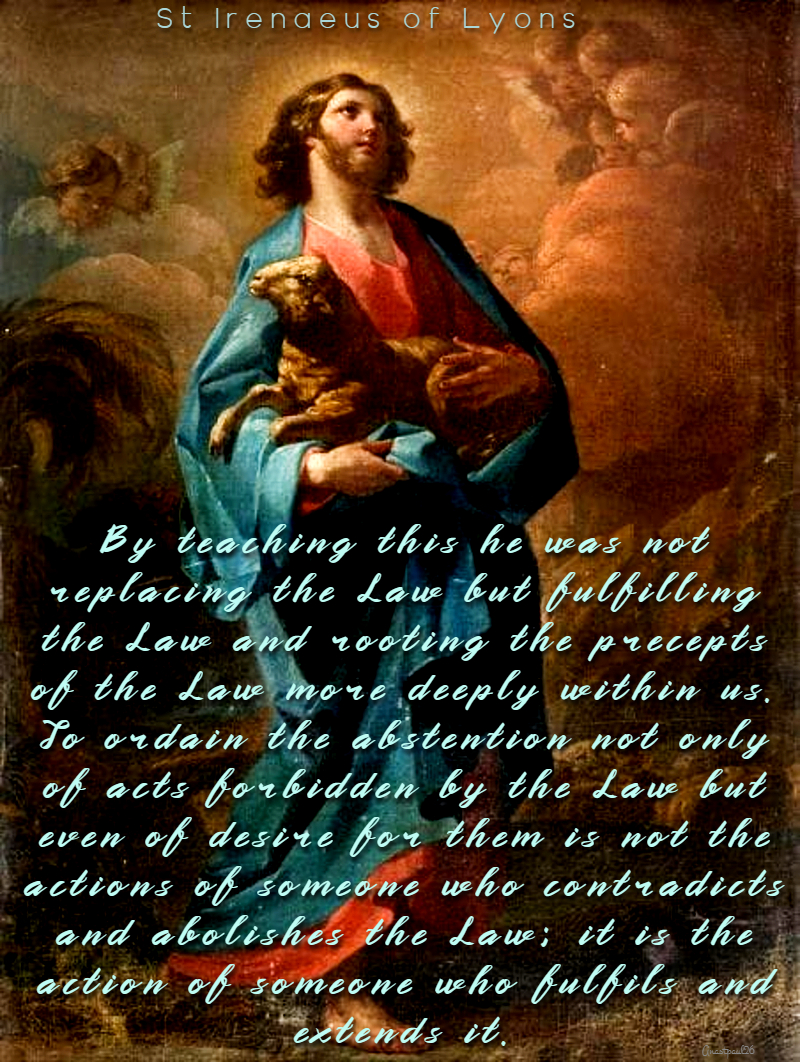
REFLECTION – The Law contains natural prescriptions that already administer justice, and even before the gift of the Law to Moses, people observed these prescriptions and were justified by their faith and were pleasing to God. The Lord has not abolished those prescriptions but developed and fulfilled them as the following words testify: “You have heard that it was said: ‘You shall not commit adultery.’ But I say to you, everyone who looks at a woman with lust has already committed adultery with her in his heart.”And again: “It was said: ‘ You shall not kill.’ But I say to you: whoever is angry with his brother without reason will be answerable to the court”. And so on. None of these prescriptions imply either the contradiction nor the abolition of those that preceded them, but their fulfilment and development. As the Lord himself says: “Unless your righteousness surpasses that of the scribes and Pharisees, you will not enter into the kingdom of heaven”.

What does this development consist in? In the first place, no longer believing only in the Father but also in his Son who, from now on, has been manifested. For it is he who leads us to communion and union with God. Then, not in speaking only but in doing – for “they preach but do not practice” – and in preserving ourselves not just from evil deeds but even from the desire of them. By teaching this he was not replacing the Law but fulfilling the Law and rooting the precepts of the Law more deeply within us. To ordain the abstention not only of acts forbidden by the Law but even of desire for them is not the actions of someone who contradicts and abolishes the Law; it is the action of someone who fulfils and extends it.

St Irenaeus of Lyons

PRAYER – O God, Who made blessed John, Thy Confessor and Teacher, an extraordinary lover of perfect self-denial and the Cross, grant that, by continually striving to imitate him, we may reach everlasting glory. Through Jesus Christ, Thy Son our Lord, Who lives and reigns with Thee, in the unity of the Holy Ghost, God, world without end. Amen

Posted in NOVEMBER - Month of the SOULS in PURGATORY

Thought for the Day – 24 November – The Meditations of the Souls in Purgatory

Requiescant in Pace

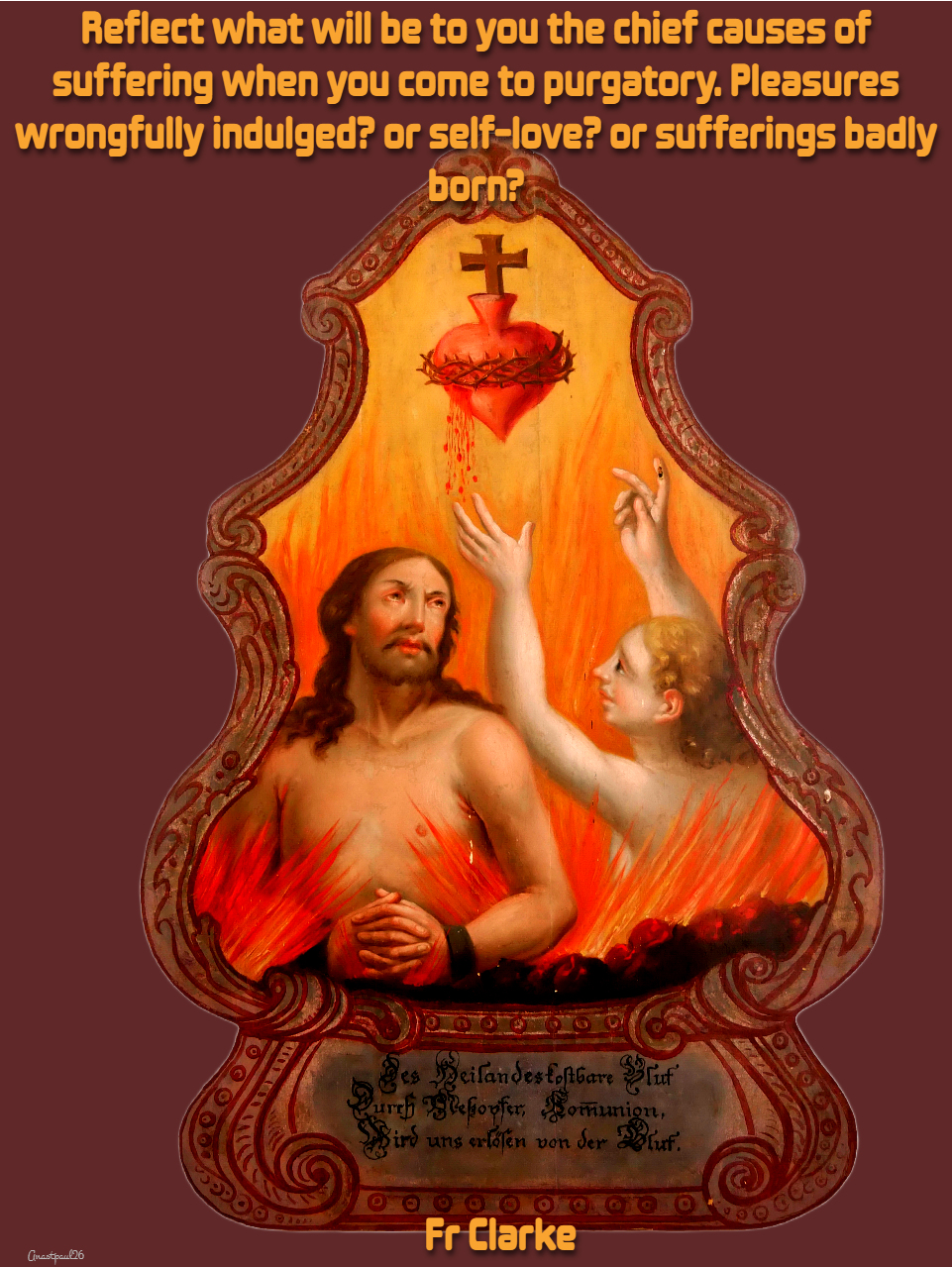
Fr Richard Clarke

The holy souls will mourn and lament over their blindness and folly in accepting the miserable satisfaction of the transitory pleasures of earth at the cost of the seperation from God and the physical torment that is their due. “Fools that we were!” they will cry out, “all the pleasures of our past life are not worth mentioning in comparision with the pain of one hour, nay, of one moment in purgatory. They were but a shadow that passed by, the remembrance of them does but add to our suffering.

“Fools that we were!” they wil again cry out, “in that we did not accept with resignation the sorrows and trails of earth. By our impatience, our murmuring, our discontent, we only made ourselves more miserable, and for this very misery added to our lot on earth by our own folly, we are suffering now far greater misery in these torturing flames, and by our seperation from Him Who is the source of all happiness and all joy.

“Fools that we were!” We might have turned all those sufferings into happiness, if we had used them as we ought. We might have lightened them, and made them comparatively easy to bear, if we had been resigned to the holy will of God: nay, we might have earned merit from each and all, and learned willingly of our own accord that lesson of patience that here we learn, willingly indeed, but nevertheless painfully, and as a just penalty of our impatience.

Reflect what will be to you the chief causes of suffering when you come to purgatory. Pleasures wrongfully indulged? or self-love? or sufferings badly born?