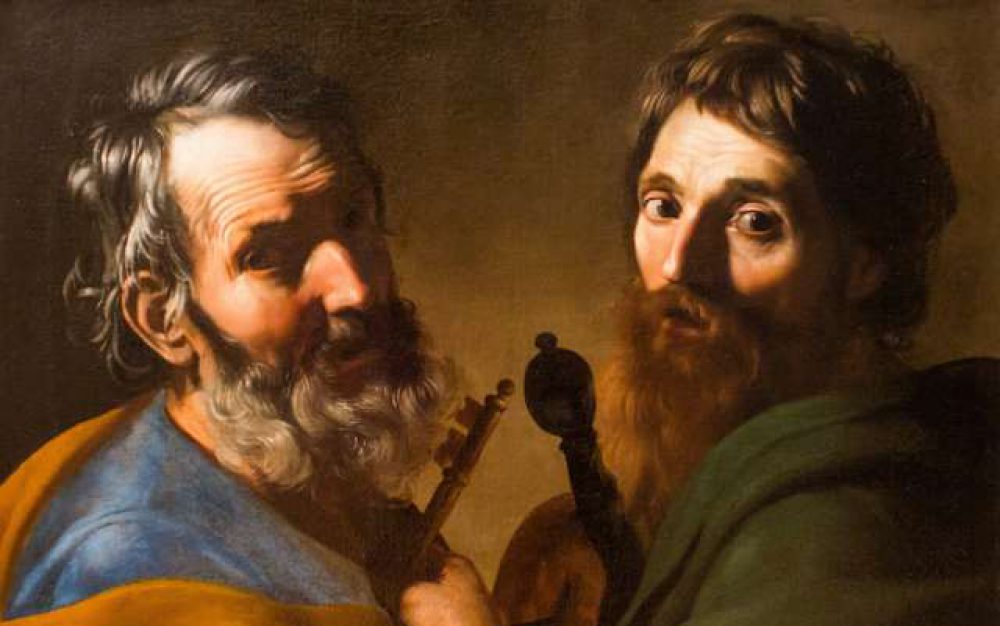
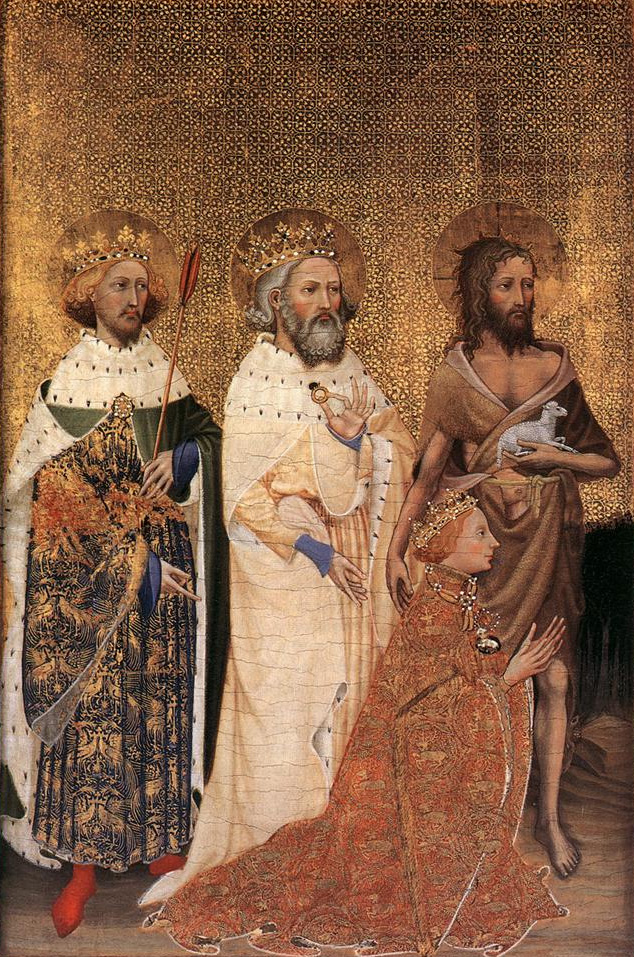
Saint Edmund of East Anglia, martyr and king. Also known as Edmund the Martyr and King of the East Angles. Becoming King of East Anglia at age 14, Edmund was crowned on Christmas Day 855 by Saint Humbert of Elmham. Edmund was a model ruler, concerned with justice for his people and his own spirituality; he spent a year sequestered at Hunstanton learning the Psalter by heart.
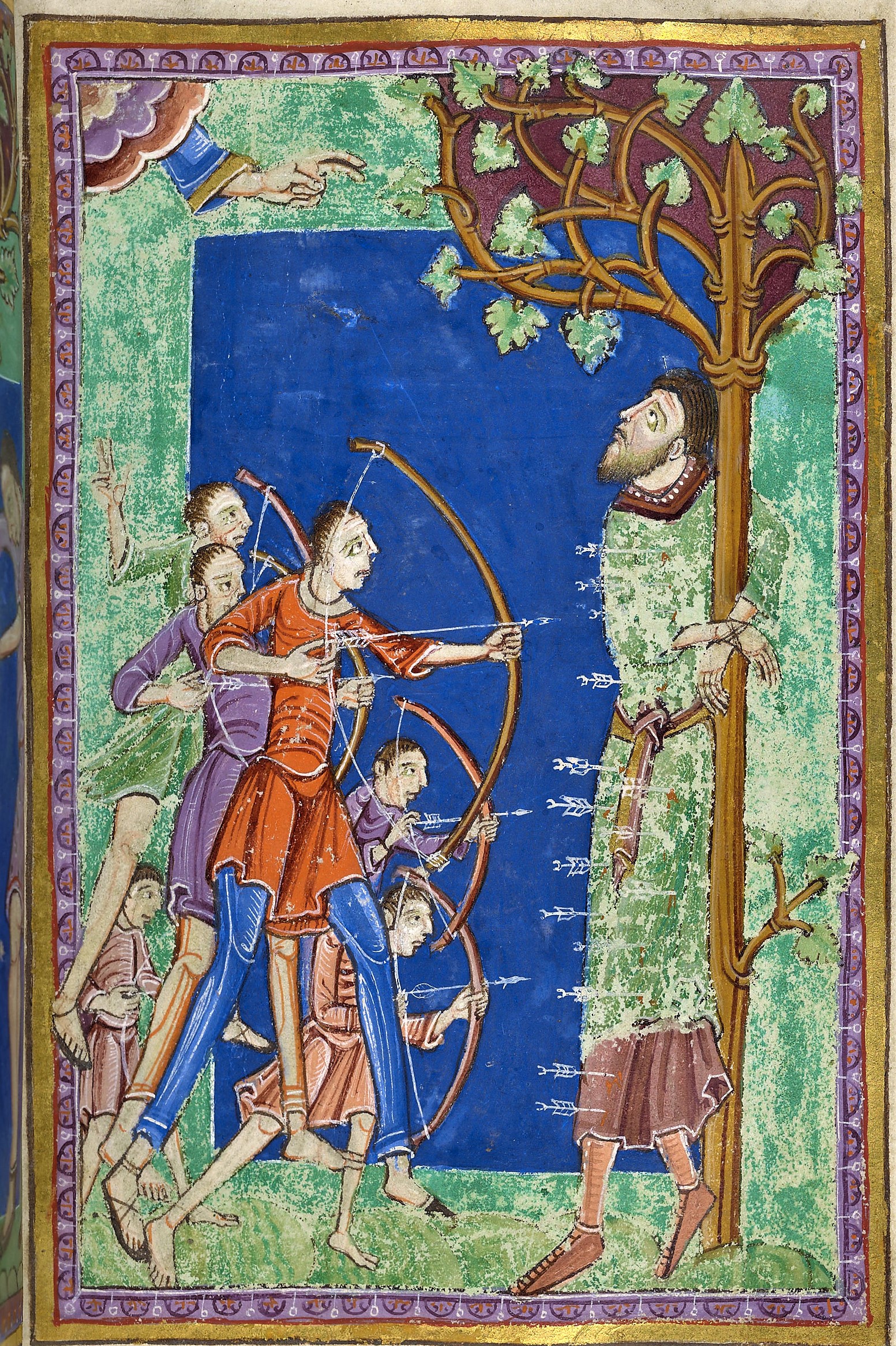
Following one of a series of armed engagements with the invading Danes, he was captured. He was ordered to give his Christian people to the pagan invaders; he refused, and was beaten, whipped, shot with arrows then beheaded at Hoxne, Suffolk, England 20 November 870. Abbo named one of Edmund’s killers as Ivar the Boneless, son of Ragnar Lodbrok.
“King Edmund, against whom Ivar advanced, stood inside his hall, and mindful of the Saviour, threw out his weapons. He wanted to match the example of Christ, who forbade Peter to win the cruel Jews with weapons. Lo! the impious one then bound Edmund and insulted him ignominiously, and beat him with rods, and afterwards led the devout king to a firm living tree, and tied him there with strong bonds, and beat him with whips. In between the whip lashes, Edmund called out with true belief in the Saviour Christ. Because of his belief, because he called to Christ to aid him, the heathens became furiously angry. They then shot spears at him, as if it was a game, until he was entirely covered with their missiles, like the bristles of a hedgehog (just like St Sebastian was).
When Ivar the impious pirate saw that the noble king would not forsake Christ, but with resolute faith called after Him, he ordered Edmund beheaded, and the heathens did so. While Edmund still called out to Christ, the heathen dragged the holy man to his death, and with one stroke struck off his head, and his soul journeyed happily to Christ.”
— Ælfric of Eynsham, Old English
Buried at Hoxne, his relics were moved to Beodricsworth, England (modern Bury Saint Edmunds (Borough of Saint Edmunds)) in 915. From there they were moved to the Cathedral of Saint Paul in London in 1010, ahead of an invading Viking force. His relics were then returned to Bury Saint Edmunds in 1113, to be re-enshrined in a new church in a Benedictine monastery built by King Canute in 1020. Following a battle in Lincoln, England in 1217, French troops claim to have taken the relics.
Patronage: against plague, the diocese of East Anglia, England, kings, torture victims, wolves
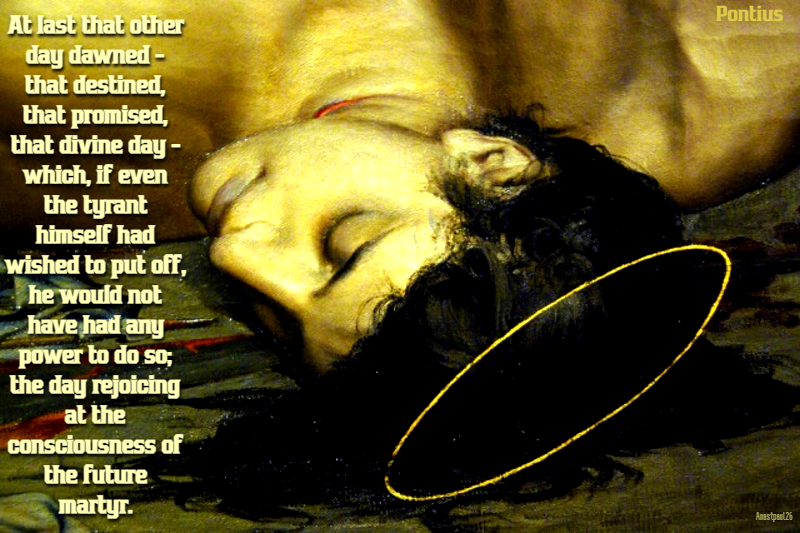
At last that other day dawned — that destined, that promised, that divine day — which, if even the tyrant himself had wished to put off, he would not have had any power to do so; the day rejoicing at the consciousness of the future martyr.
The Life and Passion of St Cyprian


One thought on “Saint of the Day – 20 November – Saint Edmund of East Anglia”