Posted in MARIAN TITLES

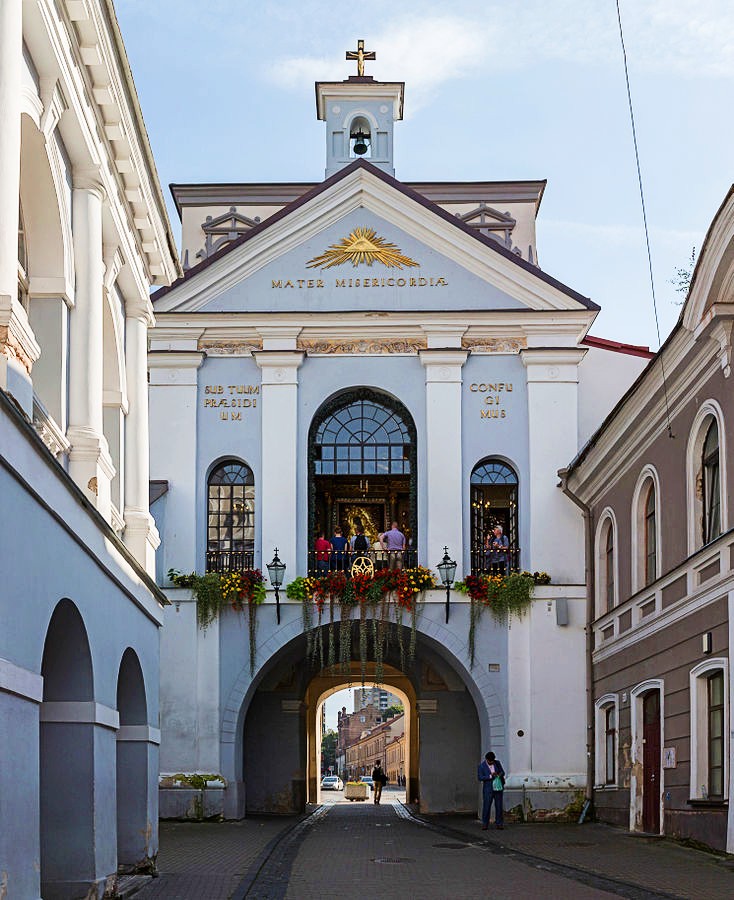
Our Lady of the Gate of Dawn / Our Lady of Ostra, Brama, Vilnius, Lithuania (1363) and Memorials of the Saints – 16 November

Our Lady of the Gate of Dawn / Our Lady of Ostra, Brama, Vilnius, Lithuania (1363) – 16 November:
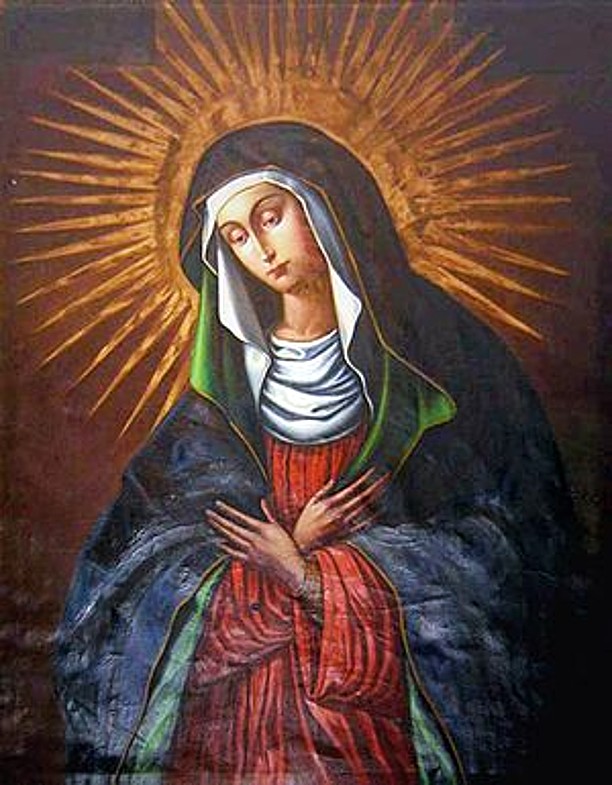
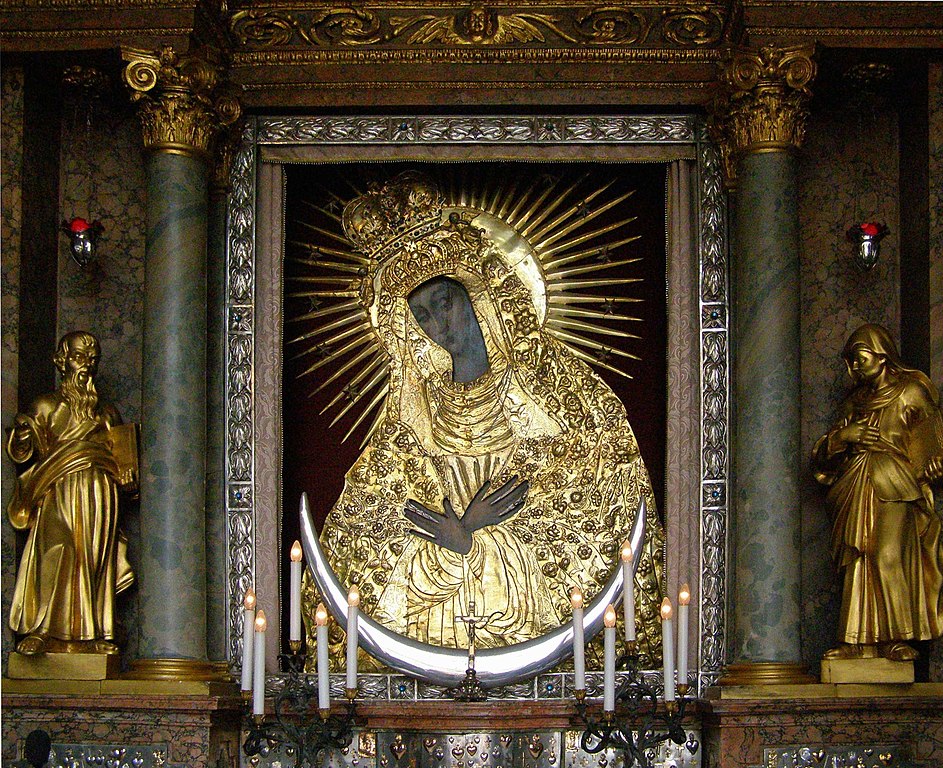
This Marian title is the prominent Catholic painting of the Blessed Virgin Mary venerated by the faithful in the chapel of the Gate of Dawn in Vilnius, Lithuania. The painting was historically displayed above the Vilnius City Gate; city gates of the time often contained religious artefacts intended to ward off attacks and bless passing travellers.

The painting is in the Northern Renaissance style and was completed most likely around 1630. The Virgin Mary is depicted without the infant Jesus. The artwork soon became known as miraculous and inspired a following. A dedicated chapel was built in 1671 by the Discalced Carmelites. At the same time, the painting was covered in expensive and elaborate silver and gold clothes leaving only the face and hands visible.
In 1702, when Vilnius was captured by the Swedish army during the Great Northern War, Our Lady of the Gate of Dawn came to her people’s rescue. At dawn, the heavy iron of the Gate collapsed, crushing and killing four Swedish soldiers. After this, the Polish-Lithuanian Commonwealth Army successfully counter-attacked near the gate.

In the following centuries, the cult grew and Our Lady became an important part of religious life in Vilnius. This inspired many copies in Lithuania, Poland and diaspora communities worldwide. On 5 July 1927, the image was canonically crowned as Mother of Mercy. It is a major site of pilgrimage in Vilnius and attracts many visitors, especially from Poland.
Patronage of Our Lady: Feast permitted by a 1679 Decree of the Sacred Congregation of Rites for all Provinces of Spain, in memory of the victories obtained there over infidels.

St Gertrude the Great (1256-1302) (Virgin, Benedictine Religious, Mystic, Theologian, Writer. Optional Memorial)

St Margaret of Scotland (1045-1093) Queen Consort of Scotland Saint Margaret’s name signifies “pearl” “a fitting name,” says Bishop Turgot, her Confessor and her first Biographer, “for one such as she.” Her soul was like a precious pearl.

St Afan of Wales
St Africus of Comminges
St Agnes of Assisi OSC (1197-1253) Virgin, Nun, Prioress

St Agostino of Capua
St Alfric of Canterbury
St Anianus of Asti
St Céronne

St Edmund Rich of Abingdon (1175-1240) Archbishop of Canterbury, Confessor, Apostle of Prayer and Charity, Mystic, Doctor of Theology, eloquent Preacher, Ascetic, highly regarded Professor lecturer, Reformer, Writer, peacemaker, social activist and negotiator.

Bl Edward Osbaldeston
St Elpidius the Martyr
St Eucherius of Lyon
St Eustochius the Martyr
St Felicita of Capua
St Fidentius of Padua
St Gobrain of Vannes
St Ludre
St Marcellus the Martyr
St Othmar of Saint Gal
Bl Simeon of Cava
—
Martyrs of Africa – (11 saints)

Martyrs of Almeria – (9 saints): Soon after the start of the Spanish Civil War in 1936, the Communist-oriented Popular Front had all clergy and religious arrested and abused as they considered staunch Christians to be enemies of the revolution. Many of these prisoners were executed for having promoted the faith and this memorial remembers several of them killed in the province of Almeria.
• Adrián Saiz y Saiz
• Bienvenido Villalón Acebrón
• Bonifacio Rodríguez González
• Diego Ventaja Milán
• Eusebio Alonso Uyarra
• Isidoro Primo Rodríguez
• Justo Zariquiegui Mendoza
• Manuel Medina Olmos
• Marciano Herrero Martínez

Posted in SAINT of the DAY

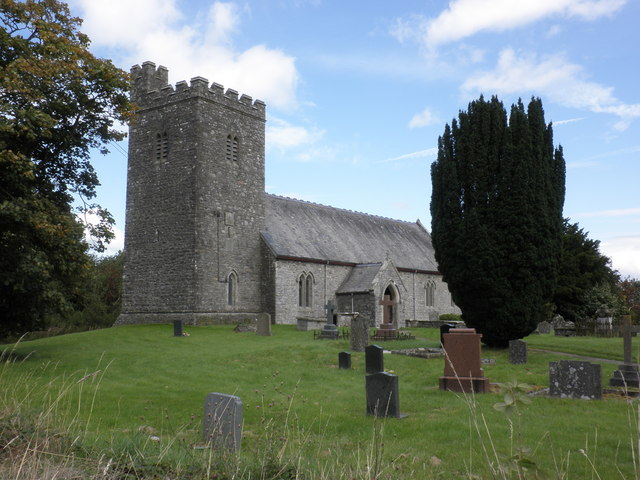
Saint of the Day – 16 November – Saint Afan of Wales

Saint Afan of Wales, also known as Afan of Builth, Avan, Avanus, was a sixth century martyr and bishop. Afan was the son of Cedig ap Ceredig, son of Cunedda Wledig, king of Gwynedd. Through this line, he was a cousin of David, patron saint of Wales. Afan’s mother is variously given as Dwywai, Degfed (“Tenth”), Tegfedd, or Tegwedd, all said to have been daughters of Tegid the Bald, a lord of Penllyn in Meirionnydd who was the husband of the sorceress Ceridwen in Welsh legend.

Afan was the founder of a Llanafan in Ceredigion and two others in Brecknockshire. He is recorded as a bishop, although his diocese remains unknown. He may have been the third bishop of Llanbadarn in Ceredigion, bishop over Builth with his seat at Llanafan Fawr, or held the title without any purview beyond his own parish. His death was credited to martyrdom at the hand of Irish or Danish pirates on the banks of the River Chwefru. He was claimed as an ancestor of the 10th-century bishop Ieuan who was also martyred by Viking marauders.

He was entombed in the churchyard of Saint Afan’s Church, Lanafan Fawr, Powys, Wales. This church was a site of pilgrimages, and home to at least one miracle. The English Lord Philip de Braose came to the area to hunt, and decided that the church was the best lodging for him and his dogs. When he woke at sunrise, his dogs had gone mad and he was blind. His sight was only restored by making a pledge to fight in the Crusades.

Posted in Our MORNING Offering

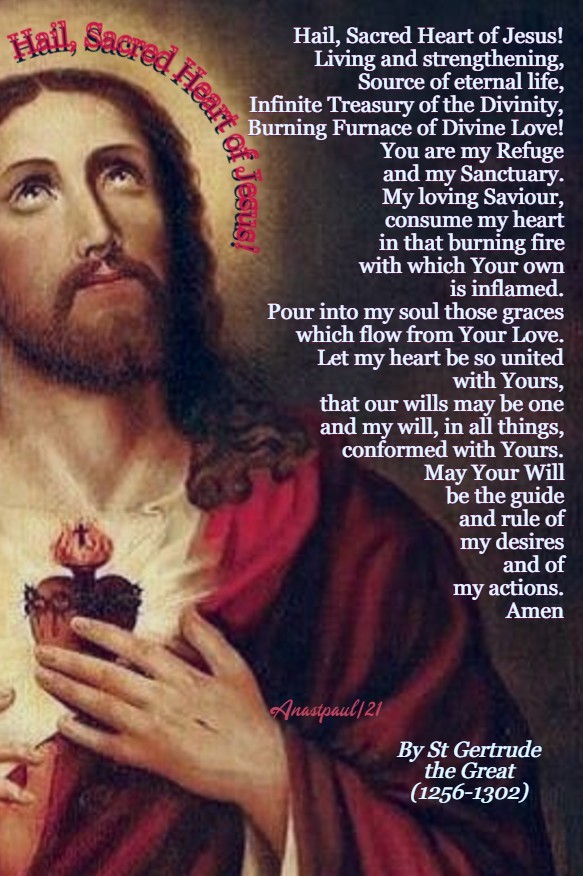
Our Morning Offering – 16 November – Hail, Sacred Heart of Jesus!

Hail, Sacred Heart of Jesus!
By St Gertrude the Great (1256-1302)

Hail, Sacred Heart of Jesus!
Living and strengthening,
Source of eternal life,
Infinite Treasury of the Divinity,
Burning Furnace of Divine Love!
You are my Refuge and my Sanctuary.
My loving Saviour,
consume my heart in that burning fire
with which Your own is inflamed.
Pour into my soul those graces
which flow from Your Love.
Let my heart be so united with Yours,
that our wills may be one
and my will, in all things,
conformed with Yours.
May Your Will be the guide
and rule of my desires
and of my actions.
Amen

Posted in ONE Minute REFLECTION

One Minute Reflection – 16 November – “Our lamps are going out”

One Minute Reflection – 16 November – Readings: Ps 44:8, Ps 44:2, 2 Cor 10:17-18; 11:1-2, Matt 25:1-13

At that time Jesus spoke this parable to His disciples: “Then will the kingdom of heaven be like ten virgins who took their lamps and went forth to meet the bridegroom and the bride. Five of them were foolish and five wise.

Matt 25:1-13

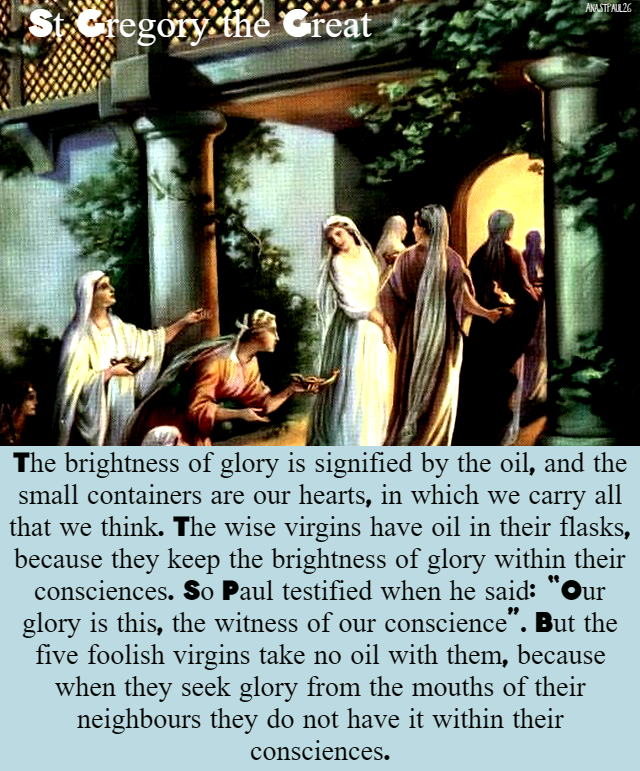
REFLECTION – “The five foolish ones took no oil with them, but the wise ones took oil in their flasks with their lamps.” The brightness of glory is signified by the oil, and the small containers are our hearts, in which we carry all that we think. The wise virgins have oil in their flasks, because they keep the brightness of glory within their consciences. So Paul testified when he said: “Our glory is this, the witness of our conscience”. But the five foolish virgins take no oil with them, because when they seek glory from the mouths of their neighbors they do not have it within their consciences.

“At midnight a cry arose: 'See, the bridegroom is coming; go forth to meet him'" Then all the virgins arise. The lamps of the foolish virgins go out, because their works, which appeared outwardly evident to people at the judge's coming, are hidden within; and they find no recompense from God, because they have received from men the praises which they loved.

St Gregory the Great

PRAYER – Lord our God, You made the heart of St Gertrude, the dwelling place of Your love. Lighten our darkness so that through her intercession, we may experience the joy of Your presence in our hearts and with Zaccheus, we may have you stay in our home. We make our prayer through our Lord Jesus Christ, in the unity of the Holy Spirit, God forever, amen.

Posted in CATHOLIC Quotes

Quote/s of the Day – 16 November – St Gertrude the Great

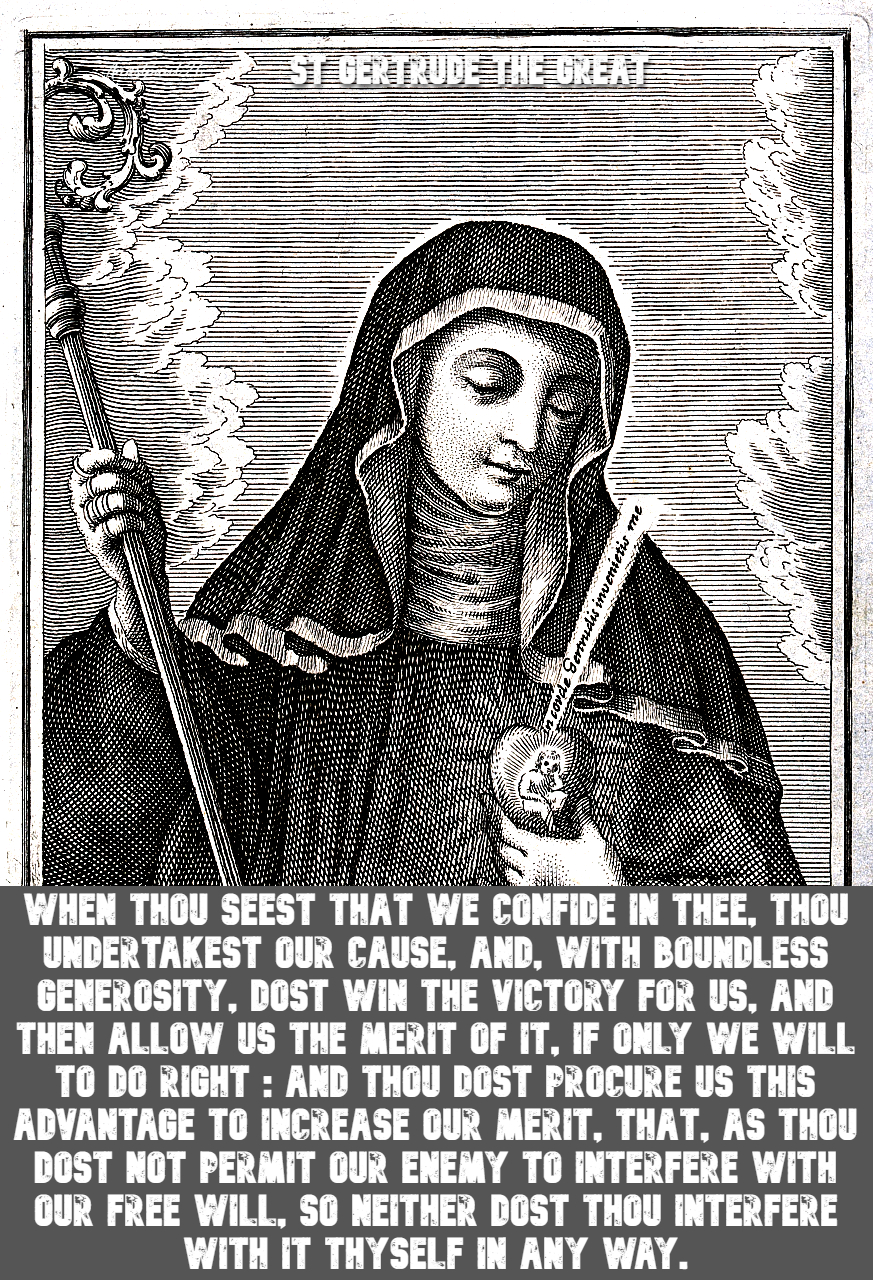
When Thou seest that we confide in Thee, Thou undertakest our cause, and, with boundless generosity, dost win the victory for us, and then allow us the merit of it, if only we will to do right : and Thou dost procure us this advantage to increase our merit, that, as Thou dost not permit our enemy to interfere with our free will, so neither dost Thou interfere with it Thyself in any way.

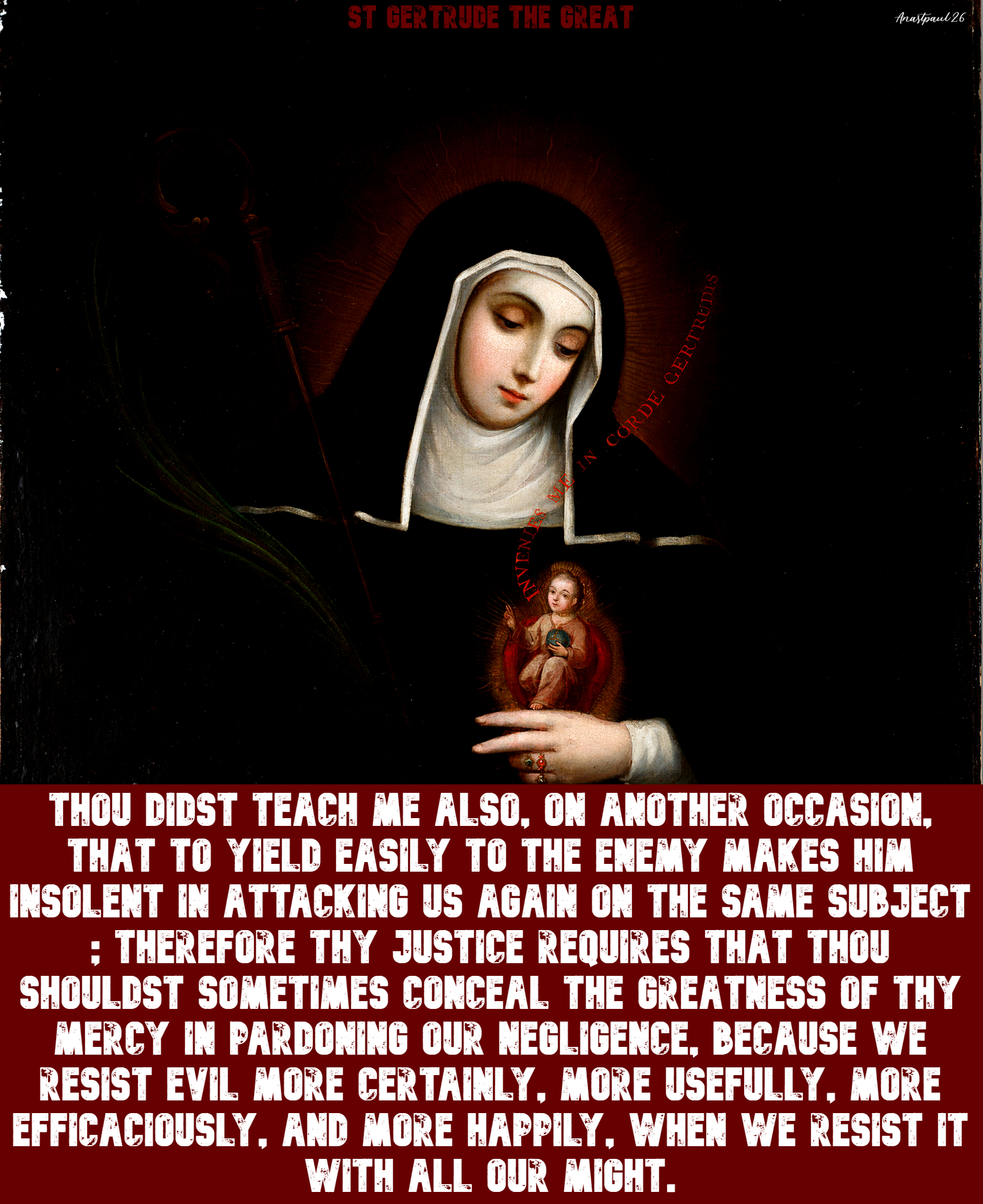
Thou didst teach me also, on another occasion, that to yield easily to the enemy makes him insolent in attacking us again on the same subject ; therefore Thy justice requires that Thou shouldst sometimes conceal the greatness of Thy mercy in pardoning our negligence, because we resist evil more certainly, more usefully, more efficaciously, and more happily, when we resist it with all our might.

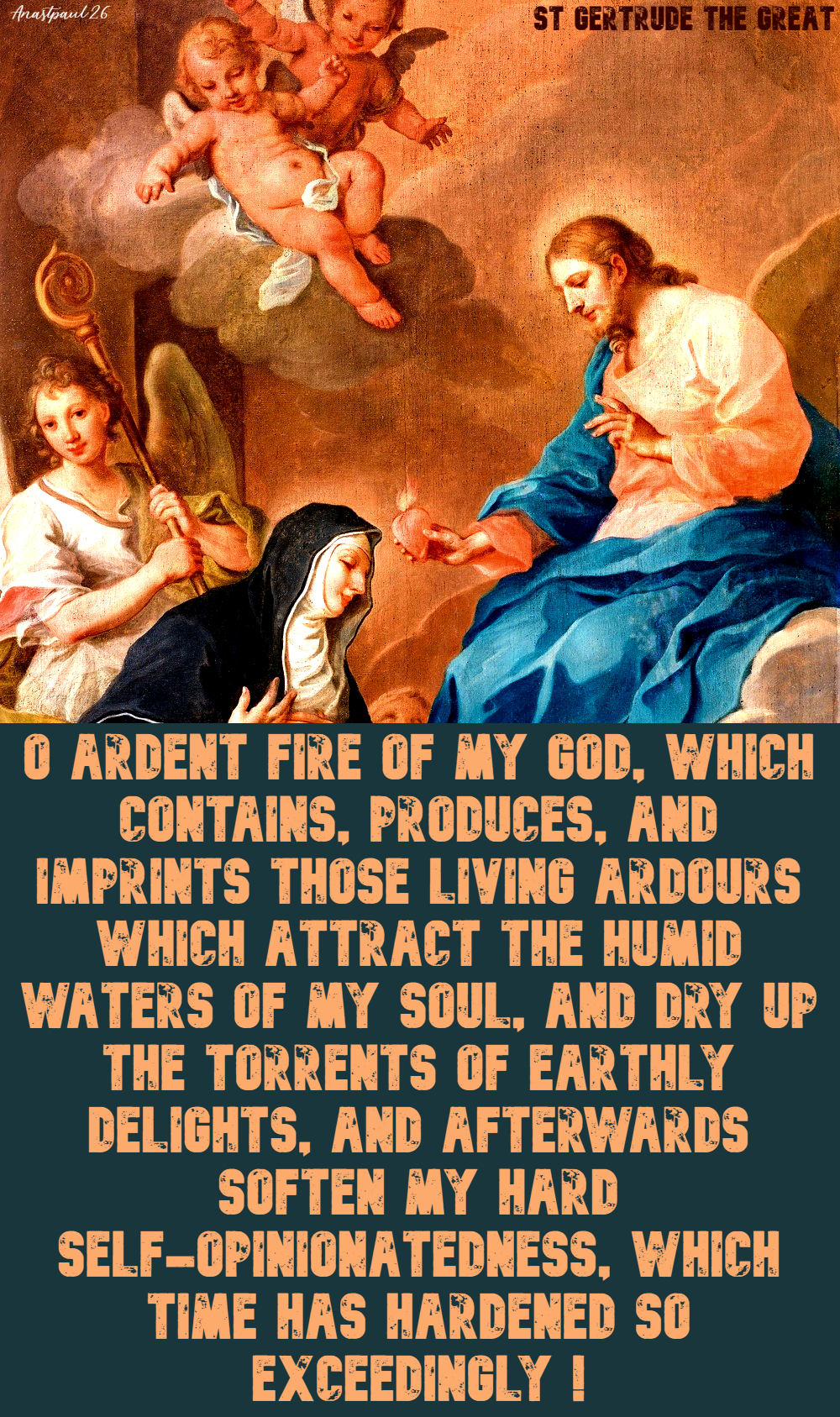
O ardent fire of my God, which contains, produces, and imprints those living ardours which attract the humid waters of my soul, and dry up the torrents of earthly delights, and afterwards soften my hard self-opinionatedness, which time has hardened so exceedingly !

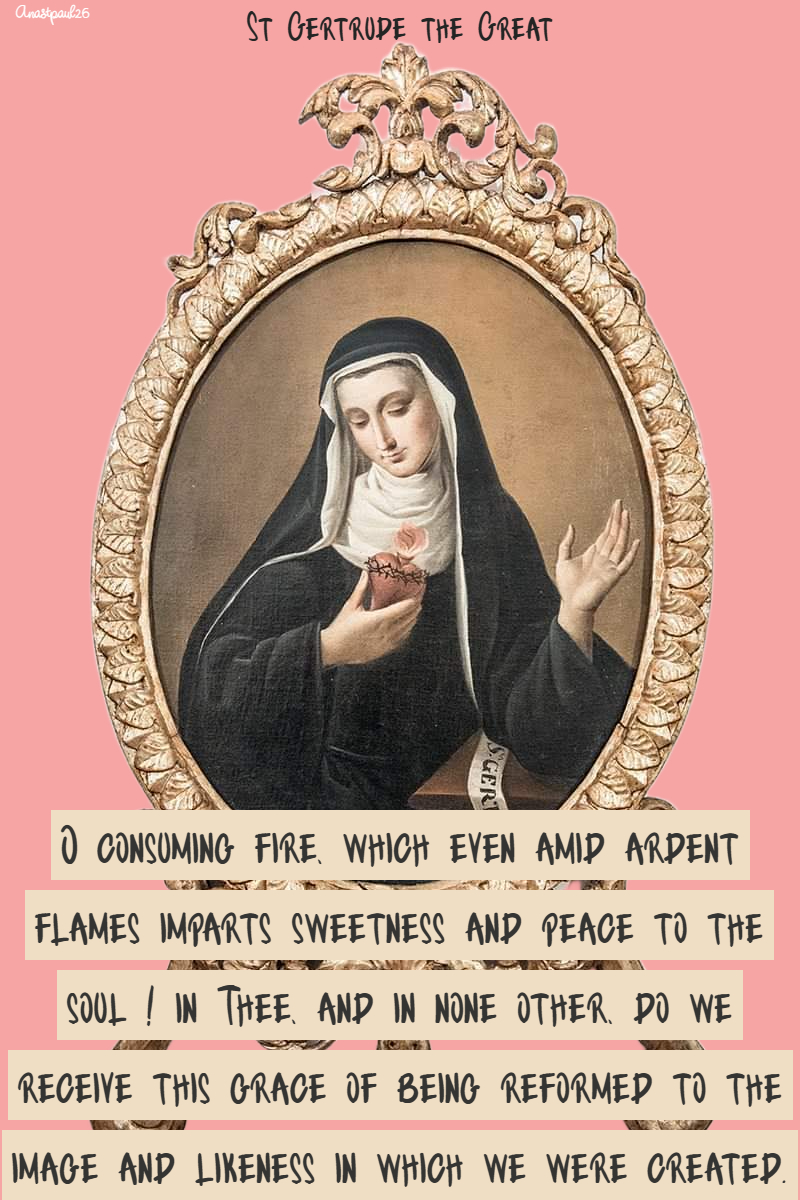
O consuming fire, which even amid ardent flames imparts sweetness and peace to the soul ! in Thee, and in none other, do we receive this grace of being reformed to the image and likeness in which we were created.

O burning furnace, in which we enjoy the true vision of peace, which tries and purifies the gold of the elect, and leads the soul to seek eagerly for its highest good, even Thyself, in Thy eternal truth.

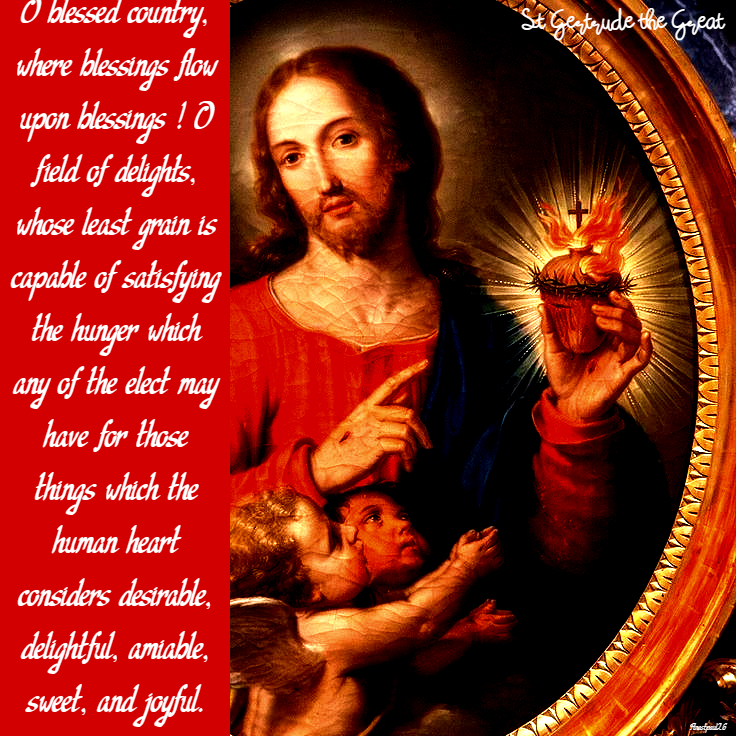
O blessed country, where blessings flow upon blessings ! O field of delights, whose least grain is capable of satisfying the hunger which any of the elect may have for those things which the human heart considers desirable, delightful, amiable, sweet, and joyful.

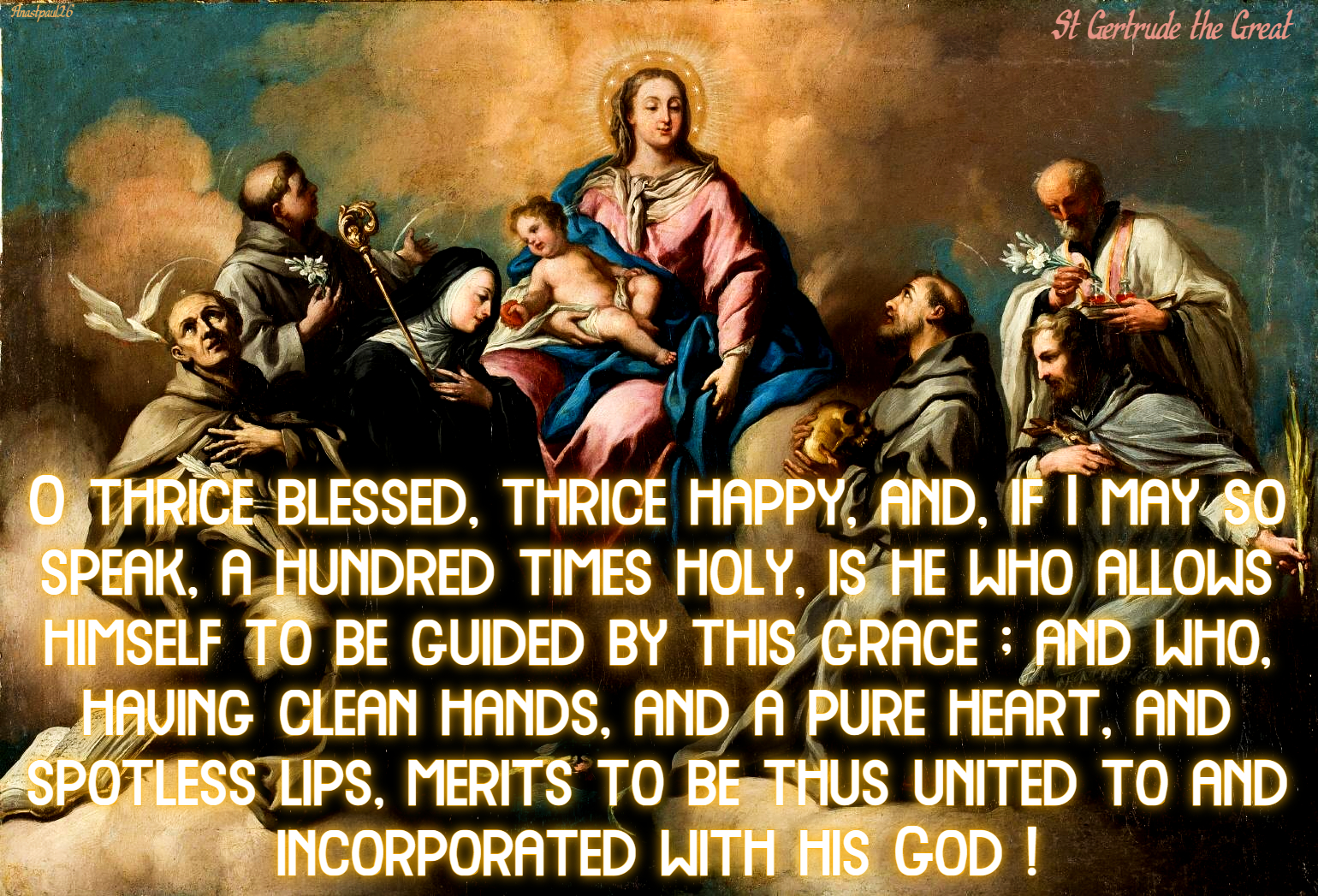
O thrice blessed, thrice happy, and, if I may so speak, a hundred times holy, is he who allows himself to be guided by this grace ; and who, having clean hands, and a pure heart, and spotless lips, merits to be thus united to and incorporated with his God !

Posted in NOVEMBER - Month of the SOULS in PURGATORY

Thought for the Day – 16 November – How the souls in purgatory rebuke the men of this world

Treatise on Purgatory

St Catherine of Genoa

CHAPTER XV

“Would that I could cry out” (said this blessed soul, when under Divine illumination she saw these things), “loud enough to strike with fear every man upon the earth, and say, miserable beings, why suffer ye yourselves to be so blinded by this world as to make no provision for the dire strait ye will find yourselves in at the hour of death ? Ye all shelter yourselves under the hope of God’s mercy, which ye say is so great ; and ye consider not that this very goodness of God will rise up in judgment against you for having opposed the will of so good a Master.

His mercy ought to constrain you to do all His Will, and not encourage you to do evil. Be assured that His justice cannot yield, but must in one way or other be fully satisfied. Let no one buoy himself up saying, ‘ I shall confess ; and then I shall receive a plenary indulgence, where by I shall be cleansed from all my sins and get through safely.’ Know that a plenary indulgence requires confession and contrition ; and this latter is so difficult to obtain, that if ye knew how difficult, ye would tremble with fear, and rather make sure of not gaining than of gaining the indulgence.”