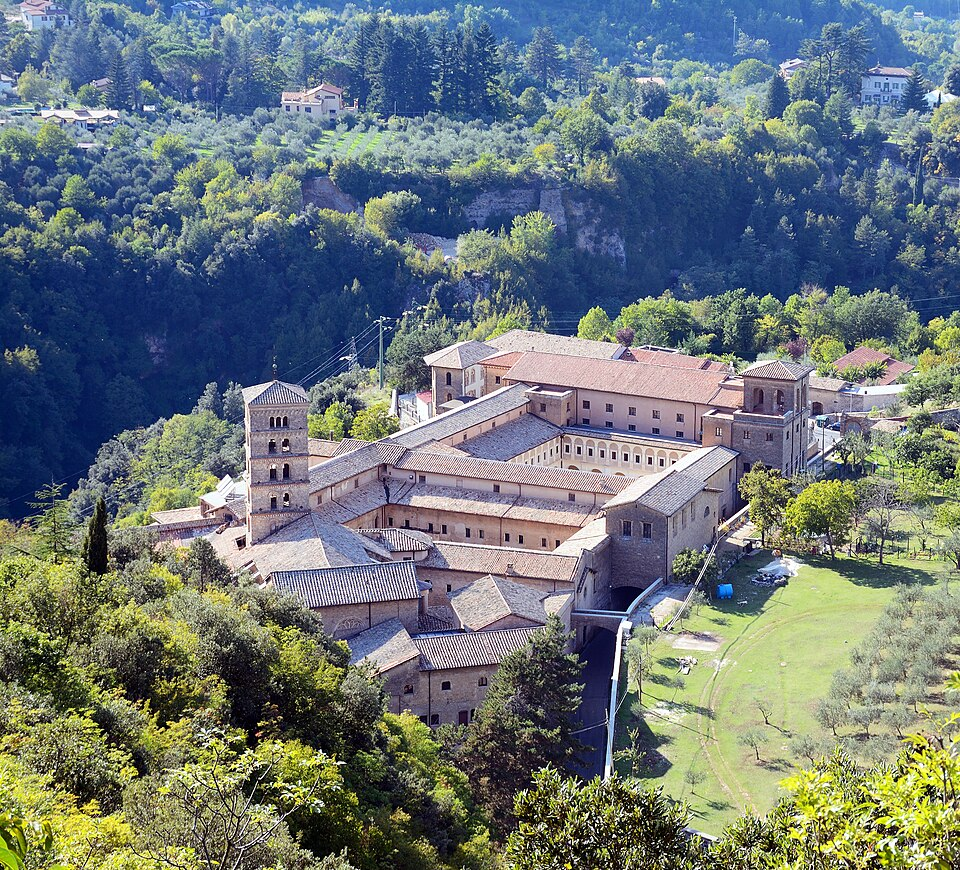
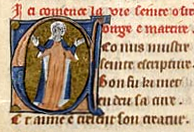
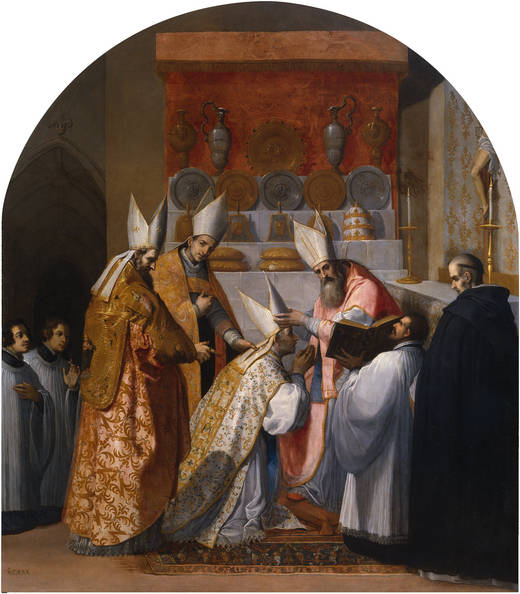
St. Chelidonia, was a Benedictine nun and hermitess. Born in Ciculum, Abruzzi, Italy, she became a recluse in the mountains near Subiaco, in a cave now called Marra Ferogna. Chelidonia received her habit from Cardinal Cuno of Frascati. When she died in 1152, many, including Pope Eugenius III, saw her soul ascend to heaven. Her remains are in the church of St. Scholastica in Subiaco, and she is patron of that city.
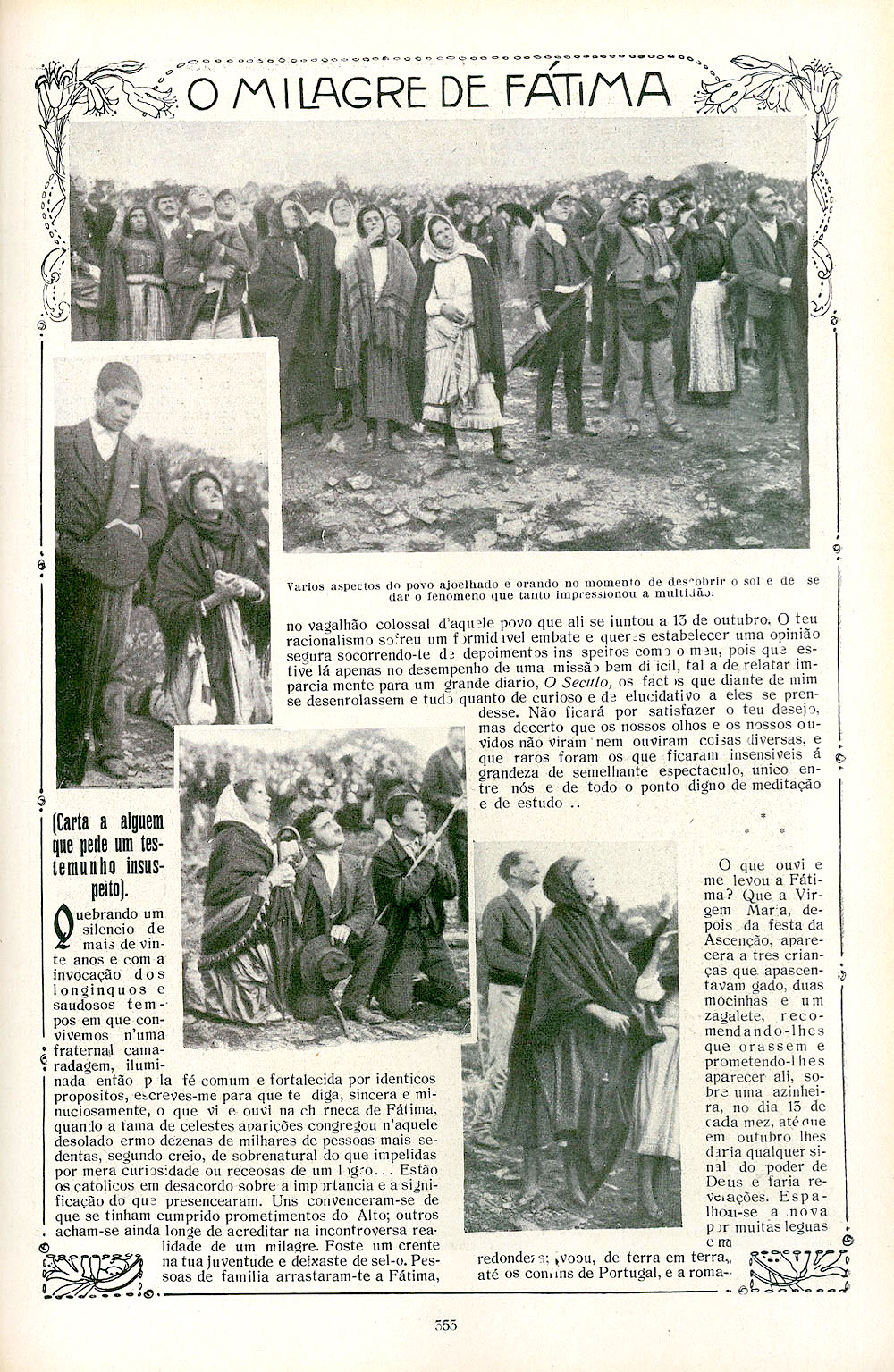
Our Lady of Fatima: The Sixth & Final Apparition & the Miracle of the Sun (1917) 13 October
The Day the Sun Danced… The Miracle of the Sun which occurred miraculously on 13 October 1917, attended by a large crowd who had gathered in Fátima, Portugal, in response to a prophecy made by three shepherd children, Lúcia Santos and Francisco and Jacinta Marto. The prophecy was that the Virgin Mary (referred to as Our Lady of Fátima), would appear and perform miracles on that date. Newspapers published testimony from witnesses who said that they had seen extraordinary solar activity, such as the Sun appearing to “dance” or zig-zag in the sky, careen towards the Earth, or emit multicolored light and radiant colours. According to these reports, the event lasted approximately ten minutes.
The local Bishop opened a canonical investigation of the event in November 1917, to review witness accounts and assess whether the private revelations from Mary were compatible with Catholic doctrine. The local Priest conducting the investigation was particularly convinced by the concurring testimony of the extraordinary solar phenomena, received from secular reporters, government officials and other skeptics in attendance. Bishop José da Silva declared the miracle “worthy of belief” on 13 October 1930, permitting “officially the cult of Our Lady of Fatima” within the Catholic Church.
At a gathering on 13 October 1951 at Fátima, the Papal Legate, Cardinal Federico Tedeschini, told the million people attending, that on 30 October, 31 October, 1 November and 8 November 1950, Pope Pius XII himself witnessed the miracle of the Sun from the Vatican gardens.
St Benedict of Cupra St Berthoald of Cambrai
St Edward King and Confessor (c 1003-1066) “Confessor ” reflects his reputation as a Saint who did not suffer Martyrdom, as opposed to King Edward the Martyr.
St Carpus of Troas St Chelidonia St Comgan the Monk St Florence of Thessalonica St Fyncana St Fyndoca Bl Gebrand of Klaarkamp
Blessed Maddalena Panattieri OP (1443–1503) Religious of the Sisters of Penance of Saint Dominic, Stigmatist, she was blessed with many Mystical gifts.
St Maurice of Carnoet St Regimbald of Speyer St Romulus of Genoa St Simbert of Augsburg St Theophilus of Antioch St Venantius — Three Crowns of Cordoba – (3 saints): Three Christian men martyred in the persecutions of Diocletian – Faustus, Januarius and Martial. They were burned to death in 304 in Cordoba, Spain.
Martyred in the Spanish Civil War: • Blessed Àngel Presta Batllé • Blessed ángel Ramos Velázquez • Blessed Antonio Ayet Canós • Blessed Ruperto García Arce • Blessed Salustiano González Crespo • Blessed Tomás Pallarés Ibáñez • Blessed Francesc Mitjá i Mitjá • Blessed Herminio Motos Torrecillas • Blessed Joan Puig Serra
Saint Cyprian, martyr and bishop of North Africa during the fifth century. In 484, Cyprian, Saint Felix, and 4,964 assorted unnamed parishioners were driven into the Libyan desert by the Arian Vandal King Huneric. There they were tortured and martyred for their faith. Their story was recorded by Victor of Utica.
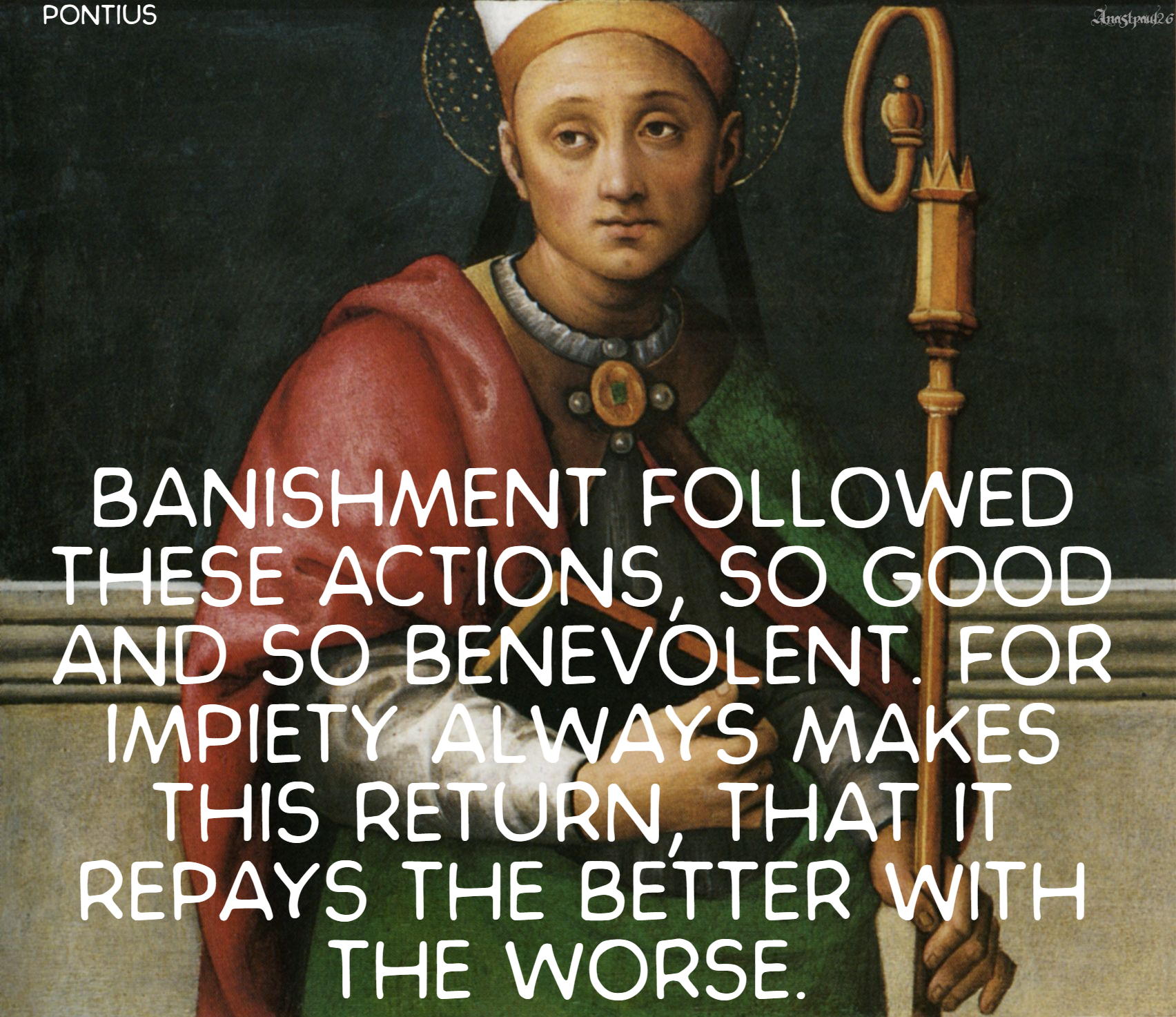
Banishment followed these actions, so good and so benevolent. For impiety always makes this return, that it repays the better with the worse.
Life and Passion of St Cyprian of Carthage (Pontius)
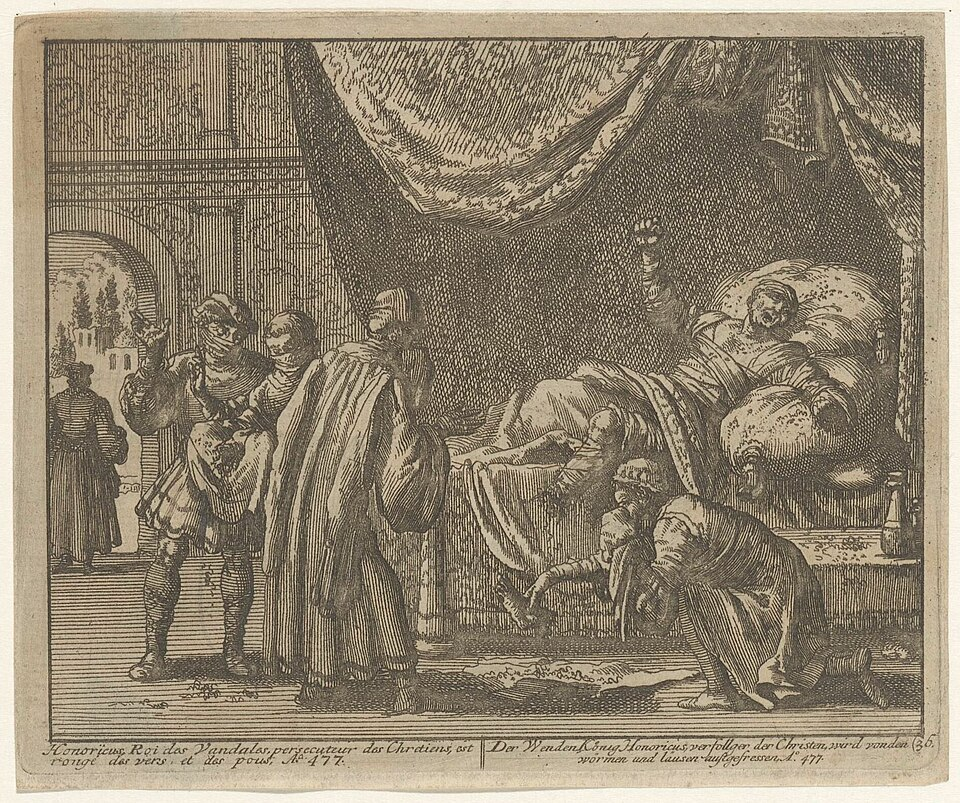
The death of Huneric
Like many of the most obnoxious kings, Huneric died by putrefaction, being eaten alive by worms.
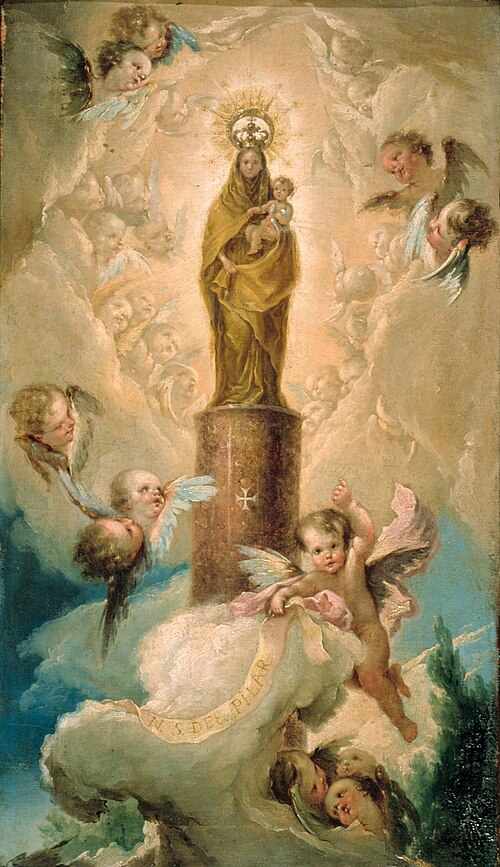
Nossa Senhora Aparecida / Our Lady Aparecida, Aparecida, Sao Paulo, Brazil (1717) – 12 October: Also known as – Our Lady Who Appeared: Nuestra Señora del Pilar / Our Lady of the Pillar – 12 October:
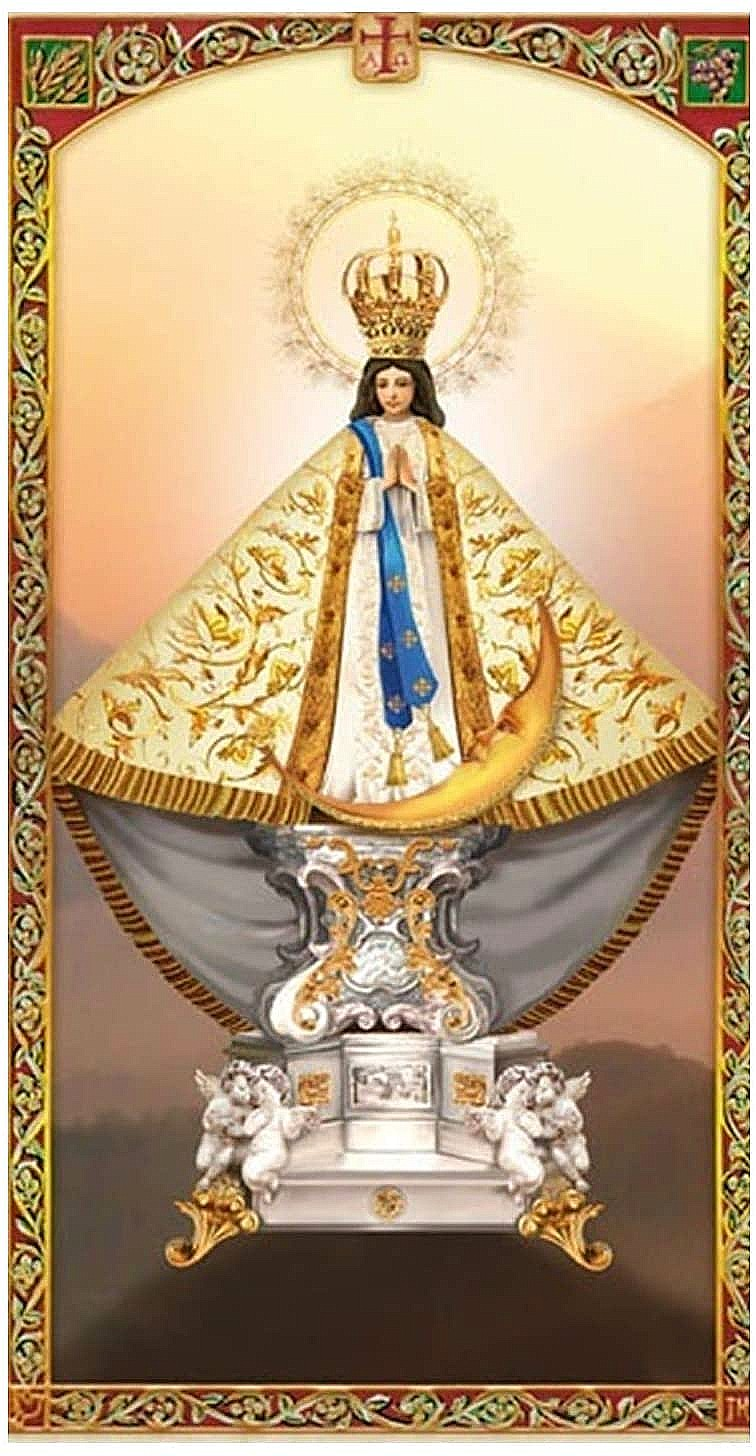
Virgen de Zapopan / Our Lady of Zapopan, Zapopan, Jalisco, Mexico, (1541) – 18 January, 12 October:
Today the village of Zapopan is a quiet little place not many miles from Guadalajara, reached by an excellent highway. Its tranquility and religious atmosphere must be a far cry from pre-Conquest times, when it was a feudal district and tributary of the powerful King of Tonala. In those days the Indians of the district worshiped an idol called Teopintzintl, “The Child God,” to which they offered gifts of hare and partridge. When the kingdom of Tonala bowed to Nuno de Guzman in 1530, Zapopan came under Spanish dominion. The Indian Queen, Chihuapili Tzapotzinco, ordered all the chieftains under her rule, to render their obedience to the Spanish Crown and in March of 1530 the Governor of Atemajac, under whose jurisdiction lay Zapopan, complied with this order. The Mixton War of 1541, however, depopulated the district and the Commander of Tlaltenango, Francisco de Bobadilla, obtained the Viceroy’s permission to repopulate Zapopan with Indians from Tlaltenango, thus lessening the chance of another uprising.
On the eighth of December, 1541, the people of Zapopan was resettled in accordance with the agreement, and on that day, the Franciscan Fray Antonio de Segovia, gave to the newly settled colony, a small image of Our Lady of the Immaculate Conception. For ten years it had accompanied him on his apostolic journeys. In fact, only a short while before, while the Mixton War was still in progress, Fray Antonio, with his missionary companion Fray Miguel de Bolonia, had gone among the warring Indians, the image about his neck, exhorting them to make peace with the Spaniards. It is related that while Fray Antonio was preaching, the Indians saw luminous rays issuing from the image of Our Lady, and that this fact, as much as his preaching, caused them to stop fighting. In thirty-six hours Fray Antonio de Segovia brought to the Viceroy for pardon, more than six thousand Indians, who had laid down their arms. From that time Fray Antonio called the image La Pacificadora, “She Who Makes Peace.”
The image is made of paste – pieces of cornstalk, smoothed and cemented together with glue. It is little more than 30 centimetres in height and represents the Virgin Mary under her title of the Immaculate Conception. The hands, joined before the breast, are of wood. The original sculpture donated by Fray Antonio de Segovia consisted only of the upper half, it is believed, the lower section having been added at a later date. As the lower half is not in proportion to the upper, the reconstruction gives a stunted effect to the image. However, nowadays the Statue is always covered with rich vestments of fabric, the disproportion is not apparent.
In its sculptured form, the Statue represents Our Lady standing with her feet upon a rudely formed crescent moon. She wears a red tunic and a dark blue mantle outlined in gold. One may find much to be desired in the image, considered as a work of art. Yet we must remember that it has the honour of being the first image of the Virgin Mary venerated in the State of Jalisco and that it has seen the Church, in that part of Mexico, grow from the tiniest seed to the great, many-branched tree of the present-day Catholic Faith. Furthermore, for over four centuries, Our Lady of Zapopan has been a constant channel of heavenly favours to the people of Jalisco. A beautiful Church has bee built to house and enshrine her and it remains a vital source of devotion and pilgrimage. Our Lady under this title is celebrated on 18 January and 12 October.
St Amelius of Mortara St Amicus of Mortara
St Cyprian St Domnina of Anazarbus St Edisto St Edistius of Ravenna
St Pantalus of Basle St Priscian the Martyr St Relindis
St Rodobaldo II Cipolla of Pavia (Died 1254) Bishop of Pavia. St Roboaldo II is remembered as a zealous shepherd and for his intense charitable activity.
St Wilfrid (c 633-709) Bishop, Abbot, Founder of Monasteries and Churches.
Martyred in the Spanish Civil War: • Blessed Bartolomé Caparrós García • Blessed Eufrasio of the Child Jesus • Blessed José González Huguet • Blessed Pedro Salcedo Puchades • Blessed Rafael Lluch Garín
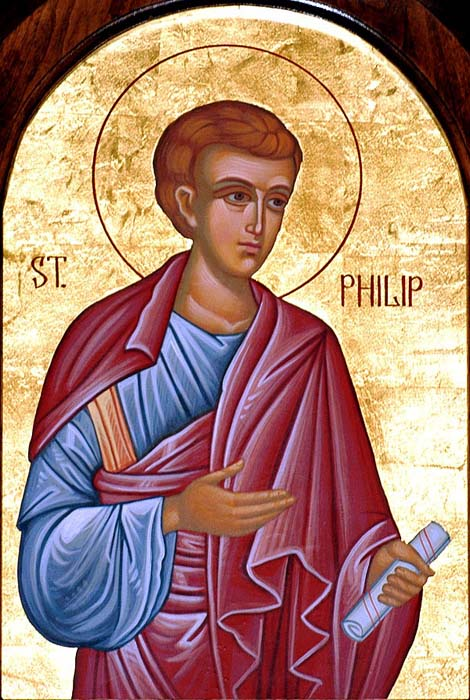
Saint Philip the Deacon, also known as Philip of Hierapolis and Philip the Evangelist. Born at Caesarea, Palestine, he was one of the seven Jerusalem deacons mentioned in the Acts of the Apostles. He preached and performed miracles in Samaria, converting many, including the magician Simon Magus. Upon being commanded by an angel, he travelled from Jerusalem to Gaza, converting and baptizing the eunuch of Queen Candace of Ethiopia on the way.
Transported to Azotus by angels, he preached throughout the region, finally returning to Caesarea where he lived with his four daughters, virgins with the gift of prophecy. Philip met with Saint Paul the Apostle on his last journey to Jerusalem. Some traditions say be became bishop of Tralles (modern Aydin, Turkey).
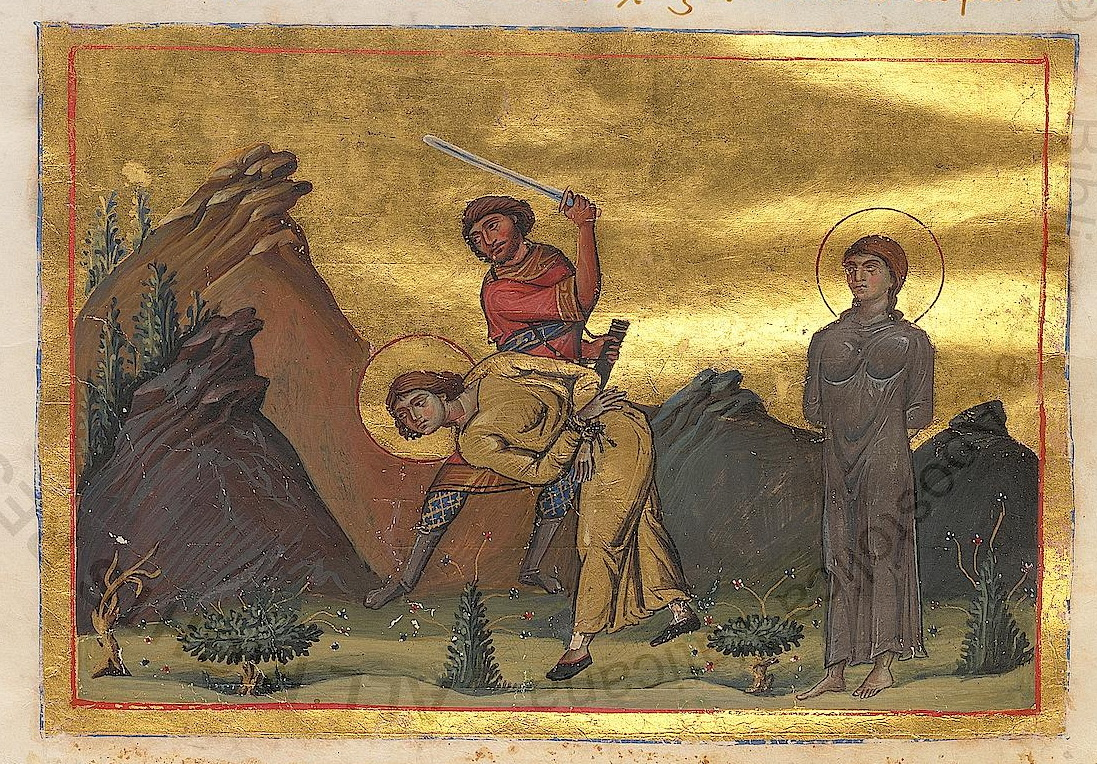
Saints Eulampius and Eulampia, brother and sister martyrs from Nicomedia, Asia Minor (in modern Turkey) were children executed in 310, during the reign of Emperor Maximinus.
Eulampius was arrested by the Roman authorities during an attempt to buy supplies for Christians who were hiding in caves on the outskirts of Nicomedia. After he was whipped, his sister Eulampia was arrested after she emerged from a crowd to embrace and comfort him.
The siblings were executed the next day. First they were thrown into a cauldron of boiling oil, but since they miraculously stepped out unhurt, they were beheaded.
Two hundred soldiers, moved by the courage and faith of the two siblings, converted to Christianity on the spot and were themselves martyred.
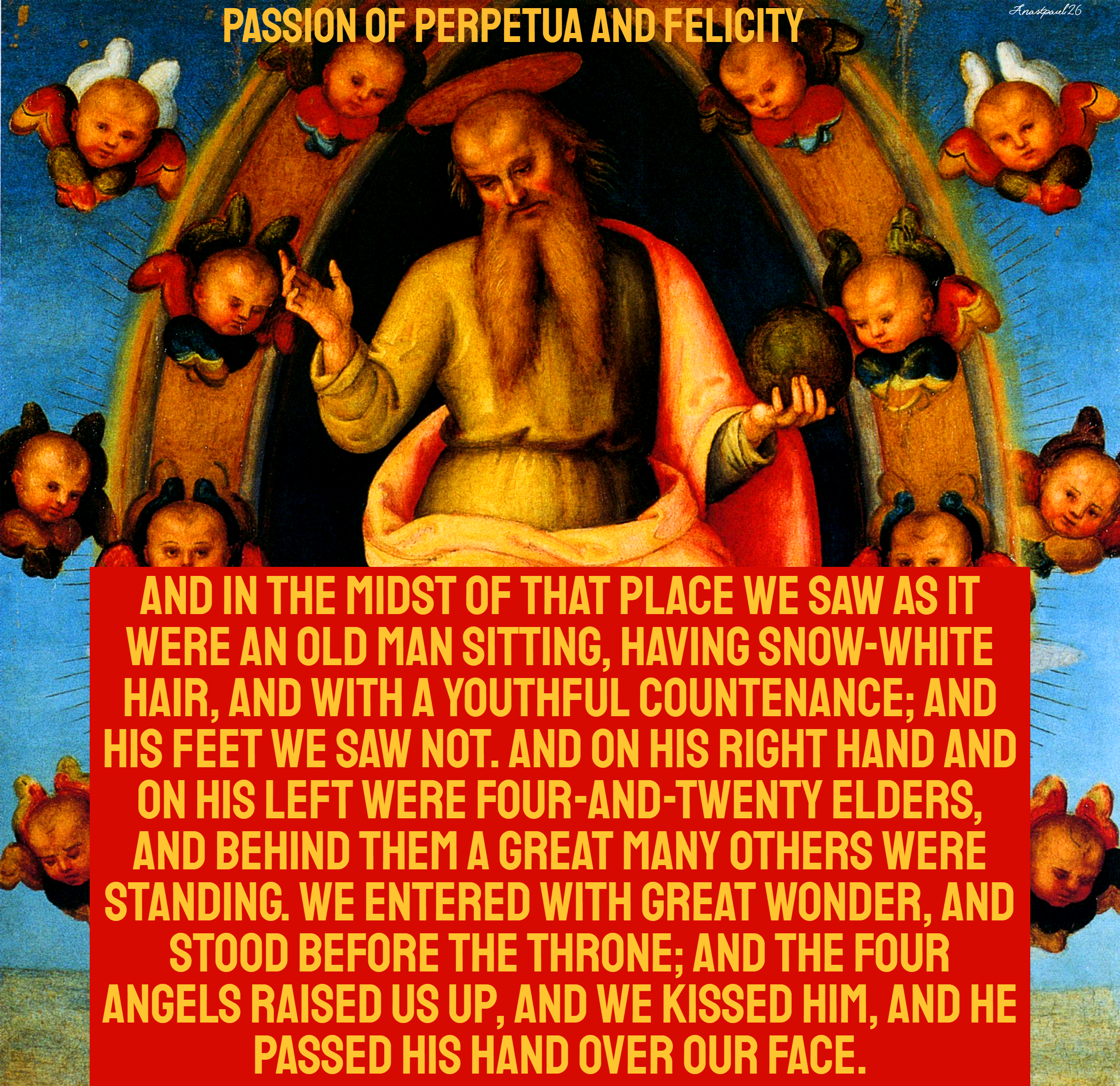
And in the midst of that place we saw as it were an old man sitting, having snow-white hair, and with a youthful countenance; and his feet we saw not. And on his right hand and on his left were four-and-twenty elders, and behind them a great many others were standing. We entered with great wonder, and stood before the throne; and the four angels raised us up, and we kissed Him, and He passed His hand over our face.
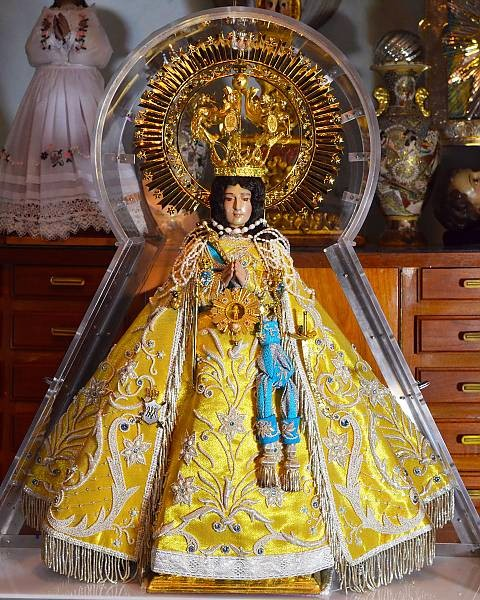
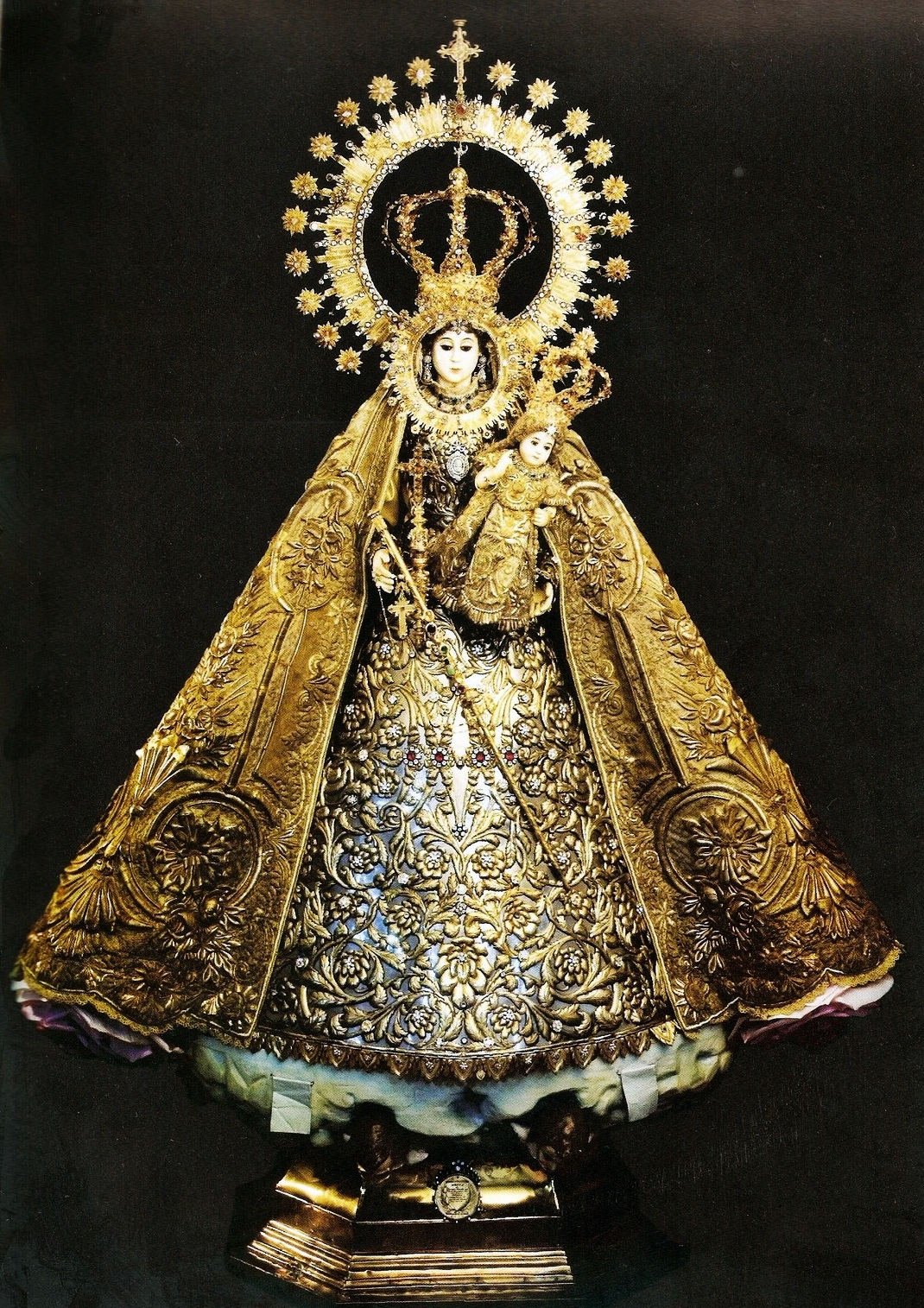
La Naval de Manila / Our Lady of the Most Holy Rosary , Quezon City, Philippines (1593) – Second Sunday of October: Also known as Nuestra Señora del Santísimo Rosario / The Grand Lady of the Philippines.
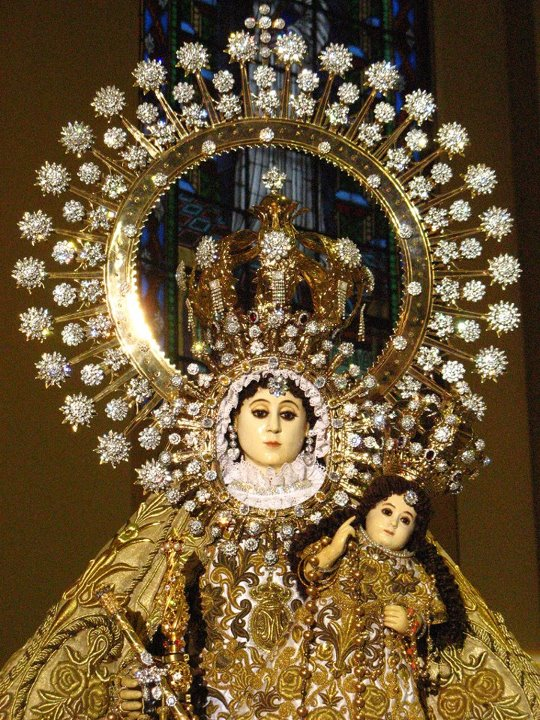
In 1593, the Governor General of the Philippines commissioned a Statue of Our Lady of the Rosary for the Dominican Church in Manila. A un-named Chinese sculptor carved the hardwood body and ivory hands and face, which has Asian features. About 4’8″ tall, the image is dressed in cloth of gold, with a crown and a halo of 24 stars and adorned with precious donated jewels. Our Lady holds the Child Jesus with her left hand and a Rosary with her right. The title “La Naval” refers to Our Lady’s help in the naval battles of Lepanto in 1571 and Manila in 1646, when a small Catholic fleet repeatedly repelled Dutch invaders. The Catholic Church in Manila first celebrated the feast of “La Naval” on 8 October 1646. Pope Pius X’s Apostolic Delegate crowned the Statue on 5 October 1907.
Pope Pius XII also sent an Apostolic Letter on the occasion of the tricentenary of the Battle of La Naval de Manila on 31 July 1946. The Japanese bombing of 27 December 1941 destroyed the Church of Santo Domingo in Manila’s old walled city. Hidden for safekeeping, the holy Statue moved in 1954 to its present location in the Santo Domingo Shrine in Quezon City.
In 1646, naval forces of the Dutch Republic made several repeated attempts to conquer the Philippines in a bid to control trade in Asia. The combined Spanish and Filipino forces who fought, requested the intercession of the Virgin through the Statue prior to battle. They were urged to place themselves under the protection of Our Lady of the Rosary and to pray the Rosary repeatedly. They went on to rebuff the continued attacks by the superior Dutch fleet, engaging in five major battles at sea and losing only fifteen members of the Spanish Navy. After the Dutch retreat, in fulfillment of their vow, the survivors walked barefoot to the Shrine in gratitude to the Virgin.
Later, on 9 April 1662, the Cathedral chapter of the Archdiocese of Manila declared the naval victory a miraculous event owed to the intercession of the Virgin Mary, declaring:
“Granted by the Sovereign Lord through the intercession of the Most Holy Virgin and devotion to her Rosary, that the miracles be celebrated, preached and held in festivities and to be recounted amongst the miracles wrought by the Lady of the Rosary, for the greater devotion of the faithful to Our Most Blessed Virgin Mary and Her Holy Rosary.“
St Francis Borgia SJ (1510-1572) Priest of the Society of Jesus, Advisor, Missionary, Evangelist, Administrator par excelleance. Francisco de Borja y Aragon was the 4th Duke of Gandía, was a Grandee of Spain, a Spanish Jesuit and third Superior General of the Society of Jesus
St Aldericus
St Cassius St Cerbonius of Populonia St Cerbonius of Verona St Clarus of Nantes Bl Demestrius of Albania Bl Edward Detkens St Eulampia St Eulampius St Florentius the Martyr St Fulk of Fontenelle St Gereon St Gundisalvus Bl Hugh of Macon St John of Bridlington OSA (1319-1379) Priest, Prior of the Monastery of the Canons Regular of St Augustine. Bl Leon Wetmanski St Maharsapor the Persian St Malo the Martyr St Patrician St Paulinus of Capua
St Paulinus of York (c 584-644) First Bishop of York, Missionary – Paulinus was a member of the Gregorian mission sent in 601 by Pope Gregory I.
Bl Pedro de Alcantara de Forton de Cascajares St Pinytus of Crete Bl Pontius de Barellis St Tanca St Teodechilde St Victor of Xanten
Martyrs of Ceuta – 7 beati: A group of seven Franciscan Friars Minor missionaries to Muslims in the Ceuta area of modern Morocco. Initially treated as madmen, within three weeks they were ordered to convert to Islam and when they would not they were first abused in the streets, then arrested, tortured and executed. • Angelo • Daniele di Calabria • Donnolo • Hugolinus • Leone • Nicola • Samuele They were beheaded in 1227 in Mauritania Tingitana (Ceuta, Morocco). Local Christians secreted the bodies away and gave them proper burial in Ceuta. They were Beatified in 1516 by Pope Leo X.
St Denis of Paris (Died c 258) and Companions – the First Bishop of Paris, Martyr, Confessor (Optional Memorial) One of the 14 Holy Helpers
St John Leonardi (1541-1609) (Optional Memorial) Priest, Founder of the Clerks Regular of the Mother of God of Lucca, wherein he assumed the name of “Giovanni of the Mother of God”, Confessor, Reformer, Apostle of the Holy Eucharist and Eucharistic Adoration, Marian devotee.
Bl Aaron of Cracow St Abraham the Patriarch St Alfanus of Salerno St Andronicus of Antioch St Athanasia of Antioch Bl Bernard of Rodez St Demetrius of Alexandria St Deusdedit of Montecassino St Domninus St Dorotheus of Alexandria St Donnino of Città di Castello (Died 610) Lay Hermit St Eleutherius St Geminus St Gislenus St Goswin Bl Gunther
St Lambert
St Louis Bertrand OP (1526-1581) “Apostle of South America” – Dominican Priest, Missionary, Preacher, Confessor, Teacher, Spiritual Director, Miracle-Worker.
St Publia St Rusticus St Sabinus of the Lavedan St Valerius — Martyrs of the Spanish Civil War – Martyrs of Astoria – (9 saints): Also known as Martyrs of Turon: A group of Brothers of the Christian Schools and a Passionist priest martyred in the persecutions during the Spanish Civil War. They are – • Aniceto Adolfo • Augusto Andrés • Benito de Jesús • Benjamín Julián • Cirilo Bertrán • Inocencio de la Immaculada • Julián Alfredo • Marciano José • Victoriano Pío They were martyred on 9 October 1934 in Turón, Spain and Canonised on 21 November 1999 by St Pope John Paul II. — Martyrs of Laodicea – (3 saints): Three Christians martyred together in Laodicea, but no other information about them has survived but their names – Didymus, Diodorus and Diomedes. They were martyred in Laodicea, Syria.
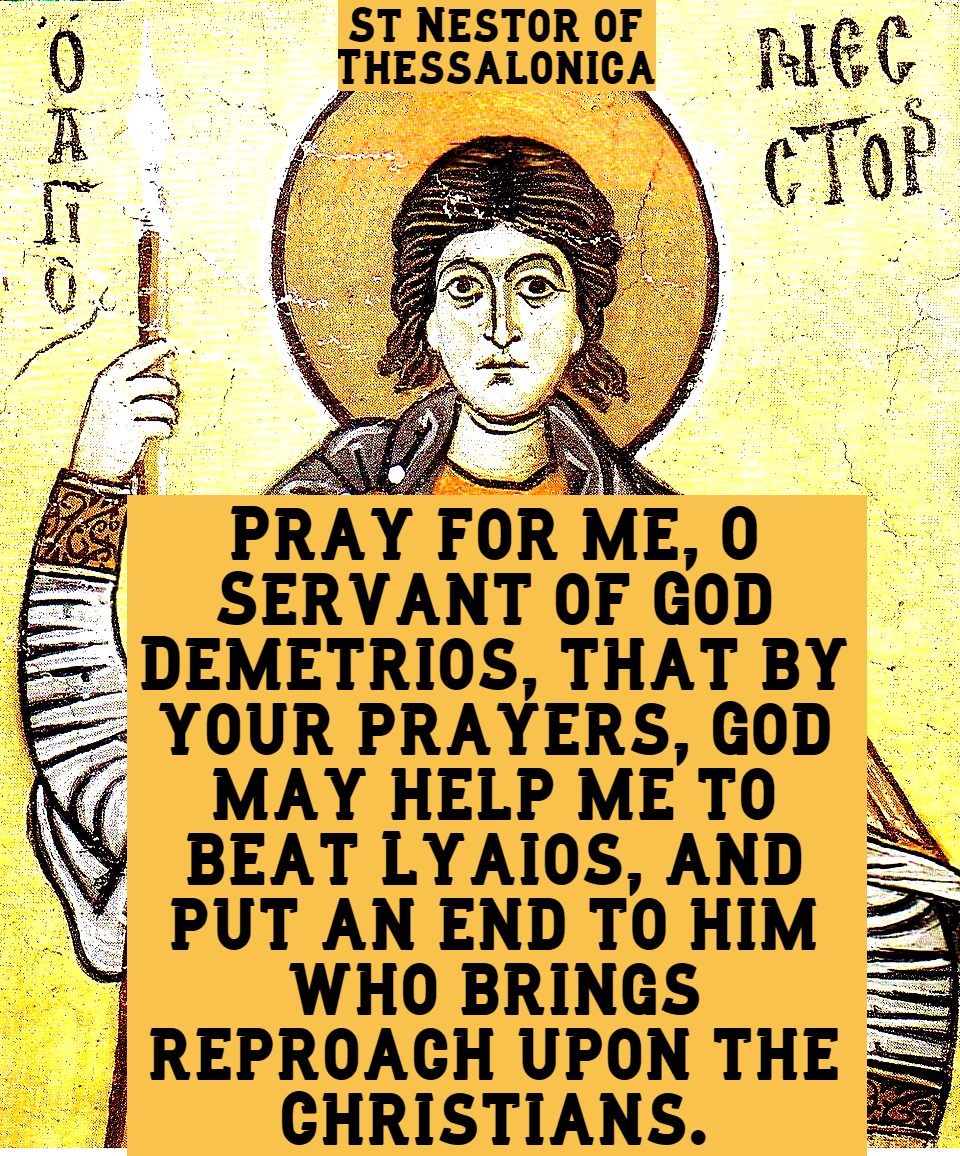
Saint Nestor of Thessalonica, martyr, was a wrestler known for having been the student of St. Demetrius of Thessalonica, who instructed Nestor in the Faith. The emperor was visiting Thessaloniki, and he built a high platform in the midst of the city so that a gigantic barbarian named Lyaios could wrestle there, seen by all. Beneath the platform many spears and other sharp weapons were placed pointing upward. When Lyaios defeated his opponents, he threw them down onto the spears. As a method of execution, Christians were killed in this way. When Nestor saw how Emperor Maximian rejoiced over the victories of his champion, he despised his pride. Seeing the miracles of Saint Demetrios, however, he was inspired and went to the prison where the holy martyr was confined, and fell at his feet.
“Pray for me, O Servant of God Demetrios,” he said, “that by your prayers, God may help me to beat Lyaios, and put an end to him who brings reproach upon the Christians.”
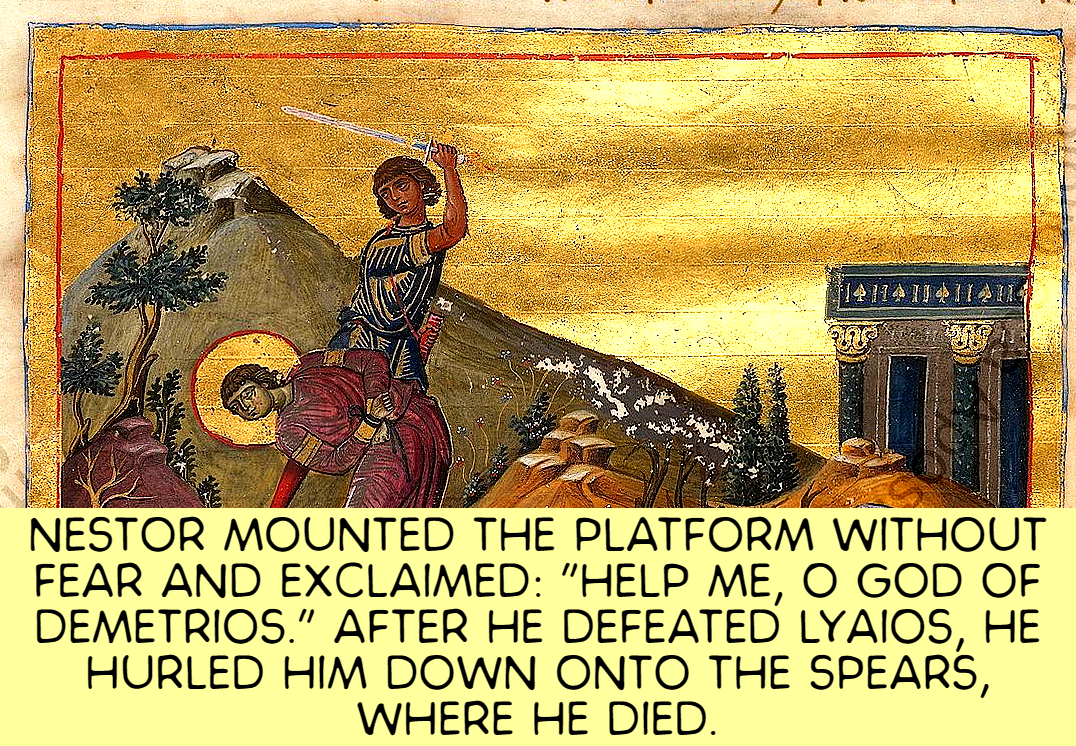
The saint, after making the Sign of the Cross over Nestor, told him that he would prevail over Lyaios, and then suffer for Christ. Nestor mounted the platform without fear and exclaimed: “Help me, O God of Demetrios.” After he defeated Lyaios, he hurled him down onto the spears, where he died.
Maximian (co-ruler with Diocletian) became enraged and ordered that both Nestor and Demetrios should be put to death. Saint Demetrios was stabbed with spears, and Saint Nestor was beheaded.
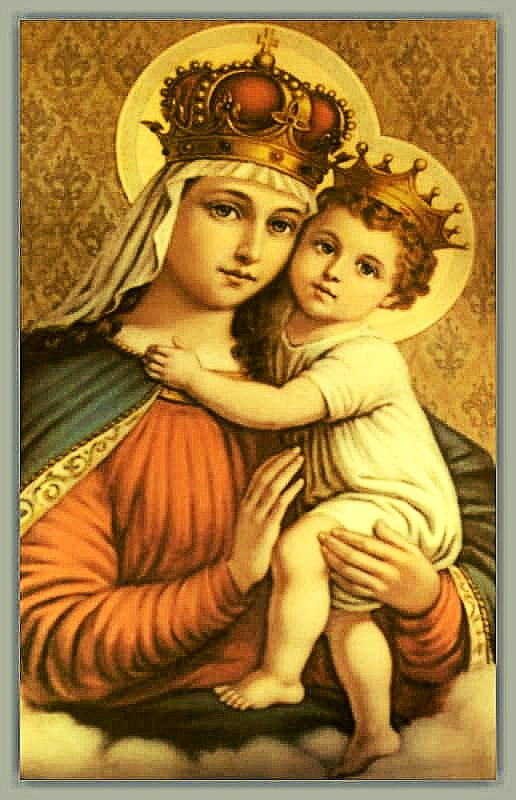
Notre-Dame du Bon Remède / Our Lady of Good Remedy, France (1197) – 8 October:
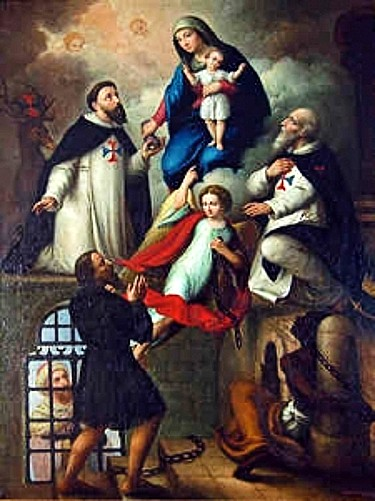
In 1197, a Sorbonne Doctor of Theology and newly Ordained Priest, Jean de Matha, while saying his first Holy Mass, saw a vision of an Angel with a red and blue cross on his chest and his hands resting on the heads of two captives. The following year, St Jean founded a religious order dedicated to the redemption of Christians held as slaves by Moslems — the Hospitaler Order of the Most Holy Trinity and of Captives, commonly called the Trinitarians. On their habit, Jean placed the Cross he had seen on the Angel,and, as their Patron, he gave them Notre-Dame du Bon Remède, a popular devotion in his Provençal homeland. Now devoted largely to education and evangelisation, for three centuries they raised funds and travelled from Europe into Africa to buy thousands of captives’ freedom with Our Lady’s help. A painting (right) in the Trinitarian Motherhouse of Cerfroid in northern France, shows Our Lady of Good Remedy giving a bag of money to St Jean/John of Matha, while a grateful freedman and St Felix of Valois, look on. The Order celebrates her feast day 8 October.
800 years ago Christians were being captured and sold into slavery by the thousands, and nobody knew what to do about it. Then, in the year 1198, a man had an idea. St. John of Matha founded the Trinitarians to go to the slave markets, buy the Christian slaves and set them free. To carry out this plan, the Trinitarians needed large amounts of money. So, they placed their fund-raising efforts under the patronage of Mary. They were so successful that, over the centuries, the Trinitarians were able to free thousands and thousands of people and to return them safely home. In gratitude for her miraculous assistance, St. John of Matha honoured Mary with the title of “Our Lady of Good Remedy.” Devotion to Mary under this ancient title is widely known in Europe and Latin America and the Church celebrates her feast day on 8 October. Our Lady of Good Remedy is often depicted as the Virgin Mary handing a bag of money to St. John of Matha. When in need – for whatever reason but especially where you have had difficulty obtaining help – invoke the aid of Our Lady of Good Remedy and you will surely experience the power of her intercession.
St Bridget of Sweden (c 1303-1373) Widow, Religious, Mystic, Confessor, Founder of the Bridgettines Nuns and Monks, author of “The Pieta” book of devotions. Feast day pre-1969 is today 8 October
St Hugh Canefro (1148-1233) Religious of the Order of Malta, Apostle of Charity, Miracle-Worker.
Bl John Adams Bl John Lowe St Keyna St Laurentia St Nestor of Thessalonica St Palatias
St Pelagia the Penitent (Fourth or Fifth Century) Recluse. Like St Mary Magdalen and St Mary of Egypt, St Pelagia inspired Christians of the Middle Ages as an enchanting icon of repentance.
Saint Osith, also known as Osyth, Osgyth, Othith, Ositha, Sythe, a Mercian noblewoman and prioress martyred in the 8th century. Born in Quarrendon, Buckinghamshire, England, she was the daughter of Frithuwald, a sub-king of Mercia in Surrey. Her mother was Wilburh, of the royal house of Mercia. Her parents, with St Erconwald, founded Chertsey Abbey in 675 AD.
Raised in the care of her maternal aunts, St Edith of Aylesbury and Edburga of Bicester, her ambition was to become an abbess, but she was forced by her father into a marriage with Sighere, King of Essex. She is the mother of King Offa of Essex.
While her husband was away on a hunt, Osith persuaded two local bishops to accept her vows as a nun. Upon the king’s return some days later, he reluctantly agreed to her decision and granted her some land at Chich near Colchester, now named after her as St Osyth, where she established a convent, and ruled as first abbess. She was beheaded by Vikings, perhaps because she resisted being carried off.
The holy spring at Quarrendon, is associated with her legend, in which Osith stood up after her execution, picking up her head and walking with it in her hands, to the door of a local convent, before collapsing there.
Veneration of St Osith was widespread across England. Norwich Cathedral and St Albans Abbey had chapels dedicated to her in the Middle Ages.
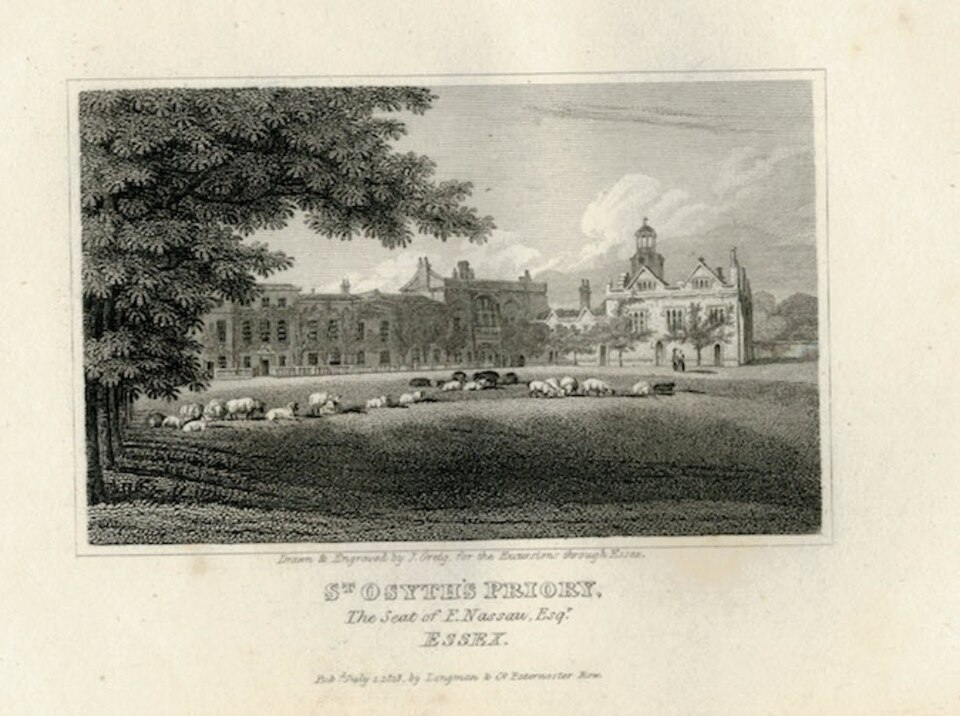
St Osyth Priory, after being stolen by Henry VIII and turned into a manor house for his lackeys
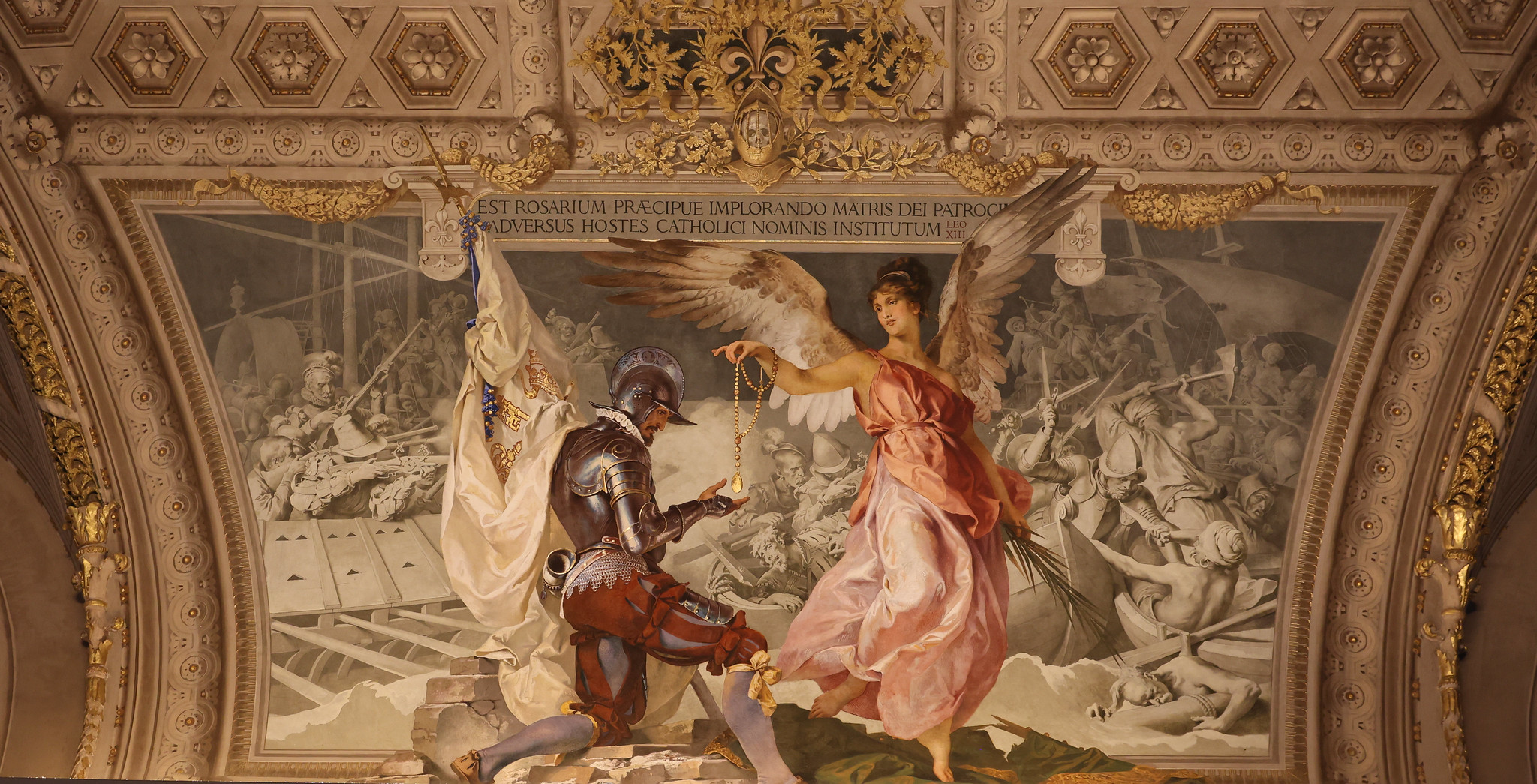
On Sunday 7 October 1571 the combined Christian fleets under Don John of Austria achieved a significant naval victory over the Turks in the Straits of Lepanto. Thousands of Christians were liberated, the Turkish fleet was destroyed and they suffered their first great defeat at sea. In gratitude to God and Our Lady, Pope Saint Pius V ordered an annual commemoration to be made of Our Lady of Victory. In 1573 Pope Gregory XIII transferred the feast to the first Sunday of October with the title Feast of the Most Holy Rosary since the victory was won through invocation of Our Lady of the Rosary. In 1716 Pope Clement XII extended the feast to the whole Latin Rite calendar, assigning it to the first Sunday in October. Saint Pope Pius X changed the date to 7 October in 1913.
St Martin Cid Bl Matthew Carreri St Osith St Palladius of Saintes St Quarto of Capua St Rigaldo
Martyrs of Arima: Eight lay people Japan who were martyred together in the persecutions of Christianity in Japan: • Blessed Hadrianus Takahashi Mondo • Blessed Ioanna Takahashi • Blessed Leo Hayashida Sukeemon • Blessed Martha Hayashida • Blessed Magdalena Hayashida • Blessed Didacus Hayashida • Blessed Leo Takedomi Kan’Emon • Blessed Paulus Takedomi Dan’Emon They were martyred on 7 October 1613 in Arima, Hyogo, Japan and Beatified on 24 November 2008 by Pope Benedict XVI.
Mercedarian Nuns of Seville: Five Mercedarian nuns at the monastery of the Assumption in Seville, Spain noted for their piety – Sisters Agnese, Bianca, Caterina, Maddalena and Marianna.
Martyred in the Spanish Civil War • Blessed José Llosá Balaguer
Blessed Artaldo of Belley, also known as Artaldus, Artaud, Arthaud, Arthold, Artholdus, Artoldo, was a 13th-century Carthusian Bishop of Belley, France. Artaldus was born in the castle of Sothonod in Savoy. At the age of eighteen, he went to the court of Duke Amadeus III, but a year or two after, he became a Carthusian at Portes. After many years, being a priest and an experienced and holy religious, he was sent by the prior of the Grande Chartreuse to found a charterhouse near his home, in a valley in the Valromey significantly called “the cemetery”. Here Artaldus established himself with six of his brethren from Portes. The community was no sooner well settled down, than there buildings were destroyed by fire, and St. Artaldus had to begin all over again. He chose a fresh site on the Arvieres River, and his second foundation was soon built and occupied, dedicated to the Virgin Mary, in 1132.
But a Carthusian cell could not contain the ever-increasing reputation of Artaldus: like his master St. Bruno, he was consulted by the Pope, and when he was well over eighty, he was called from his monastery to be bishop of Belley. However, after less than two years of episcopate, his resignation was accepted, and he returned to Arvieres, where he lived in peace for the rest of his days. During his last years, he was visited by St. Hugh of Lincoln, who had come into France, and who, while he was prior of the charterhouse of Witham, had induced Henry II to become a benefactor of Arvieres.
The cultus of St. Artaldus, called simply Blessed by the Carthusians, was confirmed for the diocese of Belley in 1834. He was 105 years old when he died on 6 October 1206, the same day as the founder of his order, St Bruno.
Notre-dame-de-toute-aide de Querrien, France / Our Lady of All Help (1652) – 6 October, for the Feast of the Holy Rosary on 7 October) 15 August (the Assumption) and the Sunday following 8 September (Feast of the Nativity of Our Lady):
In 574, the Monk Saint Columban came from Ireland and landed on the coast of Brittany with 12 companions. The Monk Saint Gall, friend and companion of St Colomban, was part of the group. The latter stopped at Querrien and there, he found a clear and limpid spring gushing out of the ground “so that the inhabitants can knead bread there” . St Gall also built a wooden Oratory which he dedicated to Our Lady. He placed there, a wooden Statue, representing the Virgin and Child , a Statue he had sculpted himself. Over time, the Oratory was abandoned, it disintegrates and the Statue fell to the ground and was buried in the mud near the source of the spring.
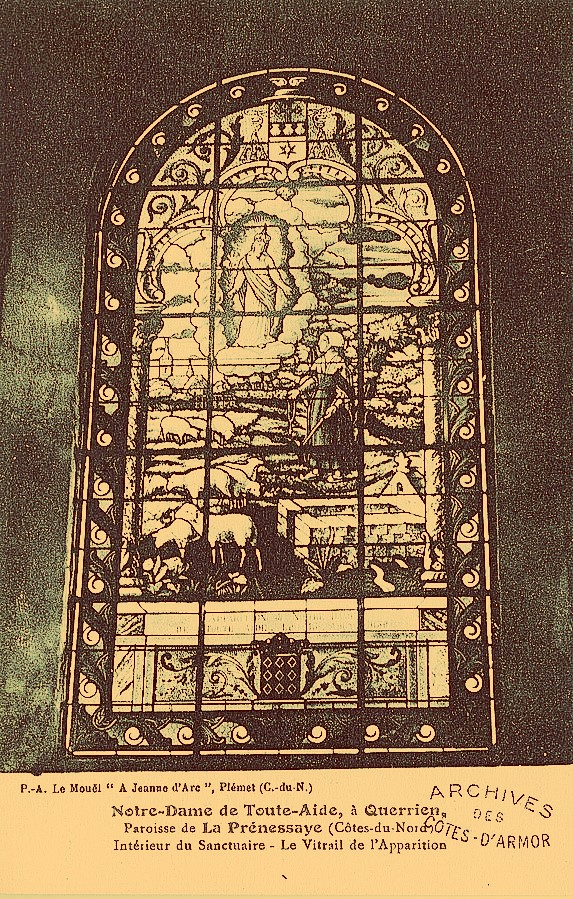
On 15 August 1652, Jeanne Courtel a 12-year-old girl, deaf and dumb from birth. while guarding the family’s sheep saw a “beautiful lady” who spoke to her. Thereupon, Jeanne was immediately able to hear and to speak to the great astonishment of all the inhabitants of the village. A few days later, Jeanne saw the beautiful lady again who asked to have the ground dug up near the source of the spring, where the Statue of the Virgin was buried. The wooden Statuette was found at the place indicated, confirming for the people, the authenticity of the Apparition. There were a total of fifteen appearances of Our Lady with which Jeanne was favoured, until September of the same year. From that time on, pilgrims arrived and numerous miracles were recorded.
Shortly after this miracle became known, there was a second one just as remarkable. There was a community benefactor whose son was at death’s door with a high fever. Invoking Our Lady before this same Statue the man saw his son instantly cured. After this second wondrous miracle, the Statue was moved into the Chapel and there were many miracles that followed. One miracle was worked in favour of a religious Sister who had been terribly burned and was she was instantly cured. A Priest, falsely accused of a crime, was acquitted after special prayers to the “miracle lady.” The statue had had no name before this but the Parishioners decided now to call her Our Lady of All Help, Quick Help, or Our Lady of Good Remedy.
The local Bishop, Denis de La Barde, launched an investigation and went there to verify the child’s declarations. Satisfied with his hearings, he had a chapel erected in 1652 to organise the devotion of the faithful. After having carried out a canonical investigation, the Bishop of Saint-Brieuc issued a positive opinion on the Apparition and decided to have a Chapel built and to organise worship there. The following 29 September, the Bishop returned to bless the first stone of the Chapel during a celebration which brought together 1,500 pilgrims.
On 14 August 1950, a great celebration was held in the Sanctuary. This celebration was attended by 20,000 pilgrims, several Bishops, the Abbots of Brittany and 200 Priests from Saint-Brieuc, Rennes and Vannes , for the crowning of the Statue of Notre-Dame de Tout-Aide . It was Archbishop Clément Roque of Rennes who placed the crown designed by Émile Daubé and made by goldsmith René Desury on the head of the Statue. This coronation was carried out with the authorisation and blessing of Pope Pius XII.
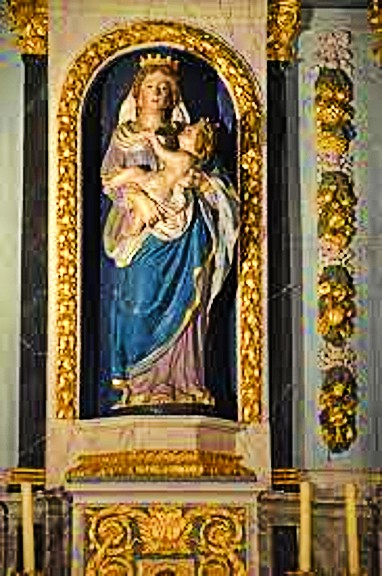
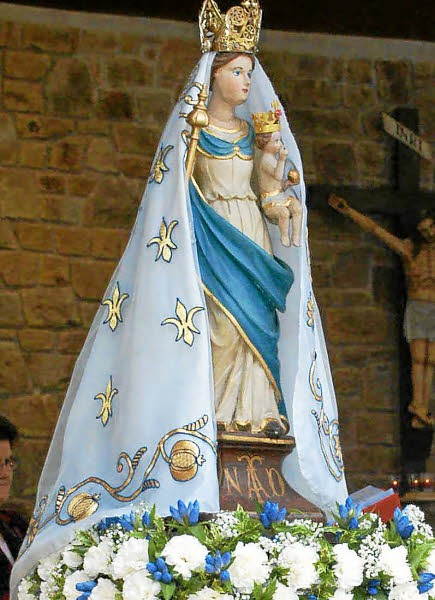
The Statue itself is only about 60 centimetres tall. The Blessed Virgin Mary is crowned, and holds her Infant Son in one arm, and a sceptre in the other. At the time of the French Revolution and during the accompanying Reign of Terror, the Abbey was destroyed. A pious lady took the Statue of Our Lady of All Help and safeguarded it until the trouble was over. After her death the Statue was restored to the community. The Statue of Our Lady of All Help has survived several wars since.
In 1998, a series of renovations began which would continue for several years. Today pilgrimages continue all year with often as many as 10 000 attending the major celebrations. The current Church incorporates the small Chapel (the remains of which, can still be seen on the north side of the building).
There is a short and very lovely prayer which, for centuries, has been associated with this Statue. It is, “Oh, Mother of All Help, say but one word in our behalf to Thy Divine Son, for He cannot refuse thee any favour. Amen.”
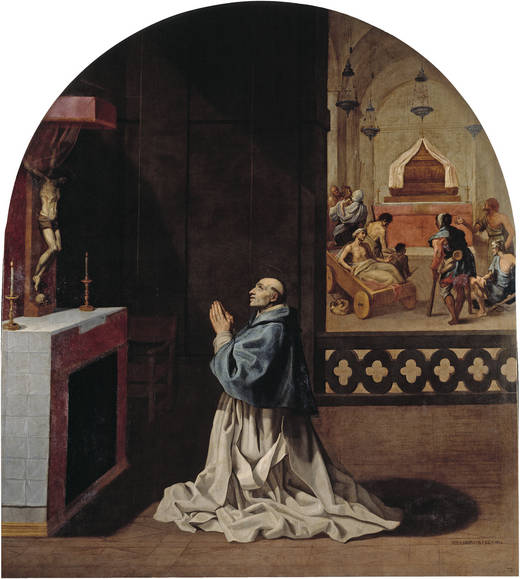
St Bruno O.Cart (c 1030-1101) Priest, Confessor, Hermit, Monk, Mystic, Founder of the Carthusian Order, Philosopher, Theologian, Teacher, Advisor, Writer (Optional Memorial)
Blessed Adalbero of Lambach (c 1010–1090) Bishop of Würzburg and Count of Lambach-Wels, Reformer, Mediator and Advisor, founder of Churches and Monasteries.
St Pardulf St Renato of Sorrento St Romanus of Auxerre St Sagar of Laodicea — Martyrs of Capua – 4 saints: A group of martyrs who were either killed in Capua, Italy, or that’s where their relics were first enshrined. We now know nothing but their names – Aemilius, Castus, Marcellus and Saturninus.
Martyrs of Kyoto – 52 beati: Fifty-two Japanese lay people, some single, some married, some parents, some children, who were martyred together during one of the government sponsored persecutions of Christians.
Martyrs of Trier: Commemorates the large number of martyrs who died in Trier, Germany in the persecutions of Diocletian. 287 in Trier, Germany.
One Minute Reflection – 6 October – “Month of the Holy Rosary” – Readings: Ps 36:30-31, Ps 36:1, Sir 31:8-11, Luke 12:35-40
Blessed are those servants whom the master, on his return, shall find watching.
Luke 12:35-40
REFLECTION – And your public assemblies I have come to hate. For there are excessive banquetings, and subtle flutes which provoke to lustful movements, and useless and luxurious anointings, and crowning with garlands. With such a mass of evils do you banish shame; and you fill your minds with them, and are carried away by intemperance, and indulge as a common practice in wicked and insane fornication. And this further I would say to you, why are you, being a Greek, indignant at your son when he imitates Jupiter, and rises against you and defrauds you of your own wife? Why do you count him your enemy, and yet worship one that is like him? And why do you blame your wife for living in unchastity, and yet honour Venus with shrines? If indeed these things had been related by others, they would have seemed to be mere slanderous accusations, and not truth. But now your own poets sing these things, and your histories noisily publish them.
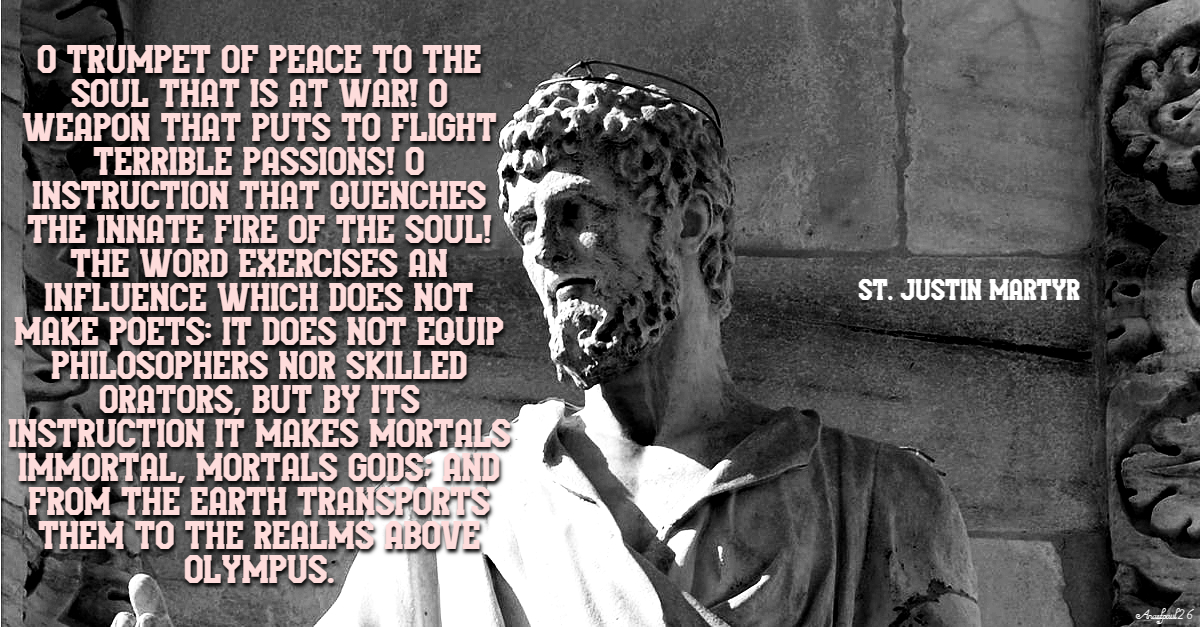
Henceforth, you Greeks, come and partake of incomparable wisdom, and be instructed by the Divine Word, and acquaint yourselves with the King immortal; and do not recognise those men as heroes who slaughter whole nations. For our own Ruler, the Divine Word, who even now constantly aids us, does not desire strength of body and beauty of feature, nor yet the high spirit of earth’s nobility, but a pure soul, fortified by holiness, and the watchwords of our King, holy actions, for through the Word power passes into the soul. O trumpet of peace to the soul that is at war! O weapon that puts to flight terrible passions! O instruction that quenches the innate fire of the soul! The Word exercises an influence which does not make poets: it does not equip philosophers nor skilled orators, but by its instruction it makes mortals immortal, mortals gods; and from the earth transports them to the realms above Olympus.
St. Justin Martyr
PRAYER – Our Father who art in heaven, Hallowed be Thy name. Teach us Almighty Father to pray, fill us with the love of Your Spirit and guide us always by the Word and Trust of our lives. With the Blessed Mother of God and of the Holy Rosary, we kneel in love and adoration. May her prayers lead us to heaven. Amen
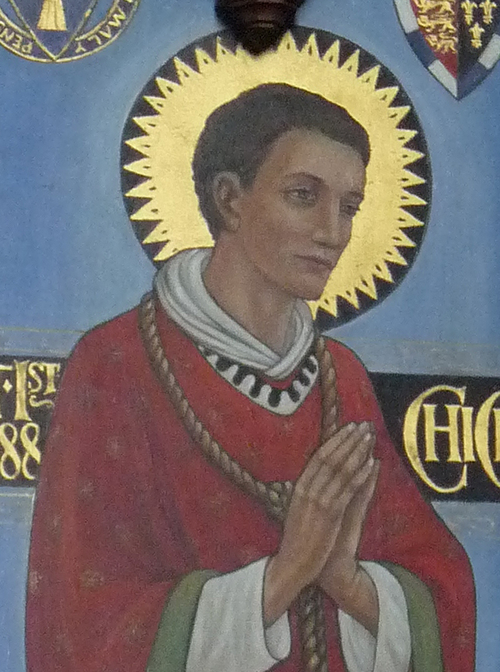
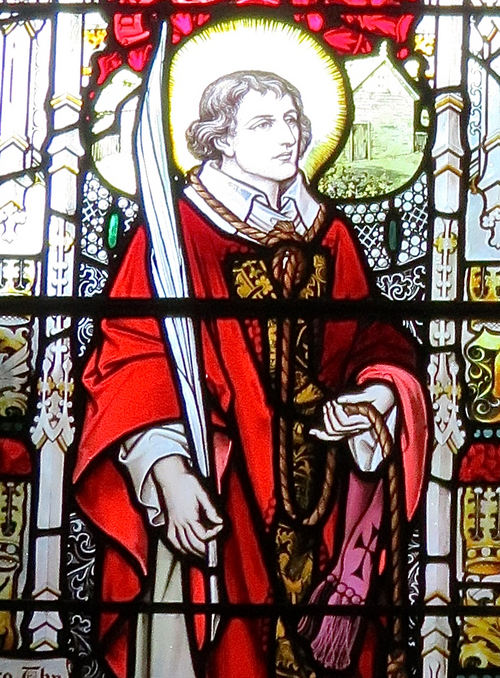
All martyrs from England murdered on 5 October 1588., all beatified by Pope Pius XI.
Blessed William Hartley was an English priest. Born in Wilne, Derbyshire and raised Protestant, he studied at Oxford University and became an Anglican minister before converting to Catholicism. He studied in Rheims, France and was ordained in 1580. Returning to England, he worked with Bl Edmund Campion, ministering to covert Catholics. Arrested in 1582 for being a priest, he was deported but soon returned to England to resume his ministry. He was captured at Holborn, and hanged on 5 October 1588 at Shoreditch, London.
Blessed John Hewett, also known as John Hewitt, John Weldon, John Savell. He was born in York, North Yorkshire, the son of a draper. Educated at Caius College, Cambridge, he studied for the priesthood at Rheims, France, and was ordained in 1586. Returning to England as a covert priest, he used the names Weldon and Savell to hide his identity. Arrested at Grey’s Inn Lane, London, on 10 March 1587 for the crime of priesthood, and hanged on 5 October 1588 at Mile End Green, London.
Blessed Robert Sutton, layman martyr, was a tutor or schoolmaster, born at Kegworth in Leicestershire, who had practiced his profession in Paternoster Row, London. Sometime prior to June 1586, he met there a Mr. Blythe (a.k.a. Oliver Heywoode), an old priest working in the area of Newgate, and converted to Catholicism. He was soon arrested, incarcerated and hanged in 1588 at Clerkenwell, London.
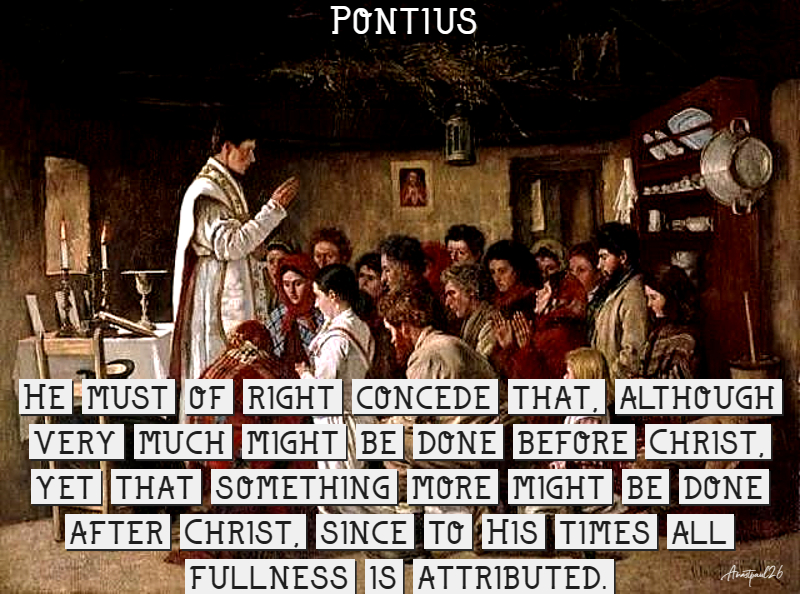
He must of right concede that, although very much might be done before Christ, yet that something more might be done after Christ, since to His times all fullness is attributed.
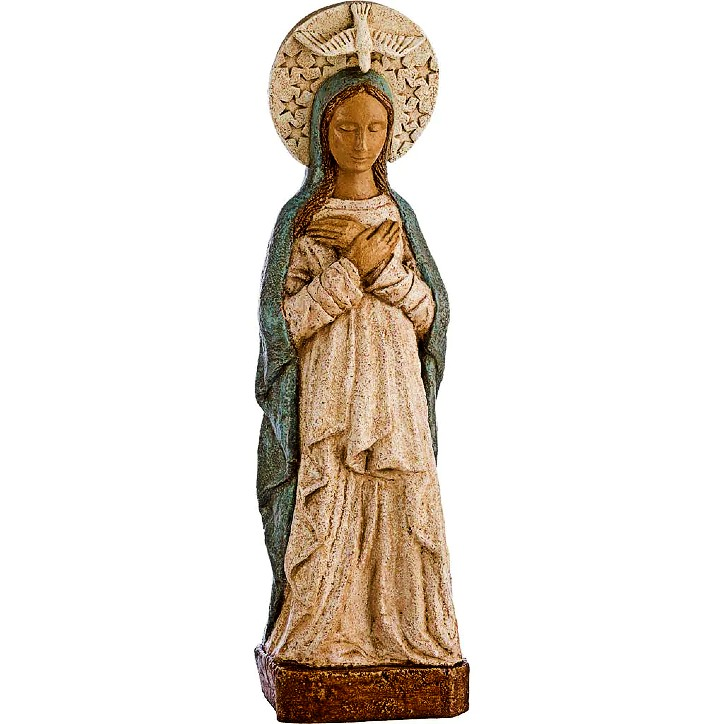
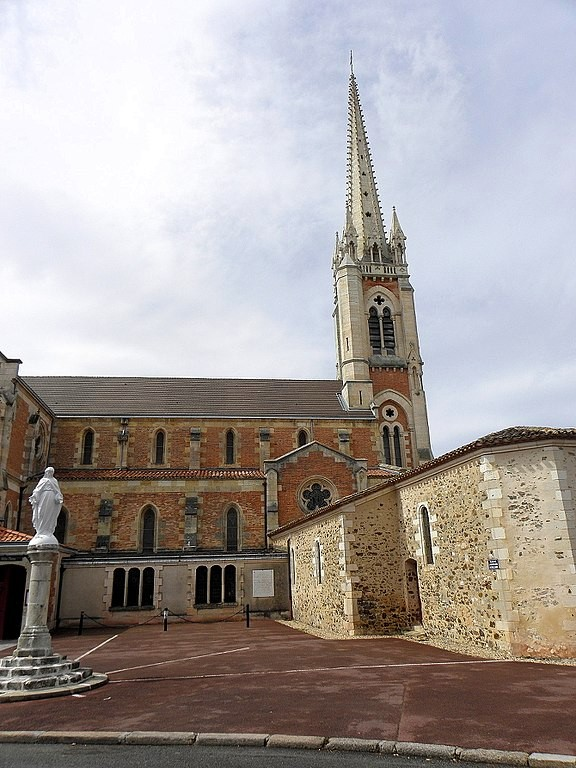
Notre-Dame Arcachon / Our Lady of La Teste-de-Buch, Guienne (1519) – 5 October:
According to the Marian Calendar, Our Lady of Buch is located in the Pine Mountains, in Guienne. The sea cast this image upon the sands, while Saint Thomas, the Cordelier Friar, was praying on behalf of two vessels which he saw in danger of perishing. He respectfully received this image and deposited it in this place, in a small Chapel which he built there.
Guienne, or Guyenne, refers to a loosely defined region of pre-revolutionary, South-Western France. Buch, or La Teste-de-Buch, is a Town in the Gironde region in Aquitaine, located on the south shore of Arcachon Bay. The “Cordeliers,” known also as the Grey Friars for the heavy grey cloth they wore, are Franciscans. Their belt was but a rope with five knots tied at the end, which gave them their name in France. The “Saint Thomas” mentioned is Thomas Illyricus (1484-1528), a Franciscan native of Vrana in the Diocese of Zarian. He was never Canonised. He was a hermit and itinerant preacher and an indefatigable missionary traveller who lived near Arcachon in la Teste-de-Buch. It was he, who built the Chapel of Notre-Dame Arcachon.
“More than his voice, vibrant with emotion,” wrote the Abbe Mauriac, “more than his ascetic appearance, more than his style so direct and so strong, what stirred and attracted thousands of listeners, was his ardent sincerity which overflowed and poured itself out, while his love of God and of souls, accented his words and made him very eloquent.”
It was in the year 1519 that Thomas Illyricus found the famous Statue now known as the Virgin of Advent at the edge of the sea. He built a Shrine of wood that same year for the Statue, and pilgrimages date from 1525 and grew so much in numbers that in 1624, Cardinal Francois de Sourdis authorised the construction of a stone Chapel. This small Chapel was gradually buried by the sands and it was decided to build a new one which was completed in 1723. The Church is known as the Church of L’eglise Notre Dame des Passes, or Notre-Dame Arcachon. Many miracles have been wrought through devotion to Mary at the Shrine and the Church is dedicated to sailors, who face the channels for entry into the Arcachon basin.
There is a tall Cross known as the Sailors Cross which stands at the end of the pier of the Chapel. Built at the same time as the construction of the Chapel in 1722, the original was destroyed by a gale in 1855 and was replaced by the one that we see today. It was once customary for sailors to greet the Cross with two blasts from their fog horn, to appeal for divine protection, when they went out on the ocean and faced its dangers. Mary is particularly interested in seafarers and folk living near waters. She who was so familiar with the Sea of Galilee and the profession of the Twelve Pillars of her Divine Son’s Church, she is still is vigilant for their welfare and happiness.
Bl Alberto Marvelli St Alexander of Trier St Anna Schaeffer St Apollinaris of Valence St Attilanus of Zamora St Aymard of Cluny
St Boniface of Trier St Charitina of Amasa St Eliano of Cagliari
St Firmatus of Auxerre St Flaviana of Auxerre Bl Flora of Beaulieu St Gallo of Aosta St Jerome of Nevers Bl John Hewett St Magdalveus of Verdun St Mamlacha St Marcellinus of Ravenna Bl Marian Skrzypczak St Meinulph St Palmatius of Trier Blessed Pietro of Imola (c1250-1320)
Blessed Raymond of Capua OP (c 1330-1399) Priest, “The Second Founder” of the Dominican Order of Preachers, Reformer, Spiritual Director, he worked with St Agnes of Montepulciano and St Catherine of Siena, Hagiographer, Teacher.
Bl Robert Sutton Bl Sante of Cori St Thraseas of Eumenia St Tranquilino Ubiarco Robles Bl William Hartley — Martyrs of Messina or St Placidus and Companions – 30 saints: A group of about 30 Benedictine monks and nuns, some blood relatives, who were sent in the early days of the order to establish monasteries in the vicinity of Messina, Sicily, Italy and who were martyred. We know the names, and a few details, about seven of them – • Donatus • Eutychius • Faustus • Firmatus • Flavia • Placidus • Victorinus 6th century Messina, Sicily, Italy.
Martyred in the Spanish Civil War: • Blessed Eugenio Andrés Amo • Blessed Sebastià Segarra Barberá • Blessed Rafael Alcocer Martínez
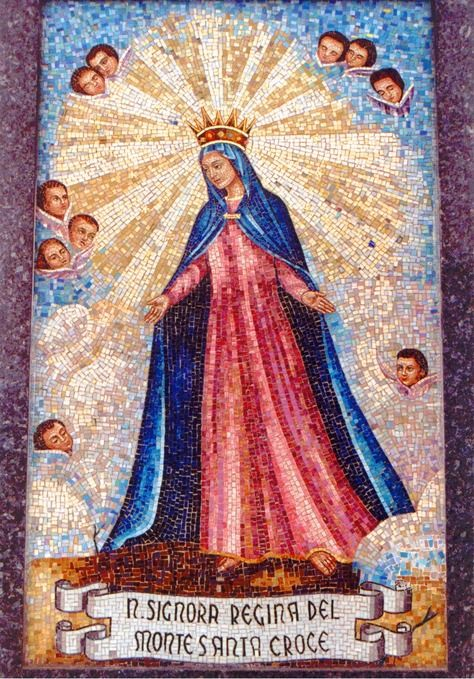
La Madonna della Riconciliazione e della Pace / Our Lady of Reconciliation and Peace, Balestrino Italy (1949) – 4 October
Caterina Richero was born on 7 October 1940 in Bergalla, the highest hamlet of Balestrino, of a humble peasant family. She was the first of four siblings and her life passed in the serenity of childhood until the age of nine. On 4 October 1949, something radically changed her life. Something that will lead Catherine to humbly sacrifice her life with a continuous and silent witness of faith. A life devoted to prayer and devotion to that female figure who appeared to her 138 times until 5 November 1986 and who, on 5 June 1950 when asked: ” Who are you?” replied: ” I am the Immaculate Conception.”
Catarina’s life, from that distant day in 1949 was by no means easy. She had to face the ridicule and mistrust of many and above all, she had to stick to what was given to her by the Bishop. She was also forbidden to go to Mount Croce but the Madonna began to appear in Catarina’s home. In all those years, Our Lady asked her to pray constantly for the conversion of sinners and to do many penances for all, without faith. On 5 October 1971 she said: “ On Mount Croce you will find light and strength and I, in this place, will obtain many graces for you.”
Now on Monte Croce there is a splendid Chapel with a Statue of Christ awaiting pilgrims at the top of a staircase. Inside, intent on arranging the flowers on the Altar or absorbed in prayers, Catarina, who with her silent presence tells everyone much more than thousands of articles and books could say. The Statue venerated in the Chapel of the Sanctuary was crowned on 7 October 1992 by Msgr. Mario Oliveri.
St Adauctus of Ephesus Bl Alfonso Tabela St Ammon the Great (c 286-c 348) Hermit, Layman St Aurea St Berenice St Caius of Corinth St Callisthene of Ephesus St Crispus of Corinth St Damaris of Athens St Diogenes of Milan St Domnina St Hierotheus Bl Julian Majali St Lucius of Alexandria St Peter of Damascus
St Prosdoce St Quintius of Tours — Martyrs of Alexandria – 2+ saints: A group of Christians, men and women, young and old, murdered together for their faith. The only names that have come down to us are the brothers Mark and Marcian.
Martyred in the Spanish Civil War: • Blessed Alfredo Pellicer Muñoz • Blessed Avelí Martínez de Arenzana Candela • Blessed Dionisio Ibáñez López • Blessed Francisco Martínez Granero • Blessed Fulgencio Martínez García • Blessed José Aloy Doménech • Blessed José Gafo Muñiz • Blessed José Miguel Peñarroya Dolz • Blessed Juan de Francisco Pío • Blessed Juan José Orayen Aizcorbe • Blessed Martina Vázquez Gordo • Blessed Publio Fernández González • Blessed Tomás Barrios Pérez
The Miracle of Ocotlán – 3 October Our Lord of Mercy “The Prodigy of Ocotlán ” This is a major miracle that you’ve probably never heard of, the appearance of Christ in the clouds, in Ocotlan, Mexico, in 1847.
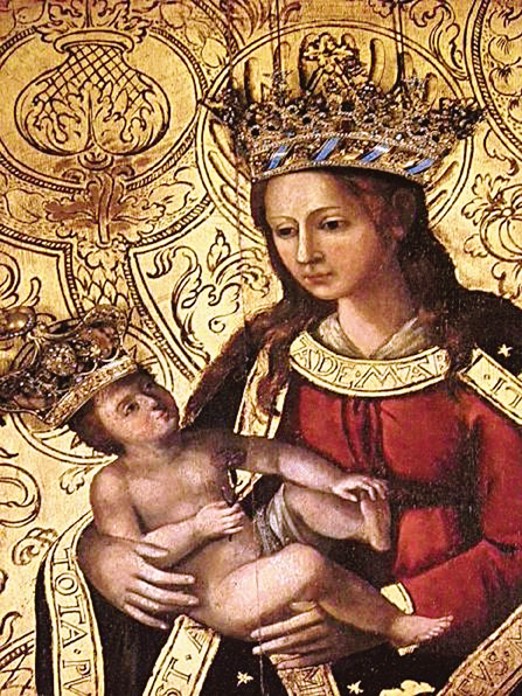
Notre-Dame de Bonne Nouvelle / Our Lady of Good News (Rennes, Ille-et-Vilaine, Brittany, France) 1720 – First Sunday of October, 23 December:
Jean de Montfort founded the Dominican Convent of Our Lady of Good News in Rennes to pay a vow taken during the battle of Auray in 1364, where his victory settled him as Duke of Brittany. In the following century, a panel painting in the Convent’s cloister gained a reputation for miracles, resulting in the building of a separate Chapel to give due veneration to Our Lady and to accommodate the pilgrims.
Another vow was paid after the plague of 1632, which spared Rennes the serious devastation which the surrounding regions suffered. In thanks,giving to the Madonna, the City gave Our Lady of Good News a solid silver model of the town and, from 1634, observed a votive celebration every year on 8 September, the Feast of Mary’s Birth. Another miracle occurred during the great fire of 23 December 1720, when, as their wooden houses burned, the people of Rennes saw Our Lady of Good News look down in compassion from the sky.
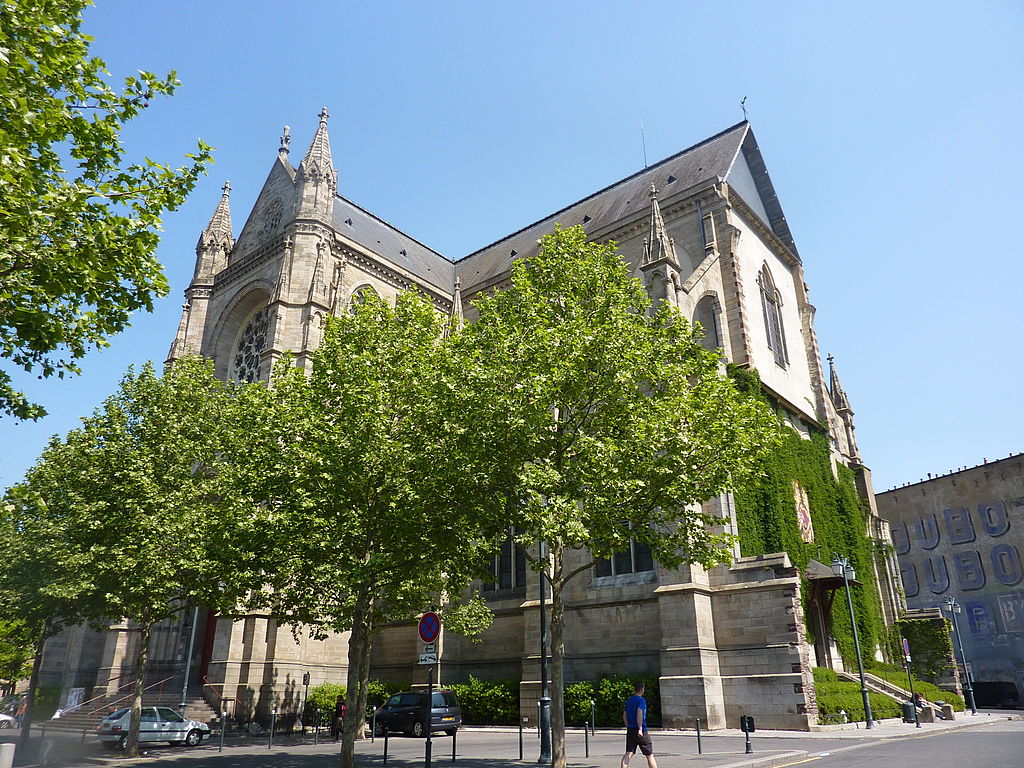
During the French Revolution, the silver model, was melted down. The Chapel was destroyed and the Convent used to store fodder. A gardener saved the holy image, which he gave to the neighbouring Church of St Aubin. In 1849, a cholera epidemic inspired a new vow. A new silver-plated model city was commissioned from Napoleon III’s goldsmith and the September votive feast reinstated. When St Aubin’s became too small for all the pilgrims, a new Church was built, dedicated in 1904 to St Aubin and Notre-Dame de Bonne Nouvelle.
The painting was canonically crowned in 1908. In recent years the votive feast has been held on the first Sunday in October rather than 8 September.
St Adalgott of Chur Bl Agostina of the Assumption St Candidus the Martyr St Cyprian of Toulon Bl Damian de Portu St Dionysius the Aeropagite Bl Dominic Spadafora St Ewald the Black St Ewald the Fair St Froilan
St Hesychius Bl Juan Tapia Bl Maddalena the Greater St Maximian of Bagaia St Menna
St Theodore Guerin SP (1798 – 1856) Religious, Foundress of the Sisters of Providence of Saint Mary-of-the-Woods and numberous schools, Educator.
Bl Utto of Metten St Virila OSB (Died c 950) Abbot St Widradus — Martyrs of Alexandria – 9 saints: A number of Christian martyrs remembered together. We know the names Caius, Cheremone, Dionysius, Eusebio, Fausto, Lucio, Maximus, Paul, Peter and that there were at least two more whose names have not come down to us, and that’s about all we know.
Martyrs of Brazil – 30 beati: On 25 December 1597 an expedition of colonists, with two Jesuit and two Franciscan evangelists, arrived at Natal, Rio Grande do Norte, Brazil. The region was colonized by Portuguese Catholics but was invaded by Dutch Calvinists who soon took over the whole territory. They immediately made a policy of the persecution of Catholics. On Sunday 16 July 1645 at Cunhau, Brazil, 69 people were gathered in the Chapel of Our Lady of the Candles for Mass celebrated by Father Andre de Soveral. At the moment of the elevation a group of Dutch soldiers attack the Chapel, murdering many of the faithful including Father Andre; the parishioners died professing their faith and asking pardon for their sins. On 3 October 1645, 200 armed Indians and a band of Flemish troops, led by a fanatical Calvinist convert, hacked to death an unknown number of people of Rio Grande including: • Blessed Ambrosio Francisco Ferro • Blessed André de Soveral • Blessed Antônio Baracho • Blessed Antônio Vilela • Blessed Antônio Vilela Cid • Blessed Diogo Pereira • Blessed Domingos Carvalho • Blessed Estêvão Machado de Miranda • Blessed Francisco de Bastos • Blessed Francisco Mendes Pereira • Blessed João da Silveira • Blessed João Lostau Navarro • Blessed João Martins • Blessed José do Porto • Blessed Manuel Rodrigues de Moura • Blessed Mateus Moreira • Blessed Simão Correia • Blessed Vicente de Souza Pereira and other lay people whose names have not come down to us.
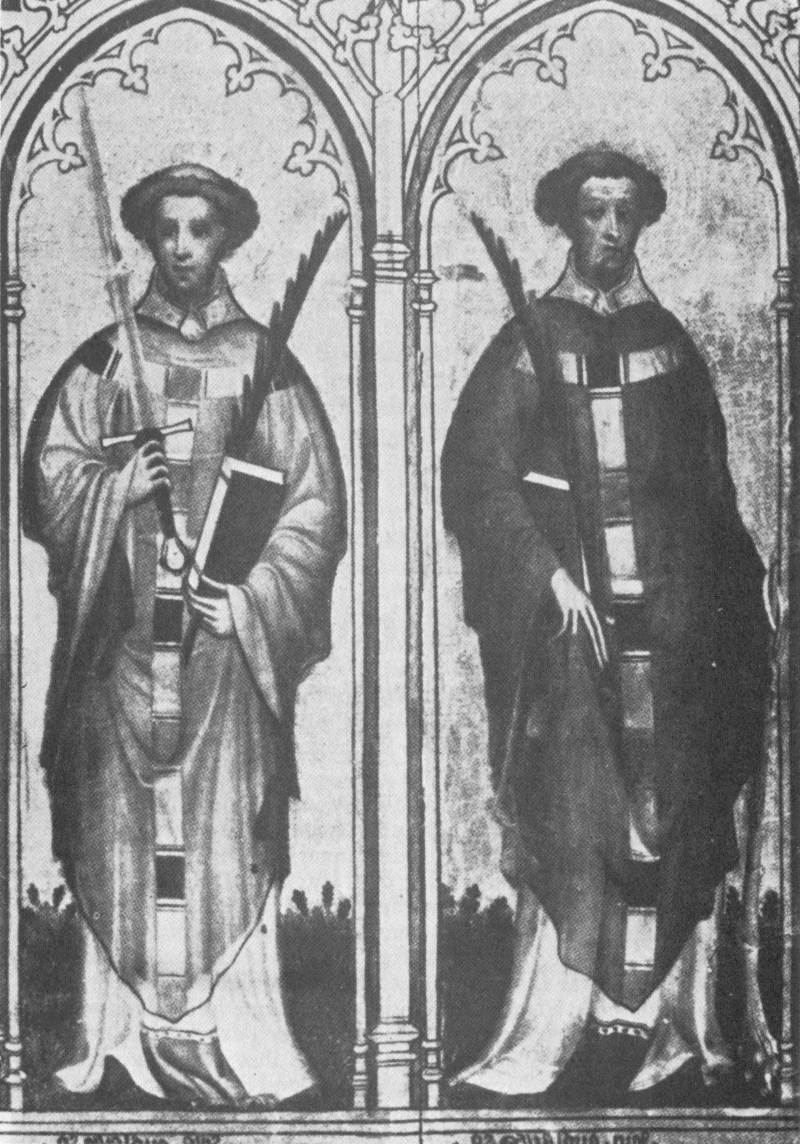
The Two Ewalds (also known as Hewald) were Anglo-Saxon priest-martyrs bearing the same name, who were nicknamed for the difference in their hair colour and complexion.
The two were companions, both natives of Northumbria, England. They spent several years as students in the schools of Ireland. Ewald the Black was the more learned of the two, but both were equally renowned for holiness of life. They were acquainted with St. Willibrord, the Apostle of Friesland, and were animated with his zeal for the conversion of the Germans. Some sources number them among the eleven companions of that saint. They began their mission labours about 690 at Saxony, now part of Westphalia, and covered by the dioceses of Münster, Osnabrück, and Paderborn.
The pagan Saxons, witnessing these activities of the Christian priests and missionaries, began to suspect that the Ewalds planned to convert their over-lord, destroy their temples and supplant their religion. Inflamed with jealousy and anger, they resolved that the Ewalds should die. An uprising followed and both priests were quickly seized. Ewald the White was killed quickly by sword; Ewald the Black was tortured and torn limb from limb, after which both their bodies were cast into the Rhine. This is understood to have happened on 3 October 695 at a place called Aplerbeck, today a district of Dortmund, where a chapel still stands. When the ealdorman heard of what had been done, he became angry and fearful of reprisals, and punished the murderers by putting them to death and burning their villages.
After the priests’ deaths, miracles occured. Their bodies were miraculously carried against the stream for the space of forty miles to the place in which the companions of the Ewalds were residing. As they floated along a heavenly light, like a column of fire, was seen to shine above them. Even the murderers witnessed the miraculous brightness. Moreover, one of the martyrs appeared in vision to the monk Tilmon (a companion of the Ewalds), and told him where the bodies would be found: “that the spot would be there where he should see a pillar of light reaching from earth to heaven”. Tilmon arose and found the bodies, and interred them with the honours due to martyrs. From that time onwards, the memory of the Ewalds was annually celebrated in those parts. A spring of water gushed forth in the place of the martyrdom.
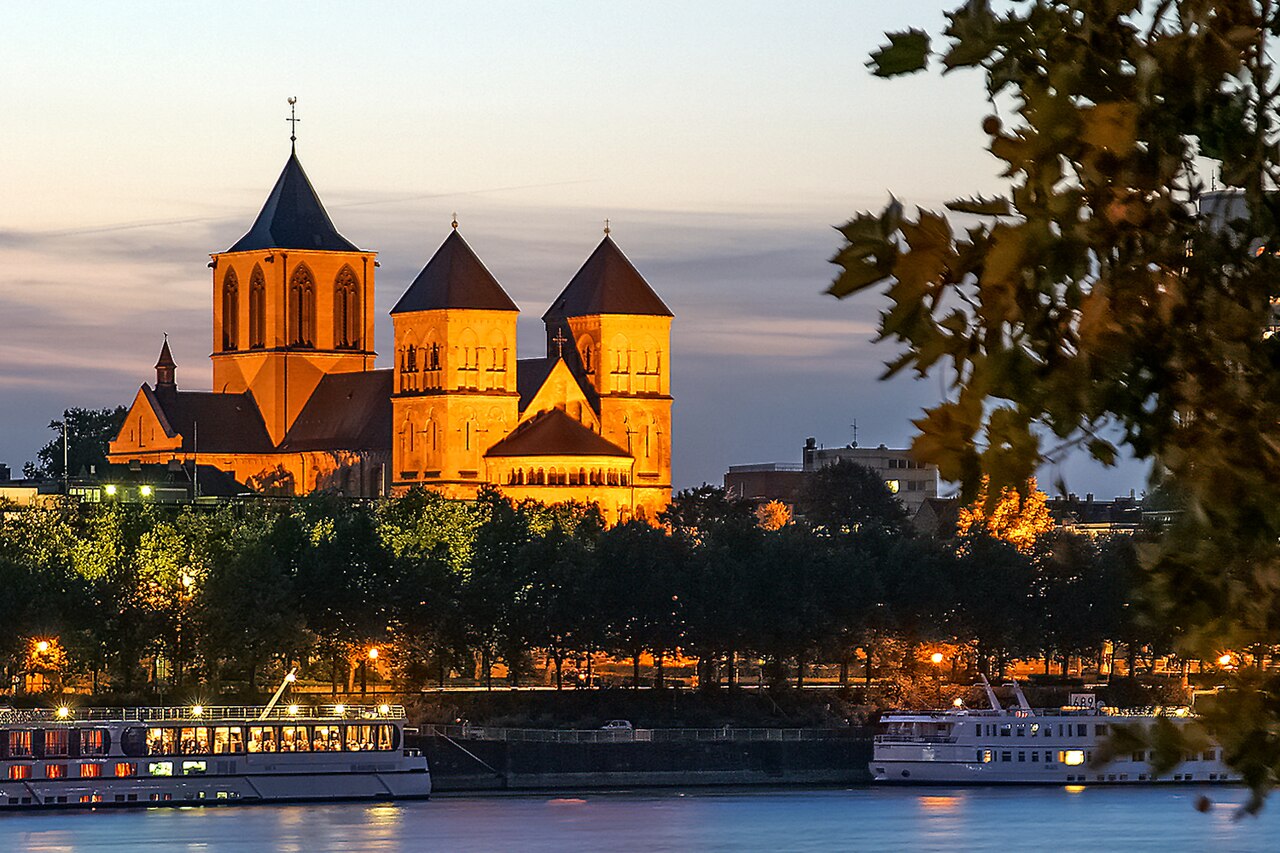
Basilica of St. Cunibert, Cologne
Pepin, Duke of Austrasia, having heard of the wonders that had occurred, caused the bodies to be buried in Cologne, where they were solemnly enshrined in the collegiate church of St. Kunibert. The two Ewalds are honoured as patrons in Westphalia.
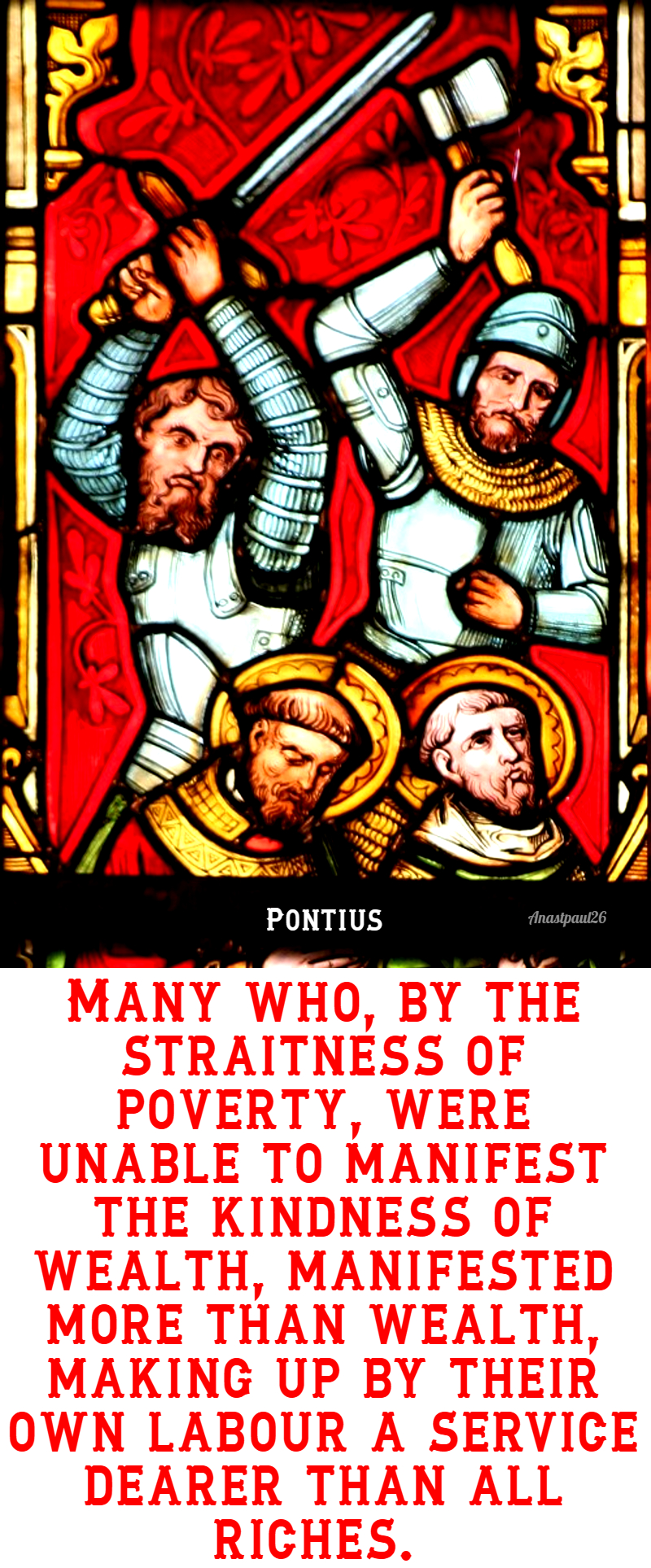
Many who, by the straitness of poverty, were unable to manifest the kindness of wealth, manifested more than wealth, making up by their own labour a service dearer than all riches.
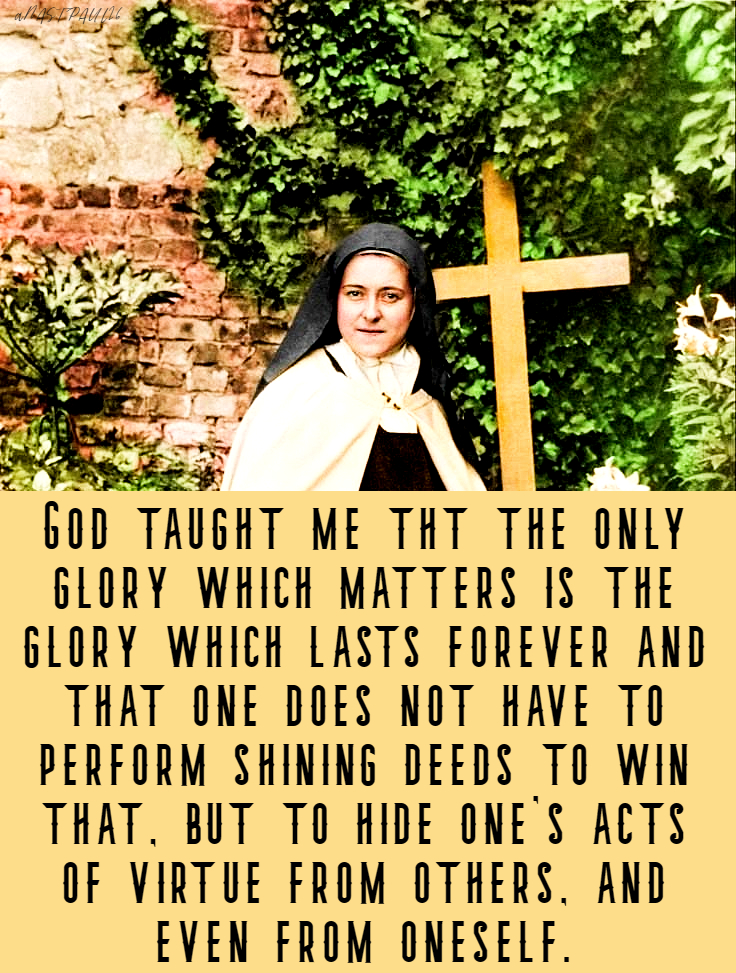
God taught me tht the only glory which matters is the glory which lasts forever and that one does not have to perform shining deeds to win that, but to hide one’s acts of virtue from others, and even from oneself.
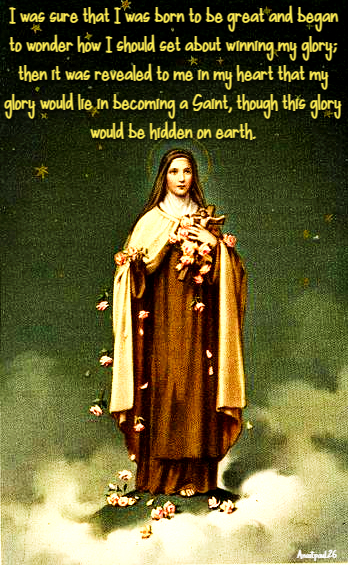
I was sure that I was born to be great and began to wonder how I should set about winning my glory; then it was revealed to me in my heart that my glory would lie in becoming a Saint, though this glory would be hidden on earth.
We looked upon their high-sounding titles as nothing more than the ‘vapour of smoke’. I realised that real nobility is in the soul, not in a name.
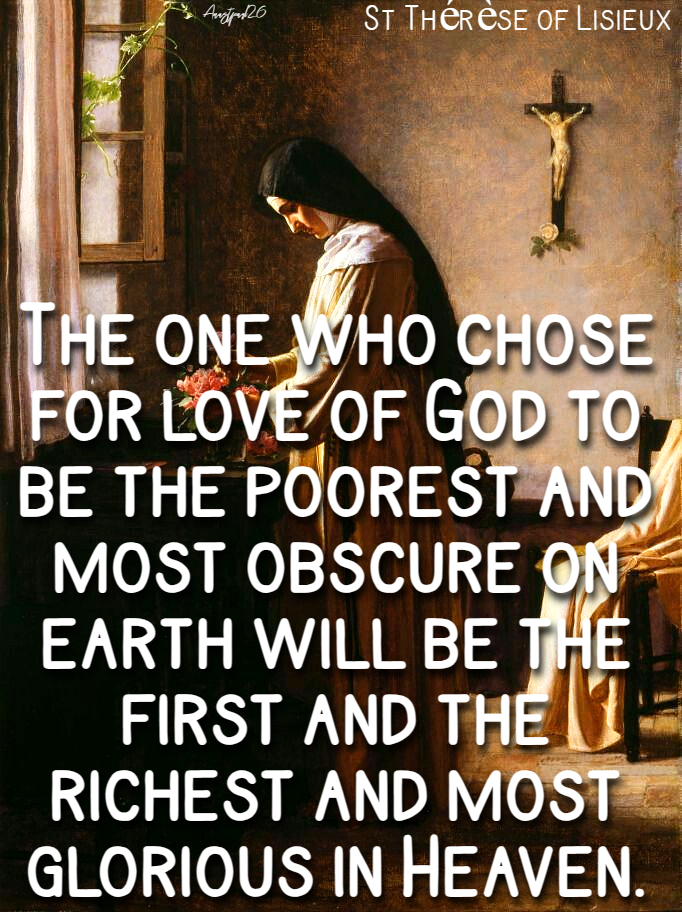
The one who chose for love of God to be the poorest and most obscure on earth will be the first and the richest and most glorious in Heaven.
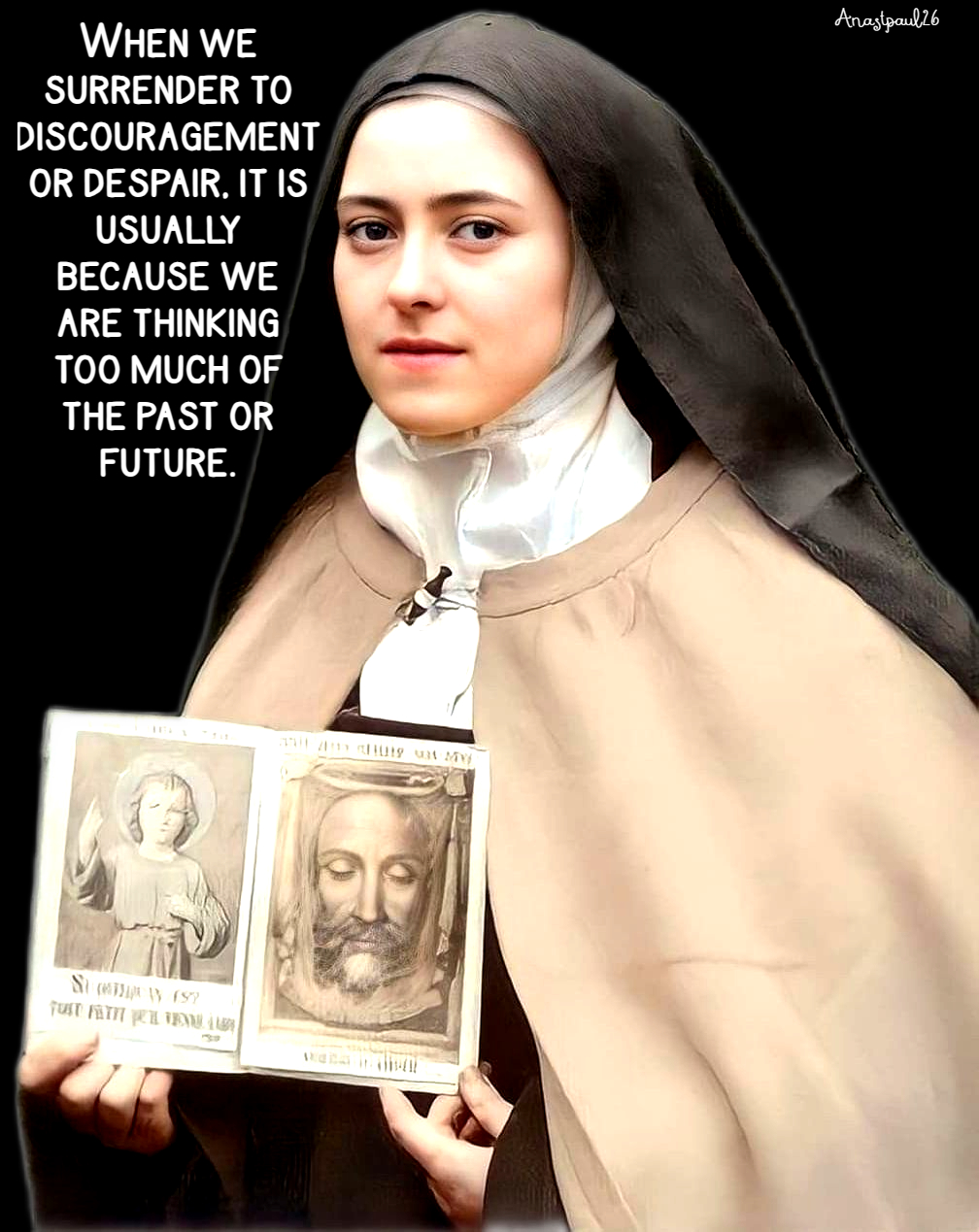
When we surrender to discouragement or despair, it is usually because we are thinking too much of the past or future.
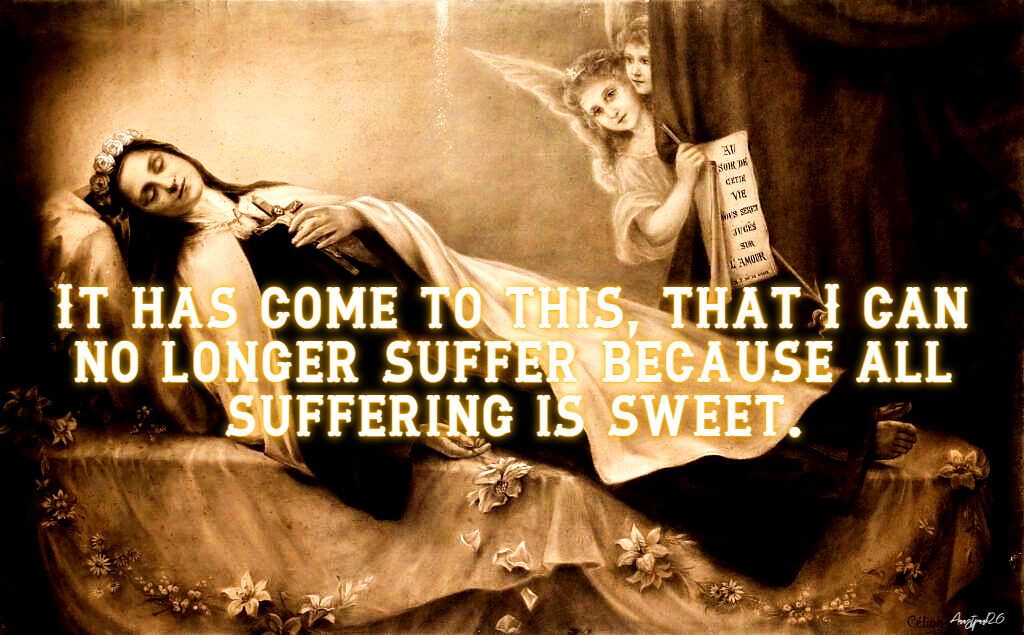
It has come to this, that I can no longer suffer because all suffering is sweet.
Saint Theophilus of Bulgaria, was a Benedictine monk and confessor. Originally from Bulgaria, he joined a monastery in Asia Minor and was an outspoken opponent of the imperial policies of lconoclasticism. For this he was sent into exile by Emperor Leo III the Isaurian, and was brutally mistreated.
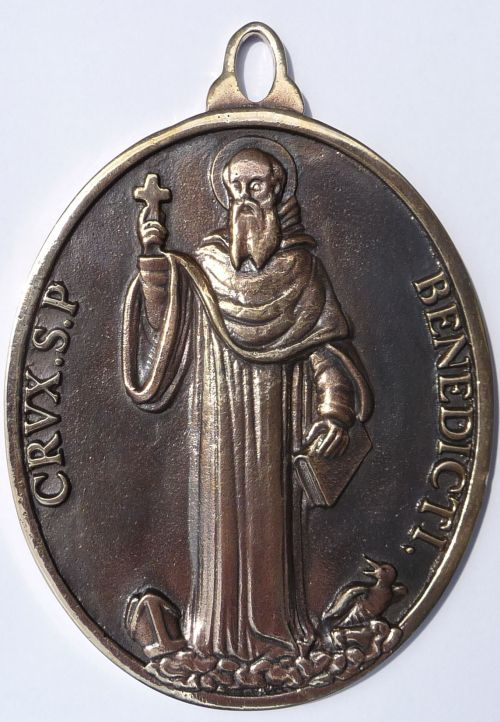
Original design of the St Benedict medal
In accord with the emperor’s orders, the saint was subjected to beatings and led through the city tied up like a criminal. The emperor then gave Theophilus over into the charge of the official, Hypatius, who tried repeatedly to compel Theophilus to accept the Iconoclastic heresy. Theophilus remained steadfast in the Faith, and Hypatius converted instead. Because of this, Hypatius gained the emperor’s permission to set the saint free.
Theophilus died in 750.
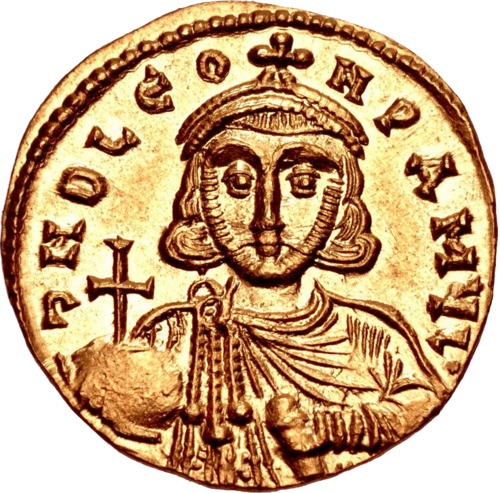
Leo III the Isaurian
Leo III the Isaurian was described as ‘Islamic minded’.
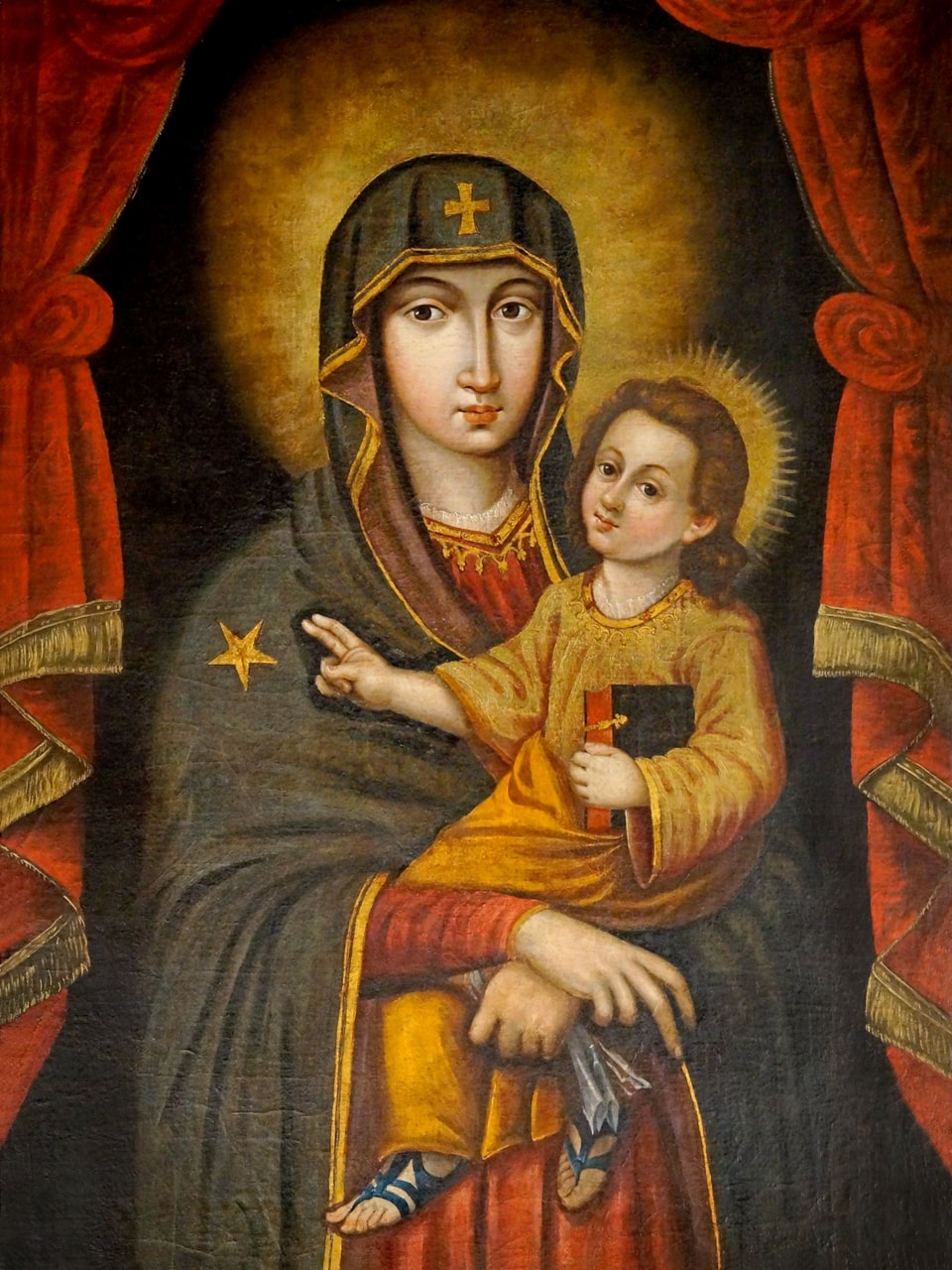
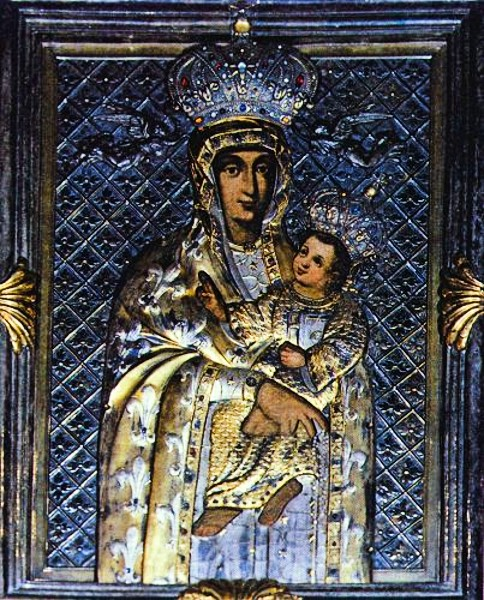
Matka Boża Różańcowa / Our Lady of the Rosary, Krakow, Poland (1600s) – First Sunday of October, 2 October:
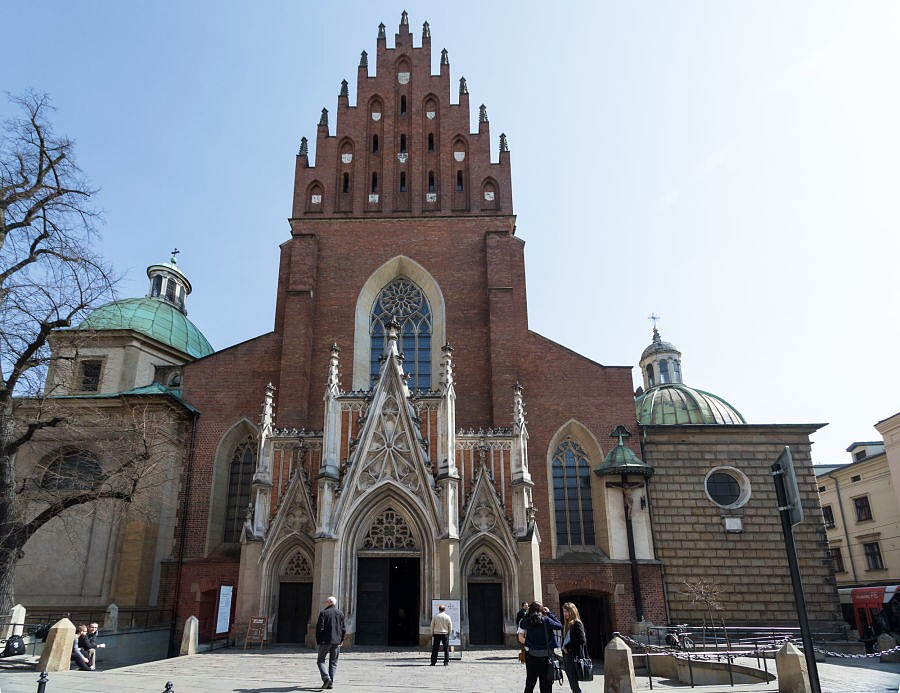
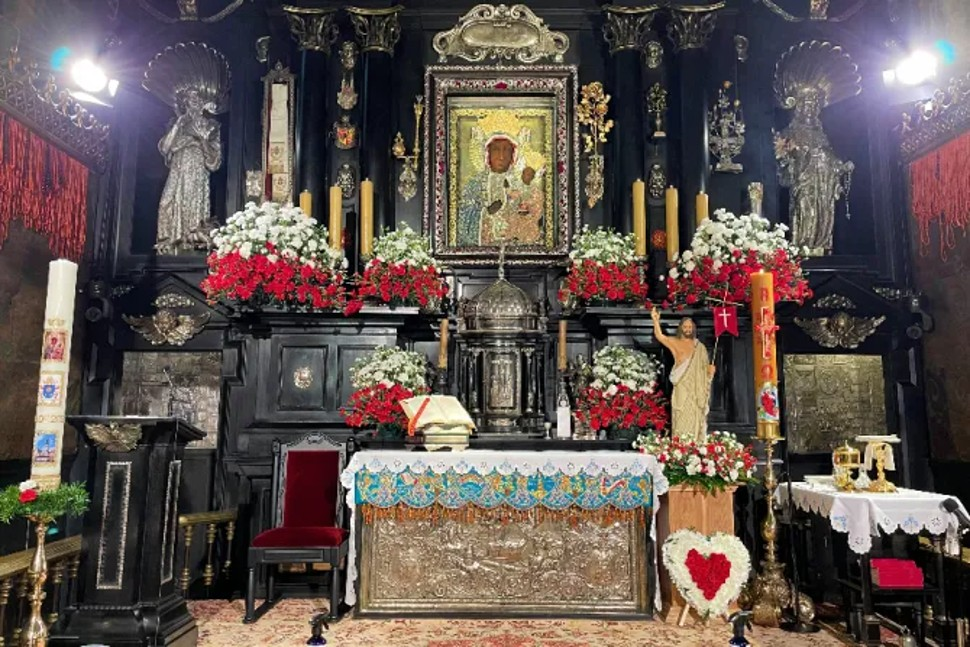
In the Dominican Basilica of the Trinity in Cracow is a large Chapel dedicated to the Mother of God of the Rosary. The icon on its main Altar, crowned on 2 October 1921, is a copy of the ancient Salus Populi Romani (Health of the Roman People) image in the Basilica of St Mary Major of the Snows in Rome — the icon Pope Gregory the Great carried in procession to end the plague of 597. During the Battle of Lepanto (7 October 571), when ships of a coalition of Christian countries routed the Turkish navy off Greece, Pope Pius V prayed the Rosary with a large group of faithful before the Roman icon. The old image thus became associated with the newer devotion of the Rosary and with saving Europe from Ottoman rule.
Churches throughout Catholic Europe were dedicated to Our Lady of the Rosary and copies of the Salus Populi Romani proliferated. Cardinal Maciejowski brought such a copy from Rome to Cracow in 1600. The image played a part in the “Polish Lepanto” in 1621, when at Khotyn, Ukraine (then Chocim, Poland) an allied force of Poles, Lithuanians and Ukrainians faced a Turkish army twice its size. On 3 October, the Bishop of Krakow led an hours-long Rosary procession with the holy icon. The entire population joined in. When the Turks gave up their attack and signed a treaty, Our Lady of the Rosary gained another victory. Her feast is celebrated in Krakow on the first Sunday of October.
The Swedish deluge contributed to the destruction of the original image of the Mother of God. T he cult, however, was so strong that a copy of the previous painting was quickly funded. The present one comes from the 50s and 60s of the 17th century. Numerous votive offerings made on the occasion of receiving favours have also survived from that time. The oldest exhibited in the Church are dated to 1703, the older ones are in the Archdiocese Museum. The love for the Blessed Mother is also evidenced by the silver dress donated in the 1770s by the Działyński family,and the sceptre of Our Lady of the “Pious Gregory of Pierzchno” foundation at the turn of the 17th and 18th centuries.
St Alfonso del Rio St Andrea Ximenez
St Beregisius St Eleutherius of Nicomedia Bl Georges-Edme René St Gerinus
St Leudomer St Maria Antonina Kratochwil St Modesto of Sardinia St Saturius of Soria St Theophilus of Bulgaria St Thomas de Cantilupe of Hereford (c 1218-1282) Bishop St Ursicinus II — Martyred in Antioch, Syria: Martyred in one of the early persecutions, date unknown. St Cyril of Antioch St Primus of Antioch St Secundarius of Antioch
Martyred in Nagasaki, Japan: A husband, wife and two sons, who were all martyred together in the persecutions in Japan. They were beheaded on 2 October 1622 in Nagasaki, Japan and Beatified by Pope Pius IX on 7 May 1867. • Blessed Andreas Yakichi • Blessed Franciscus Yakichi • Blessed Lucia Yakichi • Blessed Ludovicus Yakichi
Martyred in the Spanish Civil War: • Blessed Elías Carbonell Molla • Blessed Enrique Sáiz-Aparicio • Blesssed Felipe González de Heredia Barahona • Blessed Francisco Carceller Galindo • Blessed Isidoro Bover Oliver • Blessed Juan Carbonell Molla • Blessed Juan Iñiguez de Ciriano Abechuco • Blessed Manuel Borrajo Míguez • Blessed María Francisca Ricart Olmos • Blessed Mateu Garrolera Masferrer • Blessed Pedro Artolozaga Mellique • Blessed Pedro Salcedo Puchades
Blessed Ralph Crockett & Blessed Edward James were priest martyrs in England, and two of the Martyrs of Douai.
Ralph Crockett was born at Barton, near Farndon, Cheshire in 1522. He was educated at Christ’s College, Cambridge, and then became a schoolmaster in Norfolk for a year before going to Gloucester Hall, Oxford. After a year, he went to Ipswich, where he was a schoolmaster for five years. In 1581, persecutions increased after the death of Edmund Campion, so he withdrew to Cheshire for about two years. In 1584, he left for France, and began studies at the English College then located at Rheims. He was ordained at Rheims in 1585, and continued his studies for a year, but his health being compromised, he asked to return to England. He and three other priests, Thomas Bramston, George Potter, and Edward James, left from Dieppe, but the ship ran ashore 19 April 1586 at Littlehampton, Sussex.
Ralph and Edward, with two others, John Oven and Francis Edwardes, were selected for trial, which took place at Chichester on 30 September 1588. Crockett, James and Edwardes were condemned to death, under the Jesuits, etc. Act 1584, for being priests and coming into the realm; but Oven on taking the Oath of Supremacy was respited.
On1 October 1588. Ralph ascended the scaffold and blessed the crowd in Latin which brought shouts of anger upon him, however he changed into praying in English whereupon the crowd cheered. He and Edward faced their deaths without fear and were executed after absolving each other.
His father Adam, in his later years entered the Catholic Church on the Continent and his descendants remained recusant and continued to practise their Catholic faith in the face of continued persecution.
In 1929 Ralph was beatified by Pope Pius XI.
Edward James was born at Barton, Breaston, near Long Eaton, Derbyshire. He was educated at Derby School, St John’s College, Oxford, the English college at Rheims and the Venerable English College at Rome. In October 1579, he and William Filby sailed from Dover for Calais. The following August, Edward and ten others travelled to the English College, Rome. In October 1583, James was ordained as a priest in Rome by Bishop Thomas Goldwell, the last survivor of the English bishops who had refused to accept the Protestant Revolution.
In early February 1586, James left Rheims for the mission, accompanied by Stephen Rowsham who had been banished from England the year before. They met up with Ralph Crockett in Dieppe. He was captured on board a ship at Littlehampton, Sussex, on 19 April 1586, with three other priests, Thomas Bramston, George Potter, and his fellow martyr, Ralph Crockett, and they were charged with being Catholic priests and coming into the realm of England contrary to an Act of Parliament of 1584. All four were sent to London and put in prison there on 27 April 1586, where they remained for more than two years without trial.
Ralph Crockett, Edward James, John Oven and Francis Edwardes, were sent for trial at Chichester on 30 September 1588. All four were condemned to death for being priests and entering England, but Oven then took the Oath of Supremacy, in accordance with the Act of Supremacy 1559, and was reprieved. On 1 October 1588, the other three were drawn on a hurdle to Broyle Heath, near Chichester, where Edwardes recanted and was also reprieved. Crockett and James continued to refuse to recant and to take the oath.
He was beatified by Pope Pius XI.
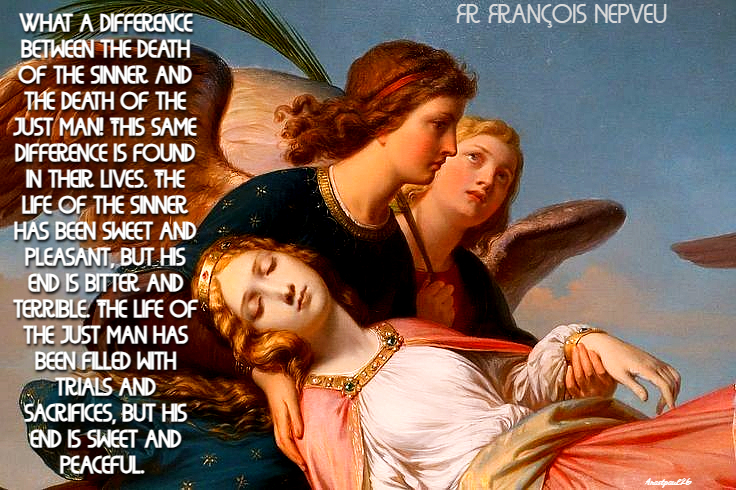
What a difference between the death of the sinner and the death of the just man! This same difference is found in their lives. The life of the sinner has been sweet and pleasant, but his end is bitter and terrible. The life of the just man has been filled with trials and sacrifices, but his end is sweet and peaceful. That which made up the happiness of the sinner during life is his torment at death, but that which made up the pain and suffering of the just man during life is his happiness and consolation at death. The death of the sinner brings an end to the goods and pleasures of time, and plunges him into the evils and sufferings of eternity. The death of the just man brings an end to the evils and sufferings of time, and bids him enter into the goods and pleasures of eternity. What a difference between the death of the sinner and the death of the just man. Which death do you choose?
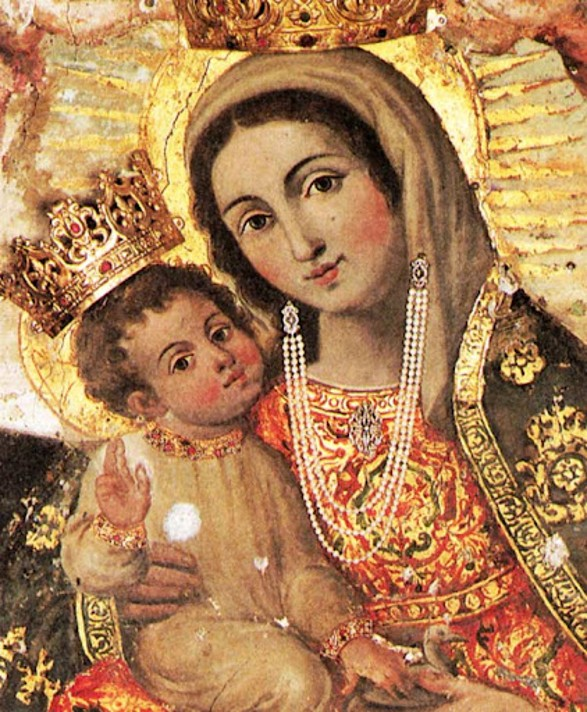
Madonna di Valverde, / Our Lady of Valverde di Rezzato, Italy (1399 and 1711) – 1 October:
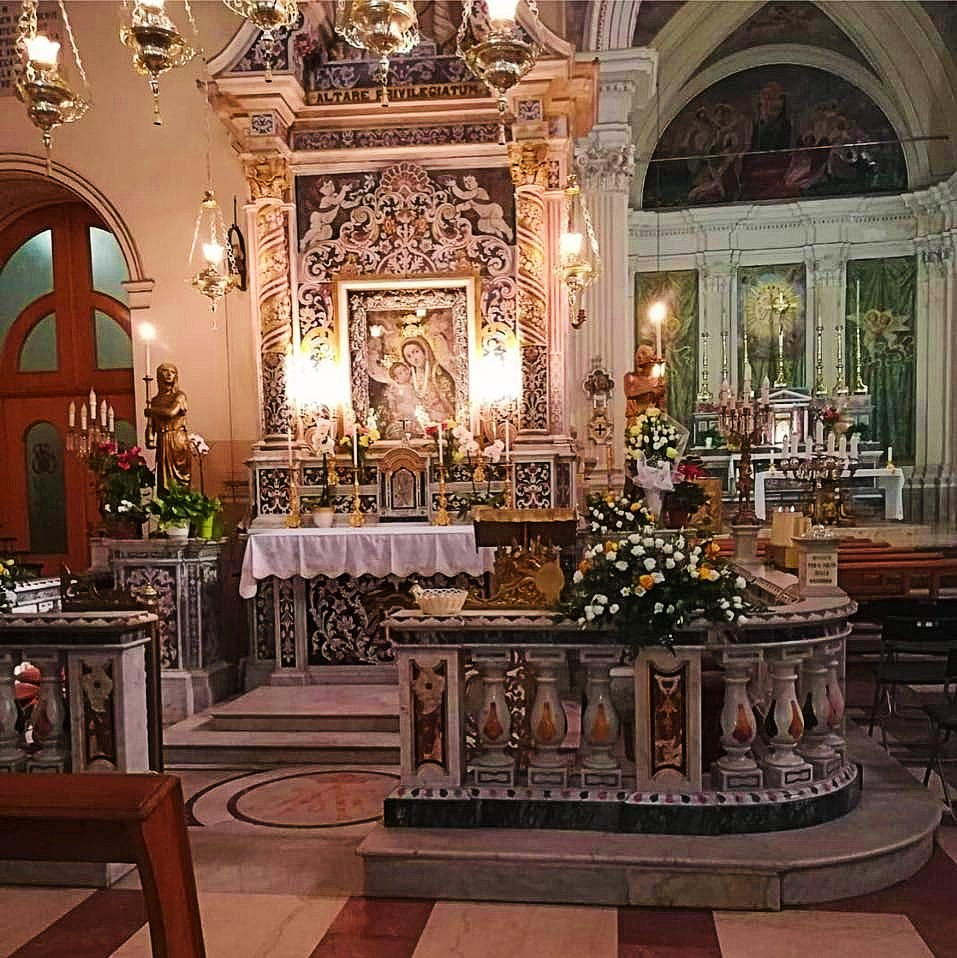
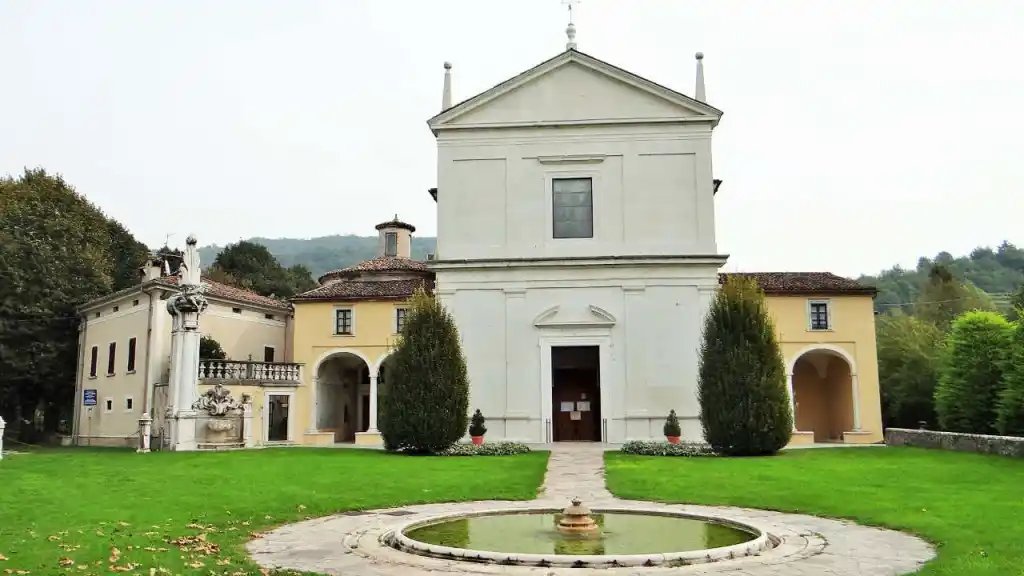
The Sanctuary of the Madonna di Valverde, belonging to the Parish of San Giovanni Battista di Rezzato Diocese of Brescia, is located in Valverde, at the foot of the Botticino and Serle hills. The Sanctuary was born in the places of the apparitions of 1399, the only one in history where both the Madonna and her Divine Son, Jesus Christ, the Saviour aooeared with His Mother and the second Marian Apparition of 1711.
For over six centuries the Sanctuary of the Madonna di Valverde has been a destination of pilgrimages from all over the north of Italy and is, above al,l in the heart of the community of Rezzato – Virle, which every year, on the Feast of St Anna on 26 July, recalls, with a solemn historical procession, the miracle of the apparitions.
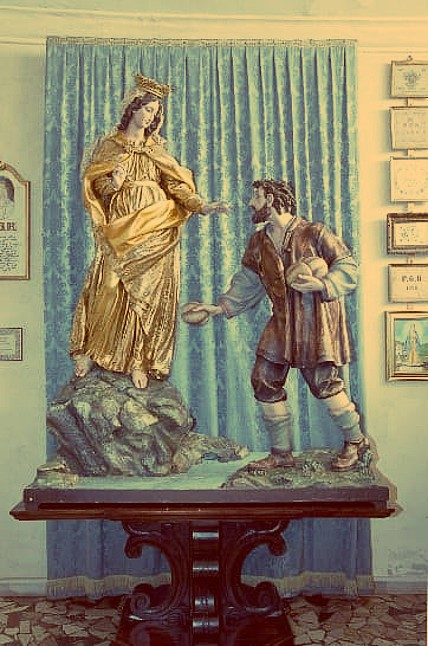
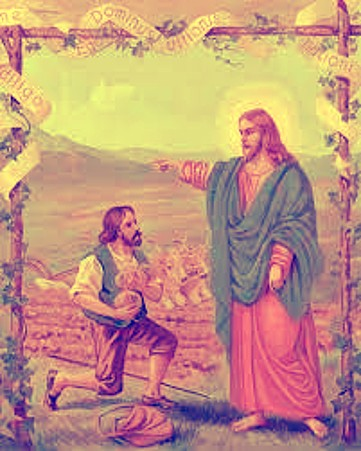
In 1399, more than six hundred years ago, during the ploughing work in a field near Valverde, the oxen pulling the plough stopped and bent their knees. A man in a red robe and a blue mantle (Christ) appeared to the worker who guided them and ordered him to throw the three loaves that he kept in his saddlebag into the nearby pond. The peasant got ready to obey the order but was held back by the Apparition of the Madonna who advised him to return to beg the Lord, to revoke the order just given. If the three loaves had touched the waters of the lake, three scourges would have been unleashed (famine, plague and war) with which Christ intended to punish men for their impiety. Jesus, by the insistence of tHis Holy Mother, consented to the peasant’s plea and agreed that only one of the loaves need be thrown into the water and, therefore, only the scourge of the epidemic would spread throughout the area. Our Lady recommended to the peasant to announce to everyone, what he had seen with his own eyes, exhorting men to repent and to approach faith and the Sacraments again.
A Chapel was first built near the lake, then, in the early seventeenth century, a large and beautifully decorated Sanctuary followed.
St Thérèse of Lisieux/St Thérèse of the Child Jesus and the Holy Face/The Little Flower OCD (1873 – 1897) Virgin, Carmelite Nun, Doctor of the Church (Memorial) She was Canonised by Pope Pius XI on 17 May 1925. The same Pope proclaimed her Universal Patron of the Missions, alongside Saint Francis Xavier, on 14 December 1927. Up until 1969 her Memorial was celebrated on 3 October.
St Aizan of Abyssinia St Albaud of Toul Bl Andrew Sushinda Bl Antoni Rewera St Aretas of Rome St Bavo of Ghent (c 589–654) Married. Widower, Monk and Hermit. Bl Cecilia Eusepi Bl Christopher Buxton St Crescens of Tomi St Dodo Bl Dominic of Villanova Bl Edward James St Evagrius of Tomi St Fidharleus Bl Gaspar Fisogiro St John Kukuzelis Bl John Robinson
St Maxima of Lisbon Bl Nikita Budka St Piaton of Tournai St Priscus of Tomi Bl Ralph Crockett Bl Robert Widmerpool Bl Robert Wilcox
St Romanos the Melodist (c 490-c 556) Deacon, Hymnographer, Poet, Writer. He is said to have composed more than 1,000 hymns celebrating various festivals of the ecclesiastical year, the lives of the saints and other sacred subjects, some 60 to 80 of which survive.
St Sazan of Abyssinia St Verissimus of Lisbon St Virila St Wasnulf — Martyred in the Spanish Civil War: • Blessed Carmelo Juan Pérez Rodríguez • Blessed Higinio Mata Díez • Blessed Juan Mata Díez • Blessed Álvaro Sanjuán Canet • Blessed Florencia Caerols Martínez
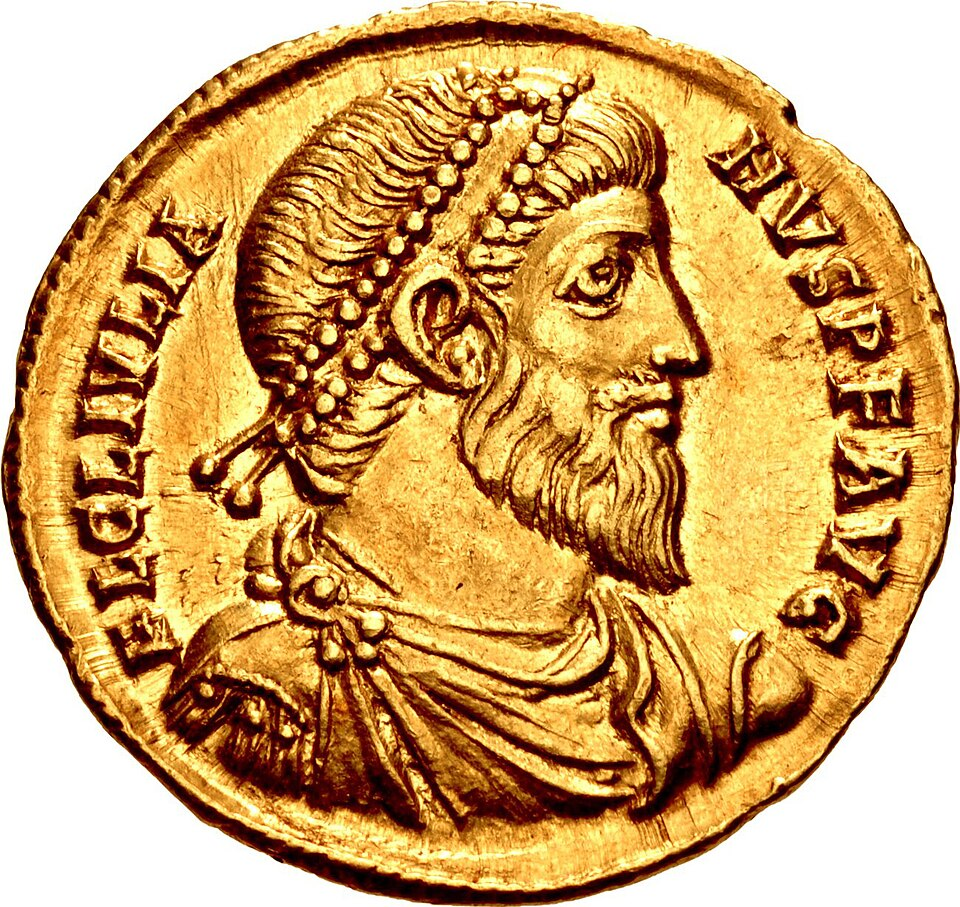
Saint Leopardus the Slave, martyr, was a slave in the household of Julian the Apostate, nephew of Constantine the Great, a maniacal persecutor of Christianity, and one of the many types of Antichrist which have arisen over the centuries. A more unfortunate or dangerous placement cannot be imagined.
Not much is recorded about Saint Leopardus’ early life, but in 362, in Rome, he was martyred for his faith, having withstood the tyrant.
Julian the Apostate
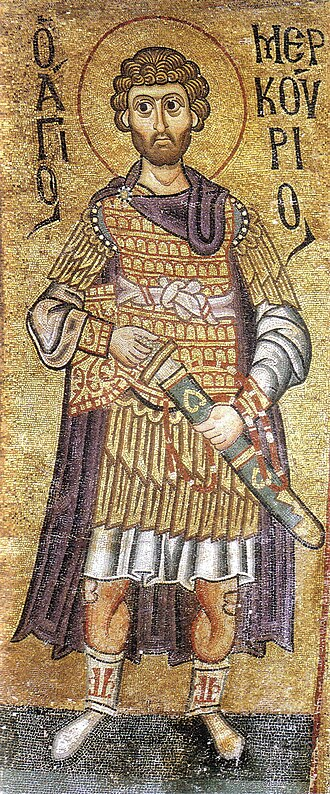
Slain by Saint Mercurius, the Apostate’s last words were: “Thou hast conquered, Galilean.”
Saint Mercurius
Saint Mercurius, who wielded a sword given to him by the Archangel Michael.
Nostra Signora di Loreto di Forno / Our Lady of Loreto of Forno, Alpi Graie, Italy (1629) – 30 September:
At the beginning of the Vallone di Sea, at about 1340 metres above sea level, in the Forno di Groscavallo hamlet, stands the Sanctuary dedicated to the Madonna di Loreto, built around 1630, after the apparition occurred to Pietro Garino, a native of Forno.
In those times, the region was tormented by the wars fought by Carlo Emanuele of Savoy against the neighbouring states; by the increasingly high taxes that weighed on the poor people, by hunger and the plague.
It was customary for devotees to go annually to the Chapel of the Virgin on Rocciamelone. On that occasion, Pietro Garino found the small pictures, which are still preserved in the Church, depicting the Madonna of Loreto and San Carlo Borromeo, leaning against the facade of the Chapel. They were in bad shape. Pietro took them with him to have them restored and promised himself to bring them back to the Chapel the following year, keeping them in the meantime at his home in Forno.
Twice the pictures eluded his custody – the first time he found them right up there, at the mouth of the Vallone di Sea, where he had gone to collect leaves for the litter intended for livestock. On that occasion he had an apparition – the Virgin appeared to him between two women and promised him to stop the plague that claimed victims among the population of the plain. Brought home by Pietro, the paintings again disappeared from his home and were found in the same place as the apparition – it was a precise indication of the Virgin’s desire to see a Chapel built in that place.
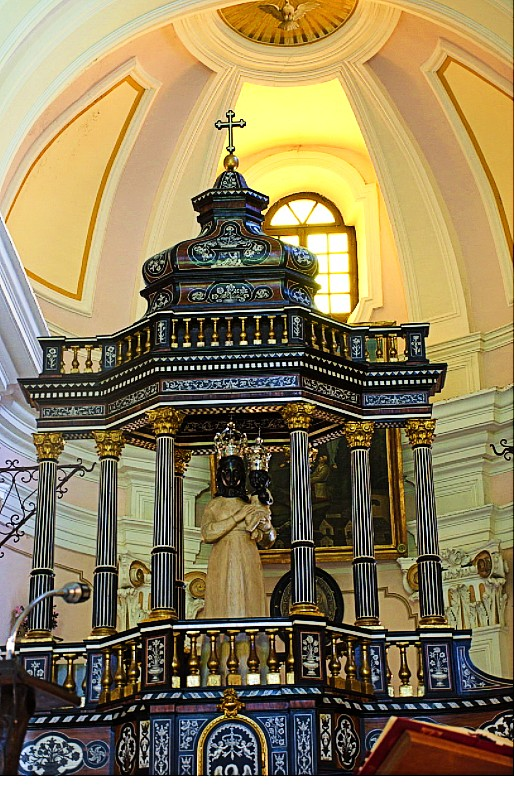
A Chapel was built at the spot of the apparition, of which the remains have recently been found. The current building dates back to the second half of the 1700s; it is the work of Luigi Baretta; internally it has elements of considerable artistic and historical interest. The marvelous Altar by Prinotto, a masterpiece of eighteenth-century cabinet-making; the baroque reliquary, in which the pictures are kept; hundreds of ex-votos, including some of considerable value.
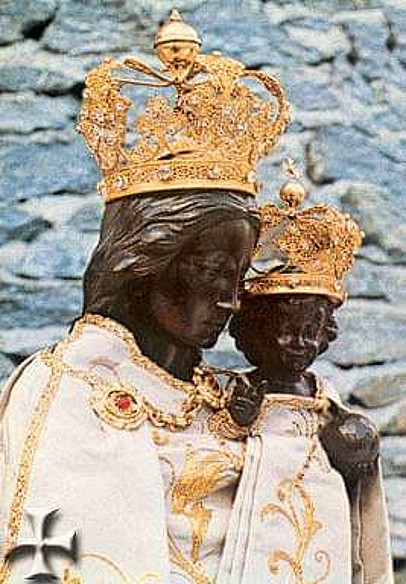
Historically, a Madonna with black features did not appear but the Sanctuary is known as such, as the faces of the Madonna and the Child she holds in her arms are ebony. The current Statue is the work of Raimondo Santifaller, from Ortisei and replaces the original one from the 18th century, stolen in 1977.
To access the Sanctuary it is necessary to climb the 440 steps that must be taken to reach the small square where the Sanctuary stands and which, pilgrims climb on their knees and in prayer.
The Sanctuary is open from July to September and Our Lady is celebrated annually on the Feast of the Assumption (16 August), the Nativity of Mary (8 September) and the Apparition of the Virgin Mary (30 September). The video below shows this beautiful Sanctuary very clearly.
St Amato of Nusco (c 1003-1093) Bishop, Confessor, Monk, Apostle of the poor.
St Antoninus of Piacenza St Castus of Piacenza St Colman of Clontibret St Desiderius of Piacenza St Enghenedl of Anglesey St Eusebia of Marseilles Bl Frederick Albert
St Gregory the Illuminator (c 257 – c 331) “Apostle to Armenia” and “Father of Armenia”- Bishop, First Patriarch of the Armenian Church, Missionary, Wonder-worker.
St Honorius of Canterbury (Died 653) Archbishop of Canterbury St Ismidone of Die Bl Jean-Nicolas Cordier St Laurus St Leopardus the Slave Bl Ludwik Gietyngier St Midan of Anglesey St Simon of Crépy St Ursus the Theban St Victor the Theban — Martyrs of Valsery Abbey: An unknown number of Premonstratensian monks at the Abbey of Notre-Dame de Valsery, Picardie, France who were martyred by Calvinists. They were martyred in 1567 at Valsery, Pircardy, France.
Saint Dadas of Persia was a Persian noble related to King Shapur II. He was married to Saint Casdoe, and Saint Gabdelas may have been their son. All three were martyred together in 368 for refusing to deny Christianity, being run through with swords.
Saint Sapor of Persia was also a relative of King Shapur II, who had him executed for his faith around the same time and in the same way.
Saint Gudelia was a maiden martyred in the persecutions of Shapur II in the year 340.
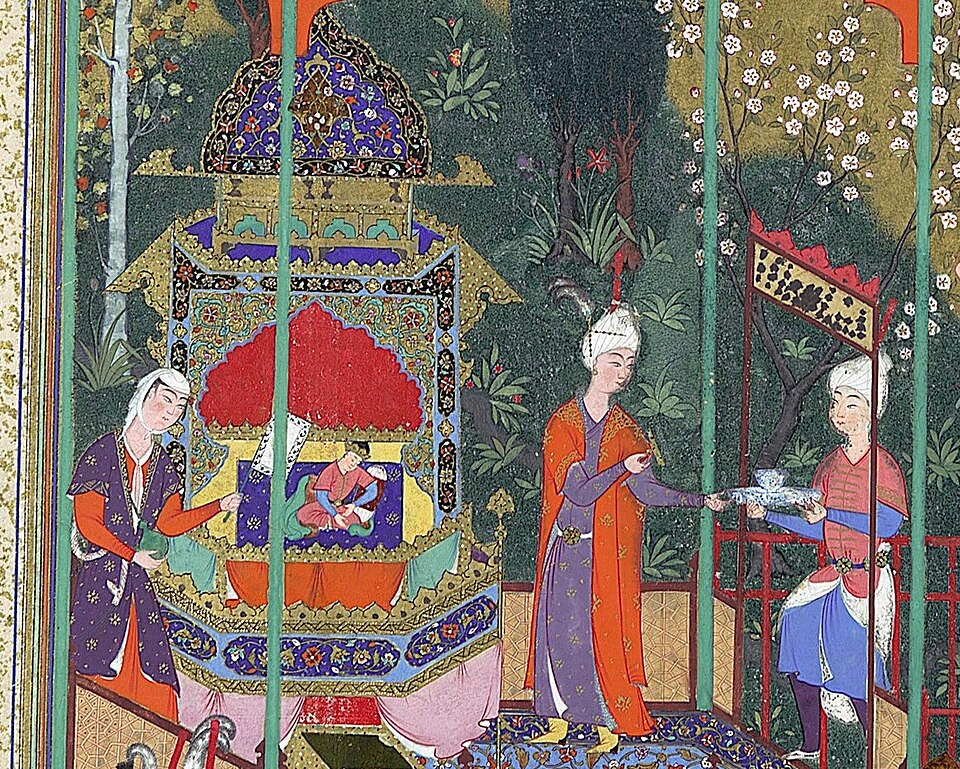
The Coronation of the Infant Shapur II
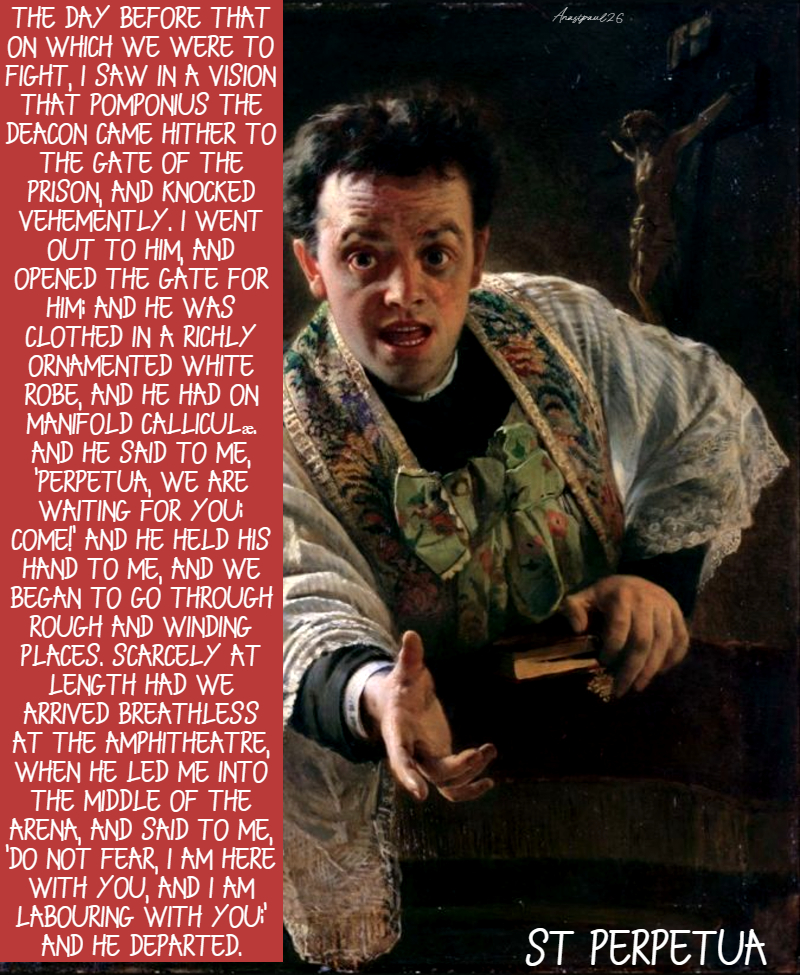
The day before that on which we were to fight, I saw in a vision that Pomponius the deacon came hither to the gate of the prison, and knocked vehemently. I went out to him, and opened the gate for him; and he was clothed in a richly ornamented white robe, and he had on manifold calliculæ. And he said to me, ‘Perpetua, we are waiting for you; come!’ And he held his hand to me, and we began to go through rough and winding places. Scarcely at length had we arrived breathless at the amphitheatre, when he led me into the middle of the arena, and said to me, ‘Do not fear, I am here with you, and I am labouring with you;’ and he departed.
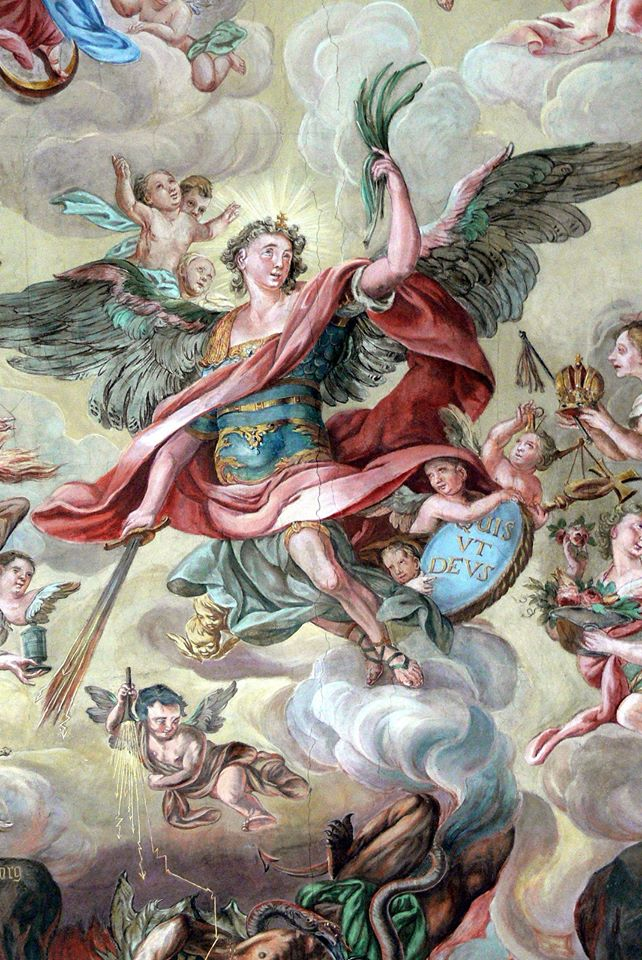
THIS festival has been kept with great solemnity on the 29th of September ever since the Fifth Century and was certainly initially celebrated in Apulia in 493. The Dedication of the famous Church of St Michael on Mount Gargano, in Italy, gave occasion to the institution of this feast in the West, which is hence called in the Martyrologies of St Jerome, St Bede and others, ‘The Dedication of St Michael.’ About the Apparition of St Michael at Mount Gargano in 492
The Dedication of St Michael’s Church in Rome, which was performed by Pope Boniface IV. in 610 and that of several other Churches in the West, in honour of this Archangel, were also performed on this same day.
The name Michaelmas comes from a shortening of “Michael’s Mass,” in the same style as Christmas (Christ’s Mass) and Candlemas (Candle Mass, the Mass where traditionally the candles to be used throughout the year would be blessed).During the Middle Ages, Michaelmas was celebrated as a Holy Day of Obligation but this tradition was abolished in the 18th century.
The Church gives to St Michael four offices:
To fight against Satan.
To rescue the souls of the faithful from the power of the enemy, especially at the hour of death.
To be the champion of God’s people, the Jews in the Old Law, the Christians in the New Testament; therefore, he is the Patron of the Church and of the Orders of Knights during the Middle Ages.
To call away from earth and bring men’s souls to judgement.
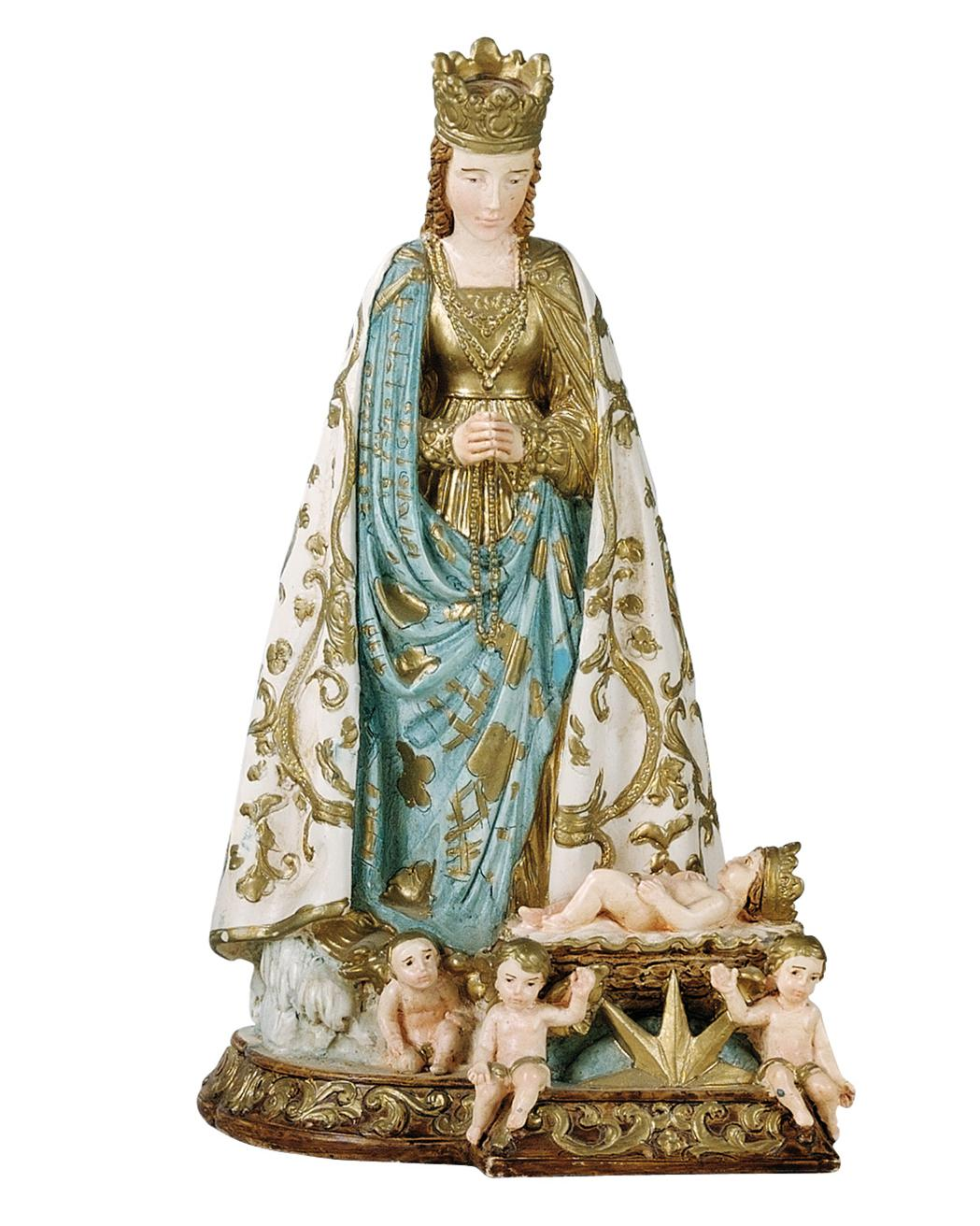
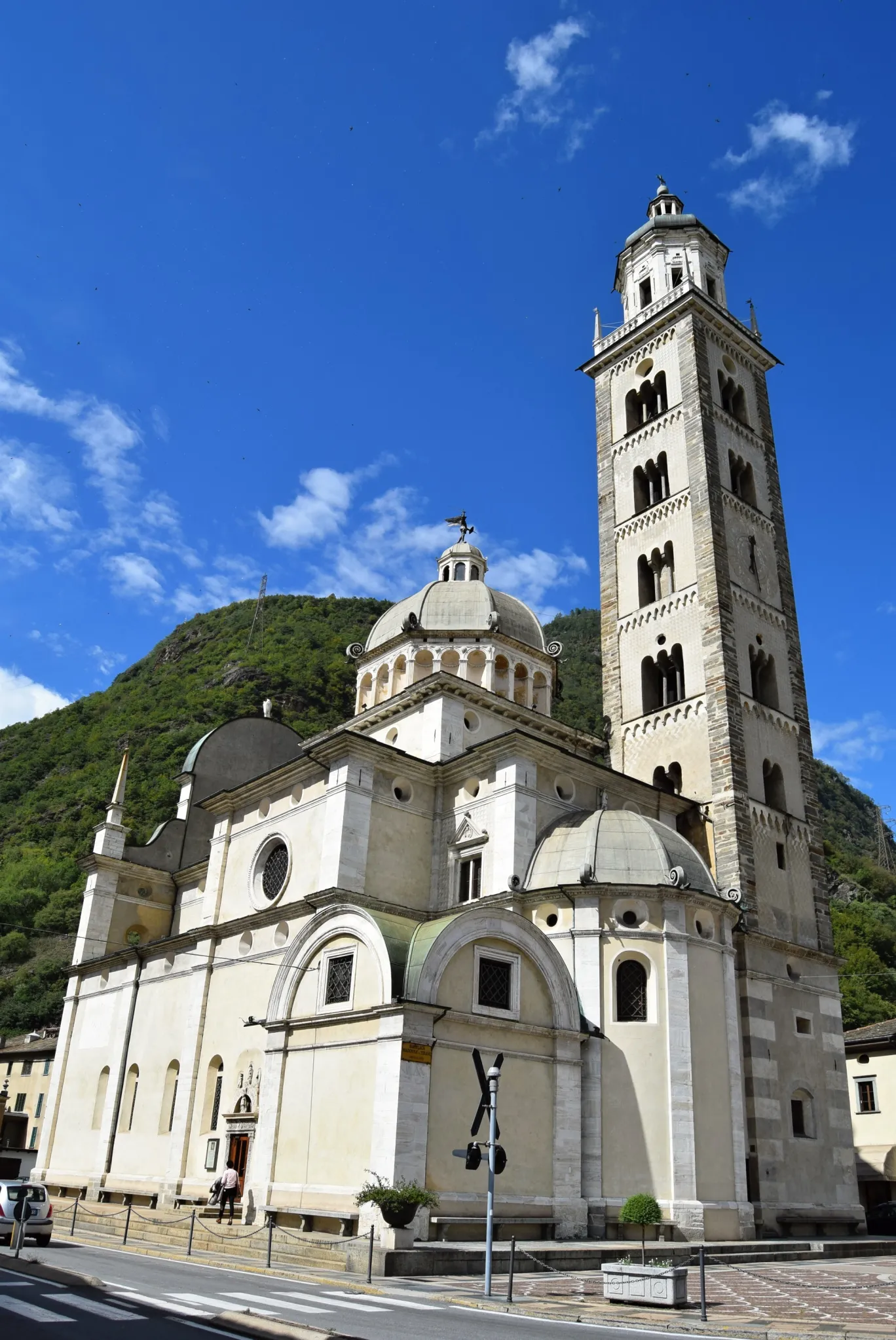
Madonna di Tirano / Our Lady of Tirano, Sondrio, Lombardy, Italy (1504) – 29 September:
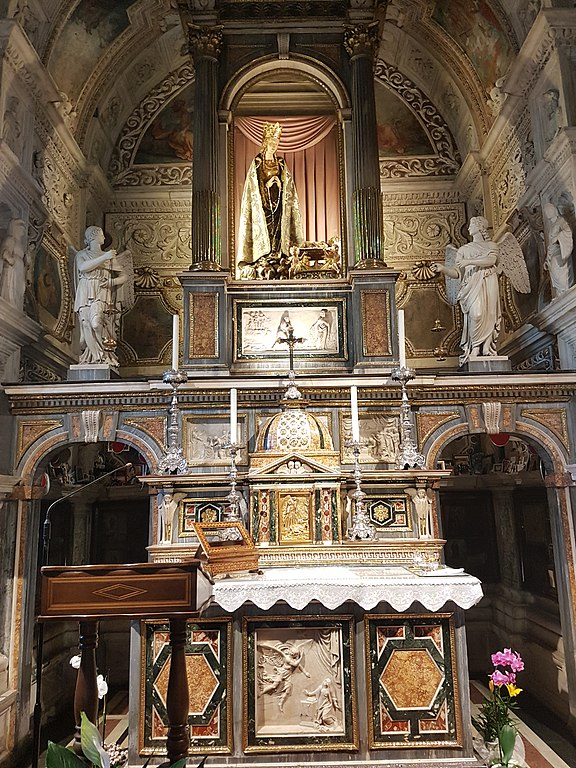
The Sanctuary of the Madonna of Tirano stands on the Swiss-Italian border, where the Virgin appeared to Mario Omodei on 29 September 1504, promising an end to the plague which was decimating the region, if a Church in her honour would be built, on the spot outside the City walls. The epidemic subsided and the townspeople placed the first stone of the Sanctuary on 25 March 1505.
Because of its crossroads location, it has always drawn pilgrims from throughout Europe.
The Virgin’s Statue was part of a silver-clad grouping executed by woodcarver G Angelo Mayno around 1520. Napoleonic raiders stripped off the precious metal and destroyed the other Statues.
In 1946 Pope Pius XII proclaimed the Blessed Virgin of Tirano “special heavenly Patron of all Europe.”
Bl Alericus St Anno of Eichstätt St Casdoe of Persia St Catholdus of Eichstätt
St Dadas of Persia St Diethardus of Eichstätt St Fraternus of Auxerre St Gabdelas of Persia St Grimoaldus of Pontecorvo St Gudelia St Guillermo Courtet
St Miguel de Aozaraza St Quiriacus of Palestine St Rene Goupil St Rhipsime Bl Richard Rolle St Sapor of Persia St Theodota of Thrace St Vicente Shiwozuka de la Cruz — Martyrs of Thrace – 3 saints: Three Christian men murdered in Thrace for their faith. They are – Eutychius, Heracleas and Plautus.
Martyred in the Spanish Civil War: • Blessed Antonio Arribas Hortigüela • Blessed Antonio Martínez López • Blessed Dario Hernández Morató • Blessed Francesc de Paula Castelló Aleu • Blessed Francisco Edreira Mosquera • Blessed José Villanova Tormo • Blessed Pau Bori Puig • Blessed Vicente Sales Genovés • Blessed Virgilio Edreira Mosquera
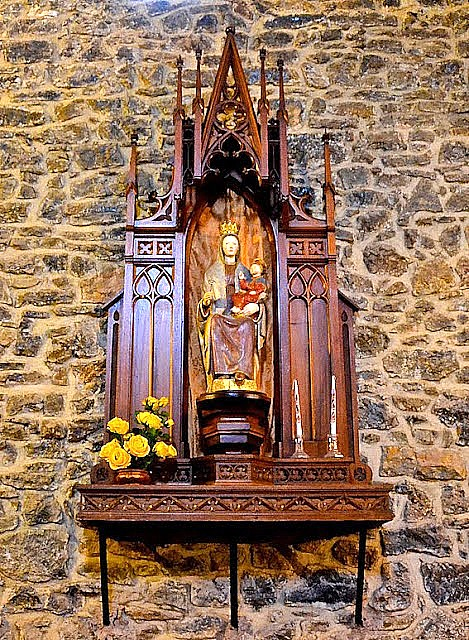
Nuestra Señora del Fresno / Our Lady of Fresno, Grado, Asturias, Spain (9th Century) – 8 and 28 September:
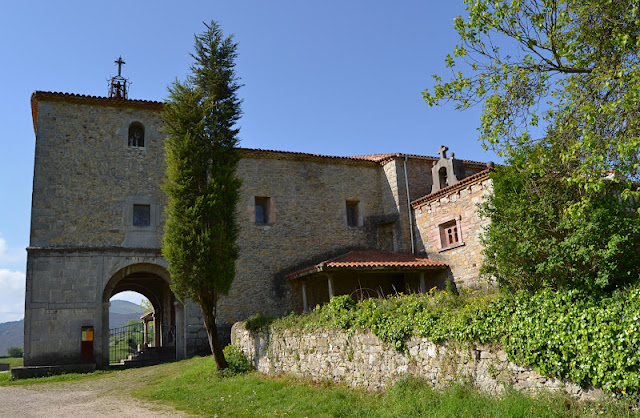
The Sanctuary of the Virgen del Fresno is one of the most visited Sanctuaries in the central area of Asturias despite the difficulty of its access. The Sanctuary is located on the Camino de Santiago hence it’s popularity dating from the 9th Century when pilgrims stopped to rest in the hostel provided. They were known as “the Novenarios” as, during their rest, they prayed the St Michael Novena before his Feast Day on 29 September.
In honour of the Virgen del Fresno two festivals are held, one on 8 September and the other 28 of the same month preceded by a Novena that has traditionally started at four in the afternoon.
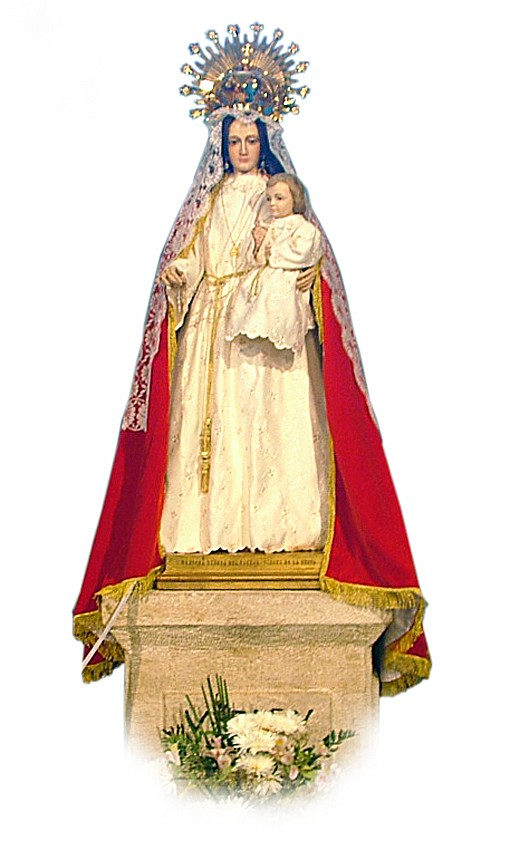
The current image dates from 1975, since the original was lost in the looting it suffered in 1936. It is made of cedar from Lebanon, made in Madrid. She is dressed and holds the Child in her arms and the Rosary between her fingers. She remain above her Altar and another processional image accompanies the Novena.
St Wenceslaus (907-935) King of Bohemia, Martyr (Optional Memorial)
Bl Aaron of Auxerre St Alodius of Auxerre St Annemond of Lyons St Bardomianus
Blessed Bernardine of Feltre OFM (1439-1494) Franciscan Priest and Friar, Missionary Preacher, Poet, peace-maker, Civil protestor against the practice of usury, defender of the poor. He was a true ‘child prodigy’ – by the time he was 12 he was fluent in Latin and at the age of 15 he composed a poem and read it in the Town Square to celebrate a local peace treaty. He is remembered most especially, in connection with the “Monti di Pietà” “Mount of Piety” of which he was the reorganiser and, in a certain sense, the Founder, together with the Blessed Michele Carcano.
St Machan St Martial of North Africa St Martin of Moyenmoutier St Paternus of Auch St Privatus of Rome St Salonius of Geneva St Silvinus of Brescia
St Simón de Rojas O.SS. (1552-1624) , “Father Ave Maria”/ “Apostle of the Ave Maria,” Religious Priest of the Trinitarian Order, Founder of the Lay Apostolate of the Congregation of the Slaves of the Sweet Name of Mary, Marian Devotee, Theologian, Philosopher, Spiritual Writer, Apostle of Charity, Apostolic Visitor.
St Solomon of Genoa St Stacteus St Tetta of Wimborne Bl Thiemo St Willigod of Moyenmoutier St Zama of Bologna — Augustinian Martyrs of Japan: The first Augustinian Missionaries arrived in Japan in 1602 and met with immediate success; many were brought to the faith; many of them became Augustinians; and many of them were martyred in the periodic persecutions of Christians. This memorial commemorates all of them, whether they have a sanctioned Cause for Canonisation or not. They include: • Blessed Bartolomé Gutiérrez Rodríguez • Blessed Ferdinand Ayala • Blessed Francisco Terrero de Ortega Pérez • Blessed Ioannes Mukuno Chozaburo • Blessed Laurentius Kaida Hachizo • Blessed Mancius Yukimoto Ichizaemon • Blessed Martín Lumbreras Peralta • Blessed Melchor Sánchez Pérez • Blessed Michaël Ichinose Sukezaemon • Blessed Pedro de Zúñiga • Blessed Petrus Sawaguchi Kuhyoe • Blessed Thomas Jihyoe of Saint Augustine • Blessed Thomas Terai Kahyoe • Blessed Vicente Simões de Carvalho • Saint Magdalena of Nagasaki
Martyrs of Antioch – 37 saints: A group of 30 soldiers and 7 civilians who were murdered together for their faith. The names that have come down to us are – Alexander, Alphinus, Heliodorus, Mark, Neon, Nicon and Zosumus. c 303 at Antioch, Pisidia (in modern Turkey).
Martyrs of China – 120 saints: A common memorial for the hundreds of the faithful, lay and clergy, who have died for their faith in the last couple of centuries in China.
Martyred in the Spanish Civil War: • Blessed Amalia Abad Casasempere de Maestre • Blessed Francesc Xavier Ponsa Casallach • Blessed Josep Casas Juliá • Blessed Josep Casas Ros • Blessed Josep Tarrats Comaposada • Blessed María Fenollosa Alcaina






You must be logged in to post a comment.