Posted in SAINT of the DAY

Nostra Signora della Neve, Adro, Italy/ Our Lady of the Snow, Adro, Brescia, Italy (1519) and Memorials of the Saints – 8 July

Nostra Signora della Neve, Adro, Italy/ Our Lady of the Snow, Adro, Brescia, Italy (1519) – 8 July, 5 August:

Adro is a Town in the Province of Brescia, in the Lombardy region, northern Italy. The Sanctuary emerged after the appearance of the Madonna in this place. to Battista Bajoni Comino, the deaf-mute who was visited by the Holy Mother on 8 July 1519. The Virgin appeared saying she was the Mother of God and sent a message to the people of Adro. Our Lady’s message contained a reference to a Christian life, repentance for sins and conversion and reparation and the construction of a Sanctuary in her honour. The built the Church at the place of vision, and began to amend their lives. They practised devotion on Sundays and Holy Days, stopped blaspheming the Holy Name and refrained from other evil habits, for Our Lady had also said that if they did not repent they could expect a serious penalty. Mary said – “And if they wonder how it is that you speak, tell them that you have been with the Advocate of Sinners. Everyone knows you were dumb. Now take this stone with you and show it to them as it will change colour from time to time. “

The central Feast of Our Lady of the Snows is celebrated on 5 August
Immediately after the miracle, it was called “Madonna della Cava,” the place where the Virgin had appeared to the Shepherd and the feast was celebrated on 8 July the anniversary of the vision. Later, however, Church officials transferred the Feast to 5 August, the day the dedication of Santa Maria Maggiore in Rome, also known as “Santa Maria de las Nieves,” built by Pope Liberius commemorates after Miracle of snow (that happened in Rome). It was then that this temple took the name of “Our Lady of the Snows.”
In pilgrimage season (April to October) groups of pilgrims arriving from neighbouring provinces, especially from Brescia, Bergamo, Como, Varese, Milan, Cremona, Mantua and Verona. Sunday is preferred by families. All opportunities for spiritual growth are offered through preaching and the Sacraments.
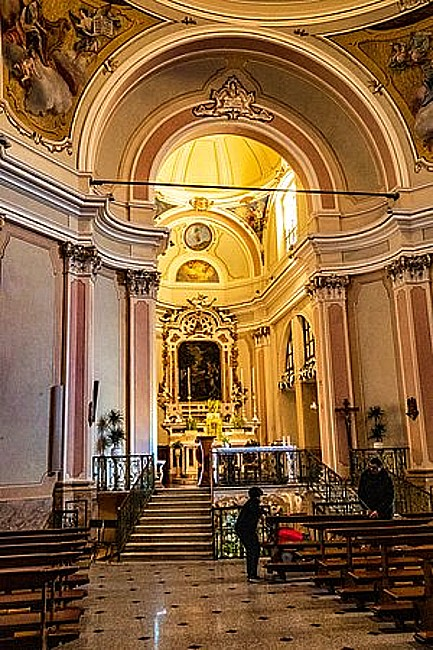
Such is the fascination of the Virgin on the pilgrims who will then return again.
It is a ceremony in which you have to enter the crypt “to see the Madonna”.

The miracle of the deaf-mute who began to hear and speak gave rise to a small Shrine. It remains alongside the current main Altar. It was visited by Saint Charles Borromeo in 1581. Being too small for the influx of pilgrims,the Church was demolished in 1750 and enlarged. It was built on a design by architect Gaspare Turbini and opened in 1776.
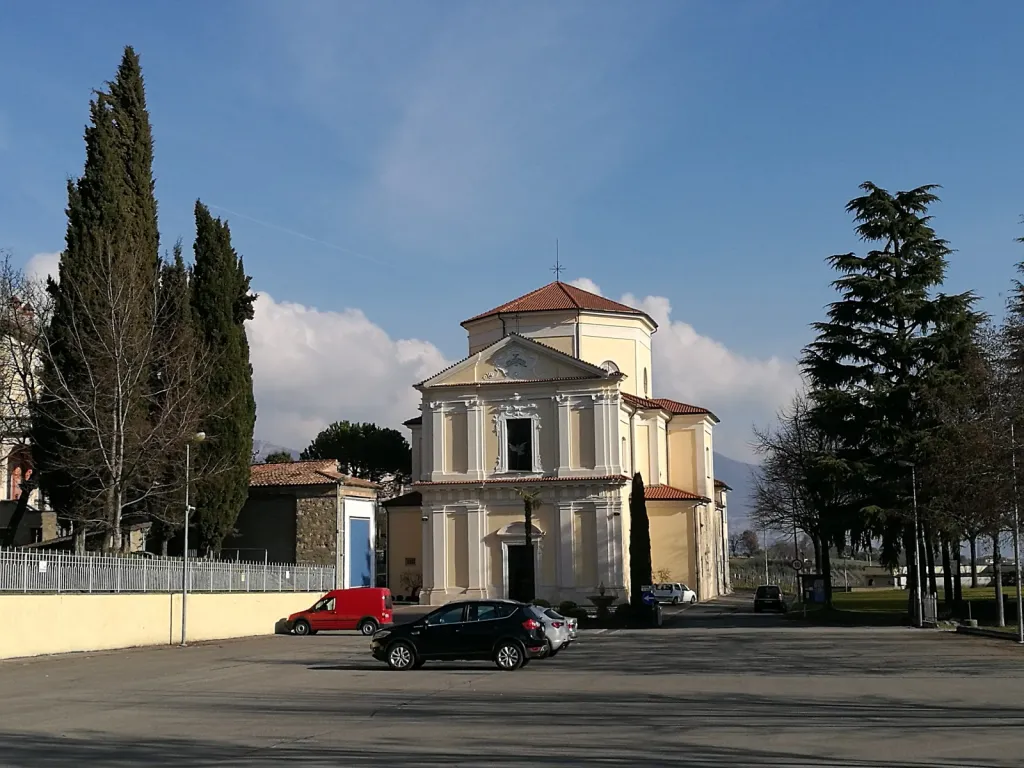
The Carmelites of St Teresa, built a Monastery nearby. The current statue is gilded wood sculptor. Next to the Shrine a discreet and well-shaded park with tables and benches offers a welcome drink to pilgrims.

St Abraham the Martyr
Bl Adolf IV of Schauenburg
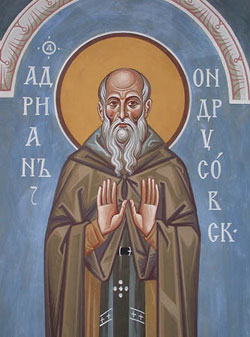
St Pope Adrian III
St Ampelius of Milan
St Apollonius of Benevento

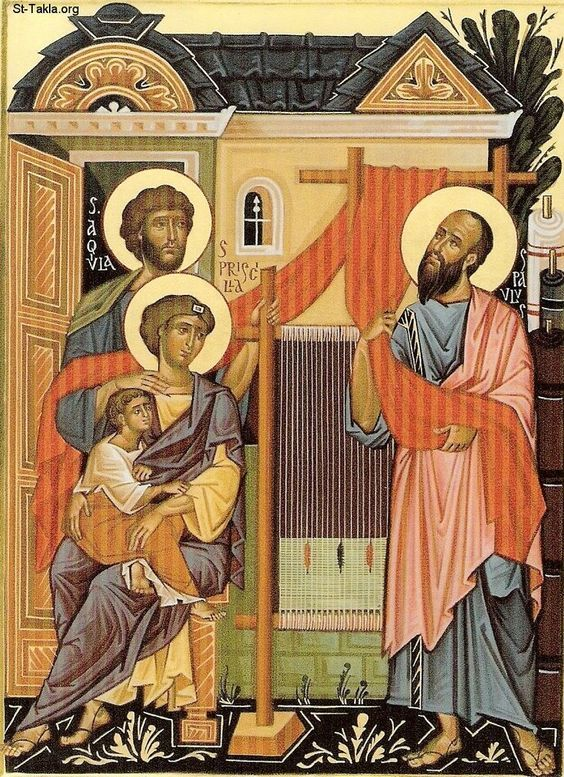
Sts Aquila & Priscilla – the Tentmakers, Collaborators of Saint Paul.
St Arnold
St Auspicius of Toul
St Auspicius of Trier
Brogan of Mothil
St Colman of Thuringia
St Doucelin
St Edgar the Peaceful
Blessed Pope Eugene III O.Cist (c 1080-1153) Papal Ascension – 15 February 1145 until his death. The 167th Pope.

Blessed Giulio of Montevergine (Died 1601) Hermit, Penitent

St Elizabeth of Portugal

St Glyceria of Heraclea
St Grimbald
St Ioannes Wu Wenyin
St Ithier of Nevers


St Killian (c 640-689) Martyr, Bishop, Missionary, “Apostle of Franconia”(nowadays the northern part of Bavaria).

St Landrada
Bl Mancius Araki Kyuzaburo
St Morwenna
St Pancras of Taormina
Bl Peter the Hermit

Blessed Peter Vigne (1670-1740) Missionary Priest, Apostle of the Holy Eucharist, of Charity, of Mary, Catechist, tireless missionary and teacher and Founder of the Religious of the Blessed Sacrament

St Procopius of Ceasarea
St Sunniva of Bergen
St Thibaud de Marly
St Totnan of Thuringia

Abrahamite Monks/Martyrs of Constantinople: A group of monks in a monastery founded by Saint Abraham of Ephesus. Martyred in the iconoclast persecutions of emperor Theophilus. In c 835 in Constantinople.
Martyrs of Shanxi – 7 saints: In 1898 seven sisters of the Franciscan Missionaries of Mary were sent to the Shanxi diocese in China to serve the poor in hospitals and care for the unwanted or other destitutes in orphanages. They were –
• Anne-Catherine Dierks
• Anne-Francoise Moreau
• Clelia Nanetti
• Irma Grivot
• Jeanne-Marie Kuergin
• Marianna Giuliani
• Pauline Jeuris
There they all died in one of the periodic crackdowns against foreign missionaries. They were beheaded on 9 July 1900 at Taiyuanfu, China- Beatified on 24 November 1946 by Pope Pius XII.

Martyrs of Syrmium – 5 saints: Five Christians martyred together for their faith. We know nothing else about them but the names – Cecilia, Eperentius, Eraclius, Sostratus and Spirus. They were martyred in the 4th century in Syrmium, Pannonia (modern Serbia).
Posted in SAINT of the DAY

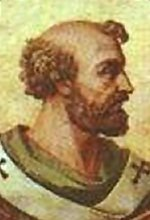
Saint of the Day – 8 July – St Pope Adrian III

Pope Adrian III or Hadrian III was the bishop of Rome and leader of the Papal States from 17 May 884 to his death on 8 July 885. He served for little more than a year, during which he worked to help the people of Italy in a very troubled time of famine and war. Adrian III was the 109th pope and was born within the Papal States. During his brief reign of sixteen months, violent vendettas that arose from the assassination of John VIII continued. He laboured hard to alleviate the misery of the people of Italy, prey to famine and to continuous war. He is also known to have written a letter condemning the Christians of both Muslim-ruled and Christian-ruled parts of Spain for being too friendly with the Jews in these lands. Adrian also sent Theodosius, the bishop of Brindisi and Oria, to Constantinople to deliver a synodal letter about faith and the filioque to patriarch Photius I.

Adrian died in July 885 at San Cesario sul Panaro, not long after embarking on a trip to Worms, in the Rhineland. The purpose of the journey was to attend an Imperial Diet after being summoned by Emperor Charles the Fat to settle the imperial succession and discuss the rising power of the Saracens. His death under dubious circumstances led many to believe that he had been assassinated.

Adrian’s death and subsequent burial in the church of San Silvestro Nonantola Abbey near Modena is commemorated in the sculpted reliefs that frame the doorway of this church. His relics are found near the high altar, and his tomb at once became a popular place of pilgrimage. His cult was confirmed by Pope Leo XIII on 2 June 1891, and his feast day is celebrated on 8 July.

Posted in JULY - The MOST PRECIOUS BLOOD

Our Morning Offering – 8 July – Indulgenced Act of Oblation to Our Father By Pope Pius VII

Our Morning Offering – 8 July – “Month of the Most Precious Blood”

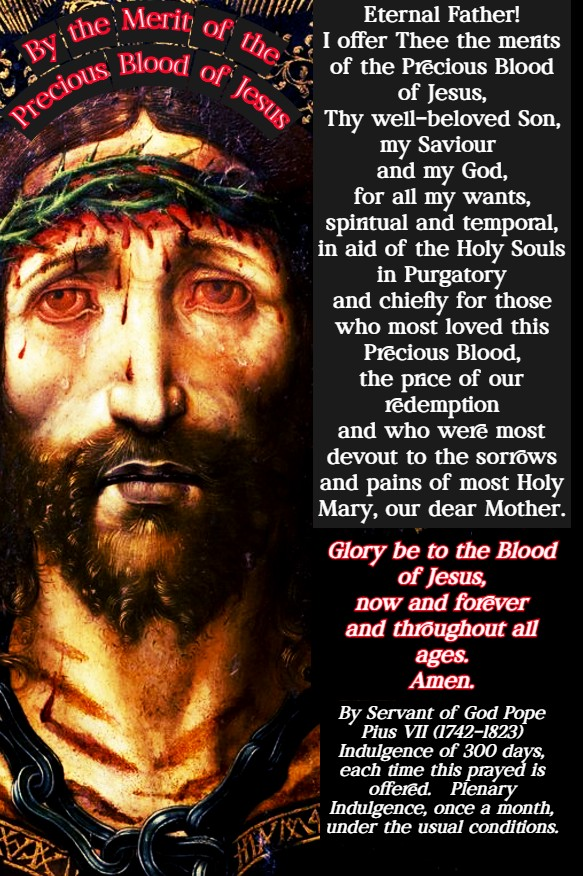
By the Merit of the
Precious Blood of Jesus
By Servant of God Pope Pius VII (1742-1823)

Papacy from 1800 to 1823
Indulgenced Act of Oblation to Our Father

Eternal Father!
I offer Thee the merit
of the Precious Blood of Jesus,
Thy well-beloved Son,
my Saviour and my God,
for all my wants,
spiritual and temporal,
in aid of the Holy Souls in Purgatory
and chiefly for those
who most loved this Precious Blood,
the price of our redemption
and who were most devout
to the sorrows and pains
of most Holy Mary,
our dear Mother.

Glory be to the Blood of Jesus,
now and forever
and throughout all ages.

Amen.

Indulgence of 300 days, each time this prayed is offered, with a Plenary Indulgence, once a month,
under the usual conditions.

Note of Interest: On 15 August 1811 – the Feast of the Assumption – it is recorded that the Pope celebrated Mass and was said to have entered a trance and began to levitate in a manner that drew him to the Altar. This particular episode aroused great wonder and awe among attendants, which included the French soldiers guarding him, who were awestruck at what had occurred and left records of it.

Posted in ONE Minute REFLECTION

One Minute Reflection – 8 July – Pierce my flesh with Your fear; I fear Your ordinances.

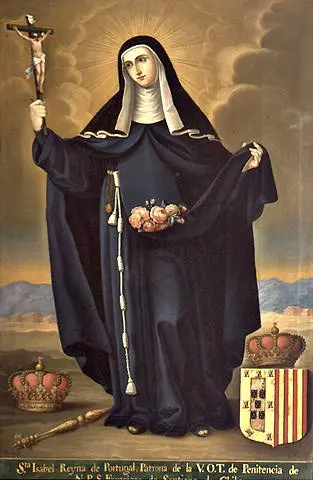
One Minute Reflection – 8 July – “Month of the Most Precious Blood” – St Elizabeth Queen of Portugal

I know, O Lord, that Your ordinances are just, and in Your faithfulness You have afflicted me. Pierce my flesh with Your fear; I fear Your ordinances. (Alleluja, alleluja.)

Ps 118:75; 118:120

REFLECTION – Since, then, the blessed prophets have been eyes to us, setting forth for our behoof the clear declaration of things secret, both through life, and through declaration, and through inspiration of the Holy Spirit, and discoursing, too, of things not yet come to pass, in this way also to all generations they have pictured forth the grandest subjects for contemplation and for action. Thus, too, they preached of the advent of God in the flesh to the world.

Hence, too, they indicated the day of the consummation to us, and signified beforehand the day of the apostate that is to appear and deceive men at the last times, and the beginning and end of his kingdom, and the advent of the Judge, and the life of the righteous, and the punishment of the sinners, in order that we all, bearing these things in mind day by day and hour by hour, as children of the Church, might know that not one jot nor one tittle of these things shall fail, as the Saviour’s own word announced. Let all of you, then, of necessity, open the eyes of your hearts and the ears of your soul, and receive the word which we are about to speak.

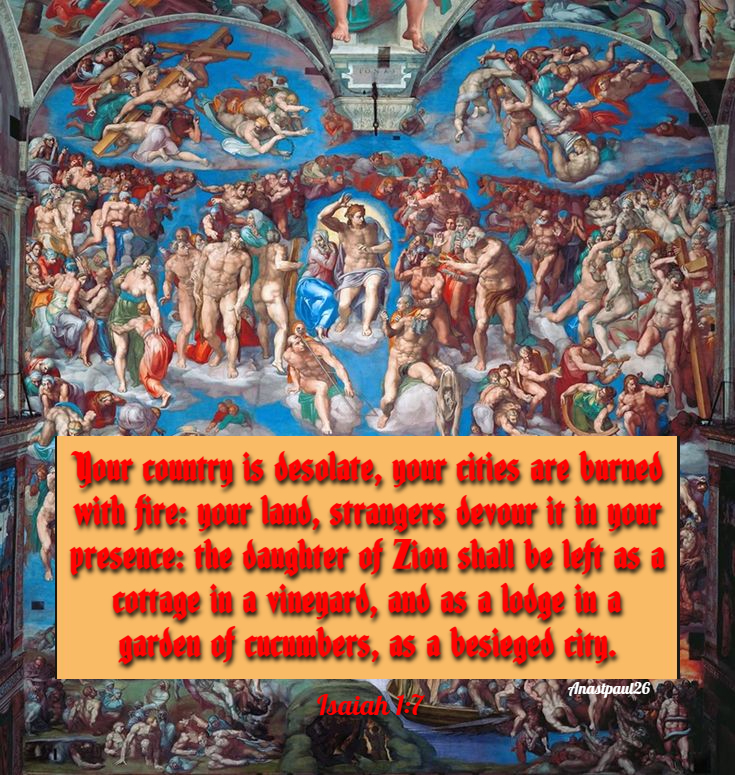
Let us bring forward Isaiah as our first witness, inasmuch as he instructs us in the times of the consummation. What, then, does he say? Your country is desolate, your cities are burned with fire: your land, strangers devour it in your presence: the daughter of Zion shall be left as a cottage in a vineyard, and as a lodge in a garden of cucumbers, as a besieged city. You see, beloved, the prophet’s illumination, whereby he announced that time so many generations before. For it is not of the Jews that he spoke this word of old, nor of the city of Zion, but of the Church. For all the prophets have declared Zion to be the bride brought from the nations.

On the End of the World (Blessed Hippolytus, bishop and martyr)

PRAYER – Most merciful God, Who among other admirable gifts, endowed blessed Queen Elizabeth with the special grace of calming the tumult of war; grant by her intercession that, after the peace for which we humbly pray, we may attain everlasting happiness.
Through our Lord…

Posted in QUOTES on ANGELS

Quote/s of the Day – 8 July – The Kingdom of Heaven is like a treasure … Matthew 13:44

Quote/s of the Day – 8 July – “Month of the Most Precious Blood” – Readings: Ps 118:75; 118:120, Ps 118:1, Prov 31:10-31, Ps 44:3; 44:5, Ps 44.5, Matt 13:44-52.

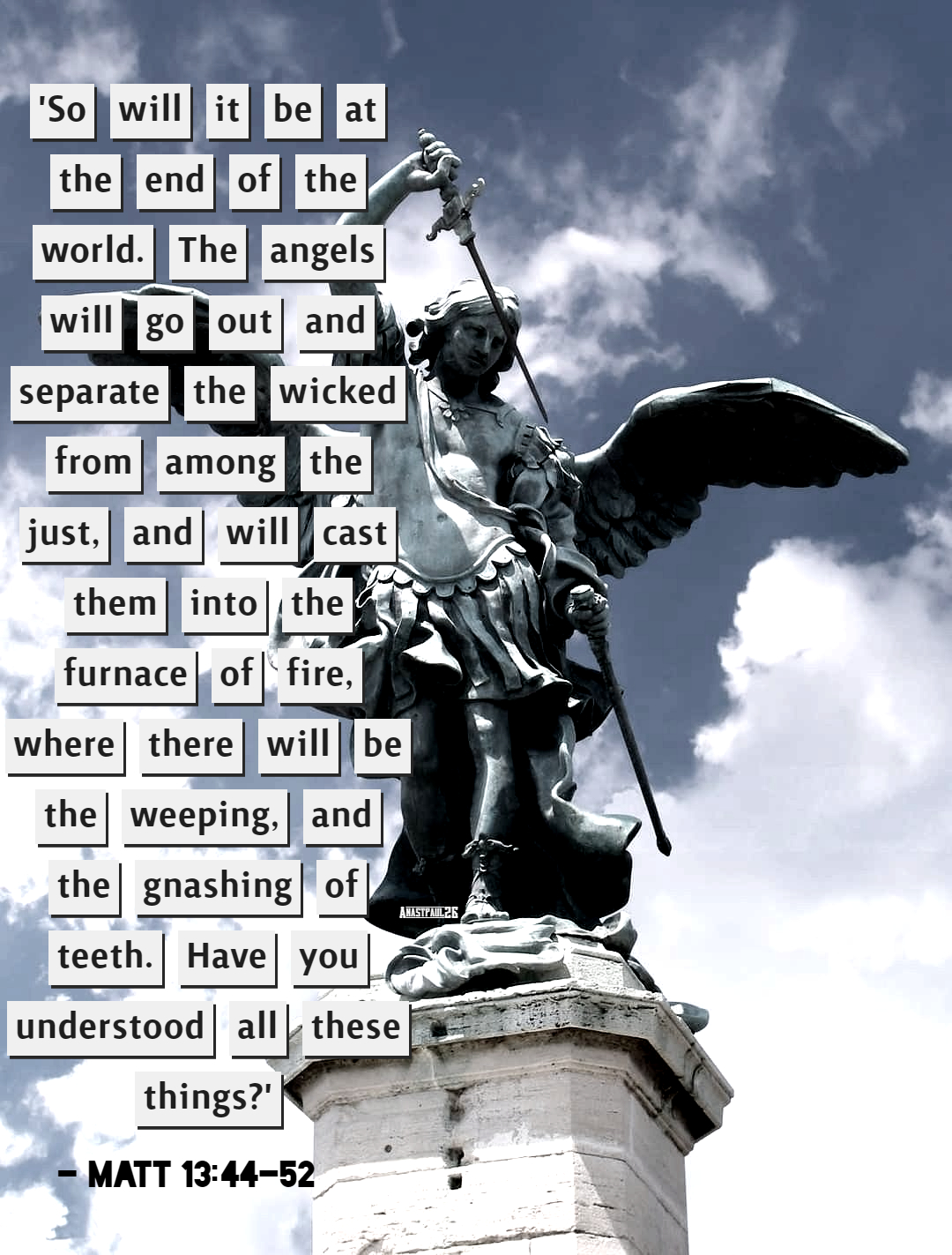
So will it be at the end of the world. The angels will go out and separate the wicked from among the just, and will cast them into the furnace of fire, where there will be the weeping, and the gnashing of teeth. Have you understood all these things?

– Matt 13:44-52

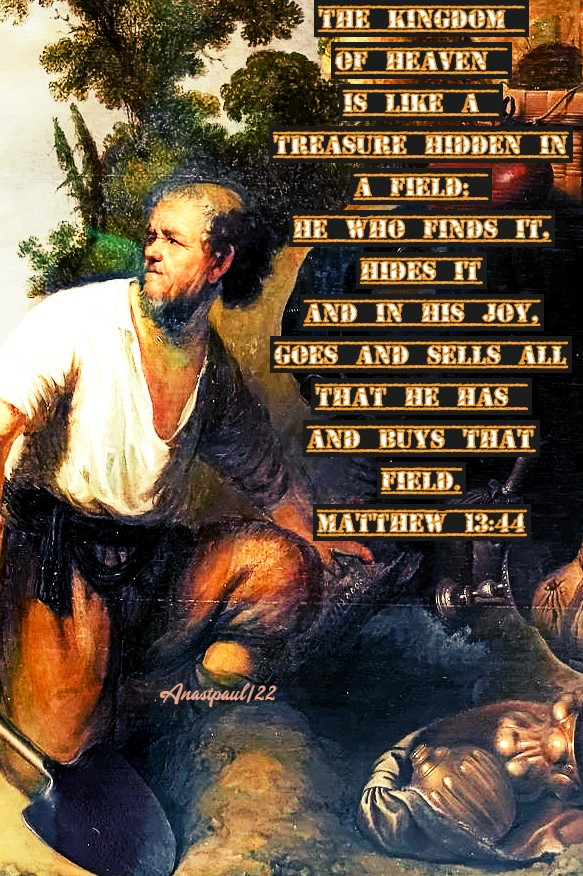
The Kingdom of Heaven
is like a treasure hidden in a field;
he who finds it, hides it
and in his joy,
goes and sells all that he has
and buys that field.

Matthew 13:44

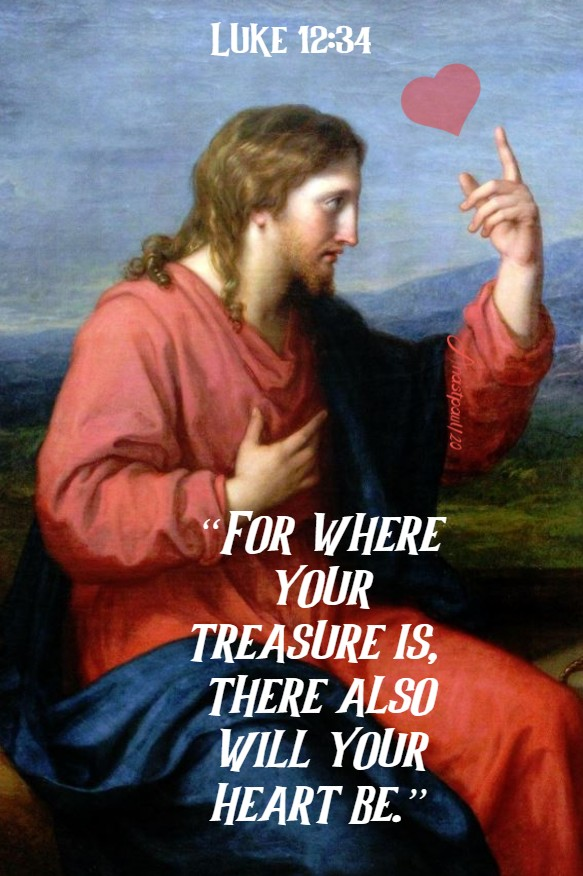
For where your treasure is,
there also will your heart be.”

Luke 12:34

We have had Your treasure
hidden within us,
ever since we received baptismal grace,
it grows ever richer
at Your sacramental table.”

St Ephrem (306-373)
Father and Doctor of the Church

Let your door stand open
to receive Him,
unlock your soul to Him,
offer Him a welcome in your mind
and then you will see
the riches of simplicity,
the treasures of peace,
the joy of grace.
Throw wide the gate of your heart,
stand before the Sun
of the everlasting Light.

St Ambrose (c 340-397)
Father and Doctor of the Church

“ He who finds Jesus, finds a rare treasure,
indeed, a good above every good,
whereas he who loses Him,
loses more than the whole world.
The man who lives without Jesus,
is the poorest of the poor,
whereas no-one is so rich,
as the man who lives in His grace.
… Let all things be loved, for the sake of Jesus
but Jesus, for His own sake.

Thomas à Kempis (1380-1471)

Do not be afraid any longer, little flock,
for your Father is pleased
to give you the kingdom.
Sell your belongings and give alms.
Provide money bags for yourselves
that do not wear out,
an inexhaustible treasure in heaven
that no thief can reach nor moth destroy.

St John Leonardi (1541-1609)

You leave the land just as it is
when you depart,
you do not carry anything away.
Our first aim
is to go to God,
we are not on earth
for anything but this!”

St John Marie Baptiste Vianney (1786-1859)

Posted in JULY - The MOST PRECIOUS BLOOD

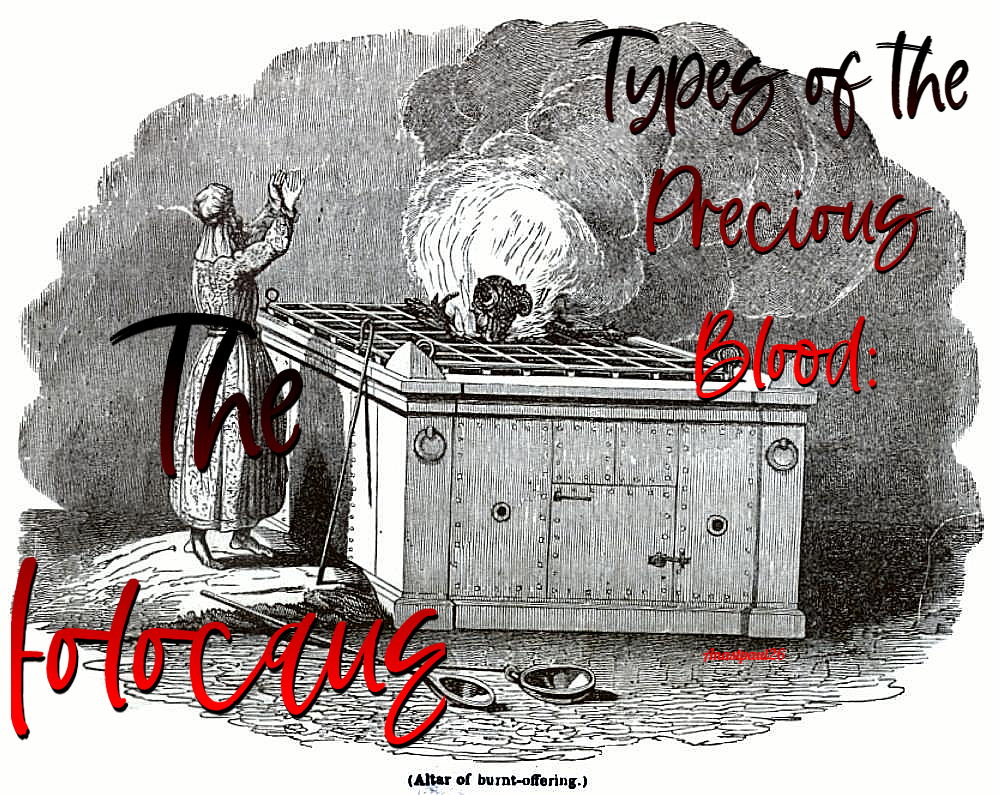
Thought for the Day – 8 July – 8th Day – Types of the Precious Blood: (5) The Holocaust

The Precious Blood – Short Meditations for July

By Rev. Richard F. Clarke

8th Day – Types of the Precious Blood: (5) The Holocaust

The holocaust, or whole burnt offering, could be an ox or sheep, or pigeon, or turtle-dove, according to the abilities of him who offered it. Its blood was to be shed, and the whole body was afterwards to be burnt upon the altar. So Christ offered Himself a holocaust to God, there was no part of His human nature that was not sacrificed for the sins of men. All the faculties of His soul, every thought and wish and inclination, every nerve and fibre in His body, all were offered to God and consecrated to Him. Try and realise the extent of this sacrifice.

In this offering Christ left us an example. If we are really to tread in His footsteps, a partial offering is not enough. As long as keep anything for ourselves and deny it to God, there is rapine in our holocaust, that is, we keep back part of what we profess to sacrifice entirely to God, and such an offering cannot be acceptable. Is there anything which I consciously still keep back from God?

First of all, the blood of the sacrifice was to be shed, and the blood, as we read in Holy Scripture, signifies the life. We must therefore dedicate our lives to God before we can belong wholly to Him. Hence the virtue of religious vows. If we are not called to these, at least we are called to make the service of God the end and aim of our daily life. Is this the character of my life?